EP1219596A1 - Salicylamide derivatives - Google Patents
Salicylamide derivatives Download PDFInfo
- Publication number
- EP1219596A1 EP1219596A1 EP00951914A EP00951914A EP1219596A1 EP 1219596 A1 EP1219596 A1 EP 1219596A1 EP 00951914 A EP00951914 A EP 00951914A EP 00951914 A EP00951914 A EP 00951914A EP 1219596 A1 EP1219596 A1 EP 1219596A1
- Authority
- EP
- European Patent Office
- Prior art keywords
- formula
- represented
- salicylamide
- derivatives
- symbol
- Prior art date
- Legal status (The legal status is an assumption and is not a legal conclusion. Google has not performed a legal analysis and makes no representation as to the accuracy of the status listed.)
- Granted
Links
- 0 *OC(C1OC11)(C(NC(c(cccc2)c2O)=O)=CC1O)O Chemical compound *OC(C1OC11)(C(NC(c(cccc2)c2O)=O)=CC1O)O 0.000 description 2
- QLTPGOVUNSZYDY-UHFFFAOYSA-N Oc(cccc1)c1C(NC(C(C1=C2O1)=O)=CC2=O)=O Chemical compound Oc(cccc1)c1C(NC(C(C1=C2O1)=O)=CC2=O)=O QLTPGOVUNSZYDY-UHFFFAOYSA-N 0.000 description 1
Images
Classifications
-
- C—CHEMISTRY; METALLURGY
- C07—ORGANIC CHEMISTRY
- C07D—HETEROCYCLIC COMPOUNDS
- C07D303/00—Compounds containing three-membered rings having one oxygen atom as the only ring hetero atom
- C07D303/02—Compounds containing oxirane rings
- C07D303/12—Compounds containing oxirane rings with hydrocarbon radicals, substituted by singly or doubly bound oxygen atoms
- C07D303/14—Compounds containing oxirane rings with hydrocarbon radicals, substituted by singly or doubly bound oxygen atoms by free hydroxyl radicals
-
- C—CHEMISTRY; METALLURGY
- C07—ORGANIC CHEMISTRY
- C07D—HETEROCYCLIC COMPOUNDS
- C07D303/00—Compounds containing three-membered rings having one oxygen atom as the only ring hetero atom
- C07D303/02—Compounds containing oxirane rings
- C07D303/36—Compounds containing oxirane rings with hydrocarbon radicals, substituted by nitrogen atoms
-
- A—HUMAN NECESSITIES
- A61—MEDICAL OR VETERINARY SCIENCE; HYGIENE
- A61K—PREPARATIONS FOR MEDICAL, DENTAL OR TOILETRY PURPOSES
- A61K31/00—Medicinal preparations containing organic active ingredients
- A61K31/33—Heterocyclic compounds
- A61K31/335—Heterocyclic compounds having oxygen as the only ring hetero atom, e.g. fungichromin
- A61K31/336—Heterocyclic compounds having oxygen as the only ring hetero atom, e.g. fungichromin having three-membered rings, e.g. oxirane, fumagillin
-
- A—HUMAN NECESSITIES
- A61—MEDICAL OR VETERINARY SCIENCE; HYGIENE
- A61K—PREPARATIONS FOR MEDICAL, DENTAL OR TOILETRY PURPOSES
- A61K31/00—Medicinal preparations containing organic active ingredients
- A61K31/60—Salicylic acid; Derivatives thereof
- A61K31/609—Amides, e.g. salicylamide
-
- A—HUMAN NECESSITIES
- A61—MEDICAL OR VETERINARY SCIENCE; HYGIENE
- A61P—SPECIFIC THERAPEUTIC ACTIVITY OF CHEMICAL COMPOUNDS OR MEDICINAL PREPARATIONS
- A61P19/00—Drugs for skeletal disorders
- A61P19/02—Drugs for skeletal disorders for joint disorders, e.g. arthritis, arthrosis
-
- A—HUMAN NECESSITIES
- A61—MEDICAL OR VETERINARY SCIENCE; HYGIENE
- A61P—SPECIFIC THERAPEUTIC ACTIVITY OF CHEMICAL COMPOUNDS OR MEDICINAL PREPARATIONS
- A61P29/00—Non-central analgesic, antipyretic or antiinflammatory agents, e.g. antirheumatic agents; Non-steroidal antiinflammatory drugs [NSAID]
-
- A—HUMAN NECESSITIES
- A61—MEDICAL OR VETERINARY SCIENCE; HYGIENE
- A61P—SPECIFIC THERAPEUTIC ACTIVITY OF CHEMICAL COMPOUNDS OR MEDICINAL PREPARATIONS
- A61P37/00—Drugs for immunological or allergic disorders
- A61P37/02—Immunomodulators
- A61P37/06—Immunosuppressants, e.g. drugs for graft rejection
-
- C—CHEMISTRY; METALLURGY
- C07—ORGANIC CHEMISTRY
- C07C—ACYCLIC OR CARBOCYCLIC COMPOUNDS
- C07C237/00—Carboxylic acid amides, the carbon skeleton of the acid part being further substituted by amino groups
- C07C237/28—Carboxylic acid amides, the carbon skeleton of the acid part being further substituted by amino groups having the carbon atom of at least one of the carboxamide groups bound to a carbon atom of a non-condensed six-membered aromatic ring of the carbon skeleton
- C07C237/38—Carboxylic acid amides, the carbon skeleton of the acid part being further substituted by amino groups having the carbon atom of at least one of the carboxamide groups bound to a carbon atom of a non-condensed six-membered aromatic ring of the carbon skeleton having the nitrogen atom of the carboxamide group bound to a carbon atom of a ring other than a six-membered aromatic ring
-
- C—CHEMISTRY; METALLURGY
- C07—ORGANIC CHEMISTRY
- C07C—ACYCLIC OR CARBOCYCLIC COMPOUNDS
- C07C237/00—Carboxylic acid amides, the carbon skeleton of the acid part being further substituted by amino groups
- C07C237/28—Carboxylic acid amides, the carbon skeleton of the acid part being further substituted by amino groups having the carbon atom of at least one of the carboxamide groups bound to a carbon atom of a non-condensed six-membered aromatic ring of the carbon skeleton
- C07C237/40—Carboxylic acid amides, the carbon skeleton of the acid part being further substituted by amino groups having the carbon atom of at least one of the carboxamide groups bound to a carbon atom of a non-condensed six-membered aromatic ring of the carbon skeleton having the nitrogen atom of the carboxamide group bound to a carbon atom of a six-membered aromatic ring
-
- C—CHEMISTRY; METALLURGY
- C07—ORGANIC CHEMISTRY
- C07D—HETEROCYCLIC COMPOUNDS
- C07D303/00—Compounds containing three-membered rings having one oxygen atom as the only ring hetero atom
- C07D303/02—Compounds containing oxirane rings
- C07D303/12—Compounds containing oxirane rings with hydrocarbon radicals, substituted by singly or doubly bound oxygen atoms
- C07D303/18—Compounds containing oxirane rings with hydrocarbon radicals, substituted by singly or doubly bound oxygen atoms by etherified hydroxyl radicals
- C07D303/20—Ethers with hydroxy compounds containing no oxirane rings
- C07D303/22—Ethers with hydroxy compounds containing no oxirane rings with monohydroxy compounds
-
- C—CHEMISTRY; METALLURGY
- C07—ORGANIC CHEMISTRY
- C07D—HETEROCYCLIC COMPOUNDS
- C07D303/00—Compounds containing three-membered rings having one oxygen atom as the only ring hetero atom
- C07D303/02—Compounds containing oxirane rings
- C07D303/12—Compounds containing oxirane rings with hydrocarbon radicals, substituted by singly or doubly bound oxygen atoms
- C07D303/32—Compounds containing oxirane rings with hydrocarbon radicals, substituted by singly or doubly bound oxygen atoms by aldehydo- or ketonic radicals
Definitions
- the present invention relates to novel salicylamide derivatives, to a process for producing the same and to drugs containing the same as the active ingredient. More particularly, the present invention relates to novel salicylamide derivatives exerting an effect of inhibiting the activation of NF- ⁇ B and useful as anti-inflammatory agents and immunosuppressive agents, to intermediates in the production thereof, to a process for producing the same, and to drugs containing the salicylamide derivatives or salts thereof as the active ingredient.
- Anti-inflammatory agents conventionally used include steroid agents, prostaglandin synthesis inhibitors and so forth. Also, cyclosporin, FK506 (tacrolimus) and so forth have been used as immunosuppressive agents. However, it has been pointed out that these drugs have problems in effects and side effects.
- NF- ⁇ B was identified as a nucleoprotein bonded to the enhancer of immunoglobulin ⁇ -chain gene (Cell 46 , 705-716, 1986) and at first it was considered to be a transcription factor specific to B cells but afterwards it revealed that it exists in various types of cells.
- NF- ⁇ B is a hetero dimer consisting of two subunits and is constituted by various combinations of p50 or p52 having Rel homology domain (RHD) of about 300 amino acids with RelA, c-Rel or RelB (Annu. Rev. Immunol., 14 , 649-681, 1996).
- RHD Rel homology domain
- NF- ⁇ B is a dominant transcription factor in biophylaxis reaction and genes induced by NF- ⁇ B includes besides immunoglobulin, cytokines (IL-1, IL-2, IL-6, IL-8, TNF, etc.), cell adhesion factors (E-selectin, ICAM-1, VCAM-1, etc.), nitrogen oxide (NO) synthetase, Fas ligand, etc., most of which are deeply concerned in immune response or inflammatory reaction (Cell, 87 , 13-20, 1996).
- cytokines IL-1, IL-2, IL-6, IL-8, TNF, etc.
- E-selectin E-selectin, ICAM-1, VCAM-1, etc.
- NO nitrogen oxide
- Factors known to cause activation of NF- ⁇ B include besides TNF- ⁇ , IL-1, antigen stimulation, TPA, UV, activated oxygen (Annu. Rev. Immunol., 12 , 141-179, 1994). Therefore, it is conceived that stimulation of cells with TNF- ⁇ or the like and discovery of a low molecular weight substance induced by the stimulation that inhibits activation of NF- ⁇ B will undergo further development of anti-inflammatory agents and immunosuppressive agents.
- novel salicylamide derivatives having specified chemical structures i.e., compounds represented by the formula (1a) (DHM2EQ) and the compounds represented by the formula (1b) (DHM3EQ) described hereinbelow exert an effect of inhibiting the activation of NF- ⁇ B, thereby achieving the present invention.
- the present invention provides the following novel salicylamide derivatives, a process for producing the same, and drugs containing the same as the active ingredient.
- the C1-4 alkyl group represented by R 3 in R 2 in the formula (1) above includes methyl, ethyl, propyl, butyl groups and isomer groups thereof, with a methyl group and an ethyl group being preferred.
- the C2-4 alkanoyl groups represented by R 1 in the formula (2) and (3) above include acetyl, propionyl and butanoyl groups and isomer groups thereof with an acetyl group being preferred.
- the halogen group represented by X in the formula (7) above includes fluorine, chlorine, bromine and iodine atoms, with chlorine and bromine atoms being preferred.
- the compounds (salicylamide derivatives) of the present invention can be produced according to the synthetic process by Wipf et al. (Synthesis, No. 12, p.1549-1561, 1995).
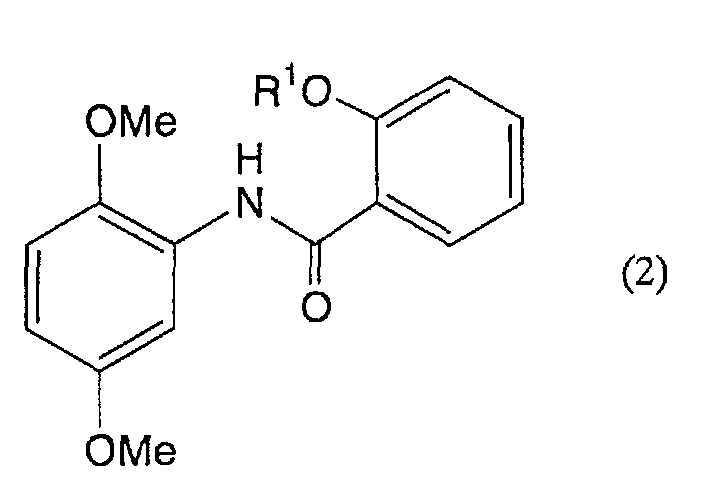
- 2,5-Dimethoxyaniline is dissolved in a solvent (pyridine, etc.), an ethyl acetate solution of O-alkanoylsalicyloyl halide is added thereto at -78°C to 50°C, preferably under ice cooling, and the mixture is allowed to react under stirring. After stopping the reaction by addition of water, ethyl acetate is added to the reaction mixture, which then is sequentially washed with hydrochloric acid, water, a sodium hydrogencarbonate solution and water. After drying, the organic layer is concentrated under reduced pressure and dried under vacuum to obtain an N-(2-alkoxybenzoyl)-2,5-dimethoxyaniline compound represented by formula (2). The compound can be used in the next step without purification.
- a solvent pyridine, etc.
- Step b Preparation of 3-(O-alkanoylsalicyloyl)amino-4,4-dialkoxy-2,5-cyclohexadienone
- the compound of formula (2) obtained as described above is dissolved in a solvent such as methanol, diacetoxyiodobenzene is added thereto at -20°C to 50°C, preferably under ice cooling and the mixture is allowed to react at room temperature under stirring. After concentration under reduced pressure, ethyl acetate is added and the reaction mixture is washed with sodium hydrogencarbonate solution and saline. Then, the solvent is concentrated under reduced pressure and the obtained residue is purified by column chromatography to obtain 3-(O-alkanoylsalicyloyl)amino-4,4-dialkoxy-2,5-cyclohexadienone.
- Step c Preparation of 5,6-epxoy-4,4-dialkoxy-3-salicyloylamino-2-cyclohexenone compound
- 3-(O-Alkanoylsalicyloyl)amino-4,4-dialkoxy-2,5-cyclohexadienone represented by formula (3) is dissolved in a solvent (tetrahydrofuran, methanol, etc.), hydrogen peroxide water and sodium hydroxide are added thereto at -20°C to 50°C, preferably under ice cooling, and the mixture is allowed to react while stirring. Ethyl acetate is added to the reaction mixture, which is sequentially washed with hydrochloric solution, aqueous sodium thiosulfate solution, and saline. After drying, the reaction mixture is dried under vacuum.
- a solvent tetrahydrofuran, methanol, etc.
- Step d Preparation of 5,6-epoxy-2-salicyloylamino-2-cyclohexen-1,4-dione
- 5,6-Epxoy-4,4-dialkoxy-3-salicyloylamino-2-cyclohexenone compound represented by formula (4) is dissolved in methylene chloride, an inorganic acid or organic acid (trifluoroboron diethyl ether complex, etc.) is added under ice cooling, and the mixture is allowed to react while stirring. A solvent (ethyl acetate, etc.) is added to the reaction mixture, which is washed with water. After concentrating the ethyl acetate layer, the obtained residue is washed with methanol to obtain 5,6-epoxy-2-salicyloylamino-2-cyclohexen-1,4-dione represented by formula (5).
- 5,6-Epoxy-2-salicyloylamino-2-cyclohexen-1,4-dione represented by formula (5) is suspended in a solvent (methanol, ethanol, THF, etc.) and a reducing agent (sodium borohydride, etc.) is added thereto at -78°C to 50°C, preferably under ice cooling.
- a solvent ethyl acetate, methylene chloride, etc.
- Step f Preparation of 3,3-dialkoxy-4,5-epoxy-6-hydroxy-2-salicyloylamino-cyclohexene
- 5,6-Epxoy-4,4-dialkoxy-3-salicyloylamino-2-cyclohexenone compound represented by formula (4) is dissolved in a mixed solution of a solvent such as methanol and sodium hydrogen carbonate solution, a reducing agent (sodium borohydride, etc.) is added at -78°C to 50°C, preferably under ice cooling, and the mixture is allowed to react while stirring.
- a solvent ethyl acetate, etc.
- the solvent layer is concentrated under reduced pressure, dried under vacuum and purified by column chromatography to obtain 3,3-dialkoxy-4,5-epoxy-6-hydroxy-2-salicyloylamide-cyclohexene represented by formula (6)
- the NF- ⁇ B production inhibitory activity was measured by luciferase reporter gene assay as shown below.
- a reporter using luciferase DNA was prepared and the NF- ⁇ B production inhibitory activity was measured by use of promoter/reporter assay.
- 3 ⁇ BTK-Luc obtained by coupling luciferase gene derived from lampyrid to 3 ⁇ B derived from IgK gene and HSV-TK promoter was used.
- a plasmid obtained by coupling ⁇ -galactosidase gene to ⁇ -actin promoter was used.
- Transfection was performed by a DEAE-dextran method. 2 ⁇ 10 6 cell were washed once with 1 ⁇ TBS (Tris-HCL (25 mM), NaCl (137 mM), KCl (5 mM), and Na 2 HPO 4 (0.5 mM)) and incubated in transfection buffer (2 ⁇ TBS (200 ⁇ l), 100 ⁇ Ca 2+ ⁇ Mg 2+ ((CaCl 2 ⁇ 2H 2 O)(78 mM, 4 ⁇ l), MgCl 2 ⁇ 6H 2 O (76 mM)), and DEAE-dextran (1 mg/ml, 200 ⁇ l)) containing 1 ⁇ g of plasmid at room temperature for 30 minutes with tapping for every 10 minutes.
- TBS Tris-HCL (25 mM), NaCl (137 mM), KCl (5 mM), and Na 2 HPO 4 (0.5 mM)
- transfection buffer 2 ⁇ TBS (200 ⁇ l)
- the cells were washed with 1 ⁇ TBS and inoculated at 37°C on a 12-well plate (Coster: N. Y., U. S. A.) at 1 ⁇ 10 6 cells/well.
- DHM2EQ or DHM3EQ solutions in various concentrations were added.
- TNF- ⁇ (20 ng/ml) was further added and incubation was performed for 6 hours.
- the cells were centrifuged at 3,500 rpm for 5 minutes.
- lysis buffer Tris-HCl (25 mM, pH 7.8), DTT (2 mM), 1,2-diaminocyclohexane-N,N',N',N-tetraacetic acid (2 mM), and 10% glycerol, 1% Triton X-100
- lysis buffer Tris-HCl (25 mM, pH 7.8), DTT (2 mM), 1,2-diaminocyclohexane-N,N',N',N-tetraacetic acid (2 mM), and 10% glycerol, 1% Triton X-100
- a luminescent substrate solution (Tricine (20 mM), (MgCO 3 ) ⁇ 4Mg(OH) 2 ⁇ 5H 2 O (1.07 mM), MgSO 4 (2.67 mM), EDTA (0.1 mM), DTT (33.3 mM), Coenzyme A (270 ⁇ M), luciferin (470 ⁇ M), and ATP (530 ⁇ M)) was added and amount of luminescence was quantitated by use of Lumat LB9501 (Berthold: Bad Wildbad, Germany). Further, the measured amounts were corrected by ⁇ -galactosidase assay to obtain the value of luciferase activity.
- a luminescent substrate solution Tricine (20 mM), (MgCO 3 ) ⁇ 4Mg(OH) 2 ⁇ 5H 2 O (1.07 mM), MgSO 4 (2.67 mM), EDTA (0.1 mM), DTT (33.3 mM), Coenzyme A (270 ⁇ M),
- ⁇ -Galactosidase DNA was to measure transfection efficiency and effect normalization.
- Type II collagen was emulsified together with an equivalent volume of Freund's complete adjuvant to prepare 1.5 mg/ml of administration solution. This was intradermally inoculated to the radicular portion of mouse tail in an amount of 0.1 ml (150 ⁇ g/mouse) to sensitize the mouse. After 3 weeks, 0.1 ml of type II collagen emulsified in the same operational manner as described was intraperitoneally administered to mouse (150 ⁇ g/mouse) to effect booster immunization to induce arthritis.
- mice 6 Animals/group of mice were intraperitoneally administered with DHM2EQ and DHM3EQ in a dosage of 2 mg/kg or 4 mg/kg 3 times/week from the day of initial immunization in a ratio of 0.1 ml/10g of the body weight, in total 18 times/6 weeks.
- the control group (6 animals/group) was administered with 0.5% CMC solution in the same schedule as described above and to provide normal group (4 animals/group) in which no collagen arthritis was induced.
- the effect of inhibiting collagen-induced arthritis was evaluated by degrees of the flare, swelling and stiffening of anterior limb and posterior limb in scores of 0 to 4 (the maximum score of total for 4 limbs was 16).
- Score 0 was assigned to the case where no symptom was observed
- score 1 was assigned to the case where only 1 of small joints such as fingers of the 4 limbs showed flare or swelling
- score 2 was assigned to the case where 2 or more small joints or relatively large joints such as wrist or ankle of the 4 limbs showed flare or swelling
- score 3 was assigned to the case where a whole hand or foot showed flare or swelling
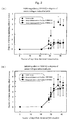
- score 4 was assigned to the case where it was judged that the swelling of one hand or foot reached maximum with stiffening of the joint. The results obtained are shown in Figs. 2(A) and 2(B).
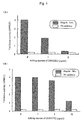
- the novel compounds of the present invention inhibited NF- ⁇ B activity starting from 1 ⁇ g/ml in the case of DHM2EQ (Fig. 1(A)) and at 10 ⁇ g/ml in the case of DHM3EQ (Fig. 1(B)).
- DHM2EQ and DHM3EQ in particular DHM2EQ, inhibited collagen-induced arthritis, i.e., an animal experiment model of chronic articular rheumatism by use of mice and thus their in vivo effectiveness was demonstrated.
- the compounds of the present invention exhibited NF- ⁇ B activation inhibitory effect and in vivo preventing effect for collagen-induced arthritis. Therefore, the compounds represented by formulae (1a) or (1b) are conceived to be useful as anti-inflammatory agents and immunosuppressive agents.
- the compounds represented by formulae (1a) or (1b) are weakly acidic substances and their salts include salts with organic bases such as quaternary ammonium salt, or salts with various metals, for example salts with alkali metals such as sodium. They may be used in the form of such salts.
- the compounds represented by formulae (1a) or (1b) and salts thereof can be administered after they are prepared into solid compositions or liquid compositions for oral administration, injections for parenteral administration, external preparations, suppositories and so forth.
- the dosage may vary depending on age, body weight, symptom, therapeutic effect, method of administration, treating time and so forth but usually, they are administered in an amount of about 1 mg to 100 mg per day for an adult in 1 time or divided into several times.
- the solid composition for oral administration includes tablets, pills, capsules, powder, granules and so forth.
- the composition may contain in addition to inert diluents, various additives, for example, lubricants, disintegrators, or dissolution aids according to a conventional method.
- the tablets or pills may be covered with a film of a gastric or enteric dissolving substance as needed.
- the liquid substance for oral administration includes emulsions, solutions, syrup, elixirs and so forth that are pharmaceutically acceptable.
- the composition may contain in addition to inert diluents various auxiliaries such as humectants, suspending agents, edulcorants, flavors, fragrants, and preservatives.
- the injection for parenteral administration includes sterile aqueous or nonaqueous solvents, suspending agents and emulsifiers.
- the injection may further contain auxiliaries such as preservatives, humectants, emulsifiers, dispersants, stabilizers, dissolution aids (for example glutamic acid or aspartic acid).
- composition for parenteral administration includes external liquid agents, ointments, liniments, suppositories for rectal administration, and so forth.
- 2,5-Dimethoxyaniline (10.0 g, 65.3 mmol) was dissolved in pyridine (100 ml), and a solution of O-acetylsalicyloyl chloride (13.0 g, 65.3 mmol) in ethyl acetate (50 ml) was added thereto over 15 minutes under ice cooling. Thereafter, the mixture was stirred for 15 minutes at the same temperature as above.
- N-(2-acetoxybenzoyl)-2,5-dimethoxyaniline (19.8 g) obtained in Example 1 was dissolved in methanol (400 ml) and diacetoxyiodobenzene (27.3 g, 84.9 mmol) was added thereto under ice cooling and the mixture was stirred at room temperature for 1 hours.
- the reaction mixture was concentrated under reduced pressure to obtain brown syrup-like residue, to which was added ethyl acetate (1l).
- the mixture was washed with 5% sodium hydrogen carbonate solution (1l), and 10% saline (1l).
Landscapes
- Chemical & Material Sciences (AREA)
- Organic Chemistry (AREA)
- Health & Medical Sciences (AREA)
- Pharmacology & Pharmacy (AREA)
- Veterinary Medicine (AREA)
- Public Health (AREA)
- General Health & Medical Sciences (AREA)
- Animal Behavior & Ethology (AREA)
- Medicinal Chemistry (AREA)
- Life Sciences & Earth Sciences (AREA)
- Immunology (AREA)
- Chemical Kinetics & Catalysis (AREA)
- Engineering & Computer Science (AREA)
- General Chemical & Material Sciences (AREA)
- Nuclear Medicine, Radiotherapy & Molecular Imaging (AREA)
- Bioinformatics & Cheminformatics (AREA)
- Rheumatology (AREA)
- Epidemiology (AREA)
- Pain & Pain Management (AREA)
- Transplantation (AREA)
- Orthopedic Medicine & Surgery (AREA)
- Physical Education & Sports Medicine (AREA)
- Organic Low-Molecular-Weight Compounds And Preparation Thereof (AREA)
- Acyclic And Carbocyclic Compounds In Medicinal Compositions (AREA)
- Epoxy Compounds (AREA)
- Pharmaceuticals Containing Other Organic And Inorganic Compounds (AREA)
Abstract
Description
- The present invention relates to novel salicylamide derivatives, to a process for producing the same and to drugs containing the same as the active ingredient. More particularly, the present invention relates to novel salicylamide derivatives exerting an effect of inhibiting the activation of NF-κB and useful as anti-inflammatory agents and immunosuppressive agents, to intermediates in the production thereof, to a process for producing the same, and to drugs containing the salicylamide derivatives or salts thereof as the active ingredient.
- Anti-inflammatory agents conventionally used include steroid agents, prostaglandin synthesis inhibitors and so forth. Also, cyclosporin, FK506 (tacrolimus) and so forth have been used as immunosuppressive agents. However, it has been pointed out that these drugs have problems in effects and side effects.
- In particular, generally many of them have strong side effects, which is a severe limit upon their use as anti-inflammatory agents and immunosuppressive agents.
- Accordingly, it has been desired to discover or create novel drugs exerting little side effects and having novel chemical structures and operating mechanisms, so that there have been made studies for discovering or creating novel compounds that have different chemical structures and operating mechanisms from those of conventionally used drugs and exhibiting excellent anti-inflammatory activity or immunosuppressing activity.
- NF-κB was identified as a nucleoprotein bonded to the enhancer of immunoglobulin κ-chain gene (Cell 46, 705-716, 1986) and at first it was considered to be a transcription factor specific to B cells but afterwards it revealed that it exists in various types of cells. NF-κB is a hetero dimer consisting of two subunits and is constituted by various combinations of p50 or p52 having Rel homology domain (RHD) of about 300 amino acids with RelA, c-Rel or RelB (Annu. Rev. Immunol., 14, 649-681, 1996).
- NF-κB is a dominant transcription factor in biophylaxis reaction and genes induced by NF-κB includes besides immunoglobulin, cytokines (IL-1, IL-2, IL-6, IL-8, TNF, etc.), cell adhesion factors (E-selectin, ICAM-1, VCAM-1, etc.), nitrogen oxide (NO) synthetase, Fas ligand, etc., most of which are deeply concerned in immune response or inflammatory reaction (Cell, 87, 13-20, 1996).
- Factors known to cause activation of NF-κB include besides TNF-α, IL-1, antigen stimulation, TPA, UV, activated oxygen (Annu. Rev. Immunol., 12, 141-179, 1994). Therefore, it is conceived that stimulation of cells with TNF-α or the like and discovery of a low molecular weight substance induced by the stimulation that inhibits activation of NF-κB will undergo further development of anti-inflammatory agents and immunosuppressive agents.
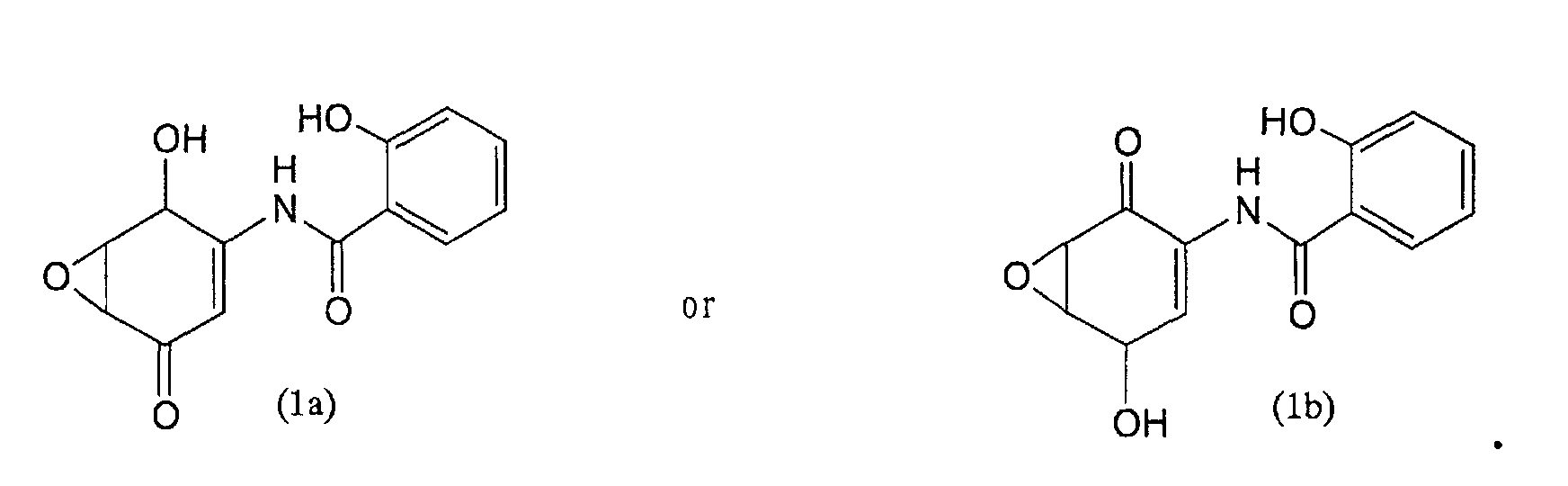
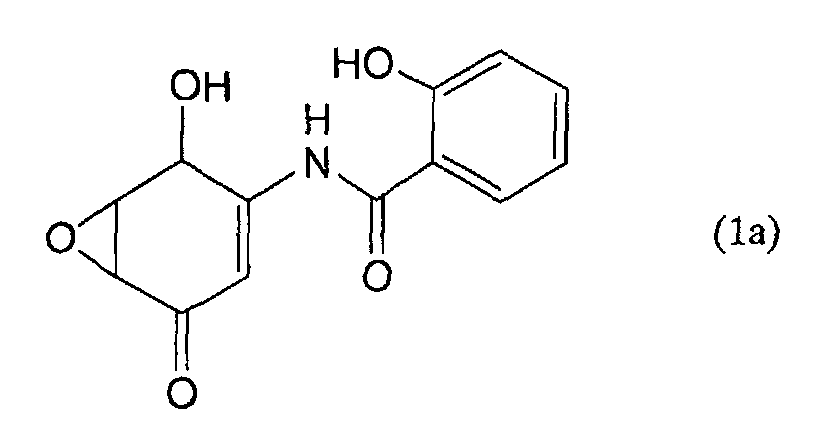
- In consideration of the above problems, the present inventors have repeated screening extensively and as a result they have found that novel salicylamide derivatives having specified chemical structures, i.e., compounds represented by the formula (1a) (DHM2EQ) and the compounds represented by the formula (1b) (DHM3EQ) described hereinbelow exert an effect of inhibiting the activation of NF-κB, thereby achieving the present invention.
- That is, the present invention provides the following novel salicylamide derivatives, a process for producing the same, and drugs containing the same as the active ingredient.
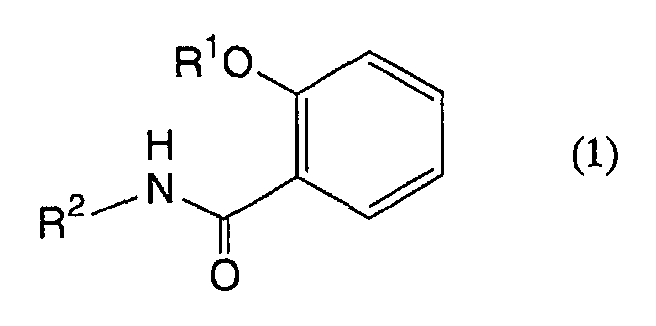
- [1] Salicylamide derivatives represented by formula (1)
wherein R1 represents a hydrogen atom or a C2-4 alkanoyl group, R2 represents a group represented by the following formulae (A), (B), (C), (D), (E), (F) or (G):
 Wherein R3 represents a C1-4 alkyl group.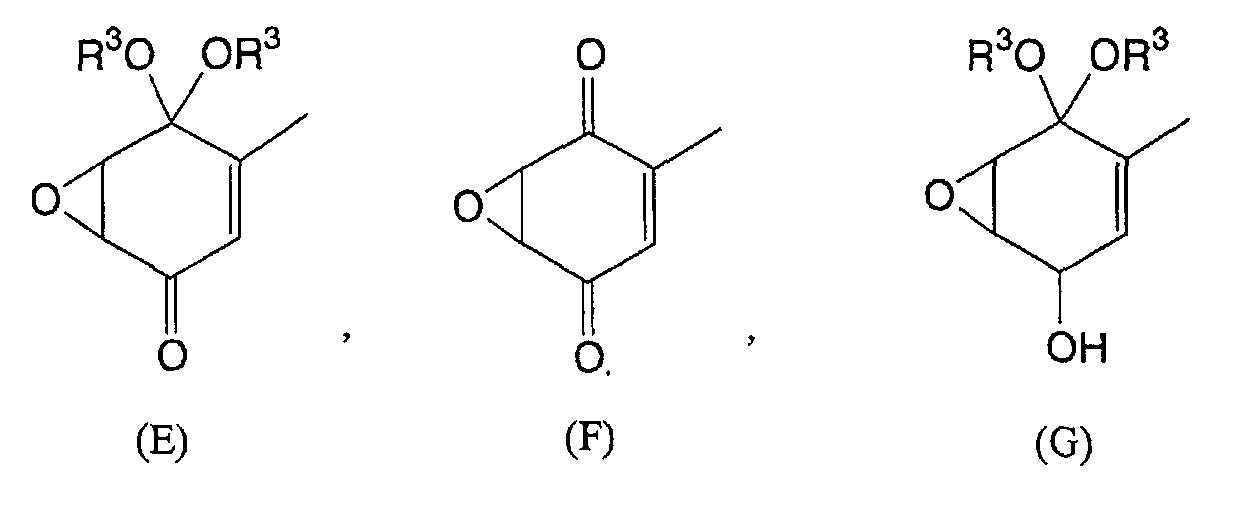
- [2] Salicylamide derivatives as described in [1] above
represented by formulae (1a) or (1b)
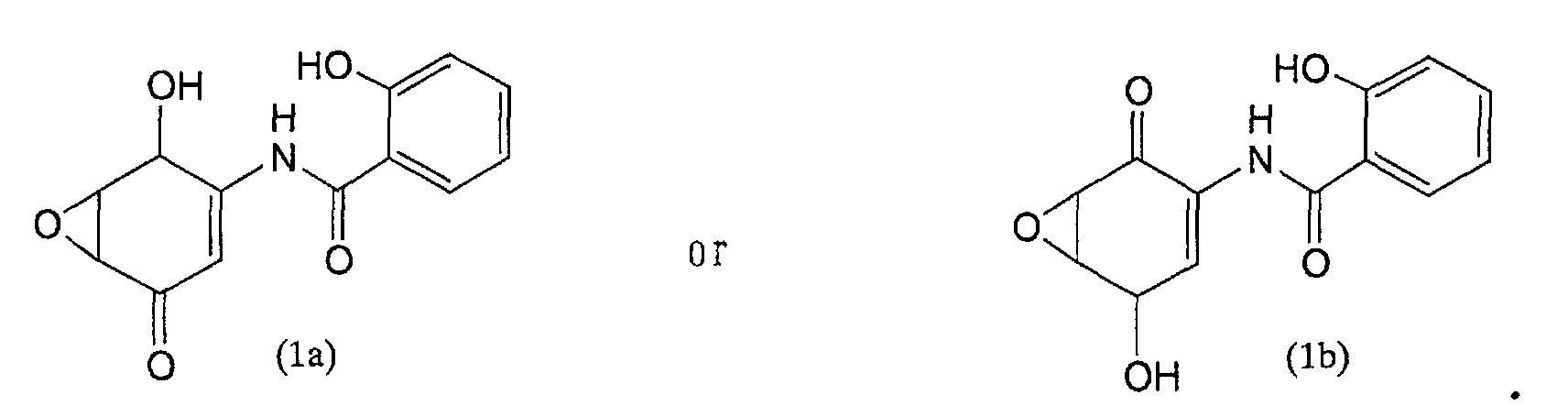
- [3] Salicylamide derivatives as described in [1] above,
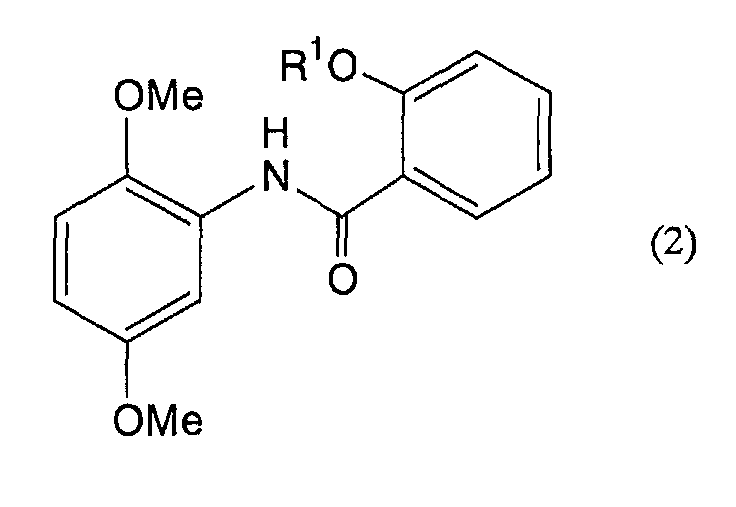
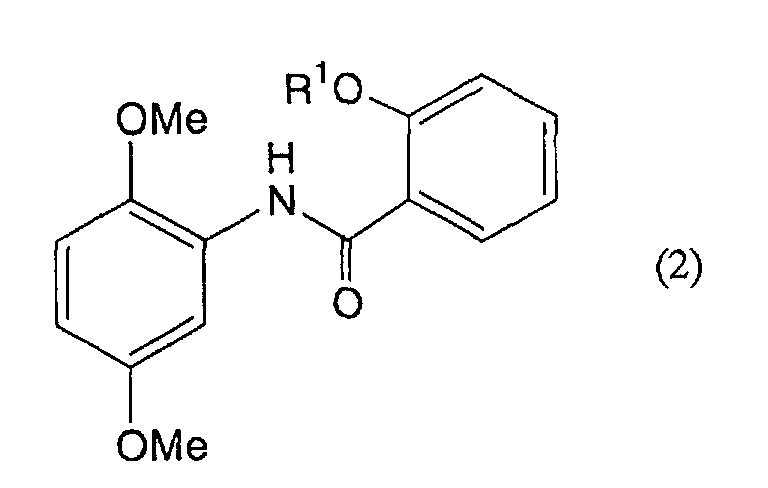
represented by formula (2)
wherein the symbol in the formula has the same meaning as described in [1] above.

- [4] Salicylamide derivatives as described in [1] above,
represented by formula (3)
wherein the symbols in the formula have the same meanings as described in [1] above.
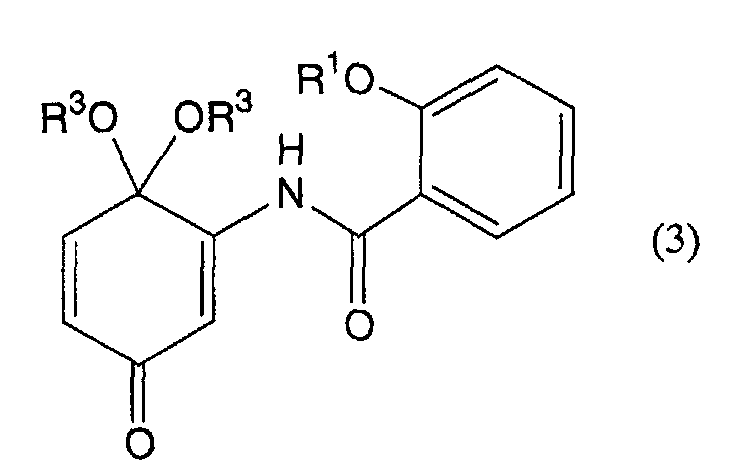
- [5] Salicylamide derivatives as described in [1] above,
represented by formula (4)
wherein the symbol in the formula has the same meaning as described in [1] above.
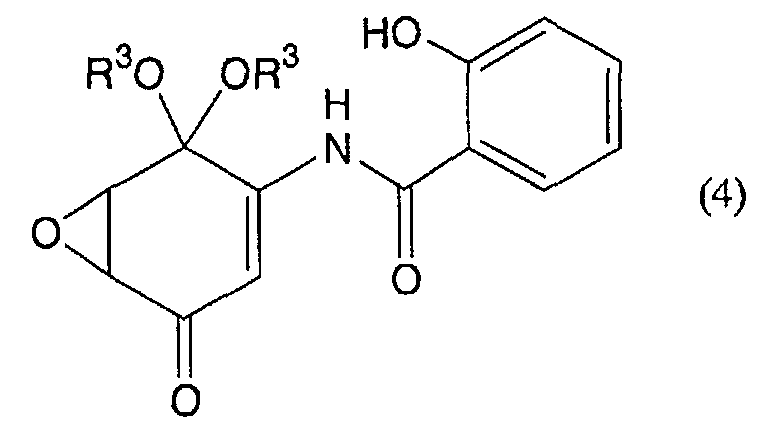
- [6] A salicylamide derivative as described in [1] above,
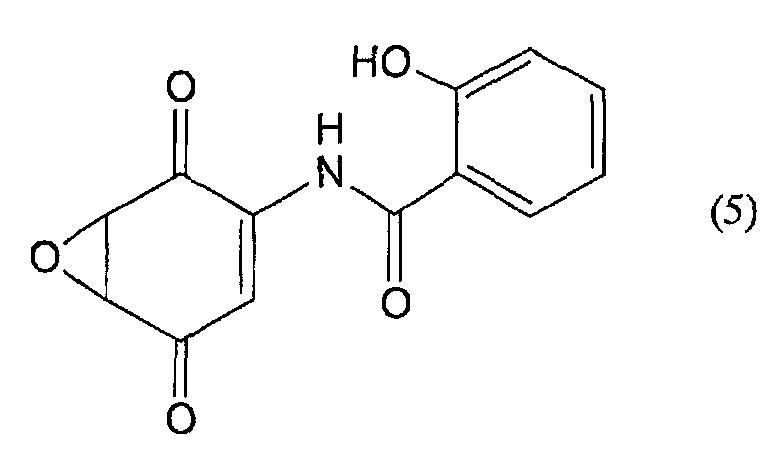
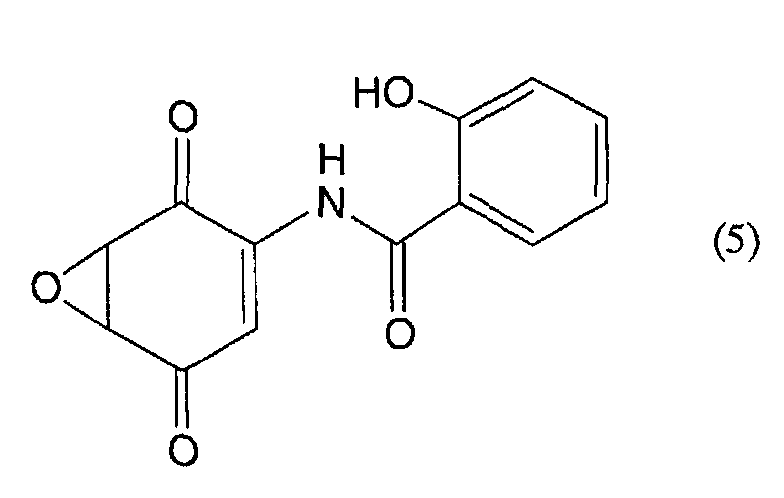
represented by formula (5)
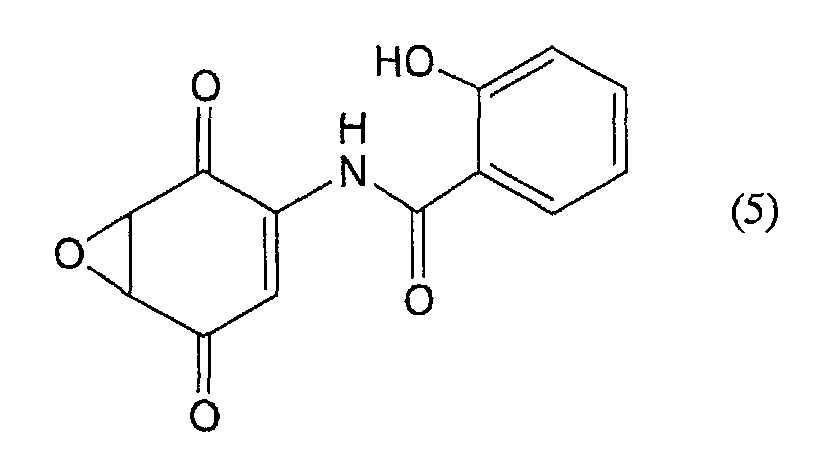
- [7] Salicylamide derivatives as described in [1] above, represented by formula (6)
wherein the symbol in the formula has the same meaning as described in [1] above.

- [8] A process for producing salicylamide derivatives
represented by formula (2)
wherein the symbol in the formula has the same meaning as in described above, comprising reacting 2,5-dimethoxyaniline with O-alkanoylsalicyloyl halide represented by formula (7)
 wherein R1 has the same meaning as described in [1] above, and X represents a halogen atom.
- [9] A process for producing salicylamide derivatives
represented by formula (3)
wherein the symbols in the formula have the same meanings as described above, comprising reacting a salicylamide derivative represented by formula (2)
 wherein the symbol in the formula has the same meaning as in [1] above, with an alkanol represented by formula R3OH wherein R3 is a C1-4 alkyl group, in the presence of a compound represented by a formula C6H3I(OAc)2 wherein Ac is an acetyl group.
- [10] A process for producing salicylamide derivatives
represented by formula (4)
wherein the symbol in the formula has the same meaning as described above, comprising subjecting a salicylamide derivative represented by formula (3)
 wherein the symbols in the formula have the same meanings as in [1] above, to epoxidation.
- [11] A process for producing a salicylamide derivative
represented by formula (5)
comprising subjecting a salicylamide derivative represented by formula (4)
 wherein the symbols in the formula have the same meanings as described in [1] above, to dedialkylketalation.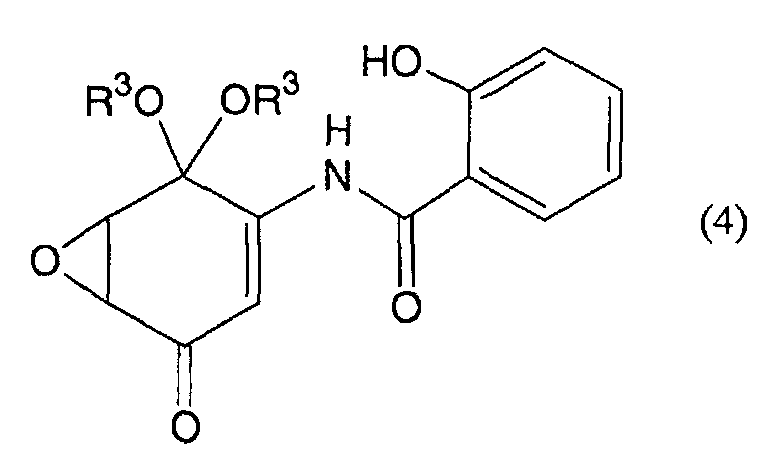
- [12] A process for producing salicylamide derivatives
represented by formula (6)
wherein the symbol in the formula has the same meaning as described above, comprising subjecting a salicylamide derivatives represented by formula (4)
 wherein the symbols in the formula have the same meanings as in [1] above, to reduction.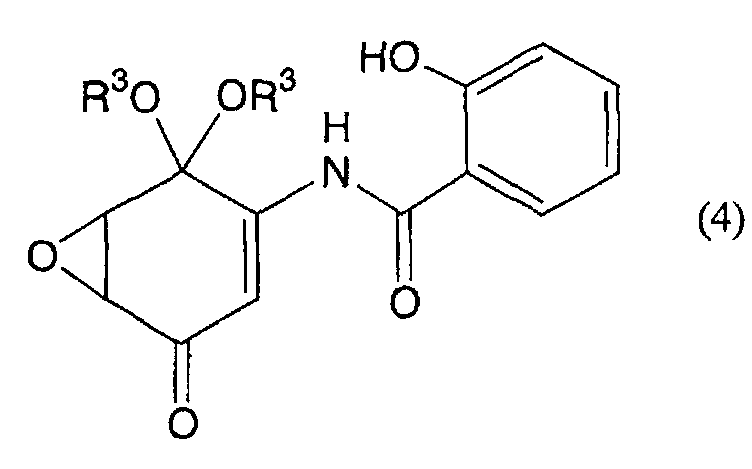
- [13] A process for producing a salicylamide derivative
represented by formula (1a)
comprising subjecting a salicylamide derivative represented by formula (5)
 to reduction.
- [14] A process for producing a salicylamide derivative
represented by formula (1b)
comprising subjecting a salicylamide derivative represented by formula (6)
 wherein the symbol in the formula has the same meaning as described in [1] above, to dedialkylketalation.
- [15] A drug comprising a salicylamide derivative represented by formulae (1a) or (1b) as described in [2] above or a salt thereof as the active ingredient.
- [16] An agent for inhibiting the activation of NF-κB comprising a salicylamide derivative represented by formulae (1a) or (1b) as described in [2] above or a salt thereof as the active ingredient.
- [17] Anti-inflammatory agent or immunosuppressive agent, comprising a salicylamide derivative represented by formulae (1a) or (1b) as described in [2] above or a salt thereof as the active ingredient.
-
-
- Figs. 1(A) and 1(B) are graphs illustrating NF-κB production inhibitory activities of DHM2EQ and DHM3EQ, respectively.
- Figs. 2(A) and 2(B) are graphs illustrating effects of DHM2EQ and DHM3EQ, respectively, on mouse collagen-induced arthritis.
-
- The C1-4 alkyl group represented by R3 in R2 in the formula (1) above includes methyl, ethyl, propyl, butyl groups and isomer groups thereof, with a methyl group and an ethyl group being preferred.
- The C2-4 alkanoyl groups represented by R1 in the formula (2) and (3) above, include acetyl, propionyl and butanoyl groups and isomer groups thereof with an acetyl group being preferred.
- The halogen group represented by X in the formula (7) above includes fluorine, chlorine, bromine and iodine atoms, with chlorine and bromine atoms being preferred.
- The compounds (salicylamide derivatives) of the present invention can be produced according to the synthetic process by Wipf et al. (Synthesis, No. 12, p.1549-1561, 1995).
- Next, the process for producing the compounds of the present invention will be illustrated based on the following reaction schemes.
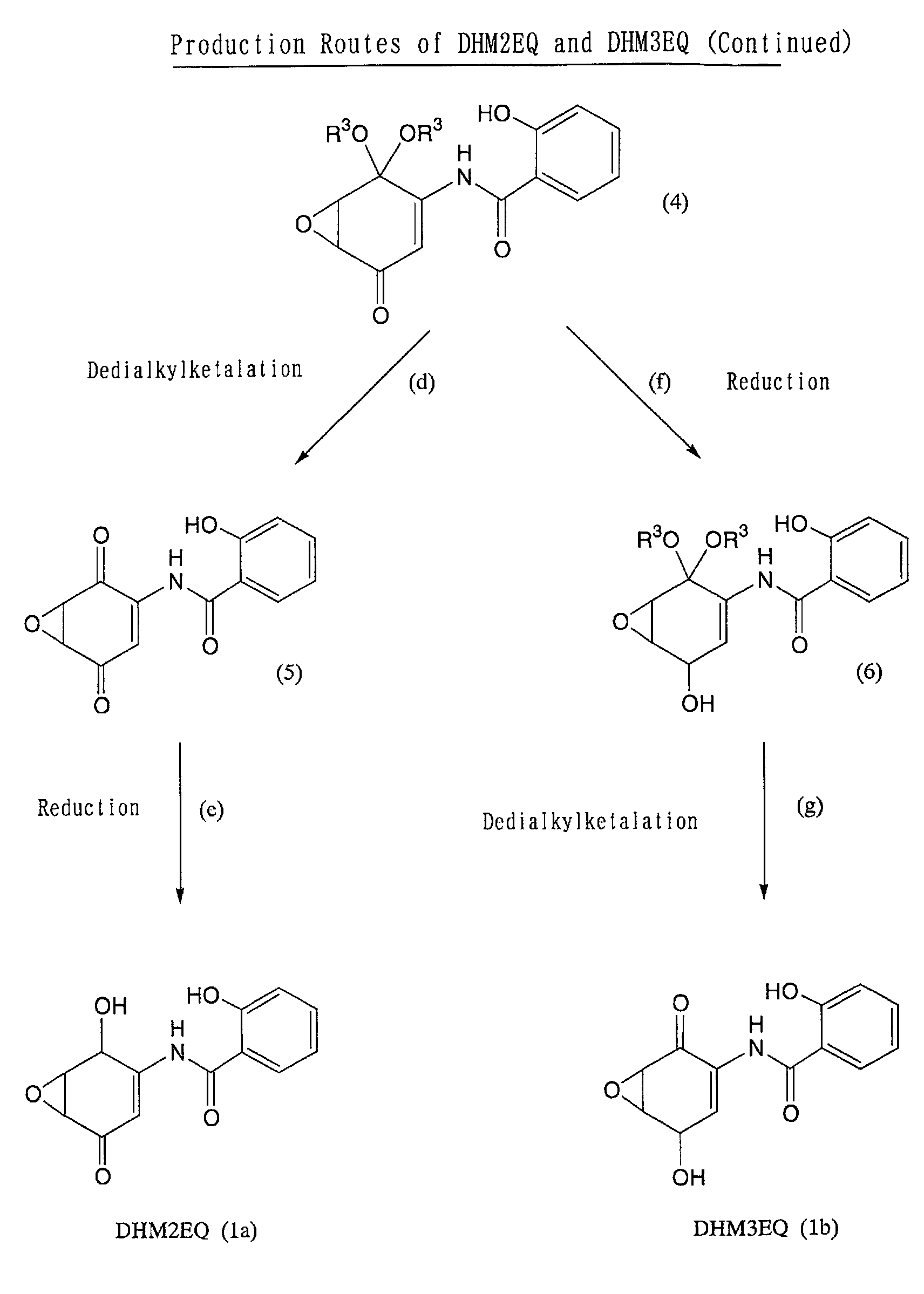
- In the following steps, the compounds represented by the formulae (1a) and (1b) and production intermediate compounds represented by the formulae (2) to (6) are novel compounds.
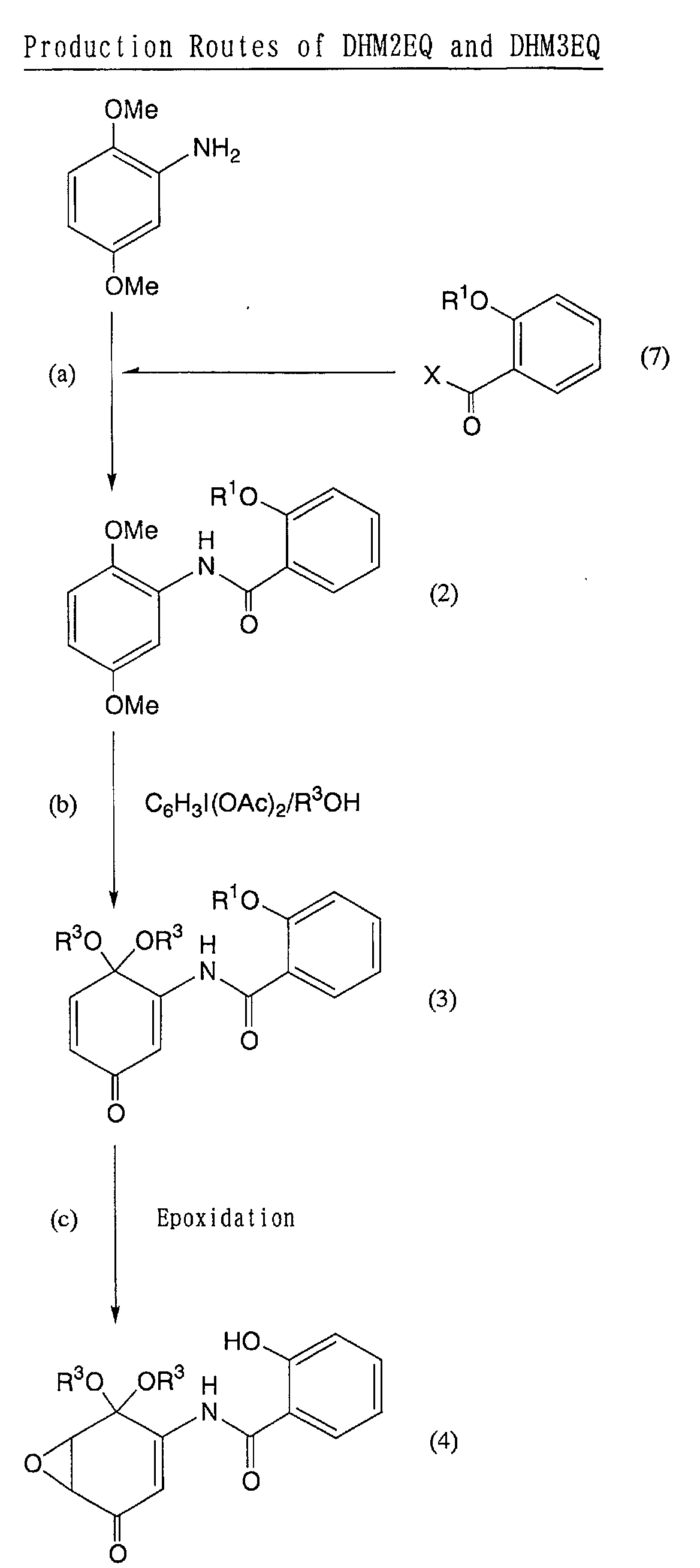
- 2,5-Dimethoxyaniline is dissolved in a solvent (pyridine, etc.), an ethyl acetate solution of O-alkanoylsalicyloyl halide is added thereto at -78°C to 50°C, preferably under ice cooling, and the mixture is allowed to react under stirring. After stopping the reaction by addition of water, ethyl acetate is added to the reaction mixture, which then is sequentially washed with hydrochloric acid, water, a sodium hydrogencarbonate solution and water. After drying, the organic layer is concentrated under reduced pressure and dried under vacuum to obtain an N-(2-alkoxybenzoyl)-2,5-dimethoxyaniline compound represented by formula (2). The compound can be used in the next step without purification.
- The compound of formula (2) obtained as described above is dissolved in a solvent such as methanol, diacetoxyiodobenzene is added thereto at -20°C to 50°C, preferably under ice cooling and the mixture is allowed to react at room temperature under stirring. After concentration under reduced pressure, ethyl acetate is added and the reaction mixture is washed with sodium hydrogencarbonate solution and saline. Then, the solvent is concentrated under reduced pressure and the obtained residue is purified by column chromatography to obtain 3-(O-alkanoylsalicyloyl)amino-4,4-dialkoxy-2,5-cyclohexadienone.
- 3-(O-Alkanoylsalicyloyl)amino-4,4-dialkoxy-2,5-cyclohexadienone represented by formula (3) is dissolved in a solvent (tetrahydrofuran, methanol, etc.), hydrogen peroxide water and sodium hydroxide are added thereto at -20°C to 50°C, preferably under ice cooling, and the mixture is allowed to react while stirring. Ethyl acetate is added to the reaction mixture, which is sequentially washed with hydrochloric solution, aqueous sodium thiosulfate solution, and saline. After drying, the reaction mixture is dried under vacuum. In order to remove the residual starting compound, the residue is dissolved in acetone, p-toluenesulfonic acid is added thereto and stirred at room temperature to decompose the starting compound. Ethyl acetate is added to the residue obtained by distilling off methanol under reduced pressure, and the solution is washed with water. The residue obtained by drying the ethyl acetate layer is purified by column chromatography to obtain 5,6-epxoy-4,4-dialkoxy-3-salicyloylamino-2-cyclohexenone compound represented by formula (4).
- 5,6-Epxoy-4,4-dialkoxy-3-salicyloylamino-2-cyclohexenone compound represented by formula (4) is dissolved in methylene chloride, an inorganic acid or organic acid (trifluoroboron diethyl ether complex, etc.) is added under ice cooling, and the mixture is allowed to react while stirring. A solvent (ethyl acetate, etc.) is added to the reaction mixture, which is washed with water. After concentrating the ethyl acetate layer, the obtained residue is washed with methanol to obtain 5,6-epoxy-2-salicyloylamino-2-cyclohexen-1,4-dione represented by formula (5).
- 5,6-Epoxy-2-salicyloylamino-2-cyclohexen-1,4-dione represented by formula (5) is suspended in a solvent (methanol, ethanol, THF, etc.) and a reducing agent (sodium borohydride, etc.) is added thereto at -78°C to 50°C, preferably under ice cooling. A solvent (ethyl acetate, methylene chloride, etc.) is added to the reaction mixture, which is sequentially washed with hydrochloric acid and water. After drying, the solvent layer is concentrated under reduced pressure, suspended, stirred and washed with methanol to obtain 5,6-epoxy-4-hydroxy-3-salicyloylamino-2-cyclohexenone (DHM2EQ) represented by formula (1a).
- 5,6-Epxoy-4,4-dialkoxy-3-salicyloylamino-2-cyclohexenone compound represented by formula (4) is dissolved in a mixed solution of a solvent such as methanol and sodium hydrogen carbonate solution, a reducing agent (sodium borohydride, etc.) is added at -78°C to 50°C, preferably under ice cooling, and the mixture is allowed to react while stirring. A solvent (ethyl acetate, etc.) is added to the reaction mixture, which is washed with hydrochloric acid and water. After drying, the solvent layer is concentrated under reduced pressure, dried under vacuum and purified by column chromatography to obtain 3,3-dialkoxy-4,5-epoxy-6-hydroxy-2-salicyloylamide-cyclohexene represented by formula (6)
- 3,3-Dialkoxy-4,5-epoxy-6-hydroxy-2-salicyloylamino-cyclohexene represented by formula (6) is dissolved in a solvent (acetone,etc), p-toluenesulfonic acid is added to the solution, which then is stirred at room temperature to proceed reaction. A solvent (ethyl acetate, etc.) is added to the reaction mixture, which is washed with water. The solvent layer is dried, concentrated under reduced pressure and purified to obtain 5,6-epoxy-4-hydroxy-2-salicyloylamino-2-cyclohexenone (DHM3EQ) represented by formula (1b).
- The biological activity of the compounds of the present invention was confirmed on DHM2EQ and DHM3EQ by the following tests.
- The NF-κB production inhibitory activity was measured by luciferase reporter gene assay as shown below.
- A reporter using luciferase DNA was prepared and the NF-κB production inhibitory activity was measured by use of promoter/reporter assay.
- As the plasmid for luciferase assay, 3×κBTK-Luc (endowed by Dr. Junichiro INOUE of The Institute of Medical Science, The University of Tokyo) obtained by coupling luciferase gene derived from lampyrid to 3×κB derived from IgK gene and HSV-TK promoter was used. Further, for the β-galactosidase assay, a plasmid obtained by coupling β-galactosidase gene to β-actin promoter (endowed by Dr. Junichiro INOUE of The Institute of Medical Science, The University of Tokyo) was used.
- Transfection was performed by a DEAE-dextran method. 2×10⁶ cell were washed once with 1×TBS (Tris-HCL (25 mM), NaCl (137 mM), KCl (5 mM), and Na2HPO4 (0.5 mM)) and incubated in transfection buffer (2×TBS (200 µl), 100×Ca2+ · Mg2+((CaCl2 · 2H2O)(78 mM, 4 µl), MgCl2 · 6H2O (76 mM)), and DEAE-dextran (1 mg/ml, 200 µl)) containing 1 µg of plasmid at room temperature for 30 minutes with tapping for every 10 minutes. Thereafter, the cells were washed with 1×TBS and inoculated at 37°C on a 12-well plate (Coster: N. Y., U. S. A.) at 1×10⁶ cells/well. On the day next, DHM2EQ or DHM3EQ solutions in various concentrations were added. After 2 hours' incubation, TNF-α (20 ng/ml) was further added and incubation was performed for 6 hours. The cells were centrifuged at 3,500 rpm for 5 minutes. After removing the supernatant, 50 µl each of lysis buffer (Tris-HCl (25 mM, pH 7.8), DTT (2 mM), 1,2-diaminocyclohexane-N,N',N',N-tetraacetic acid (2 mM), and 10% glycerol, 1% Triton X-100) was added and the cells were solubilized in ice for 30 minutes. Then this was centrifuged at 15,000 rpm for 5 minutes and the supernatant was used as a sample.
- For 10 µl of the sample, 100 µl of a luminescent substrate solution (Tricine (20 mM), (MgCO3) · 4Mg(OH)2 · 5H2O (1.07 mM), MgSO4 (2.67 mM), EDTA (0.1 mM), DTT (33.3 mM), Coenzyme A (270 µM), luciferin (470 µM), and ATP (530 µM)) was added and amount of luminescence was quantitated by use of Lumat LB9501 (Berthold: Bad Wildbad, Germany). Further, the measured amounts were corrected by β-galactosidase assay to obtain the value of luciferase activity.
- β-Galactosidase DNA was to measure transfection efficiency and effect normalization.
- 20 µl of a sample was added to 230 µl of Z buffer (KCl (10 mM), MgSO4 (1 mM), 2-mercaptoethanol (50 mM), and NaPO4 (100 mM: pH 7.5)) and further 50 µl of o-nitrophenyl-β-D-galactopyranoside (ONPG, Sigma) and a NaPO4 (100 mM, pH 7.5) solution (2 mg/ml) were added and the mixture was incubated at 37°C. When the solution turned yellow, 250 µl of Na2CO3 (1 M) was added thereto and the optical density at absorption wavelength of 420 nm was measured by use of a spectrophotometer (Hitachi, Ltd.)
- Type II collagen was emulsified together with an equivalent volume of Freund's complete adjuvant to prepare 1.5 mg/ml of administration solution. This was intradermally inoculated to the radicular portion of mouse tail in an amount of 0.1 ml (150 µg/mouse) to sensitize the mouse. After 3 weeks, 0.1 ml of type II collagen emulsified in the same operational manner as described was intraperitoneally administered to mouse (150 µg/mouse) to effect booster immunization to induce arthritis.
- 6 Animals/group of mice were intraperitoneally administered with DHM2EQ and DHM3EQ in a dosage of 2 mg/kg or 4 mg/
kg 3 times/week from the day of initial immunization in a ratio of 0.1 ml/10g of the body weight, in total 18 times/6 weeks. The control group (6 animals/group) was administered with 0.5% CMC solution in the same schedule as described above and to provide normal group (4 animals/group) in which no collagen arthritis was induced. The effect of inhibiting collagen-induced arthritis was evaluated by degrees of the flare, swelling and stiffening of anterior limb and posterior limb in scores of 0 to 4 (the maximum score of total for 4 limbs was 16).Score 0 was assigned to the case where no symptom was observed,score 1 was assigned to the case where only 1 of small joints such as fingers of the 4 limbs showed flare or swelling,score 2 was assigned to the case where 2 or more small joints or relatively large joints such as wrist or ankle of the 4 limbs showed flare or swelling,score 3 was assigned to the case where a whole hand or foot showed flare or swelling, and score 4 was assigned to the case where it was judged that the swelling of one hand or foot reached maximum with stiffening of the joint. The results obtained are shown in Figs. 2(A) and 2(B). - As will be apparent from the results shown in Figs. 1(A) and 1(B), the novel compounds of the present invention inhibited NF-κB activity starting from 1 µg/ml in the case of DHM2EQ (Fig. 1(A)) and at 10 µg/ml in the case of DHM3EQ (Fig. 1(B)). Furthermore, as will be apparent form Figs. 2(A) and 2(B), DHM2EQ and DHM3EQ, in particular DHM2EQ, inhibited collagen-induced arthritis, i.e., an animal experiment model of chronic articular rheumatism by use of mice and thus their in vivo effectiveness was demonstrated.
- As described above, DHM2EQ and DHM3EQ, the compounds of the present invention exhibited NF-κB activation inhibitory effect and in vivo preventing effect for collagen-induced arthritis. Therefore, the compounds represented by formulae (1a) or (1b) are conceived to be useful as anti-inflammatory agents and immunosuppressive agents.
- The compounds represented by formulae (1a) or (1b) are weakly acidic substances and their salts include salts with organic bases such as quaternary ammonium salt, or salts with various metals, for example salts with alkali metals such as sodium. They may be used in the form of such salts.
- The compounds represented by formulae (1a) or (1b) and salts thereof can be administered after they are prepared into solid compositions or liquid compositions for oral administration, injections for parenteral administration, external preparations, suppositories and so forth. The dosage may vary depending on age, body weight, symptom, therapeutic effect, method of administration, treating time and so forth but usually, they are administered in an amount of about 1 mg to 100 mg per day for an adult in 1 time or divided into several times.
- The solid composition for oral administration includes tablets, pills, capsules, powder, granules and so forth. The composition may contain in addition to inert diluents, various additives, for example, lubricants, disintegrators, or dissolution aids according to a conventional method. The tablets or pills may be covered with a film of a gastric or enteric dissolving substance as needed.
- The liquid substance for oral administration includes emulsions, solutions, syrup, elixirs and so forth that are pharmaceutically acceptable. The composition may contain in addition to inert diluents various auxiliaries such as humectants, suspending agents, edulcorants, flavors, fragrants, and preservatives.
- The injection for parenteral administration according to the present invention includes sterile aqueous or nonaqueous solvents, suspending agents and emulsifiers. The injection may further contain auxiliaries such as preservatives, humectants, emulsifiers, dispersants, stabilizers, dissolution aids (for example glutamic acid or aspartic acid).
- The composition for parenteral administration includes external liquid agents, ointments, liniments, suppositories for rectal administration, and so forth.
- Hereinafter, the present invention will be illustrated in more detail by way of examples. However, the present invention is not limited thereto.
- 2,5-Dimethoxyaniline (10.0 g, 65.3 mmol) was dissolved in pyridine (100 ml), and a solution of O-acetylsalicyloyl chloride (13.0 g, 65.3 mmol) in ethyl acetate (50 ml) was added thereto over 15 minutes under ice cooling. Thereafter, the mixture was stirred for 15 minutes at the same temperature as above. After adding water (10 ml) to the reaction mixture to stop the reaction, ethyl acetate (500 ml) was added and the reaction mixture was washed with 3 N hydrochloric acid (500 ml), water (500 ml), 2% sodium hydrogen carbonate solution (500 ml), and water (500 ml) in order. After drying it over Glauber's salt, the ethyl acetate layer was concentrated under reduced pressure and dried under vacuum to obtain the titled compound (19.8 g) as pale yellow syrup. The compound was used in the subsequent step without purification. The titled compound purified by preparative thin layer chromatography had the following physical properties.
Infrared Absorption Spectra: νmax (KBr) 3409, 1773, 1671, 1603, 1535, 1478, 1283, 1221, 1179 cm-1,
Ultraviolet Absorption spectra: λmax (MeOH) nm ( ε ) 224 (18100), 309 (7890),
FAB mass spectrum (m/z) : 316 (M+H)+,
1H-NMR spectra (CDCl3, 400 MHz) : δ 2.37 (3H, s), 3.82 (3H, s), 3.87 (3H, s), 6.62 (1H, dd, J = 2.8 and 8.8 Hz), 6.84 (1H, d, J = 8.8 Hz), 7.17 (1H, d, J = 7.2 Hz), 7.37 (1H, t, J = 8.0 Hz), 7.52 (1H, dt, J = 2.0 and 7.2 Hz), 7.99 (1H, dd, J = 2.0 and 8.0 Hz), 8.31 (1H, d, J = 2.8 Hz), 8.93 (1H, br s). - N-(2-acetoxybenzoyl)-2,5-dimethoxyaniline (19.8 g) obtained in Example 1 was dissolved in methanol (400 ml) and diacetoxyiodobenzene (27.3 g, 84.9 mmol) was added thereto under ice cooling and the mixture was stirred at room temperature for 1 hours. The reaction mixture was concentrated under reduced pressure to obtain brown syrup-like residue, to which was added ethyl acetate (1l). The mixture was washed with 5% sodium hydrogen carbonate solution (1l), and 10% saline (1l). The ethyl acetate layer was concentrated under reduced pressure to obtain brown syrup-like residue, which was purified by silica gel chromatography (1 kg, hexane/ethyl acetate=2/1) to obtain 12.8 g of solids. They were suspended in 30 ml of methanol and stirred to purify them. Thus, 10.9 g of the titled compound was obtained as white solids (yield: 50% in two steps).
Melting point: 150-152°C
Infrared Absorption Spectra: νmax (KBr) 3451, 1769, 1694,1520, 1198 cm-1,
Ultraviolet Absorption Spectra : λmax (MeOH) nm ( ε ) 238 (14200), 313 (13800),
FAB mass spectrum (m/z) : 332 (M+H)+,
1H-NMR spectra (CDCl3, 400 MHz): δ 2.47 (3H, s), 3.31 (6H, s), 6.48 (1H, dd, J = 2.0 and 10.8 Hz), 6.61 (1H, d, J = 10.8 Hz),7.20 (1H, d, J = 7.2 Hz), 7.39 (1H, t, J = 7.6 Hz), 7.57 (2H, overlapped),8.05 (1H, dd, J = 1.6 and 7.6 Hz), 8.89 (1H, br s). - 3-(O-Acetylsalicyloyl)amino-4,4-dimethoxy-2,5-cyclohexadienone (10.9 g, 33.0 mmol) was dissolved in tetrahydrofuran (200 ml), 30% hydrogen peroxide (60 ml) and 1N sodium hydroxide (165 ml) were added thereto under ice cooling, and the mixture was stirred for 2 hours at the same temperature as described above. While the starting compound remained, treatment of the reaction mixture was performed, since according as the reaction was continued, decomposition of the objective compound occurred. Ethyl acetate (500 ml) was added and the reaction mixture was washed with 1N hydrochloric acid (300 ml), aqueous 10% sodium thiosulfate solution (300 ml×2), and 10% saline (300 ml) in order. After drying it over Glauber's salt, the ethyl acetate layer was dried under vacuum to obtain pale yellow syrup-like residue. In order to facilitate removal of the starting compound having a spot close to the objective compound on TLC, the residue was dissolved in acetone (100 ml), p-toluenesulfonic acid was added, and stirred at room temperature for 1.5 hours to decompose the starting compound. Methanol was distilled off under reduced pressure to obtain residue, to which was added ethyl acetate (200 ml) and the mixture was washed with water (200 ml). The ethyl acetate layer was dried over Glauber's salt to obtain deep brown syrup, which was purified by silica gel column chromatography (400 g, toluene/ethyl acetate=1/1) to obtain 6.58 g of yellow solids. The solids were suspended in methanol (20 ml) and stirred to wash to obtain 5.34 g of the titled compound as white solids (yield: 53%).
Melting point: 147-149°C,
Infrared Absorption Spectra: νmax (KBr) 3264, 1674, 1651, 1530, 1236, 1119, 1053, 1053 cm-1,
Ultraviolet Absorption Spectra: λmax (MeOH) nm ( ε ) 242 (5100), 314 (19600),
FAB Mass Spectrum (m/z) : 306 (M+H)+,
1H-NMR spectra (CDCl3, 400 MHz) : δ 3.35 (3H, s), 3.58 (1H, dd, J = 2.4 and 4.4 Hz), 3.75 (3H, s), 3.89 (1H, d, J = 4.4 Hz), 6.94 (1H, t, J = 8.4 Hz), 7.04 (1H, dd, J = 0.8 and 8.4 Hz), 7.24 (1H, d, J = 2.4 Hz), 7.38 (1H, dd, J = 1.2 and 8.4 Hz), 7.49 (1H, br t, J = 8.4 Hz), 8.65 (1H, br s), 11.37 (1H, s). - 5,6-Epoxy-4,4-dimethoxy-3-salicyloylamino-2-cyclohexenone (1,0 g, 3.27 mmol) was dissolved in methylene chloride (25 ml), trifluoroboron diethyl ether complex (1 ml) was added thereto under ice cooling, and the mixture was stirred at the same temperature as described above for 30 minutes. Ethyl acetate (300 ml) was added to the reaction mixture and the reaction mixture was washed with water (200 ml). After drying it over Glauber's salt, the ethyl acetate layer was dried under vacuum to obtain brown solids, which were washed with methanol (5 ml) to obtain the titled compound (399 mg) as pale brown solids (yield: 47%).
Melting point: 210°C (decomposed),
Infrared Absorption Spectra: νmax (KBr) 3453, 3202, 1713, 1667, 1642, 1611, 1537, 1231 cm-1,
Ultraviolet Absorption Spectra: λmax (MeOH) nm ( ε ) 250 (11900), 326 (15000),
FAB Mass Spectrum (m/z): 259 (M-),
1H-NMR Spectra (acetone-d6, 400 MHz) : δ 3.91 (1H, dd, J = 2.4 and 4.0 Hz),4.11 (1H, d, J = 4.0 Hz), 7.07 (1H, t, J = 8.4 Hz), 7.13 (1H, d, J = 8.4 Hz), 7.51 (1H, dt, J = 1.6 and 8.4 Hz), 7.61 (1H, d, J = 2.4 Hz), 8.06 (1H, dd, J = 1.6 and 8.4 Hz), 10.83 (1H, br s), 10.88 (1H, br s). - 5,6-Epoxy-2-salicyloylamino-2-cyclohexen-1,4-dione (81.8 mg, 0.316 mmol) was suspended in methanol (10 ml), sodium borohydride (11.9 mg, 0.316 mmol) was added thereto under ice cooling, and the mixture was stirred at the same temperature as described above for 10 minutes. Ethyl acetate (50 ml) was added to the reaction mixture and the reaction mixture was washed with IN hydrochloric acid (50 ml) and water (50 ml) in order. After drying it over Glauber's salt, the ethyl acetate layer was dried under vacuum to obtain pale brown solids, which were suspended in with methanol (1 ml) and stirred to wash them to obtain DHM2EQ (45.3 mg) as white solids (yield: 72%).
Appearance and Property: White powder, weakly acidic substance,
Melting point: 185°C (decomposed),
Rf value of TLC: 0.45 (measured after development by thin layer chromatography silica gel (Art. 1.05715, produced by Merck, Inc.) with chloroform-methanol (10:1) as a development solvent,
Infrared Absorption Spectra: νmax (KBr) 3360, 1663, 1634, 1609, 1526, 1204, 1071 cm-1,
Ultraviolet Absorption Spectra: λmax (MeOH) nm ( ε ) 242 (5950), 314 (20400),
FAB Mass Spectrum (m/z): 262 (M+H)+,
Molecular formula: C13H11NO5,
1H-NMR Spectra (DMSO-d6, 400 MHz): δ 3.43 (1H, dd, J = 2.4 and 4.4 Hz), 3.85 (1H, dd, J = 2.4 and 4.0 Hz), 4.83 (1H, br s), 6.70 (1H, br s), 6.99 (2H, overlapped), 7.45 (1H, t, J = 8.8 Hz), 7.93 (1H, dd, J = 2.0 and 8.8 Hz), 10.83 (1H, br s), 10.88 (1H, br s). - 5,6-Epoxy-2-salicyloylamino-2-cyclohexen-1,4-dione (200 mg, 0.655 mmol) was dissolved in a mixed solution of methanol (5 ml) and 5% sodium hydrogen carbonate (5 ml), sodium borohydride (24.8 mg, 0.655 mmol) was added thereto under ice cooling, and the mixture was stirred at the same temperature as described above for 30 minutes. Ethyl acetate (50 ml) was added to the reaction mixture and the reaction mixture was washed with IN hydrochloric acid (50 ml) and water (50 ml) in order. After drying it over Glauber's salt, the ethyl acetate layer was concentrated under reduced pressure and dried under vacuum to obtain syrup (206 mg), which were developed by preparative thin layer chromatography with a developing solution of toluene/acetone (1/1) to obtain the titled compound (97 mg) as a colorless, transparent syrup (Yield : 48 %).
Melting point: 170-172°C,
Infrared Absorption Spectra: νmax (KBr) 3366, 3285, 1657, 1537, 1236, 1128, 1063, 1046 cm-1,
Ultraviolet Absorption Spectra: λmax (MeOH) nm ( ε ) 242 (8180), 262 (9190), 300 (7610),
FAB Mass Spectrum (m/z) : 308 (M+H)+,
1H-NMR Spectra (CDCl3, 400 MHz ) : δ 2.13 (1H, d, J = 10.0Hz), 3.27 (3H, s), 3.49 (1H, s), 3.63 (1H, s), 3.64 (3H, s), 3.64 (1H, overlapped), 4.76 (1H, dd, J = 2.0 and 10.0 Hz), 6.68 (1H, d, J = 2.0 Hz), 6.89 (1H, t, J = 7.6 Hz), 7.01 (1H, d, J = 7.6 Hz), 7.34 (1H, dd, J = 1.5 and 8.3 Hz), 7.43 (1H, t, J = 7.6 Hz), 8.23 (1H, s), 11.87 (1H, s),
1H-NMR Spectra (CD3OD, 500 MHz ) : δ 3.28 (3H, s), 3.51 (1H, dt, J = 2.4 and 4.8 Hz), 3.57 (3H, s), 3.63 (1H, d, J = 4.8 Hz), 4.68 (1H, t, J = 2.4 Hz), 6.68 (1H, t, J = 2.4 Hz), 6.91 (1H, dd, J = 0.4 and 8.4 Hz), 6.93 (1H, dt, J = 0.4 and 7.8 Hz), 7.36 (1H, dt, J = 2.0 and 7.8 Hz), 7.94 (1H, dd, J = 2.0 and 7.8 Hz). - 3,3-dimethoxy-4,5-epoxy-6-hydroxy-2-salicyloylamino-cyclohexene (87.0 mg, 0.283 mmol) was dissolved in acetone (2 ml), p-toluenesulfonic acid (5 mg) was added thereto and the mixture was stirred at room temperature for 1 hour. Ethyl acetate (20 ml) was added to the reaction mixture and the reaction mixture was washed with water (15 ml). After drying it over Glauber's salt, the ethyl acetate layer was concentrated under reduced pressure to obtain white solids, which were suspended in with ethyl acetate (1 ml) and stirred to wash them to obtain DHM3EQ (55.1 mg) as white solids (yield: 74%).
Appearance and Property: White powder, weakly acidic substance
Melting point: 178-182°C,
Rf value of TLC: 0.36 (measured after development by thin layer chromatography silica gel (Art. 1.05715, produced by Merck, Inc.) with chloroform-methanol (10:1) as a development solvent,
Infrared Absorption Spectra: νmax (KBr) 3457, 3102, 1696, 1620, 1559, 1381, 1233 cm-1,
Ultraviolet Absorption Spectra: λmax (MeOH) nm ( ε ) 248 (12000), 301 (9360),
FAB Mass Spectrum (m/z) : 262 (M+H)+,
Molecular formula: C13H11NO5,
1H-NMR Spectra (DMSO-d6, 400 MHz): δ 3.63 (1H, d, J = 3.9 Hz), 3.84 (1H, br), 4.87 (1H, br s), 6.97 (2H, overlapped), 7.42 (2H, overlapped), 7.94 (1H, d, J = 8.0 Hz), 10.60 (1H, br s), 11.71 (1H, br s).
Claims (17)
- Salicylamide derivatives represented by formula (1)wherein R1 represents a hydrogen atom or a C2-4 alkanoyl group, R2 represents a group represented by the following formulae (A), (B), (C), (D), (E), (F) or (G):
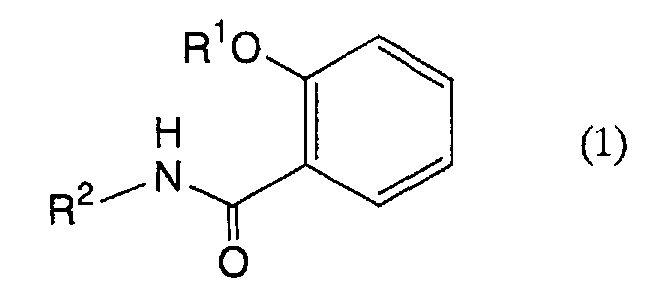
 Wherein R3 represents a C1-4 alkyl group.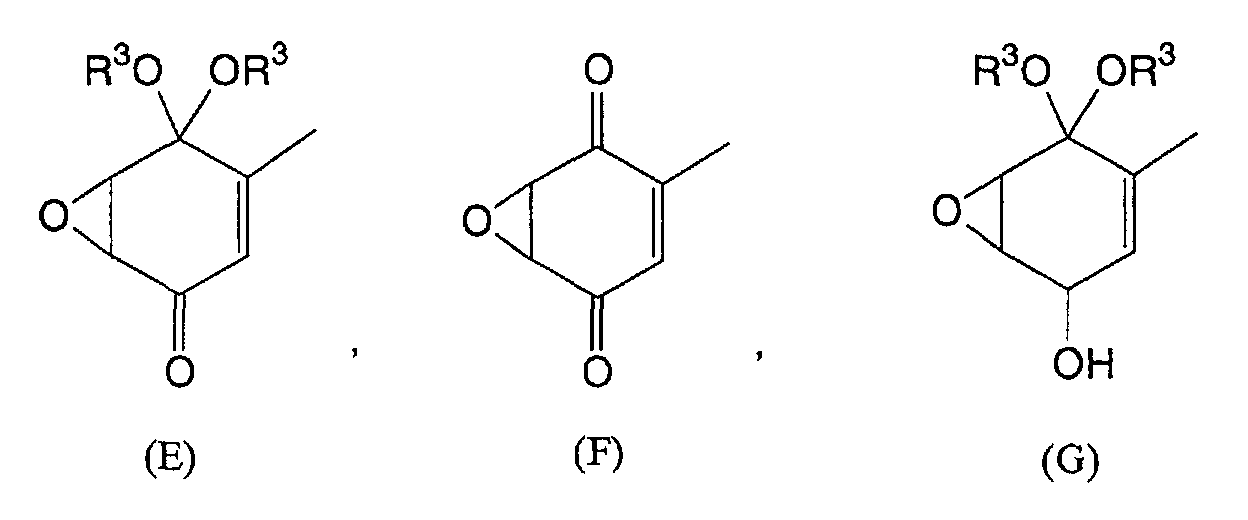
- Salicylamide derivatives as claimed in claim 1, represented by formulae (1a) or (1b)
- Salicylamide derivatives as claimed in claim 1, represented by formula (2)wherein the symbol in the formula has the same meaning as described in claim 1.
- Salicylamide derivatives as claimed in claim 1, represented by formula (3)wherein the symbols in the formula have the same meanings as described in claim 1.

- Salicylamide derivatives as claimed in claim 1, represented by formula (4)wherein the symbol in the formula has the same meaning as descrobed in claim 1.

- A salicylamide derivative as claimed in claim 1, represented by formula (5)

- Salicylamide derivatives as claimed in claim 1, represented by formula (6)wherein the symbol in the formula has the same meaning as described in claim 1.

- A process for producing salicylamide derivatives represented by formula (2)wherein the symbol in the formula has the same meaning as in described above, comprising reacting 2,5-dimethoxyaniline with O-alkanoylsalicyloyl halide represented by formula (7)
 wherein R1 has the same meaning as described in claim 1, and X represents a halogen atom.
- A process for producing salicylamide derivatives represented by formula (3)wherein the symbols in the formula have the same meanings as described above, comprising reacting a salicylamide derivative represented by formula (2)
 wherein the symbol in the formula has the same meaning as described in claim 1, with an alkanol represented by formula R3OH wherein R3 is a C1-4 alkyl group, in the presence of a compound represented by a formula C6H3I(OAc)2 wherein Ac is an acetyl group.
- A process for producing salicylamide derivatives represented by formula (4)wherein the symbol in the formula has the same meaning as described above, comprising subjecting a salicylamide derivative represented by formula (3)
 wherein the symbols in the formula have the same meanings as described in claim 1, to epoxidation.
- A process for producing a salicylamide derivative represented by formula (5)comprising subjecting a salicylamide derivative represented by formula (4)
 wherein the symbols in the formula have the same meanings as described in claim 1, to dedialkylketalation.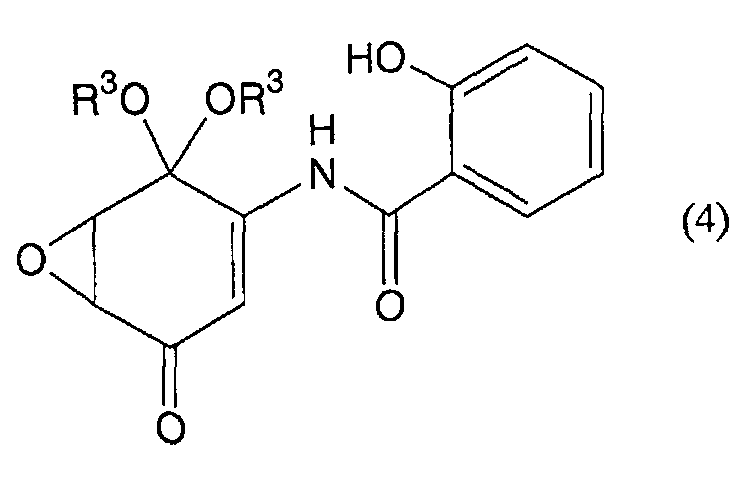
- A process for producing salicylamide derivatives represented by formula (6)wherein the symbol in the formula has the same meaning as described above, comprising subjecting a salicylamide derivatives represented by formula (4)
 wherein the symbols in the formula have the same meanings as described in claim 1, to reduction.
- A process for producing a salicylamide derivative represented by formula (1a)comprising subjecting a salicylamide derivative represented by formula (5)
 to reduction.
- A process for producing a salicylamide derivative represented by formula (1b)comprising subjecting a salicylamide derivative represented by formula (6)
 wherein the symbol in the formula has the same meaning as described in claim 1, to dedialkylketalation.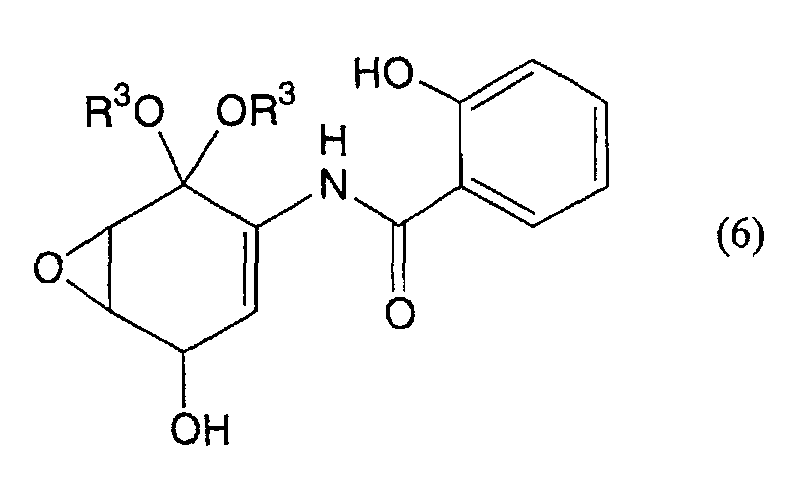
- A drug comprising a salicylamide derivative represented by formulae (1a) or (1b) as claimed in claim 2 or a salt thereof as the active ingredient.
- An agent for inhibiting the activation of NF-κB comprising a salicylamide derivative represented by formulae (1a) or (1b) as described in claim 2 or a salt thereof as the active ingredient.
- Anti-inflammatory agent or immunosuppressive agent, comprising a salicylamide derivative represented by formulae (1a) or (1b) as described in claim 2 or a salt thereof as the active ingredient.
Applications Claiming Priority (3)
| Application Number | Priority Date | Filing Date | Title |
|---|---|---|---|
| JP22738999 | 1999-08-11 | ||
| JP22738999 | 1999-08-11 | ||
| PCT/JP2000/005332 WO2001012588A1 (en) | 1999-08-11 | 2000-08-09 | Salicylamide derivatives |
Publications (3)
| Publication Number | Publication Date |
|---|---|
| EP1219596A1 true EP1219596A1 (en) | 2002-07-03 |
| EP1219596A4 EP1219596A4 (en) | 2004-08-18 |
| EP1219596B1 EP1219596B1 (en) | 2006-11-02 |
Family
ID=16860062
Family Applications (1)
| Application Number | Title | Priority Date | Filing Date |
|---|---|---|---|
| EP00951914A Expired - Lifetime EP1219596B1 (en) | 1999-08-11 | 2000-08-09 | Salicylamide derivatives |
Country Status (10)
| Country | Link |
|---|---|
| US (1) | US6566394B1 (en) |
| EP (1) | EP1219596B1 (en) |
| JP (1) | JP4691295B2 (en) |
| KR (1) | KR100709317B1 (en) |
| CN (1) | CN1185212C (en) |
| AT (1) | ATE344234T1 (en) |
| AU (1) | AU774221B2 (en) |
| CA (1) | CA2393883C (en) |
| DE (1) | DE60031705T2 (en) |
| WO (1) | WO2001012588A1 (en) |
Cited By (7)
| Publication number | Priority date | Publication date | Assignee | Title |
|---|---|---|---|---|
| WO2004072056A1 (en) * | 2003-02-14 | 2004-08-26 | Keio University | Medicinal composition |
| AU2003242118B2 (en) * | 2002-06-06 | 2008-09-11 | Institute Of Medicinal Molecular Design, Inc | O-substituted hydroxyaryl derivatives |
| EP1656936A4 (en) * | 2003-08-06 | 2010-03-17 | Signal Creation Inc | Macrophage activation inhibitor |
| US7700655B2 (en) | 2002-06-06 | 2010-04-20 | Institute Of Medicinal Molecular Design, Inc. | Antiallergic agents |
| WO2010111460A1 (en) * | 2009-03-27 | 2010-09-30 | Profectus Biosciences, Inc. | Inhibitors of nf-kb |
| WO2010127058A1 (en) * | 2009-05-01 | 2010-11-04 | Profectus Biosciences, Inc. | Benzamide and naphthamide derivatives inhibiting nuclear factor- kap pa (b) - (nf-kb) |
| US8097759B2 (en) | 2000-12-18 | 2012-01-17 | Institute Of Medicinal Molecular Design, Inc. | Inflammatory cytokine release inhibitor |
Families Citing this family (14)
| Publication number | Priority date | Publication date | Assignee | Title |
|---|---|---|---|---|
| DE10222895A1 (en) * | 2002-05-23 | 2003-12-11 | Bosch Gmbh Robert | High pressure accumulator for fuel injection systems with integrated pressure control valve |
| CA2488342A1 (en) * | 2002-06-05 | 2003-12-18 | Institute Of Medicinal Molecular Design, Inc. | Therapeutic drug for diabetes |
| WO2003103658A1 (en) * | 2002-06-05 | 2003-12-18 | 株式会社医薬分子設計研究所 | Immunity-related protein kinase inhibitors |
| EA009523B1 (en) * | 2002-06-05 | 2008-02-28 | Инститьют Оф Медисинал Молекьюлар Дизайн. Инк. | INHIBITORS FOR THE ACTIVATION OF AP-1 AND NFAT |
| EP1535609A4 (en) * | 2002-06-10 | 2009-01-07 | Inst Med Molecular Design Inc | NF-KB ACTIVATION INHIBITORS |
| EA010835B1 (en) * | 2002-06-10 | 2008-12-30 | Инститьют Оф Медисинал Молекьюлар Дизайн. Инк. | Medicine for the treatment of cancer |
| US20060035944A1 (en) * | 2002-06-11 | 2006-02-16 | Susumu Muto | Remedies for neurodegenerative diseases |
| KR20060053824A (en) * | 2002-06-26 | 2006-05-22 | 시그널 크리에이션, 아이엔씨 | Pharmaceutical composition containing NF-κB inhibitor |
| US7959161B2 (en) * | 2002-11-12 | 2011-06-14 | Nok Corporation | Rubber-like elastic part |
| JP2007182397A (en) * | 2006-01-05 | 2007-07-19 | Keio Gijuku | NF-κB inhibitor |
| EP2443103A1 (en) | 2009-06-18 | 2012-04-25 | Profectus Biosciences, Inc. | Oxabicyclo [4.1.o]hept-b-en-s-ylcarbamoyl derivatives inhibiting the nuclear factor-kappa(b) - (nf-kb) |
| CN103588731B (en) * | 2013-12-02 | 2015-09-02 | 深圳万和制药有限公司 | Salicylamide derivatives and preparation method |
| CN103588732B (en) * | 2013-12-02 | 2015-03-25 | 深圳万和制药有限公司 | Salicylamide derivative crystal |
| RU2703735C1 (en) * | 2018-11-09 | 2019-10-22 | Общество с ограниченной ответственностью "ПеритонТрит" | Pharmaceutical composition containing dhmeq or its analogues |
Family Cites Families (3)
| Publication number | Priority date | Publication date | Assignee | Title |
|---|---|---|---|---|
| JPS6445738A (en) * | 1987-08-13 | 1989-02-20 | Fujikura Ltd | Production of optical fiber preform |
| JPH09157266A (en) * | 1995-12-04 | 1997-06-17 | Microbial Chem Res Found | Novel antibiotics, epoxyquinomycins A and B, and method for producing the same |
| JPH1045738A (en) * | 1996-07-29 | 1998-02-17 | Microbial Chem Res Found | Antibiotic epoxyquinomycins C and D, their production and antirheumatic agents |
-
2000
- 2000-08-09 WO PCT/JP2000/005332 patent/WO2001012588A1/en not_active Ceased
- 2000-08-09 CN CNB008114870A patent/CN1185212C/en not_active Expired - Lifetime
- 2000-08-09 AU AU64727/00A patent/AU774221B2/en not_active Ceased
- 2000-08-09 JP JP2001516889A patent/JP4691295B2/en not_active Expired - Fee Related
- 2000-08-09 US US10/049,158 patent/US6566394B1/en not_active Expired - Fee Related
- 2000-08-09 EP EP00951914A patent/EP1219596B1/en not_active Expired - Lifetime
- 2000-08-09 DE DE60031705T patent/DE60031705T2/en not_active Expired - Lifetime
- 2000-08-09 CA CA2393883A patent/CA2393883C/en not_active Expired - Fee Related
- 2000-08-09 KR KR1020027001552A patent/KR100709317B1/en not_active Expired - Fee Related
- 2000-08-09 AT AT00951914T patent/ATE344234T1/en not_active IP Right Cessation
Non-Patent Citations (2)
| Title |
|---|
| No further relevant documents disclosed * |
| See also references of WO0112588A1 * |
Cited By (10)
| Publication number | Priority date | Publication date | Assignee | Title |
|---|---|---|---|---|
| US8097759B2 (en) | 2000-12-18 | 2012-01-17 | Institute Of Medicinal Molecular Design, Inc. | Inflammatory cytokine release inhibitor |
| US8263657B2 (en) | 2000-12-18 | 2012-09-11 | Institute Of Medicinal Molecular Design, Inc. | Inhibitors against the production and release of inflammatory cytokines |
| AU2003242118B2 (en) * | 2002-06-06 | 2008-09-11 | Institute Of Medicinal Molecular Design, Inc | O-substituted hydroxyaryl derivatives |
| US7626042B2 (en) | 2002-06-06 | 2009-12-01 | Institute Of Medicinal Molecular Design, Inc. | O-substituted hydroxyaryl derivatives |
| US7700655B2 (en) | 2002-06-06 | 2010-04-20 | Institute Of Medicinal Molecular Design, Inc. | Antiallergic agents |
| WO2004072056A1 (en) * | 2003-02-14 | 2004-08-26 | Keio University | Medicinal composition |
| EP1656936A4 (en) * | 2003-08-06 | 2010-03-17 | Signal Creation Inc | Macrophage activation inhibitor |
| WO2010111460A1 (en) * | 2009-03-27 | 2010-09-30 | Profectus Biosciences, Inc. | Inhibitors of nf-kb |
| US8629164B2 (en) | 2009-03-27 | 2014-01-14 | Profectus Biosciences, Inc. | Inhibitors of NF-κB |
| WO2010127058A1 (en) * | 2009-05-01 | 2010-11-04 | Profectus Biosciences, Inc. | Benzamide and naphthamide derivatives inhibiting nuclear factor- kap pa (b) - (nf-kb) |
Also Published As
| Publication number | Publication date |
|---|---|
| DE60031705T2 (en) | 2007-10-04 |
| EP1219596B1 (en) | 2006-11-02 |
| AU774221B2 (en) | 2004-06-17 |
| JP4691295B2 (en) | 2011-06-01 |
| AU6472700A (en) | 2001-03-13 |
| KR100709317B1 (en) | 2007-04-20 |
| CA2393883A1 (en) | 2001-02-22 |
| US6566394B1 (en) | 2003-05-20 |
| KR20020031402A (en) | 2002-05-01 |
| CN1368954A (en) | 2002-09-11 |
| DE60031705D1 (en) | 2006-12-14 |
| CN1185212C (en) | 2005-01-19 |
| ATE344234T1 (en) | 2006-11-15 |
| CA2393883C (en) | 2010-07-06 |
| EP1219596A4 (en) | 2004-08-18 |
| WO2001012588A1 (en) | 2001-02-22 |
Similar Documents
| Publication | Publication Date | Title |
|---|---|---|
| EP1219596B1 (en) | Salicylamide derivatives | |
| SU1681728A3 (en) | Method for preparation of n-(benzthiazolyl-2)amide derivatives of benzoic or thiazol-4-carboxylic acid | |
| CN103140227B (en) | Prepare the method for tubulin Lysin | |
| JPWO2001012588A1 (en) | Salicylic acid amide derivatives | |
| HU202515B (en) | Process for producing new forscholine derivatives and pharmaceutical compositions comprising such compounds | |
| JPH0631235B2 (en) | Pyridazinone derivative | |
| EP0061206B1 (en) | 6-aminopenicillanic acid esters and their use for producing new ampicillin esters | |
| EP0623023A1 (en) | Retroreverse pyrrole-amidino oligopeptide anticancer agent analogues, preparation of same, and pharmaceutical compositions containing such analogues | |
| JPS63310882A (en) | Polyoxygenated labdane derivative and manufacture | |
| EP0157623B1 (en) | Optically active isomers of benzopyran derivatives useful for treating cardiovascular disease | |
| HUT70488A (en) | Condensed quinolyl-dihydropyridine derivatives, pharmaceutical compositions containing them and process for producing the compounds and the pharmaceutical compositions | |
| US4785018A (en) | Glycine derivatives | |
| FR2496666A1 (en) | NOVEL CEPHALOSPORINE DERIVATIVES AND PHARMACEUTICAL COMPOSITION CONTAINING SAME | |
| JPH05306281A (en) | Novel method for producing phenylalkanoate hydrochloride and its intermediate | |
| FI62095C (en) | FRUIT PROCEDURE FOR FRAMSTAELLNING AV NYA 1- OCH D1-6- / M- (ISOXAZOLE-3-CARBOXIAMIDO) PHENYL) -2,3,5,6-TETRAHYDROIMIDAZO (2,1-B) THIAZOLDERIVAT VILKA ANVAENDS SOM MASKMEDEL | |
| JPH0692358B2 (en) | Amino acid derivative and enkephalinase inhibitor containing the derivative as an active ingredient | |
| JP3207017B2 (en) | Method for producing benzylsuccinic acid derivative and intermediate for producing the same | |
| EP0083256B1 (en) | Benzamide derivatives | |
| CA1084508A (en) | Novel derivatives of 6-(m-aminophenyl)-2,3,5,6- tetrahydroimidazo 2,1-b thiazoles | |
| CA1097652A (en) | Eprimerization process | |
| KR100554108B1 (en) | Method of producing erdostein | |
| JP2718715B2 (en) | 9,10-seco-cycloartane derivatives | |
| NZ200798A (en) | Sulphur-containing amides and pharmaceutical compositions | |
| JP4425373B2 (en) | Method for producing hydroxy-2-halogenopyridine derivative | |
| KR810000609B1 (en) | Method for preparing 6- (m-aminophenyl) -2, 3, 5, 6-tetrahydroimidazo [2, 1-b] thiazole derivative |
Legal Events
| Date | Code | Title | Description |
|---|---|---|---|
| PUAI | Public reference made under article 153(3) epc to a published international application that has entered the european phase |
Free format text: ORIGINAL CODE: 0009012 |
|
| 17P | Request for examination filed |
Effective date: 20020304 |
|
| AK | Designated contracting states |
Kind code of ref document: A1 Designated state(s): AT BE CH CY DE DK ES FI FR GB GR IE IT LI LU MC NL PT SE |
|
| AX | Request for extension of the european patent |
Free format text: AL;LT;LV;MK;RO;SI |
|
| A4 | Supplementary search report drawn up and despatched |
Effective date: 20040701 |
|
| RIC1 | Information provided on ipc code assigned before grant |
Ipc: 7C 07D 303/36 B Ipc: 7A 61K 31/609 B Ipc: 7A 61P 19/02 B Ipc: 7C 07C 231/12 B Ipc: 7C 07D 303/14 B Ipc: 7C 07D 303/32 B Ipc: 7C 07C 237/40 B Ipc: 7A 61P 29/00 B Ipc: 7A 61P 37/06 B Ipc: 7C 07C 231/02 B Ipc: 7C 07D 303/22 B Ipc: 7C 07C 237/38 A |
|
| RAP1 | Party data changed (applicant data changed or rights of an application transferred) |
Owner name: KEIO UNIVERSITY |
|
| GRAP | Despatch of communication of intention to grant a patent |
Free format text: ORIGINAL CODE: EPIDOSNIGR1 |
|
| GRAS | Grant fee paid |
Free format text: ORIGINAL CODE: EPIDOSNIGR3 |
|
| RAP1 | Party data changed (applicant data changed or rights of an application transferred) |
Owner name: SIGNAL CREATION INC. |
|
| GRAA | (expected) grant |
Free format text: ORIGINAL CODE: 0009210 |
|
| AK | Designated contracting states |
Kind code of ref document: B1 Designated state(s): AT BE CH CY DE DK ES FI FR GB GR IE IT LI LU MC NL PT SE |
|
| PG25 | Lapsed in a contracting state [announced via postgrant information from national office to epo] |
Ref country code: NL Free format text: LAPSE BECAUSE OF FAILURE TO SUBMIT A TRANSLATION OF THE DESCRIPTION OR TO PAY THE FEE WITHIN THE PRESCRIBED TIME-LIMIT Effective date: 20061102 Ref country code: FI Free format text: LAPSE BECAUSE OF FAILURE TO SUBMIT A TRANSLATION OF THE DESCRIPTION OR TO PAY THE FEE WITHIN THE PRESCRIBED TIME-LIMIT Effective date: 20061102 Ref country code: BE Free format text: LAPSE BECAUSE OF FAILURE TO SUBMIT A TRANSLATION OF THE DESCRIPTION OR TO PAY THE FEE WITHIN THE PRESCRIBED TIME-LIMIT Effective date: 20061102 Ref country code: CH Free format text: LAPSE BECAUSE OF FAILURE TO SUBMIT A TRANSLATION OF THE DESCRIPTION OR TO PAY THE FEE WITHIN THE PRESCRIBED TIME-LIMIT Effective date: 20061102 Ref country code: LI Free format text: LAPSE BECAUSE OF FAILURE TO SUBMIT A TRANSLATION OF THE DESCRIPTION OR TO PAY THE FEE WITHIN THE PRESCRIBED TIME-LIMIT Effective date: 20061102 Ref country code: AT Free format text: LAPSE BECAUSE OF FAILURE TO SUBMIT A TRANSLATION OF THE DESCRIPTION OR TO PAY THE FEE WITHIN THE PRESCRIBED TIME-LIMIT Effective date: 20061102 Ref country code: IT Free format text: LAPSE BECAUSE OF FAILURE TO SUBMIT A TRANSLATION OF THE DESCRIPTION OR TO PAY THE FEE WITHIN THE PRESCRIBED TIME-LIMIT;WARNING: LAPSES OF ITALIAN PATENTS WITH EFFECTIVE DATE BEFORE 2007 MAY HAVE OCCURRED AT ANY TIME BEFORE 2007. THE CORRECT EFFECTIVE DATE MAY BE DIFFERENT FROM THE ONE RECORDED. Effective date: 20061102 |
|
| REG | Reference to a national code |
Ref country code: GB Ref legal event code: FG4D |
|
| REG | Reference to a national code |
Ref country code: IE Ref legal event code: FG4D |
|
| REG | Reference to a national code |
Ref country code: CH Ref legal event code: EP |
|
| REF | Corresponds to: |
Ref document number: 60031705 Country of ref document: DE Date of ref document: 20061214 Kind code of ref document: P |
|
| PG25 | Lapsed in a contracting state [announced via postgrant information from national office to epo] |
Ref country code: DK Free format text: LAPSE BECAUSE OF FAILURE TO SUBMIT A TRANSLATION OF THE DESCRIPTION OR TO PAY THE FEE WITHIN THE PRESCRIBED TIME-LIMIT Effective date: 20070202 Ref country code: SE Free format text: LAPSE BECAUSE OF FAILURE TO SUBMIT A TRANSLATION OF THE DESCRIPTION OR TO PAY THE FEE WITHIN THE PRESCRIBED TIME-LIMIT Effective date: 20070202 |
|
| PG25 | Lapsed in a contracting state [announced via postgrant information from national office to epo] |
Ref country code: ES Free format text: LAPSE BECAUSE OF FAILURE TO SUBMIT A TRANSLATION OF THE DESCRIPTION OR TO PAY THE FEE WITHIN THE PRESCRIBED TIME-LIMIT Effective date: 20070213 |
|
| PG25 | Lapsed in a contracting state [announced via postgrant information from national office to epo] |
Ref country code: PT Free format text: LAPSE BECAUSE OF FAILURE TO SUBMIT A TRANSLATION OF THE DESCRIPTION OR TO PAY THE FEE WITHIN THE PRESCRIBED TIME-LIMIT Effective date: 20070402 |
|
| NLV1 | Nl: lapsed or annulled due to failure to fulfill the requirements of art. 29p and 29m of the patents act | ||
| REG | Reference to a national code |
Ref country code: CH Ref legal event code: PL |
|
| ET | Fr: translation filed | ||
| PLBE | No opposition filed within time limit |
Free format text: ORIGINAL CODE: 0009261 |
|
| STAA | Information on the status of an ep patent application or granted ep patent |
Free format text: STATUS: NO OPPOSITION FILED WITHIN TIME LIMIT |
|
| 26N | No opposition filed |
Effective date: 20070803 |
|
| PG25 | Lapsed in a contracting state [announced via postgrant information from national office to epo] |
Ref country code: MC Free format text: LAPSE BECAUSE OF NON-PAYMENT OF DUE FEES Effective date: 20070831 Ref country code: GR Free format text: LAPSE BECAUSE OF FAILURE TO SUBMIT A TRANSLATION OF THE DESCRIPTION OR TO PAY THE FEE WITHIN THE PRESCRIBED TIME-LIMIT Effective date: 20070203 |
|
| PG25 | Lapsed in a contracting state [announced via postgrant information from national office to epo] |
Ref country code: IE Free format text: LAPSE BECAUSE OF NON-PAYMENT OF DUE FEES Effective date: 20070809 |
|
| PG25 | Lapsed in a contracting state [announced via postgrant information from national office to epo] |
Ref country code: CY Free format text: LAPSE BECAUSE OF FAILURE TO SUBMIT A TRANSLATION OF THE DESCRIPTION OR TO PAY THE FEE WITHIN THE PRESCRIBED TIME-LIMIT Effective date: 20061102 Ref country code: LU Free format text: LAPSE BECAUSE OF NON-PAYMENT OF DUE FEES Effective date: 20070809 |
|
| REG | Reference to a national code |
Ref country code: GB Ref legal event code: 732E Free format text: REGISTERED BETWEEN 20140515 AND 20140521 |
|
| REG | Reference to a national code |
Ref country code: DE Ref legal event code: R081 Ref document number: 60031705 Country of ref document: DE Owner name: UMEZAWA, KAZUO, JP Free format text: FORMER OWNER: SIGNAL CREATION INC., YOKOHAMA, JP Effective date: 20140507 Ref country code: DE Ref legal event code: R081 Ref document number: 60031705 Country of ref document: DE Owner name: UMEZAWA, KAZUO, JP Free format text: FORMER OWNER: SIGNAL CREATION INC., YOKOHAMA, KANAGAWA, JP Effective date: 20140507 |
|
| REG | Reference to a national code |
Ref country code: FR Ref legal event code: TP Owner name: KAZUO UMEZAWA, JP Effective date: 20140725 |
|
| REG | Reference to a national code |
Ref country code: FR Ref legal event code: PLFP Year of fee payment: 17 |
|
| REG | Reference to a national code |
Ref country code: FR Ref legal event code: PLFP Year of fee payment: 18 |
|
| PGFP | Annual fee paid to national office [announced via postgrant information from national office to epo] |
Ref country code: DE Payment date: 20170801 Year of fee payment: 18 Ref country code: FR Payment date: 20170714 Year of fee payment: 18 |
|
| REG | Reference to a national code |
Ref country code: DE Ref legal event code: R119 Ref document number: 60031705 Country of ref document: DE |
|
| PG25 | Lapsed in a contracting state [announced via postgrant information from national office to epo] |
Ref country code: DE Free format text: LAPSE BECAUSE OF NON-PAYMENT OF DUE FEES Effective date: 20190301 |
|
| PG25 | Lapsed in a contracting state [announced via postgrant information from national office to epo] |
Ref country code: FR Free format text: LAPSE BECAUSE OF NON-PAYMENT OF DUE FEES Effective date: 20180831 |
|
| PGFP | Annual fee paid to national office [announced via postgrant information from national office to epo] |
Ref country code: GB Payment date: 20190808 Year of fee payment: 20 |
|
| REG | Reference to a national code |
Ref country code: GB Ref legal event code: PE20 Expiry date: 20200808 |
|
| PG25 | Lapsed in a contracting state [announced via postgrant information from national office to epo] |
Ref country code: GB Free format text: LAPSE BECAUSE OF EXPIRATION OF PROTECTION Effective date: 20200808 |