EP1217609A2 - Speech recognition - Google Patents
Speech recognition Download PDFInfo
- Publication number
- EP1217609A2 EP1217609A2 EP01310399A EP01310399A EP1217609A2 EP 1217609 A2 EP1217609 A2 EP 1217609A2 EP 01310399 A EP01310399 A EP 01310399A EP 01310399 A EP01310399 A EP 01310399A EP 1217609 A2 EP1217609 A2 EP 1217609A2
- Authority
- EP
- European Patent Office
- Prior art keywords
- words
- language
- speech
- artificial
- cpl
- Prior art date
- Legal status (The legal status is an assumption and is not a legal conclusion. Google has not performed a legal analysis and makes no representation as to the accuracy of the status listed.)
- Withdrawn
Links
Images


Classifications
-
- G—PHYSICS
- G10—MUSICAL INSTRUMENTS; ACOUSTICS
- G10L—SPEECH ANALYSIS TECHNIQUES OR SPEECH SYNTHESIS; SPEECH RECOGNITION; SPEECH OR VOICE PROCESSING TECHNIQUES; SPEECH OR AUDIO CODING OR DECODING
- G10L15/00—Speech recognition
- G10L15/06—Creation of reference templates; Training of speech recognition systems, e.g. adaptation to the characteristics of the speaker's voice
- G10L15/063—Training
-
- G—PHYSICS
- G10—MUSICAL INSTRUMENTS; ACOUSTICS
- G10L—SPEECH ANALYSIS TECHNIQUES OR SPEECH SYNTHESIS; SPEECH RECOGNITION; SPEECH OR VOICE PROCESSING TECHNIQUES; SPEECH OR AUDIO CODING OR DECODING
- G10L15/00—Speech recognition
- G10L15/08—Speech classification or search
- G10L15/18—Speech classification or search using natural language modelling
- G10L15/183—Speech classification or search using natural language modelling using context dependencies, e.g. language models
- G10L15/187—Phonemic context, e.g. pronunciation rules, phonotactical constraints or phoneme n-grams
-
- G—PHYSICS
- G10—MUSICAL INSTRUMENTS; ACOUSTICS
- G10L—SPEECH ANALYSIS TECHNIQUES OR SPEECH SYNTHESIS; SPEECH RECOGNITION; SPEECH OR VOICE PROCESSING TECHNIQUES; SPEECH OR AUDIO CODING OR DECODING
- G10L15/00—Speech recognition
- G10L15/02—Feature extraction for speech recognition; Selection of recognition unit
- G10L2015/025—Phonemes, fenemes or fenones being the recognition units
Definitions
- the present invention relates to artificial languages for use with automated speech recognition systems.
- the present invention concerns an approach to improving speech interfaces that involves the use of artificial language(s) to facilitate automated speech recognition.
- Esperanto which is probably the best known artificial language, was invented by Dr. Ludwig L. Zamenhof of Tru, and was first presented to the public in 1887. Esperanto has enjoyed some recognition as an international language, being used, for example, at international meetings and conferences.
- the vocabulary of Esperanto is formed by adding various affixes to individual roots and is derived chiefly from Latin, Greek, the Romance languages, and the Germanic languages.
- the grammar is based on that of European languages but is greatly simplified and regular. Esperanto has a phonetic spelling. It uses the symbols of the Roman alphabet, each one standing for only one sound.
- a simplified revision of Esperanto is Ido, short for Esperandido. Ido was introduced in 1907 by the French philosopher Louis Couturat, but it failed to replace Esperanto.
- the present invention is based on the creation of new spoken languages that can be easily understood by automated speech recognizers associated with equipment, the language being learnt by human users in order to speak to the equipment.
- CPLs Computer Pidgin Languages
- a CPL language is typically made up of phonemes or other uttered elements that are not easily confused with each other by a speech recognizer, the uttered elements being preferably chosen from an existing language.
- the present invention gives rise to CPL-enabled apparatus and methods of controlling equipment using CPLs.
- the invention also provides training systems for training human users to speak a CPL, and methods and systems for creating new CPLs.
- an artificial spoken language for apparatus control the language being made up of words formed from a set of phonemes, or other utterance elements, chosen for their low risk of confusion one with another by a speech recogniser.
- a method of constructing an artificial spoken language comprising the steps of:
- a method of controlling apparatus wherein a user uses an artificial language to instruct the apparatus by voice input, the apparatus having an associated speech recogniser and said artificial language being made up of words formed from a set of phonemes, or other utterance elements, chosen for their low risk of confusion one with another by the speech recogniser.
- the present invention also provides apparatus with a voice-input interface including a speech recogniser adapted to recognise input in the form of an artificial language made up of words formed from a set of phonemes, or other utterance elements, chosen for their low risk of confusion one with another by the speech recogniser.
- training system for teaching a person to use an artificial language
- the system including an input subsystem for receiving voice input from the user, an analysis subsystem for detecting errors in the pronunciation and/or grammar of the voice input as compared to an expected input that conforms with said artificial language, and an output subsystem for providing feedback to the user concerning the detected errors, said artificial language being made up of words formed from a set of phonemes, or other utterance elements, chosen for their low risk of confusion one with another by a speech recogniser.
- a method of automatically generating candidate artificial spoken language words the method involving a process that is specifically set to favour artificial-language words which are more easily correctly recognised by a speech recognition system.
- the present invention concerns the creation and evaluation of spoken artificial languages (CPLs) that are adapted to be recognised by speech recognisers.
- CPLs spoken artificial languages
- a new CPL can be created as required, for example, for use with a new class of device.
- a phone confusion matrix can be produced for a particular speech recognizer by comparing the input and output of the recognizer over a number of samples. This matrix indicates for each phone the degree of correlation with all the other phones. In other words, this matrix indicates the likelihood of a phone being mistaken for another during the recognition process.
- Figure 1 shows an example confusion matrix produced from a British English corpus, (the illustrated matrix is produced without reference to a language model). This matrix is not symmetrical because the recognizer is not equally trained on all the phones (some of them being more frequent in the training set of data than others).
- FIG. 2 illustrates a system 20 by which a user 2 can generate a new CPL according to the process described above.
- the system 20 is based on a computer running a CPL creation application 21 and storing in memory 22 the low-confusion-risk phoneme subset 23 for a language base (such as British English) selected by the user.
- This phoneme subset is presented to the user 2 (see arrow 25) who then uses the phonemes as building blocks for constructing new words which are stored back to memory (see arrows 26) as part of the new CPL 24.
- the user can also specify a grammar for the new CPL, this grammar being stored (see arrow 27) as part of the CPL.
- the system is also arranged to test out the chosen words for ease of recognition and lack of confusion on a target speech recognizer, the results of this test being fed back to the user; this testing can either be done automatically (for example, whenever a new word is stored) or simply upon user request.
- the CPL creation process can be done in an automatic way by the automatic selection of appropriate combinations of phones that reduce confusion.
- the GA-based CPL generation methods to be described both involve the application of a fitness function to candidate CPL words in order to select individuals to be evolved.
- the fitness function is combination of a first fitness measure f 1 concerning a first criteria (criteria 1) that candidate CPL word should be easy to recognize correctly by an automatic speech recognizer (ASR) system, and a second fitness measure f 2 concerning a second criteria (criteria 2) that the word should be easy for a human to learn and remember.
- FIG. 2 depicts the general process involved in evaluating both the first and second fitness measures.
- a word 31 from a vocabulary 30 of L words (W1 to W l )
- the word is spoken to an ASR system 34 and a fitness measure is produced by evaluator 38 on output 39 according to fitness measure f 1 or f 2.
- a text-to-speech (TTS) system 33 is used, here shown as composed of n TTS engines TTS1 - TTS n for reasons which will become apparent below.
- the ASR system 34 is installed with a speech grammar setting the ASR system to recognise all the L words from the vocabulary 30 (arrow 36).
- the evaluator 38 in applying the first fitness measure, takes account of whether or not a word is correctly recognised and the confidence score associated with recognition (the confidence score being generated by the ASR system 34 and, in the present example, being assumed to be in the range of -100 to +100 as provided by the Microsoft Speech API). More specifically, for a given word w, the first fitness measure f 1 ( w )evaluates as follows:
- This evaluation is effected by evaluator 38. Where multiple TTS engines are provided, for each word each engine speaks the word in turn and the evaluator 38 combines the resultant measures produces for each engine to provide an overall first fitness measure for the word concerned.
- the second fitness measure f2 evaluates how easy a word is to learn and to remember by the user. This notion is quite difficult to assess and in the present case is based on the premise that it will easier for a user to learn and use words that sound familiar to him. Such words are captured by having the user set up a list of the words he likes to hear (called " favorites " ); alternatively, a core of common real words can be used for this list (for example, if the user does not want to take the time to specify a personal favorites list).
- the fitness measure f 2 evaluates how similar a CPL word is to any word from the favorites list. To measure this similarity, the ASR system 34 is installed with a grammar that can recognize any words from the favorites list (arrow 37). The ASR system is then used to try to recognise words from the vocabulary 30. For a given word w, the second fitness measure f 2( w ) evaluates as follows:
- the first and second fitness measures are combined, for example, by giving each a weight and adding them.
- the weighting is chosen to give, for instance, more importance to f1 than to f2 .
- TTS system to ASR system
- multiple TTS engines are provided (as illustrated) corresponding to different genders with the result that the fitness measures will reflect performance for all genders.
- a population 40 is composed of individuals 41 that each constitute a candidate CPL word W1 - W l .
- Each individual is coded as a character string (the "DNA" of the individual), for example:
- a word is coded using a maximum of p letters chosen from the alphabet. There are 27 ⁇ p possible combinations (26 + the * wild card letter, standing for no letter).
- the initial set of words is made of L words from a vocabulary of English words (i.e. "print”, “reboot”, “crash”, “windows”, etc.) where L > K, K being the required number of words in the target CPL vocabulary to be generated.
- the fitness of the individual words 41 of the population 40 is evaluated using the above-described fitness function (weighted measures f1 and f2) and the individual words ranked (process 43 in Figure 3) to produce ranking 44.
- the fittest individuals are then selected and used to create the next generation of the population, by applying genetic operations by mutation and/or cross-over and/or reproduction (box 45).
- Cross-over consists of exchanging fragments of DNA between individuals, for instance: "Printer” "Telephone” ⁇ "Prinphone” "Teleter”.
- the application of these genetic operators is intended to result in the creation of better individuals by exchanging features from individuals that have a good fitness.
- the above CPL generation method can be effected without placing any constraints on the form of the words generated by the block 45; however, it is also possible, and potentially desirable, to place certain constraints on word form such as, for example, that consonants and vowels must alternate.
- a population 50 is composed of m individuals 51 that each constitute a recipe for generating a respective vocabulary of candidate CPL words.
- the parameters of a recipe are, for example,:
- each individual 51 that is, each recipe R1 -R m , is used to randomly generate a respective vocabulary 52 of L words W1-W l .
- These words are then each evaluated (block 53) using the above-described fitness function (weighted measures f 1, f 2) and an average score produced for all words in the vocabulary 52. This score is taken as a measure of the fitness of the recipe concerned and is used to rank the recipes into ranking 54.
- the fittest recipes are then selected and used to produce the next generation of the recipe population (see block 55) by mutation and/or cross-over and/or reproduction; in other words, these genetic operators are used to changes the parameters of the recipes and produce new ways of creating words.
- the approach is based on the supposition that after many generations, the best individual recipe will create words with the optimal structure and alphabet; however, by way of a check, the fittest individual in each generation is stored and its fitness compared with that of the fittess individual of the at least the next generation, the fittest individual always being retained.
- the fittest individual produced at the end of the multiple-generation evolution process is then used to produce a vocabulary of size L from which the fittest K words are selected.
- word format is represented by a single parameter, the DNA of an individual taking the form of a sequence of bits that codes this parameter and parameters for specifying the consonant and vowel sets of the recipe, for example: 00 01 10 11 00 11100011100110011000110 110111
- the first 12 bits code the structure of words that can be generated:
- each word is made up of a sequence of units each of which has a fixed form.
- a unit can for example, be a letter, a CV combination, a VC combination, etc.
- each recipe has one parameter for the unit form and a second parameter for the number of units in a word; the recipe also includes, as before, parameters for coding the consonant and vowel sets.
- the recipe DNA is still represented as a sequence of bits, for example: 10 110 100110011100111011110 001100
- the first 2 bits indicate the form of each unit 10 ⁇ VC unit
- the next 22 bits code the consonants set whilst the final 6 bits code the vowels set.
- Example of words created by this example recipe are: obobifiy, okilimox
- the individuals of a population to be evolved could be constituted by respective vocabularies each of L candidate CPL words, the initial words for each vocabulary being, for instance, chosen at random (subject, possibly, to a predetermined word format requirement).
- the fitness of each vocabulary of the population is measured in substantially the same manner as for the vocabulary 52 of the Figure 4 embodiment.
- the least-fit vocabularies are then discarded and new ones generated from the remaining ones by any appropriate combination of genetic operations (for example, copying of the fittest vocabulary followed by mutation and cross-over of the component words).
- the constituent words of the retained vocabularies may also be subject to genetic operations internally or across vocabularies. This process of fitness evaluation, selection and creation of a new generation, is carried out over multiples cycles and the fittest K words of the fittest vocabulary are then used to form the target CPL vocabulary.
- the words on the favorites list can be used as the initial population of the Figure 4 embodiment, or in the case of the embodiment described in the preceding paragraph, as at least some of the component words of at least some of the initial vocabularies.
- the constituent consonants and vowels of the words on the favorites list can be used as the initial consonant and vowel sets of the recipes forming the individuals of the initial population.
- the fitness function Whilst the fitness function (weighted measures f 1, f 2) in the described embodiments has been used to favour CPL words giving both good speech recogniser performance and user-friendliness (that is, they sound familiar to a user) , the fitness function could be restricted to one of f 1 and f 2 to select words having the corresponding characteristic, with the other characteristic then being bred into words by tailoring the subsequent genetic operations for appropriately generating the next-generation population.
- the fitness function it is alternatively possible to arrange for the fitness function to be restricted to f 2 and then apply the genetic operators in a manner favouring the generation of CPL words that are easy to recognise (that is, have a low confusion risk as indicated, for example, by a confusion matrix derived for the recognizer concerned).
- the genetic operators can be applied such s to favour the generation of CPL words that are both easy to recognise automatically and are user-friendly thereby removing the need to use the fitness function to select for either of these characteristics; a further alternative would be to do both this and to effect selection based on a fitness function involving both f 1 and f 2.
- Another GA-based approach to generating words that are both easy to recognise automatically and have a familiarity to a user is simply to alternate the fitness function between f 1 and f 2 in successive generation cycles.
- the evaluation method described above with reference to Figure 3 is preferred for effecting measures of ease of recognition and user friendliness of words, other ways of making these measures are also possible.
- the evaluation of words in terms of how easily they are correctly recognised by a speech recognition system can be effected by analysis of the phoneme composition of the words in relation to a confusion matrix established for a target speech recognition system.
- this can be effected by analysis of the phoneme composition of the words in relation to that of a set of reference words familiar to a user.
- Another possible variant is to select the fitness function so as to directly take account of additional or different fitness criteria, this being in addition to the possibility, discussed above, of introducing factors, such as gender of voice, into the evaluation of f 1 and/or f 2.
- a CPL once created, would be used in much the same way as an existing language subset to inform a speech recogniser of the lexicon and grammar of the language being recognised.
- Example usages of a CPL are given below
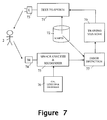
- FIG. 7 illustrates a system for training a user to use a selected CPL.
- the training is controlled by a training manager function 70 (for example, an application running on a PC).
- the training manager after having been told by the user for which CPL language training is required, communicates with a text-to-speech (TTS) converter 70 to run training scripts held in store 72; the manager 70 can also generate text-based messages itself for interpretation by the TTS converter 71.
- TTS text-to-speech
- the user 2 responds to the selected training script (for example, by repeating a converter-spoken CPL word or phrase) and the user's spoken response is picked up by microphone 74 and passed to a speech analysis and recognition block 75 that is informed by the lexicon and grammar 76 of the selected CPL.
- the output of the speech recogniser 75 and the output expect by the training script are both passed to error detector block 77 that detects and analyses errors in the user's input.
- the error information is passed to the training manager function 70 that determines what action to take next (repetition of a mis-pronounced word, etc).
Landscapes
- Engineering & Computer Science (AREA)
- Artificial Intelligence (AREA)
- Computational Linguistics (AREA)
- Health & Medical Sciences (AREA)
- Audiology, Speech & Language Pathology (AREA)
- Human Computer Interaction (AREA)
- Physics & Mathematics (AREA)
- Acoustics & Sound (AREA)
- Multimedia (AREA)
- Machine Translation (AREA)
- Electrically Operated Instructional Devices (AREA)
Abstract
Description
- providing a set of phonemes or other utterance elements chosen for their low risk of confusion one with another by a speech recogniser,
- creating words by assembling together said phonemes/utterance elements, and
- storing the set of created words as a new said artificial spoken language.
- Figure 1 is a confusion matrix for a given set of phonemes;
- Figure 2 is a diagram illustrating a basic system for creating a new CPL;
- Figure 3 is a diagram illustrating an arrangement for testing the fitness of candidate CPL words;
- Figure 4 is a diagram illustrating a first process for generating a new CPL using a genetic algorithm approach;
- Figure 5 is a diagram illustrating a second process for generating a new CPL, also using a genetic algorithm approach.
- Figure 6 is a diagram illustrating speech recognizer adapted to interpret voice input according to any of multiple CPLs; and
- Figure 7 is a diagram illustrating a training system for training a user to speak in a CPL.
| Switch on | [g ow] | as in go |
| Switch off | [s ow] | as in so |
| Answer | [ | as in ha loo |
| Hangup | [b aa] | as in baa |
| Dial | [d ao d ao] | as in dodo (o of born) |
| Redial | [r aa d ao d ao} | as in raadodo. |
| Zero | [p ow p ow] | as in popo |
| One | [n ow n ow} | as in nono |
| Two | [t aa t aa] | as in tata |
| Three | [g ao g ao] | as in gogo |
| Four | [f ow f ow] | as in fofo |
| Five | [f aa f aa] | as in fafa |
| Six | [s aa s aa] | as in sasa |
| Seven | [s uw s uw] | as in soosoo |
| Eight | [h ow h ow] | as in hoho |
| Nine | [n aa n aa] | as in nana |
Sentence = word1 | word2 | word3 .... |wordl;
Word1 = "blurp";
...
Wordn = "kligon";
- rec1(w):
- 1 if the recognizer recognises w when the input is actually w, 0 otherwise;
- score1(w):
- the confidence score attributed to this word by the ASR system.
- rec2(w):
- 1 if the ASR recognized any word from favorites while listening to w, 0 otherwise.
- score2(w):
- the confidence score.
- favorites =
- {boom, cool, table, mouse}
- f2("able") =
- 100 (was mistaken for "table")
- f2("spouse") =
- 60 (was mistaken for mouse)
- f2("bool") =
- 81 (was mistaken for cool)
- f2("smooth") =
- 46 (was mistaken for boom)
- f2("steve") =
- 0
- f2("Robert") =
- 0
- f2("paul") =
- 34 (was mistaken for cool)
- Acoustic independence can be included as a factor by testing the spoken words with multiple ASR engines corresponding to different acoustic models;
- Robustness to noise can be included as a factor by introducing some noise into the spoken version of words.
- DNA(W1) =
- "printer",
- DNA(W2) =
- "switch off".
DNA= "printer" → "crinter".
Cross-over consists of exchanging fragments of DNA between individuals, for instance:
"Printer" "Telephone" → "Prinphone" "Teleter".
The application of these genetic operators is intended to result in the creation of better individuals by exchanging features from individuals that have a good fitness.
- Format of the words that can be created
Example: C V Any-Letter C V
where C=consonant and V=vowel - set of vowels available for use in word generation
- set of consonant available for use in word generation
- Format =
- C V Any-Letter C V
- C set =
- {b,c,d,f,h,k,l,p}
- V set =
- {a,I,o,u}
Balka, coupo, etc...
00 01 10 11 00 11100011100110011000110 110111
Here, the first 12 bits code the structure of words that can be generated:
ora y, aje h
10 110 100110011100111011110 001100
The first 2 bits indicate the form of each unit
10 → VC unit
The next 3 bits code the number of units per word
110→6: 6/2+1 = 4 units per word.
The next 22 bits code the consonants set whilst the final 6 bits code the vowels set. Example of words created by this example recipe are:
obobifiy, okilimox
- Roste
- (Robert)
- Guive
- (Steve)
- Yomer
- (Guillaume)
Claims (21)
- A method of constructing an artificial spoken language, comprising the steps of:providing a set of phonemes or other utterance elements chosen for their low risk of confusion one with another by a speech recogniser,creating words by assembling together said phonemes/utterance elements, andstoring the set of created words as a new said artificial spoken language.
- Apparatus for use in constructing an artificial spoken language, the apparatus comprising a presentation subsystem for presenting to a user a set of phonemes or other utterance elements chosen for their low risk of confusion one with another by a speech recogniser, a user input subsystem for enabling a user to create words by assembling together said phonemes/utterance elements, and a storage subsystem for storing the set of created words as a new said artificial language.
- A method of controlling apparatus wherein a user uses an artificial language to instruct the apparatus by voice input, the apparatus having an associated speech recogniser and said artificial language being made up of words formed from a set of phonemes, or other utterance elements, chosen for their low risk of confusion one with another by the speech recogniser.
- Apparatus provided with a voice-input interface including a speech recogniser adapted to recognise input in the form of an artificial language made up of words formed from a set of phonemes, or other utterance elements, chosen for their low risk of confusion one with another by the speech recogniser.
- An artificial spoken language for apparatus control, the language being made up of words formed from a set of phonemes, or other utterance elements, chosen for their low risk of confusion one with another by a speech recogniser.
- A training system for teaching a person to use an artificial language, the system including an input subsystem for receiving voice input from the user, an analysis subsystem for detecting errors in the pronunciation and/or grammar of the voice input as compared to an expected input that conforms with said artificial language, and an output subsystem for providing feedback to the user concerning the detected errors, said artificial language being made up of words formed from a set of phonemes, or other utterance elements, chosen for their low risk of confusion one with another by a speech recogniser.
- The claimed subject of any one of the preceding claims, wherein the language includes associated grammar rules.
- The claimed subject of any one of the preceding claims, wherein said phonemes / utterance elements are all chosen from the same human language.
- The claimed subject of claim 8, wherein the human language is Esperanto or English..
- A speech recogniser for use by multiple devices that have different associated artificial languages each according to claim 5, the speech recogniser being adapted to receive in association with particular voice input, an indication of the identity of the artificial language used for the input.
- A method of automatically generating candidate artificial spoken language words, the method involving a process that is specifically set to favour artificial-language words which are more easily correctly recognised by a speech recognition system.
- A method according to claim 11, wherein said process involves creating words in a manner favouring words that are more easily recognised by a speech recognition system .
- A method according to claim 12, wherein the creation of words in a manner favouring words that are more easily recognised by a speech recognition system, is effected by choosing phoneme and phoneme combinations which according to a confusion matrix established for a target speech recognition system, are less likely to be confused.
- A method according to claim 11, wherein said process involves evaluating the words in terms of how easily they are correctly recognised by a speech recognition system and selecting those that are more easily recognised.
- A method according to claim 14, wherein the evaluation of words in terms of how easily they are correctly recognised by a speech recognition system is effected by analysis of the phoneme composition of the words in relation to a confusion matrix established for a target speech recognition system.
- A method according to claim 14, wherein the evaluation of words in terms of how easily they are correctly recognised by a speech recognition system is effected by presenting the words to a speech recognition system and measuring the resultant recognition performance.
- A method according to claim 16, wherein said evaluation is effected by having the words spoken by a text-to-speech conversion system to the speech recogniser system.
- A method according to claim 17, wherein the channel involving the text-to-speech conversion system and the speech recogniser system is implemented in a manner such that said measure takes account of at least one of:gender independence, for which purpose the text-to-speech system is provided with multiple text-to-speech converters corresponding to different genders to generate spoken versions of the words;acoustic independence, for which purpose the speech recognizer system is provided with multiple speech recognizers corresponding to different acoustic models;robustness to noise, for which purpose noise is introduced into the channel.
- A set of artificial-language words created by a method according to any one of claims 11 to 18.
- A computer-readable storage media storing artificial-language words created by a method according to any one of claims 11 to 18.
- Apparatus including a speech recognition system set to recognise artificial-language words created by a method according to any one of claims 11 to 18.
Applications Claiming Priority (4)
| Application Number | Priority Date | Filing Date | Title |
|---|---|---|---|
| GB0031450 | 2000-12-22 | ||
| GB0031450A GB0031450D0 (en) | 2000-12-22 | 2000-12-22 | Speech recognition |
| GB0114247A GB0114247D0 (en) | 2000-12-22 | 2001-06-12 | Speech recognition |
| GB0114247 | 2001-06-12 |
Publications (2)
| Publication Number | Publication Date |
|---|---|
| EP1217609A2 true EP1217609A2 (en) | 2002-06-26 |
| EP1217609A3 EP1217609A3 (en) | 2004-02-25 |
Family
ID=26245479
Family Applications (1)
| Application Number | Title | Priority Date | Filing Date |
|---|---|---|---|
| EP01310399A Withdrawn EP1217609A3 (en) | 2000-12-22 | 2001-12-12 | Speech recognition |
Country Status (2)
| Country | Link |
|---|---|
| US (1) | US20020128840A1 (en) |
| EP (1) | EP1217609A3 (en) |
Cited By (1)
| Publication number | Priority date | Publication date | Assignee | Title |
|---|---|---|---|---|
| GB2399931A (en) * | 2003-03-28 | 2004-09-29 | Barnsley Distr General Hospita | Assistive technology |
Families Citing this family (120)
| Publication number | Priority date | Publication date | Assignee | Title |
|---|---|---|---|---|
| US8645137B2 (en) | 2000-03-16 | 2014-02-04 | Apple Inc. | Fast, language-independent method for user authentication by voice |
| US8135362B2 (en) * | 2005-03-07 | 2012-03-13 | Symstream Technology Holdings Pty Ltd | Symbol stream virtual radio organism method and apparatus |
| US7983914B2 (en) * | 2005-08-10 | 2011-07-19 | Nuance Communications, Inc. | Method and system for improved speech recognition by degrading utterance pronunciations |
| US8677377B2 (en) | 2005-09-08 | 2014-03-18 | Apple Inc. | Method and apparatus for building an intelligent automated assistant |
| US9318108B2 (en) | 2010-01-18 | 2016-04-19 | Apple Inc. | Intelligent automated assistant |
| US8977255B2 (en) | 2007-04-03 | 2015-03-10 | Apple Inc. | Method and system for operating a multi-function portable electronic device using voice-activation |
| US9330720B2 (en) | 2008-01-03 | 2016-05-03 | Apple Inc. | Methods and apparatus for altering audio output signals |
| US8996376B2 (en) | 2008-04-05 | 2015-03-31 | Apple Inc. | Intelligent text-to-speech conversion |
| US10496753B2 (en) | 2010-01-18 | 2019-12-03 | Apple Inc. | Automatically adapting user interfaces for hands-free interaction |
| US20100030549A1 (en) | 2008-07-31 | 2010-02-04 | Lee Michael M | Mobile device having human language translation capability with positional feedback |
| US8793135B2 (en) * | 2008-08-25 | 2014-07-29 | At&T Intellectual Property I, L.P. | System and method for auditory captchas |
| US9959870B2 (en) | 2008-12-11 | 2018-05-01 | Apple Inc. | Speech recognition involving a mobile device |
| US9858925B2 (en) | 2009-06-05 | 2018-01-02 | Apple Inc. | Using context information to facilitate processing of commands in a virtual assistant |
| US10255566B2 (en) | 2011-06-03 | 2019-04-09 | Apple Inc. | Generating and processing task items that represent tasks to perform |
| US10241644B2 (en) | 2011-06-03 | 2019-03-26 | Apple Inc. | Actionable reminder entries |
| US10241752B2 (en) | 2011-09-30 | 2019-03-26 | Apple Inc. | Interface for a virtual digital assistant |
| US9431006B2 (en) | 2009-07-02 | 2016-08-30 | Apple Inc. | Methods and apparatuses for automatic speech recognition |
| CN103345467B (en) * | 2009-10-02 | 2017-06-09 | 独立行政法人情报通信研究机构 | Speech translation system |
| JP5545467B2 (en) * | 2009-10-21 | 2014-07-09 | 独立行政法人情報通信研究機構 | Speech translation system, control device, and information processing method |
| US10705794B2 (en) | 2010-01-18 | 2020-07-07 | Apple Inc. | Automatically adapting user interfaces for hands-free interaction |
| US10679605B2 (en) | 2010-01-18 | 2020-06-09 | Apple Inc. | Hands-free list-reading by intelligent automated assistant |
| US10276170B2 (en) | 2010-01-18 | 2019-04-30 | Apple Inc. | Intelligent automated assistant |
| US10553209B2 (en) | 2010-01-18 | 2020-02-04 | Apple Inc. | Systems and methods for hands-free notification summaries |
| US8682667B2 (en) | 2010-02-25 | 2014-03-25 | Apple Inc. | User profiling for selecting user specific voice input processing information |
| US10762293B2 (en) | 2010-12-22 | 2020-09-01 | Apple Inc. | Using parts-of-speech tagging and named entity recognition for spelling correction |
| US8781836B2 (en) * | 2011-02-22 | 2014-07-15 | Apple Inc. | Hearing assistance system for providing consistent human speech |
| US9262612B2 (en) | 2011-03-21 | 2016-02-16 | Apple Inc. | Device access using voice authentication |
| US10057736B2 (en) | 2011-06-03 | 2018-08-21 | Apple Inc. | Active transport based notifications |
| US8994660B2 (en) | 2011-08-29 | 2015-03-31 | Apple Inc. | Text correction processing |
| US10134385B2 (en) | 2012-03-02 | 2018-11-20 | Apple Inc. | Systems and methods for name pronunciation |
| US9483461B2 (en) | 2012-03-06 | 2016-11-01 | Apple Inc. | Handling speech synthesis of content for multiple languages |
| US9280610B2 (en) | 2012-05-14 | 2016-03-08 | Apple Inc. | Crowd sourcing information to fulfill user requests |
| US9721563B2 (en) | 2012-06-08 | 2017-08-01 | Apple Inc. | Name recognition system |
| US9495129B2 (en) | 2012-06-29 | 2016-11-15 | Apple Inc. | Device, method, and user interface for voice-activated navigation and browsing of a document |
| US9576574B2 (en) | 2012-09-10 | 2017-02-21 | Apple Inc. | Context-sensitive handling of interruptions by intelligent digital assistant |
| US9547647B2 (en) | 2012-09-19 | 2017-01-17 | Apple Inc. | Voice-based media searching |
| DE112014000709B4 (en) | 2013-02-07 | 2021-12-30 | Apple Inc. | METHOD AND DEVICE FOR OPERATING A VOICE TRIGGER FOR A DIGITAL ASSISTANT |
| US9368114B2 (en) | 2013-03-14 | 2016-06-14 | Apple Inc. | Context-sensitive handling of interruptions |
| WO2014144949A2 (en) | 2013-03-15 | 2014-09-18 | Apple Inc. | Training an at least partial voice command system |
| WO2014144579A1 (en) | 2013-03-15 | 2014-09-18 | Apple Inc. | System and method for updating an adaptive speech recognition model |
| WO2014197334A2 (en) | 2013-06-07 | 2014-12-11 | Apple Inc. | System and method for user-specified pronunciation of words for speech synthesis and recognition |
| US9582608B2 (en) | 2013-06-07 | 2017-02-28 | Apple Inc. | Unified ranking with entropy-weighted information for phrase-based semantic auto-completion |
| WO2014197336A1 (en) | 2013-06-07 | 2014-12-11 | Apple Inc. | System and method for detecting errors in interactions with a voice-based digital assistant |
| WO2014197335A1 (en) | 2013-06-08 | 2014-12-11 | Apple Inc. | Interpreting and acting upon commands that involve sharing information with remote devices |
| US10176167B2 (en) | 2013-06-09 | 2019-01-08 | Apple Inc. | System and method for inferring user intent from speech inputs |
| KR101959188B1 (en) | 2013-06-09 | 2019-07-02 | 애플 인크. | Device, method, and graphical user interface for enabling conversation persistence across two or more instances of a digital assistant |
| KR101809808B1 (en) | 2013-06-13 | 2017-12-15 | 애플 인크. | System and method for emergency calls initiated by voice command |
| KR101749009B1 (en) | 2013-08-06 | 2017-06-19 | 애플 인크. | Auto-activating smart responses based on activities from remote devices |
| US9620105B2 (en) | 2014-05-15 | 2017-04-11 | Apple Inc. | Analyzing audio input for efficient speech and music recognition |
| US10592095B2 (en) | 2014-05-23 | 2020-03-17 | Apple Inc. | Instantaneous speaking of content on touch devices |
| US9502031B2 (en) | 2014-05-27 | 2016-11-22 | Apple Inc. | Method for supporting dynamic grammars in WFST-based ASR |
| US10078631B2 (en) | 2014-05-30 | 2018-09-18 | Apple Inc. | Entropy-guided text prediction using combined word and character n-gram language models |
| US9633004B2 (en) | 2014-05-30 | 2017-04-25 | Apple Inc. | Better resolution when referencing to concepts |
| US9430463B2 (en) | 2014-05-30 | 2016-08-30 | Apple Inc. | Exemplar-based natural language processing |
| US10170123B2 (en) | 2014-05-30 | 2019-01-01 | Apple Inc. | Intelligent assistant for home automation |
| US9760559B2 (en) | 2014-05-30 | 2017-09-12 | Apple Inc. | Predictive text input |
| US9785630B2 (en) | 2014-05-30 | 2017-10-10 | Apple Inc. | Text prediction using combined word N-gram and unigram language models |
| US9842101B2 (en) | 2014-05-30 | 2017-12-12 | Apple Inc. | Predictive conversion of language input |
| US10289433B2 (en) | 2014-05-30 | 2019-05-14 | Apple Inc. | Domain specific language for encoding assistant dialog |
| US9715875B2 (en) | 2014-05-30 | 2017-07-25 | Apple Inc. | Reducing the need for manual start/end-pointing and trigger phrases |
| WO2015184186A1 (en) | 2014-05-30 | 2015-12-03 | Apple Inc. | Multi-command single utterance input method |
| US9734193B2 (en) | 2014-05-30 | 2017-08-15 | Apple Inc. | Determining domain salience ranking from ambiguous words in natural speech |
| US9338493B2 (en) | 2014-06-30 | 2016-05-10 | Apple Inc. | Intelligent automated assistant for TV user interactions |
| US10659851B2 (en) | 2014-06-30 | 2020-05-19 | Apple Inc. | Real-time digital assistant knowledge updates |
| US10446141B2 (en) | 2014-08-28 | 2019-10-15 | Apple Inc. | Automatic speech recognition based on user feedback |
| US9818400B2 (en) | 2014-09-11 | 2017-11-14 | Apple Inc. | Method and apparatus for discovering trending terms in speech requests |
| US10789041B2 (en) | 2014-09-12 | 2020-09-29 | Apple Inc. | Dynamic thresholds for always listening speech trigger |
| US9606986B2 (en) | 2014-09-29 | 2017-03-28 | Apple Inc. | Integrated word N-gram and class M-gram language models |
| US9886432B2 (en) | 2014-09-30 | 2018-02-06 | Apple Inc. | Parsimonious handling of word inflection via categorical stem + suffix N-gram language models |
| US9646609B2 (en) | 2014-09-30 | 2017-05-09 | Apple Inc. | Caching apparatus for serving phonetic pronunciations |
| US10127911B2 (en) | 2014-09-30 | 2018-11-13 | Apple Inc. | Speaker identification and unsupervised speaker adaptation techniques |
| US10074360B2 (en) | 2014-09-30 | 2018-09-11 | Apple Inc. | Providing an indication of the suitability of speech recognition |
| US9668121B2 (en) | 2014-09-30 | 2017-05-30 | Apple Inc. | Social reminders |
| US10552013B2 (en) | 2014-12-02 | 2020-02-04 | Apple Inc. | Data detection |
| US9711141B2 (en) | 2014-12-09 | 2017-07-18 | Apple Inc. | Disambiguating heteronyms in speech synthesis |
| US9865280B2 (en) | 2015-03-06 | 2018-01-09 | Apple Inc. | Structured dictation using intelligent automated assistants |
| US10567477B2 (en) | 2015-03-08 | 2020-02-18 | Apple Inc. | Virtual assistant continuity |
| US9886953B2 (en) | 2015-03-08 | 2018-02-06 | Apple Inc. | Virtual assistant activation |
| US9721566B2 (en) | 2015-03-08 | 2017-08-01 | Apple Inc. | Competing devices responding to voice triggers |
| US9899019B2 (en) | 2015-03-18 | 2018-02-20 | Apple Inc. | Systems and methods for structured stem and suffix language models |
| US9842105B2 (en) | 2015-04-16 | 2017-12-12 | Apple Inc. | Parsimonious continuous-space phrase representations for natural language processing |
| US10083688B2 (en) | 2015-05-27 | 2018-09-25 | Apple Inc. | Device voice control for selecting a displayed affordance |
| US10127220B2 (en) | 2015-06-04 | 2018-11-13 | Apple Inc. | Language identification from short strings |
| US10101822B2 (en) | 2015-06-05 | 2018-10-16 | Apple Inc. | Language input correction |
| US9578173B2 (en) | 2015-06-05 | 2017-02-21 | Apple Inc. | Virtual assistant aided communication with 3rd party service in a communication session |
| US10186254B2 (en) | 2015-06-07 | 2019-01-22 | Apple Inc. | Context-based endpoint detection |
| US11025565B2 (en) | 2015-06-07 | 2021-06-01 | Apple Inc. | Personalized prediction of responses for instant messaging |
| US10255907B2 (en) | 2015-06-07 | 2019-04-09 | Apple Inc. | Automatic accent detection using acoustic models |
| US10747498B2 (en) | 2015-09-08 | 2020-08-18 | Apple Inc. | Zero latency digital assistant |
| US10671428B2 (en) | 2015-09-08 | 2020-06-02 | Apple Inc. | Distributed personal assistant |
| US9697820B2 (en) | 2015-09-24 | 2017-07-04 | Apple Inc. | Unit-selection text-to-speech synthesis using concatenation-sensitive neural networks |
| US11010550B2 (en) | 2015-09-29 | 2021-05-18 | Apple Inc. | Unified language modeling framework for word prediction, auto-completion and auto-correction |
| US10366158B2 (en) | 2015-09-29 | 2019-07-30 | Apple Inc. | Efficient word encoding for recurrent neural network language models |
| US11587559B2 (en) | 2015-09-30 | 2023-02-21 | Apple Inc. | Intelligent device identification |
| US10691473B2 (en) | 2015-11-06 | 2020-06-23 | Apple Inc. | Intelligent automated assistant in a messaging environment |
| US10049668B2 (en) | 2015-12-02 | 2018-08-14 | Apple Inc. | Applying neural network language models to weighted finite state transducers for automatic speech recognition |
| US10223066B2 (en) | 2015-12-23 | 2019-03-05 | Apple Inc. | Proactive assistance based on dialog communication between devices |
| US10446143B2 (en) | 2016-03-14 | 2019-10-15 | Apple Inc. | Identification of voice inputs providing credentials |
| US9934775B2 (en) | 2016-05-26 | 2018-04-03 | Apple Inc. | Unit-selection text-to-speech synthesis based on predicted concatenation parameters |
| US9972304B2 (en) | 2016-06-03 | 2018-05-15 | Apple Inc. | Privacy preserving distributed evaluation framework for embedded personalized systems |
| US10249300B2 (en) | 2016-06-06 | 2019-04-02 | Apple Inc. | Intelligent list reading |
| US10049663B2 (en) | 2016-06-08 | 2018-08-14 | Apple, Inc. | Intelligent automated assistant for media exploration |
| DK179588B1 (en) | 2016-06-09 | 2019-02-22 | Apple Inc. | Intelligent automated assistant in a home environment |
| US10192552B2 (en) | 2016-06-10 | 2019-01-29 | Apple Inc. | Digital assistant providing whispered speech |
| US10509862B2 (en) | 2016-06-10 | 2019-12-17 | Apple Inc. | Dynamic phrase expansion of language input |
| US10586535B2 (en) | 2016-06-10 | 2020-03-10 | Apple Inc. | Intelligent digital assistant in a multi-tasking environment |
| US10490187B2 (en) | 2016-06-10 | 2019-11-26 | Apple Inc. | Digital assistant providing automated status report |
| US10067938B2 (en) | 2016-06-10 | 2018-09-04 | Apple Inc. | Multilingual word prediction |
| DK179049B1 (en) | 2016-06-11 | 2017-09-18 | Apple Inc | Data driven natural language event detection and classification |
| DK179415B1 (en) | 2016-06-11 | 2018-06-14 | Apple Inc | Intelligent device arbitration and control |
| DK201670540A1 (en) | 2016-06-11 | 2018-01-08 | Apple Inc | Application integration with a digital assistant |
| DK179343B1 (en) | 2016-06-11 | 2018-05-14 | Apple Inc | Intelligent task discovery |
| US10043516B2 (en) | 2016-09-23 | 2018-08-07 | Apple Inc. | Intelligent automated assistant |
| US10593346B2 (en) | 2016-12-22 | 2020-03-17 | Apple Inc. | Rank-reduced token representation for automatic speech recognition |
| DK201770439A1 (en) | 2017-05-11 | 2018-12-13 | Apple Inc. | Offline personal assistant |
| DK179496B1 (en) | 2017-05-12 | 2019-01-15 | Apple Inc. | USER-SPECIFIC Acoustic Models |
| DK179745B1 (en) | 2017-05-12 | 2019-05-01 | Apple Inc. | SYNCHRONIZATION AND TASK DELEGATION OF A DIGITAL ASSISTANT |
| DK201770432A1 (en) | 2017-05-15 | 2018-12-21 | Apple Inc. | Hierarchical belief states for digital assistants |
| DK201770431A1 (en) | 2017-05-15 | 2018-12-20 | Apple Inc. | Optimizing dialogue policy decisions for digital assistants using implicit feedback |
| DK179560B1 (en) | 2017-05-16 | 2019-02-18 | Apple Inc. | Far-field extension for digital assistant services |
Family Cites Families (7)
| Publication number | Priority date | Publication date | Assignee | Title |
|---|---|---|---|---|
| US5384701A (en) * | 1986-10-03 | 1995-01-24 | British Telecommunications Public Limited Company | Language translation system |
| GB8817705D0 (en) * | 1988-07-25 | 1988-09-01 | British Telecomm | Optical communications system |
| JPH09500223A (en) * | 1993-07-13 | 1997-01-07 | ボルドー、テオドール・オースチン | Multilingual speech recognition system |
| US5754977A (en) * | 1996-03-06 | 1998-05-19 | Intervoice Limited Partnership | System and method for preventing enrollment of confusable patterns in a reference database |
| US6044343A (en) * | 1997-06-27 | 2000-03-28 | Advanced Micro Devices, Inc. | Adaptive speech recognition with selective input data to a speech classifier |
| US6192337B1 (en) * | 1998-08-14 | 2001-02-20 | International Business Machines Corporation | Apparatus and methods for rejecting confusible words during training associated with a speech recognition system |
| WO2000022597A1 (en) * | 1998-10-15 | 2000-04-20 | Planetlingo Inc. | Method for computer-aided foreign language instruction |
-
2001
- 2001-12-12 EP EP01310399A patent/EP1217609A3/en not_active Withdrawn
- 2001-12-21 US US10/024,485 patent/US20020128840A1/en not_active Abandoned
Cited By (2)
| Publication number | Priority date | Publication date | Assignee | Title |
|---|---|---|---|---|
| GB2399931A (en) * | 2003-03-28 | 2004-09-29 | Barnsley Distr General Hospita | Assistive technology |
| GB2399932A (en) * | 2003-03-28 | 2004-09-29 | Barnsley Distr General Hospita | Speech recognition |
Also Published As
| Publication number | Publication date |
|---|---|
| US20020128840A1 (en) | 2002-09-12 |
| EP1217609A3 (en) | 2004-02-25 |
Similar Documents
| Publication | Publication Date | Title |
|---|---|---|
| EP1217609A2 (en) | Speech recognition | |
| EP1267326B1 (en) | Artificial language generation | |
| CN107039038B (en) | Learning personalized entity pronunciation | |
| US8065144B1 (en) | Multilingual speech recognition | |
| JP3481497B2 (en) | Method and apparatus using a decision tree to generate and evaluate multiple pronunciations for spelled words | |
| US6910012B2 (en) | Method and system for speech recognition using phonetically similar word alternatives | |
| US6999931B2 (en) | Spoken dialog system using a best-fit language model and best-fit grammar | |
| US7818166B2 (en) | Method and apparatus for intention based communications for mobile communication devices | |
| US20020198712A1 (en) | Artificial language generation and evaluation | |
| JP2003022089A (en) | Voice spelling of audio-dedicated interface | |
| KR20080015935A (en) | Pronunciation correction of synthesized speech object | |
| JP2024512607A (en) | Regularizing word segmentation | |
| JP2006048058A (en) | Methods and systems for multilingual name speech recognition | |
| López-Cózar et al. | Testing the performance of spoken dialogue systems by means of an artificially simulated user | |
| US7428491B2 (en) | Method and system for obtaining personal aliases through voice recognition | |
| KR100848148B1 (en) | Syllable unit speech recognition device, character input unit using syllable unit speech recognition device, method and recording medium | |
| Kamm et al. | Design issues for interfaces using voice input | |
| KR100917552B1 (en) | Method and system for improving the fidelity of a dialog system | |
| Seneff | The use of subword linguistic modeling for multiple tasks in speech recognition | |
| JP2007535692A (en) | System and method for computer recognition and interpretation of arbitrarily spoken characters | |
| JPS60188995A (en) | Sentence enunciation | |
| CN115295019A (en) | Language model WFST generation method, pronunciation evaluation method and related device | |
| Wang | An interactive open-vocabulary chinese name input system using syllable spelling and character description recognition modules for error correction | |
| Yoshioka et al. | An address data entry system with a multimodal interface including speech recognition | |
| Epstein et al. | Data mining to support human-machine dialogue for autonomous agents |
Legal Events
| Date | Code | Title | Description |
|---|---|---|---|
| PUAI | Public reference made under article 153(3) epc to a published international application that has entered the european phase |
Free format text: ORIGINAL CODE: 0009012 |
|
| AK | Designated contracting states |
Kind code of ref document: A2 Designated state(s): AT BE CH CY DE DK ES FI FR GB GR IE IT LI LU MC NL PT SE TR |
|
| AX | Request for extension of the european patent |
Free format text: AL;LT;LV;MK;RO;SI |
|
| PUAL | Search report despatched |
Free format text: ORIGINAL CODE: 0009013 |
|
| AK | Designated contracting states |
Kind code of ref document: A3 Designated state(s): AT BE CH CY DE DK ES FI FR GB GR IE IT LI LU MC NL PT SE TR |
|
| AX | Request for extension of the european patent |
Extension state: AL LT LV MK RO SI |
|
| STAA | Information on the status of an ep patent application or granted ep patent |
Free format text: STATUS: THE APPLICATION HAS BEEN WITHDRAWN |
|
| 18W | Application withdrawn |
Effective date: 20040301 |