EP1217563A2 - Supply plan drafting device, method of drafting supply plan, program for drafting supply plan, and method of drafting production plan - Google Patents
Supply plan drafting device, method of drafting supply plan, program for drafting supply plan, and method of drafting production plan Download PDFInfo
- Publication number
- EP1217563A2 EP1217563A2 EP01307349A EP01307349A EP1217563A2 EP 1217563 A2 EP1217563 A2 EP 1217563A2 EP 01307349 A EP01307349 A EP 01307349A EP 01307349 A EP01307349 A EP 01307349A EP 1217563 A2 EP1217563 A2 EP 1217563A2
- Authority
- EP
- European Patent Office
- Prior art keywords
- supply
- work
- force
- cost
- work force
- Prior art date
- Legal status (The legal status is an assumption and is not a legal conclusion. Google has not performed a legal analysis and makes no representation as to the accuracy of the status listed.)
- Withdrawn
Links
Images




Classifications
-
- G—PHYSICS
- G06—COMPUTING OR CALCULATING; COUNTING
- G06Q—INFORMATION AND COMMUNICATION TECHNOLOGY [ICT] SPECIALLY ADAPTED FOR ADMINISTRATIVE, COMMERCIAL, FINANCIAL, MANAGERIAL OR SUPERVISORY PURPOSES; SYSTEMS OR METHODS SPECIALLY ADAPTED FOR ADMINISTRATIVE, COMMERCIAL, FINANCIAL, MANAGERIAL OR SUPERVISORY PURPOSES, NOT OTHERWISE PROVIDED FOR
- G06Q10/00—Administration; Management
- G06Q10/06—Resources, workflows, human or project management; Enterprise or organisation planning; Enterprise or organisation modelling
-
- G—PHYSICS
- G06—COMPUTING OR CALCULATING; COUNTING
- G06Q—INFORMATION AND COMMUNICATION TECHNOLOGY [ICT] SPECIALLY ADAPTED FOR ADMINISTRATIVE, COMMERCIAL, FINANCIAL, MANAGERIAL OR SUPERVISORY PURPOSES; SYSTEMS OR METHODS SPECIALLY ADAPTED FOR ADMINISTRATIVE, COMMERCIAL, FINANCIAL, MANAGERIAL OR SUPERVISORY PURPOSES, NOT OTHERWISE PROVIDED FOR
- G06Q50/00—Information and communication technology [ICT] specially adapted for implementation of business processes of specific business sectors, e.g. utilities or tourism
- G06Q50/10—Services
- G06Q50/12—Hotels or restaurants
Definitions
- the invention relates to a supply plan drafting device, a supply plan drafting method, a program for drafting a supply plan, and a production plan drafting method and, more particularly, to a supply plan drafting device for drafting a supply plan of an article or service in a plurality of supply stations capable of supplying the article or service, a method of drafting the supply plan, a program for drafting such a supply plan, and a production plan drafting method capable of reducing a personnel cost required in a plurality of production lines.
- Japanese Patent Application Laid-Open No. 2000-76345 discloses a productivity/cost review supporting device for supporting review of productivity and cost in a fact-finding manner, from designing in design departments to production in production plants, without resorting to empirical generalization.
- productivity and cost are calculated from personnel costs, manufacturing costs and so on, from designing to production.
- a planned production volume per operating day is usually set by allocating a planned production volume set for a certain month as a plan-executing period to each of the production lines and each of the operating days, and the operating time is determined in such a manner as to guarantee a planned production volume set for each of the production lines.
- This process does not take adjustment of the tact time into account. Namely, this process uniquely sets a variable tact time and thus does not guarantee an optimized operating time for each of the operating days. If the operating time has not been optimized, it is doubtful whether working hours of the workers have been optimized. Therefore, it is impossible to conclude that the calculated personnel cost represents the minimum cost.
- a supply plan drafting device for drafting a supply plan of an article or a service in a plurality of supply stations capable of supplying the article or the service, characterized by comprising:
- the distribution parameter that is used when the supply volume distributing means distributes the required supply volume to the station supply volumes to be supplied from the supply stations
- the work force parameter that is used when the work force setting means sets the work-force-type-based work force for the station supply man-hour corresponding to the station supply volumes are changed successively, and a (revised) distribution parameter and a (revised) work force parameter corresponding to a minimum calculated gross cost are selected.
- the distributed station supply volumes are set using the revised distribution parameter, and the work-force-type-based work force to be set for each of the supply stations are set using the revised work force parameter.
- the parameter changing means may change the distribution parameter within a suppliable range of the supply stations. In this manner, it is possible to draft a supply plan within a suppliable range of the supply stations.
- the suppliable range may include a regular suppliable range based on regular operation, and an irregular suppliable range based on irregular operation.
- the unit work-force-type-based cost data may include regular-operation unit work-force-type-based cost data on cost per unit according to work force types for regular operation, and irregular-operation unit work-force-type-based cost data on cost per unit according to work force types for irregular operation. In this manner, it is possible to draft a supply plan corresponding to a further reduced gross cost by taking regular operation and irregular operation into account.
- the irregular suppliable range may include an overtime suppliable range based on overtime service, and a holiday service suppliable range based on holiday service.
- the irregular operation unit work-force-type-based cost data may include overtime unit work-force-type-based cost data on cost per unit according to work force types for overtime service, and holiday service unit work-force-type-based cost data on cost per unit according to work force types for holiday service. In this manner, it is possible to classify the irregular operation into overtime service and holiday service.
- the parameter changing means may change ratios of the work force types as a factor of the work force parameter. In this manner, it is possible to draft a supply plan corresponding to a further reduced gross cost by taking the ratios of the work force types into account.
- the work force types may include regular employees and a plurality of types of temporary employees
- the parameter changing means may change ratios of the work force types by changing percentages of the plurality of types of temporary employees.
- the parameter changing means may change the work force in each of the supply stations as a factor of the work force parameter. In this manner, it is possible to reflect an increase or decrease in overtime service or holiday service upon fluctuations of the gross cost.
- the parameter changing means may change a gross work force in the supply stations within a work force changeable range of the supply stations.
- the parameter changing means may successively change each of the parameters at a predetermined interval set for the parameter. In this manner, it is possible to draft a plan more quickly than in the case where the parameters are successively changed as to all the variables.
- the supply stations may be production lines for producing the article, and the unit supply man-hour data may be data on work force and time required for production of a single unit of the article. In this manner, it is possible to draft a supply plan corresponding to a minimum gross cost as an article production plan corresponding to a minimum gross production cost.
- the supply stations may be stations for offering a predetermined service
- the unit supply man-hour data may be data on work force and time required for offer of a single unit of the predetermined service.
- a supply plan drafting program having computer-readable instructions that make a computer function as the supply plan drafting device having any one of the above constructions.
- This program can make a computer function as the supply plan drafting device having any one of the above constructions.
- a computer-implemented supply plan drafting method of drafting a supply plan of an article or a service in a plurality of supply stations capable of supplying the article or the service characterized by comprising the steps of:
- the distribution parameter and the work force parameter are changed successively to select a distribution parameter and a work force parameter corresponding to a minimum calculated gross cost, and the distributed station supply volumes and the work-force-type-based work force to be set for each of the supply stations are set as a supply plan using the selected distribution parameter and the selected work force parameter respectively.
- the step (a) may change the distribution parameter within a suppliable range of the supply stations. In this manner, it is possible to draft a supply plan within a suppliable range of each of the supply stations.
- the suppliable range may include a regular suppliable range based on regular operation, and an irregular suppliable range based on irregular operation.
- the unit work-force-type-based cost data may include regular-operation unit work-force-type-based cost data on cost per unit according to work force types for regular operation, and irregular-operation unit work-force-type-based cost data on cost per unit according to work force types for irregular operation. In this manner, it is possible to draft a supply plan corresponding to a further reduced gross cost by taking regular operation and irregular operation into account.
- the irregular suppliable range may include an overtime suppliable range based on overtime service, and a holiday service suppliable range based on holiday service.
- the irregular operation unit work-force-type-based cost data may include overtime unit work-force-type-based cost data on cost per unit according to work force types for overtime service and holiday service unit work-force-type-based cost data on cost per unit according to work force types for holiday service. In this manner, it is possible to classify the irregular operation into overtime service and holiday service.
- the step (a) may successively change the distribution parameter at a predetermined interval. In this manner, it is possible to draft a supply plan quickly.
- the step (b) may change ratios of the work force types as a factor of the work force parameter. In this manner, it is possible to draft a supply plan corresponding to a further reduced gross cost by taking the ratios of the work force types into account.
- the work force types may include regular employees and a plurality of types of temporary employees, and the step (b) may change ratios of the work force types by changing percentages of the plurality of types of temporary employees. In this manner, it is possible to handle the cost for regular employees as a fixed cost and reflect the influence of the cost for irregular employees upon fluctuations of the gross cost.
- the step (b) may change the work force in each of the supply stations as a factor of the work force parameter. In this manner, it is possible to reflect an increase or decrease in overtime service or holiday service upon fluctuations of the gross cost. In the third aspect of the invention, the step (b) may change a gross work force in the supply stations within a work force changeable range of the supply stations.
- the step (b) may successively change the work force parameter at a predetermined interval. In this manner, it is possible to draft a supply plan more quickly.
- a computer-implemented production plan drafting method of drafting a production plan for producing an article in a plurality of production lines every plan-executing period including a plurality of operating days characterized by comprising:
- a gross personnel cost in all the production lines may be calculated using a Petri net model.
- a gross personnel cost is calculated on various conditions while adjusting the number of workers distributed to each of the worker categories, the tact time, and the planned production volume to be distributed to each of the production lines. Then a minimum gross personnel cost can be finally calculated. Furthermore, it is possible to determine the personnel cost, the operating time, the tact time, the number of workers, and the number of workers distributed to each of the worker categories in each of the production lines when the gross personnel cost is at its minimum.
- Fig. 1 is a block diagram showing an overall construction of the article supply plan drafting device 20 according to the first embodiment of the invention as functional blocks.
- Fig. 2 is a block diagram showing a hardware construction of the article supply plan drafting device 20 according to the first embodiment of the invention.
- the article supply plan drafting device 20 of the first embodiment is hardware-wise constructed of a general-purpose computer mainly composed of a CPU 42 as a central processor.
- a cash memory 46, a cash controller 48, a main memory 50, a graphics controller 52 to which a CRT 54 is connected, a keyboard interface 56 to which a keyboard 58 and a mouse 60 are connected, an I/O interface 62 to which a hard disk system 64, a floppy disk system 66 and so on are connected, and so on are connected to a bus 44 connected to the CPU 42.
- the article supply plan drafting device 20 of the first embodiment has, as functional blocks, a data storing portion 22 for storing various data and restrictive conditions. It also has a data inputting portion 24 for inputting various data and a required supply volume and so on. It also has a supply volume distributing portion 26 for distributing the required supply volume to supply stations based on a distribution parameter. It further has a work force setting portion 28 for setting a work force required for supplying a station supply volume that has been distributed to each of the supply stations using a work force parameter. It also has a parameter changing portion 30 for successively changing the distribution parameter used in the supply volume distributing portion 26 and the work force parameter used in the work force setting portion 28.
- the functional blocks of the article supply plan drafting device 20 of the first embodiment are realized when the hardware construction exemplified in Fig. 2 is integrated with later-described software.
- Article production data on a production line j of an article i such as a unit supply man-hour Sij [personnel ⁇ time/article] expressed as a product of work force and time required for producing a single article i in a production line j, an operating duty Aj(t) [duty/month] in a production line j in t month, and a regular operating time Tj [time/duty] per duty in a production line j
- work-force-type-based cost data such as a cost C0k [yen/personnel ⁇ time] per regular operating man-hour of a work force type k such as regular employees, contract-based employees, temporary employees and part-timers, a cost C1k [yen/personnel ⁇ time] per overtime man-hour of a work force type k, and a cost C2k [yen/personnel ⁇ time] per holiday service man-hour of a work force type k, data on changes in distribution parameter such as a changeable range Ly of a planned
- the supply volume distributing portion 26 distributes a required production volume Xi(t) [volume/month] as a required supply volume of an article i in a plan-executing month t input from the data inputting portion 24 to a planned production volume value Yij(t) in each production line j as a supply station based on an initial value and a distribution parameter changed by the parameter changing portion 30.
- a planned value at the time of last planning is used as an initial value of the distribution parameter.
- last-time values may be used as distribution parameters for February and March and a value of last month, i.e., March is used as a distribution parameter for April. Because the required production volume Xi(t) [volume/month] changes every month, use of the last-time values signifies the same proportional distribution as last time.
- a last-time value is used as an initial value of the distribution parameter in the first embodiment, a predetermined initial value may also be used.
- the work force setting portion 28 calculates a unit supply man-hour Sij [personnel ⁇ time/volume] of each production line j based on the planned production volume value Yij(t) distributed by the supply volume distributing portion 26, and sets an overtime Zj1(t) and a holiday service duty Zi2(t) per duty in a production line j in t month, a work force Zj3k(t) and a tact time Zj4(t) of a work force type k in a production line j in t month, and so on based on an initial value, a changed work force parameter and various restrictive conditions.
- a setting method will be described later.
- the cost calculating portion 32 calculates a cost using evaluating equations, i.e., an equation (1) as a general equation and an equation (2) as a concrete example and based on the required production volume Xi(t) distributed to each production line j by the supply volume distributing portion 26, the overtime Zj 1(t) and the holiday service duty Zj2(t) in a production line j in t month set by the work force setting portion 28, the work force Zj3k(t) and the tact time Zj4(t) of a work force type k in a production line j in t month, and work-force-type-based cost data such as a cost C0k per regular operating man-hour of a work force type k, a cost C1k per overtime man-hour of a work force type k, a cost C2k per holiday service man-hour of a work force type k, and so on stored in the data storing portion 22.
- equations i.e., an equation (1) as a general equation and an
- the equation (2) uses k' instead of a work force type k.
- the symbol k' means using k only when a cost for regular operation is cast as a fluctuant cost. That is, since a salary for regular operation is paid to a regular employee irrespective of whether or not regular operation has actually been performed, the salary is regarded as a fixed cost and is not included in the evaluating equations. If a work force k is used instead of k', a gross cost inclusive of a fixed cost is calculated.
- Hj ( t ) ⁇ ( Zj 1( t ), Zj 2( t ), Zj 3 k ( t ), Zj 4( t )..7)
- the plan setting portion 34 sets, as planned article supply values, the required production volume Xi(t) distributed to a production line j calculated using a distribution parameter and a work force parameter that are minimum evaluating values that have been calculated by the cost calculating portion 32 using the evaluating equations in changing the distribution parameter and the work force parameter at the interval, the overtime Zj1(t) and the holiday service duty Zj2(t) per duty of a production line j in t month set by the work force setting portion 28, and the work force Zj3k(t) and the tact time Zj4(t) of a work force type k in a production line j in t month.
- the plan outputting portion 36 outputs the planned article supply values set by the plan setting portion 34 to the CRT 54 and so on.
- step S100 the CPU 42 of the article supply plan drafting device 20 of the first embodiment first of all inputs a required production volume Xi(t) (step S100), and initially distributes the input required production volume Xi(t) to a planned production volume value Yij(t) in each production line j as a production station based on a distribution parameter set as an initial value (step S102).
- step S102 Initial distribution of the required production volume Xi(t) to the planned production volume value Yij(t) has been described above.
- distribution of the required production volume Xi(t) to the planned production volume value Yij(t) is carried out such that a summated (summed) planned production volume value Yij(t) of the production lines j becomes equal to the required production volume Xi(t).
- a summated work force Zj3k(t) of a work force type k in a production line j in t month is set.
- the summated work force Zj3k(t) is set using a changeable range L3 of the summated work force Zj3k(t) as described above and an equation (3).
- the equation (3) is derived from an equation (4) and an equation (5).
- the equation (4) is derived from the fact that the sum of a volume calculated for each article produced in each production line j multiplied by a reference time is equal to a work force engaged in the production line j in a corresponding month multiplied by a gross operating time and that the gross operating time is equal to the sum of a regular operating time, an overtime and a holiday service time.
- the equation (5) is derived from the fact that a gross volume of articles produced in a production line j is equal to a value obtained by dividing a gross operating time of the production line by a time required for production of the articles, i.e., a tact time.
- a variable that has not been set is the sum of the work force Zj3k(t) and the tact time Zj4(t).
- the tact time Zj4(t) is initially set using a last-month value, i.e., a tact time Zj4(t ⁇ -1).
- the summated work force Zj3k(t) is the only unknown quantity in the equation (3) and therefore, the summated work force Zj3k(t) can be set.
- a processing in step S104 is performed based on such a method of setting the summated work force Zj3k(t).
- an overtime Zj1(t) and a holiday service duty Zj2(t) are set (step S106).
- the planned production volume value Yij(t) and the tact time Zj4(t) have been set in the above equation (5).
- the other is set according to the equation (5).
- the overtime Zj1(t) and the holiday service duty Zj2(t) may be set within the changeable ranges L1, L2 respectively.
- cost for holiday service >> cost for overtime service.
- an overtime Zj1(t) is set as a maximum value in the changeable range L1, and the remnant is set as a holiday service duty Zj2(t) using the equation (5).
- cost for holiday service ⁇ cost for overtime service
- an opposite method may be adopted. Namely, a holiday service duty Zj2(t) is set as a maximum value in the changeable range L2, and the remnant is set as an overtime Zj1(t) using the equation (5).
- cost for holiday service cost for overtime service
- any one of the aforementioned methods may be adopted.
- an overtime Zj1(t) and a holiday service duty Zj2(t) may be handled as a single parameter.
- a work force Zj3k(t) is set (step S108).
- the work force Zj3k(t) is set through appropriation until a maximum value is obtained within a changeable range Lk of each of the work force types in order of priority, i.e., in the order of a work force type wherein the cost for regular operation is handled as a fixed cost, a work force type wherein the cost C0k per regular operating man-hour is low, a work force type wherein the cost C1k per overtime man-hour is low, and a work force type wherein the cost C2k per holiday service man-hour is low, so that the summated work force Zj3k(t) becomes equal to the set value.
- the overtime cost is appropriated after appropriation of the regular operation cost. If a shortfall nonetheless arises, it is appropriated as a holiday service cost.
- the cost handled as a fixed cost is not fluctuant and is thus appropriated by first priority, and the above order of priority takes into account a relation: cost for holiday service >> cost for overtime service. Accordingly, if cost for holiday service ⁇ cost for overtime service, priority is given to the work force type wherein the cost C2k per holiday service man-hour is low over the work force type wherein the cost C1k per overtime man-hour is low.
- an evaluating value is calculated using the above equation (2), and the respective set values and the evaluating value are stored in a storage unit such as the hard disk system 64 (step S110).
- a processing of changing the work force Zj3k(t) at the interval z3 (step S112) and a processing of calculating an evaluating value using the changed work force Zj3k(t) based on the equation (2) and storing the respective set values and the evaluating value (step S110) are repeated until change in the work force Zj3k(t) at the interval z3 is completed (step S114).
- the respective set values and the evaluating value are stored in the hard disk system 64 at the interval z3 of the work force Zj3k(t).
- the summated work force Zj3k(t) is changed by changing the tact time Zj4(t) at the interval z4 (step S116), and the processings in step S106 to step S118 are repeated until change in the summated work force Zj3k(t) is completed.
- the tact time Zj4(t) is set as a last-time value, i.e., the tact time Zj4(t ⁇ -1), whereby the summated work force Zj3k(t) is set using the equation (3).
- step S116 the tact time Zj4(t) is changed at the interval z4 within the changeable range L4, whereby the summated work force Zj3k(t) is changed.
- step S110 to step S114 the repetitive processings (step S110 to step S114) resulting from a change in the work force Zj3k(t) at the interval z3 are included in the processings in step S106 to step S118, the processing of changing the work force Zj3k(t) at the interval z3 and calculating an evaluating value every time the summated work force Zj3k(t) is changed and storing the calculated evaluating value and the respective set values is performed repeatedly.
- the planned production volume value Yij(t) is changed at the interval zy (step S120), and the processings in step S104 to step S122 are repeated until change in the planned production volume value Yij(t) is completed.
- the planned production volume value Yij(t) is changed at the interval zy within such a range that satisfies the condition that the summated planned production volume value Yij(t) concerning an article i is equal to the required production volume Xi(t).
- step S106 to step S118 the repetitive processings (step S106 to step S118) resulting from a change in the summated work force Zj3k(t) are included in the processings from step S104 to step S122, the repetitive processings resulting from a change in the summated work force Zj3k(t) are performed repeatedly every time the planned production volume value Yij(t) is changed.
- an article supply plan i.e., an article production plan with a minimum evaluating value, i.e., a minimum cost
- a minimum evaluating value i.e., a minimum cost
- the article supply plan drafting device 20 of the first embodiment has been applied to the case of drafting a supply plan in which an article i is supplied after being produced in a plurality of production lines j.
- the article supply plan drafting device 20 is also applicable to the case where a plurality of articles i are supplied after being produced in a plurality of production lines j.
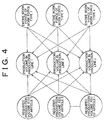
- Fig. 4 is a conceptual view showing a case where a plurality of articles i are supplied after being produced in a plurality of production lines j.
- the article supply plan drafting device 20 of the first embodiment drafts a supply plan based on the monthly unit t, it may draft a supply plan based on any period. For instance, the article supply plan drafting device 20 may draft a supply plan every week or every season.
- the invention may also be applied to a service supply plan drafting device for drafting a service supply plan in which services are offered from a plurality of service-offering stations.
- the services include article-based services such as repair of products and parts and article-free services such as personal assistance.
- the required production volume Xi(t) may be replaced by a required service-offering volume of a service i in a plan-executing month t
- the planned production volume value Yij(t) may be replaced by a planned service-offering value at each of the service-offering stations.
- the article supply plan drafting device 20 may be a computer or a computer-readable program that functions as a variant of the computer.
- the article supply plan drafting device 20 may basically be a storage medium such as, e.g., a CD-ROM or a DVD-ROM in which such programs are stored.
- the program also may be transmitted over a communication network such as, e.g., the Internet.
- An aspect of the invention also includes a computer program product including instructions to perform the processing described herein.
- the computer program product includes, but is not limited to the above-mentioned memories storing the program, as well as, for example, a data signal embodied in a carrier wave or otherwise electronically transmitted.
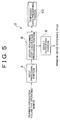
- Fig. 5 is a block diagram showing a production plan drafting device for carrying out a production plan drafting method according to a second embodiment of the invention.
- a production plan for a vehicle is usually drafted every month
- a production plan drafting device 2 of this embodiment calculates a planned production volume, a tact time, allocation of workers and a personnel cost in each production line in such a manner as to minimize a gross personnel cost in a production plan, especially in production plants.
- the production plan drafting device 2 has an input processing portion 4, a gross personnel cost calculation processing portion 6, a result outputting portion 8 and a temporary data-preserving portion 10.
- a planned production volume is allocated to each of a plurality of production lines.
- An operating time and the number of workers required for achievement of the planned production volume for each of the production lines are determined and a personnel cost is derived therefrom.
- a gross personnel cost in a corresponding month is calculated.
- the workers are grouped in categories with different hourly wages, i.e., regular employees, seasonal employees, part-timers and so on. Therefore, personnel costs cannot be calculated unless the number of workers distributed to each of the worker categories as well as the total number of workers is determined. Generally speaking, regular employees command higher hourly wages than part-timers.
- the workers consist exclusively of part-timers in a certain production line
- the personnel cost calculated for the production line can be reduced.
- this may cause the number of regular employees in the other production lines to increase. Therefore, the worker categories must be distributed suitably in each of the production lines.
- a characteristic of the second embodiment is that a minimum gross personnel cost is sought while adjusting a planned production volume to be allocated to each of the production lines, a tact time, and a percentage chart of the worker categories (distribution of the number of workers required in a corresponding production line to each of the worker categories). Especially because the tact time has also been taken into account, a gross personnel cost can be calculated more precisely.
- a planned production volume in the entire production plant in a plan-executing period, i.e., a certain month has been determined in advance. If the planned production volume has been input from the input processing portion 4, the gross personnel cost calculation processing portion 6 allocates the planned production volume to the production lines (step S201). A planned production volume in each of the production lines is determined provisionally by suitable allocation with reference to a scale, a specification and so on of the production line. After that, a later-described process performed by the gross personnel cost calculation processing portion 6 is performed in each of the production lines until a gross personnel cost is calculated.
- step S202 an operating time in each of the production lines corresponding to the provisionally determined planned production volume and tact time in each of the production lines for a corresponding month is obtained (step S203).
- the tact time is determined in accordance with the productivity of the production line.
- a process of calculating an operating time will be described in detail.
- Fig. 7 is a graph showing a relation among tact time, planned production volume and operating time in each of the production lines.
- a line 12a in this graph represents a relation between tact time and production volume in the case where the production line is operated for a minimum operating time, i.e., for a regular operating time with no overtime service or holiday service.
- a line 12b represents a relation between tact time and production volume in the case where the production line is operated for a maximum operating time, i.e., for an operating time with maximum overtime service and holiday service.
- a tact time T can be set between a minimum tact time (Tmin) and a maximum tact time (Tmax).
- a tact time, a planned production volume and an operating time can be set within an area surrounded by the lines 12a, 12b, the tact time Tmin and the tact time Tmax (hereinafter referred to as a solvable area).
- a planned production volume in each of the production lines has already been determined provisionally.
- an operating time is calculated based on a graph shown in Fig. 8. Because the planned production volume has been determined provisionally in this embodiment, the operating time is reduced in proportion to a decrease in tact time. By calculating an operating time, it is possible to tell whether the regular operating time is sufficient or overtime service or holiday service is required.
- the number of workers required for production of the planned production volume can be calculated (step S204). This is because the product of a quotient obtained by dividing the operating time by the tact time and the number of workers is constant. Then by distributing the calculated number of workers to each of the worker categories, the number of workers allocated to each worker category is determined provisionally (step S205). Because the number of persons in each of the worker categories in a corresponding month is constant, the number of workers distributed to each of the worker categories is determined with the constant number set as an upper limit. As described above, it is an ultimate object of this embodiment to minimize a gross personnel cost in the entire production plant.
- a substantial decrease in personnel cost in one of the production lines based on employment of a great number of part-timers does not make any sense. Provisional determination has to be made in consideration of the balance of distribution of the number of workers to the production lines. If the number of workers distributed to each of the worker categories has thus been determined, a personnel cost in each of the production lines can be calculated by multiplying the number of workers engaged in the production line by the operating time (step S206).
- a gross personnel cost in the entire production plant can be calculated (step S207). If the gross personnel cost calculated through the above processings is the lowest among previously calculated gross personnel costs, the gross personnel cost calculation processing portion 6 temporarily preserves the gross personnel cost, the personnel costs in the respective production lines, the tact time, the operating time, the number of workers, the number of workers distributed to each of the worker categories in the temporary data-preserving portion 10 (steps S208, S209).
- a gross personnel cost is obtained by provisionally determining the number of workers distributed to each of the worker categories and calculating a personnel cost for each of the production lines.
- the workers consist of regular employees, seasonal employees and part-timers. Therefore, a minimum gross personnel cost corresponding to the provisionally determined tact time and planned production volume can be obtained by repeatedly performing the above processings in step S205 to step S209 while suitably increasing or decreasing the number of workers allocated to each worker category (step S210).
- a minimum gross personnel cost is calculated by determining a tact time Ti provisionally. However, if the provisionally determined tact time has been changed, the calculated gross personnel cost may be reduced further. Thus, a minimum gross personnel cost corresponding to the planned production volume that has been determined provisionally can be obtained by repeatedly performing the above processings in step S202 to S210 while suitably increasing or decreasing the tact time (step S211).
- a minimum gross personnel cost is calculated by making a provisional determination by suitably distributing a planned production volume to each of the production lines.
- the calculated gross personnel cost may be reduced further.
- a minimum gross personnel cost can be obtained by repeatedly performing the above processings in step S202 to S210 while suitably changing the planned production volume distributed to each of the production lines (step S212).
- a minimum gross personnel cost can be obtained finally through an attempt to calculate a gross personnel cost while suitably changing the number of workers distributed to each of the worker categories, the tact time and the planned production volume in each of the production lines. Also, it is possible to obtain a personnel cost in each of the production lines, an operating time, a tact time, the number of workers and the number of workers distributed to each of the worker categories when the gross personnel cost is at its minimum.
- the result outputting portion 8 outputs results of the foregoing processings.
- a planned production volume in the entire production plant in a plan-executing month has already been determined.
- a planned production volume is determined quarterly although a plan is drafted monthly.
- This case requires not only adjusting distribution of a planned production volume among production lines in a certain month but also considering distribution of a planned production volume in a certain production line to respective months in a quarter.
- a processing of allocating a quarterly-set planned production volume to respective months and making a provisional determination is added to the flowchart shown in Fig. 6.
- Fig. 8 is a conceptual view showing a relation between production planning month and production lines.
- Each of small graphs in a large graph shown in Fig. 8 corresponds to Fig. 7 but indicates that each of the production lines has its own solvable area as shown in Fig. 7.
- a model for deriving a relation among workers, tact time and so on and minimizing a gross personnel cost as described above has been made solvable by being expressed as a Petri net model, which is an object-oriented system analysis designing method.
- Fig. 9 shows a Petri net model for the production plan drafting method of this embodiment, especially for seeking a solution to a minimum gross personnel cost.
- the Petri net model shown in Fig. 9 will be described.
- ST standard time
- OT overtime service included
- HS holiday service included
- Places 28-1, 28-2 indicate states of a tact time Ti and a tact time Tj respectively in a corresponding production line.
- a place 30 indicates a personnel cost per unit time for workers working in a corresponding production line.
- a transition 32-1 indicates a case where workers are appointed to work only for a standard time with the tact time in a corresponding production line shifted from Ti to Tj.
- a transition 32-2 indicates a case where workers are appointed to work with maximum overtime service and holiday service.
- a place 34 indicates a solution space of a personnel cost to be minimized when the operating time, the tact time and the planned production volume in a corresponding production line have been changed.
- a sheet 136 with a portrayal of the Petri net model described above indicates a single production line.
- the above Petri net model can be expressed according to a mathematical model as follows.
- nij represents the number of workers of a salary class j working in a production line i
- cjk represents a personnel cost per worker of a salary class j working on a working condition k
- ⁇ sik represents an operating time of a production line i under a working condition k.
- the equation (7) indicates that the product of the tact time Ti and the number of workers in a production line i is constant ( ⁇ ai).
- the equation (8) indicates that a production volume Ni in a production line i can be calculated by dividing the summated operating time by the tact time Ti.
- the equation (9) indicates that the summated production volume in the production lines i, i.e., the production volume in the entire production plant is constant (N).
- the equation (10) indicates that the number of workers in each of the worker categories is constant (noj).
- a minimum gross personnel cost in a production plant can be calculated. It is also possible to tell how to set working conditions and working hours for workers with different salary standards such as regular employees and seasonal employees in order to minimize a personnel cost.
- a minimum gross personnel cost can finally be obtained by attempting to calculate a gross personnel cost while suitably changing the number of workers distributed to each of the worker categories, the tact time and the planned production volume in each of the production lines. Also, in the case of manufacturing vehicles, it is possible to determine the number of workers, the number of workers distributed to each of the worker categories, a tact time, an operating time and a personnel cost in each of the production lines when the gross personnel cost is at its minimum.
- a controller (the device 20) is implemented as a programmed general purpose computer. It will be appreciated by those skilled in the art that the controller can be implemented using a single special purpose integrated circuit (e.g., ASIC) having a main or central processor section for overall, system-level control, and separate sections dedicated to performing various different specific computations, functions and other processes under control of the central processor section.
- the controller can be a plurality of separate dedicated or programmable integrated or other electronic circuits or devices (e.g., hardwired electronic or logic circuits such as discrete element circuits, or programmable logic devices such as PLDs, PLAs, PALs or the like).
- the controller can be implemented using a suitably programmed general purpose computer, e.g., a microprocessor, microcontroller or other processor device (CPU or MPU), either alone or in conjunction with one or more peripheral (e.g., integrated circuit) data and signal processing devices.
- a suitably programmed general purpose computer e.g., a microprocessor, microcontroller or other processor device (CPU or MPU)
- CPU or MPU processor device
- peripheral e.g., integrated circuit
- a distributed processing architecture can be used for maximum data/signal processing capability and speed.
Landscapes
- Business, Economics & Management (AREA)
- Engineering & Computer Science (AREA)
- Tourism & Hospitality (AREA)
- Human Resources & Organizations (AREA)
- Economics (AREA)
- Strategic Management (AREA)
- General Physics & Mathematics (AREA)
- Theoretical Computer Science (AREA)
- Entrepreneurship & Innovation (AREA)
- Marketing (AREA)
- General Business, Economics & Management (AREA)
- Physics & Mathematics (AREA)
- Educational Administration (AREA)
- Quality & Reliability (AREA)
- Operations Research (AREA)
- Development Economics (AREA)
- Game Theory and Decision Science (AREA)
- Health & Medical Sciences (AREA)
- General Health & Medical Sciences (AREA)
- Primary Health Care (AREA)
- Management, Administration, Business Operations System, And Electronic Commerce (AREA)
- General Factory Administration (AREA)
Abstract
Description








Claims (24)
- A supply plan drafting device for drafting a supply plan of an article or a service in a plurality of supply stations capable of supplying the article or the service, characterized by comprising:data storing means (22) for storing unit supply man-hour data on work force and time required to supply the article or the service per unit and unit work-force-type-based cost data on cost per unit according to work force types;required supply volume inputting means (24) for inputting an entire required supply volume of the article or the service;supply volume distributing means (26) for distributing the input required supply volume to station supply volumes to be supplied from the supply stations based on a distribution parameter;work force setting means (28) for calculating a station supply man-hour required to supply the article or the service of the distributed station supply volume based on the unit supply man-hour data stored in the data storing means and setting a work-force-type-based work force for the calculated station supply man-hour based on a work force parameter;cost calculating means (32) for calculating a gross cost to supply the station supply volume from the supply stations based on the work-force-type-based work force set by the work force setting means and the unit work-force-type-based cost data stored in the data storing means;parameter changing means (30) for successively changing the distribution parameter and the work force parameter; andplan setting means (34) for selecting a revised distribution parameter and a revised work force parameter corresponding to a minimum gross cost calculated by the cost calculating means using the work-force-type-based work force that is set by the work force setting means in response to changes in the distribution parameter and in the work force parameter by the parameter changing means and setting, as a supply plan, station supply volumes that are distributed by the supply volume distributing means using the revised distribution parameter and the revised work-force-type-based work forces for the supply stations.
- The supply plan drafting device according to claim 1, characterized in that the parameter changing means (30) changes the distribution parameter within a suppliable range of the supply stations.
- The supply plan drafting device according to claim 2, characterized in:that the suppliable range includes a regular suppliable range based on regular operation, and an irregular suppliable range based on irregular operation; andthat the unit work-force-type-based cost data includes regular-operation unit work-force-type-based cost data on cost per unit according to work force types for regular operation, and irregular-operation unit work-force-type-based cost data on cost per unit according to work force types for irregular operation.
- The supply plan drafting device according to claim 3, characterized in:that the irregular suppliable range includes an overtime suppliable range based on overtime service, and a holiday service suppliable range based on holiday service; andthat the irregular operation unit work-force-type-based cost data includes overtime unit work-force-type-based cost data on cost per unit according to work force types for overtime service, and holiday service unit work-force-type-based cost data on cost per unit according to work force types for holiday service.
- The supply plan drafting device according to any one of claims 1 to 4, characterized in that the parameter changing means (30) changes ratios of the work force types as a factor of the work force parameter.
- The supply plan drafting device according to claim 5, characterized in:that the work force types include regular employees and a plurality of types of temporary employees; andthat the parameter changing means (30) changes ratios of the work force types by changing percentages of the plurality of types of temporary employees.
- The supply plan drafting device according to any one of claims 1 to 6, characterized in that the parameter changing means (30) changes the work force in each of the supply stations as a factor of the work force parameter.
- The supply plan drafting device according to claim 7, characterized in that the parameter changing means (30) changes a gross work force in the supply stations within a work force changeable range of the supply stations.
- The supply plan drafting device according to any one of claims 1 to 8, characterized in that the parameter changing means (30) successively changes each of the parameters at a predetermined interval set for each of the parameters.
- The supply plan drafting device according to any one of claims 1 to 9, characterized in:that the supply stations are production lines for producing the article; andthat the unit supply man-hour data are data on work force and time required to produce a single unit of the article.
- The supply plan drafting device according to any one of claims 1 to 9, characterized in:that the supply stations are stations for offering a predetermined service; andthat the unit supply man-hour data are data on work force and time required to offer a single unit of the predetermined service.
- A supply plan drafting program including computer-readable instructions to make a computer function as the supply plan drafting device according to any one of claims 1 to 11.
- A computer-implemented supply plan drafting method of drafting a supply plan of an article or a service in a plurality of supply stations capable of supplying the article or the service, characterized by comprising the steps of:(a) distributing a required supply volume of the article or the service to station supply volumes to be supplied from the supply stations while successively changing a distribution parameter;(b) calculating a station supply man-hour required to supply the article or the service of the distributed station supply volumes based on unit supply man-hour data on work force and time required to supply the article or the service per unit and setting a work-force-type-based work force for the calculated station supply man-hour while successively changing a work force parameter;(c) calculating a gross cost to supply the station supply volumes to be supplied from the supply stations based on the set work-force-type-based work force and unit work-force-type-based cost data on work-force-type-based cost per unit; and(d) selecting a revised distribution parameter and a revised work force parameter corresponding to a minimum of the gross cost calculated in response to changes in the distribution parameter and the work force parameter and setting as a supply plan station supply volumes that are distributed using the revised distribution parameter and the revised work-force-type-based work forces for the supply stations.
- The supply plan drafting method according to claim 13, characterized in that the step (a) changes the distribution parameter within a suppliable range of the supply stations.
- The supply plan drafting method according to claim 14, characterized in:that the suppliable range includes a regular suppliable range based on regular operation, and an irregular suppliable range based on irregular operation; andthat the unit work-force-type-based cost data includes regular-operation unit work-force-type-based cost data on cost per unit according to work force types for regular operation, and irregular-operation unit work-force-type-based cost data on cost per unit according to work force types for irregular operation.
- The supply plan drafting method according to claim 15, characterized in:that the irregular suppliable range includes an overtime suppliable range based on overtime service, and a holiday service suppliable range based on holiday service; andthat the irregular operation unit work-force-type-based cost data includes overtime unit work-force-type-based cost data on cost per unit according to work force types for overtime service, and holiday service unit work-force-type-based cost data on cost per unit according to work force types for holiday service.
- The supply plan drafting method according to any one of claims 13 to 16, characterized in that the step (a) successively changes the distribution parameter at a predetermined interval.
- The supply plan drafting method according to any one of claims 13 to 17, characterized in that the step (b) changes ratios of the work force types as a factor of the work force parameter.
- The supply plan drafting method according to claim 18, characterized in:that the work force types include regular employees and a plurality of types of temporary employees; andthat the step (b) changes ratios of the work force types by changing percentages of the plurality of types of temporary employees.
- The supply plan drafting method according to any one of claims 13 to 19, characterized in that the step (b) changes the work force in each of the supply stations as a factor of the work force parameter.
- The supply plan drafting method according to claim 20, characterized in that the step (b) changes a gross work force in the supply stations within a work force changeable range of the supply stations.
- The supply plan drafting method according to any one of claims 13 to 21, characterized in that the step (b) successively changes the work force parameter at a predetermined interval.
- A computer-implemented production plan drafting method of drafting a production plan for producing an article in a plurality of production lines every plan-executing period including a plurality of operating days, characterized by comprising:a production-line-based planned production volume provisionally determining step of allocating a planned production volume during the plan-executing period to the production lines;an operating-time setting step of calculating an operating time in each of the production lines during the plan-executing period corresponding to a provisionally determined tact time in each of the production lines and the production-line-based planned production volume, based on a relation among tact time, planned production volume and operating time in each of the production lines;a number-of-workers calculating step of calculating the number of workers required in each of the production lines based on the set operating time;a production-line-based personnel cost calculating step of calculating a personnel cost in each of the production lines after distribution of the calculated number of workers to worker categories with different hourly wages; anda gross personnel cost calculating step of calculating a gross personnel cost in all the production lines by summing personnel costs in the respective production lines, whereina minimum gross personnel cost is calculated while adjusting the number of workers distributed to the worker categories, the tact time, and the planned production volume allocated to each of the production lines.
- The supply plan drafting method according to claim 23, characterized in that a gross personnel cost in all the production lines is calculated using a Petri net model.
Applications Claiming Priority (4)
| Application Number | Priority Date | Filing Date | Title |
|---|---|---|---|
| JP2000263794A JP2002073751A (en) | 2000-08-31 | 2000-08-31 | Supply planning device, supply planning method, and supply planning program |
| JP2000263794 | 2000-08-31 | ||
| JP2000301655 | 2000-10-02 | ||
| JP2000301655A JP2002108434A (en) | 2000-10-02 | 2000-10-02 | Production planning method |
Publications (2)
| Publication Number | Publication Date |
|---|---|
| EP1217563A2 true EP1217563A2 (en) | 2002-06-26 |
| EP1217563A3 EP1217563A3 (en) | 2002-11-20 |
Family
ID=26598983
Family Applications (1)
| Application Number | Title | Priority Date | Filing Date |
|---|---|---|---|
| EP01307349A Withdrawn EP1217563A3 (en) | 2000-08-31 | 2001-08-30 | Supply plan drafting device, method of drafting supply plan, program for drafting supply plan, and method of drafting production plan |
Country Status (2)
| Country | Link |
|---|---|
| US (1) | US20020059089A1 (en) |
| EP (1) | EP1217563A3 (en) |
Families Citing this family (6)
| Publication number | Priority date | Publication date | Assignee | Title |
|---|---|---|---|---|
| US7376477B2 (en) * | 2000-12-29 | 2008-05-20 | Honda Motor Co., Ltd. | Move lot size balancing system and method |
| US7120699B2 (en) * | 2001-09-20 | 2006-10-10 | Ricoh Company, Ltd. | Document controlled workflow systems and methods |
| JP4229892B2 (en) * | 2004-10-06 | 2009-02-25 | 本田技研工業株式会社 | Process management apparatus and process management method |
| US20180129992A1 (en) * | 2013-12-13 | 2018-05-10 | Amazon Technologies, Inc. | Planning labor shifts |
| JP7405679B2 (en) * | 2020-04-01 | 2023-12-26 | 株式会社日立製作所 | Line configuration planning device |
| KR20230040202A (en) * | 2021-09-15 | 2023-03-22 | 현대자동차주식회사 | Parts delievery system and its operating method |
Family Cites Families (25)
| Publication number | Priority date | Publication date | Assignee | Title |
|---|---|---|---|---|
| US3703725A (en) * | 1970-11-02 | 1972-11-21 | Texas Instruments Inc | Method for operating a manufacturing line |
| US5077661A (en) * | 1989-05-03 | 1991-12-31 | Hewlett-Packard Company | Assignment-dependent resource allocation method |
| JP2794837B2 (en) * | 1989-10-16 | 1998-09-10 | トヨタ自動車株式会社 | Parts delivery instruction device |
| US5280425A (en) * | 1990-07-26 | 1994-01-18 | Texas Instruments Incorporated | Apparatus and method for production planning |
| WO1992003905A2 (en) * | 1990-08-31 | 1992-03-19 | Ab Volvo | A method and apparatus for optimally allocating resources |
| US5615138A (en) * | 1993-04-08 | 1997-03-25 | Honda Giken Kogyo Kabushiki Kaisha | Method for establishing the working mantime in the production line |
| JPH0773244A (en) * | 1993-06-29 | 1995-03-17 | Hitachi Ltd | Method and apparatus for determining order of input of products to be processed on production line, and method and apparatus for determining staffing on production line |
| US5548518A (en) * | 1994-05-31 | 1996-08-20 | International Business Machines Corporation | Allocation method for generating a production schedule |
| JPH11505646A (en) * | 1995-05-02 | 1999-05-21 | マックスエイガー テクノロジー インコーポレイテッド | Method and apparatus for cycle time costing |
| US5826238A (en) * | 1996-04-02 | 1998-10-20 | Taiwan Semiconductor Manufacturing | Daily target generation and machine allocation with priority |
| JPH10261122A (en) * | 1997-03-18 | 1998-09-29 | Sumitomo Wiring Syst Ltd | Work distribution optimization method |
| US6049742A (en) * | 1997-09-26 | 2000-04-11 | International Business Machines Corporation | Projected supply planning matching assets with demand in microelectronics manufacturing |
| US6477660B1 (en) * | 1998-03-03 | 2002-11-05 | Sap Aktiengesellschaft | Data model for supply chain planning |
| US6259959B1 (en) * | 1998-09-04 | 2001-07-10 | International Business Machines Corporation | Method for determining the performance components of a manufacturing line |
| MXPA01002773A (en) * | 1998-09-18 | 2002-08-12 | I2 Technologies Inc | System and method for multi-enterprise supply chain optimization. |
| WO2000017774A2 (en) * | 1998-09-18 | 2000-03-30 | I2 Technologies, Inc. | System and method for displaying planning information associated with a supply chain |
| US6198980B1 (en) * | 1998-11-06 | 2001-03-06 | John Costanza Institute Of Technology | System and method for designing a mixed-model manufacturing process |
| US6732079B1 (en) * | 1999-11-01 | 2004-05-04 | General Motors Corporation | Method of determining the best mix of regular and contract employees |
| US6459946B1 (en) * | 1999-11-12 | 2002-10-01 | Agere Systems Guardian Corp. | Method and system for determining operator staffing |
| US6606527B2 (en) * | 2000-03-31 | 2003-08-12 | International Business Machines Corporation | Methods and systems for planning operations in manufacturing plants |
| US6631305B2 (en) * | 2000-05-03 | 2003-10-07 | General Electric Company | Capability analysis of assembly line production |
| US20020138323A1 (en) * | 2001-03-23 | 2002-09-26 | Norbert Trautmann | Method of plant occupancy planning in the process industry |
| JP2003015723A (en) * | 2001-07-03 | 2003-01-17 | Toyota Motor Corp | Work distribution planning support system using visual display screen |
| JP2003157309A (en) * | 2001-11-20 | 2003-05-30 | Mitsubishi Electric Corp | Assignment staff planning device and assignment staff planning method |
| JP2004310290A (en) * | 2003-04-03 | 2004-11-04 | Renesas Technology Corp | Production managing method for plurality of production lines |
-
2001
- 2001-08-24 US US09/935,692 patent/US20020059089A1/en not_active Abandoned
- 2001-08-30 EP EP01307349A patent/EP1217563A3/en not_active Withdrawn
Also Published As
| Publication number | Publication date |
|---|---|
| US20020059089A1 (en) | 2002-05-16 |
| EP1217563A3 (en) | 2002-11-20 |
Similar Documents
| Publication | Publication Date | Title |
|---|---|---|
| Taylor et al. | Using weather ensemble predictions in electricity demand forecasting | |
| Pinker et al. | Optimizing the use of contingent labor when demand is uncertain | |
| US7343315B2 (en) | System and method of efficient scheduling and processing of purchase orders | |
| Ha | Optimal pricing that coordinates queues with customer-chosen service requirements | |
| Kim et al. | Lot size dependent lead times in a Q, R inventory system | |
| US20040153396A1 (en) | Telecommunications credit management system and method | |
| EP1217563A2 (en) | Supply plan drafting device, method of drafting supply plan, program for drafting supply plan, and method of drafting production plan | |
| Dinesh et al. | Material requirement planning for automobile service plant | |
| Kapalka et al. | Retail inventory control with lost sales, service constraints, and fractional lead times | |
| CN115049314B (en) | A method for optimizing the size of self-owned fleets in trunk transport | |
| CA2584604A1 (en) | Method and apparatus for generating performance curves | |
| CN117611226B (en) | Intelligent online calculation method of logistics resources based on single-vehicle quota and equivalent logistics volume | |
| Tsubone et al. | Production seat booking system for the combination of make-to-order and make-to-stock products | |
| CN112348601A (en) | Service development route planning method | |
| CN116051173B (en) | Passenger flow prediction method, passenger flow prediction system and bus dispatching method | |
| Gupta et al. | Performance evaluation and stock allocation in capacitated serial supply systems | |
| CN116911717A (en) | A transportation capacity allocation method and system for urban trade | |
| JP2002073751A (en) | Supply planning device, supply planning method, and supply planning program | |
| Vijaya et al. | A study on Fuzzy Decision Problem of a Queueing System with Finite Capacity by LR Method | |
| JP2004292101A (en) | System and method for supporting order processing | |
| US6847945B1 (en) | Method for conducting a financial analysis | |
| JP5901434B2 (en) | Supply and demand adjustment evaluation device | |
| Addini et al. | Prediction of the reported but not settled (RBNS) claims reserves and the incurred but not reported (IBNR) claims reserves using the double chain ladder method | |
| JP3189768B2 (en) | Progress management device | |
| ČAČIĆ et al. | DEMAND MODELLING AND FORECASTING THE FUTURE DEVELOPMENT OF PARCEL AND EXPRESS SERVICES. |
Legal Events
| Date | Code | Title | Description |
|---|---|---|---|
| PUAI | Public reference made under article 153(3) epc to a published international application that has entered the european phase |
Free format text: ORIGINAL CODE: 0009012 |
|
| 17P | Request for examination filed |
Effective date: 20010920 |
|
| AK | Designated contracting states |
Kind code of ref document: A2 Designated state(s): AT BE CH CY DE DK ES FI FR GB GR IE IT LI LU MC NL PT SE TR |
|
| AX | Request for extension of the european patent |
Free format text: AL;LT;LV;MK;RO;SI |
|
| PUAL | Search report despatched |
Free format text: ORIGINAL CODE: 0009013 |
|
| AK | Designated contracting states |
Kind code of ref document: A3 Designated state(s): AT BE CH CY DE DK ES FI FR GB GR IE IT LI LU MC NL PT SE TR |
|
| AX | Request for extension of the european patent |
Free format text: AL;LT;LV;MK;RO;SI |
|
| AKX | Designation fees paid |
Designated state(s): FR GB TR |
|
| REG | Reference to a national code |
Ref country code: DE Ref legal event code: 8566 |
|
| 17Q | First examination report despatched |
Effective date: 20041019 |
|
| STAA | Information on the status of an ep patent application or granted ep patent |
Free format text: STATUS: THE APPLICATION IS DEEMED TO BE WITHDRAWN |
|
| 18D | Application deemed to be withdrawn |
Effective date: 20090303 |