Technical Field
This invention relates to a speech recognition method and apparatus
and a recording medium. More particularly, it relates to a speech recognition
method and apparatus and a recording medium in which, even in a speech
including a word having unstable acoustic characteristic values, speech
recognition can be made to higher accuracy with a smaller amount of resources.
Background Art
Fig.1 shows a typical conventional speech recognition apparatus.
The speech uttered by a user is input to a microphone 1, which then
converts the input speech into speech signals as electrical signals. These speech
signals are fed to an A/D (analog/digital) converter 2, which then samples and
quantizes the speech signals, as analog signals, output from the microphone 1, to
convert the signals into speech data as digital signals. These speech data are
sent to a characteristic value extraction unit 3.
The characteristic value extraction unit 3 acoustically processes the
speech data from the A/D converter 2, from one suitably selected frame to
another, to extract characteristic values, such as MFCC (Mel Frequency
Cepstrum Coefficient), to send the extracted values to a matching unit 4. In
addition, the characteristic value extraction unit 3 is able to extract other
characteristic values, such as spectrum, linear prediction coefficients or linear
spectral pairs.
Using the characteristic values from the characteristic value extraction
unit 3, the matching unit 4 speech-recognizes the speech input to the microphone
1 (input speech) based on, for example, continuous distribution (HIGH
MOLECULAR MATERIALS), as it references an acoustic model database 5, a
dictionary database 6 and a grammar database 7 as necessary.
That is, the acoustic model database 5 memorizes an acoustic model,
representing acoustic features, such as each phoneme or syllable in the language
of the speech being recognized. Since here the speech recognition is based on
the continuous distribution HIGH MOLECULAR MATERIALS method, the
acoustic model used is the HIGH MOLECULAR MATERIALS (Hidden Markov
Model). The dictionary database 6 memorizes a word dictionary stating the
information on the pronunciation (phonemic information) for each word
(vocabulary) being recognized. The grammar database 7 memorizes a set of
grammatical rules (language models) stating how the words registered in the
word dictionary of the dictionary database 6 are linked together. As the set of
the grammatical rules, those rules which are based on the context free grammar
(CFG) or a statistic word link probability (N-gram), for example, may be used.
The matching unit 4 references the word dictionary of the dictionary
database 6 to connect to the acoustic model stored in the acoustic model database
5 to construct an acoustic model of the word (word model). The matching unit
4 also references the grammatical rules stored in the grammar database 7 to
couple several word models and, using the so-connected word models, recognizes
the speech input to the microphone 1, based on the characteristic values, in
accordance with the continuous distribution HIGH MOLECULAR MATERIALS
method. That is, the matching unit 4 detects a sequence of word models, having
the maximum score (likeliness) of observation of the characteristic values of the
time sequence output by the characteristic value extraction unit 3 and outputs a
sequence of words corresponding to the sequence of the word models as the
recognized results of the speech.
Specifically, the matching unit 4 cumulates the probability of
occurrences of the respective characteristic values for a word sequence
corresponding to the coupled word models. These cumulated values are scores,
and a word sequence, which maximizes the score, is output as the result of word
recognition.
The score is calculated in general by comprehensively evaluating an
acoustic score accorded by an acoustic model memorized in an acoustic model
database 5 and by a language model accorded by the set of grammatical rules
memorized in the grammar database 7.
That is, if, for example, the HIGH MOLECULAR MATERIALS
method is applied, the acoustic model is calculated, from word to word, from the
acoustic model forming the word model, based on the probability of observation
(probability of occurrence) of the sequence of f characteristic values output by
the feature extraction unit 3. If a bi-gram is applied, the language score is found
based on the probability of concatenation (coupling) of a word under
consideration and a word directly previous thereto. The result of speech
recognition is finalized based on the final score obtained on comprehensive
evaluation of the acoustic score and the language score for each word.
Specifically, if, with a kth word wk in a word sequence made up of N
words, the acoustic score of the word wk is expressed as A(wk) and the language
score is expressed as L(wk), the last score S of the word sequence is calculated in
accordance with the equation (1):
S = Ó(A(wk) + Ck×L (wk))
where Ó means taking a sum as k is changed from 1 to N and Ck denotes a
weighting to be applied to the language score L(wk) of the word wk.
The matching unit 4 effects matching processing of finding N which
maximizes the final score shown in the equation land of finding word sequences
w1, w2, ···, wN. These word sequences w1, w2, ···, wN are output as the result of
word recognition.
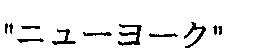
The result of the above processing is that, if a user has uttered e.g.,
("I would like to go to New York", uttered as
"new york ni ikitai desu"), the speech recognition device of Fig.1 accords the
acoustic and language scores to respective words, such as
("New York", uttered as "new york"),
("to", uttered as "ni"),
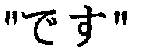
("would like to go", uttered as "ikitai") and
(uttered as "desu"). If final
score obtained on comprehensive evaluation is maximum, the word sequences "
are output as the result of the speech
recognition.
It should be noted that if, in the above case, five words of
and
are registered in a word dictionary of the
dictionary database 6, there are 5
5 possible arrays of these five words that can be
formed by these five words. Thus, in simple terms, the matching unit 4 has to
evaluate these 5
5 word sequences, to determine such a word sequence which is
most suited to the enunciation made by the user, that is, such a word sequence
which maximizes the final score. If the number of words registered in a word
dictionary is increased, the number of the possible arrays of words, the number
of which corresponds to the increased number of registered words, is equal to the
number of words having an exponential equal to the number of words, so that the
number of the word sequences to be evaluated is extravagant.
Moreover, since the number of words contained in the enunciation is
unknown, not only the word sequence made up of five words but also word
sequences made up of one, two, ··· words need to be evaluated. So, the number
of the word sequences to be evaluated is further increased. It is, therefore, a
crucial task to make efficient determination of that one of the extravagant
number of the word sequences which is most probable as the result of the speech
recognition from the viewpoint of the volume of calculations and the memory
capacity to be used.
Among the methods for improving the efficiency in the volume of
calculations and the memory capacity, there are an acoustic truncating method of
truncating the score calculations when the acoustic score found in the course of
finding the acoustic score falls below a pre-set threshold value, and a linguistic
truncating method of wine-pressing the words as the object of score calculations
based on the language score.
With this truncating method, the objects of the score calculations are
wine-pressed based on a pre-set standard for judgment, such as the acoustic score
in the course of the calculations as described above or the language score
accorded to each word, to diminish the volume of the calculations. However, if
the standard for judgment is too severe, even correct results of the speech
recognitions are truncated to cause mistaken recognitions. Therefore, if the
truncation method is applied, wine-pressing needs to be performed with a pre-set
margin such as to prohibit truncation of correct results of speech recognition.
The result is that it is difficult to diminish the volume of the calculations
significantly.
If, in finding an acoustic score, the acoustic score is found for the
totality of words to be calculated, the processing volume is increased. In this
consideration, such a method has been proposed to use a certain portion of the
calculations of the acoustic scores in common for plural words. As a method for
this co-owning method, it is known to use an acoustic model in common for
those words in a word dictionary having the same leading phoneme, as from the
leading phoneme up to the last common phoneme and to use individual acoustic
models as from the phoneme next following the last common phoneme to
construct a sole tree structure network to find the acoustic score using this
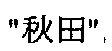
network. Specifically, with words
("autumnal field", uttered as "akita")
and
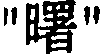
("dawn", uttered as "akebono"), with the phonemic information of
being [akita] and that of
is [akebono], the acoustic score of
and
can be calculated in common up to the second phoneme as from the first
phoneme a, k. As for the remaining phonemes k, i, t and a of the word
and the remaining phonemes e, b, o, n and o of the word
the acoustic score
is calculated independently.
So, with this method, the processing volume for the acoustic score can
be diminished significantly.
With this method, it is not possible to determine a word, the acoustic
model of which is being calculated, from the common word portion for which an
acoustic score is calculated in common. In the above example of the words
and
if the acoustic score is calculated for the first and second
phonemes a and k, it is not possible to identify whether the word, the acoustic
model of which is being calculated, is
In this case, for
the word being processed can be identified to
be
when the calculations of the acoustic score are started for the third
phoneme. Similarly, for
the word being processed can be identified to be
when the calculations of the acoustic score are started for the third
phoneme.
Thus, if a part of the calculations of the acoustic score is used in
common, each word cannot be identified at the beginning of the calculations of
the acoustic score for the word, thus the language score cannot be considered for
the word. As a result, it is difficult to use the above-mentioned. linguistic
truncating method before starting the calculations of the acoustic score for the
word, and unnecessary calculations will be done.
Further, if a part of the calculations of the acoustic score is used in
common, the above-described network of the tree structure is formed for the
totality of words in a word dictionary, and hence a large memory capacity is
required for holding the network.
For improving the efficiency of the memory capacity and the
processing volume, there is known a method of preliminarily selecting the words
the acoustic score of which is to be calculated, without calculating the acoustic
score of the totality of words in a dictionary, and to calculate the acoustic score
only for the preliminarily selected words.
The method for preliminary selection is stated in, for example, L.R.
Bahl, S.V. De Gennaro, P.S. Gopalakrishnan and R.L. Mercer, "A Fast
Approximate Acoustic match for large Vocabulary Speech Recognition", IEEE
Trans. Speech and Audio Proc., vol.1, pp.59-67, 1993.
This preliminary selection is performed using simpler acoustic models
or a set of grammatical rules not particularly high in precision. That is, the
preliminary selection is performed for the totality of words in the word
dictionary, so that, if the preliminary selection is performed using acoustic
models or a set of grammatical rules high in precision, a large amount of
resources, such as processing volume or memory capacities, are required for
maintaining real-time operations. With the preliminary selection, employing a
simplified acoustic model or set of grammatical rules, high-speed processing is
possible with a smaller amount of resources, if the large vocabulary is to be dealt
with.
In the speech recognition apparatus, in which the preliminary selection
is applied, it is sufficient if the matching processing is performed only for the
pre-selected words, so that, even in case acoustic models or set of grammatical
rules high in precision are used, the matching processing can be carried out
speedily with a small amount of resources. Thus, the speech recognition
apparatus, performing preliminary selection, is particularly useful in speech
recognition for a large vocabulary.
Meanwhile, the preliminary selection is performed after a terminal
point likely to be true is found on completion of the matching processing
employing a sequence of characteristic values for a given word, using a sequence
of characteristic values as from the time point corresponding to the terminal point
which is now a start point. That is, the preliminary selection is performed at a
time point when the boundary between words contained in the continuously
uttered speech has as yet not been finalized.
Therefore, if the beginning end point or the terminal end point of a
sequence of characteristic values used in the preliminary selection is offset from
the beginning end point or the terminal end point of a word in question, such a
preliminary selection is carried out which uses a sequence of characteristic values
containing characteristic values of a word directly preceding or directly following
the word in question, or a sequence of characteristic values lacking in the
characteristic values of beginning end or trailing end portions of the word in
question, that is, using what may be termed an acoustically unstable sequence of
characteristic values.
Thus, in the preliminary selection, employing a simple acoustic model,
it may be an occurrence that a certain word contained in the speech is not
selected. Such failure is selection is likely to occur in words with a smaller
number of phonemes, such as adjuvant or adjuvant verb in Japanese or articles or
prepositions in English.
If correct words have not been selected in the preliminary selection,. no
matching processing is carried out for the word, so that the result of speech
recognition is in error.
There are such methods as moderating the standard for acoustic or
linguistic judgment in word selection to increase the number of selected words,
and employing an acoustic model or a set of grammatical rules high in precision.
However, if, in the preliminary selection, the standard for acoustic or
linguistic judgment in word selection is moderated, a large number of words not
particularly high in the probability as the result of the speech recognition become
the object of the matching processing, thus significantly increasing the resource
necessary for matching processing heavier in load per word than the preliminary
selection.
On the other hand, if an acoustic model or a set of grammatical rules
high in precision is used in the preliminary selection, the resource necessary for
preliminary selection is increased significantly.
Disclosure of the Invention
It is therefore an object of the present invention to provide a speech
recognition apparatus in which the speech recognition can be improved in
precision as the necessary resource is prohibited from being increased as far as
possible.
The speech recognition apparatus according to the present invention
includes selection means for selecting one or more first words from a group of
words to be processed by speech recognition processing, based on a first measure
calculated using the characteristic values, and for selecting one or more second
words based on a second measure different from the first measure, and score
calculation means for calculating the score of the first and second words selected
by the selection means.
The selection means may select, as the second words, the words having
the part of speech satisfying a pre-set condition, with the part of speech as the
second measure. The selection means may select, as the second words, the
words having the part of speech satisfying a pre-set condition, with the part of
speech as the second measure. The selection means may select, as the second
words, the words having the part of speech satisfying a pre-set condition, with
the part of speech as the second measure. The selection means may further
include storage means for memorizing the results of speech recognition. In this
case, the selection means selects, as the second words, the words included in the
results of speech recognition memorized in the storage means, with the stored
state in the storage means as the second measure.
The speech recognition apparatus according to the present invention
may further include inputting means for providing an input for correcting the
results of speech recognition. The storage means stores the results of the speech
recognition corrected by the input from the inputting means. The selection
means calculates the score using characteristic values of the speech to select the
first word based on the score.
The speech recognition method according to the present invention
includes a selection step of selecting one or more first words from a group of
words to be processed by speech recognition processing, based on a first measure
calculated using the characteristic values, and for selecting one or more second
words based on a second measure different from the first measure, and a score
calculation step of calculating the score of the first and second words selected by
the selection step.
The recording medium according to the present invention includes a
program including a selection step of selecting one or more first words from a
group of words to be processed by speech recognition processing, based on a
first measure calculated using the characteristic values, and for selecting one or
more second words based on a second measure different from the first measure,
and a score calculation step of calculating the score of the first and second words
selected by the selection step.
In the speech recognition method and apparatus and the recording
medium according to the present invention, one or more first words is selected
from a group of words to be processed by speech recognition processing, based
on a first measure calculated using the characteristic values, and one or more
second words is selected based on a second measure different from the first
measure. The score is calculated of the so-selected first and second words
Brief Description of the Drawings
Fig.1 is a block diagram showing a typical conventional speech
recognition apparatus.
Fig.2 is a block diagram showing an embodiment of a speech
recognition apparatus according to the present invention.
Fig.3 illustrates the word concatenation information.
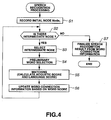
Fig.4 is a flowchart for illustrating the processing of the speech
recognition apparatus.
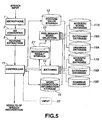
Fig.5 is a block diagram showing another embodiment of a speech
recognition apparatus according to the present invention.
Fig.6 is a flowchart for illustrating the processing of the speech
recognition apparatus.
Fig.7 is a block diagram showing a typical computer embodying the
present invention.
Best mode for Carrying out the Invention
Fig.2 shows an embodiment of a speech recognition apparatus
according to the present invention. In Fig.2, the portions corresponding to those
of the apparatus shown in Fig.1 are depicted by the same reference numerals and
are not explained specifically.
The sequence of characteristic values of the speech uttered by a user,
output by the characteristic value extraction unit 3, is sent on the frame basis to a
controller 11, which then sends the characteristic values from the characteristic
value extraction unit 3 to a characteristic value storage unit 12.
The controller 11 references the word concatenation information stored
in the word concatenation information stored in a word concatenation information
storage unit 16. The controller 11 generates the word concatenation information,
based on the acoustic or linguistic score, indicating the result of the matching
processing obtained by the matching unit 14 performing the matching processing
similar to that performed by the matching unit 4 of Fig.1, to update the contents
stored in the word concatenation information storage unit 16, based on the
so-generated word concatenation information. Moreover, based on the word
concatenation information, stored in the word concatenation information storage
unit 16, the controller 11 finalizes and outputs the ultimate results of speech
recognition.
The characteristic value storage unit 12 stores the sequence of
characteristic values, sent thereto from the controller 11, until the results of the
user speech recognition are obtained. Meanwhile, the controller 11 sends the
time point of acquisition of the characteristic values output by the characteristic
value extraction unit 3, termed herein the extraction time point, referenced to the
start time point of a speech domain, to the characteristic value storage unit 12,
along with the characteristic value. The characteristic value storage unit 12
stores the characteristic value along with the extraction time point. The
characteristic values and the extraction time point, stored in the characteristic
value storage unit 12, can be referenced as necessary by a word pre-selection unit
13 and by the matching unit 14.
Responsive to a request from the matching unit 14, the word
pre-selection unit 13 performs preliminary word selection of selecting one or
more words, processed for matching in the matching unit 14, using the
characteristic values stored in the characteristic value storage unit 12, as it
references the word concatenation information storage unit 16, an acoustic model
database 17A, a dictionary database 18A and a grammar database 19A, as
necessary.
The matching unit 14 performs the matching processing for words
obtained as a result of the preliminary word selection processing from the word
pre-selection unit 13, using the characteristic values stored in the characteristic
value storage unit 12, as it references the word concatenation information storage
unit 16, an acoustic model database 17B, a dictionary database 18B and a
grammar database 19B, as necessary, under control by the controller 11.
The word concatenation information storage unit 16 memorizes the
word concatenation information, supplied from the controller 11, until the results
of recognition of the user's speech are acquired.
It should be noted that the word concatenation information denotes the
relation (concatenation or union) of component words of the word sequence
representing the ultimate result of speech recognition, and includes the acoustic
score and the language score of each word as well as time points of the
beginning end and terminal end of the speech portions associated with the
respective words.
Fig.3 shows, by a graph, the word concatenation information, stored in
the word concatenation information storage unit 16.
In the embodiment of Fig.3, the graphic structure as the word
concatenation information is made up of arcs denoting words indicated by line
segments interconnecting ∘ marks in Fig.3 and of nodes representing the
boundary between words, indicated by the ∘ marks in Fig.3.
The node has the temporal information denoting the time point of
extraction of the characteristic value associated with the node. Since the time
point of extraction is the time point of acquisition of the characteristic value
output by the characteristic value extraction unit 3, with the time point of
beginning of a speech domain being 0, the temporal information owned by a
node Node1 corresponding to the start of a speech domain, that is the leading end
of the first word, is 0. It is noted that the node represents the beginning end or
a terminal end of an arc, with the temporal information owned by the beginning
end node or the trailing end node being the beginning end and the terminal end
of the enunciation of the word associated with the node, respectively.
In Fig.3, the direction from left to right denotes the time lapse, so that,
of the nodes lying at left and right ends of a given arc, the left node and the right
node represent the beginning and terminal end nodes, respectively.
An arc has the acoustic score and score of the word associated
therewith. A word sequence as candidate of the results of speech recognition is
formed by sequentially concatenating the arcs with the node as a terminal end
node as a beginning end node.
That is, in the
controller 11, an arc corresponding to a word most
probable as the result of the speech recognition is coupled to a node Node
1
representing the beginning end of a speech domain. In the embodiment of Fig.3,
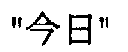
an arc Arc
1 corresponding to
("Today", uttered as "kyou"), an arc Arc
6
corresponding to
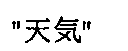
("Good", uttered as "ii") and an arc Arc
11
("Weather", uttered as "tenki") are concatenated. Whether or not a given word
is a probable one as the result of speech recognition is determined based on the
acoustic score and on the language score as found in the
matching unit 14.
In similar manner, for a terminal end node Node
2, as a terminal end of
an arc Arc
1 corresponding to
a terminal end node Node
7 as a terminal
end of an arc Arc
6 corresponding to
and a terminal end node Node
12 as a
terminal end of an Arc
11 corresponding to
arcs corresponding to probable
words are concatenated in the manner described above.
By the concatenation of the arcs as described above, one or more paths,
made up of arcs and nodes, are formed from left towards right, with the
beginning point of the speech domain as a beginning point. If the totality of the
paths reach the terminal end of the speech domain (at time T in Fig.3), the
acoustic and language scores owned by the arcs formed as from the beginning
end until the terminal end of the speech domain are accumulated in the controller.
11 to find the final score. The word sequence corresponding to the arc forming
the path with the maximum final score is finalized and output as the result of the
speech recognition.
Referring specifically to Fig.3, if the maximum final score has been
obtained for a path from the node Node
1 through the arc Arc
1 corresponding to
node Node
2, the arc Arc
2 corresponding to
("is", uttered as "wa"),
node Node
3, the arc Arc
3 corresponding to
node Node
4, an arc Arc
4
corresponding to the
node Node
5 and the arc Arc
5 corresponding to
("isn't it?", uttered as "desune") and node Node
6, a word sequence
and
is output as the result of the speech
recognition.
In the above case, arcs are concatenated to the entire nodes in the
speech domain to form a path extending from the beginning end to the terminal
end of the speech domain. However, if a path constructed in the course of the
path formation is found to be inadequate as the result of the speech recognition,
the path forming process can be truncated at this time point, that is no arc is
concatenated, as from such time point.
In accordance with the above-described path forming rule, a terminal
end point of a given arc becomes the beginning node of one or more arcs
concatenated next, so that, basically, a path is formed in a manner of spreading
of branches or leaves of a tree. As an exceptional case, there is such a case
wherein a terminal end of an arc coincides with a terminal end of another arc,
that is wherein the terminal end node of an arc is the same common node as the
terminal end node of the other arc.
If a bigram, for example, is used as the grammatical rules, two arcs
extending from distinct nodes represent the same word and the end time of the
enunciation of the word is the same, the ends of these two arcs coincide with
each other.
In Fig.3, the arc Arc
7 extending from the node Node
7 as a beginning
end and the arc Arc
13 extending from the node Node
13 as a beginning end are
both associated with
and have the same time point of end of the speech
enunciation, so that these arcs have the common node Node
8 as same terminal
end.
Although these nodes may not be of the same common node, the nodes
are desirably the same node Node8 in view of the memory capacity efficiency.
Although a bigram is used as the rules of grammars in Fig.3, the
common node may be used if, for example, a trigram, for example, is used.
The word concatenation information stored in the word concatenation
information storage unit 16 may be referenced as necessary by the word
pre-selection unit 13 and the matching unit 14.
Reverting to Fig.2, the acoustic model databases17A, 17B basically
memorize the acoustic model explained in connection with the acoustic model
database 5 of Fig.1.
However, the acoustic model database 17B memorizes an acoustic
model explained in connection with the acoustic model database 5 of Fig.1. That
is, if, in the acoustic model database 17A, only one pattern acoustic model which
is not dependent on the forward and backward side contexts with respect to the
phonemes or syllables is stored, there is memorized in the acoustic model
database 17B not only an acoustic model not dependent on the forward or
backward side contexts, but also an acoustic model dependent on the context
across plural words or an acoustic model dependent on the context within a
word.
Basically, the dictionary databases 18A, 18B memorize the word
dictionary explained in connection with the dictionary database 16 of Fig.1.
That is, the same set of words are registered in the word dictionaries of
the grammar databases 18A and 18B. However, the word dictionary of the
dictionary database 18B has stored therein the high precision phonemic
information capable of processing to higher precision than is possible with the
word dictionary of the dictionary database 18A. That is, if the sole phonemic
information (reading) is stored in the word dictionary of the dictionary database
18A, plural sorts of the phonemic information is stored for each word in the
word dictionary of the dictionary database 18A.
Specifically, for a wore
("Good morning", uttered as
"ohayou"), the sole phonemic information
("Good morning", uttered
as "ohayou") is stored in the word dictionary of the
dictionary database 18A,
whereas, in the word dictionary of the
dictionary database 18B,
("Good morning", uttered as "ohayo-") or
("Good morning", uttered as
"ohayo") are registered as the phonemic information.
The grammar databases 19A, 19B basically memorize the grammatical
rules explained in connection with the grammar database 7 shown in Fig.1.
However, the grammar database 19B memorizes the high precision
grammatical rules higher in precision than those memorized in the grammar
database 19A. That is, if the grammar database 19A memorizes the grammatical
rules derived from the unigram (word occurrence probability), the grammar
database 19B memorizes a bigram (word occurrence probability taking into
account the relation to the directly previous word), a trigram (word occurrence
probability taking into account the relation to the directly previous word and the
second previous word) and the context free grammar.
As described above, a sole acoustic pattern of each phoneme and
syllable is stored in the acoustic model database 17A, whilst plural acoustic
patterns of each phoneme and syllable are stored in the acoustic model database
17B. In the dictionary. database 18A, the sole phonemic information is stored
for each word, whereas, in the dictionary database 18A, plural patterns of the.
acoustic model are stored. In the grammar database 19A, simple grammatical
rules are stored in the grammar database 19A, whereas, in the grammar
database 19B, grammatical rules of higher precision are stored.
So, the word pre-selection unit 13, referencing the acoustic model
database 17A, a dictionary database 18A and a grammar database 19A, is able to
promptly find the acoustic and language scores for a large number of words,
although not to a higher accuracy. On the other hand, the matching unit 14,
referencing the acoustic model database 17B, a dictionary database 18B and a
grammar database 19B, is able to promptly find the acoustic and language scores
for a tolerably large number of words to a higher accuracy.
Although the acoustic model databases 17A and 17B are differentiated
as to the precision of the acoustic model memorized therein, the acoustic model
memorized therein may also be the same. Similarly, the memory contents of the
word dictionaries of the dictionary databases 18A, 18B may also be the same.
Referring to the flowchart of Fig.4, the speech recognition processing
by the speech recognition apparatus shown in Fig.2 is explained.
When a user utters the speech, the speech so enunciated is converted
by a microphone 1 and an A/D converter 2 into digital speech data, which is
routed to the characteristic value extraction unit 3. The characteristic value
extraction unit 3 then sequentially extracts the characteristic values of the
speech from the speech data supplied thereto to send the extracted characteristic
values to the controller 11.
The controller 11 recognizes the speech domain by some technique or
other and, in the speech domain, routes the sequence of characteristic values
furnished from the characteristic value extraction unit 3 to the characteristic value
storage unit 12 in association with the extraction time of each characteristic value
for storage therein.
At step S1 after the start of the speech domain, the controller 11
generates a node representing the beginning of the speech domain, referred to
below as the initial node, and routes the so-generated node to the word
concatenation information storage unit 16 for storage therein. That is, the
controller 11 at step S1 causes the node Node1 in Fig.3 to be stored in the word
concatenation information storage unit 16.
Moreover, the controller 11 at step S1 following the beginning of the
speech domain generates a node representing the start of the speech domain,
referred to below as the initial node, to send the so-generated node to the word
concatenation information storage unit 16 for storage therein. That is, the
controller 11 causes the node Node1 in Fig.3 to be stored at step S1 in the word
concatenation information storage unit 16.
The controller 11 proceeds to step S2 and references the word
concatenation information of the word concatenation information storage unit 16
to verify whether or not there is any intermediate node.
That is, in the word concatenation information, shown in Fig.3, as
described above, an arc is concatenated to the terminal end node to form a path
extending from the beginning end to the terminal end of the speech domain. At
step S2, such a node among the terminal end nodes to which an arc is as yet not
connected and which has not reached the trailing end of the speech period, is
retrieved as an intermediate node, such as nodes Node8, Node10 or Node11 in Fig.3
to determine whether or not there is such intermediate node.
As described above, the speech domain is recognized by some
technique, whilst the time point corresponding to the terminal end node can be
recognized by referencing tie time information of the terminal end node. So,
whether or not the terminal end node not connected to an arc is an intermediate
node not reaching the trailing end of the speech domain can be verified on
comparing the last time point of the speech domain and the temporal information
owned by the terminal end node.
If, at step S2, it is verified that there is any intermediate node, the
controller 11 proceeds to step S3 to select one of the intermediate nodes present
in the information connecting information as being a node determining the word
as an arc connecting to the node. This node is sometimes referred to below as a
node under consideration.
That is, if there is only one intermediate node in the word
concatenation information, the controller 11 selects that intermediate node as
being a node under consideration. Specifically, the controller 11 references the
time information owned by plural intermediate nodes and selects such a node
having the oldest time indicated by the time information, that is the node towards
the beginning side of the speech domain, or such a node having the newest time
indicated by the time information, that is the node closest to the terminal side of
the speech domain, as the node under consideration. The controller 11 also
accumulates the acoustic score and the language score owned by the arcs forming
the path from the initial node to plural intermediate nodes, and selects the
intermediate node forming the terminal end of the path which maximizes or
minimizes the accumulated values as being the node under consideration.
The controller 11 outputs to the matching unit 14 a command to the
effect that the matching processing is to be performed with the time information
owned by the node under consideration as the start time point. This command is
sometimes referred to below as the matching processing command.
On receipt of the matching processing command from the controller 11,
the matching unit 14 sends the node under consideration and the time
information it owns to the word pre-selection unit 13 to request it to perform
word pre-selection processing. The controller 11 then transfers to step S4.
On receipt of the request for word pre-selection processing from the
matching unit 14, the word pre-selection unit 13 at step S4 performs word
pre-selection processing of selecting the candidates of words that are to be arcs
concatenated to the node under consideration on the words registered in the word
dictionary of the dictionary database 18A.
That is, the word pre-selection unit 13 recognizes the start time of the
sequence of characteristic values used in calculating the language and acoustic
scores, from the time information owned by the node under consideration, while
reading out a sequence of the characteristic values, required as from the start
time, from the characteristic value storage unit 12. The word pre-selection unit
13 forms the word model of each word registered in the word dictionary of the
dictionary database 18A by connection of the acoustic model of the acoustic
model database 17A to calculate the acoustic score based on the word model
using the sequence of the characteristic values read out from the characteristic
value storage unit 12.
The word pre-selection unit 13 calculates the language score of a word
corresponding to each word model, based on the grammatical rules stored in the
grammar database 19A. That is, the word pre-selection unit 13 finds the
language score of each word based on, for example, a unigram.
The word pre-selection unit 13 may reference the word concatenation
information to execute the calculations of the acoustic score of each word using a
cross-word model which depends on the word directly previous to the word in
question (a word corresponding to an arc the terminal end of which is the node
under consideration). It should be noted that the volume of calculations of the
acoustic score is larger when employing the cross-word model than otherwise.
In the word pre-selection unit 13, calculations of the language score of
each word may be made based on the bigram prescribing the probability of the
word in question concatenated to the directly previous word. However, if the
language score is to be calculated based on the bigram or even a trigram, the
volume of calculations is larger than if the unigram is used for calculations.
When the word pre-selection unit 13 finds the acoustic and language
scores of each word as described above, it finds the score, referred to below as
word score, which represents the comprehensive evaluation of the acoustic and
language scores, as a first measure, to route upper L values thereof to the
matching unit 14 as being the words to be processed for matching.
Moreover, the word pre-selection unit 13 at step S4 selects one or more
words registered in the dictionary database 18A, based on a measure different
from that of the word score in which the acoustic score is reflected, to route the
selected word(s) to the matching unit 14.
That is, the word pre-selection unit 13 selects those words registered in
the dictionary database 18A and which are generally shorter in enunciation time,
such as the words the number of phonemes and syllables of which are less than a
pre-set value, for example, prepositions or articles in English and adjuvants or
adjuvant-verbs in Japanese, without regard to the acoustic scores thereof, to send
the selected words to the matching unit 14. In this case, the words having
short enunciation time necessarily become the object of the matching processing.
The word selected based on the particular measure irrelevant to the
acoustic score in the word pre-selection unit 13 as described above is termed a
specified word.
On receipt of L words selected from the word pre-selection unit 13
based on the word score and the specified word as selected based on the pre-set
condition (measure) irrelevant to the word score, the matching unit 14 at step S5
executes matching processing on thee words.
That is, the matching unit 14 recognizes the start time of the sequence
of characteristic values used in calculating the language and acoustic scores, from
the time information owned by the node under consideration, to read out the
sequence of the necessary characteristic values as from the start time. Moreover,
the matching unit 14 references the dictionary database 18B to recognize the
phonemic information of the word from the word pre-selection unit 13 and reads
out the phonemic model associated with the phonemic information from the
acoustic model database 17A to form a word model on concatenation.
The matching unit 14 calculates the acoustic score of the words from
the word pre-selection unit 13, using the sequence of characteristic values read
out from the characteristic value storage unit 12, based on the word model
formed as described above. The matching unit 14 may reference the word
concatenation information to execute the calculations of the acoustic score of the
words based on a cross-word puzzle.
Moreover, the matching unit 14 references the grammar database 19B
to calculate the language score of the words from the word pre-selection unit 13.
That is, the matching unit 14 references e.g., the word concatenation
information to recognize a word directly previous to the word from the word
pre-selection unit 13 and a word directly previous to the directly previous word
to find the language score of the word from the word pre-selection unit 13 based
on the probability derived from the trigram.
The matching unit 14 finds the acoustic and language scores, for the
totality of the L words and the specified words from the word pre-selection unit
13 to then transfer to step S6. The totality of the L words and the specified
words are collectively termed selected words. At step S6, the word score is
found for each of the selected words based on the comprehensive evaluation of
the acoustic and language scores, while the word concatenation information
stored in the word concatenation information storage unit 16 is updated, based on
the word score.
That is, at step S6, the matching unit 14 finds the word score for the
selected word and compares the word score to a pre-set threshold value to
wine-press a word as an concatenate arc to the node under consideration from the
selected words. The matching unit 14 sends the words left after the
wine-pressing along with the acoustic and language scores and the end time of
the word under consideration.
The terminal end time of a word is recognized from the time point of
extraction of the characteristic values used in calculating the acoustic score. If
plural extraction time points highly probable as the end time are obtained, the
word left after the wine-pressing are sent, along with the end time and the
corresponding language and acoustic scores, to the controller 11.
Meanwhile, the end time of the word is recognized from the time point
of extraction of the characteristic values used in calculating the acoustic score.
If plural time points of extraction highly probable as the end time are obtained, a
set of the end time and the associated acoustic and language scores are sent to
the controller 11 for the word in question.
On receipt of the acoustic and language scores of the word supplied
from the matching unit 14 and the end time, the controller 11 extends the arc, for
each word from the matching unit 14, with the node under consideration in the
word concatenation information (Fig.3) stored in the word concatenation
information storage unit 16, to concatenate the arc to the terminal end node
corresponding to the position of the end point. The controller 11 also accords
the associated word and the acoustic and language scores to the arcs to accord
the corresponding end time to the terminal end node of each arc as the time
information. The controller 11 then reverts to step S2 to repeat the similar
processing as described above.
Since the word concatenation information is sequentially updated based
on the processing result of the matching unit 14, it is possible for the word
pre-selection unit 13 and the matching unit 14 to perform the processing by
exploiting the latest word concatenation information.
Meanwhile, the controller 11 provides for use of the terminal end
nodes in common in updating the word concatenation information if this is
possible.
On the other hand, if it is determined at step S2 that there exists no
intermediate node, the controller 11 proceeds to step S7 to reference the word
concatenation information to accumulate the word score for each path formed by
the word concatenation information to find the final score. The controller 11
outputs the word sequence corresponding to arc forming the path having the
maximum final score as the result of speech recognition for the user's
enunciation to complete the processing.
As described above, the word pre-selection unit 13 selects the word
most probable as the result of speech recognition, based on the word score
including the acoustic score calculated from the acoustic characteristic value,
while selecting the words having unstable acoustic characteristic values having a
small number of phonemes, such as adjuvants or adjuvant-verbs in Japanese or
prepositions or articles in English, based on a measure irrelevant to the acoustic
score calculated from acoustic characteristic values, these words being
matching-processed in the matching unit 14, thus preventing deterioration of
precision in the speech recognition otherwise caused by non-selection in the word
pre-selection unit 13 of the words having unstable acoustic characteristic values.
Since the range of truncation (wine-pressing) at the time of word
selection is not diminished, nor is an acoustic model or grammatical rules of
higher precision used, in the word pre-selection unit 13, it is possible to
minimize the resource necessary for processing by the word pre-selection unit 13
to improve the accuracy speech recognition.
Moreover, since the words having a small number of phonemes and
unstable acoustic characteristic values are necessarily processed for matching,
only the words having a large number of phonemes and hence more stable
acoustic characteristic values may be selected in the word pre-selection unit 13
based on the word score including the acoustic score. In the word pre-selection
unit 13, no failure of selection of correct words occurs in the word pre-selection
unit 13 even if a simpler acoustic model or grammatical rules are used, as a
result of which the precision in speech recognition can be improved at the same
time as the resource required for processing in the word pre-selection unit 13 is
diminished.
If the words selected in the word pre-selection unit 13 based on the
word score including the acoustic score are only the words of a larger number of
phonemes with relatively stable acoustic characteristic values, no failure in
selection of correct words occurs even if the number of words selected based on
the acoustic and language scores is diminished, as a result of which the accuracy
in the speech recognition can be improved at the same time as the resource
necessary for processing in the matching unit 14 is diminished.
In the above-described embodiment, the word pre-selection unit 13
selects the word with a shorter enunciation time, based on a measure which is the
enunciation time, without regard to its acoustic score, to prevent the accuracy in
speech recognition from being deteriorated by the words with unstable acoustic
characteristic values not being selected by the word pre-selection unit 13.
Alternatively, the word pre-selection unit 13 can be caused to select words based
only on a measure irrelevant to the acoustic score, that is a measure irrelevant to
the characteristic values of the speech, such as the language score, apart from the
words selected based on the word score. In such case, it is similarly possible to
improve the accuracy in speech recognition as the resource is diminished.
That is, the word pre-selection unit 13 can be caused to select words
likely to be concatenated to a sequence of the (n-1) word towards a node under
consideration of a path reaching the node under consideration, based only on the
language score obtained from the grammatical rule derived from the statistic
word concatenation probability (N-gram). Since the word is selected in this case
without taking the acoustic score calculated from the characteristic values into
account, it is possible to prevent the accuracy in the speech recognition from
being deteriorated by failure in selection of such words the acoustic score of
which is diminished by the unstable acoustic characteristic values and hence the
word score of which is decreased.
Since the processing volume of calculations of the language score can
be appreciably smaller than that of calculations of the acoustic score, it is
possible to suppress the increase in the resource.
The word selection based only on the language score obtained from the
grammatical rules derived from the statistic word concatenation probability can
easily be achieved by getting the grammatical rules stored in the grammar
database 19A.
Fig.5 shows another embodiment of the speech recognition apparatus
according to the present invention. The parts used in common with those of
Fig.2 are depicted by the same reference numerals and are not explained
specifically. That is, the speech recognition apparatus of Fig.5 is the same as
that of Fig.2 except that a recognition result storage unit 21 is newly provided in
the apparatus of Fig.2.
The recognition result storage unit 21 is adapted for being fed with the
result of the speech recognition output by the controller 11. The recognition
result storage unit 21 memorizes the result of the speech recognition.
Meanwhile, the recognition result storage unit 21 has a recording capacity
corresponding to one or more speech recognition result, and is designed so that,
when the amount of the speech recognition result corresponding to the recording
capacity has been stored therein, the recognition result supplied next will be
stored in a manner of overwriting the oldest stored value. So, the hysteresis of
the latest speech recognition result is stored in the recognition result storage unit
21. The word pre-selection unit 13 is able to reference the hysteresis of the
latest speech recognition result stored in the recognition result storage unit 21.
Referring to the flowchart of Fig.6, the processing for speech
recognition by the speech recognition apparatus of Fig.5 is now explained.
At steps S11 to S17, the speech recognition apparatus of Fig.5
basically executes the processing similar to the processing at steps S1 to S7 of
Fig.4.
At step S17, the controller 11 outputs the word sequence corresponding
to the arc forming a path with the maximum last score as the result of speech
recognition for the user's pronunciation. The controller 11 then proceeds to step
S18 where the result of the speech recognition is sent to the recognition result
storage unit 21 for storage therein to terminate the processing.
However, at step S14, the word pre-selection unit 13 performs the
following word pre-selection processing.
As at step S4 in Fig.4, the word pre-selection unit 13 reads out from
the characteristic value storage unit 12 the sequence of the characteristic values
as necessary since the start time point in the time information owned by the node
under consideration, and calculates acoustic scores of the respective words
registered in the word dictionary of the dictionary database 18A, using the
sequence of the characteristic values read out from the characteristic value
storage unit 12, while calculating the language scores thereof based on the
grammatical rules stored in the grammar database 19A, to find the word scores
(first measure) corresponding to the comprehensive evaluation of the acoustic and
language scores. The word pre-selection unit 13 sends the words, the word
scores of which are in upper L ranks, to the matching unit 14 as being the words
to be subjected to the matching processing.
The word pre-selection unit 13 selects one or more of the words
registered in the dictionary database 18A, based on a measure stored in the
recognition result storage unit 21 (second measure) to send the selected word(s)
to the matching unit 14.
Empirically, the words included in the speech enunciated by a user in
the past are enunciated again in a majority of cases. So, the word pre-selection
unit 13 of Fig.5 selects the same words as those forming the results of speech
recognition, stored in the recognition result storage unit 21, as specified words
from the dictionary database 18A, and routes the so-selected words to the
matching unit 14 as being the words to be subjected to the matching processing.
On receipt from the word pre-selection unit 13 of the L words selected
based on the word scores and the specified words selected based on a pre-set
condition (measure) that is irrelevant to the word score, herein the measure stored
in the recognition result storage unit 21, the matching unit 14 performs matching
processing on the so-received words.
In this case, the word pre-selection unit 13 selects words based on the
measure which is irrelevant to the acoustic score, so that even a word in which
the characteristic values of the speech exhibit marked fluctuations die to, for
example, environmental noise or circuit noise and which is not selected by the
word score which has reflected therein the acoustic score calculated from such
characteristic values may be subjected to matching processing without employing
the high precision acoustic model, thus allowing to improve the accuracy in
speech recognition with smaller resources.
Meanwhile, the speech recognition apparatus may further be provided
with an input unit 22, such as keyboard, actuated by a user when performing
inputting processing for correcting the results of the speech recognition. If, in
this case, the user actuates the input unit 22 to act on the result of the speech
recognition output by the controller 11 to make such corrections, the controller
11 may be configured for causing the corrected result of the speech recognition
to be stored in the recognition result storage unit 21, in place of or in
combination with the result of the speech recognition output by no other than the
user. This enables the precision in the speech recognition to be improved with
the small volume of the resources, as in the case described above.
The above-described sequence of the processing operations can be
performed by hardware or by software. In the latter case, the program forming
the software is installed on e.g., a general-purpose computer.
Fig.7 shows a typical computer in which the above-described sequence
of operations is installed.
The program can be recorded at the outset in a hard disc 105 or a
ROM 103 as a recording medium enclosed in a computer.
The program may be transiently or permanently stored or recorded in a
removable recording medium 111, such as a floppy disc, a CD-ROM (Compact
Disc Read-Only Memory), a MO (magneto-optical) disc, a DVD (Digital
Versatile Disc), a magnetic disc or a semiconductor memory. This type of the
removable recording medium may be purveyed as a so-called packaged software.
It should be noted that, instead of being installed on the computer from
the above-mentioned removable recording medium 111, the programs may be
transferred to the computer over a radio path through an artificial satellite for
digital satellite broadcasting, from a downloading site, or over a cable through a
network, such as LAN (Local Area network) or Internet, in which cases the
computer may receive the program so transferred by a communication unit 108
to install the program on the enclosed hard disc 105.
The computer has enclosed therein a CPU (central processing unit)
102, to which an input/output interface 110 is connected over a bus 101. If fed
with a command through the input/output interface 110, such as by a user acting
on the input unit 107, formed by a keyboard, a mouse or a microphone, the
CPU 102 executes the program stored in a ROM (read-only memory) 103.
Alternatively, the CPU 102 loads a program stored in a hard disc 105, or a
program read out from from the removable recording medium 111loaded on a
drive 109 and installed on the hard disc 105 on a RAM (random access memory)
104 for execution. This enables the CPU 102 to perform the processing
conforming to the above-described flowchart or the processing performed by the
structure of the block diagram described above. The CPU 102 outputs the
processed result as necessary through the input/output interface 110 from an
output unit 106 formed by an LCD (liquid crystal display) or a loudspeaker,
transmits the processed result from a transmitter 108 or records the processed
result on the hard disc 105.
It should be noted that the processing steps stating the program to be
executed by a computer for performing a variety of processing operations may be
carried out in parallel or on the object basis, without it being necessary to
perform the respective steps chronologically; in a sequence stated in the
flowchart.
The program may also be processed by a computer or in a distributed
fashion by plural computers. The program may also be transferred to and
executed by a remote controller.
As described above, the word pre-selection unit 13 selects a word from
the group of words registered in the dictionary database 18A, based on the word
score calculated using characteristic values, while also selecting words having a
short duration of enunciation, based on a measure, words likely to be
concatenated linguistically to the directly previously recognized word or words
included in the past result of speech recognition, to subject the so-selected words
to the matching processing. So, the failure in the selection of a pre-set word
may be prohibited from occurrence in the preliminary word selection processing,
without it being necessary to use an acoustic model. The result is that
deterioration in the precision in speech recognition may be prevented from
occurring as the necessary resource is prevented from increasing as far as
possible.
Moreover, the words to be subjected to the matching processing are
selected based on a measure different from the word score, that is on a measure
not influenced by the characteristic values of the speech, without relevancy to the
acoustic score calculated using the characteristic values, so that, even in a noisy
environment, the words to be subjected to the matching may be selected without
being affected by the noise to improve the noise resistance of the speech
recognition apparatus.
Since the words to be subjected to score calculations in the matching
unit 14, are previously selected in the word pre-selection unit 13, the score
calculations for respective words by the matching unit 14 may be performed
independently for each word without forming a network of a tree structure
having a portion of the calculations of the acoustic scores in common. If, in
such case, the score calculations of the respective words are executed
time-divisionally in the matching unit 14, it becomes possible to suppress the
memory capacity necessary to procure for the calculations to a smaller value.
Since the score calculations by the matching unit 14 may be performed
temporally independently, so that, by judiciously exploiting the memory capacity
required for score calculations, it is possible to suppress the required memory
capacity to a lower value.
In this case, when starting the score calculations for a given word, it is
possible to identify the word, so that, in a early stge of the score calculations, it
is possible to apply the language score to perform the truncation, as a result of
which wasteful calculations caused by word identification being unfeasible may
be eliminated.
The speech recognition apparatus shown in Fig.2 or 5 may be applied
to database retrieval by speech, to actuating a variety of equipment, to data
inputting to a variety of equipment or to a speech dialog system. More
specifically, the speech recognition apparatus may be applied to a database
retrieval system for determining the map information responsive to an inquiry as
to a place name by speech, an industrial robot for classifying packages
responsive to a command by speech, a dictation system for creating the text by
speech input in place of an input with a keyboard and to a dialog system by a
robot having conversation with a user.
In the word pre-selection unit 13, the specified words selected on the
basis of the number of phonemes or parts of speech can be registered in a word
dictionary, apart from the other words.
In the above-described embodiments, the word pre-selection unit 13
selects L words, based on the word score, which is the comprehensive
evaluation of the acoustic and language scores. It is however possible to select
L words based solely on the acoustic scores.
If the words to be subjected to the matching processing are selected on
the basis of a measure different from the word score having the acoustic score
reflected therein, plural measures may be used as such measure, whereby both
the words having a short speech enunciation time and the words included in the
past results of speech recognition can necessarily be the words subjected to
matching processing.
Industrial Applicability
From a set of words subjected to processing for speech recognition,
one or more first words are selected on the basis of a first measure calculated
using characteristic values, whilst one or more second words are selected on the
basis of a second measure different from the first measure, and the scores are
calculated on the so selected first and second words. So, there is no risk of
deterioration in the accuracy in speech recognition due to non-selection of the
second words based on the first measure.