EP1215595A2 - Method of searching information site by item keyword and action keyword - Google Patents
Method of searching information site by item keyword and action keyword Download PDFInfo
- Publication number
- EP1215595A2 EP1215595A2 EP01129969A EP01129969A EP1215595A2 EP 1215595 A2 EP1215595 A2 EP 1215595A2 EP 01129969 A EP01129969 A EP 01129969A EP 01129969 A EP01129969 A EP 01129969A EP 1215595 A2 EP1215595 A2 EP 1215595A2
- Authority
- EP
- European Patent Office
- Prior art keywords
- information
- item
- action
- query
- client terminal
- Prior art date
- Legal status (The legal status is an assumption and is not a legal conclusion. Google has not performed a legal analysis and makes no representation as to the accuracy of the status listed.)
- Ceased
Links
Images


Classifications
-
- G—PHYSICS
- G06—COMPUTING OR CALCULATING; COUNTING
- G06F—ELECTRIC DIGITAL DATA PROCESSING
- G06F16/00—Information retrieval; Database structures therefor; File system structures therefor
- G06F16/90—Details of database functions independent of the retrieved data types
- G06F16/95—Retrieval from the web
- G06F16/954—Navigation, e.g. using categorised browsing
-
- G—PHYSICS
- G06—COMPUTING OR CALCULATING; COUNTING
- G06F—ELECTRIC DIGITAL DATA PROCESSING
- G06F16/00—Information retrieval; Database structures therefor; File system structures therefor
- G06F16/90—Details of database functions independent of the retrieved data types
- G06F16/95—Retrieval from the web
- G06F16/951—Indexing; Web crawling techniques
-
- Y—GENERAL TAGGING OF NEW TECHNOLOGICAL DEVELOPMENTS; GENERAL TAGGING OF CROSS-SECTIONAL TECHNOLOGIES SPANNING OVER SEVERAL SECTIONS OF THE IPC; TECHNICAL SUBJECTS COVERED BY FORMER USPC CROSS-REFERENCE ART COLLECTIONS [XRACs] AND DIGESTS
- Y10—TECHNICAL SUBJECTS COVERED BY FORMER USPC
- Y10S—TECHNICAL SUBJECTS COVERED BY FORMER USPC CROSS-REFERENCE ART COLLECTIONS [XRACs] AND DIGESTS
- Y10S707/00—Data processing: database and file management or data structures
- Y10S707/99931—Database or file accessing
- Y10S707/99933—Query processing, i.e. searching
-
- Y—GENERAL TAGGING OF NEW TECHNOLOGICAL DEVELOPMENTS; GENERAL TAGGING OF CROSS-SECTIONAL TECHNOLOGIES SPANNING OVER SEVERAL SECTIONS OF THE IPC; TECHNICAL SUBJECTS COVERED BY FORMER USPC CROSS-REFERENCE ART COLLECTIONS [XRACs] AND DIGESTS
- Y10—TECHNICAL SUBJECTS COVERED BY FORMER USPC
- Y10S—TECHNICAL SUBJECTS COVERED BY FORMER USPC CROSS-REFERENCE ART COLLECTIONS [XRACs] AND DIGESTS
- Y10S707/00—Data processing: database and file management or data structures
- Y10S707/99931—Database or file accessing
- Y10S707/99933—Query processing, i.e. searching
- Y10S707/99934—Query formulation, input preparation, or translation
-
- Y—GENERAL TAGGING OF NEW TECHNOLOGICAL DEVELOPMENTS; GENERAL TAGGING OF CROSS-SECTIONAL TECHNOLOGIES SPANNING OVER SEVERAL SECTIONS OF THE IPC; TECHNICAL SUBJECTS COVERED BY FORMER USPC CROSS-REFERENCE ART COLLECTIONS [XRACs] AND DIGESTS
- Y10—TECHNICAL SUBJECTS COVERED BY FORMER USPC
- Y10S—TECHNICAL SUBJECTS COVERED BY FORMER USPC CROSS-REFERENCE ART COLLECTIONS [XRACs] AND DIGESTS
- Y10S707/00—Data processing: database and file management or data structures
- Y10S707/99931—Database or file accessing
- Y10S707/99933—Query processing, i.e. searching
- Y10S707/99936—Pattern matching access
Definitions
- the present invention relates to a method of using a network and retrieving content information of an information site (server) via a search site (server) by means of a terminal device connected to the network, and concerns an information storage medium used for the information search method.
- a user of these terminals can obtain various types of information by searching information sites.
- the user connects a personal computer (client) to a search site (server) and sends a keyword corresponding to desired information.
- the search site can search an information site (server) containing information corresponding to the keyword, and can provide the client user with the site information such as an URL.
- a keyword used for this search is a noun, allowing an AND operation by combining a plurality of keywords.
- a conventional method uses just a combination of noun keywords, and often retrieves information, which does not match the user's purpose. Accordingly, the user needs to select intended information from the retrieved information, causing unsatisfactory usability.
- the inventive method is designed for searching contents information presented by a plurality of information sites over a network based on a query sent from a client terminal to a searching server through the network.
- the method comprises the computer-implemented steps of registering information sites which present contents information involving various items and actions related to each other, initiating the client terminal to transmit a query to the searching server through the network, the query containing an item keyword indicating an item as a target of searching and an action keyword indicating an action to be made on the item, operating the searching server according to the query to search for one or more of the registered information sites having contents information matching the query, and to send back directory information indicative of locations of the searched information sites to the client terminal, and operating the client terminal according to the directory information for accessing the searched information sites, thereby enabling a user to make the action on the item.
- the information search method uses an item keyword and an action keyword.
- the item keyword such as "commodity A” indicates the relevant commodity.
- the action keyword such as "purchase” corresponds to an action to purchase commodity A.
- These keywords are sent to a search site.
- the search site searches an information site having content information matching the item keyword "commodity A” and the action keyword "purchase”. For example, the content information mentions that a certain client sells commodity A.
- the search site sends a piece of or pieces of site information indicating information site(s) to the client. Based on this site information, the client can retrieve the content information from the corresponding information site. This method can retrieve information matching the client user's purpose as much as possible, thereby improving usability.
- An inventive searching server apparatus is used in a system of searching for contents information presented by a plurality of information sites over a network based on queries sent from client terminals through the network.
- the searching server apparatus comprises a prompting means operative when a client terminal accesses the searching server for prompting the client terminal to input a query, a receiving means for receiving the inputted query from the client terminal through the network, the inputted query containing an item keyword indicating an item as a target of searching and an action keyword indicating an action to be made on the item, an operating means operative according to the received query to search for one or more information sites having contents information matching the received query, and a transmitting means for sending back directory information indicative of locations of the searched information sites to the client terminal, thereby enabling the client terminal to access the searched information sites according to the directory information, whereby a user of the client terminal can make the action on the item.
- the prompting means provides a list of various item keywords and action keywords with the client terminal such that the user can select a set of an item keyword and an action keyword from the list to formulate the query.
- the searching server apparatus further comprises a database that stores the directory information of the information sites spread over the network together with the item keywords and the action keywords matching the contents information presented by the respective information sites.
- the operating means can search for one or more information sites with reference to the database according to the query.
- the searching server apparatus further comprises a registering means that responds to a request for registration of a new information site from a client terminal, for registering directory information of the new information site together with an item keyword and an action keyword matching the contents information presented by the new information site.
- the registering means responds to the request for registration of the new information site from the client terminal, for providing a list of various item keywords and action keywords with the client terminal such that the user can select a set of an item keyword and an action keyword from the list in matching with the contents information presented by the new information site.
- An inventive client terminal apparatus is involved in a system of searching for contents information presented by a plurality of information sites over a network based on a query sent to a searching server through the network.
- the client terminal apparatus comprises an accessing means for accessing the searching server to establish communication with the searching server through the network, an input means for transmitting the query to the searching server through the network, the query containing an item keyword indicating an item as a target of searching and an action keyword indicating an action to be made on the item, thereby enabling the searching server to search for one or more information sites having contents information matching the query, an output means that receives directory information indicative of locations of the searched information sites from the searching server through the network, and an operating means operative according to the directory information for accessing the searched information sites, thereby enabling a user to make the action on the item.
- the input means is provided with a list of various item keywords and action keywords from the searching server such that the user can select a set of an item keyword and an action keyword from the list to formulate the query.
- the input means can send a request for registration of a new information site to the searching server, such that the searching server registers directory information of the new information site together with an item keyword and an action keyword matching the contents information presented by the new information site.
- the input means is provided with a list of various item keywords and action keywords from the searching server, such that the user can select a set of an item keyword and an action keyword from the list in matching with the contents information presented by the new information site.
- An inventive storage medium for storing an index table used by a searching server for searching contents information presented by a plurality of information sites over a network based on a query sent from a client terminal through the network, the query containing an item keyword indicating an item as a target of searching and an action keyword indicating an action to be made on the item.
- the index table memorizes a correspondence between information sites spread over the network and subject items involved in the contents information of the information sites and related actions mentioned in the contents information, such that the searching server can search for one or more information sites based on the query with reference to the index table.
- a server program is executable by a searching server for searching contents information presented by a plurality of information sites over a network based on a query sent from a client terminal through the network.
- the server program comprises the steps of prompting the client terminal to input a query when the client terminal accesses the searching server, receiving the inputted query from the client terminal through the network, the inputted query containing an item keyword indicating an item as a target of searching and an action keyword indicating an action to be made on the item, searching for one or more information sites having contents information matching the received query, and sending back directory information indicative of locations of the searched information sites to the client terminal, thereby enabling the client terminal to access the searched information sites according to the directory information, whereby a user of the client terminal can make the action on the item.
- a client program is executable by a client terminal for enabling a searching server to search contents information presented by a plurality of information sites over a network based on a query sent to the searching server through the network.
- the client program comprises the steps of accessing the searching server for establishing communication with the searching server through the network, transmitting the query to the searching server through the network, the query containing an item keyword indicating an item as a target of searching and an action keyword indicating an action to be made on the item, thereby enabling the searching server to search for one or more information sites having contents information matching the query, receiving directory information indicative of locations of the searched information sites from the searching server through the network, and accessing the searched information sites according to the directory information, thereby enabling a user to make the action on the item.
- FIG. 3 shows a configuration example of the network system to which an information search method is applied as an embodiment of the present invention.
- a communication network 1 connects with personal computers 2 1 to 2 n as clients, a plurality of information sites 3 1 to 3 n as servers for the clients, and a search site 4.
- the information site 3 n and the search site 4 connect with intermediary servers 5 1 and 5 2 , respectively.
- a portable terminal 2 i such as a portable telephone functions as a client and is connected to the information sites 3 1 to 3 n and the search site 4 by means of the wireless communication.
- the communication network 1 includes intermediary servers 5 1 and 5 2 , etc. Based on Internet protocols such as WWW (HTTP), for example, many providers form a network comprising many servers such as information sites 3 1 to 3 n , the search site 4, and many clients such as personal computer terminals 2 1 to 2 n , the portable terminal 2 i , etc.
- WWW HyperText Transfer Protocol
- each search site can be considered to be equivalent to each other.
- the embodiment describes one search site 4. While the figure shows a plurality of clients including personal computer terminals 2 1 to 2 n and the portable terminal 2 i , these clients independently perform similar processing for the information sites 3 1 to 3 n and the search site 4. The following description represents these clients typically as one client 2.
- a suffix to the reference numeral is used for distinguishing the same types of components from each other. The suffix is omitted when any representative component is indicated without distinction.
- the search site 4 stores a plurality of pieces of "site information" to be retrieved.
- the site information is an URL (uniform resource locator) indicative of any one of a plurality of information sites 3 1 to 3 n existing on the network.
- the URL is associated with a keyword appropriate for the contents of the information site 3 indicated by each URL.
- There is a plurality of associated keywords which include an "item keyword” and an "action keyword”.
- the keyword is any one of predefined words.
- the following embodiment also expresses the item keyword as a "genre keyword” and the action keyword as an "objective keyword”.
- an information storage medium such as a database in the search site 4 stores URLs indicating a plurality of information sites 3 1 to 3 n on the network.
- Each URL is associated with a genre keyword indicating content information of each of information sites 3 1 to 3 n and an objective keyword corresponding to an action for the content information of the information site.
- the genre keyword is a noun expressing information content provided by the information site 3, such as types of commodities including services, etc.
- genre keywords include an acoustic musical instrument, electronic musical instrument, DTM, concert, artist, musical score, CD, net distribution, MIDI, call signal with melodies, karaoke, etc.
- the "DTM” indicates desktop music software.
- the "artist” denotes music software, concerts, etc. of the artist.
- the "net distribution” or “MIDI” provides various types of distributed information such as performance data, karaoke software, and programs. These types of commodities include services, etc.
- the objective keyword is a verb expressing information equivalent to a specific action provided by the information site 3 or action (processing) available in the information site 3. This keyword specifies action to be taken by a user of the client terminal 2 (hereafter just referred to as a user) in relation to the content information.
- objective keywords include “inquire”, “buy”, “sell”, “teach”, “learn”, “borrow”, “sing", “listen”, etc.
- the objective keyword "purchase” corresponds to user action to purchase an item.
- the objective keyword “sell” corresponds to user action to sell an item.
- the objective keyword “teach” corresponds to action to teach a subject.
- the objective keyword “learn” corresponds to action to learn a subject. Namely, in this embodiment, the action keyword is referred to as the objective keyword because the action keyword directly corresponds to an objective (action) of the client 2 aiming at acquiring information.
- the embodiment allows the search site 4 to store an objective keyword as well as a URL and a genre keyword.
- the objective keyword is specified as the first user's objective keyword "purchase” so that it corresponds to the second user's objective keyword "sell”.
- the search site 4 uses a database to store an index table containing the URL of the specific information site, the genre keyword "commodity A", and the objective keyword "purchase” corresponding to each other. The similar correspondence is maintained for other actions and objective keywords.
- the database in the search site 4 may store the URL of the specific information site, "commodity A", and "sell” associated with each other. It may be preferable to search for information by detecting a keyword "sell” corresponding to an objective keyword "purchase”.
- the client 2 may be available in any form if it can acquire information from the information site 3.
- the client 2 uses a conventionally known Internet browser to handle information in the search site 4 and the information site 3.
- the client 2 accesses the search site 4 to search and acquire the URL of the information site 3, which provides user-requested information.
- the client 2 uses the acquired directory information (URL) to access the information site and acquire the target information.
- the information site 3 stores various types of contents information (sources in the form of a plurality of HTML-created WWW pages) to be provided to the client 2.
- the information site 3 then returns the source corresponding to the request (access) from the client 2 to the client terminal.
- FIG. 7 shows a hardware configuration of a personal computer terminal in the client 2.
- An operation device is a mouse or a keyboard connected to the personal computer. Any operation device is available such as a special switch or an electronic musical instrument capable of input music performance.
- the hardware configuration in the search site 4 and the information site 3 or the hardware configuration of a portable terminal as the client 2 is basically the same as that shown in FIG. 7.
- the search site 4 uses RAM, ROM, external storage, etc. to store a plurality of pieces of information (URLs and keywords) for specifying an information site 3 and a program for searching according to the invention.
- the site information database includes already stored information and information added (registered) from the client 2.
- the information site 3 uses RAM, ROM, external storage, etc. to store various types of information provided to the client 2. These types of information include a plurality of HTML-created WWW page sources (page display information) etc. transmitted by HTTP.
- a wireless communication device is used for a communication interface of the portable terminal.
- the operation devices are various switches
- the search process uses a search screen.
- the registration process uses a registration screen.
- the search screen comprises a search page (Web page) created by an HTML file and contains search screen information.
- the registration screen comprises a registration page (Web page) created by an HTML file and contains registration screen information.
- the search site 4 distributes these screens to the client 2.
- the screens are displayed on a personal computer's monitor (display device) in the client 2.
- a mouse is used for input operations on these screens. Once a mouse pointer (cursor) is placed on the screen, a mouse button can be pressed and released without moving the mouse. This operation is called “mouse-clicking" or simply "clicking".
- FIG. 4 shows processes in the client 2, the search site 4, and the information site 3.
- the client 2 accesses a search page in the search site 4 (step S1).
- the search site 4 sends search screen information to the client 2 for displaying the search page (step S2).
- the client 2 displays the search screen based on the received search screen information (step S3).
- the search screen prompts a user of the client 2 to select a keyword.
- the user selects a genre keyword and an objective keyword from an objective search area (described later) in the search screen (step S4) and initiates the search (step S5).
- the genre keyword and the objective keyword are sent to the search site 4.
- the search site 4 searches for directory information (information site URLs) containing the received genre keyword and objective keyword from the database.
- the search site 4 lists the searched information to create list information and sends it to the client 2 (step S6).
- the client 2 displays the search result (list) based on the received list information (step S7).
- the client 2 selects an intended URL from the displayed list, and accesses content information of the information site corresponding to the URL (step S8). By doing this operation, the client 2 can connect to the information site 3 having the intended information.
- the information site 3 sends screen information in response to a request from the client 2 (step S9).
- the client 2 displays the contents information based on the received screen information (step S10).
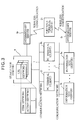
- FIG. 2 shows a display example of the search screen.
- the search screen contains a text search area E1, an objective search area E2, a search result display area E3, and a search start button SW1.
- the objective search area E2 is provided in accordance with the embodiment of the present invention.
- the search result display area E3 displays information about a search result.
- the search start button SW1 is used for commanding initiation of the search. This is a mouse-clickable on-screen switch.
- the text search area E1 is used for entering any character string for search using an input character string in the same manner as the prior art. Search operations using this input character string are the same as those for the prior art and description is omitted here.
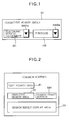
- FIG. 1 shows a display example of the objective search area E2.
- the objective search area E2 contains a genre selection area E21 and an objective selection area E22. Beside these areas, drop-down switches SW21a and SW22a (on-screen switches) are displayed. Clicking the drop-down switch SW21a displays a list box containing a plurality of predefined genre keywords below the genre selection area E21. When a genre keyword is selected (clicked) from the list box, the selected genre keyword is displayed in the genre selection area E21. In the example, the genre keyword "electronic musical instrument" is selected. Likewise, clicking the drop-down switch SW22a displays a list box containing a plurality of predefined objective keywords below the objective selection area E22. When an objective keyword is selected (clicked) from the list box, the selected objective keyword is displayed in the objective selection area E22. In the example, the objective keyword "purchase” is selected.
- a word "to” is displayed between the drop-down switch SW21a and the objective selection area E22.
- the user can enter a phrase comprising the display content in the genre selection area E21 and the display content in the objective selection area E22 in the form of "something to do".
- the phrase means "electronic musical instrument to purchase”. Accordingly, the user can easily express his or her objective during the input operation with highly improved usability.
- step S5 in FIG. 4 the search site 4 retrieves a URL of the information site based on the genre keyword and the objective keyword, and transmits a search result (list).
- step S6 in FIG. 4 The search result is displayed in the search result display area E3. This operation corresponds to step S7 in FIG. 4.
- FIG. 6 shows processes in the client 2 and the search site 4 when the user registers new site information to the search site.
- the client 2 accesses a registration page in the search site 4 (step S11).
- the search site 4 sends registration screen information to the client 2 for displaying the registration page (step S12).
- the client 2 displays the registration page (described later) based on the received registration screen information (step S13).
- the client 2 then enters directory information (a URL) in the registration screen (step S14).
- the client 2 further enters at least one of the genre keyword and the objective keyword to be attached to this information or URL (step S15), and then submits the registration contents (step S16).
- This operation sends the registration contents to the search site 4.
- the search site 4 adds the received registration contents to the database which stores existing site information to be retrieved (step S17). This accumulates the registered information to the database to be subsequently retrieved in the search site.
- FIG. 5 shows a display example of the registration screen.
- the registration screen contains an information input area E4, a genre keyword selection area E5, an objective keyword selection area E6, and an input button (on-screen switch) SW2 for submitting input information.
- the information input area E4 is used for entering information to be registered.
- This information can be an information site URL registered for the use of user's objectives such as selling and purchasing.
- Drop-down switches (on-screen switches) SW5a and SW6a are displayed besides the genre keyword selection area E5 and the objective keyword selection area E6.
- Clicking the drop-down switch SW5a displays a list box containing a plurality of predefined genre keywords below the genre keyword selection area E5.
- An intended genre keyword can be selected from the list box.
- the example in the figure shows that the genre keyword "electronic musical instrument” is selected.
- clicking the drop-down switch SW6a displays a list box containing a plurality of predefined objective keywords below the objective keyword selection area E6.
- An intended objective keyword can be selected from the list box.
- the example in the figures shows that the objective keyword "sell" is selected.
- Clicking the input button SW2 settles the URL entered in the information input area E4, the genre keyword entered in the genre keyword selection area E5, and the objective keyword entered in the objective keyword selection area E6 to be registration information (site information to be newly added). This information is sent to the search site 4.
- the database stores an index table containing the item keyword (genre keyword) and the action keyword (objective keyword) corresponding to the URL. It may be preferable to store the item keyword and the action keyword as part of the URL or part of a URL path name.
- the embodiment allows keywords to be selected from the list boxes for the genre selection area E21, the objective selection area E22, the genre keyword selection area E5, and the objective keyword selection area E6. It may be preferable to let a user enter an intended keyword by means of a word-processing function.
- the inventive information search method provides an item keyword indicating contents information and an action keyword corresponding to an action for the contents information. These keywords are used for searching an information site having the content information indicated by the item keyword and matching the action keyword. Therefore, it is possible to retrieve information matching client user's objectives as much as possible, thereby improving usability.
- the inventive method enables the item keyword and the action keyword to be entered as a sentence, and permits the client or user to easily express his or her objectives, thereby further improving usability.
Landscapes
- Engineering & Computer Science (AREA)
- Databases & Information Systems (AREA)
- Theoretical Computer Science (AREA)
- Data Mining & Analysis (AREA)
- Physics & Mathematics (AREA)
- General Engineering & Computer Science (AREA)
- General Physics & Mathematics (AREA)
- Radar, Positioning & Navigation (AREA)
- Remote Sensing (AREA)
- Information Retrieval, Db Structures And Fs Structures Therefor (AREA)
- Information Transfer Between Computers (AREA)
Abstract
Description
Claims (14)
- A method of searching for contents information presented by a plurality of information sites over a network based on a query sent from a client terminal to a searching server through the network, the method comprising the computer-implemented steps of:registering information sites which present contents information involving various items and actions related to each other;initiating the client terminal to transmit a query to the searching server through the network, the query containing an item keyword indicating an item as a target of searching and an action keyword indicating an action to be made on the item;operating the searching server according to the query to search for one or more of the registered information sites having contents information matching the query, and to send back directory information indicative of locations of the searched information sites to the client terminal; andoperating the client terminal according to the directory information for accessing the searched information sites, thereby enabling a user to make the action on the item.
- A searching server apparatus used in a system of searching for contents information presented by a plurality of information sites over a network based on queries sent from client terminals through the network, the searching server apparatus comprising:a prompting means operative when a client terminal accesses the searching server for prompting the client terminal to input a query;a receiving means for receiving the inputted query from the client terminal through the network, the inputted query containing an item keyword indicating an item as a target of searching and an action keyword indicating an action to be made on the item;an operating means operative according to the received query to search for one or more information sites having contents information matching the received query; anda transmitting means for sending back directory information indicative of locations of the searched information sites to the client terminal, thereby enabling the client terminal to access the searched information sites according to the directory information, whereby a user of the client terminal can make the action on the item.
- The searching server apparatus according to claim 2, wherein the prompting means provides a list of various item keywords and action keywords with the client terminal such that the user can select a set of an item keyword and an action keyword from the list to formulate the query.
- The searching server apparatus according to claim 2, further comprising a database that stores the directory information of the information sites spread over the network together with the item keywords and the action keywords matching the contents information presented by the respective information sites.
- The searching server apparatus according to claim 4, wherein the operating means can search for one or more information sites with reference to the database according to the query.
- The searching server apparatus according to claim 2, further comprising a registering means responsive to a request for registration of a new information site from a client terminal, for registering directory information of the new information site together with an item keyword and an action keyword matching the contents information presented by the new information site.
- The searching server apparatus according to claim 6, wherein the registering means responds to the request for registration of the new information site from the client terminal, for providing a list of various item keywords and action keywords with the client terminal such that the user can select a set of an item keyword and an action keyword from the list in matching with the contents information presented by the new information site.
- A client terminal apparatus in a system of searching for contents information presented by a plurality of information sites over a network based on a query sent to a searching server through the network, the client terminal apparatus comprising:an accessing means for accessing the searching server to establish communication with the searching server through the network;an input means for transmitting the query to the searching server through the network, the query containing an item keyword indicating an item as a target of searching and an action keyword indicating an action to be made on the item, thereby enabling the searching server to search for one or more information sites having contents information matching the query;an output means for receiving directory information indicative of locations of the searched information sites from the searching server through the network; andan operating means operative according to the directory information for accessing the searched information sites, thereby enabling a user to make the action on the item.
- The client terminal apparatus according to claim 8, wherein the input means is provided with a list of various item keywords and action keywords from the searching server such that the user can select a set of an item keyword and an action keyword from the list to formulate the query.
- The client terminal apparatus according to claim 8, wherein the input means can send a request for registration of a new information site to the searching server, such that the searching server registers directory information of the new information site together with an item keyword and an action keyword matching the contents information presented by the new information site.
- The client terminal apparatus according to claim 10, wherein the input means is provided with a list of various item keywords and action keywords from the searching server, such that the user can select a set of an item keyword and an action keyword from the list in matching with the contents information presented by the new information site.
- A storage medium for storing an index table used by a searching server for searching contents information presented by a plurality of information sites over a network based on a query sent from a client terminal through the network, the query containing an item keyword indicating an item as a target of searching and an action keyword indicating an action to be made on the item,
wherein the index table memorizes a correspondence between information sites spread over the network and subject items involved in the contents information of the information sites and related actions mentioned in the contents information, such that the searching server can search for one or more information sites based on the query with reference to the index table. - A computer program executable by a searching server for searching contents information presented by a plurality of information sites over a network based on a query sent from a client terminal through the network, the computer program comprising the steps of:prompting the client terminal to input a query when the client terminal accesses the searching server;receiving the inputted query from the client terminal through the network, the inputted query containing an item keyword indicating an item as a target of searching and an action keyword indicating an action to be made on the item;searching for one or more information sites having contents information matching the received query; andsending back directory information indicative of locations of the searched information sites to the client terminal, thereby enabling the client terminal to access the searched information sites according to the directory information, whereby a user of the client terminal can make the action on the item.
- A computer program executable by a client terminal for enabling a searching server to search contents information presented by a plurality of information sites over a network based on a query sent to the searching server through the network, the computer program comprising the steps of:accessing the searching server for establishing communication with the searching server through the network;transmitting the query to the searching server through the network, the query containing an item keyword indicating an item as a target of searching and an action keyword indicating an action to be made on the item, thereby enabling the searching server to search for one or more information sites having contents information matching the query;receiving directory information indicative of locations of the searched information sites from the searching server through the network; andaccessing the searched information sites according to the directory information, thereby enabling a user to make the action on the item.
Applications Claiming Priority (2)
| Application Number | Priority Date | Filing Date | Title |
|---|---|---|---|
| JP2000383853 | 2000-12-18 | ||
| JP2000383853A JP2002183203A (en) | 2000-12-18 | 2000-12-18 | Information retrieving method and information storage medium |
Publications (2)
| Publication Number | Publication Date |
|---|---|
| EP1215595A2 true EP1215595A2 (en) | 2002-06-19 |
| EP1215595A3 EP1215595A3 (en) | 2004-03-24 |
Family
ID=18851434
Family Applications (1)
| Application Number | Title | Priority Date | Filing Date |
|---|---|---|---|
| EP01129969A Ceased EP1215595A3 (en) | 2000-12-18 | 2001-12-17 | Method of searching information site by item keyword and action keyword |
Country Status (3)
| Country | Link |
|---|---|
| US (1) | US7346651B2 (en) |
| EP (1) | EP1215595A3 (en) |
| JP (1) | JP2002183203A (en) |
Cited By (3)
| Publication number | Priority date | Publication date | Assignee | Title |
|---|---|---|---|---|
| WO2007052988A1 (en) * | 2005-11-07 | 2007-05-10 | Qboxdotcom Corp. | System and method for providing on-line multimedia contents |
| EP2998885A4 (en) * | 2014-04-10 | 2016-08-17 | Huawei Device Co Ltd | METHOD AND DEVICE FOR SEARCHING INFORMATION |
| CN111143443A (en) * | 2019-11-29 | 2020-05-12 | 数字广东网络建设有限公司 | Method, device, system, terminal and storage medium for displaying government affair information |
Families Citing this family (4)
| Publication number | Priority date | Publication date | Assignee | Title |
|---|---|---|---|---|
| JP3731885B2 (en) * | 2003-07-03 | 2006-01-05 | インターナショナル・ビジネス・マシーンズ・コーポレーション | DIGITAL CONTENT DISTRIBUTION SYSTEM, DIGITAL CONTENT DISTRIBUTION METHOD, SERVER FOR THE SAME, CLIENT, COMPUTER EXECUTABLE PROGRAM FOR CONTROLLING COMPUTER AS SERVER, AND COMPUTER EXECUTABLE PROGRAM FOR CONTROLLING COMPUTER AS CLIENT |
| TWI284818B (en) * | 2005-07-21 | 2007-08-01 | Bridgewell Inc | Database searching engine system |
| JP5793540B2 (en) * | 2013-07-19 | 2015-10-14 | Necパーソナルコンピュータ株式会社 | SEARCH DEVICE, SEARCH SYSTEM, AND PROGRAM |
| US20190236109A1 (en) * | 2016-10-03 | 2019-08-01 | Thomas BRYANT III | Exclusive search engine directories, systems, and methods of use |
Family Cites Families (40)
| Publication number | Priority date | Publication date | Assignee | Title |
|---|---|---|---|---|
| US5757983A (en) * | 1990-08-09 | 1998-05-26 | Hitachi, Ltd. | Document retrieval method and system |
| JPH04127370A (en) * | 1990-09-19 | 1992-04-28 | Toshiba Corp | Information collecting system |
| US6961712B1 (en) * | 1996-10-25 | 2005-11-01 | Ipf, Inc. | Consumer product information request (CPIR) enabling servlets and web-based consumer product information catalogs employing the same |
| US5850518A (en) * | 1994-12-12 | 1998-12-15 | Northrup; Charles J. | Access-method-independent exchange |
| US5819261A (en) * | 1995-03-28 | 1998-10-06 | Canon Kabushiki Kaisha | Method and apparatus for extracting a keyword from scheduling data using the keyword for searching the schedule data file |
| JPH08339383A (en) * | 1995-04-11 | 1996-12-24 | Ricoh Co Ltd | Document search device and dictionary creation device |
| US5704060A (en) * | 1995-05-22 | 1997-12-30 | Del Monte; Michael G. | Text storage and retrieval system and method |
| US5913215A (en) * | 1996-04-09 | 1999-06-15 | Seymour I. Rubinstein | Browse by prompted keyword phrases with an improved method for obtaining an initial document set |
| US5893091A (en) * | 1997-04-11 | 1999-04-06 | Immediata Corporation | Multicasting with key words |
| US5974413A (en) * | 1997-07-03 | 1999-10-26 | Activeword Systems, Inc. | Semantic user interface |
| US6760746B1 (en) * | 1999-09-01 | 2004-07-06 | Eric Schneider | Method, product, and apparatus for processing a data request |
| JPH11136394A (en) * | 1997-08-26 | 1999-05-21 | Casio Comput Co Ltd | Data output system and data output method |
| JP2965010B2 (en) * | 1997-08-30 | 1999-10-18 | 日本電気株式会社 | Related information search method and apparatus, and machine-readable recording medium recording program |
| JP4126473B2 (en) * | 1998-01-23 | 2008-07-30 | カシオ計算機株式会社 | Electronic device, storage medium, and data display method |
| JP3218007B2 (en) * | 1998-03-20 | 2001-10-15 | 富士通株式会社 | Index management apparatus, update method and management method, and computer-readable storage medium |
| JP4439604B2 (en) * | 1998-05-19 | 2010-03-24 | 敏夫 山崎 | Information collection and retrieval device |
| US6424980B1 (en) * | 1998-06-10 | 2002-07-23 | Nippon Telegraph And Telephone Corporation | Integrated retrieval scheme for retrieving semi-structured documents |
| JP3628528B2 (en) * | 1998-10-26 | 2005-03-16 | 富士通株式会社 | Retrieval support apparatus and method, and recording medium storing program for causing computer to perform processing in the apparatus |
| US6233547B1 (en) * | 1998-12-08 | 2001-05-15 | Eastman Kodak Company | Computer program product for retrieving multi-media objects using a natural language having a pronoun |
| US6272493B1 (en) * | 1999-01-21 | 2001-08-07 | Wired Solutions, Llc | System and method for facilitating a windows based content manifestation environment within a WWW browser |
| US20020069264A1 (en) | 1999-03-25 | 2002-06-06 | Sandro Pasquali | System and method for building and executing a navigation instruction via corresponding sentence construction |
| US6606657B1 (en) * | 1999-06-22 | 2003-08-12 | Comverse, Ltd. | System and method for processing and presenting internet usage information |
| US6523065B1 (en) * | 1999-08-03 | 2003-02-18 | Worldcom, Inc. | Method and system for maintenance of global network information in a distributed network-based resource allocation system |
| US6418452B1 (en) * | 1999-11-03 | 2002-07-09 | International Business Machines Corporation | Network repository service directory for efficient web crawling |
| CA2341819A1 (en) * | 2000-03-23 | 2001-09-23 | Deepak Puri | System and method for providing e-commerce based on a reward currency |
| US6721804B1 (en) * | 2000-04-07 | 2004-04-13 | Danger, Inc. | Portal system for converting requested data into a bytecode format based on portal device's graphical capabilities |
| US6643641B1 (en) * | 2000-04-27 | 2003-11-04 | Russell Snyder | Web search engine with graphic snapshots |
| US7020679B2 (en) * | 2000-05-12 | 2006-03-28 | Taoofsearch, Inc. | Two-level internet search service system |
| CA2309398C (en) * | 2000-05-24 | 2012-02-21 | Steven P. Meyer | A system, computer product and method for providing a private communication portal |
| KR100403714B1 (en) * | 2000-06-10 | 2003-11-01 | 씨씨알 주식회사 | System and method for facilitating internet search by providing web document layout image and web site structure |
| US20020046074A1 (en) * | 2000-06-29 | 2002-04-18 | Timothy Barton | Career management system, method and computer program product |
| US6915507B1 (en) * | 2000-11-21 | 2005-07-05 | Microsoft Corporation | Extensible architecture for project-development systems |
| US7363308B2 (en) * | 2000-12-28 | 2008-04-22 | Fair Isaac Corporation | System and method for obtaining keyword descriptions of records from a large database |
| US6850934B2 (en) * | 2001-03-26 | 2005-02-01 | International Business Machines Corporation | Adaptive search engine query |
| US20020178225A1 (en) * | 2001-05-24 | 2002-11-28 | M&G Enterprises Llc | System and method for providing on-line extensions of off-line places and experiences |
| US7562112B2 (en) * | 2001-07-06 | 2009-07-14 | Intel Corporation | Method and apparatus for peer-to-peer services for efficient transfer of information between networks |
| US8041719B2 (en) * | 2003-05-06 | 2011-10-18 | Symantec Corporation | Personal computing device-based mechanism to detect preselected data |
| US7181445B2 (en) * | 2003-09-05 | 2007-02-20 | Bellsouth Intellectual Property Corporation | Aggregating, retrieving, and providing access to document visuals |
| US8788492B2 (en) * | 2004-03-15 | 2014-07-22 | Yahoo!, Inc. | Search system and methods with integration of user annotations from a trust network |
| US7958115B2 (en) * | 2004-07-29 | 2011-06-07 | Yahoo! Inc. | Search systems and methods using in-line contextual queries |
-
2000
- 2000-12-18 JP JP2000383853A patent/JP2002183203A/en active Pending
-
2001
- 2001-12-17 EP EP01129969A patent/EP1215595A3/en not_active Ceased
- 2001-12-17 US US10/022,992 patent/US7346651B2/en not_active Expired - Fee Related
Cited By (5)
| Publication number | Priority date | Publication date | Assignee | Title |
|---|---|---|---|---|
| WO2007052988A1 (en) * | 2005-11-07 | 2007-05-10 | Qboxdotcom Corp. | System and method for providing on-line multimedia contents |
| EP2998885A4 (en) * | 2014-04-10 | 2016-08-17 | Huawei Device Co Ltd | METHOD AND DEVICE FOR SEARCHING INFORMATION |
| US10095791B2 (en) | 2014-04-10 | 2018-10-09 | Huawei Devices (Dongguan) Co., Ltd. | Information search method and apparatus |
| CN111143443A (en) * | 2019-11-29 | 2020-05-12 | 数字广东网络建设有限公司 | Method, device, system, terminal and storage medium for displaying government affair information |
| CN111143443B (en) * | 2019-11-29 | 2024-04-05 | 数字广东网络建设有限公司 | Government affair information display method, device, system, terminal and storage medium |
Also Published As
| Publication number | Publication date |
|---|---|
| EP1215595A3 (en) | 2004-03-24 |
| US7346651B2 (en) | 2008-03-18 |
| US20020091683A1 (en) | 2002-07-11 |
| JP2002183203A (en) | 2002-06-28 |
Similar Documents
| Publication | Publication Date | Title |
|---|---|---|
| US8676868B2 (en) | Macro programming for resources | |
| US20070294064A1 (en) | Automatic location-specific content selection for portable information retrieval devices | |
| JP2009524156A (en) | Search tool that provides optional use of human search guides | |
| US20070185841A1 (en) | Search tool providing optional use of human search guides | |
| US7870109B2 (en) | Method and system for use with the internet | |
| JP2002055997A (en) | Device and method for retrieving used-car information | |
| JP2003208434A (en) | Information retrieval system, and information retrieval method using the same | |
| JP2008234419A (en) | Database construction device | |
| JP5175446B2 (en) | Portable terminal | |
| JP2001202368A (en) | Music information search device that functions as a WWW server on the Internet | |
| JP2003271646A (en) | Information retrieval method and information retrieval device | |
| US7346651B2 (en) | Method of searching information site by item keyword and action keyword | |
| JP4165249B2 (en) | Content distribution method and program | |
| JP5185891B2 (en) | Content providing apparatus, content providing method, and content providing program | |
| JP3186960B2 (en) | Information retrieval method and apparatus | |
| JP4158509B2 (en) | Information provision program for content distribution | |
| US8103649B2 (en) | Search system and search method | |
| KR20100083614A (en) | Intension search method based on search intension of user | |
| JPH10133671A (en) | Signal distribution center of communication karaoke sing-along machine system and musical piece data signal distribution method for communication karaoke sing-along machine system | |
| JP2008268507A (en) | Music piece information attachment server, terminal and music piece information attachment system | |
| KR101560685B1 (en) | Method of Registering User Indication Name Used for On-Line Service | |
| JP2002163560A (en) | Storage medium, merchandise ordering method and device, and storage medium which stores merchandise ordering program | |
| JP5155130B2 (en) | Category presentation device | |
| JP2007148476A (en) | Information retrieval support system, information retrieval support method, retrieval support module program and information retrieval support program | |
| JP3759700B2 (en) | User preference reflection type search method, its execution apparatus, its processing program and recording medium |
Legal Events
| Date | Code | Title | Description |
|---|---|---|---|
| PUAI | Public reference made under article 153(3) epc to a published international application that has entered the european phase |
Free format text: ORIGINAL CODE: 0009012 |
|
| 17P | Request for examination filed |
Effective date: 20011217 |
|
| AK | Designated contracting states |
Kind code of ref document: A2 Designated state(s): AT BE CH CY DE DK ES FI FR GB GR IE IT LI LU MC NL PT SE TR |
|
| AX | Request for extension of the european patent |
Free format text: AL;LT;LV;MK;RO;SI |
|
| PUAL | Search report despatched |
Free format text: ORIGINAL CODE: 0009013 |
|
| AK | Designated contracting states |
Kind code of ref document: A3 Designated state(s): AT BE CH CY DE DK ES FI FR GB GR IE IT LI LU MC NL PT SE TR |
|
| AX | Request for extension of the european patent |
Extension state: AL LT LV MK RO SI |
|
| 17Q | First examination report despatched |
Effective date: 20040608 |
|
| AKX | Designation fees paid |
Designated state(s): AT BE CH CY DE DK ES FI FR GB GR IE IT LI LU MC NL PT SE TR |
|
| RAP1 | Party data changed (applicant data changed or rights of an application transferred) |
Owner name: YAMAHA CORPORATION |
|
| STAA | Information on the status of an ep patent application or granted ep patent |
Free format text: STATUS: THE APPLICATION HAS BEEN REFUSED |
|
| 18R | Application refused |
Effective date: 20071030 |