EP1214928A1 - Hair growth stimulants - Google Patents
Hair growth stimulants Download PDFInfo
- Publication number
- EP1214928A1 EP1214928A1 EP00953498A EP00953498A EP1214928A1 EP 1214928 A1 EP1214928 A1 EP 1214928A1 EP 00953498 A EP00953498 A EP 00953498A EP 00953498 A EP00953498 A EP 00953498A EP 1214928 A1 EP1214928 A1 EP 1214928A1
- Authority
- EP
- European Patent Office
- Prior art keywords
- hair
- acids
- growing agent
- group
- members selected
- Prior art date
- Legal status (The legal status is an assumption and is not a legal conclusion. Google has not performed a legal analysis and makes no representation as to the accuracy of the status listed.)
- Withdrawn
Links
Classifications
-
- A—HUMAN NECESSITIES
- A61—MEDICAL OR VETERINARY SCIENCE; HYGIENE
- A61K—PREPARATIONS FOR MEDICAL, DENTAL OR TOILETRY PURPOSES
- A61K8/00—Cosmetics or similar toiletry preparations
- A61K8/18—Cosmetics or similar toiletry preparations characterised by the composition
- A61K8/30—Cosmetics or similar toiletry preparations characterised by the composition containing organic compounds
- A61K8/55—Phosphorus compounds
-
- A—HUMAN NECESSITIES
- A61—MEDICAL OR VETERINARY SCIENCE; HYGIENE
- A61K—PREPARATIONS FOR MEDICAL, DENTAL OR TOILETRY PURPOSES
- A61K8/00—Cosmetics or similar toiletry preparations
- A61K8/18—Cosmetics or similar toiletry preparations characterised by the composition
- A61K8/30—Cosmetics or similar toiletry preparations characterised by the composition containing organic compounds
- A61K8/55—Phosphorus compounds
- A61K8/553—Phospholipids, e.g. lecithin
-
- A—HUMAN NECESSITIES
- A61—MEDICAL OR VETERINARY SCIENCE; HYGIENE
- A61Q—SPECIFIC USE OF COSMETICS OR SIMILAR TOILETRY PREPARATIONS
- A61Q7/00—Preparations for affecting hair growth
Definitions
- the present invention relates to a hair-growing agent comprising a lysophosphatidic acid or a phosphatidic acid as an active ingredient, which has an excellent scalp hair-growing effect.
- Minoxidil which has been used as a therapeutic agent for hypertension, was found to bring about hypertrichosis as its side effect [British Journal of Dermatology, 101 , 593-595 (1979)]. At present, it is used as a therapeutic agent for androgenetic alopecia, but is not completely satisfactory in respect of effectiveness, safety and side effect.
- An example of a known hair-growing agent comprising a lysophosphatidic acid or a phosphatidic acid is a minoxidil liposome preparation containing a lysophosphatidic acid or a phosphatidic acid as a liposome constitutive vehicle (US 5030442).
- a hair-nourishing agent comprising a phosphatidic acid having a fatty acid residue having a carbon chain with odd carbon number
- a cell activator comprising a phosphatidic acid having branched-chain fatty acid residues
- a hair-growing agent comprising a lysophosphatidic acid as an active ingredient or a hair-growing agent comprising a phosphatidic acid wherein all fatty acid residues are straight-chain fatty acid residues having an even number of carbon atoms.
- a mixture of some phospholipids including a phosphatidic acid is known to have apoptosis-inhibiting activity (WO 97/09989).
- a hair-growing agent comprising a phospholipid mixture (DE3222016 A1, DE4113346 A1).
- WO 96/00561 describes a hair-growing agent comprising proanthocyanidin.
- Japanese Published Unexamined Patent Application No. 315947/97 describes a hair-growing agent comprising a protein kinase C (PKC)-specific inhibitor.
- PKC protein kinase C
- a hair-growing agent comprising a phosphatidic acid and proanthocyanidin as active ingredients
- a hair-growing agent comprising a phosphatidic acid and a protein kinase C-specific inhibitor as active ingredients
- a hair-growing agent comprising a phosphatidic acid and tocopherol as active ingredients.
- the present inventors have searched for a substance which exhibits hair-growing activity by external application. As a result of a series of studies, they have found a strong hair-growing activity in a lysophosphatidic acid and in a phosphatidic acid wherein the fatty acid residue moiety consists only of straight-chain fatty acid residues having an even number of carbon atoms. They have also found a strong hair-growing activity in a composition comprising, as active ingredients, lysophosphatidic acid or phosphatidic acid, and one or more members selected from the group consisting of proanthocyanidin, protein kinase C-specific inhibitors or pharmaceutically acceptable salts thereof, and tocopherol.
- the present invention relates to the following (1) to (22).
- the alkyl includes straight-chain or branched alkyl groups having 1 to 23, preferably 7 to 17 carbon atoms, such as methyl, ethyl, propyl, isopropyl, butyl, isobutyl, sec-butyl, tert-butyl, pentyl, neopentyl, hexyl, heptyl, octyl, nonyl, decyl, undecyl, dodecyl, tridecyl, tetradecyl, pentadecyl, hexadecyl, heptadecyl and octadecyl.
- the alkenyl includes straight-chain or branched alkenyl groups having 2 to 23, preferably 7 to 17 carbon atoms, such as vinyl, allyl, butenyl, pentenyl, hexenyl, pentadienyl and hexadienyl.
- the alkynyl includes straight-chain or branched alkynyl groups having 2 to 23, preferably 7 to 17 carbon atoms, such as ethynyl, propynyl, butynyl, pentynyl and hexynyl.
- the straight-chain alkyl having an odd number of carbon atoms includes those having 1 to 23, preferably 7 to 17 carbon atoms, such as methyl, propyl, pentyl, heptyl, nonyl, undecyl, tridecyl, pentadecyl, heptadecyl, nonadecyl, heneicosanyl and tricosanyl.
- the straight-chain alkenyl having an odd number of carbon atoms includes those having 3 to 23, preferably 7 to 17 carbon atoms, such as allyl, 1-propenyl, 2-pentenyl, 4-pentenyl, pentadienyl, heptenyl, nonenyl, undecenyl, tridecenyl, pentadecenyl and heptadecenyl.
- the straight-chain alkynyl having an odd number of carbon atoms includes those having 3 to 23, preferably 7 to 17 carbon atoms, such as propynyl, pentynyl, heptynyl, nonynyl, undecynyl, tridecynyl, pentadecynyl and heptadecynyl.
- the number of unsaturated bonds in the alkenyl, alkynyl, straight-chain alkenyl having an odd number of carbon atoms and straight-chain alkynyl having an odd number of carbon atoms is not specifically restricted.
- the lysophosphatidic acids to be used in the present invention may be any lysophosphatidic acids.
- the phosphatidic acids wherein the fatty acid residue moiety consists only of straight-chain fatty acid residues having an even number of carbon atoms to be used in the present invention include all such phosphatidic acids.
- the straight-chain fatty acid having an even number of carbon atoms of the above fatty acid residues includes those having 2 to 24, preferably 8 to 18 carbon atoms, such as ethanoyl, butanoyl, hexanoyl, octanoyl, decanoyl, dodecanoyl, tetradecanoyl, hexadecanoyl, octadecanoyl, eicosanoyl, docosanoyl, tetracosanoyl, 2-butenoyl, 3-butenoyl, 3-hexenoyl, 5-hexenoyl, hexadienoyl, octenoyl, decenoyl, dodecenoyl, tetradecenoyl, hexadecenoyl, octadecenoyl, butynoyl, hexynoyl
- lysophosphatidic acids and phosphatidic acids wherein the fatty acid residue moiety consists only of straight-chain fatty acid residues having an even number of carbon atoms
- the lysophosphatidic acids are monoacetyl lysophosphatidic acid, monopropionyl lysophosphatidic acid, monobutanoyl lysophosphatidic acid, monopentanoyl lysophosphatidic acid, monohexanoyl lysophosphatidic acid, monoheptanoyl lysophosphatidic acid, monooctanoyl lysophosphatidic acid, monononanoyl lysophosphatidic acid, monodecanoyl lysophosphatidic acid, monoundecanoyl lysophosphatidic acid, monolauroyl lysophosphatidic acid, monotridecanoyl lysophosphatidic acid,
- Examples of the phosphatidic acids wherein the fatty acid residue moiety consists only of straight-chain fatty acid residues having an even number of carbon atoms are dioleoyl phosphatidic acid, dimyristoyl phosphatidic acid, dipalmitoyl phosphatidic acid, dilauroyl phosphatidic acid, dioctanoyl phosphatidic acid, didecanoyl phosphatidic acid, distearoyl phosphatidic acid, arachidonoylstearoyl phosphatidic acid, 1-oleoyl-2-acetyl phosphatidic acid, 1-lauroyl-2-acetyl phosphatidic acid, 1-myristoyl-2-acetyl phosphatidic acid, 1-palmitoyl-2-acetyl phosphatidic acid, 1-stearoyl-2-acetyl phosphatidic acid and 1-palmitoleoyl-2-acetyl phosphatidic acid.
- lysophosphatidic acids to be employed in the hair-growing agent of the present invention comprising, as active ingredients, lysophosphatidic acid and one or more members selected from the group consisting of proanthocyanidin, protein kinase C-specific inhibitors or pharmaceutically acceptable salts thereof, and tocopherol are the same as the above-described lysophosphatidic acids.
- phosphatidic acids to be employed in the hair-growing agent of the present invention comprising, as active ingredients, phosphatidic acid and one or more members selected from the group consisting of proanthocyanidin, protein kinase C-specific inhibitors or pharmaceutically acceptable salts thereof, and tocopherol include not only the above-described phosphatidic acids wherein the fatty acid residue moiety consists only of straight-chain fatty acid residues having an even number of carbon atoms, but also those wherein the fatty acid residue moiety consists of fatty acid residues having an odd number of carbon atoms, those wherein the fatty acid residue moiety consists of branched-chain fatty acid residues having an even number of carbon atoms, and those wherein the fatty acid residue moiety consists of the combination of the above different kinds of fatty acid residues.
- phosphatidic acids include, in addition to the above-mentioned examples of phosphatidic acids wherein the fatty acid residue moiety consists only of straight-chain fatty acid residues having an even number of carbon atoms, dipropionyl phosphatidic acid, dipentanoyl phosphatidic acid, diheptanoyl phosphatidic acid, dinonanoyl phosphatidic acid, diundecanoyl phosphatidic acid, ditridecanoyl phosphatidic acid, dipentadecanoyl phosphatidic acid, diheptadecanoyl phosphatidic acid, di ⁇ -methyloctadecanoyl phosphatidic acid, di ⁇ -methylundecanoyl phosphatidic acid, di ⁇ -propylundecanoyl phosphatidic acid, di ⁇ -methylstearoyl phosphatidic acid, di ⁇ -methylpalmitoyl phosphatidic acid, di ⁇ -methylnon
- phosphatidic acids can be obtained by purification from egg yolk, soybean, etc. They can also be obtained as commercially available products or by chemical synthesis (for example, US 3423440). Lysophosphatidic acids can be obtained by subjecting phosphatidic acids obtained by purification from egg yolk, soybean, etc. to enzymatic treatment (hydrolysis with phospholipase A 1 or phospholipase A 2 ) or by chemical synthesis (for example, US 3423440).
- the proanthocyanidin used in the present invention is a polymer composed of flavan-3-ol derivatives represented by formula (IV): (wherein R 3 and R 4 , which may be the same or different, each represents a hydrogen atom or a hydroxyl group) or the like as constitutive units.
- flavan-3-ol derivatives examples include catechin, epicatechin, gallocatechin, epigallocatechin, afzelechin, epiafzelechin and any optical isomers thereof.
- Proanthocyanidin composed of epicatechin or catechin as a constitutive unit is preferably used in the present invention.
- the bonding mode of the flavan-3-ol derivatives represented by formula (IV) may be any mode.
- An example of a dimer composed of two flavan-3-ol derivatives is the one which has a bonding mode represented by formula (V): (wherein R 3 and R 4 have the same significances as defined above respectively, and R 3a and R 4a have the same significances as the above R 3 and R 4 respectively). Trimers and higher polymers may have a combination of these bonding modes which may be the same or different.
- the proanthocyanidin to be used in the present invention may be any dimer or higher polymer of flavan-3-ol derivatives, and is preferably a 2- to 10-mer, more preferably a 2- to 5-mer, further preferably a dimer or trimer.
- Examples of the dimers of flavan-3-ol derivatives include epicatechin-catechin co-dimers such as epicatechin-(4 ⁇ 8)-catechin, epicatechin dimers such as epicatechin-(4 ⁇ 8)-epicatechin, and catechin dimers such as catechin-(4 ⁇ 8)-catechin.
- trimers of flavan-3-ol derivatives include epicatechin trimers such as epicatechin-(4 ⁇ 8)-epicatechin-(4 ⁇ 8)-epicatechin, catechin trimers such as catechin-(4 ⁇ 8)-catechin-(4 ⁇ 8)-catechin, and epicatechin-catechin co-trimers such as epicatechin-(4 ⁇ 8)-epicatechin-(4 ⁇ 8)-catechin.
- the proanthocyanidin to be used in the present invention also includes compounds wherein gallic acid or a sugar such as glucose or rhamnose is attached to the above proanthocyanidin.
- Proanthocyanidin can be obtained by extraction and purification from various plants such as grape, apple, barley, Japanese persimmon, coconut, cacao, pine, azuki bean and peanut belonging to the genera Vitis , Malus , Hordeum , Diospyros , Cocos , Theobroma , Pinus , Phaseolus , Arachis , and the like, or by chemical synthesis.
- proanthocyanidin can be extracted and purified from plants according to the following known method.
- Suitable solvents for extraction include hydrophilic or lipophilic solvents such as water, alcohols (e.g. ethanol, methanol and isopropyl alcohol), ketones (e.g. acetone and methyl ethyl ketone) and esters (e.g. methyl acetate and ethyl acetate), which can be used alone or as a mixture.
- the temperature for extraction is usually 0 to 100°C, preferably 5 to 50°C.
- the time for extraction is about one hour to 10 days, and the amount of the solvent is usually 1 to 30 times by weight, preferably 5 to 10 times by weight based on the dry material. Extraction is carried out by stirring or by dipping followed by standing, and is repeated twice or 3 times, as may be required.
- the crude extract obtained in the above manner is filtered or centrifuged to remove the insoluble residue.
- Purification of proanthocyanidin from the thus treated extract or from juice or sap of the plants can be carried out by any known purification methods. It is preferred to employ the two-phase solvent partitioning method, column chromatography, preparative high-performance liquid chromatography, etc. alone or in combination.
- the two-phase solvent partitioning methods include, for example, a method in which oil-soluble components and pigments are removed from the above extract by extraction with n-hexane, petroleum ether, etc., and a method in which proanthocyanidin is collected from the extract into the solvent phase by partition between a solvent such as n-butanol or methyl ethyl ketone and water.
- Column chromatography includes a method using normal phase silica gel and a method using reversed phase silica gel, adsorption column chromatography using as a carrier Diaion HP-20, Sepabeads SP-207 or the like, and gel filtration using as a carrier Sephadex LH-20 or the like. They are employed alone or in combination, if necessary repeatedly.
- Preparative high-performance liquid chromatography includes a method using a reversed phase column packed with octadecyl silica or the like, and a method using a normal phase column packed with silica gel or the like.
- Proanthocyanidin can be purified by removing watersoluble ionic substances such as salts, nonionic substances such as saccharides and polysaccharides, oils, pigments, etc. from the above extract according to the above purification methods.
- Grape-derived proanthocyanidin can be extracted and purified according to the method described in Acta Dermato Venereologica, 78, 428-432 (1998) or a similar method.
- Procyanidin B-1 [epicatechin-(4 ⁇ 8)-catechin]
- procyanidin B-2 [epicatechin-(4 ⁇ 8)-epicatechin]
- procyanidin B-3 [catechin-(4 ⁇ 8)-catechin]
- procyanidin C-1 [epicatechin-(4 ⁇ 8)-epicatechin-(4 ⁇ 8)-epicatechin] can be extracted and purified according to the method described in The Journal of Investigative Dermatology, 112 , 310-316 (1999) or a similar method.
- proanthocyanidin by chemical synthesis can be carried out according to the method described in Journal of Chemical Society, Perkin Transaction I, 1535-1543 (1983) in which a process of producing dimers of epicatechin or catechin is described, the method described in Phytochemistry, 25 , 1209-1215 (1986) or similar methods.
- proanthocyanidin When proanthocyanidin is used as an active ingredient in the present invention, one or more kinds of proanthocyanidin may be used alone or as a mixture. It is preferred to use one or more members selected from the group consisting of grape-seed-derived proanthocyanidin, apple-derived proanthocyanidin, pine-derived proanthocyanidin, purified procyanidin oligomers, procyanidin B-1, procyanidin B-2, procyanidin B-3 and procyanidin C-1. Specifically it is preferred to use one or more members selected from the group consisting of procyanidin B-1, procyanidin B-2, procyanidin B-3 and procyanidin C-1.
- any inhibitor that specifically inhibits protein kinase C can be used. It is preferred to use protein kinase inhibitors of which the ratio of the 50% protein kinase A (PKA) inhibition constant (hereinafter referred to as PKA-IC 50 ) to the 50% protein kinase C (PKC) inhibition constant (hereinafter referred to as PKC-IC 50 ) (the ratio is hereinafter referred to as PKA-IC 50 /PKC-IC 50 ) is 3 or more, preferably 3 to 10 9 , more preferably 10 to 10 9 , when PKC-inhibiting activity and PKA-inhibiting activity are measured by the following methods for measuring PKC-inhibiting activity and PKA-inhibiting activity. Examples thereof are one or more members selected from the group consisting of calphostin C, hexadecylphosphocholine, palmitoyl-DL-carnitine, polymyxin B and pharmaceutically acceptable salt
- Examples of the pharmaceutically acceptable salts are hydrochlorides, hydrobromides, sulfates, nitrates, formates, acetates, benzoates, maleates, fumarates, succinates, tartrates, citrates, oxalates, methanesulfonates, toluenesulfonates, aspartates and glutamates.
- Measurement of PKC-inhibiting activity can be carried out in a manner similar to the method of Kikkawa, et al. [Journal of Biological Chemistry, 257 , 13341 (1982)].
- aqueous solution comprising 2.5 ⁇ mol of magnesium acetate, 50 ⁇ g of histone Type IIIS (Sigma Chemical Co., Ltd.), 20 ⁇ g of phosphatidylserine, 0.8 ⁇ g of diolein, 25 nmol of calcium chloride, 5 ⁇ g of a crude enzyme (partially purified from rat brain by the method of Kikkawa, et al.) and 5 ⁇ mol of Tris-HCl buffer (pH 7.5) is added the above aqueous solution containing a test compound (10 ⁇ l), followed by incubation at 30°C for 3 minutes.
- the molar concentration of the test compound giving a test compound value which is 50% of the control value is regarded as the 50% PKC inhibition constant (PKC-IC 50 ).
- Measurement of PKA-inhibiting activity can be carried out in a manner similar to the method of Kuo, et al. [Biochemistry, 64 , 1349 (1969)].
- aqueous solution comprising 5 ⁇ mol of Tris-HCl buffer (pH 6.8), 2.5 ⁇ mol of magnesium acetate, 100 ⁇ g of histone Type IIS (Sigma Chemical Co., Ltd.), 0.25 nmol of c-AMP and 200 ⁇ g of a crude enzyme (partially purified from calf heart by the method of Kuo, et al.) is added the above aqueous solution containing a test compound (10 ⁇ l), followed by incubation at 30°C for 3 minutes. After the incubation, 1.25 nmol of [ ⁇ - 32 P]ATP (5-10 x 10 3 cpm/nmol) is added thereto, followed by phosphorylation reaction at 30°C for 3 minutes.
- the reaction is terminated by addition of 25% trichloroacetic acid and the reaction mixture is filtered through a cellulose acetate membrane (pore size: 0.45 ⁇ m, Toyo Filter Co., Ltd.) After the membrane is washed four times with 5% trichloroacetic acid, the radioactivity remaining on the membrane is measured as a test compound value. Separately, the above procedure is carried out in the same manner without addition of the test compound and the radioactivity is measured as a control value.
- the molar concentration of the test compound giving a test compound value which is 50% of the control value is regarded as the 50% PKA inhibition constant (PKA-IC 50 ).
- the tocopherol to be used in the present invention includes natural ones that are commercially available, synthetic ones, and derivatives such as acetic acid esters and nicotinic acid esters thereof. Examples thereof include dl- ⁇ -tocopherol, d- ⁇ -tocopherol, dl- ⁇ -tocopherol acetate, d- ⁇ -tocopherol acetate and dl- ⁇ -tocopherol nicotinate.
- the hair-growing agent of the present invention may be in any preparation form so long as it can contain lysophosphatidic acid, phosphatidic acid, or one or more members selected from the group consisting of lysophosphatidic acids and phosphatidic acids, and one or more members selected from the group consisting of proanthocyanidin, protein kinase C-specific inhibitors and pharmaceutically acceptable salts thereof, and tocopherol.
- lysophosphatidic acid phosphatidic acid
- phosphatidic acid or one or more members selected from the group consisting of lysophosphatidic acids and phosphatidic acids, and one or more members selected from the group consisting of proanthocyanidin, protein kinase C-specific inhibitors and pharmaceutically acceptable salts thereof, and tocopherol.
- proanthocyanidin protein kinase C-specific inhibitors and pharmaceutically acceptable salts thereof, and tocopherol.
- it can be used in the form of a liquid or solid hair-growing preparation containing
- liquid or solid hair-growing preparations examples include liquid preparations such as hair liquid, hair tonic and hair lotion, and solid preparations such as ointment and hair cream. These preparations can be produced by adding to a suitable vehicle lysophosphatidic acid, phosphatidic acid, or one or more members selected from the group consisting of lysophosphatidic acids and phosphatidic acids, and proanthocyanidin, a protein kinase C-specific inhibitor or tocopherol, according to a conventional method.
- the content of lysophosphatidic acid or phosphatidic acid in the hair-growing agent of the present invention widely varies depending upon the kind of lysophosphatidic acid or phosphatidic acid and the percutaneous absorbability derived from physical properties, but it is usually, alone or as a mixture, 0.01 to 5.0 wt% (hereinafter referred to merely as %), preferably 0.01 to 3.0%, more preferably 0.1 to 1.0%.
- the content of proanthocyanidin varies depending upon the purification degree, but is usually 0.01 to 10.0%, preferably 0.1 to 5.0%, more preferably 0.3 to 2.0%.
- the content of a protein kinase C-specific inhibitor widely varies depending upon the inhibitory activity and the percutaneous absorbability derived from physical properties, but it is usually, alone or as a mixture, 0.00001 to 1%, preferably 0.0001 to 1%, more preferably 0.001 to 0.1%.
- the content of tocopherol is usually 0.01 to 2%, preferably 0.05 to 1%, more preferably 0.1 to 0.5%.
- Preferred vehicles for liquid preparations are those which are generally used in hair-growing agents such as purified water, ethyl alcohol and polyvalent alcohols. If necessary, additives may be added thereto.
- polyvalent alcohols examples include glycerol, 1,3-butylene glycol and propylene glycol.
- Additives include surfactants, vitamins, anti-inflammatory agents, microbicides, hormones, crude drug extracts, tinctures, refrigerants, moisturizers, keratolytics, antioxidants, sequestering agents and perfumes.
- surfactants are polyoxyethylene (60) hardened castor oil, polyoxyethylene (8) oleyl ether, polyoxyethylene (10) oleyl ether, polyoxyethylene (10) monooleate, polyoxyethylene (30) glyceryl monostearate, sorbitan monostearate, polyoxyethylene (30) glyceryl monostearate, polyoxyethylene (20) sorbitan monooleate, sucrose fatty acid esters, hexaglycerin monooleate, hexaglycerin monolaurate, polyoxyethylene reduced lanolin, polyoxyethylene (20) lanolin alcohol, polyoxyethylene (25) glyceryl pyroglutamate isostearate, and N-acetylglutamine isostearyl ester.
- vitamins examples include benzyl nicotinate, nicotinamide, D-pantothenyl alcohol, pantothenyl ethyl ether, biotin, pyridoxine hydrochloride and riboflavin.
- anti-inflammatory agents examples include dipotassium glycyrrhizinate, ⁇ -glycyrrhetinic acid, allantoin, diphenhydramine hydrochloride, guaiazulene and 1-menthol.
- microbicides examples include trichlorohydroxydiphenyl ether, hinokitiol, triclosan, chlorohexidine gluconate, phenoxyethanol, resorcin, isopropylmethylphenol, azulene, salicylic acid, zinc pyrithione, benzalkonium chloride, photosensitizing dye No. 301 and sodium mononitroguaiacol.
- hormones examples include ethynylestradiol, estrone and estradiol.
- Examples of the crude drug extracts are extract of Swertia japonica Makino, garlic extract, ginseng extract, aloe extract and cinchona extract.
- tinctures examples include capsicum tincture, ginger tincture and cantharis tincture.
- refrigerants examples include capsicum tincture, 1-menthol and camphor.
- moisturizers examples include L-pyrrolidonecarboxylic acid, sodium hyaluronate, chondroitin sulfate, plant worm extract and saffron extract.
- keratolytics examples include resorcin, salicylic acid and lactic acid.
- antioxidants examples include butylhydroxyanisole, isopropyl gallate, propyl gallate and erythorbic acid.
- sequestering agents examples include ethylenediamine tetraacetate and salts thereof.
- perfumes examples include natural perfumes such as orange oil, lemon oil, bergamot oil, lime oil, lemongrass oil and lavender oil, and synthetic perfumes such as menthol, rose oxide, linalool, citral and linalyl acetate.
- liquid preparations When the above liquid preparations are used as spray, they can be used in combination with combustible gas, incombustible gas, or the like.
- combustible gas examples include LPG (a liquefied petroleum gas) and dimethyl ether
- incombustible gas examples include a nitrogen gas and a carbon dioxide gas.
- Vehicles for solid preparations include Vaseline, solid paraffin, vegetable oils, mineral oils, lanolin, wax and macrogol. Further, the above additives, emulsifiers such as lecithin, and lower alcohols such as ethyl alcohol and isopropyl alcohol may be added thereto, if necessary.
- the dose of the hair-growing agent of the present invention varies depending upon the age, the body weight, the symptom of the disease, the therapeutic effect, the mode of administration, the time of treatment or the like.
- the agent is percutaneously administered in an amount of 0.1 to 250 mg, preferably 1 to 100 mg in terms of lysophosphatidic acid or phosphatidic acid per adult once to several times per day.
- Example 1 Preparation of Compositions 1 and 2 Monopalmitoyl lysophosphatidic acid (Funakoshi Co., Ltd.) 0.3% Ethyl alcohol 70% 1,3-Butylene glycol 3% N-Acetylglutamine isostearyl ester 0.25% Polyoxyethylene (25) glyceryl pyroglutamate isostearate 0.25%
- composition 1 To the above mixture was added purified water to make up to 100%. The mixture was made homogeneous with stirring to prepare composition 1.
- Composition 2 was prepared in the same manner as above except that purified water was used instead of monopalmitoyl lysophosphatidic acid.
- Example 2 Preparation of Compositions 3 and 4 Monopalmitoyl lysophosphatidic acid (Funakoshi Co., Ltd.) 0.3% Grape-derived proanthocyanidin 3% Ethyl alcohol 70% 1,3-Butylene glycol 3% N-Acetylglutamine isostearyl ester 0.25% Polyoxyethylene (25) glyceryl pyroglutamate isostearate 0.25%
- Grape-derived proanthocyanidin was produced according to the method described in Acta Dermato Venereologica, 78 , 428-432 (1998) or a similar method.
- composition 3 To the above mixture was added purified water to make up to 100%. The mixture was made homogeneous with stirring to prepare composition 3.
- Composition 4 was prepared in the same manner as above except that purified water was used instead of monopalmitoyl lysophosphatidic acid.
- Example 3 Preparation of Compositions 5 and 6 Monopalmitoyl lysophosphatidic acid (Funakoshi Co., Ltd.) 0.3% Procyanidin B-2 1% Ethyl alcohol 70% 1,3-Butylene glycol 3% N-Acetylglutamine isostearyl ester 0.25% Polyoxyethylene (25) glyceryl pyroglutamate isostearate 0.25%
- Procyanidin B-2 was produced according to the method described in The Journal of Investigative Dermatology, 112 , 310-316 (1999) or a similar method.
- composition 5 To the above mixture was added purified water to make up to 100%. The mixture was made homogeneous with stirring to prepare composition 5.
- Composition 6 was prepared in the same manner as above except that purified water was used instead of monopalmitoyl lysophosphatidic acid.
- Example 4 Preparation of Compositions 7 and 8 Monopalmitoyl lysophosphatidic acid (Funakoshi Co., Ltd.) 0.3% Procyanidin C-1 1% Ethyl alcohol 70% 1,3-Butylene glycol 3% N-Acetylglutamine isostearyl ester 0.25% Polyoxyethylene (25) glyceryl pyroglutamate isostearate 0.25%
- Procyanidin C-1 was produced according to the method described in The Journal of Investigative Dermatology, 112 , 310-316 (1999) or a similar method.
- composition 7 To the above mixture was added purified water to make up to 100%. The mixture was made homogeneous with stirring to prepare composition 7.
- Composition 8 was prepared in the same manner as above except that purified water was used instead of monopalmitoyl lysophosphatidic acid.
- Example 5 Preparation of Compositions 9 and 10 Monopalmitoyl lysophosphatidic acid (Funakoshi Co., Ltd.) 0.3% Calphostin C (Kyowa Hakko Kogyo Co., Ltd.) 0.03% Ethyl alcohol 90% 1,3-Butylene glycol 3% N-Acetylglutamine isostearyl ester 0.25% Polyoxyethylene (25) glyceryl pyroglutamate isostearate 0.25%
- composition 9 To the above mixture was added purified water to make up to 100%. The mixture was made homogeneous with stirring to prepare composition 9.
- Composition 10 was prepared in the same manner as above except that purified water was used instead of monopalmitoyl lysophosphatidic acid.
- Example 6 Preparation of Compositions 11 and 12 Monopalmitoyl lysophosphatidic acid (Funakoshi Co., Ltd.) 0.3% Hexadecylphosphocholine (Sigma Chemical Co., Ltd.) 0.3% Ethyl alcohol 70% 1,3-Butylene glycol 3% N-Acetylglutamine isostearyl ester 0.25% Polyoxyethylene (25) glyceryl pyroglutamate isostearate 0.25%
- composition 11 To the above mixture was added purified water to make up to 100%. The mixture was made homogeneous with stirring to prepare composition 11.
- Composition 12 was prepared in the same manner as above except that purified water was used instead of monopalmitoyl lysophosphatidic acid.
- Example 7 Preparation of Compositions 13 and 14 Monopalmitoyl lysophosphatidic acid (Funakoshi Co., Ltd.) 0.3% dl- ⁇ -Tocopherol (Eisai Co., Ltd.) 1% Ethyl alcohol 70% 1,3-Butylene glycol 3% N-Acetylglutamine isostearyl ester 0.25% Polyoxyethylene (25) glyceryl pyroglutamate isostearate 0.25%
- composition 13 To the above mixture was added purified water to make up to 100%. The mixture was made homogeneous with stirring to prepare composition 13.
- Composition 14 was prepared in the same manner as above except that purified water was used instead of monopalmitoyl lysophosphatidic acid.
- Example 8 Preparation of Compositions 15 and 16 Dioleoyl phosphatidic acid (Sigma Chemical Co., Ltd.) 0.4% Ethyl alcohol 70% 1,3-Butylene glycol 3% N-Acetylglutamine isostearyl ester 0.25% Polyoxyethylene (25) glyceryl pyroglutamate isostearate 0.25%
- composition 15 To the above mixture was added purified water to make up to 100%. The mixture was made homogeneous with stirring to prepare composition 15.
- Composition 16 was prepared in the same manner as above except that purified water was used instead of dioleoyl phosphatidic acid.
- Example 9 Preparation of Compositions 17 and 18 Dioleoyl phosphatidic acid (Sigma Chemical Co., Ltd.) 1% Procyanidin B-2 1% Ethyl alcohol 70% 1,3-Butylene glycol 3% N-Acetylglutamine isostearyl ester 0.25% Polyoxyethylene (25) glyceryl pyroglutamate isostearate 0.25%
- Procyanidin B-2 was produced according to the method described in The Journal of Investigative Dermatology, 112 , 310-316 (1999).
- composition 17 To the above mixture was added purified water to make up to 100%. The mixture was made homogeneous with stirring to prepare composition 17.
- Composition 18 was prepared in the same manner as above except that purified water was used instead of dioleoyl phosphatidic acid.
- Example 10 Preparation of Compositions 19 and 20 Dioleoyl phosphatidic acid (Sigma Chemical Co., Ltd.) 1% Procyanidin C-1 1% Ethyl alcohol 70% 1,3-Butylene glycol 3% N-Acetylglutamine isostearyl ester 0.25% Polyoxyethylene (25) glyceryl pyroglutamate isostearate 0.25%
- Procyanidin C-1 was produced according to the method described in The Journal of Investigative Dermatology, 112 , 310-316 (1999).
- composition 19 To the above mixture was added purified water to make up to 100%. The mixture was made homogeneous with stirring to prepare composition 19.
- Composition 20 was prepared in the same manner as above except that purified water was used instead of dioleoyl phosphatidic acid.
- Example 11 Preparation of Compositions 21 and 22 Dioleoyl phosphatidic acid (Sigma Chemical Co., Ltd.) 1% Hexadecylphosphocholine (Sigma Chemical Co., Ltd.) 0.3% Ethyl alcohol 70% 1,3-Butylene glycol 3% N-Acetylglutamine isostearyl ester 0.25% Polyoxyethylene (25) glyceryl pyroglutamate isostearate 0.25%
- composition 21 To the above mixture was added purified water to make up to 100%. The mixture was made homogeneous with stirring to prepare composition 21.
- Composition 22 was prepared in the same manner as above except that purified water was used instead of dioleoyl phosphatidic acid.
- Example 12 Preparation of Compositions 23 and 24 Dioleoyl phosphatidic acid (Sigma Chemical Co., Ltd.) 1% dl- ⁇ -Tocopherol (Eisai Co., Ltd.) 1% Ethyl alcohol 70% 1,3-Butylene glycol 3% N-Acetylglutamine isostearyl ester 0.25% Polyoxyethylene (25) glyceryl pyroglutamate isostearate 0.25%
- composition 23 To the above mixture was added purified water to make up to 100%. The mixture was made homogeneous with stirring to prepare composition 23.
- Composition 24 was prepared in the same manner as above except that purified water was used instead of dioleoyl phosphatidic acid.
- Example 13 Preparation of Composition 25 Dilauroyl phosphatidic acid (Funakoshi Co., Ltd.) 0.2% Ethyl alcohol 70% 1,3-Butylene glycol 3% N-Acetylglutamine isostearyl ester 0.25% Polyoxyethylene (25) glyceryl pyroglutamate isostearate 0.25%
- composition 25 To the above mixture was added purified water to make up to 100%. The mixture was made homogeneous with stirring to prepare composition 25.
- PKC-IC 50 and PKA-IC 50 were obtained on calphostin C, hexadecylphosphocholine, palmitoyl-DL-carnitine and polymyxin B by measuring their PKC- and PKA-inhibiting activities according to the above-described methods for measuring PKC- and PKA-inhibiting activities.
- Test Compound PKC-IC 50 ( ⁇ M) PKA-IC 50 ( ⁇ M) PKA-IC 50 / PKC-IC 50 Calphostin C 0.05 >50 >1000 Hexadecylphosphocholine 94 >1000 >10.6 Palmitoyl-DL-carnitine 230 >1000 >4.3 Polymyxin B 2.6 >1000 >384
- the activity of the hair-growing agent of the present invention is shown in detail by the following test examples.
- Hair follicle epithelial cells were separated and cultured according to a modification of the method of Tanigaki, et al. [Archives of Dermatological Research, 284 , 290-296 (1992)].
- the skin on the back of a 4-days-old C3H mouse (Charles River Japan, Inc.) was cut off and treated with MEM (Eagle's Minimum Essential Medium) containing 500 units/ml Dispase (Godo Shusei Co., Ltd.) and 5% fetal calf serum (FCS) at 4°C for 16 hours.
- MEM Eagle's Minimum Essential Medium
- FCS fetal calf serum
- the epidermis was stripped from the skin section, and the obtained dermis layer was treated with DMEM (Dulbecco's modified Eagle Medium) containing 0.25% Collagenase N-2 (Nitta Gelatin Co., Ltd.) and 10% FCS at 37°C for one hour to obtain a dermis suspension.
- DMEM Denbecco's modified Eagle Medium
- Collagenase N-2 Collagenase N-2 (Nitta Gelatin Co., Ltd.) and 10% FCS at 37°C for one hour to obtain a dermis suspension.
- the dermis suspension was filtered through a 212- ⁇ m nylon mesh (Nippon Rikagaku Kikai Co., Ltd.) and the filtrate was centrifuged at 1000 rpm for 5 minutes to obtain pellets containing hair follicle tissue.
- the hair tissue was treated with a solution containing 0.1% ethylenediaminetetraacetic acid (EDTA) and 0.25% trypsin (Gibco) at 37°C for 5 minutes.
- EDTA ethylenediaminetetraacetic acid
- Gibco trypsin
- DMEM fetal calf serum
- the medium was replaced by a medium prepared by adding to MCDB153 medium (Kyokuto Pharmaceutical Ind. Co., Ltd.) DMSO containing 5 mg/l bovine insulin (Sigma Chemical Co., Ltd.); 5 ⁇ g/l mouse epidermal growth factor (EGF) (Takara Shuzo Co., Ltd.); 40 mg/l bovine pituitary extract (Kyokuto Pharmaceutical Ind.
- the cells were cultured in the same medium as above except that DMSO alone was added in an amount of 1/100 by volume in place of DMSO containing lysophosphatidic acid or phosphatidic acid, and/or proanthocyanidin, a protein kinase C-specific inhibitor or tocopherol.
- the degree of cell growth was measured according to the method using MTT [3-(4,5-dimethylthiazol-2-yl)-2,5-diphenyl tetrazolium bromide] [Experimental Medicine (extra number), Bio Manual UP Series, Experimental Method of Cell Culture for Molecular Biological Studies, p. 89-92, Yodosha (1995)].
- the degree of cell growth was determined by measuring the absorbance at 570 nm based on that at 650 nm as a control.
- the cell growth-promoting activity of the compounds used in the present invention is shown in Table 2.
- Cell growth-promoting activity of lysophosphatidic acid Active ingredient Relative cell growth rate based on the control as 100 Procyanidin B-2 (30 ⁇ mol/l) 260 Procyanidin B-2 (30 ⁇ mol/l) + monooleoyl lysophosphatidic acid (3 ⁇ mol/l) 327 Calphostin C (3 ⁇ mol/l) 180 Calphostin C (3 ⁇ mol/l) + monooleoyl lysophosphatidic acid (3 ⁇ mol/l) 272 dl- ⁇ -Tocopherol (30 ⁇ mol/l) 150 dl- ⁇ -Tocopherol (30 ⁇ mol/l) + monooleoyl lysophosphatidic acid (3 ⁇ mol/l) 240 Monooleoyl lysophosphatidic acid (3 ⁇ mol/l) 200 Cell growth-promoting activity of phosphatidic acids Active ingredient Relative cell growth rate based on
- the hair-growing agent of the present invention exhibited a significant growth-promoting activity on mouse hair follicle epithelial cells.
- mice Nine-weeks-old male C3H/HeSlc mice whose hair cycle was in the telogen were divided into groups each consisting of 4 or 5 mice. Hair on the back of each mouse was shaven using electric hair clippers and an electric shaver. Then, the compositions prepared in Examples 1-14 were applied on the shaven part in an amount of 200 ⁇ l once per day. To the mice of control groups were applied compositions 2 and 16 respectively in the same manner.
- the hair-growing agents comprising lysophosphatidic acid or phosphatidic acid of the present invention exhibited a significant growth-promoting effect on mouse hair follicles.
- the growth-promoting effect of proanthocyanidin, protein kinase C-specific inhibitors and tocopherol on hair follicles was reinforced by using them together with the lysophosphatidic acid.
- the present invention provides a safe hair-growing agent having an excellent scalp hair-growing effect which comprises, as active ingredients, one or more members selected from the group consisting of lysophosphatidic acids and phosphatidic acids wherein the fatty acid residue moiety consists only of straight-chain fatty acid residues having an even number of carbon atoms.
Landscapes
- Health & Medical Sciences (AREA)
- Life Sciences & Earth Sciences (AREA)
- Public Health (AREA)
- Veterinary Medicine (AREA)
- Animal Behavior & Ethology (AREA)
- General Health & Medical Sciences (AREA)
- Epidemiology (AREA)
- Birds (AREA)
- Dermatology (AREA)
- Biophysics (AREA)
- Molecular Biology (AREA)
- Pharmaceuticals Containing Other Organic And Inorganic Compounds (AREA)
- Cosmetics (AREA)
Abstract
A hair-growing agent comprising, as active
ingredients, one or more members selected from the group
consisting of lysophosphatidic acids, and phosphatidic
acids wherein the fatty acid residue moiety consists only
of straight-chain fatty acid residues having an even
number of carbon atoms.
Description
The present invention relates to a hair-growing
agent comprising a lysophosphatidic acid or a phosphatidic
acid as an active ingredient, which has an excellent scalp
hair-growing effect.
In spite of studies on lots of substances aimed at
the development of therapeutic agents for androgenetic
alopecia, a substance which can be used as a safe and
effective therapeutic agent for androgenetic alopecia has
not been discovered yet. Minoxidil, which has been used
as a therapeutic agent for hypertension, was found to
bring about hypertrichosis as its side effect [British
Journal of Dermatology, 101, 593-595 (1979)]. At present,
it is used as a therapeutic agent for androgenetic
alopecia, but is not completely satisfactory in respect of
effectiveness, safety and side effect.
On the other hand, a large number of plant extracts
have been conventionally used for the treatment of
androgenetic alopecia. For example, an extract of Swertia
japonica Makino, which is believed to have the activity to
accelerate blood flow in capillary, is employed as a hair-growing
agent [Tokushima Journal of Experimental Medicine,
9., 37-59 (1962)]. However, its effect is not sufficient.
An example of a known hair-growing agent comprising
a lysophosphatidic acid or a phosphatidic acid is a
minoxidil liposome preparation containing a
lysophosphatidic acid or a phosphatidic acid as a liposome
constitutive vehicle (US 5030442). Also known are a hair-nourishing
agent comprising a phosphatidic acid having a
fatty acid residue having a carbon chain with odd carbon
number (Japanese Published Examined Patent Application No.
41363/88) and a cell activator comprising a phosphatidic
acid having branched-chain fatty acid residues (Japanese
Published Unexamined Patent Application No. 7205/86).
However, there has not been known a hair-growing agent
comprising a lysophosphatidic acid as an active ingredient
or a hair-growing agent comprising a phosphatidic acid
wherein all fatty acid residues are straight-chain fatty
acid residues having an even number of carbon atoms. A
mixture of some phospholipids including a phosphatidic
acid is known to have apoptosis-inhibiting activity (WO
97/09989). Also known is a hair-growing agent comprising
a phospholipid mixture (DE3222016 A1, DE4113346 A1).
WO 96/00561 describes a hair-growing agent
comprising proanthocyanidin. Japanese Published
Unexamined Patent Application No. 315947/97 describes a
hair-growing agent comprising a protein kinase C (PKC)-specific
inhibitor. It is known that tocopherol has hair-growing
activity ["Ke no Igaku" (Medical Science of Hair),
p. 283, Bunkodo (1987); Hair Science, p. 80, Japan Hair
Science Association (1986)]. However, there is no report
on a hair-growing agent comprising a phosphatidic acid and
proanthocyanidin as active ingredients, a hair-growing
agent comprising a phosphatidic acid and a protein kinase
C-specific inhibitor as active ingredients, or a hair-growing
agent comprising a phosphatidic acid and
tocopherol as active ingredients.
The present inventors have searched for a substance
which exhibits hair-growing activity by external
application. As a result of a series of studies, they
have found a strong hair-growing activity in a
lysophosphatidic acid and in a phosphatidic acid wherein
the fatty acid residue moiety consists only of straight-chain
fatty acid residues having an even number of carbon
atoms. They have also found a strong hair-growing
activity in a composition comprising, as active
ingredients, lysophosphatidic acid or phosphatidic acid,
and one or more members selected from the group consisting
of proanthocyanidin, protein kinase C-specific inhibitors
or pharmaceutically acceptable salts thereof, and
tocopherol.
The present invention relates to the following (1)
to (22).
- (1) to (4), wherein the lysophosphatidic acids are
compounds represented by formula (I):
(wherein R1 represents alkyl, alkenyl or alkynyl).

- (6) The hair-growing agent according to any of the above
(1) to (4), wherein the lysophosphatidic acids are
compounds represented by formula (II):
(wherein R2 has the same significance as the above R1).

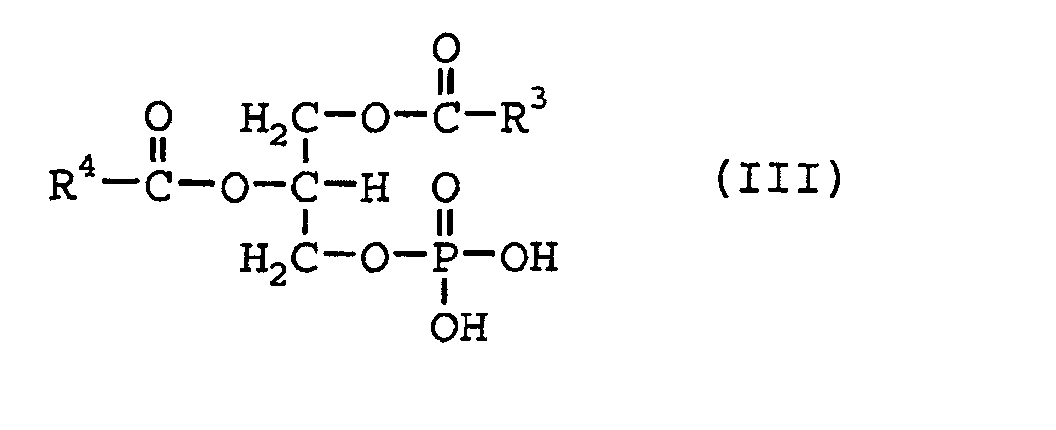
- (7) The hair-growing agent according to any of the above
(1) to (4), wherein the phosphatidic acids wherein
the fatty acid residue moiety consists only of
straight-chain fatty acid residues having an even
number of carbon atoms are compounds represented by
formula (III) :
(wherein R3 and R4, which may be the same or different, each represents straight-chain alkyl having an odd number of carbon atoms, straight-chain alkenyl having an odd number of carbon atoms, or straight-chain alkynyl having an odd number of carbon atoms).
- (8) A hair-growing agent comprising, as active ingredients, one or more members selected from the group consisting of lysophosphatidic acids and phosphatidic acids, and one or more members selected from the group consisting of proanthocyanidin, protein kinase C-specific inhibitors or pharmaceutically acceptable salts thereof, and tocopherol.
- (9) A hair-growing agent comprising, as active ingredients, one or more members selected from the group consisting of lysophosphatidic acids and phosphatidic acids, and proanthocyanidin.
- (10) The hair-growing agent according to the above (8) or (9), wherein the proanthocyanidin is one or more members selected from the group consisting of procyanidin B-1, procyanidin B-2, procyanidin B-3 and procyanidin C-1.
- (11) The hair-growing agent according to the above (9) or (10), further comprising a protein kinase C-specific inhibitor or a pharmaceutically acceptable salt thereof.
- (12) A hair-growing agent comprising, as active ingredients, one or more members selected from the group consisting of lysophosphatidic acids and phosphatidic acids, and a protein kinase C-specific inhibitor or a pharmaceutically acceptable salt thereof.
- (13) The hair-growing agent according to the above (8), (11) or (12), wherein the protein kinase C-specific inhibitor is one or more members selected from the group consisting of calphostin C, hexadecylphosphocholine, palmitoyl-DL-carnitine and polymyxin B.
- (14) The hair-growing agent according to any of the above (9) to (13), further comprising tocopherol.
- (15) A hair-growing agent comprising, as active ingredients, one or more members selected from the group consisting of lysophosphatidic acids and phosphatidic acids, and tocopherol.
- (16) The hair-growing agent according to the above (8), (14) or (15), wherein the tocopherol is one or more members selected from the group consisting of dl-α-tocopherol, d-α-tocopherol, dl-α-tocopherol acetate, d-α-tocopherol acetate and dl-α-tocopherol nicotinate.
- (17) The hair-growing agent according to any of the above (8) to (16), wherein the phosphatidic acids are the phosphatidic acids according to the above (1).
- (18) The hair-growing agent according to the above (17), wherein the phosphatidic acids are the phosphatidic acids according to the above (7).
- (19) The hair-growing agent according to any of the above (8) to (16), wherein the lysophosphatidic acids are the lysophosphatidic acids according to the above (5) or (6).
- (20) The hair-growing agent according to the above (8) to (19), which does not substantially comprise minoxidil.
- (21) The hair-growing agent according to any of the above (8) to (20), wherein the content of one or more members selected from the group consisting of lysophosphatidic acids and phosphatidic acids is 0.01 to 5.0%.
- (22) The hair-growing agent according to any of the above (8) to (20), wherein the content of one or more members selected from the group consisting of lysophosphatidic acids and phosphatidic acids is 0.01 to 1.0%.
In the definition of each group in formula (I), the
alkyl includes straight-chain or branched alkyl groups
having 1 to 23, preferably 7 to 17 carbon atoms, such as
methyl, ethyl, propyl, isopropyl, butyl, isobutyl, sec-butyl,
tert-butyl, pentyl, neopentyl, hexyl, heptyl, octyl,
nonyl, decyl, undecyl, dodecyl, tridecyl, tetradecyl,
pentadecyl, hexadecyl, heptadecyl and octadecyl. The
alkenyl includes straight-chain or branched alkenyl groups
having 2 to 23, preferably 7 to 17 carbon atoms, such as
vinyl, allyl, butenyl, pentenyl, hexenyl, pentadienyl and
hexadienyl. The alkynyl includes straight-chain or
branched alkynyl groups having 2 to 23, preferably 7 to 17
carbon atoms, such as ethynyl, propynyl, butynyl, pentynyl
and hexynyl.
The straight-chain alkyl having an odd number of
carbon atoms includes those having 1 to 23, preferably 7
to 17 carbon atoms, such as methyl, propyl, pentyl, heptyl,
nonyl, undecyl, tridecyl, pentadecyl, heptadecyl,
nonadecyl, heneicosanyl and tricosanyl. The straight-chain
alkenyl having an odd number of carbon atoms
includes those having 3 to 23, preferably 7 to 17 carbon
atoms, such as allyl, 1-propenyl, 2-pentenyl, 4-pentenyl,
pentadienyl, heptenyl, nonenyl, undecenyl, tridecenyl,
pentadecenyl and heptadecenyl. The straight-chain alkynyl
having an odd number of carbon atoms includes those having
3 to 23, preferably 7 to 17 carbon atoms, such as propynyl,
pentynyl, heptynyl, nonynyl, undecynyl, tridecynyl,
pentadecynyl and heptadecynyl.
The number of unsaturated bonds in the alkenyl,
alkynyl, straight-chain alkenyl having an odd number of
carbon atoms and straight-chain alkynyl having an odd
number of carbon atoms is not specifically restricted.
The lysophosphatidic acids to be used in the present
invention may be any lysophosphatidic acids. The
phosphatidic acids wherein the fatty acid residue moiety
consists only of straight-chain fatty acid residues having
an even number of carbon atoms to be used in the present
invention include all such phosphatidic acids. The
straight-chain fatty acid having an even number of carbon
atoms of the above fatty acid residues includes those
having 2 to 24, preferably 8 to 18 carbon atoms, such as
ethanoyl, butanoyl, hexanoyl, octanoyl, decanoyl,
dodecanoyl, tetradecanoyl, hexadecanoyl, octadecanoyl,
eicosanoyl, docosanoyl, tetracosanoyl, 2-butenoyl, 3-butenoyl,
3-hexenoyl, 5-hexenoyl, hexadienoyl, octenoyl,
decenoyl, dodecenoyl, tetradecenoyl, hexadecenoyl,
octadecenoyl, butynoyl, hexynoyl, octynoyl, decynoyl,
dodecynoyl, tetradecynoyl, hexadecynoyl, octadecynoyl and
tetradec-4-en-8-ynoyl. Of the above lysophosphatidic
acids, and phosphatidic acids wherein the fatty acid
residue moiety consists only of straight-chain fatty acid
residues having an even number of carbon atoms, preferred
are compounds represented by formula (I). Examples of the
lysophosphatidic acids are monoacetyl lysophosphatidic
acid, monopropionyl lysophosphatidic acid, monobutanoyl
lysophosphatidic acid, monopentanoyl lysophosphatidic acid,
monohexanoyl lysophosphatidic acid, monoheptanoyl
lysophosphatidic acid, monooctanoyl lysophosphatidic acid,
monononanoyl lysophosphatidic acid, monodecanoyl
lysophosphatidic acid, monoundecanoyl lysophosphatidic
acid, monolauroyl lysophosphatidic acid, monotridecanoyl
lysophosphatidic acid, monomyristoyl lysophosphatidic acid,
monopentadecanoyl lysophosphatidic acid, monopalmitoyl
lysophosphatidic acid, monoheptadecanoyl lysophosphatidic
acid, monostearoyl lysophosphatidic acid and monooleoyl
lysophosphatidic acid. Examples of the phosphatidic acids
wherein the fatty acid residue moiety consists only of
straight-chain fatty acid residues having an even number
of carbon atoms are dioleoyl phosphatidic acid,
dimyristoyl phosphatidic acid, dipalmitoyl phosphatidic
acid, dilauroyl phosphatidic acid, dioctanoyl phosphatidic
acid, didecanoyl phosphatidic acid, distearoyl
phosphatidic acid, arachidonoylstearoyl phosphatidic acid,
1-oleoyl-2-acetyl phosphatidic acid, 1-lauroyl-2-acetyl
phosphatidic acid, 1-myristoyl-2-acetyl phosphatidic acid,
1-palmitoyl-2-acetyl phosphatidic acid, 1-stearoyl-2-acetyl
phosphatidic acid and 1-palmitoleoyl-2-acetyl
phosphatidic acid.
The lysophosphatidic acids to be employed in the
hair-growing agent of the present invention comprising, as
active ingredients, lysophosphatidic acid and one or more
members selected from the group consisting of
proanthocyanidin, protein kinase C-specific inhibitors or
pharmaceutically acceptable salts thereof, and tocopherol
are the same as the above-described lysophosphatidic acids.
The phosphatidic acids to be employed in the hair-growing
agent of the present invention comprising, as
active ingredients, phosphatidic acid and one or more
members selected from the group consisting of
proanthocyanidin, protein kinase C-specific inhibitors or
pharmaceutically acceptable salts thereof, and tocopherol
include not only the above-described phosphatidic acids
wherein the fatty acid residue moiety consists only of
straight-chain fatty acid residues having an even number
of carbon atoms, but also those wherein the fatty acid
residue moiety consists of fatty acid residues having an
odd number of carbon atoms, those wherein the fatty acid
residue moiety consists of branched-chain fatty acid
residues having an even number of carbon atoms, and those
wherein the fatty acid residue moiety consists of the
combination of the above different kinds of fatty acid
residues. Examples of these phosphatidic acids include,
in addition to the above-mentioned examples of
phosphatidic acids wherein the fatty acid residue moiety
consists only of straight-chain fatty acid residues having
an even number of carbon atoms, dipropionyl phosphatidic
acid, dipentanoyl phosphatidic acid, diheptanoyl
phosphatidic acid, dinonanoyl phosphatidic acid,
diundecanoyl phosphatidic acid, ditridecanoyl phosphatidic
acid, dipentadecanoyl phosphatidic acid, diheptadecanoyl
phosphatidic acid, di α-methyloctadecanoyl phosphatidic
acid, di α-methylundecanoyl phosphatidic acid, di β-propylundecanoyl
phosphatidic acid, di α-methylstearoyl
phosphatidic acid, di α-methylpalmitoyl phosphatidic acid,
di α-methylnonanoyl phosphatidic acid, bis (γ-dimethylnonanoyl)
phosphatidic acid, bis (δ-ethyltridecanoyl)
phosphatidic acid, 1-oleoyl-2-isobutyryl
phosphatidic acid, 1-lauroyl-2-isobutyryl phosphatidic
acid, 1-myristoyl-2-isobutyryl phosphatidic acid, 1-palmitoyl-2-isobutyryl
phosphatidic acid, 1-stearoyl-2-isobutyryl
phosphatidic acid, 1-palmitoleoyl-2-isobutyryl
phosphatidic acid, 1-oleoyl-2-propionyl phosphatidic acid,
1-lauroyl-2-propionyl phosphatidic acid, 1-myristoyl-2-propionyl
phosphatidic acid, 1-palmitoyl-2-propionyl
phosphatidic acid, 1-stearoyl-2-propionyl phosphatidic
acid and 1-palmitoleoyl-2-propionyl phosphatidic acid.
These phosphatidic acids can be obtained by
purification from egg yolk, soybean, etc. They can also
be obtained as commercially available products or by
chemical synthesis (for example, US 3423440).
Lysophosphatidic acids can be obtained by subjecting
phosphatidic acids obtained by purification from egg yolk,
soybean, etc. to enzymatic treatment (hydrolysis with
phospholipase A1 or phospholipase A2) or by chemical
synthesis (for example, US 3423440).
The proanthocyanidin used in the present invention
is a polymer composed of flavan-3-ol derivatives
represented by formula (IV):
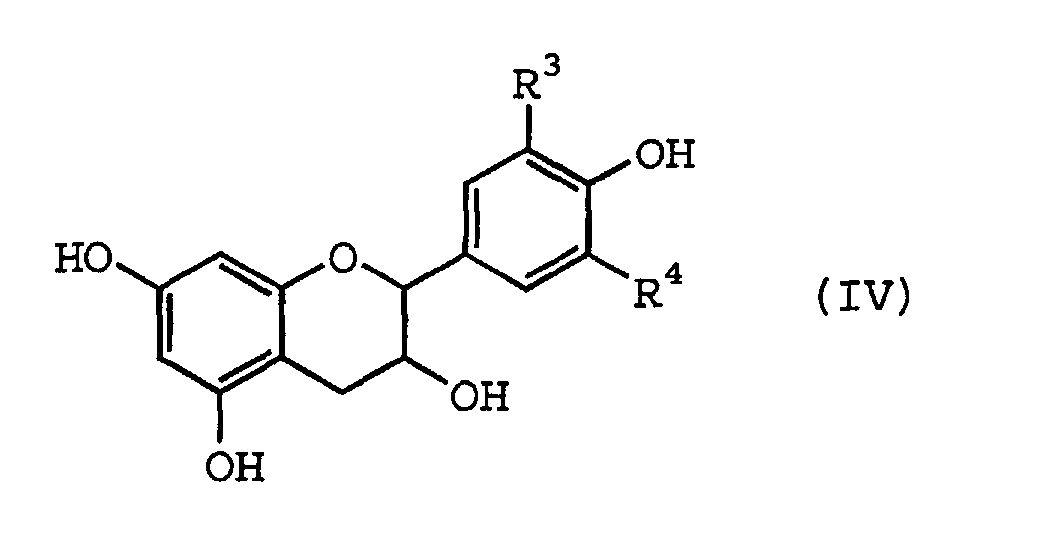 (wherein R3 and R4, which may be the same or different,
each represents a hydrogen atom or a hydroxyl group) or
the like as constitutive units.
(wherein R3 and R4, which may be the same or different,
each represents a hydrogen atom or a hydroxyl group) or
the like as constitutive units.
Examples of the flavan-3-ol derivatives include
catechin, epicatechin, gallocatechin, epigallocatechin,
afzelechin, epiafzelechin and any optical isomers thereof.
Proanthocyanidin composed of epicatechin or catechin as a
constitutive unit is preferably used in the present
invention.
The bonding mode of the flavan-3-ol derivatives
represented by formula (IV) may be any mode. An example
of a dimer composed of two flavan-3-ol derivatives is the
one which has a bonding mode represented by formula (V):
 (wherein R3 and R4 have the same significances as defined
above respectively, and R3a and R4a have the same
significances as the above R3 and R4 respectively).
Trimers and higher polymers may have a combination of
these bonding modes which may be the same or different.
(wherein R3 and R4 have the same significances as defined
above respectively, and R3a and R4a have the same
significances as the above R3 and R4 respectively).
Trimers and higher polymers may have a combination of
these bonding modes which may be the same or different.
The proanthocyanidin to be used in the present
invention may be any dimer or higher polymer of flavan-3-ol
derivatives, and is preferably a 2- to 10-mer, more
preferably a 2- to 5-mer, further preferably a dimer or
trimer. Examples of the dimers of flavan-3-ol derivatives
include epicatechin-catechin co-dimers such as
epicatechin-(4β→8)-catechin, epicatechin dimers such as
epicatechin-(4β→8)-epicatechin, and catechin dimers such
as catechin-(4α→8)-catechin. Examples of the trimers of
flavan-3-ol derivatives include epicatechin trimers such
as epicatechin-(4β→8)-epicatechin-(4β→8)-epicatechin,
catechin trimers such as catechin-(4α→8)-catechin-(4α→8)-catechin,
and epicatechin-catechin co-trimers such as
epicatechin-(4β→8)-epicatechin-(4β→8)-catechin.
The proanthocyanidin to be used in the present
invention also includes compounds wherein gallic acid or a
sugar such as glucose or rhamnose is attached to the above
proanthocyanidin.
Proanthocyanidin can be obtained by extraction and
purification from various plants such as grape, apple,
barley, Japanese persimmon, coconut, cacao, pine, azuki
bean and peanut belonging to the genera Vitis, Malus,
Hordeum, Diospyros, Cocos, Theobroma, Pinus, Phaseolus,
Arachis, and the like, or by chemical synthesis.
For instance, proanthocyanidin can be extracted and
purified from plants according to the following known
method.
Fruits, seeds, leaves, stalks, roots, rootstocks,
etc. of the plants as starting materials are harvested at
a suitable stage and used, as such or usually after being
subjected to drying such as air drying, as materials for
extraction. Extraction of proanthocyanidin from dry plants
can be carried out in a manner similar to known methods
[Chemical & Pharmaceutical Bulletin, 3, 3218 (1990); ibid.,
40, 889-898 (1992)].
That is, the materials are ground or cut into fine
pieces, followed by extraction with a solvent. Suitable
solvents for extraction include hydrophilic or lipophilic
solvents such as water, alcohols (e.g. ethanol, methanol
and isopropyl alcohol), ketones (e.g. acetone and methyl
ethyl ketone) and esters (e.g. methyl acetate and ethyl
acetate), which can be used alone or as a mixture. The
temperature for extraction is usually 0 to 100°C,
preferably 5 to 50°C. The time for extraction is about one
hour to 10 days, and the amount of the solvent is usually
1 to 30 times by weight, preferably 5 to 10 times by
weight based on the dry material. Extraction is carried
out by stirring or by dipping followed by standing, and is
repeated twice or 3 times, as may be required.
The crude extract obtained in the above manner is
filtered or centrifuged to remove the insoluble residue.
Purification of proanthocyanidin from the thus treated
extract or from juice or sap of the plants can be carried
out by any known purification methods. It is preferred to
employ the two-phase solvent partitioning method, column
chromatography, preparative high-performance liquid
chromatography, etc. alone or in combination. The two-phase
solvent partitioning methods include, for example, a
method in which oil-soluble components and pigments are
removed from the above extract by extraction with n-hexane,
petroleum ether, etc., and a method in which
proanthocyanidin is collected from the extract into the
solvent phase by partition between a solvent such as n-butanol
or methyl ethyl ketone and water. Column
chromatography includes a method using normal phase silica
gel and a method using reversed phase silica gel,
adsorption column chromatography using as a carrier Diaion
HP-20, Sepabeads SP-207 or the like, and gel filtration
using as a carrier Sephadex LH-20 or the like. They are
employed alone or in combination, if necessary repeatedly.
Preparative high-performance liquid chromatography
includes a method using a reversed phase column packed
with octadecyl silica or the like, and a method using a
normal phase column packed with silica gel or the like.
Proanthocyanidin can be purified by removing watersoluble
ionic substances such as salts, nonionic
substances such as saccharides and polysaccharides, oils,
pigments, etc. from the above extract according to the
above purification methods.
Grape-derived proanthocyanidin can be extracted and
purified according to the method described in Acta Dermato
Venereologica, 78, 428-432 (1998) or a similar method.
Procyanidin B-1 [epicatechin-(4β→8)-catechin],
procyanidin B-2 [epicatechin-(4β→8)-epicatechin],
procyanidin B-3 [catechin-(4β→8)-catechin] and
procyanidin C-1 [epicatechin-(4β→8)-epicatechin-(4β→8)-epicatechin]
can be extracted and purified according to
the method described in The Journal of Investigative
Dermatology, 112, 310-316 (1999) or a similar method.
Production of proanthocyanidin by chemical synthesis
can be carried out according to the method described in
Journal of Chemical Society, Perkin Transaction I, 1535-1543
(1983) in which a process of producing dimers of
epicatechin or catechin is described, the method described
in Phytochemistry, 25, 1209-1215 (1986) or similar methods.
When proanthocyanidin is used as an active
ingredient in the present invention, one or more kinds of
proanthocyanidin may be used alone or as a mixture. It is
preferred to use one or more members selected from the
group consisting of grape-seed-derived proanthocyanidin,
apple-derived proanthocyanidin, pine-derived
proanthocyanidin, purified procyanidin oligomers,
procyanidin B-1, procyanidin B-2, procyanidin B-3 and
procyanidin C-1. Specifically it is preferred to use one
or more members selected from the group consisting of
procyanidin B-1, procyanidin B-2, procyanidin B-3 and
procyanidin C-1.
As the protein kinase C-specific inhibitor in the
present invention, any inhibitor that specifically
inhibits protein kinase C can be used. It is preferred to
use protein kinase inhibitors of which the ratio of the
50% protein kinase A (PKA) inhibition constant
(hereinafter referred to as PKA-IC50) to the 50% protein
kinase C (PKC) inhibition constant (hereinafter referred
to as PKC-IC50) (the ratio is hereinafter referred to as
PKA-IC50/PKC-IC50) is 3 or more, preferably 3 to 109, more
preferably 10 to 109, when PKC-inhibiting activity and PKA-inhibiting
activity are measured by the following methods
for measuring PKC-inhibiting activity and PKA-inhibiting
activity. Examples thereof are one or more members
selected from the group consisting of calphostin C,
hexadecylphosphocholine, palmitoyl-DL-carnitine, polymyxin
B and pharmaceutically acceptable salts thereof.
Examples of the pharmaceutically acceptable salts
are hydrochlorides, hydrobromides, sulfates, nitrates,
formates, acetates, benzoates, maleates, fumarates,
succinates, tartrates, citrates, oxalates,
methanesulfonates, toluenesulfonates, aspartates and
glutamates.
The methods for measuring PKC-inhibiting activity
and PKA-inhibiting activity are described below.
Measurement of PKC-inhibiting activity can be
carried out in a manner similar to the method of Kikkawa,
et al. [Journal of Biological Chemistry, 257, 13341
(1982)].
To 250 µl of an aqueous solution comprising 2.5
µmol of magnesium acetate, 50 µg of histone Type IIIS
(Sigma Chemical Co., Ltd.), 20 µg of phosphatidylserine,
0.8 µg of diolein, 25 nmol of calcium chloride, 5 µg of a
crude enzyme (partially purified from rat brain by the
method of Kikkawa, et al.) and 5 µmol of Tris-HCl buffer
(pH 7.5) is added the above aqueous solution containing a
test compound (10 µl), followed by incubation at 30°C for
3 minutes. After the incubation, 1.25 nmol of [γ-32P]ATP
(5-10 x 103 cpm/nmol) is added thereto, followed by
phosphorylation reaction at 30°C for 3 minutes. The
reaction is terminated by addition of 25% trichloroacetic
acid and the reaction mixture is filtered through a
cellulose acetate membrane (pore size: 0.45 µm, Toyo
Filter Co., Ltd.) After the membrane is washed four times
with 5% trichloroacetic acid, the radioactivity remaining
on the membrane is measured as a test compound value.
Separately, the above procedure is carried out in the same
manner without addition of the test compound and the
radioactivity is measured as a control value.
The molar concentration of the test compound giving
a test compound value which is 50% of the control value is
regarded as the 50% PKC inhibition constant (PKC-IC50).
Measurement of PKA-inhibiting activity can be
carried out in a manner similar to the method of Kuo, et
al. [Biochemistry, 64, 1349 (1969)].
To 250 µl of an aqueous solution comprising 5 µmol
of Tris-HCl buffer (pH 6.8), 2.5 µmol of magnesium
acetate, 100 µg of histone Type IIS (Sigma Chemical Co.,
Ltd.), 0.25 nmol of c-AMP and 200 µg of a crude enzyme
(partially purified from calf heart by the method of Kuo,
et al.) is added the above aqueous solution containing a
test compound (10 µl), followed by incubation at 30°C for
3 minutes. After the incubation, 1.25 nmol of [γ-32P]ATP
(5-10 x 103 cpm/nmol) is added thereto, followed by
phosphorylation reaction at 30°C for 3 minutes. The
reaction is terminated by addition of 25% trichloroacetic
acid and the reaction mixture is filtered through a
cellulose acetate membrane (pore size: 0.45 µm, Toyo
Filter Co., Ltd.) After the membrane is washed four times
with 5% trichloroacetic acid, the radioactivity remaining
on the membrane is measured as a test compound value.
Separately, the above procedure is carried out in the same
manner without addition of the test compound and the
radioactivity is measured as a control value.
The molar concentration of the test compound giving
a test compound value which is 50% of the control value is
regarded as the 50% PKA inhibition constant (PKA-IC50).
The tocopherol to be used in the present invention
includes natural ones that are commercially available,
synthetic ones, and derivatives such as acetic acid esters
and nicotinic acid esters thereof. Examples thereof
include dl-α-tocopherol, d-α-tocopherol, dl-α-tocopherol
acetate, d-α-tocopherol acetate and dl-α-tocopherol
nicotinate.
The hair-growing agent of the present invention may
be in any preparation form so long as it can contain
lysophosphatidic acid, phosphatidic acid, or one or more
members selected from the group consisting of
lysophosphatidic acids and phosphatidic acids, and one or
more members selected from the group consisting of
proanthocyanidin, protein kinase C-specific inhibitors and
pharmaceutically acceptable salts thereof, and tocopherol.
For example, it can be used in the form of a liquid or
solid hair-growing preparation containing a suitable
pharmaceutical vehicle.
Examples of the liquid or solid hair-growing
preparations include liquid preparations such as hair
liquid, hair tonic and hair lotion, and solid preparations
such as ointment and hair cream. These preparations can
be produced by adding to a suitable vehicle
lysophosphatidic acid, phosphatidic acid, or one or more
members selected from the group consisting of
lysophosphatidic acids and phosphatidic acids, and
proanthocyanidin, a protein kinase C-specific inhibitor or
tocopherol, according to a conventional method.
The content of lysophosphatidic acid or phosphatidic
acid in the hair-growing agent of the present invention
widely varies depending upon the kind of lysophosphatidic
acid or phosphatidic acid and the percutaneous
absorbability derived from physical properties, but it is
usually, alone or as a mixture, 0.01 to 5.0 wt%
(hereinafter referred to merely as %), preferably 0.01 to
3.0%, more preferably 0.1 to 1.0%. The content of
proanthocyanidin varies depending upon the purification
degree, but is usually 0.01 to 10.0%, preferably 0.1 to
5.0%, more preferably 0.3 to 2.0%. The content of a
protein kinase C-specific inhibitor widely varies
depending upon the inhibitory activity and the
percutaneous absorbability derived from physical
properties, but it is usually, alone or as a mixture,
0.00001 to 1%, preferably 0.0001 to 1%, more preferably
0.001 to 0.1%. The content of tocopherol is usually 0.01
to 2%, preferably 0.05 to 1%, more preferably 0.1 to 0.5%.
Preferred vehicles for liquid preparations are those
which are generally used in hair-growing agents such as
purified water, ethyl alcohol and polyvalent alcohols. If
necessary, additives may be added thereto.
Examples of the polyvalent alcohols are glycerol,
1,3-butylene glycol and propylene glycol.
Additives include surfactants, vitamins, anti-inflammatory
agents, microbicides, hormones, crude drug
extracts, tinctures, refrigerants, moisturizers,
keratolytics, antioxidants, sequestering agents and
perfumes.
Examples of the surfactants are polyoxyethylene (60)
hardened castor oil, polyoxyethylene (8) oleyl ether,
polyoxyethylene (10) oleyl ether, polyoxyethylene (10)
monooleate, polyoxyethylene (30) glyceryl monostearate,
sorbitan monostearate, polyoxyethylene (30) glyceryl
monostearate, polyoxyethylene (20) sorbitan monooleate,
sucrose fatty acid esters, hexaglycerin monooleate,
hexaglycerin monolaurate, polyoxyethylene reduced lanolin,
polyoxyethylene (20) lanolin alcohol, polyoxyethylene (25)
glyceryl pyroglutamate isostearate, and N-acetylglutamine
isostearyl ester.
Examples of the vitamins are benzyl nicotinate,
nicotinamide, D-pantothenyl alcohol, pantothenyl ethyl
ether, biotin, pyridoxine hydrochloride and riboflavin.
Examples of the anti-inflammatory agents are
dipotassium glycyrrhizinate, β-glycyrrhetinic acid,
allantoin, diphenhydramine hydrochloride, guaiazulene and
1-menthol.
Examples of the microbicides are
trichlorohydroxydiphenyl ether, hinokitiol, triclosan,
chlorohexidine gluconate, phenoxyethanol, resorcin,
isopropylmethylphenol, azulene, salicylic acid, zinc
pyrithione, benzalkonium chloride, photosensitizing dye No.
301 and sodium mononitroguaiacol.
Examples of the hormones are ethynylestradiol,
estrone and estradiol.
Examples of the crude drug extracts are extract of
Swertia japonica Makino, garlic extract, ginseng extract,
aloe extract and cinchona extract.
Examples of the tinctures are capsicum tincture,
ginger tincture and cantharis tincture.
Examples of the refrigerants are capsicum tincture,
1-menthol and camphor.
Examples of the moisturizers are L-pyrrolidonecarboxylic
acid, sodium hyaluronate,
chondroitin sulfate, plant worm extract and saffron
extract.
Examples of the keratolytics are resorcin, salicylic
acid and lactic acid.
Examples of the antioxidants are butylhydroxyanisole,
isopropyl gallate, propyl gallate and erythorbic acid.
Examples of the sequestering agents are
ethylenediamine tetraacetate and salts thereof.
Examples of the perfumes are natural perfumes such
as orange oil, lemon oil, bergamot oil, lime oil,
lemongrass oil and lavender oil, and synthetic perfumes
such as menthol, rose oxide, linalool, citral and linalyl
acetate.
When the above liquid preparations are used as spray,
they can be used in combination with combustible gas,
incombustible gas, or the like. Examples of the
combustible gas are LPG (a liquefied petroleum gas) and
dimethyl ether, and examples of the incombustible gas are
a nitrogen gas and a carbon dioxide gas.
Vehicles for solid preparations include Vaseline,
solid paraffin, vegetable oils, mineral oils, lanolin, wax
and macrogol. Further, the above additives, emulsifiers
such as lecithin, and lower alcohols such as ethyl alcohol
and isopropyl alcohol may be added thereto, if necessary.
The dose of the hair-growing agent of the present
invention varies depending upon the age, the body weight,
the symptom of the disease, the therapeutic effect, the
mode of administration, the time of treatment or the like.
The agent is percutaneously administered in an amount of
0.1 to 250 mg, preferably 1 to 100 mg in terms of
lysophosphatidic acid or phosphatidic acid per adult once
to several times per day.
Certain embodiments of the present invention are
illustrated in the following examples.
| Example 1 Preparation of Compositions 1 and 2 | |
| Monopalmitoyl lysophosphatidic acid (Funakoshi Co., Ltd.) | 0.3% |
| Ethyl alcohol | 70% |
| 1,3-Butylene glycol | 3% |
| N-Acetylglutamine isostearyl ester | 0.25% |
| Polyoxyethylene (25) glyceryl pyroglutamate isostearate | 0.25% |
To the above mixture was added purified water to
make up to 100%. The mixture was made homogeneous with
stirring to prepare composition 1.
Composition 2 was prepared in the same manner as
above except that purified water was used instead of
monopalmitoyl lysophosphatidic acid.
| Example 2 Preparation of Compositions 3 and 4 | |
| Monopalmitoyl lysophosphatidic acid (Funakoshi Co., Ltd.) | 0.3% |
| Grape-derived proanthocyanidin | 3% |
| Ethyl alcohol | 70% |
| 1,3-Butylene glycol | 3% |
| N-Acetylglutamine isostearyl ester | 0.25% |
| Polyoxyethylene (25) glyceryl pyroglutamate isostearate | 0.25% |
Grape-derived proanthocyanidin was produced
according to the method described in Acta Dermato
Venereologica, 78, 428-432 (1998) or a similar method.
To the above mixture was added purified water to
make up to 100%. The mixture was made homogeneous with
stirring to prepare composition 3.
Composition 4 was prepared in the same manner as
above except that purified water was used instead of
monopalmitoyl lysophosphatidic acid.
| Example 3 Preparation of Compositions 5 and 6 | |
| Monopalmitoyl lysophosphatidic acid (Funakoshi Co., Ltd.) | 0.3% |
| Procyanidin B-2 | 1% |
| Ethyl alcohol | 70% |
| 1,3-Butylene glycol | 3% |
| N-Acetylglutamine isostearyl ester | 0.25% |
| Polyoxyethylene (25) glyceryl pyroglutamate isostearate | 0.25% |
Procyanidin B-2 was produced according to the method
described in The Journal of Investigative Dermatology, 112,
310-316 (1999) or a similar method.
To the above mixture was added purified water to
make up to 100%. The mixture was made homogeneous with
stirring to prepare composition 5.
Composition 6 was prepared in the same manner as
above except that purified water was used instead of
monopalmitoyl lysophosphatidic acid.
| Example 4 Preparation of Compositions 7 and 8 | |
| Monopalmitoyl lysophosphatidic acid (Funakoshi Co., Ltd.) | 0.3% |
| Procyanidin C-1 | 1% |
| Ethyl alcohol | 70% |
| 1,3-Butylene glycol | 3% |
| N-Acetylglutamine isostearyl ester | 0.25% |
| Polyoxyethylene (25) glyceryl pyroglutamate isostearate | 0.25% |
Procyanidin C-1 was produced according to the method
described in The Journal of Investigative Dermatology, 112,
310-316 (1999) or a similar method.
To the above mixture was added purified water to
make up to 100%. The mixture was made homogeneous with
stirring to prepare composition 7.
Composition 8 was prepared in the same manner as
above except that purified water was used instead of
monopalmitoyl lysophosphatidic acid.
| Example 5 Preparation of Compositions 9 and 10 | |
| Monopalmitoyl lysophosphatidic acid (Funakoshi Co., Ltd.) | 0.3% |
| Calphostin C (Kyowa Hakko Kogyo Co., Ltd.) | 0.03% |
| Ethyl alcohol | 90% |
| 1,3-Butylene glycol | 3% |
| N-Acetylglutamine isostearyl ester | 0.25% |
| Polyoxyethylene (25) glyceryl pyroglutamate isostearate | 0.25% |
To the above mixture was added purified water to
make up to 100%. The mixture was made homogeneous with
stirring to prepare composition 9.
Composition 10 was prepared in the same manner as
above except that purified water was used instead of
monopalmitoyl lysophosphatidic acid.
| Example 6 Preparation of Compositions 11 and 12 | |
| Monopalmitoyl lysophosphatidic acid (Funakoshi Co., Ltd.) | 0.3% |
| Hexadecylphosphocholine (Sigma Chemical Co., Ltd.) | 0.3% |
| Ethyl alcohol | 70% |
| 1,3-Butylene glycol | 3% |
| N-Acetylglutamine isostearyl ester | 0.25% |
| Polyoxyethylene (25) glyceryl pyroglutamate isostearate | 0.25% |
To the above mixture was added purified water to
make up to 100%. The mixture was made homogeneous with
stirring to prepare composition 11.
Composition 12 was prepared in the same manner as
above except that purified water was used instead of
monopalmitoyl lysophosphatidic acid.
| Example 7 Preparation of Compositions 13 and 14 | |
| Monopalmitoyl lysophosphatidic acid (Funakoshi Co., Ltd.) | 0.3% |
| dl-α-Tocopherol (Eisai Co., Ltd.) | 1% |
| Ethyl alcohol | 70% |
| 1,3-Butylene glycol | 3% |
| N-Acetylglutamine isostearyl ester | 0.25% |
| Polyoxyethylene (25) glyceryl pyroglutamate isostearate | 0.25% |
To the above mixture was added purified water to
make up to 100%. The mixture was made homogeneous with
stirring to prepare composition 13.
Composition 14 was prepared in the same manner as
above except that purified water was used instead of
monopalmitoyl lysophosphatidic acid.
| Example 8 Preparation of Compositions 15 and 16 | |
| Dioleoyl phosphatidic acid (Sigma Chemical Co., Ltd.) | 0.4% |
| Ethyl alcohol | 70% |
| 1,3-Butylene glycol | 3% |
| N-Acetylglutamine isostearyl ester | 0.25% |
| Polyoxyethylene (25) glyceryl pyroglutamate isostearate | 0.25% |
To the above mixture was added purified water to
make up to 100%. The mixture was made homogeneous with
stirring to prepare composition 15.
Composition 16 was prepared in the same manner as
above except that purified water was used instead of
dioleoyl phosphatidic acid.
| Example 9 Preparation of Compositions 17 and 18 | |
| Dioleoyl phosphatidic acid (Sigma Chemical Co., Ltd.) | 1% |
| Procyanidin B-2 | 1% |
| Ethyl alcohol | 70% |
| 1,3-Butylene glycol | 3% |
| N-Acetylglutamine isostearyl ester | 0.25% |
| Polyoxyethylene (25) glyceryl pyroglutamate isostearate | 0.25% |
Procyanidin B-2 was produced according to the method
described in The Journal of Investigative Dermatology, 112,
310-316 (1999).
To the above mixture was added purified water to
make up to 100%. The mixture was made homogeneous with
stirring to prepare composition 17.
Composition 18 was prepared in the same manner as
above except that purified water was used instead of
dioleoyl phosphatidic acid.
| Example 10 Preparation of Compositions 19 and 20 | |
| Dioleoyl phosphatidic acid (Sigma Chemical Co., Ltd.) | 1% |
| Procyanidin C-1 | 1% |
| Ethyl alcohol | 70% |
| 1,3-Butylene glycol | 3% |
| N-Acetylglutamine isostearyl ester | 0.25% |
| Polyoxyethylene (25) glyceryl pyroglutamate isostearate | 0.25% |
Procyanidin C-1 was produced according to the method
described in The Journal of Investigative Dermatology, 112,
310-316 (1999).
To the above mixture was added purified water to
make up to 100%. The mixture was made homogeneous with
stirring to prepare composition 19.
Composition 20 was prepared in the same manner as
above except that purified water was used instead of
dioleoyl phosphatidic acid.
| Example 11 Preparation of Compositions 21 and 22 | |
| Dioleoyl phosphatidic acid (Sigma Chemical Co., Ltd.) | 1% |
| Hexadecylphosphocholine (Sigma Chemical Co., Ltd.) | 0.3% |
| Ethyl alcohol | 70% |
| 1,3-Butylene glycol | 3% |
| N-Acetylglutamine isostearyl ester | 0.25% |
| Polyoxyethylene (25) glyceryl pyroglutamate isostearate | 0.25% |
To the above mixture was added purified water to
make up to 100%. The mixture was made homogeneous with
stirring to prepare composition 21.
Composition 22 was prepared in the same manner as
above except that purified water was used instead of
dioleoyl phosphatidic acid.
| Example 12 Preparation of Compositions 23 and 24 | |
| Dioleoyl phosphatidic acid (Sigma Chemical Co., Ltd.) | 1% |
| dl-α-Tocopherol (Eisai Co., Ltd.) | 1% |
| Ethyl alcohol | 70% |
| 1,3-Butylene glycol | 3% |
| N-Acetylglutamine isostearyl ester | 0.25% |
| Polyoxyethylene (25) glyceryl pyroglutamate isostearate | 0.25% |
To the above mixture was added purified water to
make up to 100%. The mixture was made homogeneous with
stirring to prepare composition 23.
Composition 24 was prepared in the same manner as
above except that purified water was used instead of
dioleoyl phosphatidic acid.
| Example 13 Preparation of Composition 25 | |
| Dilauroyl phosphatidic acid (Funakoshi Co., Ltd.) | 0.2% |
| Ethyl alcohol | 70% |
| 1,3-Butylene glycol | 3% |
| N-Acetylglutamine isostearyl ester | 0.25% |
| Polyoxyethylene (25) glyceryl pyroglutamate isostearate | 0.25% |
To the above mixture was added purified water to
make up to 100%. The mixture was made homogeneous with
stirring to prepare composition 25.
PKC-IC50 and PKA-IC50 were obtained on calphostin C,
hexadecylphosphocholine, palmitoyl-DL-carnitine and
polymyxin B by measuring their PKC- and PKA-inhibiting
activities according to the above-described methods for
measuring PKC- and PKA-inhibiting activities.
The results are shown in Table 1.
| Test Compound | PKC-IC50 (µM) | PKA-IC50 (µM) | PKA-IC50/ PKC-IC50 |
| Calphostin C | 0.05 | >50 | >1000 |
| Hexadecylphosphocholine | 94 | >1000 | >10.6 |
| Palmitoyl-DL-carnitine | 230 | >1000 | >4.3 |
| Polymyxin B | 2.6 | >1000 | >384 |
The activity of the hair-growing agent of the
present invention is shown in detail by the following test
examples.
Hair follicle epithelial cells were separated and
cultured according to a modification of the method of
Tanigaki, et al. [Archives of Dermatological Research, 284,
290-296 (1992)].
The skin on the back of a 4-days-old C3H mouse
(Charles River Japan, Inc.) was cut off and treated with
MEM (Eagle's Minimum Essential Medium) containing 500
units/ml Dispase (Godo Shusei Co., Ltd.) and 5% fetal calf
serum (FCS) at 4°C for 16 hours.
Then, the epidermis was stripped from the skin
section, and the obtained dermis layer was treated with
DMEM (Dulbecco's modified Eagle Medium) containing 0.25%
Collagenase N-2 (Nitta Gelatin Co., Ltd.) and 10% FCS at
37°C for one hour to obtain a dermis suspension. The
dermis suspension was filtered through a 212-µm nylon
mesh (Nippon Rikagaku Kikai Co., Ltd.) and the filtrate
was centrifuged at 1000 rpm for 5 minutes to obtain
pellets containing hair follicle tissue. To the pellets
was added calcium/magnesium-free PBS (Dulbecco's
Phosphate-Buffered Saline) and the pellets were suspended
therein using a pipette. The resulting suspension was
allowed to stand for 15 minutes to precipitate hair tissue.
The same procedure as above (addition of
calcium/magnesium-free PBS, suspending by use of a pipette,
and precipitation by allowing suspension to stand for 15
minutes) was repeated three times using the obtained hair
tissue.
Then, the hair tissue was treated with a solution
containing 0.1% ethylenediaminetetraacetic acid (EDTA) and
0.25% trypsin (Gibco) at 37°C for 5 minutes. To the
resulting mixture was added DMEM containing 10% FCS to
prepare a hair tissue cell suspension having a density of
3 x 10⁵ cells/ml. The hair tissue cell suspension was put
into wells of a 24-well collagen-coated plate (Iwaki Glass
Co., Ltd.) in an amount of 1 ml/well, followed by
culturing in 5% CO2 at 37°C for 24 hours.
After the culturing, the medium was replaced by a
medium prepared by adding to MCDB153 medium (Kyokuto
Pharmaceutical Ind. Co., Ltd.) DMSO containing 5 mg/l
bovine insulin (Sigma Chemical Co., Ltd.); 5 µg/l mouse
epidermal growth factor (EGF) (Takara Shuzo Co., Ltd.); 40
mg/l bovine pituitary extract (Kyokuto Pharmaceutical Ind.
Co., Ltd.); 10 mg/l human transferrin (Sigma Chemical Co.,
Ltd.); 0.4 mg/l hydrocortisone (Sigma Chemical Co., Ltd.);
0.63 µg/l progesterone (Collaborative Research Co.); 14
mg/l O-phosphoethanolamine (Sigma Chemical Co., Ltd.); 6.1
mg/l ethanolamine (Sigma Chemical Co., Ltd.); 50 U/ml
penicillin (Wako Pure Chemical Industries, Ltd.);
50 µg/ml streptomycin (Wako Pure Chemical Industries,
Ltd.); monooleoyl lysophosphatidic acid, dioleoyl
phosphatidic acid (Sigma Chemical Co., Ltd.), didecanoyl
phosphatidic acid (Sigma Chemical Co., Ltd.), dimyristoyl
phosphatidic acid (Funakoshi Co., Ltd.), dipalmitoyl
phosphatidic acid (Wako Pure Chemical Industries, Ltd.),
dilauroyl phosphatidic acid (Funakoshi Co., Ltd.) or egg
yolk-derived phosphatidic acid (Sigma Chemical Co., Ltd.);
and/or proanthocyanidin, a protein kinase C-specific
inhibitor or tocopherol (added in an amount of 1/100 by
volume), followed by further culturing in 5% CO2 at 37°C
for 5 days. During the culturing, the medium was replaced
with a fresh one every other day.
As a control, the cells were cultured in the same
medium as above except that DMSO alone was added in an
amount of 1/100 by volume in place of DMSO containing
lysophosphatidic acid or phosphatidic acid, and/or
proanthocyanidin, a protein kinase C-specific inhibitor or
tocopherol.
The degree of cell growth was measured according to
the method using MTT [3-(4,5-dimethylthiazol-2-yl)-2,5-diphenyl
tetrazolium bromide] [Experimental Medicine
(extra number), Bio Manual UP Series, Experimental Method
of Cell Culture for Molecular Biological Studies, p. 89-92,
Yodosha (1995)].
To each well of the 24-well microplate (2 cm2/well)
was added a PBS solution of MTT (5 mg/ml) in an amount of
1/10 by volume based on 1 ml of the culture. The plate
was shaken to make the mixture homogeneous, followed by
culturing in 5% CO2 at 37°C for 4 hours. Four hours later,
the culture was sucked and 1 ml of a 0.04 mol/l solution
of HCl in isopropyl alcohol was added to each well to
completely dissolve formazan formed in the wells.
The degree of cell growth was determined by
measuring the absorbance at 570 nm based on that at 650 nm
as a control.
The cell growth-promoting activity of the compounds
used in the present invention is shown in Table 2.
| Cell growth-promoting activity of lysophosphatidic acid | |
| Active ingredient | Relative cell growth rate based on the control as 100 |
| Procyanidin B-2 (30 µmol/l) | 260 |
| Procyanidin B-2 (30 µmol/l) + monooleoyl lysophosphatidic acid (3 µmol/l) | 327 |
| Calphostin C (3 µmol/l) | 180 |
| Calphostin C (3 µmol/l) + monooleoyl lysophosphatidic acid (3 µmol/l) | 272 |
| dl-α-Tocopherol (30 µmol/l) | 150 |
| dl-α-Tocopherol (30 µmol/l) + monooleoyl lysophosphatidic acid (3 µmol/l) | 240 |
| Monooleoyl lysophosphatidic acid (3 µmol/l) | 200 |
| Cell growth-promoting activity of phosphatidic acids | |
| Active ingredient | Relative cell growth rate based on the control as 100 control as 100 |
| Procyanidin B-2 (10 µmol/l) | 251 |
| Procyanidin B-2 (10 µmol/l) + dioleoyl phosphatidic acid (10 µmol/l) | 346 |
| Calphostin C (0.01 µ mol/l) | 172 |
| Calphostin C (0.01 µmol/l) + phosphatidic acids derived from egg yolk lecithin (20 µmol/l) | 314 |
| dl-α-Tocopherol (30 µmol/l) | 199 |
| dl-α-Tocopherol (30 µmol/l) + phosphatidic acids derived from egg yolk lecithin (20 µmol/l) | 341 |
| Dilauroyl phosphatidic acid (10 µmol/l) | 379 |
| Dimyristoyl phosphatidic acid (10 µmol/l) | 361 |
| Dipalmitoyl phosphatidic acid (20 µmol/l) | 314 |
| Dioleoyl phosphatidic acid (10 µmol/l) | 255 |
| Didecanoyl phosphatidic acid (1 µmol/l) | 168 |
| Phosphatidic acids derived from egg yolk lecithin (20 µmol/l) | 273 |
As shown in Table 2, the hair-growing agent of the
present invention exhibited a significant growth-promoting
activity on mouse hair follicle epithelial cells.
A test of the effect on hair growth of mice was
carried out referring to the method of Ogawa, et al. [The
Journal of Dermatoloty, 10, 45-54, (1983)].
Nine-weeks-old male C3H/HeSlc mice whose hair cycle
was in the telogen were divided into groups each
consisting of 4 or 5 mice. Hair on the back of each mouse
was shaven using electric hair clippers and an electric
shaver. Then, the compositions prepared in Examples 1-14
were applied on the shaven part in an amount of 200 µl
once per day. To the mice of control groups were applied
compositions 2 and 16 respectively in the same manner.
On the 18th day after the start of the test, the
skin on the back of each mouse was cut off and
photographed. Using an image processor (Avionics Co.,
Spicca II), the percentage of the hair-grown area to the
total area of the skin on the back was calculated. The
rate of the increased hair-grown area (%) was obtained by
subtracting the hair-growing rate of the control group
from the hair-growing rate of the test group.
The results are shown in Table 3.
| Growth-promoting effect of lysophosphatidic acid on mouse hair follicle | |
| Composition | Rate of increased hair-grown area (%) |
| 2 (Control group) | 0 |
| 1 | 35 |
| 3 | 60 |
| 4 | 45 |
| 5 | 64 |
| 6 | 51 |
| 7 | 67 |
| 8 | 57 |
| 9 | 68 |
| 10 | 60 |
| 11 | 73 |
| 12 | 63 |
| 13 | 60 |
| 14 | 45 |
| Growth-promoting effect of phosphatidic acids on mouse hair follicle | |
| Composition | Rate of increased hair-grown area (%) |
| 16 (Control group) | 0 |
| 15 | 44 |
| 17 | 51 |
| 18 | 40 |
| 19 | 55 |
| 20 | 44 |
| 21 | 58 |
| 22 | 46 |
| 23 | 52 |
| 24 | 39 |
| 25 | 41 |
As shown in Table 3, the hair-growing agents
comprising lysophosphatidic acid or phosphatidic acid of
the present invention exhibited a significant growth-promoting
effect on mouse hair follicles. The growth-promoting
effect of proanthocyanidin, protein kinase C-specific
inhibitors and tocopherol on hair follicles was
reinforced by using them together with the
lysophosphatidic acid.
The present invention provides a safe hair-growing
agent having an excellent scalp hair-growing effect which
comprises, as active ingredients, one or more members
selected from the group consisting of lysophosphatidic
acids and phosphatidic acids wherein the fatty acid
residue moiety consists only of straight-chain fatty acid
residues having an even number of carbon atoms.
Claims (28)
- A hair-growing agent comprising, as active ingredients, one or more members selected from the group consisting of lysophosphatidic acids, and phosphatidic acids wherein the fatty acid residue moiety consists only of straight-chain fatty acid residues having an even number of carbon atoms.
- The hair-growing agent according to Claim 1, which does not substantially comprise minoxidil.
- The hair-growing agent according to Claim 1 or 2, wherein the content of one or more members selected from the group consisting of lysophosphatidic acids, and phosphatidic acids wherein the fatty acid residue moiety consists only of straight-chain fatty acid residues having an even number of carbon atoms is 0.01 to 5.0%.
- The hair-growing agent according to Claim 1 or 2, wherein the content of one or more members selected from the group consisting of lysophosphatidic acids, and phosphatidic acids wherein the fatty acid residue moiety consists only of straight-chain fatty acid residues having an even number of carbon atoms is 0.01 to 1.0%.
- The hair-growing agent according to any of Claims 1 to 4, wherein the lysophosphatidic acids are compounds represented by formula (I):(wherein R1 represents alkyl, alkenyl or alkynyl).

- The hair-growing agent according to any of claims 1 to 4, wherein the lysophosphatidic acids are compounds represented by formula (II) :(wherein R2 has the same significance as the above R1).
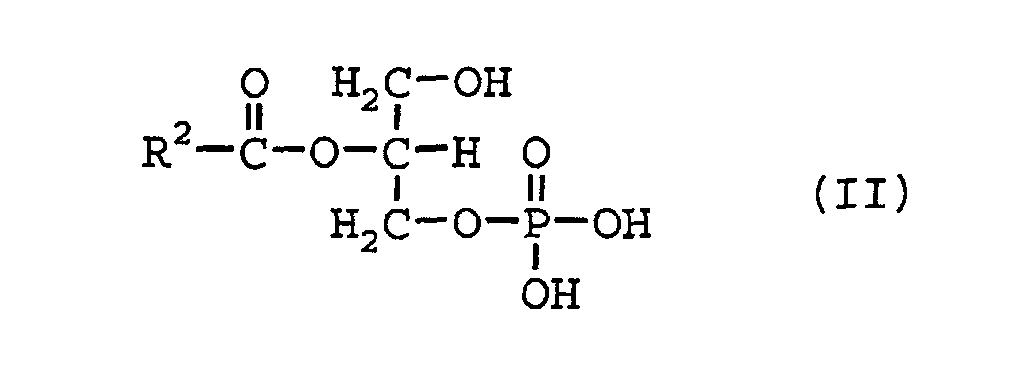
- The hair-growing agent according to any of Claims 1 to 4, wherein the phosphatidic acids wherein the fatty acid residue moiety consists only of straight-chain fatty acid residues having an even number of carbon atoms are compounds represented by formula (III) :(wherein R3 and R4, which may be the same or different, each represents straight-chain alkyl having an odd number of carbon atoms, straight-chain alkenyl having an odd number of carbon atoms, or straight-chain alkynyl having an odd number of carbon atoms).

- A hair-growing agent comprising, as active ingredients, one or more members selected from the group consisting of lysophosphatidic acids and phosphatidic acids, and one or more members selected from the group consisting of proanthocyanidin, protein kinase C-specific inhibitors or pharmaceutically acceptable salts thereof, and tocopherol.
- A hair-growing agent comprising, as active ingredients, one or more members selected from the group consisting of lysophosphatidic acids and phosphatidic acids, and proanthocyanidin.
- The hair-growing agent according to Claim 8 or 9, wherein the proanthocyanidin is one or more members selected from the group consisting of procyanidin B-1, procyanidin B-2, procyanidin B-3 and procyanidin C-1.
- The hair-growing agent according to Claim 9 or 10, further comprising a protein kinase C-specific inhibitor or a pharmaceutically acceptable salt thereof.
- A hair-growing agent comprising, as active ingredients, one or more members selected from the group consisting of lysophosphatidic acids and phosphatidic acids, and a protein kinase C-specific inhibitor or a pharmaceutically acceptable salt thereof.
- The hair-growing agent according to Claim 8, 11 or 12, wherein the protein kinase C-specific inhibitor is one or more members selected from the group consisting of calphostin C, hexadecylphosphocholine, palmitoyl-DL-carnitine and polymyxin B.
- The hair-growing agent according to any of Claims 9 to 13, further comprising tocopherol.
- A hair-growing agent comprising, as active ingredients, one or more members selected from the group consisting of lysophosphatidic acids and phosphatidic acids, and tocopherol.
- The hair-growing agent according to Claim 8, 14 or 15, wherein the tocopherol is one or more members selected from the group consisting of dl-α-tocopherol, d-α-tocopherol, dl-α-tocopherol acetate, d-α-tocopherol acetate and dl-α-tocopherol nicotinate.
- The hair-growing agent according to any of Claims 8 to 16, wherein the phosphatidic acids are the phosphatidic acids according to Claim 1.
- The hair-growing agent according to Claim 17, wherein the phosphatidic acids are the phosphatidic acids according to Claim 7.
- The hair-growing agent according to any of Claim 8 to 16, wherein the lysophosphatidic acids are the lysophosphatidic acids according to Claim 5 or 6.
- The hair-growing agent according to Claims 8 to 19, which does not substantially comprise minoxidil.
- The hair-growing agent according to any of Claims 8 to 20, wherein the content of one or more members selected from the group consisting of lysophosphatidic acids and phosphatidic acids is 0.01 to 5.0%.
- The hair-growing agent according to any of Claims 8 to 20, wherein the content of one or more members selected from the group consisting of lysophosphatidic acids and phosphatidic acids is 0.01 to 1.0%.
- A method for stimulating hair growth in a mammal, which comprises applying to the skin of said mammal one or more members selected from the group consisting of lysophosphatidic acids, and phosphatidic acids wherein the fatty acid residue moiety consists only of straight-chain fatty acid residues having an even number of carbon atoms.
- A method for stimulating hair growth in a mammal, which comprises applying to the skin of said mammal one or more members selected from the group consisting of lyzophosphatidic acids and phosphatidic acids, and one or more members selected from the group consisting of proanthocyanidin, protein kinase C-specific inhibitors or pharmaceutically acceptable salts thereof, and tocopherol.
- The method according to claim 24, wherein the phosphatidic acids are those wherein the fatty acid residue moiety consists only of straight-chain fatty acid residues having an even number of carbon atoms.
- Use of one or more members selected from the group consisting of lysophosphatidic acids, and phosphatidic acids wherein the fatty acid residue moiety consists only of straight-chain fatty acid residues having an even number of carbon atoms for the preparation of a composition used as a hair-growing agent.
- Use of one or more members selected from the group consisting of lyzophosphatidic acids and phosphatidic acids, and one or more members selected from the group consisting of proanthocyanidin, protein kinase C-specific inhibitors or pharmaceutically acceptable salts thereof, and tocopherol for the preparation of a composition used as a hair-growing agent.
- The use according to claim 27, wherein the phosphatidic acids are those wherein the fatty acid residue moiety consists only of straight-chain fatty acid residues having an even number of carbon atoms.
Applications Claiming Priority (5)
| Application Number | Priority Date | Filing Date | Title |
|---|---|---|---|
| JP23114499 | 1999-08-18 | ||
| JP23114499 | 1999-08-18 | ||
| JP2000137711 | 2000-05-10 | ||
| JP2000137711 | 2000-05-10 | ||
| PCT/JP2000/005542 WO2001012141A1 (en) | 1999-08-18 | 2000-08-18 | Hair growth stimulants |
Publications (2)
| Publication Number | Publication Date |
|---|---|
| EP1214928A1 true EP1214928A1 (en) | 2002-06-19 |
| EP1214928A4 EP1214928A4 (en) | 2004-03-24 |
Family
ID=26529712
Family Applications (1)
| Application Number | Title | Priority Date | Filing Date |
|---|---|---|---|
| EP00953498A Withdrawn EP1214928A4 (en) | 1999-08-18 | 2000-08-18 | STIMULANTS FOR HAIR GROWTH |
Country Status (6)
| Country | Link |
|---|---|
| US (1) | US7015209B2 (en) |
| EP (1) | EP1214928A4 (en) |
| KR (1) | KR20020020274A (en) |
| AU (1) | AU6595900A (en) |
| CA (1) | CA2380640A1 (en) |
| WO (1) | WO2001012141A1 (en) |
Cited By (4)
| Publication number | Priority date | Publication date | Assignee | Title |
|---|---|---|---|---|
| EP1232740A3 (en) * | 2001-02-16 | 2003-07-02 | Kyowa Hakko Kogyo Co., Ltd. | Hair-growing agent |
| WO2003103614A3 (en) * | 2002-06-11 | 2004-10-21 | Carlo Ghisalberti | METHOD AND COMPOSITIONS FOR THE TREATMENT OF OEDEMATUS FIBROSCLEREUS PANNICULOPATHY |
| WO2011003430A1 (en) * | 2009-07-09 | 2011-01-13 | Expergen Drug Development Gmbh | Liquid pharmaceutical form of alkylphosphocholine and method of preparing same |
| US10869843B2 (en) | 2010-11-23 | 2020-12-22 | Chemi Nutra | Method for increasing muscle mass and strength |
Families Citing this family (6)
| Publication number | Priority date | Publication date | Assignee | Title |
|---|---|---|---|---|
| US6562803B2 (en) * | 2001-02-16 | 2003-05-13 | Kyowa Hakko Kogyo Co., Ltd. | Hair-growing agent |
| US7264629B2 (en) * | 2001-11-09 | 2007-09-04 | Qlt, Inc. | Photodynamic therapy for the treatment of hair loss |
| JP5379539B2 (en) * | 2009-03-31 | 2013-12-25 | 株式会社ナリス化粧品 | Functional skin external preparation with high moisturizing effect |
| KR101277630B1 (en) * | 2010-05-19 | 2013-06-21 | 주식회사 바이오피드 | Compositions for preventing hair loss or accelerating the growth of hair |
| CN104254317B (en) * | 2012-04-27 | 2018-01-30 | 山椒株式会社 | Preparation for baldness |
| JP7850560B2 (en) * | 2022-01-18 | 2026-04-23 | 日本精化株式会社 | Lysophosphatidic acid-containing composition |
Family Cites Families (26)
| Publication number | Priority date | Publication date | Assignee | Title |
|---|---|---|---|---|
| JPS54117034A (en) * | 1978-02-28 | 1979-09-11 | Nippon Shoji Kk | Treating agent for consciousness and perception motion disorder |
| DE3222016A1 (en) * | 1981-03-12 | 1983-12-15 | Wolfgang 2000 Hamburg Kastell | Composition for checking hair loss and for promoting hair growth |
| DE3109420A1 (en) * | 1981-03-12 | 1982-09-23 | Kastell, Wolfgang, 2000 Hamburg | AGENT FOR STOPPING HAIR LOSS AND PROMOTING HAIR GROWTH |
| JPS5927809A (en) * | 1982-08-10 | 1984-02-14 | Lion Corp | hair tonic |
| JPS617205A (en) | 1984-06-21 | 1986-01-13 | Lion Corp | Cell activator |
| JPS6341363A (en) | 1986-08-07 | 1988-02-22 | Minolta Camera Co Ltd | Sorter having finisher |
| US5030442A (en) * | 1987-03-30 | 1991-07-09 | Liposome Technology, Inc. | Non-crystalline minoxidil composition |
| DE4113346A1 (en) * | 1991-04-24 | 1992-10-29 | Lang Erich | Aq. lotion for strengthening and regeneration of hair-growth - comprises ethanol@, phospholipid(s) (derived from soya bean oil) oil, and/or grease |
| WO1993024106A1 (en) * | 1992-05-27 | 1993-12-09 | L'oreal | Composition comprising a proanthocyanidin oligomer encapsulated in a liposome |
| GB9212450D0 (en) * | 1992-06-11 | 1992-07-22 | Indena Spa | New derivatives of non-steroidal anti-inflammatory,analgesic and/or antipyretic substances,their use and pharmaceutical formulations containing them |
| JP2950520B2 (en) * | 1993-04-02 | 1999-09-20 | アンティキャンサー インコーポレーテド | Methods for delivering beneficial formulations to hair follicles |
| US5874075A (en) * | 1993-10-06 | 1999-02-23 | Amgen Inc. | Stable protein: phospholipid compositions and methods |
| WO1995020967A1 (en) * | 1994-02-04 | 1995-08-10 | Cell Therapeutics, Inc. | Composition for wound healing, neuron growth and vascularization |
| US5540934A (en) * | 1994-06-22 | 1996-07-30 | Touitou; Elka | Compositions for applying active substances to or through the skin |
| US6126940A (en) * | 1994-06-30 | 2000-10-03 | Kyowa Hakko Kogyo Co., Ltd. | Hair-growing agent comprised of proanthocyanidins |
| CN1200036A (en) * | 1995-09-14 | 1998-11-25 | Lxr生物技术有限公司 | Compositions containing mixtures of phospholipids and having anti-apoptotic activity |
| JPH09315947A (en) * | 1996-03-29 | 1997-12-09 | Kyowa Hakko Kogyo Co Ltd | Hair restorer |
| KR100499190B1 (en) | 1996-03-29 | 2006-04-17 | 교와 핫꼬 고교 가부시끼가이샤 | Hair restorer |
| IL118180A (en) * | 1996-05-08 | 2000-12-06 | Modus Biolog Membranes Ltd | Pharmaceutical compositions comprising a phosphatidic acid (PA) enriched natural phospholipid preparation and the production of such preparation |
| US6284267B1 (en) * | 1996-08-14 | 2001-09-04 | Nutrimed Biotech | Amphiphilic materials and liposome formulations thereof |
| IL121322A (en) * | 1997-07-16 | 2002-07-25 | Modus Biolog Membranes Ltd | Lipid-based immune modulator pharmaceutical compositions and their preparation |
| IT1298575B1 (en) * | 1998-02-06 | 2000-01-12 | Vectorpharma Int | PHARMACEUTICAL COMPOSITIONS IN THE FORM OF NANOPARTICLES INCLUDING LIPID SUBSTANCES AND ANTIPHILIC SUBSTANCES AND RELATED PROCESS OF |
| WO1999047101A2 (en) * | 1998-03-18 | 1999-09-23 | Lxr Biotechnology, Inc. | Compositions containing lysophosphatidic acids which inhibit apoptosis and uses thereof |
| FR2787728B1 (en) | 1998-12-23 | 2001-01-26 | Oreal | NANOEMULSION BASED ON FATTY ESTERS OF PHOSPHORIC ACID, AND ITS USES IN THE COSMETIC, DERMATOLOGICAL, PHARMACEUTICAL AND / OR OPHTHALMOLOGICAL FIELDS |
| US6562803B2 (en) * | 2001-02-16 | 2003-05-13 | Kyowa Hakko Kogyo Co., Ltd. | Hair-growing agent |
| CA2371398A1 (en) * | 2001-02-16 | 2002-08-16 | Kyowa Hakko Kogyo Co., Ltd. | Hair-growing agent |
-
2000
- 2000-08-18 CA CA002380640A patent/CA2380640A1/en not_active Abandoned
- 2000-08-18 WO PCT/JP2000/005542 patent/WO2001012141A1/en not_active Ceased
- 2000-08-18 KR KR1020027002106A patent/KR20020020274A/en not_active Withdrawn
- 2000-08-18 AU AU65959/00A patent/AU6595900A/en not_active Abandoned
- 2000-08-18 EP EP00953498A patent/EP1214928A4/en not_active Withdrawn
-
2004
- 2004-07-21 US US10/895,322 patent/US7015209B2/en not_active Expired - Fee Related
Cited By (5)
| Publication number | Priority date | Publication date | Assignee | Title |
|---|---|---|---|---|
| EP1232740A3 (en) * | 2001-02-16 | 2003-07-02 | Kyowa Hakko Kogyo Co., Ltd. | Hair-growing agent |
| WO2003103614A3 (en) * | 2002-06-11 | 2004-10-21 | Carlo Ghisalberti | METHOD AND COMPOSITIONS FOR THE TREATMENT OF OEDEMATUS FIBROSCLEREUS PANNICULOPATHY |
| WO2011003430A1 (en) * | 2009-07-09 | 2011-01-13 | Expergen Drug Development Gmbh | Liquid pharmaceutical form of alkylphosphocholine and method of preparing same |
| US8722648B2 (en) | 2009-07-09 | 2014-05-13 | Paul Meng | Liquid pharmaceutical form of alkylphosphocholine and method for preparing same |
| US10869843B2 (en) | 2010-11-23 | 2020-12-22 | Chemi Nutra | Method for increasing muscle mass and strength |
Also Published As
| Publication number | Publication date |
|---|---|
| EP1214928A4 (en) | 2004-03-24 |
| WO2001012141A1 (en) | 2001-02-22 |
| CA2380640A1 (en) | 2001-02-22 |
| AU6595900A (en) | 2001-03-13 |
| US20040266730A1 (en) | 2004-12-30 |
| KR20020020274A (en) | 2002-03-14 |
| US7015209B2 (en) | 2006-03-21 |
Similar Documents
| Publication | Publication Date | Title |
|---|---|---|
| JP3650400B2 (en) | Hair restorer | |
| US5043323A (en) | Complex compounds of bioflavonoids with phospholipids, their preparation and use, and pharmaceutical and cosmetic compositions containing them | |
| EP0242967B1 (en) | Skin treatment composition | |
| JPWO1996000561A1 (en) | hair growth agent | |
| US7015209B2 (en) | Hair-growing agent | |
| KR20140115400A (en) | Composition of scalp care for prevention of depilation and improvement of hair growth comprising Rhus javanica L. Extracts | |
| EP1043016B1 (en) | A plant extract based on glycerides,phospholipids and phytosphingolipids, a method for the preparation of this extract and a cosmetic composition containing the same | |
| CN110123684A (en) | A kind of hair follicle former base tax liquid living and preparation method thereof with anticreep, hair regrowth | |
| EP1226809A1 (en) | Skin texture-improving agents | |
| JP2004091390A (en) | Hair restorer | |
| US6562803B2 (en) | Hair-growing agent | |
| KR100348155B1 (en) | The hair-growing agent composition which is contained the extract from natural phellinus linteus and preparation method using the same | |
| US6562804B2 (en) | Hair-growing agent | |
| JP3764107B2 (en) | Hair restorer | |
| US20030211183A1 (en) | Skin-improving agent | |
| EP0797978B1 (en) | Hair-growing agent comprising a specific inhibitor of protein kinase C | |
| JP3773454B2 (en) | Hair restorer | |
| JPWO2001012141A1 (en) | hair growth agent | |
| JP4535827B2 (en) | Apoptosis induction inhibitor and evaluation method thereof | |
| KR101145445B1 (en) | Composition for hair growth | |
| CN115209867A (en) | Composition for promoting hair growth and/or improving white hair | |
| KR102831728B1 (en) | A composition for wound healing or skin regeneration comprising cardamonin | |
| JP2005170927A (en) | Hair restorer | |
| KR102418909B1 (en) | Composition for improving skin conditions comprising 8-Gingerol | |
| Nadirov et al. | Anti-oxidant activity and tissue accumulation of tocopherols from a new source |
Legal Events
| Date | Code | Title | Description |
|---|---|---|---|
| PUAI | Public reference made under article 153(3) epc to a published international application that has entered the european phase |
Free format text: ORIGINAL CODE: 0009012 |
|
| 17P | Request for examination filed |
Effective date: 20020314 |
|
| AK | Designated contracting states |
Kind code of ref document: A1 Designated state(s): AT BE CH CY DE DK ES FI FR GB GR IE IT LI LU MC NL PT SE |
|
| AX | Request for extension of the european patent |
Free format text: AL;LT;LV;MK;RO;SI |
|
| A4 | Supplementary search report drawn up and despatched |
Effective date: 20040209 |
|
| 17Q | First examination report despatched |
Effective date: 20050504 |
|
| STAA | Information on the status of an ep patent application or granted ep patent |
Free format text: STATUS: THE APPLICATION HAS BEEN WITHDRAWN |
|
| 18W | Application withdrawn |
Effective date: 20070730 |