EP1213859A2 - Receiver for receiving digital broadcast signals, where the digital broadcast signal comprises a main channel for broadcasting a main programme and a subchannel for broadcasting an independent programme - Google Patents
Receiver for receiving digital broadcast signals, where the digital broadcast signal comprises a main channel for broadcasting a main programme and a subchannel for broadcasting an independent programme Download PDFInfo
- Publication number
- EP1213859A2 EP1213859A2 EP01128769A EP01128769A EP1213859A2 EP 1213859 A2 EP1213859 A2 EP 1213859A2 EP 01128769 A EP01128769 A EP 01128769A EP 01128769 A EP01128769 A EP 01128769A EP 1213859 A2 EP1213859 A2 EP 1213859A2
- Authority
- EP
- European Patent Office
- Prior art keywords
- subchannel
- data
- received data
- program
- memory
- Prior art date
- Legal status (The legal status is an assumption and is not a legal conclusion. Google has not performed a legal analysis and makes no representation as to the accuracy of the status listed.)
- Ceased
Links
Images



Classifications
-
- H—ELECTRICITY
- H04—ELECTRIC COMMUNICATION TECHNIQUE
- H04H—BROADCAST COMMUNICATION
- H04H20/00—Arrangements for broadcast or for distribution combined with broadcast
- H04H20/40—Arrangements for broadcast specially adapted for accumulation-type receivers
-
- H—ELECTRICITY
- H04—ELECTRIC COMMUNICATION TECHNIQUE
- H04H—BROADCAST COMMUNICATION
- H04H20/00—Arrangements for broadcast or for distribution combined with broadcast
- H04H20/16—Arrangements for broadcast or for distribution of identical information repeatedly
-
- H—ELECTRICITY
- H04—ELECTRIC COMMUNICATION TECHNIQUE
- H04H—BROADCAST COMMUNICATION
- H04H20/00—Arrangements for broadcast or for distribution combined with broadcast
- H04H20/28—Arrangements for simultaneous broadcast of plural pieces of information
-
- H—ELECTRICITY
- H04—ELECTRIC COMMUNICATION TECHNIQUE
- H04H—BROADCAST COMMUNICATION
- H04H20/00—Arrangements for broadcast or for distribution combined with broadcast
- H04H20/65—Arrangements characterised by transmission systems for broadcast
- H04H20/76—Wired systems
-
- H—ELECTRICITY
- H04—ELECTRIC COMMUNICATION TECHNIQUE
- H04H—BROADCAST COMMUNICATION
- H04H60/00—Arrangements for broadcast applications with a direct linking to broadcast information or broadcast space-time; Broadcast-related systems
- H04H60/25—Arrangements for updating broadcast information or broadcast-related information
-
- H—ELECTRICITY
- H04—ELECTRIC COMMUNICATION TECHNIQUE
- H04H—BROADCAST COMMUNICATION
- H04H60/00—Arrangements for broadcast applications with a direct linking to broadcast information or broadcast space-time; Broadcast-related systems
- H04H60/27—Arrangements for recording or accumulating broadcast information or broadcast-related information
Definitions
- the present invention relates to digital broadcast receivers for broadcast waves comprising the broadcast signals of a plurality of channels as multiplexed, the receivers being adapted to select one channel selected by the user, based on header data contained in the broadcast signal of each channel.
- DAB Digital Audio Broadcast
- OFDM Orthogonal Frequency Division Multiplexing
- the broadcast signals'of a plurality of channels can be transmitted as multiplexed in a signal band.
- a main channel for broadcasting a main program and a subchannel for repeatedly broadcasting an independent program of relatively short period of time, such as a weather forecast or traffic information and transmit the broadcast signals of these channels at the same time.
- the broadcast signals of the channels contain header data, which enables the receiver to select one of the channels.
- an object of the present invention is to provide a digital broadcast receiver which is so adapted that when the reception channel is changed over from the main channel to a subchannel, the program on the subchannel can be listened to always from the beginning.
- the present invention provides a digital broadcast receiver for receiving broadcast waves comprising multiplexed broadcast signals of a main channel and a subchannel, the receiver being adapted to select one of the channels selected by the user based on header data contained in the broadcast signal of each channel and comprising:
- the received data as to the program transmitted on the subchannel is written to the memory while being updated at all times. For example, in the case where the same program is broadcast repeatedly, all the received data constituting the program is always stored in the memory, with one of the addresses thereof serving as the head address. Further even when the program on the subchannel is changed, all the received data constituting the program broadcast after the change will be stored, with one of the addresses serving as the head address.
- the received data stored in the memory is read from the head address and fed to the demodulator means, whereby the program can be reproduced from the beginning to the end.
- the received data as to one program transmitted on the subchannel comprises a plurality of frames each comprising a header portion and subchannel data portion, the header portion of each frame having written thereto operation control data including the total number of frames and the order of the frame, and the memory reading control means recognizes the frames at the head and tail end of the program stored in the memory based on the operation control data. This assures facilitated control in reading the received data as to one program from the memory.
- the digital broadcast receiver of the invention comprises data changeover means for switching between the received data of the main channel and the received data of the subchannel and feeding the received data thus selected to the demodulator means.
- the data changeover means is automatically changed over to the operation of feeding received data as to one program. transmitted on the main channel to the demodulator means.
- the reception channel is automatically changed over to the main channel, enabling the user to continuously listen to the program on-the main channel.
- the digital broadcast receiver of the present invention is so adapted that when the reception channel is changed over from the main to the subchannel, the program on the subchannel can be listened to always from the beginning.
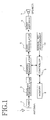
- the DAB receiver embodying the invention comprises a tuner 2 having an antenna 1 for receiving radio waves comprising multiplexed digital audio signals of a multiplicity of channels and adapted to select an RF signal, a baseband demodulator circuit 3 for subjecting the RF signal selected by the tuner 2 to baseband demodulation to produce digital composite data, a channel demodulator -circuit 4 for subjecting the digital composite data obtained from the baseband demodulator circuit 3 to channel demodulation to obtain main channel and subchannel received data, an audio demodulator circuit 5 for subjecting to audio demodulation the received data of the channel selected by the user from between the main channel and subchannel demodulated by the circuit 4 to produce audio data, and an audio amplifier circuit 6 for amplifying the audio data obtained from the circuit 5 and feeding the resulting data to a speaker 7.
- a tuner 2 having an antenna 1 for receiving radio waves comprising multiplexed digital audio signals of a multiplicity of channels and adapted to select an RF signal
- a baseband demodulator circuit 3 for subjecting the
- a controller 9 Connected to the channel demodulator circuit 4 is a controller 9 comprising a microcomputer and having connected thereto a memory 8 and manual key arrangement 10.
- the controller 9 always writes to the memory 8 the subchannel received data obtained from the channel demodulator circuit 4 while updating the data, whereby received data constituting one program on the subchannel is cyclically written to the memory 8 at all times, with some address serving as the head address.
- FIG. 2 shows data transmission formats for the main channel and the subchannel.
- a predetermined number of frames (F1 to Fn) of subchannel data provide one program (unit information).
- the header data of each frame includes the total number n of frames, and the order 1 to n of the frame.
- the memory 8 needs to have a capacity to store the subchannel data Ssl to Ssn contained in at least n frames.
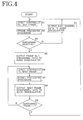
- FIG. 4 shows the reception control procedure to be executed by the controller 9.
- the controller With the receiver receiving the broadcast of the desired station with the power source of the receiver turned on, the controller is directed in step S1 to the process of the next frame of the channel data received, and the frame processing procedure shown in FIG. 5 is executed in step S2. Stated more specifically, the data as to the current frames of the main channel and the subchannel is extracted in step S11, and the subchannel data of the extracted frame (No. i) is thereafter overwritten to an address i of the memory in step S12.
- step S3 an inquiry is made in FIG. 4, step S3 as to whether the subchannel is selected by manipulating the key arrangment 10. If the answer is negative, step S4 follows to feed the main channel data to the audio demodulator circuit 5. When the answer to the inquiry of step S3 is affirmative, step S5 follows to deliver the data of the head frame (No. 1) of the program on the subchannel to the audio demodulator circuit 5. In the next step S6, the controller is directed-to the processing of the next frame, and the frame processing procedure of FIG. 5 is performed in step S7. The subchannel data of the next frame is thereafter output to the audio demodulator circuit 5 in step S8 of FIG. 4. Next, an inquiry is made in step S9 as to whether the frame number of the subchannel is in match with the total number n of frames obtained from the header. When the answer is negative, steps S6 to S8 are repeated.
- step S9 the subchannel data (frames No. 1 to No. n) is read from the memory for reproduction while the subchannel data is being written to the memory by the frame processing procedure.
- the data included in unit information is written to the memory 8 of the DAB receiver while being updated. Accordingly, the memory 8 has always stored therein data as to one program in the past in which the currently received data is the latest data.
- the controller 9 starts to read the unit information I1 of the subchannel stored in the memory 8-first from the head frame at this time t1, and the read data is delivered to the audio demodulator circuit for the reproduction of the program I1.
- the user can listen to the program from the beginning.
- subchannel is changed over to the main channel. This enables the user to listen to the program of the main channel without manipulating the receiver in any way.
- the items of time-series unit information I1, I2, I3 in the example shown in FIG. 3 are repetitions of the same program, but may be different programs. In this case, after the program I1 has been reproduced upon a changeover, the next programs I2 and I3 are reproduced. The subchannel is then changed over to the main channel by the user's manipulation.
Landscapes
- Engineering & Computer Science (AREA)
- Signal Processing (AREA)
- Circuits Of Receivers In General (AREA)
Abstract
Description
Accordingly, the memory 8 has always stored therein data as to one program in the past in which the currently received data is the latest data.
Claims (4)
- A digital broadcast receiver for receiving broadcast waves comprising multiplexed broadcast signals of a plurality of channels including a main channel for broadcasting a main program and a subchannel for broadcasting an independent program of relatively short period of time, the receiver being adapted to select one of the channels selected by the user based on header data contained in the broadcast signal of each channel, the digital broadcast receiver being characterized in that the receiver comprises:demodulator means for demodulating received data of the selected channel and outputting the resulting data,a memory having a capacity to store received data as to the program transmitted on the subchannel in an amount of one program,memory writing control means for writing the received data as to the program transmitted on the subchannel to the memory while updating the received data at all times, andmemory reading control means for reading the received data stored in the memory from the head of the program andfeeding the read data to the demodulator means in response to a manipulation for changing over the main channel to the subchannel.
- A digital broadcast receiver according to claim 1 wherein the received data as to one program transmitted on the subchannel comprises a plurality of frames each comprising a header portion and subchannel data portion, the header portion of each frame having written thereto operation control data including the total number of frames and the order of the frame, and the memory reading control means recognizes the frames at the head and tail end of the program stored in the memory based on the operation control data.
- A digital broadcast receiver according to claim 1 which further comprises data changeover means for switching between the received data of the main channel and the received data of the subchannel and feeding the received data thus selected to the demodulator means.
- A digital broadcast receiver according to claim 3 wherein after completely feeding the received data as to one program transmitted on the subchannel to the demodulator means, the data changeover means is automatically changed over to the operation of feeding received data as to one program transmitted on the main channel to the demodulator means.
Applications Claiming Priority (2)
| Application Number | Priority Date | Filing Date | Title |
|---|---|---|---|
| JP2000369958A JP3600152B2 (en) | 2000-12-05 | 2000-12-05 | Digital broadcast receiver |
| JP2000369958 | 2000-12-05 |
Publications (2)
| Publication Number | Publication Date |
|---|---|
| EP1213859A2 true EP1213859A2 (en) | 2002-06-12 |
| EP1213859A3 EP1213859A3 (en) | 2009-02-11 |
Family
ID=18839916
Family Applications (1)
| Application Number | Title | Priority Date | Filing Date |
|---|---|---|---|
| EP01128769A Ceased EP1213859A3 (en) | 2000-12-05 | 2001-12-03 | Receiver for receiving digital broadcast signals, where the digital broadcast signal comprises a main channel for broadcasting a main programme and a subchannel for broadcasting an independent programme |
Country Status (3)
| Country | Link |
|---|---|
| US (1) | US6904272B2 (en) |
| EP (1) | EP1213859A3 (en) |
| JP (1) | JP3600152B2 (en) |
Families Citing this family (9)
| Publication number | Priority date | Publication date | Assignee | Title |
|---|---|---|---|---|
| US7721337B2 (en) | 2001-10-26 | 2010-05-18 | Ibiquity Digital Corporation | System and method for providing a push of background data |
| US20030083977A1 (en) * | 2001-10-26 | 2003-05-01 | Majid Syed | System and method for providing electronic bulk buying |
| US20030093530A1 (en) * | 2001-10-26 | 2003-05-15 | Majid Syed | Arbitrator system and method for national and local content distribution |
| US20030084108A1 (en) * | 2001-10-26 | 2003-05-01 | Majid Syed | System and method for providing a push gateway between consumer devices and remote content povider centers |
| US7106803B1 (en) | 2002-06-26 | 2006-09-12 | Marvell International Ltd. | Phase shift keying wireless communication apparatus and method |
| JP2004080673A (en) | 2002-08-22 | 2004-03-11 | Funai Electric Co Ltd | Digital broadcast receiving/recording apparatus |
| US20070110105A1 (en) * | 2003-10-30 | 2007-05-17 | Matsushita Electric Industrial Co., Ltd. | Apparatus and a method for receiving a multiplexed broadcast signal carrying a plurality of services |
| WO2006033543A1 (en) * | 2004-09-20 | 2006-03-30 | Samsung Electronics Co., Ltd. | Apparatus and method for receiving a broadcasting service in a digital multimedia broadcasting system |
| JP4498287B2 (en) * | 2006-02-06 | 2010-07-07 | アルパイン株式会社 | Broadcast signal receiver and broadcast signal recording / reproducing method |
Family Cites Families (17)
| Publication number | Priority date | Publication date | Assignee | Title |
|---|---|---|---|---|
| JPH01256230A (en) | 1988-04-06 | 1989-10-12 | Clarion Co Ltd | Receiver with channel selection device for traffic information station |
| JPH02253723A (en) | 1989-03-28 | 1990-10-12 | Suzuki Motor Co Ltd | Traffic information station receiver |
| DE4422015C1 (en) * | 1994-06-16 | 1995-08-03 | Bosch Gmbh Robert | Transmission and reception of digital audio with image, speech or text |
| FR2729030B1 (en) * | 1994-12-30 | 1997-03-28 | France Telecom | METHOD FOR DYNAMICALLY RECONFIGURING A SIGNAL HAVING A TIME INTERLACEMENT, CORRESPONDING RECEIVER AND SIGNAL |
| US6434138B2 (en) * | 1996-05-08 | 2002-08-13 | Robert Bosch Gmbh | Process for transmitting messages by digital sound broadcasting and receiver for carrying out this process |
| JP3503350B2 (en) | 1996-07-04 | 2004-03-02 | スズキ株式会社 | Traffic information receiver |
| JPH10209983A (en) | 1997-01-22 | 1998-08-07 | Alpine Electron Inc | Automatic recording / playback device for DAB receiver |
| JPH10327113A (en) | 1997-03-25 | 1998-12-08 | Casio Comput Co Ltd | Information receiving apparatus and method for displaying received information |
| JPH10276104A (en) | 1997-03-28 | 1998-10-13 | Sony Corp | Teletext multiplex broadcasting receiver |
| JPH10336125A (en) | 1997-05-30 | 1998-12-18 | Hitachi Ltd | FM teletext receiver |
| JPH11177511A (en) | 1997-12-15 | 1999-07-02 | Daiichikosho Co Ltd | Digital broadcast reception and playback device |
| JP3968541B2 (en) | 1998-06-19 | 2007-08-29 | ソニー株式会社 | Digital audio broadcast receiver |
| JP4196473B2 (en) * | 1998-06-26 | 2008-12-17 | パナソニック株式会社 | Digital data receiving apparatus, digital data receiving method and computer-readable recording medium |
| JP2000201117A (en) | 1999-01-06 | 2000-07-18 | Sony Corp | Broadcast program receiving apparatus and broadcast program receiving method |
| CA2300385A1 (en) * | 1999-03-18 | 2000-09-18 | Command Audio Corporation | Program links and bulletins for audio information delivery |
| AU3256100A (en) * | 1999-05-25 | 2000-11-30 | Command Audio Corporation | Playing audio of one kind in response to user action while playing audio of another kind |
| EP1199824A1 (en) * | 2000-10-20 | 2002-04-24 | Matsushita Electric Industrial Co., Ltd. | Digital audio/visual receiver with recordable memory |
-
2000
- 2000-12-05 JP JP2000369958A patent/JP3600152B2/en not_active Expired - Fee Related
-
2001
- 2001-12-03 EP EP01128769A patent/EP1213859A3/en not_active Ceased
- 2001-12-03 US US09/998,779 patent/US6904272B2/en not_active Expired - Fee Related
Also Published As
| Publication number | Publication date |
|---|---|
| US20020068539A1 (en) | 2002-06-06 |
| JP2002176400A (en) | 2002-06-21 |
| EP1213859A3 (en) | 2009-02-11 |
| JP3600152B2 (en) | 2004-12-08 |
| US6904272B2 (en) | 2005-06-07 |
Similar Documents
| Publication | Publication Date | Title |
|---|---|---|
| US6876835B1 (en) | Method and apparatus for providing on-demand access of stored content at a receiver in a digital broadcast system | |
| CN100488086C (en) | Digital audio/multimedia broadcasting receiver | |
| EP0959574B1 (en) | Power saving system in a broadcast receiver, comprising an intermittent power supply to certain circuits only during periods when relevant data is being received | |
| US6904272B2 (en) | Digital broadcast receiver | |
| CN1897653B (en) | Broadcast transmitter and receiver, method of sending broadcast signal and executing its reservation | |
| JP4048632B2 (en) | Digital audio broadcast receiver | |
| EP0874485A2 (en) | Receiver for digital audio broadcast | |
| EP0948174A2 (en) | Time sharing of FFT and differential decoding in a multicarrier receiver | |
| JPH10507609A (en) | Method and apparatus for displaying a broadcast station name and a program type transmitted on a digital data telegram of a broadcast station on a broadcast receiver display | |
| CN102055541B (en) | Multiplexing radio receiver | |
| JP2885809B2 (en) | Receiving machine | |
| JPH10209983A (en) | Automatic recording / playback device for DAB receiver | |
| JP2002141820A (en) | Broadcasting method of digital audio broadcasting and receiver thereof | |
| EP0954131A2 (en) | Broadcast receiver comprising both a receiver for Digital Audio Broadcasts as well as an FM broadcast receiver with a Radio Data System decoder | |
| US7003053B2 (en) | Digital broadcast receiver | |
| JPH10209985A (en) | Broadcast receiver | |
| EP1024614A2 (en) | Receiver for receiving Digital Audio Broadcast DAB | |
| JP2000224064A (en) | Digital audio broadcasting receiver | |
| JP3830067B2 (en) | Digital broadcasting receiver | |
| JPH11234154A (en) | Multiplex broadcast receiver | |
| JPH0888572A (en) | Radio receiver | |
| KR100511553B1 (en) | Digital multimedia broadcasting receiver and operating methode thereof | |
| JP3593254B2 (en) | Digital broadcast receiver | |
| JP3504817B2 (en) | Seek method of radio receiver | |
| JPH10107669A (en) | Broadcast receiver |
Legal Events
| Date | Code | Title | Description |
|---|---|---|---|
| PUAI | Public reference made under article 153(3) epc to a published international application that has entered the european phase |
Free format text: ORIGINAL CODE: 0009012 |
|
| AK | Designated contracting states |
Kind code of ref document: A2 Designated state(s): AT BE CH CY DE DK ES FI FR GB GR IE IT LI LU MC NL PT SE TR |
|
| AX | Request for extension of the european patent |
Free format text: AL;LT;LV;MK;RO;SI |
|
| PUAL | Search report despatched |
Free format text: ORIGINAL CODE: 0009013 |
|
| AK | Designated contracting states |
Kind code of ref document: A3 Designated state(s): AT BE CH CY DE DK ES FI FR GB GR IE IT LI LU MC NL PT SE TR |
|
| AX | Request for extension of the european patent |
Extension state: AL LT LV MK RO SI |
|
| 17P | Request for examination filed |
Effective date: 20090730 |
|
| AKX | Designation fees paid |
Designated state(s): DE FR GB IT NL |
|
| 17Q | First examination report despatched |
Effective date: 20090924 |
|
| APBK | Appeal reference recorded |
Free format text: ORIGINAL CODE: EPIDOSNREFNE |
|
| APBN | Date of receipt of notice of appeal recorded |
Free format text: ORIGINAL CODE: EPIDOSNNOA2E |
|
| APAF | Appeal reference modified |
Free format text: ORIGINAL CODE: EPIDOSCREFNE |
|
| APBT | Appeal procedure closed |
Free format text: ORIGINAL CODE: EPIDOSNNOA9E |
|
| STAA | Information on the status of an ep patent application or granted ep patent |
Free format text: STATUS: THE APPLICATION HAS BEEN REFUSED |
|
| 18R | Application refused |
Effective date: 20110919 |