EP1213352A1 - Nucleic acids of the human abca5, abca6, abca9, and abca10 genes, vectors containing such nucleic acids and uses thereof - Google Patents
Nucleic acids of the human abca5, abca6, abca9, and abca10 genes, vectors containing such nucleic acids and uses thereof Download PDFInfo
- Publication number
- EP1213352A1 EP1213352A1 EP00403440A EP00403440A EP1213352A1 EP 1213352 A1 EP1213352 A1 EP 1213352A1 EP 00403440 A EP00403440 A EP 00403440A EP 00403440 A EP00403440 A EP 00403440A EP 1213352 A1 EP1213352 A1 EP 1213352A1
- Authority
- EP
- European Patent Office
- Prior art keywords
- nucleic acid
- seq
- abca9
- abca6
- abca5
- Prior art date
- Legal status (The legal status is an assumption and is not a legal conclusion. Google has not performed a legal analysis and makes no representation as to the accuracy of the status listed.)
- Withdrawn
Links
- 150000007523 nucleic acids Chemical class 0.000 title claims abstract description 370
- 102000039446 nucleic acids Human genes 0.000 title claims abstract description 347
- 108020004707 nucleic acids Proteins 0.000 title claims abstract description 347
- 239000013598 vector Substances 0.000 title claims description 147
- 108090000623 proteins and genes Proteins 0.000 title abstract description 184
- 241000282414 Homo sapiens Species 0.000 title description 33
- 101000801660 Homo sapiens Cholesterol transporter ABCA5 Proteins 0.000 claims abstract description 220
- 101000929654 Homo sapiens ATP-binding cassette sub-family A member 10 Proteins 0.000 claims abstract description 218
- 101000929676 Homo sapiens ATP-binding cassette sub-family A member 6 Proteins 0.000 claims abstract description 218
- 101000929667 Homo sapiens ATP-binding cassette sub-family A member 9 Proteins 0.000 claims abstract description 217
- 102100033619 Cholesterol transporter ABCA5 Human genes 0.000 claims abstract description 215
- 102100036612 ATP-binding cassette sub-family A member 6 Human genes 0.000 claims abstract description 214
- 102100036613 ATP-binding cassette sub-family A member 9 Human genes 0.000 claims abstract description 212
- 102100036622 ATP-binding cassette sub-family A member 10 Human genes 0.000 claims abstract description 186
- 108020004635 Complementary DNA Proteins 0.000 claims abstract description 104
- 238000001514 detection method Methods 0.000 claims abstract description 24
- 239000002773 nucleotide Substances 0.000 claims description 256
- 125000003729 nucleotide group Chemical group 0.000 claims description 256
- 108090000765 processed proteins & peptides Proteins 0.000 claims description 256
- 102000004196 processed proteins & peptides Human genes 0.000 claims description 249
- 229920001184 polypeptide Polymers 0.000 claims description 245
- 238000000034 method Methods 0.000 claims description 119
- HVYWMOMLDIMFJA-DPAQBDIFSA-N cholesterol Chemical compound C1C=C2C[C@@H](O)CC[C@]2(C)[C@@H]2[C@@H]1[C@@H]1CC[C@H]([C@H](C)CCCC(C)C)[C@@]1(C)CC2 HVYWMOMLDIMFJA-DPAQBDIFSA-N 0.000 claims description 117
- 125000003275 alpha amino acid group Chemical group 0.000 claims description 95
- 239000000523 sample Substances 0.000 claims description 88
- 239000012634 fragment Substances 0.000 claims description 68
- 235000012000 cholesterol Nutrition 0.000 claims description 55
- 238000009396 hybridization Methods 0.000 claims description 42
- 230000002265 prevention Effects 0.000 claims description 37
- 150000002632 lipids Chemical class 0.000 claims description 36
- 238000004519 manufacturing process Methods 0.000 claims description 33
- 230000002441 reversible effect Effects 0.000 claims description 33
- 239000008194 pharmaceutical composition Substances 0.000 claims description 32
- 241000701161 unidentified adenovirus Species 0.000 claims description 31
- 150000001875 compounds Chemical class 0.000 claims description 27
- 239000003550 marker Substances 0.000 claims description 27
- 230000000295 complement effect Effects 0.000 claims description 26
- 230000004064 dysfunction Effects 0.000 claims description 26
- 238000003199 nucleic acid amplification method Methods 0.000 claims description 26
- 208000037265 diseases, disorders, signs and symptoms Diseases 0.000 claims description 25
- 239000000546 pharmaceutical excipient Substances 0.000 claims description 25
- 230000003321 amplification Effects 0.000 claims description 24
- 201000010099 disease Diseases 0.000 claims description 21
- 239000012528 membrane Substances 0.000 claims description 19
- 239000000556 agonist Substances 0.000 claims description 16
- 239000005557 antagonist Substances 0.000 claims description 16
- 238000006243 chemical reaction Methods 0.000 claims description 15
- 239000003153 chemical reaction reagent Substances 0.000 claims description 15
- 239000003814 drug Substances 0.000 claims description 15
- 238000012216 screening Methods 0.000 claims description 13
- 239000000758 substrate Substances 0.000 claims description 11
- 150000001450 anions Chemical class 0.000 claims description 10
- 239000007943 implant Substances 0.000 claims description 8
- 239000000427 antigen Substances 0.000 claims description 7
- 108091007433 antigens Proteins 0.000 claims description 7
- 102000036639 antigens Human genes 0.000 claims description 7
- 101150051923 ABCA10 gene Proteins 0.000 claims description 6
- 230000004060 metabolic process Effects 0.000 claims description 6
- 101150045205 ABCA6 gene Proteins 0.000 claims description 5
- 101150111920 ABCA9 gene Proteins 0.000 claims description 5
- 101150103799 abcA5 gene Proteins 0.000 claims description 4
- 238000005259 measurement Methods 0.000 claims description 4
- 239000004480 active ingredient Substances 0.000 claims description 3
- 238000005406 washing Methods 0.000 claims description 2
- 238000009007 Diagnostic Kit Methods 0.000 claims 1
- 102000004169 proteins and genes Human genes 0.000 abstract description 67
- 230000035772 mutation Effects 0.000 abstract description 19
- 108700024394 Exon Proteins 0.000 abstract description 15
- 102000054765 polymorphisms of proteins Human genes 0.000 abstract description 4
- 210000004027 cell Anatomy 0.000 description 185
- 108020004414 DNA Proteins 0.000 description 95
- 230000032258 transport Effects 0.000 description 87
- 239000013615 primer Substances 0.000 description 74
- 235000018102 proteins Nutrition 0.000 description 64
- 230000014509 gene expression Effects 0.000 description 63
- 241000700605 Viruses Species 0.000 description 60
- 239000000126 substance Substances 0.000 description 51
- 235000001014 amino acid Nutrition 0.000 description 49
- 229940024606 amino acid Drugs 0.000 description 45
- 150000001413 amino acids Chemical class 0.000 description 45
- 108091026890 Coding region Proteins 0.000 description 42
- 238000001727 in vivo Methods 0.000 description 42
- 230000001105 regulatory effect Effects 0.000 description 40
- 239000000203 mixture Substances 0.000 description 37
- 239000002299 complementary DNA Substances 0.000 description 34
- 230000002950 deficient Effects 0.000 description 32
- 238000010367 cloning Methods 0.000 description 30
- 108091028043 Nucleic acid sequence Proteins 0.000 description 29
- 230000007812 deficiency Effects 0.000 description 29
- 210000001519 tissue Anatomy 0.000 description 27
- 239000013612 plasmid Substances 0.000 description 26
- 108091033319 polynucleotide Proteins 0.000 description 26
- 102000040430 polynucleotide Human genes 0.000 description 26
- 239000002157 polynucleotide Substances 0.000 description 26
- 108010006533 ATP-Binding Cassette Transporters Proteins 0.000 description 25
- 230000002757 inflammatory effect Effects 0.000 description 25
- 241001465754 Metazoa Species 0.000 description 23
- 230000027455 binding Effects 0.000 description 23
- 108020004999 messenger RNA Proteins 0.000 description 23
- 230000007170 pathology Effects 0.000 description 22
- 239000013604 expression vector Substances 0.000 description 21
- 102000005416 ATP-Binding Cassette Transporters Human genes 0.000 description 20
- 241001430294 unidentified retrovirus Species 0.000 description 20
- 101150092476 ABCA1 gene Proteins 0.000 description 18
- 108700005241 ATP Binding Cassette Transporter 1 Proteins 0.000 description 18
- 102000055510 ATP Binding Cassette Transporter 1 Human genes 0.000 description 18
- 238000013459 approach Methods 0.000 description 18
- 230000000694 effects Effects 0.000 description 18
- 238000002360 preparation method Methods 0.000 description 18
- 239000002987 primer (paints) Substances 0.000 description 18
- 230000006870 function Effects 0.000 description 17
- 108091034117 Oligonucleotide Proteins 0.000 description 16
- 238000000338 in vitro Methods 0.000 description 16
- 238000006467 substitution reaction Methods 0.000 description 16
- 108010010234 HDL Lipoproteins Proteins 0.000 description 15
- 102000015779 HDL Lipoproteins Human genes 0.000 description 15
- 210000004185 liver Anatomy 0.000 description 15
- 238000013519 translation Methods 0.000 description 15
- -1 MDR Proteins 0.000 description 14
- 238000007792 addition Methods 0.000 description 14
- 239000000047 product Substances 0.000 description 14
- 239000003981 vehicle Substances 0.000 description 14
- 108091032973 (ribonucleotides)n+m Proteins 0.000 description 13
- 210000000349 chromosome Anatomy 0.000 description 13
- 238000012217 deletion Methods 0.000 description 13
- 230000037430 deletion Effects 0.000 description 13
- 238000013518 transcription Methods 0.000 description 13
- 230000035897 transcription Effects 0.000 description 13
- ZHNUHDYFZUAESO-UHFFFAOYSA-N Formamide Chemical compound NC=O ZHNUHDYFZUAESO-UHFFFAOYSA-N 0.000 description 12
- 230000004048 modification Effects 0.000 description 12
- 238000012986 modification Methods 0.000 description 12
- 239000000243 solution Substances 0.000 description 12
- 238000001890 transfection Methods 0.000 description 12
- 102100036614 ABC-type organic anion transporter ABCA8 Human genes 0.000 description 11
- 108020004705 Codon Proteins 0.000 description 11
- 101000929669 Homo sapiens ABC-type organic anion transporter ABCA8 Proteins 0.000 description 11
- 108020005187 Oligonucleotide Probes Proteins 0.000 description 11
- 240000004808 Saccharomyces cerevisiae Species 0.000 description 11
- 235000014680 Saccharomyces cerevisiae Nutrition 0.000 description 11
- JLCPHMBAVCMARE-UHFFFAOYSA-N [3-[[3-[[3-[[3-[[3-[[3-[[3-[[3-[[3-[[3-[[3-[[5-(2-amino-6-oxo-1H-purin-9-yl)-3-[[3-[[3-[[3-[[3-[[3-[[5-(2-amino-6-oxo-1H-purin-9-yl)-3-[[5-(2-amino-6-oxo-1H-purin-9-yl)-3-hydroxyoxolan-2-yl]methoxy-hydroxyphosphoryl]oxyoxolan-2-yl]methoxy-hydroxyphosphoryl]oxy-5-(5-methyl-2,4-dioxopyrimidin-1-yl)oxolan-2-yl]methoxy-hydroxyphosphoryl]oxy-5-(6-aminopurin-9-yl)oxolan-2-yl]methoxy-hydroxyphosphoryl]oxy-5-(6-aminopurin-9-yl)oxolan-2-yl]methoxy-hydroxyphosphoryl]oxy-5-(6-aminopurin-9-yl)oxolan-2-yl]methoxy-hydroxyphosphoryl]oxy-5-(6-aminopurin-9-yl)oxolan-2-yl]methoxy-hydroxyphosphoryl]oxyoxolan-2-yl]methoxy-hydroxyphosphoryl]oxy-5-(5-methyl-2,4-dioxopyrimidin-1-yl)oxolan-2-yl]methoxy-hydroxyphosphoryl]oxy-5-(4-amino-2-oxopyrimidin-1-yl)oxolan-2-yl]methoxy-hydroxyphosphoryl]oxy-5-(5-methyl-2,4-dioxopyrimidin-1-yl)oxolan-2-yl]methoxy-hydroxyphosphoryl]oxy-5-(5-methyl-2,4-dioxopyrimidin-1-yl)oxolan-2-yl]methoxy-hydroxyphosphoryl]oxy-5-(6-aminopurin-9-yl)oxolan-2-yl]methoxy-hydroxyphosphoryl]oxy-5-(6-aminopurin-9-yl)oxolan-2-yl]methoxy-hydroxyphosphoryl]oxy-5-(4-amino-2-oxopyrimidin-1-yl)oxolan-2-yl]methoxy-hydroxyphosphoryl]oxy-5-(4-amino-2-oxopyrimidin-1-yl)oxolan-2-yl]methoxy-hydroxyphosphoryl]oxy-5-(4-amino-2-oxopyrimidin-1-yl)oxolan-2-yl]methoxy-hydroxyphosphoryl]oxy-5-(6-aminopurin-9-yl)oxolan-2-yl]methoxy-hydroxyphosphoryl]oxy-5-(4-amino-2-oxopyrimidin-1-yl)oxolan-2-yl]methyl [5-(6-aminopurin-9-yl)-2-(hydroxymethyl)oxolan-3-yl] hydrogen phosphate Polymers Cc1cn(C2CC(OP(O)(=O)OCC3OC(CC3OP(O)(=O)OCC3OC(CC3O)n3cnc4c3nc(N)[nH]c4=O)n3cnc4c3nc(N)[nH]c4=O)C(COP(O)(=O)OC3CC(OC3COP(O)(=O)OC3CC(OC3COP(O)(=O)OC3CC(OC3COP(O)(=O)OC3CC(OC3COP(O)(=O)OC3CC(OC3COP(O)(=O)OC3CC(OC3COP(O)(=O)OC3CC(OC3COP(O)(=O)OC3CC(OC3COP(O)(=O)OC3CC(OC3COP(O)(=O)OC3CC(OC3COP(O)(=O)OC3CC(OC3COP(O)(=O)OC3CC(OC3COP(O)(=O)OC3CC(OC3COP(O)(=O)OC3CC(OC3COP(O)(=O)OC3CC(OC3COP(O)(=O)OC3CC(OC3COP(O)(=O)OC3CC(OC3CO)n3cnc4c(N)ncnc34)n3ccc(N)nc3=O)n3cnc4c(N)ncnc34)n3ccc(N)nc3=O)n3ccc(N)nc3=O)n3ccc(N)nc3=O)n3cnc4c(N)ncnc34)n3cnc4c(N)ncnc34)n3cc(C)c(=O)[nH]c3=O)n3cc(C)c(=O)[nH]c3=O)n3ccc(N)nc3=O)n3cc(C)c(=O)[nH]c3=O)n3cnc4c3nc(N)[nH]c4=O)n3cnc4c(N)ncnc34)n3cnc4c(N)ncnc34)n3cnc4c(N)ncnc34)n3cnc4c(N)ncnc34)O2)c(=O)[nH]c1=O JLCPHMBAVCMARE-UHFFFAOYSA-N 0.000 description 11
- 208000015181 infectious disease Diseases 0.000 description 11
- 239000002751 oligonucleotide probe Substances 0.000 description 11
- 238000003556 assay Methods 0.000 description 10
- 230000001605 fetal effect Effects 0.000 description 10
- 238000003780 insertion Methods 0.000 description 10
- 230000037431 insertion Effects 0.000 description 10
- 230000001225 therapeutic effect Effects 0.000 description 10
- 108010078791 Carrier Proteins Proteins 0.000 description 9
- 241000702421 Dependoparvovirus Species 0.000 description 9
- 241000282412 Homo Species 0.000 description 9
- 206010061218 Inflammation Diseases 0.000 description 9
- 125000000539 amino acid group Chemical group 0.000 description 9
- 230000004054 inflammatory process Effects 0.000 description 9
- 241000894007 species Species 0.000 description 9
- 238000012546 transfer Methods 0.000 description 9
- 102000004895 Lipoproteins Human genes 0.000 description 8
- 108090001030 Lipoproteins Proteins 0.000 description 8
- 230000004071 biological effect Effects 0.000 description 8
- 230000000977 initiatory effect Effects 0.000 description 8
- 238000002347 injection Methods 0.000 description 8
- 239000007924 injection Substances 0.000 description 8
- 150000003626 triacylglycerols Chemical class 0.000 description 8
- 206010003210 Arteriosclerosis Diseases 0.000 description 7
- 108091092195 Intron Proteins 0.000 description 7
- 108010076504 Protein Sorting Signals Proteins 0.000 description 7
- 230000001413 cellular effect Effects 0.000 description 7
- 230000002759 chromosomal effect Effects 0.000 description 7
- 239000013599 cloning vector Substances 0.000 description 7
- 238000002744 homologous recombination Methods 0.000 description 7
- 230000006801 homologous recombination Effects 0.000 description 7
- 210000004408 hybridoma Anatomy 0.000 description 7
- 239000002502 liposome Substances 0.000 description 7
- 210000004962 mammalian cell Anatomy 0.000 description 7
- 238000010369 molecular cloning Methods 0.000 description 7
- 150000003904 phospholipids Chemical class 0.000 description 7
- 238000003752 polymerase chain reaction Methods 0.000 description 7
- 230000010076 replication Effects 0.000 description 7
- 108091008146 restriction endonucleases Proteins 0.000 description 7
- YBJHBAHKTGYVGT-ZKWXMUAHSA-N (+)-Biotin Chemical compound N1C(=O)N[C@@H]2[C@H](CCCCC(=O)O)SC[C@@H]21 YBJHBAHKTGYVGT-ZKWXMUAHSA-N 0.000 description 6
- 102100023419 Cystic fibrosis transmembrane conductance regulator Human genes 0.000 description 6
- 102000053602 DNA Human genes 0.000 description 6
- 239000003155 DNA primer Substances 0.000 description 6
- 241000588724 Escherichia coli Species 0.000 description 6
- PEDCQBHIVMGVHV-UHFFFAOYSA-N Glycerine Chemical compound OCC(O)CO PEDCQBHIVMGVHV-UHFFFAOYSA-N 0.000 description 6
- 241000124008 Mammalia Species 0.000 description 6
- DBMJMQXJHONAFJ-UHFFFAOYSA-M Sodium laurylsulphate Chemical compound [Na+].CCCCCCCCCCCCOS([O-])(=O)=O DBMJMQXJHONAFJ-UHFFFAOYSA-M 0.000 description 6
- 208000011775 arteriosclerosis disease Diseases 0.000 description 6
- 210000004556 brain Anatomy 0.000 description 6
- 210000004899 c-terminal region Anatomy 0.000 description 6
- 210000003527 eukaryotic cell Anatomy 0.000 description 6
- 230000004927 fusion Effects 0.000 description 6
- 238000002513 implantation Methods 0.000 description 6
- 230000001939 inductive effect Effects 0.000 description 6
- 210000003734 kidney Anatomy 0.000 description 6
- 238000000746 purification Methods 0.000 description 6
- 238000003786 synthesis reaction Methods 0.000 description 6
- 230000002103 transcriptional effect Effects 0.000 description 6
- 208000002267 Anti-neutrophil cytoplasmic antibody-associated vasculitis Diseases 0.000 description 5
- 241000894006 Bacteria Species 0.000 description 5
- 241000701022 Cytomegalovirus Species 0.000 description 5
- 102000004190 Enzymes Human genes 0.000 description 5
- 108090000790 Enzymes Proteins 0.000 description 5
- 108010022394 Threonine synthase Proteins 0.000 description 5
- 102000004419 dihydrofolate reductase Human genes 0.000 description 5
- 229940088598 enzyme Drugs 0.000 description 5
- 230000005714 functional activity Effects 0.000 description 5
- 238000001415 gene therapy Methods 0.000 description 5
- 239000001963 growth medium Substances 0.000 description 5
- 102000043403 human ABCA5 Human genes 0.000 description 5
- 102000056562 human ABCA9 Human genes 0.000 description 5
- 238000007899 nucleic acid hybridization Methods 0.000 description 5
- 210000000056 organ Anatomy 0.000 description 5
- 230000036961 partial effect Effects 0.000 description 5
- 230000002093 peripheral effect Effects 0.000 description 5
- 230000002035 prolonged effect Effects 0.000 description 5
- 210000002027 skeletal muscle Anatomy 0.000 description 5
- 150000003384 small molecules Chemical class 0.000 description 5
- 238000000527 sonication Methods 0.000 description 5
- 238000002560 therapeutic procedure Methods 0.000 description 5
- 230000009466 transformation Effects 0.000 description 5
- 241000701447 unidentified baculovirus Species 0.000 description 5
- FWMNVWWHGCHHJJ-SKKKGAJSSA-N 4-amino-1-[(2r)-6-amino-2-[[(2r)-2-[[(2r)-2-[[(2r)-2-amino-3-phenylpropanoyl]amino]-3-phenylpropanoyl]amino]-4-methylpentanoyl]amino]hexanoyl]piperidine-4-carboxylic acid Chemical compound C([C@H](C(=O)N[C@H](CC(C)C)C(=O)N[C@H](CCCCN)C(=O)N1CCC(N)(CC1)C(O)=O)NC(=O)[C@H](N)CC=1C=CC=CC=1)C1=CC=CC=C1 FWMNVWWHGCHHJJ-SKKKGAJSSA-N 0.000 description 4
- KDCGOANMDULRCW-UHFFFAOYSA-N 7H-purine Chemical compound N1=CNC2=NC=NC2=C1 KDCGOANMDULRCW-UHFFFAOYSA-N 0.000 description 4
- 244000105975 Antidesma platyphyllum Species 0.000 description 4
- 108010079245 Cystic Fibrosis Transmembrane Conductance Regulator Proteins 0.000 description 4
- 102000004163 DNA-directed RNA polymerases Human genes 0.000 description 4
- 108090000626 DNA-directed RNA polymerases Proteins 0.000 description 4
- 229920002307 Dextran Polymers 0.000 description 4
- YQYJSBFKSSDGFO-UHFFFAOYSA-N Epihygromycin Natural products OC1C(O)C(C(=O)C)OC1OC(C(=C1)O)=CC=C1C=C(C)C(=O)NC1C(O)C(O)C2OCOC2C1O YQYJSBFKSSDGFO-UHFFFAOYSA-N 0.000 description 4
- 108010037362 Extracellular Matrix Proteins Proteins 0.000 description 4
- 102000010834 Extracellular Matrix Proteins Human genes 0.000 description 4
- 101000990566 Homo sapiens HEAT repeat-containing protein 6 Proteins 0.000 description 4
- 101000801684 Homo sapiens Phospholipid-transporting ATPase ABCA1 Proteins 0.000 description 4
- 101000801643 Homo sapiens Retinal-specific phospholipid-transporting ATPase ABCA4 Proteins 0.000 description 4
- 102000001706 Immunoglobulin Fab Fragments Human genes 0.000 description 4
- 108010054477 Immunoglobulin Fab Fragments Proteins 0.000 description 4
- 102000003777 Interleukin-1 beta Human genes 0.000 description 4
- 108090000193 Interleukin-1 beta Proteins 0.000 description 4
- 108010007622 LDL Lipoproteins Proteins 0.000 description 4
- 102000007330 LDL Lipoproteins Human genes 0.000 description 4
- 241001529936 Murinae Species 0.000 description 4
- 102100033616 Phospholipid-transporting ATPase ABCA1 Human genes 0.000 description 4
- 108020004511 Recombinant DNA Proteins 0.000 description 4
- 102100033617 Retinal-specific phospholipid-transporting ATPase ABCA4 Human genes 0.000 description 4
- 241000700584 Simplexvirus Species 0.000 description 4
- 108091081024 Start codon Proteins 0.000 description 4
- 108700005077 Viral Genes Proteins 0.000 description 4
- 239000002253 acid Substances 0.000 description 4
- OIRDTQYFTABQOQ-KQYNXXCUSA-N adenosine Chemical compound C1=NC=2C(N)=NC=NC=2N1[C@@H]1O[C@H](CO)[C@@H](O)[C@H]1O OIRDTQYFTABQOQ-KQYNXXCUSA-N 0.000 description 4
- 238000004458 analytical method Methods 0.000 description 4
- 230000001580 bacterial effect Effects 0.000 description 4
- 230000008901 benefit Effects 0.000 description 4
- 230000015572 biosynthetic process Effects 0.000 description 4
- 208000035475 disorder Diseases 0.000 description 4
- 238000004520 electroporation Methods 0.000 description 4
- 210000002744 extracellular matrix Anatomy 0.000 description 4
- 239000000194 fatty acid Substances 0.000 description 4
- 230000002068 genetic effect Effects 0.000 description 4
- 235000009424 haa Nutrition 0.000 description 4
- 102000046536 human ABCA10 Human genes 0.000 description 4
- 102000045805 human ABCA6 Human genes 0.000 description 4
- 230000001976 improved effect Effects 0.000 description 4
- 230000001965 increasing effect Effects 0.000 description 4
- 239000003446 ligand Substances 0.000 description 4
- 210000004072 lung Anatomy 0.000 description 4
- 230000036457 multidrug resistance Effects 0.000 description 4
- 230000008520 organization Effects 0.000 description 4
- 210000000496 pancreas Anatomy 0.000 description 4
- 210000002381 plasma Anatomy 0.000 description 4
- 230000008488 polyadenylation Effects 0.000 description 4
- 238000001556 precipitation Methods 0.000 description 4
- 239000002243 precursor Substances 0.000 description 4
- 238000003259 recombinant expression Methods 0.000 description 4
- 230000006798 recombination Effects 0.000 description 4
- 230000001177 retroviral effect Effects 0.000 description 4
- 210000002460 smooth muscle Anatomy 0.000 description 4
- 239000007787 solid Substances 0.000 description 4
- 238000010561 standard procedure Methods 0.000 description 4
- 239000000725 suspension Substances 0.000 description 4
- 210000001550 testis Anatomy 0.000 description 4
- 239000013603 viral vector Substances 0.000 description 4
- 230000003612 virological effect Effects 0.000 description 4
- MTCFGRXMJLQNBG-REOHCLBHSA-N (2S)-2-Amino-3-hydroxypropansäure Chemical compound OC[C@H](N)C(O)=O MTCFGRXMJLQNBG-REOHCLBHSA-N 0.000 description 3
- BFSVOASYOCHEOV-UHFFFAOYSA-N 2-diethylaminoethanol Chemical compound CCN(CC)CCO BFSVOASYOCHEOV-UHFFFAOYSA-N 0.000 description 3
- 241000283690 Bos taurus Species 0.000 description 3
- 102000008186 Collagen Human genes 0.000 description 3
- 108010035532 Collagen Proteins 0.000 description 3
- 241000206602 Eukaryota Species 0.000 description 3
- 108700028146 Genetic Enhancer Elements Proteins 0.000 description 3
- WHUUTDBJXJRKMK-UHFFFAOYSA-N Glutamic acid Natural products OC(=O)C(N)CCC(O)=O WHUUTDBJXJRKMK-UHFFFAOYSA-N 0.000 description 3
- 241000238631 Hexapoda Species 0.000 description 3
- 108010046315 IDL Lipoproteins Proteins 0.000 description 3
- XUJNEKJLAYXESH-REOHCLBHSA-N L-Cysteine Chemical compound SC[C@H](N)C(O)=O XUJNEKJLAYXESH-REOHCLBHSA-N 0.000 description 3
- WHUUTDBJXJRKMK-VKHMYHEASA-N L-glutamic acid Chemical compound OC(=O)[C@@H](N)CCC(O)=O WHUUTDBJXJRKMK-VKHMYHEASA-N 0.000 description 3
- ZDXPYRJPNDTMRX-VKHMYHEASA-N L-glutamine Chemical compound OC(=O)[C@@H](N)CCC(N)=O ZDXPYRJPNDTMRX-VKHMYHEASA-N 0.000 description 3
- OUYCCCASQSFEME-QMMMGPOBSA-N L-tyrosine Chemical compound OC(=O)[C@@H](N)CC1=CC=C(O)C=C1 OUYCCCASQSFEME-QMMMGPOBSA-N 0.000 description 3
- 108010013563 Lipoprotein Lipase Proteins 0.000 description 3
- 102100022119 Lipoprotein lipase Human genes 0.000 description 3
- 108700026244 Open Reading Frames Proteins 0.000 description 3
- 208000001163 Tangier disease Diseases 0.000 description 3
- 102000006601 Thymidine Kinase Human genes 0.000 description 3
- 108020004440 Thymidine kinase Proteins 0.000 description 3
- 108010062497 VLDL Lipoproteins Proteins 0.000 description 3
- 241000700618 Vaccinia virus Species 0.000 description 3
- 230000005856 abnormality Effects 0.000 description 3
- 230000002378 acidificating effect Effects 0.000 description 3
- 239000002671 adjuvant Substances 0.000 description 3
- 230000000890 antigenic effect Effects 0.000 description 3
- 239000013602 bacteriophage vector Substances 0.000 description 3
- 239000003613 bile acid Substances 0.000 description 3
- 229960002685 biotin Drugs 0.000 description 3
- 235000020958 biotin Nutrition 0.000 description 3
- 239000011616 biotin Substances 0.000 description 3
- 239000001506 calcium phosphate Substances 0.000 description 3
- 229910000389 calcium phosphate Inorganic materials 0.000 description 3
- 235000011010 calcium phosphates Nutrition 0.000 description 3
- 125000002091 cationic group Chemical group 0.000 description 3
- 238000004113 cell culture Methods 0.000 description 3
- 210000000170 cell membrane Anatomy 0.000 description 3
- 238000004587 chromatography analysis Methods 0.000 description 3
- 229920001436 collagen Polymers 0.000 description 3
- 238000012258 culturing Methods 0.000 description 3
- 235000014113 dietary fatty acids Nutrition 0.000 description 3
- 230000029087 digestion Effects 0.000 description 3
- 229940079593 drug Drugs 0.000 description 3
- 239000003623 enhancer Substances 0.000 description 3
- 230000001747 exhibiting effect Effects 0.000 description 3
- 229930195729 fatty acid Natural products 0.000 description 3
- 150000004665 fatty acids Chemical class 0.000 description 3
- 210000002950 fibroblast Anatomy 0.000 description 3
- 108020001507 fusion proteins Proteins 0.000 description 3
- 102000037865 fusion proteins Human genes 0.000 description 3
- 108700004026 gag Genes Proteins 0.000 description 3
- 239000000499 gel Substances 0.000 description 3
- 239000003349 gelling agent Substances 0.000 description 3
- 210000005260 human cell Anatomy 0.000 description 3
- 230000001900 immune effect Effects 0.000 description 3
- 238000002372 labelling Methods 0.000 description 3
- 125000005647 linker group Chemical group 0.000 description 3
- 238000001638 lipofection Methods 0.000 description 3
- 230000002934 lysing effect Effects 0.000 description 3
- 210000002540 macrophage Anatomy 0.000 description 3
- 238000000520 microinjection Methods 0.000 description 3
- 239000003921 oil Substances 0.000 description 3
- 210000001672 ovary Anatomy 0.000 description 3
- 238000002264 polyacrylamide gel electrophoresis Methods 0.000 description 3
- 230000003449 preventive effect Effects 0.000 description 3
- 238000012545 processing Methods 0.000 description 3
- 238000005215 recombination Methods 0.000 description 3
- 238000002864 sequence alignment Methods 0.000 description 3
- 238000002741 site-directed mutagenesis Methods 0.000 description 3
- 210000000813 small intestine Anatomy 0.000 description 3
- 210000000329 smooth muscle myocyte Anatomy 0.000 description 3
- 210000003014 totipotent stem cell Anatomy 0.000 description 3
- 230000005945 translocation Effects 0.000 description 3
- QORWJWZARLRLPR-UHFFFAOYSA-H tricalcium bis(phosphate) Chemical compound [Ca+2].[Ca+2].[Ca+2].[O-]P([O-])([O-])=O.[O-]P([O-])([O-])=O QORWJWZARLRLPR-UHFFFAOYSA-H 0.000 description 3
- OUYCCCASQSFEME-UHFFFAOYSA-N tyrosine Natural products OC(=O)C(N)CC1=CC=C(O)C=C1 OUYCCCASQSFEME-UHFFFAOYSA-N 0.000 description 3
- XLYOFNOQVPJJNP-UHFFFAOYSA-N water Substances O XLYOFNOQVPJJNP-UHFFFAOYSA-N 0.000 description 3
- 108010085238 Actins Proteins 0.000 description 2
- 102000007469 Actins Human genes 0.000 description 2
- 102000007698 Alcohol dehydrogenase Human genes 0.000 description 2
- 108010021809 Alcohol dehydrogenase Proteins 0.000 description 2
- 108700028369 Alleles Proteins 0.000 description 2
- 108010071619 Apolipoproteins Proteins 0.000 description 2
- 102000007592 Apolipoproteins Human genes 0.000 description 2
- 201000001320 Atherosclerosis Diseases 0.000 description 2
- 208000037260 Atherosclerotic Plaque Diseases 0.000 description 2
- 241000972773 Aulopiformes Species 0.000 description 2
- 241000271566 Aves Species 0.000 description 2
- 108091003079 Bovine Serum Albumin Proteins 0.000 description 2
- 241000282465 Canis Species 0.000 description 2
- 208000024172 Cardiovascular disease Diseases 0.000 description 2
- 102000012336 Cholesterol Ester Transfer Proteins Human genes 0.000 description 2
- 108010061846 Cholesterol Ester Transfer Proteins Proteins 0.000 description 2
- 108010004103 Chylomicrons Proteins 0.000 description 2
- 201000003883 Cystic fibrosis Diseases 0.000 description 2
- 241000196324 Embryophyta Species 0.000 description 2
- 108010013369 Enteropeptidase Proteins 0.000 description 2
- 102100029727 Enteropeptidase Human genes 0.000 description 2
- DHMQDGOQFOQNFH-UHFFFAOYSA-N Glycine Chemical compound NCC(O)=O DHMQDGOQFOQNFH-UHFFFAOYSA-N 0.000 description 2
- NYHBQMYGNKIUIF-UUOKFMHZSA-N Guanosine Chemical compound C1=NC=2C(=O)NC(N)=NC=2N1[C@@H]1O[C@H](CO)[C@@H](O)[C@H]1O NYHBQMYGNKIUIF-UUOKFMHZSA-N 0.000 description 2
- 108010023302 HDL Cholesterol Proteins 0.000 description 2
- 102000019267 Hepatic lipases Human genes 0.000 description 2
- 108050006747 Hepatic lipases Proteins 0.000 description 2
- 101000907783 Homo sapiens Cystic fibrosis transmembrane conductance regulator Proteins 0.000 description 2
- 108091006905 Human Serum Albumin Proteins 0.000 description 2
- 102000008100 Human Serum Albumin Human genes 0.000 description 2
- 241000598171 Human adenovirus sp. Species 0.000 description 2
- 241000701044 Human gammaherpesvirus 4 Species 0.000 description 2
- 102000008394 Immunoglobulin Fragments Human genes 0.000 description 2
- 108010021625 Immunoglobulin Fragments Proteins 0.000 description 2
- DCXYFEDJOCDNAF-REOHCLBHSA-N L-asparagine Chemical compound OC(=O)[C@@H](N)CC(N)=O DCXYFEDJOCDNAF-REOHCLBHSA-N 0.000 description 2
- CKLJMWTZIZZHCS-REOHCLBHSA-N L-aspartic acid Chemical compound OC(=O)[C@@H](N)CC(O)=O CKLJMWTZIZZHCS-REOHCLBHSA-N 0.000 description 2
- KDXKERNSBIXSRK-YFKPBYRVSA-N L-lysine Chemical compound NCCCC[C@H](N)C(O)=O KDXKERNSBIXSRK-YFKPBYRVSA-N 0.000 description 2
- COLNVLDHVKWLRT-QMMMGPOBSA-N L-phenylalanine Chemical compound OC(=O)[C@@H](N)CC1=CC=CC=C1 COLNVLDHVKWLRT-QMMMGPOBSA-N 0.000 description 2
- AYFVYJQAPQTCCC-GBXIJSLDSA-N L-threonine Chemical compound C[C@@H](O)[C@H](N)C(O)=O AYFVYJQAPQTCCC-GBXIJSLDSA-N 0.000 description 2
- QIVBCDIJIAJPQS-VIFPVBQESA-N L-tryptophane Chemical compound C1=CC=C2C(C[C@H](N)C(O)=O)=CNC2=C1 QIVBCDIJIAJPQS-VIFPVBQESA-N 0.000 description 2
- KDXKERNSBIXSRK-UHFFFAOYSA-N Lysine Natural products NCCCCC(N)C(O)=O KDXKERNSBIXSRK-UHFFFAOYSA-N 0.000 description 2
- 102000018697 Membrane Proteins Human genes 0.000 description 2
- 108010052285 Membrane Proteins Proteins 0.000 description 2
- 102000003939 Membrane transport proteins Human genes 0.000 description 2
- 108090000301 Membrane transport proteins Proteins 0.000 description 2
- 241000699666 Mus <mouse, genus> Species 0.000 description 2
- 108091061960 Naked DNA Proteins 0.000 description 2
- 229910019142 PO4 Inorganic materials 0.000 description 2
- 108091005804 Peptidases Proteins 0.000 description 2
- 102000035195 Peptidases Human genes 0.000 description 2
- 102000007079 Peptide Fragments Human genes 0.000 description 2
- 108010033276 Peptide Fragments Proteins 0.000 description 2
- 241000276498 Pollachius virens Species 0.000 description 2
- ONIBWKKTOPOVIA-UHFFFAOYSA-N Proline Natural products OC(=O)C1CCCN1 ONIBWKKTOPOVIA-UHFFFAOYSA-N 0.000 description 2
- 239000004365 Protease Substances 0.000 description 2
- 108020005091 Replication Origin Proteins 0.000 description 2
- 241000714474 Rous sarcoma virus Species 0.000 description 2
- IQFYYKKMVGJFEH-XLPZGREQSA-N Thymidine Chemical compound O=C1NC(=O)C(C)=CN1[C@@H]1O[C@H](CO)[C@@H](O)C1 IQFYYKKMVGJFEH-XLPZGREQSA-N 0.000 description 2
- 108700009124 Transcription Initiation Site Proteins 0.000 description 2
- QIVBCDIJIAJPQS-UHFFFAOYSA-N Tryptophan Natural products C1=CC=C2C(CC(N)C(O)=O)=CNC2=C1 QIVBCDIJIAJPQS-UHFFFAOYSA-N 0.000 description 2
- DRTQHJPVMGBUCF-XVFCMESISA-N Uridine Chemical compound O[C@@H]1[C@H](O)[C@@H](CO)O[C@H]1N1C(=O)NC(=O)C=C1 DRTQHJPVMGBUCF-XVFCMESISA-N 0.000 description 2
- 239000000370 acceptor Substances 0.000 description 2
- 238000009825 accumulation Methods 0.000 description 2
- 238000007818 agglutination assay Methods 0.000 description 2
- 230000004075 alteration Effects 0.000 description 2
- 210000004102 animal cell Anatomy 0.000 description 2
- 230000001640 apoptogenic effect Effects 0.000 description 2
- 125000003118 aryl group Chemical group 0.000 description 2
- 210000004369 blood Anatomy 0.000 description 2
- 239000008280 blood Substances 0.000 description 2
- 210000000601 blood cell Anatomy 0.000 description 2
- 229940098773 bovine serum albumin Drugs 0.000 description 2
- 230000007910 cell fusion Effects 0.000 description 2
- 239000013592 cell lysate Substances 0.000 description 2
- 230000008859 change Effects 0.000 description 2
- 238000012512 characterization method Methods 0.000 description 2
- 150000001840 cholesterol esters Chemical class 0.000 description 2
- 210000001072 colon Anatomy 0.000 description 2
- 238000004440 column chromatography Methods 0.000 description 2
- 239000003636 conditioned culture medium Substances 0.000 description 2
- 239000000470 constituent Substances 0.000 description 2
- 238000010276 construction Methods 0.000 description 2
- 238000007796 conventional method Methods 0.000 description 2
- 239000012228 culture supernatant Substances 0.000 description 2
- 230000006735 deficit Effects 0.000 description 2
- 239000003599 detergent Substances 0.000 description 2
- 206010012601 diabetes mellitus Diseases 0.000 description 2
- 238000003745 diagnosis Methods 0.000 description 2
- 235000005911 diet Nutrition 0.000 description 2
- 230000004069 differentiation Effects 0.000 description 2
- 239000003085 diluting agent Substances 0.000 description 2
- 230000006806 disease prevention Effects 0.000 description 2
- 239000003937 drug carrier Substances 0.000 description 2
- 238000005538 encapsulation Methods 0.000 description 2
- 210000002889 endothelial cell Anatomy 0.000 description 2
- 108700004025 env Genes Proteins 0.000 description 2
- 230000002255 enzymatic effect Effects 0.000 description 2
- 238000001502 gel electrophoresis Methods 0.000 description 2
- 238000003205 genotyping method Methods 0.000 description 2
- 235000013922 glutamic acid Nutrition 0.000 description 2
- 239000004220 glutamic acid Substances 0.000 description 2
- ZDXPYRJPNDTMRX-UHFFFAOYSA-N glutamine Natural products OC(=O)C(N)CCC(N)=O ZDXPYRJPNDTMRX-UHFFFAOYSA-N 0.000 description 2
- 230000013595 glycosylation Effects 0.000 description 2
- 238000006206 glycosylation reaction Methods 0.000 description 2
- 210000003494 hepatocyte Anatomy 0.000 description 2
- 239000012456 homogeneous solution Substances 0.000 description 2
- 230000028993 immune response Effects 0.000 description 2
- 238000003018 immunoassay Methods 0.000 description 2
- 230000002163 immunogen Effects 0.000 description 2
- 238000001114 immunoprecipitation Methods 0.000 description 2
- 238000011065 in-situ storage Methods 0.000 description 2
- 238000010348 incorporation Methods 0.000 description 2
- 230000003834 intracellular effect Effects 0.000 description 2
- 238000001155 isoelectric focusing Methods 0.000 description 2
- 210000002510 keratinocyte Anatomy 0.000 description 2
- 108010045069 keyhole-limpet hemocyanin Proteins 0.000 description 2
- 230000003902 lesion Effects 0.000 description 2
- 210000000265 leukocyte Anatomy 0.000 description 2
- 108010022197 lipoprotein cholesterol Proteins 0.000 description 2
- 230000008604 lipoprotein metabolism Effects 0.000 description 2
- 210000004698 lymphocyte Anatomy 0.000 description 2
- 230000001404 mediated effect Effects 0.000 description 2
- 230000009061 membrane transport Effects 0.000 description 2
- SXTAYKAGBXMACB-UHFFFAOYSA-N methionine sulfoximine Chemical compound CS(=N)(=O)CCC(N)C(O)=O SXTAYKAGBXMACB-UHFFFAOYSA-N 0.000 description 2
- 208000024191 minimally invasive lung adenocarcinoma Diseases 0.000 description 2
- 210000003098 myoblast Anatomy 0.000 description 2
- 210000004498 neuroglial cell Anatomy 0.000 description 2
- 235000019198 oils Nutrition 0.000 description 2
- 238000002515 oligonucleotide synthesis Methods 0.000 description 2
- 230000003204 osmotic effect Effects 0.000 description 2
- 239000002245 particle Substances 0.000 description 2
- 239000012071 phase Substances 0.000 description 2
- COLNVLDHVKWLRT-UHFFFAOYSA-N phenylalanine Natural products OC(=O)C(N)CC1=CC=CC=C1 COLNVLDHVKWLRT-UHFFFAOYSA-N 0.000 description 2
- 239000010452 phosphate Substances 0.000 description 2
- WTJKGGKOPKCXLL-RRHRGVEJSA-N phosphatidylcholine Chemical compound CCCCCCCCCCCCCCCC(=O)OC[C@H](COP([O-])(=O)OCC[N+](C)(C)C)OC(=O)CCCCCCCC=CCCCCCCCC WTJKGGKOPKCXLL-RRHRGVEJSA-N 0.000 description 2
- 108010079892 phosphoglycerol kinase Proteins 0.000 description 2
- 210000002826 placenta Anatomy 0.000 description 2
- 230000003169 placental effect Effects 0.000 description 2
- 108700004029 pol Genes Proteins 0.000 description 2
- 229920000642 polymer Polymers 0.000 description 2
- 210000002729 polyribosome Anatomy 0.000 description 2
- 229920001343 polytetrafluoroethylene Polymers 0.000 description 2
- 239000004810 polytetrafluoroethylene Substances 0.000 description 2
- 210000003240 portal vein Anatomy 0.000 description 2
- 230000004481 post-translational protein modification Effects 0.000 description 2
- 125000002924 primary amino group Chemical group [H]N([H])* 0.000 description 2
- 230000008569 process Effects 0.000 description 2
- 108020003175 receptors Proteins 0.000 description 2
- 102000005962 receptors Human genes 0.000 description 2
- 230000002829 reductive effect Effects 0.000 description 2
- 239000011347 resin Substances 0.000 description 2
- 229920005989 resin Polymers 0.000 description 2
- 230000002207 retinal effect Effects 0.000 description 2
- 210000000880 retinal rod photoreceptor cell Anatomy 0.000 description 2
- 235000019515 salmon Nutrition 0.000 description 2
- 230000035939 shock Effects 0.000 description 2
- 239000013605 shuttle vector Substances 0.000 description 2
- 230000011664 signaling Effects 0.000 description 2
- 210000000952 spleen Anatomy 0.000 description 2
- 239000003270 steroid hormone Substances 0.000 description 2
- 230000004936 stimulating effect Effects 0.000 description 2
- 235000000346 sugar Nutrition 0.000 description 2
- 230000001629 suppression Effects 0.000 description 2
- 230000008685 targeting Effects 0.000 description 2
- 210000001541 thymus gland Anatomy 0.000 description 2
- 238000010361 transduction Methods 0.000 description 2
- 230000026683 transduction Effects 0.000 description 2
- 230000001131 transforming effect Effects 0.000 description 2
- UFTFJSFQGQCHQW-UHFFFAOYSA-N triformin Chemical compound O=COCC(OC=O)COC=O UFTFJSFQGQCHQW-UHFFFAOYSA-N 0.000 description 2
- 241001529453 unidentified herpesvirus Species 0.000 description 2
- 241001515965 unidentified phage Species 0.000 description 2
- 238000001262 western blot Methods 0.000 description 2
- HSINOMROUCMIEA-FGVHQWLLSA-N (2s,4r)-4-[(3r,5s,6r,7r,8s,9s,10s,13r,14s,17r)-6-ethyl-3,7-dihydroxy-10,13-dimethyl-2,3,4,5,6,7,8,9,11,12,14,15,16,17-tetradecahydro-1h-cyclopenta[a]phenanthren-17-yl]-2-methylpentanoic acid Chemical compound C([C@@]12C)C[C@@H](O)C[C@H]1[C@@H](CC)[C@@H](O)[C@@H]1[C@@H]2CC[C@]2(C)[C@@H]([C@H](C)C[C@H](C)C(O)=O)CC[C@H]21 HSINOMROUCMIEA-FGVHQWLLSA-N 0.000 description 1
- ASWBNKHCZGQVJV-UHFFFAOYSA-N (3-hexadecanoyloxy-2-hydroxypropyl) 2-(trimethylazaniumyl)ethyl phosphate Chemical compound CCCCCCCCCCCCCCCC(=O)OCC(O)COP([O-])(=O)OCC[N+](C)(C)C ASWBNKHCZGQVJV-UHFFFAOYSA-N 0.000 description 1
- UHDGCWIWMRVCDJ-UHFFFAOYSA-N 1-beta-D-Xylofuranosyl-NH-Cytosine Natural products O=C1N=C(N)C=CN1C1C(O)C(O)C(CO)O1 UHDGCWIWMRVCDJ-UHFFFAOYSA-N 0.000 description 1
- IIZPXYDJLKNOIY-JXPKJXOSSA-N 1-palmitoyl-2-arachidonoyl-sn-glycero-3-phosphocholine Chemical compound CCCCCCCCCCCCCCCC(=O)OC[C@H](COP([O-])(=O)OCC[N+](C)(C)C)OC(=O)CCC\C=C/C\C=C/C\C=C/C\C=C/CCCCC IIZPXYDJLKNOIY-JXPKJXOSSA-N 0.000 description 1
- CZIHNRWJTSTCEX-UHFFFAOYSA-N 2 Acetylaminofluorene Chemical compound C1=CC=C2C3=CC=C(NC(=O)C)C=C3CC2=C1 CZIHNRWJTSTCEX-UHFFFAOYSA-N 0.000 description 1
- YKBGVTZYEHREMT-KVQBGUIXSA-N 2'-deoxyguanosine Chemical compound C1=NC=2C(=O)NC(N)=NC=2N1[C@H]1C[C@H](O)[C@@H](CO)O1 YKBGVTZYEHREMT-KVQBGUIXSA-N 0.000 description 1
- CKTSBUTUHBMZGZ-SHYZEUOFSA-N 2'‐deoxycytidine Chemical compound O=C1N=C(N)C=CN1[C@@H]1O[C@H](CO)[C@@H](O)C1 CKTSBUTUHBMZGZ-SHYZEUOFSA-N 0.000 description 1
- UFBJCMHMOXMLKC-UHFFFAOYSA-N 2,4-dinitrophenol Chemical compound OC1=CC=C([N+]([O-])=O)C=C1[N+]([O-])=O UFBJCMHMOXMLKC-UHFFFAOYSA-N 0.000 description 1
- WOVKYSAHUYNSMH-RRKCRQDMSA-N 5-bromodeoxyuridine Chemical compound C1[C@H](O)[C@@H](CO)O[C@H]1N1C(=O)NC(=O)C(Br)=C1 WOVKYSAHUYNSMH-RRKCRQDMSA-N 0.000 description 1
- ODHCTXKNWHHXJC-VKHMYHEASA-N 5-oxo-L-proline Chemical compound OC(=O)[C@@H]1CCC(=O)N1 ODHCTXKNWHHXJC-VKHMYHEASA-N 0.000 description 1
- 101150033922 ABCA2 gene Proteins 0.000 description 1
- 101150039555 ABCA4 gene Proteins 0.000 description 1
- 208000030507 AIDS Diseases 0.000 description 1
- 102100022594 ATP-binding cassette sub-family G member 1 Human genes 0.000 description 1
- 241000251468 Actinopterygii Species 0.000 description 1
- 229920000936 Agarose Polymers 0.000 description 1
- 108010088751 Albumins Proteins 0.000 description 1
- 102000002260 Alkaline Phosphatase Human genes 0.000 description 1
- 108020004774 Alkaline Phosphatase Proteins 0.000 description 1
- 102000005666 Apolipoprotein A-I Human genes 0.000 description 1
- 108010059886 Apolipoprotein A-I Proteins 0.000 description 1
- 102000006410 Apoproteins Human genes 0.000 description 1
- 108010083590 Apoproteins Proteins 0.000 description 1
- 239000004475 Arginine Substances 0.000 description 1
- DCXYFEDJOCDNAF-UHFFFAOYSA-N Asparagine Natural products OC(=O)C(N)CC(N)=O DCXYFEDJOCDNAF-UHFFFAOYSA-N 0.000 description 1
- 210000002237 B-cell of pancreatic islet Anatomy 0.000 description 1
- WOVKYSAHUYNSMH-UHFFFAOYSA-N BROMODEOXYURIDINE Natural products C1C(O)C(CO)OC1N1C(=O)NC(=O)C(Br)=C1 WOVKYSAHUYNSMH-UHFFFAOYSA-N 0.000 description 1
- 244000063299 Bacillus subtilis Species 0.000 description 1
- 235000014469 Bacillus subtilis Nutrition 0.000 description 1
- 239000002126 C01EB10 - Adenosine Substances 0.000 description 1
- 101100220239 Caenorhabditis elegans ced-7 gene Proteins 0.000 description 1
- 241000701157 Canine mastadenovirus A Species 0.000 description 1
- 241000282472 Canis lupus familiaris Species 0.000 description 1
- 101150044789 Cap gene Proteins 0.000 description 1
- 241000283707 Capra Species 0.000 description 1
- 108090000565 Capsid Proteins Proteins 0.000 description 1
- 101710132601 Capsid protein Proteins 0.000 description 1
- 102100038909 Caveolin-2 Human genes 0.000 description 1
- 102100023321 Ceruloplasmin Human genes 0.000 description 1
- 241001227713 Chiron Species 0.000 description 1
- 108020004638 Circular DNA Proteins 0.000 description 1
- 102000012422 Collagen Type I Human genes 0.000 description 1
- 108010022452 Collagen Type I Proteins 0.000 description 1
- 108091035707 Consensus sequence Proteins 0.000 description 1
- 241000186216 Corynebacterium Species 0.000 description 1
- MIKUYHXYGGJMLM-GIMIYPNGSA-N Crotonoside Natural products C1=NC2=C(N)NC(=O)N=C2N1[C@H]1O[C@@H](CO)[C@H](O)[C@@H]1O MIKUYHXYGGJMLM-GIMIYPNGSA-N 0.000 description 1
- UHDGCWIWMRVCDJ-PSQAKQOGSA-N Cytidine Natural products O=C1N=C(N)C=CN1[C@@H]1[C@@H](O)[C@@H](O)[C@H](CO)O1 UHDGCWIWMRVCDJ-PSQAKQOGSA-N 0.000 description 1
- NYHBQMYGNKIUIF-UHFFFAOYSA-N D-guanosine Natural products C1=2NC(N)=NC(=O)C=2N=CN1C1OC(CO)C(O)C1O NYHBQMYGNKIUIF-UHFFFAOYSA-N 0.000 description 1
- 230000004544 DNA amplification Effects 0.000 description 1
- 238000000018 DNA microarray Methods 0.000 description 1
- 230000004543 DNA replication Effects 0.000 description 1
- 241000450599 DNA viruses Species 0.000 description 1
- 102000052510 DNA-Binding Proteins Human genes 0.000 description 1
- 108700020911 DNA-Binding Proteins Proteins 0.000 description 1
- CKTSBUTUHBMZGZ-UHFFFAOYSA-N Deoxycytidine Natural products O=C1N=C(N)C=CN1C1OC(CO)C(O)C1 CKTSBUTUHBMZGZ-UHFFFAOYSA-N 0.000 description 1
- 102100036912 Desmin Human genes 0.000 description 1
- 108010044052 Desmin Proteins 0.000 description 1
- SHIBSTMRCDJXLN-UHFFFAOYSA-N Digoxigenin Natural products C1CC(C2C(C3(C)CCC(O)CC3CC2)CC2O)(O)C2(C)C1C1=CC(=O)OC1 SHIBSTMRCDJXLN-UHFFFAOYSA-N 0.000 description 1
- LTMHDMANZUZIPE-AMTYYWEZSA-N Digoxin Natural products O([C@H]1[C@H](C)O[C@H](O[C@@H]2C[C@@H]3[C@@](C)([C@@H]4[C@H]([C@]5(O)[C@](C)([C@H](O)C4)[C@H](C4=CC(=O)OC4)CC5)CC3)CC2)C[C@@H]1O)[C@H]1O[C@H](C)[C@@H](O[C@H]2O[C@@H](C)[C@H](O)[C@@H](O)C2)[C@@H](O)C1 LTMHDMANZUZIPE-AMTYYWEZSA-N 0.000 description 1
- 108090000204 Dipeptidase 1 Proteins 0.000 description 1
- 241000255581 Drosophila <fruit fly, genus> Species 0.000 description 1
- 101100290057 Drosophila virilis Mal-B1 gene Proteins 0.000 description 1
- 101150029662 E1 gene Proteins 0.000 description 1
- 208000005189 Embolism Diseases 0.000 description 1
- 241000701867 Enterobacteria phage T7 Species 0.000 description 1
- 241000283086 Equidae Species 0.000 description 1
- 241000701959 Escherichia virus Lambda Species 0.000 description 1
- 102000001690 Factor VIII Human genes 0.000 description 1
- 108010054218 Factor VIII Proteins 0.000 description 1
- 241000282326 Felis catus Species 0.000 description 1
- 102000016359 Fibronectins Human genes 0.000 description 1
- 108010067306 Fibronectins Proteins 0.000 description 1
- 241000233866 Fungi Species 0.000 description 1
- 108010001515 Galectin 4 Proteins 0.000 description 1
- 102100039556 Galectin-4 Human genes 0.000 description 1
- 108010010803 Gelatin Proteins 0.000 description 1
- 108700039691 Genetic Promoter Regions Proteins 0.000 description 1
- 102100039289 Glial fibrillary acidic protein Human genes 0.000 description 1
- 101710193519 Glial fibrillary acidic protein Proteins 0.000 description 1
- WQZGKKKJIJFFOK-GASJEMHNSA-N Glucose Natural products OC[C@H]1OC(O)[C@H](O)[C@@H](O)[C@@H]1O WQZGKKKJIJFFOK-GASJEMHNSA-N 0.000 description 1
- XYZZKVRWGOWVGO-UHFFFAOYSA-N Glycerol-phosphate Chemical compound OP(O)(O)=O.OCC(O)CO XYZZKVRWGOWVGO-UHFFFAOYSA-N 0.000 description 1
- JZNWSCPGTDBMEW-UHFFFAOYSA-N Glycerophosphorylethanolamin Natural products NCCOP(O)(=O)OCC(O)CO JZNWSCPGTDBMEW-UHFFFAOYSA-N 0.000 description 1
- 239000004471 Glycine Substances 0.000 description 1
- 229920002683 Glycosaminoglycan Polymers 0.000 description 1
- 206010019280 Heart failures Diseases 0.000 description 1
- 108091005904 Hemoglobin subunit beta Proteins 0.000 description 1
- 101100433774 Homo sapiens ABCA10 gene Proteins 0.000 description 1
- 101100161497 Homo sapiens ABCA5 gene Proteins 0.000 description 1
- 101100433762 Homo sapiens ABCA6 gene Proteins 0.000 description 1
- 101100433771 Homo sapiens ABCA9 gene Proteins 0.000 description 1
- 101000760602 Homo sapiens ATP-binding cassette sub-family D member 1 Proteins 0.000 description 1
- 101000823300 Homo sapiens ATP-binding cassette sub-family G member 1 Proteins 0.000 description 1
- 101000740981 Homo sapiens Caveolin-2 Proteins 0.000 description 1
- 101000801640 Homo sapiens Phospholipid-transporting ATPase ABCA3 Proteins 0.000 description 1
- 208000035150 Hypercholesterolemia Diseases 0.000 description 1
- 208000031226 Hyperlipidaemia Diseases 0.000 description 1
- 206010020880 Hypertrophy Diseases 0.000 description 1
- 108010091358 Hypoxanthine Phosphoribosyltransferase Proteins 0.000 description 1
- 102000018251 Hypoxanthine Phosphoribosyltransferase Human genes 0.000 description 1
- XQFRJNBWHJMXHO-RRKCRQDMSA-N IDUR Chemical compound C1[C@H](O)[C@@H](CO)O[C@H]1N1C(=O)NC(=O)C(I)=C1 XQFRJNBWHJMXHO-RRKCRQDMSA-N 0.000 description 1
- 108700002232 Immediate-Early Genes Proteins 0.000 description 1
- 108060003951 Immunoglobulin Proteins 0.000 description 1
- 108700005091 Immunoglobulin Genes Proteins 0.000 description 1
- 102000017727 Immunoglobulin Variable Region Human genes 0.000 description 1
- 108010067060 Immunoglobulin Variable Region Proteins 0.000 description 1
- 108090001061 Insulin Proteins 0.000 description 1
- 102100021244 Integral membrane protein GPR180 Human genes 0.000 description 1
- 102000011782 Keratins Human genes 0.000 description 1
- 108010076876 Keratins Proteins 0.000 description 1
- ZQISRDCJNBUVMM-UHFFFAOYSA-N L-Histidinol Natural products OCC(N)CC1=CN=CN1 ZQISRDCJNBUVMM-UHFFFAOYSA-N 0.000 description 1
- ONIBWKKTOPOVIA-BYPYZUCNSA-N L-Proline Chemical compound OC(=O)[C@@H]1CCCN1 ONIBWKKTOPOVIA-BYPYZUCNSA-N 0.000 description 1
- QNAYBMKLOCPYGJ-REOHCLBHSA-N L-alanine Chemical compound C[C@H](N)C(O)=O QNAYBMKLOCPYGJ-REOHCLBHSA-N 0.000 description 1
- ODKSFYDXXFIFQN-BYPYZUCNSA-P L-argininium(2+) Chemical compound NC(=[NH2+])NCCC[C@H]([NH3+])C(O)=O ODKSFYDXXFIFQN-BYPYZUCNSA-P 0.000 description 1
- HNDVDQJCIGZPNO-YFKPBYRVSA-N L-histidine Chemical compound OC(=O)[C@@H](N)CC1=CN=CN1 HNDVDQJCIGZPNO-YFKPBYRVSA-N 0.000 description 1
- ZQISRDCJNBUVMM-YFKPBYRVSA-N L-histidinol Chemical compound OC[C@@H](N)CC1=CNC=N1 ZQISRDCJNBUVMM-YFKPBYRVSA-N 0.000 description 1
- AGPKZVBTJJNPAG-WHFBIAKZSA-N L-isoleucine Chemical compound CC[C@H](C)[C@H](N)C(O)=O AGPKZVBTJJNPAG-WHFBIAKZSA-N 0.000 description 1
- ROHFNLRQFUQHCH-YFKPBYRVSA-N L-leucine Chemical compound CC(C)C[C@H](N)C(O)=O ROHFNLRQFUQHCH-YFKPBYRVSA-N 0.000 description 1
- FFEARJCKVFRZRR-BYPYZUCNSA-N L-methionine Chemical compound CSCC[C@H](N)C(O)=O FFEARJCKVFRZRR-BYPYZUCNSA-N 0.000 description 1
- FBOZXECLQNJBKD-ZDUSSCGKSA-N L-methotrexate Chemical compound C=1N=C2N=C(N)N=C(N)C2=NC=1CN(C)C1=CC=C(C(=O)N[C@@H](CCC(O)=O)C(O)=O)C=C1 FBOZXECLQNJBKD-ZDUSSCGKSA-N 0.000 description 1
- KZSNJWFQEVHDMF-BYPYZUCNSA-N L-valine Chemical compound CC(C)[C@H](N)C(O)=O KZSNJWFQEVHDMF-BYPYZUCNSA-N 0.000 description 1
- 208000023768 LCAT deficiency Diseases 0.000 description 1
- 238000008214 LDL Cholesterol Methods 0.000 description 1
- 208000003465 Lecithin Cholesterol Acyltransferase Deficiency Diseases 0.000 description 1
- 108090001090 Lectins Proteins 0.000 description 1
- 102000004856 Lectins Human genes 0.000 description 1
- ROHFNLRQFUQHCH-UHFFFAOYSA-N Leucine Natural products CC(C)CC(N)C(O)=O ROHFNLRQFUQHCH-UHFFFAOYSA-N 0.000 description 1
- 102000004882 Lipase Human genes 0.000 description 1
- 108090001060 Lipase Proteins 0.000 description 1
- 239000004472 Lysine Substances 0.000 description 1
- PWHULOQIROXLJO-UHFFFAOYSA-N Manganese Chemical compound [Mn] PWHULOQIROXLJO-UHFFFAOYSA-N 0.000 description 1
- 108010008148 Member 4 Subfamily A ATP Binding Cassette Transporter Proteins 0.000 description 1
- 108090000157 Metallothionein Proteins 0.000 description 1
- 108091092878 Microsatellite Proteins 0.000 description 1
- 241000713869 Moloney murine leukemia virus Species 0.000 description 1
- 241000713862 Moloney murine sarcoma virus Species 0.000 description 1
- 241000713333 Mouse mammary tumor virus Species 0.000 description 1
- 206010048723 Multiple-drug resistance Diseases 0.000 description 1
- 241000699670 Mus sp. Species 0.000 description 1
- 101710107068 Myelin basic protein Proteins 0.000 description 1
- 108010067385 Myosin Light Chains Proteins 0.000 description 1
- 102000016349 Myosin Light Chains Human genes 0.000 description 1
- 206010028980 Neoplasm Diseases 0.000 description 1
- 239000000020 Nitrocellulose Substances 0.000 description 1
- 238000000636 Northern blotting Methods 0.000 description 1
- 102000007999 Nuclear Proteins Human genes 0.000 description 1
- 108010089610 Nuclear Proteins Proteins 0.000 description 1
- 101710149086 Nuclease S1 Proteins 0.000 description 1
- 108091005461 Nucleic proteins Proteins 0.000 description 1
- 108010038807 Oligopeptides Proteins 0.000 description 1
- 102000015636 Oligopeptides Human genes 0.000 description 1
- 241000283973 Oryctolagus cuniculus Species 0.000 description 1
- 238000012408 PCR amplification Methods 0.000 description 1
- 108010067372 Pancreatic elastase Proteins 0.000 description 1
- 102000019280 Pancreatic lipases Human genes 0.000 description 1
- 108050006759 Pancreatic lipases Proteins 0.000 description 1
- 108090000526 Papain Proteins 0.000 description 1
- 241000237988 Patellidae Species 0.000 description 1
- 235000019483 Peanut oil Nutrition 0.000 description 1
- 241001494479 Pecora Species 0.000 description 1
- 102000057297 Pepsin A Human genes 0.000 description 1
- 108090000284 Pepsin A Proteins 0.000 description 1
- 108010064785 Phospholipases Proteins 0.000 description 1
- 102000015439 Phospholipases Human genes 0.000 description 1
- 102100033623 Phospholipid-transporting ATPase ABCA3 Human genes 0.000 description 1
- 102000004160 Phosphoric Monoester Hydrolases Human genes 0.000 description 1
- 108090000608 Phosphoric Monoester Hydrolases Proteins 0.000 description 1
- 229920003171 Poly (ethylene oxide) Polymers 0.000 description 1
- 101710182846 Polyhedrin Proteins 0.000 description 1
- 239000004793 Polystyrene Substances 0.000 description 1
- 241000589516 Pseudomonas Species 0.000 description 1
- CZPWVGJYEJSRLH-UHFFFAOYSA-N Pyrimidine Chemical compound C1=CN=CN=C1 CZPWVGJYEJSRLH-UHFFFAOYSA-N 0.000 description 1
- ODHCTXKNWHHXJC-GSVOUGTGSA-N Pyroglutamic acid Natural products OC(=O)[C@H]1CCC(=O)N1 ODHCTXKNWHHXJC-GSVOUGTGSA-N 0.000 description 1
- 108020005115 Pyruvate Kinase Proteins 0.000 description 1
- 102000013009 Pyruvate Kinase Human genes 0.000 description 1
- 108091034057 RNA (poly(A)) Proteins 0.000 description 1
- 108020005067 RNA Splice Sites Proteins 0.000 description 1
- 230000004570 RNA-binding Effects 0.000 description 1
- 241000700159 Rattus Species 0.000 description 1
- 101000723795 Saccharomyces cerevisiae (strain ATCC 204508 / S288c) DNA-directed RNA polymerases I, II, and III subunit RPABC5 Proteins 0.000 description 1
- 101100121445 Saccharomyces cerevisiae (strain ATCC 204508 / S288c) GCN20 gene Proteins 0.000 description 1
- 101000955420 Saccharomyces cerevisiae (strain ATCC 204508 / S288c) Xanthine phosphoribosyltransferase 1 Proteins 0.000 description 1
- 241000293869 Salmonella enterica subsp. enterica serovar Typhimurium Species 0.000 description 1
- 206010039491 Sarcoma Diseases 0.000 description 1
- MTCFGRXMJLQNBG-UHFFFAOYSA-N Serine Natural products OCC(N)C(O)=O MTCFGRXMJLQNBG-UHFFFAOYSA-N 0.000 description 1
- 108010071390 Serum Albumin Proteins 0.000 description 1
- 102000007562 Serum Albumin Human genes 0.000 description 1
- FAPWRFPIFSIZLT-UHFFFAOYSA-M Sodium chloride Chemical compound [Na+].[Cl-] FAPWRFPIFSIZLT-UHFFFAOYSA-M 0.000 description 1
- 238000002105 Southern blotting Methods 0.000 description 1
- 241000713896 Spleen necrosis virus Species 0.000 description 1
- 241000256251 Spodoptera frugiperda Species 0.000 description 1
- 208000027073 Stargardt disease Diseases 0.000 description 1
- 102000001494 Sterol O-Acyltransferase Human genes 0.000 description 1
- 108010054082 Sterol O-acyltransferase Proteins 0.000 description 1
- 241000187747 Streptomyces Species 0.000 description 1
- 101100460161 Streptomyces fradiae neoD gene Proteins 0.000 description 1
- 208000006011 Stroke Diseases 0.000 description 1
- 206010042434 Sudden death Diseases 0.000 description 1
- RYYWUUFWQRZTIU-UHFFFAOYSA-N Thiophosphoric acid Chemical class OP(O)(S)=O RYYWUUFWQRZTIU-UHFFFAOYSA-N 0.000 description 1
- AYFVYJQAPQTCCC-UHFFFAOYSA-N Threonine Natural products CC(O)C(N)C(O)=O AYFVYJQAPQTCCC-UHFFFAOYSA-N 0.000 description 1
- 239000004473 Threonine Substances 0.000 description 1
- 208000007536 Thrombosis Diseases 0.000 description 1
- 229920004890 Triton X-100 Polymers 0.000 description 1
- 239000013504 Triton X-100 Substances 0.000 description 1
- 102000004243 Tubulin Human genes 0.000 description 1
- 108090000704 Tubulin Proteins 0.000 description 1
- KZSNJWFQEVHDMF-UHFFFAOYSA-N Valine Natural products CC(C)C(N)C(O)=O KZSNJWFQEVHDMF-UHFFFAOYSA-N 0.000 description 1
- 206010053648 Vascular occlusion Diseases 0.000 description 1
- 102000013127 Vimentin Human genes 0.000 description 1
- 108010065472 Vimentin Proteins 0.000 description 1
- SWPYNTWPIAZGLT-UHFFFAOYSA-N [amino(ethoxy)phosphanyl]oxyethane Chemical compound CCOP(N)OCC SWPYNTWPIAZGLT-UHFFFAOYSA-N 0.000 description 1
- 230000001594 aberrant effect Effects 0.000 description 1
- ODHCTXKNWHHXJC-UHFFFAOYSA-N acide pyroglutamique Natural products OC(=O)C1CCC(=O)N1 ODHCTXKNWHHXJC-UHFFFAOYSA-N 0.000 description 1
- 230000009471 action Effects 0.000 description 1
- 239000012190 activator Substances 0.000 description 1
- 239000013543 active substance Substances 0.000 description 1
- 230000006978 adaptation Effects 0.000 description 1
- 229960005305 adenosine Drugs 0.000 description 1
- 210000000577 adipose tissue Anatomy 0.000 description 1
- 238000000246 agarose gel electrophoresis Methods 0.000 description 1
- 235000004279 alanine Nutrition 0.000 description 1
- 125000001931 aliphatic group Chemical group 0.000 description 1
- 208000026935 allergic disease Diseases 0.000 description 1
- 230000000172 allergic effect Effects 0.000 description 1
- 108010050122 alpha 1-Antitrypsin Proteins 0.000 description 1
- 108010026331 alpha-Fetoproteins Proteins 0.000 description 1
- WNROFYMDJYEPJX-UHFFFAOYSA-K aluminium hydroxide Chemical compound [OH-].[OH-].[OH-].[Al+3] WNROFYMDJYEPJX-UHFFFAOYSA-K 0.000 description 1
- 125000003368 amide group Chemical group 0.000 description 1
- 125000003277 amino group Chemical group 0.000 description 1
- 239000003242 anti bacterial agent Substances 0.000 description 1
- 229940088710 antibiotic agent Drugs 0.000 description 1
- 239000002246 antineoplastic agent Substances 0.000 description 1
- 229940041181 antineoplastic drug Drugs 0.000 description 1
- 210000000709 aorta Anatomy 0.000 description 1
- 208000011454 apolipoprotein A-I deficiency Diseases 0.000 description 1
- 239000007864 aqueous solution Substances 0.000 description 1
- ODKSFYDXXFIFQN-UHFFFAOYSA-N arginine Natural products OC(=O)C(N)CCCNC(N)=N ODKSFYDXXFIFQN-UHFFFAOYSA-N 0.000 description 1
- 210000001367 artery Anatomy 0.000 description 1
- 235000009582 asparagine Nutrition 0.000 description 1
- 229960001230 asparagine Drugs 0.000 description 1
- 235000003704 aspartic acid Nutrition 0.000 description 1
- 238000000429 assembly Methods 0.000 description 1
- 230000000712 assembly Effects 0.000 description 1
- 208000010668 atopic eczema Diseases 0.000 description 1
- 210000003050 axon Anatomy 0.000 description 1
- 210000003719 b-lymphocyte Anatomy 0.000 description 1
- 230000004888 barrier function Effects 0.000 description 1
- 239000011324 bead Substances 0.000 description 1
- WQZGKKKJIJFFOK-VFUOTHLCSA-N beta-D-glucose Chemical compound OC[C@H]1O[C@@H](O)[C@H](O)[C@@H](O)[C@@H]1O WQZGKKKJIJFFOK-VFUOTHLCSA-N 0.000 description 1
- DRTQHJPVMGBUCF-PSQAKQOGSA-N beta-L-uridine Natural products O[C@H]1[C@@H](O)[C@H](CO)O[C@@H]1N1C(=O)NC(=O)C=C1 DRTQHJPVMGBUCF-PSQAKQOGSA-N 0.000 description 1
- OQFSQFPPLPISGP-UHFFFAOYSA-N beta-carboxyaspartic acid Natural products OC(=O)C(N)C(C(O)=O)C(O)=O OQFSQFPPLPISGP-UHFFFAOYSA-N 0.000 description 1
- 102000006635 beta-lactamase Human genes 0.000 description 1
- 239000003833 bile salt Substances 0.000 description 1
- 229940093761 bile salts Drugs 0.000 description 1
- 230000008827 biological function Effects 0.000 description 1
- 239000012620 biological material Substances 0.000 description 1
- 238000001574 biopsy Methods 0.000 description 1
- 125000006367 bivalent amino carbonyl group Chemical group [H]N([*:1])C([*:2])=O 0.000 description 1
- 239000003914 blood derivative Substances 0.000 description 1
- 210000004204 blood vessel Anatomy 0.000 description 1
- 230000037396 body weight Effects 0.000 description 1
- 210000000481 breast Anatomy 0.000 description 1
- 229950004398 broxuridine Drugs 0.000 description 1
- 238000010804 cDNA synthesis Methods 0.000 description 1
- 125000003917 carbamoyl group Chemical group [H]N([H])C(*)=O 0.000 description 1
- 150000001720 carbohydrates Chemical class 0.000 description 1
- 235000014633 carbohydrates Nutrition 0.000 description 1
- 125000003178 carboxy group Chemical group [H]OC(*)=O 0.000 description 1
- 230000015556 catabolic process Effects 0.000 description 1
- 230000003197 catalytic effect Effects 0.000 description 1
- 238000006555 catalytic reaction Methods 0.000 description 1
- 229920006317 cationic polymer Polymers 0.000 description 1
- 101150043721 ced-7 gene Proteins 0.000 description 1
- 230000021164 cell adhesion Effects 0.000 description 1
- 239000006143 cell culture medium Substances 0.000 description 1
- 230000022131 cell cycle Effects 0.000 description 1
- 230000003915 cell function Effects 0.000 description 1
- 230000010261 cell growth Effects 0.000 description 1
- 230000006037 cell lysis Effects 0.000 description 1
- 230000004663 cell proliferation Effects 0.000 description 1
- 238000005119 centrifugation Methods 0.000 description 1
- 239000003638 chemical reducing agent Substances 0.000 description 1
- 239000003795 chemical substances by application Substances 0.000 description 1
- 210000004978 chinese hamster ovary cell Anatomy 0.000 description 1
- 239000013611 chromosomal DNA Substances 0.000 description 1
- 238000003776 cleavage reaction Methods 0.000 description 1
- 238000003501 co-culture Methods 0.000 description 1
- 238000013329 compounding Methods 0.000 description 1
- 239000012141 concentrate Substances 0.000 description 1
- 208000029078 coronary artery disease Diseases 0.000 description 1
- 210000004351 coronary vessel Anatomy 0.000 description 1
- 230000009260 cross reactivity Effects 0.000 description 1
- 239000012531 culture fluid Substances 0.000 description 1
- XUJNEKJLAYXESH-UHFFFAOYSA-N cysteine Natural products SCC(N)C(O)=O XUJNEKJLAYXESH-UHFFFAOYSA-N 0.000 description 1
- 235000018417 cysteine Nutrition 0.000 description 1
- UHDGCWIWMRVCDJ-ZAKLUEHWSA-N cytidine Chemical compound O=C1N=C(N)C=CN1[C@H]1[C@H](O)[C@@H](O)[C@H](CO)O1 UHDGCWIWMRVCDJ-ZAKLUEHWSA-N 0.000 description 1
- 230000000120 cytopathologic effect Effects 0.000 description 1
- 210000000805 cytoplasm Anatomy 0.000 description 1
- 230000007423 decrease Effects 0.000 description 1
- 230000007547 defect Effects 0.000 description 1
- 230000003412 degenerative effect Effects 0.000 description 1
- 238000006731 degradation reaction Methods 0.000 description 1
- 229960003964 deoxycholic acid Drugs 0.000 description 1
- 239000005549 deoxyribonucleoside Substances 0.000 description 1
- 230000001419 dependent effect Effects 0.000 description 1
- 210000005045 desmin Anatomy 0.000 description 1
- 239000008121 dextrose Substances 0.000 description 1
- 230000037213 diet Effects 0.000 description 1
- 230000000378 dietary effect Effects 0.000 description 1
- 235000013367 dietary fats Nutrition 0.000 description 1
- QONQRTHLHBTMGP-UHFFFAOYSA-N digitoxigenin Natural products CC12CCC(C3(CCC(O)CC3CC3)C)C3C11OC1CC2C1=CC(=O)OC1 QONQRTHLHBTMGP-UHFFFAOYSA-N 0.000 description 1
- SHIBSTMRCDJXLN-KCZCNTNESA-N digoxigenin Chemical compound C1([C@@H]2[C@@]3([C@@](CC2)(O)[C@H]2[C@@H]([C@@]4(C)CC[C@H](O)C[C@H]4CC2)C[C@H]3O)C)=CC(=O)OC1 SHIBSTMRCDJXLN-KCZCNTNESA-N 0.000 description 1
- 229960005156 digoxin Drugs 0.000 description 1
- LTMHDMANZUZIPE-PUGKRICDSA-N digoxin Chemical compound C1[C@H](O)[C@H](O)[C@@H](C)O[C@H]1O[C@@H]1[C@@H](C)O[C@@H](O[C@@H]2[C@H](O[C@@H](O[C@@H]3C[C@@H]4[C@]([C@@H]5[C@H]([C@]6(CC[C@@H]([C@@]6(C)[C@H](O)C5)C=5COC(=O)C=5)O)CC4)(C)CC3)C[C@@H]2O)C)C[C@@H]1O LTMHDMANZUZIPE-PUGKRICDSA-N 0.000 description 1
- LTMHDMANZUZIPE-UHFFFAOYSA-N digoxine Natural products C1C(O)C(O)C(C)OC1OC1C(C)OC(OC2C(OC(OC3CC4C(C5C(C6(CCC(C6(C)C(O)C5)C=5COC(=O)C=5)O)CC4)(C)CC3)CC2O)C)CC1O LTMHDMANZUZIPE-UHFFFAOYSA-N 0.000 description 1
- 239000002270 dispersing agent Substances 0.000 description 1
- 238000009826 distribution Methods 0.000 description 1
- 208000002173 dizziness Diseases 0.000 description 1
- 230000002526 effect on cardiovascular system Effects 0.000 description 1
- 230000008030 elimination Effects 0.000 description 1
- 238000003379 elimination reaction Methods 0.000 description 1
- 239000000839 emulsion Substances 0.000 description 1
- 230000012202 endocytosis Effects 0.000 description 1
- 210000002472 endoplasmic reticulum Anatomy 0.000 description 1
- 238000005516 engineering process Methods 0.000 description 1
- 230000009144 enzymatic modification Effects 0.000 description 1
- 150000002148 esters Chemical class 0.000 description 1
- 125000000816 ethylene group Chemical group [H]C([H])([*:1])C([H])([H])[*:2] 0.000 description 1
- 238000002474 experimental method Methods 0.000 description 1
- 229960000301 factor viii Drugs 0.000 description 1
- 239000000835 fiber Substances 0.000 description 1
- 239000000945 filler Substances 0.000 description 1
- 235000019688 fish Nutrition 0.000 description 1
- GNBHRKFJIUUOQI-UHFFFAOYSA-N fluorescein Chemical compound O1C(=O)C2=CC=CC=C2C21C1=CC=C(O)C=C1OC1=CC(O)=CC=C21 GNBHRKFJIUUOQI-UHFFFAOYSA-N 0.000 description 1
- 230000004907 flux Effects 0.000 description 1
- 210000000497 foam cell Anatomy 0.000 description 1
- 238000005194 fractionation Methods 0.000 description 1
- 230000008014 freezing Effects 0.000 description 1
- 238000007710 freezing Methods 0.000 description 1
- 238000002825 functional assay Methods 0.000 description 1
- 125000000524 functional group Chemical group 0.000 description 1
- 101150098622 gag gene Proteins 0.000 description 1
- 230000002496 gastric effect Effects 0.000 description 1
- 210000001035 gastrointestinal tract Anatomy 0.000 description 1
- 238000012817 gel-diffusion technique Methods 0.000 description 1
- 239000008273 gelatin Substances 0.000 description 1
- 229920000159 gelatin Polymers 0.000 description 1
- 235000019322 gelatine Nutrition 0.000 description 1
- 235000011852 gelatine desserts Nutrition 0.000 description 1
- 108091008053 gene clusters Proteins 0.000 description 1
- 238000010353 genetic engineering Methods 0.000 description 1
- 102000054766 genetic haplotypes Human genes 0.000 description 1
- 210000005046 glial fibrillary acidic protein Anatomy 0.000 description 1
- 102000005396 glutamine synthetase Human genes 0.000 description 1
- 108020002326 glutamine synthetase Proteins 0.000 description 1
- PCHJSUWPFVWCPO-UHFFFAOYSA-N gold Chemical compound [Au] PCHJSUWPFVWCPO-UHFFFAOYSA-N 0.000 description 1
- 230000001456 gonadotroph Effects 0.000 description 1
- 230000012010 growth Effects 0.000 description 1
- 229940029575 guanosine Drugs 0.000 description 1
- 230000035931 haemagglutination Effects 0.000 description 1
- 230000009931 harmful effect Effects 0.000 description 1
- 108060003552 hemocyanin Proteins 0.000 description 1
- 210000003630 histaminocyte Anatomy 0.000 description 1
- HNDVDQJCIGZPNO-UHFFFAOYSA-N histidine Natural products OC(=O)C(N)CC1=CN=CN1 HNDVDQJCIGZPNO-UHFFFAOYSA-N 0.000 description 1
- 230000013632 homeostatic process Effects 0.000 description 1
- 239000005556 hormone Substances 0.000 description 1
- 229940088597 hormone Drugs 0.000 description 1
- 230000007062 hydrolysis Effects 0.000 description 1
- 238000006460 hydrolysis reaction Methods 0.000 description 1
- 230000002209 hydrophobic effect Effects 0.000 description 1
- 208000006575 hypertriglyceridemia Diseases 0.000 description 1
- 208000029498 hypoalphalipoproteinemia Diseases 0.000 description 1
- 210000003016 hypothalamus Anatomy 0.000 description 1
- 125000001841 imino group Chemical group [H]N=* 0.000 description 1
- 210000001822 immobilized cell Anatomy 0.000 description 1
- 230000000984 immunochemical effect Effects 0.000 description 1
- 230000000951 immunodiffusion Effects 0.000 description 1
- 238000000760 immunoelectrophoresis Methods 0.000 description 1
- 238000010166 immunofluorescence Methods 0.000 description 1
- 102000018358 immunoglobulin Human genes 0.000 description 1
- 230000006872 improvement Effects 0.000 description 1
- 239000012535 impurity Substances 0.000 description 1
- 238000003017 in situ immunoassay Methods 0.000 description 1
- 210000003000 inclusion body Anatomy 0.000 description 1
- 238000011534 incubation Methods 0.000 description 1
- 230000002458 infectious effect Effects 0.000 description 1
- 230000036512 infertility Effects 0.000 description 1
- 239000003112 inhibitor Substances 0.000 description 1
- 239000007972 injectable composition Substances 0.000 description 1
- 229910052500 inorganic mineral Inorganic materials 0.000 description 1
- 230000010354 integration Effects 0.000 description 1
- 230000003993 interaction Effects 0.000 description 1
- 210000003963 intermediate filament Anatomy 0.000 description 1
- 230000000968 intestinal effect Effects 0.000 description 1
- 210000004020 intracellular membrane Anatomy 0.000 description 1
- 238000007918 intramuscular administration Methods 0.000 description 1
- 238000001990 intravenous administration Methods 0.000 description 1
- 238000010253 intravenous injection Methods 0.000 description 1
- 238000005342 ion exchange Methods 0.000 description 1
- 150000002500 ions Chemical class 0.000 description 1
- JEIPFZHSYJVQDO-UHFFFAOYSA-N iron(III) oxide Inorganic materials O=[Fe]O[Fe]=O JEIPFZHSYJVQDO-UHFFFAOYSA-N 0.000 description 1
- 238000002955 isolation Methods 0.000 description 1
- AGPKZVBTJJNPAG-UHFFFAOYSA-N isoleucine Natural products CCC(C)C(N)C(O)=O AGPKZVBTJJNPAG-UHFFFAOYSA-N 0.000 description 1
- 229960000310 isoleucine Drugs 0.000 description 1
- 230000000155 isotopic effect Effects 0.000 description 1
- 238000005304 joining Methods 0.000 description 1
- 239000004816 latex Substances 0.000 description 1
- 229920000126 latex Polymers 0.000 description 1
- 229940067606 lecithin Drugs 0.000 description 1
- 235000010445 lecithin Nutrition 0.000 description 1
- 239000000787 lecithin Substances 0.000 description 1
- 239000002523 lectin Substances 0.000 description 1
- 208000032839 leukemia Diseases 0.000 description 1
- 150000002634 lipophilic molecules Chemical class 0.000 description 1
- 239000007788 liquid Substances 0.000 description 1
- 230000004807 localization Effects 0.000 description 1
- 210000003712 lysosome Anatomy 0.000 description 1
- 230000001868 lysosomic effect Effects 0.000 description 1
- 230000014759 maintenance of location Effects 0.000 description 1
- 201000004792 malaria Diseases 0.000 description 1
- 229910052748 manganese Inorganic materials 0.000 description 1
- 239000011572 manganese Substances 0.000 description 1
- 238000013507 mapping Methods 0.000 description 1
- 239000000463 material Substances 0.000 description 1
- 239000011159 matrix material Substances 0.000 description 1
- 238000010297 mechanical methods and process Methods 0.000 description 1
- 230000005226 mechanical processes and functions Effects 0.000 description 1
- 230000007246 mechanism Effects 0.000 description 1
- 208000030159 metabolic disease Diseases 0.000 description 1
- 230000002503 metabolic effect Effects 0.000 description 1
- 230000037353 metabolic pathway Effects 0.000 description 1
- 229910052751 metal Inorganic materials 0.000 description 1
- 239000002184 metal Substances 0.000 description 1
- 150000002739 metals Chemical class 0.000 description 1
- 229930182817 methionine Natural products 0.000 description 1
- 229960000485 methotrexate Drugs 0.000 description 1
- 244000005700 microbiome Species 0.000 description 1
- 239000011859 microparticle Substances 0.000 description 1
- 230000005012 migration Effects 0.000 description 1
- 238000013508 migration Methods 0.000 description 1
- 235000013336 milk Nutrition 0.000 description 1
- 239000008267 milk Substances 0.000 description 1
- 210000004080 milk Anatomy 0.000 description 1
- 239000011707 mineral Substances 0.000 description 1
- 235000010446 mineral oil Nutrition 0.000 description 1
- 239000002480 mineral oil Substances 0.000 description 1
- 210000001616 monocyte Anatomy 0.000 description 1
- 238000002703 mutagenesis Methods 0.000 description 1
- 231100000350 mutagenesis Toxicity 0.000 description 1
- 231100000219 mutagenic Toxicity 0.000 description 1
- 239000003471 mutagenic agent Substances 0.000 description 1
- 230000003505 mutagenic effect Effects 0.000 description 1
- 210000003007 myelin sheath Anatomy 0.000 description 1
- 210000000066 myeloid cell Anatomy 0.000 description 1
- 230000002107 myocardial effect Effects 0.000 description 1
- 208000010125 myocardial infarction Diseases 0.000 description 1
- 210000000107 myocyte Anatomy 0.000 description 1
- 108010065781 myosin light chain 2 Proteins 0.000 description 1
- 239000005445 natural material Substances 0.000 description 1
- 230000001537 neural effect Effects 0.000 description 1
- 210000005044 neurofilament Anatomy 0.000 description 1
- 239000002858 neurotransmitter agent Substances 0.000 description 1
- 230000007935 neutral effect Effects 0.000 description 1
- 229920001220 nitrocellulos Polymers 0.000 description 1
- 231100000252 nontoxic Toxicity 0.000 description 1
- 230000003000 nontoxic effect Effects 0.000 description 1
- 210000004940 nucleus Anatomy 0.000 description 1
- 210000004248 oligodendroglia Anatomy 0.000 description 1
- 238000011275 oncology therapy Methods 0.000 description 1
- 229940094443 oxytocics prostaglandins Drugs 0.000 description 1
- 229940116369 pancreatic lipase Drugs 0.000 description 1
- 229940055729 papain Drugs 0.000 description 1
- 235000019834 papain Nutrition 0.000 description 1
- 244000045947 parasite Species 0.000 description 1
- 230000001575 pathological effect Effects 0.000 description 1
- 230000037361 pathway Effects 0.000 description 1
- 239000000312 peanut oil Substances 0.000 description 1
- 229940111202 pepsin Drugs 0.000 description 1
- 239000003208 petroleum Substances 0.000 description 1
- 229940124531 pharmaceutical excipient Drugs 0.000 description 1
- NBIIXXVUZAFLBC-UHFFFAOYSA-K phosphate Chemical compound [O-]P([O-])([O-])=O NBIIXXVUZAFLBC-UHFFFAOYSA-K 0.000 description 1
- 150000008104 phosphatidylethanolamines Chemical class 0.000 description 1
- 150000004713 phosphodiesters Chemical class 0.000 description 1
- 230000016732 phototransduction Effects 0.000 description 1
- 238000013081 phylogenetic analysis Methods 0.000 description 1
- 230000010399 physical interaction Effects 0.000 description 1
- 239000002504 physiological saline solution Substances 0.000 description 1
- 239000004033 plastic Substances 0.000 description 1
- 229920003023 plastic Polymers 0.000 description 1
- 229920001983 poloxamer Polymers 0.000 description 1
- 229920000447 polyanionic polymer Polymers 0.000 description 1
- 229920005862 polyol Polymers 0.000 description 1
- 150000003077 polyols Chemical class 0.000 description 1
- 229920002223 polystyrene Polymers 0.000 description 1
- 230000001323 posttranslational effect Effects 0.000 description 1
- 230000003389 potentiating effect Effects 0.000 description 1
- 230000000750 progressive effect Effects 0.000 description 1
- 230000009465 prokaryotic expression Effects 0.000 description 1
- 230000035755 proliferation Effects 0.000 description 1
- 230000001737 promoting effect Effects 0.000 description 1
- 230000000644 propagated effect Effects 0.000 description 1
- 150000003815 prostacyclins Chemical class 0.000 description 1
- 150000003180 prostaglandins Chemical class 0.000 description 1
- 210000002307 prostate Anatomy 0.000 description 1
- 235000019833 protease Nutrition 0.000 description 1
- 238000013197 protein A assay Methods 0.000 description 1
- 230000002797 proteolythic effect Effects 0.000 description 1
- 230000006337 proteolytic cleavage Effects 0.000 description 1
- 230000002285 radioactive effect Effects 0.000 description 1
- 238000003127 radioimmunoassay Methods 0.000 description 1
- 230000022532 regulation of transcription, DNA-dependent Effects 0.000 description 1
- 239000003488 releasing hormone Substances 0.000 description 1
- 101150066583 rep gene Proteins 0.000 description 1
- 230000003362 replicative effect Effects 0.000 description 1
- 230000000754 repressing effect Effects 0.000 description 1
- 238000011160 research Methods 0.000 description 1
- 230000004044 response Effects 0.000 description 1
- 230000000717 retained effect Effects 0.000 description 1
- 210000001525 retina Anatomy 0.000 description 1
- 102000003702 retinoic acid receptors Human genes 0.000 description 1
- 108090000064 retinoic acid receptors Proteins 0.000 description 1
- 238000003757 reverse transcription PCR Methods 0.000 description 1
- 239000002342 ribonucleoside Substances 0.000 description 1
- 230000007017 scission Effects 0.000 description 1
- 230000003248 secreting effect Effects 0.000 description 1
- 239000008159 sesame oil Substances 0.000 description 1
- 235000011803 sesame oil Nutrition 0.000 description 1
- 238000004513 sizing Methods 0.000 description 1
- 239000011780 sodium chloride Substances 0.000 description 1
- FHHPUSMSKHSNKW-SMOYURAASA-M sodium deoxycholate Chemical compound [Na+].C([C@H]1CC2)[C@H](O)CC[C@]1(C)[C@@H]1[C@@H]2[C@@H]2CC[C@H]([C@@H](CCC([O-])=O)C)[C@@]2(C)[C@@H](O)C1 FHHPUSMSKHSNKW-SMOYURAASA-M 0.000 description 1
- 239000007790 solid phase Substances 0.000 description 1
- 238000010532 solid phase synthesis reaction Methods 0.000 description 1
- 238000005063 solubilization Methods 0.000 description 1
- 230000007928 solubilization Effects 0.000 description 1
- 230000003381 solubilizing effect Effects 0.000 description 1
- 230000000392 somatic effect Effects 0.000 description 1
- 238000001179 sorption measurement Methods 0.000 description 1
- 235000012424 soybean oil Nutrition 0.000 description 1
- 239000003549 soybean oil Substances 0.000 description 1
- 239000003381 stabilizer Substances 0.000 description 1
- 230000010473 stable expression Effects 0.000 description 1
- 239000007858 starting material Substances 0.000 description 1
- 230000002966 stenotic effect Effects 0.000 description 1
- 239000008174 sterile solution Substances 0.000 description 1
- 108020003113 steroid hormone receptors Proteins 0.000 description 1
- 102000005969 steroid hormone receptors Human genes 0.000 description 1
- 230000010009 steroidogenesis Effects 0.000 description 1
- 238000003860 storage Methods 0.000 description 1
- 238000005556 structure-activity relationship Methods 0.000 description 1
- 238000007920 subcutaneous administration Methods 0.000 description 1
- 125000001424 substituent group Chemical group 0.000 description 1
- 150000008163 sugars Chemical class 0.000 description 1
- 125000004434 sulfur atom Chemical group 0.000 description 1
- 239000000375 suspending agent Substances 0.000 description 1
- 230000001360 synchronised effect Effects 0.000 description 1
- 230000009897 systematic effect Effects 0.000 description 1
- 230000002381 testicular Effects 0.000 description 1
- 238000012360 testing method Methods 0.000 description 1
- 230000008719 thickening Effects 0.000 description 1
- 150000007970 thio esters Chemical class 0.000 description 1
- 230000000699 topical effect Effects 0.000 description 1
- 230000005030 transcription termination Effects 0.000 description 1
- 230000009261 transgenic effect Effects 0.000 description 1
- 210000004881 tumor cell Anatomy 0.000 description 1
- 235000014107 unsaturated dietary fats Nutrition 0.000 description 1
- 238000011144 upstream manufacturing Methods 0.000 description 1
- DRTQHJPVMGBUCF-UHFFFAOYSA-N uracil arabinoside Natural products OC1C(O)C(CO)OC1N1C(=O)NC(=O)C=C1 DRTQHJPVMGBUCF-UHFFFAOYSA-N 0.000 description 1
- 229940045145 uridine Drugs 0.000 description 1
- 239000004474 valine Substances 0.000 description 1
- 208000021331 vascular occlusion disease Diseases 0.000 description 1
- 235000013311 vegetables Nutrition 0.000 description 1
- 108090000195 villin Proteins 0.000 description 1
- 210000005048 vimentin Anatomy 0.000 description 1
- 230000029812 viral genome replication Effects 0.000 description 1
- 239000011782 vitamin Substances 0.000 description 1
- 229930003231 vitamin Natural products 0.000 description 1
- 235000013343 vitamin Nutrition 0.000 description 1
- 229940088594 vitamin Drugs 0.000 description 1
- 239000000080 wetting agent Substances 0.000 description 1
Images


Classifications
-
- C—CHEMISTRY; METALLURGY
- C12—BIOCHEMISTRY; BEER; SPIRITS; WINE; VINEGAR; MICROBIOLOGY; ENZYMOLOGY; MUTATION OR GENETIC ENGINEERING
- C12Q—MEASURING OR TESTING PROCESSES INVOLVING ENZYMES, NUCLEIC ACIDS OR MICROORGANISMS; COMPOSITIONS OR TEST PAPERS THEREFOR; PROCESSES OF PREPARING SUCH COMPOSITIONS; CONDITION-RESPONSIVE CONTROL IN MICROBIOLOGICAL OR ENZYMOLOGICAL PROCESSES
- C12Q1/00—Measuring or testing processes involving enzymes, nucleic acids or microorganisms; Compositions therefor; Processes of preparing such compositions
- C12Q1/68—Measuring or testing processes involving enzymes, nucleic acids or microorganisms; Compositions therefor; Processes of preparing such compositions involving nucleic acids
- C12Q1/6876—Nucleic acid products used in the analysis of nucleic acids, e.g. primers or probes
- C12Q1/6883—Nucleic acid products used in the analysis of nucleic acids, e.g. primers or probes for diseases caused by alterations of genetic material
-
- A—HUMAN NECESSITIES
- A61—MEDICAL OR VETERINARY SCIENCE; HYGIENE
- A61P—SPECIFIC THERAPEUTIC ACTIVITY OF CHEMICAL COMPOUNDS OR MEDICINAL PREPARATIONS
- A61P29/00—Non-central analgesic, antipyretic or antiinflammatory agents, e.g. antirheumatic agents; Non-steroidal antiinflammatory drugs [NSAID]
-
- A—HUMAN NECESSITIES
- A61—MEDICAL OR VETERINARY SCIENCE; HYGIENE
- A61P—SPECIFIC THERAPEUTIC ACTIVITY OF CHEMICAL COMPOUNDS OR MEDICINAL PREPARATIONS
- A61P3/00—Drugs for disorders of the metabolism
-
- A—HUMAN NECESSITIES
- A61—MEDICAL OR VETERINARY SCIENCE; HYGIENE
- A61P—SPECIFIC THERAPEUTIC ACTIVITY OF CHEMICAL COMPOUNDS OR MEDICINAL PREPARATIONS
- A61P3/00—Drugs for disorders of the metabolism
- A61P3/06—Antihyperlipidemics
-
- A—HUMAN NECESSITIES
- A61—MEDICAL OR VETERINARY SCIENCE; HYGIENE
- A61P—SPECIFIC THERAPEUTIC ACTIVITY OF CHEMICAL COMPOUNDS OR MEDICINAL PREPARATIONS
- A61P3/00—Drugs for disorders of the metabolism
- A61P3/08—Drugs for disorders of the metabolism for glucose homeostasis
- A61P3/10—Drugs for disorders of the metabolism for glucose homeostasis for hyperglycaemia, e.g. antidiabetics
-
- A—HUMAN NECESSITIES
- A61—MEDICAL OR VETERINARY SCIENCE; HYGIENE
- A61P—SPECIFIC THERAPEUTIC ACTIVITY OF CHEMICAL COMPOUNDS OR MEDICINAL PREPARATIONS
- A61P43/00—Drugs for specific purposes, not provided for in groups A61P1/00-A61P41/00
-
- A—HUMAN NECESSITIES
- A61—MEDICAL OR VETERINARY SCIENCE; HYGIENE
- A61P—SPECIFIC THERAPEUTIC ACTIVITY OF CHEMICAL COMPOUNDS OR MEDICINAL PREPARATIONS
- A61P9/00—Drugs for disorders of the cardiovascular system
-
- A—HUMAN NECESSITIES
- A61—MEDICAL OR VETERINARY SCIENCE; HYGIENE
- A61P—SPECIFIC THERAPEUTIC ACTIVITY OF CHEMICAL COMPOUNDS OR MEDICINAL PREPARATIONS
- A61P9/00—Drugs for disorders of the cardiovascular system
- A61P9/10—Drugs for disorders of the cardiovascular system for treating ischaemic or atherosclerotic diseases, e.g. antianginal drugs, coronary vasodilators, drugs for myocardial infarction, retinopathy, cerebrovascula insufficiency, renal arteriosclerosis
-
- C—CHEMISTRY; METALLURGY
- C07—ORGANIC CHEMISTRY
- C07K—PEPTIDES
- C07K14/00—Peptides having more than 20 amino acids; Gastrins; Somatostatins; Melanotropins; Derivatives thereof
- C07K14/435—Peptides having more than 20 amino acids; Gastrins; Somatostatins; Melanotropins; Derivatives thereof from animals; from humans
- C07K14/705—Receptors; Cell surface antigens; Cell surface determinants
-
- C—CHEMISTRY; METALLURGY
- C12—BIOCHEMISTRY; BEER; SPIRITS; WINE; VINEGAR; MICROBIOLOGY; ENZYMOLOGY; MUTATION OR GENETIC ENGINEERING
- C12Q—MEASURING OR TESTING PROCESSES INVOLVING ENZYMES, NUCLEIC ACIDS OR MICROORGANISMS; COMPOSITIONS OR TEST PAPERS THEREFOR; PROCESSES OF PREPARING SUCH COMPOSITIONS; CONDITION-RESPONSIVE CONTROL IN MICROBIOLOGICAL OR ENZYMOLOGICAL PROCESSES
- C12Q1/00—Measuring or testing processes involving enzymes, nucleic acids or microorganisms; Compositions therefor; Processes of preparing such compositions
- C12Q1/68—Measuring or testing processes involving enzymes, nucleic acids or microorganisms; Compositions therefor; Processes of preparing such compositions involving nucleic acids
-
- A—HUMAN NECESSITIES
- A61—MEDICAL OR VETERINARY SCIENCE; HYGIENE
- A61K—PREPARATIONS FOR MEDICAL, DENTAL OR TOILETRY PURPOSES
- A61K38/00—Medicinal preparations containing peptides
-
- C—CHEMISTRY; METALLURGY
- C12—BIOCHEMISTRY; BEER; SPIRITS; WINE; VINEGAR; MICROBIOLOGY; ENZYMOLOGY; MUTATION OR GENETIC ENGINEERING
- C12N—MICROORGANISMS OR ENZYMES; COMPOSITIONS THEREOF; PROPAGATING, PRESERVING, OR MAINTAINING MICROORGANISMS; MUTATION OR GENETIC ENGINEERING; CULTURE MEDIA
- C12N2799/00—Uses of viruses
- C12N2799/02—Uses of viruses as vector
- C12N2799/021—Uses of viruses as vector for the expression of a heterologous nucleic acid
-
- C—CHEMISTRY; METALLURGY
- C12—BIOCHEMISTRY; BEER; SPIRITS; WINE; VINEGAR; MICROBIOLOGY; ENZYMOLOGY; MUTATION OR GENETIC ENGINEERING
- C12Q—MEASURING OR TESTING PROCESSES INVOLVING ENZYMES, NUCLEIC ACIDS OR MICROORGANISMS; COMPOSITIONS OR TEST PAPERS THEREFOR; PROCESSES OF PREPARING SUCH COMPOSITIONS; CONDITION-RESPONSIVE CONTROL IN MICROBIOLOGICAL OR ENZYMOLOGICAL PROCESSES
- C12Q2600/00—Oligonucleotides characterized by their use
- C12Q2600/156—Polymorphic or mutational markers
-
- C—CHEMISTRY; METALLURGY
- C12—BIOCHEMISTRY; BEER; SPIRITS; WINE; VINEGAR; MICROBIOLOGY; ENZYMOLOGY; MUTATION OR GENETIC ENGINEERING
- C12Q—MEASURING OR TESTING PROCESSES INVOLVING ENZYMES, NUCLEIC ACIDS OR MICROORGANISMS; COMPOSITIONS OR TEST PAPERS THEREFOR; PROCESSES OF PREPARING SUCH COMPOSITIONS; CONDITION-RESPONSIVE CONTROL IN MICROBIOLOGICAL OR ENZYMOLOGICAL PROCESSES
- C12Q2600/00—Oligonucleotides characterized by their use
- C12Q2600/158—Expression markers
Definitions
- the present invention relates to novel nucleic acids corresponding to ABCA5, ABCA6, ABCA9, and ABCA10 genes, and cDNAs encoding novel ABCA5, ABCA6, ABCA9, and ABCA10 proteins.
- the invention also relates to means for the detection of polymorphisms in general, and mutations in particular in the ABCA5, ABCA6, ABCA9, and ABCA10 genes or corresponding proteins produced by the allelic forms of the ABCA5, ABCA6, ABCA9, and ABCA10 genes.
- the ABC ( A TP- b inding c assette transporter) gene superfamily encode active transporter proteins and constitute a family of proteins that are extremely well conserved during evolution, from bacteria to humans (Ames and Lecar, FASEB J., 1992, 6, 2660-2666).
- the ABC proteins are involved in extra- and intracellular membrane transport of various substrates, for example ions, amino acids, peptides, sugars, vitamins or steroid hormones.
- 11 members have been described as associated with human disease, such as inter alia ABCA1, ABCA4 (ABCR) and ABCC7 (CFTR) which are thought to be involved in Tangier disease (Bodzioch M et al., Nat. Genet.
- the prototype ABC protein binds ATP and uses the energy from ATP hydrolysis to drive the transport of various molecules across cell membranes.
- the functional protein contains two ATP-binding domains (nucleotide binding fold, NBF) and two transmembrane (TM) domains.
- NBF nucleotide binding fold
- TM transmembrane domains.
- the genes are typically organized as full transporters containing two of each domain, or half transporters with only one of each domain. Most full transporters are arranged in a TM-NBF-TM-NBF fashion (Dean et al., Curr Opin Genet , 1995, 5, 79-785).
- ABC ABC gene sub-families
- a to G seven ABC gene sub-families named ABC (A to G) have been described in the human genome (ABC1, CFTR/MRP, MDR, ABC8, ALD, GCN20, OABP) with all except one (OABP) containing multiple members.
- OABP OABP
- ABC proteins transport very various substrates, and some members of different sub-families have been shown to share more similarity in substrate recognition than do proteins within same sub-family. Five of the sub-families are also represented in the yeast genome, indicating that these groups have been and retained early in the evolution of eukaryotes (Decottignies et al., Nat Genet , 1997, 137-45; Michaelis et al., 1995, Cold Spring Harbor Laboratory Press). Several ABC transport proteins that have been identified in humans are associated with various diseases.
- cystic fibrosis is caused by mutations in the CFTR (cystic fibrosis transmembrane conductance regulator) gene (Riordan JM et al., Science , 1989, 245, 1066-1073).
- CFTR cystic fibrosis transmembrane conductance regulator
- MDR multi-drug resistance
- Other ABC transporters have been associated with neuronal and tumor conditions (US Patent No. 5,858,719) or potentially involved in diseases caused by impairment of the homeostasis of metals (Biochim Biophys Acta. 1999 Dec 6;1461(2):18-404. ).
- ABCA gene subfamily is probably the most evolutionary complex.
- the ABCA genes and OABP represent the only two sub-families of ABC genes that do not have identifiable orthologs in the yeast genome (Decottignies and Goffeau, 1997; Michaelis and Berkower, 1995). There is, however, at least one ABCA -related gene in C. elegans (ced-7) and several in Drosophila.
- C. elegans ced-7
- Drosophila Drosophila
- ABCA1 Full sequences of four genes of the ABCA sub-family have been described revealing a complex exon-intron structure. Best characterized ABCA genes are ABCA4, and ABCA1. In mammals the ABCA1 gene is highly expressed in macrophages and monocytes and is associated with the engulfment of apoptotic cells (Luciani et al, Genomics (1994) 21, 150-9; Moynault et al., Biochem Soc Trans (1998) 26, 629-35; Wu et al., Cell (1998) 93, 951-60). The ced-7 gene, ortholog of ABCA1 in C. elegans, plays a role in the recognition and engulfment of apoptotic cells suggesting a conserved function.
- ABCA1 was demonstrated to be the gene responsible for Tangier disease, a disorder characterized by high levels of cholesterol in peripheral tissues, and a very low level of HDLs, and familial hypoalphalipoproteinemia (FHD) (Bodzioch et al., Nat Genet (1999) 22, 347-51; Brooks-Wilson et al., Nat Genet (1999) 336-45; Rust et al., Nat Genet (1999) 22, 352-5; Marcil et al., The Lancet (1999) 354, 1341-46).
- FHD familial hypoalphalipoproteinemia
- the ABCA1 protein is proposed to function in the reverse transport of cholesterol from peripheral tissues via an interaction with the apolipoprotein 1 (ApoA-1) of HDL tissues (Wang et al., JBC (2000).
- the ABCA2 gene is highly expressed in the brain and ABCA3 in the lung but no function has been ascribed to these loci.
- the ABCA4 gene is exclusively expressed in the rod photoreceptors of the retina and mutations thereof are responsible for several pathologies of human eyes, such as retinal degenerative disorders retinoids (Allikmets et al., Science (1997) 277, 1805-1807; Allikmets et al., Nat Genet (1997) 15, 236-246; Sun et al., J Biol Chem (1999) 8269-81; Weng et al., Cell (1999) 98, 13-23; Cremers et al., Hum Mol Genet (1998) 7, 355-362; Martinez-Mir et al., Genomics (1997) 40, 142-146). ABCA4 is believed to transport retinal and/or retinal-phospholipid complexes from the rod photoreceptor outer segment disks to the cytoplasm, facilitating phototransduction.
- Lipids are water-insoluble organic biomolecules, which are essential components of diverse biological functions, including the storage, transport, and metabolism of energy, and membrane structure and fluidity. Lipids are derived from two sources in humans and other animals: some lipids are ingested as dietary fats and oils and other lipids are biosynthesized by the human or animal. In mammals at least 10% of the body weight is lipid, the bulk of which is in the form of triacylglycerols.
- Triacylglycerols also known as triglycerides and triacylglycerides, are made up of three fatty acids esterified to glycerol. Dietary triacylglycerols are stored in adipose tissues as a source of energy, or hydrolyzed in the digestive tract by triacylglycerol lipases, the most important of which is pancreatic lipase. Triacylglycerols are transported between tissues in the form of lipoproteins.
- Lipoproteins are micelle-like assemblies found in plasma and contain varying proportions of different types of lipids and proteins (called apoproteins).
- apoproteins There are five main classes of plasma lipoproteins, the major function of which is lipid transport. These classes are, in order of increasing density, chylomicrons, very low density lipoproteins (VLDL), intermediate-density lipoproteins (IDL), low density lipoproteins (LDL), and high density lipoproteins (HDL).
- VLDL very low density lipoproteins
- IDL intermediate-density lipoproteins
- LDL low density lipoproteins
- HDL high density lipoproteins
- triacylglycerols are transported in chylomicrons, VLDL, and IDL; while phospholipids and cholesterol esters are transported in HDL and LDL respectively.
- Phospholipids are di-fatty acid esters of glycerol phosphate, also containing a polar group coupled to the phosphate. Phospholipids are important structural components of cellular membranes. Phospholipids are hydrolyzed by enzymes called phospholipases. Phosphatidylcholine, an exemplary phospholipid, is a major component of most eukaryotic cell membranes.
- Cholesterol is the metabolic precursor of steroid hormones and bile acids as well as an essential constituent of cell membranes. In humans and other animals, cholesterol is ingested in the diet and also synthesized by the liver and other tissues. Cholesterol is transported between tissues in the form of cholesteryl esters in LDLs and other lipoproteins.
- Membranes surround every living cell, and serve as a barrier between the intracellular and extracellular compartments. Membranes also enclose the eukaryotic nucleus, make up the endoplasmic reticulum, and serve specialized functions such as in the myelin sheath that surrounds axons.
- a typical membrane contains about 40% lipid and 60% protein, but there is considerable variation.
- the major lipid components are phospholipids, specifically phosphatidylcholine and phosphatidylethanolamine, and cholesterol.
- the physicochemical properties of membranes, such as fluidity, can be changed by modification of either the fatty acid profiles of the phospholipids or the cholesterol content. Modulating the composition and organization of membrane lipids also modulates membrane-dependent cellular functions, such as receptor activity, endocytosis, and cholesterol flux.
- High-density lipoproteins are one of the five major classes of lipoproteins circulating in blood plasma. These lipoproteins are involved in various metabolic pathways such as lipid transport, the formation of bile acids, steroidogenesis, cell proliferation and, in addition, interfere with the plasma proteinase systems.
- HDLs are perfect free cholesterol acceptors and, in combination with enzymatic activities such as that of the cholesterol ester transfer protein (CETP), the lipoprotein lipase (LPL), the hepatic lipase (HL) and the lecithin:cholesterol acyltransferase (LCAT), play a major role in the reverse transport of cholesterol, that is to say the transport of excess cholesterol in the peripheral cells to the liver for its elimination from the body in the form of bile acid. It has been demonstrated that the HDLs play a central role in the transport of cholesterol from the peripheral tissues to the liver.
- CETP cholesterol ester transfer protein
- LPL lipoprotein lipase
- HL hepatic lipase
- LCAT lecithin:cholesterol acyltransferase
- Atherosclerosis is defined in histological terms by deposits (lipid or fibrolipid plaques) of lipids and of other blood derivatives in blood vessel walls, especially the large arteries (aorta, coronary arteries, carotid). These plaques, which are more or less calcified according to the degree of progression of the atherosclerosis process, may be coupled with lesions and are associated with the accumulation in the vessels of fatty deposits consisting essentially of cholesterol esters. These plaques are accompanied by a thickening of the vessel wall, hypertrophy of the smooth muscle, appearance of foam cells (lipid-laden cells resulting from uncontrolled uptake of cholesterol by recruited macrophages) and accumulation of fibrous tissue.
- the atheromatous plaque protrudes markedly from the wall, endowing it with a stenosing character responsible for vascular occlusions by atheroma, thrombosis or embolism, which occur in those patients who are most affected. These lesions can lead to serious cardiovascular pathologies such as myocardial infarction, sudden death, cardiac insufficiency, and stroke.
- Mutations within genes that play a role in lipoprotein metabolism have been identified. Specifically, several mutations in the apolipoprotein apoA-I gene have been characterized. These mutations are rare and may lead to a lack of production of apoA-I. Mutations in the genes encoding LPL or its activator apoC-II are associated with severe hypertriglyceridemias and substantially reduced HDL-C levels. Mutations in the gene encoding the enzyme LCAT are also associated with a severe HDL deficiency.
- dysfunctions in the reverse transport of cholesterol may be induced by physiological deficiencies affecting one or more of the steps in the transport of stored cholesterol, from the intracellular vesicles to the membrane surface where it is accepted by the HDLs.
- the applicant have discovered and characterized a gene cluster containing 4 new genes belonging to the ABCA protein sub-family, which have been designated ABCA5, ABCA6, ABCA9, and ABCA10. These new genes appear to be closely related to other ABCA subfamily members such as ABCA1 and ABCA8, as the particularly in the ATP-binding domain, and more particularly in the C-terminal ATP binding domains.
- the newly discovered genes also show considerable conservation of the amino acid sequences, particularly within the transmembrane region (TM) and the ATP-binding regions (NBD), and have a similar gene organization.
- each of the discovered genes is transcribed with a tissue-specific distribution, but present an heterogenous pattern of expression, suggesting a regional and probably functional specialization of the corresponding proteins.
- the present invention relates to nucleic acids corresponding to the various human ABCA5, ABCA6, ABCA9, and ABCA10 genes, which are likely to be involved in the reverse transport of cholesterol, as well as in the membrane transport of lipophilic molecules, in particular inflammation mediating substances such as prostaglandins and prostacyclins, or in any pathology whose candidate chromosomal region is situated on chromosome 17, more precisely on the 17q arm and still more precisely in the 17q24 locus.
- a first subject of the invention is a nucleic acid comprising a nucleotide sequence of any one of SEQ ID NOs: 1-4, and 9-126, or a complementary nucleotide sequence thereof.
- the invention also relates to a nucleic acid comprising at least 8 consecutive nucleotides of a nucleotide sequence of a) any one of SEQ ID NOs: 1-4, and 9-126 or a complementary nucleotide sequence thereof.
- the invention also relates to a nucleic acid having at least 80% nucleotide identity with a nucleic acid comprising a nucleotide sequence of any one of SEQ ID NOs: 1- 4, and 9-126, or a complementary nucleotide sequence thereof.
- the invention also relates to a nucleic acid having at least 85%, preferably 90%, more preferably 95% and still more preferably 98% nucleotide identity with a nucleic acid comprising a nucleotide sequence of any one of SEQ ID NOs: 1-4 and 9-126, or a complementary nucleotide sequence thereof.
- the invention also relates to a nucleic acid hybridizing, under high stringency conditions, with a nucleotide sequence of any one of SEQ ID NOs: 1-4 and 9-126, or a complementary nucleotide sequence thereof.
- the invention also relates to nucleic acids, particularly cDNA molecules, which encode the full length human ABCA5, ABCA6, ABCA9, and ABCA10 proteins.
- the invention relates to a nucleic acid comprising a nucleotide sequence of any one of SEQ ID NO: 1-4, or of a complementary nucleotide sequence.
- the invention also relates to a nucleic acid comprising a nucleotide sequence as depicted in SEQ ID NO: 1-4, or a complementary nucleotide sequence.
- nucleic acid comprising a nucleotide sequence of SEQ ID NO: 1, which encodes a full length ABCA5 polypeptide of 1642 amino acids comprising the amino acid sequence of SEQ ID NO: 5.
- nucleic acid comprising a nucleotide sequence of SEQ ID NO: 2, which encodes a full length ABCA6 polypeptide of 1617 amino acids comprising the amino acid sequence of SEQ ID NO: 6.
- nucleic acid comprising a nucleotide sequence of SEQ ID NO: 3, which encodes a full length ABCA9 polypeptide of 1624 amino acids comprising the amino acid sequence of SEQ ID NO: 7.
- nucleic acid comprising a nucleotide sequence of SEQ ID NO: 4, which encodes a full length ABCA10 polypeptide of 1543 amino acids comprising the amino acid sequence of SEQ ID NO: 8.
- the invention also relates to a nucleic acid encoding a polypeptide comprising an amino acid sequence of any one of SEQ ID NO: 5-8.
- the invention also relates to a polypeptide comprising an amino acid sequence of any one of SEQ ID NO: 5-8.
- the invention also relates to a polypeptide comprising an amino acid sequence as depicted in any one of SEQ ID NO: 5-8.
- the invention also relates to a means for detecting polymorphisms in general, and mutations in particular, in the ABCA5, ABCA6, ABCA9, and ABCA10 genes or in the corresponding proteins produced by the allelic form of these genes.
- the invention also relates to the nucleotide sequences of ABCA5, ABCA6, ABCA9, and ABCA10 genes comprising at least one biallelic polymorphism such as for example a substitution, addition or deletion of one or more nucleotides.
- nucleotide probes or primers according to the invention comprise at least 8 consecutive nucleotides of a nucleic acid comprising any one of SEQ ID NOs: 1-4 and 9-126 or a complementary nucleotide sequence thereof.
- nucleotide probes or primers according to the invention will have a length of 10, 12, 15, 18 or 20 to 25, 35, 40, 50, 70, 80, 100, 200, 500, 1000, 1500 consecutive nucleotides of a nucleic acid according to the invention, in particular of a nucleic acid comprising any one of SEQ ID NOs: 1-4 and 9-126, or a complementary nucleotide sequence thereof.
- a nucleotide probe or primer according to the invention will consist of and/or comprise fragments having a length of 12, 15, 18, 20, 25, 35, 40, 50, 100, 200, 500, 1000, 1500 consecutive nucleotides of a nucleic acid according to the invention, more particularly of a nucleic acid comprising any one of SEQ ID NOs: 1-4 and 9-126, or a complementary nucleotide sequence thereof.
- nucleotide probe or primer therefore covers oligonucleotides which hybridize, under the high stringency hybridization conditions defined above, with a nucleic acid comprising any one of SEQ ID NOs: 1-4 and 9-126, or a complementary nucleotide sequence thereof.
- the preferred probes and primers according to the invention comprise all or part of a nucleotide sequence comprising any one of SEQ ID NOs: 127-217, or a complementary nucleotide sequence thereof.
- the nucleotide primers according to the invention may be used to amplify any one of the nucleic acids according to the invention, and more particularly a nucleic acid comprising a nucleotide sequence of any one of SEQ ID NOs: 1-4 and 9-126, or a complementary nucleotide sequence thereof.
- nucleotide primers specific for an ABCA5 gene may be used to amplify a nucleic acid comprising a SEQ ID NOs: 1, and comprise a nucleotide sequence of any one of SEQ ID NOs: 127-150, or a complementary nucleotide sequence thereof.
- nucleotide primers are specific for an ABCA6 gene, may be used to amplify a nucleic acid comprising any one of SEQ ID NOs: 2 and 9-47, and comprise a nucleotide sequence of any one of SEQ ID NOs: 151-177, or a complementary nucleotide sequence.
- the invention is further directed to nucleotide primers specific for an ABCA9 gene, may be used to amplify a nucleic acid comprising any one of SEQ ID NOs: 3, and 48-86, and comprise a nucleotide sequence of any one of SEQ ID NOs: 178-209, or a complementary nucleotide sequence.
- the present invention is further directed to nucleotide primers specific for an ABCA10 gene, may be used to amplify a nucleic acid comprising any one of SEQ ID NOs: 4, and 87-126, and comprise a nucleotide sequence of any one of SEQ ID NOs: 210-217, or a complementary nucleotide sequence.
- Another subject of the invention relates to a method of amplifying a nucleic acid according to the invention, and more particularly a nucleic acid comprising a) any one of SEQ ID NOs: 1-4 and 9-126, a complementary nucleotide sequence thereof, or b) as depicted in any one of SEQ ID NOs: 1-4 and 9-126, or a complementary nucleotide sequence thereof, contained in a sample, said method comprising the steps of:
- the present invention also relates to a method of detecting the presence of a nucleic acid comprising a nucleotide sequence of any one of SEQ ID NOs: 1-4 and 9-126, or a complementary nucleotide sequence, or a nucleic acid fragment or variant of any one of SEQ ID NOs: 1-4 and 9-126, or a complementary nucleotide sequence in a sample, said method comprising the steps of:
- the oligonucleotide probes are immobilized on a support.
- the oligonucleotide probes comprise a detectable marker.
- Another subject of the invention is a box or kit for amplifying all or part of a nucleic acid comprising a) any one of SEQ ID NOs: 1-4 and 9-126, or a complementary nucleotide sequence thereof, or b) as depicted in any one of SEQ ID NOs: 1-4 and 9-126 or of a complementary nucleotide sequence thereof, said box or kit comprising:
- Such an amplification box or kit will preferably comprise at least one pair of nucleotide primers as described above.
- the invention also relates to a box or kit for detecting the presence of a nucleic acid according to the invention in a sample, said box or kit comprising:
- the detection box or kit is characterized in that the nucleotide probe(s) and primer(s)are immobilized on a support.
- the detection box or kit is characterized in that the nucleotide probe(s) and primer(s) comprise a detectable marker.
- the target nucleic acid comprises a nucleotide sequence of any one of SEQ ID NOs: 1-4 and 9-126, or of a complementary nucleic acid sequence.
- the target nucleic acid is a nucleic acid fragment or variant of a nucleic acid comprising any one of SEQ ID NOs: 1-4 and 9-126, or of a complementary nucleotide sequence.
- a primer according to the invention comprises, generally, all or part of any one of SEQ ID NOs: 1-4, and 9-217, or a complementary sequence.
- the invention also relates to a recombinant vector comprising a nucleic acid according to the invention.
- a recombinant vector will comprise a nucleic acid selected from the group consisting of
- a recombinant vector according to the invention is used to amplify a nucleic acid inserted therein, following transformation or transfection of a desired cellular host.
- a recombinant vector according to the invention corresponds to an expression vector comprising, in addition to a nucleic acid in accordance with the invention, a regulatory signal or nucleotide sequence that directs or controls transcription and/or translation of the nucleic acid and its encoded mRNA.
- a recombinant vector according to the invention will comprise in particular the following components:
- the present invention also relates to a defective recombinant virus comprising a cDNA nucleic acid encoding any one of ABCA5, ABCA6, ABCA9, and ABCA10 polypeptides involved in the transport of lipophilic substances, in particular mediators of inflammation , or in any pathology whose candidate chromosomal region is situated on chromosome 17, more precisely on the 17q arm and still more precisely in the 17q24 locus.
- the defective recombinant virus comprises a gDNA nucleic acid encoding any one of ABCA5, ABCA6, ABCA9, ABCA10 polypeptides involved in the transport of lipophilic substances, inflammatory lipophilic substances.
- the ABCA5, ABCA6, ABCA9, and ABCA10 polypeptides comprise amino acid sequences selected from SEQ ID NO: 5-8, respectively.
- the invention relates to a defective recombinant virus comprising a nucleic acid encoding any one of ABCA5, ABCA6, ABCA9, ABCA10 polypeptides involved in the transport of inflammatory lipophilic substances, under the control of a promoter chosen from RSV-LTR or the CMV early promoter.
- a method of introducing a nucleic acid according to the invention into a host cell comprises a step during which a preparation comprising a pharmaceutically compatible vector and a "naked" nucleic acid according to the invention, placed under the control of appropriate regulatory sequences, is introduced by local injection at the level of the chosen tissue, for example a smooth muscle tissue, the "naked" nucleic acid being absorbed by the cells of this tissue.
- a composition for the in vivo production of any one of the ABCA5, ABCA6, ABCA9, and ABCA10 proteins.
- This composition comprises a nucleic acid encoding the ABCA5, ABCA6, ABCA9, and ABCA10 polypeptides placed under the control of appropriate regulatory sequences, in solution in a physiologically acceptable vehicle and/or excipient.
- the present invention also relates to a composition
- a composition comprising a nucleic acid encoding any one of ABCA5, ABCA6, ABCA9, ABCA10 polypeptides comprising an amino acid sequence selected from SEQ ID NO: 5-8, wherein the nucleic acid is placed under the control of appropriate regulatory elements.
- the invention also relates to a pharmaceutical composition intended for the prevention of or treatment of a patient or subject affected by a dysfunction in the reverse transport of cholesterol or in the transport of inflammatory lipophilic substances comprising a nucleic acid encoding any one of ABCA5, ABCA6, ABCA9, and ABCA10 proteins, in combination with one or more physiologically compatible excipients.
- such a composition will comprise a nucleic acid comprising a nucleotide sequence of any one of SEQ ID NO:1-4 and 9-126, wherein the nucleic acid is placed under the control of an appropriate regulatory element or signal.
- the present invention is directed to a pharmaceutical composition intended for the prevention of or treatment of a patient or a subject affected by a dysfunction in the reverse transport of cholesterol or in the transport of liphophilic substances mediating inflammation, comprising a recombinant vector according to the invention, in combination with one or more physiologically compatible excipients.
- the invention also relates to the use of a nucleic acid according to the invention encoding any one of ABCA5, ABCA6, ABCA9, and ABCA10 proteins for the manufacture of a medicament intended for the prevention of arteriosclerosis in various forms or more particularly for the treatment of subjects affected by a dysfunction of cholesterol reverse transport or transport of liphophilic substances mediating inflammation.
- the invention also relates to the use of a recombinant vector according to the invention comprising a nucleic acid encoding any one of ABCA5, ABCA6, ABCA9, and ABCA10 proteins for the manufacture of a medicament intended for the prevention of arteriosclerosis in various forms or more particularly for the treatment of subjects affected by a dysfunction of cholesterol reverse transport or transport of liphophilic substances mediating inflammation.
- the subject of the invention is therefore also a recombinant vector comprising a nucleic acid according to the invention that encodes any one of ABCA5, ABCA6, ABCA9 and ABCA10 proteins or polypeptides involved in the metabolism of cholesterol or transport of liphophilic substances mediating inflammation.
- the invention also relates to the use of such a recombinant vector for the preparation of a pharmaceutical composition intended for the treatment and/or for the prevention of diseases or conditions associated with deficiency of lipophilic substances signaling inflammation, or deficiency of in the cholesterol reverse transport, or transport of inflammatory lipophilic substances.
- the present invention also relates to the use of cells genetically modified ex vivo with such a recombinant vector according to the invention, or cells producing a recombinant vector, wherein the cells are implanted in the body, to allow a prolonged and effective expression in vivo of any one biologically active ABCA5, ABCA6, ABCA9, and ABCA10 polypeptides.
- the invention also relates to the use of a nucleic acid according to the invention encoding any one of ABCA5, ABCA6, ABCA9 and ABCA10 proteins for the manufacture of a medicament intended for the prevention and/or the treatment of subjects affected by a dysfunction of cholesterol reverse transport or inflammatory lipophilic substances transport.
- the invention also relates to the use of a recombinant vector according to the invention comprising a nucleic acid encoding any one of ABCA5, ABCA6, ABCA9 and ABCA10 polypeptides according to the invention for the manufacture of a medicament intended for the prevention and/or the treatment of subjects affected by a dysfunction of the reverse transport of cholesterol or inflammatory lipophilic substances transport.
- the invention also relates to the use of a recombinant host cell according to the invention, comprising a nucleic acid encoding any one of ABCA5, ABCA6, ABCA9 and ABCA10 polypeptides according to the invention for the manufacture of a medicament intended for the prevention and/or the treatment of subjects affected by a dysfunction of cholesterol reverse transport.
- the present invention also relates to the use of a recombinant vector according to the invention, preferably a defective recombinant virus, for the preparation of a pharmaceutical composition for the treatment and/or prevention of pathologies linked to the dysfunction of cholesterol reverse transport or inflammatory lipophilic substances transport.
- the invention relates to the use of such a recombinant vector or defective recombinant virus for the preparation of a pharmaceutical composition intended for the treatment and/or for the prevention of cardiovascular disease linked to a deficiency in the reverse transport of cholesterol.
- the present invention also relates to a pharmaceutical composition comprising one or more recombinant vectors or defective recombinant viruses according to the invention.
- the present invention also relates to the use of cells genetically modified ex vivo with a virus according to the invention, or of cells producing such viruses, implanted in the body, allowing a prolonged and effective expression in vivo of any one biologically active of ABCA5, ABCA6, ABCA9 and ABCA10 proteins.
- the present invention shows that it is possible to incorporate a nucleic acid encoding any one of ABCA5, ABCA6, ABCA9 and ABCA10 polypeptides according to the invention into a viral vector, and that these vectors make it possible to effectively express a biologically active, mature polypeptide. More particularly, the invention shows that the in vivo expression of any one of ABCA5, ABCA6, ABCA9 and ABCA10 proteins may be obtained by direct administration of an adenovirus or by implantation of a producing cell or of a cell genetically modified by an adenovirus or by a retrovirus incorporating such a nucleic acid.
- another subject of the invention relates to any mammalian cell infected with one or more defective recombinant viruses according to the invention. More particularly, the invention relates to any population of human cells infected with these viruses. These may be in particular cells of blood origin (totipotent stem cells or precursors), fibroblasts, myoblasts, hepatocytes, keratinocytes, smooth muscle and endothelial cells, glial cells and the like.
- Another subject of the invention relates to an implant comprising mammalian cells infected with one or more defective recombinant viruses according to the invention or cells producing recombinant viruses, and an extracellular matrix.
- the implants according to the invention comprise 10 5 to 10 10 cells. More preferably, they comprise 10 6 to 10 8 cells.
- the extracellular matrix comprises a gelling compound and optionally, a support allowing the anchorage of the cells.
- the invention also relates to a recombinant host cell comprising a nucleic acid of the invention, and more particularly, a nucleic acid comprising any one of SEQ ID NO: 1-4 and 9-126, or of a complementary nucleotide sequence.
- the invention also relates to a recombinant host cell comprising a nucleic acid of the invention, and more particularly a nucleic acid comprising a nucleotide sequence as depicted in any one SEQ ID NO: 1-4 and 9-126, or of a complementary nucleotide sequence.
- the invention also relates to a recombinant host cell comprising a recombinant vector according to the invention. Therefore, the invention also relates to a recombinant host cell comprising a recombinant vector comprising any of the nucleic acids of the invention, and more particularly a nucleic acid comprising any one nucleotide sequence of SEQ ID NO: 1-4 and 9-126, or a complementary nucleotide sequence thereof.
- the invention relates to a recombinant host cell comprising a recombinant vector comprising a nucleic acid comprising any one of SEQ ID NOs: 1-4 and 9-126, or a complementary nucleotide sequence thereof.
- the invention also relates to a recombinant host cell comprising a recombinant vector comprising a nucleic acid comprising a nucleotide sequence as depicted in any one of SEQ ID NOs: 1-4 and 9-126, or of a complementary nucleotide sequence thereof.
- the invention also relates to a recombinant host cell comprising a recombinant vector comprising a nucleic acid encoding a polypeptide comprising any one amino acid sequence of SEQ ID NO:5-8.
- the invention also relates to a method for the production of a polypeptide comprising an amino acid sequence of any one of SEQ ID NOs: 1-4 and 9-126, or of a peptide fragment or a variant thereof, said method comprising the steps of:
- a polypeptide termed "homologous" to a polypeptide having an amino acid sequence selected from SEQ ID NO: 5-8 also forms part of the invention.
- Such a homologous polypeptide comprises an amino acid sequence possessing one or more substitutions of an amino acid by an equivalent amino acid.
- the ABCA5, ABCA6, ABCA9, ABCA10 polypeptides according to the invention in particular 1) a polypeptide comprising an amino acid sequence of any one of SEQ ID NOs: 5-8, 2) a polypeptide fragment or variant of a polypeptide comprising an amino acid sequence of any one of SEQ ID NOs: 5-8, or 3) a polypeptide termed "homologous" to a polypeptide comprising amino acid sequence selected from SEQ ID NO:5-8.
- an antibody according to the invention is directed against 1) a polypeptide comprising an amino acid sequence of any one of SEQ ID NOs: 5-8, 2) a polypeptide fragment or variant of a polypeptide comprising an amino acid sequence selected from SEQ ID NOs: 5-8, or 3) a polypeptide termed "homologous" to a polypeptide comprising amino acid sequence selected from SEQ ID NO: 5-8.
- Such antibody is produced by using the trioma technique or the hybridoma technique described by Kozbor et al. (Immunology Today, (1983) 4:72).
- the subject of the invention is, in addition, a method of detecting the presence of any one of the polypeptides according to the invention in a sample, said method comprising the steps of:
- the invention also relates to a box or kit for diagnosis or for detecting the presence of any one of polypeptide in accordance with the invention in a sample, said box comprising:
- the invention also relates to a pharmaceutical composition comprising a nucleic acid according to the invention.
- the invention also provides pharmaceutical compositions comprising a nucleic acid encoding any one of ABCA5, ABCA6, ABCA9, and ABCA10 polypeptides according to the invention and pharmaceutical compositions comprising any one of ABCA5, ABCA6, ABCA9, ABCA10 polypeptides according to the invention intended for the treatment of diseases linked to a deficiency of cholesterol reverse transport or inflammatory lipophilic substances transport.
- the present invention also relates to a new therapeutic approach for the treatment of pathologies linked to deficiency of cholesterol reverse transport or inflammatory lipophilic substances transport, comprising transferring and expressing in vivo nucleic acids encoding any one of ABCA5, ABCA6, ABCA9, and ABCA10 proteins according to the invention.
- the present invention offers a new approach for the treatment and/or prevention of pathologies linked to the abnormalities of cholesterol reverse transport or inflammatory lipophilic substances.
- the present invention provides methods to restore or promote improved cholesterol reverse transport or improved inflammatory lipophilic substances transport in a patient or subject.
- the invention also relates to a pharmaceutical composition intended for the prevention and/or treatment of subjects affected by, a dysfunction of cholesterol reverse transport or inflammatory lipophilic substances transport, comprising a nucleic acid encoding any one of the ABCA5, ABCA6, ABCA9, and ABCA10 proteins, in combination with one or more physiologically compatible vehicle and/or excipient.
- a composition for the in vivo production of any one of the ABCA5, ABCA6, ABCA9, and ABCA10 proteins.
- This composition comprises a nucleic acid encoding any one of the ABCA5, ABCA6, ABCA9, and ABCA10 polypeptides placed under the control of appropriate regulatory sequences, in solution in a physiologically compatible vehicle and/or excipient.
- the present invention also relates to a composition
- a composition comprising a nucleic acid encoding a polypeptide comprising an amino acid sequence of any one of ID NO: 5-8, wherein the nucleic acid is placed under the control of appropriate regulatory elements.
- such a composition will comprise a nucleic acid comprising a nucleotide sequence of any one of SEQ ID NO: 1-4 and 9-126, placed under the control of appropriate regulatory elements.
- the invention also relates to a pharmaceutical composition intended for the prevention of or treatment of subjects affected by, a dysfunction of cholesterol reverse transport or inflammatory lipophilic substances transport, comprising a recombinant vector according to the invention, in combination with one or more physiologically compatible vehicle and/or excipient.
- the subject of the invention is also a preventive or curative therapeutic method of treating diseases caused by a deficiency of cholesterol reverse transport or inflammatory lipophilic substances transport, such a method comprising administering to a patient a nucleic acid encoding any one of ABCA5, ABCA6, ABCA9, and ABCA10 polypeptides according to the invention, said nucleic acid being combined with one or more physiologically appropriate vehicles and/or excipients.
- the invention relates to a pharmaceutical composition for the prevention and/or treatment of a patient or subject affected by a dysfunction of cholesterol reverse transport or inflammatory lipophilic substances transport, comprising a therapeutically effective quantity of a polypeptide having an amino acid sequence selected from SEQ ID NO: 5-8, combined with one or more physiologically appropriate vehicles and/or excipients.
- a method of introducing at least a nucleic acid according to the invention into a host cell comprises a step during which a preparation comprising a pharmaceutically compatible vector and a "naked" nucleic acid according to the invention, placed under the control of appropriate regulatory sequences, is introduced by local injection at the level of the chosen tissue, for example a smooth muscle tissue, the "naked" nucleic acid being absorbed by the cells of this tissue.
- the subject of the invention is also a preventive or curative therapeutic method of treating diseases caused by a deficiency of cholesterol reverse transport or inflammatory lipophilic substances transport, such a method comprising administering to a patient a therapeutically effective quantity of at least one ABCA5, ABCA6, ABCA9, or ABCA10 polypeptide according to the invention, said polypeptide being combined with one or more physiologically appropriate vehicles and/or excipients.
- the invention also provides methods for screening small molecules and compounds that act on any one of ABCA5, ABCA6, ABCA9, and ABCA10 proteins to identify agonists and antagonists of such polypeptides that can restore or promote improved cholesterol reverse transport or inflammatory lipophilic substances transport to effectively cure and or prevent dysfunctions thereof. These methods are useful to identify small molecules and compounds for therapeutic use in the treatment of diseases due to a deficiency of cholesterol reverse transport or inflammatory lipophilic substances transport.
- the invention also relates to the use of any one of ABCA5, ABCA6, ABCA9, and ABCA10 polypeptides or a cell expressing any one of ABCA5, ABCA6, ABCA9, and ABCA10 polypeptides according to the invention, for screening active ingredients for the prevention and/or treatment of diseases resulting from a dysfunction cholesterol reverse transport or inflammatory lipophilic substances transport.
- the invention also relates to a method of screening a compound or small molecule, an agonist or antagonist of any one of ABCA5, ABCA6, ABCA9, and ABCA10 polypeptides, said method comprising the following steps:
- the ABCA5, ABCA6, ABCA9, and ABCA10 polypeptides comprise SEQ ID NO: 5-8, respectively.
- the invention also relates to a method of screening a compound or small molecule, an agonist or antagonist of any one of ABCA5, ABCA6, ABCA9, and ABCA10 polypeptides, said method comprising the following steps:
- the ABCA5, ABCA6, ABCA9, and ABCA10 polypeptides comprise SEQ ID NO: 5-8, respectively.
- the invention also relates to a method of screening a compound or small molecule active, an agonist or antagonist of any one of ABCA5, ABCA6, ABCA9, and ABCA10 polypeptides, said method comprising the following steps:
- the present invention contemplates isolation of human genes encoding ABCA5, ABCA6, ABCA9, and ABCA10 polypeptides of the invention, including full lengths, or naturally occurring forms of ABCA5, ABCA6, ABCA9, and ABCA10 and any antigenic fragments thereof from any animal, particularly mammalian or avian, and more particularly human source.
- gene refers to an assembly of nucleotides that encode a polypeptide, and includes cDNA and genomic DNA nucleic acids.
- isolated designates a biological material (nucleic acid or protein) which has been removed from its original environment (the environment in which it is naturally present).
- a polynucleotide present in the natural state in a plant or an animal is not isolated.
- the same nucleotide separated from the adjacent nucleic acids in which it is naturally inserted in the genome of the plant or animal is considered as being "isolated”.
- Such a polynucleotide may be included in a vector and/or such a polynucleotide may be included in a composition and remains nevertheless in the isolated state because of the fact that the vector or the composition does not constitute its natural environment.
- purified does not require the material to be present in a form exhibiting absolute purity, exclusive of the presence of other compounds. It is rather a relative definition.
- a polynucleotide is in the "purified" state after purification of the starting material or of the natural material by at least one order of magnitude, preferably 2 or 3 and preferably 4 or 5 orders of magnitude.
- nucleotide sequence may be used to designate either a polynucleotide or a nucleic acid.
- nucleotide sequence covers the genetic material itself and is therefore not restricted to the information relating to its sequence.
- nucleic acid covers RNA, DNA, or cDNA sequences or alternatively RNA/DNA hybrid sequences of more than one nucleotide, either in the single-stranded form or in the duplex, double-stranded form.
- nucleic acid is a polymeric compound comprised of covalently linked subunits called nucleotides.
- Nucleic acid includes polyribonucleic acid (RNA) and polydeoxyribonucleic acid (DNA), both of which may be single-stranded or double-stranded.
- DNA includes cDNA, genomic DNA, synthetic DNA, and semi-synthetic DNA. The sequence of nucleotides that encodes a protein is called the sense sequence or coding sequence.
- nucleotide designates both the natural nucleotides (A, T, G, C) as well as the modified nucleotides that comprise at least one modification such as (1) an analog of a purine, (2) an analog of a pyrimidine, or (3) an analogous sugar, examples of such modified nucleotides being described, for example, in the PCT application No. WO 95/04 064.
- a first polynucleotide is considered as being "complementary" to a second polynucleotide when each base of the first nucleotide is paired with the complementary base of the second polynucleotide whose orientation is reversed.
- the complementary bases are A and T (or A and U), or C and G.
- Heterologous DNA refers to DNA not naturally located in the cell, or in a chromosomal site of the cell.
- the heterologous DNA includes a gene foreign to the cell.
- homologous in all its grammatical forms and spelling variations refers to the relationship between proteins that possess a "common evolutionary origin,” including proteins from superfamilies (e.g. , the immunoglobulin superfamily) and homologous proteins from different species (e.g. , myosin light chain, etc.) (Reeck et al., 1987, Cell 50 :667)). Such proteins (and their encoding genes) have sequence homology, as reflected by their high degree of sequence similarity.
- sequence similarity in all its grammatical forms refers to the degree of identity or correspondence between nucleic acid or amino acid sequences of proteins that may or may not share a common evolutionary origin ( see Reeck et al., supra ).
- sequence similarity when modified with an adverb such as “highly,” may refer to sequence similarity and not a common evolutionary origin.
- two DNA sequences are "substantially homologous" or “substantially similar” when at least about 50% (preferably at least about 75%, and more preferably at least about 90 or 95%) of the nucleotides match over the defined length of the DNA sequences.
- Sequences that are substantially homologous can be identified by comparing the sequences using standard software available in sequence data banks, or in a Southern hybridization experiment under, for example, stringent conditions as defined for that particular system. Defining appropriate hybridization conditions is within the skill of the art. See, e.g., Maniatis et al., supra ; Glover et al. (1985. DNA Cloning: A practical approach, volumes I and II oligonucleatide synthesis, MRL Press, Ltd, Oxford, U.K.); Hames and Higgins (1985. Transcription and Translation).
- two amino acid sequences are "substantially homologous” or “substantially similar” when greater than 30% of the amino acids are identical, or greater than about 60% are similar (functionally identical).
- the similar or homologous sequences are identified by alignment using, for example, the GCG (Genetics Computer Group, Program Manual for the GCG Package, Version 7 , Madison, Wisconsin) pileup program.
- the "percentage identity" between two nucleotide or amino acid sequences may be determined by comparing two sequences aligned optimally, through a window for comparison.
- the portion of the nucleotide or polypeptide sequence in the window for comparison may thus comprise additions or deletions (for example "gaps") relative to the reference sequence (which does not comprise these additions or these deletions) so as to obtain an optimum alignment of the two sequences.
- the percentage is calculated by determining the number of positions at which an identical nucleic base or an identical amino acid residue is observed for the two sequences (nucleic or peptide) compared, and then by dividing the number of positions at which there is identity between the two bases or amino acid residues by the total number of positions in the window for comparison, and then multiplying the result by 100 in order to obtain the percentage sequence identity.
- the optimum sequence alignment for the comparison may be achieved using a computer with the aid of known algorithms contained in the package from the company WISCONSIN GENETICS SOFTWARE PACKAGE, GENETICS COMPUTER GROUP (GCG), 575 Science Doctor, Madison, WISCONSIN.
- corresponding to is used herein to refer to similar or homologous sequences, whether the exact position is identical or different from the molecule to which the similarity or homology is measured.
- a nucleic acid or amino acid sequence alignment may include spaces.
- corresponding to refers to the sequence similarity, and not the numbering of the amino acid residues or nucleotide bases.
- a gene encoding any one of ABCA5, ABCA6, ABCA9 and ABCA10 polypeptides of the invention, whether genomic DNA or cDNA, can be isolated from any source, particularly from a human cDNA or genomic library. Methods for obtaining genes are well known in the art, as described above (see, e.g. , Sambrook et al., 1989, Molecular cloning: a laboratory manual . 2ed. Cold Spring Harbor Laboratory, Cold spring Harbor, New York).
- any animal cell potentially can serve as the nucleic acid source for the molecular cloning of any one of ABCA5, ABCA6, ABCA9, and ABCA10 genes.
- the DNA may be obtained by standard procedures known in the art from cloned DNA (e.g. , a DNA "library”), and preferably is obtained from a cDNA library prepared from tissues with high level expression of the protein and/or the transcripts, by chemical synthesis, by cDNA cloning, or by the cloning of genomic DNA, or fragments thereof, purified from the desired cell (See, for example, Sambrook et al., 1989, Molecular cloning: a laboratory manual. 2ed. Cold Spring Harbor Laboratory, Cold spring Harbor, New York; Glover, 1985, DNA Cloning: A Practical Approach, Volumes I and II Oligonucleotide Synthesis , MRL Press, Ltd., Oxford, U.K).
- Clones derived from genomic DNA may contain regulatory and intron DNA regions in addition to coding regions; clones derived from cDNA will not contain intron sequences. Whatever the source, the gene should be molecularly cloned into a suitable vector for propagation of the gene.
- DNA fragments are generated, some of which will encode the desired gene.
- the DNA may be cleaved at specific sites using various restriction enzymes.
- DNAse in the presence of manganese to fragment the DNA, or the DNA can be physically sheared, as for example, by sonication.
- the linear DNA fragments can then be separated according to size by standard techniques, including but not limited to, agarose and polyacrylamide gel electrophoresis and column chromatography.
- identification of the specific DNA fragment containing the desired ABCA5, ABCA, ABCA9, and ABCA10 genes may be accomplished in a number of ways. For example, if an amount of a portion of one of ABCA5, ABCA6, ABCA9, and ABCA10 genes or its specific RNA, or a fragment thereof, is available and can be purified and labelled, the generated DNA fragments may be screened by nucleic acid hybridization to the labelled probe (Benton and Davis, Science (1977), 196:180; Grunstein et al., Proc.Natl. Acad. Sci. U.S.A. (1975) 72:3961).
- a set of oligonucleotides corresponding to the partial coding sequence information obtained for the ABCA5, ABCA6, ABCA9, ABCA10 proteins can be prepared and used as probes for DNA encoding any one of ABCA5, ABCA6, ABCA9 and ABCA10, as was done in a specific example, infra , or as primers for cDNA or mRNA ( e.g. , in combination with a poly-T primer for RT-PCR).
- a fragment is selected that is highly unique to one of the ABCA5, ABCA6, ABCA9, and ABCA10 nucleic acids or polypeptide of the invention. Those DNA fragments with substantial homology to the probe will hybridize. As noted above, the greater the degree of homology, the more stringent hybridization conditions can be used. In a specific embodiment, various stringency hybridization conditions are used to identify homologous ABCA5, ABCA6, ABCA9, and ABCA10 genes.
- the gene encodes a protein product having the isoelectric, electrophoretic, amino acid composition, or partial amino acid sequence of one of the ABCA5, ABCA6, ABCA9, and ABCA10 proteins as disclosed herein.
- the presence of the gene may be detected by assays based on the physical, chemical, or immunological properties of its expressed product.
- cDNA clones, or DNA clones which hybrid-select the proper mRNAs can be selected which produce a protein that, e.g. , has similar or identical electrophoretic migration, isoelectric focusing or non-equilibrium pH gel electrophoresis behaviour, proteolytic digestion maps, or antigenic properties as known for ABCA5, ABCA6, ABCA9, and ABCA10.
- ABCA5, ABCA6, ABCA9, and ABCA10 genes of the invention may also be identified by mRNA selection, i.e. , by nucleic acid hybridization followed by in vitro translation. According to this procedure, nucleotide fragments are used to isolate complementary mRNAs by hybridization. Such DNA fragments may represent available, purified ABCA5, ABCA6, ABCA9, ABCA10 DNAs, or may be synthetic oligonucleotides designed from the partial coding sequence information. Immunoprecipitation analysis or functional assays (e.g.
- tyrosine phosphatase activity of the in vitro translation products of the products of the isolated mRNAs identifies the mRNA and, therefore, the complementary DNA fragments, that contain the desired sequences.
- specific mRNAs may be selected by adsorption of polysomes isolated from cells to immobilized antibodies specifically directed against any one of the ABCA5, ABCA6, ABCA9, and ABCA10 polypeptides of the invention.
- Radiolabeled ABCA5, ABCA6, ABCA 9, and ABCA10 cDNAs can be synthesized using the selected mRNA (from the adsorbed polysomes) as a template. The radiolabeled mRNA or cDNA may then be used as a probe to identify homologous ABCA5, ABCA6, ABCA9, and ABCA10 DNA fragments from among other genomic DNA fragments.
- Variant of a nucleic acid according to the invention will be understood to mean a nucleic acid which differs by one or more bases relative to the reference polynucleotide.
- a variant nucleic acid may be of natural origin, such as an allelic variant which exists naturally, or it may also be a nonnatural variant obtained, for example, by mutagenic techniques.
- the differences between the reference (generally, wild-type) nucleic acid and the variant nucleic acid are small such that the nucleotide sequences of the reference nucleic acid and of the variant nucleic acid are very similar and, in many regions, identical.
- the nucleotide modifications present in a variant nucleic acid may be silent, which means that they do not alter the amino acid sequences encoded by said variant nucleic acid.
- nucleotides in a variant nucleic acid may also result in substitutions, additions or deletions in the polypeptide encoded by the variant nucleic acid in relation to the polypeptides encoded by the reference nucleic acid.
- nucleotide modifications in the coding regions may produce conservative or non-conservative substitutions in the amino acid sequence of the polypeptide.
- the variant nucleic acids according to the invention encode polypeptides which substantially conserve the same function or biological activity as the polypeptide of the reference nucleic acid or alternatively the capacity to be recognized by antibodies directed against the polypeptides encoded by the initial reference nucleic acid.
- variant nucleic acids will thus encode mutated forms of the polypeptides whose systematic study will make it possible to deduce structure-activity relationships of the proteins in question. Knowledge of these variants in relation to the disease studied is essential since it makes it possible to understand the molecular cause of the pathology.
- “Fragment” will be understood to mean a nucleotide sequence of reduced length relative to the reference nucleic acid and comprising, over the common portion, a nucleotide sequence identical to the reference nucleic acid.
- Such a nucleic acid “fragment” according to the invention may be, where appropriate, included in a larger polynucleotide of which it is a constituent.
- Such fragments comprise, or alternatively consist of, oligonucleotides ranging in length from 8, 10, 12, 15, 18, 20 to 25, 30, 40, 50, 70, 80, 100, 200, 500, 1000 or 1500 consecutive nucleotides of a nucleic acid according to the invention.
- nucleic acid molecule refers to the phosphate ester polymeric form of ribonucleosides (adenosine, guanosine, uridine or cytidine; "RNA molecules”) or deoxyribonucleosides (deoxyadenosine, deoxyguanosine, deoxythymidine, or deoxycytidine; "DNA molecules”), or any phosphoester anologs thereof, such as phosphorothioates and thioesters, in either single stranded form, or a double-stranded helix. Double stranded DNA-DNA, DNA-RNA and RNA-RNA helices are possible.
- nucleic acid molecule refers only to the primary and secondary structure of the molecule, and does not limit it to any particular tertiary forms.
- this term includes double-stranded DNA found, inter alia , in linear or circular DNA molecules ( e.g. , restriction fragments), plasmids, and chromosomes.
- sequences may be described herein according to the normal convention of giving only the sequence in the 5' to 3' direction along the nontranscribed strand of DNA ( i.e ., the strand having a sequence homologous to the mRNA).
- a "recombinant DNA molecule” is a DNA molecule that has undergone a molecular biological manipulation.
- a nucleic acid molecule is "hybridizable" to another nucleic acid molecule, such as a cDNA, genomic DNA, or RNA, when a single stranded form of the nucleic acid molecule can anneal to the other nucleic acid molecule under the appropriate conditions of temperature and solution ionic strength (see Sambrook et al., supra ). The conditions of temperature and ionic strength determine the "stringency" of the hybridization. For preliminary screening for homologous nucleic acids, low stringency hybridization conditions, corresponding to a T m of 55°, can be used, e.g.
- Moderate stringency hybridization conditions correspond to a higher T m , e.g., 40% formamide, with 5x or 6x SCC.
- High stringency hybridization conditions correspond to the highest T m , e.g., 50% formamide, 5x or 6x SCC.
- Hybridization requires that the two nucleic acids contain complementary sequences, although depending on the stringency of the hybridization, mismatches between bases are possible. The appropriate stringency for hybridizing nucleic acids depends on the length of the nucleic acids and the degree of complementation, variables well known in the art.
- RNA:RNA, DNA:RNA, DNA:DNA For hybrids of greater than 100 nucleotides in length, equations for calculating T m have been derived (see Sambrook et al., supra). For hybridization with shorter nucleic acids, i.e., oligonucleotides, the position of mismatches becomes more important, and the length of the oligonucleotide determines its specificity (see Sambrook et al., supra).
- a minimum length for a hybridizable nucleic acid is at least about 10 nucleotides; preferably at least about 15 nucleotides; and more preferably the length is at least about 20 nucleotides.
- standard hybridization conditions refers to a T m of 55°C, and utilizes conditions as set forth above.
- the T m is 60°C; in a more preferred embodiment, the T m is 65°C.
- High stringency hybridization conditions for the purposes of the present invention will be understood to mean the following conditions:
- hybridization conditions described above are adapted to hybridization, under high stringency conditions, of a molecule of nucleic acid of varying length from 20 nucleotides to several hundreds of nucleotides. It goes without saying that the hybridization conditions described above may be adjusted as a function of the length of the nucleic acid whose hybridization is sought or of the type of labeling chosen, according to techniques known to one skilled in the art. Suitable hybridization conditions may, for example, be adjusted according to the teaching contained in the manual by Hames and Higgins (1985, supra ).
- oligonucleotide refers to a nucleic acid, generally of at least 15 nucleotides, that is hybridizable to a nucleic acid according to the invention. Oligonucleotides can be labelled, e.g. , with 32 P-nucleotides or nucleotides to which a label, such as biotin, has been covalently conjugated. In one embodiment, a labeled oligonucleotide can be used as a probe to detect the presence of a nucleic acid encoding an ABCA5-6, 9-10 polypeptide of the invention.
- oligonucleotides (one or both of which may be labelled) can be used as PCR primers, either for cloning full lengths or fragments of any one of the ABCA5, ABCA6, ABCA9,and ABCA10 nucleic acids, or to detect the presence of nucleic acids encoding any one of the ABCA5, ABCA6, ABCA9, and ABCA10.
- an oligonucleotide of the invention can form a triple helix with any one of the ABCA5, ABCA6, ABCA9, and ABCA10 DNA molecules.
- oligonucleotides are prepared synthetically, preferably on a nucleic acid synthesizer. Accordingly, oligonucleotides can be prepared with non-naturally occurring phosphoester analog bonds, such as thioester bonds, etc.
- Homologous recombination refers to the insertion of a foreign DNA sequence of a vector in a chromosome.
- the vector targets a specific chromosomal site for homologous recombination.
- the vector will contain sufficiently long regions of homology to sequences of the chromosome to allow complementary binding and incorporation of the vector into the chromosome. Longer regions of homology, and greater degrees of sequence similarity, may increase the efficiency of homologous recombination.
- a DNA "coding sequence” is a double-stranded DNA sequence which is transcribed and translated into a polypeptide in a cell in vitro or in vivo when placed under the control of appropriate regulatory sequences. The boundaries of the coding sequence are determined by a start codon at the 5' (amino) terminus and a translation stop codon at the 3' (carboxyl) terminus.
- a coding sequence can include, but is not limited to, prokaryotic sequences, cDNA from eukaryotic mRNA, genomic DNA sequences from eukaryotic ( e.g. , mammalian) DNA, and even synthetic DNA sequences. If the coding sequence is intended for expression in a eukaryotic cell, a polyadenylation signal and transcription termination sequence will usually be located 3' to the coding sequence.
- Transcriptional and translational control sequences are DNA regulatory sequences, such as promoters, enhancers, terminators, and the like, that provide for the expression of a coding sequence in a host cell.
- polyadenylation signals are control sequences.
- regulatory region means a nucleic acid sequence which regulates the expression of a nucleic acid.
- a regulatory region may include sequences which are naturally responsible for expressing a particular nucleic acid (a homologous region) or may include sequences of a different origin (responsible for expressing different proteins or even synthetic proteins).
- the sequences can be sequences of eukaryotic or viral genes or derived sequences which stimulate or repress transcription of a gene in a specific or non-specific manner and in an inducible or non-inducible manner.
- Regulatory regions include origins of replication, RNA splice sites, enhancers, transcriptional termination sequences, signal sequences which direct the polypeptide into the secretory pathways of the target cell, and promoters.
- a regulatory region from a "heterologous source” is a regulatory region which is not naturally associated with the expressed nucleic acid. Included among the heterologous regulatory regions are regulatory regions from a different species, regulatory regions from a different gene, hybrid regulatory sequences, and regulatory sequences which do not occur in nature, but which are designed by one having ordinary skill in the art.
- a "cassette” refers to a segment of DNA that can be inserted into a vector at specific restriction sites.
- the segment of DNA encodes a polypeptide of interest, and the cassette and restriction sites are designed to ensure insertion of the cassette in the proper reading frame for transcription and translation.
- a “promoter sequence” is a DNA regulatory region capable of binding RNA polymerase in a cell and initiating transcription of a downstream (3' direction) coding sequence.
- the promoter sequence is bounded at its 3' terminus by the transcription initiation site and extends upstream (5' direction) to include the minimum number of bases or elements necessary to initiate transcription at levels detectable above background.
- a transcription initiation site (conveniently defined for example, by mapping with nuclease S1), as well as protein binding domains (consensus sequences) responsible for the binding of RNA polymerase.
- a coding sequence is "under the control" of transcriptional and translational control sequences in a cell when RNA polymerase transcribes the coding sequence into mRNA, which is then trans-RNA spliced and translated into the protein encoded by the coding sequence.
- a “signal sequence” is included at the beginning of the coding sequence of a protein to be expressed on the surface of a cell. This sequence encodes a signal peptide, N-terminal to the mature polypeptide, that directs the host cell to translocate the polypeptide.
- the term "translocation signal sequence” is used herein to refer to this sort of signal sequence. Translocation signal sequences can be found associated with a variety of proteins native to eukaryotes and prokaryotes, and are often functional in both types of organisms.
- a "polypeptide” is a polymeric compound comprised of covalently linked amino acid residues.
- Amino acids have the following general structure: Amino acids are classified into seven groups on the basis of the side chain R: (1) aliphatic side chains, (2) side chains containing a hydroxylic (OH) group, (3) side chains containing sulfur atoms, (4) side chains containing an acidic or amide group, (5) side chains containing a basic group, (6) side chains containing an aromatic ring, and (7) proline, an imino acid in which the side chain is fused to the amino group.
- a “protein” is a polypeptide which plays a structural or functional role in a living cell.
- polypeptides and proteins of the invention may be glycosylated or unglycosylated.
- Homology means similarity of sequence reflecting a common evolutionary origin. Polypeptides or proteins are said to have homology, or similarity, if a substantial number of their amino acids are either (1) identical, or (2) have a chemically similar R side chain. Nucleic acids are said to have homology if a substantial number of their nucleotides are identical.
- isolated polypeptide or “isolated protein” is a polypeptide or protein which is substantially free of those compounds that are normally associated therewith in its natural state (e.g., other proteins or polypeptides, nucleic acids, carbohydrates, lipids). "Isolated” is not meant to exclude artificial or synthetic mixtures with other compounds, or the presence of impurities which do not interfere with biological activity, and which may be present, for example, due to incomplete purification, addition of stabilizers, or compounding into a pharmaceutically acceptable preparation.
- “Fragment” of a polypeptide according to the invention will be understood to mean a polypeptide whose amino acid sequence is shorter than that of the reference polypeptide and which comprises, over the entire portion with these reference polypeptides, an identical amino acid sequence. Such fragments may, where appropriate, be included in a larger polypeptide of which they are a part. Such fragments of a polypeptide according to the invention may have a length of 5, 10, 15, 20, 30 to 40, 50, 100, 200 or 300 amino acids.
- Variant of a polypeptide according to the invention will be understood to mean mainly a polypeptide whose amino acid sequence contains one or more substitutions, additions or deletions of at least one amino acid residue, relative to the amino acid sequence of the reference polypeptide, it being understood that the amino acid substitutions may be either conservative or nonconservative.
- a "variant" of a polypeptide or protein is any analogue, fragment, derivative, or mutant which is derived from a polypeptide or protein and which retains at least one biological property of the polypeptide or protein.
- Different variants of the polypeptide or protein may exist in nature. These variants may be allelic variations characterized by differences in the nucleotide sequences of the structural gene coding for the protein, or may involve differential splicing or post-translational modification.
- Variants also include a related protein having substantially the same biological activity, but obtained from a different species.
- variants having single or multiple amino acid substitutions, deletions, additions, or replacements.
- These variants may include, inter alia : (a) variants in which one or more amino acid residues are substituted with conservative or non-conservative amino acids, (b) variants in which one or more amino acids are added to the polypeptide or protein, (c) variants in which one or more of the amino acids includes a substituent group, and (d) variants in which the polypeptide or protein is fused with another polypeptide such as serum albumin.
- the techniques for obtaining these variants including genetic (suppressions, deletions, mutations, etc.), chemical, and enzymatic techniques, are known to persons having ordinary skill in the art.
- allelic variations, analogues, fragments, derivatives, mutants, and modifications, including alternative mRNA splicing forms and alternative post-translational modification forms result in derivatives of the polypeptide which retain any of the biological properties of the polypeptide, they are intended to be included within the scope of this invention.
- a “vector” is a replicon, such as plasmid, virus, phage or cosmid, to which another DNA segment may be attached so as to bring about the replication of the attached segment.
- a “replicon” is any genetic element (e.g., plasmid, chromosome, virus) that functions as an autonomous unit of DNA replication in vivo, i.e. , capable of replication under its own control.
- the present invention also relates to cloning vectors containing genes encoding analogs and derivatives any of the ABCA5, ABCA6, ABCA9, and ABCA10 polypeptides of the invention, that have the same or homologous functional activity as that of ABCA5, ABCA6, ABCA9, ABCA10 polypeptides, and homologs thereof from other species.
- the production and use of derivatives and analogs related to ABCA5, ABCA6, ABCA9, and ABCA10 are within the scope of the present invention.
- the derivatives or analogs are functionally active, i.e ., capable of exhibiting one or more functional activities associated with a full-length, wild-type ABCA5, ABCA6, ABCA9, and ABCA10 polypeptides of the invention.
- ABCA5, ABCA6, ABCA9, and ABCA10 derivatives can be made by altering encoding nucleic acid sequences by substitutions, additions or deletions that provide for functionally equivalent molecules.
- derivatives are made that have enhanced or increased functional activity relative to native ABCA5, ABCA6, ABCA9, and ABCA10.
- such derivatives may encode soluble fragments of the ABCA5, ABCA6, ABCA9, and ABCA10 extracellular domains that have the same or greater affinity for the natural ligand of ABCA5, ABCA6, ABCA9, and ABCA10 polypeptides of the invention.
- Such soluble derivatives may be potent inhibitors of ligand binding to ABCA5, ABCA6, ABCA9, and ABCA10.
- nucleotide coding sequences which encode substantially same amino acid sequences as that of ABCA5, ABCA6, ABCA9, and ABCA10 genes may be used in the practice of the present invention. These include but are not limited to allelic genes, homologous genes from other species, and nucleotide sequences comprising all or portions of ABCA5, ABCA6, ABCA9, and ABCA10 genes which are altered by the substitution of different codons that encode the same amino acid residue within the sequence, thus producing a silent change.
- the ABCA5, ABCA6, ABCA9, and ABCA10 derivatives of the invention include, but are not limited to, those containing, as a primary amino acid sequence, all or part of the amino acid sequence of any one of the ABCA5, ABCA6, ABCA9, and ABCA10 proteins including altered sequences in which functionally equivalent amino acid residues are substituted for residues within the sequence resulting in a conservative amino acid substitution.
- one or more amino acid residues within the sequence can be substituted by another amino acid of a similar polarity, which acts as a functional equivalent, resulting in a silent alteration.
- Substitutes for an amino acid within the sequence may be selected from other members of the class to which the amino acid belongs.
- the nonpolar (hydrophobic) amino acids include alanine, leucine, isoleucine, valine, proline, phenylalanine, tryptophan and methionine.
- Amino acids containing aromatic ring structures are phenylalanine, tryptophan, and tyrosine.
- the polar neutral amino acids include glycine, serine, threonine, cysteine, tyrosine, asparagine, and glutamine.
- the positively charged (basic) amino acids include arginine, lysine and histidine.
- the negatively charged (acidic) amino acids include aspartic acid and glutamic acid. Such alterations will not be expected to affect apparent molecular weight as determined by polyacrylamide gel electrophoresis, or isoelectric point.
- Amino acid substitutions may also be introduced to substitute an amino acid with a particularly preferable property.
- a Cys may be introduced as a potential site for disulfide bridges with another Cys.
- a His may be introduced as a particularly "catalytic" site (i.e. , His can act as an acid or base and is the most common amino acid in biochemical catalysis).
- Pro may be introduced because of its particularly planar structure, which induces b-turns in the protein's structure.
- the genes encoding ABCA5, ABCA6, ABCA9, and ABCA10 derivatives and analogs of the invention can be produced by various methods known in the art. The manipulations which result in their production can occur at the gene or protein level.
- the cloned ABCA5, ABCA6, ABCA9, and ABCA10 sequences can be modified by any of numerous strategies known in the art (Sambrook et al., 1989, supra ). The sequence can be cleaved at appropriate sites with restriction endonuclease(s), followed by further enzymatic modification if desired, isolated, and ligated in vitro .
- Production of a gene encoding a derivative or analog of any one of the ABCA5, ABCA6, ABCA9, and ABCA10, should ensure that the modified gene remains within the same translational reading frame as the ABCA5, ABCA6, ABCA9, and ABCA10 genes, uninterrupted by translational stop signals, in the region where the desired activity is encoded.
- the ABCA5, ABCA6, ABCA9, and ABCA10-encoding nucleic acids can be mutated in vitro or in vivo , to create and/or destroy translation, initiation, and/or termination sequences, or to create variations in coding regions and/or form new restriction endonuclease sites or destroy pre-existing ones, to facilitate further in vitro modification.
- mutations enhance the functional activity of the mutated ABCA5, ABCA6, ABCA9, and ABCA10 genes products.
- Any technique for mutagenesis known in the art may be used, including inter alia, in vitro site-directed mutagenesis (Hutchinson et al., (1978) Biol. Chem.
- Identified and isolated ABCA5, ABCA6, ABCA9, and ABCA10 genes may then be inserted into an appropriate cloning vector.
- vector-host systems known in the art may be used. Possible vectors include, but are not limited to, plasmids or modified viruses, but the vector system must be compatible with the host cell used. Examples of vectors include, but are not limited to, Escherichia coli , bacteriophages such as lambda derivatives, or plasmids such as pBR322 derivatives or pUC plasmid derivatives, e.g. , pGEX vectors, pmal-c, pFLAG, etc.
- the insertion into a cloning vector can, for example, be accomplished by ligating the DNA fragment into a cloning vector which has complementary cohesive termini.
- the ends of the DNA molecules may be enzymatically modified.
- any site desired may be produced by ligating nucleotide sequences (linkers) onto the DNA termini; these ligated linkers may comprise specific chemically synthesized oligonucleotides encoding restriction endonuclease recognition sequences.
- Recombinant molecules can be introduced into host cells via transformation, transfection, infection, electroporation, etc., so that many copies of the gene sequence are generated.
- the cloned gene is contained on a shuttle vector plasmid, which provides for expansion in a cloning cell, e.g., Escherichia coli , and facile purification for subsequent insertion into an appropriate expression cell line, if such is desired.
- a shuttle vector which is a vector that can replicate in more than one type of organism, can be prepared for replication in both Escherichia coli and Saccharomyces cerevisiae by linking sequences from an Escherichia coli plasmid with sequences form the yeast 2m plasmid.
- the desired gene may be identified and isolated after insertion into a suitable cloning vector in a "shot gun" approach. Enrichment for the desired gene, for example, by size fractionation, can be done before insertion into the cloning vector.
- nucleotide sequence coding for ABCA5, ABCA6, ABCA9, and ABCA10 polypeptides or antigenic fragments, derivatives or analogs thereof, or functionally active derivatives, including chimeric proteins thereof may be inserted into an appropriate expression vector, i.e. , a vector which contains the necessary elements for the transcription and translation of the inserted protein-coding sequence. Such elements are termed herein a "promoter.”
- a promoter a promoter in an expression vector of the invention.
- Both cDNA and genomic sequences can be cloned and expressed under control of such regulatory sequences.
- An expression vector also preferably includes a replication origin.
- the necessary transcriptional and translational signals can be provided on a recombinant expression vector, or they may be supplied by a native gene encoding ABCA5, ABCA6, ABCA9, and ABCA10 and/or its flanking regions.
- Potential host-vector systems include but are not limited to mammalian cell systems infected with virus (e.g ., vaccinia virus, adenovirus, etc.); insect cell systems infected with virus (e.g. , baculovirus); microorganisms such as yeast containing yeast vectors; or bacteria transformed with bacteriophage, DNA, plasmid DNA, or cosmid DNA.
- virus e.g ., vaccinia virus, adenovirus, etc.
- insect cell systems infected with virus e.g. , baculovirus
- microorganisms such as yeast containing yeast vectors
- bacteria transformed with bacteriophage, DNA, plasmid DNA, or cosmid DNA e.g., bacteriophage, DNA, plasmid DNA, or cosmid DNA.
- the expression elements of vectors vary in their strengths and specificities. Depending on the host-vector system utilized, any one of a number of suitable transcription and translation elements
- a recombinant ABCA5, ABCA6, ABCA9, and ABCA10 proteins of the invention, or functional fragments, derivatives, chimeric constructs, or analogs thereof, may be expressed chromosomally, after integration of the coding sequence by recombination.
- any of a number of amplification systems may be used to achieve high levels of stable gene expression ( See Sambrook et al., 1989, supra ).
- the cell into which the recombinant vector comprising the nucleic acid encoding any one of the ABCA5, ABCA6, ABCA9, and ABCA10 polypeptides according to the invention is cultured in an appropriate cell culture medium under conditions that provide for expression of any one of the ABCA5, ABCA6, ABCA9, and ABCA10 polypeptides by the cell.
- Any of the methods previously described for the insertion of DNA fragments into a cloning vector may be used to construct expression vectors containing a gene consisting of appropriate transcriptional/translational control signals and the protein coding sequences. These methods may include in vitro recombinant DNA and synthetic techniques and in vivo recombination (genetic recombination).
- ABCA5, ABCA6, ABCA9, and ABCA10 polypeptides may be controlled by any promoter/enhancer element known in the art, but these regulatory elements must be functional in the host selected for expression.
- Promoters which may be used to control ABCA5, ABCA6, ABCA9, and ABCA10 genes expression include, but are not limited to, the SV40 early promoter region (Benoist and Chambon, 1981 Nature 290:304-310), the promoter contained in the 3' long terminal repeat of Rous sarcoma virus (Yamamoto, et al., 1980 Cell 22:787-797), the herpes thymidine kinase promoter (Wagner et al., 1981 Proc. Natl. Acad. Sci.
- insulin gene control region which is active in pancreatic beta cells (Hanahan, 1985 Nature: 315:115-122), immunoglobulin gene control region which is active in lymphoid cells (Grosschedl et al., 1984 Cell 38:647-658; Adames et al., 1985 Nature 318:533-538; Alexander et al., 1987 Mol. Cell. Biol. 7:1436-1444), mouse mammary tumor virus control region which is active in testicular, breast, lymphoid and mast cells (Leder et al., 1986 Cell 45:485-495), albumin gene control region which is active in liver (Pinkert et al., 1987 Genes and Devel.
- beta-globin gene control region which is active in myeloid cells (Mogram et al., 1985 Nature 315:338-340; Kollias et al., 1986 Cell 46:89-94), myelin basic protein gene control region which is active in oligodendrocyte cells in the brain (Readhead et al., 1987 Cell 48:703-712), myosin light chain-2 gene control region which is active in skeletal muscle (Sani, 1985 Nature 314:283-286), and gonadotropic releasing hormone gene control region which is active in the hypothalamus (Mason et al., 1986 Science 234:1372-1378).
- Expression vectors containing a nucleic acid encoding one of ABCA5, ABCA6, ABCA9, and ABCA10 polypeptides of the invention can be identified by five general approaches: (a) polymerase chain reaction (PCR) amplification of the desired plasmid DNA or specific mRNA, (b) nucleic acid hybridization, (c) presence or absence of selection marker gene functions, (d) analyses with appropriate restriction endonucleases, and (e) expression of inserted sequences.
- PCR polymerase chain reaction
- nucleic acids can be amplified by PCR to provide for detection of the amplified product.
- the presence of a foreign gene inserted in an expression vector can be detected by nucleic acid hybridization using probes comprising sequences that are homologous to an inserted marker gene.
- the recombinant vector/host system can be identified and selected based upon the presence or absence of certain "selection marker" gene functions (e.g. , b-galactosidase activity, thymidine kinase activity, resistance to antibiotics, transformation phenotype, occlusion body formation in baculovirus, etc.) caused by the insertion of foreign genes in the vector.
- selection marker e.g. , b-galactosidase activity, thymidine kinase activity, resistance to antibiotics, transformation phenotype, occlusion body formation in baculovirus, etc.
- recombinants containing ABCA5, ABCA6, ABCA9, and ABCA10 nucleic acids inserts can be identified by the absence of the ABCA5, ABCA6, ABCA9, and ABCA10 genes functions.
- recombinant expression vectors are identified by digestion with appropriate restriction enzymes.
- recombinant expression vectors can be identified by assaying for the activity, biochemical, or immunological characteristics of the gene product expressed by the recombinant, provided that the expressed protein assumes a functionally active conformation.
- a wide variety of host/expression vector combinations may be employed in expressing the nucleic acids of this invention.
- Useful expression vectors may consist of segments of chromosomal, non-chromosomal and synthetic DNA sequences. Suitable vectors include derivatives of SV40 and known bacterial plasmids, e.g., Escherichia coli plasmids col E1, pCRl, pBR322, pMal-C2, pET, pGEX (Smith et al ., 1988, Gene 67:31-40), pMB9 and their derivatives, plasmids such as RP4; phage DNAs, e.g., the numerous derivatives of phage 1, e.g., NM989, and other phage DNA, e.g., M13 and filamentous single stranded phage DNA; yeast plasmids such as the 2m plasmid or derivatives thereof; vectors useful in eukaryotic cells, such as vector
- both non-fusion transfer vectors such as but not limited to pVL941 ( Bam H1 cloning site; Summers), pVL1393 ( Bam H1, Sma I, Xba I, Eco R1, Not I, Xma III, Bgl II, and Pst I cloning site; Invitrogen), pVL1392 ( Bgl II, Pst I, Not I, Xma III, Eco RI, Xba I, Sma I, and Bam H1 cloning site; Summers and Invitrogen), and pBlue Bac III ( Bam H1, Bgl II, Pst I, Nco I, and Hind III cloning site, with blue/white recombinant screening possible; Invitrogen), and fusion transfer vectors, such as but not limited to pAc700 ( Bam H1 and Kpn I cloning site, in which the Bam H
- Mammalian expression vectors contemplated for use in the invention include vectors with inducible promoters, such as the dihydrofolate reductase (DHFR) promoter, e.g., any expression vector with a DHFR expression vector, or a DHFR /methotrexate co-amplification vector, such as pED ( Pst I, Sal I, Sba I, Sma I, and Eco RI cloning site, with the vector expressing both the cloned gene and DHFR ; See, Kaufman, Current Protocols in Molecular Biology , 16.12 (1991).
- DHFR dihydrofolate reductase
- a glutamine synthetase/methionine sulfoximine co-amplification vector such as pEE14 ( Hind III, Xba I, Sma I, Sba I, Eco RI, and Bcl I cloning site, in which the vector expresses glutamine synthase and the cloned gene; Celltech).
- a vector that directs episomal expression under control of Epstein Barr Virus can be used, such as pREP4 ( Bam H1, Sfi I, Xho I, Not I, Nhe I, Hind III, Nhe I, Pvu II, and Kpn I cloning site, constitutive RSV-LTR promoter, hygromycin selectable marker; Invitrogen), pCEP4 ( Bam H1, Sfi I, Xho I, Not I, Nhe I, Hind III, Nhe I, Pvu II, and Kpn I cloning site, constitutive hCMV immediate early gene, hygromycin selectable marker; Invitrogen), pMEP4 ( Kpn I, Pvu I, Nhe I, Hind III, Not I, Xho I, Sfi I, Bam H1 cloning site, inducible methallothionein IIa gene promoter, hygromycin selectable marker
- Selectable mammalian expression vectors for use in the invention include pRc/CMV ( Hind III, Bst XI, Not I, Sba I, and Apa I cloning site, G418 selection; Invitrogen), pRc/RSV ( Hind III, Spe I, Bst XI, Not I, Xba I cloning site, G418 selection; Invitrogen), and others.
- Vaccinia virus mammalian expression vectors for use according to the invention include but are not limited to pSC11 ( Sma I cloning site, TK- and b-gal selection), pMJ601 ( Sal I, Sma I, Afl I, Nar I, Bsp MII, Bam HI, Apa I, Nhe I, Sac II, Kpn I, and Hind III cloning site; TK- and b-gal selection), and pTKgptF1S ( Eco RI, Pst I, Sal I, Acc I, Hind II, Sba I, Bam HI, and Hpa cloning site, TK or XPRT selection).
- pSC11 Sma I cloning site, TK- and b-gal selection
- pMJ601 Sal I, Sma I, Afl I, Nar I, Bsp MII, Bam HI, Apa I, Nhe I, Sac II, Kpn I, and
- Yeast expression systems can also be used according to the invention to express any one of the ABCA5, ABCA6, ABCA9, and ABCA10 polypeptides.
- the non-fusion pYES2 vector ( Xba I, Sph I, Shot, Not I, Gst XI, Eco RI, Bst XI, Bam H1, Sac I, Kpn 1, and Hind III cloning sit; Invitrogen) or the fusion pYESHisA, B, C ( Xba I, Sph I, Shot, Not I, Bst XI, Eco RI, Bam H1, Sac I, Kpn I, and Hind III cloning site, N-terminal peptide purified with ProBond resin and cleaved with enterokinase; Invitrogen), to mention just two, can be employed according to the invention.
- the expression vectors which can be used include, but are not limited to, the following vectors or their derivatives: human or animal viruses such as vaccinia virus or adenovirus; insect viruses such as baculovirus; yeast vectors; bacteriophage vectors ( e.g. , lambda), and plasmid and cosmid DNA vectors, to name but a few.
- a host cell strain may be chosen which modulates the expression of the inserted sequences, or modifies and processes the gene product in the specific fashion desired.
- Different host cells have characteristic and specific mechanisms for the translational and post-translational processing and modification (e.g. , glycosylation, cleavage for example of the signal sequence) of proteins.
- Appropriate cell lines or host systems can be chosen to ensure the desired modification and processing of the foreign protein expressed.
- expression in a bacterial system can be used to produce an nonglycosylated core protein product.
- the transmembrane ABCA5, ABCA6, ABCA9, and ABCA10 proteins expressed in bacteria may not be properly folded.
- Expression in yeast can produce a glycosylated product.
- Expression in eukaryotic cells can increase the likelihood of "native" glycosylation and folding of a heterologous protein.
- expression in mammalian cells can provide a tool for reconstituting, or constituting, ABCA5, ABCA6, ABCA9, and ABCA10 activities.
- different vector/host expression systems may affect processing reactions, such as proteolytic cleavages, to a different extent.
- Vectors are introduced into the desired host cells by methods known in the art, e.g. , transfection, electroporation, microinjection, transduction, cell fusion, DEAE dextran, calcium phosphate precipitation, lipofection (lysosome fusion), use of a gene gun, or a DNA vector transporter (see, e.g. , Wu et al., 1992, J. Biol. Chem. 267:963-967; Wu and Wu, 1988, J. Biol. Chem. 263:14621-14624; Hartmut et al., Canadian Patent Application No. 2,012,311, filed March 15, 1990).
- a cell has been "transfected” by exogenous or heterologous DNA when such DNA has been introduced inside the cell.
- a cell has been "transformed” by exogenous or heterologous DNA when the transfected DNA effects a phenotypic change.
- the transforming DNA should be integrated (covalently linked) into chromosomal DNA making up the genome of the cell.
- a recombinant marker protein expressed as an integral membrane protein can be isolated and purified by standard methods.
- the integral membrane protein can be obtained by lysing the membrane with detergents, such as but not limited to, sodium dodecyl sulfate (SDS), Triton X-100 polyoxyethylene ester, Ipagel/nonidet P-40 (NP-40) (octylphenoxy)-polyethoxyethanol, digoxin, sodium deoxycholate, and the like, including mixtures thereof. Solubilization can be enhanced by sonication of the suspension. Soluble forms of the protein can be obtained by collecting culture fluid, or solubilizing inclusion bodies, e.g.
- solubilized or soluble protein can be isolated using various techniques, such as polyacrylamide gel electrophoresis (PAGE), isoelectric focusing, 2-dimensional gel electrophoresis, chromatography (e.g. , ion exchange, affinity, immunoaffinity, and sizing column chromatography), centrifugation, differential solubility, immunoprecipitation, or by any other standard technique for the purification of proteins.
- PAGE polyacrylamide gel electrophoresis
- isoelectric focusing e.g. , isoelectric focusing
- 2-dimensional gel electrophoresis e.g. , ion exchange, affinity, immunoaffinity, and sizing column chromatography
- centrifugation e.g. , centrifugation, differential solubility, immunoprecipitation, or by any other standard technique for the purification of proteins.
- a nucleic acid or vector according to the invention can be introduced in vivo by lipofection.
- liposomes for encapsulation and transfection of nucleic acids in vitro .
- Synthetic cationic lipids designed to limit the difficulties and dangers encountered with liposome mediated transfection can be used to prepare liposomes for in vivo transfection of a gene encoding a marker (Felgner, et. al. (1987. PNAS 84/7413); Mackey, et al. (1988. Proc. Natl. Acad. Sci. USA 85 :8027-8031); Ulmer et al. (1993. Science 259 :1745-1748).
- cationic lipids may promote encapsulation of negatively charged nucleic acids, and also promote fusion with negatively charged cell membranes (Felgner and Ringold, (1989. Science 337:387-388)).
- Particularly useful lipid compounds and compositions for transfer of nucleic acids are described in International Patent Publications WO95/18863 and WO96/17823, and in U.S. Patent No. 5,459,127.
- the use of lipofection to introduce exogenous genes into the specific organs in vivo has certain practical advantages. Molecular targeting of liposomes to specific cells represents one area of benefit.
- directing transfection to particular cell types would be particularly preferred in a tissue with cellular heterogeneity, such as pancreas, liver, kidney, and the brain.
- Lipids may be chemically coupled to other molecules for the purpose of targeting [ see Mackey, et. al., supra ].
- Targeted peptides e.g., hormones or neurotransmitters, and proteins such as antibodies, or non-peptide molecules could be coupled to liposomes chemically.
- a nucleic acid in vivo such as a cationic oligopeptide (e.g ., International Patent Publication WO95/21931), peptides derived from DNA binding proteins (e.g ., International Patent Publication WO96/25508), or a cationic polymer (e.g ., International Patent Publication WO95/21931).
- a cationic oligopeptide e.g ., International Patent Publication WO95/21931
- peptides derived from DNA binding proteins e.g ., International Patent Publication WO96/25508
- a cationic polymer e.g ., International Patent Publication WO95/21931
- naked DNA vectors for gene therapy can be introduced into the desired host cells by methods known in the art, e.g. , transfection, electroporation, microinjection, transduction, cell fusion, DEAE dextran, calcium phosphate precipitation, use of a gene gun, or use of a DNA vector transporter (see , Wu et al., 1992, supra ; Wu and Wu, 1988, supra ; Hartmut et al., Canadian Patent Application No. 2,012,311, filed March 15, 1990; Williams et al., 1991, Proc. Natl.
- Receptor-mediated DNA delivery approaches can also be used (Curiel et al., 1992, Hum. Gene Ther. 3:147-154; Wu and Wu, 1987, J. Biol. Chem. 262:4429-4432).
- “Pharmaceutically acceptable vehicle or excipient” includes diluents and fillers which are pharmaceutically acceptable for method of administration, are sterile, and may be aqueous or oleaginous suspensions formulated using suitable dispersing or wetting agents and suspending agents.
- the particular pharmaceutically acceptable carrier and the ratio of active compound to carrier are determined by the solubility and chemical properties of the composition, the particular mode of administration, and standard pharmaceutical practice.
- nucleic acid, polypeptide, vector, or host cell of the invention will preferably be introduced in vivo in a pharmaceutically acceptable vehicle or excipient.
- pharmaceutically acceptable refers to molecular entities and compositions that are physiologically tolerable and do not typically produce an allergic or similar untoward reaction, such as gastric upset, dizziness and the like, when administered to a human.
- pharmaceutically acceptable means approved by a regulatory agency of the Federal or a state government or listed in the U.S. Pharmacopeia or other generally recognized pharmacopeia for use in animals, and more particularly in humans.
- excipient refers to a diluent, adjuvant, excipient, or vehicle with which the compound is administered.
- Such pharmaceutical carriers can be sterile liquids, such as water and oils, including those of petroleum, animal, vegetable or synthetic origin, such as peanut oil, soybean oil, mineral oil, sesame oil and the like. Water or aqueous solution saline solutions and aqueous dextrose and glycerol solutions are preferably employed as excipients, particularly for injectable solutions. Suitable pharmaceutical excipients are described in "Remington's Pharmaceutical Sciences” by E.W. Martin.
- the invention contemplates delivery of a vector that will express a therapeutically effective amount of any one of ABCA5, ABCA6, ABCA9, and ABCA10 polypeptides for gene therapy applications.
- therapeutically effective amount is used herein to mean an amount sufficient to reduce by at least about 15 percent, preferably by at least 50 percent, more preferably by at least 90 percent, and still more preferably prevent, a clinically significant deficit in the activity, function and response of the host.
- a therapeutically effective amount is sufficient to cause an improvement in a clinically significant condition in the host.
- Lipid profile means the set of concentrations of cholesterol, triglyceride, lipoprotein cholesterol and other lipids in the body of a human or other animal.
- An "undesirable lipid profile” is the condition in which the concentrations of cholesterol, triglyceride, or lipoprotein cholesterol are outside of the age- and gender-adjusted reference ranges.
- a concentration of total cholesterol > 200 mg/dl, of plasma triglycerides > 200 mg/dl, of LDL cholesterol > 130 mg/dl, of HDL cholesterol ⁇ 39 mg/dl, or a ratio of total cholesterol to HDL cholesterol > 4.0 is considered to be an undesirable lipid profile.
- An undesirable lipid profile is associated with a variety of pathological conditions, including hyperlipidaemias, diabetes hypercholesterolaemia, arteriosclerosis, and other forms of coronary artery disease.
- the applicants have identified a novel human ABCA-like cluster of genes, designated ABCA5, ABCA6, ABCA9, and ABCA10.
- the applicants have also determined that the new genes are closely spaced and arranged head-to-tail in the following order ABCA5, ABCA10, ABCA6, and ABCA9 on same region of chromosome 17q24, and encode putative full transporters (figure 1).
- ABCA5 transcript is almost ubiquitous, but the strongest expression was found in testis, skeletal muscle, fetal kidney and fetal liver.
- the ABCA9 transcript of 6 kb was found in heart and a weak signal was detected in the ovary, small intestine and testis.
- the ABCA6 transcript of 7 kb-long was detected with a strong signal in the liver and fetal liver, a weaker signal was detected in heart, kidney (fetal and adult), lung (fetal and adult), colon, small intestine, ovary and testis.
- the present invention also relates to a nucleic acid comprising any one of SEQ ID NOs: 9-47, or a complementary sequence.
- the invention also relates to a nucleic acid comprising a nucleotide sequence as depicted in any one of SEQ ID NOs: 9-47, or a complementary nucleotide sequence.
- the invention also relates to a nucleic acid comprising at least 8 consecutive nucleotides of any one of SEQ ID NOs: 9-47, or a complementary nucleotide sequence.
- the subject of the invention is, in addition, a nucleic acid having at least 80% nucleotide identity with a nucleic acid comprising any one of SEQ ID NOs: 9-47, or a complementary nucleotide sequence.
- the invention also relates to a nucleic acid having at least 85%, preferably 90%, more preferably 95% and still more preferably 98% nucleotide identity with a nucleic acid comprising any one of SEQ ID NOs: 9-47.
- the invention also relates to a nucleic acid hybridizing, under high stringency conditions, with a nucleic acid comprising any one of SEQ ID NOs: 9-47, or a complementary nucleotide sequence.
- the present invention also relates to a nucleic acid comprising any one of SEQ ID NO: 48-86, or a complementary sequence.
- the invention also relates to a nucleic acid comprising a nucleotide sequence as depicted in any one of SEQ ID NOs: 48-86, or a complementary nucleotide sequence.
- the invention also relates to a nucleic acid comprising at least 8 consecutive nucleotides of any one of SEQ ID NOs: 48-86, or a complementary nucleotide sequence.
- the subject of the invention is, in addition, a nucleic acid having at least 80% nucleotide identity with a nucleic acid comprising any one of SEQ ID NOs: 48-86, or a complementary nucleotide sequence.
- the invention also relates to a nucleic acid having at least 85%, preferably 90%, more preferably 95% and still more preferably 98% nucleotide identity with a nucleic acid comprising any one of SEQ ID NOs: 48-86.
- the invention also relates to a nucleic acid hybridizing, under high stringency conditions, with a nucleic acid comprising any one of SEQ ID NOs: 48-86, or a complementary nucleotide sequence.
- the invention also relates to a nucleic acid comprising any one of SEQ ID NOs: 87-126, or a complementary nucleotide sequence thereof.
- the invention also relates to a nucleic acid comprising a nucleotide sequence as depicted in any one of SEQ ID NOs: 87-126, or a complementary nucleotide sequence thereof.
- the invention also relates to a nucleic acid comprising at least 8 consecutive nucleotides of any one of SEQ ID NOs: 87-126, or a complementary nucleotide sequence.
- the subject of the invention is, in addition, a nucleic acid having at least 80% nucleotide identity with a nucleic acid comprising any one of SEQ ID NOs: 87-126, or a complementary nucleotide sequence.
- the invention also relates to a nucleic acid having at least 85%, preferably 90%, more preferably 95% and still more preferably 98% nucleotide identity with a nucleic acid comprising a) any one of SEQ ID NOs: 87-126, or a complementary nucleotide sequence.
- the invention also relates to a nucleic acid hybridizing, under high stringency conditions, with a nucleic acid comprising any one of SEQ ID NOs: 87-126, or a complementary nucleotide sequence.
- CDS cDNA sequences and the full coding sequences (CDS) corresponding to human ABCA5, A6, A9, and A10 genes, which belong to the same chromosome 17 cluster, and encode full length human corresponding proteins (Example 2).
- Table 5 summarizes for each gene the mRNA length, the codingnucleotide sequence length as well as the predicted protein size. Characterization of the four ABCA on the chromosome 17 cluster mRNA length (bp) CDS (bp) Polyadenylation site Putative protein (AA) Number of coding exons ABCA5 6525 4929 - 1642 Nd* ABCA6 5296 4854 AATAAA (position 5284) 1617 38 ABCA9 595959 4875 - 1624 38 ABCA10 6181 4632 - 1543 37 Nd : not determined; the genomic sequence is in progress (working draft BAC).
- the cDNA sequence ABCA5 consists of 6525 nucleotides and contains a 4929 nucleotide coding sequence corresponding to a 1642 amino acid (aa) ABCA5 polypeptide produced in subjects not affected by disorders associated with cholesterol reverse transport or inflammatory lipid mediators transport.
- the cDNA molecule of the novel human ABCA5 gene having the nucleotide sequence as set forth in SEQ ID NO: 1 comprises an open reading frame beginning from the nucleotide at position 1011 (base A of the ATG codon for initiation of translation) to the nucleotide at position 5939 (base A of the TGA stop codon).
- the ABCA5 cDNA comprising SEQ ID NO: 1 encodes a full length ABCA5 polypeptide of 1642 amino acids comprising the amino acid sequence of SEQ ID NO: 5.
- the cDNA molecule of the novel human ABCA6 gene having the nucleotide sequence as set forth in SEQ ID NO: 2 comprises an open reading frame beginning from the nucleotide at position 176 (base A of the ATG codon for initiation of translation) to the nucleotide at position 5029 (second base A of the TAA stop codon).
- a polyadenylation signal (having the sequence AATAAA) is present, starting from the nucleotide at position 5284 of the sequence SEQ ID NO: 2.
- the ABCA6 cDNA comprising SEQ ID NO: 2 consists of 5296 nucleotides and contains a 4854 nucleotide coding sequence which encodes a full length ABCA6 polypeptide of 1617 amino acids comprising the amino acid sequence of SEQ ID NO: 6.
- the cDNA molecule of the novel human ABCA9 gene having the nucleotide sequence as set forth in SEQ ID NO: 3 comprises a coding sequence beginning from the nucleotide at position 144 (base A of the ATG codon for initiation of translation) to the nucleotide at position 5018 (second base A of the TAA stop codon).
- the ABCA9 cDNA comprising SEQ ID NO: 3 consists of 5959 nucleotides and contains a 4875 nucleotide coding sequence which encodes a full length ABCA9 polypeptide of 1624 amino acids comprising the amino acid sequence of SEQ ID NO: 7.
- the cDNA molecule of the novel human ABCA10 gene having the nucleotide sequence as set forth in SEQ ID NO: 4 comprises a coding sequence beginning from the nucleotide at position 880 (base A of the ATG codon for initiation of translation) to the nucleotide at position 5511 (second base A of the TAA stop codon).
- the ABCA10 cDNA comprising SEQ ID NO: 4 consists of 6181 nucleotides and contains a 4632 nucleotide coding sequence which encodes a full length ABCA10 polypeptide of 1543 amino acids comprising the amino acid sequence of SEQ ID NO: 8.
- the present invention is thus directed to a nucleic acid comprising SEQ ID NOs: 1-4, or a complementary nucleotide sequence thereof.
- the invention also relates to a nucleic acid comprising a nucleotide sequence as depicted in SEQ ID NO :1-4 or a complementary nucleotide sequence thereof.
- the invention also relates to a nucleic acid comprising at least eight consecutive nucleotides of SEQ ID NO: 1-4 or a complementary nucleotide sequence thereof.
- the subject of the invention is also a nucleic acid having at least 80% nucleotide identity with a nucleic acid comprising nucleotides of SEQ ID NO:1-4 or a nucleic acid having a complementary nucleotide sequence thereof.
- the invention also relates to a nucleic acid having at least 85%, preferably 90%, more preferably 95% and still more preferably 98% nucleotide identity with a nucleic acid comprising a nucleotides of SEQ ID NO:1-4 or a nucleic acid having a complementary nucleotide sequence thereof.
- Another subject of the invention is a nucleic acid hybridizing, under high stringency conditions, with a nucleic acid comprising nucleotides of SEQ ID NO: 1-4, or a nucleic acid having a complementary nucleotide sequence thereof.
- the invention also relates to a nucleic acid encoding a polypeptide comprising an amino acid sequence of SEQ ID NO: 5-8.
- the invention relates to a nucleic acid encoding a polypeptide comprising an amino acid sequence as depicted in SEQ ID NO:5-8.
- the invention also relates to a polypeptide comprising amino acid sequence of SEQ ID NO: 5-8.
- the invention also relates to a polypeptide comprising amino acid sequence as depicted in SEQ ID NO: 5-8.
- the invention also relates to a polypeptide comprising an amino acid sequence having at least 80% amino acid identity with a polypeptide comprising an amino acid sequence of SEQ ID NO: 5-8, or a peptide fragment thereof.
- the invention also relates to a polypeptide having at least 85%, preferably 90%, more preferably 95% and still more preferably 98% amino acid identity with a polypeptide comprising an amino acid sequence of SEQ ID NO: 5-8.
- a polypeptide according to the invention will have a length of 4, 5 to 10, 15, 18 or 20 to 25, 35, 40, 50, 70, 80, 100 or 200 consecutive amino acids of a polypeptide according to the invention comprising an amino acid sequence of SEQ ID NO: 5-8.
- ABCA5 and ABCA4 transporters which present 45 to 66 % amino acid sequences identity
- ABCA5, ABCA6, ABCA9, and ABCA10 proteins also demonstrate high conservation as set forth in Tables 6-10 (figure 2). Alignment of the amino acid sequences of ABCA5, ABCA6, aBCA9 and ABCA10 genes reveals an identity ranging from 43 to 62% along the entire sequence (Table 6).
- ABCA5, ABCA6, ABCA9, and ABCA10 proteins show 32 to 60% and 34 to 48% identity in the N-terminal (Table 7) and C-terminal (Table 8) trans-membrane domains (TMC and TMN) respectively, and 56 to 77% identity in the ATP-binding domains (NBD1 and NBD2; Tables 9 and 10).
- nucleic acid probes and primers hybridizing with a nucleic acid also form part of the invention.
- nucleic acid fragments derived from a polynucleotide comprising any one of SEQ ID NOs: 1-4 and 9-126 or of a complementary nucleotide sequence are useful for the detection of the presence of at least one copy of a nucleotide sequence of any one of the ABCA5, ABCA6, ABCA9, and ABCA10 genes or of a fragment or of a variant (containing a mutation or a polymorphism) thereof in a sample.
- nucleotide probes or primers according to the invention comprise a nucleotide sequence comprising any one of SEQ ID NOs: 1-4 and 9-126, or a complementary nucleotide sequence.
- nucleotide probes or primers according to the invention comprise at least 8 consecutive nucleotides of a nucleic acid comprising any one of SEQ ID NOs: 1-4 and 9-126, or a complementary nucleotide sequence.
- nucleotide probes or primers according to the invention have a length of 10, 12, 15, 18 or 20 to 25, 35, 40, 50, 70, 80, 100, 200, 500, 1000, 1500 consecutive nucleotides of a nucleic acid according to the invention, in particular of a nucleic acid comprising any one of SEQ ID NOs: 1-4 and 9-126, or a complementary nucleotide sequence.
- a nucleotide probe or primer according to the invention consists of and/or comprise the fragments having a length of 12, 15, 18, 20, 25, 35, 40, 50, 100, 200, 500, 1000, 1500 consecutive nucleotides of a nucleic acid according to the invention, more particularly of a nucleic acid comprising any one of SEQ IDNOs: 1-4 and 9-126, or a complementary nucleotide sequence.
- nucleotide probe or primer therefore covers oligonucleotides which hybridize, under the high stringency hybridization conditions defined above, with a nucleic acid comprising any one of SEQ ID NOs: 1-4 and 9-126, or a complementary nucleotide sequence.
- a nucleotide primer according to the invention comprises a nucleotide sequence of any one of SEQ ID NOs: 127-144, or a complementary nucleic acid sequence.
- a nucleotide primer according to the invention comprises a nucleotide sequence of any one of SEQ ID NOs: 145-172, or a complementary nucleic acid sequence.
- a nucleotide primer according to the invention comprises a nucleotide sequence of any one of SEQ ID NOs: 173-203, or a complementary nucleic acid sequence.
- a nucleotide primer according to the invention comprises a nucleotide sequence of any one of SEQ ID NOs: 204-217, or a complementary nucleic acid sequence thereof.
- probes and primers comprise all or part of a nucleotide sequence comprising any one of SEQ ID NOs: 127-217, or a nucleic acid having a complementary nucleic acid sequence.
- a nucleotide primer or probe according to the invention may be prepared by any suitable method well known to persons skilled in the art, including by cloning and action of restriction enzymes or by direct chemical synthesis according to techniques such as the phosphodiester method by Narang et al. (1979, Methods Enzymol, 68:90-98 ) or by Brown et al. (1979, Methods Enzymol, 68:109-151 ), the diethylphosphoramidite method by Beaucage et al. (1981, Tetrahedron Lett, 22: 1859-1862) or the technique on a solid support described in EU patent No. EP 0,707,592.
- Each of the nucleic acids according to the invention may be labeled, if desired, by incorporating a marker which can be detected by spectroscopic, photochemical, biochemical, immunochemical or chemical means.
- markers may consist of radioactive isotopes ( 32 P, 33 P, 3 H, 35 S), fluorescent molecules (5-bromodeoxyuridine, fluorescein, acetylaminofluorene, digoxigenin) or ligands such as biotin.
- the labeling of the probes is preferably carried out by incorporating labeled molecules into the polynucleotides by primer extension, or alternatively by addition to the 5' or 3' ends.
- the nucleotide probes and primers according to the invention may have structural characteristics of the type to allow amplification of the signal, such as the probes described by Urdea et al. (1991, Nucleic Acids Symp Ser., 24:197-200) or alternatively in European patent No. EP-0,225,807 (CHIRON).
- oligonucleotide probes according to the invention may be used in particular in Southern-type hybridizations with the genomic DNA or alternatively in northern-type hybridizations with the corresponding messenger RNA when the expression of the corresponding transcript is sought in a sample.
- the probes and primers according to the invention may also be used for the detection of products of PCR amplification or alternatively for the detection of mismatches.
- Nucleotide probes or primers according to the invention may be immobilized on a solid support.
- solid supports are well known to persons skilled in the art and comprise surfaces of wells of microtiter plates, polystyrene beads, magnetic beagds, nitrocellulose bands or microparticles such as latex particles.
- the present invention also relates to a method of detecting the presence of a nucleic acid comprising a nucleotide sequence of any one of SEQ ID NOs: 1-4 and 9-126, or of a complementary nucleotide sequence, or a nucleic acid fragment or variant of any one of SEQ ID NOs: 1-4 and 9-126, or of a complementary nucleotide sequence in a sample, said method comprising the steps of:
- the oligonucleotide probes and primers are immobilized on a support.
- the oligonucleotide probes and primers comprise a detectable marker.
- the invention relates, in addition, to a box or kit for detecting the presence of a nucleic acid according to the invention in a sample, said box or kit comprising:
- the detection box or kit is characterized in that the probe(s) or primer(s) are immobilized on a support.
- the detection box or kit is characterized in that the oligonucleotide probes comprise a detectable marker.
- such a kit will comprise a plurality of oligonucleotide probes and/or primers in accordance with the invention which may be used to detect a target nucleic acid of interest or alternatively to detect mutations in the coding regions or the non-coding regions of the nucleic acids according to the invention, more particularly of nucleic acids comprising any one of SEQ ID NOs: 1-4 and 9-126, or a complementary nucleotide sequence.
- the probes according to the invention may be ordered into matrices such as "DNA chips".
- matrices such as "DNA chips”.
- Such ordered matrices have in particular been described in US patent No. 5,143,854, in published PCT applications WO 90/15070 and WO 92/10092.
- the nucleotide primers according to the invention may be used to amplify any one of the nucleic acids according to the invention, and more particularly a nucleic acid comprising a nucleotide sequence of any one of SEQ ID NOs: 1-4 and 9-126, or of a complementary nucleotide sequence.
- the nucleotide primers according to the invention may be used to amplify a nucleic acid fragment or variant of any one of SEQ ID NOs: 1-4 and 9-126, or of a complementary nucleotide sequence.
- the nucleotide primers according to the invention may be used to amplify a nucleic acid comprising any one of SEQ ID NOs: 1-4 and 9-126, or as depicted in any one of SEQ ID NOs: 1-4 and 9-126, or of a complementary nucleotide sequence.
- Another subject of the invention relates to a method of amplifying a nucleic acid according to the invention, and more particularly a nucleic acid comprising a) any one of SEQ ID NOs: 1-4 and 9-126, or a complementary nucleotide sequence, b) as depicted in any one of SEQ ID NOs: 1-4 and 9-126, or of a complementary nucleotide sequence, contained in a sample, said method comprising the steps of:
- the subject of the invention is, in addition, a box or kit for amplifying a nucleic acid according to the invention, and more particularly a nucleic acid comprising any one of SEQ ID NOs: 1-4 and 9-126, or a complementary nucleotide sequence, or as depicted in any one of SEQ ID NOs: 1-4 and 9-126, or of a complementary nucleotide sequence, said box or kit comprising:
- Such an amplification box or kit will preferably comprise at least one pair of nucleotide primers as described above.
- the subject of the invention is, in addition, a box or kit for amplifying all or part of a nucleic acid comprising any one of SEQ ID NOs: 1-4 and 9-126, or a complementary nucleotide sequence, said box or kit comprising:
- Such an amplification box or kit will preferably comprise at least one pair of nucleotide primers as described above.
- the invention also relates to a box or kit for detecting the presence of a nucleic acid according to the invention in a sample, said box or kit comprising:
- the detection box or kit is characterized in that the nucleotide probe(s) and primer(s)are immobilized on a support.
- the detection box or kit is characterized in that the nucleotide probe(s) and primer(s) comprise a detectable marker.
- the target nucleic acid comprises a nucleotide sequence of any one of SEQ ID NOs: 1-4 and 9-126, or of a complementary nucleic acid sequence.
- the target nucleic acid is a nucleic acid fragment or variant of a nucleic acid comprising any one of SEQ ID NOs: 1-4 and 9-126, or of a complementary nucleotide sequence.
- a primer according to the invention comprises, generally, all or part of any one of SEQ ID NOs: 127-217, or a complementary sequence.
- the nucleotide primers according to the invention are particularly useful in methods of genotyping subjects and/or of genotyping populations, in particular in the context of studies of association between particular allele forms or particular forms of groups of alleles (haplotypes) in subjects and the existence of a particular phenotype (character) in these subjects, for example the predisposition of these subjects to develop diseases linked to a deficiency of cholesterol reverse transport and inflammation signaling lipids, or alternatively the predisposition of these subjects to develop a pathology whose candidate chromosomal region is situated on chromosome 17, more precisely on the 17q arm and still more precisely in the 17q24 locus.
- the invention also relates to a recombinant vector comprising a nucleic acid according to the invention.
- Vector for the purposes of the present invention will be understood to mean a circular or linear DNA or RNA molecule which is either in single-stranded or double-stranded form.
- such a recombinant vector will comprise a nucleic acid chosen from the following nucleic acids:
- a recombinant vector according to the invention is used to amplify a nucleic acid inserted therein, following transformation or transfection of a desired cellular host.
- a recombinant vector according to the invention corresponds to an expression vector comprising, in addition to a nucleic acid in accordance with the invention, a regulatory signal or nucleotide sequence that directs or controls transcription and/or translation of the nucleic acid and its encoded mRNA.
- a recombinant vector according to the invention will comprise in particular the following components:
- the recombinant vectors according to the invention may include one or more origins for replication in the cellular hosts in which their amplification or their expression is sought, markers or selectable markers.
- the bacterial promoters may be the LacI or LacZ promoters, the T3 or T7 bacteriophage RNA polymerase promoters, the lambda phage PR or PL promoters.
- the promoters for eukaryotic cells will comprise the herpes simplex virus (HSV) virus thymidine kinase promoter or alternatively the mouse metallothionein-L promoter.
- HSV herpes simplex virus
- bacteriophage vectors such as the P1 bacteriophage vectors such as the vector p158 or the vector p158/neo8 described by Sternberg (1992, Trends Genet., 8:1-16; 1994, Mamm. Genome, 5:397-404) will be preferably used.
- the preferred bacterial vectors according to the invention are for example the vectors pBR322(ATCC37017) or alternatively vectors such as pAA223-3 (Pharmacia, Uppsala, Sweden), and pGEM1 (Promega Biotech, Madison, WI, UNITED STATES).
- They may also be vectors of the baculovirus type such as the vector pVL1392/1393 (Pharmingen) used to transfect cells of the Sf9 line (ATCC No. CRL 1711) derived from Spodoptera frugiperda.
- vectors of the baculovirus type such as the vector pVL1392/1393 (Pharmingen) used to transfect cells of the Sf9 line (ATCC No. CRL 1711) derived from Spodoptera frugiperda.
- adenoviral vectors such as the human adenovirus of type 2 or 5.
- a recombinant vector according to the invention may also be a retroviral vector or an adeno-associated vector (AAV).
- AAV adeno-associated vector
- Such adeno-associated vectors are for example described by Flotte et al. (1992, Am. J. Respir. Cell Mol. Biol., 7:349-356), Samulski et al. (1989, J. Virol., 63:3822-3828), or McLaughlin BA et al. (1996, Am. J. Hum. Genet., 59:561-569).
- a polynucleotide according to the invention To allow the expression of a polynucleotide according to the invention, the latter must be introduced into a host cell.
- the introduction of a polynucleotide according to the invention into a host cell may be carried out in vitro , according to the techniques well known to persons skilled in the art for transforming or transfecting cells, either in primer culture, or in the form of cell lines. It is also possible to carry out the introduction of a polynucleotide according to the invention in vivo or ex vivo , for the prevention or treatment of diseases linked to ABC A5, A6, A9 or A10 deficiencies .
- a person skilled in the art can preferably refer to various techniques, such as the calcium phosphate precipitation technique (Graham et al., 1973, Virology, 52:456-457 ; Chen et al., 1987, Mol. Cell. Biol., 7 : 2745-2752), DEAE Dextran (Gopal, 1985, Mol. Cell. Biol., 5:1188-1190), electroporation (Tur-Kaspa, 1896, Mol. Cell.
- the polynucleotide may be stably integrated into the genome of the cell.
- the intregration may be achieved at a precise site of the genome, by homologous recombination, or it may be randomly integrated.
- the polynucleotide may be stably maintained in the host cell in the form of an episome fragment, the episome comprising sequences allowing the retention and the replication of the latter, either independently, or in a synchronized manner with the cell cycle.
- a method of introducing a polynucleotide according to the invention into a host cell comprises a step during which a preparation comprising a pharmaceutically compatible vector and a "naked" polynucleotide according to the invention, placed under the control of appropriate regulatory sequences, is introduced by local injection at the level of the chosen tissue, for example myocardial tissue, the "naked" polynucleotide being absorbed by the myocytes of this tissue.
- compositions for use in vitro and in vivo comprising "naked" polynucleotides are for example described in PCT Application No. WO 95/11307 (Institut Pasteur, Inserm, University of Ottawa) as well as in the articles by Tacson et al. (1996, Nature Medicine, 2(8):888-892) and Huygen et al. (1996, Nature Medicine, 2(8):893-898).
- a composition for the in vivo production of any one of ABCA5, ABCA6, ABCA9, and ABCA10 proteins.
- This composition comprises a polynucleotide encoding the ABCA5, ABCA6, ABCA9, and ABCA10 polypeptides placed under the control of appropriate regulatory sequences, in solution in a physiologically acceptable vector.
- the quantity of vector which is injected into the host organism chosen varies according to the site of the injection.
- such a composition will comprise a nucleic acid comprising a nucleotide sequence of any one of SEQ ID NO: 1-4, wherein the nucleic acid is placed under the control of an appropriate regulatory element or signal.
- the subject of the invention is, in addition, a pharmaceutical composition intended for the prevention of or treatment of a patient or a subject affected ABC A5, A6, A9 or A10 deficiencies, comprising a recombinant vector according to the invention, in combination with one or more physiologically compatible excipients.
- the invention also relates to the use of a nucleic acid according to the invention, encoding any one of the ABCA5, ABCA6, ABCA9, and ABCA10 proteins, for the manufacture of a medicament intended for the prevention of arteriosclerosis in various forms or more particularly for the treatment of subjects affected by a dysfunction of cholesterol reverse transport or inflammatory liphophilic substances transport.
- the invention also relates to the use of a recombinant vector according to the invention, comprising a nucleic acid encoding any one of the ABCA5, ABCA6, ABCA9, and ABCA10 proteins, for the manufacture of a medicament intended for the prevention of arteriosclerosis in various forms or more particularly for the treatment of subjects affected by a dysfunction of cholesterol reverse transport or inflammatory liphophilic substances transport.
- the subject of the invention is therefore also a recombinant vector comprising a nucleic acid according to the invention that encodes any one of ABCA5, ABCA6, ABCA9, and ABCA10 proteins or polypeptides..
- the invention also relates to the use of such a recombinant vector for the preparation of a pharmaceutical composition intended for the treatment and/or for the prevention of diseases or conditions associated with deficiency of cholesterol reverse transport or inflammatory liphophilic substances transport.
- the present invention also relates to the use of cells genetically modified ex vivo with such a recombinant vector according to the invention, or of cells producing a recombinant vector, wherein the cells are implanted in the body, to allow a prolonged and effective expression in vivo of at least a biologically active ABCA5, ABCA6, ABCA9, and ABCA10 polypeptides.
- Vectors useful in methods of somatic gene therapy and compositions containing such vectors are provided.
- the present invention also relates to a new therapeutic approach for the treatment of pathologies linked to ABC A5, A6, A9 or A10 deficiencies.
- It provides an advantageous solution to the disadvantages of the prior art, by demonstrating the possibility of treating the pathologies ABC A5, A6, A9 or A10 deficiencies by gene therapy, by the transfer and expression in vivo of a gene encoding at least one of ABCA5, ABCA6, ABCA9, and ABCA10 proteins involved in the transport of lipophilic substances.
- the invention thus offers a simple means allowing a specific and effective treatment of related pathologies such as, for example, arteriosclerosis, inflammation, cardiovascular diseases, metabolic diseases, lipophilic substances related pathologies.
- Gene therapy consists in correcting a deficiency or an abnormality (mutation, aberrant expression and the like) and in bringing about the expression of a protein of therapeutic interest by introducing genetic information into the affected cell or organ.
- This genetic information may be introduced either ex vivo into a cell extracted from the organ, the modified cell then being reintroduced into the body, or directly in vivo into the appropriate tissue.
- various techniques exist, among which various transfection techniques involving complexes of DNA and DEAE-dextran (Pagano et al. (1967. J.
- the present invention therefore also relates to a new therapeutic approach for the treatment of pathologies linked to ABC A5, A6, A9 or A10 deficiencies, consisting in transferring and in expressing in vivo genes encoding any one of ABCA5, ABCA6, ABCA9, and ABCA10.
- the applicant has now found that it is possible to construct recombinant vectors comprising a nucleic acid encoding at least one of ABCA5, ABCA6, ABCA9, and ABCA10 proteins, to administer these recombinant vectors in vivo, and that this administration allows a stable and effective expression of at least one of the biologically active ABCA5, ABCA6, ABCA9, and ABCA10 proteins in vivo , with no cytopathological effect.
- Adenoviruses constitute particularly efficient vectors for the transfer and the expression of any one of the ABCA5, ABCA6, ABCA9, and ABCA10 genes.
- the use of recombinant adenoviruses as vectors makes it possible to obtain sufficiently high levels of expression of this gene to produce the desired therapeutic effect.
- Other viral vectors such as retroviruses or adeno-associated viruses (AAV) can allow a stable expression of the gene are also claimed.
- the present invention is thus likely to offer a new approach for the treatment and prevention of ABC A5, A6, A9 or A10 deficiencies .
- the subject of the invention is therefore also a defective recombinant virus comprising a nucleic acid according to the invention that encodes at least one ABCA5, ABCA6, ABCA9, and ABCA10 proteins or polypeptides involved in the metabolism of lipophilic substances.
- the invention also relates to the use of such a defective recombinant virus for the preparation of a pharmaceutical composition which may be useful for the treatment and/or for the prevention of ABC A5, A6, A9 or A10 deficiencies.
- the present invention also relates to the use of cells genetically modified ex vivo with such a defective recombinant virus according to the invention, or of cells producing a defective recombinant virus, wherein the cells are implanted in the body, to allow a prolonged and effective expression in vivo of at least one biologically active ABCA5, ABCA6, ABCA9, and ABCA10 polypeptides.
- the present invention is particularly advantageous because it is it possible to induce a controlled expression, and with no harmful effect, of ABCA5, ABCA6, ABCA9, and ABCA10 in organs which are not normally involved in the expression of this protein.
- a significant release of the ABCA5, ABCA6, ABCA9, and ABCA10 proteins is obtained by implantation of cells producing vectors of the invention, or infected ex vivo with vectors of the invention.
- the activity of these ABC protein transporters produced in the context of the present invention may be of the human or animal ABCA5, ABCA6, ABCA9, and ABCA10 type.
- the nucleic sequence used in the context of the present invention may be a cDNA, a genomic DNA (gDNA), an RNA (in the case of retroviruses) or a hybrid construct consisting, for example, of a cDNA into which one or more introns (gDNA) would be inserted. It may also involve synthetic or semisynthetic sequences.
- a cDNA or a gDNA is used.
- the use of a gDNA allows a better expression in human cells.
- these sequences are preferably modified, for example by site-directed mutagenesis, in particular for the insertion of appropriate restriction sites.
- sequences described in the prior art are indeed not constructed for use according to the invention, and prior adaptations may prove necessary, in order to obtain substantial expressions.
- the use of a nucleic sequence encoding any one of human ABCA5, ABCA6, ABCA9, and ABCA10 proteins is preferred.
- a derivative of any one of ABCA5, ABCA6, ABCA9, and ABCA10 proteins comprises, for example, any sequence obtained by mutation, deletion and/or addition relative to the native sequence, and encoding a product retaining the lipophilic subtances transport activity. These modifications may be made by techniques known to a person skilled in the art (see general molecular biological techniques below). The biological activity of the derivatives thus obtained can then be easily determined, as indicated in particular in the examples of the measurement of the efflux of the substrate from cells.
- the derivatives for the purposes of the invention may also be obtained by hybridization from nucleic acid libraries, using as probe the native sequence or a fragment thereof.
- derivatives are in particular molecules having a higher affinity for their binding sites, molecules exhibiting greater resistance to proteases, molecules having a higher therapeutic efficacy or fewer side effects, or optionally new biological properties.
- the derivatives also include the modified DNA sequences allowing improved expression in vivo .
- the present invention relates to a defective recombinant virus comprising a cDNA encoding any one of ABCA5, ABCA6, ABCA9, and ABCA10 polypeptides.
- a defective recombinant virus comprises a genomic DNA (gDNA) encoding any one of ABCA5, ABCA6, ABCA9, and ABCA10 polypeptides.
- the ABCA5, ABCA6, ABCA9, and ABCA10 polypeptides comprise an amino acid sequence selected from SEQ ID NO:5-8, respectively.
- the vectors of the invention may be prepared from various types of viruses.
- vectors derived from adenoviruses, adeno-associated viruses (AAV), herpesviruses (HSV) or retroviruses are used. It is preferable to use an adenovirus, for direct administration or for the ex vivo modification of cells intended to be implanted, or a retrovirus, for the implantation of producing cells.
- the viruses according to the invention are defective, that is to say that they are incapable of autonomously replicating in the target cell.
- the genome of the defective viruses used in the context of the present invention therefore lacks at least the sequences necessary for the replication of said virus in the infected cell. These regions may be either eliminated (completely or partially), or made non functional, or substituted with other sequences and in particular with the nucleic sequence encoding any one of the ABCA5, ABCA6, ABCA9, and ABCA10 proteins.
- the defective virus retains, nevertheless, the sequences of its genome which are necessary for the encapsidation of the viral particles.
- adenoviruses As regards more particularly adenoviruses, various serotypes, whose structure and properties vary somewhat, have been characterized. Among these serotypes, human adenoviruses of type 2 or 5 (Ad 2 or Ad 5) or adenoviruses of animal origin (see Application WO 94/26914) are preferably used in the context of the present invention.
- adenoviruses of animal origin which can be used in the context of the present invention, there may be mentioned adenoviruses of canine, bovine, murine (example: Mav1, Beard et al., Virology 75 (1990) 81), ovine, porcine, avian or simian (example: SAV) origin.
- the adenovirus of animal origin is a canine adenovirus, more preferably a CAV2 adenovirus [Manhattan or A26/61 strain (ATCC VR-800) for example].
- adenoviruses of human or canine or mixed origin are used in the context of the invention.
- the defective adenoviruses of the invention comprise the ITRs, a sequence allowing the encapsidation and the sequence encoding any one of the ABCA5, ABCA6, ABCA9, and ABCA10 proteins.
- the E1 region at least is made non functional.
- the E1 gene and at least one of the E2, E4 and L1-L5 genes are non functional.
- the viral gene considered may be made non functional by any technique known to a person skilled in the art, and in particular by total suppression, by substitution, by partial deletion or by addition of one or more bases in the gene(s) considered. Such modifications may be obtained in vitro (on the isolated DNA) or in situ, for example, by means of genetic engineering techniques, or by treatment by means of mutagenic agents.
- the adenovirus according to the invention comprises a deletion in the E1 and E4 regions and the sequence encoding any one of ABCA5, ABCA6, ABCA9, and ABCA10 is inserted at the level of the inactivated E1 region.
- it comprises a deletion in the E1 region at the level of which the E4 region and the sequence encoding any one of ABCA5, ABCA6, ABCA9, and ABCA10 (French Patent Application FR94 13355) are inserted.
- the defective recombinant adenoviruses according to the invention may be prepared by any technique known to persons skilled in the art (Levrero et al., 1991 Gene 101; EP 185 573; and Graham, 1984, EMBO J., 3:2917). In particular, they may be prepared by homologous recombination between an adenovirus and a plasmid carrying, inter alia , the nucleic acid encoding any one of the ABCA5, ABCA6, ABCA9, and ABCA10 proteins. The homologous recombination occurs after cotransfection of said adenoviruses and plasmid into an appropriate cell line.
- the cell line used must preferably (i) be transformable by said elements, and (ii), contain the sequences capable of complementing the part of the defective adenovirus genome, preferably in integrated form in order to avoid the risks of recombination.
- a line there may be mentioned the human embryonic kidney line 293 (Graham et al., 1977, J. Gen. Virol., 36:59), which contains in particular, integrated into its genome, the left part of the genome of an Ad5 adenovirus (12%) or lines capable of complementing the E1 and E4 functions as described in particular in Applications No. WO 94/26914 and WO95/02697.
- AAV adeno-associated viruses
- AAVs DNA viruses of a relatively small size, which integrate into the genome of the cells which they infect, in a stable and site-specific manner. They are capable of infecting a broad spectrum of cells, without inducing any effect on cellular growth, morphology or differentiation. Moreover, they do not appear to be involved in pathologies in humans.
- the genome of AAVs has been cloned, sequenced and characterized. It comprises about 4700 bases, and contains at each end an inverted repeat region (ITR) of about 145 bases, serving as replication origin for the virus.
- ITR inverted repeat region
- the remainder of the genome is divided into 2 essential regions carrying the encapsidation functions: the left hand part of the genome, which contains the rep gene, involved in the viral replication and the expression of the viral genes; the right hand part of the genome, which contains the cap gene encoding the virus capsid proteins.
- the defective recombinant AAVs according to the invention may be prepared by cotransfection, into a cell line infected with a human helper virus (for example an adenovirus), of a plasmid containing the sequence encoding any one of the ABCA5, ABCA6, ABCA9, and ABCA10 proteins bordered by two AAV inverted repeat regions (ITR), and of a plasmid carrying the AAV encapsidation genes (rep and cap genes).
- a human helper virus for example an adenovirus
- ITR AAV inverted repeat regions
- rep and cap genes AAV encapsidation genes
- herpesviruses and the retroviruses As regards the herpesviruses and the retroviruses, the construction of recombinant vectors has been widely described in the literature: see in particular Breakfield et al., (1991.New Biologist, 3:203); EP 453242, EP178220, Bernstein et al. (1985); McCormick, (1985. BioTechnology, 3:689), and the like.
- the retroviruses are integrating viruses, infecting dividing cells.
- the genome of the retroviruses essentially comprises two long terminal repeats (LTRs), an encapsidation sequence and three coding regions (gag, pol and env).
- LTRs long terminal repeats
- gag, pol and env three coding regions
- the gag, pol and env genes are generally deleted, completely or partially, and replaced with a heterologous nucleic acid sequence of interest.
- These vectors may be produced from various types of retroviruses such as in particular MoMuLV ("murine moloney leukemia virus”; also called MoMLV), MSV ("murine moloney sarcoma virus”), HaSV ("harvey sarcoma virus”); SNV ("spleen necrosis virus”); RSV ("rous sarcoma virus”) or Friend's virus.
- MoMuLV murine moloney leukemia virus
- MSV murine moloney sarcoma virus
- HaSV human moloney sarcoma virus
- SNV spleen necrosis virus
- RSV rous sarcoma virus
- Friend's virus Friend's virus.
- a plasmid containing in particular the LTRs, the encapsidation sequence and said coding sequence is generally constructed, and then used to transfect a so-called encapsidation cell line, capable of providing in trans the retroviral functions deficient in the plasmid.
- the encapsidation lines are therefore capable of expressing the gag, pol and env genes.
- encapsidation lines have been described in the prior art, and in particular the PA317 line (US 4,861,719), the PsiCRIP line (WO 90/02806) and the GP+envAm-12 line (WO 89/07150).
- the recombinant retroviruses may contain modifications at the level of the LTRs in order to suppress the transcriptional activity, as well as extended encapsidation sequences, containing a portion of the gag gene (Bender et al., 1987, J. Virol., 61:1639). The recombinant retroviruses produced are then purified by conventional techniques.
- a defective recombinant adenovirus it is preferable to use a defective recombinant adenovirus.
- the particularly advantageous properties of adenoviruses are preferred for the in vivo expression of a protein having a lipophilic subtrate transport activity.
- the adenoviral vectors according to the invention are particularly preferred for a direct administration in vivo of a purified suspension, or for the ex vivo transformation of cells, in particular autologous cells, in view of their implantation.
- the adenoviral vectors according to the invention exhibit, in addition, considerable advantages, such as in particular their very high infection efficiency, which makes it possible to carry out infections using small volumes of viral suspension.
- a line producing retroviral vectors containing the sequence encoding any one of the ABCA5, ABCA6, ABCA9, and ABCA10 proteins is used for implantation in vivo.
- the lines which can be used to this end are in particular the PA317 (US 4,861,719), PsiCrip (WO 90/02806) and GP+envAm-12 (US 5,278,056) cells modified so as to allow the production of a retrovirus containing a nucleic sequence encoding any one of ABCA5, ABCA6, ABCA9, and ABCA10 proteins according to the invention.
- PA317 US 4,861,719
- PsiCrip WO 90/02806
- GP+envAm-12 US 5,278,056 cells modified so as to allow the production of a retrovirus containing a nucleic sequence encoding any one of ABCA5, ABCA6, ABCA9, and ABCA10 proteins according to the invention.
- totipotent stem cells, precursors of blood cell lines may be collected and isolated from a
- These cells when cultured, may then be transfected with the retroviral vector containing the sequence encoding any one of ABCA5, ABCA6, ABCA9, and ABCA10 proteins under the control of viral, nonviral or nonviral promoters specific for macrophages or under the control of its own promoter. These cells are then reintroduced into the subject. The differentiation of these cells will be responsible for blood cells expressing at least one of ABCA5, ABCA6, ABCA9, and ABCA10 proteins.
- the sequence encoding any one of the ABCA5, ABCA6, ABCA9, and ABCA10 proteins is placed under the control of signals allowing its expression in the infected cells.
- signals may be expression signals which are homologous or heterologous, that is to say signals different from those which are naturally responsible for the expression of the ABCA5, ABCA6, ABCA9, and ABCA10 proteins.
- They may also be in particular sequences responsible for the expression of other proteins, or synthetic sequences.
- they may be sequences of eukaryotic or viral genes or derived sequences, stimulating or repressing the transcription of a gene in a specific manner or otherwise and in an inducible manner or otherwise.
- they may be promoter sequences derived from the genome of the cell which it is desired to infect, or from the genome of a virus, and in particular the promoters of the E1A or major late promoter (MLP) genes of adenoviruses, the cytomegalovirus (CMV) promoter, the RSV-LTR and the like.
- MLP major late promoter
- CMV cytomegalovirus
- the ubiquitous promoters HPRT, vimentin, ⁇ -actin, tubulin and the like
- the promoters of the intermediate filaments desmin, neurofilaments, keratin, GFAP, and the like
- the promoters of therapeutic genes of the MDR, CFTR or factor VIII type, and the like
- tissue-specific promoters pyruvate kinase, villin, promoter of the fatty acid binding intestinal protein, promoter of the smooth muscle cell ⁇ -actin, promoters specific for the liver; Apo AI, Apo AII, human albumin and the like
- promoters corresponding to a stimulus steroid hormone receptor, retinoic acid receptor and the like
- these expression sequences may be modified by addition of enhancer or regulatory sequences and the like.
- the inserted gene may be inserted into the genome of the defective virus downstream of such a sequence.
- the invention relates to a defective recombinant virus comprising a nucleic acid encoding any one of ABCA5, ABCA6, ABCA9, and ABCA10 proteins the control of a promoter chosen from RSV-LTR or the CMV early promoter.
- the present invention also relates to any use of a virus as described above for the preparation of a pharmaceutical composition for the treatment and/or prevention of pathologies linked to the transport of lipophilic substances.
- the present invention also relates to a pharmaceutical composition
- a pharmaceutical composition comprising one or more defective recombinant viruses as described above.
- These pharmaceutical compositions may be formulated for administration by the topical, oral, parenteral, intranasal, intravenous, intramuscular, subcutaneous, intraocular or transdermal route and the like.
- the pharmaceutical compositions of the invention comprises a pharmaceutically acceptable vehicle or physiologically compatible excipient for an injectable formulation, in particular for an intravenous injection, such as for example into the patient's portal vein.
- injectable formulation in particular for an intravenous injection, such as for example into the patient's portal vein.
- These may relate in particular to isotonic sterile solutions or dry, in particular, freeze-dried, compositions which, upon addition depending on the case of sterilized water or physiological saline, allow the preparation of injectable solutions.
- Direct injection into the patient's portal vein is preferred because it makes it possible to target the infection at the level of the liver and thus to concentrate the therapeutic effect at
- the doses of defective recombinant virus used for the injection may be adjusted as a function of various parameters, and in particular as a function of the viral vector, of the mode of administration used, of the relevant pathology or of the desired duration of treatment.
- the recombinant adenoviruses according to the invention are formulated and administered in the form of doses of between 10 4 and 10 14 pfu/ml, and preferably 10 6 to 10 10 pfu/ml.
- the term "pfu" (plaque forming unit) corresponds to the infectivity of a virus solution, and is determined by infecting an appropriate cell culture and measuring, generally after 48 hours, the number of plaques that result from infected cell lysis. The techniques for determining the pfu titer of a viral solution are well documented in the literature.
- compositions according to the invention may directly contain the producing cells, with a view to their implantation.
- another subject of the invention relates to any mammalian cell infected with one or more defective recombinant viruses according to the invention. More particularly, the invention relates to any population of human cells infected with such viruses. These may be in particular cells of blood origin (totipotent stem cells or precursors), fibroblasts, myoblasts, hepatocytes, keratinocytes, smooth muscle and endothelial cells, glial cells and the like.
- the cells according to the invention may be derived from primary cultures. These may be collected by any technique known to persons skilled in the art and then cultured under conditions allowing their proliferation. As regards more particularly fibroblasts, these may be easily obtained from biopsies, for example according to the technique described by Ham (1980). These cells may be used directly for infection with the viruses, or stored, for example by freezing, for the establishment of autologous libraries, in view of a subsequent use.
- the cells according to the invention may be secondary cultures, obtained for example from pre-established libraries (see for example EP 228458, EP 289034, EP 400047, EP 456640).
- the cells in culture are then infected with a recombinant virus according to the invention, in order to confer on them the capacity to produce at least one biologically active ABCA5, ABCA6, ABCA9, and ABCA10 proteins.
- the infection is carried out in vitro according to techniques known to persons skilled in the art. In particular, depending on the type of cells used and the desired number of copies of virus per cell, persons skilled in the art can adjust the multiplicity of infection and optionally the number of infectious cycles produced. It is clearly understood that these steps must be carried out under appropriate conditions of sterility when the cells are intended for administration in vivo .
- the doses of recombinant virus used for the infection of the cells may be adjusted by persons skilled in the art according to the desired aim.
- the conditions described above for the administration in vivo may be applied to the infection in vitro .
- a retrovirus it is also possible to co-culture a cell to be infected with a cell producing the recombinant retrovirus according to the invention. This makes it possible to eliminate purification of the retrovirus.
- Another subject of the invention relates to an implant comprising mammalian cells infected with one or more defective recombinant viruses according to the invention or cells producing recombinant viruses, and an extracellular matrix.
- the implants according to the invention comprise 10 5 to 10 10 cells. More preferably, they comprise 10 6 to 10 8 cells.
- the extracellular matrix comprises a gelling compound and optionally a support allowing the anchorage of the cells.
- gelling agents are used for the inclusion of the cells in a matrix having the constitution of a gel, and for promoting the anchorage of the cells on the support, where appropriate.
- Various cell adhesion agents can therefore be used as gelling agents, such as in particular collagen, gelatin, glycosaminoglycans, fibronectin, lectins and the like.
- collagen is used in the context of the present invention. This may be collagen of human, bovine or murine origin. More preferably, type I collagen is used.
- compositions according to the invention preferably comprise a support allowing the anchorage of the cells.
- anchorage designates any form of biological and/or chemical and/or physical interaction causing the adhesion and/or the attachment of the cells to the support.
- the cells may either cover the support used, or penetrate inside this support, or both. It is preferable to use in the context of the invention a solid, nontoxic and/or biocompatible support. In particular, it is possible to use polytetrafluoroethylene (PTFE) fibers or a support of biological origin.
- PTFE polytetrafluoroethylene
- the present invention thus offers a very effective means for the treatment or prevention of pathologies linked to the transport of lipophilic substances.
- this treatment may be applied to both humans and any animals such as ovines, bovines, domestic animals (dogs, cats and the like), horses, fish and the like.
- the invention relates to a recombinant host cell comprising a nucleic acid of the invention, and more particularly, a nucleic acid comprising a nucleotide sequence selected from SEQ ID NO: 1-4 and 9-126, or a complementary nucleotide sequence thereof.
- the invention also relates to a recombinant host cell comprising a nucleic acid of the invention, and more particularly a nucleic acid comprising a nucleotide sequence as depicted in SEQ ID NO: 1-4 and 9-126, or a complementary nucleotide sequence thereof.
- the invention also relates to a recombinant host cell comprising a recombinant vector according to the invention. Therefore, the invention also relates to a recombinant host cell comprising a recombinant vector comprising any of the nucleic acids of the invention, and more particularly a nucleic acid comprising a nucleotide sequence of selected from SEQ ID NO: 1-4 and 9-126, or a complementary nucleotide sequence thereof.
- the invention also relates to a recombinant host cell comprising a recombinant vector comprising a nucleic acid comprising a nucleotide sequence as depicted in any one of SEQ ID NOs: 1-4 and 9-126, or of a complementary nucleotide sequence thereof.
- the preferred host cells according to the invention are for example the following:
- the invention also relates to a method for the production of a polypeptide comprising an amino acid sequence of any one of SEQ ID NOs: 5-8, said method comprising the steps of:
- polypeptides according to the invention may be characterized by binding to an immunoaffinity chromatography column on which the antibodies directed against this polypeptide or against a fragment or a variant thereof have been previously immobilized.
- a recombinant polypeptide according to the invention may be purified by passing it over an appropriate series of chromatography columns, according to methods known to persons skilled in the art and described for example in F. Ausubel et al (1989, Current Protocols in Molecular Biology, Green Publishing Associates and Wiley Interscience, N.Y).
- a polypeptide according to the invention may also be prepared by conventional chemical synthesis techniques either in homogeneous solution or in solid phase.
- a polypeptide according to the invention may be prepared by the technique either in homogeneous solution described by Houben Weyl (1974, Meuthode der Organischen Chemie, E. Wunsch Ed., 15-I:15-II) or the solid phase synthesis technique described by Merrifield (1965, Nature, 207(996):522-523; 1965, Science, 150(693):178-185).
- a polypeptide termed "homologous" to a polypeptide having an amino acid sequence selected from SEQ ID NO: 5-8 also forms part of the invention.
- Such a homologous polypeptide comprises an amino acid sequence possessing one or more substitutions of an amino acid by an equivalent amino acid of SEQ ID NO:5-8.
- an “equivalent amino acid” will be understood to mean for example replacement of a residue in the L form by a residue in the D form or the replacement of a glutamic acid (E) by a pyro-glutamic acid according to techniques well known to persons skilled in the art.
- the synthesis of peptide containing at least one residue in the D form is described by Koch (1977).
- two amino acids belonging to the same class that is to say two uncharged polar, nonpolar, basic or acidic amino acids, are also considered as equivalent amino acids.
- Polypeptides comprising at least one nonpeptide bond such as a retro-inverse bond (NHCO), a carba bond (CH 2 CH 2 ) or a ketomethylene bond (CO-CH 2 ) also form part of the invention.
- NHCO retro-inverse bond
- CH 2 CH 2 carba bond
- CO-CH 2 ketomethylene bond
- polypeptides according to the invention comprising one or more additions, deletions, substitutions of at least one amino acid will retain their capacity to be recognized by antibodies directed against the nonmodified polypeptides.
- the ABCA5, ABCA6, ABCA9, and ABCA10 polypeptides according to the invention in particular 1) a polypeptide comprising an amino acid sequence of any one of SEQ ID NOs: 5-8, 2) a polypeptide fragment or variant of a polypeptide comprising an amino acid sequence of any one of SEQ ID NOs: 5-8, or 3) a polypeptide termed "homologous" to a polypeptide comprising amino acid sequence selected from SEQ ID NOs: 5-8, may be used for the preparation of an antibody, in particular for detecting the production of a normal or altered form of ABCA5, ABCA6, ABCA9, and ABCA10 polypeptides in a patient.
- an antibody directed against a polypeptide termed "homologous" to a polypeptide having an amino acid sequence selected from SEQ ID NO: 5-8 also forms part of the invention.
- Such an antibody is directed against a homologous polypeptide comprising an amino acid sequence possessing one or more substitutions of an amino acid by an equivalent amino acid of SEQ ID NO: 5-8.
- Antibody for the purposes of the present invention will be understood to mean in particular polyclonal or monoclonal antibodies or fragments (for example the F(ab)' 2 and Fab fragments) or any polypeptide comprising a domain of the initial antibody recognizing the target polypeptide or polypeptide fragment according to the invention.
- Monoclonal antibodies may be prepared from hybridomas according to the technique described by Kohler and Milstein (1975, Nature, 256:495-497).
- a polypeptide produced recombinantly or by chemical synthesis, and fragments or other derivatives or analogs thereof, including fusion proteins may be used as an immunogen to generate antibodies that recognize a polypeptide according to the invention.
- Such antibodies include but are not limited to polyclonal, monoclonal, chimeric, single chain, Fab fragments, and an Fab expression library.
- the anti-ABCA5, anti-ABCA6, anti-ABCA9, and anti-ABCA10 antibodies of the invention may be cross reactive, e.g. , they may recognize corresponding ABCA5, ABCA6, ABCA9, and ABCA10 polypeptides from different species. Polyclonal antibodies have greater likelihood of cross reactivity.
- an antibody of the invention may be specific for a single form of any one of ABCA5, ABCA6, ABCA9, and ABCA10.
- such an antibody is specific for any one of human ABCA5, ABCA6, ABCA9, and ABCA10.
- any one of the ABCA5, ABCA6, ABCA9, and ABCA10 polypeptides or derivatives or analogs thereof can be conjugated to an immunogenic carrier, e.g.
- bovine serum albumin BSA
- KLH keyhole limpet hemocyanin
- Various adjuvants may be used to increase the immunological response, depending on the host species, including but not limited to Freund's (complete and incomplete), mineral gels such as aluminum hydroxide, surface active substances such as lysolecithin, pluronic polyols, polyanions, peptides, oil emulsions, keyhole limpet hemocyanins, dinitrophenol, and potentially useful human adjuvants such as BCG ( bacille Calmette-Guerin ) and Corynebacterium parvum.
- BCG bacille Calmette-Guerin
- any technique that provides for the production of antibody molecules by continuous cell lines in culture may be used. These include but are not limited to the hybridoma technique originally developed by Kohler and Milstein (1975, Nature, 256:495-497), as well as the trioma technique, the human B-cell hybridoma technique (Kozbor et al., 1983, Immunology Today, 4:72; Cote et al. 1983, Proc. Natl. Acad. Sci. U.S.A.
- monoclonal antibodies can be produced in germ-free animals (WO 89/12690).
- techniques developed for the production of "chimeric antibodies" (Morrison et al., 1984, J. Bacteriol.
- Antibody fragments which contain the idiotype of the antibody molecule can be generated by known techniques.
- such fragments include but are not limited to: the F(ab') 2 fragment which can be produced by pepsin digestion of the antibody molecule; the Fab' fragments which can be generated by reducing the disulfide bridges of the F(ab') 2 fragment, and the Fab fragments which can be generated by treating the antibody molecule with papain and a reducing agent.
- screening for the desired antibody can be accomplished by techniques known in the art, e.g ., radioimmunoassay, ELISA (enzyme-linked immunosorbant assay), "sandwich” immunoassays, immunoradiometric assays, gel diffusion precipitin reactions, immunodiffusion assays, in situ immunoassays (using colloidal gold, enzyme or radioisotope labels, for example), western blots, precipitation reactions, agglutination assays (e.g ., gel agglutination assays, hemagglutination assays), complement fixation assays, immunofluorescence assays, protein A assays, and immunoelectrophoresis assays, etc.
- radioimmunoassay e.g ., radioimmunoassay, ELISA (enzyme-linked immunosorbant assay), "sandwich” immunoassays, immunoradiometric assays, gel diffusion precipitin reactions,
- antibody binding is detected by detecting a label on the primary antibody.
- the primary antibody is detected by detecting binding of a secondary antibody or reagent to the primary antibody.
- the secondary antibody is labelled.
- Many means are known in the art for detecting binding in an immunoassay and are within the scope of the present invention. For example, to select antibodies which recognize a specific epitope of any one of ABCA5, ABCA6, ABCA9, and ABCA10 polypeptides, one may assay generated hybridomas for a product which binds to any one of ABCA5, ABCA6, ABCA9, and ABCA10 polypeptide fragments containing such epitope.
- the foregoing antibodies can be used in methods known in the art relating to the localization and activity of any one of ABCA5, ABCA6, ABCA9, and ABCA10 polypeptides, e.g. , for Western blotting, ABCA5, ABCA6, ABCA9, and ABCA10 polypeptides in situ , measuring levels thereof in appropriate physiological samples, etc. using any of the detection techniques mentioned above or known in the art.
- antibodies that agonize or antagonize the activity of any one of ABCA5, ABCA6, ABCA9, and ABCA10 polypeptides can be generated. Such antibodies can be tested using the assays described infra for identifying ligands.
- the present invention relates to an antibody directed against 1) a polypeptide comprising an amino acid sequence of any one of SEQ ID NOs: 5-8, 2) a polypeptide fragment or variant of a polypeptide comprising an amino acid sequence of any one of SEQ ID NOs: 5-8, or 3) a polypeptide termed "homologous" to a polypeptide comprising amino acid sequence selected from SEQ ID NO:5-8, also forms part of the invention, as produced in the trioma technique or the hybridoma technique described by Kozbor et al. (1983, Hybridoma, 2(1):7-16).
- the invention also relates to single-chain Fv antibody fragments (ScFv) as described in US patent No. 4,946,778 or by Martineau et al. (1998, J Mol Biol, 280(1):117-127).
- ScFv single-chain Fv antibody fragments
- the antibodies according to the invention also comprise antibody fragments obtained with the aid of phage libraries as described by Ridder et al., (1995, Biotechnology (NY), 13(3):255-260) or humanized antibodies as described by Reinmann et al. (1997, AIDS Res Hum Retroviruses, 13(11):933-943) and Leger et al., (1997, Hum Antibodies, 8(1):3-16).
- the antibody preparations according to the invention are useful in immunological detection tests intended for the identification of the presence and/or of the quantity of antigens present in a sample.
- An antibody according to the invention may comprise, in addition, a detectable marker which is isotopic or nonisotopic, for example fluorescent, or may be coupled to a molecule such as biotin, according to techniques well known to persons skilled in the art.
- the subject of the invention is, in addition, a method of detecting the presence of a polypeptide according to the invention in a sample, said method comprising the steps of:
- the invention also relates to a box or kit for diagnosis or for detecting the presence of a polypeptide in accordance with the invention in a sample, said box comprising:
- the invention also relates to pharmaceutical compositions intended for the prevention and/or treatment of a deficiency in the transport of cholesterol or inflammatory lipid substances, characterized in that they comprise a therapeutically effective quantity of a polynucleotide capable of giving rise to the production of an effective quantity of at least one of ABCA5, ABCA6, ABCA9, and ABCA10 functional polypeptides, in particular a polypeptide comprising an amino acid sequence of SEQ ID NOs: 5-8.
- the invention also provides pharmaceutical compositions comprising a nucleic acid encoding any one of ABCA5, ABCA6, ABCA9, and ABCA10 polypeptides according to the invention and pharmaceutical compositions comprising any one of ABCA5, ABCA6, ABCA9, and ABCA10 polypeptides according to the invention intended for the prevention and/or treatment of diseases linked to a deficiency in the transport of cholesterol or inflammatory lipid substances.
- the present invention also relates to a new therapeutic approach for the treatment of pathologies linked to the transport of lipophilic substances, comprising transferring and expressing in vivo nucleic acids encoding at least one of ABCA5, ABCA6, ABCA9, and ABCA10 proteins according to the invention.
- the present invention offers a new approach for the treatment and/or the prevention of pathologies linked to the abnormalities of the transport of lipophilic substances.
- the invention also relates to a pharmaceutical composition intended for the prevention of or treatment of subjects affected by, a dysfunction in lipophilic substances, comprising a nucleic acid encoding at least one of the ABCA5, ABCA6, ABCA9, and ABCA10 proteins, in combination with one or more physiologically compatible vehicle and/or excipient.
- a composition for the in vivo production of at least one of the ABCA5, ABCA6, ABCA9, and ABCA10 proteins.
- This composition comprises a nucleic acid encoding any one of the ABCA5, ABCA6, ABCA9, and ABCA10 polypeptides placed under the control of appropriate regulatory sequences, in solution in a physiologically acceptable vehicle and/or excipient.
- the present invention also relates to a composition
- a composition comprising a nucleic acid encoding a polypeptide comprising an amino acid sequence of SEQ ID NOs: 5-8, wherein the nucleic acid is placed under the control of appropriate regulatory elements.
- composition will comprise a nucleic acid comprising a nucleotide sequence of SEQ ID NOs:1-4, placed under the control of appropriate regulatory elements.
- the subject of the invention is also a preventive and/or curative therapeutic method of treating diseases caused by a deficiency in the transport of lipophilic substances, such a method comprising a step in which there is administered to a patient a nucleic acid encoding any one of the ABCA5, ABCA6, ABCA9, and ABCA10 polypeptides according to the invention in said patient, said nucleic acid being, where appropriate, combined with one or more physiologically compatible vehicles and/or excipients.
- the invention also relates to a pharmaceutical composition intended for the prevention of or treatment of subjects affected by, a dysfunction in the transport of lipophilic substances, comprising a recombinant vector according to the invention, in combination with one or more physiologically compatible excipients.
- a method of introducing a nucleic acid according to the invention into a host cell comprises a step during which a preparation comprising a pharmaceutically compatible vector and a "naked" nucleic acid according to the invention, placed under the control of appropriate regulatory sequences, is introduced by local injection at the level of the chosen tissue, for example a smooth muscle tissue, the "naked" nucleic acid being absorbed by the cells of this tissue.
- the invention also relates to the use of a nucleic acid according to the invention, encoding any one of the ABCA5, ABCA6, ABCA9, and ABCA10 proteins, for the manufacture of a medicament intended for the prevention and/or treatment in various forms or more particularly for the treatment of subjects affected by a dysfunction in the transport of lipophilic substances.
- the invention also relates to the use of a recombinant vector according to the invention, comprising a nucleic acid encoding any one of the ABCA5, ABCA6, ABCA9, and ABCA10 proteins, for the manufacture of a medicament intended for the prevention and/or treatment of subjects affected by a dysfunction in the transport of lipophilic substances.
- the present invention also relates to the use of a defective recombinant virus according to the invention for the preparation of a pharmaceutical composition for the treatment and/or prevention of pathologies linked to the transport of lipophilic substances.
- the invention relates to the use of such a defective recombinant virus for the preparation of a pharmaceutical composition intended for the treatment and/or prevention of a deficiency associated with the transport of lipophilic substances.
- the present invention also relates to a pharmaceutical composition comprising one or more defective recombinant viruses according to the invention.
- the present invention also relates to the use of cells genetically modified ex vivo with a virus according to the invention, or of producing cells such as viruses, implanted in the body, allowing a prolonged and effective expression in vivo of at least one biologically active ABCA5, ABCA6, ABCA9, and ABCA10 proteins.
- the present invention shows that it is possible to incorporate a nucleic acid encoding any one of the ABCA5, ABCA6, ABCA9, and ABCA10 polypeptides into a viral vector, and that these vectors make it possible to effectively express a biologically active, mature form. More particularly, the invention shows that the in vivo expression of any one of ABCA5, ABCA6, ABCA9, and ABCA10 genes may be obtained by direct administration of an adenovirus or by implantation of a producing cell or of a cell genetically modified by an adenovirus or by a retrovirus incorporating such a DNA.
- the pharmaceutical compositions of the invention comprise a pharmaceutically acceptable vehicle or physiologically compatible excipient for an injectable formulation, in particular for an intravenous injection, such as for example into the patient's portal vein.
- a pharmaceutically acceptable vehicle or physiologically compatible excipient for an injectable formulation in particular for an intravenous injection, such as for example into the patient's portal vein.
- injectable formulation in particular for an intravenous injection, such as for example into the patient's portal vein.
- injectable formulation in particular for an intravenous injection, such as for example into the patient's portal vein.
- an injectable formulation in particular for an intravenous injection, such as for example into the patient's portal vein.
- These may relate in particular to isotonic sterile solutions or dry, in particular, freeze-dried, compositions which, upon addition depending on the case of sterilized water or physiological saline, allow the preparation of injectable solutions.
- Direct injection into the patient's portal vein is preferred because it makes it possible to target the infection at the level of the liver and
- a "pharmaceutically acceptable vehicle or excipient” includes diluents and fillers which are pharmaceutically acceptable for method of administration, are sterile, and may be aqueous or oleaginous suspensions formulated using suitable dispersing or wetting agents and suspending agents.
- the particular pharmaceutically acceptable carrier and the ratio of active compound to carrier are determined by the solubility and chemical properties of the composition, the particular mode of administration, and standard pharmaceutical practice.
- nucleic acid, polypeptide, vector, or host cell of the invention will preferably be introduced in vivo in a pharmaceutically acceptable vehicle or excipient.
- pharmaceutically acceptable refers to molecular entities and compositions that are physiologically tolerable and do not typically produce an allergic or similar untoward reaction, such as gastric upset, dizziness and the like, when administered to a human.
- pharmaceutically acceptable means approved by a regulatory agency of the Federal or a state government or listed in the U.S. Pharmacopeia or other generally recognized pharmacopeia for use in animals, and more particularly in humans.
- excipient refers to a diluent, adjuvant, excipient, or vehicle with which the compound is administered.
- Such pharmaceutical carriers can be sterile liquids, such as water and oils, including those of petroleum, animal, vegetable or synthetic origin, such as peanut oil, soybean oil, mineral oil, sesame oil and the like. Water or aqueous solution saline solutions and aqueous dextrose and glycerol solutions are preferably employed as excipients, particularly for injectable solutions. Suitable pharmaceutical excipients are described in "Remington's Pharmaceutical Sciences” by E.W. Martin.
- compositions according to the invention may be equally well administered by the oral, rectal, parenteral, intravenous, subcutaneous or intradermal route.
- the subject of the invention is also a preventive and/or curative therapeutic method of treating diseases caused by a deficiency in the transport of cholesterol or inflammatory lipid substances, comprising administering to a patient or subject a nucleic acid encoding any one of ABCA5, ABCA6, ABCA9, and ABCA10 polypeptides, said nucleic acid being combined with one or more physiologically compatible vehicles and/or excipients.
- the nucleic acids, , recombinant vectors, and compositions according to the invention can be delivered in a vesicle, in particular a liposome (see Langer, 1990, Science, 249:1527-1533; Treat et al., 1989, Liposomes in the Therapy of Infectious Disease and Cancer , Lopez-Berestein and Fidler (eds.), Liss: New York, pp. 353-365; and Lopez-Berestein, 1989, In: Liposomes in the Therapy of Infectious Disease and Cancer, Lopez-Berestein and Fidler (eds.), Liss: New York, pp. 317-327).
- a liposome see Langer, 1990, Science, 249:1527-1533; Treat et al., 1989, Liposomes in the Therapy of Infectious Disease and Cancer , Lopez-Berestein and Fidler (eds.), Liss: New York, pp. 317-327).
- recombinant cells that have been transformed with a nucleic acid according to the invention and that express high levels of any one of ABCA5, ABCA6, ABCA9, and ABCA10 polypeptides according to the invention can be transplanted in a subject in need of any one of ABCA5, ABCA6, ABCA9, and ABCA10 polypeptides.
- autologous cells transformed with an any one of ABCA5, ABCA6, ABCA9, and ABCA10 encoding nucleic acids according to the invention are transplanted to avoid rejection; alternatively, technology is available to shield non-autologous cells that produce soluble factors within a polymer matrix that prevents immune recognition and rejection.
- a subject in whom administration of the nucleic acids, polypeptides, recombinant vectors, recombinant host cells, and compositions according to the invention is performed is preferably a human, but can be any animal.
- the methods and pharmaceutical compositions of the present invention are particularly suited to administration to any animal, particularly a mammal, and including, but by no means limited to, domestic animals, such as feline or canine subjects, farm animals, such as but not limited to bovine, equine, caprine, ovine, and porcine subjects, wild animals (whether in the wild or in a zoological garden), research animals, such as mice, rats, rabbits, goats, sheep, pigs, dogs, cats, etc., avian species, such as chickens, turkeys, songbirds, etc., i.e. , for veterinary medical use.
- a pharmaceutical composition comprising a nucleic acid, a recombinant vector, or a recombinant host cell, as defined above, will be administered to the patient or subject.
- the invention also relates to various methods of screening compounds or small molecules for therapeutic use which are useful in the treatment of diseases due to a deficiency in the transport of cholesterol or inflammatory lipid substances.
- the invention therefore also relates to the use of any one of ABCA5, ABCA6, ABCA9, and ABCA10 polypeptides, or of cells expressing any one of ABCA5, ABCA6, ABCA9, and ABCA10 polypeptides, for screening active ingredients for the prevention and/or treatment of diseases resulting from a dysfunction in ABCA5, ABCA6, ABCA9, or ABCA10 defiencies .
- the catalytic sites and oligopeptide or immunogenic fragments of any one of ABCA5, ABCA6, ABCA9, and ABCA10 polypeptides can serve for screening product libraries by a whole range of existing techniques.
- the polypeptide fragment used in this type of screening may be free in solution, bound to a solid support, at the cell surface or in the cell. The formation of the binding complexes between any one of the ABCA5, ABCA6, ABCA9, and ABCA10 polypeptide fragments and the tested agent can then be measured.
- Another possibility is to perform a product screening method using any one of the ABCA5, ABCA6, ABCA9, and ABCA10 neutralizing competition antibodies, at least one of ABCA5, ABCA6, ABCA9, and ABCA10 proteins and a product potentially binding any one of the ABCA5, ABCA6, ABCA9, and ABCA10 proteins.
- the antibodies may be used to detect the presence of a peptide having a common antigenic unit with any one of ABCA5, ABCA6, ABCA9, and ABCA10 polypeptides or proteins.
- kinase-specific ATP homologs involved in the activation of the molecules, as well as phosphatases, which may be able to avoid the dephosphorylation resulting from said kinases.
- inhibitors of the phosphodiesterase (PDE) theophylline and 3-isobutyl-1-methylxanthine type or the adenylcyclase forskolin activators may be mentioned in particular inhibitors of the phosphodiesterase (PDE) theophylline and 3-isobutyl-1-methylxanthine type or the adenylcyclase forskolin activators.
- PDE phosphodiesterase
- this invention relates to the use of any method of screening products, i.e. , compounds, small molecules, and the like, based on the method of translocation of cholesterol or lipophilic substances between the membranes or vesicles, this being in all synthetic or cellular types, that is to say of mammals, insects, bacteria, or yeasts expressing constitutively or having incorporated any one of human ABCA5, ABCA6, ABCA9, and ABCA10 encoding nucleic acids.
- labeled lipophilic substances analogs may be used.
- knowing that the disruption of numerous transporters have been described (van den Hazel et al., 1999, J.
- the invention also relates to a method of screening a compound or small molecule active on the transport of lipophilic substances, an agonist or antagonist of any one of ABCA5, ABCA6, ABCA9, and ABCA10 polypeptides, said method comprising the following steps:
- ABCA5, ABCA6, ABCA9, and ABCA10 polypeptides comprise an amino acid sequence selected from SEQ ID NOs: 5-8.
- the membrane vesicle is a synthetic lipid vesicle, which may be prepared according to techniques well known to a person skilled in the art.
- ABCA5, ABCA6, ABCA9, and ABCA10 proteins may be recombinant proteins.
- the membrane vesicle is a vesicle of a plasma membrane derived from cells expressing at least one of ABCA5, ABCA6, ABCA9, and ABCA10 polypeptides. These may be cells naturally expressing any one of ABCA5, ABCA6, ABCA9, and ABCA10 polypeptides or cells transfected with a nucleic acid encoding at least one ABCA5, ABCA6, ABCA9, and ABCA10 polypeptides or recombinant vector comprising a nucleic acid encoding any one of ABCA5, ABCA6, ABCA9, and ABCA10 polypeptides.
- the lipid substrate is chosen from prostaglandins or prostacyclins.
- the lipid substrate is chosen from cholesterol or phosphatidylcholine.
- the lipid substrate is radioactively labelled, for example with an isotope chosen from 3 H or 125 I.
- the lipid substrate is labelled with a fluorescent compound, such as NBD or pyrene.
- the membrane vesicle comprising the labelled lipophilic substances and any one of the ABCA5, ABCA6, ABCA9, and ABCA10 polypeptides is immobilized at the surface of a solid support prior to step b).
- the measurement of the fluorescence or of the radioactivity released by the vesicle is the direct reflection of the activity of lipid substrate transport by any one of the ABCA5, ABCA6, ABCA9, and ABCA10 polypeptides.
- the invention also relates to a method of screening a compound or small molecule active on the transport of cholesterol or lipid substances, an agonist or antagonist of any one of ABCA5, ABCA6, ABCA9, and ABCA10 polypeptides, said method comprising the following steps:
- any one of the ABCA5, ABCA6, ABCA9, and ABCA10 polypeptides comprise an amino acid sequence of SEQ ID NOs: 5-8.
- the cells used in the screening method described above may be cells not naturally expressing, or alternatively expressing at a low level, any one of the ABCA5, ABCA6, ABCA9, and ABCA10 polypeptides, said cells being transfected with a recombinant vector according to the invention capable of directing the expression of a nucleic acid encoding any one of the ABCA5, ABCA6, ABCA9, and ABCA10 polypeptides.
- the cells may be cells having a natural deficiency in anion transport, or cells pretreated with one or more anion channel inhibitors such as VerapamilTM or tetraethylammonium.
- the anion is a radioactively labelled iodide, such as the salts K 125 I or Na 125 I.
- the measurement of efflux of the labelled anion is determined periodically over time during the experiment, thus making it possible to also establish a kinetic measurement of this efflux.
- the value of efflux of the labelled anion is determined by measuring the quantity of labelled anion present at a given time in the cell culture supernatant.
- the value of efflux of the labelled anion is determined as the proportion of radioactivity found in the cell culture supernatant relative to the total radioactivity corresponding to the sum of the radioactivity found in the cell lysate and the radioactivity found in the cell culture supernatant.
- the subject of the invention is also a method of screening a compound or small molecule active on the metabolism of lipophilic substances, an agonist or antagonist of any one of ABCA5, ABCA6, ABCA9, and ABCA10 polypeptides, said method comprising the following steps:
- the cells used belong to the human or mousemyocytes.
- the compound stimulating the production of interleukine is a lipopolysaccharide.
- the production of all interleukinesand TNF alpha by these cells is also qualitatively and/or quantitatively determined.
- the level of expression of the messenger RNA encoding interleukineis also determined.
- EXAMPLE 1 Search of human ABCA5, ABCA6, ABCA9, AND ABCA10 genes in genomic database
- EST Expressed sequence tags (EST) of ABCA1-like genes as described by Allikmets et al. ( Hum Mol Genet , 1996, 5, 1649-1655) were used to search Genbank and UniGene nucleotide sequence databases using BLAST2 (Altschul et al, 1997, Nucleic Acids Res., 25:3389-3402). The main protein sequences databases screened were Swissprot, TrEMBL, Genpept and PIR.
- the genomic DNA analysis was performed by combination of several gene-finding programs such as GENSCAN (Burge and Karlin, 1997, J Mol Biol ., 268(1):78-94), FGENEH/FEXH (Solovyev and Salamov, 1997, Ismb ; 5:294-302), and XPOUND (Thomas and Skolnick, 1994, J Math Appl Med Biol .;1(1):1-16).
- GENSCAN Garnier and Karlin, 1997, J Mol Biol ., 268(1):78-94
- FGENEH/FEXH Solovyev and Salamov, 1997, Ismb ; 5:294-302
- XPOUND Thimas and Skolnick, 1994, J Math Appl Med Biol .;1(1):1-16.
- the second step in the genomic DNA analysis is the homology searching in the EST and protein databases. Combination of software performing database searching and software for exon/intron prediction give the best sensitive and specific results. Sequence assembly and analysis were
- Additional sequence information for ABCA5 was obtained by using the working draft BACs that overlap with the above described BAC contig (AC005495 and AC005922) on both 3' and 5' ends.
- a supplemental BAC working draft e.g ., GenBank Accession number AC007763, was then identified on the 5' end.
- a parallel database mining approach based on the specific motifs search in the different Genbank subdivisions and UniGene Homo sapiens led to identification of two of these sequences (one contains a TMC motif, one contains a NBD1 domain) which matched with two fragments of the BAC # AC007763.
- EXAMPLE 2 5' Extension of the human ABCA5, ABCA6, ABCA9, AND ABCA10 cDNA.
- This Example describes the isolation and identification of cDNA molecules encoding the full length human ABCA5, ABCA6, ABCA9, and ABCA10 protein. 5' extension of the partial ABCA5, ABCA6, ABCA9, and ABCA10 cDNA sequence was performed by using a combination of 5' RACE and RT-PCR on liver, heart, or testis.
- Oligonucleotide primers allowing to distinguish novel ABCA5-6 and 9-10 genes from other family members, were designed taking advantage of the exonic/intronic prediction of the genomic sequence and used to identify specific cDNA transcript by RT-PCR on RNA from various human tissues. With the exception of ABCA10 that required an additional cloning step, all RT-PCR products were directly sequenced. In the case of ABCA6, ABCA9, and ABCA10 a 5' RACE step was also performed in order to confirm the initiator ATG codon. The identification of the full CDS of ABCA5 was obtained by linking the 3 potential fragments of the transcript by RT-PCR and direct sequencing. Finally, full ORF sequences of these new genes that belong to the same chromosome 17 cluster were determined.
- RNA poly(A)+ (Clontech) mixed with 500 ng of oligodT are denaturated at 70°C for 10 min and then chilled on ice. After addition of 10 units of RNAsin, 10 mM DTT, 0.5 mM dNTP, Superscript first strand buffer and 200 units of Superscript II (Life Technologies), the reaction is incubated for 45 min at 42°C.
- poly(A) mRNA from liver, heart, brain and lung for ABCA9, from testis for ABCA5, from testis and heart for ABCA10.
- Each polymerase chain reaction contained 400 ⁇ M each dNTP, 2 units of Thermus aquaticus (Taq) DNA polymerase (Ampli Taq Gold; Perkin Elmer), 0.5 ⁇ M each primer, 2.5 mM MgCl 2 , PCR buffer and 50 ng of DNA, or about 25 ng of cDNA, or 1/50è of primary PCR mixture. Reactions were carried out for 30 cycles in a Perkin Elmer 9700 thermal cycler in 96-well microtiter plates.
- each cycle consisted of: a denaturation step of 30 s (94°C), a hybridization step of 30 s (64°C for 2 cycles, 61°C for 2 cycles, 58°C for 2 cycles and 55°C for 28 cycles), and an elongation step of 1 min/kb (72°C).
- PCR ended with a final 72°C extension of 7 min.
- control reactions without reverse transcriptase and reactions containing water instead of cDNA were performed for every sample.
- PCR products are analyzed and quantified by agarose gel electrophoresis, purified with a P100 column. Purified PCR products were sequenced using ABI Prism BigDye terminator cycle sequencing kit (Perkin Elmer Applied Biosystems). The sequence reaction mixture was purified using Microcon-100 microconcentrators (Amicon, Inc., Beverly). Sequencing reactions were resolved on an ABI 377 DNA sequencer (Perkin Elmer Applied Biosystems) according to manufacturer's protocol (Applied Biosystems, Perkin Elmer).
- 5' RACE analysis was performed using the SMART RACE cDNA amplification kit (Clontech, Palo Alto, CA). Human testis, liver and heart polyA+ RNA (Clontech) were used as template to generate the 5' SMART cDNA library according to the manufacturer's instructions. First-amplification primers and nested primers were designed from the cDNA sequence. Amplimers of the nested PCR were cloned. Insert of specific clones are amplified by PCR with universal primers (Rev and -21) and sequenced on both strands. Primers ABC-A6_L1, L2, ABC-A9_L1, L2, and ABC-A10_L1, L2 were used to identify 5' ends of ABC-A6, ABC-A9, and ABC-A10 respectively.
- Oligonucleotides were selected using Prime from GCG package or Oligo 4 (National Biosciences, Inc.) softwares. Primers were ordered from Life Technologies, Ltd and used without further purification (Table 15).
- EXAMPLE 3 Tissue distribution of the transcripts of the ABCA5, ABCA6, ABCA9, and ABCA10 genes according to the invention.
- the profile of expression of the polynucleotides according to the present invention is determined according to the protocols for PCR-coupled reverse transcription and Northern blot analysis described in particular by Sambrook et al. (1989, Molecular cloning: a laboratory manual. 2ed. Cold Spring Harbor Laboratory, Cold spring Harbor, New York).
- a pair of primers as described above may be synthesized from a cDNA of the human ABCA5, ABCA6, ABCA9, and ABCA10 genes. This primer pair may be used to detect the corresponding ABCA5, ABCA6, ABCA9, and ABCA10 cDNAs.
- the polymerase chain reaction is carried out on cDNA templates corresponding to retrotranscribed polyA + mRNAs (Clontech).
- the reverse transcription to cDNA is carried out with the enzyme SUPERSCRIPT II (GibcoBRL, Life Technologies) according to the conditions described by the manufacturer.
- the polymerase chain reaction is carried out according to standard conditions, in 20 ⁇ l of reaction mixture with 25 ng of cDNA preparation.
- the reaction mixture is composed of 400 ⁇ M of each of the dNTPs, 2 units of Thermus aquaticus (Taq) DNA polymerase (Ampli Taq Gold; Perkin Elmer), 0.5 ⁇ M of each primer, 2.5 mM MgCl2, and PCR buffer.
- PCR cycles [denaturing 30 seconds at 94°C, annealing of 30 seconds divided up as follows during the 34 cycles: 64°C (2 cycles), 61°C (2 cycles), 58°C (2 cycles), and 55°C (28 cycles), and an extension of one minute per kilobase at 72°C] are carried out after a first step of denaturing at 94°C for 10 minutes using a Perkin Elmer 9700 thermocycler.
- the PCR reactions are visualized on agarose gel by electrophoresis.
- the cDNA fragments obtained may be used as probes for a Northern blot analysis and may also be used for the exact determination of the nucleotide sequence.
- PCR products were gel-purified using Qiaquick® column (Qiagen). 10-20 ng of purified PCR product were radiolabelled with [ ⁇ 32 P]dCTP (Amersham; 6000 Ci/mmol, 10 mCi/ml) by the random priming method (Rediprime kit; Amersham) according to the manufacturer's protocol. Unincorporated radioactive nucleotides were separated from the labelled probe by filtration on a G50 microcolumn (Pharmacia). Probe was competed with 50 ⁇ g of denatured human Cot1 DNA during 2 hours at 65°C.
- EXAMPLE 4 Construction of the expression vector containing the complete cDNA of ABCA5, ABCA6, ABCA9, or ABCA10 in mammalian cells
- the ABCA5, ABCA6, ABCA9, or ABCA10 genes may be expressed in mammalian cells.
- a typical eukaryotic expression vector contains a promoter which allows the initiation of the transcription of the mRNA, a sequence encoding the protein, and the signals required for the termination of the transcription and for the polyadenylation of the transcript. It also contains additional signals such as enhancers, the Kozak sequence and sequences necessary for the splicing of the mRNA.
- An effective transcription is obtained with the early and late elements of the SV40 virus promoters, the retroviral LTRs or the CMV virus early promoter. However, cellular elements such as the actin promoter may also be used.
- Many expression vectors may be used to carry out the present invention, an example of such a vector is pcDNA3 (Invitrogen).
- EXAMPLE 5 Production of normal and mutated ABCA5, ABCA6, ABCA9, or ABCA10 polypeptides.
- the normal ABCA5, ABCA6, ABCA9, or ABCA10 polypeptides encoded by complete corresponding cDNAs whose isolation is described in Example 2, or the mutated ABCA5, ABCA6, ABCA9, or ABCA10 polypeptides whose complete cDNA may also be obtained according to the techniques described in Example 2, may be easily produced in a bacterial or insect cell expression system using the baculovirus vectors or in mammalian cells with or without the vaccinia virus vectors. All the methods are now widely described and are known to persons skilled in the art. A detailed description thereof will be found for example in F. Ausubel et al. (1989, Current Protocols in Molecular Biology, Green Publishing Associates and Wiley Interscience, N.Y).
- EXAMPLE 6 Production of an antibody directed against one of the mutated ABCA5, ABCA6, ABCA9, or ABCA10 polypeptides.
- the antibodies in the present invention may be prepared by various methods (Current Protocols In Molecular Biology Volume 1 edited by Frederick M. Ausubel, Roger Brent, Robert E. Scientific, David D. Moore, J.G. Seidman, John A. Smith, Kevin Struhl - Massachusetts General Hospital Harvard Medical School, chapter 11, 1989).
- the cells expressing a polypeptide of the present invention are injected into an animal in order to induce the production of serum containing the antibodies.
- the proteins are prepared and purified so as to avoid contaminations. Such a preparation is then introduced into the animal with the aim of producing polyclonal antisera having a higher activity.
- the antibodies of the present invention are monoclonal antibodies.
- Such monoclonal antibodies may be prepared using the hybridoma technique (Köhler et al, 1975, Nature, 256:495 ; Köhler et al, 1976, Eur. J. Immunol. 6:292; Köhler et al, 1976, Eur. J. Immunol., 6:511; Hammeling et al., 1981, Monoclonal Antibodies and T-Cell Hybridomas, Elsevier, N.Y., pp. 563-681).
- such methods involve immunizing the animal (preferably a mouse) with a polypeptide or better still with a cell expressing the polypeptide.
- These cells may be cultured in a suitable tissue culture medium. However, it is preferable to culture the cells in an Eagle medium (modified Earle) supplemented with 10% fetal bovine serum (inactivated at 56°C) and supplemented with about 10 g/l of nonessential amino acids, 1000 U/ml of penicillin and about 100 ⁇ g/ml of streptomycin.
- Eagle medium modified Earle
- fetal bovine serum inactivated at 56°C
- the splenocytes of these mice are extracted and fused with a suitable myeloma cell line.
- a suitable myeloma cell line SP2O
- the parental myeloma cell line SP2O
- the resulting hybridoma cells are selectively maintained in HAT medium and then cloned by limiting dilution as described by Wands et al. (1981, Gastroenterology, 80:225-232).
- the hybridoma cells obtained after such a selection are tested in order to identify the clones secreting antibodies capable of binding to the polypeptide.
- antibodies capable of binding to the polypeptide may be produced according to a 2-stage procedure using anti-idiotype antibodies such a method is based on the fact that the antibodies are themselves antigens and consequently it is possible to obtain an antibody recognizing another antibody.
- the antibodies specific for the protein are used to immunize an animal, preferably a mouse.
- the splenocytes of this animal are then used to produce hybridoma cells, and the latter are screened in order to identify the clones which produce an antibody whose capacity to bind to the specific antibody-protein complex may be blocked by the polypeptide.
- These antibodies may be used to immunize an animal in order to induce the formation of antibodies specific for the protein in a large quantity.
- Fab and F(ab')2 and the other fragments of the antibodies of the present invention are typically produced by proteolytic cleavage with the aid of enzymes such as Papain (in order to produce the Fab fragments) or Pepsin (in order to produce the F(ab')2 fragments).
- the secreted fragments recognizing the protein may be produced by applying the recombinant DNA or synthetic chemistry technology.
- chimeric monoclonal antibodies For the in vivo use of antibodies in humans, it would be preferable to use "humanized" chimeric monoclonal antibodies. Such antibodies may be produced using genetic constructs derived from hybridoma cells producing the monoclonal antibodies described above. The methods for producing the chimeric antibodies are known to persons skilled in the art (for a review, see : Morrison (1985. Science 229:1202); Oi et al., (1986, Biotechnique, 4:214); Cabilly et al., US patent No.
- EXAMPLE 7 Determination of polymorphisms/mutations in the ABCA5, ABCA6, ABCA9, or ABCA10 genes.
- the detection of polymorphisms or of mutations in the sequences of the transcripts or in the genomic sequence of the ABCA5, ABCA6, ABCA9, or ABCA10 genes may be carried out according to various protocols.
- the preferred method is direct sequencing.
- the preferred method consists in preparing the cDNAs and sequencing them directly.
- the preferred method involves, in a first instance, isolating the genomic DNA BAC or cosmid clone(s) corresponding to the transcript studied, sequencing the insert of the corresponding clone(s) and detemrining the intron-exon structure by comparing the cDNA sequence to that of the genomic DNA obtained.
- the technique of detection of mutations by direct sequencing consists in comparing the genomic sequences of the ABCA5, ABCA6, ABCA9, or ABCA10 gene obtained from homozygotes for the disease or from at least 8 individuals (4 individuals affected by the pathology studied and 4 individuals not affected) or from at least 32 unrelated individuals from the studied population.
- the sequence divergences constitute polymorphisms.
- All those modifying the amino acid sequence of the wild-type protein may be mutations capable of affecting the function of said protein which it is preferred to consider more particularly for the study of cosegregation of the mutation and of the disease (denoted genotype-phenotype correlation) in the pedigree, or of a pharmacological response to a therapeutic molecule in the pharmacogenomic studies, or in the studies of case/control association for the analysis of the sporadic cases.
- EXAMPLE 8 Identification of a causal gene for a disease linked to a deficiency in the transport of cholesterol and inflammatory lipid substances by causal mutation or a transcriptional difference
- Northern blot or RT-PCR analysis according to the methods described in Example 2, using RNA specific to affected or nonaffected individuals makes it possible to detect notable variations in the level of expression of the gene studied, in particular in the absence of transcription of the gene.
- EXAMPLE 9 Construction of recombinant vectors comprising a nucleic acid encoding any one of ABCA5, ABCA6, ABCA9, and ABCA10 proteins
- Total RNA 500 ng isolated from a human cell (for example, placental tissue, Clontech, Palo Alto, CA, USA, or THP1 cells) may be used as source for the synthesis of the cDNA of the human ABCA5, ABCA6, ABCA9, and ABCA10 genes.
- Methods to reverse transcribe mRNA to cDNA are well known in the art. For example, one may use the system "Superscript one step RT-PCR (Life Technologies, Gaithersburg, MD, USA).
- Oligonucleotide primers specific for ABCA5, ABCA6, ABCA9, and ABCA10 cDNAs may be used for this purpose, containing sequences as set forth in any of SEQ ID NO: 127-217. These oligonucleotide primers may be synthesized by the phosphoramidite method on a DNA synthesizer of the ABI 394 type (Applied Biosystems, Foster City, CA, USA).
- Sites recognized by the restriction enzyme NotI may be incorporated into the amplified ABCA5, ABCA6, ABCA9, and ABCA10 cDNAs to flank the cDNA region desired for insertion into the recombinant vector by a second amplification step using 50 ng of human ABCA5, ABCA6, ABCA9, and ABCA10 cDNAs as template, and 0.25 ⁇ M of the ABCA5, ABCA6, ABCA9, and ABCA10 specific oligonucleotide primers used above containing, at their 5' end, the site recognized by the restriction enzyme NotI (5'-GCGGCCGC-3'), in the presence of 200 ⁇ M of each of said dideoxynucleotides dATP, dCTP, dTTP and dGTP as well as the Pyrococcus furiosus DNA polymerase (Stratagene, Inc. La Jolla, CA, USA).
- the PCR reaction may be carried out over 30 cycles each comprising a step of denaturation at 95°C for one minute, a step of renaturation at 50°C for one minute and a step of extension at 72°C for two minutes, in a thermocycler apparatus for PCR (Cetus Perkin Elmer Norwalk, CT, USA).
- the human ABCA5, ABCA6, ABCA9, and ABCA10 cDNA inserts may then be cloned into the NotI restriction site of an expression vector, for example, the pCMV vector containing a cytomegalovirus (CMV) early promoter and an enhancer sequence as well as the SV40 polyadenylation signal (Beg et al., 1990, PNAS, 87:3473; Applebaum-Boden, 1996, JCI 97), in order to produce an expression vector designated pABCA5, pABCA6, pABCA9, and pABCA10.
- CMV cytomegalovirus
- the sequence of the cloned cDNA can be confirmed by sequencing on the two strands using the reaction set "ABI Prism Big Dye Terminator Cycle Sequencing ready" (marketed by Applied Biosystems, Foster City, CA, USA) in a capillary sequencer of the ABI 310 type (Applied Biosystems, Foster City, CA, USA).
- the ⁇ -galactosidase cDNA of the expression vector pCMV- ⁇ may be deleted by digestion with the restriction endonuclease NotI and replaced with a multiple cloning site containing, from the 5' end to the 3' end, the following sites: NotI, AscI, RsrII, AvrII, SwaI, and NotI, cloned at the region of the NotI restriction site.
- the sequence of this multiple cloning site is: 5'-CGGCCGCGGCGCGCCCGGACCGCCTAGGATTTAAATCGCGGCCCGCG-3'.
- the DNA fragment between the EcoRI and SanI sites of the modified expression vector pCMV may be isolated and cloned into the modified XbaI site of the shuttle vector pXCXII (McKinnon et al., 1982, Gene, 19:33; McGrory et al., 1988, Virology, 163:614).
- a multiple cloning site comprising, from the 5' end to the 3 end the XbaI, EcoRI, SfiI, PmeI, NheI, SrfI, PacI, Sail and XbaI restriction sites having the sequence: 5'CTCTAGAATTCGGCCTCCGTGGCCGTTTAAACGCTAGCGCCCGGGCTTAATT AAGTCGACTCTAGAGC-3', may be inserted at the level of the XbaI site (nucleotide at position 3329) of the vector pXCXII (McKinnon et al., 1982, Gene 19:33; McGrory et al., 1988, Virology, 163:614).
- the EcoRI-SalI DNA fragment isolated from the modified vector pCMV- ⁇ containing the CMV promoter/enhancer, the donor and acceptor splicing sites of FV40 and the polyadenylation signal of FV40 may then be cloned into the EcoRI-SalI site of the modified shuttle vector pXCX, designated pCMV-11.
- the human ABCA5, ABCA6, ABCA9, and ABCA10 cDNAs are obtained by an RT-PCR reaction, as described above, and cloned at the level of the NotI site into the vector pCMV-12, resulting in the obtaining of the vector pCMV-ABCA5, pCMV-ABCA6, pCMV-ABCA9, and pCMV-ABCA10.
- the recombinant adenovirus containing the human ABCA5, ABCA6, ABCA9, and ABCA10 cDNAs may be constructed according to the technique described by McGrory et al. (1988, Virology, 163:614).
- the vector pAD12-ABCA is cotransfected with the vector tGM17 according to the technique of Chen and Okayama (1987, Mol Cell Biol., 7:2745-2752).
- the vector pAD12-Luciferase was constructed and cotransfected with the vector pJM17.
- the recombinant adenoviruses are identified by PCR amplification and subjected to two purification cycles before a large-scale amplification in the human embryonic kidney cell line HEK 293 (American Type Culture Collection, Rockville, MD, USA).
- the infected cells are collected 48 to 72 hours after their infection with the adenoviral vectors and subjected to five freeze-thaw lysing cycles.
- the crude lysates are extracted with the aid of Freon (Halocarbone 113, Matheson Product, Scaucus, N.J. USA), sedimented twice in cesium chloride supplemented with 0.2% murine albumine (Sigma Chemical Co., St Louis, MO, USA) and dialysed extensively against buffer composed of 150 nM NaCl, 10 mM Hepes (pH 7,4), 5 mM KCl, 1 mM MgCl 2 , and 1 mM CaCl 2 .
- the recombinant adenoviruses are stored at -70°C and titrated before their administration to animals or their incubation with cells in culture.
- the absence of wild-type contaminating adenovirus is confirmed by screening with the aid of PCR amplification using oligonucleotide primers located in the structural portion of the deleted region.
- Polyclonal antibodies specific for a human ABCA5, ABCA6, ABCA9, and ABCA10 polypeptides may be prepared as described above in rabbits and chicks by injecting a synthetic polypeptide fragment derived from an ABC1 protein, comprising all or part of an amino acid sequence as described in SEQ ID NO:5-8. These polyclonal antibodies are used to detect and/or quantify the expression of the human ABCA5, ABCA6, ABCA9, and ABCA10 genes in cells and animal models by immunoblotting and/or immunodetection.
- ABCA5-6, 9-10 may be monitored by quantifying the cholesterol fluxes induced by apoA-I using cells transfected with the vector pCMV-ABCI which have been loaded with cholesterol (Remaley et al., 1997, ATVB, 17:1813).
- Cells of the HEK293 line and of the COS-7 line are transfected with the expression vector pCMV-ABCA5, pCMV-ABCA6, pCMV-ABCA9, and pCMV-ABCA10 (5-25 ⁇ g) using Lipofectamine (BRL, Gaithersburg, MD, USA) or by coprecipitation with the aid of calcium chloride (Chen et al., 1987, Mol Cell Biol., 7:2745-2752).
- human ABCA5-6, 9-10 may be monitored by immunoblotting as well as by quantification of the efflux of cholesterol induced by apoA-1 using transfected and/or infected cells.
- An appropriate volume (100 to 300 ⁇ l) of a medium containing the purified recombinant adenovirus (pABCA-AdV or pLucif-AdV) containing from 10 8 to 10 9 lysis plaque-forming units (pfu) are infused into the Saphenous vein of mice (C57BL/6, both control mice and models of transgenic or knock-out mice) on day 0 of the experiment.
- the evaluation of the physiological role of the ABCA5, ABCA6, ABCA9, and ABCA10 proteins in the transport of cholesterol or inflammatory lipid substances is carried out by determining the total quantity of cholesterol or appropriate inflammatory lipid substances before (day zero) and after (days 2, 4, 7, 10, 14) the administration of the adenovirus.
- transgenic mice and rabbits overexpressing the ABCA5, ABCA6, ABCA9, and ABCA10 genes may be produced, in accordance with the teaching of Vaisman (1995) and Hoeg (1996) using constructs containing the human ABCA5, ABCA6, ABCA9, and ABCA10 cDNAs under the control of endogenous promoters such as ABCA5, ABCA6, ABCA9, and ABCA10, or CMV or apoE.
Landscapes
- Health & Medical Sciences (AREA)
- Chemical & Material Sciences (AREA)
- Life Sciences & Earth Sciences (AREA)
- Organic Chemistry (AREA)
- Engineering & Computer Science (AREA)
- General Health & Medical Sciences (AREA)
- Proteomics, Peptides & Aminoacids (AREA)
- Bioinformatics & Cheminformatics (AREA)
- Zoology (AREA)
- Medicinal Chemistry (AREA)
- Wood Science & Technology (AREA)
- Genetics & Genomics (AREA)
- General Chemical & Material Sciences (AREA)
- Pharmacology & Pharmacy (AREA)
- Animal Behavior & Ethology (AREA)
- Nuclear Medicine, Radiotherapy & Molecular Imaging (AREA)
- Public Health (AREA)
- Veterinary Medicine (AREA)
- Chemical Kinetics & Catalysis (AREA)
- Analytical Chemistry (AREA)
- Biochemistry (AREA)
- Molecular Biology (AREA)
- Immunology (AREA)
- Biophysics (AREA)
- Diabetes (AREA)
- Physics & Mathematics (AREA)
- General Engineering & Computer Science (AREA)
- Biotechnology (AREA)
- Microbiology (AREA)
- Hematology (AREA)
- Obesity (AREA)
- Gastroenterology & Hepatology (AREA)
- Cell Biology (AREA)
- Toxicology (AREA)
- Cardiology (AREA)
- Pathology (AREA)
- Heart & Thoracic Surgery (AREA)
- Emergency Medicine (AREA)
- Pain & Pain Management (AREA)
- Rheumatology (AREA)
Abstract
The present invention relates to nucleic acids corresponding to various exons of
ABCA5, ABCA6, ABCA9, and ABCA10 genes as well as cDNAs encoding the novel full
length of ABCA5, ABCA6, ABCA9, and ABCA10 proteins. The invention also relates to
means for the detection of polymorphisms in general, and of mutations in particular, in the
ABCA5, ABCA6, ABCA9, and ABCA10 genes or in the corresponding protein produced
by the allelic form of the ABCA5, ABCA6, ABCA9, and ABCA10 genes.
Description
The present invention relates to novel nucleic acids corresponding to ABCA5,
ABCA6, ABCA9, and ABCA10 genes, and cDNAs encoding novel ABCA5, ABCA6,
ABCA9, and ABCA10 proteins. The invention also relates to means for the detection of
polymorphisms in general, and mutations in particular in the ABCA5, ABCA6,
ABCA9, and ABCA10 genes or corresponding proteins produced by the allelic forms of
the ABCA5, ABCA6, ABCA9, and ABCA10 genes.
The ABC (ATP-binding cassette transporter) gene superfamily encode active
transporter proteins and constitute a family of proteins that are extremely well conserved
during evolution, from bacteria to humans (Ames and Lecar, FASEB J., 1992, 6, 2660-2666).
The ABC proteins are involved in extra- and intracellular membrane transport of
various substrates, for example ions, amino acids, peptides, sugars, vitamins or steroid
hormones. Among the 40 characterized humans members, 11 members have been
described as associated with human disease, such as inter alia ABCA1, ABCA4
(ABCR) and ABCC7 (CFTR) which are thought to be involved in Tangier disease
(Bodzioch M et al., Nat. Genet., 1999, 22(4); 347-351; Brooks-Wilson et al., Nat
Genet,1999, 22(4), 336-345 ; Rust S et al., Nat. Genet., 1999, 22, 352-355; Remaley A
T et al., ), the Stargardt disease (Lewis R A et al., Am. J. Hum. Genet., 1999, 64, 422-434),
and the Cystic Fibrosis (Riordan JM et al., Science, 1989, 245, 1066-1073),
respectively. These implications reveal the importance of the functional role of the ABC
gene family and the discovery of new family gene members should provide new insights
into the physiopathology of human diseases.
The prototype ABC protein binds ATP and uses the energy from ATP hydrolysis
to drive the transport of various molecules across cell membranes. The functional
protein contains two ATP-binding domains (nucleotide binding fold, NBF) and two
transmembrane (TM) domains. The genes are typically organized as full transporters
containing two of each domain, or half transporters with only one of each domain. Most
full transporters are arranged in a TM-NBF-TM-NBF fashion (Dean et al., Curr Opin
Genet, 1995, 5, 79-785).
Analysis of amino acids sequence alignments of the ATP-binding domains has
allowed the ABC genes to be separated into sub-families (Allikmets et al., Hum Mol
Genet, 1996, 5, 1649-1655). Currently, according to the recent HUGO classification,
seven ABC gene sub-families named ABC (A to G) have been described in the human
genome (ABC1, CFTR/MRP, MDR, ABC8, ALD, GCN20, OABP) with all except one
(OABP) containing multiple members. For the most part these sub-families contain
genes that also display considerable conservation in the transmembrane domain
sequences and have similar gene organization. However, ABC proteins transport very
various substrates, and some members of different sub-families have been shown to
share more similarity in substrate recognition than do proteins within same sub-family.
Five of the sub-families are also represented in the yeast genome, indicating that these
groups have been and retained early in the evolution of eukaryotes (Decottignies et al.,
Nat Genet, 1997, 137-45; Michaelis et al., 1995, Cold Spring Harbor Laboratory Press).
Several ABC transport proteins that have been identified in humans are associated with
various diseases. For example, cystic fibrosis is caused by mutations in the CFTR
(cystic fibrosis transmembrane conductance regulator) gene (Riordan JM et al., Science,
1989, 245, 1066-1073). Moreover, some multiple drug resistance phenotypes in tumor
cells have been associated with the gene encoding the MDR (multi-drug resistance)
protein, which also has an ABC transporter structure (Anticancer Drug Des. 1999
Apr; 14(2):115-31. ). Other ABC transporters have been associated with neuronal and
tumor conditions (US Patent No. 5,858,719) or potentially involved in diseases caused
by impairment of the homeostasis of metals (Biochim Biophys Acta. 1999 Dec
6;1461(2):18-404. ). Likewise, another transport ABC, designated PFIC2, appears to be
involved in a progressive familial intrahepatic cholestasia form, this protein being
potentially responsible, in humans, for the export of bile salts (Strautnieks S S et al, Nat
Genet, 1998, 20, 233-238).
Among the ABC sub-families, the ABCA gene subfamily is probably the most
evolutionary complex. The ABCA genes and OABP represent the only two sub-families of
ABC genes that do not have identifiable orthologs in the yeast genome (Decottignies and
Goffeau, 1997; Michaelis and Berkower, 1995). There is, however, at least one ABCA-related
gene in C. elegans (ced-7) and several in Drosophila. Thus the ABCA genes
appear to have diverged after eukaryotes became multicellular and developed more
sophisticated transport requirements. To date eleven members of the human ABCA sub-family
have been described, making it the largest such group.
Full sequences of four genes of the ABCA sub-family have been described
revealing a complex exon-intron structure. Best characterized ABCA genes are ABCA4,
and ABCA1. In mammals the ABCA1 gene is highly expressed in macrophages and
monocytes and is associated with the engulfment of apoptotic cells (Luciani et al,
Genomics (1994) 21, 150-9; Moynault et al., Biochem Soc Trans (1998) 26, 629-35; Wu
et al., Cell (1998) 93, 951-60). The ced-7 gene, ortholog of ABCA1 in C. elegans, plays
a role in the recognition and engulfment of apoptotic cells suggesting a conserved
function. Recently ABCA1 was demonstrated to be the gene responsible for Tangier
disease, a disorder characterized by high levels of cholesterol in peripheral tissues, and a
very low level of HDLs, and familial hypoalphalipoproteinemia (FHD) (Bodzioch et al.,
Nat Genet (1999) 22, 347-51; Brooks-Wilson et al., Nat Genet (1999) 336-45; Rust et
al., Nat Genet (1999) 22, 352-5; Marcil et al., The Lancet (1999) 354, 1341-46). The
ABCA1 protein is proposed to function in the reverse transport of cholesterol from
peripheral tissues via an interaction with the apolipoprotein 1 (ApoA-1) of HDL tissues
(Wang et al., JBC (2000). The ABCA2 gene is highly expressed in the brain and
ABCA3 in the lung but no function has been ascribed to these loci. The ABCA4 gene is
exclusively expressed in the rod photoreceptors of the retina and mutations thereof are
responsible for several pathologies of human eyes, such as retinal degenerative disorders
retinoids (Allikmets et al., Science (1997) 277, 1805-1807; Allikmets et al., Nat Genet
(1997) 15, 236-246; Sun et al., J Biol Chem (1999) 8269-81; Weng et al., Cell (1999)
98, 13-23; Cremers et al., Hum Mol Genet (1998) 7, 355-362; Martinez-Mir et al.,
Genomics (1997) 40, 142-146). ABCA4 is believed to transport retinal and/or retinal-phospholipid
complexes from the rod photoreceptor outer segment disks to the
cytoplasm, facilitating phototransduction.
Therefore characterization of new genes from the ABCA subfamily is likely to yield
biologically important transporters that may have an translocase activity for membrane
lipid transport and may play a major role in human pathologies.
Lipids are water-insoluble organic biomolecules, which are essential components of
diverse biological functions, including the storage, transport, and metabolism of energy,
and membrane structure and fluidity. Lipids are derived from two sources in humans and
other animals: some lipids are ingested as dietary fats and oils and other lipids are
biosynthesized by the human or animal. In mammals at least 10% of the body weight is
lipid, the bulk of which is in the form of triacylglycerols.
Triacylglycerols, also known as triglycerides and triacylglycerides, are made up of
three fatty acids esterified to glycerol. Dietary triacylglycerols are stored in adipose tissues
as a source of energy, or hydrolyzed in the digestive tract by triacylglycerol lipases, the
most important of which is pancreatic lipase. Triacylglycerols are transported between
tissues in the form of lipoproteins.
Lipoproteins are micelle-like assemblies found in plasma and contain varying
proportions of different types of lipids and proteins (called apoproteins). There are five
main classes of plasma lipoproteins, the major function of which is lipid transport. These
classes are, in order of increasing density, chylomicrons, very low density lipoproteins
(VLDL), intermediate-density lipoproteins (IDL), low density lipoproteins (LDL), and high
density lipoproteins (HDL). Although many types of lipids are found associated with each
lipoprotein class, each class transports predominantly one type of lipid: triacylglycerols are
transported in chylomicrons, VLDL, and IDL; while phospholipids and cholesterol esters
are transported in HDL and LDL respectively.
Phospholipids are di-fatty acid esters of glycerol phosphate, also containing a polar
group coupled to the phosphate. Phospholipids are important structural components of
cellular membranes. Phospholipids are hydrolyzed by enzymes called phospholipases.
Phosphatidylcholine, an exemplary phospholipid, is a major component of most eukaryotic
cell membranes.
Cholesterol is the metabolic precursor of steroid hormones and bile acids as well as
an essential constituent of cell membranes. In humans and other animals, cholesterol is
ingested in the diet and also synthesized by the liver and other tissues. Cholesterol is
transported between tissues in the form of cholesteryl esters in LDLs and other
lipoproteins.
Membranes surround every living cell, and serve as a barrier between the
intracellular and extracellular compartments. Membranes also enclose the eukaryotic
nucleus, make up the endoplasmic reticulum, and serve specialized functions such as in the
myelin sheath that surrounds axons. A typical membrane contains about 40% lipid and
60% protein, but there is considerable variation. The major lipid components are
phospholipids, specifically phosphatidylcholine and phosphatidylethanolamine, and
cholesterol. The physicochemical properties of membranes, such as fluidity, can be
changed by modification of either the fatty acid profiles of the phospholipids or the
cholesterol content. Modulating the composition and organization of membrane lipids also
modulates membrane-dependent cellular functions, such as receptor activity, endocytosis,
and cholesterol flux.
High-density lipoproteins (HDL) are one of the five major classes of lipoproteins
circulating in blood plasma. These lipoproteins are involved in various metabolic pathways
such as lipid transport, the formation of bile acids, steroidogenesis, cell proliferation and,
in addition, interfere with the plasma proteinase systems.
HDLs are perfect free cholesterol acceptors and, in combination with enzymatic
activities such as that of the cholesterol ester transfer protein (CETP), the lipoprotein lipase
(LPL), the hepatic lipase (HL) and the lecithin:cholesterol acyltransferase (LCAT), play a
major role in the reverse transport of cholesterol, that is to say the transport of excess
cholesterol in the peripheral cells to the liver for its elimination from the body in the form
of bile acid. It has been demonstrated that the HDLs play a central role in the transport of
cholesterol from the peripheral tissues to the liver.
Various diseases linked to an HDL deficiency have been described, including
Tangier, FHD disease, and LCAT deficiency. In addition, HDL-cholesterol deficiencies
have been observed in patients suffering from malaria and diabetes (Kittl et al., 1992.
Wein Klin Wochenschr 104 :21-4; Nilsson et al., 1990, J. Intern. Med., 227:151-5;
Djoumessi, 1989, Pathol Biol., 37:909-11; Mohanty et al., 1992. Ann Trop Med
Parasitol., 86 :601-6; Maurois et al., 1985, Biochimie., 67 :227-39; Grellier et al., 1997.
Vox Sang. 72 :211-20; Agbedana et al., 1990, Ann Trop Med Parasitol., 84 :529-30;
Erel et al., 1998, Haematologia, Budap, 29 :207-12; Cuisinier et al., 1990, Med Trop,
50 :91-5; Chander et al., 1998, Indian J EXP Biol., 36 :371-4; Efthimiou et al., 1992,
Wein Klin Wochenschr., 104 :705-6; Baptista et al., 1996. Parasite, 3:335-40; Davis et
al., 1993, J. Infect. 26 :279-85; Davis et al., 1995, J. Infect. 31:181-8; Pinch et al., 1993,
Semin Thromb Hemost., 19:138-43; Tomlinson and Raper, 1996, Nat. Biotechnol.,
14:717-21; Hager and Hajduk, 1997, Nature 385:823-6; Kwiterovich, 1995, Ann NY
Acad Sci., 748 :313-30; Syvanne et al. 1995, Circulation, 92:364-70; and Syvanne et
al., 1995, J.LIPID Res., 36:573-82). The deficiency involved in Tangier and/or FHD
disease is linked to a cellular defect in the translocation of cellular cholesterol which
causes a degradation of the HDLs and leads to a disruption in the lipoprotein
metabolism.
Atherosclerosis is defined in histological terms by deposits (lipid or fibrolipid
plaques) of lipids and of other blood derivatives in blood vessel walls, especially the large
arteries (aorta, coronary arteries, carotid). These plaques, which are more or less calcified
according to the degree of progression of the atherosclerosis process, may be coupled with
lesions and are associated with the accumulation in the vessels of fatty deposits consisting
essentially of cholesterol esters. These plaques are accompanied by a thickening of the
vessel wall, hypertrophy of the smooth muscle, appearance of foam cells (lipid-laden cells
resulting from uncontrolled uptake of cholesterol by recruited macrophages) and
accumulation of fibrous tissue. The atheromatous plaque protrudes markedly from the
wall, endowing it with a stenosing character responsible for vascular occlusions by
atheroma, thrombosis or embolism, which occur in those patients who are most affected.
These lesions can lead to serious cardiovascular pathologies such as myocardial infarction,
sudden death, cardiac insufficiency, and stroke.
Mutations within genes that play a role in lipoprotein metabolism have been
identified. Specifically, several mutations in the apolipoprotein apoA-I gene have been
characterized. These mutations are rare and may lead to a lack of production of apoA-I.
Mutations in the genes encoding LPL or its activator apoC-II are associated with severe
hypertriglyceridemias and substantially reduced HDL-C levels. Mutations in the gene
encoding the enzyme LCAT are also associated with a severe HDL deficiency.
In addition, dysfunctions in the reverse transport of cholesterol may be induced by
physiological deficiencies affecting one or more of the steps in the transport of stored
cholesterol, from the intracellular vesicles to the membrane surface where it is accepted by
the HDLs.
Therefore, an increasing need exists in the state of the art to identify genes involved
in any of the steps in the metabolism of cholesterol and/or lipoproteins, and in particular,
genes associated with dysfunctions in the reverse transport of cholesterol from the
peripheral cells to the liver.
The applicant have discovered and characterized a gene cluster containing 4 new
genes belonging to the ABCA protein sub-family, which have been designated ABCA5,
ABCA6, ABCA9, and ABCA10. These new genes appear to be closely related to other
ABCA subfamily members such as ABCA1 and ABCA8, as the particularly in the ATP-binding
domain, and more particularly in the C-terminal ATP binding domains. The
newly discovered genes also show considerable conservation of the amino acid
sequences, particularly within the transmembrane region (TM) and the ATP-binding
regions (NBD), and have a similar gene organization.
Surprisingly, the applicants have found these genes to be organized in a single
large cluster on chromosome 17q24, in a head-to-tail fashion, with a similar intron/exon
organization, suggesting that they have arisen from tandem duplication and may form a
distinct functional group with the ABCA subfamily.
Furthermore, each of the discovered genes is transcribed with a tissue-specific
distribution, but present an heterogenous pattern of expression, suggesting a regional
and probably functional specialization of the corresponding proteins.
The present invention relates to nucleic acids corresponding to the various human
ABCA5, ABCA6, ABCA9, and ABCA10 genes, which are likely to be involved in the
reverse transport of cholesterol, as well as in the membrane transport of lipophilic
molecules, in particular inflammation mediating substances such as prostaglandins and
prostacyclins, or in any pathology whose candidate chromosomal region is situated on
chromosome 17, more precisely on the 17q arm and still more precisely in the 17q24 locus.
Thus, a first subject of the invention is a nucleic acid comprising a nucleotide
sequence of any one of SEQ ID NOs: 1-4, and 9-126, or a complementary nucleotide
sequence thereof.
The invention also relates to a nucleic acid comprising at least 8 consecutive
nucleotides of a nucleotide sequence of a) any one of SEQ ID NOs: 1-4, and 9-126 or a
complementary nucleotide sequence thereof.
The invention also relates to a nucleic acid having at least 80% nucleotide identity
with a nucleic acid comprising a nucleotide sequence of any one of SEQ ID NOs: 1- 4, and
9-126, or a complementary nucleotide sequence thereof.
The invention also relates to a nucleic acid having at least 85%, preferably 90%,
more preferably 95% and still more preferably 98% nucleotide identity with a nucleic acid
comprising a nucleotide sequence of any one of SEQ ID NOs: 1-4 and 9-126, or a
complementary nucleotide sequence thereof.
The invention also relates to a nucleic acid hybridizing, under high stringency
conditions, with a nucleotide sequence of any one of SEQ ID NOs: 1-4 and 9-126, or a
complementary nucleotide sequence thereof.
The invention also relates to nucleic acids, particularly cDNA molecules, which
encode the full length human ABCA5, ABCA6, ABCA9, and ABCA10 proteins. Thus, the
invention relates to a nucleic acid comprising a nucleotide sequence of any one of
SEQ ID NO: 1-4, or of a complementary nucleotide sequence.
The invention also relates to a nucleic acid comprising a nucleotide sequence as
depicted in SEQ ID NO: 1-4, or a complementary nucleotide sequence.
According to the invention, a nucleic acid comprising a nucleotide sequence of
SEQ ID NO: 1, which encodes a full length ABCA5 polypeptide of 1642 amino acids
comprising the amino acid sequence of SEQ ID NO: 5.
According to the invention, a nucleic acid comprising a nucleotide sequence of
SEQ ID NO: 2, which encodes a full length ABCA6 polypeptide of 1617 amino acids
comprising the amino acid sequence of SEQ ID NO: 6.
According to the invention, a nucleic acid comprising a nucleotide sequence of
SEQ ID NO: 3, which encodes a full length ABCA9 polypeptide of 1624 amino acids
comprising the amino acid sequence of SEQ ID NO: 7.
According to the invention, a nucleic acid comprising a nucleotide sequence of
SEQ ID NO: 4, which encodes a full length ABCA10 polypeptide of 1543 amino acids
comprising the amino acid sequence of SEQ ID NO: 8.
Thus, the invention also relates to a nucleic acid encoding a polypeptide comprising
an amino acid sequence of any one of SEQ ID NO: 5-8.
Thus, the invention also relates to a polypeptide comprising an amino acid sequence
of any one of SEQ ID NO: 5-8.
The invention also relates to a polypeptide comprising an amino acid sequence as
depicted in any one of SEQ ID NO: 5-8.
The invention also relates to a means for detecting polymorphisms in general, and
mutations in particular, in the ABCA5, ABCA6, ABCA9, and ABCA10 genes or in the
corresponding proteins produced by the allelic form of these genes.
According to another aspect, the invention also relates to the nucleotide sequences
of ABCA5, ABCA6, ABCA9, and ABCA10 genes comprising at least one biallelic
polymorphism such as for example a substitution, addition or deletion of one or more
nucleotides.
Nucleotide probes and primers hybridizing with a nucleic acid sequence located in
the region of any one of ABCA5, ABCA6, ABCA9, and ABCA10 nucleic acid (genomic
DNA, messenger RNA, cDNA), in particular, a nucleic acid sequence comprising any one
of the mutations or polymorphisms.
The nucleotide probes or primers according to the invention comprise at least 8
consecutive nucleotides of a nucleic acid comprising any one of SEQ ID NOs: 1-4 and 9-126
or a complementary nucleotide sequence thereof.
Preferably, nucleotide probes or primers according to the invention will have a
length of 10, 12, 15, 18 or 20 to 25, 35, 40, 50, 70, 80, 100, 200, 500, 1000, 1500
consecutive nucleotides of a nucleic acid according to the invention, in particular of a
nucleic acid comprising any one of SEQ ID NOs: 1-4 and 9-126, or a complementary
nucleotide sequence thereof.
Alternatively, a nucleotide probe or primer according to the invention will consist
of and/or comprise fragments having a length of 12, 15, 18, 20, 25, 35, 40, 50, 100, 200,
500, 1000, 1500 consecutive nucleotides of a nucleic acid according to the invention, more
particularly of a nucleic acid comprising any one of SEQ ID NOs: 1-4 and 9-126, or a
complementary nucleotide sequence thereof.
The definition of a nucleotide probe or primer according to the invention therefore
covers oligonucleotides which hybridize, under the high stringency hybridization
conditions defined above, with a nucleic acid comprising any one of SEQ ID NOs: 1-4 and
9-126, or a complementary nucleotide sequence thereof.
The preferred probes and primers according to the invention comprise all or part of
a nucleotide sequence comprising any one of SEQ ID NOs: 127-217, or a complementary
nucleotide sequence thereof.
The nucleotide primers according to the invention may be used to amplify any one
of the nucleic acids according to the invention, and more particularly a nucleic acid
comprising a nucleotide sequence of any one of SEQ ID NOs: 1-4 and 9-126, or a
complementary nucleotide sequence thereof.
According to the invention, some nucleotide primers specific for an ABCA5 gene,
may be used to amplify a nucleic acid comprising a SEQ ID NOs: 1, and comprise a
nucleotide sequence of any one of SEQ ID NOs: 127-150, or a complementary nucleotide
sequence thereof.
The invention also relates to nucleotide primers are specific for an ABCA6 gene,
may be used to amplify a nucleic acid comprising any one of SEQ ID NOs: 2 and 9-47, and
comprise a nucleotide sequence of any one of SEQ ID NOs: 151-177, or a complementary
nucleotide sequence.
The invention is further directed to nucleotide primers specific for an ABCA9 gene,
may be used to amplify a nucleic acid comprising any one of SEQ ID NOs: 3, and 48-86,
and comprise a nucleotide sequence of any one of SEQ ID NOs: 178-209, or a
complementary nucleotide sequence.
The present invention is further directed to nucleotide primers specific for an
ABCA10 gene, may be used to amplify a nucleic acid comprising any one of SEQ ID NOs:
4, and 87-126, and comprise a nucleotide sequence of any one of SEQ ID NOs: 210-217, or
a complementary nucleotide sequence.
Another subject of the invention relates to a method of amplifying a nucleic acid
according to the invention, and more particularly a nucleic acid comprising a) any one of
SEQ ID NOs: 1-4 and 9-126, a complementary nucleotide sequence thereof, or b) as
depicted in any one of SEQ ID NOs: 1-4 and 9-126, or a complementary nucleotide
sequence thereof, contained in a sample, said method comprising the steps of:
The present invention also relates to a method of detecting the presence of a nucleic
acid comprising a nucleotide sequence of any one of SEQ ID NOs: 1-4 and 9-126, or a
complementary nucleotide sequence, or a nucleic acid fragment or variant of any one of
SEQ ID NOs: 1-4 and 9-126, or a complementary nucleotide sequence in a sample, said
method comprising the steps of:
According to a specific embodiment of the method of detection according to the
invention, the oligonucleotide probes are immobilized on a support.
According to another aspect, the oligonucleotide probes comprise a detectable
marker.
Another subject of the invention is a box or kit for amplifying all or part of a
nucleic acid comprising a) any one of SEQ ID NOs: 1-4 and 9-126, or a complementary
nucleotide sequence thereof, or b) as depicted in any one of SEQ ID NOs: 1-4 and 9-126 or
of a complementary nucleotide sequence thereof, said box or kit comprising:
Such an amplification box or kit will preferably comprise at least one pair of
nucleotide primers as described above.
The invention also relates to a box or kit for detecting the presence of a nucleic acid
according to the invention in a sample, said box or kit comprising:
According to a first aspect, the detection box or kit is characterized in that the
nucleotide probe(s) and primer(s)are immobilized on a support.
According to a second aspect, the detection box or kit is characterized in that the
nucleotide probe(s) and primer(s) comprise a detectable marker.
According to a specific embodiment of the detection kit described above, such a kit
will comprise a plurality of oligonucleotide probes and/or primers in accordance with the
invention which may be used to detect target nucleic acids of interest or alternatively to
detect mutations in the coding regions or the non-coding regions of the nucleic acids
according to the invention. According to preferred embodiment of the invention, the target
nucleic acid comprises a nucleotide sequence of any one of SEQ ID NOs: 1-4 and 9-126, or
of a complementary nucleic acid sequence. Alternatively, the target nucleic acid is a
nucleic acid fragment or variant of a nucleic acid comprising any one of SEQ ID NOs: 1-4
and 9-126, or of a complementary nucleotide sequence.
According to another preferred embodiment, a primer according to the invention
comprises, generally, all or part of any one of SEQ ID NOs: 1-4, and 9-217, or a
complementary sequence.
The invention also relates to a recombinant vector comprising a nucleic acid
according to the invention. Preferably, such a recombinant vector will comprise a nucleic
acid selected from the group consisting of
According to a first embodiment, a recombinant vector according to the invention is
used to amplify a nucleic acid inserted therein, following transformation or transfection of
a desired cellular host.
According to a second embodiment, a recombinant vector according to the
invention corresponds to an expression vector comprising, in addition to a nucleic acid in
accordance with the invention, a regulatory signal or nucleotide sequence that directs or
controls transcription and/or translation of the nucleic acid and its encoded mRNA.
According to a preferred embodiment, a recombinant vector according to the
invention will comprise in particular the following components:
The present invention also relates to a defective recombinant virus
comprising a cDNA nucleic acid encoding any one of ABCA5, ABCA6, ABCA9, and
ABCA10 polypeptides involved in the transport of lipophilic substances, in particular
mediators of inflammation , or in any pathology whose candidate chromosomal region is
situated on chromosome 17, more precisely on the 17q arm and still more precisely in the
17q24 locus.
In another preferred embodiment of the invention, the defective recombinant virus
comprises a gDNA nucleic acid encoding any one of ABCA5, ABCA6, ABCA9, ABCA10
polypeptides involved in the transport of lipophilic substances, inflammatory lipophilic
substances. Preferably, the ABCA5, ABCA6, ABCA9, and ABCA10 polypeptides
comprise amino acid sequences selected from SEQ ID NO: 5-8, respectively.
In another preferred embodiment, the invention relates to a defective recombinant
virus comprising a nucleic acid encoding any one of ABCA5, ABCA6, ABCA9, ABCA10
polypeptides involved in the transport of inflammatory lipophilic substances, under the
control of a promoter chosen from RSV-LTR or the CMV early promoter.
According to a specific embodiment, a method of introducing a nucleic acid
according to the invention into a host cell, in particular a host cell obtained from a
mammal, in vivo, comprises a step during which a preparation comprising a
pharmaceutically compatible vector and a "naked" nucleic acid according to the invention,
placed under the control of appropriate regulatory sequences, is introduced by local
injection at the level of the chosen tissue, for example a smooth muscle tissue, the "naked"
nucleic acid being absorbed by the cells of this tissue.
According to a specific embodiment of the invention, a composition is provided for
the in vivo production of any one of the ABCA5, ABCA6, ABCA9, and ABCA10 proteins.
This composition comprises a nucleic acid encoding the ABCA5, ABCA6, ABCA9, and
ABCA10 polypeptides placed under the control of appropriate regulatory sequences, in
solution in a physiologically acceptable vehicle and/or excipient.
Therefore, the present invention also relates to a composition comprising a nucleic
acid encoding any one of ABCA5, ABCA6, ABCA9, ABCA10 polypeptides comprising
an amino acid sequence selected from SEQ ID NO: 5-8, wherein the nucleic acid is placed
under the control of appropriate regulatory elements.
Consequently, the invention also relates to a pharmaceutical composition intended
for the prevention of or treatment of a patient or subject affected by a dysfunction in the
reverse transport of cholesterol or in the transport of inflammatory lipophilic substances
comprising a nucleic acid encoding any one of ABCA5, ABCA6, ABCA9, and ABCA10
proteins, in combination with one or more physiologically compatible excipients.
Preferably, such a composition will comprise a nucleic acid comprising a nucleotide
sequence of any one of SEQ ID NO:1-4 and 9-126, wherein the nucleic acid is placed
under the control of an appropriate regulatory element or signal.
In addition, the present invention is directed to a pharmaceutical composition
intended for the prevention of or treatment of a patient or a subject affected by a
dysfunction in the reverse transport of cholesterol or in the transport of liphophilic
substances mediating inflammation, comprising a recombinant vector according to the
invention, in combination with one or more physiologically compatible excipients.
The invention also relates to the use of a nucleic acid according to the invention
encoding any one of ABCA5, ABCA6, ABCA9, and ABCA10 proteins for the
manufacture of a medicament intended for the prevention of arteriosclerosis in various
forms or more particularly for the treatment of subjects affected by a dysfunction of
cholesterol reverse transport or transport of liphophilic substances mediating inflammation.
The invention also relates to the use of a recombinant vector according to the
invention comprising a nucleic acid encoding any one of ABCA5, ABCA6, ABCA9, and
ABCA10 proteins for the manufacture of a medicament intended for the prevention of
arteriosclerosis in various forms or more particularly for the treatment of subjects affected
by a dysfunction of cholesterol reverse transport or transport of liphophilic substances
mediating inflammation.
The subject of the invention is therefore also a recombinant vector
comprising a nucleic acid according to the invention that encodes any one of ABCA5,
ABCA6, ABCA9 and ABCA10 proteins or polypeptides involved in the metabolism of
cholesterol or transport of liphophilic substances mediating inflammation.
The invention also relates to the use of such a recombinant vector for the
preparation of a pharmaceutical composition intended for the treatment and/or for the
prevention of diseases or conditions associated with deficiency of lipophilic substances
signaling inflammation, or deficiency of in the cholesterol reverse transport, or transport of
inflammatory lipophilic substances.
The present invention also relates to the use of cells genetically modified ex vivo
with such a recombinant vector according to the invention, or cells producing a
recombinant vector, wherein the cells are implanted in the body, to allow a prolonged and
effective expression in vivo of any one biologically active ABCA5, ABCA6, ABCA9, and
ABCA10 polypeptides.
The invention also relates to the use of a nucleic acid according to the invention
encoding any one of ABCA5, ABCA6, ABCA9 and ABCA10 proteins for the manufacture
of a medicament intended for the prevention and/or the treatment of subjects affected by a
dysfunction of cholesterol reverse transport or inflammatory lipophilic substances
transport.
The invention also relates to the use of a recombinant vector according to the
invention comprising a nucleic acid encoding any one of ABCA5, ABCA6, ABCA9 and
ABCA10 polypeptides according to the invention for the manufacture of a medicament
intended for the prevention and/or the treatment of subjects affected by a dysfunction of the
reverse transport of cholesterol or inflammatory lipophilic substances transport.
The invention also relates to the use of a recombinant host cell according to the
invention, comprising a nucleic acid encoding any one of ABCA5, ABCA6, ABCA9 and
ABCA10 polypeptides according to the invention for the manufacture of a medicament
intended for the prevention and/or the treatment of subjects affected by a dysfunction of
cholesterol reverse transport.
The present invention also relates to the use of a recombinant vector according to
the invention, preferably a defective recombinant virus, for the preparation of a
pharmaceutical composition for the treatment and/or prevention of pathologies linked to
the dysfunction of cholesterol reverse transport or inflammatory lipophilic substances
transport.
The invention relates to the use of such a recombinant vector or defective
recombinant virus for the preparation of a pharmaceutical composition intended for the
treatment and/or for the prevention of cardiovascular disease linked to a deficiency in the
reverse transport of cholesterol. Thus, the present invention also relates to a pharmaceutical
composition comprising one or more recombinant vectors or defective recombinant viruses
according to the invention.
The present invention also relates to the use of cells genetically modified ex vivo
with a virus according to the invention, or of cells producing such viruses, implanted in the
body, allowing a prolonged and effective expression in vivo of any one biologically active
of ABCA5, ABCA6, ABCA9 and ABCA10 proteins.
The present invention shows that it is possible to incorporate a nucleic acid
encoding any one of ABCA5, ABCA6, ABCA9 and ABCA10 polypeptides according to
the invention into a viral vector, and that these vectors make it possible to effectively
express a biologically active, mature polypeptide. More particularly, the invention shows
that the in vivo expression of any one of ABCA5, ABCA6, ABCA9 and ABCA10 proteins
may be obtained by direct administration of an adenovirus or by implantation of a
producing cell or of a cell genetically modified by an adenovirus or by a retrovirus
incorporating such a nucleic acid.
In this regard, another subject of the invention relates to any mammalian cell
infected with one or more defective recombinant viruses according to the invention. More
particularly, the invention relates to any population of human cells infected with these
viruses. These may be in particular cells of blood origin (totipotent stem cells or
precursors), fibroblasts, myoblasts, hepatocytes, keratinocytes, smooth muscle and
endothelial cells, glial cells and the like.
Another subject of the invention relates to an implant comprising mammalian
cells infected with one or more defective recombinant viruses according to the invention or
cells producing recombinant viruses, and an extracellular matrix. Preferably, the implants
according to the invention comprise 105 to 1010 cells. More preferably, they comprise 106
to 108 cells.
More particularly, in the implants of the invention, the extracellular matrix
comprises a gelling compound and optionally, a support allowing the anchorage of the
cells.
The invention also relates to a recombinant host cell comprising a nucleic acid of
the invention, and more particularly, a nucleic acid comprising any one of SEQ ID NO: 1-4
and 9-126, or of a complementary nucleotide sequence.
The invention also relates to a recombinant host cell comprising a nucleic acid of
the invention, and more particularly a nucleic acid comprising a nucleotide sequence as
depicted in any one SEQ ID NO: 1-4 and 9-126, or of a complementary nucleotide
sequence.
According to another aspect, the invention also relates to a recombinant host cell
comprising a recombinant vector according to the invention. Therefore, the invention also
relates to a recombinant host cell comprising a recombinant vector comprising any of the
nucleic acids of the invention, and more particularly a nucleic acid comprising any one
nucleotide sequence of SEQ ID NO: 1-4 and 9-126, or a complementary nucleotide
sequence thereof.
Specifically, the invention relates to a recombinant host cell comprising a
recombinant vector comprising a nucleic acid comprising any one of SEQ ID NOs: 1-4 and
9-126, or a complementary nucleotide sequence thereof.
The invention also relates to a recombinant host cell comprising a recombinant
vector comprising a nucleic acid comprising a nucleotide sequence as depicted in any one
of SEQ ID NOs: 1-4 and 9-126, or of a complementary nucleotide sequence thereof.
The invention also relates to a recombinant host cell comprising a recombinant
vector comprising a nucleic acid encoding a polypeptide comprising any one amino acid
sequence of SEQ ID NO:5-8.
The invention also relates to a method for the production of a polypeptide
comprising an amino acid sequence of any one of SEQ ID NOs: 1-4 and 9-126, or of a
peptide fragment or a variant thereof, said method comprising the steps of:
A polypeptide termed "homologous" to a polypeptide having an amino acid
sequence selected from SEQ ID NO: 5-8 also forms part of the invention. Such a
homologous polypeptide comprises an amino acid sequence possessing one or more
substitutions of an amino acid by an equivalent amino acid.
The ABCA5, ABCA6, ABCA9, ABCA10 polypeptides according to the invention,
in particular 1) a polypeptide comprising an amino acid sequence of any one of SEQ ID
NOs: 5-8, 2) a polypeptide fragment or variant of a polypeptide comprising an amino acid
sequence of any one of SEQ ID NOs: 5-8, or 3) a polypeptide termed "homologous" to a
polypeptide comprising amino acid sequence selected from SEQ ID NO:5-8.
In a specific embodiment, an antibody according to the invention is directed against
1) a polypeptide comprising an amino acid sequence of any one of SEQ ID NOs: 5-8, 2) a
polypeptide fragment or variant of a polypeptide comprising an amino acid sequence
selected from SEQ ID NOs: 5-8, or 3) a polypeptide termed "homologous" to a polypeptide
comprising amino acid sequence selected from SEQ ID NO: 5-8. Such antibody is
produced by using the trioma technique or the hybridoma technique described by
Kozbor et al. (Immunology Today, (1983) 4:72).
Thus, the subject of the invention is, in addition, a method of detecting the presence
of any one of the polypeptides according to the invention in a sample, said method
comprising the steps of:
The invention also relates to a box or kit for diagnosis or for detecting the presence
of any one of polypeptide in accordance with the invention in a sample, said box
comprising:
The invention also relates to a pharmaceutical composition comprising a nucleic
acid according to the invention.
The invention also provides pharmaceutical compositions comprising a nucleic acid
encoding any one of ABCA5, ABCA6, ABCA9, and ABCA10 polypeptides according to
the invention and pharmaceutical compositions comprising any one of ABCA5, ABCA6,
ABCA9, ABCA10 polypeptides according to the invention intended for the treatment of
diseases linked to a deficiency of cholesterol reverse transport or inflammatory lipophilic
substances transport.
The present invention also relates to a new therapeutic approach for the treatment of
pathologies linked to deficiency of cholesterol reverse transport or inflammatory lipophilic
substances transport, comprising transferring and expressing in vivo nucleic acids encoding
any one of ABCA5, ABCA6, ABCA9, and ABCA10 proteins according to the invention.
Thus, the present invention offers a new approach for the treatment and/or
prevention of pathologies linked to the abnormalities of cholesterol reverse transport or
inflammatory lipophilic substances. Specifically, the present invention provides methods
to restore or promote improved cholesterol reverse transport or improved inflammatory
lipophilic substances transport in a patient or subject.
Consequently, the invention also relates to a pharmaceutical composition intended
for the prevention and/or treatment of subjects affected by, a dysfunction of cholesterol
reverse transport or inflammatory lipophilic substances transport, comprising a nucleic acid
encoding any one of the ABCA5, ABCA6, ABCA9, and ABCA10 proteins, in combination
with one or more physiologically compatible vehicle and/or excipient.
According to a specific embodiment of the invention, a composition is provided for
the in vivo production of any one of the ABCA5, ABCA6, ABCA9, and ABCA10 proteins.
This composition comprises a nucleic acid encoding any one of the ABCA5, ABCA6,
ABCA9, and ABCA10 polypeptides placed under the control of appropriate regulatory
sequences, in solution in a physiologically compatible vehicle and/or excipient.
Therefore, the present invention also relates to a composition comprising a nucleic
acid encoding a polypeptide comprising an amino acid sequence of any one of ID NO: 5-8,
wherein the nucleic acid is placed under the control of appropriate regulatory elements.
Preferably, such a composition will comprise a nucleic acid comprising a nucleotide
sequence of any one of SEQ ID NO: 1-4 and 9-126, placed under the control of appropriate
regulatory elements.
The invention also relates to a pharmaceutical composition intended for the
prevention of or treatment of subjects affected by, a dysfunction of cholesterol reverse
transport or inflammatory lipophilic substances transport, comprising a recombinant vector
according to the invention, in combination with one or more physiologically compatible
vehicle and/or excipient.
According to another aspect, the subject of the invention is also a preventive or
curative therapeutic method of treating diseases caused by a deficiency of cholesterol
reverse transport or inflammatory lipophilic substances transport, such a method
comprising administering to a patient a nucleic acid encoding any one of ABCA5, ABCA6,
ABCA9, and ABCA10 polypeptides according to the invention, said nucleic acid being
combined with one or more physiologically appropriate vehicles and/or excipients.
The invention relates to a pharmaceutical composition for the prevention and/or
treatment of a patient or subject affected by a dysfunction of cholesterol reverse transport
or inflammatory lipophilic substances transport, comprising a therapeutically effective
quantity of a polypeptide having an amino acid sequence selected from SEQ ID NO: 5-8,
combined with one or more physiologically appropriate vehicles and/or excipients.
According to a specific embodiment, a method of introducing at least a nucleic acid
according to the invention into a host cell, in particular a host cell obtained from a
mammal, in vivo, comprises a step during which a preparation comprising a
pharmaceutically compatible vector and a "naked" nucleic acid according to the invention,
placed under the control of appropriate regulatory sequences, is introduced by local
injection at the level of the chosen tissue, for example a smooth muscle tissue, the "naked"
nucleic acid being absorbed by the cells of this tissue.
According to yet another aspect, the subject of the invention is also a preventive or
curative therapeutic method of treating diseases caused by a deficiency of cholesterol
reverse transport or inflammatory lipophilic substances transport, such a method
comprising administering to a patient a therapeutically effective quantity of at least one
ABCA5, ABCA6, ABCA9, or ABCA10 polypeptide according to the invention, said
polypeptide being combined with one or more physiologically appropriate vehicles and/or
excipients.
The invention also provides methods for screening small molecules and
compounds that act on any one of ABCA5, ABCA6, ABCA9, and ABCA10 proteins to
identify agonists and antagonists of such polypeptides that can restore or promote improved
cholesterol reverse transport or inflammatory lipophilic substances transport to effectively
cure and or prevent dysfunctions thereof. These methods are useful to identify small
molecules and compounds for therapeutic use in the treatment of diseases due to a
deficiency of cholesterol reverse transport or inflammatory lipophilic substances transport.
Therefore, the invention also relates to the use of any one of ABCA5, ABCA6,
ABCA9, and ABCA10 polypeptides or a cell expressing any one of ABCA5, ABCA6,
ABCA9, and ABCA10 polypeptides according to the invention, for screening active
ingredients for the prevention and/or treatment of diseases resulting from a dysfunction
cholesterol reverse transport or inflammatory lipophilic substances transport.
The invention also relates to a method of screening a compound or small molecule,
an agonist or antagonist of any one of ABCA5, ABCA6, ABCA9, and ABCA10
polypeptides, said method comprising the following steps:
In a first specific embodiment, the ABCA5, ABCA6, ABCA9, and ABCA10
polypeptides comprise SEQ ID NO: 5-8, respectively.
The invention also relates to a method of screening a compound or small molecule,
an agonist or antagonist of any one of ABCA5, ABCA6, ABCA9, and ABCA10
polypeptides, said method comprising the following steps:
In a first specific embodiment, the ABCA5, ABCA6, ABCA9, and ABCA10
polypeptides comprise SEQ ID NO: 5-8, respectively.
The invention also relates to a method of screening a compound or small molecule
active, an agonist or antagonist of any one of ABCA5, ABCA6, ABCA9, and ABCA10
polypeptides, said method comprising the following steps:
- Figure 1:
- represents the Map of the 17q24 region containing the ABCA5,6,8-10 genes. A physical map of the portion of chromosome 17q24 is shown containing the 5 ABCA genes. Location of the microsatellite marker D17S940 locus is indicated, along with the boundaries of BAC clones hRPK.235_I_10 and hRPK.293_K_20 (GenBank accession #s AC005495, AC005922). Genes orientation is indicated by the arrows, and the size and location of the corresponding transcripts is shown below the map. • indicates the initiation codon; | represents the stop codon;--- symbolizes the working draft sequences.
- Figure 2:
- represents the alignment of ABC1-like genes. An alignment of the amino acid sequence of the full-length ABCA6, 8, 9, and 10 open reading frames, and the partial sequence of ABCA5 and ABCA10 is shown as aligned to ABCA1.
- Figure 3:
- Maximum parsimony tree of ABC1-like genes. Phylogenetic trees were constructed with the alignments of the N- and C- terminal ATP-binding domains' sequence by both neighbor joining and maximum parsimony methods.
- Figure 4.
- Northern blot analysis of poly(A)+ RNA from 20 human tissues: pancreas (lane 1), kidney (2), skeletal muscle (3), liver (4), lung (5), placenta (6), brain (7), heart (8), leukocyte (9), colon (10), small intestine (11), ovary (12), testis (13), prostate (14), thymus (15), spleen (16), fetal kidney (17), fetal liver (18), fetal lung (19) and fetal brain (20). Hybridization with a probe specific of ABCA5 (A), ABCA6 (B), ABCA9 (C), and ABCA10 (D).
The present invention contemplates isolation of human genes encoding ABCA5,
ABCA6, ABCA9, and ABCA10 polypeptides of the invention, including full lengths, or
naturally occurring forms of ABCA5, ABCA6, ABCA9, and ABCA10 and any antigenic
fragments thereof from any animal, particularly mammalian or avian, and more particularly
human source.
In accordance with the present invention, conventional molecular biology,
microbiology, and recombinant DNA techniques within the skill of the art are used. Such
techniques are fully explained in the literature (Sambrook et al., 1989. Molecular cloning a
laboratory manual. 2ed. Cold Spring Harbor Laboratory, Cold spring Harbor, New York;
Glover, 1985, DNA Cloning: A pratical approach, volumes I and II oligonucleotide
synthesis, MRL Press, LTD.., Oxford, U.K.; Hames and Higgins, 1985, Transcription and
translation; Hames and Higgins, 1984, Animal Cell Culture; Freshney, 1986, Immobilized
Cells And Enzymes, IRL Press; and Perbal, 1984, A practical guide to molecular cloning).
As used herein, the term "gene" refers to an assembly of nucleotides that encode a
polypeptide, and includes cDNA and genomic DNA nucleic acids.
The term "isolated" for the purposes of the present invention designates a biological
material (nucleic acid or protein) which has been removed from its original environment
(the environment in which it is naturally present).
For example, a polynucleotide present in the natural state in a plant or an animal is
not isolated. The same nucleotide separated from the adjacent nucleic acids in which it is
naturally inserted in the genome of the plant or animal is considered as being "isolated".
Such a polynucleotide may be included in a vector and/or such a polynucleotide
may be included in a composition and remains nevertheless in the isolated state because of
the fact that the vector or the composition does not constitute its natural environment.
The term "purified" does not require the material to be present in a form exhibiting
absolute purity, exclusive of the presence of other compounds. It is rather a relative
definition.
A polynucleotide is in the "purified" state after purification of the starting material
or of the natural material by at least one order of magnitude, preferably 2 or 3 and
preferably 4 or 5 orders of magnitude.
For the purposes of the present description, the expression "nucleotide sequence"
may be used to designate either a polynucleotide or a nucleic acid. The expression
"nucleotide sequence" covers the genetic material itself and is therefore not restricted to the
information relating to its sequence.
The terms "nucleic acid", "polynucleotide", "oligonucleotide" or "nucleotide
sequence" cover RNA, DNA, or cDNA sequences or alternatively RNA/DNA hybrid
sequences of more than one nucleotide, either in the single-stranded form or in the duplex,
double-stranded form.
A "nucleic acid" is a polymeric compound comprised of covalently linked subunits
called nucleotides. Nucleic acid includes polyribonucleic acid (RNA) and
polydeoxyribonucleic acid (DNA), both of which may be single-stranded or double-stranded.
DNA includes cDNA, genomic DNA, synthetic DNA, and semi-synthetic DNA.
The sequence of nucleotides that encodes a protein is called the sense sequence or coding
sequence.
The term "nucleotide" designates both the natural nucleotides (A, T, G, C) as well
as the modified nucleotides that comprise at least one modification such as (1) an analog of
a purine, (2) an analog of a pyrimidine, or (3) an analogous sugar, examples of such
modified nucleotides being described, for example, in the PCT application
No. WO 95/04 064.
For the purposes of the present invention, a first polynucleotide is considered as
being "complementary" to a second polynucleotide when each base of the first nucleotide
is paired with the complementary base of the second polynucleotide whose orientation is
reversed. The complementary bases are A and T (or A and U), or C and G.
"Heterologous" DNA refers to DNA not naturally located in the cell, or in a
chromosomal site of the cell. Preferably, the heterologous DNA includes a gene foreign to
the cell.
As used herein, the term "homologous" in all its grammatical forms and spelling
variations refers to the relationship between proteins that possess a "common evolutionary
origin," including proteins from superfamilies (e.g., the immunoglobulin superfamily) and
homologous proteins from different species (e.g., myosin light chain, etc.) (Reeck et al.,
1987, Cell 50 :667)). Such proteins (and their encoding genes) have sequence homology,
as reflected by their high degree of sequence similarity.
Accordingly, the term "sequence similarity" in all its grammatical forms refers to
the degree of identity or correspondence between nucleic acid or amino acid sequences of
proteins that may or may not share a common evolutionary origin (see Reeck et al., supra).
However, in common usage and in the instant application, the term "homologous," when
modified with an adverb such as "highly," may refer to sequence similarity and not a
common evolutionary origin.
In a specific embodiment, two DNA sequences are "substantially homologous" or
"substantially similar" when at least about 50% (preferably at least about 75%, and more
preferably at least about 90 or 95%) of the nucleotides match over the defined length of the
DNA sequences. Sequences that are substantially homologous can be identified by
comparing the sequences using standard software available in sequence data banks, or in a
Southern hybridization experiment under, for example, stringent conditions as defined for
that particular system. Defining appropriate hybridization conditions is within the skill of
the art. See, e.g., Maniatis et al., supra; Glover et al. (1985. DNA Cloning: A practical
approach, volumes I and II oligonucleatide synthesis, MRL Press, Ltd, Oxford, U.K.);
Hames and Higgins (1985. Transcription and Translation).
Similarly, in a particular embodiment, two amino acid sequences are "substantially
homologous" or "substantially similar" when greater than 30% of the amino acids are
identical, or greater than about 60% are similar (functionally identical). Preferably, the
similar or homologous sequences are identified by alignment using, for example, the GCG
(Genetics Computer Group, Program Manual for the GCG Package, Version 7, Madison,
Wisconsin) pileup program.
The "percentage identity" between two nucleotide or amino acid sequences, for the
purposes of the present invention, may be determined by comparing two sequences aligned
optimally, through a window for comparison.
The portion of the nucleotide or polypeptide sequence in the window for
comparison may thus comprise additions or deletions (for example "gaps") relative to the
reference sequence (which does not comprise these additions or these deletions) so as to
obtain an optimum alignment of the two sequences.
The percentage is calculated by determining the number of positions at which an
identical nucleic base or an identical amino acid residue is observed for the two sequences
(nucleic or peptide) compared, and then by dividing the number of positions at which there
is identity between the two bases or amino acid residues by the total number of positions in
the window for comparison, and then multiplying the result by 100 in order to obtain the
percentage sequence identity.
The optimum sequence alignment for the comparison may be achieved using a
computer with the aid of known algorithms contained in the package from the company
WISCONSIN GENETICS SOFTWARE PACKAGE, GENETICS COMPUTER GROUP
(GCG), 575 Science Doctor, Madison, WISCONSIN.
By way of illustration, it will be possible to produce the percentage sequence
identity with the aid of the BLAST software (versions BLAST 1.4.9 of March 1996,
BLAST 2.0.4 of February 1998 and BLAST 2.0.6 of September 1998), using exclusively
the default parameters (Altschul et al, 1990, . Mol. Biol., 215:403-410; Altschul et al,
1997, Nucleic Acids Res., 25:3389-3402). Blast searches for sequences
similar/homologous to a reference "request" sequence, with the aid of the Altschul et al.
algorithm. The request sequence and the databases used may be of the peptide or nucleic
types, any combination being possible.
The term "corresponding to" is used herein to refer to similar or homologous
sequences, whether the exact position is identical or different from the molecule to which
the similarity or homology is measured. A nucleic acid or amino acid sequence alignment
may include spaces. Thus, the term "corresponding to" refers to the sequence similarity,
and not the numbering of the amino acid residues or nucleotide bases.
A gene encoding any one of ABCA5, ABCA6, ABCA9 and ABCA10 polypeptides
of the invention, whether genomic DNA or cDNA, can be isolated from any source,
particularly from a human cDNA or genomic library. Methods for obtaining genes are well
known in the art, as described above (see, e.g., Sambrook et al., 1989, Molecular cloning:
a laboratory manual. 2ed. Cold Spring Harbor Laboratory, Cold spring Harbor, New
York).
Accordingly, any animal cell potentially can serve as the nucleic acid source for the
molecular cloning of any one of ABCA5, ABCA6, ABCA9, and ABCA10 genes. The
DNA may be obtained by standard procedures known in the art from cloned DNA (e.g., a
DNA "library"), and preferably is obtained from a cDNA library prepared from tissues with
high level expression of the protein and/or the transcripts, by chemical synthesis, by cDNA
cloning, or by the cloning of genomic DNA, or fragments thereof, purified from the desired
cell (See, for example, Sambrook et al., 1989, Molecular cloning: a laboratory manual.
2ed. Cold Spring Harbor Laboratory, Cold spring Harbor, New York; Glover, 1985, DNA
Cloning: A Practical Approach, Volumes I and II Oligonucleotide Synthesis, MRL Press,
Ltd., Oxford, U.K).
Clones derived from genomic DNA may contain regulatory and intron DNA regions
in addition to coding regions; clones derived from cDNA will not contain intron sequences.
Whatever the source, the gene should be molecularly cloned into a suitable vector for
propagation of the gene.
In the molecular cloning of the gene from genomic DNA, DNA fragments are
generated, some of which will encode the desired gene. The DNA may be cleaved at
specific sites using various restriction enzymes. Alternatively, one may use DNAse in the
presence of manganese to fragment the DNA, or the DNA can be physically sheared, as for
example, by sonication. The linear DNA fragments can then be separated according to size
by standard techniques, including but not limited to, agarose and polyacrylamide gel
electrophoresis and column chromatography.
Once the DNA fragments are generated, identification of the specific DNA
fragment containing the desired ABCA5, ABCA, ABCA9, and ABCA10 genes may be
accomplished in a number of ways. For example, if an amount of a portion of one of
ABCA5, ABCA6, ABCA9, and ABCA10 genes or its specific RNA, or a fragment thereof,
is available and can be purified and labelled, the generated DNA fragments may be
screened by nucleic acid hybridization to the labelled probe (Benton and Davis, Science
(1977), 196:180; Grunstein et al., Proc.Natl. Acad. Sci. U.S.A. (1975) 72:3961). For
example, a set of oligonucleotides corresponding to the partial coding sequence
information obtained for the ABCA5, ABCA6, ABCA9, ABCA10 proteins can be
prepared and used as probes for DNA encoding any one of ABCA5, ABCA6, ABCA9 and
ABCA10, as was done in a specific example, infra, or as primers for cDNA or mRNA
(e.g., in combination with a poly-T primer for RT-PCR). Preferably, a fragment is selected
that is highly unique to one of the ABCA5, ABCA6, ABCA9, and ABCA10 nucleic acids
or polypeptide of the invention. Those DNA fragments with substantial homology to the
probe will hybridize. As noted above, the greater the degree of homology, the more
stringent hybridization conditions can be used. In a specific embodiment, various
stringency hybridization conditions are used to identify homologous ABCA5, ABCA6,
ABCA9, and ABCA10 genes.
Further selection can be carried out on the basis of the properties of the gene, e . g ., if
the gene encodes a protein product having the isoelectric, electrophoretic, amino acid
composition, or partial amino acid sequence of one of the ABCA5, ABCA6, ABCA9, and
ABCA10 proteins as disclosed herein. Thus, the presence of the gene may be detected by
assays based on the physical, chemical, or immunological properties of its expressed
product. For example, cDNA clones, or DNA clones which hybrid-select the proper
mRNAs, can be selected which produce a protein that, e.g., has similar or identical
electrophoretic migration, isoelectric focusing or non-equilibrium pH gel electrophoresis
behaviour, proteolytic digestion maps, or antigenic properties as known for ABCA5,
ABCA6, ABCA9, and ABCA10.
ABCA5, ABCA6, ABCA9, and ABCA10 genes of the invention may also be
identified by mRNA selection, i.e. , by nucleic acid hybridization followed by in
vitro translation. According to this procedure, nucleotide fragments are used to isolate
complementary mRNAs by hybridization. Such DNA fragments may represent available,
purified ABCA5, ABCA6, ABCA9, ABCA10 DNAs, or may be synthetic oligonucleotides
designed from the partial coding sequence information. Immunoprecipitation analysis or
functional assays (e.g., tyrosine phosphatase activity) of the in vitro translation products of
the products of the isolated mRNAs identifies the mRNA and, therefore, the
complementary DNA fragments, that contain the desired sequences. In addition, specific
mRNAs may be selected by adsorption of polysomes isolated from cells to immobilized
antibodies specifically directed against any one of the ABCA5, ABCA6, ABCA9, and
ABCA10 polypeptides of the invention.
Radiolabeled ABCA5, ABCA6, ABCA 9, and ABCA10 cDNAs can be synthesized
using the selected mRNA (from the adsorbed polysomes) as a template. The radiolabeled
mRNA or cDNA may then be used as a probe to identify homologous ABCA5, ABCA6,
ABCA9, and ABCA10 DNA fragments from among other genomic DNA fragments.
"Variant" of a nucleic acid according to the invention will be understood to mean a
nucleic acid which differs by one or more bases relative to the reference polynucleotide. A
variant nucleic acid may be of natural origin, such as an allelic variant which exists
naturally, or it may also be a nonnatural variant obtained, for example, by mutagenic
techniques.
In general, the differences between the reference (generally, wild-type) nucleic acid
and the variant nucleic acid are small such that the nucleotide sequences of the reference
nucleic acid and of the variant nucleic acid are very similar and, in many regions, identical.
The nucleotide modifications present in a variant nucleic acid may be silent, which means
that they do not alter the amino acid sequences encoded by said variant nucleic acid.
However, the changes in nucleotides in a variant nucleic acid may also result in
substitutions, additions or deletions in the polypeptide encoded by the variant nucleic acid
in relation to the polypeptides encoded by the reference nucleic acid. In addition,
nucleotide modifications in the coding regions may produce conservative or non-conservative
substitutions in the amino acid sequence of the polypeptide.
Preferably, the variant nucleic acids according to the invention encode polypeptides
which substantially conserve the same function or biological activity as the polypeptide of
the reference nucleic acid or alternatively the capacity to be recognized by antibodies
directed against the polypeptides encoded by the initial reference nucleic acid.
Some variant nucleic acids will thus encode mutated forms of the polypeptides
whose systematic study will make it possible to deduce structure-activity relationships of
the proteins in question. Knowledge of these variants in relation to the disease studied is
essential since it makes it possible to understand the molecular cause of the pathology.
"Fragment" will be understood to mean a nucleotide sequence of reduced length
relative to the reference nucleic acid and comprising, over the common portion, a
nucleotide sequence identical to the reference nucleic acid. Such a nucleic acid "fragment"
according to the invention may be, where appropriate, included in a larger polynucleotide
of which it is a constituent. Such fragments comprise, or alternatively consist of,
oligonucleotides ranging in length from 8, 10, 12, 15, 18, 20 to 25, 30, 40, 50, 70, 80, 100,
200, 500, 1000 or 1500 consecutive nucleotides of a nucleic acid according to the
invention.
A "nucleic acid molecule" refers to the phosphate ester polymeric form of
ribonucleosides (adenosine, guanosine, uridine or cytidine; "RNA molecules") or
deoxyribonucleosides (deoxyadenosine, deoxyguanosine, deoxythymidine, or
deoxycytidine; "DNA molecules"), or any phosphoester anologs thereof, such as
phosphorothioates and thioesters, in either single stranded form, or a double-stranded helix.
Double stranded DNA-DNA, DNA-RNA and RNA-RNA helices are possible. The term
nucleic acid molecule, and in particular DNA or RNA molecule, refers only to the primary
and secondary structure of the molecule, and does not limit it to any particular tertiary
forms. Thus, this term includes double-stranded DNA found, inter alia, in linear or
circular DNA molecules (e.g., restriction fragments), plasmids, and chromosomes. In
discussing the structure of particular double-stranded DNA molecules, sequences may be
described herein according to the normal convention of giving only the sequence in the 5'
to 3' direction along the nontranscribed strand of DNA (i.e., the strand having a sequence
homologous to the mRNA). A "recombinant DNA molecule" is a DNA molecule that has
undergone a molecular biological manipulation.
A nucleic acid molecule is "hybridizable" to another nucleic acid molecule, such as
a cDNA, genomic DNA, or RNA, when a single stranded form of the nucleic acid molecule
can anneal to the other nucleic acid molecule under the appropriate conditions of
temperature and solution ionic strength (see Sambrook et al., supra). The conditions of
temperature and ionic strength determine the "stringency" of the hybridization. For
preliminary screening for homologous nucleic acids, low stringency hybridization
conditions, corresponding to a Tm of 55°, can be used, e.g., 5x SSC, 0.1% SDS, 0.25%
milk, and no formamide; or 30% formamide, 5x SSC, 0.5% SDS. Moderate stringency
hybridization conditions correspond to a higher Tm, e.g., 40% formamide, with 5x or 6x
SCC. High stringency hybridization conditions correspond to the highest Tm, e.g., 50%
formamide, 5x or 6x SCC. Hybridization requires that the two nucleic acids contain
complementary sequences, although depending on the stringency of the hybridization,
mismatches between bases are possible. The appropriate stringency for hybridizing nucleic
acids depends on the length of the nucleic acids and the degree of complementation,
variables well known in the art. The greater the degree of similarity or homology between
two nucleotide sequences, the greater the value of Tm for hybrids of nucleic acids having
those sequences. The relative stability (corresponding to higher Tm) of nucleic acid
hybridizations decreases in the following order: RNA:RNA, DNA:RNA, DNA:DNA. For
hybrids of greater than 100 nucleotides in length, equations for calculating Tm have been
derived (see Sambrook et al., supra). For hybridization with shorter nucleic acids, i.e.,
oligonucleotides, the position of mismatches becomes more important, and the length of
the oligonucleotide determines its specificity (see Sambrook et al., supra). Preferably a
minimum length for a hybridizable nucleic acid is at least about 10 nucleotides; preferably
at least about 15 nucleotides; and more preferably the length is at least about 20
nucleotides.
In a specific embodiment, the term "standard hybridization conditions" refers to a
Tm of 55°C, and utilizes conditions as set forth above. In a preferred embodiment, the Tm
is 60°C; in a more preferred embodiment, the Tm is 65°C.
"High stringency hybridization conditions" for the purposes of the present invention
will be understood to mean the following conditions:
- Mix: 40 µl salmon sperm DNA (10 mg/ml)
+ 40 µl human placental DNA (10 mg/ml) - Denature for 5 minutes at 96°C, then immerse the mixture in ice.
- Remove the 2X SSC and pour 4 ml of formamide mix in the hybridization tube containing the membranes.
- Add the mixture of the two denatured DNAs.
- Incubation at 42°C for 5 to 6 hours, with rotation.
- Add to the labeled and purified
probe 10 to 50 µl Cot I DNA, depending on the quantity of repeats. - Denature for 7 to 10 minutes at 95°C.
- Incubate at 65°C for 2 to 5 hours.
- Remove the prehybridization mix.
- Mix 40 µl salmon sperm DNA + 40 µl human placental DNA; denature for 5 min at 96°C, then immerse in ice.
- Add to the
hybridization tube 4 ml of formamide mix, the mixture of the two DNAs and the denatured labeled probe/Cot I DNA . -
Incubate 15 to 20 hours at 42°C, with rotation.
- One wash at room temperature in 2X SSC, to rinse.
- Twice 5 minutes at room temperature 2X SSC and 0.1% SDS at 65°C.
- Twice 15 minutes 0.1X SSC and 0.1% SDS at 65°C.
- Envelope the membranes in clear plastic wrap and expose.
The hybridization conditions described above are adapted to hybridization, under
high stringency conditions, of a molecule of nucleic acid of varying length from
20 nucleotides to several hundreds of nucleotides. It goes without saying that the
hybridization conditions described above may be adjusted as a function of the length of the
nucleic acid whose hybridization is sought or of the type of labeling chosen, according to
techniques known to one skilled in the art. Suitable hybridization conditions may, for
example, be adjusted according to the teaching contained in the manual by Hames and
Higgins (1985, supra).
As used herein, the term "oligonucleotide" refers to a nucleic acid, generally of at
least 15 nucleotides, that is hybridizable to a nucleic acid according to the invention.
Oligonucleotides can be labelled, e.g., with 32P-nucleotides or nucleotides to which a label,
such as biotin, has been covalently conjugated. In one embodiment, a labeled
oligonucleotide can be used as a probe to detect the presence of a nucleic acid encoding an
ABCA5-6, 9-10 polypeptide of the invention. In another embodiment, oligonucleotides
(one or both of which may be labelled) can be used as PCR primers, either for cloning full
lengths or fragments of any one of the ABCA5, ABCA6, ABCA9,and ABCA10 nucleic
acids, or to detect the presence of nucleic acids encoding any one of the ABCA5, ABCA6,
ABCA9, and ABCA10. In a further embodiment, an oligonucleotide of the invention can
form a triple helix with any one of the ABCA5, ABCA6, ABCA9, and ABCA10 DNA
molecules. Generally, oligonucleotides are prepared synthetically, preferably on a nucleic
acid synthesizer. Accordingly, oligonucleotides can be prepared with non-naturally
occurring phosphoester analog bonds, such as thioester bonds, etc.
"Homologous recombination" refers to the insertion of a foreign DNA sequence of
a vector in a chromosome. Preferably, the vector targets a specific chromosomal site for
homologous recombination. For specific homologous recombination, the vector will
contain sufficiently long regions of homology to sequences of the chromosome to allow
complementary binding and incorporation of the vector into the chromosome. Longer
regions of homology, and greater degrees of sequence similarity, may increase the
efficiency of homologous recombination.
A DNA "coding sequence" is a double-stranded DNA sequence which is
transcribed and translated into a polypeptide in a cell in vitro or in vivo when placed under
the control of appropriate regulatory sequences. The boundaries of the coding sequence are
determined by a start codon at the 5' (amino) terminus and a translation stop codon at the
3' (carboxyl) terminus. A coding sequence can include, but is not limited to, prokaryotic
sequences, cDNA from eukaryotic mRNA, genomic DNA sequences from eukaryotic (e.g.,
mammalian) DNA, and even synthetic DNA sequences. If the coding sequence is intended
for expression in a eukaryotic cell, a polyadenylation signal and transcription termination
sequence will usually be located 3' to the coding sequence.
Transcriptional and translational control sequences are DNA regulatory sequences,
such as promoters, enhancers, terminators, and the like, that provide for the expression of a
coding sequence in a host cell. In eukaryotic cells, polyadenylation signals are control
sequences.
"Regulatory region" means a nucleic acid sequence which regulates the expression
of a nucleic acid. A regulatory region may include sequences which are naturally
responsible for expressing a particular nucleic acid (a homologous region) or may include
sequences of a different origin (responsible for expressing different proteins or even
synthetic proteins). In particular, the sequences can be sequences of eukaryotic or viral
genes or derived sequences which stimulate or repress transcription of a gene in a specific
or non-specific manner and in an inducible or non-inducible manner. Regulatory regions
include origins of replication, RNA splice sites, enhancers, transcriptional termination
sequences, signal sequences which direct the polypeptide into the secretory pathways of the
target cell, and promoters.
A regulatory region from a "heterologous source" is a regulatory region which is
not naturally associated with the expressed nucleic acid. Included among the heterologous
regulatory regions are regulatory regions from a different species, regulatory regions from a
different gene, hybrid regulatory sequences, and regulatory sequences which do not occur
in nature, but which are designed by one having ordinary skill in the art.
A "cassette" refers to a segment of DNA that can be inserted into a vector at
specific restriction sites. The segment of DNA encodes a polypeptide of interest, and the
cassette and restriction sites are designed to ensure insertion of the cassette in the proper
reading frame for transcription and translation.
A "promoter sequence" is a DNA regulatory region capable of binding RNA
polymerase in a cell and initiating transcription of a downstream (3' direction) coding
sequence. For purposes of defining the present invention, the promoter sequence is
bounded at its 3' terminus by the transcription initiation site and extends upstream (5'
direction) to include the minimum number of bases or elements necessary to initiate
transcription at levels detectable above background. Within the promoter sequence will be
found a transcription initiation site (conveniently defined for example, by mapping with
nuclease S1), as well as protein binding domains (consensus sequences) responsible for the
binding of RNA polymerase.
A coding sequence is "under the control" of transcriptional and translational control
sequences in a cell when RNA polymerase transcribes the coding sequence into mRNA,
which is then trans-RNA spliced and translated into the protein encoded by the coding
sequence.
A "signal sequence" is included at the beginning of the coding sequence of a protein
to be expressed on the surface of a cell. This sequence encodes a signal peptide, N-terminal
to the mature polypeptide, that directs the host cell to translocate the polypeptide.
The term "translocation signal sequence" is used herein to refer to this sort of signal
sequence. Translocation signal sequences can be found associated with a variety of
proteins native to eukaryotes and prokaryotes, and are often functional in both types of
organisms.
A "polypeptide" is a polymeric compound comprised of covalently linked amino
acid residues. Amino acids have the following general structure:
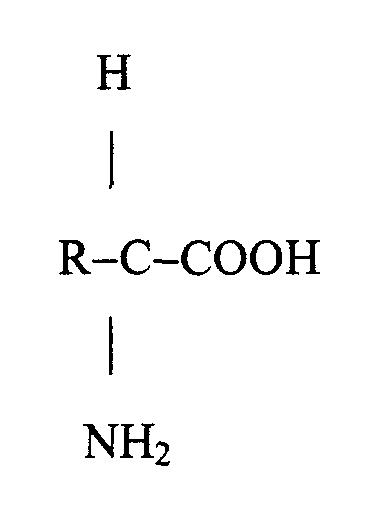 Amino acids are classified into seven groups on the basis of the side chain R: (1) aliphatic
side chains, (2) side chains containing a hydroxylic (OH) group, (3) side chains containing
sulfur atoms, (4) side chains containing an acidic or amide group, (5) side chains
containing a basic group, (6) side chains containing an aromatic ring, and (7) proline, an
imino acid in which the side chain is fused to the amino group.
Amino acids are classified into seven groups on the basis of the side chain R: (1) aliphatic
side chains, (2) side chains containing a hydroxylic (OH) group, (3) side chains containing
sulfur atoms, (4) side chains containing an acidic or amide group, (5) side chains
containing a basic group, (6) side chains containing an aromatic ring, and (7) proline, an
imino acid in which the side chain is fused to the amino group.
A "protein" is a polypeptide which plays a structural or functional role in a living
cell.
The polypeptides and proteins of the invention may be glycosylated or
unglycosylated.
"Homology" means similarity of sequence reflecting a common evolutionary origin.
Polypeptides or proteins are said to have homology, or similarity, if a substantial number of
their amino acids are either (1) identical, or (2) have a chemically similar R side chain.
Nucleic acids are said to have homology if a substantial number of their nucleotides are
identical.
"Isolated polypeptide" or "isolated protein" is a polypeptide or protein which is
substantially free of those compounds that are normally associated therewith in its natural
state (e.g., other proteins or polypeptides, nucleic acids, carbohydrates, lipids). "Isolated"
is not meant to exclude artificial or synthetic mixtures with other compounds, or the
presence of impurities which do not interfere with biological activity, and which may be
present, for example, due to incomplete purification, addition of stabilizers, or
compounding into a pharmaceutically acceptable preparation.
"Fragment" of a polypeptide according to the invention will be understood to mean
a polypeptide whose amino acid sequence is shorter than that of the reference polypeptide
and which comprises, over the entire portion with these reference polypeptides, an identical
amino acid sequence. Such fragments may, where appropriate, be included in a larger
polypeptide of which they are a part. Such fragments of a polypeptide according to the
invention may have a length of 5, 10, 15, 20, 30 to 40, 50, 100, 200 or 300 amino acids.
"Variant" of a polypeptide according to the invention will be understood to mean
mainly a polypeptide whose amino acid sequence contains one or more substitutions,
additions or deletions of at least one amino acid residue, relative to the amino acid
sequence of the reference polypeptide, it being understood that the amino acid substitutions
may be either conservative or nonconservative.
A "variant" of a polypeptide or protein is any analogue, fragment, derivative, or
mutant which is derived from a polypeptide or protein and which retains at least one
biological property of the polypeptide or protein. Different variants of the polypeptide or
protein may exist in nature. These variants may be allelic variations characterized by
differences in the nucleotide sequences of the structural gene coding for the protein, or may
involve differential splicing or post-translational modification. Variants also include a
related protein having substantially the same biological activity, but obtained from a
different species.
The skilled artisan can produce variants having single or multiple amino acid
substitutions, deletions, additions, or replacements. These variants may include, inter alia:
(a) variants in which one or more amino acid residues are substituted with conservative or
non-conservative amino acids, (b) variants in which one or more amino acids are added to
the polypeptide or protein, (c) variants in which one or more of the amino acids includes a
substituent group, and (d) variants in which the polypeptide or protein is fused with another
polypeptide such as serum albumin. The techniques for obtaining these variants, including
genetic (suppressions, deletions, mutations, etc.), chemical, and enzymatic techniques, are
known to persons having ordinary skill in the art.
If such allelic variations, analogues, fragments, derivatives, mutants, and
modifications, including alternative mRNA splicing forms and alternative post-translational
modification forms result in derivatives of the polypeptide which retain any of
the biological properties of the polypeptide, they are intended to be included within the
scope of this invention.
A "vector" is a replicon, such as plasmid, virus, phage or cosmid, to which another
DNA segment may be attached so as to bring about the replication of the attached segment.
A "replicon" is any genetic element (e.g., plasmid, chromosome, virus) that functions as an
autonomous unit of DNA replication in vivo, i.e., capable of replication under its own
control.
The present invention also relates to cloning vectors containing genes encoding
analogs and derivatives any of the ABCA5, ABCA6, ABCA9, and ABCA10 polypeptides
of the invention, that have the same or homologous functional activity as that of ABCA5,
ABCA6, ABCA9, ABCA10 polypeptides, and homologs thereof from other species. The
production and use of derivatives and analogs related to ABCA5, ABCA6, ABCA9, and
ABCA10 are within the scope of the present invention. In a specific embodiment, the
derivatives or analogs are functionally active, i.e ., capable of exhibiting one or more
functional activities associated with a full-length, wild-type ABCA5, ABCA6, ABCA9,
and ABCA10 polypeptides of the invention.
ABCA5, ABCA6, ABCA9, and ABCA10 derivatives can be made by altering
encoding nucleic acid sequences by substitutions, additions or deletions that provide for
functionally equivalent molecules. Preferably, derivatives are made that have enhanced or
increased functional activity relative to native ABCA5, ABCA6, ABCA9, and ABCA10.
Alternatively, such derivatives may encode soluble fragments of the ABCA5, ABCA6,
ABCA9, and ABCA10 extracellular domains that have the same or greater affinity for the
natural ligand of ABCA5, ABCA6, ABCA9, and ABCA10 polypeptides of the invention.
Such soluble derivatives may be potent inhibitors of ligand binding to ABCA5, ABCA6,
ABCA9, and ABCA10.
Due to the degeneracy of nucleotide coding sequences, other DNA sequences which
encode substantially same amino acid sequences as that of ABCA5, ABCA6, ABCA9, and
ABCA10 genes may be used in the practice of the present invention. These include but are
not limited to allelic genes, homologous genes from other species, and nucleotide
sequences comprising all or portions of ABCA5, ABCA6, ABCA9, and ABCA10 genes
which are altered by the substitution of different codons that encode the same amino acid
residue within the sequence, thus producing a silent change. Likewise, the ABCA5,
ABCA6, ABCA9, and ABCA10 derivatives of the invention include, but are not limited to,
those containing, as a primary amino acid sequence, all or part of the amino acid sequence
of any one of the ABCA5, ABCA6, ABCA9, and ABCA10 proteins including altered
sequences in which functionally equivalent amino acid residues are substituted for residues
within the sequence resulting in a conservative amino acid substitution. For example, one
or more amino acid residues within the sequence can be substituted by another amino acid
of a similar polarity, which acts as a functional equivalent, resulting in a silent alteration.
Substitutes for an amino acid within the sequence may be selected from other members of
the class to which the amino acid belongs. For example, the nonpolar (hydrophobic) amino
acids include alanine, leucine, isoleucine, valine, proline, phenylalanine, tryptophan and
methionine. Amino acids containing aromatic ring structures are phenylalanine,
tryptophan, and tyrosine. The polar neutral amino acids include glycine, serine, threonine,
cysteine, tyrosine, asparagine, and glutamine. The positively charged (basic) amino acids
include arginine, lysine and histidine. The negatively charged (acidic) amino acids include
aspartic acid and glutamic acid. Such alterations will not be expected to affect apparent
molecular weight as determined by polyacrylamide gel electrophoresis, or isoelectric point.
Particularly preferred substitutions are:
- Lys for Arg and vice versa such that a positive charge may be maintained;
- Glu for Asp and vice versa such that a negative charge may be maintained;
- Ser for Thr such that a free -OH can be maintained; and
- Gln for Asn such that a free CONH2 can be maintained.
Amino acid substitutions may also be introduced to substitute an amino acid with a
particularly preferable property. For example, a Cys may be introduced as a potential site
for disulfide bridges with another Cys. A His may be introduced as a particularly
"catalytic" site (i.e., His can act as an acid or base and is the most common amino acid in
biochemical catalysis). Pro may be introduced because of its particularly planar structure,
which induces b-turns in the protein's structure.
The genes encoding ABCA5, ABCA6, ABCA9, and ABCA10 derivatives and
analogs of the invention can be produced by various methods known in the art. The
manipulations which result in their production can occur at the gene or protein level. For
example, the cloned ABCA5, ABCA6, ABCA9, and ABCA10 sequences can be modified
by any of numerous strategies known in the art (Sambrook et al., 1989, supra). The
sequence can be cleaved at appropriate sites with restriction endonuclease(s), followed by
further enzymatic modification if desired, isolated, and ligated in vitro. Production of a
gene encoding a derivative or analog of any one of the ABCA5, ABCA6, ABCA9, and
ABCA10, should ensure that the modified gene remains within the same translational
reading frame as the ABCA5, ABCA6, ABCA9, and ABCA10 genes, uninterrupted by
translational stop signals, in the region where the desired activity is encoded.
Additionally, the ABCA5, ABCA6, ABCA9, and ABCA10-encoding nucleic acids
can be mutated in vitro or in vivo, to create and/or destroy translation, initiation, and/or
termination sequences, or to create variations in coding regions and/or form new restriction
endonuclease sites or destroy pre-existing ones, to facilitate further in vitro modification.
Preferably, such mutations enhance the functional activity of the mutated ABCA5,
ABCA6, ABCA9, and ABCA10 genes products. Any technique for mutagenesis known in
the art may be used, including inter alia, in vitro site-directed mutagenesis (Hutchinson et
al., (1978) Biol. Chem. 253:6551; Zoller and Smith, (1984) DNA, 3:479-488; Oliphant et
al., (1986) Gene 44:177; Hutchinson et al., (1986) Proc. Natl. Acad. Sci. U.S.A. 83:710;
Huygen et al., (1996) Nature Medicine, 2(8):893-898) and use of TAB® linkers
(Pharmacia). PCR techniques are preferred for site-directed mutagenesis (Higuchi, 1989,
"Using PCR to Engineer DNA", in PCR Technology: Principles and Applications for DNA
Amplification, H. Erlich, ed., Stockton Press, Chapter 6, pp. 61-70).
Identified and isolated ABCA5, ABCA6, ABCA9, and ABCA10 genes may then be
inserted into an appropriate cloning vector. A large number of vector-host systems known
in the art may be used. Possible vectors include, but are not limited to, plasmids or
modified viruses, but the vector system must be compatible with the host cell used.
Examples of vectors include, but are not limited to, Escherichia coli, bacteriophages such
as lambda derivatives, or plasmids such as pBR322 derivatives or pUC plasmid
derivatives, e.g., pGEX vectors, pmal-c, pFLAG, etc. The insertion into a cloning vector
can, for example, be accomplished by ligating the DNA fragment into a cloning vector
which has complementary cohesive termini. However, if the complementary restriction
sites used to fragment the DNA are not present in the cloning vector, the ends of the DNA
molecules may be enzymatically modified. Alternatively, any site desired may be produced
by ligating nucleotide sequences (linkers) onto the DNA termini; these ligated linkers may
comprise specific chemically synthesized oligonucleotides encoding restriction
endonuclease recognition sequences. Recombinant molecules can be introduced into host
cells via transformation, transfection, infection, electroporation, etc., so that many copies of
the gene sequence are generated. Preferably, the cloned gene is contained on a shuttle
vector plasmid, which provides for expansion in a cloning cell, e.g., Escherichia coli, and
facile purification for subsequent insertion into an appropriate expression cell line, if such
is desired. For example, a shuttle vector, which is a vector that can replicate in more than
one type of organism, can be prepared for replication in both Escherichia coli and
Saccharomyces cerevisiae by linking sequences from an Escherichia coli plasmid with
sequences form the yeast 2m plasmid.
In an alternative method, the desired gene may be identified and isolated after
insertion into a suitable cloning vector in a "shot gun" approach. Enrichment for the
desired gene, for example, by size fractionation, can be done before insertion into the
cloning vector.
The nucleotide sequence coding for ABCA5, ABCA6, ABCA9, and ABCA10
polypeptides or antigenic fragments, derivatives or analogs thereof, or functionally active
derivatives, including chimeric proteins thereof, may be inserted into an appropriate
expression vector, i.e., a vector which contains the necessary elements for the transcription
and translation of the inserted protein-coding sequence. Such elements are termed herein a
"promoter." Thus, nucleic acids encoding ABCA5, ABCA6, ABCA9, and ABCA10
polypeptides of the invention are operationally associated with a promoter in an expression
vector of the invention. Both cDNA and genomic sequences can be cloned and expressed
under control of such regulatory sequences. An expression vector also preferably includes
a replication origin.
The necessary transcriptional and translational signals can be provided on a
recombinant expression vector, or they may be supplied by a native gene encoding
ABCA5, ABCA6, ABCA9, and ABCA10 and/or its flanking regions.
Potential host-vector systems include but are not limited to mammalian cell systems
infected with virus (e.g., vaccinia virus, adenovirus, etc.); insect cell systems infected with
virus (e.g., baculovirus); microorganisms such as yeast containing yeast vectors; or bacteria
transformed with bacteriophage, DNA, plasmid DNA, or cosmid DNA. The expression
elements of vectors vary in their strengths and specificities. Depending on the host-vector
system utilized, any one of a number of suitable transcription and translation elements may
be used.
A recombinant ABCA5, ABCA6, ABCA9, and ABCA10 proteins of the invention,
or functional fragments, derivatives, chimeric constructs, or analogs thereof, may be
expressed chromosomally, after integration of the coding sequence by recombination. In
this regard, any of a number of amplification systems may be used to achieve high levels of
stable gene expression (See Sambrook et al., 1989, supra).
The cell into which the recombinant vector comprising the nucleic acid encoding
any one of the ABCA5, ABCA6, ABCA9, and ABCA10 polypeptides according to the
invention is cultured in an appropriate cell culture medium under conditions that provide
for expression of any one of the ABCA5, ABCA6, ABCA9, and ABCA10 polypeptides by
the cell.
Any of the methods previously described for the insertion of DNA fragments into a
cloning vector may be used to construct expression vectors containing a gene consisting of
appropriate transcriptional/translational control signals and the protein coding sequences.
These methods may include in vitro recombinant DNA and synthetic techniques and in
vivo recombination (genetic recombination).
Expression of ABCA5, ABCA6, ABCA9, and ABCA10 polypeptides may be
controlled by any promoter/enhancer element known in the art, but these regulatory
elements must be functional in the host selected for expression. Promoters which may be
used to control ABCA5, ABCA6, ABCA9, and ABCA10 genes expression include, but are
not limited to, the SV40 early promoter region (Benoist and Chambon, 1981 Nature
290:304-310), the promoter contained in the 3' long terminal repeat of Rous sarcoma virus
(Yamamoto, et al., 1980 Cell 22:787-797), the herpes thymidine kinase promoter (Wagner
et al., 1981 Proc. Natl. Acad. Sci. U.S.A. 78:1441-1445), the regulatory sequences of the
metallothionein gene (Brinster et al., 1982 Nature 296:39-42); prokaryotic expression
vectors such as the β-lactamase promoter (Villa-Kamaroff, et al., 1978 Proc. Natl. Acad.
Sci. U.S.A. 75:3727-3731), or the tac promoter (DeBoer, et al., 1983 Proc. Natl. Acad. Sci.
U.S.A. 80:21-25); see also "Useful proteins from recombinant bacteria" in Scientific
American, 1980, 242:74-94; promoter elements from yeast or other fungi such as the Gal 4
promoter, the ADC (alcohol dehydrogenase) promoter, PGK (phosphoglycerol kinase)
promoter, alkaline phosphatase promoter; and the animal transcriptional control regions,
which exhibit tissue specificity and have been utilized in transgenic animals: elastase I
gene control region which is active in pancreatic acinar cells (Swift et al., 1984 Cell
38:639-646; Ornitz et al., 1986 Cold Spring Harbor Symp. Quant. Biol. 50:399-409;
MacDonald, 1987); insulin gene control region which is active in pancreatic beta cells
(Hanahan, 1985 Nature: 315:115-122), immunoglobulin gene control region which is
active in lymphoid cells (Grosschedl et al., 1984 Cell 38:647-658; Adames et al., 1985
Nature 318:533-538; Alexander et al., 1987 Mol. Cell. Biol. 7:1436-1444), mouse
mammary tumor virus control region which is active in testicular, breast, lymphoid and
mast cells (Leder et al., 1986 Cell 45:485-495), albumin gene control region which is
active in liver (Pinkert et al., 1987 Genes and Devel. 1:268-276), alpha-fetoprotein gene
control region which is active in liver (Krumlauf et al., 1985 Mol. Cell. Biol. 5:1639-1648;
Hammer et al., 1987 Science 235:53-58), alpha 1-antitrypsin gene control region which is
active in the liver (Kelsey et al., 1987 Genes and Devel. 1:161-171) beta-globin gene
control region which is active in myeloid cells (Mogram et al., 1985 Nature 315:338-340;
Kollias et al., 1986 Cell 46:89-94), myelin basic protein gene control region which is active
in oligodendrocyte cells in the brain (Readhead et al., 1987 Cell 48:703-712), myosin light
chain-2 gene control region which is active in skeletal muscle (Sani, 1985 Nature 314:283-286),
and gonadotropic releasing hormone gene control region which is active in the
hypothalamus (Mason et al., 1986 Science 234:1372-1378).
Expression vectors containing a nucleic acid encoding one of ABCA5, ABCA6,
ABCA9, and ABCA10 polypeptides of the invention can be identified by five general
approaches: (a) polymerase chain reaction (PCR) amplification of the desired plasmid
DNA or specific mRNA, (b) nucleic acid hybridization, (c) presence or absence of
selection marker gene functions, (d) analyses with appropriate restriction endonucleases,
and (e) expression of inserted sequences. In the first approach, the nucleic acids can be
amplified by PCR to provide for detection of the amplified product. In the second
approach, the presence of a foreign gene inserted in an expression vector can be detected by
nucleic acid hybridization using probes comprising sequences that are homologous to an
inserted marker gene. In the third approach, the recombinant vector/host system can be
identified and selected based upon the presence or absence of certain "selection marker"
gene functions (e.g., b-galactosidase activity, thymidine kinase activity, resistance to
antibiotics, transformation phenotype, occlusion body formation in baculovirus, etc.)
caused by the insertion of foreign genes in the vector. In another example, if the nucleic
acid encoding any one of the ABCA5, ABCA6, ABCA9, and ABCA10 polypeptides is
inserted within the "selection marker" gene sequence of the vector, recombinants
containing ABCA5, ABCA6, ABCA9, and ABCA10 nucleic acids inserts can be identified
by the absence of the ABCA5, ABCA6, ABCA9, and ABCA10 genes functions. In the
fourth approach, recombinant expression vectors are identified by digestion with
appropriate restriction enzymes. In the fifth approach, recombinant expression vectors can
be identified by assaying for the activity, biochemical, or immunological characteristics of
the gene product expressed by the recombinant, provided that the expressed protein
assumes a functionally active conformation.
A wide variety of host/expression vector combinations may be employed in
expressing the nucleic acids of this invention. Useful expression vectors, for example, may
consist of segments of chromosomal, non-chromosomal and synthetic DNA sequences.
Suitable vectors include derivatives of SV40 and known bacterial plasmids, e.g.,
Escherichia coli plasmids col E1, pCRl, pBR322, pMal-C2, pET, pGEX (Smith et al.,
1988, Gene 67:31-40), pMB9 and their derivatives, plasmids such as RP4; phage DNAs,
e.g., the numerous derivatives of phage 1, e.g., NM989, and other phage DNA, e.g., M13
and filamentous single stranded phage DNA; yeast plasmids such as the 2m plasmid or
derivatives thereof; vectors useful in eukaryotic cells, such as vectors useful in insect or
mammalian cells; vectors derived from combinations of plasmids and phage DNAs, such
as plasmids that have been modified to employ phage DNA or other expression control
sequences; and the like.
For example, in a baculovirus expression systems, both non-fusion transfer vectors,
such as but not limited to pVL941 (BamH1 cloning site; Summers), pVL1393 (BamH1,
SmaI, XbaI, EcoR1, NotI, XmaIII, BglII, and PstI cloning site; Invitrogen), pVL1392 (BglII,
PstI, NotI, XmaIII, EcoRI, XbaI, SmaI, and BamH1 cloning site; Summers and Invitrogen),
and pBlueBacIII (BamH1, BglII, PstI, NcoI, and HindIII cloning site, with blue/white
recombinant screening possible; Invitrogen), and fusion transfer vectors, such as but not
limited to pAc700 (BamH1 and KpnI cloning site, in which the BamH1 recognition site
begins with the initiation codon; Summers), pAc701 and pAc702 (same as pAc700, with
different reading frames), pAc360 (BamH1 cloning site 36 base pairs downstream of a
polyhedrin initiation codon; Invitrogen(195)), and pBlueBacHisA, B, C (three different
reading frames, with BamH1, BglII, PstI, NcoI, and HindIII cloning site, an N-terminal
peptide for ProBond purification, and blue/white recombinant screening of plaques;
Invitrogen (220) can be used.
Mammalian expression vectors contemplated for use in the invention include
vectors with inducible promoters, such as the dihydrofolate reductase (DHFR) promoter,
e.g., any expression vector with a DHFR expression vector, or a DHFR/methotrexate co-amplification
vector, such as pED (PstI, SalI, SbaI, SmaI, and EcoRI cloning site, with the
vector expressing both the cloned gene and DHFR; See, Kaufman, Current Protocols in
Molecular Biology, 16.12 (1991). Alternatively, a glutamine synthetase/methionine
sulfoximine co-amplification vector, such as pEE14 (HindIII, XbaI, SmaI, SbaI, EcoRI, and
BclI cloning site, in which the vector expresses glutamine synthase and the cloned gene;
Celltech). In another embodiment, a vector that directs episomal expression under control
of Epstein Barr Virus (EBV) can be used, such as pREP4 (BamH1, SfiI, XhoI, NotI, NheI,
HindIII, NheI, PvuII, and KpnI cloning site, constitutive RSV-LTR promoter, hygromycin
selectable marker; Invitrogen), pCEP4 (BamH1, SfiI, XhoI, NotI, NheI, HindIII, NheI,
PvuII, and KpnI cloning site, constitutive hCMV immediate early gene, hygromycin
selectable marker; Invitrogen), pMEP4 (KpnI, PvuI, NheI, HindIII, NotI, XhoI, SfiI, BamH1
cloning site, inducible methallothionein IIa gene promoter, hygromycin selectable marker:
Invitrogen), pREP8 (BamH1, XhoI, NotI, HindIII, NheI, and KpnI cloning site, RSV-LTR
promoter, histidinol selectable marker; Invitrogen), pREP9 (KpnI, NheI, HindIII, NotI,
XhoI, SfiI, and BamHI cloning site, RSV-LTR promoter, G418 selectable marker;
Invitrogen), and pEBVHis (RSV-LTR promoter, hygromycin selectable marker, N-terminal
peptide purifiable via ProBond resin and cleaved by enterokinase; Invitrogen). Selectable
mammalian expression vectors for use in the invention include pRc/CMV (HindIII, BstXI,
NotI, SbaI, and ApaI cloning site, G418 selection; Invitrogen), pRc/RSV (HindIII, SpeI,
BstXI, NotI, XbaI cloning site, G418 selection; Invitrogen), and others. Vaccinia virus
mammalian expression vectors (see, Kaufman, 1991, supra) for use according to the
invention include but are not limited to pSC11 (SmaI cloning site, TK- and b-gal selection),
pMJ601 (SalI, SmaI, AflI, NarI, BspMII, BamHI, ApaI, NheI, SacII, KpnI, and HindIII
cloning site; TK- and b-gal selection), and pTKgptF1S (EcoRI, PstI, SalI, AccI, HindII,
SbaI, BamHI, and Hpa cloning site, TK or XPRT selection).
Yeast expression systems can also be used according to the invention to express any
one of the ABCA5, ABCA6, ABCA9, and ABCA10 polypeptides. For example, the non-fusion
pYES2 vector (XbaI, SphI, Shot, NotI, GstXI, EcoRI, BstXI, BamH1, SacI, Kpn1,
and HindIII cloning sit; Invitrogen) or the fusion pYESHisA, B, C (XbaI, SphI, Shot, NotI,
BstXI, EcoRI, BamH1, SacI, KpnI, and HindIII cloning site, N-terminal peptide purified
with ProBond resin and cleaved with enterokinase; Invitrogen), to mention just two, can be
employed according to the invention.
Once a particular recombinant DNA molecule is identified and isolated, several
methods known in the art may be used to propagate it. Once a suitable host system and
growth conditions are established, recombinant expression vectors can be propagated and
prepared in quantity. As previously explained, the expression vectors which can be used
include, but are not limited to, the following vectors or their derivatives: human or animal
viruses such as vaccinia virus or adenovirus; insect viruses such as baculovirus; yeast
vectors; bacteriophage vectors (e.g., lambda), and plasmid and cosmid DNA vectors, to
name but a few.
In addition, a host cell strain may be chosen which modulates the expression of the
inserted sequences, or modifies and processes the gene product in the specific fashion
desired. Different host cells have characteristic and specific mechanisms for the
translational and post-translational processing and modification (e.g., glycosylation,
cleavage for example of the signal sequence) of proteins. Appropriate cell lines or host
systems can be chosen to ensure the desired modification and processing of the foreign
protein expressed. For example, expression in a bacterial system can be used to produce an
nonglycosylated core protein product. However, the transmembrane ABCA5, ABCA6,
ABCA9, and ABCA10 proteins expressed in bacteria may not be properly folded.
Expression in yeast can produce a glycosylated product. Expression in eukaryotic cells can
increase the likelihood of "native" glycosylation and folding of a heterologous protein.
Moreover, expression in mammalian cells can provide a tool for reconstituting, or
constituting, ABCA5, ABCA6, ABCA9, and ABCA10 activities. Furthermore, different
vector/host expression systems may affect processing reactions, such as proteolytic
cleavages, to a different extent.
Vectors are introduced into the desired host cells by methods known in the art, e.g.,
transfection, electroporation, microinjection, transduction, cell fusion, DEAE dextran,
calcium phosphate precipitation, lipofection (lysosome fusion), use of a gene gun, or a
DNA vector transporter (see, e.g., Wu et al., 1992, J. Biol. Chem. 267:963-967; Wu and
Wu, 1988, J. Biol. Chem. 263:14621-14624; Hartmut et al., Canadian Patent Application
No. 2,012,311, filed March 15, 1990).
A cell has been "transfected" by exogenous or heterologous DNA when such DNA
has been introduced inside the cell. A cell has been "transformed" by exogenous or
heterologous DNA when the transfected DNA effects a phenotypic change. Preferably, the
transforming DNA should be integrated (covalently linked) into chromosomal DNA
making up the genome of the cell.
A recombinant marker protein expressed as an integral membrane protein can be
isolated and purified by standard methods. Generally, the integral membrane protein can
be obtained by lysing the membrane with detergents, such as but not limited to, sodium
dodecyl sulfate (SDS), Triton X-100 polyoxyethylene ester, Ipagel/nonidet P-40 (NP-40)
(octylphenoxy)-polyethoxyethanol, digoxin, sodium deoxycholate, and the like, including
mixtures thereof. Solubilization can be enhanced by sonication of the suspension. Soluble
forms of the protein can be obtained by collecting culture fluid, or solubilizing inclusion
bodies, e.g., by treatment with detergent, and if desired sonication or other mechanical
processes, as described above. The solubilized or soluble protein can be isolated using
various techniques, such as polyacrylamide gel electrophoresis (PAGE), isoelectric
focusing, 2-dimensional gel electrophoresis, chromatography (e.g., ion exchange, affinity,
immunoaffinity, and sizing column chromatography), centrifugation, differential solubility,
immunoprecipitation, or by any other standard technique for the purification of proteins.
Alternatively, a nucleic acid or vector according to the invention can be introduced
in vivo by lipofection. For the past decade, there has been increasing use of liposomes for
encapsulation and transfection of nucleic acids in vitro. Synthetic cationic lipids designed
to limit the difficulties and dangers encountered with liposome mediated transfection can
be used to prepare liposomes for in vivo transfection of a gene encoding a marker (Felgner,
et. al. (1987. PNAS 84/7413); Mackey, et al. (1988. Proc. Natl. Acad. Sci. USA 85 :8027-8031);
Ulmer et al. (1993. Science 259 :1745-1748). The use of cationic lipids may
promote encapsulation of negatively charged nucleic acids, and also promote fusion with
negatively charged cell membranes (Felgner and Ringold, (1989. Science 337:387-388)).
Particularly useful lipid compounds and compositions for transfer of nucleic acids are
described in International Patent Publications WO95/18863 and WO96/17823, and in U.S.
Patent No. 5,459,127. The use of lipofection to introduce exogenous genes into the
specific organs in vivo has certain practical advantages. Molecular targeting of liposomes
to specific cells represents one area of benefit. It is clear that directing transfection to
particular cell types would be particularly preferred in a tissue with cellular heterogeneity,
such as pancreas, liver, kidney, and the brain. Lipids may be chemically coupled to other
molecules for the purpose of targeting [see Mackey, et. al., supra]. Targeted peptides, e.g.,
hormones or neurotransmitters, and proteins such as antibodies, or non-peptide molecules
could be coupled to liposomes chemically.
Other molecules are also useful for facilitating transfection of a nucleic acid in vivo,
such as a cationic oligopeptide (e.g., International Patent Publication WO95/21931),
peptides derived from DNA binding proteins (e.g., International Patent Publication
WO96/25508), or a cationic polymer (e.g., International Patent Publication WO95/21931).
It is also possible to introduce the vector in vivo as a naked DNA plasmid (see U.S.
Patents 5,693,622, 5,589,466 and 5,580,859). Naked DNA vectors for gene therapy can be
introduced into the desired host cells by methods known in the art, e.g., transfection,
electroporation, microinjection, transduction, cell fusion, DEAE dextran, calcium
phosphate precipitation, use of a gene gun, or use of a DNA vector transporter (see, Wu et
al., 1992, supra; Wu and Wu, 1988, supra; Hartmut et al., Canadian Patent Application
No. 2,012,311, filed March 15, 1990; Williams et al., 1991, Proc. Natl. Acad. Sci. USA
88:2726-2730). Receptor-mediated DNA delivery approaches can also be used (Curiel et
al., 1992, Hum. Gene Ther. 3:147-154; Wu and Wu, 1987, J. Biol. Chem. 262:4429-4432).
"Pharmaceutically acceptable vehicle or excipient " includes diluents and fillers
which are pharmaceutically acceptable for method of administration, are sterile, and may
be aqueous or oleaginous suspensions formulated using suitable dispersing or wetting
agents and suspending agents. The particular pharmaceutically acceptable carrier and the
ratio of active compound to carrier are determined by the solubility and chemical properties
of the composition, the particular mode of administration, and standard pharmaceutical
practice.
Any nucleic acid, polypeptide, vector, or host cell of the invention will preferably
be introduced in vivo in a pharmaceutically acceptable vehicle or excipient. The phrase
"pharmaceutically acceptable" refers to molecular entities and compositions that are
physiologically tolerable and do not typically produce an allergic or similar untoward
reaction, such as gastric upset, dizziness and the like, when administered to a human.
Preferably, as used herein, the term "pharmaceutically acceptable" means approved by a
regulatory agency of the Federal or a state government or listed in the U.S. Pharmacopeia
or other generally recognized pharmacopeia for use in animals, and more particularly in
humans. The term "excipient" refers to a diluent, adjuvant, excipient, or vehicle with
which the compound is administered. Such pharmaceutical carriers can be sterile liquids,
such as water and oils, including those of petroleum, animal, vegetable or synthetic origin,
such as peanut oil, soybean oil, mineral oil, sesame oil and the like. Water or aqueous
solution saline solutions and aqueous dextrose and glycerol solutions are preferably
employed as excipients, particularly for injectable solutions. Suitable pharmaceutical
excipients are described in "Remington's Pharmaceutical Sciences" by E.W. Martin.
Naturally, the invention contemplates delivery of a vector that will express a
therapeutically effective amount of any one of ABCA5, ABCA6, ABCA9, and ABCA10
polypeptides for gene therapy applications. The phrase "therapeutically effective amount"
is used herein to mean an amount sufficient to reduce by at least about 15 percent,
preferably by at least 50 percent, more preferably by at least 90 percent, and still more
preferably prevent, a clinically significant deficit in the activity, function and response of
the host. Alternatively, a therapeutically effective amount is sufficient to cause an
improvement in a clinically significant condition in the host.
"Lipid profile" means the set of concentrations of cholesterol, triglyceride,
lipoprotein cholesterol and other lipids in the body of a human or other animal.
An "undesirable lipid profile" is the condition in which the concentrations of
cholesterol, triglyceride, or lipoprotein cholesterol are outside of the age- and gender-adjusted
reference ranges. Generally, a concentration of total cholesterol > 200 mg/dl, of
plasma triglycerides > 200 mg/dl, of LDL cholesterol > 130 mg/dl, of HDL cholesterol <
39 mg/dl, or a ratio of total cholesterol to HDL cholesterol > 4.0 is considered to be an
undesirable lipid profile. An undesirable lipid profile is associated with a variety of
pathological conditions, including hyperlipidaemias, diabetes hypercholesterolaemia,
arteriosclerosis, and other forms of coronary artery disease.
The applicants have identified a novel human ABCA-like cluster of genes,
designated ABCA5, ABCA6, ABCA9, and ABCA10. The applicants have also
determined that the new genes are closely spaced and arranged head-to-tail in the
following order ABCA5, ABCA10, ABCA6, and ABCA9 on same region of
chromosome 17q24, and encode putative full transporters (figure 1).
The applicants have also determined that each ABCA gene has a unique expression
pattern, suggesting that the corresponding proteins may perform tissue-specialized
functions (Example 3).
In effect, expression patterns showed that the 6.5 kb ABCA5 transcript is almost
ubiquitous, but the strongest expression was found in testis, skeletal muscle, fetal kidney
and fetal liver. The ABCA9 transcript of 6 kb was found in heart and a weak signal was
detected in the ovary, small intestine and testis. The ABCA6 transcript of 7 kb-long was
detected with a strong signal in the liver and fetal liver, a weaker signal was detected in
heart, kidney (fetal and adult), lung (fetal and adult), colon, small intestine, ovary and
testis. No signal was detected in the same conditions in the brain (fetal and adult),
pancreas, placenta, skeletal muscle, leukocyte, pancreas, spleen, thymus. The ABCA10
transcript of 6.5 kb was strongly and specifically detected in skeletal muscle and heart
(Figure 4).
The applicants have further determined potential transcript sequences that should
correspond to the full coding sequence (CDS) of ABCA5, ABCA6, and ABCA9, and
ABCA10, and that ABCA6, ABCA9, genes according to the invention comprise 39 exons
and 38 introns, and ABCA10 gene according to the invention comprises at least 40 exons
and 39 introns. Table 1 hereinafter presents predicted splice donors and acceptors scores
(Ri, bits) which are consistent with that of exons in other mammalian genes (Rogan et al.,
Hum Mutat (1998) 12, 153-171). Exons are located in exactly the same positions in all
genes, although the length of some of the exons varies. Furthermore there is a high
correlation coefficient (0.990-0.997) for exon size between these genes and significant
correlations (0.27-0.64) for some of the comparisons of intron sizes and R; values, clearly
suggesting that the genes from the 17q24 cluster arose by duplication from a common
ancestor.
| Correlations of exon size, intron size and Ri values. | ||||
| Exons | Introns | Ri-SD | Ri-SA | |
| ABCA6-ABCA9 | 0.997 | 0.62 | 0.45 | 0.28 |
| ABCA6-ABCA10 | 0.990 | 0.46 | 0.64 | 0.53 |
| ABCA9-ABCA10 | 0.995 | 0.43 | 0.47 | 0.46 |
The applicants have thus characterized new exonic sequences of human, ABCA6,
ABCA9, and ABCA10 genes, which are particularly useful according to the invention for
the production of various means of detection of corresponding, ABCA6, ABCA9, and
ABCA10 genes, or nucleotide expression products in a sample.
Several exons of ABCA6 gene have been characterized by their nucleotide
sequence and are identified in Table 2.

Thus the present invention also relates to a nucleic acid comprising any one of SEQ
ID NOs: 9-47, or a complementary sequence.
The invention also relates to a nucleic acid comprising a nucleotide sequence as
depicted in any one of SEQ ID NOs: 9-47, or a complementary nucleotide sequence.
The invention also relates to a nucleic acid comprising at least 8 consecutive
nucleotides of any one of SEQ ID NOs: 9-47, or a complementary nucleotide sequence.
The subject of the invention is, in addition, a nucleic acid having at least 80%
nucleotide identity with a nucleic acid comprising any one of SEQ ID NOs: 9-47, or a
complementary nucleotide sequence.
The invention also relates to a nucleic acid having at least 85%, preferably 90%,
more preferably 95% and still more preferably 98% nucleotide identity with a nucleic acid
comprising any one of SEQ ID NOs: 9-47.
The invention also relates to a nucleic acid hybridizing, under high stringency
conditions, with a nucleic acid comprising any one of SEQ ID NOs: 9-47, or a
complementary nucleotide sequence.
Several exons of the ABCA9 gene have been characterized by their nucleotide
sequence and are identified in Table 3.
| Human ABCA9 exons and intron DNA | ||||||||
| Exon or intron number | Exon start in genomic fragment | Exon stop in genomicfragment | Exon start in mRNA | Exon stop in mRNA | Length of exon | Intron start in genomic fragment | Intron stop in genomic fragment | Length in intron |
| 1 | 204305 | 204434 | 1 | 130 | 130 | 204435 | 214160 | 9726 |
| 2 | 214161 | 214269 | 131 | 239 | 109 | 214270 | 215809 | 1540 |
| 3 | 215810 | 216017 | 240 | 447 | 208 | 216018 | 219963 | 3946 |
| 4 | 219964 | 220128 | 448 | 612 | 165 | 220129 | 220699 | 571 |
| 5 | 220700 | 220803 | 613 | 716 | 104 | 220804 | 221584 | 781 |
| 6 | 221585 | 221811 | 717 | 943 | 227 | 221812 | 229498 | 7687 |
| 7 | 229499 | 229640 | 944 | 1085 | 142 | 229641 | 229868 | 228 |
| 8 | 229869 | 230054 | 1086 | 1271 | 186 | 230055 | 231426 | 1372 |
| 9 | 231427 | 231574 | 1272 | 1419 | 148 | 231575 | 233023 | 1449 |
| 10 | 233024 | 233192 | 1420 | 1588 | 169 | 233193 | 236072 | 2880 |
| 11 | 236073 | 236131 | 1589 | 1647 | 59 | 236132 | 236654 | 523 |
| 12 | 236655 | 236765 | 1648 | 1758 | 111 | 236766 | 237484 | 719 |
| 13 | 237485 | 237660 | 1759 | 1934 | 176 | 237661 | 237850 | 190 |
| 14 | 237851 | 237970 | 1935 | 2054 | 120 | 237971 | 238185 | 215 |
| 15 | 238186 | 238324 | 2055 | 2193 | 139 | 238325 | 238832 | 508 |
| 16 | 238833 | 238923 | 2194 | 2284 | 91 | 238924 | 240946 | 2023 |
| 17 | 240947 | 241086 | 2285 | 2424 | 140 | 241087 | 243438 | 2352 |
| 18 | 243439 | 243558 | 2425 | 2544 | 120 | 243559 | 244713 | 1155 |
| 19 | 244714 | 244912 | 2545 | 2743 | 199 | 244913 | 246720 | 1808 |
| 20 | 246721 | 246887 | 2744 | 2910 | 167 | 246888 | 247510 | 623 |
| 21 | 247511 | 247644 | 2911 | 3044 | 134 | 247645 | 248909 | 1265 |
| 22 | 248910 | 249047 | 3045 | 3182 | 138 | 249048 | 253216 | 4169 |
| 23 | 253217 | 253324 | 3183 | 3290 | 108 | 253325 | 257064 | 3740 |
| 24 | 257065 | 257238 | 3291 | 3464 | 174 | 257239 | 257427 | 189 |
| 25 | 257428 | 257541 | 3465 | 3578 | 114 | 257542 | 269285 | 11744 |
| 26 | 269286 | 269405 | 3579 | 3698 | 120 | 269406 | 272215 | 2810 |
| 27 | 272216 | 272284 | 3699 | 3767 | 69 | 272285 | 273033 | 749 |
| 28 | 273034 | 273125 | 3768 | 3859 | 92 | 273126 | 274342 | 1217 |
| 29 | 274343 | 274463 | 3860 | 3980 | 121 | 274464 | 275369 | 906 |
| 30 | 275370 | 275487 | 3981 | 4098 | 118 | 275488 | 276181 | 694 |
| 31 | 276182 | 276273 | 4099 | 4190 | 92 | 276274 | 278975 | 2702 |
| 32 | 278976 | 279136 | 4191 | 4351 | 161 | 279137 | 280171 | 1035 |
| 33 | 280172 | 280247 | 4352 | 4427 | 76 | 280248 | 280320 | 73 |
| 34 | 280321 | 280415 | 4428 | 4522 | 95 | 280416 | 281124 | 709 |
| 35 | 281125 | 281244 | 4523 | 4642 | 120 | 281245 | 281450 | 206 |
| 36 | 281451 | 281591 | 4643 | 4783 | 141 | 281592 | 282658 | 1067 |
| 37 | 282659 | 282738 | 4784 | 4863 | 80 | 282739 | 289109 | 6371 |
| 38 | 289110 | 289165 | 4864 | 4919 | 56 | 289166 | 289286 | 121 |
| 39 | 289287 | 290352 | 4920 | 5981 | 1062 | 290353 |
Thus the present invention also relates to a nucleic acid comprising any one of SEQ
ID NO: 48-86, or a complementary sequence.
The invention also relates to a nucleic acid comprising a nucleotide sequence as
depicted in any one of SEQ ID NOs: 48-86, or a complementary nucleotide sequence.
The invention also relates to a nucleic acid comprising at least 8 consecutive
nucleotides of any one of SEQ ID NOs: 48-86, or a complementary nucleotide sequence.
The subject of the invention is, in addition, a nucleic acid having at least 80%
nucleotide identity with a nucleic acid comprising any one of SEQ ID NOs: 48-86, or a
complementary nucleotide sequence.
The invention also relates to a nucleic acid having at least 85%, preferably 90%,
more preferably 95% and still more preferably 98% nucleotide identity with a nucleic acid
comprising any one of SEQ ID NOs: 48-86.
The invention also relates to a nucleic acid hybridizing, under high stringency
conditions, with a nucleic acid comprising any one of SEQ ID NOs: 48-86, or a
complementary nucleotide sequence.
Several exons of the ABCA10 gene have been characterized by their nucleotide
sequence and are identified in Table 4.
| Human ABCA10 exons and introns DNA | ||||||||
| Exon or intron number | Exon start in genomic fragment | Exon stop in genomicfragment | Exon start in mRNA | Exon stop in mRNA | Length of exon | Intron start in genomic fragment | Intron stop in genomic fragment | Length in intron |
| 1 | 20483 | 20769 | 1 | 287 | 287 | 20770 | 36437 | 15668 |
| 2 | 36438 | 36717 | 288 | 567 | 280 | 36718 | 38012 | 1295 |
| 3 | 38013 | 38153 | 568 | 708 | 141 | 38154 | 39768 | 1615 |
| 4 | 39769 | 39973 | 709 | 913 | 205 | 39974 | 42600 | 2627 |
| 5 | 42601 | 42765 | 914 | 1078 | 165 | 42766 | 43402 | 637 |
| 6 | 43403 | 43506 | 1079 | 1182 | 104 | 43507 | 45526 | 2020 |
| 7 | 45527 | 45753 | 1183 | 1409 | 227 | 45754 | 48939 | 3186 |
| 8 | 48940 | 49081 | 1410 | 1551 | 142 | 49082 | 49297 | 216 |
| 9 | 49298 | 49483 | 1552 | 1737 | 186 | 49484 | 50446 | 963 |
| 10 | 50447 | 50594 | 1738 | 1885 | 148 | 50595 | 63629 | 13035 |
| 11 | 63630 | 63798 | 1886 | 2054 | 169 | 63799 | 68175 | 4377 |
| 12 | 68176 | 68234 | 2055 | 2113 | 59 | 68235 | 70803 | 2569 |
| 13 | 70804 | 70914 | 2114 | 2224 | 111 | 70915 | 71309 | 395 |
| 14 | 71310 | 71485 | 2225 | 2400 | 176 | 71486 | 71686 | 201 |
| 15 | 71687 | 71806 | 2401 | 2520 | 120 | 71807 | 72050 | 244 |
| 16 | 72051 | 72189 | 2521 | 2659 | 139 | 72190 | 72645 | 456 |
| 17 | 72646 | 72736 | 2660 | 2750 | 91 | 72737 | 73983 | 1247 |
| 18 | 73984 | 74123 | 2751 | 2890 | 140 | 74124 | 74821 | 698 |
| 19 | 74822 | 74941 | 2891 | 3010 | 120 | 74942 | 77419 | 2478 |
| 20 | 77420 | 77618 | 3011 | 3209 | 199 | 77619 | 79655 | 2037 |
| 21 | 79656 | 79822 | 3210 | 3376 | 167 | 79823 | 82490 | 2668 |
| 22 | 82491 | 82624 | 3377 | 3510 | 134 | 82625 | 83008 | 384 |
| 23 | 83009 | 83146 | 3511 | 3648 | 138 | 83147 | 89785 | 6639 |
| 24 | 89786 | 89893 | 3649 | 3756 | 108 | 89894 | 90521 | 628 |
| 25 | 90522 | 90692 | 3757 | 3927 | 171 | 90693 | 90904 | 212 |
| 26 | 90905 | 91018 | 3928 | 4041 | 114 | 91019 | 100216 | 9198 |
| 27 | 100217 | 100336 | 4042 | 4161 | 120 | 100337 | 101145 | 809 |
| 28 | 101146 | 101226 | 4162 | 4242 | 81 | 101227 | 108376 | 7150 |
| 29 | 108377 | 108468 | 4243 | 4334 | 92 | 108469 | 109374 | 906 |
| 30 | 109375 | 109495 | 4335 | 4455 | 121 | 109496 | 110163 | 668 |
| 31 | 110164 | 110281 | 4456 | 4573 | 118 | 110282 | 110973 | 692 |
| 32 | 110974 | 111065 | 4574 | 4665 | 92 | 111066 | 111290 | 225 |
| 33 | 111291 | 111469 | 4666 | 4844 | 179 | 111470 | 111753 | 284 |
| 34 | 111754 | 111829 | 4845 | 4920 | 76 | 111830 | 111900 | 71 |
| 35 | 111901 | 111995 | 4921 | 5015 | 95 | 111996 | 112818 | 823 |
| 36 | 112819 | 112938 | 5016 | 5135 | 120 | 112939 | 113116 | 178 |
| 37 | 113117 | 113257 | 5136 | 5276 | 141 | 113258 | 115236 | 1979 |
| 38 | 115237 | 115316 | 5277 | 5356 | 80 | 115317 | 116211 | 895 |
| 39 | 116212 | 116267 | 5357 | 5412 | 56 | 116268 | 116374 | 107 |
| 116375 | 117143 | 5413 | 6181 | 769 | 117144 |
Thus, the invention also relates to a nucleic acid comprising any one of
SEQ ID NOs: 87-126, or a complementary nucleotide sequence thereof.
The invention also relates to a nucleic acid comprising a nucleotide sequence as
depicted in any one of SEQ ID NOs: 87-126, or a complementary nucleotide sequence
thereof.
The invention also relates to a nucleic acid comprising at least 8 consecutive
nucleotides of any one of SEQ ID NOs: 87-126, or a complementary nucleotide sequence.
The subject of the invention is, in addition, a nucleic acid having at least 80%
nucleotide identity with a nucleic acid comprising any one of SEQ ID NOs: 87-126, or a
complementary nucleotide sequence.
The invention also relates to a nucleic acid having at least 85%, preferably 90%,
more preferably 95% and still more preferably 98% nucleotide identity with a nucleic acid
comprising a) any one of SEQ ID NOs: 87-126, or a complementary nucleotide sequence.
The invention also relates to a nucleic acid hybridizing, under high stringency
conditions, with a nucleic acid comprising any one of SEQ ID NOs: 87-126, or a
complementary nucleotide sequence.
The applicants have further determined the cDNA sequences and the full coding
sequences (CDS) corresponding to human ABCA5, A6, A9, and A10 genes, which
belong to the same chromosome 17 cluster, and encode full length human corresponding
proteins (Example 2).
Table 5 summarizes for each gene the mRNA length, the codingnucleotide
sequence length as well as the predicted protein size.
| Characterization of the four ABCA on the | |||||
| mRNA length (bp) | CDS (bp) | Polyadenylation site | Putative protein (AA) | Number of coding exons | |
| ABCA5 | 6525 | 4929 | - | 1642 | Nd* |
| | 5296 | 4854 | AATAAA (position 5284) | 1617 | 38 |
| ABCA9 | 5959 | 4875 | - | 1624 | 38 |
| ABCA10 | 6181 | 4632 | - | 1543 | 37 |
| Nd : not determined; the genomic sequence is in progress (working draft BAC). |
The cDNA sequence ABCA5 consists of 6525 nucleotides and contains a 4929
nucleotide coding sequence corresponding to a 1642 amino acid (aa) ABCA5 polypeptide
produced in subjects not affected by disorders associated with cholesterol reverse transport
or inflammatory lipid mediators transport. The cDNA molecule of the novel human
ABCA5 gene having the nucleotide sequence as set forth in SEQ ID NO: 1 comprises an
open reading frame beginning from the nucleotide at position 1011 (base A of the ATG
codon for initiation of translation) to the nucleotide at position 5939 (base A of the TGA
stop codon).
According to the invention, the ABCA5 cDNA comprising SEQ ID NO: 1 encodes
a full length ABCA5 polypeptide of 1642 amino acids comprising the amino acid sequence
of SEQ ID NO: 5.
The cDNA molecule of the novel human ABCA6 gene having the nucleotide
sequence as set forth in SEQ ID NO: 2 comprises an open reading frame beginning from
the nucleotide at position 176 (base A of the ATG codon for initiation of translation) to the
nucleotide at position 5029 (second base A of the TAA stop codon). A polyadenylation
signal (having the sequence AATAAA) is present, starting from the nucleotide at
position 5284 of the sequence SEQ ID NO: 2.
According to the invention, the ABCA6 cDNA comprising SEQ ID NO: 2 consists
of 5296 nucleotides and contains a 4854 nucleotide coding sequence which encodes a full
length ABCA6 polypeptide of 1617 amino acids comprising the amino acid sequence of
SEQ ID NO: 6.
The cDNA molecule of the novel human ABCA9 gene having the nucleotide
sequence as set forth in SEQ ID NO: 3 comprises a coding sequence beginning from the
nucleotide at position 144 (base A of the ATG codon for initiation of translation) to the
nucleotide at position 5018 (second base A of the TAA stop codon).
According to the invention, the ABCA9 cDNA comprising SEQ ID NO: 3 consists
of 5959 nucleotides and contains a 4875 nucleotide coding sequence which encodes a full
length ABCA9 polypeptide of 1624 amino acids comprising the amino acid sequence of
SEQ ID NO: 7.
The cDNA molecule of the novel human ABCA10 gene having the nucleotide
sequence as set forth in SEQ ID NO: 4 comprises a coding sequence beginning from the
nucleotide at position 880 (base A of the ATG codon for initiation of translation) to the
nucleotide at position 5511 (second base A of the TAA stop codon).
According to the invention, the ABCA10 cDNA comprising SEQ ID NO: 4 consists
of 6181 nucleotides and contains a 4632 nucleotide coding sequence which encodes a full
length ABCA10 polypeptide of 1543 amino acids comprising the amino acid sequence of
SEQ ID NO: 8.
The present invention is thus directed to a nucleic acid comprising SEQ ID NOs: 1-4,
or a complementary nucleotide sequence thereof.
The invention also relates to a nucleic acid comprising a nucleotide sequence as
depicted in SEQ ID NO :1-4 or a complementary nucleotide sequence thereof.
The invention also relates to a nucleic acid comprising at least eight consecutive
nucleotides of SEQ ID NO: 1-4 or a complementary nucleotide sequence thereof.
The subject of the invention is also a nucleic acid having at least 80% nucleotide
identity with a nucleic acid comprising nucleotides of SEQ ID NO:1-4 or a nucleic acid
having a complementary nucleotide sequence thereof.
The invention also relates to a nucleic acid having at least 85%, preferably 90%,
more preferably 95% and still more preferably 98% nucleotide identity with a nucleic acid
comprising a nucleotides of SEQ ID NO:1-4 or a nucleic acid having a complementary
nucleotide sequence thereof.
Another subject of the invention is a nucleic acid hybridizing, under high stringency
conditions, with a nucleic acid comprising nucleotides of SEQ ID NO: 1-4, or a nucleic
acid having a complementary nucleotide sequence thereof.
The invention also relates to a nucleic acid encoding a polypeptide comprising an
amino acid sequence of SEQ ID NO: 5-8.
The invention relates to a nucleic acid encoding a polypeptide comprising an amino
acid sequence as depicted in SEQ ID NO:5-8.
The invention also relates to a polypeptide comprising amino acid sequence of SEQ
ID NO: 5-8.
The invention also relates to a polypeptide comprising amino acid sequence as
depicted in SEQ ID NO: 5-8.
The invention also relates to a polypeptide comprising an amino acid sequence
having at least 80% amino acid identity with a polypeptide comprising an amino acid
sequence of SEQ ID NO: 5-8, or a peptide fragment thereof.
The invention also relates to a polypeptide having at least 85%, preferably 90%,
more preferably 95% and still more preferably 98% amino acid identity with a polypeptide
comprising an amino acid sequence of SEQ ID NO: 5-8.
Preferably, a polypeptide according to the invention will have a length of 4, 5 to 10,
15, 18 or 20 to 25, 35, 40, 50, 70, 80, 100 or 200 consecutive amino acids of a polypeptide
according to the invention comprising an amino acid sequence of SEQ ID NO: 5-8.
Like ABCA1 and ABCA4 transporters, which present 45 to 66 % amino acid
sequences identity, ABCA5, ABCA6, ABCA9, and ABCA10 proteins also demonstrate
high conservation as set forth in Tables 6-10 (figure 2). Alignment of the amino acid
sequences of ABCA5, ABCA6, aBCA9 and ABCA10 genes reveals an identity ranging
from 43 to 62% along the entire sequence (Table 6). Particularly, ABCA5, ABCA6,
ABCA9, and ABCA10 proteins show 32 to 60% and 34 to 48% identity in the N-terminal
(Table 7) and C-terminal (Table 8) trans-membrane domains (TMC and TMN)
respectively, and 56 to 77% identity in the ATP-binding domains (NBD1 and NBD2;
Tables 9 and 10).
| Homology / Identity percentages between the amino acid sequences of ABCA5, ABCA6, ABCA8, ABCA9, ABCA10, and ABCA1 along the entire sequence | ||||||
| Total sequence | ABCA5 | ABCA6 | ABCA8 | ABCA9 | ABCA10 | ABCA1 |
| ABCA5 | 100 / 100 | |||||
| ABCA6 | 52.9/42.8 | 100/100 | ||||
| ABCA8 | 52.4/42.4 | 67/59.7 | 100/100 | |||
| ABCA9 | 52.6/42.7 | 67.4/59.4 | 78.2/71.6 | 100/100 | ||
| ABCA10 | 53.2/43.4 | 69.5/62.3 | 68.1/61.1 | 70.3/62.1 | 100/100 | |
| ABCA1 | 41.5/30.8 | 42.8/31 | 42.832 | 41.1/30.9 | 41.2/30.6 | 100/100 |
| Homology / Identity percentages between the amino acid sequences of ABCA5, ABCA6, ABCA9, ABCA10, ABCA1, and ABCA8 in the N terminal transmembrane domain | ||||||
| TMN domain | ABCA5 | ABCA6 | ABCA8 | ABCA9 | ABCA10 | ABCA1 |
| ABCA5 | 100/100 | |||||
| ABCA6 | 47/34.2 | 100/100 | ||||
| ABCA8 | 46.5/35 | 70.2/59.1 | 100/100 | |||
| ABCA9 | 46.3/37.8 | 64.2/55.7 | 76.9/68.5 | 100/100 | ||
| ABCA10 | 43.4/32.3 | 68.5/60.4 | 70.7/60.8 | 65.5/57.9 | 100/100 | |
| ABCA1 | 36.5/23.1 | 34.2/20 | 39.8/27.6 | 40.6/27.9 | 35.4/24.4 | 100/100 |
| Homology / Identity percentages between the amino acid sequences of ABCA5, ABCA6, ABCA9, ABCA10, ABCA1 and ABCA8 in the C terminal transmembrane domain | ||||||
| TMC domain | ABCA5 | ABCA6 | ABCA8 | ABCA9 | ABCA10 | ABCA1 |
| ABCA5 | 100/100 | |||||
| ABCA6 | 43.7/33.7 | 100/100 | ||||
| ABCA8 | 48.2/31.8 | 53.8/44.2 | 100/100 | |||
| ABCA9 | 47.3/33.7 | 57.2/48.2 | 64.1/52.9 | 100/100 | ||
| ABCA10 | 47/35.4 | 57/47 | 54.3/43 | 57.4/44.4 | 100/100 | |
| ABCA1 | 33/21.6 | 32/21.4 | 39/24.8 | 35.3/26.8 | 34.7/22.4 | 100/100 |
| Homology / Identity percentages between the amino acid sequences of ABCA5, ABCA6, ABCA9, ABCA10, ABCA1, and ABCA8 in the nucleotide Binding Domain 1 (NBD1) | ||||||
| NBD1 domain | ABCA5 | ABCA6 | ABCA8 | ABCA9 | ABCA10 | ABCA1 |
| ABCA5 | 100/100 | |||||
| ABCA6 | 70.2/60.3 | 100/100 | ||||
| ABCA8 | 71.8/62.5 | 85.4/78.6 | 100/100 | |||
| ABCA9 | 65.5/58,2 | 80.2/72.8 | 88.5/81.8 | 100/100 | ||
| ABCA10 | 69.8/62.1 | 83.2/77,2 | 82.8/79.2 | 81.9/75.8 | 100/100 | |
| ABCA1 | 56.8/48.5 | 53.5/43.5 | 61.2/50.5 | 51.7/43.8 | 56.5/45.6 | 100/100 |
| Homology / Identity percentages between the amino acid sequences of ABCA5, ABCA6, ABCA9, ABCA10, ABCA1, and ABCA8 in the nucleotide Binding Domain 2 (NBD2) | ||||||
| NBD2 domain | ABCA5 | ABCA6 | ABCA8 | ABCA9 | ABCA10 | ABCA1 |
| ABCA5 | 100/100 | |||||
| ABCA6 | 63/56.1 | 100/100 | ||||
| ABCA8 | 66.9/58.4 | 78/73.5 | 100/100 | |||
| ABCA9 | 65.2/57.0 | 77.6/72.6 | 94.5/91.8 | 100/100 | ||
| ABCA10 | 63.7/56.2 | 74.9/71.2 | 81/77.4 | 82.3/77.8 | 100/100 | |
| ABCA1 | 46.4/37.8 | 46.3/37.9 | 46.9/38 | 47.3/39 | 46.4/37.7 | 100/100 |
Phylogenetic analysis of the ATP-binding domains demonstrate that the N- and
C-terminal domains form separate branches (figure 3). The C-terminal ATP-binding
domains of the 17q24 genes are more closely related to the C-terminal domains of the
other ABC1-like genes than to the N-terminal domains of the same proteins. Thus the
entire ABC1 subfamily appears to have arisen from a single ancestral full transporter
gene. However, the genes in the 17q24 cluster form a distinct group within the ABC1
subfamily.
Nucleotide probes and primers hybridizing with a nucleic acid (genomic DNA,
messenger RNA, cDNA) according to the invention also form part of the invention.
According to the invention, nucleic acid fragments derived from a polynucleotide
comprising any one of SEQ ID NOs: 1-4 and 9-126 or of a complementary nucleotide
sequence are useful for the detection of the presence of at least one copy of a nucleotide
sequence of any one of the ABCA5, ABCA6, ABCA9, and ABCA10 genes or of a
fragment or of a variant (containing a mutation or a polymorphism) thereof in a sample.
The nucleotide probes or primers according to the invention comprise a nucleotide
sequence comprising any one of SEQ ID NOs: 1-4 and 9-126, or a complementary
nucleotide sequence.
The nucleotide probes or primers according to the invention comprise at least 8
consecutive nucleotides of a nucleic acid comprising any one of SEQ ID NOs: 1-4 and 9-126,
or a complementary nucleotide sequence.
Preferably, nucleotide probes or primers according to the invention have a length of
10, 12, 15, 18 or 20 to 25, 35, 40, 50, 70, 80, 100, 200, 500, 1000, 1500 consecutive
nucleotides of a nucleic acid according to the invention, in particular of a nucleic acid
comprising any one of SEQ ID NOs: 1-4 and 9-126, or a complementary nucleotide
sequence.
Alternatively, a nucleotide probe or primer according to the invention consists of
and/or comprise the fragments having a length of 12, 15, 18, 20, 25, 35, 40, 50, 100, 200,
500, 1000, 1500 consecutive nucleotides of a nucleic acid according to the invention, more
particularly of a nucleic acid comprising any one of SEQ IDNOs: 1-4 and 9-126, or a
complementary nucleotide sequence.
The definition of a nucleotide probe or primer according to the invention therefore
covers oligonucleotides which hybridize, under the high stringency hybridization
conditions defined above, with a nucleic acid comprising any one of SEQ ID NOs: 1-4 and
9-126, or a complementary nucleotide sequence.
According to a preferred embodiment, a nucleotide primer according to the
invention comprises a nucleotide sequence of any one of SEQ ID NOs: 127-144, or a
complementary nucleic acid sequence.
Examples of primers and pairs of primers which make it possible to amplify various
regions of the ABCA5 gene are presented in Table 11 below. The location of each primer
of SEQ ID NOs: 127-144 within SEQ ID NOs: 1, and its hybridizing region is indicated in
Table 11. The abbreviation "Comp" refers to the complementary nucleic acid sequence.
| Primers for the amplification of nucleic fragments of the ABCA5 gene | ||
| Primer SEQ ID NO: | Located in SEQ ID NO: | Position in the sequence |
| 127 | 1 | 3842-3860 |
| 128 | 1 | Comp 4858-4876 |
| 129 | 1 | Comp 4783-4801 |
| 130 | 1 | Comp 5789-5807 |
| 131 | 1 | 5630-5648 |
| 132 | 1 | 4858-4876 |
| 133 | 1 | Comp 3998-4016 |
| 134 | 1 | Comp 2987-3005 |
| 135 | 1 | Comp 3186-3208 |
| 136 | 1 | 2528-2547 |
| 137 | 1 | Comp 3088-3107 |
| 138 | 1 | Comp 2528-2547 |
| 139 | 1 | Comp 845-862 |
| 140 | 1 | 789-807 |
| 141 | 1 | Comp 1614-1633 |
| 142 | 1 | 1614-1633 |
| 143 | 1 | Comp 537-566 |
| 144 | 1 | Comp 202-231 |
According to a preferred embodiment, a nucleotide primer according to the
invention comprises a nucleotide sequence of any one of SEQ ID NOs: 145-172, or a
complementary nucleic acid sequence.
Examples of primers and pairs of primers which make it possible to amplify various
regions of the ABCA6 gene are presented in Table 12 below. The location of each primer
of SEQ ID NOs: 145-172 within SEQ ID NOs: 2, and its hybridizing region is indicated in
Table 12. The abbreviation "Comp" refers to the complementary nucleic acid sequence.
| Primers for the amplification of nucleic fragments of the ABCA6 gene | |||
| Primer SEQ ID NO: | Located in SEQ ID NO: | Position in the sequence | Region for |
| 145 | 2 | 202-221 | |
| 146 | 2 | Comp 435-461 | |
| 147 | 2 | Comp 645-672 | |
| 148 | 2 | 637-656 | |
| 149 | 2 | 754-772 | |
| 150 | 2 | Comp 758-778 | |
| 151 | 2 | Comp 773-792 | |
| 152 | 2 | 1288-1307 | Exon 8-9 |
| 153 | 2 | 1321-1341 | |
| 154 | 2 | Comp 1322-1343 | |
| 155 | 2 | Comp 1592-1574 | |
| 156 | 2 | 1761-1782 | |
| 157 | 2 | Comp 1928-1949 | |
| 158 | 2 | 1944-1968 | Exon 13-14 |
| 159 | 2 | Comp 2041-2061 | |
| 160 | 2 | Comp 2371-2392 | |
| 161 | 2 | 2350-2371 | |
| 162 | 2 | 2806-2884 | |
| 163 | 2 | Comp 2884-2902 | |
| 164 | 2 | 3292-3313 | Exon 23-24 |
| 165 | 2 | Comp 3357-3339 | |
| 166 | 2 | Comp 3746-3767 | Exon 27 |
| 167 | 2 | 3754-3775 | Exon 27 |
| 168 | 2 | 4176-4194 | Exon 31 |
| 169 | 2 | Comp 4248-4194 | Exon 31-32 |
| 170 | 2 | 4743-4763 | Exon 36 |
| 171 | 2 | Comp 4796-4778 | Exon 36-37 |
| 172 | 2 | Comp 5262-5244 | Exon 39 |
According to a preferred embodiment, a nucleotide primer according to the
invention comprises a nucleotide sequence of any one of SEQ ID NOs: 173-203, or a
complementary nucleic acid sequence.
Examples of primers and pairs of primers which make it possible to amplify various
regions of the ABCA9 gene are presented in Table 13 below. The location of each primer
of SEQ ID NOs: 173-203 within SEQ ID NOs: 3, and its hybridizing region is indicated in
Table 13. The abbreviation "Comp" refers to the complementary nucleic acid sequence.
| Primers for the amplification of nucleic fragments of the ABCA9 gene | |||
| Primer SEQ ID NO: | Located in SEQ ID NO: | Position in the sequence | Region for hybridization |
| 173 | 3 | 160-178 | |
| 174 | 3 | Comp 789-808 | |
| 175 | 3 | 786-804 | |
| 176 | 3 | Comp 1434-1455 | |
| 177 | 3 | 1305-1323 | |
| 178 | 3 | Comp 1632-1653 | Exon 11-12 |
| 179 | 3 | 1495-1516 | |
| 180 | 3 | 1866-1887 | |
| 181 | 3 | Comp 1905-1923 | |
| 182 | 3 | Comp 2349-2368 | |
| 183 | 3 | 2253-2272 | |
| 184 | 3 | Comp 2822-2843 | |
| 185 | 3 | 2645-2663 | |
| 186 | 3 | Comp 3089-3110 | |
| 187 | 3 | 3240-3260 | Exon 23 |
| 188 | 3 | 3023-3044 | Exon 21 |
| 189 | 3 | Comp 3801-3820 | Exon 28 |
| 190 | 3 | Comp 3377-3398 | Exon 24 |
| 191 | 3 | 3626-3646 | Exon 26 |
| 192 | 3 | Comp 4191-4209 | Exon 32 |
| 193 | 3 | 3964-3984 | Exon 29-30 |
| 194 | 3 | Comp 4784-4803 | Exon 37 |
| 195 | 3 | 5230-5247 | Exon 39 |
| 196 | 3 | 4694-4715 | Exon 36 |
| 197 | 3 | Comp 4977-4994 | Exon 39 |
| 198 | 3 | 5541-5561 | Exon 39 |
| 199 | 3 | Comp 5960-5981 | Exon 39 |
| 200 | 3 | Comp5541-5562 | Exon 39 |
| 201 | 3 | 24-45 | |
| 202 | 3 | Comp 384-408 | |
| 203 | 3 | Comp 311-337 | |
According to a preferred embodiment, a nucleotide primer according to the
invention comprises a nucleotide sequence of any one of SEQ ID NOs: 204-217, or a
complementary nucleic acid sequence thereof.
Examples of primers and pairs of primers which make it possible to amplify various
regions of the ABCA10 gene are presented in Table 14 below. The location of each primer
of SEQ ID NOs: 204-217 within SEQ ID NOs: 4, and its hybridizing region is indicated in
Table 14. The abbreviation "Comp" refers to the complementary nucleic acid sequence.
| Primers for the amplification of nucleic fragments of the ABCA10 gene | |||
| Primer SEQ ID NO: | Located in SEQ ID NO: | Position in the sequence | Region for hybridization |
| 204 | 4 | 1421-1440 | |
| 205 | 4 | Comp 1610-1629 | |
| 206 | 4 | 2417-2434 | |
| 207 | 4 | Comp 2605-2623 | |
| 208 | 4 | Comp 3737-3754 | Exon 24 |
| 209 | 4 | Comp 814-839 | |
| 210 | 4 | Comp 733-757 | |
| 211 | 4 | 61-86 | |
| 212 | 4 | 628-643 | |
| 213 | 4 | 3564-3583 | Exon 23 |
| 214 | 4 | Comp 4450-4468 | Exon 30-31 |
| 215 | 4 | Comp 5442-5459 | Exon 40 |
| 216 | 4 | 3050-3070 | |
| 217 | 4 | Comp 4848-4866 | Exon 34 |
According to a specific embodiment of preferred probes and primers according to
the invention, they comprise all or part of a nucleotide sequence comprising any one of
SEQ ID NOs: 127-217, or a nucleic acid having a complementary nucleic acid sequence.
A nucleotide primer or probe according to the invention may be prepared by any
suitable method well known to persons skilled in the art, including by cloning and action of
restriction enzymes or by direct chemical synthesis according to techniques such as the
phosphodiester method by Narang et al. (1979, Methods Enzymol, 68:90-98) or by
Brown et al. (1979, Methods Enzymol, 68:109-151), the diethylphosphoramidite method by
Beaucage et al. (1981, Tetrahedron Lett, 22: 1859-1862) or the technique on a solid support
described in EU patent No. EP 0,707,592.
Each of the nucleic acids according to the invention, including the oligonucleotide
probes and primers described above, may be labeled, if desired, by incorporating a marker
which can be detected by spectroscopic, photochemical, biochemical, immunochemical or
chemical means. For example, such markers may consist of radioactive isotopes (32P, 33P,
3H, 35S), fluorescent molecules (5-bromodeoxyuridine, fluorescein, acetylaminofluorene,
digoxigenin) or ligands such as biotin. The labeling of the probes is preferably carried out
by incorporating labeled molecules into the polynucleotides by primer extension, or
alternatively by addition to the 5' or 3' ends. Examples of nonradioactive labeling of
nucleic acid fragments are described in particular in French patent No. 78 109 75 or in the
articles by Urdea et al. (1988, Nucleic Acids Research, 11:4937-4957) or Sanchezpescador
et al. (1988, J. Clin. Microbiol., 26(10):1934-1938).
Preferably, the nucleotide probes and primers according to the invention may have
structural characteristics of the type to allow amplification of the signal, such as the probes
described by Urdea et al. (1991, Nucleic Acids Symp Ser., 24:197-200) or alternatively in
European patent No. EP-0,225,807 (CHIRON).
The oligonucleotide probes according to the invention may be used in particular in
Southern-type hybridizations with the genomic DNA or alternatively in northern-type
hybridizations with the corresponding messenger RNA when the expression of the
corresponding transcript is sought in a sample.
The probes and primers according to the invention may also be used for the
detection of products of PCR amplification or alternatively for the detection of mismatches.
Nucleotide probes or primers according to the invention may be immobilized on a
solid support. Such solid supports are well known to persons skilled in the art and comprise
surfaces of wells of microtiter plates, polystyrene beads, magnetic beagds, nitrocellulose
bands or microparticles such as latex particles.
Consequently, the present invention also relates to a method of detecting the
presence of a nucleic acid comprising a nucleotide sequence of any one of SEQ ID NOs: 1-4
and 9-126, or of a complementary nucleotide sequence, or a nucleic acid fragment or
variant of any one of SEQ ID NOs: 1-4 and 9-126, or of a complementary nucleotide
sequence in a sample, said method comprising the steps of:
According to a specific embodiment of the method of detection according to the
invention, the oligonucleotide probes and primers are immobilized on a support.
According to another aspect, the oligonucleotide probes and primers comprise a
detectable marker.
The invention relates, in addition, to a box or kit for detecting the presence of a
nucleic acid according to the invention in a sample, said box or kit comprising:
According to a first aspect, the detection box or kit is characterized in that the
probe(s) or primer(s) are immobilized on a support.
According to a second aspect, the detection box or kit is characterized in that the
oligonucleotide probes comprise a detectable marker.
According to a specific embodiment of the detection kit described above, such a kit
will comprise a plurality of oligonucleotide probes and/or primers in accordance with the
invention which may be used to detect a target nucleic acid of interest or alternatively to
detect mutations in the coding regions or the non-coding regions of the nucleic acids
according to the invention, more particularly of nucleic acids comprising any one of
SEQ ID NOs: 1-4 and 9-126, or a complementary nucleotide sequence.
Thus, the probes according to the invention, immobilized on a support, may be
ordered into matrices such as "DNA chips". Such ordered matrices have in particular been
described in US patent No. 5,143,854, in published PCT applications WO 90/15070 and
WO 92/10092.
Support matrices on which oligonucleotide probes have been immobilized at a high
density are for example described in US patent No. 5,412,087 and in published PCT
application WO 95/11995.
The nucleotide primers according to the invention may be used to amplify any one
of the nucleic acids according to the invention, and more particularly a nucleic acid
comprising a nucleotide sequence of any one of SEQ ID NOs: 1-4 and 9-126, or of a
complementary nucleotide sequence. Alternatively, the nucleotide primers according to the
invention may be used to amplify a nucleic acid fragment or variant of any one of
SEQ ID NOs: 1-4 and 9-126, or of a complementary nucleotide sequence.
In a particular embodiment, the nucleotide primers according to the invention may
be used to amplify a nucleic acid comprising any one of SEQ ID NOs: 1-4 and 9-126, or as
depicted in any one of SEQ ID NOs: 1-4 and 9-126, or of a complementary nucleotide
sequence.
Another subject of the invention relates to a method of amplifying a nucleic acid
according to the invention, and more particularly a nucleic acid comprising a) any one of
SEQ ID NOs: 1-4 and 9-126, or a complementary nucleotide sequence, b) as depicted in
any one of SEQ ID NOs: 1-4 and 9-126, or of a complementary nucleotide sequence,
contained in a sample, said method comprising the steps of:
To carry out the amplification method as defined above, use will be preferably
made of any of the nucleotide primers described above.
The subject of the invention is, in addition, a box or kit for amplifying a nucleic
acid according to the invention, and more particularly a nucleic acid comprising any one of
SEQ ID NOs: 1-4 and 9-126, or a complementary nucleotide sequence, or as depicted in
any one of SEQ ID NOs: 1-4 and 9-126, or of a complementary nucleotide sequence, said
box or kit comprising:
Such an amplification box or kit will preferably comprise at least one pair of
nucleotide primers as described above.
The subject of the invention is, in addition, a box or kit for amplifying all or part of
a nucleic acid comprising any one of SEQ ID NOs: 1-4 and 9-126, or a complementary
nucleotide sequence, said box or kit comprising:
Such an amplification box or kit will preferably comprise at least one pair of
nucleotide primers as described above.
The invention also relates to a box or kit for detecting the presence of a nucleic acid
according to the invention in a sample, said box or kit comprising:
According to a first aspect, the detection box or kit is characterized in that the
nucleotide probe(s) and primer(s)are immobilized on a support.
According to a second aspect, the detection box or kit is characterized in that the
nucleotide probe(s) and primer(s) comprise a detectable marker.
According to a specific embodiment of the detection kit described above, such a kit
will comprise a plurality of oligonucleotide probes and/or primers in accordance with the
invention which may be used to detect target nucleic acids of interest or alternatively to
detect mutations in the coding regions or the non-coding regions of the nucleic acids
according to the invention. According to preferred embodiment of the invention, the target
nucleic acid comprises a nucleotide sequence of any one of SEQ ID NOs: 1-4 and 9-126, or
of a complementary nucleic acid sequence. Alternatively, the target nucleic acid is a
nucleic acid fragment or variant of a nucleic acid comprising any one of SEQ ID NOs: 1-4
and 9-126, or of a complementary nucleotide sequence.
According to the present invention, a primer according to the invention comprises,
generally, all or part of any one of SEQ ID NOs: 127-217, or a complementary sequence.
The nucleotide primers according to the invention are particularly useful in methods
of genotyping subjects and/or of genotyping populations, in particular in the context of
studies of association between particular allele forms or particular forms of groups of
alleles (haplotypes) in subjects and the existence of a particular phenotype (character) in
these subjects, for example the predisposition of these subjects to develop diseases linked
to a deficiency of cholesterol reverse transport and inflammation signaling lipids, or
alternatively the predisposition of these subjects to develop a pathology whose candidate
chromosomal region is situated on chromosome 17, more precisely on the 17q arm and still
more precisely in the 17q24 locus.
The invention also relates to a recombinant vector comprising a nucleic acid
according to the invention. "Vector" for the purposes of the present invention will be
understood to mean a circular or linear DNA or RNA molecule which is either in single-stranded
or double-stranded form.
Preferably, such a recombinant vector will comprise a nucleic acid chosen from the
following nucleic acids:
According to a first embodiment, a recombinant vector according to the invention is
used to amplify a nucleic acid inserted therein, following transformation or transfection of
a desired cellular host.
According to a second embodiment, a recombinant vector according to the
invention corresponds to an expression vector comprising, in addition to a nucleic acid in
accordance with the invention, a regulatory signal or nucleotide sequence that directs or
controls transcription and/or translation of the nucleic acid and its encoded mRNA.
According to a preferred embodiment, a recombinant vector according to the
invention will comprise in particular the following components:
In addition, the recombinant vectors according to the invention may include one or
more origins for replication in the cellular hosts in which their amplification or their
expression is sought, markers or selectable markers.
By way of example, the bacterial promoters may be the LacI or LacZ promoters, the
T3 or T7 bacteriophage RNA polymerase promoters, the lambda phage PR or PL
promoters.
The promoters for eukaryotic cells will comprise the herpes simplex virus (HSV)
virus thymidine kinase promoter or alternatively the mouse metallothionein-L promoter.
Generally, for the choice of a suitable promoter, persons skilled in the art can
preferably refer to the book by Sambrook et al. (1989, Molecular cloning: a laboratory
manual. 2ed. Cold Spring Harbor Laboratory, Cold spring Harbor, New York) cited
above or to the techniques described by Fuller et al. (1996, Immunology, In: Current
Protocols in Molecular Biology, Ausubel et al.(eds.).
When the expression of the genomic sequence of any one of the ABCA5, ABCA6,
ABCA9, and ABCA10 genes will be sought, use will preferably be made of the vectors
capable of containing large insertion sequences. In a particular embodiment, bacteriophage
vectors such as the P1 bacteriophage vectors such as the vector p158 or the vector
p158/neo8 described by Sternberg (1992, Trends Genet., 8:1-16; 1994, Mamm. Genome,
5:397-404) will be preferably used.
The preferred bacterial vectors according to the invention are for example the
vectors pBR322(ATCC37017) or alternatively vectors such as pAA223-3 (Pharmacia,
Uppsala, Sweden), and pGEM1 (Promega Biotech, Madison, WI, UNITED STATES).
There may also be cited other commercially available vectors such as the vectors
pQE70, pQE60, pQE9 (Qiagen), psiX174, pBluescript SA, pNH8A, pNH16A, pNH18A,
pNH46A, pWLNEO, pSV2CAT, pOG44, pXTI, pSG (Stratagene).
They may also be vectors of the baculovirus type such as the vector pVL1392/1393
(Pharmingen) used to transfect cells of the Sf9 line (ATCC No. CRL 1711) derived from
Spodoptera frugiperda.
They may also be adenoviral vectors such as the human adenovirus of type 2 or 5.
A recombinant vector according to the invention may also be a retroviral vector or
an adeno-associated vector (AAV). Such adeno-associated vectors are for example
described by Flotte et al. (1992, Am. J. Respir. Cell Mol. Biol., 7:349-356), Samulski et al.
(1989, J. Virol., 63:3822-3828), or McLaughlin BA et al. (1996, Am. J. Hum. Genet., 59:561-569).
To allow the expression of a polynucleotide according to the invention, the latter
must be introduced into a host cell. The introduction of a polynucleotide according to the
invention into a host cell may be carried out in vitro, according to the techniques well
known to persons skilled in the art for transforming or transfecting cells, either in primer
culture, or in the form of cell lines. It is also possible to carry out the introduction of a
polynucleotide according to the invention in vivo or ex vivo, for the prevention or treatment
of diseases linked to ABC A5, A6, A9 or A10 deficiencies .
To introduce a polynucleotide or vector of the invention into a host cell, a person
skilled in the art can preferably refer to various techniques, such as the calcium phosphate
precipitation technique (Graham et al., 1973, Virology, 52:456-457 ; Chen et al., 1987,
Mol. Cell. Biol., 7 : 2745-2752), DEAE Dextran (Gopal, 1985, Mol. Cell. Biol., 5:1188-1190),
electroporation (Tur-Kaspa, 1896, Mol. Cell. Biol., 6:716-718 ; Potter et al., 1984,
Proc Natl Acad Sci U S A., 81(22):7161-5), direct microinjection (Harland et al., 1985, J.
Cell. Biol., 101:1094-1095), liposomes charged with DNA (Nicolau et al., 1982, Methods
Enzymol., 149:157-76; Fraley et al., 1979, Proc. Natl. Acad. Sci. USA, 76:3348-3352).
Once the polynucleotide has been introduced into the host cell, it may be stably
integrated into the genome of the cell. The intregration may be achieved at a precise site of
the genome, by homologous recombination, or it may be randomly integrated. In some
embodiments, the polynucleotide may be stably maintained in the host cell in the form of
an episome fragment, the episome comprising sequences allowing the retention and the
replication of the latter, either independently, or in a synchronized manner with the cell
cycle.
According to a specific embodiment, a method of introducing a polynucleotide
according to the invention into a host cell, in particular a host cell obtained from a
mammal, in vivo, comprises a step during which a preparation comprising a
pharmaceutically compatible vector and a "naked" polynucleotide according to the
invention, placed under the control of appropriate regulatory sequences, is introduced by
local injection at the level of the chosen tissue, for example myocardial tissue, the "naked"
polynucleotide being absorbed by the myocytes of this tissue.
Compositions for use in vitro and in vivo comprising "naked" polynucleotides are
for example described in PCT Application No. WO 95/11307 (Institut Pasteur, Inserm,
University of Ottawa) as well as in the articles by Tacson et al. (1996, Nature Medicine,
2(8):888-892) and Huygen et al. (1996, Nature Medicine, 2(8):893-898).
According to a specific embodiment of the invention, a composition is provided for
the in vivo production of any one of ABCA5, ABCA6, ABCA9, and ABCA10 proteins.
This composition comprises a polynucleotide encoding the ABCA5, ABCA6, ABCA9, and
ABCA10 polypeptides placed under the control of appropriate regulatory sequences, in
solution in a physiologically acceptable vector.
The quantity of vector which is injected into the host organism chosen varies
according to the site of the injection. As a guide, there may be injected between about 0.1
and about 100 µg of polynucleotide encoding the ABCA5, ABCA6, ABCA9, and ABCA10
proteins into the body of an animal, preferably into a patient likely to develop a disease
linked ABC A5, A6, A9 or A10 deficiencies Consequently, the invention also relates
to a pharmaceutical composition intended for the prevention of or treatment of a patient or
subject affected by ABC A5, A6, A9 or A10 deficiencies, comprising a nucleic acid
encoding any one of the ABCA5, ABCA6, ABCA9, and ABCA10 proteins, in combination
with one or more physiologically compatible excipients.
Preferably, such a composition will comprise a nucleic acid comprising a nucleotide
sequence of any one of SEQ ID NO: 1-4, wherein the nucleic acid is placed under the
control of an appropriate regulatory element or signal.
The subject of the invention is, in addition, a pharmaceutical composition intended
for the prevention of or treatment of a patient or a subject affected ABC A5, A6, A9 or
A10 deficiencies, comprising a recombinant vector according to the invention, in
combination with one or more physiologically compatible excipients.
The invention also relates to the use of a nucleic acid according to the invention,
encoding any one of the ABCA5, ABCA6, ABCA9, and ABCA10 proteins, for the
manufacture of a medicament intended for the prevention of arteriosclerosis in various
forms or more particularly for the treatment of subjects affected by a dysfunction of
cholesterol reverse transport or inflammatory liphophilic substances transport.
The invention also relates to the use of a recombinant vector according to the
invention, comprising a nucleic acid encoding any one of the ABCA5, ABCA6, ABCA9,
and ABCA10 proteins, for the manufacture of a medicament intended for the prevention of
arteriosclerosis in various forms or more particularly for the treatment of subjects affected
by a dysfunction of cholesterol reverse transport or inflammatory liphophilic substances
transport.
The subject of the invention is therefore also a recombinant vector comprising a
nucleic acid according to the invention that encodes any one of ABCA5, ABCA6, ABCA9,
and ABCA10 proteins or polypeptides..
The invention also relates to the use of such a recombinant vector for the
preparation of a pharmaceutical composition intended for the treatment and/or for the
prevention of diseases or conditions associated with deficiency of cholesterol reverse
transport or inflammatory liphophilic substances transport.
The present invention also relates to the use of cells genetically modified ex vivo
with such a recombinant vector according to the invention, or of cells producing a
recombinant vector, wherein the cells are implanted in the body, to allow a prolonged and
effective expression in vivo of at least a biologically active ABCA5, ABCA6, ABCA9, and
ABCA10 polypeptides.
Vectors useful in methods of somatic gene therapy and compositions containing
such vectors.
The present invention also relates to a new therapeutic approach for the treatment of
pathologies linked to ABC A5, A6, A9 or A10 deficiencies.. It provides an advantageous
solution to the disadvantages of the prior art, by demonstrating the possibility of treating
the pathologies ABC A5, A6, A9 or A10 deficiencies by gene therapy, by the transfer and
expression in vivo of a gene encoding at least one of ABCA5, ABCA6, ABCA9, and
ABCA10 proteins involved in the transport of lipophilic substances. The invention thus
offers a simple means allowing a specific and effective treatment of related pathologies
such as, for example, arteriosclerosis, inflammation, cardiovascular diseases, metabolic
diseases, lipophilic substances related pathologies.
Gene therapy consists in correcting a deficiency or an abnormality (mutation,
aberrant expression and the like) and in bringing about the expression of a protein of
therapeutic interest by introducing genetic information into the affected cell or organ. This
genetic information may be introduced either ex vivo into a cell extracted from the organ,
the modified cell then being reintroduced into the body, or directly in vivo into the
appropriate tissue. In this second case, various techniques exist, among which various
transfection techniques involving complexes of DNA and DEAE-dextran (Pagano et al.
(1967. J. Virol., 1:891), of DNA and nuclear proteins (Kaneda et al., 1989, Science
243:375), of DNA and lipids (Felgner et al., 1987, PNAS 84:7413), the use of liposomes
(Fraley et al., 1980, J.Biol.Chem., 255:10431), and the like. More recently, the use of viruses
as vectors for the transfer of genes has appeared as a promising alternative to these physical
transfection techniques. In this regard, various viruses have been tested for their capacity to
infect certain cell populations. In particular, the retroviruses (RSV, HMS, MMS, and the
like), the HSV virus, the adeno-associated viruses and the adenoviruses.
The present invention therefore also relates to a new therapeutic approach for the
treatment of pathologies linked to ABC A5, A6, A9 or A10 deficiencies, consisting in
transferring and in expressing in vivo genes encoding any one of ABCA5, ABCA6,
ABCA9, and ABCA10. In a particularly preferred manner, the applicant has now found
that it is possible to construct recombinant vectors comprising a nucleic acid encoding at
least one of ABCA5, ABCA6, ABCA9, and ABCA10 proteins, to administer these
recombinant vectors in vivo, and that this administration allows a stable and effective
expression of at least one of the biologically active ABCA5, ABCA6, ABCA9, and
ABCA10 proteins in vivo, with no cytopathological effect.
Adenoviruses constitute particularly efficient vectors for the transfer and the
expression of any one of the ABCA5, ABCA6, ABCA9, and ABCA10 genes. The use of
recombinant adenoviruses as vectors makes it possible to obtain sufficiently high levels of
expression of this gene to produce the desired therapeutic effect. Other viral vectors such as
retroviruses or adeno-associated viruses (AAV) can allow a stable expression of the gene
are also claimed.
The present invention is thus likely to offer a new approach for the treatment and
prevention of ABC A5, A6, A9 or A10 deficiencies .
The subject of the invention is therefore also a defective recombinant virus
comprising a nucleic acid according to the invention that encodes at least one ABCA5,
ABCA6, ABCA9, and ABCA10 proteins or polypeptides involved in the metabolism of
lipophilic substances.
The invention also relates to the use of such a defective recombinant virus for the
preparation of a pharmaceutical composition which may be useful for the treatment and/or
for the prevention of ABC A5, A6, A9 or A10 deficiencies.
The present invention also relates to the use of cells genetically modified ex vivo
with such a defective recombinant virus according to the invention, or of cells producing a
defective recombinant virus, wherein the cells are implanted in the body, to allow a
prolonged and effective expression in vivo of at least one biologically active ABCA5,
ABCA6, ABCA9, and ABCA10 polypeptides.
The present invention is particularly advantageous because it is it possible to
induce a controlled expression, and with no harmful effect, of ABCA5, ABCA6, ABCA9,
and ABCA10 in organs which are not normally involved in the expression of this protein.
In particular, a significant release of the ABCA5, ABCA6, ABCA9, and ABCA10 proteins
is obtained by implantation of cells producing vectors of the invention, or infected ex vivo
with vectors of the invention.
The activity of these ABC protein transporters produced in the context of the
present invention may be of the human or animal ABCA5, ABCA6, ABCA9, and
ABCA10 type. The nucleic sequence used in the context of the present invention may be a
cDNA, a genomic DNA (gDNA), an RNA (in the case of retroviruses) or a hybrid
construct consisting, for example, of a cDNA into which one or more introns (gDNA)
would be inserted. It may also involve synthetic or semisynthetic sequences. In a
particularly advantageous manner, a cDNA or a gDNA is used. In particular, the use of a
gDNA allows a better expression in human cells. To allow their incorporation into a viral
vector according to the invention, these sequences are preferably modified, for example by
site-directed mutagenesis, in particular for the insertion of appropriate restriction sites. The
sequences described in the prior art are indeed not constructed for use according to the
invention, and prior adaptations may prove necessary, in order to obtain substantial
expressions. In the context of the present invention, the use of a nucleic sequence encoding
any one of human ABCA5, ABCA6, ABCA9, and ABCA10 proteins is preferred.
Moreover, it is also possible to use a construct encoding a derivative of any one of ABCA5,
ABCA6, ABCA9, and ABCA10 proteins. A derivative of any one of ABCA5, ABCA6,
ABCA9, and ABCA10 proteins comprises, for example, any sequence obtained by
mutation, deletion and/or addition relative to the native sequence, and encoding a product
retaining the lipophilic subtances transport activity. These modifications may be made by
techniques known to a person skilled in the art (see general molecular biological techniques
below). The biological activity of the derivatives thus obtained can then be easily
determined, as indicated in particular in the examples of the measurement of the efflux of
the substrate from cells. The derivatives for the purposes of the invention may also be
obtained by hybridization from nucleic acid libraries, using as probe the native sequence or
a fragment thereof.
These derivatives are in particular molecules having a higher affinity for their
binding sites, molecules exhibiting greater resistance to proteases, molecules having a
higher therapeutic efficacy or fewer side effects, or optionally new biological properties.
The derivatives also include the modified DNA sequences allowing improved expression
in vivo.
In a first embodiment, the present invention relates to a defective recombinant
virus comprising a cDNA encoding any one of ABCA5, ABCA6, ABCA9, and ABCA10
polypeptides. In another preferred embodiment of the invention, a defective recombinant
virus comprises a genomic DNA (gDNA) encoding any one of ABCA5, ABCA6, ABCA9,
and ABCA10 polypeptides. Preferably, the ABCA5, ABCA6, ABCA9, and ABCA10
polypeptides comprise an amino acid sequence selected from SEQ ID NO:5-8,
respectively.
The vectors of the invention may be prepared from various types of viruses.
Preferably, vectors derived from adenoviruses, adeno-associated viruses (AAV),
herpesviruses (HSV) or retroviruses are used. It is preferable to use an adenovirus, for
direct administration or for the ex vivo modification of cells intended to be implanted, or a
retrovirus, for the implantation of producing cells.
The viruses according to the invention are defective, that is to say that they are
incapable of autonomously replicating in the target cell. Generally, the genome of the
defective viruses used in the context of the present invention therefore lacks at least the
sequences necessary for the replication of said virus in the infected cell. These regions may
be either eliminated (completely or partially), or made non functional, or substituted with
other sequences and in particular with the nucleic sequence encoding any one of the
ABCA5, ABCA6, ABCA9, and ABCA10 proteins. Preferably, the defective virus retains,
nevertheless, the sequences of its genome which are necessary for the encapsidation of the
viral particles.
As regards more particularly adenoviruses, various serotypes, whose structure and
properties vary somewhat, have been characterized. Among these serotypes, human
adenoviruses of type 2 or 5 (Ad 2 or Ad 5) or adenoviruses of animal origin (see
Application WO 94/26914) are preferably used in the context of the present invention.
Among the adenoviruses of animal origin which can be used in the context of the present
invention, there may be mentioned adenoviruses of canine, bovine, murine (example:
Mav1, Beard et al., Virology 75 (1990) 81), ovine, porcine, avian or simian (example:
SAV) origin. Preferably, the adenovirus of animal origin is a canine adenovirus, more
preferably a CAV2 adenovirus [Manhattan or A26/61 strain (ATCC VR-800) for example].
Preferably, adenoviruses of human or canine or mixed origin are used in the context of the
invention. Preferably, the defective adenoviruses of the invention comprise the ITRs, a
sequence allowing the encapsidation and the sequence encoding any one of the ABCA5,
ABCA6, ABCA9, and ABCA10 proteins. Preferably, in the genome of the adenoviruses of
the invention, the E1 region at least is made non functional. Still more preferably, in the
genome of the adenoviruses of the invention, the E1 gene and at least one of the E2, E4 and
L1-L5 genes are non functional. The viral gene considered may be made non functional by
any technique known to a person skilled in the art, and in particular by total suppression, by
substitution, by partial deletion or by addition of one or more bases in the gene(s)
considered. Such modifications may be obtained in vitro (on the isolated DNA) or in situ,
for example, by means of genetic engineering techniques, or by treatment by means of
mutagenic agents. Other regions may also be modified, and in particular the E3
(WO95/02697), E2 (WO94/28938), E4 (WO94/28152, WO94/12649, WO95/02697) and
L5 (WO95/02697) region. According to a preferred embodiment, the adenovirus according
to the invention comprises a deletion in the E1 and E4 regions and the sequence encoding
any one of ABCA5, ABCA6, ABCA9, and ABCA10 is inserted at the level of the
inactivated E1 region. According to another preferred embodiment, it comprises a deletion
in the E1 region at the level of which the E4 region and the sequence encoding any one of
ABCA5, ABCA6, ABCA9, and ABCA10 (French Patent Application FR94 13355) are
inserted.
The defective recombinant adenoviruses according to the invention may be
prepared by any technique known to persons skilled in the art (Levrero et al., 1991 Gene
101; EP 185 573; and Graham, 1984, EMBO J., 3:2917). In particular, they may be prepared
by homologous recombination between an adenovirus and a plasmid carrying, inter alia,
the nucleic acid encoding any one of the ABCA5, ABCA6, ABCA9, and ABCA10
proteins. The homologous recombination occurs after cotransfection of said adenoviruses
and plasmid into an appropriate cell line. The cell line used must preferably (i) be
transformable by said elements, and (ii), contain the sequences capable of complementing
the part of the defective adenovirus genome, preferably in integrated form in order to avoid
the risks of recombination. By way of example of a line, there may be mentioned the
human embryonic kidney line 293 (Graham et al., 1977, J. Gen. Virol., 36:59), which
contains in particular, integrated into its genome, the left part of the genome of an Ad5
adenovirus (12%) or lines capable of complementing the E1 and E4 functions as described
in particular in Applications No. WO 94/26914 and WO95/02697.
As regards the adeno-associated viruses (AAV), they are DNA viruses of a
relatively small size, which integrate into the genome of the cells which they infect, in a
stable and site-specific manner. They are capable of infecting a broad spectrum of cells,
without inducing any effect on cellular growth, morphology or differentiation. Moreover,
they do not appear to be involved in pathologies in humans. The genome of AAVs has
been cloned, sequenced and characterized. It comprises about 4700 bases, and contains at
each end an inverted repeat region (ITR) of about 145 bases, serving as replication origin
for the virus. The remainder of the genome is divided into 2 essential regions carrying the
encapsidation functions: the left hand part of the genome, which contains the rep gene,
involved in the viral replication and the expression of the viral genes; the right hand part of
the genome, which contains the cap gene encoding the virus capsid proteins.
The use of vectors derived from AAVs for the transfer of genes in vitro and in
vivo has been described in the literature (see in particular WO 91/18088; WO 93/09239;
US 4,797,368, US5,139,941, EP 488 528). These applications describe various constructs
derived from AAVs, in which the rep and/or cap genes are deleted and replaced by a gene
of interest, and their use for transferring in vitro (on cells in culture) or in vivo (directly into
an organism) said gene of interest. However, none of these documents either describes or
suggests the use of a recombinant AAV for the transfer and expression in vivo or ex vivo of
any one of ABCA5, ABCA6, ABCA9, and ABCA10 proteins, or the advantages of such a
transfer. The defective recombinant AAVs according to the invention may be prepared by
cotransfection, into a cell line infected with a human helper virus (for example an
adenovirus), of a plasmid containing the sequence encoding any one of the ABCA5,
ABCA6, ABCA9, and ABCA10 proteins bordered by two AAV inverted repeat regions
(ITR), and of a plasmid carrying the AAV encapsidation genes (rep and cap genes). The
recombinant AAVs produced are then purified by conventional techniques.
As regards the herpesviruses and the retroviruses, the construction of recombinant
vectors has been widely described in the literature: see in particular Breakfield et al.,
(1991.New Biologist, 3:203); EP 453242, EP178220, Bernstein et al. (1985); McCormick,
(1985. BioTechnology, 3:689), and the like.
In particular, the retroviruses are integrating viruses, infecting dividing cells. The
genome of the retroviruses essentially comprises two long terminal repeats (LTRs), an
encapsidation sequence and three coding regions (gag, pol and env). In the recombinant
vectors derived from retroviruses, the gag, pol and env genes are generally deleted,
completely or partially, and replaced with a heterologous nucleic acid sequence of interest.
These vectors may be produced from various types of retroviruses such as in particular
MoMuLV ("murine moloney leukemia virus"; also called MoMLV), MSV ("murine
moloney sarcoma virus"), HaSV ("harvey sarcoma virus"); SNV ("spleen necrosis virus");
RSV ("rous sarcoma virus") or Friend's virus.
To construct recombinant retroviruses containing a sequence encoding any one fo
the ABCA5, ABCA6, ABCA9, and ABCA10 proteins according to the invention, a
plasmid containing in particular the LTRs, the encapsidation sequence and said coding
sequence is generally constructed, and then used to transfect a so-called encapsidation cell
line, capable of providing in trans the retroviral functions deficient in the plasmid.
Generally, the encapsidation lines are therefore capable of expressing the gag, pol and env
genes. Such encapsidation lines have been described in the prior art, and in particular the
PA317 line (US 4,861,719), the PsiCRIP line (WO 90/02806) and the GP+envAm-12 line
(WO 89/07150). Moreover, the recombinant retroviruses may contain modifications at the
level of the LTRs in order to suppress the transcriptional activity, as well as extended
encapsidation sequences, containing a portion of the gag gene (Bender et al., 1987, J.
Virol., 61:1639). The recombinant retroviruses produced are then purified by conventional
techniques.
To carry out the present invention, it is preferable to use a defective recombinant
adenovirus. The particularly advantageous properties of adenoviruses are preferred for the
in vivo expression of a protein having a lipophilic subtrate transport activity. The
adenoviral vectors according to the invention are particularly preferred for a direct
administration in vivo of a purified suspension, or for the ex vivo transformation of cells, in
particular autologous cells, in view of their implantation. Furthermore, the adenoviral
vectors according to the invention exhibit, in addition, considerable advantages, such as in
particular their very high infection efficiency, which makes it possible to carry out
infections using small volumes of viral suspension.
According to another particularly preferred embodiment of the invention, a line
producing retroviral vectors containing the sequence encoding any one of the ABCA5,
ABCA6, ABCA9, and ABCA10 proteins is used for implantation in vivo. The lines which
can be used to this end are in particular the PA317 (US 4,861,719), PsiCrip
(WO 90/02806) and GP+envAm-12 (US 5,278,056) cells modified so as to allow the
production of a retrovirus containing a nucleic sequence encoding any one of ABCA5,
ABCA6, ABCA9, and ABCA10 proteins according to the invention. For example,
totipotent stem cells, precursors of blood cell lines, may be collected and isolated from a
subject. These cells, when cultured, may then be transfected with the retroviral vector
containing the sequence encoding any one of ABCA5, ABCA6, ABCA9, and ABCA10
proteins under the control of viral, nonviral or nonviral promoters specific for macrophages
or under the control of its own promoter. These cells are then reintroduced into the subject.
The differentiation of these cells will be responsible for blood cells expressing at least one
of ABCA5, ABCA6, ABCA9, and ABCA10 proteins.
Preferably, in the vectors of the invention, the sequence encoding any one of the
ABCA5, ABCA6, ABCA9, and ABCA10 proteins is placed under the control of signals
allowing its expression in the infected cells. These may be expression signals which are
homologous or heterologous, that is to say signals different from those which are naturally
responsible for the expression of the ABCA5, ABCA6, ABCA9, and ABCA10 proteins.
They may also be in particular sequences responsible for the expression of other proteins,
or synthetic sequences. In particular, they may be sequences of eukaryotic or viral genes or
derived sequences, stimulating or repressing the transcription of a gene in a specific
manner or otherwise and in an inducible manner or otherwise. By way of example, they
may be promoter sequences derived from the genome of the cell which it is desired to
infect, or from the genome of a virus, and in particular the promoters of the E1A or major
late promoter (MLP) genes of adenoviruses, the cytomegalovirus (CMV) promoter, the
RSV-LTR and the like. Among the eukaryotic promoters, there may also be mentioned the
ubiquitous promoters (HPRT, vimentin, α-actin, tubulin and the like), the promoters of the
intermediate filaments (desmin, neurofilaments, keratin, GFAP, and the like), the
promoters of therapeutic genes (of the MDR, CFTR or factor VIII type, and the like),
tissue-specific promoters (pyruvate kinase, villin, promoter of the fatty acid binding
intestinal protein, promoter of the smooth muscle cell α-actin, promoters specific for the
liver; Apo AI, Apo AII, human albumin and the like) or promoters corresponding to a
stimulus (steroid hormone receptor, retinoic acid receptor and the like). In addition, these
expression sequences may be modified by addition of enhancer or regulatory sequences and
the like. Moreover, when the inserted gene does not contain expression sequences, it may
be inserted into the genome of the defective virus downstream of such a sequence.
In a specific embodiment, the invention relates to a defective recombinant virus
comprising a nucleic acid encoding any one of ABCA5, ABCA6, ABCA9, and ABCA10
proteins the control of a promoter chosen from RSV-LTR or the CMV early promoter.
As indicated above, the present invention also relates to any use of a virus as
described above for the preparation of a pharmaceutical composition for the treatment
and/or prevention of pathologies linked to the transport of lipophilic substances.
The present invention also relates to a pharmaceutical composition comprising
one or more defective recombinant viruses as described above. These pharmaceutical
compositions may be formulated for administration by the topical, oral, parenteral,
intranasal, intravenous, intramuscular, subcutaneous, intraocular or transdermal route and
the like. Preferably, the pharmaceutical compositions of the invention comprises a
pharmaceutically acceptable vehicle or physiologically compatible excipient for an
injectable formulation, in particular for an intravenous injection, such as for example into
the patient's portal vein. These may relate in particular to isotonic sterile solutions or dry,
in particular, freeze-dried, compositions which, upon addition depending on the case of
sterilized water or physiological saline, allow the preparation of injectable solutions. Direct
injection into the patient's portal vein is preferred because it makes it possible to target the
infection at the level of the liver and thus to concentrate the therapeutic effect at the level
of this organ.
The doses of defective recombinant virus used for the injection may be adjusted as
a function of various parameters, and in particular as a function of the viral vector, of the
mode of administration used, of the relevant pathology or of the desired duration of
treatment. In general, the recombinant adenoviruses according to the invention are
formulated and administered in the form of doses of between 104 and 1014 pfu/ml, and
preferably 106 to 1010 pfu/ml. The term "pfu" (plaque forming unit) corresponds to the
infectivity of a virus solution, and is determined by infecting an appropriate cell culture and
measuring, generally after 48 hours, the number of plaques that result from infected cell
lysis. The techniques for determining the pfu titer of a viral solution are well documented
in the literature.
As regards retroviruses, the compositions according to the invention may directly
contain the producing cells, with a view to their implantation.
In this regard, another subject of the invention relates to any mammalian cell
infected with one or more defective recombinant viruses according to the invention. More
particularly, the invention relates to any population of human cells infected with such
viruses. These may be in particular cells of blood origin (totipotent stem cells or
precursors), fibroblasts, myoblasts, hepatocytes, keratinocytes, smooth muscle and
endothelial cells, glial cells and the like.
The cells according to the invention may be derived from primary cultures. These
may be collected by any technique known to persons skilled in the art and then cultured
under conditions allowing their proliferation. As regards more particularly fibroblasts,
these may be easily obtained from biopsies, for example according to the technique
described by Ham (1980). These cells may be used directly for infection with the viruses,
or stored, for example by freezing, for the establishment of autologous libraries, in view of
a subsequent use. The cells according to the invention may be secondary cultures, obtained
for example from pre-established libraries (see for example EP 228458, EP 289034, EP
400047, EP 456640).
The cells in culture are then infected with a recombinant virus according to the
invention, in order to confer on them the capacity to produce at least one biologically active
ABCA5, ABCA6, ABCA9, and ABCA10 proteins. The infection is carried out in vitro
according to techniques known to persons skilled in the art. In particular, depending on the
type of cells used and the desired number of copies of virus per cell, persons skilled in the
art can adjust the multiplicity of infection and optionally the number of infectious cycles
produced. It is clearly understood that these steps must be carried out under appropriate
conditions of sterility when the cells are intended for administration in vivo. The doses of
recombinant virus used for the infection of the cells may be adjusted by persons skilled in
the art according to the desired aim. The conditions described above for the administration
in vivo may be applied to the infection in vitro. For the infection with a retrovirus, it is also
possible to co-culture a cell to be infected with a cell producing the recombinant retrovirus
according to the invention. This makes it possible to eliminate purification of the
retrovirus.
Another subject of the invention relates to an implant comprising mammalian
cells infected with one or more defective recombinant viruses according to the invention or
cells producing recombinant viruses, and an extracellular matrix. Preferably, the implants
according to the invention comprise 105 to 1010 cells. More preferably, they comprise 106
to 108 cells.
More particularly, in the implants of the invention, the extracellular matrix
comprises a gelling compound and optionally a support allowing the anchorage of the cells.
For the preparation of the implants according to the invention, various types of
gelling agents may be used. The gelling agents are used for the inclusion of the cells in a
matrix having the constitution of a gel, and for promoting the anchorage of the cells on the
support, where appropriate. Various cell adhesion agents can therefore be used as gelling
agents, such as in particular collagen, gelatin, glycosaminoglycans, fibronectin, lectins and
the like. Preferably, collagen is used in the context of the present invention. This may be
collagen of human, bovine or murine origin. More preferably, type I collagen is used.
As indicated above, the compositions according to the invention preferably
comprise a support allowing the anchorage of the cells. The term anchorage designates any
form of biological and/or chemical and/or physical interaction causing the adhesion and/or
the attachment of the cells to the support. Moreover, the cells may either cover the support
used, or penetrate inside this support, or both. It is preferable to use in the context of the
invention a solid, nontoxic and/or biocompatible support. In particular, it is possible to use
polytetrafluoroethylene (PTFE) fibers or a support of biological origin.
The present invention thus offers a very effective means for the treatment or
prevention of pathologies linked to the transport of lipophilic substances.
In addition, this treatment may be applied to both humans and any animals such as
ovines, bovines, domestic animals (dogs, cats and the like), horses, fish and the like.
The invention relates to a recombinant host cell comprising a nucleic acid of the
invention, and more particularly, a nucleic acid comprising a nucleotide sequence selected
from SEQ ID NO: 1-4 and 9-126, or a complementary nucleotide sequence thereof.
The invention also relates to a recombinant host cell comprising a nucleic acid of
the invention, and more particularly a nucleic acid comprising a nucleotide sequence as
depicted in SEQ ID NO: 1-4 and 9-126, or a complementary nucleotide sequence thereof.
According to another aspect, the invention also relates to a recombinant host cell
comprising a recombinant vector according to the invention. Therefore, the invention also
relates to a recombinant host cell comprising a recombinant vector comprising any of the
nucleic acids of the invention, and more particularly a nucleic acid comprising a nucleotide
sequence of selected from SEQ ID NO: 1-4 and 9-126, or a complementary nucleotide
sequence thereof.
The invention also relates to a recombinant host cell comprising a recombinant
vector comprising a nucleic acid comprising a nucleotide sequence as depicted in any one
of SEQ ID NOs: 1-4 and 9-126, or of a complementary nucleotide sequence thereof.
The preferred host cells according to the invention are for example the following:
The invention also relates to a method for the production of a polypeptide
comprising an amino acid sequence of any one of SEQ ID NOs: 5-8, said method
comprising the steps of:
The polypeptides according to the invention may be characterized by binding to an
immunoaffinity chromatography column on which the antibodies directed against this
polypeptide or against a fragment or a variant thereof have been previously immobilized.
According to another aspect, a recombinant polypeptide according to the invention
may be purified by passing it over an appropriate series of chromatography columns,
according to methods known to persons skilled in the art and described for example in F.
Ausubel et al (1989, Current Protocols in Molecular Biology, Green Publishing Associates and
Wiley Interscience, N.Y).
A polypeptide according to the invention may also be prepared by conventional
chemical synthesis techniques either in homogeneous solution or in solid phase. By way of
illustration, a polypeptide according to the invention may be prepared by the technique
either in homogeneous solution described by Houben Weyl (1974, Meuthode der
Organischen Chemie, E. Wunsch Ed., 15-I:15-II) or the solid phase synthesis technique
described by Merrifield (1965, Nature, 207(996):522-523; 1965, Science, 150(693):178-185).
A polypeptide termed "homologous" to a polypeptide having an amino acid
sequence selected from SEQ ID NO: 5-8 also forms part of the invention. Such a
homologous polypeptide comprises an amino acid sequence possessing one or more
substitutions of an amino acid by an equivalent amino acid of SEQ ID NO:5-8.
An "equivalent amino acid" according to the present invention will be understood
to mean for example replacement of a residue in the L form by a residue in the D form or
the replacement of a glutamic acid (E) by a pyro-glutamic acid according to techniques
well known to persons skilled in the art. By way of illustration, the synthesis of peptide
containing at least one residue in the D form is described by Koch (1977). According to
another aspect, two amino acids belonging to the same class, that is to say two uncharged
polar, nonpolar, basic or acidic amino acids, are also considered as equivalent amino acids.
Polypeptides comprising at least one nonpeptide bond such as a retro-inverse bond
(NHCO), a carba bond (CH2CH2) or a ketomethylene bond (CO-CH2) also form part of the
invention.
Preferably, the polypeptides according to the invention comprising one or more
additions, deletions, substitutions of at least one amino acid will retain their capacity to be
recognized by antibodies directed against the nonmodified polypeptides.
The ABCA5, ABCA6, ABCA9, and ABCA10 polypeptides according to the
invention, in particular 1) a polypeptide comprising an amino acid sequence of any one of
SEQ ID NOs: 5-8, 2) a polypeptide fragment or variant of a polypeptide comprising an
amino acid sequence of any one of SEQ ID NOs: 5-8, or 3) a polypeptide termed
"homologous" to a polypeptide comprising amino acid sequence selected from SEQ ID
NOs: 5-8, may be used for the preparation of an antibody, in particular for detecting the
production of a normal or altered form of ABCA5, ABCA6, ABCA9, and ABCA10
polypeptides in a patient.
An antibody directed against a polypeptide termed "homologous" to a polypeptide
having an amino acid sequence selected from SEQ ID NO: 5-8 also forms part of the
invention. Such an antibody is directed against a homologous polypeptide comprising an
amino acid sequence possessing one or more substitutions of an amino acid by an
equivalent amino acid of SEQ ID NO: 5-8.
"Antibody" for the purposes of the present invention will be understood to mean in
particular polyclonal or monoclonal antibodies or fragments (for example the F(ab)'2 and
Fab fragments) or any polypeptide comprising a domain of the initial antibody recognizing
the target polypeptide or polypeptide fragment according to the invention.
Monoclonal antibodies may be prepared from hybridomas according to the
technique described by Kohler and Milstein (1975, Nature, 256:495-497).
According to the invention, a polypeptide produced recombinantly or by chemical
synthesis, and fragments or other derivatives or analogs thereof, including fusion proteins,
may be used as an immunogen to generate antibodies that recognize a polypeptide
according to the invention. Such antibodies include but are not limited to polyclonal,
monoclonal, chimeric, single chain, Fab fragments, and an Fab expression library. The
anti-ABCA5, anti-ABCA6, anti-ABCA9, and anti-ABCA10 antibodies of the invention
may be cross reactive, e.g., they may recognize corresponding ABCA5, ABCA6, ABCA9,
and ABCA10 polypeptides from different species. Polyclonal antibodies have greater
likelihood of cross reactivity. Alternatively, an antibody of the invention may be specific
for a single form of any one of ABCA5, ABCA6, ABCA9, and ABCA10. Preferably, such
an antibody is specific for any one of human ABCA5, ABCA6, ABCA9, and ABCA10.
Various procedures known in the art may be used for the production of polyclonal
antibodies to any one of ABCA5, ABCA6, ABCA9, and ABCA10 polypeptides or
derivatives or analogs thereof. For the production of antibody, various host animals can be
immunized by injection with any one of ABCA5, ABCA6, ABCA9, and ABCA10
polypeptides, or a derivatives (e.g., fragment or fusion protein) thereof, including but not
limited to rabbits, mice, rats, sheep, goats, etc. In one embodiment, any one of the
ABCA5, ABCA6, ABCA9, and ABCA10 polypeptides or fragments thereof can be
conjugated to an immunogenic carrier, e.g., bovine serum albumin (BSA) or keyhole
limpet hemocyanin (KLH). Various adjuvants may be used to increase the immunological
response, depending on the host species, including but not limited to Freund's (complete
and incomplete), mineral gels such as aluminum hydroxide, surface active substances such
as lysolecithin, pluronic polyols, polyanions, peptides, oil emulsions, keyhole limpet
hemocyanins, dinitrophenol, and potentially useful human adjuvants such as BCG (bacille
Calmette-Guerin) and Corynebacterium parvum.
For preparation of monoclonal antibodies directed toward any one of ABCA5,
ABCA6, ABCA9, and ABCA10 polypeptides, or fragments, analogs, or derivatives
thereof, any technique that provides for the production of antibody molecules by
continuous cell lines in culture may be used. These include but are not limited to the
hybridoma technique originally developed by Kohler and Milstein (1975, Nature, 256:495-497),
as well as the trioma technique, the human B-cell hybridoma technique (Kozbor et al.,
1983, Immunology Today, 4:72; Cote et al. 1983, Proc. Natl. Acad. Sci. U.S.A. 80:2026-2030),
and the EBV-hybridoma technique to produce human monoclonal antibodies (Cole
et al., 1985, In: Monoclonal Antibodies and Cancer Therapy, Alan R. Liss, Inc., pp. 77-96).
In an additional embodiment of the invention, monoclonal antibodies can be produced in
germ-free animals (WO 89/12690). In fact, according to the invention, techniques
developed for the production of "chimeric antibodies" (Morrison et al., 1984, J. Bacteriol.
159:870; Neuberger et al., 1984, Nature, 312:604-608; Takeda et al., 1985, Nature
314:452-454) by splicing the genes from a mouse antibody molecule specific for any one of
ABCA5, ABCA6, ABCA9, and ABCA10 polypeptides together with genes from a human
antibody molecule of appropriate biological activity can be used; such antibodies are within
the scope of this invention. Such human or humanized chimeric antibodies are preferred
for use in therapy of human diseases or disorders (described infra), since the human or
humanized antibodies are much less likely than xenogenic antibodies to induce an immune
response, in particular an allergic response, themselves.
According to the invention, techniques described for the production of single chain
antibodies (U.S. Patent Nos. 5,476,786 and 5,132,405 to Huston; U.S. Patent 4,946,778)
can be adapted to produce ABCA5, ABCA6, ABCA9, and ABCA10 polypeptide-specific
single chain antibodies. An additional embodiment of the invention utilizes the techniques
described for the construction of Fab expression libraries (Huse et al., 1989, Science
246:1275-1281) to allow rapid and easy identification of monoclonal Fab fragments with
the desired specificity for any one of ABCA5, ABCA6, ABCA9, and ABCA10
polypeptides, or its derivatives, or analogs.
Antibody fragments which contain the idiotype of the antibody molecule can be
generated by known techniques. For example, such fragments include but are not limited
to: the F(ab')2 fragment which can be produced by pepsin digestion of the antibody
molecule; the Fab' fragments which can be generated by reducing the disulfide bridges of
the F(ab')2 fragment, and the Fab fragments which can be generated by treating the
antibody molecule with papain and a reducing agent.
In the production of antibodies, screening for the desired antibody can be
accomplished by techniques known in the art, e.g., radioimmunoassay, ELISA (enzyme-linked
immunosorbant assay), "sandwich" immunoassays, immunoradiometric assays, gel
diffusion precipitin reactions, immunodiffusion assays, in situ immunoassays (using
colloidal gold, enzyme or radioisotope labels, for example), western blots, precipitation
reactions, agglutination assays (e.g., gel agglutination assays, hemagglutination assays),
complement fixation assays, immunofluorescence assays, protein A assays, and
immunoelectrophoresis assays, etc. In one embodiment, antibody binding is detected by
detecting a label on the primary antibody. In another embodiment, the primary antibody is
detected by detecting binding of a secondary antibody or reagent to the primary antibody.
In a further embodiment, the secondary antibody is labelled. Many means are known in the
art for detecting binding in an immunoassay and are within the scope of the present
invention. For example, to select antibodies which recognize a specific epitope of any one
of ABCA5, ABCA6, ABCA9, and ABCA10 polypeptides, one may assay generated
hybridomas for a product which binds to any one of ABCA5, ABCA6, ABCA9, and
ABCA10 polypeptide fragments containing such epitope. For selection of an antibody
specific to any one of of ABCA5, ABCA6, ABCA9, and ABCA10 polypeptides from a
particular species of animal, one can select on the basis of positive binding with any one of
ABCA5, ABCA6, ABCA9, and ABCA10 polypeptides expressed by or isolated from cells
of that species of animal.
The foregoing antibodies can be used in methods known in the art relating to the
localization and activity of any one of ABCA5, ABCA6, ABCA9, and ABCA10
polypeptides, e.g., for Western blotting, ABCA5, ABCA6, ABCA9, and ABCA10
polypeptides in situ, measuring levels thereof in appropriate physiological samples, etc.
using any of the detection techniques mentioned above or known in the art.
In a specific embodiment, antibodies that agonize or antagonize the activity of any
one of ABCA5, ABCA6, ABCA9, and ABCA10 polypeptides can be generated. Such
antibodies can be tested using the assays described infra for identifying ligands.
The present invention relates to an antibody directed against 1) a polypeptide
comprising an amino acid sequence of any one of SEQ ID NOs: 5-8, 2) a polypeptide
fragment or variant of a polypeptide comprising an amino acid sequence of any one of
SEQ ID NOs: 5-8, or 3) a polypeptide termed "homologous" to a polypeptide comprising
amino acid sequence selected from SEQ ID NO:5-8, also forms part of the invention, as
produced in the trioma technique or the hybridoma technique described by Kozbor et al.
(1983, Hybridoma, 2(1):7-16).
The invention also relates to single-chain Fv antibody fragments (ScFv) as
described in US patent No. 4,946,778 or by Martineau et al. (1998, J Mol Biol, 280(1):117-127).
The antibodies according to the invention also comprise antibody fragments
obtained with the aid of phage libraries as described by Ridder et al., (1995, Biotechnology
(NY), 13(3):255-260) or humanized antibodies as described by Reinmann et al. (1997,
AIDS Res Hum Retroviruses, 13(11):933-943) and Leger et al., (1997, Hum Antibodies, 8(1):3-16).
The antibody preparations according to the invention are useful in immunological
detection tests intended for the identification of the presence and/or of the quantity of
antigens present in a sample.
An antibody according to the invention may comprise, in addition, a detectable
marker which is isotopic or nonisotopic, for example fluorescent, or may be coupled to a
molecule such as biotin, according to techniques well known to persons skilled in the art.
Thus, the subject of the invention is, in addition, a method of detecting the presence
of a polypeptide according to the invention in a sample, said method comprising the steps
of:
The invention also relates to a box or kit for diagnosis or for detecting the presence
of a polypeptide in accordance with the invention in a sample, said box comprising:
The invention also relates to pharmaceutical compositions intended for the
prevention and/or treatment of a deficiency in the transport of cholesterol or inflammatory
lipid substances, characterized in that they comprise a therapeutically effective quantity of
a polynucleotide capable of giving rise to the production of an effective quantity of at least
one of ABCA5, ABCA6, ABCA9, and ABCA10 functional polypeptides, in particular a
polypeptide comprising an amino acid sequence of SEQ ID NOs: 5-8.
The invention also provides pharmaceutical compositions comprising a nucleic acid
encoding any one of ABCA5, ABCA6, ABCA9, and ABCA10 polypeptides according to
the invention and pharmaceutical compositions comprising any one of ABCA5, ABCA6,
ABCA9, and ABCA10 polypeptides according to the invention intended for the prevention
and/or treatment of diseases linked to a deficiency in the transport of cholesterol or
inflammatory lipid substances.
The present invention also relates to a new therapeutic approach for the treatment of
pathologies linked to the transport of lipophilic substances, comprising transferring and
expressing in vivo nucleic acids encoding at least one of ABCA5, ABCA6, ABCA9, and
ABCA10 proteins according to the invention.
Thus, the present invention offers a new approach for the treatment and/or the
prevention of pathologies linked to the abnormalities of the transport of lipophilic
substances.
Consequently, the invention also relates to a pharmaceutical composition intended
for the prevention of or treatment of subjects affected by, a dysfunction in lipophilic
substances, comprising a nucleic acid encoding at least one of the ABCA5, ABCA6,
ABCA9, and ABCA10 proteins, in combination with one or more physiologically
compatible vehicle and/or excipient.
According to a specific embodiment of the invention, a composition is provided for
the in vivo production of at least one of the ABCA5, ABCA6, ABCA9, and ABCA10
proteins. This composition comprises a nucleic acid encoding any one of the ABCA5,
ABCA6, ABCA9, and ABCA10 polypeptides placed under the control of appropriate
regulatory sequences, in solution in a physiologically acceptable vehicle and/or excipient.
Therefore, the present invention also relates to a composition comprising a nucleic
acid encoding a polypeptide comprising an amino acid sequence of SEQ ID NOs: 5-8,
wherein the nucleic acid is placed under the control of appropriate regulatory elements.
Preferably, such a composition will comprise a nucleic acid comprising a nucleotide
sequence of SEQ ID NOs:1-4, placed under the control of appropriate regulatory elements.
According to another aspect, the subject of the invention is also a preventive and/or
curative therapeutic method of treating diseases caused by a deficiency in the transport of
lipophilic substances, such a method comprising a step in which there is administered to a
patient a nucleic acid encoding any one of the ABCA5, ABCA6, ABCA9, and ABCA10
polypeptides according to the invention in said patient, said nucleic acid being, where
appropriate, combined with one or more physiologically compatible vehicles and/or
excipients.
The invention also relates to a pharmaceutical composition intended for the
prevention of or treatment of subjects affected by, a dysfunction in the transport of
lipophilic substances, comprising a recombinant vector according to the invention, in
combination with one or more physiologically compatible excipients.
According to a specific embodiment, a method of introducing a nucleic acid
according to the invention into a host cell, in particular a host cell obtained from a
mammal, in vivo, comprises a step during which a preparation comprising a
pharmaceutically compatible vector and a "naked" nucleic acid according to the invention,
placed under the control of appropriate regulatory sequences, is introduced by local
injection at the level of the chosen tissue, for example a smooth muscle tissue, the "naked"
nucleic acid being absorbed by the cells of this tissue.
The invention also relates to the use of a nucleic acid according to the invention,
encoding any one of the ABCA5, ABCA6, ABCA9, and ABCA10 proteins, for the
manufacture of a medicament intended for the prevention and/or treatment in various forms
or more particularly for the treatment of subjects affected by a dysfunction in the transport
of lipophilic substances.
The invention also relates to the use of a recombinant vector according to the
invention, comprising a nucleic acid encoding any one of the ABCA5, ABCA6, ABCA9,
and ABCA10 proteins, for the manufacture of a medicament intended for the prevention
and/or treatment of subjects affected by a dysfunction in the transport of lipophilic
substances.
As indicated above, the present invention also relates to the use of a defective
recombinant virus according to the invention for the preparation of a pharmaceutical
composition for the treatment and/or prevention of pathologies linked to the transport of
lipophilic substances.
The invention relates to the use of such a defective recombinant virus for the
preparation of a pharmaceutical composition intended for the treatment and/or prevention
of a deficiency associated with the transport of lipophilic substances. Thus, the present
invention also relates to a pharmaceutical composition comprising one or more defective
recombinant viruses according to the invention.
The present invention also relates to the use of cells genetically modified ex vivo
with a virus according to the invention, or of producing cells such as viruses, implanted in
the body, allowing a prolonged and effective expression in vivo of at least one biologically
active ABCA5, ABCA6, ABCA9, and ABCA10 proteins.
The present invention shows that it is possible to incorporate a nucleic acid
encoding any one of the ABCA5, ABCA6, ABCA9, and ABCA10 polypeptides into a viral
vector, and that these vectors make it possible to effectively express a biologically active,
mature form. More particularly, the invention shows that the in vivo expression of any one
of ABCA5, ABCA6, ABCA9, and ABCA10 genes may be obtained by direct
administration of an adenovirus or by implantation of a producing cell or of a cell
genetically modified by an adenovirus or by a retrovirus incorporating such a DNA.
Preferably, the pharmaceutical compositions of the invention comprise a
pharmaceutically acceptable vehicle or physiologically compatible excipient for an
injectable formulation, in particular for an intravenous injection, such as for example into
the patient's portal vein. These may relate in particular to isotonic sterile solutions or dry,
in particular, freeze-dried, compositions which, upon addition depending on the case of
sterilized water or physiological saline, allow the preparation of injectable solutions. Direct
injection into the patient's portal vein is preferred because it makes it possible to target the
infection at the level of the liver and thus to concentrate the therapeutic effect at the level
of this organ.
A "pharmaceutically acceptable vehicle or excipient" includes diluents and fillers
which are pharmaceutically acceptable for method of administration, are sterile, and may
be aqueous or oleaginous suspensions formulated using suitable dispersing or wetting
agents and suspending agents. The particular pharmaceutically acceptable carrier and the
ratio of active compound to carrier are determined by the solubility and chemical properties
of the composition, the particular mode of administration, and standard pharmaceutical
practice.
Any nucleic acid, polypeptide, vector, or host cell of the invention will preferably
be introduced in vivo in a pharmaceutically acceptable vehicle or excipient. The phrase
"pharmaceutically acceptable" refers to molecular entities and compositions that are
physiologically tolerable and do not typically produce an allergic or similar untoward
reaction, such as gastric upset, dizziness and the like, when administered to a human.
Preferably, as used herein, the term "pharmaceutically acceptable" means approved by a
regulatory agency of the Federal or a state government or listed in the U.S. Pharmacopeia
or other generally recognized pharmacopeia for use in animals, and more particularly in
humans. The term "excipient" refers to a diluent, adjuvant, excipient, or vehicle with
which the compound is administered. Such pharmaceutical carriers can be sterile liquids,
such as water and oils, including those of petroleum, animal, vegetable or synthetic origin,
such as peanut oil, soybean oil, mineral oil, sesame oil and the like. Water or aqueous
solution saline solutions and aqueous dextrose and glycerol solutions are preferably
employed as excipients, particularly for injectable solutions. Suitable pharmaceutical
excipients are described in "Remington's Pharmaceutical Sciences" by E.W. Martin.
The pharmaceutical compositions according to the invention may be equally well
administered by the oral, rectal, parenteral, intravenous, subcutaneous or intradermal route.
According to another aspect, the subject of the invention is also a preventive and/or
curative therapeutic method of treating diseases caused by a deficiency in the transport of
cholesterol or inflammatory lipid substances, comprising administering to a patient or
subject a nucleic acid encoding any one of ABCA5, ABCA6, ABCA9, and ABCA10
polypeptides, said nucleic acid being combined with one or more physiologically
compatible vehicles and/or excipients.
In another embodiment, the nucleic acids, , recombinant vectors, and compositions
according to the invention can be delivered in a vesicle, in particular a liposome (see
Langer, 1990, Science, 249:1527-1533; Treat et al., 1989, Liposomes in the Therapy of
Infectious Disease and Cancer, Lopez-Berestein and Fidler (eds.), Liss: New York, pp.
353-365; and Lopez-Berestein, 1989, In: Liposomes in the Therapy of Infectious Disease and
Cancer, Lopez-Berestein and Fidler (eds.), Liss: New York, pp. 317-327).
In a further aspect, recombinant cells that have been transformed with a nucleic acid
according to the invention and that express high levels of any one of ABCA5, ABCA6,
ABCA9, and ABCA10 polypeptides according to the invention can be transplanted in a
subject in need of any one of ABCA5, ABCA6, ABCA9, and ABCA10 polypeptides.
Preferably autologous cells transformed with an any one of ABCA5, ABCA6, ABCA9, and
ABCA10 encoding nucleic acids according to the invention are transplanted to avoid
rejection; alternatively, technology is available to shield non-autologous cells that produce
soluble factors within a polymer matrix that prevents immune recognition and rejection.
A subject in whom administration of the nucleic acids, polypeptides, recombinant
vectors, recombinant host cells, and compositions according to the invention is performed
is preferably a human, but can be any animal. Thus, as can be readily appreciated by one of
ordinary skill in the art, the methods and pharmaceutical compositions of the present
invention are particularly suited to administration to any animal, particularly a mammal,
and including, but by no means limited to, domestic animals, such as feline or canine
subjects, farm animals, such as but not limited to bovine, equine, caprine, ovine, and
porcine subjects, wild animals (whether in the wild or in a zoological garden), research
animals, such as mice, rats, rabbits, goats, sheep, pigs, dogs, cats, etc., avian species, such
as chickens, turkeys, songbirds, etc., i.e., for veterinary medical use.
Preferably, a pharmaceutical composition comprising a nucleic acid, a recombinant
vector, or a recombinant host cell, as defined above, will be administered to the patient or
subject.
According to another aspect, the invention also relates to various methods of
screening compounds or small molecules for therapeutic use which are useful in the
treatment of diseases due to a deficiency in the transport of cholesterol or inflammatory
lipid substances.
The invention therefore also relates to the use of any one of ABCA5, ABCA6,
ABCA9, and ABCA10 polypeptides, or of cells expressing any one of ABCA5, ABCA6,
ABCA9, and ABCA10 polypeptides, for screening active ingredients for the prevention
and/or treatment of diseases resulting from a dysfunction in ABCA5, ABCA6, ABCA9, or
ABCA10 defiencies . The catalytic sites and oligopeptide or immunogenic fragments of
any one of ABCA5, ABCA6, ABCA9, and ABCA10 polypeptides can serve for screening
product libraries by a whole range of existing techniques. The polypeptide fragment used in
this type of screening may be free in solution, bound to a solid support, at the cell surface
or in the cell. The formation of the binding complexes between any one of the ABCA5,
ABCA6, ABCA9, and ABCA10 polypeptide fragments and the tested agent can then be
measured.
Another product screening technique which may be used in high-flux screenings
giving access to products having affinity for the protein of interest is described in
application WO84/03564. In this method, applied to any one of ABCA5, ABCA6, ABCA9,
and ABCA10 proteins, various products are synthesized on a solid surface. These products
react with corresponding ABCA5, ABCA6, ABCA9, and ABCA10 proteins or fragments
thereof and the complex is washed. The products binding any one of the ABCA5, ABCA6,
ABCA9, and ABCA10 proteins are then detected by methods known to persons skilled in
the art. Non-neutralizing antibodies can also be used to capture a peptide and immobilize it
on a support.
Another possibility is to perform a product screening method using any one of the
ABCA5, ABCA6, ABCA9, and ABCA10 neutralizing competition antibodies, at least one
of ABCA5, ABCA6, ABCA9, and ABCA10 proteins and a product potentially binding any
one of the ABCA5, ABCA6, ABCA9, and ABCA10 proteins. In this manner, the
antibodies may be used to detect the presence of a peptide having a common antigenic unit
with any one of ABCA5, ABCA6, ABCA9, and ABCA10 polypeptides or proteins.
Of the products to be evaluated for their ability to increase activity of any one of
ABCA5, ABCA6, ABCA9, and ABCA10, there may be mentioned in particular kinase-specific
ATP homologs involved in the activation of the molecules, as well as
phosphatases, which may be able to avoid the dephosphorylation resulting from said
kinases. There may be mentioned in particular inhibitors of the phosphodiesterase (PDE)
theophylline and 3-isobutyl-1-methylxanthine type or the adenylcyclase forskolin
activators.
Accordingly, this invention relates to the use of any method of screening products,
i.e., compounds, small molecules, and the like, based on the method of translocation of
cholesterol or lipophilic substances between the membranes or vesicles, this being in all
synthetic or cellular types, that is to say of mammals, insects, bacteria, or yeasts expressing
constitutively or having incorporated any one of human ABCA5, ABCA6, ABCA9, and
ABCA10 encoding nucleic acids. To this effect, labeled lipophilic substances analogs may
be used.
Furthermore, knowing that the disruption of numerous transporters have been described (van den Hazel et al., 1999, J. Biol Chem, 274: 1934-41), it is possible to think of using cellular mutants having a characteristic phenotype and to complement the function thereof with at least one of ABCA5, ABCA6, ABCA9, and ABCA10 proteins and to use the whole for screening purposes.
Furthermore, knowing that the disruption of numerous transporters have been described (van den Hazel et al., 1999, J. Biol Chem, 274: 1934-41), it is possible to think of using cellular mutants having a characteristic phenotype and to complement the function thereof with at least one of ABCA5, ABCA6, ABCA9, and ABCA10 proteins and to use the whole for screening purposes.
The invention also relates to a method of screening a compound or small molecule
active on the transport of lipophilic substances, an agonist or antagonist of any one of
ABCA5, ABCA6, ABCA9, and ABCA10 polypeptides, said method comprising the
following steps:
ABCA5, ABCA6, ABCA9, and ABCA10 polypeptides comprise an amino acid
sequence selected from SEQ ID NOs: 5-8.
According to a first aspect of the above screening method, the membrane vesicle is
a synthetic lipid vesicle, which may be prepared according to techniques well known to a
person skilled in the art. According to this particular aspect, ABCA5, ABCA6, ABCA9,
and ABCA10 proteins may be recombinant proteins.
According to a second aspect, the membrane vesicle is a vesicle of a plasma
membrane derived from cells expressing at least one of ABCA5, ABCA6, ABCA9, and
ABCA10 polypeptides. These may be cells naturally expressing any one of ABCA5,
ABCA6, ABCA9, and ABCA10 polypeptides or cells transfected with a nucleic acid
encoding at least one ABCA5, ABCA6, ABCA9, and ABCA10 polypeptides or
recombinant vector comprising a nucleic acid encoding any one of ABCA5, ABCA6,
ABCA9, and ABCA10 polypeptides.
According to a third aspect of the above screening method, the lipid substrate is
chosen from prostaglandins or prostacyclins.
According to a fourth aspect of the above screening method, the lipid substrate is
chosen from cholesterol or phosphatidylcholine.
According to a fifth aspect, the lipid substrate is radioactively labelled, for example
with an isotope chosen from 3H or 125I.
According to a sixth aspect, the lipid substrate is labelled with a fluorescent
compound, such as NBD or pyrene.
According to a seventh aspect, the membrane vesicle comprising the labelled
lipophilic substances and any one of the ABCA5, ABCA6, ABCA9, and ABCA10
polypeptides is immobilized at the surface of a solid support prior to step b).
According to a eighth aspect, the measurement of the fluorescence or of the
radioactivity released by the vesicle is the direct reflection of the activity of lipid substrate
transport by any one of the ABCA5, ABCA6, ABCA9, and ABCA10 polypeptides.
The invention also relates to a method of screening a compound or small molecule
active on the transport of cholesterol or lipid substances, an agonist or antagonist of any
one of ABCA5, ABCA6, ABCA9, and ABCA10 polypeptides, said method comprising the
following steps:
In a first specific embodiment, any one of the ABCA5, ABCA6, ABCA9, and
ABCA10 polypeptides comprise an amino acid sequence of SEQ ID NOs: 5-8.
According to a second aspect, the cells used in the screening method described
above may be cells not naturally expressing, or alternatively expressing at a low level, any
one of the ABCA5, ABCA6, ABCA9, and ABCA10 polypeptides, said cells being
transfected with a recombinant vector according to the invention capable of directing the
expression of a nucleic acid encoding any one of the ABCA5, ABCA6, ABCA9, and
ABCA10 polypeptides.
According to a third aspect, the cells may be cells having a natural deficiency in
anion transport, or cells pretreated with one or more anion channel inhibitors such as
Verapamil™ or tetraethylammonium.
According to a fourth aspect of said screening method, the anion is a radioactively
labelled iodide, such as the salts K125I or Na125I.
According to a fifth aspect, the measurement of efflux of the labelled anion is
determined periodically over time during the experiment, thus making it possible to also
establish a kinetic measurement of this efflux.
According to a sixth aspect, the value of efflux of the labelled anion is determined
by measuring the quantity of labelled anion present at a given time in the cell culture
supernatant.
According to a seventh aspect, the value of efflux of the labelled anion is
determined as the proportion of radioactivity found in the cell culture supernatant relative
to the total radioactivity corresponding to the sum of the radioactivity found in the cell
lysate and the radioactivity found in the cell culture supernatant.
The subject of the invention is also a method of screening a compound or small
molecule active on the metabolism of lipophilic substances, an agonist or antagonist of any
one of ABCA5, ABCA6, ABCA9, and ABCA10 polypeptides, said method comprising
the following steps:
According to a first aspect of the screening method described above, the cells used
belong to the human or mousemyocytes.
According to a second aspect of the screening method, the compound stimulating
the production of interleukineis a lipopolysaccharide.
According to a third aspect of said method, the production of all interleukinesand
TNF alpha by these cells is also qualitatively and/or quantitatively determined.
According to a fourth aspect, the level of expression of the messenger RNA
encoding interleukineis also determined.
The following examples are intended to further illustrate the present invention but
do not limit the invention.
Expressed sequence tags (EST) of ABCA1-like genes as described by Allikmets et
al. (Hum Mol Genet, 1996, 5, 1649-1655) were used to search Genbank and UniGene
nucleotide sequence databases using BLAST2 (Altschul et al, 1997, Nucleic Acids Res.,
25:3389-3402). The main protein sequences databases screened were Swissprot, TrEMBL,
Genpept and PIR.
The genomic DNA analysis was performed by combination of several gene-finding
programs such as GENSCAN (Burge and Karlin, 1997, J Mol Biol., 268(1):78-94),
FGENEH/FEXH (Solovyev and Salamov, 1997, Ismb; 5:294-302), and XPOUND
(Thomas and Skolnick, 1994, J Math Appl Med Biol.;1(1):1-16). The combination of
different tools lead to increase sensitivity and specificity. The second step in the
genomic DNA analysis is the homology searching in the EST and protein databases.
Combination of software performing database searching and software for exon/intron
prediction give the best sensitive and specific results. Sequence assembly and analysis
were performed using the Genetics Computer Group (GCG) sequence analysis software
package.
Multiple alignments were generated by GAP software from GCG package and
the Dialign2 program (Morgenstern et al, 1996, Proc Natl Acad Sci U S A.;
93(22):12098-103), the FASTA3 package (Pearson and Lipman, 1988, Proc Natl Acad
Sci U S A.; 85(8):2444-8) and SIM4 (Florea et al, 1998, Genome Res. 1998
Sep;8(9):967-74). The specific ABCA motifs used in our process were the TMN, TMC,
NBD1 and NBD2 described in the literature (Broccardo et al, 1999). This corresponds in
ABCA1 to residues 630-846 for the N terminal (TMN = exon 14-16) and from 1647-1877
for the C terminal set of membrane spanners (TMC = exon 36-40). The NBD
corresponds to the extended nucleotide binding domain, i.e., in ABCA1 it spans from
amino acids 885-1152 for the N-terminal one (NBD1 = exon 18-22) and 1918-2132 for
the C-terminal one (NBD2 = exon 42-47).
Sequence comparison between candidate ABCA ESTs with two overlapping BAC
clones containing the microsatellite marker D17S940 (GenBank accession # AC005495,
AC005922, revealed surprisingly that all these ESTs are located within this 325,000 bp. An
electronic intron/exon prediction was performed by using the AC005495 and AC005922
BAC sequences, and provided potential transcript sequences which were predictied to
correspond to the full coding sequence (CDS) of ABCA6 and ABCA9. ABCA5 gene
sequences were found to be partially contain in the contig of BACs as 3' and 5' ends,
respectively. Moreover, the analysis of the sequence revealed the ABCA10 gene, for which
full CDS was also predicted.
Additional sequence information for ABCA5 was obtained by using the working
draft BACs that overlap with the above described BAC contig (AC005495 and AC005922)
on both 3' and 5' ends. A supplemental BAC working draft, e.g., GenBank Accession
number AC007763, was then identified on the 5' end. A parallel database mining
approach based on the specific motifs search in the different Genbank subdivisions and
UniGene Homo sapiens led to identification of two of these sequences (one contains a
TMC motif, one contains a NBD1 domain) which matched with two fragments of the BAC
# AC007763.
Using exon-intron sequence of these genes, we compared the sequence of the
cDNAs with the genomic sequence of the BACs (AC005495, AC005922 and AC007763)
and established the approximate genomic size and respective orientation of the ABCA5,
ABCA6, ABCA9, and ABCA10 genes.
This Example describes the isolation and identification of cDNA molecules
encoding the full length human ABCA5, ABCA6, ABCA9, and ABCA10 protein. 5'
extension of the partial ABCA5, ABCA6, ABCA9, and ABCA10 cDNA sequence was
performed by using a combination of 5' RACE and RT-PCR on liver, heart, or testis.
Oligonucleotide primers allowing to distinguish novel ABCA5-6 and 9-10 genes
from other family members, were designed taking advantage of the exonic/intronic
prediction of the genomic sequence and used to identify specific cDNA transcript by RT-PCR
on RNA from various human tissues. With the exception of ABCA10 that required an
additional cloning step, all RT-PCR products were directly sequenced. In the case of
ABCA6, ABCA9, and ABCA10 a 5' RACE step was also performed in order to confirm
the initiator ATG codon. The identification of the full CDS of ABCA5 was obtained by
linking the 3 potential fragments of the transcript by RT-PCR and direct sequencing.
Finally, full ORF sequences of these new genes that belong to the same chromosome 17
cluster were determined.
In a total volume of 11.5 µl, 500 ng of mRNA poly(A)+ (Clontech) mixed with
500 ng of oligodT are denaturated at 70°C for 10 min and then chilled on ice. After
addition of 10 units of RNAsin, 10 mM DTT, 0.5 mM dNTP, Superscript first strand
buffer and 200 units of Superscript II (Life Technologies), the reaction is incubated for
45 min at 42°C. We used poly(A) mRNA from liver, heart, brain and lung for ABCA9,
from testis for ABCA5, from testis and heart for ABCA10.
Each polymerase chain reaction contained 400 µM each dNTP, 2 units of Thermus
aquaticus (Taq) DNA polymerase (Ampli Taq Gold; Perkin Elmer), 0.5 µM each primer,
2.5 mM MgCl2, PCR buffer and 50 ng of DNA, or about 25 ng of cDNA, or 1/50è of
primary PCR mixture. Reactions were carried out for 30 cycles in a Perkin Elmer 9700
thermal cycler in 96-well microtiter plates. After an initial denaturation at 94°C for 10 min,
each cycle consisted of: a denaturation step of 30 s (94°C), a hybridization step of 30 s
(64°C for 2 cycles, 61°C for 2 cycles, 58°C for 2 cycles and 55°C for 28 cycles), and an
elongation step of 1 min/kb (72°C). PCR ended with a final 72°C extension of 7 min. In
case of RT-PCR, control reactions without reverse transcriptase and reactions containing
water instead of cDNA were performed for every sample.
PCR products are analyzed and quantified by agarose gel electrophoresis, purified
with a P100 column. Purified PCR products were sequenced using ABI Prism BigDye
terminator cycle sequencing kit (Perkin Elmer Applied Biosystems). The sequence reaction
mixture was purified using Microcon-100 microconcentrators (Amicon, Inc., Beverly).
Sequencing reactions were resolved on an ABI 377 DNA sequencer (Perkin Elmer Applied
Biosystems) according to manufacturer's protocol (Applied Biosystems, Perkin Elmer).
5' RACE analysis was performed using the SMART RACE cDNA amplification
kit (Clontech, Palo Alto, CA). Human testis, liver and heart polyA+ RNA (Clontech)
were used as template to generate the 5' SMART cDNA library according to the
manufacturer's instructions. First-amplification primers and nested primers were
designed from the cDNA sequence. Amplimers of the nested PCR were cloned. Insert of
specific clones are amplified by PCR with universal primers (Rev and -21) and
sequenced on both strands. Primers ABC-A6_L1, L2, ABC-A9_L1, L2, and ABC-A10_L1,
L2 were used to identify 5' ends of ABC-A6, ABC-A9, and ABC-A10
respectively.
Oligonucleotides were selected using Prime from GCG package or Oligo 4
(National Biosciences, Inc.) softwares. Primers were ordered from Life Technologies,
Ltd and used without further purification (Table 15).

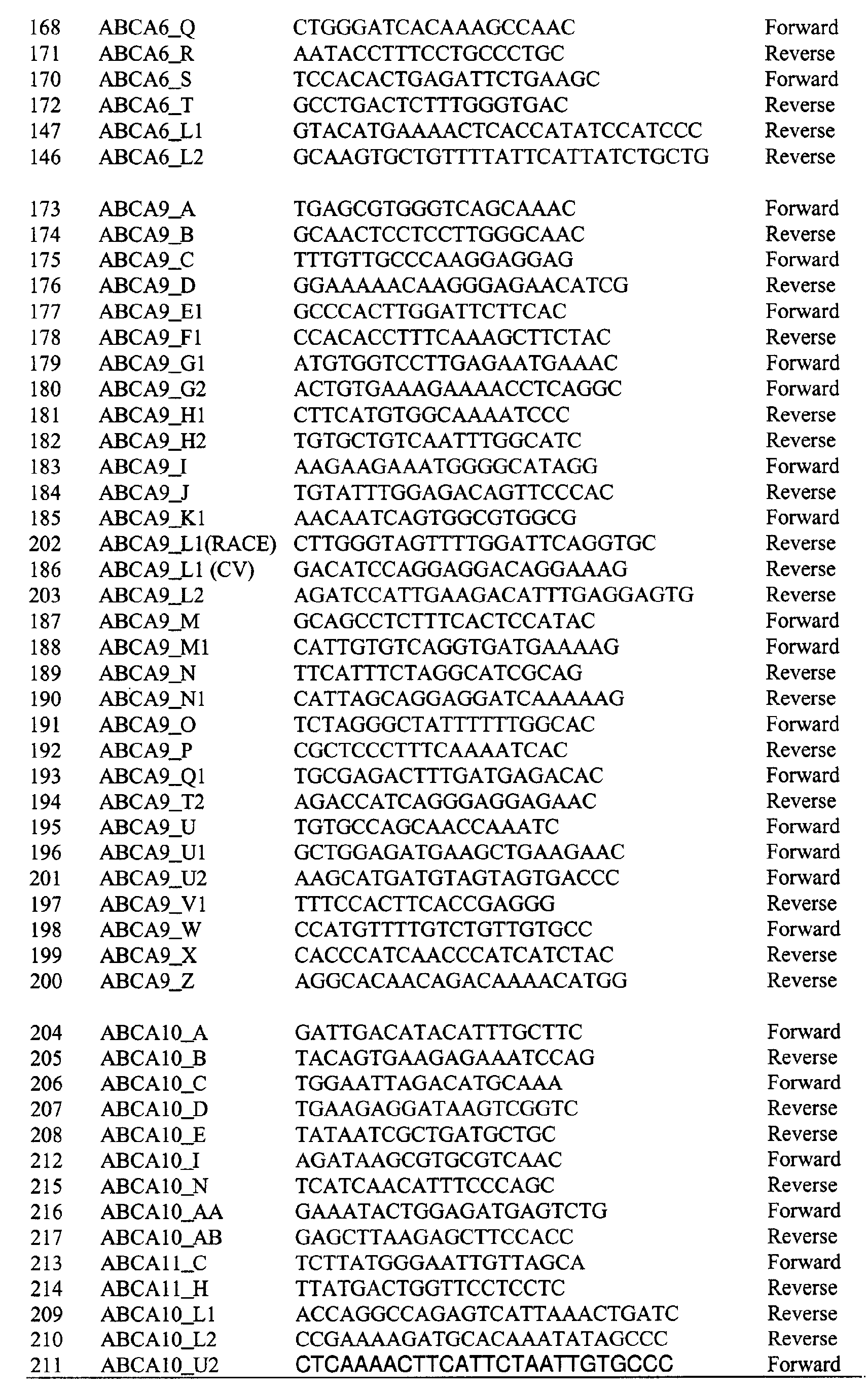
The profile of expression of the polynucleotides according to the present invention
is determined according to the protocols for PCR-coupled reverse transcription and
Northern blot analysis described in particular by Sambrook et al. (1989, Molecular cloning: a
laboratory manual. 2ed. Cold Spring Harbor Laboratory, Cold spring Harbor, New York).
For example, in the case of an analysis by reverse transcription, a pair of primers as
described above may be synthesized from a cDNA of the human ABCA5, ABCA6,
ABCA9, and ABCA10 genes. This primer pair may be used to detect the corresponding
ABCA5, ABCA6, ABCA9, and ABCA10 cDNAs.
The polymerase chain reaction (PCR) is carried out on cDNA templates
corresponding to retrotranscribed polyA+ mRNAs (Clontech). The reverse transcription to
cDNA is carried out with the enzyme SUPERSCRIPT II (GibcoBRL, Life Technologies)
according to the conditions described by the manufacturer. The polymerase chain reaction
is carried out according to standard conditions, in 20 µl of reaction mixture with 25 ng of
cDNA preparation. The reaction mixture is composed of 400 µM of each of the dNTPs,
2 units of Thermus aquaticus (Taq) DNA polymerase (Ampli Taq Gold; Perkin Elmer),
0.5 µM of each primer, 2.5 mM MgCl2, and PCR buffer. Thirty four PCR cycles
[denaturing 30 seconds at 94°C, annealing of 30 seconds divided up as follows during the
34 cycles: 64°C (2 cycles), 61°C (2 cycles), 58°C (2 cycles), and 55°C (28 cycles), and an
extension of one minute per kilobase at 72°C] are carried out after a first step of denaturing
at 94°C for 10 minutes using a Perkin Elmer 9700 thermocycler. The PCR reactions are
visualized on agarose gel by electrophoresis. The cDNA fragments obtained may be used
as probes for a Northern blot analysis and may also be used for the exact determination of
the nucleotide sequence.
To study mRNA expression of the ABCA 5, ABCA6, ABCA9, and ABCA10
genes, human MTN (Multiple Tissue Northern) blots (Human II 7759-1, Human 7760-1,
and human fetal II 7756-1, Clontech) were hybridized with specific pools of probes
consisting in two amplimers: ABCA5_A-ABCA5_B and 445188_C-445188_D for
ABC-A5, ABCA6_A-ABCA6_B and ABCA6_S-ABCA6_T for ABC-A6, ABCA9_A-ABCA9-B
and ABCA9_M1-ABCA9_N1 for ABC-A9. A unique RT-PCR product
obtained between ABCA10_I-ABCA10_B was used for ABC-A10 (Table 15).
PCR products were gel-purified using Qiaquick® column (Qiagen). 10-20 ng of
purified PCR product were radiolabelled with [α32P]dCTP (Amersham; 6000 Ci/mmol,
10 mCi/ml) by the random priming method (Rediprime kit; Amersham) according to the
manufacturer's protocol. Unincorporated radioactive nucleotides were separated from
the labelled probe by filtration on a G50 microcolumn (Pharmacia). Probe was
competed with 50 µg of denatured human Cot1 DNA during 2 hours at 65°C.
Prehybridization of Northern blot (6 hours at 42°C) with hybridization solution (5x
SSPE, 5x Denhardt's, 2.5% Dextran, 0.5% SDS, 50% formamide, 100 µg/ml denaturated
salmon sperm DNA, 40 µg denatured human DNA) was followed by hybridization with
radiolabelled probe (2.106 cpm/ml hybridization solution) and 40 µg of denatured human
DNA. Filters were washed in 2x SSC for 30 min at room temperature, twice in 2x SSC-0.1%
SDS for 10 min at 65°C and twice in 1x SSC-0.1% SDS for 10 min at 65°C.
Northern blot were analyzed after overnight exposure on the Storm (Molecular Dynamics,
Sunnyvale, CA). The human transferrin probe was used to control the amount of RNA in
each lane of the membrane.
The ABCA5, ABCA6, ABCA9, or ABCA10 genes may be expressed in
mammalian cells. A typical eukaryotic expression vector contains a promoter which allows
the initiation of the transcription of the mRNA, a sequence encoding the protein, and the
signals required for the termination of the transcription and for the polyadenylation of the
transcript. It also contains additional signals such as enhancers, the Kozak sequence and
sequences necessary for the splicing of the mRNA. An effective transcription is obtained
with the early and late elements of the SV40 virus promoters, the retroviral LTRs or the
CMV virus early promoter. However, cellular elements such as the actin promoter may also
be used. Many expression vectors may be used to carry out the present invention, an
example of such a vector is pcDNA3 (Invitrogen).
The normal ABCA5, ABCA6, ABCA9, or ABCA10 polypeptides encoded by
complete corresponding cDNAs whose isolation is described in Example 2, or the mutated
ABCA5, ABCA6, ABCA9, or ABCA10 polypeptides whose complete cDNA may also be
obtained according to the techniques described in Example 2, may be easily produced in a
bacterial or insect cell expression system using the baculovirus vectors or in mammalian
cells with or without the vaccinia virus vectors. All the methods are now widely described
and are known to persons skilled in the art. A detailed description thereof will be found for
example in F. Ausubel et al. (1989, Current Protocols in Molecular Biology, Green Publishing
Associates and Wiley Interscience, N.Y).
The antibodies in the present invention may be prepared by various methods
(Current Protocols In Molecular Biology Volume 1 edited by Frederick M. Ausubel, Roger
Brent, Robert E. Kingston, David D. Moore, J.G. Seidman, John A. Smith, Kevin Struhl -
Massachusetts General Hospital Harvard Medical School, chapter 11, 1989). For example,
the cells expressing a polypeptide of the present invention are injected into an animal in
order to induce the production of serum containing the antibodies. In one of the methods
described, the proteins are prepared and purified so as to avoid contaminations. Such a
preparation is then introduced into the animal with the aim of producing polyclonal antisera
having a higher activity.
In the preferred method, the antibodies of the present invention are monoclonal
antibodies. Such monoclonal antibodies may be prepared using the hybridoma technique
(Köhler et al, 1975, Nature, 256:495 ; Köhler et al, 1976, Eur. J. Immunol. 6:292; Köhler et
al, 1976, Eur. J. Immunol., 6:511; Hammeling et al., 1981, Monoclonal Antibodies and T-Cell
Hybridomas, Elsevier, N.Y., pp. 563-681). In general, such methods involve
immunizing the animal (preferably a mouse) with a polypeptide or better still with a cell
expressing the polypeptide. These cells may be cultured in a suitable tissue culture
medium. However, it is preferable to culture the cells in an Eagle medium (modified Earle)
supplemented with 10% fetal bovine serum (inactivated at 56°C) and supplemented with
about 10 g/l of nonessential amino acids, 1000 U/ml of penicillin and about 100 µg/ml of
streptomycin.
The splenocytes of these mice are extracted and fused with a suitable myeloma cell
line. However, it is preferable to use the parental myeloma cell line (SP2O) available from
the ATCC. After fusion, the resulting hybridoma cells are selectively maintained in HAT
medium and then cloned by limiting dilution as described by Wands et al. (1981,
Gastroenterology, 80:225-232). The hybridoma cells obtained after such a selection are
tested in order to identify the clones secreting antibodies capable of binding to the
polypeptide.
Moreover, other antibodies capable of binding to the polypeptide may be produced
according to a 2-stage procedure using anti-idiotype antibodies such a method is based on
the fact that the antibodies are themselves antigens and consequently it is possible to obtain
an antibody recognizing another antibody. According to this method, the antibodies
specific for the protein are used to immunize an animal, preferably a mouse. The
splenocytes of this animal are then used to produce hybridoma cells, and the latter are
screened in order to identify the clones which produce an antibody whose capacity to bind
to the specific antibody-protein complex may be blocked by the polypeptide. These
antibodies may be used to immunize an animal in order to induce the formation of
antibodies specific for the protein in a large quantity.
It is preferable to use Fab and F(ab')2 and the other fragments of the antibodies of
the present invention according to the methods described here. Such fragments are typically
produced by proteolytic cleavage with the aid of enzymes such as Papain (in order to
produce the Fab fragments) or Pepsin (in order to produce the F(ab')2 fragments).
Otherwise, the secreted fragments recognizing the protein may be produced by applying the
recombinant DNA or synthetic chemistry technology.
For the in vivo use of antibodies in humans, it would be preferable to use
"humanized" chimeric monoclonal antibodies. Such antibodies may be produced using
genetic constructs derived from hybridoma cells producing the monoclonal antibodies
described above. The methods for producing the chimeric antibodies are known to persons
skilled in the art (for a review, see : Morrison (1985. Science 229:1202); Oi et al., (1986,
Biotechnique, 4:214); Cabilly et al., US patent No. 4,816,567 ; Taniguchi et al., EP
171496; Morrison et al., EP 173494; Neuberger et al., WO 8601533 ; Robinson et al.,
WO 8702671; Boulianne et al ; (1984, Nature, 312:643); and Neuberger et al., (1985,
Nature, 314:268).
The detection of polymorphisms or of mutations in the sequences of the transcripts
or in the genomic sequence of the ABCA5, ABCA6, ABCA9, or ABCA10 genes may be
carried out according to various protocols. The preferred method is direct sequencing.
For patients from whom it is possible to obtain an mRNA preparation, the preferred
method consists in preparing the cDNAs and sequencing them directly. For patients for
whom only DNA is available, and in the case of a transcript where the structure of the
corresponding gene is unknown or partially known, it is necessary to precisely determine
its intron-exon structure as well as the genomic sequence of the corresponding gene. This
therefore involves, in a first instance, isolating the genomic DNA BAC or cosmid clone(s)
corresponding to the transcript studied, sequencing the insert of the corresponding clone(s)
and detemrining the intron-exon structure by comparing the cDNA sequence to that of the
genomic DNA obtained.
The technique of detection of mutations by direct sequencing consists in comparing
the genomic sequences of the ABCA5, ABCA6, ABCA9, or ABCA10 gene obtained from
homozygotes for the disease or from at least 8 individuals (4 individuals affected by the
pathology studied and 4 individuals not affected) or from at least 32 unrelated individuals
from the studied population. The sequence divergences constitute polymorphisms. All
those modifying the amino acid sequence of the wild-type protein may be mutations
capable of affecting the function of said protein which it is preferred to consider more
particularly for the study of cosegregation of the mutation and of the disease (denoted
genotype-phenotype correlation) in the pedigree, or of a pharmacological response to a
therapeutic molecule in the pharmacogenomic studies, or in the studies of case/control
association for the analysis of the sporadic cases.
Among the mutations identified according to the method described in Example 7,
all those associated with the disease phenotype are capable of being causal. Validation of
these results is made by sequencing the gene in all the affected individuals and their
relations (whose DNA is available).
Moreover, Northern blot or RT-PCR analysis, according to the methods described
in Example 2, using RNA specific to affected or nonaffected individuals makes it possible
to detect notable variations in the level of expression of the gene studied, in particular in
the absence of transcription of the gene.
Total RNA (500 ng) isolated from a human cell ( for example, placental tissue,
Clontech, Palo Alto, CA, USA, or THP1 cells) may be used as source for the synthesis of
the cDNA of the human ABCA5, ABCA6, ABCA9, and ABCA10 genes. Methods to
reverse transcribe mRNA to cDNA are well known in the art. For example, one may use
the system "Superscript one step RT-PCR (Life Technologies, Gaithersburg, MD, USA).
Oligonucleotide primers specific for ABCA5, ABCA6, ABCA9, and ABCA10
cDNAs may be used for this purpose, containing sequences as set forth in any of SEQ ID
NO: 127-217. These oligonucleotide primers may be synthesized by the phosphoramidite
method on a DNA synthesizer of the ABI 394 type (Applied Biosystems, Foster City, CA,
USA).
Sites recognized by the restriction enzyme NotI may be incorporated into the
amplified ABCA5, ABCA6, ABCA9, and ABCA10 cDNAs to flank the cDNA region
desired for insertion into the recombinant vector by a second amplification step using 50 ng
of human ABCA5, ABCA6, ABCA9, and ABCA10 cDNAs as template, and 0.25 µM of
the ABCA5, ABCA6, ABCA9, and ABCA10 specific oligonucleotide primers used above
containing, at their 5' end, the site recognized by the restriction enzyme NotI (5'-GCGGCCGC-3'),
in the presence of 200 µM of each of said dideoxynucleotides dATP,
dCTP, dTTP and dGTP as well as the Pyrococcus furiosus DNA polymerase (Stratagene,
Inc. La Jolla, CA, USA).
The PCR reaction may be carried out over 30 cycles each comprising a step of
denaturation at 95°C for one minute, a step of renaturation at 50°C for one minute and a
step of extension at 72°C for two minutes, in a thermocycler apparatus for PCR (Cetus
Perkin Elmer Norwalk, CT, USA).
The human ABCA5, ABCA6, ABCA9, and ABCA10 cDNA inserts may then be
cloned into the NotI restriction site of an expression vector, for example, the pCMV vector
containing a cytomegalovirus (CMV) early promoter and an enhancer sequence as well as
the SV40 polyadenylation signal (Beg et al., 1990, PNAS, 87:3473; Applebaum-Boden,
1996, JCI 97), in order to produce an expression vector designated pABCA5, pABCA6,
pABCA9, and pABCA10.
The sequence of the cloned cDNA can be confirmed by sequencing on the two
strands using the reaction set "ABI Prism Big Dye Terminator Cycle Sequencing ready"
(marketed by Applied Biosystems, Foster City, CA, USA) in a capillary sequencer of the
ABI 310 type (Applied Biosystems, Foster City, CA, USA).
The β-galactosidase cDNA of the expression vector pCMV-β (Clontech, Palo Alto,
CA, USA, Gene Bank Accession No. UO2451) may be deleted by digestion with the
restriction endonuclease NotI and replaced with a multiple cloning site containing, from the
5' end to the 3' end, the following sites: NotI, AscI, RsrII, AvrII, SwaI, and NotI, cloned at
the region of the NotI restriction site. The sequence of this multiple cloning site is:
5'-CGGCCGCGGCGCGCCCGGACCGCCTAGGATTTAAATCGCGGCCCGCG-3'.
5'-CGGCCGCGGCGCGCCCGGACCGCCTAGGATTTAAATCGCGGCCCGCG-3'.
The DNA fragment between the EcoRI and SanI sites of the modified expression
vector pCMV may be isolated and cloned into the modified XbaI site of the shuttle vector
pXCXII (McKinnon et al., 1982, Gene, 19:33; McGrory et al., 1988, Virology, 163:614).
A multiple cloning site comprising, from the 5' end to the 3 end the XbaI, EcoRI,
SfiI, PmeI, NheI, SrfI, PacI, Sail and XbaI restriction sites having the sequence:
5'CTCTAGAATTCGGCCTCCGTGGCCGTTTAAACGCTAGCGCCCGGGCTTAATT AAGTCGACTCTAGAGC-3', may be inserted at the level of the XbaI site (nucleotide at position 3329) of the vector pXCXII (McKinnon et al., 1982, Gene 19:33; McGrory et al., 1988, Virology, 163:614).
5'CTCTAGAATTCGGCCTCCGTGGCCGTTTAAACGCTAGCGCCCGGGCTTAATT AAGTCGACTCTAGAGC-3', may be inserted at the level of the XbaI site (nucleotide at position 3329) of the vector pXCXII (McKinnon et al., 1982, Gene 19:33; McGrory et al., 1988, Virology, 163:614).
The EcoRI-SalI DNA fragment isolated from the modified vector pCMV-β
containing the CMV promoter/enhancer, the donor and acceptor splicing sites of FV40 and
the polyadenylation signal of FV40 may then be cloned into the EcoRI-SalI site of the
modified shuttle vector pXCX, designated pCMV-11.
The human ABCA5, ABCA6, ABCA9, and ABCA10 cDNAs are obtained by an
RT-PCR reaction, as described above, and cloned at the level of the NotI site into the
vector pCMV-12, resulting in the obtaining of the vector pCMV-ABCA5, pCMV-ABCA6,
pCMV-ABCA9, and pCMV-ABCA10.
The recombinant adenovirus containing the human ABCA5, ABCA6, ABCA9, and
ABCA10 cDNAs may be constructed according to the technique described by McGrory et
al. (1988, Virology, 163:614).
Briefly, the vector pAD12-ABCA is cotransfected with the vector tGM17 according
to the technique of Chen and Okayama (1987, Mol Cell Biol., 7:2745-2752).
Likewise, the vector pAD12-Luciferase was constructed and cotransfected with the
vector pJM17.
The recombinant adenoviruses are identified by PCR amplification and subjected to
two purification cycles before a large-scale amplification in the human embryonic kidney
cell line HEK 293 (American Type Culture Collection, Rockville, MD, USA).
The infected cells are collected 48 to 72 hours after their infection with the
adenoviral vectors and subjected to five freeze-thaw lysing cycles.
The crude lysates are extracted with the aid of Freon (Halocarbone 113, Matheson
Product, Scaucus, N.J. USA), sedimented twice in cesium chloride supplemented with
0.2% murine albumine (Sigma Chemical Co., St Louis, MO, USA) and dialysed
extensively against buffer composed of 150 nM NaCl, 10 mM Hepes (pH 7,4), 5 mM KCl,
1 mM MgCl2, and 1 mM CaCl2.
The recombinant adenoviruses are stored at -70°C and titrated before their
administration to animals or their incubation with cells in culture.
The absence of wild-type contaminating adenovirus is confirmed by screening with
the aid of PCR amplification using oligonucleotide primers located in the structural portion
of the deleted region.
Polyclonal antibodies specific for a human ABCA5, ABCA6, ABCA9, and
ABCA10 polypeptides may be prepared as described above in rabbits and chicks by
injecting a synthetic polypeptide fragment derived from an ABC1 protein, comprising all or
part of an amino acid sequence as described in SEQ ID NO:5-8. These polyclonal
antibodies are used to detect and/or quantify the expression of the human ABCA5,
ABCA6, ABCA9, and ABCA10 genes in cells and animal models by immunoblotting
and/or immunodetection.
The biological activity of ABCA5-6, 9-10 may be monitored by quantifying the
cholesterol fluxes induced by apoA-I using cells transfected with the vector pCMV-ABCI
which have been loaded with cholesterol (Remaley et al., 1997, ATVB, 17:1813).
Cells of the HEK293 line and of the COS-7 line (American Tissue Culture
Collection, Bethesda, MD, USA), as well as fibroblasts in primary culture derived from
Tangier patients or from patients suffering from hypo-alphalipoproteinemia are transfected
with the expression vector pCMV-ABCA5, pCMV-ABCA6, pCMV-ABCA9, and pCMV-ABCA10
(5-25 µg) using Lipofectamine (BRL, Gaithersburg, MD, USA) or by
coprecipitation with the aid of calcium chloride (Chen et al., 1987, Mol Cell Biol., 7:2745-2752).
These cells may also be infected with the vector pABCA5-AdV, pABCA6-AdV,
pABCA9-AdV, and pABCA10-AdV (Index of infection, MOI=10).
The expression of human ABCA5-6, 9-10 may be monitored by immunoblotting as
well as by quantification of the efflux of cholesterol induced by apoA-1 using transfected
and/or infected cells.
An appropriate volume (100 to 300 µl) of a medium containing the purified
recombinant adenovirus (pABCA-AdV or pLucif-AdV) containing from 108 to 109 lysis
plaque-forming units (pfu) are infused into the Saphenous vein of mice (C57BL/6, both
control mice and models of transgenic or knock-out mice) on day 0 of the experiment.
The evaluation of the physiological role of the ABCA5, ABCA6, ABCA9, and
ABCA10 proteins in the transport of cholesterol or inflammatory lipid substances is carried
out by determining the total quantity of cholesterol or appropriate inflammatory lipid
substances before (day zero) and after ( days 2, 4, 7, 10, 14) the administration of the
adenovirus.
Kinetic studies with the aid of radioactively labelled products are carried out on day
5 after the administration of the vectors rLucif-AdV and rABCA-AdV in order to evaluate
the effect of the expression of ABCA5, ABCA6, ABCA9, and ABCA10 on the transport of
cholesterol and inflammatory lipid substances.
Furthermore, transgenic mice and rabbits overexpressing the ABCA5, ABCA6,
ABCA9, and ABCA10 genes may be produced, in accordance with the teaching of
Vaisman (1995) and Hoeg (1996) using constructs containing the human ABCA5, ABCA6,
ABCA9, and ABCA10 cDNAs under the control of endogenous promoters such as
ABCA5, ABCA6, ABCA9, and ABCA10, or CMV or apoE.
The evaluation of the long-term effect of the expression of ABCA5, ABCA6,
ABCA9, and ABCA10 on the kinetics of the lipids involved in the mediation of the
inflammation may be carried out as described above.
The present invention is not to be limited in scope by the specific embodiments
described herein. Indeed, various modifications of the invention in addition to those
described herein will become apparent to those skilled in the art from the foregoing
description and the accompanying figures. Such modifications are intended to fall within
the scope of the appended claims.


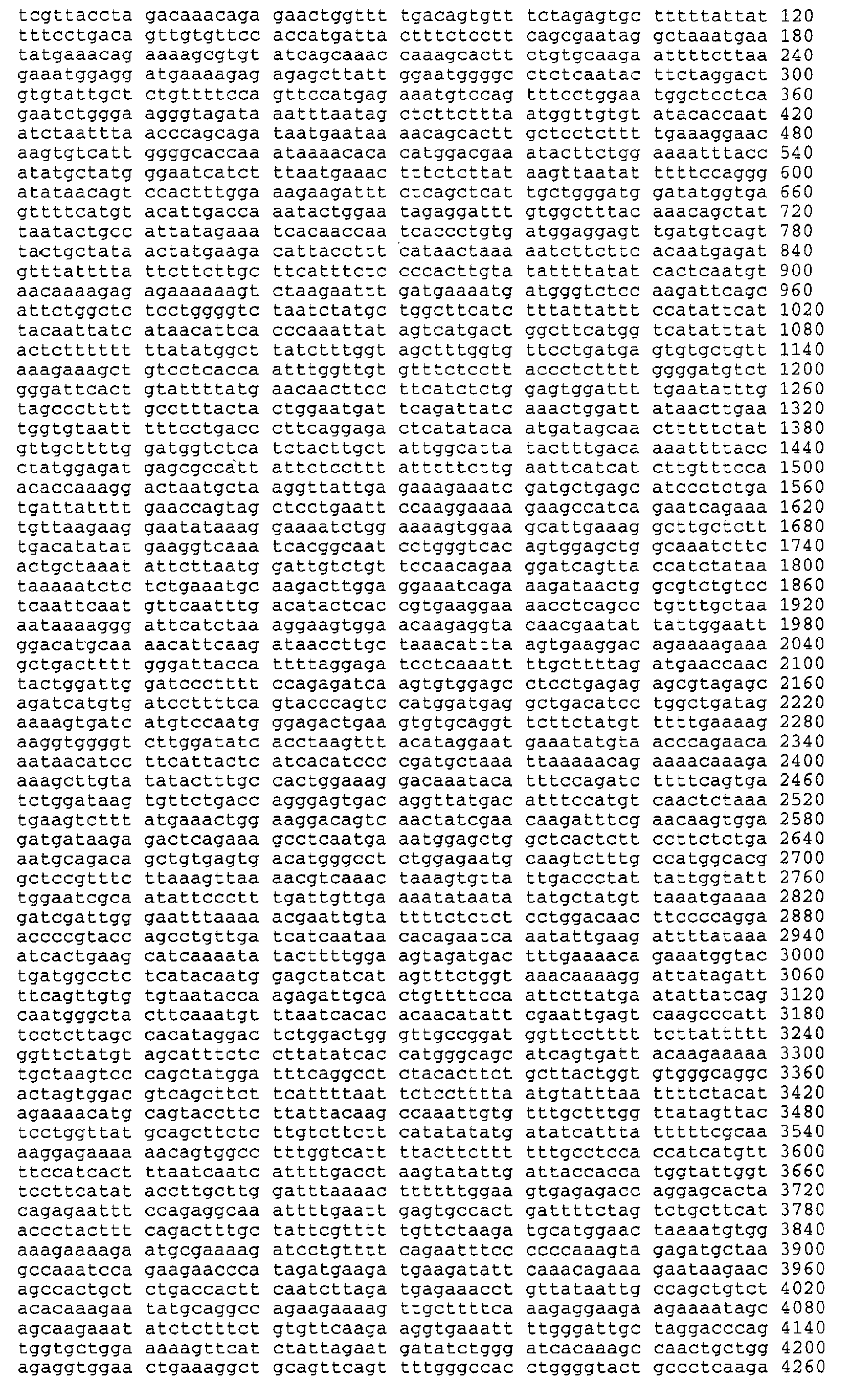

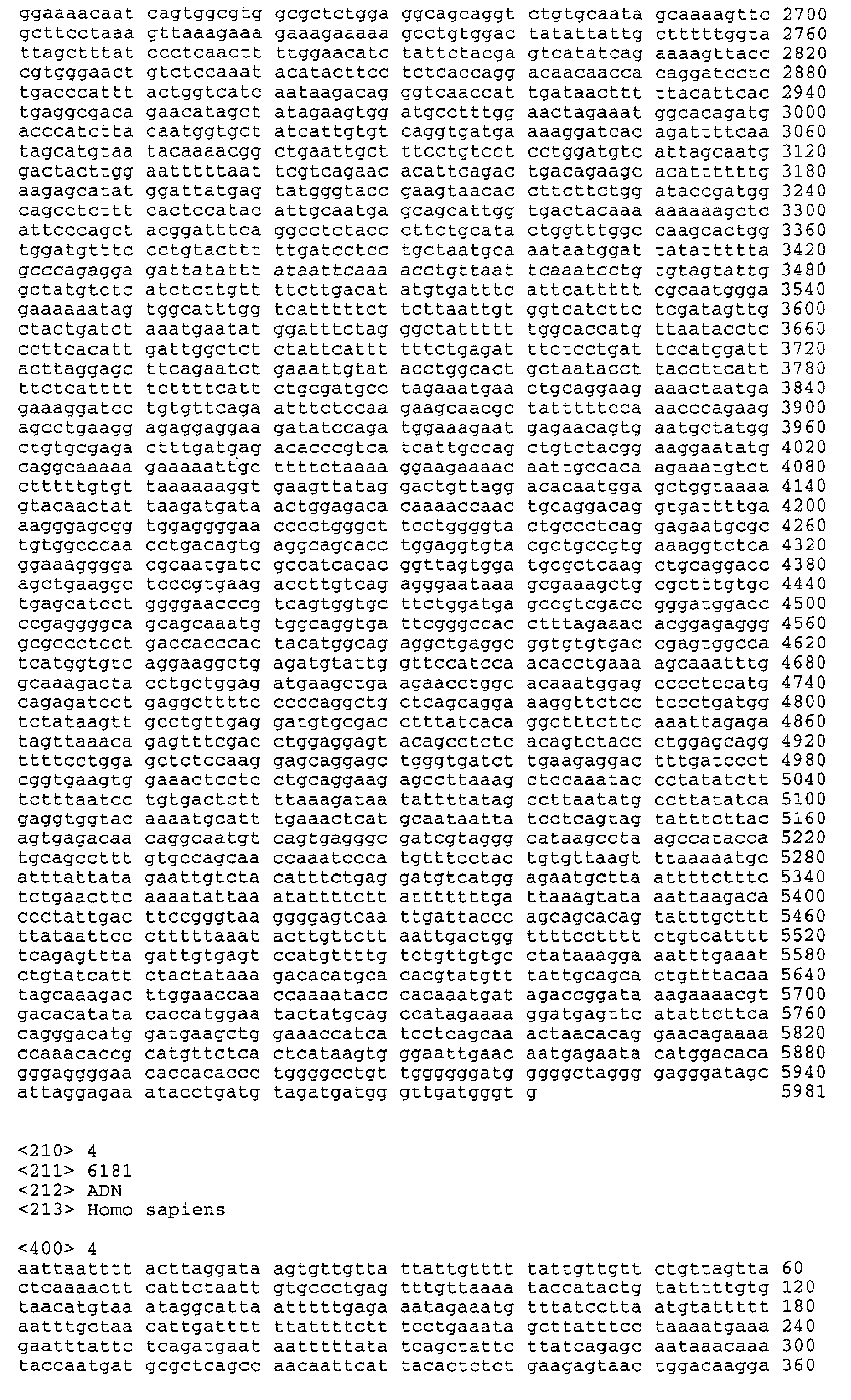


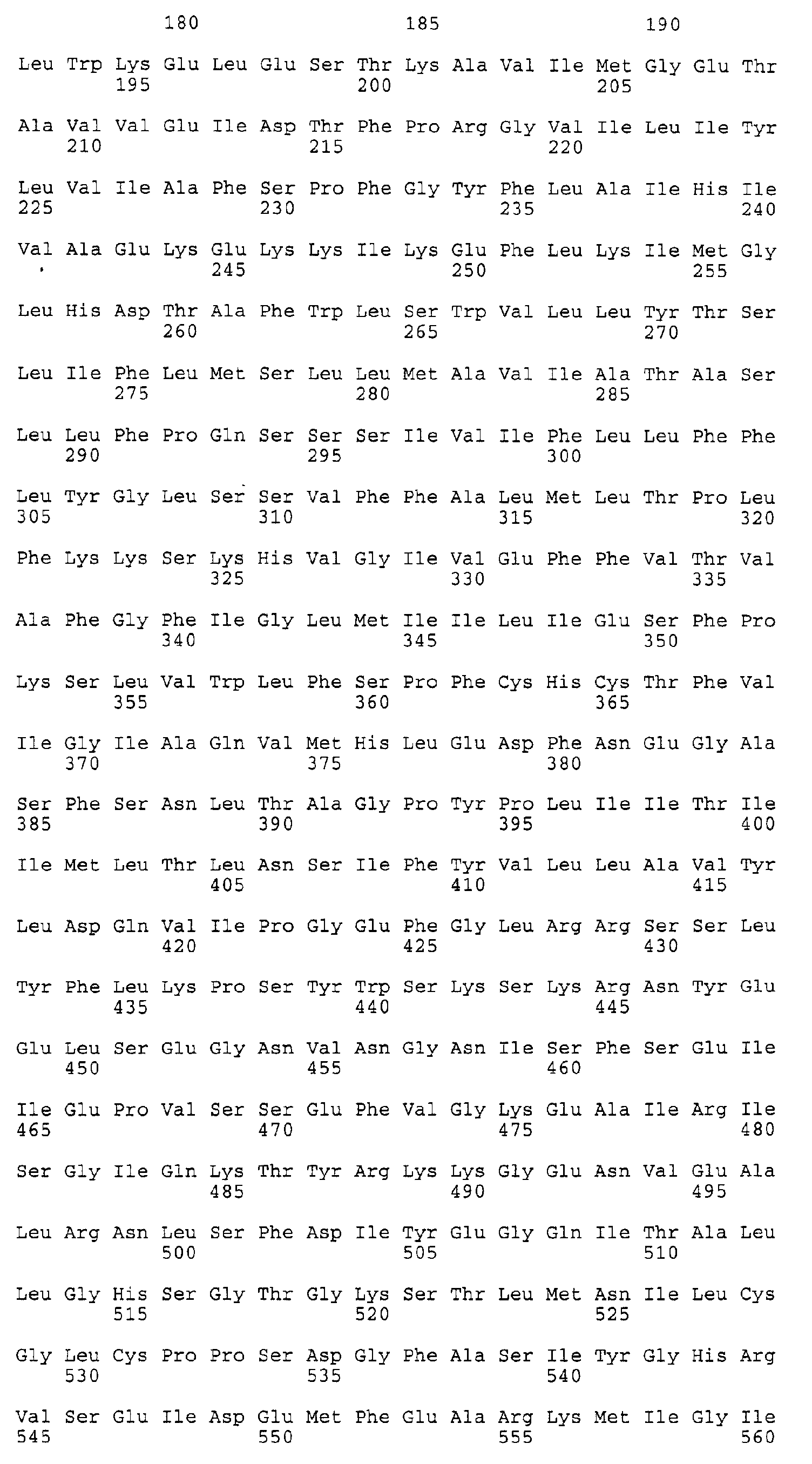

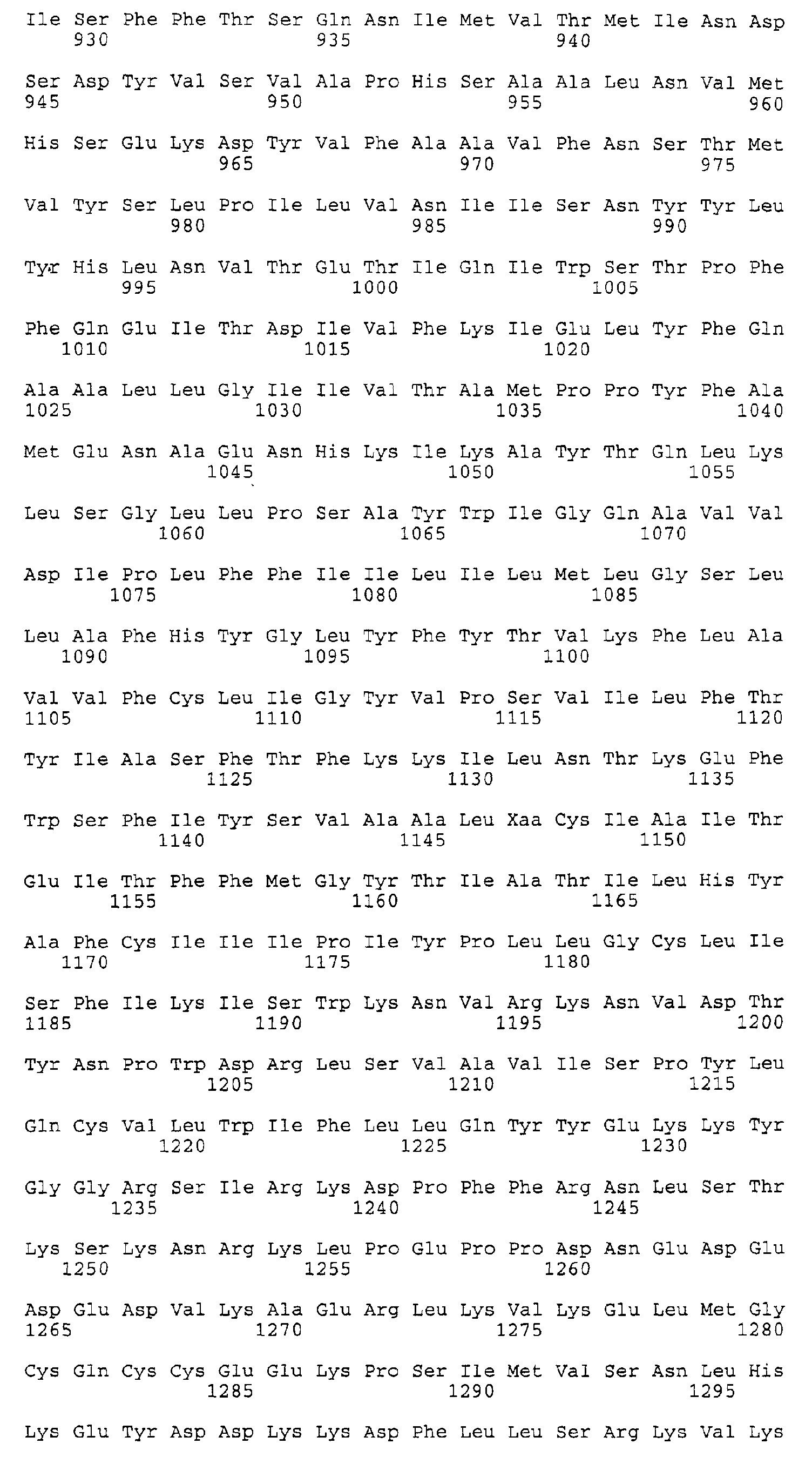


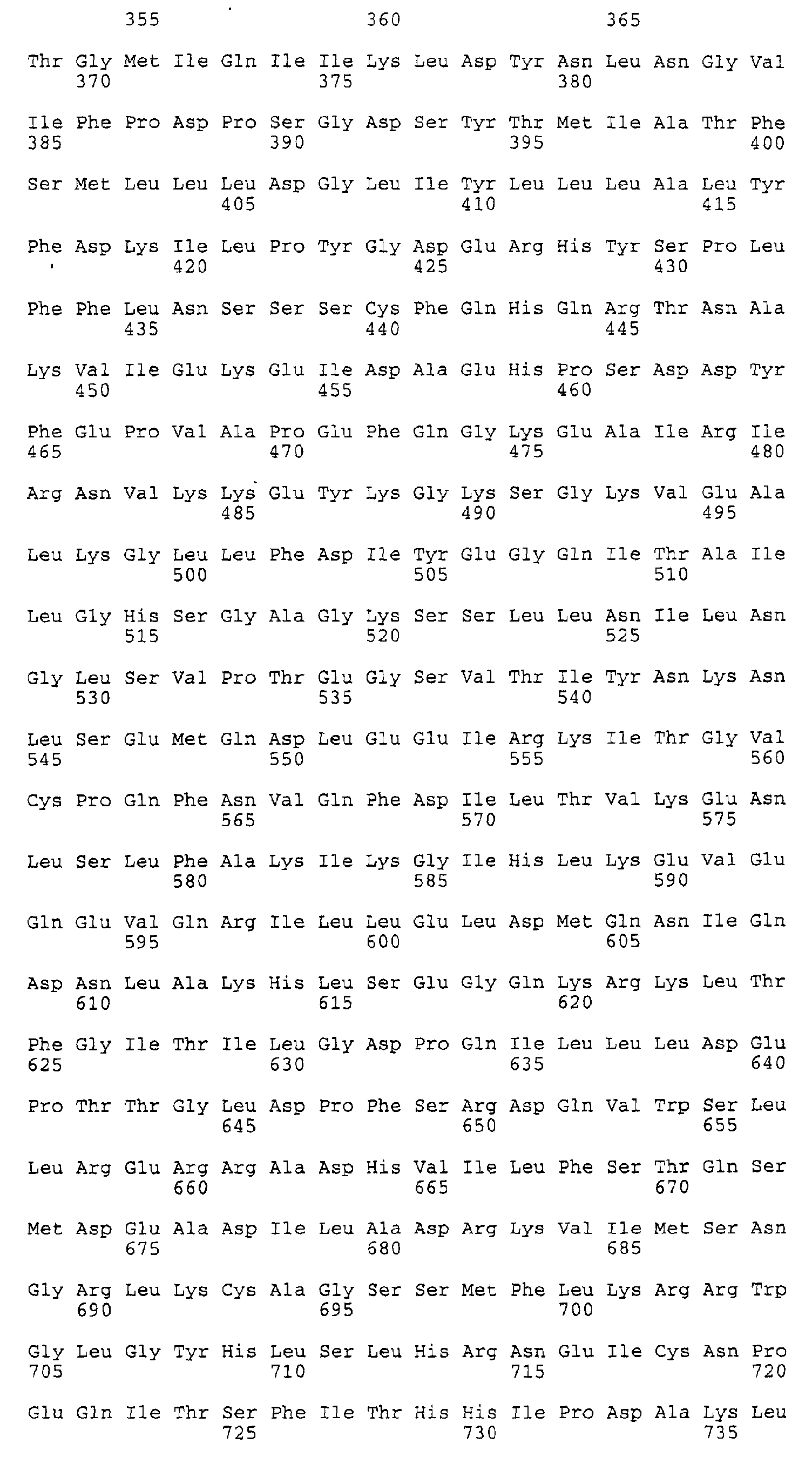

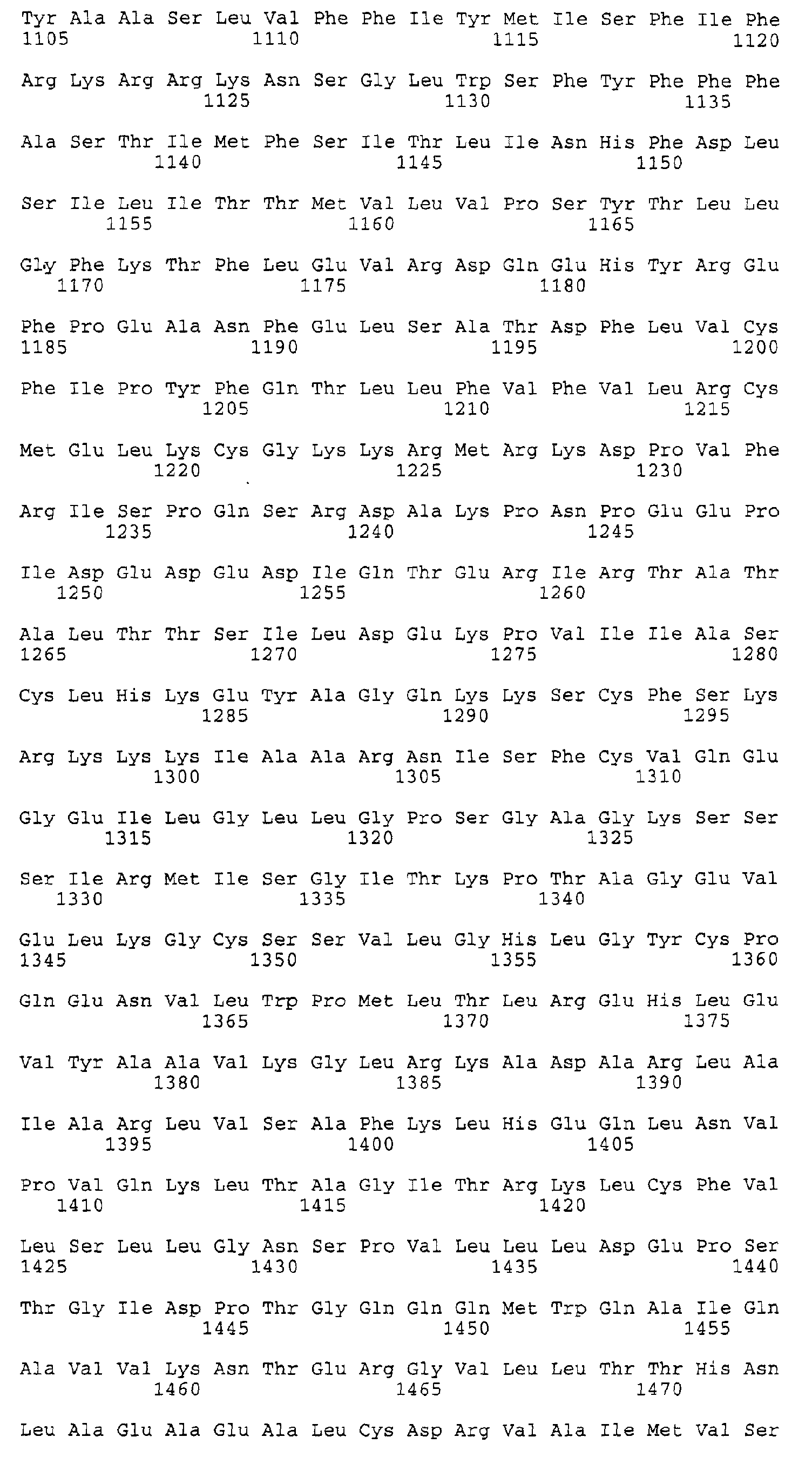


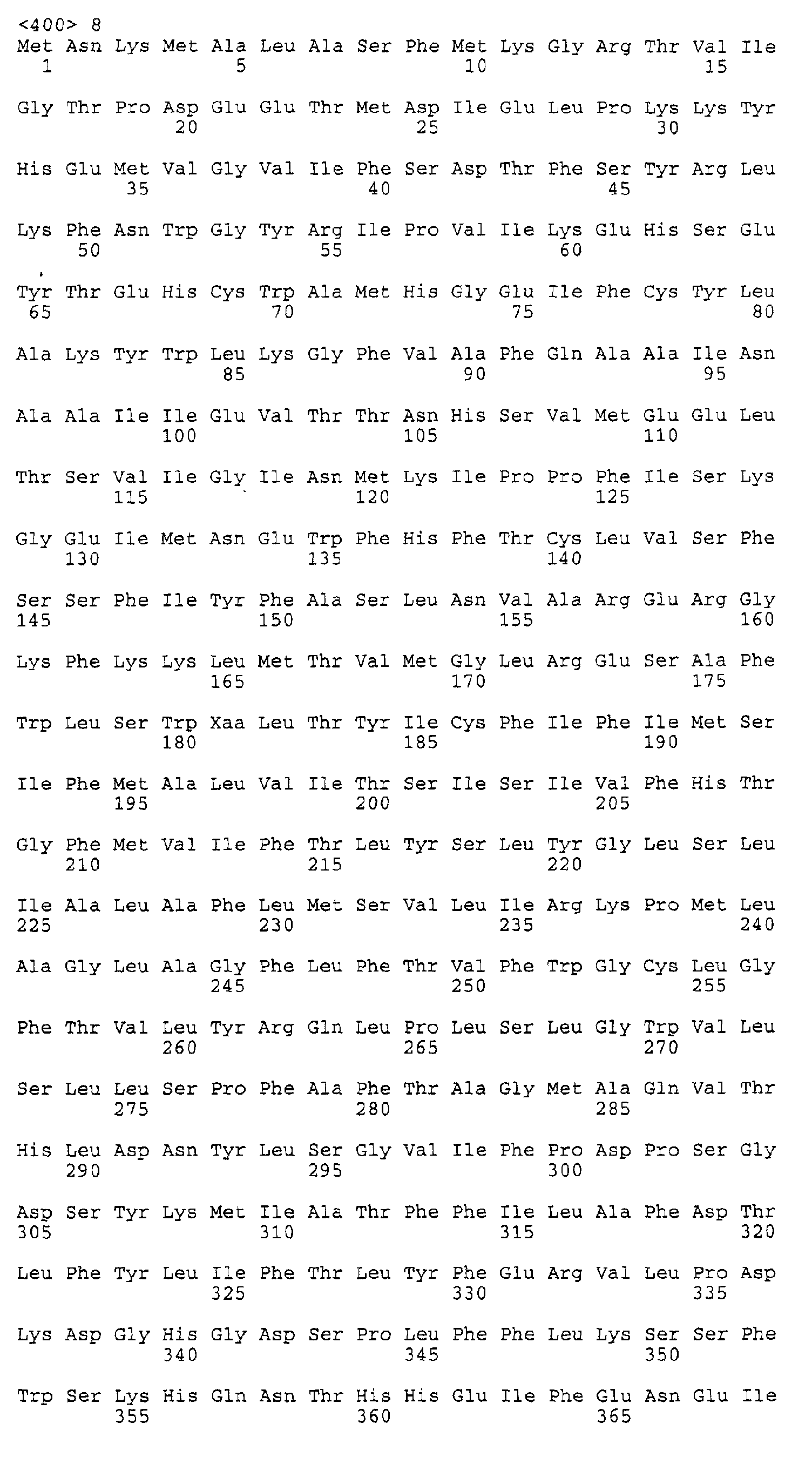


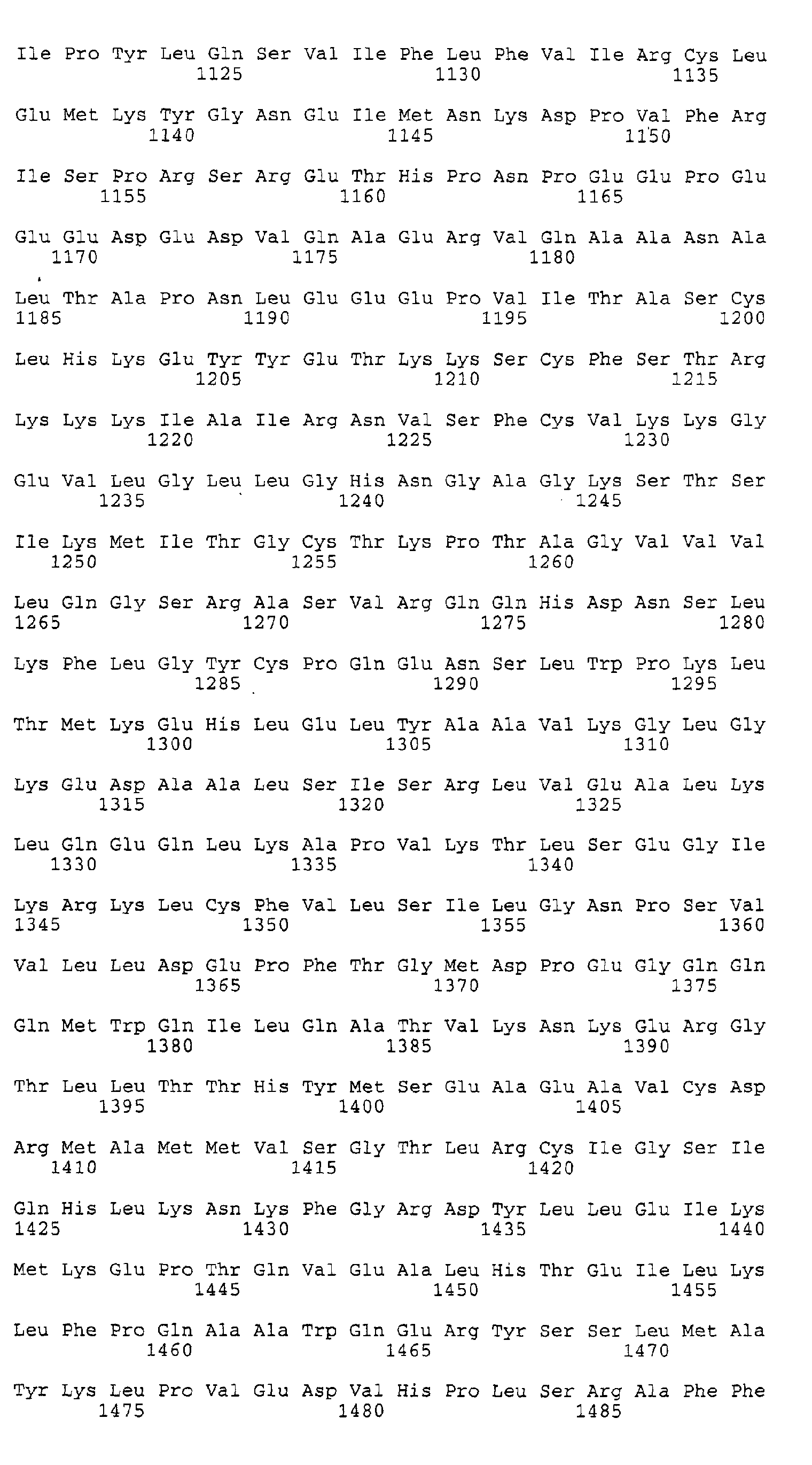
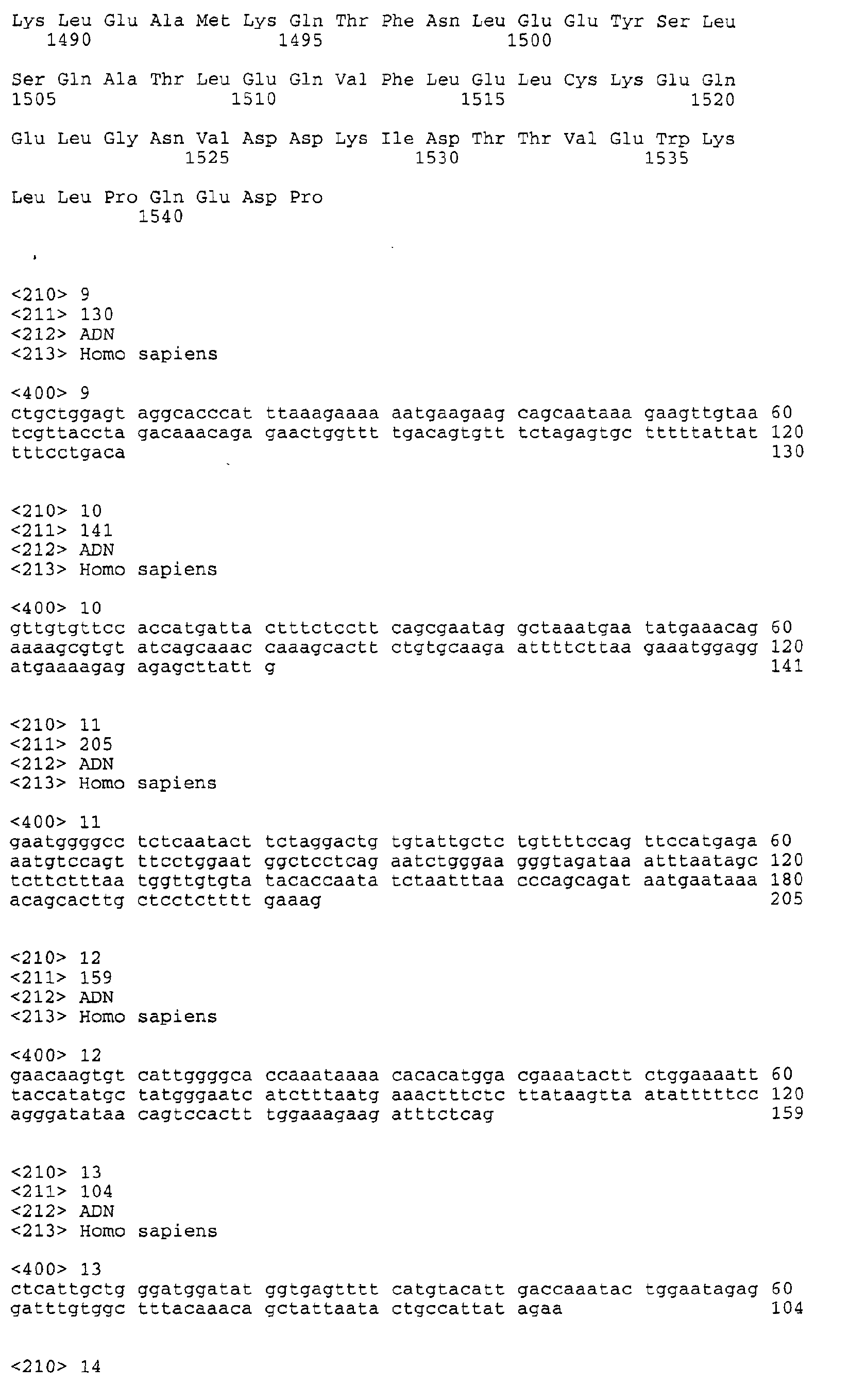


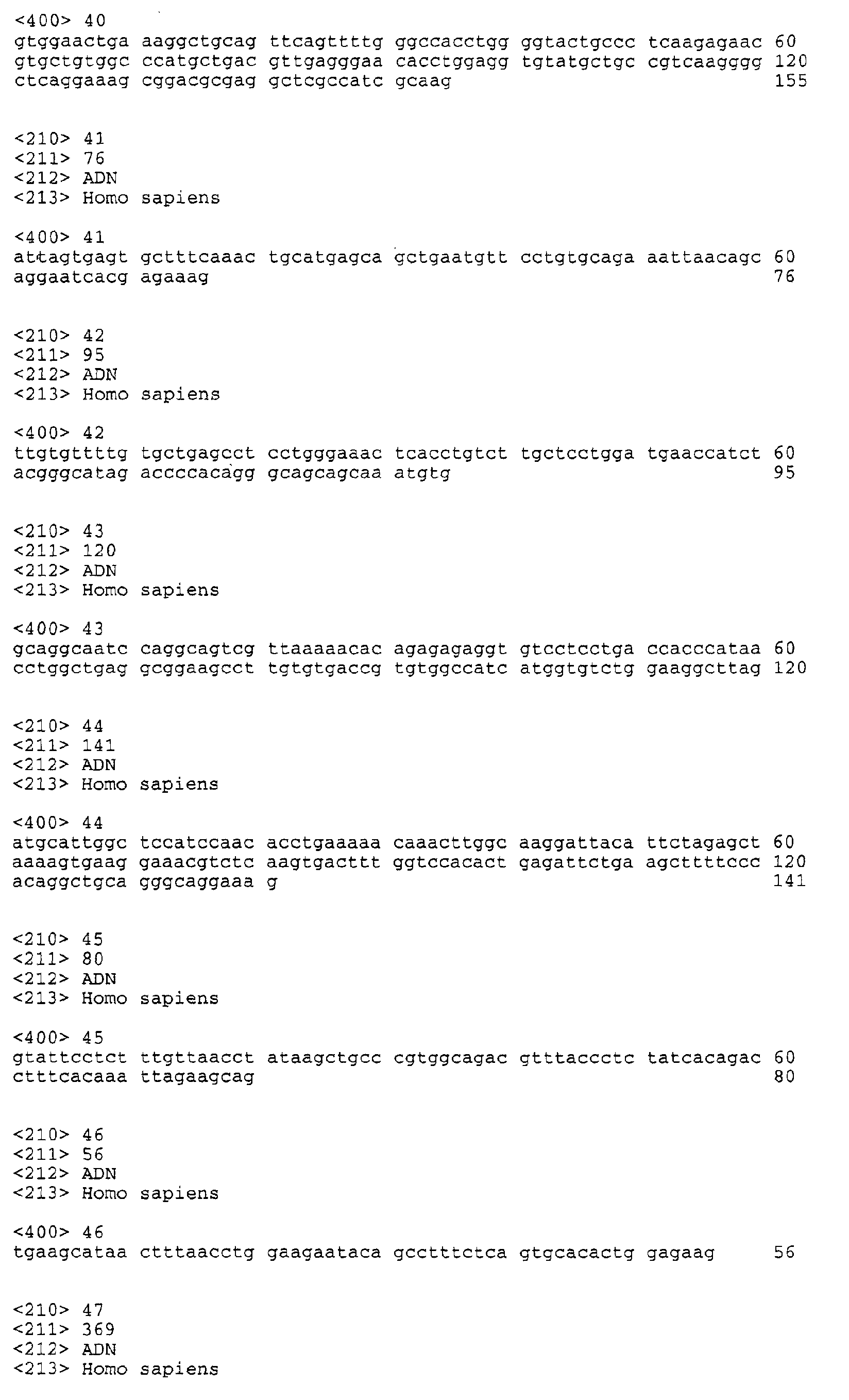
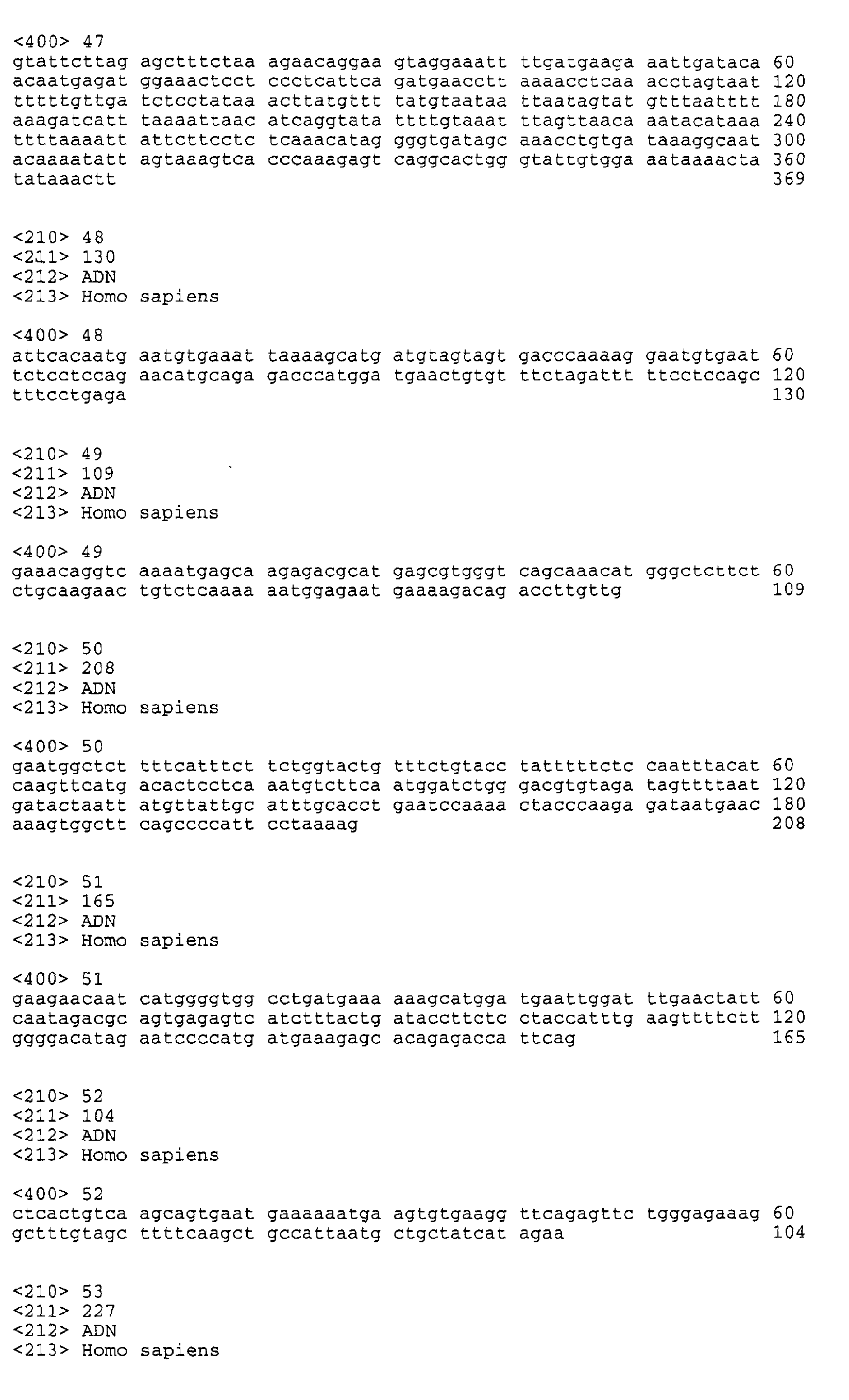
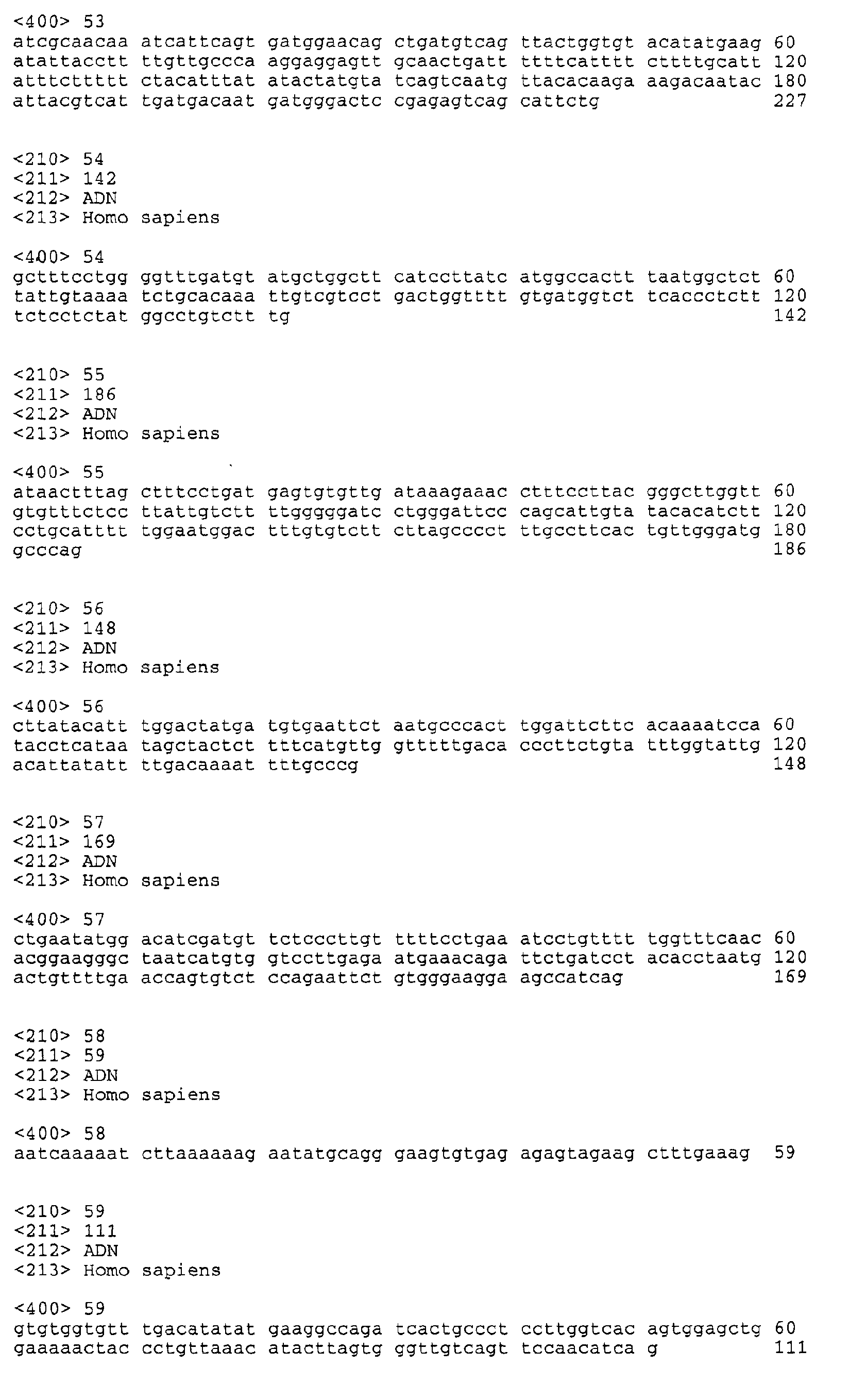
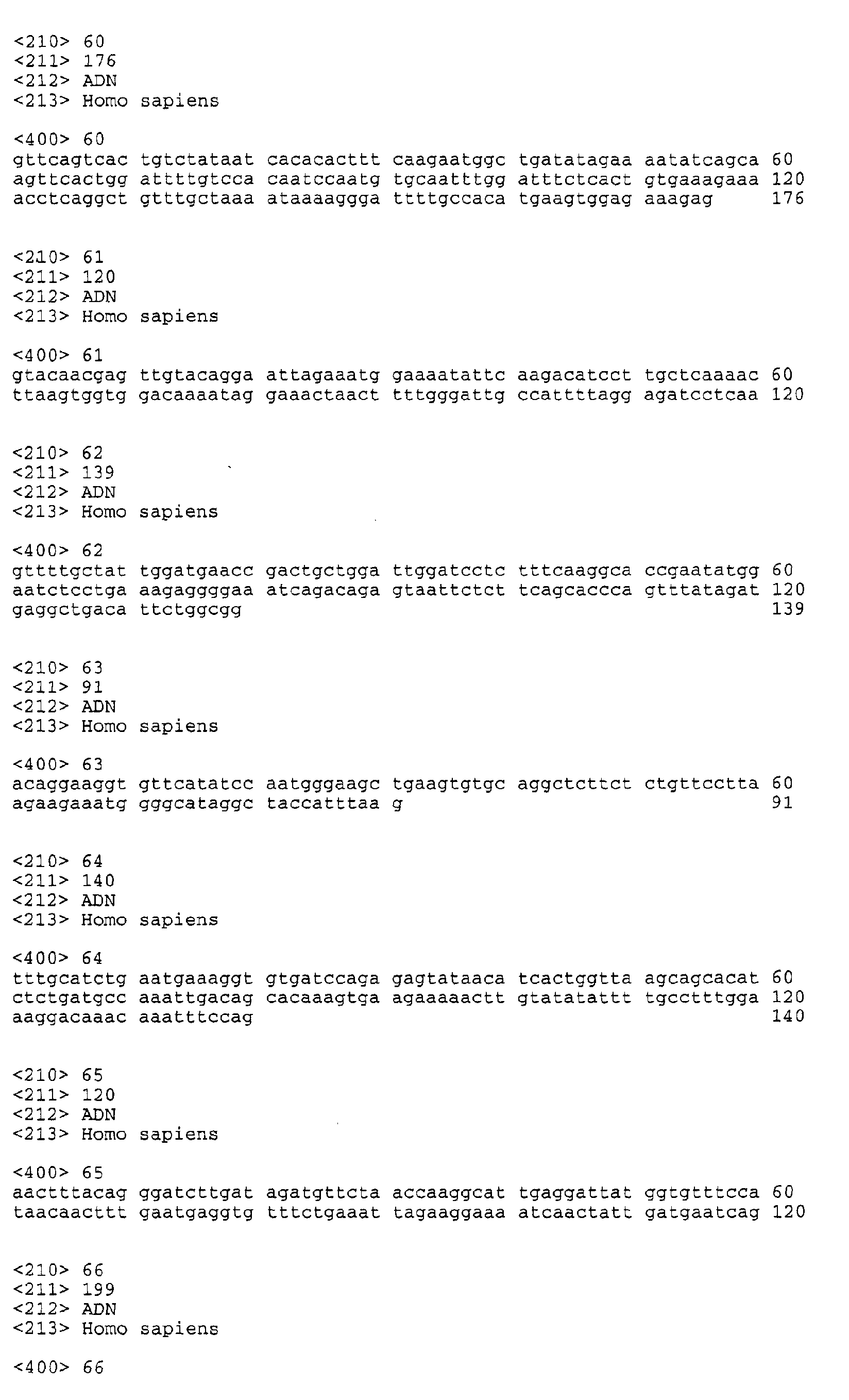
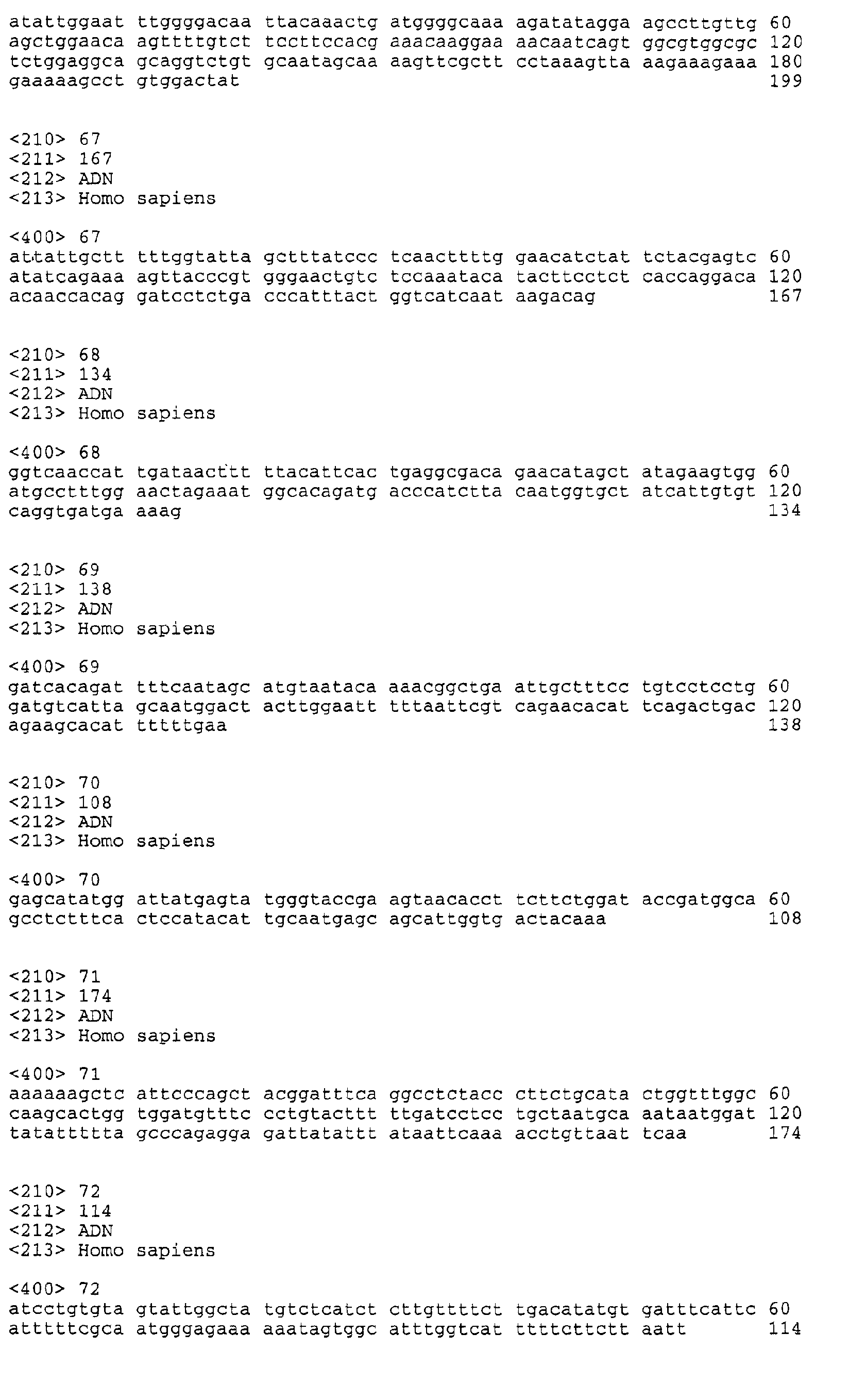
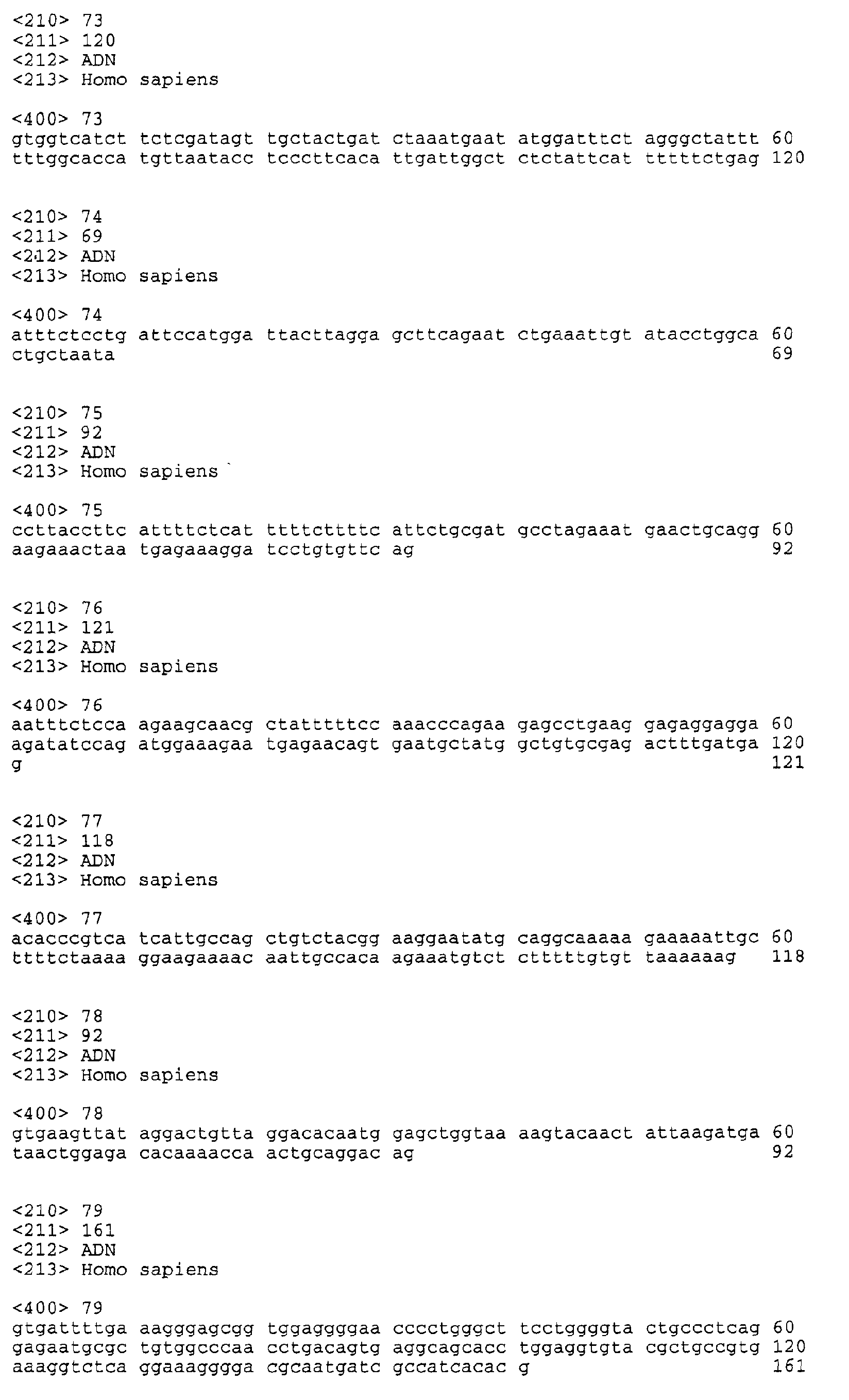
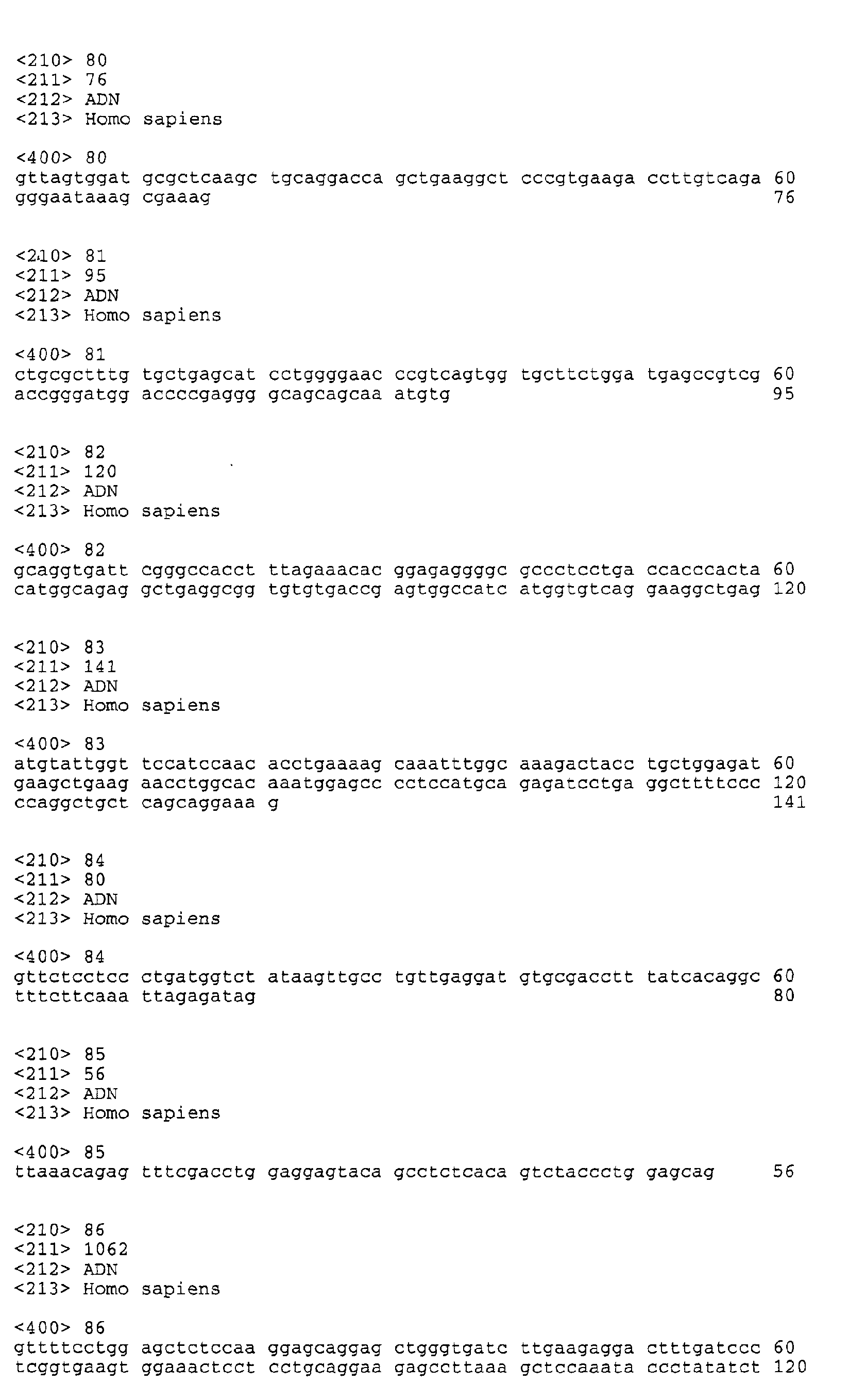
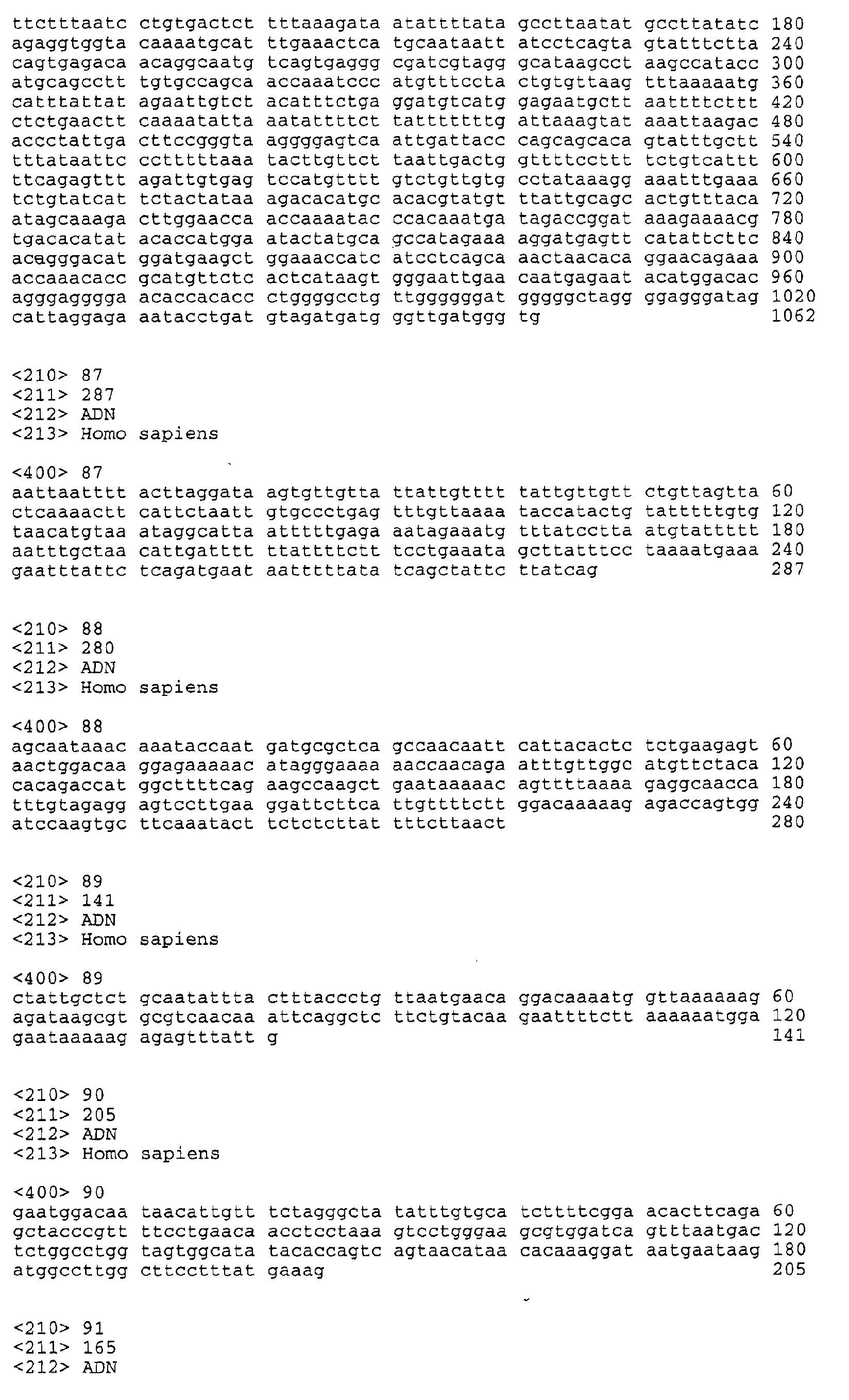
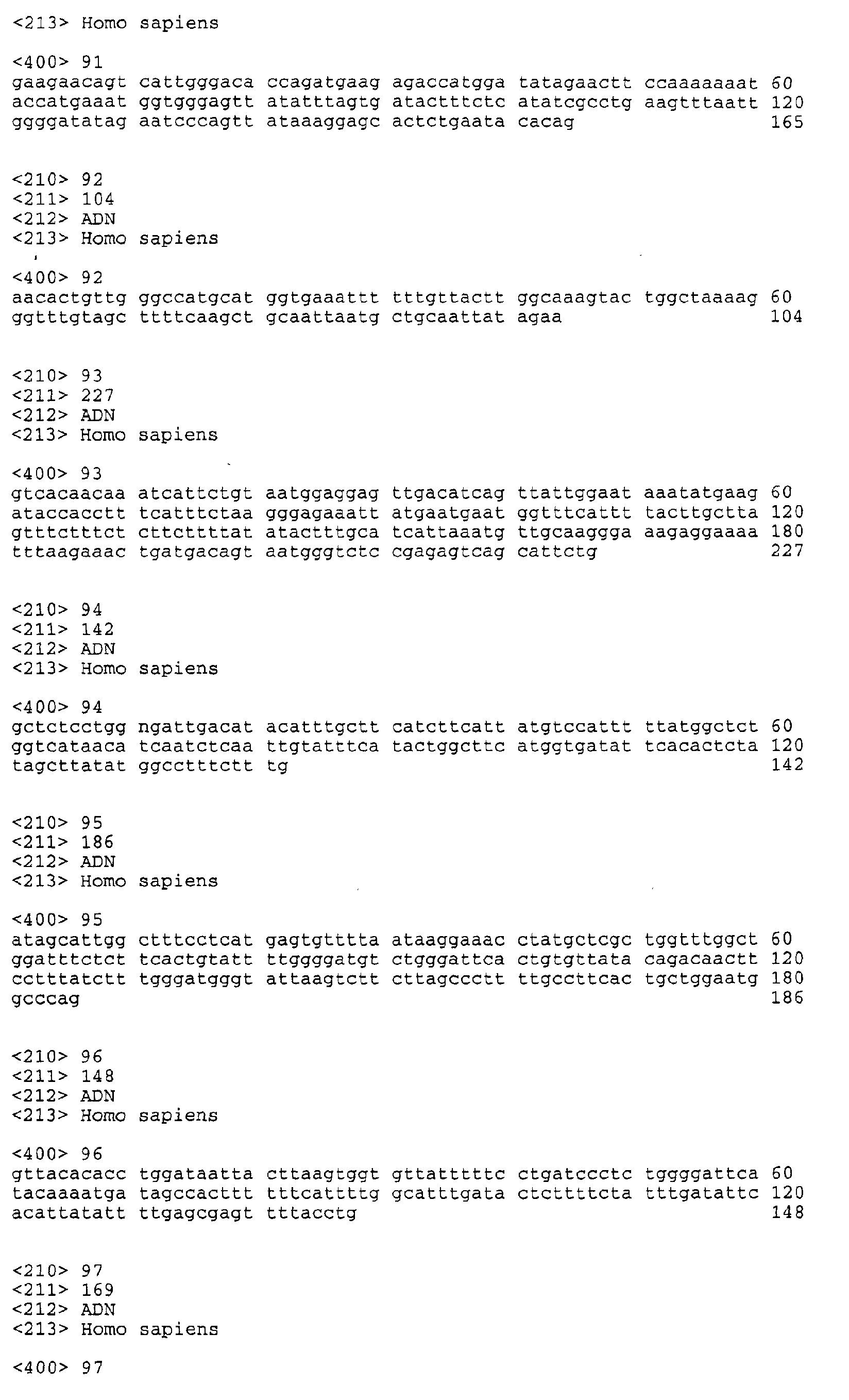

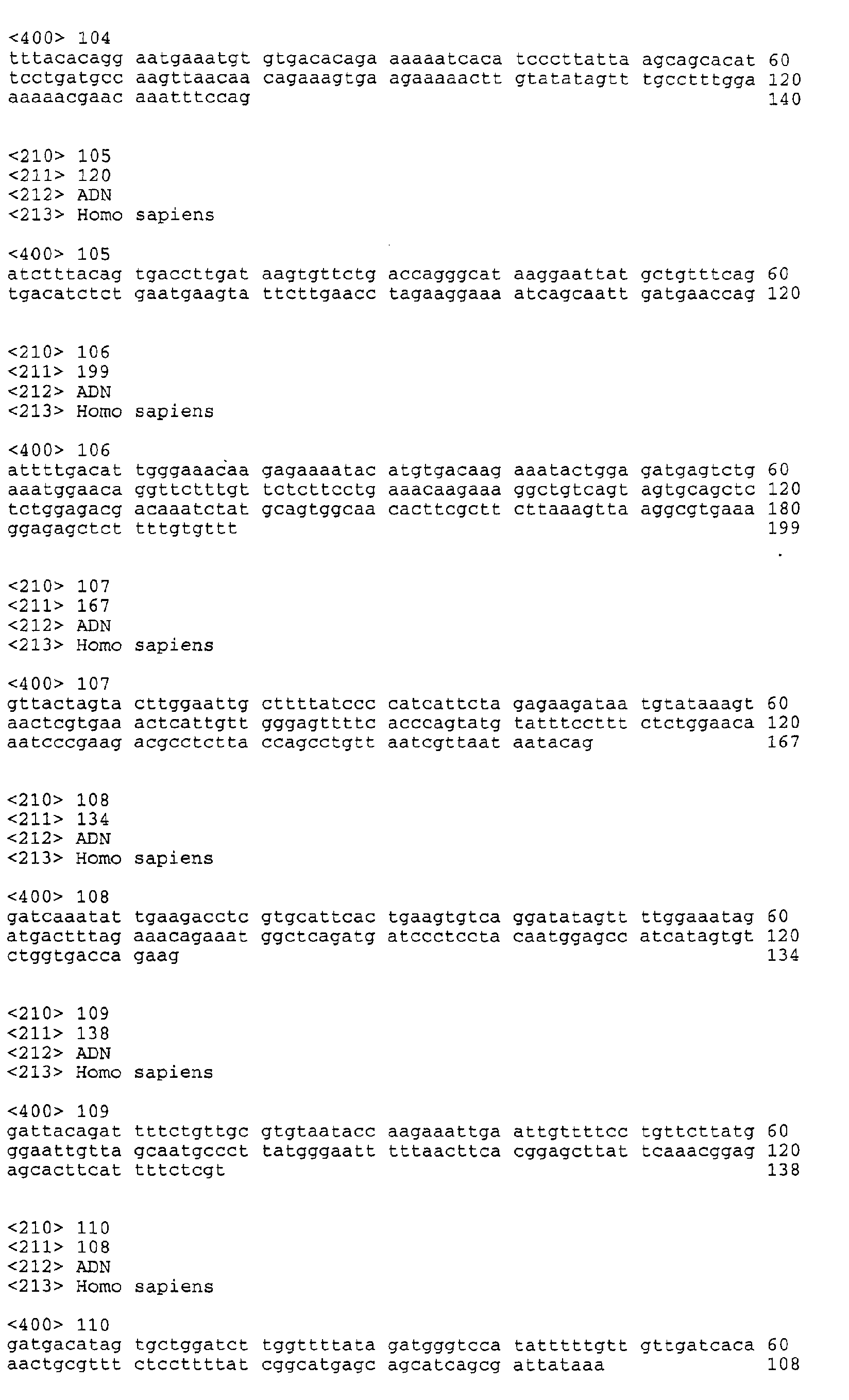
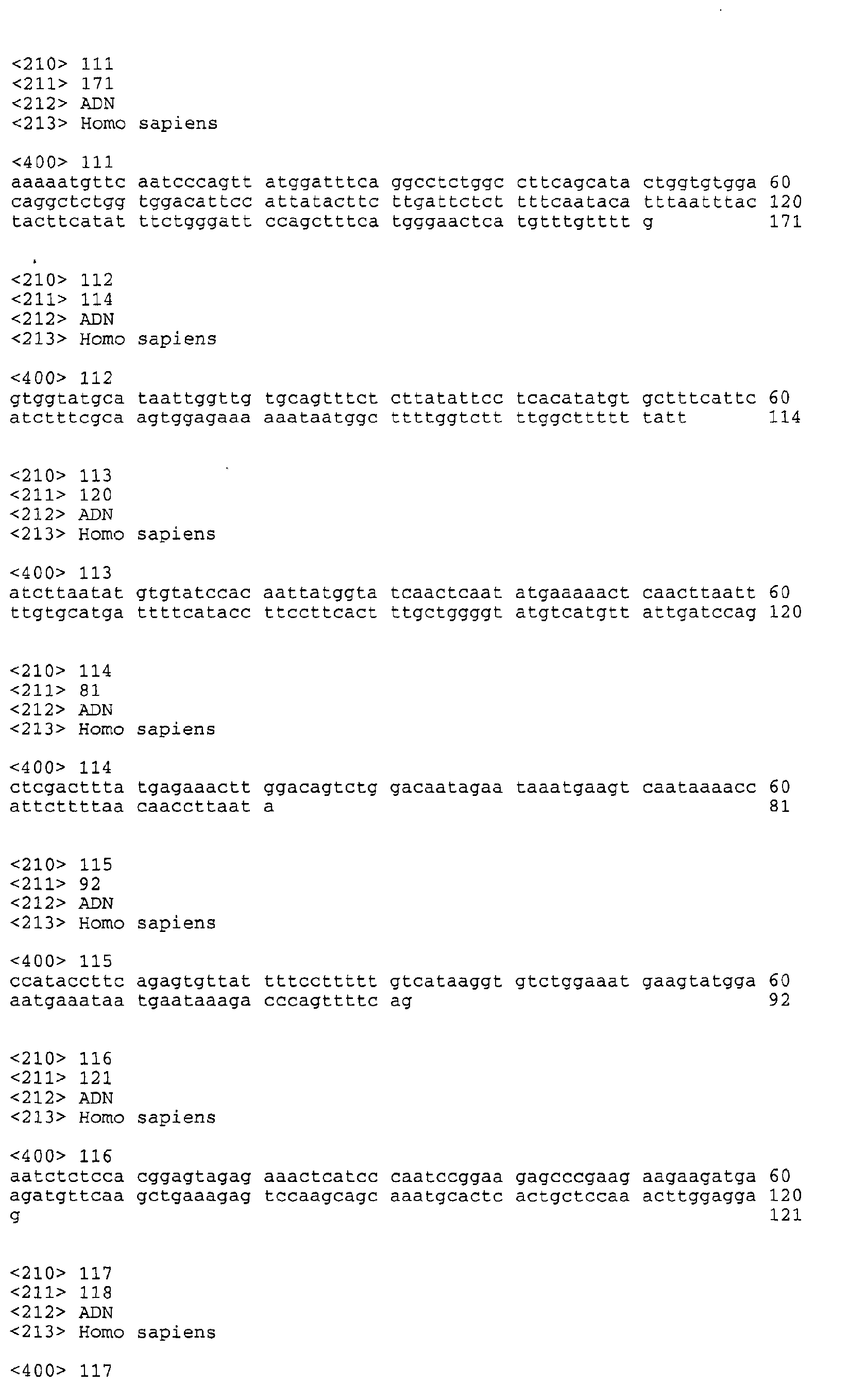


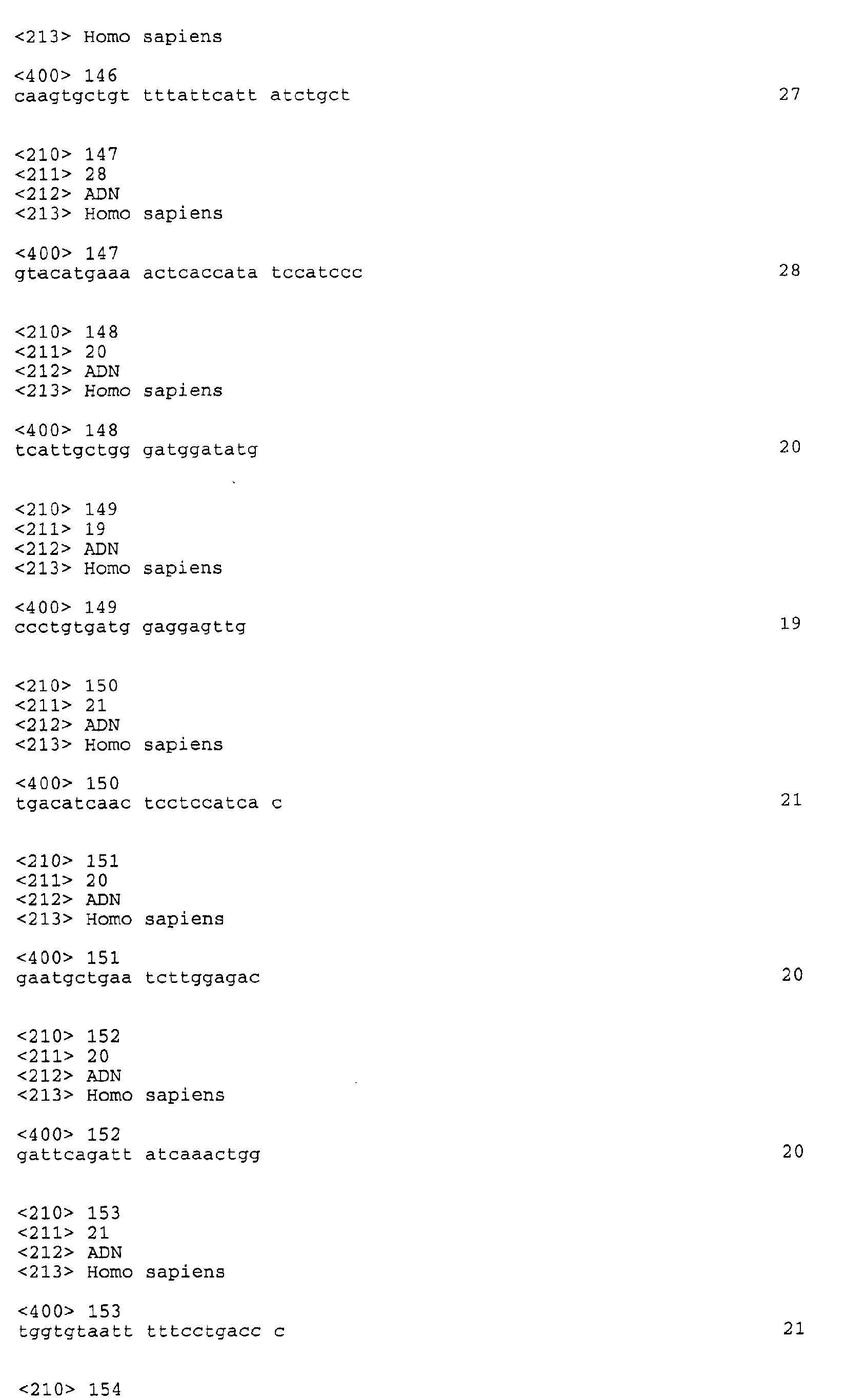
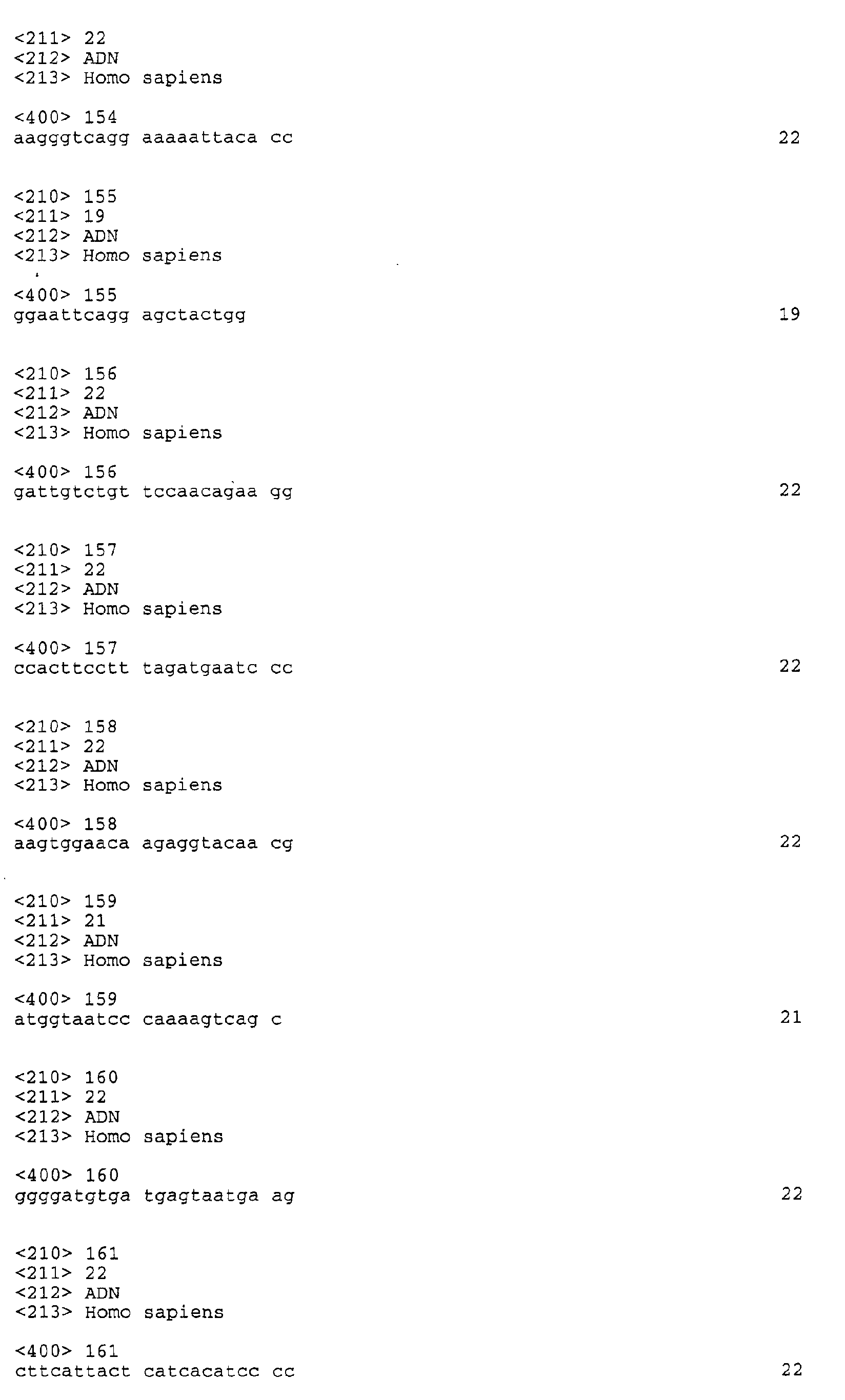
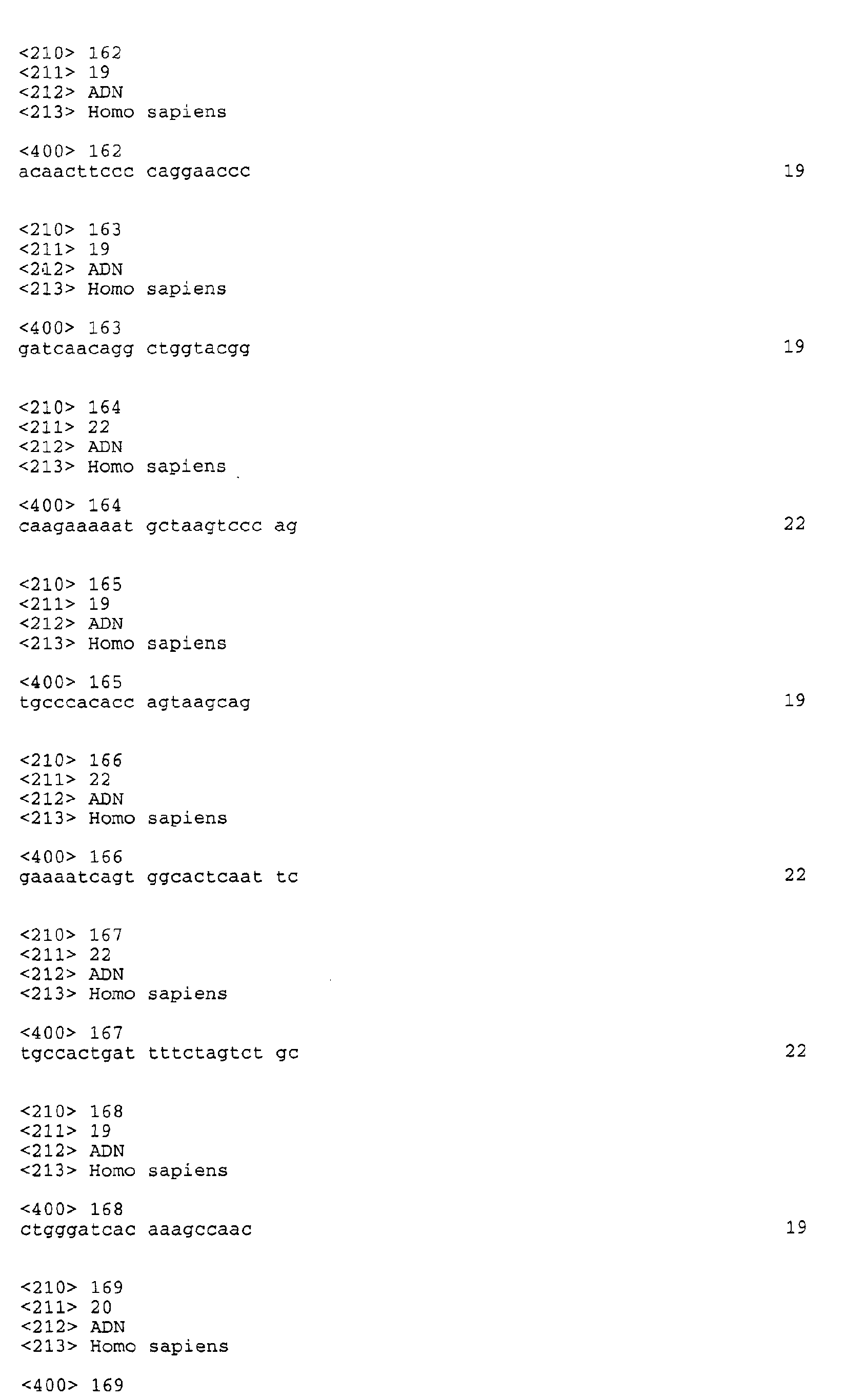


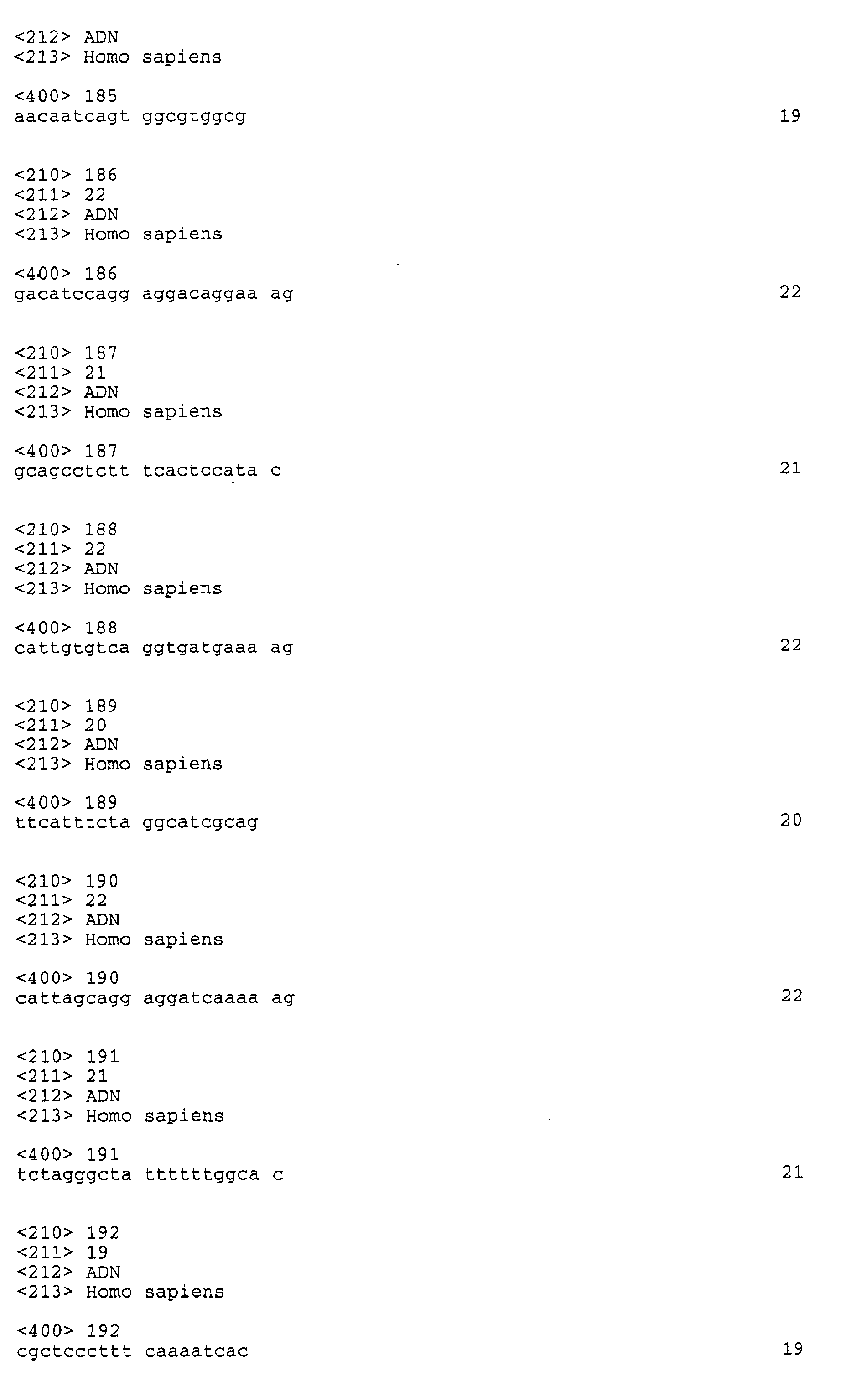
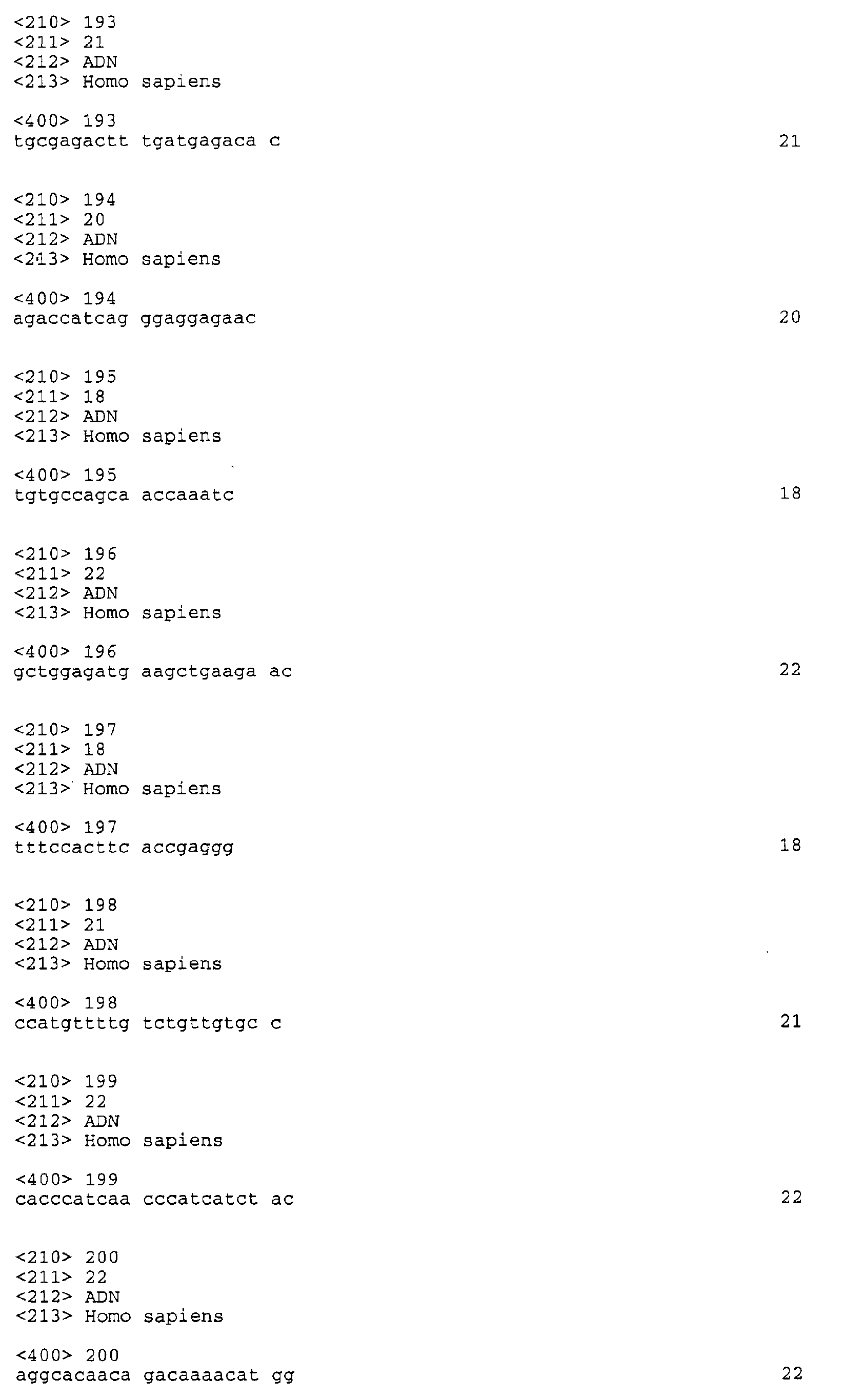
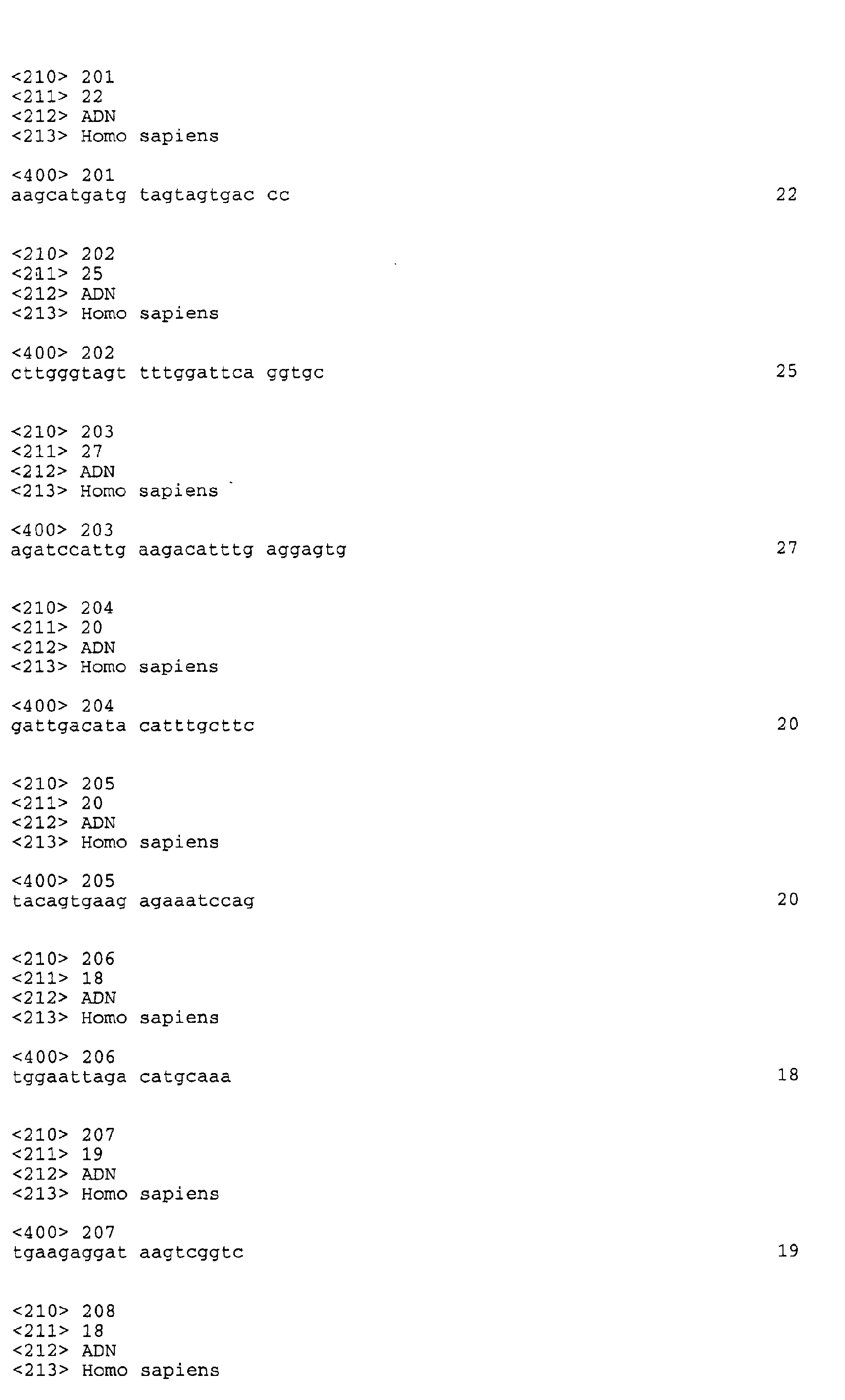
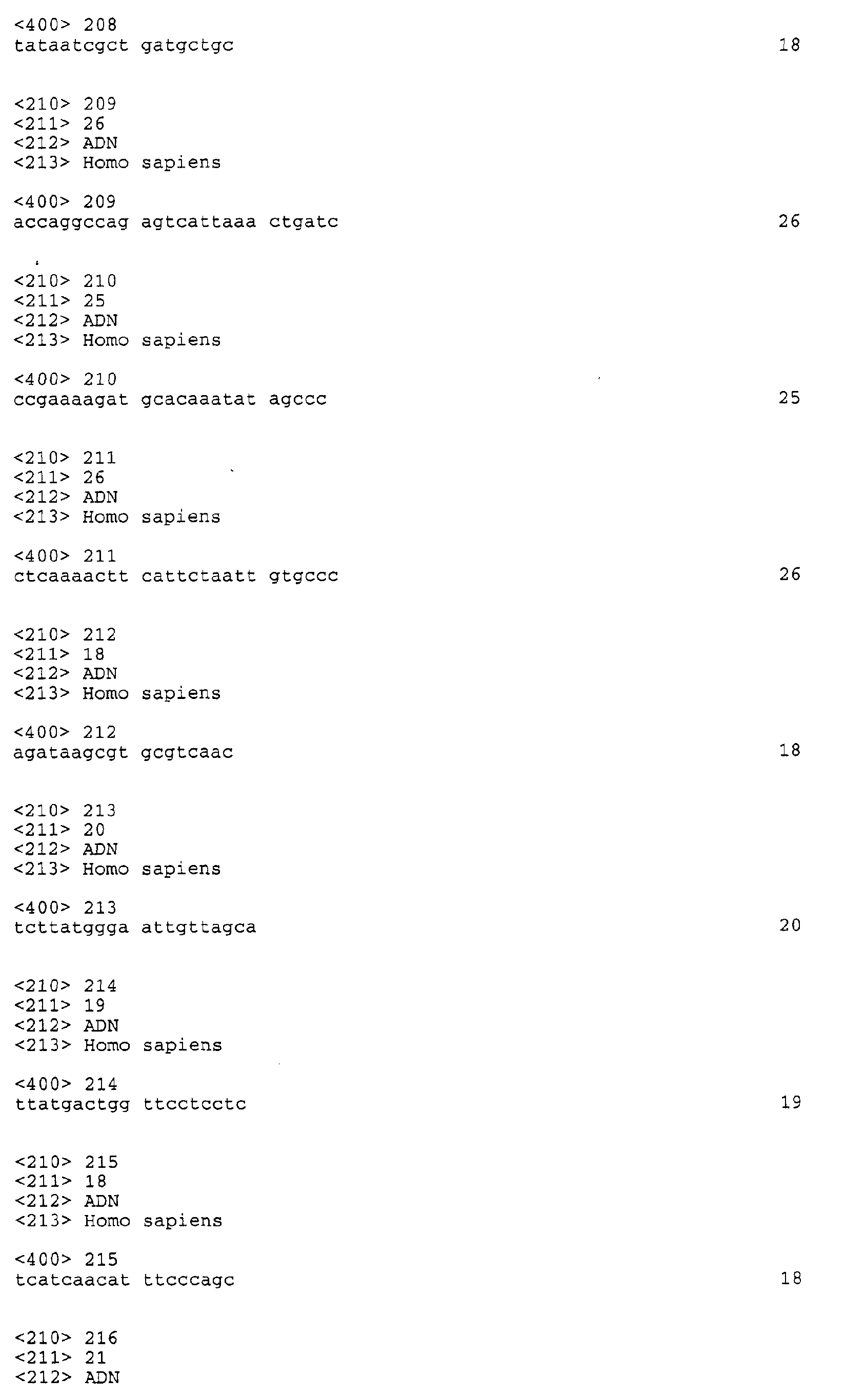

Claims (44)
- An isolated nucleic acid comprising any one of SEQ ID NOs: 1-4 and 9-126, or of a complementary nucleotide sequence.
- An isolated nucleic acid comprising at least eight consecutive nucleotides of a nucleotide sequence of any one of SEQ ID NOs: 1-4 and 9-126, or of a complementary nucleotide sequence.
- An isolated nucleic acid comprising at least 80% nucleotide identity with a nucleic acid comprising any one of SEQ ID NOs: 1-4 and 9-126, or of a complementary nucleotide sequence.
- The isolated nucleic acid according to claim 3, wherein the nucleic acid comprises an 85%, 90%, 95%, or 98% nucleotide identity with the nucleic acid comprising any one of SEQ ID NOs: 1-4 and 9-126, or of a complementary nucleotide sequence.
- An isolated nucleic acid that hybridizes under high stringency conditions with a nucleic acid comprising a) any one of SEQ ID NOs: 1-4 and 9-126, or of a complementary nucleotide sequence.
- An isolated nucleic acid comprising a nucleotide sequence as depicted in any one of SEQ ID NOs: 1-4 and 9-126, or of a complementary nucleotide sequence.
- A nucleotide probe or primer specific for any one of ABCA5, ABCA6, ABCA9, and ABCA10 genes, wherein the nucleotide probe or primer comprises at least 15 consecutive nucleotides of a nucleotide sequence of any one of SEQ ID NOs: 1-4 and 9-126, or of a complementary nucleotide sequence.
- A nucleotide probe or primer specific for an ABCA5 gene, wherein the nucleotide probe or primer comprises a nucleotide sequence of any one of SEQ ID NO:127-144, or a complementary nucleotide sequence.
- A nucleotide probe or primer specific for an ABCA6 gene, wherein the nucleotide probe or primer comprises a nucleotide sequence of any one of SEQ ID NOs: 145-172, or of a complementary nucleotide sequence.
- A nucleotide probe or primer specific for an ABCA9 gene, wherein the nucleotide probe or primer comprises a nucleotide sequence of any one of SEQ ID NOs: 173-203, or of a complementary nucleotide sequence.
- A nucleotide probe or primer specific for an ABCA10 gene, wherein the nucleotide probe or primer comprises a nucleotide sequence of any one of SEQ ID NOs: 204-217, or of a complementary nucleotide sequence.
- A method of amplifying a region of the nucleic acid according to claim 1, wherein the method comprises:a) contacting the nucleic acid with two nucleotide primers, wherein the first nucleotide primer hybridizes at a position 5' of the region of the nucleic acid, and the second nucleotide primer hybridizes at a position 3' of the region of the nucleic acid, in the presence of reagents necessary for an amplification reaction; andb) detecting the amplified nucleic acid region.
- A method of amplifying a region of the nucleic acid according to claim 12, wherein the two nucleotide primers are selected from the group consisting ofa) a nucleotide primer comprising at least 15 consecutive nucleotides of a nucleotide sequence of any one of SEQ ID NOs: 1-4 and 9-126, or of a complementary nucleotide sequence,b) a nucleotide primer as in any one of claims 7-11,c) a nucleotide primer comprising a nucleotide sequence of any one of SEQ ID NOs: 127-217, or a nucleic acid having a complementary sequence.
- A kit for amplifying the nucleic acid according to claim 1, wherein the kit comprises:a) two nucleotide primers whose hybridization position is located respectively 5' and 3' of the region of the nucleic acid; and optionally,b) reagents necessary for an amplification reaction.
- The kit according to claim 14, wherein the two nucleotide primers are selected from the group consisting ofa) a nucleotide primer comprising at least 15 consecutive nucleotides of a nucleotide sequence of any one of SEQ ID NOs: 1-4 and 9-126, or of a complementary nucleotide sequence,b) a nucleotide primer as in any one of claims 7-11,c) a nucleotide primer comprising a nucleotide sequence of any one of SEQ ID NOs: 127-217, or a nucleic acid having a complementary sequence.
- The nucleotide probe or primer according to any of claim 7-11, wherein the nucleotide probe or primer comprises a marker compound.
- A method of detecting a nucleic acid according to claim 1, wherein the method comprises:a) contacting the nucleic acid with a nucleotide probe selected from the group consisting of1) a nucleotide probe comprising at least 15 consecutive nucleotides of a nucleotide sequence of any one of SEQ ID NOs: 1-4 and 9-126, or of a complementary nucleotide sequence,2) a nucleotide primer as in any one of claims 7-11,3) a nucleotide probe comprising a nucleotide sequence of any one of SEQ ID NOs: 127-217, or of a complementary nucleotide sequence, andb) detecting a complex formed between the nucleic acid and the probe.
- The method of detection according to claim 17, wherein the probe is immobilized on a support.
- A kit for detecting the nucleic acid according to claim 1, wherein the kit comprisesa) a nucleotide probe selected from the group consisting of1) a nucleotide probe comprising at least 15 consecutive nucleotides of a nucleotide sequence of any one of SEQ ID NOs: 1-4 and 9-126, or of a complementary nucleotide sequence,2) a nucleotide primer as in any one of claims 7-11,3) a nucleotide probe comprising a nucleotide sequence of any one of SEQ ID NOs: 127-217, or of a complementary nucleotide sequence, and optionally,b) reagents necessary for a hybridization reaction.
- The kit according to claim 19, wherein the probe is immobilized on a support.
- A recombinant vector comprising the nucleic acid according claim 1.
- The vector according to claim 21, wherein the vector is an adenovirus.
- A recombinant host cell comprising the recombinant vector according to claim 21.
- A recombinant host cell comprising the nucleic acid according claim 1.
- An isolated nucleic acid encoding a polypeptide comprising an amino acid sequence of any one of SEQ ID NO: 5-8.
- A recombinant vector comprising the nucleic acid according to claim 25.
- A recombinant host cell comprising the nucleic acid according to claim 25.
- A recombinant host cell comprising the recombinant vector according to claim 26.
- An isolated polypeptide selected from the group consisting ofa) a polypeptide comprising an amino acid sequence of any one of SEQ ID NOs: 5-8,b) a polypeptide fragment or variant of a polypeptide comprising an amino acid sequence of any one of SEQ ID NOs: 5-8, andc) a polypeptide homologous to a polypeptide comprising amino acid sequence of any one of SEQ ID NO: 5-8.
- An antibody directed against the isolated polypeptide according to claim 29.
- The antibody according to claim 30, wherein the antibody comprises a detectable compound.
- A method of detecting a polypeptide, wherein the method comprisesa) contacting the polypeptide with an antibody according to claim 31; andb) detecting an antigen/antibody complex formed between the polypeptide and the antibody.
- A diagnostic kit for detecting a polypeptide, wherein the kit comprisesa) the antibody according to claim 31; andb) a reagent allowing detection of an antigen/antibody complex formed between the polypeptide and the antibody.
- A pharmaceutical composition comprising the nucleic acid according to claim 1 and a physiologically compatible excipient.
- A pharmaceutical composition comprising the recombinant vector according to claim 21 and a physiologically compatible excipient.
- Use of the nucleic acid according to claim 1 for the manufacture of a medicament intended for the prevention and/or treatment of a subject affected by a dysfunction in the reverse transport of cholesterol.
- Use of a recombinant vector according to claim 21 for the manufacture of a medicament for the prevention and/or treatment of subjects affected by a dysfunction in the lipophilic subtance transport.
- Use of any one of isolated ABCA5, ABCA6, ABCA9, and ABCA10 polypeptides comprising an amino acid sequence of SEQ ID NO: 5-8 for the manufacture of a medicament intended for the prevention and/or treatment of subjects affected by a dysfunction in the lipophilic subtance transport.
- A pharmaceutical composition comprising a polypeptide comprising an amino acid sequence of any one of SEQ ID NOs: 5-8, and a physiologically compatible excipient.
- Use of any one of isolated ABCA5, ABCA6, ABCA9, and ABCA10 polypeptides comprising an amino acid sequence of any one of SEQ ID NOs: 5-8 for screening an active ingredient for the prevention or treatment of a disease resulting from a dysfunction in the lipophilic subtance transport..
- Use of a recombinant host cell expressing any one of the ABCA5, ABCA6, ABCA9, and ABCA10 polypeptides comprising an amino acid sequence of SEQ ID NOs: 5-8 for screening an active ingredient for the prevention or treatment of a disease resulting from a dysfunction in the lipophilic subtance transport..
- A method of screening a compound active on cholesterol metabolism, an agonist, or an antagonist of any one of the ABCA5, ABCA6, ABCA9, and ABCA10 polypeptides, wherein the method comprisesa) preparing a membrane vesicle comprising at least one of the ABCA5, ABCA6, ABCA9, and ABCA10 polypeptides and a lipid substrate comprising a detectable marker;b) incubating the vesicle obtained in step a) with an agonist or antagonist candidate compound;c) qualitatively and/or quantitatively measuring a release of the lipid substrate comprising the detectable marker; andd) comparing the release of the lipid substrate measured in step b) with a measurement of a release of a labeled lipid substrate by a membrane vesicle that has not been previously incubated with the agonist or antagonist candidate compound.
- A method of screening a compound active on cholesterol metabolism, an agonist, or an antagonist of any one of ABCA5, ABCA6, ABCA9, and ABCA10 polypeptides, wherein the method comprisesa) incubating a cell that expresses at least one of the ABCA5, ABCA6, ABCA9, and ABCA10 polypeptides with an anion labeled with a detectable marker;b) washing the cell of step a) whereby excess labeled anion that has not penetrated into the cell is removed;c) incubating the cell obtained in step b) with an agonist or antagonist candidate compound for any one of the ABCA5, ABCA6, ABCA9, and ABCA10 polypeptide;d) measuring efflux of the labeled anion from the cell; ande) comparing the efflux of the labeled anion determined in step d) with efflux of a labeled anion measured with a cell that has not been previously incubated with the agonist or antagonist candidate compound..
- An implant comprising the recombinant host cell according to claim 23.
Priority Applications (8)
| Application Number | Priority Date | Filing Date | Title |
|---|---|---|---|
| EP00403440A EP1213352A1 (en) | 2000-12-07 | 2000-12-07 | Nucleic acids of the human abca5, abca6, abca9, and abca10 genes, vectors containing such nucleic acids and uses thereof |
| EP01999665A EP1399587A2 (en) | 2000-12-07 | 2001-12-07 | Nucleic acids of the human abca5, abca6, abca9, and abca10 genes, vectors containing such nucleic acids and uses thereof |
| CA002430716A CA2430716A1 (en) | 2000-12-07 | 2001-12-07 | Nucleic acids of the human abca5, abca6, abca9, and abca10 genes, vectors containing such nucleic acids and uses thereof |
| JP2002548175A JP2004521620A (en) | 2000-12-07 | 2001-12-07 | Human ABCA5, ABCA6, ABCA9, and ABCA10 gene nucleic acids, vectors containing such nucleic acids, and uses thereof |
| AU2002217166A AU2002217166A1 (en) | 2000-12-07 | 2001-12-07 | Nucleic acids of the human abca5, abca6, abca9, and abca10 genes, vectors containing such nucleic acids and uses thereof |
| US10/005,338 US20030044895A1 (en) | 2000-12-07 | 2001-12-07 | Nucleic acids of the human ABCA5, ABCA6, ABCA9, AND ABCA10 Genes, vectors containing such nucleic acids, and uses thereof |
| AU2002217166A AU2002217166A8 (en) | 2000-12-07 | 2001-12-07 | Nucleic acids of the human abca5, abca6, abca9, and abca10 genes, vectors containing such nucleic acids and uses thereof |
| PCT/EP2001/015401 WO2002046458A2 (en) | 2000-12-07 | 2001-12-07 | Nucleic acids of the human abca5, abca6, abca9, and abca10 genes, vectors containing such nucleic acids and uses thereof |
Applications Claiming Priority (1)
| Application Number | Priority Date | Filing Date | Title |
|---|---|---|---|
| EP00403440A EP1213352A1 (en) | 2000-12-07 | 2000-12-07 | Nucleic acids of the human abca5, abca6, abca9, and abca10 genes, vectors containing such nucleic acids and uses thereof |
Publications (1)
| Publication Number | Publication Date |
|---|---|
| EP1213352A1 true EP1213352A1 (en) | 2002-06-12 |
Family
ID=8173970
Family Applications (2)
| Application Number | Title | Priority Date | Filing Date |
|---|---|---|---|
| EP00403440A Withdrawn EP1213352A1 (en) | 2000-12-07 | 2000-12-07 | Nucleic acids of the human abca5, abca6, abca9, and abca10 genes, vectors containing such nucleic acids and uses thereof |
| EP01999665A Withdrawn EP1399587A2 (en) | 2000-12-07 | 2001-12-07 | Nucleic acids of the human abca5, abca6, abca9, and abca10 genes, vectors containing such nucleic acids and uses thereof |
Family Applications After (1)
| Application Number | Title | Priority Date | Filing Date |
|---|---|---|---|
| EP01999665A Withdrawn EP1399587A2 (en) | 2000-12-07 | 2001-12-07 | Nucleic acids of the human abca5, abca6, abca9, and abca10 genes, vectors containing such nucleic acids and uses thereof |
Country Status (6)
| Country | Link |
|---|---|
| US (1) | US20030044895A1 (en) |
| EP (2) | EP1213352A1 (en) |
| JP (1) | JP2004521620A (en) |
| AU (2) | AU2002217166A8 (en) |
| CA (1) | CA2430716A1 (en) |
| WO (1) | WO2002046458A2 (en) |
Cited By (1)
| Publication number | Priority date | Publication date | Assignee | Title |
|---|---|---|---|---|
| EP1354890A4 (en) * | 2000-12-28 | 2004-05-19 | Shionogi & Co | NEW POLYPEPTIDE AND ITS DNA |
Families Citing this family (7)
| Publication number | Priority date | Publication date | Assignee | Title |
|---|---|---|---|---|
| WO2002031147A2 (en) * | 2000-10-10 | 2002-04-18 | Lexicon Genetics Incorporated | Human transporter proteins and polynucleotides encoding the same |
| WO2005056796A1 (en) * | 2003-12-15 | 2005-06-23 | Noab Biodiscoveries Inc. | Materials and methods for analysis of atp-binding cassette transporter gene expression |
| WO2006092209A1 (en) * | 2005-03-02 | 2006-09-08 | Galapagos Nv | Novel targets and compounds useful in the treatment of a cardiovascular disorder, dyslipidemia and atherosclerosis, and methods to identify such compounds |
| WO2007000292A2 (en) * | 2005-06-29 | 2007-01-04 | Galapagos Nv | Novel targets and compounds useful in the treatment and/or prophylaxis of a cardiovascular disorder, dyslipidemia and atherosclerosis, and methods to identify such compounds |
| WO2007028147A2 (en) * | 2005-09-01 | 2007-03-08 | Philadelphia Health & Education Corporation D.B.A. Drexel University College Of Medicin | Identification of a prostatic intraepithelial neoplasia (pin)-specific gene and protein (pin-1) useful as a diagnostic treatment for prostate cancer |
| SE539186C2 (en) | 2015-06-10 | 2017-05-09 | Scania Cv Ab | A method and a system for secure parking of a vehicle comprising a tractor unit and a trailer unit |
| EP3383525A1 (en) * | 2015-12-03 | 2018-10-10 | Dow Global Technologies, LLC | Dynamic mixer for viscous curable materials |
Citations (1)
| Publication number | Priority date | Publication date | Assignee | Title |
|---|---|---|---|---|
| WO2000061627A1 (en) * | 1999-04-09 | 2000-10-19 | Human Genome Sciences, Inc. | 49 human secreted proteins |
-
2000
- 2000-12-07 EP EP00403440A patent/EP1213352A1/en not_active Withdrawn
-
2001
- 2001-12-07 AU AU2002217166A patent/AU2002217166A8/en not_active Abandoned
- 2001-12-07 EP EP01999665A patent/EP1399587A2/en not_active Withdrawn
- 2001-12-07 US US10/005,338 patent/US20030044895A1/en not_active Abandoned
- 2001-12-07 AU AU2002217166A patent/AU2002217166A1/en not_active Abandoned
- 2001-12-07 JP JP2002548175A patent/JP2004521620A/en active Pending
- 2001-12-07 CA CA002430716A patent/CA2430716A1/en not_active Abandoned
- 2001-12-07 WO PCT/EP2001/015401 patent/WO2002046458A2/en not_active Ceased
Patent Citations (1)
| Publication number | Priority date | Publication date | Assignee | Title |
|---|---|---|---|---|
| WO2000061627A1 (en) * | 1999-04-09 | 2000-10-19 | Human Genome Sciences, Inc. | 49 human secreted proteins |
Non-Patent Citations (12)
| Title |
|---|
| ALLIKMETS R ET AL: "CHARACTERIZATION OF THE HUMAN ABC SUPERFAMILY: ISOLATION AND MAPPING OF 21 NEW GENES USING THE EXPRESSED SEQUENCE TAGS DATABASE", HUMAN MOLECULAR GENETICS, OXFORD UNIVERSITY PRESS, SURREY, GB, vol. 5, no. 10, 1996, pages 1649 - 1655, XP002074412, ISSN: 0964-6906 * |
| BROCCARDO C ET AL: "The ABCA subclass of mammalian transporters", BIOCHIMICA ET BIOPHYSICA ACTA. BIOMEMBRANES, AMSTERDAM, NL, vol. 1461, no. 2, 6 December 1999 (1999-12-06), pages 395 - 404, XP000909153, ISSN: 0005-2736 * |
| DATABASE EM_EST 15 February 1999 (1999-02-15), AGOSTINO MJ ET AL.: "EST clone CC233/ WO9845436", XP002184881 * |
| DATABASE EM_EST 22 December 1999 (1999-12-22), NCI-CGAP: "Homo sapiens cDNA clone IMAGE:2341790 3' similar to SW:ABC1_MOUSE P41233 ATP-BINDING CASSETTE TRANSPORTER 1, mRNA", XP002184877 * |
| DATABASE EM_EST 4 March 2000 (2000-03-04), NCI-CGAP: "Homo sapiens cDNA clone IMAGE:2719096 3', mRNA", XP002184878 * |
| DATABASE EM_EST 5 October 2000 (2000-10-05), QIAN ET AL.: "Homo sapiens cDNA clone: GLCDLC06, 5'end, expressed in corressponding non cancerous liver tissue", XP002184879 * |
| DATABASE EM_EST 6 September 2000 (2000-09-06), QIANG ET AL.: "Homo sapiens cDNA clone:GLCDLC06, 3'end, expressed in corresponding non cancerous liver tissue.", XP002184880 * |
| DATABASE EMBL 3 June 2000 (2000-06-03), HIRSCH-ERNST ET AL.: "Identification of novel human ATP-binding cassette genes expressed in testis by degenerate RT-PCR", XP002184876 * |
| HIRSCH-ERNST K I ET AL: "Molecular cDNA cloning and tissue distribution of mRNA encoding a novel ATP-binding cassette (ABC) half-transporter", BIOCHEMICAL AND BIOPHYSICAL RESEARCH COMMUNICATIONS, ACADEMIC PRESS INC. ORLANDO, FL, US, vol. 249, no. 1, 10 August 1998 (1998-08-10), pages 151 - 155, XP002120401, ISSN: 0006-291X * |
| LUCIANI M F ET AL: "CLONING OF TWO NOVEL ABC TRANSPORTERS MAPPING ON HUMAN CHROMOSOME 9", GENOMICS, ACADEMIC PRESS, SAN DIEGO, US, vol. 21, no. 1, 1 May 1994 (1994-05-01), pages 150 - 159, XP000869719, ISSN: 0888-7543 * |
| STÉPHANE SAVARY ET AL: "Isolation and chromosomal mapping of a novel ATP-binding cassette transporter conserved in mouse and human", GENOMICS, ACADEMIC PRESS, SAN DIEGO, US, vol. 41, no. 2, 15 April 1997 (1997-04-15), pages 275 - 278, XP002083182, ISSN: 0888-7543 * |
| YOUNG S G ET AL: "THE ABCS OF CHOLESTEROL EFFLUX", NATURE GENETICS, NEW YORK, NY, US, vol. 22, no. 4, August 1999 (1999-08-01), pages 316 - 318, XP000889764, ISSN: 1061-4036 * |
Cited By (2)
| Publication number | Priority date | Publication date | Assignee | Title |
|---|---|---|---|---|
| EP1354890A4 (en) * | 2000-12-28 | 2004-05-19 | Shionogi & Co | NEW POLYPEPTIDE AND ITS DNA |
| US7371818B2 (en) | 2000-12-28 | 2008-05-13 | Shionogi & Co., Ltd. | Polypeptide and DNA thereof |
Also Published As
| Publication number | Publication date |
|---|---|
| AU2002217166A8 (en) | 2008-01-10 |
| AU2002217166A1 (en) | 2002-06-18 |
| CA2430716A1 (en) | 2002-06-13 |
| WO2002046458A2 (en) | 2002-06-13 |
| WO2002046458A3 (en) | 2004-01-08 |
| EP1399587A2 (en) | 2004-03-24 |
| WO2002046458A9 (en) | 2007-11-08 |
| JP2004521620A (en) | 2004-07-22 |
| US20030044895A1 (en) | 2003-03-06 |
Similar Documents
| Publication | Publication Date | Title |
|---|---|---|
| EP1100895B1 (en) | Abc1 polypeptide and methods and reagents for modulating cholesterol levels | |
| US8343494B2 (en) | Antibodies against LLG polypeptides of the triacylglycerol lipase family | |
| KR100700908B1 (en) | Ab nucleic acids, polypeptides and pharmaceutical compositions thereof | |
| EP1096012A1 (en) | Nucleics acids of the human ABC1 gene and their therapeutic and diagnostic application | |
| WO2002046458A9 (en) | Nucleic acids of the human abca5, abca6, abca9, and abca10 genes, vectors containing such nucleic acids and uses thereof | |
| US20030087246A1 (en) | Nucleic acids of the human ABCA12 gene, vectors containing such nucleic acids and uses thereof | |
| US6893841B2 (en) | Nucleic acids of the human ABCC11 gene, vectors containing such nucleic acids and uses thereof | |
| AU5540800A (en) | Nucleic and proteinic acids corresponding to human gene abc1 | |
| US20060063166A1 (en) | Nucleic acids of the human ABCC12 gene, vectors containing such nucleic acids and uses thereof | |
| EP1370585A2 (en) | Nucleic acids of the human abcc12 gene, vectors containing such nucleic acids and uses thereof | |
| US20030077605A1 (en) | Nucleic acids of the human ABCC12 gene, vectors containing such nucleic acids, and uses thereof | |
| KR20020059645A (en) | Nucleic acids of the human abc1 gene and their therapeutic and diagnostic application | |
| US20040067903A1 (en) | Nucleic acids encoding a novel regulator of g protein signaling, rgs18, and uses thereof | |
| US20050136421A1 (en) | Methods and reagents for modulating cholesterol levels | |
| NZ522034A (en) | Nucleic acids encoding a novel regulator of G protein signaling, RGS18, and uses thereof | |
| WO2003064591A2 (en) | Abca8 nucleic acids and proteins, and uses thereof |
Legal Events
| Date | Code | Title | Description |
|---|---|---|---|
| PUAI | Public reference made under article 153(3) epc to a published international application that has entered the european phase |
Free format text: ORIGINAL CODE: 0009012 |
|
| AK | Designated contracting states |
Kind code of ref document: A1 Designated state(s): AT BE CH CY DE DK ES FI FR GB GR IE IT LI LU MC NL PT SE TR |
|
| AX | Request for extension of the european patent |
Free format text: AL;LT;LV;MK;RO;SI |
|
| AKX | Designation fees paid |
Designated state(s): FR |
|
| REG | Reference to a national code |
Ref country code: DE Ref legal event code: 8566 |
|
| STAA | Information on the status of an ep patent application or granted ep patent |
Free format text: STATUS: THE APPLICATION IS DEEMED TO BE WITHDRAWN |
|
| 18D | Application deemed to be withdrawn |
Effective date: 20021213 |