EP1211274A1 - Method for producing aliphatic polyester - Google Patents
Method for producing aliphatic polyester Download PDFInfo
- Publication number
- EP1211274A1 EP1211274A1 EP01128072A EP01128072A EP1211274A1 EP 1211274 A1 EP1211274 A1 EP 1211274A1 EP 01128072 A EP01128072 A EP 01128072A EP 01128072 A EP01128072 A EP 01128072A EP 1211274 A1 EP1211274 A1 EP 1211274A1
- Authority
- EP
- European Patent Office
- Prior art keywords
- acid
- caprolactone
- glucose
- executed
- chlorocaproic
- Prior art date
- Legal status (The legal status is an assumption and is not a legal conclusion. Google has not performed a legal analysis and makes no representation as to the accuracy of the status listed.)
- Withdrawn
Links
- 229920003232 aliphatic polyester Polymers 0.000 title claims abstract description 40
- 238000004519 manufacturing process Methods 0.000 title abstract description 9
- FUZZWVXGSFPDMH-UHFFFAOYSA-N hexanoic acid Chemical compound CCCCCC(O)=O FUZZWVXGSFPDMH-UHFFFAOYSA-N 0.000 claims abstract description 56
- PAPBSGBWRJIAAV-UHFFFAOYSA-N ε-Caprolactone Chemical compound O=C1CCCCCO1 PAPBSGBWRJIAAV-UHFFFAOYSA-N 0.000 claims abstract description 40
- RGHNJXZEOKUKBD-SQOUGZDYSA-N D-gluconic acid Chemical compound OC[C@@H](O)[C@@H](O)[C@H](O)[C@@H](O)C(O)=O RGHNJXZEOKUKBD-SQOUGZDYSA-N 0.000 claims abstract description 39
- WQZGKKKJIJFFOK-GASJEMHNSA-N Glucose Natural products OC[C@H]1OC(O)[C@H](O)[C@@H](O)[C@@H]1O WQZGKKKJIJFFOK-GASJEMHNSA-N 0.000 claims abstract description 33
- 239000008103 glucose Substances 0.000 claims abstract description 32
- 229920002472 Starch Polymers 0.000 claims abstract description 28
- 239000008107 starch Substances 0.000 claims abstract description 28
- 235000019698 starch Nutrition 0.000 claims abstract description 28
- XWWKSLXUVZVGSP-UHFFFAOYSA-N 6-chlorohexanoic acid Chemical compound OC(=O)CCCCCCl XWWKSLXUVZVGSP-UHFFFAOYSA-N 0.000 claims abstract description 25
- PHOQVHQSTUBQQK-SQOUGZDYSA-N D-glucono-1,5-lactone Chemical compound OC[C@H]1OC(=O)[C@H](O)[C@@H](O)[C@@H]1O PHOQVHQSTUBQQK-SQOUGZDYSA-N 0.000 claims abstract description 23
- 235000012209 glucono delta-lactone Nutrition 0.000 claims abstract description 23
- 229960003681 gluconolactone Drugs 0.000 claims abstract description 23
- RGHNJXZEOKUKBD-UHFFFAOYSA-N D-gluconic acid Natural products OCC(O)C(O)C(O)C(O)C(O)=O RGHNJXZEOKUKBD-UHFFFAOYSA-N 0.000 claims abstract description 22
- 239000000174 gluconic acid Substances 0.000 claims abstract description 22
- 235000012208 gluconic acid Nutrition 0.000 claims abstract description 22
- 238000007151 ring opening polymerisation reaction Methods 0.000 claims abstract description 22
- 230000001590 oxidative effect Effects 0.000 claims abstract description 8
- 230000003301 hydrolyzing effect Effects 0.000 claims abstract description 7
- 238000000034 method Methods 0.000 claims description 26
- 238000006243 chemical reaction Methods 0.000 claims description 19
- QAOWNCQODCNURD-UHFFFAOYSA-N sulfuric acid Substances OS(O)(=O)=O QAOWNCQODCNURD-UHFFFAOYSA-N 0.000 claims description 18
- HEMHJVSKTPXQMS-UHFFFAOYSA-M Sodium hydroxide Chemical compound [OH-].[Na+] HEMHJVSKTPXQMS-UHFFFAOYSA-M 0.000 claims description 15
- 239000003505 polymerization initiator Substances 0.000 claims description 11
- WKBOTKDWSSQWDR-UHFFFAOYSA-N Bromine atom Chemical compound [Br] WKBOTKDWSSQWDR-UHFFFAOYSA-N 0.000 claims description 9
- 239000007864 aqueous solution Substances 0.000 claims description 9
- GDTBXPJZTBHREO-UHFFFAOYSA-N bromine Substances BrBr GDTBXPJZTBHREO-UHFFFAOYSA-N 0.000 claims description 9
- 229910052794 bromium Inorganic materials 0.000 claims description 9
- 239000002685 polymerization catalyst Substances 0.000 claims description 9
- 230000003647 oxidation Effects 0.000 claims description 8
- 238000007254 oxidation reaction Methods 0.000 claims description 8
- OAICVXFJPJFONN-UHFFFAOYSA-N Phosphorus Chemical compound [P] OAICVXFJPJFONN-UHFFFAOYSA-N 0.000 claims description 7
- XMBWDFGMSWQBCA-UHFFFAOYSA-N hydrogen iodide Chemical compound I XMBWDFGMSWQBCA-UHFFFAOYSA-N 0.000 claims description 7
- 229940071870 hydroiodic acid Drugs 0.000 claims description 7
- ZAMOUSCENKQFHK-UHFFFAOYSA-N Chlorine atom Chemical compound [Cl] ZAMOUSCENKQFHK-UHFFFAOYSA-N 0.000 claims description 5
- 239000000460 chlorine Substances 0.000 claims description 5
- 229910052801 chlorine Inorganic materials 0.000 claims description 5
- 230000007062 hydrolysis Effects 0.000 claims description 5
- 238000006460 hydrolysis reaction Methods 0.000 claims description 5
- 239000002253 acid Substances 0.000 claims description 3
- 238000005660 chlorination reaction Methods 0.000 claims description 3
- 125000001931 aliphatic group Chemical group 0.000 claims description 2
- 229920000728 polyester Polymers 0.000 claims description 2
- 238000007363 ring formation reaction Methods 0.000 claims description 2
- 239000002994 raw material Substances 0.000 abstract description 6
- HEDRZPFGACZZDS-MICDWDOJSA-N Trichloro(2H)methane Chemical compound [2H]C(Cl)(Cl)Cl HEDRZPFGACZZDS-MICDWDOJSA-N 0.000 description 20
- 238000001644 13C nuclear magnetic resonance spectroscopy Methods 0.000 description 12
- 239000000126 substance Substances 0.000 description 11
- 239000003208 petroleum Substances 0.000 description 9
- 239000004033 plastic Substances 0.000 description 9
- 229920003023 plastic Polymers 0.000 description 9
- 238000006116 polymerization reaction Methods 0.000 description 8
- RTZKZFJDLAIYFH-UHFFFAOYSA-N Diethyl ether Chemical compound CCOCC RTZKZFJDLAIYFH-UHFFFAOYSA-N 0.000 description 7
- 239000002904 solvent Substances 0.000 description 7
- IAZDPXIOMUYVGZ-WFGJKAKNSA-N Dimethyl sulfoxide Chemical compound [2H]C([2H])([2H])S(=O)C([2H])([2H])[2H] IAZDPXIOMUYVGZ-WFGJKAKNSA-N 0.000 description 6
- MTHSVFCYNBDYFN-UHFFFAOYSA-N diethylene glycol Chemical compound OCCOCCO MTHSVFCYNBDYFN-UHFFFAOYSA-N 0.000 description 6
- 239000000047 product Substances 0.000 description 6
- LYCAIKOWRPUZTN-UHFFFAOYSA-N Ethylene glycol Chemical compound OCCO LYCAIKOWRPUZTN-UHFFFAOYSA-N 0.000 description 5
- 239000004793 Polystyrene Substances 0.000 description 5
- 239000003054 catalyst Substances 0.000 description 5
- 229920002223 polystyrene Polymers 0.000 description 5
- 229920006395 saturated elastomer Polymers 0.000 description 5
- WERYXYBDKMZEQL-UHFFFAOYSA-N butane-1,4-diol Chemical compound OCCCCO WERYXYBDKMZEQL-UHFFFAOYSA-N 0.000 description 4
- 150000001875 compounds Chemical class 0.000 description 4
- 239000003999 initiator Substances 0.000 description 4
- 230000000704 physical effect Effects 0.000 description 4
- 238000005160 1H NMR spectroscopy Methods 0.000 description 3
- LFQSCWFLJHTTHZ-UHFFFAOYSA-N Ethanol Chemical compound CCO LFQSCWFLJHTTHZ-UHFFFAOYSA-N 0.000 description 3
- KFZMGEQAYNKOFK-UHFFFAOYSA-N Isopropanol Chemical compound CC(C)O KFZMGEQAYNKOFK-UHFFFAOYSA-N 0.000 description 3
- OKKJLVBELUTLKV-UHFFFAOYSA-N Methanol Chemical compound OC OKKJLVBELUTLKV-UHFFFAOYSA-N 0.000 description 3
- YXFVVABEGXRONW-UHFFFAOYSA-N Toluene Chemical compound CC1=CC=CC=C1 YXFVVABEGXRONW-UHFFFAOYSA-N 0.000 description 3
- 239000003795 chemical substances by application Substances 0.000 description 3
- TUJKJAMUKRIRHC-UHFFFAOYSA-N hydroxyl Chemical compound [OH] TUJKJAMUKRIRHC-UHFFFAOYSA-N 0.000 description 3
- VLKZOEOYAKHREP-UHFFFAOYSA-N n-Hexane Chemical compound CCCCCC VLKZOEOYAKHREP-UHFFFAOYSA-N 0.000 description 3
- 239000012299 nitrogen atmosphere Substances 0.000 description 3
- 229920000642 polymer Polymers 0.000 description 3
- BDERNNFJNOPAEC-UHFFFAOYSA-N propan-1-ol Chemical compound CCCO BDERNNFJNOPAEC-UHFFFAOYSA-N 0.000 description 3
- 239000011541 reaction mixture Substances 0.000 description 3
- 229910052726 zirconium Inorganic materials 0.000 description 3
- KDUNMLRPPVCIGP-UHFFFAOYSA-N CC(C)[Zn]C(C)C Chemical compound CC(C)[Zn]C(C)C KDUNMLRPPVCIGP-UHFFFAOYSA-N 0.000 description 2
- CURLTUGMZLYLDI-UHFFFAOYSA-N Carbon dioxide Chemical compound O=C=O CURLTUGMZLYLDI-UHFFFAOYSA-N 0.000 description 2
- PEDCQBHIVMGVHV-UHFFFAOYSA-N Glycerine Chemical compound OCC(O)CO PEDCQBHIVMGVHV-UHFFFAOYSA-N 0.000 description 2
- 240000008042 Zea mays Species 0.000 description 2
- 235000005824 Zea mays ssp. parviglumis Nutrition 0.000 description 2
- 235000002017 Zea mays subsp mays Nutrition 0.000 description 2
- SMZOGRDCAXLAAR-UHFFFAOYSA-N aluminium isopropoxide Chemical compound [Al+3].CC(C)[O-].CC(C)[O-].CC(C)[O-] SMZOGRDCAXLAAR-UHFFFAOYSA-N 0.000 description 2
- VSCWAEJMTAWNJL-UHFFFAOYSA-K aluminium trichloride Chemical compound Cl[Al](Cl)Cl VSCWAEJMTAWNJL-UHFFFAOYSA-K 0.000 description 2
- AYJRCSIUFZENHW-UHFFFAOYSA-L barium carbonate Chemical compound [Ba+2].[O-]C([O-])=O AYJRCSIUFZENHW-UHFFFAOYSA-L 0.000 description 2
- 238000005452 bending Methods 0.000 description 2
- 238000009835 boiling Methods 0.000 description 2
- 235000005822 corn Nutrition 0.000 description 2
- JHIVVAPYMSGYDF-UHFFFAOYSA-N cyclohexanone Chemical compound O=C1CCCCC1 JHIVVAPYMSGYDF-UHFFFAOYSA-N 0.000 description 2
- 238000011156 evaluation Methods 0.000 description 2
- 239000000706 filtrate Substances 0.000 description 2
- 235000019420 glucose oxidase Nutrition 0.000 description 2
- 238000005259 measurement Methods 0.000 description 2
- 239000000203 mixture Substances 0.000 description 2
- -1 polyethylene Polymers 0.000 description 2
- JVBXVOWTABLYPX-UHFFFAOYSA-L sodium dithionite Chemical compound [Na+].[Na+].[O-]S(=O)S([O-])=O JVBXVOWTABLYPX-UHFFFAOYSA-L 0.000 description 2
- 230000002194 synthesizing effect Effects 0.000 description 2
- 229910052719 titanium Inorganic materials 0.000 description 2
- 239000010936 titanium Substances 0.000 description 2
- XLYOFNOQVPJJNP-UHFFFAOYSA-N water Substances O XLYOFNOQVPJJNP-UHFFFAOYSA-N 0.000 description 2
- JIAARYAFYJHUJI-UHFFFAOYSA-L zinc dichloride Chemical compound [Cl-].[Cl-].[Zn+2] JIAARYAFYJHUJI-UHFFFAOYSA-L 0.000 description 2
- DNIAPMSPPWPWGF-VKHMYHEASA-N (+)-propylene glycol Chemical compound C[C@H](O)CO DNIAPMSPPWPWGF-VKHMYHEASA-N 0.000 description 1
- NWUYHJFMYQTDRP-UHFFFAOYSA-N 1,2-bis(ethenyl)benzene;1-ethenyl-2-ethylbenzene;styrene Chemical compound C=CC1=CC=CC=C1.CCC1=CC=CC=C1C=C.C=CC1=CC=CC=C1C=C NWUYHJFMYQTDRP-UHFFFAOYSA-N 0.000 description 1
- YPFDHNVEDLHUCE-UHFFFAOYSA-N 1,3-propanediol Substances OCCCO YPFDHNVEDLHUCE-UHFFFAOYSA-N 0.000 description 1
- 239000004382 Amylase Substances 0.000 description 1
- 102000013142 Amylases Human genes 0.000 description 1
- 108010065511 Amylases Proteins 0.000 description 1
- 241000894006 Bacteria Species 0.000 description 1
- XDTMQSROBMDMFD-UHFFFAOYSA-N Cyclohexane Chemical compound C1CCCCC1 XDTMQSROBMDMFD-UHFFFAOYSA-N 0.000 description 1
- 108090000790 Enzymes Proteins 0.000 description 1
- 102000004190 Enzymes Human genes 0.000 description 1
- 239000004366 Glucose oxidase Substances 0.000 description 1
- 108010015776 Glucose oxidase Proteins 0.000 description 1
- 239000004831 Hot glue Substances 0.000 description 1
- 244000017020 Ipomoea batatas Species 0.000 description 1
- 235000002678 Ipomoea batatas Nutrition 0.000 description 1
- LRHPLDYGYMQRHN-UHFFFAOYSA-N N-Butanol Chemical class CCCCO LRHPLDYGYMQRHN-UHFFFAOYSA-N 0.000 description 1
- 238000005481 NMR spectroscopy Methods 0.000 description 1
- 239000004677 Nylon Substances 0.000 description 1
- CTQNGGLPUBDAKN-UHFFFAOYSA-N O-Xylene Chemical compound CC1=CC=CC=C1C CTQNGGLPUBDAKN-UHFFFAOYSA-N 0.000 description 1
- 241000228143 Penicillium Species 0.000 description 1
- ALQSHHUCVQOPAS-UHFFFAOYSA-N Pentane-1,5-diol Chemical compound OCCCCCO ALQSHHUCVQOPAS-UHFFFAOYSA-N 0.000 description 1
- ISWSIDIOOBJBQZ-UHFFFAOYSA-N Phenol Chemical compound OC1=CC=CC=C1 ISWSIDIOOBJBQZ-UHFFFAOYSA-N 0.000 description 1
- 239000004698 Polyethylene Substances 0.000 description 1
- 239000004642 Polyimide Substances 0.000 description 1
- CDBYLPFSWZWCQE-UHFFFAOYSA-L Sodium Carbonate Chemical compound [Na+].[Na+].[O-]C([O-])=O CDBYLPFSWZWCQE-UHFFFAOYSA-L 0.000 description 1
- 244000061456 Solanum tuberosum Species 0.000 description 1
- 235000002595 Solanum tuberosum Nutrition 0.000 description 1
- 229910021626 Tin(II) chloride Inorganic materials 0.000 description 1
- 229910021627 Tin(IV) chloride Inorganic materials 0.000 description 1
- ZJCCRDAZUWHFQH-UHFFFAOYSA-N Trimethylolpropane Chemical compound CCC(CO)(CO)CO ZJCCRDAZUWHFQH-UHFFFAOYSA-N 0.000 description 1
- 238000013019 agitation Methods 0.000 description 1
- 102000016679 alpha-Glucosidases Human genes 0.000 description 1
- 108010028144 alpha-Glucosidases Proteins 0.000 description 1
- JPUHCPXFQIXLMW-UHFFFAOYSA-N aluminium triethoxide Chemical compound CCO[Al](OCC)OCC JPUHCPXFQIXLMW-UHFFFAOYSA-N 0.000 description 1
- 235000019418 amylase Nutrition 0.000 description 1
- 150000004945 aromatic hydrocarbons Chemical class 0.000 description 1
- FPCJKVGGYOAWIZ-UHFFFAOYSA-N butan-1-ol;titanium Chemical compound [Ti].CCCCO.CCCCO.CCCCO.CCCCO FPCJKVGGYOAWIZ-UHFFFAOYSA-N 0.000 description 1
- BSDOQSMQCZQLDV-UHFFFAOYSA-N butan-1-olate;zirconium(4+) Chemical compound [Zr+4].CCCC[O-].CCCC[O-].CCCC[O-].CCCC[O-] BSDOQSMQCZQLDV-UHFFFAOYSA-N 0.000 description 1
- 239000001569 carbon dioxide Substances 0.000 description 1
- 229910002092 carbon dioxide Inorganic materials 0.000 description 1
- 238000005266 casting Methods 0.000 description 1
- 239000001913 cellulose Substances 0.000 description 1
- 229920002678 cellulose Polymers 0.000 description 1
- 229920001429 chelating resin Polymers 0.000 description 1
- 239000003638 chemical reducing agent Substances 0.000 description 1
- 238000010835 comparative analysis Methods 0.000 description 1
- 238000000748 compression moulding Methods 0.000 description 1
- FOTKYAAJKYLFFN-UHFFFAOYSA-N decane-1,10-diol Chemical compound OCCCCCCCCCCO FOTKYAAJKYLFFN-UHFFFAOYSA-N 0.000 description 1
- 238000000354 decomposition reaction Methods 0.000 description 1
- 230000018044 dehydration Effects 0.000 description 1
- 238000006297 dehydration reaction Methods 0.000 description 1
- 238000011161 development Methods 0.000 description 1
- HQWPLXHWEZZGKY-UHFFFAOYSA-N diethylzinc Chemical compound CC[Zn]CC HQWPLXHWEZZGKY-UHFFFAOYSA-N 0.000 description 1
- AXAZMDOAUQTMOW-UHFFFAOYSA-N dimethylzinc Chemical compound C[Zn]C AXAZMDOAUQTMOW-UHFFFAOYSA-N 0.000 description 1
- 150000002009 diols Chemical class 0.000 description 1
- 238000004821 distillation Methods 0.000 description 1
- 229920001971 elastomer Polymers 0.000 description 1
- 238000005516 engineering process Methods 0.000 description 1
- 229940088598 enzyme Drugs 0.000 description 1
- UARGAUQGVANXCB-UHFFFAOYSA-N ethanol;zirconium Chemical compound [Zr].CCO.CCO.CCO.CCO UARGAUQGVANXCB-UHFFFAOYSA-N 0.000 description 1
- 238000001125 extrusion Methods 0.000 description 1
- 238000000855 fermentation Methods 0.000 description 1
- 230000004151 fermentation Effects 0.000 description 1
- 239000000945 filler Substances 0.000 description 1
- 229940116332 glucose oxidase Drugs 0.000 description 1
- 150000004676 glycans Chemical class 0.000 description 1
- 235000011187 glycerol Nutrition 0.000 description 1
- 238000010438 heat treatment Methods 0.000 description 1
- SXCBDZAEHILGLM-UHFFFAOYSA-N heptane-1,7-diol Chemical compound OCCCCCCCO SXCBDZAEHILGLM-UHFFFAOYSA-N 0.000 description 1
- XXMIOPMDWAUFGU-UHFFFAOYSA-N hexane-1,6-diol Chemical compound OCCCCCCO XXMIOPMDWAUFGU-UHFFFAOYSA-N 0.000 description 1
- 229930195733 hydrocarbon Natural products 0.000 description 1
- WGCNASOHLSPBMP-UHFFFAOYSA-N hydroxyacetaldehyde Natural products OCC=O WGCNASOHLSPBMP-UHFFFAOYSA-N 0.000 description 1
- 239000011261 inert gas Substances 0.000 description 1
- 238000001746 injection moulding Methods 0.000 description 1
- 238000011835 investigation Methods 0.000 description 1
- 239000003456 ion exchange resin Substances 0.000 description 1
- 229920003303 ion-exchange polymer Polymers 0.000 description 1
- 239000000463 material Substances 0.000 description 1
- 238000002156 mixing Methods 0.000 description 1
- 238000000465 moulding Methods 0.000 description 1
- SLCVBVWXLSEKPL-UHFFFAOYSA-N neopentyl glycol Chemical compound OCC(C)(C)CO SLCVBVWXLSEKPL-UHFFFAOYSA-N 0.000 description 1
- 229920001778 nylon Polymers 0.000 description 1
- OEIJHBUUFURJLI-UHFFFAOYSA-N octane-1,8-diol Chemical compound OCCCCCCCCO OEIJHBUUFURJLI-UHFFFAOYSA-N 0.000 description 1
- 239000003973 paint Substances 0.000 description 1
- WXZMFSXDPGVJKK-UHFFFAOYSA-N pentaerythritol Chemical compound OCC(CO)(CO)CO WXZMFSXDPGVJKK-UHFFFAOYSA-N 0.000 description 1
- 239000000049 pigment Substances 0.000 description 1
- 229920001610 polycaprolactone Polymers 0.000 description 1
- 239000004632 polycaprolactone Substances 0.000 description 1
- 229920000515 polycarbonate Polymers 0.000 description 1
- 239000004417 polycarbonate Substances 0.000 description 1
- 229920000573 polyethylene Polymers 0.000 description 1
- 229920001721 polyimide Polymers 0.000 description 1
- 229920005862 polyol Polymers 0.000 description 1
- 150000003077 polyols Chemical class 0.000 description 1
- 229920001282 polysaccharide Polymers 0.000 description 1
- 239000005017 polysaccharide Substances 0.000 description 1
- 229920000166 polytrimethylene carbonate Polymers 0.000 description 1
- 229920002635 polyurethane Polymers 0.000 description 1
- 239000004814 polyurethane Substances 0.000 description 1
- 229920000915 polyvinyl chloride Polymers 0.000 description 1
- 239000004800 polyvinyl chloride Substances 0.000 description 1
- BCWYYHBWCZYDNB-UHFFFAOYSA-N propan-2-ol;zirconium Chemical compound [Zr].CC(C)O.CC(C)O.CC(C)O.CC(C)O BCWYYHBWCZYDNB-UHFFFAOYSA-N 0.000 description 1
- 150000003254 radicals Chemical class 0.000 description 1
- 230000036632 reaction speed Effects 0.000 description 1
- 230000035484 reaction time Effects 0.000 description 1
- 238000010992 reflux Methods 0.000 description 1
- 239000003340 retarding agent Substances 0.000 description 1
- 239000000243 solution Substances 0.000 description 1
- 238000001228 spectrum Methods 0.000 description 1
- 239000003381 stabilizer Substances 0.000 description 1
- 235000011150 stannous chloride Nutrition 0.000 description 1
- 239000007858 starting material Substances 0.000 description 1
- WXYNMTGBLWPTNQ-UHFFFAOYSA-N tetrabutoxygermane Chemical compound CCCCO[Ge](OCCCC)(OCCCC)OCCCC WXYNMTGBLWPTNQ-UHFFFAOYSA-N 0.000 description 1
- GXMNGLIMQIPFEB-UHFFFAOYSA-N tetraethoxygermane Chemical compound CCO[Ge](OCC)(OCC)OCC GXMNGLIMQIPFEB-UHFFFAOYSA-N 0.000 description 1
- ACOVYJCRYLWRLR-UHFFFAOYSA-N tetramethoxygermane Chemical compound CO[Ge](OC)(OC)OC ACOVYJCRYLWRLR-UHFFFAOYSA-N 0.000 description 1
- AXZWODMDQAVCJE-UHFFFAOYSA-L tin(II) chloride (anhydrous) Chemical compound [Cl-].[Cl-].[Sn+2] AXZWODMDQAVCJE-UHFFFAOYSA-L 0.000 description 1
- HPGGPRDJHPYFRM-UHFFFAOYSA-J tin(iv) chloride Chemical compound Cl[Sn](Cl)(Cl)Cl HPGGPRDJHPYFRM-UHFFFAOYSA-J 0.000 description 1
- 238000001721 transfer moulding Methods 0.000 description 1
- MYWQGROTKMBNKN-UHFFFAOYSA-N tributoxyalumane Chemical compound [Al+3].CCCC[O-].CCCC[O-].CCCC[O-] MYWQGROTKMBNKN-UHFFFAOYSA-N 0.000 description 1
- VOITXYVAKOUIBA-UHFFFAOYSA-N triethylaluminium Chemical compound CC[Al](CC)CC VOITXYVAKOUIBA-UHFFFAOYSA-N 0.000 description 1
- JLTRXTDYQLMHGR-UHFFFAOYSA-N trimethylaluminium Chemical compound C[Al](C)C JLTRXTDYQLMHGR-UHFFFAOYSA-N 0.000 description 1
- 150000004072 triols Chemical class 0.000 description 1
- OBROYCQXICMORW-UHFFFAOYSA-N tripropoxyalumane Chemical compound [Al+3].CCC[O-].CCC[O-].CCC[O-] OBROYCQXICMORW-UHFFFAOYSA-N 0.000 description 1
- DAOVYDBYKGXFOB-UHFFFAOYSA-N tris(2-methylpropoxy)alumane Chemical compound [Al+3].CC(C)C[O-].CC(C)C[O-].CC(C)C[O-] DAOVYDBYKGXFOB-UHFFFAOYSA-N 0.000 description 1
- 238000005292 vacuum distillation Methods 0.000 description 1
- 239000008096 xylene Substances 0.000 description 1
- 239000011592 zinc chloride Substances 0.000 description 1
- 235000005074 zinc chloride Nutrition 0.000 description 1
Classifications
-
- C—CHEMISTRY; METALLURGY
- C07—ORGANIC CHEMISTRY
- C07D—HETEROCYCLIC COMPOUNDS
- C07D315/00—Heterocyclic compounds containing rings having one oxygen atom as the only ring hetero atom according to more than one of groups C07D303/00 - C07D313/00
-
- C—CHEMISTRY; METALLURGY
- C08—ORGANIC MACROMOLECULAR COMPOUNDS; THEIR PREPARATION OR CHEMICAL WORKING-UP; COMPOSITIONS BASED THEREON
- C08G—MACROMOLECULAR COMPOUNDS OBTAINED OTHERWISE THAN BY REACTIONS ONLY INVOLVING UNSATURATED CARBON-TO-CARBON BONDS
- C08G63/00—Macromolecular compounds obtained by reactions forming a carboxylic ester link in the main chain of the macromolecule
- C08G63/02—Polyesters derived from hydroxycarboxylic acids or from polycarboxylic acids and polyhydroxy compounds
- C08G63/06—Polyesters derived from hydroxycarboxylic acids or from polycarboxylic acids and polyhydroxy compounds derived from hydroxycarboxylic acids
- C08G63/08—Lactones or lactides
Definitions
- the present invention relates to a method for producing aliphatic polyester and a method for using starch as a resource.
- the conventional general-purpose plastic products are composed of polymers synthesized from petroleum resources. More specifically, polymer products such as polyester, polystyrene, nylon, polyethylene, polyvinyl chloride, polyimide, polycarbonate etc. are all synthesized from petroleum.
- the petroleum is a limited resource which is to run out sooner or later. For this reason there is strongly desired a technology for producing the general-purpose plastic products from a new raw material capable of substituting petroleum, namely a recyclable raw material.
- starch is a polymer compound formed by dehydration polymerization of D-glucose, and is an important polysaccharide comparable to cellulose.
- Starch is produced from potato, sweet potato, corn etc., with the worldwide production (production amount of corn) amounting to 400 to 500 million tons per year, and is a recyclable resource having the largest production amount among the natural resources. Starch can highly be expected as a new resource which replaces the petroleum, if general-purpose plastic products can be produced therefrom.
- the object of the present invention is to provide a method for producing aliphatic polyester utilizing starch as a raw material.
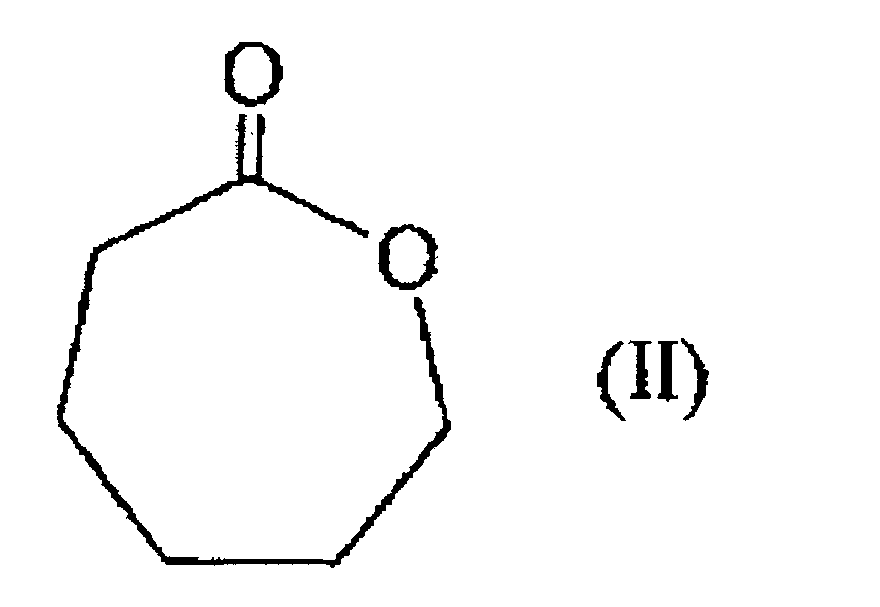
- ⁇ -caprolactone is a compound having an intramolecular cyclic ester structure and is well known as an industrially producible compound by oxidizing cyclohexanone. It is also known that ⁇ -caprolactone easily undergoes ring-opening polymerization to provide aliphatic polyester' (Japanese Patent Application Laid-Open No. 11-158172). However, there have not been known examples, except that of the present inventors, of synthesizing ⁇ -caprolactone from starch and obtaining aliphatic polyester therefrom.
- the method of the present invention for producing aliphatic polyester comprises the steps of:
- the method for synthesizing aliphatic polyester from starch opens up a novel way of utilizing starch as a resource. From this standpoint, the method of the present invention for producing aliphatic polyester also provides a useful method for utilizing starch as a new resource.
- Conversion from starch to glucose can be achieved for example by hydrolysis with a dilute acid such as sulfuric acid, hydrolysis with an enzyme such as amylase or maltase, or hydrolysis with ultracritical water.
- the step of obtaining glucose from starch is preferably executed by hydrolysis with an acid.
- the reaction conditions can be suitably determined according to the already known method.
- Step (ii) (glucose to gluconolactone or gluconic acid)
- Conversion from glucose to gluconolactone can be achieved for example by bromine oxidation of glucose or by a method utilizing notatin which is a glucose oxidase.
- the step of obtaining gluconolactone from glucose is preferably executed by bromine oxidation.
- the reaction conditions can be suitably determined according to the already known method.
- Conversion from glucose to gluconic acid can be achieved for example by oxidation with bromine and concentrated sulfuric acid, more specifically oxidizing and hydrolyzing glucose in sulfuric acid saturated with bromine, or by electrolytic oxidation of a glucose solution or by fermentation of gluconic acid utilizing bacteria of Penicillium family.
- the step of obtaining gluconic acid from glucose is preferably executed by oxidation utilizing bromine and concentrated sulfuric acid.
- the reaction conditions can be suitably determined according to the already known method.
- Conversion of gluconolactone or gluconic acid to caproic acid can be achieved for example by reduction thereof with hydroiodic acid and red phosphorus. In this reaction, it is desirable that the hydroxyl radical alone of gluconolactone or gluconic acid is oxidized.
- the amount of red phosphorus employed in the reduction is preferably 1.8 to 2.4 equivalents with respect to gluconolactone or gluconic acid.
- Hydroiodic acid employed in the reduction preferably has a concentration of 50 to 60 mass%, and is preferably employed in a weight of 40 to 60 times with respect to the weight of gluconolactone or gluconic acid.
- the reducing reaction is completed by refluxing gluconolactone or gluconic acid and red phosphorus in hydroiodic acid for about 20 hours.
- the reaction mixture is filtered, then the filtrate is extracted with ether and washed with an aqueous solution of sodium hydrosulfite of about 5 mass%, and caproic acid can be obtained by distilling the ether solvent and executing vacuum distillation.
- Conversion from caproic acid to 6-chlorocaproic acid can be achieved for example by chlorination with chlorine and concentrated sulfuric acid, preferably by chlorination conducted by reacting caproic acid with chlorine in concentrated sulfuric acid.
- the reaction conditions can be suitably determined according to the known method.
- Conversion from 6-chlorocaproic acid to ⁇ -caprolactone can be achieved for example by cyclization utilizing an aqueous solution of sodium hydroxide, preferably by boiling 6-chlorocaproic acid in an aqueous solution of sodium hydroxide.
- the reaction conditions can be suitably determined according to the known method.
- aliphatic polyester is synthesized by ring-opening polymerization of ⁇ -caprolactone utilizing a compound having a hydroxyl radical as an initiator normally in the presence of a catalyst.
- the initiator is used for opening the ring of ⁇ -caprolactone, and the catalyst accelerates the polymerization by interacting with the ring-opened product.
- a known ring-opening polymerization catalyst can be employed as the polymerization catalyst in the ring-opening polymerization of ⁇ -caprolactone.
- catalyst include tin dichloride, tin tetrachloride, tetra-n-butoxy-germanium, tetramethoxy-germanium, tetraethoxy-germanium, triethoxy-aluminum, tri-n-propoxy-aluminum, tri-iso-propoxy-aluminum, tri-n-butoxy-aluminum, triiso-butoxy-aluminum, aluminum chloride, triethyl-aluminum, trimethyl-aluminum, di-iso-propyl zinc, dimethyl-zinc, diethyl-zinc, zinc chloride, tetra-n-propoxy-titanium, tetra-n-butoxy-titanium, tetra-t-butoxy
- the amount of polymerization catalyst can be determined suitably, but is usually within a range of 0.01 to 10 wt.%, preferably 0.05 to 5 wt.% with respect to the total amount of ⁇ -caprolactone and the polymerization initiator.
- a known polymerization initiator can be employed in the ring-opening polymerization of ⁇ -caprolactone.
- polymerization initiator include monools such as methanol, ethanol, 1-propanol, 2-propanol, butanols or phenol, diols such as ethylene glycol, 1,3-propanediol, 1,4-butanediol, diethylene glycol, 1,5-pentanediol, 1,6-hexanediol, 1,7-heptanediol, 1,8-octanediol or 1,10-decanediol, triols such as glycerin or trimethylol propane, and polyols such as neopentyl glycol or pentaerythritol.
- Such initiator may be employed singly or as a mixture of at least two initiators.
- the moler ratio of the polymerization initiator to be employed in the present invention and ⁇ -caprolactone can be suitably selected according to the polymerization ratio of the desired aliphatic polyester, and is normally within a range of 1:1 to 1:5,000, preferably within a range of 1:1 to 1:2,000.
- the ring-opening polymerization of ⁇ -caprolactone can be executed by a polymerization reaction of ⁇ -caprolactone in the presence of the polymerization catalyst and the polymerization initiator under the presence of inert gas or under a reduced pressure.
- the ring-opening polymerization of ⁇ -caprolactone is preferably executed in a nitrogen atmosphere for the ease of operation.
- the reaction temperature and time can be arbitrarily selected.
- the reaction temperature is preferably equal to 50° C or higher, particularly 100° C or higher in order to obtain a sufficiently high reaction speed, and is preferably not exceeding 200° C, particularly not exceeding 180° C in order to substantially avoid coloration of aliphatic polyester by oxidation or decomposition of the generated aliphatic polyester.
- the reaction time can be arbitrarily selected within a range not affecting the quality of the generated aliphatic polyester.
- the ring-opening polymerization of ⁇ -caprolactone can also be executed in a solvent.
- the solvent is preferably an inactive solvent not reacting with ⁇ -caprolactone, polymerization catalyst or polymerization initiator, selected from aromatic hydrocarbons such as toluene or xylene, or aliphatic or alicyclic hydrocarbons such as hexane or cyclohexane.
- ⁇ -caprolactone polymerization catalyst or polymerization initiator
- aromatic hydrocarbons such as toluene or xylene
- aliphatic or alicyclic hydrocarbons such as hexane or cyclohexane.
- hexane or cyclohexane Preferably such solvent is substantially anhydrous.
- the reaction temperature is within a range from 0° C to the boiling point of the solvent, preferably within a range of 0° C to 100° C.
- the weight-average molecular weight of aliphatic polyester obtained by the ring-opening polymerization of ⁇ -caprolactone is preferably 1,000 or higher, particularly 30,000 or higher in terms of polystyrene and preferably 1,000,000 or lower, particularly 500,000 or lower in terms of polystyrene.
- the aliphatic polyester of the present invention thus obtained can be utilized in various industrial fields by modifying the weight-average molecular weight or the functional radical contained therein.
- the aliphatic polyester of a weight-average molecular weight of 1,000 to 5,000 utilizing glycol as a polymerization initiator is extremely useful, exploiting the presence of a hydroxyl radical therein, as a raw material for polyurethane or paints.
- the aliphatic polyester having a weight-average molecular weight exceeding 50,000 has a practical mechanical strength and is usable in plastic molded articles, films or hot-melt adhesives.
- the molding can be executed, for example, by compression molding, injection molding, extrusion molding, mold casting or transfer molding utilizing a mold.
- the aliphatic polyester of the present invention may be mixed, within a range not affecting the object of the present invention, with another resinous component, a rubber component, a heat resistance stabilizer, a flame retarding agent, a slipping agent, an antiblocking agent, an anticlouding agent, a friction reducing agent, a filler, a dye, a pigment, natural oil, synthetic oil or wax.
- the mixing ratio is not particularly limited and can be suitably determined.
- the obtained aliphatic polyester shows a weight-average molecular weight of 300,000 in terms of polystyrene and an average degree of polymerization of 2,630.
- gluconic acid represented by the following chemical formula (IV): 100 parts by weight of red phosphorus and 290 parts by weight of the gluconic acid were added to 14,000 parts by weight of hydroiodic acid (55 mass%) and were refluxed for 20 hours at 130°C. Then the subsequent process was conducted in the same manner as in the example 1 to obtain 155 parts by weight of caproic acid.
- 155 parts by weight of the caproic acid were added to 1,000 parts by weight of 90% sulfuric acid saturated with chlorine and were reacted for 6 hours at 25°C to obtain 100 parts by weight of 6-chlorocaproic acid.
- ⁇ -caprolactone 73 parts by weight of ⁇ -caprolactone were heated to 160°C in a nitrogen atmosphere, and 0.22 parts by weight of di-iso-propyl zinc as a polymerization catalyst and 0.44 parts by weight of 1,4-butanediol as a polymerization initiator were added to execute ring-opening polymerization thereby obtaining aliphatic polyester.
- the polymerization time was 10 hours.
- the obtained aliphatic polyester showed a weight-average molecular weight of 250,000 in terms of polystyrene and an average degree of polymerization of 2,190.
- Example 1 The aliphatic polyesters synthesized in the examples 1 and 2 were subjected to evaluation of various physical properties, of which results are shown in Table 1. Also as a reference example 1, Celgreen (polycaprolactone plastic P-H7 manufactured by Daicel Chemical Industries, Co.) was included in the comparative evaluation.
- Example 1 Example 2 Reference Example 1 Tensile yield strength (JIS)K7113 Pa 0.25 0.22 0.20 Tensile modulus (JIS)K7113 Pa 2.45 2.30 2.25 Bending strength (JIS)K7203 Pa 0.43 0.40 0.37 Bending modulus (JIS)K7203 Pa 5.00 4.75 4.41
- the present invention enables to produce aliphatic polyester by the ring-opening polymerization of ⁇ -caprolactone obtained from starch via glucose, and such aliphatic polyester has sufficient physical properties such as mechanical strength and can be utilized as a substitute for plastic molded products. Furthermore, this fact opens up a way of obtaining high-quality plastic materials from starch instead of petroleum, thereby establishing starch as an efficient resource.
Landscapes
- Chemical & Material Sciences (AREA)
- Organic Chemistry (AREA)
- Health & Medical Sciences (AREA)
- Chemical Kinetics & Catalysis (AREA)
- Medicinal Chemistry (AREA)
- Polymers & Plastics (AREA)
- Polyesters Or Polycarbonates (AREA)
Abstract
The invention relates to a method for
producing an aliphatic polyester, utilizing starch
as a raw material.
The invention produces an aliphatic polyester
by the steps of hydrolyzing starch to obtain
glucose, oxidizing the glucose to obtain
gluconolactone or gluconic acid, reducing the
gluconolactone or the gluconic acid to obtain
caproic acid, chlorinating the caproic acid to
obtain 6-chlorocaproic acid, cyclizing the 6-chlorocaproic
acid to obtain ε-caprolactone, and
executing ring-opening polymerization of the ε-caprolactone.
Description
The present invention relates to a method for
producing aliphatic polyester and a method for
using starch as a resource.
The conventional general-purpose plastic
products are composed of polymers synthesized from
petroleum resources. More specifically, polymer
products such as polyester, polystyrene, nylon,
polyethylene, polyvinyl chloride, polyimide,
polycarbonate etc. are all synthesized from
petroleum. However, the petroleum is a limited
resource which is to run out sooner or later. For
this reason there is strongly desired a technology
for producing the general-purpose plastic products
from a new raw material capable of substituting
petroleum, namely a recyclable raw material.
On the other hand, starch is a polymer
compound formed by dehydration polymerization of
D-glucose, and is an important polysaccharide
comparable to cellulose. Starch is produced from
potato, sweet potato, corn etc., with the
worldwide production (production amount of corn)
amounting to 400 to 500 million tons per year, and
is a recyclable resource having the largest
production amount among the natural resources.
Starch can highly be expected as a new resource
which replaces the petroleum, if general-purpose
plastic products can be produced therefrom.
The object of the present invention is to
provide a method for producing aliphatic polyester
utilizing starch as a raw material.
Based on a standpoint that a novel technical
development is required to provide against the
exhaustion of the petroleum resources in the
future, the present inventors through intensive
investigation have noticed starch as a raw
material which can replace petroleum and have
found that aliphatic polyester can be synthesized
from caproic acid that can be obtained from starch
via glucose, thereby attaining the present
invention. This finding opens up a way for
utilizing starch as an efficient resource in
obtaining plastics of high quality from starch as
a starting material.
The above-mentioned object can be attained,
according to an embodiment of the present
invention, by a method for producing an aliphatic
polyester represented by the following formula
(I):
 (wherein n stands for an integer within a range
from 5 to 10,000), the method comprising the steps
of:
(wherein n stands for an integer within a range
from 5 to 10,000), the method comprising the steps
of:
The aforementioned object can be attained also,
in another embodiment of the present invention, by
a method for producing an aliphatic polyester
represented by the following formula (I):
 (wherein n stands for an integer within a range
from 5 to 10,000), the method comprising the steps
of:
(wherein n stands for an integer within a range
from 5 to 10,000), the method comprising the steps
of:

ε-caprolactone is a compound having an
intramolecular cyclic ester structure and is well
known as an industrially producible compound by
oxidizing cyclohexanone. It is also known that ε-caprolactone
easily undergoes ring-opening
polymerization to provide aliphatic polyester'
(Japanese Patent Application Laid-Open No. 11-158172).
However, there have not been known
examples, except that of the present inventors, of
synthesizing ε-caprolactone from starch and
obtaining aliphatic polyester therefrom.
The method of the present invention for
producing aliphatic polyester comprises the steps
of:
The method for synthesizing aliphatic
polyester from starch opens up a novel way of
utilizing starch as a resource. From this
standpoint, the method of the present invention
for producing aliphatic polyester also provides a
useful method for utilizing starch as a new
resource.
In the following there will be explained each
of the aforementioned steps (i) to (vi).
Conversion from starch to glucose can be
achieved for example by hydrolysis with a dilute
acid such as sulfuric acid, hydrolysis with an
enzyme such as amylase or maltase, or hydrolysis
with ultracritical water. The step of obtaining
glucose from starch is preferably executed by
hydrolysis with an acid. The reaction conditions
can be suitably determined according to the
already known method.
Conversion from glucose to gluconolactone can
be achieved for example by bromine oxidation of
glucose or by a method utilizing notatin which is
a glucose oxidase. The step of obtaining
gluconolactone from glucose is preferably executed
by bromine oxidation. The reaction conditions can
be suitably determined according to the already
known method.
Conversion from glucose to gluconic acid can
be achieved for example by oxidation with bromine
and concentrated sulfuric acid, more specifically
oxidizing and hydrolyzing glucose in sulfuric acid
saturated with bromine, or by electrolytic
oxidation of a glucose solution or by fermentation
of gluconic acid utilizing bacteria of Penicillium
family. The step of obtaining gluconic acid from
glucose is preferably executed by oxidation
utilizing bromine and concentrated sulfuric acid.
The reaction conditions can be suitably determined
according to the already known method.
Conversion of gluconolactone or gluconic acid
to caproic acid can be achieved for example by
reduction thereof with hydroiodic acid and red
phosphorus. In this reaction, it is desirable
that the hydroxyl radical alone of gluconolactone
or gluconic acid is oxidized.
The amount of red phosphorus employed in the
reduction is preferably 1.8 to 2.4 equivalents
with respect to gluconolactone or gluconic acid.
Hydroiodic acid employed in the reduction
preferably has a concentration of 50 to 60 mass%,
and is preferably employed in a weight of 40 to 60
times with respect to the weight of gluconolactone
or gluconic acid. The reducing reaction is
completed by refluxing gluconolactone or gluconic
acid and red phosphorus in hydroiodic acid for
about 20 hours. The reaction mixture is filtered,
then the filtrate is extracted with ether and
washed with an aqueous solution of sodium
hydrosulfite of about 5 mass%, and caproic acid
can be obtained by distilling the ether solvent
and executing vacuum distillation.
Conversion from caproic acid to 6-chlorocaproic
acid can be achieved for example by
chlorination with chlorine and concentrated
sulfuric acid, preferably by chlorination
conducted by reacting caproic acid with chlorine
in concentrated sulfuric acid. The reaction
conditions can be suitably determined according to
the known method.
Conversion from 6-chlorocaproic acid to ε-caprolactone
can be achieved for example by
cyclization utilizing an aqueous solution of
sodium hydroxide, preferably by boiling 6-chlorocaproic
acid in an aqueous solution of
sodium hydroxide. The reaction conditions can be
suitably determined according to the known method.
In the present invention, aliphatic polyester
is synthesized by ring-opening polymerization of
ε-caprolactone utilizing a compound having a
hydroxyl radical as an initiator normally in the
presence of a catalyst. The initiator is used for
opening the ring of ε-caprolactone, and the
catalyst accelerates the polymerization by
interacting with the ring-opened product.
In the present invention, a known ring-opening
polymerization catalyst can be employed as the
polymerization catalyst in the ring-opening
polymerization of ε-caprolactone. Examples of
such catalyst include tin dichloride, tin
tetrachloride, tetra-n-butoxy-germanium,
tetramethoxy-germanium, tetraethoxy-germanium,
triethoxy-aluminum, tri-n-propoxy-aluminum, tri-iso-propoxy-aluminum,
tri-n-butoxy-aluminum, triiso-butoxy-aluminum,
aluminum chloride, triethyl-aluminum,
trimethyl-aluminum, di-iso-propyl zinc,
dimethyl-zinc, diethyl-zinc, zinc chloride, tetra-n-propoxy-titanium,
tetra-n-butoxy-titanium,
tetra-t-butoxy-titanium, tetraethoxy-zirconium,
tetramethoxy-zirconium, tetra-iso-propoxy-zirconium,
tetra-n-butoxy-zirconium, tetra-iso-butoxy-zirconium
and tetra-t-butoxy-zirconium.
Such catalyst may be employed singly or as a
mixture of at least two catalysts.
The amount of polymerization catalyst can be
determined suitably, but is usually within a range
of 0.01 to 10 wt.%, preferably 0.05 to 5 wt.% with
respect to the total amount of ε-caprolactone and
the polymerization initiator.
In the present invention, a known
polymerization initiator can be employed in the
ring-opening polymerization of ε-caprolactone.
Examples of such polymerization initiator include
monools such as methanol, ethanol, 1-propanol, 2-propanol,
butanols or phenol, diols such as
ethylene glycol, 1,3-propanediol, 1,4-butanediol,
diethylene glycol, 1,5-pentanediol, 1,6-hexanediol,
1,7-heptanediol, 1,8-octanediol or 1,10-decanediol,
triols such as glycerin or trimethylol propane,
and polyols such as neopentyl glycol or
pentaerythritol. Such initiator may be employed
singly or as a mixture of at least two initiators.
The moler ratio of the polymerization
initiator to be employed in the present invention
and ε-caprolactone can be suitably selected
according to the polymerization ratio of the
desired aliphatic polyester, and is normally
within a range of 1:1 to 1:5,000, preferably
within a range of 1:1 to 1:2,000.
The ring-opening polymerization of ε-caprolactone
can be executed by a polymerization
reaction of ε-caprolactone in the presence of the
polymerization catalyst and the polymerization
initiator under the presence of inert gas or under
a reduced pressure. The ring-opening
polymerization of ε-caprolactone is preferably
executed in a nitrogen atmosphere for the ease of
operation.
In the ring-opening polymerization of ε-caprolactone,
the reaction temperature and time
can be arbitrarily selected. The reaction
temperature is preferably equal to 50° C or higher,
particularly 100° C or higher in order to obtain a
sufficiently high reaction speed, and is
preferably not exceeding 200° C, particularly not
exceeding 180° C in order to substantially avoid
coloration of aliphatic polyester by oxidation or
decomposition of the generated aliphatic polyester.
Also the reaction time can be arbitrarily selected
within a range not affecting the quality of the
generated aliphatic polyester.
The ring-opening polymerization of ε-caprolactone
can also be executed in a solvent.
The solvent is preferably an inactive solvent not
reacting with ε-caprolactone, polymerization
catalyst or polymerization initiator, selected
from aromatic hydrocarbons such as toluene or
xylene, or aliphatic or alicyclic hydrocarbons
such as hexane or cyclohexane. Preferably such
solvent is substantially anhydrous. The reaction
temperature is within a range from 0° C to the
boiling point of the solvent, preferably within a
range of 0° C to 100° C.
The weight-average molecular weight of
aliphatic polyester obtained by the ring-opening
polymerization of ε-caprolactone is preferably
1,000 or higher, particularly 30,000 or higher in
terms of polystyrene and preferably 1,000,000 or
lower, particularly 500,000 or lower in terms of
polystyrene.
The aliphatic polyester of the present
invention thus obtained can be utilized in various
industrial fields by modifying the weight-average
molecular weight or the functional radical
contained therein. For example, the aliphatic
polyester of a weight-average molecular weight of
1,000 to 5,000 utilizing glycol as a
polymerization initiator is extremely useful,
exploiting the presence of a hydroxyl radical
therein, as a raw material for polyurethane or
paints. Also the aliphatic polyester having a
weight-average molecular weight exceeding 50,000
has a practical mechanical strength and is usable
in plastic molded articles, films or hot-melt
adhesives. The molding can be executed, for
example, by compression molding, injection molding,
extrusion molding, mold casting or transfer
molding utilizing a mold.
Also the aliphatic polyester of the present
invention may be mixed, within a range not
affecting the object of the present invention,
with another resinous component, a rubber
component, a heat resistance stabilizer, a flame
retarding agent, a slipping agent, an antiblocking
agent, an anticlouding agent, a friction reducing
agent, a filler, a dye, a pigment, natural oil,
synthetic oil or wax. The mixing ratio is not
particularly limited and can be suitably
determined.
In the following, the present invention will
be further clarified by way of examples, but the
present invention is by no means limited to such
examples.
500 parts by weight of starch (supplied by
Wako Pure Chemical Industries Co.) were put into
4,500 parts by weight of water and were dissolved
under heating. Then 5,000 parts by weight of 3
mol/l sulfuric acid were added and reacted under
agitation for 5 hours at 80°C. After the reaction,
the aqueous solution was neutralized by the
addition of anhydrous sodium carbonate, then was
passed through a column of the ion exchange resin
(Amberlite IR-120B, supplied by Organo Co.) and
the solvent was distilled off. Then the reaction
mixture was separated and purified to obtain 300
parts by weight of glucose.
The 13C-NMR (100 MHz, internal standard DMSO-d6)
of the synthesized glucose was measured with
FT-NMR DPX400 (manufactured by Bruker Inc.) to
obtain chemical shfts δ (ppm) as follows:
8,000 parts by weight of 12% aqueous solution
of barium carbonate were saturated with carbon
dioxide, and 330 parts by weight of bromine and
300 parts by weight of the glucose were added and
agitated for 30 minutes at 25°C to obtain 250
parts by weight of gluconolactone represented by
the following chemical formula (III):

The 13C-NMR (100 MHz, internal standard DMSO-d6)
of the synthesized gluconolactone was measured
to obtain chemical shfts δ (ppm) as follows:
87 parts by weight of red phosphorus and 250
parts by weight of the gluconolactone were added
to 12,000 parts by weight of hydroiodic acid (55
mass%), and were refluxed for 20 hours at 130°C.
The reaction mixture was filtered, then the
filtrate was extracted with ether and the extract
was washed with 5% aqueous solution of sodium
hydrosulfite. After the solvent ether was
distilled off, distillation under a reduced
pressure was executed to obtain 147 parts by
weight of caproic acid.
The 13C-NMR (100 MHz, internal standard CDCl3)
of the synthesized caproic acid was measured to
obtain chemical shfts δ (ppm) as follows:
147 parts by weight of the caproic acid were
added to 1,000 parts by weight of 90% sulfuric
acid saturated with chlorine and were reacted for
6 hours at 25°C to obtain 95 parts by weight of 6-chlorocaproic
acid.
The 13C-NMR (100 MHz, internal standard CDCl3)
of the synthesized 6-chlorocaproic acid was
measured to obtain chemical shfts δ (ppm) as
follows:
95 parts by weight of the 6-chlorocaproic acid
were boiled with an aqueous solution of the
equivalent amount of sodium hydroxide to obtain 69
parts by weight of ε-caprolactone.
The 13C-NMR (100 MHz, internal standard CDCl3)
of the synthesized ε-caprolactone was measured to
obtain chemical shfts δ (ppm) as follows:
69 parts by weight of the ε-caprolactone were
heated to 155°C in a nitrogen atmosphere, and 0.21
parts by weight of tri-iso-propoxy-aluminum as a
polymerization catalyst and 0.41 parts by weight
of diethylene glycol as a polymerization initiator
were added to execute ring-opening polymerization
thereby obtaining aliphatic polyester. The
polymerization time was 10 hours. The obtained
aliphatic polyester shows a weight-average
molecular weight of 300,000 in terms of
polystyrene and an average degree of
polymerization of 2,630.
The 1H-NMR (400 MHz, internal standard CDCl3)
and 13C-NMR (100 MHz, internal standard CDCl3) of
the synthesized aliphatic polyester were measured
to obtain chemical shfts δ (ppm) as follows:
These results of measurement confirmed that
the desired aliphatic polyester was synthesized.
300 parts by weight of glucose, obtained in
the same manner as in the example 1, were oxidized
and hydrolysed in 2,500 parts by weight of 27N
sulfuric acid saturated with bromine to obtain 290
parts by weight of gluconic acid represented by
the following chemical formula (IV):
 100 parts by weight of red phosphorus and 290
parts by weight of the gluconic acid were added to
14,000 parts by weight of hydroiodic acid (55
mass%) and were refluxed for 20 hours at 130°C.
Then the subsequent process was conducted in the
same manner as in the example 1 to obtain 155
parts by weight of caproic acid.
100 parts by weight of red phosphorus and 290
parts by weight of the gluconic acid were added to
14,000 parts by weight of hydroiodic acid (55
mass%) and were refluxed for 20 hours at 130°C.
Then the subsequent process was conducted in the
same manner as in the example 1 to obtain 155
parts by weight of caproic acid.
155 parts by weight of the caproic acid were
added to 1,000 parts by weight of 90% sulfuric
acid saturated with chlorine and were reacted for
6 hours at 25°C to obtain 100 parts by weight of
6-chlorocaproic acid.
100 parts by weight of the 6-chlorocaproic
acid were boiled with an aqueous solution of the
equivalent amount of sodium hydroxide to obtain 73
parts by weight of ε-caprolactone.
73 parts by weight of ε-caprolactone were
heated to 160°C in a nitrogen atmosphere, and 0.22
parts by weight of di-iso-propyl zinc as a
polymerization catalyst and 0.44 parts by weight
of 1,4-butanediol as a polymerization initiator
were added to execute ring-opening polymerization
thereby obtaining aliphatic polyester. The
polymerization time was 10 hours. The obtained
aliphatic polyester showed a weight-average
molecular weight of 250,000 in terms of
polystyrene and an average degree of
polymerization of 2,190.
The measurement of 1H-NMR and 13C-NMR provided
spectra similar to those in the example 1,
confirming that the desired aliphatic polyester
was synthesized.
The aliphatic polyesters synthesized in the
examples 1 and 2 were subjected to evaluation of
various physical properties, of which results are
shown in Table 1. Also as a reference example 1,
Celgreen (polycaprolactone plastic P-H7
manufactured by Daicel Chemical Industries, Co.)
was included in the comparative evaluation.
| Example 1 | Example 2 | Reference Example 1 | |
| Tensile yield strength (JIS)K7113 Pa | 0.25 | 0.22 | 0.20 |
| Tensile modulus (JIS)K7113 Pa | 2.45 | 2.30 | 2.25 |
| Bending strength (JIS)K7203 Pa | 0.43 | 0.40 | 0.37 |
| Bending modulus (JIS)K7203 Pa | 5.00 | 4.75 | 4.41 |
These results indicate that the aliphatic
polyesters synthesized in the examples 1 and 2
have physical properties equivalent or superior to
those of the aliphatic polyester P-H7 of Daicel
Chemical of the reference example 1 excellent in
the strength and elongation, and can be.
satisfactorily used as a substitute for the
conventionally known plastics derived from
petroleum.
As explained in the foregoing, the present
invention enables to produce aliphatic polyester
by the ring-opening polymerization of ε-caprolactone
obtained from starch via glucose, and
such aliphatic polyester has sufficient physical
properties such as mechanical strength and can be
utilized as a substitute for plastic molded
products. Furthermore, this fact opens up a way
of obtaining high-quality plastic materials from
starch instead of petroleum, thereby establishing
starch as an efficient resource.
Claims (10)
- A method of producing an aliphatic' polyester represented by the following formula (I):wherein n stands for an integer with a range of 5 to 10,000, the method comprising the steps of:
 (i) hydrolyzing starch to obtain glucose;(ii) oxidizing said glucose to obtain gluconolactone;(iii) reducing said gluconolactone to obtain caproic acid;(iv) chlorinating said caproic acid to obtain 6-chlorocaproic acid;(v) cyclizing said 6-chlorocaproic acid to obtain ε-caprolactone represented by the following formula (II):and
 (vi) executing ring-opening polymerization of said ε-caprolactone.
 - A method of producing an aliphatic polyester represented by the following formula (I):wherein n stands for an integer with a range of 5 to 10,000, the method comprising the steps of:
 (i) hydrolyzing starch to obtain glucose;(ii) oxidizing said glucose to obtain gluconic acid;(iii) reducing said gluconic acid to obtain caproic acid;(iv) chlorinating said caproic acid to obtain 6-chlorocaproic acid;(v) cyclizing said 6-chlorocaproic acid to obtain ε-caprolactone represented by the following formula (II):and
 (vi) executing ring-opening polymerization of said ε-caprolactone.
 - The method according to claim 1 or 2, wherein the step of obtaining glucose from starch is executed by hydrolysis utilizing an acid.
- The method according to claim 1, wherein the step of obtaining gluconolactone from glucose is executed by bromine oxidation.
- The method according to claim 2, wherein the step of obtaining gluconic acid from glucose is executed by oxidation utilizing bromine and concentrated sulfuric acid.
- The method according to claim 1, wherein the step of obtaining caproic acid from gluconolactone is executed by a reducing reaction utilizing hydroiodic acid and red phosphorus.
- The method according to claim 2, wherein the step of obtaining caproic acid from gluconic acid is executed by a reducing reaction utilizing hydroiodic acid and red phosphorus.
- The method according to claim 1 or 2, wherein the step of obtaining 6-chlorocaproic acid from caproic acid is executed by a chlorination reaction utilizing chlorine and concentrated sulfuric acid.
- The method according to claim 1 or 2, wherein the step of obtaining ε-caprolactone from 6-chlorocaproic acid is executed by a cyclization reaction utilizing an aqueous solution of sodium hydroxide.
- The method according to claim 1 or 2, wherein the step of ring-opening polymerization of ε-caprolactone is executed by a ring-opening polymerization utilizing a polymerization catalyst and a polymerization initiator.
Applications Claiming Priority (14)
| Application Number | Priority Date | Filing Date | Title |
|---|---|---|---|
| JP2000367302A JP4387579B2 (en) | 2000-12-01 | 2000-12-01 | Method for producing aliphatic polyester and method for recycling starch |
| JP2000367302 | 2000-12-01 | ||
| JP2000370259 | 2000-12-05 | ||
| JP2000370259A JP2002173461A (en) | 2000-12-05 | 2000-12-05 | Method for producing caproic acid |
| JP2000370258A JP4405662B2 (en) | 2000-12-05 | 2000-12-05 | Method for producing aliphatic polyester and method for recycling cellulose |
| JP2000370258 | 2000-12-05 | ||
| JP2001114044 | 2001-04-12 | ||
| JP2001114044A JP2002308819A (en) | 2001-04-12 | 2001-04-12 | Method for producing caproic acid from cellulose and method for recycling cellulose |
| JP2001122694A JP3559769B2 (en) | 2001-04-20 | 2001-04-20 | Method for producing aliphatic polyester and method for recycling starch |
| JP2001122694 | 2001-04-20 | ||
| JP2001122695 | 2001-04-20 | ||
| JP2001122695A JP3559770B2 (en) | 2001-04-20 | 2001-04-20 | Method for producing aliphatic polyester and method for recycling cellulose |
| JP2001215391 | 2001-07-16 | ||
| JP2001215391A JP3902921B2 (en) | 2001-07-16 | 2001-07-16 | Method for producing aliphatic polyester, method for producing caproic acid, Propionibacterium acnes CAP103 strain |
Publications (1)
| Publication Number | Publication Date |
|---|---|
| EP1211274A1 true EP1211274A1 (en) | 2002-06-05 |
Family
ID=27567006
Family Applications (1)
| Application Number | Title | Priority Date | Filing Date |
|---|---|---|---|
| EP01128072A Withdrawn EP1211274A1 (en) | 2000-12-01 | 2001-11-26 | Method for producing aliphatic polyester |
Country Status (2)
| Country | Link |
|---|---|
| US (1) | US20020111458A1 (en) |
| EP (1) | EP1211274A1 (en) |
Cited By (3)
| Publication number | Priority date | Publication date | Assignee | Title |
|---|---|---|---|---|
| US6367280B1 (en) | 1999-11-08 | 2002-04-09 | Sawafuji Electric Co., Ltd | Mounting and placing structure for refrigerator |
| CN106554333A (en) * | 2015-09-29 | 2017-04-05 | 江苏福瑞生物医药有限公司 | A kind of synthetic method of pharmaceutical intermediate |
| CN110078614A (en) * | 2010-03-05 | 2019-08-02 | 阿彻丹尼尔斯米德兰德公司 | Adipic acid composition |
Families Citing this family (6)
| Publication number | Priority date | Publication date | Assignee | Title |
|---|---|---|---|---|
| US7671140B2 (en) * | 2007-04-09 | 2010-03-02 | The University Of Connecticut | Ring-opening polymerization of cyclic esters, polyesters formed thereby, and articles comprising the polyesters |
| CN102803194B (en) | 2009-06-13 | 2016-01-20 | 莱诺维亚公司 | Production of glutaric acid and derivatives from carbohydrate-containing substances |
| US8669397B2 (en) | 2009-06-13 | 2014-03-11 | Rennovia, Inc. | Production of adipic acid and derivatives from carbohydrate-containing materials |
| US8501989B2 (en) * | 2009-06-13 | 2013-08-06 | Rennovia, Inc. | Production of adipic acid and derivatives from carbohydrate-containing materials |
| US8669393B2 (en) * | 2010-03-05 | 2014-03-11 | Rennovia, Inc. | Adipic acid compositions |
| US9770705B2 (en) | 2010-06-11 | 2017-09-26 | Rennovia Inc. | Oxidation catalysts |
Citations (5)
| Publication number | Priority date | Publication date | Assignee | Title |
|---|---|---|---|---|
| GB1133247A (en) * | 1966-09-15 | 1968-11-13 | Shell Int Research | Process for the preparation of lactones |
| US3437668A (en) * | 1965-03-20 | 1969-04-08 | Basf Ag | Production of halo-substituted caprolactones |
| JPS5473722A (en) * | 1977-11-21 | 1979-06-13 | Noguchi Kenkyusho | Method of reducing gluconic acid |
| US5136017A (en) * | 1991-02-22 | 1992-08-04 | Polysar Financial Services S.A. | Continuous lactide polymerization |
| JPH11158172A (en) * | 1997-12-03 | 1999-06-15 | Daicel Chem Ind Ltd | Epsilon-caprolactone and its production, polycaprolactone obtained therefrom and its production |
Family Cites Families (1)
| Publication number | Priority date | Publication date | Assignee | Title |
|---|---|---|---|---|
| JP3450810B2 (en) * | 2000-01-31 | 2003-09-29 | キヤノン株式会社 | Aliphatic polyester, method for producing aliphatic polyester and method for recycling cellulose |
-
2001
- 2001-11-23 US US09/990,543 patent/US20020111458A1/en not_active Abandoned
- 2001-11-26 EP EP01128072A patent/EP1211274A1/en not_active Withdrawn
Patent Citations (5)
| Publication number | Priority date | Publication date | Assignee | Title |
|---|---|---|---|---|
| US3437668A (en) * | 1965-03-20 | 1969-04-08 | Basf Ag | Production of halo-substituted caprolactones |
| GB1133247A (en) * | 1966-09-15 | 1968-11-13 | Shell Int Research | Process for the preparation of lactones |
| JPS5473722A (en) * | 1977-11-21 | 1979-06-13 | Noguchi Kenkyusho | Method of reducing gluconic acid |
| US5136017A (en) * | 1991-02-22 | 1992-08-04 | Polysar Financial Services S.A. | Continuous lactide polymerization |
| JPH11158172A (en) * | 1997-12-03 | 1999-06-15 | Daicel Chem Ind Ltd | Epsilon-caprolactone and its production, polycaprolactone obtained therefrom and its production |
Non-Patent Citations (2)
| Title |
|---|
| DATABASE WPI Week 197925, Derwent World Patents Index; AN 1979-55071B, XP002191559 * |
| PATENT ABSTRACTS OF JAPAN vol. 1999, no. 11 30 September 1999 (1999-09-30) * |
Cited By (4)
| Publication number | Priority date | Publication date | Assignee | Title |
|---|---|---|---|---|
| US6367280B1 (en) | 1999-11-08 | 2002-04-09 | Sawafuji Electric Co., Ltd | Mounting and placing structure for refrigerator |
| CN110078614A (en) * | 2010-03-05 | 2019-08-02 | 阿彻丹尼尔斯米德兰德公司 | Adipic acid composition |
| CN106554333A (en) * | 2015-09-29 | 2017-04-05 | 江苏福瑞生物医药有限公司 | A kind of synthetic method of pharmaceutical intermediate |
| CN106554333B (en) * | 2015-09-29 | 2018-11-30 | 江苏福瑞生物医药有限公司 | A kind of synthetic method of pharmaceutical intermediate |
Also Published As
| Publication number | Publication date |
|---|---|
| US20020111458A1 (en) | 2002-08-15 |
Similar Documents
| Publication | Publication Date | Title |
|---|---|---|
| US5922828A (en) | Process for producing polyethylene terephthalate using a specific catalyst stabilizer system | |
| JP6648144B2 (en) | A new method for preparing highly transparent and heat resistant polycarbonate esters | |
| CN107602824A (en) | The manufacture method of polyester and polyurethanes | |
| US20020111458A1 (en) | Method for producing aliphatic polyester | |
| US4066627A (en) | Production of polyesters | |
| US20210147620A1 (en) | Process for preparing poly(trimethylene furan dicarboxylate) | |
| JP3450810B2 (en) | Aliphatic polyester, method for producing aliphatic polyester and method for recycling cellulose | |
| US20090209727A1 (en) | Process for the production of a material that is degradable in a natural environment with a renewable carbon base | |
| US4329444A (en) | Production of polyesters | |
| US6559275B2 (en) | Method for producing aliphatic polyester | |
| CN103539928B (en) | Titanium series polyester catalyst and the method for producing semi-dull polyester | |
| JP4399108B2 (en) | Process for producing partially crystalline polyether polyol | |
| CN117050281A (en) | Preparation method of dibasic acid and diol modified polybutylene succinate copolyester | |
| JP4387579B2 (en) | Method for producing aliphatic polyester and method for recycling starch | |
| JP2002167430A (en) | Aliphatic polyester, method for producing aliphatic polyester, and method for recycling starch | |
| CN112742418B (en) | Catalyst for catalyzing meso-lactide to prepare D, L-lactide and preparation method thereof | |
| CN114075324A (en) | Manufacturing method of polyester polyol | |
| JP3559769B2 (en) | Method for producing aliphatic polyester and method for recycling starch | |
| JP4405662B2 (en) | Method for producing aliphatic polyester and method for recycling cellulose | |
| JP3559770B2 (en) | Method for producing aliphatic polyester and method for recycling cellulose | |
| RU2504557C2 (en) | Foamed polyurethanes | |
| JP2968466B2 (en) | Method for producing aliphatic polyester | |
| CN113549198A (en) | Method for preparing polylactic acid from lactic acid | |
| CN117003996B (en) | A method for preparing modified polybutylene succinate copolyester | |
| US6472540B1 (en) | Process for producing ε-caprolactone |
Legal Events
| Date | Code | Title | Description |
|---|---|---|---|
| PUAI | Public reference made under article 153(3) epc to a published international application that has entered the european phase |
Free format text: ORIGINAL CODE: 0009012 |
|
| AK | Designated contracting states |
Kind code of ref document: A1 Designated state(s): AT BE CH CY DE DK ES FI FR GB GR IE IT LI LU MC NL PT SE TR |
|
| AX | Request for extension of the european patent |
Free format text: AL;LT;LV;MK;RO;SI |
|
| 17P | Request for examination filed |
Effective date: 20021021 |
|
| AKX | Designation fees paid |
Designated state(s): CH DE FR GB IT LI NL |
|
| 17Q | First examination report despatched |
Effective date: 20030515 |
|
| STAA | Information on the status of an ep patent application or granted ep patent |
Free format text: STATUS: THE APPLICATION IS DEEMED TO BE WITHDRAWN |
|
| 18D | Application deemed to be withdrawn |
Effective date: 20030926 |