EP1211234A2 - Process for preparing 1,3-alkandiols from 3-hydroxyesters - Google Patents
Process for preparing 1,3-alkandiols from 3-hydroxyesters Download PDFInfo
- Publication number
- EP1211234A2 EP1211234A2 EP01307942A EP01307942A EP1211234A2 EP 1211234 A2 EP1211234 A2 EP 1211234A2 EP 01307942 A EP01307942 A EP 01307942A EP 01307942 A EP01307942 A EP 01307942A EP 1211234 A2 EP1211234 A2 EP 1211234A2
- Authority
- EP
- European Patent Office
- Prior art keywords
- process according
- catalyst
- hydroxyesters
- boiling point
- alcohol
- Prior art date
- Legal status (The legal status is an assumption and is not a legal conclusion. Google has not performed a legal analysis and makes no representation as to the accuracy of the status listed.)
- Withdrawn
Links
Classifications
-
- C—CHEMISTRY; METALLURGY
- C07—ORGANIC CHEMISTRY
- C07C—ACYCLIC OR CARBOCYCLIC COMPOUNDS
- C07C29/00—Preparation of compounds having hydroxy or O-metal groups bound to a carbon atom not belonging to a six-membered aromatic ring
- C07C29/132—Preparation of compounds having hydroxy or O-metal groups bound to a carbon atom not belonging to a six-membered aromatic ring by reduction of an oxygen containing functional group
- C07C29/136—Preparation of compounds having hydroxy or O-metal groups bound to a carbon atom not belonging to a six-membered aromatic ring by reduction of an oxygen containing functional group of >C=O containing groups, e.g. —COOH
- C07C29/147—Preparation of compounds having hydroxy or O-metal groups bound to a carbon atom not belonging to a six-membered aromatic ring by reduction of an oxygen containing functional group of >C=O containing groups, e.g. —COOH of carboxylic acids or derivatives thereof
- C07C29/149—Preparation of compounds having hydroxy or O-metal groups bound to a carbon atom not belonging to a six-membered aromatic ring by reduction of an oxygen containing functional group of >C=O containing groups, e.g. —COOH of carboxylic acids or derivatives thereof with hydrogen or hydrogen-containing gases
-
- B—PERFORMING OPERATIONS; TRANSPORTING
- B01—PHYSICAL OR CHEMICAL PROCESSES OR APPARATUS IN GENERAL
- B01J—CHEMICAL OR PHYSICAL PROCESSES, e.g. CATALYSIS OR COLLOID CHEMISTRY; THEIR RELEVANT APPARATUS
- B01J23/00—Catalysts comprising metals or metal oxides or hydroxides, not provided for in group B01J21/00
- B01J23/70—Catalysts comprising metals or metal oxides or hydroxides, not provided for in group B01J21/00 of the iron group metals or copper
- B01J23/72—Copper
Definitions
- the present invention relates to a process for preparing 1,3-alkandiols from 3-hydroxyesters. More specifically, the present invention relates to the preparation of 1,3-alkandiols from 3-hydroxyesters in a high yield as well as a process for preparing 1,3-alkandiols by hydrogenating 3-hydroxyesters in the presence of a hydrogenation catalyst.
- 1,3-alkandiols have been widely used as coating materials or intermediates for various organic syntheses as well as raw materials for production of polyesters.
- processes for preparing 1,3-alkandiols there are known several processes for preparing 1,3-alkandiols.
- a process for preparing 1,3-alkandiols by hydroformylating epoxides into 3-hydroxyaldehyde derivatives and then hydrogenating the 3-hydroxyaldehyde derivatives has been used (See: US Patent Nos. 5,770,776, 5,723,389, 5,731,478 and 5,777,182).
- Shell Co. has commercially produced 1,3-propandiol through hydrogenation of 3-hydroxypropanal, which is prepared by hydroformylation of ethylene oxides.
- this process has disadvantages in that the unstable 3-hydroxypropanal is likely to oligomerize itself and many other side products including acetal are produced, so that hydrogenation into 1,3-propandiol cannot be properly completed and quality of the final product is lowered.
- 1,3-alkandiols are prepared by carboesterifying epoxides with carbon monoxides and alcohols to produce 3-hydroxyesters and then hydrogenating the ester groups of the 3-hydroxyesters, it has not been put to practical use in the industrial field. This is due to that the reaction pathway thereof is very unselective for producing 1,3-alkandiols from 3-hydroxyesters when a conventional hydrogenation catalyst, such as copper-chromium oxide, copper-zinc oxide and Raney nickel, is used.
- a conventional hydrogenation catalyst such as copper-chromium oxide, copper-zinc oxide and Raney nickel
- some catalysts further comprising, if necessary, carriers such as alumina or zirconia are also well known in the art. All of the above catalysts are commercially available.
- Pd-Zn catalyst See: US Patent No. 5,185,476), Cu-TiO 2 catalyst (See: US Patent No. 4,929,777), Re-Cu-Zn catalyst (See: European Patent No. 373,946), Zn-Ru catalyst (See: US Patent No. 4,443,649), and Pd, Pt or Ru-containing catalyst.
- WO 00/18712 describes a method for hydrogenating methyl 3-hydroxypropionate to 1,3-propandiol in the presence of an alcohol solvent such as methanol.
- an alcohol solvent such as methanol.
- the alcohol solvent is expected to be able to suppress generation of lactones from 3-hydroxyesters and degradation of their ester groups, it is not helpful to maintain high selectivity at a high conversion rate and to ensure long-term reaction stability of the catalyst, since an alcohol having a low-boiling point exists as gas-phase under the flow of H 2 gas in a fixed bed reactor. In fact, significant decrease of the selectivity at a high conversion rate can be easily found in the Examples of the cited reference.
- the boiling points and the other chemical properties, between the reactant, i.e., hydroxyesters and the product, i.e., 1,3-alkandiols, are so similar that isolation and purification of the product from the reactant are often difficult, which leads to problems in a practical process.
- the hydrogenating process for 3-hydroxyesters substituted with a hydroxyl group at their ⁇ -position has problems in that: the reactants are chemically and thermally so unstable that dehydration of the hydroxyl groups at their ⁇ -position can readily occur, and the resulting unsaturated esters are easily reduced to generate undesirable side products such as saturated esters or corresponding monoalcohols wherein ester groups have been reduced.
- ⁇ -lactone compounds generated from an intramolecular reaction of 3-hydroxyesters are thermally so unstable as to be degraded spontaneously or form lactone polymers, and they are converted into additional side products including various esters and lactone compounds through intermolecular reactions with the other reactants or through condensation reaction with 1,3-alkandiols which are derived from hydrogenation of 1,3- hydroxyesters.
- the extent to which these side reactions occur is affected by reaction temperature, so there is a limit in controlling the reaction rate by increasing the reaction temperature. However, keeping a high pressure in order to provide a moderate activity under a low temperature will also causes trouble in the industrial application.
- a feature of the present invention is to provide a novel process for preparing 1,3-alkandiols from 3-hydroxyesters, wherein a novel hydrogenation catalyst exhibiting high catalytic activity as well as high selectivity even under a mild reaction condition is employed.
- a novel process for preparing 1,3-alkandiols from 3-hydroxyesters in a high yield comprising hydrogenating 3-hydroxyesters in an alcohol-containing solvent in the presence of a novel hydrogenation catalyst, wherein said alcohol-containing solvent is a pure alcohol or a mixed solvent consisting of an alcohol and a high-boiling point solvent which boils at a higher temperature than the 1, 3-alkandiol does, and said catalyst was prepared by adding alkaline precipitator, such as alkali metal carbonates or sodium hydroxide, to an aqueous solution containing copper salt to form particles, and then ageing said particles following the addition of colloidal silica thereto.
- alkaline precipitator such as alkali metal carbonates or sodium hydroxide
- Cu-containing catalyst stabilized with silica is applied to a hydrogenation process for preparing 1,3-alkandiols from 3-hydroxyesters.
- the major component of the catalyst is Cu in the form of oxide, whose content in the catalyst is 20 ⁇ 99% by weight, preferably 50 ⁇ 95% by weight, and content of silica in the catalyst is 1 ⁇ 80% by weight, preferably 5 ⁇ 50% by weight.
- the silica-stabilized copper oxide catalyst as described above can be represented by CuO-SiO 2 .
- the catalyst of the present invention cannot be obtained by any of the typical impregnation processes using a conventional silica carrier, and thus it should be made by a particular method which comprising stabilizing micro-particles (diameter ⁇ 10nm) of copper oxide precursor with silica in order to achieve the desired high catalytic activity. More specifically, the catalyst used in the present invention is prepared by a novel method which comprising adding alkaline precipitator, such as alkali metal carbonates or sodium hydroxide, to an aqueous solution containing copper salt, and then ageing the resulting copper hydroxide particles with colloidal silica. Significantly, the silica contained in the catalyst of the present invention would act as an essential component, and therefore it is clearly discriminated from the conventional carriers.
- alkaline precipitator such as alkali metal carbonates or sodium hydroxide
- any of the conventional extruding or pelleting method and impregnating method using thermal-resistant carriers may be applied to forming said catalyst.
- the formed catalyst is then calcined for 2 ⁇ 10 hrs at a temperature ranging from 200 to 800°C, preferably 300 to 700°C.
- the oxide catalyst thus obtained may be used preferably after activation with hydrogen or hydrogen-containing gas at a temperature ranging from 150 to 450°C for 1 ⁇ 20 hours.
- this activation step is performed while flowing the hydrogen or hydrogen-containing gas diluted with nitrogen or argon gas into a reactor filled with the calcined oxide catalyst.
- concentration of hydrogen, flow rate of the input gas, and temperature-increasing rate, etc. should be carefully controlled in order to prevent the catalyst from being sintered by heat generated in the course of its reduction.
- the hydrogenation catalyst may be used in combination with one or more promoters in order to improve its hydrogenation activity and selectivity.
- promoters include Re, Ru, Pd, Pt, Rh, Ag, Se, Te, Mo and Mn.
- Re, Ru, Pd, Pt, Rh, Ag, Se, Te, Mo and Mn are preferred, and their content in the catalyst should be 0.001 ⁇ 10 mol%, preferably 0.003 ⁇ 7 mol% based on Cu.
- the hydrogenation catalyst of the present invention may be used after modification using alkylsilane compounds in order to improve its catalytic activity and selectivity. At this time, hydroxyl groups of silica are masked with the alkylsilane compounds.
- Preferred alkylsilane compounds include, without limitation, trimethoxypropylsilane, trimethoxyoctylsilane, dimethoxydimethylsilane, dimethoxymethylpropylsilane, dimethoxymethyloctylsilane, methoxytrimethylsilane, methoxydimethylpropylsilane and methoxydimethyloctylsilane.
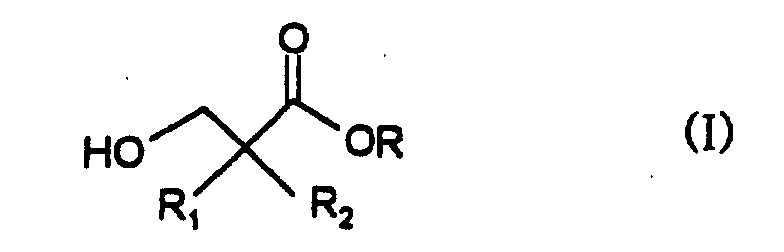
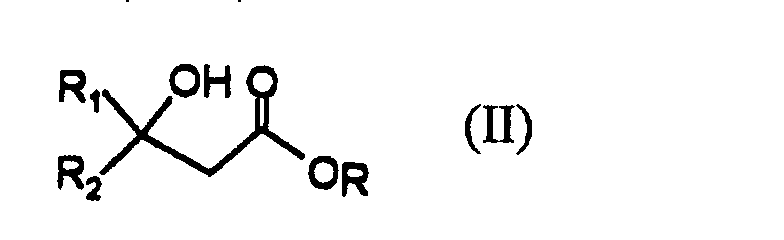
- 3-hydroxyesters used in the hydrogenation reaction according to the present invention can be represented by the following formula (I) or (II):
- R 1 , R 2 and R are independently hydrogen atom, C 1 ⁇ 20 non-branched saturated aliphatic hydrocarbon, branched aliphatic hydrocarbon, saturated cyclic hydrocarbon, hydrocarbon chain containing a ring structure, or hydrocarbon substituted with ester, hydroxyl or alkoxy group for hydrogen atom at one or more carbon chains of the above hydrocarbon species.
- R of the ester group is preferably methyl, ethyl, n-propyl, isopropyl, n-butyl, isobutenyl, t-butyl, cyclohexyl, or cyclohexane methyl.
- 3-hydroxyesters include methyl(or ethyl) 3-hydroxypropionate, 3-hydroxybutyric ester, 3-hydroxypentanoic ester, 3-hydroxyheptanoic ester, 3-hydroxyoctanoic ester, 3-hydroxynonanoic ester, 3-hydroxydecanoic ester, 2-methyl-3-hydroxypropanoic ester, 2-methyl-3-hydroxybutanoic ester, 2-methyl-3-hydroxypentanoic ester, 2-methyl-3-hydroxyhexanoic ester, 2-methyl-3-hydroxyheptanoic ester, 2-methyl-3-hydroxyoctanoic ester, 2-methyl-3-hydroxynonanoic ester, 2-methyl-3-hydroxydecanoic ester, 2-ethyl-3-hydroxybutanoic ester, 2-ethyl-3-hydroxypentanoic ester, 2-ethyl-3-hydroxyhexanoic ester, 2-ethyl-3-hydroxyheptanoic ester, 2-ethyl-3-hydroxypent
- any type of the conventional hydrogenation processes such as liquid-phase slurry process, liquid-gas phase process and gas-phase process can be applied to preparing 1,3-alkandiols from said 3-hydroxyesters by using the hydrogenation catalyst of the present invention.
- 3-hydroxyesters are supplied as being dissolved in a mixed solvent consisting of an alcohol and a high-boiling point solvent as described above.
- the alcohol and the high-boiling point solvent are mixed together in the ratio of 5:95 ⁇ 90:10(w/w), preferably 10:90 ⁇ 70:30(w/w), and final concentration of 3-hydroxyesters in the whole reaction mixture should be 2 ⁇ 95%, preferably 5 ⁇ 90% by weight.
- the hydrogenation catalyst is filled in a reactor, and then both H 2 gas having a relatively low partial pressure and said 3-hydroxyester-containing solution are flowed simultaneously in the same direction into the reactor, so that H 2 gas may react with liquid-phase 3-hydroxyesters.
- This process is preferred in that retention time can be easily controlled.
- reaction temperature ranges from 100 to 250°C, preferably 120 to 200°C
- reaction pressure ranges from 50 to 3,000 psig, preferably 150 to 2,000 psig.
- flow rate of the 3-hydroxyester-containing solution into the reactor is controlled so that LHSV can be in the range of 0.01 ⁇ 5 hrs -1 , preferably 0.03 ⁇ 3 hrs -1 when calculated for only the 3-hydroxyesters.
- the amount of H 2 gas is also controlled so that molar ratio of H 2 to 3-hydroxyesters can be in the range of 10 ⁇ 300:1, preferably 20 ⁇ 200:1.
- 3-hydroxyesters when 3-hydroxyesters are hydrogenated by the gas-phase process, they are supplied as being dissolved in an alcohol solvent. At this time, mixing ratio of 3-hydroxyesters and the alcohol solvent should be in the range of 10:90 ⁇ 90:10(w/w), preferably 30:70 ⁇ 70:30(w/w).
- the hydrogenation catalyst is filled in a reactor, and then both H 2 gas having a relatively high partial pressure and said 3-hydroxyester-containing solution are flowed simultaneously in the same direction into the reactor, so that 3-hydroxyesters, in a evaporated state, may react with H 2 gas.
- reaction temperature ranges from 130 to 200°C, preferably 140 to 200°C
- reaction pressure ranges from 100 to 3,000 psig, preferably 200 to 1,500 psig.
- flow rate of the 3-hydroxyester-containing solution into the reactor is controlled so that LHSV can be in the range of 0.02 ⁇ 1.0 hrs -1 , preferably 0.05 ⁇ 0.20 hrs -1 when calculated for only the 3-hydroxyesters.
- the amount of H 2 gas is also controlled so that molar ratio of H 2 to 3-hydroxyesters can be in the range of 300 ⁇ 3,000:1, preferably 500 ⁇ 1,500:1.
- the gas phase process performed under these conditions would result in a very high conversion rate up to 99% or more without decrease of selectivity.
- the alcohol which can be used in the above processes is not limited to a specific one, but C 1 ⁇ 5 linear or non-linear alcohols, such as methanol, ethanol, propanol, isopropanol, n-butanol, isobutanol, t-butanol, etc., are preferred.
- a low-boiling point alcohol such as methanol, which boils a lower temperature than 1,3-alkandiol does, is preferred particularly for the gas-phase process.
- any solvent can be used, provided that it can be readily mixed with 3-hydroxyester compound and has a boiling point higher than that of 1,3-alkandiol so that it can be readily separated therefrom.
- an ether compound such as tetra(ethylene glycol)dimethyl ether (hereinafter, referred to as "TEGDME”), penta(ethylene glycol)dimethyl ether and sulfolane.
- the reaction condition should be appropriately controlled so that conversion rate per pass can be maintained in the range of 30 ⁇ 99%, preferably 60 ⁇ 98%, and more preferably 80 ⁇ 98%. If the reaction is carried out under a stringent condition for maintaining the conversion rate over 99%, selectivity of the reaction will decrease, which is undesirable.
- various methods for example, including a method wherein a part of the reaction product is isolated and successively recirculated without any additional separate purification step, and a method wherein the reaction product is isolated and purified, and then both unreacted 3-hydroxyesters and side products derived from transesterification are recirculated to the hydrogen reaction, may be adopted.
- the catalyst particles were calcined at 450°C under atmosphere for 6 hrs.
- the calcined copper oxide catalyst was analyzed by XRD(XRD line broadening method), and crystal size and BET surface area of copper oxide were found to be 4.5nm and 172m 2 /g, respectively.
- the copper oxide catalyst(3.0g) obtained from the above was filled, and then temperature of the reactor was elevated to 300°C at a rate of 0.5°C /min with flowing 5% H 2 /N 2 mixed gas thereto. Then, the catalyst was reduced at 300°C for 6 hrs.
- Hydrogenation catalyst CuO(80 wt%)-SiO 2 (20 wt%) was prepared according to the same manner as in the above Example 1(1).
- a solution containing 0.163g of Re 2 O 7 in acetone was added to 10g of the catalyst powder calcined at 450°C, and then the catalyst powder was subjected to ball-milling. Then, acetone was vaporized at room temperature, and the remaining powder was further dried at 120°C. The dried catalyst powder was shaped by pressing and crushed again into particles of 20 ⁇ 40 mesh size.
- Hydrogenation catalyst CuO(80 wt%)-SiO 2 (20 wt%) was prepared according to the same manner as in the above Example 1(1), which was primarily calcined at 300°C. Then hydrogenation catalysts further comprising Pd, Ru, Ag, Se, Te or Mo as a promoter were prepared according to the same manner as in the above Example 2, except varying the precursor compound for corresponding promoter as follows: Pd(NO 3 ) 2 •2.5H 2 O dissolved in distilled water was used as Pd precursor; Ru 3 (CO) 12 dissolved in ethanol was used as Ru precursor; and each of AgNO 3 , (NH 4 ) 2 SeO 4 , (NH 4 ) 2 TeO 4 and (NH 4 ) 6 Mo 7 O 24 •4H 2 O dissolved in distilled water was used as Ag, Se, Te and Mo precursors, respectively.
- Hydrogenation catalyst Mn 0.61 Cu 10 SiO 2 was prepared according to the same manner as in the above Example 1(1), except adding aqueous NaOH solution to an aqueous solution containing both Cu(NO 3 ) 2 •3H 2 O and Mn(NO 3 ) 2 •6H 2 O to form co-precipitates.
- the resulting catalyst was activated as described in Example 1(2), and then hydrogenation reaction was conducted under the conditions as described in the following Table 1. The results are summarized in Table 1.
- Hydrogenation catalyst CuO(80 wt%)-SiO 2 (20 wt%) was prepared according to the same manner as in the above Example 1(1). 10.0g of the catalyst powder calcined at 450°C for 6 hrs was suspended in toluene under argon atmosphere, and then 1.5g of trimethoxyoctylsilane was added thereto. Then reaction was conducted for 2 hrs with refluxing toluene, and the resulting catalyst powder was rinsed with toluene and dried. The dried catalyst powder was shaped by pressing and crushed again into particles of 20 ⁇ 40 mesh size.
- Reaction condition Conversion rate of MHP (%) Selectivity for 1,3-propandiol (%) Rate of supplying reactants (mi/min) Rate of supplying H 2 gas (ml/min) Temperature (°C) Pressure (psig) 0.015 90 150 950 97.41 87.50 0.017 90 150 1,000 98.29 87.15 0.0185 90 150 1,000 94.72 88.86 0.0225 90 155 1,000 98.24 86.26 0.025 90 155 1,000 95.39 86.23
- Hydrogenation catalyst CuO(80 wt%)-SiO 2 (20 wt%) was prepared according to the same manner as in the above Example 1(1).
- a reactor 3.0g of the catalyst was filled, and then activated by reduction as described in Example 1(2).
- conversion rate of MHB was 82.85% and selectivity for 1,3-butandiol was 74.35%.
- the present invention is to provide a novel process for preparing 1,3-alkandiols through hydrogenating 3-hydroxyesters. According to the process of the present invention, by employing unique hydrogenation catalyst in a certain reaction system, 1,3-alkandiols can be selectively produced in a high yield.
Landscapes
- Chemical & Material Sciences (AREA)
- Organic Chemistry (AREA)
- Organic Low-Molecular-Weight Compounds And Preparation Thereof (AREA)
- Catalysts (AREA)
- Low-Molecular Organic Synthesis Reactions Using Catalysts (AREA)
Abstract
Description
| Catalyst | Reaction condition | Conversion Rate of MHP(%) | Selectivity for 1,3-propandiol (%) | ||||
| Temp. (°C) | Pressure (psig) | Rate of supplying H2 gas (ml/min) | Rate of supplying reactants (ml/min) | ||||
| Example 2 | Re0.067Cu10SiO2 | 150 | 900 | 90 | 0.015 | 94.1 | 88.12 |
| Example 3 | Pd0.040Cu10SiO2 | 150 | 1,000 | 90 | 0.015 | 94.86 | 89.63 |
| 155 | 1,000 | 90 | 0.020 | 91.97 | 88.36 | ||
| Example 4 | Ru0.038Cu10SiO2 | 150 | 1,000 | 90 | 0.015 | 97.06 | 85.72 |
| 155 | 1,000 | 90 | 0.020 | 92.98 | 87.37 | ||
| 155 | 1,000 | 90 | 0.025 | 85.42 | 88.08 | ||
| Example 5 | Ag0.022Cu10SiO2 | 155 | 900 | 90 | 0.015 | 96.70 | 84.28 |
| Example 6 | Se0.018Cu10SiO2 | 150 | 1,000 | 90 | 0.015 | 92.03 | 87.04 |
| Example 7 | Te0.013Cu10SiO2 | 150 | 1,000 | 90 | 0.015 | 94.81 | 87.33 |
| Example 8 | Mo0.07Cu10SiO2 | 150 | 1,000 | 90 | 0.0175 | 92.55 | 88.01 |
| 155 | 1,000 | 90 | 0.0175 | 97.92 | 88.43 | ||
| Example 9 | Mn0.61Cu10SiO2 | 150 | 1,000 | 90 | 0.0175 | 96.69 | 88.78 |
| 145 | 1,000 | 90 | 0.0175 | 82.90 | 87.70 |
| Reaction condition | Conversion rate of MHP (%) | Selectivity for 1,3-propandiol (%) | |||
| Rate of supplying reactants (mi/min) | Rate of supplying H2 gas (ml/min) | Temperature (°C) | Pressure (psig) | ||
| 0.015 | 90 | 150 | 950 | 97.41 | 87.50 |
| 0.017 | 90 | 150 | 1,000 | 98.29 | 87.15 |
| 0.0185 | 90 | 150 | 1,000 | 94.72 | 88.86 |
| 0.0225 | 90 | 155 | 1,000 | 98.24 | 86.26 |
| 0.025 | 90 | 155 | 1,000 | 95.39 | 86.23 |
| Reaction condition | Conversion rate of MHP(%) | Selectivity(%) | ||||||
| Temperature (°C) | Pressure (psig) | LHSV (hr-1) | H2/MHP (mol/mol) | PDO | 1-Propanol | Methyl propionate | The others | |
| 155 | 600 | 0.096 | 900 | 98.77 | 88.79 | 7.23 | 2.29 | 1.69 |
| 155 | 600 | 0.107 | 810 | 97.46 | 89.12 | 6.04 | 2.32 | 2.52 |
| 153 | 750 | 0.107 | 850 | 99.13 | 89.07 | 6.61 | 2.80 | 1.52 |
| 153 | 750 | 0.096 | 950 | 99.35 | 89.06 | 6.74 | 2.55 | 1.11 |
| 160 | 450 | 0.129 | 670 | 95.08 | 85.98 | 7.71 | 3.72 | 2.59 |
| 160 | 600 | 0.129 | 670 | 97.94 | 86.07 | 8.0 | 3.54 | 2.39 |
Claims (16)
- A process for preparing a 1,3-alkandiol, which comprises hydrogenating a 3-hydroxyester in the presence of a catalyst to form a 1,3-alkandiol wherein the catalyst was prepared by adding an alkaline precipitator to an aqueous solution containing copper salt to form particles and then ageing said particles following the addition of colloidal silica thereto.
- The process according to claim 1, wherein the alkaline precipitator is an alkali metal carbonate or sodium hydroxide.
- The process according to claim 1 or 2, wherein the catalyst comprises CuO and SiO2 in the ratio of 9:1 to 5:5 by weight.
- The process according to any of claims 1 to 3, wherein the catalyst further comprises one or more promoters selected from Re, Pd, Ru, Pt, Rh, Ag, Se, Te, Mo and Mn in a content of 0.001 to 10 mol% based on Cu.
- The process according to any of claims 1 to 4, wherein the catalyst is modified with one alkylsilane compound selected from trialkoxymonoalkylsilane, dialkoxydialkylsilane and monoalkoxytrialkylsilane, wherein each alkyl group independently consists of 1 to 30 carbon atoms, and each alkoxy group is independently methoxy or ethoxy group.
- The process according to any of claims 1 to 5, wherein the 3-hydroxyester is methyl 3-hydroxypropionate.
- The process according to any of claims1 to 6, wherein the hydrogenation reaction is carried out by a liquid-gas phase process in a mixed solvent consisting of an alcohol and a high-boiling point solvent which boils at a temperature higher than the boiling point of 1,3-alkandiol.
- The process according to claim 7, wherein the high-boiling point solvent is tetra(ethylene glycol)dimethyl ether, penta(ethylene glycol)dimethyl ether or sulfolane, and the weight ratio of the alcohol to the high-boiling point solvent ranges from 5:95 to 90:10(w/w).
- The process according to any of claims 1 to 8, wherein the 3-hydroxyester is dissolved in the mixed solvent to a concentration of 2 to 95% by weight.
- The process according to any of claims 1 to 9, wherein the hydrogenation reaction is carried out at a temperature of 100 to 250°C under a pressure of 50 to 3,000 psig in a fixed bed reactor.
- The process according to any of claims 1 to 10, wherein the hydrogenation reaction is performed while maintaining the molar ratio of the introduced H2 gas to the 3-hydroxyester in the range from 10:1 to 300:1 (m/m).
- The process according to any of claims 1 to 6, wherein the hydrogenation reaction is carried out by a gas phase process in a low-boiling point alcohol solvent which boils at a temperature lower than the boiling point of 1,3-alkandiol.
- The process according to claim 12, wherein the low-boiling point alcohol solvent is methanol.
- The process according to claim 12 or 13, wherein the weight ratio of the 3-hydroyester to the alcohol solvent ranges from 10:90 to 90:10(w/w).
- The process according to any of claims 12 to 14, wherein the hydrogenation reaction is carried out at a temperature of 130 to 200°C under a pressure of 100 to 3,000 psig in a fixed bed reactor.
- The process according to any of claims 12 to 15, wherein the hydrogenation reaction is carried out while maintaining the molar ratio of the introduced H2 gas to the 3-hydroxyester in the range from 300:1 to 3,000:1(m/m).
Applications Claiming Priority (4)
| Application Number | Priority Date | Filing Date | Title |
|---|---|---|---|
| KR20000071643 | 2000-11-29 | ||
| KR2000071643 | 2000-11-29 | ||
| KR2001033142 | 2001-06-13 | ||
| KR10-2001-0033142A KR100453296B1 (en) | 2000-11-29 | 2001-06-13 | Process for preparing 1,3-alkanediol from 3-hydroxyester compounds |
Publications (2)
| Publication Number | Publication Date |
|---|---|
| EP1211234A2 true EP1211234A2 (en) | 2002-06-05 |
| EP1211234A3 EP1211234A3 (en) | 2003-11-26 |
Family
ID=26638582
Family Applications (1)
| Application Number | Title | Priority Date | Filing Date |
|---|---|---|---|
| EP01307942A Withdrawn EP1211234A3 (en) | 2000-11-29 | 2001-09-18 | Process for preparing 1,3-alkandiols from 3-hydroxyesters |
Country Status (4)
| Country | Link |
|---|---|
| US (1) | US6617477B2 (en) |
| EP (1) | EP1211234A3 (en) |
| JP (1) | JP2002226414A (en) |
| CN (1) | CN1355160A (en) |
Cited By (4)
| Publication number | Priority date | Publication date | Assignee | Title |
|---|---|---|---|---|
| WO2017119986A1 (en) | 2016-01-06 | 2017-07-13 | Archer Daniels Midland Company | Process for producing 1,3-butanediol and for optionally further producing (r)-3-hydroxybutyl (r)-3-hydroxybutyrate |
| EP4026825A4 (en) * | 2019-09-05 | 2023-11-29 | Daicel Corporation | 1,3-BUTYLENE GLYCOL PRODUCT |
| CN117510305A (en) * | 2023-11-07 | 2024-02-06 | 中国科学院兰州化学物理研究所 | A method for preparing high-concentration 1,3-propanediol with high space-time yield |
| EP4177240A4 (en) * | 2021-05-18 | 2024-05-22 | KH Neochem Co., Ltd. | PRODUCT OF 1,3-BUTYLENE GLYCOL |
Families Citing this family (18)
| Publication number | Priority date | Publication date | Assignee | Title |
|---|---|---|---|---|
| DK1556320T3 (en) * | 2002-11-01 | 2015-06-08 | Novozymes As | PROCEDURE FOR PREPARING 1,3-PROPANDIOL |
| FR2848854B1 (en) * | 2002-12-24 | 2005-03-18 | Coletica | PARTICLES COMPRISING A BIOPOLYMER DEGRADABLE UNDER THE EFFECT OF AN ELECTROMAGNETIC WAVE AS EMITTED BY SOLAR RADIATION |
| WO2005070537A1 (en) * | 2004-01-21 | 2005-08-04 | Avantium International B.V. | Chromium-free catalysts of metalic cu and at least one second metal |
| CN101020635A (en) * | 2006-02-16 | 2007-08-22 | 中国科学院兰州化学物理研究所 | Prepn process of 3-hydroxy propionate and propylene glycol |
| CN101195558B (en) * | 2006-12-07 | 2010-10-06 | 中国科学院兰州化学物理研究所 | Method for preparing 1, 3-propylene glycol from methyl 3-hydroxypropionate |
| CN100560552C (en) * | 2006-12-07 | 2009-11-18 | 中国科学院兰州化学物理研究所 | Method for preparing 1,2-propanediol by hydrogenation of glycerol |
| CN101176848B (en) * | 2007-11-12 | 2011-03-02 | 青岛科技大学 | Catalyzer for preparing 1, 3-trimethylene glycol from 3-hydracrylic acid ester through hydrogenation and preparation method thereof |
| US8777954B2 (en) | 2010-06-18 | 2014-07-15 | Spine Wave, Inc. | Pedicle screw extension for use in percutaneous spinal fixation |
| US8202274B2 (en) | 2010-06-18 | 2012-06-19 | Spine Wave, Inc. | Apparatus and method for detecting a connecting rod during percutaneous surgery |
| US8512383B2 (en) | 2010-06-18 | 2013-08-20 | Spine Wave, Inc. | Method of percutaneously fixing a connecting rod to a spine |
| CN102408293B (en) * | 2010-09-21 | 2014-07-09 | 中国石油化工股份有限公司 | Method for selective hydrogenation for diene and alkyne |
| CN102408297B (en) * | 2010-09-21 | 2014-02-05 | 中国石油化工股份有限公司 | Method for preparing cyclohexane by hydrogenating benzene |
| CN102408292B (en) * | 2010-09-21 | 2014-07-09 | 中国石油化工股份有限公司 | Method for removing alkyne from diene flow by selective hydrogenation |
| CN103801322B (en) * | 2012-11-13 | 2017-09-29 | 上海华谊能源化工有限公司 | A kind of 3- hydroxy methyl propionates Hydrogenation for 1,3 propane diols catalyst |
| CN106140160A (en) * | 2015-04-03 | 2016-11-23 | 浙江新安化工集团股份有限公司 | A kind of preparation method of the copper catalyst for direct synthesis methylchlorosilane |
| WO2017011615A1 (en) * | 2015-07-15 | 2017-01-19 | Archer Daniels Midland Company | Improved copper-containing multimetallic catalysts, and method for using the same to make biobased 1,2-propanediol |
| JP6529375B2 (en) * | 2015-07-29 | 2019-06-12 | 株式会社日本触媒 | Metal catalyst, production method thereof and regeneration method thereof |
| CN116459846B (en) * | 2023-05-09 | 2024-03-26 | 中国科学院兰州化学物理研究所 | Hydroxy ester hydrogenation nano Cu-based catalyst and preparation method and application thereof |
Family Cites Families (25)
| Publication number | Priority date | Publication date | Assignee | Title |
|---|---|---|---|---|
| JPS6045938B2 (en) * | 1981-04-30 | 1985-10-12 | 宇部興産株式会社 | Method for producing oxalic acid diester hydrogenation catalyst |
| JPS58193735A (en) | 1982-05-06 | 1983-11-11 | Ube Ind Ltd | Method for producing catalyst for hydrogenation of lower hydroxycarboxylic acid esters |
| JPS58213727A (en) * | 1982-06-04 | 1983-12-12 | Ube Ind Ltd | Alcohol manufacturing method |
| US4443649A (en) | 1982-08-30 | 1984-04-17 | Atlantic Richfield Company | Methane conversion |
| DE3734764A1 (en) | 1987-10-14 | 1989-05-03 | Huels Chemische Werke Ag | Process for the preparation of 1,3-propanediol |
| DE3803581A1 (en) | 1988-02-06 | 1989-08-17 | Basf Ag | METHOD FOR PRODUCING 1,2,4-BUTANTRIOL |
| US5185476A (en) | 1988-07-15 | 1993-02-09 | Eastman Kodak Company | Low pressure catalytic hydrogenation of carbonyl-containing compounds and supported catalysts therefor |
| EP0361082A3 (en) | 1988-09-01 | 1991-09-18 | Henkel KGaA | Fermentative production of 1,3-propane diol |
| JP2666151B2 (en) | 1988-12-14 | 1997-10-22 | 東燃株式会社 | Method for producing 1,4-butanediol |
| US4929777A (en) | 1989-02-13 | 1990-05-29 | Eastman Kodak Company | Catalyst compositions and the use thereof in the hydrogenation of carboxylic acid esters |
| US5093537A (en) | 1991-07-24 | 1992-03-03 | Hoechst Celanese Corporation | Method for the manufacture of 1,3-propanediol |
| DE4222708A1 (en) | 1992-07-10 | 1994-01-13 | Degussa | Process for the preparation of 1,3-propanediol |
| GB9324782D0 (en) | 1993-12-02 | 1994-01-19 | Davy Mckee London | Process |
| US5770776A (en) | 1994-09-30 | 1998-06-23 | Shell Oil Company | Process for preparing 1,3-propanediol |
| US5777182A (en) | 1994-09-30 | 1998-07-07 | Shell Oil Company | Cobalt-catalyzed process for preparing 1,3-propanidiol |
| US5633362A (en) | 1995-05-12 | 1997-05-27 | E. I. Du Pont De Nemours And Company | Production of 1,3-propanediol from glycerol by recombinant bacteria expressing recombinant diol dehydratase |
| US5977010A (en) * | 1995-06-15 | 1999-11-02 | Engelhard Corporation | Shaped hydrogenation catalyst and processes for their preparation and use |
| US5731478A (en) | 1996-10-15 | 1998-03-24 | Shell Oil Company | Process for preparing alkanediols |
| US5723389A (en) | 1996-10-15 | 1998-03-03 | Shell Oil Company | Process for preparing alkanediols |
| BR9712761B1 (en) | 1996-11-13 | 2010-02-23 | Method for the production of 1,3-propanediol and transformed host microorganism. | |
| DE19703383A1 (en) | 1997-01-30 | 1998-08-06 | Degussa | Process for the preparation of 1,3-propanediol |
| KR20010013907A (en) | 1997-06-18 | 2001-02-26 | 메리 이. 보울러 | Process for the Production of 1,3-Propanediol by Hydrogenating 3-Hydroxypropionaldehyde |
| DE19803888A1 (en) | 1998-01-31 | 1999-08-05 | Bayer Ag | Process for the preparation of ruthenium-containing catalysts and their use in hydrogenations |
| US6191321B1 (en) * | 1998-09-30 | 2001-02-20 | Shell Oil Company | Process for preparing 1,3-propanediol from methyl 3-hydroxypropionate |
| KR100282039B1 (en) * | 1999-03-09 | 2001-02-15 | 윤종용 | carbonylation processes of epoxide derivatives |
-
2001
- 2001-09-18 EP EP01307942A patent/EP1211234A3/en not_active Withdrawn
- 2001-10-16 CN CN01136549.8A patent/CN1355160A/en active Pending
- 2001-11-29 JP JP2001364617A patent/JP2002226414A/en not_active Withdrawn
- 2001-11-29 US US09/995,798 patent/US6617477B2/en not_active Expired - Fee Related
Cited By (6)
| Publication number | Priority date | Publication date | Assignee | Title |
|---|---|---|---|---|
| WO2017119986A1 (en) | 2016-01-06 | 2017-07-13 | Archer Daniels Midland Company | Process for producing 1,3-butanediol and for optionally further producing (r)-3-hydroxybutyl (r)-3-hydroxybutyrate |
| EP3400100A4 (en) * | 2016-01-06 | 2019-07-24 | Archer Daniels Midland Company | PROCESS FOR THE PRODUCTION OF 1,3-BUTANEDIOL AND THE SUPPLEMENTARY OPTIONAL PRODUCTION OF (R) -3-HYDROXYBUTYL (R) -3-HYDROXYBUTYRATE |
| EP4026825A4 (en) * | 2019-09-05 | 2023-11-29 | Daicel Corporation | 1,3-BUTYLENE GLYCOL PRODUCT |
| EP4177240A4 (en) * | 2021-05-18 | 2024-05-22 | KH Neochem Co., Ltd. | PRODUCT OF 1,3-BUTYLENE GLYCOL |
| CN117510305A (en) * | 2023-11-07 | 2024-02-06 | 中国科学院兰州化学物理研究所 | A method for preparing high-concentration 1,3-propanediol with high space-time yield |
| US12365641B2 (en) | 2023-11-07 | 2025-07-22 | Lanzhou Institute Of Chemical Physics, Chinese Academy Of Sciences | Method for preparing 1,3-propanediol with high space-time yield and high concentration |
Also Published As
| Publication number | Publication date |
|---|---|
| JP2002226414A (en) | 2002-08-14 |
| US20020161268A1 (en) | 2002-10-31 |
| US6617477B2 (en) | 2003-09-09 |
| CN1355160A (en) | 2002-06-26 |
| EP1211234A3 (en) | 2003-11-26 |
Similar Documents
| Publication | Publication Date | Title |
|---|---|---|
| US6617477B2 (en) | Process for preparing 1,3-alkanediols from 3-hydroxyesters | |
| KR101518083B1 (en) | Hydrogenation catalyst and method for the production of alcohols by hydrogenating carbonyl compounds | |
| US7807603B2 (en) | Catalyst extrudates based on copper oxide and their use for hydrogenating carbonyl compounds | |
| JP2776933B2 (en) | Production of alcohols and ethers by catalytic hydrogenation of esters | |
| TWI490034B (en) | Process for preparing a supported hydrogenation catalyst with increased hydrogenation activity | |
| JPH0557251B2 (en) | ||
| EP0175558A1 (en) | Process for the vapor phase hydrogenation of carboxylic acids to esters and alcohols | |
| US4052424A (en) | Production of esters from alcohols | |
| US4797382A (en) | Hydrogenation catalyst and process for preparing the catalyst | |
| EP0722923B1 (en) | Improved process for the hydrogenation of maleic acid to 1,4-butanediol | |
| TW201228724A (en) | Promoted copper/zinc catalyst for hydrogenating aldehydes to alcohols | |
| US5347056A (en) | Process for producing unsaturated alcohols | |
| US4885411A (en) | Hydrogenation process for converting lactones to diols | |
| KR100431898B1 (en) | A copper-silica catalyst useful for hydrogenation of a carbonyl group-containing compound or dehydrogenation of a cycloalcohol and a preparation thereof | |
| KR100457416B1 (en) | Process for preparing 1,3-alkanediols from 3-hydroxyester compounds | |
| KR100496324B1 (en) | Process for preparing 1,3-propandiols from alkyl-3-hydroxypropionates | |
| US5395989A (en) | Process for producing neopentyl glycol | |
| JPH07204509A (en) | Method for producing unsaturated alcohol | |
| KR100453296B1 (en) | Process for preparing 1,3-alkanediol from 3-hydroxyester compounds | |
| US6617478B2 (en) | Process for preparing a 1,3-alkandiol from 3-hydroxyester | |
| EP0376182B1 (en) | Process for preparing glycol aldehyde | |
| RU2261242C2 (en) | Method of production of 1.3-diol | |
| JP2004034021A (en) | Hydrogenation catalyst and method for producing 1,3-propanediol using the same | |
| US12365641B2 (en) | Method for preparing 1,3-propanediol with high space-time yield and high concentration | |
| KR100457067B1 (en) | Complicated metal oxide catalyst, preparation thereof, and method for the preparation of phthalide from phthalic ester using the catalyst |
Legal Events
| Date | Code | Title | Description |
|---|---|---|---|
| PUAI | Public reference made under article 153(3) epc to a published international application that has entered the european phase |
Free format text: ORIGINAL CODE: 0009012 |
|
| AK | Designated contracting states |
Kind code of ref document: A2 Designated state(s): AT BE CH CY DE DK ES FI FR GB GR IE IT LI LU MC NL PT SE TR |
|
| AX | Request for extension of the european patent |
Free format text: AL;LT;LV;MK;RO;SI |
|
| PUAL | Search report despatched |
Free format text: ORIGINAL CODE: 0009013 |
|
| AK | Designated contracting states |
Kind code of ref document: A3 Designated state(s): AT BE CH CY DE DK ES FI FR GB GR IE IT LI LU MC NL PT SE TR |
|
| AX | Request for extension of the european patent |
Extension state: AL LT LV MK RO SI |
|
| AKX | Designation fees paid |
Designated state(s): AT BE CH CY DE DK ES FI FR GB GR IE IT LI LU MC NL PT SE TR |
|
| STAA | Information on the status of an ep patent application or granted ep patent |
Free format text: STATUS: THE APPLICATION IS DEEMED TO BE WITHDRAWN |
|
| 18D | Application deemed to be withdrawn |
Effective date: 20040527 |