EP1211149A2 - Electric parking brake - Google Patents
Electric parking brake Download PDFInfo
- Publication number
- EP1211149A2 EP1211149A2 EP01650136A EP01650136A EP1211149A2 EP 1211149 A2 EP1211149 A2 EP 1211149A2 EP 01650136 A EP01650136 A EP 01650136A EP 01650136 A EP01650136 A EP 01650136A EP 1211149 A2 EP1211149 A2 EP 1211149A2
- Authority
- EP
- European Patent Office
- Prior art keywords
- lead screw
- brake
- cable
- electric motor
- drive nut
- Prior art date
- Legal status (The legal status is an assumption and is not a legal conclusion. Google has not performed a legal analysis and makes no representation as to the accuracy of the status listed.)
- Granted
Links
- 230000005540 biological transmission Effects 0.000 claims abstract description 25
- 230000008878 coupling Effects 0.000 claims abstract description 7
- 238000010168 coupling process Methods 0.000 claims abstract description 7
- 238000005859 coupling reaction Methods 0.000 claims abstract description 7
- 230000005355 Hall effect Effects 0.000 claims description 6
- 238000012544 monitoring process Methods 0.000 claims description 3
- 238000013519 translation Methods 0.000 description 8
- 238000006243 chemical reaction Methods 0.000 description 6
- 230000007246 mechanism Effects 0.000 description 6
- 238000004806 packaging method and process Methods 0.000 description 3
- 230000004044 response Effects 0.000 description 3
- 230000008901 benefit Effects 0.000 description 2
- 238000006757 chemical reactions by type Methods 0.000 description 2
- 238000013461 design Methods 0.000 description 2
- 238000005516 engineering process Methods 0.000 description 2
- 238000000034 method Methods 0.000 description 2
- 238000007789 sealing Methods 0.000 description 2
- 230000009471 action Effects 0.000 description 1
- 230000004397 blinking Effects 0.000 description 1
- 239000000109 continuous material Substances 0.000 description 1
- 238000010586 diagram Methods 0.000 description 1
- 238000006073 displacement reaction Methods 0.000 description 1
- 230000000694 effects Effects 0.000 description 1
- 238000005286 illumination Methods 0.000 description 1
- 238000012800 visualization Methods 0.000 description 1
Images


Classifications
-
- B—PERFORMING OPERATIONS; TRANSPORTING
- B60—VEHICLES IN GENERAL
- B60T—VEHICLE BRAKE CONTROL SYSTEMS OR PARTS THEREOF; BRAKE CONTROL SYSTEMS OR PARTS THEREOF, IN GENERAL; ARRANGEMENT OF BRAKING ELEMENTS ON VEHICLES IN GENERAL; PORTABLE DEVICES FOR PREVENTING UNWANTED MOVEMENT OF VEHICLES; VEHICLE MODIFICATIONS TO FACILITATE COOLING OF BRAKES
- B60T7/00—Brake-action initiating means
- B60T7/02—Brake-action initiating means for personal initiation
- B60T7/08—Brake-action initiating means for personal initiation hand actuated
- B60T7/10—Disposition of hand control
- B60T7/107—Disposition of hand control with electrical power assistance
-
- B—PERFORMING OPERATIONS; TRANSPORTING
- B60—VEHICLES IN GENERAL
- B60T—VEHICLE BRAKE CONTROL SYSTEMS OR PARTS THEREOF; BRAKE CONTROL SYSTEMS OR PARTS THEREOF, IN GENERAL; ARRANGEMENT OF BRAKING ELEMENTS ON VEHICLES IN GENERAL; PORTABLE DEVICES FOR PREVENTING UNWANTED MOVEMENT OF VEHICLES; VEHICLE MODIFICATIONS TO FACILITATE COOLING OF BRAKES
- B60T13/00—Transmitting braking action from initiating means to ultimate brake actuator with power assistance or drive; Brake systems incorporating such transmitting means, e.g. air-pressure brake systems
- B60T13/74—Transmitting braking action from initiating means to ultimate brake actuator with power assistance or drive; Brake systems incorporating such transmitting means, e.g. air-pressure brake systems with electrical assistance or drive
- B60T13/746—Transmitting braking action from initiating means to ultimate brake actuator with power assistance or drive; Brake systems incorporating such transmitting means, e.g. air-pressure brake systems with electrical assistance or drive and mechanical transmission of the braking action
-
- B—PERFORMING OPERATIONS; TRANSPORTING
- B60—VEHICLES IN GENERAL
- B60T—VEHICLE BRAKE CONTROL SYSTEMS OR PARTS THEREOF; BRAKE CONTROL SYSTEMS OR PARTS THEREOF, IN GENERAL; ARRANGEMENT OF BRAKING ELEMENTS ON VEHICLES IN GENERAL; PORTABLE DEVICES FOR PREVENTING UNWANTED MOVEMENT OF VEHICLES; VEHICLE MODIFICATIONS TO FACILITATE COOLING OF BRAKES
- B60T7/00—Brake-action initiating means
- B60T7/02—Brake-action initiating means for personal initiation
- B60T7/08—Brake-action initiating means for personal initiation hand actuated
- B60T7/10—Disposition of hand control
- B60T7/108—Disposition of hand control with mechanisms to take up slack in the linkage to the brakes
Definitions
- the present invention generally relates to parking brakes and, more particularly, to electrically powered parking brakes.
- the assembly further comprises a drive nut having a lead screw bore threadably receiving the lead screw therein and having a cable attachment for attaching the brake cable to the drive nut.
- the cable attachment has a central axis offset from a central axis of the lead screw.
- the control module controls the electric motor such that rotation of the output shaft causes motion of the transmission and rotation of the lead screw, rotation of the lead screw causes linear motion of the drive nut, and linear motion of the drive nut causes tensioning and untensioning of the brake cable.
- an electric brake assembly for tensioning a brake cable is claimed in claims 5, 8, 11 and 13.
- a method for applying a brake of a motor vehicle comprises the steps of, in combination, receiving a signal to apply the brake, starting an electric motor in response to the signal to cause a cable tensioning device to tension a brake cable, monitoring cable tension and monitoring cable travel.
- the method further comprises the steps of stopping the electric motor upon reaching a predetermined cable tension, and stopping the electric motor upon reaching a predetermined cable travel without reaching the predetermined cable tension.
- the present invention provides a significant advance in the technology of electric parking brakes. Particularly significant in this regard is the potential the invention affords for providing a high quality, reliable, light weight, small packaged, easily assembled and disassembled, low cost assembly.
- down or downward refers to a downward direction in the plane of the paper in FIG. 2.
- fore or forward refers to a direction toward the front of the motor vehicle, that is, in a direction in the plane of the paper toward the right of the figure in FIG. 2 and aft or rearward refers to a direction toward the rear of the motor vehicle, that is, in a direction in the plane of the paper toward the left of the figure in FIG. 2.
- connection is used herein and in the claims to mean a connection between at least two components wherein at least one of the components has a protrusion or abutment which engages the other component to form an interlock or interference which retains the components together when they are connected and at least one of the components has a resiliently deformable or deflectable portion such that the deflectable portion deflects to remove the interference as the parts are brought together and resiliently snaps back to reform the interference when the components are together.
- integral is used herein and in the claims to mean two or more members connected together to form a single body.
- unitary is used herein and in the claims to mean a member made of a single continuous material.
- the EPB system disclosed herein is designed for use with a motor vehicle, such as an automobile, according to a preferred embodiment of the present invention. While the illustrated embodiments of the present invention are particularly adapted for use with an automobile, it is noted that the present invention can be utilized with any motor vehicle having a parking brake including trucks, buses, vans, recreational vehicles, earth moving equipment and the like, and off road vehicles such as dune buggies and the like.
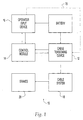
- the EPB system 10 preferably comprises a cable tensioning device 12 for producing a linear motion; an electronic controller or control module 14 for controlling the cable tensioning device 12; an operator input device 16 for sending operator inputs to the control module 14, and a cable system 18 for transmitting the linear motion of the cable tensioning device 12 to park brake arms/pads of a conventional braking system 20.
- the rotational axis of the idler gear 34 is preferably substantially parallel and spaced apart from the rotational axis of the first pinion gear 28.
- the idler gear 34 is positioned such that it engages and interconnects with the first pinion gear 28 so that the idler gear 34 rotates upon rotation of the first pinion gear 28.
- the second pinion gear 36 is mounted for rotation, relative to the housing assembly, in a pair of hubs or bushings formed in the housing 44 and the end cap 46.
- the second pinion gear 36 is preferably substantially coaxial with the idler gear 34 and rigidly connected thereto so that rotation of the idler gear 34 rotates the second pinion gear 36.
- the idler gear 34 and the second pinion gear 36 can be formed of either integral or unitary members.
- the lead screw gear 38 is mounted for rotation, relative to the housing assembly, in a pair of hubs or bushings formed in the housing 44 and the end cap 46.
- the rotational axis of the lead screw gear 38 is preferably substantially parallel and spaced apart from the rotational axis of the second pinion gear 36.
- the lead screw gear 38 is positioned such that it engages and interconnects with the second pinion gear 36 so that the lead screw gear 38 rotates upon rotation of the second pinion gear 36 .
- the lead screw gear 38 is substantially coaxial with the first pinion gear 28, the connecting shaft 32, and the motor drive shaft 30.
- the gear elements 28, 34, 36, 38, 40 are sized as required depending on the particular electric motor 22 utilized and the torque and speed requirements of the system 10.
- the transmission gear train of the illustrated embodiment produces a 9/1 ratio by having two 3:1 stages in series: the first pinion gear 28 to the idler gear 34, and (2) the second pinion gear 36 to the lead screw gear 38. It is noted that the gear train can alternatively have a fewer or greater number of stages, can have stages with different ratios, and can have a different overall ratio.
- the lead screw 40 is an elongate threaded member sized and shaped to threadably engage the drive nut 62 as described in more detail hereinafter.
- the lead screw 40 is mounted for rotation, relative to the transmission housing, the mounting bracket 56, and the cover 58, in a hub or bushing located in the mounting bracket 56. Any suitable bushing can be provided.
- the lead screw 40 is preferably substantially coaxial with the lead screw gear 38, the first pinion gear 28, the connecting shaft 32, and the motor drive shaft 30 and is rigidly connected thereto so that rotation of the lead screw gear 38 rotates the lead screw 40.
- the lead screw gear 38 and the lead screw 40 can be formed of either integral or unitary members.
- the mounting bracket 56 has an opening 67 therein for support of the bushing and passage of the lead screw therethrough. Suitable means for sealing the opening 67 are preferably provided.
- the lead screw 40 preferably extends at least a substantial portion of the interior space formed by the mounting bracket 56 and the cover 58.
- the guide shaft 60 is generally elongate and extends substantially parallel and spaced apart from the lead screw 40. In the illustrated embodiment, the guide shaft 60 is located above the lead screw 40. The guide shaft 60 preferably extends at least the full length of the lead screw 40. The guide shaft 60 is sized and shaped to cooperate with the drive nut 62 as described in more detail hereinafter. The illustrated guide shaft 60 has a substantially circular outer surface in cross-section. The guide shaft 60 is supported at its ends by the mounting bracket 56 and the cover 58.
- the drive nut 62 is provided with a pair of substantially parallel and spaced apart bores or openings 68, 70.
- the first bore 68 is adapted to receive the lead screw 40 therein and threaded to cooperate with the lead screw 40 so that rotation of the lead screw 40 causes the drive nut 62, when held against rotation therewith, to axially move along the length of the lead screw 40 as the lead screw 40 rotates.
- the second bore 70 is adapted to receive the guide shaft 60 therein and is generally smooth to cooperate with the guide shaft 60 so that the drive nut 62 is held against rotation with the lead screw 40 and slides along the guide shaft 60 as the drive nut 62 travels along the lead screw 40.
- the drive nut 62 is also provided with an attachment 72 for connecting a flexible cable 74 (FIGS.
- the illustrated attachment 72 includes a notch for receiving a connector of the core or strand of the flexible cable 74. It is noted that the attachment 72 is preferably provided as near the first bore 68 as possible so that the flexible cable 74 is as close as possible to the axis of the lead screw 40 to limit the amount of off-axis loading and resulting efficiency losses.
- the illustrated attachment 72 is centrally located between the spaced apart bores 68, 70 so that the axis of the attachment 72, and thus the line of force of the cable 74, is located centrally therebetween.
- the cover 58 is provided with an opening 76 for connection of the cable 74 to the drive nut 62. The opening 76 is preferably sealed in a suitable manner.
- the electric motor 22 is preferably reversing, that is, it operates to rotate in both directions.
- the lead screw is non-reversing to retain generated cable load, that is, the force of the tensed cable 74 is borne mechanically by the pitch of the lead screw 40 and the cooperating drive nut 62.
- this cable tension is held indefinitely, or until an input is supplied to release the EPB system 10.
- current draw by the motor 22 on the vehicle electrical system is 0 amps.
- the cable tensioning device 12 of the illustrated embodiment can be located at any expedient location upon the motor vehicle, the device 12 is ordinarily located within an interior region of the motor vehicle (e.g., trunk, spare tire compartment, behind truck seat, or other location). By locating the device 12 in an interior location, corrosive and vibrational effects of the environment are reduced. It is noted, however, that the device 12 of the present invention is provided in sealed housings and thus can be located in any desired location. To minimize cost of cables, the electric motor 22 can be located as close to the rear or braked wheels as possible.
- FIGS. 7 and 8 illustrate a cable tensioning device 12' which is a variation of the cable tensioning device 12 of FIGS. 2-6.
- the device 12' of FIGS. 7 and 8 is substantially the same as the device 12 of FIGS. 2-6 except that it has been adapted to include the manual override 78.
- the same reference numbers have been used to indicate the same structure.
- the manual override 78 of the illustrated device includes an override gear 80.
- the override gear 80 is mounted for rotation, relative to the housing assembly, in a pair of hubs or bushings formed in the housing 44 and the end cap 46.
- the rotational axis of the override gear 80 is preferably substantially parallel and spaced apart from the rotational axis of the lead screw gear 38.
- the override gear 80 is positioned such that it engages and interconnects with the lead screw gear 38 so that the lead screw gear 38 rotates upon rotation of the override gear 80.
- the override gear 80 is located on an opposite side of the lead screw gear 38 from the second pinion gear 36.
- the second pinion gear 36 is located above the lead screw gear 38 and the override gear 80 is located below the lead screw gear 36.
- the manual override 78 also includes a motion-transmitting flexible cable 82, such as a push-pull cable, having a first end connected to the override gear 80 which transmits rotational motion to the override gear 80 from the operator.
- the second end of the cable 82 is suitably connected to a manually operated device which will impart rotation to the core of the cable from the operator such as for example a suitable rotating handle.
- a manually operated device which will impart rotation to the core of the cable from the operator such as for example a suitable rotating handle.
- the operator rotates the handle such that the core of the cable rotates which in turn rotates the override gear.
- the rotating override gear drives the lead screw gear to apply or release the parking brakes without use of the electric motor.
- the handle is automatically disengaged from the override gear 80, or the override gear 80 is disengaged from the lead screw gear 38, when the manual override 78 is not in use.
- European Patent Application No. filed the same day as the present application and entitled “Electric Parking Brake Manual Override” which discloses a suitable override system in more detail.
- the control module 14 is provided with suitable logic and memory electronics for operating the cable tensioning device 12 in a desired manner.
- the control module 14 receives input signals from the operator input device 16 and the cable tensioning device 12.
- the operator input device 16 preferably sends signals to the control module 14 to apply or release the parking brakes 20.
- the control module 14 can alternately or additionally receive signals from a motor vehicle control system to automatically apply or release the parking brakes 20 as desired.
- the cable tensioning device 12 preferably sends signals to the control module 14 indicating cable tension, such as the operating current of the electric motor 22, and signals indicating cable travel, such as rotational information from the hall effect sensor indicating the number of rotations of the electric motor 22.
- the control module 14 When applying the brakes 20, the control module 14 is preferably adapted to stop the electric motor 22 when a predetermined cable tension is obtained. Cable tension can be directly measured or can be indicated when a predetermined motor current is reached. When releasing the brakes 20, the control module 14 is preferably adapted to stop the electric motor 22 after a predetermined cable travel or distance. Cable travel can be directly measured or can be indicated when a predetermined number of rotations have been made by the electric motor 22 or another rotating component.
- the EPB system 10 is automatically self-adjusted to compensate for cable stretch, brake pad wear, and other variables. For a more detailed description of this self adjusting feature, see U.S. Patent 6,213,259.
- the control module 14 When applying the parking brakes 20, the control module 14 preferably monitors both the tension, such as by inferring from motor current, and the travel, such as from rotations signals from the hall effect device.
- the tension information is utilized to stop the electric motor 22 at a predetermined amount of cable tension.
- the travel information is utilized as a secondary check to stop the electric motor 22 if the device 12 and/or cable 74 has traveled a predetermined distance which indicates that there is something wrong with the system 10.
- the predetermined distance can be, for example, a certain percentage (e.g. 25%) more than the distance traveled the previous time the parking brakes 20 were applied.
- the control module 14 simply stops the electric motor 22 when the predetermined distance is traveled. In either apply or release, the control module 14 preferably stops the electric motor if the predetermined tension and/or distance is not reached in a predetermined amount of time.
- the operator input device 16 is preferably located within the vehicle interior for allowing the vehicle operator to selectively send signals to the control module 14. While any suitable control device 16 can be employed, the input device 16 preferably includes an input switch so that the operator can manually select to apply or release the parking brakes 20 and an illuminated indicator or brake light on the vehicle's instrument panel that indicates the status of the parking brakes 20. The switch and the brake light are electrically connected to the control module 14. The instrument panel brake light is illuminated by the control module 14 only upon the completion of a "successful" parking brake application cycle such as, for example, reaching the predetermined shut off motor current. The control module 14 does not illuminate the instrument panel brake light when the vehicle ignition key is in the "off" position.
- the control module 14 pulses illumination of the brake light to indicate an EPB system fault (e.g., "blinking light” pulse at a rate of two pulses per second). If the EPB system 10 is applied with the vehicle ignition key in the "off” position, the control module 14 illuminates the instrument panel brake light immediately upon the operator turning the vehicle ignition key to the "on” position. Regardless of the EPB system status or operator input, the instrument panel brake light is not illuminated with the vehicle ignition key in the "off” position at any time.
- an EPB system fault e.g., "blinking light” pulse at a rate of two pulses per second.
- the cable system 18 can be a conduit-reaction-type cable system which transmits load to the brake arms 20 via a conduit reaction bracket in a well known manner.
- the cable system includes the first or front cable 74 extending from the cable tensioning device 12, a first conduit anchor point 84, a coupler 86, a reaction bracket 88, a second conduit anchor point 90, and two second or rear cables 92 extending to the rear brakes 20.
- the cable system 18 can alternatively be a non-conduit-reaction-type system.
- the cable system 18 is similar to that of FIG. 9 but does not include. the coupler 86 or the reaction bracket 88 and instead utilizes an equalizer arm 94 and a third conduit anchor point 96.
- the cables 74, 92 are preferably motion transferring, flexible cables as known in the art.
- FIG. 11 illustrates a cable tensioning device 12" which is another variation of the cable tensioning device 12 of FIGS. 2-6.
- the device 12" of FIG. 7 and 8 is substantially the same as the device 12 of FIGS. 2-6 except that it has been adapted to tension and untension two cables along parallel lines of action.
- the same reference numbers have been used to indicate the same structure.
- the drive nut 62' is provided with a plurality of the attachments 72 for connecting a plurality flexible cables of the cable system 18.
- the illustrated attachments 72 each include a notch for receiving a connector of the core or strand of the flexible cable.
- the illustrated drive nut 62' has a pair of attachments 72 located on opposite sides of the lead screw bore 68 so that each of the cables are as close to the axis of the lead screw 40 as possible to limit the amount of off axis loading and as a result efficiency losses. It is noted, however, that the attachments 72 can be located on the same side within the scope of the present invention. It is also noted that the attachments 72 can be located on different sides if the bore 68 which are not opposite one another within the scope of the present invention.
- the cover 58 is provided with a pair of the openings 76 for connection of the cables to the drive nut 62'.
- the cable tensioning device 12" which tensions tensions and untensions a pair of cables simplifies the cable system 18.
- the cable tensioning device 12" can be used as a "straight-pull system” with a pair of brakes 20, that is the brakes 20 are each directly connected to the cable tensioning device 12" with a cable.
- many components would be eliminated including the flexible cable 74, the first conduit anchor point 84, the second conduit anchor point 90, the equalizer arm 94, and the third conduit anchor point 96 and the rear cables would be directly attached to the cable tensioning device 12".
- FIG. 7 incorporating a manual override system (FIG. 7) can tension and untension a plurality of cables such as the embodiment of FIG. 11.
- rotation of the motor output shaft 30 rotates the first pinion gear 28 via the connecting shaft 32
- rotation of the first pinion gear 28 rotates the idler gear 34 through the interlocking teeth therebetween
- rotation of the idler gear 34 rotates the second pinion gear 36 through the rigid connection therebetween
- rotation of the second pinion gear 36 rotates the lead screw gear 38 through the interlocking teeth therebetween
- rotation of the lead screw gear rotates the lead screw 40 through the rigid connection therebetween.
- Rotation of the lead screw 40 causes translation of the drive nut 62, toward the gear train and away from the cable assembly 18, which is threadably engaged on the lead screw 40 and held against rotation by the guide shaft 60.
- the translation of the drive nut 62 pulls and tensions the cable 74 to apply the brakes 20.
- the operator of the motor vehicle desires to electrically release the parking brakes 20
- the operator sends a release signal to the control module 14 via the operator input device.
- the control module 14 starts rotation of the output shaft 30 of the electric motor 22 in the suitable direction, which is opposite the apply direction. Rotation of the motor output shaft 30 moves the gear train to rotate the lead screw 40.
- rotation of the motor output shaft 30 rotates the first pinion gear 28 via the connecting shaft 32
- rotation of the first pinion gear 28 rotates the idler gear 34 through the interlocking teeth therebetween
- rotation of the idler gear 34 rotates the second pinion gear 36 through the rigid connection therebetween
- rotation of the second pinion gear 36 rotates the lead screw gear 38 through the interlocking teeth therebetween
- rotation of the lead screw gear rotates the lead screw 40 through the rigid connection therebetween.
- Rotation of the lead screw 40 causes translation of the drive nut 62, away from the gear train and toward the cable assembly 18, which is threadably engaged on the lead screw 40 and held against rotation by the guide shaft 60.
- the translation of the drive nut 62 releases and untensions the cable 74 to release the brakes 20.
- the control module 14 monitors the number of rotations of the electric motor 22 via the hall effect sensor. When the number of motor rotations reaches a predetermined number of rotations which indicates a predetermined travel or distance moved of the cable 74, the control module 14 stops the electric motor 22 and illuminates the brake light on the vehicle's instrument panel to indicate an successful release of the brakes. If the predetermined number of rotations is not reached in a predetermined period of time which indicates there has been a system failure, the control module 14 stops the electric motor 22 and blinks the brake light on the vehicle's instrument panel to indicate an unsuccessful release of the brakes 20.
- the power train can each have many different configurations and can be formed of many different manners such as the gear train can be replaced or partially replaced with a pulley/belt assembly.
Landscapes
- Engineering & Computer Science (AREA)
- Transportation (AREA)
- Mechanical Engineering (AREA)
- Braking Arrangements (AREA)
- Braking Systems And Boosters (AREA)
- Braking Elements And Transmission Devices (AREA)
- Transmission Devices (AREA)
Abstract
Description
- The present invention generally relates to parking brakes and, more particularly, to electrically powered parking brakes.
- Almost all vehicles have a parking brake mechanism, and most of these vehicles have a hand or foot activated lever for manually actuating the parking brake mechanism. Typically, these levers are attached to a cable that causes displacement of the cable and operation of the attached parking brake mechanism. There is a need to provide an electrically actuated cable mechanism that operates reliably with a minimum number of parts and has a low cost, so that manually actuated mechanism may be replaced or easily selectively replaced.
- It is known in the art to provide electric-motor driven brake systems. For example, see U.S. Patent Nos. 4,281,736, 4,561,527, 4,629,043, 4,795,002, 4,865,165, 5,180, 038, 5,485,764, 5,542,513, and 5,590,744 which each disclose an electric motor-driven brake system.
- While these electric-motor driven brake systems may adequately actuate the brake mechanisms with varying degrees of success, they are inefficient, typically can be used in conjunction with only one type of cable system, must be mounted within the vehicle, have relatively large package sizes and utilize a large number of components, they are relatively heavy, and cannot be operated when the system is not powered. Accordingly, there is a need in the art for an improved electric parking brake assembly which has improved efficiency, can be used with conventional cable systems or conduit reaction cable systems, can be mounted outside the vehicle, has a relative small package size, has a relatively small number of components, is relatively light weight, and can be manually actuated.
- The present invention provides an electric parking brake for a motor vehicle which overcomes at least some of the above-noted problems of the related art. According to the present invention, an electric brake assembly for tensioning a brake cable attached to a brake such that tensioning of the brake cable affects application of the brake and untensioning of the brake cable affects release of the brake comprises, in combination, an electric motor having an output shaft, a control module coupled to the electric motor for controlling the electric motor, and a transmission coupling a threaded lead screw to the output shaft of the electric motor. The assembly further comprises a drive nut having a lead screw bore threadably receiving the lead screw therein and having a cable attachment for attaching the brake cable to the drive nut. The cable attachment has a central axis offset from a central axis of the lead screw. The control module controls the electric motor such that rotation of the output shaft causes motion of the transmission and rotation of the lead screw, rotation of the lead screw causes linear motion of the drive nut, and linear motion of the drive nut causes tensioning and untensioning of the brake cable.
- According to other aspects of the present invention, an electric brake assembly for tensioning a brake cable is claimed in claims 5, 8, 11 and 13.
- According to even yet another aspect of the present invention, a method for applying a brake of a motor vehicle comprises the steps of, in combination, receiving a signal to apply the brake, starting an electric motor in response to the signal to cause a cable tensioning device to tension a brake cable, monitoring cable tension and monitoring cable travel. The method further comprises the steps of stopping the electric motor upon reaching a predetermined cable tension, and stopping the electric motor upon reaching a predetermined cable travel without reaching the predetermined cable tension.
- From the foregoing disclosure and the following more detailed description of various preferred embodiments it will be apparent to those skilled in the art that the present invention provides a significant advance in the technology of electric parking brakes. Particularly significant in this regard is the potential the invention affords for providing a high quality, reliable, light weight, small packaged, easily assembled and disassembled, low cost assembly.
- Various embodiments of the present invention will now be described with reference to the accompanying drawings, in which:
- FIG. 1 is a block diagram of an electric parking brake system according to the present invention;
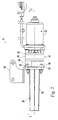
- FIG. 2 is a top plan view of a cable tensioning device of the electric parking brake system of FIG. 1, wherein some components are removed for clarity;
- FIG. 3 is a side elevational view of the cable tensioning device of FIG. 2;
- FIG. 4 is an elevational view of the rearward end of the cable tensioning device of FIGS. 2 and 3;
- FIG. 5 is an elevational view of the forward end of the cable tensioning device of FIGS. 2 to 4;
- FIG. 6 is a cross-sectional view of the cable tensioning device of FIGS. 2 to 5 taken along line 6-6 of FIG. 2;
- FIG. 7 is perspective view of a variation of the cable tensioning device of FIGS. 2 to 6, wherein a manual override is provided;
- FIG. 8 is an exploded perspective view of the cable tensioning device of FIG 7, with some components removed for clarity;
- FIG. 9 is a schematic view of the electric parking brake system of FIG. 1 wherein the cable assembly is a conduit reaction system;
- FIG. 10 is a schematic view of the electric parking brake system of FIG. 1 similar to FIG. 9 but wherein the cable assembly is a non-conduit reaction system; and
- FIG. 11 is perspective view of another variation of the cable tensioning device of FIGS. 2 to 6, wherein two cables can be tensioned and untensioned.
-
- It should be understood that the appended drawings are not necessarily to scale, presenting a somewhat simplified representation of various preferred features illustrative of the basic principles of the invention. The specific design features of the electric parking brake system as disclosed herein, including, for example, specific dimensions, orientations, and shapes of the transmission and drive nut will be determined in part by the particular intended application and use environment. Certain features of the illustrated embodiments have been enlarged or distorted relative to others to facilitate visualization and clear understanding. In particular, thin features may be thickened, for example, for clarity or illustration. All references to direction and position, unless otherwise indicated, refer to the orientation of the electric parking brake systems illustrated in the drawings. In general, up or upward refers to an upward direction in the plane of the paper in FIGS. 2 and down or downward refers to a downward direction in the plane of the paper in FIG. 2. Also in general, fore or forward refers to a direction toward the front of the motor vehicle, that is, in a direction in the plane of the paper toward the right of the figure in FIG. 2 and aft or rearward refers to a direction toward the rear of the motor vehicle, that is, in a direction in the plane of the paper toward the left of the figure in FIG. 2.
- It will be apparent to those skilled in the art, that is, to those who have knowledge or experience in this area of technology, that many uses and design variations are possible for the improved electrically actuated, motor driven cable tensioning device disclosed herein. The following detailed discussion of various alternative and preferred embodiments will illustrate the general principles of the invention with reference to an electric parking brake (EPB) system for use with a motor vehicle. Other embodiments suitable for other applications will be apparent to those skilled in the art given the benefit of this disclosure.
- The term "snap-fit" connection is used herein and in the claims to mean a connection between at least two components wherein at least one of the components has a protrusion or abutment which engages the other component to form an interlock or interference which retains the components together when they are connected and at least one of the components has a resiliently deformable or deflectable portion such that the deflectable portion deflects to remove the interference as the parts are brought together and resiliently snaps back to reform the interference when the components are together. The term "integral" is used herein and in the claims to mean two or more members connected together to form a single body. The term "unitary" is used herein and in the claims to mean a member made of a single continuous material.
- The EPB system disclosed herein is designed for use with a motor vehicle, such as an automobile, according to a preferred embodiment of the present invention. While the illustrated embodiments of the present invention are particularly adapted for use with an automobile, it is noted that the present invention can be utilized with any motor vehicle having a parking brake including trucks, buses, vans, recreational vehicles, earth moving equipment and the like, and off road vehicles such as dune buggies and the like.
- As best shown in FIG. 1, the
EPB system 10 according to the present invention preferably comprises acable tensioning device 12 for producing a linear motion; an electronic controller orcontrol module 14 for controlling thecable tensioning device 12; anoperator input device 16 for sending operator inputs to thecontrol module 14, and acable system 18 for transmitting the linear motion of thecable tensioning device 12 to park brake arms/pads of aconventional braking system 20. - As shown in FIGS. 2-5, the illustrated
cable tensioning device 12 includes anelectric motor 22, atransmission assembly 24, and adrive nut assembly 26. Theelectric motor 22 is preferably a permanent magnet direct current (DC) motor, which can selectively rotate in either direction depending on the provided control signal. Theelectric motor 22 is preferably provided with a sensor for sensing rotations and providing electrical signals representative of the rotations. A suitable sensor is believed to be a Hall effect device or sensor. While the sensor, is preferably integral with theelectric motor 22, it is noted that the sensor can be separate from theelectric motor 22 and can be located at any suitable location along the power train. - The illustrated
transmission assembly 24 includes a gear train of helical or spur gears and transmission housing members generally enclosing the gear train. While the illustrated transmission assembly utilizes helical gears to adjust shaft speed and torque in a desired manner, it is noted that other means for reducing speed and increasing torque can be utilized such as a belt system and other types of gear members can be utilized such as worm gears. The illustrated gear train include afirst pinion gear 28 driven by an output ordrive shaft 30 of theelectric motor 22 through a connectingshaft 32, anidler gear 34 engaging and driven by thefirst pinion gear 28, asecond pinion gear 36 rotatable with theidler gear 34, alead screw gear 38 engaging and driven by thesecond pinion gear 36, and alead screw 40 rotatable with thelead screw gear 38. - The transmission housing assembly includes an
end plate 42, ahousing 44, and anend cap 46. The illustratedend plate 42 cooperates with thehousing 44 to form a first interior chamber for housing the first stage of the gear train, that is, thefirst pinion gear 28 and theidler gear 34. Theend plate 42 has an opening 48 (FIG. 8) therein for connection of the connectingshaft 32 to thefirst pinion gear 28. The illustratedend cap 46 cooperates with thehousing 44 to form a second interior chamber for housing the second stage of the gear train, that is, thesecond pinion gear 36 and thelead screw gear 38. Thehousing 44 has an opening 50 (FIF. 8) therein for connection of theidler gear 34 and thesecond pinion gear 36. Theend cap 46 has an opening 52 (FIG. 8) therein for connection of thelead screw gear 38 and thelead screw 40 which extends outside the housing assembly. Suitable means are preferably provided for sealing the opening 52. Thecomponents electric motor 22 and thedrive nut assembly 26 by a plurality ofmechanical fasteners 54. It is noted that the housing assembly can alternatively be secured in any other suitable manner. - The
first pinion gear 28 is mounted for rotation, relative to the housing assembly, in a pair of hubs or bushings formed in theend plate 42 and thehousing 44. Thefirst pinion gear 28 is preferably substantially coaxial with thedrive shaft 30 of theelectric motor 22 and connected thereto by the connectingshaft 32. The connectingshaft 32 is preferably a suitable flex shaft to account for any misalignment therebetween. Connected in this manner, thefirst pinion gear 28 rotates along with thedrive shaft 30 of theelectric motor 22. Theidler gear 34 is mounted for rotation, relative to the housing assembly, in a pair of hubs or bushings formed in theend plate 42 and thehousing 44. The rotational axis of theidler gear 34 is preferably substantially parallel and spaced apart from the rotational axis of thefirst pinion gear 28. Theidler gear 34 is positioned such that it engages and interconnects with thefirst pinion gear 28 so that theidler gear 34 rotates upon rotation of thefirst pinion gear 28. - The
second pinion gear 36 is mounted for rotation, relative to the housing assembly, in a pair of hubs or bushings formed in thehousing 44 and theend cap 46. Thesecond pinion gear 36 is preferably substantially coaxial with theidler gear 34 and rigidly connected thereto so that rotation of theidler gear 34 rotates thesecond pinion gear 36. Theidler gear 34 and thesecond pinion gear 36 can be formed of either integral or unitary members. Thelead screw gear 38 is mounted for rotation, relative to the housing assembly, in a pair of hubs or bushings formed in thehousing 44 and theend cap 46. The rotational axis of thelead screw gear 38 is preferably substantially parallel and spaced apart from the rotational axis of thesecond pinion gear 36. Thelead screw gear 38 is positioned such that it engages and interconnects with thesecond pinion gear 36 so that thelead screw gear 38 rotates upon rotation of thesecond pinion gear 36 . Preferably, thelead screw gear 38 is substantially coaxial with thefirst pinion gear 28, the connectingshaft 32, and themotor drive shaft 30. - The
gear elements electric motor 22 utilized and the torque and speed requirements of thesystem 10. The transmission gear train of the illustrated embodiment produces a 9/1 ratio by having two 3:1 stages in series: thefirst pinion gear 28 to theidler gear 34, and (2) thesecond pinion gear 36 to thelead screw gear 38. It is noted that the gear train can alternatively have a fewer or greater number of stages, can have stages with different ratios, and can have a different overall ratio. - The illustrated
drive nut assembly 26 includes a mountingbracket 56, acover 58, aguide shaft 60, and adrive nut 62. The mountingbracket 56 and thecover 58 cooperate to form an elongate interior space as described in more detail hereinafter. The illustrated mountingbracket 56 is provided with a mountingflange 64 for securing thecable tensioning device 12 to the motor vehicle. The illustrated mountingbracket 56 cooperates with themechanical fasteners 54 to clamp thetransmission housing members cover 58 is secured to the mountingbracket 56 in any suitable manner such as the illustratedmechanical fasteners 66. It is noted that the mountingbracket 56 and thecover 58 can be alternatively secured in any other suitable manner. - The
lead screw 40 is an elongate threaded member sized and shaped to threadably engage thedrive nut 62 as described in more detail hereinafter. Thelead screw 40 is mounted for rotation, relative to the transmission housing, the mountingbracket 56, and thecover 58, in a hub or bushing located in the mountingbracket 56. Any suitable bushing can be provided. Thelead screw 40 is preferably substantially coaxial with thelead screw gear 38, thefirst pinion gear 28, the connectingshaft 32, and themotor drive shaft 30 and is rigidly connected thereto so that rotation of thelead screw gear 38 rotates thelead screw 40. Thelead screw gear 38 and thelead screw 40 can be formed of either integral or unitary members. The mountingbracket 56 has anopening 67 therein for support of the bushing and passage of the lead screw therethrough. Suitable means for sealing theopening 67 are preferably provided. Thelead screw 40 preferably extends at least a substantial portion of the interior space formed by the mountingbracket 56 and thecover 58. - The
guide shaft 60 is generally elongate and extends substantially parallel and spaced apart from thelead screw 40. In the illustrated embodiment, theguide shaft 60 is located above thelead screw 40. Theguide shaft 60 preferably extends at least the full length of thelead screw 40. Theguide shaft 60 is sized and shaped to cooperate with thedrive nut 62 as described in more detail hereinafter. The illustratedguide shaft 60 has a substantially circular outer surface in cross-section. Theguide shaft 60 is supported at its ends by the mountingbracket 56 and thecover 58. - The
drive nut 62 is provided with a pair of substantially parallel and spaced apart bores oropenings first bore 68 is adapted to receive thelead screw 40 therein and threaded to cooperate with thelead screw 40 so that rotation of thelead screw 40 causes thedrive nut 62, when held against rotation therewith, to axially move along the length of thelead screw 40 as thelead screw 40 rotates. Thesecond bore 70 is adapted to receive theguide shaft 60 therein and is generally smooth to cooperate with theguide shaft 60 so that thedrive nut 62 is held against rotation with thelead screw 40 and slides along theguide shaft 60 as thedrive nut 62 travels along thelead screw 40. Thedrive nut 62 is also provided with anattachment 72 for connecting a flexible cable 74 (FIGS. 9 and 10) of thecable system 18. The illustratedattachment 72 includes a notch for receiving a connector of the core or strand of theflexible cable 74. It is noted that theattachment 72 is preferably provided as near thefirst bore 68 as possible so that theflexible cable 74 is as close as possible to the axis of thelead screw 40 to limit the amount of off-axis loading and resulting efficiency losses. The illustratedattachment 72 is centrally located between the spaced apart bores 68, 70 so that the axis of theattachment 72, and thus the line of force of thecable 74, is located centrally therebetween. Thecover 58 is provided with anopening 76 for connection of thecable 74 to thedrive nut 62. Theopening 76 is preferably sealed in a suitable manner. - It is noted that the axis of the
attachment 72, and thecable 74 attached thereto, is offset from the rotation axis of thelead screw 40. This arrangement dramatically reduces the packaging size because it eliminates the interference which is present when a coaxial attachment is used with a generally short drive nut. To eliminate the interference, a relatively long drive nut has typically been utilized which increases the packaging size. The offset of the present invention permits the use of a relativelyshort drive nut 62 and thus a much smaller packaging size. Thedrive nut 62 is preferably has a length less than about ¼ the length of thelead screw 40, more preferably less than about 1/5 the length of thelead screw 40, and even more preferably less than about 1/6 the length of thelead screw 40. In the illustrated embodiment, thedrive nut 62 has a length which is about 1/7 the length of thelead screw 40. - It is noted that the
electric motor 22 is preferably reversing, that is, it operates to rotate in both directions. However, the lead screw is non-reversing to retain generated cable load, that is, the force of the tensedcable 74 is borne mechanically by the pitch of thelead screw 40 and the cooperatingdrive nut 62. By utilizing a purely mechanical element, this cable tension is held indefinitely, or until an input is supplied to release theEPB system 10. During the period of time when cable tension is being held and theEPB system 10 is not in an apply or release cycle, current draw by themotor 22 on the vehicle electrical system is 0 amps. - While the
cable tensioning device 12 of the illustrated embodiment can be located at any expedient location upon the motor vehicle, thedevice 12 is ordinarily located within an interior region of the motor vehicle (e.g., trunk, spare tire compartment, behind truck seat, or other location). By locating thedevice 12 in an interior location, corrosive and vibrational effects of the environment are reduced. It is noted, however, that thedevice 12 of the present invention is provided in sealed housings and thus can be located in any desired location. To minimize cost of cables, theelectric motor 22 can be located as close to the rear or braked wheels as possible. - As indicated in FIG. 1, the
EPB system 10 can be provided with a "manual override" 78 so that the operate can selectively manually apply and release theparking brakes 20 without utilization of theelectric motor 22. FIGS. 7 and 8 illustrate a cable tensioning device 12' which is a variation of thecable tensioning device 12 of FIGS. 2-6. The device 12' of FIGS. 7 and 8 is substantially the same as thedevice 12 of FIGS. 2-6 except that it has been adapted to include themanual override 78. The same reference numbers have been used to indicate the same structure. Themanual override 78 of the illustrated device includes anoverride gear 80. Theoverride gear 80 is mounted for rotation, relative to the housing assembly, in a pair of hubs or bushings formed in thehousing 44 and theend cap 46. The rotational axis of theoverride gear 80 is preferably substantially parallel and spaced apart from the rotational axis of thelead screw gear 38. Theoverride gear 80 is positioned such that it engages and interconnects with thelead screw gear 38 so that thelead screw gear 38 rotates upon rotation of theoverride gear 80. Preferably, theoverride gear 80 is located on an opposite side of thelead screw gear 38 from thesecond pinion gear 36. In the illustrated embodiment, thesecond pinion gear 36 is located above thelead screw gear 38 and theoverride gear 80 is located below thelead screw gear 36. Themanual override 78 also includes a motion-transmittingflexible cable 82, such as a push-pull cable, having a first end connected to theoverride gear 80 which transmits rotational motion to theoverride gear 80 from the operator. The second end of thecable 82 is suitably connected to a manually operated device which will impart rotation to the core of the cable from the operator such as for example a suitable rotating handle. In operation, if the operator desires to apply or release the parking brakes, the operator rotates the handle such that the core of the cable rotates which in turn rotates the override gear. The rotating override gear drives the lead screw gear to apply or release the parking brakes without use of the electric motor. Preferably, the handle is automatically disengaged from theoverride gear 80, or theoverride gear 80 is disengaged from thelead screw gear 38, when themanual override 78 is not in use. See European Patent Application No. , filed the same day as the present application and entitled "Electric Parking Brake Manual Override" which discloses a suitable override system in more detail. - As best shown in FIGS. 1-6, the
control module 14 is provided with suitable logic and memory electronics for operating thecable tensioning device 12 in a desired manner. Thecontrol module 14 receives input signals from theoperator input device 16 and thecable tensioning device 12. Theoperator input device 16 preferably sends signals to thecontrol module 14 to apply or release theparking brakes 20. It is noted that thecontrol module 14 can alternately or additionally receive signals from a motor vehicle control system to automatically apply or release theparking brakes 20 as desired. Thecable tensioning device 12 preferably sends signals to thecontrol module 14 indicating cable tension, such as the operating current of theelectric motor 22, and signals indicating cable travel, such as rotational information from the hall effect sensor indicating the number of rotations of theelectric motor 22. Thecontrol module 14 preferably sends signals to theoperator input device 16 indicating that theparking brakes 20 are applied or that there has been a failure to apply or release the parking brakes. Thecontrol module 14 preferably sends signals to thecable tensioning device 12 to start and stop theelectric motor 22. - When applying the
brakes 20, thecontrol module 14 is preferably adapted to stop theelectric motor 22 when a predetermined cable tension is obtained. Cable tension can be directly measured or can be indicated when a predetermined motor current is reached. When releasing thebrakes 20, thecontrol module 14 is preferably adapted to stop theelectric motor 22 after a predetermined cable travel or distance. Cable travel can be directly measured or can be indicated when a predetermined number of rotations have been made by theelectric motor 22 or another rotating component. By applying and releasing thebrakes 20 in this manner, theEPB system 10 is automatically self-adjusted to compensate for cable stretch, brake pad wear, and other variables. For a more detailed description of this self adjusting feature, see U.S. Patent 6,213,259. When applying theparking brakes 20, thecontrol module 14 preferably monitors both the tension, such as by inferring from motor current, and the travel, such as from rotations signals from the hall effect device. The tension information is utilized to stop theelectric motor 22 at a predetermined amount of cable tension. The travel information is utilized as a secondary check to stop theelectric motor 22 if thedevice 12 and/orcable 74 has traveled a predetermined distance which indicates that there is something wrong with thesystem 10. The predetermined distance can be, for example, a certain percentage (e.g. 25%) more than the distance traveled the previous time theparking brakes 20 were applied. When theparking brakes 20 are released, thecontrol module 14 simply stops theelectric motor 22 when the predetermined distance is traveled. In either apply or release, thecontrol module 14 preferably stops the electric motor if the predetermined tension and/or distance is not reached in a predetermined amount of time. - The
operator input device 16 is preferably located within the vehicle interior for allowing the vehicle operator to selectively send signals to thecontrol module 14. While anysuitable control device 16 can be employed, theinput device 16 preferably includes an input switch so that the operator can manually select to apply or release theparking brakes 20 and an illuminated indicator or brake light on the vehicle's instrument panel that indicates the status of theparking brakes 20. The switch and the brake light are electrically connected to thecontrol module 14. The instrument panel brake light is illuminated by thecontrol module 14 only upon the completion of a "successful" parking brake application cycle such as, for example, reaching the predetermined shut off motor current. Thecontrol module 14 does not illuminate the instrument panel brake light when the vehicle ignition key is in the "off" position. If a parking brake application cycle is not "successful", such as, for example, the predetermined cut-off current is not reached within the predetermined distance, thecontrol module 14 pulses illumination of the brake light to indicate an EPB system fault (e.g., "blinking light" pulse at a rate of two pulses per second). If theEPB system 10 is applied with the vehicle ignition key in the "off" position, thecontrol module 14 illuminates the instrument panel brake light immediately upon the operator turning the vehicle ignition key to the "on" position. Regardless of the EPB system status or operator input, the instrument panel brake light is not illuminated with the vehicle ignition key in the "off" position at any time. - As best shown in FIG. 9, the
cable system 18 can be a conduit-reaction-type cable system which transmits load to thebrake arms 20 via a conduit reaction bracket in a well known manner. The cable system includes the first orfront cable 74 extending from thecable tensioning device 12, a firstconduit anchor point 84, acoupler 86, areaction bracket 88, a secondconduit anchor point 90, and two second orrear cables 92 extending to therear brakes 20. As best shown in FIG. 10, thecable system 18 can alternatively be a non-conduit-reaction-type system. Thecable system 18 is similar to that of FIG. 9 but does not include. thecoupler 86 or thereaction bracket 88 and instead utilizes anequalizer arm 94 and a thirdconduit anchor point 96. Thecables - FIG. 11 illustrates a
cable tensioning device 12" which is another variation of thecable tensioning device 12 of FIGS. 2-6. Thedevice 12" of FIG. 7 and 8 is substantially the same as thedevice 12 of FIGS. 2-6 except that it has been adapted to tension and untension two cables along parallel lines of action. The same reference numbers have been used to indicate the same structure. The drive nut 62' is provided with a plurality of theattachments 72 for connecting a plurality flexible cables of thecable system 18. The illustratedattachments 72 each include a notch for receiving a connector of the core or strand of the flexible cable. The illustrated drive nut 62' has a pair ofattachments 72 located on opposite sides of the lead screw bore 68 so that each of the cables are as close to the axis of thelead screw 40 as possible to limit the amount of off axis loading and as a result efficiency losses. It is noted, however, that theattachments 72 can be located on the same side within the scope of the present invention. It is also noted that theattachments 72 can be located on different sides if thebore 68 which are not opposite one another within the scope of the present invention. Thecover 58 is provided with a pair of theopenings 76 for connection of the cables to the drive nut 62'. - It should be appreciated that the
cable tensioning device 12" which tensions tensions and untensions a pair of cables simplifies thecable system 18. Thecable tensioning device 12" can be used as a "straight-pull system" with a pair ofbrakes 20, that is thebrakes 20 are each directly connected to thecable tensioning device 12" with a cable. For example, if the system shown in FIG. 10 was adapted to a straight-pull system utilizing thecable tensioning device 12", many components would be eliminated including theflexible cable 74, the firstconduit anchor point 84, the secondconduit anchor point 90, theequalizer arm 94, and the thirdconduit anchor point 96 and the rear cables would be directly attached to thecable tensioning device 12". - It is noted that each of the features of the various embodiments can be utilized with each of the other embodiments. For example, the embodiment of FIG. 7 incorporating a manual override system (FIG. 7) can tension and untension a plurality of cables such as the embodiment of FIG. 11.
- In operation, when the operator of the motor vehicle desires to electrically apply the
parking brakes 20, the operator sends an apply signal to thecontrol module 14 via the operator input device. In response to the apply signal, thecontrol module 14 starts rotation of theoutput shaft 30 of theelectric motor 22 in the suitable direction. Rotation of themotor output shaft 30 moves the gear train to rotate thelead screw 40. In the illustrated embodiment, rotation of themotor output shaft 30 rotates thefirst pinion gear 28 via the connectingshaft 32, rotation of thefirst pinion gear 28 rotates theidler gear 34 through the interlocking teeth therebetween, rotation of theidler gear 34 rotates thesecond pinion gear 36 through the rigid connection therebetween, rotation of thesecond pinion gear 36 rotates thelead screw gear 38 through the interlocking teeth therebetween, and rotation of the lead screw gear rotates thelead screw 40 through the rigid connection therebetween. Rotation of thelead screw 40 causes translation of thedrive nut 62, toward the gear train and away from thecable assembly 18, which is threadably engaged on thelead screw 40 and held against rotation by theguide shaft 60. The translation of thedrive nut 62 pulls and tensions thecable 74 to apply thebrakes 20. As thedrive nut 62 axially translates along thedrive screw 40, the drive nut slides along the guide shaft. As theelectric motor 22 is operating, thecontrol module 14 monitors the operating current of theelectric motor 22. When the motor operating current reaches a predetermined current which indicates that thecable 74 has a desired tension, thecontrol module 14 stops theelectric motor 22 and illuminates the brake light on the vehicle's instrument panel to indicate a successful application of thebrakes 20. As theelectric motor 22 is operating, thecontrol module 14 also monitors the number of rotations of theelectric motor 22 via the hall effect sensor. If the number of motor rotations reaches a predetermined number of rotations which indicates a predetermined travel or distance moved of thecable 74 prior to reaching the predetermined current, thecontrol module 14 stops theelectric motor 22 and blinks the brake light on the vehicle's instrument panel to indicate an unsuccessful application of the brakes. The predetermined travel or distance is selected to be a distance which indicates that there has been a failure of theEPB system 10. - When the operator of the motor vehicle desires to electrically release the
parking brakes 20, the operator sends a release signal to thecontrol module 14 via the operator input device. In response to the release signal, thecontrol module 14 starts rotation of theoutput shaft 30 of theelectric motor 22 in the suitable direction, which is opposite the apply direction. Rotation of themotor output shaft 30 moves the gear train to rotate thelead screw 40. In the illustrated embodiment, rotation of themotor output shaft 30 rotates thefirst pinion gear 28 via the connectingshaft 32, rotation of thefirst pinion gear 28 rotates theidler gear 34 through the interlocking teeth therebetween, rotation of theidler gear 34 rotates thesecond pinion gear 36 through the rigid connection therebetween, rotation of thesecond pinion gear 36 rotates thelead screw gear 38 through the interlocking teeth therebetween, and rotation of the lead screw gear rotates thelead screw 40 through the rigid connection therebetween. Rotation of thelead screw 40 causes translation of thedrive nut 62, away from the gear train and toward thecable assembly 18, which is threadably engaged on thelead screw 40 and held against rotation by theguide shaft 60. The translation of thedrive nut 62 releases and untensions thecable 74 to release thebrakes 20. As thedrive nut 62 axially translates along thedrive screw 40, the drive nut slides along the guide shaft. As theelectric motor 22 is operating, thecontrol module 14 monitors the number of rotations of theelectric motor 22 via the hall effect sensor. When the number of motor rotations reaches a predetermined number of rotations which indicates a predetermined travel or distance moved of thecable 74, thecontrol module 14 stops theelectric motor 22 and illuminates the brake light on the vehicle's instrument panel to indicate an successful release of the brakes. If the predetermined number of rotations is not reached in a predetermined period of time which indicates there has been a system failure, thecontrol module 14 stops theelectric motor 22 and blinks the brake light on the vehicle's instrument panel to indicate an unsuccessful release of thebrakes 20. - When the operator of the motor vehicle desires to manually apply the
parking brakes 20, the operator manually rotates the core of themanual override cable 82 in the apply direction. Rotation of thecable 82, rotates theoverride gear 80 which is connected for rotation therewith, such as through a keyed connection. Rotation of theoverride gear 80 rotates thelead screw gear 38 through the interlocking teeth therebetween. Rotation of the lead screw gear rotates thelead screw 40 through the rigid connection therebetween. Rotation of thelead screw 40 causes translation of thedrive nut 62, toward the gear train and away from thecable assembly 18, which is threadably engaged on thelead screw 40 and held against rotation by theguide shaft 60. The translation of thedrive nut 62 pulls and tensions thecable 74 to apply thebrakes 20. - When the operator of the motor vehicle desires to manually release the
parking brakes 20, the operator manually rotates the core of themanual override cable 82 in the release direction. Rotation of thecable 82, rotates theoverride gear 80 which is connected for rotation therewith, such as through a.keyed connection. Rotation of theoverride gear 80 rotates thelead screw gear 38 through the interlocking teeth therebetween. Rotation of the lead screw gear rotates thelead screw 40 through the rigid connection therebetween. Rotation of thelead screw 40 causes translation of thedrive nut 62, away from the gear train and toward thecable assembly 18, which is threadably engaged on thelead screw 40 and held against rotation by theguide shaft 60. The translation of thedrive nut 62 releases and untensions thecable 74 to release thebrakes 20. - It will be apparent to those skilled in the art, given the benefit of the present disclosure, that variations of the preferred embodiments are possible. For example, the power train can each have many different configurations and can be formed of many different manners such as the gear train can be replaced or partially replaced with a pulley/belt assembly.
Claims (17)
- An electric brake assembly for tensioning a brake cable attached to a brake such that tensioning of the brake cable affects application of the brake and untensioning of the brake cable affects release of the brake, the electric brake assembly comprising, in combination:an electric motor having an output shaft;a control module coupled to the electric motor for controlling the electric motor;a transmission coupling a threaded lead screw to the output shaft of the electric motor; anda drive nut having a lead screw bore threadably receiving the lead screw therein and having a cable attachment for attaching the brake cable to the drive nut, the cable attachment having a central axis offset from a central axis of the lead screw, wherein the control module controls the electric motor such that rotation of the output shaft causes motion of the transmission and rotation of the lead screw, rotation of the lead screw causes linear motion of the drive nut, and linear motion of the drive nut causes tensioning and untensioning of the brake cable.
- The electric brake assembly according to claim 1, further comprising an elongate guide shaft substantially parallel to and spaced apart from the lead screw, and wherein the drive nut has a guide shaft bore slidingly receiving the elongate guide shaft therein.
- The electric brake assembly according to claim 1, wherein the transmission comprises a gear train having a plurality of helical gears and the lead'screw and the output shaft are substantially coaxial.
- The electric brake assembly according to claim 1, further comprising a manual override device operatively connected to the lead screw; and wherein the manual override device selectively causes rotation of the lead screw, rotation of the lead screw causes linear motion of the drive nut, and linear motion of the drive nut causes tensioning and untensioning of the brake cable.
- An electric brake assembly for tensioning a brake cable attached to a brake such that tensioning of the brake cable affects application of the brake and untensioning of the brake cable affects release of the brake, the electric brake assembly comprising, in combination:an electric motor having an output shaft;a control module coupled to the electric motor for controlling the electric motor;a transmission coupling a threaded lead screw to the output shaft of the electric motor;an elongate guide shaft substantially parallel to and spaced apart from the lead screw; anda drive nut having a lead screw bore threadably receiving the lead screw therein and a guide shaft bore slidingly receiving the elongate guide shaft therein, the drive nut also having a cable attachment for attaching the brake cable to the drive nut, wherein the control module controls the electric motor such that rotation of the output shaft causes motion of the transmission and rotation of the lead screw, rotation of the lead screw causes linear motion of the drive nut along the lead screw and the guide shaft, and linear motion of the drive nut causes tensioning and untensioning of the brake cable.
- The electric brake assembly according to claim 2 or 5, wherein the cable attachment is located between the lead screw bore and the guide shaft bore.
- The electric brake assembly according to claim 6, wherein the cable attachment is located substantially midway between the lead screw bore and the guide shaft bore.
- An electric brake assembly for tensioning a brake cable attached to a brake such that tensioning of the brake cable affects application of the brake and untensioning of the brake cable caused release of the brake, the electric brake assembly comprising, in combination:an electric motor having an output shaft;a control module coupled to the electric motor for controlling the electric motor;a transmission coupling a threaded lead screw to the output shaft of the electric motor, the transmission comprising a gear train having a plurality of helical gears, the lead screw and the output shaft being substantially coaxial; anda drive nut having a lead screw bore threadably receiving the lead screw therein and having a cable attachment for attaching the brake cable to the drive nut, wherein the control module controls the electric motor such that rotation of the output shaft causes motion of the transmission and rotation of the lead screw, rotation of the lead screw causes linear motion of the drive nut, and linear motion of the drive nut causes tensioning and untensioning of the brake cable.
- The electric brake assembly according to claim 3 or 8, wherein the gear train is a two-stage gear train.
- The electric brake assembly according to claim 3 or 8, wherein the gear train comprises a first pinion gear substantially coaxial with the output shaft and connected to the output shaft for rotation therewith, an idler gear engaging the first pinion gear for rotation therewith, a second pinion gear substantially coaxial with the idler gear and connected to the idler gear for rotation therewith, and a lead screw gear substantially coaxial with the first pinion gear and engaging the second pinion gear for rotation therewith, and wherein the lead screw is substantially coaxial with the lead screw gear and connected to the lead screw gear for rotation therewith.
- An electric brake assembly for tensioning a brake cable attached to a brake such that tensioning of the brake cable affects application of the brake and untensioning of the brake cable affects release of the brake, the electric brake assembly comprising, in combination:an electric motor having an output shaft;a control module coupled to the electric motor for controlling the electric motor;a transmission coupling a threaded lead screw to the output shaft of the electric motor;a manual override device operatively connected to the lead screw; anda drive nut having a lead screw bore threadably receiving the lead screw therein and having a cable attachment for attaching the brake cable to the drive nut, wherein the control module selectively controls the electric motor such that rotation of the output shaft causes motion of the transmission and rotation of the lead screw, rotation of the lead screw causes linear motion of the drive nut, and linear motion of the drive nut causes tensioning and untensioning of the brake cable, and wherein the manual override device selectively causes rotation of the lead screw, rotation of the lead screw causes linear motion of the drive nut, and linear motion of the drive nut causes tensioning and untensioning of the brake cable.
- The electric brake assembly according to claim 4 or 11, wherein the transmission includes a gear train, and wherein the manual override device includes an override gear operatively engaging the gear train to move the gear train upon rotation of the override gear and a motion transmitting cable operatively connected to the override gear to selectively rotate the override gear.
- An electric brake assembly for tensioning a brake cable attached to a brake such that tensioning of the brake cable affects application of the brake and untensioning of the brake cable affects release of the brake, the electric brake assembly comprising, in combination:an electric motor having an output shaft;a control module coupled to the electric motor for controlling the electric motor;a transmission coupling a threaded lead screw to the output shaft of the electric motor; anda drive nut having a lead screw bore threadably receiving the lead screw therein and having a cable attachment for attaching the brake cable to the drive nut, wherein the control module controls the electric motor such that rotation of the output shaft causes motion of the transmission and rotation of the lead screw, rotation of the lead screw causes linear motion of the drive nut, and linear motion of the drive nut causes tensioning and untensioning of the brake cable, and wherein the control module is adapted to stop the electric motor both upon reaching a predetermined cable tension and upon reaching a predetermined cable travel without reaching the predetermined cable tension.
- The electric brake assembly according to claim 13, wherein the electric motor has an operating current varying with load applied to the electric motor, further comprising a current sensor adapted to monitor the operating current, and wherein the control module is adapted to stop the electric motor upon reaching a predetermined cable tension by stopping the electric motor upon reaching a predetermined operating current indicating a desired cable tension.
- The electric brake assembly according to claim 13, further comprising a hall effect sensor adapted to monitoring rotations of the electric motor, and wherein the control module is adapted to stop the electric motor upon reaching a predetermined cable travel by stopping the electric motor upon reaching a predetermined number of motor rotations indicating a desired cable travel.
- The electric brake assembly according to claim 13, wherein the control module is adapted to stop the electric motor upon reaching a predetermined cable travel by stopping the electric motor upon reaching a predetermined percentage more than a distance traveled on a previous brake application.
- The electric brake assembly according to claim 13, wherein the control module is adapted to stop the electric motor both upon reaching a predetermined cable tension and upon reaching a predetermined cable travel without reaching the predetermined cable tension during application of the brake and is adapted to stop the motor upon reaching a predetermined cable travel regardless of the cable tension during release of the brake.
Applications Claiming Priority (2)
| Application Number | Priority Date | Filing Date | Title |
|---|---|---|---|
| US09/728,174 US6533082B2 (en) | 2000-12-01 | 2000-12-01 | Electric parking brake |
| US728174 | 2000-12-01 |
Publications (3)
| Publication Number | Publication Date |
|---|---|
| EP1211149A2 true EP1211149A2 (en) | 2002-06-05 |
| EP1211149A3 EP1211149A3 (en) | 2004-01-28 |
| EP1211149B1 EP1211149B1 (en) | 2005-05-04 |
Family
ID=24925716
Family Applications (1)
| Application Number | Title | Priority Date | Filing Date |
|---|---|---|---|
| EP01650136A Expired - Lifetime EP1211149B1 (en) | 2000-12-01 | 2001-11-14 | Electric parking brake |
Country Status (5)
| Country | Link |
|---|---|
| US (1) | US6533082B2 (en) |
| EP (1) | EP1211149B1 (en) |
| JP (1) | JP4338923B2 (en) |
| DE (1) | DE60110531T2 (en) |
| ES (1) | ES2240382T3 (en) |
Cited By (7)
| Publication number | Priority date | Publication date | Assignee | Title |
|---|---|---|---|---|
| GB2385393A (en) * | 2002-02-13 | 2003-08-20 | Dura Automotive Ltd | Mechanical override release for cable tension by disengaging an outer conduit reaction surface |
| WO2005005212A1 (en) * | 2003-07-07 | 2005-01-20 | Aktiebolaget Skf | A linear electromechanical screw actuator for parking brake |
| EP1752350A1 (en) * | 2005-08-09 | 2007-02-14 | ROBERT BOSCH GmbH | Automatic cable parking brake |
| FR2912483A1 (en) * | 2007-02-09 | 2008-08-15 | Peugeot Citroen Automobiles Sa | Electrically actuated mechanical transformation device for electrical parking brake of motor vehicle, has transformation mechanism including irreversibility unit to maintain effort on element when element is in stabilized phase |
| CN102166964A (en) * | 2011-03-31 | 2011-08-31 | 浙江吉利汽车研究院有限公司 | Parking device of electric automobile |
| US8235181B2 (en) | 2004-06-30 | 2012-08-07 | Hi-Lex Corporation | Electric cable drive device and electric brake device |
| WO2018166686A1 (en) * | 2017-03-13 | 2018-09-20 | Robert Bosch Gmbh | Drive unit for an actuator, and actuator comprising a drive unit and a transmission unit |
Families Citing this family (59)
| Publication number | Priority date | Publication date | Assignee | Title |
|---|---|---|---|---|
| US6406102B1 (en) * | 1999-02-24 | 2002-06-18 | Orscheln Management Co. | Electrically operated parking brake control system |
| US6203779B1 (en) * | 1999-03-19 | 2001-03-20 | Charlie Ricci | Methods for treating endoleaks during endovascular repair of abdominal aortic aneurysms |
| IT249271Y1 (en) * | 2000-08-30 | 2003-04-08 | Sila Holding Ind S R L | ACTUATOR GROUP OF A BRAKING DEVICE PARTICULARLY OF THE PARKING BRAKE OF A VEHICLE. |
| US6802398B2 (en) * | 2001-01-16 | 2004-10-12 | Delphi Technologies, Inc. | Manual cable release apparatus for a motor actuated park brake for a vehicle |
| DE10102685B4 (en) * | 2001-01-22 | 2004-04-08 | Fico Cables, S.A., Rubi | Actuating mechanism with force sensor for one brake |
| JP3894733B2 (en) * | 2001-02-15 | 2007-03-22 | 本田技研工業株式会社 | Electric parking brake device |
| EP1231119B1 (en) * | 2001-02-09 | 2005-05-04 | TRW Automotive Electronics & Components GmbH & Co. KG | A park brake system for vehicles |
| JP2003034240A (en) * | 2001-07-25 | 2003-02-04 | Honda Motor Co Ltd | Vehicle braking control device |
| US6619439B2 (en) * | 2001-09-10 | 2003-09-16 | Dura Global Technologies, Inc. | Mechanical release for parking brake cable system |
| US6609595B2 (en) * | 2001-10-09 | 2003-08-26 | Dura Global Technologies, Inc. | Electric parking brake with direct tension feedback |
| DE20117795U1 (en) * | 2001-10-31 | 2002-03-07 | TRW Automotive Electronics & Components GmbH & Co. KG, 78315 Radolfzell | Drive unit for actuating a parking brake in a vehicle |
| FR2832970B1 (en) * | 2001-11-30 | 2004-02-13 | Europ De Fabrications Ind Sefi | ELECTRICAL CONTROL DEVICE OF A PARKING AND / OR BACKUP BRAKE |
| US20060117885A1 (en) * | 2001-12-21 | 2006-06-08 | Martin Robson | Actuator |
| DE10213249B4 (en) * | 2002-03-25 | 2007-09-13 | Fico Cables, S.A., Rubi | Actuation mechanism for parking brakes |
| DE10236216B4 (en) * | 2002-08-07 | 2007-09-06 | Fico Cables, S.A., Rubi | Actuation mechanism for a parking brake |
| US6779636B2 (en) * | 2002-10-15 | 2004-08-24 | International Truck Intellectual Property Company, Llc | Park-brake monitoring-system for a vehicle |
| US6978870B2 (en) * | 2003-03-26 | 2005-12-27 | Dura Global Technologies, Inc. | Self adjusting electrically powered parking brake actuator mechanism with manual release |
| US20050000755A1 (en) * | 2003-03-27 | 2005-01-06 | Akebono Brake Industry Co., Ltd. | Brake operating apparatus |
| AU2003903927A0 (en) * | 2003-07-28 | 2003-08-14 | Pbr Australia Pty Ltd | Brake assembly and actuating mechanism |
| KR100461609B1 (en) * | 2003-10-30 | 2004-12-13 | 경창산업주식회사 | Parking Brake Comprising Mechanism for Adjusting Brake Cable Tension |
| US7014017B2 (en) * | 2004-06-30 | 2006-03-21 | Dura Global Technologies, Inc. | Electronic parking brake actuating assembly |
| JP4483432B2 (en) * | 2004-06-30 | 2010-06-16 | 株式会社アドヴィックス | Electric parking brake device using force sensor and same force sensor |
| JP2006044632A (en) * | 2004-06-30 | 2006-02-16 | Nippon Cable Syst Inc | Electric cable drive device and electric brake device |
| DE102004034452A1 (en) * | 2004-07-16 | 2006-02-09 | Siemens Ag | cable drive |
| US7681474B2 (en) * | 2004-10-21 | 2010-03-23 | Continental Automotive Systems Us, Inc. | System for adjusting the pedals of a vehicle |
| US7410201B1 (en) | 2004-10-29 | 2008-08-12 | Dana Automotive Systems Group, Llc | Actuator structure and method for attaching a gear or pulley to lead screw |
| US7298108B2 (en) * | 2004-11-29 | 2007-11-20 | Smc Kabushiki Kaisha | Control system for electric actuator |
| US20060197374A1 (en) * | 2005-03-01 | 2006-09-07 | Dura Global Technologies, Inc. | Motor vehicle electric park brake system and haptic resistance actuator for same |
| KR101064133B1 (en) * | 2005-03-10 | 2011-09-15 | 주식회사 만도 | Electric parking brake |
| DE102005018003A1 (en) * | 2005-04-18 | 2006-10-19 | Siemens Ag | Electric drive of a parking brake |
| DE102005024834B3 (en) * | 2005-05-31 | 2007-01-04 | Lucas Automotive Gmbh | Method and system for controlling a vehicle parking brake during a stop |
| JP4565469B2 (en) * | 2005-08-04 | 2010-10-20 | 富士重工業株式会社 | Electric parking brake device |
| DE102005044669B4 (en) * | 2005-09-19 | 2016-12-08 | Robert Bosch Gmbh | Parking brake for a vehicle with independent locking |
| KR100722947B1 (en) * | 2005-12-29 | 2007-05-30 | 에스엘 주식회사 | Cable drive device and parking brake system using planetary gear assembly |
| EP1979209A1 (en) * | 2006-01-16 | 2008-10-15 | Continental Automotive GmbH | Actuator, particularly for a motor vehicle parking brake |
| DE102006013216A1 (en) | 2006-03-22 | 2007-09-27 | Siemens Ag | Force measuring device for a parking brake of a vehicle, in particular a passenger car |
| DE102006025704B3 (en) * | 2006-06-01 | 2007-12-20 | Siemens Ag | Method and device for actuating a parking brake |
| JP2009047873A (en) * | 2007-08-20 | 2009-03-05 | Fujifilm Corp | Image display method and apparatus, and image display program |
| CN101386296B (en) * | 2007-09-13 | 2011-10-12 | 财团法人车辆研究测试中心 | Electronic parking system drive |
| JP4952493B2 (en) * | 2007-10-10 | 2012-06-13 | 株式会社アドヴィックス | Parking brake control device |
| TW200938419A (en) | 2008-03-06 | 2009-09-16 | Automotive Res & Testing Ct | Driving device of parking system |
| KR101302612B1 (en) * | 2009-07-29 | 2013-09-03 | 주식회사 만도 | Electronic parking brake system and method of controlling the same |
| KR20110051323A (en) * | 2009-11-10 | 2011-05-18 | 주식회사 만도 | Electric parking brake |
| KR101417857B1 (en) * | 2010-05-13 | 2014-07-09 | 주식회사 만도 | Controlling Method of Electronic Parking Brake System |
| KR101305120B1 (en) * | 2011-10-07 | 2013-09-12 | 현대자동차주식회사 | Drum united type electrical parking brake in vehicle |
| CN103206510B (en) * | 2012-01-11 | 2016-06-15 | 昆山允升吉光电科技有限公司 | A kind of linear stretch device |
| KR20150069065A (en) * | 2013-12-12 | 2015-06-23 | 주식회사 만도 | electronic parking brake system and control method thereof |
| KR102167194B1 (en) * | 2014-05-28 | 2020-10-20 | 현대모비스 주식회사 | Electrical parking brake for vehicle and control method thereof |
| JP6552650B2 (en) * | 2015-07-31 | 2019-07-31 | コンティネンタル・テーベス・アクチエンゲゼルシヤフト・ウント・コンパニー・オッフェネ・ハンデルスゲゼルシヤフト | Parking brake operation method for electric parking brake device for vehicle |
| US11152840B2 (en) * | 2016-03-30 | 2021-10-19 | Ntn Corporation | Electric actuator |
| CN107914268A (en) * | 2016-10-09 | 2018-04-17 | 张家港市博雅文化传播有限公司 | A kind of carrying robot lateral driver device |
| KR101981479B1 (en) * | 2017-11-09 | 2019-05-23 | 현대모비스 주식회사 | Method and apparatus for detecting fault of electronic parking brake |
| JP7275433B2 (en) | 2017-12-08 | 2023-05-18 | ニデック株式会社 | Motorized gear system and automotive brake system |
| JP7087565B2 (en) * | 2018-03-29 | 2022-06-21 | 株式会社アドヴィックス | Brake device |
| JP7240379B2 (en) * | 2018-03-30 | 2023-03-15 | 日立Astemo株式会社 | electric parking brake device |
| CN108468727B (en) * | 2018-06-22 | 2023-08-29 | 湖北福邦汽车配件科技有限公司 | Clutch control device with inhaul cable and push rod arranged on same side |
| DE102019101530A1 (en) * | 2019-01-22 | 2020-02-27 | Bayerische Motoren Werke Aktiengesellschaft | Motor vehicle with an electronically controllable parking lock and with an electronically controllable parking brake |
| US11260842B2 (en) * | 2019-12-20 | 2022-03-01 | Club Car, Llc | Electrically actuated mechanical park brake system |
| CN115727082A (en) * | 2022-12-23 | 2023-03-03 | 德瑞石油装备(青岛)有限公司 | A safety device for an oil pumping unit |
Citations (9)
| Publication number | Priority date | Publication date | Assignee | Title |
|---|---|---|---|---|
| US4281736A (en) | 1979-04-16 | 1981-08-04 | Lizzio Vincent P | Method and apparatus for automatically applying and releasing automotive type parking brakes |
| US4561527A (en) | 1983-01-31 | 1985-12-31 | Mazda Motor Corporation | Electric parking brake system for a vehicle |
| US4629043A (en) | 1983-01-31 | 1986-12-16 | Mazda Motor Corporation | Electric parking brake system for a vehicle |
| US4795002A (en) | 1988-01-21 | 1989-01-03 | Itt Corporation | Electrically operated actuator for rear parking brake cables including driver and driven members rotatably mounted about same pivot pin |
| US4865165A (en) | 1988-10-04 | 1989-09-12 | Allied-Signal Inc. | Electrically actuated cable |
| US5180038A (en) | 1992-01-24 | 1993-01-19 | Orscheln Co. | Electronically controlled parking brake system |
| US5485764A (en) | 1993-06-16 | 1996-01-23 | Honda Giken Kogyo Kabushiki Kaisha | Parking brake system |
| US5542513A (en) | 1994-03-07 | 1996-08-06 | Reyes; Daniel | Parking brake system |
| US5590744A (en) | 1994-11-03 | 1997-01-07 | Rockwell Light Vehicle Systems | Motor vehicle electric parking brake |
Family Cites Families (6)
| Publication number | Priority date | Publication date | Assignee | Title |
|---|---|---|---|---|
| GB1285158A (en) * | 1970-05-05 | 1972-08-09 | Dba Sa | Manual release mechanism for emergency and parking brake systems |
| US3890810A (en) * | 1973-03-30 | 1975-06-24 | Loepfe Ag Geb | Apparatus for monitoring a thread or the like |
| DE19653541B4 (en) * | 1996-12-20 | 2009-07-30 | Audi Ag | Electrically actuated actuator for brakes |
| FR2774962B1 (en) * | 1998-02-16 | 2000-05-05 | Dura Automotive Systems France | ELECTRIC PARKING BRAKE WITH ENERGY TRANSFER FOR MOTOR VEHICLE |
| US6213259B1 (en) * | 1998-02-25 | 2001-04-10 | Dura Automotive Systems, Inc. | Device, method and system for control of an electrically powered parking brake |
| US6386338B1 (en) * | 2000-12-01 | 2002-05-14 | Dura Global Technologies, Inc. | Electric parking brake manual override |
-
2000
- 2000-12-01 US US09/728,174 patent/US6533082B2/en not_active Expired - Lifetime
-
2001
- 2001-11-14 EP EP01650136A patent/EP1211149B1/en not_active Expired - Lifetime
- 2001-11-14 DE DE60110531T patent/DE60110531T2/en not_active Expired - Lifetime
- 2001-11-14 ES ES01650136T patent/ES2240382T3/en not_active Expired - Lifetime
- 2001-11-29 JP JP2001364712A patent/JP4338923B2/en not_active Expired - Fee Related
Patent Citations (9)
| Publication number | Priority date | Publication date | Assignee | Title |
|---|---|---|---|---|
| US4281736A (en) | 1979-04-16 | 1981-08-04 | Lizzio Vincent P | Method and apparatus for automatically applying and releasing automotive type parking brakes |
| US4561527A (en) | 1983-01-31 | 1985-12-31 | Mazda Motor Corporation | Electric parking brake system for a vehicle |
| US4629043A (en) | 1983-01-31 | 1986-12-16 | Mazda Motor Corporation | Electric parking brake system for a vehicle |
| US4795002A (en) | 1988-01-21 | 1989-01-03 | Itt Corporation | Electrically operated actuator for rear parking brake cables including driver and driven members rotatably mounted about same pivot pin |
| US4865165A (en) | 1988-10-04 | 1989-09-12 | Allied-Signal Inc. | Electrically actuated cable |
| US5180038A (en) | 1992-01-24 | 1993-01-19 | Orscheln Co. | Electronically controlled parking brake system |
| US5485764A (en) | 1993-06-16 | 1996-01-23 | Honda Giken Kogyo Kabushiki Kaisha | Parking brake system |
| US5542513A (en) | 1994-03-07 | 1996-08-06 | Reyes; Daniel | Parking brake system |
| US5590744A (en) | 1994-11-03 | 1997-01-07 | Rockwell Light Vehicle Systems | Motor vehicle electric parking brake |
Cited By (14)
| Publication number | Priority date | Publication date | Assignee | Title |
|---|---|---|---|---|
| GB2385393A (en) * | 2002-02-13 | 2003-08-20 | Dura Automotive Ltd | Mechanical override release for cable tension by disengaging an outer conduit reaction surface |
| WO2003068576A1 (en) * | 2002-02-13 | 2003-08-21 | Dura Automotive Limited | Mechanical override release mechanism for cable tensioning systems |
| GB2385393B (en) * | 2002-02-13 | 2004-03-03 | Dura Automotive Ltd | Mechanical override release mechanism for cable tensioning systems |
| US7337882B2 (en) | 2003-07-07 | 2008-03-04 | Aktiebolaget Skf | Linear electromechanical screw actuator for parking brake |
| WO2005005212A1 (en) * | 2003-07-07 | 2005-01-20 | Aktiebolaget Skf | A linear electromechanical screw actuator for parking brake |
| US8235181B2 (en) | 2004-06-30 | 2012-08-07 | Hi-Lex Corporation | Electric cable drive device and electric brake device |
| EP1752350A1 (en) * | 2005-08-09 | 2007-02-14 | ROBERT BOSCH GmbH | Automatic cable parking brake |
| FR2889684A1 (en) * | 2005-08-09 | 2007-02-16 | Bosch Gmbh Robert | AUTOMATIC PARKING BRAKE WITH CABLES CONTROL |
| FR2912483A1 (en) * | 2007-02-09 | 2008-08-15 | Peugeot Citroen Automobiles Sa | Electrically actuated mechanical transformation device for electrical parking brake of motor vehicle, has transformation mechanism including irreversibility unit to maintain effort on element when element is in stabilized phase |
| CN102166964A (en) * | 2011-03-31 | 2011-08-31 | 浙江吉利汽车研究院有限公司 | Parking device of electric automobile |
| CN102166964B (en) * | 2011-03-31 | 2012-10-10 | 浙江吉利汽车研究院有限公司 | Parking device of electric automobile |
| WO2018166686A1 (en) * | 2017-03-13 | 2018-09-20 | Robert Bosch Gmbh | Drive unit for an actuator, and actuator comprising a drive unit and a transmission unit |
| CN110392650A (en) * | 2017-03-13 | 2019-10-29 | 罗伯特·博世有限公司 | Drive unit for actuators and actuators with drive unit and transmission unit |
| CN110392650B (en) * | 2017-03-13 | 2022-12-02 | 罗伯特·博世有限公司 | Drive unit for an actuator and actuator having a drive unit and a transmission unit |
Also Published As
| Publication number | Publication date |
|---|---|
| DE60110531T2 (en) | 2006-01-19 |
| JP2002205627A (en) | 2002-07-23 |
| JP4338923B2 (en) | 2009-10-07 |
| US20020066626A1 (en) | 2002-06-06 |
| DE60110531D1 (en) | 2005-06-09 |
| EP1211149B1 (en) | 2005-05-04 |
| US6533082B2 (en) | 2003-03-18 |
| EP1211149A3 (en) | 2004-01-28 |
| ES2240382T3 (en) | 2005-10-16 |
Similar Documents
| Publication | Publication Date | Title |
|---|---|---|
| EP1211149B1 (en) | Electric parking brake | |
| US6386338B1 (en) | Electric parking brake manual override | |
| US6609595B2 (en) | Electric parking brake with direct tension feedback | |
| EP1056961B1 (en) | Device, method, and system for control of an electrically powered parking brake | |
| US4795002A (en) | Electrically operated actuator for rear parking brake cables including driver and driven members rotatably mounted about same pivot pin | |
| US6868323B2 (en) | Vehicle brake control system | |
| US6626504B2 (en) | Brake actuation system for towed vehicles | |
| US6193022B1 (en) | Actuation device for a cable-operated parking brake for a motor vehicle | |
| US7111524B2 (en) | Cable actuated adjustable pedal | |
| US20020108816A1 (en) | Electrically operated parking brake apparatus | |
| KR101037028B1 (en) | Electronic parking brake unit with contact load sensor | |
| US7530289B2 (en) | Manual adjustable pedal assembly | |
| US7011188B2 (en) | Cable tension sensing device | |
| MXPA04008196A (en) | Operating mechanism for a parking brake. | |
| US20030126941A1 (en) | Clutch pedal designed to equip a motor vehicle | |
| US6848545B2 (en) | Brake actuation assembly for a vehicle | |
| US20080006804A1 (en) | Cable Drive | |
| JP2005534570A (en) | Actuating mechanism for parking brake | |
| US7066048B2 (en) | Brake pedal designed to equip a motor vehicle | |
| JP2005502948A (en) | Adjustable vehicle pedal | |
| EP4183639B1 (en) | Apparatus for releasing a parking brake of a vehicle, notably a railway vehicle, and related vehicle | |
| JP2000211485A (en) | Parking brake assist device | |
| JP2008534867A (en) | Actuator device | |
| CA2283541C (en) | Brake actuation system for towed vehicles | |
| US20080202870A1 (en) | Holding Brake Device |
Legal Events
| Date | Code | Title | Description |
|---|---|---|---|
| PUAI | Public reference made under article 153(3) epc to a published international application that has entered the european phase |
Free format text: ORIGINAL CODE: 0009012 |
|
| AK | Designated contracting states |
Kind code of ref document: A2 Designated state(s): AT BE CH CY DE DK ES FI FR GB GR IE IT LI LU MC NL PT SE TR |
|
| AX | Request for extension of the european patent |
Free format text: AL;LT;LV;MK;RO;SI |
|
| PUAL | Search report despatched |
Free format text: ORIGINAL CODE: 0009013 |
|
| AK | Designated contracting states |
Kind code of ref document: A3 Designated state(s): AT BE CH CY DE DK ES FI FR GB GR IE IT LI LU MC NL PT SE TR |
|
| AX | Request for extension of the european patent |
Extension state: AL LT LV MK RO SI |
|
| RIC1 | Information provided on ipc code assigned before grant |
Ipc: 7B 60T 11/04 B Ipc: 7B 60T 7/10 B Ipc: 7B 60T 13/02 B Ipc: 7B 60T 7/04 A Ipc: 7B 60T 13/74 B |
|
| 17P | Request for examination filed |
Effective date: 20040728 |
|
| 17Q | First examination report despatched |
Effective date: 20040819 |
|
| AKX | Designation fees paid |
Designated state(s): DE ES FR GB |
|
| GRAP | Despatch of communication of intention to grant a patent |
Free format text: ORIGINAL CODE: EPIDOSNIGR1 |
|
| GRAS | Grant fee paid |
Free format text: ORIGINAL CODE: EPIDOSNIGR3 |
|
| GRAA | (expected) grant |
Free format text: ORIGINAL CODE: 0009210 |
|
| AK | Designated contracting states |
Kind code of ref document: B1 Designated state(s): DE ES FR GB |
|
| REG | Reference to a national code |
Ref country code: GB Ref legal event code: FG4D |
|
| REG | Reference to a national code |
Ref country code: IE Ref legal event code: FG4D |
|
| REF | Corresponds to: |
Ref document number: 60110531 Country of ref document: DE Date of ref document: 20050609 Kind code of ref document: P |
|
| REG | Reference to a national code |
Ref country code: ES Ref legal event code: FG2A Ref document number: 2240382 Country of ref document: ES Kind code of ref document: T3 |
|
| PLBE | No opposition filed within time limit |
Free format text: ORIGINAL CODE: 0009261 |
|
| STAA | Information on the status of an ep patent application or granted ep patent |
Free format text: STATUS: NO OPPOSITION FILED WITHIN TIME LIMIT |
|
| ET | Fr: translation filed | ||
| 26N | No opposition filed |
Effective date: 20060207 |
|
| PGFP | Annual fee paid to national office [announced via postgrant information from national office to epo] |
Ref country code: ES Payment date: 20131126 Year of fee payment: 13 |
|
| REG | Reference to a national code |
Ref country code: FR Ref legal event code: PLFP Year of fee payment: 15 |
|
| REG | Reference to a national code |
Ref country code: ES Ref legal event code: FD2A Effective date: 20151229 |
|
| PG25 | Lapsed in a contracting state [announced via postgrant information from national office to epo] |
Ref country code: ES Free format text: LAPSE BECAUSE OF NON-PAYMENT OF DUE FEES Effective date: 20141115 |
|
| REG | Reference to a national code |
Ref country code: FR Ref legal event code: PLFP Year of fee payment: 16 |
|
| REG | Reference to a national code |
Ref country code: FR Ref legal event code: PLFP Year of fee payment: 17 |
|
| PGFP | Annual fee paid to national office [announced via postgrant information from national office to epo] |
Ref country code: DE Payment date: 20171129 Year of fee payment: 17 Ref country code: FR Payment date: 20171127 Year of fee payment: 17 |
|
| PGFP | Annual fee paid to national office [announced via postgrant information from national office to epo] |
Ref country code: GB Payment date: 20171127 Year of fee payment: 17 |
|
| REG | Reference to a national code |
Ref country code: DE Ref legal event code: R119 Ref document number: 60110531 Country of ref document: DE |
|
| GBPC | Gb: european patent ceased through non-payment of renewal fee |
Effective date: 20181114 |
|
| PG25 | Lapsed in a contracting state [announced via postgrant information from national office to epo] |
Ref country code: DE Free format text: LAPSE BECAUSE OF NON-PAYMENT OF DUE FEES Effective date: 20190601 Ref country code: FR Free format text: LAPSE BECAUSE OF NON-PAYMENT OF DUE FEES Effective date: 20181130 |
|
| PG25 | Lapsed in a contracting state [announced via postgrant information from national office to epo] |
Ref country code: GB Free format text: LAPSE BECAUSE OF NON-PAYMENT OF DUE FEES Effective date: 20181114 |