BACKGROUND OF THE INVENTION
1. Field of the Invention
-
The present invention generally relates to
a member management system, and more particularly to
the member management system that conducts a member
management using a store terminal provided in a store.
2. Description of the Related Art
-
Generally, when a maker sells products at
a store, a customer registers as a member. Then,
various services, such as points corresponding to a
purchase amount, a preferential introduction of a new
product, or a like, are conducted for the member. In
addition, in each store and a maker side, various
information collected from each member is reflected
to a product development and a product promotion.
Conventionally, a member registration is conducted at
each store.
-
In a case in which a cosmetics product is
exampled as a product, a conventional member
management method will now be described with
reference to FIG.1. As shown in FIG.1, a cosmetics
maker 1 has contracted with a plurality of stores 2A
through 2C. For example, the store 2A is a private
store, the store 2B is a drug store, and the store 2C
is a department store.
-
In order for a customer 3 (specifically
referred to as members 3A through 3C) to register as
a member of the cosmetics maker 1, the customer 3
visits any one of stores 2A through 2C and then a
necessary procedure is conducted. When the customer
3 registers as the member, the customer 3 fills in
necessary items of a registration form. In detail,
the customer 3 fills in items of name, contact
information, attributes (birthday, occupation,
unmarried/married, days off, and a like), various
information (hobby, yes or no of skin trouble, and a
like) referred when the customer 3 purchases the
product.
-
At each of stores 2A through 2C, based on
the registration form filled out by the customer 3,
each of member management sheets 4A through 4C is
created for each member. In addition to information
from the registration form filled out by the customer
3, each of the member management sheets further
includes items for a date when the member visits
after the member registration, a product which the
member purchased, a conversation content and a
counseling content provided by a sales person to the
member when the member purchased the product, or a
like to fill in. In the stores (the drug store and
the department store) 2B and 2C, a POS (Point Of
Sale) is installed to input information corresponding
to the member management sheets 4B and 4C,
respectively, and then, each computer 5 stores
relative information.
-
Accordingly, by creating and referring to
each of the member management sheets 4A through 4C
for each member, a replacement cycle of a cosmetics
product, a basic profile related to a makeup, and a
like can be seen for each of members 3A through 3C.
Moreover, the conversation content and the counseling
content previously provided by a sales person to the
member when the member purchased can be seen from the
member management sheets 4A through 4C. Consequently,
a new conversation and a new counseling are properly
performed when the members 3A through 3C visit the
stores 2A through 2C at a next time.
-
Moreover, in each of the stores 2A through
2C, a statistics process is conducted for the member
management sheets 4A through 4C periodically. Each
of the stores 2A through 2C has a plurality of
members. Accordingly, by conducting the statistics
process for the member sheets 4A through 4C, an
overall sales trend of the product (for example,
information indicating that cosmetics related to skin
whitener are purchased more, or a like), a product
purchase age group (for example, information
indicating of which age group members mainly purchase
the product, or a like), a price range of the most
purchased product (for example, information
indicating in which price range the product can be
sold at the highest volume), and a like can be seen.
-
As an advantage for the member
registration, points corresponding to a money amount
of the product that the customer 3 purchased is given
to the customer 3 and then a point reserve service
corresponding to an accumulated point number is
performed. Conventionally, this point management as
described above is performed at each of the stores 2A
through 2C.
-
However, in the conventional member
management method, since the member management is
performed by each of the stores 2A through 2C
separately, an accuracy of information obtained from
each member registered at each of the stores 2A
through 2C is not sufficient. Thus, it is difficult
to provide a service with higher quality to the
members 3A through 3C. Details of a difficulty as
described above will now be described with reference
to FIG.2.
-
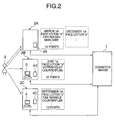
In FIG.1, one example is described in
which three different members 3A through 3C visit
three different stores 2A through 2C, respectively,
and then register as members. On the other hand, in
FIG.2, another example is described in which a single
customer 3 visits each of the stores 2A through 2C
and registers as a member at each of the stores 2A
through 2C.
-
Recently, many types of stores sell
cosmetics. The stores 2A through 2C such as the
private store, the drug store, and the department
store, and other types of stores sell cosmetics.
Since a customer base depends on the store type, each
store decides a product line and arranges products to
display based on the store type.
-
Accordingly, the same customer 3 purchases
a cleansing cream that is a relatively cheaper
product, at the drug store in neighborhood and
purchases whitening cosmetics that is a relatively
more expensive product, at the department store.
Moreover, the customer 3 needs to register as a
member at each store where the customer 3 purchases
cosmetics products.
-
As shown in FIG.2, it is assumed that the
customer 3 purchases a cosmetics product as follows
at the store 2A and registers as a member:
- purchase date : March 1st
- purchase product : face lotion "a"
- counseling content : dry-rough-skin care
- conversation content : overseas trip
for diving, soon - point of purchase : 15 points.
In the store 2A, the member management sheet 4A is
created based on the registration form filled out by
the customer 3 and the purchase date (March 1st), the
purchase product (face lotion "a"), the counseling
content (dry-rough-skin care), and the conversation
content (overseas trip for diving, soon) are
additionally input. The member management sheet 4A
is maintained by the store 2A.
-
After that, instead of visiting the store
2A, the customer 3 visits the store 2B different from
the store 2A, purchases a cosmetics product as
follows, and then the customer 3 registers as a
member, again:
- purchase date : June 1st
- purchase product : face lotion "b"
- counseling content : ultraviolet counterplan
- conversation content : canceled overseas trip
- point of purchase : 10 points.
In the store 2B, the member management sheet 4B is
created based on the registration form filled out by
the customer 3 and the purchase date (June 1st), the
purchase product (face lotion "b"), the counseling
content (ultraviolet counterplan), and the
conversation content (canceled overseas trip) are
additionally input. The member management sheet 4B
is maintained by the store 2B.
-
After that, instead of visiting the stores
2A and 2B, the customer 3 visits the store 2C
different from the stores 2A and 2B, purchases a
cosmetics product as follows, and then the customer 3
registers as a member, again:
- purchase date : September 1st
- purchase product : face lotion "c"
- counseling content : fine wrinkle counterplan
- conversation content : won in a tennis
tournament
- point of purchase : 10 points.
In the store 2C, the member management sheet 4C is
created based on the registration form filled out by
the customer 3 and the purchase date (September 1st),
the purchase product (face lotion "c"), the
counseling content (fine wrinkle counterplan), and
the conversation content (won in a tennis tournament)
are additionally input. The member management sheet
4C is maintained by the store 2C.
-
It is assumed that after that, the
customer 3 visits the store 2A on December 1st, again,
and purchases another cosmetics product "2a". In
this case, a salesperson of the store 2A corresponds
to and counsels the customer 3 as a member, based on
the member management sheet 4A based on purchase data
as of March 1st and the member registration.
-
That is, the customer 3 actually changed a
cosmetics type from the cosmetics product "a" to the
cosmetics product "b" and further to the cosmetics
product "c". However, the salesperson misjudges that
the customer 3 still uses the same cosmetics product
"a".
-
Similarly, as for counseling, even though
the customer 3 is counseled for the ultraviolet
counterplan and the fine wrinkle counterplan, the
salesperson misjudges that the customer 3 needs a
counsel only for a dry-rough-skin care. Furthermore,
the salesperson can know only about information as of
March 1st. Thus, the salesperson may incorrectly ask
the customer, "How was your overseas trip?"
-
Furthermore, even though the point of
purchase for the customer 3 is totally 35 points,
only 15 points are accumulated available for the
store 2A.
-
As described above, in the conventional
member management method, the customer 3 may register
as a member many times at the stores 2A through 2C.
In this case, information related to the customer 3
is spread to the stores 2A through 2C. Thus, the
accuracy of the information related to the customer 3
becomes lower at each of the stores 2A through 2C.
Accordingly, because of a lower accuracy of the
information at each of the stores 2A through 2C, the
information at the lower accuracy is transmitted to
the cosmetics maker 1. Consequently, the cosmetics
maker 1 cannot properly conduct a development plan of
a new product, a sales promotion plan, and a like.
-
Also, since in each of the stores 2A
through 2C, a salesperson corresponds to and counsels
the customer 3 as a member, based on each of the
member management sheets 4A through 4C, it is
difficult to obtain accurate information related to
the customer 3. Accordingly, proper services, such
as a proper conversation, a proper counseling, and a
like), cannot be performed for the customer 3.
Moreover, since the point of purchase is maintained
at each of the stores 2A through 2C, total purchase
points of purchase of the stores 2A through 2C cannot
be considered. Consequently, a service of a point
reduction is not sufficiently performed for the
customer 3.
SUMMARY OF THE INVENTION
-
It is a general object of the present
invention to provide a system for managing members in
which the above-mentioned problems are eliminated.
-
A more specific object of the present
invention is to provide the system for managing
members in which an accuracy of information obtained
from each member can be improved and a high quality
service to the member can be provided.
-
The above objects of the present invention
are achieved by a system for managing members
including: a plurality of store terminals provided to
a plurality of stores, respectively, in which
customers purchase a product; and a server for
managing member information of registered customers
of the customer, the registered customer being
registered as the members, wherein: the store
terminal includes: a part conducting a member
registration for the customers; a part obtaining the
member information of the members; a part requesting
the member information of the server; and a part
outputting the member information sent from the
server that corresponds to a request of the member
information, the server includes: a store information
database storing store information of each of the
plurality of stores; a member information database
storing the member information; a part centralizing
and storing the member information sent from the
plurality of stores for each of the members in the
member information database; and a part sending the
member information stored in the member information
database to a store of the plurality of stores based
on the request from a store terminal of the store,
the store terminal being one of the plurality of
store terminals.
-
According to the present invention, even
if the member registration is conducted at the
plurality of different stores and the member
purchases product at the plurality of different
stores, the server centralizes the member information
sent from the store terminal provided at each of the
stores and stores in the member information database
provided in server for each member (that is, the
member information is grouped for each member).
-
Therefore, even if the member information
related to the same member is input and sent to the
server separately from the different stores, the
member information is not be duplicated. Accordingly,
it is possible to improve the accuracy of the member
information.
BRIEF DESCRIPTION OF THE DRAWINGS
-
Other objects, features and advantages of
the present invention will become more apparent from
the following detailed description when read in
conjunction with the accompanying drawings, in which:
- FIG.1 is a diagram for explaining a
conventional member management method;
- FIG.2 is a diagram for explaining
disadvantages of the conventional member management
method;
- FIG.3 is a diagram showing a system
configuration of a member management system according
to an embodiment of the present invention;
- FIG.4 is a flowchart for explaining the
execute program selecting process;
- FIG.5 is a flowchart for explaining a
member registration process;
- FIG.6 is a flowchart for explaining an
information input process;
- FIG.7 is a flowchart for explaining a
counseling history information input process;
- FIG.8 is a flowchart for explaining a
product/point information input process;
- FIG.9 is a flowchart for explaining the
counseling information input process;
- FIG.10 is a flowchart for explaining the
information output process. In the information
output process;
- FIG.11 is a diagram showing an example of
the menu window;
- FIG.12 is a diagram showing an example of
the registration window;
- FIG.13 is a diagram showing an example of
an information input window;
- FIG.14 is a diagram showing an example of
a counseling history information input window;
- FIG.15 is a diagram showing an example of
a product/point information input window;
- FIG.16 is a diagram showing an example of
a counseling information input window;
- FIG.17 is a diagram showing an example of
an information output window
- FIG.18 is a diagram showing an example of
a conversation history information window displayed
at the display part;
- FIG.19 is an example of a product/point
information output window displayed at the display
part; and
- FIG.20 is a diagram showing an example of
a counseling information output window displayed at
the display part.
-
DESCRIPTION OF THE PREFERRED EMBODIMENTS
-
An embodiment according to the present
invention will now be described with reference to
figures.
-
FIG.3 is a diagram showing a system
configuration of a member management system 10
according to the embodiment of the present invention.
In this embodiment, the member management system 10
for a purchaser of cosmetics products will be
illustrated. However, the member management system 10
is not limited to apply for a member management
related to a cosmetics industry and can be widely
applied to member managements for various products
and various services.
-
As shown in FIG.3, the member management
system 10 includes a plurality of store terminals 11A
through 11C (for the sake of convenience, three store
terminals are shown in FIG.3), a server 12, a
communication network connecting each of the store
terminals 11A through 11C and the server 12. In the
member management system 10, the communication
network can be any one of various communication
networks but is defined as Internet 13 in this
embodiment.
-
The store terminals 11A through 11C are
provided in stores selling products, respectively.
In this case, the member management system 10 is not
limited to any style or type of each of the stores 2A
through 2C. The member management system 10 can be
applied to any style or type of a private store, a
pharmaceutical store, a department store, and a like.
Also, in the embodiment, the Internet 13 is used as
the communication network. Then, it is possible to
reduce costs related to an infrastructure of the
member management system 10.
-
Each of the store terminals 11A through
11C includes a processing part 14, an output part 15,
an input part 16, a sending/receiving part 17, a
display part 18, and a storing part 19. In the
storing part 19, the processing part 14 conducts
processes necessary to manage members by executing
programs. The processing part 14 entirely controls
the output part 15, the input part 16, the
sending/receiving part 17, the display part 18, and
the storing part 19.
-
The output part 15 is a printer, for
example, and conducts a printing process. The input
part 16 is a keyboard, for example, and is used to
conduct an input process for inputting various data
necessary for the member management. The
sending/receiving part 17 is used to send and receive
data by connecting the processing part 14 to the
Internet 13. The display part 18 is a CRT (Cathode-Ray
Tube) display, for example, and displays data
input from the input part 16 and various information
sent from the server 12.
-
On the other hand, the server 12 is
provided to the cosmetics maker 1. The server 12
includes a CPU (Central Processing Unit) 20, a
sending/receiving part 21, a store information
database 22 (hereinafter, called DB as a database), a
personal information DB 23, a conversation history
information DB 24, a product information DB 25, a
point information DB 26, a counseling information DB
27, a storing part 28, and a like.
-
The CPU 20 stores various information sent
from each of the store terminals 11A through 11C to
the databases 22 through 27, by executing various
programs (described later) stored in the storing part
28, and also the CPU 20 searches for required
information from the databases 22 through 27 in
response to each of the store terminals 11A through
11C. Then, the CPU 20 sends processed information to
each of the store terminals 11A through 11C via the
sending/receiving part 21.
-
A store ID for each of stores 2A through
2C is stored in the store information DB 22. However,
each of the stores 2A through 2C can be identified by
the store ID.
-
Personal information is stored in the
personal information DB 23. The personal information
includes various information related to the customer
3 as a member such as a name, contact information,
attributes (birthday, Miss/Mrs., occupation, days off,
and a like), hobby, yes or no of skin trouble,
request for skin care, and a like. The personal
information is created for each member 3 at a time of
the member registration and is stored at an address
indicated by the member ID in the personal
information DB 23.
-
When the member 3 visits any one of the
stores 2A through 2C, conversation history
information showing conversation between the
salesperson for each of the stores 2A through 2C and
the customer 3 is stored in the conversation history
information DB 24. The conversation history
information is recent life information of the
customer 3 which information is obtained when the
salesperson services the customer 3. The
conversation history information is also stored at
the address indicated by the member ID in the
conversation history information DB 24.
-
When the customer 3 visits any one of the
stores 2A through 2C and purchases a product, product
information related to the product is stored in the
product information DB 25. In detail, a purchase
date and time, a product type, a product price, and a
like are stored. The product information is also
stored at the address indicated by the member ID in
the product information DB 25.
-
Point information showing the purchase
points for the customer 3 are stored in the point
information DB 26 by corresponding to the product
price of the product purchased at any one of the
stores 2A through 2C. In general, as an advantage
for the member registration, points corresponding to
a purchase amount of the product purchased by the
customer 3 is accumulated and the point reserve
service is provided to offer special discounts from
the product price, or exchange with a gift or a
coupon depending on accumulated points. The point is
added based on the product purchased to accumulate
and the point information showing total points are
stored in the point information DB 26. The point
information is stored at the address indicated by the
member ID in the point information DB 26.
-
When the customer 3 visits any one of the
stores 2A through 2C as a member, counseling
information, which shows a counseling content that
the salesperson counseled the customer 3 about, is
stored in the counseling information DB 27. In
detail, the counseling information includes advice
from the salesperson to the customer 3 about a
question (for example, the customer 3 wants to get a
suntan but worries about freckles.) from the customer
3. The counseling information is stored at the
address indicated by the member ID in the counseling
information DB 27.
-
It should be noted that member information
in claims includes the personal information, the
conversation history information, the product
information, the point information, and the
counseling information.
-
In the embodiment, the customer 3 may
directly communicate with the server 12 by using a
communication tool of the customer 3. However, in
the embodiment, the present invention has a feature
of sending and receiving information between the
stores 2A through 2C and the server 12. Accordingly,
an explanation of a process, in which the customer 3
and the server 12 directly communicate with each
other to send and receive information, is omitted.
-
A member management process of the member
management system 10 in the system configuration
shown in FIG.3 will now be described. Hereinafter,
if it is not necessary to distinguish each of the
stores 2A through 2C and each of the store terminals
11A through 11C, each of the stores 2A through 2C is
generally called a store 2 and each of the store
terminals 11A through 11C is generally called as a
store terminal 11.
-
The store terminal 11 provided in the
store 2 conducts a member registration process, an
information input process, and an information output
process. When the store terminal 11 is executed, the
processing part 14 executes an execute program
selecting process stored in the storing part 19.
FIG.4 is a flowchart for explaining the execute
program selecting process. When the execute program
selecting process is executed, the processing part 14
conducts a logon process in step S10.
-
In the logon process, the store terminal
11 is connected to the server 12 based on the store
ID and a password input by the customer 3. Thus, the
store terminal 11 is connected to the server 12 via
the Internet 13. A connection between the store
terminal 11 and the server 12 via the Internet 13 is
began before the store 2 opens and is maintained
until the store 2 closes and the salesperson logs off
the store terminal 11.
-
When the logon process is completed, a
menu window is displayed at the display part 18 of
the store terminal 11. FIG.11 is a diagram showing
an example of the menu window. The salesperson of
the store 2 inputs a number of a desired process in
the input part 16 on the menu window shown in FIG.11.
-
In step S12, the processing part 14
determines whether or not the information input
process is selected. When the processing part 14
determines in step S12 that the information input
process is not selected (NO), the execute program
selecting process advances to step S16 and the
processing part 14 conducts the information output
process (described later).
-
On the other hand, when the processing
part 14 determines in step S12 that the information
input process is selected (YES), the processing part
14 determines whether or not the member registration
process is selected in step S13. When the processing
part 14 determines in step S13 that the member
registration process is selected (YES), the execute
program selecting process advances to step S14 and
the processing part 14 executes the member
registration process (described later). On the other
hand, when the processing part 14 determines in step
S13 that the member registration process is not
selected (NO), the execute program selecting process
advances to step S15 and the processing part 14
executes the information input process (described
later).
-
In the menu window shown in FIG.17, the
member registration process (step S14 of FIG.4),
which is executed when the member registration
process is selected, will now be described.
-
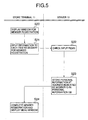
FIG.5 is a flowchart for explaining the
member registration process. In order for the
customer 3 visiting the store 2 to register as a
member of the cosmetics maker 1, the customer 3 fills
in the member registration form. The member
registration form includes items necessary for the
member registration such as a name, contact
information, attributes (birthday, occupation,
unmarried/married, days off, and a like), hobby, yes
or no of skin trouble, and a like.
-
In addition, a number indicating the
member ID is written in the member registration form
beforehand. The member ID indicated in the member
registration form is a serial number. Thus, the
member ID is not duplicated. Therefore, the member
ID indicated in the member registration form
corresponds to the member ID of the customer 3
filling out the member registration form. The
salesperson of the store 2 conducts the member
registration process based on the member registration
form.
-
Referring to FIG.5, when the member
registration process is executed, the processing part
14 of the store terminal 11 displays the member
registration window at the display part 18 (step S20).
FIG.12 is a diagram showing an example of the
registration window.
-
The salesperson in the store 2 inputs data
to items necessary for the member registration while
referring to the member registration window shown in
FIG.12 (step S21). The items input in step S21 are
related to the member ID and the personal information
described above. The data input in the items is sent
to the server 12 via the sending/receiving part 17.
-
When information related to the member
registration is sent from the store terminal 11 to
the server 12, the CPU 20 in the server 12 checks
whether or not sent data for each item is pertinent
data and all items are sent from the store terminal
11. Also, the CPU 20 matches the sent data related
to the member registration with the member ID and the
personal information being stored in the personal
information DB 23, and the CPU 20 checks whether or
not an identical or similar member ID is found or
identical or similar personal information is found
(in step S22).
-
If there is an error in the input items
and the identical or similar member ID or the
identical or similar personal information is found,
the CPU 20 sends the store terminal 11 a message
indicating that the error occurs and the CPU 20
requests to correct the error. Therefore, it is
possible to prevent from duplicating the member
registration for the customer 3.
-
When it is determined in step S22 that the
sent data for each item is pertinent data, the CPU 20
stores the personal information sent from the store
terminal 11 at the address indicated by the member ID
in the personal information DB 23 (step S23). Thus,
the personal information for the customer 3 becomes
available to read in and read out the personal
information DB 23 by indicating the member ID.
-
Furthermore, the CPU 20 forms a recording
area having address identically indicated by the
member ID for each of the conversation history
information DB 24, the product information DB 25, the
point information DB 26, and the counseling
information DB 27. Accordingly, the member
information necessary for the member management (the
personal information, the conversation history
information, the product information, the point
information, the counseling information) can be read
in and read out at the address indicated by the
member ID in the databases 24 through 27.
-
The member registration process is
completed by executing steps S20 through S23
described above and then the display part 18 of the
store terminal 11 displays the menu window shown in
FIG.11, again (step S24).
-
In the menu window shown in FIG.11, the
information input process (step S15), which is
executed when the information input is selected, will
now be described.
-
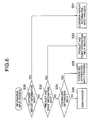
When the information input process is
selected by the salesperson, the processing part 14
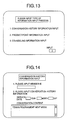
starts the information input process. FIG.6 is a
flowchart for explaining the information input
process and FIG.13 is a diagram showing an example of
an information input window. In the information
input process, the member information (the
conversation history information, the product
information, the point information, the counseling
information) other than the personal information is
input.
-
In the information input window shown in
FIG.13, the salesperson of the store 2 inputs a
number of a desired process by using the input part
16. The processing part 14 determines in step S30
whether or not the conversation history information
is selected. When the processing part 14 determines
that the conversation history information is selected
(YES), the information input process advances to step
S31 and then the conversation history information
input process (described later) is executed.
-
On the other hand, if it is determined in
step S30 that the conversation history information is
not selected (NO), the processing part 14 determines
in step S32 whether or not the product/point
information input is selected (YES), the information
input process advances to step S33 and then a
product/point information input process (described
later) is executed.
-
Since the point is set based on the
product price, the point information is associated
with the product information. Thus, in the
embodiment, a point information input process and
product information input process can be conducted in
a single process (product/point information input
process).
-
On the other hand, when it is determined
in step S32 that the product/point information input
is not selected (NO), the processing part 14
determines in step S34 whether or not the counseling
information input is selected. When it is determined
in step S34 that the counseling information input is
selected (YES), the information input process
advances to step S35 and then a counseling
information input process is executed. On the other
hand, when it is determined in step S34 that the
counseling information input is not selected (NO),
the processing part 14 completes the information
input process shown in FIG.6 and the display part 18
displays the menu window, again (step S36).
-
Each of the counseling history information
input process, the product/point input process, and
the counseling information process executed in the
information input process will now be described.
-
First, in the information input window
shown in FIG.13, the counseling history information
input process (step S31 in FIG.6), which is executed
when the counseling history information input is
selected, will now be described. FIG.7 is a
flowchart for explaining the counseling history
information input process and a program for the
counseling history information input process is
stored in the storing part 19 of the store terminal
11.
-
When the counseling history information
input process shown in FIG.7 is executed, the
processing part 14 of the store terminal 11 displays
a counseling history information input window at the
display part 18 (step S40). FIG.14 is a diagram
showing an example of the counseling history
information input window.
-
The salesperson of the store 2 inputs the
conversation history information such as the member
ID of the customer 3 who the salesperson serviced, a
service date, a conversation content, and a like
(step S41). In detail, the service date and the
conversation content are input. The conversation
history information input window shown in FIG.14 is
configured so as to directly input a sentence as the
conversation content. Alternatively, items showing
several conversation contents are listed and the
salesperson selects one item to input. When the
member ID and the conversation history information
are input, the processing part 14 sends the member ID
and the conversation history information to the
server 12 via the sending/receiving part 17.
-
When the conversation history information
input is completed in step S41, the processing part
14 provides the member ID to the conversation history
information input by the salesperson and then sends
to the server 12. The CPU 20 of the server 12 checks
whether or not the conversation history information
sent from the store terminal 11 is pertinent and all
items are sent from the store terminal 11 (step S42).
Not shown in FIG.6, if there is an error in the input
items, the CPU 20 sends the store terminal 11 a
message indicating that the error occurs and the CPU
20 requests to correct the error.
-
When it is determined in step S42 that the
conversation history information is properly sent,
the CPU 20 stores the conversation history
information input in step S41 to a recording area
corresponding to the member ID as an address in the
conversation history information DB 24. Accordingly,
the conversation history information stored in the
conversation history information DB 24 can be
retrieved from the conversation history information
DB 24 by indicating the member ID.
-
The conversation history information input
process is completed by executing steps S40 through
43 and then the display part 18 of the store terminal
11 displays the menu window shown in FIG.11, again
(step S44).
-
In the information input window in FIG.13,
the product/point information input process (step S33
in FIG.6), which is executed when the product/point
information input is selected, will now be described.
FIG.8 is a flowchart for explaining the product/point
information input process and a program for the
product/point information input process is stored in
the storing part 19 of the store terminal 11.
-
When the product/point information input
process shown in FIG.8 is executed, the processing
part 14 of the store terminal 11 displays a
product/point information input window at the display
18 (step S50). FIG.15 is a diagram showing an
example of the product/point information input window.
-
The salesperson of the store 2 inputs the
product information and the point information such as
the member ID of the customer 3 who purchased the
product, a product purchase date, a purchase list,
and a like by using the input part 16 (step S51). As
described above, the points are defined based on the
product price and determined for each product. A
relationship between the product and the points is
stored in the storing part 19 of the store terminal
11. Therefore, in the embodiment, by inputting
information of a purchased product in the purchase
list, the points for the purchased product is
searched for from the storing part 19 and then the
points for the purchased product is automatically
displayed by corresponding to the information of the
purchased product.
-
When the product/point information input
is completed in step S51, the processing part 14
provides the member ID to the product/point
information that is input by the salesperson and then
sends to the server 12. The CPU 20 of the server 12
checks whether or not the product/point information
sent from the store terminal 11 is pertinent and all
items are sent from the store terminal 11 (step S52).
Not shown in FIG.8, if there is an error in the input
items, the CPU 20 sends the store terminal 11 a
message indicating that the error occurs and the CPU
20 requests to correct the error.
-
When it is determined in step S52 that the
product/point information is properly sent, the CPU
20 stores the product/point information input in step
S51 to a recording area corresponding to the member
ID as an address in the product information DB 25 and
the point information DB 26.
-
Accordingly, the product information
stored in the product information DB 25 can be
retrieved from the product information DB 25 by
indicating the member ID. The point information
stored in the point information DB 26 can be
retrieved from the point information DB 26 by
indicating the member ID.
-
The product/point information input
process is completed by executing steps S50 through
53 and then the display part 18 of the store terminal
11 displays the menu window shown in FIG.11, again
(step S54).
-
In the information input window in FIG. 13,
the counseling information input process (step S35 in
FIG.6), which is executed when the counseling
information input is selected, will now be described.
FIG.9 is a flowchart for explaining the counseling
information input process and a program for the
counseling information input process is stored in the
storing part 19 of the store terminal 11.
-
When the counseling information input
process shown in FIG.9 is executed, the processing
part 14 of the store terminal 11 displays a
counseling information input window at the display 18
(step S60). FIG.16 is a diagram showing an example
of the counseling information input window.
-
The salesperson of the store 2 inputs the
counseling information such as the member ID of the
customer 3 whom the salesperson counseled, a
counseling date, a counseling content, and a like by
using the input part 16 (step S61).
-
When the counseling input is completed in
step S61, the processing part 14 provides the member
ID to the counseling information that is input by the
salesperson and then sends to the server 12. The CPU
20 of the server 12 checks whether or not the
counseling information sent from the store terminal
11 is pertinent and all items are sent from the store
terminal 11 (step S62). Not shown in FIG.9, if there
is an error in the input items, the CPU 20 sends the
store terminal 11 a message indicating that the error
occurs and the CPU 20 requests to correct the error.
-
When it is determined in step S62 that the
counseling information is properly sent, the CPU 20
stores the counseling information input in step S61
to a recording area corresponding to the member ID as
an address in the counseling information DB 27.
-
The counseling information input process
is completed by executing steps S60 through 63 and
then the display part 18 of the store terminal 11
displays the menu window shown in FIG.11, again (step
S64).
-
In the embodiment as described above, the
member information (the personal information, the
conversation history information, the product
information, the point information, the counseling
information), which is related to the customer 3 and
sent from the store terminal 11, is stored and
centralized in respective databases 23 through 27 for
each customer registered as a member.
-
As shown in FIG.3, even if the customer 3
visits different stores 2A through 2C and
conversation, product purchases, the points and
counseling are provided, entire information related
to the conversation, the product purchases, the
points and the counseling is sent from the stores 2A
through 2C to the server 12 to centralize and manage,
instead of managing each information at each of the
stores 2A through 2C. Accordingly, the entire
information related to the conversation, the product
purchases, the points and the counseling are not
distributed into the stores 2A through 2C.
-
In the menu window shown in FIG.11, the
information output process (step S16 of FIG.4), which
is executed when information output process is
selected, will now be described.
-
When the information output process is
selected, the processing part 14 starts the
information output process. FIG.10 is a flowchart
for explaining the information output process. In
the information output process, in response to an
output request from the store terminal 11, the CPU 20
of the server 12 reads out the member information
from the databases 22 through 27 and sends the member
information to the store terminal 11.
-
That is, when the information output
process shown in FIG.10 is executed, the salesperson
of the store 2 inputs the member ID of the customer 3
to obtain the member information by using the input
part 16. The member ID is sent with an information
output request signal to the server 12 via the
sending/receiving part 17 and the Internet 13.
-
When the information output signal and the
member ID are sent from the store terminal 11, the
server 12 reads out the member information (the
conversation history information, the product
information, the point information, and the
counseling information) from the conversation history
information DB 24, the product information DB 25, the
point information DB 26, and the counseling
information DB 27, and then sends the member
information as a whole to the store 2 of the store
terminal 11 that sent the information output request
signal.
-
As described above, the conversation
history information, the product information, the
point information, and the counseling information
forming the member information are stored at the
address indicated by the member ID in the
conversation history information DB 24, the product
information DB 25, the point information DB 26, and
the counseling information DB 27 for each registered
customer as a member, so as to be centralized in the
server 20. Therefore, even in a case in which the
customer 3 having the member ID purchases products
separately at the stores 2A through 2C and different
conversation and different counseling are provided at
each of the stores 2A through 2C, the member
information read from the databases 24 through 27
based on the member ID includes entire member
information (conversation history information, the
product information, the point information, and the
counseling information) input at each of the stores
2A through 2C.
-
When the member information is sent from
the server 12 to the store terminal 11, the
processing part 14 stores the member information in
the storing part 19 in step S71. When a storing
process is completed, the processing part 14 displays
an information output window shown in FIG.17 at the
display part 18.
-
The salesperson of the store 2 inputs a
number of a desired output process to execute by
using the input part 16. The processing part 14
determines whether or not the conversation
information output is selected, in step S72. When it
is determined that the conversation information
output is selected (YES), the information output
process advances to step S73. And, the information
output process reads the conversation history
information from the storing part 19 and displays the
conversation history information at the display part
18. FIG.18 is a diagram showing an example of
conversation history information window displayed at
the display part 18. In this case, in the
conversation history information window of FIG.18,
entire conversation history information when the
customer 3 had conversations at the stores 2A through
2C is displayed.
-
On the other hand, when it is determined
in step S72 that the conversation information output
is not selected (NO), the processing part 14
determines whether or not the product/point
information output is selected in step S74. Then,
when it is determined that the product/point
information output is selected (YES), the information
output process advances to step S75, read the
product/point information from the storing part 19,
and displays the product/point information at the
display part 18. FIG.19 is an example of the
product/point information output window displayed at
the display part 18. In this case, in the
product/point information output window at the
display part 18, all product/point information
related to the products that the customer 3 purchased
at the stores 2A through 2C is displayed. And, the
points accumulated based a total purchase amount of
the products purchased at the stores 2A through 2C is
displayed.
-
As described above, since the point
information and the product information is related
each other, an output process for the point
information and an output process for the product
information are conducted in a single output process
(product/point information output process) in the
embodiment.
-
On the other hand, when it is not
determined that the product/point information output
is selected (NO), the processing part 14 determines
whether or not the counseling information output is
selected, in step 76. When it is determined that the
counseling information output is selected (YES), the
information output process advances to step S77,
reads the counseling information from the storing
part 19, and displays the counseling information at
the display part 18. FIG.20 is a diagram showing an
example of a counseling information output window
displayed at the display part 18. In this case, in
the counseling information output window in FIG.20,
entire counseling information related in which the
customer 3 had counseling at each of the stores 2A
through 2C is displayed.
-
On the other hand, when it is determined
that the counseling information output is not
selected (NO), the processing part 14 completes the
information output process shown in FIG.10 and
returns the menu window at the display part 18 (step
S78).
-
As described above, in the embodiment, the
member information (the personal information, the
conversation history information, the product
information, the point information, the counseling
information), which is related to the customer 3 and
sent from the store terminal 11, is stored at the
address indicated by the member ID and centralized in
respective databases 23 through 27 for each customer
registered as a member. Thus, in a case in which the
member information is output, all information related
to the conversation and the counseling in which the
salesperson serviced the customer 3 at each of the
stores 2A through 2C, and the product and the points
provided when the customer 3 purchased the product.
-
In detail, when the member information of
the customer 3 is output at the store 2A of FIG.3, a
output result includes the conversation information
and the counseling information which the customer is
serviced by, and the product information and the
point information provided when the customer 3
purchased the product. Therefore, for example, in a
case in which the salesperson of the store 2A
counsels the customer 3, it is possible for the
salesperson to consider the counseling content in
that the customer 3 wad counseled and the products
that the customer 3 purchased at the stores 2B and 2C
and to properly counsel the customer 3 at the store
2A. Moreover, it is possible to conduct more
accurate counseling for the customer 3. And, it is
possible to conduct more proper conversation and
service for the customer 3.
-
Furthermore, in a case in which the
customer 3 purchased products separately at each of
the stores 2A through 2C, the points accumulated at
each of the stores 2A through 2C every time the
customer purchased the product can be seen at the
store terminal 11 of each of the stores 2A through 2C.
Accordingly, it is possible to improve the point
reduction service for the customer 3.
-
In the embodiment, as the member
information related to the customer 3, the personal
information, the conversation information, the
product information, the point information, and the
counseling information are exampled. Alternatively,
instead of using all information above, necessary
information can be selectively used. Also, not shown
in the embodiment but other information can be
additionally provided in the member information.
-
In the embodiment, the present invention
is applied to the member management related to the
cosmetics product but is not limited thereto.
Alternatively, the present invention can be applied
to any types of the member management.
-
According to the present invention, the
following various advantages can be realized.
-
Even if the member information related to
the same member (registered customer) is input and
sent to the server separately at each of a plurality
of stores, it is possible to avoid duplicating the
member information and then it is possible to improve
the accuracy of the member information.
-
The conversation history information is
centralized and managed in the conversation history
information database for each member. Thus, even if
the member is serviced at the plurality of stores,
information showing conversation content at each of
the stores is not managed separately. Consequently,
various services conducted to the member can be
rationalized.
-
The product information of the product
that the member purchased is centralized and stored
in the product information database for each member.
Even if the member purchased products at a plurality
of different stores, the product information is not
managed separately at each of the different stores.
Therefore, it is possible to rationalize various
services for the member.
-
Even if the member had counseling at the
plurality of different stores, the counseling
information is not managed separately at each of the
different stores but the counseling information is
centralized and managed in the server. Therefore,
when the member visits at any one of the different
stores, the counseling content for the member can be
seen at other different stores. Consequently, it is
possible to conduct proper counseling to the member.
-
The present invention is not limited to
the specifically disclosed embodiments, variations
and modifications, and other variations and
modifications may be made without departing from the
scope of the present invention.
-
The present application is based on
Japanese Priority Application No.2000-350226 filed on
November 16, 2000, the entire contents of which are
hereby incorporated by reference.