EP1206147A2 - Mobile communication system and distributed broadcast information control method in mobile communication system - Google Patents
Mobile communication system and distributed broadcast information control method in mobile communication system Download PDFInfo
- Publication number
- EP1206147A2 EP1206147A2 EP01309459A EP01309459A EP1206147A2 EP 1206147 A2 EP1206147 A2 EP 1206147A2 EP 01309459 A EP01309459 A EP 01309459A EP 01309459 A EP01309459 A EP 01309459A EP 1206147 A2 EP1206147 A2 EP 1206147A2
- Authority
- EP
- European Patent Office
- Prior art keywords
- information
- broadcast information
- communication system
- mobile station
- visiting
- Prior art date
- Legal status (The legal status is an assumption and is not a legal conclusion. Google has not performed a legal analysis and makes no representation as to the accuracy of the status listed.)
- Granted
Links
Images



Classifications
-
- H—ELECTRICITY
- H04—ELECTRIC COMMUNICATION TECHNIQUE
- H04W—WIRELESS COMMUNICATION NETWORKS
- H04W72/00—Local resource management
- H04W72/30—Resource management for broadcast services
-
- H—ELECTRICITY
- H04—ELECTRIC COMMUNICATION TECHNIQUE
- H04W—WIRELESS COMMUNICATION NETWORKS
- H04W80/00—Wireless network protocols or protocol adaptations to wireless operation
- H04W80/04—Network layer protocols, e.g. mobile IP [Internet Protocol]
-
- H—ELECTRICITY
- H04—ELECTRIC COMMUNICATION TECHNIQUE
- H04W—WIRELESS COMMUNICATION NETWORKS
- H04W92/00—Interfaces specially adapted for wireless communication networks
- H04W92/16—Interfaces between hierarchically similar devices
- H04W92/20—Interfaces between hierarchically similar devices between access points
Definitions
- the present invention relates to a mobile communication system and a distributed broadcast information control method in the mobile communication system, which are characterized by the broadcast information control in the mobile communication system that offers communication services from a base station to a mobile station via a radio channel.
- a base station In a mobile communication system, a base station periodically transmits various types of broadcast information such as regulation information and available channel information of each area to mobile stations via a broadcasting channel. Receiving such broadcast information, the mobile station can learn the current conditions of the mobile communication system.
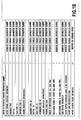
- Fig. 1 shows the contents of a broadcast information message defined in a PDC (Personal Digital Cellular) system, as an example of the broadcast information.
- PDC Personal Digital Cellular
- an RNC Radio Network Controller
- a higher level control office of the base station that controls multiple base stations prepares the broadcast information and transmits it to the base stations in a point-to-point manner. Accordingly, the conventional system has a problem in that the load concentrated on the RNC increases with the number of the base stations controlled by the RNC.
- a mobile communication system including multiple base stations that are interconnected two-dimensionally and offer radio communication services in individual service areas, each of the base stations comprising: information exchanging means for exchanging information about broadcast information with other base stations; and broadcast information generating means for generating broadcast information about a broadcasting area of the base station from information about broadcast information that is sent from the other base stations and obtained by the information exchanging means.
- the multiple base stations may be interconnected via an IP network.
- the information exchanging means of each of the base stations may send its own information about the broadcast information to other base stations using a multicast address.
- the information about the broadcast information may include information for controlling coverage of the information about the broadcast information.
- the information for controlling the coverage of the information may include a hopping number field value.
- the information for controlling the coverage of the information may include latitude and longitude information of a source base station and its desired reception coverage value.
- the mobile communication system may further comprise a mobile station that comprises means for acquiring broadcast information about an area other than a broadcasting area the mobile station is visiting, from a base station in the broadcasting area the mobile station is visiting.
- a distributed broadcast information control method in a mobile communication system including multiple base stations that are interconnected two-dimensionally and offer radio communication services in individual service areas, each of the base stations comprising the steps of: exchanging information about broadcast information with other base stations; and generating broadcast information about a broadcasting area of the base station from information about broadcast information that is sent from the other base stations.
- the multiple base stations may be interconnected via an IP network.
- Each of the base stations may send its own information about the broadcast information to other base stations using a multicast address when exchanging the information.
- the information about the broadcast information may include information for controlling coverage of the information about the broadcast information.
- the information for controlling the coverage of the information may include a hopping number field value.
- the information for controlling the coverage of the information may include latitude and longitude information of a source base station and its desired reception coverage value.
- the distributed broadcast information control method in the mobile communication system may further comprise the step of causing a mobile station to acquire broadcast information about an area other than a broadcasting area the mobile station is visiting, from a base station in the broadcasting area the mobile station is visiting.
- a base station that offers radio communication services in a service area
- the base station comprising: information exchanging means for exchanging information about broadcast information with other base stations; and broadcast information generating means for generating broadcast information about a broadcasting area of the base station from information about broadcast information that is sent from the other base stations and obtained by the information exchanging means.
- the information exchanging means may send its own information about the broadcast information to other base stations using a multicast address.
- a base station is assumed to have a configuration as shown in Fig. 9 as a component constituting the embodiments in accordance with the present invention.
- the base station comprises a transmitting section 1 for transmitting necessary information to a mobile station; a receiving section 2 for receiving a signal transmitted from the mobile station; an information exchanging section 3 for exchanging information about broadcast information with other base stations via an IP (Internet Protocol) network 6; a broadcast information generating section 4 for preparing broadcast information about the broadcasting area the base station belongs to from the information about the broadcast information the information exchanging section 3 collects from the other base stations; and a control section 5 for controlling the transmitting section 1, the receiving section 2, the information exchanging section 3 and the broadcast information generating section 4.
- IP Internet Protocol
- the information exchanging section 3, broadcast information generating section 4 and control section 5 can be constructed by a computer system.
- the computer system implements the functions of the information exchanging section 3, broadcast information generating section 4 and control section 5 by comprising a CPU, a ROM (and a hard disk drive) for storing programs to execute the present invention, a RAM for providing the CPU with a work area, and an interface for accessing the IP network 6, and by executing the programs stored in the ROM (and a hard disk drive) by the CPU.
- the operations of the following embodiments are executed under the control of the control section 5.
- the mobile station comprises in its internal memory a program storing area for storing programs to execute data processing that will be described below, and a temporarily storing area of data, and has its internal CPU execute the programs.
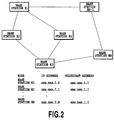
- Fig. 2 is a block diagram showing an embodiment 1 that implements the broadcast information control in accordance with the present invention in the IP network.
- each base station (#1-#N) has an IP address and a base station multicast address as follows. Node IP address Multicast address base station #1 xxx.xxx.0.0 xxx.xxx.1.0 base station #2 xxx.xxx.0.1 xxx.xxx.1.0 : : : base station #N xxx.xxx.0.N xxx.xxx.1.0
- Each base station sends its own system information to all the base stations using the multicast address.
- Each base station generates its broadcast information from the system information of the other base stations and its own system information.
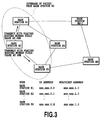
- Fig. 3 is a block diagram showing an embodiment 2 that implements the broadcast information control in accordance with the present invention in the IP network.
- each base station has an IP address and a base station multicast address as in the foregoing embodiment 1.
- the transmission packet includes a hopping number field, in which a hopping number field value is set at the transmission to control the coverage of the packet.
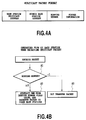
- Fig. 4A shows a format of the multicast packet
- Fig. 4B shows the operating flow at the time when the base station receives the multicast packet.
- the operation is carried out by the data processing unit in each base station. More specifically, receiving the packet, each base station detects the hopping number field value of the received multicast packet at step S1. When the value is greater than one, it captures the information at step S2, reduces the hopping number field value by one, and transfers it to other base stations. On the other hand, when the hopping number field value of the received packet is one at step S1, although the base station captures the information at step S3, it does not transfer it to other base stations.
- Each base station generates the broadcast information from its own system information and the system information of other base stations received.
- Fig. 5 is a block diagram showing an embodiment 3 that implements the broadcast information control in accordance with the present invention in the IP network.
- each base station has an IP address and a base station multicast address as in the foregoing embodiment 1.
- Each base station sends its own system information using the multicast address.
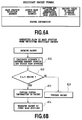
- the transmission packet includes latitude and longitude information about a source base station, so that the coverage of the packet is controlled by a desired packet reception coverage value (Ddesire) that is set at the transmission.
- Ddesire packet reception coverage value
- Fig. 6A shows a format of the multicast packet
- Fig. 6B shows the operating flow at the time when the base station receives the multicast packet.
- the operation is carried out by the data processing unit in each base station. More specifically, receiving the packet, each base station calculates the distance D between the base station and the source base station from its own latitude and longitude and from the latitude and longitude information about the source base station in the received multicast packet at step S11.
- the data processing unit compares the distance D with the desired packet reception coverage value Ddesire. If D ⁇ Ddesire, it captures the information in the packet at step S13, and transfers it to other base stations at step S14. In contrast, if D > Ddesire at step S12, it discards the packet at step S15 without transferring it.
- Each base station generates the broadcast information from its own system information and the system information of other base stations received.
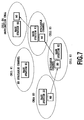
- Fig. 7 is a block diagram showing an embodiment 4 of the broadcast information control in accordance with the present invention.
- a mobile station MS carries out control using the broadcast information of neighboring base stations when it wishes to move to a particular destination with continuing its communication.
- the broadcasting area consists of a single cell.
- the mobile station MS transmits a broadcast information acquisition request packet using the base station multicast address.
- the packet coverage control based on the hopping number or the latitude and longitude information as described in the embodiment 2 or 3 is applicable to the broadcast information acquisition request packet.
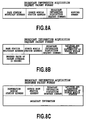
- Figs. 8(a) and 8(b) each illustrate a format of the broadcast information acquisition request packet when the control is applied.
- the base station transmits its own broadcast information to the mobile station MS using the format of the broadcast information acquisition response packet.
- the broadcast information acquisition response packet includes the latitude and longitude information of the base station that transmits the packet.
- the mobile station MS can move to the destination cell with always selecting cells having available channels in accordance with the received broadcast information about individual stations.
- the base stations are two-dimensionally connected to each other, so that the base stations can directly exchange information, and generate broadcast information autonomously in a distributed manner.
- the broadcasting control without requiring the RNC can be implemented.
Landscapes
- Engineering & Computer Science (AREA)
- Computer Networks & Wireless Communication (AREA)
- Signal Processing (AREA)
- Mobile Radio Communication Systems (AREA)
Abstract
Description
| Node | IP address | Multicast address |
| | xxx.xxx.0.0 | xxx.xxx.1.0 |
| | xxx.xxx.0.1 | xxx.xxx.1.0 |
| : | : | : |
| base station #N | xxx.xxx.0.N | xxx.xxx.1.0 |
Claims (26)
- A mobile communication system including multiple base stations that are interconnected two-dimensionally and offer radio communication services in individual service areas, each of said base stations characterized by comprising:information exchanging means for exchanging information about broadcast information with other base stations; andbroadcast information generating means for generating broadcast information about a broadcasting area of said base station from information about broadcast information that is sent from said other base stations and obtained by said information exchanging means.
- The mobile communication system as claimed in claim 1, characterized in that said multiple base stations are interconnected via an IP network.
- The mobile communication system as claimed in claim 2, characterized in that said information exchanging means of each of said base stations sends its own information about the broadcast information to other base stations using a multicast address.
- The mobile communication system as claimed in any one of claims 1-3, characterized in that the information about the broadcast information includes information for controlling coverage of the information about the broadcast information.
- The mobile communication system as claimed in claim 4, characterized in that the information for controlling the coverage of the information includes a hopping number field value.
- The mobile communication system as claimed in claim 4, characterized in that the information for controlling the coverage of the information includes latitude and longitude information of a source base station and its desired reception coverage value.
- The mobile communication system as claimed in claim 1, further characterized in that a mobile station that comprises means for acquiring broadcast information about an area other than a broadcasting area the mobile station is visiting, from a base station in the broadcasting area the mobile station is visiting.
- The mobile communication system as claimed in claim 2, further characterized in that a mobile station that comprises means for acquiring broadcast information about an area other than a broadcasting area the mobile station is visiting, from a base station in the broadcasting area the mobile station is visiting.
- The mobile communication system as claimed in claim 3, further characterized in that a mobile station that comprises means for acquiring broadcast information about an area other than a broadcasting area the mobile station is visiting, from a base station in the broadcasting area the mobile station is visiting.
- The mobile communication system as claimed in claim 4, further characterized in that a mobile station that comprises means for acquiring broadcast information about an area other than a broadcasting area the mobile station is visiting, from a base station in the broadcasting area the mobile station is visiting.
- The mobile communication system as claimed in claim 5, further characterized in that a mobile station that comprises means for acquiring broadcast information about an area other than a broadcasting area the mobile station is visiting, from a base station in the broadcasting area the mobile station is visiting.
- The mobile communication system as claimed in claim 6, further characterized in that a mobile station that comprises means for acquiring broadcast information about an area other than a broadcasting area the mobile station is visiting, from a base station in the broadcasting area the mobile station is visiting.
- A distributed broadcast information control method in a mobile communication system including multiple base stations that are interconnected two-dimensionally and offer radio communication services in individual service areas, each of said base stations characterized by comprising the steps of:exchanging information about broadcast information with other base stations; andgenerating broadcast information about a broadcasting area of said base station from information about broadcast information that is sent from said other base stations.
- The distributed broadcast information control method in the mobile communication system as claimed in claim 13, characterized in that said multiple base stations are interconnected via an IP network.
- The distributed broadcast information control method in the mobile communication system as claimed in claim 14, characterized in that each of said base stations sends its own information about the broadcast information to other base stations using a multicast address when exchanging the information.
- The distributed broadcast information control method in the mobile communication system as claimed in any one of claims 13-15, characterized in that the information about the broadcast information includes information for controlling coverage of the information about the broadcast information.
- The distributed broadcast information control method in the mobile communication system as claimed in claim 16, characterized in that the information for controlling the coverage of the information includes a hopping number field value.
- The distributed broadcast information control method in the mobile communication system as claimed in claim 16, characterized in that the information for controlling the coverage of the information includes latitude and longitude information of a source base station and its desired reception coverage value.
- The distributed broadcast information control method in the mobile communication system as claimed in claim 13, further characterized in that the step of causing a mobile station to acquire broadcast information about an area other than a broadcasting area the mobile station is visiting, from a base station in the broadcasting area the mobile station is visiting.
- The distributed broadcast information control method in the mobile communication system as claimed in claim 14, further characterized in that the step of causing a mobile station to acquire broadcast information about an area other than a broadcasting area the mobile station is visiting, from a base station in the broadcasting area the mobile station is visiting.
- The distributed broadcast information control method in the mobile communication system as claimed in claim 15, further characterized in that the step of causing a mobile station to acquire broadcast information about an area other than a broadcasting area the mobile station is visiting, from a base station in the broadcasting area the mobile station is visiting.
- The distributed broadcast information control method in the mobile communication system as claimed in claim 16, further characterized in that the step of causing a mobile station to acquire broadcast information about an area other than a broadcasting area the mobile station is visiting, from a base station in the broadcasting area the mobile station is visiting.
- The distributed broadcast information control method in the mobile communication system as claimed in claim 17, further characterized in that the step of causing a mobile station to acquire broadcast information about an area other than a broadcasting area the mobile station is visiting, from a base station in the broadcasting area the mobile station is visiting.
- The distributed broadcast information control method in the mobile communication system as claimed in claim 18, further characterized in that the step of causing a mobile station to acquire broadcast information about an area other than a broadcasting area the mobile station is visiting, from a base station in the broadcasting area the mobile station is visiting.
- A base station that offers radio communication services in a service area, said base station characterized by comprising:information exchanging means for exchanging information about broadcast information with other base stations; andbroadcast information generating means for generating broadcast information about a broadcasting area of said base station from information about broadcast information that is sent from said other base stations and obtained by said information exchanging means.
- The base station as claimed in claim 25, characterized in that said information exchanging means sends its own information about the broadcast information to other base stations using a multicast address.
Applications Claiming Priority (2)
| Application Number | Priority Date | Filing Date | Title |
|---|---|---|---|
| JP2000345785 | 2000-11-13 | ||
| JP2000345785 | 2000-11-13 |
Publications (3)
| Publication Number | Publication Date |
|---|---|
| EP1206147A2 true EP1206147A2 (en) | 2002-05-15 |
| EP1206147A3 EP1206147A3 (en) | 2003-07-09 |
| EP1206147B1 EP1206147B1 (en) | 2005-07-27 |
Family
ID=18819753
Family Applications (1)
| Application Number | Title | Priority Date | Filing Date |
|---|---|---|---|
| EP01309459A Expired - Lifetime EP1206147B1 (en) | 2000-11-13 | 2001-11-08 | Mobile communication system and distributed broadcast information control method in mobile communication system |
Country Status (6)
| Country | Link |
|---|---|
| US (1) | US7139561B2 (en) |
| EP (1) | EP1206147B1 (en) |
| KR (1) | KR100458449B1 (en) |
| CN (1) | CN1217554C (en) |
| DE (1) | DE60112219T2 (en) |
| SG (1) | SG112814A1 (en) |
Cited By (3)
| Publication number | Priority date | Publication date | Assignee | Title |
|---|---|---|---|---|
| CN1297126C (en) * | 2002-05-17 | 2007-01-24 | 三星电子株式会社 | Method for establishing signalling connection in mobile communication system |
| EP1786230A1 (en) * | 2005-11-12 | 2007-05-16 | VIA Telecom Co., Ltd. | Method for efficient feedback of reception-quality information from multiple hubs to a single user-terminal |
| EP2023678A3 (en) * | 2007-08-07 | 2011-07-27 | Fujitsu Ltd. | Link establishment method and mobile communication system |
Families Citing this family (10)
| Publication number | Priority date | Publication date | Assignee | Title |
|---|---|---|---|---|
| EP1401218A1 (en) * | 2002-09-19 | 2004-03-24 | Siemens Aktiengesellschaft | Method for the transmission of broadcast and multicast information in a mobile communications system |
| JP2004193676A (en) * | 2002-12-06 | 2004-07-08 | Ntt Docomo Inc | Communication system, communication method and mobile station |
| CN100381012C (en) * | 2003-04-09 | 2008-04-09 | Ut斯达康(中国)有限公司 | A method for data transmission management in UE handover process |
| KR100735349B1 (en) * | 2004-01-08 | 2007-07-04 | 삼성전자주식회사 | Method and apparatus for integrating broadcast service and multicast service in mobile communication system |
| US7885651B2 (en) * | 2004-06-18 | 2011-02-08 | Mitsubishi Electric Corporation | Autonomous cell shaping method |
| US20060126556A1 (en) * | 2004-12-14 | 2006-06-15 | Roundbox, Inc. | Territory mapping for efficient content distribution in wireless networks using broadcast/multicast |
| JP4851798B2 (en) * | 2006-01-25 | 2012-01-11 | Necインフロンティア株式会社 | Wireless communication system, wireless LAN base station, and setting content confirmation / change method used therefor |
| GB2447878A (en) | 2006-10-04 | 2008-10-01 | Nec Corp | Signalling system information in mobile telecommunications |
| JP5131018B2 (en) * | 2008-05-07 | 2013-01-30 | 富士通株式会社 | Base station apparatus, neighboring cell information management program, and neighboring cell information management method |
| CN103220828B (en) * | 2013-04-11 | 2016-03-23 | 北京比邻信通科技有限责任公司 | A kind of multi-mode base station system based on flattening network configuration |
Family Cites Families (17)
| Publication number | Priority date | Publication date | Assignee | Title |
|---|---|---|---|---|
| JP2846039B2 (en) | 1990-02-28 | 1999-01-13 | 沖電気工業株式会社 | Communication network |
| CA2052466C (en) * | 1990-10-02 | 2001-05-08 | Masayuki Sakamoto | Method of handover and route diversity in mobile radio communication |
| JP2501369B2 (en) | 1990-10-02 | 1996-05-29 | 日本電信電話株式会社 | Channel switching method during communication in mobile communication |
| CA2071027A1 (en) * | 1991-06-26 | 1992-12-27 | Eiji Kito | Mobile communication system wherein a base station tranfers to another an identifier for a cell of call origination |
| US5724665A (en) * | 1993-11-24 | 1998-03-03 | Lucent Technologies Inc. | Wireless communication base station |
| JP3063822B2 (en) | 1994-12-28 | 2000-07-12 | エヌ・ティ・ティ移動通信網株式会社 | Adjacent zone information automatic generation method |
| JP3001436B2 (en) | 1996-10-11 | 2000-01-24 | 日本電気移動通信株式会社 | Cordless phone system |
| FI103701B (en) * | 1996-10-30 | 1999-08-13 | Nokia Telecommunications Oy | A mobile communication system and method for generating position information for an application |
| GB2319439A (en) * | 1996-11-12 | 1998-05-20 | Hazeltine Corp | Network Architecture for Linking Base Stations |
| DE69824064T2 (en) * | 1997-03-14 | 2005-06-23 | Ntt Mobile Communications Network Inc. | Position estimation of a mobile station for a cellular mobile communication system |
| JP3385203B2 (en) | 1998-01-28 | 2003-03-10 | 株式会社エヌ・ティ・ティ・ドコモ | Wireless zone configuration method for mobile communication system |
| DE69927198T2 (en) * | 1998-03-19 | 2006-06-29 | Hitachi, Ltd. | Broadcast information delivering system |
| US6519248B1 (en) * | 1998-07-24 | 2003-02-11 | Telefonaktiebolaget Lm Ericsson (Publ) | Packet data network having distributed database |
| US6993021B1 (en) * | 1999-03-08 | 2006-01-31 | Lucent Technologies Inc. | Lightweight internet protocol encapsulation (LIPE) scheme for multimedia traffic transport |
| US6463273B1 (en) * | 1999-05-11 | 2002-10-08 | J. Cameron Day | Wireless warning system |
| JP2001177866A (en) | 1999-12-15 | 2001-06-29 | Ntt Docomo Inc | Wireless communication system |
| JP3657839B2 (en) | 2000-02-02 | 2005-06-08 | 株式会社エヌ・ティ・ティ・ドコモ | Radio base station |
-
2001
- 2001-11-07 SG SG200106864A patent/SG112814A1/en unknown
- 2001-11-08 DE DE60112219T patent/DE60112219T2/en not_active Expired - Lifetime
- 2001-11-08 EP EP01309459A patent/EP1206147B1/en not_active Expired - Lifetime
- 2001-11-12 KR KR10-2001-0070167A patent/KR100458449B1/en not_active Expired - Fee Related
- 2001-11-13 CN CN01134793.7A patent/CN1217554C/en not_active Expired - Fee Related
- 2001-11-13 US US10/054,734 patent/US7139561B2/en not_active Expired - Fee Related
Cited By (5)
| Publication number | Priority date | Publication date | Assignee | Title |
|---|---|---|---|---|
| CN1297126C (en) * | 2002-05-17 | 2007-01-24 | 三星电子株式会社 | Method for establishing signalling connection in mobile communication system |
| EP1786230A1 (en) * | 2005-11-12 | 2007-05-16 | VIA Telecom Co., Ltd. | Method for efficient feedback of reception-quality information from multiple hubs to a single user-terminal |
| US8805294B2 (en) | 2005-11-12 | 2014-08-12 | Via Telecom Co., Ltd. | System and method for feeding back information to a user-terminal from multiple hubs |
| EP2023678A3 (en) * | 2007-08-07 | 2011-07-27 | Fujitsu Ltd. | Link establishment method and mobile communication system |
| US8140051B2 (en) | 2007-08-07 | 2012-03-20 | Fujitsu Limited | Link establishment method and mobile communication system |
Also Published As
| Publication number | Publication date |
|---|---|
| US20020164982A1 (en) | 2002-11-07 |
| SG112814A1 (en) | 2005-07-28 |
| US7139561B2 (en) | 2006-11-21 |
| DE60112219T2 (en) | 2006-06-01 |
| CN1217554C (en) | 2005-08-31 |
| EP1206147B1 (en) | 2005-07-27 |
| DE60112219D1 (en) | 2005-09-01 |
| KR20020037285A (en) | 2002-05-18 |
| KR100458449B1 (en) | 2004-11-26 |
| EP1206147A3 (en) | 2003-07-09 |
| CN1370018A (en) | 2002-09-18 |
Similar Documents
| Publication | Publication Date | Title |
|---|---|---|
| US7986660B2 (en) | Channel allocation for communication system | |
| CN101031158B (en) | Wireless communications systems for controlling communication path | |
| EP0800298B1 (en) | Target device and method for establishing a communication path in a networked communications system | |
| AU746578B2 (en) | Wireless communication system incorporating multicast addressing and method for use | |
| JP4268634B2 (en) | Method and system for integrating resource allocation between TDD and FDD in a wireless communication system | |
| US9456314B2 (en) | Multicast transmissions in a network environment with user anchor controllers | |
| CN1756219B (en) | Active session mobility solution for radio link protocol | |
| JP3926798B2 (en) | Wireless area network control system and wide area wireless area network control system | |
| US7139561B2 (en) | Mobile communication system and distributed broadcast information control method in mobile communication system | |
| US6408179B1 (en) | Group radio communication system with shared bi-directional communication channel | |
| US6223035B1 (en) | Method and apparatus for providing a subscriber record for packet data registration of a mobile station | |
| KR20010023829A (en) | Efficient message transmission in a mobile communication system | |
| EP1271842B1 (en) | Method and device for multicasting | |
| MXPA05000072A (en) | Method for exchanging higher layer system information on a wireless system and automatic system selection of a wireless lans. | |
| EP1214815A1 (en) | Dual mode subscriber unit for short range, high rate and long range, lower rate data communications | |
| US7519369B2 (en) | Content distribution system, network, and channel switching control method | |
| EP1275266B1 (en) | Multicast paging in a communications system | |
| JP3613467B2 (en) | Mobile communication system and distributed broadcast information control method in mobile communication system | |
| US20070133427A1 (en) | System and method for providing high speed content and services | |
| US6977913B1 (en) | Radio communication device for radio packet communication system | |
| EP1286557B1 (en) | A method of sending a multicast message to mobile stations and a radio telecommunications network | |
| JP4606943B2 (en) | DATA COMMUNICATION METHOD, Narrow Wireless Communication System Apparatus, and Mobile Device | |
| JP4415094B2 (en) | Roaming system, roaming method and mobile terminal |
Legal Events
| Date | Code | Title | Description |
|---|---|---|---|
| PUAI | Public reference made under article 153(3) epc to a published international application that has entered the european phase |
Free format text: ORIGINAL CODE: 0009012 |
|
| AK | Designated contracting states |
Kind code of ref document: A2 Designated state(s): AT BE CH CY DE DK ES FI FR GB GR IE IT LI LU MC NL PT SE TR |
|
| AX | Request for extension of the european patent |
Free format text: AL;LT;LV;MK;RO;SI |
|
| PUAL | Search report despatched |
Free format text: ORIGINAL CODE: 0009013 |
|
| AK | Designated contracting states |
Designated state(s): AT BE CH CY DE DK ES FI FR GB GR IE IT LI LU MC NL PT SE TR |
|
| AX | Request for extension of the european patent |
Extension state: AL LT LV MK RO SI |
|
| 17P | Request for examination filed |
Effective date: 20031031 |
|
| 17Q | First examination report despatched |
Effective date: 20031203 |
|
| AKX | Designation fees paid |
Designated state(s): DE GB IT |
|
| GRAP | Despatch of communication of intention to grant a patent |
Free format text: ORIGINAL CODE: EPIDOSNIGR1 |
|
| GRAS | Grant fee paid |
Free format text: ORIGINAL CODE: EPIDOSNIGR3 |
|
| GRAA | (expected) grant |
Free format text: ORIGINAL CODE: 0009210 |
|
| AK | Designated contracting states |
Kind code of ref document: B1 Designated state(s): DE GB IT |
|
| REG | Reference to a national code |
Ref country code: GB Ref legal event code: FG4D |
|
| REF | Corresponds to: |
Ref document number: 60112219 Country of ref document: DE Date of ref document: 20050901 Kind code of ref document: P |
|
| PLBE | No opposition filed within time limit |
Free format text: ORIGINAL CODE: 0009261 |
|
| STAA | Information on the status of an ep patent application or granted ep patent |
Free format text: STATUS: NO OPPOSITION FILED WITHIN TIME LIMIT |
|
| 26N | No opposition filed |
Effective date: 20060428 |
|
| PGFP | Annual fee paid to national office [announced via postgrant information from national office to epo] |
Ref country code: DE Payment date: 20121031 Year of fee payment: 12 |
|
| PGFP | Annual fee paid to national office [announced via postgrant information from national office to epo] |
Ref country code: IT Payment date: 20121113 Year of fee payment: 12 Ref country code: GB Payment date: 20121107 Year of fee payment: 12 |
|
| GBPC | Gb: european patent ceased through non-payment of renewal fee |
Effective date: 20131108 |
|
| PG25 | Lapsed in a contracting state [announced via postgrant information from national office to epo] |
Ref country code: IT Free format text: LAPSE BECAUSE OF NON-PAYMENT OF DUE FEES Effective date: 20131108 Ref country code: DE Free format text: LAPSE BECAUSE OF NON-PAYMENT OF DUE FEES Effective date: 20140603 |
|
| REG | Reference to a national code |
Ref country code: DE Ref legal event code: R079 Ref document number: 60112219 Country of ref document: DE Free format text: PREVIOUS MAIN CLASS: H04Q0007300000 Ipc: H04W0088080000 Effective date: 20140724 Ref country code: DE Ref legal event code: R119 Ref document number: 60112219 Country of ref document: DE Effective date: 20140603 |
|
| PG25 | Lapsed in a contracting state [announced via postgrant information from national office to epo] |
Ref country code: GB Free format text: LAPSE BECAUSE OF NON-PAYMENT OF DUE FEES Effective date: 20131108 |