EP1204998B1 - High efficiency process for treating mixed metal waste - Google Patents
High efficiency process for treating mixed metal waste Download PDFInfo
- Publication number
- EP1204998B1 EP1204998B1 EP00949866A EP00949866A EP1204998B1 EP 1204998 B1 EP1204998 B1 EP 1204998B1 EP 00949866 A EP00949866 A EP 00949866A EP 00949866 A EP00949866 A EP 00949866A EP 1204998 B1 EP1204998 B1 EP 1204998B1
- Authority
- EP
- European Patent Office
- Prior art keywords
- waste
- batteries
- solution
- reaction
- lithium
- Prior art date
- Legal status (The legal status is an assumption and is not a legal conclusion. Google has not performed a legal analysis and makes no representation as to the accuracy of the status listed.)
- Expired - Lifetime
Links
Images

Classifications
-
- C—CHEMISTRY; METALLURGY
- C22—METALLURGY; FERROUS OR NON-FERROUS ALLOYS; TREATMENT OF ALLOYS OR NON-FERROUS METALS
- C22B—PRODUCTION AND REFINING OF METALS; PRETREATMENT OF RAW MATERIALS
- C22B26/00—Obtaining alkali, alkaline earth metals or magnesium
- C22B26/10—Obtaining alkali metals
- C22B26/12—Obtaining lithium
-
- C—CHEMISTRY; METALLURGY
- C22—METALLURGY; FERROUS OR NON-FERROUS ALLOYS; TREATMENT OF ALLOYS OR NON-FERROUS METALS
- C22B—PRODUCTION AND REFINING OF METALS; PRETREATMENT OF RAW MATERIALS
- C22B7/00—Working up raw materials other than ores, e.g. scrap, to produce non-ferrous metals and compounds thereof; Methods of a general interest or applied to the winning of more than two metals
- C22B7/006—Wet processes
- C22B7/007—Wet processes by acid leaching
-
- H—ELECTRICITY
- H01—ELECTRIC ELEMENTS
- H01M—PROCESSES OR MEANS, e.g. BATTERIES, FOR THE DIRECT CONVERSION OF CHEMICAL ENERGY INTO ELECTRICAL ENERGY
- H01M10/00—Secondary cells; Manufacture thereof
- H01M10/54—Reclaiming serviceable parts of waste accumulators
-
- H—ELECTRICITY
- H01—ELECTRIC ELEMENTS
- H01M—PROCESSES OR MEANS, e.g. BATTERIES, FOR THE DIRECT CONVERSION OF CHEMICAL ENERGY INTO ELECTRICAL ENERGY
- H01M6/00—Primary cells; Manufacture thereof
- H01M6/52—Reclaiming serviceable parts of waste cells or batteries, e.g. recycling
-
- Y—GENERAL TAGGING OF NEW TECHNOLOGICAL DEVELOPMENTS; GENERAL TAGGING OF CROSS-SECTIONAL TECHNOLOGIES SPANNING OVER SEVERAL SECTIONS OF THE IPC; TECHNICAL SUBJECTS COVERED BY FORMER USPC CROSS-REFERENCE ART COLLECTIONS [XRACs] AND DIGESTS
- Y02—TECHNOLOGIES OR APPLICATIONS FOR MITIGATION OR ADAPTATION AGAINST CLIMATE CHANGE
- Y02P—CLIMATE CHANGE MITIGATION TECHNOLOGIES IN THE PRODUCTION OR PROCESSING OF GOODS
- Y02P10/00—Technologies related to metal processing
- Y02P10/20—Recycling
-
- Y—GENERAL TAGGING OF NEW TECHNOLOGICAL DEVELOPMENTS; GENERAL TAGGING OF CROSS-SECTIONAL TECHNOLOGIES SPANNING OVER SEVERAL SECTIONS OF THE IPC; TECHNICAL SUBJECTS COVERED BY FORMER USPC CROSS-REFERENCE ART COLLECTIONS [XRACs] AND DIGESTS
- Y02—TECHNOLOGIES OR APPLICATIONS FOR MITIGATION OR ADAPTATION AGAINST CLIMATE CHANGE
- Y02W—CLIMATE CHANGE MITIGATION TECHNOLOGIES RELATED TO WASTEWATER TREATMENT OR WASTE MANAGEMENT
- Y02W30/00—Technologies for solid waste management
- Y02W30/50—Reuse, recycling or recovery technologies
- Y02W30/84—Recycling of batteries or fuel cells
Definitions
- the present invention is concerned with the treatment of mixed metal waste. More specifically, the present invention relates to a process for separating and recovering metals from batteries by means of converting said metals to the corresponding halides, and to apparatus for carrying out said process.
- Waste materials which may be defined as undesired substances that result from the production or use of a desirable, useful material, are of three main types: household, industrial and toxic or hazardous waste.
- US 4,637,928 discloses a method for treating articles such as batteries by opening the battery casings and contacting the interiors of said batteries with an alkaline agent.
- the aqueous HX solution serves two distinct purposes: firstly, to provide a medium in which hazardous material can be rendered non- hazardous, and secondly, to permit the recovery of valuable metals therefrom in the form of halides.
- the present invention provides a high efficiency process for recovering metals from batteries according to claim 1, comprising contacting the waste with an aqueous solution of HX, wherein X is halogen, thereby converting metals present in the waste to the corresponding halides, and subsequently separating said metal halides from other components of the reaction mixture and from each other.
- the waste to be treated comprises electrical batteries, such as lithium or nickel batteries.
- the waste comprises electrical equipment or electrical devices, e.g., cellular telephones, which may optionally be treated according to the invention together with the batteries contained therein.
- a major advantage associated with the application of the present invention to the treatment of lithium batteries is that the process involves a reaction between the components of the batteries and an aqueous solution of HX, namely, a reaction in the liquid phase.
- hazardous lithium metal is converted in the solution to LiX.
- oxidising agents are present in the aqueous solution of HX, to enhance the oxidation power of the solution.
- the oxidising agent is hydrogen peroxide, the concentration of which in the solution is between 0.1 and 5% (w/w).
- the reaction is used hereinafter to refer to the conversion of the metals present in the waste to the corresponding halides, by the reaction of said metals with HX, wherein X is a halogen, or optionally by the reaction of said metals with the above mentioned oxidising agents.
- the reaction is carried out at a temperature of between 20 and 90 ° C, and more preferably, at a temperature of between 50 and 80 °C.
- the aqueous solution containing HX is HCl solution or HBr solution, HCl solution being most preferred.
- the concentration of the solution is between 5 and 33 % (w/w), more preferably between 15 and 25 % (w/w).
- an aqueous solution containing a combination of HCl and HBr is used in the reaction.
- a preferred combination is provided by a solution of HCl, comprising between 1 and 10 % (w/w) HBr.
- the reaction is performed with agitation.
- Preferred modes of agitation are selected from the group of mixing, vibrating, shredding, liquid circulation, and forced gaseous/air turbulent mixture aeration.
- the waste material is brought into contact with the aqueous solution of HX at a controlled rate, to allow controlled evolution of the gaseous H 2 formed in the reaction.
- This gas is preferably removed from the reaction mixture, together with other gases that are not dissolved by the reaction mixture, or which are only partially dissolved thereby, and are optionally recovered.
- the reaction is carried out under reduced pressure in order to facilitate the removal of said gases.
- the waste material may also contain various gases that are soluble in the aqueous reaction medium, for example, SO 2 and SOCl 2 , as found in lithium batteries. These gases are rendered non-hazardous by virtue of their becoming absorbed by the aqueous medium.
- the dissolved gases increase the acidity of the solution, and the halide-containing gases such as SOCl 2 act as a halide source for the reaction solution.
- the separation of the metal halides from the reaction mixture and their subsequent separation from each other are accomplished by methods known in the art.
- Most of the metal halides formed in accordance with the present invention are water soluble, and therefore, in order to separate said halides from the reaction mixture, known liquid/solid separation techniques may be employed, such as, for example, filtration.
- the reaction mixture is filtered to obtain a filtrate containing said soluble halides.
- the filter cake consists of plastics and carbon materials that were initially present in the raw waste, and did not undergo chemical reaction.
- the filter cake may also contain insoluble metal oxides, which may be recovered, if desired, by treating said cake with a base.
- the metals are recovered from the filtrate by causing the selective precipitation of some of the metals.
- metal recovery may also be achieved by using ion exchange or selective extraction.
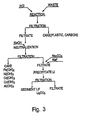
- the selective precipitation is carried out by treating the filtrate with an alkaline agent, preferably NaOH, to allow the separation between water soluble hydroxides, particularly, LiOH, from water insoluble hydroxides, such as Fe(OH) 3 , Ni(OH) 2 , Cd(OH) 2 , Co(OH) 2 and Al(OH) 3 .
- the non soluble hydroxides are separated from the liquid phase, preferably by filtration, and the filtrate, containing Li + (and Na + ), is further treated to cause the selective precipitation of lithium, preferably in the form of LiF or LiCO 3 , generally by introducing into said filtrate Na 2 CO 3 or NaF.
- the water insoluble lithium salt may be separated by filtration, and the filtrate obtained is preferably evaporated to recover NaCl therefrom.
- the insoluble hydroxides are separable by methods known in the art.
- metals the halides of which are water insoluble, may also be present in the mixed waste. These metals may be recovered from the solid phase of the reaction mixture by standard methods.
- the reaction according to the present invention is preceded by heat treatment of the raw waste material and/or mechanical processing of said waste material.
- the heat treatment is performed prior to said mechanical processing.
- the waste material is subjected to simultaneous heat treatment and mechanical processing.
- the mechanical processing is intended to transform the waste into a particulate form, to facilitate the reaction.
- the reaction is carried out concurrently with said processing.
- the optional heat treatment stage is performed under conditions allowing the removal from the waste of gases or liquids, particularly water, and organic material, which typically constitute part of the raw waste material, preferably by evaporation in the case of water, and evaporation or carbonization in case of organic matter:
- the heat treatment is performed in a controlled oxygen atmosphere preferably at a temperature of less than 1000° C.
- the heat treatment may be performed in a metallic molten bath, said bath preferably being at a temperature of between 500° C and 1600° C.
- the heat treatment is pyrolysis.
- the optional mechanical processing of the waste is intended to remove the coating from the metal parts and to reduce the waste particle size, in order to provide small metallic particles which may easily react with said HX, thus facilitating both rapid reaction times and also easier handling of the partially processed waste material.
- the mechanical processing preferably comprises one or more of the following operations:
- the mechanical processing comprises shredding the waste material in a controlled environment.
- the controlled environment is provided by a liquid.
- said heat treatment and/or said mechanical processing are carried out in either order, subsequent to the reaction.
- the mechanical processing and the reaction are carried out concurrently.
- the invention is directed to an apparatus for rendering hazardous materials present in multi-element waste non-hazardous, and for recovering valuable components of said waste, according to claim 9.
- the apparatus further comprises a heating chamber comprising means of heating, a waste inlet and an outlet leading from said heating chamber to the reaction chamber.
- the apparatus further comprises means for the mechanical processing of the waste material, which means is preferably a shredder, located in the reaction chamber.
- the reaction chamber is preferably equipped with heating/cooling means and with agitation means.
- the means for introducing raw waste material into said reaction chamber at a controlled rate comprises a conveying system such as a conveyor belt, which transports the waste to the reaction chamber.
- the conveyor belt is fully enclosed in a protected atmosphere, provided by a gas such as nitrogen or argon that will not react with the hazardous components which may be part of the raw waste.
- the apparatus according to the present invention comprises a shredder
- the shredding rate is controlled to allow the waste material to be discharged therefrom, and to be fed into the reaction chamber, at a desired rate.
- the means for removing gaseous products from the reaction chamber comprises a scrubbing system.
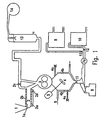
- the waste to be treated is inserted into a hopper 1, which is maintained at a controlled atmosphere, provided by a gas such as nitrogen or argon, and is further provided with a means for controlling the rate of discharge of the waste therefrom.
- Controlled, predetermined amounts of waste pass through a gate, 1a, to enter the heating chamber, 2.
- the concentrations of oxygen and/or gaseous components in the heating chamber are regulated by the gate valves, 1a.
- the amount of waste being transported through the chamber is regulated by the rotating speed of the chamber or by other transporting means such as a walking beam or conveyor belt.
- the waste falls by gravity into the shredding chamber, 3, which comprises known components such as jaw crushers, rotating shredding knives, etc.
- the size of the shredded particles vary according to the type of waste material, speed of operation and so forth.
- the shredder operates within a protected atmosphere, in which the levels of water and other liquid and gaseous components are controlled.
- the shredding rate is adjusted according to the rate of reaction in the reaction chamber,4, and in particular, according to the rate of gas generation and/or removal.
- the reaction chamber, 4, is made of a material that will withstand a chemical reaction between metals and HX solutions at temperatures up to 140°C, such as various common polymers, for example, polyamide or PVDF.
- Said reaction chamber is fitted with inlets/outlets, 4a, for the introduction of various chemicals in liquid form for the reaction and also for circulating the solution through an externally placed heat exchanger.
- a solution of 15-30% HCl, 0.1-1% H 2 O 2 , 0.05-10% HBr and 0-10 % sulfuric acid is used for the reaction with batteries.
- the reaction chamber may also be fitted with a heating or cooling jacket, 4b, where a liquid, 6, may be introduced from another external source.
- a mixing device, 5 is used to mix the solution and the shredded material in order to improve the reaction between the waste material and the HX solution.
- the mixing speed may be adjusted according to the type of reaction mixture, particle size, and other chemical and physical parameters.
- air is injected into the lower region of the reactor in order to assist in mixing the particles and to add oxygen to the reaction.
- the gases that evolve during the course of the reaction, and also the gases which were already present in the waste material, such as SO 2 will be absorbed by the solution of the reactor, or will react with said solution.
- the non-dissolved gases will then be bubbled upwards to be collected in the scrubbing system, 13, through the fan blower system, 14.
- the undissolved materials mainly plastics are discharged through a conduit, 11, at the lower end of the reaction chamber, 4, passing through liquid filter apparatus, 7, to be discharged to solid waste chamber 8.
- the liquid phase containing the metal chlorides is delivered, by means of pump, 7a, through valves 12 to various means, 9 and 10, for separating the metal halides, said means being based on known technologies such as selective precipitation, extraction, absorption and ion exchange.
- the separating means 9, and 10 also remove contaminants from the metal halides, thus permitting further processing of said metal halides into commercially-useful compositions.
- the scrap waste to be treated comprises lithium batteries having compressed SO 2 and/or SOCl 2 as an electrolyte, or electrical equipment comprising such batteries.
- the batteries may still be partly or fully charged, and contain lithium metal which may easily ignite and explode if exposed to water and air, producing hydrogen gas.
- the process of the present invention will render the batteries non-hazardous, while also permitting recovery of the valuable raw materials contained therein.
- the embodiment of the present invention related to the recovery of valuable metals from electrical equipment and/or batteries will be described with reference to figure 2.
- the batteries which are encapsulated in plastic film, but which have their metal leads exposed, are fed at a predetermined rate by a conveying system, 2d, which comprises a conveyor belt which, optionally, may be enclosed in a protected atmosphere, into the reaction chamber, 4.
- a conveying system, 2d which comprises a conveyor belt which, optionally, may be enclosed in a protected atmosphere, into the reaction chamber, 4.
- the rate of introduction of the batteries is partly determined by safety considerations (for example, as a function of the energy produced, efficiency of the venting system, hydrogen production and the maximum permissible temperature in the reaction chamber).
- the reaction chamber 4 contains a 30% HCl water solution at 50° C supplemented with 5% H 2 O 2 .
- the battery lead face which is an iron alloy, will react with the chloride solution to emit H 2, which is vented through the scrubber.
- the venting system is designed so that the flow of air and the possible H 2 production will always be at a level below the critical level for explosions to occur. Generally, H 2 concentration may not be permitted to exceed 2% of the total gas volume present in the reaction chamber, at any time.
- the chloride solution causes pitting of the battery's metal casing, and eventually will produce tiny holes.
- the SO 2 gas and/or the SOCl 2 gas contained within the batteries will be released therefrom, as evidenced by bubbling. Due to the small size of the holes the bubbles will be correspondingly small with a very large surface area. These bubbles will mix well with the hot solution and will react to form sulfuric acid.
- a battery that is fully charged will be short-circuited as soon as it contacts the solution. This may, in fact, increase the rate of reaction within the battery, the compressed SO 2 escaping from the battery explosion valve. The effect will be accommodated in the reaction chamber because of its size and also since the battery will be beneath the surface of the solution. Gaseous SO 2 will react with the water and only traces will be emitted to the surface to be vented to the scrubber (13) further to be absorbed by caustic soda. Once the compressed gas has escaped from the battery, its toxicity and hazard level is greatly reduced. The solution will seep into the battery to react slowly with the Lithium metal to produce LiCl.
- the reaction is exothermic but because of the slow rate of introduction of the solution through the tiny holes, the temperature level can be controlled. Furthermore, at fast reaction rates, there may be hot spots that may lead to an explosive effect.
- the metal components will react with the solution to produce metal chlorides such as FeCl 3 , NiCl 2 , LiCl, and CuCl 2 while the plastic parts will remain largely unreacted.
- the SO 2 absorbed in the solution will add to the acidity and may produce other salts such as CuSO 4 and FeSO 4 .
- the metal halides formed in the solution are pumped either directly from the reaction chamber, 4a, or following shredding and/or filtration, to be further treated and separated in separation modules 9 and 10, by known hydrometallurgy techniques.
- the shredder, 3, and the heating chamber, 2 are both optional, and in one preferred embodiment are located after the liquid/solid filter, 7, such that the solid material that does not pass through said filter is passed on to the shredder, 3.
- the shredded material leaving shredder, 3, passes into the heating chamber, 2. Residual solids are collected in the optional solids tank, 8, while the gaseous products of the heat treatment are removed via scrubbers, 13, clean air being evacuated by fans, 14.
- the unreacted components mainly plastics
- plastics are removed, washed to remove any chloride and further processed either by incineration, land fill or by a known plastic recovery system.
- the plastic parts are incinerated in order to produce steam for use by the plant.
- Figure 3 is a flow chart illustrating the process of the present invention and the recovery of the metals present in electrical batteries employing separation methods based on selective precipitation.
- the reaction as evidenced by the appearance of bubbling, began after 7 minutes.
- the temperature of the solution increased from an initial 21°C (ambient temperature) to 50°C after 48 minutes.
- the maximum temperature reached during the course of the reaction was 65°C.
- the color of the solution started to become yellow after 11 minutes, due to the absorption of oxides of sulfur by the solution. No explosive events were recorded.
- the solution was filtered, and the filtrate was found to contain 3.3 g of lithium.
- the lithium was recovered from the reaction solution as follows:
Landscapes
- Chemical & Material Sciences (AREA)
- Engineering & Computer Science (AREA)
- Manufacturing & Machinery (AREA)
- Life Sciences & Earth Sciences (AREA)
- Materials Engineering (AREA)
- Electrochemistry (AREA)
- Mechanical Engineering (AREA)
- Organic Chemistry (AREA)
- Chemical Kinetics & Catalysis (AREA)
- Environmental & Geological Engineering (AREA)
- General Life Sciences & Earth Sciences (AREA)
- Geology (AREA)
- General Chemical & Material Sciences (AREA)
- Metallurgy (AREA)
- Sustainable Development (AREA)
- Processing Of Solid Wastes (AREA)
- Manufacture And Refinement Of Metals (AREA)
- Treatment Of Sludge (AREA)
- Removal Of Specific Substances (AREA)
Abstract
Description
Claims (13)
- A process for recovering metals from batteries and for rendering hazardous materials present therein non-hazardous, said process comprising the steps of:a) Bringing the batteries into contact with an aqueous solution of HX, wherein X is chlorine or bromine, to form a reaction mixture, and shredding and/or crushing said batteries in said reaction mixture;b) allowing gases released from said batteries to become absorbed by said aqueous solution and removing hydrogen gas emitted from the solution by ventilating the same;c) filtering said reaction mixture to obtain a solid residual waste and a first filtrate containing watersoluble metal halides;d) recovering metals from said halides.
- A process according to claim 1, wherein the batteries are lithium batteries comprising sulfur containing gases, wherein said gases are released from said batteries to become absorbed by the aqueous solution, and wherein the metals are recovered by the following steps:treating the first filtrate containing the metal halides with an alkaline agent, to precipitate water-insoluble metal hydroxides in said first filtrate;separating said metal hydroxides from the liquid phase to obtain solid metal hydroxides and a second filtrate; andisolating lithium from said second filtrate.
- The process according to claim 1 or 2, wherein the solution of HX is a solution of HCl having a concentration in the range of 5 to 33 wt%.
- The process according to claim 3, wherein the HCl solution further comprises from 1 to 10 wt% of HBr.
- The process according to claim 1 or 2, wherein the aqueous solution of HX further comprises an oxidizing agent.
- The process according to claim 5, wherein the oxidizing agent is H2O2.
- The process according to claim 2, wherein the solid metal hydroxides comprise one or more of the following salts: Fe(OH)3, Ni(OH)2, Cd(OH)2, Co(OH)2 and Al(OH)3.
- The process according to claim 2, wherein the lithium is isolated in the form of lithium carbonate or lithium fluoride.
- An apparatus for rendering hazardous material present in multi-element waste non-hazardous and for recovering metals present in said waste, wherein said waste contains batteries, said apparatus comprising:A reaction chamber (4) for reacting the waste with an aqueous solution of HX, wherein X is chlorine or bromine;A shredder located within said reaction chamber;means for introducing the waste into said reaction chamber at a controlled rate;a scrubbing system (13) for removing gases emitted in said reaction chamber;a conduit (11) connected to the lower end of said reaction chamber;a filter (7) placed in said conduit, for separating the solid waste from the liquid phase containing the metal halides;a solid waste chamber (8);a pump (7a) for delivering said liquid phase to separation modules (9) and (10), for recovering the metals therefrom.
- The apparatus according to claim 9, wherein the means for introducing the waste into said reaction chamber at a controlled rate comprise a conveyer belt.
- The apparatus according to any one of claims 9 and 10, which further comprises a heating chamber (2).
- The apparatus according to claim 11, wherein the heating chamber (2) is provided with a valve gate (1a) for controlling the rate of transfer of the waste material into said apparatus.
- The apparatus according to any one of claims 9 to 12, wherein the waste batteries comprise lithium batteries.
Applications Claiming Priority (3)
| Application Number | Priority Date | Filing Date | Title |
|---|---|---|---|
| IL13111099A IL131110A (en) | 1999-07-26 | 1999-07-26 | High efficiency process for treating mixed metal waste |
| IL13111099 | 1999-07-26 | ||
| PCT/IL2000/000442 WO2001008245A1 (en) | 1999-07-26 | 2000-07-25 | High efficiency process for treating mixed metal waste |
Publications (2)
| Publication Number | Publication Date |
|---|---|
| EP1204998A1 EP1204998A1 (en) | 2002-05-15 |
| EP1204998B1 true EP1204998B1 (en) | 2004-11-24 |
Family
ID=11073068
Family Applications (1)
| Application Number | Title | Priority Date | Filing Date |
|---|---|---|---|
| EP00949866A Expired - Lifetime EP1204998B1 (en) | 1999-07-26 | 2000-07-25 | High efficiency process for treating mixed metal waste |
Country Status (7)
| Country | Link |
|---|---|
| US (1) | US7078122B1 (en) |
| EP (1) | EP1204998B1 (en) |
| AT (1) | ATE283551T1 (en) |
| AU (1) | AU6312000A (en) |
| DE (1) | DE60016236T2 (en) |
| IL (1) | IL131110A (en) |
| WO (1) | WO2001008245A1 (en) |
Cited By (2)
| Publication number | Priority date | Publication date | Assignee | Title |
|---|---|---|---|---|
| WO2023181079A1 (en) * | 2022-03-25 | 2023-09-28 | Metastable Materials Private Limited | System and method for shredding of lithium-ion batteries |
| WO2024191754A3 (en) * | 2023-03-10 | 2025-08-21 | Ascend Elements, Inc. | Lithium recycling |
Families Citing this family (16)
| Publication number | Priority date | Publication date | Assignee | Title |
|---|---|---|---|---|
| EP1333522A1 (en) * | 2002-02-01 | 2003-08-06 | Batrec Industrie AG | Method of and apparatus for storage and handling of objects comprising alkali metals, such as alkali metal containing batteries |
| EP1333523B1 (en) * | 2002-02-01 | 2013-09-18 | Batrec Industrie AG | Method of and apparatus for dismantling and storage of objects comprising alkali metal, such as alkali metal containing batteries |
| WO2012072619A1 (en) * | 2010-11-29 | 2012-06-07 | Umicore | Process for the recovery of lithium and iron from lfp batteries |
| WO2013084335A1 (en) | 2011-12-08 | 2013-06-13 | 住友金属鉱山株式会社 | Method for determining completion of discharging waste battery and determination device |
| US9677152B2 (en) | 2012-02-10 | 2017-06-13 | Sumitomo Metal Mining Co., Ltd. | Method for recovering lithium |
| WO2014056608A2 (en) * | 2012-10-10 | 2014-04-17 | Rockwood Lithium GmbH | Method for the hydrometallurgical recovery of lithium from the fraction of used galvanic cells containing lithium, iron and phosphate |
| DE102013016671A1 (en) * | 2012-10-10 | 2014-04-10 | Rockwood Lithium GmbH | Process for the hydrometallurgical recovery of lithium, nickel, cobalt from the lithium transition metal oxide-containing fraction of used galvanic cells |
| EP2906729B1 (en) | 2012-10-10 | 2019-04-24 | Albemarle Germany GmbH | Method for the hydrometallurgical recovery of lithium from the lithium manganese oxide-containing fraction of used galvanic cells |
| WO2017059931A1 (en) * | 2014-10-31 | 2017-04-13 | Rockwood Lithium GmbH | Method for recovering lithium from lithium-sulfur accumulators |
| DE102015206153A1 (en) * | 2015-04-07 | 2016-10-13 | Robert Bosch Gmbh | Recycling of lithium batteries |
| CN106299526B (en) * | 2016-09-19 | 2018-11-06 | 中国电子科技集团公司第十八研究所 | A kind of recycling method of strong alkali solution in waste lithium battery recycling industry |
| US20180223392A1 (en) * | 2017-02-09 | 2018-08-09 | Lixivia, Inc. | Compositions and methods for recovery of alkaline metals |
| RU2676806C1 (en) * | 2017-10-10 | 2019-01-11 | Общество с ограниченной ответственностью "ТЕХНОХИТ" | Method for recycling of waste lithium current sources |
| HUE068557T2 (en) * | 2018-08-09 | 2025-01-28 | Bromine Compounds Ltd | A process for recovering metals from recycled rechargeable batteries |
| EP4103755A1 (en) | 2020-02-12 | 2022-12-21 | Bromine Compounds Ltd. | A process for recovering metals from recycled rechargeable batteries |
| CN111261887A (en) * | 2020-04-13 | 2020-06-09 | 深圳市泰力废旧电池回收技术有限公司 | Lithium thionyl chloride battery resource recovery method |
Family Cites Families (7)
| Publication number | Priority date | Publication date | Assignee | Title |
|---|---|---|---|---|
| FI61721C (en) * | 1976-03-25 | 1982-09-10 | Lyijyvalkoistehd Groenberg Bly | SAETT ATT AOTERVINNA BLY AV BLYAVFALL |
| US4637928A (en) | 1982-08-06 | 1987-01-20 | Greatbatch Enterprises, Inc. | Method and apparatus for neutralizing reactive material such as batteries |
| AT387587B (en) * | 1986-10-31 | 1989-02-10 | Austria Metall | HYDROMETALLURGICAL METHOD FOR THE EXTRACTION OF SILVER FROM THE ANODE SLUDGE OF COPPER ELECTROLYSIS AND SIMILAR RAW MATERIALS |
| US5429887A (en) * | 1994-05-16 | 1995-07-04 | The United States Of America As Represented By The Secretary Of The Interior | Process for treating AB5 nickel-metal hydride battery scrap |
| JPH10255862A (en) | 1997-03-14 | 1998-09-25 | Toshiba Corp | Method for separating valuables from lithium ion secondary batteries |
| IL123068A (en) | 1998-01-26 | 2001-05-20 | Rosenberg Ariel | High efficiency recovery process for treatment of multi-element waste |
| JP4217292B2 (en) * | 1998-03-17 | 2009-01-28 | 株式会社東芝 | Lithium recovery method |
-
1999
- 1999-07-26 IL IL13111099A patent/IL131110A/en not_active IP Right Cessation
-
2000
- 2000-07-25 EP EP00949866A patent/EP1204998B1/en not_active Expired - Lifetime
- 2000-07-25 AT AT00949866T patent/ATE283551T1/en not_active IP Right Cessation
- 2000-07-25 US US10/048,252 patent/US7078122B1/en not_active Expired - Fee Related
- 2000-07-25 DE DE2000616236 patent/DE60016236T2/en not_active Expired - Lifetime
- 2000-07-25 WO PCT/IL2000/000442 patent/WO2001008245A1/en not_active Ceased
- 2000-07-25 AU AU63120/00A patent/AU6312000A/en not_active Abandoned
Cited By (2)
| Publication number | Priority date | Publication date | Assignee | Title |
|---|---|---|---|---|
| WO2023181079A1 (en) * | 2022-03-25 | 2023-09-28 | Metastable Materials Private Limited | System and method for shredding of lithium-ion batteries |
| WO2024191754A3 (en) * | 2023-03-10 | 2025-08-21 | Ascend Elements, Inc. | Lithium recycling |
Also Published As
| Publication number | Publication date |
|---|---|
| IL131110A0 (en) | 2001-01-28 |
| EP1204998A1 (en) | 2002-05-15 |
| IL131110A (en) | 2003-10-31 |
| AU6312000A (en) | 2001-02-13 |
| ATE283551T1 (en) | 2004-12-15 |
| US7078122B1 (en) | 2006-07-18 |
| WO2001008245A1 (en) | 2001-02-01 |
| DE60016236D1 (en) | 2004-12-30 |
| DE60016236T2 (en) | 2005-12-08 |
Similar Documents
| Publication | Publication Date | Title |
|---|---|---|
| EP1204998B1 (en) | High efficiency process for treating mixed metal waste | |
| Gulliani et al. | Recovery of metals and valuable chemicals from waste electric and electronic materials: a critical review of existing technologies | |
| KR102334865B1 (en) | Batch processing system for waste lithium secondary battery | |
| Zheng et al. | A mini-review on metal recycling from spent lithium ion batteries | |
| CN114174544B (en) | A method for recycling lithium batteries | |
| US20110274598A1 (en) | Sustainable recovery of metal compounds | |
| US10953444B2 (en) | Process for the recycling of waste batteries and waste printed circuit boards in molten salts or molten metals | |
| AU2025100019A4 (en) | Process for recovering values from batteries | |
| CN115621596A (en) | Method for recycling lithium batteries | |
| JP2003243051A (en) | Method and apparatus for dismantling and storing an object containing an alkali metal such as an alkali metal-containing battery | |
| WO2011056548A2 (en) | Oxygen torch waste reclamation system and acid recovery | |
| CN111684634B (en) | Method for producing micronutrients from spent alkaline batteries | |
| KR20240026491A (en) | Battery material recycling process through hydrometallurgical processing method | |
| GB2522860A (en) | Process for the recycling of waste batteries and waste printed circuit boards in molten salts or molten metals | |
| JPH07507960A (en) | How to decontaminate soil contaminated with metals | |
| CN116706302A (en) | Lithium battery recycling method | |
| CN110576028A (en) | Novel aluminum alloy electrolytic overhaul slag hazardous waste treatment process | |
| WO2021201151A1 (en) | Method for deactivating lithium ion secondary battery | |
| US20120274008A1 (en) | Oxygen torch reclamation of metals with nitric acid recovery | |
| US5523516A (en) | Method for recycling lithium batteries | |
| CN1357938A (en) | Comprehensive recovery and utilization method of waste NiCd battery | |
| Paul et al. | Sustainable lithium and cobalt recovery from spent lithium-ion batteries: best practices for the future. A review | |
| CN107364880B (en) | Method and system for recycling fluorine from electrolytic aluminum waste slot liners | |
| JP2023124857A (en) | Method for deactivating lithium ion secondary battery | |
| RU2734205C1 (en) | Method of utilizing used chemical sources of current of manganese-zinc system |
Legal Events
| Date | Code | Title | Description |
|---|---|---|---|
| PUAI | Public reference made under article 153(3) epc to a published international application that has entered the european phase |
Free format text: ORIGINAL CODE: 0009012 |
|
| 17P | Request for examination filed |
Effective date: 20020225 |
|
| AK | Designated contracting states |
Kind code of ref document: A1 Designated state(s): AT BE CH CY DE DK ES FI FR GB GR IE IT LI LU MC NL PT SE |
|
| AX | Request for extension of the european patent |
Free format text: AL;LT;LV;MK;RO;SI |
|
| 17Q | First examination report despatched |
Effective date: 20020702 |
|
| GRAP | Despatch of communication of intention to grant a patent |
Free format text: ORIGINAL CODE: EPIDOSNIGR1 |
|
| GRAS | Grant fee paid |
Free format text: ORIGINAL CODE: EPIDOSNIGR3 |
|
| GRAA | (expected) grant |
Free format text: ORIGINAL CODE: 0009210 |
|
| AK | Designated contracting states |
Kind code of ref document: B1 Designated state(s): AT BE CH CY DE DK ES FI FR GB GR IE IT LI LU MC NL PT SE |
|
| PG25 | Lapsed in a contracting state [announced via postgrant information from national office to epo] |
Ref country code: AT Free format text: LAPSE BECAUSE OF FAILURE TO SUBMIT A TRANSLATION OF THE DESCRIPTION OR TO PAY THE FEE WITHIN THE PRESCRIBED TIME-LIMIT Effective date: 20041124 Ref country code: IT Free format text: LAPSE BECAUSE OF FAILURE TO SUBMIT A TRANSLATION OF THE DESCRIPTION OR TO PAY THE FEE WITHIN THE PRESCRIBED TIME-LIMIT;WARNING: LAPSES OF ITALIAN PATENTS WITH EFFECTIVE DATE BEFORE 2007 MAY HAVE OCCURRED AT ANY TIME BEFORE 2007. THE CORRECT EFFECTIVE DATE MAY BE DIFFERENT FROM THE ONE RECORDED. Effective date: 20041124 Ref country code: BE Free format text: LAPSE BECAUSE OF FAILURE TO SUBMIT A TRANSLATION OF THE DESCRIPTION OR TO PAY THE FEE WITHIN THE PRESCRIBED TIME-LIMIT Effective date: 20041124 Ref country code: FI Free format text: LAPSE BECAUSE OF FAILURE TO SUBMIT A TRANSLATION OF THE DESCRIPTION OR TO PAY THE FEE WITHIN THE PRESCRIBED TIME-LIMIT Effective date: 20041124 Ref country code: NL Free format text: LAPSE BECAUSE OF FAILURE TO SUBMIT A TRANSLATION OF THE DESCRIPTION OR TO PAY THE FEE WITHIN THE PRESCRIBED TIME-LIMIT Effective date: 20041124 Ref country code: ES Free format text: LAPSE BECAUSE OF FAILURE TO SUBMIT A TRANSLATION OF THE DESCRIPTION OR TO PAY THE FEE WITHIN THE PRESCRIBED TIME-LIMIT Effective date: 20041124 Ref country code: FR Free format text: LAPSE BECAUSE OF FAILURE TO SUBMIT A TRANSLATION OF THE DESCRIPTION OR TO PAY THE FEE WITHIN THE PRESCRIBED TIME-LIMIT Effective date: 20041124 |
|
| REG | Reference to a national code |
Ref country code: GB Ref legal event code: FG4D |
|
| REG | Reference to a national code |
Ref country code: CH Ref legal event code: EP |
|
| REF | Corresponds to: |
Ref document number: 60016236 Country of ref document: DE Date of ref document: 20041230 Kind code of ref document: P |
|
| REG | Reference to a national code |
Ref country code: IE Ref legal event code: FG4D |
|
| PG25 | Lapsed in a contracting state [announced via postgrant information from national office to epo] |
Ref country code: SE Free format text: LAPSE BECAUSE OF FAILURE TO SUBMIT A TRANSLATION OF THE DESCRIPTION OR TO PAY THE FEE WITHIN THE PRESCRIBED TIME-LIMIT Effective date: 20050224 Ref country code: DK Free format text: LAPSE BECAUSE OF FAILURE TO SUBMIT A TRANSLATION OF THE DESCRIPTION OR TO PAY THE FEE WITHIN THE PRESCRIBED TIME-LIMIT Effective date: 20050224 Ref country code: GR Free format text: LAPSE BECAUSE OF FAILURE TO SUBMIT A TRANSLATION OF THE DESCRIPTION OR TO PAY THE FEE WITHIN THE PRESCRIBED TIME-LIMIT Effective date: 20050224 |
|
| REG | Reference to a national code |
Ref country code: CH Ref legal event code: NV Representative=s name: N&G PATENT SERVICES SA |
|
| NLV1 | Nl: lapsed or annulled due to failure to fulfill the requirements of art. 29p and 29m of the patents act | ||
| PG25 | Lapsed in a contracting state [announced via postgrant information from national office to epo] |
Ref country code: CY Free format text: LAPSE BECAUSE OF FAILURE TO SUBMIT A TRANSLATION OF THE DESCRIPTION OR TO PAY THE FEE WITHIN THE PRESCRIBED TIME-LIMIT Effective date: 20050725 Ref country code: IE Free format text: LAPSE BECAUSE OF NON-PAYMENT OF DUE FEES Effective date: 20050725 Ref country code: LU Free format text: LAPSE BECAUSE OF NON-PAYMENT OF DUE FEES Effective date: 20050725 |
|
| PG25 | Lapsed in a contracting state [announced via postgrant information from national office to epo] |
Ref country code: MC Free format text: LAPSE BECAUSE OF NON-PAYMENT OF DUE FEES Effective date: 20050731 |
|
| PLBE | No opposition filed within time limit |
Free format text: ORIGINAL CODE: 0009261 |
|
| STAA | Information on the status of an ep patent application or granted ep patent |
Free format text: STATUS: NO OPPOSITION FILED WITHIN TIME LIMIT |
|
| 26N | No opposition filed |
Effective date: 20050825 |
|
| EN | Fr: translation not filed | ||
| REG | Reference to a national code |
Ref country code: IE Ref legal event code: MM4A |
|
| PG25 | Lapsed in a contracting state [announced via postgrant information from national office to epo] |
Ref country code: PT Free format text: LAPSE BECAUSE OF NON-PAYMENT OF DUE FEES Effective date: 20050424 |
|
| REG | Reference to a national code |
Ref country code: CH Ref legal event code: PUE Owner name: METAL-TECH LTD. Free format text: ROSENBERG, ARIEL#HAZAV STREET 7#OMER 84965 (IL) -TRANSFER TO- METAL-TECH LTD.#RAMAT HOVAV INDUSTRIAL ZONE P.O. BOX 2412#84874 BEER-SHEVA (IL) |
|
| REG | Reference to a national code |
Ref country code: GB Ref legal event code: 732E Free format text: REGISTERED BETWEEN 20090820 AND 20090826 |
|
| PGFP | Annual fee paid to national office [announced via postgrant information from national office to epo] |
Ref country code: CH Payment date: 20110719 Year of fee payment: 12 |
|
| PGFP | Annual fee paid to national office [announced via postgrant information from national office to epo] |
Ref country code: GB Payment date: 20120719 Year of fee payment: 13 |
|
| PGFP | Annual fee paid to national office [announced via postgrant information from national office to epo] |
Ref country code: DE Payment date: 20120720 Year of fee payment: 13 |
|
| REG | Reference to a national code |
Ref country code: CH Ref legal event code: PL |
|
| GBPC | Gb: european patent ceased through non-payment of renewal fee |
Effective date: 20130725 |
|
| PG25 | Lapsed in a contracting state [announced via postgrant information from national office to epo] |
Ref country code: GB Free format text: LAPSE BECAUSE OF NON-PAYMENT OF DUE FEES Effective date: 20130725 Ref country code: LI Free format text: LAPSE BECAUSE OF NON-PAYMENT OF DUE FEES Effective date: 20130731 Ref country code: DE Free format text: LAPSE BECAUSE OF NON-PAYMENT OF DUE FEES Effective date: 20140201 Ref country code: CH Free format text: LAPSE BECAUSE OF NON-PAYMENT OF DUE FEES Effective date: 20130731 |
|
| REG | Reference to a national code |
Ref country code: DE Ref legal event code: R119 Ref document number: 60016236 Country of ref document: DE Effective date: 20140201 |