EP1204665B1 - Chemokine receptor antagonists and methods of use therefor - Google Patents
Chemokine receptor antagonists and methods of use therefor Download PDFInfo
- Publication number
- EP1204665B1 EP1204665B1 EP00950880A EP00950880A EP1204665B1 EP 1204665 B1 EP1204665 B1 EP 1204665B1 EP 00950880 A EP00950880 A EP 00950880A EP 00950880 A EP00950880 A EP 00950880A EP 1204665 B1 EP1204665 B1 EP 1204665B1
- Authority
- EP
- European Patent Office
- Prior art keywords
- group
- substituted
- aromatic
- aliphatic
- aliphatic group
- Prior art date
- Legal status (The legal status is an assumption and is not a legal conclusion. Google has not performed a legal analysis and makes no representation as to the accuracy of the status listed.)
- Expired - Lifetime
Links
- 0 CCNC(*C)C#CC(C1CC2C(C3CCC(CCC4C5C4)CCC(C4)C4C5C4*CC(C*)CC4)C=CCC2C)C1C(CC1)*C3C=C1C1C(C)C1 Chemical compound CCNC(*C)C#CC(C1CC2C(C3CCC(CCC4C5C4)CCC(C4)C4C5C4*CC(C*)CC4)C=CCC2C)C1C(CC1)*C3C=C1C1C(C)C1 0.000 description 10
- FCCAPJHSMBGFGY-UHFFFAOYSA-N CC(OC(C)=O)OC(OC1CCCCC1)=O Chemical compound CC(OC(C)=O)OC(OC1CCCCC1)=O FCCAPJHSMBGFGY-UHFFFAOYSA-N 0.000 description 1
Images


Classifications
-
- C—CHEMISTRY; METALLURGY
- C07—ORGANIC CHEMISTRY
- C07D—HETEROCYCLIC COMPOUNDS
- C07D401/00—Heterocyclic compounds containing two or more hetero rings, having nitrogen atoms as the only ring hetero atoms, at least one ring being a six-membered ring with only one nitrogen atom
- C07D401/02—Heterocyclic compounds containing two or more hetero rings, having nitrogen atoms as the only ring hetero atoms, at least one ring being a six-membered ring with only one nitrogen atom containing two hetero rings
- C07D401/06—Heterocyclic compounds containing two or more hetero rings, having nitrogen atoms as the only ring hetero atoms, at least one ring being a six-membered ring with only one nitrogen atom containing two hetero rings linked by a carbon chain containing only aliphatic carbon atoms
-
- A—HUMAN NECESSITIES
- A61—MEDICAL OR VETERINARY SCIENCE; HYGIENE
- A61K—PREPARATIONS FOR MEDICAL, DENTAL OR TOILETRY PURPOSES
- A61K31/00—Medicinal preparations containing organic active ingredients
- A61K31/33—Heterocyclic compounds
- A61K31/395—Heterocyclic compounds having nitrogen as a ring hetero atom, e.g. guanethidine or rifamycins
- A61K31/55—Heterocyclic compounds having nitrogen as a ring hetero atom, e.g. guanethidine or rifamycins having seven-membered rings, e.g. azelastine, pentylenetetrazole
-
- A—HUMAN NECESSITIES
- A61—MEDICAL OR VETERINARY SCIENCE; HYGIENE
- A61P—SPECIFIC THERAPEUTIC ACTIVITY OF CHEMICAL COMPOUNDS OR MEDICINAL PREPARATIONS
- A61P1/00—Drugs for disorders of the alimentary tract or the digestive system
- A61P1/04—Drugs for disorders of the alimentary tract or the digestive system for ulcers, gastritis or reflux esophagitis, e.g. antacids, inhibitors of acid secretion, mucosal protectants
-
- A—HUMAN NECESSITIES
- A61—MEDICAL OR VETERINARY SCIENCE; HYGIENE
- A61P—SPECIFIC THERAPEUTIC ACTIVITY OF CHEMICAL COMPOUNDS OR MEDICINAL PREPARATIONS
- A61P11/00—Drugs for disorders of the respiratory system
- A61P11/06—Antiasthmatics
-
- A—HUMAN NECESSITIES
- A61—MEDICAL OR VETERINARY SCIENCE; HYGIENE
- A61P—SPECIFIC THERAPEUTIC ACTIVITY OF CHEMICAL COMPOUNDS OR MEDICINAL PREPARATIONS
- A61P17/00—Drugs for dermatological disorders
- A61P17/06—Antipsoriatics
-
- A—HUMAN NECESSITIES
- A61—MEDICAL OR VETERINARY SCIENCE; HYGIENE
- A61P—SPECIFIC THERAPEUTIC ACTIVITY OF CHEMICAL COMPOUNDS OR MEDICINAL PREPARATIONS
- A61P19/00—Drugs for skeletal disorders
- A61P19/02—Drugs for skeletal disorders for joint disorders, e.g. arthritis, arthrosis
-
- A—HUMAN NECESSITIES
- A61—MEDICAL OR VETERINARY SCIENCE; HYGIENE
- A61P—SPECIFIC THERAPEUTIC ACTIVITY OF CHEMICAL COMPOUNDS OR MEDICINAL PREPARATIONS
- A61P25/00—Drugs for disorders of the nervous system
- A61P25/28—Drugs for disorders of the nervous system for treating neurodegenerative disorders of the central nervous system, e.g. nootropic agents, cognition enhancers, drugs for treating Alzheimer's disease or other forms of dementia
-
- A—HUMAN NECESSITIES
- A61—MEDICAL OR VETERINARY SCIENCE; HYGIENE
- A61P—SPECIFIC THERAPEUTIC ACTIVITY OF CHEMICAL COMPOUNDS OR MEDICINAL PREPARATIONS
- A61P29/00—Non-central analgesic, antipyretic or antiinflammatory agents, e.g. antirheumatic agents; Non-steroidal antiinflammatory drugs [NSAID]
-
- A—HUMAN NECESSITIES
- A61—MEDICAL OR VETERINARY SCIENCE; HYGIENE
- A61P—SPECIFIC THERAPEUTIC ACTIVITY OF CHEMICAL COMPOUNDS OR MEDICINAL PREPARATIONS
- A61P3/00—Drugs for disorders of the metabolism
- A61P3/08—Drugs for disorders of the metabolism for glucose homeostasis
- A61P3/10—Drugs for disorders of the metabolism for glucose homeostasis for hyperglycaemia, e.g. antidiabetics
-
- A—HUMAN NECESSITIES
- A61—MEDICAL OR VETERINARY SCIENCE; HYGIENE
- A61P—SPECIFIC THERAPEUTIC ACTIVITY OF CHEMICAL COMPOUNDS OR MEDICINAL PREPARATIONS
- A61P31/00—Antiinfectives, i.e. antibiotics, antiseptics, chemotherapeutics
- A61P31/12—Antivirals
- A61P31/14—Antivirals for RNA viruses
- A61P31/18—Antivirals for RNA viruses for HIV
-
- A—HUMAN NECESSITIES
- A61—MEDICAL OR VETERINARY SCIENCE; HYGIENE
- A61P—SPECIFIC THERAPEUTIC ACTIVITY OF CHEMICAL COMPOUNDS OR MEDICINAL PREPARATIONS
- A61P37/00—Drugs for immunological or allergic disorders
-
- A—HUMAN NECESSITIES
- A61—MEDICAL OR VETERINARY SCIENCE; HYGIENE
- A61P—SPECIFIC THERAPEUTIC ACTIVITY OF CHEMICAL COMPOUNDS OR MEDICINAL PREPARATIONS
- A61P37/00—Drugs for immunological or allergic disorders
- A61P37/02—Immunomodulators
- A61P37/06—Immunosuppressants, e.g. drugs for graft rejection
-
- A—HUMAN NECESSITIES
- A61—MEDICAL OR VETERINARY SCIENCE; HYGIENE
- A61P—SPECIFIC THERAPEUTIC ACTIVITY OF CHEMICAL COMPOUNDS OR MEDICINAL PREPARATIONS
- A61P37/00—Drugs for immunological or allergic disorders
- A61P37/08—Antiallergic agents
-
- A—HUMAN NECESSITIES
- A61—MEDICAL OR VETERINARY SCIENCE; HYGIENE
- A61P—SPECIFIC THERAPEUTIC ACTIVITY OF CHEMICAL COMPOUNDS OR MEDICINAL PREPARATIONS
- A61P43/00—Drugs for specific purposes, not provided for in groups A61P1/00-A61P41/00
-
- A—HUMAN NECESSITIES
- A61—MEDICAL OR VETERINARY SCIENCE; HYGIENE
- A61P—SPECIFIC THERAPEUTIC ACTIVITY OF CHEMICAL COMPOUNDS OR MEDICINAL PREPARATIONS
- A61P7/00—Drugs for disorders of the blood or the extracellular fluid
-
- A—HUMAN NECESSITIES
- A61—MEDICAL OR VETERINARY SCIENCE; HYGIENE
- A61P—SPECIFIC THERAPEUTIC ACTIVITY OF CHEMICAL COMPOUNDS OR MEDICINAL PREPARATIONS
- A61P9/00—Drugs for disorders of the cardiovascular system
- A61P9/10—Drugs for disorders of the cardiovascular system for treating ischaemic or atherosclerotic diseases, e.g. antianginal drugs, coronary vasodilators, drugs for myocardial infarction, retinopathy, cerebrovascula insufficiency, renal arteriosclerosis
-
- C—CHEMISTRY; METALLURGY
- C07—ORGANIC CHEMISTRY
- C07D—HETEROCYCLIC COMPOUNDS
- C07D211/00—Heterocyclic compounds containing hydrogenated pyridine rings, not condensed with other rings
- C07D211/04—Heterocyclic compounds containing hydrogenated pyridine rings, not condensed with other rings with only hydrogen or carbon atoms directly attached to the ring nitrogen atom
- C07D211/06—Heterocyclic compounds containing hydrogenated pyridine rings, not condensed with other rings with only hydrogen or carbon atoms directly attached to the ring nitrogen atom having no double bonds between ring members or between ring members and non-ring members
- C07D211/36—Heterocyclic compounds containing hydrogenated pyridine rings, not condensed with other rings with only hydrogen or carbon atoms directly attached to the ring nitrogen atom having no double bonds between ring members or between ring members and non-ring members with hetero atoms or with carbon atoms having three bonds to hetero atoms with at the most one bond to halogen, e.g. ester or nitrile radicals, directly attached to ring carbon atoms
- C07D211/40—Oxygen atoms
- C07D211/44—Oxygen atoms attached in position 4
- C07D211/46—Oxygen atoms attached in position 4 having a hydrogen atom as the second substituent in position 4
-
- C—CHEMISTRY; METALLURGY
- C07—ORGANIC CHEMISTRY
- C07D—HETEROCYCLIC COMPOUNDS
- C07D211/00—Heterocyclic compounds containing hydrogenated pyridine rings, not condensed with other rings
- C07D211/04—Heterocyclic compounds containing hydrogenated pyridine rings, not condensed with other rings with only hydrogen or carbon atoms directly attached to the ring nitrogen atom
- C07D211/06—Heterocyclic compounds containing hydrogenated pyridine rings, not condensed with other rings with only hydrogen or carbon atoms directly attached to the ring nitrogen atom having no double bonds between ring members or between ring members and non-ring members
- C07D211/36—Heterocyclic compounds containing hydrogenated pyridine rings, not condensed with other rings with only hydrogen or carbon atoms directly attached to the ring nitrogen atom having no double bonds between ring members or between ring members and non-ring members with hetero atoms or with carbon atoms having three bonds to hetero atoms with at the most one bond to halogen, e.g. ester or nitrile radicals, directly attached to ring carbon atoms
- C07D211/40—Oxygen atoms
- C07D211/44—Oxygen atoms attached in position 4
- C07D211/52—Oxygen atoms attached in position 4 having an aryl radical as the second substituent in position 4
-
- C—CHEMISTRY; METALLURGY
- C07—ORGANIC CHEMISTRY
- C07D—HETEROCYCLIC COMPOUNDS
- C07D313/00—Heterocyclic compounds containing rings of more than six members having one oxygen atom as the only ring hetero atom
- C07D313/02—Seven-membered rings
- C07D313/06—Seven-membered rings condensed with carbocyclic rings or ring systems
- C07D313/10—Seven-membered rings condensed with carbocyclic rings or ring systems condensed with two six-membered rings
- C07D313/12—[b,e]-condensed
-
- C—CHEMISTRY; METALLURGY
- C07—ORGANIC CHEMISTRY
- C07D—HETEROCYCLIC COMPOUNDS
- C07D405/00—Heterocyclic compounds containing both one or more hetero rings having oxygen atoms as the only ring hetero atoms, and one or more rings having nitrogen as the only ring hetero atom
- C07D405/02—Heterocyclic compounds containing both one or more hetero rings having oxygen atoms as the only ring hetero atoms, and one or more rings having nitrogen as the only ring hetero atom containing two hetero rings
- C07D405/06—Heterocyclic compounds containing both one or more hetero rings having oxygen atoms as the only ring hetero atoms, and one or more rings having nitrogen as the only ring hetero atom containing two hetero rings linked by a carbon chain containing only aliphatic carbon atoms
-
- C—CHEMISTRY; METALLURGY
- C07—ORGANIC CHEMISTRY
- C07D—HETEROCYCLIC COMPOUNDS
- C07D409/00—Heterocyclic compounds containing two or more hetero rings, at least one ring having sulfur atoms as the only ring hetero atoms
- C07D409/02—Heterocyclic compounds containing two or more hetero rings, at least one ring having sulfur atoms as the only ring hetero atoms containing two hetero rings
- C07D409/06—Heterocyclic compounds containing two or more hetero rings, at least one ring having sulfur atoms as the only ring hetero atoms containing two hetero rings linked by a carbon chain containing only aliphatic carbon atoms
-
- C—CHEMISTRY; METALLURGY
- C07—ORGANIC CHEMISTRY
- C07D—HETEROCYCLIC COMPOUNDS
- C07D471/00—Heterocyclic compounds containing nitrogen atoms as the only ring hetero atoms in the condensed system, at least one ring being a six-membered ring with one nitrogen atom, not provided for by groups C07D451/00 - C07D463/00
- C07D471/02—Heterocyclic compounds containing nitrogen atoms as the only ring hetero atoms in the condensed system, at least one ring being a six-membered ring with one nitrogen atom, not provided for by groups C07D451/00 - C07D463/00 in which the condensed system contains two hetero rings
- C07D471/04—Ortho-condensed systems
-
- C—CHEMISTRY; METALLURGY
- C07—ORGANIC CHEMISTRY
- C07D—HETEROCYCLIC COMPOUNDS
- C07D491/00—Heterocyclic compounds containing in the condensed ring system both one or more rings having oxygen atoms as the only ring hetero atoms and one or more rings having nitrogen atoms as the only ring hetero atoms, not provided for by groups C07D451/00 - C07D459/00, C07D463/00, C07D477/00 or C07D489/00
- C07D491/02—Heterocyclic compounds containing in the condensed ring system both one or more rings having oxygen atoms as the only ring hetero atoms and one or more rings having nitrogen atoms as the only ring hetero atoms, not provided for by groups C07D451/00 - C07D459/00, C07D463/00, C07D477/00 or C07D489/00 in which the condensed system contains two hetero rings
- C07D491/04—Ortho-condensed systems
-
- C—CHEMISTRY; METALLURGY
- C07—ORGANIC CHEMISTRY
- C07D—HETEROCYCLIC COMPOUNDS
- C07D495/00—Heterocyclic compounds containing in the condensed system at least one hetero ring having sulfur atoms as the only ring hetero atoms
- C07D495/02—Heterocyclic compounds containing in the condensed system at least one hetero ring having sulfur atoms as the only ring hetero atoms in which the condensed system contains two hetero rings
- C07D495/04—Ortho-condensed systems
Definitions
- Chemoattractant cytokines or chemokines are a family of proinflammatory mediators that promote recruitment and activation of multiple lineages of leukocytes and lymphocytes. They can be released by many kinds of tissue cells after activation. Continuous release of chemokines at sites of inflammation mediates the ongoing migration of effector cells in chronic inflammation.
- the chemokines characterized to date are related in primary structure. They share four conserved cysteines, which form disulfide bonds.
- the family is divided into two main branches, designated as the C-X-C chemokines ( ⁇ -chemokines), and the C-C chemokines ( ⁇ -chemokines), in which the first two conserved cysteines are separated by an intervening residue, or adjacent respectively ( Baggiolini, M. and Dahinden, C. A., Immunology Today, 15:127-133 (1999 )).
- the C-X-C chemokines include a number of portent chemoattractants and activators of neutrophils, such as interleukin 8 (IL-8), PF4 and neutrophil-activating peptide-2 (NAP-2).
- the C-C chemokines include RANTES (Regulated on Activation, Normal T Expressed and Secreted), the macrophage inflammatory proteins 1 ⁇ and 1 ⁇ (MIP-1 ⁇ and MIP-1 ⁇ ), eotaxin and human monocyte chemotactic proteins 1-3 (MCP-1, MCP-2, MCP-3), which have been characterized as chemoattractants and activators of monocytes or lymphocytes but do not appear as RANTES and MIP-1 ⁇ , have been implicated in a wide range of human acute and chronic inflammatory diseases including respiratory diseases, such as asthma and allergic disorders.
- the chemokine receptors are members of a superfamily of G protein-coupled receptors (GPCR) which share structural features that reflect a common mechanism of action of signal transduction ( Gerard, C. and Gerard, N.P., Annu Rev. Immunol., 12:775-808 (1994 ); Gerard, C. and Gerard, N. P., Curr. Opin. Immunol., 6:140-145 (1994 )).
- GPCR G protein-coupled receptors
- conserveed features include seven hydrophobic domains spanning the plasma membrane, which are connected by hydrophilic extracellular and intracellular loops. The majority of the primary sequence homology occurs in the hydrophobic transmembrane regions with the hydrophilic regions being more diverse.
- C-C chemokine receptor 1 also referred to as CCR-1; Neote, K., et al., Cell, 72: 415-425 (1993 ); Horuk, R. et al., WO 94/11504, May 26, 1994 ; Gao, J. -I. et al., J. Exp. Med., 177:1421-1427 (1993 )).
- CCR3 mediates binding and signaling of chemokines including eotaxin, RANTES, and MCP-3 ( Ponath et al., J. Exp. Med., 183:2437 (1996 ))
- CCR4 binds chemokines including RANTES, MIP-1 ⁇ , and MCP-1
- CCR5 binds chemokines including MIP-1 ⁇ , RANTES, and MIP-1 ⁇ ( Samson, et al., Biochem. 35: 3362-3367 (1996 )).
- RANTES is a chemotactic chemokine for a variety of cell types, including monocytes, eosinophils, and a subset of T-cells.
- the responses of these different cells may not all be mediated by the same receptor, and it is possible that the receptors CCR1, CCR4 and CCR5 will show some selectivity in receptor distribution and function between leukocyte types, as has already been shown for CCR3 (Ponath et al. ).
- the ability of RANTES to induce the directed migration of monocytes and a memory population of circulating T-cells Schall, T.
- An antagonist of chemokine receptor function is a molecule which can inhibit the binding and/or activation of one or more chemokines, including C-C chemokines such as RANTES, MIP-1 ⁇ , MCP-2., MCP-3 and MCP-4 to one or more chemokine receptors on leukocytes and/or other cell types.
- C-C chemokines such as RANTES, MIP-1 ⁇ , MCP-2., MCP-3 and MCP-4
- the molecules can be used in the treatment of a disease associated with aberrant leukocyte recruitment and/or activation and also in the treatment of a disease mediated by chemokine receptor function.
- the compounds of the invention can be administered to a subject in need an effective amount of a compound or small organic molecule which is an antagonist of chemokine receptor function.
- Compounds or small organic molecules which have been identified as antagonists of chemokine receptor function are discussed in detail hereinbelow, and can be used for the manufacture of a medicament for treating or for preventing a disease associated with aberrant leukocyte recruitment and/or activation.
- the invention also relates to the disclosed compounds and small organic molecules for use in treating or preventing a disease associated with aberrant leukocyte recruitment and/or activation.
- the invention also includes pharmaceutical compositions comprising one or more of the compounds or small organic molecules which have been identified herein as antagonists of chemokine function and a suitable pharmaceutical carrier.
- the invention further relates to novel compounds which can be used to treat an individual with a disease associated with aberrant leukocyte recruitment and/or activation and methods for their preparation.
- a compound of the invention for use in a method of treatment of the human or animal body by therapy.
- a compound of the invention for use in the treatment of a disease associated with aberrant leukocyte recruitment and/or activation is provided.
- a compound of the invention for use in the treatment of a chronic inflammatory disease is provided.
- a compound of the invention for use in the treatment of rheumatoid arthritis is provided.
- a compound of the invention for use in the treatment of multiple sclerosis is provided.
- the present invention also provides the use of a compound of the invention in the manufacture of a medicament for the treatment of a disease associated with aberrant leukocyte recruitment and/or activation.
- the present invention further provides the use of a compound of the invention in the manufacture of a medicament for the treatment of a chronic inflammatory disease.
- the present invention additionally provides the use of a compound of the invention in the manufacture of a medicament for the treatment of rheumatoid arthritis.
- the present invention also provides the use of a compound of the invention in the manufacture of a medicament for the treatment of multiple sclerosis.
- the present invention relates to small molecule compounds which are modulators of chemokine receptor function.
- the small molecule compounds are antagonists of chemokine receptor function. Accordingly, processes or cellular responses mediated by the binding of a chemokine to a receptor can be inhibited (reduced or prevented, in whole or in part), including leukocyte migration, integrin activation, transient increases in the concentration of intracellular free calcium [Ca ++ ] i , and/or granule release of proinflammatory mediators.
- the invention further relates to the use of the compounds of the invention in the manufacture of a medicament for treatment, including prophylactic and therapeutic treatments, of a disease associated with aberrant leukocyte recruitment and/or activation or mediated by chemokines or chemokine receptor function, including chronic inflammatory disorders characterized by the presence of RANTES, MIP-1 ⁇ , MCP-2, MCP-3 and/or MCP-4 responsive T cells, monocytes and/or eosinophils, including but not limited to diseases such as arthritis (e.g., rheumatoid arthritis), atherosclerosis, arteriosclerosis, restenosis, ischemia/reperfusion injury, diabetes mellitus (e.g., type 1 diabetes mellitus), psoriasis, multiple sclerosis, inflammatory bowel diseases such as ulcerative colitis and Crohn's disease, rejection of transplanted organs and tissues (i.e., acute allograft rejection, chronic allograft rejection), graft versus host disease, as well as
- HIV Human Immunodeficiency Virus
- the method comprises administering to the subject in need of treatment an effective amount of a compound (i.e., one or more compounds) which inhibits chemokine receptor function, inhibits the binding of a chemokine to leukocytes and/or other cell types, and/or which inhibits leukocyte migration to, and/or activation at, sites of inflammation.
- a compound i.e., one or more compounds which inhibits chemokine receptor function, inhibits the binding of a chemokine to leukocytes and/or other cell types, and/or which inhibits leukocyte migration to, and/or activation at, sites of inflammation.
- the invention further relates use of a compound of the invention in the manufacture of a medicament for antagonizing a chemokine receptor, such as CCR1.
- a medicament for antagonizing a chemokine receptor such as CCR1.
- mammal such a medicament can be administered to a as described herein.
- pro-inflammatory cells includes but is not limited to leukocytes, since chemokine receptors can be expressed on other cell types, such as neurons and epithelial cells.
- compounds of the invention are antagonists of the chemokine receptor CCR1, and that therapeutic benefits derived from the method of the invention are the result of antagonism of CCR1 function.
- the compounds of the invention can be used to treat a medical condition involving cells which express CCR1 on their surface and which respond to signals transduced through CCR1, as well as the specific conditions recited above.
- the present invention provides a tertiary amine of the following formula: wherein:
- q 1 and q 2 are each one.
- M is >CR 1 R 2
- R 2 is a substituted aromatic group, such as
- R 2 is 4-chlorophenyl.
- R 1 is an alkylamino group selected from the group consisting of aminomethyl, 2-aminoethyl, 3-aminopropyl, 4-aminobutyl, dimethylaminoethyl, diethylaminomethyl, methylaminohexyl and aminoethylenyl.
- R' is a substituted linear, branched or cyclic C 1 -C 20 alkyl, alkenyl or alkynyl group.
- the present invention also provides a tertiary amine of the following formula: wherein:
- q 1 and q 2 are each one.
- M is >CR 1 R 2
- R 1 is -OH.
- the present invention provides a tertiary amine of the following formula: wherein:
- q 1 and q 2 are each one.
- R 1 is -OH and R 2 is a substituted aromatic group, such as
- the present invention provides a tertiary amine of the following formula: wherein:
- M is >CR 1 R 2 .
- R 1 is -OH and R 2 is a substituted aromatic group, such as
- the present invention provides a tertiary amino of the following formula: wherein:
- the present invention provides a tertiary amino of the following formula: wherein:
- Z is: wherein:
- ring B is substituted para to the carbon atom of ring B that is bonded to X 1 in ring C, such that Z is: wherein:
- ring B is substituted para to the carbon atom of ring B that is bonded to X 1 in ring C, such that Z is: wherein:
- q 1 and q 2 are each one.
- M is >CR 1 R 2 .
- R 1 is -OH and R 2 is a substituted aromatic group, such as
- X 1 is -CH 2 -O-
- the present invention also provides a tertiary amine of the following formula: wherein:
- Z is a cycloalkyl or non-aromatic heterocyclic ring group fused to a phenyl and a pyridyl ring of two phenyl rings, wherein each ring in Z is independently substituted or unsubstituted.
- n is an integer, such as an integer from one to four. Preferably, n is one, two or three. More preferably n is two. In alternative embodiments, other aliphatic or aromatic spacer groups (L) can be employed for (CH 2 ) n .
- M is >NR 2 or >CR 1 R 2 .
- M is preferably >C(OH)R 2 .
- R 1 is -H, -OH, -N 3 , a halogen, an aliphatic group, a substituted aliphatic group, an aminoalkyl group, -O-(aliphatic group), -O-(substituted aliphatic group), -SH, -S-(aliphatic group), -S-(substituted aliphatic group), -OC(O)-(aliphatic group), -O-C(O)-(substituted aliphatic group), -C(O)O-(aliphatic group), -C(O)O-(aliphatic group), -C(O)O-(substituted aliphatic group), -COOH, -CN, -CO-NR 3 R 4 , -NR 3 R 4 ; or R 1 can be a covalent bond between the ring atom at M and an adjacent carbon atom in the ring which contains M.
- R 1 is preferably -H
- R 2 is , -OH, an acyl group, a substituted acyl group, -NR 5 R 6 , an aliphatic group, a substituted aliphatic group, an aromatic group, a substituted aromatic group, a benzyl group, a substituted benzyl group, a non-aromatic heterocyclic group, a substituted non-aromatic heterocyclic group, -O-(substituted or unsubstituted aromatic group) or -O-(substituted or unsubstituted aliphatic group).
- R 2 is preferably an aromatic group or a substituted aromatic group.
- R 3 , R 4 , R 5 and R 6 are independently -H, an acyl group, a substituted acyl group, an aliphatic group, a substituted aliphatic group, an aromatic group, a substituted aromatic group, a benzyl group, a substituted benzyl group, a non-aromatic heterocyclic group or a substituted non-aromatic heterocyclic group.
- R 1 and R 2 , R 3 and R 4 , or R 5 and R 6 taken together with the atom to which they are bonded, can alternatively form a substituted or unsubstituted non-aromatic carbocyclic or heterocyclic ring.
- the antagonist of chemokine function can be represented by Structural Formula (Ia).
- Z is a tricyclic ring system comprising two carbocyclic aromatic groups fused to a five, six, seven or eight membered cycloalkyl group or to a non-aromatic heterocyclic ring.
- Z is represented by Structural Formula (II):
- Ring C The central ring, labeled with a “C”, is referred to as “Ring C” and can be, for example, a five, six, seven or eight membered non-aromatic carbocyclic ring (e.g., a cycloheptane or cyclooctane ring) or a non-aromatic heterocyclic ring.
- Ring C When Ring C is a non-aromatic heterocyclic ring, it can contain one or two- heteroatoms such as nitrogen, sulfur or oxygen.
- Ring c is When Z is represented by Structural Formula (II), the tricyclic ring system can be connected to the remainder of the molecule by a covalent double bond between a carbon atom in Ring C and the carbon atom which, as depicted in Structural Formula (I), is bonded to Z.
- Ring A and/or Ring B in Structural Formula (II) can be unsubstituted.
- Ring A and/or Ring B can have one or more substituents. Suitable substituents are as described hereinbelow.
- Ring A or Ring B is substituted with -(O) u -(CH 2 ) t -C(O)OR 20 , -(O) u -(CH 2 ) t -OC(O)R 20 , -(O) u -(CH 2 ) t -C(O)-NR 21 R 22 or - (O) u -(CH 2 ) t -NHC(O)O-R 20 .
- u is zero or one.
- t is an integer, such as an integer from zero to about three, and the methylene group -(CH 2 ) t - can be substituted, as described herein for aliphatic groups, or unsubstituted.
- R 20 , R 21 or R 22 are independently -H, an aliphatic group, a substituted aliphatic group, an aromatic group, a substituted aromatic group or a non-aromatic heterocyclic group.
- R 21 and R 22 taken together with the nitrogen atom to which they are bonded, can form a non-aromatic heterocyclic ring.
- Ring C optionally contains one or more substituents, as described hereinbelow.
- Ring A and Ring B in Structural Formula (III) are as described for Structural Formula (II).
- X 1 is a bond, -CH 2 -S-, -S-CH 2 -, -O-CH 2 -, -CH 2 -O-,-SO-CH 2 -, -CH 2 -SO-, -S(O) 2 -CH 2 -or -CH 2 -S(O) 2 -,
- X 1 is -CH 2 -O-, -CH 2 -CH 2 - or -CH 2 -S-.
- Z is represented by Structural Formula (V):
- Ring A and Ring B can be independently substituted or unsubstituted as described above in Structural Formula (II), and X 1 can be as described above for Structural Formula (III).
- Ring B in Structural Formula (V) is substituted para to the carbon atom of Ring B which is bonded to X 1 of Ring C, and Z is represented by Structural Formula (VI):
- X 1 can be as described above in Structural Formula (II).
- X 1 is -CH 2 -O-, -CH 2 -CH 2 - or -CH 2 -S-.
- R 40 is a substituent as described herein for aromatic groups.
- R 40 is an aliphatic group, substituted aliphatic group, -O-(aliphatic group) or -O-(substituted aliphatic group). More preferably R 40 is an -O-alkyl, such as -O-CH 3 , -O-C 2 H 5 , -O-C 3 H 7 or -O-C 4 H 9 .
- R 40 can be represented by -(O) u -(CH 2 ) t -C(O)-NR 21 R 22 , wherein u is one, t is zero, and R 21 and R 22 are as described herein.
- R 21 and R 22 can each independently be -H, a substituted or unsubstituted aliphatic group, a substituted or unsubstituted aromatic group, or R 21 and R 22 taken together with the nitrogen atom to which they are bonded form a substituted or unsubstituted nonaromatic heterocyclic ring (e.g., pyrrolidine, piperidine, morpholine).
- R 40 can be represented by -(O) u -(CH 2 ) t -C(O)-NR 21 R 22 , wherein u is zero, t is one to about three, and R 21 and R 22 are as described herein.
- R 40 can be represented by -(O) u -(CH 2 ) t -C(O)-NR 21 R 22 , wherein both u and t are zero, and R 21 and R 22 are as described herein.
- R 40 is an aliphatic group (e.g., methyl, ethyl, propyl) that is substituted with - NR 24 R 25 or -CONR 24 R 25 , wherein R 24 and R 25 are as described herein.
- R 40 can be represented by
- R 40 is -O-C(O)-NR 21 R 26 , wherein R 21 is as described herein, R 26 can be -H, an aliphatic group, a substituted aliphatic group, an aromatic group, a substituted aromatic group, a non-aromatic heterocyclic group, -C(O)-O-(substituted or unsubstituted aliphatic group), -C(0)-O-(substituted or unsubstituted aromatic group), -S(O) 2 -(substituted or unsubstituted aliphatic group), -S(O) 2 -(substituted or unsubstituted aromatic group) or R 21 and R 26 , taken together with the nitrogen atom to which they are bonded, can form a substituted or unsubstituted non-aromatic heterocyclic ring.
- R 40 can be -S(O) 2 -NR 21 R 22 or -N-C(O)-NR 21 R 22 , wherein R 21 and R 22 are as described herein.
- the chemokine receptor antagonist can be represented by Structural Formula I wherein n is three, M is C(OH)R 2 , R 2 is a phenyl group or a halophenyl group (e.g., 4-chlorophenyl) and Z is represented by Structural Formula (VI) wherein X 1 is -CH 2 -O-.
- R 40 can be -O-(substituted aliphatic group), such as
- R 40 is or
- the antagonist of chemokine activity can be represented by Structural Formula (VII): and physiologically acceptable salts thereof.
- n is as described in Structural Formula (I).
- Z is as described herein, preferably as described in Structural Formula (V) or (VI).
- M is >NR 2 , >CR 1 R 2 , -O-CR 1 R 2 -O- or -CH 2 -CR 1 R 2 -O-.
- R 1 and R 2 are as described in Structural Formula (I).
- q 1 is an integer, such as an integer from zero to about three, and q 2 is an integer from zero to about one.
- the ring containing M can be substituted or unsubstituted.
- the antagonist of chemokine function can be represent by, for example, Structural Formulas (VIIa)-(VIIk): and physiologically acceptable salts thereof, wherein Z, n and M are as described in Structural Formula (VII), and the ring which contains M is substituted or unsubstituted.
- the ring containing M can have one or more suitable substituents which are the same or different. Suitable substituents for the ring which contains M and other nonaromatic heterocyclic rings are as described herein.
- the ring containing M can be substituted with a methyl, ethyl, propyl, butyl or oxo group.
- the nitrogen atom in the ring containing M can be a tertiary nitrogen as depicted in Structural Formula (IV), or the nitrogen atom can be quaternized with a suitable substituent, such as a C 1 to about C 6 or a C 1 to about C 3 substituted or unsubstituted aliphatic group.
- a suitable substituent such as a C 1 to about C 6 or a C 1 to about C 3 substituted or unsubstituted aliphatic group.
- Compounds which comprise a quaternary nitrogen atom can also contain a counteranion such as chloride, bromide, iodide, acetate, perchlorate and the like.
- the antagonist of chemokine function can be represented by Structural Formula (VII) wherein the heterocyclic ring containing M is substituted with a suitable bivalent group which is bonded to two atoms that are in the ring, thereby forming a bicyclic moiety.
- Suitable bivalent groups include, for example, substituted or unsubstituted bivalent aliphatic groups, such as a C 1 -C 6 alkylene group.
- the antagonist of chemokine receptor function can comprise a variety of bicyclic moieties.
- the antagonist of chemokine receptor function can be represented by Structural Formula (VIII): and physiologically acceptable salts thereof.
- M is >NR 2 , >CR 1 R 2 , -O-CR 1 R 2 -O- or -CH 2 -CR 1 R 2 -O-.
- M is >NR 2 or >CR 1 R 2 .
- R 1 and R 2 are as described in Structural Formula (I), and n and Z are as described in structural Formula (VII).
- the antagonist of chemokine receptor function is represented by Structural Formula (IX): and physiologically acceptable salts thereof.
- Z is as described herein, preferably as described in Structural Formula (V) or (VI).
- n is an integer, such as an integer from one to about four. Preferably, n is one, two or three. More preferably n is two. In alternative embodiments, other aliphatic or aromatic spacer groups (L) can be employed for (CH 2 ) n .
- R 50 and R 51 are each independently -H, an aliphatic group, a substituted aliphatic group, an aminoalkyl group, -NR 3 R 4 , an aromatic group, a substituted aromatic group, a benzyl group, a substituted benzyl group, a non-aromatic heterocyclic group, a substituted non-aromatic heterocyclic group or a covalent bond between the nitrogen atom an adjacent carbon atom.
- R 3 and R 4 are independently -H, an acyl group, a substituted acyl group, an aliphatic group, a substituted aliphatic group, an aromatic group, a substituted aromatic group, a benzyl group, a substituted benzyl group, a non-aromatic heterocyclic group or a substituted non-aromatic heterocyclic group.
- R 3 and R 4 taken together with the atom to which they are bonded, can alternatively form a substituted or unsubstituted non-aromatic carbocyclic or heterocyclic ring.
- R 50 is a substituted aliphatic group, such as a substituted C 1 to about C 12 alkyl group, and R 51 is -H or a substituted or unsubstituted aliphatic group. More preferably, R 50 is a substituted linear or branched C 2 to about C 7 aliphatic group wherein one or more carbon atoms can be replaced by a heteroatom, such as nitrogen, oxygen or sulfur, and R 51 is -H or a linear or branched C 1 to about C 6 or a C 1 to about C 3 aliphatic group wherein one or more carbon atoms can be replaced by a heteroatom.
- R 50 and R 51 can be substituted with one or more suitable substituents, as described herein, Preferably an aromatic group(e.g., phenyl, 4-halophenyl).
- R 50 can be selected from the group consisting of: and
- chemokine receptor antagonists represented by Structural Formula IX can be affected by the character of the nitrogen atom to which R 50 and R 51 are bonded. It is believed that compounds in which said nitrogen atom is basic can have potent chemokine receptor antagonist activity. It is known that the basicity of a nitrogen atom can be decreased when the nitrogen atom is bonded to a carbonyl group, sulfonyl group or a sulfinyl group. Therefore, it is preferred that neither R 50 nor R 51 comprise a carbonyl group, sulfonyl group or sulfinyl group that is directly bonded to the nitrogen atom.
- chemokine receptor antagonist described herein can be prepared and administered as active compounds or as prodrugs.
- prodrugs are analogues of pharmaceutical agents which can undergo chemical conversion by metabolic processes to become fully active.
- a prodrug of the invention can be prepared by selecting appropriate groups for R 40 .
- a prodrug can be represented by Structural Formula (XI): wherein, R 40 is Q-substituted aliphatic group, and the aliphatic group is substituted with -(O) u -(CH 2 ) t -C(O)OR 20 , wherein Q is -C (O) O-, u is one, t is zero and R 20 is a cyclic aliphatic group.
- R 40 when the substituted aliphatic group is a substituted ethyl group, R 40 can be represented by: Such a prodrug can be converted to an active chemokine receptor antagonist represented by Structural Formula (XI, wherein R 40 is -COOH.
- Another embodiment of the present invention includes the novel compounds disclosed herein.
- the compounds disclosed herein can be obtained as E-and Z-configurational isomers. It is expressly pointed out that the invention includes compounds of the E-configuration and the Z-configuration around the double bond connecting Ring C of Z to the remainder of the molecule, and a method of treating a subject with compounds of the E-configuration, the Z-configuration, and mixtures thereof. Accordingly, in the structural formulas presented herein, the symbol: is used to represent both the E-configuration and the Z-configuration.
- Ring A and the alkylene chain bonded to Ring C are in the cis configuration.
- the compounds can have the configuration of:
- one configuration can have greater activity than another.
- the desired configuration can be determined by screening for activity, employing the methods described herein.
- certain compounds of the invention may be obtained as different sterioisomers (e.g., diastereomers and enantiomers). It is pointed out that the invention includes all isomeric forms and racemic mixtures of the disclosed compounds and a method of treating a subject with both pure isomers and mixtures thereof, including racemic mixtures. Again, it is understood that one sterioisomer may be more active than another. The desired isomer can be determined by screening.
- Salts of compounds containing an amine or other basic group can be obtained, for example, by reacting with a suitable organic or inorganic acid, such as hydrogen chloride, hydrogen bromide, acetic acid, citric acid, perchloric acid and the like.
- a suitable organic or inorganic acid such as hydrogen chloride, hydrogen bromide, acetic acid, citric acid, perchloric acid and the like.
- Compounds with a quaternary ammonium group also contain a counteranion such as chloride, bromide, iodide, acetate, perchlorate and the like.
- Salts of compounds containing a carboxylic acid or other acidic functional group can be prepared by reacting with a suitable base, for example, a hydroxide base. Salts of acidic functional groups contain a countercation such as sodium, potassium, ammonium, calcium and the like.
- aliphatic groups include straight chained, branched or cyclic C 2 -C 20 hydrocarbons which are completely saturated or which contain one or more units of unsaturation.
- Preferred aliphatic groups are C 1 to about C 10 hydrocarbons. More preferred are C 1 to about C 6 or C 1 to about C 3 hydrocarbons.
- suitable aliphatic groups include substituted or unsubstituted linear, branched or cyclic C 1 -C 20 alkyl, alkenyl or alkynyl groups.
- An aminoalkyl group is an alkyl group substituted with -NR 24 R 23 , R 24 and R 25 are as described herein.
- the alkyl moiety comprises one to about twelve, more preferably one to about six carbon atoms.
- the alkyl moiety of an aminoalkyl group can be unsubstituted or substituted as described herein for aliphatic groups.
- suitable aminoalkyl groups include aminomethyl, 2-aminoethyl, 3-aminopropyl, 4-aminobutyl, dimethylaminoethyl, diethylaminomethyl, methylaminohexyl, aminoethylenyl and the like.
- Aromatic groups include carbocyclic aromatic groups such as phenyl, 1-naphthyl, 2-naphthyl, 1-anthracyl and 2-anthracyl, and heterocyclic aromatic or heteroaryl groups such as N-imidazolyl, 2-imidazolyl, 4-imidazolyl, 5-imidazolyl, 2-thienyl, 3-thienyl, 2-furanyl, 3-furanyl, 2-pyrrolyl, 3-pyrrolyl, 2-pyridyl, 3-pyridyl, 4-pyridyl, 2-pyrimidyl, 4-pyrimidyl, 5-pyrimidyl, 3-pyridazinyl, 4-pyridazinyl, 3-pyrazolyl, 4-pyrazolyl, 5-pyrazolyl, 2-pyrazinyl, 2-thiazolyl, 4-thiazolyl, 5-thiazolyl, 5-tetrazolyl, 2-oxazolyl, 4-oxazolyl and 5-oxazoly
- Aromatic groups also include fused polycyclic aromatic ring systems in which a carbocyclic aromatic ring or heteroaryl ring is fused to one or more other rings. Examples include tetrahydronaphthyl, 2-benzothienyl, 3-benzothienyl, 2-benzofuranyl, 3-benzofuranyl, 2-indolyl, 3-indolyl, 2-quinolinyl, 3-quinolinyl, 2-benzothiazolyl, 2-benzooxazolyl, 2-benzimidazolyl, 2-quinolinyl, 3-quinolinyl, 1-isoquinolinyl, 3-quinolinyl, 1-isoindolyl, 3-isoindolyl, acridinyl, 3-benzisoxazolyl, and the like.
- aromatic group is a group in which one or more carbocyclic aromatic rings and/or heteroaryl rings are fused to a cycloalkyl or non-aromatic heterocyclic ring, for example, benzocyclopentane, benzocyclohexane.
- Non-aromatic heterocyclic rings are non-aromatic carbocyclic rings which include one or more heteroatoms such as nitrogen, oxygen or sulfur in the ring.
- the ring can be five, six, seven or eight-membered and/or fused to another ring, such as a cycloalkyl on aromatic ring.
- Examples include 1,3-dioxolan-2-yl, 3-1H-benzimidazol-2-one, 3-1-alkyl-benzimidazol-2-one, 3-1-methyl-benzimidazol-2-one, 2-tetrahydrofuranyl, 3-tetrahydrofuranyl, 2-tetrahyrothiophenyl, 3-tetrahyrothiophenyl, 2-morpholino, 3-morpholino, 4-morpholino, 2-thiomorpholino, 3-thiomorpholino, 4-thiomorpholino, 1-pyrrolidinyl, 2-pyrrolidinyl, 3-pyrrolidinyl, 1-piperazinyl, 2-piperazinyl, 1-piperidinyl, 2-piperidinyl, 3-piperidinyl, 4-piperidinyl, 4-thiazolidinyl, diazolonyl, N-substituted diazolonyl, 1-phthalimidyl, 1-3-alkyl-phthalimi
- R 20 , R 21 and R 22 are independently -H, an aliphatic group, a substituted aliphatic group, an aromatic group, a substituted aromatic group, a non-aromatic heterocyclic group, -NHC(O)-O-(aliphatic group), -NHC(O)-O-(aromatic group) or -NHC(O)-O-(non-aromatic heterocyclic group) and wherein R 21 and R 22 , taken together with the nitrogen atom to which they are bonded, can form a substituted or unsubstituted non-aromatic heterocyclic ring.
- R 60 is a -H, -OH, -NH 2 , an aromatic group or a substituted aromatic group.
- t is an integer from zero to about three, and the methylene group, -(CH 2 ) t -, can be substituted, as described herein for aliphatic groups, or unsubstituted.
- u is zero or one.
- Q is -O- , -S-, -S (O) -, -S(O) 2 -, -OS(O) 2 -, -C (O) -, -OC(O)-, -C(O)O-, -C(O)C(O)-O-, -O-C(O)C(O)-, -C(O)NH-, -NHC(O)-, -OC (O) NH-, -NHC(O)O-, -NH-C (O) -NH-, -S(O) 2 NH-, -NHS(O) 2 -, -N(R 23 )-, -C(NR 23 )NHNH-, -NHNHC(NR 23 )-, -NR 24 C(O)-or -NR 24 S(O) 2 -.
- R 23 is -H, an aliphatic group, a benzyl group, an aryl group or non-aromatic heterocyclic group.
- R 24 and R 25 are independently -H, -OH, an aliphatic-group, a substituted aliphatic group, a benzyl group, an aryl group, non-aromatic heterocyclic group or R 24 and R 25 taken together with the nitrogen atom to which they are bonded can form a substituted or unsubstituted non-aromatic heterocyclic ring.
- a substituted non-aromatic heterocyclic ring, benzyl group or aromatic group can also have an aromatic group, an aliphatic or substituted aliphatic group, as a substituent.
- a non-aromatic ring (carbocyclic or heterocyclic) or an aromatic ring (carbocyclic aromatic or heteroaryl) is substituted with another ring, the two rings can be fused.
- a substituted aliphatic group can also have an oxo group, epoxy group, non-aromatic heterocyclic ring, benzyl group, substituted benzyl group, aromatic group or substituted aromatic group as a substituent.
- a substituted aliphatic, substituted aromatic, substituted non-aromatic heterocyclic ring or substituted benzyl group can have more than one substituent, which can be the same or different.
- Acyl groups include substituted and unsubstituted aliphatic carbonyl, aromatic carbonyl, aliphatic sulfonyl and aromatic sulfonyl.
- a "subject” is preferably a bird or mammal, such as a human, but can also be an animal in need of veterinary treatment, e.g., domestic animals (e.g., dogs, cats, and the like), farm animals (e.g., cows, sheep, fowl, pigs, horses, and the like) and laboratory animals (e.g., rats, mice, guinea pigs, and the like).
- domestic animals e.g., dogs, cats, and the like
- farm animals e.g., cows, sheep, fowl, pigs, horses, and the like
- laboratory animals e.g., rats, mice, guinea pigs, and the like.
- an "effective amount" of a compound is an amount which results in the inhibition of one or more processes mediated by the binding of a chemokine to a receptor in a subject with a disease associated with aberrant leukocyte recruitment and/or activation. Examples of such processes include leukocyte migration, integrin activation, transient increases in the concentration of intracellular free calcium [Ca 2+ ] 1 and granule release of proinflammatory mediators.
- an "effective amount" of a compound is a quantity sufficient to achieve a desired therapeutic and/or prophylactic effect, such as an amount which results in the prevention of or a decrease in the symptoms associated with a disease associated with aberrant leukocyte recruitment and/or activation.
- an effective amount of the compound can range from about 0.1 mg per day to about 100 mg per day for an adult. Preferably, the dosage ranges from about 1 mg per day to about 100 mg per day.
- An antagonist of chemokine receptor function can also be administered in combination with one or more additional therapeutic agents, e.g.
- ⁇ -adrenergic bronchodilators corticosteroids, antihistamines, antiallergic agents, immunosuppressive agents (e.g., cyclosporin A, FK-506, prednisone, methylprednisolone) and the like.
- immunosuppressive agents e.g., cyclosporin A, FK-506, prednisone, methylprednisolone
- the compound can be administered by any suitable route, including, for example, orally in capsules, suspensions or tablets or by parenteral administration.
- Parenteral administration can include, for example, systemic administration, such as by intramuscular, intravenous, subcutaneous, or intraperitoneal injection.
- the compound can also be administered orally (e.g., dietary), transdermally, topically, by inhalation (e.g., intrabronchial, intranasal, oral inhalation or intranasal drops), or rectally, depending on the disease or condition to be treated.
- Oral or parenteral administration are preferred modes of administration.
- the compound can be administered to the individual in conjunction with an acceptable pharmaceutical or physiological carrier as part of a pharmaceutical composition for treatment of HIV infection, inflammatory disease, or the other diseases discussed above.
- Formulation of a compound to be administered will vary according to the route of administration selected (e.g., solution, emulsion, capsule).
- Suitable carriers may contain inert ingredients which do not interact with the compound.
- Standard pharmaceutical formulation techniques can be employed, such as those described in Remington's Pharmaceutical Sciences, Mack Publishing Company, Easton, PA .
- Suitable carriers for parenteral administration include, for example, sterile water, physiological saline, bacteriostatic saline (saline containing about 0.9% mg/ml benzyl alcohol), phosphate-buffered saline, Hank's solution, Ringer's-lactate and the like.
- Methods for encapsulating compositions are known in the art (Baker, et al., "Controlled Release of Biological Active Agents", John Wiley and Sons, 1986).
- the activity of compounds of the present invention can be assessed using suitable assays, such as receptor binding assays and chemotaxis assays.
- suitable assays such as receptor binding assays and chemotaxis assays.
- small molecule antagonists of RANTES and MIP-1 ⁇ binding have been identified utilizing THP-1 cells which bind RANTES and chemotax in response to RANTES and MIP-1 ⁇ as a model for leukocyte chemotaxis.
- a high through-put receptor binding assay which monitors 12 I-RANTES and 125 I-MIP-1 ⁇ binding to THP-1 cell membranes, was used to identify small molecule antagonists which block binding of RANTES and MIP-1 ⁇ .
- Compounds of the present invention can also be identified by virtue of their ability to inhibit the activation steps triggered by binding of a chemokine to its receptor, such as chemotaxis, integrin activation and granule mediator release. They can also be identified by virtue of their ability to block RANTES and MIP-1 ⁇ mediated HL-60, T-cell, peripheral blood mononuclear cell, and eosinophil chemotactic response.
- Figure 1 shows the preparation of compounds represented by Structural Formula (I) .
- L 1 is PPh 3 Cl, PPh 3 Br, PPh 3 I or (EtO) 2 P(O)
- L 2 is a suitable leaving group such as halogen, p-toluene sulfonate, mesylate, alkoxy, and phenoxy
- Pg is a suitable protecting group such as tetrahydropyranyl; and the other symbols are as defined above.
- Step 1 of Figure 1 a Wittig reaction is carried out in a solvent such as ether, or tetrahydrofuran (THF) in the presence of a base such as sodium hydride, n-butyl lithium or lithium diisopropylamide (LDA) at 0°C up to the reflux temperature for the solvent used for 5 minutes to 72 h.
- a base such as sodium hydride, n-butyl lithium or lithium diisopropylamide (LDA) at 0°C up to the reflux temperature for the solvent used for 5 minutes to 72 h.
- Compounds represented by Formula II in Figure 1 can be prepared by methods disclosed in JP 61/152673 , U.S. Patent 5089496 , WO 89/10369 , WO 92/20681 and WO 93/02081 , the entire teachings of which are incorporated herein by reference.
- Step 2 of Figure 1 deprotection is carried out with an acid in a solvent such as methanol at room temperature up to the reflux temperature for the solvent used for 5 minutes to 72 h.
- a compound of represented by Formula V in Figure 1 can be prepared directly from step 1 without isolating an intermediate.
- the reaction mixture obtained after the work up of the reaction described in step 1 can be dissolved in the solvent and reacted with the acid.
- Step 3 of Figure 1 the hydroxy group can be converted to a leaving group by known methods.
- Compounds represented by Formula VI in Figure 1 can be prepared by methods disclosed in J. Med. Chem., 1992 (35) 2074-2084 and JP 61/152673 .
- Step 4 of Figure 1 an alkylation reaction is carried out in a solvent such as acetone, methyl ethyl ketone, ethyl acetate, toluene, tetrahydrofuran (THF) or dimethylformamide (DMF) in the presence of a base such as potassium carbonate or sodium hydride and a catalyst such as an alkali metal iodide at room temperature up to the reflux temperature for the solvent used for 5 minutes to 72 h.
- a solvent such as acetone, methyl ethyl ketone, ethyl acetate, toluene, tetrahydrofuran (THF) or dimethylformamide (DMF)
- a base such as potassium carbonate or sodium hydride
- a catalyst such as an alkali metal iodide
- FIG. 2 shows the preparation of compounds represented by Compound (VI-b).
- a Grignard reaction may be carried out in a solvent such as ether, or tetrahydrofuran (THF) at 0°C up to the reflux temperature for the solvent used for 5 minuets to 72 h.
- Compound VII is available commercially.
- bromination may be carried out with brominate agents such as hydrobromic acid, bromotrimethylsilane or boron tribromide-methyl sulfide complex in a solvent such as acetic acid, dichloromethane or dichloroethane at room temperature up to the reflux temperature for the solvent used for 5 minutes to 72 h.
- brominate agents such as hydrobromic acid, bromotrimethylsilane or boron tribromide-methyl sulfide complex
- a solvent such as acetic acid, dichloromethane or dichloroethane
- Figure 3 shows the preparation of compounds represented by Structural Formula (I).
- a reductive amination may be carried out with reducing reagents such as sodium cyanoborohydride, sodium acetoxyborohydride or sodium borohydride in a solvent such as methanol, ethanol, tetrahydrofuran (THF), dichloromethane or dichloroethane at room temperature up to the reflux temperature for the solvent used for 5 minutes to. 7.2 h.
- reducing reagents such as sodium cyanoborohydride, sodium acetoxyborohydride or sodium borohydride in a solvent such as methanol, ethanol, tetrahydrofuran (THF), dichloromethane or dichloroethane
- Figure 4 shows the preparation of compounds represented by Structural Formula (I), where in Z is represented by Structural Formulas (III) and wherein Ring A and/or Ring B in Z is substituted with R 40 .
- the alkylation reaction can be carried out in a solvent such as acetone, methyl ethyl ketone, ethyl acetate, toluene, tetrahydrofuran (THF) or dimethylformamide (DMF) in the presence of a base such as potassium carbonate or sodium hydride and a catalyst such as an alkali metal iodide at room temperature up to the reflux temperature for the solvent used for 5 minutes to 72 h.
- a solvent such as acetone, methyl ethyl ketone, ethyl acetate, toluene, tetrahydrofuran (THF) or dimethylformamide (DMF)
- a base such as potassium carbonate or sodium hydride
- a catalyst such as
- Figure 5 is a schematic showing the preparation of the compounds represented by Structural Formula (I), wherein Z is represented by Structural Formulas (III) and wherein Ring A and/or Ring B in Z is substituted with -(O) u -(CH 2 ) t -COOR 20 , -(O) u -(CH 2 ) t -OC(O)R 20 , - (O) u -(CH 2 ) t -C(O) -NR 21 R 22 or -(O) u -(CH 2 ) t -NHC(O)O-R 20 .
- the hydrolysis reaction may be carried out in a mixture of aqueous alkali metal hydroxide solution and a solvent such as methanol, ethanol, tetrahydrofuran (THF) or dioxane at room temperature up to the reflux temperature for the solvent used for 5 minutes to 72 h.
- a solvent such as methanol, ethanol, tetrahydrofuran (THF) or dioxane
- the acylation reaction can be carried out using dicyclohexylcarbodiimide (DCC) or (1-ethyl-3-(3- dimethylaminopropyl)carbodiimide (DEC) in a solvent such as tetrahydrofuran (THF), dimethylformamide (DMF) or methylene chloride in the presence of a base such as pyridine or triethylamine (when necessary) at temperatures of 0 to 100°C for 5 minutes to 72 h.
- DCC dicyclohexylcarbodiimide
- DEC (1-ethyl-3-(3- dimethylaminopropyl)carbodiimide
- a solvent such as tetrahydrofuran (THF), dimethylformamide (DMF) or methylene chloride
- THF tetrahydrofuran
- DMF dimethylformamide
- methylene chloride methylene chloride
- Figure 6 shows the preparation of compounds represented by Structural Formula (I), wherein Z is represented by Structural Formulas (III) and wherein Ring A or Ring B in Z is substituted with R 40 .
- L4 is a suitable leaving group such as halogen or trifluoromethylsulfonate.
- a palladium coupling reaction such as Stille coupling, Suzuki coupling, Heck reaction, or carboxylation using carbon monoxide may be carried out using a palladium catalyst such as tetrakis(triphenylphosphine)palladium, bis(triphenylphosphine)palladium chloride, and palladium acetate in a solvent such as tetrahydrofuran (THF), 1,4-dioxane, toluene, dimethylformamide (DMF), or dimethylsufoxide (DMSO) in the presence of additive (when necessary) such as triphenylphosphine, 1,1'-bis(diphenylphosphino)ferrocene, triethylamine, sodium bicarbonate, tetraethylammonium chloride, or lithium chloride at room temperature up to the reflux temperature for the solvent used for 5 minutes to 72 h.
- a palladium catalyst such as tetrakis(triphenylphos
- Figure 9c shows three procedures for the preparation of compounds represented by Structural Formulas (I),(VII), (VIII) and (IX), wherein Z is represented by Structural Formula (III) and wherein Ring A or Ring B in Z is substituted with R 40.
- R 40 is represented by - (O) u -(CH 2 ) t -C(O)-NR 21 R 22 , u is one, t is zero.
- a compound containing a phenol can be reacted with a carbonate equivalent, such as a carbamoyl chloride (method A), an isocyanate (method B) or an acylimidazole (method C), in the presence of a base such as sodium hydroxide, potassium carbonate or sodium carbonate in a solvent such as dimethylformamide or tetrahydrofuran, at a temperature from 0°C to reflux temperature for a period of about 5 minutes to about 72 hours.
- a carbonate equivalent such as a carbamoyl chloride (method A), an isocyanate (method B) or an acylimidazole (method C)
- a base such as sodium hydroxide, potassium carbonate or sodium carbonate
- a solvent such as dimethylformamide or tetrahydrofuran
- FIG 11 shows the preparation of compounds of formula (VI-c).
- the Friedel-Crafts acylation can be carried out using an acid chloride in the presence of a Lewis acid, such as aluminum trichloride or titanium tetrachloride, in a solvent such as dichloromethane, dichloroethane, nitrobenzene or carbon disulfide.
- the acylation reaction can be run at a temperature of about room temperature up to the reflux temperature of the chosen solvent, and for a period of about 5 minutes to about 72 hours.
- FIG. 12 shows the preparation of compounds of formula (VI-e).
- a chlorosulfonylation can be carried out using chlorosulfonic acid in a solvent, such as dichloromethane, or in the absence of a solvent at a temperature of about 0°C to about 60°C for a period of about 5 minutes to about 72 hours.
- a coupling reaction can be carried out using an amine in the presence of a base, such as triethylamine, in a solvent such as dichloromethane, acetone, ethanol, THF or DMF. The reaction can be carried out at a temperature of about room temperature up to the reflux temperature of the selected solvent, and for a period of about 5 minutes to about 72 hours.
- Figures 1- 6 , 11 and 12 show the preparation of compounds in which Rings A and B are phenyl rings
- analogous compounds with heteroaryl groups for Rings A and B can be prepared by using starting materials with heteroaryl groups in the corresponding positions. These starting materials can be prepared according to methods disclosed in JP 61/152673 , U.S. Patent 5089496 , WO 89/10369 , WO 92/20681 and WO 93/02081 .
- Membranes were prepared from THP-1 cells (ATCC #TIB202). Cells were harvested by centrifugation, washed twice with PBS (phosphate-buffered saline), and the cell pellets were frozen at -70 to -8.5°C.
- PBS phosphate-buffered saline
- the frozen pellet was thawed in ice-cold lysis buffer consisting of 5 mM HEPES (N-2-hydroxyethylpiperazine-N'-2-ethane-sulfonic acid) pH 7.5, 2 mM EDTA (ethylenediaminetetraacetic acid), 5 ⁇ g/ml each aprotinin, leupeptin, and chymostatin (protease inhibitors), and 100 ⁇ g/ml PMSF (phenyl methane sulfonyl fluoride - also a protease inhibitor), at a concentration of 1 to 5 x 10 7 cells/ml. This procedure results in cell lysis. The suspension was mixed well to resuspend all of the frozen cell pellet.
- HEPES N-2-hydroxyethylpiperazine-N'-2-ethane-sulfonic acid
- EDTA ethylenediaminetetraacetic acid
- PMSF phenyl methane sulfon
- Nuclei and cell debris were removed by centrifugation of 400 x g for 10 minutes at 4°C. The supernatant was transferred to a fresh tube and the membrane fragments were collected by centrifugation at 25,000 x g for 30 minutes at 4°C. The supernatant was aspirated and the pellet was resuspended in freezing buffer consisting of 10 mM HEPES pH 7.5, 300 mM sucrose, 1 ⁇ g/ml each aprotinin, leupeptin, and chymostatin, and 10 ⁇ g/ml PMSF (approximately 0.1 ml per each 10 8 cells).
- freezing buffer consisting of 10 mM HEPES pH 7.5, 300 mM sucrose, 1 ⁇ g/ml each aprotinin, leupeptin, and chymostatin, and 10 ⁇ g/ml PMSF (approximately 0.1 ml per each 10 8 cells).
- the binding reactions were performed in 60 to 100 ⁇ l of a binding buffer consisting of 10 mM HEPES pH 7.2, 1 mM CaCl 2 , 5 mM MgCl 2 , and 0.5% BSA (bovine serum albumin), for 60 min at room temperature.
- the binding reactions were terminated by harvesting the membranes by rapid filtration through glass fiber filters (GF/B or GF/C, Packard) which were presoaked in 0.3% polyethyleneimine.
- the filters were rinsed with approximately 600 ⁇ l of binding buffer containing 0.5 M NaCl, dried, and the amount of bound radioactivity was determined by scintillation counting in a Topcount beta-plate counter.
- test compounds are reported in the Table below as IC 50 values or the inhibitor concentration required for 50% inhibition of specific binding in receptor binding assays using 125 I-RANTES or 125 MIP-1 ⁇ as ligand and THP-1 cell membranes. Specific binding is defined as the total binding minus the non-specific binding; non-specific binding is the amount of cpm still detected in the presence of excess unlabeled Rantes or 125 MIP-1 ⁇ .
- Table BIOLOGICAL DATA Example IC 50 ( ⁇ M) 1 ⁇ 1 51 ⁇ 1 52 ⁇ 1 53 ⁇ 1
- 11-(3-Bromopropylidene)-6,11-dihydro-2-hydroxydibenz[b,e]oxepine was prepared by following the procedure of reference example 4, step 1 and 2, but replacing 5,11-dihydro-7-methoxypyrido[2,3-c][1]benzoxepin-5-one with 6,11-dihydro-2-hydroxydibenz[b,e]oxepin-11-one.
- step 1 To a solution of the product of reference example 4; step 1 (4.3g) in dichloroethane (100ml) was added boron tribromide-methyl sulfide complex (19.3g) and the mixture was heated to reflux for 3 hour. Water and ethyl acetate were added to the reaction mixture and neutralized with dilute NaOH solution. The organic layer was separated and washed with saturated aqueous sodium chloride, and dried over magnesium sulfate. The solvent was distilled off under reduced pressure.
- step 1 To a solution of the product of step 1 (4.3g) in acetic acid (30ml) was added 48% aqueous HBr (25ml) at 10°C. The reaction mixture was warmed to room temperature, and stirred for 12 hours. Water and ethyl acetate were added to the reaction mixture and neutralized with dilute NaOH solution. The organic layer was separated and washed with saturated aqueous sodium chloride, and dried over magnesium sulfate. The solvent was distilled off under reduced pressure.
- step 2 To a solution the product of step 2 (1.1g) in DMF (15ml) were added 4-(4-chlorophenyl)-4-hydroxypiperidine (0.81g) and potassium carbonate (0.53g) and the mixture was stirred at room temperature for 3 hours. Water and ethyl acetate were added to the reaction mixture, the organic layer was separated and washed with saturated aqueous sodium chloride, and dried with magnesium sulfate. The solvent was distilled off under reduced pressure. The residue was purified by silica gel chromatography eluting with methylene chloride-methanol (10:1) to give the titled compound as major regioisomer (0.86g) and minor one (0.05g).
- the titled compound was prepared by following the procedure of reference example 2, but replacing 4-(4-chlorophenyl)-1-[3-(6,11-dihydro-2-hydroxydibenz[b,e]oxepin-11-ylidene)propyl]piperidin-4-ol with 4-(4-chlorophenyl)-1-[3-(5,11-dihydro-7-hydroxy[1]benzoxepino[2,3-b]pyridin-5-ylidene)propyl]piperidin-4-ol (reference example 3).
- 5-(3-Bromopropylidene)-5,11-dihydro [1]benzoxepino[2,3-b]pyridine was prepared by following the procedure of reference example 4, step 1 and 2, but replacing 5,11-dihydro-7-methoxy[1]benzoxepino[2,3-b]pyridin-5-one with 5,11-dihydro[1]benzoxepino[2,3-b]pyridin-5-one.
- a mixture of the product of reference example 10 (500 mg), potassium acetate (330 mg), palladium(II) diacetate (10 mg), 1,1'-bis(diphenylphosphino)ferrocene (93 mg), in dimethylsulfoxide (10 ml) was purged with carbon monoxide for 5 minutes and stirred under a carbon monoxide balloon at 60°C for 3 hours. Water was added to the reaction mixture, the precipitation was filtered. The solid were dissolved with ethyl acetate and dilute sodium hydroxide solution. The aqueous layer was separated and neutralized with dilute hydrochloric acid. The precipitation was filtered to give the titled compound (250 mg).
- the titled compound was prepared by following the procedure of reference example 3, step 2, but replacing 4-(4-chlorophenyl)-4-hydroxypiperidine with 3-(4-chlorophenyl)-8-azabicyclo[3.2.1]octan-3-ol 1 H-NMR(CDCl 3 ) ⁇ :1.65-2.10(4H,m), 2.1-2.7(8H,m), 3.32(2H,bs), 3.78(3H,s), 5.24(2H,bs), 6.10(1H,dd), 6.70-6.90(3H,m), 7.15-7.31(3H,m), 7.45(bd,2H), 7.64(dd,1H) 8.46(dd,1H) MS m/z: 503(M+1)
- the compound 1-[3-(5,11-dihydro-7-(methoxy[1]benzoxepino[2,3-b]pyridin-5-ylidene)propyl]azetidin-3-ol was prepared by following the procedure for reference example 4, step 3, but replacing 4-(4-chlorophenyl)-4-hydroxypiperidine with 3-hydroxyazetidine. m/z 339 (m+1).
- tert -Butyl N -(2-aminoethyl) carbamate (1, 0.50 g g, 3.12 mmol) was added to the mixture of 4-chlorobenzoic acid chloride (0.547 g, 3.12 mmol) and Et 3 N (1.74 mL, 12.5 mmol) in CH 2 Cl 2 (20 mL) under the protection of argon. Stirring at room temperature for 2 hours. The reaction mixture was diluted with H 2 O (25 mL), extracted with CH 2 Cl 2 (50 mL x 2), dried over MgSO 4 and concentrated in vacuo.
- step 1 (5.4g) was added chlorosulfonic acid (50ml) and the mixture stirred at 0°C for 1 hour.
- the reaction mixture was poured to ice, and ethyl acetate was added to the mixture, the organic layer was separated and washed with saturated aqueous sodium chloride, and dried with magnesium sulfate.
- the solvent was distilled off under reduced pressure.
- To the residue were added THF (250ml) and ammonium hydroxide (30ml) and the mixture stirred at room temperature for 10 minutes. Ethyl acetate and water were added to the mixture, the organic layer was separated and washed with saturated aqueous sodium chloride, and dried with magnesium sulfate.
- 4-(4-Chlorophenyl)-1-[3-(7-(E)-(2-ethoxycarboxy-1-methyl)ethenyl-5,11-dihydro[1]benzoxepino[2,3-b]pyridin-5-ylidene)propyl]piperidin-4-ol was prepared by following the procedure of reference Example 13, but replacing ethyl cyanoformate with ethyl (trimethylsilyl)acetate.
- step 1 (7.2g) in dichloromethane (70 ml) was added aluminum chloride (9.1 g) and acetyl chloride (3.2 ml), and the mixture stirred at 0°C for 10 minutes.
- the reaction mixture was poured into ice.
- the aqueous layer was extracted with ethyl acetate, and the organic layer was washed with saturated aqueous sodium chloride, and dried with magnesium sulfate.
- the solvent was distilled off under reduced pressure.
- Residue was purified by silica gel chromatography, eluting with ethyl acetate-hexane (1:2) to give 7-acetyl-5-(3-bromopropylidene)-5,11-dihydro[1]benzoxepino[2,3-b]pyridine (7.9 g).
- R-ethyl nipecotate-L-tartrate (1.53 g) was freebased with aqueous sodium hydroxide and ethyl acetate. The organic layers were evaporated, and the resulting amine was redissolved in THF (10 mL) and treated with carbonyldiimidazole (0.81 g). The resulting solution was stirred at room temperature for 23 hours, concentrated in vacuo, and redissolved in acetonitrile (5 mL). This solution was treated with methyl iodide (0.347 mL) and stirred for 18 hours at room temperature.
- the compound of reference Example 3 (0.7 g) was suspended in THF (25 mL) and treated with sodium hydride (0.036 g) and stirred at room temperature for one hour. The resulting anion was added to the imidazolium salt prepared in Step 1, and the solution was heated to reflux for 18 hr.
- Example 48 The compound of Example 48 (0.195 g) was dissolved in THF (1 mL) and treated with aqueous lithium hydroxide (0.0084 g) and stirred at room temperature for 18 hours. The resulting solution was concentrated in vacuo, and the residue was purified by chromatography on a reverse-phase solid-phase-extraction column, eluting with water-acetonitrile, 0.1% formic acid, to yield 0.153 g (77%) of the title compound.
Landscapes
- Chemical & Material Sciences (AREA)
- Organic Chemistry (AREA)
- Health & Medical Sciences (AREA)
- Life Sciences & Earth Sciences (AREA)
- General Health & Medical Sciences (AREA)
- Engineering & Computer Science (AREA)
- Medicinal Chemistry (AREA)
- Animal Behavior & Ethology (AREA)
- Pharmacology & Pharmacy (AREA)
- Public Health (AREA)
- Veterinary Medicine (AREA)
- Bioinformatics & Cheminformatics (AREA)
- General Chemical & Material Sciences (AREA)
- Nuclear Medicine, Radiotherapy & Molecular Imaging (AREA)
- Chemical Kinetics & Catalysis (AREA)
- Immunology (AREA)
- Diabetes (AREA)
- Pulmonology (AREA)
- Neurology (AREA)
- Hematology (AREA)
- Neurosurgery (AREA)
- Biomedical Technology (AREA)
- Rheumatology (AREA)
- Virology (AREA)
- Obesity (AREA)
- Epidemiology (AREA)
- Emergency Medicine (AREA)
- Physical Education & Sports Medicine (AREA)
- AIDS & HIV (AREA)
- Tropical Medicine & Parasitology (AREA)
- Molecular Biology (AREA)
- Orthopedic Medicine & Surgery (AREA)
- Communicable Diseases (AREA)
- Oncology (AREA)
- Transplantation (AREA)
- Dermatology (AREA)
- Hospice & Palliative Care (AREA)
- Endocrinology (AREA)
- Pain & Pain Management (AREA)
- Psychiatry (AREA)
Abstract
Description
- Chemoattractant cytokines or chemokines are a family of proinflammatory mediators that promote recruitment and activation of multiple lineages of leukocytes and lymphocytes. They can be released by many kinds of tissue cells after activation. Continuous release of chemokines at sites of inflammation mediates the ongoing migration of effector cells in chronic inflammation. The chemokines characterized to date are related in primary structure. They share four conserved cysteines, which form disulfide bonds. Based upon this conserved cysteine motif, the family is divided into two main branches, designated as the C-X-C chemokines (α-chemokines), and the C-C chemokines (β-chemokines), in which the first two conserved cysteines are separated by an intervening residue, or adjacent respectively (Baggiolini, M. and Dahinden, C. A., Immunology Today, 15:127-133 (1999)).
- The C-X-C chemokines include a number of portent chemoattractants and activators of neutrophils, such as interleukin 8 (IL-8), PF4 and neutrophil-activating peptide-2 (NAP-2). The C-C chemokines include RANTES (Regulated on Activation, Normal T Expressed and Secreted), the macrophage inflammatory proteins 1α and 1β(MIP-1α and MIP-1β), eotaxin and human monocyte chemotactic proteins 1-3 (MCP-1, MCP-2, MCP-3), which have been characterized as chemoattractants and activators of monocytes or lymphocytes but do not appear as RANTES and MIP-1α, have been implicated in a wide range of human acute and chronic inflammatory diseases including respiratory diseases, such as asthma and allergic disorders.
- The chemokine receptors are members of a superfamily of G protein-coupled receptors (GPCR) which share structural features that reflect a common mechanism of action of signal transduction (Gerard, C. and Gerard, N.P., Annu Rev. Immunol., 12:775-808 (1994); Gerard, C. and Gerard, N. P., Curr. Opin. Immunol., 6:140-145 (1994)). Conserved features include seven hydrophobic domains spanning the plasma membrane, which are connected by hydrophilic extracellular and intracellular loops. The majority of the primary sequence homology occurs in the hydrophobic transmembrane regions with the hydrophilic regions being more diverse. The first receptor for the C-C chemokines that was cloned and expressed binds the chemokines MIP-1α and RANTES. Accordingly, this MIP-1α/RANTES receptor was designated C-C chemokine receptor 1 (also referred to as CCR-1; Neote, K., et al., Cell, 72: 415-425 (1993);
Horuk, R. et al., WO 94/11504, May 26, 1994 - Many existing drugs have been developed as antagonists of the receptors for biogenic amines, for example, as antagonists of the dopamine and histamine receptors. No successful antagonists have yet been developed to the receptors for the larger proteins such as chemokines and C5a. Small molecule antagonists of the interaction between C-C chemokine receptors and their ligands, including RANTES and MIP-1α, would provide compounds useful for inhibiting harmful inflammatory processes "triggered" by receptor ligand interaction, as well as valuable tools for the investigation of receptor-ligand interactions.
- It has now been found that a class of small organic molecule are antagonists of chemokine receptor function and can inhibit leukocyte activation and/or recruitment. An antagonist of chemokine receptor function is a molecule which can inhibit the binding and/or activation of one or more chemokines, including C-C chemokines such as RANTES, MIP-1α, MCP-2., MCP-3 and MCP-4 to one or more chemokine receptors on leukocytes and/or other cell types. As a consequence, processes and cellular responses mediated by chemokines receptors can be inhibited with these small organic molecules. Based on this discovery, the molecules can be used in the treatment of a disease associated with aberrant leukocyte recruitment and/or activation and also in the treatment of a disease mediated by chemokine receptor function. The compounds of the invention can be administered to a subject in need an effective amount of a compound or small organic molecule which is an antagonist of chemokine receptor function. Compounds or small organic molecules which have been identified as antagonists of chemokine receptor function are discussed in detail hereinbelow, and can be used for the manufacture of a medicament for treating or for preventing a disease associated with aberrant leukocyte recruitment and/or activation. The invention also relates to the disclosed compounds and small organic molecules for use in treating or preventing a disease associated with aberrant leukocyte recruitment and/or activation. The invention also includes pharmaceutical compositions comprising one or more of the compounds or small organic molecules which have been identified herein as antagonists of chemokine function and a suitable pharmaceutical carrier. The invention further relates to novel compounds which can be used to treat an individual with a disease associated with aberrant leukocyte recruitment and/or activation and methods for their preparation.
- Accordingly, provided herewith is a compound of the invention for use in a method of treatment of the human or animal body by therapy.
- In one embodiment, a compound of the invention for use in the treatment of a disease associated with aberrant leukocyte recruitment and/or activation is provided.
- In another embodiment, a compound of the invention for use in the treatment of a chronic inflammatory disease is provided.
- In a further embodiment, a compound of the invention for use in the treatment of rheumatoid arthritis is provided.
- In an additional embodiment, a compound of the invention for use in the treatment of multiple sclerosis is provided.
- The present invention also provides the use of a compound of the invention in the manufacture of a medicament for the treatment of a disease associated with aberrant leukocyte recruitment and/or activation.
- The present invention further provides the use of a compound of the invention in the manufacture of a medicament for the treatment of a chronic inflammatory disease.
- The present invention additionally provides the use of a compound of the invention in the manufacture of a medicament for the treatment of rheumatoid arthritis.
- The present invention also provides the use of a compound of the invention in the manufacture of a medicament for the treatment of multiple sclerosis.
-
-
Figure 1 is a schematic showing the preparation of the compounds represented by Structural Formula (I). -
Figure 2 is a schematic showing the preparation of the compounds represented by Compound (VI-b). -
Figure 3 is a schematic showing the preparation of the compounds represented by Structural Formula (I) -
Figure 4 is a schematic showing the preparation of the compounds represented by Structural Formula (I), wherein Z is represented by Structural Formula (III) and wherein Ring A and/or Ring B in Z is substituted with R40. -
Figure 5 is a schematic showing the preparation of the compounds represented by Structural Formula (I), wherein Z is represented by Structural Formula (III) and wherein Ring A and/or Ring B in Z is substituted with - (O)u(CH2)t-COOR20, -(O)u-(CH2)t-OC(O)R20, -(O)u-(CH2)t-C(O)-NR21R22 or -(O)u-(CH2)t-NHC(O)O-R20. -
Figure 6 shows the preparation of compounds represented by Structural Formula (I), where in Z is represented by Structural Formulas (III) and wherein Ring A or Ring B in Z is substituted with R40. -
Figure 7a is a schematic showing the preparation of 9-(4-chlorophenyl)-4-fluoropiperidine. -
Figure 7b is a schematic showing the preparation of 9-4-azido-4-(4-chlorophenyl)piperidine. -
Figure 7c is a schematic showing the preparation of 4-(9-chlorophenyl)-9-methylpiperidine. -
Figure 8a is a schematic showing the preparation of compounds represented by Structural Formulas (I), (VIII) and (VIII) wherein R1 is an amine. -
Figure 8b is a schematic showing the preparation of compounds represented by Structural Formulas (I), (VIII) and (VIII) wherein R1 is an alkylamine. -
Figure 8c is a schematic showing the preparation of 2-(4-chlorophenyl)-1-(N-methyl)ethylamine. -
Figure 8d is a schematic showing the preparation of 3-(4-chlorophenyl)-3-chloro-1-hydroxypropane. -
Figure 8c is a schematic showing the preparation of 3-(4-chlorophenyl)-1-N-methylaminopropane. -
Figure 9a is a schematic showing the preparation of 3-(4-chlorophenyl)-3-hydroxyl-3-methyl-1-N-methylaminopropane. -
Figure 9b is a schematic showing the preparation of 1-(4-chlorobenzol)-1,3-propylenediamine. -
Figure 9c is a schematic showing three procedures for the preparation of compounds represented by Structural Formulas (I), (VII), (VIII), (IX) and (XI) wherein Z is represented by Structural Formula (III) and wherein Ring A or Ring B in Z is substituted with R40. InFigure 9c , R40 is represented by -(O)u-(CH2)t-C(O)-NR21R22, u is one, t is zero. -
Figure 9d is a schematic showing the preparation of 4-(4-chlorophenyl)-4-pyridine. -
Figures 10A-10P show the structures of exemplary compounds of the present invention. -
Figure 11 is a schematic showing the preparation of compounds of formula (VI-c). -
Figure 12 is a schematic showing the preparation of compounds of formula (VI-e). - The present invention relates to small molecule compounds which are modulators of chemokine receptor function. In a preferred embodiment, the small molecule compounds are antagonists of chemokine receptor function. Accordingly, processes or cellular responses mediated by the binding of a chemokine to a receptor can be inhibited (reduced or prevented, in whole or in part), including leukocyte migration, integrin activation, transient increases in the concentration of intracellular free calcium [Ca++]i, and/or granule release of proinflammatory mediators.
- The invention further relates to the use of the compounds of the invention in the manufacture of a medicament for treatment, including prophylactic and therapeutic treatments, of a disease associated with aberrant leukocyte recruitment and/or activation or mediated by chemokines or chemokine receptor function, including chronic inflammatory disorders characterized by the presence of RANTES, MIP-1α, MCP-2, MCP-3 and/or MCP-4 responsive T cells, monocytes and/or eosinophils, including but not limited to diseases such as arthritis (e.g., rheumatoid arthritis), atherosclerosis, arteriosclerosis, restenosis, ischemia/reperfusion injury, diabetes mellitus (e.g.,
type 1 diabetes mellitus), psoriasis, multiple sclerosis, inflammatory bowel diseases such as ulcerative colitis and Crohn's disease, rejection of transplanted organs and tissues (i.e., acute allograft rejection, chronic allograft rejection), graft versus host disease, as well as allergies and asthma. Other diseases associated with aberrant leukocyte recruitment and/or activation which can be treated (including prophylactic treatments) with the methods disclosed herein are inflammatory diseases associated with Human Immunodeficiency Virus (HIV) infection, e.g., AIDS associated encephalitis, AIDS related maculopapular skin eruption, AIDS related interstitial pneumonia, AIDS related enteropathy, AIDS related periportal hepatic inflammation and AIDS related glomerulo nephritis. The method comprises administering to the subject in need of treatment an effective amount of a compound (i.e., one or more compounds) which inhibits chemokine receptor function, inhibits the binding of a chemokine to leukocytes and/or other cell types, and/or which inhibits leukocyte migration to, and/or activation at, sites of inflammation. - The invention further relates use of a compound of the invention in the manufacture of a medicament for antagonizing a chemokine receptor, such as CCR1. mammal such a medicament can be administered to a as described herein.
- By administering such a medicament, chemokine-mediated chemotaxis and/or activation of pro-inflammatory cells bearing receptors for chemokines can be inhibited. As used herein, "pro-inflammatory cells" includes but is not limited to leukocytes, since chemokine receptors can be expressed on other cell types, such as neurons and epithelial cells.
- While not wishing to be bound by any particular theory or mechanism, it is believed that compounds of the invention are antagonists of the chemokine receptor CCR1, and that therapeutic benefits derived from the method of the invention are the result of antagonism of CCR1 function. Thus, the compounds of the invention can be used to treat a medical condition involving cells which express CCR1 on their surface and which respond to signals transduced through CCR1, as well as the specific conditions recited above.
- In one embodiment, the present invention provides a tertiary amine of the following formula:

- n is one to four,
- M is >CR1R2, -O-CR1R2-O- or -CH2-CR1R2-O-;
- q1 is zero to three;
- q2 is zero or one;
- R1 is a substituted aliphatic group or an aminoalkyl group;
- R2 is -OH, an acyl group, a substituted acyl group, -NR5R6, an aliphatic group, a substituted aliphatic group, an aromatic group, a substituted aromatic group, a benzyl group, a substituted benzyl group, a non-aromatic heterocyclic group, a substituted non-aromatic heterocyclic group, -O-(substituted or unsubstituted aromatic group) or -O-(substituted or unsubstituted aliphatic group);
- R5 and R6 are independently -H, an acyl group, a substituted acyl group, an aliphatic group, a substituted aliphatic group, an aromatic group, a substituted aromatic group, a benzyl group, a substituted benzyl group, a non-aromatic heterocyclic group or a substituted non-aromatic heterocyclic group; or
- R5 and R6 taken together with the atom to which they are bonded, form a substituted or unsubstituted non-aromatic carbocyclic or heterocyclic ring,
- Z is:

- X1 is -CH2-S-, -S-CH2-, -O-CH2-, -CH2-O-, -SO-CH2-, -CH2-SO-, -S(O)2-CH2-, -CH2-S(O)2- or a bond,
- ring A and ring B are independently substituted or unsubstituted,
- said substituted aliphatic group comprises one or more substituents selected from the group consisting of an electron withdrawing group, halo, azido, -COOH, -OH, -CONR24R25, -NR24R25, -OS(O)2NR24R25, -S(O)2NR24R25, -SO3H, -S(O)2NH2, guanidino, -(O)u-(CH2)t-C(O)OR20, -(O)u-(CH2)t-OC(O)R20, -(O)u-(CH2)t-C(O)-NR21R22, -(O)u-(CH2)t-NHC(O)O-R20, -Q-H, -Q-(aliphatic group), -Q-(substituted aliphatic group), -Q-(aryl), -Q-(aromatic group), -Q-(substituted aromatic group), -Q-(CH2)p-(substituted or unsubstituted aromatic group), -Q-(non-aromatic heterocyclic group), -Q-(CH2)p-(non-aromatic heterocyclic group), oxo, epoxy, non-aromatic heterocycle, benzyl, substituted benzyl, aromatic group and substituted aromatic group;
- said substituted benzyl group and said substituted aromatic group and rings A and B when substituted comprise one or more substitutents selected from the group consisting of an electron withdrawing group, halo, azido, -CN, -COOH, -OH, -CONR20R25, -NR24R25, -OS(O)2NR24R25, -S(O)2NR24R25, -SO3H, -S(O)2NH2, guanidino, -(O)uCH2)t-C(O)OR20, -(O)u-(CH2)t-OC(O)R20, -(O)u-(CH2)t-C(O)-NR21R22, -(O)u-(CH2)t-NHC(O)O-R20, -Q-H, -Q-(aliphatic group), -Q-(substituted aliphatic group), -Q-(aryl), -Q-(aromatic group), -Q-(substituted aromatic group), -Q-(CH2)p-(substituted or unsubstituted aromatic group), -Q-(non-aromatic heterocyclic group), -Q-(CH2)p-(non-aromatic heterocyclic group), aliphatic group and substituted aliphatic group;
- said substituted non-aromatic heterocyclic group comprises one or more substitutents selected from the group consisting of an electron withdrawing group, halo, azido, -CN, -COOH, -OH, -CONR24R25, -NR24R25, -OS(O)2-NR24R25, -S(O)2NR24R25, -SO3H, -S(O)2NH2, guanidino, -(O)u-(CH2)t-C(O)OR20, -(O)u-(CH2)t-OC(O)R20, -(O)u-(CH2)t-C(O)-NR21R22, -(O)u-(CH2)t-NHC(O)O-R20, -Q-H, -Q-(aliphatic group), -Q-(substituted aliphatic group), -Q-(aryl), -Q-(aromatic group), -Q-(substituted aromatic group), -Q-(CH2)p-(substituted or unsubstituted aromatic group), -Q-(non-aromatic heterocyclic group), -Q-(CH2)p-(non-aromatic heterocyclic group), aliphatic group, substituted aliphatic group, =O, =S, =NH, =N(aliphatic), =N(aromatic) and =N(substituted aromatic);
- R20, R21 and R22 are independently -H, an aliphatic group, a substituted aliphatic group, an aromatic group, a substituted aromatic group, a non-aromatic heterocyclic group, -NHC(O)-O-(aliphatic group), -NHC(O)-O-(aromatic group) or -NHC(O)-O-(non-aromatic heterocyclic group); or
- R21 and R22, taken together with the nitrogen atom to which they are bonded, form a non-aromatic heterocyclic ring;
- R23 is -H, an aliphatic group, a benzyl group, an aryl group or non-aromatic heterocyclic group;
- R24 and R25 are independently -H, -OH, aliphatic group, substituted aliphatic group, benzyl group, an aryl group or non-aromatic heterocyclic group;
- t is zero to three;
- u is zero or one;
- p is one to five;
- Q is -O-, -S-, -S(O)-, -S(O)2-, -OS(O)2-, -C(O)-, -OC(O)-, -C(O)O-, -C(O)C(O)-O-, -O-C(O)C(O)-, -C(O)NH-, -NHC(O)-, -OC(O)NH-, -NHC(O)O-, -NH-C(O)-NH-, -S(O)2NH-, -NHS(O)2-, -N(R23)-, -C(NR23)NHNH-, -NHNHC(NR23)-, -NR24C(O)- or -NR24S(O)2-;
- said aminoalkyl group is a C1 to C12 alkyl group substituted with -NR24R25;
- said aliphatic group is a saturated or unsaturated C1-C20 hydrocarbon;
- said electron withdrawing group is alkylimino, alkylsulfonyl, carboxamido, carboxylic alkyl ester, -CH=NH or -NO2;
- said acyl group is aliphatic carbonyl, aromatic carbonyl, aliphatic sulfonyl or aromatic sulfonyl;
- said substituted acyl group is substituted aliphatic carbonyl, substituted aromatic carbonyl, substituted aliphatic sulfonyl or substituted aromatic sulfonyl;
- the heterocycle of said non-aromatic heterocyclic group is a 5 to 8 membered non-aromatic ring that contains one or more heteroatoms selected from the group consisting of O, N, and S; and
- said aromatic group is selected from the group consisting of a C6 aromatic carbocycle, a C5 - C6 aromatic heterocycle comprising one or more heteroatoms selected from the group consisting of O, S and N, and a C6 aromatic carbocycle or a C5 - C6 aromatic heterocycle that is fused to one or more other rings;
- or a physiologically acceptable salt thereof, other than:


- In this embodiment, it is preferred that q1 and q2 are each one.
- It is further preferred that M is >CR1R2
- It is additionally preferred that R2 is a substituted aromatic group, such as
- R2 is 4-chlorophenyl.
- In accordance with this embodiment, it is preferred that R1 is an alkylamino group selected from the group consisting of aminomethyl, 2-aminoethyl, 3-aminopropyl, 4-aminobutyl, dimethylaminoethyl, diethylaminomethyl, methylaminohexyl and aminoethylenyl.
- In accordance with this embodiment, it is also preferred that R' is a substituted linear, branched or cyclic C1-C20 alkyl, alkenyl or alkynyl group.
- In one embodiment, the present invention also provides a tertiary amine of the following formula:

- n is one to four;
- M is >NR2, >CR1R2, -O-CR1R2-O-or -CH2-CR1R2-O-;
- q1 is zero to three;
- q2 is zero or one;
- R1 is -H, -OH, -N3, a halogen, an aliphatic group, a substituted aliphatic group, an aminoalkyl group, -O-(aliphatic group), -O-(substituted aliphatic group), -SH, -S-(aliphatic group), -S-(substituted aliphatic group), -OC(O)-(aliphatic group), -O-C(O)-(substituted aliphatic group), -C(O)O-(aliphatic group), -C(O)O-(substituted aliphatic group), -COOH, -CN, -CO-NR3R4, -NR3R4 or R1 is a covalent bond between the ring atom at M and an adjacent carbon atom in the ring which contains M;
- R2 is -O-(substituted or unsubstituted aromatic group);
- R3 and R4 are independently -H, an acyl group, a substituted acyl group, an aliphatic group, a substituted aliphatic group, an aromatic group, a substituted aromatic group, a benzyl group, a substituted benzyl group, a non-aromatic heterocyclic group or a substituted non-aromatic heterocyclic group; or
- R3 and R4 taken together with the atom to which they are bonded, form a substituted or unsubstituted non-aromatic carbocyclic or heterocyclic ring;
- Z is:

- X1 is -CH2-S-, -S-CH2-, -O-CH2-, -CH2-O-, -SO-CH2-, -CH2-SO-, -S(O)2-CH2-, -CH2-S(O)2- or a bond;
- ring A and ring B are independently substituted or unsubstituted,
- said substituted aliphatic group comprises one or more substituents selected from the group consisting of an electron withdrawing group, halo, azido, -COOH, -OH, -CONR24R25, -NR24R25, -OS(O)2NR24R25, -S(O)2NR24R25, -SO3H, -S(O)2NH2, guanidino, -(O)u-(CH2)tC(O)OR20, -(O)u-(CH2)t-OC(O)R20, -(O)u-(CH2)t-C(O)-NR21R22, -(O)u-(CH2)tNHC(O)O-R20, -Q-H, -Q-(aliphatic group), -Q-(substituted aliphatic group), -Q-(aryl), -Q-(aromatic group), -Q-(substituted aromatic group), -Q-(CH2)p-(substituted or unsubstituted aromatic group), -Q-(non-aromatic heterocyclic group), -Q-(CH2)p-(non-aromatic heterocyclic group), oxo, epoxy, non-aromatic heterocycle, benzyl, substituted benzyl, aromatic group and substituted aromatic group;
- said substituted benzyl group and said substituted aromatic group and rings A and B when substituted comprise one or more substitutents selected from the group consisting of an electron withdrawing group, halo, azido, -CN, -COOH, -OH, -CONR24R25, -NR24R25, -OS(O)2NR24R25, -S(O)2NR24R25, -SO3H, -S(O)2NH2, guanidino, -(O)u-(CH2)t-C(O)OR20, -(O)u-(CH2)t-OC(O)R20, -(O)u-(CH2)tC(O)-NR21R22, -(O)u-(CH2)t-NHC(O)O-R20, -Q-H, -Q-(aliphatic group), -Q-(substituted aliphatic group), -Q-(aryl), -Q-(aromatic group), -Q-(substituted aromatic group), -Q-(CH2)p-(substituted or unsubstituted aromatic group), -Q-(non-aromatic heterocyclic group), -Q-(CH2)p-(non-aromatic heterocyclic group), aliphatic group and substituted aliphatic group;
- said substituted non-aromatic heterocyclic group comprise one or more substitutents selected from the group consisting of an electron withdrawing group, halo, azido, -CN, -COOH, -OH, -CONR24R25, -NR24R25, -OS(O)2NR24R25, -S(O)2NR24R25, -SO3H, -S(O)2NH2, guanidino, -(O)u-(CH2)t-C(O)OR20, -(O)u-(CH2)t-OC(O)R20, -(O)u-(CH2)t-C(O)-NR21R22, -(O)u-(CH2)t-NHC(O)O-R20, -Q-H, -Q-(aliphatic group), -Q-(substituted aliphatic group), -Q-(aryl), -Q-(aromatic group), -Q-(substituted aromatic group), -Q-(CH2)p-(substituted or unsubstituted aromatic group), -Q-(non-aromatic heterocyclic group), -Q-(CH2)p-(non-aromatic heterocyclic group), aliphatic group, substituted aliphatic group, =O, =S, =NH, =N(aliphatic), =N(aromatic) and =N(substituted aromatic);
- R20, R21 and R22 are independently -H, an aliphatic group, a substituted aliphatic group, an aromatic group, a substituted aromatic group, a non-aromatic heterocyclic group, NHC(O)-O-(aliphatic group), -NHC(O)-O-(aromatic group) or -NHC(O)-O-(non-aromatic heterocyclic group); or
- R21 and R22, taken together with the nitrogen atom to which they are bonded, form a non-aromatic heterocyclic ring; or
- R23 is -H, an aliphatic group, a benzyl group, an aryl group or non-aromatic heterocyclic group;
- R24 and R25 are independently -H, -OH, aliphatic group, substituted aliphatic group, benzyl group, an aryl group or non-aromatic heterocyclic group;
- t is zero to three;
- u is zero or one;
- p is one to five;
- Q is -O-, -S-, -S(O)-, -S(O)2-, -OS(O)2-, -C(O)-, -OC(O)-, -C(O)O-, -C(O)C(O)-O-, -O-C(O)C(O)-, -C(O)NH-, -NHC(O)-, -OC(O)NH-, -NHC(O)O-, -NH-C(O)-NH-, -S(O)2NH-, -NHS(O)2-, -N(R23), -C(NR23)NHNH-, -NHNHC(NR23)-, -NR24C(O)- or -NR24S(O)2-;
- said aminoalkyl group is a C1 to C12 alkyl group substituted with -NR24R25;
- said aliphatic group is a saturated or unsaturated C1-C20 hydrocarbon;
- said electron withdrawing group is alkylimino, alkylsulfonyl, carboxamido, carboxylic alkyl ester, -CH=NH or -NO2;
- said acyl group is aliphatic carbonyl, aromatic carbonyl, aliphatic sulfonyl or aromatic sulfonyl;
- said substituted acyl group is substituted aliphatic carbonyl, substituted aromatic carbonyl, substituted aliphatic sulfonyl or substituted aromatic sulfonyl;
- the heterocycle of said non-aromatic heterocyclic group is a 5 to 8 membered non-aromatic ring that contains one or more heteroatoms selected from the group consisting of O, N, and S; and
- said aromatic group is selected from the group consisting of a C6 aromatic carbocycle, a C5 - C6 aromatic heterocycle comprising one or more heteroatoms selected from the group consisting of O, S and N, and a C6 aromatic carbocycle or a C5 C6 aromatic heterocycle that is fused to one or more other rings;
- or a physiologically acceptable salt thereof.
- In this embodiment, it is preferred that q1 and q2 are each one.
- It is further preferred that M is >CR1R2
- It is additionally preferred that R1 is -OH.
- In one embodiment, the present invention provides a tertiary amine of the following formula:

- n is one to four,
- M is -O-CR1R2-O- or -CH2-CR1R2-O-;
- q1 is zero to three;
- q2 is zero or one;
- R1 is -H, -OH, -N3, a halogen, an aliphatic group, a substituted aliphatic group, an aminoalkyl group, -O-(aliphatic group), -O-(substituted aliphatic group), -SH, -S-(aliphatic group), -S-(substituted aliphatic group), -OC(O)-(aliphatic group), -O-C(O)-(substituted aliphatic group), -C(O)O-(aliphatic group), -C(O)O-(substituted aliphatic group), -COOH, -CN, -CO-NR3R4, -NR3R4 or R1 is a covalent bond between the ring atom at M and an adjacent carbon atom in the ring which contains M;
- R2 is -OH, an acyl group, a substituted acyl group, -NR5R6, an aliphatic group, a substituted aliphatic group, an aromatic group, a substituted aromatic group, a benzyl group, a substituted benzyl group, a non-aromatic heterocyclic group, a substituted non-aromatic heterocyclic group, -O-(substituted or unsubstituted aromatic group) or -O-(substituted or unsubstituted aliphatic group);
- R3, R4, R5 and R6 are independently -H, an acyl group, a substituted acyl group, an aliphatic group, a substituted aliphatic group, an aromatic group, a substituted aromatic group, a benzyl group, a substituted benzyl group, a non-aromatic heterocyclic group or a substituted non-aromatic heterocyclic group; or
- R1 and R2, R3 and R4, or R5 and R6 taken together with the atom to which they are bonded, form a substituted or unsubstituted non-aromatic carbocyclic or heterocyclic ring;
- Z is:

- X1 is -CH2-S-, -S-CH2-, -O-CH2-, -CH2-O-, -SO-CH2-, -CH2-SO-, -S(O)2-CH2-, -CH2-S(O)2- or a bond;
- ring A and ring B are independently substituted or unsubstituted;
- said substituted aliphatic group comprises one or more substituents selected from the group consisting of an electron withdrawing group, halo, azido, -COOH, -OH, -CONR24R25, -NR24R25, -OS(O)2NR24R25, -S(O)2NR24R25, -SO3H, -S(O)2NH2, guanidino, -(O)u-(CH2)t-C(O)OR20, -(O)u-CH2)t-OC(O)R20, -(O)u-(CH2)t-C(O)-NR21R22, -(O)u-(CH2)t-NHC(O)O-R20, -Q-H, -Q-(aliphatic group), -Q-(substituted aliphatic group), -Q-(aryl), -Q-(aromatic group), -Q-(substituted aromatic group), -Q-(CH2)p-(substituted or unsubstituted aromatic group), -Q-(non-aromatic heterocyclic group), -Q-(CH2)p-(non-aromatic heterocyclic group), oxo, epoxy, non-aromatic heterocycle, benzyl, substituted benzyl, aromatic group and substituted aromatic group;
- said substituted benzyl group and said substituted aromatic group comprise one or more substitutents selected from the group consisting of an electron withdrawing group, halo, azido, -CN, -COOH, -OH, -CONR24R25, -NR24R25, -OS(O)2NR24R25, -S(O)2NR24R25, -SO3H, -S(O)2NH2, guanidino, -(O)u-(CH2)t-C(O)OR20, -(O)u-(CH2)t-OC(O)R20, -(O)u-(CH2)t-C(O)-NR21R22, -(O)u-(CH2)t-NHC(O)O-R20, -Q-H, -Q-(aliphatic group), -Q-(substituted aliphatic group), -Q-(aryl), -Q-(aromatic group), -Q-(substituted aromatic group), -Q-(CH2)p-(substituted or unsubstituted aromatic group), -Q-(non-aromatic heterocyclic group), -Q-(CH2)p-(non-aromatic heterocyclic group), aliphatic group and substituted aliphatic group;
- said substituted non-aromatic heterocyclic group comprises one or more substitutents selected from the group consisting of an electron withdrawing group, halo, azido, -CN, -COOH, -OH, -CONR24R25, -NR24R25, -OS(O)NR24R25, -S(O)2NR24R25, -SO3H, -S(O)2NH2, guanidino, -(O)u-(CH2)t-C(O)OR20, -(O)u-(CH2)t-OC(O)R20, -(O)u-(CH2)t-C(O)-NR21R22, -(O)u-(CH2)t-NHC(O)O-R20, -Q-H, -Q-(aliphatic group), -Q-(substituted aliphatic group), -Q-(aryl), -Q-(aromatic group), -Q-(substituted aromatic group), -Q-(CH2)p-(substituted or unsubstituted aromatic group), -Q-(non-aromatic heterocyclic group), -Q-(CH2)p-(non-aromatic heterocyclic group), aliphatic group, substituted aliphatic group, =O, =S, =NH, =N(aliphatic), =N(aromatic) and =N(substituted aromatic);
- R20, R21 and R22 are independently -H, an aliphatic group, a substituted aliphatic group, an aromatic group, a substituted aromatic group, a non-aromatic heterocyclic group, -NHC(O)-O-(aliphatic group), -NHC(O)-O-(aromatic group) or -NHC(O)-O-(non-aromatic heterocyclic group); or
- R21 and R22, taken together with the nitrogen atom to which they are bonded, form a non-aromatic heterocyclic ring;
- R23 is -H, an aliphatic group, a benzyl group, an aryl group or non-aromatic heterocyclic group;
- R24 and R25 are independently -H, -OH, aliphatic group, substituted aliphatic group, benzyl group, an aryl group or non-aromatic heterocyclic group;
- t is zero to three;
- u is zero or one;
- p is one to five;
- Q is -O-, -S-, -S(O)-, -S(O)2-, -OS(O)2-, -C(O)-, -OC(O)-, -C(O)O-, -C(O)C(O)-O-, -O-C(O)C(O)-, -C(O)NH-, -NHC(O)-, -OC(O)NH-, -NHC(O)O-, -NH-C(O)-NH-, -S(O)2NH-, -NHS(O)2-, -N(R23)-, -C(NR23)NHNH-, -NHNHC(NR23)-, -NR24C(O)- or -NR24S(O)2-;
- said aminoalkyl group is a C1 to C12 alkyl group substituted with -NR24R25;
- said aliphatic group is a saturated or unsaturated C1-C20 hydrocarbon;
- said electron withdrawing group is alkylimino, alkylsulfonyl, carboxamido, carboxylic alkyl ester, -CH=NH or -NO2;
- said acyl group is aliphatic carbonyl, aromatic carbonyl, aliphatic sulfonyl or aromatic sulfonyl;
- said substituted acyl group is substituted aliphatic carbonyl, substituted aromatic carbonyl, substituted aliphatic sulfonyl or substituted aromatic sulfonyl;
- the heterocycle of said non-aromatic heterocyclic group is a 5 to 8 membered non-aromatic ring that contains one or more heteroatoms selected from the group consisting of O,N, and S; and
- said aromatic group is selected from the group consisting of a C6 aromatic carbocycle, a C5 - C6 aromatic heterocycle comprising one or more heteroatoms selected from the group consisting of O, S and N, and a C6 aromatic carbocycle or a C5 - C6 aromatic heterocycle that is fused to one or more other rings;
- In this embodiment, it is preferred that q1 and q2 are each one.
- It is further preferred that R1 is -OH and R2 is a substituted aromatic group, such as
- 4-chlorophenyl.
- In one embodiment, the present invention provides a tertiary amine of the following formula:

- n is one to four;
- M is >NR2 or >CR1R2;
- R1 is -H, -OH,-N3, a halogen, an aliphatic group, a substituted aliphatic group, an aminoalkyl group, -O-(aliphatic group), -O-(substituted aliphatic group), -SH, -S-(aliphatic group), -S-(substituted aliphatic group), -OC(O)-(aliphatic group), -O-C(O)-(substituted aliphatic group), -C(O)O-(aliphatic group), -C(O)O-(substituted aliphatic group), -COOH, -CN, -CO-NR3R4, -NR3R4 or R1 is a covalent bond between the ring atom at M and an adjacent carbon atom in the ring which contains M;
- R2 is -OH, an acyl group, a substituted acyl group, -NR5R6, an aliphatic group, a substituted aliphatic group, an aromatic group, a substituted aromatic group, a benzyl group, a substituted benzyl group, a non-aromatic heterocyclic group, a substituted non-aromatic heterocyclic group, -O-(substituted or unsubstituted aromatic group) or -O-(substituted or unsubstituted aliphatic group);
- R3, R4, R5 and R6 are independently -H, an acyl group, a substituted acyl group, an aliphatic group, a substituted aliphatic group, an aromatic group, a substituted aromatic group, a benzyl group, a substituted benzyl group, a non-aromatic heterocyclic group or a substituted non-aromatic heterocyclic group; or
- R1 and R2, R3 and R4, or R5 and R6 taken together with the atom to which they are bonded, form a substituted or unsubstituted non-aromatic carbocyclic or heterocyclic ring;
- Z is:
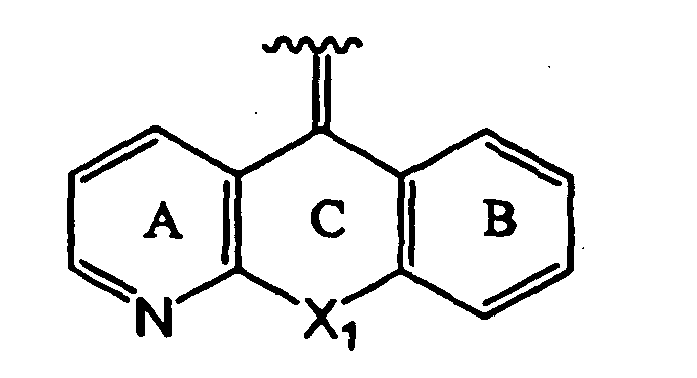
- X1 is -CH2-S-, -S-CH2-, -O-CH2-, -CH2-O-, -SO-CH2-, -CH2-SO-, -S(O)2-CH2-, -CH2-S(O)2- or a bond;
- ring A and ring B are independently substituted or unsubstituted;
- said substituted aliphatic group comprises one or more substituents selected from the group consisting of an electron withdrawing group, halo, azido, -COOH, -OH, -CONR24R25, -NR24R25, -OS(O)2NR24R25, -S(O)2NR24R25, -SO3H, -S(O)2NH2, guanidino, -(O)u-(CH2)t-C(O)OR20, -(O)u-(CH2)1-OC(O)R20, -(O)u-(CH2)t-C(O)-NR21R22, -(O)u-(CH2)t-NHC(O)O-R20, -Q-H, -Q-(aliphatic group), -Q-(substituted aliphatic group), -Q-(aryl), -Q-(aromatic group), -Q-(substituted aromatic group), -Q-(CH2)p-(substituted or unsubstituted aromatic group), -Q-(non-aromatic heterocyclic group),-Q-(CH2)p-(non-aromatic heterocyclic group), oxo, epoxy, non-aromatic heterocycle, benzyl, substituted benzyl, aromatic group and substituted aromatic group;
- said substituted benzyl group and said substituted aromatic group comprise one or more substitutents selected from the group consisting of an electron withdrawing group, halo, azido, -CN, -COOH, -OH, -CONR24R25, -NR24R25, -OS(O)2NR24R25, -S(O)2NR24R25, -SO3H, -S(O)2NH2, guanidino, -(O)u-(CH2)t-C(O)OR20, -(O)u-(CH2)t-OC(O)R20, -(O)u-(CH2)t-C(O)-NR21R22, -(O)u-(CH2)t-NHC(O)O-R20, -Q-H, -Q-(aliphatic group), -Q-(substituted aliphatic group), -Q-(aryl), -Q-(aromatic group), -Q-(substituted aromatic group), -Q-(CH2)p-(substituted or unsubstituted aromatic group), -Q-(non-aromatic heterocyclic group), -Q-(CH2)p-(non-aromatic heterocyclic group), aliphatic group and substituted aliphatic group;
- said substituted non-aromatic heterocyclic group comprises one or more substitutents selected from the group consisting of an electron withdrawing group, halo, azido, -CN, -COOH, -OH, -CONR24R25, -NR24R25, -OS(O)2NR24R25, -S(O)2NR24R25, -SO3H, -S(O)2NH2, guanidino, -(O)u-(CH2)t-C(O)OR20, -(O)u-(CH2)t-OC(O)R20, -(O)u-(CH2)t-C(O)-NR21R22 , -(O)u-(CH2)t-NHC(O)O-R20, -Q-H, -Q-(aliphatic group), -Q-(substituted aliphatic group), -Q-(aryl), -Q-(aromatic group), -Q-(substituted aromatic group), -Q-(CH2)p-(substituted or unsubstituted aromatic group), -Q-(non-aromatic heterocyclic group), -Q-(CH2)p-(non-aromatic heterocyclic group), aliphatic group, substituted aliphatic group, =O, =S, =NH, =N(aliphatic), =N(aromatic) and =N(substituted aromatic);
- R20, R21 and R22 are independently -H, an aliphatic group, a substituted aliphatic group, an aromatic group, a substituted aromatic group, a non-aromatic heterocyclic group, -NHC(O)-O-(aliphatic group), -NHC(O)-O-(aromatic group) or -NHC(O)-O-(non-aromatic heterocyclic group); or
- R21 and R22, taken together with the nitrogen atom to which they are bonded, form a non-aromatic heterocyclic ring;
- R23 is -H, an aliphatic group, a benzyl group, an aryl group or non-aromatic heterocyclic group;
- R24 and R25 are independently -H, -OH, aliphatic group, substituted aliphatic group, benzyl group, an aryl group or non-aromatic heterocyclic group;
- t is zero to three;
- u is zero or one;
- p is one to five;
- Q is -O-, -S-, -S(O)-, -S(O)2-, -OS(O)2-, -C(O)-, -OC(O)-, -C(O)O-, -C(O)C(O)-O-, -O-C(O)C(O)-, -C(O)NH-, -NHC(O)-, -OC(O)NH-, -NHC(O)O-, -NH-C(O)-NH-, -S(O)2NH-, -NHS(O)2-, -N(R23)-, -C(NR23)NHNH-, -NHNHC(NR23)-, -NR24C(O)- or -NR24S(O)2-;
- said aminoalkyl group is a C1 to C12 alkyl group substituted with -NR24R25;
- said aliphatic group is a saturated or unsaturated C1-C20 hydrocarbon;
- said electron withdrawing group is alkylimino, alkylsulfonyl, carboxamido, carboxylic alkyl ester, -CH=NH or -NO2;
- said acyl group is aliphatic carbonyl, aromatic carbonyl, aliphatic sulfonyl or aromatic sulfonyl;
- said substituted acyl group is substituted aliphatic carbonyl, substituted aromatic carbonyl, substituted aliphatic sulfonyl or substituted aromatic sulfonyl;
- the heterocycle of said non-aromatic heterocyclic group is a 5 to 8 membered non-aromatic ring that contains one or more heteroatoms selected from the group consisting of O, N, and S; and
- said aromatic group is selected from the group consisting of a C6 aromatic carbocycle, a C5 - C6 aromatic heterocycle comprising one or more heteroatoms selected from the group consisting of O, S and N, and a C6 aromatic carbocycle or a C5 - C6 aromatic heterocycle that is fused to one or more other rings; or a physiologically acceptable salt thereof.
- In this embodiment, it is preferred that M is >CR1R2.
- It is further preferred that R1 is -OH and R2 is a substituted aromatic group, such as
- 4-chlorophenyl.
- In one embodiment, the present invention provides a tertiary amino of the following formula:

- n is one to four;
- R50 and R51 are each, independently, -H, an aliphatic group, a substituted aliphatic group, an aminoalkyl group, -NR3R4, an aromatic group, a substituted aromatic group, a benzyl group, a substituted benzyl group, a non-aromatic heterocyclic group, a substituted non-aromatic heterocyclic group, or a covalent bond between the nitrogen atom an adjacent carbon atom;
- R3 and R4 are independently -H, an acyl group, a substituted acyl group, an aliphatic group, a substituted aliphatic group, an aromatic group, a substituted aromatic group, a benzyl group, a substituted benzyl group, a non-aromatic heterocyclic group or a substituted non-aromatic heterocyclic group;
- Z is:

- X1 is -CH2-S-, -S-CH2-, -O-CH2-, -CH2-O-, -SO-CH2-, -CH2-SO-, -S(O)2-CH2-, -CH2-S(O)2- or a bond;
- ring A and ring B are independently substituted or unsubstituted,
- said substituted aliphatic group comprises one or more substituents selected from the group consisting of an electron withdrawing group, halo, azido, -COOH, -OH, -CONR24R25, -NR24R25, -OS(O)2NR24R25, -S(O)2NR24R25, -SO3H, -S(O)2NH2, guanidino, -(O)u-(CH2)t-C(O)OR20, -(O)u-(CH2)t-OC(O)R20, -(O)u-(CH2)t-C(O)-NR21R22, -(O)u-(CH2)t-NHC(O)O-R20, -Q-H, -Q-(aliphatic group), -Q-(substituted aliphatic group), -Q-(aryl), -Q-(aromatic group), -Q-(substituted aromatic group), -Q-(CH2)p-(substituted or unsubstituted aromatic group), -Q-(non-aromatic heterocyclic group), -Q-(CH2)p-(non-aromatic heterocyclic group), oxo, epoxy, non-aromatic heterocycle, benzyl, substituted benzyl, aromatic group and substituted aromatic group;
- said substituted benzyl group and said substituted aromatic group and rings A and B when substituted comprise one or more substitutents selected from the group consisting of an electron withdrawing group, halo, azido, -CN, -COOH, -OH, -CONR24R25, -NR24R25, -OS(O)2NR24R25, -S(O)2NR24R25, -SO3H, -S(O)2NH2, guanidino, -(O)u-(CH2)t-C(O)OR20, -(O)u-(CH2)t-OC(O)R20, -(O)u-(CH2)t-C(O)-NR21R22, -(O)u-(CH2)t-NHC(O)O-R20, -Q-H, -Q-(aliphatic group), -Q-(substituted aliphatic group), -Q-(aryl), -Q-(aromatic group), -Q-(substituted aromatic group), -Q-(CH2)p-(substituted or unsubstituted aromatic group), -Q-(non-aromatic heterocyclic group), -Q-(CH2)p-(non-aromatic heterocyclic group), aliphatic group and substituted aliphatic group;
- said substituted non-aromatic heterocyclic group comprises one or more substitutents selected from the group consisting of an electron withdrawing group, halo, azido, -CN, -COOH, -OH, -CONR24R25, -NR24R25, -OS(O)2NR24R25, -S(O)2NR24R25, -SO3H, -S(O)2NH2, guanidino, -(O)u-(CH2)t-C(O)OR20, -(O)-(CH2)t-OC(O)R20, -(O)u-(CH2)tC(O)-NR21R22, -(O)u-(CH2)t-NHC(O)O-R20, -Q-H, -Q-(aliphatic group), -Q-(substituted aliphatic group), -Q-(aryl), -Q-(aromatic group), -Q-(substituted aromatic group), -Q-(CH2)p-(substituted or unsubstituted aromatic group), -Q-(non-aromatic heterocyclic group), -Q-(CH2)p-(non-aromatic heterocyclic group), aliphatic group, substituted aliphatic group, =O, =S, =NH, =N(aliphatic), =N(aromatic) and =N(substituted aromatic);
- R20, R21 and R22 are independently -H, an aliphatic group, a substituted aliphatic group, an aromatic group, a substituted aromatic group, a non-aromatic heterocyclic group, NHC(O)-O-(aliphatic group), -NHC(O)-O-(aromatic group) or -NHC(O)-O-(non-aromatic heterocyclic group); or
- R21 and R21, taken together with the nitrogen atom to which they are bonded, form a non-aromatic heterocyclic ring;
- R23 is -H, an aliphatic group, a benzyl group, an aryl group or non-aromatic heterocyclic group;
- R24 and R25 are independently -H, -OH, aliphatic group, substituted aliphatic group, benzyl group, an aryl group or non-aromatic heterocyclic group;
- t is zero to three;
- u is zero or one;
- p is one to five;
- Q is -O-, -S-, -S(O)-, -S(O)2-, -OS(O)2-, -C(O)-, -OC(O)-, -C(O)O-, -C(O)C(O)-O-, -O-C(O)C(O)-, -C(O)NH-, -NHC(O)-, -OC(O)NH-, -NHC(O)O-, -NH-C(O)-NH-, -S(O)2NH-, -NHS(O)2-, -N(R23)-, -C(NR23)NHNH-, -NHNHC(NR23)-, -NR24(O)- or -NR24S(O)2-;
- said aminoalkyl group is a C1 to C12 alkyl group substituted with -NR24R25;
- said aliphatic group is a saturated or unsaturated C1-C20 hydrocarbon;
- said electron withdrawing group is alkylimino, alkylsulfonyl, carboxamido, carboxylic alkyl ester, -CH=NH or -NO2;
- said acyl group is aliphatic carbonyl, aromatic carbonyl, aliphatic sulfonyl or aromatic sulfonyl;
- said substituted acyl group is substituted aliphatic carbonyl, substituted aromatic carbonyl, substituted aliphatic sulfonyl or substituted aromatic sulfonyl;
- the heterocycle of said non-aromatic heterocyclic group is a 5 to 8 membered non-aromatic ring that contains one or more heteroatoms selected from the group consisting of O, N, and S; and
- said aromatic group is selected from the group consisting of a C6 aromatic carbocycle, a C5 - C6 aromatic heterocycle comprising one or more heteroatoms selected from the group consisting of O, S and N, and a C6 aromatic carbocycle or a C5 - C6 aromatic heterocycle that is fused to one or more other rings,
- or a physiologically acceptable salt thereof.
- In one embodiment, the present invention provides a tertiary amino of the following formula:

- n is one to four;
- M is >NR2, >CR1R2, -O-CR1R2-O- or -CH2-CR1R20-O-;
- the ring containing M is substituted or unsubstituted;
- R1 is -H, -OH, -N3, a halogen, an aliphatic group, a substituted aliphatic group, an aminoalkyl group, -O-(aliphatic group), -O-(substituted aliphatic group), -SH, -S-(aliphatic group), -S-(substituted aliphatic group), -OC(O)-(aliphatic group), -O-C(O)-(substituted aliphatic group), -C(O)O-(aliphatic group), -C(O)O-(substituted aliphatic group), -COOH, -CN, -CO-NR3R4, -NR3R4 or R1 is a covalent bond between the ring atom at M and an adjacent carbon atom in the ring which contains M;
- R2 is -OH, an acyl group, a substituted acyl group, -NR5R6, an aliphatic group, a substituted aliphatic group, an aromatic group, a substituted aromatic group, a benzyl group, a substituted benzyl group, a non-aromatic heterocyclic group, a substituted non-aromatic heterocyclic group, -O-(substituted or unsubstituted aromatic group) or -O-(substituted or unsubstituted aliphatic group);
- R3, R4, R5 and R6 are independently -H, an acyl group, a substituted acyl group, an aliphatic group, a substituted aliphatic group, an aromatic group, a substituted aromatic group, a benzyl group, a substituted benzyl group, a non-aromatic heterocyclic group or a substituted non-aromatic heterocyclic group; or
- R1 and R2, R3 and R4, or R5 and R6 taken together with the atom to which they are bonded, form a substituted or unsubstituted non-aromatic carbocyclic or heterocyclic ring;
- Z is:

- X1 is -CH2-S-, -S-CH2-, -O-CH2-, -CH2-O-, -SO-CH2-, -CH2-SO-, -S(O)2-CH2-, -CH2-S(O)2- or a bond; and
- ring A and ring B are independently substituted or unsubstituted,
- said substituted aliphatic group comprises one or more substituents selected from the group consisting of an electron withdrawing group, halo, azido, -COOH, -OH, -CONR24R25, -NR24R25, -OS(O)2NR24R25, -S(O)2NR24R25, -SO3H, -S(O)2NH2, guanidino, -(O)u-(CH2)t-C(O)OR20, -(O)u-(CH2)t-OC(O)R20, -(O)u-(CH2)t-C(O)-NR21R22, -(O)u-(CH2)t-NHC(O)O-R20, -Q-H, -Q-(aliphatic group), -Q-(substituted aliphatic group), -Q-(aryl), -Q-(aromatic group), -Q-(substituted aromatic group), -Q-(CH2)p-(substituted or unsubstituted aromatic group), -Q-(non-aromatic heterocyclic group), -Q-(CH2)p-(non-aromatic heterocyclic group), oxo, epoxy, non-aromatic heterocycle, benzyl, substituted benzyl, aromatic group and substituted aromatic group;
- said substituted benzyl group and said substituted aromatic group and rings A and B when substituted comprise one or more substitutents selected from the group consisting of an electron withdrawing group, halo, azido, -CN, -COOH, -OH, -CONR24R25, -NR24R25, -OS(O)NR24R25, -S(O)2NR24R25, -SO3H, -S(O)2NH2, guanidino, -(O)u-(CH2)t-C(O)OR20, -(O)u-(CH2)t-OC(O)R20, -(O)u-(CH2)t-C(O)-NR21R22, -(O)u-(CH2)t-NHC(O)O-R20, -Q-H, -Q-(aliphatic group), -Q-(substituted aliphatic group), -Q-(aryl), -Q-(aromatic group), -Q-(substituted aromatic group), -Q-(CH2)p-(substituted or unsubstituted aromatic group), -Q-(non-aromatic heterocyclic group), -Q-(CH2)p-(non-aromatic heterocyclic group), aliphatic group and substituted aliphatic group;
- said substituted non-aromatic heterocyclic group comprises one or more substitutents selected from the group consisting of an electron withdrawing group, halo, azido, -CN, -COOH, -OH, -CONR24R25, -NR24R25, -OS(O)2NR24R25, -S(O)2NR24R25, -SO3H, -S(O)2NH2, guanidino, -(O)u-(CH2)t-C(O)OR20, -(O)u-(CH2)t-OC(O)R20, -(O)u-(CH2)t-C(O)-NR21R22, -(O)u-(CH2)t-NHC(O)O-R20, -Q-H, -Q-(aliphatic group), -Q-(substituted aliphatic group), -Q-(aryl), -Q-(aromatic group), -Q-(substituted aromatic group), -Q-(CH2)p-(substituted or unsubstituted aromatic group), -Q-(non-aromatic heterocyclic group), -Q-(CH2)p-(non-aromatic heterocyclic group), aliphatic group, substituted aliphatic group, =O, =S, =NH, =N(aliphatic), =N(aromatic) and =N(substituted aromatic);
- R20, R21 and R22 are independently -H, an aliphatic group, a substituted aliphatic group, an aromatic group, a substituted aromatic group, a non-aromatic heterocyclic group, -NHC(O)-O-(aliphatic group), -NHC(O)-O-(aromatic group) or -NHC(O)-O-(non-aromatic heterocyclic group); or
- R21 and R22, taken together with the nitrogen atom to which they are bonded, form a non-aromatic heterocyclic ring;
- R23 is -H, an aliphatic group, a benzyl group, an aryl group or non-aromatic heterocyclic group;
- R24 and R25 are independently -H, -OH, aliphatic group, substituted aliphatic group, benzyl group, an aryl group or non-aromatic heterocyclic group;
- t is zero to three;
- u is zero or one;
- p is one to five;
- Q is -O-, -S-, -S(O)-, -S(O)2-, -OS(O)2-, -C(O)-, -OC(O)-, -C(O)O-, -C(O)C(O)-O-, -O-C(O)C(O)-, -C(O)NH-, -NHC(O)-, -OC(O)NH-, -NHC(O)O-, -NH-C(O)-NH-, -S(O)2NH-, -NHS(O)2-, -N(R23)-, -C(NR23)NHNH-, -NHNHC(NR23)-, -NR24C(O)- or -NR24S(O)2-;
- said aminoalkyl group is a C1 to C12 alkyl group substituted with -NR24R25;
- said aliphatic group is a saturated or unsaturated C1 -C20 hydrocarbon;
- said electron withdrawing group is alkylimino, alkylsulfonyl, carboxamido, carboxylic alkyl ester, -CH=NH or -NO2;
- said acyl group is aliphatic carbonyl, aromatic carbonyl, aliphatic sulfonyl or aromatic sulfonyl;
- said substituted acyl group is substituted aliphatic carbonyl, substituted aromatic carbonyl, substituted aliphatic sulfonyl or substituted aromatic sulfonyl;
- the heterocycle of said non-aromatic heterocyclic group is a 5 to 8 membered non-aromatic ring that contains one or more heteroatoms selected from the group consisting of O, N, and S; and
- said aromatic group is selected from the group consisting of a C6 aromatic carbocycle, a C5 - C6 aromatic heterocycle comprising one or more heteroatoms selected from the group consisting of O, S and N, and a C6 aromatic carbocycle or a C5 - C6 aromatic heterocycle that is fused to one or more other rings,
- or a physiologically acceptable salt thereof.
- In this embodiment, it is preferred that Z is:

- X1 is -CH2-S-, -S-CH2-, -O-CH2-, CH2-O-, -SO-CH2-, -CH2-SO-, -S(O)2-CH2-, -CH2-S(O)2- or a bond; and
- ring A and ring B are independently substituted or unsubstituted,
- In the above embodiments of the invention, it is preferred that ring B is substituted para to the carbon atom of ring B that is bonded to X1 in ring C, such that Z is:

- R40 is -OH, -COOH, -NO2, halogen, aliphatic group, substituted aliphatic group, an aromatic group, a substituted aromatic group, -NR24R25, -CONR24R25, Q-(aliphatic group), Q-(substituted aliphatic group), -O-(aliphatic group), -O-(substituted aliphatic group), -O-(aromatic group), -O-(substituted aromatic group), an electron withdrawing group, -(O)u-(CH2)t-C(O)OR20, -(O)u-(CH2)t-OC(O)R20, -(O)u-(CH2)t-C(O)-NR21R22 or -(O)u-(CH2)t-NHC(O)O-R20;
- R20, R21 or R22 are independently -H, an aliphatic group, a substituted aliphatic group, an aromatic group, a substituted aromatic group or a non-aromatic heterocyclic group; or
- R21 and R22, taken together with the nitrogen atom to which they are bonded form a non-aromatic heterocyclic ring;
- Q is -NR24C(O)-, -NR24S(O)2- or -C(O)O-;
- R24 and R25 are independently -H, -OH, an aliphatic group or a substituted aliphatic group;
- u is zero or one; and
- t is an integer from zero to 3.
- In the above embodiment, it is alternatively preferred that ring B is substituted para to the carbon atom of ring B that is bonded to X1 in ring C, such that Z is:

- R40 is -C(=NR60)NR21R22, -O-C(O)-NR21R26, -S(O)2-NR21R22 or -NH-C(O)NR21R22; wherein
- R21 and R22 are independently -H, an aliphatic group, a substituted aliphatic group, an aromatic group, a substituted aromatic group or a non-aromatic heterocyclic group; or
- R21 and R22, taken together with the nitrogen atom to which they are bonded, form a substituted or unsubstituted non-aromatic heterocyclic ring;
- R26 is -H, an aliphatic group, a substituted aliphatic group, an aromatic group, a substituted aromatic group, a non-aromatic heterocyclic group, -C(O)-O-(substituted or unsubstituted aliphatic group), -C(O)-O-(substituted or unsubstituted aromatic group), -S(O)2-(substituted or unsubstituted aliphatic group), -S(O)2-(substituted or unsubstituted aromatic group); or
- R26 and R21, taken together with the nitrogen atom to which they are bonded, form a substituted or unsubstituted non-aromatic heterocyclic ring.
In one embodiment, the present invention provides a compound which is a tertiary amine of the following formula:
- n is one to four,
- M is >NR2, >CR1R2, -O-CR1R2-O- or -CH2-CR1R2-O-;
- q1 is zero to three;
- q2 is zero or one;
- R1 is -H, -OH, -N3, a halogen, an aliphatic group, a substituted aliphatic group, an aminoalkyl group, -O-(aliphatic group), -O-(substituted aliphatic group), -SH, -S-(aliphatic group), -S-(substituted aliphatic group), -OC(O)-(aliphatic group), -O-C(O)-(substituted aliphatic group), -C(O)O-(aliphatic group), -C(O)O-(substituted aliphatic group), -COOH, -CN, -CO-NR3R4, -NR3R4 or R1 is a covalent bond between the ring atom at M and an adjacent carbon atom in the ring which contains M;
- R2 is -OH, an acyl group, a substituted acyl group, -NR5R6, an aliphatic group, a substituted aliphatic group, an aromatic group, a substituted aromatic group, a benzyl group, a substituted benzyl group, a non-aromatic heterocyclic group, a substituted non-aromatic heterocyclic group, -O-(substituted or unsubstituted aromatic group) or -O-(substituted or unsubstituted aliphatic group);
- R3, R4 R5 and R6 are independently -H, an acyl group, a substituted acyl group, an aliphatic group, a substituted aliphatic group, an aromatic group, a substituted aromatic group, a benzyl group, a substituted benzyl group, a non-aromatic heterocyclic group or a substituted non-aromatic heterocyclic group; or
- R1 and R2, R3 and R4, or R5 and R6 taken together with the atom to which they are bonded, form a substituted or unsubstituted non-aromatic carbocyclic or heterocyclic ring;
- Z is:

- X1 is -CH2-S-, -S-CH2-, -O-CH2-, -CH2-O-, -SO-CH2-, -CH2-SO-, -S(O)2-CH2-, -CH2-S(O)2-, or a bond;
- R40 is -S(O2)-NR21R22, -NH-C(O)-NR21R22, -O-C(O)-NR21R26,

- said substituted aliphatic group comprises one or more substituents selected from the group consisting of an electron withdrawing group, halo, azido, -COOH, -OH, -CONR24R25, -NR24R25, -OS(O)2NR24R25, -S(O)2NR24R25, -SO3H, -S(O)2NH2, guanidino, -(O)u-(CH2)t-C(O)OR20, -(O)u-(CH2)t-OC(O)R20, -(O)u-(CH2)t-C(O)-NR21R22, -(O)u-(CH2)t-NHC(O)O-R20, -Q-H, -Q-(aliphatic group), -Q-(substituted aliphatic group), -Q-(aryl), -Q-(aromatic group), -Q-(substituted aromatic group), -Q-(CH2)p-(substituted or unsubstituted aromatic group), -Q-(non-aromatic heterocyclic group), -Q-(CH2)p-(non-aromatic heterocyclic group), oxo, epoxy, non-aromatic heterocycle, benzyl, substituted benzyl, aromatic group and substituted aromatic group;
- said substituted benzyl group and said substituted aromatic group comprise one or more substitutents selected from the group consisting of an electron withdrawing group, halo, azido, -CN, -COOH, -OH, -CONR24R25, -NR24R25, -OS(O)2NR24R25, -S(O)2NR24R25, -SO3H, -S(O)2NH2, guanidino, -(O)u-CH2)t-C(O)OR20, -(O)u-(CH2)t-OC(O)R20, -(O)u-(CH2)t-C(O)-NR21R22, -(O)u-(CH2)t-NHC(O)O-R20, -Q-H, -Q-(aliphatic group), -Q-(substituted aliphatic group), -Q-(aryl), -Q-(aromatic group), -Q-(substituted aromatic group), -Q-(CH2)p-(substituted or unsubstituted aromatic group), -Q-(non-aromatic heterocyclic group), -Q-(CH2)p-(non-aromatic heterocyclic group), aliphatic group and substituted aliphatic group;
- said substituted non-aromatic heterocyclic group comprises one or more substitutents selected from the group consisting of an electron withdrawing group, halo, azido, -CN, -COOH, -OH, -CONR24R25, -NR24R25, -OS(O)2NR24R25,-S(O)2NR24R25, -SO3H, -S(O)2NH2, guanidino, -(O)u-(CH2)t-C(O)OR20, -(O)u-(CH2)t-OC(O)R20, -(O)u-(CH2)t-C(O)-NR21R22, -(O)u-(CH2)t-NHC(O)O-R20, -Q-H, -Q-(aliphatic group), -Q-(substituted aliphatic group), -Q-(aryl), -Q-(aromatic group), -Q-(substituted aromatic group), -Q-(CH2)p-(substituted or unsubstituted aromatic group), -Q-(non-aromatic heterocyclic group), -Q-(CH2)p-(non-aromatic heterocyclic group), aliphatic group, substituted aliphatic group, =O, =S, NH, =N(aliphatic), =N(aromatic) and =N(substituted aromatic);
- R20, R21 and R22 are independently -H, an aliphatic group, a substituted aliphatic group, an aromatic group, a substituted aromatic group, a non-aromatic heterocyclic group, -NHC(O)-O-(aliphatic group), -NHC(O)-O-(aromatic group) or -NHC(O)-O-(non-ammatic heterocyclic group);
- R26 is -H, aliphatic group, substituted aliphatic group, aromatic group, substituted aromatic group, non-aromatic heterocyclic group, -C(O)-O-(substituted or unsubstituted aliphatic group), -C(O)-O-(substituted or unsubstituted aromatic group), -S(O)2-(substituted or unsubstituted aliphatic group), -S(O)2-substituted or unsubstituted aromatic group; or
- R21 and R22, taken together with the nitrogen atom to which they are bonded, form a non-aromatic heterocyclic ring, or
- R21 taken together with R26 and the nitrogen atom to which they are bonded form la substituted or unsubstituted non-aromatic heterocyclic ring;
- R23 is -H, an aliphatic group, a benzyl group, an aryl group or non-aromatic heterocyclic group;
- R24 and R25 are independently -H, -OH, aliphatic group, substituted aliphatic group, benzyl group, an aryl group or non-aromatic heterocyclic group;
- t is zero to three;
- u is zero or one;
- p is one to five;
- Q is -O-, -S-, -S(O)-, -S(O)2-, -OS(O)2-, -C(O)-, -OC(O)-, -C(O)O-, -C(O)C(O)-O-, -O-C(O)C(O)-, -C(O)NH-, -NHC(O)-, -OC(O)NH-, -NHC(O)O-, -NH-C(O)-NH-, -S(O)2NH-, -NHS(O)2-, -N(R23)-, -C(NR23)NHNH-, -NHNHC(NR23)-, -NR24C(O)-or -NR24S(O)2-;
- said aminoalkyl group is a C1 to C12 alkyl group substituted with -NR24R25;
- said aliphatic group is a saturated or unsaturated C1-C20 hydrocarbon;
- said electron withdrawing group is alkylimino, alkylsulfonyl, carboxamido, carboxylic alkyl ester, -CH=NH or -NO2;
- said acyl group is aliphatic carbonyl, aromatic carbonyl, aliphatic sulfonyl or aromatic sulfonyl;
- said substituted acyl group is substituted aliphatic carbonyl, substituted aromatic carbonyl, substituted aliphatic sulfonyl or substituted aromatic sulfonyl;
- the heterocycle of said non-aromatic heterocyclic group is a 5 to 8 membered non-aromatic ring that contains one or more heteroatoms selected from the group consisting of O, N, and S; and
- said aromatic group is selected from the group consisting of a C6 aromatic carbocycle, a C5 - C6 aromatic heterocycle comprising one or more heteroatoms selected from the group consisting of O, S and N, and a C6 aromatic carbocycle or a C5 - C6 aromatic heterocycle that is fused to one or more other rings;
- or a physiologically acceptable salt thereof.
- In this embodiment, it is preferred that q1 and q2 are each one.
- It is further preferred that M is >CR1R2.
- It is additionally preferred that R1 is -OH and R2 is a substituted aromatic group, such as
- 4-chlorophenyl.
- In the above embodiments, it is preferred that X1 is -CH2-O-
- The present invention also provides a tertiary amine of the following formula:

- M is CR1R2;
- R1 is -OH;
- R2 is 4-chlorophenyl;
- n is two;
- Z is:

- X1 is -CH2-O-; and
- R40 is

- We also disclose, the antagonist of chemokine receptor function represented by Structural Formula (I):

- Z is a cycloalkyl or non-aromatic heterocyclic ring group fused to a phenyl and a pyridyl ring of two phenyl rings, wherein each ring in Z is independently substituted or unsubstituted.
- n is an integer, such as an integer from one to four. Preferably, n is one, two or three. More preferably n is two. In alternative embodiments, other aliphatic or aromatic spacer groups (L) can be employed for (CH2)n.
- M is >NR2 or >CR1R2. M is preferably >C(OH)R2.
- R1 is -H, -OH, -N3, a halogen, an aliphatic group, a substituted aliphatic group, an aminoalkyl group, -O-(aliphatic group), -O-(substituted aliphatic group), -SH, -S-(aliphatic group), -S-(substituted aliphatic group), -OC(O)-(aliphatic group), -O-C(O)-(substituted aliphatic group), -C(O)O-(aliphatic group), -C(O)O-(substituted aliphatic group), -COOH, -CN, -CO-NR3R4, -NR3R4; or R1 can be a covalent bond between the ring atom at M and an adjacent carbon atom in the ring which contains M. R1 is preferably -H or -OH.
- R2 is , -OH, an acyl group, a substituted acyl group, -NR5R6, an aliphatic group, a substituted aliphatic group, an aromatic group, a substituted aromatic group, a benzyl group, a substituted benzyl group, a non-aromatic heterocyclic group, a substituted non-aromatic heterocyclic group, -O-(substituted or unsubstituted aromatic group) or -O-(substituted or unsubstituted aliphatic group). R2 is preferably an aromatic group or a substituted aromatic group.
- R3, R4, R5 and R6 are independently -H, an acyl group, a substituted acyl group, an aliphatic group, a substituted aliphatic group, an aromatic group, a substituted aromatic group, a benzyl group, a substituted benzyl group, a non-aromatic heterocyclic group or a substituted non-aromatic heterocyclic group.
- R1 and R2, R3 and R4, or R5 and R6 taken together with the atom to which they are bonded, can alternatively form a substituted or unsubstituted non-aromatic carbocyclic or heterocyclic ring.
- In embodiments where M is >CR1R2 and R1 is a covalent bond between the carbon atom at M and an adjacent carbon atom in the ring which contains M, the antagonist of chemokine function can be represented by Structural Formula (Ia).

- z, n and R2 are as described in Structural Formula (I).
- In one preferred embodiment, Z is a tricyclic ring system comprising two carbocyclic aromatic groups fused to a five, six, seven or eight membered cycloalkyl group or to a non-aromatic heterocyclic ring. In one example, Z is represented by Structural Formula (II):

- The phenyl rings in Structural Formula (II), labeled with an "A" and "B", are referred to herein as "Ring A" and "Ring B", respectively. The central ring, labeled with a "C", is referred to as "Ring C" and can be, for example, a five, six, seven or eight membered non-aromatic carbocyclic ring (e.g., a cycloheptane or cyclooctane ring) or a non-aromatic heterocyclic ring. When Ring C is a non-aromatic heterocyclic ring, it can contain one or two- heteroatoms such as nitrogen, sulfur or oxygen. In particular embodiments, Ring c is When Z is represented by Structural Formula (II), the tricyclic ring system can be connected to the remainder of the molecule by a covalent double bond between a carbon atom in Ring C and the carbon atom which, as depicted in Structural Formula (I), is bonded to Z.
- Ring A and/or Ring B in Structural Formula (II) can be unsubstituted. Alternatively, Ring A and/or Ring B can have one or more substituents. Suitable substituents are as described hereinbelow. In one example, Ring A or Ring B is substituted with -(O)u-(CH2)t-C(O)OR20,
-(O)u-(CH2)t-OC(O)R20, -(O)u-(CH2)t-C(O)-NR21R22 or
- (O)u-(CH2)t-NHC(O)O-R20. - u is zero or one.
- t is an integer, such as an integer from zero to about three, and the methylene group -(CH2)t- can be substituted, as described herein for aliphatic groups, or unsubstituted.
- R20, R21 or R22 are independently -H, an aliphatic group, a substituted aliphatic group, an aromatic group, a substituted aromatic group or a non-aromatic heterocyclic group. Alternatively, R21 and R22, taken together with the nitrogen atom to which they are bonded, can form a non-aromatic heterocyclic ring.
- Ring C optionally contains one or more substituents, as described hereinbelow.
- Examples of suitable tricyclic ring systems, Z, are provided by Structural Formula (III):

- Ring A and Ring B in Structural Formula (III) are as described for Structural Formula (II).
- X1 is a bond, -CH2-S-, -S-CH2-, -O-CH2-, -CH2-O-,-SO-CH2-, -CH2-SO-, -S(O)2-CH2-or -CH2-S(O)2-, Preferably X1, is -CH2-O-, -CH2-CH2- or -CH2-S-.
- In another embodiment of the present invention Z is represented by Structural Formula (V):

- Ring A and Ring B can be independently substituted or unsubstituted as described above in Structural Formula (II), and X1 can be as described above for Structural Formula (III).
- In a preferred embodiment, Ring B in Structural Formula (V) is substituted para to the carbon atom of Ring B which is bonded to X1 of Ring C, and Z is represented by Structural Formula (VI):

- X1 can be as described above in Structural Formula (II). Preferably X1 is -CH2-O-, -CH2-CH2- or -CH2-S-.
- R40 is a substituent as described herein for aromatic groups. In one embodiment, R40 is -OH, -COOH, a halogen, -NO2, an aliphatic group, a substituted aliphatic group, an aromatic group, a substituted aromatic group, -NR24R25, -CONR24R25 , -C(=NR60)NR21R22, -Q-(aliphatic group), -Q-(substituted aliphatic group),-O-(aliphatic group), -O-(substituted aliphatic group),-O-(aromatic group), -O-(substituted aromatic group), an electron withdrawing group, - (O)u-(CH2)t-C(O)OR20, -(O)u-(CH2)t-OC(O)R20, -(O)u-(CH2)t-C(O)-NR21R22 or -(O)u-(CH2)t-NHC(O)O-R20. Q, R20, R21, R22, R24, R25, R60, u and t are as described herein.
- Preferably R40 is an aliphatic group, substituted aliphatic group, -O-(aliphatic group) or -O-(substituted aliphatic group). More preferably R40 is an -O-alkyl, such as -O-CH3, -O-C2H5, -O-C3H7 or -O-C4H9.
- In another embodiment, R40 can be represented by -(O)u-(CH2)t-C(O)-NR21R22, wherein u is one, t is zero, and R21 and R22 are as described herein. In this embodiment, R21 and R22 can each independently be -H, a substituted or unsubstituted aliphatic group, a substituted or unsubstituted aromatic group, or R21 and R22 taken together with the nitrogen atom to which they are bonded form a substituted or unsubstituted nonaromatic heterocyclic ring (e.g., pyrrolidine, piperidine, morpholine).
- In another embodiment, R40 can be represented by -(O)u-(CH2)t-C(O)-NR21R22, wherein u is zero, t is one to about three, and R21 and R22 are as described herein.
- In another embodiment, R40 can be represented by -(O)u-(CH2)t-C(O)-NR21R22, wherein both u and t are zero, and R21 and R22 are as described herein.
- In another embodiment, R40 is an aliphatic group (e.g., methyl, ethyl, propyl) that is substituted with -NR24R25 or -CONR24R25, wherein R24 and R25 are as described herein. For example, R40 can be represented by

- In another embodiment, R40 is -O-C(O)-NR21R26, wherein R21 is as described herein, R26 can be -H, an aliphatic group, a substituted aliphatic group, an aromatic group, a substituted aromatic group, a non-aromatic heterocyclic group, -C(O)-O-(substituted or unsubstituted aliphatic group), -C(0)-O-(substituted or unsubstituted aromatic group), -S(O)2-(substituted or unsubstituted aliphatic group), -S(O)2-(substituted or unsubstituted aromatic group) or R21 and R26, taken together with the nitrogen atom to which they are bonded, can form a substituted or unsubstituted non-aromatic heterocyclic ring.
- In additional embodiments, R40 can be -S(O)2-NR21R22 or -N-C(O)-NR21R22, wherein R21 and R22 are as described herein.
- In a preferred embodiment, the chemokine receptor antagonist can be represented by Structural Formula I wherein n is three, M is C(OH)R2, R2 is a phenyl group or a halophenyl group (e.g., 4-chlorophenyl) and Z is represented by Structural Formula (VI) wherein X1 is -CH2-O-. In one example of this embodiment, R40 can be -O-(substituted aliphatic group), such as

- In particularly preferred embodiments, R40 is


- In another embodiment, the antagonist of chemokine activity can be represented by Structural Formula (VII):

- n is as described in Structural Formula (I). Z is as described herein, preferably as described in Structural Formula (V) or (VI).
- M is >NR2, >CR1R2, -O-CR1R2-O- or -CH2-CR1R2-O-.
- R1 and R2 are as described in Structural Formula (I).
- q1 is an integer, such as an integer from zero to about three, and q2 is an integer from zero to about one. The ring containing M can be substituted or unsubstituted.
- Thus, the antagonist of chemokine function can be represent by, for example, Structural Formulas (VIIa)-(VIIk):


- The nitrogen atom in the ring containing M can be a tertiary nitrogen as depicted in Structural Formula (IV), or the nitrogen atom can be quaternized with a suitable substituent, such as a C1 to about C6 or a C1 to about C3 substituted or unsubstituted aliphatic group. Compounds which comprise a quaternary nitrogen atom can also contain a counteranion such as chloride, bromide, iodide, acetate, perchlorate and the like.
- The antagonist of chemokine function can be represented by Structural Formula (VII) wherein the heterocyclic ring containing M is substituted with a suitable bivalent group which is bonded to two atoms that are in the ring, thereby forming a bicyclic moiety. Suitable bivalent groups include, for example, substituted or unsubstituted bivalent aliphatic groups, such as a C1-C6 alkylene group.
- The antagonist of chemokine receptor function can comprise a variety of bicyclic moieties. In one embodiment, the antagonist of chemokine receptor function can be represented by Structural Formula (VIII):

- M is >NR2, >CR1R2, -O-CR1R2-O- or -CH2-CR1R2-O-. Preferably, M is >NR2 or >CR1R2. R1 and R2 are as described in Structural Formula (I), and n and Z are as described in structural Formula (VII).
- In another embodiment, the antagonist of chemokine receptor function is represented by Structural Formula (IX):

- Z is as described herein, preferably as described in Structural Formula (V) or (VI).
- n is an integer, such as an integer from one to about four. Preferably, n is one, two or three. More preferably n is two. In alternative embodiments, other aliphatic or aromatic spacer groups (L) can be employed for (CH2)n.
- R50 and R51 are each independently -H, an aliphatic group, a substituted aliphatic group, an aminoalkyl group, -NR3R4, an aromatic group, a substituted aromatic group, a benzyl group, a substituted benzyl group, a non-aromatic heterocyclic group, a substituted non-aromatic heterocyclic group or a covalent bond between the nitrogen atom an adjacent carbon atom.
- R3 and R4 are independently -H, an acyl group, a substituted acyl group, an aliphatic group, a substituted aliphatic group, an aromatic group, a substituted aromatic group, a benzyl group, a substituted benzyl group, a non-aromatic heterocyclic group or a substituted non-aromatic heterocyclic group.
- R3 and R4 taken together with the atom to which they are bonded, can alternatively form a substituted or unsubstituted non-aromatic carbocyclic or heterocyclic ring.
- In a preferred embodiment R50 is a substituted aliphatic group, such as a substituted C1 to about C12 alkyl group, and R51 is -H or a substituted or unsubstituted aliphatic group. More preferably, R50 is a substituted linear or branched C2 to about C7 aliphatic group wherein one or more carbon atoms can be replaced by a heteroatom, such as nitrogen, oxygen or sulfur, and R51 is -H or a linear or branched C1 to about C6 or a C1 to about C3 aliphatic group wherein one or more carbon atoms can be replaced by a heteroatom. R50 and R51 can be substituted with one or more suitable substituents, as described herein, Preferably an aromatic group(e.g., phenyl, 4-halophenyl). For example, R50 can be selected from the group consisting of:


- The activity of chemokine receptor antagonists represented by Structural Formula IX can be affected by the character of the nitrogen atom to which R50 and R51 are bonded. It is believed that compounds in which said nitrogen atom is basic can have potent chemokine receptor antagonist activity. It is known that the basicity of a nitrogen atom can be decreased when the nitrogen atom is bonded to a carbonyl group, sulfonyl group or a sulfinyl group. Therefore, it is preferred that neither R50 nor R51 comprise a carbonyl group, sulfonyl group or sulfinyl group that is directly bonded to the nitrogen atom.
- The chemokine receptor antagonist described herein can be prepared and administered as active compounds or as prodrugs. Generally, prodrugs are analogues of pharmaceutical agents which can undergo chemical conversion by metabolic processes to become fully active. For example, A prodrug of the invention can be prepared by selecting appropriate groups for R40. In one embodiment, a prodrug can be represented by Structural Formula (XI):

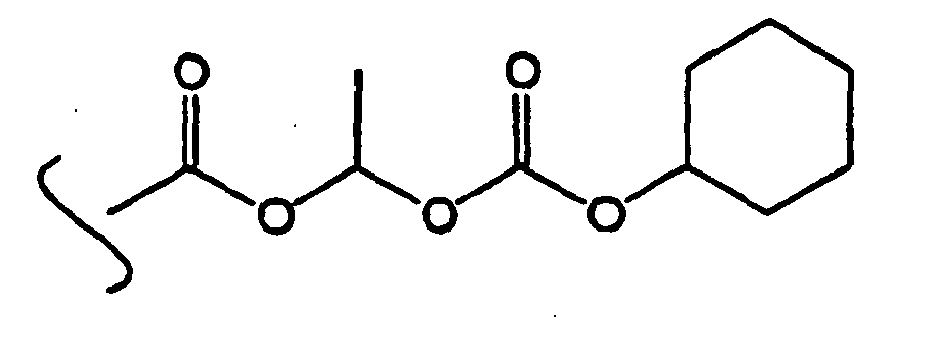
- Another embodiment of the present invention includes the novel compounds disclosed herein.
- The compounds disclosed herein can be obtained as E-and Z-configurational isomers. It is expressly pointed out that the invention includes compounds of the E-configuration and the Z-configuration around the double bond connecting Ring C of Z to the remainder of the molecule, and a method of treating a subject with compounds of the E-configuration, the Z-configuration, and mixtures thereof. Accordingly, in the structural formulas presented herein, the symbol:


- It is understood that one configuration can have greater activity than another. The desired configuration can be determined by screening for activity, employing the methods described herein.
- Additionally, certain compounds of the invention may be obtained as different sterioisomers (e.g., diastereomers and enantiomers). It is pointed out that the invention includes all isomeric forms and racemic mixtures of the disclosed compounds and a method of treating a subject with both pure isomers and mixtures thereof, including racemic mixtures. Again, it is understood that one sterioisomer may be more active than another. The desired isomer can be determined by screening.
- Also included in the present invention are physiologically acceptable salts of the compounds represented by Structural Formulas (I) through (XI). Salts of compounds containing an amine or other basic group can be obtained, for example, by reacting with a suitable organic or inorganic acid, such as hydrogen chloride, hydrogen bromide, acetic acid, citric acid, perchloric acid and the like. Compounds with a quaternary ammonium group also contain a counteranion such as chloride, bromide, iodide, acetate, perchlorate and the like. Salts of compounds containing a carboxylic acid or other acidic functional group can be prepared by reacting with a suitable base, for example, a hydroxide base. Salts of acidic functional groups contain a countercation such as sodium, potassium, ammonium, calcium and the like.
- As used herein, aliphatic groups include straight chained, branched or cyclic C2-C20 hydrocarbons which are completely saturated or which contain one or more units of unsaturation. Preferred aliphatic groups are C1 to about C10 hydrocarbons. More preferred are C1 to about C6 or C1 to about C3 hydrocarbons. For example, suitable aliphatic groups include substituted or unsubstituted linear, branched or cyclic C1-C20 alkyl, alkenyl or alkynyl groups.
- An aminoalkyl group is an alkyl group substituted with -NR24R23, R24 and R25 are as described herein. Preferably the alkyl moiety comprises one to about twelve, more preferably one to about six carbon atoms. The alkyl moiety of an aminoalkyl group can be unsubstituted or substituted as described herein for aliphatic groups. Examples of suitable aminoalkyl groups include aminomethyl, 2-aminoethyl, 3-aminopropyl, 4-aminobutyl, dimethylaminoethyl, diethylaminomethyl, methylaminohexyl, aminoethylenyl and the like.
- Aromatic groups include carbocyclic aromatic groups such as phenyl, 1-naphthyl, 2-naphthyl, 1-anthracyl and 2-anthracyl, and heterocyclic aromatic or heteroaryl groups such as N-imidazolyl, 2-imidazolyl, 4-imidazolyl, 5-imidazolyl, 2-thienyl, 3-thienyl, 2-furanyl, 3-furanyl, 2-pyrrolyl, 3-pyrrolyl, 2-pyridyl, 3-pyridyl, 4-pyridyl, 2-pyrimidyl, 4-pyrimidyl, 5-pyrimidyl, 3-pyridazinyl, 4-pyridazinyl, 3-pyrazolyl, 4-pyrazolyl, 5-pyrazolyl, 2-pyrazinyl, 2-thiazolyl, 4-thiazolyl, 5-thiazolyl, 5-tetrazolyl, 2-oxazolyl, 4-oxazolyl and 5-oxazolyl. Where these rings are fused, for example, to Ring C, the stated point of attachment can be either of the two fused bonds.
- Aromatic groups also include fused polycyclic aromatic ring systems in which a carbocyclic aromatic ring or heteroaryl ring is fused to one or more other rings. Examples include tetrahydronaphthyl, 2-benzothienyl, 3-benzothienyl, 2-benzofuranyl, 3-benzofuranyl, 2-indolyl, 3-indolyl, 2-quinolinyl, 3-quinolinyl, 2-benzothiazolyl, 2-benzooxazolyl, 2-benzimidazolyl, 2-quinolinyl, 3-quinolinyl, 1-isoquinolinyl, 3-quinolinyl, 1-isoindolyl, 3-isoindolyl, acridinyl, 3-benzisoxazolyl, and the like. Also included within the scope of the term "aromatic group", as it is used herein, is a group in which one or more carbocyclic aromatic rings and/or heteroaryl rings are fused to a cycloalkyl or non-aromatic heterocyclic ring, for example, benzocyclopentane, benzocyclohexane.
- Non-aromatic heterocyclic rings are non-aromatic carbocyclic rings which include one or more heteroatoms such as nitrogen, oxygen or sulfur in the ring. The ring can be five, six, seven or eight-membered and/or fused to another ring, such as a cycloalkyl on aromatic ring. Examples include 1,3-dioxolan-2-yl, 3-1H-benzimidazol-2-one, 3-1-alkyl-benzimidazol-2-one, 3-1-methyl-benzimidazol-2-one, 2-tetrahydrofuranyl, 3-tetrahydrofuranyl, 2-tetrahyrothiophenyl, 3-tetrahyrothiophenyl, 2-morpholino, 3-morpholino, 4-morpholino, 2-thiomorpholino, 3-thiomorpholino, 4-thiomorpholino, 1-pyrrolidinyl, 2-pyrrolidinyl, 3-pyrrolidinyl, 1-piperazinyl, 2-piperazinyl, 1-piperidinyl, 2-piperidinyl, 3-piperidinyl, 4-piperidinyl, 4-thiazolidinyl, diazolonyl, N-substituted diazolonyl, 1-phthalimidyl, 1-3-alkyl-phthalimidyl, benzoxane, benzopyrolidine, benzopiperidine, benzoxolane, benzothiolane, benzothiane, tetrahydrofuran-2-one- 3-yl, 2,5-dihydro-5-oxo-4H-1,2,4-thiadiazol-3-yl, 2-oxo-3H-1, 2, 3, 5-oxathiadiazol-4-yl,

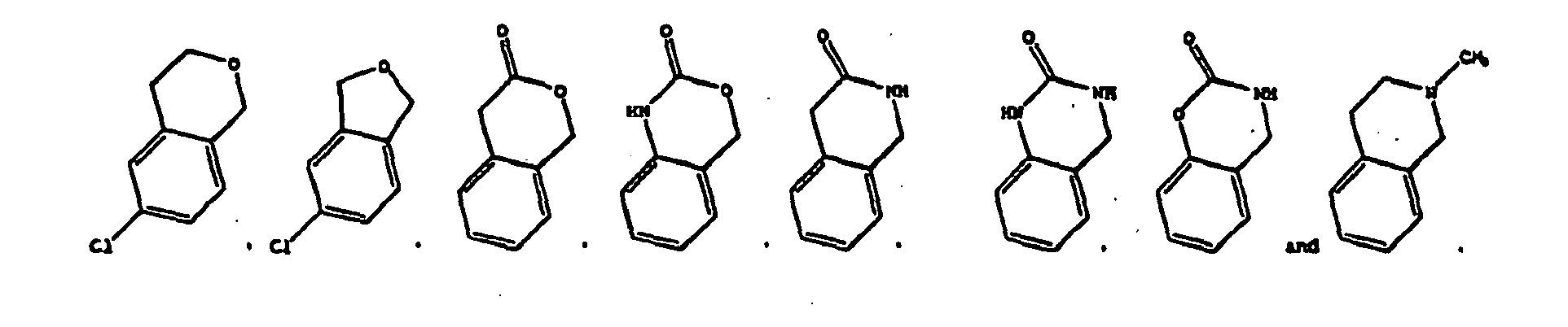
- Suitable substituents on an aliphatic group, aromatic group (carbocyclic and heteroaryl), non-aromatic heterocyclic ring or benzyl group include, for example, an electron withdrawing group, a halogen, azido, -CN, -COOH, -OH, -CONR24R25, -NR24R25, -OS(O)2NR24R25, -S(O)2NR24R25, -SO3H, -S(O)2NH2, guanidino, ureido, oxalo, amidino, -C(=NR60)NR21R22, =NR60, -(O)u-(CH2)t-C(O)OR20, - (O)u-(CH2)t-OC(O)R20, -(O)u-(CH2)t-C(O)-NR21R22, - (O)u-(CH2)t-NHC(O)O-R20, -Q-H, -Q- (aliphatic group), -Q-(substituted aliphatic group), -Q-(aryl), -Q-(aromatic group), -Q-(substituted aromatic group), -Q-(CH2)p-(substituted or unsubstituted aromatic group) p is an integer from 1-5), -Q-(non-aromatic heterocyclic group) or -Q-(CH2)p-(non-aromatic heterocyclic group).
- R20, R21 and R22 are independently -H, an aliphatic group, a substituted aliphatic group, an aromatic group, a substituted aromatic group, a non-aromatic heterocyclic group, -NHC(O)-O-(aliphatic group), -NHC(O)-O-(aromatic group) or -NHC(O)-O-(non-aromatic heterocyclic group) and wherein R21 and R22, taken together with the nitrogen atom to which they are bonded, can form a substituted or unsubstituted non-aromatic heterocyclic ring.
- R60 is a -H, -OH, -NH2, an aromatic group or a substituted aromatic group.
- t is an integer from zero to about three, and the methylene group, -(CH2)t-, can be substituted, as described herein for aliphatic groups, or unsubstituted.
- u is zero or one.
- Q is -O-, -S-, -S (O) -, -S(O)2-, -OS(O)2-, -C (O) -, -OC(O)-, -C(O)O-, -C(O)C(O)-O-, -O-C(O)C(O)-, -C(O)NH-, -NHC(O)-, -OC (O) NH-, -NHC(O)O-, -NH-C (O) -NH-, -S(O)2NH-, -NHS(O)2-, -N(R23)-, -C(NR23)NHNH-, -NHNHC(NR23)-, -NR24C(O)-or -NR24S(O)2-.
- R23 is -H, an aliphatic group, a benzyl group, an aryl group or non-aromatic heterocyclic group.
- R24 and R25 are independently -H, -OH, an aliphatic-group, a substituted aliphatic group, a benzyl group, an aryl group, non-aromatic heterocyclic group or R24 and R25 taken together with the nitrogen atom to which they are bonded can form a substituted or unsubstituted non-aromatic heterocyclic ring.
- A substituted non-aromatic heterocyclic ring, benzyl group or aromatic group can also have an aromatic group, an aliphatic or substituted aliphatic group, as a substituent. When a non-aromatic ring (carbocyclic or heterocyclic) or an aromatic ring (carbocyclic aromatic or heteroaryl) is substituted with another ring, the two rings can be fused. A substituted aliphatic group can also have an oxo group, epoxy group, non-aromatic heterocyclic ring, benzyl group, substituted benzyl group, aromatic group or substituted aromatic group as a substituent. A substituted non-aromatic heterocyclic ring can also have =O, =S, =NH or =N(aliphatic, aromatic or substituted aromatic group) as a substituent. A substituted aliphatic, substituted aromatic, substituted non-aromatic heterocyclic ring or substituted benzyl group can have more than one substituent, which can be the same or different.
- Acyl groups include substituted and unsubstituted aliphatic carbonyl, aromatic carbonyl, aliphatic sulfonyl and aromatic sulfonyl.
- Suitable electron withdrawing groups include, for example, alkylimines, alkylsulfonyl, carboxamido, carboxylic alkyl esters, -CH=NH, -CN, -NO2 and halogens.
- In the structural formulas depicted herein, the single or double bond by which a chemical group or moiety is connected to the remainder of the molecule or compound is indicated by the following symbol:

- A "subject" is preferably a bird or mammal, such as a human, but can also be an animal in need of veterinary treatment, e.g., domestic animals (e.g., dogs, cats, and the like), farm animals (e.g., cows, sheep, fowl, pigs, horses, and the like) and laboratory animals (e.g., rats, mice, guinea pigs, and the like).
- An "effective amount" of a compound is an amount which results in the inhibition of one or more processes mediated by the binding of a chemokine to a receptor in a subject with a disease associated with aberrant leukocyte recruitment and/or activation. Examples of such processes include leukocyte migration, integrin activation, transient increases in the concentration of intracellular free calcium [Ca2+]1 and granule release of proinflammatory mediators. Alternatively, an "effective amount" of a compound is a quantity sufficient to achieve a desired therapeutic and/or prophylactic effect, such as an amount which results in the prevention of or a decrease in the symptoms associated with a disease associated with aberrant leukocyte recruitment and/or activation.
- The amount of compound administered to the individual will depend on the type and severity of the disease and on the characteristics of the individual, such as general health, age, sex, body weight and tolerance to drugs. It will also depend on the degree, severity and type of disease. The skilled artisan will be able to determine appropriate dosages depending on these and other factors. Typically, an effective amount of the compound can range from about 0.1 mg per day to about 100 mg per day for an adult. Preferably, the dosage ranges from about 1 mg per day to about 100 mg per day. An antagonist of chemokine receptor function can also be administered in combination with one or more additional therapeutic agents, e.g. theophylline, β-adrenergic bronchodilators, corticosteroids, antihistamines, antiallergic agents, immunosuppressive agents (e.g., cyclosporin A, FK-506, prednisone, methylprednisolone) and the like.
- The compound can be administered by any suitable route, including, for example, orally in capsules, suspensions or tablets or by parenteral administration. Parenteral administration can include, for example, systemic administration, such as by intramuscular, intravenous, subcutaneous, or intraperitoneal injection. The compound can also be administered orally (e.g., dietary), transdermally, topically, by inhalation (e.g., intrabronchial, intranasal, oral inhalation or intranasal drops), or rectally, depending on the disease or condition to be treated. Oral or parenteral administration are preferred modes of administration.
- The compound can be administered to the individual in conjunction with an acceptable pharmaceutical or physiological carrier as part of a pharmaceutical composition for treatment of HIV infection, inflammatory disease, or the other diseases discussed above. Formulation of a compound to be administered will vary according to the route of administration selected (e.g., solution, emulsion, capsule). Suitable carriers may contain inert ingredients which do not interact with the compound. Standard pharmaceutical formulation techniques can be employed, such as those described in Remington's Pharmaceutical Sciences, Mack Publishing Company, Easton, PA. Suitable carriers for parenteral administration include, for example, sterile water, physiological saline, bacteriostatic saline (saline containing about 0.9% mg/ml benzyl alcohol), phosphate-buffered saline, Hank's solution, Ringer's-lactate and the like. Methods for encapsulating compositions (such as in a coating of hard gelatin or cyclodextran) are known in the art (Baker, et al., "Controlled Release of Biological Active Agents", John Wiley and Sons, 1986).
- The activity of compounds of the present invention can be assessed using suitable assays, such as receptor binding assays and chemotaxis assays. For example, as described in the Exemplification Section, small molecule antagonists of RANTES and MIP-1α binding have been identified utilizing THP-1 cells which bind RANTES and chemotax in response to RANTES and MIP-1α as a model for leukocyte chemotaxis. Specifically, a high through-put receptor binding assay, which monitors 12I-RANTES and 125I-MIP-1α binding to THP-1 cell membranes, was used to identify small molecule antagonists which block binding of RANTES and MIP-1α. Compounds of the present invention can also be identified by virtue of their ability to inhibit the activation steps triggered by binding of a chemokine to its receptor, such as chemotaxis, integrin activation and granule mediator release. They can also be identified by virtue of their ability to block RANTES and MIP-1α mediated HL-60, T-cell, peripheral blood mononuclear cell, and eosinophil chemotactic response.
- The compounds disclosed herein can be prepared accordingly to the schemes shown in
Figures 1 -6 The schemes are described in greater detail below. -
Figure 1 shows the preparation of compounds represented by Structural Formula (I) . L1 is PPh3Cl, PPh3Br, PPh3I or (EtO)2P(O), L2 is a suitable leaving group such as halogen, p-toluene sulfonate, mesylate, alkoxy, and phenoxy; Pg is a suitable protecting group such as tetrahydropyranyl; and the other symbols are as defined above. - In
Step 1 ofFigure 1 , a Wittig reaction is carried out in a solvent such as ether, or tetrahydrofuran (THF) in the presence of a base such as sodium hydride, n-butyl lithium or lithium diisopropylamide (LDA) at 0°C up to the reflux temperature for the solvent used for 5 minutes to 72 h. Compounds represented by Formula II inFigure 1 can be prepared by methods disclosed inJP 61/152673 U.S. Patent 5089496 ,WO 89/10369 WO 92/20681 WO 93/02081 - In
Step 2 ofFigure 1 , deprotection is carried out with an acid in a solvent such as methanol at room temperature up to the reflux temperature for the solvent used for 5 minutes to 72 h. Alternatively, a compound of represented by Formula V inFigure 1 can be prepared directly fromstep 1 without isolating an intermediate. The reaction mixture obtained after the work up of the reaction described instep 1 can be dissolved in the solvent and reacted with the acid. - In
Step 3 ofFigure 1 , the hydroxy group can be converted to a leaving group by known methods. Compounds represented by Formula VI inFigure 1 can be prepared by methods disclosed in J. Med. Chem., 1992 (35) 2074-2084 andJP 61/152673 - In
Step 4 ofFigure 1 , an alkylation reaction is carried out in a solvent such as acetone, methyl ethyl ketone, ethyl acetate, toluene, tetrahydrofuran (THF) or dimethylformamide (DMF) in the presence of a base such as potassium carbonate or sodium hydride and a catalyst such as an alkali metal iodide at room temperature up to the reflux temperature for the solvent used for 5 minutes to 72 h. -
Figure 2 shows the preparation of compounds represented by Compound (VI-b). InStep 1 ofFigure 2 , a Grignard reaction may be carried out in a solvent such as ether, or tetrahydrofuran (THF) at 0°C up to the reflux temperature for the solvent used for 5 minuets to 72 h. Compound VII is available commercially. - In
Step 2 ofFigure 2 , bromination may be carried out with brominate agents such as hydrobromic acid, bromotrimethylsilane or boron tribromide-methyl sulfide complex in a solvent such as acetic acid, dichloromethane or dichloroethane at room temperature up to the reflux temperature for the solvent used for 5 minutes to 72 h. -
Figure 3 shows the preparation of compounds represented by Structural Formula (I). InFigure 3 , a reductive amination may be carried out with reducing reagents such as sodium cyanoborohydride, sodium acetoxyborohydride or sodium borohydride in a solvent such as methanol, ethanol, tetrahydrofuran (THF), dichloromethane or dichloroethane at room temperature up to the reflux temperature for the solvent used for 5 minutes to. 7.2 h. -
Figure 4 shows the preparation of compounds represented by Structural Formula (I), where in Z is represented by Structural Formulas (III) and wherein Ring A and/or Ring B in Z is substituted with R40. InFigure 4 , the alkylation reaction can be carried out in a solvent such as acetone, methyl ethyl ketone, ethyl acetate, toluene, tetrahydrofuran (THF) or dimethylformamide (DMF) in the presence of a base such as potassium carbonate or sodium hydride and a catalyst such as an alkali metal iodide at room temperature up to the reflux temperature for the solvent used for 5 minutes to 72 h. -
Figure 5 is a schematic showing the preparation of the compounds represented by Structural Formula (I), wherein Z is represented by Structural Formulas (III) and wherein Ring A and/or Ring B in Z is substituted with -(O)u-(CH2)t-COOR20, -(O)u-(CH2)t-OC(O)R20, - (O)u-(CH2)t-C(O) -NR21R22 or -(O)u-(CH2)t-NHC(O)O-R20. InFigure 5 , the hydrolysis reaction may be carried out in a mixture of aqueous alkali metal hydroxide solution and a solvent such as methanol, ethanol, tetrahydrofuran (THF) or dioxane at room temperature up to the reflux temperature for the solvent used for 5 minutes to 72 h. The acylation reaction can be carried out using dicyclohexylcarbodiimide (DCC) or (1-ethyl-3-(3- dimethylaminopropyl)carbodiimide (DEC) in a solvent such as tetrahydrofuran (THF), dimethylformamide (DMF) or methylene chloride in the presence of a base such as pyridine or triethylamine (when necessary) at temperatures of 0 to 100°C for 5 minutes to 72 h. -
Figure 6 shows the preparation of compounds represented by Structural Formula (I), wherein Z is represented by Structural Formulas (III) and wherein Ring A or Ring B in Z is substituted with R40. L4 is a suitable leaving group such as halogen or trifluoromethylsulfonate. - In
Figure 6 , a palladium coupling reaction such as Stille coupling, Suzuki coupling, Heck reaction, or carboxylation using carbon monoxide may be carried out using a palladium catalyst such as tetrakis(triphenylphosphine)palladium, bis(triphenylphosphine)palladium chloride, and palladium acetate in a solvent such as tetrahydrofuran (THF), 1,4-dioxane, toluene, dimethylformamide (DMF), or dimethylsufoxide (DMSO) in the presence of additive (when necessary) such as triphenylphosphine, 1,1'-bis(diphenylphosphino)ferrocene, triethylamine, sodium bicarbonate, tetraethylammonium chloride, or lithium chloride at room temperature up to the reflux temperature for the solvent used for 5 minutes to 72 h. -
Figure 9c shows three procedures for the preparation of compounds represented by Structural Formulas (I),(VII), (VIII) and (IX), wherein Z is represented by Structural Formula (III) and wherein Ring A or Ring B in Z is substituted with R40. InFigure 9c , R40 is represented by - (O)u-(CH2)t-C(O)-NR21R22, u is one, t is zero. - In
Figure 9c a compound containing a phenol can be reacted with a carbonate equivalent, such as a carbamoyl chloride (method A), an isocyanate (method B) or an acylimidazole (method C), in the presence of a base such as sodium hydroxide, potassium carbonate or sodium carbonate in a solvent such as dimethylformamide or tetrahydrofuran, at a temperature from 0°C to reflux temperature for a period of about 5 minutes to about 72 hours. - Compounds represented by Structural Formula (I), wherein Z is represented by Structural Formulas (III) or (IV), X is -CO-NRc- and Rc is -(CH2)s-COOR30, -(CH2)s-C(O) -NR31R32 or -(CH2)s-NHC(O)-O-R30, can be prepared by suitable modification of the scheme shown in
Figure 1-6 . One modification utilizes the starting material shown inFigure 1 , wherein X is -CO-NH-. The amide is then alkylated with L3-(CH2)3-COOR30, wherein L3 is a suitable leaving group, using the alkylation procedures described above. The remainder of the synthesis is as described inFigures 1-6 . -
Figure 11 shows the preparation of compounds of formula (VI-c). The Friedel-Crafts acylation can be carried out using an acid chloride in the presence of a Lewis acid, such as aluminum trichloride or titanium tetrachloride, in a solvent such as dichloromethane, dichloroethane, nitrobenzene or carbon disulfide. The acylation reaction can be run at a temperature of about room temperature up to the reflux temperature of the chosen solvent, and for a period of about 5 minutes to about 72 hours. -
Figure 12 shows the preparation of compounds of formula (VI-e). InStep 1 ofFigure 12 , a chlorosulfonylation can be carried out using chlorosulfonic acid in a solvent, such as dichloromethane, or in the absence of a solvent at a temperature of about 0°C to about 60°C for a period of about 5 minutes to about 72 hours. InStep 2 ofFigure 12 , a coupling reaction can be carried out using an amine in the presence of a base, such as triethylamine, in a solvent such as dichloromethane, acetone, ethanol, THF or DMF. The reaction can be carried out at a temperature of about room temperature up to the reflux temperature of the selected solvent, and for a period of about 5 minutes to about 72 hours. - Although
Figures 1- 6 ,11 and 12 show the preparation of compounds in which Rings A and B are phenyl rings, analogous compounds with heteroaryl groups for Rings A and B can be prepared by using starting materials with heteroaryl groups in the corresponding positions. These starting materials can be prepared according to methods disclosed inJP 61/152673 U.S. Patent 5089496 ,WO 89/10369 WO 92/20681 WO 93/02081 - The invention is illustrated by the following examples which are not intended to be limiting in any way.
- Membranes were prepared from THP-1 cells (ATCC #TIB202). Cells were harvested by centrifugation, washed twice with PBS (phosphate-buffered saline), and the cell pellets were frozen at -70 to -8.5°C. The frozen pellet was thawed in ice-cold lysis buffer consisting of 5 mM HEPES (N-2-hydroxyethylpiperazine-N'-2-ethane-sulfonic acid) pH 7.5, 2 mM EDTA (ethylenediaminetetraacetic acid), 5 µg/ml each aprotinin, leupeptin, and chymostatin (protease inhibitors), and 100 µg/ml PMSF (phenyl methane sulfonyl fluoride - also a protease inhibitor), at a concentration of 1 to 5 x 10⁷ cells/ml. This procedure results in cell lysis. The suspension was mixed well to resuspend all of the frozen cell pellet. Nuclei and cell debris were removed by centrifugation of 400 x g for 10 minutes at 4°C. The supernatant was transferred to a fresh tube and the membrane fragments were collected by centrifugation at 25,000 x g for 30 minutes at 4°C. The supernatant was aspirated and the pellet was resuspended in freezing buffer consisting of 10 mM HEPES pH 7.5, 300 mM sucrose, 1µg/ml each aprotinin, leupeptin, and chymostatin, and 10 µg/ml PMSF (approximately 0.1 ml per each 108 cells). All clumps were resolved using a minihomogenizer, and the total protein concentration was determined using a protein assay kit (Bio-Rad, Hercules, CA, cat #500-0002). The membrane solution was then aliquoted and frozen at -70 to -85°C until needed. Binding Assays utilized the membranes described above. Membrane protein (2 to 20 µg total membrane protein) was incubated with 0.1 to 0.2 nM 125I-labeled RANTES or MIP-1α with or without unlabeled competitor (RANTES or MIP-1α) or various concentrations of compounds. The binding reactions were performed in 60 to 100 µl of a binding buffer consisting of 10 mM HEPES pH 7.2, 1 mM CaCl2, 5 mM MgCl2, and 0.5% BSA (bovine serum albumin), for 60 min at room temperature. The binding reactions were terminated by harvesting the membranes by rapid filtration through glass fiber filters (GF/B or GF/C, Packard) which were presoaked in 0.3% polyethyleneimine. The filters were rinsed with approximately 600 µl of binding buffer containing 0.5 M NaCl, dried, and the amount of bound radioactivity was determined by scintillation counting in a Topcount beta-plate counter.
- The activities of test compounds are reported in the Table below as IC50 values or the inhibitor concentration required for 50% inhibition of specific binding in receptor binding assays using 125I-RANTES or 125MIP-1α as ligand and THP-1 cell membranes. Specific binding is defined as the total binding minus the non-specific binding; non-specific binding is the amount of cpm still detected in the presence of excess unlabeled Rantes or 125MIP-1α.
Table BIOLOGICAL DATA Example IC50 (µM) 1 <1 51 <1 52 <1 53 <1 - 11-(3-Bromopropylidene)-6,11-dihydro-2-hydroxydibenz[b,e]oxepine was prepared by following the procedure of reference example 4,
step - The titled compound was prepared by following the procedure of reference example 4,
step 3, but replacing 5-(3-bromopropylidene)-10,11-dihydro-5H-dibenzo[a,d]cycloheptene with the product ofstep 1.
1H-NMR (CDCl3) δ: 1.60-1.75(3H,m), 1.95-2.10(2H,m), 2.35-2.80(8H,m), 5.10(2H,brs), 5.93(1H,t), 6.56(2H,brs), 6.71(1H,brs), 7.11-7.35(8H,m).
MS m/z: 462 (M+1) - To a solution of 4-(4-chlorophenyl)-1-[3-(6,11-dihydro-2-hydroxydibenz[b,e]oxepin-11-ylidene)propyl]piperidin-4-ol (reference example 1) (200mg) in DMF (5ml) were added sodium hydride (60% in oil, 25mg), ethyl iodide (0.052ml) and the mixture was stirred at room temperature for 1 hour. Water and ethyl acetate were added to the reaction mixture, the organic layer was separated and washed with saturated aqueous sodium chloride, and dried with magnesium sulfate. The solvent was distilled off under reduced pressure. The residue was purified by silica gel chromatography eluting with ethyl acetate-hexane (1:1) to give the titled compound (170mg).
1H-NMR (CDCl3) δ: 1.37(3H,t), 1.60-1.65(2H,m), 1.95-2.08(3H,m), 2.28-75(8H,m), 3.96(2H,q), 5.15(2H,brs), 6.02(1H,t), 6.68(2H,brs), 6.82(1H,brs), 7.19-7.42(8H,m).
MS m/z: 490(M+1) - To a solution of the product of reference example 4; step 1 (4.3g) in dichloroethane (100ml) was added boron tribromide-methyl sulfide complex (19.3g) and the mixture was heated to reflux for 3 hour. Water and ethyl acetate were added to the reaction mixture and neutralized with dilute NaOH solution. The organic layer was separated and washed with saturated aqueous sodium chloride, and dried over magnesium sulfate. The solvent was distilled off under reduced pressure. The residue was purified by silica gel chromatography eluting with ethyl acetate-hexane (1:2) to give 5-(3-bromopropylidene)-5,11-dihydro-7-hydroxy [1]benzoxepino[2,3-b]pyridine (3.2g).
1H-NMR (CDCl3) δ: 2.72(2H,q), 3.45(2H,t), 5.28(2H,brs), 6.03(1H,t), 6.66-6.80(3H,m), 7.26(1H,dd), 7.58(1H,dd), 8.51(1H,dd). - The titled compound was prepared by following the procedure of reference example 4,
step 3, but replacing 5-(3-bromopropylidene)-5,11-dihydro-7-methoxy [1]benzoxepino[2,3-b]pyridine with the product ofstep 1.
1H-NMR (DMSO-d6) δ: 1.46-1.51(2H,m), 1.74-1.85(2H,m), 2.29-2.51(8H,m), 5.15(2H,brs), 6.07(1H, t), 6.61-6.70(3H,m), 7.33-7.48(5H,m), 7.73(1H,dd), 8.47(1H,dd), 9.06(1H,s).
MS m/z: 463(M+1) - To a solution of 5,11-dihydro-7-methoxy [1]benzoxepino[2,3-b]pyridin-5-one (5.0g) in THF (50ml) was added 1.1M cyclopropylmagnesium bromide THF solution (25ml) at 0°C. The reaction mixture was warmed to room temperature, and stirred for 30 minutes. Aqueous ammonium chloride and ethyl acetate were added to the reaction mixture, the organic layer was separated and washed with saturated aqueous sodium chloride, and dried with magnesium sulfate. The solvent was distilled off under reduced pressure. The residue was filtered and washed with ethyl acetate-hexane (1:2) to give 5-cyclopropyl-5,11-dihydro-7-methoxy[1]benzoxepino[2,3-b]pyridin-5-ol (5.0g).
- To a solution of the product of step 1 (4.3g) in acetic acid (30ml) was added 48% aqueous HBr (25ml) at 10°C. The reaction mixture was warmed to room temperature, and stirred for 12 hours. Water and ethyl acetate were added to the reaction mixture and neutralized with dilute NaOH solution. The organic layer was separated and washed with saturated aqueous sodium chloride, and dried over magnesium sulfate. The solvent was distilled off under reduced pressure. The residue was purified by silica gel chromatography eluting with ethyl acetate-hexane (1:4) to give 5-(3-bromopropylidene)-5,11-dihydro-7-methoxy [1]benzoxepino[2,3-b]pyridine (5.6g).
1H-NMR (CDCl3) δ: 2.74(2H,q), 3.46(2H,t), 3.78(3H,s), 5.25 (2H,brs), 6.07(1H,t), 6.72-6.82(3H,m), 7.21-7.42(5H,m), 7.56(1H,dd), 8.45(1H,dd). - To a solution the product of step 2 (1.1g) in DMF (15ml) were added 4-(4-chlorophenyl)-4-hydroxypiperidine (0.81g) and potassium carbonate (0.53g) and the mixture was stirred at room temperature for 3 hours. Water and ethyl acetate were added to the reaction mixture, the organic layer was separated and washed with saturated aqueous sodium chloride, and dried with magnesium sulfate. The solvent was distilled off under reduced pressure. The residue was purified by silica gel chromatography eluting with methylene chloride-methanol (10:1) to give the titled compound as major regioisomer (0.86g) and minor one (0.05g).
Major isomer
1H-NMR (CDCl3) δ: 1.64-1.69 (2H,m) , 1.91-2.08 (3H ), 2.34-2.69(8H,m), 3.77(3H,s), 5.25(2H,brs), 6.07(1H,t), 6.72-6.82(3H,m), 7.21-7.42(5H,m), 7.56(1H,dd), 8.45(1H,dd).
MS m/z: 477(M+1)
Minor isomer
1H-NMR (CDCl3) δ: 1.65-1.79 (3H,m) , 2.01-2.13 (2H,m) , 2.35-2.76(8H,m), 3.76(3H,s), 5.22(2H,brs), 5.95(1H,t), 6.72-6.80(2H,m), 7.06(1H,d), 7.16(1H,dd), 7.28(2H,d), 7.42(2H,d), 7.66(1H,dd), 8.39(1H,dd).
MS m/z: 477(M+1) - The titled compound was prepared by following the procedure of reference example 2, but replacing 4-(4-chlorophenyl)-1-[3-(6,11-dihydro-2-hydroxydibenz[b,e]oxepin-11-ylidene)propyl]piperidin-4-ol with 4-(4-chlorophenyl)-1-[3-(5,11-dihydro-7-hydroxy[1]benzoxepino[2,3-b]pyridin-5-ylidene)propyl]piperidin-4-ol (reference example 3).
1H-NMR (CDCl3) δ: 1.38(3H,t), 1.67-1.72(3H,m), 2.05-2.16(2H,m), 2.40-2.80(8H,m), 3.99(2H,q), 5.26(2H,brs), 6.05(1H,t), 6.71-6.82(3H,m), 7.23-7.43(5H,m), 7.57(1H,dd), 8.47(1H,dd).
MS m/z: 491(M+1) - The titled compound was prepared by following the procedure of reference example 5, but replacing ethyl iodide with ethyl bromoacetate.
1H=NMR (CDCl3) δ: 1.28(3H,t), 1.63-1.68(2H,m), 1.97-2.02(3H,m), 2.33-2.68(8H,m), 4.24(2H,q), 4.55(2H,s), 5.26(2H,brs), 6.06(1H,t), 6.73-6.88(3H,m), 7.21-7.42(5H,m), 7.55(1H,dd), 8.44(1H,dd).
MS m/z: 549(M+1) - 5-(3-Bromopropylidene)-5,11-dihydro [1]benzoxepino[2,3-b]pyridine was prepared by following the procedure of reference example 4,
step
1H-NMR (CDCl3) δ: 2.71(2H,q), 3.-46(2H,t), 5.33(2H,brs), 6.04(1H,t), 7.01-7.17(3H,m), 7.29(1H,dd), 7.56(1H,dd), 8.53(1H,dd). - The titled compound was prepared by following the procedure of reference example 4,
step 3, but replacing 5-(3-bromopropylidene)-5,11-dihydro-7-methoxy [1]benzoxepino[2,3-b]pyridine with the product ofstep 1.
1H-NMR (CDCl3) δ: 1.66-1.71(2H,m), 2.00-2.20(3H,m), 2.36-2.69(8H,m), 5.34(2H,brs), 6.10(1H,t), 6.83-6.96(3H,m), 7.17-7.44(6H,m), 7.60(1H,dd), 8.46(1H,dd).
MS m/z: 447(M+1) - A mixture of the product of reference example 10 (500 mg), potassium acetate (330 mg), palladium(II) diacetate (10 mg), 1,1'-bis(diphenylphosphino)ferrocene (93 mg), in dimethylsulfoxide (10 ml) was purged with carbon monoxide for 5 minutes and stirred under a carbon monoxide balloon at 60°C for 3 hours. Water was added to the reaction mixture, the precipitation was filtered. The solid were dissolved with ethyl acetate and dilute sodium hydroxide solution. The aqueous layer was separated and neutralized with dilute hydrochloric acid. The precipitation was filtered to give the titled compound (250 mg).
1H-NMR (DMSO-d6) δ: 1.45-1.55(2H,m), 1.75-1.85(2H,m), 2.36-2.62(8H,m), 5.42(2H,brs), 6.21(1H,t), 6.90(1H,d), 7.40-7.52(5H,m), 7.75(1H,dd), 7.83(1H,dd), 7.95(1H,d), 8.56(1H,dd).
MS m/z: 491(M+1) - To a solution of product of reference example 6 (3.0 g) in methanol (50 ml) was added 1N sodium hydroxide solution (8 ml) and the mixture stirred at room temperature for 1 hour. The reaction mixture was distilled off under reduced pressure. The residue was dissolved with water and neutralized with 1N hydrochloric acid. The precipitation was filtered and washed with water to give the titled compound (2.6 g).
1H-NMR (DMSO-d6) δ: 1.48-1.53(2H,m), 1.76-1.88(2H,m), 2.32-2.60(8H,m), 4.60(2H,s), 5.18(2H,brs), 6.16(1H,t), 6.72-6.84(3H,m), 7.34-7.48(5H,m), 7.73(1H,dd), 8.50(1H,dd).
MS m/z: 521(M+1) - To a solution of product of reference example 3 (1.0 g) in pyridine (10 ml) was added trifluoromethanesulfonic acid anhydride (0.55 ml) at 0°C, and the mixture was stirred at room temperature for 1 hour. Water and diethyl ether were added to the reaction mixture, the organic layer was separated and washed with saturated aqueous sodium chloride, and dried with magnesium sulfate. The solvent' was distilled off under reduced pressure, and the residue was purified by silica gel chromatography eluting with ethyl acetate-methanol (10:1) to give the titled compound (1.1 g).
1H-NMR (CDCl3) δ: 1.56(1H,brs), 1.66-1.71(2H,m), 1.97-2.09(2H,m), 2.35-2.69(8H,m), 5.35(2H,brs) 6.15(1H,t), 6.88(1H,d), 7.05(1H,dd), 7.21-7.44(6H,m), 7.60(1H,dd), 8.54(1H,dd).
MS m/z: 595(M+1) - 5-(4-Chlorophenyl)-1-[3-(5,11-dihydro-7-methoxy[1]benzoxepino[2,3-b]pyridin-5-ylidene)propyl]-4,6-diazacyclooctylamine
- 5-(3-(N,N'-Bis (2-hydroxyethyl)amino)propylidene) - 5,11-dihydro-7-methoxy[1]benzoxepino[2,3-b]pyridine was prepared by following the procedure of reference example 4,
step 3, but replacing 4-(4-chlorophenyl)-4-hydroxypiperidine with diethanolamine.
1H-NMR (CD3OD) δ: 2.46(2H,m), 2.84(4H,t), 2.98(2H,m), 3.67(4H,t), 3.75(3H,s), 5.20(2H,brs), 6.16(1H,t), 6.68-6.80(2H,m), 6.87(1H,d), 7.46(1H,dd), 7.81(1H,dd), 8.45(1H,dd). - To a mixture of product of step1 (78mg) and 4-chlorobenzaldehyde dimethyl acetal (0.1ml) in 1,2-dichloroethane (60ml) was added p-toluenesulfonic acid monohydrate (5mg) at room temperature, and the mixture was stirred at reflux for 12 hours. Dichloromethane and saturated aqueous sodium bicarbonate was added to the cooled reaction mixture, the organic layer was separated and washed with saturated aqueous sodium chloride, and dried with magnesium sulfate. The solvent was distilled off under reduced pressure, and the residue was purified by silica gel chromatography eluting with dichloromethane-methanol (20:1) to give the titled compound (40mg).
H-NMR (CDCl3) δ: 2.35(2H,m), 2.64-2.94(6H, m), 3.52-3.68(2H, m), 3.78(3H,s), 3.72-3.90(2H,m), 5.27(2H,brs), 5.66(1H,s), 6.08(1H,t), 6.68-6.88(3H,m), 7.18-7.46(5H,m), 7.58(1H,dd), 8.50(1H,dd). - The titled compound was prepared by following the procedure of reference example 3,
step 2, but replacing 4-(4-chlorophenyl)-4-hydroxypiperidine with 3-(4-chlorophenyl)-8-azabicyclo[3.2.1]octan-3-ol
1H-NMR(CDCl3) δ:1.65-2.10(4H,m), 2.1-2.7(8H,m), 3.32(2H,bs), 3.78(3H,s), 5.24(2H,bs), 6.10(1H,dd), 6.70-6.90(3H,m), 7.15-7.31(3H,m), 7.45(bd,2H), 7.64(dd,1H) 8.46(dd,1H)
MS m/z: 503(M+1) - A mixture of product of reference example 8 (490mg) and diphenylphosphonic azide (0.28ml) was stirred at 110°C for 30minutes. After the mixture was cooled, and triethylamine (0.14ml) and ethanol (5ml) were added, and the mixture was heated to reflux for 8 hours. The reaction mixture was diluted with ethyl acetate and filterd through Celite. The filtrate was washed with saturated aqueous sodium bicarbonate, and dried over magnesium sulfate. The solvent was removed under reduced pressure and the residue was purified by silica gel column chromatography (chloroform : methanol = 10 : 1) to give the titled compound (210mg).
1H-NMR (CDCl3) δ: 1.31(3H,t), 1.65-1.70(2H,m), 2.01-2.09(2H,m), 2.36-2.70(8H,m), 4.21(2H,q), 5.30(2H,brs), 6.13(1H,t), 6.46(1H,brs), 6.80(1H,d), 7.02(1H,dd), 7.28-7.50(6H,m), 7.57(1H,dd), 8.50(1H,dd).
MS m/z: 534(M+H) - To a solution of product of reference example 8 (1.1g) in dimethylformamide (15ml) were added sodium iodide(0.17g), potassium carbonate (0.38 g) and cyclohexyl 1-chloroethyl carbonate (J. Antibiotics, 1987, 40, 81.) (0.57g) at room temperature. The mixture was stirred at 70°C for 1 hour. Water and ethyl acetate were added to the reaction mixture, the organic layer was separated and washed with saturated aqueous sodium chloride, and dried with magnesium sulfate. The solvent was distilled off under reduced pressure and the residue was purified by silica gel column chromatography (ethyl acetate : methanol = 100 : 3). The obtained oil was dissolved with ethyl acetate, and 4 N hydrochloric acid ethyl acetate solution (0.8ml) was added. The precipitation was filtered to give the titled compound (0.96g).
1H-NMR (DMSO-d6) δ: 1.22-1.47(6H,m), 1.58(3H,d), 1.63-1.81(6H,m), 2.38-3.30(10H,m), 4.07-4.59(1H,m), 5.80(2H,brs), 6.28(1H,t), 6.87(1H, q), 6.97(1H,d), 7.40-7.49(4H,m), 7.69(1H,dd), 7.79(1H,dd), 7.96(1H,d), 8.03(1H,dd), 8.65(1H,dd), 11.07(1H,brs).
MS m/z: 661[(M-2HCl)+1] - To a stirred solution of phenol containing the product of reference Example 3 (1.0 mmol) and K2CO3 (1.5 mmol) in THF (10 mL) at RT was added N, N-dimethylcarbamoylchloride (1.2 mmol). The reaction was stirred at reflux for 24 hrs. Excess solvent was removed and pure compound was isolated via silica gel chromatography eluting with 5% MeOH/CH2Cl2- MS
m/z: (M+ 535) - To a stirred solution of phenol containing the product of reference Example 3 (1.0 mmol) and K2CO3 (1.5 mmol) in THF (10 mL) at RT was added morpholinocarbamoylchloride (1.2 mmol). The reaction was stirred at reflux for 24 hrs. Excess solvent was removed and pure compound was isolated via silica gel chromatography eluting with 5% MeOH/CH2Cl2. MS
m/z: (M+ 577) - To a stirred solution of phenol containing the product of reference Example 3 (1.0 mmol) in DMF at RT was added NaH (1.5 mmol) followed by the addition of N-isopropylisocyanate (1.5 mmol). The reaction was heated to 60°C for 6 hrs. The reaction was quenched with 1.5 equivalents of H2O and excess DMF was removed under reduced pressure. Residue was charged on a silica gel column and eluted off with 5% MeOH/CH2Cl2. MS m/z: (M+548)
- To a stirred solution of phenol containing the product of reference Example 3 (1.0 mmol) and K2CO3 (1.5 mmol) in THF (10 mL) at RT was added N-methyl-N-phenylcarbamoylchloride (1.2 mmol). The reaction was stirred at reflux for 24 hrs. Excess solvent was removed and pure compound was isolated via silica gel chromatography eluting with 5% MeOH/CH2Cl2. MS m/z: (M+ 597)
- To a stirred solution of phenol containing the product of reference Example 3 (1.0 mmol) in DMF at RT was added NaH (1.5 mmol) followed by the addition of N-phenylisocyanate(1.5 mmol). The reaction was heated to 60°C for 6 hrs. The reaction was quenched with 1.5 equivalents of H2O and excess DMF was removed under reduced pressure. Residue was charged on a silica gel column and eluted off with 5% MeOH/CH2Cl2. MS m/z: (M+ 583)
- To a stirred solution of phenol containing the product of reference Example 3 (1.0 mmol) in DMF at RT was added NaH (1.5 mmol) followed by the addition of N-(3-pyridyl)isoeyanate(1.5 mmol). The reaction was heated to 60°C for 6 hrs. The reaction was quenched with 1.5 equivalents of H2O and excess DMF was removed under reduced pressure. Residue was charged on a silica gel column and eluted off with 5% MeOH/CH2Cl2. MS m/z: (M+ 584)
- To a stirred solution of phenol containing the product of reference Example 3 (1.0 mmol) and K2CO3 (1.5 mmol) in THF (10 mL) at RT was added pyrolidinylcarbamoylchloride (1.2 mmol). The reaction was stirred at reflux for 24 hrs. Excess solvent was removed and pure compound was isolated via silica gel chromatography eluting with 5% MeOH/CH2Cl2.
MS m/z: (M+ 560) - The compound was prepared by following the procedure for reference example 4,
step 3, but replacing 4-(4-chlorophenyl)-4-hydroxypiperidine with 4-(4-chlorophenyl)-4-cyanopiperidine. MS m/z: (M+ 486). - To a cold (0°C) stirred solution or reference Example 12 (0.50 g, 0.104 mmol) in anhydrous THF (5 mL) was added lithium aluminum hydride (8 mg, 0.21 mmol). The reaction was stirred at RT for 2 hrs. The reaction was then quenched by the careful addition of H2O (0.21 mL), 15% aqueous KOH (0.21 mL), then H2O (0.21 mL). The organic layer was separated and dried over Na2SO4. The compound was purified via silica gel flash chromatography eluting with 10% methanol/methylene chloride. MS m/z: (M+ 490).
- A mixture of epichlorohydrin (5.92 g, 64 mmol) and benzhydrylamine (11.7 g, 64 mmol) in MeOH (120 mL) was stirred under the protection of argon at room temperature for 48 hours. The mixture was then stirred at 50°C for 72 hours. The reaction mixture was then stirred at room temperature for 72 hours. The reaction mixture was concentrated in vacuo and partitioned between EtOAc and H2O. The aqueous layer was extracted with EtOAc (200 mL x 3), dried over MgSO4 and concentrated in vacuo. Chromatographic purification on silica gel (CH2Cl2/MeOH= 95/5) provided 10.0 g (65%) of 1-benzhydril-3-hydroxyazetidine. m/z 240 (m+1).
- A mixture 1-benzhydril-3-hydroxyazetidine (2.6 g, 11 mmol) and palladium hydroxide on active carbon (0.26 g, w/
w 20%) in EtOH (40 mL) was shaken in hydrogenation parr under 60 psi for 24 hours. The reaction mixture was filtered through celite and concentrated under vacuum.
Concentration in vacuo provided 0.75 (95%) 3-hydroxyazetidine. 1H NMR (250 MHz, CD30D) 3.81-3.92 (2H, m), 4.14-4.25 (2H, m), 4.61-4.69 (1H, m). - The compound 1-[3-(5,11-dihydro-7-(methoxy[1]benzoxepino[2,3-b]pyridin-5-ylidene)propyl]azetidin-3-ol was prepared by following the procedure for reference example 4,
step 3, but replacing 4-(4-chlorophenyl)-4-hydroxypiperidine with 3-hydroxyazetidine. m/z 339 (m+1). - To a mixture of morpholine N-oxide (0.028 g, 0.244 mmol), crushed molecular sieves (0.066 g) and Pr4N+RO4 (0.01 g, 0.024 mmol) in CH2Cl2 was added the 1-[3-(5,11-dihydro-7-(methoxy[l]benzoxepino[2,3-b]pyridin-5-ylidene)propyl]azetidin-3-ol (0.055 g, 0.16 mmol) under the protection of argon. The mixture was stirring over night at room temperature. The reaction mixture was filtered off through celite and concentrated under vacuum. Chromatographic purification on silica gel (CH2Cl2/MeOH = 95/5 to 9/1) provided 0.033 g 1-[3-(5,11-dihydro-7-(methoxy[1]benzoxepino[2,3-b]pyridin-5-ylidene)propyl]azetidin-3-one ( 60%) of the desired product. m/z 337 (m+1)
- To a solution of 1-[3-(5,11-dihydro-7-(methoxy[1]benzoxepino[2,3-b]pyridin-5-ylidene)propyl]azetidin-3-one (0.06 g, 0.18 mmol) in THF (8 mL) was added dropwise a solution of 4-chlorophenyl magnesium bromide in diethyl ether (1.0 M, 0.27 mL) under the the protection of argon at 0°C. The reaction was stirred at room temperature for 1.5 hours and quenched by the addition of saturated aqueous NH4OH (4 mL). The aqueous layer was extracted with EtOAc (10 mL x 2), dried over MgS04 and concentrated in vacuo. Chromatographic purification on silica gel (CH2Cl2/MeOH = 95/5) provided 0.048 g 3-(4-chlorophenyl)-1-[3-(5,11-dihydro-7-(methoxy[1]benzoxepino[2,3-b]pyridin-5-ylidene)propyl]azetidine (51%) m/z 449 (m+1)
- tert-Butyl N-(2-aminoethyl) carbamate (1, 0.50 g g, 3.12 mmol) was added to the mixture of 4-chlorobenzoic acid chloride (0.547 g, 3.12 mmol) and Et3N (1.74 mL, 12.5 mmol) in CH2Cl2 (20 mL) under the protection of argon. Stirring at room temperature for 2 hours. The reaction mixture was diluted with H2O (25 mL), extracted with CH2Cl2 (50 mL x 2), dried over MgSO4 and concentrated in vacuo. Chromatographic purification on silica gel (CH2Cl2/MeOH = 95/5) to provide 0.86 g (2, 93%) of the desired product tert-Butyl 3-(4-chlorobenzoyl)-1-(2-aminoethyl) carbamate. MS m/z: (M+ 299) .
- 1-(4-chlorobenzoyl)-1,2-ethylenediamine:
Fig. 9b Trifluoroacetic acid (7.5 mL) was added to the solution of tert-Butyl 3-(4-chlorobenzoyl)-1-(2-aminoethyl)carbamate (2, 0.86 g, 2.89 mmol) in CH2Cl2 (35 mL) at 0°C. Stirring at room temperature for 30 minutes. Concentration in vacuo provided 0.88 g (95%) of the desired product 1-(4-chlorobenzoyl)-1,2-ethylenediamine (3). MS m/z: (M+ 199). - The compound was prepared by following the procedure for reference example 4,
step 3, but replacing 4-(4-chlorophenyl)-4-hydroxypiperidine with 1-(4-chlorobenzoyl)-1,3-propylenediamine. MS m/z: (M+ 465). - To a solution of AlCl3 (1.96 g, 14.7 mmol) in anhydrous CH2Cl2 (50 mL), Borane-tert-butyl amine complex (2.57 g, 29.6 mmol) was added at 0°C under argon protection, stirred for 10 minutes and clear solution was formed. 4-Chlorophenacyl bromide (1, 1.11 g, 4.91 mmol) in CH2Cl2 (5 mL) was added to the resulted mixture at 0°C. The reaction was stirred for 1.5 hours and then quenched by the addition of 0.1 N HCl (25 mL). The mixture was extracted with EtOAc (80 mL x 3), dried over MgS04 and concentrated in vacuo. Chromatographic purification on silica gel (Hexane/EtOAc = 9:1) provided 0.85 g (84%) of 2-(4-chlorophenyl)-1-bromoethylene (2). MS m/z: (M+ 219).
- A mixture of 2-(4-chlorophenyl)-1-bromoethylene (2, 1.02 g, 4.62 mmol), EtOH (3 mL) and H2NMe in H2O (6 mL, 40% w/w) was heated at 135 0°C over night. The mixture was cooled down to room temperature. The mixture was extracted with Et2O (5mL x 2), dried over MgSO4 and concentrated in vacuo. Chromatographic purification on silica gel (CH2Cl2/MeOH/NH4OH = 9/1/0.1) provided 0.61 g 2-(4-chlorophenyl)-1-(N-methyl)ethylamine (3, 79%). MS m/z: (M+ 170).
- The compound was prepared by following the procedure for reference example 4,
step 3, but replacing 4-(4-chlorophenyl)-4-hydroxypiperidine with 2-(4-chlorophenyl)-1-(N-methyl)ethylamine. MS m/z: (M+ 451). - 3-(4-chlorophenyl)-1-N-methylaminopropane:
Fig. 8e A mixture of 3-(4-chlorophenyl)-1-bromoropane (1, 0.70 g, 3.73 mmol), EtOH (3 mL) and H2NMe in H2O (6 mL, 40% w/w) was heated at 135 0°C overnight. The mixture was then cooled down to room temperature. The mixture was extracted with Et2O (5 mL x 2), dried over MgSO4 and concentrated in vacuo. Chromatographic purification on silica gel (CH2Cl2/MeOH/NH4OH = 9/1/0.1) provided 0.5 g (76%) of 3-(4-chlorophenyl)-1-N-methylaminopropane (2). MS m/z: (M+ 189). - The compound was prepared by following the procedure for reference example 4,
step 3, but replacing 4-(4-chlorophenyl)-4-hydroxypiperidine with 3-(4-chlorophenyl)-1-N-methylaminopropane. MS m/z: (M+ 450). - 3-(4-chlorophenyl)-3-chloro-1-hydroxypropane:
Fig. 8d To 3,4'-Dichloropropylphenone (0.52 g, 2.53 mmol) in anhydrous MeOH (10 mL) at 0°C under the protection of argon, NaBH4 (0.23 g, 3.03 mmol) was added to the solution by several portions. The reaction was stirred under the same condition for 15 minutes. The mixture was warmed up to room temperature, stirred an additional 30 minutes, then concentration in vacuo. The residue was partitioned between EtOAc and H2O. The aqueous layer was re-extracted with EtOAc (30 mL x 2), dried over MgSO4 and concentrated in vacuo. Chromatographic purification on silica gel (Hexane/EtOAc = (1/1) provided 0.52 g (99%) of 3-(4-chlorophenyl)-3-chloro-1-hydroxypropane. MS m/z: (M+205). - The compound was prepared by following the procedure for reference example 4,
step 3, but replacing 4-(4-chlorophenyl)-4-hydroxypiperidine with 3-(4-chlorophenyl)-3-chloro-1-hydroxypropane. MS m/z: (M+ 481). - To 3,4'-Dichloropropylphenone (1, 1.10 g, 5.40 mmol) in anhydrous THF at 0°C under the protection of argon, was added MeMgBr (2.50 mL, 7.35 mmol) dropwise at 0°C. The reaction was stirred at room temperature for an additional hour. The reaction was quenched by adding saturated aqueous NH4Cl. The reaction was then extracted with Et2O (60 mL x 2), dried over MgSO4 and concentrated in vacuo. Chromatographic purification on silica gel (Hexane/EtOAc = 10/1) provided 1.0 g (85%) of 3-(4-chlorophenyl)-3-hydroxy-3-methyl-1-bromoropane (2). MS m/z: (M+ 219).
- A mixture of 3,3,3-(4-Chlorophenyl)-hydroxylmethyl-1-bromoropane (2, 1.04 g, 4.74 mmol), EtOH (5 mL) and H2NMe in H2O (10 mL, 40% w/w) was heated at 135 0°C for 3 hours. The mixture was cooled down to room temperature. The mixture was extracted with Et2O (5mL x 2), dried over MgSO4 and concentrated in vauco. Chromatographic purification on silica gel (CH2Cl2/MeOH/NH2OH = 9/1/0.1) provided 1.01 g 3-(4-chlorophenyl)-3-hydroxyl-3-methyl-1-N-methylaminopropane (3, 99%). MS m/z: (M+ 214).
- The compound was prepared by following the procedure for reference example 4,
step 3, but replacing 4-(4-chlorophenyl)-4-hydroxypiperidine with 3-(4-chlorophenyl)-3-hydroxyl-3-methyl-1-N-methylaminopropane. MS m/z: (M+ 480). - To the product of reference example 7, step 1 (5.4g) was added chlorosulfonic acid (50ml) and the mixture stirred at 0°C for 1 hour. The reaction mixture was poured to ice, and ethyl acetate was added to the mixture, the organic layer was separated and washed with saturated aqueous sodium chloride, and dried with magnesium sulfate. The solvent was distilled off under reduced pressure. To the residue were added THF (250ml) and ammonium hydroxide (30ml) and the mixture stirred at room temperature for 10 minutes. Ethyl acetate and water were added to the mixture, the organic layer was separated and washed with saturated aqueous sodium chloride, and dried with magnesium sulfate. The solvent was distilled off under reduced pressure. The residue was purified by silica gel chromatography eluting with ethyl acetate-hexane (1:1) to give 5-(3-bromopropylidene)-5,11-dihydro-7-sulfamoyl[1]benzoxepino[2,3-b]pyridine(5.0g).
1H-NMR (CDCl3) δ: 2.70-2.75 (2H, m), 3.48 (2H, t), 5.39-5.49(4H, m), 6.16(1H, t), 6.88(1H, d), 7.25-7.34(2H, m), 7.53(1H, dd), 7.68(1H, dd), 7.93(1H, d), 8.53(1H, dd). - The titled compound was prepared by following the procedure of reference example 3,
step 2,but replacing the product of reference example 3,step 1 with the product ofstep 1.
1H-NMR (DMSO-d6) δ: 1.65-1.70(3H, m), 1.98-2.07(2H, m), 2.35-2.64(8H, m), 4.98(2H, brs), 5.39(2H, brs), 6.22(1H, t), 6.92(1H, d) 7.26-7.43(5H, m), 7.55-7.69(2H, m), 7.91(1H, d), 8.53(1H, dd).
MS m/z: 526(M+1) - The titled compound was prepared by following the procedure of Example 28, but replacing ammonium hydroxide with methylamine.
1H-NMR (CDCI3) δ: 1.57-1.70(3H, m), 1.93-2.08(2H, m), 2.34-2.73(11H, m), 4.33(1H, q), 5.36(2H, brs), 6.21(1H, t), 6.91(1H, d), 7.29-7.45(6H, m), 7.58-7.65(2H, m), 7.83(1H, dd), 8.53(1H, dd).
MS m/z: 540 (M+1) - The titled compound was prepared by following the procedure of Example 28, but replacing ammonium hydroxide with dimethylamine.
1H-NMR (CDCI3) δ: 1.55-1.75(3H, m), 1.96-2.07(2H, m), 2.35-2.67(8H, m), 2.71(6H, s), 5.51(2H, brs), 6.19(1H, t), 6.92(1H, d), 7.29-7.73(8H, m), 8.55(1H, dd).
MS m/z: 554(M+1) - The titled compound was prepared by following the procedure of Example 28, but replacing ammonium hydroxide with glycine methyl ester hydrochloride.
1H-NMR (CDCl3) δ: 1.66-1.74(3H, m), 1.97-2.15(2H, m), 2.37-2.80(8H, m), 3.63(3H, s), 3.78(2H, s) 5.40(2H, brs), 6.22(1H, t), 6.92(1H, d), 7.28-7,45(5H, m), 7:62(2H, dd), 7.83(1H, d), 8.53(1H, dd).
MS m/z: 598(M+1) - The titled compound was prepared by following the procedure of reference example 9, but replacing the product of reference example 6 with the product of Example 31.
1H-NMR (DMSO-d6) δ: 1.60-1.65(2H, m), 2.16-2.25(2H, m), 2.43-3.03(8H, m), 3.45(2H, s), 5.33(2H, brs), 6.39(1H, t), 6.94(1H, d), 7.41-7.57(6H, m), 7.83(1H, dd), 8.00(1H, d), 8.54(1H, dd). - The titled compound was prepared by following the procedure of Example 28, but replacing ammonium hydroxide with 2,2,2-trifluoroethylamine hydrochloride.
1H-NMR (CDCl3) δ: 1.64-1.77(2H, m), 1.97-2.18(2H, m), 2.35-2.80(8H, m), 3.63(2H, q), 5.41(2H, brs), 6.21(1H, t), 6.91(1H, d), 7.22-7.65(7H, m), 7.84(1H, d), 8.57(1H, dd).
MS m/z: 608(M+1) - The titled compound was prepared by following the procedure of reference Example 11, but replacing ethanol with phenol.
1H-NMR (CDCl3) δ: 1.62-1.68(2H, m), 1.96-2.08(2H, m), 2.35-2.65(8H, m), 5.28(2H, brs), 6.10(1H, t), 6.78(1H, m), 7.08-7.40(6H, m), 7.52(1H, dd), 7.62(1H, s), 8.44(1H, dd).
MS m/z: 582(M+1) - To a solution of the product of Step 1 (300mg) in DMF (3ml) was added ammonium hydroxide (1.5ml) and the mixture was stirred at room temperature for 2 hours. Ethyl acetate and water were added to the mixture, the organic layer was separated and washed with saturated aqueous sodium chloride, and dried with magnesium sulfate. The solvent was distilled off under reduced pressure. The residue was purified by silica gel chromatography eluting with (chloroform : methanol = 10 : 1) to give the titled compound (140mg).
1H-NMR (DMSO-d6) δ: 1.45-1.50(2H, m), 1.72-1.88(2H, m), 2.28-2.51(8H, m), 4.82(1H, s), 5.19(1H, brs), 5.74(2H, brs), 6.09(1H, t), 6.69(1H, d), 7.12(1H, dd), 7.32-7.48(6H, m), 7.74(1H, dd), 8.37(1H, s), 8.50(1H, dd).
MS m/z: 505(M+1) - The titled compound was prepared by following the procedure of Example 34,
step 2, but replacing ammonium hydroxide with morpholine.
1H-NMR (CDCl3) δ: 1.62-1.67(2H, m), 1.95-2.16(2H, m), 2.28-2.64(8H, m), 3.41(4H, t), 3.69(4H, t), 5.26 (2H, brs), 6.08(1H, t), 6.69-6.76(2H, m), 6.98(1H, dd), 7.21-7.51(7H, m), 8.42(1H, dd).
MS m/z: 575(M+1) - The titled compound was prepared by following the procedure of Example 34,
step 2, but replacing ammonium hydroxide with beta-alanine ethyl ester hydrochloride.
1H-NMR (CDCl3) δ: 1.18-1.39(3H, t), 1.62-1.66(2H, m), 1.92-2.01(2H, m), 2.21-2.62(10H, m), 3.47-3.50(2H, m), 4.08(2H, q), 5.22(2H, brs), 5.98-6.03(2H, m), 6.68-6.92(2H, m), 7.15-7.42(7H, m), 7.62(1H, s), 8.36(1H, dd).
MS m/z: 605(M+1) - 4-(4-Chlorophenyl)-1-[3-(7-(E)-(2-ethoxycarboxy-1-methyl)ethenyl-5,11-dihydro[1]benzoxepino[2,3-b]pyridin-5-ylidene)propyl]piperidin-4-ol was prepared by following the procedure of reference Example 13, but replacing ethyl cyanoformate with ethyl (trimethylsilyl)acetate.
1H-NMR (CDCl3) δ: 1.30(3H, t), 1.67-1.72(3H, m), 1.98-2.05(2H, m), 2.42-2.67(11H, m), 4.23(2H, q), 5.36(2H, brs), 6.14-6.19(2H, m), 6.85(1H, d), 7.20-7.61(8H, m), 8.52(1H, dd). - The titled compound was prepared by following the procedure of reference Example 9, but replacing the product of reference Example 6 with the product of
step 1.
1H-NMR (DMSO-d6) δ: 1.50-1.55(2H, m), 1.87-1.99(2H, m), 2.34-2.61(11H, m), 5.29(2H, brs), 6.12(1H, s), 6.31(1H, t), 6.83(1H, d), 7.35-7.49(7H, m), 7.76(1H, dd), 8.52(1H, dd).
MS m/z: 530(M+1) - The titled compound was prepared by following the procedure of reference Example 9, but replacing the product of reference Example 6 with the product of Example 36.
1H-NMR (DMSO-d6) δ: 1.45-1.55(2H, m), 1.72-1.85(2H, m), 2.32-2.49(10H, m), 3.29(2H, q), 4.88(1H, s), 5.19(2H, brs), 6.06-6.14(2H, m), 6.69(1H, d), 7.07(1H, dd), 7.33-7.48(6H, m), 7.73(1H, dd), 8.43(1H, s), 8.49(1H, dd).
MS m/z: 577(M+1) - The titled compound was prepared by following the procedure of Example 34,
step 2, but replacing ammonium hydroxide with 2-aminoethanol.
1H-NMR (DMSO-d6) δ : 1.45-1.51(2H, m), 1.72-1.84(2H, m), 2.24-2.51(8H, m), 3.11-3.46(4H, m), 4.71(1H, t), 4.83(1H, s), 5.19(2H, brs), 6.08(1H, t), 6.69(1H, d), 7.08(1H, dd), 7.33-7.48(6H, m), 7.73(1H, dd), 8.41(1H, s), 8.50(1H, dd).
MS m/z: 549(M+1) - The titled compound was prepared by following the procedure of reference Example 9, but replacing the product of reference Example 6 with the product of
step 1.
1H-NMR (DMSO-d6) δ: 1.62-1.67(2H, m), 1.91-2.05(5H, m), 2.50-2.94(8H, m), 5.28(2H, brs), 6.23(1H, t), 6.87(1H, d), 7.34-7.55(8H, m), 7.79(1H, dd), 8.54(1H, dd).
MS m/z: 531(M+1) - The titled compound was prepared by following the procedure of Example 16, but replacing compound of reference Example 3,
step 2 with compound of Example 28,step 2.
1H-NMR (DMSO-db) δ : 1.65-1.69(2H, m), 1.95-2.05(2H, m), 2.89-3.06(8H, m), 5.31 (2H, brs), 6.14(1H, t), 6.74-6.85(2H, m), 7.08-7.12(2H, m), 7.37-7.64(8H, m), 7.80-7.84(2H, m), 8.44(1H, s), 8.54(1H, dd).
MS m/z: 645(M+1) - The titled compound was prepared by following the procedure of Example 41, but replacing phenyl isocyanate with cyclohexyl isocyanate.
1H-NMR (DMSO-d6) δ: 1.07-1.81(14H, m), 2.23-2.58(8H, m), 3.22-3.35(1H, m), 4.91(1H, s), 5.38(2H, brs), 6.17-6.29(2H, m), 6.96(1H, d), 7.34-7.51(5H, m), 7.62-7.84(3H, m), 8.53(1H, dd).
MS m/z: 651(M+1) - The titled compound was prepared by following the procedure of Example 41, but replacing phenyl isocyanate with propyl isocyanate.
1H-NMR (DMSIO-d6) δ: 0.74(3H, t), 1.25-1.53(4H, m), 1.81-1.91(2H, m), 2.33-2.59(10H, m), 2.89(2H, q), 4.92(1H, s), 5.35(2H, brs), 6.20(1H, t), 6.44(1H, brs), 6.96(1H, d), 7.34-7.51(5H, m), 7.64(1H, dd), 7.78-7.85(2H, m), 8.54(1H, dd).
MS m/z: 611(M+1) - The titled compound was prepared by following the procedure of Example 41, but replacing phenyl isocyanate with benzoyl chloride.
MS m/z: 630 (M+1) - To a solution of the product of reference Example 14 (250 mg) in THF (3.0 ml) was added LDA (0.51 mol/L THF-hexane solution, 3.0 ml) at -78°C, and the mixture stirred at room temperature for 20 minutes. The reaction mixture was cooled to -78°C again, and added ethyl cyanoformate (76 µl), stirred at room temperature for 1 hour. Saturated aqueous ammonium chloride and aqueous sodium chloride were added to the mixture, and the aqueous layer was extracted with ethyl acetate. The organic layer was washed with saturated aqueous sodium chloride, and dried with magnesium sulfate. The solvent was distilled off under reduced pressure. The residue was purified by silica gel chromatography eluting with chloroform-methanol (10:1) to give the titled compound (280 mg).
1H-NMR (CDCl3) δ: 1.26(3H, t), 1.67-1.85(2H, m), 1.93-2.13(2H, m), 2.28-2.47(4H, m), 2.47-2.60(2H, m), 2.60-2.76(2H, m) 3.94(2H, s), 4.21(2H, q), 5.60(2H, brs), 6.22(1H, t), 6.88(1H, d), 7.29-7.34(3H, m), 7.43(2H, d), 7.59(1H, d), 7.71(1H, dd), 7.97(1H, d), 8.53(1H, d).
MS m/z: 561(M+1) - To a solution of reference example 7, step 1 (7.2g) in dichloromethane (70 ml) was added aluminum chloride (9.1 g) and acetyl chloride (3.2 ml), and the mixture stirred at 0°C for 10 minutes. The reaction mixture was poured into ice. The aqueous layer was extracted with ethyl acetate, and the organic layer was washed with saturated aqueous sodium chloride, and dried with magnesium sulfate. The solvent was distilled off under reduced pressure. The Residue was purified by silica gel chromatography, eluting with ethyl acetate-hexane (1:2) to give 7-acetyl-5-(3-bromopropylidene)-5,11-dihydro[1]benzoxepino[2,3-b]pyridine (7.9 g).
1H-NMR (CDCl3) δ:2.57(3H, s), 2.77(2H, m), 3.49(2H, t), 5.40(2H, brs), 6.16(1H, t), 6.88(1H, d), 8.33(1H, dd), 7.58(1H, dd), 7.77(1H, dd), 7.96(1H, d), 8.56(1H, dd). - The titled compound was prepared by following the procedure of reference example 3,
step 2, but replacing the product of reference example 3,step 1 with the product ofstep 1.
1H-NMR (CDCl3) δ:1.52-1.79(2H, m), 1.93-2.11(2H, m), 2.27-2.49(4H, m), 2.49-2.60(5H, m), 2.60-2.73(2H, m), 5.40(2H, brs), 6.22(1H, t), 6.87(1H, d), 7.29-7.34(3H, m), 7.42(2H, d), 7.59(1H, dd), 7.75 (1H, dd), 7.96(1H, d), 8.53(1H, dd).
MS m/z: 489(M+1) - The titled compound was prepared by following the procedure of Example 12, but replacing dimethylamine with diethylamine.
1H-NMR (CDCl3) δ: 1.18-1.30 (6H, m), 1.65 (2H, d), 1.80 (1H, s), 2.05 (2H, dt), 2.30-2.45 (4H, m), 2.50 (2H, t), 2.60-2.70 (2H, m), 3.35-3.50 (4H, m), 5.30 (2H, brs), 6.15 (1H, t), 6.83 (1H, d), 6.90 (1H, dd), 7.10 (1H, dd), 7.23-7.35 (3H, m), 7.40 (2H, d), 7.56 (1H, dd), 8.50 (1H, dd).
MS m/z: 563 - To a solution of the compound of reference Example 3 (0.511 g, 1.1 mmol) in dry THF (20 mL) was added sodium hydride (60% in mineral oil, 48 mg, 1.2 mmol), and the slurry heated at 40°C under argon with stirring for 20 minutes.
Phenylsulfonylisocyanate (160 µL, 1.2 mmol) was added and the mixture was stirred for 14 hours. The solvent was then removed by rotary evaporation to give the crude product. The solid material was washed twice with 20 mL CH2Cl2, and then twice with 20 mL MeoH: CH2Cl2 (1:1) to give the title compound (274 mg).
MS m/z:647 - To a solution of the compound of reference Example 3 (0.214 g, 0.46 mmol) in dry THF (5mL) was added sodium hydride (60% in mineral oil, 28 mg, 0.7 mmol), and the slurry heated at 50°C under argon with stirring for 20 minutes. Methyl isocyanatoformate (56 µl, 0.7 mmol) was added and the mixture was stirred for 14 hours. The solvent was then removed by rotary evaporation to give the crude product. The residue was purified by silica gel chromatography eluting with a dichloromethane/2.0 M ammonia in methanol gradient (0 to 4% MeOH over 1 hour) to give the title compound (102 mg).
1H-NMR (CDCl3) δ: 1.60-1.65 (2H, m), 1.80 (1H, s), 2.05 (2H, dt), 2.30-2.45(4H, m), 2.50 (2H, t), 2.60-2.70 (2H, m), 3.35 (3H, s), 5.30 (2H, brs), 6.15 (1H, t), 6.83 (1H, d), 6.90 (1H, dd), 7.10 (1H, dd), 7.23-7.35 (3H, m), 7.40 (2H, d), 7.56 (1H, dd), 8.50 (1H, dd).
MS m/z: 565 - R-ethyl nipecotate-L-tartrate (1.53 g) was freebased with aqueous sodium hydroxide and ethyl acetate. The organic layers were evaporated, and the resulting amine was redissolved in THF (10 mL) and treated with carbonyldiimidazole (0.81 g). The resulting solution was stirred at room temperature for 23 hours, concentrated in vacuo, and redissolved in acetonitrile (5 mL). This solution was treated with methyl iodide (0.347 mL) and stirred for 18 hours at room temperature.
- The compound of reference Example 3 (0.7 g) was suspended in THF (25 mL) and treated with sodium hydride (0.036 g) and stirred at room temperature for one hour. The resulting anion was added to the imidazolium salt prepared in
Step 1, and the solution was heated to reflux for 18 hr. The crude material was then loaded on silica gel and purified by silica gel chromatography (87:10:3 ethyl acetate:methanol:triethylamine) to yield 0.278 g (64%) of the title compound:
1H-NMR (DMSO) δ: 1.11-1.21 (3H, m), 1.45-2.0 (8H, m), 2.15-2.40 (6H, m), 3.05-3.15 (2H, m), 3.31 (2H, m), 3.95-4.15 (3H, m), 5.31 (2H, brs), 6.14 (1H, t), 6.78 (1H, d), 6.92 (1H, dd), 7.05 (1H, d), 7.33 (2H, d), 7.42-7.47 (3H, m), 7.72 (1H, dd), 8.50 (1H, dd).
ESI-MS m/z: 646 (M + 1). - The compound of Example 48 (0.195 g) was dissolved in THF (1 mL) and treated with aqueous lithium hydroxide (0.0084 g) and stirred at room temperature for 18 hours. The resulting solution was concentrated in vacuo, and the residue was purified by chromatography on a reverse-phase solid-phase-extraction column, eluting with water-acetonitrile, 0.1% formic acid, to yield 0.153 g (77%) of the title compound.
1H-NMR (DMSO) δ: 1.55-2.25 (8H, m), 2.30-2.80 (10H, m), 3.22 (1H, m), 4.15-4.35 (2H, m), 5.41 (2H, brs), 6.35 (1H, t), 6.98 (1H, d), 7.13 (1H, dd), 7.25 (1H, d), 7.54 (2H, d), 7.64 (3H, m), 7.90 (1H, dd), 8.50 (1H, s), 8.70 (1H, dd).
ESI-MS m/z: 618 (M + 1). - The titled compound was prepared by following the procedure of Example 48, but replacing R-ethyl nipecotate-L-tartrate with ethyl isonipecotate.
1H-NMR (CDCl3) δ: 1.25(3H, t), 1.60-1.80 (4H, m), 1.90-2.05 (4H, m), 2.25-2.65 (10H, m), 2.90-3.15 (2H, m), 4.05-4.25 (9H, m), 5.30 (2H, brs), 6.15 (1H, t), 6.75-6.90 (2H, m), 7.05 (1H, d), 7.20-7.40 (3H, m), 7.40 (2H, d), 7.56 (1H, dd), 8.45 (1H, dd).
MS m/z: 647 - A solution of the compound of Example 50 (91 mg, 0.14 mmol) in MeOH (5 mL) was treated with a 0.4 M solution of lithium hydroxide (5 mL, 2 mmol) and stirred for 3 hours. After addition of 5 mL of 0.4 N HCl, the solvent was removed under reduced pressure to give the crude product. The residue was purified using silica gel chromatography eluting with a dichloromethane:methanol gradient (0 to 50% MeOH over 1 hour) to give the title compound (48 mg).
1H-NMR (MeOD) δ: 1.60-1.65 (2H, m) 2.10-2.70 (10H, m), 5.30 (2H, brs), 6.15 (1H, t), 6.80-6.90 (2H, m), 7.20-7.50 (6H, m), 7.62 (1H, dd), 8.48 (1H, dd).
MS m/z:619. - The titled compound was prepared by following the procedure of Example 48, but replacing R-ethyl nipecotate-L-tartrate with ethyl (S)-nipecotate-D-tartrate.
1H-NMR (CDCl3) δ: 1.25 (3H, t), 1.30-1.70 (5H, m), 1.94-2.05 (3H, m), 2.25-2.65 (11H, m), 3.05-3.15 (1H, m), 4.05-4.25 (4H, m), 5.30 (2H, brs), 6.15 (1H, t), 6.75-6.90 (2H, m), 7.05 (1H, d), 7.20-7.40 (3H, m), 7.40 (2H, d), 7.56 (1H, dd), 8.45 (1H, dd).
MS m/z: 647 - To a solution of the compound of reference Example 8 (109 mg, 0.22 mmol) in dry DMF (5 mL) was added potassium carbonate (91 mg) followed by propyl iodide (24 µL, 0.66 mmol) . The mixture was heated to 55°C for 14 hours. The mixture was diluted with ethyl acetate (200 mL), washed twice with water (200 mL) and then with brine (100 mL), and dried with sodium sulfate. The organic solvent was removed under reduced pressure and the residue subjected to silica gel chromatography using a dichloromethane : methanol gradient (0 to 5% MeOH over 1 hour) to give the title compound (103 mg).
1H-NMR (CDCl3) δ: 1.06 (3H, t), 1.50-2.10 (4H, m), 2.14-2.25 (2H, m), 2.31-2.75 (10H, m), 4.28 (2H, t), 6.15 (1H, t), 6.83 (1H, d), 7.24-7.38 (3H, m), 7.42 (2H, d), 7.59 (1H, dd), 7.78 (1H, dd), 8.00 (1H, d), 8.50 (1H, dd) .
MS m/z: 533 - The procedure of reference Example 15 was followed, but replacing with chloromethyl pivalate to yield 0.36 g (77%) of the title compound.
1H-NMR (CDCl3) δ: 1.18 (9H, s), 1.58-1.72 (2H, m), 1.85-2.85 (10H, m), 5.00-5.60 (2H, brs), 5.94 (2H, s), 6.17 (1H, t), 6.82 (1H, d), 7.22-7.42 (5H, m), 7.56 (1H, dd), 7.80 (1H, dd), 7.99 (1H, d), 8.05 (1H, d), 8.46 (1H, dd). ESI-MS m/z: 605 (M + 1). - Those skilled in the art will be able to recognize, or be able to ascertain, using no more than routine experimentation, many equivalents to the specific embodiments of the invention described herein. Such equivalents are intended to be encompassed by the following claims.
Claims (40)
- A compound which is a tertiary amine of the following formula:
 n is one to four,M is >NR2, >CR1R2, -O-CR1R2-O- or -CH2-CR1R2-O-;q1 is zero to three;q2 is zero or one;R1 is -H, -OH, -N3, a halogen, an aliphatic group, a substituted aliphatic group, an aminoalkyl group, -O-(aliphatic group), -O-(substituted aliphatic group), -SH, -S-(aliphatic group), -S-(substituted aliphatic group), -OC(O)-(aliphatic group), -O-C(O)-(substituted aliphatic group), -C(O)O-(aliphatic group), -C(O)O-(substituted aliphatic group), -COOH, -CN, -CO-NR3R4 -NR3R4 or R1 is a covalent bond between the ring atom at M and an adjacent carbon atom in the ring which contains M;R2 is -OH, an acyl group, a substituted acyl group, -NR5R6, an aliphatic group, a substituted aliphatic group, an aromatic group, a substituted aromatic group, a benzyl group, a substituted benzyl group, a non-aromatic heterocyclic group, a substituted non-aromatic heterocyclic group, -O-(substituted or unsubstituted aromatic group) or -O-(substituted or unsubstituted aliphatic group);R3, R4, R5 and R6 are independently -H, an acyl group, a substituted acyl group, an aliphatic group, a substituted aliphatic group, an aromatic group, a substituted aromatic group, a benzyl group, a substituted benzyl group, a non-aromatic heterocyclic group or a substituted non-aromatic heterocyclic group; orR1 and R2, R3 and R4, or R5 and R6 taken together with the atom to which they are bonded, form a substituted or unsubstituted non-aromatic carbocyclic or heterocyclic ring;Z is:wherein:
 X1 is -CH2-S-, -S-CH2-, -O-CH2-, -CH2-O-, -SO-CH2-, -CH2-SO-, -S(O)2-CH2-, -CH2-S(O)2-, or a bond;R40 is -S(O2)-NR21R22, -NH-C(O)-NR21R22, -O-C(O)-NR21R26,wherein:
 said substituted aliphatic group comprises one or more substituents selected from the group consisting of an electron withdrawing group, halo, azido, -COOH, -OH, -CONR24R25, -NR24R25, -OS(O)2NR24R25,-S(O)2NR24R25, -SO3H, -S(O)2NH2, guanidino, -(O)u-(CH2)t-C(O)OR20, -(O)u-(CH2)t-OC(O)R20, -(O)u-(CH2)t-C(O)-NR21R22, (O)u-(CH2)t-NHC(O)O-R20, -Q-H, -Q-(aliphatic group), -Q-(substituted aliphatic group), -Q-(aryl), -Q-(aromatic group), -Q-(substituted aromatic group), -Q-(CH2)p-(substituted or unsubstituted aromatic group), -Q-(non-aromatic heterocyclic group), -Q-(CH2)p-(non-aromatic heterocyclic group), oxo, epoxy, non-aromatic heterocycle, benzyl, substituted benzyl, aromatic group and substituted aromatic group;said substituted benzyl group and said substituted aromatic group comprise one or more substitutents selected from the group consisting of an electron withdrawing group, halo, azido, -CN, -COOH, -OH, -CONR24R25, -NR24R25, -OS(O)2NR24R25, -S(O)2NR24R25, -SO3H, -S(O)2NH2, guanidino, -(O)u-(CH2)t-C(O)OR20, -(O)u-(CH2)t-OC(O)R20, -(O)u-(CH2)t-C(O)-NR21R22, -(O)u-(CH2)t-NHC(O)O-R20, -Q-H, -Q-(aliphatic group), -Q-(substituted aliphatic goup), -Q-(aryl), -Q-(aromatic group), -Q-(substituted aromatic group), -Q-(CH2)p-(substituted or unsubstituted aromatic group), -Q-(non-aromatic heterocyclic group), -Q-(CH2)p-(non-aromatic heterocyclic group), aliphatic group and substituted aliphatic group;said substituted non-aromatic heterocyclic group comprises one or more substitutents selected from the group consisting of an electron withdrawing group, halo, azido, -CN, -COOH, -OH, -CONR24R25, -NR24R25, -OS(O)2NR24R25,-S(O)2NR24R25, -SO3H, -S(O)2NH2, guanidino, -(O)u-(CH2)t-C(O)OR20, -(O)u-(CH2)tOC(O)R20, -(O)u-(CH2)t-C(O)-NR21R22, -(O)u-(CH2)t-NHC(O)O-R20, -Q-H, -Q-(aliphatic group), -Q-(substituted aliphatic group), -Q-(aryl), -Q-(aromatic group), -Q-(substituted aromatic group), -Q-(CH2)p-(substituted or unsubstituted aromatic group), -Q-(non-aromatic heterocyclic group), -Q-(CH2)p-(non-aromatic heterocyclic group), aliphatic group, substituted aliphatic group, =O, =S, =NH, =N(aliphatic), =N(aromatic) and =N(substituted aromatic);R20, R21 and R22 are independently -H, an aliphatic group, a substituted aliphatic group, an aromatic group, a substituted aromatic group, a non-aromatic heterocyclic group, -NHC(O)-O-(aliphatic group), -NHC(O)-O-(aromatic group) or -NHC(O)-O-(non-aromatic heterocyclic group);R26 is -H, aliphatic group, substituted aliphatic group, aromatic group, substituted aromatic group, non-aromatic heterocyclic group, -C(O)-O-(substituted or unsubstituted aliphatic group), -C(O)-O-(substituted or unsubstituted aromatic group),-S(O)2-(substituted or unsubstituted aliphatic group), -S(O)2-substituted or unsubstituted aromatic group; orR21 and R22, taken together with the nitrogen atom to which they are bonded, form a non-aromatic heterocyclic ring; orR21 taken together with R26 and the nitrogen atom to which they are bonded form a substituted or unsubstituted non-aromatic heterocyclic ring;R23 is -H, an aliphatic group, a benzyl group, an aryl group or non-aromatic heterocyclic group;R24 and R25 are independently -H, -OH, aliphatic group, substituted aliphatic group, benzyl group, an aryl group or non-aromatic heterocyclic group;t is zero to three;u is zero or one;p is one to five;Q is -O-, -S-, -S(O)-, -S(O)2-, -OS(O)2-, -C(O)-, -OC(O)-, -C(O)O-, -C(O)C(O)-O-, -O-C(O)C(O)-, -C(O)NH-, -NHC(O)-, -OC(O)NH-, -NHC(O)O-, -NH-C(O)-NH-, -S(O)2NH-, -NHS(O)2-, -N(R23)-, -C(NR23)NHNH-, -NHNHC(NR23)-, -NR24C(O)- or -NR24S(O)2-;said aminoalkyl group is a C1 to C12 alkyl group substituted with -NR24R25;said aliphatic group is a saturated or unsaturated C1-C20 hydrocarbon;said electron withdrawing group is alkylimino, alkylsulfonyl, carboxamido, carboxylic alkyl ester, -CH=NH or -NO2;said acyl group is aliphatic carbonyl, aromatic carbonyl, aliphatic sulfonyl or aromatic sulfonyl;said substituted acyl group is substituted aliphatic carbonyl, substituted aromatic carbonyl, substituted aliphatic sulfonyl or substituted aromatic sulfonyl;the heterocycle of said non-aromatic heterocyclic group is a 5 to 8 membered non-aromatic ring that contains one or more heteroatoms selected from the group consisting of O, N, and S; andsaid aromatic group is selected from the group consisting of a C6 aromatic carbocycle, a C5 - C6 aromatic heterocycle comprising one or more heteroatoms selected from the group consisting of O, S and N, and a C6 aromatic carbocycle or a C5 - C6 aromatic heterocycle that is fused to one or more other rings;or a physiologically acceptable salt thereof.
 - A compound according to claim 1 wherein q1 and q2 are each one.
- A compound according to claim 2 wherein M is >CR1R2.
- A compound according to claim 3 wherein R1 is -OH and R2 is a substituted aromatic group.
- A compound according to claim 4 wherein R2 is 4-chlorophenyl.
- A compound which is a tertiary amine of the following formula:
 n is one to four;M is >CR1R2, -O-CR1R2-O- or -CH2-CR1R2-O-;q1 is zero to three;q2 is zero or one;R1 is a substituted aliphatic group or an aminoalkyl group;R2 is -OH, an acyl group, a substituted acyl group, -NR5R6, an aliphatic group, a substituted aliphatic group, an aromatic group, a substituted aromatic group, a benzyl group, a substituted benzyl group, a non-aromatic heterocyclic group, a substituted non-aromatic heterocyclic group, -O-(substituted or unsubstituted aromatic group) or -O-(substituted or unsubstituted aliphatic group);R5 and R6 are independently -H, an acyl group, a substituted acyl group, an aliphatic group, a substituted aliphatic group, an aromatic group, a substituted aromatic group, a benzyl group, a substituted benzyl group, a non-aromatic heterocyclic group or a substituted non-aromatic heterocyclic group; orR5 and R6 taken together with the atom to which they are bonded, form a substituted or unsubstituted non-aromatic carbocyclic or heterocyclic ring;Z is:wherein:
 X1 is -CH2-S-, -S-CH2-, -O-CH2-, -CH2-O-, -SO-CH2-, -CH2-SO-, -S(O)2-CH2-, -CH2-S(O)2- or a bond;ring A and ring B are independently substituted or unsubstituted,wherein:said substituted aliphatic group comprises one or more substituents selected from the group consisting of an electron withdrawing group, halo, azido, -COOH, -OH, -CONR24R25, -NR24R25, -OS(O)2NR24R25, -S(O)2NR24R25, -SO3H, -S(O)2NH2, guanidino, -(O)u-(CH2)t-C(O)OR20, -(O)u-(CH2)t-OC(O)R20, -(O)u-(CH2)t-C(O)-NR21R22, -(O)u-(CH2)t-NHC(O)O-R20 -Q-H, -Q-(aliphatic group), -Q-(substituted aliphatic group), -Q-(aryl), -Q-(aromatic group), -Q-(substituted aromatic group), -Q-(CH2)p-(substituted or unsubstituted aromatic group), -Q-(non-aromatic heterocyclic group), -Q-(CH2)p-(non-aromatic heterocyclic group), oxo, epoxy, non-aromatic heterocycle, benzyl, substituted benzyl, aromatic group and substituted aromatic group;said substituted benzyl group and said substituted aromatic group and rings A and B when substituted comprise one or more substitutents selected from the group consisting of an electron withdrawing group, halo, azido, -CN, -COOH, -OH, -CONR24R25, -NR24R25, -OS(O)2NR24R25, -S(O)2NR24R25, -SO3H, -S(O)2NH2, guanidino, -(O)u-(CH2)t-C(O)OR20, -(O)u-(CH2)t-OC(O)R20, -(O)u-(CH2)t-C(O)-NR21R22, -(O)u-(CH2)t-NHC(O)O-R20, -Q-H, -Q-(aliphatic group), -Q-(substituted aliphatic group), -Q-(aryl), -Q-(aromatic group), -Q-(substituted aromatic group), -Q-(CH2)p-(substituted or unsubstituted aromatic group), -Q-(non-aromatic heterocyclic group), -Q-(CH2)p-(non-aromatic heterocyclic group), aliphatic group and substituted aliphatic group;said substituted non-aromatic heterocyclic group comprises one or more substitutents selected from the group consisting of an electron withdrawing group, halo, azido, -CN, -COOH, -OH, -CONR24R25, -NR24R25, -OS(O)2NR24R25, -S(O)2NR24R25, -SO3H, -S(O)2NH2, guanidino, -(O)u-(CH2)t-C(O)OR20, -(O)u-(CH2)t-OC(O)R20, -(O)u-(CH2)t-C(O)-NR21R22, -(O)u-(CH2)t-NHC(O)O-R20, -Q-H, -Q-(aliphatic group), -Q-(substituted aliphatic group), -Q-(aryl), -Q-(aromatic group), -Q-(substituted aromatic group), -Q-(CH2)p-(substituted or unsubstituted aromatic group), -Q-(non-aromatic heterocyclic group), -Q-(CH2)p-(non-aromatic heterocyclic group), aliphatic group, substituted aliphatic group, =O, =S, =NH, =N(aliphatic), =N(aromatic) and =N(substituted aromatic);R20, R21 and R22 are independently -H, an aliphatic group, a substituted aliphatic group, an aromatic group, a substituted aromatic group, a non-aromatic heterocyclic group, -NHC(O)-O-(aliphatic group), -NHC(O)-O-(aromatic group) or -NHC(O)-O-(non-aromatic heterocyclic group); orR21 and R22, taken together with the nitrogen atom to which they are bonded, form a non-aromatic heterocyclic ring;R 23 is -H, an aliphatic group, a benzyl group, an aryl group or non-aromatic heterocyclic group;R24 and R25 are independently -H, -OH, aliphatic group, substituted aliphatic group, benzyl group, an aryl group or non-aromatic heterocyclic group;t is zero to three;u is zero or one;p is one to five;Q is -O-, -S-, -S(O)-, -S(O)2-, -OS(O)2-, -C(O)-, -OC(O)-, -C(O)O-, -C(O)C(O)-O-, -O-C(O)C(O)-, -C(O)NH-, -NHC(O)-, -OC(O)NH-, -NHC(O)O-, -NH-C(O)-NH-, -S(O)2NH-, -NHS(O)2-, -N(R23)-, -C(NR23)NHNH-, -NHNHC(NR23)-, -NR24C(O)- or -NR24S(O)2-;said aminoalkyl group is a C1 to C12 alkyl group substituted with -NR24R25;said aliphatic group is a saturated or unsaturated C1-C20 hydrocarbon;said electron withdrawing group is alkylimino, alkylsulfonyl, carboxamido, carboxylic alkyl ester, -CH=NH or -NO2;said acyl group is aliphatic carbonyl, aromatic carbonyl, aliphatic sulfonyl or aromatic sulfonyl;said substituted acyl group is substituted aliphatic carbonyl, substituted aromatic carbonyl, substituted aliphatic sulfonyl or substituted aromatic sulfonyl;the heterocycle of said non-aromatic heterocyclic group is a 5 to 8 membered non-aromatic ring that contains one or more heteroatoms selected from the group consisting of O, N, and S; andsaid aromatic group is selected from the group consisting of a C6 aromatic carbocycle, a C5 - C6 aromatic heterocycle comprising one or more heteroatoms selected from the group consisting of O, S and N, and a C6 aromatic carbocycle or a C5 - C6 aromatic heterocycle that is fused to one or more other rings;or a physiologically acceptable salt thereof, other than:
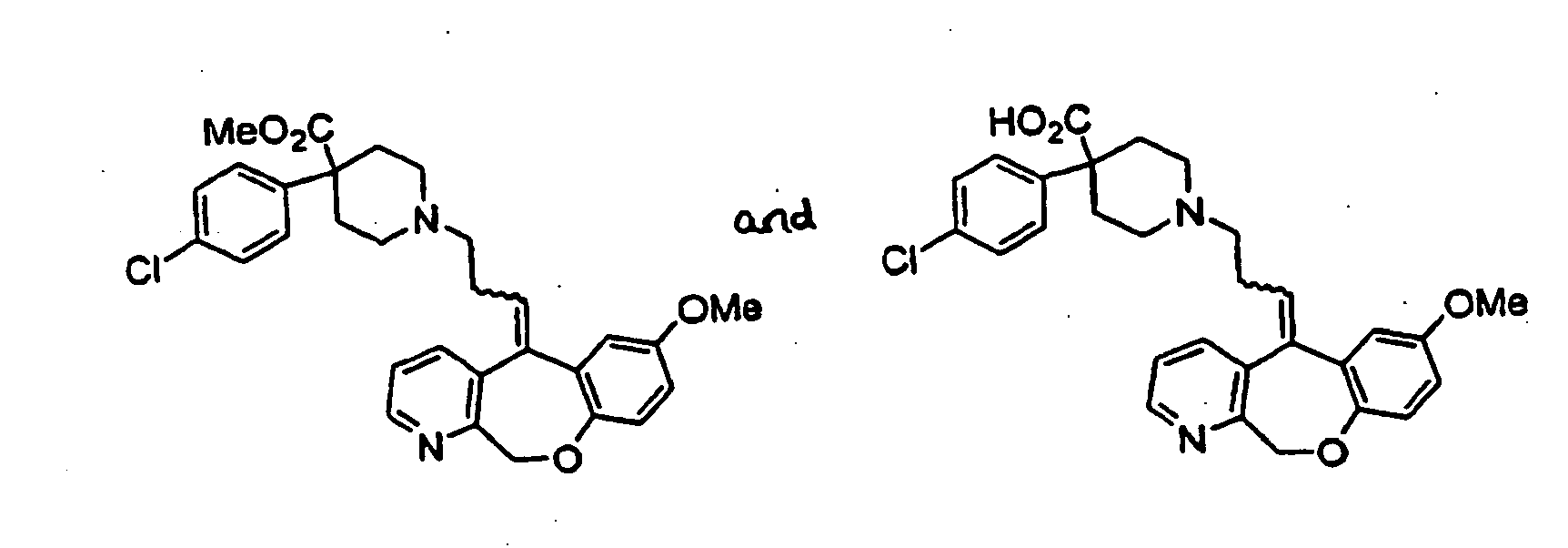
- A compound according to claim 6 wherein q1 and q2 are each one.
- A compound according to claim 7 wherein M is >CR1R2
- A compound according to claim 8 wherein R2 is a substituted aromatic group.
- A compound according to claim 9 wherein R2 is 4-chlorophenyl.
- A compound according to any one of claims 6-10 wherein R1 is an alkylamino group selected from the group consisting of aminomethyl, 2-aminoethyL 3-aminopropyl, 4-aminobutyl, dimethylaminoethyl, diethylaminomethyl, methylaminohexyl and aminoethylenyl.
- A compound which is a tertiary amine of the following formula:
 n is one to four;M is >NR2, >CR1R2, -O-CR1R2-O- or -CH2-CR1R2-O-;q1 is zero to three;q2 is zero or one;R1 is -H, -OH, -N3, a halogen, an aliphatic group, a substituted aliphatic group, an aminoalkyl group, -O-(aliphatic group), -O-(substituted aliphatic group), -SH, -S-(aliphatic group), -S-(substituted aliphatic group), -OC(O)-(aliphatic group), -O-C(O)-(substituted aliphatic group), -C(O)O-(aliphatic group), -C(O)O-(substituted aliphatic group), -COOH, -CN, -CO-NR3R4, -NR3R4 or R1 is a covalent bond between the ring atom at M and an adjacent carbon atom in the ring which contains M;R2 is -O-(substituted or unsubstituted aromatic group);R3 and R4 are independently -H, an acyl group, a substituted acyl group, an aliphatic group, a substituted aliphatic group, an aromatic group, a substituted aromatic group, a benzyl group, a substituted benzyl group, a non-aromatic heterocyclic group or a substituted non-aromatic heterocyclic group; orR3 and R4 taken together with the atom to which they are bonded, form a substituted or unsubstituted non-aromatic carbocyclic or heterocyclic ring;Z is:
 X1 is -CH2-S-, -S-CH2-, -O-CH2-, -CH2-O-, -SO-CH2-, -CH2-SO-, -S(O)2-CH2-, -CH2-S(O)2- or a bond;ring A and ring B are independently substituted or unsubstituted,wherein:said substituted aliphatic group comprises one or more substituents selected from the group consisting of an electron withdrawing group, halo, azido, -COOH, -OH, -CONR24R25, -NR24R25, -OS(O)2NR24R25, -S(O)2NR24R25, -SO3H, -S(O)2NH2. guanidino, -(O)u-(CH2)t-C(O)OR20, -(O)u-(CH2)t-OC(O)R20, -(O)u-(CH2)t-C(O)-NR21R22, -(O)u-(CH2)t-NHC(O)O-R20, -Q-H, -Q-(aliphatic group), -Q-(substituted aliphatic group), -Q-(aryl), -Q-(aromatic group), -Q-(substituted aromatic group), -Q-(CH2)p-(substituted or unsubstituted aromatic group),-Q-(non-aromatic heterocyclic group), -Q-(CH2)p-(non-aromatic heterocyclic group), oxo, epoxy, non-aromatic heterocycle, benzyl, substituted benzyl, aromatic group and substituted aromatic group;said substituted benzyl group and said substituted aromatic group and rings A and B when substituted comprise one or more substitutents selected from the group consisting of an electron withdrawing group, halo, azido, -CN, -COOH, -OH, -CONR24R25, -NR24R25, -OS(O)2NR24R25, -S(O)2NR24R25, -SO3H, -S(O)2NH2, guanidino, -(O)u-(CH2)t-C(O)OR20, -(O)u-(CH2)t-OC(O)R20, -(O)u-(CH2)t-C(O)-NR21R22, -(O)u-(CH2)t-NHC(O)O-R20, -Q-H, -Q-(aliphatic group), -Q-(substituted aliphatic group), -Q-(aryl), -Q-(aromatic group), -Q-(substituted aromatic group), -Q-(CH2)p-(substituted or unsubstituted aromatic group), -Q-(non-aromatic heterocyclic group), -Q-(CH2)p-(non-aromatic heterocyclic group), aliphatic group and substituted aliphatic group;said substituted non-aromatic heterocyclic group comprises one or more substitutents selected from the group consisting of an electron withdrawing group, halo, azido, -CN, -COOH, -OH, -CONR24R25, -NR24R25, -OS(O)2NR24R25, -S(O)2NR24R25, -SO3H, -S(O)2NH2, guanidino, -(O)u-(CH2)t-C(O)OR20, -(O)u-(CH2)t-OC(O)R20, -(O)u-(CH2)t-C(O)-NR21R22, -(O)u-(CH2)t-NHC(O)O-R20, -Q-H, -Q-(aliphatic group), -Q-(substituted aliphatic group), -Q-(aryl), -Q-(aromatic group), -Q-(substituted aromatic group), -Q-(CH2)p-(substituted or unsubstituted aromatic group), -Q-(non-aromatic heterocyclic group), -Q-(CH2)p-(non-aromatic heterocyclic group), aliphatic group, substituted aliphatic group, =O, =S, =NH, =N(aliphatic), =N(aromatic) and =N(substituted aromatic);R20, R21 and R22 are independently -H, an aliphatic group, a substituted aliphatic group, an aromatic group, a substituted aromatic group, a non-aromatic heterocyclic group, -NHC(O)-O-(aliphatic group), -NHC(O)-O-(aromatic group) or -NHC(O)-O-(non-aromatic heterocyclic group); orR21 and R22, taken together with the nitrogen atom to which they are bonded, form a non-aromatic heterocyclic ring; orR23 is -H, an aliphatic group, a benzyl group, an aryl group or non-aromatic heterocyclic group;R24 and R25 are independently -H, -OH, aliphatic group, substituted aliphatic group, benzyl group, an aryl group or non-aromatic heterocyclic group;t is zero to three;u is zero or one;p is one to five;Q is -O-, -S-, -S(O)-, -S(O)2-, -OS(O)2-, -C(O)-, -OC(O)-, -C(O)O-, -C(O)C(O)-O-, -O-C(O)C(O)-, -C(O)NH-, -NHC(O)-, -OC(O)NH-, -NHC(O)O-, -NH-C(O)-NH-, -S(O)2NH-, -NHS(O)2-, -N(R23)-, -C(NR23)NHNH-, -NHNHC(NR23)-, -NR24C(O)- or -NR24S(O)2;said aminoalkyl group is a C1 to C12 alkyl group substituted with -NR24R25;said aliphatic group is a saturated or unsaturated C1-C20 hydrocarbon;said electron withdrawing group is alkylimino, alkylsulfonyl, carboxamido, carboxylic alkyl ester, -CH=NH or -NO2;said acyl group is aliphatic carbonyl, aromatic carbonyl, aliphatic sulfonyl or aromatic sulfonyl;said substituted acyl group is substituted aliphatic carbonyl, substituted aromatic carbonyl, substituted aliphatic sulfonyl or substituted aromatic sulfonyl;the heterocycle of said non-aromatic heterocyclic group is a 5 to 8 membered non-aromatic ring that contains one or more heteroatoms selected from the group consisting of O, N, and S; andsaid aromatic group is selected from the group consisting of a C6 aromatic carbocycle, a C5 - C6 aromatic heterocycle comprising one or more heteroatoms selected from the group consisting of O, S and N, and a C6 aromatic carbocycle or a C5 - C6 aromatic heterocycle that is fused to one or more other rings;or a physiologically acceptable salt thereof.
 - A compound according to claim 12 wherein q1 and q2 are each one.
- A compound according to claim 12 wherein M is >CR1R2
- A compound according to claim 8 wherein R1 is -OH.
- A compound which is a tertiary amine of the following formula:
 n is one to four;M is -O-CR1R2-O- or -CH2-CR1R2-O-;q1 is zero to three;q2 is zero or one;R1 is -H, -OH, -N3, a halogen, an aliphatic group, a substituted aliphatic group, an aminoalkyl group, -O-(aliphatic group), -O-(substituted aliphatic group), -SH, -S-(aliphatic group), -S-(substituted aliphatic group), -OC(O)-(aliphatic group), -O-C(O)-(substituted aliphatic group), -C(O)O-(aliphatic group), -C(O)O-(substituted aliphatic group), -COOH, -CN, -CO-NR3R4, -NR3R4 or R1 is a covalent bond between the ring atom at M and an adjacent carbon atom in the ring which contains M;R2 is -OH, an acyl group, a substituted acyl group, -NR5R6, an aliphatic group, a substituted aliphatic group, an aromatic group, a substituted aromatic group, a benzyl group, a substituted benzyl group, a non-aromatic heterocyclic group, a substituted non-aromatic heterocyclic group, -O-(substituted or unsubstituted aromatic group) or -O-(substituted or unsubstituted aliphatic group);R3, R4, R5 and R6 are independently -H, an acyl group, a substituted acyl group, an aliphatic group, a substituted aliphatic group, an aromatic group, a substituted aromatic group, a benzyl group, a substituted benzyl group, a non-aromatic heterocyclic group or a substituted non-aromatic heterocyclic group; orR1 and R2, R3 and R4, or R5 and R6 taken together with the atom to which they are bonded, form a substituted or unsubstituted non-aromatic carbocyclic or heterocyclic ring;Z is:wherein:
 X1 is -CH2-S-, -S-CH2-, -O-CH2-, -CH2-O-, -SO-CH2-, -CH2-SO-, -S(O)2-CH2-, -CH2-S(O)2- or a bond;ring A and ring B are independently substituted or unsubstituted;wherein:said substituted aliphatic group comprises one or more substituents selected from the group consisting of an electron withdrawing group, halo, azido, -COOH, -OH, -CONR24R25, -NR24R25, -OS(O)2NR24R25, -S(O)2N24R25, -SO3H, -S(O)2NH2, guanidino, -(O)u-(CH2)t-C(O)OR20, -(O)u-(CH2)t-OC(O)R20, -(O)u-(CH2)t-C(O)-NR21R22, -(O)u-(CH2)t-NHC(O)O-R20, -Q-H., -Q-(aliphatic group), -Q-(substituted aliphatic group), -Q-(aryl), -Q-(aromatic group), -Q-(substituted aromatic group), -Q-(CH2)p-(substituted or unsubstituted aromatic group), -Q-(non-aromatic heterocyclic group), -Q-(CH2)p-(non-aromatic heterocyclic group), oxo, epoxy, non-aromatic heterocycle, benzyl, substituted benzyl, aromatic group and substituted aromatic group;said substituted benzyl group and said substituted aromatic group comprise one or more substitutents selected from the group consisting of an electron withdrawing group, halo, azido, -CN, -COOH, -OH, -CONR24R25, -NR24R25, -OS(O)2NR24R25, -S(O)2NR24R25, -SO3H, -S(O)2NH2, guanidino, -(O)u-(CH2)t-C(O)OR20, -(O)u-(CH2)t-OC(O)R20, -(O)u-(CH2)t-C(O)-NR21R22, -(O)u-(CH2)t-NHC(O)O-R20, -Q-H, -Q-(aliphatic group), -Q-(substituted aliphatic group), -Q-(aryl), -Q-(aromatic group), -Q-(substituted aromatic group), -Q-(CH2)p-(substituted or unsubstituted aromatic group), -Q-(non-aromatic heterocyclic group), -Q-(CH2)p-(non-aromatic heterocyclic group), aliphatic group and substituted aliphatic group;said substituted non-aromatic heterocyclic group comprises one or more substitutents selected from the group consisting of an electron withdrawing group, halo, azido, -CN, -COOH, -OH, -CONR24R25, -NR24R25, -OS(O)2NR24R25, -S(O)2NR24R25, -SO3H, -S(O)2NH2, guanidino, -(O)u-(CH2)t-C(O)OR20, -(O)u-(CH2)t-OC(O)R20, -(O)u-(CH2)t-C(O)-NR21R22, -(O)u-(CH2)t-NHC(O)O-R20, -Q-H, -Q-(aliphatic group), -Q-(substituted aliphatic group), -Q-(aryl), -Q-(aromatic group), -Q-(substituted aromatic group), -Q-(CH2)p-(substituted or unsubstituted aromatic group), -Q-(non-aromatic heterocyclic group), -Q-(CH2)p-(non-aromatic heterocyclic group), aliphatic group, substituted aliphatic group, =O, =S, =NH, =N(aliphatic), =N(aromatic) and =N(substituted aromatic);R20, R21 and R22 are independently -H, an aliphatic group, a substituted aliphatic group, an aromatic group, a substituted aromatic group, a non-aromatic heterocyclic group, -NHC(O)-O-(aliphatic group), -NHC(O)-O-(aromatic group) or -NHC(O)-O-(non-aromatic heterocyclic group); orR21 and R22, taken together with the nitrogen atom to which they are bonded, form a non-aromatic heterocyclic ring;R23 is -H, an aliphatic group, a benzyl group, an aryl group or non-aromatic heterocyclic group;R24 and R25 are independently -H, -OH, aliphatic group, substituted aliphatic group, benzyl group, an aryl group or non-aromatic heterocyclic group;t is zero to three;u is zero or one;p is one to five;Q is -O-, -S-, -S(O)-, -S(O)2-, -OS(O)2-, -C(O)-, -OC(O)-, -C(O)O-, -C(O)C(O)-O-, -O-C(O)C(O)-, -C(O)NH-, -NHC(O)-, -OC(O)NH-, -NHC(O)O-, -NH-C(O)-NH-, -S(O)2NH-, -NHS(O)2-, -N(R23)-, -C(NR23)NHNH-, -NHNHC(NR23)-, -NR24C(O)- or -NR24S(O)2-;said aminoalkyl group is a C1 to C12 alkyl group substituted with -NR24R25;said aliphatic group is a saturated or unsaturated C1-C20 hydrocarbon;said electron withdrawing group is alkylimino, alkylsulfonyl, carboxamido, carboxylic alkyl ester, -CH=NH or -NO2;said acyl group is aliphatic carbonyl, aromatic carbonyl, aliphatic sulfonyl or aromatic sulfonyl;said substituted acyl group is substituted aliphatic carbonyl, substituted aromatic carbonyl, substituted aliphatic sulfonyl or substituted aromatic sulfonyl;the heterocycle of said non-aromatic heterocyclic group is a 5 to 8 membered non-aromatic ring that contains one or more heteroatoms selected from the group consisting of O, N, and S; andsaid aromatic group is selected from the group consisting of a C6 aromatic carbocycle, a C5 - C6 aromatic heterocycle comprising one or more heteroatoms selected from the group consisting of 0, S and N, and a C6 aromatic carbocycle or a C5 - C6 aromatic heterocycle that is fused to one or more other rings;or a physiologically acceptable salt thereof.
 - A compound according to claim 16 wherein q1 and q2 are each one.
- A compound according to claim 17 wherein R1 is -OH and R2 is a substituted aromatic group.
- A compound according to claim 18 wherein R2 is 4-chlorophenyl.
- A compound which is a tertiary amine of the following formula:
 n is one to four;M is >NR2 or >CR1R2 ;R1 is -H, -OH, -N3, a halogen, an aliphatic group, a substituted aliphatic group, an aminoalkyl group, -O-(aliphatic group), -O-(substituted aliphatic group), -SH, -S-(aliphatic group); -S-(substituted aliphatic group), -OC(O)-(aliphatic group), -O-C(O)-(substituted aliphatic group), -C(O)O-(aliphatic group), -C(O)O-(substituted aliphatic group), -COOH, -CN, -CO-NR3R4, -NR3R4 or R1 is a covalent bond between the ring atom at M and an adjacent carbon atom in the ring which contains M;R2 is -OH, an acyl group, a substituted acyl group, -NR5R6, an aliphatic group, a substituted aliphatic group, an aromatic group, a substituted aromatic group, a benzyl group, a substituted benzyl group, a non-aromatic heterocyclic group, a substituted non-aromatic heterocyclic group, -O-(substituted or unsubstituted aromatic group) or -O-(substituted or unsubstituted aliphatic group);R3, R4, R5 and R6 are independently -H, an acyl group, a substituted acyl group, an aliphatic group, a substituted aliphatic group, an aromatic group, a substituted aromatic group, a benzyl group, a substituted benzyl group, a non-aromatic heterocyclic group or a substituted non-aromatic heterocyclic group; orR1 and R2, R3 and R4, or R5 and R6 taken together with the atom to which they are bonded, form a substituted or unsubstituted non-aromatic carbocyclic or heterocyclic ring;Z is:wherein:
 X1 is -CH2-S-, -S-CH2-, -O-CH2-, -CH2O-, -SO-CH2-, -CH2-SO-, -S(O)2-CH2-, -CH2-S(O)2- or a bond;ring A and ring B are independently substituted or unsubstituted;wherein:said substituted aliphatic group comprises one or more substituents selected from the group consisting of an electron withdrawing group, halo, azido, -COOH, -OH, -CONR24R25, -NR24R25, -OS(O)2NR24R25, -S(O)2NR24R25, -SO3H, -S(O)2NH2, guanidino, -(O)u-(CH2)t-C(O)OR20, -(O)u-(CH2)t-OC(O)R20, -(O)u-(CH2)t-C(O)-NR21R22, -(O)u-(CH2)t-NHC(O)O-R20, -Q-H, -Q-(aliphatic group), -Q-(substituted aliphatic group), -Q-(aryl), -Q-(aromatic group), -Q-(substituted aromatic group), -Q-(CH2)p-(substituted or unsubstituted aromatic group), -Q-(non-aromatic heterocyclic group), -Q-(CH2)p-(non-aromatic heterocyclic group), oxo, epoxy, non-aromatic heterocycle, benzyl, substituted benzyl, aromatic group and substituted aromatic group;said substituted benzyl group and said substituted aromatic group comprise one or more substitutents selected from the group consisting of an electron withdrawing group, halo, azido, -CN, -COOH, -OH, -CONR24R25, -NR24R25, -OS(O)2NR24R25, -S(O)2NR24R25, -SO3H, -S(O)2NH2, guanidino, -(O)u-(CH2)t-C(O)OR20, -(O)u-(CH2)t-OC(O)R20, -(O)u-(CH2)t-C(O)-NR21R22, -(O)u-(CH2)t-NHC(O)O-R20, -Q-H, -Q-(aliphatic group), -Q-(substituted aliphatic group), -Q-(aryl), -Q-(aromatic group), -Q-(substituted aromatic group), -Q-(CH2)p-(substituted or unsubstituted aromatic.group), -Q-(non-aromatic heterocyclic group), -Q-(CH2)p-(non-aromatic heterocyclic group), aliphatic group and substituted aliphatic group;said substituted non-aromatic heterocyclic group comprises one or more substitutents selected from the group consisting of an electron withdrawing group, halo, azido, -CN, -COOH, -OH, -CONR24R25, -NR24R25, -OS(O)2NR24R25, -S(O)2NR24R25, -SO3H, -S(O)2NH2, guanidino, -(O)u-(CH2)t-C(O)OR20, -(O)u-(CH2)t-OC(O)R20, -(O)u-(CH2)t-C(O)-NR21R22, -(O)u-(CH2)t-NHC(O)O-R20, -Q-H, -Q-(aliphatic group), -Q-(substituted aliphatic group), -Q-(aryl), -Q-(aromatic group), -Q-(substituted aromatic group), -Q-(CH2)p-(substituted or unsubstituted aromatic group), -Q-(non-aromatic heterocyclic group), -Q-(CH2)p-(non-aromatic heterocyclic group), aliphatic group, substituted aliphatic group, =O, =S, =NH, =N(aliphatic), =N(aromatic) and =N(substituted aromatic);R20, R21 and R22 are independently -H, an aliphatic group, a substituted aliphatic group, an aromatic group, a substituted aromatic goup, a non-aromatic heterocyclic group, -NHC(O)-O-(aliphatic group), -NHC(O)-O-(aromatic group) or -NHC(O)-O-(non-aromatic heterocyclic group); orR21 and R22, taken together with the nitrogen atom to which they are bonded, form a non-aromatic heterocyclic ring;R23 is -H, an aliphatic group, a benzyl group, an aryl group or non-aromatic heterocyclic group;R24 and R25 are independently -H, -OH, aliphatic group, substituted aliphatic group, benzyl group, an aryl group or non-aromatic heterocyclic group;t is zero to three;u is zero or one;p is one to five;Q is -O-, -S-, -S(O)-, -S(O)2-, -OS(O)2-, -C(O)-, -OC(O)-, -C(O)O-, -C(O)C(O)-O-, -O-C(O)C(O)-, -C(O)NH-, -NHC(O)-, -OC(O)NH-, -NHC(O)O-, -NH-C(O)-NH-, -S(O)2NH-, -NHS(O)2-, -N(R23)-, -C(NR23)NHNH-, -NHNHC(NR23)-, -NR14C(O)- or -NR24S(O)2-;said aminoalkyl group is a C1 to C12 alkyl group substituted with -NR24R25;said aliphatic group is a saturated or unsaturated C1-C20 hydrocarbon;said electron withdrawing group is alkylimino, alkylsulfonyl, carboxamido, carboxylic alkyl ester, -CH=NH or -NO2;said acyl group is aliphatic carbonyl, aromatic carbonyl, aliphatic sulfonyl or aromatic sulfonyl;said substituted acyl group is substituted aliphatic carbonyl, substituted aromatic carbonyl, substituted aliphatic sulfonyl or substituted aromatic sulfonyl;the heterocycle of said non-aromatic heterocyclic group is a 5 to 8 membered non-aromatic ring that contains one or more heteroatoms selected from the group consisting of O, N; and S; andsaid aromatic group is selected from the group consisting of a C6 aromatic carbocycle, a C5 - C6 aromatic heterocycle comprising one or more heteroatoms selected from the group consisting of O, S and N, and a C6 aromatic carbocycle or a C5 - C6 aromatic heterocycle that is fused to one or more other rings;or a physiologically acceptable salt thereof.
 - A compound according to claim 20 wherein M is >CR1R2.
- A compound according to claim 21 wherein R1 is -OH and R2 is a substituted aromatic group.
- A compound according to claim 22 wherein R2 is 4-chlorophenyl.
- A compound which is a tertiary amino of the following formula:
 n is one to four;M is >NR2, >CR1R2, -O-CR1R2-O- or -CH2-CR1R2-O-;the ring containing M is substituted or unsubstituted;R1 is -H, -OH, -N3, a halogen, an aliphatic group, a substituted aliphatic group, an aminoalkyl group, -O-(aliphatic group), -O-(substituted aliphatic group), -SH, -S-(aliphatic group), -S-(substituted aliphatic group), -OC(O)-(aliphatic group), -O-C(O)-(substituted aliphatic group), -C(O)O-(aliphatic group), -C(O)O-(substituted aliphatic group), -COOH, -CN, -CO-NR3R4, -NR3R4 or R1 is a covalent bond between the ring atom at M and an adjacent carbon atom in the ring which contains M;R2 is -OH, an acyl group, a substituted acyl group, -NR5R6, an aliphatic group, a substituted aliphatic group, an aromatic group, a substituted aromatic group, a benzyl group, a substituted benzyl group, a non-aromatic heterocyclic group, a substituted non-aromatic heterocyclic group, -O-(substituted or unsubstituted aromatic group) or -O-(substituted or unsubstituted aliphatic group);R3, R4, R5 and R6 are independently -H, an acyl group, a substituted acyl group, an aliphatic group, a substituted aliphatic group, an aromatic group, a substituted aromatic group, a benzyl group, a substituted benzyl group, a non-aromatic heterocyclic group or a substituted non-aromatic heterocyclic group; orR1 and R2, R3 and R4, or R5 and R6 taken together with the atom to which they are bonded, form a substituted or unsubstituted non-aromatic carbocyclic or heterocyclic ring;Z is:wherein:
 X1 is -CH2-S-, -S-CH2-, -O-CH2-, -CH2-O-, -SO-CH2-, -CH2-SO-, -S(O)rCH2-, -CH2-S(O)2- or a bond; andring A and ring B are independently substituted or unsubstituted,wherein:said substituted aliphatic group comprises one or more substituents selected from the group consisting of an electron withdrawing group, halo, azido, -COOH, -OH, -CONR24R25, -NR24R25, -OS(O)2NR24R25, -S(O)2NR24R25, -SO3H, -S(O)2NH2, guanidino, -(O)u-(CH2)t-C(O)OR20, -(O)u-(CH2)t-OC(O)R20, -(O)u(CH2)rC(O)-NR21R22, -(O)u-(CH2)t-NHC(O)O-R20, -Q-H, -Q-(aliphatic group), -Q-(substituted aliphatic group), -Q-(aryl), -Q-(aromatic group), -Q-(substituted aromatic group), -Q-(CH2)p-(substituted or unsubstituted aromatic group), -Q-(non-aromatic heterocyclic group), -Q-(CH2)p-(non-aromatic heterocyclic group), oxo, epoxy, non-aromatic heterocycle, benzyl, substituted benzyl, aromatic group and substituted aromatic group;said substituted benzyl group and said substituted aromatic group and rings A and B when substituted comprise one or more substitutents selected from the group consisting of an electron withdrawing group, halo, azido, -CN, -COOH, -OH, -CONR24R25, -NR24R25, -OS(O)2NR24R25, -S(O)2NR24R25, -SO3H, -S(O)2NH2, guanidino, -(O)u-(CH2)t-C(O)OR20, -(O)u-(CH2)t-OC(O)R20, -(O)u(CH2)t-C(O)-NR21R22, -(O)u-(CH2)t-NHC(O)O-R20, -Q-H, -Q-(aliphatic group), -Q-(substituted aliphatic group), -Q-(aryl), -Q-(aromatic group), -Q-(substituted aromatic group), -Q-(CH2)p-(substituted or unsubstituted aromatic group), -Q-(non-aromatic heterocyclic group), -Q-(CH2)p-(non-aromatic heterocyclic group), aliphatic group and substituted aliphatic group;said substituted non-aromatic heterocyclic group comprises one or more substitutents selected from the group consisting of an electron withdrawing group, halo, azido, -CN, -COOH, -OH, -CONR24R25, -NR24R25, -OS(O)2NR24R25, -S(O)2NR24R25, -SO3H, -S(O)2NH2, guanidino, -(O)u-(CH2)t-C(O)OR20, -(O)u-(CH2)t-OC(O)R20, -(O)u-(CH2)t-C(O)-NR21R22, -(O)u-(CH2)t-NHC(O)O-R20, -Q-H, -Q-(aliphatic group), -Q-(substituted aliphatic group), -Q-(aryl), -Q-(aromatic group), -Q-(substituted aromatic group), -Q-(CH2)p-(substituted or unsubstituted aromatic group), -Q-(non-aromatic heterocyclic group), -Q-(CH2)p-(non-aromatic heterocyclic group), aliphatic group, substituted aliphatic group, =O, =S, =NH, =N(aliphatic), =N(aromatic) and =N(substituted aromatic);R20, R21 and R22 are independently -H, an aliphatic group, a substituted aliphatic group, an aromatic group, a substituted aromatic group, a non-aromatic heterocyclic group, -NHC(O)-O-(aliphatic group), -NHC(O)-O-(aromatic group) or -NHC(O)-O-(non-aromatic heterocyclic group); orR21 and R22, taken together with the nitrogen atom to which they are bonded, form a non-aromatic heterocyclic ring;R23 is -H, an aliphatic group, a benzyl group, an aryl group or non-aromatic heterocyclic group;R24 and R25 are independently -H, -OH, aliphatic group, substituted aliphatic group, benzyl group, an aryl group or non-aromatic heterocyclic group;t is zero to three;u is zero or one;p is one to five;Q is -O-, -S-, -S(O)-, -S(O)2-, -OS(O)2-, -C(O)-, -OC(O)-, -C(O)O-, -C(O)C(O)-O-, -O-C(O)C(O)-, -C(O)NH-, -NHC(O)-, -OC(O)NH-, -NHC(O)O-, -NH-C(O)-NH-, -S(O)2NH-, -NHS(O)2-, -N(R23)-, -C(NR23)NHNH-, -NHNHC(NR23)-, -NR24C(O)- or -NR24S(O)2-;said aminoalkyl group is a C1 to C12 alkyl group substituted with -NR24R25;said aliphatic group is a saturated or unsaturated C1-C20 hydrocarbon;said electron withdrawing group is alkylimino, alkylsulfonyl, carboxamido, carboxylic alkyl ester, -CH=NH or -NO2;said acyl group is aliphatic carbonyl, aromatic carbonyl, aliphatic sulfonyl or aromatic sulfonyl;said substituted acyl group is substituted aliphatic carbonyl, substituted aromatic carbonyl, substituted aliphatic sulfonyl or substituted aromatic sulfonyl;the heterocycle of said non-aromatic heterocyclic group is a 5 to 8 membered non-aromatic ring that contains one or more heteroatoms selected from the group consisting of O, N, and S; andsaid aromatic group is selected from the group consisting of a C6 aromatic carbocycle, a C5 - C6 aromatic heterocycle comprising one or more heteroatoms selected from the group consisting of O, S and N, and a C6 aromatic carbocycle or a C5 - C6 aromatic heterocycle that is fused to one or more other rings,or a physiologically acceptable salt thereof.
 - A compound which is a tertiary amino of the following formula:
 n is one to four,R50 and R51 are each, independently, -H, an aliphatic group, a substituted aliphatic group, an aminoalkyl group, -NR3R4, an aromatic group, a substituted aromatic group, a benzyl group, a substituted benzyl group, a non-aromatic heterocyclic group, a substituted non-aromatic heterocyclic group, or a covalent bond between the nitrogen atom an adjacent carbon atom;R3 and R4 are independently -H, an acyl group, a substituted acyl group, an aliphatic group, a substituted aliphatic group, an aromatic group, a substituted aromatic group, a benzyl group, a.substituted benzyl group, a non-aromatic heterocyclic group or a substituted non-aromatic heterocyclic group;Z is:wherein:
 X1 is -CH2-S-, -S-CH2-, -O-CH2-, -CH2-O-, -SO-CH2-, -CH2-SO-, -S(O)2-CH2-, -CH2-S(O)2- or a bond;ring A and ring B are independently substituted or unsubstituted,wherein:said substituted aliphatic group comprises one or more substituents selected from the group consisting of an electron withdrawing group, halo, azido, -COOH, -OH, -CONR24R25, -NR24R25, -OS(O)2NR24R25, -S(O)2NR24R25, -SO3H, -S(O)2NH2, guanidino, -(O)u-(CH2)t-C(O)OR20, -(O)u-(CH2)t-OC(O)R20, -(O)u-(CH2)t-C(O)-NR21R22, -(O)u-(CH2)t-NHC(O)O-R20, -Q-H, -Q-(aliphatic group), -Q-(substituted aliphatic group), -Q-(aryl), -Q-(aromatic group), -Q-(substituted aromatic group), -Q-(CH2)p-(substituted or unsubstituted aromatic group), -Q-(non-aromatic heterocyclic group), -Q-(CH2)p-(non-aromatic heterocyclic group), oxo, epoxy, non-aromatic heterocycle, benzyl, substituted benzyl, aromatic group and substituted aromatic group;said substituted benzyl group and said substituted aromatic group and rings A and B when substituted comprise one or more substitutents selected from the group consisting of an electron withdrawing group, halo, azido, -CN, -COOH, -OH, -CONR24R25, -NR24R25, -OS(O)2NR24R25, -S(C)2NR24R25, -SO3H, -S(O)2NH2, guanidino, -(O)u-(CH2)t-C(O)OR20, -(O)u-(CH2)t-OC(O)R20, -(O)u(CH2)t-C(O)-NR21R22, -(O)u-(CH2)t-NHC(O)O-R20, -Q-H, -Q-(aliphatic group), -Q-(substituted aliphatic group), -Q-(aryl), -Q-(aromatic group), -Q-(substituted aromatic group), -Q-(CH2)p-(substituted or unsubstituted aromatic group), -Q-(non-aromatic heterocyclic group), -Q-(CH2)p-(non-aromatic heterocyclic group), aliphatic group and substituted aliphatic group;said substituted non-aromatic heterocyclic group comprises one or more substitutents selected from the group consisting of an electron withdrawing group, halo, azido, -CN, -COOH, -OH, -CONR24R25, -NR24R25, -OS(O)2NR24R25, -S(O)2NR14R11, -SO3H, -S(O)2NH2, guanidino, -(O)u-(CH2)t-C(O)OR20, -(O)u-(CH2)tOC(O)R20, -(O)u-(CH2)tC(O)-NR21R22, -(O)u-(CH2)tNHC(O)O-R20, -Q-H, -Q-(aliphatic group), -Q-(substituted aliphatic group), -Q-(aryl), -Q-(aromatic group), -Q-(substituted aromatic group), -Q-(CH2)p-(substituted or unsubstituted aromatic group), -Q-(non-aromatic heterocyclic group), -Q-(CH2)p-(non-aromatic heterocyclic goup), aliphatic group, substituted aliphatic group, =O, =S, =NH, =N(aliphatic), =N(aromatic) and =N(substituted aromatic);R20, R21 and R22 are independently -H, an aliphatic group, a substituted aliphatic group, an aromatic group, a substituted aromatic group, a non-aromatic heterocyclic group, -NHC(O)-O-(aliphatic group), -NHC(O)-O-(aromatic group) or -NHC(O)-O-(non-aromatic heterocyclic group); orR21 and R22, taken together with the nitrogen atom to which they are bonded, form a non-aromatic heterocyclic ring;R23 is -H, an aliphatic group, a benzyl group, an aryl group or non-aromatic heterocyclic group;R24 and R25 are independently -H, -OH, aliphatic group, substituted aliphatic group, benzyl group, an aryl group or non-aromatic heterocyclic group;t is zero to three;u is zero or one;p is one to five;Q is -O-, -S-, -S(O)-, -S(O)2-, -OS(O)2-, -C(O)-, -OC(O)-, -C(O)O-, -C(O)C(O)-O-, -O-C(O)C(O)-, -C(O)NH-, -NHC(O)-, -OC(O)NH-, -NHC(O)O-, -NH-C(O)-NH-, -S(O)2NH-, -NHS(O)2-, -N(R23)-, -C(NR23)NHNH-, -NHNHC(NR23)-, -NR24C(O)- or -NR24S(O)2-;said aminoalkyl group is a C1 to C12 alkyl group substituted with -NR24R25;said aliphatic group is a saturated or unsaturated C1-C20 hydrocarbon;said electron withdrawing group is alkylimino, alkylsulfonyl, carboxamido, carboxylic alkyl ester, -CH=NH or -NO2;said acyl group is aliphatic carbonyl, aromatic carbonyl, aliphatic sulfonyl or aromatic sulfonyl;said substituted acyl group is substituted aliphatic carbonyl, substituted aromatic carbonyl, substituted aliphatic sulfonyl or substituted aromatic sulfonyl;the heterocycle of said non-aromatic heterocyclic group is a 5 to 8 membered non-aromatic ring that contains one or more heteroatoms selected from the group consisting of O, N, and S; andsaid aromatic group is selected from the group consisting of a C6 aromatic carbocycle, a C5 - C6 aromatic heterocycle comprising one or more heteroatoms selected from the group consisting of O, S and N, and a C6 aromatic carbocycle or a C5 - C6 aromatic heterocycle that is fused to one or more other rings,or a physiologically acceptable salt thereof.
 - A compound according to claim 24 wherein Z is:
 X1 is -CH2-S-, -S-CH2-, -O-CH2-, -CH2-O-, -SO-CH2-, -CH2-SO-, -S(O)2-CH2-, -CH2-S(O)2- or a bond; andring A and ring B are independently substituted or unsubstituted,
 - A compound according to any one of claims 6-23, 25 and 26 wherein ring B is substituted para to the carbon atom of ring B that is bonded to X1 in ring C, such that Z is:
 R40 is -OH, -COOH, -NO2, halogen, aliphatic group, substituted aliphatic group, an aromatic group, a substituted aromatic group, -NR24R25, -CONR24R25, Q-(aliphatic group), Q-(substituted aliphatic group), -O-(aliphatic group), -O-(substituted aliphatic group), -O-(aromatic group), -O-(substituted aromatic group), an electron withdrawing group, -(O)u-(CH2)t-C(O)OR20, -(O)u-(CH2)t-OC(O)R20, -(O)u-(CH2)t-C(O)-NR21R22 or -(O)u-(CH2)t-NHC(O)O-R20;R20, R21 or R22 are independently -H, an aliphatic group, a substituted aliphatic group, an aromatic group, a substituted aromatic group or a non-aromatic heterocyclic group; orR21 and R22, taken together with the nitrogen atom to which they are bonded form a non-aromatic heterocyclic ring;Q is -NR24C(O)-, -NR24S(O)2- or -C(O)O-;R24 and R25 are independently -H, -OH, an aliphatic group or a substituted aliphatic group;u is zero or one; andt is an integer from zero to 3.
 - A compound according to one of claims 6-23, 25 and 26 wherein ring B is substituted para to the carbon atom of ring B that is bonded to X1 in ring C, such that Z is:
 R40 is -C(=NR60)NR21R22, -O-C(O)-NR21R26, -S(O)2-NR21R22 or -NH-C(O)-NR21R22; whereinR21 and R22 are independently -H, an aliphatic group, a substituted aliphatic group, an aromatic group, a substituted aromatic group or a non-aromatic heterocyclic group; orR21 and R22, taken together with the nitrogen atom to which they are bonded, form a substituted or unsubstituted non-aromatic heterocyclic ring;R26 is -H, an aliphatic group, a substituted aliphatic group, an aromatic group, a substituted aromatic group, a non-aromatic heterocyclic group, -C(O)-O-(substituted or unsubstituted aliphatic group), -C(O)-O-(substituted or unsubstituted aromatic group), -S(O)2-(substituted or unsubstituted aliphatic group), -S(O)2-(substituted or unsubstituted aromatic group); orR26 and R21, taken together with the nitrogen atom to which they are bonded, form a substituted or unsubstituted non-aromatic heterocyclic ring.
 - A compound according to any one of claims 1-28 wherein X1 is -CH2-O-
- A compound which is a tertiary amine of the following formula:
 M is CR1R2;R1 is -OH;R2 is 4-chlorophenyl;n is two;Z is:
 X1 is -CH2-O-; andR40 isor a physiologically acceptable salt thereof.
- A compound according to any one of claims 6 to 10 wherein R' is a substituted linear, branched or cyclic C1-C20 alkyl, alkanyl or alkynyl group.
- A compound according to any one of claims 1 to 31 for use in a method for treatment of the human or animal body by therapy.
- A compound as claimed in claim 32 for use in the treatment of a disease associated with aberrant leukocyte recruitment and/or activation.
- A compound as claimed in claim 32 for use in the treatment of a chronic inflammatory disease.
- A compound as claimed in claim 32 for use in the treatment of rheumatoid arthritis.
- A compound as claimed in claim 32 for use in the treatment of multiple sclerosis.
- Use of a compound defined in any one of claims 1 to 31 in the manufacture of a medicament for the treatment of a disease associated with aberrant leukocyte recruitment and/or activation.
- Use of a compound defined in any one of claims 1 to 31 in the manufacture of a medicament for the treatment of a chronic inflammatory disease.
- Use of a compound defined in any one of claims 1 to 31 in the manufacture of a medicament for the treatment of rheumatoid arthritis.
- Use of a compound defined in any one of claims 1 to 31 in the manufacture of a medicament for the treatment of multiple sclerosis.
Applications Claiming Priority (3)
| Application Number | Priority Date | Filing Date | Title |
|---|---|---|---|
| US09/362,837 US6509346B2 (en) | 1998-01-21 | 1999-07-28 | Chemokine receptor antagonists and methods of use therefor |
| US362837 | 1999-07-28 | ||
| PCT/US2000/020732 WO2001009138A2 (en) | 1999-07-28 | 2000-07-28 | Chemokine receptor antagonists and methods of use therefor |
Publications (2)
| Publication Number | Publication Date |
|---|---|
| EP1204665A2 EP1204665A2 (en) | 2002-05-15 |
| EP1204665B1 true EP1204665B1 (en) | 2009-01-07 |
Family
ID=23427735
Family Applications (1)
| Application Number | Title | Priority Date | Filing Date |
|---|---|---|---|
| EP00950880A Expired - Lifetime EP1204665B1 (en) | 1999-07-28 | 2000-07-28 | Chemokine receptor antagonists and methods of use therefor |
Country Status (17)
| Country | Link |
|---|---|
| US (2) | US6509346B2 (en) |
| EP (1) | EP1204665B1 (en) |
| JP (1) | JP4903333B2 (en) |
| KR (1) | KR20020016926A (en) |
| CN (1) | CN1471536A (en) |
| AT (1) | ATE420090T1 (en) |
| AU (1) | AU6391400A (en) |
| BR (1) | BR0013065A (en) |
| CA (1) | CA2391267A1 (en) |
| DE (1) | DE60041336D1 (en) |
| EA (1) | EA200200194A1 (en) |
| ES (1) | ES2321798T3 (en) |
| HK (1) | HK1044333A1 (en) |
| HU (1) | HUP0202202A3 (en) |
| IL (1) | IL147852A0 (en) |
| MX (1) | MXPA02000978A (en) |
| WO (1) | WO2001009138A2 (en) |
Families Citing this family (30)
| Publication number | Priority date | Publication date | Assignee | Title |
|---|---|---|---|---|
| US7271176B2 (en) * | 1998-09-04 | 2007-09-18 | Millennium Pharmaceuticals, Inc. | Chemokine receptor antagonists and methods of use thereof |
| EA008060B1 (en) * | 1998-09-04 | 2007-02-27 | Милленниум Фармасьютикалз, Инк. | Chemokine receptor antagonists and methods of use thereof |
| WO2002079382A2 (en) * | 2001-03-30 | 2002-10-10 | President And Fellows Of Harvard College | B-ephrin regulation of g-protein coupled chemoattraction; compositions and methods of use |
| EP1448566B3 (en) * | 2001-11-21 | 2009-04-08 | Millennium Pharmaceuticals, Inc. | Chemokine receptor antagonists and methods of use thereof |
| US7541365B2 (en) | 2001-11-21 | 2009-06-02 | Millennium Pharmaceuticals, Inc. | Chemokine receptor antagonists and methods of use therefor |
| EP1553098A1 (en) * | 2002-10-18 | 2005-07-13 | Ono Pharmaceutical Co., Ltd. | Spiroheterocyclic derivative compounds and drugs comprising the compounds as the active ingredient |
| TWI291467B (en) | 2002-11-13 | 2007-12-21 | Millennium Pharm Inc | CCR1 antagonists and methods of use therefor |
| JP2006521366A (en) * | 2003-03-28 | 2006-09-21 | シグモイド・バイオテクノロジーズ・リミテッド | Solid oral dosage forms containing seamless microcapsules |
| US20060276465A1 (en) * | 2003-12-26 | 2006-12-07 | Eisai R&D Management Co., Ltd. | 1,2-di(cyclic) substituted benzene compounds |
| US7410971B2 (en) * | 2003-12-26 | 2008-08-12 | Eisai R&D Management Co., Ltd. | 1,2-di(cyclic)substituted benzene compounds |
| MY140489A (en) * | 2003-12-26 | 2009-12-31 | Eisai R&D Man Co Ltd | 1,2-di (cyclic) substituted benzene compounds |
| CN100526301C (en) * | 2003-12-26 | 2009-08-12 | 卫材R&D管理有限公司 | 1,2-bis(cyclo)substituted benzene compounds |
| DE102004004719A1 (en) * | 2004-01-29 | 2005-08-18 | Basf Ag | Process for the preparation of enantiomerically pure aminoalcohols |
| CA2581816A1 (en) * | 2004-09-27 | 2006-04-06 | Sigmoid Biotechnologies Limited | Microcapsules comprising a methylxanthine and a corticosteroid |
| EP1841429B1 (en) | 2004-12-17 | 2012-04-18 | Millennium Pharmaceuticals, Inc. | Solid forms of a chemokine receptor antagonist and methods of use thereof |
| EP1832580A4 (en) | 2004-12-20 | 2009-03-11 | Eisai R&D Man Co Ltd | Crystal and salt of 1-cyclopropylmethyl-4-ý2-(3,3,5,5)-tetramethylcyclohexyl)phenyl¨piperazine |
| MY144974A (en) * | 2005-06-14 | 2011-11-30 | Eisai R&D Man Co Ltd | 1,2-di(cyclic) substituted benzene derivatives |
| EP2061440A2 (en) * | 2007-04-04 | 2009-05-27 | Sigmoid Pharma Limited | A pharmaceutical composition of tacrolimus |
| ES2963291T3 (en) | 2007-04-26 | 2024-03-26 | Sublimity Therapeutics Ltd | Manufacturing of multiple mini capsules |
| CA2685591A1 (en) * | 2007-05-01 | 2008-11-06 | Sigmoid Pharma Limited | Pharmaceutical nimodipine compositions |
| US20090286823A1 (en) * | 2007-12-17 | 2009-11-19 | Millennium Pharmaceuticals Inc. | CCR1 Inhibitors useful for the treatment of multiple myeloma and other disorders |
| ES2530049T3 (en) | 2009-05-18 | 2015-02-26 | Sigmoid Pharma Limited | Composition comprising drops of oil |
| BR112012002963A2 (en) | 2009-08-12 | 2017-10-24 | Sigmoid Pharma Ltd | immunomodulatory compositions comprising a polymer matrix and an oil phase |
| US8859777B2 (en) | 2010-04-30 | 2014-10-14 | Kinentia Biosciences Llc | 4-fluoro-4-arylpiperdin-1-yl derivatives as mu opioid function moderators |
| GB201020032D0 (en) | 2010-11-25 | 2011-01-12 | Sigmoid Pharma Ltd | Composition |
| KR101102335B1 (en) * | 2011-09-06 | 2012-01-03 | (주)칠칠공사 | Adjustable pool for swimming practice |
| GB201212010D0 (en) | 2012-07-05 | 2012-08-22 | Sigmoid Pharma Ltd | Formulations |
| GB201319791D0 (en) | 2013-11-08 | 2013-12-25 | Sigmoid Pharma Ltd | Formulations |
| EA036036B1 (en) | 2014-11-07 | 2020-09-16 | Сигмойд Фарма Лимитед | Compositions comprising cyclosporin |
| CN115389659B (en) * | 2022-08-23 | 2024-07-16 | 浙江中医药大学 | Cell membrane bonded magnetic carbon sphere composite material and preparation method and application thereof |
Family Cites Families (70)
| Publication number | Priority date | Publication date | Assignee | Title |
|---|---|---|---|---|
| DE80449C (en) | ||||
| GB1003292A (en) | 1960-12-08 | 1965-09-02 | Sandoz Ag | Improvements in or relating to 4-azathiaxanthene derivatives |
| NL132137C (en) * | 1963-04-24 | |||
| FR145F (en) | 1964-06-01 | |||
| CH421138A (en) | 1965-11-04 | 1966-09-30 | Wander Ag Dr A | Process for the preparation of thioxanthene derivatives |
| US3409621A (en) | 1966-04-01 | 1968-11-05 | Schering Corp | Piperazino-aza-dibenzo-[a, d]-cycloheptenes |
| US3625974A (en) | 1967-04-28 | 1971-12-07 | Fujisawa Pharmaceutical Co | Dibenzothiazepine derivatives |
| NL6905642A (en) | 1968-04-12 | 1969-10-14 | ||
| US3770729A (en) | 1970-12-22 | 1973-11-06 | Yoshitomi Pharmaceutical | N substituted piperidine compounds |
| GB1330966A (en) | 1970-12-22 | 1973-09-19 | Yoshitomi Pharmaceutical | N-substituted piperidine compounds methods for their production and pharmaceutical compositions containing them |
| CA1010870A (en) | 1972-12-08 | 1977-05-24 | Niels Lassen | Thiaxanthene derivative and method |
| US4250176A (en) | 1976-12-21 | 1981-02-10 | Janssen Pharmaceutica N.V. | Piperazine derivatives |
| US4335122A (en) | 1981-03-18 | 1982-06-15 | Hoechst-Roussel Pharmaceuticals Inc. | Dihydro-dibenzoxepines-thiepines and -morphanthridones, compositions and use |
| DE3326641A1 (en) | 1982-07-27 | 1984-02-02 | Basf Ag, 6700 Ludwigshafen | 5,6-Dihydro-11H-morphanthridin-6-ones, their preparation and medicaments containing these |
| CA1237428A (en) | 1983-06-24 | 1988-05-31 | Hiroshi Tanaka | ¬1| benzepino¬3,4-b|pyridine derivative |
| DE3402060A1 (en) | 1984-01-21 | 1985-08-01 | Dr. Karl Thomae Gmbh, 7950 Biberach | SUBSTITUTED 5,11-DIHYDRO-6H-DIBENZ (B, E) AZEPIN-6-ONE, METHOD FOR THE PRODUCTION THEREOF AND MEDICINAL PRODUCTS CONTAINING THESE COMPOUNDS |
| JPH0665664B2 (en) | 1985-01-18 | 1994-08-24 | 大塚製薬株式会社 | Morphoanthridine derivative |
| SE8500273D0 (en) | 1985-01-22 | 1985-01-22 | Leo Ab | NEW TRICYCLIC ASSOCIATIONS, COMPOSITIONS CONTAINING SUCH ASSOCIATIONS, MANUFACTURING PROCEDURES AND METHODS OF TREATMENT |
| JPS6310784A (en) | 1986-03-03 | 1988-01-18 | Kyowa Hakko Kogyo Co Ltd | Dibenz(b,e)oxepin derivative, antiallergic agent and anti-inflammatory agent |
| WO1988000049A1 (en) * | 1986-06-26 | 1988-01-14 | Kyowa Hakko Kogyo Co., Ltd. | Antiarrhythmic agent |
| US5089496A (en) | 1986-10-31 | 1992-02-18 | Schering Corporation | Benzo[5,6]cycloheptapyridine compounds, compositions and method of treating allergies |
| IT8721978A0 (en) | 1987-09-21 | 1987-09-21 | Angeli Inst Spa | NEW TRICYCLIC AMIDE DERIVATIVES. |
| US4882351A (en) | 1987-10-14 | 1989-11-21 | Roussel Uclaf | Tricyclic compounds |
| AU612437B2 (en) | 1987-12-14 | 1991-07-11 | Kyowa Hakko Kogyo Co. Ltd. | Tricyclic compounds |
| CA1341044C (en) | 1988-04-28 | 2000-07-04 | Frank J. Villani | Benzopyrido piperidine, piperidylidene and peperazine compounds, compositions, methods of manufacture and methods of use |
| US5242931A (en) | 1988-06-09 | 1993-09-07 | Kyowa Hakko Kogyo Co., Ltd. | Tricyclic compounds as TXA2 antagonists |
| US4999363A (en) | 1988-06-09 | 1991-03-12 | Kyowa Hakko Kogyo Co., Ltd. | Tricyclic compounds |
| DE3838912A1 (en) | 1988-11-17 | 1990-05-23 | Thomae Gmbh Dr K | MEANS FOR THE TREATMENT OF ACUTE AND CHRONIC OBSTRUCTIVE RESPIRATORY DISEASES |
| JPH0694464B2 (en) | 1991-01-23 | 1994-11-24 | 協和醗酵工業株式会社 | Tricyclic compound and its intermediate |
| US5239083A (en) | 1991-03-11 | 1993-08-24 | Kyowa Hakko Kogyo Co., Ltd. | Indole derivatives which inhibit steroid 5α reductase |
| WO1992016226A1 (en) | 1991-03-19 | 1992-10-01 | Smithkline Beecham Corporation | Il-1 inhibitors |
| EP0586560A1 (en) | 1991-05-23 | 1994-03-16 | Schering Corporation | Novel benzopyrido piperidylidene compounds, compositions, methods of manufacture and methods of use |
| JPH06509341A (en) | 1991-07-23 | 1994-10-20 | シェリング・コーポレーション | Novel benzopyridopiperidylidene compounds, compositions, manufacturing methods and methods of use |
| US5378701A (en) | 1991-12-27 | 1995-01-03 | Kyowa Hakko Kogyo | Tricyclic compounds |
| US5679703A (en) | 1992-09-16 | 1997-10-21 | Kyowa Hakko Kogyo, Co., Ltd. | Tricyclic compounds having ACAT inhibiting activity |
| US5538986A (en) | 1993-12-06 | 1996-07-23 | Schering Corporation | Tricyclic derivatives, compositions and methods of use |
| MY113463A (en) | 1994-01-04 | 2002-03-30 | Novo Nordisk As | Novel heterocyclic compounds |
| US5801175A (en) | 1995-04-07 | 1998-09-01 | Schering Corporation | Tricyclic compounds useful for inhibition of G-protein function and for treatment of proliferative diseases |
| US5712280A (en) | 1995-04-07 | 1998-01-27 | Schering Corporation | Tricyclic compounds useful for inhibition of G-protein function and for treatment of proliferative diseases |
| AU5271096A (en) | 1995-04-07 | 1996-10-23 | Novo Nordisk A/S | Novel heterocyclic compounds |
| WO1996031469A1 (en) | 1995-04-07 | 1996-10-10 | Novo Nordisk A/S | N-substituted azaheterocyclic carboxylic acids and esters thereof |
| UA54385C2 (en) * | 1995-04-07 | 2003-03-17 | Ново Нордіск А/С | N-substituted azaheterocyclic carboxylic acids and etHers thereof, a method for THEIR PREPARATION, a pharmaceutical composition and a method for treatment |
| JPH0940662A (en) | 1995-05-24 | 1997-02-10 | Kyowa Hakko Kogyo Co Ltd | Tricyclic compound |
| CA2231773A1 (en) | 1995-09-13 | 1997-03-20 | Shigeru Aono | Phenylpiperidine derivative |
| AU1208397A (en) | 1995-12-28 | 1997-07-28 | Takeda Chemical Industries Ltd. | Diphenylmethane derivatives as mip-1alpha/rantes receptor antagonists |
| US6686353B1 (en) | 1996-05-20 | 2004-02-03 | Teijin Intellectual Property Center Limited | Diarylalkyl cyclic diamine derivatives as chemokine receptor antagonists |
| US6281212B1 (en) | 1996-07-12 | 2001-08-28 | Millennium Pharmaceuticals, Inc. | Chemokine receptor antagonists and methods of use therefor |
| US6323206B1 (en) | 1996-07-12 | 2001-11-27 | Millennium Pharmaceuticals, Inc. | Chemokine receptor antagonists and methods of use therefor |
| WO1998004554A1 (en) | 1996-07-29 | 1998-02-05 | Banyu Pharmaceutical Co., Ltd. | Chemokine receptor antagonists |
| EP0929544B1 (en) | 1996-09-13 | 2004-11-10 | Schering Corporation | Tricyclic antitumor compounds being farnesyl protein transferase inhibitors |
| AU4337497A (en) | 1996-09-13 | 1998-04-02 | Schering Corporation | Tricyclic compounds useful as fpt inhibitors |
| ES2169420T3 (en) | 1996-09-13 | 2002-07-01 | Schering Corp | USEFUL TRICICLIC COMPOUNDS TO INHIBIT THE FUNCTION OF PROTEIN G AND TO TREAT PROLIFERATIVE DISEASES. |
| WO1998011098A1 (en) | 1996-09-13 | 1998-03-19 | Schering Corporation | Novel tricyclic piperidinyl compounds useful as inhibitors of farnesyl-protein transferase |
| CA2264513C (en) | 1996-09-13 | 2004-03-30 | Schering Corporation | Substituted benzocycloheptapyridine derivatives useful for inhibition of farnesyl protein transferase |
| ES2242232T3 (en) | 1996-09-13 | 2005-11-01 | Schering Corporation | BENZOCICLOHEPTAPIRIDINAS SUBSTITUTED USEFUL AS INHIBITORS OF FARNESIL-PROTEINA-TRANSFERASA. |
| BR9712831A (en) | 1996-09-13 | 1999-11-16 | Schering Corp | Tricyclic farnesyl protein transferase inhibitors |
| PL332593A1 (en) | 1996-10-04 | 1999-09-27 | Novo Nordisk As | N-substituted azaheterocyclic compounds |
| AU5604998A (en) | 1996-12-13 | 1998-07-03 | Merck & Co., Inc. | Spiro-substituted azacycles as modulators of chemokine receptor activity |
| WO1998025617A1 (en) | 1996-12-13 | 1998-06-18 | Merck & Co., Inc. | Substituted aryl piperazines as modulators of chemokine receptor activity |
| AU5803398A (en) | 1996-12-13 | 1998-07-03 | Merck & Co., Inc. | Spiro-substituted azacycles as modulators of chemokine receptor activity |
| AU5812498A (en) | 1996-12-20 | 1998-07-17 | Merck & Co., Inc. | Substituted aminoquinolines as modulators of chemokine receptor activity |
| WO1998043638A1 (en) | 1997-03-27 | 1998-10-08 | Kyowa Hakko Kogyo Co., Ltd. | Therapeutic agent for autoimmune diseases |
| BR9808552A (en) | 1997-04-15 | 2000-05-23 | Kyowa Hakko Kogyo Kk | Tricyclic compound or a pharmaceutically acceptable salt thereof, and pharmaceutical composition |
| US5877177A (en) | 1997-06-17 | 1999-03-02 | Schering Corporation | Carboxy piperidylacetamide tricyclic compounds useful for inhibition of G-protein function and for treatment of proliferative diseases |
| US6040318A (en) | 1997-06-25 | 2000-03-21 | Novo Nordisk A/S | Tricycle substituted with azaheterocyclic carboxylic acids |
| US6048856A (en) | 1997-12-17 | 2000-04-11 | Novo Nordisk A/S | Heterocyclic compounds |
| US6613905B1 (en) * | 1998-01-21 | 2003-09-02 | Millennium Pharmaceuticals, Inc. | Chemokine receptor antagonists and methods of use therefor |
| ATE309249T1 (en) | 1998-01-21 | 2005-11-15 | Millennium Pharm Inc | CHEMOKINE RECEPTOR ANTAGONISTS AND USES |
| WO1999037619A1 (en) | 1998-01-21 | 1999-07-29 | Millennium Pharmaceuticals, Inc. | Chemokine receptor antagonists and methods of use therefor |
| CA2343536A1 (en) | 1998-09-04 | 2000-03-16 | Yoshisuke Nakasato | Chemokine receptor antagonists and methods of use therefor |
-
1999
- 1999-07-28 US US09/362,837 patent/US6509346B2/en not_active Expired - Lifetime
-
2000
- 2000-07-28 CN CNA008131481A patent/CN1471536A/en active Pending
- 2000-07-28 EP EP00950880A patent/EP1204665B1/en not_active Expired - Lifetime
- 2000-07-28 WO PCT/US2000/020732 patent/WO2001009138A2/en not_active Ceased
- 2000-07-28 AT AT00950880T patent/ATE420090T1/en not_active IP Right Cessation
- 2000-07-28 HU HU0202202A patent/HUP0202202A3/en unknown
- 2000-07-28 IL IL14785200A patent/IL147852A0/en unknown
- 2000-07-28 JP JP2001514341A patent/JP4903333B2/en not_active Expired - Fee Related
- 2000-07-28 EA EA200200194A patent/EA200200194A1/en unknown
- 2000-07-28 BR BR0013065-6A patent/BR0013065A/en not_active Application Discontinuation
- 2000-07-28 KR KR1020027001177A patent/KR20020016926A/en not_active Withdrawn
- 2000-07-28 MX MXPA02000978A patent/MXPA02000978A/en unknown
- 2000-07-28 CA CA002391267A patent/CA2391267A1/en not_active Abandoned
- 2000-07-28 DE DE60041336T patent/DE60041336D1/en not_active Expired - Lifetime
- 2000-07-28 AU AU63914/00A patent/AU6391400A/en not_active Abandoned
- 2000-07-28 HK HK02104294.3A patent/HK1044333A1/en unknown
- 2000-07-28 ES ES00950880T patent/ES2321798T3/en not_active Expired - Lifetime
-
2002
- 2002-08-13 US US10/217,865 patent/US20030045516A1/en not_active Abandoned
Also Published As
| Publication number | Publication date |
|---|---|
| US6509346B2 (en) | 2003-01-21 |
| US20030045516A1 (en) | 2003-03-06 |
| CN1471536A (en) | 2004-01-28 |
| HK1044333A1 (en) | 2002-10-18 |
| HUP0202202A3 (en) | 2003-05-28 |
| AU6391400A (en) | 2001-02-19 |
| ATE420090T1 (en) | 2009-01-15 |
| CA2391267A1 (en) | 2001-02-08 |
| US20020119973A1 (en) | 2002-08-29 |
| BR0013065A (en) | 2002-07-30 |
| WO2001009138A3 (en) | 2001-09-13 |
| EA200200194A1 (en) | 2002-08-29 |
| KR20020016926A (en) | 2002-03-06 |
| MXPA02000978A (en) | 2002-08-12 |
| IL147852A0 (en) | 2002-08-14 |
| JP4903333B2 (en) | 2012-03-28 |
| HUP0202202A2 (en) | 2002-11-28 |
| EP1204665A2 (en) | 2002-05-15 |
| ES2321798T3 (en) | 2009-06-12 |
| DE60041336D1 (en) | 2009-02-26 |
| JP2003506377A (en) | 2003-02-18 |
| WO2001009138A2 (en) | 2001-02-08 |
Similar Documents
| Publication | Publication Date | Title |
|---|---|---|
| ES2321798T3 (en) | CHEMIOKIN RECEIVER ANTAGONISTS AND METHODS OF USE FOR THEMSELVES. | |
| EP1049700B9 (en) | Chemokine receptor antagonists and methods of use therefor | |
| US6288084B1 (en) | Chemokine receptor antagonists and methods of use therefor | |
| US6433165B1 (en) | Chemokine receptor antagonists and methods of use therefor | |
| US20020169155A1 (en) | Chemokine receptor anagonists and methods of use therefor | |
| US6613905B1 (en) | Chemokine receptor antagonists and methods of use therefor | |
| US6503926B2 (en) | Chemokine receptor antagonists and methods of use therefor | |
| US20160031908A1 (en) | Chemokine receptor antagonists and methods of use thereof | |
| EP1448566B1 (en) | Chemokine receptor antagonists and methods of use thereof | |
| EP1204664A1 (en) | Chemokine receptor antagonists and methods of use therefor | |
| EP1204640A2 (en) | Chemokine receptor antagonists and methods of use therefor | |
| HK1063789B (en) | Chemokine receptor antagonists and methods of use thereof | |
| MXPA01002345A (en) | Chemokine receptor antagonists and methods of use therefor | |
| MXPA00007140A (en) | Chemokine receptor antagonists and methods of use therefor |
Legal Events
| Date | Code | Title | Description |
|---|---|---|---|
| PUAI | Public reference made under article 153(3) epc to a published international application that has entered the european phase |
Free format text: ORIGINAL CODE: 0009012 |
|
| 17P | Request for examination filed |
Effective date: 20020226 |
|
| AK | Designated contracting states |
Kind code of ref document: A2 Designated state(s): AT BE CH CY DE DK ES FI FR GB GR IE IT LI LU MC NL PT SE |
|
| AX | Request for extension of the european patent |
Free format text: AL;LT;LV;MK;RO;SI |
|
| RIN1 | Information on inventor provided before grant (corrected) |
Inventor name: SONE, HIROKI Inventor name: KOTERA, OSAMU Inventor name: HARRIMAN, GERALDINE, C., B. Inventor name: CARSON, KENNETH, G. Inventor name: LULY, JAY, R. Inventor name: OHSHIMA, ETSUO Inventor name: NAKASATO, YOSHISUKE |
|
| 17Q | First examination report despatched |
Effective date: 20040310 |
|
| RAP1 | Party data changed (applicant data changed or rights of an application transferred) |
Owner name: MILLENNIUM PHARMACEUTICALS, INC. Owner name: KYOWA HAKKO KOGYO CO., LTD. |
|
| 17Q | First examination report despatched |
Effective date: 20040310 |
|
| GRAP | Despatch of communication of intention to grant a patent |
Free format text: ORIGINAL CODE: EPIDOSNIGR1 |
|
| RIC1 | Information provided on ipc code assigned before grant |
Ipc: C07D 211/52 20060101ALI20080305BHEP Ipc: C07D 491/044 20060101AFI20080305BHEP Ipc: A61K 31/4353 20060101ALI20080305BHEP Ipc: A61K 31/4365 20060101ALI20080305BHEP Ipc: A61P 29/00 20060101ALI20080305BHEP Ipc: C07D 471/04 20060101ALI20080305BHEP Ipc: C07D 405/06 20060101ALI20080305BHEP Ipc: A61K 31/55 20060101ALI20080305BHEP Ipc: C07D 409/06 20060101ALI20080305BHEP Ipc: C07D 401/06 20060101ALI20080305BHEP Ipc: C07D 495/04 20060101ALI20080305BHEP Ipc: A61K 31/451 20060101ALI20080305BHEP Ipc: C07D 519/00 20060101ALI20080305BHEP |
|
| GRAS | Grant fee paid |
Free format text: ORIGINAL CODE: EPIDOSNIGR3 |
|
| GRAA | (expected) grant |
Free format text: ORIGINAL CODE: 0009210 |
|
| AK | Designated contracting states |
Kind code of ref document: B1 Designated state(s): AT BE CH CY DE DK ES FI FR GB GR IE IT LI LU MC NL PT SE |
|
| REG | Reference to a national code |
Ref country code: GB Ref legal event code: FG4D |
|
| REG | Reference to a national code |
Ref country code: CH Ref legal event code: EP |
|
| REG | Reference to a national code |
Ref country code: IE Ref legal event code: FG4D |
|
| REF | Corresponds to: |
Ref document number: 60041336 Country of ref document: DE Date of ref document: 20090226 Kind code of ref document: P |
|
| PG25 | Lapsed in a contracting state [announced via postgrant information from national office to epo] |
Ref country code: NL Free format text: LAPSE BECAUSE OF FAILURE TO SUBMIT A TRANSLATION OF THE DESCRIPTION OR TO PAY THE FEE WITHIN THE PRESCRIBED TIME-LIMIT Effective date: 20090107 |
|
| REG | Reference to a national code |
Ref country code: CH Ref legal event code: NV Representative=s name: R. A. EGLI & CO. PATENTANWAELTE Ref country code: CH Ref legal event code: PFA Owner name: MILLENNIUM PHARMACEUTICALS, INC. Free format text: KYOWA HAKKO KOGYO CO., LTD.#6-1, OHTEMACHI 1-CHOME#CHIYODA-KU, TOKYO 100-8185 (JP) $ MILLENNIUM PHARMACEUTICALS, INC.#40 LANDSDOWNE STREET#CAMBRIDGE, MA 02139 (US) -TRANSFER TO- MILLENNIUM PHARMACEUTICALS, INC.#40 LANDSDOWNE STREET#CAMBRIDGE, MA 02139 (US) $ KYOWA HAKKO KIRIN CO., LTD.#1-6-1, OHTEMACHI CHIYODA-KU#TOKYO 100-8185 (JP) |
|
| NLV1 | Nl: lapsed or annulled due to failure to fulfill the requirements of art. 29p and 29m of the patents act | ||
| REG | Reference to a national code |
Ref country code: ES Ref legal event code: FG2A Ref document number: 2321798 Country of ref document: ES Kind code of ref document: T3 |
|
| RAP2 | Party data changed (patent owner data changed or rights of a patent transferred) |
Owner name: KYOWA HAKKO KIRIN CO., LTD. Owner name: MILLENNIUM PHARMACEUTICALS, INC. |
|
| PG25 | Lapsed in a contracting state [announced via postgrant information from national office to epo] |
Ref country code: FI Free format text: LAPSE BECAUSE OF FAILURE TO SUBMIT A TRANSLATION OF THE DESCRIPTION OR TO PAY THE FEE WITHIN THE PRESCRIBED TIME-LIMIT Effective date: 20090107 |
|
| PG25 | Lapsed in a contracting state [announced via postgrant information from national office to epo] |
Ref country code: SE Free format text: LAPSE BECAUSE OF FAILURE TO SUBMIT A TRANSLATION OF THE DESCRIPTION OR TO PAY THE FEE WITHIN THE PRESCRIBED TIME-LIMIT Effective date: 20090407 Ref country code: AT Free format text: LAPSE BECAUSE OF FAILURE TO SUBMIT A TRANSLATION OF THE DESCRIPTION OR TO PAY THE FEE WITHIN THE PRESCRIBED TIME-LIMIT Effective date: 20090107 Ref country code: PT Free format text: LAPSE BECAUSE OF FAILURE TO SUBMIT A TRANSLATION OF THE DESCRIPTION OR TO PAY THE FEE WITHIN THE PRESCRIBED TIME-LIMIT Effective date: 20090608 |
|
| PG25 | Lapsed in a contracting state [announced via postgrant information from national office to epo] |
Ref country code: BE Free format text: LAPSE BECAUSE OF FAILURE TO SUBMIT A TRANSLATION OF THE DESCRIPTION OR TO PAY THE FEE WITHIN THE PRESCRIBED TIME-LIMIT Effective date: 20090107 |
|
| PG25 | Lapsed in a contracting state [announced via postgrant information from national office to epo] |
Ref country code: DK Free format text: LAPSE BECAUSE OF FAILURE TO SUBMIT A TRANSLATION OF THE DESCRIPTION OR TO PAY THE FEE WITHIN THE PRESCRIBED TIME-LIMIT Effective date: 20090107 |
|
| PLBE | No opposition filed within time limit |
Free format text: ORIGINAL CODE: 0009261 |
|
| STAA | Information on the status of an ep patent application or granted ep patent |
Free format text: STATUS: NO OPPOSITION FILED WITHIN TIME LIMIT |
|
| 26N | No opposition filed |
Effective date: 20091008 |
|
| PG25 | Lapsed in a contracting state [announced via postgrant information from national office to epo] |
Ref country code: MC Free format text: LAPSE BECAUSE OF NON-PAYMENT OF DUE FEES Effective date: 20090731 |
|
| REG | Reference to a national code |
Ref country code: IE Ref legal event code: MM4A |
|
| PG25 | Lapsed in a contracting state [announced via postgrant information from national office to epo] |
Ref country code: IE Free format text: LAPSE BECAUSE OF NON-PAYMENT OF DUE FEES Effective date: 20090728 |
|
| PG25 | Lapsed in a contracting state [announced via postgrant information from national office to epo] |
Ref country code: GR Free format text: LAPSE BECAUSE OF FAILURE TO SUBMIT A TRANSLATION OF THE DESCRIPTION OR TO PAY THE FEE WITHIN THE PRESCRIBED TIME-LIMIT Effective date: 20090408 |
|
| PG25 | Lapsed in a contracting state [announced via postgrant information from national office to epo] |
Ref country code: LU Free format text: LAPSE BECAUSE OF NON-PAYMENT OF DUE FEES Effective date: 20090728 |
|
| PG25 | Lapsed in a contracting state [announced via postgrant information from national office to epo] |
Ref country code: CY Free format text: LAPSE BECAUSE OF FAILURE TO SUBMIT A TRANSLATION OF THE DESCRIPTION OR TO PAY THE FEE WITHIN THE PRESCRIBED TIME-LIMIT Effective date: 20090107 |
|
| PGFP | Annual fee paid to national office [announced via postgrant information from national office to epo] |
Ref country code: CH Payment date: 20140827 Year of fee payment: 15 Ref country code: DE Payment date: 20140827 Year of fee payment: 15 |
|
| PGFP | Annual fee paid to national office [announced via postgrant information from national office to epo] |
Ref country code: FR Payment date: 20140818 Year of fee payment: 15 Ref country code: ES Payment date: 20140826 Year of fee payment: 15 Ref country code: GB Payment date: 20140827 Year of fee payment: 15 |
|
| PGFP | Annual fee paid to national office [announced via postgrant information from national office to epo] |
Ref country code: IT Payment date: 20140826 Year of fee payment: 15 |
|
| REG | Reference to a national code |
Ref country code: DE Ref legal event code: R119 Ref document number: 60041336 Country of ref document: DE |
|
| REG | Reference to a national code |
Ref country code: CH Ref legal event code: PL |
|
| GBPC | Gb: european patent ceased through non-payment of renewal fee |
Effective date: 20150728 |
|
| PG25 | Lapsed in a contracting state [announced via postgrant information from national office to epo] |
Ref country code: CH Free format text: LAPSE BECAUSE OF NON-PAYMENT OF DUE FEES Effective date: 20150731 Ref country code: IT Free format text: LAPSE BECAUSE OF NON-PAYMENT OF DUE FEES Effective date: 20150728 Ref country code: DE Free format text: LAPSE BECAUSE OF NON-PAYMENT OF DUE FEES Effective date: 20160202 Ref country code: LI Free format text: LAPSE BECAUSE OF NON-PAYMENT OF DUE FEES Effective date: 20150731 Ref country code: GB Free format text: LAPSE BECAUSE OF NON-PAYMENT OF DUE FEES Effective date: 20150728 |
|
| REG | Reference to a national code |
Ref country code: FR Ref legal event code: ST Effective date: 20160331 |
|
| PG25 | Lapsed in a contracting state [announced via postgrant information from national office to epo] |
Ref country code: FR Free format text: LAPSE BECAUSE OF NON-PAYMENT OF DUE FEES Effective date: 20150731 |
|
| REG | Reference to a national code |
Ref country code: ES Ref legal event code: FD2A Effective date: 20160826 |
|
| PG25 | Lapsed in a contracting state [announced via postgrant information from national office to epo] |
Ref country code: ES Free format text: LAPSE BECAUSE OF NON-PAYMENT OF DUE FEES Effective date: 20150729 |