EP1204252A1 - Radio communication system and method for multicast communication - Google Patents
Radio communication system and method for multicast communication Download PDFInfo
- Publication number
- EP1204252A1 EP1204252A1 EP01941206A EP01941206A EP1204252A1 EP 1204252 A1 EP1204252 A1 EP 1204252A1 EP 01941206 A EP01941206 A EP 01941206A EP 01941206 A EP01941206 A EP 01941206A EP 1204252 A1 EP1204252 A1 EP 1204252A1
- Authority
- EP
- European Patent Office
- Prior art keywords
- packet
- length
- radio
- control procedure
- procedure information
- Prior art date
- Legal status (The legal status is an assumption and is not a legal conclusion. Google has not performed a legal analysis and makes no representation as to the accuracy of the status listed.)
- Withdrawn
Links
Images



Classifications
-
- H—ELECTRICITY
- H04—ELECTRIC COMMUNICATION TECHNIQUE
- H04W—WIRELESS COMMUNICATION NETWORKS
- H04W4/00—Services specially adapted for wireless communication networks; Facilities therefor
- H04W4/06—Selective distribution of broadcast services, e.g. multimedia broadcast multicast service [MBMS]; Services to user groups; One-way selective calling services
-
- H—ELECTRICITY
- H04—ELECTRIC COMMUNICATION TECHNIQUE
- H04L—TRANSMISSION OF DIGITAL INFORMATION, e.g. TELEGRAPHIC COMMUNICATION
- H04L12/00—Data switching networks
- H04L12/02—Details
- H04L12/16—Arrangements for providing special services to substations
- H04L12/18—Arrangements for providing special services to substations for broadcast or conference, e.g. multicast
- H04L12/185—Arrangements for providing special services to substations for broadcast or conference, e.g. multicast with management of multicast group membership
-
- H—ELECTRICITY
- H04—ELECTRIC COMMUNICATION TECHNIQUE
- H04L—TRANSMISSION OF DIGITAL INFORMATION, e.g. TELEGRAPHIC COMMUNICATION
- H04L12/00—Data switching networks
- H04L12/02—Details
- H04L12/16—Arrangements for providing special services to substations
- H04L12/18—Arrangements for providing special services to substations for broadcast or conference, e.g. multicast
-
- H—ELECTRICITY
- H04—ELECTRIC COMMUNICATION TECHNIQUE
- H04L—TRANSMISSION OF DIGITAL INFORMATION, e.g. TELEGRAPHIC COMMUNICATION
- H04L12/00—Data switching networks
- H04L12/02—Details
- H04L12/16—Arrangements for providing special services to substations
- H04L12/18—Arrangements for providing special services to substations for broadcast or conference, e.g. multicast
- H04L12/189—Arrangements for providing special services to substations for broadcast or conference, e.g. multicast in combination with wireless systems
-
- H—ELECTRICITY
- H04—ELECTRIC COMMUNICATION TECHNIQUE
- H04L—TRANSMISSION OF DIGITAL INFORMATION, e.g. TELEGRAPHIC COMMUNICATION
- H04L47/00—Traffic control in data switching networks
- H04L47/10—Flow control; Congestion control
- H04L47/36—Flow control; Congestion control by determining packet size, e.g. maximum transfer unit [MTU]
-
- H—ELECTRICITY
- H04—ELECTRIC COMMUNICATION TECHNIQUE
- H04L—TRANSMISSION OF DIGITAL INFORMATION, e.g. TELEGRAPHIC COMMUNICATION
- H04L69/00—Network arrangements, protocols or services independent of the application payload and not provided for in the other groups of this subclass
- H04L69/16—Implementation or adaptation of Internet protocol [IP], of transmission control protocol [TCP] or of user datagram protocol [UDP]
-
- H—ELECTRICITY
- H04—ELECTRIC COMMUNICATION TECHNIQUE
- H04L—TRANSMISSION OF DIGITAL INFORMATION, e.g. TELEGRAPHIC COMMUNICATION
- H04L69/00—Network arrangements, protocols or services independent of the application payload and not provided for in the other groups of this subclass
- H04L69/16—Implementation or adaptation of Internet protocol [IP], of transmission control protocol [TCP] or of user datagram protocol [UDP]
- H04L69/161—Implementation details of TCP/IP or UDP/IP stack architecture; Specification of modified or new header fields
-
- H—ELECTRICITY
- H04—ELECTRIC COMMUNICATION TECHNIQUE
- H04L—TRANSMISSION OF DIGITAL INFORMATION, e.g. TELEGRAPHIC COMMUNICATION
- H04L9/00—Cryptographic mechanisms or cryptographic arrangements for secret or secure communications; Network security protocols
- H04L9/40—Network security protocols
-
- H—ELECTRICITY
- H04—ELECTRIC COMMUNICATION TECHNIQUE
- H04W—WIRELESS COMMUNICATION NETWORKS
- H04W28/00—Network traffic management; Network resource management
- H04W28/02—Traffic management, e.g. flow control or congestion control
- H04W28/06—Optimizing the usage of the radio link, e.g. header compression, information sizing, discarding information
-
- H—ELECTRICITY
- H04—ELECTRIC COMMUNICATION TECHNIQUE
- H04W—WIRELESS COMMUNICATION NETWORKS
- H04W4/00—Services specially adapted for wireless communication networks; Facilities therefor
Definitions
- the present invention relates to a radio communication system and multicast communication method that perform multicast communication (one-to-multiple communication) using an IP (Internet Protocol) between a base station apparatus and a plurality of mobile station apparatuses such as mobile phones in a digital mobile communication system, for example, and more particularly to a radio communication system and multicast method that perform multicast communication using an IGMP (Internet Group Multicast Protocol).
- IP Internet Protocol
- IGMP Internet Group Multicast Protocol
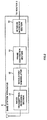
- FIG.1 is a block diagram showing the configuration of a conventional mobile communication system.
- a router (IGMP compatible router) 3 is connected to a base station apparatus 2, and an IGMP compatible network 4 is connected to the router 3.
- a plurality of mobile station apparatuses 6-1 through 6-3 are arranged so as to be connected arbitrarily to terminal apparatuses, such as communication terminal apparatuses, 7-1 through 7-3 provided with computer functions.
- the base station apparatus 2 comprises a radio transmitting/receiving section 11, modulator/demodulator 12, frame composition section 13, and network interface section 15.
- each of mobile station apparatuses 6-1 through 6-3 comprises a radio transmitting/receiving section 21, modulator/demodulator 22, frame composition section 23, and terminal interface section 25.
- a frame signal is composed by the frame composition section 13 by mapping that IP packet onto an L-PDU, which is a fixed-length packet on the user data channel (UDCH).
- L-PDU which is a fixed-length packet on the user data channel (UDCH).
- That frame signal is then transmitted to all mobile station apparatuses using an IGMP inquiry dedicated connection (DUC-ID#1), which is a connection to all mobile station apparatuses 6-1 through 6-3.
- DUC-ID#1 IGMP inquiry dedicated connection
- the configured frame signal after being modulated by the modulator/demodulator 12, the configured frame signal undergoes various kinds of transmission processing such as D/A (Digital/Analog) conversion, up-conversion, and amplification (gain control) in the radio transmitting/receiving section 11, and is transmitted as a radio signal from the antenna.
- D/A Digital/Analog
- up-conversion Up-conversion
- amplification gain control
- This transmit signal is received by the antenna in each of mobile station apparatuses 6-1 through 6-3, and is output to the radio transmitting/receiving section 21.
- the received signal undergoes various kinds of reception processing such as amplification (gain control), down-conversion, and A/D (Analog/Digital) conversion.
- the signal After undergoing this processing, the signal is demodulated by the modulator/demodulator 22 and then undergoes frame decomposition by the frame composition section 23. By this means, an IP packet is extracted. This IP packet is output via the terminal interface section 25 to terminal apparatuses 7-1 through 7-3.
- a frame signal is composed by mapping an IP packet containing an IGMP report message indicating the multicast IP address for which reception is desired onto an L-PDU fixed-length packet on the UDCH.
- This frame signal is transmitted to the base station apparatus 2 using an IGMP report dedicated connection (DUC-ID#1), which is a base station connection.
- the base station apparatus 2 On receiving an IGMP report message, the base station apparatus 2 transmits an IP packet containing the IGMP report message to the router 3 and mobile station apparatuses 6-1 through 6-3.
- This object is achieved by means of a radio apparatus that determines whether or not control procedure information for controlling packet communication is contained in a variable-length packet by which a destination for performing communication in a one-to-one or one-to-multiple mode with other radio apparatuses is indicated, and if the result of this determination is that this control procedure information is contained in such a packet, maps that control procedure information onto a fixed-length short packet that is shorter than a fixed-length packet used in communication with other radio apparatuses.
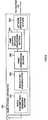
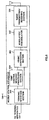
- FIG.4 is a block diagram showing the configuration of a mobile communication system according to an embodiment of the present invention.
- a router (IGMP compatible router) 103 is connected to a base station apparatus 102, and an IGMP compatible network 104 is connected to the router 103.
- a plurality of mobile station apparatuses 106-1 through 106-3 are arranged so as to be connected arbitrarily to terminal apparatuses, such as communication terminal apparatuses, 107-1 through 107-3 provided with computer functions.
- the base station apparatus 102 comprises a radio transmitting/receiving section 201, modulator/demodulator 202, frame composition section 203, IGMP control message processing section 204, and network interface section 205.
- each of mobile station apparatuses 106-1 through 106-3 comprises a radio transmitting/receiving section 301, modulator/demodulator 302, frame composition section 303, IGMP control message processing section 304, and terminal interface section 305.
- the router 103 transmits an IP packet containing the IGMP inquiry message to subordinate base station apparatus 102.
- an IP packet transmitted from the router 103 is received by the network interface section 205, and is output to the frame composition section 203.
- IP packet received by the network interface section 205 is an IP packet containing an IGMP inquiry message, it is output to the IGMP control message processing section 204.
- the IGMP control message processing section 204 the IGMP control message is extracted from the IP packet, and only the necessary part of this IGMP control message is mapped onto a fixed-length short packet (S-PDU) for controlling radio communication between the base station apparatus 102 and mobile station apparatuses 106-1 through 106-3. After this mapping has been carried out, the packet is output to the frame composition section 203.
- S-PDU fixed-length short packet
- the necessary part of the IGMP control message is the part remaining after removing at least the Check Sum field from the IGMP control message extracted from the IP packet. This will now be explained in more specific terms.
- an IGMP control message is transferred stored in an IP packet.
- An IP packet is composed of a variable-length IP header of at least 32 octets and a variable-length message part of at least 4 octets.
- An IGMP control message is stored in the message part. The necessary part is the part remaining after removing the IP header from an IP packet.
- An IGMP control message comprises 8 octets, and these constitute the necessary part. It is also possible to further reduce this part.
- An IGMP control message is composed of a 1-octet Type field, a 1-octet Max Response Time field, a 2-octet Check Sum field, and a 4-octet Group Address field, but when a control message in which the S-PDU is other than an IGMP is transferred, it is usual for an error detection code field such as a Check Sum or CRC field to be provided in common rather than on a message-specific basis. Consequently, it is possible to omit the Check Sum field in an IGMP control message. Moreover, it is also possible to omit the Max Response Time field if this has been fixed by executing negotiation processing via transmission/reception beforehand.
- a variable-length IP packet from the network interface section 205 is converted to a fixed-length packet (L-PDU), and a frame signal is composed from this L-PDU and an S-PDU from the IGMP control message processing section 204, and is output to the modulator/demodulator 202.
- L-PDU fixed-length packet
- the frame signal is modulated by the modulator/demodulator 202, then undergoes various kinds of transmission processing such as D/A conversion, up-conversion, and amplification (gain control) in the radio transmitting/receiving section 201, and is transmitted as a radio signal from the antenna.
- various kinds of transmission processing such as D/A conversion, up-conversion, and amplification (gain control) in the radio transmitting/receiving section 201, and is transmitted as a radio signal from the antenna.
- This transmit signal is received by the radio transmitting/receiving section 301 via the antenna of each of mobile station apparatuses 106-1 through 106-3.
- This received signal undergoes various kinds of reception processing such as amplification (gain control), down-conversion, and A/D conversion in the radio transmitting/receiving section 301.
- the signal is demodulated by the modulator/demodulator 302.
- This demodulated signal undergoes frame decomposition by the frame composition section 303 and conversion from a fixed-length packet (L-PDU) to a variable-length packet, and an IP packet is extracted.
- L-PDU fixed-length packet
- S-PDU fixed-length short packet
- terminal interface section 305 that receives IP packets from the frame composition section 303 and IGMP control message processing section 304, these IP packets are multiplexed and then output to terminal apparatuses 107-1 through 107-3.
- terminal apparatuses 107-1 through 107-3 attempt to participate in a multicast group
- an IGMP report message is sent via mobile station apparatuses 106-1 through 106-3 to the IP address of the multicast group in which participation is desired.
- an IP packet received from the respective terminal apparatus 107-1 through 107-3 is received by the terminal interface section 305 and output to the frame composition section 303.
- the IP packet received by the terminal interface section 305 is an IP packet containing an IGMP control message, it is output to the IGMP control message processing section 304.
- the IGMP control message is extracted from the IP packet and after being stored in a fixed-length short packet (S-PDU), is output to the frame composition section 303.
- S-PDU fixed-length short packet
- the variable-length IP packet received from the terminal interface section 305 is converted to a fixed-length packet (L-PDU), a frame signal is composed from the L-PDU and the S-PDU from the IGMP control message processing section 304, and is output to the modulator/demodulator 302.
- L-PDU fixed-length packet
- a frame signal is composed from the L-PDU and the S-PDU from the IGMP control message processing section 304, and is output to the modulator/demodulator 302.
- the frame signal is modulated by the modulator/demodulator 302, then undergoes various kinds of transmission processing such as D/A conversion, up-conversion, and amplification (gain control) in the radio transmitting/receiving section 301, and is transmitted as a radio signal from the antenna.
- various kinds of transmission processing such as D/A conversion, up-conversion, and amplification (gain control) in the radio transmitting/receiving section 301, and is transmitted as a radio signal from the antenna.
- this transmit signal After being received by the antenna of the base station apparatus 102, this transmit signal undergoes various kinds of reception processing such as amplification (gain control), down-conversion, and A/D conversion in the radio transmitting/receiving section 201.
- amplification gain control
- down-conversion down-conversion
- A/D conversion A/D conversion in the radio transmitting/receiving section 201.
- the signal is demodulated by the modulator/demodulator 202, and undergoes frame decomposition by the frame composition section 203 and conversion from a fixed-length packet (L-PDU) to a variable-length packet, and an IP packet is extracted.
- L-PDU fixed-length packet
- S-PDU fixed-length short packet
- an IP packet containing the IGMP report message is composed and output to the network interface section 205, and that received S-PDU is also transmitted to terminal apparatuses 107-1 through 107-3 participating in the multicast group indicated by the IGMP report message.
- the terminal interface section 205 that receives IP packets from the frame composition section 203 and IGMP control message processing section 204, these IP packets are multiplexed and then transmitted to the router 103.
- IGMP control message processing sections 204 and 304 map only the necessary part of a terminated IGMP control message onto a fixed-length short packet (S-PDU) between the base station apparatus 102 and mobile station apparatuses 106-1 through 106-3.
- S-PDU fixed-length short packet
- the IP header not required in a radio channel comprises at least 24 octets, and considering the fact that the number of octets may be in excess of 40 when an option header is used in addition to an IP header, the effect of the present invention is significant.
- a base station apparatus 102 performs radio communication with mobile station apparatuses 106-1 through 106-3, but the present invention is not limited to this, and can also be applied to a media sharing type access network comprising a fixed main station and a fixed plurality of substations, such as FTTH and ADSL.
- a radio apparatus of the present invention has a configuration comprising a section that determines whether or not control procedure information for controlling packet communication is contained in a variable-length packet in which is indicated a destination for performing communication in a one-to-one or one-to-multiple mode with other radio apparatuses, and a section that, when the result of that determination is that such control procedure information is so contained, maps that control procedure information onto a fixed-length short packet that is shorter than a fixed-length packet used for communication with other radio apparatuses.
- a radio apparatus of the present invention has, in the above-described configuration, a configuration whereby only a necessary part of control procedure information is mapped onto a short packet. According to this configuration, only a necessary part of control procedure information is mapped onto a short packet that has a small amount of information, further enabling overhead to be reduced and frequency bands to be used efficiently.
- a radio apparatus of the present invention has, in the above-described configuration, a configuration comprising a section that maps a variable-length packet onto a fixed-length packet, composes a frame signal from this fixed-length packet after mapping and a short packet onto which control procedure information has been mapped, and transmits that frame signal.
- control procedure information can be transmitted on a communication channel.
- a radio apparatus of the present invention has, in the above-described configuration, a configuration comprising a section that decomposes a frame signal and extracts a variable-length packet and short packet, a section that extracts control procedure information from that short packet and maps it onto another variable-length packet, and a section that multiplexes both those variable-length packets. According to this configuration, both control procedure information and user information can be multiplexed on the same channel.
- a radio apparatus of the present invention has, in the above-described configuration, a configuration whereby control procedure information is IGMP (Internet Group Multicast Protocol) information. According to this configuration, the same kind of operational effect as any of the above can also be obtained in the case of IGMP information.
- IGMP Internet Group Multicast Protocol
- a radio apparatus of the present invention has, in the above-described configuration, a configuration whereby a variable-length packet is an IP (Internet Protocol) packet. According to this configuration, the same kind of operational effect as any of the above can also be obtained in the case of an IP packet.
- IP Internet Protocol
- a mobile station apparatus of the present invention has a configuration whereby a radio apparatus of the same configuration as any of the above is provided. According to this configuration, the same kind of operational effect as any of the above can be obtained in a mobile station apparatus.
- a base station apparatus of the present invention has a configuration whereby a radio apparatus of the same configuration as any of the above is provided. According to this configuration, the same kind of operational effect as any of the above can be obtained in a base station apparatus.
- a radio communication system of the present invention is provided with a mobile station apparatus and base station apparatus of the above configuration, and has a configuration whereby one station apparatus of the above-mentioned mobile station apparatus and above-mentioned base station apparatus performs radio resource assignment.
- the radio resource assignment function is not held on a fixed basis by one radio station apparatus (for example, a base station apparatus), but instead the location of the radio resource assignment function can be changed on a pro tempore basis.
- a radio communication system of the present invention has a configuration whereby a radio apparatus of the same configuration as any of the above and a communication network apparatus that transmits and receives variable-length packets via that radio apparatus and a router are provided. According to this configuration, the same kind of operational effect as any of the above can be obtained in a radio communication system.
- a radio apparatus when communication is performed in a one-to-one or one-to-multiple mode between radio apparatuses, in the case where control procedure information for controlling packet communication is contained in a variable-length packet in which a destination for performing that communication is indicated, a radio apparatus transmits that control procedure information after mapping it onto a fixed-length short packet shorter than a fixed-length packet used for communication with other radio apparatuses.
- a variable-length packet is mapped onto a fixed-length packet, and a frame signal is composed from this fixed-length packet after mapping and a short packet onto which control procedure information has been mapped, and is transmitted.
- control procedure information can be transmitted on a communication channel.
- a variable-length packet and short packet are extracted from a frame signal, control procedure information is extracted from this short packet and mapped onto another variable-length packet, after which both variable-length packets are multiplexed.
- both control procedure information and user information can be multiplexed on the same channel.
- radio communication resources can be used efficiently when multicast communication is performed using an IGMP.
- the present invention is applicable to a radio communication system and multicast communication system that perform multicast communication (one-to-multiple communication) using an IP between a base station apparatus and a plurality of mobile station apparatuses such as mobile phones in a digital mobile communication system.
Landscapes
- Engineering & Computer Science (AREA)
- Computer Networks & Wireless Communication (AREA)
- Signal Processing (AREA)
- Computer Security & Cryptography (AREA)
- Multimedia (AREA)
- Mobile Radio Communication Systems (AREA)
- Data Exchanges In Wide-Area Networks (AREA)
- Small-Scale Networks (AREA)
Abstract
Description
Claims (11)
- A radio apparatus comprising:means for determining whether or not control procedure information for controlling packet communication is contained in a variable-length packet in which is indicated a destination for performing communication in a one-to-one or one-to-multiple mode with other radio apparatuses; andmeans for, when it is determined that said control procedure information is contained, mapping said control procedure information onto a fixed-length short packet that is shorter than a fixed-length packet used for communication with other radio apparatuses.
- The radio apparatus according to claim 1, wherein only a necessary part of control procedure information is mapped onto the short packet.
- The radio apparatus according to claim 1, further comprising:means for mapping a variable-length packet onto a fixed-length packet, and composing a frame signal from this fixed-length packet after mapping and a short packet onto which control procedure information has been mapped, and transmitting said frame signal.
- The radio apparatus according to claim 3, further comprising:means for decomposing a frame signal and extracting a variable-length packet and short packet;means for extracting control procedure information from said short packet and mapping said control procedure information onto another variable-length packet; andmeans for multiplexing both said variable-length packets.
- The radio apparatus according to claim 1, wherein said control procedure information is IGMP (Internet Group Multicast Protocol) information.
- The radio apparatus according to claim 1, wherein said variable-length packet is an IP (Internet Protocol) packet.
- A radio communication system whereby one station apparatus of a mobile station apparatus provided with a radio apparatus and a base station apparatus provided with a radio apparatus performs radio resource allocation, said radio apparatus comprising:means for determining whether or not control procedure information for controlling packet communication is contained in a variable-length packet in which is indicated a destination for performing communication in a one-to-one or one-to-multiple mode with other radio apparatuses; andmeans for, when it is determined that said control procedure information is contained, mapping said control procedure information onto a fixed-length short packet that is shorter than a fixed-length packet used for communication with other radio apparatuses.
- A radio communication system provided with a radio apparatus and a communication network apparatus that transmits and receives variable-length packets to and from said radio apparatus via a router, said radio apparatus comprising:means for determining whether or not control procedure information for controlling packet communication is contained in a variable-length packet in which is indicated a destination for performing communication in a one-to-one or one-to-multiple mode with other radio apparatuses; andmeans for, when it is determined that said control procedure information is contained, mapping said control procedure information onto a fixed-length short packet that is shorter than a fixed-length packet used for communication with other radio apparatuses.
- A multicast communication method wherein, when communication is performed in a one-to-one or one-to-multiple mode between radio apparatuses, in a case where control procedure information for controlling packet communication is contained in a variable-length packet in which a destination for performing said communication is indicated, a radio apparatus maps said control procedure information onto a fixed-length short packet shorter than a fixed-length packet used for communication with other radio apparatuses, and transmits said control procedure information.
- The multicast communication method according to claim 9, wherein a variable-length packet is mapped onto a fixed-length packet, and a frame signal is composed from this fixed-length packet after mapping and a short packet onto which control procedure information has been mapped, and is transmitted.
- The multicast communication method according to claim 10, wherein a variable-length packet and short packet are extracted from a frame signal, control procedure information is extracted from this short packet and mapped onto another variable-length packet, after which both variable-length packets are multiplexed.
Applications Claiming Priority (3)
| Application Number | Priority Date | Filing Date | Title |
|---|---|---|---|
| JP2000189592 | 2000-06-23 | ||
| JP2000189592A JP3464644B2 (en) | 2000-06-23 | 2000-06-23 | Wireless communication system and multicast communication method |
| PCT/JP2001/005393 WO2001099356A1 (en) | 2000-06-23 | 2001-06-25 | Radio communication system and method for multicast communication |
Publications (2)
| Publication Number | Publication Date |
|---|---|
| EP1204252A1 true EP1204252A1 (en) | 2002-05-08 |
| EP1204252A4 EP1204252A4 (en) | 2007-07-04 |
Family
ID=18689202
Family Applications (1)
| Application Number | Title | Priority Date | Filing Date |
|---|---|---|---|
| EP01941206A Withdrawn EP1204252A4 (en) | 2000-06-23 | 2001-06-25 | RADIO-BASED COMMUNICATION SYSTEM AND MULTICAST COMMUNICATION PROCESS |
Country Status (10)
| Country | Link |
|---|---|
| US (1) | US7161958B2 (en) |
| EP (1) | EP1204252A4 (en) |
| JP (1) | JP3464644B2 (en) |
| KR (1) | KR100435797B1 (en) |
| CN (2) | CN1309226C (en) |
| AU (1) | AU7460301A (en) |
| BR (1) | BR0106884A (en) |
| CA (1) | CA2382595A1 (en) |
| CZ (1) | CZ2002621A3 (en) |
| WO (1) | WO2001099356A1 (en) |
Cited By (1)
| Publication number | Priority date | Publication date | Assignee | Title |
|---|---|---|---|---|
| EP1699169A1 (en) * | 2005-03-02 | 2006-09-06 | Fujitsu Limited | Wireless base station, wireless mobile device, and wireless access network for reducing signalling traffic |
Families Citing this family (16)
| Publication number | Priority date | Publication date | Assignee | Title |
|---|---|---|---|---|
| AU2003217751A1 (en) * | 2002-02-25 | 2003-09-09 | Radioframe Networks, Inc. | Distributed radio system with multiple transceivers for simulcasting and selective processing of received signals |
| DE10301001B4 (en) * | 2003-01-13 | 2005-02-03 | Siemens Ag | Method for transmitting information to a group of radio stations |
| JP4170929B2 (en) * | 2003-03-28 | 2008-10-22 | 株式会社エヌ・ティ・ティ・ドコモ | Mobile communication system, mobile terminal, and mobile communication method |
| KR101157291B1 (en) * | 2004-06-04 | 2012-06-15 | 노오텔 네트웍스 리미티드 | Switching in a distributed access network |
| CN100355299C (en) * | 2004-11-16 | 2007-12-12 | 华为技术有限公司 | Method for receiving multicast service |
| US20060146743A1 (en) * | 2004-12-30 | 2006-07-06 | Crocker Ronald T | System and method for expedited communications between mobile stations |
| JP4278624B2 (en) * | 2005-03-04 | 2009-06-17 | ソニー株式会社 | COMMUNICATION TERMINAL DEVICE, COMMUNICATION SYSTEM, COMMUNICATION METHOD, AND PROGRAM |
| CN100421520C (en) | 2005-09-05 | 2008-09-24 | 华为技术有限公司 | A mobile network based IP multicast system and method |
| JP4806278B2 (en) | 2006-03-16 | 2011-11-02 | 富士通株式会社 | Multicast system, communication apparatus, and multicast method |
| WO2007116703A1 (en) * | 2006-03-28 | 2007-10-18 | Ntt Docomo, Inc. | Central node, base station, mobile station, and data transmission method |
| CN101170490B (en) * | 2006-10-24 | 2010-05-19 | 中兴通讯股份有限公司 | Igmp message transmission method |
| KR100969318B1 (en) * | 2007-01-25 | 2010-07-09 | 엘지전자 주식회사 | How to send and receive multicast data |
| KR101600218B1 (en) * | 2007-03-16 | 2016-03-04 | 인터디지탈 테크날러지 코포레이션 | Wireless communication method and apparatus for supporting reconfiguration of radio link control parameters |
| JP2009272731A (en) * | 2008-04-30 | 2009-11-19 | Sony Corp | Communication device, communication method, computer program and communication system |
| US11166312B2 (en) * | 2017-05-10 | 2021-11-02 | Qualcomm Incorporated | Cellular vehicle-to-everything design principles |
| CN110380769B (en) * | 2019-06-03 | 2022-11-15 | 中央民族大学 | A short packet communication transmission method based on multi-antenna energy harvesting |
Family Cites Families (20)
| Publication number | Priority date | Publication date | Assignee | Title |
|---|---|---|---|---|
| JPS6392140A (en) | 1986-10-06 | 1988-04-22 | Nippon Telegr & Teleph Corp <Ntt> | Variable length packet communication system |
| US6246696B1 (en) * | 1995-09-11 | 2001-06-12 | Kabushiki Kaisha Toshiba | Method of controlling a communication and apparatus for the same |
| JP2891146B2 (en) * | 1995-10-23 | 1999-05-17 | 日本電気株式会社 | Network server |
| EP0810758A4 (en) * | 1995-10-23 | 2000-08-23 | Nippon Telegraph & Telephone | TELECOMMUNICATIONS SYSTEM FOR TRANSMITTING A MOBILE MTA CELL, MOBILE TELECOMMUNICATIONS STATION, BASE RADIO STATION AND RELATED TRANSMISSION METHOD |
| US6567416B1 (en) * | 1997-10-14 | 2003-05-20 | Lucent Technologies Inc. | Method for access control in a multiple access system for communications networks |
| US6216167B1 (en) * | 1997-10-31 | 2001-04-10 | Nortel Networks Limited | Efficient path based forwarding and multicast forwarding |
| JP3180753B2 (en) * | 1998-01-30 | 2001-06-25 | 日本電気株式会社 | MOBILE HOST, MOBILE HOST SUPPORT NODE, METHOD OF CONTROLLING MOBILE HOST JOINING MULTICAST GROUP AND RECORDING MEDIUM |
| US6115394A (en) * | 1998-03-04 | 2000-09-05 | Ericsson Inc. | Methods, apparatus and computer program products for packet transport over wireless communication links |
| EP0951198A2 (en) | 1998-04-14 | 1999-10-20 | Nec Corporation | IP multicast over a wireless ATM network |
| JP2000022707A (en) * | 1998-07-03 | 2000-01-21 | Fujitsu Ltd | Data transmission method and data transmission system |
| US6862622B2 (en) * | 1998-07-10 | 2005-03-01 | Van Drebbel Mariner Llc | Transmission control protocol/internet protocol (TCP/IP) packet-centric wireless point to multi-point (PTMP) transmission system architecture |
| US6628629B1 (en) * | 1998-07-10 | 2003-09-30 | Malibu Networks | Reservation based prioritization method for wireless transmission of latency and jitter sensitive IP-flows in a wireless point to multi-point transmission system |
| US6144651A (en) * | 1998-07-17 | 2000-11-07 | Motorola, Inc. | Data transmission within a wireless communication system |
| EP1142235A2 (en) * | 1998-12-18 | 2001-10-10 | Telefonaktiebolaget LM Ericsson (publ) | Internet protocol handler for telecommunications platform with processor cluster |
| US6925068B1 (en) * | 1999-05-21 | 2005-08-02 | Wi-Lan, Inc. | Method and apparatus for allocating bandwidth in a wireless communication system |
| US6683866B1 (en) * | 1999-10-29 | 2004-01-27 | Ensemble Communications Inc. | Method and apparatus for data transportation and synchronization between MAC and physical layers in a wireless communication system |
| US6771660B1 (en) * | 1999-10-29 | 2004-08-03 | Ensemble Communication, Inc. | Method and apparatus for synchronization between MAC and physical layers in a wireless communication system when transporting ATM cells |
| US6563830B1 (en) * | 2000-03-28 | 2003-05-13 | 3Com Corporation | Multicast registration of all multicast flows in an asynchronous transfer mode based emulated LAN |
| JP4347497B2 (en) * | 2000-04-03 | 2009-10-21 | 株式会社日立製作所 | Communication control apparatus and packet conversion method |
| US6577609B2 (en) * | 2000-09-29 | 2003-06-10 | Symbol Technologies, Inc. | Local addressing of mobile units in a WLAN with multicast packet addressing |
-
2000
- 2000-06-23 JP JP2000189592A patent/JP3464644B2/en not_active Expired - Lifetime
-
2001
- 2001-06-25 CN CNB2004100458444A patent/CN1309226C/en not_active Expired - Lifetime
- 2001-06-25 CA CA 2382595 patent/CA2382595A1/en not_active Abandoned
- 2001-06-25 CN CNB018017444A patent/CN1157985C/en not_active Expired - Lifetime
- 2001-06-25 KR KR10-2002-7002239A patent/KR100435797B1/en not_active Expired - Lifetime
- 2001-06-25 EP EP01941206A patent/EP1204252A4/en not_active Withdrawn
- 2001-06-25 AU AU74603/01A patent/AU7460301A/en not_active Abandoned
- 2001-06-25 BR BR0106884-9A patent/BR0106884A/en not_active IP Right Cessation
- 2001-06-25 CZ CZ2002621A patent/CZ2002621A3/en unknown
- 2001-06-25 WO PCT/JP2001/005393 patent/WO2001099356A1/en not_active Ceased
- 2001-06-25 US US10/069,004 patent/US7161958B2/en not_active Expired - Lifetime
Cited By (1)
| Publication number | Priority date | Publication date | Assignee | Title |
|---|---|---|---|---|
| EP1699169A1 (en) * | 2005-03-02 | 2006-09-06 | Fujitsu Limited | Wireless base station, wireless mobile device, and wireless access network for reducing signalling traffic |
Also Published As
| Publication number | Publication date |
|---|---|
| CN1309226C (en) | 2007-04-04 |
| KR100435797B1 (en) | 2004-06-10 |
| CZ2002621A3 (en) | 2002-06-12 |
| CN1157985C (en) | 2004-07-14 |
| CN1551582A (en) | 2004-12-01 |
| CA2382595A1 (en) | 2001-12-27 |
| US7161958B2 (en) | 2007-01-09 |
| JP2002009767A (en) | 2002-01-11 |
| AU7460301A (en) | 2002-01-02 |
| BR0106884A (en) | 2002-05-07 |
| EP1204252A4 (en) | 2007-07-04 |
| JP3464644B2 (en) | 2003-11-10 |
| KR20020027566A (en) | 2002-04-13 |
| WO2001099356A1 (en) | 2001-12-27 |
| US20020114351A1 (en) | 2002-08-22 |
| CN1383653A (en) | 2002-12-04 |
Similar Documents
| Publication | Publication Date | Title |
|---|---|---|
| US7161958B2 (en) | Radio communication system and multicast communication method | |
| KR100503690B1 (en) | Mobile communication system, Mobile communication method, Radio base station, Mobile system and, Computer readable recording medium | |
| US7400646B2 (en) | Multicast routing method and an apparatus for routing a multicast packet | |
| JP2007329959A (en) | Bandwidth distribution method and apparatus | |
| EP1271842B1 (en) | Method and device for multicasting | |
| CN101180894B (en) | System and method for simultaneous voice and data call over wireless infrastructure | |
| EP2143289B1 (en) | Managing data streams in communication system | |
| WO2006110423A2 (en) | Method and apparatus for transmitting concatenated frames in a wireless communication system | |
| JP2000196673A (en) | Hybrid mobile communication system, hybrid mobile communication device, and hybrid mobile communication method | |
| JP2000299704A (en) | Stream division information communication method and stream division information communication apparatus | |
| JP3221414B2 (en) | Wireless asynchronous communication mode communication system and broadcast control method | |
| EP1430645B1 (en) | Implementing multicasting | |
| US20060056381A1 (en) | Mobile communication system and packet processing method thereof | |
| CN101009540A (en) | Multiplex superposed communication device | |
| JP2002516551A (en) | Satellite communication method and satellite communication device | |
| Gavette | Homeplug av technology overview | |
| JP2001285292A (en) | Wireless LAN system | |
| CN101180895A (en) | Method for transmitting cluster dedicated signaling by using data interface in cluster communication | |
| EP1383252A1 (en) | Method and system for routing bursts in a satellite communication system | |
| WO1998045971A1 (en) | A system and method of point-to-multipoint wireless communication using a point-to-point communication structure | |
| JPH10210030A (en) | Communication system and broadcast notification transmission / reception method thereof | |
| HK1113889A (en) | System and method for simultaneous voice and data call over wireless infrastructure | |
| GB2442261A (en) | Termination of packet based communication on detection of traffic congestion |
Legal Events
| Date | Code | Title | Description |
|---|---|---|---|
| PUAI | Public reference made under article 153(3) epc to a published international application that has entered the european phase |
Free format text: ORIGINAL CODE: 0009012 |
|
| AK | Designated contracting states |
Kind code of ref document: A1 Designated state(s): AT BE CH CY DE DK ES FI FR GB GR IE IT LI LU MC NL PT SE TR |
|
| AX | Request for extension of the european patent |
Free format text: AL;LT;LV;MK;RO;SI |
|
| 17P | Request for examination filed |
Effective date: 20020307 |
|
| A4 | Supplementary search report drawn up and despatched |
Effective date: 20070601 |
|
| RIC1 | Information provided on ipc code assigned before grant |
Ipc: H04Q 7/38 20060101ALI20070525BHEP Ipc: H04L 12/56 20060101AFI20020102BHEP Ipc: H04L 12/18 20060101ALI20070525BHEP Ipc: H04B 7/26 20060101ALI20070525BHEP |
|
| 17Q | First examination report despatched |
Effective date: 20070814 |
|
| RAP1 | Party data changed (applicant data changed or rights of an application transferred) |
Owner name: PANASONIC CORPORATION |
|
| STAA | Information on the status of an ep patent application or granted ep patent |
Free format text: STATUS: THE APPLICATION IS DEEMED TO BE WITHDRAWN |
|
| 18D | Application deemed to be withdrawn |
Effective date: 20091204 |