EP1203615A1 - Continuous process and apparatus for preparing inorganic materials employing microwave - Google Patents
Continuous process and apparatus for preparing inorganic materials employing microwave Download PDFInfo
- Publication number
- EP1203615A1 EP1203615A1 EP01114719A EP01114719A EP1203615A1 EP 1203615 A1 EP1203615 A1 EP 1203615A1 EP 01114719 A EP01114719 A EP 01114719A EP 01114719 A EP01114719 A EP 01114719A EP 1203615 A1 EP1203615 A1 EP 1203615A1
- Authority
- EP
- European Patent Office
- Prior art keywords
- inorganic materials
- synthesis
- microwave
- reactor
- microwave synthesis
- Prior art date
- Legal status (The legal status is an assumption and is not a legal conclusion. Google has not performed a legal analysis and makes no representation as to the accuracy of the status listed.)
- Withdrawn
Links
- 229910010272 inorganic material Inorganic materials 0.000 title claims abstract description 55
- 239000011147 inorganic material Substances 0.000 title claims abstract description 55
- 238000010924 continuous production Methods 0.000 title description 2
- 230000015572 biosynthetic process Effects 0.000 claims abstract description 77
- 238000003786 synthesis reaction Methods 0.000 claims abstract description 71
- 238000000034 method Methods 0.000 claims abstract description 32
- 230000008569 process Effects 0.000 claims abstract description 32
- 239000002808 molecular sieve Substances 0.000 claims abstract description 26
- URGAHOPLAPQHLN-UHFFFAOYSA-N sodium aluminosilicate Chemical compound [Na+].[Al+3].[O-][Si]([O-])=O.[O-][Si]([O-])=O URGAHOPLAPQHLN-UHFFFAOYSA-N 0.000 claims abstract description 26
- 239000000463 material Substances 0.000 claims abstract description 15
- 150000001875 compounds Chemical class 0.000 claims abstract description 13
- 239000011259 mixed solution Substances 0.000 claims abstract description 12
- 239000002243 precursor Substances 0.000 claims abstract description 10
- 239000002002 slurry Substances 0.000 claims abstract description 10
- 239000000919 ceramic Substances 0.000 claims abstract description 7
- 239000000243 solution Substances 0.000 claims description 38
- HNPSIPDUKPIQMN-UHFFFAOYSA-N dioxosilane;oxo(oxoalumanyloxy)alumane Chemical compound O=[Si]=O.O=[Al]O[Al]=O HNPSIPDUKPIQMN-UHFFFAOYSA-N 0.000 claims description 33
- 239000010457 zeolite Substances 0.000 claims description 33
- 229910021536 Zeolite Inorganic materials 0.000 claims description 29
- 239000013078 crystal Substances 0.000 claims description 19
- 230000005855 radiation Effects 0.000 claims description 19
- PXHVJJICTQNCMI-UHFFFAOYSA-N Nickel Chemical compound [Ni] PXHVJJICTQNCMI-UHFFFAOYSA-N 0.000 claims description 10
- 229910052751 metal Inorganic materials 0.000 claims description 10
- 239000002184 metal Substances 0.000 claims description 10
- 239000011148 porous material Substances 0.000 claims description 9
- 229910019142 PO4 Inorganic materials 0.000 claims description 8
- 229910052748 manganese Inorganic materials 0.000 claims description 7
- 239000011572 manganese Substances 0.000 claims description 7
- 239000010452 phosphate Substances 0.000 claims description 7
- 238000002347 injection Methods 0.000 claims description 6
- 239000007924 injection Substances 0.000 claims description 6
- NBIIXXVUZAFLBC-UHFFFAOYSA-K phosphate Chemical compound [O-]P([O-])([O-])=O NBIIXXVUZAFLBC-UHFFFAOYSA-K 0.000 claims description 5
- 239000004809 Teflon Substances 0.000 claims description 4
- 229920006362 Teflon® Polymers 0.000 claims description 4
- 229910000323 aluminium silicate Inorganic materials 0.000 claims description 4
- 229910052759 nickel Inorganic materials 0.000 claims description 4
- PWHULOQIROXLJO-UHFFFAOYSA-N Manganese Chemical compound [Mn] PWHULOQIROXLJO-UHFFFAOYSA-N 0.000 claims description 3
- HCHKCACWOHOZIP-UHFFFAOYSA-N Zinc Chemical compound [Zn] HCHKCACWOHOZIP-UHFFFAOYSA-N 0.000 claims description 3
- 150000001768 cations Chemical class 0.000 claims description 3
- 229910017052 cobalt Inorganic materials 0.000 claims description 3
- 239000010941 cobalt Substances 0.000 claims description 3
- GUTLYIVDDKVIGB-UHFFFAOYSA-N cobalt atom Chemical compound [Co] GUTLYIVDDKVIGB-UHFFFAOYSA-N 0.000 claims description 3
- 239000011701 zinc Substances 0.000 claims description 3
- 229910052725 zinc Inorganic materials 0.000 claims description 3
- 229910000859 α-Fe Inorganic materials 0.000 claims description 3
- GDVKFRBCXAPAQJ-UHFFFAOYSA-A dialuminum;hexamagnesium;carbonate;hexadecahydroxide Chemical compound [OH-].[OH-].[OH-].[OH-].[OH-].[OH-].[OH-].[OH-].[OH-].[OH-].[OH-].[OH-].[OH-].[OH-].[OH-].[OH-].[Mg+2].[Mg+2].[Mg+2].[Mg+2].[Mg+2].[Mg+2].[Al+3].[Al+3].[O-]C([O-])=O GDVKFRBCXAPAQJ-UHFFFAOYSA-A 0.000 claims description 2
- 229910001701 hydrotalcite Inorganic materials 0.000 claims description 2
- 229960001545 hydrotalcite Drugs 0.000 claims description 2
- 229910052596 spinel Inorganic materials 0.000 claims description 2
- 239000011029 spinel Substances 0.000 claims description 2
- 230000007704 transition Effects 0.000 claims description 2
- 235000021317 phosphate Nutrition 0.000 claims 2
- XLYOFNOQVPJJNP-UHFFFAOYSA-M hydroxide Chemical compound [OH-] XLYOFNOQVPJJNP-UHFFFAOYSA-M 0.000 claims 1
- 229910000000 metal hydroxide Inorganic materials 0.000 claims 1
- 150000004692 metal hydroxides Chemical class 0.000 claims 1
- 150000003013 phosphoric acid derivatives Chemical class 0.000 claims 1
- 238000004519 manufacturing process Methods 0.000 abstract description 26
- 238000002425 crystallisation Methods 0.000 abstract description 16
- 230000008025 crystallization Effects 0.000 abstract description 16
- 239000003795 chemical substances by application Substances 0.000 abstract description 10
- 238000001027 hydrothermal synthesis Methods 0.000 abstract description 9
- 230000002035 prolonged effect Effects 0.000 abstract description 8
- 230000035484 reaction time Effects 0.000 abstract description 6
- 230000008901 benefit Effects 0.000 abstract description 5
- 230000002194 synthesizing effect Effects 0.000 abstract 1
- HEMHJVSKTPXQMS-UHFFFAOYSA-M Sodium hydroxide Chemical compound [OH-].[Na+] HEMHJVSKTPXQMS-UHFFFAOYSA-M 0.000 description 33
- XLYOFNOQVPJJNP-UHFFFAOYSA-N water Substances O XLYOFNOQVPJJNP-UHFFFAOYSA-N 0.000 description 23
- VYPSYNLAJGMNEJ-UHFFFAOYSA-N Silicium dioxide Chemical compound O=[Si]=O VYPSYNLAJGMNEJ-UHFFFAOYSA-N 0.000 description 21
- 239000000203 mixture Substances 0.000 description 19
- LYCAIKOWRPUZTN-UHFFFAOYSA-N Ethylene glycol Chemical compound OCCO LYCAIKOWRPUZTN-UHFFFAOYSA-N 0.000 description 12
- 238000002441 X-ray diffraction Methods 0.000 description 11
- 238000006243 chemical reaction Methods 0.000 description 9
- 239000007788 liquid Substances 0.000 description 9
- 238000002156 mixing Methods 0.000 description 9
- 239000004480 active ingredient Substances 0.000 description 8
- 230000000694 effects Effects 0.000 description 8
- 239000012153 distilled water Substances 0.000 description 7
- 239000000377 silicon dioxide Substances 0.000 description 7
- 229910052681 coesite Inorganic materials 0.000 description 6
- 229910052906 cristobalite Inorganic materials 0.000 description 6
- XEEYBQQBJWHFJM-UHFFFAOYSA-N iron Substances [Fe] XEEYBQQBJWHFJM-UHFFFAOYSA-N 0.000 description 6
- 238000004904 shortening Methods 0.000 description 6
- 229910052682 stishovite Inorganic materials 0.000 description 6
- LPSKDVINWQNWFE-UHFFFAOYSA-M tetrapropylazanium;hydroxide Chemical compound [OH-].CCC[N+](CCC)(CCC)CCC LPSKDVINWQNWFE-UHFFFAOYSA-M 0.000 description 6
- 229910052905 tridymite Inorganic materials 0.000 description 6
- 230000000052 comparative effect Effects 0.000 description 5
- 229910052742 iron Inorganic materials 0.000 description 5
- 150000002739 metals Chemical class 0.000 description 5
- VEXZGXHMUGYJMC-UHFFFAOYSA-N Hydrochloric acid Chemical compound Cl VEXZGXHMUGYJMC-UHFFFAOYSA-N 0.000 description 4
- NBIIXXVUZAFLBC-UHFFFAOYSA-N Phosphoric acid Chemical compound OP(O)(O)=O NBIIXXVUZAFLBC-UHFFFAOYSA-N 0.000 description 4
- CDBYLPFSWZWCQE-UHFFFAOYSA-L Sodium Carbonate Chemical compound [Na+].[Na+].[O-]C([O-])=O CDBYLPFSWZWCQE-UHFFFAOYSA-L 0.000 description 4
- 229910052782 aluminium Inorganic materials 0.000 description 4
- XAGFODPZIPBFFR-UHFFFAOYSA-N aluminium Chemical compound [Al] XAGFODPZIPBFFR-UHFFFAOYSA-N 0.000 description 4
- 238000005216 hydrothermal crystallization Methods 0.000 description 4
- YIXJRHPUWRPCBB-UHFFFAOYSA-N magnesium nitrate Chemical compound [Mg+2].[O-][N+]([O-])=O.[O-][N+]([O-])=O YIXJRHPUWRPCBB-UHFFFAOYSA-N 0.000 description 4
- 239000002245 particle Substances 0.000 description 4
- BNGXYYYYKUGPPF-UHFFFAOYSA-M (3-methylphenyl)methyl-triphenylphosphanium;chloride Chemical compound [Cl-].CC1=CC=CC(C[P+](C=2C=CC=CC=2)(C=2C=CC=CC=2)C=2C=CC=CC=2)=C1 BNGXYYYYKUGPPF-UHFFFAOYSA-M 0.000 description 3
- VXAUWWUXCIMFIM-UHFFFAOYSA-M aluminum;oxygen(2-);hydroxide Chemical compound [OH-].[O-2].[Al+3] VXAUWWUXCIMFIM-UHFFFAOYSA-M 0.000 description 3
- 229910002113 barium titanate Inorganic materials 0.000 description 3
- -1 electric cell Substances 0.000 description 3
- NTHWMYGWWRZVTN-UHFFFAOYSA-N sodium silicate Chemical compound [Na+].[Na+].[O-][Si]([O-])=O NTHWMYGWWRZVTN-UHFFFAOYSA-N 0.000 description 3
- 238000003756 stirring Methods 0.000 description 3
- 239000004094 surface-active agent Substances 0.000 description 3
- 229940073455 tetraethylammonium hydroxide Drugs 0.000 description 3
- LRGJRHZIDJQFCL-UHFFFAOYSA-M tetraethylazanium;hydroxide Chemical compound [OH-].CC[N+](CC)(CC)CC LRGJRHZIDJQFCL-UHFFFAOYSA-M 0.000 description 3
- OSBSFAARYOCBHB-UHFFFAOYSA-N tetrapropylammonium Chemical compound CCC[N+](CCC)(CCC)CCC OSBSFAARYOCBHB-UHFFFAOYSA-N 0.000 description 3
- 239000010936 titanium Substances 0.000 description 3
- SXAMGRAIZSSWIH-UHFFFAOYSA-N 2-[3-[2-(2,3-dihydro-1H-inden-2-ylamino)pyrimidin-5-yl]-1,2,4-oxadiazol-5-yl]-1-(2,4,6,7-tetrahydrotriazolo[4,5-c]pyridin-5-yl)ethanone Chemical compound C1C(CC2=CC=CC=C12)NC1=NC=C(C=N1)C1=NOC(=N1)CC(=O)N1CC2=C(CC1)NN=N2 SXAMGRAIZSSWIH-UHFFFAOYSA-N 0.000 description 2
- IJGRMHOSHXDMSA-UHFFFAOYSA-N Atomic nitrogen Chemical compound N#N IJGRMHOSHXDMSA-UHFFFAOYSA-N 0.000 description 2
- CXRFDZFCGOPDTD-UHFFFAOYSA-M Cetrimide Chemical compound [Br-].CCCCCCCCCCCCCC[N+](C)(C)C CXRFDZFCGOPDTD-UHFFFAOYSA-M 0.000 description 2
- LFQSCWFLJHTTHZ-UHFFFAOYSA-N Ethanol Chemical compound CCO LFQSCWFLJHTTHZ-UHFFFAOYSA-N 0.000 description 2
- MKYBYDHXWVHEJW-UHFFFAOYSA-N N-[1-oxo-1-(2,4,6,7-tetrahydrotriazolo[4,5-c]pyridin-5-yl)propan-2-yl]-2-[[3-(trifluoromethoxy)phenyl]methylamino]pyrimidine-5-carboxamide Chemical compound O=C(C(C)NC(=O)C=1C=NC(=NC=1)NCC1=CC(=CC=C1)OC(F)(F)F)N1CC2=C(CC1)NN=N2 MKYBYDHXWVHEJW-UHFFFAOYSA-N 0.000 description 2
- 229910002651 NO3 Inorganic materials 0.000 description 2
- 229910003264 NiFe2O4 Inorganic materials 0.000 description 2
- NHNBFGGVMKEFGY-UHFFFAOYSA-N Nitrate Chemical compound [O-][N+]([O-])=O NHNBFGGVMKEFGY-UHFFFAOYSA-N 0.000 description 2
- BPQQTUXANYXVAA-UHFFFAOYSA-N Orthosilicate Chemical compound [O-][Si]([O-])([O-])[O-] BPQQTUXANYXVAA-UHFFFAOYSA-N 0.000 description 2
- NIJJYAXOARWZEE-UHFFFAOYSA-N Valproic acid Chemical compound CCCC(C(O)=O)CCC NIJJYAXOARWZEE-UHFFFAOYSA-N 0.000 description 2
- PNEYBMLMFCGWSK-UHFFFAOYSA-N aluminium oxide Inorganic materials [O-2].[O-2].[O-2].[Al+3].[Al+3] PNEYBMLMFCGWSK-UHFFFAOYSA-N 0.000 description 2
- 229910000147 aluminium phosphate Inorganic materials 0.000 description 2
- 229910052796 boron Inorganic materials 0.000 description 2
- 239000006227 byproduct Substances 0.000 description 2
- 238000001816 cooling Methods 0.000 description 2
- 229910052593 corundum Inorganic materials 0.000 description 2
- WEHWNAOGRSTTBQ-UHFFFAOYSA-N dipropylamine Chemical compound CCCNCCC WEHWNAOGRSTTBQ-UHFFFAOYSA-N 0.000 description 2
- 238000002296 dynamic light scattering Methods 0.000 description 2
- 229910052733 gallium Inorganic materials 0.000 description 2
- 238000010438 heat treatment Methods 0.000 description 2
- 150000004679 hydroxides Chemical class 0.000 description 2
- 150000002500 ions Chemical class 0.000 description 2
- 239000011777 magnesium Substances 0.000 description 2
- 239000013335 mesoporous material Substances 0.000 description 2
- NQNBVCBUOCNRFZ-UHFFFAOYSA-N nickel ferrite Chemical compound [Ni]=O.O=[Fe]O[Fe]=O NQNBVCBUOCNRFZ-UHFFFAOYSA-N 0.000 description 2
- 235000019353 potassium silicate Nutrition 0.000 description 2
- 239000000047 product Substances 0.000 description 2
- 238000011160 research Methods 0.000 description 2
- 238000000926 separation method Methods 0.000 description 2
- 229910000029 sodium carbonate Inorganic materials 0.000 description 2
- 229910052719 titanium Inorganic materials 0.000 description 2
- 229910001845 yogo sapphire Inorganic materials 0.000 description 2
- VZSRBBMJRBPUNF-UHFFFAOYSA-N 2-(2,3-dihydro-1H-inden-2-ylamino)-N-[3-oxo-3-(2,4,6,7-tetrahydrotriazolo[4,5-c]pyridin-5-yl)propyl]pyrimidine-5-carboxamide Chemical compound C1C(CC2=CC=CC=C12)NC1=NC=C(C=N1)C(=O)NCCC(N1CC2=C(CC1)NN=N2)=O VZSRBBMJRBPUNF-UHFFFAOYSA-N 0.000 description 1
- VHUUQVKOLVNVRT-UHFFFAOYSA-N Ammonium hydroxide Chemical compound [NH4+].[OH-] VHUUQVKOLVNVRT-UHFFFAOYSA-N 0.000 description 1
- 101100493710 Caenorhabditis elegans bath-40 gene Proteins 0.000 description 1
- OKTJSMMVPCPJKN-UHFFFAOYSA-N Carbon Chemical compound [C] OKTJSMMVPCPJKN-UHFFFAOYSA-N 0.000 description 1
- VYZAMTAEIAYCRO-UHFFFAOYSA-N Chromium Chemical compound [Cr] VYZAMTAEIAYCRO-UHFFFAOYSA-N 0.000 description 1
- KRHYYFGTRYWZRS-UHFFFAOYSA-M Fluoride anion Chemical compound [F-] KRHYYFGTRYWZRS-UHFFFAOYSA-M 0.000 description 1
- FYYHWMGAXLPEAU-UHFFFAOYSA-N Magnesium Chemical compound [Mg] FYYHWMGAXLPEAU-UHFFFAOYSA-N 0.000 description 1
- AFCARXCZXQIEQB-UHFFFAOYSA-N N-[3-oxo-3-(2,4,6,7-tetrahydrotriazolo[4,5-c]pyridin-5-yl)propyl]-2-[[3-(trifluoromethoxy)phenyl]methylamino]pyrimidine-5-carboxamide Chemical compound O=C(CCNC(=O)C=1C=NC(=NC=1)NCC1=CC(=CC=C1)OC(F)(F)F)N1CC2=C(CC1)NN=N2 AFCARXCZXQIEQB-UHFFFAOYSA-N 0.000 description 1
- 239000004115 Sodium Silicate Substances 0.000 description 1
- 230000004913 activation Effects 0.000 description 1
- 239000003463 adsorbent Substances 0.000 description 1
- 238000013019 agitation Methods 0.000 description 1
- 125000000217 alkyl group Chemical group 0.000 description 1
- 239000004411 aluminium Substances 0.000 description 1
- ANBBXQWFNXMHLD-UHFFFAOYSA-N aluminum;sodium;oxygen(2-) Chemical compound [O-2].[O-2].[Na+].[Al+3] ANBBXQWFNXMHLD-UHFFFAOYSA-N 0.000 description 1
- 235000011114 ammonium hydroxide Nutrition 0.000 description 1
- 239000007864 aqueous solution Substances 0.000 description 1
- 239000012298 atmosphere Substances 0.000 description 1
- 229910001626 barium chloride Inorganic materials 0.000 description 1
- 238000010923 batch production Methods 0.000 description 1
- 229910052799 carbon Inorganic materials 0.000 description 1
- 239000003054 catalyst Substances 0.000 description 1
- 125000002091 cationic group Chemical group 0.000 description 1
- 239000003599 detergent Substances 0.000 description 1
- 238000004090 dissolution Methods 0.000 description 1
- 238000005265 energy consumption Methods 0.000 description 1
- 238000005516 engineering process Methods 0.000 description 1
- 238000004880 explosion Methods 0.000 description 1
- 239000011521 glass Substances 0.000 description 1
- 239000011551 heat transfer agent Substances 0.000 description 1
- XLYOFNOQVPJJNP-ZSJDYOACSA-N heavy water Substances [2H]O[2H] XLYOFNOQVPJJNP-ZSJDYOACSA-N 0.000 description 1
- 238000000265 homogenisation Methods 0.000 description 1
- 229930195733 hydrocarbon Natural products 0.000 description 1
- 150000002430 hydrocarbons Chemical class 0.000 description 1
- 239000012535 impurity Substances 0.000 description 1
- MVFCKEFYUDZOCX-UHFFFAOYSA-N iron(2+);dinitrate Chemical compound [Fe+2].[O-][N+]([O-])=O.[O-][N+]([O-])=O MVFCKEFYUDZOCX-UHFFFAOYSA-N 0.000 description 1
- 229910052746 lanthanum Inorganic materials 0.000 description 1
- FZLIPJUXYLNCLC-UHFFFAOYSA-N lanthanum atom Chemical compound [La] FZLIPJUXYLNCLC-UHFFFAOYSA-N 0.000 description 1
- 229910052749 magnesium Inorganic materials 0.000 description 1
- 230000007246 mechanism Effects 0.000 description 1
- 229910001960 metal nitrate Inorganic materials 0.000 description 1
- 229910003455 mixed metal oxide Inorganic materials 0.000 description 1
- 239000002086 nanomaterial Substances 0.000 description 1
- KBJMLQFLOWQJNF-UHFFFAOYSA-N nickel(ii) nitrate Chemical compound [Ni+2].[O-][N+]([O-])=O.[O-][N+]([O-])=O KBJMLQFLOWQJNF-UHFFFAOYSA-N 0.000 description 1
- 229910052757 nitrogen Inorganic materials 0.000 description 1
- 239000003960 organic solvent Substances 0.000 description 1
- 230000010355 oscillation Effects 0.000 description 1
- 239000003208 petroleum Substances 0.000 description 1
- 229920001343 polytetrafluoroethylene Polymers 0.000 description 1
- 239000004810 polytetrafluoroethylene Substances 0.000 description 1
- 239000002244 precipitate Substances 0.000 description 1
- 238000002360 preparation method Methods 0.000 description 1
- 230000002265 prevention Effects 0.000 description 1
- 239000012857 radioactive material Substances 0.000 description 1
- 239000000376 reactant Substances 0.000 description 1
- 239000011541 reaction mixture Substances 0.000 description 1
- 230000009467 reduction Effects 0.000 description 1
- 238000005204 segregation Methods 0.000 description 1
- 239000004065 semiconductor Substances 0.000 description 1
- 229910001388 sodium aluminate Inorganic materials 0.000 description 1
- 229910052911 sodium silicate Inorganic materials 0.000 description 1
- 239000011973 solid acid Substances 0.000 description 1
- 229910001220 stainless steel Inorganic materials 0.000 description 1
- 239000010935 stainless steel Substances 0.000 description 1
- 239000000126 substance Substances 0.000 description 1
- 229920002994 synthetic fiber Polymers 0.000 description 1
- LLZRNZOLAXHGLL-UHFFFAOYSA-J titanic acid Chemical compound O[Ti](O)(O)O LLZRNZOLAXHGLL-UHFFFAOYSA-J 0.000 description 1
- VXUYXOFXAQZZMF-UHFFFAOYSA-N titanium(IV) isopropoxide Chemical compound CC(C)O[Ti](OC(C)C)(OC(C)C)OC(C)C VXUYXOFXAQZZMF-UHFFFAOYSA-N 0.000 description 1
- 229910052723 transition metal Inorganic materials 0.000 description 1
- 150000003624 transition metals Chemical class 0.000 description 1
Images


Classifications
-
- H—ELECTRICITY
- H05—ELECTRIC TECHNIQUES NOT OTHERWISE PROVIDED FOR
- H05B—ELECTRIC HEATING; ELECTRIC LIGHT SOURCES NOT OTHERWISE PROVIDED FOR; CIRCUIT ARRANGEMENTS FOR ELECTRIC LIGHT SOURCES, IN GENERAL
- H05B6/00—Heating by electric, magnetic or electromagnetic fields
- H05B6/64—Heating using microwaves
- H05B6/80—Apparatus for specific applications
- H05B6/806—Apparatus for specific applications for laboratory use
-
- B—PERFORMING OPERATIONS; TRANSPORTING
- B01—PHYSICAL OR CHEMICAL PROCESSES OR APPARATUS IN GENERAL
- B01J—CHEMICAL OR PHYSICAL PROCESSES, e.g. CATALYSIS OR COLLOID CHEMISTRY; THEIR RELEVANT APPARATUS
- B01J13/00—Colloid chemistry, e.g. the production of colloidal materials or their solutions, not otherwise provided for; Making microcapsules or microballoons
- B01J13/02—Making microcapsules or microballoons
- B01J13/04—Making microcapsules or microballoons by physical processes, e.g. drying, spraying
-
- B—PERFORMING OPERATIONS; TRANSPORTING
- B01—PHYSICAL OR CHEMICAL PROCESSES OR APPARATUS IN GENERAL
- B01J—CHEMICAL OR PHYSICAL PROCESSES, e.g. CATALYSIS OR COLLOID CHEMISTRY; THEIR RELEVANT APPARATUS
- B01J19/00—Chemical, physical or physico-chemical processes in general; Their relevant apparatus
- B01J19/08—Processes employing the direct application of electric or wave energy, or particle radiation; Apparatus therefor
- B01J19/12—Processes employing the direct application of electric or wave energy, or particle radiation; Apparatus therefor employing electromagnetic waves
- B01J19/122—Incoherent waves
- B01J19/126—Microwaves
-
- B—PERFORMING OPERATIONS; TRANSPORTING
- B01—PHYSICAL OR CHEMICAL PROCESSES OR APPARATUS IN GENERAL
- B01J—CHEMICAL OR PHYSICAL PROCESSES, e.g. CATALYSIS OR COLLOID CHEMISTRY; THEIR RELEVANT APPARATUS
- B01J20/00—Solid sorbent compositions or filter aid compositions; Sorbents for chromatography; Processes for preparing, regenerating or reactivating thereof
- B01J20/02—Solid sorbent compositions or filter aid compositions; Sorbents for chromatography; Processes for preparing, regenerating or reactivating thereof comprising inorganic material
- B01J20/0203—Solid sorbent compositions or filter aid compositions; Sorbents for chromatography; Processes for preparing, regenerating or reactivating thereof comprising inorganic material comprising compounds of metals not provided for in B01J20/04
- B01J20/0274—Solid sorbent compositions or filter aid compositions; Sorbents for chromatography; Processes for preparing, regenerating or reactivating thereof comprising inorganic material comprising compounds of metals not provided for in B01J20/04 characterised by the type of anion
- B01J20/0292—Phosphates of compounds other than those provided for in B01J20/048
-
- B—PERFORMING OPERATIONS; TRANSPORTING
- B01—PHYSICAL OR CHEMICAL PROCESSES OR APPARATUS IN GENERAL
- B01J—CHEMICAL OR PHYSICAL PROCESSES, e.g. CATALYSIS OR COLLOID CHEMISTRY; THEIR RELEVANT APPARATUS
- B01J20/00—Solid sorbent compositions or filter aid compositions; Sorbents for chromatography; Processes for preparing, regenerating or reactivating thereof
- B01J20/02—Solid sorbent compositions or filter aid compositions; Sorbents for chromatography; Processes for preparing, regenerating or reactivating thereof comprising inorganic material
- B01J20/10—Solid sorbent compositions or filter aid compositions; Sorbents for chromatography; Processes for preparing, regenerating or reactivating thereof comprising inorganic material comprising silica or silicate
- B01J20/16—Alumino-silicates
- B01J20/18—Synthetic zeolitic molecular sieves
-
- C—CHEMISTRY; METALLURGY
- C01—INORGANIC CHEMISTRY
- C01B—NON-METALLIC ELEMENTS; COMPOUNDS THEREOF; METALLOIDS OR COMPOUNDS THEREOF NOT COVERED BY SUBCLASS C01C
- C01B39/00—Compounds having molecular sieve and base-exchange properties, e.g. crystalline zeolites; Their preparation; After-treatment, e.g. ion-exchange or dealumination
- C01B39/02—Crystalline aluminosilicate zeolites; Isomorphous compounds thereof; Direct preparation thereof; Preparation thereof starting from a reaction mixture containing a crystalline zeolite of another type, or from preformed reactants; After-treatment thereof
- C01B39/14—Type A
- C01B39/16—Type A from aqueous solutions of an alkali metal aluminate and an alkali metal silicate excluding any other source of alumina or silica but seeds
-
- C—CHEMISTRY; METALLURGY
- C01—INORGANIC CHEMISTRY
- C01B—NON-METALLIC ELEMENTS; COMPOUNDS THEREOF; METALLOIDS OR COMPOUNDS THEREOF NOT COVERED BY SUBCLASS C01C
- C01B39/00—Compounds having molecular sieve and base-exchange properties, e.g. crystalline zeolites; Their preparation; After-treatment, e.g. ion-exchange or dealumination
- C01B39/02—Crystalline aluminosilicate zeolites; Isomorphous compounds thereof; Direct preparation thereof; Preparation thereof starting from a reaction mixture containing a crystalline zeolite of another type, or from preformed reactants; After-treatment thereof
- C01B39/20—Faujasite type, e.g. type X or Y
- C01B39/24—Type Y
-
- C—CHEMISTRY; METALLURGY
- C01—INORGANIC CHEMISTRY
- C01B—NON-METALLIC ELEMENTS; COMPOUNDS THEREOF; METALLOIDS OR COMPOUNDS THEREOF NOT COVERED BY SUBCLASS C01C
- C01B39/00—Compounds having molecular sieve and base-exchange properties, e.g. crystalline zeolites; Their preparation; After-treatment, e.g. ion-exchange or dealumination
- C01B39/02—Crystalline aluminosilicate zeolites; Isomorphous compounds thereof; Direct preparation thereof; Preparation thereof starting from a reaction mixture containing a crystalline zeolite of another type, or from preformed reactants; After-treatment thereof
- C01B39/36—Pentasil type, e.g. types ZSM-5, ZSM-8 or ZSM-11
- C01B39/38—Type ZSM-5
-
- C—CHEMISTRY; METALLURGY
- C01—INORGANIC CHEMISTRY
- C01B—NON-METALLIC ELEMENTS; COMPOUNDS THEREOF; METALLOIDS OR COMPOUNDS THEREOF NOT COVERED BY SUBCLASS C01C
- C01B39/00—Compounds having molecular sieve and base-exchange properties, e.g. crystalline zeolites; Their preparation; After-treatment, e.g. ion-exchange or dealumination
- C01B39/02—Crystalline aluminosilicate zeolites; Isomorphous compounds thereof; Direct preparation thereof; Preparation thereof starting from a reaction mixture containing a crystalline zeolite of another type, or from preformed reactants; After-treatment thereof
- C01B39/36—Pentasil type, e.g. types ZSM-5, ZSM-8 or ZSM-11
- C01B39/38—Type ZSM-5
- C01B39/40—Type ZSM-5 using at least one organic template directing agent
-
- C—CHEMISTRY; METALLURGY
- C01—INORGANIC CHEMISTRY
- C01B—NON-METALLIC ELEMENTS; COMPOUNDS THEREOF; METALLOIDS OR COMPOUNDS THEREOF NOT COVERED BY SUBCLASS C01C
- C01B39/00—Compounds having molecular sieve and base-exchange properties, e.g. crystalline zeolites; Their preparation; After-treatment, e.g. ion-exchange or dealumination
- C01B39/02—Crystalline aluminosilicate zeolites; Isomorphous compounds thereof; Direct preparation thereof; Preparation thereof starting from a reaction mixture containing a crystalline zeolite of another type, or from preformed reactants; After-treatment thereof
- C01B39/46—Other types characterised by their X-ray diffraction pattern and their defined composition
-
- C—CHEMISTRY; METALLURGY
- C01—INORGANIC CHEMISTRY
- C01B—NON-METALLIC ELEMENTS; COMPOUNDS THEREOF; METALLOIDS OR COMPOUNDS THEREOF NOT COVERED BY SUBCLASS C01C
- C01B39/00—Compounds having molecular sieve and base-exchange properties, e.g. crystalline zeolites; Their preparation; After-treatment, e.g. ion-exchange or dealumination
- C01B39/54—Phosphates, e.g. APO or SAPO compounds
-
- B—PERFORMING OPERATIONS; TRANSPORTING
- B01—PHYSICAL OR CHEMICAL PROCESSES OR APPARATUS IN GENERAL
- B01J—CHEMICAL OR PHYSICAL PROCESSES, e.g. CATALYSIS OR COLLOID CHEMISTRY; THEIR RELEVANT APPARATUS
- B01J2219/00—Chemical, physical or physico-chemical processes in general; Their relevant apparatus
- B01J2219/00002—Chemical plants
- B01J2219/00027—Process aspects
- B01J2219/00033—Continuous processes
-
- B—PERFORMING OPERATIONS; TRANSPORTING
- B01—PHYSICAL OR CHEMICAL PROCESSES OR APPARATUS IN GENERAL
- B01J—CHEMICAL OR PHYSICAL PROCESSES, e.g. CATALYSIS OR COLLOID CHEMISTRY; THEIR RELEVANT APPARATUS
- B01J2219/00—Chemical, physical or physico-chemical processes in general; Their relevant apparatus
- B01J2219/08—Processes employing the direct application of electric or wave energy, or particle radiation; Apparatus therefor
- B01J2219/0873—Materials to be treated
- B01J2219/0881—Two or more materials
- B01J2219/089—Liquid-solid
-
- B—PERFORMING OPERATIONS; TRANSPORTING
- B01—PHYSICAL OR CHEMICAL PROCESSES OR APPARATUS IN GENERAL
- B01J—CHEMICAL OR PHYSICAL PROCESSES, e.g. CATALYSIS OR COLLOID CHEMISTRY; THEIR RELEVANT APPARATUS
- B01J2219/00—Chemical, physical or physico-chemical processes in general; Their relevant apparatus
- B01J2219/08—Processes employing the direct application of electric or wave energy, or particle radiation; Apparatus therefor
- B01J2219/12—Processes employing electromagnetic waves
- B01J2219/1203—Incoherent waves
- B01J2219/1206—Microwaves
- B01J2219/1209—Features relating to the reactor or vessel
- B01J2219/1221—Features relating to the reactor or vessel the reactor per se
- B01J2219/1224—Form of the reactor
- B01J2219/1227—Reactors comprising tubes with open ends
Definitions
- This invention relates to a continuous process and apparatus for preparing inorganic materials employing microwaves and more particularly, to the process for preparing inorganic materials prepared in a manner such that after preparing a mixed precursor solution for various inorganic materials such as porous molecular sieve, layered compounds, ceramics and the like, this mixed solution is continuously added to a tube-type microwave reactor through a slurry pump for synthesis and crystallization of inorganic materials.
- the manufacturing process of this invention provides the following advantages: (1) the reaction time is further shortened by several to tens of minutes for crystallization, compared to the conventional hydrothermal reaction requiring a prolonged time, (2) the continuous manufacturing and collection processes of this invention can give access to mass-scale production of inorganic materials with relatively small facility, compared to the conventional batch hydrothermal or microwave synthesis, and (3) less amount of organic templating agents can be required during the manufacture of porous molecular sieve.
- porous molecular sieve with a three-dimensional pore structure which is represented by zeolite, have a variety of characteristics such as a very high surface area, molecular-size pore, cationic exchange and solid acid, they permits versatile industrial applications.
- the petroleum industry has frequently used the porous molecular sieve as catalysts, carrier and adsorbent, while it has been also regarded as an extremely important material for a detergent builder in the related industry.
- various researches for these materials have focused on a substantial number of fields such as selective removal of radioactive material, semiconductor, electric cell, chemical sensor, laser and permeation-selective film.
- zeolite In general, zeolite is being synthesized through the crystallization process from an aqueous solution under hydrothermal conditions, but due to a prolonged time for crystallization, a batch process has been adopted for the manufacture of zeolite.
- an apparatus for hydrothermal crystallization should adopt a batch reactor to meet more prolonged time of crystallization process, let alone inevitably enormous investment outlays incurred out of the mass production of porous molecular sieve due to the required large-scale facility.
- a microwave synthesis process for zeolite has been recently introduced.
- a microwave radiation process is not to induce the heat conduction by specimen from the outer heat source, but to ensure a totally homogeneous heating to any specimen.
- the reaction mechanism for crystallization of inorganic materials via microwave radiation has not been clearly elucidated up to now, but it has been reported that the microwave radiation process for zeolite may be superior to the hydrothermal synthesis.
- the hydrothermal process has recognized some disadvantages in that when the reactants are heated by an outer oven, more prolonged time is required for thermal convection and heat conduction transferred to a synthetic solution and for crystallization process.
- the microwave synthesis may contribute to a homogeneous formation of seed and to shortening the crystallization time, since a homogeneous heating is available in the reaction solution in a reactor.
- the crystallization time can be shortened by the fast dissolution of zeolite synthesis gel under microwave radiation, while the synthesis time under microwave radiation can be also shortened by the rapid increase of temperature of the synthetic solution and better heat transfer.
- the reason why the rapid crystallization of zeolite synthetic solution under the radiation of microwave lies in the activation of water and ions presented in the synthetic solution. More specifically, the rapid oscillation of ions and rapid rotation of dipoles in water by microwaves are induced and this causes the frequent friction among molecules in the solution, thus resulting in the rapid increase of temperature and earlier crystallization in the long run.
- zeolite ZSM-5 using its seed and NaA from zeolites solution are synthesized under microwave radiation in a sealed container (glass, ceramic, PTFE) under a certain pressure.
- the synthesis for zeolite is performed using liquid hydrocarbons (e.g., ethylene glycol) as a heat transfer material.
- liquid hydrocarbons e.g., ethylene glycol
- Bekkum et al. of the Netherlands has reported that zeolites Y and ZSM-5 are synthesized within tens of minutes in a Teflon container using microwave energy [Zeolites, 13, 162 (1993)]. They have suggested that unlike the typical hydrothermal synthesis that can produce undesirable crystal faces due to the prolonged period for crystallinity, the microwave synthesis can cope with the aforementioned shortcomings.
- the inventor et al. have made intensive studies to develop the process of applying microwave effect to the synthesis of various inorganic materials widely, as well as the shortening of synthesis time and the mass-scale production of inorganic materials.
- the inventor et al. have noted that when microwave with a certain range of output is radiated to a reactor simultaneously through the continuous addition of a mixed precursor solution of various inorganic materials into the tube-type reactor by a slurry pump, the prevention of thermal effect has the following advantages, compared to the conventional non-continuous microwave reactor: 1) more shortened synthesis time and further reduction in energy consumption, and 2) less amount of organic templating agents required for the synthesis of porous molecular sieve. In consequence this invention has consummated.
- an object of this invention is to provide a continuous microwave synthesis process of inorganic materials and its apparatus that can be effective in ensuring the mass-scale production of various inorganic materials in a more economical manner.
- This invention is characterized by a continuous microwave synthesis of inorganic materials and its apparatus, wherein the inorganic materials using the microwave synthesis process comprises: the mixed solution of precursor for the synthesis of inorganic materials, so prepared, is continuously added to a tube-type reactor by a slurry pump, while the reactor is simultaneously subject to microwave energy.
- this invention is characterized by a continuous microwave synthesis of inorganic materials and its apparatus, wherein its structure comprises an injection tank of synthetic solution, a slurry pump and a microwave reactor equipped with a tube-type reactor and cylindrical reactor and microwave radiation device.
- the first reaction step is to perform the process of preparing a mixed solution of precursor material in an attempt to synthesize inorganic materials in an injection tank of synthetic precursor solution 10.
- examples of inorganic materials according to this invention include porous molecular sieve with three-dimensional pore structure, two-dimensional layered compounds and ceramics.
- the porous molecular sieve is selected from the group consisting of the following materials: zeolite with a pore size of 3-15 ⁇ selected from alumino silicate, alumino phosphate and silicoalumino phosphate; transition metal-substituted zeolite; and, mesoporous materials such as silicate having a pore size of 15-150 ⁇ .
- the reaction time can be further shortened.
- less amount of tetrapropyl ammonium cation as an organic templating agent can be employed, compared to the conventional hydrothermal synthesis during the manufacture of alumino silicate ZSM-5.
- a metal alumino phosphate compound whose metals are incorporated in the structure can be also prepared.
- Examples of the two-dimensional layered compound include bivalent metal cations such as magnesium, nickel and zinc; hydrotalcite based layered double hydroxides obtained from trivalent cations such as aluminum, lanthanum, chrome, manganese and iron; and, mixed metal oxides.
- Ceramics examples include metal ferrite compounds containing zinc, nickel, manganese and cobalt; spinel oxide; and, perovskite.
- the mixed solution of precursor material, so formed is continuously added to the reactor 31 by the slurry pump 20 , while a microwave energy of 60-1200 watt in output is simultaneously radiated to the reactor using the microwave radiation apparatus 33 , preferably in the range of 100-400 watt. More specifically, under the radiation of microwave, this process is designed to crystallize the continuously added reaction mixture contained in the reactor by the slurry pump within a short time. Hence, the radiation of less than 60 watt makes it slow to reach the desired reaction temperature and cause more weak crystallinity; in the case of exceeding 1,200 watt, however, the drastically increased pressure may result in explosion.
- the continuous synthesis of inorganic materials according to this invention is effectively applied by microwave effect instead of thermal effect.
- the conventional microwave synthesis process has been performed based upon the rapid increase of temperature and thermal effect in a certain time profile.
- the microwave synthesis process of this invention the crystallization of inorganic materials may be made available within 5 minutes, since the thermal effect in a certain time profile is excluded through the rapid increase of temperature induced by microwave effect.
- this invention has an advantage in that the formation of by-products can be prevented through a rapid cooling process.
- the microwave reactor 30 is divided into the tube-type reactor 31 and cylindrical reactor 32 .
- a tube in the tube-type reactor has the following specification: outer diameter (1/16-1 inch, preferably 1/4-3/8 inches), length (1-50 meters) and Teflon. Hence, the formation rate and amount of inorganic materials can be controlled depending upon the changes in outer diameter/length of tube and injection rate.
- the inorganic materials, so formed from the microwave reactor 30, are treated through a cooling bath 40 , a separation bath 50 and a dry apparatus 60 in a sequential order.
- the continuous microwave synthesis of inorganic materials is a novel process through which a variety of inorganic materials can be synthesized within a short time, compared to the conventional batch synthesis. Further, this invention can be widely applied to the synthesis field of inorganic materials, since tremendous amounts of various inorganic materials are made available with significantly reduced process scale.
- the seed-crystal mother liquid was prepared in the following manner:
- tetrapropyl ammonium (TPAOH) solution 62.4g of tetraorthosilicate (TEOS) and 60g of water were added to an injection tank of synthetic solution, stirred for well mixing and left at room temperature until the mixing solution became a clear solution.
- the mixture was radiated at the temperature of 60-140°C for 30 minutes to 5 hrs under microwave.
- the mother liquid, so obtained in the reaction was MFI-structure zeolite.
- zeolite ZSM-5 was prepared using the aforementioned mother liquid of seed crystal in the following manner:
- the mixture was added to the reactor in a continuous microwave apparatus of this invention using a slurry pump and subject to a microwave having an output of 200 watt using a microwave radiation apparatus (1.5 kW, 2450 MHz), so fabricated directly by the inventor et al.
- a microwave radiation apparatus 1.5 kW, 2450 MHz
- the microwave radiation apparatus 33 of this invention is designed to be fabricated in a manner such that appropriate microwave radiation can be made available by the continuous synthesis reactor of this invention consisting of a tube-type reactor 31 and a cylindrical reactor 32 . More specifically, as revealed in Fig.
- the apparatus of this invention has two-type structures in which both of the tube-type reactor 31 and a cylindrical reactor 32 are inserted to a large cavity at right respectively, thus radiating microwave via the reactor from the microwave radiation apparatus 33 at left.
- the desired inorganic materials were continuously synthesized; an outer diameter of tube was in the range of 1/4-3/8 inches, and the length was 5 meters.
- the crystallinity and formation of particles were investigated using an X-ray diffraction analysis and scanning electronic microcopy (SEM). The results were shown in Figs. 3-4.
- Example 1-4 was conducted in the same manner as Example 1 using a seed crystal (including zero mol of TPAOH). Hence, 0.0175 mol of TPAOH templating agent was contained in the seed crystal mother liquid of Example 1-4, while the seed crystal of Example 1-1 was the material having zero mol where TPAOH templating agent was filtered off. Further, other detailed profiles (crystal size, output, etc.) and synthetic results (synthesis rate) were shown in the following table 1.
- Example 1-5 was conducted in a manner such that with the addition of Ti in the molar ratio of 0.01 to Si in the mixed solution, a metal-substituted ZSM-5 compound was prepared in the structure.
- ZSM-5 was prepared by the hydrothermal synthesis using the same mixing solution as Examples 1-2.
- the solution, so obtained, was subject to a microwave oven with the output of 600-300 watt at 90 psi and 150°C for 30 minutes.
- the crystal structure was confirmed by X-ray diffraction pattern. Also, with the lapse of time, the formation of by-products was observed.
- This example was designed to improve the crystallinity of mesoporous material and control the particle size by using ethylene glycol as a heat transfer agent.
- a sodium silicate solution containing 15g of Ludox HS-40, a silica source and 2g of sodium hydroxide was slowly added dropwise to a mixed solution containing 25 wt.% of myristyltrimethyl ammonium bromide (5.6g, MTAB Aldrich) as a surfactant and 5g of ethylene glycol under stirring for 1 hr at room temperature.
- the total pH was adjusted at about 9-10 using a weak hydrochloric acid and obtained the desired inorganic material.
- the sizes of mesopore were changed using C 12-18 .
- MCM-41 was synthesized within 40 minutes in the same manner as Example 1 using the above mixture, while maintaining the pressure 15 psi at 100°C.
- a peak with strong intensity and three peaks with weak intensity were observed.
- Each peak could be expressed as 100, 200, 210 and 300 for convenience' sake. It was revealed that when the length of alkyl group in a surfactant was longer, d 100 value was further increased.
- VPI-5 was synthesized within 30 minutes in the same manner as Example 1 using the above mixture, while maintaining the pressure 54 psi at 130°C. This material, so formed, showed a crystal structure of needle form and its surface area was 112m 2 /g.
- AlPO 4 -5 was synthesized within 20 minutes in the same manner as Example 1 using the above mixture, while maintaining the pressure 115 psi at 170°C. As a result, it was revealed that the product, so obtained, had a AFI structure by X-ray diffraction pattern.
- This Example was intended to synthesize layered double hydroxides (LDHs), a layer-structure compound.
- 12.82g of magnesium nitrate was completely dissolved in 25g of distilled water, while 6.25g of aluminum nitrate was dissolved in 8.3g of distilled water.
- 4.77g of sodium carbonate dissolved in 50g of water was slowly added dropwise to the two metal nitrate solutions and stirred.
- the mixing solution, so formed, was homogenized at 40°C and stirred for 2 hrs for further homogenization, while maintaining the pH at 10 with the addition of sodium hydroxide dropwise.
- LDHs was synthesized within 40 minutes in the same manner as Example 1 using the above mixture, while maintaining the pressure 1 psi at about 70°C.
- Example 7-1 The synthesis was performed in the same manner as Example 7-1, except that Ni 3 AlO 6 was prepared using nickel nitrated instead of magnesium nitrate.
- NiFe 2 O 4 was synthesized within 10 minutes in the same manner as Example 1 using the above mixture, while maintaining the pressure 100 psi at about 165°C.
- the continuous microwave synthesis of inorganic materials and its apparatus of this invention has the following advantages, since inorganic materials can be prepared with a short time in a manner such that microwave energy is radiated to a mixed solution of precursor material or of nano-structure seed: (1) the reaction time is further shortened by 1/10-1/50, compared to the conventional hydrothermal reaction, (2) the continuous manufacturing and collection processes of this invention can give access to mass-scale production of final products with relatively small facility, compared to the conventional batch hydrothermal or microwave synthesis, while less amount of organic templating agent can be required during the manufacture of porous molecular sieves, and (3) the manufacturing process of this invention can be widely utilized in the mass-scale production of various inorganic materials due to the simple process.
Landscapes
- Chemical & Material Sciences (AREA)
- Organic Chemistry (AREA)
- Life Sciences & Earth Sciences (AREA)
- General Life Sciences & Earth Sciences (AREA)
- Geology (AREA)
- Chemical Kinetics & Catalysis (AREA)
- Inorganic Chemistry (AREA)
- Engineering & Computer Science (AREA)
- Materials Engineering (AREA)
- Physics & Mathematics (AREA)
- Analytical Chemistry (AREA)
- Electromagnetism (AREA)
- Health & Medical Sciences (AREA)
- General Health & Medical Sciences (AREA)
- Toxicology (AREA)
- Clinical Laboratory Science (AREA)
- Dispersion Chemistry (AREA)
- Silicates, Zeolites, And Molecular Sieves (AREA)
- Physical Or Chemical Processes And Apparatus (AREA)
- Compounds Of Alkaline-Earth Elements, Aluminum Or Rare-Earth Metals (AREA)
- Compounds Of Iron (AREA)
- Inorganic Compounds Of Heavy Metals (AREA)
Abstract
Description
- This invention relates to a continuous process and apparatus for preparing inorganic materials employing microwaves and more particularly, to the process for preparing inorganic materials prepared in a manner such that after preparing a mixed precursor solution for various inorganic materials such as porous molecular sieve, layered compounds, ceramics and the like, this mixed solution is continuously added to a tube-type microwave reactor through a slurry pump for synthesis and crystallization of inorganic materials. Thus, the manufacturing process of this invention provides the following advantages: (1) the reaction time is further shortened by several to tens of minutes for crystallization, compared to the conventional hydrothermal reaction requiring a prolonged time, (2) the continuous manufacturing and collection processes of this invention can give access to mass-scale production of inorganic materials with relatively small facility, compared to the conventional batch hydrothermal or microwave synthesis, and (3) less amount of organic templating agents can be required during the manufacture of porous molecular sieve.
- Since porous molecular sieve with a three-dimensional pore structure, which is represented by zeolite, have a variety of characteristics such as a very high surface area, molecular-size pore, cationic exchange and solid acid, they permits versatile industrial applications. In particular, the petroleum industry has frequently used the porous molecular sieve as catalysts, carrier and adsorbent, while it has been also regarded as an extremely important material for a detergent builder in the related industry. Recently, various researches for these materials have focused on a substantial number of fields such as selective removal of radioactive material, semiconductor, electric cell, chemical sensor, laser and permeation-selective film.
- In general, zeolite is being synthesized through the crystallization process from an aqueous solution under hydrothermal conditions, but due to a prolonged time for crystallization, a batch process has been adopted for the manufacture of zeolite.
- The prolonged time for crystallization requires more large-scale facility, thus resulting in a lot of investment expenditures to meet the mass production of porous molecular sieve. In this context, the shortening of synthesis time, among other things, is essential to reduce the manufacturing cost.
- Hitherto, the cases for shortening the synthesis time of zeolite have been reported. For example, a patented invention related to a continuous synthesis process for synthetic zeolite and its apparatus has been disclosed; this technology, so characterized by a circulating fluidized bed preparation apparatus, a stationary segregation chamber, a solid-liquid separator and a fluidity bed dryer, is designed to automatically control the reaction conditions such as temperature, time and agitation [Japanese patent No. 10-324518]. However, this process has a restricted application to shorten the reaction time due to the fact that zeolite is basically synthesized by a hydrothermal crystallization.
- Further, Bekkum et al. of the Netherlands have reported improved results in shortening the reaction time based upon the continuous synthesis of zeolite using a coil-type stainless steel tube reactor, even though they have adopted the process of a hydrothermal crystallization [Proc. 12th International Zeolite Conference (Materials Research Society), vol. III. pp. 1253 (1999)].
- As such, an apparatus for hydrothermal crystallization should adopt a batch reactor to meet more prolonged time of crystallization process, let alone inevitably enormous investment outlays incurred out of the mass production of porous molecular sieve due to the required large-scale facility.
- As part of shortening the prolonged crystallization time that the hydrothermal crystallization has basically faced, a microwave synthesis process for zeolite has been recently introduced. A microwave radiation process is not to induce the heat conduction by specimen from the outer heat source, but to ensure a totally homogeneous heating to any specimen. The reaction mechanism for crystallization of inorganic materials via microwave radiation has not been clearly elucidated up to now, but it has been reported that the microwave radiation process for zeolite may be superior to the hydrothermal synthesis. The hydrothermal process has recognized some disadvantages in that when the reactants are heated by an outer oven, more prolonged time is required for thermal convection and heat conduction transferred to a synthetic solution and for crystallization process. In contrast, the microwave synthesis may contribute to a homogeneous formation of seed and to shortening the crystallization time, since a homogeneous heating is available in the reaction solution in a reactor.
- In principle, the crystallization time can be shortened by the fast dissolution of zeolite synthesis gel under microwave radiation, while the synthesis time under microwave radiation can be also shortened by the rapid increase of temperature of the synthetic solution and better heat transfer. The reason why the rapid crystallization of zeolite synthetic solution under the radiation of microwave lies in the activation of water and ions presented in the synthetic solution. More specifically, the rapid oscillation of ions and rapid rotation of dipoles in water by microwaves are induced and this causes the frequent friction among molecules in the solution, thus resulting in the rapid increase of temperature and earlier crystallization in the long run.
- Mobile Co. of U.S.A. has reported the first synthesis process for the porous molecular sieve under the microwave radiation [U.S. Patent No. 4,778,666]. The synthesis for zeolite is made available using the microwave energy in the range of 600-50000 MHz, most preferably in the range of 915-2450 MHz.
- Further, zeolite ZSM-5 using its seed and NaA from zeolites solution are synthesized under microwave radiation in a sealed container (glass, ceramic, PTFE) under a certain pressure. In particular, the synthesis for zeolite is performed using liquid hydrocarbons (e.g., ethylene glycol) as a heat transfer material. Further, Bekkum et al. of the Netherlands has reported that zeolites Y and ZSM-5 are synthesized within tens of minutes in a Teflon container using microwave energy [Zeolites, 13, 162 (1993)]. They have suggested that unlike the typical hydrothermal synthesis that can produce undesirable crystal faces due to the prolonged period for crystallinity, the microwave synthesis can cope with the aforementioned shortcomings.
- Other microwave synthesis processes for alumino phosphate (AlPO4-5) and a crystalline framework structure incorporated with cobalt (CoAlPO4-5 molecular sieve and mesoporous MCM-41 molecular sieve) have been reported [J. Chem. Soc. Faraday Trans., 91, 1163 (1995); Zeolites, 15, 33 (1995): Chem. Commun., 925 (1996); Catal. Today, 44, 301 (1999)]. Recently, Dwyer Group of U.K. has reported the synthesis of zeolite beta and hexagonal Y (EMT structure) and ZSM-5 under the radiation of microwave [Stud. Surf. Sci. Catal., 105, 181 (1997)]. In the case of ZSM-5, TiZSM-5 and AlZSM-5 having the form of NH4 have been synthesized in the presence of fluorine anion, while zeolite Y can be synthesized within a short time in the absence of any crystalline impurities. Thus, it is fully understood that the microwave synthesis process is more advantageous for preparing crystallines with a very high purity and the time for the formation of seed and growth period of crystal can be further shortened.
- In spite of the fact that the batch microwave synthesis apparatus can prepare inorganic materials within a short time, the facility for mass production of inorganic materials cannot be properly established.
- Meantime, Baghrust et al. have observed the microwave effect in solution and reported that a specimen can be heated under the radiation of microwave up to 25°C using ethanol as organic solvent [J. Chem. Soc., Chem. Commun., 674 (1992)].
- As described above, intensive studies have been made around the world in an attempt to shorten the synthesis time of inorganic materials and their mass production but with little success. Under these circumstances, there is an urgent need for the development of a novel process towards the mass production of inorganic materials.
- To comply with the aforementioned shortcomings, the inventor et al. have made intensive studies to develop the process of applying microwave effect to the synthesis of various inorganic materials widely, as well as the shortening of synthesis time and the mass-scale production of inorganic materials. As a result, the inventor et al. have noted that when microwave with a certain range of output is radiated to a reactor simultaneously through the continuous addition of a mixed precursor solution of various inorganic materials into the tube-type reactor by a slurry pump, the prevention of thermal effect has the following advantages, compared to the conventional non-continuous microwave reactor: 1) more shortened synthesis time and further reduction in energy consumption, and 2) less amount of organic templating agents required for the synthesis of porous molecular sieve. In consequence this invention has consummated.
- Therefore, an object of this invention is to provide a continuous microwave synthesis process of inorganic materials and its apparatus that can be effective in ensuring the mass-scale production of various inorganic materials in a more economical manner.
-
- Fig. 1 is a structural view of continuous microwave synthesis apparatus;
- Fig. 2a is a structural view of microwave reactor;
- Fig. 2b is a structural view of both tube-type reactor and cylindrical reactor involved in a microwave reactor;
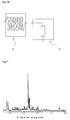
- Fig. 3 is XRD of zeolite ZSM-5 synthesized according to this invention;
- Fig. 4 is a SEM photograph of zeolite ZSM-5 synthesized according to this invention;
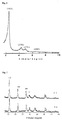
- Fig. 5 is XRD of zeolite NaY synthesized according to this invention;
- Fig. 6 is a XRD of mesoporous MCM-41 material synthesized according to this invention; and
- Fig. 7 is a XRD of a layered compound synthesized according to this invention.
-
- This invention is characterized by a continuous microwave synthesis of inorganic materials and its apparatus, wherein the inorganic materials using the microwave synthesis process comprises: the mixed solution of precursor for the synthesis of inorganic materials, so prepared, is continuously added to a tube-type reactor by a slurry pump, while the reactor is simultaneously subject to microwave energy.
- Further, this invention is characterized by a continuous microwave synthesis of inorganic materials and its apparatus, wherein its structure comprises an injection tank of synthetic solution, a slurry pump and a microwave reactor equipped with a tube-type reactor and cylindrical reactor and microwave radiation device.
- The preferred manufacturing process of this invention using the continuous microwave synthesis is explained in more detail by each reaction step as set forth hereunder.
- The first reaction step is to perform the process of preparing a mixed solution of precursor material in an attempt to synthesize inorganic materials in an injection tank of
synthetic precursor solution 10. Hence, examples of inorganic materials according to this invention include porous molecular sieve with three-dimensional pore structure, two-dimensional layered compounds and ceramics. - The porous molecular sieve is selected from the group consisting of the following materials: zeolite with a pore size of 3-15Å selected from alumino silicate, alumino phosphate and silicoalumino phosphate; transition metal-substituted zeolite; and, mesoporous materials such as silicate having a pore size of 15-150Å.
- Further, when the crystal seed of 50-500 nanometers in size from the porous molecular sieve is contained to the synthetic solution in the range of 1-20 wt.% during the manufacture, the reaction time can be further shortened. Also, with the addition of a seed crystal mother liquid, less amount of tetrapropyl ammonium cation as an organic templating agent can be employed, compared to the conventional hydrothermal synthesis during the manufacture of alumino silicate ZSM-5.
- Meantime, in the case of alumino silicate selected in the metals such as Ti, B, Ga, Mn and Fe, a ZSM-5 compound whose metals are incorporated in the structure can be prepared using the molar ratio of Si/(Ti, B, Ga, Mn and Fe) = 0.005-0.02. In the case of alumino phosphate, with the addition of nitrate containing 3 mol% of metals selected from Co, Mn and Fe, a metal alumino phosphate compound whose metals are incorporated in the structure can be also prepared.
- Examples of the two-dimensional layered compound include bivalent metal cations such as magnesium, nickel and zinc; hydrotalcite based layered double hydroxides obtained from trivalent cations such as aluminum, lanthanum, chrome, manganese and iron; and, mixed metal oxides.
- Examples of the ceramics include metal ferrite compounds containing zinc, nickel, manganese and cobalt; spinel oxide; and, perovskite.
- In the next process, the mixed solution of precursor material, so formed, is continuously added to the
reactor 31 by theslurry pump 20, while a microwave energy of 60-1200 watt in output is simultaneously radiated to the reactor using themicrowave radiation apparatus 33, preferably in the range of 100-400 watt. More specifically, under the radiation of microwave, this process is designed to crystallize the continuously added reaction mixture contained in the reactor by the slurry pump within a short time. Hence, the radiation of less than 60 watt makes it slow to reach the desired reaction temperature and cause more weak crystallinity; in the case of exceeding 1,200 watt, however, the drastically increased pressure may result in explosion. - The continuous synthesis of inorganic materials according to this invention is effectively applied by microwave effect instead of thermal effect. Namely, the conventional microwave synthesis process has been performed based upon the rapid increase of temperature and thermal effect in a certain time profile. In contrast, the microwave synthesis process of this invention, the crystallization of inorganic materials may be made available within 5 minutes, since the thermal effect in a certain time profile is excluded through the rapid increase of temperature induced by microwave effect. Further, this invention has an advantage in that the formation of by-products can be prevented through a rapid cooling process.
- The
microwave reactor 30 is divided into the tube-type reactor 31 andcylindrical reactor 32. A tube in the tube-type reactor has the following specification: outer diameter (1/16-1 inch, preferably 1/4-3/8 inches), length (1-50 meters) and Teflon. Hence, the formation rate and amount of inorganic materials can be controlled depending upon the changes in outer diameter/length of tube and injection rate. - Finally, the inorganic materials, so formed from the
microwave reactor 30, are treated through a coolingbath 40, aseparation bath 50 and adry apparatus 60 in a sequential order. - According to this invention, the continuous microwave synthesis of inorganic materials is a novel process through which a variety of inorganic materials can be synthesized within a short time, compared to the conventional batch synthesis. Further, this invention can be widely applied to the synthesis field of inorganic materials, since tremendous amounts of various inorganic materials are made available with significantly reduced process scale.
- This invention herein is explained in more detail based on the following examples without limitations thereby.
- First, the seed-crystal mother liquid was prepared in the following manner:
- 61g of 20% tetrapropyl ammonium (TPAOH) solution, 62.4g of tetraorthosilicate (TEOS) and 60g of water were added to an injection tank of synthetic solution, stirred for well mixing and left at room temperature until the mixing solution became a clear solution. Hence, the molar ratio of active ingredients was TPAOH/SiO2: H2O/SiO2 = 0.2 : 20. Then, the mixture was radiated at the temperature of 60-140°C for 30 minutes to 5 hrs under microwave. The mother liquid, so obtained in the reaction, was MFI-structure zeolite. At the result of measuring the particle size of zeolite in accordance with DLS (dynamic light scattering) process, it proven that the particle size was in the range of 50-500 nm. Further, when the crystallinity of the MFI-structure zeolite was ascertained based upon X-ray diffraction analysis, the zeolite was a crystallines.
- Then, zeolite ZSM-5 was prepared using the aforementioned mother liquid of seed crystal in the following manner:
- 0.82g of sodium aluminate and 300g of water were added to the injection tank of synthetic solution and stirred until a clear solution was formed. 62.4g of TEOS was slowly added to the mixture dropwise and further stirred. 5 wt. % of the seed crystal mother liquid ZSM-5 (contents of silicate in the final synthetic materials, including 0.0175 mol of TPAOH), so prepared, was added to the resulting solution. Hence, the molar ratio of the active ingredients was Al/Si : NaOH/Si : H2O/Si = 0.033 : 0.02599 : 55.6. With the lapse of about 30 minutes, the mixture was added to the reactor in a continuous microwave apparatus of this invention using a slurry pump and subject to a microwave having an output of 200 watt using a microwave radiation apparatus (1.5 kW, 2450 MHz), so fabricated directly by the inventor et al. There was no significant difference between the
microwave radiation apparatus 33 of this invention and the conventionally used ones; provided, however, that the former apparatus is designed to be fabricated in a manner such that appropriate microwave radiation can be made available by the continuous synthesis reactor of this invention consisting of a tube-type reactor 31 and acylindrical reactor 32. More specifically, as revealed in Fig. 2a, the apparatus of this invention has two-type structures in which both of the tube-type reactor 31 and acylindrical reactor 32 are inserted to a large cavity at right respectively, thus radiating microwave via the reactor from themicrowave radiation apparatus 33 at left. Hence, while maintaining the pressure of 100 psi, the desired inorganic materials were continuously synthesized; an outer diameter of tube was in the range of 1/4-3/8 inches, and the length was 5 meters. Then, the crystallinity and formation of particles were investigated using an X-ray diffraction analysis and scanning electronic microcopy (SEM). The results were shown in Figs. 3-4. - According to this invention, Examples 1-2, 1-3 and 1-5 were conducted in the same manner as Example 1, except that the sizes of each seed crystal were different. Example 1-4 was conducted in the same manner as Example 1 using a seed crystal (including zero mol of TPAOH). Hence, 0.0175 mol of TPAOH templating agent was contained in the seed crystal mother liquid of Example 1-4, while the seed crystal of Example 1-1 was the material having zero mol where TPAOH templating agent was filtered off. Further, other detailed profiles (crystal size, output, etc.) and synthetic results (synthesis rate) were shown in the following table 1.
- In particular, Example 1-5 was conducted in a manner such that with the addition of Ti in the molar ratio of 0.01 to Si in the mixed solution, a metal-substituted ZSM-5 compound was prepared in the structure.
- ZSM-5 was non-continuously prepared in the following manner using the same mixed solution as Example 1-2: 30 minutes after the mixed solution was prepared, 60% of the solution was added to a tube-type Teflon reactor, the ZSM-5 was synthesized under the following reaction conditions using a microwave oven MDS-2000 (CEM Co., Pmax = 650 watt, 2450 MHz): output (600-300 watt, pressure (100 psi), temperature (165°C) and time (10 mins). The physical characteristics of the crystal, so obtained, were same as those of Example 1.
- The synthesis was conducted in the same manner as Comparative example 1, except that instead of aluminum source and seed-crystal mother liquid, tetrapropyl ammonium, a templating agent, was added to the mixing solution under the following reaction conditions: output (600-300 watt), pressure (100 psi), temperature (165°C) and time (150 mins).
- ZSM-5 was prepared by the hydrothermal synthesis using the same mixing solution as Examples 1-2.

- 5 A mixture of 1.2g of sodium hydroxide, 0.88g of aluminum nitrate and 52.7g of water was mixed under stirring. After the mixture was stirred until a transparent solution was formed, 7.8g of water glass was added to the mixing solution for 1 hr. Hence, the molar ratio of active ingredients was Al/Si : NaOH/Si : H2O/Si = 0.2 : 0.1 : 100. Then, with the lapse of one hr, the synthesis of NaY molecular sieve was performed in the same manner as Example 1 using the above mixing solution; hence, the pressure was 90 psi at 150°C for 30 minutes. Further, as shown in Fig. 5, X-ray diffraction analysis designed to ascertain the crystallinity of inorganic materials indicated that NaY was duly synthesized.
- A mixture of 1.2g of sodium hydroxide, 0.88g of aluminum nitrate and 52.7g of water was mixed under stirring. After the mixture was stirred until a transparent solution was formed, 7.8g of water glass was added to the mixing solution for 1 hr.
- The solution, so obtained, was subject to a microwave oven with the output of 600-300 watt at 90 psi and 150°C for 30 minutes. The crystal structure was confirmed by X-ray diffraction pattern. Also, with the lapse of time, the formation of by-products was observed.
- This example was designed to improve the crystallinity of mesoporous material and control the particle size by using ethylene glycol as a heat transfer agent. A sodium silicate solution containing 15g of Ludox HS-40, a silica source and 2g of sodium hydroxide was slowly added dropwise to a mixed solution containing 25 wt.% of myristyltrimethyl ammonium bromide (5.6g, MTAB Aldrich) as a surfactant and 5g of ethylene glycol under stirring for 1 hr at room temperature. The total pH was adjusted at about 9-10 using a weak hydrochloric acid and obtained the desired inorganic material. In particular, in the case of a surfactant, the sizes of mesopore were changed using C12-18. Hence, the molar ratio of active ingredients was C14TMABr/NaOH/SiO2 C14TMABr/ethylene glycol : H2O/SiO2 = 0.167 : 0.5 : 0-0.2 : 40.5.
- MCM-41 was synthesized within 40 minutes in the same manner as Example 1 using the above mixture, while maintaining the pressure 15 psi at 100°C. As a result of ascertaining the diffraction pattern of MCM-41 crystal structure by X-ray diffraction analysis in Fig. 6, one peak with strong intensity and three peaks with weak intensity were observed. Each peak could be expressed as 100, 200, 210 and 300 for convenience' sake. It was revealed that when the length of alkyl group in a surfactant was longer, d100 value was further increased.
- 30g of pseudoboehmite as an aluminium source was dissolved in the two-thirds of distilled water (47g), while 57.6g of 85% phosphoric acid was also dissolved in the remaining one-third of distilled water (28g). The two solutions were slowly mixed. The mixture, so formed, was stirred at room temperature for 2 hrs until pH 1.5 was reached. Then, 50.5g of n-dipropylamine (DPA), a templating agent, was slowly added to the resulting solution. With the lapse of 2 hrs, the pH of gel was reached at 3.4. Hence, the molar ratio of active ingredients was H2O/n-DPA : P2O5/Al2O3 : P2O5/n-DPA = 40 : 1 : 1. Thereafter, VPI-5 was synthesized within 30 minutes in the same manner as Example 1 using the above mixture, while maintaining the pressure 54 psi at 130°C. This material, so formed, showed a crystal structure of needle form and its surface area was 112m2/g.
- 4g of sodium hydroxide was completely dissolved in 180g of distilled water, and with the addition of 6g of pseudoboehmite, the mixture was stirred for dissolving completely. 15g of Ludox HS-40 was slowly added dropwise to the resulting and stirred for about 1 hr. Hence, the molar ratio of active ingredients was H2O/SiO2: AL2O3 : NaOH/SiO2 = 100-150 : 1 : 3. Thereafter, NaA was synthesized within 20 minutes in the same manner as Example 1 using the above mixture, while maintaining the pressure 15 psi at 100°C. As a result, the size of NaA crystal, so obtained, was in the range of 0.5-2µm.
- 4.25g of pseudoboehmite as an aluminum source was added to 5g of 85% phosphoric acid dissolved in 11g of distilled water and stirred at room temperature for about 1 hr. Then, 36.8g of 20% tetraethyl ammonium hydroxide (TEAOH), a templating agent, was slowly added dropwise to the resulting solution and stirred for 4 hrs for homogeneous mixing. Hence, the molar ratio of active ingredients was H2O/Al2O3 : H2O/P2O5 : P2O5/TEAOH = 70 : 70 : 0.5. Further, each of 3 mol% of transition metals (Co, Mn and Fe) nitrate was added to the synthetic solution to prepare alumino phosphate compound where the three metals were incorporated into the structure of molecular sieve.
- Thereafter, AlPO4-5 was synthesized within 20 minutes in the same manner as Example 1 using the above mixture, while maintaining the pressure 115 psi at 170°C. As a result, it was revealed that the product, so obtained, had a AFI structure by X-ray diffraction pattern.
- This Example was intended to synthesize layered double hydroxides (LDHs), a layer-structure compound. 12.82g of magnesium nitrate was completely dissolved in 25g of distilled water, while 6.25g of aluminum nitrate was dissolved in 8.3g of distilled water. Then, 4.77g of sodium carbonate dissolved in 50g of water was slowly added dropwise to the two metal nitrate solutions and stirred. The mixing solution, so formed, was homogenized at 40°C and stirred for 2 hrs for further homogenization, while maintaining the pH at 10 with the addition of sodium hydroxide dropwise. Hence, the molar ratio of active ingredients was Mg2+,Ni2+,Zn2+/Al3+ : NaOH/Na2CO3 =3 : 0.5 : 8. Thereafter, LDHs was synthesized within 40 minutes in the same manner as Example 1 using the above mixture, while maintaining the pressure 1 psi at about 70°C. The X-ray diffraction pattern of Mg3AlO6, so synthesized, was shown in Fig. 7 using X-ray diffraction analysis.
- The synthesis was performed in the same manner as Example 7-1, except that Ni3AlO6 was prepared using nickel nitrated instead of magnesium nitrate. The X-ray diffraction pattern of Ni3AlO6, so synthesized, was shown in Fig. 7 using X-ray diffraction analysis.
- The mixture of nickel nitrate and iron nitrate was completely dissolved in water in the ratio of 1:2. Then, the mixture was neutralized with ammonia water (35%) and adjusted the pH at 8-9. With the lapse of about 1 hr, NiFe2O4 was synthesized within 10 minutes in the same manner as Example 1 using the above mixture, while maintaining the
pressure 100 psi at about 165°C. The surface area of the desired inorganic materials, so formed, was in the range of 70-250m2/g with the yield of 80-90%. - 100g of carbon dioxide-free distilled water was added to 8.5g of titanium (IV) isopropoxide hydrolyzed with hydrochloric acid (1 mol). The precipitate was washed by centrifugal separation to obtain titanium hydroxide. With the lapse of 10 minutes, 12.2gBaCl2 • 2H2O was added to the resulting solution and stirred for homogenizing. With the addition of 2g of sodium hydroxide, the mixture was stood for 20 minutes under the atmosphere of nitrogen. Thereafter, BaTiO3 was synthesized within 25 minutes in the same manner as Example 1 using the above mixture, while maintaining the pressure 115 psi at about 170°C. The structure of BaTiO3, so formed, was observed by X-ray diffraction pattern.

- As described above, the continuous microwave synthesis of inorganic materials and its apparatus of this invention has the following advantages, since inorganic materials can be prepared with a short time in a manner such that microwave energy is radiated to a mixed solution of precursor material or of nano-structure seed: (1) the reaction time is further shortened by 1/10-1/50, compared to the conventional hydrothermal reaction, (2) the continuous manufacturing and collection processes of this invention can give access to mass-scale production of final products with relatively small facility, compared to the conventional batch hydrothermal or microwave synthesis, while less amount of organic templating agent can be required during the manufacture of porous molecular sieves, and (3) the manufacturing process of this invention can be widely utilized in the mass-scale production of various inorganic materials due to the simple process.
Claims (10)
- A continuous microwave synthesis of inorganic materials and its apparatus, wherein the inorganic materials using the microwave synthesis process comprises: the mixed solution of precursor material for the synthesis of inorganic materials, so prepared, is continuously added to a tube-type reactor by a slurry pump, while the reactor is simultaneously subject to microwave energy.
- The continuous microwave synthesis of inorganic materials and its apparatus according to claim 1, wherein said microwave energy is radiated to the precursor material in the range of 60-1200 watt in output.
- The continuous microwave synthesis of inorganic materials and its apparatus according to claim 1, wherein the pressure of said reactor is in the range of 1-400 psi.
- The continuous microwave synthesis of inorganic materials and its apparatus according to claim 1, wherein said inorganic materials are selected from the group consisting of porous molecular sieves with pore structure, two-dimensional layered compounds and ceramics.
- The continuous microwave synthesis of inorganic materials and its apparatus according to claim 4, wherein said porous molecular sieves with pore structure are selected from the group consisting of the following materials: zeolite with the pore size of 3-15Å selected from alumino silicate, alumino phosphates and silicoalumino phosphate; transition metal-substituted zeolite; and, meso-pore elements of 15-150Å.
- The continuous microwave synthesis of inorganic materials and its apparatus according to claim 4, wherein 0-20 wt.% of said porous molecular sieves with the crystal seed size of 50-500 µm is added to the total synthetic
- The continuous microwave synthesis of inorganic materials and its apparatus according to claim 4, wherein said two-dimensional layered compounds are selected from hydrotalcite based layered double hydroxide of bivalent or trivalent metal cation and mixed metal hydroxides derived from them.
- The continuous microwave synthesis of inorganic materials and its apparatus according to claim 4, wherein said ceramics are selected from the group consisting of the following compound: metal ferrite compounds containing zinc, nickel, manganese and cobalt; spinel oxide; and, perovskite.
- A continuous microwave synthesis apparatus of inorganic materials, wherein its structure comprises an injection tank of synthetic solution 10, a slurry pump 20 and a microwave reactor 30 equipped with a tube-type reactor 31 and cylindrical reactor 32 and microwave radiation apparatus 33.
- The continuous microwave synthesis apparatus of inorganic materials according to claim 9, wherein said tube-type reactor 31 has the following characteristics: outer diameter (1/16-1 inch), length (1-50 meters) and Teflon.
Applications Claiming Priority (2)
| Application Number | Priority Date | Filing Date | Title |
|---|---|---|---|
| KR2000065245 | 2000-11-03 | ||
| KR10-2000-0065245A KR100411194B1 (en) | 2000-11-03 | 2000-11-03 | Continuous microwave synthesis of inorganic materials and its divice |
Publications (1)
| Publication Number | Publication Date |
|---|---|
| EP1203615A1 true EP1203615A1 (en) | 2002-05-08 |
Family
ID=19697158
Family Applications (1)
| Application Number | Title | Priority Date | Filing Date |
|---|---|---|---|
| EP01114719A Withdrawn EP1203615A1 (en) | 2000-11-03 | 2001-06-21 | Continuous process and apparatus for preparing inorganic materials employing microwave |
Country Status (4)
| Country | Link |
|---|---|
| US (1) | US20010054549A1 (en) |
| EP (1) | EP1203615A1 (en) |
| JP (1) | JP3526837B2 (en) |
| KR (1) | KR100411194B1 (en) |
Cited By (6)
| Publication number | Priority date | Publication date | Assignee | Title |
|---|---|---|---|---|
| EP1508371A1 (en) * | 2003-08-18 | 2005-02-23 | Korea Research Institute of Chemical Technology | Preparation method of nanoporous VSB-5 molecular sieve |
| WO2005066068A3 (en) * | 2003-12-30 | 2005-10-20 | Exxonmobil Res & Eng Co | High solids materials processing |
| CN102430411A (en) * | 2011-09-13 | 2012-05-02 | 浙江省地质矿产研究所 | Hydrotalcite-like compound-spinel type ferrite composite material and preparation method thereof |
| CN102502892A (en) * | 2011-11-07 | 2012-06-20 | 河北联合大学 | A preparation method for nickel molybdate nanotube / nano wire coexisting structure |
| CN106365175B (en) * | 2016-08-22 | 2018-07-24 | 天津大学 | A kind of method of microwave radiation technology gangue synthesis CHA molecular sieves |
| WO2025221735A1 (en) * | 2024-04-17 | 2025-10-23 | Saudi Arabian Oil Company | Methods for making zeolite-y particles |
Families Citing this family (36)
| Publication number | Priority date | Publication date | Assignee | Title |
|---|---|---|---|---|
| JP3090657B1 (en) * | 1999-08-09 | 2000-09-25 | 伸子 蓮山 | Zeolite manufacturing method and zeolite manufacturing apparatus |
| JP2003335515A (en) * | 2002-05-17 | 2003-11-25 | National Institute Of Advanced Industrial & Technology | Three-dimensional highly ordered nanoporous inorganic porous material having fine pores, method for producing the same and method for evaluating the same |
| KR100946546B1 (en) * | 2002-12-04 | 2010-03-11 | 주식회사 엘지생활건강 | Method for producing mesoporous molecular sieve using microwave |
| US7528201B2 (en) * | 2004-12-22 | 2009-05-05 | Exxonmobil Chemical Patents Inc. | Synthesis of silicoaluminophosphate molecular sieves |
| KR100720152B1 (en) * | 2005-06-08 | 2007-05-18 | 한국화학연구원 | Method for preparing porous metal aluminophosphate molecular sieve |
| KR100693126B1 (en) * | 2005-07-14 | 2007-03-13 | 한국화학연구원 | Continuous manufacturing method and continuous manufacturing apparatus of porous material and mixed metal oxide |
| US8414746B2 (en) * | 2005-07-28 | 2013-04-09 | Florida State University Research Foundation, Inc. | Nanoparticle synthesis and associated methods |
| KR100732891B1 (en) | 2005-09-21 | 2007-06-27 | 인하대학교 산학협력단 | Continuous Microwave Catalyst Drying Equipment |
| KR100716059B1 (en) * | 2005-09-21 | 2007-05-08 | 인하대학교 산학협력단 | Continuous Microwave Hydrothermal Synthesis Device |
| KR100680767B1 (en) * | 2006-02-07 | 2007-02-09 | 한국화학연구원 | Method for producing porous organic-inorganic hybrid |
| KR100830841B1 (en) * | 2006-05-19 | 2008-05-20 | 한국화학연구원 | Method for producing porous pores having various particle sizes |
| KR100828575B1 (en) * | 2007-01-22 | 2008-05-13 | 인하대학교 산학협력단 | Small plate-like silica with mesopores of short vertical channels |
| JP5246841B2 (en) * | 2007-09-06 | 2013-07-24 | 独立行政法人物質・材料研究機構 | Cage type mesoporous silica (SNC-1) and method for producing the same |
| JP5403502B2 (en) * | 2007-12-26 | 2014-01-29 | 独立行政法人物質・材料研究機構 | Cage type mesoporous silica (SNC-2), production method thereof and adsorbent using the same |
| US20120103789A1 (en) * | 2010-10-28 | 2012-05-03 | Syracuse University | Greener Synthesis of Nanoparticles Using Fine Tuned Hydrothermal Routes |
| JP5537402B2 (en) | 2010-12-24 | 2014-07-02 | 株式会社日立製作所 | Thermoelectric conversion material |
| US8835285B2 (en) * | 2011-08-22 | 2014-09-16 | Flux Photon Corporation | Methods to fabricate vertically oriented anatase nanowire arrays on transparent conductive substrates and applications thereof |
| CN102557147B (en) * | 2011-11-22 | 2014-10-08 | 湖州师范学院 | Method for preparing samarium ferrate nano-powder by microwave method |
| EP3020688B1 (en) * | 2013-07-09 | 2021-09-29 | Mitsubishi Chemical Corporation | Zeolite production method |
| CN103464071B (en) * | 2013-08-30 | 2015-06-24 | 中国海洋石油总公司 | Microwave reaction device for rapid manufacturing of zeolite membranes |
| JP5909594B2 (en) | 2013-10-07 | 2016-04-26 | 第一高周波工業株式会社 | Ferromagnetic particle production equipment |
| WO2017216236A1 (en) | 2016-06-17 | 2017-12-21 | Basf Se | Process for a continuous synthesis of zeolitic materials |
| CN107954438B (en) * | 2016-10-14 | 2020-09-04 | 中国石油化工股份有限公司 | Straight-through mesoporous FAU molecular sieve and preparation method thereof |
| CN106867593B (en) * | 2017-03-15 | 2019-12-06 | 太原理工大学 | Preparation method of Zn-Al hydrotalcite-based medium-high temperature gas desulfurizer |
| US11897778B2 (en) | 2017-11-22 | 2024-02-13 | Basf Se | Zeolite synthesis in a reactor with controlled velocity profile |
| CN112469666B (en) | 2018-08-02 | 2023-12-01 | 巴斯夫欧洲公司 | Method for continuous synthesis of zeolite materials using seed crystals loaded with organic templates |
| CN109225113A (en) * | 2018-10-18 | 2019-01-18 | 东华大学 | A kind of nano-cellulose porous material reactor and the preparation method and application thereof |
| WO2020109292A1 (en) | 2018-11-27 | 2020-06-04 | Basf Se | Mechanochemical activation in zeolite synthesis |
| WO2020109290A1 (en) | 2018-11-27 | 2020-06-04 | Basf Se | Solvent-free mechanochemical activation in zeolite synthesis |
| US11471873B2 (en) * | 2019-07-24 | 2022-10-18 | Toyota Motor Engineering & Manufacturing North America, Inc. | Microwave synthesis of iron oxide catalysts for cold start NOx removal |
| CN112661166B (en) * | 2019-10-15 | 2022-11-25 | 国家能源投资集团有限责任公司 | Hierarchical pore Y-type molecular sieve and preparation method and application thereof |
| CN112588258B (en) * | 2021-03-03 | 2021-05-25 | 苏州立昂新材料有限公司 | Composite A-type molecular sieve raw powder containing wave absorbing material and full-zeolite molecular sieve, and preparation method and application thereof |
| WO2022263436A1 (en) | 2021-06-14 | 2022-12-22 | Basf Se | Zeolite synthesis in a continuous flow reactor with a pulsatile flow regime |
| CN116022818B (en) * | 2023-03-29 | 2023-07-04 | 延边大学 | Method for preparing metal doped integral multi-level hole nano ZSM-5 zeolite |
| WO2024212213A1 (en) * | 2023-04-14 | 2024-10-17 | 浙江大学 | Rapid synthesis method for two-dimensional molecular sieve and two-dimensional molecular sieve |
| CN120463220B (en) * | 2025-07-14 | 2025-10-10 | 内蒙古默锐能源材料有限公司 | A method for preparing sodium tetrachloroaluminate based on microwave heating |
Citations (5)
| Publication number | Priority date | Publication date | Assignee | Title |
|---|---|---|---|---|
| US4374093A (en) * | 1981-02-20 | 1983-02-15 | Mobil Oil Corporation | Continuous-stream upflow zeolite crystallization apparatus |
| US4778666A (en) * | 1986-12-04 | 1988-10-18 | Mobil Oil Corporation | Crystallization method employing microwave radiation |
| WO1990003840A1 (en) * | 1988-10-10 | 1990-04-19 | Commonwealth Scientific And Industrial Research Organisation | Method and apparatus for continuous chemical reactions |
| WO1999041191A1 (en) * | 1998-02-16 | 1999-08-19 | Consejo Superior De Investigaciones Cientificas | Process for synthesizing a zeolite from combustion residues |
| US6104015A (en) * | 1999-01-08 | 2000-08-15 | Jayan; Ponnarassery Sukumaran | Continuous microwave rotary furnace for processing sintered ceramics |
Family Cites Families (3)
| Publication number | Priority date | Publication date | Assignee | Title |
|---|---|---|---|---|
| JPH0295435A (en) * | 1988-09-28 | 1990-04-06 | Mobil Oil Corp | Crystallization method using microwave radiation |
| JP3754551B2 (en) * | 1998-01-27 | 2006-03-15 | 三井造船株式会社 | Production method of zeolite membrane |
| JP2000109310A (en) | 1998-08-03 | 2000-04-18 | Osaka Gas Co Ltd | Production of functional carbon material |
-
2000
- 2000-11-03 KR KR10-2000-0065245A patent/KR100411194B1/en not_active Expired - Lifetime
-
2001
- 2001-05-30 US US09/866,760 patent/US20010054549A1/en not_active Abandoned
- 2001-06-21 EP EP01114719A patent/EP1203615A1/en not_active Withdrawn
- 2001-09-14 JP JP2001279744A patent/JP3526837B2/en not_active Expired - Fee Related
Patent Citations (6)
| Publication number | Priority date | Publication date | Assignee | Title |
|---|---|---|---|---|
| US4374093A (en) * | 1981-02-20 | 1983-02-15 | Mobil Oil Corporation | Continuous-stream upflow zeolite crystallization apparatus |
| US4778666A (en) * | 1986-12-04 | 1988-10-18 | Mobil Oil Corporation | Crystallization method employing microwave radiation |
| EP0358827A1 (en) * | 1986-12-04 | 1990-03-21 | Mobil Oil Corporation | Crystallization method employing microwave radiation |
| WO1990003840A1 (en) * | 1988-10-10 | 1990-04-19 | Commonwealth Scientific And Industrial Research Organisation | Method and apparatus for continuous chemical reactions |
| WO1999041191A1 (en) * | 1998-02-16 | 1999-08-19 | Consejo Superior De Investigaciones Cientificas | Process for synthesizing a zeolite from combustion residues |
| US6104015A (en) * | 1999-01-08 | 2000-08-15 | Jayan; Ponnarassery Sukumaran | Continuous microwave rotary furnace for processing sintered ceramics |
Non-Patent Citations (1)
| Title |
|---|
| ARAFAT A ET AL: "MICROWAVE PREPARATION OF ZEOLITE Y AND ZSM-5", ZEOLITES, BUTTERWORTH-HEINEMANN, US, vol. 13, no. 1, 1993, pages 162 - 165, XP000645783, ISSN: 0144-2449 * |
Cited By (10)
| Publication number | Priority date | Publication date | Assignee | Title |
|---|---|---|---|---|
| EP1508371A1 (en) * | 2003-08-18 | 2005-02-23 | Korea Research Institute of Chemical Technology | Preparation method of nanoporous VSB-5 molecular sieve |
| WO2005066068A3 (en) * | 2003-12-30 | 2005-10-20 | Exxonmobil Res & Eng Co | High solids materials processing |
| JP2007516930A (en) * | 2003-12-30 | 2007-06-28 | エクソンモービル リサーチ アンド エンジニアリング カンパニー | Treatment of highly solid materials |
| US7528089B2 (en) | 2003-12-30 | 2009-05-05 | Exxonmobil Research And Engineering Company | High solids materials processing |
| JP4825684B2 (en) * | 2003-12-30 | 2011-11-30 | エクソンモービル リサーチ アンド エンジニアリング カンパニー | Treatment of highly solid materials |
| CN102430411A (en) * | 2011-09-13 | 2012-05-02 | 浙江省地质矿产研究所 | Hydrotalcite-like compound-spinel type ferrite composite material and preparation method thereof |
| CN102430411B (en) * | 2011-09-13 | 2013-03-27 | 浙江省地质矿产研究所 | Hydrotalcite-like compound-spinel type ferrite composite material and preparation method thereof |
| CN102502892A (en) * | 2011-11-07 | 2012-06-20 | 河北联合大学 | A preparation method for nickel molybdate nanotube / nano wire coexisting structure |
| CN106365175B (en) * | 2016-08-22 | 2018-07-24 | 天津大学 | A kind of method of microwave radiation technology gangue synthesis CHA molecular sieves |
| WO2025221735A1 (en) * | 2024-04-17 | 2025-10-23 | Saudi Arabian Oil Company | Methods for making zeolite-y particles |
Also Published As
| Publication number | Publication date |
|---|---|
| JP3526837B2 (en) | 2004-05-17 |
| KR20020034745A (en) | 2002-05-09 |
| US20010054549A1 (en) | 2001-12-27 |
| JP2002186849A (en) | 2002-07-02 |
| KR100411194B1 (en) | 2003-12-18 |
Similar Documents
| Publication | Publication Date | Title |
|---|---|---|
| US20010054549A1 (en) | Continuous process and apparatus for preparing inorganic materials employing microwave | |
| EP0358827B1 (en) | Crystallization method employing microwave radiation | |
| Morris et al. | The synthesis of molecular sieves from non-aqueous solvents | |
| Xu et al. | Microwave‐enhanced ionothermal synthesis of aluminophosphate molecular sieves | |
| EP2490985B1 (en) | Method of preparing zsm-5 zeolite using nanocrystalline zsm-5 seeds | |
| EP0922673B1 (en) | Low-silica faujasite type zeolite and method for producing the same | |
| CN101254929B (en) | Method for preparing high silica alumina ratio NaY molecular sieve | |
| KR100627634B1 (en) | Continuous manufacturing method and continuous manufacturing apparatus of porous material and mixed metal oxide using continuous stirring reactor | |
| US20050142059A1 (en) | Method for continuous preparation of nanometer-sized hydrous zirconia sol using microwave | |
| CN110156039B (en) | A kind of efficient, fast and green preparation method of zeolite molecular sieve | |
| CN102502687A (en) | Method for greenly synthesizing Ti-Si molecular sieve | |
| CN102718231B (en) | Preparation method of layered nano-mordenite molecular sieve | |
| CN101905890A (en) | Use the gel synthesis of molecular sieve SSZ-74 of hydroxide radical as medium | |
| CN102602958A (en) | Preparation method of mesoporous mordenite | |
| CN106044793A (en) | Method for synthesis of nanometer ZSM-5 molecular sieve from mother liquor flocculate | |
| US5338525A (en) | MFI-type zeolite and its preparation process | |
| CN106348312A (en) | Inorganic synthesis method for regulating morphology of ZSM-5 molecular sieve | |
| JP4106510B2 (en) | Hydrothermally stable metal-containing MCM-41 type mesopore molecular sieve | |
| CN103043679B (en) | Synthesis method of Y type molecular sieve | |
| CN106276964A (en) | ZSM-5 molecular sieve that a kind of intracrystalline is phosphorous and preparation method thereof | |
| US10287172B2 (en) | Preparation method for beta zeolite | |
| KR100816547B1 (en) | Method for producing porous organic-inorganic hybrids containing iron | |
| US5158757A (en) | Synthesis of gallosilicate zeolites having faujasite structure | |
| CN114506854A (en) | Method for synthesizing pure silicon and high silicon SSZ-39 molecular sieve by fluorine-free hydrothermal system | |
| KR100720152B1 (en) | Method for preparing porous metal aluminophosphate molecular sieve |
Legal Events
| Date | Code | Title | Description |
|---|---|---|---|
| PUAI | Public reference made under article 153(3) epc to a published international application that has entered the european phase |
Free format text: ORIGINAL CODE: 0009012 |
|
| 17P | Request for examination filed |
Effective date: 20010704 |
|
| AK | Designated contracting states |
Kind code of ref document: A1 Designated state(s): AT BE CH CY DE DK ES FI FR GB GR IE IT LI LU MC NL PT SE TR |
|
| AX | Request for extension of the european patent |
Free format text: AL;LT;LV;MK;RO;SI |
|
| RIN1 | Information on inventor provided before grant (corrected) |
Inventor name: KIM, JI-MAN Inventor name: PARK, SANG-EON Inventor name: CHANG, JONG-SAN Inventor name: KIM, DAE SUNG |
|
| RIN1 | Information on inventor provided before grant (corrected) |
Inventor name: KIM, DAE SUNG Inventor name: KIM, JI-MAN Inventor name: CHANG, JONG-SAN, 8-305 GONGDONGGWANRI APT. Inventor name: PARK, SANG-EON |
|
| RIN1 | Information on inventor provided before grant (corrected) |
Inventor name: KIM, JI-MAN Inventor name: KIM, DAE SUNG Inventor name: PARK, SANG-EON Inventor name: CHANG, JONG-SAN, 8-305 GONGDONGGWANRI APT. |
|
| AKX | Designation fees paid |
Designated state(s): DE FR GB IT |
|
| RIN1 | Information on inventor provided before grant (corrected) |
Inventor name: PARK, SANG-EON Inventor name: KIM, DAE SUNG Inventor name: CHANG, JONG-SAN,103-204 YUDEUNGMAEUL APT., Inventor name: KIM, JI-MAN |
|
| 17Q | First examination report despatched |
Effective date: 20030821 |
|
| STAA | Information on the status of an ep patent application or granted ep patent |
Free format text: STATUS: THE APPLICATION IS DEEMED TO BE WITHDRAWN |
|
| 18D | Application deemed to be withdrawn |
Effective date: 20040304 |