EP1202509A2 - Einstellungssignal für Einzelträgerübertragungn, sowie einstellung eines rekursiven Entzerrers - Google Patents
Einstellungssignal für Einzelträgerübertragungn, sowie einstellung eines rekursiven Entzerrers Download PDFInfo
- Publication number
- EP1202509A2 EP1202509A2 EP01125169A EP01125169A EP1202509A2 EP 1202509 A2 EP1202509 A2 EP 1202509A2 EP 01125169 A EP01125169 A EP 01125169A EP 01125169 A EP01125169 A EP 01125169A EP 1202509 A2 EP1202509 A2 EP 1202509A2
- Authority
- EP
- European Patent Office
- Prior art keywords
- symbols
- training signal
- signal
- single carrier
- fir
- Prior art date
- Legal status (The legal status is an assumption and is not a legal conclusion. Google has not performed a legal analysis and makes no representation as to the accuracy of the status listed.)
- Withdrawn
Links
Images



Classifications
-
- H—ELECTRICITY
- H04—ELECTRIC COMMUNICATION TECHNIQUE
- H04L—TRANSMISSION OF DIGITAL INFORMATION, e.g. TELEGRAPHIC COMMUNICATION
- H04L25/00—Baseband systems
- H04L25/02—Details ; arrangements for supplying electrical power along data transmission lines
- H04L25/03—Shaping networks in transmitter or receiver, e.g. adaptive shaping networks
- H04L25/03006—Arrangements for removing intersymbol interference
- H04L25/03012—Arrangements for removing intersymbol interference operating in the time domain
- H04L25/03114—Arrangements for removing intersymbol interference operating in the time domain non-adaptive, i.e. not adjustable, manually adjustable, or adjustable only during the reception of special signals
- H04L25/03146—Arrangements for removing intersymbol interference operating in the time domain non-adaptive, i.e. not adjustable, manually adjustable, or adjustable only during the reception of special signals with a recursive structure
-
- H—ELECTRICITY
- H04—ELECTRIC COMMUNICATION TECHNIQUE
- H04L—TRANSMISSION OF DIGITAL INFORMATION, e.g. TELEGRAPHIC COMMUNICATION
- H04L25/00—Baseband systems
- H04L25/02—Details ; arrangements for supplying electrical power along data transmission lines
- H04L25/03—Shaping networks in transmitter or receiver, e.g. adaptive shaping networks
- H04L25/03006—Arrangements for removing intersymbol interference
- H04L2025/0335—Arrangements for removing intersymbol interference characterised by the type of transmission
- H04L2025/03375—Passband transmission
- H04L2025/03382—Single of vestigal sideband
-
- H—ELECTRICITY
- H04—ELECTRIC COMMUNICATION TECHNIQUE
- H04L—TRANSMISSION OF DIGITAL INFORMATION, e.g. TELEGRAPHIC COMMUNICATION
- H04L25/00—Baseband systems
- H04L25/02—Details ; arrangements for supplying electrical power along data transmission lines
- H04L25/03—Shaping networks in transmitter or receiver, e.g. adaptive shaping networks
- H04L25/03006—Arrangements for removing intersymbol interference
- H04L2025/03433—Arrangements for removing intersymbol interference characterised by equaliser structure
- H04L2025/03439—Fixed structures
- H04L2025/03445—Time domain
- H04L2025/03471—Tapped delay lines
- H04L2025/03484—Tapped delay lines time-recursive
- H04L2025/0349—Tapped delay lines time-recursive as a feedback filter
-
- H—ELECTRICITY
- H04—ELECTRIC COMMUNICATION TECHNIQUE
- H04L—TRANSMISSION OF DIGITAL INFORMATION, e.g. TELEGRAPHIC COMMUNICATION
- H04L25/00—Baseband systems
- H04L25/02—Details ; arrangements for supplying electrical power along data transmission lines
- H04L25/03—Shaping networks in transmitter or receiver, e.g. adaptive shaping networks
- H04L25/03006—Arrangements for removing intersymbol interference
- H04L2025/03592—Adaptation methods
- H04L2025/03598—Algorithms
- H04L2025/03605—Block algorithms
-
- H—ELECTRICITY
- H04—ELECTRIC COMMUNICATION TECHNIQUE
- H04L—TRANSMISSION OF DIGITAL INFORMATION, e.g. TELEGRAPHIC COMMUNICATION
- H04L25/00—Baseband systems
- H04L25/02—Details ; arrangements for supplying electrical power along data transmission lines
- H04L25/03—Shaping networks in transmitter or receiver, e.g. adaptive shaping networks
- H04L25/03006—Arrangements for removing intersymbol interference
- H04L2025/03777—Arrangements for removing intersymbol interference characterised by the signalling
- H04L2025/03783—Details of reference signals
- H04L2025/03789—Codes therefore
Definitions
- equalization of a single carrier signal is done by an adaptive equalizer.
- the adaptive equalization can be done on the data as in QAM (Quadrature Amplitude Modulation) based signals or on combination of a special training signal and the data as in VSB (Vestigial Side Band).
- the equalizer is normally configured in an IIR mode (An FIR plus a feedback equalizer) to provide coverage for long delayed multipath with a minimal number of taps, thus hardware efficient. Learning of the taps values of the equalizing filter is done with the LMS algorithm or some of its variations.
- the LMS algorithm is usually applied because of its limited complexity. It is not however optimal in term of channel correction capability.
- the LMS is a continuous learning and tracking process that does not provide any means of control on the taps value build up. It works excellently in simple conditions, normally found when there is a line of sight to the transmission tower and when an outdoor antenna is used. In many other conditions that are common for TV reception like: indoor antenna use, downtown area surrounded with tall buildings or hilly terrain, the adaptive IIR equalizer with LMS learning algorithm does not always work. Such conditions normally induce short delays which pose difficulty to LMS based algorithms to cope with.
- the ATSC standard (Advanced TV System Community), for the DTV transmission (Digital TV) in the USA, is based on VSB modulation that includes a reference signal (referred to also as training signal).
- the reference signal substitutes the data every 313 segments (312 segments of data and one segment of reference information).
- the reference pattern assists in the LMS convergence rate.
- the training pattern is designed for the LMS based algorithms.
- Non-LOS Line-Of-Sight
- the technique of the invention can be incorporated in all those hitherto known VSB signal equipment (receiver/demodulator) which meet a certain very limited constraint posed by the technique of the invention.
- transmission of a single carrier signal normally includes e.g. additional steps of interpolation, digital filtering, analog filtering, digital up-conversion, analog up-conversion and D/A conversion, all as known per se and therefore is not expounded upon herein.
- additional steps of interpolation digital filtering, analog filtering, digital up-conversion, analog up-conversion and D/A conversion, all as known per se and therefore is not expounded upon herein.
- the same applied to the reception of single carrier signal mutatis mutandis.
- processor encompasses any known computer system in either stand alone or other architecture.
- the implementation is accordance with the invention may be in software, hardware or combination thereof.
- the single carrier signal including a periodic training signal and data
- the periodic training signal includes N symbols and L symbols L ⁇ N that are constituting either start portion or end portion of said N symbols; the method comprising the steps of:
- the invention further provides for use in the method of the kind specified in steps (b) to (d).
- a mechanism which is not LMS based, for better reception of single carrier signals in general, and the VSB signal in particular, based on:
- a method for enhancing reception of a single carrier signal including a periodic training signal and data;
- the periodic training signal includes N symbols and L symbols L ⁇ N that are constituting either start portion or end portion of said N symbols; the method comprising the steps of:
- the invention further provides for use in the method of the kind specified in steps (b) to (f)
- the invention further provides for a system for enhancing reception of a single carrier signal, the single carrier signal including a periodic training signal and data;
- the periodic training signal includes N symbols and L symbols L ⁇ N that are constituting either start portion or end portion of said N symbols; the system comprising:
- the invention provides for a method for enhancing reception of a single carrier signal, the single carrier signal including a periodic training signal and data;
- the periodic training signal includes N symbols and L symbols L ⁇ N that are constituting either start portion or end portion of said N symbols; the method comprising the steps of:
- the invention further provides for use in the method of the kind specified in steps (b) to (d).
- the invention further provides for a method for processing a single carrier signal, the single carrier signal including a periodic training signal and data; the periodic training signal includes N symbols and L symbols L ⁇ N that are constituting either start portion or end portion of said N symbols; the method comprising the step of:
- a mechanism which is not LMS based, for better reception of single carrier signals in general, and the VSB signal (according to ATSC standard) in particular, based on:
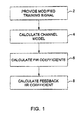
- the first step (2) involves the construction of modified training signal, which by one embodiment is based on:
- the so calculated modified training signal facilitates direct calculation of the channel model with no distortion from the penetration of data symbols echoes up to L symbols long (Pre-echoes and post-echoes together).
- the length L of the cyclic repetition provides uniform coverage for channel multipath up to a duration of the symbol rate times L.
- the goal is to make the proposed modified training signal, as similar as possible to the original signal, with as much as possible backward compatibility (with VSB receiver/demodulator equipment) to the current signal.
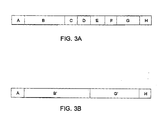
- the ATSC signal is built of frames that are divided into 2 fields, an even field and an odd field. Each field is further divided into 313 segments of 832 symbols. The first segment in every field contains a training signal that will now be described with reference to Fig. 3A, where:
- the other 312 segments contain the 4 symbols segment sync plus 828 symbols of data.
- the 305 symbols i.e., C,D,E,F and G
- the following reference signal there is provided the following reference signal:
- B' stands for B + "padded symbol” (say 0) so as to constitute 2 n - length series, which is necessary for the subsequent FFT implementation B'+G' are 816 symbols long or shorter. Each of them can have a different length, other than 511 and 305 respectively, as long as they keep the rule above. Thus, if B' stands for 512 then G' is reduced to 304.
- the modified training signal (The basic PN511 plus its cyclic repetition) has the unique characteristics of cyclic behavior. This facilitates direct and exact calculation of the channel model (see “An Introduction to Orthogonal Frequency Division Multiplexing", Research Report /1996:16, Lulea University, Sweden), with no distortion from the penetration of data symbols echoes up to 305 symbols long (Pre ghosts [echoes] and post ghosts together). It should be noted that the direct calculation may be realized in time domain (e.g. cross-correlation calculation) or frequency domain (e.g. FFT calculation). It should be further noted that the cyclic characteristics does not take in account the pre-pending 'A' portion and the appended 'H' portion.
- the 305 length of the cyclic repetition provides uniform coverage for channel multipath up to a length of 28.34 ⁇ sec (the symbol rate is 10.7622 MhZ and accordingly 305 symbols are extended over a time interval of 28.34 ⁇ sec.
- the modification of only the training signal extension makes it backward compatible to many existing demodulator VSB equipment that are commercially available in the market.
- the latter is based on the assumption that end portion (portion C-G in Fig. 3A, now forming the duplicated extension) is not used due to the limited application of the VSB for other than terrestrial transmission in the USA, where VSB operates in the VSB8tr mode only.
- the commercially available demodulators meet the constraint that the L symbols (e.g. 305) in the suffix are not used, the proposed technique is backward compatible and can be used with commercially available demodulators.
- modified training signal is applied to VSB signal
- those versed in the art may readily appreciate that it may be applied to any other single carrier signal such as and not limited to QAM.
- the construction of the modified training signal is realized at the transmitting side, e.g. at the broadcasting station, whereas the processing of the training signal (as will be explained in detail below) is realized at the subscriber side.
- the size (N) of the training signal limits the length of each one the FIR filter and the IIR filter.
- the size of the cyclic extension (L) determines the maximal ghosts delays (echoes), which can be handled, both pre and post ghosts.
- the rate of repetition of the reference signal determines the dynamics, which can be handled, Without the duplicated extension averaging is required (as is the case in the prior art solutions), which means both less quality solution and slower adaptation rate.
- the training signal is utilized for the construction of a channel model.
- the specified modified training signal is utilized for enhancing the quality of the received single carrier data by using FIR filtering, or IIR filtering or both for equalizing the received data (i.e. attenuating channel echoes) even in difficult environmental conditions.
- the channel model calculation (4 in Fig. 1) may be calculated in the Frequency domain (e.g. using FFT and inverse FFT operations) or in the time domain (e.g. using cross correlation operations).
- N The length of the training signal. In the VSB signal it is 511, which is the length of PN511.
- N can be set to 512 by padding the PN511 sequence with one zero at its end.
- the PN511 after the padding of zero will also referred to as PN511.
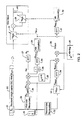
- each segment is constituted by the y n response (21) (signifying the so received modified training signal) and the successive received single carrier data (22), in a repetitive manner.
- FIR and IIR taps provide flexibility of implementation, from normal configuration with short forward FIR section and long feedback section, all the way to a long FIR with no feedback filter.
- short delays either pre or post echoes
- long delays post echoes
- a very long FIR is required, which, inter alia , is very costly.
- the FIR solution leaves residue ghosts, so the IIR part will be required instead of the FIR. From the foregoing discussion it readily arises that depending upon the particular application only FIR filter, only IIR filter or both can be used.
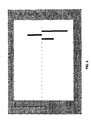
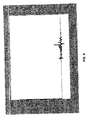
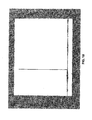
- Fig.10 illustrates the long and short echoes reduction extent in the specific example described with reference to Figs. 2 to 9.
- the channel impulse response sequence g (n) has a K factor of a -2.3 dB, where
Landscapes
- Engineering & Computer Science (AREA)
- Power Engineering (AREA)
- Computer Networks & Wireless Communication (AREA)
- Signal Processing (AREA)
- Cable Transmission Systems, Equalization Of Radio And Reduction Of Echo (AREA)
- Filters That Use Time-Delay Elements (AREA)
Applications Claiming Priority (2)
| Application Number | Priority Date | Filing Date | Title |
|---|---|---|---|
| US693866 | 1985-01-23 | ||
| US09/693,866 US6901244B1 (en) | 2000-10-23 | 2000-10-23 | Training signal in a single carrier transmission |
Publications (2)
| Publication Number | Publication Date |
|---|---|
| EP1202509A2 true EP1202509A2 (de) | 2002-05-02 |
| EP1202509A3 EP1202509A3 (de) | 2004-04-14 |
Family
ID=24786429
Family Applications (1)
| Application Number | Title | Priority Date | Filing Date |
|---|---|---|---|
| EP01125169A Withdrawn EP1202509A3 (de) | 2000-10-23 | 2001-10-23 | Einstellungssignal für Einzelträgerübertragungn, sowie einstellung eines rekursiven Entzerrers |
Country Status (2)
| Country | Link |
|---|---|
| US (2) | US6901244B1 (de) |
| EP (1) | EP1202509A3 (de) |
Cited By (3)
| Publication number | Priority date | Publication date | Assignee | Title |
|---|---|---|---|---|
| EP1976208A1 (de) | 2007-03-30 | 2008-10-01 | Sony Deutschland Gmbh | Drahtloses Einzelträger Kommunikationssystem |
| EP1525698A4 (de) * | 2002-07-18 | 2009-06-10 | Motorola Inc | Verfahren und empfänger zur modulation eines trainingspräfixes |
| US7869497B2 (en) | 2002-08-30 | 2011-01-11 | Nxp B.V. | Frequency-domain decision feedback equalizing device and method |
Families Citing this family (6)
| Publication number | Priority date | Publication date | Assignee | Title |
|---|---|---|---|---|
| EP1531590A1 (de) * | 2003-11-11 | 2005-05-18 | STMicroelectronics Belgium N.V. | Verfahren und Vorrichtung zur Kanalentzerrung unter Verwendung einer Schätzung der Länge der Kanalimpulsantwort |
| US7461037B2 (en) * | 2003-12-31 | 2008-12-02 | Nokia Siemens Networks Oy | Clustering technique for cyclic phenomena |
| US20050180558A1 (en) * | 2004-02-17 | 2005-08-18 | Sarnoff Corporation | Method and apparatus for equalizing strong pre-echoes in a multi-path communication channel |
| CA2560497C (en) * | 2005-09-22 | 2014-05-13 | Her Majesty The Queen In Right Of Canada, As Represented By The Ministerof Industry, Through The Communications Research Centre Canada | Hybrid domain block equalizer |
| EP3179680A1 (de) * | 2015-12-11 | 2017-06-14 | Intel IP Corporation | Entzerrer und verfahren zum entzerren eines empfangssignals |
| TWI837180B (zh) | 2018-10-18 | 2024-04-01 | 日商索尼半導體解決方案公司 | 通信系統、傳送裝置及接收裝置 |
Family Cites Families (15)
| Publication number | Priority date | Publication date | Assignee | Title |
|---|---|---|---|---|
| EP0450720B1 (de) * | 1990-04-04 | 1995-09-27 | Koninklijke Philips Electronics N.V. | Schaltung zur Auslöschung von Geisterbildern |
| GB9008613D0 (en) * | 1990-04-17 | 1990-06-13 | Marconi Gec Ltd | Reducing interference in r.f.signals |
| US5117291A (en) * | 1990-11-30 | 1992-05-26 | At&T Bell Laboratories | Technique for adjusting signal dispersion cancellation apparatus in communications systems |
| US5491565A (en) * | 1993-12-03 | 1996-02-13 | Telefonaktiebolaget Lm Ericsson | System and method for varying the transmission rate of facsimile data in a telecommunication system |
| US6526101B1 (en) * | 1994-06-28 | 2003-02-25 | Samsung Electronics Co., Ltd. | Receiver for QAM digital television signals |
| US5886749A (en) * | 1996-12-13 | 1999-03-23 | Cable Television Laboratories, Inc. | Demodulation using a time domain guard interval with an overlapped transform |
| US5930296A (en) * | 1997-04-08 | 1999-07-27 | Glenayre Electronics, Inc. | Low-complexity bidirectional equalizer |
| US6549592B1 (en) * | 1998-02-06 | 2003-04-15 | Cisco Technology, Inc | Enhanced synchronization burst for OFDM systems |
| US6526105B1 (en) * | 1998-05-29 | 2003-02-25 | Tellabs, Operations, Inc. | Time domain equalization for discrete multi-tone systems |
| US6426972B1 (en) * | 1998-06-19 | 2002-07-30 | Nxtwave Communications | Reduced complexity equalizer for multi mode signaling |
| US6504578B1 (en) * | 1998-09-25 | 2003-01-07 | Lg Electronics Inc. | Apparatus and method for detecting vertical synchronizing signal of digital TV |
| US6535552B1 (en) * | 1999-05-19 | 2003-03-18 | Motorola, Inc. | Fast training of equalizers in discrete multi-tone (DMT) systems |
| US6256486B1 (en) * | 1999-09-09 | 2001-07-03 | Nortel Networks Limited | Method and apparatus for measuring co-channel interference |
| US6693566B2 (en) * | 1999-12-03 | 2004-02-17 | Broadcom Corporation | Interspersed training for turbo coded modulation |
| US7606138B2 (en) * | 2003-09-29 | 2009-10-20 | Her Majesty The Queen In Right Of Canada, As Represented By The Minister Of Industry, Through The Communications Research Centre Canada | Multi-symbol encapsulated OFDM system |
-
2000
- 2000-10-23 US US09/693,866 patent/US6901244B1/en not_active Expired - Lifetime
-
2001
- 2001-10-23 EP EP01125169A patent/EP1202509A3/de not_active Withdrawn
-
2004
- 2004-10-14 US US10/963,603 patent/US7099628B2/en not_active Expired - Lifetime
Cited By (6)
| Publication number | Priority date | Publication date | Assignee | Title |
|---|---|---|---|---|
| EP1525698A4 (de) * | 2002-07-18 | 2009-06-10 | Motorola Inc | Verfahren und empfänger zur modulation eines trainingspräfixes |
| US7869497B2 (en) | 2002-08-30 | 2011-01-11 | Nxp B.V. | Frequency-domain decision feedback equalizing device and method |
| EP1976208A1 (de) | 2007-03-30 | 2008-10-01 | Sony Deutschland Gmbh | Drahtloses Einzelträger Kommunikationssystem |
| EP2334020A1 (de) * | 2007-03-30 | 2011-06-15 | Sony Deutschland Gmbh | Drahtloses Kommunikationssystem |
| US8050339B2 (en) | 2007-03-30 | 2011-11-01 | Sony Deutschland Gmbh | Single carrier high rate wireless system |
| US8526522B2 (en) | 2007-03-30 | 2013-09-03 | Sony Deutschland Gmbh | Single carrier high rate wireless system |
Also Published As
| Publication number | Publication date |
|---|---|
| US20050064833A1 (en) | 2005-03-24 |
| US7099628B2 (en) | 2006-08-29 |
| US6901244B1 (en) | 2005-05-31 |
| EP1202509A3 (de) | 2004-04-14 |
Similar Documents
| Publication | Publication Date | Title |
|---|---|---|
| US5886749A (en) | Demodulation using a time domain guard interval with an overlapped transform | |
| US6912258B2 (en) | Frequency-domain equalizer for terrestrial digital TV reception | |
| KR100226698B1 (ko) | 직교 주파수 분할 다중화 수신 시스템의 채널 등화 장치 | |
| US6559894B2 (en) | Block-adaptive equalization using partial decision feedback in digital broadcast communications | |
| US7190744B2 (en) | Error generation for adaptive equalizer | |
| US9521441B2 (en) | Digital broadcasting system and method of processing data | |
| KR20030010745A (ko) | 단일-캐리어 디지털 텔레비전 방송 시스템을 위한반복-pn1023-시퀀스 반향-소거 참조 신호 | |
| US20050123077A1 (en) | Digital broadcasting receiving system and equalizing method thereof | |
| KR20060000073A (ko) | 스텝사이즈 조정기능을 구비한 등화기 및 등화방법 | |
| US6901244B1 (en) | Training signal in a single carrier transmission | |
| KR101199374B1 (ko) | 디지털 방송 시스템 및 처리 방법 | |
| US7738589B2 (en) | Digital broadcasting transmission/reception capable of improving a receiving performance and a signal processing method thereof | |
| US7072392B2 (en) | Equalizer for time domain signal processing | |
| US20020150170A1 (en) | Transmission and reception system with guard intervals containing known components unrelated to transmitted data | |
| CN112398772B (zh) | Ofdm系统接收解调方法以及ofdm系统接收机 | |
| KR100913080B1 (ko) | 디지털 송수신 시스템의 채널 응답 추정 및 등화기 계수초기화 방법 | |
| JP2002026861A (ja) | 復調装置及び復調方法 | |
| KR100640368B1 (ko) | 채널등화기와 채널등화방법 | |
| US8238404B2 (en) | Method to improve ATSC-VSB transceiver performance employing a time-frequency waveform processor | |
| US20040042546A1 (en) | Single carrier receiver with an equalizer for improving equalization quality and equalization method thereof | |
| KR100218671B1 (ko) | 주파수 선택적 레일레이 페이딩 보상 시스템 | |
| KR101181778B1 (ko) | 채널 등화 방법 및 장치, 이를 적용한 디지털 방송 수신시스템 | |
| KR20000000573A (ko) | 채널 등화기의 등화 적용 범위 가변방법 | |
| KR101208514B1 (ko) | 디지털 방송 수신 시스템 및 처리 방법 | |
| WO2005114891A1 (en) | Symbol timing ambiguity correction |
Legal Events
| Date | Code | Title | Description |
|---|---|---|---|
| PUAI | Public reference made under article 153(3) epc to a published international application that has entered the european phase |
Free format text: ORIGINAL CODE: 0009012 |
|
| AK | Designated contracting states |
Kind code of ref document: A2 Designated state(s): AT BE CH CY DE DK ES FI FR GB GR IE IT LI LU MC NL PT SE TR |
|
| AX | Request for extension of the european patent |
Free format text: AL;LT;LV;MK;RO;SI |
|
| PUAL | Search report despatched |
Free format text: ORIGINAL CODE: 0009013 |
|
| RIC1 | Information provided on ipc code assigned before grant |
Ipc: 7H 04L 25/03 B Ipc: 7H 04N 5/21 A |
|
| AK | Designated contracting states |
Kind code of ref document: A3 Designated state(s): AT BE CH CY DE DK ES FI FR GB GR IE IT LI LU MC NL PT SE TR |
|
| AX | Request for extension of the european patent |
Extension state: AL LT LV MK RO SI |
|
| AKX | Designation fees paid | ||
| REG | Reference to a national code |
Ref country code: DE Ref legal event code: 8566 |
|
| STAA | Information on the status of an ep patent application or granted ep patent |
Free format text: STATUS: THE APPLICATION IS DEEMED TO BE WITHDRAWN |
|
| 18D | Application deemed to be withdrawn |
Effective date: 20041015 |