EP1201070B1 - Verfahren zur erhaltung und verteilung von individuellen sicherungseinrichtungen - Google Patents
Verfahren zur erhaltung und verteilung von individuellen sicherungseinrichtungen Download PDFInfo
- Publication number
- EP1201070B1 EP1201070B1 EP00948778A EP00948778A EP1201070B1 EP 1201070 B1 EP1201070 B1 EP 1201070B1 EP 00948778 A EP00948778 A EP 00948778A EP 00948778 A EP00948778 A EP 00948778A EP 1201070 B1 EP1201070 B1 EP 1201070B1
- Authority
- EP
- European Patent Office
- Prior art keywords
- security device
- personal security
- key
- authentication
- information
- Prior art date
- Legal status (The legal status is an assumption and is not a legal conclusion. Google has not performed a legal analysis and makes no representation as to the accuracy of the status listed.)
- Expired - Lifetime
Links
- 238000000034 method Methods 0.000 title claims description 54
- 230000004044 response Effects 0.000 claims description 30
- 238000007620 mathematical function Methods 0.000 description 5
- 230000006870 function Effects 0.000 description 3
- 241000700605 Viruses Species 0.000 description 2
- 230000008569 process Effects 0.000 description 2
- 241001651165 Synecdoche Species 0.000 description 1
- 241001441724 Tetraodontidae Species 0.000 description 1
- 230000005540 biological transmission Effects 0.000 description 1
- 230000001010 compromised effect Effects 0.000 description 1
- 238000005336 cracking Methods 0.000 description 1
- 230000001351 cycling effect Effects 0.000 description 1
- 230000001815 facial effect Effects 0.000 description 1
- ZXQYGBMAQZUVMI-GCMPRSNUSA-N gamma-cyhalothrin Chemical compound CC1(C)[C@@H](\C=C(/Cl)C(F)(F)F)[C@H]1C(=O)O[C@H](C#N)C1=CC=CC(OC=2C=CC=CC=2)=C1 ZXQYGBMAQZUVMI-GCMPRSNUSA-N 0.000 description 1
- 230000003993 interaction Effects 0.000 description 1
- 238000005259 measurement Methods 0.000 description 1
- 230000000717 retained effect Effects 0.000 description 1
- 230000002207 retinal effect Effects 0.000 description 1
- 238000000926 separation method Methods 0.000 description 1
- 239000013589 supplement Substances 0.000 description 1
- 230000001360 synchronised effect Effects 0.000 description 1
Images




Classifications
-
- H—ELECTRICITY
- H04—ELECTRIC COMMUNICATION TECHNIQUE
- H04L—TRANSMISSION OF DIGITAL INFORMATION, e.g. TELEGRAPHIC COMMUNICATION
- H04L63/00—Network architectures or network communication protocols for network security
- H04L63/02—Network architectures or network communication protocols for network security for separating internal from external traffic, e.g. firewalls
- H04L63/0272—Virtual private networks
-
- H—ELECTRICITY
- H04—ELECTRIC COMMUNICATION TECHNIQUE
- H04L—TRANSMISSION OF DIGITAL INFORMATION, e.g. TELEGRAPHIC COMMUNICATION
- H04L63/00—Network architectures or network communication protocols for network security
- H04L63/04—Network architectures or network communication protocols for network security for providing a confidential data exchange among entities communicating through data packet networks
-
- H—ELECTRICITY
- H04—ELECTRIC COMMUNICATION TECHNIQUE
- H04L—TRANSMISSION OF DIGITAL INFORMATION, e.g. TELEGRAPHIC COMMUNICATION
- H04L63/00—Network architectures or network communication protocols for network security
- H04L63/08—Network architectures or network communication protocols for network security for authentication of entities
- H04L63/0853—Network architectures or network communication protocols for network security for authentication of entities using an additional device, e.g. smartcard, SIM or a different communication terminal
Definitions
- This invention relates to the field of cryptography, including user authentication, document authentication, symmetric key cryptography, public key cryptography, secure communications, secret sharing, and key distribution.
- Cryptography has become increasingly important with the increased presence of the Internet, an inherently insecure transmission medium. Cryptography enables methods of secure user authentication, which is a prerequisite to performing secure electronic commerce on the Internet.
- Typical methods of user authentication are insecure and vulnerable to eavesdropping. For example, suppose that a user Alice wishes to log into a computer over the Internet. A typical authentication process requires Alice to enter her password. This password is typically entered and transmitted in the clear and may be easily intercepted by an eavesdropper Eve as it travels across the Internet, providing Eve with the information necessary to gain exactly the same access privileges as Alice. Cryptography provides secure authentication protocols allowing Eve to eavesdrop on the authentication information without providing her with the necessary information to gain the same access privileges as Alice.
- Cryptographic methods of secure user authentication require the storage of sensitive information, typically on a medium such as the hard disk drive of a general purpose computer or the flash memory of a personal digital assistant. With the increasing portability and mobility of such hardware comes the increasing ease of its theft.
- a user travels with a laptop computer containing authentication information stored on its hard disk. This authentication information can be used to make a secure network connection, to log in to a remote host, and to sign email. If the laptop were to be stolen, the thief could then use this stolen information to perform further mischief by masquerading as the user.
- a private key is a component of public key cryptography, which enables methods of user authentication as well as secure communications over unsecured channels.
- Public key cryptography employs a key pair comprising a public key and a private key. One key is used to encrypt a file and the other key is used to decrypt it. The key used to encrypt a file is not useful for subsequently decrypting it.
- public key cryptography enables a user Alice to authenticate herself to another user Bob by encrypting data provided by Bob with her private key, creating a digital signature. Alice then sends the signature to Bob.
- Bob uses Alice's public key to decrypt the signature, which he then compares to the plaintext. Alice is authenticated to Bob if the decrypted and plaintext data match. Implementations of public key cryptography include RSA, Diffie-Helman, ElGamal, and Elliptic Curve Cryptography ("ECC").
- an authentication token displays a number that changes periodically.
- the numbers displayed are elements in a pseudorandom sequence.
- the security server Before the token is used, it is synchronized with a security server so that the security server subsequently knows what number is displayed on the token at any given time.
- the user seeks access to a resource administered by the security server, the user sends the server the number currently displayed on the token.
- the server then authenticates the user by comparing the sent number with the number that the server expects the authentication token to currently display. If they match, the user is authenticated and granted access to the resource.
- An authentication token can be implemented in hardware or software.
- an authentication token includes program code running on the user's laptop.
- the key comprises a number known by the user and an authentication server. Instead of requesting the number directly, the authentication server sends the user an operand. The user performs a mathematical function using the operand and the key and sends the result back to the authentication server, which compares the user's answer with the expected answer. The mathematical function is designed so that it is impractical to discern the key from the operand and the result.
- a challenge-response authentication protocol can be implemented in software on the user's a general purpose computer.
- Sensitive information for secure user authentication can be stored on a variety of hardware.
- secure user authentication methods may be implemented on a workstation, a desktop computer, a laptop computer, a personal digital assistant, a smartcard, a universal serial bus ("USB") key, or specialized hardware.
- This specialized hardware can be small and portable, with form factors similar to a credit card, a gumdrop, or a school ring.
- the invention provides a method for securely providing information comprising the steps of: at a personal security device server, receiving from the client information identifying a personal security device; in response to receiving said information identifying a personal security device, sending from the server to the client said identified personal security device; at an authentication server, receiving authentication information from the client; and responsive to said authentication information, sending from a key database to the client decryption information for said personal security device.
- a method implemented by a client for accessing secure information comprising the steps of: receiving a personal security device from a personal security device server, said personal security device containing the secure information; sending a key query including authentication information to an authentication server; in response to sending the authentication information to the authentication server, receiving a key for decrypting said personal security device; and with the received key, decrypting said personal security device to access the secure information.
- the term "personal security device” refers to encrypted sensitive information that may be stored on devices subject to physical compromise.
- Personal security device may also be used as a synecdoche to refer to the hardware storing this encrypted sensitive information.
- the personal security device can only be decrypted with decryption information, known as a key.
- non-volatile storage medium refers to any medium in which data persists when power is not supplied to the device on which the medium resides.
- non-volatile storage media include disks, tapes, compact disc read-only memory (“CD-ROM”), digital versatile disc (“DVD”), flash memory, erasable-programmable read-only memory (“EPROM”) and read-only memory (“ROM”).
- volatile storage medium refers to any medium in which data is stored in a transitory manner or data is lost when power is removed from the medium.
- An example of a volatile storage medium is random-access memory (“RAM”).
- RAM random-access memory
- volatile storage media are less susceptible to physical compromise than non-volatile storage media.
- the term "physical compromise” encompasses any means by which an adversary may gain access to information on a user's system. For example, a laptop computer can be stolen and its contents accessed. Physical compromise also encompasses an adversary may gaining entrance to an office and copying sensitive contents of a target computer onto a removable storage medium such as a floppy disk or removable cartridge. Physical compromise also encompasses an adversary transmitting sensitive information from a target computer to one of the adversary's computers over a computer network such as the Internet. Physical compromise also encompasses the use of cracking methods including viruses and trojan horses. For example, a desktop system can be infected with a virus that seeks out sensitive information and transmits what it finds to an adversary over the Internet. Alternatively, an adversary can exploit a security hole in an operating system to gain access to that system directly. One example of a security hole exploit is known as Back Orifice, which provides unauthorized access to systems running Microsoft's Windows NT operating system.
- authentication token refers to a device or program providing authentication information to a user that is determined based on secret information shared by the authentication token and an authentication server.
- the authentication token is implemented as code running on the user's general purpose computer. In an alternate embodiment, the authentication token is implemented on specialized hardware.
- One embodiment of the invention includes a client that interacts with a server to gain access to sensitive information.
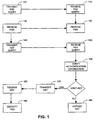
- the client first transmits a personal security device query to the server (Step 100).
- this query includes information necessary to uniquely identify a specific personal security device.
- the query includes a request to generate a new personal security device.
- the query is received via a computer network.
- the computer network is a local area network.
- the computer network is a wide area network.
- the wide area network is the Internet.
- the query is received via an open or unsecured connection.
- the query is received via a secured connection.
- the connection is secured by the SSL protocol.
- the query does not include any authentication information.
- the server receives the personal security device query (Step 110), and provides the personal security device to the client (Step 120).
- the server provides the personal security device by transmitting it over a computer network.
- the computer network is a local area network.
- the computer network is a wide area network.
- the wide area network is the Internet.
- the personal security device is transmitted over an open or unsecured connection.
- the personal security device is transmitted over a secured connection.
- the connection is secured by the SSL protocol.
- the client then receives the transmitted personal security device (Step 130) and transmits a key query requesting the key to the personal security device (Step 140).
- the key query includes an unique identifier for the personal security device to be decrypted.
- the key query also includes authentication information.
- the authentication information is the output of an authentication token.
- the authentication information is a digitally-signed document.
- the authentication information is a passphrase.
- the authentication information is a response to a challenge.
- the authentication information includes biometric information.
- the key query is transmitted via a computer network.
- the computer network is a local area network.
- the computer network is a wide area network.
- the wide area network is the Internet.
- the key query is transmitted via an open or unsecured connection.
- the key query is transmitted via a secured connection.
- the connection is secured by the SSL protocol.
- the server receives the key query (Step 150) and determines if the authentication information is correct (Step 160). In one embodiment, the server determines if the authentication information matches the information the server expects to be displayed on an authentication token. In an alternate embodiment, the server verifies the authentication information's digital signature. In yet another alternate embodiment, the server determines if the authentication information matches a passphrase. In yet another alternate embodiment, the server determines if the authentication information is a correctly calculated response to a challenge. In yet another alternate embodiment, the server determines if the authentication information matches a user's biometric information.
- the server provides the key to the personal security device (Step 170). Otherwise the server refuses to provide the key (Step 180).
- the server provides the key by transmitting it over a computer network.
- the computer network is a local area network.
- the computer network is a wide area network.
- the wide area network is the Internet.
- the key is transmitted over an open or unsecured connection.
- the key is transmitted over a secured connection.
- the connection is secured by the SSL protocol.
- the client receives the key (Step 190) and uses it to decrypt the personal security device (Step 195) thereby gaining access to its contents.
- the key is a symmetric key and decryption is performed using a symmetric cipher such as RC4, A4, DES, RC5, Blowfish, or RC6.
- the key is a first asymmetric key of a key pair, the personal security device was encrypted with a second key of a key pair, and the decryption is performed using a public-key cryptographic cipher.
- the personal security device may be distributed openly and without any requirement for authentication.
- the key to the personal security device is not distributed openly, but only in response to proper authentication.
- FIG. 2 illustrates steps taken by a server of this embodiment.
- the server receives a query for a personal security device (Step 200).
- this query includes information necessary to uniquely identify a specific personal security device.
- the query includes a request to generate a new personal security device.
- the query is received via a computer network.
- the computer network is a local area network.
- the computer network is a wide area network.
- the wide area network is the Internet.
- the query is received via an open or unsecured connection.
- the query is received via a secured connection.
- the connection is secured by the SSL protocol.
- the query does not include any authentication information.
- the server then provides the personal security device (Step 210).
- the server provides the personal security device by transmitting it over a computer network.
- the computer network is a local area network.
- the computer network is a wide area network.
- the wide area network is the Internet.
- the personal security device is transmitted over an open or unsecured connection.
- the personal security device is transmitted over a secured connection.
- the connection is secured by the SSL protocol.
- the server then receives a key query (Step 220).
- the key query includes an unique identifier for the personal security device to be decrypted.
- the key query also includes authentication information.
- the authentication information is the output of an authentication token.
- the authentication information is a digitally-signed document.
- the authentication information is a passphrase.
- the authentication information is a response to a challenge.
- the authentication information includes biometric information.
- the key query is received via a computer network.
- the computer network is a local area network.
- the computer network is a wide area network.
- the wide area network is the Internet.
- the key query is received via an open or unsecured connection.
- the key query is received via a secured connection.
- the connection is secured by the SSL protocol.
- the server determines if the authentication information is correct (Step 230). In one embodiment, the server determines if the authentication information matches the information the server expects to be displayed on an authentication token. In an alternate embodiment, the server verifies the authentication information's digital signature. In yet another alternate embodiment, the server determines if the authentication information matches a passphrase. In yet another alternate embodiment, the server determines if the authentication information is a correctly calculated response to a challenge. In yet another alternate embodiment, the server determines if the authentication information matches a user's biometric information.
- the server provides the key to the personal security device (Step 240). Otherwise the server refuses to provide the key (Step 250).
- the server provides the key by transmitting it over a computer network.
- the computer network is a local area network.
- the computer network is a wide area network.
- the wide area network is the Internet.
- the key is transmitted over an open or unsecured connection.
- the key is transmitted over a secured connection.
- the connection is secured by the SSL protocol.
- Methods of providing proper authentication include but are not limited to entering a password, successfully completing a challenge-response protocol, entering data from an authentication token, and biometric authentication.
- Characterisitics for biometric authentication can include fingerprints, voice prints, retinal scan, facial features, or the measurement of any physical characteristic associated with a user to be authenticated.
- FIG. 3 illustrates an embodiment employing a challenge-response protocol.
- a client requests a specific personal security device by sending a personal security device query (Step 300).
- this query includes information necessary to uniquely identify a specific personal security device.
- the query includes a request to generate a new personal security device.
- the query is received via a computer network.
- the computer network is a local area network.
- the computer network is a wide area network.
- the wide area network is the Internet.
- the query is received via an open or unsecured connection.
- the query is received via a secured connection.
- the connection is secured by the SSL protocol.
- the query does not include any authentication information.
- the client then receives the personal security device (Step 310).
- the client receives the personal security device over a computer network.
- the computer network is a local area network.
- the computer network is a wide area network.
- the wide area network is the Internet.
- the personal security device is received over an open or unsecured connection.
- the personal security device is received over a secured connection.
- the connection is secured by the SSL protocol.
- the client then requests the key to the personal security device by transmitting a key query (Step 320).
- the key query includes an unique identifier for the personal security device to be decrypted.
- the key query is transmitted via a computer network.
- the computer network is a local area network.
- the computer network is a wide area network.
- the wide area network is the Internet.
- the key query is transmitted via an open or unsecured connection.
- the key query is transmitted via a secured connection.
- the connection is secured by the SSL protocol.
- the client receives an authentication challenge (Step 330).
- the authentication challenge is an operand generated by the server, where the proper response is the result of performing a mathematical function on the operand and a secret number.
- the mathematical function is a one-way function, such that it is infeasible to determine the secret number from the operand and the result.
- the authentication challenge is received via a computer network.
- the computer network is a local area network.
- the computer network is a wide area network.
- the wide area network is the Internet.
- the authentication challenge is received via an open or unsecured connection.
- the authentication challenge is received via a secured connection.
- the connection is secured by the SSL protocol.
- the client provides a response to the authentication challenge (Step 340).
- the response is generated by performing the mathematical function on the operand and the secret number.
- the client provides the response by transmitting it over a computer network.
- the computer network is a local area network.
- the computer network is a wide area network.
- the wide area network is the Internet.
- the response is transmitted over an open or unsecured connection.
- the response is transmitted over a secured connection.
- the connection is secured by the SSL protocol.
- the response is then validated (Step 350). If the response is authentic, then the client is send the key (Step 370) which the client then uses to decrypt the personal security device (Step 380) and gain access to its contents. If the response is not authentic, then the client is refused the key (Step 360).
- the key is a symmetric key and decryption is performed using a symmetric cipher such as RC2, RC5, DES, Twofish, A5, or RC4.
- the key is a first asymmetric key of a key pair
- the personal security device was encrypted with a second key of a key pair
- the decryption is performed using a public-key cryptographic cipher such as RSA, Diffie-Helman, ElGamal or Elliptic Curve Cryptography ("ECC").
- ECC Elliptic Curve Cryptography
- the key is received via a computer network.
- the computer network is a local area network.
- the computer network is a wide area network.
- the wide area network is the Internet.
- the key is received via a secured connection.
- the connection is secured by the SSL protocol.
- the personal security device server does not have to be the same as the authentication server.
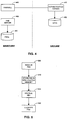
- the embodiment in FIG. 4 illustrates the separation of the personal security device server 400 from the authentication server 410.
- the personal security device server 400 is in operative association with a personal security device database 420.
- the personal security device server 400 provides the contents of the personal security device database 420 without requiring authentication.
- the contents of the personal security device database 420 can be considered public information.
- the authentication server 410 is in operative association with a key database 430.
- the information in the key database 430 is sensitive information which must be kept secure and is only given out in response to proper authentication.
- the authentication server 410 and the key database 430 can be further protected by being placed behind a firewall 440.
- a user requests and receives a personal security device from a server, which the user then stores in a non-volatile storage medium such as a hard disk drive or flash memory.
- a non-volatile storage medium such as a hard disk drive or flash memory.
- the user requests the key to the personal security device while providing proper authentication.
- the user stores the key in a volatile storage medium, such as random access memory ("RAM").
- the user decrypts the personal security device with the key and stores the decrypted sensitive information in a volatile storage medium.
- FIG. 5 illustrates the steps taken by a user or client of this embodiment.
- the client receives a personal security device (Step 500).
- the client receives the personal security device over a computer network.
- the computer network is a local area network. In an alternate embodiment, the computer network is a wide area network. In a further embodiment, the wide area network is the Internet. In one embodiment, the personal security device is received over an open or unsecured connection. In an alternate embodiment, the personal security device is received over a secured connection. In a further embodiment, the connection is secured by the SSL protocol.
- the personal security device is then stored on the client on a non-volatile storage medium (Step 510).
- the non-volatile storage medium is a disk drive such as a hard disk, a floppy disk, or a removable cartridge such as a Zip drive.
- the non-volatile storage medium is memory such as flash memory or eraseable programmable read-only memory (“EPROM”) where the contents of the memory are retained even if power is removed.
- EPROM eraseable programmable read-only memory
- the client then receives the key to the personal security device (Step 520), typically in response to successful authentication.
- the key is received via a computer network.
- the computer network is a local area network.
- the computer network is a wide area network.
- the wide area network is the Internet.
- the key is received via a secured connection.
- the connection is secured by the SSL protocol.
- the client then uses the key to decrypt the personal security device and gain access to its contents (Step 530).
- the key and the decrypted contents are stored in the client's volatile storage medium.
- the key is a symmetric key and decryption is performed using a symmetric cipher.
- the key is a first asymmetric key of a key pair, the personal security device was encrypted with a second key of a key pair, and the decryption is performed using a public-key cryptographic cipher.
- FIG. 6 illustrates the hardware of an embodiment used to store and access a personal security device and its contents.
- the hardware includes a central processing unit (“CPU") 600 in operative association with volatile storage 610 and non-volatile storage 620.
- an encrypted personal security device 630 is stored in the non-volatile storage 610.
- a key 640 is stored in the volatile storage 610.
- the CPU 600 then uses the key 640 to decrypt the contents of the personal security device and store the decrypted contents 650 in the volatile storage 610.
- a general purpose computer 700 includes a central processing unit (“CPU") 710 in operative association with volatile RAM 720 and a non-volatile disk drive 740.
- the disk drive 740 includes swap space 730. When sections of RAM 720 aren't being used, their contents are "swapped out" into the swap space 730 so that the RAM 720 can be used for other purposes. When a user wishes to access those contents, they are swapped back into the RAM 720. Because the use of swap space 730 writes the contents of volatile storage 720 into non-volatile storage 740, it is desirable to erase sensitive information from volatile storage 720 as soon as it is finished being used. Otherwise, unused sensitive information could be written out to nonvolatile swap space 730.
- the information stored in the volatile storage medium is erased after use.
- the personal security device is stored in a non-volatile storage medium (Step 800).
- the personal security device is stored by a user after having been provided by a server.
- the personal security device is stored in the non-volatile storage medium before the medium is distributed to the user.
- the key to the personal security device is stored in a volatile medium (Step 810).
- the key is obtained from an authentication server.
- the key is directly entered by a user.
- the key is then used to decrypt the personal security device (Step 820).
- the key is a symmetric key and decryption is performed using a symmetric cipher.
- the key is a first asymmetric key of a key pair, the personal security device was encrypted with a second key of a key pair, and the decryption is performed using a public-key cryptographic cipher.
- the decrypted contents of the personal security device are stored in volatile memory (Step 830).
- the key is erased from volatile memory (Step 840).
- the key is erased by zeroing out the memory location where the key was stored. If this memory location is subsequently swapped out, the key will not be stored on a non-volatile medium.
- Step 850 The user then uses the decrypted contents of the personal security device (Step 850). After the user is finished with the contents, the contents are erased from volatile memory (Step 860). In one embodiment, the contents are erased by zeroing out the memory location where the contents were stored. If this memory location is subsequently swapped out, the contents will not be stored on a non-volatile medium. If the user wishes to subsequently use the contents (Step 850), Steps 810-840 must be repeated.
- the encrypted sensitive information stored in a personal security device may include, but is not limited to, information necessary for forming a secure network connection, user authentication information, a symmetric encryption key, a private key, a public key certificate, a password or passphrase, contact information such as a name and address, a credit card number, an account number with a financial institution, a personal identification number ("PIN"), a medical record, biometric information, a transaction record, and a map revealing the location of a resource, or combinations thereof.
- a secure network connection may include a virtual private network (“VPN”) connection.
- the information necessary for forming a secure network connection may include, but is not limited to, a symmetric encryption key and a private key.
- a personal security device in one embodiment, known as symmetric key wrapping, includes a symmetrically encrypted file along with the symmetric key used to encrypt it.
- the symmetric key is itself encrypted by a second key, which may be a symmetric or a public or private key. This second key is the key to the personal security device of this embodiment.
- a user wishes to use a computer 900 to present credentials 910 such as a public key certificate or a digitally signed document to a host 920.
- the user first obtains a personal security device 930 from a personal security device server 940.
- the personal security device 930 includes the user's encrypted credentials.
- the personal security device server 940 includes a personal security device database 950.
- the user retrieves authentication information 960 from a token 970 and provides the authentication information 960 to an authentication server 980.
- the authentication server 980 is in operative association with a key database 990. If the authentication server 980 determines that the authentication information 960 is correct, the authentication server 980 then provides a key 995 to the personal security device 930.
- the computer 900 then employs the key 995 to decrypt the personal security device 930 and gain access to the user's credentials 910, which it then presents to the host 920.
- the personal security device server 940 and the authentication server 980 can be the same server.
- the personal security device 930 comprises the user's private key with which the user generates the credentials 910.
- a user wishes to form a secure network connection to a host computer 1000 from a public computer 1010.
- An example of a public computer is a workstation in a university's computing cluster.
- the user first obtains a personal security device 1020 containing encrypted information necessary for making a secure network connection, which the user then stores on a non-volatile medium 1030 such as the public computer's disk drive.
- the personal security device 1020 is obtained directly from the host computer 1000, but it may also be obtained from a separate computer such as an authentication server.
- the user then applies a key 1040 to decrypt the contents 1050 of the personal security device 1020.
- the decrypted contents 1050 reside in volatile storage 1060.
- the key 1040 is a passphrase that the user has memorized.
- the key 1040 is obtained from an authentication token.
- the personal security device 1020 may persist on the public computer, such that a subsequent user is able to read it. However, since the neither the key 1040 nor the decrypted contents 1050 of the personal security device 1020 persist, subsequent users cannot exploit the contents of the personal security device 1020.
- a user with an authentication token 1100 wishes to access the information in a personal security device 1110 stored on the hard disk drive 1120 of the user's computer.
- the user queries an authentication server 1130 and presents authentication information 1140 from the authentication token 1100 to the authentication server 1130.
- the authentication server 1130 Upon receiving proper authentication 1140, the authentication server 1130 then provides the user with a key 1150, which is then used to decrypt the contents 1160 of the personal security device.
- the key 1150 and the decrypted contents 1160 are only maintained in volatile RAM 1170 and never written out to non-volatile disk 1120. Thus when the user turns off or resets the computer 1180, the key 1150 and decrypted contents 1160 are no longer accessible on the computer 1180. If the user wishes to access the contents 1160 of the personal security device 1110 again after cycling the power or resetting the computer 1180, the user has to repeat the authentication process described above. In a further embodiment, the key 1150 and decrypted contents 1160 are removed from volatile RAM 1170 when they are no longer being used. For example, the volatile RAM 1170 containing the key 1150 is zeroed out after decryption is complete, and the volatile RAM 1170 containing the decrypted contents 1160 is zeroed out after the user is finished with it.
- a user with a smartcard 1200 wishes to perform an authentication function.
- the smartcard includes volatile 1210 and non-volatile 1220 memory.
- a personal security device 1230 is stored in the smartcard's non-volatile memory 1220.
- the smartcard 1200 receives power when it is inserted into a smartcard reader 1240; when the smartcard 1200 is removed from the reader 1240, the contents of its volatile memory 1210 are lost.
- the user inserts the smartcard 1200 into the reader 1240 and provides the reader 1240 with a key such as a PIN 1250.
- the PIN 1250 is used to decrypt the personal security device 1230.
- the decrypted contents 1260 are stored in the smartcard's volatile memory 1210, which the user employs for authentication functions such as digital signatures.
- the user removes the smartcard 1200 from the card reader 1240, erasing the sensitive contents 1260 stored in the smartcard's volatile memory 1210.
- the smartcard 1200 If the smartcard 1200 is lost or stolen, the information in its personal security device 1230 cannot be exploited by a finder or thief.
- the personal security device 1300 is stored in non-volatile external storage device 1310, which is in operative association with an interface 1320 of a computer 1330.
- the interface 1320 is in operative association with a central processing unit (“CPU") 1340, which is in operative association with a volatile storage medium 1350.
- CPU central processing unit
- the key 1360 to the personal security device 1300 is stored in the volatile storage medium 1350.
- the decrypted contents 1370 of the personal security device 1300 is stored in the volatile storage medium 1350.
- the non-volatile external storage device 1310 is a cartridge storing the personal security device 1300 in read only memory ("ROM").
- the non-volatile external storage device 1300 is a Personal Computer Memory International Association (“PCMCIA”) card and the interface 1320 is a PCMCIA slot.
- the non-volatile external storage device 1300 is a universal serial bus (“USB") key and the interface 1320 is a USB port.
- the non-volatile external storage device 1300 is a card with a magnetic strip and the interface 1320 is a magnetic card reader.
- the non-volatile external storage device 1300 is a disk and the interface 1320 is a disk drive.
- the disk is a floppy disk and the disk drive is a floppy disk drive.
- the disk is a CD-ROM and the disk drive is a CD-ROM drive.
- the disk is a Zip disk and the disk drive is a Zip drive.
Landscapes
- Engineering & Computer Science (AREA)
- Computer Security & Cryptography (AREA)
- Computer Hardware Design (AREA)
- Computing Systems (AREA)
- General Engineering & Computer Science (AREA)
- Computer Networks & Wireless Communication (AREA)
- Signal Processing (AREA)
- Storage Device Security (AREA)
- Telephonic Communication Services (AREA)
Claims (42)
- Verfahren zum sicheren Bereitstellen von Informationen, mit den folgenden Schritten:Empfangen (110) von Informationen, die eine persönliche Sicherheitseinrichtung (930) identifizieren, von einem Client (900) in einem Server für persönliche Sicherheitseinrichtungen (940);Senden (120) der identifizierten persönlichen Sicherheitseinrichtung von dem Server für persönliche Sicherheitseinrichtungen zu dem Client als Reaktion auf das Empfangen der Informationen, die eine persönliche Sicherheitseinrichtung identifizierenEmpfangen (160) von Authentifikationsinformationen von dem Client in einem Authentifikationsserver (1130) undals Reaktion auf die Authentifikationsinformationen, Senden (170) von Entschlüsselungsinformationen (995) für die persönliche Sicherheitseinrichtung von einer Schlüsseldatenbank (990) zu dem Client.
- Verfahren nach Anspruch 1, ferner mit dem Schritt des Validierens (160) der Authentifikationsinformationen in dem Authentifikationsserver (1130).
- Verfahren nach einem der Ansprüche 1 bis 2, ferner mit dem Schritt des Abrufens der persönlichen Sicherheitseinrichtung (930) in dem Server für persönliche Sicherheitseinrichtungen (940).
- Verfahren nach Anspruch 1, wobei die persönliche Sicherheitseinrichtung Informationen enthält, die notwendig sind, um eine sichere Netzwerkverbindung zwischen einem Netzwerk-Client und einem Netzwerk-Server herzustellen.
- Verfahren nach Anspruch 1, ferner mit den folgenden Schritten:Authentifizieren (230) des Clients auf der Basis der empfangenen Authentifikationsinformationen in dem Authentifikationsserver (1130) undals Folge des Authentifizieren des Clients, Senden (170) eines Schlüssels von der Schlüsseldatenbank (990) zu dem Client, wobei der Schlüssel zum Entschlüsseln der identifizierten persönlichen Sicherheitseinrichtung dient, um auf sichere Informationen zuzugreifen.
- Verfahren nach Anspruch 1, ferner mit dem Schritt des Implementierens des Servers für persönliche Sicherheitseinrichtungen und des Authentifikationsservers auf demselben Computer.
- Verfahren nach Anspruch 1, ferner mit dem Schritt des Implementierens des Authentifikationsservers und der Schlüsseldatenbank auf demselben Computer.
- Verfahren nach Anspruch 1, wobei die persönliche Sicherheitseinrichtung einen kryptographischen Schlüssel enthält.
- Verfahren nach Anspruch 1, wobei die persönliche Sicherheitseinrichtung ein Paßwort enthält.
- Verfahren nach Anspruch 1, wobei die persönliche Sicherheitseinrichtung private oder geheime Informationen enthält, die aus der folgenden Gruppe ausgewählt werden: ein medizinischer Datensatz, Kontaktinformationen, eine persönliche Geheimzahl, biometrische Informationen, ein Transaktionsdatensatz und eine Karte, die eine Position einer Ressource enthüllt.
- Verfahren nach Anspruch 1, wobei das Senden des Schlüssels zu dem Client umfaßt, den Schlüssel durch eine Verbindung zu einem Computernetzwerk zu senden.
- Verfahren nach Anspruch 11, wobei die Netzwerkverbindung unverschlüsselt ist.
- Verfahren nach Anspruch 11, wobei die Netzwerkverbindung verschlüsselt ist.
- Verfahren nach Anspruch 11, wobei das Computernetzwerk das Internet ist.
- Verfahren nach Anspruch 1, wobei die empfangenen Authentifikationsinformationen die Ausgabe eines Authentifikationstoken umfassen.
- Verfahren nach Anspruch 1, wobei die empfangenen Authentifikationsinformationen eine Antwort auf eine Authentifikationsabfrage umfassen.
- Verfahren nach Anspruch 1, wobei die empfangenen Authentifikationsinformationen biometrische Informationen umfassen.
- Durch einen Client (900) implementiertes Verfahren zum Zugreifen auf sichere Informationen, mit den folgenden Schritten:Empfangen (130) einer persönlichen Sicherheitseinrichtung von einem Server für persönliche Sicherheitseinrichtungen (940), wobei die persönliche Sicherheitseinrichtung die sicheren Informationen enthält;Senden (140) einer Schlüsselabfrage (960), die Authentifikationsinformationen umfaßt, zu einem Authentifikationsserver;Empfangen (190) eines Schlüssels (995) zum Entschlüsseln der persönlichen Sicherheitseinrichtung als Reaktion auf das Senden der Authentifikationsinformationen zu dem Authentifikationsserver undEntschlüsseln (195) der persönlichen Sicherheitseinrichtung mit dem empfangenen Schlüssel, um auf die sicheren Informationen zuzugreifen.
- Verfahren nach Anspruch 18, ferner mit dem Schritt des Sendens (100) von Informationen, die eine persönliche Sicherheitseinrichtung identifizieren, zu dem Server für persönliche Sicherheitseinrichtungen.
- Verfahren nach Anspruch 18, wobei die persönliche Sicherheitseinrichtung Informationen umfaßt, die notwendig sind, um eine sichere Netzwerkverbindung zwischen einem Netzwerk-Client und einem Netzwerk-Server herzustellen.
- Verfahren nach Anspruch 18, ferner mit dem Schritt des Speicherns der persönlichen Sicherheitseinrichtung auf einer Smartcard.
- Verfahren nach Anspruch 18, ferner mit dem Schritt des Speicherns des Schlüssels in einem flüchtigen Speicherelement.
- Verfahren nach Anspruch 18, wobei die Schlüsselabfrage die persönliche Sicherheitseinrichtung identifiziert.
- Verfahren nach Anspruch 18, ferner mit dem Schritt des Sendens von Informationen zu einem Server für persönliche Sicherheitseinrichtungen, wodurch die persönliche Sicherheitseinrichtung identifiziert wird, und wobei das Empfangen der persönlichen Sicherheitseinrichtung das Empfangen der persönlichen Sicherheitseinrichtung von dem Server für persönliche Sicherheitseinrichtungen umfaßt.
- Verfahren nach Anspruch 18, wobei das Senden der Schlüsselabfrage und der Authentifikationsinformationen umfaßt, als Reaktion auf das Senden der Schlüsselabfrage von dem Authentifikationsserver eine Authentifikationsabfrage zu empfangen und mit den Authentifikationsinformationen auf die Authentifikationsabfrage zu antworten.
- Verfahren nach Anspruch 18, ferner mit dem Schritt des vollständigen Löschens des empfangenen Schlüssels von allem Client-Speicher, nachdem die persönliche Sicherheitseinrichtung entschlüsselt wurde.
- Verfahren nach Anspruch 18, ferner mit dem Schritt des vollständigen Löschens der entschlüsselten persönlichen Sicherheitseinrichtung und der sicheren Informationen von allem Client-Speicher, nachdem auf die sicheren Informationen zugegriffen wurde.
- Verfahren nach Anspruch 18, wobei die persönliche Sicherheitseinrichtung einen kryptographischen Schlüssel enthält.
- Verfahren nach Anspruch 18, wobei die persönliche Sicherheitseinrichtung ein Paßwort enthält.
- Verfahren nach Anspruch 18, wobei das Empfangen des Schlüssels das Empfangen des Schlüssels durch eine Verbindung zu einem Computernetzwerk umfaßt.
- Verfahren nach Anspruch 30, wobei die Netzwerkverbindung unverschlüsselt ist.
- Verfahren nach Anspruch 30, wobei die Netzwerkverbindung verschlüsselt ist.
- Verfahren nach Anspruch 30, wobei das Computernetzwerk das Internet ist.
- Verfahren nach Anspruch 30, bei dem ferner ein Authentifikationstoken eine Ausgabe erzeugt, und wobei die Authentifikationsinformationen die Ausgabe umfassen.
- Verfahren nach Anspruch 18, ferner mit dem Schritt des Erzeugens einer Antwort auf eine Authentifikationsabfrage, und wobei die Authentifikationsinformationen die Antwort umfassen.
- Verfahren nach Anspruch 18, ferner mit dem Schritt des Erzeugens biometrischer Informationen, und wobei die Authentifikationsinformationen die biometrischen Informationen umfassen.
- Verfahren nach Anspruch 18, ferner mit dem Schritt des Verwendens eines Authentifikationstoken, um die Authentifikationsinformationen zu erzeugen.
- Verfahren nach Anspruch 37, wobei das Authentifikationstoken eine von dem Client unabhängige Hardwareeinrichtung ist.
- Verfahren nach Anspruch 37, wobei das Authentifikationstoken mit dem Client verbunden ist.
- Verfahren nach Anspruch 37, wobei das Authentifikationstoken auf dem Client ablaufende Software ist.
- Verfahren nach Anspruch 37, wobei das Authentifikationstoken eine auf einem von dem Client unabhängigen Prozessor ablaufende Software ist.
- Verfahren nach Anspruch 18, wobei das Empfangen der persönlichen Sicherheitseinrichtung das Empfangen der persönlichen Sicherheitseinrichtung als eine elektronische Übermittlung über ein Netzwerk umfaßt.
Applications Claiming Priority (3)
| Application Number | Priority Date | Filing Date | Title |
|---|---|---|---|
| US09/356,600 US7111172B1 (en) | 1999-07-19 | 1999-07-19 | System and methods for maintaining and distributing personal security devices |
| US356600 | 1999-07-19 | ||
| PCT/US2000/019656 WO2001006699A2 (en) | 1999-07-19 | 2000-07-19 | System and methods for maintaining and distributing personal security devices |
Publications (2)
| Publication Number | Publication Date |
|---|---|
| EP1201070A2 EP1201070A2 (de) | 2002-05-02 |
| EP1201070B1 true EP1201070B1 (de) | 2006-06-14 |
Family
ID=23402133
Family Applications (1)
| Application Number | Title | Priority Date | Filing Date |
|---|---|---|---|
| EP00948778A Expired - Lifetime EP1201070B1 (de) | 1999-07-19 | 2000-07-19 | Verfahren zur erhaltung und verteilung von individuellen sicherungseinrichtungen |
Country Status (6)
| Country | Link |
|---|---|
| US (1) | US7111172B1 (de) |
| EP (1) | EP1201070B1 (de) |
| AU (1) | AU6222600A (de) |
| CA (1) | CA2374655A1 (de) |
| DE (1) | DE60028778T2 (de) |
| WO (1) | WO2001006699A2 (de) |
Cited By (13)
| Publication number | Priority date | Publication date | Assignee | Title |
|---|---|---|---|---|
| US9948629B2 (en) | 2009-03-25 | 2018-04-17 | The 41St Parameter, Inc. | Systems and methods of sharing information through a tag-based consortium |
| US9990631B2 (en) | 2012-11-14 | 2018-06-05 | The 41St Parameter, Inc. | Systems and methods of global identification |
| US10021099B2 (en) | 2012-03-22 | 2018-07-10 | The 41st Paramter, Inc. | Methods and systems for persistent cross-application mobile device identification |
| US10091312B1 (en) | 2014-10-14 | 2018-10-02 | The 41St Parameter, Inc. | Data structures for intelligently resolving deterministic and probabilistic device identifiers to device profiles and/or groups |
| US10089679B2 (en) | 2006-03-31 | 2018-10-02 | The 41St Parameter, Inc. | Systems and methods for detection of session tampering and fraud prevention |
| US10417637B2 (en) | 2012-08-02 | 2019-09-17 | The 41St Parameter, Inc. | Systems and methods for accessing records via derivative locators |
| US10453066B2 (en) | 2003-07-01 | 2019-10-22 | The 41St Parameter, Inc. | Keystroke analysis |
| US10726151B2 (en) | 2005-12-16 | 2020-07-28 | The 41St Parameter, Inc. | Methods and apparatus for securely displaying digital images |
| US10902327B1 (en) | 2013-08-30 | 2021-01-26 | The 41St Parameter, Inc. | System and method for device identification and uniqueness |
| US10999298B2 (en) | 2004-03-02 | 2021-05-04 | The 41St Parameter, Inc. | Method and system for identifying users and detecting fraud by use of the internet |
| US11010468B1 (en) | 2012-03-01 | 2021-05-18 | The 41St Parameter, Inc. | Methods and systems for fraud containment |
| US11301585B2 (en) | 2005-12-16 | 2022-04-12 | The 41St Parameter, Inc. | Methods and apparatus for securely displaying digital images |
| US11314838B2 (en) | 2011-11-15 | 2022-04-26 | Tapad, Inc. | System and method for analyzing user device information |
Families Citing this family (178)
| Publication number | Priority date | Publication date | Assignee | Title |
|---|---|---|---|---|
| US9430769B2 (en) * | 1999-10-01 | 2016-08-30 | Cardinalcommerce Corporation | Secure and efficient payment processing system |
| WO2001031461A1 (en) * | 1999-10-25 | 2001-05-03 | Sony Corporation | Contents providing system |
| US7284266B1 (en) * | 2000-03-21 | 2007-10-16 | Broadcom Corporation | System and method for secure biometric identification |
| US7409543B1 (en) * | 2000-03-30 | 2008-08-05 | Digitalpersona, Inc. | Method and apparatus for using a third party authentication server |
| US7698565B1 (en) * | 2000-03-30 | 2010-04-13 | Digitalpersona, Inc. | Crypto-proxy server and method of using the same |
| US7237117B2 (en) | 2001-03-16 | 2007-06-26 | Kenneth P. Weiss | Universal secure registry |
| JP2003085084A (ja) * | 2001-09-12 | 2003-03-20 | Sony Corp | コンテンツ配信システム及びコンテンツ配信方法、携帯端末、配信サーバ、並びに記憶媒体 |
| US7571467B1 (en) * | 2002-02-26 | 2009-08-04 | Microsoft Corporation | System and method to package security credentials for later use |
| EP1349122B1 (de) * | 2002-03-25 | 2005-12-14 | Tds Todos Data System Ab | System und Verfahren zur Benutzerauthentifizierung in einem digitalen Kommunikationssystem |
| US8224887B2 (en) | 2003-03-26 | 2012-07-17 | Authenticatid, Llc | System, method and computer program product for authenticating a client |
| US9286457B2 (en) | 2004-06-14 | 2016-03-15 | Rodney Beatson | Method and system for providing password-free, hardware-rooted, ASIC-based authentication of a human to a mobile device using biometrics with a protected, local template to release trusted credentials to relying parties |
| US7660770B2 (en) * | 2004-10-14 | 2010-02-09 | International Business Machines Corporation | System and method for providing a secure contact management system |
| JP4707992B2 (ja) * | 2004-10-22 | 2011-06-22 | 富士通株式会社 | 暗号化通信システム |
| WO2006064575A1 (ja) * | 2004-12-15 | 2006-06-22 | Hitachi, Ltd. | 無線通信端末およびその制御方法 |
| US9917819B2 (en) * | 2005-01-13 | 2018-03-13 | International Business Machines Corporation | System and method for providing a proxied contact management system |
| JP5186359B2 (ja) | 2005-03-26 | 2013-04-17 | プリバシーズ,インコーポレイテッド | 電子ファイナンシャルトランザクションカードおよび方法 |
| US8684267B2 (en) | 2005-03-26 | 2014-04-01 | Privasys | Method for broadcasting a magnetic stripe data packet from an electronic smart card |
| US8226001B1 (en) | 2010-06-23 | 2012-07-24 | Fiteq, Inc. | Method for broadcasting a magnetic stripe data packet from an electronic smart card |
| US7636940B2 (en) * | 2005-04-12 | 2009-12-22 | Seiko Epson Corporation | Private key protection for secure servers |
| EP1882229B1 (de) | 2005-04-27 | 2014-07-23 | Privasys, Inc. | Elektronische karten und herstellungsverfahren dafür |
| US7793851B2 (en) | 2005-05-09 | 2010-09-14 | Dynamics Inc. | Dynamic credit card with magnetic stripe and embedded encoder and methods for using the same to provide a copy-proof credit card |
| US7810147B2 (en) * | 2005-12-01 | 2010-10-05 | Emc Corporation | Detecting and preventing replay in authentication systems |
| US9137012B2 (en) * | 2006-02-03 | 2015-09-15 | Emc Corporation | Wireless authentication methods and apparatus |
| WO2007095265A2 (en) * | 2006-02-10 | 2007-08-23 | Rsa Security Inc. | Method and system for providing a one time password to work in conjunction with a browser |
| US11227676B2 (en) | 2006-02-21 | 2022-01-18 | Universal Secure Registry, Llc | Universal secure registry |
| US8234220B2 (en) | 2007-02-21 | 2012-07-31 | Weiss Kenneth P | Universal secure registry |
| US8001055B2 (en) | 2006-02-21 | 2011-08-16 | Weiss Kenneth P | Method, system and apparatus for secure access, payment and identification |
| US8615663B2 (en) * | 2006-04-17 | 2013-12-24 | Broadcom Corporation | System and method for secure remote biometric authentication |
| US20080005430A1 (en) * | 2006-05-08 | 2008-01-03 | Aladdin Knowledge Systems Ltd. | Communication interface |
| US7941579B2 (en) * | 2006-06-30 | 2011-05-10 | Brother Kogyo Kabushiki Kaisha | Communication system for authenticating authority of host device for accessing storage medium set to periphery device |
| US8316227B2 (en) | 2006-11-01 | 2012-11-20 | Microsoft Corporation | Health integration platform protocol |
| US8533746B2 (en) | 2006-11-01 | 2013-09-10 | Microsoft Corporation | Health integration platform API |
| US8417537B2 (en) * | 2006-11-01 | 2013-04-09 | Microsoft Corporation | Extensible and localizable health-related dictionary |
| US20080104617A1 (en) * | 2006-11-01 | 2008-05-01 | Microsoft Corporation | Extensible user interface |
| US8296240B2 (en) | 2007-03-22 | 2012-10-23 | Sony Corporation | Digital rights management dongle |
| US8060750B2 (en) * | 2007-06-29 | 2011-11-15 | Emc Corporation | Secure seed provisioning |
| US8661249B2 (en) * | 2007-09-24 | 2014-02-25 | Microsoft Corporation | Health keyset management |
| US8059814B1 (en) | 2007-09-28 | 2011-11-15 | Emc Corporation | Techniques for carrying out seed or key derivation |
| US9002012B2 (en) * | 2007-12-01 | 2015-04-07 | Hewlett-Packard Development Company, L.P. | Apparatus and method for securing data in computer storage |
| US10467521B2 (en) | 2007-12-24 | 2019-11-05 | Dynamics Inc. | Payment cards and devices with gift card, global integration, and magnetic stripe reader communication functionality |
| US9203620B1 (en) | 2008-01-28 | 2015-12-01 | Emc Corporation | System, method and apparatus for secure use of cryptographic credentials in mobile devices |
| US8621641B2 (en) * | 2008-02-29 | 2013-12-31 | Vicki L. James | Systems and methods for authorization of information access |
| JP4845057B2 (ja) * | 2008-04-14 | 2011-12-28 | 京セラ株式会社 | 携帯電子機器及びプログラム |
| US8307210B1 (en) | 2008-05-02 | 2012-11-06 | Emc Corporation | Method and apparatus for secure validation of tokens |
| US9679135B2 (en) | 2008-06-19 | 2017-06-13 | Bank Of America Corporation | Computing device for secured transactions and virtual monitoring external from the operating system |
| US9317851B2 (en) * | 2008-06-19 | 2016-04-19 | Bank Of America Corporation | Secure transaction personal computer |
| US8484721B2 (en) * | 2008-08-04 | 2013-07-09 | Moka5, Inc. | Locked-down computing environment |
| US9112910B2 (en) | 2008-10-14 | 2015-08-18 | International Business Machines Corporation | Method and system for authentication |
| US8579203B1 (en) | 2008-12-19 | 2013-11-12 | Dynamics Inc. | Electronic magnetic recorded media emulators in magnetic card devices |
| US8931703B1 (en) | 2009-03-16 | 2015-01-13 | Dynamics Inc. | Payment cards and devices for displaying barcodes |
| US8590796B1 (en) | 2009-04-06 | 2013-11-26 | Dynamics Inc. | Cards having dynamic magnetic stripe communication devices fabricated from multiple boards |
| US8622309B1 (en) | 2009-04-06 | 2014-01-07 | Dynamics Inc. | Payment cards and devices with budgets, parental controls, and virtual accounts |
| US9329619B1 (en) | 2009-04-06 | 2016-05-03 | Dynamics Inc. | Cards with power management |
| US8589698B2 (en) * | 2009-05-15 | 2013-11-19 | International Business Machines Corporation | Integrity service using regenerated trust integrity gather program |
| US8732451B2 (en) * | 2009-05-20 | 2014-05-20 | Microsoft Corporation | Portable secure computing network |
| US8393545B1 (en) | 2009-06-23 | 2013-03-12 | Dynamics Inc. | Cards deployed with inactivated products for activation |
| US12380307B1 (en) | 2009-06-29 | 2025-08-05 | Jeffrey D. Mullen | Advanced card applications |
| US8511574B1 (en) | 2009-08-17 | 2013-08-20 | Dynamics Inc. | Advanced loyalty applications for powered cards and devices |
| US12254364B1 (en) | 2009-10-08 | 2025-03-18 | Dynamics Inc. | Programming with light for powered cards and devices |
| US8727219B1 (en) | 2009-10-12 | 2014-05-20 | Dynamics Inc. | Magnetic stripe track signal having multiple communications channels |
| US8523059B1 (en) | 2009-10-20 | 2013-09-03 | Dynamics Inc. | Advanced payment options for powered cards and devices |
| US8393546B1 (en) | 2009-10-25 | 2013-03-12 | Dynamics Inc. | Games, prizes, and entertainment for powered cards and devices |
| US12229792B1 (en) | 2010-01-14 | 2025-02-18 | Dynamics Inc. | Systems and methods for matching online searches to in-store purchases |
| US8602312B2 (en) | 2010-02-16 | 2013-12-10 | Dynamics Inc. | Systems and methods for drive circuits for dynamic magnetic stripe communications devices |
| US8348172B1 (en) | 2010-03-02 | 2013-01-08 | Dynamics Inc. | Systems and methods for detection mechanisms for magnetic cards and devices |
| US10693263B1 (en) | 2010-03-16 | 2020-06-23 | Dynamics Inc. | Systems and methods for audio connectors for powered cards and devices |
| EP2572314B1 (de) | 2010-05-18 | 2020-10-14 | Dynamics Inc. | Systeme und verfahren für karten und vorrichtungen zur kommunikation zwischen lichtimpulsen und berührungsempfindlichen anzeigen |
| US8317103B1 (en) | 2010-06-23 | 2012-11-27 | FiTeq | Method for broadcasting a magnetic stripe data packet from an electronic smart card |
| USD687094S1 (en) | 2010-07-02 | 2013-07-30 | Dynamics Inc. | Multiple button interactive electronic card with light sources |
| USD652075S1 (en) | 2010-07-02 | 2012-01-10 | Dynamics Inc. | Multiple button interactive electronic card |
| USD672389S1 (en) | 2010-07-02 | 2012-12-11 | Dynamics Inc. | Multiple button interactive electronic card with light sources |
| USD652448S1 (en) | 2010-07-02 | 2012-01-17 | Dynamics Inc. | Multiple button interactive electronic card |
| USD652449S1 (en) | 2010-07-02 | 2012-01-17 | Dynamics Inc. | Multiple button interactive electronic card |
| USD674013S1 (en) | 2010-07-02 | 2013-01-08 | Dynamics Inc. | Multiple button interactive electronic card with light sources |
| USD652867S1 (en) | 2010-07-02 | 2012-01-24 | Dynamics Inc. | Multiple button interactive electronic card |
| USD670759S1 (en) | 2010-07-02 | 2012-11-13 | Dynamics Inc. | Multiple button interactive electronic card with light sources |
| USD792512S1 (en) | 2010-07-09 | 2017-07-18 | Dynamics Inc. | Display with font |
| USD643063S1 (en) | 2010-07-09 | 2011-08-09 | Dynamics Inc. | Interactive electronic card with display |
| USD651238S1 (en) | 2010-07-09 | 2011-12-27 | Dynamics Inc. | Interactive electronic card with display |
| USD792511S1 (en) | 2010-07-09 | 2017-07-18 | Dynamics Inc. | Display with font |
| USD651237S1 (en) | 2010-07-09 | 2011-12-27 | Dynamics Inc. | Interactive electronic card with display |
| USD792513S1 (en) | 2010-07-09 | 2017-07-18 | Dynamics Inc. | Display with font |
| USD653288S1 (en) | 2010-07-09 | 2012-01-31 | Dynamics Inc. | Multiple button interactive electronic card |
| USD652076S1 (en) | 2010-07-09 | 2012-01-10 | Dynamics Inc. | Multiple button interactive electronic card with display |
| USD665447S1 (en) | 2010-07-09 | 2012-08-14 | Dynamics Inc. | Multiple button interactive electronic card with light source and display |
| USD651644S1 (en) | 2010-07-09 | 2012-01-03 | Dynamics Inc. | Interactive electronic card with display |
| USD666241S1 (en) | 2010-07-09 | 2012-08-28 | Dynamics Inc. | Multiple button interactive electronic card with light source |
| USD652450S1 (en) | 2010-07-09 | 2012-01-17 | Dynamics Inc. | Multiple button interactive electronic card |
| USD665022S1 (en) | 2010-07-09 | 2012-08-07 | Dynamics Inc. | Multiple button interactive electronic card with light source |
| US8322623B1 (en) | 2010-07-26 | 2012-12-04 | Dynamics Inc. | Systems and methods for advanced card printing |
| US9818125B2 (en) | 2011-02-16 | 2017-11-14 | Dynamics Inc. | Systems and methods for information exchange mechanisms for powered cards and devices |
| US9053398B1 (en) | 2010-08-12 | 2015-06-09 | Dynamics Inc. | Passive detection mechanisms for magnetic cards and devices |
| US10055614B1 (en) | 2010-08-12 | 2018-08-21 | Dynamics Inc. | Systems and methods for advanced detection mechanisms for magnetic cards and devices |
| WO2012037479A1 (en) | 2010-09-17 | 2012-03-22 | Universal Secure Registry, Llc | Apparatus, system and method employing a wireless user-device |
| US10022884B1 (en) | 2010-10-15 | 2018-07-17 | Dynamics Inc. | Systems and methods for alignment techniques for magnetic cards and devices |
| US8561894B1 (en) | 2010-10-20 | 2013-10-22 | Dynamics Inc. | Powered cards and devices designed, programmed, and deployed from a kiosk |
| US9646240B1 (en) | 2010-11-05 | 2017-05-09 | Dynamics Inc. | Locking features for powered cards and devices |
| US8567679B1 (en) | 2011-01-23 | 2013-10-29 | Dynamics Inc. | Cards and devices with embedded holograms |
| US10095970B1 (en) | 2011-01-31 | 2018-10-09 | Dynamics Inc. | Cards including anti-skimming devices |
| US9836680B1 (en) | 2011-03-03 | 2017-12-05 | Dynamics Inc. | Systems and methods for advanced communication mechanisms for magnetic cards and devices |
| US8485446B1 (en) | 2011-03-28 | 2013-07-16 | Dynamics Inc. | Shielded magnetic stripe for magnetic cards and devices |
| US11100431B2 (en) | 2011-05-10 | 2021-08-24 | Dynamics Inc. | Systems and methods for mobile authorizations |
| USD670330S1 (en) | 2011-05-12 | 2012-11-06 | Dynamics Inc. | Interactive card |
| USD670332S1 (en) | 2011-05-12 | 2012-11-06 | Dynamics Inc. | Interactive card |
| USD670329S1 (en) | 2011-05-12 | 2012-11-06 | Dynamics Inc. | Interactive display card |
| USD670331S1 (en) | 2011-05-12 | 2012-11-06 | Dynamics Inc. | Interactive display card |
| USD676904S1 (en) | 2011-05-12 | 2013-02-26 | Dynamics Inc. | Interactive display card |
| US8628022B1 (en) | 2011-05-23 | 2014-01-14 | Dynamics Inc. | Systems and methods for sensor mechanisms for magnetic cards and devices |
| DE102011051498A1 (de) * | 2011-06-06 | 2012-12-06 | Kobil Systems Gmbh | Gesicherter Zugriff auf Daten in einem Gerät |
| US8827153B1 (en) | 2011-07-18 | 2014-09-09 | Dynamics Inc. | Systems and methods for waveform generation for dynamic magnetic stripe communications devices |
| US11551046B1 (en) | 2011-10-19 | 2023-01-10 | Dynamics Inc. | Stacked dynamic magnetic stripe commmunications device for magnetic cards and devices |
| US11409971B1 (en) | 2011-10-23 | 2022-08-09 | Dynamics Inc. | Programming and test modes for powered cards and devices |
| GB2496841B (en) * | 2011-11-15 | 2016-07-20 | Rosberg System As | Method of securing a computing device |
| US9619741B1 (en) | 2011-11-21 | 2017-04-11 | Dynamics Inc. | Systems and methods for synchronization mechanisms for magnetic cards and devices |
| US8960545B1 (en) | 2011-11-21 | 2015-02-24 | Dynamics Inc. | Data modification for magnetic cards and devices |
| US9454648B1 (en) * | 2011-12-23 | 2016-09-27 | Emc Corporation | Distributing token records in a market environment |
| US8650627B2 (en) * | 2011-12-28 | 2014-02-11 | Tata Consultancy Services Ltd. | Computer implemented system and method for providing challenge-response solutions to authenticate a user |
| US20130182576A1 (en) * | 2012-01-13 | 2013-07-18 | Qualcomm Incorporated | Context-aware mobile computing for automatic environment detection and re-establishment |
| US9064194B1 (en) | 2012-02-03 | 2015-06-23 | Dynamics Inc. | Systems and methods for spike suppression for dynamic magnetic stripe communications devices |
| US9710745B1 (en) | 2012-02-09 | 2017-07-18 | Dynamics Inc. | Systems and methods for automated assembly of dynamic magnetic stripe communications devices |
| US8888009B1 (en) | 2012-02-14 | 2014-11-18 | Dynamics Inc. | Systems and methods for extended stripe mechanisms for magnetic cards and devices |
| US9916992B2 (en) | 2012-02-20 | 2018-03-13 | Dynamics Inc. | Systems and methods for flexible components for powered cards and devices |
| US9648490B2 (en) | 2012-03-01 | 2017-05-09 | Qualcomm Incorporated | Context-aware mobile computing for automatic environment detection and re-establishment |
| US9734669B1 (en) | 2012-04-02 | 2017-08-15 | Dynamics Inc. | Cards, devices, systems, and methods for advanced payment game of skill and game of chance functionality |
| US11961147B1 (en) | 2012-04-15 | 2024-04-16 | K. Shane Cupp | Cards, devices, systems, and methods for financial management services |
| US11418483B1 (en) | 2012-04-19 | 2022-08-16 | Dynamics Inc. | Cards, devices, systems, and methods for zone-based network management |
| US9033218B1 (en) | 2012-05-15 | 2015-05-19 | Dynamics Inc. | Cards, devices, systems, methods and dynamic security codes |
| US8752148B1 (en) | 2012-06-25 | 2014-06-10 | Emc Corporation | Processorless token for producing a one-time password |
| US9064195B2 (en) | 2012-06-29 | 2015-06-23 | Dynamics Inc. | Multiple layer card circuit boards |
| USD687490S1 (en) | 2012-08-27 | 2013-08-06 | Dynamics Inc. | Interactive electronic card with display and button |
| USD673606S1 (en) | 2012-08-27 | 2013-01-01 | Dynamics Inc. | Interactive electronic card with display and buttons |
| USD730438S1 (en) | 2012-08-27 | 2015-05-26 | Dynamics Inc. | Interactive electronic card with display and button |
| USD676487S1 (en) | 2012-08-27 | 2013-02-19 | Dynamics Inc. | Interactive electronic card with display and buttons |
| USD729870S1 (en) | 2012-08-27 | 2015-05-19 | Dynamics Inc. | Interactive electronic card with display and button |
| USD695636S1 (en) | 2012-08-27 | 2013-12-17 | Dynamics Inc. | Interactive electronic card with display and buttons |
| USD687887S1 (en) | 2012-08-27 | 2013-08-13 | Dynamics Inc. | Interactive electronic card with buttons |
| USD675256S1 (en) | 2012-08-27 | 2013-01-29 | Dynamics Inc. | Interactive electronic card with display and button |
| USD687487S1 (en) | 2012-08-27 | 2013-08-06 | Dynamics Inc. | Interactive electronic card with display and button |
| USD687095S1 (en) | 2012-08-27 | 2013-07-30 | Dynamics Inc. | Interactive electronic card with buttons |
| USD688744S1 (en) | 2012-08-27 | 2013-08-27 | Dynamics Inc. | Interactive electronic card with display and button |
| US12373820B1 (en) | 2012-08-27 | 2025-07-29 | Dynamics Inc. | Cards, devices, systems, and methods for a featured application management system |
| USD730439S1 (en) | 2012-08-27 | 2015-05-26 | Dynamics Inc. | Interactive electronic card with buttons |
| USD828870S1 (en) | 2012-08-27 | 2018-09-18 | Dynamics Inc. | Display card |
| USD729871S1 (en) | 2012-08-27 | 2015-05-19 | Dynamics Inc. | Interactive electronic card with display and buttons |
| USD692053S1 (en) | 2012-08-27 | 2013-10-22 | Dynamics Inc. | Interactive electronic card with display and button |
| USD687489S1 (en) | 2012-08-27 | 2013-08-06 | Dynamics Inc. | Interactive electronic card with buttons |
| USD729869S1 (en) | 2012-08-27 | 2015-05-19 | Dynamics Inc. | Interactive electronic card with display and button |
| USD687488S1 (en) | 2012-08-27 | 2013-08-06 | Dynamics Inc. | Interactive electronic card with buttons |
| USD694322S1 (en) | 2012-08-27 | 2013-11-26 | Dynamics Inc. | Interactive electronic card with display buttons |
| US12380474B1 (en) | 2012-08-30 | 2025-08-05 | Dynamics Inc. | Cards, devices, systems, and methods for a ratings management system |
| US11995642B1 (en) | 2012-09-05 | 2024-05-28 | Dynamics Inc. | Cards, devices, systems, and methods for a notification system |
| US11126997B1 (en) | 2012-10-02 | 2021-09-21 | Dynamics Inc. | Cards, devices, systems, and methods for a fulfillment system |
| US9010647B2 (en) | 2012-10-29 | 2015-04-21 | Dynamics Inc. | Multiple sensor detector systems and detection methods of magnetic cards and devices |
| US9659246B1 (en) | 2012-11-05 | 2017-05-23 | Dynamics Inc. | Dynamic magnetic stripe communications device with beveled magnetic material for magnetic cards and devices |
| US9010644B1 (en) | 2012-11-30 | 2015-04-21 | Dynamics Inc. | Dynamic magnetic stripe communications device with stepped magnetic material for magnetic cards and devices |
| US10949627B2 (en) | 2012-12-20 | 2021-03-16 | Dynamics Inc. | Systems and methods for non-time smearing detection mechanisms for magnetic cards and devices |
| US9774446B1 (en) * | 2012-12-31 | 2017-09-26 | EMC IP Holding Company LLC | Managing use of security keys |
| USD750168S1 (en) | 2013-03-04 | 2016-02-23 | Dynamics Inc. | Interactive electronic card with display and button |
| USD765173S1 (en) | 2013-03-04 | 2016-08-30 | Dynamics Inc. | Interactive electronic card with display and button |
| USD777252S1 (en) | 2013-03-04 | 2017-01-24 | Dynamics Inc. | Interactive electronic card with buttons |
| USD750166S1 (en) | 2013-03-04 | 2016-02-23 | Dynamics Inc. | Interactive electronic card with display and buttons |
| USD765174S1 (en) | 2013-03-04 | 2016-08-30 | Dynamics Inc. | Interactive electronic card with button |
| USD750167S1 (en) | 2013-03-04 | 2016-02-23 | Dynamics Inc. | Interactive electronic card with buttons |
| USD764584S1 (en) | 2013-03-04 | 2016-08-23 | Dynamics Inc. | Interactive electronic card with buttons |
| USD751640S1 (en) | 2013-03-04 | 2016-03-15 | Dynamics Inc. | Interactive electronic card with display and button |
| USD751639S1 (en) | 2013-03-04 | 2016-03-15 | Dynamics Inc. | Interactive electronic card with display and button |
| DE102013205166A1 (de) * | 2013-03-22 | 2014-09-25 | Robert Bosch Gmbh | Verfahren zum Erzeugen einer Einwegfunktion |
| USD767024S1 (en) | 2013-09-10 | 2016-09-20 | Dynamics Inc. | Interactive electronic card with contact connector |
| USD737373S1 (en) | 2013-09-10 | 2015-08-25 | Dynamics Inc. | Interactive electronic card with contact connector |
| US12282816B1 (en) | 2013-09-10 | 2025-04-22 | Dynamics Inc. | Cards, devices, EMV contacts, and methods of manufacturing cards, devices and EMV contacts |
| US20160335636A1 (en) * | 2014-01-27 | 2016-11-17 | Tong Shao | Dual-Channel Identity Authentication Selection Device, System and Method |
| US10108891B1 (en) | 2014-03-21 | 2018-10-23 | Dynamics Inc. | Exchange coupled amorphous ribbons for electronic stripes |
| KR102223609B1 (ko) * | 2014-05-09 | 2021-03-05 | 삼성전자주식회사 | 전자 기기간 콘텐트 공유 방법 및 장치 |
| US9852309B2 (en) * | 2016-01-05 | 2017-12-26 | Prifender Ltd. | System and method for securing personal data elements |
| US10032049B2 (en) | 2016-02-23 | 2018-07-24 | Dynamics Inc. | Magnetic cards and devices for motorized readers |
| US11044244B2 (en) * | 2018-09-18 | 2021-06-22 | Allstate Insurance Company | Authenticating devices via one or more pseudorandom sequences and one or more tokens |
| MX2021002904A (es) | 2018-10-02 | 2021-06-08 | Capital One Services Llc | Sistemas y metodos para autentificacion criptografica de tarjetas sin contacto. |
| US12236447B2 (en) | 2019-10-06 | 2025-02-25 | Dynamics Inc. | Payment device applets with pre-stored messages and triggerable logic |
Family Cites Families (25)
| Publication number | Priority date | Publication date | Assignee | Title |
|---|---|---|---|---|
| US4309569A (en) | 1979-09-05 | 1982-01-05 | The Board Of Trustees Of The Leland Stanford Junior University | Method of providing digital signatures |
| GB2146814A (en) | 1983-09-17 | 1985-04-24 | Ibm | Electronic fund transfer systems |
| US4685055A (en) | 1985-07-01 | 1987-08-04 | Thomas Richard B | Method and system for controlling use of protected software |
| US5191611A (en) * | 1989-04-03 | 1993-03-02 | Lang Gerald S | Method and apparatus for protecting material on storage media and for transferring material on storage media to various recipients |
| US5485519A (en) | 1991-06-07 | 1996-01-16 | Security Dynamics Technologies, Inc. | Enhanced security for a secure token code |
| US5237614A (en) * | 1991-06-07 | 1993-08-17 | Security Dynamics Technologies, Inc. | Integrated network security system |
| US5210795A (en) * | 1992-01-10 | 1993-05-11 | Digital Equipment Corporation | Secure user authentication from personal computer |
| US5278460A (en) | 1992-04-07 | 1994-01-11 | Micron Technology, Inc. | Voltage compensating CMOS input buffer |
| US5418854A (en) * | 1992-04-28 | 1995-05-23 | Digital Equipment Corporation | Method and apparatus for protecting the confidentiality of passwords in a distributed data processing system |
| US5586260A (en) * | 1993-02-12 | 1996-12-17 | Digital Equipment Corporation | Method and apparatus for authenticating a client to a server in computer systems which support different security mechanisms |
| US5491752A (en) * | 1993-03-18 | 1996-02-13 | Digital Equipment Corporation, Patent Law Group | System for increasing the difficulty of password guessing attacks in a distributed authentication scheme employing authentication tokens |
| EP0711480B1 (de) * | 1993-07-27 | 1997-06-11 | International Business Machines Corporation | Verfahren und system zur authentifizierten sicheren schlüsselverteilung in einem kommunikationssystem |
| US5495533A (en) * | 1994-04-29 | 1996-02-27 | International Business Machines Corporation | Personal key archive |
| US5604801A (en) * | 1995-02-03 | 1997-02-18 | International Business Machines Corporation | Public key data communications system under control of a portable security device |
| US5950195A (en) * | 1996-09-18 | 1999-09-07 | Secure Computing Corporation | Generalized security policy management system and method |
| GB2318486B (en) * | 1996-10-16 | 2001-03-28 | Ibm | Data communications system |
| US5784463A (en) * | 1996-12-04 | 1998-07-21 | V-One Corporation | Token distribution, registration, and dynamic configuration of user entitlement for an application level security system and method |
| US5933826A (en) * | 1997-03-21 | 1999-08-03 | Novell, Inc. | Method and apparatus for securing and storing executable content |
| US6240184B1 (en) | 1997-09-05 | 2001-05-29 | Rsa Security Inc. | Password synchronization |
| US6064736A (en) * | 1997-09-15 | 2000-05-16 | International Business Machines Corporation | Systems, methods and computer program products that use an encrypted session for additional password verification |
| US6263446B1 (en) * | 1997-12-23 | 2001-07-17 | Arcot Systems, Inc. | Method and apparatus for secure distribution of authentication credentials to roaming users |
| US6170058B1 (en) * | 1997-12-23 | 2001-01-02 | Arcot Systems, Inc. | Method and apparatus for cryptographically camouflaged cryptographic key storage, certification and use |
| WO1999050992A1 (en) | 1998-04-01 | 1999-10-07 | Matsushita Electric Industrial Co., Ltd. | Data transmitting/receiving method, data transmitter, data receiver, data transmitting/receiving system, av content transmitting method, av content receiving method, av content transmitter, av content receiver, and program recording medium |
| US6226618B1 (en) * | 1998-08-13 | 2001-05-01 | International Business Machines Corporation | Electronic content delivery system |
| US7305695B1 (en) | 1999-01-20 | 2007-12-04 | Intel Corporation | System for providing video on demand with pause feature |
-
1999
- 1999-07-19 US US09/356,600 patent/US7111172B1/en not_active Expired - Lifetime
-
2000
- 2000-07-19 DE DE60028778T patent/DE60028778T2/de not_active Expired - Lifetime
- 2000-07-19 CA CA002374655A patent/CA2374655A1/en not_active Abandoned
- 2000-07-19 WO PCT/US2000/019656 patent/WO2001006699A2/en not_active Ceased
- 2000-07-19 EP EP00948778A patent/EP1201070B1/de not_active Expired - Lifetime
- 2000-07-19 AU AU62226/00A patent/AU6222600A/en not_active Abandoned
Cited By (44)
| Publication number | Priority date | Publication date | Assignee | Title |
|---|---|---|---|---|
| US10453066B2 (en) | 2003-07-01 | 2019-10-22 | The 41St Parameter, Inc. | Keystroke analysis |
| US11238456B2 (en) | 2003-07-01 | 2022-02-01 | The 41St Parameter, Inc. | Keystroke analysis |
| US11683326B2 (en) | 2004-03-02 | 2023-06-20 | The 41St Parameter, Inc. | Method and system for identifying users and detecting fraud by use of the internet |
| US10999298B2 (en) | 2004-03-02 | 2021-05-04 | The 41St Parameter, Inc. | Method and system for identifying users and detecting fraud by use of the internet |
| US11301585B2 (en) | 2005-12-16 | 2022-04-12 | The 41St Parameter, Inc. | Methods and apparatus for securely displaying digital images |
| US10726151B2 (en) | 2005-12-16 | 2020-07-28 | The 41St Parameter, Inc. | Methods and apparatus for securely displaying digital images |
| US12079368B2 (en) | 2005-12-16 | 2024-09-03 | The 41St Parameter, Inc. | Methods and apparatus for securely displaying digital images |
| US10089679B2 (en) | 2006-03-31 | 2018-10-02 | The 41St Parameter, Inc. | Systems and methods for detection of session tampering and fraud prevention |
| US11195225B2 (en) | 2006-03-31 | 2021-12-07 | The 41St Parameter, Inc. | Systems and methods for detection of session tampering and fraud prevention |
| US10535093B2 (en) | 2006-03-31 | 2020-01-14 | The 41St Parameter, Inc. | Systems and methods for detection of session tampering and fraud prevention |
| US12093992B2 (en) | 2006-03-31 | 2024-09-17 | The 41St Parameter, Inc. | Systems and methods for detection of session tampering and fraud prevention |
| US11727471B2 (en) | 2006-03-31 | 2023-08-15 | The 41St Parameter, Inc. | Systems and methods for detection of session tampering and fraud prevention |
| US10616201B2 (en) | 2009-03-25 | 2020-04-07 | The 41St Parameter, Inc. | Systems and methods of sharing information through a tag-based consortium |
| US12132719B2 (en) | 2009-03-25 | 2024-10-29 | The 41St Parameter, Inc. | Systems and methods of sharing information through a tag-based consortium |
| US9948629B2 (en) | 2009-03-25 | 2018-04-17 | The 41St Parameter, Inc. | Systems and methods of sharing information through a tag-based consortium |
| US11750584B2 (en) | 2009-03-25 | 2023-09-05 | The 41St Parameter, Inc. | Systems and methods of sharing information through a tag-based consortium |
| US11314838B2 (en) | 2011-11-15 | 2022-04-26 | Tapad, Inc. | System and method for analyzing user device information |
| US12153666B1 (en) | 2012-03-01 | 2024-11-26 | The 41St Parameter, Inc. | Methods and systems for fraud containment |
| US11886575B1 (en) | 2012-03-01 | 2024-01-30 | The 41St Parameter, Inc. | Methods and systems for fraud containment |
| US11010468B1 (en) | 2012-03-01 | 2021-05-18 | The 41St Parameter, Inc. | Methods and systems for fraud containment |
| US10862889B2 (en) | 2012-03-22 | 2020-12-08 | The 41St Parameter, Inc. | Methods and systems for persistent cross application mobile device identification |
| US10341344B2 (en) | 2012-03-22 | 2019-07-02 | The 41St Parameter, Inc. | Methods and systems for persistent cross-application mobile device identification |
| US10021099B2 (en) | 2012-03-22 | 2018-07-10 | The 41st Paramter, Inc. | Methods and systems for persistent cross-application mobile device identification |
| US11683306B2 (en) | 2012-03-22 | 2023-06-20 | The 41St Parameter, Inc. | Methods and systems for persistent cross-application mobile device identification |
| US12058131B2 (en) | 2012-03-22 | 2024-08-06 | The 41St Parameter, Inc. | Methods and systems for persistent cross-application mobile device identification |
| US12002053B2 (en) | 2012-08-02 | 2024-06-04 | The 41St Parameter, Inc. | Systems and methods for accessing records via derivative locators |
| US12430651B2 (en) | 2012-08-02 | 2025-09-30 | The 41St Parameter, Inc. | Systems and methods for accessing records via derivative locators |
| US10417637B2 (en) | 2012-08-02 | 2019-09-17 | The 41St Parameter, Inc. | Systems and methods for accessing records via derivative locators |
| US11301860B2 (en) | 2012-08-02 | 2022-04-12 | The 41St Parameter, Inc. | Systems and methods for accessing records via derivative locators |
| US10853813B2 (en) | 2012-11-14 | 2020-12-01 | The 41St Parameter, Inc. | Systems and methods of global identification |
| US9990631B2 (en) | 2012-11-14 | 2018-06-05 | The 41St Parameter, Inc. | Systems and methods of global identification |
| US12555116B2 (en) | 2012-11-14 | 2026-02-17 | The 41St Parameter, Inc. | Systems and methods of global identification |
| US11922423B2 (en) | 2012-11-14 | 2024-03-05 | The 41St Parameter, Inc. | Systems and methods of global identification |
| US11410179B2 (en) | 2012-11-14 | 2022-08-09 | The 41St Parameter, Inc. | Systems and methods of global identification |
| US10395252B2 (en) | 2012-11-14 | 2019-08-27 | The 41St Parameter, Inc. | Systems and methods of global identification |
| US10902327B1 (en) | 2013-08-30 | 2021-01-26 | The 41St Parameter, Inc. | System and method for device identification and uniqueness |
| US11657299B1 (en) | 2013-08-30 | 2023-05-23 | The 41St Parameter, Inc. | System and method for device identification and uniqueness |
| US12045736B1 (en) | 2013-08-30 | 2024-07-23 | The 41St Parameter, Inc. | System and method for device identification and uniqueness |
| US12380341B1 (en) | 2013-08-30 | 2025-08-05 | The 41St Parameter, Inc. | System and method for device identification and uniqueness |
| US10091312B1 (en) | 2014-10-14 | 2018-10-02 | The 41St Parameter, Inc. | Data structures for intelligently resolving deterministic and probabilistic device identifiers to device profiles and/or groups |
| US10728350B1 (en) | 2014-10-14 | 2020-07-28 | The 41St Parameter, Inc. | Data structures for intelligently resolving deterministic and probabilistic device identifiers to device profiles and/or groups |
| US12301685B1 (en) | 2014-10-14 | 2025-05-13 | The 41St Parameter, Inc. | Data structures for intelligently resolving deterministic and probabilistic device identifiers to device profiles and/or groups |
| US11240326B1 (en) | 2014-10-14 | 2022-02-01 | The 41St Parameter, Inc. | Data structures for intelligently resolving deterministic and probabilistic device identifiers to device profiles and/or groups |
| US11895204B1 (en) | 2014-10-14 | 2024-02-06 | The 41St Parameter, Inc. | Data structures for intelligently resolving deterministic and probabilistic device identifiers to device profiles and/or groups |
Also Published As
| Publication number | Publication date |
|---|---|
| US7111172B1 (en) | 2006-09-19 |
| EP1201070A2 (de) | 2002-05-02 |
| WO2001006699A3 (en) | 2001-10-04 |
| CA2374655A1 (en) | 2001-01-25 |
| WO2001006699A2 (en) | 2001-01-25 |
| DE60028778T2 (de) | 2007-05-24 |
| AU6222600A (en) | 2001-02-05 |
| DE60028778D1 (de) | 2006-07-27 |
Similar Documents
| Publication | Publication Date | Title |
|---|---|---|
| EP1201070B1 (de) | Verfahren zur erhaltung und verteilung von individuellen sicherungseinrichtungen | |
| CN101421968B (zh) | 用于连网计算机应用的鉴权系统 | |
| US6230272B1 (en) | System and method for protecting a multipurpose data string used for both decrypting data and for authenticating a user | |
| CN114175580B (zh) | 增强的安全加密和解密系统 | |
| US6834112B1 (en) | Secure distribution of private keys to multiple clients | |
| US8462955B2 (en) | Key protectors based on online keys | |
| US9673975B1 (en) | Cryptographic key splitting for offline and online data protection | |
| JP3499680B2 (ja) | スマート・カードからのプライベート鍵操作をホスト・ベースの暗号サービスと透過的に統合するシステム及び方法 | |
| US7003668B2 (en) | Secure authentication of users via intermediate parties | |
| TWI578749B (zh) | 用於遷移金鑰之方法及設備 | |
| US20060129824A1 (en) | Systems, methods, and media for accessing TPM keys | |
| CN111466097A (zh) | 服务器辅助式隐私保护生物统计比较 | |
| US10764294B1 (en) | Data exfiltration control | |
| SE514105C2 (sv) | Säker distribution och skydd av krypteringsnyckelinformation | |
| KR20030074483A (ko) | 서비스 제공자 장치로부터 네트워크를 통하여 서비스이용자 장치에 서비스를 제공하는 서비스 제공 시스템 | |
| US20110047371A1 (en) | System and method for secure data sharing | |
| EP1866873B1 (de) | Verfahren, system, persönliche sicherheitseinrichtung und computerprogrammprodukt für kryptographisch gesicherte biometrische authentifikation | |
| JP2006522507A (ja) | セキュア通信システム及びセキュア通信方法 | |
| US20250167985A1 (en) | Method, apparatus, device and medium for processing genetic data | |
| US20220070009A1 (en) | Authentication system with reduced attack surface | |
| JP2001265731A (ja) | クライアント認証方法及びクライアント認証システム | |
| CN112448818A (zh) | 通信程序、通信方法、通信设备及通信系统 | |
| US20250348610A1 (en) | Methods and systems for secure software delivery | |
| JP2025163938A (ja) | 鍵管理システム、鍵管理方法、およびプログラム | |
| HK1131290B (en) | Authentication system for networked computer applications |
Legal Events
| Date | Code | Title | Description |
|---|---|---|---|
| PUAI | Public reference made under article 153(3) epc to a published international application that has entered the european phase |
Free format text: ORIGINAL CODE: 0009012 |
|
| 17P | Request for examination filed |
Effective date: 20020211 |
|
| AK | Designated contracting states |
Kind code of ref document: A2 Designated state(s): AT BE CH CY DE DK ES FI FR GB GR IE IT LI LU MC NL PT SE |
|
| AX | Request for extension of the european patent |
Free format text: AL;LT;LV;MK;RO;SI |
|
| RBV | Designated contracting states (corrected) |
Designated state(s): DE FI FR GB IE SE |
|
| 17Q | First examination report despatched |
Effective date: 20040827 |
|
| GRAP | Despatch of communication of intention to grant a patent |
Free format text: ORIGINAL CODE: EPIDOSNIGR1 |
|
| RTI1 | Title (correction) |
Free format text: METHODS FOR MAINTAINING AND DISTRIBUTING PERSONAL SECURITY DEVICES |
|
| GRAS | Grant fee paid |
Free format text: ORIGINAL CODE: EPIDOSNIGR3 |
|
| GRAA | (expected) grant |
Free format text: ORIGINAL CODE: 0009210 |
|
| AK | Designated contracting states |
Kind code of ref document: B1 Designated state(s): DE FI FR GB IE SE |
|
| PG25 | Lapsed in a contracting state [announced via postgrant information from national office to epo] |
Ref country code: FI Free format text: LAPSE BECAUSE OF FAILURE TO SUBMIT A TRANSLATION OF THE DESCRIPTION OR TO PAY THE FEE WITHIN THE PRESCRIBED TIME-LIMIT Effective date: 20060614 |
|
| REG | Reference to a national code |
Ref country code: GB Ref legal event code: FG4D |
|
| REG | Reference to a national code |
Ref country code: IE Ref legal event code: FG4D |
|
| PG25 | Lapsed in a contracting state [announced via postgrant information from national office to epo] |
Ref country code: IE Free format text: LAPSE BECAUSE OF NON-PAYMENT OF DUE FEES Effective date: 20060719 |
|
| REF | Corresponds to: |
Ref document number: 60028778 Country of ref document: DE Date of ref document: 20060727 Kind code of ref document: P |
|
| PG25 | Lapsed in a contracting state [announced via postgrant information from national office to epo] |
Ref country code: SE Free format text: LAPSE BECAUSE OF FAILURE TO SUBMIT A TRANSLATION OF THE DESCRIPTION OR TO PAY THE FEE WITHIN THE PRESCRIBED TIME-LIMIT Effective date: 20060914 |
|
| PLBE | No opposition filed within time limit |
Free format text: ORIGINAL CODE: 0009261 |
|
| STAA | Information on the status of an ep patent application or granted ep patent |
Free format text: STATUS: NO OPPOSITION FILED WITHIN TIME LIMIT |
|
| EN | Fr: translation not filed | ||
| 26N | No opposition filed |
Effective date: 20070315 |
|
| PG25 | Lapsed in a contracting state [announced via postgrant information from national office to epo] |
Ref country code: FR Free format text: LAPSE BECAUSE OF FAILURE TO SUBMIT A TRANSLATION OF THE DESCRIPTION OR TO PAY THE FEE WITHIN THE PRESCRIBED TIME-LIMIT Effective date: 20070309 |
|
| PG25 | Lapsed in a contracting state [announced via postgrant information from national office to epo] |
Ref country code: FR Free format text: LAPSE BECAUSE OF FAILURE TO SUBMIT A TRANSLATION OF THE DESCRIPTION OR TO PAY THE FEE WITHIN THE PRESCRIBED TIME-LIMIT Effective date: 20060614 |
|
| REG | Reference to a national code |
Ref country code: GB Ref legal event code: 732E Free format text: REGISTERED BETWEEN 20100506 AND 20100512 |
|
| PGFP | Annual fee paid to national office [announced via postgrant information from national office to epo] |
Ref country code: DE Payment date: 20190620 Year of fee payment: 20 Ref country code: GB Payment date: 20190624 Year of fee payment: 20 |
|
| REG | Reference to a national code |
Ref country code: DE Ref legal event code: R071 Ref document number: 60028778 Country of ref document: DE |
|
| REG | Reference to a national code |
Ref country code: GB Ref legal event code: PE20 Expiry date: 20200718 |
|
| PG25 | Lapsed in a contracting state [announced via postgrant information from national office to epo] |
Ref country code: GB Free format text: LAPSE BECAUSE OF EXPIRATION OF PROTECTION Effective date: 20200718 |