EP1200607B1 - Tet repressor-based transcriptional regulatory proteins - Google Patents
Tet repressor-based transcriptional regulatory proteins Download PDFInfo
- Publication number
- EP1200607B1 EP1200607B1 EP00938973A EP00938973A EP1200607B1 EP 1200607 B1 EP1200607 B1 EP 1200607B1 EP 00938973 A EP00938973 A EP 00938973A EP 00938973 A EP00938973 A EP 00938973A EP 1200607 B1 EP1200607 B1 EP 1200607B1
- Authority
- EP
- European Patent Office
- Prior art keywords
- gene
- expression
- cells
- cell
- protein
- Prior art date
- Legal status (The legal status is an assumption and is not a legal conclusion. Google has not performed a legal analysis and makes no representation as to the accuracy of the status listed.)
- Expired - Lifetime
Links
- 108700020534 tetracycline resistance-encoding transposon repressor Proteins 0.000 title description 36
- 101000709520 Chlamydia trachomatis serovar L2 (strain 434/Bu / ATCC VR-902B) Atypical response regulator protein ChxR Proteins 0.000 title description 15
- 108091023040 Transcription factor Proteins 0.000 claims abstract description 176
- 102000040945 Transcription factor Human genes 0.000 claims abstract description 122
- 229930101283 tetracycline Natural products 0.000 claims abstract description 56
- 239000004098 Tetracycline Substances 0.000 claims abstract description 49
- 235000019364 tetracycline Nutrition 0.000 claims abstract description 49
- 150000003522 tetracyclines Chemical class 0.000 claims abstract description 49
- 229960002180 tetracycline Drugs 0.000 claims abstract description 45
- SGKRLCUYIXIAHR-AKNGSSGZSA-N (4s,4ar,5s,5ar,6r,12ar)-4-(dimethylamino)-1,5,10,11,12a-pentahydroxy-6-methyl-3,12-dioxo-4a,5,5a,6-tetrahydro-4h-tetracene-2-carboxamide Chemical compound C1=CC=C2[C@H](C)[C@@H]([C@H](O)[C@@H]3[C@](C(O)=C(C(N)=O)C(=O)[C@H]3N(C)C)(O)C3=O)C3=C(O)C2=C1O SGKRLCUYIXIAHR-AKNGSSGZSA-N 0.000 claims abstract description 22
- 229960003722 doxycycline Drugs 0.000 claims abstract description 20
- 210000004027 cell Anatomy 0.000 claims description 272
- 108090000623 proteins and genes Proteins 0.000 claims description 264
- 230000014509 gene expression Effects 0.000 claims description 160
- 150000007523 nucleic acids Chemical class 0.000 claims description 92
- 102000039446 nucleic acids Human genes 0.000 claims description 86
- 108020004707 nucleic acids Proteins 0.000 claims description 86
- 230000001105 regulatory effect Effects 0.000 claims description 85
- 239000013598 vector Substances 0.000 claims description 63
- 108090000765 processed proteins & peptides Proteins 0.000 claims description 55
- 102000004196 processed proteins & peptides Human genes 0.000 claims description 51
- 241001465754 Metazoa Species 0.000 claims description 49
- 229920001184 polypeptide Polymers 0.000 claims description 49
- 238000013518 transcription Methods 0.000 claims description 46
- 230000035897 transcription Effects 0.000 claims description 46
- 230000009261 transgenic effect Effects 0.000 claims description 42
- 238000000034 method Methods 0.000 claims description 41
- 238000001415 gene therapy Methods 0.000 claims description 29
- 125000003729 nucleotide group Chemical group 0.000 claims description 24
- 239000002773 nucleotide Substances 0.000 claims description 23
- 102000040430 polynucleotide Human genes 0.000 claims description 22
- 108091033319 polynucleotide Proteins 0.000 claims description 22
- 239000002157 polynucleotide Substances 0.000 claims description 21
- 230000004927 fusion Effects 0.000 claims description 18
- 238000004519 manufacturing process Methods 0.000 claims description 11
- OFVLGDICTFRJMM-WESIUVDSSA-N tetracycline Chemical compound C1=CC=C2[C@](O)(C)[C@H]3C[C@H]4[C@H](N(C)C)C(O)=C(C(N)=O)C(=O)[C@@]4(O)C(O)=C3C(=O)C2=C1O OFVLGDICTFRJMM-WESIUVDSSA-N 0.000 claims description 11
- 241000699666 Mus <mouse, genus> Species 0.000 claims description 10
- 210000004962 mammalian cell Anatomy 0.000 claims description 10
- 102220482837 Histone-lysine N-methyltransferase SETD2_E19G_mutation Human genes 0.000 claims description 9
- 230000002538 fungal effect Effects 0.000 claims description 8
- 239000001963 growth medium Substances 0.000 claims description 8
- OWFJMIVZYSDULZ-DVJPNYBFSA-N (4r,4ar,5s,5ar,6s,12ar)-4-(dimethylamino)-1,5,6,10,11,12a-hexahydroxy-6-methyl-3,12-dioxo-4,4a,5,5a-tetrahydrotetracene-2-carboxamide Chemical compound C1=CC=C2[C@](O)(C)[C@H]3[C@H](O)[C@H]4[C@@H](N(C)C)C(=O)C(C(N)=O)=C(O)[C@@]4(O)C(=O)C3=C(O)C2=C1O OWFJMIVZYSDULZ-DVJPNYBFSA-N 0.000 claims description 6
- 241000238631 Hexapoda Species 0.000 claims description 6
- CYDMQBQPVICBEU-UHFFFAOYSA-N chlorotetracycline Natural products C1=CC(Cl)=C2C(O)(C)C3CC4C(N(C)C)C(O)=C(C(N)=O)C(=O)C4(O)C(O)=C3C(=O)C2=C1O CYDMQBQPVICBEU-UHFFFAOYSA-N 0.000 claims description 6
- CYDMQBQPVICBEU-XRNKAMNCSA-N chlortetracycline Chemical compound C1=CC(Cl)=C2[C@](O)(C)[C@H]3C[C@H]4[C@H](N(C)C)C(O)=C(C(N)=O)C(=O)[C@@]4(O)C(O)=C3C(=O)C2=C1O CYDMQBQPVICBEU-XRNKAMNCSA-N 0.000 claims description 6
- 230000002068 genetic effect Effects 0.000 claims description 6
- 239000000203 mixture Substances 0.000 claims description 6
- 230000001580 bacterial effect Effects 0.000 claims description 5
- 239000008194 pharmaceutical composition Substances 0.000 claims description 4
- 241000283690 Bos taurus Species 0.000 claims description 3
- 241000283707 Capra Species 0.000 claims description 3
- 241001494479 Pecora Species 0.000 claims description 3
- 102220065825 rs77602559 Human genes 0.000 claims description 3
- 241000283973 Oryctolagus cuniculus Species 0.000 claims description 2
- 241000700159 Rattus Species 0.000 claims description 2
- 125000002924 primary amino group Chemical group [H]N([H])* 0.000 claims description 2
- 102200091301 rs1114167429 Human genes 0.000 claims 2
- 241000282693 Cercopithecidae Species 0.000 claims 1
- 241000282326 Felis catus Species 0.000 claims 1
- 241000009328 Perro Species 0.000 claims 1
- 239000006143 cell culture medium Substances 0.000 claims 1
- 108020001507 fusion proteins Proteins 0.000 abstract description 157
- 102000037865 fusion proteins Human genes 0.000 abstract description 155
- 230000006698 induction Effects 0.000 abstract description 22
- 230000002103 transcriptional effect Effects 0.000 abstract description 19
- 230000002441 reversible effect Effects 0.000 abstract description 14
- 108091006106 transcriptional activators Proteins 0.000 abstract description 5
- 102000004169 proteins and genes Human genes 0.000 description 87
- 235000018102 proteins Nutrition 0.000 description 80
- 108020004414 DNA Proteins 0.000 description 66
- 239000013604 expression vector Substances 0.000 description 36
- 239000000047 product Substances 0.000 description 33
- 230000000694 effects Effects 0.000 description 32
- 240000004808 Saccharomyces cerevisiae Species 0.000 description 26
- 235000014680 Saccharomyces cerevisiae Nutrition 0.000 description 26
- 230000004913 activation Effects 0.000 description 25
- 239000013612 plasmid Substances 0.000 description 25
- 108060001084 Luciferase Proteins 0.000 description 22
- 239000005089 Luciferase Substances 0.000 description 22
- 230000035772 mutation Effects 0.000 description 22
- 230000001939 inductive effect Effects 0.000 description 20
- 108091028043 Nucleic acid sequence Proteins 0.000 description 19
- 125000003275 alpha amino acid group Chemical group 0.000 description 19
- 241000196324 Embryophyta Species 0.000 description 18
- 235000001014 amino acid Nutrition 0.000 description 16
- 239000003795 chemical substances by application Substances 0.000 description 16
- 238000003259 recombinant expression Methods 0.000 description 16
- 108010043121 Green Fluorescent Proteins Proteins 0.000 description 15
- 102000004144 Green Fluorescent Proteins Human genes 0.000 description 15
- 230000001419 dependent effect Effects 0.000 description 15
- 230000006870 function Effects 0.000 description 15
- 239000005090 green fluorescent protein Substances 0.000 description 15
- 230000001225 therapeutic effect Effects 0.000 description 15
- 108700028369 Alleles Proteins 0.000 description 14
- 108020004705 Codon Proteins 0.000 description 14
- 241000588724 Escherichia coli Species 0.000 description 14
- 229940024606 amino acid Drugs 0.000 description 14
- 230000033228 biological regulation Effects 0.000 description 14
- 239000000126 substance Substances 0.000 description 14
- 210000001519 tissue Anatomy 0.000 description 14
- 108090000695 Cytokines Proteins 0.000 description 13
- 150000001413 amino acids Chemical group 0.000 description 13
- 210000003527 eukaryotic cell Anatomy 0.000 description 13
- 238000011282 treatment Methods 0.000 description 13
- 108700019146 Transgenes Proteins 0.000 description 12
- 230000028993 immune response Effects 0.000 description 12
- 238000012216 screening Methods 0.000 description 12
- 102000004127 Cytokines Human genes 0.000 description 11
- 102000053602 DNA Human genes 0.000 description 11
- 206010028980 Neoplasm Diseases 0.000 description 11
- 239000000463 material Substances 0.000 description 11
- 102000004190 Enzymes Human genes 0.000 description 10
- 108090000790 Enzymes Proteins 0.000 description 10
- 108010008281 Recombinant Fusion Proteins Proteins 0.000 description 10
- 102000007056 Recombinant Fusion Proteins Human genes 0.000 description 10
- 230000027455 binding Effects 0.000 description 10
- 230000001413 cellular effect Effects 0.000 description 10
- 201000010099 disease Diseases 0.000 description 10
- 208000037265 diseases, disorders, signs and symptoms Diseases 0.000 description 10
- 229940088598 enzyme Drugs 0.000 description 10
- 238000000338 in vitro Methods 0.000 description 10
- 238000001727 in vivo Methods 0.000 description 10
- 239000000411 inducer Substances 0.000 description 10
- 230000029279 positive regulation of transcription, DNA-dependent Effects 0.000 description 10
- 238000002360 preparation method Methods 0.000 description 10
- 238000010561 standard procedure Methods 0.000 description 10
- 101150024821 tetO gene Proteins 0.000 description 10
- 125000000539 amino acid group Chemical group 0.000 description 9
- 238000013459 approach Methods 0.000 description 9
- 239000012707 chemical precursor Substances 0.000 description 9
- 210000004408 hybridoma Anatomy 0.000 description 9
- 210000004881 tumor cell Anatomy 0.000 description 9
- 230000003612 virological effect Effects 0.000 description 9
- 206010035226 Plasma cell myeloma Diseases 0.000 description 8
- 238000005516 engineering process Methods 0.000 description 8
- 239000012634 fragment Substances 0.000 description 8
- 230000002163 immunogen Effects 0.000 description 8
- 239000002609 medium Substances 0.000 description 8
- 201000000050 myeloid neoplasm Diseases 0.000 description 8
- 230000010076 replication Effects 0.000 description 8
- 102000052510 DNA-Binding Proteins Human genes 0.000 description 7
- 101710096438 DNA-binding protein Proteins 0.000 description 7
- 208000009889 Herpes Simplex Diseases 0.000 description 7
- 238000002744 homologous recombination Methods 0.000 description 7
- 230000006801 homologous recombination Effects 0.000 description 7
- 239000003550 marker Substances 0.000 description 7
- 230000002829 reductive effect Effects 0.000 description 7
- 241000894006 Bacteria Species 0.000 description 6
- ISAKRJDGNUQOIC-UHFFFAOYSA-N Uracil Chemical compound O=C1C=CNC(=O)N1 ISAKRJDGNUQOIC-UHFFFAOYSA-N 0.000 description 6
- 230000000692 anti-sense effect Effects 0.000 description 6
- 239000012636 effector Substances 0.000 description 6
- 230000001965 increasing effect Effects 0.000 description 6
- 239000003112 inhibitor Substances 0.000 description 6
- 210000004698 lymphocyte Anatomy 0.000 description 6
- 238000002703 mutagenesis Methods 0.000 description 6
- 231100000350 mutagenesis Toxicity 0.000 description 6
- 102200115876 rs121918077 Human genes 0.000 description 6
- 238000002560 therapeutic procedure Methods 0.000 description 6
- 231100000331 toxic Toxicity 0.000 description 6
- 230000002588 toxic effect Effects 0.000 description 6
- 241000701161 unidentified adenovirus Species 0.000 description 6
- 108091032973 (ribonucleotides)n+m Proteins 0.000 description 5
- 101710094648 Coat protein Proteins 0.000 description 5
- 230000004568 DNA-binding Effects 0.000 description 5
- 241000233866 Fungi Species 0.000 description 5
- DHMQDGOQFOQNFH-UHFFFAOYSA-N Glycine Chemical compound NCC(O)=O DHMQDGOQFOQNFH-UHFFFAOYSA-N 0.000 description 5
- 241000700605 Viruses Species 0.000 description 5
- 239000012190 activator Substances 0.000 description 5
- 238000004458 analytical method Methods 0.000 description 5
- 238000011394 anticancer treatment Methods 0.000 description 5
- 230000008901 benefit Effects 0.000 description 5
- 238000010367 cloning Methods 0.000 description 5
- 150000001875 compounds Chemical class 0.000 description 5
- 210000001671 embryonic stem cell Anatomy 0.000 description 5
- 239000003623 enhancer Substances 0.000 description 5
- 238000002474 experimental method Methods 0.000 description 5
- 102000034356 gene-regulatory proteins Human genes 0.000 description 5
- 108091006104 gene-regulatory proteins Proteins 0.000 description 5
- 230000003053 immunization Effects 0.000 description 5
- 230000001404 mediated effect Effects 0.000 description 5
- 238000006467 substitution reaction Methods 0.000 description 5
- YBJHBAHKTGYVGT-ZKWXMUAHSA-N (+)-Biotin Chemical compound N1C(=O)N[C@@H]2[C@H](CCCCC(=O)O)SC[C@@H]21 YBJHBAHKTGYVGT-ZKWXMUAHSA-N 0.000 description 4
- 108020005544 Antisense RNA Proteins 0.000 description 4
- 108090000994 Catalytic RNA Proteins 0.000 description 4
- 102000053642 Catalytic RNA Human genes 0.000 description 4
- 102000004163 DNA-directed RNA polymerases Human genes 0.000 description 4
- 238000002965 ELISA Methods 0.000 description 4
- KZSNJWFQEVHDMF-BYPYZUCNSA-N L-valine Chemical compound CC(C)[C@H](N)C(O)=O KZSNJWFQEVHDMF-BYPYZUCNSA-N 0.000 description 4
- 241000124008 Mammalia Species 0.000 description 4
- 108020004511 Recombinant DNA Proteins 0.000 description 4
- 101710195626 Transcriptional activator protein Proteins 0.000 description 4
- KZSNJWFQEVHDMF-UHFFFAOYSA-N Valine Natural products CC(C)C(N)C(O)=O KZSNJWFQEVHDMF-UHFFFAOYSA-N 0.000 description 4
- 230000002378 acidificating effect Effects 0.000 description 4
- 229940121369 angiogenesis inhibitor Drugs 0.000 description 4
- 239000004037 angiogenesis inhibitor Substances 0.000 description 4
- 239000000427 antigen Substances 0.000 description 4
- 108091007433 antigens Proteins 0.000 description 4
- 102000036639 antigens Human genes 0.000 description 4
- 230000004071 biological effect Effects 0.000 description 4
- 210000001185 bone marrow Anatomy 0.000 description 4
- 201000011510 cancer Diseases 0.000 description 4
- 230000008859 change Effects 0.000 description 4
- 230000002950 deficient Effects 0.000 description 4
- 210000000981 epithelium Anatomy 0.000 description 4
- 230000012010 growth Effects 0.000 description 4
- -1 i.e. Substances 0.000 description 4
- 230000008105 immune reaction Effects 0.000 description 4
- 230000005847 immunogenicity Effects 0.000 description 4
- 239000007943 implant Substances 0.000 description 4
- 230000001976 improved effect Effects 0.000 description 4
- 238000003780 insertion Methods 0.000 description 4
- 230000037431 insertion Effects 0.000 description 4
- NOESYZHRGYRDHS-UHFFFAOYSA-N insulin Chemical compound N1C(=O)C(NC(=O)C(CCC(N)=O)NC(=O)C(CCC(O)=O)NC(=O)C(C(C)C)NC(=O)C(NC(=O)CN)C(C)CC)CSSCC(C(NC(CO)C(=O)NC(CC(C)C)C(=O)NC(CC=2C=CC(O)=CC=2)C(=O)NC(CCC(N)=O)C(=O)NC(CC(C)C)C(=O)NC(CCC(O)=O)C(=O)NC(CC(N)=O)C(=O)NC(CC=2C=CC(O)=CC=2)C(=O)NC(CSSCC(NC(=O)C(C(C)C)NC(=O)C(CC(C)C)NC(=O)C(CC=2C=CC(O)=CC=2)NC(=O)C(CC(C)C)NC(=O)C(C)NC(=O)C(CCC(O)=O)NC(=O)C(C(C)C)NC(=O)C(CC(C)C)NC(=O)C(CC=2NC=NC=2)NC(=O)C(CO)NC(=O)CNC2=O)C(=O)NCC(=O)NC(CCC(O)=O)C(=O)NC(CCCNC(N)=N)C(=O)NCC(=O)NC(CC=3C=CC=CC=3)C(=O)NC(CC=3C=CC=CC=3)C(=O)NC(CC=3C=CC(O)=CC=3)C(=O)NC(C(C)O)C(=O)N3C(CCC3)C(=O)NC(CCCCN)C(=O)NC(C)C(O)=O)C(=O)NC(CC(N)=O)C(O)=O)=O)NC(=O)C(C(C)CC)NC(=O)C(CO)NC(=O)C(C(C)O)NC(=O)C1CSSCC2NC(=O)C(CC(C)C)NC(=O)C(NC(=O)C(CCC(N)=O)NC(=O)C(CC(N)=O)NC(=O)C(NC(=O)C(N)CC=1C=CC=CC=1)C(C)C)CC1=CN=CN1 NOESYZHRGYRDHS-UHFFFAOYSA-N 0.000 description 4
- 230000003993 interaction Effects 0.000 description 4
- 108020004999 messenger RNA Proteins 0.000 description 4
- 235000013336 milk Nutrition 0.000 description 4
- 239000008267 milk Substances 0.000 description 4
- 210000004080 milk Anatomy 0.000 description 4
- 210000000287 oocyte Anatomy 0.000 description 4
- 210000001236 prokaryotic cell Anatomy 0.000 description 4
- 230000004044 response Effects 0.000 description 4
- 238000012552 review Methods 0.000 description 4
- 108091092562 ribozyme Proteins 0.000 description 4
- 241000894007 species Species 0.000 description 4
- 229940040944 tetracyclines Drugs 0.000 description 4
- 230000014616 translation Effects 0.000 description 4
- 241000701447 unidentified baculovirus Species 0.000 description 4
- 241001430294 unidentified retrovirus Species 0.000 description 4
- 239000004474 valine Substances 0.000 description 4
- FWMNVWWHGCHHJJ-SKKKGAJSSA-N 4-amino-1-[(2r)-6-amino-2-[[(2r)-2-[[(2r)-2-[[(2r)-2-amino-3-phenylpropanoyl]amino]-3-phenylpropanoyl]amino]-4-methylpentanoyl]amino]hexanoyl]piperidine-4-carboxylic acid Chemical compound C([C@H](C(=O)N[C@H](CC(C)C)C(=O)N[C@H](CCCCN)C(=O)N1CCC(N)(CC1)C(O)=O)NC(=O)[C@H](N)CC=1C=CC=CC=1)C1=CC=CC=C1 FWMNVWWHGCHHJJ-SKKKGAJSSA-N 0.000 description 3
- 108091026890 Coding region Proteins 0.000 description 3
- 241000702421 Dependoparvovirus Species 0.000 description 3
- 206010059866 Drug resistance Diseases 0.000 description 3
- 101710174216 Early E3 18.5 kDa glycoprotein Proteins 0.000 description 3
- 108010065805 Interleukin-12 Proteins 0.000 description 3
- ROHFNLRQFUQHCH-YFKPBYRVSA-N L-leucine Chemical compound CC(C)C[C@H](N)C(O)=O ROHFNLRQFUQHCH-YFKPBYRVSA-N 0.000 description 3
- 108010001831 LDL receptors Proteins 0.000 description 3
- ROHFNLRQFUQHCH-UHFFFAOYSA-N Leucine Natural products CC(C)CC(N)C(O)=O ROHFNLRQFUQHCH-UHFFFAOYSA-N 0.000 description 3
- 102100024640 Low-density lipoprotein receptor Human genes 0.000 description 3
- 108700018351 Major Histocompatibility Complex Proteins 0.000 description 3
- 241000699670 Mus sp. Species 0.000 description 3
- 108700005078 Synthetic Genes Proteins 0.000 description 3
- 210000001744 T-lymphocyte Anatomy 0.000 description 3
- 102100040247 Tumor necrosis factor Human genes 0.000 description 3
- 108091000117 Tyrosine 3-Monooxygenase Proteins 0.000 description 3
- 102000048218 Tyrosine 3-monooxygenases Human genes 0.000 description 3
- 239000002253 acid Substances 0.000 description 3
- 150000007513 acids Chemical class 0.000 description 3
- 235000004279 alanine Nutrition 0.000 description 3
- 238000010171 animal model Methods 0.000 description 3
- 239000003242 anti bacterial agent Substances 0.000 description 3
- 230000000890 antigenic effect Effects 0.000 description 3
- 230000005975 antitumor immune response Effects 0.000 description 3
- 230000003115 biocidal effect Effects 0.000 description 3
- 239000003184 complementary RNA Substances 0.000 description 3
- 238000007796 conventional method Methods 0.000 description 3
- 238000001514 detection method Methods 0.000 description 3
- 238000011161 development Methods 0.000 description 3
- 230000018109 developmental process Effects 0.000 description 3
- 229940079593 drug Drugs 0.000 description 3
- 239000003814 drug Substances 0.000 description 3
- 210000002308 embryonic cell Anatomy 0.000 description 3
- 210000002919 epithelial cell Anatomy 0.000 description 3
- 238000001476 gene delivery Methods 0.000 description 3
- 239000003102 growth factor Substances 0.000 description 3
- 210000003494 hepatocyte Anatomy 0.000 description 3
- 230000002209 hydrophobic effect Effects 0.000 description 3
- 210000000987 immune system Anatomy 0.000 description 3
- 238000002649 immunization Methods 0.000 description 3
- 238000002347 injection Methods 0.000 description 3
- 239000007924 injection Substances 0.000 description 3
- 230000007246 mechanism Effects 0.000 description 3
- 230000004048 modification Effects 0.000 description 3
- 238000012986 modification Methods 0.000 description 3
- 230000008488 polyadenylation Effects 0.000 description 3
- OXCMYAYHXIHQOA-UHFFFAOYSA-N potassium;[2-butyl-5-chloro-3-[[4-[2-(1,2,4-triaza-3-azanidacyclopenta-1,4-dien-5-yl)phenyl]phenyl]methyl]imidazol-4-yl]methanol Chemical compound [K+].CCCCC1=NC(Cl)=C(CO)N1CC1=CC=C(C=2C(=CC=CC=2)C2=N[N-]N=N2)C=C1 OXCMYAYHXIHQOA-UHFFFAOYSA-N 0.000 description 3
- 238000000746 purification Methods 0.000 description 3
- 102000005962 receptors Human genes 0.000 description 3
- 108020003175 receptors Proteins 0.000 description 3
- 230000014493 regulation of gene expression Effects 0.000 description 3
- 230000022532 regulation of transcription, DNA-dependent Effects 0.000 description 3
- 210000003491 skin Anatomy 0.000 description 3
- 210000004988 splenocyte Anatomy 0.000 description 3
- 230000020382 suppression by virus of host antigen processing and presentation of peptide antigen via MHC class I Effects 0.000 description 3
- 238000001890 transfection Methods 0.000 description 3
- 230000009466 transformation Effects 0.000 description 3
- 238000003146 transient transfection Methods 0.000 description 3
- 229940035893 uracil Drugs 0.000 description 3
- 239000003981 vehicle Substances 0.000 description 3
- 210000005253 yeast cell Anatomy 0.000 description 3
- DIGQNXIGRZPYDK-WKSCXVIASA-N (2R)-6-amino-2-[[2-[[(2S)-2-[[2-[[(2R)-2-[[(2S)-2-[[(2R,3S)-2-[[2-[[(2S)-2-[[2-[[(2S)-2-[[(2S)-2-[[(2R)-2-[[(2S,3S)-2-[[(2R)-2-[[(2S)-2-[[(2S)-2-[[(2S)-2-[[2-[[(2S)-2-[[(2R)-2-[[2-[[2-[[2-[(2-amino-1-hydroxyethylidene)amino]-3-carboxy-1-hydroxypropylidene]amino]-1-hydroxy-3-sulfanylpropylidene]amino]-1-hydroxyethylidene]amino]-1-hydroxy-3-sulfanylpropylidene]amino]-1,3-dihydroxypropylidene]amino]-1-hydroxyethylidene]amino]-1-hydroxypropylidene]amino]-1,3-dihydroxypropylidene]amino]-1,3-dihydroxypropylidene]amino]-1-hydroxy-3-sulfanylpropylidene]amino]-1,3-dihydroxybutylidene]amino]-1-hydroxy-3-sulfanylpropylidene]amino]-1-hydroxypropylidene]amino]-1,3-dihydroxypropylidene]amino]-1-hydroxyethylidene]amino]-1,5-dihydroxy-5-iminopentylidene]amino]-1-hydroxy-3-sulfanylpropylidene]amino]-1,3-dihydroxybutylidene]amino]-1-hydroxy-3-sulfanylpropylidene]amino]-1,3-dihydroxypropylidene]amino]-1-hydroxyethylidene]amino]-1-hydroxy-3-sulfanylpropylidene]amino]-1-hydroxyethylidene]amino]hexanoic acid Chemical compound C[C@@H]([C@@H](C(=N[C@@H](CS)C(=N[C@@H](C)C(=N[C@@H](CO)C(=NCC(=N[C@@H](CCC(=N)O)C(=NC(CS)C(=N[C@H]([C@H](C)O)C(=N[C@H](CS)C(=N[C@H](CO)C(=NCC(=N[C@H](CS)C(=NCC(=N[C@H](CCCCN)C(=O)O)O)O)O)O)O)O)O)O)O)O)O)O)O)N=C([C@H](CS)N=C([C@H](CO)N=C([C@H](CO)N=C([C@H](C)N=C(CN=C([C@H](CO)N=C([C@H](CS)N=C(CN=C(C(CS)N=C(C(CC(=O)O)N=C(CN)O)O)O)O)O)O)O)O)O)O)O)O DIGQNXIGRZPYDK-WKSCXVIASA-N 0.000 description 2
- MTCFGRXMJLQNBG-REOHCLBHSA-N (2S)-2-Amino-3-hydroxypropansäure Chemical compound OC[C@H](N)C(O)=O MTCFGRXMJLQNBG-REOHCLBHSA-N 0.000 description 2
- VEEGZPWAAPPXRB-BJMVGYQFSA-N (3e)-3-(1h-imidazol-5-ylmethylidene)-1h-indol-2-one Chemical compound O=C1NC2=CC=CC=C2\C1=C/C1=CN=CN1 VEEGZPWAAPPXRB-BJMVGYQFSA-N 0.000 description 2
- OWEGMIWEEQEYGQ-UHFFFAOYSA-N 100676-05-9 Natural products OC1C(O)C(O)C(CO)OC1OCC1C(O)C(O)C(O)C(OC2C(OC(O)C(O)C2O)CO)O1 OWEGMIWEEQEYGQ-UHFFFAOYSA-N 0.000 description 2
- OSJPPGNTCRNQQC-UWTATZPHSA-N 3-phospho-D-glyceric acid Chemical compound OC(=O)[C@H](O)COP(O)(O)=O OSJPPGNTCRNQQC-UWTATZPHSA-N 0.000 description 2
- 229920001817 Agar Polymers 0.000 description 2
- 239000004475 Arginine Substances 0.000 description 2
- DCXYFEDJOCDNAF-UHFFFAOYSA-N Asparagine Natural products OC(=O)C(N)CC(N)=O DCXYFEDJOCDNAF-UHFFFAOYSA-N 0.000 description 2
- IJGRMHOSHXDMSA-UHFFFAOYSA-N Atomic nitrogen Chemical compound N#N IJGRMHOSHXDMSA-UHFFFAOYSA-N 0.000 description 2
- 108010058699 Choline O-acetyltransferase Proteins 0.000 description 2
- 102100023460 Choline O-acetyltransferase Human genes 0.000 description 2
- 108090000626 DNA-directed RNA polymerases Proteins 0.000 description 2
- YQYJSBFKSSDGFO-UHFFFAOYSA-N Epihygromycin Natural products OC1C(O)C(C(=O)C)OC1OC(C(=C1)O)=CC=C1C=C(C)C(=O)NC1C(O)C(O)C2OCOC2C1O YQYJSBFKSSDGFO-UHFFFAOYSA-N 0.000 description 2
- 102000003951 Erythropoietin Human genes 0.000 description 2
- 108090000394 Erythropoietin Proteins 0.000 description 2
- 108010076282 Factor IX Proteins 0.000 description 2
- 102000005731 Glucose-6-phosphate isomerase Human genes 0.000 description 2
- 108010070600 Glucose-6-phosphate isomerase Proteins 0.000 description 2
- WHUUTDBJXJRKMK-UHFFFAOYSA-N Glutamic acid Natural products OC(=O)C(N)CCC(O)=O WHUUTDBJXJRKMK-UHFFFAOYSA-N 0.000 description 2
- 108010070675 Glutathione transferase Proteins 0.000 description 2
- 102000005720 Glutathione transferase Human genes 0.000 description 2
- 239000004471 Glycine Substances 0.000 description 2
- 241000282412 Homo Species 0.000 description 2
- 101001013797 Homo sapiens Metallothionein-1L Proteins 0.000 description 2
- 101000611183 Homo sapiens Tumor necrosis factor Proteins 0.000 description 2
- 208000026350 Inborn Genetic disease Diseases 0.000 description 2
- 102000004877 Insulin Human genes 0.000 description 2
- 108090001061 Insulin Proteins 0.000 description 2
- 108010002350 Interleukin-2 Proteins 0.000 description 2
- QNAYBMKLOCPYGJ-REOHCLBHSA-N L-alanine Chemical compound C[C@H](N)C(O)=O QNAYBMKLOCPYGJ-REOHCLBHSA-N 0.000 description 2
- DCXYFEDJOCDNAF-REOHCLBHSA-N L-asparagine Chemical compound OC(=O)[C@@H](N)CC(N)=O DCXYFEDJOCDNAF-REOHCLBHSA-N 0.000 description 2
- CKLJMWTZIZZHCS-REOHCLBHSA-N L-aspartic acid Chemical compound OC(=O)[C@@H](N)CC(O)=O CKLJMWTZIZZHCS-REOHCLBHSA-N 0.000 description 2
- WHUUTDBJXJRKMK-VKHMYHEASA-N L-glutamic acid Chemical compound OC(=O)[C@@H](N)CCC(O)=O WHUUTDBJXJRKMK-VKHMYHEASA-N 0.000 description 2
- ZDXPYRJPNDTMRX-VKHMYHEASA-N L-glutamine Chemical compound OC(=O)[C@@H](N)CCC(N)=O ZDXPYRJPNDTMRX-VKHMYHEASA-N 0.000 description 2
- AGPKZVBTJJNPAG-WHFBIAKZSA-N L-isoleucine Chemical compound CC[C@H](C)[C@H](N)C(O)=O AGPKZVBTJJNPAG-WHFBIAKZSA-N 0.000 description 2
- COLNVLDHVKWLRT-QMMMGPOBSA-N L-phenylalanine Chemical compound OC(=O)[C@@H](N)CC1=CC=CC=C1 COLNVLDHVKWLRT-QMMMGPOBSA-N 0.000 description 2
- AYFVYJQAPQTCCC-GBXIJSLDSA-N L-threonine Chemical compound C[C@@H](O)[C@H](N)C(O)=O AYFVYJQAPQTCCC-GBXIJSLDSA-N 0.000 description 2
- OUYCCCASQSFEME-QMMMGPOBSA-N L-tyrosine Chemical compound OC(=O)[C@@H](N)CC1=CC=C(O)C=C1 OUYCCCASQSFEME-QMMMGPOBSA-N 0.000 description 2
- KDXKERNSBIXSRK-UHFFFAOYSA-N Lysine Natural products NCCCCC(N)C(O)=O KDXKERNSBIXSRK-UHFFFAOYSA-N 0.000 description 2
- 239000004472 Lysine Substances 0.000 description 2
- GUBGYTABKSRVRQ-PICCSMPSSA-N Maltose Natural products O[C@@H]1[C@@H](O)[C@H](O)[C@@H](CO)O[C@@H]1O[C@@H]1[C@@H](CO)OC(O)[C@H](O)[C@H]1O GUBGYTABKSRVRQ-PICCSMPSSA-N 0.000 description 2
- 102000003792 Metallothionein Human genes 0.000 description 2
- 108090000157 Metallothionein Proteins 0.000 description 2
- 102100031782 Metallothionein-1L Human genes 0.000 description 2
- 241001529936 Murinae Species 0.000 description 2
- 108010025020 Nerve Growth Factor Proteins 0.000 description 2
- 108091034117 Oligonucleotide Proteins 0.000 description 2
- 102100030852 Run domain Beclin-1-interacting and cysteine-rich domain-containing protein Human genes 0.000 description 2
- MTCFGRXMJLQNBG-UHFFFAOYSA-N Serine Natural products OCC(N)C(O)=O MTCFGRXMJLQNBG-UHFFFAOYSA-N 0.000 description 2
- 241000700584 Simplexvirus Species 0.000 description 2
- 108010052160 Site-specific recombinase Proteins 0.000 description 2
- AYFVYJQAPQTCCC-UHFFFAOYSA-N Threonine Natural products CC(O)C(N)C(O)=O AYFVYJQAPQTCCC-UHFFFAOYSA-N 0.000 description 2
- 239000004473 Threonine Substances 0.000 description 2
- IQFYYKKMVGJFEH-XLPZGREQSA-N Thymidine Chemical compound O=C1NC(=O)C(C)=CN1[C@@H]1O[C@H](CO)[C@@H](O)C1 IQFYYKKMVGJFEH-XLPZGREQSA-N 0.000 description 2
- 102100039066 Very low-density lipoprotein receptor Human genes 0.000 description 2
- 101710177612 Very low-density lipoprotein receptor Proteins 0.000 description 2
- 108010067390 Viral Proteins Proteins 0.000 description 2
- 239000005862 Whey Substances 0.000 description 2
- 102000007544 Whey Proteins Human genes 0.000 description 2
- 108010046377 Whey Proteins Proteins 0.000 description 2
- 208000037919 acquired disease Diseases 0.000 description 2
- 230000009471 action Effects 0.000 description 2
- 230000003213 activating effect Effects 0.000 description 2
- 239000002671 adjuvant Substances 0.000 description 2
- 239000008272 agar Substances 0.000 description 2
- 230000004075 alteration Effects 0.000 description 2
- 229940088710 antibiotic agent Drugs 0.000 description 2
- ODKSFYDXXFIFQN-UHFFFAOYSA-N arginine Natural products OC(=O)C(N)CCCNC(N)=N ODKSFYDXXFIFQN-UHFFFAOYSA-N 0.000 description 2
- 235000009582 asparagine Nutrition 0.000 description 2
- 229960001230 asparagine Drugs 0.000 description 2
- 235000003704 aspartic acid Nutrition 0.000 description 2
- 238000003556 assay Methods 0.000 description 2
- 210000003719 b-lymphocyte Anatomy 0.000 description 2
- OQFSQFPPLPISGP-UHFFFAOYSA-N beta-carboxyaspartic acid Natural products OC(=O)C(N)C(C(O)=O)C(O)=O OQFSQFPPLPISGP-UHFFFAOYSA-N 0.000 description 2
- 229960002685 biotin Drugs 0.000 description 2
- 235000020958 biotin Nutrition 0.000 description 2
- 239000011616 biotin Substances 0.000 description 2
- 210000004369 blood Anatomy 0.000 description 2
- 239000008280 blood Substances 0.000 description 2
- 238000002512 chemotherapy Methods 0.000 description 2
- 230000000139 costimulatory effect Effects 0.000 description 2
- 239000012228 culture supernatant Substances 0.000 description 2
- 238000012258 culturing Methods 0.000 description 2
- 210000001151 cytotoxic T lymphocyte Anatomy 0.000 description 2
- 230000003247 decreasing effect Effects 0.000 description 2
- 238000012217 deletion Methods 0.000 description 2
- 230000037430 deletion Effects 0.000 description 2
- 238000009792 diffusion process Methods 0.000 description 2
- 238000006471 dimerization reaction Methods 0.000 description 2
- VYFYYTLLBUKUHU-UHFFFAOYSA-N dopamine Chemical compound NCCC1=CC=C(O)C(O)=C1 VYFYYTLLBUKUHU-UHFFFAOYSA-N 0.000 description 2
- 239000003937 drug carrier Substances 0.000 description 2
- 238000004520 electroporation Methods 0.000 description 2
- 229940105423 erythropoietin Drugs 0.000 description 2
- 229960004222 factor ix Drugs 0.000 description 2
- 238000000855 fermentation Methods 0.000 description 2
- 230000004151 fermentation Effects 0.000 description 2
- GNBHRKFJIUUOQI-UHFFFAOYSA-N fluorescein Chemical compound O1C(=O)C2=CC=CC=C2C21C1=CC=C(O)C=C1OC1=CC(O)=CC=C21 GNBHRKFJIUUOQI-UHFFFAOYSA-N 0.000 description 2
- 208000016361 genetic disease Diseases 0.000 description 2
- 210000004602 germ cell Anatomy 0.000 description 2
- 235000013922 glutamic acid Nutrition 0.000 description 2
- 239000004220 glutamic acid Substances 0.000 description 2
- ZDXPYRJPNDTMRX-UHFFFAOYSA-N glutamine Natural products OC(=O)C(N)CCC(N)=O ZDXPYRJPNDTMRX-UHFFFAOYSA-N 0.000 description 2
- 235000004554 glutamine Nutrition 0.000 description 2
- 102000006602 glyceraldehyde-3-phosphate dehydrogenase Human genes 0.000 description 2
- 108020004445 glyceraldehyde-3-phosphate dehydrogenase Proteins 0.000 description 2
- 210000003958 hematopoietic stem cell Anatomy 0.000 description 2
- FDGQSTZJBFJUBT-UHFFFAOYSA-N hypoxanthine Chemical compound O=C1NC=NC2=C1NC=N2 FDGQSTZJBFJUBT-UHFFFAOYSA-N 0.000 description 2
- 230000003308 immunostimulating effect Effects 0.000 description 2
- 230000006872 improvement Effects 0.000 description 2
- 229940125396 insulin Drugs 0.000 description 2
- 230000010354 integration Effects 0.000 description 2
- 238000001990 intravenous administration Methods 0.000 description 2
- AGPKZVBTJJNPAG-UHFFFAOYSA-N isoleucine Natural products CCC(C)C(N)C(O)=O AGPKZVBTJJNPAG-UHFFFAOYSA-N 0.000 description 2
- 229960000310 isoleucine Drugs 0.000 description 2
- 238000011031 large-scale manufacturing process Methods 0.000 description 2
- 239000003446 ligand Substances 0.000 description 2
- 230000000670 limiting effect Effects 0.000 description 2
- 210000004185 liver Anatomy 0.000 description 2
- 244000144972 livestock Species 0.000 description 2
- 210000001161 mammalian embryo Anatomy 0.000 description 2
- 210000005075 mammary gland Anatomy 0.000 description 2
- 238000000520 microinjection Methods 0.000 description 2
- 238000010369 molecular cloning Methods 0.000 description 2
- 238000012544 monitoring process Methods 0.000 description 2
- 210000003098 myoblast Anatomy 0.000 description 2
- 210000002569 neuron Anatomy 0.000 description 2
- 108700025694 p53 Genes Proteins 0.000 description 2
- 210000000496 pancreas Anatomy 0.000 description 2
- 239000000825 pharmaceutical preparation Substances 0.000 description 2
- COLNVLDHVKWLRT-UHFFFAOYSA-N phenylalanine Natural products OC(=O)C(N)CC1=CC=CC=C1 COLNVLDHVKWLRT-UHFFFAOYSA-N 0.000 description 2
- 229920001223 polyethylene glycol Polymers 0.000 description 2
- 230000023603 positive regulation of transcription initiation, DNA-dependent Effects 0.000 description 2
- 239000013615 primer Substances 0.000 description 2
- 230000008569 process Effects 0.000 description 2
- 239000012857 radioactive material Substances 0.000 description 2
- 108010043277 recombinant soluble CD4 Proteins 0.000 description 2
- 238000011160 research Methods 0.000 description 2
- 230000001177 retroviral effect Effects 0.000 description 2
- 102220261609 rs1554201009 Human genes 0.000 description 2
- 235000004400 serine Nutrition 0.000 description 2
- 210000001082 somatic cell Anatomy 0.000 description 2
- 230000004936 stimulating effect Effects 0.000 description 2
- 238000007910 systemic administration Methods 0.000 description 2
- 230000009885 systemic effect Effects 0.000 description 2
- 235000008521 threonine Nutrition 0.000 description 2
- 210000003171 tumor-infiltrating lymphocyte Anatomy 0.000 description 2
- 235000002374 tyrosine Nutrition 0.000 description 2
- OUYCCCASQSFEME-UHFFFAOYSA-N tyrosine Natural products OC(=O)C(N)CC1=CC=C(O)C=C1 OUYCCCASQSFEME-UHFFFAOYSA-N 0.000 description 2
- 239000013603 viral vector Substances 0.000 description 2
- MZOFCQQQCNRIBI-VMXHOPILSA-N (3s)-4-[[(2s)-1-[[(2s)-1-[[(1s)-1-carboxy-2-hydroxyethyl]amino]-4-methyl-1-oxopentan-2-yl]amino]-5-(diaminomethylideneamino)-1-oxopentan-2-yl]amino]-3-[[2-[[(2s)-2,6-diaminohexanoyl]amino]acetyl]amino]-4-oxobutanoic acid Chemical compound OC[C@@H](C(O)=O)NC(=O)[C@H](CC(C)C)NC(=O)[C@H](CCCN=C(N)N)NC(=O)[C@H](CC(O)=O)NC(=O)CNC(=O)[C@@H](N)CCCCN MZOFCQQQCNRIBI-VMXHOPILSA-N 0.000 description 1
- GZCWLCBFPRFLKL-UHFFFAOYSA-N 1-prop-2-ynoxypropan-2-ol Chemical compound CC(O)COCC#C GZCWLCBFPRFLKL-UHFFFAOYSA-N 0.000 description 1
- TVZGACDUOSZQKY-LBPRGKRZSA-N 4-aminofolic acid Chemical compound C1=NC2=NC(N)=NC(N)=C2N=C1CNC1=CC=C(C(=O)N[C@@H](CCC(O)=O)C(O)=O)C=C1 TVZGACDUOSZQKY-LBPRGKRZSA-N 0.000 description 1
- 101150096316 5 gene Proteins 0.000 description 1
- 101710169336 5'-deoxyadenosine deaminase Proteins 0.000 description 1
- CJIJXIFQYOPWTF-UHFFFAOYSA-N 7-hydroxycoumarin Natural products O1C(=O)C=CC2=CC(O)=CC=C21 CJIJXIFQYOPWTF-UHFFFAOYSA-N 0.000 description 1
- 208000030507 AIDS Diseases 0.000 description 1
- 108010022752 Acetylcholinesterase Proteins 0.000 description 1
- 102000012440 Acetylcholinesterase Human genes 0.000 description 1
- 102000013563 Acid Phosphatase Human genes 0.000 description 1
- 108010051457 Acid Phosphatase Proteins 0.000 description 1
- 102100036664 Adenosine deaminase Human genes 0.000 description 1
- 108010018673 Adenovirus Early Proteins Proteins 0.000 description 1
- 108010000239 Aequorin Proteins 0.000 description 1
- 108010088751 Albumins Proteins 0.000 description 1
- 102000009027 Albumins Human genes 0.000 description 1
- 101710187573 Alcohol dehydrogenase 2 Proteins 0.000 description 1
- 101710133776 Alcohol dehydrogenase class-3 Proteins 0.000 description 1
- 102000002260 Alkaline Phosphatase Human genes 0.000 description 1
- 108020004774 Alkaline Phosphatase Proteins 0.000 description 1
- 208000024827 Alzheimer disease Diseases 0.000 description 1
- 241000351920 Aspergillus nidulans Species 0.000 description 1
- 241000228245 Aspergillus niger Species 0.000 description 1
- 208000023275 Autoimmune disease Diseases 0.000 description 1
- 108090001008 Avidin Proteins 0.000 description 1
- 241000304886 Bacilli Species 0.000 description 1
- 244000063299 Bacillus subtilis Species 0.000 description 1
- 235000014469 Bacillus subtilis Nutrition 0.000 description 1
- 206010004446 Benign prostatic hyperplasia Diseases 0.000 description 1
- DWRXFEITVBNRMK-UHFFFAOYSA-N Beta-D-1-Arabinofuranosylthymine Natural products O=C1NC(=O)C(C)=CN1C1C(O)C(O)C(CO)O1 DWRXFEITVBNRMK-UHFFFAOYSA-N 0.000 description 1
- 102100026189 Beta-galactosidase Human genes 0.000 description 1
- 101150013553 CD40 gene Proteins 0.000 description 1
- 240000001432 Calendula officinalis Species 0.000 description 1
- 235000005881 Calendula officinalis Nutrition 0.000 description 1
- 241000222178 Candida tropicalis Species 0.000 description 1
- 102000014914 Carrier Proteins Human genes 0.000 description 1
- 102100025064 Cellular tumor antigen p53 Human genes 0.000 description 1
- 108010077544 Chromatin Proteins 0.000 description 1
- 102100022641 Coagulation factor IX Human genes 0.000 description 1
- 241000699802 Cricetulus griseus Species 0.000 description 1
- 229930105110 Cyclosporin A Natural products 0.000 description 1
- PMATZTZNYRCHOR-CGLBZJNRSA-N Cyclosporin A Chemical compound CC[C@@H]1NC(=O)[C@H]([C@H](O)[C@H](C)C\C=C\C)N(C)C(=O)[C@H](C(C)C)N(C)C(=O)[C@H](CC(C)C)N(C)C(=O)[C@H](CC(C)C)N(C)C(=O)[C@@H](C)NC(=O)[C@H](C)NC(=O)[C@H](CC(C)C)N(C)C(=O)[C@H](C(C)C)NC(=O)[C@H](CC(C)C)N(C)C(=O)CN(C)C1=O PMATZTZNYRCHOR-CGLBZJNRSA-N 0.000 description 1
- 108010036949 Cyclosporine Proteins 0.000 description 1
- 108010079245 Cystic Fibrosis Transmembrane Conductance Regulator Proteins 0.000 description 1
- 241000701022 Cytomegalovirus Species 0.000 description 1
- IGXWBGJHJZYPQS-SSDOTTSWSA-N D-Luciferin Chemical compound OC(=O)[C@H]1CSC(C=2SC3=CC=C(O)C=C3N=2)=N1 IGXWBGJHJZYPQS-SSDOTTSWSA-N 0.000 description 1
- 239000003155 DNA primer Substances 0.000 description 1
- 230000006820 DNA synthesis Effects 0.000 description 1
- XPDXVDYUQZHFPV-UHFFFAOYSA-N Dansyl Chloride Chemical compound C1=CC=C2C(N(C)C)=CC=CC2=C1S(Cl)(=O)=O XPDXVDYUQZHFPV-UHFFFAOYSA-N 0.000 description 1
- CYCGRDQQIOGCKX-UHFFFAOYSA-N Dehydro-luciferin Natural products OC(=O)C1=CSC(C=2SC3=CC(O)=CC=C3N=2)=N1 CYCGRDQQIOGCKX-UHFFFAOYSA-N 0.000 description 1
- 229920002307 Dextran Polymers 0.000 description 1
- 241000255581 Drosophila <fruit fly, genus> Species 0.000 description 1
- 241000255601 Drosophila melanogaster Species 0.000 description 1
- 101100084900 Drosophila melanogaster Rpn11 gene Proteins 0.000 description 1
- 108010069091 Dystrophin Proteins 0.000 description 1
- 102000001039 Dystrophin Human genes 0.000 description 1
- 238000012286 ELISA Assay Methods 0.000 description 1
- 102100031780 Endonuclease Human genes 0.000 description 1
- 108010042407 Endonucleases Proteins 0.000 description 1
- 102100029727 Enteropeptidase Human genes 0.000 description 1
- 108010013369 Enteropeptidase Proteins 0.000 description 1
- 101710091045 Envelope protein Proteins 0.000 description 1
- 206010015287 Erythropenia Diseases 0.000 description 1
- 241000620209 Escherichia coli DH5[alpha] Species 0.000 description 1
- 101001070792 Escherichia phage Mu Uncharacterized protein gp19 Proteins 0.000 description 1
- 241000206602 Eukaryota Species 0.000 description 1
- 102000001690 Factor VIII Human genes 0.000 description 1
- 108010054218 Factor VIII Proteins 0.000 description 1
- 108010071289 Factor XIII Proteins 0.000 description 1
- 108010074860 Factor Xa Proteins 0.000 description 1
- BJGNCJDXODQBOB-UHFFFAOYSA-N Fivefly Luciferin Natural products OC(=O)C1CSC(C=2SC3=CC(O)=CC=C3N=2)=N1 BJGNCJDXODQBOB-UHFFFAOYSA-N 0.000 description 1
- 102220566687 GDNF family receptor alpha-1_F64L_mutation Human genes 0.000 description 1
- 102220566524 GDNF family receptor alpha-1_F99S_mutation Human genes 0.000 description 1
- 102220566471 GDNF family receptor alpha-1_Q80R_mutation Human genes 0.000 description 1
- 102220566469 GDNF family receptor alpha-1_S65T_mutation Human genes 0.000 description 1
- 102100039556 Galectin-4 Human genes 0.000 description 1
- 108700028146 Genetic Enhancer Elements Proteins 0.000 description 1
- 108700039691 Genetic Promoter Regions Proteins 0.000 description 1
- 102000030595 Glucokinase Human genes 0.000 description 1
- WQZGKKKJIJFFOK-GASJEMHNSA-N Glucose Natural products OC[C@H]1OC(O)[C@H](O)[C@@H](O)[C@@H]1O WQZGKKKJIJFFOK-GASJEMHNSA-N 0.000 description 1
- 102000004547 Glucosylceramidase Human genes 0.000 description 1
- 108010017544 Glucosylceramidase Proteins 0.000 description 1
- 108010017080 Granulocyte Colony-Stimulating Factor Proteins 0.000 description 1
- 102000004269 Granulocyte Colony-Stimulating Factor Human genes 0.000 description 1
- 102000004457 Granulocyte-Macrophage Colony-Stimulating Factor Human genes 0.000 description 1
- 108010017213 Granulocyte-Macrophage Colony-Stimulating Factor Proteins 0.000 description 1
- 241000288105 Grus Species 0.000 description 1
- 102100021519 Hemoglobin subunit beta Human genes 0.000 description 1
- 108091005904 Hemoglobin subunit beta Proteins 0.000 description 1
- 108010068250 Herpes Simplex Virus Protein Vmw65 Proteins 0.000 description 1
- 102000005548 Hexokinase Human genes 0.000 description 1
- 108700040460 Hexokinases Proteins 0.000 description 1
- 101000608765 Homo sapiens Galectin-4 Proteins 0.000 description 1
- 108010001336 Horseradish Peroxidase Proteins 0.000 description 1
- 102000002265 Human Growth Hormone Human genes 0.000 description 1
- 108010000521 Human Growth Hormone Proteins 0.000 description 1
- 239000000854 Human Growth Hormone Substances 0.000 description 1
- 108090000144 Human Proteins Proteins 0.000 description 1
- 102000003839 Human Proteins Human genes 0.000 description 1
- 241000701109 Human adenovirus 2 Species 0.000 description 1
- GRRNUXAQVGOGFE-UHFFFAOYSA-N Hygromycin-B Natural products OC1C(NC)CC(N)C(O)C1OC1C2OC3(C(C(O)C(O)C(C(N)CO)O3)O)OC2C(O)C(CO)O1 GRRNUXAQVGOGFE-UHFFFAOYSA-N 0.000 description 1
- 206010021067 Hypopituitarism Diseases 0.000 description 1
- UGQMRVRMYYASKQ-UHFFFAOYSA-N Hypoxanthine nucleoside Natural products OC1C(O)C(CO)OC1N1C(NC=NC2=O)=C2N=C1 UGQMRVRMYYASKQ-UHFFFAOYSA-N 0.000 description 1
- 108060003951 Immunoglobulin Proteins 0.000 description 1
- 206010062016 Immunosuppression Diseases 0.000 description 1
- 102100034349 Integrase Human genes 0.000 description 1
- 108010064593 Intercellular Adhesion Molecule-1 Proteins 0.000 description 1
- 102000005755 Intercellular Signaling Peptides and Proteins Human genes 0.000 description 1
- 108010070716 Intercellular Signaling Peptides and Proteins Proteins 0.000 description 1
- 102100037877 Intercellular adhesion molecule 1 Human genes 0.000 description 1
- 102100037872 Intercellular adhesion molecule 2 Human genes 0.000 description 1
- 101710148794 Intercellular adhesion molecule 2 Proteins 0.000 description 1
- 102000014150 Interferons Human genes 0.000 description 1
- 108010050904 Interferons Proteins 0.000 description 1
- 108010002352 Interleukin-1 Proteins 0.000 description 1
- 108090000978 Interleukin-4 Proteins 0.000 description 1
- 108010063738 Interleukins Proteins 0.000 description 1
- 102000015696 Interleukins Human genes 0.000 description 1
- 102000036770 Islet Amyloid Polypeptide Human genes 0.000 description 1
- 108010041872 Islet Amyloid Polypeptide Proteins 0.000 description 1
- 241000235058 Komagataella pastoris Species 0.000 description 1
- XUJNEKJLAYXESH-REOHCLBHSA-N L-Cysteine Chemical compound SC[C@H](N)C(O)=O XUJNEKJLAYXESH-REOHCLBHSA-N 0.000 description 1
- WTDRDQBEARUVNC-LURJTMIESA-N L-DOPA Chemical compound OC(=O)[C@@H](N)CC1=CC=C(O)C(O)=C1 WTDRDQBEARUVNC-LURJTMIESA-N 0.000 description 1
- WTDRDQBEARUVNC-UHFFFAOYSA-N L-Dopa Natural products OC(=O)C(N)CC1=CC=C(O)C(O)=C1 WTDRDQBEARUVNC-UHFFFAOYSA-N 0.000 description 1
- ONIBWKKTOPOVIA-BYPYZUCNSA-N L-Proline Chemical compound OC(=O)[C@@H]1CCCN1 ONIBWKKTOPOVIA-BYPYZUCNSA-N 0.000 description 1
- ODKSFYDXXFIFQN-BYPYZUCNSA-P L-argininium(2+) Chemical compound NC(=[NH2+])NCCC[C@H]([NH3+])C(O)=O ODKSFYDXXFIFQN-BYPYZUCNSA-P 0.000 description 1
- HNDVDQJCIGZPNO-YFKPBYRVSA-N L-histidine Chemical compound OC(=O)[C@@H](N)CC1=CN=CN1 HNDVDQJCIGZPNO-YFKPBYRVSA-N 0.000 description 1
- KDXKERNSBIXSRK-YFKPBYRVSA-N L-lysine Chemical compound NCCCC[C@H](N)C(O)=O KDXKERNSBIXSRK-YFKPBYRVSA-N 0.000 description 1
- FFEARJCKVFRZRR-BYPYZUCNSA-N L-methionine Chemical compound CSCC[C@H](N)C(O)=O FFEARJCKVFRZRR-BYPYZUCNSA-N 0.000 description 1
- QIVBCDIJIAJPQS-VIFPVBQESA-N L-tryptophane Chemical compound C1=CC=C2C(C[C@H](N)C(O)=O)=CNC2=C1 QIVBCDIJIAJPQS-VIFPVBQESA-N 0.000 description 1
- 102000003960 Ligases Human genes 0.000 description 1
- 108090000364 Ligases Proteins 0.000 description 1
- DDWFXDSYGUXRAY-UHFFFAOYSA-N Luciferin Natural products CCc1c(C)c(CC2NC(=O)C(=C2C=C)C)[nH]c1Cc3[nH]c4C(=C5/NC(CC(=O)O)C(C)C5CC(=O)O)CC(=O)c4c3C DDWFXDSYGUXRAY-UHFFFAOYSA-N 0.000 description 1
- 108700041567 MDR Genes Proteins 0.000 description 1
- 241000829100 Macaca mulatta polyomavirus 1 Species 0.000 description 1
- 108010046938 Macrophage Colony-Stimulating Factor Proteins 0.000 description 1
- 102000007651 Macrophage Colony-Stimulating Factor Human genes 0.000 description 1
- 108010047230 Member 1 Subfamily B ATP Binding Cassette Transporter Proteins 0.000 description 1
- BKAYIFDRRZZKNF-VIFPVBQESA-N N-acetylcarnosine Chemical compound CC(=O)NCCC(=O)N[C@H](C(O)=O)CC1=CN=CN1 BKAYIFDRRZZKNF-VIFPVBQESA-N 0.000 description 1
- 229930193140 Neomycin Natural products 0.000 description 1
- 102000007072 Nerve Growth Factors Human genes 0.000 description 1
- 102000008763 Neurofilament Proteins Human genes 0.000 description 1
- 108010088373 Neurofilament Proteins Proteins 0.000 description 1
- 241000221961 Neurospora crassa Species 0.000 description 1
- 108020004485 Nonsense Codon Proteins 0.000 description 1
- 108091005461 Nucleic proteins Proteins 0.000 description 1
- 108010047956 Nucleosomes Proteins 0.000 description 1
- 108700020796 Oncogene Proteins 0.000 description 1
- 102000043276 Oncogene Human genes 0.000 description 1
- 108700026244 Open Reading Frames Proteins 0.000 description 1
- 102000007981 Ornithine carbamoyltransferase Human genes 0.000 description 1
- 101710198224 Ornithine carbamoyltransferase, mitochondrial Proteins 0.000 description 1
- 239000004100 Oxytetracycline Substances 0.000 description 1
- 101150090128 PCM1 gene Proteins 0.000 description 1
- 208000018737 Parkinson disease Diseases 0.000 description 1
- 102000007079 Peptide Fragments Human genes 0.000 description 1
- 108010033276 Peptide Fragments Proteins 0.000 description 1
- 108010069013 Phenylalanine Hydroxylase Proteins 0.000 description 1
- 102100038223 Phenylalanine-4-hydroxylase Human genes 0.000 description 1
- 102000001105 Phosphofructokinases Human genes 0.000 description 1
- 108010069341 Phosphofructokinases Proteins 0.000 description 1
- 102000012288 Phosphopyruvate Hydratase Human genes 0.000 description 1
- 108010022181 Phosphopyruvate Hydratase Proteins 0.000 description 1
- 108091000080 Phosphotransferase Proteins 0.000 description 1
- 108010004729 Phycoerythrin Proteins 0.000 description 1
- 241000276498 Pollachius virens Species 0.000 description 1
- 239000002202 Polyethylene glycol Substances 0.000 description 1
- ONIBWKKTOPOVIA-UHFFFAOYSA-N Proline Natural products OC(=O)C1CCCN1 ONIBWKKTOPOVIA-UHFFFAOYSA-N 0.000 description 1
- 208000004403 Prostatic Hyperplasia Diseases 0.000 description 1
- 101710188315 Protein X Proteins 0.000 description 1
- 241000589516 Pseudomonas Species 0.000 description 1
- 108010011939 Pyruvate Decarboxylase Proteins 0.000 description 1
- 108020005115 Pyruvate Kinase Proteins 0.000 description 1
- 102000013009 Pyruvate Kinase Human genes 0.000 description 1
- 108020005067 RNA Splice Sites Proteins 0.000 description 1
- 108091009110 RNA polymerase binding proteins Proteins 0.000 description 1
- 102000009661 Repressor Proteins Human genes 0.000 description 1
- 108091027981 Response element Proteins 0.000 description 1
- 101100379247 Salmo trutta apoa1 gene Proteins 0.000 description 1
- 241000293869 Salmonella enterica subsp. enterica serovar Typhimurium Species 0.000 description 1
- 241000235347 Schizosaccharomyces pombe Species 0.000 description 1
- 101150002402 Smcp gene Proteins 0.000 description 1
- 241000191940 Staphylococcus Species 0.000 description 1
- 108010090804 Streptavidin Proteins 0.000 description 1
- 241000187747 Streptomyces Species 0.000 description 1
- 241000282887 Suidae Species 0.000 description 1
- 241000282898 Sus scrofa Species 0.000 description 1
- 108091008874 T cell receptors Proteins 0.000 description 1
- 102000016266 T-Cell Antigen Receptors Human genes 0.000 description 1
- 108010044281 TATA-Box Binding Protein Proteins 0.000 description 1
- 102000006467 TATA-Box Binding Protein Human genes 0.000 description 1
- 102100030306 TBC1 domain family member 9 Human genes 0.000 description 1
- 101150003725 TK gene Proteins 0.000 description 1
- 108090000190 Thrombin Proteins 0.000 description 1
- 101710132316 Transactivation protein Proteins 0.000 description 1
- 108700009124 Transcription Initiation Site Proteins 0.000 description 1
- 102000004357 Transferases Human genes 0.000 description 1
- 108090000992 Transferases Proteins 0.000 description 1
- 102000005924 Triose-Phosphate Isomerase Human genes 0.000 description 1
- 108700015934 Triose-phosphate isomerases Proteins 0.000 description 1
- QIVBCDIJIAJPQS-UHFFFAOYSA-N Tryptophan Natural products C1=CC=C2C(CC(N)C(O)=O)=CNC2=C1 QIVBCDIJIAJPQS-UHFFFAOYSA-N 0.000 description 1
- 108060008682 Tumor Necrosis Factor Proteins 0.000 description 1
- 108060008683 Tumor Necrosis Factor Receptor Proteins 0.000 description 1
- 108700025716 Tumor Suppressor Genes Proteins 0.000 description 1
- 102000044209 Tumor Suppressor Genes Human genes 0.000 description 1
- 102100040245 Tumor necrosis factor receptor superfamily member 5 Human genes 0.000 description 1
- 102220536127 Vasculin-like protein 1_F78S_mutation Human genes 0.000 description 1
- 108020000999 Viral RNA Proteins 0.000 description 1
- 108070000030 Viral receptors Proteins 0.000 description 1
- 208000027418 Wounds and injury Diseases 0.000 description 1
- HCHKCACWOHOZIP-UHFFFAOYSA-N Zinc Chemical compound [Zn] HCHKCACWOHOZIP-UHFFFAOYSA-N 0.000 description 1
- 239000003070 absorption delaying agent Substances 0.000 description 1
- 229940022698 acetylcholinesterase Drugs 0.000 description 1
- 239000013543 active substance Substances 0.000 description 1
- 230000001154 acute effect Effects 0.000 description 1
- 238000001042 affinity chromatography Methods 0.000 description 1
- 238000001261 affinity purification Methods 0.000 description 1
- 230000002776 aggregation Effects 0.000 description 1
- 238000004220 aggregation Methods 0.000 description 1
- 125000003295 alanine group Chemical group N[C@@H](C)C(=O)* 0.000 description 1
- 230000000735 allogeneic effect Effects 0.000 description 1
- 102000015395 alpha 1-Antitrypsin Human genes 0.000 description 1
- 108010050122 alpha 1-Antitrypsin Proteins 0.000 description 1
- 229940024142 alpha 1-antitrypsin Drugs 0.000 description 1
- WQZGKKKJIJFFOK-PHYPRBDBSA-N alpha-D-galactose Chemical compound OC[C@H]1O[C@H](O)[C@H](O)[C@@H](O)[C@H]1O WQZGKKKJIJFFOK-PHYPRBDBSA-N 0.000 description 1
- 102000013529 alpha-Fetoproteins Human genes 0.000 description 1
- 108010026331 alpha-Fetoproteins Proteins 0.000 description 1
- 150000003862 amino acid derivatives Chemical class 0.000 description 1
- 229960003896 aminopterin Drugs 0.000 description 1
- 230000033115 angiogenesis Effects 0.000 description 1
- 239000002870 angiogenesis inducing agent Substances 0.000 description 1
- 230000003527 anti-angiogenesis Effects 0.000 description 1
- 230000000844 anti-bacterial effect Effects 0.000 description 1
- 230000003466 anti-cipated effect Effects 0.000 description 1
- 230000000840 anti-viral effect Effects 0.000 description 1
- 230000005875 antibody response Effects 0.000 description 1
- 210000000628 antibody-producing cell Anatomy 0.000 description 1
- 229940121375 antifungal agent Drugs 0.000 description 1
- 239000003429 antifungal agent Substances 0.000 description 1
- 230000006907 apoptotic process Effects 0.000 description 1
- QVGXLLKOCUKJST-UHFFFAOYSA-N atomic oxygen Chemical compound [O] QVGXLLKOCUKJST-UHFFFAOYSA-N 0.000 description 1
- 230000002238 attenuated effect Effects 0.000 description 1
- 210000000227 basophil cell of anterior lobe of hypophysis Anatomy 0.000 description 1
- 108010005774 beta-Galactosidase Proteins 0.000 description 1
- IQFYYKKMVGJFEH-UHFFFAOYSA-N beta-L-thymidine Natural products O=C1NC(=O)C(C)=CN1C1OC(CO)C(O)C1 IQFYYKKMVGJFEH-UHFFFAOYSA-N 0.000 description 1
- GUBGYTABKSRVRQ-QUYVBRFLSA-N beta-maltose Chemical compound OC[C@H]1O[C@H](O[C@H]2[C@H](O)[C@@H](O)[C@H](O)O[C@@H]2CO)[C@H](O)[C@@H](O)[C@@H]1O GUBGYTABKSRVRQ-QUYVBRFLSA-N 0.000 description 1
- 108091008324 binding proteins Proteins 0.000 description 1
- 238000012742 biochemical analysis Methods 0.000 description 1
- 230000008827 biological function Effects 0.000 description 1
- 230000005540 biological transmission Effects 0.000 description 1
- 230000015572 biosynthetic process Effects 0.000 description 1
- 210000002459 blastocyst Anatomy 0.000 description 1
- 210000002798 bone marrow cell Anatomy 0.000 description 1
- 210000004899 c-terminal region Anatomy 0.000 description 1
- 239000001506 calcium phosphate Substances 0.000 description 1
- 229910000389 calcium phosphate Inorganic materials 0.000 description 1
- 235000011010 calcium phosphates Nutrition 0.000 description 1
- 239000002775 capsule Substances 0.000 description 1
- 238000004113 cell culture Methods 0.000 description 1
- 230000024245 cell differentiation Effects 0.000 description 1
- 230000010261 cell growth Effects 0.000 description 1
- 230000023715 cellular developmental process Effects 0.000 description 1
- 208000015114 central nervous system disease Diseases 0.000 description 1
- 238000001311 chemical methods and process Methods 0.000 description 1
- 238000006243 chemical reaction Methods 0.000 description 1
- 239000002975 chemoattractant Substances 0.000 description 1
- 210000003483 chromatin Anatomy 0.000 description 1
- 238000004587 chromatography analysis Methods 0.000 description 1
- 230000002759 chromosomal effect Effects 0.000 description 1
- 210000000349 chromosome Anatomy 0.000 description 1
- 208000020832 chronic kidney disease Diseases 0.000 description 1
- 229960001265 ciclosporin Drugs 0.000 description 1
- 238000003776 cleavage reaction Methods 0.000 description 1
- 238000000975 co-precipitation Methods 0.000 description 1
- 238000000576 coating method Methods 0.000 description 1
- 239000004074 complement inhibitor Substances 0.000 description 1
- 239000002299 complementary DNA Substances 0.000 description 1
- 238000010276 construction Methods 0.000 description 1
- 230000008878 coupling Effects 0.000 description 1
- 238000010168 coupling process Methods 0.000 description 1
- 238000005859 coupling reaction Methods 0.000 description 1
- 239000013078 crystal Substances 0.000 description 1
- 210000004748 cultured cell Anatomy 0.000 description 1
- XUJNEKJLAYXESH-UHFFFAOYSA-N cysteine Natural products SCC(N)C(O)=O XUJNEKJLAYXESH-UHFFFAOYSA-N 0.000 description 1
- 235000018417 cysteine Nutrition 0.000 description 1
- 230000009089 cytolysis Effects 0.000 description 1
- 231100000433 cytotoxic Toxicity 0.000 description 1
- 230000001472 cytotoxic effect Effects 0.000 description 1
- 231100000135 cytotoxicity Toxicity 0.000 description 1
- 230000003013 cytotoxicity Effects 0.000 description 1
- 230000006378 damage Effects 0.000 description 1
- 230000003413 degradative effect Effects 0.000 description 1
- 230000002939 deleterious effect Effects 0.000 description 1
- 238000013461 design Methods 0.000 description 1
- 230000037213 diet Effects 0.000 description 1
- 235000005911 diet Nutrition 0.000 description 1
- 239000003085 diluting agent Substances 0.000 description 1
- 239000002612 dispersion medium Substances 0.000 description 1
- 229960003638 dopamine Drugs 0.000 description 1
- 230000003828 downregulation Effects 0.000 description 1
- 230000009977 dual effect Effects 0.000 description 1
- 230000005014 ectopic expression Effects 0.000 description 1
- 230000008030 elimination Effects 0.000 description 1
- 238000003379 elimination reaction Methods 0.000 description 1
- 208000028208 end stage renal disease Diseases 0.000 description 1
- 201000000523 end stage renal failure Diseases 0.000 description 1
- 230000007613 environmental effect Effects 0.000 description 1
- 230000008029 eradication Effects 0.000 description 1
- 230000005284 excitation Effects 0.000 description 1
- 238000001400 expression cloning Methods 0.000 description 1
- 229960000301 factor viii Drugs 0.000 description 1
- 229940012444 factor xiii Drugs 0.000 description 1
- MHMNJMPURVTYEJ-UHFFFAOYSA-N fluorescein-5-isothiocyanate Chemical compound O1C(=O)C2=CC(N=C=S)=CC=C2C21C1=CC=C(O)C=C1OC1=CC(O)=CC=C21 MHMNJMPURVTYEJ-UHFFFAOYSA-N 0.000 description 1
- 238000001506 fluorescence spectroscopy Methods 0.000 description 1
- 238000001943 fluorescence-activated cell sorting Methods 0.000 description 1
- 230000005714 functional activity Effects 0.000 description 1
- 229930182830 galactose Natural products 0.000 description 1
- 239000000499 gel Substances 0.000 description 1
- 238000012215 gene cloning Methods 0.000 description 1
- 238000007429 general method Methods 0.000 description 1
- 238000012252 genetic analysis Methods 0.000 description 1
- 230000035784 germination Effects 0.000 description 1
- 239000008103 glucose Substances 0.000 description 1
- 230000002414 glycolytic effect Effects 0.000 description 1
- 101150036612 gnl gene Proteins 0.000 description 1
- 239000000122 growth hormone Substances 0.000 description 1
- 230000035876 healing Effects 0.000 description 1
- 238000013537 high throughput screening Methods 0.000 description 1
- HNDVDQJCIGZPNO-UHFFFAOYSA-N histidine Natural products OC(=O)C(N)CC1=CN=CN1 HNDVDQJCIGZPNO-UHFFFAOYSA-N 0.000 description 1
- GRRNUXAQVGOGFE-NZSRVPFOSA-N hygromycin B Chemical compound O[C@@H]1[C@@H](NC)C[C@@H](N)[C@H](O)[C@H]1O[C@H]1[C@H]2O[C@@]3([C@@H]([C@@H](O)[C@@H](O)[C@@H](C(N)CO)O3)O)O[C@H]2[C@@H](O)[C@@H](CO)O1 GRRNUXAQVGOGFE-NZSRVPFOSA-N 0.000 description 1
- 229940097277 hygromycin b Drugs 0.000 description 1
- 230000002519 immonomodulatory effect Effects 0.000 description 1
- 210000002865 immune cell Anatomy 0.000 description 1
- 230000008073 immune recognition Effects 0.000 description 1
- 102000018358 immunoglobulin Human genes 0.000 description 1
- 229940072221 immunoglobulins Drugs 0.000 description 1
- 238000010324 immunological assay Methods 0.000 description 1
- 238000001114 immunoprecipitation Methods 0.000 description 1
- 230000001506 immunosuppresive effect Effects 0.000 description 1
- 239000003018 immunosuppressive agent Substances 0.000 description 1
- 229940125721 immunosuppressive agent Drugs 0.000 description 1
- 230000001771 impaired effect Effects 0.000 description 1
- 230000002757 inflammatory effect Effects 0.000 description 1
- 230000002401 inhibitory effect Effects 0.000 description 1
- 230000005764 inhibitory process Effects 0.000 description 1
- 208000014674 injury Diseases 0.000 description 1
- 229940047124 interferons Drugs 0.000 description 1
- 229940047122 interleukins Drugs 0.000 description 1
- 230000003834 intracellular effect Effects 0.000 description 1
- 102000008371 intracellularly ATP-gated chloride channel activity proteins Human genes 0.000 description 1
- 238000010253 intravenous injection Methods 0.000 description 1
- 230000002427 irreversible effect Effects 0.000 description 1
- 210000004153 islets of langerhan Anatomy 0.000 description 1
- 238000002955 isolation Methods 0.000 description 1
- 239000007951 isotonicity adjuster Substances 0.000 description 1
- 210000002510 keratinocyte Anatomy 0.000 description 1
- 238000009533 lab test Methods 0.000 description 1
- 101150066555 lacZ gene Proteins 0.000 description 1
- 108010002060 leukoregulin Proteins 0.000 description 1
- 229960004502 levodopa Drugs 0.000 description 1
- 238000001638 lipofection Methods 0.000 description 1
- 230000009063 long-term regulation Effects 0.000 description 1
- HWYHZTIRURJOHG-UHFFFAOYSA-N luminol Chemical compound O=C1NNC(=O)C2=C1C(N)=CC=C2 HWYHZTIRURJOHG-UHFFFAOYSA-N 0.000 description 1
- 239000006166 lysate Substances 0.000 description 1
- 230000032575 lytic viral release Effects 0.000 description 1
- 230000013011 mating Effects 0.000 description 1
- 239000011159 matrix material Substances 0.000 description 1
- 210000003519 mature b lymphocyte Anatomy 0.000 description 1
- 239000012528 membrane Substances 0.000 description 1
- 230000004060 metabolic process Effects 0.000 description 1
- 229930182817 methionine Natural products 0.000 description 1
- 238000013508 migration Methods 0.000 description 1
- 230000005012 migration Effects 0.000 description 1
- 230000003278 mimic effect Effects 0.000 description 1
- 238000001823 molecular biology technique Methods 0.000 description 1
- ZTLGJPIZUOVDMT-UHFFFAOYSA-N n,n-dichlorotriazin-4-amine Chemical compound ClN(Cl)C1=CC=NN=N1 ZTLGJPIZUOVDMT-UHFFFAOYSA-N 0.000 description 1
- 230000012177 negative regulation of immune response Effects 0.000 description 1
- 229960004927 neomycin Drugs 0.000 description 1
- 210000005044 neurofilament Anatomy 0.000 description 1
- 239000003900 neurotrophic factor Substances 0.000 description 1
- 230000007935 neutral effect Effects 0.000 description 1
- 229910052757 nitrogen Inorganic materials 0.000 description 1
- 230000037434 nonsense mutation Effects 0.000 description 1
- 231100000404 nontoxic agent Toxicity 0.000 description 1
- 210000001623 nucleosome Anatomy 0.000 description 1
- 235000015097 nutrients Nutrition 0.000 description 1
- 238000011275 oncology therapy Methods 0.000 description 1
- 210000001672 ovary Anatomy 0.000 description 1
- 230000002018 overexpression Effects 0.000 description 1
- 239000001301 oxygen Substances 0.000 description 1
- 229910052760 oxygen Inorganic materials 0.000 description 1
- 229960000625 oxytetracycline Drugs 0.000 description 1
- IWVCMVBTMGNXQD-PXOLEDIWSA-N oxytetracycline Chemical compound C1=CC=C2[C@](O)(C)[C@H]3[C@H](O)[C@H]4[C@H](N(C)C)C(O)=C(C(N)=O)C(=O)[C@@]4(O)C(O)=C3C(=O)C2=C1O IWVCMVBTMGNXQD-PXOLEDIWSA-N 0.000 description 1
- 235000019366 oxytetracycline Nutrition 0.000 description 1
- 238000004806 packaging method and process Methods 0.000 description 1
- 239000002245 particle Substances 0.000 description 1
- 230000007310 pathophysiology Effects 0.000 description 1
- 238000010647 peptide synthesis reaction Methods 0.000 description 1
- 239000003016 pheromone Substances 0.000 description 1
- 108010064607 phosphoglucokinase Proteins 0.000 description 1
- 102000020233 phosphotransferase Human genes 0.000 description 1
- 239000013600 plasmid vector Substances 0.000 description 1
- 230000004983 pleiotropic effect Effects 0.000 description 1
- 239000011148 porous material Substances 0.000 description 1
- 230000002062 proliferating effect Effects 0.000 description 1
- 230000001737 promoting effect Effects 0.000 description 1
- 210000002307 prostate Anatomy 0.000 description 1
- 230000001681 protective effect Effects 0.000 description 1
- 230000004952 protein activity Effects 0.000 description 1
- 239000013636 protein dimer Substances 0.000 description 1
- 238000001742 protein purification Methods 0.000 description 1
- 230000006337 proteolytic cleavage Effects 0.000 description 1
- 230000005855 radiation Effects 0.000 description 1
- 238000010188 recombinant method Methods 0.000 description 1
- 230000022983 regulation of cell cycle Effects 0.000 description 1
- 230000037425 regulation of transcription Effects 0.000 description 1
- 230000009711 regulatory function Effects 0.000 description 1
- 230000004043 responsiveness Effects 0.000 description 1
- 108091008146 restriction endonucleases Proteins 0.000 description 1
- 230000000717 retained effect Effects 0.000 description 1
- 206010039073 rheumatoid arthritis Diseases 0.000 description 1
- PYWVYCXTNDRMGF-UHFFFAOYSA-N rhodamine B Chemical compound [Cl-].C=12C=CC(=[N+](CC)CC)C=C2OC2=CC(N(CC)CC)=CC=C2C=1C1=CC=CC=C1C(O)=O PYWVYCXTNDRMGF-UHFFFAOYSA-N 0.000 description 1
- 102200011318 rs132630269 Human genes 0.000 description 1
- 102220262380 rs1554458350 Human genes 0.000 description 1
- 102220005397 rs33926206 Human genes 0.000 description 1
- 102200118227 rs34579351 Human genes 0.000 description 1
- 102220036003 rs515726092 Human genes 0.000 description 1
- 102220219322 rs780478399 Human genes 0.000 description 1
- 102220064444 rs786205843 Human genes 0.000 description 1
- 238000009738 saturating Methods 0.000 description 1
- 230000007017 scission Effects 0.000 description 1
- 230000035945 sensitivity Effects 0.000 description 1
- 238000000926 separation method Methods 0.000 description 1
- 230000003584 silencer Effects 0.000 description 1
- 239000002904 solvent Substances 0.000 description 1
- 238000007920 subcutaneous administration Methods 0.000 description 1
- 125000001424 substituent group Chemical group 0.000 description 1
- 239000006228 supernatant Substances 0.000 description 1
- 230000003319 supportive effect Effects 0.000 description 1
- 230000002459 sustained effect Effects 0.000 description 1
- 208000024891 symptom Diseases 0.000 description 1
- 238000003786 synthesis reaction Methods 0.000 description 1
- 230000008685 targeting Effects 0.000 description 1
- 208000001608 teratocarcinoma Diseases 0.000 description 1
- IWVCMVBTMGNXQD-UHFFFAOYSA-N terramycin dehydrate Natural products C1=CC=C2C(O)(C)C3C(O)C4C(N(C)C)C(O)=C(C(N)=O)C(=O)C4(O)C(O)=C3C(=O)C2=C1O IWVCMVBTMGNXQD-UHFFFAOYSA-N 0.000 description 1
- 238000012956 testing procedure Methods 0.000 description 1
- 229940072172 tetracycline antibiotic Drugs 0.000 description 1
- 229960004072 thrombin Drugs 0.000 description 1
- 229940104230 thymidine Drugs 0.000 description 1
- 230000017423 tissue regeneration Effects 0.000 description 1
- 238000011200 topical administration Methods 0.000 description 1
- 230000000699 topical effect Effects 0.000 description 1
- 231100000167 toxic agent Toxicity 0.000 description 1
- 239000003440 toxic substance Substances 0.000 description 1
- 231100000419 toxicity Toxicity 0.000 description 1
- 230000001988 toxicity Effects 0.000 description 1
- 230000037426 transcriptional repression Effects 0.000 description 1
- 238000011830 transgenic mouse model Methods 0.000 description 1
- 230000010474 transient expression Effects 0.000 description 1
- 238000013519 translation Methods 0.000 description 1
- 238000002054 transplantation Methods 0.000 description 1
- QORWJWZARLRLPR-UHFFFAOYSA-H tricalcium bis(phosphate) Chemical compound [Ca+2].[Ca+2].[Ca+2].[O-]P([O-])([O-])=O.[O-]P([O-])([O-])=O QORWJWZARLRLPR-UHFFFAOYSA-H 0.000 description 1
- 230000001960 triggered effect Effects 0.000 description 1
- 230000004614 tumor growth Effects 0.000 description 1
- 102000003298 tumor necrosis factor receptor Human genes 0.000 description 1
- 231100000588 tumorigenic Toxicity 0.000 description 1
- 230000000381 tumorigenic effect Effects 0.000 description 1
- ORHBXUUXSCNDEV-UHFFFAOYSA-N umbelliferone Chemical compound C1=CC(=O)OC2=CC(O)=CC=C21 ORHBXUUXSCNDEV-UHFFFAOYSA-N 0.000 description 1
- HFTAFOQKODTIJY-UHFFFAOYSA-N umbelliferone Natural products Cc1cc2C=CC(=O)Oc2cc1OCC=CC(C)(C)O HFTAFOQKODTIJY-UHFFFAOYSA-N 0.000 description 1
- 230000003827 upregulation Effects 0.000 description 1
- 238000002255 vaccination Methods 0.000 description 1
- 239000003643 water by type Substances 0.000 description 1
- 230000003442 weekly effect Effects 0.000 description 1
- 230000029663 wound healing Effects 0.000 description 1
- 101150061422 yip5 gene Proteins 0.000 description 1
- 239000011701 zinc Substances 0.000 description 1
- 229910052725 zinc Inorganic materials 0.000 description 1
Images




Classifications
-
- C—CHEMISTRY; METALLURGY
- C12—BIOCHEMISTRY; BEER; SPIRITS; WINE; VINEGAR; MICROBIOLOGY; ENZYMOLOGY; MUTATION OR GENETIC ENGINEERING
- C12N—MICROORGANISMS OR ENZYMES; COMPOSITIONS THEREOF; PROPAGATING, PRESERVING, OR MAINTAINING MICROORGANISMS; MUTATION OR GENETIC ENGINEERING; CULTURE MEDIA
- C12N15/00—Mutation or genetic engineering; DNA or RNA concerning genetic engineering, vectors, e.g. plasmids, or their isolation, preparation or purification; Use of hosts therefor
- C12N15/09—Recombinant DNA-technology
- C12N15/63—Introduction of foreign genetic material using vectors; Vectors; Use of hosts therefor; Regulation of expression
- C12N15/635—Externally inducible repressor mediated regulation of gene expression, e.g. tetR inducible by tetracyline
-
- A—HUMAN NECESSITIES
- A61—MEDICAL OR VETERINARY SCIENCE; HYGIENE
- A61P—SPECIFIC THERAPEUTIC ACTIVITY OF CHEMICAL COMPOUNDS OR MEDICINAL PREPARATIONS
- A61P31/00—Antiinfectives, i.e. antibiotics, antiseptics, chemotherapeutics
- A61P31/12—Antivirals
-
- A—HUMAN NECESSITIES
- A61—MEDICAL OR VETERINARY SCIENCE; HYGIENE
- A61P—SPECIFIC THERAPEUTIC ACTIVITY OF CHEMICAL COMPOUNDS OR MEDICINAL PREPARATIONS
- A61P35/00—Antineoplastic agents
-
- C—CHEMISTRY; METALLURGY
- C12—BIOCHEMISTRY; BEER; SPIRITS; WINE; VINEGAR; MICROBIOLOGY; ENZYMOLOGY; MUTATION OR GENETIC ENGINEERING
- C12N—MICROORGANISMS OR ENZYMES; COMPOSITIONS THEREOF; PROPAGATING, PRESERVING, OR MAINTAINING MICROORGANISMS; MUTATION OR GENETIC ENGINEERING; CULTURE MEDIA
- C12N15/00—Mutation or genetic engineering; DNA or RNA concerning genetic engineering, vectors, e.g. plasmids, or their isolation, preparation or purification; Use of hosts therefor
- C12N15/09—Recombinant DNA-technology
- C12N15/63—Introduction of foreign genetic material using vectors; Vectors; Use of hosts therefor; Regulation of expression
- C12N15/79—Vectors or expression systems specially adapted for eukaryotic hosts
- C12N15/85—Vectors or expression systems specially adapted for eukaryotic hosts for animal cells
-
- C—CHEMISTRY; METALLURGY
- C07—ORGANIC CHEMISTRY
- C07K—PEPTIDES
- C07K2319/00—Fusion polypeptide
-
- C—CHEMISTRY; METALLURGY
- C12—BIOCHEMISTRY; BEER; SPIRITS; WINE; VINEGAR; MICROBIOLOGY; ENZYMOLOGY; MUTATION OR GENETIC ENGINEERING
- C12N—MICROORGANISMS OR ENZYMES; COMPOSITIONS THEREOF; PROPAGATING, PRESERVING, OR MAINTAINING MICROORGANISMS; MUTATION OR GENETIC ENGINEERING; CULTURE MEDIA
- C12N2800/00—Nucleic acids vectors
- C12N2800/10—Plasmid DNA
- C12N2800/108—Plasmid DNA episomal vectors
-
- C—CHEMISTRY; METALLURGY
- C12—BIOCHEMISTRY; BEER; SPIRITS; WINE; VINEGAR; MICROBIOLOGY; ENZYMOLOGY; MUTATION OR GENETIC ENGINEERING
- C12N—MICROORGANISMS OR ENZYMES; COMPOSITIONS THEREOF; PROPAGATING, PRESERVING, OR MAINTAINING MICROORGANISMS; MUTATION OR GENETIC ENGINEERING; CULTURE MEDIA
- C12N2830/00—Vector systems having a special element relevant for transcription
- C12N2830/001—Vector systems having a special element relevant for transcription controllable enhancer/promoter combination
- C12N2830/002—Vector systems having a special element relevant for transcription controllable enhancer/promoter combination inducible enhancer/promoter combination, e.g. hypoxia, iron, transcription factor
- C12N2830/003—Vector systems having a special element relevant for transcription controllable enhancer/promoter combination inducible enhancer/promoter combination, e.g. hypoxia, iron, transcription factor tet inducible
-
- C—CHEMISTRY; METALLURGY
- C12—BIOCHEMISTRY; BEER; SPIRITS; WINE; VINEGAR; MICROBIOLOGY; ENZYMOLOGY; MUTATION OR GENETIC ENGINEERING
- C12N—MICROORGANISMS OR ENZYMES; COMPOSITIONS THEREOF; PROPAGATING, PRESERVING, OR MAINTAINING MICROORGANISMS; MUTATION OR GENETIC ENGINEERING; CULTURE MEDIA
- C12N2830/00—Vector systems having a special element relevant for transcription
- C12N2830/001—Vector systems having a special element relevant for transcription controllable enhancer/promoter combination
- C12N2830/005—Vector systems having a special element relevant for transcription controllable enhancer/promoter combination repressible enhancer/promoter combination, e.g. KRAB
- C12N2830/006—Vector systems having a special element relevant for transcription controllable enhancer/promoter combination repressible enhancer/promoter combination, e.g. KRAB tet repressible
Definitions
- TetR Tet repressor
- TetR-[Mg-Tc] + complex (Hinrichs et al ., 1994; Kisker et al., 1995) and free TetR (Orth et al., 1998), and analysis of non-inducible TetR mutants (Müller et al., 1995), imply that the binding of Tc induces conformational changes in TetR. Dimerization of TetR is mediated by a four helix bundle, and residues which determine the dimerization specificity have been identified (Schnappinger et al., 1998). This has led to TetR based regulators which cannot heterodimerize.
- TetR-based transcription activators have been developed which allow inducible expression of appropriately modified genes in a tetracycline dependent mode (Gossen & Bujard, 1992; Gossen et al., 1995) in various cellular systems of mammalian (Gossen & Bujard, 1992), plant (Weinmann et al., 1994; Zeidler et al., 1996) and amphibian (Camacho-Vanegas et al., 1998) origin, as well as in whole organism including fungi (Gari et al., 1997), plants (Weinmann et al., 1994), Drosophila (Bello et al., 1998), mice (Kistner et al., 1996; Efrat et al., 1995; Ewald et al., 1996) and rats (Fishman et al., 1994; Harding et al., 1998).
- Tetracycline controlled transactivators are fusions between TetR. and proper domains of Transcriptional activators.
- a major portion of the Herpes simplex virus protein 16 (VP16) was fused at the level of DNA to TetR.
- VP16 Herpes simplex virus protein 16
- other tTA's demonstrate a graded transactivation potential resulting from connecting different combinations of minimal activation domains to the C-terminus of TetR (Baron et al., 1997).
- These chimeric "tetracycline controlled transactivators" (tTA) allow one to regulate the expression of genes placed downstream of minimal promoter- tetO fusions (P tet ). In absence of Tc P tet is activated whereas in presence of the antibiotic activation of P tet is prevented.
- rtTA reverse tetracycline controlled transactivator
- the known rtTA described above has retained a residual affinity to tetO in the absence of doxycycline (Dox). This can lead to an intrinsic basal activity of rtTA responsive promoters, and indeed such increased basal levels of transcription have been observed in mammalian cell lines as well as in S.cerevisiae. Tc controlled expression using tTA and rtTA in S . cerevisiae has been published (Gallego et al., 1997; Gan et al., 1997; Belli et al., 1998a; Belli et al., 1998b; Nagahashi et al., 1998; Nakayama et al., 1998; Colomina et al., 1999).
- rtTA proteins cannot be synthesized in a number of systems including B-cells in transgenic (tg) mice, Drosophila melanogaster, and plants. Whether this is due to instabilities at the level of RNA or protein, or both is not entirely clear.
- transactivators also exhibit a rather narrow temperature optimum. In mammalian systems, this does not pose a particular problems. By contrast, applying Tet regulation to plants will require an expanded temperature tolerance of transactivators.
- TetR variants were subsequently converted to tTA and/or rtTA fusion proteins whose properties were examined in eukaryotic systems. Frequently, the properties of TetR variants as identified in E.coli would not correlate with those of the corresponding tTA or rtTAs in eukaryotic cells.
- tTA's and rtTA's in different eukaryotic systems will require the development of transactivators that are specifically adapted to defined tasks. Therefore, screening systems that are capable of identifying tTA/rtTA phenotypes directly in eukaryotes like yeast or other fungi will constitute a significant improvement over the current screening technology for the following reasons:
- the present invention pertains to the embodiments characterized in claims 1 to 14, below.
- the invention provides a polynucleic acid molecule selected from the group consisting of:
- One aspect of the invention provides a vector comprising the nucleic acid molecules of the invention.
- the vector is an expression vector.
- the invention provides a recombinant cell which comprises the nucleic acid molecules of the invention.
- the invention provides a recombinant cell comprising an expression vector of the invention.
- the recombinant cell is selected from the group consisting of a eukaryotic cell, a prokaryotic cell and a virus.
- the recombinant cell is selected from the group consisting of a plant cell, an insect cell, a fungal cell, a bacterial cell, or a mammalian cell.
- Another aspect of the invention provides a method for regulating transcription of a Tet operator-linked gene in a cell, comprising:
- the invention provides non-human transgenic animal or a plant comprising a transgene comprising a nucleic acid molecule of the invention a form suitable for expression of a rtTA protein in cells of the non-human transgenic organism.
- the present invention provides reverse tetracycline transactivator proteins as described in claim 5 or 6. These transactivators have novel phenotypes such as decreased basal transcriptional activity in the absence of doxycycline, or increased induced transcriptional activity in the presence of doxycycline.
- allelic variants of transactivator fusion proteins is intended to include both functional and non-functional transactivator fusion proteins.
- Functional allelic variants are amino acid sequence variants of the transactivator fusion proteins that maintain the ability to regulate transcription.
- Non-functional allelic variants are amino acid sequence variants of the transactivator fusions proteins that do not have the ability to regulate transcription.
- a "biologically active portion" of a transactivator fusion protein is intended to include a fragment of a transactivator fusion protein which carries out the transcriptional regulatory function of a transactivator fusion protein.
- a chimeric transactivator fusion protein comprises a transactivator fusion protein polypeptide which is further operatively linked to a heterologous polypeptide.
- a "transactivator fusion protein polypeptide” refers to a polypeptide having an amino acid sequence corresponding to transactivator fusion protein
- a “heterologous polypeptide” refers to a polypeptide having an amino acid sequence corresponding to a protein which is not substantially homologous to the transactivator fusion protein, e.g ., a protein which is different from the transactivator fusion protein and which is derived from the same or a different organism.
- the transactivator fusion protein polypeptide can correspond to all or a portion of a transactivator fusion protein.
- Polypeptide or protein derivatives include polypeptide or protein sequences that differ from the sequences described or known in amino acid sequence, or in ways that do not involve sequence, or both, and still preserve the activity of the polypeptide or protein.
- Derivatives in amino acid sequence are produced when one or more amino acids is substituted with a different natural amino acid, an amino acid derivative or non-native amino acid.
- Protein derivatives include naturally occurring polypeptides or proteins, or biologically active fragments thereof, whose sequences differ from the wild type sequence by one or more conservative amino acid substitutions, which typically have minimal influence on the secondary structure and hydrophobic nature of the protein or peptide. Derivatives may also have sequences which differ by one or more non-conservative amino acid substitutions, deletions or insertions which do not abolish the biological activity of the polypeptide or protein.
- Conservative substitutions typically include the substitution of one amino acid for another with similar characteristics (e.g. , charge, size, shape, and other biological properties) such as substitutions within the following groups: valine, glycine; glycine, alanine; valine, isoleucine; aspartic acid, glutamic acid; asparagine, glutamine; serine, threonine; lysine, arginine; and phenylalanine, tyrosine.
- the non-polar (hydrophobic) amino acids include alanine, leucine, isoleucine, valine, proline, phenylalanine, tryptophan and methionine.
- the polar neutral amino acids include glycine, serine, threonine, cysteine, tyrosine, asparagine and glutamine.
- the positively charged (basic) amino acids include arginine, lysine and histidine.
- the negatively charged (acidic) amino acids include aspartic acid and glutamic acid.
- DNA binding protein is intended to include any protein, or functional domain thereof, that specifically interacts with a cognate DNA sequence, or response element, within the regulatory sequences of a gene.
- the DNA binding domains of transcriptional regulatory proteins can be classified into structural families which include, but are not limited to, basic helix-loop-helix domains, leucine zipper domains, zinc finger domains, and helix-turn-helix domains/homeodomains.
- a fusion protein of the present invention i.e. the polypeptide of claim 5 or 6, includes a polypeptide comprising a DNA binding protein, or a functional DNA binding domain thereof.
- the recognition and binding of a DNA binding protein to its cognate DNA sequence can be regulated by conformational changes in the DNA binding protein itself conferred by the binding of a modulator molecule or ligand.
- the conformation of the cognate DNA sequence within the chromatin, e.g. , organized into nucleosome also influences the binding of a DNA binding protein to its cognate DNA sequence.
- gene and “recombinant gene” are intended to include nucleic acid molecules which include an open reading frame encoding a transactivator fusion protein.
- Gene regulatory sequences or "regulatory sequences” is intended to include the DNA sequences that control the transcription of an adjacent gene.
- Gene regulatory sequences include, but are not limited to, promoter sequences that are found in the 5 ' region of a gene proximal to the transcription start site which bind RNA polymerase to initiate transcription.
- Gene regulatory sequences also include enhancer sequences which can function in either orientation and in any location with respect to a promoter, to modulate the utilization of a promoter.
- Transcriptional control elements include, but are not limited to, promoters, enhancers, and repressor and activator binding sites.
- the gene regulatory sequences of the present invention contain binding sites for transcriptional regulatory proteins.
- gene regulatory sequences comprise sequences derived from the tet operator (tetO) which bind tet repressor proteins.
- homologous recombinant organism as used herein is intended to include an organism, e.g. animal or plant, containing a gene which has been modified by homologous recombination between the gene and a DNA molecule introduced into a cell of the animal, e.g., an embryonic cell of the animal.
- a “host cell” includes any cultivatable cell that can be modified by the introduction of heterologous DNA.
- a host cell is one in which a transcriptional regulatory protein can be stably expresses, post-translationally modified, localized to the appropriate subcellular compartment, and made to engage the appropriate transcription machinery.
- the choice of an appropriate host cell will also be influenced by the choice of detection signal.
- reporter constructs as described above, can provide a selectable or screenable trait upon activation or inhibition of gene transcription in response to a transcriptional regulatory protein; in order to achieve optimal selection or screening, the host cell phenotype will be considered.
- a host cell of the present invention includes prokaryotic cells and eukaryotic cells.
- Prokaryotes include gram negative or gram positive organisms, for example, E . Coli or Bacilli.
- Suitable prokaryotic host cells for transformation include, for example, E. coli, Bacillus subtilis, Salmonella typhimurium, and various other species within the genera Pseudomonas, Streptomyces, and Staphylococcus.
- Eukaryotic cells include, but are not limited to, yeast cells, plant cells, fungal cells, insect cells ( e.g., baculovirus), mammalian cells, and the cells ofparasitic organisims, e.g., trypanosomes.
- yeast includes not only yeast in a strict taxonomic sense, i.e ., unicellular organisms, but also yeast-like multicellular fungi of filamentous fungi.
- Exemplary species include Kluyverei lactis, Schizosaccharomyces pombe, and Ustilaqo maydis, with Saccharomyces cerevisiae being preferred.
- Other yeast which can be used in practicing the present invention are Neurospora crassa, Aspergillus niger, Aspergillus nidulans, Pichia pastoris, Candida tropicalis, and Harrsenula polymorpha.
- Mammalian host cell culture systems include established cell lines such as COS cells, L cells, 3T3 cells, Chinese hamster ovary (CHO) cells, embryonic stem cells, with HeLa cells being preferred.
- an “isolated” or “purified” protein or biologically active portion thereof is intended to include proteins that are substantially free of cellular material or other contaminating proteins from the cell or tissue source from which the transactivator fusion protein is derived, or substantially free from chemical precursors or other chemicals when chemically synthesized.
- the language "substantially free of cellular material” is intended to include preparations of transactivator fusion proteins in which the protein is separated from cellular components of the cells from which it is isolated or recombinantly produced.
- the language “substantially free of cellular material” includes preparations of transactivator fusion proteins that are substantially free of culture medium, i.e., culture medium represents less than about 20%, more preferably less than about 10%, and most preferably less than about 5% of the volume of the protein preparation.
- the language “substantially free of chemical precursors or other chemicals” is intended to include preparations of transactivator fusion proteins in which the protein is separated from chemical precursors or other chemicals which are involved in the synthesis of the protein.
- the language “substantially free of chemical precursors or other chemicals” includes preparations of transactivator fusion proteins having less than about 30% (by dry weight) of chemical precursors or non-transactivator fusion protein chemicals, more preferably less than about 20% chemical precursors or non-transactivator fusion protein chemicals, still more preferably less than about 10% chemical precursors or non-transactivator fusion protein chemicals, and most preferably less than about 5% chemical precursors or non-transactivator fusion protein chemicals.
- a “minimal activation domain” as used herein is intended to include a polypeptide sequence or fragment that comprises the transactivation potential of a transcriptional regulatory protein.
- a polypeptide encoding a minimal activation domain can be a naturally occurring polypeptide, e.g., it can be found within a protein that exists in nature, or it can be a polypeptide that has a composition that does not exist within a naturally occurring protein.
- a minimal activation domain is sufficient to confer upon a heterologous protein the ability to activate gene transcription.
- a minimal activation domain is derived from a 12 amino acid segment, residues 436 to 447, comprising the "acidic activation domain" of VP16.
- non-essential amino acid residue is intended to include a residue that can be altered from the wild-type sequence of a transactivator fusion protein (i.e ., the sequence of SEQ ID NO:23) without altering the biological activity, whereas an "essential" amino acid residue is required for biological activity.
- nucleic acid molecule is intended to include DNA molecules (e.g ., cDNA) and RNA molecules (e.g., mRNA) and analogs of the DNA or RNA generated using nucleotide analogs.
- the nucleic acid molecule can be single-stranded or double-stranded, but preferably is double-stranded DNA.
- isolated nucleic acid molecule is intended to include nucleic acid molecules which are separated from other nucleic acid molecules and which are substantially free of other cellular material, or culture medium when produced by recombinant techniques, or substantially free of chemical precursors or other chemicals when chemically synthesized.
- operatively linked or “operably linked” is intended to mean that molecules are functionally coupled to each other in that the change of activity or state of one molecule is affected by the activity or state of the other molecule.
- Nucleotide sequences are "operably linked" when the regulatory sequence functionally relates to the DNA sequence encoding the polypeptide or protein of interest.
- a promoter nucleotide sequence is operably linked to a DNA sequence encoding the protein or polypeptide of interest if the promoter nucleotide sequence controls the transcription of the DNA sequence encoding the protein of interest.
- two polypeptides that are operatively linked are covalently attached through peptide bonds.
- a polypeptide which activates transcription in eukaryotic cells is intended to include polypeptides which either directly or indirectly activates transcription.
- a "reverse tetracycline controlled transactivator” or “rtTA” is intended to include a fusion protein comprising a TetR mutant which binds operator DNA only in presence of some tetracycline derivatives, or analogues, such as doxycycline (Dox) or anhydrotetracycline (ATc), operatively linked to a transcription activation domain.
- rtTA protein will activate gene expression driven by P tet upon addition of Dox (Gossen et al., 1995).
- sequence variant or “variant allele” is intended to include a polynucleotide encoding a polypeptide or protein that comprises at least one mutation relative to the wild type allele.
- a mutation in a polynucleotide sequence is transferred to a mutation in the amino acid sequence encoded by said polynucleotide, and may thus affect protein structure and function.
- Types of mutations include silent, missense and nonsense mutations, as well as insertion and deletion mutations.
- a "tetracycline analog” is any one of a number of compounds that are closely related to tetracycline (Tc) and which bind to the tet repressor with a Ka of at least about 10 6 M -1 .
- the tetracycline analogue binds with an affinity of about 10 9 M -1 or greater, e.g., 10 9 M -1 .
- Examples of such tetracycline analogues include, but are not limited to those disclosed by Hlavka and Boothe, "The Tetracyclines," in Handbook of Experimental Pharmacology 78, R.K.. Blackwood et al. (eds.), SpringerVerlag, Berlin-New York, 1985 ; L.A.
- tetracycline analogues examples include anhydrotetracycline, doxycycline, chlorotetracycline, epioxytetracycline, cyanotetracycline and the like.
- transactivator fusion protein and “transcriptional activator protein” are intended to include any protein that is capable of stimulating the transcription of a gene by contact, either directly or indirectly, with the gene regulatory sequences of the gene.
- the DNA binding and transcriptional activation functions of a transcriptional regulatory protein, or transcription factor are contained within discrete, modular domains of the protein.
- a transactivator fusion protein of the present invention includes a fusion protein comprising a polypeptide comprising a DNA binding protein operatively linked, e.g., functionally coupled, to a polypeptide comprising amino acid sequences derived from a transcriptional activation domain.
- transcriptional regulatory domain is intended to include the discrete domain of a transcriptional regulatory protein that modulates transcription of a gene.
- the mechanism by which a transcriptional regulatory domain modulates transcription includes, but is not limited to, direct or indirect interaction with elements of the basal transcription complex, e.g., RNA polymerase and TATA binding protein, direct or indirect interaction with other transcriptional regulatory proteins, and alteration of the conformation of the gene regulatory sequences.
- a transcriptional regulatory domain can either activate or inhibit transcription.
- the Herpes simplex virion protein 16 contains two distinct transcriptional activation domains characterized by bulky, hydrophobic amino acids positioned in a highly negatively charged surrounding ( Regier, J. L., Shen, F., and Triezenberg, S. J. (1993) Proc. Natl. Acad. Sci. U. S. A. 90, 883-887 ), Each domain was shown to activate transcription when fused to a heterologous DNA binding domain, such as the one of GAL4 ( Seipel, K-, Georgiev, O., and Schaffner, W. (1992) EMBO-J 11, 4961-4968 ).
- the C-terminal transcriptional activation domain of Herpes simplex virion protein 16 has been used frequently as the activator component of transactivator fusion proteins because of its strong capacity to stimulate transcription in eukaryotic cells.
- a transcriptional regulatory domain of the present invention is a polypeptide derived from the Herpes simplex virion protein 16.
- a transcriptional regulatory domain includes one copy of a minimal activation domain of Herpes simplex virion protein 16.
- a transcriptional regulatory domain comprises an acidic region comprising amino acid residues 436 to 447 of the Herpes simplex virion protein 16.
- transcriptional regulatory protein and “transcriptional regulator” are used interchangeably and are intended to include any protein that is capable of modulating the transcription of a gene by contact, either directly or indirectly, with the gene regulatory sequences of the gene.
- transcriptional regulatory protein or transcription factor
- transcriptional regulatory protein or transcription factor
- a transcriptional regulatory protein includes a fusion protein comprising a polypeptide comprising a DNA binding protein operatively linked, e.g ., functionally coupled, to a polypeptide comprising amino acid sequences derived from a transcriptional regulatory domain.
- vector is intended to include a nucleic acid molecule capable of transporting another nucleic acid to which it has been linked.
- a vector may be characterized by one or a small number of restriction endonuclease sites at which such DNA sequences may be cut in a determinable fashion without the loss of an essential biological function of the vector, and into which a DNA fragment may be spliced in order to bring about its replication and cloning.
- a vector may further contain a marker suitable for use in the identification of cells transformed with the vector.
- plasmid refers to a circular double stranded DNA loop into which additional DNA segments can be ligated.
- vectors are capable of autonomous replication in a host cell into which they are introduced (e.g., bacterial vectors having a bacterial origin of replication and episomal mammalian vectors). Other vectors (e.g., non-episomal mammalian vectors) are integrated into the genome of a host cell upon introduction into the host cell, and thereby are replicated along with the host genome. Moreover, certain vectors are capable of directing the expression of genes to which they are operatively linked. Such vectors are referred to herein as "expression vectors”.
- expression vectors of utility in recombinant DNA techniques are often in the form of plasmids.
- plasmid and “vector” can be used interchangeably as the plasmid is the most commonly used form of vector.
- the invention is intended to include such other forms of expression vectors, such as viral vectors (e.g ., replication defective retroviruses, adenoviruses and adeno-associated viruses), which serve equivalent functions.
- the present invention pertains to nucleic acid molecules and proteins which can be used to regulate the expression of genes in vitro or in vivo in a highly controlled manner.
- Various aspects of the invention pertain to fusion proteins which are capable of activating gene transcription when bound to tet operator (tetO) sequences, but which bind to tet operator sequences only in the presence of tetracycline, or an analog thereof.
- tetO tet operator
- transcription of a gene operatively linked to a tet operator sequence(s) is stimulated by a fusion protein of the invention by altering the concentration of tetracycline (or analog) in contact with the host cell (e.g ., adding tetracycline to a culture medium, or administering tetracycline to a host organism, etc.)
- the transcriptional regulatory proteins of the invention are transactivators which stimulate the transcription of a gene under the control of sequences derived from the tet operator.
- the transactivators of the invention are fusion proteins.
- One aspect of the invention thus pertains to fusion proteins and nucleic acids (e.g ., DNA) encoding fusion proteins.
- the term "fusion protein" is intended to describe at least two polypeptides, typically from different sources, which are operatively linked. The two polypeptides are covalently attached through peptide bonds.
- the fusion protein is preferably produced by standard recombinant DNA techniques.
- a DNA molecule encoding the first polypeptide is ligated to another DNA molecule encoding the second polypeptide, and the resultant hybrid DNA molecule is expressed in a host cell to produce the fusion protein.
- the DNA molecules are ligated to each other in a 5' to 3' orientation such that, after ligation, the translational frame of the encoded polypeptides is not altered ( i.e ., the DNA molecules are ligated to each other in-frame).
- the transactivator fusion protein of the present invention is a reverse tetracycline controlled transactivators protein as described in claim 5 or 6.
- the transcription activation domain of the rtTA protein is a polypeptide derived from the Herpes simplex virus protein 16 (VP16),
- VP16 Herpes simplex virus protein 16
- a transcription activation domain of the rtTA protein comprises one copy of an minimal activation domain of Herpes simplex VP16 which is operably linked to TetR.
- the transcription activation domain of a rtTA protein comprises one copy of an acidic region comprising amino acid residues 436 to 447 of Herpes simplex VP16 which is operably linked to TetR.
- a transactivator fusion protein of the invention is a sequence variant of an rtTA protein (i.e ., as compared to the reference rtTA sequence in SEQ ID NO:22 or 23).
- a sequence variant of an rtTA protein will contain at least one mutation that confers a novel phenotype upon the protein.
- Table 1 specifies the mutations that occur within the novel rtTA fusion proteins described herein.
- Additional mutated transactivator fusion proteins can be created according to the teachings of the invention.
- a number of different classes of Tet repressors have been described, e.g ., A. B, C, D , E, and G.
- the amino acid sequences of the different classes of Tet repressors share a high degree of homology (i.e ., 40-60 % across the length of the proteins), including in the region encompassing the above-described mutations.
- the amino acid sequences of various classes of Tet repressors are described in Tovar, K. et al. (1988) Mol. Gen. Genet. 215:76-80 .
- One aspect of the invention pertains to isolated nucleic acid molecules that encode transactivator fusion proteins of the present invention, i.e. a polynucleotide as specific in claim 1.
- a nucleic acid molecule of the present invention a nucleic acid molecule having the nucleotide sequence of SEQ ID NO: 1, 5, or 10 can be generated using standard molecular biology techniques and the sequence information provided herein.
- an isolated nucleic acid molecule of the invention comprises the nucleotide sequence shown in SEQ ID NO:1, 5, or 10,
- the invention further encompasses nucleic acid molecules that differ from the nucleotide sequence shown in SEQ ID NO: 1, or 10 due to degeneracy of the genetic code and thus encode the same transactivator fusion protein as those encoded by the nucleotide sequence shown in SEQ ID NO: 1, or 10.
- an isolated nucleic acid molecule of the invention has a nucleotide sequence encoding a protein having an amino acid sequence shown in, SEQ ID NO:2, or 11
- transactivator fusion proteins are produced by recombinant DNA techniques.
- a transactivator fusion protein or polypeptide can be synthesized chemically using standard peptide synthesis techniques.
- the transactivator fusion protein has an amino acid sequence shown in SEQ ID NO: 2, or 11.
- a transactivator fusion protein of the invention is encoded by the nucleic acid sequence of SED ID NO: 1, 5, or 10.
- transactivator fusion protein or a portion or fragment thereof, can be used as an immunogen to generate antibodies that bind the transactivator fusion protein using standard techniques for polyclonal and monoclonal antibody preparation.
- a full-length transactivator fusion protein can be used or, alternatively, antigenic peptide fragments of transactivator fusion proteins.
- the antigenic peptide of transactivator fusion protein comprises at least 8 amino acid residues of the amino acid sequence shown in SEQ ID NO: 2, or 11. and encompasses an epitope of a transactivator fusion protein such that an antibody raised against the peptide forms a specific immune complex with the transactivator fusion protein.
- the antigenic peptide comprises at least 10 amino acid residues, more preferably at least 15 amino acid residues, even more preferably at least 20 amino acid residues, and most preferably at least 30 amino acid residues.
- a transactivator fusion protein immunogen typically is used to prepare antibodies by immunizing a suitable subject, (e.g ., rabbit, goat, mouse or other mammal) with the immunogen.
- An appropriate immunogenic preparation can contain, for example, recombinantly expressed transactivator fusion protein or a chemically synthesized transactivators fusion protein polypeptide.
- the preparation can further include an adjuvant, such as Freund's complete or incomplete adjuvant, or similar immunostimulatory agent. Immunization of a suitable subject with an immunogenic transactivator fusion protein preparation induces a polyclonal anti-transactivator fusion protein antibody response.
- Polyclonal anti-transactivator fusion protein antibodies can be prepared by immunizing a suitable subject with a transactivator fusion protein immunogen.
- the anti-transactivator fusion protein antibody titer in the immunized subject can be monitored over time by standard techniques, such as with an enzyme linked immunosorbent assay (ELISA) using immobilized transactivator fusion protein.
- ELISA enzyme linked immunosorbent assay
- the antibody molecules directed against transactivator fusion protein can be isolated from the mammal (e.g ., from the blood) and further purified by well known techniques, such as protein A chromatography to obtain the IgG fraction.
- antibody-producing cells can be obtained from the subject and used to prepare monoclonal antibodies by standard techniques, such as the hybridoma technique originally described by Kohler and Milstein (1975) Nature 256:495-497 ) (see also, Brown et al. (1981) J. Immunol. 127:539-46 ; Brown et al. (1980) J. Biol. Chem 255:4980-83 ; Yeh et al. (1976) Proc. Natl. Acad Sci. USA 76:2927-31 ; and Yeh et al., (1982) Int. J.
- an immortal cell line typically a myeloma
- lymphocytes typically splenocytes
- the culture supernatants of the resulting hybridoma cells are screened to identify a hybridoma producing a monoclonal antibody that binds a transactivator fusion protein.
- the immortal cell line e.g ., a myeloma cell line
- the immortal cell line is derived from the same mammalian species as the lymphocytes.
- murine hybridomas can be made by fusing lymphocytes from a mouse immunizes with an immunogenic preparation with an immortalized mouse cell line.
- Preferred immortal cell lines are mouse myeloma cell lines that are sensitive to culture medium containing hypoxanthine, aminopterin and thymidine ("HAT medium"). Any of a number of myeloma cell lines can be used as a fusion partner according to standard techniques, e.g ., the P3-NS1/1-Ag4-1, P3-x63-Ag8.653 or Sp2/O-Ag14 myeloma lines. These myeloma lines are available from ATCC. Typically, HAT-sensitive mouse myeloma cells are fused to mouse splenocytes using polyethylene glycol ("PEG").
- PEG polyethylene glycol
- Hybridoma cells resulting from the fusion are then selected using HAT medium, which kills unfused and unproductively fused myeloma cells (unfused splenocytes die after several days because they are not transformed).
- Hybridoma cells producing a monoclonal antibody are detected by screening the hybridoma culture supernatants for antibodies that bind the transactivator fusion protein, e.g ., using a standard ELISA assay.
- Chimeric and humanized monoclonal antibodies can be produced by recombinant DNA techniques known in the art, for example using methods described in Robinson et al . International Application No. PCT/US86102269 ; Akira, et al .
- European Patent Application 184,187 Taniguchi, M., European Patent Application 171,496 ; Morrison et al. European Patent Application 173,494 ; Neuberger et al. PCT International Publication No. WO 86/01533 ; Cabilly et al. U.S. Patent No. 4,816,567 ; Cabilly et al. European Patent Application 125,023 ; Better et al. (1988) Science 240:1041-1043 ; Liu et al. (1987) Proc. Natl. Acad Sci. USA 84:3439-3443 ; Liu et al. (1987) J. Immunol. 139:3521-3526 ; Sun et al.
- An anti-transactivator fusion protein antibody (e.g ., monoclonal antibody) can be used to isolate an transactivator fusion protein by standard techniques, such as affinity chromatography or immunoprecipitation.
- An anti-transactivator fusion protein antibody can facilitate the purification of recombinantly produced transactivator fusion proteins expressed in host cells.
- an anti-transactivator fusion protein antibody can be used to detect a transactivator fusion protein (e.g. , in a cellular lysate or cell supernatant) in order to evaluate the abundance and pattern of expression of the transactivator fusion protein.
- Anti-transactivator fusion protein antibodies can be used diagnostically to monitor protein levels in tissue as part of a clinical testing procedure, e.g ., to, for example, determine the efficacy of a given treatment regimen- Detection can be facilitated by coupling ( i.e ., physically linking) the antibody to a detectable substance.
- detectable substances include various enzymes, prosthetic groups, fluorescent materials, luminescent materials, bioluminescent materials, and radioactive materials.
- suitable enzymes include horseradish peroxidase, alkaline phosphatase, ⁇ -galactosidase, or acetylcholinesterase;
- suitable prosthetic group complexes include streptavidin/biotin and avidin/biotin;
- suitable fluorescent materials include umbelliferone, fluorescein, fluorescein isothiocyanate, rhodamine, dichlorotriazinylamine fluorescein, dansyl chloride or phycoerythrin;
- an example of a luminescent material includes luminol;
- examples of bioluminescent materials include luciferase, luciferin, and aequorin, and examples of suitable radioactive material include 125 I, 131 I, 35 S or 3 H.
- Another aspect of the invention pertains to vectors, preferably expression vectors, containing a nucleic acid encoding the transactivator fusion protein.
- a recombinant expression vector of the invention can be a virus, or portion thereof, which allows for expression of a nucleic acid introduced into the viral nucleic acid.
- replication defective retroviruses adenoviruses and adeno-associated viruses can be used. Protocols for producing recombinant retroviruses and for infecting cells in vitro or in vivo with such viruses can be found in Current Protocols in Molecular Biology, Ausubel, F.M. et al. (eds.) Greene Publishing Associates, (1989), Sections 9.10-9.14 and other standard laboratory manuals.
- suitable retroviruses include pLJ, pZIP, pWE and pEM which are well known to those skilled in the art.
- Suitable packaging virus lines include ⁇ Crip, ⁇ Cre, ⁇ 2 and ⁇ Am.
- the genome of adenovirus can be manipulated such that it encodes and expresses a transcriptional regulatory protein but is inactivated in terms of its ability to replicate in a normal lytic viral life cycle. See for example Berkner et al. (1988) BioTechniques 6:616 ; Rosenfeld et al. (1991) Science 252:431-434 ; and Rosenfeld et al. (1992) Cell 68:143-155 .
- adenoviral vectors derived from the adenovirus strain Ad type 5 d1324 or other strains of adenovirus are well known to those skilled in the art
- Ad2, Ad3, Ad7 etc. an adeno-associated virus vector such as that described in Tratschin et al. (1985) Mol. Cell. Biol. 5:3251-3260 can be used to express a transactivator protein of the present invention.
- the recombinant expression vectors of the invention comprise a nucleic acid of the invention in a form suitable for expression of the nucleic acid in a host cell, which means that the recombinant expression vectors include one or more regulatory sequences, selected on the basis of the host cells to be used for expression, which is operatively linked to the nucleic acid sequence to be expressed.
- "operably linked" is intended to mean that the nucleotide sequence of interest is linked to the regulatory sequence(s) in a manner which allows for expression of the nucleotide sequence (e.g., in an in vitro transcription/translation system or in a host cell when the vector is introduced into the host cell).
- regulatory sequence is intended to include promoters, enhancers and other expression control elements (e.g ., polyadenylation signals). Such regulatory sequences are described, for example, in Goeddel; Gene Expression Technology: Methods in Enzymology 185, Academic Press, San Diego, CA (1990 ). Regulatory sequences include those which direct constitutive expression of a nucleotide sequence in many types of host cells and those which direct expression of the nucleotide sequence only in certain host cells (e.g., tissue-specific regulatory sequences). It will be appreciated by those skilled in the art that the design of the expression vector can depend on such factors as the choice of the host cell to be transformed, the level of expression of protein desired, and the like.
- the expression vectors of the invention can be introduced into host cells to thereby produce proteins or peptides, including fusion proteins or peptides, encoded by nucleic acids as described herein (e.g ., transactivators fusion proteins, mutant forms of transactivator fusion proteins, fusion proteins, and the like).
- transactivator fusion proteins can be expressed in bacteria cells such as E. coli, insect cells (using baculovirus expression vectors) yeast cells, mammalian cells, or plant cells.
- bacteria cells such as E. coli, insect cells (using baculovirus expression vectors) yeast cells, mammalian cells, or plant cells.
- Appropriate cloning and expression vectors for use with bacterial, fungal, yeast, plant, and mammalian cellular hosts are known in the art, and are described in, for example, Powels et al. (Cloning Vectors: A Laboratory Manual, Elsevier, New York, 1985 ).
- Fusion vectors add a number of amino acids to a protein encoded therein, usually to the amino terminus of the recombinant protein.
- Such fusion vectors typically serve three purposes: 1) to increase expression of recombinant protein; 2) to increase the solubility of the recombinant protein; and 3) to aid in the purification of the recombinant protein by acting as a ligand in affinity purification.
- a proteolytic cleavage site is introduced at the junction of the fusion moiety and the recombinant protein to enable separation of the recombinant protein from the fusion moiety subsequent to purification of the fusion protein.
- enzymes, and their cognate recognition sequences include Factor Xa, thrombin and enterokinase.
- Typical fusion expression vectors include pGEX (Pharmacia Biotech Inc; Smith, D.B. and Johnson, KS.
- chimeric proteins can be utilized in transactivator fusion protein activity assays, or to generate antibodies specific for transactivator fusion proteins, for example.
- Suitable inducible non-fusion E. coli expression vectors include pTrc ( Amann et al., (1988) Gene 69:301-315 ) and pET 11d ( Studier et al., Gene Expression Technology: Methods in Enzymology 185, Academic Press, San Diego, California (1990) 60-89 ).
- Target gene expression from the pTrc vector relies on host RNA polymerase transcription from a hybrid trp-lac fusion promoter.
- Target gene expression from the pET 11d vector relies on transcription from a T7 gn 10-lac fusion promoter mediated by a coexpressed viral RNA polymerase (T7 gnl). This viral polymerase is supplied by host strains BL21 (DE3) or HMS 174(DE3) from a resident prophage harboring a T7 gnl gene under the transcriptional control of the lacUV 5 promoter.
- One strategy to maximize recombinant protein expression in E . coli is to express the protein in a host bacteria with an impaired capacity to proteolytically cleave the recombinant protein ( Gottesman. S., Gene Expression Technology: Methods in Enzymology 185, Academic Press, San Diego, California (1990) 119-128 ).
- Another strategy is to alter the nucleic acid sequence of the nucleic acid to be inserted into an expression vector so that the individual codons for each amino acid are those preferentially utilized in E . coli ( Wada et al., (1992) Nucleic Acids Res. 20:2111-2118 ).
- Such alteration of nucleic acid sequences of the invention can be carried out by standard DNA synthesis techniques.
- yeast S . cerivisae examples include pYepSec1 ( Baldari. et al., (1987) Embo J. 6:229-234 ), pMFa ( Kurjan and Herskowitz, (1982) Cell 30:933-943 ), pJRY88 ( Schultz et al., (1987) Gene 54:113-123 ), and pYES2 (Invitrogen Corporation, San Diego, CA).
- YEP24, YIP5, YEP51, YEP52, pYES2, and YRP17 are cloning and expression vehicles useful in the introduction of genetic constructs into S .
- glycolytic enzymes Hess et al., J. Adv. Enzyme Req. 7, 149 (1968 ); and Holland et al. Biochemistry 17, 4900 (1978 )
- enolase glyceraldehyde-3-phosphate dehydrogenase, hexokinase, pyruvate decarboxylase, phospho-fructokinase, glucose-6-phosphate isomerase, 3-phosphoglycerate mutase, pyruvate kinase, triosephosphate isomerase, phospho-glucose isomerase, and glucokinase.
- promoters for use in yeast expression are further described in R. Hitzeman et al., EPO Publication. No. 73,657 .
- Other promoters which have the additional advantage of transcription controlled by growth conditions, are the promoter regions for alcohol dehydrogenase 2, isocytochrome C, acid phosphatase, degradative enzymes associated with nitrogen metabolism, and the aforementioned metallothionein and glyceraldehyde-3-phosphate dehydrogenase, as well as enzymes responsible for maltose and galactose utilization.
- promoters that are active in only one of the two haploid mating types may be appropriate in certain circumstances.
- the pheromone promoters MFal and MF ⁇ 1 are of particular interest.
- the recombinant expression vector of the invention is a plasmid selected from the group consisting of: pCM190GFP+, pUHD 15-1, pREP9, and pUHD.
- transactivator fusion proteins can be expressed in insect cells using baculovirus expression vectors.
- Baculovirus vectors available for expression of proteins in cultured insect cells include the pAc series ( Smith et al. (1983) Mol. Cell Biol. 3:2156-2165 ) and the pVL series ( Lucklow and Summers (1989) Virology 170:31-39 ).
- a nucleic acid of the invention is expressed in mammalian cells using a mammalian expression vector.
- Mammalian expression vectors may comprise non-transcribed elements such as an origin of replication, a suitable promoter and enhancer linked to the gene to be expressed, and other 5' or 3' flanking nontranscribed sequences, and 5' or 3' nontranslated sequences, such as necessary ribosome binding sites, a poly-adenylation site, splice donor and acceptor sites, and transcriptional germination sequences.
- a recombinant expression vector's control functions are often provided by viral genetic material.
- promoters are derived from polyoma, Adenovirus 2, cytomegalovirus and Simian Virus 40.
- Use of viral regulatory elements to direct expression of the fusion protein can allow for high level constitutive expression of the fusion protein in a variety of host cells.
- mammalian expression vectors include pCDM8 ( Seed, B. (1987) Nature 329:840 ) and pMT2PC ( Kaufman et al. (1987) EMBO J. 6:187-195 ).
- the recombinant mammalian expression vector is capable of directing expression of the nucleic acid preferentially in a particular cell type (e.g ., tissue-specific regulatory elements are used to express the nucleic acid).
- tissue-specific regulatory elements are known in the art.
- suitable tissue-specific promoters include the albumin promoter (liver-specific; Pinkert et al. (1987) Genes Dev. 1:268-277 ), lymphoid-specific promoters ( Calame and Eaton (1988) Adv. Immunol. 43:235-275 ), in particular promoters of T cell receptors ( Winoto and Baltimore (1989) EMBO J.
- promoters are also encompassed, for example the murine hox promoters ( Kessel and Gruss (1990) Science 249:374-379 ) and the ⁇ -fetoprotein promoter ( Campes and Tilghman (1989) Genes Dev. 3:537-546 ).
- the invention further provides a recombinant expression vector comprising a DNA molecule of the invention cloned into the expression vector in an antisense orientation. That is, the DNA molecule is operatively linked to a regulatory sequence in a manner which allows for expression (by transcription of the DNA molecule) of an RNA molecule which is antisense to the transactivator fusion protein mRNA. Regulatory sequences operatively linked to a nucleic acid cloned in the antisense orientation can be chosen which direct the continuous expression of the antisense RNA molecule in a variety of cell types, for instance viral promoters and/or enhancers, or regulatory sequences can be chosen which direct constitutive, tissue specific or cell type specific expression of antisense RNA.
- the antisense expression vector can be in the form of a recombinant plasmid, phagemid or attenuated virus in which antisense nucleic acids are produced under the control of a high efficiency regulatory region, the activity of which can be determined by the cell type into which the vector is introduced.
- a high efficiency regulatory region the activity of which can be determined by the cell type into which the vector is introduced.
- transactivator fusion protein nucleic acid molecule of the invention is introduced, e.g., a transactivator fusion protein nucleic acid molecule within a recombinant expression vector or a transactivator fusion protein nucleic acid molecule containing sequences which allow it to homologously recombine into a specific site of the host cell's genome.
- Nucleic acid encoding the fusion protein can be introduced into a host cell by standard techniques for transfecting eukaryotic cells.
- transfecting or “transfection” is intended to encompass all conventional techniques for introducing nucleic acid into host cells, including calcium phosphate co-precipitation, DEAE-dextran-mediated transfection, lipofection, electroporation and microinjection. Suitable methods for transfecting host cells can be found in Sambrook et al. (Molecular Cloning: A Laboratory Manual, 2nd Edition, Cold Spring Harbor Laboratory press (1989 )), and other laboratory textbooks.
- Nucleic acid can also be transferred into cells in vivo, for example by application of a delivery mechanism suitable for introduction of nucleic acid into cells in vivo, such as retroviral vectors (see e.g., Ferry, N et al. (1991) Proc. Natl. Acad. Sci. USA 88:8377-8381 ; and Kay, M.A. et al. (1992) Human Gene Therapy 3:641-647 ), adenoviral vectors (see e.g. , Rosenfeld, M.A. (1992) Cell 68:143-155 ; and Herz, J. and Gerard, R.D. (1993) Proc. Natl. Acad. Sci.
- a delivery mechanism suitable for introduction of nucleic acid into cells in vivo such as retroviral vectors (see e.g., Ferry, N et al. (1991) Proc. Natl. Acad. Sci. USA 88:8377-8381 ; and Kay, M.A.
- cells can be modified in vitro and administered to a subject or, alternatively, cells can be directly modified in vivo .
- the number of host cells transformed with a nucleic acid of the invention will depend, at least in part, upon the type of recombinant expression vector used and the type of transfection technique used.
- Nucleic acid can be introduced into a host cell transiently, or more typically, for long term regulation of gene expression, the nucleic acid is stably integrated into the genome of the host cell or remains as a stable episome in the host cell.
- Plasmid vectors introduced into mammalian cells are typically integrated into host cell DNA at only a low frequency.
- a gene that contains a selectable marker e.g ., drug resistance
- a selectable marker e.g ., drug resistance
- Preferred selectable markers include those which confer resistance to certain drugs, such as G418 and hygromycin.
- Selectable markers can be introduced on a separate plasmid from the nucleic acid of interest or, are introduced on the same plasmids.
- Host cells transfected with a nucleic acid of the invention e.g ., a recombinant expression vector
- a gene for a selectable marker can be identified by selecting for cells using the selectable marker. For example, if the selectable marker encodes a gene conferring neomycin resistance, host cells which have taken up nucleic acid can be selected with G418. Cells that have incorporated the selectable marker gene will survive, while the other cells die.
- a host cell transfected with a nucleic acid encoding a fusion protein of the invention can be further transfected with one or more nucleic acids which serve as the target for the fusion protein.
- the target nucleic acid comprises a nucleotide sequence to be transcribed operatively linked to at least one tet operator sequence
- a host cell of the invention such as a prokaryotic or eukaryotic host cell in culture, can be used to produce ( i.e., express) a transactivator fusion protein.
- the invention further provides methods for producing a transactivator fusion protein using the host cells of the invention.
- the method comprises culturing the host cell of the invention (into which a recombinant expression vector encoding a transactivator fusion protein has been introduced) in a suitable medium such that a transactivator fusion protein is produced.
- a fusion protein of the invention is expressed in a eukaryotic cell by introducing nucleic acid encoding the fusion protein into a host cell, wherein the nucleic acid is in a form suitable for expression of the fusion protein in the host cell.
- a recombinant expression vector of the invention, encoding the fusion protein is introduced into a host cell.
- nucleic acid encoding the fusion protein which is operatively linked to regulatory sequences (e.g ., promoter sequences) but without additional vector sequences can be introduced into a host cell.
- the invention is applicable to normal (e.g ., primary) cells, such as cells to be modified for gene therapy purposes or embryonic cells modified to create a transgenic or homologous recombinant animal.
- normal cells e.g ., primary cells
- Examples of cell types of particular interest for gene therapy purposes include hematopoietic stem cells, myoblasts, beta cells of the pancreas, hepatocytes, lymphocytes, neuronal cells and skin epithelium and airway epithelium.
- Primary cells of interest also include cell lines in which genes involved in cell cycle control are placed under rtTA regulation.
- embryonic stem cells and fertilized oocytes can be modified to contain nucleic acid encoding a transactivator fusion protein.
- plant cells can be modified to create transgenic plants.
- Nucleic acid a transactivator fusion protein can transferred into a fertilized oocyte of a non-human animals to create a transgenic animal which expresses the fusion protein of the invention in one or more cell types.
- a transgenic non-human animal is an animal having cells that contain a transgene, wherein the transgene was introduced into the animal or an ancestor of the animal at a prenatal, e.g ., an embryonic, stage.
- a transgene is a DNA which is integrated into the genome of a cell from which a transgenic animal develops and which remains in the genome of the mature animal, thereby directing the expression of an encoded gene product in one or more cell types or tissues of the transgenic animal.
- the non-human animal is a mouse, although the invention is not limited thereto.
- the transgenic animal is a goat, sheep, pig, cow or other domestic farm animal. Such transgenic animals are useful for large scale production of proteins (so called "gene pharming").
- a transgenic animal can be created, for example, by introducing a nucleic acid encoding the fusion protein (typically linked to appropriate regulatory elements, such as a constitutive or tissue-specific enhancer) into the male pronuclei of a fertilized oocyte, e.g. , by microinjection, and allowing the oocyte to develop in a pseudopregnant female foster animal.
- Intronic sequences and polyadenylation signals can also be included in the transgene to increase the efficiency of expression of the transgene.
- transgenic founder animal can be used to breed additional animals carrying the transgene.
- Transgenic animals carrying a transgene encoding the fusion protein of the invention can further be bred to other transgenic animals carrying other transgenes, e.g ., to a transgenic animal which contains a gene operatively linked to a tet operator sequence (discussed in more detail in Section III below).
- transgenic plants can be made by conventional techniques known in the art. Accordingly, the invention encompasses non-human transgenic animals and plants, that contain cells which express the transactivator fusion protein of the invention (i.e., a nucleic acid encoding the transactivator is incorporated into one or more chromosomes in cells of the transgenic organism).
- the invention also provides a homologous recombinant non-human animal expressing the fusion protein of the invention.
- the non-human animal is a mouse, although the invention is not limited thereto.
- An animal can be created in which nucleic acid encoding the fusion protein has been introduced into a specific site of the genome, i.e ., the nucleic acid has homologously recombined with an endogenous gene.
- a vector which contains DNA encoding the fusion protein flanked at its 5' and 3' ends by additional nucleic acid of a eukaryotic gene at which homologous recombination is to occur.
- the additional nucleic acid flanking that encoding the fusion protein is of sufficient length for successful homologous recombination with the eukaryotic gene.
- flanking DNA both at the 5' and 3' ends
- cells 51:503 for a description of homologous recombination vectors.
- the vector is introduced into an embryonic stem cell line ( e.g ., by electroporation) and cells in which the introduced DNA has homologously recombined with the endogenous DNA are selected (see e.g., Li, E. et al. (1992) Cell 69:915 ).
- the selected cells are then injected into a blastocyst of a non-human animal ( e.g., a mouse) to form aggregation chimeras (see e.g ., Bradley, A. in Teratocarcinomas and Embryonic Stem Cells: A Practical Approach, E.J. Robertson, ed. (IRL, Oxford, 1987) pp. 113-152 ).
- a chimeric embryo can then be implanted into a suitable pseudopregnant female foster animal and the embryo brought to term.
- Progeny harboring the homologously recombined DNA in their germ cells can be used to breed animals in which all cells of the animal contain the homologously recombined DNA.
- These "germline transmission" animals can further be mated to animals carrying a gene operatively linked to at least one tet operator sequence (discussed in more detail in Section III below).
- enzyme-assisted site-specific integration systems are known in the art and can be applied to the components of the regulatory system of the invention to integrate a DNA molecule at a predetermined location in a second target DNA molecule.
- enzyme-assisted integration systems include the Cre recombinase-lox target system ( e.g., as described in Baubonis, W. and Sauer, B. (1993) Nucl. Acids Res. 21:2025-2029 ; and Fukushige, S. and Sauer, B. (1992) Proc. Natl. Acad Sci.
- transactivator fusion protein of the invention expression of a tet operator-linked nucleotide sequences is regulated by a transactivator fusion protein of the invention.
- the fusion protein and the target nucleic acid are both present in a host cell or organism.
- the presence of both the transactivator fusion protein and the target transcription unit in the same host cell or organism can be achieved in a number of different ways.
- a host cell can be transfected with one nucleic acid of the expression system (e.g ., encoding the transactivator fusion protein), stably transfected cells can be selected and then the transfected cells can be re-transfected (also referred to as "supertransfected") with nucleic acid corresponding to the other nucleic acid of the expression system (e.g ., the target nucleic acid to be transcribed).
- Two distinct selectable markers can be used for selection, e.g ., uptake of the first nucleic acid can be selected with G418 and uptake of the second nucleic acid can be selected with hygromycin.
- a single population of cells can be transfected with nucleic acid corresponding to both components of the system.
- the host cell may be a cell cultured in vitro .
- the host cell can further be a fertilized non-human ooctye, non-human embryonic stem cell or any other non-human embryonic cell used in the creation of non-human transgenic or homologous recombinant animals.
- Transgenic or homologous recombinant non-human animals which comprise both nucleic acid components of the expression system can be created by introducing both nucleic acids into the same cells at an embryonic stage, or more preferably, a non-human animal which carries one nucleic acid component of the system in its genome is mated to a non-human animal which carries the other nucleic acid component of the system in its genome. Offspring which have inherited both nucleic acid components can then be identified by standard techniques.
- transcription of the nucleotide sequence operatively linked to the tet operator sequence(s) can be regulated by tetracycline, or analogs thereof.
- another aspect of the invention pertains to methods for stimulating transcription of nucleotide sequence operatively linked to a tet operator sequence in a host cell or non-human animal which expresses a transactivator fusion protein of the invention. The methods involve contacting the cell with tetracycline or a tetracycline analogue.
- the cell is contacted with Tc or an analog thereof by culturing the cell in a medium containing the compound.
- Tc analogues as inducing agents in this system allows for modulate the level of expression of a tet operator-linked nucleotide sequence.
- an appropriate tetracycline analog is chosen as an inducing agent based upon the desired level of induction of gene expression. It is also possible to change the level of gene expression in a host cell time by changing the Tc analogue used as the inducing agent. For example, there may be situations where it is desirable to have a strong burst of gene expression initially and then have a sustained lower level of gene expression.
- an analog which stimulates a high levels of transcription can be used initially as the inducing agent and then the inducing agent can be switched to an analogue which stimulates a lower level of transcription.
- the inducing agent when regulating the expression of multiple nucleotide sequences (e.g. , when one sequence is regulated by a one of class tet operator sequence(s) and the other is regulated by another class of tet operator sequence(s)), it may be possible to independently vary the level of expression of each sequence depending upon which transactivator fusion protein is used to regulate transcription and which Tc analogue(s) is used as the inducing agent. Different transactivator fusion proteins are likely to exhibit different levels of responsiveness to Tc analogues.
- the level of induction of gene expression by a particular combination of transactivator fusion protein and inducing agent can be determined by techniques described herein. Additionally, the level of gene expression can be modulated by varying the concentration of the inducing agent.
- the expression system of the invention provides a mechanism not only for turning gene expression on or off, but also for "fine tuning" the level of gene expression at intermediate levels depending upon the type and concentration of inducing agent used.
- the present invention is widely applicable to a variety of situations where it is desirable to be able to turn gene expression on and off, or regulate the level of gene expression, in a rapid, efficient and controlled manner without causing pleiotropic effects or cytotoxicity.
- the nucleic acids and proteins of the invention have use in the study of cellular development and differentiation in eukaryotic cells, plants and animals.
- the expression of oncogenes can be regulated in a controlled manner in cells to study their function.
- the system can be used to regulate the expression of site-specific recombinases, such as CRE or FLP, to allow for irreversible modification of the genotype of a transgenic organism under controlled conditions at a particular stage of development
- site-specific recombinases such as CRE or FLP
- drug resistance markers inserted into the genome of transgenic plants that allow for selection of a particular transgenic plant could be irreversibly removed via a Tc-regulated site specific recombinase.
- Other applications of the regulatory system of the invention include:
- the invention may be particularly useful for gene therapy purposes, in treatments for either genetic or acquired diseases.
- the general approach of gene therapy involves the introduction of nucleic acid into cells such that one or more gene products encoded by the introduced genetic material are produced in the cells to restore or enhance a functional activity.
- gene therapy approaches see Anderson, W.F. (1992) Science 256:808-813 ; Miller, A.D. (1992) Nature 357:455-460 ; Friedmann, T. (1989) Science 244:1275-1281 ; and Cournoyer, D., et al. (1990) Curr. Opin. Biotech. 1:196-208 .
- current gene therapy vectors typically utilize constitutive regulatory elements which are responsive to endogenous transcriptions factors.
- proteins, modulator compounds and gene regulatory sequences identified by the methods of the invention provides the ability to modulate gene expression in a cell in vitro or in vivo.
- cells of a subject in need of gene therapy are modified to contain 1) nucleic acid encoding a transactivator fusion protein of the invention in a form suitable for expression of the transactivator in the host cells and 2) a gene of interest (e.g. , for therapeutic purposes) operatively linked to a tet operator sequence(s).
- the cells of the subject can be modified ex vivo and then introduced into the subject or the cells can be directly modified in vivo.
- Expression of the gene of interest in the cells of the subject is then stimulated by administering Tc or a Tc analogue to the patient.
- the level of gene expression can be varied depending upon which particular Tc analogue is used as the inducing agent.
- the level of gene expression can also be modulated by adjusting the dose of the tetracycline, or analogue thereof administered to the patient to thereby adjust the concentration achieved in the circulation and the tissues of interest.
- the nucleic acid molecules of the invention can be inserted into vectors and used as gene therapy vectors.
- Gene therapy vectors can be delivered to a subject by, for example, intravenous injection, local administration (see U.S. Patent 5,328,470 ) or by stereotactic injection (see e.g ., Chen et al. (1994) Proc. Natl. Acad. Sci. USA 91:3054-3057 ).
- the pharmaceutical preparation of the gene therapy vector can include the gene therapy vector in an acceptable diluent, or can comprise a slow release matrix in which the gene delivery vehicle is imbedded.
- the pharmaceutical preparation can include one or more cells which produce the gene delivery system.
- the pharmaceutical compositions can be included in a container, pack, or dispenser together with instructions for administration.
- the regulatory system of the invention offers the advantage over constitutive regulatory systems of allowing for modulation of the level of gene expression depending upon the requirements of the therapeutic situation.
- Genes of particular interest to be expressed in cells of a subject for treatment of genetic or acquired diseases include those encoding adenosine deaminase, Factor VIII, Factor IX, dystrophin, ⁇ -globin, LDL receptor, CFTR, insulin, erythropoietin, antiangiogenesis factors, growth hormone, glucocerebrosidase, ⁇ -glucouronidase, ⁇ 1 - antitrypsin, phenylalanine hydroxylase, tyrosine hydroxylase, ornithine transcarbamylase, arginosuccinate synthetase, UDP-glucuronysyl transferase, apoAI, TNF, soluble TNF receptor, interleukins ( e.g ., IL-2), interferons ( e.g ., ⁇ - or ⁇ -IFN) and other cytokines and growth factors.
- adenosine deaminase Factor VIII
- Cells types which can be modified for gene therapy purposes include hematopoietic stem cells, myoblasts, hepatocytes, lymphocytes, skin epithelium and airway epithelium.
- genes and methods for gene therapy see e.g., Wilson, J.M et al. (1988) Proc. Natl. Acad. Sci. USA 85:3014-3018 ; Armentano, D. et al. (1990) Proc. Natl. Acad Sci. USA 87:6141-6145 ; Wolff, J.A. et al. (1990) Science 247:1465-1468 ; Chowdhury, J.R. et al.
- Gene therapy applications of particular interest in cancer treatment include overexpression of a cytokine gene (e.g., TNF- ⁇ ) in tumor infiltrating lymphocytes or ectopic expression of cytokines in tumor cells to induce an anti-tumor immune response at the tumor site), expression of an enzyme in tumor cells which can convert a non-toxic agent into a toxic agent, expression of tumor specific antigens to induce an anti-tumor immune response, expression of tumor suppressor genes (e.g ., p53 or Rb) in tumor cells, expression of a multidrug resistance gene (e.g ., MDR1 and/or MRP) in bone marrow cells to protect them from the toxicity of chemotherapy.
- a cytokine gene e.g., TNF- ⁇
- an enzyme in tumor cells which can convert a non-toxic agent into a toxic agent
- tumor specific antigens to induce an anti-tumor immune response
- tumor suppressor genes e.g ., p53 or Rb
- trans-dominant negative viral transactivation proteins such as trans-dominant negative tat and rev mutants for HIV or trans-dominant ICp4 mutants for HSV
- trans-dominant negative viral transactivation proteins such as trans-dominant negative tat and rev mutants for HIV or trans-dominant ICp4 mutants for HSV
- trans-dominant negative envelope proteins such as env mutants for HIV (see e.g ., Steffy, K.R. et al. (1993) J. Virol. 67:1854-1859 ), intracellular expression of antibodies, or fragments thereof, directed to viral products ("internal immunization”. see e.g. , Marasco, W.A. et al. (1993) Proc. Natl. Acad. Sci. USA 90:7889-7893 ) and expression of soluble viral receptors, such as soluble CD4.
- the system of the invention can be used to conditionally express a suicide gene in cells, thereby allowing for elimination of the cells after they have served an intended function.
- cells used for vaccination can be eliminated in a subject after an immune response has been generated the subject by inducing expression of a suicide gene in the cells by administering Tc or a Tc analogue to the subject.
- the Tc-controlled regulatory system has numerous advantages properties that it particularly suitable for application to gene therapy.
- the system provides an "on"/"off" switch for gene expression that allows for regulated dosing of a gene product in a subject.
- a gene of interest can be switched "on" at fixed intervals ( e.g ., daily, alternate days, weekly, etc.) to provide the most effective level of a gene product of interest at the most effective time.
- the level of gene product produced in a subject can be monitored by standard methods (e.g ., direct monitoring using an immunological assay such as ELISA or RIA or indirectly by monitoring of a laboratory parameter dependent upon the function of the gene product of interest, e.g. , blood glucose levels and the like).
- standard methods e.g ., direct monitoring using an immunological assay such as ELISA or RIA
- a laboratory parameter dependent upon the function of the gene product of interest e.g. , blood glucose levels and the like.
- the ability to turn “on” expression of a gene at discrete time intervals in a subject allows for focused treatment of diseases which involve "flare ups" of activity (e.g ., many autoimmune diseases) only at times when treatment is necessary during the acute phase when pain and symptoms are evident. At times when such diseases are in remission, the expression system can be kept in the "off" state.
- diseases which involve "flare ups” of activity (e.g ., many autoimmune diseases) only at times when treatment is necessary during the acute phase when pain and symptoms are evident.
- the expression system can be kept in the "off" state.
- Gene therapy applications that may particularly benefit from this ability to modulate gene expression during discrete time intervals include the following non-limiting examples:
- the regulatory proteins of the invention can be used to express angiogenesis inhibitor(s) from within a tumor via a transgene regulated by the system of the invention. Expression of angiogenesis inhibitors in this manner may be more efficient than systemic administration of the inhibitor and would avoid any deleterious side effects that might accompany systemic administration. In particular, restricting angiogenesis inhibitor expression to within tumors could be particularly useful in treating cancer in children still undergoing angiogenesis associated with normal cell growth.
- High level regulated expression of cytokines may represent a method for focusing a patients own immune response on tumor cells.
- Tumor cells can be transduced to express chemoattractant and growth promoting cytokines important in increasing an individual's natural immune response. Because the highest concentrations of cytokines will be in the proximity of the tumor, the likelihood of eliciting an immunological response to tumor antigens is increased.
- a potential problem with this type of therapy is that those tumor cells producing the cytokines will also be targets of the immune response and therefor the source of the cytokines will be eliminated before eradication of all tumor cells can be certain.
- E19 protein from adenovirus (see e.g., Cox, Science 247:715). This protein prevents transport of class I HLA antigens to the surface of the cell and hence prevents recognition and lysis of the cell by the host's cytotoxic T cells. Accordingly, regulated expression of E19 in tumor cells could shield cytokine producer cells from cytotoxic T cells during the onset of an immune response provoked by cytokine expression. After a sufficient period of time has elapsed to eradicate all tumor cells but those expressing E19, E19 expression can be turned off, causing these cells then to fall victim to the provoked anti-tumor immune response.
- a suicide gene can be regulated by a regulator of the invention, wherein the regulator itself is controlled by, for example, a prostate-specific promoter.
- a suicide gene e.g ., an apoptosis gene, TK gene, etc
- expression of a suicide gene can be triggered to eliminate cells carrying the gene therapy vector, such as cells in a bioinert implant, cells that have disseminated beyond the intended original location, etc.
- the cells can be rapidly eliminated by induction of the suicide gene.
- the use of more than one Tc-controlled "on"/"off" switch in one cell allows for completely independent regulation of a suicide gene compared to regulation of a gene of therapeutic interest (as described in detail herein).
- the regulatory proteins of the invention further offer the ability to establish a therapeutically relevant expression level for a gene product of interest in a subject, in contrast to unregulated constitutive expression which offers no flexibility in the level of gene product expression that can be achieved.
- a physiologically relevant level of gene product expression can be established based on the particular medical need of the subject, e.g., based on laboratory tests that monitor relevant gene product levels (using methods as described above).
- gene products which can be expressed at a desired level at a desired time include: Factor XIII and IX in hemophiliacs (e.g ., expression can be elevated during times of risk of injury, such as during sports); insulin or amylin in diabetics (as needed, depending on the state of disease in the subject, diet, etc.); erythropoietin to treat erythrocytopenia (as needed, e.g ., at end-stage renal failure); low-density lipoprotein receptor (LDLr) or very low-density lipoprotein receptor (VLDLr) for artherosclerosis or gene therapy in liver (e.g.
- LDLr low-density lipoprotein receptor
- VLDLr very low-density lipoprotein receptor
- Parkinson's disease can be treated by "fine tuned" expression of tyrosine hydroxylase (TH) to increase levodopa and dopamine levels.
- TH tyrosine hydroxylase
- RNA molecules such as anti-sense RNAs and ribozymes
- a ribozyme can be designed which discriminates between a mutated form of a gene and a wild-type gene.
- a "correct" gene e.g ., a wild-type p53 gene
- a regulated ribozyme specific for the mutated form of the gene e.g ., a mutated endogenous p53 gene
- This approach is particularly advantageous in situations in which a gene product from the defective gene would interfere with the action of the exogenous wild-type gene.
- a gene product in a subject using the regulatory proteins of the invention is modulated using tetracycline or analogues thereof
- Such drugs can be administered by any route appropriate for delivery of the drug to its desired site of action (e.g ., delivery to cells containing a gene whose expression is to be regulated).
- preferred routes of administration may include oral administration, intravenous administration and topical administration (e.g ., using a transdermal patch to reach cells of a localized transplant under the skin, such as keratinocytes, while avoiding any possible side effects from systemic treatment).
- a subject's own cells are generally used, when possible, to express the therapeutic gene product, either by in vivo modification of the subject's cells or by obtaining cells from the subject, modifying them ex vivo and returning them to the subject.
- the regulatory system of the invention in addition to regulating a therapeutic gene, can also be used to regulate one or more genes involved in the immune recognition of the cells to inhibit an immune reaction against the foreign cells.
- cell-surface molecules involved in recognition of a foreign cell by T lymphocytes can be downmodulated on the surface of a foreign cell used for delivery of a therapeutic gene product, such as by regulated expression in the foreign cell of a ribozyme which cleaves the mRNA encoding the cell-surface molecule.
- Particularly preferred cell surface molecules which can be downmodulated in this manner to inhibit an unwanted immune response include class I and/or class II major histocompatibility complex (MHC) molecules, costimulatory molecules (e.g., B7-1 and/or B7-2), CD40, and various "adhesion" molecules, such as ICAM-1 or ICAM-2.
- MHC major histocompatibility complex
- costimulatory molecules e.g., B7-1 and/or B7-2
- CD40 e.g., CD40
- various "adhesion" molecules such as ICAM-1 or ICAM-2.
- the down-regulation of expression of a cell-surface molecule(s) in a host cell can be coordinated with the up-regulation of expression of a therapeutic gene. Accordingly, after therapy is completed and expression of the therapeutic gene is halted, expression of the endogenous cell surface molecule(s) can be restored to normal.
- a viral protein e.g. , adenovirus E19 protein
- adenovirus E19 protein that downmodulates expression of MHC antigens can be regulated in host cells using the system of the invention as a means of avoiding unwanted immunological reactions.
- regulator fusion proteins can be designed and/or selected for a decreased ability to stimulate an immune response in a host.
- a transcriptional activator domain for use in the regulator fusion protein can be chosen which has minimal immunogenicity.
- a wild-type transcriptional activation domain of the herpes simplex virus protein VP16 may not be a preferred transcriptional activation domain for use in vivo, since it may stimulate an immune response in mammals.
- Alternative transcriptional activation domains can be used, as described herein, based on their reduced immunogenicity in a subject.
- a transcriptional activation domain of a protein of the same species as the host may be preferred (e.g ., a transcriptional activation domain from a human protein for use of a regulatory fusion protein in humans).
- a regulatory fusion protein of the invention can be modified to reduce its immunogenicity in subjects, e.g., by identifying and modifying one or more dominant T cell epitopes within a polypeptide of the fusion protein (e.g ., either the Tet repressor moiety or the transcriptional modulator moiety, such as a VP16 polypeptide).
- T cell epitopes can be identified by standard methods and altered by mutagenesis, again by standard methods.
- a modified form of a regulator fusion protein can then be selected which retains its original transcriptional regulatory ability yet which exhibits reduced immunogenicity in a subject as compared to an unmodified fusion protein.
- all conventional methods for generally or specifically downmodulating immune responses in subjects can be combined with the use of the regulatory system of the invention in situations where inhibition of immune responses is desired.
- General immunosuppressive agents such as cyclosporin A and/or FK506, can be administered to the subject.
- immunomodulatory agents which may allow for more specific immunosuppression can be used.
- Such agents may include inhibitors of costimulatory molecules (e.g ., a CTLA4Ig fusion protein, soluble CD4, anti-CD4 antibodies, anti-B7-1 and/or anti-B7-2 antibodies or anti-gp39 antibodies).
- a delivery vehicle for cells expressing a therapeutic gene can be chosen which minimizes exposure of transplanted cells to the immune system.
- cells can be implanted into bioinert capsules/biocompatible membranes with pores which allow for diffusion of proteins (e.g ., a therapeutic gene product of interest) out of the implant and diffusion of nutrients and oxygen into the implant but which prevent entry of immune cells, thereby avoiding exposure of the transplanted cells to the immune system (as has been applied to islet cell transplantation).
- transactivator fusion protein nucleic acid molecules, of the invention can be incorporated into pharmaceutical compositions suitable for administration.
- Such compositions typically comprise the nucleic acid molecule, or protein and a pharmaceutically acceptable carrier.
- pharmaceutically acceptable carrier is intended to include any and all solvents, dispersion media, coatings, antibacterial and antifungal agents, isotonic and absorption delaying agents, and the like, compatible with pharmaceutical administration.
- the use of such media and agents for pharmaceutically active substances is well known in the art. Except insofar as any conventional media or agent is incompatible with the active compound, use thereof in the compositions is contemplated. Supplementary active compounds can also be incorporated into the compositions.
- a pharmaceutical composition of the invention is formulated to be compatible with its intended route of administration.
- routes of administration include parenteral, e.g ., intravenous, intradermal, subcutaneous, oral ( e.g. , inhalation), transdermal (topical), transmucosal, and rectal administration.
- Sarge scale production of a protein of interest can be accomplished using cultured cells in vitro which have been modified to contain: 1) a nucleic acid encoding a transactivator fusion protein of the invention in a form suitable for expression of the transactivator in the cells; and 2) a gene encoding the protein of interest operatively linked to a tet operator sequence(s).
- mammalian, yeast or fungal cells can be modified to contain these nucleic acid components as described herein.
- the modified mammalian, yeast or fungal cells can then be cultured by standard fermentation techniques in the presence of Tc or an analogue thereof to induce expression of the gene and produce the protein of interest. Accordingly, the invention provides a production process for isolating a protein of interest.
- a host cell e.g. , a yeast or fungus
- a nucleic acid encoding a transactivator fusion protein of the invention and a nucleic acid encoding the protein of the interest operatively linked to at least one tet operator sequence
- a culture medium in the presence of tetracycline or a tetracycline analogue to stimulate transcription of the nucleotides sequence encoding the protein of interest (i.e. , the nucleotide sequence operatively linked to the tet operator sequence(s)) and the protein of interest is isolated from harvested host cells or from the culture medium.
- Standard protein purification techniques can be used to isolate the protein of interest from the medium or from the harvested cells.
- the invention also provides for large scale production of a protein of interest in non-human animals, such as in transgenic farm animals.
- Advances in transgenic technology have made it possible to produce transgenic livestock, such as cattle, goars, pigs and sheep (reviewed in Wall, R.J. et al. (1992) J. Cell. Biochem. 49:113-120 ; and Clark, A.J. et al. (1987) Trends in Biotechnology 5 :20-24 ).
- transgenic livestock carrying in their genome the components of the inducible regulatory system of the invention can be constructed, wherein a gene encoding a protein of interest is operatively linked to at least one tet operator sequence.
- Gene expression, and thus protein production, is induced by administering Tc (or analogue thereof) to the transgenic animal.
- Protein production can be targeted to a particular tissue by linking the nucleic acid encoding the transactivator fusion protein to an appropriate tissue-specific regulatory element(s) which limits expression of the transactivator to certain cells.
- tissue-specific regulatory element such as the milk whey promoter ( U.S. Patent No. 4,873,316 and European Application Publication No. 264,166 )
- the protein of interest will be produced in the mammary tissue of the transgenic animal.
- the protein can be designed to be secreted into the milk of the transgenic animal, and if desired, the protein can then be isolated from the milk.
- the transcriptional activator proteins of the invention can be used alone or in combination to stimulate expression of specific genes in animals to mimic the pathophysiology of human disease to thereby create animal models of human disease.
- a gene of interest thought to be involved in a disease can be placed under the transcriptional control of one or more tet operator sequences ( e.g. , by homologous recombination, as described herein).
- Such an animal can be mated to a second animal carrying one or more transgenes for a transactivator fusion protein and/or an inhibitor fusion protein to create progeny that carry both a tetracycline-regulated fusion protein(s) gene and a tet-regulated target sequence.
- Expression of the gene of interest in these progeny can be modulated using tetracycline (or analogue).
- expression of the gene of interest can be downmodulated using a transcriptional inhibitor fusion protein to examine the relationship between gene expression and the disease.
- Such an approach may be advantageous over gene "knock out" by homologous recombination to create animal models of disease, since the tet-regulated system described herein allows for control over both the levels of expression of the gene of interest and the timing of when gene expression is down- or up-regulated.
- the transcriptional activator proteins described herein can be used to regulate gene expression, and thereby allow production of stable cell lines that otherwise may not be produced.
- stable cell lines carrying genes that are cytotoxic to the cells can be difficult or impossible to create due to "leakiness" in the expression of the toxic genes.
- stable cell lines carrying toxic genes may be created.
- Such stable cell lines can then be used to clone such toxic genes ( e.g. , inducing the expression of the toxic genes under controlled conditions using Tc or analog).
- General methods for expression cloning of genes, to which the transcriptional inhibitor system of the invention can be applied, are known in the art (see e.g ., Edwards, C. P.
- the transcriptional regulatory proteins can be applied to modulate the expression of genes in other cells to create stable cell lines, such as in embryonic stem (ES) cells. Residual expression of certain genes introduced into ES cells may result in an inability to isolate stably transfected clones. Regulation of transcription of such genes using the transcriptional activator proteins described herein may be useful in overcoming this problem.
- ES embryonic stem
- the screen described in the following examples is based on the tTA/rtTA dependent expression of green fluorescent protein (GFP) from aequorae victoria (Niedenthal et al., 1996; Wach et al., 1998; Oldenburg et al., 1997, as optimized for enhanced fluorescence).
- the GFP protein was optimized for enhanced fluorescence by inserting the following mutations: F99S, M153T, and V163A (according to Crameri et al. (1996), Nature Biotechnology 14, 315-319 ); F64L and S65T (according to Cormack et al. (1996), Gene 173,33-38 ); and Q80R and the insertion of an alanine at position 2; yielding GFP+.
- the fluorescence of GFP expressing yeast colonies is conveniently detected on suitable agar plates under UV light and can be quantified by FACS or fluorescence spectroscopy (Niedenthal et al., 1996).
- pCM 190GFP+ a plasmid which contains the following elements:
- the plasmid mixture was transformed to S . cerevisiae and transformants were selected via uracil prototrophy.
- the resulting transformants were screened on agar plates that allow examination for a variety of properties:
- the screen can identify new activator or silencer domains that function optimally in fusions with TetR variants.
- the gene encoding GFP was cloned into the multiple cloning site of pCM1 90 (Gari et al., 1997) to serve as an indicator of rtTA activity, yielding plasmid pCM190GFP+.
- the TetR portion of tTA was amplified for mutagenesis with two oligonucleotide primers, 5'-GACCGATCCAGCCTCCGCGG (SEQ ID NO:46), and 5'-CGTGTGTCCCGCGGGGAGAA (SEQ ID NO:47), from the vector pCM190 as described (Leung et al., 1989),
- the PCR-fragments and pCM190-GFP+ were restricted with XbalI and BsiWI and purified.
- the PCR-fragments and the vector were then ligated and transformed into E. coli DH5 ⁇ .
- E. coli clones were co-cultured, and their plasmid pools were prepared and transformed into S . cerevisiae using the LiAc-method (lto et al., 1983).
- the RS453 strain of S. cerevisiae (MATa; ade2-1; trpl-1; can1 - 100; leu2-3,112; his3-1;ura3-52) was used for the screening protocol.
- Transformation of the plasmid into yeast allows one to score differences in GFP activity over a wide range of intensities by direct examination of colonies placed in UV light. In this way, large populations of yeast cells can be screened for promising tTA/rtTA candidates. Differences in the fluorescence of GFP originate from different expression levels of the indicator protein. This will, in general, reflect differences in the activation potential of the transactivators. After the usual screen, biochemical analysis can be performed with only a small number of positive candidates.
- the resulting uracil-prototroph yeast clones were replica plated on minimal medium without uracil containing either Tc and/or Dox and scored after growth for two to three days at 30°C using long wavelength UV-light to excite GFP fluorescence.
- the phenoype of the rtTA-34R and rtTA-44R alleles in yeast stimulated with Tc and Dox are shown in Figure 1 .
- the phenotype of the 34R, 44R, MT1R, 22R, 52R, 68R and 92R alleles in yeast stimulated with Dox are shown in Figure 2 .
- the GFP fluorescence is shown on a logarithmic scale on the left axis. Fluorescence intensities are shown for each transactivator in the absence of inducer, in the presence of 10 ⁇ g/ml of Tc, and/or in the presence of 10 ⁇ g/ml of Dox.
- the activities achieved with tTA and rtTA are shown for comparison.
- rtTA-34R and rtTA-44R were then recloned into pUHD15-1 (Gossen & Bujard, 1992), replacing the respective portions of tTA.
- HeLa cells were transiently cotransfected with plasmids pUHC13-3, encoding the luciferase gene controlled by P tet (Gossen & Bujard, 1992), and the pUHD15-1 plasmids containing the genes of the respective transactivators. Luciferase activities were measured in absence (light column) and presence of 5 ⁇ g/ml of the effectors tetracycline (Tc, light grey) or doxycycline (Dox, dark grey).
- (-) corresponds to control HeLa cells into which no DNA was transferred.
- the results shown in Figure 3 indicate that rtTA-34R may lead to an even higher induction of luciferase activity as compared to rtTA. The increased regulation factor observed results from both a lower basal and a higher induced activity.
- rtTA-34R isolated exhibits an improved reverse phenotype in HeLa cells as well as in S.cerevisiae ( Figures 3 and 6 ).
- the mutant rtTA-44R also shows a reverse phenotype in HeLa cells.
- the induction level is not improved over rtTA.
- the described screening procedure for new rtTA alleles identifies mutants which show induction of transcription after Dox addition in HeLa cells. Furthermore, the phenotypes observed in HeLa cells for most mutants reflect faithfully the properties seen in yeast. This demonstrates that the screening procedure in S . cerevisiae is a valuable tool for discovering TetR-based regulatory proteins with novel activities in mammalian cells.
- mutagenesis of the TetR portion of tTA, transformation and selection in yeast were performed as outlined above.
- the resulting candidates were transformed into yeast and spread on minimal medium plates in the absence of uracil, which contained either 10 ⁇ g/ml tetracycline, anhydrotetracycline, oxy-tetracycline, chloro-tetracycline or doxycycline.
- the yeast were grown for two to three days at 30°C and their GFP expression phenotype was examined as described above.
- tTA-45 One mutant that was isolated from this screen, tTA-45, was sequenced and found to carry an amino acid exchange at position 170 from a leucine to a valine (L170V).
- the induction efficiency of tTA-45 in response to varying concentrations of Tc or Dox was determined in transient transfection assays in HeLa cells.
- the inducer concentration leading to 50% repression of the luciferase activity (IC 50 ) was determined and is described in Table 3 below.
- Table 3 Effects of Tc and Dox on induction properties of tTA and tTA-45 Inducer IC 50 (ng inducer / ml) tTA (Wildtype) tTA-45 (L170V) Tc 3 270 Dox 0.6 5
- the mutant tTA-45 is 100-fold less sensitive to Tc, but only about 10-fold less sensitive to Dox.
- the S . cerevisiae based screen for Tc dependent eukaryotic transcriptional activators is also suitable for the identification of tTAs with altered inducer recognition properties. This is important for practical applications because this screen can be used to change the induction profiles of Tc dependent transcription factors, thus enabling the construction of novel alleles which respond differentially to chemically distinct inducers.
- These Tc dependent transcription factors may then be used to construct mammalian cell lines or transgenic animals in which a number of different genes can be differentially regulated by various combinations of Tc analogues.
- Example 3 A novel TetR-based transactivator: rtTA-34R
- the new allele encoding the reverse Dox-inducible transactivator rtTA-34R was sequenced and found to contain different mutations than the previously characterized rtTA. This demonstrates that a reverse transactivator phenotype can be obtained by mutations in different regions of TetR.
- the mutations found in rtTA-34R are: E19G, A56P, H139H (silent), A148E, and H179R.
- the amino acids at positions 95, 101, and 102, which are mutated in the original rtTA are the wild type residues in rtTA-34R.
- rtTA-1956R and rtTA-148179R The activation potential of rtTA-1956R and rtTA-148179R was assessed in transient expression experiments. Plasmids encoding the respective rtTA variants were cotransfected with the pUHC13-3 luciferase indicator plasmid into HeLa cells and the luciferase activity was determined. The results shown in Figure 5 indicate that that two exchanges, E19G and A56P, are sufficient for the reverse phenotype. The mutations in positions 148 and 179 are merely slightly supportive for the phenotype as they do not yield a reverse phenotype by themselves.
- the transcription unit containing the rtTA-341t coding sequence controlled by the hCMV promoter was inserted into pREP9 (Invitrogen, Carlsbad, USA) from which the RSV promoter had been excised. This resulted in the Epstein Barr-based vector pCEP4-rtTA-34R.
- HeLa cells were transfected with the plasmid pCEP4-rtTA-34R, and clones isolated via G418 selection. Clones stably producing the transactivator were selected and tested for their ability to activate transcription from the transiently transfected luciferase reporter construct pUHC13-3 in the presence and absence of Dox.
- Table 4 Doxycycline-dependent regulation of luciferase in HeLa cells producing rtTA-34R from episomally stabilized plasmids.
- Luciferase activity (RLU / ⁇ g protein) Cell line with Dox without Dox factor of induction HeLa 430 ⁇ 10 324 ⁇ 20 1 HeLa HR5 (Tet on) 920 ⁇ 170 26400 ⁇ 4030 27 HeLa 0.34R-16 540 ⁇ 50 323600 ⁇ 69470 600 HeLa 0.34R-33 360 ⁇ 140 74620 ⁇ 3230 200 HeLa 0.34R-36 430 ⁇ 50 87000 ⁇ 7820 200
- the coding sequence of rTetR-34R was fused with a DNA encoding four minimal activation domains (FFFF)(Baron et al ., 1997) by insertion into a proper pUHD vector to generate plasmid pUHrT61-1.
- HeLa cell line X1/6 was transfected with plasmid pUHrT51-1 carrying the rtTA-34R-FFFF gene under the control of P hCMV .
- the resulting HeLa cell line X1/6-34R-FFFF contains, in addition, the P ter -luciferase expression unit in a "silent but activatable" locus.
- Example 6 A synthetic gene encoding TetR-34R fused to minimal activation domains (rtTA2-34R s )
- rtTA-34R DNA sequence encoding rtTA-34R fused to 3 minimal activation domains (FFF) was converted into a polynucleotide that encodes the transactivator in codon frequencies as found in humans.
- FFF minimal activation domains
- This rtTA2-34R s sequence was optimized with respect to a variety of additional parameters as described previously (Pan et al., 1999). Thus, it contains neither splice donor nor splice acceptor sites. Other features that might limit its expression have been eliminated as well. It is anticipated that with this synthetic gene, rtTA2-34R s can be stably produced in a variety of eukaryotic cells that are presently not amenable to rtTA-mediated gene regulation. This is currently being examined through the generation of several transgenic mouse lines that are expected to produce rtTA2-34R s in hepatocytes and in mature B-cells.
- rtTA2 and rtTA2-34R s were produced in Help cells and exposed to radioactively labeled tetO DNA in presence (+) and absence (-) of Dox. Electrophoretic migration of the complexes reveals the differential affinities between tetO and the two transactivators. As indicated in Figure 7 , the residual binding (i.e ., binding in the absence of Dox) of rtTA2-34R s to operator DNA is greatly reduced.
- the new reverse transactivator is a decisive improvement when compared to the previously characterized rtTA. Since there is little reason to assume that the screening performed for this result was saturating, we anticipate that other nTA's with still improved properties may be obtained.
Landscapes
- Health & Medical Sciences (AREA)
- Life Sciences & Earth Sciences (AREA)
- Genetics & Genomics (AREA)
- Engineering & Computer Science (AREA)
- Organic Chemistry (AREA)
- Chemical & Material Sciences (AREA)
- Wood Science & Technology (AREA)
- Biomedical Technology (AREA)
- Biotechnology (AREA)
- General Engineering & Computer Science (AREA)
- Zoology (AREA)
- Bioinformatics & Cheminformatics (AREA)
- Molecular Biology (AREA)
- General Health & Medical Sciences (AREA)
- Microbiology (AREA)
- Plant Pathology (AREA)
- Biophysics (AREA)
- Biochemistry (AREA)
- Physics & Mathematics (AREA)
- Pharmacology & Pharmacy (AREA)
- General Chemical & Material Sciences (AREA)
- Medicinal Chemistry (AREA)
- Nuclear Medicine, Radiotherapy & Molecular Imaging (AREA)
- Chemical Kinetics & Catalysis (AREA)
- Animal Behavior & Ethology (AREA)
- Public Health (AREA)
- Veterinary Medicine (AREA)
- Communicable Diseases (AREA)
- Virology (AREA)
- Oncology (AREA)
- Peptides Or Proteins (AREA)
- Micro-Organisms Or Cultivation Processes Thereof (AREA)
- Preparation Of Compounds By Using Micro-Organisms (AREA)
- Medicines That Contain Protein Lipid Enzymes And Other Medicines (AREA)
- Pharmaceuticals Containing Other Organic And Inorganic Compounds (AREA)
- Medicines Containing Material From Animals Or Micro-Organisms (AREA)
Abstract
Description
- The Tn10-encoded Tet repressor (TetR) protein regulates the expression of tetracycline resistance genes in gram negative bacteria, e.g., Escherichia coli, in a tetracycline (Tc) dependent fashion (reviewed in Hillen & Berens, 1994). In the absence of Tc, a TetR protein dimer binds to operator sequences (tetO) and inhibits expression of the tetracyline resistance gene (tetA). When the inducer Tc enters the cell and binds to TetR, the affinity for tetO is reduced and TetR dissociates from tetO, allowing expression of tetA. The crystal structures of the TetR-[Mg-Tc]+ complex (Hinrichs et al., 1994; Kisker et al., 1995) and free TetR (Orth et al., 1998), and analysis of non-inducible TetR mutants (Müller et al., 1995), imply that the binding of Tc induces conformational changes in TetR. Dimerization of TetR is mediated by a four helix bundle, and residues which determine the dimerization specificity have been identified (Schnappinger et al., 1998). This has led to TetR based regulators which cannot heterodimerize.
- TetR-based transcription activators have been developed which allow inducible expression of appropriately modified genes in a tetracycline dependent mode (Gossen & Bujard, 1992; Gossen et al., 1995) in various cellular systems of mammalian (Gossen & Bujard, 1992), plant (Weinmann et al., 1994; Zeidler et al., 1996) and amphibian (Camacho-Vanegas et al., 1998) origin, as well as in whole organism including fungi (Gari et al., 1997), plants (Weinmann et al., 1994), Drosophila (Bello et al., 1998), mice (Kistner et al., 1996; Efrat et al., 1995; Ewald et al., 1996) and rats (Fishman et al., 1994; Harding et al., 1998).
- Tetracycline controlled transactivators (tTA) are fusions between TetR. and proper domains of Transcriptional activators. In one such fusion protein, a major portion of the Herpes simplex virus protein 16 (VP16) was fused at the level of DNA to TetR. Yet, other tTA's demonstrate a graded transactivation potential resulting from connecting different combinations of minimal activation domains to the C-terminus of TetR (Baron et al., 1997). These chimeric "tetracycline controlled transactivators" (tTA) allow one to regulate the expression of genes placed downstream of minimal promoter-tetO fusions (Ptet). In absence of Tc Ptet is activated whereas in presence of the antibiotic activation of Ptet is prevented.
- A "reverse tetracycline controlled transactivator" (rtTA) was developed which binds operator DNA only in the presence of some tetracycline derivatives such as doxycycline (Dox) or anhydrotetracycline (ATc), and thus activates Ptet upon addition of Dox (Gossen et al., 1995). Both tTA and rtTA are widely used to regulate gene expression in various systems (for review see Freundlieb et al., 1997).
- Despite widespread use of Tet systems in academic and industrial research, as well as in some technical processes such as high throughput screening and fermentation, there are limitations which prevent their use in a number of areas because of the specific properties of the transactivators, and of the inducing effector substances. These limitations concern particularly:
- ■ the residual affinity of rtTA to tetO sequences in the absence of the inducer;
- ■ the relatively low susceptibility of rtTA towards Dox;
- ■ the interdependence between different domains of tTA and rtTA, that can affect the specificity of transactivator/operator interaction;
- ■ the stability of tTA and rtTA in different eukaryotic systems;
- ■ the relatively narrow temperature optimum of tTA/rtTA function;
- ■ the antibiotic activity of some of the best effector molecules; and
- ■ the restriction of effectors to substances of the tetracycline family.
- For example, the known rtTA described above has retained a residual affinity to tetO in the absence of doxycycline (Dox). This can lead to an intrinsic basal activity of rtTA responsive promoters, and indeed such increased basal levels of transcription have been observed in mammalian cell lines as well as in S.cerevisiae. Tc controlled expression using tTA and rtTA in S. cerevisiae has been published (Gallego et al., 1997; Gan et al., 1997; Belli et al., 1998a; Belli et al., 1998b; Nagahashi et al., 1998; Nakayama et al., 1998; Colomina et al., 1999). Gene regulation was achieved with tTA showing high expression of lacZ and low basal activities (Bari et al., 1997). In contrast, rtTA did not regulate expression in response to Tc due to extremely high basal expression, leaving no room for apparent induction of gene expression. Thus, an additional regulated repressor was introduced to lower the basal expression (Belli et al., 1998). Only this dual control system previously yielded reasonable induction factors in S. cerevisiae. In addition, the known rtTA is fully induced only at relatively high levels of Dox.
- Moreover, it appears that active rtTA proteins cannot be synthesized in a number of systems including B-cells in transgenic (tg) mice, Drosophila melanogaster, and plants. Whether this is due to instabilities at the level of RNA or protein, or both is not entirely clear.
- The known transactivators also exhibit a rather narrow temperature optimum. In mammalian systems, this does not pose a particular problems. By contrast, applying Tet regulation to plants will require an expanded temperature tolerance of transactivators.
- Previously, the most efficient way of producing TetR variants was based on random or directed mutagenesis, followed by screening procedures that relied on TetR function in E.coli (Helbl & Hillen, 1998; Helbl et al., 1998; Müller et al., 1995; Hecht et al., 1993; Wissmann et al., 1991). TetR variants identified in this way were subsequently converted to tTA and/or rtTA fusion proteins whose properties were examined in eukaryotic systems. Frequently, the properties of TetR variants as identified in E.coli would not correlate with those of the corresponding tTA or rtTAs in eukaryotic cells. The main reasons for these inconsistencies are: (a) fusion of activator domains to TetR variants or introduction of mutations, e.g., mutations that confer the reverse phenotype, may negatively affect the overall function of the respective TetR variant; (b) the properties of tTA/rtTA's such as stability or the interaction with operator sequences is affected by differences in the cellular environment between E.coli and various eukaryotic systems; and (c) tetracycline and many of its derivatives are toxic in prokaryotes where they act primarily to inhibit protein biosynthesis, and thus limit screening procedures to sublethal concentrations of the effector molecule. By contrast, tetracyclines are tolerated at higher concentrations in eukaryotic cells.
- It is therefore necessary to examine fully the useful sequence space of the Tet repressor. To this end, it is desirable to develop a screening method which is capable of rapidly and efficiently identifying novel variants of tTA and rtTA out of large pools of candidates produced by random, semi-random and directed mutagenesis.
- Optimal application of tTA's and rtTA's in different eukaryotic systems will require the development of transactivators that are specifically adapted to defined tasks. Therefore, screening systems that are capable of identifying tTA/rtTA phenotypes directly in eukaryotes like yeast or other fungi will constitute a significant improvement over the current screening technology for the following reasons:
- ■ the phenotypes identified will directly reflect the properties of the transactivating fusion protein (TetR fused to an activation domain) in an eukaryotic system;
- ■ mutagenesis can be performed throughout the gene encoding the entire transactivator;
- ■ mutations within the activation domain can be included in the analysis; and
- ■ using yeast or other fungal systems will result in screening efficiencies that are comparable to those obtained in E. coli.
- The present invention pertains to the embodiments characterized in
claims 1 to 14, below. - In an aspect, the invention provides a polynucleic acid molecule selected from the group consisting of:
- (a) a polynucleotide comprising the nucleotide sequence of SEQ ID NO:1, 5, or 10 ;
- (b) a polynucleotide which encodes a polypeptide comprising the amino acid sequence of SEQ ID NO: 2 or 11 ; and
- c) a polynucleotide that differs from the nucleotide sequence shown in SEQ ID NO: 1 or 10 due to the degeneracy of the genetic code.
- One aspect of the invention provides a vector comprising the nucleic acid molecules of the invention. In one embodiment, the vector is an expression vector.
- In a further embodiment, the invention provides a recombinant cell which comprises the nucleic acid molecules of the invention. In a preferred embodiment, the invention provides a recombinant cell comprising an expression vector of the invention. In another embodiment the recombinant cell is selected from the group consisting of a eukaryotic cell, a prokaryotic cell and a virus. In a preferred embodiment the recombinant cell is selected from the group consisting of a plant cell, an insect cell, a fungal cell, a bacterial cell, or a mammalian cell.
- Another aspect of the invention provides a method for regulating transcription of a Tet operator-linked gene in a cell, comprising:
- introducing into the cell the polynucleotide of the invention ; and
- modulating the concentration of tetracycline, anhydrotetracycline, doxycycline, chlorotetracycline, epioxytetracycline or cyanotetracycline in contact with the cell.
- In yet another aspect, the invention provides non-human transgenic animal or a plant comprising a transgene comprising a nucleic acid molecule of the invention a form suitable for expression of a rtTA protein in cells of the non-human transgenic organism.
-
-
Figure 1 is a graph depicting the rtTA dependent GFP fluorescence in S. cerevisiae in dependence of Tc and doxycycline (Dox). -
Figure 2 is a graph depicting the rtTA dependent GFP fluorescence in S. cerevisiae in dependence of doxycycline (Dox). -
Figure 3 is a graph depicting the rtTA-dependent luciferase expression in HeLa cells in dependence of Tc and/or Dox. -
Figure 4 is a graph depicting the tTA dependent luciferase expression in transiently transfected human epithelial cells in dependence of Tc and/or Dox. -
Figure 5 is a graph depicting the contribution of various mutations in rtTA-34R to the reverse phenotype. -
Figure 6 is a graph depicting the doxycycline-dependent regulation of luciferase by rtTA and rtTA-34R-FFFF in stably transacted HeLa cells.Figure 7 is a gel depicting the mobility change of tet operator DNA in presence of rtTA2 and rtTA2-34R. -
Figure 8 depicts the nucleic acid sequence encoding the parent rtTA protein. -
Figure 9 depicts the nucleic acid sequence encoding the parent tTA protein. - The present invention provides reverse tetracycline transactivator proteins as described in
claim 5 or 6. These transactivators have novel phenotypes such as decreased basal transcriptional activity in the absence of doxycycline, or increased induced transcriptional activity in the presence of doxycycline. - Before further description of the invention. certain terms employed in the specification, examples and appended claims are, for convenience, collected here.
- The term "allelic variants of transactivator fusion proteins" is intended to include both functional and non-functional transactivator fusion proteins. Functional allelic variants are amino acid sequence variants of the transactivator fusion proteins that maintain the ability to regulate transcription. Non-functional allelic variants are amino acid sequence variants of the transactivator fusions proteins that do not have the ability to regulate transcription.
- As used herein, a "biologically active portion" of a transactivator fusion protein is intended to include a fragment of a transactivator fusion protein which carries out the transcriptional regulatory function of a transactivator fusion protein.
- As used herein, a chimeric transactivator fusion protein comprises a transactivator fusion protein polypeptide which is further operatively linked to a heterologous polypeptide. A "transactivator fusion protein polypeptide" refers to a polypeptide having an amino acid sequence corresponding to transactivator fusion protein, whereas a "heterologous polypeptide" refers to a polypeptide having an amino acid sequence corresponding to a protein which is not substantially homologous to the transactivator fusion protein, e.g., a protein which is different from the transactivator fusion protein and which is derived from the same or a different organism. Within a chimeric transactivators fusion protein the transactivator fusion protein polypeptide can correspond to all or a portion of a transactivator fusion protein.
- The term "derived from" is intended to mean that a sequence is identical to or modified from another sequence. Polypeptide or protein derivatives include polypeptide or protein sequences that differ from the sequences described or known in amino acid sequence, or in ways that do not involve sequence, or both, and still preserve the activity of the polypeptide or protein. Derivatives in amino acid sequence are produced when one or more amino acids is substituted with a different natural amino acid, an amino acid derivative or non-native amino acid. Protein derivatives include naturally occurring polypeptides or proteins, or biologically active fragments thereof, whose sequences differ from the wild type sequence by one or more conservative amino acid substitutions, which typically have minimal influence on the secondary structure and hydrophobic nature of the protein or peptide. Derivatives may also have sequences which differ by one or more non-conservative amino acid substitutions, deletions or insertions which do not abolish the biological activity of the polypeptide or protein.
- Conservative substitutions (substituents) typically include the substitution of one amino acid for another with similar characteristics (e.g., charge, size, shape, and other biological properties) such as substitutions within the following groups: valine, glycine; glycine, alanine; valine, isoleucine; aspartic acid, glutamic acid; asparagine, glutamine; serine, threonine; lysine, arginine; and phenylalanine, tyrosine. The non-polar (hydrophobic) amino acids include alanine, leucine, isoleucine, valine, proline, phenylalanine, tryptophan and methionine. The polar neutral amino acids include glycine, serine, threonine, cysteine, tyrosine, asparagine and glutamine. The positively charged (basic) amino acids include arginine, lysine and histidine. The negatively charged (acidic) amino acids include aspartic acid and glutamic acid.
- The term "DNA binding protein" is intended to include any protein, or functional domain thereof, that specifically interacts with a cognate DNA sequence, or response element, within the regulatory sequences of a gene. The DNA binding domains of transcriptional regulatory proteins can be classified into structural families which include, but are not limited to, basic helix-loop-helix domains, leucine zipper domains, zinc finger domains, and helix-turn-helix domains/homeodomains. A fusion protein of the present invention i.e. the polypeptide of
claim 5 or 6, includes a polypeptide comprising a DNA binding protein, or a functional DNA binding domain thereof. The recognition and binding of a DNA binding protein to its cognate DNA sequence can be regulated by conformational changes in the DNA binding protein itself conferred by the binding of a modulator molecule or ligand. Similarly, the conformation of the cognate DNA sequence within the chromatin, e.g., organized into nucleosome, also influences the binding of a DNA binding protein to its cognate DNA sequence. - As used herein, the terms "gene," and "recombinant gene" are intended to include nucleic acid molecules which include an open reading frame encoding a transactivator fusion protein.
- The term "gene regulatory sequences" or "regulatory sequences" is intended to include the DNA sequences that control the transcription of an adjacent gene. Gene regulatory sequences include, but are not limited to, promoter sequences that are found in the 5 ' region of a gene proximal to the transcription start site which bind RNA polymerase to initiate transcription. Gene regulatory sequences also include enhancer sequences which can function in either orientation and in any location with respect to a promoter, to modulate the utilization of a promoter. Transcriptional control elements include, but are not limited to, promoters, enhancers, and repressor and activator binding sites. The gene regulatory sequences of the present invention contain binding sites for transcriptional regulatory proteins. In a preferred embodiment, gene regulatory sequences comprise sequences derived from the tet operator (tetO) which bind tet repressor proteins.
- The term "homologous recombinant organism" as used herein is intended to include an organism, e.g. animal or plant, containing a gene which has been modified by homologous recombination between the gene and a DNA molecule introduced into a cell of the animal, e.g., an embryonic cell of the animal.
- The terms "host cell" and "recombinant host cell" are used interchangeably herein. A "host cell" includes any cultivatable cell that can be modified by the introduction of heterologous DNA. Preferably, a host cell is one in which a transcriptional regulatory protein can be stably expresses, post-translationally modified, localized to the appropriate subcellular compartment, and made to engage the appropriate transcription machinery. The choice of an appropriate host cell will also be influenced by the choice of detection signal. For example, reporter constructs, as described above, can provide a selectable or screenable trait upon activation or inhibition of gene transcription in response to a transcriptional regulatory protein; in order to achieve optimal selection or screening, the host cell phenotype will be considered. It is understood that such terms refer not only to the particular subject cell but to the progeny or potential progeny of such a cell. Because certain modifications may occur in succeeding generations due to either mutation or environmental influences, such progeny may not, in fact, be identical to the parent cell, but are still included within the scope of the term as used herein.
- A host cell of the present invention includes prokaryotic cells and eukaryotic cells. Prokaryotes include gram negative or gram positive organisms, for example, E. Coli or Bacilli. Suitable prokaryotic host cells for transformation include, for example, E. coli, Bacillus subtilis, Salmonella typhimurium, and various other species within the genera Pseudomonas, Streptomyces, and Staphylococcus. Eukaryotic cells include, but are not limited to, yeast cells, plant cells, fungal cells, insect cells (e.g., baculovirus), mammalian cells, and the cells ofparasitic organisims, e.g., trypanosomes.
- As used herein, the term "yeast" includes not only yeast in a strict taxonomic sense, i.e., unicellular organisms, but also yeast-like multicellular fungi of filamentous fungi. Exemplary species include Kluyverei lactis, Schizosaccharomyces pombe, and Ustilaqo maydis, with Saccharomyces cerevisiae being preferred. Other yeast which can be used in practicing the present invention are Neurospora crassa, Aspergillus niger, Aspergillus nidulans, Pichia pastoris, Candida tropicalis, and Harrsenula polymorpha.
- Mammalian host cell culture systems include established cell lines such as COS cells, L cells, 3T3 cells, Chinese hamster ovary (CHO) cells, embryonic stem cells, with HeLa cells being preferred.
- As used herein, an "isolated" or "purified" protein or biologically active portion thereof is intended to include proteins that are substantially free of cellular material or other contaminating proteins from the cell or tissue source from which the transactivator fusion protein is derived, or substantially free from chemical precursors or other chemicals when chemically synthesized.
- The language "substantially free of cellular material" is intended to include preparations of transactivator fusion proteins in which the protein is separated from cellular components of the cells from which it is isolated or recombinantly produced. In one embodiment, when the transactivator fusion protein or biologically active portion thereof is recombinantly produced, the language "substantially free of cellular material" includes preparations of transactivator fusion proteins that are substantially free of culture medium, i.e., culture medium represents less than about 20%, more preferably less than about 10%, and most preferably less than about 5% of the volume of the protein preparation.
- The language "substantially free of chemical precursors or other chemicals" is intended to include preparations of transactivator fusion proteins in which the protein is separated from chemical precursors or other chemicals which are involved in the synthesis of the protein. In one embodiment, the language "substantially free of chemical precursors or other chemicals" includes preparations of transactivator fusion proteins having less than about 30% (by dry weight) of chemical precursors or non-transactivator fusion protein chemicals, more preferably less than about 20% chemical precursors or non-transactivator fusion protein chemicals, still more preferably less than about 10% chemical precursors or non-transactivator fusion protein chemicals, and most preferably less than about 5% chemical precursors or non-transactivator fusion protein chemicals.
- A "minimal activation domain" as used herein is intended to include a polypeptide sequence or fragment that comprises the transactivation potential of a transcriptional regulatory protein. A polypeptide encoding a minimal activation domain can be a naturally occurring polypeptide, e.g., it can be found within a protein that exists in nature, or it can be a polypeptide that has a composition that does not exist within a naturally occurring protein. In the context of the present invention a minimal activation domain is sufficient to confer upon a heterologous protein the ability to activate gene transcription. In a preferred embodiment, a minimal activation domain is derived from a 12 amino acid segment, residues 436 to 447, comprising the "acidic activation domain" of VP16.
- A "non-essential" amino acid residue is intended to include a residue that can be altered from the wild-type sequence of a transactivator fusion protein (i.e., the sequence of SEQ ID NO:23) without altering the biological activity, whereas an "essential" amino acid residue is required for biological activity.
- As used herein, the term "nucleic acid molecule" is intended to include DNA molecules (e.g., cDNA) and RNA molecules (e.g., mRNA) and analogs of the DNA or RNA generated using nucleotide analogs. The nucleic acid molecule can be single-stranded or double-stranded, but preferably is double-stranded DNA.
- The term "isolated nucleic acid molecule" is intended to include nucleic acid molecules which are separated from other nucleic acid molecules and which are substantially free of other cellular material, or culture medium when produced by recombinant techniques, or substantially free of chemical precursors or other chemicals when chemically synthesized.
- The term "operatively linked" or "operably linked" is intended to mean that molecules are functionally coupled to each other in that the change of activity or state of one molecule is affected by the activity or state of the other molecule. Nucleotide sequences are "operably linked" when the regulatory sequence functionally relates to the DNA sequence encoding the polypeptide or protein of interest. For example, a promoter nucleotide sequence is operably linked to a DNA sequence encoding the protein or polypeptide of interest if the promoter nucleotide sequence controls the transcription of the DNA sequence encoding the protein of interest. Typically, two polypeptides that are operatively linked are covalently attached through peptide bonds.
- The term "a polypeptide which activates transcription in eukaryotic cells" as used herein is intended to include polypeptides which either directly or indirectly activates transcription.
- As used herein, a "reverse tetracycline controlled transactivator" or "rtTA" is intended to include a fusion protein comprising a TetR mutant which binds operator DNA only in presence of some tetracycline derivatives, or analogues, such as doxycycline (Dox) or anhydrotetracycline (ATc), operatively linked to a transcription activation domain. Thus, a rtTA protein will activate gene expression driven by Ptet upon addition of Dox (Gossen et al., 1995).
- The term "sequence variant" or "variant allele" is intended to include a polynucleotide encoding a polypeptide or protein that comprises at least one mutation relative to the wild type allele. A mutation in a polynucleotide sequence is transferred to a mutation in the amino acid sequence encoded by said polynucleotide, and may thus affect protein structure and function. Types of mutations include silent, missense and nonsense mutations, as well as insertion and deletion mutations.
- A "tetracycline analog" is any one of a number of compounds that are closely related to tetracycline (Tc) and which bind to the tet repressor with a Ka of at least about 106 M-1. Preferably, the tetracycline analogue binds with an affinity of about 109 M-1 or greater, e.g., 109M-1. Examples of such tetracycline analogues include, but are not limited to those disclosed by Hlavka and Boothe, "The Tetracyclines," in Handbook of Experimental Pharmacology 78, R.K.. Blackwood et al. (eds.), SpringerVerlag, Berlin-New York, 1985; L.A. Mitscher "The Chemistry of the Tetracycline Antibiotics, Medicinal Research 9, Dekker, New York, 1978; Noyee Development Corporation, "Tetracycline Manufacturing Processes," Chemical Process Reviews, Park Ridge, N.J., 2 volumes, 1969; R.C. Evans, "The Technology of the Tetracyclines , ; and H.F. Dowling, "Tetracycline," Antibiotics Monographs, no. 3, Medical Encyclopedia, New York, 1955; the contents of each of which are fully incorporated by reference herein. Examples of tetracycline analogues include anhydrotetracycline, doxycycline, chlorotetracycline, epioxytetracycline, cyanotetracycline and the like. Certain Tc analogues, such as anhydrotetracycline and epioxytetracycline, have reduced antibiotic activity compared to Tc.
- The terms "transactivator fusion protein" and "transcriptional activator protein" are intended to include any protein that is capable of stimulating the transcription of a gene by contact, either directly or indirectly, with the gene regulatory sequences of the gene. Typically, the DNA binding and transcriptional activation functions of a transcriptional regulatory protein, or transcription factor, are contained within discrete, modular domains of the protein. A transactivator fusion protein of the present invention includes a fusion protein comprising a polypeptide comprising a DNA binding protein operatively linked, e.g., functionally coupled, to a polypeptide comprising amino acid sequences derived from a transcriptional activation domain.
- The term "transcriptional regulatory domain" is intended to include the discrete domain of a transcriptional regulatory protein that modulates transcription of a gene. The mechanism by which a transcriptional regulatory domain modulates transcription includes, but is not limited to, direct or indirect interaction with elements of the basal transcription complex, e.g., RNA polymerase and TATA binding protein, direct or indirect interaction with other transcriptional regulatory proteins, and alteration of the conformation of the gene regulatory sequences. A transcriptional regulatory domain can either activate or inhibit transcription.
- The Herpes simplex virion protein 16 contains two distinct transcriptional activation domains characterized by bulky, hydrophobic amino acids positioned in a highly negatively charged surrounding (Regier, J. L., Shen, F., and Triezenberg, S. J. (1993) Proc. Natl. Acad. Sci. U. S. A. 90, 883-887), Each domain was shown to activate transcription when fused to a heterologous DNA binding domain, such as the one of GAL4 (Seipel, K-, Georgiev, O., and Schaffner, W. (1992) EMBO-J 11, 4961-4968). The C-terminal transcriptional activation domain of Herpes simplex virion protein 16 has been used frequently as the activator component of transactivator fusion proteins because of its strong capacity to stimulate transcription in eukaryotic cells.
- In one embodiment, a transcriptional regulatory domain of the present invention is a polypeptide derived from the Herpes simplex virion protein 16. In another embodiment, a transcriptional regulatory domain includes one copy of a minimal activation domain of Herpes simplex virion protein 16. In a preferred embodiment, a transcriptional regulatory domain comprises an acidic region comprising amino acid residues 436 to 447 of the Herpes simplex virion protein 16.
- The terms "transcriptional regulatory protein" and "transcriptional regulator" are used interchangeably and are intended to include any protein that is capable of modulating the transcription of a gene by contact, either directly or indirectly, with the gene regulatory sequences of the gene. Typically, the DNA binding and transcriptional activation or repression functions of a transcriptional regulatory protein, or transcription factor, are contained within discrete, modular domains of the protein.
- A transcriptional regulatory protein includes a fusion protein comprising a polypeptide comprising a DNA binding protein operatively linked, e.g., functionally coupled, to a polypeptide comprising amino acid sequences derived from a transcriptional regulatory domain.
- As used herein, the term "vector" is intended to include a nucleic acid molecule capable of transporting another nucleic acid to which it has been linked. A vector may be characterized by one or a small number of restriction endonuclease sites at which such DNA sequences may be cut in a determinable fashion without the loss of an essential biological function of the vector, and into which a DNA fragment may be spliced in order to bring about its replication and cloning. A vector may further contain a marker suitable for use in the identification of cells transformed with the vector. One type of vector is a "plasmid", which refers to a circular double stranded DNA loop into which additional DNA segments can be ligated. Another type of vector is a viral vector, wherein additional DNA segments can be ligated into the viral genome. Certain vectors are capable of autonomous replication in a host cell into which they are introduced (e.g., bacterial vectors having a bacterial origin of replication and episomal mammalian vectors). Other vectors (e.g., non-episomal mammalian vectors) are integrated into the genome of a host cell upon introduction into the host cell, and thereby are replicated along with the host genome. Moreover, certain vectors are capable of directing the expression of genes to which they are operatively linked. Such vectors are referred to herein as "expression vectors". In general, expression vectors of utility in recombinant DNA techniques are often in the form of plasmids. In the present specification, "plasmid" and "vector" can be used interchangeably as the plasmid is the most commonly used form of vector. However, the invention is intended to include such other forms of expression vectors, such as viral vectors (e.g., replication defective retroviruses, adenoviruses and adeno-associated viruses), which serve equivalent functions.
- The present invention pertains to nucleic acid molecules and proteins which can be used to regulate the expression of genes in vitro or in vivo in a highly controlled manner. Various aspects of the invention pertain to fusion proteins which are capable of activating gene transcription when bound to tet operator (tetO) sequences, but which bind to tet operator sequences only in the presence of tetracycline, or an analog thereof. Thus, in a host cell, transcription of a gene operatively linked to a tet operator sequence(s) is stimulated by a fusion protein of the invention by altering the concentration of tetracycline (or analog) in contact with the host cell (e.g., adding tetracycline to a culture medium, or administering tetracycline to a host organism, etc.)
- The transcriptional regulatory proteins of the invention are transactivators which stimulate the transcription of a gene under the control of sequences derived from the tet operator. The transactivators of the invention are fusion proteins. One aspect of the invention thus pertains to fusion proteins and nucleic acids (e.g., DNA) encoding fusion proteins. The term "fusion protein" is intended to describe at least two polypeptides, typically from different sources, which are operatively linked. The two polypeptides are covalently attached through peptide bonds. The fusion protein is preferably produced by standard recombinant DNA techniques. For example, a DNA molecule encoding the first polypeptide is ligated to another DNA molecule encoding the second polypeptide, and the resultant hybrid DNA molecule is expressed in a host cell to produce the fusion protein. The DNA molecules are ligated to each other in a 5' to 3' orientation such that, after ligation, the translational frame of the encoded polypeptides is not altered (i.e., the DNA molecules are ligated to each other in-frame).
- The transactivator fusion protein of the present invention is a reverse tetracycline controlled transactivators protein as described in
claim 5 or 6. The transcription activation domain of the rtTA protein is a polypeptide derived from the Herpes simplex virus protein 16 (VP16), In an embodiment, a transcription activation domain of the rtTA protein comprises one copy of an minimal activation domain of Herpes simplex VP16 which is operably linked to TetR. In a further embodiment, the transcription activation domain of a rtTA protein comprises one copy of an acidic region comprising amino acid residues 436 to 447 of Herpes simplex VP16 which is operably linked to TetR. - In one aspect of the invention a transactivator fusion protein of the invention is a sequence variant of an rtTA protein (i.e., as compared to the reference rtTA sequence in SEQ ID NO:22 or 23). A sequence variant of an rtTA protein will contain at least one mutation that confers a novel phenotype upon the protein.
- Table 1 specifies the mutations that occur within the novel rtTA fusion proteins described herein.
- Additional mutated transactivator fusion proteins can be created according to the teachings of the invention. A number of different classes of Tet repressors have been described, e.g., A. B, C, D , E, and G. The amino acid sequences of the different classes of Tet repressors share a high degree of homology (i.e., 40-60 % across the length of the proteins), including in the region encompassing the above-described mutations. The amino acid sequences of various classes of Tet repressors are described in Tovar, K. et al. (1988) Mol. Gen. Genet. 215:76-80. Accordingly, equivalent mutations to those described in Table 1 can be made in other classes of Tet repressors for inclusion in a fusion protein of the invention. Additional suitable equivalent mutations will be apparent to those skilled in the art and can be created and tested for functionality. Nucleotide and amino acid sequences of Tet repressors of the A, C, D and E classes are disclosed in Waters, S.H. et al. (1983) Nucl. Acids Res 11:6089-6105, Unger, B. et al. (1984) Gene 31: 103-108, Unger, B. et al. (1984) Nucl Acids Res. 12:7693-7703 and Tovar, K. et al. (1988) Mol. Gen. Genet. 215:76-80, respectively. These wild-type sequences can be mutated according to the teachings of the invention for use in inducible regulation of gene transcription.
- One aspect of the invention pertains to isolated nucleic acid molecules that encode transactivator fusion proteins of the present invention, i.e. a polynucleotide as specific in
claim 1. - A nucleic acid molecule of the present invention, a nucleic acid molecule having the nucleotide sequence of SEQ ID NO: 1, 5, or 10 can be generated using standard molecular biology techniques and the sequence information provided herein.
- In a preferred embodiment, an isolated nucleic acid molecule of the invention comprises the nucleotide sequence shown in SEQ ID NO:1, 5, or 10,
- The invention further encompasses nucleic acid molecules that differ from the nucleotide sequence shown in SEQ ID NO: 1, or 10 due to degeneracy of the genetic code and thus encode the same transactivator fusion protein as those encoded by the nucleotide sequence shown in SEQ ID NO: 1, or 10. In one embodiment, an isolated nucleic acid molecule of the invention has a nucleotide sequence encoding a protein having an amino acid sequence shown in, SEQ ID NO:2, or 11
- One aspect of the invention pertains to isolated transactivator fusion protein as defined in
claims 5 or 6. In one embodiment, transactivator fusion proteins are produced by recombinant DNA techniques. Alternative to recombinant expression, a transactivator fusion protein or polypeptide can be synthesized chemically using standard peptide synthesis techniques. - In a preferred embodiment the transactivator fusion protein has an amino acid sequence shown in SEQ ID NO: 2, or 11.
- In one embodiment, a transactivator fusion protein of the invention is encoded by the nucleic acid sequence of SED ID NO: 1, 5, or 10.
- An isolated transactivator fusion protein, or a portion or fragment thereof, can be used as an immunogen to generate antibodies that bind the transactivator fusion protein using standard techniques for polyclonal and monoclonal antibody preparation. A full-length transactivator fusion protein can be used or, alternatively, antigenic peptide fragments of transactivator fusion proteins. The antigenic peptide of transactivator fusion protein comprises at least 8 amino acid residues of the amino acid sequence shown in SEQ ID NO: 2, or 11. and encompasses an epitope of a transactivator fusion protein such that an antibody raised against the peptide forms a specific immune complex with the transactivator fusion protein. Preferably, the antigenic peptide comprises at least 10 amino acid residues, more preferably at least 15 amino acid residues, even more preferably at least 20 amino acid residues, and most preferably at least 30 amino acid residues.
- A transactivator fusion protein immunogen typically is used to prepare antibodies by immunizing a suitable subject, (e.g., rabbit, goat, mouse or other mammal) with the immunogen. An appropriate immunogenic preparation can contain, for example, recombinantly expressed transactivator fusion protein or a chemically synthesized transactivators fusion protein polypeptide. The preparation can further include an adjuvant, such as Freund's complete or incomplete adjuvant, or similar immunostimulatory agent. Immunization of a suitable subject with an immunogenic transactivator fusion protein preparation induces a polyclonal anti-transactivator fusion protein antibody response.
- Polyclonal anti-transactivator fusion protein antibodies can be prepared by immunizing a suitable subject with a transactivator fusion protein immunogen. The anti-transactivator fusion protein antibody titer in the immunized subject can be monitored over time by standard techniques, such as with an enzyme linked immunosorbent assay (ELISA) using immobilized transactivator fusion protein. If desired, the antibody molecules directed against transactivator fusion protein can be isolated from the mammal (e.g., from the blood) and further purified by well known techniques, such as protein A chromatography to obtain the IgG fraction. At an appropriate time after immunization, e.g., when the anti- transactivator fusion protein antibody titers are highest, antibody-producing cells can be obtained from the subject and used to prepare monoclonal antibodies by standard techniques, such as the hybridoma technique originally described by Kohler and Milstein (1975) Nature 256:495-497) (see also, Brown et al. (1981) J. Immunol. 127:539-46; Brown et al. (1980) J. Biol. Chem 255:4980-83; Yeh et al. (1976) Proc. Natl. Acad Sci. USA 76:2927-31; and Yeh et al., (1982) Int. J. Cancer 29:269-75), the more recent human B cell hybridoma technique (Kozbor et al. (1983) Immunol Today 4:72), the EBV-hybridoma technique (Cole et al. (1985), Monoclonal Antibodies and Cancer Therapy, Alan R. Liss, Inc., pp. 77-96) or trioma techniques. The technology for producing monoclonal antibody hybridomas is well known (see generally R. H. Kenneth, in Monoclonal Antibodies: A New Dimension In Biological Analyses, Plenum Publishing Corp., New York, New York (1980); E. A. Lerner (1981) Yale J. Biol. Med, 54:387-402; M. L. Gefter et al. (1977) Somatic Cell Genet. 3:231-36). Briefly, an immortal cell line (typically a myeloma) is fused to lymphocytes (typically splenocytes) from a mammal immunized with a transactivator fusion protein immunogen as described above, and the culture supernatants of the resulting hybridoma cells are screened to identify a hybridoma producing a monoclonal antibody that binds a transactivator fusion protein.
- Any of the many well known protocols used for fusing lymphocytes and immortalized cell lines can be applied for the purpose of generating an anti-transactivator fusion protein monoclonal antibody (see, e.g., G. Galfre et al. (1977) Nature 266:55052; Gefter et al. Somatic Cell Genet., cited supra; Lerner, Yale J. Biol. Med., cited supra; Kenneth, Monoclonal Antibodies, cited supra). Moreover, the ordinarily skilled worker will appreciate that there are many variations of such methods which also would be useful. Typically, the immortal cell line (e.g., a myeloma cell line) is derived from the same mammalian species as the lymphocytes. For example, murine hybridomas can be made by fusing lymphocytes from a mouse immunizes with an immunogenic preparation with an immortalized mouse cell line.
- Preferred immortal cell lines are mouse myeloma cell lines that are sensitive to culture medium containing hypoxanthine, aminopterin and thymidine ("HAT medium"). Any of a number of myeloma cell lines can be used as a fusion partner according to standard techniques, e.g., the P3-NS1/1-Ag4-1, P3-x63-Ag8.653 or Sp2/O-Ag14 myeloma lines. These myeloma lines are available from ATCC. Typically, HAT-sensitive mouse myeloma cells are fused to mouse splenocytes using polyethylene glycol ("PEG"). Hybridoma cells resulting from the fusion are then selected using HAT medium, which kills unfused and unproductively fused myeloma cells (unfused splenocytes die after several days because they are not transformed). Hybridoma cells producing a monoclonal antibody are detected by screening the hybridoma culture supernatants for antibodies that bind the transactivator fusion protein, e.g., using a standard ELISA assay. Chimeric and humanized monoclonal antibodies can be produced by recombinant DNA techniques known in the art, for example using methods described in Robinson et al. International Application No.
PCT/US86102269 184,187 171,496 173,494 WO 86/01533 U.S. Patent No. 4,816,567 ; Cabilly et al. European Patent Application125,023 Winter U.S. Patent 5,225,539 ; Jones et al. (1986) Nature 321:552-525; Verhoeyan et al. (1988) Science 239:1534; and Beidler et al. (1988) J. Immunol. 141:4053-4060. - An anti-transactivator fusion protein antibody (e.g., monoclonal antibody) can be used to isolate an transactivator fusion protein by standard techniques, such as affinity chromatography or immunoprecipitation. An anti-transactivator fusion protein antibody can facilitate the purification of recombinantly produced transactivator fusion proteins expressed in host cells. Moreover, an anti-transactivator fusion protein antibody can be used to detect a transactivator fusion protein (e.g., in a cellular lysate or cell supernatant) in order to evaluate the abundance and pattern of expression of the transactivator fusion protein. Anti-transactivator fusion protein antibodies can be used diagnostically to monitor protein levels in tissue as part of a clinical testing procedure, e.g., to, for example, determine the efficacy of a given treatment regimen- Detection can be facilitated by coupling (i.e., physically linking) the antibody to a detectable substance. Examples of detectable substances include various enzymes, prosthetic groups, fluorescent materials, luminescent materials, bioluminescent materials, and radioactive materials. Examples of suitable enzymes include horseradish peroxidase, alkaline phosphatase, β-galactosidase, or acetylcholinesterase; examples of suitable prosthetic group complexes include streptavidin/biotin and avidin/biotin; examples of suitable fluorescent materials include umbelliferone, fluorescein, fluorescein isothiocyanate, rhodamine, dichlorotriazinylamine fluorescein, dansyl chloride or phycoerythrin; an example of a luminescent material includes luminol; examples of bioluminescent materials include luciferase, luciferin, and aequorin, and examples of suitable radioactive material include 125I, 131I, 35S or 3H.
- Another aspect of the invention pertains to vectors, preferably expression vectors, containing a nucleic acid encoding the transactivator fusion protein.
- A recombinant expression vector of the invention can be a virus, or portion thereof, which allows for expression of a nucleic acid introduced into the viral nucleic acid. For example, replication defective retroviruses, adenoviruses and adeno-associated viruses can be used. Protocols for producing recombinant retroviruses and for infecting cells in vitro or in vivo with such viruses can be found in Current Protocols in Molecular Biology, Ausubel, F.M. et al. (eds.) Greene Publishing Associates, (1989), Sections 9.10-9.14 and other standard laboratory manuals. Examples of suitable retroviruses include pLJ, pZIP, pWE and pEM which are well known to those skilled in the art. Examples of suitable packaging virus lines include ψCrip, ψCre, ψ2 and ψAm. The genome of adenovirus can be manipulated such that it encodes and expresses a transcriptional regulatory protein but is inactivated in terms of its ability to replicate in a normal lytic viral life cycle. See for example Berkner et al. (1988) BioTechniques 6:616; Rosenfeld et al. (1991) Science 252:431-434; and Rosenfeld et al. (1992) Cell 68:143-155. Suitable adenoviral vectors derived from the adenovirus strain Ad type 5 d1324 or other strains of adenovirus (e.g., Ad2, Ad3, Ad7 etc.) are well known to those skilled in the art Alternatively, an adeno-associated virus vector such as that described in Tratschin et al. (1985) Mol. Cell. Biol. 5:3251-3260 can be used to express a transactivator protein of the present invention.
- The recombinant expression vectors of the invention comprise a nucleic acid of the invention in a form suitable for expression of the nucleic acid in a host cell, which means that the recombinant expression vectors include one or more regulatory sequences, selected on the basis of the host cells to be used for expression, which is operatively linked to the nucleic acid sequence to be expressed. Within a recombinant expression vector, "operably linked" is intended to mean that the nucleotide sequence of interest is linked to the regulatory sequence(s) in a manner which allows for expression of the nucleotide sequence (e.g., in an in vitro transcription/translation system or in a host cell when the vector is introduced into the host cell). The term "regulatory sequence" is intended to include promoters, enhancers and other expression control elements (e.g., polyadenylation signals). Such regulatory sequences are described, for example, in Goeddel; Gene Expression Technology: Methods in Enzymology 185, Academic Press, San Diego, CA (1990). Regulatory sequences include those which direct constitutive expression of a nucleotide sequence in many types of host cells and those which direct expression of the nucleotide sequence only in certain host cells (e.g., tissue-specific regulatory sequences). It will be appreciated by those skilled in the art that the design of the expression vector can depend on such factors as the choice of the host cell to be transformed, the level of expression of protein desired, and the like. The expression vectors of the invention can be introduced into host cells to thereby produce proteins or peptides, including fusion proteins or peptides, encoded by nucleic acids as described herein (e.g., transactivators fusion proteins, mutant forms of transactivator fusion proteins, fusion proteins, and the like).
- The recombinant expression vectors of the invention can be designed for expression of transactivator fusion proteins in prokaryotic or eukaryotic cells. For example, transactivator fusion proteins can be expressed in bacteria cells such as E. coli, insect cells (using baculovirus expression vectors) yeast cells, mammalian cells, or plant cells. Appropriate cloning and expression vectors for use with bacterial, fungal, yeast, plant, and mammalian cellular hosts are known in the art, and are described in, for example, Powels et al. (Cloning Vectors: A Laboratory Manual, Elsevier, New York, 1985). For other suitable expression systems for both prokaryotic and eukaryotic cells see chapters 16 and 17 of Sambrook, J., Fritsh, E. F., and Maniatis, T. Molecular Cloning: A Laboratory Manual. 2nd., ed., Cold Spring Harbor Laboratory, Cold Spring Harbor Laboratory Press, Cold Spring Harbor, NY, 1989. Suitable host cells are discussed further in Goeddel, Gene Expression Technology: Methods in Enzymology 185, Academic Press, San Diego, CA (1990). Alternatively, the recombinant expression vector can be transcribed and translated in vitro, for example using T7 promoter regulatory sequences and T7 polymerase.
- Expression of proteins in prokaryotes is most often carried out in E. coli with vectors containing constitutive or inducible promoters directing the expression of either fusion or non-fusion proteins. Fusion vectors add a number of amino acids to a protein encoded therein, usually to the amino terminus of the recombinant protein. Such fusion vectors typically serve three purposes: 1) to increase expression of recombinant protein; 2) to increase the solubility of the recombinant protein; and 3) to aid in the purification of the recombinant protein by acting as a ligand in affinity purification. Often, in fusion expression vectors, a proteolytic cleavage site is introduced at the junction of the fusion moiety and the recombinant protein to enable separation of the recombinant protein from the fusion moiety subsequent to purification of the fusion protein. Such enzymes, and their cognate recognition sequences, include Factor Xa, thrombin and enterokinase. Typical fusion expression vectors include pGEX (Pharmacia Biotech Inc; Smith, D.B. and Johnson, KS. (1988) Gene 67:31-40), pMAL (New England Biolabs, Beverly, MA) and pRIT5 (Pharmacia, Piscataway, NJ) which fuse glutathione S-transferase (GST), maltose E binding protein, or protein A, respectively, to the target recombinant protein. Purified chimeric proteins can be utilized in transactivator fusion protein activity assays, or to generate antibodies specific for transactivator fusion proteins, for example.
- Examples of suitable inducible non-fusion E. coli expression vectors include pTrc (Amann et al., (1988) Gene 69:301-315) and pET 11d (Studier et al., Gene Expression Technology: Methods in Enzymology 185, Academic Press, San Diego, California (1990) 60-89). Target gene expression from the pTrc vector relies on host RNA polymerase transcription from a hybrid trp-lac fusion promoter. Target gene expression from the pET 11d vector relies on transcription from a T7 gn 10-lac fusion promoter mediated by a coexpressed viral RNA polymerase (T7 gnl). This viral polymerase is supplied by host strains BL21 (DE3) or HMS 174(DE3) from a resident prophage harboring a T7 gnl gene under the transcriptional control of the lacUV 5 promoter.
- One strategy to maximize recombinant protein expression in E. coli is to express the protein in a host bacteria with an impaired capacity to proteolytically cleave the recombinant protein (Gottesman. S., Gene Expression Technology: Methods in Enzymology 185, Academic Press, San Diego, California (1990) 119-128). Another strategy is to alter the nucleic acid sequence of the nucleic acid to be inserted into an expression vector so that the individual codons for each amino acid are those preferentially utilized in E. coli (Wada et al., (1992) Nucleic Acids Res. 20:2111-2118). Such alteration of nucleic acid sequences of the invention can be carried out by standard DNA synthesis techniques.
- A number of vectors exist for the expression of recombinant proteins in yeast. Examples of vectors for expression in yeast S. cerivisae include pYepSec1 (Baldari. et al., (1987) Embo J. 6:229-234), pMFa (Kurjan and Herskowitz, (1982) Cell 30:933-943), pJRY88 (Schultz et al., (1987) Gene 54:113-123), and pYES2 (Invitrogen Corporation, San Diego, CA). In addition, YEP24, YIP5, YEP51, YEP52, pYES2, and YRP17 are cloning and expression vehicles useful in the introduction of genetic constructs into S. cerevisiae (see, for example, Broach et al. (1983) in Experimental Manipulation of Gene Expression, ed. M. Inouye Academic Press, p. 83, incorporated by reference herein). These vectors can replicate in E. coli due to the presence of the pBR322 ori, and in S. cerevisiae due to the replication determinant of the yeast 2 micron plasmid. In addition, drug resistance markers, e.g., antibiotics which confer resistance in fungal systems, can be used. Suitable promoters for function in yeast include the promoters for metallothionein, 3-phosphoglycerate kinase (Hitzeman et al., J. Biol. Chem. 255, 2073 (1980) or other glycolytic enzymes (Hess et al., J. Adv. Enzyme Req. 7, 149 (1968); and Holland et al. Biochemistry 17, 4900 (1978)), such as enolase, glyceraldehyde-3-phosphate dehydrogenase, hexokinase, pyruvate decarboxylase, phospho-fructokinase, glucose-6-phosphate isomerase, 3-phosphoglycerate mutase, pyruvate kinase, triosephosphate isomerase, phospho-glucose isomerase, and glucokinase. Suitable vectors and promoters for use in yeast expression are further described in
R. Hitzeman et al., EPO Publication. No. 73,657 - In a preferred embodiment, the recombinant expression vector of the invention is a plasmid selected from the group consisting of: pCM190GFP+, pUHD 15-1, pREP9, and pUHD.
- Alternatively, transactivator fusion proteins can be expressed in insect cells using baculovirus expression vectors. Baculovirus vectors available for expression of proteins in cultured insect cells (e.g., Sf 9 cells) include the pAc series (Smith et al. (1983) Mol. Cell Biol. 3:2156-2165) and the pVL series (Lucklow and Summers (1989) Virology 170:31-39).
- In yet another embodiment, a nucleic acid of the invention is expressed in mammalian cells using a mammalian expression vector. Mammalian expression vectors may comprise non-transcribed elements such as an origin of replication, a suitable promoter and enhancer linked to the gene to be expressed, and other 5' or 3' flanking nontranscribed sequences, and 5' or 3' nontranslated sequences, such as necessary ribosome binding sites, a poly-adenylation site, splice donor and acceptor sites, and transcriptional germination sequences. When used in mammalian cells, a recombinant expression vector's control functions are often provided by viral genetic material. For example, commonly used promoters are derived from polyoma, Adenovirus 2, cytomegalovirus and Simian Virus 40. Use of viral regulatory elements to direct expression of the fusion protein can allow for high level constitutive expression of the fusion protein in a variety of host cells. Examples of mammalian expression vectors include pCDM8 (Seed, B. (1987) Nature 329:840) and pMT2PC (Kaufman et al. (1987) EMBO J. 6:187-195).
- In another embodiment, the recombinant mammalian expression vector is capable of directing expression of the nucleic acid preferentially in a particular cell type (e.g., tissue-specific regulatory elements are used to express the nucleic acid). Tissue-specific regulatory elements are known in the art. Non-limiting examples of suitable tissue-specific promoters include the albumin promoter (liver-specific; Pinkert et al. (1987) Genes Dev. 1:268-277), lymphoid-specific promoters (Calame and Eaton (1988) Adv. Immunol. 43:235-275), in particular promoters of T cell receptors (Winoto and Baltimore (1989) EMBO J. 8:729-733) and immunoglobulins (Banerji et al. (1983) Cell 33:729-740; Queen and Baltimore (1983) Cell 33:741-748), neuron-specific promoters (e.g., the neurofilament promoter; Byrne and Ruddle (1989) Proc. Natl. Acad. Sci. USA 86:5473-5477), pancreas-specific promoters (Edlund et al. (1985) Science 230:912-916), and mammary gland-specific promoters (e.g., milk whey promoter;
U.S. Patent No. 4,873,316 and European Application Publication No.264,166 - The invention further provides a recombinant expression vector comprising a DNA molecule of the invention cloned into the expression vector in an antisense orientation. That is, the DNA molecule is operatively linked to a regulatory sequence in a manner which allows for expression (by transcription of the DNA molecule) of an RNA molecule which is antisense to the transactivator fusion protein mRNA. Regulatory sequences operatively linked to a nucleic acid cloned in the antisense orientation can be chosen which direct the continuous expression of the antisense RNA molecule in a variety of cell types, for instance viral promoters and/or enhancers, or regulatory sequences can be chosen which direct constitutive, tissue specific or cell type specific expression of antisense RNA. The antisense expression vector can be in the form of a recombinant plasmid, phagemid or attenuated virus in which antisense nucleic acids are produced under the control of a high efficiency regulatory region, the activity of which can be determined by the cell type into which the vector is introduced. For a discussion of the regulation of gene expression using antisense genes see Weintraub, H. et al., Antisense RNA as a molecular tool for genetic analysis, Reviews - Trends in Genetics, Vol. 1(1) 1986.
- Another aspect of the invention pertains to host cells into which a transactivator fusion protein nucleic acid molecule of the invention is introduced, e.g., a transactivator fusion protein nucleic acid molecule within a recombinant expression vector or a transactivator fusion protein nucleic acid molecule containing sequences which allow it to homologously recombine into a specific site of the host cell's genome.
- Nucleic acid encoding the fusion protein can be introduced into a host cell by standard techniques for transfecting eukaryotic cells. The term "transfecting" or "transfection" is intended to encompass all conventional techniques for introducing nucleic acid into host cells, including calcium phosphate co-precipitation, DEAE-dextran-mediated transfection, lipofection, electroporation and microinjection. Suitable methods for transfecting host cells can be found in Sambrook et al. (Molecular Cloning: A Laboratory Manual, 2nd Edition, Cold Spring Harbor Laboratory press (1989)), and other laboratory textbooks. Nucleic acid can also be transferred into cells in vivo, for example by application of a delivery mechanism suitable for introduction of nucleic acid into cells in vivo, such as retroviral vectors (see e.g., Ferry, N et al. (1991) Proc. Natl. Acad. Sci. USA 88:8377-8381; and Kay, M.A. et al. (1992) Human Gene Therapy 3:641-647), adenoviral vectors (see e.g., Rosenfeld, M.A. (1992) Cell 68:143-155 ; and Herz, J. and Gerard, R.D. (1993) Proc. Natl. Acad. Sci. USA 90:2812-2816), receptor-mediated DNA uptake (see e.g., Wu, G. and Wu, C.H. (1988) J. Biol. Chem. 263:14621; Wilson et al. (1992) J. Biol. Chem. 267:963-967; and
U.S. Patent No. 5,166,320 ), direct injection of DNA (see e.g., Acsadi et al. (1991) Nature 332: 815-818; and Wolff et al. (1990) Science 247:1465-1468) or particle bombardment (see e.g., Cheng, L. et al. (1993) Proc. Natl. Acad. Sci. USA 90:4455-4459; and Zelenin, A.V. et al. (1993) FEBS Letters 315:29-32). Thus, for gene therapy purposes, cells can be modified in vitro and administered to a subject or, alternatively, cells can be directly modified in vivo. - The number of host cells transformed with a nucleic acid of the invention will depend, at least in part, upon the type of recombinant expression vector used and the type of transfection technique used. Nucleic acid can be introduced into a host cell transiently, or more typically, for long term regulation of gene expression, the nucleic acid is stably integrated into the genome of the host cell or remains as a stable episome in the host cell. Plasmid vectors introduced into mammalian cells are typically integrated into host cell DNA at only a low frequency. In order to identify these integrants, a gene that contains a selectable marker (e.g., drug resistance) is generally introduced into the host cells along with the nucleic acid of interest. Preferred selectable markers include those which confer resistance to certain drugs, such as G418 and hygromycin. Selectable markers can be introduced on a separate plasmid from the nucleic acid of interest or, are introduced on the same plasmids. Host cells transfected with a nucleic acid of the invention (e.g., a recombinant expression vector) and a gene for a selectable marker can be identified by selecting for cells using the selectable marker. For example, if the selectable marker encodes a gene conferring neomycin resistance, host cells which have taken up nucleic acid can be selected with G418. Cells that have incorporated the selectable marker gene will survive, while the other cells die.
- A host cell transfected with a nucleic acid encoding a fusion protein of the invention can be further transfected with one or more nucleic acids which serve as the target for the fusion protein. The target nucleic acid comprises a nucleotide sequence to be transcribed operatively linked to at least one tet operator sequence
- A host cell of the invention, such as a prokaryotic or eukaryotic host cell in culture, can be used to produce (i.e., express) a transactivator fusion protein. Accordingly, the invention further provides methods for producing a transactivator fusion protein using the host cells of the invention. In one embodiment, the method comprises culturing the host cell of the invention (into which a recombinant expression vector encoding a transactivator fusion protein has been introduced) in a suitable medium such that a transactivator fusion protein is produced.
- A fusion protein of the invention is expressed in a eukaryotic cell by introducing nucleic acid encoding the fusion protein into a host cell, wherein the nucleic acid is in a form suitable for expression of the fusion protein in the host cell. For example, a recombinant expression vector of the invention, encoding the fusion protein, is introduced into a host cell. Alternatively, nucleic acid encoding the fusion protein which is operatively linked to regulatory sequences (e.g., promoter sequences) but without additional vector sequences can be introduced into a host cell.
- In addition to cell lines, the invention is applicable to normal (e.g., primary) cells, such as cells to be modified for gene therapy purposes or embryonic cells modified to create a transgenic or homologous recombinant animal. Examples of cell types of particular interest for gene therapy purposes include hematopoietic stem cells, myoblasts, beta cells of the pancreas, hepatocytes, lymphocytes, neuronal cells and skin epithelium and airway epithelium. Primary cells of interest also include cell lines in which genes involved in cell cycle control are placed under rtTA regulation. Such novel cell lines would be conditionally proliferating and can recover their quiescent, differentiated state upon growth arrest via addition or withdrawal of tetracyclines, and will be of use in pharmacology and gene therapy. Additionally, for transgenic or homologous recombinant animals, embryonic stem cells and fertilized oocytes can be modified to contain nucleic acid encoding a transactivator fusion protein. Moreover, plant cells can be modified to create transgenic plants.
- Nucleic acid a transactivator fusion protein can transferred into a fertilized oocyte of a non-human animals to create a transgenic animal which expresses the fusion protein of the invention in one or more cell types. A transgenic non-human animal is an animal having cells that contain a transgene, wherein the transgene was introduced into the animal or an ancestor of the animal at a prenatal, e.g., an embryonic, stage. A transgene is a DNA which is integrated into the genome of a cell from which a transgenic animal develops and which remains in the genome of the mature animal, thereby directing the expression of an encoded gene product in one or more cell types or tissues of the transgenic animal. In one embodiment, the non-human animal is a mouse, although the invention is not limited thereto. In other embodiments, the transgenic animal is a goat, sheep, pig, cow or other domestic farm animal. Such transgenic animals are useful for large scale production of proteins (so called "gene pharming").
- A transgenic animal can be created, for example, by introducing a nucleic acid encoding the fusion protein (typically linked to appropriate regulatory elements, such as a constitutive or tissue-specific enhancer) into the male pronuclei of a fertilized oocyte, e.g., by microinjection, and allowing the oocyte to develop in a pseudopregnant female foster animal. Intronic sequences and polyadenylation signals can also be included in the transgene to increase the efficiency of expression of the transgene. Methods for generating transgenic animals, particularly animals such as mice, have become conventional in the art and are described, for example, in
U.S. Patent Nos. 4,736,866 and4,870,009 and Hogan, B. et al., (1986) A Laboratory Manual, Cold Spring Harbor, New York, Cold Spring Harbor Laboratory. A transgenic founder animal can be used to breed additional animals carrying the transgene. Transgenic animals carrying a transgene encoding the fusion protein of the invention can further be bred to other transgenic animals carrying other transgenes, e.g., to a transgenic animal which contains a gene operatively linked to a tet operator sequence (discussed in more detail in Section III below). - It will be appreciated that, in addition to transgenic animals, the regulatory system described herein can be applied to other transgenic organisms, such as transgenic plants. Transgenic plants can be made by conventional techniques known in the art. Accordingly, the invention encompasses non-human transgenic animals and plants, that contain cells which express the transactivator fusion protein of the invention (i.e., a nucleic acid encoding the transactivator is incorporated into one or more chromosomes in cells of the transgenic organism).
- The invention also provides a homologous recombinant non-human animal expressing the fusion protein of the invention. In one embodiment, the non-human animal is a mouse, although the invention is not limited thereto. An animal can be created in which nucleic acid encoding the fusion protein has been introduced into a specific site of the genome, i.e., the nucleic acid has homologously recombined with an endogenous gene.
- To create such a homologous recombinant animal, a vector is prepared which contains DNA encoding the fusion protein flanked at its 5' and 3' ends by additional nucleic acid of a eukaryotic gene at which homologous recombination is to occur. The additional nucleic acid flanking that encoding the fusion protein is of sufficient length for successful homologous recombination with the eukaryotic gene. Typically, several kilobases of flanking DNA (both at the 5' and 3' ends) are included in the vector (see e.g., Thomas, K.R. and Capecchi, M. R. (1987) Cell 51:503 for a description of homologous recombination vectors). The vector is introduced into an embryonic stem cell line (e.g., by electroporation) and cells in which the introduced DNA has homologously recombined with the endogenous DNA are selected (see e.g., Li, E. et al. (1992) Cell 69:915). The selected cells are then injected into a blastocyst of a non-human animal (e.g., a mouse) to form aggregation chimeras (see e.g., Bradley, A. in Teratocarcinomas and Embryonic Stem Cells: A Practical Approach, E.J. Robertson, ed. (IRL, Oxford, 1987) pp. 113-152). A chimeric embryo can then be implanted into a suitable pseudopregnant female foster animal and the embryo brought to term. Progeny harboring the homologously recombined DNA in their germ cells can be used to breed animals in which all cells of the animal contain the homologously recombined DNA. These "germline transmission" animals can further be mated to animals carrying a gene operatively linked to at least one tet operator sequence (discussed in more detail in Section III below).
- In addition to the homologous recombination approaches described above, enzyme-assisted site-specific integration systems are known in the art and can be applied to the components of the regulatory system of the invention to integrate a DNA molecule at a predetermined location in a second target DNA molecule. Examples of such enzyme-assisted integration systems include the Cre recombinase-lox target system (e.g., as described in Baubonis, W. and Sauer, B. (1993) Nucl. Acids Res. 21:2025-2029; and Fukushige, S. and Sauer, B. (1992) Proc. Natl. Acad Sci. USA 89:7905-7909) and the FLP recombinase-FRT target system (e.g., as described in Dang, D.T. and Perrimon, N. (1992) Dev. Genet. 13:367-375; and Fiering, S. et al. (1993) Proc. Natl. Acad. Sci. USA 90:8469-8473).
- Expression of a tet operator-linked nucleotide sequences is regulated by a transactivator fusion protein of the invention. Thus, the fusion protein and the target nucleic acid are both present in a host cell or organism. The presence of both the transactivator fusion protein and the target transcription unit in the same host cell or organism can be achieved in a number of different ways. For example, a host cell can be transfected with one nucleic acid of the expression system (e.g., encoding the transactivator fusion protein), stably transfected cells can be selected and then the transfected cells can be re-transfected (also referred to as "supertransfected") with nucleic acid corresponding to the other nucleic acid of the expression system (e.g., the target nucleic acid to be transcribed). Two distinct selectable markers can be used for selection, e.g., uptake of the first nucleic acid can be selected with G418 and uptake of the second nucleic acid can be selected with hygromycin. Alternatively, a single population of cells can be transfected with nucleic acid corresponding to both components of the system.
- The host cell may be a cell cultured in vitro. The host cell can further be a fertilized non-human ooctye, non-human embryonic stem cell or any other non-human embryonic cell used in the creation of non-human transgenic or homologous recombinant animals. Transgenic or homologous recombinant non-human animals which comprise both nucleic acid components of the expression system can be created by introducing both nucleic acids into the same cells at an embryonic stage, or more preferably, a non-human animal which carries one nucleic acid component of the system in its genome is mated to a non-human animal which carries the other nucleic acid component of the system in its genome. Offspring which have inherited both nucleic acid components can then be identified by standard techniques.
- In a host cell which carries nucleic acid encoding a transactivator fusion protein of the invention and a nucleotide sequence operatively linked to the tet operator sequence (i.e., gene of interest to be transcribed), transcription of the nucleotide sequence operatively linked to the tet operator sequence(s) can be regulated by tetracycline, or analogs thereof. Accordingly, another aspect of the invention pertains to methods for stimulating transcription of nucleotide sequence operatively linked to a tet operator sequence in a host cell or non-human animal which expresses a transactivator fusion protein of the invention. The methods involve contacting the cell with tetracycline or a tetracycline analogue.
- To induce gene expression in a cell in vitro, the cell is contacted with Tc or an analog thereof by culturing the cell in a medium containing the compound.
- The ability to use different Tc analogues as inducing agents in this system allows for modulate the level of expression of a tet operator-linked nucleotide sequence. Thus, an appropriate tetracycline analog is chosen as an inducing agent based upon the desired level of induction of gene expression. It is also possible to change the level of gene expression in a host cell time by changing the Tc analogue used as the inducing agent. For example, there may be situations where it is desirable to have a strong burst of gene expression initially and then have a sustained lower level of gene expression. Accordingly, an analog which stimulates a high levels of transcription can be used initially as the inducing agent and then the inducing agent can be switched to an analogue which stimulates a lower level of transcription. Moreover, when regulating the expression of multiple nucleotide sequences (e.g., when one sequence is regulated by a one of class tet operator sequence(s) and the other is regulated by another class of tet operator sequence(s)), it may be possible to independently vary the level of expression of each sequence depending upon which transactivator fusion protein is used to regulate transcription and which Tc analogue(s) is used as the inducing agent. Different transactivator fusion proteins are likely to exhibit different levels of responsiveness to Tc analogues. The level of induction of gene expression by a particular combination of transactivator fusion protein and inducing agent (Tc or Tc analogue) can be determined by techniques described herein. Additionally, the level of gene expression can be modulated by varying the concentration of the inducing agent. Thus, the expression system of the invention provides a mechanism not only for turning gene expression on or off, but also for "fine tuning" the level of gene expression at intermediate levels depending upon the type and concentration of inducing agent used.
- The present invention is widely applicable to a variety of situations where it is desirable to be able to turn gene expression on and off, or regulate the level of gene expression, in a rapid, efficient and controlled manner without causing pleiotropic effects or cytotoxicity. For example, the nucleic acids and proteins of the invention have use in the study of cellular development and differentiation in eukaryotic cells, plants and animals. The expression of oncogenes can be regulated in a controlled manner in cells to study their function. Additionally, the system can be used to regulate the expression of site-specific recombinases, such as CRE or FLP, to allow for irreversible modification of the genotype of a transgenic organism under controlled conditions at a particular stage of development For example, drug resistance markers inserted into the genome of transgenic plants that allow for selection of a particular transgenic plant could be irreversibly removed via a Tc-regulated site specific recombinase. Other applications of the regulatory system of the invention include:
- The invention may be particularly useful for gene therapy purposes, in treatments for either genetic or acquired diseases. The general approach of gene therapy involves the introduction of nucleic acid into cells such that one or more gene products encoded by the introduced genetic material are produced in the cells to restore or enhance a functional activity. For reviews on gene therapy approaches see Anderson, W.F. (1992) Science 256:808-813; Miller, A.D. (1992) Nature 357:455-460; Friedmann, T. (1989) Science 244:1275-1281; and Cournoyer, D., et al. (1990) Curr. Opin. Biotech. 1:196-208. However, current gene therapy vectors typically utilize constitutive regulatory elements which are responsive to endogenous transcriptions factors. These vector systems do not allow for the ability to modulate the level of gene expression in a subject. In contrast, the proteins, modulator compounds and gene regulatory sequences identified by the methods of the invention provides the ability to modulate gene expression in a cell in vitro or in vivo.
- To use the system of the invention for gene therapy purposes cells of a subject in need of gene therapy are modified to contain 1) nucleic acid encoding a transactivator fusion protein of the invention in a form suitable for expression of the transactivator in the host cells and 2) a gene of interest (e.g., for therapeutic purposes) operatively linked to a tet operator sequence(s). The cells of the subject can be modified ex vivo and then introduced into the subject or the cells can be directly modified in vivo. Expression of the gene of interest in the cells of the subject is then stimulated by administering Tc or a Tc analogue to the patient. The level of gene expression can be varied depending upon which particular Tc analogue is used as the inducing agent. The level of gene expression can also be modulated by adjusting the dose of the tetracycline, or analogue thereof administered to the patient to thereby adjust the concentration achieved in the circulation and the tissues of interest.
- The nucleic acid molecules of the invention can be inserted into vectors and used as gene therapy vectors. Gene therapy vectors can be delivered to a subject by, for example, intravenous injection, local administration (see
U.S. Patent 5,328,470 ) or by stereotactic injection (see e.g., Chen et al. (1994) Proc. Natl. Acad. Sci. USA 91:3054-3057). The pharmaceutical preparation of the gene therapy vector can include the gene therapy vector in an acceptable diluent, or can comprise a slow release matrix in which the gene delivery vehicle is imbedded. Alternatively, where the complete gene delivery vector can be produced intact from recombinant cells, e.g., retroviral vectors, the pharmaceutical preparation can include one or more cells which produce the gene delivery system. The pharmaceutical compositions can be included in a container, pack, or dispenser together with instructions for administration. - Conventional detection methods known in the art, such as an enzyme linked immunosorbent assay, can be used to monitor the expression of the regulated protein of interest in the host cells and the concentration of Tc or Tc analogue can be varied until the desired level of expression of the protein of interest is achieved. Accordingly, expression of a protein of interest can be adjusted according to the medical needs of an individual, which may vary throughout the lifetime of the individual. To stop expression of the gene of interest in cells of the subject, administration of the inducing agent is stopped. Thus, the regulatory system of the invention offers the advantage over constitutive regulatory systems of allowing for modulation of the level of gene expression depending upon the requirements of the therapeutic situation.
- Genes of particular interest to be expressed in cells of a subject for treatment of genetic or acquired diseases include those encoding adenosine deaminase, Factor VIII, Factor IX, dystrophin, β-globin, LDL receptor, CFTR, insulin, erythropoietin, antiangiogenesis factors, growth hormone, glucocerebrosidase, β-glucouronidase, α1 - antitrypsin, phenylalanine hydroxylase, tyrosine hydroxylase, ornithine transcarbamylase, arginosuccinate synthetase, UDP-glucuronysyl transferase, apoAI, TNF, soluble TNF receptor, interleukins (e.g., IL-2), interferons (e.g., α- or γ-IFN) and other cytokines and growth factors. Cells types which can be modified for gene therapy purposes include hematopoietic stem cells, myoblasts, hepatocytes, lymphocytes, skin epithelium and airway epithelium. For further descriptions of cell types, genes and methods for gene therapy see e.g., Wilson, J.M et al. (1988) Proc. Natl. Acad. Sci. USA 85:3014-3018; Armentano, D. et al. (1990) Proc. Natl. Acad Sci. USA 87:6141-6145; Wolff, J.A. et al. (1990) Science 247:1465-1468; Chowdhury, J.R. et al. (1991) Science 254:1802-1805; Ferry, N. et al. (1991) Proc. Natl. Acad Sci. USA 88:8377-8381; Wilson, J.M. et al. (1992) J. Biol. Chem. 267;963-967; Quantin, B. et al. (1992) Proc. Natl. Acad. Sci. USA 89:2581-2584; Dai, Y. et al. (1992) Proc. Natl. Acad. Sci. USA 89:10892-10895; van Beusechem, V.W. et al. (1992) Proc. Natl. Acad. Sci. USA 89:7640-7644; Rosenfeld, M.A. et al. (1992) Cell 68:143-155; Kay, M.A. et al. (1992) Human Gene Therapy 3:641-647; Cristiano, R.J. et al. (1993) Proc. Natl. Acad. Sci. USA 90:2122-2126; Hwu, P. et al. (1993) J. Immunol. 150:4104-4115; and Herz, J. and Gerard, R.D. (1993) Proc. Natl. Acad Sci. USA 90:2812-2816.
- Gene therapy applications of particular interest in cancer treatment include overexpression of a cytokine gene (e.g., TNF-α) in tumor infiltrating lymphocytes or ectopic expression of cytokines in tumor cells to induce an anti-tumor immune response at the tumor site), expression of an enzyme in tumor cells which can convert a non-toxic agent into a toxic agent, expression of tumor specific antigens to induce an anti-tumor immune response, expression of tumor suppressor genes (e.g., p53 or Rb) in tumor cells, expression of a multidrug resistance gene (e.g., MDR1 and/or MRP) in bone marrow cells to protect them from the toxicity of chemotherapy.
- Gene therapy applications of particular interest in treatment of viral diseases include expression of trans-dominant negative viral transactivation proteins, such as trans-dominant negative tat and rev mutants for HIV or trans-dominant ICp4 mutants for HSV (see e.g., Balboni, P.G. et al. (1993) J. Med. Virol. 41:289-295; Liem, S.E. et al. (1993) Hum. Gene Ther. 4:625-634; Malim, M.H. et al. (1992) J. Exp. Med. 176:1197-1201; Daly, T.J. et al. (1993) Biochemistry 32:8945-8954; and Smith, C.A. et al. (1992) Virology 191:581-588), expression of trans-dominant negative envelope proteins, such as env mutants for HIV (see e.g., Steffy, K.R. et al. (1993) J. Virol. 67:1854-1859), intracellular expression of antibodies, or fragments thereof, directed to viral products ("internal immunization". see e.g., Marasco, W.A. et al. (1993) Proc. Natl. Acad. Sci. USA 90:7889-7893) and expression of soluble viral receptors, such as soluble CD4. Additionally, the system of the invention can be used to conditionally express a suicide gene in cells, thereby allowing for elimination of the cells after they have served an intended function. For example, cells used for vaccination can be eliminated in a subject after an immune response has been generated the subject by inducing expression of a suicide gene in the cells by administering Tc or a Tc analogue to the subject.
- The Tc-controlled regulatory system has numerous advantages properties that it particularly suitable for application to gene therapy. For example, the system provides an "on"/"off" switch for gene expression that allows for regulated dosing of a gene product in a subject. There are several situations in which it may be desirable to be able to provide a gene product at specific levels and/or times in a regulated manner, rather than simply expressing the gene product constitutively at a set level. For example, a gene of interest can be switched "on" at fixed intervals (e.g., daily, alternate days, weekly, etc.) to provide the most effective level of a gene product of interest at the most effective time. The level of gene product produced in a subject can be monitored by standard methods (e.g., direct monitoring using an immunological assay such as ELISA or RIA or indirectly by monitoring of a laboratory parameter dependent upon the function of the gene product of interest, e.g., blood glucose levels and the like). This ability to turn "on" expression of a gene at discrete time intervals in a subject while also allowing for the gene to be kept "off" at other times avoids the need for continued administration of a gene product of interest at intermittent intervals. This approach avoids the need for repeated injections of a gene product, which may be painful and/or cause side effects and would likely require continuous visits to a physician. In contrast, the system of the invention avoids these drawbacks. Moreover, the ability to turn "on" expression of a gene at discrete time intervals in a subject allows for focused treatment of diseases which involve "flare ups" of activity (e.g., many autoimmune diseases) only at times when treatment is necessary during the acute phase when pain and symptoms are evident. At times when such diseases are in remission, the expression system can be kept in the "off" state.
- Gene therapy applications that may particularly benefit from this ability to modulate gene expression during discrete time intervals include the following non-limiting examples:
- Rheumatoid arthritis - genes which encode gene products that inhibit the production of inflammatory cytokines (e.g., TNF, IL-1 and IL-12), can be expressed in subjects. Examples of such inhibitors include soluble forms of a receptor for the cytokine. Additionally or alternatively, the cytokines IL-10 and/or IL-4 (which stimulate a protective Th2-type response) can be expressed. Moreover, a glucocorticomimetic receptor (GCMR) can be expressed.
- Hypopituitarism - the gene for human growth hormone can be expressed in such subjects only in early childhood, when gene expression is necessary, until normal stature is achieved, at which time gene expression can be downregulated.
- Wound healing/Tissue regeneration - Factors (e.g., growth factors, angiogenic factors, etc.) necessary for the healing process can be expressed only when needed and then downregulated.
- Anti-Cancer Treatments - Expression of gene products useful in anti-cancer treatment can be limited to a therapeutic phase until retardation of tumor growth is achieved, at which time expression of the gene product can be downregulated. Possible systemic anti-cancer treatments include use of tumor infiltrating lymphocytes which express immunostimulatory molecules (e.g., IL-2, IL-12 and the like), angiogenesis inhibitors (PF4, IL-12, etc.), Her-regulin. Leukoregulin (see
PCT Publication No. WO 85/04662 - The regulatory proteins of the invention can be used to express angiogenesis inhibitor(s) from within a tumor via a transgene regulated by the system of the invention. Expression of angiogenesis inhibitors in this manner may be more efficient than systemic administration of the inhibitor and would avoid any deleterious side effects that might accompany systemic administration. In particular, restricting angiogenesis inhibitor expression to within tumors could be particularly useful in treating cancer in children still undergoing angiogenesis associated with normal cell growth.
- High level regulated expression of cytokines may represent a method for focusing a patients own immune response on tumor cells. Tumor cells can be transduced to express chemoattractant and growth promoting cytokines important in increasing an individual's natural immune response. Because the highest concentrations of cytokines will be in the proximity of the tumor, the likelihood of eliciting an immunological response to tumor antigens is increased. A potential problem with this type of therapy is that those tumor cells producing the cytokines will also be targets of the immune response and therefor the source of the cytokines will be eliminated before eradication of all tumor cells can be certain. To combat this, expression of viral proteins known to mask infected cells from the immune system can be placed under regulation, along with the cytokine gene(s), in the same cells. One such protein is the E19 protein from adenovirus (see e.g., Cox, Science 247:715). This protein prevents transport of class I HLA antigens to the surface of the cell and hence prevents recognition and lysis of the cell by the host's cytotoxic T cells. Accordingly, regulated expression of E19 in tumor cells could shield cytokine producer cells from cytotoxic T cells during the onset of an immune response provoked by cytokine expression. After a sufficient period of time has elapsed to eradicate all tumor cells but those expressing E19, E19 expression can be turned off, causing these cells then to fall victim to the provoked anti-tumor immune response.
- Benign prostatic hypertrophy - Similar to the above, a suicide gene can be regulated by a regulator of the invention, wherein the regulator itself is controlled by, for example, a prostate-specific promoter.
- The ability to express a suicide gene (e.g., an apoptosis gene, TK gene, etc) in a controlled manner using the regulatory system of the invention adds to the general safety and usefulness of the system. For example, at the end of a desired therapy, expression of a suicide gene can be triggered to eliminate cells carrying the gene therapy vector, such as cells in a bioinert implant, cells that have disseminated beyond the intended original location, etc. Moreover, if a transplant becomes tumorigenic or has side effects, the cells can be rapidly eliminated by induction of the suicide gene. The use of more than one Tc-controlled "on"/"off" switch in one cell allows for completely independent regulation of a suicide gene compared to regulation of a gene of therapeutic interest (as described in detail herein).
- The regulatory proteins of the invention further offer the ability to establish a therapeutically relevant expression level for a gene product of interest in a subject, in contrast to unregulated constitutive expression which offers no flexibility in the level of gene product expression that can be achieved. A physiologically relevant level of gene product expression can be established based on the particular medical need of the subject, e.g., based on laboratory tests that monitor relevant gene product levels (using methods as described above). In addition to the clinical examples and gene products already discussed above with gene to dosing of the gene product, other therapeutically relevant gene products which can be expressed at a desired level at a desired time include: Factor XIII and IX in hemophiliacs (e.g., expression can be elevated during times of risk of injury, such as during sports); insulin or amylin in diabetics (as needed, depending on the state of disease in the subject, diet, etc.); erythropoietin to treat erythrocytopenia (as needed, e.g., at end-stage renal failure); low-density lipoprotein receptor (LDLr) or very low-density lipoprotein receptor (VLDLr) for artherosclerosis or gene therapy in liver (e.g., using ex vivo implants). Applications to treatment of central nervous system disorders are also encompassed. For example, in Alzheimer's disease, "fine tuned" expression of choline acetyl transferase (ChAT) to restore acerylcholine levels, neurotrophic factors (e.g., NGF, BDNGF and the like) and/or complement inhibitors (e.g., sCR1, sMCP, sDAF, sCD59 etc.) can be accomplished. Such gene products can be provided, for example, by transplanted cells expressing the gene products in a regulated manner using the system of the invention. Moreover, Parkinson's disease can be treated by "fine tuned" expression of tyrosine hydroxylase (TH) to increase levodopa and dopamine levels.
- In addition to the proteinaceous gene products discussed above, gene products that are functional RNA molecules (such as anti-sense RNAs and ribozymes) can be expressed in a controlled manner in a subject for therapeutic purposes. For example, a ribozyme can be designed which discriminates between a mutated form of a gene and a wild-type gene. Accordingly, a "correct" gene (e.g., a wild-type p53 gene) can be introduced into a cell in parallel with introduction of a regulated ribozyme specific for the mutated form of the gene (e.g., a mutated endogenous p53 gene) to remove the defective mRNA expressed from the endogenous gene. This approach is particularly advantageous in situations in which a gene product from the defective gene would interfere with the action of the exogenous wild-type gene.
- Expression of a gene product in a subject using the regulatory proteins of the invention is modulated using tetracycline or analogues thereof Such drugs can be administered by any route appropriate for delivery of the drug to its desired site of action (e.g., delivery to cells containing a gene whose expression is to be regulated). Depending on the particular cell types involved, preferred routes of administration may include oral administration, intravenous administration and topical administration (e.g., using a transdermal patch to reach cells of a localized transplant under the skin, such as keratinocytes, while avoiding any possible side effects from systemic treatment).
- In certain gene therapy situations, it may be necessary or desirable to take steps to avoid or inhibit unwanted immune reactions in a subject receiving treatment. To avoid a reaction against the cells expressing the therapeutic gene product, a subject's own cells are generally used, when possible, to express the therapeutic gene product, either by in vivo modification of the subject's cells or by obtaining cells from the subject, modifying them ex vivo and returning them to the subject. In situations where allogeneic or xenogeneic cells are used to express a gene product of interest, the regulatory system of the invention, in addition to regulating a therapeutic gene, can also be used to regulate one or more genes involved in the immune recognition of the cells to inhibit an immune reaction against the foreign cells. For example, cell-surface molecules involved in recognition of a foreign cell by T lymphocytes can be downmodulated on the surface of a foreign cell used for delivery of a therapeutic gene product, such as by regulated expression in the foreign cell of a ribozyme which cleaves the mRNA encoding the cell-surface molecule. Particularly preferred cell surface molecules which can be downmodulated in this manner to inhibit an unwanted immune response include class I and/or class II major histocompatibility complex (MHC) molecules, costimulatory molecules (e.g., B7-1 and/or B7-2), CD40, and various "adhesion" molecules, such as ICAM-1 or ICAM-2. Using approaches described herein for independent but coordinate regulation of multiple genes in the same cell, the down-regulation of expression of a cell-surface molecule(s) in a host cell can be coordinated with the up-regulation of expression of a therapeutic gene. Accordingly, after therapy is completed and expression of the therapeutic gene is halted, expression of the endogenous cell surface molecule(s) can be restored to normal.
- Furthermore, as described above regarding anti-cancer treatments, a viral protein (e.g., adenovirus E19 protein) that downmodulates expression of MHC antigens can be regulated in host cells using the system of the invention as a means of avoiding unwanted immunological reactions.
- In addition to avoiding or inhibiting an immune response against a foreign cell delivering a therapeutic gene product, it may also be necessary, in certain situations, to avoid or inhibit an immune response against certain components of the regulatory system of the invention (e.g., the regulator fusion proteins described herein) that are expressed in a subject, since these fusion proteins contain non-mammalian polypeptides that may stimulate an unwanted immune reaction. In this regard, regulator fusion proteins can be designed and/or selected for a decreased ability to stimulate an immune response in a host. For example, a transcriptional activator domain for use in the regulator fusion protein can be chosen which has minimal immunogenicity. In this regard, a wild-type transcriptional activation domain of the herpes simplex virus protein VP16 may not be a preferred transcriptional activation domain for use in vivo, since it may stimulate an immune response in mammals. Alternative transcriptional activation domains can be used, as described herein, based on their reduced immunogenicity in a subject. For example, a transcriptional activation domain of a protein of the same species as the host may be preferred (e.g., a transcriptional activation domain from a human protein for use of a regulatory fusion protein in humans). Alternatively, a regulatory fusion protein of the invention can be modified to reduce its immunogenicity in subjects, e.g., by identifying and modifying one or more dominant T cell epitopes within a polypeptide of the fusion protein (e.g., either the Tet repressor moiety or the transcriptional modulator moiety, such as a VP16 polypeptide). Such T cell epitopes can be identified by standard methods and altered by mutagenesis, again by standard methods. A modified form of a regulator fusion protein can then be selected which retains its original transcriptional regulatory ability yet which exhibits reduced immunogenicity in a subject as compared to an unmodified fusion protein.
- In addition to the foregoing, all conventional methods for generally or specifically downmodulating immune responses in subjects can be combined with the use of the regulatory system of the invention in situations where inhibition of immune responses is desired. General immunosuppressive agents, such as cyclosporin A and/or FK506, can be administered to the subject. Alternatively, immunomodulatory agents which may allow for more specific immunosuppression can be used. Such agents may include inhibitors of costimulatory molecules (e.g., a CTLA4Ig fusion protein, soluble CD4, anti-CD4 antibodies, anti-B7-1 and/or anti-B7-2 antibodies or anti-gp39 antibodies).
- Finally, in certain situations, a delivery vehicle for cells expressing a therapeutic gene can be chosen which minimizes exposure of transplanted cells to the immune system. For example, cells can be implanted into bioinert capsules/biocompatible membranes with pores which allow for diffusion of proteins (e.g., a therapeutic gene product of interest) out of the implant and diffusion of nutrients and oxygen into the implant but which prevent entry of immune cells, thereby avoiding exposure of the transplanted cells to the immune system (as has been applied to islet cell transplantation).
- The transactivator fusion protein nucleic acid molecules, of the invention can be incorporated into pharmaceutical compositions suitable for administration. Such compositions typically comprise the nucleic acid molecule, or protein and a pharmaceutically acceptable carrier. As used herein the language "pharmaceutically acceptable carrier" is intended to include any and all solvents, dispersion media, coatings, antibacterial and antifungal agents, isotonic and absorption delaying agents, and the like, compatible with pharmaceutical administration. The use of such media and agents for pharmaceutically active substances is well known in the art. Except insofar as any conventional media or agent is incompatible with the active compound, use thereof in the compositions is contemplated. Supplementary active compounds can also be incorporated into the compositions. A pharmaceutical composition of the invention is formulated to be compatible with its intended route of administration. Examples of routes of administration include parenteral, e.g., intravenous, intradermal, subcutaneous, oral (e.g., inhalation), transdermal (topical), transmucosal, and rectal administration.
- Sarge scale production of a protein of interest can be accomplished using cultured cells in vitro which have been modified to contain: 1) a nucleic acid encoding a transactivator fusion protein of the invention in a form suitable for expression of the transactivator in the cells; and 2) a gene encoding the protein of interest operatively linked to a tet operator sequence(s). For example, mammalian, yeast or fungal cells can be modified to contain these nucleic acid components as described herein. The modified mammalian, yeast or fungal cells can then be cultured by standard fermentation techniques in the presence of Tc or an analogue thereof to induce expression of the gene and produce the protein of interest. Accordingly, the invention provides a production process for isolating a protein of interest. In the process, a host cell (e.g., a yeast or fungus), into which has been introduced both a nucleic acid encoding a transactivator fusion protein of the invention and a nucleic acid encoding the protein of the interest operatively linked to at least one tet operator sequence, is grown at production scale in a culture medium in the presence of tetracycline or a tetracycline analogue to stimulate transcription of the nucleotides sequence encoding the protein of interest (i.e., the nucleotide sequence operatively linked to the tet operator sequence(s)) and the protein of interest is isolated from harvested host cells or from the culture medium. Standard protein purification techniques can be used to isolate the protein of interest from the medium or from the harvested cells.
- The invention also provides for large scale production of a protein of interest in non-human animals, such as in transgenic farm animals. Advances in transgenic technology have made it possible to produce transgenic livestock, such as cattle, goars, pigs and sheep (reviewed in Wall, R.J. et al. (1992) J. Cell. Biochem. 49:113-120; and Clark, A.J. et al. (1987) Trends in Biotechnology 5 :20-24). Accordingly, transgenic livestock carrying in their genome the components of the inducible regulatory system of the invention can be constructed, wherein a gene encoding a protein of interest is operatively linked to at least one tet operator sequence. Gene expression, and thus protein production, is induced by administering Tc (or analogue thereof) to the transgenic animal. Protein production can be targeted to a particular tissue by linking the nucleic acid encoding the transactivator fusion protein to an appropriate tissue-specific regulatory element(s) which limits expression of the transactivator to certain cells. For example, a mammary gland-specific regulatory element, such as the milk whey promoter (
U.S. Patent No. 4,873,316 and European Application Publication No.264,166 - The transcriptional activator proteins of the invention can be used alone or in combination to stimulate expression of specific genes in animals to mimic the pathophysiology of human disease to thereby create animal models of human disease. For example, in a host animal, a gene of interest thought to be involved in a disease can be placed under the transcriptional control of one or more tet operator sequences (e.g., by homologous recombination, as described herein). Such an animal can be mated to a second animal carrying one or more transgenes for a transactivator fusion protein and/or an inhibitor fusion protein to create progeny that carry both a tetracycline-regulated fusion protein(s) gene and a tet-regulated target sequence. Expression of the gene of interest in these progeny can be modulated using tetracycline (or analogue). For example, expression of the gene of interest can be downmodulated using a transcriptional inhibitor fusion protein to examine the relationship between gene expression and the disease. Such an approach may be advantageous over gene "knock out" by homologous recombination to create animal models of disease, since the tet-regulated system described herein allows for control over both the levels of expression of the gene of interest and the timing of when gene expression is down- or up-regulated.
- The transcriptional activator proteins described herein can be used to regulate gene expression, and thereby allow production of stable cell lines that otherwise may not be produced. For example, stable cell lines carrying genes that are cytotoxic to the cells can be difficult or impossible to create due to "leakiness" in the expression of the toxic genes. By tightly regulating gene expression of such toxic genes using the transcriptional activator fusion proteins of the invention, stable cell lines carrying toxic genes may be created. Such stable cell lines can then be used to clone such toxic genes (e.g., inducing the expression of the toxic genes under controlled conditions using Tc or analog). General methods for expression cloning of genes, to which the transcriptional inhibitor system of the invention can be applied, are known in the art (see e.g., Edwards, C. P. and Aruffo, A. (1993) Curr. Opin. Biotech. 4:558-563) Moreover, the transcriptional regulatory proteins can be applied to modulate the expression of genes in other cells to create stable cell lines, such as in embryonic stem (ES) cells. Residual expression of certain genes introduced into ES cells may result in an inability to isolate stably transfected clones. Regulation of transcription of such genes using the transcriptional activator proteins described herein may be useful in overcoming this problem.
- The following examples are provided to further illustrate various aspects of the present invention. They are not to be construed as limiting the invention.
- The screen described in the following examples is based on the tTA/rtTA dependent expression of green fluorescent protein (GFP) from aequorae victoria (Niedenthal et al., 1996; Wach et al., 1998; Oldenburg et al., 1997, as optimized for enhanced fluorescence). The GFP protein was optimized for enhanced fluorescence by inserting the following mutations: F99S, M153T, and V163A (according to Crameri et al. (1996), Nature Biotechnology 14, 315-319); F64L and S65T (according to Cormack et al. (1996), Gene 173,33-38); and Q80R and the insertion of an alanine at position 2; yielding GFP+. The fluorescence of GFP expressing yeast colonies is conveniently detected on suitable agar plates under UV light and can be quantified by FACS or fluorescence spectroscopy (Niedenthal et al., 1996).
- Thus, a plasmid, designated pCM 190GFP+, was constructed which contains the following elements:
- ■ the coding sequence for GFP controlled by a tTA/rtTA responsive promoter,
- ■ a tTA/rtTA encoding sequence that is constitutively expressed;
- ■ the URA3 marker that allows selection in appropriate yeast strains;
- ■ the replication function of the 2 µ episome of S.cerevisiae. Unique endonuclease cleavage sites allow for the removal of the TetR, the activation domain, or the entire tTA encoding sequences, typically replaced by pools of mutagenized alleles obtained as described previously (Leung et al., 1989).
- The plasmid mixture was transformed to S. cerevisiae and transformants were selected via uracil prototrophy. The resulting transformants were screened on agar plates that allow examination for a variety of properties:
- ■ induction of GFP by Tc derivatives or other chemicals;
- ■ new alleles of rtTA with reduced basal expression in the absence of the inducer;
- ■ increased expression levels in the presence of inducers.
- If the sequence encoding the activating domain is replaced by appropriate sequence libraries, the screen can identify new activator or silencer domains that function optimally in fusions with TetR variants.
- The gene encoding GFP was cloned into the multiple cloning site of pCM1 90 (Gari et al., 1997) to serve as an indicator of rtTA activity, yielding plasmid pCM190GFP+. The TetR portion of tTA was amplified for mutagenesis with two oligonucleotide primers, 5'-GACCGATCCAGCCTCCGCGG (SEQ ID NO:46), and 5'-CGTGTGTCCCGCGGGGAGAA (SEQ ID NO:47), from the vector pCM190 as described (Leung et al., 1989), The PCR-fragments and pCM190-GFP+ were restricted with XbalI and BsiWI and purified. The PCR-fragments and the vector were then ligated and transformed into E. coli DH5α. Several thousand E. coli clones were co-cultured, and their plasmid pools were prepared and transformed into S. cerevisiae using the LiAc-method (lto et al., 1983). The RS453 strain of S. cerevisiae (MATa; ade2-1; trpl-1; can1 - 100; leu2-3,112; his3-1;ura3-52) was used for the screening protocol.
- Transformation of the plasmid into yeast allows one to score differences in GFP activity over a wide range of intensities by direct examination of colonies placed in UV light. In this way, large populations of yeast cells can be screened for promising tTA/rtTA candidates. Differences in the fluorescence of GFP originate from different expression levels of the indicator protein. This will, in general, reflect differences in the activation potential of the transactivators. After the usual screen, biochemical analysis can be performed with only a small number of positive candidates.
- Accordingly, the resulting uracil-prototroph yeast clones were replica plated on minimal medium without uracil containing either Tc and/or Dox and scored after growth for two to three days at 30°C using long wavelength UV-light to excite GFP fluorescence. This led to the identification of several new rtTA-alleles: 34R, 44R, MT1R, 22R, 52R, 68R and 92R. The phenoype of the rtTA-34R and rtTA-44R alleles in yeast stimulated with Tc and Dox are shown in
Figure 1 . The phenotype of the 34R, 44R, MT1R, 22R, 52R, 68R and 92R alleles in yeast stimulated with Dox are shown inFigure 2 . The GFP fluorescence is shown on a logarithmic scale on the left axis. Fluorescence intensities are shown for each transactivator in the absence of inducer, in the presence of 10 µg/ml of Tc, and/or in the presence of 10 µg/ml of Dox. The activities achieved with tTA and rtTA are shown for comparison. - S. cerevisiae strains containing rtTA-34R, rtTA-44R and a GFP- strain, as well as strains containing the original tTA and rtTA were grown overnight in minimal medium. Equivalents containing 1 OD600 of the cells were harvested, washed with PBS, and suspended in 2ml of PBS. The light emission of these cells was scored in a fluorimeter using an excitation wavelength of 490 nm and recording emission at 512 nm. The basal activities of rtTA-34R and rtTA-44R were clearly lower as compared to rtTA. As shown in
Figure 1 , activation of expression was at least in one case slightly higher than that achieved with the original rtTA or tTA, respectively. The induction factors varied between 100 and 300-fold. Thus, the new rtTA alleles are much better suited for regulation of gene expression in yeast than the original rtTA. which leads to only 40-fold induction of expression. - The advantage of the new rtTA's are low basal activities in the uninduced state combined with high levels of induction upon addition ofTc or Dox. This is achieved in absence of any repressor and thus permits regulation of gene expression over a broad range even in S.cerevisiae.
- Following isolation of the respective plasmids from S. cerevisiae, the mutagenized rtTA regions were sequenced. The genotype of the novel rtTA alleles is shown in Table 1 below. The reference sequence of the parent rtTA is shown in
Figure 8 .Table 1: Novel rtTA mutants Designation of rtTA sequence variant 1st aa
exchange / new codon2nd aa
exchange / new codon3ro aa
exchange / new codon4th aa
exchange / new codon5th aa
exchange /new codon 6th aa
exchange / new codonrtTA-34R E19G
gggA56P
cccH139H
cacD148E
gaaH179R
cgcrtTA-1956R E19G
gggA56P
cccrtTA-MTIR S12G
ggcE19G
gggA56P
cccrtTA-MT1/34R S12G
ggcE19G
gggA56P
cccHI39H
cacD148E
gaaH179R
cgcrtTA-44R T26A
gcaD95G
ggtrtTA-22R G96R
agartTA-52R V99E
gaartTA-68R E19G
gggR87S
agtΔC88
-rtTA-92R V99E
gaaE204K
aaa - rtTA-34R and rtTA-44R were then recloned into pUHD15-1 (Gossen & Bujard, 1992), replacing the respective portions of tTA. HeLa cells were transiently cotransfected with plasmids pUHC13-3, encoding the luciferase gene controlled by Ptet (Gossen & Bujard, 1992), and the pUHD15-1 plasmids containing the genes of the respective transactivators. Luciferase activities were measured in absence (light column) and presence of 5 µg/ml of the effectors tetracycline (Tc, light grey) or doxycycline (Dox, dark grey). On the X axis, (-) corresponds to control HeLa cells into which no DNA was transferred. The results shown in
Figure 3 indicate that rtTA-34R may lead to an even higher induction of luciferase activity as compared to rtTA. The increased regulation factor observed results from both a lower basal and a higher induced activity. Thus, rtTA-34R isolated exhibits an improved reverse phenotype in HeLa cells as well as in S.cerevisiae (Figures 3 and6 ). As in S. cerevisiae, the mutant rtTA-44R also shows a reverse phenotype in HeLa cells. However, when compared with rtTA, the induction level is not improved over rtTA. - Thus, the described screening procedure for new rtTA alleles identifies mutants which show induction of transcription after Dox addition in HeLa cells. Furthermore, the phenotypes observed in HeLa cells for most mutants reflect faithfully the properties seen in yeast. This demonstrates that the screening procedure in S. cerevisiae is a valuable tool for discovering TetR-based regulatory proteins with novel activities in mammalian cells.
- In order to identify tTA mutations with different sensitivities towards tetracycline analogues, mutagenesis of the TetR portion of tTA, transformation and selection in yeast were performed as outlined above. For further analysis, the resulting candidates were transformed into yeast and spread on minimal medium plates in the absence of uracil, which contained either 10 µg/ml tetracycline, anhydrotetracycline, oxy-tetracycline, chloro-tetracycline or doxycycline. The yeast were grown for two to three days at 30°C and their GFP expression phenotype was examined as described above. This led to the identification of several new tTA-alleles: 2, 11, 19, 22, 23, 24, 31, 36, 38, 45, and 50; the genotype of the novel tTA alleles is shown in Table 2 below. The reference sequence of the parent tTA is shown in
Figure 9 .Table 2: Novel tTA mutants Designation of tTA sequence variant 1st aa
exchange / new codon2nd aa
exchange / new codon3rd aa
exchange / new codon4th aa
exchange / new codon5th aa
exchange /new codon 6th aa
exchange/ new codontTA-2 P167S
tcgtTA-11 1164L
ctttTA-19 F78S
tcttTA-22 Y132C
tgttTA-23 Y110C
tgtI174V
gtctTA-24 I174T
accE183K
aagtTA-31 L113H
cactTA-36 S85G
ggtI174V
gtctTA-38 S85R
agatTA-45 D77D
gacL170V
gtaL187L
ttgtTA-50 A56V
gtc - One mutant that was isolated from this screen, tTA-45, was sequenced and found to carry an amino acid exchange at position 170 from a leucine to a valine (L170V). The induction efficiency of tTA-45 in response to varying concentrations of Tc or Dox was determined in transient transfection assays in HeLa cells. The inducer concentration leading to 50% repression of the luciferase activity (IC50) was determined and is described in Table 3 below.
Table 3: Effects of Tc and Dox on induction properties of tTA and tTA-45 Inducer IC50 (ng inducer / ml) tTA (Wildtype) tTA-45 (L170V) Tc 3 270 Dox 0.6 5 - The mutant tTA-45 is 100-fold less sensitive to Tc, but only about 10-fold less sensitive to Dox.
- Therefore, we conclude that the S. cerevisiae based screen for Tc dependent eukaryotic transcriptional activators is also suitable for the identification of tTAs with altered inducer recognition properties. This is important for practical applications because this screen can be used to change the induction profiles of Tc dependent transcription factors, thus enabling the construction of novel alleles which respond differentially to chemically distinct inducers. These Tc dependent transcription factors may then be used to construct mammalian cell lines or transgenic animals in which a number of different genes can be differentially regulated by various combinations of Tc analogues.
- Analysis of five novel tTA alleles, tTA-19, tTA-31, tTA-36, tTA-45 and tTA-50, was performed by transient transfection into human epithelial cells. Luciferase activities were measured in absence (light column) and presence of 2 µg/ml of the effectors doxycycline (Dox, light grey) or tetracycline (Tc, dark grey), as shown in
Figure 4 . On the X axis, (-) corresponds to control human epithelial cells into which no DNA was transferred. - The new allele encoding the reverse Dox-inducible transactivator rtTA-34R was sequenced and found to contain different mutations than the previously characterized rtTA. This demonstrates that a reverse transactivator phenotype can be obtained by mutations in different regions of TetR. The mutations found in rtTA-34R are: E19G, A56P, H139H (silent), A148E, and H179R. The amino acids at positions 95, 101, and 102, which are mutated in the original rtTA are the wild type residues in rtTA-34R.
- To obtain additional information about the role of the mutated residues, we separated the mutations at
positions 19 and 56 from those at 139, 148 and 179. The resulting proteins are called rtTA-1956R and rtTA-148179R. The activation potential of rtTA-1956R and rtTA-148179R was assessed in transient expression experiments. Plasmids encoding the respective rtTA variants were cotransfected with the pUHC13-3 luciferase indicator plasmid into HeLa cells and the luciferase activity was determined. The results shown inFigure 5 indicate that that two exchanges, E19G and A56P, are sufficient for the reverse phenotype. The mutations in positions 148 and 179 are merely slightly supportive for the phenotype as they do not yield a reverse phenotype by themselves. - In order to generate cell lines that maintain the plasmid episomally and thus produce the transactivator over extended periods of time, the transcription unit containing the rtTA-341t coding sequence controlled by the hCMV promoter was inserted into pREP9 (Invitrogen, Carlsbad, USA) from which the RSV promoter had been excised. This resulted in the Epstein Barr-based vector pCEP4-rtTA-34R. HeLa cells were transfected with the plasmid pCEP4-rtTA-34R, and clones isolated via G418 selection. Clones stably producing the transactivator were selected and tested for their ability to activate transcription from the transiently transfected luciferase reporter construct pUHC13-3 in the presence and absence of Dox.
- The data shown in Table 4 indicates that three HeLa cell lines derived from various clones (0.344R-16, -33 and -36) exhibit similar background activity slightly higher than the parent cell line. Upon addition of 5 µg/ml of Dox, luciferase activity is induced up to 600 fold. In comparison to the HeLa cell line HR5 harboring chromosomal copies of the rtTA gene (Gossen et al., 1995), the background level is reduced. In addition, the induced level of luciferase is significantly elevated. This leads to a several hundred fold induction of gene expression in the case of the rtTA-34R clones whereas in HR5 cells rtTA achieves only a 20 to 30 fold induction under these conditions.
Table 4: Doxycycline-dependent regulation of luciferase in HeLa cells producing rtTA-34R from episomally stabilized plasmids. Luciferase activity (RLU / µg protein) Cell line with Dox without Dox factor of induction HeLa 430± 10 324± 20 1 HeLa HR5 (Tet on) 920± 170 26400± 4030 27 HeLa 0.34R-16 540± 50 323600± 69470 600 HeLa 0.34R-33 360± 140 74620± 3230 200 HeLa 0.34R-36 430± 50 87000± 7820 200 - The coding sequence of rTetR-34R was fused with a DNA encoding four minimal activation domains (FFFF)(Baron et al., 1997) by insertion into a proper pUHD vector to generate plasmid pUHrT61-1. HeLa cell line X1/6 was transfected with plasmid pUHrT51-1 carrying the rtTA-34R-FFFF gene under the control of PhCMV. The resulting HeLa cell line X1/6-34R-FFFF contains, in addition, the Pter-luciferase expression unit in a "silent but activatable" locus.
- Cell lines derived from various clones that contain pUHrT51-1 stably inserted into the genome where it is constitutively expressed were isolated via hygromycin-B selection and analyzed for Dox dependent luciferase activity. As shown in
Figure 6 , in the absence of Dox there was no detectable luciferase activity, whereas upon addition of Dox , luciferase activity was induced up to 50 000 fold. In contrast, in our previously described HR5-CL11 cell line (Gossen et al., 1995), a significant background luciferase activity is observed in the absence of Dox and induction by Dox reaches only about 700 fold. This is most likely due to the residual affinity between rtTA and tetO. - To further improve rtTA-34R, the DNA sequence encoding rtTA-34R fused to 3 minimal activation domains (FFF) was converted into a polynucleotide that encodes the transactivator in codon frequencies as found in humans. This rtTA2-34Rs sequence was optimized with respect to a variety of additional parameters as described previously (Pan et al., 1999). Thus, it contains neither splice donor nor splice acceptor sites. Other features that might limit its expression have been eliminated as well. It is anticipated that with this synthetic gene, rtTA2-34Rs can be stably produced in a variety of eukaryotic cells that are presently not amenable to rtTA-mediated gene regulation. This is currently being examined through the generation of several transgenic mouse lines that are expected to produce rtTA2-34Rs in hepatocytes and in mature B-cells.
- The synthetic gene encoding rtTA2-34R was cloned into pUHD15-I expression was examined in HeLa cells. In transient transfection experiments using luciferase activity in relative light units as a functional readout, induction of up to 20 fold was observed in cells treated with Dox, as shown in Table 5.
Table 5: Doxycycline-dependent regulation of luciferase in HeLa cells producing rtTA2-34Rs Experiment A Experiment B - Dox 1 1 + Dox 20.325 7.279 - Cellular material from cells transfected as described above was also used to compare the binding of rtTA2-34Rs and rtTA2 (rtTA fused to 3 minimal activation domains) to operator DNA in DNA retardation experiments.
- rtTA2 and rtTA2-34Rs were produced in Help cells and exposed to radioactively labeled tetO DNA in presence (+) and absence (-) of Dox. Electrophoretic migration of the complexes reveals the differential affinities between tetO and the two transactivators. As indicated in
Figure 7 , the residual binding (i.e., binding in the absence of Dox) of rtTA2-34Rs to operator DNA is greatly reduced. - Therefore, the new reverse transactivator is a decisive improvement when compared to the previously characterized rtTA. Since there is little reason to assume that the screening performed for this result was saturating, we anticipate that other nTA's with still improved properties may be obtained.
-
- Baron, U., Gossen, M. & Bujard, H. (1997) Tetracycline controlled transcription in eukaryotes: novel transactivators with graded transactivation potential. Nucl. Acids Res. 25, 2723-2729.
- Baron, U., Schnappinger, D., Helbl, V., Gossen, M., Hillen, W. & Bujard, H. (1999) Generation of conditional mutants in higher eukaryotes by switching between the expression of two genes. Proc. Natl. Acad. Sci. USA 96, 1013-1018.
- Belli, G., Gari, E., Piedrafita. L., Aldea, M., & Herrero, E. (1998). An activator/repressor dual system allows tight tetracycline-regulated gene expression in budding yeast. Nucleic Acids Res. 26, 942-947.
- Bello, B., Resendez-Perez, D., & Gehring, W. J. (1998). Spatial and temporal targeting of gene expression in Drosophila by means of a tetracycline-dependent transactivator system. Development 125, 2193-2202.
- Bieschke, E. T., Wheeler, J. C., & Tower, J. (1998). Doxycycline-induced transgene expression during Drosophila development and aging. Mol. Gen. Genet. 258, 571-579.
- Camacho-Vanegas, O., Mannucci, L. & Amaldi, F. (1998) Construction of Xenopus (B3.2) and human (HeLa) cell lines expressing the tetracycline-controlled transactivator (tTA). In Vitro Cell Dev. Biol. Anim. 34, 14-15.
- Cohlan, S. Q. (1977). Tetracycline staining of teeth. Teratology 15, 127-129.
- Efrat, S., Fusco-DeMane, D., Lemberg, H., Emran, O.A. & Wang, X. (1995) Conditional transformation of a pancreatic B-cell line derived from transgenic mice expressing a tetracycline regulated oncogene. Proc. Natl. Acad. Sci. USA 92, 3576-3580.
- Ewald, D., Li, M., Efrat, S., Auer, G., Wall, R.J., Furth, P.A. & Hennighausen, L. (1996) Time-sensitive reversal of hyperplasia in transgenic mice expressing SV40 T antigen. Science 273, 1384-1386.
- Fishman, G.I., Kaplan, M.L. & Buttrick, P.M. (1994) Tetracycline-regulated cardiac gene expression in vivo. J. Clin. Invest. 93, 1864-1568.
- Früh, K., Gossen, M., Wang, K., Bujard, H., Peterson, P. A., & Yang, Y. (1994). Displacement of housekeeping proteasome subunits by MHC-encoded LMPs: a newly discovered mechanism for modulating the multicatalytic proteinase complex: EMBO J. 13, 3236-3244.
- Fifth, P. A., Onge, L. S., Böger, H., Gruss, P., Gossen, M., Kistner, A., Bujard, H., & Henninghausen, L. (1994). Temporal control of gene expression in transgenic mice by a tetracycline-responsive promoter. Proc. Natl. Acad. Sci. USA 91, 9302-9306.
- Gari, E., Piedrafita, L., Aldea, M., & Herrero, E. (1997). A set of vectors with a tetracycline-regulatable promoter system for modulated gene expression in Saccharomyces cerevisiae. Yeast 13, 837-848.
- Gatz, C., & Quail, P. H. (1988). Tn10-encoded Tet repressor can regulate an operator-containing plant promoter. Proc. Natl. Acad. Sci. USA 85, 1394-1937.
- Gossen, M., & Bujard, H. (1992). Tight control of gene expression in mammalian cells by tetracycline-responsive promoters. Proc. Natl. Acad. Sci. USA 89, 5547-5551.
- Gossen, M., Freundlieb, S., Bender, G., Müller, G., Hillen, W., & Bujard, H. (1995). Transcriptional activation by tetracyclines in mammalian cells. Science 268, 1766-1769.
- Harding, T.C., Geddes, B.J., Murphy, D., Knight, D. & Uney, J.B. (1998) Switching transgene expression in the brain using an adenoviral tetracycline-regulatable system. Nat. Biotechnol. 16, 553-555.
- Helbl, V., & Hillen, W. (1998). Stepwise selection of TetR variants recognizing tet operator 4C with high affinity and specificity. J. Mol. Biol. 276, 313-318.
- Helbl, V., Tiebel, B., & Hillen, W. (1998). Stepwise selection of TetR variants recognizing tet operator 6C with high affinity and specificity. J. Mol. Biol. 276, 319-324.
- Hillen, W., & Berens, C. (1994). Mechanisms underlying expression of tn10 encoded tetracycline resistance. Annu. Rev. Microbiol. 48, 345-369.
- Hinrichs, W., Kisker, C., Drivel, M., Müller, A., Tovar, K., Hillen, W., & Saenger, W. (1994). Structure of the Tet repressor-tetracycline complex and regulation of antibiotic resistance. Science 264, 418-420.
- Ito, H., Fukuda, Y., Murata, K., & Kimura, A. (1983). Transformation of intact yeast cells treated with alkali cations. J. Bact. 153, 163-168.
- Kisker, C., Hinrichs, W., Tovar, K., Hillen, W., & Saenger, W. (1995). The complex formed between tet repressor and tetracycline-Mg2+ reveals mechanism of antibiotic resistance. J. Mol. Biol. 247, 260-280.
- Kistner, A., Gossen, M., Zimmermann, F., Jerecic, J., Ullmer, C., Lübbert, H., & Bujard, H. (1996). Doxycycline-mediated quantitative and tissue-specific control of gene expression in transgenic mice. Proc. Natl. Acad. Sci. USA 93, 10933-10938.
- Leung, D. W., Chen, E., & Goeddel, D. V. (1989). A method for random mutagenesis of a defined DNA segment using a modified polymerase chain reaction. .
- Müller, G., Hecht, B., Helbl, V., Hinrichs, W., Saenger, W., & Hillen, W. (1995). Characterization of non-inducible Tet repressor mutants suggests conformational changes necessary for induction. Nature Struct. Biol. 2, 693-703.
- Niedenthal, R. K., Riles, L., Johnston, M., & Hegemann, J. H. (1996). Green fluorescent protein as a marker for gene expression and subcellular localization in budding yeast. Yeast 12, 773-786.
- Oldenburg, K. R., Vo, K. T., Michaelis, S., & Paddon, C. (1997). Recombination-mediated PCR-directed plasmid construction in vivo in yeast. Nucl. Acids Res. 25, 2.
- Orth, P., Cordes, F., Schnappinger, D., Hillen, W., Saenger, W., & Hinrichs, W. (1998). Conformational changes of the Tet repressor induced by tetracycline trapping. J. Mol. Biol. 279, 439-447.
- Pan, W., Ravot, E., Tolle, R., Frank, R., Mosbach, R., Türbachova, I. & Bujard, H. (1999) Vaccine candidate MSP-1 from Plasmodium falciparum: a redesigned 4917 bp polynucleotide enables synthesis and isolation of full length protein from E. coli and mammalian cells. Nucl. Acids Res. 27,1094-1103.
- Paulus, W., Baur, I., Oberer, D. M., Breakefield, X. O., & Reeves, S. A. (1997). Regulated expression of the diphtheria toxin A gene in human glioma cells using prokaryotic transcriptional control elements. J. Neurosurg. 87, 89-95.
- Schnappinger, D., Schubert, P., Pfleiderer, K., & Hillen, W. (1998). Determinants of protein-protein recognition by four helix bundles: changing the dimerization specificity of Tet repressor. EMBO J. 17, 535-543.
- Shockett, P., Difilippantonio, M., Hellman, N., & Schatz, D. G. (1995). A modified tetracycline-regulated system provides autoregulatory, inducible gene expression in cultured cells and transgenic mice. Proc. Natl. Acad. Sci. USA 92, 6522-6526.
- Wach, A., Brachat, A., Alberti-Segui, C., Rebischung, C., & Philippsen, P. (1997). Heterologous HIS3 marker and GFP reporter modules for PCR-targeting in Saccharomyces cerevisiae. Yeast 13, 1065-1075,
- Weinsnann, P., Gossen, M., Hillen, W., Bujard, H. & Gatz, C. (1994) A chimeric transactivator allows tetracycline-responsive gene expression in whole plants. Plant J. 5, 559-569.
- Zeidler, M., Gatz, C., Hartmann, E. & Hughes, J. (1996) Tetracycline-regulated reporter gene expression in the moss Physcomitrella patens. Plant Mol. Biol. 30, 199-205.
- Zhou, Y., Zhang, X., & Ebright, R. H. (1991). Random mutagenesis of gene-sized DNA molecules by use of PCR with Taq DNA polymerase. Nucl. Acids Res. 19, 6052.
- Gallego, C., Gari, E.,Colomina, N., Herrero E. and Aldea, M. (1997) The Cln3 cyclin is down-regulated by translational repression and degradation during the G1 arrest caused by nitrogen deprivation in budding yeast. EMBO Journal . 16, 7196-7206.
- Gan, E., Piedrafita, L., Aldea, M. and Herrero, E. (1997) A set of vectors with a tetracycline-regulatable promoter system for modulated gene expression in Saccharomyces cerevisiae. Yeast 13, 837-848.
- Belli, G., Gari, E., Aldea, M. and Herrero, E. (1998a) Functional analysis of yeast essential genes using a promoter-substitution cassette and the tetracycline-regulatable dual expression system. Yeast 14, 1127-1138.
- Belli, G., Gari, E., Piedrafita, L., Aldea, M. and Herrero, E. (1998b) An activator/repressor dual system allows tight tetracycline-regulated gene expression in budding yeast. Nucl. Acids Res. 26, 942-947.
- Nagahashi, S., Lussier, M. and Bussey, H. (1998) Isolation of Candida glabrata bomologs of the Saccharomyces cerevisiae KRE9 and KNH1 genes and their involvement in cell wall beta-1, 6-glucan synthesis. J. Bacteriol. 180, 5020-5029.
- Nakayama, H., Izuta, M., Nagahashi, S.. Sihta, E.Y., Sato, Y. Yamazaki, T., Arisawa, M. and Kitada, K. (1998) A controllable gene expression system for the pathogenic fungus Candida glabrata. Microbiology 144, 2407-2415.
- Colomina, N., Gari, E., Gallego, C., Herrero, E. and Aldea, M. (1999) G1 cyclins block the Ime1 pathway to make mitosis and meiosis incompatible in budding yeast. EMBO J. 18, 320-329.
- Wissmam, A., Wray, L.V. Jr., Somaggio, U., Baumeister, R., Greissendoerfer, M. and Hillen, W. (1991) Selection for Tn10 Tet repressor binding to tet operator in Escherichia coli: Isolation of temperature sensitive mutants and combinatorial mutagenesis in the DNA binding motif. Genetics 128, 225-232.
- All patents, published patent applications and other references disclosed herein are hereby expressly incorporated herein in their entireties by reference.
- Those skilled in the art will recognize, or be able to ascertain using no more than routine experimentation, many equivalents to the specific embodiments of the invention described herein. Such equivalents are intended to be encompassed by the following claims.
-
- <110> Hillen, Wolfgang et al.
- <120> Novel Tet Repressor-Based Transcriptional Regulatory Proteins
- <130> HJI-002PC
- <140>
<141> - <150>
60/137,986
<151> 1999-06-07 - <160> 47
- <170> PatentIn Ver. 2.0
- <210> 1 -
<211> 1008
<212> DNA
<213> Artificial Sequence - <220>
<223> Description of Artificial Sequence: hybrid gene - <220>
<221> CDS
<222> (1)..(1005) - <400> 1


- <210> 2
<211> 335
<212> PRT
<213> Artificial Sequence - <400> 2


- <210> 3
<211> 1008
<212> DNA
<213> Artificial Sequence - <220>
<223> Description of Artificial Sequence: hybrid gene - <220>
<221> CDS
<222> (1)..(1005) - <400> 3


- <210> 4
<211> 335
<212> PRT
<213> Artificial Sequence - <400> 4


- <210> 5
<211> 747
<212> DNA
<213> Artificial Sequence - <220>
<223> Description of Artificial Sequence: hybrid gene - <400> 5

- <210> 6
<211> 1008
<212> DNA
<213> Artificial Sequence - <220>
<223> Description of Artificial Sequence: hybrid gene - <220>
<221> CDS
<222> (1)..(1005) - <400> 6


- <210> 7
<211> 335
<212> PRT
<213> Artificial Sequence - <400> 7


- <210> 8
<211> 1008
<212> DNA
<213> Artificial Sequence - <220>
<223> Description of Artificial Sequence: hybrid gene - <220>
<221> CDS
<222> (1)..(1005) - <400> 8


- <210> 9
<211> 335
<212> PRT
<213> Artificial Sequence - <400> 9
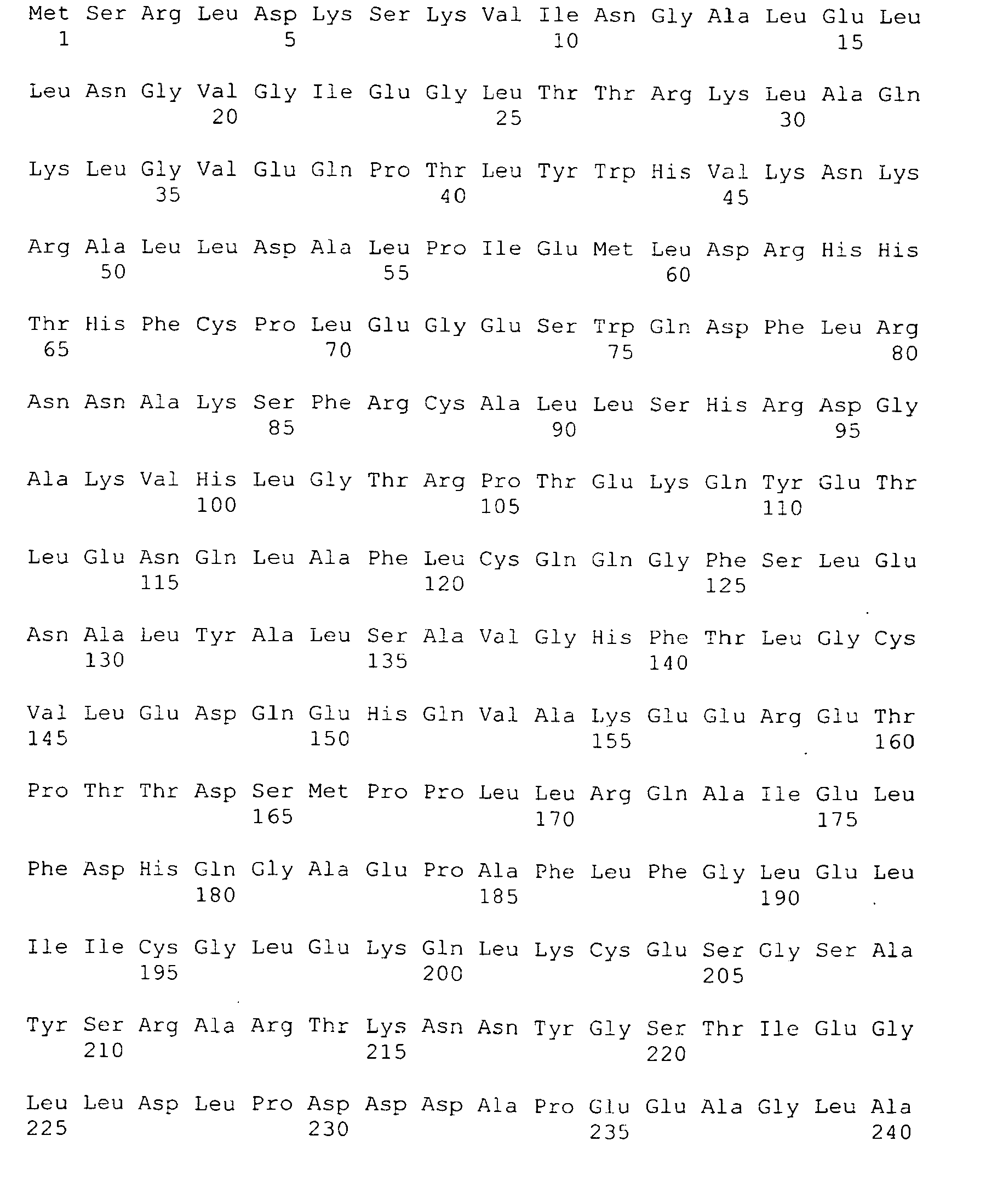

- <210> 10
<211> 1008
<212> DNA
<213> Artificial Sequence - <220>
<223> Description of Artificial Sequence: hybrid gene - <220>
<221> CDS
<222> (1)..(1005) - <400> 10


- <210> 11
<211> 335
<212> PRT
<213> Artificial Sequence - <400> 11
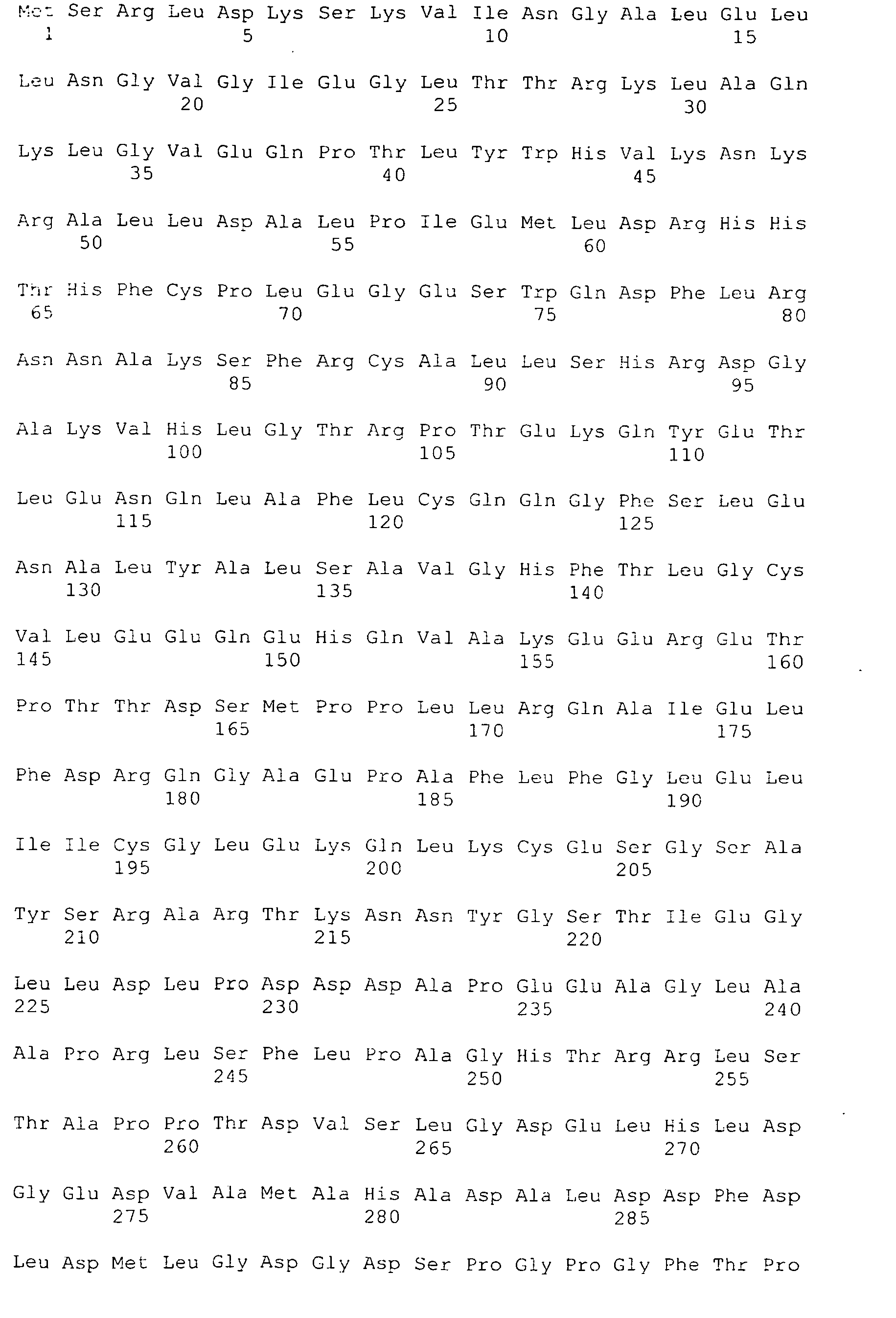

- <210> 12
<211> 1008
<212> DNA
<213> Artificial Sequence - <220>
<223> Description of Artificial Sequence: hybrid gene - <220>
<221> CDS
<222> (1)..(1005) - <400> 12


- <210> 13
<211> 335
<212> PRT
<213> Artificial Sequence - <400> 13


- <210> 14
<211> 1008
<212> DNA
<213> Artificial Sequence - <220>
<223> Description of Artificial Sequence: hybrid gene - <220>
<221> CDS
<222> (1)..(1005) - <400> 14


- <210> 15
<211> 335
<212> PRT
<213> Artificial Sequence - <400> 15


- <210> 16
<211> 1008
<212> DNA
<213> Artificial Sequence - <220>
<223> Description of Artificial Sequence: hybrid gene - <220>
- <221> CDS
<222> (1)..(1005) - <400> 16


- <210> 17
<211> 335
<212> PRT
<213> Artificial Sequence - <400> 17

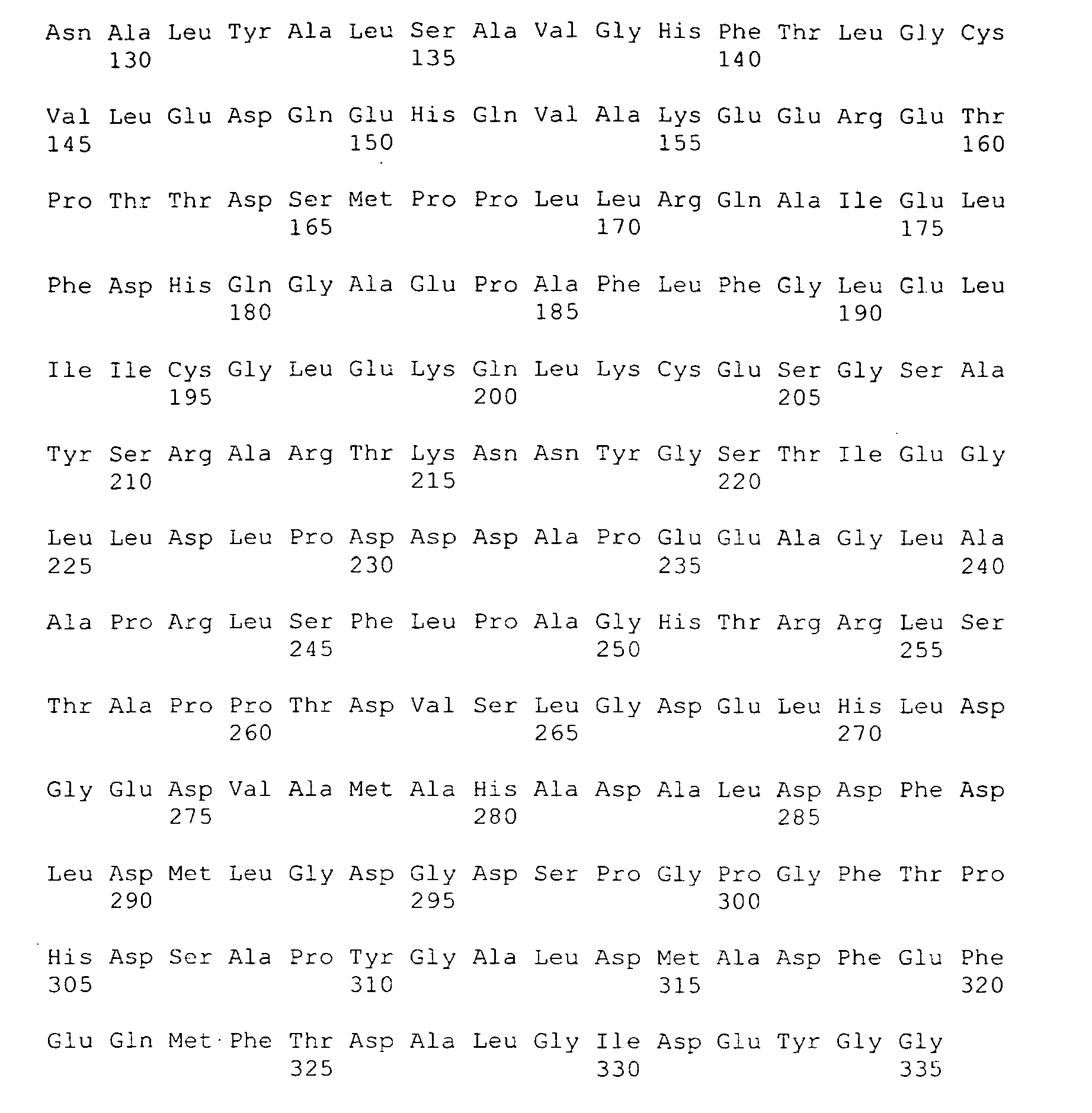
- <210> 18
<211> 1005
<212> DNA
<213> Artificial Sequence - <220>
<223> Description of Artificial Sequence: hybrid gene - <220>
<221> CDS
<222> (1)..(1002) - <400> 18


- <210> 19
<211> 334
<212> PRT
<213> Artificial Sequence - <400> 19


- <210> 20
<211> 1008
<212> DNA
<213> Artificial Sequence - <220>
<223> Description of Artificial Sequence: hybrid gene - <220>
<221> CDS
<222> (1)..(1005) - <400> 20


- <210> 21
<211> 335
<212> PRT
<213> Artificial Sequence - <400> 21


- <210> 22
<211> 1008
<212> DNA
<213> Artificial Sequence - <220>
<223> Description of Artificial Sequence: hybrid gene - <220>
<221> CDS
<222> (1)..(1005) - <400> 22


- <210> 23
<211> 335
<212> PRT
<213> Artificial Sequence - <400> 23


- <210> 24
<211> 1008
<212> DNA
<213> Artificial Sequence - <220>
<223> Description of Artificial Sequence: hybrid gene - <220>
<221> CDS
<222> (1)..(1005) - <400> 24


- <210> 25
<211> 335
<212> PRT
<213> Artificial Sequence - <400> 25
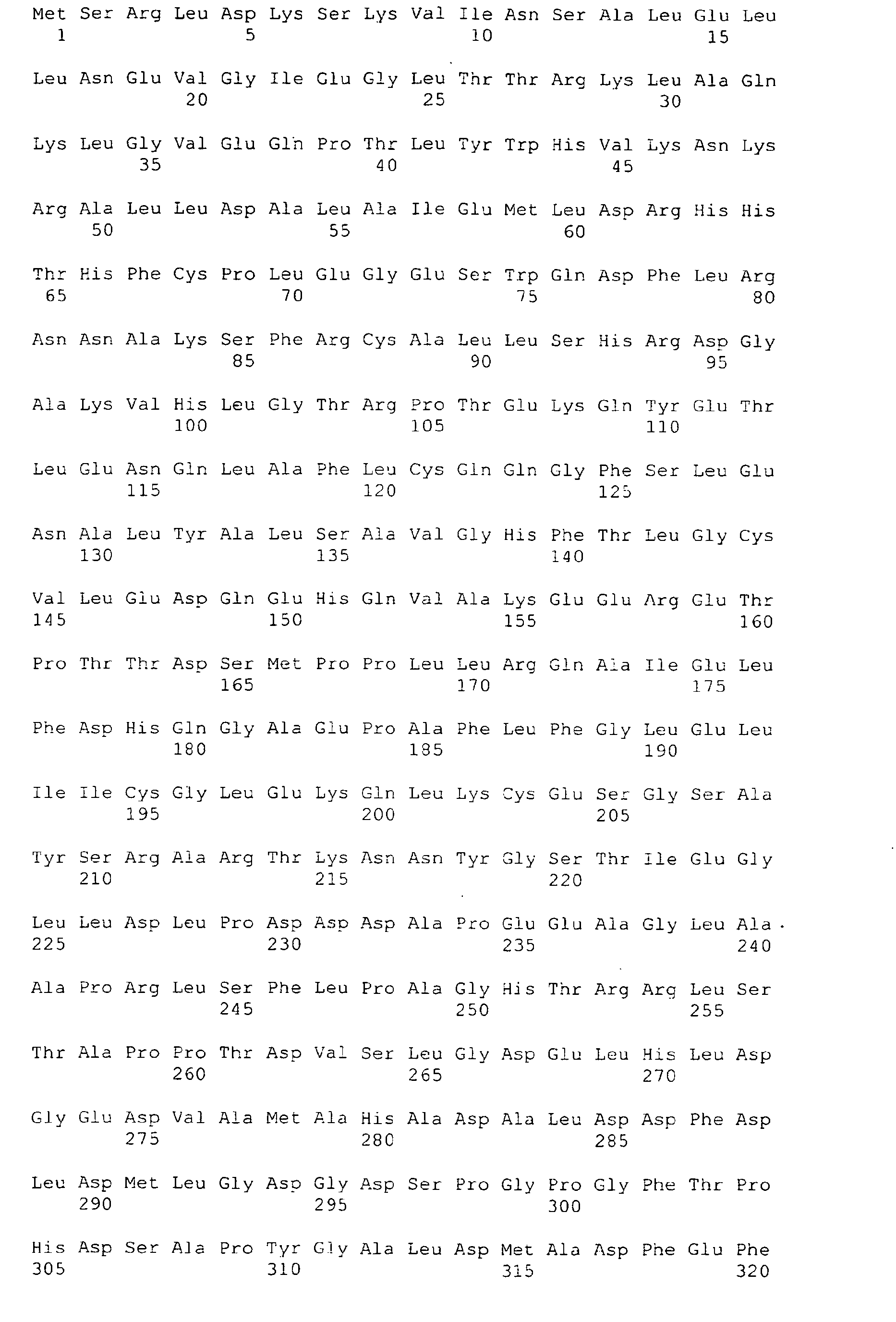

- <201> 26
<211> 1008
<212> DNA
<213> Artificial Sequence - <220>
<223> Description of Artificial Sequence: hybrid gene - <220>
<221> CDS
<222> (1)..(1005) - <400> 26


- <210> 27
<211> 335
<212> PRT
<213> Artificial Sequence - <400> 27


- <210> 28
<211> 1008
<212> DNA
<213> Artificial Sequence - <220>
<223> Description of Artificial Sequence: hybrid gene - <220>
<221> CDS
<222> (1)..(1005) - <400> 28


- <210> 29
<211> 335
<212> PRT
<213> Artificial Sequence - <400> 29


- <210> 30
<211> 1008
<212> DNA
<213> Artificial Sequence - <220>
<223> Description of Artificial Sequence: hybrid gene - <220>
<221> CDS
<222> (1)..(1005) - <400> 30


- <210> 31
<211> 335
<212> PRT
<213> Artificial Sequence - <400> 31


- <210> 32
<211> 1008
<212> DNA
<213> Artificial Sequence - <220>
<223> Description of Artificial Sequence: hybrid gene - <220>
<221> CDS
<222> (1)..(1005) - <400> 32


- <210> 33
<211> 335
<212> PRT
<213> Artificial Sequence - <400> 33


- <210> 34
<211> 1008
<212> DNA
<213> Artificial Sequence - <220>
<223> Description of Artificial Sequence: hybrid gene - <220>
<221> CDS
<222> (1)..(1005) - <400> 34


- <210> 35
<211> 335
<212> PRT
<213> Artificial Sequence - <400> 35


- <210> 36
<211> 1008
<212> DNA
<213> Artificial Sequence - <220>
<223> Description of Artificial Sequence: hybrid gene - <220>
<22> CDS
<222> (1)..(1005) - <400> 36


- <210> 37
<211> 335
<212> PRT
<213> Artificial Sequence - <400> 37


- <210> 38
<211> 1008
<212> DNA
<213> Artificial Sequence - <220>
<223> Description of Artificial Sequence: hybrid gene - <220>
<221> CDS
<222> (1)..(1005) - <400> 38


- <210> 39
<211> 335
<212> PRT
<213> Artificial Sequence - <400> 39


- <210> 40
<211> 1008
<212> DNA
<213> Artificial Sequence - <220>
<223> Description of Artificial Sequence: hybrid gene - <220>
<221> CDS
<222> (1)..(1005) - <400> 40


- <210> 41
<211> 335
<212> PRT
<213> Artificial Sequence - <400> 41


- <210> 42
<211> 1008
<212> DNA
<213> Artificial Sequence - <220>
<223> Description of Artificial Sequence: hybrid gene - <220>
<221> CDS
<222> (1)..(1005) - <400> 42


- <210> 43
<211> 335
<212> PRT
<213> Artificial Sequence - <400> 43


- <210> 44
<211> 1008
<212> DNA
<213> Artificial Sequence - <220>
<223> Description of Artificial Sequence: hybrid gene - <220>
<221> CDS
<222> (1)..(1005) - <400> 44


- <210> 45
<211> 335
<212> PRT
<213> Artificial Sequence - <400> 45


- <210> 46
<211> 20
<212> DNA
<213> Artificial Sequence - <220>
<223> Description of Artificial Sequence: oligonucleotide primer - <400> 46
gaccgatcca gcctccgcgg 20 - <210> 47
<211> 20
<212> DNA
<213> Artificial Sequence - <220>
<223> Description of Artificial Sequence: oligonucleotide primer - <400> 47
cgtgtgtccc gcggggagaa 20
Claims (14)
- A polynucleotide comprising a nucleic acid selected from the group consisting ofa) a nucleic acid having a nucleotide sequence as shown in SEQ ID No. 1, 5 or 10;b) a nucleic acid encoding a polypeptide having an amino sequence as shown in SEQ ID No. 2 or 11; andc) a nucleic acid that differs from the nucleotide sequence shown in SEQ ID NO:1 or 10 due to the degeneracy of the genetic code.
- A vector containing the polynucleotide of claim 1.
- A host cell comprising the polynucleotide of claim 1 or the vector of claim 2.
- The host cell of claim 3, wherein said cell is a plant cell, an insect cell, a fungal cell, a bacterial cell or a mammalian cell.
- A polypeptide encoded by the polynucleotide of claim 1, the vector of claim 2 or which is obtainable by the host cell of claim 3 or 4 and encoded by the polynucleotide of claim 1.
- A transactivator fusion polypeptide having a variant sequence compared to SEQ ID NO: 23, wherein said variant sequence is (i) a variant sequence having a first exchange of E19G, a second exchange of A56P, a third exchange of D148E, and a fourth exchange of H179R or (ii) a variant sequence having a first exchange of S12G, a second exchange of E19G, a third exchange of A56P, a fourth exchange of D148E and a fifth exchange of H179R.
- A non-human transgenic animal comprising the polynucleotide of claim 1 or the vector of claim 2.
- The non-human transgenic animal of claim 7, wherein the polynucleotide or vector is homologously recombined with an endogenous gene.
- The non-human transgenic animal of claim 7 or 8, wherein said animal is selected from the group consisting of monkey, cow, goat, sheep, dog, cat, rabbit, rat, mouse.
- A transgenic plant comprising the polynucleotide of claim 1.
- A pharmaceutical composition comprising the polynucleotide of claim 1, the vector of claim 2 or the polypeptide of any one of claims 5 to 6.
- A method for producing a polypeptide comprisinga) providing a host cell comprising the polynucleotide of claim 1 and a polynucleotide encoding the polypeptide of interest operatively linked to a tet operator sequence;b) growing the cells at production scale in a culture medium in the presence of anhydrotetracycline, doxycycline, chlorotetracycline, epioxytetracycline or cyanotetracycline; andc) isolating the polypeptide of interest from harvested host cells or from the cell culture medium.
- A method for regulating transcription of a tet operator-linked gene in a host cell comprising introducing into a host cell the polynucleotide of claim 1; and modulating the concentration of tetracycline, anhydrotetracycline, doxycycline, chlorotetracycline, epioxytetracycline or cyanotetracycline thereof in contact with the host cell.
- A composition for gene therapy comprising a gene therapy vector encoding the polypeptide of any one of claims 5 to 6, a second gene therapy vector comprising a gene of interest, the expression of which is regulated by sequences derived from the tet operator; and a therapeutically effective dose of anhydrotetracycline, doxycycline, chlorotetracycline, epioxytetracycline or cyanotetracycline.
Applications Claiming Priority (3)
| Application Number | Priority Date | Filing Date | Title |
|---|---|---|---|
| US13798699P | 1999-06-07 | 1999-06-07 | |
| US137986P | 1999-06-07 | ||
| PCT/IB2000/000886 WO2000075347A2 (en) | 1999-06-07 | 2000-06-05 | Tet repressor-based transcriptional regulatory proteins |
Publications (2)
| Publication Number | Publication Date |
|---|---|
| EP1200607A2 EP1200607A2 (en) | 2002-05-02 |
| EP1200607B1 true EP1200607B1 (en) | 2010-02-24 |
Family
ID=22479925
Family Applications (1)
| Application Number | Title | Priority Date | Filing Date |
|---|---|---|---|
| EP00938973A Expired - Lifetime EP1200607B1 (en) | 1999-06-07 | 2000-06-05 | Tet repressor-based transcriptional regulatory proteins |
Country Status (8)
| Country | Link |
|---|---|
| US (1) | US7541446B2 (en) |
| EP (1) | EP1200607B1 (en) |
| JP (1) | JP4836375B2 (en) |
| AT (1) | ATE458818T1 (en) |
| AU (1) | AU783233B2 (en) |
| CA (1) | CA2376665C (en) |
| DE (1) | DE60043889D1 (en) |
| WO (1) | WO2000075347A2 (en) |
Cited By (2)
| Publication number | Priority date | Publication date | Assignee | Title |
|---|---|---|---|---|
| US10188691B2 (en) | 2016-05-27 | 2019-01-29 | Synthex, Inc. | Protein interfaces |
| US11780881B2 (en) | 2017-11-22 | 2023-10-10 | Synthex, Inc. | Compounds for selective disruption of protein-protein interactions |
Families Citing this family (44)
| Publication number | Priority date | Publication date | Assignee | Title |
|---|---|---|---|---|
| US20030186281A1 (en) * | 2001-12-21 | 2003-10-02 | Wolfgang Hillen | Modified tetracycline repressor protein compositions and methods of use |
| US8507277B2 (en) | 2003-10-24 | 2013-08-13 | Gencia Corporation | Nonviral vectors for delivering polynucleotides |
| US8133733B2 (en) | 2003-10-24 | 2012-03-13 | Gencia Corporation | Nonviral vectors for delivering polynucleotides to target tissues |
| WO2005056752A2 (en) | 2003-10-24 | 2005-06-23 | Gencia Corporation | Methods and compositions for delivering polynucleotides |
| US8062891B2 (en) | 2003-10-24 | 2011-11-22 | Gencia Corporation | Nonviral vectors for delivering polynucleotides to plants |
| US20090123468A1 (en) | 2003-10-24 | 2009-05-14 | Gencia Corporation | Transducible polypeptides for modifying metabolism |
| EP1797186B1 (en) * | 2004-10-04 | 2016-05-25 | National Research Council Of Canada | Expression system, components thereof and methods of use |
| US7935788B2 (en) * | 2004-10-04 | 2011-05-03 | National Research Council Of Canada | Reverse cumate repressor mutant |
| US9068969B2 (en) * | 2004-12-28 | 2015-06-30 | Ptc Therapeutics, Inc. | Cell based methods and systems for the identification of RNA regulatory sequences and compounds that modulate their functions |
| JP4944781B2 (en) | 2005-09-15 | 2012-06-06 | 独立行政法人科学技術振興機構 | Proteolytic control by tetracycline antibiotics |
| USRE49583E1 (en) | 2005-11-17 | 2023-07-18 | Tet Systems Gmbh & Co. Kg | Inducible expression systems |
| CA2652347A1 (en) | 2006-05-15 | 2007-11-22 | Paratek Pharmaceuticals, Inc. | Methods of regulating expression of genes or of gene products using substituted tetracycline compounds |
| PT2043662E (en) * | 2006-07-26 | 2015-11-25 | Intrexon Corp | Methods and compositions for treating disease |
| EP2135945B1 (en) * | 2007-03-14 | 2014-04-23 | Japan Science and Technology Agency | Method for of transcription-degradation dual regulation for protein by antibiotic |
| US20080235746A1 (en) | 2007-03-20 | 2008-09-25 | Michael James Peters | Methods and apparatus for content delivery and replacement in a network |
| DK2352833T3 (en) | 2008-10-01 | 2013-04-22 | Tet Systems Gmbh & Co Kg | TETRACYCLIN INDUCERABLE TRANSCRIPTION CONTROL SEQUENCE |
| EP2364322A1 (en) | 2008-10-28 | 2011-09-14 | Pioneer Hi-Bred International Inc. | Sulfonylurea-responsive repressor proteins |
| US9866609B2 (en) | 2009-06-08 | 2018-01-09 | Time Warner Cable Enterprises Llc | Methods and apparatus for premises content distribution |
| US20110287936A1 (en) * | 2010-04-23 | 2011-11-24 | E.I. Dupont De Nemours And Company | Gene switch compositions and methods of use |
| US9127283B2 (en) | 2010-11-24 | 2015-09-08 | Clontech Laboratories, Inc. | Inducible expression system transcription modulators comprising a distributed protein transduction domain and methods for using the same |
| WO2012103256A2 (en) * | 2011-01-26 | 2012-08-02 | Clontech Laboratories, Inc. | Enhanced protein transduction |
| WO2012156535A1 (en) | 2011-05-19 | 2012-11-22 | Fundación Progreso Y Salud | Highly inducible dual-promoter lentiviral tet-on system |
| JP6362543B2 (en) | 2012-02-23 | 2018-07-25 | ジュノ セラピューティクス ゲーエムベーハー | Chromatographic isolation of cells and other complex biological materials |
| EP3344757A1 (en) | 2015-09-04 | 2018-07-11 | Universita' Degli Studi Di Padova | Method for generating somatic stem cells |
| HK1258932A1 (en) | 2015-10-22 | 2019-11-22 | Juno Therapeutics Gmbh | Methods, kits, agents and apparatuses for transduction |
| CN108474791B (en) | 2015-10-22 | 2022-07-08 | 朱诺治疗学有限公司 | Method for culturing cells, and kit and apparatus for use in the method |
| US10687115B2 (en) | 2016-06-01 | 2020-06-16 | Time Warner Cable Enterprises Llc | Cloud-based digital content recorder apparatus and methods |
| US10129593B2 (en) | 2017-03-14 | 2018-11-13 | Charter Communications Operating, Llc | Time-based dynamic secondary content placement calls in time-shifted content |
| MA49288A (en) | 2017-04-27 | 2020-03-04 | Juno Therapeutics Gmbh | SPECIAL OLIGOMERIC REAGENTS AND THEIR METHODS OF USE |
| US10939142B2 (en) | 2018-02-27 | 2021-03-02 | Charter Communications Operating, Llc | Apparatus and methods for content storage, distribution and security within a content distribution network |
| EP3856226B1 (en) | 2018-09-28 | 2026-02-18 | President and Fellows of Harvard College | Cellular reprogramming to reverse aging and promote organ and tissue regeneration |
| EP3856260A1 (en) | 2018-09-28 | 2021-08-04 | President and Fellows of Harvard College | Mutant reverse tetracycline transactivators for expression of genes |
| US12274733B2 (en) | 2018-09-28 | 2025-04-15 | President And Fellows Of Harvard College | Cellular reprogramming to reverse aging and promote organ and tissue regeneration |
| EP3874024A1 (en) | 2018-10-31 | 2021-09-08 | Juno Therapeutics GmbH | Methods for selection and stimulation of cells and apparatus for same |
| GB202003109D0 (en) * | 2020-03-04 | 2020-04-15 | Univ Bristol | Gene therapy |
| CN113584083A (en) | 2020-04-30 | 2021-11-02 | 深圳市深研生物科技有限公司 | Producer and packaging cells for retroviral vectors and methods for making the same |
| CN113699147B (en) | 2020-05-22 | 2023-06-09 | 深圳市深研生物科技有限公司 | Co-regulatory sequences based on tetracyclines and Cumate |
| US11566262B2 (en) | 2021-03-24 | 2023-01-31 | Dna Twopointo Inc. | Tetracycline-inducible expression systems |
| CN114134160B (en) * | 2021-12-04 | 2024-01-09 | 安徽大学 | Tetracycline regulatory protein mutant gene and application thereof in regulation of gene expression and environmental detection |
| US12252518B2 (en) | 2023-01-06 | 2025-03-18 | Life Biosciences, Inc. | Methods of treating non-arteritic anterior ischemic optic neuropathy |
| WO2025155923A1 (en) | 2024-01-17 | 2025-07-24 | The Broad Institute, Inc. | Aav capsid modifications that enable improved cns-wide gene delivery through interactions with the transferrin receptor |
| WO2025160155A1 (en) | 2024-01-22 | 2025-07-31 | The Broad Institute, Inc. | Epigenetic targeting of prion diseases |
| WO2025217174A1 (en) | 2024-04-08 | 2025-10-16 | The Broad Institute, Inc. | Aav capsid modifications that enable improved cns-wide gene delivery through interactions with carbonic anhydrase iv |
| WO2025217163A2 (en) | 2024-04-08 | 2025-10-16 | The Broad Institute, Inc. | Novel aav capsids binding to human cd59 |
Citations (1)
| Publication number | Priority date | Publication date | Assignee | Title |
|---|---|---|---|---|
| WO1999001549A1 (en) * | 1997-07-03 | 1999-01-14 | Basf Aktiengesellschaft | Transcriptional activators with graded transactivation potential |
Family Cites Families (11)
| Publication number | Priority date | Publication date | Assignee | Title |
|---|---|---|---|---|
| CA2143326A1 (en) * | 1992-08-26 | 1994-03-03 | Guerard Byrne | Tetracycline repressor-mediated binary regulation system for control of gene expression in transgenic animals |
| US5464758A (en) * | 1993-06-14 | 1995-11-07 | Gossen; Manfred | Tight control of gene expression in eucaryotic cells by tetracycline-responsive promoters |
| US6004941A (en) * | 1993-06-14 | 1999-12-21 | Basf Aktiengesellschaft | Methods for regulating gene expression |
| US5589362A (en) * | 1993-06-14 | 1996-12-31 | Basf Aktiengesellschaft | Tetracycline regulated transcriptional modulators with altered DNA binding specificities |
| CA2165162C (en) * | 1993-06-14 | 2000-05-23 | Hermann Bujard | Tight control of gene expression in eucaryotic cells by tetracycline-responsive promoters |
| US5866755A (en) * | 1993-06-14 | 1999-02-02 | Basf Aktiengellschaft | Animals transgenic for a tetracycline-regulated transcriptional inhibitor |
| DE4417598A1 (en) * | 1994-05-19 | 1995-12-14 | Max Planck Gesellschaft | Use of the tetracycline promoter for the stringently regulated production of recombinant proteins in prokaryotic cells |
| US5851796A (en) * | 1995-06-07 | 1998-12-22 | Yale University | Autoregulatory tetracycline-regulated system for inducible gene expression in eucaryotes |
| US6114148C1 (en) * | 1996-09-20 | 2012-05-01 | Gen Hospital Corp | High level expression of proteins |
| DE19851413C2 (en) | 1998-11-07 | 2003-05-22 | Wolfgang Hillen | Procedure for selecting mutants of tTA or rtTA |
| DE19851415B4 (en) | 1998-11-07 | 2010-11-04 | Wolfgang Hillen | Mutant transactivator |
-
2000
- 2000-06-05 AT AT00938973T patent/ATE458818T1/en not_active IP Right Cessation
- 2000-06-05 DE DE60043889T patent/DE60043889D1/en not_active Expired - Fee Related
- 2000-06-05 JP JP2001501629A patent/JP4836375B2/en not_active Expired - Lifetime
- 2000-06-05 AU AU54191/00A patent/AU783233B2/en not_active Expired
- 2000-06-05 CA CA2376665A patent/CA2376665C/en not_active Expired - Lifetime
- 2000-06-05 EP EP00938973A patent/EP1200607B1/en not_active Expired - Lifetime
- 2000-06-05 WO PCT/IB2000/000886 patent/WO2000075347A2/en not_active Ceased
-
2003
- 2003-06-05 US US10/456,395 patent/US7541446B2/en not_active Expired - Lifetime
Patent Citations (1)
| Publication number | Priority date | Publication date | Assignee | Title |
|---|---|---|---|---|
| WO1999001549A1 (en) * | 1997-07-03 | 1999-01-14 | Basf Aktiengesellschaft | Transcriptional activators with graded transactivation potential |
Cited By (4)
| Publication number | Priority date | Publication date | Assignee | Title |
|---|---|---|---|---|
| US10188691B2 (en) | 2016-05-27 | 2019-01-29 | Synthex, Inc. | Protein interfaces |
| US12214008B2 (en) | 2016-05-27 | 2025-02-04 | Synthex, Inc. | Protein interfaces |
| US11780881B2 (en) | 2017-11-22 | 2023-10-10 | Synthex, Inc. | Compounds for selective disruption of protein-protein interactions |
| US12590126B2 (en) | 2017-11-22 | 2026-03-31 | Synthex, Inc. | Compounds for selective disruption of protein-protein interactions |
Also Published As
| Publication number | Publication date |
|---|---|
| AU783233B2 (en) | 2005-10-06 |
| AU5419100A (en) | 2000-12-28 |
| ATE458818T1 (en) | 2010-03-15 |
| JP4836375B2 (en) | 2011-12-14 |
| WO2000075347A3 (en) | 2002-01-10 |
| US7541446B2 (en) | 2009-06-02 |
| CA2376665A1 (en) | 2000-12-14 |
| WO2000075347A2 (en) | 2000-12-14 |
| EP1200607A2 (en) | 2002-05-02 |
| DE60043889D1 (en) | 2010-04-08 |
| CA2376665C (en) | 2014-02-25 |
| JP2003515314A (en) | 2003-05-07 |
| US20030208783A1 (en) | 2003-11-06 |
Similar Documents
| Publication | Publication Date | Title |
|---|---|---|
| CA2376665C (en) | Novel tet repressor-based transcriptional regulatory proteins | |
| US5654168A (en) | Tetracycline-inducible transcriptional activator and tetracycline-regulated transcription units | |
| US6087166A (en) | Transcriptional activators with graded transactivation potential | |
| EP0804565B1 (en) | Tetracycline-regulated transcriptional modulators | |
| US5789156A (en) | Tetracycline-regulated transcriptional inhibitors | |
| CA2165162C (en) | Tight control of gene expression in eucaryotic cells by tetracycline-responsive promoters | |
| US6271348B1 (en) | Tetracycline-inducible transcriptional inhibitor fusion proteins | |
| US6242667B1 (en) | Transgenic organisms having tetracycline-regulated transcriptional regulatory systems | |
| US5888981A (en) | Methods for regulating gene expression | |
| US5859310A (en) | Mice transgenic for a tetracycline-controlled transcriptional activator | |
| US20090257985A1 (en) | Methods of regulating expression of genes or of gene products using substituted tetracycline compounds | |
| WO1996040892A1 (en) | Tetracycline regulated transcriptional modulators with altered dna binding specificities | |
| US20030022315A1 (en) | Tetracycline-inducible transcriptional inhibitor fusion proteins | |
| WO2005123923A2 (en) | Inducer specific tetracycline repressor proteins and methods of use thereof |
Legal Events
| Date | Code | Title | Description |
|---|---|---|---|
| PUAI | Public reference made under article 153(3) epc to a published international application that has entered the european phase |
Free format text: ORIGINAL CODE: 0009012 |
|
| 17P | Request for examination filed |
Effective date: 20011220 |
|
| AK | Designated contracting states |
Kind code of ref document: A2 Designated state(s): AT BE CH CY DE DK ES FI FR GB GR IE IT LI LU MC NL PT |
|
| AX | Request for extension of the european patent |
Free format text: AL;LT;LV;MK;RO;SI |
|
| RAP1 | Party data changed (applicant data changed or rights of an application transferred) |
Owner name: TET SYSTEMS HOLDING GMBH & CO. KG |
|
| RIN1 | Information on inventor provided before grant (corrected) |
Inventor name: THE OTHER INVENTORS HAVE AGREED TO WAIVE THEIR ENT Inventor name: URLINGER, STEFANIE |
|
| GRAP | Despatch of communication of intention to grant a patent |
Free format text: ORIGINAL CODE: EPIDOSNIGR1 |
|
| RBV | Designated contracting states (corrected) |
Designated state(s): AT BE CH CY DE DK ES FI FR GB GR IE IT LI LU MC NL PT SE |
|
| RIN1 | Information on inventor provided before grant (corrected) |
Inventor name: THE OTHER INVENTORS HAVE AGREED TO WAIVE THEIR ENT Inventor name: URLINGER, STEFANIE |
|
| GRAS | Grant fee paid |
Free format text: ORIGINAL CODE: EPIDOSNIGR3 |
|
| GRAA | (expected) grant |
Free format text: ORIGINAL CODE: 0009210 |
|
| RIN1 | Information on inventor provided before grant (corrected) |
Inventor name: BUJARD, HERMANN Inventor name: HILLEN, WOLFGANG Inventor name: URLINGER, STEFANIE |
|
| AK | Designated contracting states |
Kind code of ref document: B1 Designated state(s): AT BE CH CY DE DK ES FI FR GB GR IE IT LI LU MC NL PT SE |
|
| REG | Reference to a national code |
Ref country code: GB Ref legal event code: FG4D |
|
| REG | Reference to a national code |
Ref country code: CH Ref legal event code: EP |
|
| REG | Reference to a national code |
Ref country code: IE Ref legal event code: FG4D |
|
| REF | Corresponds to: |
Ref document number: 60043889 Country of ref document: DE Date of ref document: 20100408 Kind code of ref document: P |
|
| REG | Reference to a national code |
Ref country code: NL Ref legal event code: T3 |
|
| PG25 | Lapsed in a contracting state [announced via postgrant information from national office to epo] |
Ref country code: PT Free format text: LAPSE BECAUSE OF FAILURE TO SUBMIT A TRANSLATION OF THE DESCRIPTION OR TO PAY THE FEE WITHIN THE PRESCRIBED TIME-LIMIT Effective date: 20100624 |
|
| PG25 | Lapsed in a contracting state [announced via postgrant information from national office to epo] |
Ref country code: FI Free format text: LAPSE BECAUSE OF FAILURE TO SUBMIT A TRANSLATION OF THE DESCRIPTION OR TO PAY THE FEE WITHIN THE PRESCRIBED TIME-LIMIT Effective date: 20100224 Ref country code: AT Free format text: LAPSE BECAUSE OF FAILURE TO SUBMIT A TRANSLATION OF THE DESCRIPTION OR TO PAY THE FEE WITHIN THE PRESCRIBED TIME-LIMIT Effective date: 20100224 |
|
| PG25 | Lapsed in a contracting state [announced via postgrant information from national office to epo] |
Ref country code: SE Free format text: LAPSE BECAUSE OF FAILURE TO SUBMIT A TRANSLATION OF THE DESCRIPTION OR TO PAY THE FEE WITHIN THE PRESCRIBED TIME-LIMIT Effective date: 20100224 Ref country code: GR Free format text: LAPSE BECAUSE OF FAILURE TO SUBMIT A TRANSLATION OF THE DESCRIPTION OR TO PAY THE FEE WITHIN THE PRESCRIBED TIME-LIMIT Effective date: 20100525 Ref country code: ES Free format text: LAPSE BECAUSE OF FAILURE TO SUBMIT A TRANSLATION OF THE DESCRIPTION OR TO PAY THE FEE WITHIN THE PRESCRIBED TIME-LIMIT Effective date: 20100604 Ref country code: CY Free format text: LAPSE BECAUSE OF FAILURE TO SUBMIT A TRANSLATION OF THE DESCRIPTION OR TO PAY THE FEE WITHIN THE PRESCRIBED TIME-LIMIT Effective date: 20100224 Ref country code: BE Free format text: LAPSE BECAUSE OF FAILURE TO SUBMIT A TRANSLATION OF THE DESCRIPTION OR TO PAY THE FEE WITHIN THE PRESCRIBED TIME-LIMIT Effective date: 20100224 |
|
| PLBE | No opposition filed within time limit |
Free format text: ORIGINAL CODE: 0009261 |
|
| STAA | Information on the status of an ep patent application or granted ep patent |
Free format text: STATUS: NO OPPOSITION FILED WITHIN TIME LIMIT |
|
| PG25 | Lapsed in a contracting state [announced via postgrant information from national office to epo] |
Ref country code: MC Free format text: LAPSE BECAUSE OF NON-PAYMENT OF DUE FEES Effective date: 20100630 Ref country code: DK Free format text: LAPSE BECAUSE OF FAILURE TO SUBMIT A TRANSLATION OF THE DESCRIPTION OR TO PAY THE FEE WITHIN THE PRESCRIBED TIME-LIMIT Effective date: 20100224 |
|
| 26N | No opposition filed |
Effective date: 20101125 |
|
| PG25 | Lapsed in a contracting state [announced via postgrant information from national office to epo] |
Ref country code: IT Free format text: LAPSE BECAUSE OF FAILURE TO SUBMIT A TRANSLATION OF THE DESCRIPTION OR TO PAY THE FEE WITHIN THE PRESCRIBED TIME-LIMIT Effective date: 20100224 |
|
| PG25 | Lapsed in a contracting state [announced via postgrant information from national office to epo] |
Ref country code: DE Free format text: LAPSE BECAUSE OF NON-PAYMENT OF DUE FEES Effective date: 20110101 Ref country code: IE Free format text: LAPSE BECAUSE OF NON-PAYMENT OF DUE FEES Effective date: 20100605 |
|
| PG25 | Lapsed in a contracting state [announced via postgrant information from national office to epo] |
Ref country code: LU Free format text: LAPSE BECAUSE OF NON-PAYMENT OF DUE FEES Effective date: 20100605 |
|
| REG | Reference to a national code |
Ref country code: FR Ref legal event code: PLFP Year of fee payment: 17 |
|
| REG | Reference to a national code |
Ref country code: FR Ref legal event code: PLFP Year of fee payment: 18 |
|
| REG | Reference to a national code |
Ref country code: FR Ref legal event code: PLFP Year of fee payment: 19 |
|
| PGFP | Annual fee paid to national office [announced via postgrant information from national office to epo] |
Ref country code: NL Payment date: 20190623 Year of fee payment: 20 |
|
| PGFP | Annual fee paid to national office [announced via postgrant information from national office to epo] |
Ref country code: FR Payment date: 20190625 Year of fee payment: 20 |
|
| PGFP | Annual fee paid to national office [announced via postgrant information from national office to epo] |
Ref country code: CH Payment date: 20190627 Year of fee payment: 20 |
|
| PGFP | Annual fee paid to national office [announced via postgrant information from national office to epo] |
Ref country code: GB Payment date: 20190627 Year of fee payment: 20 |
|
| REG | Reference to a national code |
Ref country code: NL Ref legal event code: MK Effective date: 20200604 |
|
| REG | Reference to a national code |
Ref country code: CH Ref legal event code: PL |
|
| REG | Reference to a national code |
Ref country code: GB Ref legal event code: PE20 Expiry date: 20200604 |
|
| PG25 | Lapsed in a contracting state [announced via postgrant information from national office to epo] |
Ref country code: GB Free format text: LAPSE BECAUSE OF EXPIRATION OF PROTECTION Effective date: 20200604 |