EP1200352B1 - Improved ceria powder - Google Patents
Improved ceria powder Download PDFInfo
- Publication number
- EP1200352B1 EP1200352B1 EP00939578A EP00939578A EP1200352B1 EP 1200352 B1 EP1200352 B1 EP 1200352B1 EP 00939578 A EP00939578 A EP 00939578A EP 00939578 A EP00939578 A EP 00939578A EP 1200352 B1 EP1200352 B1 EP 1200352B1
- Authority
- EP
- European Patent Office
- Prior art keywords
- ceria
- slurry
- polishing
- particles
- surface area
- Prior art date
- Legal status (The legal status is an assumption and is not a legal conclusion. Google has not performed a legal analysis and makes no representation as to the accuracy of the status listed.)
- Expired - Lifetime
Links
Images


Classifications
-
- C—CHEMISTRY; METALLURGY
- C09—DYES; PAINTS; POLISHES; NATURAL RESINS; ADHESIVES; COMPOSITIONS NOT OTHERWISE PROVIDED FOR; APPLICATIONS OF MATERIALS NOT OTHERWISE PROVIDED FOR
- C09K—MATERIALS FOR MISCELLANEOUS APPLICATIONS, NOT PROVIDED FOR ELSEWHERE
- C09K3/00—Materials not provided for elsewhere
- C09K3/14—Anti-slip materials; Abrasives
-
- C—CHEMISTRY; METALLURGY
- C09—DYES; PAINTS; POLISHES; NATURAL RESINS; ADHESIVES; COMPOSITIONS NOT OTHERWISE PROVIDED FOR; APPLICATIONS OF MATERIALS NOT OTHERWISE PROVIDED FOR
- C09K—MATERIALS FOR MISCELLANEOUS APPLICATIONS, NOT PROVIDED FOR ELSEWHERE
- C09K3/00—Materials not provided for elsewhere
- C09K3/14—Anti-slip materials; Abrasives
- C09K3/1454—Abrasive powders, suspensions and pastes for polishing
- C09K3/1463—Aqueous liquid suspensions
-
- C—CHEMISTRY; METALLURGY
- C01—INORGANIC CHEMISTRY
- C01F—COMPOUNDS OF THE METALS BERYLLIUM, MAGNESIUM, ALUMINIUM, CALCIUM, STRONTIUM, BARIUM, RADIUM, THORIUM, OR OF THE RARE-EARTH METALS
- C01F17/00—Compounds of rare earth metals
- C01F17/20—Compounds containing only rare earth metals as the metal element
- C01F17/206—Compounds containing only rare earth metals as the metal element oxide or hydroxide being the only anion
- C01F17/224—Oxides or hydroxides of lanthanides
- C01F17/235—Cerium oxides or hydroxides
-
- C—CHEMISTRY; METALLURGY
- C01—INORGANIC CHEMISTRY
- C01P—INDEXING SCHEME RELATING TO STRUCTURAL AND PHYSICAL ASPECTS OF SOLID INORGANIC COMPOUNDS
- C01P2004/00—Particle morphology
- C01P2004/01—Particle morphology depicted by an image
-
- C—CHEMISTRY; METALLURGY
- C01—INORGANIC CHEMISTRY
- C01P—INDEXING SCHEME RELATING TO STRUCTURAL AND PHYSICAL ASPECTS OF SOLID INORGANIC COMPOUNDS
- C01P2004/00—Particle morphology
- C01P2004/01—Particle morphology depicted by an image
- C01P2004/03—Particle morphology depicted by an image obtained by SEM
-
- C—CHEMISTRY; METALLURGY
- C01—INORGANIC CHEMISTRY
- C01P—INDEXING SCHEME RELATING TO STRUCTURAL AND PHYSICAL ASPECTS OF SOLID INORGANIC COMPOUNDS
- C01P2004/00—Particle morphology
- C01P2004/60—Particles characterised by their size
- C01P2004/62—Submicrometer sized, i.e. from 0.1-1 micrometer
-
- C—CHEMISTRY; METALLURGY
- C01—INORGANIC CHEMISTRY
- C01P—INDEXING SCHEME RELATING TO STRUCTURAL AND PHYSICAL ASPECTS OF SOLID INORGANIC COMPOUNDS
- C01P2006/00—Physical properties of inorganic compounds
- C01P2006/12—Surface area
-
- H—ELECTRICITY
- H10—SEMICONDUCTOR DEVICES; ELECTRIC SOLID-STATE DEVICES NOT OTHERWISE PROVIDED FOR
- H10P—GENERIC PROCESSES OR APPARATUS FOR THE MANUFACTURE OR TREATMENT OF DEVICES COVERED BY CLASS H10
- H10P52/00—Grinding, lapping or polishing of wafers, substrates or parts of devices
- H10P52/40—Chemomechanical polishing [CMP]
- H10P52/402—Chemomechanical polishing [CMP] of semiconductor materials
Definitions
- the present invention relates to ceria powders and particularly to ceria powders of the type used to fine and polish optical and semiconductor surfaces.
- a slurry of abrasive particles in a liquid medium (usually water-based) is placed in contact with the surface to be polished and a pad is caused to move across the surface in predetermined patterns so as to cause the abrasive in the slurry to polish the surface.
- the present invention relates to ceria particles useful in such processes.
- USP 4,576,612 produces its slurry in situ in controlled amounts by providing a pad with a surface layer comprising the abrasive particles in a resin which gradually dissolves during use to liberate the polishing particles.
- the particles declared to be useful include cerium oxide (“ceria”), zirconium oxide (“zirconia”) and iron oxide.
- EP 608 730-A1 describes an abrasive slurry for polishing a surface in an optical element which comprises an abrasive selected from alumina, glass, diamond dust, carborundum, tungsten carbide, silicon carbide or boron nitride with particle sizes up to one micron.
- USP 5,693,239 describes an aqueous slurry for polishing and planarizing a metallic workpiece which comprises submicron particles of alpha alumina together with other softer form of alumina or amorphous silica.
- USP 5,804,513 teaches a planarization slurry comprising ceria and alumina or silica, where the particle sizes are 2 microns or less and the ceria component is from 5 to 40% of the total weight.
- USP 4,106,915 teaches a method of polishing glass using abrasive particles dispersed in a cured, unsaturated polyester resin wherein the abrasive can be ceria.
- USP 4,601,755 teaches ceria-based glass polishing compositions incorporating a rare earth pyrosilicate.
- CMP chemical mechanical planarization
- ceria in such applications is therefore well known and widely practiced.
- the ceria is commercially obtainable in reasonably small particle sizes of a little over a micron but there is always a drive to ever more perfect surfaces and this propels a move to finer ceria particle sizes still.
- the ceria tends to be sensitive to agglomeration and such agglomerates can cause scratching of the surface being polished.
- commercially available ceria tends to a reach a limiting value of around 10 ⁇ for surface roughness, (R a ), when used in a slurry form to polish glass surfaces.
- the present invention is based on the discovery of a form of ceria with unique characteristics that leads it to be highly successful in resisting agglomeration and polishing to R a levels of 5 ⁇ or even lower and a method by which such ceria can be obtained.
- the present invention provides a ceria powder that has been milled at a pH of from 9 to 12.5 to comminute a powder with a BET surface area below 10 m2/gm until the BET surface area is increased by at least 5 m 2 /gm.
- the present invention also provides a polishing slurry comprising ceria particles with a BET specific surface area of at least 10 m 2 /gm and a positive ionic surface charge at pH levels of 4 or lower when the pH is adjusted from such levels to basic values of 9 or higher.
- the ceria particles comprising such powders are essentially agglomerate-free by which is meant that the ceria is free of agglomerate particles that will not re-disperse upon stirring and that are larger than 5 microns in size.
- the BET specific surface area is determined by the Brunauer/Emmett/Teller method described in The Journal of the American Chemical Society, 60, page 309 (February 1938).
- the ionic surface charge is measured in terms of the random accoustophoretic mobility by the technique described in Langmuir , 1988, 4, pp 611-626.
- Ceria as commercially available is often present in amounts that are only 50% or more of cerium oxide, with the balance being made up primarily of rare earth metal oxides such as lanthana, neodymia and praseodymia.
- the preferred ceria used in the present invention comprises 70% ceria with about 30% of lanthana and is commercially available under the trade name CEROX® 1650. This product is available from Optical Manufacturers, Limited. This product has a nominal average particle size of 1.3 micrometers though in fact there were significant numbers of aggregates and a wide variation in particle size before comminution. A form of ceria with a higher actual ceria content is available from the same supplier under the trade mark Opaline®.
- the ceria abrasive particles may be present along with other abrasive particles such as alpha alumina, gamma alumina, silica, zirconia and the like. Such particles however would need to be of the same order of particle size as the ceria to avoid scratching.
- the ceria according to the invention should represent at least 5% such as at least 10 or 20% arid more preferably at least 50% of the abrasive particle weight in any such mixture.
- the invention further comprises a process for producing ceria which maintains a positive ionic surface charge at pH values when titrated from acid values of about 4 or lower to a pH of at least 10 which comprises subjecting ceria comprising agglomerated ultimate particles and an average particle size of greater than one micron to a mechano-chemical treatment, which comprises milling a slurry of the particles using low-purity alumina or zirconia milling media and a pH of from 9 to 12.5, until an essentially de-agglomerated product with a BET surface area of at least 10 m 2 /gm is obtained.
- the pH at which the de-agglomeration occurs is preferably from 10 to 12.5 and the time required may be from seconds up to 15 days depending on the equipment used and the degree of de-agglomeration required.
- Conventional vibratory mills such as a Sweco mill may require seven days or more but an attrition mill can accomplish the same degree of comminution in a matter of seconds.
- CEROX 160 typically has an average particle size of about 1.3 micrometers and comprises many agglomerates that are substantially larger than that.
- OPALINE The higher quality ceria sold under the trade name "OPALINE” can also be used in the formulations of the invention after receiving the mechano-chemical milling treatment disclosed herein. It does not however appear to retain the positive surface charge during titration from acid to basic values referred to above for reasons that are not entirely clear.
- the de-agglomeration is carried out using milling media selected from low purity alumina and zirconia.
- low-purity alumina it is intended that the alpha alumina content is from about 85-90% by weight, and usually about 88% alpha alumina, the remainder being various impurities including glassy components derived from the bauxite raw material from which the media were made.
- Curiously enough alumina media with higher purity, such as 95%, are not so effective at generating a ceria product capable of polishing to a low surface roughness. The reason for this is not fully understood but it may be related to the tendency of such media over a protracted milling time, to break off relatively large fragments which would become mixed with the much smaller ceria particles and would lead to scratches during use.
- the slurry also comprise a surfactant.
- anionic surfactants produce the most consistently effective results with the ceria slurries of the invention.
- anionic surfactants the most effective have been anionic organo-phosphates, (“APE"), such as that available from Rhodia Corp. under the trade name "Rhodafac BP769" with the pH adjusted to above 6 using a base such as ammonia., and the use of such surfactants is a preferred feature of the invention.
- the same starting ceria was used in all of Examples 1 and 2 according to the invention and Comparative Examples 1 and 2.
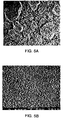
- the ceria powder was CEROX® 1650 available under that trade name from Optical Manufacturers, Limited. This product has a nominal average particle size of 1.3 micrometers though in fact, as Figure 5a shows, there were significant numbers of aggregates and a wide variation in particle size.
- the product had a BET specific surface area of 4 m 2 /gm.
- Comparative Example 3 used a commercially available slurry polishing material available from Saint-Gobain Industrial Ceramics, Inc. under the trade name NORPOLTM, which comprises ceria that had not been given the mechano-chemical treatment and alpha alumina.
- the slurry has 20% solids and a nominal particle size of 0.25 micrometer and the dispersed particles had a BET surface area of 45m 2 /gm.
- a ceria slurry was made by de-agglomerating 500gm of CEROX 1650 in 4500 gm of de-ionized water in a Sweco -18-5 mill, (using five jars) , using 1.27 cm (half inch) cylindrical Diamonite® low purity (88%) alumina media for seven days.
- the mechano-chemically treated ceria was very uniform in particle size and free of large agglomerations.
- the before and after products are shown in the phtomicrographs presented as Figures 5a and 5b respectively.
- the BET specific surface area of the mechano-chemically treated powder was 18.5 m 2 /gm.
- a polishing slurry was made by placing 1000 gm of the above slurry into 500 gm of de-ionized water and the pH was adjusted to 9.5-10.
- the polishing slurry was used to polish a glass substrate comprised of 96% silica and having an initial R a of 6000 ⁇ using a single sided polishing machine purchased from Buehler and a SUBA-500 polishing pad from Rodel, Inc..
- the pad pressure was 0.105 kg/cm 2 (1.5 p.s.i.) and the surface speed of the pad relative to the workpiece was 1.5 m/sec.
- the slurry was caused to flow at a rate of about 20 cc/min.
- the polishing yielded a surface with a final roughness, R a was 4 to 5 ⁇ .
- the graph appearing as Figure 3 shows two lines: the on the left being the removal rate for the ceria when used "as received", (reported in Example 1 (Comparative) below) and the one on the right the mechano-chemically treated grain prepared as described in the present Example. It will be noted that, in the first 20 minutes or so of polishing, only about 1 micrometer of thickness was removed but thereafter the amount removed increased significantly but the finish remained very good.
- Example 200 gm of the as-received ceria used in Example 1 was mixed with 800 gm of water and 500 grn of this slurry were further diluted by addition of 1000 gm of de-ionized water and the pH was adjusted to 10. This slurry was then used to polish a glass, (96% silica), having a roughness, R a , of 6000 ⁇ .
- the polishing was performed using the same equipment and conditions as are set forth in Example 1.
- the polishing process removed a thickness of 40 microns and left a final surface roughness of 10.5 ⁇ .
- the rate of removal is charted in Table 3.
- Example 1 The slurry products of Example 1 and Example 1 (Comparative) as used for polishing were then examined to trace their surface charge as the pH was varied.
- Figure 1 the slurry made with the "as-received" ceria was titrated from the neutral to the acid side to a pH of about 4 and it was noted that the surface charge as reflected by the random accoustophoretic mobility, (or RAM), became strongly positive but when the slurry was titrated back to the basic side, the surface charge moved to the negative side, with a small hysteresis loss.
- Figure 2 the behavior of the slurry according to the invention is charted.
- Example 1 employs the same ceria starting material as was used in Example 1 and a slurry identical to that made in Example I was prepared and mechano-chemically treated in the same way.
- Figures 5a and 5b are photomicrographs of the powder before and after the de-agglomeration operation.
- the mechano-chemically treated powder had a BET surface area of 18.5 m 2 /gm and was essentially free of agglomerates and very uniform in particle size.
- a polishing slurry was made by diluting 5000 gm of the above slurry with 2500 gm of de-ionized water and this was used to polish five samples of a pure (99.99%) silica using a double-sided polishing machine made by SOMOS and a SUBA-550, ("Hard Pad"), polishing pad from Rodel, Inc..
- the pad pressure was a 0.0703 kg/cm 3 (1 p.s.i.) and the relative surface speed, (of the pad relative to the surface), was 2.8 m/sec.
- the slurry flow rate was 100 cc/min. This yielded a final surface roughness of 7-8 ⁇ .
- Polishing was then continued using a Rodel Inc. POLYTEX pad, ("Soft Pad”), under a pressure of 0.035 kg/cm 3 (0.5 p.s.i.), a slurry flow rate of about 75 cc/min but using the same relative surface speed. This yielded a surface roughness of 4 ⁇ which, when measured by the more precise atomic force microscope was reduced to 2-3 ⁇ .
- Example 2 the polishing procedures and substrates of Example 2 were duplicated using a slurry made from 500 gm of the as-received ceria powder and 4500 gm of de-ionized water. This slurry was further diluted with 10000gm of de-ionized water and the pH measured at 5.5-6.
- Example 2 the impact of the media used in the mechano-chemical treatment is assessed.
- Three evaluations were performed in identical fashion to that described in Example 1 with the difference only of the media used in the mechano-chemical treatment.
- the other media used were zirconia and 95% pure alpha alumina.
- Zirconia media gave a product with a polished surface with a final surface roughness of about the same as was obtained using 88% pure alpha alumina. However when 95% pure alpha alumina was used the surface roughness was about four times higher.
- This Example follows the testing procedure of Examples 1 and 1 (Comparative) but using a commercially available glass polishing formulation comprising ceria and alpha alumina powders with a 0.25 micrometer nominal average particle size and a BET surface area of 45 m 2 /gm.
- the formulation is in the form of a 20% solids aqueous slurry available from Saint-Gobain Industrial Ceramics, Inc. under the trade name NORPOLTM 9243.
- the polishing removed 15 micrometers of thickness and left a surface roughness of 7-8 ⁇ .
- the polishing formulations of the invention therefore clearly are superior to those of the prior art.
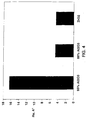
- This Example shows the utility of the ceria formulations of the invention in the CMP treatment of silica surfaces. It is found that if the slurry used leaves debris on the surface rather than flushing it away, continued polishing over the debris can lead to defects on the polished surface. The significance of these defects depends to some extent on the area they cover. While slurry polishing cannot altogether eliminate defects caused by this mechanism, it is important to have as few defects as possible and for the total area occupied by such defects to be minimized. This implies early and effective debris removal during polishing. The following Example explores the factors influencing this result. All evaluations were carried out on a silica test-bed format. In such processes the key quality measuring parameters are the material removal rate and the surface defects greater than 0.2 micrometers in size remaining after the CMP operation, ("DEFECTS”), and the area occupied by the defects, (AREA").
- DEFECTS material removal rate and the surface defects greater than 0.2 micrometers in size remaining after the CMP operation
- AREA area occupied by the defects
- the product according to the invention made from Opaline ceria powder, (INV-2), gave a lower MRR value and a higher DEFECTS number, (though still less than the product without the surfactant), but with a much smaller AREA than any of the others indicating that the defects were predominantly small.
- Example 4 In this Example the effect on the surfactant on the cleanliness of the substrate after polishing is clearly demonstrated. This demonstrates visually the effect described in Example 4.
- ceria powder sold under the "Opaline” trade name was mixed with 9 kg of deionized water.
- This formulation was mixed as 30 g of a surfactant, (Darvan® C) and the pH was adjusted to 10.1 using a 15% ammonia solution..
- This mixture was then milled for 72 hours in a Sweco M-18 mill using 1.27 cm (half-inch) low purity alumina media. Thereafter the resulting slurry was filtered through a one micron Pall filter and the residue was flushed with deionized water to recover the maximum amount of slurry.
- a similar slurry was prepared but this time with the addition of 7.5 g of APE surfactant used in Example 4 in 204.4 g of deionized water and a further 1.5 g of Darvan C in 50 g of deionized water.
- the slurry was pH adjusted to 10.1 using 15% aqueous ammonia.
- This slurry was then used to polish a wafer with a silica surface in exactly the same way as the comparative sample described above.
- a photograph of the rinsed surface of the wafer after polishing shows no trace of surface debris indicating that the APE surfactant is particularly effective at leaving a surface that is clean and requires no further treatment to make it suitable for further processing.
- a clcan surface usually correlates to a surface with few and smaller defects generated during the polishing process.
Landscapes
- Chemical & Material Sciences (AREA)
- Organic Chemistry (AREA)
- Engineering & Computer Science (AREA)
- Materials Engineering (AREA)
- Life Sciences & Earth Sciences (AREA)
- Geology (AREA)
- Inorganic Chemistry (AREA)
- Mechanical Treatment Of Semiconductor (AREA)
- Finish Polishing, Edge Sharpening, And Grinding By Specific Grinding Devices (AREA)
- Compounds Of Alkaline-Earth Elements, Aluminum Or Rare-Earth Metals (AREA)
Description
USP 5,804,513 teaches a planarization slurry comprising ceria and alumina or silica,
where the particle sizes are 2 microns or less and the ceria component is from 5 to 40% of the total weight.
The polishing formulations of the invention therefore clearly are superior to those of the prior art. As represented by the commercially available ceria polishing powders or mixtures of ceria with alpha alumina powders with even finer nominal average particle size.
| SLURRY | MRR | DEFECTS | AREA |
| COMP-1 | 137% | >350% | 413% |
| INV-1 | 100% | 100% | 100% |
| INV-2 | 73% | 293% | 66% |
Claims (6)
- A process for the production of a ceria slurry suitable for the optical polishing and CMP applications which comprises providing a slurry of a ceria powder with a BET surface area of less than 10 m2/gm and comprising a plurality of agglomerated ceria particles, and milling said slurry at a pH of from 9 to 12.5 until the BET surface area has increased by at least 5 m2/gm.
- A process according to Claim 1 in which ceria is milled using milling media selected from the group consisting of: alumina containing from 85 to 90% alpha alumina and zirconia.
- A ceria slurry obtained by a process according to Claim 2 comprising ceria particles with a BET specific surface area of at least 10 m2/gm and which maintains a positive surface charge when titrated from a pH of 4 or less to a pH of 9 or higher, preferably of at least 10.
- A ceria slurry obtained by a process according to Claim 2 which further comprises an anionic organo-phosphate surfactant.
- A ceria slurry according to Claim 3 which further comprises an anionic organo-phosphate surfactant.
- A ceria slurry according to Claim 4 or 5 in which the ceria is free of agglomerates that will not re-disperse upon stirring and that are larger than 5 microns in size.
Applications Claiming Priority (5)
| Application Number | Priority Date | Filing Date | Title |
|---|---|---|---|
| US33422299A | 1999-06-16 | 1999-06-16 | |
| US334222 | 1999-06-16 | ||
| US09/553,968 US6238450B1 (en) | 1999-06-16 | 2000-04-21 | Ceria powder |
| US553968 | 2000-04-21 | ||
| PCT/US2000/015479 WO2000076920A1 (en) | 1999-06-16 | 2000-06-06 | Improved ceria powder |
Publications (2)
| Publication Number | Publication Date |
|---|---|
| EP1200352A1 EP1200352A1 (en) | 2002-05-02 |
| EP1200352B1 true EP1200352B1 (en) | 2003-04-02 |
Family
ID=26989098
Family Applications (1)
| Application Number | Title | Priority Date | Filing Date |
|---|---|---|---|
| EP00939578A Expired - Lifetime EP1200352B1 (en) | 1999-06-16 | 2000-06-06 | Improved ceria powder |
Country Status (14)
| Country | Link |
|---|---|
| US (1) | US6238450B1 (en) |
| EP (1) | EP1200352B1 (en) |
| JP (1) | JP3887230B2 (en) |
| KR (1) | KR100429940B1 (en) |
| CN (1) | CN1129554C (en) |
| AU (1) | AU752038B2 (en) |
| BR (1) | BR0012290B1 (en) |
| CA (1) | CA2374373C (en) |
| DE (1) | DE60001958T2 (en) |
| IL (1) | IL147040A (en) |
| MX (1) | MXPA01013093A (en) |
| MY (1) | MY125250A (en) |
| TW (1) | TW503216B (en) |
| WO (1) | WO2000076920A1 (en) |
Families Citing this family (71)
| Publication number | Priority date | Publication date | Assignee | Title |
|---|---|---|---|---|
| US6602111B1 (en) * | 1999-07-16 | 2003-08-05 | Seimi Chemical Co., Ltd. | Abrasive |
| US6402851B1 (en) * | 2000-05-19 | 2002-06-11 | International Business Machines Corporation | Lanthanide oxide dissolution from glass surface |
| US7887714B2 (en) * | 2000-12-25 | 2011-02-15 | Nissan Chemical Industries, Ltd. | Cerium oxide sol and abrasive |
| TWI272249B (en) * | 2001-02-27 | 2007-02-01 | Nissan Chemical Ind Ltd | Crystalline ceric oxide sol and process for producing the same |
| US6839362B2 (en) * | 2001-05-22 | 2005-01-04 | Saint-Gobain Ceramics & Plastics, Inc. | Cobalt-doped saturable absorber Q-switches and laser systems |
| TWI256971B (en) * | 2002-08-09 | 2006-06-21 | Hitachi Chemical Co Ltd | CMP abrasive and method for polishing substrate |
| JP3860528B2 (en) * | 2002-11-12 | 2006-12-20 | 株式会社東芝 | Manufacturing method of semiconductor device |
| JP2004193495A (en) * | 2002-12-13 | 2004-07-08 | Toshiba Corp | Slurry for chemical mechanical polishing and method of manufacturing semiconductor device using the same |
| US7326477B2 (en) * | 2003-09-23 | 2008-02-05 | Saint-Gobain Ceramics & Plastics, Inc. | Spinel boules, wafers, and methods for fabricating same |
| US7045223B2 (en) * | 2003-09-23 | 2006-05-16 | Saint-Gobain Ceramics & Plastics, Inc. | Spinel articles and methods for forming same |
| US20050061230A1 (en) * | 2003-09-23 | 2005-03-24 | Saint-Gobain Ceramics & Plastics, Inc. | Spinel articles and methods for forming same |
| TWI273632B (en) | 2004-07-28 | 2007-02-11 | K C Tech Co Ltd | Polishing slurry, method of producing same, and method of polishing substrate |
| KR100682233B1 (en) * | 2004-07-29 | 2007-02-12 | 주식회사 엘지화학 | Cerium oxide powder and its manufacturing method |
| KR100672940B1 (en) | 2004-08-03 | 2007-01-24 | 삼성전자주식회사 | Chemical Mechanical Polishing Slurry for Metal Films and Chemical Mechanical Polishing Method of Metal Films Using the Same |
| US7919815B1 (en) | 2005-02-24 | 2011-04-05 | Saint-Gobain Ceramics & Plastics, Inc. | Spinel wafers and methods of preparation |
| KR100641348B1 (en) | 2005-06-03 | 2006-11-03 | 주식회사 케이씨텍 | Slurry for CPM, its manufacturing method and polishing method of substrate |
| US20080132150A1 (en) * | 2006-11-30 | 2008-06-05 | Gregory John Arserio | Polishing method for extreme ultraviolet optical elements and elements produced using the method |
| CN103468204B (en) * | 2007-01-23 | 2015-10-28 | 圣戈本磨料股份有限公司 | Comprise the coated abrasive products of aggregate |
| JP4301305B2 (en) * | 2007-02-16 | 2009-07-22 | ソニー株式会社 | Substrate polishing method and semiconductor device manufacturing method |
| US8000487B2 (en) | 2008-03-06 | 2011-08-16 | Starkey Laboratories, Inc. | Frequency translation by high-frequency spectral envelope warping in hearing assistance devices |
| KR100873945B1 (en) * | 2008-07-16 | 2008-12-12 | (주) 뉴웰 | Fine cerium oxide powder manufacturing method thereof and CMP slurry |
| KR20130038958A (en) * | 2008-07-22 | 2013-04-18 | 생-고벵 아브라시프 | Coated abrasive products containing aggregates |
| US8526650B2 (en) | 2009-05-06 | 2013-09-03 | Starkey Laboratories, Inc. | Frequency translation by high-frequency spectral envelope warping in hearing assistance devices |
| WO2012092619A2 (en) | 2010-12-30 | 2012-07-05 | Saint-Gobain Abrasives, Inc. | Coated abrasive aggregates and products containg same |
| EP2658680B1 (en) | 2010-12-31 | 2020-12-09 | Saint-Gobain Ceramics & Plastics, Inc. | Abrasive articles comprising abrasive particles having particular shapes and methods of forming such articles |
| CN102751187B (en) * | 2011-04-20 | 2015-11-25 | 中芯国际集成电路制造(上海)有限公司 | The formation method of finishing method and grid |
| WO2013003831A2 (en) | 2011-06-30 | 2013-01-03 | Saint-Gobain Ceramics & Plastics, Inc. | Liquid phase sintered silicon carbide abrasive particles |
| WO2013003830A2 (en) | 2011-06-30 | 2013-01-03 | Saint-Gobain Ceramics & Plastics, Inc. | Abrasive articles including abrasive particles of silicon nitride |
| US9517546B2 (en) | 2011-09-26 | 2016-12-13 | Saint-Gobain Ceramics & Plastics, Inc. | Abrasive articles including abrasive particulate materials, coated abrasives using the abrasive particulate materials and methods of forming |
| WO2013049526A2 (en) | 2011-09-29 | 2013-04-04 | Saint-Gobain Abrasives, Inc. | Abrasive products and methods for finishing hard surfaces |
| KR102074138B1 (en) | 2011-12-30 | 2020-02-07 | 생-고뱅 세라믹스 앤드 플라스틱스, 인코포레이티드 | Shaped abrasive particle and method of forming same |
| PL2797716T3 (en) | 2011-12-30 | 2021-07-05 | Saint-Gobain Ceramics & Plastics, Inc. | Composite shaped abrasive particles and method of forming same |
| KR20140106737A (en) | 2011-12-30 | 2014-09-03 | 생-고뱅 세라믹스 앤드 플라스틱스, 인코포레이티드 | Forming shaped abrasive particles |
| US8840696B2 (en) | 2012-01-10 | 2014-09-23 | Saint-Gobain Ceramics & Plastics, Inc. | Abrasive particles having particular shapes and methods of forming such particles |
| US9321947B2 (en) | 2012-01-10 | 2016-04-26 | Saint-Gobain Abrasives, Inc. | Abrasive products and methods for finishing coated surfaces |
| EP2802436B1 (en) | 2012-01-10 | 2019-09-25 | Saint-Gobain Ceramics & Plastics, Inc. | Abrasive particles having complex shapes |
| CH708019B1 (en) | 2012-03-16 | 2015-09-15 | Saint Gobain Abrasives Inc | Abrasive products for surface finishing. |
| WO2013149209A1 (en) | 2012-03-30 | 2013-10-03 | Saint-Gobain Abrasives, Inc. | Abrasive products having fibrillated fibers |
| WO2013149197A1 (en) | 2012-03-30 | 2013-10-03 | Saint-Gobain Abrasives, Inc. | Abrasive products and methods for fine polishing of ophthalmic lenses |
| KR101813466B1 (en) | 2012-05-23 | 2017-12-29 | 생-고뱅 세라믹스 앤드 플라스틱스, 인코포레이티드 | Shaped abrasive particles and methods of forming same |
| WO2014005120A1 (en) | 2012-06-29 | 2014-01-03 | Saint-Gobain Ceramics & Plastics, Inc. | Abrasive particles having particular shapes and methods of forming such particles |
| US20150210890A1 (en) * | 2012-07-25 | 2015-07-30 | Konica Minolta, Inc. | Polishing-Material Reclamation Method |
| EP2906392B1 (en) | 2012-10-15 | 2025-04-16 | Saint-Gobain Abrasives, Inc. | Abrasive particles having particular shapes and methods of forming such particles |
| CN104994995B (en) | 2012-12-31 | 2018-12-14 | 圣戈本陶瓷及塑料股份有限公司 | Granular materials and forming method thereof |
| WO2014161001A1 (en) | 2013-03-29 | 2014-10-02 | Saint-Gobain Abrasives, Inc. | Abrasive particles having particular shapes and methods of forming such particles |
| TW201502263A (en) | 2013-06-28 | 2015-01-16 | Saint Gobain Ceramics | Abrasive article including shaped abrasive particles |
| CN111978921A (en) | 2013-09-30 | 2020-11-24 | 圣戈本陶瓷及塑料股份有限公司 | Shaped abrasive particles and methods of forming the same |
| US9281210B2 (en) * | 2013-10-10 | 2016-03-08 | Cabot Microelectronics Corporation | Wet-process ceria compositions for polishing substrates, and methods related thereto |
| KR102081045B1 (en) | 2013-12-31 | 2020-02-26 | 생-고뱅 어브레이시브즈, 인코포레이티드 | Abrasive article including shaped abrasive particles |
| US9771507B2 (en) | 2014-01-31 | 2017-09-26 | Saint-Gobain Ceramics & Plastics, Inc. | Shaped abrasive particle including dopant material and method of forming same |
| AU2015247739B2 (en) | 2014-04-14 | 2017-10-26 | Saint-Gobain Ceramics & Plastics, Inc. | Abrasive article including shaped abrasive particles |
| AU2015247826A1 (en) | 2014-04-14 | 2016-11-10 | Saint-Gobain Ceramics & Plastics, Inc. | Abrasive article including shaped abrasive particles |
| WO2015184355A1 (en) | 2014-05-30 | 2015-12-03 | Saint-Gobain Abrasives, Inc. | Method of using an abrasive article including shaped abrasive particles |
| US9707529B2 (en) | 2014-12-23 | 2017-07-18 | Saint-Gobain Ceramics & Plastics, Inc. | Composite shaped abrasive particles and method of forming same |
| US9914864B2 (en) | 2014-12-23 | 2018-03-13 | Saint-Gobain Ceramics & Plastics, Inc. | Shaped abrasive particles and method of forming same |
| US9676981B2 (en) | 2014-12-24 | 2017-06-13 | Saint-Gobain Ceramics & Plastics, Inc. | Shaped abrasive particle fractions and method of forming same |
| US10196551B2 (en) | 2015-03-31 | 2019-02-05 | Saint-Gobain Abrasives, Inc. | Fixed abrasive articles and methods of forming same |
| TWI634200B (en) | 2015-03-31 | 2018-09-01 | 聖高拜磨料有限公司 | Fixed abrasive article and method of forming same |
| EP3307483B1 (en) | 2015-06-11 | 2020-06-17 | Saint-Gobain Ceramics&Plastics, Inc. | Abrasive article including shaped abrasive particles |
| KR102313436B1 (en) | 2016-05-10 | 2021-10-19 | 생-고뱅 세라믹스 앤드 플라스틱스, 인코포레이티드 | Abrasive particles and method of forming the same |
| EP4071224A3 (en) | 2016-05-10 | 2023-01-04 | Saint-Gobain Ceramics and Plastics, Inc. | Methods of forming abrasive articles |
| EP4349896A3 (en) | 2016-09-29 | 2024-06-12 | Saint-Gobain Abrasives, Inc. | Fixed abrasive articles and methods of forming same |
| US10759024B2 (en) | 2017-01-31 | 2020-09-01 | Saint-Gobain Ceramics & Plastics, Inc. | Abrasive article including shaped abrasive particles |
| US10563105B2 (en) | 2017-01-31 | 2020-02-18 | Saint-Gobain Ceramics & Plastics, Inc. | Abrasive article including shaped abrasive particles |
| CN110719946B (en) | 2017-06-21 | 2022-07-15 | 圣戈本陶瓷及塑料股份有限公司 | Particulate material and method of forming the same |
| WO2021133876A1 (en) | 2019-12-27 | 2021-07-01 | Saint-Gobain Ceramics & Plastics, Inc. | Abrasive articles and methods of forming same |
| US11926019B2 (en) | 2019-12-27 | 2024-03-12 | Saint-Gobain Ceramics & Plastics, Inc. | Abrasive articles and methods of forming same |
| EP4081370A4 (en) | 2019-12-27 | 2024-04-24 | Saint-Gobain Ceramics & Plastics Inc. | Abrasive articles and methods of forming same |
| CN118591436A (en) | 2021-12-30 | 2024-09-03 | 圣戈班磨料磨具有限公司 | Abrasive article and method of forming the same |
| MX2024007593A (en) | 2021-12-30 | 2024-08-20 | Saint Gobain Abrasives Inc | Abrasive articles and methods of forming same. |
| EP4457054A4 (en) | 2021-12-30 | 2026-01-14 | Saint Gobain Abrasives Inc | Grinding articles and methods for shaping them |
Family Cites Families (13)
| Publication number | Priority date | Publication date | Assignee | Title |
|---|---|---|---|---|
| GB1501570A (en) | 1975-11-11 | 1978-02-15 | Showa Denko Kk | Abrader for mirror polishing of glass and method for mirror polishing |
| EP0078098B1 (en) * | 1981-08-07 | 1986-05-14 | United Kingdom Atomic Energy Authority | Cerium compounds |
| FR2549846B1 (en) | 1983-07-29 | 1986-12-26 | Rhone Poulenc Spec Chim | NOVEL CERIUM-BASED POLISHING COMPOSITION AND MANUFACTURING METHOD THEREOF |
| FI95387C (en) | 1992-12-29 | 1996-01-25 | Borealis As | Process for polymerizing olefins and prepolymerized catalyst composition and process for its preparation |
| US5527423A (en) | 1994-10-06 | 1996-06-18 | Cabot Corporation | Chemical mechanical polishing slurry for metal layers |
| US5693239A (en) | 1995-10-10 | 1997-12-02 | Rodel, Inc. | Polishing slurries comprising two abrasive components and methods for their use |
| WO1997029510A1 (en) * | 1996-02-07 | 1997-08-14 | Hitachi Chemical Company, Ltd. | Cerium oxide abrasive, semiconductor chip, semiconductor device, process for the production of them, and method for the polishing of substrates |
| US5858813A (en) | 1996-05-10 | 1999-01-12 | Cabot Corporation | Chemical mechanical polishing slurry for metal layers and films |
| KR19980019046A (en) | 1996-08-29 | 1998-06-05 | 고사이 아키오 | Abrasive composition and use of the same |
| JPH10102040A (en) * | 1996-09-30 | 1998-04-21 | Hitachi Chem Co Ltd | Cerium oxide abrasive and grinding of substrate |
| JPH10106986A (en) * | 1996-09-30 | 1998-04-24 | Hitachi Chem Co Ltd | Cerium oxide abrasive agent and polishing method of substrate |
| US5759917A (en) | 1996-12-30 | 1998-06-02 | Cabot Corporation | Composition for oxide CMP |
| JP3359535B2 (en) * | 1997-04-25 | 2002-12-24 | 三井金属鉱業株式会社 | Method for manufacturing semiconductor device |
-
2000
- 2000-04-21 US US09/553,968 patent/US6238450B1/en not_active Expired - Fee Related
- 2000-05-16 TW TW089109353A patent/TW503216B/en not_active IP Right Cessation
- 2000-06-06 JP JP2001503391A patent/JP3887230B2/en not_active Expired - Fee Related
- 2000-06-06 EP EP00939578A patent/EP1200352B1/en not_active Expired - Lifetime
- 2000-06-06 KR KR10-2001-7016080A patent/KR100429940B1/en not_active Expired - Fee Related
- 2000-06-06 IL IL14704000A patent/IL147040A/en not_active IP Right Cessation
- 2000-06-06 CA CA002374373A patent/CA2374373C/en not_active Expired - Fee Related
- 2000-06-06 MX MXPA01013093A patent/MXPA01013093A/en active IP Right Grant
- 2000-06-06 CN CN00808911A patent/CN1129554C/en not_active Expired - Fee Related
- 2000-06-06 AU AU54647/00A patent/AU752038B2/en not_active Ceased
- 2000-06-06 BR BRPI0012290-4A patent/BR0012290B1/en not_active IP Right Cessation
- 2000-06-06 WO PCT/US2000/015479 patent/WO2000076920A1/en not_active Ceased
- 2000-06-06 DE DE60001958T patent/DE60001958T2/en not_active Expired - Lifetime
- 2000-06-14 MY MYPI20002675 patent/MY125250A/en unknown
Also Published As
| Publication number | Publication date |
|---|---|
| AU5464700A (en) | 2001-01-02 |
| KR20020015698A (en) | 2002-02-28 |
| CA2374373A1 (en) | 2000-12-21 |
| IL147040A (en) | 2005-07-25 |
| CN1129554C (en) | 2003-12-03 |
| DE60001958T2 (en) | 2004-03-04 |
| WO2000076920A1 (en) | 2000-12-21 |
| BR0012290A (en) | 2002-04-16 |
| US6238450B1 (en) | 2001-05-29 |
| CA2374373C (en) | 2005-04-05 |
| KR100429940B1 (en) | 2004-05-03 |
| MY125250A (en) | 2006-07-31 |
| BR0012290B1 (en) | 2009-01-13 |
| MXPA01013093A (en) | 2002-06-04 |
| AU752038B2 (en) | 2002-09-05 |
| IL147040A0 (en) | 2002-08-14 |
| DE60001958D1 (en) | 2003-05-08 |
| JP2003502255A (en) | 2003-01-21 |
| EP1200352A1 (en) | 2002-05-02 |
| TW503216B (en) | 2002-09-21 |
| CN1355769A (en) | 2002-06-26 |
| JP3887230B2 (en) | 2007-02-28 |
Similar Documents
| Publication | Publication Date | Title |
|---|---|---|
| US6238450B1 (en) | Ceria powder | |
| AU729245B2 (en) | Optical polishing formulation | |
| EP0874036B1 (en) | Fine particulate polishing agent, method for producing the same and method for producing semiconductor devices. | |
| US6258137B1 (en) | CMP products | |
| JP4113282B2 (en) | Polishing composition and edge polishing method using the same | |
| EP1234801B1 (en) | Crystalline ceric oxide sol and process for producing the same | |
| EP2587526A1 (en) | Composition for polishing silicon carbide substrate and method for polishing silicon carbide substrate | |
| US20020086618A1 (en) | Cerium oxide sol and abrasive | |
| AU754328B2 (en) | Improved CMP products | |
| JP3685481B2 (en) | Cerium-based abrasive particle powder excellent in particle size distribution, abrasive slurry containing the particle powder, and method for producing the particle powder | |
| JP2000038572A (en) | Glass or quartz abrasive composition and preparation thereof | |
| MXPA00008063A (en) | Optical polishing formulation | |
| HK1050913B (en) | Cmp process and use of cmp slurry comprisng alumina powder and engineered abrasive |
Legal Events
| Date | Code | Title | Description |
|---|---|---|---|
| PUAI | Public reference made under article 153(3) epc to a published international application that has entered the european phase |
Free format text: ORIGINAL CODE: 0009012 |
|
| 17P | Request for examination filed |
Effective date: 20011127 |
|
| AK | Designated contracting states |
Kind code of ref document: A1 Designated state(s): AT BE CH CY DE DK ES FI FR GB GR IE IT LI LU MC NL PT SE |
|
| 17Q | First examination report despatched |
Effective date: 20020516 |
|
| GRAH | Despatch of communication of intention to grant a patent |
Free format text: ORIGINAL CODE: EPIDOS IGRA |
|
| GRAH | Despatch of communication of intention to grant a patent |
Free format text: ORIGINAL CODE: EPIDOS IGRA |
|
| GRAA | (expected) grant |
Free format text: ORIGINAL CODE: 0009210 |
|
| AK | Designated contracting states |
Designated state(s): DE FI FR GB SE |
|
| REG | Reference to a national code |
Ref country code: GB Ref legal event code: FG4D |
|
| REG | Reference to a national code |
Ref country code: IE Ref legal event code: FG4D |
|
| REF | Corresponds to: |
Ref document number: 60001958 Country of ref document: DE Date of ref document: 20030508 Kind code of ref document: P |
|
| REG | Reference to a national code |
Ref country code: SE Ref legal event code: TRGR |
|
| ET | Fr: translation filed | ||
| PLBE | No opposition filed within time limit |
Free format text: ORIGINAL CODE: 0009261 |
|
| STAA | Information on the status of an ep patent application or granted ep patent |
Free format text: STATUS: NO OPPOSITION FILED WITHIN TIME LIMIT |
|
| 26N | No opposition filed |
Effective date: 20040105 |
|
| REG | Reference to a national code |
Ref country code: IE Ref legal event code: MM4A |
|
| PGFP | Annual fee paid to national office [announced via postgrant information from national office to epo] |
Ref country code: SE Payment date: 20110629 Year of fee payment: 12 Ref country code: FR Payment date: 20110629 Year of fee payment: 12 |
|
| PGFP | Annual fee paid to national office [announced via postgrant information from national office to epo] |
Ref country code: FI Payment date: 20110629 Year of fee payment: 12 Ref country code: GB Payment date: 20110628 Year of fee payment: 12 |
|
| PGFP | Annual fee paid to national office [announced via postgrant information from national office to epo] |
Ref country code: DE Payment date: 20110629 Year of fee payment: 12 |
|
| REG | Reference to a national code |
Ref country code: SE Ref legal event code: EUG |
|
| PG25 | Lapsed in a contracting state [announced via postgrant information from national office to epo] |
Ref country code: FI Free format text: LAPSE BECAUSE OF NON-PAYMENT OF DUE FEES Effective date: 20120606 |
|
| GBPC | Gb: european patent ceased through non-payment of renewal fee |
Effective date: 20120606 |
|
| PG25 | Lapsed in a contracting state [announced via postgrant information from national office to epo] |
Ref country code: SE Free format text: LAPSE BECAUSE OF NON-PAYMENT OF DUE FEES Effective date: 20120607 |
|
| REG | Reference to a national code |
Ref country code: FR Ref legal event code: ST Effective date: 20130228 |
|
| PG25 | Lapsed in a contracting state [announced via postgrant information from national office to epo] |
Ref country code: DE Free format text: LAPSE BECAUSE OF NON-PAYMENT OF DUE FEES Effective date: 20130101 Ref country code: FR Free format text: LAPSE BECAUSE OF NON-PAYMENT OF DUE FEES Effective date: 20120702 Ref country code: GB Free format text: LAPSE BECAUSE OF NON-PAYMENT OF DUE FEES Effective date: 20120606 |
|
| REG | Reference to a national code |
Ref country code: DE Ref legal event code: R119 Ref document number: 60001958 Country of ref document: DE Effective date: 20130101 |