This invention relates to online auction systems.
Online auctions are a growth area within e-commerce, employed by numerous
users to buy and/or sell a plethora of items or lots each day. These items are usually
tangible goods but may represent intangible services. Well-known current examples of
online auction systems operate under the trade marks e-Bay and QXL. e-Bay, for
instance, has grown since its launch in 1995 to serve over 4 million new auctions and
450,000 new items every day, in over 4000 item categories.
In known online auction systems such as e-Bay, buyers visit a website to view
items advertised for sale on the website by sellers. If a buyer wishes to buy an item, he
or she enters an auction and becomes a bidder for that item by indicating a maximum
bid. The system negotiates an outcome automatically by bidding incrementally on the
bidder's behalf up to the maximum bid, having regard to factors such as a comparison
with bids of different bidders and the seller's minimum reserve price. Once a sale has
been agreed between a successful bidder and the seller, the system leaves the bidder
and the seller to complete the transaction by exchanging an agreed sum of money for
the item bought.
A disadvantage with known online auction systems is that it is necessary for a
user, be it bidder or seller, to check back to the website repeatedly to see how the
auction is proceeding and how it affects that user. Some known systems try to avoid
this problem by sending an e-mail message to a user affected by a change in the
auction, such as an incoming increased bid, but e-mail messages are slow to transmit
and inconvenient for the user to access.
Consequently, it is not possible in known online auction systems for the user to
learn of changes in the auction such as bids or sales as soon as they happen. This means
that the user is deprived of real-time information that could be crucial to the outcome of
the auction and that would, at least, add to the interest and enjoyment of the auction
process. It also follows that the auction process can be painfully slow to complete.
Similarly, whilst the automatic processing of known online auction systems can be
convenient for users who wish to minimise their participation and involvement, this
precludes more active real-time user participation in the sense of a live auction.
In response to these drawbacks, the Inventors have devised a distributed online
auction system that accurately matches buyers and sellers using a peer to peer
architecture enabling not only automated but also 'live' Internet auctions.
The invention resides in a method of conducting an online auction on a
communications network, the method comprising: a first user terminal generating an
offer to sell or to buy an item in accordance with first offer criteria; a second user
terminal generating an offer to buy or to sell a corresponding item in accordance with
second offer criteria; comparing the offer criteria to match an offer to sell and an offer
to buy if any or all of their criteria match; in response to a match between the offers,
opening a peer to peer communication channel between the user terminals that made
the matching offers; and conducting an auction between those user terminals via the
communication channel.
The invention also resides in an online auction system for conducting an online
auction on a communications network, the system comprising: a first user terminal
adapted to generate an offer to sell or to buy an item in accordance with first offer
criteria; a second user terminal adapted to generate an offer to buy or to sell a
corresponding item in accordance with second offer criteria; matching means for
comparing the offer criteria to match an offer to sell and an offer to buy if any or all of
their criteria match; and communication means responsive to the matching means to
open a peer to peer communication channel for conducting an auction between user
terminals that made matching offers.
In preferred embodiments, the invention contemplates software that is resident
on a user's PC or other computing device such as an Internet-enabled mobile telephone.
The software enables the user to identify other users selling or buying (as appropriate)
an item of interest, to participate in auctions as bidder or seller, and to connect directly
via the Internet to the seller or buyer of goods without needing to access a third party
website.
Specifically, the invention envisages a software application for end users that
allows a user to create two different types of software agents, namely a seller agent and
a buyer agent. A seller agent creates an auction on a selling user's computing device,
given certain parameters such as reserve price, date of auction and description of
product. A buyer agent, on the other hand, searches other participating systems over a
communications network for an auction that fits a buyer's criteria, and either (a) makes
bids on the buyer's behalf or (b) connects the buyer to the seller in order that the buyer
may bid 'live' for the item on sale.
The invention therefore extends to an agent adapted to generate, when resident
on a user terminal, an offer to buy or to sell an item for matching with an offer from
another user terminal, the agent including means responsive to a match between offers
to open a peer to peer communication channel between the host user terminal and
another user terminal generating a matching offer, and means for running an auction
via the communication channel. Similarly, the invention encompasses a user terminal
having a software agent resident thereon being adapted to generate an offer to buy or to
sell an item, to open a peer to peer communication channel with another user terminal
in response to a match between offers and to run an auction on the host terminal.
In this specification, an 'agent' is taken to mean a software application that acts
on a user's behalf to convey offer criteria to a server and/or to other user terminals and
to respond to the user with news of an auction's progress. The agent of the invention is
not necessarily intelligent: if needs be, it can simply follow the user's instructions to act
as an interface between the user and an online auction system, and to represent the user
in that system.
The invention allows direct communication between bidders and sellers thus
alerting those users to changes in an auction as soon as they happen. This direct link
also means that it is possible to perform 'live' online auctions as well as the automatic
auctions that occur on existing auction sites.
It is preferred for the application of the invention to be installed upon the
'desktop' of the user's computing device to run constantly as a background task. Other
desktop tools such as the live chat tool AOL Instant Messenger (trade mark) have
demonstrated the power of having an application constantly running in the background
of the computer and its appeal to users over accessing a simple website for 'live'
services. This appeal extends to the service providers that provide the services accessed
via background desktop applications, who benefit from the user's perceived
commitment to those services in terms of advertising effectiveness, community-building
and so on.
The agent system of the invention also offers an enhanced searching ability that
utilises co-occurrence and context vector pattern matching technologies that enable
matching to be based on a broad semantic understanding and fuzzy logic; other auction
and trading systems rely on simple keyword pattern matching for searching through
items on offer.
In order that this invention can be more readily understood, reference will now
be made, by way of example, to the accompanying drawings in which:
Referring to the first embodiment of the invention as shown in Figure 1,
respective users at two clients, Client A and Client B, can access a server 10 via the
Internet or other communications network. The architecture of this embodiment
therefore has client-server characteristics. There would of course be many more clients
in practice, but just two clients are necessary to illustrate the broad inventive concept.
The terminals of Client A and Client B have been enhanced in accordance with
the invention, preferably by executing a suitable installation program on the respective
client terminals. If desired, that program can be downloaded from a server 10.
Specifically, each user has a client application that runs on their terminal in the
background and that enables the user to create buyer and/or seller agents dedicated to
the task of buying or selling such items as the user may specify, or of locating buyers
and sellers for such items. The creation and use of these agents will be described in
detail below with reference to Figures 2 to 7.
Once a buyer or seller agent has been created by a user with a view to buying or
selling a particular item, the pertinent criteria of a corresponding offer to sell or to buy
that item are uploaded to a central database associated with the server 10 ( steps 1 and 2
in Figure 1) that looks for matches (step 3). Offers to sell or to buy will be referred to
collectively hereinafter as 'offers' as distinct from 'bids' for a particular item in an
auction that is initiated by matching an offer to sell with an offer to buy, making a
matching pair. Unlike HTTP (hypertext transfer protocol) requests which simply
attempt to 'get' a user-specified file via a server and return a 'file not found' result if
the file is not promptly found, the offers are phrased in a non-HTTP protocol whose
data packet structure will be described in detail below. This protocol is such that
several criteria of an offer can be transmitted to the server 10 and then reside on the
server 10 in a persistent manner so that even if a match between an offer to buy and an
offer to sell is not found immediately, the first offer of a matching pair can be retained
by the server 10 until it is matched with the second offer of the pair when the second
offer is received and processed by the server 10. The criteria of the offers can include,
for example, the price, condition and description of the item. Offer criteria can be
associated with a file relating to the item, such as a JPEG picture of goods for sale.
When a match is found between offers to buy and to sell, the respective users
are informed of the match ( steps 4 and 5 of Figure 1) and are given each other's IP
addresses by the server 10. The users can then communicate with one another directly
in a peer-to-peer manner (step 6) to carry out the auction proper, in which a user
intending to sell receives bids from a user wishing to buy.
The first offer is retained by the server 10 after an initial match with another
offer so that further incoming offers can also be matched with the first offer. In this
way, more than one match can be found and more than one pair of participants can be
put in contact with each other, as will be shown later in Figure 7: the most common
result in that case is to have a sole seller receiving bids from more than one buyer or, in
a 'reverse' auction, a sole buyer bidding to more than one seller. This encourages
competition that benefits the sole seller or the sole buyer as the case may be. However,
where more than one user seeks to sell a particular kind of item at a particular price and
more than one user seeks to buy that kind of item at that price, it is of course possible
for multiple-seller, multiple-buyer communications to take place, peer-to-peer, creating
a group of parallel auctions that match supply and demand.
The auction can either be automatic or live depending on the users' preferences.
If the former, the seller receives bids from one or more bidders and when a
predetermined threshold has been reached, expressed as a bid value (e.g. a reserve
price) and/or a time (e.g. a predetermined auction duration), the sale is agreed
automatically at the best prevailing bid. The respective users can then complete the
transaction by exchanging the item for the agreed payment. If the latter, the seller
receives bids from one or more bidders and those bids are displayed to the seller as they
come in. The seller then has the opportunity to respond to a bidder by accepting,
rejecting or retaining a bid, depending upon how the seller foresees the auction
developing, with a view to maximising the selling price.
It is also possible for an auction to be automatic to one user and 'live' to another
user. For example, automatic bidding can take place from buyer agents while the seller
uses a seller agent to view and respond in real time to the incoming automatically-generated
bids.
The description above based upon Figure 1 merely outlines the first
embodiment of the invention: reference is now made to Figures 2 to 7 to describe the
first embodiment in more detail.
Figure 2 shows the user interface 11 of a client application, which runs on a
user's client terminal as an entirely separate application from a standard web browser.
All users of the system, whether buyers or sellers, have this client application. The
application can be set to start automatically when a user logs in or boots-up their
computer, or a user can simply start the application from their computer in the usual
way.
As shown in Figure 3, a user at client terminal A or B firstly logs in to the
system with a username and password which is sent to the server 10 along with the IP
address of the computing device that user is currently using as a client terminal (step 1).
The server 10 checks and validates the username and password and stores the IP
address in order to carry out further communications with the user. The server 10
reports the login result to the client and, if login was successful, sends to the user the
offer criteria of any previous buyer and seller agents created by that user (step 2).
Alternatively, these criteria may be stored and accessed locally on the user's client
terminal.
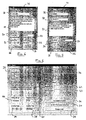
Returning to Figure 2, the user interface 11 of the client application has two
main fields, namely a seller field 12 and a buyer field 13, that respectively display
information on seller or buyer agents already in existence. In those fields 12 and 13,
each agent can be identified by a user-assigned name or alias together with a
description of the item being offered or sought (not shown). Clicking on the appropriate
completed line of a field 12, 13 calls up details of an existing agent, whereas clicking
on a 'new seller' button 14 or a 'new buyer' button 15 allows the user to create a new
agent whose name/alias and associated description then appear in a field 12, 13 as
appropriate.
Figures 4 and 5 show user interfaces of seller and buyer agents, designated by
the reference numerals 16 and 17 respectively. For a new agent, the interface 16, 17
displays blank fields constituting a form ready for the user to enter data, whereas for
existing agents, the fields already contain data that can be user-edited when the user
interface is opened. The interfaces 16, 17 shown in Figures 4 and 5 reflect new agents
in which the fields have been filled in to complete the form, but the data has not yet
been posted.
Looking firstly at the seller agent interface 16 of Figure 4, the user has filled out
the form in the fields shown. The first field 18 holds a short name or alias for the agent
so that the user can identify that agent in future in the interface 11 of Figure 2 and
hence distinguish it from other agents. The field 19 below is a limited-character
description of the item that will be used for the purpose of matching with possible
buyers. A pair of option buttons 20 enable the user to specify whether the auction will
be 'live' or 'automatic', and 'date', 'time' and 'reserve price' fields 21, 22 and 23 allow
the user to enter further information about the auction such as its proposed time and
date and the seller's reserve price. Finally, a 'post seller' button 24 and a 'cancel'
button 25 allow the user to post new or amended offer-to-sell criteria or to abandon
creation or editing of a seller agent.
The buyer agent interface 17 of Figure 5 is broadly similar to the seller agent
interface 16 of Figure 4. A buyer user gives a name to his or her buyer agent in field 26,
describes the item sought by entering a limited-character description in field 27 and
appropriate keywords in field 28, and enters the maximum price that he or she is
prepared to pay in field 29. Option buttons 30 enable the user to tell the buyer agent to
keep looking for a match for as long as that agent remains in existence (or a server-set
timeout period expires) or, alternatively, when to report back that no match has been
found.
A 'start looking' button 31 and a 'cancel' button 32 allow the user to post new
or amended offer-to-buy criteria or to abandon creation or editing of a buyer agent.
Although not shown in the screen shots of Figures 4 and 5, a user can also
attach images of an item the subject of an offer. It is envisaged that the image itself will
not be sent to the server 10, only information about where that image is stored, for
example on the user's client machine or elsewhere on the communications network.
The image can then be downloaded in a peer-to-peer fashion later in the process.
Once the forms for a buyer or a seller agent are created and offer criteria are
posted, those criteria are placed into a network transfer data packet to be sent to the
server 10. There are two types of packet: a buyer packet and a seller packet. These
packets have the following format:
Buyer Packet:
Packet Size: 2000 bytes
Format:
|
Data type and element
|
Byte Range
|
Description
|
| Integer packet_type: |
bytes 0-4 |
An integer which describes the type of packet being sent |
| Integer name_size: |
bytes 4-8 |
The length of the name being sent |
| char* name: |
bytes 8-136 |
An array containing the name to be sent |
| Int keyword_size: |
bytes 136-140 |
An integer containing the length of the keyword |
| char* keyword: |
bytes 140-396 |
An array containing the keyword |
| Int descrition_size: |
bytes 396-400 |
An integer containing the length of the description |
| char* description: |
bytes 400-1424 |
An array of character containing the description itself |
| Int image_path_size: |
bytes 1424-1428 |
An integer containing the length of the image path.(not used by the buyer) |
| char* image_path: |
bytes 1428-1556 |
A character array containing the image_path itself (where the image is stored)(not used) |
| Redundancy |
bytes 1556-2000 |
Unused bytes for future extensions. |
In the case of the buyer packet, several of the fields remain redundant such as
the image_path_size and the image_path fields. In the proposed system, these fields are
not used by a buyer agent since it is assumed that buyers will not submit images,
although buyers could do so in which case the fields may be enabled. However,
redundant fields are left in the data packet to allow the system to use identical packet
sizes for all communications. The packet size is 2000 bytes or 2K. The server 10 knows
to treat a buyer packet as a buyer packet by detecting and responding to the packet_type
descriptor that is the first field of the data packet.
Seller Packet:
Packet Size: 2000 bytes
Format:
|
Data type and element
|
Byte Range
|
Description
|
| Integer packet_type: |
bytes 0-4 |
An integer which describes the type of packet being sent |
| Integer name_size: |
bytes 4-8 |
The length of the name being sent |
| char* name: |
bytes 8-136 |
An array containing the name to be sent |
| Int keyword_size: |
bytes 136-140 |
An integer containing the length of the keyword |
| char* keyword: |
bytes 140-396 |
An array containing the keyword |
| Int descrition_size: |
bytes 396-400 |
An integer containing the length of the description |
| char* description: |
bytes 400-1424 |
An array of character containing the description itself |
| Int image_path_size: |
bytes 1424-1428 |
An integer containing the length of the image path. |
| char* image_path: |
bytes 1428-1556 |
A character array containing the image_path itself (where the image is stored) |
| Redundancy |
bytes 1556-2000 |
Unused bytes for future extensions. |
The next step of the process involves matching buyers and sellers, and
informing users of a match.
The
server 10 receives buyer packets and seller packets representing offers to
buy and offers to sell and stores them in its associated database. Periodically the
server
10 performs a matching procedure among stored offers using a context-vector matching
algorithm. If suitable matches are found then the
server 10 informs the users that made
the matching offers and the information is sent to the matched buyers and sellers. For
example, a buyer will receive information about the item for sale and if that buyer
chooses to accept and participate in an auction, the seller is informed about the buyer's
acceptance. Information about the item for sale is sent to the potential buyers using the
same data packet (seller packet) as described above. This will also include the seller's
current IP address (if available, i.e. if the seller's terminal are currently online) which
will be added in the redundancy bytes at the end of the data packet, as below:
| Data type and element | Byte Range | Description |
| Int Ipaddress_size: | bytes 1556-1560 | An integer containing the length of the IP address. |
| char* Ipaddress: | bytes 1560-1688 | A character array containing the IP address itself |
When a match is made, a seller match interface appears on the buyer's terminal.
A screen shot of the seller match interface 33 is shown in Figure 6.
By clicking a 'download image' button 34, the buyer can use the image path
and IP address information to download any available images of the item directly from
the seller (or from a network address nominated by the seller) so as to help the buyer
decide whether or not to participate in an auction.
The buyer can defer a decision by clicking a 'review later' button 35. When the
buyer reaches a decision, this is effected by clicking on a 'participate' button 36 or a
'do not participate' button 37 as appropriate, and is notified directly to the matched
selling user. The server 10 can be informed of the buyer's decision for the purpose of
information logging by copying the decision notification to the server 10.
An interface 33 such as that of Figure 6 also records the time, date and reserve
price of the proposed auction in fields 38, 39 and 40 and can remind its user when the
auction is about to begin. The user can use option buttons 41 to decide at this point
whether they would like to bid automatically, in which case they enter a highest price
and bid increment in fields 42 and 43, or 'live' when the auction is actually occurring.
The other user's participation status ― 'live' or 'automatic' ― appears in field 44.
Once matches between a seller and possible buyers have been made and the
necessary communications established, the elements are in place for an auction to
occur. The auction process allows the seller's software to become a server and to serve
the entire auction process, as shown in Figure 7.
More closely to simulate a live auction, the invention optionally involves an
agent such as a seller agent A reporting the changing status of an auction to a
group of other agents participating in an auction, the other agents being buyer
agents B1, B2, B3 in this example that are issuing competing bids for an item
offered by the seller agent A. For example, the seller agent A can inform all of the
participating buyer agents B1, B2, B3 of the fact that an increased bid has been
received from one of the buyer agents B1, B2, B3. Another example is where the
seller agent A informs the group of buyer agents B1, B2, B3 that one of their
number has dropped out of the auction. The buyer agent B1, B2, B3 that issued the
bid or dropped out may be kept anonymous or its identity may be made known to
the other buyer agents B1, B2, B3. Either way, a buyer agent B1, B2, B3 can respond
to the activity of competing buyer agents B1, B2, B3, for example by submitting an
increased bid to exceed other bids or by withdrawing from the auction if the price
of the item concerned has gone beyond its user's willingness to pay. The buyer
agent B1, B2, B3 can respond automatically in accordance with parameters pre-set
by the user, or under the real-time control of the user.
The changing status of an auction can be expressed as an auction timeline
displayed on the buyers' terminals. An example of such a timeline is as follows:
| Time | Message | Current Highest Bid | Current Highest Bidder |
| 10:05 Am | Auction Begins |
| 10:05 Am | Bidder | 1 Bids $100 | $100 | Bidder 1 |
| 10:06 Am | Bidder | 2 Bids $110 | $110 | Bidder 2 |
| 10:07 Am | Bidder | 1 Bids $115 | $115 | Bidder 1 |
| 10:08 Am | Bidder | 3 Bids $130 | $130 | Bidder 3 |
| 10:15 Am | Auction Ends | $130 | Bidder | 3 |
| 10:15 Am | Bidder | 3 Wins |
Once the auction is completed, the various buyers B1, B2, B3 are informed who
has been successful and the connections between the various peers are brought down,
save that the successful buyer B3 can remain in contact with the seller A to arrange for
exchange of the item and the agreed payment.
In a situation where a buyer is offline so that their terminal cannot participate in
an auction, the server 10 could act on their behalf in an automatic bidding scenario if it
knows the maximum bid that buyer is prepared to make, and that buyer's preferred bid
increment.
Turning finally to the second embodiment shown in Figure 8, a user's network
computer 45 holds a list of IP addresses defining a group of other network computers
46A, 46B and 46C. An offer to sell or to buy is made by a seller or buyer agent to the
IP addresses in the proxy list, so being sent to the group of other network computers
46A, 46B and 46C to enquire as to whether any of them wish to participate in auctions
that match the offer criteria. In essence, the receiving network computers 46A, 46B and
46C are interrogated as to whether they run buyer or seller agents that hold a matching
offer. If they do, they can report back to the sending or requesting network computer 45
so that a communications channel can be opened between the bidder and the seller for
conduct of an auction. In this variant of the invention, matching is conducted at one or
other of the sending and receiving network computers, most logically by the receiving
network computer.
Each of the network computers on the proxy list may in turn be connected to
other network computers 47A, 47B and 47C to which they can forward the request,
thus forming the peer to peer daisy-chain or tree structure shown in simplified form
in Figure 8. In this scenario, each network computer 45, 46 is connected to a few other
network computers 46, 47, say three as shown, which are in turn connected to a few
other network computers and so on. When searching for matches the request is
forwarded to the network computers 46A, 46B and 46C to which the user's network
computer 45 is connected. If no match is found on those network computers 46A, 46B
and 46C defining the first level of the structure, then the request is forwarded to the
second-level network computers 47A, 47B and 47C connected to the first- level
computers 46A, 46B and 46C. This cascading process continues until a match is found,
until a predetermined number of network computers or levels of the structure have been
searched, or until a timeout brings the search to a close after a predetermined period of
time.
In the Figure 8 approach, there is no need for a server. The requesting
network computer 45 merely needs to have the IP address of one network computer
46, or the IP addresses of a few network computers 46A, 46B and 46C, for the chain
or tree to begin. The necessary IP address(es) could be downloaded by the
requesting network computer 45 from a web site or distributed with software.
However, it would also be possible to download the necessary IP address(es) from
a server 10 if needs be.
It would also be possible for a user's network computer 45 to broadcast
over the network a request defining an offer in terms of the user's buying or selling
criteria. If another network computer 46, 47 receiving the broadcast runs a buyer or
seller agent that recognises its user wishes to participate in an auction matching
those criteria, it responds to the broadcast and the computers connect to each other
for the auction to begin.
An advantage of the approach of Figure 8 is that it is possible to find
participating network computers 46, 47 even when a server is down. It could thus
be a fall-back to the architecture of Figure 1, to be used if there is no response from
the server 10 in operation of the Figure 1 embodiment. A timeout can be set so that
if no response has been received from the server 10 after a predetermined (but not
necessarily fixed) period of time, then the chain or tree process is followed.
Many variations are possible within the inventive concept. For example, the
persistence of offer criteria on the server 10 in the Figure 1 embodiment can be
applied to the network computers 45, 46, 47 of the Figure 8 embodiment. That is to
say, if a network computer 45, 46, 47 receives an offer and is not at that time
running a buyer or seller agent that holds a matching offer, the criteria of the
received offer may be stored by the receiving network computer 45, 46, 47
(preferably for a limited period) in case its user creates an agent that generates a
matching offer in the near future. The user can then be put in contact with the user
that issued the received offer, to see if the item is still for sale or wanted as the
case may be.
It is also possible in all embodiments for an offer to be sent, transmitted or
broadcast repeatedly to a server 10 or to other network computers 45, 46, 47 at
whatever intervals may be deemed appropriate, so that if a matching offer is not
found initially, it may be found by repeating the exercise after a matching offer has
been created.
In another variant of the invention, a user can interrogate a server 10 or
another user terminal 45, 46, 47 to identify live auctions with which the server or
user terminal is currently involved. That way, the user can view and/or participate
in a live auction without having to submit and match offer criteria.
The present invention may be embodied in other specific forms without
departing from its essential attributes. Accordingly, reference should be made to the
appended claims and other conceptual statements herein rather than to the foregoing
specific description as indicating the scope of the invention.