EP1197806A2 - Toner composition - Google Patents
Toner composition Download PDFInfo
- Publication number
- EP1197806A2 EP1197806A2 EP01308568A EP01308568A EP1197806A2 EP 1197806 A2 EP1197806 A2 EP 1197806A2 EP 01308568 A EP01308568 A EP 01308568A EP 01308568 A EP01308568 A EP 01308568A EP 1197806 A2 EP1197806 A2 EP 1197806A2
- Authority
- EP
- European Patent Office
- Prior art keywords
- toner
- molecular weight
- binder resin
- toluene
- substrate
- Prior art date
- Legal status (The legal status is an assumption and is not a legal conclusion. Google has not performed a legal analysis and makes no representation as to the accuracy of the status listed.)
- Granted
Links
Classifications
-
- G—PHYSICS
- G03—PHOTOGRAPHY; CINEMATOGRAPHY; ANALOGOUS TECHNIQUES USING WAVES OTHER THAN OPTICAL WAVES; ELECTROGRAPHY; HOLOGRAPHY
- G03G—ELECTROGRAPHY; ELECTROPHOTOGRAPHY; MAGNETOGRAPHY
- G03G9/00—Developers
- G03G9/08—Developers with toner particles
- G03G9/087—Binders for toner particles
-
- G—PHYSICS
- G03—PHOTOGRAPHY; CINEMATOGRAPHY; ANALOGOUS TECHNIQUES USING WAVES OTHER THAN OPTICAL WAVES; ELECTROGRAPHY; HOLOGRAPHY
- G03G—ELECTROGRAPHY; ELECTROPHOTOGRAPHY; MAGNETOGRAPHY
- G03G9/00—Developers
- G03G9/08—Developers with toner particles
- G03G9/087—Binders for toner particles
- G03G9/08702—Binders for toner particles comprising macromolecular compounds obtained by reactions only involving carbon-to-carbon unsaturated bonds
- G03G9/08704—Polyalkenes
-
- G—PHYSICS
- G03—PHOTOGRAPHY; CINEMATOGRAPHY; ANALOGOUS TECHNIQUES USING WAVES OTHER THAN OPTICAL WAVES; ELECTROGRAPHY; HOLOGRAPHY
- G03G—ELECTROGRAPHY; ELECTROPHOTOGRAPHY; MAGNETOGRAPHY
- G03G9/00—Developers
- G03G9/08—Developers with toner particles
- G03G9/087—Binders for toner particles
- G03G9/08775—Natural macromolecular compounds or derivatives thereof
- G03G9/08782—Waxes
-
- G—PHYSICS
- G03—PHOTOGRAPHY; CINEMATOGRAPHY; ANALOGOUS TECHNIQUES USING WAVES OTHER THAN OPTICAL WAVES; ELECTROGRAPHY; HOLOGRAPHY
- G03G—ELECTROGRAPHY; ELECTROPHOTOGRAPHY; MAGNETOGRAPHY
- G03G9/00—Developers
- G03G9/08—Developers with toner particles
- G03G9/087—Binders for toner particles
- G03G9/08784—Macromolecular material not specially provided for in a single one of groups G03G9/08702 - G03G9/08775
- G03G9/08795—Macromolecular material not specially provided for in a single one of groups G03G9/08702 - G03G9/08775 characterised by their chemical properties, e.g. acidity, molecular weight, sensitivity to reactants
-
- G—PHYSICS
- G03—PHOTOGRAPHY; CINEMATOGRAPHY; ANALOGOUS TECHNIQUES USING WAVES OTHER THAN OPTICAL WAVES; ELECTROGRAPHY; HOLOGRAPHY
- G03G—ELECTROGRAPHY; ELECTROPHOTOGRAPHY; MAGNETOGRAPHY
- G03G9/00—Developers
- G03G9/08—Developers with toner particles
- G03G9/087—Binders for toner particles
- G03G9/08784—Macromolecular material not specially provided for in a single one of groups G03G9/08702 - G03G9/08775
- G03G9/08797—Macromolecular material not specially provided for in a single one of groups G03G9/08702 - G03G9/08775 characterised by their physical properties, e.g. viscosity, solubility, melting temperature, softening temperature, glass transition temperature
Definitions
- the present invention relates to a toner composition, especially to toner particles useful in eletrostatographic or magnetographic imaging methods wherein the toner particles are fixed to the final image-receiving member by application of heat or heat and pressure.
- a latent image is formed that is developed by attraction of toner particles.
- the toner particles are image-wise deposited on a substrate.
- Toner particles are basically polymeric particles comprising a polymeric resin as main component and various ingredients mixed with the toner resin. Apart from colourless toners, which are used e.g. for finishing functions, the toner particles comprise at least one black and/or coloured substance, i.e. pigment.
- the toner particles can be present in a liquid or in a dry developer composition.
- An advantage of using a dry developer composition instead of a liquid one resides in the absence of the need to eliminate the liquid phase after development.
- the avoidance of the need to evacuate (mainly organic) liquids may be desirable both from an economical standpoint and from an ecological standpoint.
- the developed image is transferred to a substrate directly or via one or more intermediate image-carrying members.
- the toner image may be deposited directly on the substrate or alternately on an intermediate image-carrying member and subsequently transferred to the substrate directly or via one or more intermediate image-carrying members.
- the visible image, on this substrate, of electrostatically or magnetically attracted toner particles is not permanent and has to be fixed by causing the toner particles to adhere to each other and the substrate by softening or fusing them followed by cooling. Normally fixing proceeds on more or less porous paper by causing or forcing the softened or fused toner mass to penetrate into the surface irregularities of the paper.
- the non-contact fixing process there is no direct contact of the toner image with a solid heating body.
- a "contact” fixing process the substrate carrying the non-fixed toner image is conveyed through the contact zone formed by establishing pressure contact between a heated fixing member and a backing member while the substrate carrying the toner images passes in-between.
- Both the heated fixing member as well as the backing member may be in the form of a belt or a roller.
- the backing member may be heated too to avoid strong loss of heat within a copying cycle or to enable duplex fusing. This process has been employed widely in low-speed as well as high-speed fusing systems, since a remarkably high thermal efficiency is obtained because the surface of the heated fusing member is pressed against the surface of the substrate carrying the toner images to be fixed.
- Another "contact” fixing process is the transfuse process where the toner image is not formed or transferred directly to the substrate and fixed there, but is first transferred, optionally via one ore more intermediate image-carrying members to a transfusing member, from where it is further, in one step, transferred and fixed to the substrate.
- the transfuse process is usually executed at temperatures of 140 degrees Centigrade or below, low temperature feasibility of the toner is also a requirement.
- Both contact fixing processes have to be monitored carefully in that when the fusing or transfuse member provide too much thermal energy to the toner and substrate, the toner will melt to a point where its melt cohesion and melt viscosity is so low that "splitting" will occur, and some of the toner is transferred to the fusing member.
- the toner present on the fusing member may be transferred back in a subsequent cycle of the fusing member to the substrate where it may disturb other images. Such a phenomenon is called "hot-offset". In order to avoid this phenomenon the toner particles have to be designed for a contact fusing process.
- Both non-contact and contact fusing toners may be exposed to severe mechanical stress, e.g. during mixing, transport through the devices, by doctor blades, etc.
- any residual toner image present on an image-delivering member being an image-forming member such as e.g. a photoconductor, or an intermediate image-carrying member, has to be removed because otherwise the image quality of any subsequently formed or transferred images may be seriously disturbed.
- This residual image has to be removed within each cycle of the image-delivering member, being before re-entering into the development zone in case of an image forming member or before re-entering into the transfer zone in case of an intermediate image transfer member.
- a cleaning station usually comprises a revolving brush and/or a scraper blade and/or other cleaning means, which can be engaged against the image-delivering member for removing residual toner therefrom. It is known that any cleaning means relying at least partly on mechanical forces to perform the cleaning, may result in filming on the image-delivering member due to smeared out toner particles. In case of an image-delivering member such as e.g. a photosensitive belt or drum, this filming may influence the level of chargeability amongst others resulting in a decreased image density of the final printed image.
- the image delivering member is an intermediate image transfer member this filming may negatively influence the surface properties of the image transfer member which directly affect the transfer properties leading to transfer efficiency degradation and deterioration of the overall image quality.
- Filming may be one of the failure mechanisms limiting lifetime of such an image-delivering member.
- Another failure mechanism may be the formation of defects such as micro-cracks and/or scratches on the surface of the image-delivering member during handling, introduction in the printing system, or after extended use. Compressed toner particles and other extraneous matter may accumulate on these defects.
- Both filming as well as accumulated toner/extraneous matter is further referred to in this disclosure as fused-on-toner (FOT). Therefore, regardless of the type of fixing process, the toner particles have to be strong enough to withstand the mechanical stresses and avoid FOT.
- Some further specifications a toner has to meet are a good adhesion to the substrate and a high gloss capability.
- a possible approach to accomplish this could be by lowering the glass transition temperature (Tg) and the molecular weight of the binder resin(s) of the toner.
- Tg glass transition temperature
- the molecular weight of the binder resin(s) of the toner are simply lowered, the above mentioned hot-offset is liable to occur.
- the obtained binder resins are not strong enough to avoid or limit FOT and to withstand the mechanical stresses.
- a toner composition which combines a good adhesion and high gloss capability, and which at the same time is strong enough to withstand FOT and mechanical stresses.
- a toner composition wherein by adding aliphatic lower molecular weight compounds which are partly or completely compatible with the binder resin(s), the melt viscosity of the toner composition can be lowered while the glass transition temperature (Tg) is more or less constant. Inclusion of aliphatic compounds results in toner compositions with a better adhesion and gloss and still an acceptable level of FOT and hot-offset.
- a toner composition comprising at least a pigment and a homogeneous blend of at least a binder resin and an aliphatic compound, said blend having a toluene-soluble fraction of at least 90% containing from 2 to 30% of said aliphatic compound, and said aliphatic compound having a number average molecular weight, as measured by GPC in toluene, of from 500 to 3,000.
- a method for fixing unfixed toner images on a substrate wherein the unfixed toner images are composed of toner particles having a composition comprising at least a pigment and a homogeneous blend of at least a binder resin and an aliphatic compound, said blend having a toluene-soluble fraction of at least 90% containing from 2 to 30% of said aliphatic compound, and said aliphatic compound having a number average molecular weight, as measured by GPC in toluene, of from 500 to 3,000, the method comprising the steps of:
- a toner composition comprising at least a pigment and a blend of at least a binder resin and a lower molecular weight component, the blend having a toluene-soluble fraction of at least 90% containing from 2 to 30%, preferably from 2 to 20%, of the lower molecular weight component, and the lower molecular weight component having a number average molecular weight, as measured by GPC in toluene, of from 500 to 3,000. It is observed that the molecular weight of the lower molecular compound is lower than 500, the Tg drop is too high and with a molecular weight of more than 3,000 the viscosity drop is too small.
- the toner composition according to this invention have a much lower viscosity and still a high Tg and good mechanical strength. It is further observed that when using concentrations of more than 30% of the lower molecular weight component, a portion of the lower molecular weight component is not sufficiently distributed through the binder resin(s).
- the calibration of the GPC apparatus is done using several mono-disperse polystyrene standard samples.
- the melt viscosity of the toner composition is preferably from 10 to 1000 Pa s, more preferably from 10 to 500 Pa s, measured at 100 rad/s at 120°C.
- the melt viscosity of the toner composition is measured using a CARRI-MED Rheometer CSL-500 (trade name of TA Instruments) with a 2.5 cm plate/plate geometry.
- the melt viscosity of the toner is measured between 100 °C and 180 °C with a constant strain of 5% and 1 Hz.
- the glass transition temperature Tg of the toner composition is preferably at least 55°C.
- the Tg in the present invention is measured according to ASTM E 1356-91 and using a differential scanning calorimeter DSC 2920 (trade name of TA Instruments) at a heating rate of 10°C/min and under a N 2 flow of 50 ml/min.
- the inflection point is regarded as the Tg.
- the blend of the binder resin and the lower molecular weight component is a homogeneous blend.
- a homogeneous blend is defined as a blend in which the amount of crystalline lower molecular weight component visible in a DSC plot of the composition is less than 60%, based on the weight of the lower molecular weight component, preferably less than 40%.
- the amount of crystalline lower molecular weight component in the toner composition is preferably from 0.5% to 10% by weight. It is observed (see also table 1 and 2) that a crystalline fraction of the lower molecular weight component above 60 % is detrimental with respect to FOT.
- FOT includes both filming as well as other accumulated toner-based matter present on the outer surface of an image-delivering member.
- An example of such an image-delivering member is a photoconductive drum or belt as used in an electrographic imaging system such as a printing or copying system.
- the lower molecular weight component comprises an aliphatic compound.
- the aliphatic compound is a long chain alkyl compound with formula (I): wherein 0 ⁇ x ⁇ 12, 15 ⁇ y ⁇ 150 and R 1 is a member selected from the group consisting of -OH, -COOH, -COCl, -NH 2 , -NCO, -O-CH 2 -CHOH-CH 2 Cl, -COO-CH 2 -CHOH-CH 2 Cl and COOM (where M is an alkali metal ion), R 2 is CH 3 or H, and R 3 is either C 2 H 5 or CH 3 . R 2 is CH 3 or H, and R 3 is either C 2 H 5 or CH 3 .
- the long chain alkyl compound has a number average molecular weight of between 500 and 2,000 and a ratio Mw/Mn of at most 3.
- Examples of aliphatic compounds are long chain alkyl compounds, commercially available as POLYWAX 500, POLYWAX 850, POLYWAX 1000, POLYWAX 2000, POLYWAX 3000 ,(trade names of PETROLITE, 6910 East 14th street, TULSA, Oklahoma 74112, USA ), or polyolefinic mono-alcohols, commercially available as UNILIN 425, UNILIN 550, UNILIN 700 of the same PETROLITE company, or UNITHOX 720, a trade name for a hydroxy-terminated, polyolefinic-polyoxyethylenic macromolecule, with average molecular weight of 875 of the same PETROLITE company, or UNICID 700 a trade name of PETROLITE for a polyolefinic monocarboxylic acid with average molecular weight of 700.
- the homogeneous blend preferably contains at least 50%, most preferably from 50% to 96%, of the binder resin and the binder resin has a weight average molecular weight (M w ), as measured by GPC in toluene, of between 5,000 and 3,000,000, such as between 5,000 and 50,000. More preferably, the binder resin has a weight average molecular weight, as measured by GPC in toluene, of between 5,000 and 50,000.
- the toner composition comprises a polyolefin binder resin containing at least one cyclic structure.
- Toner compositions comprising polyolefin resins or resin blends, see also EP978766 (assigned to Ticona) which is hereby incorporated by reference, are believed to be fixable at lower temperatures while having good anti-offset properties.
- TOPAS TM and TOPAS TB trade name of Ticona
- the adhesion can be significantly improved by the addition of long chain alkyl compound, even at lower temperatures.
- the toners according to the present invention also particularly suitable for use in transfuse fixing systems, where the fixing temperature is typically 140°C or below.
- the polyolefin resin has a weight average molecular weight, as measured by GPC in toluene, of between 5,000 and 50,000.
- the polyolefin resin comprises a first fraction having a weight average molecular weight, as measured by GPC in toluene, from 50,000 to 1,000,000, and a second fraction having a weight average molecular weight, as measured by GPC in toluene, from 5,000 to 20,000.
- the toner composition will usually be in the form of dry toner particles, each comprising both the binder resin and the lower molecular weight component, although the composition could equally form the basis of a liquid toner product.
- the toner composition may further comprise any normal toner ingredients such as charge control agents, pigments (coloured and/or black), inorganic fillers, and fine magnetic material.
- charge control agents pigments (coloured and/or black), inorganic fillers, and fine magnetic material.
- the toner particles can be used as a mono-component dry developer (both magnetic and non-magnetic) or mixed with carrier particles to form a multi-component developer.
- the toner particles when used in a multi-component dry developer, can be mixed with any known carrier material.
- Suitable carrier particles are carrier particles as disclosed in, e.g., EP289663; EP559250; EP656130 and EP898206.
- Known fluidity enhancers such as hydrophobized silica, can be mixed with the toner particles.
- the toner particles can have an average volume diameter between 1 and 50 ⁇ m, preferably between 3 and 20 ⁇ m and more preferably between 3 and 10 ⁇ m.
- the particle size distribution of the toner particles can be of any type. It is however preferred to have a Gaussian or normal particle size distribution, either by number or volume, with a coefficient of variability (standard deviation divided by the average) ( ⁇ ) smaller than 0.5, more preferably of 0.3.
- the toner particles can have any shape. For instance, the particles may be irregular or rounded.
- the toner composition may be prepared by mixing in a solvent the binder resin, the lower molecular weight component, and other components, and thereafter removing the solvent.
- the toner particles can be prepared by any method known in the art, but it is preferred to produce the toner particles by a melt kneading process at a temperature that is higher than the melting point M p of the resin binder.
- fixing processes There are different types of fixing processes which can be used for fixing toner particles formed from the toner compositions according to the present invention. Some are based upon fixation primarily on fusing by heat, others are based on softening by solvent vapours, or by the application of a cold flow with high pressure at ambient temperature.
- the toner composition is especially useful for use in electrostatographic or magneto graphic imaging methods wherein the fixing proceeds in a "contact fusing" station.
- a method for fixing unfixed toner images to a substrate wherein the unfixed toner images are composed of toner particles having a composition as described above and further specified in the appending claims related to the toner composition, the method comprising the steps of:
- the substrate can be in web or in sheet form.
- the substrate is preferably carried on a conveyer member.
- This conveyer member may constitute the endless counter member.
- the belt with the substrate attached thereto may be fed simultaneously through the fixing zone.
- Typical substrate materials are papers, films, label stock, cardboard etc.
- the endless heated fixing member preferably comprises a fluorosilicone layer.
- the unfixed toner images are transferred to at least one surface of the substrate prior to being fed through the fixing zone.
- the substrate carrying the non-fixed toner image is conveyed through the nip formed by a heated fixing roller and a counter roller backing the substrate.
- This roller may be heated controllably, for instance to avoid strong loss of heat within a copying/ printing cycle or to enable duplex fixing.
- the unfixed toner images are carried on the heated endless fixing member so as to simultaneously transfer the unfixed toner images to and fix the unfixed toner images to a surface of the substrate.
- the fixing process described here is the so-called transfuse process where the toner image is not formed or transferred directly to the substrate and fixed there, but is first transferred, optionally via one ore more intermediate image-carrying members to a transfusing member, i.e. the heated endless fixing member, from where it is further, in one step, transferred and fixed to the substrate.
- the transfuse process is usually executed at temperatures of 140 degrees Centigrade or below.
- Suitable top layers for transfuse members are top layers based on silicone elastomers, especially fluorosilicone top layers have an excellent balance between abhesivity and durability.
- the transfuse member may further comprise a backing layer composed of metal or fabric.
- the transfuse member may further comprise at least one conformable layer between the backing layer and the top layer. Thermal conductive fillers and/or electrical conductive fillers can be dispersed in the conformable layer.
- the counter member is preferably a temperature controlled roller.
- the invention also provides a method for dry fixing unfixed toner images on a substrate, comprising the steps of:
- Topas TM (trade name) of Ticona were mixed with 5 parts by weight of a cyan Cu-phtalocyanine pigment and 9.5 parts by weight of Unilin 700 (trade name) of Petrolite were added.
- the mixture was melt homogenised at 130 °C, cooled and pulverised, classified to give cyan toner particles volume average diameter d v50 of 7.2 ⁇ m, as determined by COULTER COUNTER (trade name), and numerical average diameter d n50 of 5.7 ⁇ m.
- Topas TM (trade name of Ticona) were mixed with 5 parts by weight of a cyan Cu-phtalocyanine pigment and 2,85 parts by weight of Unicid 700 (trade name of Petrolite) were added.
- the mixture was melt homogenised at 130 °C, cooled and pulverised, classified to give cyan toner particles volume average diameter d v50 of 7.2 ⁇ m, as determined by COULTER COUNTER (trade name), and numerical average diameter d n50 of 5.7 ⁇ m.
- Topas TB (trade name of Ticona) were mixed with 5 parts by weight of a cyan Cu-phtalocyanine pigment. The mixture was melt homogenised at 130 °C, cooled and pulverised, classified to give cyan toner particles volume average diameter d v50 of 7.2 ⁇ m, as determined by COULTER COUNTER (trade name), and numerical average diameter d n50 of 5.7 ⁇ m.
- GPC M w peaks in toluene of the binder resin(s) Crystalline fraction Tg (°C) Viscosity [Pa s] 1 2 at 120°C at 140°C 1 10.700 100% 67 1440 165 2 7,000 100% 64 305 49 3 10.700 100% 64 277 57 4 10.700 100% 63 5 10.700 100% 27% 64 1079 130 6 10.700 100% 58% 63 600 93 7 9,000 90% 350,000 10% 68 725 195 8 7,000 50% 9,000 45% 66 594 108 9 7,000 75% 9,000 22,5% 67 415 64 10 9,000 90% 350,000 10% 55 144 52 11 9,000 90% 350,000 10% 45% 66 12 9,000 90% 350,000 10% 71% 64 363 122 13 9,000 90% 350,000 10% 63 293 107 14 9,000 90% 350,000 10% 79% 63 167 65 15 9,000 90% 350,000 10% 68 580 104 16 9,000 90% 350,000 10% 63 578 160 17 9,000 90% 350,000 10% 63 212 77 18 9,000 90% 350,000 10% 65
- a developer was prepared with these toner particles by adding 0.5 % (wt/wt)of AEROSIL R812 (trade name of Degussa, Germany) hydrophobic silica and 0,5% (wt/wt) of T-805 hydrophobic titanium oxide and mixing the toner and silica/TiO 2 for 1 min in an MTI mixer.
- AEROSIL R812 trade name of Degussa, Germany
- the developers were used to produce images on a paper substrate in the X-35 copier (trade name of Agfa-Gevaert NV, Mortsel, Belgium).
- the images contained 0.5 mg of toner per cm 2 .
- the images were fixed off-line in a transfuse set up.
- the toner image is transferred electrostatically to an endless transfuse belt, from where it is further, in one step transferred and fixed to the substrate.
- the transfusing member has a fluorosilicone top layer. Due to the abhesivity of the fluorosilicone top layer the image can be transferred to the substrate with only heat and pressure and without electrostatic forces.
- the fuser speed was 25 cm/sec.
Landscapes
- Physics & Mathematics (AREA)
- Spectroscopy & Molecular Physics (AREA)
- General Physics & Mathematics (AREA)
- Chemical & Material Sciences (AREA)
- Chemical Kinetics & Catalysis (AREA)
- Developing Agents For Electrophotography (AREA)
Abstract
Description


R2 is CH3 or H, and R3 is either C2H5 or CH3.
R2 is CH3 or H, and R3 is either C2H5 or CH3.
The toner particles, when used in a multi-component dry developer, can be mixed with any known carrier material. Suitable carrier particles are carrier particles as disclosed in, e.g., EP289663; EP559250; EP656130 and EP898206. Known fluidity enhancers such as hydrophobized silica, can be mixed with the toner particles.
| Toner No. | GPC Mw peaks in toluene of the binder resin(s) | Crystalline fraction | Tg (°C) | Viscosity [Pa s] | ||
| 1 | 2 | at 120°C | at 140°C | |||
| 1 | 10.700 100% | 67 | 1440 | 165 | ||
| 2 | 7,000 100% | 64 | 305 | 49 | ||
| 3 | 10.700 100% | 64 | 277 | 57 | ||
| 4 | 10.700 100% | 63 | ||||
| 5 | 10.700 100% | 27% | 64 | 1079 | 130 | |
| 6 | 10.700 100% | 58% | 63 | 600 | 93 | |
| 7 | 9,000 90% | 350,000 10% | 68 | 725 | 195 | |
| 8 | 7,000 50% | 9,000 45% | 66 | 594 | 108 | |
| 9 | 7,000 75% | 9,000 22,5% | 67 | 415 | 64 | |
| 10 | 9,000 90% | 350,000 10% | 55 | 144 | 52 | |
| 11 | 9,000 90% | 350,000 10% | 45% | 66 | ||
| 12 | 9,000 90% | 350,000 10% | 71% | 64 | 363 | 122 |
| 13 | 9,000 90% | 350,000 10% | 63 | 293 | 107 | |
| 14 | 9,000 90% | 350,000 10% | 79% | 63 | 167 | 65 |
| 15 | 9,000 90% | 350,000 10% | 68 | 580 | 104 | |
| 16 | 9,000 90% | 350,000 10% | 63 | 578 | 160 | |
| 17 | 9,000 90% | 350,000 10% | 63 | 212 | 77 | |
| 18 | 9,000 90% | 350,000 10% | 65 |
| Toner | Binder resin | Lower MW component | Adhesion window | Hot offset | Adhesion 120°C | Gloss 120°C | FOT |
| 1 | 100% Topas TM9808A | - | None | 140 | 53 | 5,4 | 4 |
| 2 | 100% Topas TM000107-S | - | None | 125 | 45 | 17,0 | 2 |
| 3 | 95% Topas TM9808A | 5% Unilin 700 | 115-125 | 125 | 71 | 15,7 | 3 |
| 4 | 90% Topas TM9808A | 10% Unilin 700 | 110-120 | 120 | - | - | 1 |
| 5 | 99% Topas TM9808A | 1% Unilin 700 | 110-130 | 130 | 60 | 12.8 | 4 |
| 6 | 97% Topas TM9808A | 3% Unilin 700 | 110-125 | 125 | 66 | 14.3 | 4 |
| 7 | 100% Topas TB | - | 150-170 | 170 | 46 | 1,7 | 4 |
| 8 | Solvent blend TB/TM 1/1 | - | 100-130 | 130 | 65 | 7,0 | 2 |
| 9 | Solvent blend TB/TM 1/3 | - | 100-125 | 125 | 73 | 9,0 | 2 |
| 10 | 90% Topas TB | 10% Unilin 450 | 100-135 | 135 | 84 | 10.5 | 1 |
| 11 | 98% Topas TB | 2% Unilin 700 | 145-170 | 170 | 50 | 4.2 | 4 |
| 12 | 95% Topas TB | 5% Unilin 700 | 120-155 | 155 | 57 | 5,8 | 3 |
| 13 | 93% Topas TB | 7% Unilin 700 | 110-150 | 150 | 60 | 7.6 | 2 |
| 14 | 90% Topas TB | 10% Unilin 700 | 100-150 | 150 | 75 | 9.5 | 1 |
| 15 | 90% Topas TB | 10% Unilin 2000 | 120-170 | 170 | 69 | 4,2 | 1 |
| 16 | 95% Topas TB | 5% Unicid 700 | 100-150 | 150 | 85 | 5,4 | 2 |
| 17 | 90% Topas TB | 10% Unicid 700 | 95-145 | 145 | 94 | 9.8 | 1 |
| 18 | 90% Topas TB | 10% Polywax 1000 | 100-140 | 140 | 76 | 11.0 | 3 |
Claims (11)

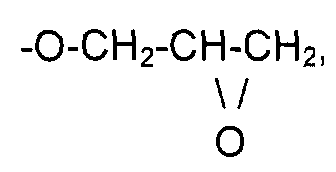
R2 is CH3 or H, and R3 is either C2H5 or CH3.
Applications Claiming Priority (2)
| Application Number | Priority Date | Filing Date | Title |
|---|---|---|---|
| GBGB0025200.7A GB0025200D0 (en) | 2000-10-13 | 2000-10-13 | Toner composition |
| GB0025200 | 2000-10-13 |
Publications (3)
| Publication Number | Publication Date |
|---|---|
| EP1197806A2 true EP1197806A2 (en) | 2002-04-17 |
| EP1197806A3 EP1197806A3 (en) | 2003-04-02 |
| EP1197806B1 EP1197806B1 (en) | 2006-01-04 |
Family
ID=9901275
Family Applications (1)
| Application Number | Title | Priority Date | Filing Date |
|---|---|---|---|
| EP01308568A Expired - Lifetime EP1197806B1 (en) | 2000-10-13 | 2001-10-08 | Toner composition and method for fixing toner images |
Country Status (4)
| Country | Link |
|---|---|
| US (1) | US6562534B1 (en) |
| EP (1) | EP1197806B1 (en) |
| DE (1) | DE60116454T2 (en) |
| GB (1) | GB0025200D0 (en) |
Cited By (2)
| Publication number | Priority date | Publication date | Assignee | Title |
|---|---|---|---|---|
| EP1291727A3 (en) * | 2001-09-05 | 2003-09-10 | Heidelberger Druckmaschinen Aktiengesellschaft | Electrophotographic toners containing polyalkylene wax or hight crystallinity wax |
| EP1600823A4 (en) * | 2003-02-28 | 2007-12-26 | Tomoegawa Paper Co Ltd | ELECTROPHOTOGRAPHIC REVELATOR COMPRISING TWO CONSTITUENTS AND DEVELOPMENT METHOD IMPLEMENTING THE SAME |
Families Citing this family (1)
| Publication number | Priority date | Publication date | Assignee | Title |
|---|---|---|---|---|
| US20050031482A1 (en) * | 2003-08-07 | 2005-02-10 | General Electric Company | Alloys for high temperature applications, articles made therefrom, and method for repair of articles |
Family Cites Families (7)
| Publication number | Priority date | Publication date | Assignee | Title |
|---|---|---|---|---|
| US5130219A (en) * | 1989-04-17 | 1992-07-14 | Canon Kabushiki Kaisha | Color toner and process for fixing the same |
| US5124224A (en) * | 1991-04-01 | 1992-06-23 | Xerox Corporation | Toner compositions and processes with polyethylenes including a linear crystalline polyethylene |
| WO1992022018A1 (en) * | 1991-05-30 | 1992-12-10 | Kao Corporation | Method of forming fixed images |
| US5283150A (en) * | 1992-05-28 | 1994-02-01 | Eastman Kodak Company | Electrostatographic toner and method for the preparation thereof |
| JP3588213B2 (en) * | 1996-12-26 | 2004-11-10 | ティコナ・ゲゼルシャフト・ミット・ベシュレンクテル・ハフツング | Toner for developing electrostatic images containing polyolefin resin having cyclic structure |
| EP0913735B1 (en) * | 1997-10-31 | 2005-09-14 | Xeikon International N.V. | Toner particles containing a mixture of a modified linear polymer, a cross-linked polymer and a wax |
| US6071664A (en) * | 1997-10-31 | 2000-06-06 | Agfa-Gevaert, N.V. | Toner particles containing a mixture of a modified linear polymer, a cross-linked polymer and a wax |
-
2000
- 2000-10-13 GB GBGB0025200.7A patent/GB0025200D0/en not_active Ceased
-
2001
- 2001-10-08 EP EP01308568A patent/EP1197806B1/en not_active Expired - Lifetime
- 2001-10-08 DE DE60116454T patent/DE60116454T2/en not_active Expired - Lifetime
- 2001-10-09 US US09/974,767 patent/US6562534B1/en not_active Expired - Fee Related
Cited By (3)
| Publication number | Priority date | Publication date | Assignee | Title |
|---|---|---|---|---|
| EP1291727A3 (en) * | 2001-09-05 | 2003-09-10 | Heidelberger Druckmaschinen Aktiengesellschaft | Electrophotographic toners containing polyalkylene wax or hight crystallinity wax |
| US7087355B2 (en) | 2001-09-05 | 2006-08-08 | Eastman Kodak Company | Electrophotographic toner containing polyalkylene wax or high crystallinity wax |
| EP1600823A4 (en) * | 2003-02-28 | 2007-12-26 | Tomoegawa Paper Co Ltd | ELECTROPHOTOGRAPHIC REVELATOR COMPRISING TWO CONSTITUENTS AND DEVELOPMENT METHOD IMPLEMENTING THE SAME |
Also Published As
| Publication number | Publication date |
|---|---|
| EP1197806B1 (en) | 2006-01-04 |
| DE60116454D1 (en) | 2006-03-30 |
| GB0025200D0 (en) | 2000-11-29 |
| EP1197806A3 (en) | 2003-04-02 |
| DE60116454T2 (en) | 2006-08-24 |
| US6562534B1 (en) | 2003-05-13 |
Similar Documents
| Publication | Publication Date | Title |
|---|---|---|
| JP4175505B2 (en) | Color toner for electrostatic image development | |
| US7867680B2 (en) | Non-magnetic toner for one-component development and method of preparing the toner, and image developer, image forming apparatus, process cartridge and image forming method | |
| JP3661544B2 (en) | Toner for developing electrostatic image, method for producing the same, developer, and image forming method | |
| US20090162772A1 (en) | Image forming method | |
| JP2002082488A (en) | Color toner for electrostatic image development and fixing method, toner container, image forming apparatus | |
| JP2002251033A (en) | Color toner, manufacturing method thereof and image forming method | |
| US6558864B2 (en) | Toner for developing electrostatic image, method for producing the same, electrostatic image developer, method for forming image and image forming apparatus | |
| US4528257A (en) | Toner powder and method of forming fixed images | |
| JP4007005B2 (en) | Toner for developing electrostatic image, developer for developing electrostatic image, and image forming method | |
| US6562534B1 (en) | Toner composition | |
| JP2992755B2 (en) | Toner for developing electrostatic images | |
| WO2008060095A1 (en) | Toner particle having excellent charging characteristics, long term credibility and transferring property, method for producing the same and toner containing said toner particle | |
| JP5298464B2 (en) | Toner for image formation, two-component developer, toner container, developing device, and image forming method | |
| JP2004053705A (en) | Electrophotographic toner | |
| JPH09304966A (en) | Developer and method for producing the same | |
| JP4735308B2 (en) | Toner for developing electrostatic image and method for producing the same, developer for electrostatic image, and image forming method | |
| US5738964A (en) | Electrophotographic toner with specific high, medium, and low molecullar weight peaks | |
| TW200405958A (en) | Toner for electrostatically chrged image development | |
| JP2002258530A (en) | Toner and image forming method | |
| JP2002278164A (en) | Electrophotographic toner, developer and image forming method | |
| JPH04124676A (en) | Electrostatic charge image developing toner | |
| JP3886199B2 (en) | Toner for electrophotography, heat roller fixing method and toner recycling image forming method | |
| EP0633509B1 (en) | Electrophotographic toner | |
| US5837415A (en) | Electrophotographic toner | |
| JP2595269B2 (en) | Toner for developing electrostatic latent images |
Legal Events
| Date | Code | Title | Description |
|---|---|---|---|
| PUAI | Public reference made under article 153(3) epc to a published international application that has entered the european phase |
Free format text: ORIGINAL CODE: 0009012 |
|
| AK | Designated contracting states |
Kind code of ref document: A2 Designated state(s): AT BE CH CY DE DK ES FI FR GB GR IE IT LI LU MC NL PT SE TR |
|
| AX | Request for extension of the european patent |
Free format text: AL;LT;LV;MK;RO;SI |
|
| RAP1 | Party data changed (applicant data changed or rights of an application transferred) |
Owner name: XEIKON INTERNATIONAL N.V. |
|
| PUAL | Search report despatched |
Free format text: ORIGINAL CODE: 0009013 |
|
| AK | Designated contracting states |
Kind code of ref document: A3 Designated state(s): AT BE CH CY DE DK ES FI FR GB GR IE IT LI LU MC NL PT SE TR |
|
| AX | Request for extension of the european patent |
Extension state: AL LT LV MK RO SI |
|
| RIC1 | Information provided on ipc code assigned before grant |
Ipc: 7G 03G 13/24 B Ipc: 7G 03G 9/087 A Ipc: 7G 03G 9/08 B |
|
| 17P | Request for examination filed |
Effective date: 20030930 |
|
| AKX | Designation fees paid |
Designated state(s): DE FR GB IE |
|
| 17Q | First examination report despatched |
Effective date: 20040219 |
|
| GRAP | Despatch of communication of intention to grant a patent |
Free format text: ORIGINAL CODE: EPIDOSNIGR1 |
|
| RTI1 | Title (correction) |
Free format text: TONER COMPOSITION AND METHOD FOR FIXING TONER IMAGES |
|
| GRAS | Grant fee paid |
Free format text: ORIGINAL CODE: EPIDOSNIGR3 |
|
| GRAA | (expected) grant |
Free format text: ORIGINAL CODE: 0009210 |
|
| AK | Designated contracting states |
Kind code of ref document: B1 Designated state(s): DE FR GB IE |
|
| REG | Reference to a national code |
Ref country code: GB Ref legal event code: FG4D |
|
| REG | Reference to a national code |
Ref country code: IE Ref legal event code: FG4D |
|
| REF | Corresponds to: |
Ref document number: 60116454 Country of ref document: DE Date of ref document: 20060330 Kind code of ref document: P |
|
| RAP2 | Party data changed (patent owner data changed or rights of a patent transferred) |
Owner name: PUNCH GRAPHIX INTERNATIONAL N.V. |
|
| ET | Fr: translation filed | ||
| PLBE | No opposition filed within time limit |
Free format text: ORIGINAL CODE: 0009261 |
|
| STAA | Information on the status of an ep patent application or granted ep patent |
Free format text: STATUS: NO OPPOSITION FILED WITHIN TIME LIMIT |
|
| 26N | No opposition filed |
Effective date: 20061005 |
|
| PGFP | Annual fee paid to national office [announced via postgrant information from national office to epo] |
Ref country code: DE Payment date: 20121023 Year of fee payment: 12 Ref country code: IE Payment date: 20121019 Year of fee payment: 12 Ref country code: FR Payment date: 20121031 Year of fee payment: 12 |
|
| PGFP | Annual fee paid to national office [announced via postgrant information from national office to epo] |
Ref country code: GB Payment date: 20121019 Year of fee payment: 12 |
|
| GBPC | Gb: european patent ceased through non-payment of renewal fee |
Effective date: 20131008 |
|
| REG | Reference to a national code |
Ref country code: IE Ref legal event code: MM4A |
|
| PG25 | Lapsed in a contracting state [announced via postgrant information from national office to epo] |
Ref country code: GB Free format text: LAPSE BECAUSE OF NON-PAYMENT OF DUE FEES Effective date: 20131008 |
|
| REG | Reference to a national code |
Ref country code: DE Ref legal event code: R119 Ref document number: 60116454 Country of ref document: DE Effective date: 20140501 |
|
| REG | Reference to a national code |
Ref country code: FR Ref legal event code: ST Effective date: 20140630 |
|
| PG25 | Lapsed in a contracting state [announced via postgrant information from national office to epo] |
Ref country code: DE Free format text: LAPSE BECAUSE OF NON-PAYMENT OF DUE FEES Effective date: 20140501 Ref country code: FR Free format text: LAPSE BECAUSE OF NON-PAYMENT OF DUE FEES Effective date: 20131031 |
|
| PG25 | Lapsed in a contracting state [announced via postgrant information from national office to epo] |
Ref country code: IE Free format text: LAPSE BECAUSE OF NON-PAYMENT OF DUE FEES Effective date: 20131008 |