EP1195642A2 - Silver halide photographic material and image-forming system in direct X-ray imaging applications - Google Patents
Silver halide photographic material and image-forming system in direct X-ray imaging applications Download PDFInfo
- Publication number
- EP1195642A2 EP1195642A2 EP01000462A EP01000462A EP1195642A2 EP 1195642 A2 EP1195642 A2 EP 1195642A2 EP 01000462 A EP01000462 A EP 01000462A EP 01000462 A EP01000462 A EP 01000462A EP 1195642 A2 EP1195642 A2 EP 1195642A2
- Authority
- EP
- European Patent Office
- Prior art keywords
- silver
- direct
- ray
- emulsion
- selenium
- Prior art date
- Legal status (The legal status is an assumption and is not a legal conclusion. Google has not performed a legal analysis and makes no representation as to the accuracy of the status listed.)
- Granted
Links
Classifications
-
- G—PHYSICS
- G03—PHOTOGRAPHY; CINEMATOGRAPHY; ANALOGOUS TECHNIQUES USING WAVES OTHER THAN OPTICAL WAVES; ELECTROGRAPHY; HOLOGRAPHY
- G03C—PHOTOSENSITIVE MATERIALS FOR PHOTOGRAPHIC PURPOSES; PHOTOGRAPHIC PROCESSES, e.g. CINE, X-RAY, COLOUR, STEREO-PHOTOGRAPHIC PROCESSES; AUXILIARY PROCESSES IN PHOTOGRAPHY
- G03C5/00—Photographic processes or agents therefor; Regeneration of such processing agents
- G03C5/16—X-ray, infrared, or ultraviolet ray processes
- G03C5/17—X-ray, infrared, or ultraviolet ray processes using screens to intensify X-ray images
-
- G—PHYSICS
- G03—PHOTOGRAPHY; CINEMATOGRAPHY; ANALOGOUS TECHNIQUES USING WAVES OTHER THAN OPTICAL WAVES; ELECTROGRAPHY; HOLOGRAPHY
- G03C—PHOTOSENSITIVE MATERIALS FOR PHOTOGRAPHIC PURPOSES; PHOTOGRAPHIC PROCESSES, e.g. CINE, X-RAY, COLOUR, STEREO-PHOTOGRAPHIC PROCESSES; AUXILIARY PROCESSES IN PHOTOGRAPHY
- G03C1/00—Photosensitive materials
- G03C1/005—Silver halide emulsions; Preparation thereof; Physical treatment thereof; Incorporation of additives therein
- G03C1/0051—Tabular grain emulsions
-
- G—PHYSICS
- G03—PHOTOGRAPHY; CINEMATOGRAPHY; ANALOGOUS TECHNIQUES USING WAVES OTHER THAN OPTICAL WAVES; ELECTROGRAPHY; HOLOGRAPHY
- G03C—PHOTOSENSITIVE MATERIALS FOR PHOTOGRAPHIC PURPOSES; PHOTOGRAPHIC PROCESSES, e.g. CINE, X-RAY, COLOUR, STEREO-PHOTOGRAPHIC PROCESSES; AUXILIARY PROCESSES IN PHOTOGRAPHY
- G03C1/00—Photosensitive materials
- G03C1/005—Silver halide emulsions; Preparation thereof; Physical treatment thereof; Incorporation of additives therein
- G03C1/06—Silver halide emulsions; Preparation thereof; Physical treatment thereof; Incorporation of additives therein with non-macromolecular additives
- G03C1/08—Sensitivity-increasing substances
- G03C1/09—Noble metals or mercury; Salts or compounds thereof; Sulfur, selenium or tellurium, or compounds thereof, e.g. for chemical sensitising
-
- G—PHYSICS
- G03—PHOTOGRAPHY; CINEMATOGRAPHY; ANALOGOUS TECHNIQUES USING WAVES OTHER THAN OPTICAL WAVES; ELECTROGRAPHY; HOLOGRAPHY
- G03C—PHOTOSENSITIVE MATERIALS FOR PHOTOGRAPHIC PURPOSES; PHOTOGRAPHIC PROCESSES, e.g. CINE, X-RAY, COLOUR, STEREO-PHOTOGRAPHIC PROCESSES; AUXILIARY PROCESSES IN PHOTOGRAPHY
- G03C1/00—Photosensitive materials
- G03C1/005—Silver halide emulsions; Preparation thereof; Physical treatment thereof; Incorporation of additives therein
-
- G—PHYSICS
- G03—PHOTOGRAPHY; CINEMATOGRAPHY; ANALOGOUS TECHNIQUES USING WAVES OTHER THAN OPTICAL WAVES; ELECTROGRAPHY; HOLOGRAPHY
- G03C—PHOTOSENSITIVE MATERIALS FOR PHOTOGRAPHIC PURPOSES; PHOTOGRAPHIC PROCESSES, e.g. CINE, X-RAY, COLOUR, STEREO-PHOTOGRAPHIC PROCESSES; AUXILIARY PROCESSES IN PHOTOGRAPHY
- G03C1/00—Photosensitive materials
- G03C1/005—Silver halide emulsions; Preparation thereof; Physical treatment thereof; Incorporation of additives therein
- G03C1/06—Silver halide emulsions; Preparation thereof; Physical treatment thereof; Incorporation of additives therein with non-macromolecular additives
- G03C1/30—Hardeners
-
- G—PHYSICS
- G03—PHOTOGRAPHY; CINEMATOGRAPHY; ANALOGOUS TECHNIQUES USING WAVES OTHER THAN OPTICAL WAVES; ELECTROGRAPHY; HOLOGRAPHY
- G03C—PHOTOSENSITIVE MATERIALS FOR PHOTOGRAPHIC PURPOSES; PHOTOGRAPHIC PROCESSES, e.g. CINE, X-RAY, COLOUR, STEREO-PHOTOGRAPHIC PROCESSES; AUXILIARY PROCESSES IN PHOTOGRAPHY
- G03C1/00—Photosensitive materials
- G03C1/005—Silver halide emulsions; Preparation thereof; Physical treatment thereof; Incorporation of additives therein
- G03C1/035—Silver halide emulsions; Preparation thereof; Physical treatment thereof; Incorporation of additives therein characterised by the crystal form or composition, e.g. mixed grain
- G03C2001/03511—Bromide content
-
- G—PHYSICS
- G03—PHOTOGRAPHY; CINEMATOGRAPHY; ANALOGOUS TECHNIQUES USING WAVES OTHER THAN OPTICAL WAVES; ELECTROGRAPHY; HOLOGRAPHY
- G03C—PHOTOSENSITIVE MATERIALS FOR PHOTOGRAPHIC PURPOSES; PHOTOGRAPHIC PROCESSES, e.g. CINE, X-RAY, COLOUR, STEREO-PHOTOGRAPHIC PROCESSES; AUXILIARY PROCESSES IN PHOTOGRAPHY
- G03C1/00—Photosensitive materials
- G03C1/005—Silver halide emulsions; Preparation thereof; Physical treatment thereof; Incorporation of additives therein
- G03C1/035—Silver halide emulsions; Preparation thereof; Physical treatment thereof; Incorporation of additives therein characterised by the crystal form or composition, e.g. mixed grain
- G03C2001/03594—Size of the grains
-
- G—PHYSICS
- G03—PHOTOGRAPHY; CINEMATOGRAPHY; ANALOGOUS TECHNIQUES USING WAVES OTHER THAN OPTICAL WAVES; ELECTROGRAPHY; HOLOGRAPHY
- G03C—PHOTOSENSITIVE MATERIALS FOR PHOTOGRAPHIC PURPOSES; PHOTOGRAPHIC PROCESSES, e.g. CINE, X-RAY, COLOUR, STEREO-PHOTOGRAPHIC PROCESSES; AUXILIARY PROCESSES IN PHOTOGRAPHY
- G03C1/00—Photosensitive materials
- G03C1/005—Silver halide emulsions; Preparation thereof; Physical treatment thereof; Incorporation of additives therein
- G03C1/06—Silver halide emulsions; Preparation thereof; Physical treatment thereof; Incorporation of additives therein with non-macromolecular additives
- G03C1/08—Sensitivity-increasing substances
- G03C1/09—Noble metals or mercury; Salts or compounds thereof; Sulfur, selenium or tellurium, or compounds thereof, e.g. for chemical sensitising
- G03C2001/097—Selenium
-
- G—PHYSICS
- G03—PHOTOGRAPHY; CINEMATOGRAPHY; ANALOGOUS TECHNIQUES USING WAVES OTHER THAN OPTICAL WAVES; ELECTROGRAPHY; HOLOGRAPHY
- G03C—PHOTOSENSITIVE MATERIALS FOR PHOTOGRAPHIC PURPOSES; PHOTOGRAPHIC PROCESSES, e.g. CINE, X-RAY, COLOUR, STEREO-PHOTOGRAPHIC PROCESSES; AUXILIARY PROCESSES IN PHOTOGRAPHY
- G03C5/00—Photographic processes or agents therefor; Regeneration of such processing agents
- G03C5/26—Processes using silver-salt-containing photosensitive materials or agents therefor
- G03C5/29—Development processes or agents therefor
- G03C5/30—Developers
- G03C2005/3007—Ascorbic acid
-
- G—PHYSICS
- G03—PHOTOGRAPHY; CINEMATOGRAPHY; ANALOGOUS TECHNIQUES USING WAVES OTHER THAN OPTICAL WAVES; ELECTROGRAPHY; HOLOGRAPHY
- G03C—PHOTOSENSITIVE MATERIALS FOR PHOTOGRAPHIC PURPOSES; PHOTOGRAPHIC PROCESSES, e.g. CINE, X-RAY, COLOUR, STEREO-PHOTOGRAPHIC PROCESSES; AUXILIARY PROCESSES IN PHOTOGRAPHY
- G03C7/00—Multicolour photographic processes or agents therefor; Regeneration of such processing agents; Photosensitive materials for multicolour processes
- G03C7/30—Colour processes using colour-coupling substances; Materials therefor; Preparing or processing such materials
- G03C7/3022—Materials with specific emulsion characteristics, e.g. thickness of the layers, silver content, shape of AgX grains
- G03C2007/3025—Silver content
-
- G—PHYSICS
- G03—PHOTOGRAPHY; CINEMATOGRAPHY; ANALOGOUS TECHNIQUES USING WAVES OTHER THAN OPTICAL WAVES; ELECTROGRAPHY; HOLOGRAPHY
- G03C—PHOTOSENSITIVE MATERIALS FOR PHOTOGRAPHIC PURPOSES; PHOTOGRAPHIC PROCESSES, e.g. CINE, X-RAY, COLOUR, STEREO-PHOTOGRAPHIC PROCESSES; AUXILIARY PROCESSES IN PHOTOGRAPHY
- G03C5/00—Photographic processes or agents therefor; Regeneration of such processing agents
- G03C5/26—Processes using silver-salt-containing photosensitive materials or agents therefor
- G03C5/29—Development processes or agents therefor
- G03C5/30—Developers
Definitions
- the present invention relates to a direct X-ray sensitive black-and-white silver halide photographic material having radiation sensitive silver halide emulsion layers comprising negative image type tabular emulsion crystals, a method of image formation in the field of direct X-ray radiography and a direct X-ray system suitable for use in non-destructive testing applications and personal monitoring.
- non-destructive techniques for testing and analyzing defects in components such as glass, paper, wood or metal parts, etc. are well-known.
- This technique is e.g. widely used in aeronautics, the nuclear industry or the petroleum industry since it makes it possible to detect welding defects or defects in the texture of materials in aircraft components, nuclear reactors or pipelines.
- This technique consists of exposing a component to be analyzed to an ionizing radiation, in general X- or gamma rays having an energy between 10.000 and 15.000 kVp, either by direct X-ray radiography or by means of an intensifying screen. It is therefore necessary with this technique to use specific radiographic elements which are highly sensitive to this ionizing radiation.
- the major part of the ionizing radiation however passes through the silver halide grains without being absorbed and only a very small part of the incident radiation (less than 1%) is really absorbed and contributes to the formation of a developable latent image.
- silver bromo(chloro)iodide crystals have preferably been used hitherto.
- Absorption of the ionizing radiation can futher be enhanced by increasing the silver content and/or the thickness of the emulsion layers.
- Cubic silver bromoiodide grains have until now preferably been used in non-destructive testing applications for the reason set out above, preferably coated in high amounts of more than 25 g/m2, expressed as equivalent amounts of silver nitrate, particularly when a higher speed is envisaged, as for those materials having grains with an average equivalent crystal diameter of at least 0.4 ⁇ m or an average equivalent volume of at least 0.034 ⁇ m 3 .
- Lowering of coated amounts of silver thus results in a reduction of speed (sensitivity) for direct-Röngten rays and further leads to a lowering in contrast, which may be in favour of image quality (especially graininess) as desired for some well-designed applications, but makes maximum density decrease to an unacceptable level.
- X-ray of gamma-ray sources as e.g. from a Co-60 source
- a direct X-ray radiographic element comprised of a support covered on at least one of its major faces with a tabular grain emulsion layer free from spectrally sensitizing dyes, in which at least 50 percent of total grain projected area is accounted for by silver bromoiodide tabular grains having silver iodide in an amount of at most 1 mole % based on silver, having an average volume between 0.05 and 2 ⁇ m 3 and an average aspect ratio between 5 and 25, wherein a silver content per coated side, expressed as an equivalent amount of silver nitrate, is between 5 and 25 g/m 2 , characterized in that said tabular grain emulsion(s) have selenium in an amount of 0.5 to 20 ⁇ mole per mole of silver nitrate (as having been subjected to chemical sensitization in the presence of a compound providing selenium).
- a system for direct X-ray radiography comprising (1) a direct X-ray radiographic element according to the present invention and (2) disposed on opposite sides of the radiographic element, two intensifying screens designed to emit electrons when exposed to X or gamma rays with an energy greater than or equal to 10 kVp.
- a method for forming a radiographic image comprising the steps of (1) exposing a system according to the present invention, to X- or ⁇ -rays with an energy greater than or equal to 10 kVp or, in a particular embodiment, with the energy of a Co-60 source in order to form a latent image and (2) developing said latent image.
- a direct X-ray radiographic element comprising of a support covered on at least one of its major faces with a tabular grain emulsion layer free from spectrally sensitizing dyes, in which at least 50 percent of total grain projected area is accounted for by silver bromo(chloro)iodide tabular grains having silver iodide in an amount of less than 5 mole % (and in a more preferred embodiment at most 1 mole % based on silver), having an average volume between having an average aspect ratio of at least 2 (and more preferably between 5 and 25), and having a volume greater than 0.03 ⁇ m 3 (more preferably between 0.05 and 2 ⁇ m 3 ) and wherein a silver content per coated side, expressed as an equivalent amount of silver nitrate, is between 5 and 25 g/m 2 , characterized in that said tabular grain emulsion(s) has or have selenium in an amount of 0.5 to 20 ⁇ mole per mole of
- said direct X-ray element comprises a support, at least one silver halide emulsion layer and a non-light sensitive hydrophilic colloidal layer, wherein the silver halide emulsion layer comprises a selenium compound represented by formula (1) : wherein:
- a method in order to prepare a photosensitive direct X-ray element or material as described hereinbefore comprises the step of chemically sensitizing at least one of the silver halide emulsions by means of a selenium compound according to formula (1) and, preferably, in the presence of a silver halide solvent at a pH-value situated between 3 and 10, a pAg-value between 6 and 11 and a temperature in the range of from 40°C up to 95 °C.
- a preferred group of compounds which are suitable for use in the chemical sensitization of at least one emulsion, to be coated in the photosensitive element for direct X-ray radiology as applied herein is represented by formula (2): where R 9 is restricted to an alkyl group, an aryl group or a heteroaryl group.
- selenium compounds for use according to the present invention are the following phosphoric-diselenides (see the structures P-I to P-XI):
- the compounds represented by general formula (1) can be synthesized according to known methods or as has been described in US-A 5,910,402.
- unstable selenium sensitizers are isoselenocyanates (e.g., aliphatic isoselencyanates such as allylisoselenosyanate), selenoureas, selenoketones, selenoamides, selenocarboxylic acids (e.g. 2-selenopropionic acid, and 2-selenobutyric acid) selenoesters, diacylselenides (e.g. bis(3-chloro-2,6-dimethoxybenzoyl)selenide), selenophosphates, phosphineselenides as triphenylphosphorselenide and colloidal elemental selenium.
- isoselenocyanates e.g., aliphatic isoselencyanates such as allylisoselenosyanate
- selenoureas e.g., selenoketones, selenoamides, sele
- unstable selenium compounds generating silver selenide in an emulsion comprising said grains at a temperature of from 45°C up to 70°C and at an electrical potential difference between a silver electrode and a saturated silver/silver chloride reference electrode of from 100 up to 200 mV are particularly preferred.
- selenium compounds generating silver selenide are preferably compounds selected from the group consisting of substituted selenoureum, substituted triphenylphosphine selenide and substituted and unsubstituted triphenylorthophosphate selenide.
- the emulsion grains suitable for use in the direct X-ray element according to the present invention should optionally further be chemically ripened with one or more sulphur and/or gold compounds.
- Especially useful labile compounds providing sulphur are compounds selected from the group consisting of tetramethylthiodithioacetic acid diamide, dimethylamino-dithiomercaptane, thiosulphate and thiosulphonate compounds.
- Other useful compounds are those as described e.g. in "Chimie et Physique Photographique” by P. Glafkides, in “Photographic Emulsion Chemistry” by G.F. Duffin, in “Making and Coating Photographic Emulsion” by V.L. Zelikman et al, and in "Die Grundlagen der Photographischen mit Silberhalogeniden” edited by H. Frieser and published by Akademische Verlagsgesellschaft (1968).
- chemical sensitization can be carried out by effecting the ripening in the presence of small amounts of compounds containing sulphur as e.g. thiosulphate, thiocyanate, thioureas; sulphites, mercapto compounds, rhodamines etc.., wherein combinations of gold-sulphur ripeners together with the required selenium sensitizers are the most preferred.
- compounds containing sulphur as e.g. thiosulphate, thiocyanate, thioureas; sulphites, mercapto compounds, rhodamines etc.., wherein combinations of gold-sulphur ripeners together with the required selenium sensitizers are the most preferred.
- tellurium compounds as e.g. tellurosulphate, tellurocyanate, telluroureas in very small amounts is thereby however not excluded.
- Further reductors as e.g. tin compounds as described in GB-A 789,823, amines, hydrazine derivatives, formamidine-sulphinic acids, and silane compounds may be used, although care should be taken in order to prevent the emulsion from fog formation in an uncontrollable way.
- amounts of selenium compounds in the said tabular grain emulsion(s) of the industrial radiographic elements are in the range from 1 x 10 -5 to 5 x 10 -7 moles (0.5 to 10 ⁇ mole) per mole of silver nitrate.
- Normal amounts of gold compounds are in the range from 1 x 10 -5 to 2.5 x 10 -5 moles per mole of silver nitrate.
- Preferred amounts of gold salts to be added of at least 0.010 mmole per mole of silver should at least be accompanied by a sulfite salt, to be added in an amount of at least 0.05 mmole per mole of silver.
- the element of the present invention has emulsions, free of spectrally sensitizing dyes, the moment of addition of the chemical sensitizing agents is less critical as otherwise addition of chemical sensitizers as so-called "site-directors" during and/or after spectral sensitization would be preferred.
- the surface of the tabular silver halide grains may be treated with slightly oxidizing compounds as e.g. toluene thiosulphonic acid and/or corresponding salts thereof in order to reduce small silver specks to grow to fog centers in an uncontrolled manner.
- slightly oxidizing compounds as e.g. toluene thiosulphonic acid and/or corresponding salts thereof in order to reduce small silver specks to grow to fog centers in an uncontrolled manner.
- the introduction of the chemical selenium sensitizer can be done in various ways before starting the chemical sensitization procedure.
- Selenium sensitizers which are more or less water soluble can be added to the dispersion of silver halide crystals as an aqueous solution if desired mixed up with a water soluble organic solvent.
- Selenium sensitizers which are not water-soluble can be introduced after dissolving the compound in a water soluble organic solvent which is normally used for the introduction of water insoluble products in a photographic silver halide emulsion.
- An alternative way for the introduction of an insoluble chemical chalcogenic sensitizer is using an 'oil-in-water' dispersion or, if desired, a dispersion as disclosed in EP-A 0 703 492. In the last named patent application the said compound is therefore added to the silver halide emulsion before chemical sensitization in form of a solid partical dispersion in water.
- the chemical sensitization with selenium compounds providing the tabular grains used in the preferred radiographic non-destructive material or element of the present invention with selenium in an amount as claimed is preferably carried out in the presence of a silver halide solvent like e.g. a thiocyanate salt.
- a silver halide solvent like e.g. a thiocyanate salt.
- This can be added as a sodium, a potassium or preferably as an ammonium salt, without however being limited thereto.
- the thiocyanate salt can be added before, during or after the addition of said compound of the invention and before, during or after the addition of any other chemical sensitizer which can be used together with the said selenium sensitizer.
- the amount of the thiocyanate which is present together with the said chemical sensitizer is limited between 10 -6 and 10 -1 mole per mole of silver halide and preferably between 10 -5 and 10 -2 mole per mole of silver halide.
- the selenium compounds used in the element of the present invention can be used in combination with other known selenium sensitizers.
- the selenium sensitization itself can be carried out in the presence of a sulphur compound and, if desired, in the presence of a noble metal (e.g. gold), whether or not in combination with reduction sensitizer.
- a tabular grain emulsion in which at least 50 percent of total grain projected area is accounted for by silver bromo(chloro)iodide tabular grains having an iodide content of less than 5 mole %, based on silver, having an average aspect ratio of at least 2, and having a volume greater than 0.03 ⁇ m 3 is desired.
- the volume of the tabular grains is preferably greater than 0.06 ⁇ m 3 .
- chloride can be present, if desired but always in a concentration of at most 10 %, based on silver.
- said silver bromo(chloro)iodide tabular grains coated in at least one photosensitive layer of the radiographic element of the present invention, have silver iodide in an amount of at most 1 mole % based on silver, and it is composed of silver bromoiodide crystals.
- said tabular grains have an average volume between 0.05 and 2 ⁇ m 3 and the aspect ratio is between 5 and 25.
- said element is coated with photosensitive emulsion crystals so that a silver content per coated side, expressed as an equivalent amount of silver nitrate, is between 5 and 25 g/m 2 .
- Tabular silver halide grains having a ⁇ 111 ⁇ crystal habit have been promoted since 1982 as being applicable in photographic materials for practical use and are defined as crystals possessing two parallel faces with a ratio between the diameter of a circle having the same area as these faces (the so-called equivalent circular diameter or E.C.D.), and the thickness, being the distance between the two major faces (said thickness being measured from a carbon replica of the grain, shadowed under an angle of 30° and measuring the length of the shadow), equal to at least 2.
- ⁇ 111 ⁇ tabular silver bromo(chloro)iodide grains have aspect ratios of from 5 to 20 and tabularities, defined as the ratio of aspect ratio and thickness or between E.C.D. and thickness square, of from 20 to 200.
- iodide ions in the preferred tabular silver bromoiodide crystals may further be provided by using aqueous solutions of inorganic salts thereof as e.g. potassium iodide, sodium iodide or ammonium iodide.
- Iodide ions can however also be provided by organic compounds releasing iodide ions as has e.g. been described in EP-A's 0 561 415, 0 563 701, 0 563 708, 0 649 052 and 0 651 284 and in WO 96/13759.
- iodide ions provided by organic agents releasing iodide ions are preferred such as mono iodide acetic acid, mono iodide propionic acid, mono iodide ethanol and even hydrogels containing iodide ions, capable to generate iodide ions.
- Generation of iodide ions is triggered by changing the pH value in the reaction vessel during or, preferably, after addition of the said organic agent releasing iodide ions.
- very fine silver iodide grains having a grain diameter of about 0.05 ⁇ m may be added as a source of iodide ions (also in favour of uniformity of silver iodide distribution over the tabular grains as disclosed e.g. in US-A 5,955,253), and even addition of KI 3 is not excluded (see e.g. US-A 6,033,842).
- said iodide ions can be added (in small amounts) during the chemical sensitization step (even in form of those small silver iodide grains as has e.g. been described in US-A 5,411,849.
- the presence of iodide ions stabilizes the (111)-crystal faces.
- Grain size distributions of the preferred silver bromoiodide crystals over the light-sensitive emulsion are homogeneous or monodisperse by controlling the precipitation methods used.
- heterogeneous distributions can be obtained and may even be more advantageous e.g. from the point of view of exposure latitude but in order to obtain the same effect of e.g. an increasing exposure latitude is reached by making mixtures of different homogeneous emulsions having very low variation coefficients e.g. in the range from 0.05 to 0.15.
- This may lead to even more advantageous sensitometric characteristics (e.g. increased contrast) or image quality (e.g. granularity and/or sharpness) as has been illustrated e.g. in US-A 4,446,228 and in EP-A 0 555 897.
- the composition of the halide can change in the crystal in a continous or discontinous way.
- Emulsions containing crystals composed of various sections with different halide compositions are used for several photographic applications. So a structure with a difference in halide composition between the center and the rest of the crystal (what is called 'core-shell'-emulsion) or with more than two crystal parts differing in halide composition (called a 'band'-emulsion) may occur.
- the changes in halide composition can be realized by direct precipitation or in an indirect way by conversion where fine silver halide grains of a certain halide composition are dissolved in the presence of the so-called host grains forming a 'shell' or 'band' on the given grain.
- noble metal sensitization of a salt of a noble metal is applied, wherein gold salts are preferably used as noble metal sensitizer.
- gold sensitizers which are often used include chloroauric acid, goldsulfide, chloroaurate salts, aurithiocyanate and gold selenide.
- the amount of the noble metal sensitizer can vary between 10 -8 and 10 -2 mole per mole silver halide.
- Sulfur sensitization can be carried out with sulphur compounds like thiosulphates, thioureas, rhodamines, etc.
- the sulphur sensitizer can also be used in an amount of about 10 -8 to 10 -2 mole per mole silver halide.
- Tellurium sensitization can even be optionally applied, as e.g. disclosed in US-A's 5,273,874; 5,215,880; 5,561,033; 5,393,655; 5,547,829; 5,888,717; 5,677,120; in EP-A's 0 572 663 and 1 070 986, in GB-A 2,316,184, and in DE 19924669.
- a reducing compound like thiourea dioxide, hydrazine derivatives, sulphinic acid, polyamine compounds, stannous chloride, borane compounds, reductones like ascorbic acid, etc.
- Reduction sensitization can also be carried out at a low pAg or a high pH or at both and if desired at elevated temperature. This kind of sensitization is refered to 'silver ripening'. More information can be found in Research Disclosure, Vol307,307105 and in P.Glafkides "Chimie et Physique Photographic", P.Montel - Paris, 5 th Ed.,1987.
- Preparation of a direct X-ray photosensitive element essentially comprises the step of chemically sensitizing at least one silver halide emulsion in the presence of the selenium compound in preferred amounts as disclosed hereinbefore.
- the chemical sensitization step is preferably carried out under conditions of pAg in the range of 6 till 11 but preferably between 7 and 10, in conditions of pH in the range of 3 to 10, preferably 4 to 8.5, while the temperature is in the range between 40 to 95°C, preferably between 45 and 85°C. There are no particular limitations to any of these conditions.
- the silver halide emulsion can be prepared in various ways by conventional methods. These always start with a nucleation phase followed by a grain growth phase. In this last phase of the emulsion preparation reactants are added to the reaction vessel in the form of solutions of silver and halide salts or in the form of preformed silverhalide nuclei or fine grains which easily dissolve in the precipitation medium.
- Individual reactants can be added through surface or subsurface delivery tubes by hydrostatic pressure or by an automatic delivery system for maintaining the control of pH and/or pAg in the reaction vessel and of the rate of the reactant solutions introduced in it.
- the reactant solutions or dispersions can be added at a constant rate or a constantly increasing, decreasing or fluctuating rate, if desired in combination with stepwise delivery procedures. More details about the possible ways in making a silver halide emulsion which can principally be used in this invention are summarized in Res.Discl.,38957 (sept. 1996) section I-C.
- additional chemical metal salts can be added for occlusion in the crystal lattice.
- Such compound is replacing an appropiate of silver and halide ions in the silver halide lattice.
- dopants can be distinguished from the metal complexes which are added just before coating as an additive by EPR- or ENDOR- technique. These dopants can be used to modify the crystal structure or the crystal properties and can therefore be employed to influence many photographical properties like sensitivity, reciprocity failure, gradation, pressure sensitivity, fog, stability, etc..
- Dopants which are introduced in emulsions of the present invention are those which can act as a permanent or as a non-permanent electron trap.
- the doping procedure itself can normally be executed at any stage during the grain growth phase of the emulsion preparation. It is important to know that the dopants can also be added in an indirect way by the addition of a dispersion containing very fine soluble silver halide grains or nuclei comprising the dopant.
- Doping agents generally in small quantities, such as rhodium, indium, osmium, iridium and ruthenium ions can be added and incorporated in a way as has further been disclosed in e.g. in USA's 5,306,613; 5, 399,476; in EP-A's 0 933 670, 0 933 671, 1 045 282 and in EP-Application No. 99201625, filed May 25, 1999. Incorporation of organic hole trapping dopants, e.g. making use of formic acid, rongalites etc., can also be applied as described in EP-A 0 922 994.
- gelatin is normally used as protective colloid for the silver halide emulsion crystals during precipitation.
- the preparation of conventional lime-treated or acid treated gelatin has been described in e.g. "The Science and Technology of Gelatin", edited by A.G. Ward and A. Courts, Academic Press 1977, page 295 and next pages.
- the gelatin can also be enzyme-treated as described in Bull. Soc. Sci. Phot. Japan, N° 16, page 30 (1966).
- a preparation method of tabular grain emulsions wherein in the grain growth process use is made of gelatin derivatives with chemically modified NH 2 -groups and wherein said gelatin has a specific methionine content has been described in e.g. EP-A 0 697 618.
- Gelatin may, however, be replaced in part or integrally by synthetic, semi-synthetic, or natural polymers.
- Synthetic substitutes for gelatin are e.g. polyvinyl alcohol, poly-N-vinyl pyrrolidone, polyvinyl imidazole, polyvinyl pyrazole, polyacrylamide, polyacrylic acid, and derivatives thereof, in particular copolymers thereof.
- Natural substitutes for gelatin are e.g. other proteins such as zein, albumin and casein, cellulose, saccharides, starch, and alginates.
- the semi-synthetic substitutes for gelatin are modified natural products e.g.
- gelatin derivatives obtained by conversion of gelatin with alkylating or acylating agents, by grafting of polymerizable monomers on gelatin or prehardened gelatins with blocked functional groups as a consequence of this prehardening treatment cellulose derivatives such as hydroxyalkyl cellulose, carboxymethyl cellulose, phthaloyl cellulose, and cellulose sulphates and even even cationic starch, whether or not in oxidized form.
- Further synthetic high molecular compounds described in JP-B-52-16365, Journal of The Society of Photographic Science and Technology of Japan, Vol. 29(1), 17, 22(1966), ibid., Vol. 30(1), 10, 19(1967), ibid., Vol. 30(2), 17(1967), and ibid., Vol. 33(3),24(1967) may be used as a dispersion medium.
- the crystal habit restraining agent described in EP-A 0 534 395 may be used.
- Part of gelatin may further be replaced with a synthetic or natural high-molecular material.
- An interesting substitute for gelatin may be silica as has been described in the published EP-A's 0 392 092, 0 517 961, 0 528 476, 0 649 051, 0 677 773 and 0 704 749.
- EP-A 0 528 476 a method of preparing a silver halide light-sensitive photographic material incorporating layers of silver halide precipitated in colloidal silica serving as a protective colloid is given.
- the silver halides are prepared in colloidal silica, leading to emulsion crystals that are stable at the end of the precipitation, without however having a predictable mean crystal diameter and crystal size distribution.
- silica sols are commercially available such as the "Syton” silica sols (a trademarked product of Monsanto Inorganic Chemicals Div.), the "Ludex” silica sols (a trademarked product of du Pont de Nemours & Co., Inc.), the "Nalco” and “Nalcoag” silica sols (trademarked products of Nalco Chemical Co), the "Snowtex” silica sols of Nissan Kagaku K.K. and the "Kieselsol, Types 100, 200, 300, 500 and 600" (trademarked products of Bayer AG).
- Particle sizes of the silica sol particles are in the range from 3 nm to 30 ⁇ m.
- the smaller particles in the range from 3 nm to 0.3 ⁇ m, and still more preferable from 3 nm up to 7 nm are preferred as the covering degree that can be achieved will be higher and as the protective action of the colloidal silica will be more effective.
- the emulsion mixture is normally cooled to about 40°C, before or after adding a flocculate being a polymeric compound as e.g. polystyrene sulphonic acid, providing as a anionic polymer a behaviour depending on pH.
- a flocculate being a polymeric compound as e.g. polystyrene sulphonic acid, providing as a anionic polymer a behaviour depending on pH.
- a flocculate being a polymeric compound as e.g. polystyrene sulphonic acid, providing as a anionic polymer a behaviour depending on pH.
- a flocculate being a polymeric compound as e.g. polystyrene sulphonic acid, providing as a anionic polymer a behaviour depending on pH.
- the pH of the said dispersing medium is adjusted with an acid to a value in order to get a qualitatively good flocculate.
- Said flocculate may become decanted and
- adenine to an allowable residual amount preferably at most 0.3 mg/g of gelatin
- an ultrafiltration washing procedure as disclosed e.g. in Research Disclosure, Vol. 102, Oct. 1972, Item 10208, Research Disclosure Vol. 131, March, Item 13122 and Mignot US-A 4,334,012.
- Said ultrafiltration technique may be applied on-line during the whole precipitation, in order to reduce the increasing amount of water, thus avoiding dilution of the reaction vessel and increasing amounts of soluble salts like the mainly occurring potassium nitrate. Examples thereof have been described e.g. in EP-A 0 577 886.
- suitable as a binder material can be added at a later stage of the emulsion preparation as e.g. after washing, in order to establish optimal coating conditions and/or to establish the required thickness of the coated emulsion layer.
- a gelatin to silver halide ratio silver halide being expressed as an equivalent amount of silver nitrate, ranging from 0.3 to 1.0 is then obtained.
- Another binder may also be added instead of or in addition to gelatin.
- Useful vehicles, vehicle extenders, vehicle-like addenda and vehicle related addenda have been described e.g. in Research Disclosure N° 38957 (1996), Chapter II.
- any thickening agent may be used in order to regulate the viscosity of the coating solution, provided that they do not particularly affect the photographic characteristics of the silver chloroiodide emulsion in the coated photographic material.
- Preferred thickening agents include aqueous polymers such as polystyrene sulphonic acid, dextran, sulphuric acid esters, polysaccharides, polymers having a sulphonic acid group, a carboxylic acid group or a phosphoric acid group as well as colloidal silica.
- Polymeric thickeners well-known from the literature resulting in thickening of the coating solution may even be used in combination with colloidal silica. Patents concerning thickening agents are e.g.
- hydrophilic colloidal layer compositions on a support by slide-hopper or curtain-coating techniques, wherein said compositions have gelatin in low amounts in order to provide a ratio by weight of gelatin to silver halide expressed as an equivalent amount of silver nitrate in the range from 0.05 to 0.4
- thickening agents composed of synthetic clay and anionic macromolecular polyelectrolytes wherein said synthetic clay is present in an amount of at least 85 % by weight versus the total amount of thickening agents are recommended as has been disclosed in EP-A 0 813 105.
- the layer binder should of course dispose of an acceptably high number of functional groups, which by reaction with an appropriate hardening agent can provide a sufficiently resistant layer.
- functional groups are especially the amino groups, but also carboxylic groups, hydroxy groups, and active methylene groups.
- Hardeners may be added to the antistress layer, covering one or more light-sensitive silver halide emulsion layers before or during the coating procedure, or to one or more of the said emulsion layers.
- the binders of the photographic element especially when the binder used is gelatin, can be hardened with appropriate hardening agents such as those of the epoxide type, those of the ethylenimine type, those of the vinylsulfone type e.g.
- 1,3-vinylsulphonyl-2-propanol 1,3-vinylsulphonyl-2-propanol, chromium salts e.g. chromium acetate and chromium alum, aldehydes e.g. formaldehyde, glyoxal, and glutaraldehyde, N-methylol compounds e.g. dimethylolurea and methyloldimethylhydantoin, dioxan derivatives e.g. 2,3-dihydroxydioxan, active vinyl compounds e.g. 1,3,5-triacryloyl-hexa-hydro-s-triazine, active halogen compounds e.g.
- chromium salts e.g. chromium acetate and chromium alum
- aldehydes e.g. formaldehyde, glyoxal, and glutaraldehyde
- 2,4-dichloro-6-hydroxy-s-triazine and mucohalogenic acids e.g. mucochloric acid and mucophenoxy-chloric acid.
- These hardeners can be used alone or in combination.
- the binders can also be hardened with fast-reacting hardeners such as carbamoylpyridinium salts.
- Formaldehyde and phloroglucinol can e.g. be added respectively to the protective layer(s) and to the emulsion layer(s).
- Preferred hardening agents in the context of the present invention however are bis-(vinyl-sulphonyl)-methane (BVSME) and ethylene bis-(vinyl-sulphone).
- Direct X-ray materials according to the present invention for use in the image-forming system according to the present invention, commonly have a hardening degree in order to have an absorption of water, as can be measured in a processing cycle after rinsing and before drying not, of not more than 2 g per g of gelatin coated.
- sensitometric properties as e.g. sensitivity (also called speed), gradation (also called contrast) and fog in the processing conditions for the materials coated from silver bromo(chloro)iodide.
- sensitivity also called speed
- gradation also called contrast
- fog in the processing conditions for the materials coated from silver bromo(chloro)iodide.
- emulsions used in the element according to the present invention Essentially the element according to the present invention is free from spectrally sensitizing dyes as those are playing no role in capturing direct X-rays.
- the photographic element may further comprise various kinds of coating physical property modifying addenda as described in Research Disclosure N° 38957 (1996), Chapter IX, wherein coating aids, plasticizers and lubricants, antistats and matting agents have been described.
- Development acceleration can be accomplished by incorporating in emulsion layer(s) or adjacent layers various compounds, preferably polyalkylene derivatives having a molecular weight of at least 400 such as those described in e.g. US-A's 3,038,805; 4,038,075 and 4,292,400 as well as in EP-A's 0 634 688 and 0 674 215.
- various compounds preferably polyalkylene derivatives having a molecular weight of at least 400 such as those described in e.g. US-A's 3,038,805; 4,038,075 and 4,292,400 as well as in EP-A's 0 634 688 and 0 674 215.
- the direct X-ray photographic element may further comprise various other additives such as e.g. compounds improving the dimensional stability of the photographic element, ultraviolet absorbers and spacing agents.
- Suitable additives for improving the dimensional stability of the photographic element are e.g. dispersions of a water-soluble or hardly soluble synthetic polymer e.g.
- Suitable UV-absorbers are e.g. aryl-substituted benzotriazole compounds as described in US-A 3,533,794, 4-thiazolidone compounds as described in US-A 3,314,794 and 3,352,681, benzophenone compounds as described in JP-A 56-2784, cinnamic ester compounds as described in US-A's 3,705,805 and 3,707,375, butadiene compounds as described in US-A 4,045,229, and benzoxazole compounds as described in US-A 3,700,455 and those described in Research Disclosure N° 38957(1996), Chapter VI, wherein also suitable optical brighteners are mentioned.
- Spacing agents may be present of which, in general, the average particle size is comprised between 0.2 and 10 ⁇ m. Spacing agents can be soluble or insoluble in alkali. Alkali-insoluble spacing agents usually remain permanently in the photographic element, whereas alkali-soluble spacing agents usually are removed therefrom in an alkaline processing bath. Suitable spacing agents can be made e.g. of polymethyl methacrylate, of copolymers of acrylic acid and methyl methacrylate, and of hydroxypropylmethyl cellulose hexahydrophthalate. Other suitable spacing agents have e.g. been described in US-A 4,614,708.
- the material has a duplitized emulsion layer coated on both sides (double-side coated) of the support.
- a mixture of two or more emulsions having silver bromo(chloro)iodide crystals with the same or different crystal sizes, the same or a different crystal habit, same or a different halide composition and/or a different or the same chemical ripening treatment, may be added to at least one light-sensitive emulsion layer, provided that at least one emulsion has crystals ripened with one or more selenium compounds as is essential in order to provide the material the tabular crystals with selenium in an amount of 0.5 to 20 ⁇ mole (and even more preferred 0.5 up to 10 ⁇ mole) per mole of silver nitrate.
- the photographic material may contain several light-insensitive layers at the side of the support carrying said light-sensitive emulsion layer(s), e.g. a protective antistress layer which can be split up into two layers, one of them being an underlying interlayer or an outermost afterlayer coated or sprayed on top of the "basic" protective antistress layer, one or more subbing layers, one or more intermediate layers, and even an afterlayer containing e.g. hardening agent(s), antistatic agent(s) and optionally filter dyes for safety-light purposes etc.
- a protective antistress layer which can be split up into two layers, one of them being an underlying interlayer or an outermost afterlayer coated or sprayed on top of the "basic" protective antistress layer, one or more subbing layers, one or more intermediate layers, and even an afterlayer containing e.g. hardening agent(s), antistatic agent(s) and optionally filter dyes for safety-light purposes etc.
- Protective antistress layers preferably contain coating aids and coating physical property modifying addenda mentioned in Research Disclosure No. 38957, published September 1996, Chapter IX. Antistatic properties are especially preferred in order to prevent blackening after processing in form of sparks, etc. due to abrupt decharging of electrostatic charges during production and/or handling before exposure and/or processing. It is highly preferred to add antistatic agents to the protective antistress layer or to an afterlayer coated thereupon as has been described e.g. in EP-A's 0 534 006, 0 644 454 and 0 644 456 and in US-A's 4,670,374 and 4,670,376.
- antistatic agents as polythiophenes, or oxides of vanadium, tin, etc.
- subbing layers of PEDT a polythiophene
- Abrasion resistance of these outermost layers may be improved as described in US-A's 4,766,059 and 4,820,615.
- Spraycoating of afterlayers has been disclosed e.g. in US-A 5,443,640. Measures in order to further suppress pressure sensitivity may be coating of enhanced amounts of binder as e.g. gelatin.
- the support of the direct X-ray radiographic elements of the present invention preferably is a blue colored polyester support like polyethylene terephthalate.
- the thickness of such organic resin film preferably is about 175 ⁇ m.
- suitable hydrophobic resin supports are well known to those skilled in the art and are made e.g. of polystyrene, polyvinyl chloride, polycarbonate and polyethylene naphthalate.
- the support is further provided with a substrate layer at both sides to have good adhesion properties between the adjacent layers and said support: one or more subbing layer(s) known to those skilled in the art for adhering thereto a hydrophilic colloid layer may be present.
- subbing layers for polyethylene terephthalate supports are described e.g.
- a preferred layer arrangement wherein a subbing layer composition comprising as a latex copolymer vinylidene chloride, methylacrylate and itaconic acid has been covered with hydrophilic layers being at least one gelatinous dye containing layer comprising one or more dyes, at least one silver halide emulsion layer, at least one protective antistress layer, and optionally an afterlayer has been described in EP-A 0 752 617.
- said hydrophilic layers have a swelling ratio of not more than 200 % and in said hydrophilic layers are coated simultaneously by the slide-hopper coating or by the slide-hopper curtain coating technique.
- a system for direct X-ray radiography comprised of (1) a direct X-ray radiographic element according to the present invention as set forth hereinbefore and 2) disposed on opposite sides of the direct X-ray element, two intensifying screens designed to emit electrons when exposed to X- or ⁇ -rays with an energy greater than or equal to 10 kVp; more particularly with radiation having energies of 1.1 and 1.3 MeV as is the case for a Co-60 source or from a source for X-rays further comprising a high energy tube or even a synchrotron.
- High energy elementary particle radiation, generated from said high energy tube or from a synchrotron, as e.g. ⁇ -rays, electron beam or neutron radiation is useful in the context of the present invention.
- a method is offered of providing an automated non-destructive test system to a manufacturing process, comprising the steps of providing at least one source for X-rays or ⁇ -rays; and providing an object under test exposed to said X-rays or ⁇ -rays, said object being operable to selectively absorb said X-rays or ⁇ -rays.
- a method is offered of providing a test system for personal monitoring as well as a personal electromagnetic radiation monitor wearable by person to warn the person of a radiation hazard condition caused by electromagnetic radiation emanating from a source of electromagnetic radiation, said monitor essentially comprising an element according to the present invention.
- a method for forming a direct X-ray image and more particularly, an industrial radiographic image for non-destructive testing purposes, has been provided, said method being comprised of (1) exposing the system disclosed hereinbefore to X- or ⁇ -rays with an energy greater than or equal to 10 kVp to form a latent image and (2) developing (as part of a total processing cycle) the said latent image.
- hardener-free black-and white developers are used, having ascorbic acid (as a more biodegradable developing agent instead of the conventional developing agents as dihydroxybenzene compounds or aminophenoles) as well as hardener-free fixers free from aluminum and/or ammonium salts, wherein said fixers further comprise a solvent for silver halides such as thiosulphate, thiocyanate or sulphurated organic compounds.
- said latent image is developed in a developing bath which contains ascorbic acid as the developer.
- Information about such developers can be found e.g. in EP-A 0 732 619 and in US-A's 5,593,817; 5,604,082; 5,895,743 and 5,948,602; and in Research Disclosures Nos. 371052 (p. 185-224) and 352049 (p. 542-543), published March 1, 1995 and August 1, 1993 respectively.
- said radiographic element is fully forehardened and the latent image is developed in a developing bath without further hardening.
- hydrophilic layers have a swelling ratio of not more than 200 %, more preferably not more than 150 %, and that in the processing cycle comprising the steps of developing, fixing, rinsing and drying, before drying and after the last rinsing step said material contains not more than 2 grams of water per gram of coated gelatin.
- the image-forming method of the present invention comprises the step of processing said film material used in the image-forming system described hereinbefore, wherein said processing comprises the steps of developing in a developing solution comprising (iso)ascorbic acid, 1-ascorbic acid, reductic acid, salts and/or derivatives thereof; fixing in a fixer solution free from aluminum salts and, optionally, ammonium salts; rinsing and drying.
- Replenishing said developing and fixer solution normally proceeds with amounts of replenisher in the range from 300 up to 900 ml/m 2 , more preferably from 300 up to 600 ml/m 2 , and from 400 up to 1200 ml/m 2 , more preferably from 400 up to 700 ml/m 2 , respectively.
- an automatically operating apparatus is used provided with a system for automatic replenishment of the processing solutions.
- the processing therein proceeds within a relatively short processing time of from 1.5 up to 15 minutes from dry-to-dry, and more preferably and realistic, from 3 up to 8 minutes, for materials used in the image forming system of the present invention as with the radiographic element according to the invention, it is possible to use silver contents up to 25% lower than the silver contents of the emulsions with thick or three-dimensional grains of the elements for industrial radiography.
- a normally used configuration in the automatic processing apparatus shows the following consecutive tank units corresponding with, as consecutive solutions: developer-fixer-rinse water.
- a particularly suitable developer solution is the one comprising a reduced amount of sulphite and ascorbic acid which acts as a main developer and anti-oxidant as well and which is called "low-sludge" developer.
- a particularly suitable fixer solution comprises an amount of less than 25 g of potassium sulphite per liter without the presence of acetic acid wherein said fixer has a pH value of at least 4.5, in order to make the fixer solution quasi odourless.
- ⁇ -ketocarboxylic acid compounds may be useful as has been described in EP-A's 0 620 483 and 0 726 491 and in Research Disclosure No. 16768, published March 1978. It is possible to use sodium thiosulphate as a fixing agent, thus avoiding the ecologically undesired ammonium ions normally used. For the relatively low coating amounts of silver halide as in the elements of the present invention a fixation time which is slightly reduced to about 100 seconds can be attained.
- the developer solution used in the method according to this invention should be replenished not only for decrease of the liquid volume due to cross-over into the next processing solution but also for pH-changes due to oxidation of the developer molecules. This can be done on a regular time interval basis or on the basis of the amount of processed film or on a combination of both. In these circumstances, no dilution and mixing procedures are required before the regeneration bottles are adjusted to the processing unit. Moreover regeneration is kept to a minimum, especially in the processing of materials coated from lower amounts of emulsion crystals rich in silver bromide. Preferred minimum regeneration or replenishment amounts are from 300 up to 600 ml/m 2 for the developer solution and from 400 up to 700 ml/m 2 for the fixer solution.
- Replenishment of a developer comprising ascorbic acid or derivatives thereof and a 3-pyrazolidone derivative can be done as has been described in EP-A 0 573 700, wherein a method has been disclosed for processing with constant activity of image-wise exposed silver halide photographic material and wherein replenishing said developing solution proceeds by means of at least one replenishing solution having a higher pH than the developing solution.
- Other useful references related therewith, applicable with respect to the present invention are e.g. EP-A's 0 552 511 and 0 660 175 and US-A's 5,503,965; 5,895,743 and 6,083,672.
- This double jet was continued during another period of 33 minutes and 23 seconds, while the flow rate of S1 was linearly increased up to 23.1 ml/min and pAg was maintained at 8.9. 5 minutes after the completion of said double jet addition, S1 was added at 7.5 ml/min during 7 minutes and 20 seconds. Then another double jet started of S1 at 7.5 ml/min during 1 minute and 40 seconds and an aqueous solution of 1.93 M KBr and 0.03 M KI at a controlled flow rate in order to maintain pAg at 7.4. This double jet was continued during another period of 40 minutes and 56 seconds, while the flow rate of S1 was linearly increased up to 36.8 ml/min and pAg was maintained at 7.4.
- the average grain size, derived from electron microscopic photographs and calculated as average equivalent circular diameter of the corresponding tabular grains of the emulsion thus prepared was 0.78 ⁇ m, the average thickness was 0.22 ⁇ m and the variation coefficient was 0.30.
- the iodide content was 1 mole % based on silver. After washing, gelatin and water were added in order to obtain a silver halide content of 245 g/kg, expressed as AgNO 3 , and a gelatin content of 83 g/kg.
- the pH was adjusted to 6.0.
- the emulsions were heated for 4 hours at 52°C.
- composition of the top-coating (protective antistress layer) in g per m 2 after coating see Table 2
- the photographic materials according to these examples comprise one emulsion layer and one protective layer, coated symmetrically in the same way at both sides of a blue colored polyethylene terephthalate support having a density for white light of 0.150 and a thickness of 175 ⁇ m.
- the coating solution of the emulsion layer was prepared by adding solutions of the compounds indicated in Table 1 to the emulsions dissolved while heating and stirring.
- the coating solution of the protective layer has been given in Table 2. After adjusting the pH to 6.8, the viscosity and surface tension of the coating solutions were optimized according to the requirements of the coating method.
- the emulsion layer and the protective layer were coated simultaneously on one side of the subbed polyester support, mentioned hereinbefore by means of the conventional slide hopper coating techniques.
- the silver coverage of the emulsions was 11.5g/m 2 , expressed as equivalent amount of AgNO 3 /m 2 per side.
- the exposed samples were developed, fixed, rinsed and dried in an automatic processing machine, called Stucturix NDT-S, marketed by Agfa-Gevaert.
- the processing cycle was 8 minutes, the developer temperature was 28°C.
- Developer and fixer solutions were the commercially available Agfa-Gevaert NDT G135 and G335 respectively.
- the said Structurix® D7 film contains cubic silver bromoiodide emulsion crystals having an average grain size of 0.54 ⁇ m.
- Example 4 The experimental conditions in the present Example are the same as in Example I, except for use of compound II as a source of selenium in the chemical sensitization step.
- Table 4 Sodium thiosulphate ⁇ mole/mole of Ag Se compound II ⁇ mole/mole of Ag D min 220kV speed 220kV speed relative Co-60 Speed Co-60 Speed Relative Structurix D7 4370041 190 1.51 0.00 3.50 0.00 2.70 0 151 1.45 +0.06 3.59 -0,09 2.70 3.10 166 1.30 +0.21 3.29 +0.21 6.70 0 150 1.39 +0.12 3.46 +0.04 6.70 3.10 173 1.29 +0.22 3.26 +0.24 10.80 0 153 1.36 +0.15 3.43 +0.07 10.80 3.10 159 1.28 +0.23 3.20 +0.30
- UAg was controlled (expressed in mV versus a Ag/AgCl(sat.) reference electrode and should be in the range from 44.5 + 5 mV at a temperature of 70°C + 1°C. 1 minute later pH was set to a value of 5.0 + 0.3 and immediately thereafter a solution of 50 g of inert gelatin in 500 ml of demineralized water of 70°C was added. 3 minutes later B1 was added at a rate of 7.06 ml/min. during 120 seconds, while simultaneously adding by double jet A1 at a rate of 7.5 ml/min.).
- A1 and B1 were added during 2822 seconds at a linearly increasing rate going from 7.0 up to 21.11 ml/min. for A1 and from 7.06 up to 21.29 ml/min. in order to maintain a constant UAg potential of + 40 mV in the reaction vessel.
- A1 and B1 were simultaneously added by double-jet addition during 60 seconds at a rate of 10.0 and 10.04 ml/min. respectively whereby the UAg value was held at a constant value of 50 mV while increasing the flow rate up to 46.49 ml/min. and 46.69 ml/min. respectively over a total time period of 81 min. and 5 seconds.
Landscapes
- Chemical & Material Sciences (AREA)
- Physics & Mathematics (AREA)
- General Physics & Mathematics (AREA)
- Chemical Kinetics & Catalysis (AREA)
- Engineering & Computer Science (AREA)
- Materials Engineering (AREA)
- Spectroscopy & Molecular Physics (AREA)
- Silver Salt Photography Or Processing Solution Therefor (AREA)
Abstract
Description

- Q represents R1SO2 or R2R3P=X;
- each of R1, R2 and R3 the same or different represents OR4, NR5R6, SR7, SeR8 or an alkyl group, an aryl group or a heteroaryl group;
- X represents O, S or Se;
- each of R4, R5, R6, R7 and R8 the same or different represents hydrogen, an alkyl group, an aryl group or a heteroaryl group, or R5 and R6 together represents the atoms necessary to form a N-containing ring.


- X represents O, S or Se;
- R10 represents an alkyl group, an aryl group, a heteroaryl group or an alkoxy group.

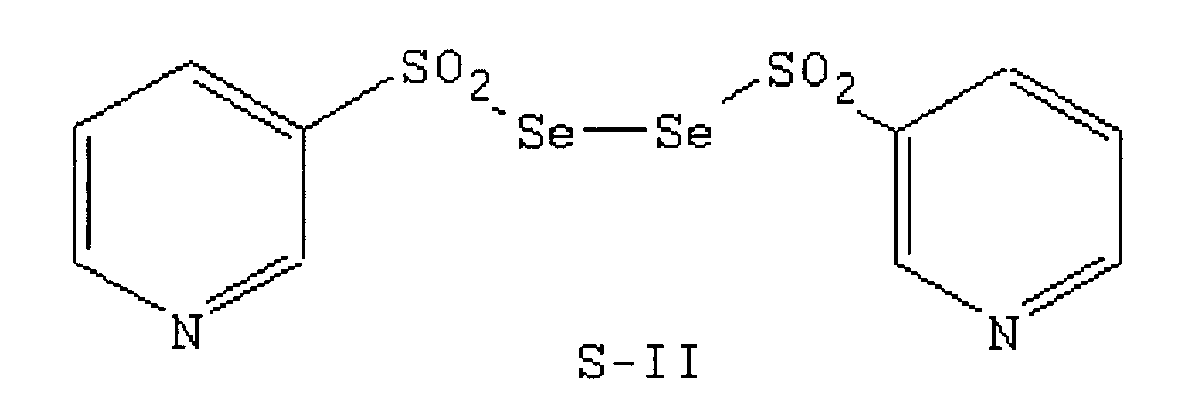
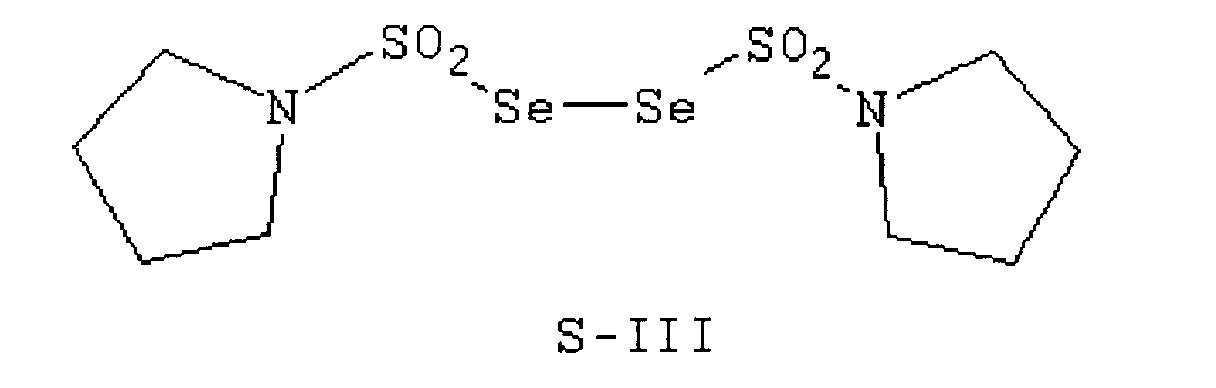


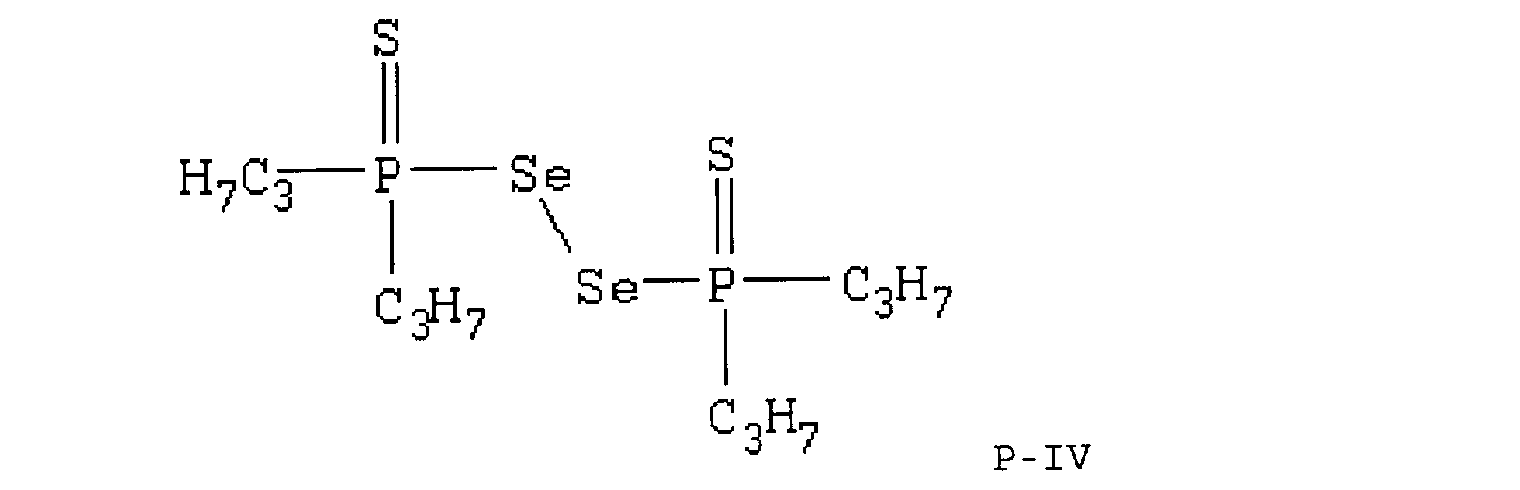

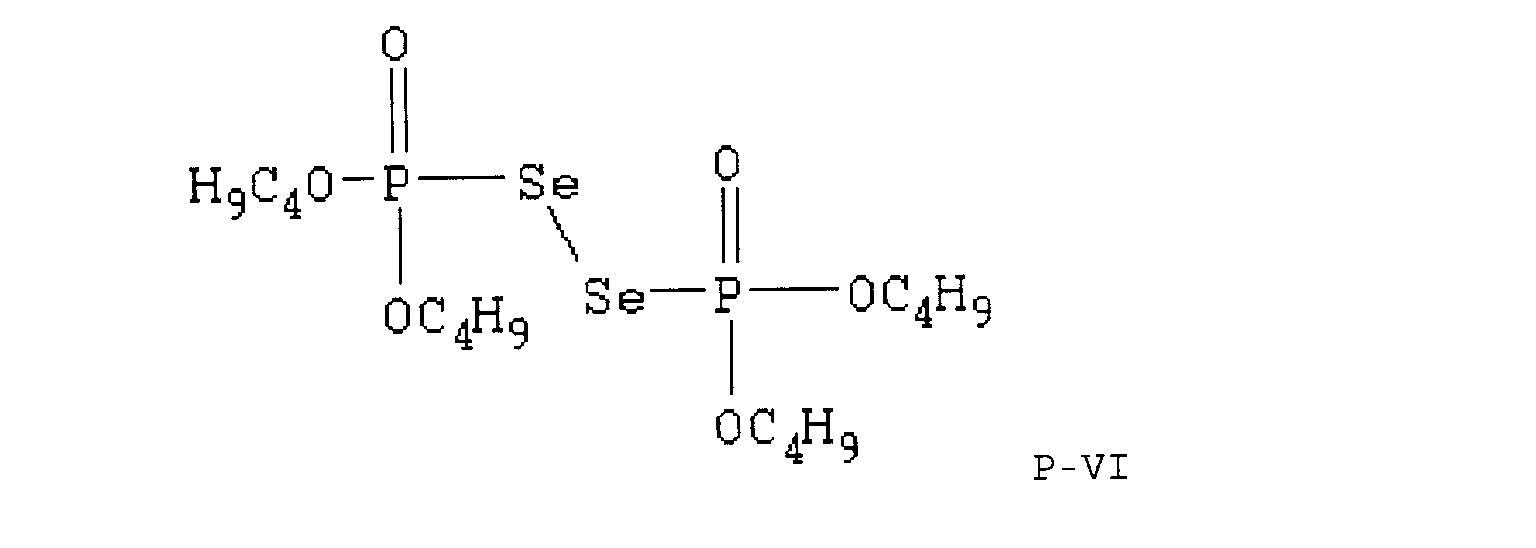
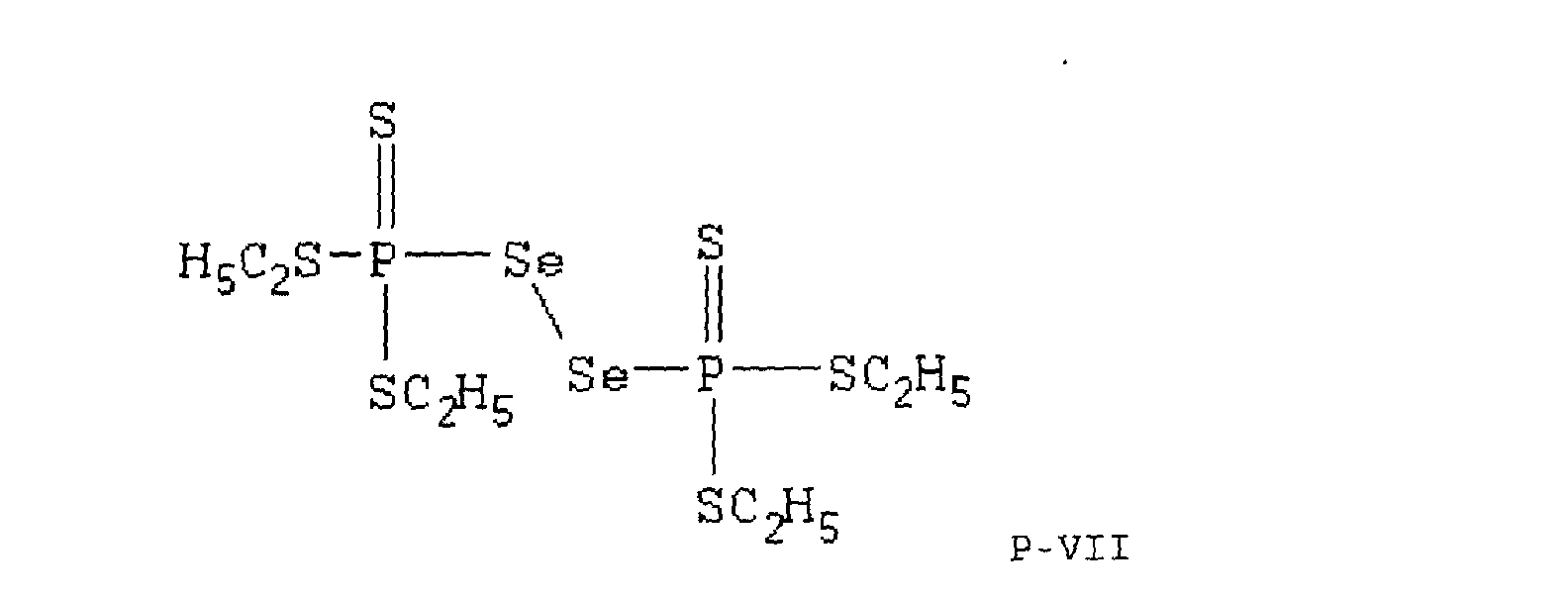
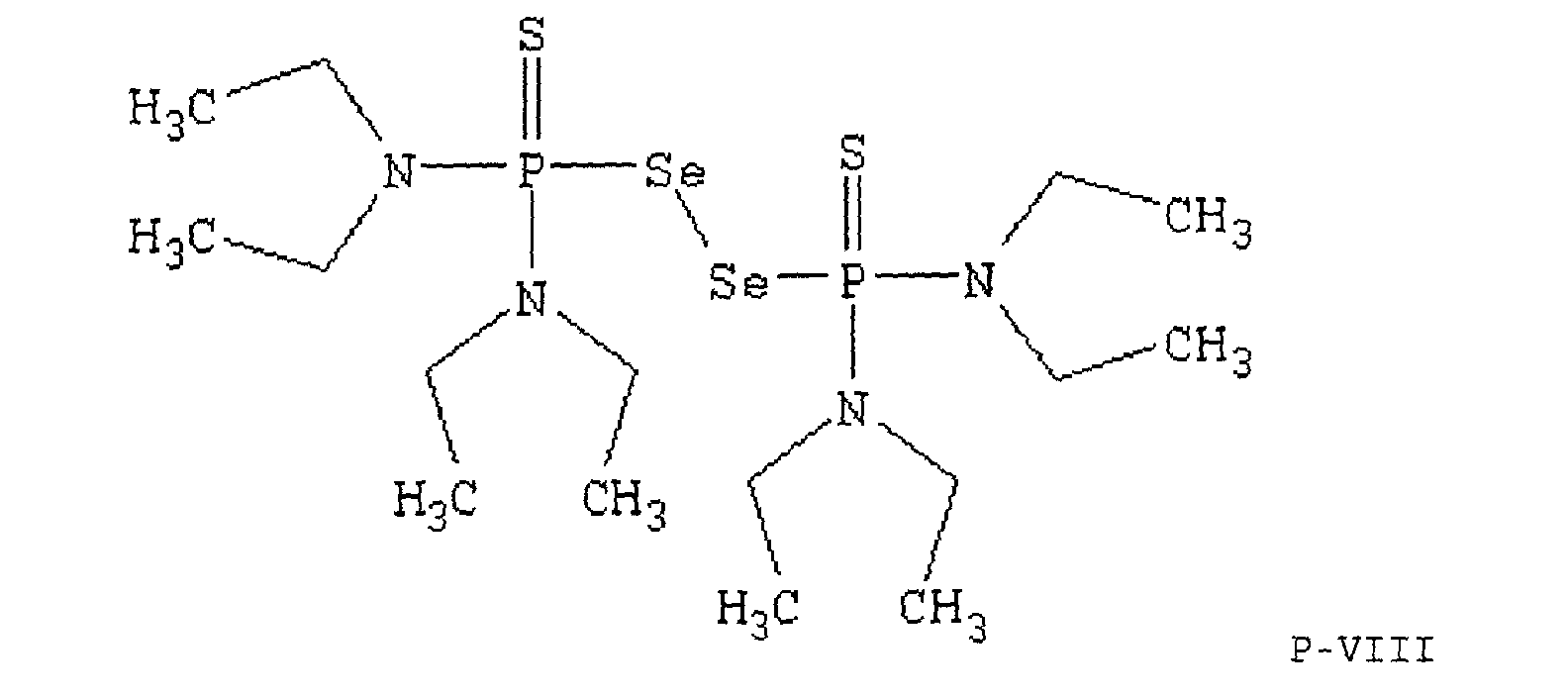


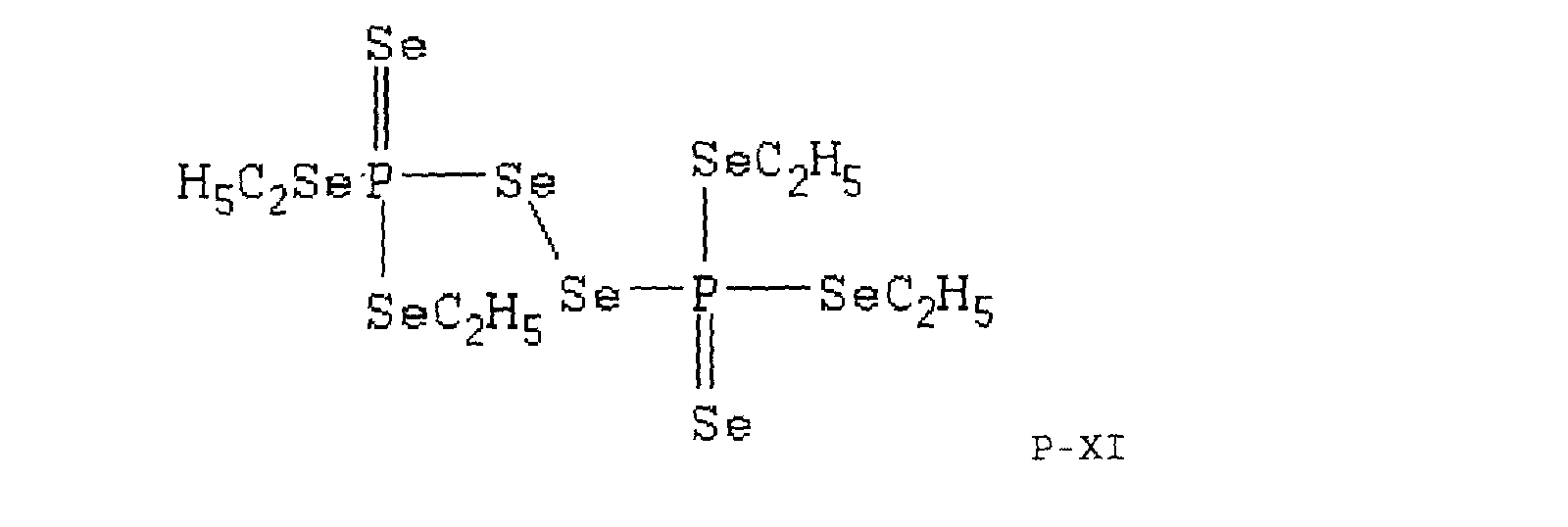
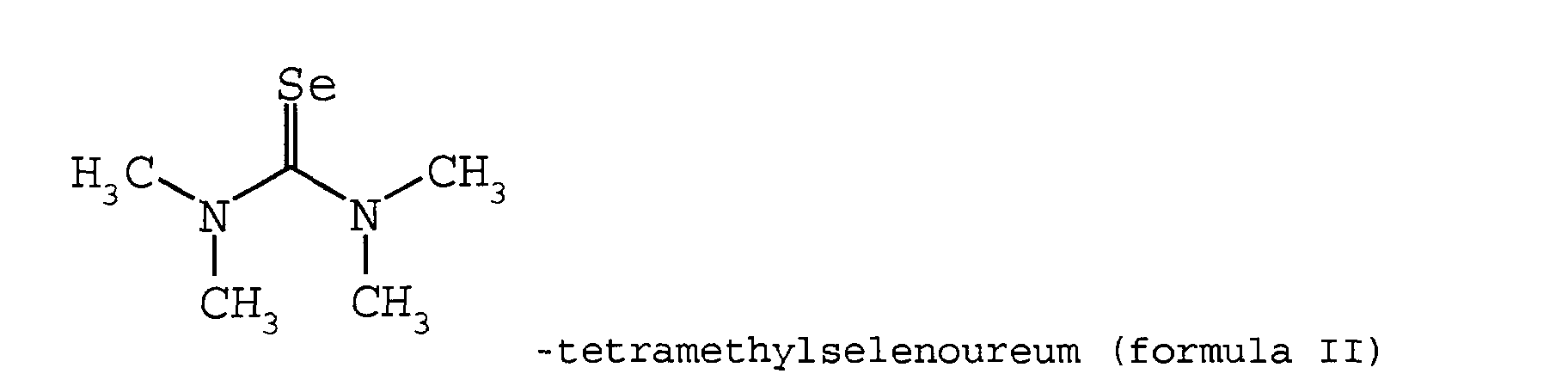
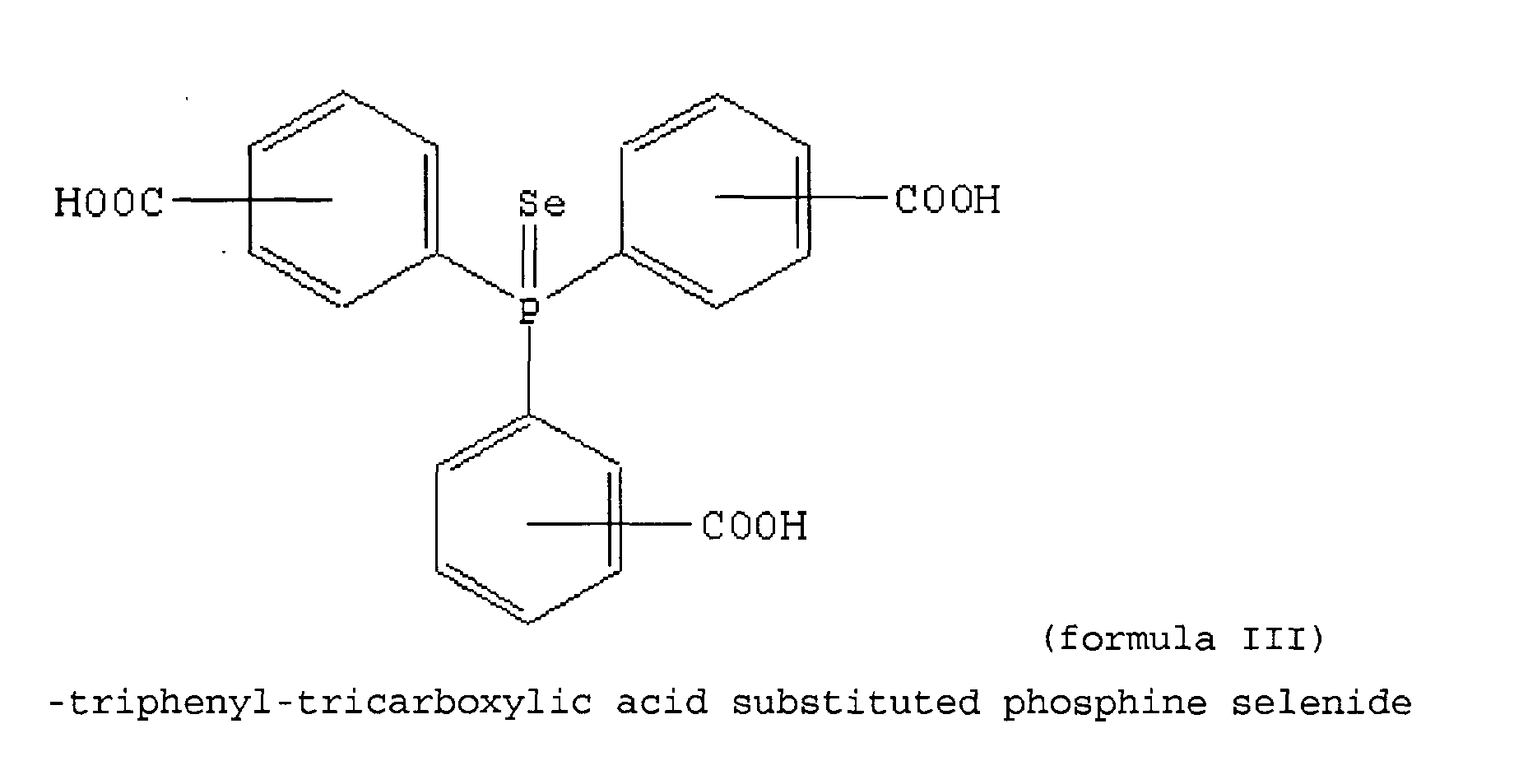

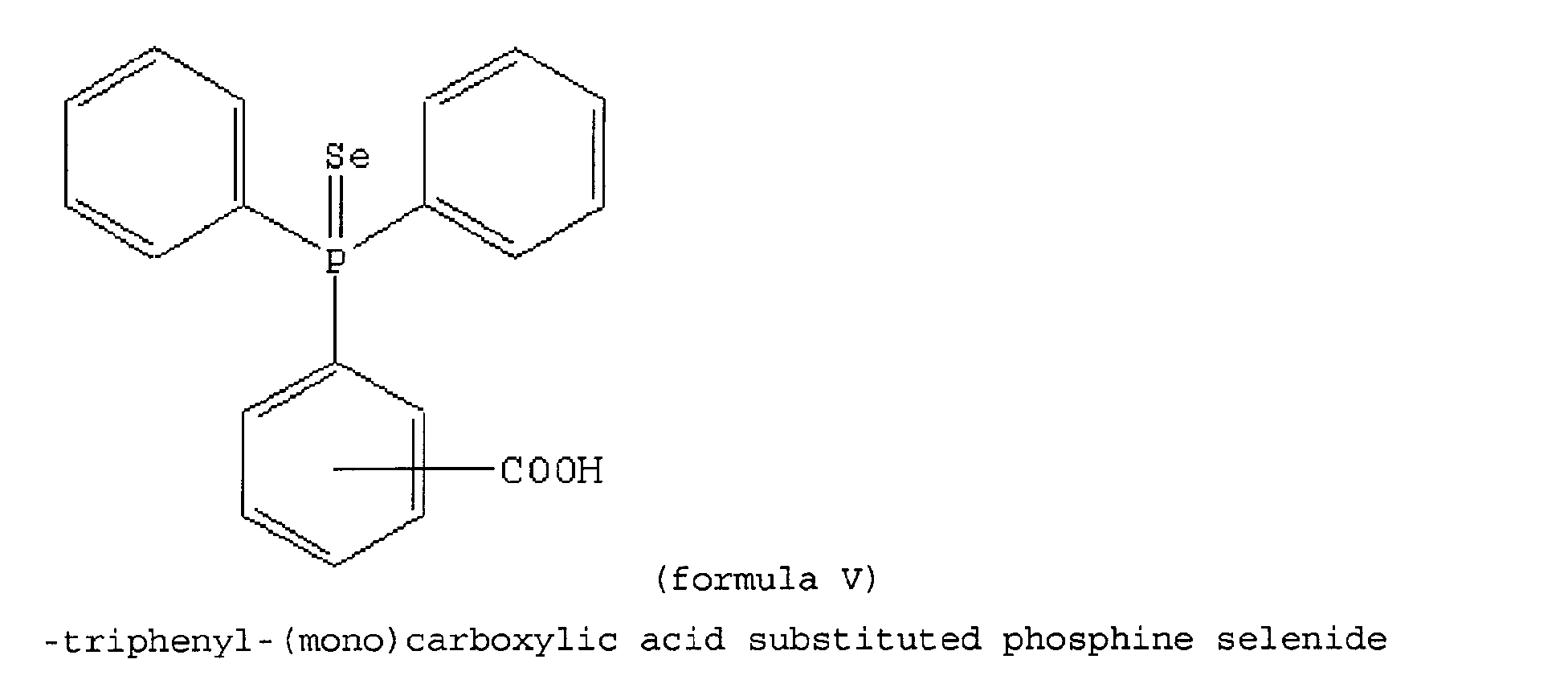


The selenium compounds used in the element of the present invention can be used in combination with other known selenium sensitizers. The selenium sensitization itself can be carried out in the presence of a sulphur compound and, if desired, in the presence of a noble metal (e.g. gold), whether or not in combination with reduction sensitizer.
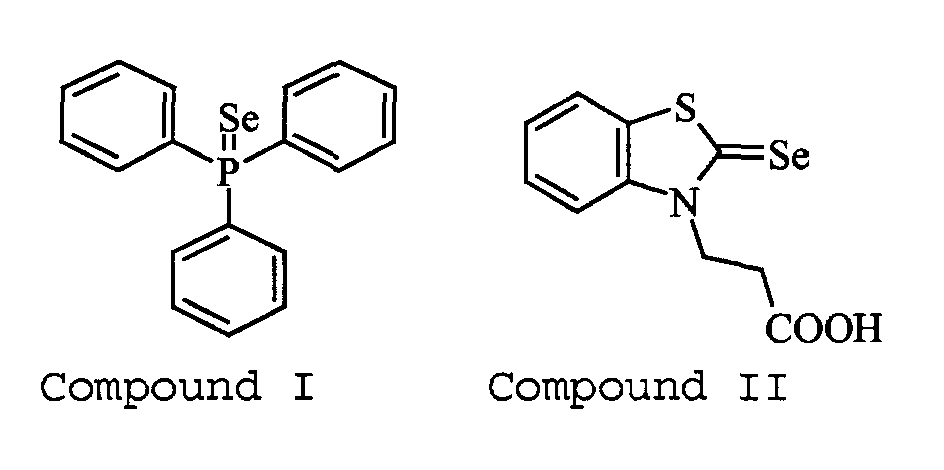
- sodium thiosulphate (in an amount as indicated in Table 1)
- selenium compound (in an amount as indicated in Table 1,
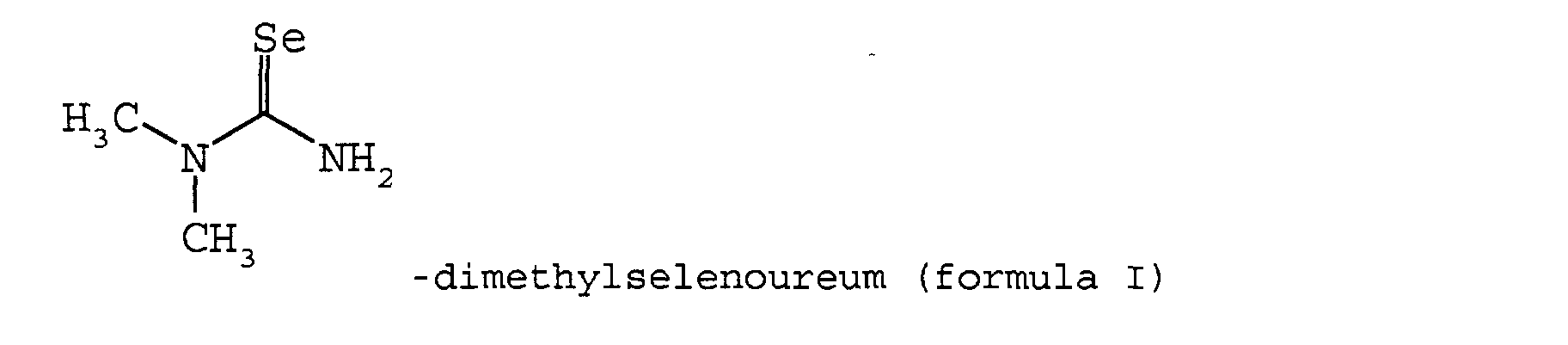
structures as indicated hereinafter)
Both compounds I and II were dissolved in methanol solution in a concentration of 1 g/l.
- 18 ml of a water solution containing 1.46x10⁻³ M chloroauric acid and 1.58x10⁻² M ammonium thiocyanate.
- 13ml of a water solution containing 7,93x10⁻³ M Na2SO3.

| Compound | Amount in g/m2 |
| Gelatin | 1.89 |
| Polymethylmethacrylate spacing agent (average particle diameter 3 mm) | 0.011 |
| Chromium acetate | 0.0077 |
| CF3-(CF2)6-COOH.NH3 | 0.0074 |
| CF3-(CF2)6-CONH-(CH2CH2O)17-20-H: | 0.020 |
| Mobilcer Q (a paraffin wax, trade name product from MOBIL OIL) | 0.023 |
| Polythioether A (modified poly-epichlorohydrine having an average chain length of approximately 20 monomer units and of which about 50% of the chloride groups have been replaced by a -S-CH2- CHOH-CH2OH substituent) | 0.042 |
| Bis-vinyl-sulphonyl-methyl ether (added just before coating) | 0.130 |
After adjusting the pH to 6.8, the viscosity and surface tension of the coating solutions were optimized according to the requirements of the coating method.
The emulsion layer and the protective layer were coated simultaneously on one side of the subbed polyester support, mentioned hereinbefore by means of the conventional slide hopper coating techniques. The silver coverage of the emulsions was 11.5g/m2, expressed as equivalent amount of AgNO3/m2 per side.
| Sodium thiosulphate µmole/mole of Ag | Se compound I µmole/mole of Ag | Dmin | 220kV speed | 220kV speed relative | Co-60 Speed | Co-60 Speed Relative |
| Structurix D7 4370041 | 200 | 0.153 | 0 | 3.53 | 0 | |
| 2.70 | 0 | 157 | 0.147 | +0.006 | 3.63 | -0.010 |
| 2.70 | 2.60 | 174 | 0.132 | +0.021 | 3.30 | +0.023 |
| 2.70 | 5.20 | 175 | 0.123 | +0.030 | 3.16 | +0.037 |
| 6.70 | 0 | 160 | 0.140 | +0.013 | 3.49 | +0.005 |
| 6.70 | 2.60 | 167 | 0.125 | +0.028 | 3.26 | +0.027 |
| 6.70 | 5.20 | 179 | 0.122 | +0.031 | 3.17 | +0.037 |
| 10.80 | 0 | 164 | 0.137 | +0.016 | 3.45 | +0.008 |
| 10.80 | 2.60 | 162 | 0.124 | +0.029 | 3.19 | +0.034 |
| 10.80 | 5.20 | 160 | 0.125 | +0.028 | 3.20 | +0.033 |
| Sodium thiosulphate µmole/mole of Ag | Se compound II µmole/mole of Ag | Dmin | 220kV speed | 220kV speed relative | Co-60 Speed | Co-60 Speed Relative |
| Structurix D7 4370041 | 190 | 1.51 | 0.00 | 3.50 | 0.00 | |
| 2.70 | 0 | 151 | 1.45 | +0.06 | 3.59 | -0,09 |
| 2.70 | 3.10 | 166 | 1.30 | +0.21 | 3.29 | +0.21 |
| 6.70 | 0 | 150 | 1.39 | +0.12 | 3.46 | +0.04 |
| 6.70 | 3.10 | 173 | 1.29 | +0.22 | 3.26 | +0.24 |
| 10.80 | 0 | 153 | 1.36 | +0.15 | 3.43 | +0.07 |
| 10.80 | 3.10 | 159 | 1.28 | +0.23 | 3.20 | +0.30 |
| Sodium thiosulphate µmole/mole of Ag | Se-compound I µmole/mole of Ag | Dmin | 220kV speed | 220kV speed relative | Co-60 Speed | Co-60 Speed Relative |
| Structurix D7 4370041 | 200 | 1.54 | 0 | 3.54 | 0 | |
| 6.70 | 0 | 155 | 1.43 | +0.11 | 3.61 | -0.07 |
| 6.70 | 2.50 | 159 | 1.14 | +0.40 | 3.10 | +0.44 |
| 6.70 | 5.00 | 162 | 1.10 | +0.44 | 3.01 | +0.53 |
Claims (10)
- Direct X-ray radiographic element comprised of a support covered on at least one of its major faces with a tabular grain emulsion layer free from spectrally sensitizing dyes, in which at least 50 percent of total grain projected area is accounted for by silver bromoiodide tabular grains having silver iodide in an amount of at most 1 mole % based on silver, having an average volume between 0.05 and 2 µm3 and an average aspect ratio between 5 and 25, wherein a silver content per coated side, expressed as an equivalent amount of silver nitrate, is between 5 and 25 g/m2, characterized in that said tabular grain emulsion(s) have selenium in an amount of 0.5 to 20 µmole per mole of silver nitrate.
- System for direct X-ray radiography comprised of(1) a direct X-ray radiographic element according to claim 1 and(2) disposed on opposite sides of the said element, two intensifying screens designed to emit electrons when exposed to X or gamma rays with an energy greater than or equal to 10 kVp.
- System according to claim 2, wherein said energy is corresponding with the energy of a Co-60 source having radiation energies of 1.1 and 1.3 MeV.
- System according to claim 2 or 3, wherein said intensifying screens are screen sheets selected from the group consisting of lead, lead oxide, copper and steel.
- Method of forming a radiographic image comprised of(1) exposing a system according to claim 2, to X- or γ-rays with an energy greater than or equal to 10 kVp in order to form a latent image and (2) developing said latent image.
- Method of forming a radiographic image comprised of(1) exposing a system according to claim 3, with the energy of a Co-60 source in order to form a latent image and(2) developing said latent image.
- Method according to claim 6, wherein said latent image is developed in a developing bath which contains ascorbic acid as a developing agent.
- Method according to claim 6 or 7, wherein said radiographic element is fully forehardened and wherein the latent image is developed in a developing bath without further hardening.
- A personal electromagnetic radiation monitor wearable by a person to warn the person of a radiation hazard condition caused by electromagnetic radiation emanating from a source of electromagnetic radiation, said monitor essentially comprising an element according to claim 1.
- Element according to claim 1, wherein said element is an industrial non-destructive testing material.
Priority Applications (1)
| Application Number | Priority Date | Filing Date | Title |
|---|---|---|---|
| EP01000462A EP1195642B1 (en) | 2000-10-04 | 2001-09-14 | Silver halide photographic material and image-forming system in direct X-ray imaging applications |
Applications Claiming Priority (3)
| Application Number | Priority Date | Filing Date | Title |
|---|---|---|---|
| EP00203438 | 2000-10-04 | ||
| EP00203438 | 2000-10-04 | ||
| EP01000462A EP1195642B1 (en) | 2000-10-04 | 2001-09-14 | Silver halide photographic material and image-forming system in direct X-ray imaging applications |
Publications (3)
| Publication Number | Publication Date |
|---|---|
| EP1195642A2 true EP1195642A2 (en) | 2002-04-10 |
| EP1195642A3 EP1195642A3 (en) | 2002-04-24 |
| EP1195642B1 EP1195642B1 (en) | 2004-02-25 |
Family
ID=26072751
Family Applications (1)
| Application Number | Title | Priority Date | Filing Date |
|---|---|---|---|
| EP01000462A Expired - Lifetime EP1195642B1 (en) | 2000-10-04 | 2001-09-14 | Silver halide photographic material and image-forming system in direct X-ray imaging applications |
Country Status (1)
| Country | Link |
|---|---|
| EP (1) | EP1195642B1 (en) |
Family Cites Families (4)
| Publication number | Priority date | Publication date | Assignee | Title |
|---|---|---|---|---|
| GB758475A (en) * | 1953-04-30 | 1956-10-03 | Norbert Jean Marie Pierre Fran | Improvements in and relating to processes, products and devices for measuring dosageof x, gamma and ultra-violet radiations |
| JPH0432831A (en) * | 1990-05-29 | 1992-02-04 | Fuji Photo Film Co Ltd | Silver halide photographic sensitive material |
| JP3395376B2 (en) * | 1994-07-20 | 2003-04-14 | 富士写真フイルム株式会社 | Silver halide photographic light-sensitive material and method for producing the same |
| FR2737588B1 (en) * | 1995-08-01 | 2001-11-02 | Kodak Pathe | NEW PRODUCT FOR INDUSTRIAL RADIOGRAPHY |
-
2001
- 2001-09-14 EP EP01000462A patent/EP1195642B1/en not_active Expired - Lifetime
Also Published As
| Publication number | Publication date |
|---|---|
| EP1195642A3 (en) | 2002-04-24 |
| EP1195642B1 (en) | 2004-02-25 |
Similar Documents
| Publication | Publication Date | Title |
|---|---|---|
| JPH0522901B2 (en) | ||
| GB2110403A (en) | Forehardened photographic elements and their use in radiography | |
| IE54124B1 (en) | Radiographic element | |
| EP1130461B1 (en) | High contrast visually adaptive radiographic film and imaging assembly | |
| US5965337A (en) | Element for industrial radiography | |
| US5998083A (en) | System and method for radiological image formation | |
| EP1130463B1 (en) | Rapidly processable and directly viewable radiographic film with visually adative contrast | |
| US6630278B2 (en) | System for direct X-ray radiography suitable for use in industrial non-destructive testing applications and personal monitoring | |
| US6528227B2 (en) | Film/screen system and image-forming system for use in direct X-ray applications | |
| EP1195642B1 (en) | Silver halide photographic material and image-forming system in direct X-ray imaging applications | |
| EP0862083B1 (en) | System and method for radiological image formation | |
| US6048096A (en) | System and method for radiological image formation | |
| US6030762A (en) | Method of preparing {111} tabular silver chloro(bromo)iodide crystals | |
| EP1195641B1 (en) | Film/Screen system and image-forming system for use in direct X-ray applications | |
| US5900357A (en) | Product for industrial radiography having improved contrast | |
| JPS58111933A (en) | Prehardened photographic element | |
| JP4643585B2 (en) | High-speed radiography film | |
| EP1197797A2 (en) | System for direct X-ray radiography suitable for use in industrial non-destructive testing applications and personal monitoring | |
| US6534255B1 (en) | Light-sensitive silver halide photographic element | |
| EP0851282B1 (en) | Processing of a light-sensitive silver halide photographic material | |
| EP0866362A1 (en) | Method of preparing (111) tabular silver chloro(bromo)iodide crystals. | |
| Abbott et al. | Radiographic element | |
| EP0862088A1 (en) | System and method for radiological image formation | |
| JPH10282611A (en) | System and method for formation of radiologic image | |
| JPH1184553A (en) | Multilayer silver halide photographic material and image forming method for industrial radiographic nondestructive test |
Legal Events
| Date | Code | Title | Description |
|---|---|---|---|
| PUAI | Public reference made under article 153(3) epc to a published international application that has entered the european phase |
Free format text: ORIGINAL CODE: 0009012 |
|
| PUAL | Search report despatched |
Free format text: ORIGINAL CODE: 0009013 |
|
| AK | Designated contracting states |
Kind code of ref document: A2 Designated state(s): AT BE CH CY DE DK ES FI FR GB GR IE IT LI LU MC NL PT SE TR Kind code of ref document: A2 Designated state(s): DE FR GB |
|
| AX | Request for extension of the european patent |
Free format text: AL;LT;LV;MK;RO;SI |
|
| AK | Designated contracting states |
Kind code of ref document: A3 Designated state(s): AT BE CH CY DE DK ES FI FR GB GR IE IT LI LU MC NL PT SE TR |
|
| AX | Request for extension of the european patent |
Free format text: AL;LT;LV;MK;RO;SI |
|
| 17P | Request for examination filed |
Effective date: 20021024 |
|
| AKX | Designation fees paid |
Free format text: DE FR GB |
|
| GRAP | Despatch of communication of intention to grant a patent |
Free format text: ORIGINAL CODE: EPIDOSNIGR1 |
|
| GRAS | Grant fee paid |
Free format text: ORIGINAL CODE: EPIDOSNIGR3 |
|
| GRAA | (expected) grant |
Free format text: ORIGINAL CODE: 0009210 |
|
| AK | Designated contracting states |
Kind code of ref document: B1 Designated state(s): DE FR GB |
|
| REG | Reference to a national code |
Ref country code: GB Ref legal event code: FG4D |
|
| REG | Reference to a national code |
Ref country code: IE Ref legal event code: FG4D |
|
| REF | Corresponds to: |
Ref document number: 60102116 Country of ref document: DE Date of ref document: 20040401 Kind code of ref document: P |
|
| ET | Fr: translation filed | ||
| PLBE | No opposition filed within time limit |
Free format text: ORIGINAL CODE: 0009261 |
|
| STAA | Information on the status of an ep patent application or granted ep patent |
Free format text: STATUS: NO OPPOSITION FILED WITHIN TIME LIMIT |
|
| 26N | No opposition filed |
Effective date: 20041126 |
|
| PG25 | Lapsed in a contracting state [announced via postgrant information from national office to epo] |
Ref country code: FR Free format text: LAPSE BECAUSE OF NON-PAYMENT OF DUE FEES Effective date: 20050531 |
|
| REG | Reference to a national code |
Ref country code: IE Ref legal event code: MM4A |
|
| REG | Reference to a national code |
Ref country code: FR Ref legal event code: ST |
|
| REG | Reference to a national code |
Ref country code: FR Ref legal event code: D3 |
|
| PGFP | Annual fee paid to national office [announced via postgrant information from national office to epo] |
Ref country code: GB Payment date: 20140728 Year of fee payment: 14 Ref country code: FR Payment date: 20140728 Year of fee payment: 14 |
|
| PGFP | Annual fee paid to national office [announced via postgrant information from national office to epo] |
Ref country code: DE Payment date: 20150717 Year of fee payment: 15 |
|
| GBPC | Gb: european patent ceased through non-payment of renewal fee |
Effective date: 20150914 |
|
| REG | Reference to a national code |
Ref country code: FR Ref legal event code: ST Effective date: 20160531 |
|
| PG25 | Lapsed in a contracting state [announced via postgrant information from national office to epo] |
Ref country code: GB Free format text: LAPSE BECAUSE OF NON-PAYMENT OF DUE FEES Effective date: 20150914 |
|
| PG25 | Lapsed in a contracting state [announced via postgrant information from national office to epo] |
Ref country code: FR Free format text: LAPSE BECAUSE OF NON-PAYMENT OF DUE FEES Effective date: 20150930 |
|
| REG | Reference to a national code |
Ref country code: DE Ref legal event code: R119 Ref document number: 60102116 Country of ref document: DE |
|
| PG25 | Lapsed in a contracting state [announced via postgrant information from national office to epo] |
Ref country code: DE Free format text: LAPSE BECAUSE OF NON-PAYMENT OF DUE FEES Effective date: 20170401 |