EP1193954A1 - Portable information terminal - Google Patents
Portable information terminal Download PDFInfo
- Publication number
- EP1193954A1 EP1193954A1 EP01922043A EP01922043A EP1193954A1 EP 1193954 A1 EP1193954 A1 EP 1193954A1 EP 01922043 A EP01922043 A EP 01922043A EP 01922043 A EP01922043 A EP 01922043A EP 1193954 A1 EP1193954 A1 EP 1193954A1
- Authority
- EP
- European Patent Office
- Prior art keywords
- display
- cpu
- information
- displayed
- detailed information
- Prior art date
- Legal status (The legal status is an assumption and is not a legal conclusion. Google has not performed a legal analysis and makes no representation as to the accuracy of the status listed.)
- Withdrawn
Links
Images



Classifications
-
- H—ELECTRICITY
- H04—ELECTRIC COMMUNICATION TECHNIQUE
- H04M—TELEPHONIC COMMUNICATION
- H04M1/00—Substation equipment, e.g. for use by subscribers
- H04M1/26—Devices for calling a subscriber
- H04M1/27—Devices whereby a plurality of signals may be stored simultaneously
- H04M1/274—Devices whereby a plurality of signals may be stored simultaneously with provision for storing more than one subscriber number at a time, e.g. using toothed disc
- H04M1/2745—Devices whereby a plurality of signals may be stored simultaneously with provision for storing more than one subscriber number at a time, e.g. using toothed disc using static electronic memories, e.g. chips
- H04M1/27467—Methods of retrieving data
- H04M1/2747—Scrolling on a display
-
- H—ELECTRICITY
- H04—ELECTRIC COMMUNICATION TECHNIQUE
- H04M—TELEPHONIC COMMUNICATION
- H04M1/00—Substation equipment, e.g. for use by subscribers
- H04M1/72—Mobile telephones; Cordless telephones, i.e. devices for establishing wireless links to base stations without route selection
- H04M1/724—User interfaces specially adapted for cordless or mobile telephones
Definitions
- the present invention relates to a portable information terminal device and is suitably applied to a portable telephone, for example.
- a portable telephone firstly lists and displays main information on items which can be selected, and when a user selects and determines desired main information, the portable telephone displays detailed information related with the main information selected and determined, thus.making it possible to select and display a huge amount of information using a display having a limited display area.
- the portable telephone firstly lists and displays call names 200 as main information on a display 201 (Fig. 9(A)).
- the portable telephone displays a detail screen 202 as shown in Fig. 9(B) on the display 201 and also displays call numbers 203 as detailed information related with the call name 200 selected and determined.
- Such a portable telephone has a problem in troublesome operations because selection operation and determination operation of main information have to be performed to check detailed information.
- a detailed information display area 204 is provided at a part of the display 201 as shown in Fig. 9(C) and corresponding call numbers 203 are displayed as detailed information, as well as listing and displaying the call names 200 as main information, this case, however, also has a problem in that the area for listing and displaying main information is narrowed and the operability deteriorates after all.
- the present invention has been made in view of aforementioned points, and intends to provide a portable information terminal device with excellent usability which is capable of retrieving information with simple operations.
- a display means for listing and displaying plural pieces of main information as well as displaying a display indicator to select at least one of the displayed main information
- a storage means for storing plural pieces of main information and plural pieces of detailed information respectively related with the plural pieces of main information
- a selecting means for switching the main information being selected by the display indicator in accordance with selection operations which are inputted via a prescribed operation means
- a display control means for taking out detailed information related with the main information being selected by the display indicator, from the storage means and displaying it at a part of the display means when the selection operations are not inputted for a fixed time while the plural pieces of main information are listed and displayed on the display means.
- the main information being selected by the display indicator is switched in accordance with selection operations and corresponding detailed information is taken out of the storage means and displayed at a part of the display means when the selection operations are interrupted, thereby call numbers can be displayed without selection and determination operations, thus making it possible to retrieve information with simple operations.
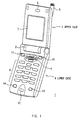
- a reference numeral 1 shows a portable telephone of the present invention as a whole, which can divide into an upper case 3 and a lower case 4 with a hinge 2 placing at the center as a border, and which is foldable down the hinge 2.
- an antenna 5 for transmission and reception is attached at the upper-right part on the back so as to be drawn and contained, and radio waves are transmitted and received to/from a base station (not shown) via the antenna 5.
- a speaker 6 is provided at an upper end on the front surface of the upper case 3, and a display 7 which is a LCD (Liquid Crystal Display) is provided at the center of the front surface to display various kinds of information such as a menu screen, reception quality of radio waves, a battery level, a history of outgoing calls, a history of incoming calls, electronic mails, a telephone directory screen and a schedule, corresponding to various functions, on the display 7.
- a display 7 which is a LCD (Liquid Crystal Display) is provided at the center of the front surface to display various kinds of information such as a menu screen, reception quality of radio waves, a battery level, a history of outgoing calls, a history of incoming calls, electronic mails, a telephone directory screen and a schedule, corresponding to various functions, on the display 7.
- ten keys 8 including "0" to "9", “#” and “*" are provided at the center of the front surface, and a jog dial 9 as an operation means is provided at the upper central part of the front surface so as to be rotated and pushed.
- a power/end key 10 for turning the power of the portable telephone 1 ON/OFF and for ending a call and a call key 11 for answering a coming call and for calling a number are provided at the both sides of the jog dial 9.
- a microphone 12 for collecting voices of a user is provided at the lower central part of the front surface of the lower case 4, and a cancel key 13 for canceling editing operation and scroll operation and a memo key 14 for recording voices during conversation are provided at the both sides of the microphone 9.
- the portable telephone 1 selects the call name desired by a user, out of a plurality of call names being displayed on a telephone directory screen, in accordance with the rotation operations of the jog dial 9, determines the name by pushing the jog dial 9, in order to call the call number corresponding to the call name.
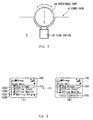
- a cylindrical rotatable part 9A slightly projects from the front surface of the lower case 4 is attached as shown in Fig. 2, thereby the rotatable part 9A can be easily rotated and pushed with a thumb of a user.
- This jog dial 9 generates a rotation pulse base on the rotation operations via a built-in rotary encoder every time when the rotatable part 9A is rotated, in order to inform the internal circuits of the amount of rotation operation, and also every time when the rotatable part 9A is pushed, it informs the internal circuits of this via a push switch 9B.
- This rotatable part 9A generates a light catch every given rotational angle (hereinafter, referred to as a rotation click), and generates a rotation pulse of one pulse every time when one rotational click is made. Thereby, in the portable telephone 1 can surely make a user notice the amount of rotation operation of the jog dial 9 by thumb's feeling.
- a battery pack not shown is contained inside the back side of the lower case 4, and when a power is turned on by operations of the power/end key 10, power is supplied from the battery pack to the internal circuit blocks so that the portable telephone 1 is in an active mode.
- SIM card connecting part for connecting a SIM (Subscriber Identity Module) card storing information on subscribers is formed in the battery pack installing part of the lower case 4, and the SIM card can be inserted and removed while the battery pack is removed.
- SIM Subscriber Identity Module
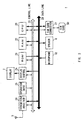
- the portable telephone 1 has such a structure that a RAM (Random Access Memory) 22, a ROM (Read Only Memory) 23, a display control section 24, an operation inputting section 25 comprising the ten keys 8, the jog dial 9, the power/end key 10, the call key 11, the cancel key 13 and the memo key 14, a transmitter/receiver section 26, and the SIM card connecting part 27 are connected to a CPU (Central Processing Unit) 2 for controlling the whole functions of the portable telephone 1, with a control line 21.
- a CPU Central Processing Unit
- the CPU 20, the RAM 22, the ROM 23, the display control section 24, the transmitter/receiver section 26, the SIM card connecting section 27, the speaker 6, and the microphone 12 are connected to each other with a data line 28.
- the RAM 22 serving as a storage means stores a telephone directory list containing a plurality of call numbers as detailed information inputted by a user and a plurality of call names as main information corresponding to these call numbers.
- the RAM 22 stores various kinds of setting information of the portable telephone 1 and histories of incoming and outgoing calls.
- various functions of the portable telephone 1 can be carried out by inserting the SIM card 50 into the SIM card connecting part 27.
- the SIM card connecting part 27 recognizes the inserted SIM card 50, it makes a notice of the SIM card recognition to the CPU 20 through the control line 21 accordingly.
- the CPU 20 takes out subscriber information from the SIM card 50 through the data line 28 when receiving the notice of the SIM card recognition, and then stores it into the RAM 22 and also activates the portable telephone 1 based on the subscriber information.
- the CPU 20 takes out and executes various application programs such as a basic program and a display control program, stored in the ROM 23, through the data line 28 at proper time, in order to carry out various functions.
- application programs such as a basic program and a display control program, stored in the ROM 23, through the data line 28 at proper time, in order to carry out various functions.
- the CPU 20 controls the transmitter/receiver section 26 based on operated information inputted via the operation inputting section 25 in accordance with the basic program, to execute various kinds of communication processing such as calling processing and call ending processing.
- the transmitter/receiver section 26 performs the calling processing by transmitting a given control signal to the base station (not shown) via the antenna 5 under control of the CPU 20 through the control line 21, and also receives a call-arrival signal from the base station via the antenna 5 and informs the CPU 20 of the call arrival.
- the transmitter/receiver section 26 amplifies and then demodulates a reception signal received via the antenna 5 to generate an audio signal, and outputs it from the speaker 6 through the data line 28, while it modulates and then amplifies an audio signal inputted though the data line 28 from the microphone 12 to generate a transmission signal and transmits it via the antenna 5.
- the CPU 20 controls the display control section 24 mainly in accordance with the display control program to display various display screens on the display 7.
- the portable telephone 1 as to a screen having a plurality of items selectable, like a telephone directory screen and a schedule screen, the plurality of items is listed and displayed on the display 7 and an item desired by a user can be selected and determined by rotating and pushing the jog dial 9.
- the CPU 20 when the power of the portable telephone 1 is turned on by pressing the power/end key 10, the CPU 20 initially displays a waiting screen (not shown) on the display 7, and under this situation, when the jog dial 9 is rotated, the CPU 20 displays the telephone directory screen 100 shown in Fig. 4(A) on the display 7 accordingly.
- the CPU 20 displays a plurality of icons showing various kinds of information including reception quality of radio waves, at the upper part of the telephone directory screen 100 and displays a list of call names selectable as items in the center.
- the CPU 20 initially takes out four call names as main information contained by the telephone directory list in the RAM 2, from the beginning, and lists and displays the taken call names as items 102A to 102D on the telephone directory screen 100.
- Each item 102A to 102D has a memory number, a group icon showing an address group to which the call name is belonged, and the call name from the left in order.
- the CPU 20 displays a short rectangular cursor 103 so as to recognize that the item 102A displayed on the first line is selected, and also displays an upward icon 104 and a downward icon 105 at the upper right part and the lower right part of the telephone directory screen 100 respectively so that a user can recognize that there are previous and following items hidden from the telephone directory screen 100.
- the CPU 20 deletes the item 102A displayed on the first line and shifts and displays the items 102B to 102D by one line upward (scroll display). At this time, the CPU 20 does not move the cursor 103 and places it on the item 102B shifted to the first line, so that the item 102B is selected. Further, the CPU 20 takes out a call name following the call name which is the item 102D, from the telephone directory data in the RAM 22 and newly displays it as an item 102E on the last line of the telephone directory screen 100 (Fig. 4(B)).
- the CPU 20 as a selecting means scrolls and displays items upward and downward according to the rotation operations of the jog dial 9 as an operation means, to sequentially change and display an item selected by the cursor 103.
- the CPU 20 displays a call number selection screen 110 shown in Fig. 4(D) on the display 7 accordingly.
- the CPU 20 displays a plurality of icons indicating various kinds of information including the reception quality of radio waves at the upper part of the call number selection screen 110, also displays the call name 111 ("Oka Hiromi" in this case) as main information selected and determined, below them, and further displays an address group 112 and icon therefor to which the call name 111 is belonged, above the call name 111.
- the CPU 20 takes call numbers as detailed information corresponding to the call name 111 out of the telephone directory data in the RAM 22 and lists and displays them as items 113A and 113B selectable. And the attribute icons indicating attributes of the call numbers (home, office, portable telephone or the like) are displayed on the left side of the items 113A and 113B.
- the CPU 20 displays the cursor 103 so as to select the item 113A displayed on the first line.
- the CPU 20 displays a processing selection screen 120 shown in Fig. 4(F) on the display 7 accordingly.
- the CPU 20 displays a plurality of icons indicating various kinds of information including the reception quality of radio waves at the upper part of the processing selection screen 120 and also displays the call number 121 as detailed information of the selected and determined item below them.
- the CPU 20 displays a call processing item 122A for calling the selected and determined call number, an editing processing item 122B for performing editing processing (such as changing of numbers and names) on the selected and determined call number, and a deletion processing item 122C for deleting the memory of the selected and determined call number, as well as the cursor 103 placed on the call processing item 122A on the first line to select it.
- a call processing item 122A for calling the selected and determined call number
- an editing processing item 122B for performing editing processing (such as changing of numbers and names) on the selected and determined call number
- a deletion processing item 122C for deleting the memory of the selected and determined call number, as well as the cursor 103 placed on the call processing item 122A on the first line to select it.
- the CPU 20 moves and displays the cursor 103 downward as shown in Fig. 4(G) accordingly to select the editing processing item 122B. Then when the jog dial 9 is rotated downward, the CPU 20 displays the cursor 103 as shown in Fig. 4(H) to select the deletion processing item 122C.
- the CPU 20 executes the processing corresponding to the selected and determined processing item (call processing, editing processing or deletion processing) accordingly.
- the CPU 20 can select an item in accordance with rotation operations of the jog dial 9, and display and execute detailed information corresponding to the item selected by pushing the jog dial 9.
- the CPU 20 serving as the display control means takes out the detailed information corresponding to the item being selected by the cursor 103 of this time, from the RAM 22, and displays it as a detailed item 106 at the lower part of the telephone directory screen 100.
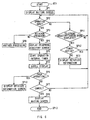
- the CPU 20 of the portable telephone 1 starts the item display processing procedure of the routine RT1 shown in Fig. 6 at starting step accordingly and moves to step SP1.
- step SP1 the CPU 20 displays a waiting screen (not shown) on the display 7 and proceeds to next step SP2.
- step SP2 the CPU 20 judges whether the operation inputting section 25 has been operated. When an affirmative result is obtained at step SP2, which means that the operation inputting section 25 has been operated and the CPU 20 proceeds to step SP3.
- step SP3 the CPU 20 judges whether the operation input via the operation inputting section 25 is the rotation operation of the jog dial 9.
- a negative result is obtained at step SP3, which means that the operation input is not the rotation operation of the jog dial 9, then the CPU 20 proceeds to step SP9 where processing corresponding to the operation input is executed.
- step SP3 which means that the operation input is the rotation operation of the jog dial 9, that is, the retrieval operation of the telephone directory screen
- the CPU 20 proceeds to step SP4 where it displays the telephone directory screen 100 (Fig. 4(A)) on the display 7, takes out four call names included in the telephone directory list in the RAM 22 from the beginning as main information, lists and displays the taken call names as the items 102A to 102D on the telephone directory screen 100. Then the CPU 20 proceeds to step SP5.
- the CPU 20 starts an operation interval timer (not shown) for timing the operation interval standard time (two seconds, for example) which is the standard for judging the operation inputting interruption, and then proceeds to the scroll display processing procedure of the routine RT2.
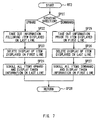
- Fig. 7 the CPU 20 of the portable telephone 1 starts the scroll display processing procedure of the routine RT2 at starting step and moves to step SP21.
- step SP21 the CPU 20 judges which direction the jog dial 9 has been rotated in.
- the CPU 20 proceeds to step SP22 where main information following the main information displayed on the last line on the telephone directory screen 100 is taken out of the telephone directory list of the RAM 22, then the CPU 20 proceeds to next step SP23.
- step SP23 the CPU 20 deletes the display of the item displayed on the first line of the telephone directory screen 100 and proceeds to next step SP24 where it scrolls all the items by one line upward and displays the taken main information on the last line of the telephone directory screen 100 as an item, then the CPU 20 returns to the routine RT1 at step SP28.
- step SP21 when it is judged at step SP21 that the jog dial 9 has been rotated downward, the CPU 20 proceeds to step SP25 where it takes out main information prior to the main information displayed on the first line of the telephone directory screen 100, from the telephone directory list of the RAM 22, and then the CPU 20 proceeds to next step SP26.
- step SP26 the CPU 20 deletes the display of the item displayed on the last line of the telephone directory screen 100 and proceeds to next step SP27 where it scrolls all the items by one line downward and displays the taken main information on the first line of the telephone directory screen 100 as an item, and then the CPU 20 returns to the routine RT1 at step SP28.
- the portable telephone 1 sequentially takes out main information according to the rotation operations of the jog dial 9 and performs the scroll operation on the telephone directory screen 100.
- step SP6 of the routine RT1 the CPU 20 judges whether the jog dial 9 has been pushed.
- an affirmative result is obtained at step SP6, which means that the jog dial 9 has been pushed and the item being selected has been selected and determined.
- the CPU 20 proceeds to step SP10 where it displays the call umber selection screen 110 (Fig. 4(D)) on the display 7 and takes out the call numbers corresponding the selected item as detailed information from the telephone directory list of the RAM 22 and lists and displays them as the items 113A and 113B.
- step SP6 when a negative result is obtained at step SP6, which means that the jog dial 9 has not been pushed and the item being selected has not been selected and determined, then the CPU 20 proceeds to step SP7 where it is judged whether the cancel key 13 has been pushed.
- step SP7 When an affirmative result is obtained at step SP7, which means that the cancel key 13 has been pushed and the display of the telephone directory screen is to be canceled, then the CPU 20 proceeds to step SP8 where it deletes the display of the telephone directory screen 100 and displays the waiting screen on the display 7, then the CPU 20 terminates the processing at step SP13.
- step SP2 when a negative result is obtained at step SP2, which means that the operation inputting section 25 not been operated, then the CPU 20 proceeds to step SP11 where it is judged whether the telephone directory screen 100 is being displayed.
- step SP11 When a negative result is obtained at step SP11, which means that the telephone directory screen 100 is not being displayed and then the CPU 20 returns to step SP2.
- step SP11 which means that the telephone directory screen 100 is being displayed
- step SP12 the CPU 20 proceeds to step SP12.
- step SP12 the CPU 20 judges whether the operation interval timer is active. When an affirmative result is obtained at step SP12, which means that the operation interval timer is active, that is, the operation interval standard time has not passed since the jog dial 9 was rotated last time, then the CPU 20 returns to step SP2.
- step SP12 which means that the operation interval timer is not active, that is, that the jog dial 9 has not been rotated since the telephone directory screen 100 was started to be displayed, or that the operation input has not been made for the operation interval standard time since the rotation operations was performed last time and the operation interval timer has stopped, then the CPU 20 proceeds to the detailed information display processing procedure of the routine RT3.
- the CPU 20 of the portable telephone 1 starts the detailed information display processing procedure of the routine RT3 at starting step and proceeds to step SP31 where it takes out detailed information corresponding to the selected item (that is, main information) being selected by the cursor 103, from the telephone directory list of the RAM 22, and then the CPU 20 proceeds to step SP32.
- step SP32 the CPU 20 deletes the display of the item 102D displayed on the last line out of the items 102A to 102D displayed on the telephone directory screen 100 (Fig. 5(A)) and proceeds to step SP33 where it displays the detailed information display window 106 in the area where the display is deleted, and then the CPU 20 proceeds to step SP34 (Fig. 5(B)).
- step SP34 the CPU 20 judges whether all the taken detailed information can be displayed at the same time in the detailed information display window 106.
- the CPU 20 proceeds to step SP35 where the detailed information is displayed in the detailed information display window 106 without being shifted, then the CPU 20 returns to the routine RT1 at step SP37.
- step SP34 when a negative result is obtained at step SP34, which means that all the detailed information can not be displayed at the same time in the detailed information display window 106, then the CPU 20 proceeds to step SP36 where the detailed information is displayed in the detailed information display window 106 so as to be automatically scrolled, and then the CPU 20 returns to the routine RT1 and executes the processing after step SP2.
- step SP4 the detailed information display window 106 is deleted and the telephone directory screen 100 (Fig. 5(A)) is displayed again.
- the CPU 20 of the portable telephone 1 sequentially takes out call names from the telephone directory data in the RAM 22 accordingly and performs the scroll display of them.
- the CPU 20 takes out the call numbers corresponding to the call name from the telephone directory data in the RAM 22 accordingly and displays them on the call number selection screen 110.
- the CPU 20 takes out call numbers corresponding to the call name being selected by the cursor 103 and automatically displays them in the detailed information display window 106 of the telephone directory screen 100.
- the CPU 20 deletes the detailed information display window 106 and displays the normal telephone directory screen 100.
- call names are sequentially scrolled and displayed in accordance with the rotation operations of the jog dial 9 and the corresponding call numbers are automatically displayed when the rotation operations are interrupted, thereby the user can view the cal numbers, without performing the selection and determination operations, only by stopping the rotation operations of the jog dial 9, thus making it possible to retrieve and execute information with simple operations.
- the aforementioned embodiment has described the case where items are scrolled and displayed according to the rotation operations of the jog dial 9 serving as an operation means.
- the present invention is not limited to this and items can be scrolled and displayed in accordance with the operations of various operation means such as a compass key or a joystick, for example.
- the aforementioned embodiment has described the case where the present invention is applied to the item display on the telephone directory screen.
- This present invention is not limited to this and can be applied to an item display on various screens such as a schedule screen and a function selection screen, which allows a user to select a desired item from a plurality of items.
- the aforementioned embodiment has described the case where the operation interruption is judged based on the previously set operation interval standard time of the operation interval timer.
- This present invention is not limited to this and the operation interval standard time can be changed by a user himself. Thereby detailed information can be displayed with meeting the user's feeling to operations.
- the detailed information display window 106 can be displayed in a color different from that of the other area, or a call number can be blinked and displayed, thereby the call number as detailed information can be remarkably displayed.
- the aforementioned embodiment has described the case where the present invention is applied to the foldable portable telephone.
- the present invention is not limited to this and can be applied to various types of portable telephones such as a flipper portable telephone of which a part can be opened and closed, and a stick portable telephone of one-piece case.
- the portable information terminal device of the present invention is applied to a potable telephone, for example.
Landscapes
- Engineering & Computer Science (AREA)
- Signal Processing (AREA)
- Telephone Function (AREA)
- Mobile Radio Communication Systems (AREA)
Abstract
Description
Claims (4)
- A portable information terminal device, comprising:display means for listing and displaying plural pieces of main information, as well as an display indicator for selecting at least one piece of information out of the displayed main information;storage means for storing plural pieces of said main information and plural pieces of detailed information respectively corresponding to said plural pieces of main information;selecting means for switching said main information being selected by said display indicator, in accordance with selection operations inputted via given operation means; anddisplay control means for, when said selection operations are not made for a given time while said plural pieces of main information are listed and displayed on said display means, taking out said detailed information corresponding to said main information being selected by said display indicator, from said storage means, and displaying said detailed information at a partial area of said display means.
- The portable information terminal device according to Claim 1, wherein
said display control means performs scroll display of said detailed information in the case where said detailed information taken can not be displayed at the same time at said partial area. - The portable information terminal device according to Claim 1, wherein
said display control means displays said partial area in a color different from that of the other area of said display means. - The portable information terminal device according to Claim 1, wherein
said display control means blinks and displays said detailed information.
Applications Claiming Priority (3)
| Application Number | Priority Date | Filing Date | Title |
|---|---|---|---|
| JP2000128712 | 2000-04-28 | ||
| JP2000128712 | 2000-04-28 | ||
| PCT/JP2001/003500 WO2001084810A1 (en) | 2000-04-28 | 2001-04-24 | Portable information terminal |
Publications (2)
| Publication Number | Publication Date |
|---|---|
| EP1193954A1 true EP1193954A1 (en) | 2002-04-03 |
| EP1193954A4 EP1193954A4 (en) | 2003-05-07 |
Family
ID=18638113
Family Applications (1)
| Application Number | Title | Priority Date | Filing Date |
|---|---|---|---|
| EP01922043A Withdrawn EP1193954A4 (en) | 2000-04-28 | 2001-04-24 | PORTABLE INFORMATION TERMINAL |
Country Status (4)
| Country | Link |
|---|---|
| US (1) | US20030011564A1 (en) |
| EP (1) | EP1193954A4 (en) |
| CN (1) | CN1366760A (en) |
| WO (1) | WO2001084810A1 (en) |
Cited By (4)
| Publication number | Priority date | Publication date | Assignee | Title |
|---|---|---|---|---|
| EP1387559A1 (en) * | 2002-07-31 | 2004-02-04 | Fujitsu Limited | Information processing terminal and controlling method thereof |
| FR2865340A1 (en) * | 2004-01-20 | 2005-07-22 | France Telecom | Information display system for use in e.g. mobile telephone, has display controlling and managing unit for controlling sequential and periodical display of display parts of list, on portion of liquid crystal display screen |
| FR2866446A1 (en) * | 2004-02-16 | 2005-08-19 | France Telecom | Information visualization system for e.g. handheld computer, has display control and management unit directing multi-line display of data items on screen with reduced size during acquisition and storage phase of data items |
| WO2013108027A1 (en) * | 2012-01-20 | 2013-07-25 | The Other Media Limited | A method of activating activatable content on an electronic device display |
Families Citing this family (35)
| Publication number | Priority date | Publication date | Assignee | Title |
|---|---|---|---|---|
| US7636079B2 (en) * | 2000-11-29 | 2009-12-22 | Palm Inc. | Application access and activation system and method |
| US7120473B1 (en) * | 2001-10-14 | 2006-10-10 | Palm, Inc. | Method and apparatus for controlling a mobile device by using a pivoting input switch |
| US20040164973A1 (en) * | 2002-06-28 | 2004-08-26 | Kyocera Corporation | Personal digital assistant and program for controlling used for the same |
| JP2004080184A (en) * | 2002-08-13 | 2004-03-11 | Fujitsu Ltd | Mobile terminal device |
| US9715678B2 (en) | 2003-06-26 | 2017-07-25 | Microsoft Technology Licensing, Llc | Side-by-side shared calendars |
| US7707255B2 (en) | 2003-07-01 | 2010-04-27 | Microsoft Corporation | Automatic grouping of electronic mail |
| US8799808B2 (en) | 2003-07-01 | 2014-08-05 | Microsoft Corporation | Adaptive multi-line view user interface |
| JP4433290B2 (en) * | 2004-05-19 | 2010-03-17 | ソニー株式会社 | Content presentation apparatus, content presentation method, and content presentation program |
| US7703036B2 (en) | 2004-08-16 | 2010-04-20 | Microsoft Corporation | User interface for displaying selectable software functionality controls that are relevant to a selected object |
| US8146016B2 (en) | 2004-08-16 | 2012-03-27 | Microsoft Corporation | User interface for displaying a gallery of formatting options applicable to a selected object |
| US8255828B2 (en) | 2004-08-16 | 2012-08-28 | Microsoft Corporation | Command user interface for displaying selectable software functionality controls |
| US9015621B2 (en) | 2004-08-16 | 2015-04-21 | Microsoft Technology Licensing, Llc | Command user interface for displaying multiple sections of software functionality controls |
| US7895531B2 (en) | 2004-08-16 | 2011-02-22 | Microsoft Corporation | Floating command object |
| US7280652B2 (en) | 2004-09-13 | 2007-10-09 | Research In Motion Limited | Handheld electronic device having improved phone call log, and associated method |
| US7747966B2 (en) | 2004-09-30 | 2010-06-29 | Microsoft Corporation | User interface for providing task management and calendar information |
| JP4890754B2 (en) * | 2004-10-20 | 2012-03-07 | 日本電気株式会社 | Mobile terminal and display method and program in mobile terminal |
| US8689137B2 (en) * | 2005-09-07 | 2014-04-01 | Microsoft Corporation | Command user interface for displaying selectable functionality controls in a database application |
| US9542667B2 (en) | 2005-09-09 | 2017-01-10 | Microsoft Technology Licensing, Llc | Navigating messages within a thread |
| US8627222B2 (en) | 2005-09-12 | 2014-01-07 | Microsoft Corporation | Expanded search and find user interface |
| KR100732115B1 (en) * | 2005-10-01 | 2007-06-27 | 엘지전자 주식회사 | Mobile communication terminal having call status indication function and method thereof |
| US9727989B2 (en) | 2006-06-01 | 2017-08-08 | Microsoft Technology Licensing, Llc | Modifying and formatting a chart using pictorially provided chart elements |
| US8605090B2 (en) | 2006-06-01 | 2013-12-10 | Microsoft Corporation | Modifying and formatting a chart using pictorially provided chart elements |
| US8621389B2 (en) * | 2006-12-29 | 2013-12-31 | Blackberry Limited | Selective viewing of information |
| KR100800723B1 (en) * | 2007-01-26 | 2008-02-01 | 삼성전자주식회사 | Method and apparatus for managing communication history |
| US8201103B2 (en) | 2007-06-29 | 2012-06-12 | Microsoft Corporation | Accessing an out-space user interface for a document editor program |
| US8484578B2 (en) | 2007-06-29 | 2013-07-09 | Microsoft Corporation | Communication between a document editor in-space user interface and a document editor out-space user interface |
| US8762880B2 (en) | 2007-06-29 | 2014-06-24 | Microsoft Corporation | Exposing non-authoring features through document status information in an out-space user interface |
| US8874086B2 (en) * | 2008-02-07 | 2014-10-28 | Microsoft Corporation | Providing relevant advertisements or other content based on a communications identifier |
| US9588781B2 (en) | 2008-03-31 | 2017-03-07 | Microsoft Technology Licensing, Llc | Associating command surfaces with multiple active components |
| US9665850B2 (en) | 2008-06-20 | 2017-05-30 | Microsoft Technology Licensing, Llc | Synchronized conversation-centric message list and message reading pane |
| US8402096B2 (en) * | 2008-06-24 | 2013-03-19 | Microsoft Corporation | Automatic conversation techniques |
| JP2010212841A (en) * | 2009-03-09 | 2010-09-24 | Kddi Corp | Portable telephone set and incremental retrieval program |
| US9046983B2 (en) | 2009-05-12 | 2015-06-02 | Microsoft Technology Licensing, Llc | Hierarchically-organized control galleries |
| JP4884514B2 (en) * | 2009-10-21 | 2012-02-29 | 富士通株式会社 | Electronic device and menu item selection method and program thereof |
| JP5785387B2 (en) * | 2010-11-26 | 2015-09-30 | 京セラ株式会社 | Electronics |
Family Cites Families (13)
| Publication number | Priority date | Publication date | Assignee | Title |
|---|---|---|---|---|
| JPH0442323A (en) * | 1990-06-07 | 1992-02-12 | Fuji Xerox Co Ltd | Menu display control method |
| JPH05210473A (en) * | 1991-12-13 | 1993-08-20 | Nec Corp | Job menu display system |
| US5363481A (en) * | 1992-06-22 | 1994-11-08 | Tektronix, Inc. | Auto selecting scrolling device |
| JPH06168090A (en) * | 1992-12-01 | 1994-06-14 | Canon Inc | Window diplay device and menu electing method |
| JP3603288B2 (en) * | 1995-04-17 | 2004-12-22 | ソニー株式会社 | Operation control apparatus and method |
| US5825353A (en) * | 1995-04-18 | 1998-10-20 | Will; Craig Alexander | Control of miniature personal digital assistant using menu and thumbwheel |
| JP3954666B2 (en) * | 1996-02-08 | 2007-08-08 | ソニー株式会社 | Electronic information display control apparatus and method |
| GB2314726B (en) * | 1996-06-28 | 2000-07-12 | Nokia Mobile Phones Ltd | User interface |
| DE19717719C2 (en) * | 1997-04-18 | 1999-03-04 | Deutsche Telephonwerk Kabel | Operator guidance in communication devices |
| JPH10294781A (en) * | 1997-04-21 | 1998-11-04 | Nippon Denki Ido Tsushin Kk | Radio telephone set and communication equipment |
| US5923327A (en) * | 1997-04-23 | 1999-07-13 | Bell-Northern Research Ltd. | Scrolling with automatic compression and expansion |
| JP3123490B2 (en) * | 1997-11-17 | 2001-01-09 | 日本電気株式会社 | Portable communication device and display information selection method |
| US6209009B1 (en) * | 1998-04-07 | 2001-03-27 | Phone.Com, Inc. | Method for displaying selectable and non-selectable elements on a small screen |
-
2001
- 2001-04-24 CN CN01801019A patent/CN1366760A/en active Pending
- 2001-04-24 US US10/030,338 patent/US20030011564A1/en not_active Abandoned
- 2001-04-24 WO PCT/JP2001/003500 patent/WO2001084810A1/en not_active Ceased
- 2001-04-24 EP EP01922043A patent/EP1193954A4/en not_active Withdrawn
Cited By (6)
| Publication number | Priority date | Publication date | Assignee | Title |
|---|---|---|---|---|
| EP1387559A1 (en) * | 2002-07-31 | 2004-02-04 | Fujitsu Limited | Information processing terminal and controlling method thereof |
| US7215761B2 (en) | 2002-07-31 | 2007-05-08 | Fujitsu Limited | Information processing terminal, operation content notifying program and method for operation content notifying |
| FR2865340A1 (en) * | 2004-01-20 | 2005-07-22 | France Telecom | Information display system for use in e.g. mobile telephone, has display controlling and managing unit for controlling sequential and periodical display of display parts of list, on portion of liquid crystal display screen |
| FR2866446A1 (en) * | 2004-02-16 | 2005-08-19 | France Telecom | Information visualization system for e.g. handheld computer, has display control and management unit directing multi-line display of data items on screen with reduced size during acquisition and storage phase of data items |
| WO2005081099A3 (en) * | 2004-02-16 | 2009-01-08 | France Telecom | Visualisation system for a reduced size screen |
| WO2013108027A1 (en) * | 2012-01-20 | 2013-07-25 | The Other Media Limited | A method of activating activatable content on an electronic device display |
Also Published As
| Publication number | Publication date |
|---|---|
| US20030011564A1 (en) | 2003-01-16 |
| EP1193954A4 (en) | 2003-05-07 |
| CN1366760A (en) | 2002-08-28 |
| WO2001084810A1 (en) | 2001-11-08 |
Similar Documents
| Publication | Publication Date | Title |
|---|---|---|
| EP1193954A1 (en) | Portable information terminal | |
| JP4494533B2 (en) | Communication terminal apparatus and option selection method using dial shuttle | |
| JP4498523B2 (en) | Bookmark list display method and mobile phone | |
| KR100460105B1 (en) | Method for searching a menu in a mobile communication terminal | |
| US7123945B2 (en) | Task display switching method, portable apparatus and portable communications apparatus | |
| JP3123990B2 (en) | Portable wireless terminal | |
| EP1164770B1 (en) | Portable telephone | |
| CN1299222A (en) | The definition method of the short key used by the user to select the required function of the communication terminal | |
| EP1215580A2 (en) | Memory recovering management for deleted items in a communication unit terminal | |
| JPH11163997A (en) | Communication terminal device and rotary operator | |
| JP2002539553A (en) | Portable communication device having hierarchical menu system and dynamic menu | |
| JP2001521300A (en) | Apparatus and method for automatically setting software application of portable intelligent communication device | |
| JP2003209602A (en) | Mobile phone | |
| JP4518231B2 (en) | Portable information terminal device | |
| EP1883210A2 (en) | Method and device for performing integration search in mobile communication terminal | |
| JP2002196867A (en) | Information processing device | |
| EP1494435A2 (en) | Portable telephone with URL accessing function | |
| JPH11122398A (en) | Portable communication terminal, image display control method, image information transmission apparatus and method, and transmission medium | |
| KR100810202B1 (en) | How to search phone number of mobile device | |
| JPWO2001084810A1 (en) | Portable information terminal device | |
| JP4268854B2 (en) | Mobile communication terminal | |
| JP4507118B2 (en) | Portable wireless communication terminal, information processing method | |
| JP2003132055A (en) | Data editing device, mobile phone and mobile communication device | |
| JPH0496460A (en) | cordless phone system | |
| JPH10145485A (en) | Phone number identification method for mobile phones |
Legal Events
| Date | Code | Title | Description |
|---|---|---|---|
| PUAI | Public reference made under article 153(3) epc to a published international application that has entered the european phase |
Free format text: ORIGINAL CODE: 0009012 |
|
| 17P | Request for examination filed |
Effective date: 20011219 |
|
| AK | Designated contracting states |
Kind code of ref document: A1 Designated state(s): AT BE CH CY DE DK ES FI FR GB GR IE IT LI LU MC NL PT SE TR |
|
| A4 | Supplementary search report drawn up and despatched |
Effective date: 20030320 |
|
| RIC1 | Information provided on ipc code assigned before grant |
Ipc: 7H 04M 1/247 B Ipc: 7H 04M 1/2745 B Ipc: 7H 04M 1/274 A |
|
| 17Q | First examination report despatched |
Effective date: 20030825 |
|
| STAA | Information on the status of an ep patent application or granted ep patent |
Free format text: STATUS: THE APPLICATION IS DEEMED TO BE WITHDRAWN |
|
| RBV | Designated contracting states (corrected) |
Designated state(s): DE FR GB |
|
| 18D | Application deemed to be withdrawn |
Effective date: 20040106 |