EP1190545B1 - Verfahren und vorrichtung zum aktualisieren von positionsinformation in einem verteilten system mit kodemobilität - Google Patents
Verfahren und vorrichtung zum aktualisieren von positionsinformation in einem verteilten system mit kodemobilität Download PDFInfo
- Publication number
- EP1190545B1 EP1190545B1 EP00942757A EP00942757A EP1190545B1 EP 1190545 B1 EP1190545 B1 EP 1190545B1 EP 00942757 A EP00942757 A EP 00942757A EP 00942757 A EP00942757 A EP 00942757A EP 1190545 B1 EP1190545 B1 EP 1190545B1
- Authority
- EP
- European Patent Office
- Prior art keywords
- forwarding
- request
- server
- client
- information
- Prior art date
- Legal status (The legal status is an assumption and is not a legal conclusion. Google has not performed a legal analysis and makes no representation as to the accuracy of the status listed.)
- Expired - Lifetime
Links
Images


Classifications
-
- G—PHYSICS
- G06—COMPUTING OR CALCULATING; COUNTING
- G06F—ELECTRIC DIGITAL DATA PROCESSING
- G06F9/00—Arrangements for program control, e.g. control units
- G06F9/06—Arrangements for program control, e.g. control units using stored programs, i.e. using an internal store of processing equipment to receive or retain programs
- G06F9/46—Multiprogramming arrangements
- G06F9/48—Program initiating; Program switching, e.g. by interrupt
- G06F9/4806—Task transfer initiation or dispatching
- G06F9/4843—Task transfer initiation or dispatching by program, e.g. task dispatcher, supervisor, operating system
- G06F9/485—Task life-cycle, e.g. stopping, restarting, resuming execution
- G06F9/4856—Task life-cycle, e.g. stopping, restarting, resuming execution resumption being on a different machine, e.g. task migration, virtual machine migration
- G06F9/4862—Task life-cycle, e.g. stopping, restarting, resuming execution resumption being on a different machine, e.g. task migration, virtual machine migration the task being a mobile agent, i.e. specifically designed to migrate
Definitions
- This invention generally relates to a data processing system, and more particularly to a method and system for updating position information of mobile entities in a distributed system.
- EP-A-0836140 An example of a prior art system which permits shared access to system resources for a lease period requested by a request platform is disclosed in EP-A-0836140.
- EP-A-0836140 a system resource is automatically deallocated when a lease period expires.
- objects In a computer network or distributed system made up of cooperating computational entities, herein referred to as "objects,” running on a number of machines, it is often desirable to allow some of these objects to move from one machine to another.
- objects may be any computational entity, code, or software, and reasons for this movement include:(i) to allow balancing the load on the overall system, (ii) to allow the computation to be co-located with some block of data, or (iii) to allow multiple cooperating processes to become co-located to share information. Finding such an object once it has moved becomes a problem in such systems.
- agent technology literature such as "Mobile Object Systems: Towards the Programmable Internet," J.Vitek and C. Tschudin eds., Springer-Verlag, 1997.
- the object that is moving is responsible for telling a client that might be interested in the object of its new location.
- the problem with this approach is that the moving object might not be able to tell every interested client, either because of network faults or because it does not know all of the clients that currently have a pointer to the moving object showing the client the current location of the object.
- such updates can be unnecessarily expensive, because they might updates clients that no longer care about the location of the mobile objects.
- a third conventional approach to solve the object mobility problem is to leave a single "anchor" for the mobile object at the original location of the object.
- This anchor must be informed of every move of the mobile object so that it will always know the current address of the object and forward any communication to that current address.
- the problem with this approach is that it requires that the original location of the mobile object always exist for the lifetime of the object, and always be available. Further, it especially requires that the anchor must be available and reachable from any location to which the mobile object might go.
- Methods and systems in accordance with the present invention allow mobile computational entities or objects in a distributed system to move and leave forwarding pointers.
- the object's clients take "leases” on the object for the period of time they will need to access the object.
- the forwarding pointers are created when an object leaves a server and contain information on the set of leases or the longest outstanding lease held by client(s) on the mobile object.
- the forwarding pointers allow an object to move from one server to another server without notifying its clients, and the memory space of the forwarding pointers may be reclaimed when they are no longer needed. As a result, if a mobile object moves many times and leaves many forwarding pointers, they will not unnecessarily consume memory resources whereas old forwarding pointers will automatically disappear.
- a method for updating information on an object's location in a distributed system in accordance with claim 1 a computer-readable medium containing instructions for controlling a data processing system in accordance with claim 9, and apparatus for updating information on an object's location in accordance with claim 17.
- Methods and systems in accordance with the present invention allow the location of mobile computational entities or software, referred to herein as "objects,” to be updated efficiently and in a fault-tolerant distributed system. They allow mobile objects to move about a distributed system without notifying each client that may need to locate an object of its new location.
- methods and systems in accordance with the present invention combine the use of forwarding pointers with the concept of a software "lease” described below.
- a forwarding pointer is left on the server from which the object is leaving, and the forwarding pointer contains information regarding the new location of the object and information regarding the unexpired or "valid" leases on the object or the longest outstanding valid lease.
- clients lease references to the objects in the distributed system that allow the clients to locate and access the objects when they are needed.
- a reference to such a distributed mobile object When a reference to such a distributed mobile object is obtained, it is only guaranteed to be valid for a period of time negotiated by the requester and the entity that hands out the reference.
- the lease of the reference is the period of time that the reference is guaranteed.
- the holder of the reference may renew the lease prior to the expiration of the lease or explicitly cancel the lease during the lease. However, if the holder of the leased reference does not take either of these actions, the expiration of the lease allows the grantor of the lease to invalidate the outstanding reference.
- Methods and systems in accordance with the present invention combine leasing with forwarding pointers.
- an object moves from its current location and has valid unexpired leases from one or more clients, it leaves a forwarding pointer that contains forwarding information of the new location of the object as well as information regarding the set of leases or the longest outstanding lease that is valid at the time the object leaves the current location.
- This forwarding pointer exists until all valid leases to the object have expired because a mobile object must have a way to inform all clients having valid leases on the object how to reference it.
- This forwarding pointer can be erased or garbage collected when the leases it contains are no longer valid because no more clients will be accessing that location for the corresponding mobile object. Thus, its memory space may be reclaimed and reused.
- the forwarding pointer When a client is not aware of an object's move to a new location, the forwarding pointer receives the request from the client to access the object and returns the forwarding information to the client and/or forwards the request to the new location. Similarly, if a client is not aware of the mobile object's move and requests a renewal on a lease, the forwarding pointer receives the request from the client but does not renew the lease. Again, it returns the forwarding information to the client and/or forwards the call to the object so that the client may make the lease renewal request to the mobile object.
- a client If a client has no lease on a mobile object or its lease expires, it must locate the mobile object through other methods such as a directory service.
- Figure 1 shows a data processing system 100 suitable for use with methods and systems consistent with the present invention with several client computers 101 and 103 and server computers 102, 104 and 106 connected via a network 110, such as the Internet, a wide area network ("WAN") or a local area network ("LAN").
- client computers 101 and 103 receive data from server computers102, 104 and 106.
- a server computer may also act as a client computer and receive data from any other computer connected to network 110, and similarly, a client computer may also act as a server computer and send data to other computers connected to network 110.
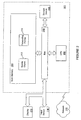
- FIG. 2 depicts a more detailed block diagram of a computer in accordance with the present invention, and the computer may represent any one of the client or server computers.
- client computer 101 is shown and includes a central processing unit (CPU) 202, a main memory 204, and a secondary storage device 206 interconnected via bus 208. Additionally, client computer 101 includes a display 210, and an input device 211. The client computer is also connected to a network 110.
- the main memory 204 contains a forwarding pointer 214, which references a mobile object, and a mobile object 212, which may be any mobile computational entity, object or software. Many mobile objects 212 and forwarding pointers 214 may reside in the memories of a client computer or server computer.
- aspects of methods and systems consistent with the present invention may be stored on or read from other computer readable media besides memory like secondary storage devices, such as hard disks, floppy disks, and CD ROM, or a carrier wave from a network such as the Internet. Additionally, one skilled in the art will also appreciate that the computer system may contain additional or different components.
- Figure 3 depicts several client and server computers and a mobile object that has not changed locations. This figure shows client computers 101 and 103, both having current leases on a mobile object 212 located on server 102. Also shown are server computers 104 and 106.
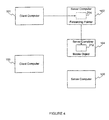
- Figure 4 illustrates the same client and server computers 101 - 104, and 106, as well as the same mobile object 212. In this figure, however, it is shown that the mobile object 212 has moved from server 102 to server 104, and that client 101 is attempting to access the mobile object 212 by contacting the server 102. In accordance with the present invention, a forwarding pointer 214 has been created and left behind on the server 102.
- Figures 3 and 4 will be used in conjunction with the following Figures 5 and 6 to illustrate methods and systems in accordance with the present invention.
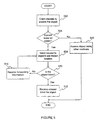
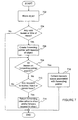
- FIG. 5 is a flowchart illustrating steps used in a method for requesting by a client access to a mobile object in accordance with the present invention.
- a client 101 requests access to a mobile object 212 (step 502), it first determines whether it has a validlease to the mobile object (step 504). If not, it must search for and access the mobile object 212 through other methods (step 506).
- the client 101 If the client 101 does have a valid lease on the mobile object 212, the client sends a request to access the mobile object 212 to its last known location. If the mobile object 212 is there (step 510), the client 101 may access the mobile object 212 which may then return a result to the client (step 512).
- Figure 3 illustrates this situation.
- the client 101 accesses the server 102 and finds the mobile object 212 on that server. If, however, the mobile object 212 is not on the accessed server 102, the client 101 receives forwarding information pointing to the location where the mobile object moved when it left the server 102 (step 514).
- client 101 is shown accessing server 102 and being forwarded to mobile object 212 on server 104 by forwarding pointer 214. As shown on the flowchart of Figure 5, these steps 508, 510, and 514 may be repeated if the mobile object 212 has made several moves since the client's 101 last attempt to access the mobile object.
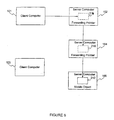
- Figure 6 illustrates this scenario with several client and server computers 101 - 104, and 106, a mobile object 212 that has moved twice, and two forwarding pointers 214 and 216 in accordance with the present invention.
- the mobile object 212 has moved twice, once from server 102 to server 104, and once from server 104 to server 106.
- the client 101 was aware of neither move and will try to access the mobile object 212 at its last known location on server 102 where it will be forwarded to server 104 and then server 106.
- Aspects of the creation and operation of forwarding pointers consistent with the present invention will now be discussed.
- FIG 7 is a flowchart illustrating steps used in a method using a forwarding pointer in accordance with the present invention. Also with reference to Figure 4, when a mobile object 212 moves (step 702) from one server 102 to another server 104, the server 102 first determines if there are any valid leases on the object at the time of the move (step 704). If there are none, the object may move and nothing else needs to be done regarding forwarding.
- a forwarding pointer 214 is created with the forwarding information for the mobile object and the current set of valid leases on the object at the time of the move.
- the forwarding pointer contains information regarding the longest outstanding valid lease held to the object instead of the set of valid leases.
- server 102 containing the forwarding pointer 214 receives a request from a client 101 to access the mobile object 212 or renew a lease on the object (step 712), it returns to the client the forwarding information on the location to which the mobile object went when it left the server 102. Alternately, or additionally, server 102 forwards the request to the mobile object.
- older forwarding pointers 214 may expire before newer ones if a mobile object 212 moves a lot and another client 103 requests a lease renewal. For example, if one client requests a lease renewal to an object that has moved, and another client is not aware of the object's original move, the forwarding pointer left when the object moves again will exist longer than the original forwarding pointer left from the first move as a result of the new longer lease.
- methods and systems in accordance with the present invention allow mobile objects to move freely throughout distributed systems and allow clients to access the objects without constantly being updated of each move. Furthermore, they advantageously allow forwarding pointers to disappear when they are no longer needed, thereby freeing up system resources.
Landscapes
- Engineering & Computer Science (AREA)
- Software Systems (AREA)
- Theoretical Computer Science (AREA)
- Physics & Mathematics (AREA)
- General Engineering & Computer Science (AREA)
- General Physics & Mathematics (AREA)
- Mobile Radio Communication Systems (AREA)
- Information Transfer Between Computers (AREA)
Claims (24)
- Verfahren zum Aktualisieren von Informationen über den Ort eines Objekts in einem verteilten System, mit folgenden Schritten:Zuordnen eines Lease für einen Client (101) zu dem in einem ersten Server (102) befindlichen Objekt (212),Einrichten eines Weiterleitungszeigers (214) mit Informationen über das Lease und sich auf das Objekt beziehende Ortsinformationen (212), undBewegen des Objekts (212) von dem ersten Server (102) zu einem zweiten Server (104).
- Verfahren nach Anspruch 1 mit folgendem Schritt:Aktualisieren der Ortsinformationen, um die Bewegung des Objekts zum zweiten Server (104) wiederzugeben.
- Verfahren nach Anspruch 1 oder 2 mit folgenden Schritten:Empfangen einer Anforderung von dem Client (101), auf das Objekt (212) zuzugreifen,Zugreifen auf den Weiterleitungszeiger (214) wegen das Objekt (212) betreffenden Weiterleitungsinformationen, undZurückgeben der das Objekt (212) betreffenden Weiterleitungsinformationen.
- Verfahren nach Anspruch 3, wobei der Weiterleitungszeiger (214) Informationen über einen Satz von einem oder mehreren Leases des Objekts (212) für den Client (101) enthält und das Verfahren folgende weitere Schritte aufweist:Bestimmen, ob das eine oder die mehreren Leases in dem Satz abgelaufen sind, undWiedergewinnen von den Weiterleitungszeiger betreffendem Speicher aufgrund der Bestimmung.
- Verfahren nach Anspruch 3 oder 4, wobei der Schritt zum Empfangen einer Anforderung, auf das Objekt (212) zuzugreifen, folgenden Schritt enthält:Empfangen einer Anforderung von dem Client (101) das Lease des Objekts zu erneuern.
- Verfahren nach einem der Ansprüche 3 bis 5, wobei die Schritte zum Empfangen einer Anforderung, zum Zugriff auf den Weiterleitungszeiger (214) und zum Zurückgeben der Weiterleitungsinformationen von dem ersten Server (102) ausgeführt werden und wobei der Schritt zum Zugriff auf den Weiterleitungszeiger außerdem den folgenden Schritt enthält:Weiterleiten der Anforderung an das Objekt (212) unter Verwendung von Informationen über die Ortsinformationen von dem Weiterleitungszeiger (214).
- Verfahren nach einem der Ansprüche 3 bis 6, wobei der Schritt zum Weiterleiten der Anforderung an das Objekt (212) außerdem den folgenden Schritt enthält:Zurückgeben einer Nachricht, daß die Anforderung weitergeleitet wurde.
- Verfahren nach Anspruch 7, wobei der Schritt zum Weiterleiten der Anforderung an das Objekt (212) außerdem den folgenden Schritt enthält:Zurückgeben von das Objekt (212) betreffenden Weiterleitungsinformationen.
- Computerlesbares Medium mit Anweisungen zur Steuerung eines Datenverarbeitungssystems, ein Verfahren zum Aktualisieren von Informationen über den Ort eines Objekts in einem verteilten System auszuführen, wobei das Verfahren von einem ersten Server (102) in dem verteilten System mit folgenden Schritten ausgeführt wird:Einrichten eines Weiterleitungszeigers (214) mit Informationen über ein Lease für einen Client (101) über das Objekt (212), das sich in dem ersten Server (102) befindet, und das Objekt (212) betreffenden Ortsinformationen, undBewegen des Objekts (212) von dem ersten Server (101) zu einem zweiten Server (104).
- Computerlesbares Medium nach Anspruch 9, wobei das Verfahren außerdem den folgenden Schritt enthält:Aktualisieren der Ortsinformationen, um die Bewegung des Objekts (212) zu dem zweiten Server (104) wiederzugeben.
- Computerlesbares Medium nach Anspruch 9 oder 10, wobei das Verfahren folgende Schritte enthält:Empfangen einer Anforderung von dem Client (101), auf das Objekt (212) zuzugreifen,Zugreifen auf den Weiterleitungszeiger (214) wegen das Objekt (212) betreffenden Weiterleitungsinformationen, undZurückgeben der das Objekt (212) betreffenden Weiterleitungsinformationen.
- Computerlesbares Medium nach Anspruch 11, wobei der Weiterleitungszeiger (214) Informationen über einen Satz aus einem oder mehreren Leases des Objekts (212) für den Client (101) enthält und das Verfahren folgende Schritte aufweist:Bestimmen, ob das eine oder die mehreren Leases in dem Satz abgelaufen sind, undWiedergewinnen von den Weiterleitungszeiger (214) betreffendem Speicher (204) aufgrund der Bestimmung.
- Computerlesbares Medium nach Anspruch 11 oder 12, wobei der Schritt zum Empfangen einer Anforderung, auf das Objekt (212) zuzugreifen, folgenden Schritt enthält:Empfangen einer Anforderung von dem Client (101), das Lease des Objekts (212) zu erneuern.
- Computerlesbares Medium nach einem der Ansprüche 11 bis 13, wobei der Schritt zum Zugreifen auf den Weiterleitungszeiger (214) außerdem folgenden Schritt enthält:Weiterleiten der Anforderung an das Objekt (212) unter Verwendung von Informationen über die Ortsinformationen von dem Weiterleitungszeiger (214).
- Computerlesbares Medium nach Anspruch 14, wobei der Schritt zum Weiterleiten der Anforderung an das Objekt (212) folgenden weiteren Schritt enthält:Zurückgeben einer Nachricht, daß die Anforderung weitergeleitet wurde.
- Computerlesbares Medium nach Anspruch 15, wobei der Schritt zum Weiterleiten der Anforderung an das Objekt (212) folgenden weiteren Schritt enthält:Zurückgeben von das Objekt (212) betreffenden Weiterleitungsinformationen.
- Vorrichtung zur Aktualisierung von Informationen über den Ort eines Objekts in einem verteilten System mit einem ersten Server (102), aufweisend:eine Einrichtung zum Empfang einer Anforderung, auf ein Objekt (212), das vom ersten Server (102) her empfangen wurde, zuzugreifen, wobei das Objekt (212) einem Lease zugeordnet ist, das von einem Client (101) gehalten wird, und der erste Server (102) einen ersten Weiterleitungszeiger (214) mit Informationen über das Lease und das Objekt (212) betreffenden Ortsinformationen einrichtet,eine Einrichtung zur Einrichtung eines zweiten Weiterleitungszeigers (216) mit Informationen über das Lease und das Objekt (212) betreffenden Ortsinformationen, undeine Einrichtung zum Bewegen des Objekts (212) zu einem zweiten Server (106).
- Vorrichtung nach Anspruch 17, aufweisend:eine Einrichtung zum Aktualisieren der Ortsinformationen, um eine Bewegung des Objekts (212) zum zweiten Server (106) wiederzugeben.
- Vorrichtung nach Anspruch 17 oder 18, aufweisend:eine Einrichtung zum Empfang einer Anforderung von dem Client (101), auf das Objekt (212) zuzugreifen,eine Einrichtung zum Zugriff auf die Weiterleitungszeiger (214, 216) wegen das Objekt (212) betreffenden Weiterleitungsinformationen, und eine Einrichtung zum Zurückgeben der das Objekt (212) betreffenden Weiterleitungsinformationen.
- Vorrichtung nach Anspruch 19, wobei die Weiterleitungszeiger Informationen über einen Satz aus einem oder mehreren Leases des Objekts (212) für den Client (101) enthalten und die Vorrichtung außerdem aufweist:eine Einrichtung zum Bestimmen, ob das eine oder die mehreren Leases in dem Satz abgelaufen sind, und eine Einrichtung zum Wiedergewinnen von die Weiterleitungszeiger (214, 216) betreffendem Speicher (204) aufgrund der Bestimmung.
- Vorrichtung nach Anspruch 19 oder 20, wobei die Einrichtung zum Empfangen einer Anforderung, auf das Objekt zuzugreifen, außerdem beinhaltet:eine Einrichtung zum Empfang einer Anforderung von dem Client (101) das Lease des Objekts (212) zu erneuern.
- Vorrichtung nach Anspruch 19, 20 oder 21, wobei die Einrichtung zum Zugriff auf die Weiterleitungszeiger außerdem enthält:eine Einrichtung zum Weiterleiten der Anforderung an das Objekt (212) unter Verwendung von Informationen über die Ortsinformationen von den Weiterleitungszeigern (214, 216).
- Vorrichtung nach einem der Ansprüche 19 bis 22, wobei die Einrichtung zum Weiterleiten der Anforderung an das Objekt (212) außerdem enthält:eine Einrichtung zum Zurückgeben einer Nachricht, daß die Anforderung weitergeleitet wurde.
- Vorrichtung nach Anspruch 23, wobei die Einrichtung zum Weiterleiten der Anforderung an das Objekt (212) außerdem enthält:eine Einrichtung zum Zurückgeben von das Objekt (212) betreffenden Weiterleitungsinformationen.
Applications Claiming Priority (3)
| Application Number | Priority Date | Filing Date | Title |
|---|---|---|---|
| US33203099A | 1999-06-14 | 1999-06-14 | |
| US332030 | 1999-06-14 | ||
| PCT/US2000/016085 WO2000078003A2 (en) | 1999-06-14 | 2000-06-13 | Method and system for updating position information in a distributed system with code mobility |
Publications (2)
| Publication Number | Publication Date |
|---|---|
| EP1190545A2 EP1190545A2 (de) | 2002-03-27 |
| EP1190545B1 true EP1190545B1 (de) | 2003-10-22 |
Family
ID=23296414
Family Applications (1)
| Application Number | Title | Priority Date | Filing Date |
|---|---|---|---|
| EP00942757A Expired - Lifetime EP1190545B1 (de) | 1999-06-14 | 2000-06-13 | Verfahren und vorrichtung zum aktualisieren von positionsinformation in einem verteilten system mit kodemobilität |
Country Status (4)
| Country | Link |
|---|---|
| EP (1) | EP1190545B1 (de) |
| AU (1) | AU5733600A (de) |
| DE (1) | DE60006112T2 (de) |
| WO (1) | WO2000078003A2 (de) |
Families Citing this family (1)
| Publication number | Priority date | Publication date | Assignee | Title |
|---|---|---|---|---|
| EP1300757A1 (de) * | 2001-10-02 | 2003-04-09 | Sun Microsystems, Inc. | Gemeinsam benutzbare Installationshierarchien |
Family Cites Families (2)
| Publication number | Priority date | Publication date | Assignee | Title |
|---|---|---|---|---|
| US5325524A (en) * | 1989-04-06 | 1994-06-28 | Digital Equipment Corporation | Locating mobile objects in a distributed computer system |
| US5832529A (en) * | 1996-10-11 | 1998-11-03 | Sun Microsystems, Inc. | Methods, apparatus, and product for distributed garbage collection |
-
2000
- 2000-06-13 EP EP00942757A patent/EP1190545B1/de not_active Expired - Lifetime
- 2000-06-13 WO PCT/US2000/016085 patent/WO2000078003A2/en not_active Ceased
- 2000-06-13 DE DE60006112T patent/DE60006112T2/de not_active Expired - Fee Related
- 2000-06-13 AU AU57336/00A patent/AU5733600A/en not_active Abandoned
Also Published As
| Publication number | Publication date |
|---|---|
| WO2000078003A2 (en) | 2000-12-21 |
| AU5733600A (en) | 2001-01-02 |
| DE60006112T2 (de) | 2004-08-12 |
| EP1190545A2 (de) | 2002-03-27 |
| DE60006112D1 (de) | 2003-11-27 |
| WO2000078003A3 (en) | 2001-06-28 |
Similar Documents
| Publication | Publication Date | Title |
|---|---|---|
| US6243716B1 (en) | Methods and systems for distributed failure detection and recovery using leasing | |
| US20110023133A1 (en) | Grid licensing server and fault tolerant grid system and method of use | |
| US10333788B2 (en) | System and method for acquiring, processing and updating global information | |
| US20030115434A1 (en) | Logical volume-level migration in a partition-based distributed file system | |
| US6859864B2 (en) | Mechanism for initiating an implicit write-back in response to a read or snoop of a modified cache line | |
| US20040220924A1 (en) | System and method for updating a cache | |
| JPH06215031A (ja) | 分散データ処理装置及び方法 | |
| US6145126A (en) | Apparatus and method for installing software and recording medium storing program for realizing the method | |
| US20020144063A1 (en) | Multiprocessor cache coherence management | |
| EP0726522A2 (de) | Anordnung und Verfahren zur Behandlung von verjährten Daten in einem Mehrprozessorsystem | |
| CN109582329A (zh) | 数据管理及订阅方法、装置、系统、电子设备及存储介质 | |
| EP1304621A2 (de) | Aktualisierung eines Verzeichnis-Cache-Speichers | |
| KR100745878B1 (ko) | 저장 제어 장치 및 방법, 컴퓨터 프로그램 제품 | |
| JP3290801B2 (ja) | 資源所在位置検出方式 | |
| US7565664B2 (en) | Distributed object controlling method and its carrying out system | |
| EP1190545B1 (de) | Verfahren und vorrichtung zum aktualisieren von positionsinformation in einem verteilten system mit kodemobilität | |
| CN111796772A (zh) | 缓存的管理方法、缓存节点及分布式存储系统 | |
| CN109062717B (zh) | 数据缓存及缓存容灾方法和系统、缓存系统 | |
| US6282616B1 (en) | Caching managing method for network and terminal for data retrieving | |
| CN113612846B (zh) | 服务上线处理方法、计算设备及计算机存储介质 | |
| US7698278B2 (en) | Method and system for caching directory services | |
| CN116263726A (zh) | 一种数据备份方法、装置及设备 | |
| Born | Analytical performance modelling of lock management in distributed systems | |
| CN113542319A (zh) | 用于Dubbo框架中的服务提供实体变更通知方法、装置及系统 | |
| CN116132130B (zh) | 一种工控入侵检测与审计方法和计算机可读存储介质 |
Legal Events
| Date | Code | Title | Description |
|---|---|---|---|
| PUAI | Public reference made under article 153(3) epc to a published international application that has entered the european phase |
Free format text: ORIGINAL CODE: 0009012 |
|
| 17P | Request for examination filed |
Effective date: 20020114 |
|
| AK | Designated contracting states |
Kind code of ref document: A2 Designated state(s): AT BE CH CY DE DK ES FI FR GB GR IE IT LI LU MC NL PT SE |
|
| AX | Request for extension of the european patent |
Free format text: AL;LT;LV;MK;RO;SI |
|
| 17Q | First examination report despatched |
Effective date: 20020807 |
|
| RAP1 | Party data changed (applicant data changed or rights of an application transferred) |
Owner name: SUN MICROSYSTEMS, INC. |
|
| GRAH | Despatch of communication of intention to grant a patent |
Free format text: ORIGINAL CODE: EPIDOS IGRA |
|
| RIC1 | Information provided on ipc code assigned before grant |
Ipc: 7G 06F 9/46 A |
|
| RIC1 | Information provided on ipc code assigned before grant |
Ipc: 7G 06F 9/46 A |
|
| GRAS | Grant fee paid |
Free format text: ORIGINAL CODE: EPIDOSNIGR3 |
|
| GRAA | (expected) grant |
Free format text: ORIGINAL CODE: 0009210 |
|
| AK | Designated contracting states |
Kind code of ref document: B1 Designated state(s): DE FR GB |
|
| REG | Reference to a national code |
Ref country code: GB Ref legal event code: FG4D |
|
| REG | Reference to a national code |
Ref country code: IE Ref legal event code: FG4D |
|
| REF | Corresponds to: |
Ref document number: 60006112 Country of ref document: DE Date of ref document: 20031127 Kind code of ref document: P |
|
| LTIE | Lt: invalidation of european patent or patent extension |
Effective date: 20031022 |
|
| ET | Fr: translation filed | ||
| PLBE | No opposition filed within time limit |
Free format text: ORIGINAL CODE: 0009261 |
|
| STAA | Information on the status of an ep patent application or granted ep patent |
Free format text: STATUS: NO OPPOSITION FILED WITHIN TIME LIMIT |
|
| 26N | No opposition filed |
Effective date: 20040723 |
|
| REG | Reference to a national code |
Ref country code: IE Ref legal event code: MM4A |
|
| PGFP | Annual fee paid to national office [announced via postgrant information from national office to epo] |
Ref country code: GB Payment date: 20060607 Year of fee payment: 7 |
|
| PGFP | Annual fee paid to national office [announced via postgrant information from national office to epo] |
Ref country code: FR Payment date: 20060608 Year of fee payment: 7 |
|
| PGFP | Annual fee paid to national office [announced via postgrant information from national office to epo] |
Ref country code: DE Payment date: 20070607 Year of fee payment: 8 |
|
| GBPC | Gb: european patent ceased through non-payment of renewal fee |
Effective date: 20070613 |
|
| REG | Reference to a national code |
Ref country code: FR Ref legal event code: ST Effective date: 20080229 |
|
| PG25 | Lapsed in a contracting state [announced via postgrant information from national office to epo] |
Ref country code: GB Free format text: LAPSE BECAUSE OF NON-PAYMENT OF DUE FEES Effective date: 20070613 |
|
| PG25 | Lapsed in a contracting state [announced via postgrant information from national office to epo] |
Ref country code: FR Free format text: LAPSE BECAUSE OF NON-PAYMENT OF DUE FEES Effective date: 20070702 |
|
| PG25 | Lapsed in a contracting state [announced via postgrant information from national office to epo] |
Ref country code: DE Free format text: LAPSE BECAUSE OF NON-PAYMENT OF DUE FEES Effective date: 20090101 |