TECHNICAL FIELD
The present invention relates to a rewritable
multilayered disc having a write protection (recording/erasing
prohibition) function and to an information
recording/reproducing device for such a rewritable
multilayered disc.
BACKGROUND ART
A floppy disc is known well as one of representative
examples of rewritable discs having portability. The
floppy disc has a write protection mechanism. A user can
use the write protection mechanism to give a write protection
to a floppy disc and cancel such write protection.
For example, in the case of selling a floppy disc
storing commercial software or in the case of providing
someone with a floppy disc storing important data, a write
protection is given to the floppy disc. As a result, it is
possible to prevent the commercial software or the important
data stored in the floppy disc from being erased by mistake.
Whether or not a write protection is given to the
floppy disc is identified not by an application program which
utilizes a disc drive device, but by firmware which operates
the disc drive device.
The rewritable discs having portability are often
stored in a cartridge. The principal purpose of this is to
protect the disc from external factors (e.g., dust, finger
prints, etc.) which may damage the quality of the disc.
Conventionally, when the rewritable disc having portability
is stored in a cartridge, the write protection mechanism
is provided to the cartridge.
However, in the case of a disc which is removable
from the cartridge, e.g., a DVD-RAM, the disc removed from
the cartridge may not be properly put back in the cartridge.
In such a case, the write protection for the disc may not
be implemented using the write protection mechanism provided
to the cartridge.
The present invention is made in consideration of
the problem described above, and an objective thereof is
to proved a rewritable multilayered disc having a write
protection function and an information recording/reproducing
device for the rewritable multilayered
disc.
DISCLOSURE OF THE INVENTION
In one aspect of the present invention, there is
provided a rewritable multilayered disc having a plurality
of recording layers in which at least one of the plurality
of the recording layers has a layer information region for
recording layer information which includes recording
prohibition information, and the recording prohibition
information indicates whether or not user data is prohibited
from being recorded in a specific recording layer among the
plurality of the recording layers.
In one embodiment of the invention, only a single
recording layer among the plurality of the recording layers
may have the layer information region.
In one embodiment of the invention, each of the
plurality of the recording layers may have the layer
information region.
In one embodiment of the invention, the layer
information may include plurality pieces of recording
prohibition information, and each of the plurality pieces
of the recording prohibition information may indicate
whether or not user data is prohibited from being recorded
in a corresponding recording layer of the plurality of the
recording layers.
In one embodiment of the invention, the layer
information may further include authentication information
for authenticating an entity having authority to rewrite
the recording prohibition information.
In another aspect of the present invention, there
is provided an information recording/reproducing device for
a rewritable multilayered disc including a plurality of
recording layers in which at least one of the plurality of
the recording layers has a layer information region in which
layer information including a recording prohibition
condition indicating whether or not user data is prohibited
from being recorded in a specific layer among the plurality
of the recording layers is recorded, and the information
recording/reproducing device includes: a layer information
reproduction section for reproducing the layer information
recorded in the layer information region; and a write
protection section for determining whether or not user data
is prohibited from being recorded in the specific recording
layer based on the layer information and deciding whether
or not the user data should be recorded in the specific
recording layer based on the determination result.
BRIEF DESCRIPTION OF THE DRAWINGS
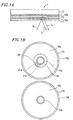
Figure 1A is a side view illustrating a structure
example of a rewritable multilayered disc 1 according to
an embodiment of the present invention.
Figure 1B is a plan view illustrating a structure
example of recording layers 10a and 10b.
Figure 1C is a plan view illustrating another
structure example of the recording layers 10a and 10b.
Figure 2 is an external view of an information
recording/reproducing device 100 according to an embodiment
of the present invention.
Figure 3 is a functional block diagram illustrating
a structure of the information recording/reproducing device
100 shown in Figure 2.
Figure 4 is a flowchart illustrating an operation
procedure of a disc drive section 200.
Figure 5 is a flowchart illustrating an operation
procedure of a layer information recording section 400.
Figure 6 is a flowchart illustrating an operation
procedure of a layer information reproducing section 600.
Figure 7 is a flowchart illustrating an operation
procedure of a write protection section 800.
Figure 8 is a diagram illustrating an example of
utilization of the rewritable multilayered disc 1.
BEST MODE FOR CARRYING OUT THE INVENTION
Hereinafter, embodiments of the present invention
will be described with reference to the drawings.
Figure 1A is a side view illustrating a structure
example of a rewritable multilayered disc 1 according to
an embodiment of the present invention.
The disc 1 includes: a transparent substrate 11; a
recording layer 10a as a first recording layer formed on
the transparent substrate 11; a transparent spacer layer 12
formed on the recording layer 10a; a recording layer 10b
as a second recording layer formed on the transparent spacer
layer 12; and a reflective layer 13 formed on the recording
layer 10b.
The structure of the disc 1 is not limited to the
structure shown in Figure 1A. The disc 1 may have any
structure as long as it has the recording layer 10a as the
first recording layer and the recording layer 10b as the
second recording layer. In the descriptions below, an
embodiment of the present invention will be described using
an example of a rewritable two-layer disc having two
recording layers. However, the present invention is not
limited to the rewritable two-layer disc. The present
invention may be applied to a rewritable N-layer disc having
N recording layers, where N is any integer equal to 2 or
greater.
The recording layers 10a and 10b are structured such
that recording and reproduction can be performed from one
of the faces of the disc 1. As shown in Figure 1A, incident
light I0 is reflected by the recording layer 10a and
propagates away from the disc 1 as reflected light I1.
Similarly, the incident light I0 is also reflected by the
recording layer 10b and goes away from the recording
layer 10b as reflected light I2.
The disc 1 is designed such that the absorption
ratio and the reflectance of the recording layers 10a and
10b are optimum for recording on the disc 1 from one face
thereof. Regarding details about physical property of the
rewritable multilayered disc, see Proceeding 5aV5 of the
59th scientific lecture meeting of the Japanese Society of
Applied Physics.
Figure 1B is a plan view illustrating a structure
example of the recording layers 10a and 10b.
The recording layer 10a includes, from the inner
circumference toward the outer circumference of the disc 1,
a lead-in region 14a, a layer information region 15a, a user
region 16a, and a lead-out region 17a in this order.
The lead-in region 14a is a region in which data is
not rewritable. The lead-in region 14a is, for example, a
pit region.
The layer information region 15a is a region in
which layer information 20 is recorded. The format of the
layer information 20 is predetermined. The layer
information 20 includes recording prohibition information
indicating whether or not user data is prohibited from being
recorded in a specific recording layer among the recording
layers 10a or 10b included in the disc 1. The layer
information 20 includes, for example, recording prohibition
information 21a indicating whether or not user data
is prohibited from being recorded in the recording layer 10a
and recording prohibition information 21b indicating
whether or not user data is prohibited from being recorded
in the recording layer 10b.
When the layer information 20 includes two bit
recording prohibition bits, the recording prohibition
information 21a is represented by the first recording
prohibition bit (MSB), and the recording prohibition
information 21b is represented by the second recording
prohibition bit (LSB).
When a value of the first recording prohibition bit
is one (true), user data recorded in the recording layer 10a
is prohibited from being rewritten. When the value of the
first recording prohibition bit is zero (false), the user
data recorded in the recording layer 10a is allowed to be
rewritten.
When a value of the second recording prohibition bit
is one (true), user data recorded in the recording layer 10b
is prohibited from being rewritten. When the value of the
second recording prohibition bit is zero (false), the user
data recorded in the recording layer 10b is allowed to be
rewritten.
The user region 16a is a region in which user data
is recorded. Any data can be recorded in any location in
the user data region 16a by a user (application program,
or system) which uses an information recording/reproducing
device (disc drive) for performing recording and
reproduction on the disc 1.
The access to the user region 16a is restricted by
the layer information 20 recorded in the layer information
region 15a. On the other hand, basically, access to the
layer information region 15a is not restricted by the layer
information 20 recorded in the layer information region 15a
or by user data recorded in the user region 16a. For example,
even when the layer information 20 recorded in the layer
information region 15a represents "recording prohibition"
on the recording layer 10a, it is possible to rewrite the
layer information 20 recorded in the layer information
region 15a of the recording layer 10a.
The recording layer 10b includes a lead-in region
14b, a user region 16b, and a lead-out region 17b in
this order from the inner circumference toward the outer
circumference of the disc 1. In an example shown in Figure
1B, there is no layer information region formed in the
recording layer 10b The access to the user region 16b is
restricted by the layer information 20 recorded in the layer
information region 15a of the recording layer 10a.
As described above, among a plurality of recording
layers included in the disc 1, the recording prohibition
information for all of these recording layers is recorded
in only a single recording layer, whereby it is possible
to read the recording prohibition information at high speed.
This is because only one-time focus control is required for
reading the recording prohibition information.
The layer information region 15b may be formed on
the recording layer 10b instead of forming the layer
information region 15a on the recording layer 10a. In this
case, contents of the layer information recorded in the layer
information region 15b are the same as those of the layer
information 20 recorded in the layer information region
15a.
Figure 1C is a plan view illustrating another
structure example of the recording layers 10a and 10b.
The structure of the recording layer 10a shown in
Figure 1C is identical to that of the recording layer 10a
shown in Figure 1B, and thus the descriptions thereof are
omitted.
The layer information region 15b is formed in the
recording layer 10b shown in Figure 1C. The same
information as the layer information 20 recorded in the
layer information region 15a of the recording layer 10a is
recorded in the layer information region 15b.
As described above, among a plurality of recording
layers included in the disc 1, the recording prohibition
information for all of the recording layers is recorded in
each recording layer, whereby, no matter where in the
recording layers a focal position of a light beam exists,
it is possible to read recording prohibition information
for a recording layer other than a recording layer where
the focal position of the light beam exists, without greatly
changing the focal position of the light beam. This allows
the operation between reception of a request from a user
and the recording operation to be performed at high speed.
Moreover, it is possible to know that recording in a specific
recording layer is prohibited without adjusting the focal
position of the light beam to the specific recording layer.
This allows the frequency of the access to the specific
recording layer to be decreased. As a result, in a system
such that the influence of a light beam for reproduction
is not negligible (e.g., a system for an optical disc
employing a phase shift mode), durability of the optical
disc can be increased.
Alternatively, among a plurality of recording
layers included in the disc 1, the recording prohibition
information for all of the recording layers may be recorded
in at least one of the recording layers. Alternatively,
recording prohibition information for a specific recording
layer may be recorded in a layer information region of the
specific recording layer whereas the recording prohibition
information for the specific recording layer may not be
recorded in a layer information region of a recording layer
other than the specific recording layer.
The layer information may include, in addition to
the recording prohibition information, authentication
information for authenticating an entity having authority
to rewrite the recording prohibition information. For
example, the layer information may be represented as a
structure having members such as recording prohibition bits
and authentication information. Alternatively, the layer
information may be represented as a list of the structure
having members such as recording prohibition bits and
authentication information.
By using the authentication information to identify
the entity having authority to rewrite the recording
prohibition information, the layer information can be
allowed to be rewritten on certain conditions. Rewriting
of the layer information is restricted in this manner, so
that the write protection can be provided to the disc 1 in
a more flexible and securer manner. For example, an
operating system (OS) may record the authentication
information and allow an application program to perform
dynamic recording by its decision. Alternatively, when
canceling of the recording prohibition is not preferable,
the recording prohibition may be locked by using a password
so as not to be cancelled.
Each of the recording layers 10a and 10b is divided
into a plurality of sectors (not shown). The term "sector"
described herein means a unit of data which can be recorded/reproduced
in one recording/reproducing operation.
The above-described layer information 20 may be
recorded in a sector. Alternatively, the same layer
information 20 may be duplicated and recorded in each of
the plurality of the sectors. In this manner, by duplicating
the layer information 20 and recording the duplicated layer
information 20 in the plurality of the sectors, even when
any malfunction occurs in one of the sectors in which the
layer information 20 is recorded, it is still possible to
read the layer information 20 from any sector other than
the malfunction sector. As a result, the tolerance for
malfunction sectors will be improved.
Each sector in the recording layers 10a and 10b is
designated by a sector address. Data is recorded in a sector
designated by the sector address, or data recorded in a
sector designated by the sector address is reproduced. Each
sector in the recording layers 10a and 10b has a preallocated
sector address. For example, the sector address may be
preallocated to each sector so as not to be duplicated in
the disc 1.
Figure 2 illustrates an external view of an
information recording/reproducing device (disc drive device)
100 according to an embodiment of the present
invention. The information recording/reproducing device
100 has a function of recording information in the
disc 1 and reproducing information recorded in the disc 1.
As shown in Figure 2, the information recording/reproducing
device 100 includes indicators 101a and
101b for indicating recording prohibition information
recorded in the disc 1, switches 102a and 102b used for
rewriting the recording prohibition information, and a slot
section 103 for inserting the disc 1 therein. The
indicators 101a and 101b are, for example, light emitting
diodes (LED). The switches 102a and 102b are, for example,
toggle switches.
The indicator 101a indicates recording prohibition
information for the recording layer 10a of the disc 1. For
example, the indicator 101a is lit up when data is prohibited
from being recorded in the recording layer 10a, whereas the
indicator 101a is turned off when data is allowed to be
recorded in the recording layer 10a. Similarly, the
indicator 101b indicates recording prohibition information
for the recording layer 10b of the disc 1.
The switch 102a is used for rewriting the recording
prohibition information for the recording layer 10a of the
disc 1. For example, when the switch 102a is turned on, the
recording prohibition information is rewritten so that data
is prohibited from being recorded in the recording
layer 10a; and when the switch 102a is turned off, the
recording prohibition information is rewritten so that data
is allowed to be recorded in the recording layer 10a.
Similarly, the switch 102b is used for rewriting the
recording prohibition information for the recording
layer 10b of the disc 1.
Figure 3 illustrates a structure of the information
recording/reproducing device 100 shown in Figure 2. The
information recording/reproducing device 100 includes: a
disc drive section 200 for controlling the recording and
reproducing of data in the disc 1; a layer information
recording section 400 for recording layer information in
the disc 1; a layer information reproducing section 600 for
reproducing layer information recorded in the disc 1; and
a write protection section 800 for determining based on the
layer information whether or not user data is prohibited
from being recorded in a specific recording layer in the
disc 1 and for deciding based on the determination result
whether or not the user data should be recorded in the
specific recording layer.
Functions of each of the sections may be implemented
by software (firmware) or may be implemented by hardware.
Alternatively, a part of the function of the sections may
be implemented by software (firmware) and other parts may
be implemented by hardware.
Hereinafter, the function and operation of each
section will be described in detail.
In the first place, function and operation of the
disc drive section 200 are described with reference to
Figures 3 and 4.
As shown in Figure 3, the disc drive section 200
includes a disc driving section 201, an optical pickup
section 202, a recording and reproducing section 203 for
controlling the disc driving section 201 and the optical
pickup section 202, and drive signal input/output section
204.
The disc driving section 201 includes a motor (not
shown) for rotating the disc 1 and a mechanism (not shown)
for controlling the motor. The optical pickup section 202
includes optical components (not shown) such as a
semiconductor laser and a light receiving element, and an
actuator (not shown).
Figure 4 illustrates an operation procedure of the
disc drive section 200.
At step 301, a drive signal is input to the drive
signal input/output section 204. The drive signal is input
to the drive signal input/output section 204 in a manner
conforming to a communication method used by the drive signal
input/output section 204. The term "drive signal" described
herein means digital data required for operating
the disc drive section 200. The drive signal includes a
sector address designating a sector to be accessed and
information designating either of a recording operation or
a reproducing operation. When the recording operation is
designated, the drive signal further includes digital data
to be recorded in the disc 1.
The digital data to be recorded in the disc 1 may
be data encoded for error correction or may be data scrambled
to improve maintainability.
A recording layer in the disc 1 which is to be
accessed may be specified by a sector address or may be
specified by a command for specifying the recording layer
in the disc 1 which is to be accessed. Such a command may
be input to the drive signal input/output section 204 apart
from the sector address.
At step 302, the drive signal input/output section
204 inputs the sector address to the recording and
reproducing control section 203.
At step 303, the recording and reproducing control
section 203 makes the optical pickup section 202 perform
a seek operation to move to the vicinity of the sector
designated by the sector address. In this seek operation,
if necessary, a focal position of a light beam emitted to
the disc 1 is changed (caused to jump) from one recording
layer to another recording layer.
At step 304, the recording and reproducing control
section 203 controls the disc driving section 201 so as to
change the number of rotations of the disc 1 to a proper
value.
At step 305, the recording and reproducing section
203 receives a reproduction signal from the light
pickup section 202 and reads a sector address from the
reproduction signal.
At step 306, the recording and reproducing control
section 203 determines whether or not it indicates a
corresponding sector (i.e., whether or not the sector
address read at step 305 matches the sector address
designated by the drive signal). When the determination at
step 306 is "YES", the process proceeds to step 307. When
the determination at step 306 is "NO", the process returns
to step 303 and the seek operation continues.
At step 307, the recording and reproducing control
section 203 receives from the drive signal input/output
section 204 information designating either of a recording
operation or a reproducing operation and causes the process
to branch based on the information. When the recording
operation is designated, the process proceeds to step 308.
When the reproducing is designated, the process proceeds
to step 310.
At step 308, the recording and reproducing control
section 203 outputs to the optical pickup section 202 a
recording laser power control signal for controlling the
power of a laser used for recording data.
At step 309, the optical pickup section 202 makes
the laser emit light according to the recording laser power
control signal, thereby recording the data in the disc 1.
At step 310, the recording and reproducing control
section 203 receives an analog reproduction signal from the
optical pickup section 202 and binarizes the analog
reproduction signal.
At step 311, the recording and reproducing control
section 203 outputs the binarized reproduction signal via
the drive signal input/output section 204.
Next, the function and operation of the layer
information recording section 400 are described with
reference to Figures 3 and 5.
As shown in Figure 3, the layer information
recording section 400 includes a layer information input
section 401 and a layer information-drive signal conversion
section 402. The layer information input section 401 is
connected to the switches 102a and 102b.
Figure 5 illustrates an operation procedure of the
layer information recording section 400.
At step 501, layer information is input to the layer
information input section 401. For example, when the
switch 101a is on and the switch 101b is off, two-bit data
(1-0; MSB-LSB) is input to the layer information input
section 401 as the layer information. A value of a first
bit (MSB) of the two-bit data is one, and a value of a second
bit (LSB) of the two-bit data is zero. This means that the
recording layer 10a of the disc 1 is write-protected and
the recording layer 10b of the disc 1 is not write-protected.
At step 502, the layer information-drive signal
conversion section 402 receives the layer information from
the layer information input section 401 and converts the
layer information into a drive signal. The drive signal is
generated so as to operate the disc drive section 200 such
that the layer information is recorded in a layer information
region of the disc 1. For example, the drive signal includes
a sector address of the layer information region of the
disc 1, information designating the recording operation,
and the layer information to be recorded in the layer
information region of the disc 1. The drive signal is output
to the drive signal input/output section 204 of the disc
drive section 200.
Next, the function and operation of the layer
information reproducing section 600 are described with
reference to Figures 3 and 6.
As shown in Figure 3, the layer information
reproducing section 600 includes a layer information
acquisition section 601, a reproduction signal-layer information
conversion section 602, and an output section 603.
The output section 603 is connected to the indicators 101a
and 101b.
Figure 6 illustrates an operation procedure of the
layer information reproducing section 600. Reproduction
of layer information is started in response to loading of
the disc 1 or in response to a start command from a user.
At step 701, the layer information acquisition
section 601 instructs the disc drive section 200 to
reproduce the layer information recorded in the disc 1.
This instruction is carried out by, for example, outputting
a drive signal including a sector address of the layer
information region of the disc 1 and information designating
the reproducing operation to the drive signal input/output
section 204 of the disc drive 200.
At step 702, the reproduction signal-layer
information conversion section 602 receives a reproduction
signal output from the drive signal input/output section 204
and converts the reproduction signal into layer information.
At step 703, the output section 603 outputs the
layer information. For example, the layer information
section is indicated by the indicators and 101b
connected to the output section 603. An output device such
as a monitor may be connected to the output section 603.
An inspection device having the disc drive section
200 and the layer information reproduction section 600
may be used for inspecting the disc 1 before the disc 1 is
shipped.
Next, the function and operation of the write
protection section 800 are described with reference to
Figures 3 and 7.
As shown in Figure 3, the write protection section
800 includes a data input section 801, a data recording
determination section 802, the layer information
acquisition section 601, and the reproduction signal-layer
information conversion section 602. The layer information
acquisition section 601 and the reproduction signal-layer
information conversion section 602 of the write protection
section 800 are components common to the layer information
reproduction section 600.
Figure 7 illustrates an operation procedure of the
write protection section 800.
At step 901, data (user data) to be recorded in the
disc 1 and a sector address indicating a position in the
disc 1 where the user data should be recorded are input to
the data recording determination section 802 via the data
input section 801. The data input section 801is connected
to a computer (not shown) provided outside the information
recording/reproducing device 100.
At step 902, the data recording determination
section 802 determines which one of the plurality of the
recording layers included in the disc 1 corresponds to the
input sector address. The correspondence between the
sector addresses of the disc 1 and the recording layers of
the disc 1 is predetermined. For example, the data
recording determination section 802 refers to a table
representing the correspondence so as to determine a
recording layer corresponding to the input sector address.
At step 903, the data recording determination
section 802 inquires layer information including recording
prohibition information for the recording layer which
corresponds to the input sector address, before instructing
the disc drive section 200 to record the user data in the
disc 1. Such an inquiry is achieved by, for example,
instructing the layer information acquisition section 601
to reproduce the layer information so as to acquire the layer
information output from the reproduction signal-layer
information conversion section 602.
At step 904, the data recording determination
section 802 determines whether or not the user data can be
recorded in the disc 1 based on the acquired layer
information.
When the acquired layer information indicates that
the user data is prohibited from being recorded in the
recording layer corresponding to the sector address, the
determination at step 904 is "No". In this case, the data
recording determination section 802 ends the process
without recording the user data in the disc 1.
When the acquired layer information indicates that
the user data is allowed to be recorded in the recording
layer corresponding to the sector address, the determination
at step 904 is "Yes". In this case, the process proceeds
to step 905.
At step 905, the data recording determination
section 802 outputs to the drive signal input/output
section 204 a drive signal instructing the disc drive
section 200 to record the user data in the disc 1. The drive
signal includes, for example, the sector address input to
the data recording determination section 802, information
designating the recording operation, and the user data input
to the data recording determination section 802.
It is also possible to structure an information
recording/reproducing device which does not have a function
of rewriting layer information recorded in the disc 1. Such
an information recording/reproducing device is not required
to include the layer information recording section 400 shown
in Figure 3, and only necessary to include the disc drive
section 200, the layer information reproduction section
600, and the write protection section 800 shown in
Figure 3.
As described above, according to the rewritable
multilayered disc of the present invention, it is possible
to separately write-protect each of the plurality of the
recording layers. Such protection for each layer cannot be
implemented in a single layer disc.
For example, assume a case where important data is
recorded in a specific recording layer in a multilayered
disc, and the recording operation in the specific recording
layer is prohibited using layer information. In this case,
a user is supposed to perform the recording operation in
a recording layer other than the specific recording layer.
Even if malfunction such as track slipping occurs during
the recording operation, there is less possibility that the
important data recorded in the specific recording layer is
affected by such malfunction. Thus, it is possible to
improve maintainability of the important data against
malfunction such as track slipping. As a result, managing
the important data and ordinary data in the same disc is
achieved with ease.
Figure 8 illustrates an example of utilization of
the rewritable multilayered disc 1.
In the initial setting of the disc 1, it is assumed
that data is allowed to be recorded in the recording
layer 10a (first recording layer) and the recording
layer 10b (second recording layer). That is, the first
recording layer is recordable, and the second recording
layer is also recordable.
At step 1001, the manufacturer records software
(e.g., commercial software) in the first recording layer
of the disc 1.
At step 1002, the manufacturer rewrites layer
information so as to prohibit data from being recorded in
the first recording layer of the disc 1. As a result, the
first recording layer is not recordable and the second
recording layer is recordable. Such rewriting of the layer
information may be performed by, for example, using the
information recording/reproducing device 100.
Alternatively, the layer information can be
rewritten by using a layer information recording/reproducing
device exclusively used for rewriting layer
information. The layer information recording/reproducing
device exclusively used for rewriting layer information is
not required to include the layer information reproduction
section 600 and the write protection section 800 shown in
Figure 3, but only necessary to include disc drive section
200 and the layer information recording section 400
shown in Figure 3.
At step 1003, the manufacturer ships the disc 1 to
a retail shop.
At step 1004, before selling the disc 1 to a user,
the retail shop records in the second recording layer user
authentication information required for authenticating the
user.
At step 1005, the retail shop rewrites the layer
information so as to prohibit data from being recorded in
the second recording layer of the disc 1. As a result, the
first recording layer is not recordable, and the second
recording layer is not recordable.
At step 1006, the user uses the disc 1 as a read-only
memory. A reproducing device for reproducing the disc 1 has
a user authentication system. The user authentication
system requires the user to input the user authentication
information before loading the software recorded in the
disc 1. The user authentication system determines whether
or not the user authentication information which is input
by the user matches the user authentication information
recorded by the retail shop in the disc 1. When these two
pieces of the user authentication information match each
other, the user authentication system allows the user to
use the software recorded in the disc 1.
As described above, by using the rewritable
multilayered disc 1, the retail shop can record the user
authentication information in the recording layer which is
different from the recording layer in which the software
is recorded by the manufacturer. This can avoid a risk of
mistakenly erasing the software recorded in the disc 1 when
the retail shop records the user authentication information
in the disc 1. Moreover, even if malfunction such as track
slipping occurs when the retail shop is at work on recording
the user information in the disc 1, there is less possibility
that the recording layer in which the software is recorded
is affected by such malfunction.
Recording in all recording layers of the disc 1 is
prohibited before the disc 1 is sold to the user. This can
avoid a risk that the software or the user authentication
information recorded in the disc 1 is mistakenly erased by
the user.
At step 1007, the manufacturer collects the disc 1
from the user in order to upgrade the software recorded in
the disc 1.
At step 1008, the manufacturer rewrites the layer
information so as to allow data to be recorded in the first
recording layer of the disc 1. As a result, the first
recording layer is recordable and the second recording layer
is not recordable.
At step 1009, the manufacturer writes a new version
of the software over the old version of the software in the
first recording layer of the disc 1.
At step 1010, the manufacturer rewrites the layer
information so as to prohibit data from being recorded in
the first recording layer of the disc 1. As a result, the
first recording layer is not recordable and the second
recording layer is not recordable.
At step 1011, the manufacturer reships the disc 1.
As described above, by using the rewritable
multilayered disc 1, the manufacturer can write the new
version of the software over the old version of the software
in the recording layer which is different from the recording
layer in which the user authentication information is
recorded by the retail shop. This can avoid a risk that the
user authentication information recorded in the disc 1 is
mistakenly erased by the manufacturer when the new version
of the software is written over the old version of the
software in the disc 1.
As described above, the software can be upgraded in
the same disc. This cannot be implemented in a disc which
is not rewritable such as a CD-ROM.
Instead of the manufacturer which collects the
disc 1 from the user, the user may download installer
software and the new version of the software to a terminal
via a network such as the Internet. In this case, the layer
information of the disc 1 is rewritten by the downloaded
installer software. The installer software installs the
new version of the software in the disc 1 after rewriting
the layer information so as to allow data to be recorded
in the first layer of the disc 1 (i.e., the first recording
layer is recordable). After that, the installer software
rewrites the layer information again so as to prohibit data
from being recorded in the first recording layer of the
disc 1 (i.e., the first recording layer is not recordable).
Such rewriting of the layer information may be performed,
for example, by using the information recording/reproducing
device 100.
The rewritable multilayered disc 1 can be used in
various cases. For example, when more than one person share
the same disc 1, data is prohibited from being recorded in
the same recording layer of the disc 1 by more than one person,
or the disc 1 is write-protected by providing an
authentication system which identifies application programs
to be prohibited from being recorded. Thus, the disc 1
can be used in more flexible manner.
(1) For example, when more than one person share the
same disc, in many cases, it is necessary to prevent
operation performed in one region from affecting the other
region. If anything, when malfunction occurs during the
operation performed in one region, the other region should
be prevented from being damaged. One typical example is a
case where a parent and a child share one disc. There is
a need for restraining the child from accessing the contents
included in a region used by the parent, or there is a need
for avoiding a problem such that the disc is mistakenly
formatted by the child.
Assume that a rewritable two-layer disc having a
first recording layer and a second recording layer is used
by a user A and a user B. The first and second recording
layers are respectively divided into a plurality of sectors,
sector addresses which are serial numbers through the first
and second recording layers are allocated to each sector
in the first and second recording layers. The user A is
authorized to access a region A, and the user B is authorized
to use a region B.
In order to implement such authorization for each
user, for example, there is a method for defining a group
of sectors in which there is a file system for managing all
sectors in the disc as a volume for the user A and defining
another group of sectors as a volume for the user B.
In the case where malfunction such as track slipping
occurs while recording data in a sector, there is a
possibility that other sectors in the same recording layer
are damaged. Accordingly, in order to prevent the
malfunction occurred while the region A is used by the user A
from affecting the region B, it is preferable that each of
the sectors is allocated so as to correspond to a segment
of the recording layer. That is, it is preferable to use
a file system which can establish access authority for a
unit of the recording layer.
The case where the user A desires to use the region A
in a logical format which is different from that of the
region B can also be considered. In this case, in order to
prevent the region B for the user B from being mistakenly
formatted by formatter software which logically formats a
disc, the region B is required to be individually
write-protected apart from the user region which can be
logically formatted.
(2) When the manufacturer uses a rewritable disc for
distributing software, the same distributed disc is
collected and an old version of the software is erased
therefrom, or an old version of the software is erased from
the same distributed disc via a network, whereby, a new
version of the software can be installed in the same disc.
However, in the case where the software is distributed with
the rewritable disc, there is a risk of mistakenly erasing
data.
By using the rewritable multilayered disc, it is
possible to implement write protection for each layer. As
a result, the software can be upgraded in the same disc
without involving a risk of mistakenly erasing data.
As described above, by performing upgrade service
to the same disc, users will not possess different versions
of software. Thus, user can avoid misuse of the software,
and the manufacturer can have the advantage of performing
user support more securely. Moreover, in comparison to a
conventional operation method in which an old disc is
collected and a new disc is supplied, consumption of discs
can be reduced. This leads to implementation of an eco-friendly
recycling society.
(3) In a host computer, called a home server, of a
domestic LAN, all equipment is controlled in parallel. Thus,
there can be a case where a plurality of application programs
share the same disc. However, it is expected that frequency
in access to the disc is diverse among the application
programs.
In a phase shift type optical disc such as a DVD-RAM,
it is known that a recording layer is damaged when the disc
is reproduced. Accordingly, when one disc is used by two
types of application programs, and frequency in use of the
disc between the application programs is extremely different,
it is preferable that a seek operation for accessing a region
which is used more frequently does not affect a region which
is used less frequently.
For example, in a real-time recording and
reproducing system for moving pictures, a region in which
storing and erasing of cache data are repeated and a storage
region of a system (kernel) are different in so far as a
frequency of being accessed. The former repeats recording
and reproducing over and over during picture recording,
whereas the latter completes its operation after loading
DRAM at the startup of the system.
The reliability may be occasionally diverse for each
application program. The reliability of an application
program under development is particularly low. When the
same memory is shared and used by the plurality of the
application programs, a system in which all components are
caused to be down when malfunction occurs in one component
lacks maintainability. A memory protection function among
application programs in a DRAM is a basic function provided
to an up-to-date OS such as UNIX. However, there is no
precedent for such a protection function in the rewritable
disc which has portability and is expected to be used in
a plurality of systems. Accordingly, when durability for
each recording layer causes a problem, it is important to
provide the memory protection function among application
programs in consideration of the segments of the recording
layer.
As the capacity of a medium becomes larger, and a
technique for compressing digital contents is improved,
application programs which use a single medium in different
systems for many purposes are expected to be increased. The
importance of mutual protection of a memory in a disc shared
by a plurality of users or a plurality of application
programs (systems) is expected to be greater in the future.
For the purpose of the rewritable multilayered disc, it is
useful to establish access authority for each layer in
consideration of the memory protection.
INDUSTRIAL APPLICABILITY
According to a rewritable multilayered disc of the
present invention, a layer information region is provided
in at least one of a plurality of recording layers. In the
layer information region, layer information including
recording prohibition information which indicates whether
or not user data is prohibited from being recorded in a
specific recording layer of the plurality of the recording
layers may be recorded. This allows the specific recording
layer among the plurality of the recording layers to be
write-protected.