EP1186736A1 - Procédé de sécurisation d'une communication pour un système d'accès dit "Mains libres" - Google Patents
Procédé de sécurisation d'une communication pour un système d'accès dit "Mains libres" Download PDFInfo
- Publication number
- EP1186736A1 EP1186736A1 EP01121540A EP01121540A EP1186736A1 EP 1186736 A1 EP1186736 A1 EP 1186736A1 EP 01121540 A EP01121540 A EP 01121540A EP 01121540 A EP01121540 A EP 01121540A EP 1186736 A1 EP1186736 A1 EP 1186736A1
- Authority
- EP
- European Patent Office
- Prior art keywords
- signal
- recognition device
- identification
- reception
- vehicle
- Prior art date
- Legal status (The legal status is an assumption and is not a legal conclusion. Google has not performed a legal analysis and makes no representation as to the accuracy of the status listed.)
- Withdrawn
Links
Images

Classifications
-
- G—PHYSICS
- G07—CHECKING-DEVICES
- G07C—TIME OR ATTENDANCE REGISTERS; REGISTERING OR INDICATING THE WORKING OF MACHINES; GENERATING RANDOM NUMBERS; VOTING OR LOTTERY APPARATUS; ARRANGEMENTS, SYSTEMS OR APPARATUS FOR CHECKING NOT PROVIDED FOR ELSEWHERE
- G07C9/00—Individual registration on entry or exit
- G07C9/20—Individual registration on entry or exit involving the use of a pass
- G07C9/28—Individual registration on entry or exit involving the use of a pass the pass enabling tracking or indicating presence
Definitions
- the invention relates to a method for securing a communication. between a recognition device and an identification device capable of communicate with the recognition device so that the recognition device can authenticate the identification unit for control the unlocking of the sashes of a vehicle and / or authorize the starting a vehicle, in which authentication is based on a evaluation by the reaction time recognition device corresponding to the time that elapses between the emission by the recognition of a first signal towards the identification body and the reception by the recognition device of a second transmitted signal by the identification body in response to the first signal.
- bidirectional communication in the form data exchange between the recognition device and the organ the purpose of identification is generally that the recognition device authenticates the identification body on the one hand by verifying its signature and on the other hand by evaluating a reaction time in the exchange of data.
- the evaluation of a reaction time aims to detect a hacking by repeater: if a first pirate, equipped with a first transmitter-receiver relay, located near the vehicle, is in connection with a second hacker, equipped with a second transmitter-receiver relay located near the bearer of the identification device, the two hackers are able to trigger a data exchange between the recognition device and the identification unit, without the knowledge of the holder of the identification unit.
- the repeater thus constituted necessarily increases the time of reaction in the exchange of data between the recognition device and the identification body.
- the first signals and the second signals are pulses, and the device recognition assesses reaction time based on one or more several measurements of the time interval between the emission of a first impulse signal and receiving the second impulse signal corresponding.
- the recognition device detects the moment of reception of a second impulse signal taking into account the moment when the rising edge of the second impulse signal received reaches a certain reference threshold value.
- the defect of such a solution is that the evaluation of the reaction time is influenced by the reception level of the second impulse signals by the recognition device: the lower this level of reception, the more the evaluation of the reaction time is distorted.
- the object of the invention is to remedy this drawback.
- the subject of the invention is a method for securing a communication between a recognition device and an organ identification capable of communicating with the device for recognizing so that the recognition device can authenticate the organ of identification to control the unlocking of a vehicle's sashes and / or authorize the starting of a vehicle, in which authentication is based on an evaluation by the time recognition device reaction corresponding to the time which elapses between the emission by the device for recognizing a first signal towards the organ identification and receipt by the recognition device of a second signal from the identification body in response to the first signal, characterized in that each second signal is amplified by the device recognition to have a maximum amplitude corresponding to a maximum reference amplitude, and in that the evaluation of the time of reaction is based on measuring a time interval between the instant of emission of a first signal and the instant at which the second signal corresponding amplified reaches a reference threshold value.
- Such a method makes the accuracy of the evaluation of the reaction time is not conditioned by the vagaries of the transmission between the organ identification and recognition device, particularly in the case of a system where the pulses have a slow rise time introducing an additional difficulty for hacking. Indeed, it will introduce a delay all the longer as it will have to detect an impulse with a time slow climb. Pulse detection is made necessary for the synchronization of hacking cases, even if they are content with copy the spectrum.
- the identification organ transmits in the direction of the recognition device a calibration signal so that the device recognition adjusts the amplification according to a reception level of said calibration signal, and secondly the device for recognition issues towards the identification body several first successive signals to which the identification body responds with the emission of second corresponding signals, each second signal being emitted upon reception of the first corresponding signal, a process is obtained which performs automatic gain control for each authentication of the identification body by the recognition device, for a cost of reduced manufacturing.
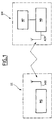
- Figure 1 is a schematic representation of an access system hands free.
- Figure 2 is a graphical representation of the influence of the level of reception on the accuracy of the evaluation of a reaction time.
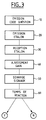
- Figure 3 is a schematic representation in the form of a flow chart of the method according to the invention.
- Figure 1 shows schematically a recognition device DR and an OI identification unit for a so-called “hands-free” access system.
- the DR recognition device which is positioned in the vehicle includes an ADR transmitter and receiver antenna coupled to a MD modulator-demodulator which communicates with an MC microcontroller.
- the identification unit comprises an AOI transmitting antenna which is coupled with an MG management module.
- the identification body and the recognition device can exchange information by radiofrequency transmission so as to implement a protocol of identification of the identification body by the recognition device.
- Such a protocol generally includes an evaluation of the reaction time corresponding to the time which elapses between the emission of a first signal by the recognition device and the reception by the device recognition of a second signal emitted by the identification body in response to the first signal, so as to detect the presence of a device of hacking which necessarily increases the reaction time.
- the signals exchanged during such a protocol identification signals are generally impulse signals, such so that the recognition device successively transmits several first signals which are timing tops, and the organ identification responds to each synchronization signal by issuing a second corresponding signal which is a response bit.
- the identification unit must for example provide the series of bits 1011 for identify himself to the recognition device, he will issue a impulse upon receipt of a first synchronization signal sent by the recognition device, do not send anything after receiving a second synchronization signal, send a pulse after reception of the third synchronization signal, and send a pulse after reception of the fourth synchronization top. So the recognition device can reconstruct the series of bits sent by the identification unit, and know the reaction time by evaluating the time between the program synchronization signal and reception of the pulse emitted by the device recognition, for the first, third and fourth response bits.
- the reception level of the transmitted pulses by the identification organ is conditioned by several parameters such as the position of the AOI antenna of the identification unit with respect to the ADR antenna of the recognition device, or by the electromagnetic disturbances introduced by the environment. So the level of reception of signals emitted by the identification unit is different for each data exchange, which more or less distorts the evaluation of the reaction time of the identification body.
- a second impulse signal SS as it can be received by the recognition device has been represented graphically, as well as the reference threshold value VSR corresponding to the threshold for detection of a pulse by the recognition device
- the evaluation of the instant of reception of the second impulse signal depends on the level of reception of this signal. Indeed, if the reception level is high, as for the IH form, the threshold value VSR is reached at an instant t 1 , while for the IB form corresponding to a lower reception level, the threshold value is reached at an instant t 2 , with t 2 > t 1 .
- the evaluation of a reaction time is all the more false the lower the reception level.
- This amplified signal SSA is the signal received at a high or low level which has been amplified so that its maximum amplitude corresponds to a maximum amplitude of AMR reference, thus, this amplified signal SSA corresponds just as well to the amplification of the second signal SS that it was received at a high level IH, or at a low level IB.
- time t 0 at which the second amplified signal SSA reaches the reference threshold value is then independent of the level of reception of the second signal by the recognition device.
- FIG 3 there is shown in the form of a flowchart a identification protocol, making it possible to see in particular how the amplification level to be applied by the recognition device to a series of second signals can be chosen.
- the device for DR recognition mounted in the vehicle emits a code called question code towards the identification body.
- This first broadcast corresponding to the start of the protocol could for example be triggered by the support of the vehicle driver on a button on a door.
- This question code is intended to be processed by the identification body which may be an identifier located in the driver's pocket, so that the identification body subsequently emits a response code towards the recognition device so that the latter recognizes the signature of the identification body.
- the identification unit emits a standard signal which may by example be a long-lasting pulse so that the recognition device evaluates at 30 the level of reception of signals emitted by the identification unit and deduce the amplification therefrom apply.
- Each receiver in the identifier or the vehicle
- Two types of corrections can be implemented in 40. The first consists in measuring the level and tabulating a delay or an advance depending on the level. For example a tension analog (which reflects the level) can be converted into a byte to get a tabulated advance or delay in the precontroller. The second is to correct the level so that the signal is of constant amplitude before the threshold (fig. 2). This implies an automatic gain correction.
- the recognition device will emit the first signals which are synchronization tops so that the identification organ emits corresponding second signals in response so as to transmit the response bit sequence to the recognition device.
- These second signals could be an impulse emitted upon reception of the top of corresponding synchronization if the bit to be transmitted is 1, and none pulse if the bit to be transmitted is 0.
- the microcontroller will be able to record the moments when the tops of synchronization and the times when the second amplified signals are received Corresponding SSA, in order to calculate in 60 the reaction time of the identification body. Finally, the evaluated reaction time will be judged satisfactory if it is less than a reference reaction time, and too much important if it is greater than this reference reaction time.
- the method according to the invention adapts to a protocol standard identification without requiring significant modifications to the protocol, and therefore allows an improvement in the evaluation accuracy of the reaction time for a very low manufacturing cost.
Landscapes
- Physics & Mathematics (AREA)
- General Physics & Mathematics (AREA)
- Lock And Its Accessories (AREA)
Abstract
Description
Claims (3)
- Un procédé de sécurisation d'une communication entre un dispositif de reconnaissance (DR) et un organe d'identification (OI) apte à communiquer avec le dispositif de reconnaissance de manière à ce que le dispositif de reconnaissance puisse authentifier l'organe d'identification pour commander le déverrouillage d'ouvrants d'un véhicule et/ou autoriser le démarrage d'un véhicule, dans lequel l'authentification est basée sur une évaluation par le dispositif de reconnaissance d'un temps de réaction correspondant au temps qui s'écoule entre l'émission par le dispositif de reconnaissance d'un premier signal en direction de l'organe d'identification et la réception par le dispositif de reconnaissance d'un second signal (SS) émis par l'organe d'identification en réponse au premier signal, caractérisé en ce que chaque second signal (SS) est amplifié par le dispositif de reconnaissance pour avoir une amplitude maximale correspondant à une amplitude maximale de référence (AMR) encore appelée correction automatique de gain, et en ce que l'évaluation du temps de réaction est basée sur la mesure d'un intervalle de temps s'écoulant entre l'instant d'émission d'un premier signal et l'instant auquel le second signal amplifié (SSA) correspondant atteint une valeur seuil de référence (VSR).
- Le procédé de sécurisation selon la revendication 1, dans lequel dans un premier temps l'organe d'identification émet en direction du dispositif de reconnaissance un signal d'étalonnage (20) pour que le dispositif de reconnaissance ajuste l'amplification (40) en fonction d'un niveau de réception dudit signal d'étalonnage (30), et dans un second temps (50) le dispositif de reconnaissance émet en direction de l'organe d'identification plusieurs premiers signaux successifs auxquels l'organe d'identification répond par l'émission de seconds signaux correspondants (SS), chaque second signal étant émis dès réception du premier signal correspondant.
- Un procédé de sécurisation d'une communication entre un dispositif de reconnaissance (DR) et un organe d'identification (OI) apte à communiquer avec le dispositif de reconnaissance de manière à ce que le dispositif de reconnaissance puisse authentifier l'organe d'identification pour commander le déverrouillage d'ouvrants d'un véhicule et/ou autoriser le démarrage d'un véhicule, dans lequel l'authentification est basée sur une évaluation par le dispositif de reconnaissance d'un temps de réaction correspondant au temps qui s'écoule entre l'émission par le dispositif de reconnaissance d'un premier signal en direction de l'organe d'identification et la réception par le dispositif de reconnaissance d'un second signal (SS) émis par l'organe d'identification en réponse au premier signal, caractérisé en ce que le niveau du signal est mesuré et une correction temporelle est tabulée par un micro-contrôleur.
Applications Claiming Priority (2)
| Application Number | Priority Date | Filing Date | Title |
|---|---|---|---|
| FR0011458A FR2814015B1 (fr) | 2000-09-08 | 2000-09-08 | Procede de securisation d'une communication pour un systeme d'acces dit "mains libres" |
| FR0011458 | 2000-09-08 |
Publications (1)
| Publication Number | Publication Date |
|---|---|
| EP1186736A1 true EP1186736A1 (fr) | 2002-03-13 |
Family
ID=8854097
Family Applications (1)
| Application Number | Title | Priority Date | Filing Date |
|---|---|---|---|
| EP01121540A Withdrawn EP1186736A1 (fr) | 2000-09-08 | 2001-09-10 | Procédé de sécurisation d'une communication pour un système d'accès dit "Mains libres" |
Country Status (2)
| Country | Link |
|---|---|
| EP (1) | EP1186736A1 (fr) |
| FR (1) | FR2814015B1 (fr) |
Citations (3)
| Publication number | Priority date | Publication date | Assignee | Title |
|---|---|---|---|---|
| DE19802526A1 (de) * | 1998-01-26 | 1999-07-29 | Bosch Gmbh Robert | Vorrichtung zur Kontrolle der Zugangsberechtigung |
| US5983347A (en) * | 1996-08-08 | 1999-11-09 | Daimlerchrysler Ag | Authentication device with electronic authentication communication |
| DE19941428A1 (de) * | 1998-09-02 | 2000-06-15 | Marquardt Gmbh | Schließsystem, insbesondere für ein Kraftfahrzeug |
-
2000
- 2000-09-08 FR FR0011458A patent/FR2814015B1/fr not_active Expired - Fee Related
-
2001
- 2001-09-10 EP EP01121540A patent/EP1186736A1/fr not_active Withdrawn
Patent Citations (3)
| Publication number | Priority date | Publication date | Assignee | Title |
|---|---|---|---|---|
| US5983347A (en) * | 1996-08-08 | 1999-11-09 | Daimlerchrysler Ag | Authentication device with electronic authentication communication |
| DE19802526A1 (de) * | 1998-01-26 | 1999-07-29 | Bosch Gmbh Robert | Vorrichtung zur Kontrolle der Zugangsberechtigung |
| DE19941428A1 (de) * | 1998-09-02 | 2000-06-15 | Marquardt Gmbh | Schließsystem, insbesondere für ein Kraftfahrzeug |
Also Published As
| Publication number | Publication date |
|---|---|
| FR2814015A1 (fr) | 2002-03-15 |
| FR2814015B1 (fr) | 2002-10-11 |
Similar Documents
| Publication | Publication Date | Title |
|---|---|---|
| EP1394719A1 (fr) | Ajustement des paramètres de détection, d'émission et/ou de réception d'un lecteur RFID en fonction du bruit électromagnétique ambiant | |
| WO2001054371A3 (fr) | Procede et systeme de transmission de donnees d'un emetteur vers un recepteur et emetteur ou recepteur a cet effet | |
| MXPA04006223A (es) | Sistema y metodo para sondear una unidad de datos de protocolo de una memoria intermedia de transmision. | |
| EP1821261A1 (fr) | Procédé et dispositif de condamnation automatique des portes d'un véhicule | |
| EP2143080B1 (fr) | Procede de detection d'un objet d'identification dans un vehicule | |
| WO2018154211A1 (fr) | Détection de présence d'une main humaine sur un ouvrant de véhicule | |
| EP1058214A1 (fr) | Procédé de transmission bidirectionnelle de données, et système pour sa mise en oeuvre | |
| EP1152109B1 (fr) | Système pour le démarrage et/ou l'accès mains libres d'un véhicule automobile | |
| WO2003005309A1 (fr) | Procede de deverrouillage 'sans cle' d'une porte d'acces a un espace clos | |
| FR2807899A1 (fr) | Procede de securisation d'une communication pour un systeme d'acces dit "mains libres" | |
| FR2814015A1 (fr) | Procede de securisation d'une communication pour un systeme d'acces dit "mains libres" | |
| FR2822117A1 (fr) | Procede d'initialisation d'un dispositif antivol pour vehicule automobile | |
| WO2020260033A1 (fr) | Procédé d'activation d'une fonction d'un véhicule par ultra haute fréquence avec un équipement portable d'utilisateur et dispositif d'activation d'une fonction associé | |
| FR2843240A1 (fr) | Procede de commande d'antennes d'un systeme mains libres d'un vehicule automobile et dispositif correspondant | |
| FR2828967A1 (fr) | Procede d'autorisation de deverrouillage et/ou de demarrage d'un vehicule automobile et dispositif associe | |
| FR3089736A1 (fr) | Procédé de détermination de la distance entre un dispositif d’authentification et un véhicule | |
| WO2002001245A3 (fr) | Systeme et procede pour determiner la frequence d'un signal de transmission par rafales coherent | |
| FR2808549A1 (fr) | Systeme d'acces dit mains libres pour vehicule automobile | |
| EP1320080A1 (fr) | Système et procédé de détection du passage d'un individu ou d'un objet par une entrée-sortie à un espace délimité | |
| FR3120939A1 (fr) | Procede de determination de la position d’un equipement portable par rapport a un vehicule automobile et equipement portable associe | |
| FR2493567A1 (fr) | Detecteur de proximite | |
| EP1041225B1 (fr) | Système pour sécuriser une transmission bidirectionnelle de données entre un identifiant et un identifieur | |
| EP1061211B1 (fr) | Procédé pour sécuriser une transmission bidirectionnelle de données avec un identifiant et système pour sa mise en oeuvre | |
| EP1630983A4 (fr) | Dispositif de reception de signaux optiques et procede de commande de point de discrimination de numerisation de celui-ci | |
| FR2834398A1 (fr) | Procede d'emission d'une requete vers un badge |
Legal Events
| Date | Code | Title | Description |
|---|---|---|---|
| PUAI | Public reference made under article 153(3) epc to a published international application that has entered the european phase |
Free format text: ORIGINAL CODE: 0009012 |
|
| AK | Designated contracting states |
Kind code of ref document: A1 Designated state(s): DE ES FR GB IT Kind code of ref document: A1 Designated state(s): AT BE CH CY DE DK ES FI FR GB GR IE IT LI LU MC NL PT SE TR |
|
| AX | Request for extension of the european patent |
Free format text: AL;LT;LV;MK;RO;SI |
|
| 17P | Request for examination filed |
Effective date: 20020913 |
|
| AKX | Designation fees paid |
Free format text: DE ES FR GB IT |
|
| RAP1 | Party data changed (applicant data changed or rights of an application transferred) |
Owner name: VALEO SECURITE HABITACLE |
|
| RAP1 | Party data changed (applicant data changed or rights of an application transferred) |
Owner name: VALEO SECURITE HABITACLE S.A.S. |
|
| 17Q | First examination report despatched |
Effective date: 20040702 |
|
| GRAP | Despatch of communication of intention to grant a patent |
Free format text: ORIGINAL CODE: EPIDOSNIGR1 |
|
| STAA | Information on the status of an ep patent application or granted ep patent |
Free format text: STATUS: THE APPLICATION IS DEEMED TO BE WITHDRAWN |
|
| 18D | Application deemed to be withdrawn |
Effective date: 20050219 |