BACKGROUND OF THE INVENTION
The present invention relates to a system for
controlling coming and going personnel at an important
facility such as a nuclear power plant and the like.
A conventional gate for controlling the coming and
going personnel is operated only for checking whether a
person is qualified to enter a control area or not. For
instance, in order to check the qualification of a coming
person, various personal information are stored in the
system; the coming person makes the system read his ID
card and the like in order to make the system identify
his personal information; and the system judges whether
the person is qualified to enter the control area or not
by retrieving his personal information based on the input
from his ID card and the like.
The gate for controlling the coming and going
personnel is at least provided with a card reader for
reading the ID card and a gate to control passage of the
coming and going personnel. Whether the coming person
carries a dangerous substance with him or not is checked
by a metal detector and the like used in air ports and
other various places other than the gate for controlling
the coming and going personnel, and the passage of the
coming person is manually controlled. An example of prior
art of a facility to control the coming and going personnel
is disclosed in JP-A-11-352032 (1999).
In accordance with the prior art, only a metallic
product is detected as a dangerous substance. If the
control area is a power station, for instance, metallic
tools and the like are brought in frequently, and the
coming person has to bring in the tools through another
gate than a gate for controlling the coming person.
Moreover, because only a metallic product is detected,
the prior art is not effective when dangerous explosives
are brought in. Accordingly, a gate for controlling the
coming and going personnel, which can readily detect
dangerous explosives in addition to control coming and
going personnel, is required.
Summary of the Invention
One of the objects of the present invention is to
provide a system for controlling coming and going
personnel at a facility, in order to distinguish a coming
person who dealt with dangerous substance and to prevent
the facility from causing a hazardous accident previously.
In order to achieve the above object, the system for
controlling coming and going personnel of the present
invention comprises the steps of:
Brief Description of the Drawings
FIG. 1 is a schematic perspective view of a coming
and going personnel control gate indicated as an
embodiment of the present invention,
FIG. 2 is a schematic horizontal cross sectional view
of the coming and going personnel control gate shown in
FIG. 1,
FIG. 3 is a schematic perspective view of a panel
plate indicating an interior of the coming and going
personnel control gate shown in FIG. 1 and FIG. 2,
FIG. 4 is a partial cross sectional view of the palm
shape detector shown in FIG. 3,
FIG. 5 is a plan view of the palm shape detector shown
in FIG. 4 looking downward,
FIG. 6 is a block diagram of control processing for
explaining control of processing route of the equipment
shown in FIG. 2 to FIG. 5,
FIG. 7 is a cross sectional view of the coming and
going personnel control gate for explaining the steps of
making a person enter a control area from outside, and
making the person go out from the control area through
the equipment shown in FIG. 1 to FIG. 6,
FIG. 8 is a cross sectional view of the coming and
going personnel control gate for explaining the steps of
making a person enter a control area from outside, and
making the person go out from the control area through
the equipment shown in FIG. 1 to FIG. 6,
FIG. 9 is a cross sectional view of the coming and
going personnel control gate for explaining the steps of
making a person enter a control area from outside, and
making the person go out from the control area through
the equipment shown in FIG. 1 to FIG. 6,
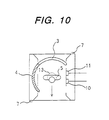
FIG. 10 is a cross sectional view of the coming and
going personnel control gate for explaining the steps of
making a person enter a control area from outside, and
making the person go out from the control area through
the equipment shown in FIG. 1 to FIG. 6, and
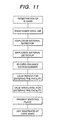
FIG. 11 is a flow chart for explaining an example
of checking methods using an ID card and a palm shape data
with the coming and going personnel control system.
Description of the Preferred Embodiments
FIG. 1 indicates a coming and going personnel
control gate, of which cross section is indicated in FIG.
2. FIG. 3 indicates an interior of the coming and going
personnel control gate partially, and FIG. 4 and FIG. 5
indicate a part of the palm shape detector.
The coming and going personnel control gate 1 shown
in FIG. 1 is provided with a control area 2 between outside
and inside of the facility. The control area has an
entrance door 3 and the exit door 4 between outside and
inside of the control area. These doors are operated by
the door driving controller 21 shown in FIG. 6.
As shown in FIG. 1 and FIG. 2, the entrance door 3
controls the coming person 5 who passes through the gate,
and an exit door 4 is provided at a side opposite to the
entrance door. When a coming person 5 wants to enter the
control area, the coming person judges first whether the
coming and going personnel control gate is capable of
operation or not by watching a display lamp 6. If the
coming and going personnel control gate is operable, the
coming person enters inside of the coming and going
personnel control gate, i.e. the control area 2, by
pushing an area-entering button 7. After the coming
person entered the control area 2, the entrance door 4
is closed, and the coming person is enclosed in the control
area of the coming and going personnel control gate. A
path panel 9 shown in FIG. 9 is provided in the control
area, and the coming person 5 let a card reader 10z read
his ID card first.
The coming and going personnel control system
displays a guidance to put a hand onto the palm shape
detector 10 on a display apparatus 8 after reading the
ID card, i.e. a personal identification means. When the
coming person 5 puts his hand onto the palm shape detector
10, air in the vicinity of hand of the coming person 5
is sucked by a suction pipe 11 and sent to a mass
spectrometer 12. The guidance to put hand onto the palm
shape detector 10 may also be displayed on the display
apparatus 8 at a time when the coming person 5 enters the
control area 2.
The palm shape detector 10 comprises a reflecting
mirror 10b supported on a supporter 10a as shown in FIG.
4 and FIG. 5, and inclined mirrors 10c supported on
inclined supporters at both left and right sides of the
reflecting mirror 10b. When the hand 5a of the coming
person 5 is placed on the reflecting mirror 10b, the palm
shape 5b of the coming person 5 and a thickness T of the
hand of the coming person are detected by the reflecting
mirror 10 and the inclined mirrors 10c from a direction
indicated by arrows, and input into the control processor
20 shown in FIG. 6 as plural personal palm shape data
by a digital camera (CCD) provided at an upper portion
of the mirrors. In accordance with the ID number read
from the ID card 10z, the palm shape data of the coming
person is retrieved from plural personal palm shape data
which have been previously stored in the control processor
20. Although both ID card and the palm shape data can
be used, a case only the palm shape data are used is
explained in the following embodiment.
The air contacted with the coming person 5 is sucked
into a corona discharging device 12a of the mass
spectrometer, the air is ionized by the corona discharging
device 12a, and molecular weight of the air is detected
by the mass spectrometer. The molecular weight is input
into the control processor 20. Palm shape data of coming
personnel who pass through the control area routinely are
registered previously in the control processor 20.
Further, molecular weight of dangerous substances, for
instance, explosives, drugs, and the like are registered
in the control processor 20.
Then, steps of passing through the control area 2
into the facility of the coming person 5 who entered the
control area from outside are explained hereinafter
referring to FIG. 6 to FIG. 10.
The entrance door 3 and the exit door 4 are in a closed
condition as shown in FIG. 7. Under this condition, the
coming person 5 looks at the display lamp 6 shown in FIG.
1 and judges whether the control gate is operable or not.
If it is judged as operable, the coming person pushes the
area-entering button 7. Then, the entrance door 3 is
opened as shown in FIG. 8, and the coming person 5 enters
the control area 2 as shown in FIG. 9. An in-area switch
13 is provided under floor of the control area as shown
in FIG. 9, and when the in-area switch 13 is turned to
ON, the entrance door 3 is closed.
Under the condition shown in FIG. 9, the coming
person 5 puts his hand 5a onto the palm shape detector
10. The palm shape 5b and a thickness T of the hand 5a
of the coming person 5 are detected by the reflecting
mirror 10a and the inclined mirrors 10b from a direction
indicated by arrows, and the personal palm shape detected
by a digital camera (CCD) provided at above the mirrors
is input into the control processor 20 shown in FIG. 6
as plural personal palm shape data.
The air in the vicinity of hand 5a of the coming
person 5 is sucked by the suction pipe 11, introduced into
the discharging device 12a for ionizing, then, introduced
into the mass spectrometer 12 for detecting as a molecular
weight, and the molecular weight is input in the control
processor 20.
The data on the palm shape and the molecular weight
input in the control processor 20 are compared with the
palm shape data and molecular weight data of dangerous
substances, which are previously registered in the
control processor. As a result of comparison, if the
molecular weight is not matched with any molecular weight
of dangerous substances and the detected palm shape is
matched with one of previously registered palm shape data,
the exit door 4 is opened as shown in FIG. 10. Then, the
coming person 5 enters the facility from the control area
2, and the exit door 4 is closed as shown in FIG. 7 by
turning off the in-area switch 13.
If a molecular weight of dangerous substances is
detected by matching the detected molecular weight with
one of molecular weights of dangerous substances which
are previously registered in the control processor 20,
the exit door 4 in the direction of forward the coming
person 5 is closed by instructing the door driving
apparatus 21, even if the detected palm shape is matched
with one of previously registered palm shape data. The
instruction to close the exit door 4 is given a priority
to the instruction to open the exit door 4.
When a danger signal S1 on the dangerous substance
and a palm shape signal S2 on the palm shape data are
transmitted from the control processor 20 simultaneously,
the palm shape signal S2 is input into a delay circuit
22. Therefore, the danger signal S1 reaches the door
driving apparatus 21 faster than the palm shape signal
S2, and a palm shape side switch 24 at the palm shape data
side is made open by detecting a current of the danger
signal S1 by a current detector 23. The palm shape side
switch 24 is made close when flow of the danger signal
S1 is stopped.
As the result, because the exit door 4 is closed by
the door driving apparatus 21 and the coming person who
dealt with dangerous substances can be prevented from
entering the facility, the coming person 5 who dealt with
dangerous substances can be identified, and causing a
hazardous accident can be prevented previously.
Because the suction pipe 11 is provided adjacent to
the palm shape detector 10, only the air in the vicinity
of hand of the coming person is sucked. Accordingly, an
amount of air to be sucked can be smaller in comparison
with a case when all the air in the control area is sucked,
and time for detecting molecular weight by the mass
spectrometer and processing time for comparing molecular
weight by the control processor 20 can be reduced.
Furthermore, an advantage that small scale mass
spectrometer 12 is sufficient for the detection can be
achieved. Particularly, chemical substances contained
in explosives such as nitroglycerine and the like have
a property that the substances are remained on hands of
the person who dealt with, and it is not easy to remove
the substance from the place where it remains . Therefore,
sucking the air only in the vicinity of the hand of the
coming person is effective for detecting dangerous
substances.
The coming and going personnel control system can
be simplified by sucking the air only in the vicinity of
the hand of the coming person 5 by the palm shape detector
10, because the control area is only required to be
provided with doors between guides which guides the coming
person, and the guide is only required to be provided with
the palm shape detector 10 and the air suction inlet.
Furthermore, because palm is utilized for identification
and display means, the coming person can enter the control
area even if the person forgets to carry an ID card with
him.
Even if a palm shape signal S2 is faster than a
danger signal S1, the danger signal S1 can be made reach
the door driving controller 21 faster than the palm shape
signal by adjusting with a delay circuit 22. However,
if the danger signal S1 is not transmitted while adjusting
with the delay circuit 22, an open instruction to the exit
door 4 is instructed by the palm shape signal S2.
When a person in the facility goes out through the
control area, the steps reverse to the above mentioned
steps may be taken. A large number of personnel are coming
for work, or going out by finishing work, the entrance
door and the exit door are kept open, and only a last door
in a direction of forwarding the personnel is closed. A
place where a large number of indefinite personnel, who
have no identification display means, are coming and going,
a mass spectrometer for detecting dangerous substance
must be provided. The identification display means
includes a passing allowance cards, such as ticket,
entrance ticket, and the like. The palm shape detector
may measure the palm shape and thickness t of hand of the
coming person by conventional methods such as
electromagnetic method, ultrasonic method, and the like.
In the present embodiment, the delay circuit and the
palm shape switch are provided in order to facilitate the
explanation. However, the delay circuit and the palm
shape switch can be omitted, because the functions of the
delay circuit and the palm shape switch can be replaced
with processing by a software of the control processor.
The control processor is processed with a software which
has the same function as the delay circuit and the palm
shape switch. In a case when only a delay circuit is
provided, a detection accuracy can be further improved
by providing a detector for detecting danger signal to
the delay circuit.
Then, in accordance with the system for controlling
coming and going personnel, an example of checking method
using an ID card and palm shape data is explained
hereinafter referring to FIG. 11. First, the personal
information which are previously stored in the system are
retrieved depending on the ID number written on the ID
card. When the personal information is previously
registered, the palm shape data read by the palm shape
detector is checked first whether the detected palm shape
data are matched with the previously registered palm shape
data. In a case when the detected palm shape data are
matched with the previously registered palm shape data,
a check whether the person is authorized for entering the
control area or not is performed. At first of the
authorization check, confirmation that no detection of
any molecular weights of dangerous substances is
performed.
The theory of the dangerous substance check is as
follows: First, the substance contained in the sucked
air is ionized by corona discharging in the air; the
molecular weight of the ionized substance is determined
by a mass spectrometer; the determined molecular weight
is compared with molecular weights of dangerous
substances which are previously registered in order to
confirm no molecular weight of dangerous substance is
contained.
If any dangerous substance is contained, an alarm
is sounded; the coming person is enclosed in the control
area by closing and locking all the door; or the door
forward the coming person is closed. If no dangerous
substance is contained, personal information of the
coming person is checked. The check is performed on the
personal information, for instance, such as ID card
issuance edition number, valid period for entering the
facility, valid area level for entering the facility,
present existing place, any existence of care marks, and
others.
The ID card issuance edition number is used for
checking whether the number of issuance is correct even
if the card is re-issued by lost of the card, in order
to confirm that the ID card is not the lost one.
The valid period for entering the facility is used
for checking whether the coming into the facility is
performed during an allowed period.
The valid area level for entering the facility is
used for checking whether the coming person is authorized
with a level to enter the facility where the coming person
wants to enter.
The present existing place is used for checking
whether the existing place of the card holder which is
being tracked by the system is matched with the place of
the coming and going personnel control gate, in order to
prevent improper use of the card such as double issuance
of the card.
The care mark has a function to set temporary
prohibition by the issuer to use a lost ID card and others ,
and the care mark is used for checking whether such
prohibition has been set or not.
After checking a series of the above various items,
if no problem is found, the coming person is allowed to
enter the facility by opening the forward door.
The checking system is installed in a manner that
air in the vicinity of hand placing portion of the palm
shape detector, which is provided in order to perform
personal identification of the coming person, can be
sucked, and the sucked air is introduced into a mass
spectrometer. That is, the chemical substances, which
are contained in explosive materials, such as
nitroglycerine and the like have such a property that they
are adhered to hands even after they have been handled,
and they are not easily removed from the hands . Therefore,
for instance, in an airport, dangerous substances can be
traced with passports by utilizing the above property.
Accordingly, a system for controlling coming and going
personnel having a significantly high security level can
be constructed by sucking air in the vicinity of the palm
shape detector which is installed in the coming and going
personnel control gate, and analyzing by amass
spectrometer, because tracing of explosive substances can
be performed readily.
If a course of action of the coming person is
restricted in the control area of the gate in order to
detect dangerous substances in a condition that the coming
person is in the control area of the coming and going
personnel control gate, an advantage that the detection
of dangerous substances and prohibition of coming into
the facility can be achieved remotely.
Furthermore, because the air to be sucked is
restricted to only air in the vicinity of the palm shape
detector, the size of the sucking apparatus can be
reduced.
In accordance with the present invention described
above, an accident caused by explosive substances can be
prevented previously by checking automatically whether
a coming person into the facility is related to the
dangerous substance or not, or whether the person intends
to bring explosive substances into the facility.