EP1179760A1 - Bus interne automate supportant le protocole TCP/IP - Google Patents
Bus interne automate supportant le protocole TCP/IP Download PDFInfo
- Publication number
- EP1179760A1 EP1179760A1 EP01401810A EP01401810A EP1179760A1 EP 1179760 A1 EP1179760 A1 EP 1179760A1 EP 01401810 A EP01401810 A EP 01401810A EP 01401810 A EP01401810 A EP 01401810A EP 1179760 A1 EP1179760 A1 EP 1179760A1
- Authority
- EP
- European Patent Office
- Prior art keywords
- tcp
- network
- module
- communication
- intelligent
- Prior art date
- Legal status (The legal status is an assumption and is not a legal conclusion. Google has not performed a legal analysis and makes no representation as to the accuracy of the status listed.)
- Granted
Links
- 238000004891 communication Methods 0.000 claims abstract description 96
- 238000012545 processing Methods 0.000 claims description 16
- 238000001914 filtration Methods 0.000 claims description 4
- 238000005538 encapsulation Methods 0.000 claims description 3
- 238000000034 method Methods 0.000 description 6
- 230000008901 benefit Effects 0.000 description 3
- 238000012423 maintenance Methods 0.000 description 2
- 238000011161 development Methods 0.000 description 1
- 235000021183 entrée Nutrition 0.000 description 1
- 230000007246 mechanism Effects 0.000 description 1
- 238000004886 process control Methods 0.000 description 1
- 230000007723 transport mechanism Effects 0.000 description 1
- 238000005303 weighing Methods 0.000 description 1
Images

Classifications
-
- H—ELECTRICITY
- H04—ELECTRIC COMMUNICATION TECHNIQUE
- H04L—TRANSMISSION OF DIGITAL INFORMATION, e.g. TELEGRAPHIC COMMUNICATION
- H04L69/00—Network arrangements, protocols or services independent of the application payload and not provided for in the other groups of this subclass
- H04L69/16—Implementation or adaptation of Internet protocol [IP], of transmission control protocol [TCP] or of user datagram protocol [UDP]
- H04L69/161—Implementation details of TCP/IP or UDP/IP stack architecture; Specification of modified or new header fields
-
- H—ELECTRICITY
- H04—ELECTRIC COMMUNICATION TECHNIQUE
- H04L—TRANSMISSION OF DIGITAL INFORMATION, e.g. TELEGRAPHIC COMMUNICATION
- H04L69/00—Network arrangements, protocols or services independent of the application payload and not provided for in the other groups of this subclass
- H04L69/16—Implementation or adaptation of Internet protocol [IP], of transmission control protocol [TCP] or of user datagram protocol [UDP]
- H04L69/168—Implementation or adaptation of Internet protocol [IP], of transmission control protocol [TCP] or of user datagram protocol [UDP] specially adapted for link layer protocols, e.g. asynchronous transfer mode [ATM], synchronous optical network [SONET] or point-to-point protocol [PPP]
-
- H—ELECTRICITY
- H04—ELECTRIC COMMUNICATION TECHNIQUE
- H04L—TRANSMISSION OF DIGITAL INFORMATION, e.g. TELEGRAPHIC COMMUNICATION
- H04L69/00—Network arrangements, protocols or services independent of the application payload and not provided for in the other groups of this subclass
- H04L69/18—Multiprotocol handlers, e.g. single devices capable of handling multiple protocols
-
- H—ELECTRICITY
- H05—ELECTRIC TECHNIQUES NOT OTHERWISE PROVIDED FOR
- H05K—PRINTED CIRCUITS; CASINGS OR CONSTRUCTIONAL DETAILS OF ELECTRIC APPARATUS; MANUFACTURE OF ASSEMBLAGES OF ELECTRICAL COMPONENTS
- H05K7/00—Constructional details common to different types of electric apparatus
- H05K7/14—Mounting supporting structure in casing or on frame or rack
- H05K7/1462—Mounting supporting structure in casing or on frame or rack for programmable logic controllers [PLC] for automation or industrial process control
- H05K7/1475—Bus assemblies for establishing communication between PLC modules
- H05K7/1479—Bus assemblies for establishing communication between PLC modules including decentralized modules, e.g. connected to other modules using fieldbus
-
- H—ELECTRICITY
- H05—ELECTRIC TECHNIQUES NOT OTHERWISE PROVIDED FOR
- H05K—PRINTED CIRCUITS; CASINGS OR CONSTRUCTIONAL DETAILS OF ELECTRIC APPARATUS; MANUFACTURE OF ASSEMBLAGES OF ELECTRICAL COMPONENTS
- H05K7/00—Constructional details common to different types of electric apparatus
- H05K7/14—Mounting supporting structure in casing or on frame or rack
- H05K7/1462—Mounting supporting structure in casing or on frame or rack for programmable logic controllers [PLC] for automation or industrial process control
- H05K7/1484—Electrical diagrams relating to constructional features, e.g. signal routing within PLC; Provisions for disaster recovery, e.g. redundant systems
-
- G—PHYSICS
- G05—CONTROLLING; REGULATING
- G05B—CONTROL OR REGULATING SYSTEMS IN GENERAL; FUNCTIONAL ELEMENTS OF SUCH SYSTEMS; MONITORING OR TESTING ARRANGEMENTS FOR SUCH SYSTEMS OR ELEMENTS
- G05B2219/00—Program-control systems
- G05B2219/20—Pc systems
- G05B2219/25—Pc structure of the system
- G05B2219/25323—Intelligent modules
-
- G—PHYSICS
- G05—CONTROLLING; REGULATING
- G05B—CONTROL OR REGULATING SYSTEMS IN GENERAL; FUNCTIONAL ELEMENTS OF SUCH SYSTEMS; MONITORING OR TESTING ARRANGEMENTS FOR SUCH SYSTEMS OR ELEMENTS
- G05B2219/00—Program-control systems
- G05B2219/30—Nc systems
- G05B2219/31—From computer integrated manufacturing till monitoring
- G05B2219/31186—TCP-IP internet protocol
Definitions
- the present invention relates to a communication system in a programmable controller for carrying out, on the internal communication bus of the programmable logic controller, exchanges conforming to the TCP / IP protocol.
- the invention also relates to a programmable controller capable of implementing operates such a communication system. This system can be applied to any process automated and especially in the field of industrial automation, building automation or control / command of electrical networks distribution.
- IP Internet Protocol
- TCP Transport Control Protocol
- a modular programmable controller controlling a process to be automated has at least one central processing unit in which a program is executed application for process control.
- the programmable controller can also include, if necessary, one or more business modules also equipped with a processing unit to provide automation functions (weighing, regulation, positioning, communication, ...) as well as other modules such as modules inputs / outputs (digital or analog).
- automation functions weighing, regulation, positioning, communication, ...)
- other modules such as modules inputs / outputs (digital or analog).
- the term "intelligent module” will indifferently represent a central processing unit module, a module trade or any module with its own processing unit.
- the modules of a programmable logic controller are connected to each other by an internal communication bus, which is usually a backplane type bus. Protocols used on a bus internal communications are usually proprietary protocols.
- a module for communication hereinafter called network module
- a network module connected to the communication bus internal of the PLC and connected to a TCP / IP network.
- Such a network module can then act as a gateway between the TCP / IP protocol used on the TCP / IP network on one side and on the other side, one or more protocols installed on the communication bus internal of the PLC.
- An intelligent module of the PLC connected to the bus internal communication for example the central unit module, can thus access the TCP / IP network through the gateway of this network module.
- the gateway that constitutes a module network cuts the TCP data flow and does not provide transparency of IP. We thus lose the advantages in performance, reliability and transparency that provide the TCP / IP protocol. However, it would be advantageous to be able to benefit from this standard protocol for communications from or to modules of a programmable logic controller.
- the object of the invention is therefore to offer intelligent modules connected to the internal communication bus of a PLC access direct to the TCP / IP protocol to carry out exchanges between them and exchanges on a TCP / IP network, without using a layer-level gateway application which can be expensive.
- the central processing unit module or business modules of a programmable controller directly use WEB protocols and architectures such as for example UDP, HTTP, XML, WAP, FTP, SMTP, SNMP, DHCP, DNS, etc. standards
- the invention describes a communication system in a PLC modular programmable including several intelligent modules with one unit of own processing and including an internal communication bus allowing to connect all the modules of the programmable controller to each other.
- the system of communication is characterized by the fact that it makes it possible, on the bus of internal communication, exchange of information in accordance with the TCP / IP communication and by the fact that to exchange compliant information the TCP / IP communication protocol, an intelligent module of a PLC programmable has its own IP address and a TCP / IP stack executable by the processing unit of the intelligent module.
- a programmable controller modular can include at least one network module, connected to a TCP / IP network external, allowing an intelligent coupler of the PLC to realize directly on the TCP / IP network of information exchanges in accordance with the protocol TCP / IP communication, via the internal communication bus.
- the communication bus has several communication channels separate communications allowing exchanges to flow simultaneously Compliant with TCP / IP protocol with exchanges compliant with other protocols such as input / output exchanges.
- a modular programmable controller 50 responsible for controlling a process to be automated, consists of a central unit module 20 (CPU), a network module 10, a business module 30, an input / output module 40 and a bus communication module 5 connecting the different modules of the programmable controller 50 between them.
- the number and type of modules accepted in a 50 PLC depends the size and power of this automaton.
- the central unit module 20 includes a processing unit 21 charged execute an application program to control the process.
- the central unit module 20 generally controls the other modules of the programmable controller 50.
- a business module 30 has its own processing unit 31, such as a microcontroller or microprocessor, to perform one or more functions dedicated automation systems, such as metering, communication, regulation, positioning, axis control, etc.
- a module inputs / outputs 40 is responsible for acquiring inputs from the process and sending outputs to the process; in certain cases he may also have a processing 41 simplified.
- the different modules 10,20,30,40 of the PLC 50 can exchange thanks to an internal communication bus 5 which is generally the background bus basket of the PLC.
- the network module 10 has its own processing unit 11 and is connected to an external TCP / IP network 9 thanks to an access driver 19 for the layer link and to an adapter to the medium of the TCP / IP network 9 (not shown in Figure 1) for the physical layer.
- the TCP / IP 9 network relies on the Ethernet standard for the physical and link layers, so that the access driver 19 manages in particular MAC (Media Access Control) addressing of the network coupler 10, conforms to the MAC link layer recommended in the IEEE802.3 standard or in RFC894 standard.
- the TCP / IP 9 network uses the TCP / IP protocol at the network and transport layers.
- the central unit module 20 and the business module 30 are modules intelligent devices capable of communicating on the TCP / IP network 9.
- the internal communication bus 5 must have the possibility of making circulate frames corresponding to different communication flows: in addition of an IP communication flow linked to the TCP / IP protocol frames, there are indeed on the communication bus 5 an IO data flow of the inputs / outputs of the PLC and possibly other data flows linked for example to a messaging system owner. Consequently, these flows are routed on the communication bus 5 on separate communication channels which must work at the link layer and be able to convey any frame.
- a communication channel 6 for IP flow and a communication channel communication 7 for the IO input / output flow.
- the modules 10,20,30,40 have bus access drivers that manage the physical layer and the communication bus link and which must be specific to each communication channel communication.
- the 10,20,30,40 modules For communication channel 7 corresponding to the IO flow, the 10,20,30,40 modules have an access driver 17,27,37,47.
- modules 10,20,30 For the channel of communication 6 corresponding to IP flow, modules 10,20,30 have a driver access 16,26,36.
- the input / output module 40 having no access to the network TCP / IP 9, it does not have an access driver to the IP flow.
- the communication system allows 20.30 smart modules to communicate via the TCP / IP protocol either between them or directly on a network TCP / IP 9 connected to a network module 10.
- the intelligent modules 20.30 each have a TCP / IP stack 22.32 (TCP / IP stack) executable by the processing 21.31 of the intelligent module 20.30.
- This TCP / IP stack 22.32 is connected to the access driver 26.36 of the IP flow and manages the network and transport layers of the protocol TCP / IP.
- Each 20.30 smart module must also have its IP address clean.
- TCP / IP can be interesting for example when one of the modules is a HMI (Human-Machine Interface) coupler which is located under the form of an HTTP browser and which can natively exchange information according to the TCP / IP protocol. He will then be able to communicate with intelligent modules of the PLC without the need to develop other protocols.
- HMI Human-Machine Interface
- the same programmable controller can have several 10.10 'network modules each connected to a 9.9' TCP / IP network each with an 8.8 'network IP number.
- an intelligent module 20 must then have a specific IP address 24.24 'respectively for each 9.9' TCP / IP network.
- an intelligent module 20.30 can Being directly connected to the Internet, security aspects are important.
- a first level of security is normally ensured by an intranet firewall when the PLC 50 is connected to an Intranet 9 type network.
- an intranet firewall when the PLC 50 is connected to an Intranet 9 type network.
- these two operations A and B are compatible with the RFC925 standard and they avoid the updating of routing tables in an existing network.
- the communication system described in the present invention can be used by an application program of a programmable logic controller to communicate synchronization, control, command data or any other information requiring the quality of the services offered by the protocols of the TCP / IP family.
- an easy connection to the world of the Internet and the WEB is an advantage major compared to proprietary protocols.
- an intelligent module PC type for example
- Use protocol TCP / IP in a PLC communication bus is also a privileged channel for normalize data exchanges internal to a programmable controller, this standardization facilitating interoperability in a heterogeneous environment.
- the data exchanged can also be program code. These programs can be applied to modify the behavior of a module, add functionality, update a software version, correct an anomaly, spy on him during development phases and allow more precise services in remote maintenance. This mechanism thus offers the world of automation the basics of a distributed processing architecture.
Landscapes
- Engineering & Computer Science (AREA)
- Computer Networks & Wireless Communication (AREA)
- Computer Security & Cryptography (AREA)
- Signal Processing (AREA)
- Automation & Control Theory (AREA)
- Microelectronics & Electronic Packaging (AREA)
- Programmable Controllers (AREA)
- Small-Scale Networks (AREA)
- Communication Control (AREA)
Abstract
Description
- la figure 1 représente un exemple d'architecture de base d'un automate programmable doté d'un système de communication conforme à l'invention et comprenant un module unité centrale, un module réseau, un module métier et un module d'entrées/sorties,
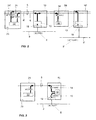
- les figures 2 et 3 détaillent respectivement un premier mode de fonctionnement A et un second mode de fonctionnement B du système de communication.
- Dans un premier mode de fonctionnement, appelé fonctionnement A et détaillé en
figure 2, le bus de communication 5 n'est qu'un prolongement du réseau TCP/IP 9
sur lequel le module réseau 10 est connecté. Dans ce cas, celui-ci ne sert qu'à
router les trames IP émises ou destinées à un module intelligent 20,30. Le module
réseau 10 n'a alors pas besoin de comporter sa propre pile TCP/IP, sauf s'il se
comporte lui-même comme un module intelligent capable de posséder des
applications WEB.
Pour qu'un module intelligent 20,30 de l'automate accède directement au réseau TCP/IP 9 d'un module réseau 10, il faut que :- la pile TCP/IP 22,32 du module intelligent 20,30 soit capable d'émettre et de recevoir des trames ayant une encapsulation conforme à la couche liaison (couche MAC) du réseau TCP/IP 9,
- chaque module intelligent 20,30 possède une table de routage IP pour router les trames émises par lui vers le (ou les) module(s) réseau(x) 10,10' de l'automate 50,
- le module réseau 10 possède des moyens de filtrage et de redirection 13 des trames IP en provenance du réseau TCP/IP 9 en fonction de l'adresse IP 24,34 des modules intelligents 20,30, permettant de n'envoyer vers ces modules 20,30 que les trames comportant leur adresse IP. Ce filtrage est possible grâce à une table de mémorisation de l'adresse IP des modules intelligents 20,30 de l'automate 50 susceptibles d'accéder au réseau TCP/IP 9, cette table de mémorisation étant stockée dans le module réseau 10.
- Dans un deuxième mode de fonctionnement, appelé fonctionnement B et détaillé
en figure 3, le bus de communication 5 est vu comme un sous-réseau IP à part
entière du réseau TCP/IP 9 sur lequel le module réseau 10 est connecté. Dans ce
cas, le module réseau 10 comporte deux attachements IP matérialisés par une
première adresse IP 15 correspondant au réseau TCP/IP 9 et par une deuxième
adresse IP 14 correspondant au bus de communication 5 de l'automate 50. Le
module réseau 10 possède aussi obligatoirement sa propre pile TCP/IP 12
exécutable dans le module réseau 10 permettant de faire le routage des trames
entre les deux attachements IP.
En fonction de l'adresse du sous-réseau IP sur le bus de communication 5, on peut choisir le niveau de visibilité d'un module sur le réseau TCP/IP 9. Si on veut que le module soit vu par l'Internet sans mise à jour de routeur externe, il faut que le bus de communication 5 ait un adressage comportant un même numéro de sous-réseau IP que le réseau TCP/IP 9 du module réseau 10, comme le montre la figure 3. En plus, celui-ci doit agir comme un proxy serveur pour un proxy client se trouvant sur le bus de communication 5. Par rapport au mode de fonctionnement A, c'est le coupleur qui répond à une requête de reconnaissance d'adresse MAC (requête ARP sur Ethernet).
Claims (11)
- Système de communication dans un automate programmable modulaire (50) qui comprend plusieurs modules intelligents (20,30) dotés d'une unité de traitement propre (21,31) et qui comprend un bus de communication interne (5) permettant de relier les modules de l'automate programmable (50) entre eux, caractérisé par le fait que le système de communication permet de réaliser, sur le bus de communication interne (5), des échanges d'informations conformes au protocole de communication TCP/IP et par le fait que, pour échanger des informations conformes au protocole de communication TCP/IP, un module intelligent (20,30) d'un automate programmable (50) comporte une adresse IP propre (24,34) et une pile TCP/IP (22,32) exécutable par l'unité de traitement (21,31) du module intelligent (20,30).
- Système de communication selon la revendication 1, caractérisé par le fait qu'un automate programmable modulaire (50) comprend au moins un module réseau (10), raccordé à un réseau TCP/IP externe (9), permettant à un coupleur intelligent (20,30) de l'automate programmable (50) de réaliser directement des échanges d'informations conformes au protocole de communication TCP/IP sur le réseau TCP/IP (9), via le bus de communication interne (5).
- Système de communication selon la revendication 2, caractérisé par le fait que le bus de communication interne (5) comporte plusieurs canaux de communication (6,7) séparés permettant de faire circuler simultanément des trames conformes au protocole TCP/IP avec des trames conformes à d'autres protocoles.
- Système de communication selon la revendication 3, caractérisé par le fait qu'un automate programmable (50) comporte plusieurs modules réseau (10,10') raccordés à plusieurs réseaux Internet (9,9'), chaque module réseau (10,10') utilisant un canal de communication différent (6,6') pour faire circuler simultanément des trames sur le bus de communication interne (5).
- Système de communication selon la revendication 4, caractérisé par le fait que, pour accéder directement à plusieurs réseaux Internet (9,9'), un module intelligent (20) d'un automate programmable (50) comporte plusieurs adresses IP respectives (24,24').
- Système de communication selon la revendication 3, caractérisé par le fait que, dans un automate programmable (50), un module réseau (10) connecté à un réseau TCP/IP (9) comporte :un driver d'accès (19) à la couche liaison du réseau TCP/IP (9),une table de mémorisation de l'adresse IP des différents modules intelligents (20,30) de l'automate (50) susceptibles d'accéder au réseau TCP/IP (9),des moyens de filtrage et de redirection (13) des trames IP en provenance du réseau TCP/IP (9) en fonction de l'adresse IP (24,34) des modules intelligents correspondants.
- Système de communication selon la revendication 6, caractérisé par le fait que la pile TCP/IP (22,32) d'un module intelligent (20,30) est susceptible d'émettre et de recevoir des trames ayant une encapsulation conforme à la couche liaison du réseau TCP/IP (9) et par le fait que le module intelligent (20,30) possède une table de routage IP pour router les trames émises par le module intelligent vers le module réseau (10).
- Système de communication selon la revendication 3, caractérisé par le fait que, dans un automate programmable (50), un module réseau (10) connecté à un réseau TCP/IP (9) comporteun driver d'accès (19) à la couche liaison du réseau TCP/IP (9),deux attachements IP matérialisés par une première adresse IP (15) correspondant au réseau TCP/IP (9) et par une deuxième adresse IP (14) correspondant au bus de communication interne (5) de l'automate,une pile TCP/IP (12) exécutable dans le module réseau (10), permettant de faire le routage des trames entre les deux attachements IP.
- Système de communication selon l'une des revendications précédentes, caractérisé par le fait que la couche liaison du réseau TCP/IP (9) est la couche MAC préconisée dans le standard Ethernet.
- Automate programmable (50) comprenant au moins un module intelligent (20,30) et un bus de communication interne (5) permettant de relier les modules entre eux, caractérisé par le fait que l'automate programmable est susceptible de mettre en oeuvre un système de communication selon l'une des revendications précédentes.
- Ensemble d'automatisme caractérisé par le fait qu'il comporte un ou plusieurs automates programmables (50) susceptibles de communiquer entre eux ou avec l'extérieur en mettant en oeuvre un système de communication selon l'une des revendications 1 à 9.
Applications Claiming Priority (2)
| Application Number | Priority Date | Filing Date | Title |
|---|---|---|---|
| FR0009803A FR2811844B1 (fr) | 2000-07-13 | 2000-07-13 | Bus interne automate supportant le protocole tcp/ip |
| FR0009803 | 2000-07-13 |
Publications (3)
| Publication Number | Publication Date |
|---|---|
| EP1179760A1 true EP1179760A1 (fr) | 2002-02-13 |
| EP1179760B1 EP1179760B1 (fr) | 2005-08-31 |
| EP1179760B9 EP1179760B9 (fr) | 2007-09-12 |
Family
ID=8852939
Family Applications (1)
| Application Number | Title | Priority Date | Filing Date |
|---|---|---|---|
| EP01401810A Revoked EP1179760B9 (fr) | 2000-07-13 | 2001-07-04 | Bus interne automate supportant le protocole TCP/IP |
Country Status (6)
| Country | Link |
|---|---|
| US (1) | US20020059485A1 (fr) |
| EP (1) | EP1179760B9 (fr) |
| AT (1) | ATE303623T1 (fr) |
| DE (1) | DE60113019T9 (fr) |
| ES (1) | ES2247039T3 (fr) |
| FR (1) | FR2811844B1 (fr) |
Families Citing this family (16)
| Publication number | Priority date | Publication date | Assignee | Title |
|---|---|---|---|---|
| DE50209622D1 (de) * | 2001-04-24 | 2007-04-19 | Siemens Ag | Vermittlungseinrichtung und zentrale Vermittlungssteuerung mit internem Breitbandbus |
| FR2829337B1 (fr) * | 2001-09-03 | 2003-10-31 | Schneider Automation | Equipement d'automatisme connecte a un reseau tcp/ip |
| WO2004068796A2 (fr) * | 2003-01-27 | 2004-08-12 | Eldetec Inc. Dba Electronic Design Technology | Systeme et procede de commande de dispositifs de reseau |
| DE60316363T2 (de) * | 2003-12-24 | 2008-06-19 | Telefonaktiebolaget Lm Ericsson (Publ) | Multisektionsbus in einer funkbasisstation und methode zur verwendung einer solchen funkbasisstation |
| AU2003295276A1 (en) * | 2003-12-24 | 2005-07-14 | Telefonaktiebolaget Lm Ericsson (Publ) | System with centralized resource manager |
| ES2246725B1 (es) * | 2004-08-13 | 2007-05-01 | K-Lon Control, S.A. | Sistema domotico aplicable a entornos con un elevado numero de señales. |
| JP4172490B2 (ja) * | 2006-03-15 | 2008-10-29 | オムロン株式会社 | プログラマブルコントローラ |
| DE102011006668B3 (de) * | 2011-04-01 | 2012-09-13 | Siemens Aktiengesellschaft | Schnittstellenmodul für ein modulares Steuerungsgerät |
| EP2784988B1 (fr) | 2013-03-27 | 2015-12-09 | Siemens Aktiengesellschaft | Module d'interface de communication pour un dispositif de commande modulaire d'un système industriel d'automatisation |
| CN103825821B (zh) * | 2014-02-11 | 2017-06-13 | 华为技术有限公司 | 一种报文转发方法以及一种网络接入设备 |
| EP2913727B1 (fr) * | 2014-02-28 | 2016-09-21 | Siemens Aktiengesellschaft | Procédé de transmission de messages via un système bus de fond de panier d'un automate industriel modulaire |
| EP2988465A1 (fr) * | 2014-08-19 | 2016-02-24 | Siemens Aktiengesellschaft | Procédé de transmission d'un paquet de données IP entre des modules d'automatisation |
| US10212167B2 (en) * | 2016-02-27 | 2019-02-19 | Gryphon Online Safety, Inc. | Method and system to enable controlled safe internet browsing |
| EP3267636B1 (fr) | 2016-07-06 | 2018-10-31 | Siemens Aktiengesellschaft | Appareil d'automatisation industriel modulaire et procédé de configuration d'un appareil d'automatisation industriel modulaire |
| DE102020121644A1 (de) | 2020-08-18 | 2022-02-24 | Weidmüller Interface GmbH & Co. KG | Modulare Ein- und Ausgabestation für ein industrielles Automatisierungssystem und/oder industrielles IoT-System |
| CN115841128A (zh) * | 2022-12-05 | 2023-03-24 | 北京计算机技术及应用研究所 | 一种基于485总线的四通道电子标签控制器 |
Citations (4)
| Publication number | Priority date | Publication date | Assignee | Title |
|---|---|---|---|---|
| US5177737A (en) * | 1990-01-02 | 1993-01-05 | At&T Bell Laboratories | Multipurpose bus system |
| US5710708A (en) * | 1994-10-25 | 1998-01-20 | Rieter Ingolstadt Spinnereimaschinenbau Ag | Backplane control system for spinning machines |
| EP0977412A1 (fr) * | 1998-07-28 | 2000-02-02 | Alstom Entreprise SA | Procédé d'attribution d'adresses informatiques entre unités d'un système de conduite d'installation industrielle |
| EP0992867A1 (fr) * | 1998-10-08 | 2000-04-12 | Schneider Automation | Système d'automatisme distribué |
Family Cites Families (5)
| Publication number | Priority date | Publication date | Assignee | Title |
|---|---|---|---|---|
| US6470389B1 (en) * | 1997-03-14 | 2002-10-22 | Lucent Technologies Inc. | Hosting a network service on a cluster of servers using a single-address image |
| US6324177B1 (en) * | 1997-05-02 | 2001-11-27 | Cisco Technology | Method and apparatus for managing connections based on a client IP address |
| US6370584B1 (en) * | 1998-01-13 | 2002-04-09 | Trustees Of Boston University | Distributed routing |
| US6327622B1 (en) * | 1998-09-03 | 2001-12-04 | Sun Microsystems, Inc. | Load balancing in a network environment |
| US6665304B2 (en) * | 1998-12-31 | 2003-12-16 | Hewlett-Packard Development Company, L.P. | Method and apparatus for providing an integrated cluster alias address |
-
2000
- 2000-07-13 FR FR0009803A patent/FR2811844B1/fr not_active Expired - Fee Related
-
2001
- 2001-07-04 ES ES01401810T patent/ES2247039T3/es not_active Expired - Lifetime
- 2001-07-04 EP EP01401810A patent/EP1179760B9/fr not_active Revoked
- 2001-07-04 AT AT01401810T patent/ATE303623T1/de not_active IP Right Cessation
- 2001-07-04 DE DE60113019T patent/DE60113019T9/de not_active Revoked
- 2001-07-12 US US09/902,748 patent/US20020059485A1/en not_active Abandoned
Patent Citations (4)
| Publication number | Priority date | Publication date | Assignee | Title |
|---|---|---|---|---|
| US5177737A (en) * | 1990-01-02 | 1993-01-05 | At&T Bell Laboratories | Multipurpose bus system |
| US5710708A (en) * | 1994-10-25 | 1998-01-20 | Rieter Ingolstadt Spinnereimaschinenbau Ag | Backplane control system for spinning machines |
| EP0977412A1 (fr) * | 1998-07-28 | 2000-02-02 | Alstom Entreprise SA | Procédé d'attribution d'adresses informatiques entre unités d'un système de conduite d'installation industrielle |
| EP0992867A1 (fr) * | 1998-10-08 | 2000-04-12 | Schneider Automation | Système d'automatisme distribué |
Also Published As
| Publication number | Publication date |
|---|---|
| DE60113019T2 (de) | 2006-03-09 |
| DE60113019D1 (de) | 2005-10-06 |
| FR2811844B1 (fr) | 2002-11-29 |
| ES2247039T3 (es) | 2006-03-01 |
| DE60113019T9 (de) | 2008-02-21 |
| EP1179760B9 (fr) | 2007-09-12 |
| ATE303623T1 (de) | 2005-09-15 |
| US20020059485A1 (en) | 2002-05-16 |
| FR2811844A1 (fr) | 2002-01-18 |
| EP1179760B1 (fr) | 2005-08-31 |
Similar Documents
| Publication | Publication Date | Title |
|---|---|---|
| EP1179760B9 (fr) | Bus interne automate supportant le protocole TCP/IP | |
| EP1494391B1 (fr) | Procédé de configuration automatique d'un routeur d'accès, compatible avec le protocole DHCP, pour effectuer un traitement automatique spécifique des flux IP d'un terminal client | |
| EP1168768B1 (fr) | Bloc fonction WEB dans un équipement d'automatisme. | |
| US9253150B2 (en) | Multi-services gateway device at user premises | |
| AU2015100676B4 (en) | Connecting module for connecting at least one sensor, actuator, or effector to a service-oriented-architecture network | |
| CA2767179A1 (fr) | Procede et systeme pour deployer a la volee et sur demande au moins un reseau virtuel | |
| EP2271054A1 (fr) | Procédé de commande d'une entité d'un réseau distant à partir d'un réseau local | |
| FR2804218A1 (fr) | Automate programmable dote de fonctions de communication dans une architecture client-serveur | |
| CA2357408A1 (fr) | Systeme de communication d'un equipement d'automatisme base sur le protocole soap | |
| CN105723658A (zh) | 网络系统、耦合单元以及用于运行网络系统的方法 | |
| AU2012220456A1 (en) | Method and device arrangement for implementing remote control of properties | |
| EP3635989B1 (fr) | Transmission de données entre un terminal et un serveur associé | |
| FR2781952A1 (fr) | Procede d'attribution d'adresses informatiques entre unites d'un systeme de conduite d'installation industrielle | |
| EP1376279A1 (fr) | Système de communication de sécurité. | |
| FR2930394A1 (fr) | Passerelle de communication entre deux reseaux ip | |
| EP2543165B1 (fr) | Pilotage d'un dispositif d'un reseau distant a partir d'un reseau local | |
| EP3665922B1 (fr) | Gestion de communication entre un terminal et un serveur réseau | |
| FR2937774A1 (fr) | Systeme domotique et procedes de configuration et d'utilisation associes | |
| EP2472821A1 (fr) | Procédé de contrôle à distance d'un équipement réseau et système associé | |
| WO2021191535A1 (fr) | Procede de delegation entre reseaux informatiques de peripherie a acces multiples | |
| EP0615370B1 (fr) | Système de communication avec un réseau | |
| EP3718372B1 (fr) | Procédé de fabrication d'un dispositif comprenant une membrane surplombant une cavité | |
| EP2781066A1 (fr) | Dispositif de raccordement selectif d'un premier equipement a une pluralite de deuxiemes equipements et ensemble de traitement de donnees comprenant un tel dispositif | |
| WO2007031654A1 (fr) | Procede, passerelle, systeme d'exploitation et systeme de gestion d'entree | |
| CN116633723B (zh) | 一种面向5g nr网络的opc ua数据传输方法 |
Legal Events
| Date | Code | Title | Description |
|---|---|---|---|
| PUAI | Public reference made under article 153(3) epc to a published international application that has entered the european phase |
Free format text: ORIGINAL CODE: 0009012 |
|
| AK | Designated contracting states |
Kind code of ref document: A1 Designated state(s): AT BE CH CY DE DK ES FI FR GB GR IE IT LI LU MC NL PT SE TR |
|
| AX | Request for extension of the european patent |
Free format text: AL;LT;LV;MK;RO;SI |
|
| 17P | Request for examination filed |
Effective date: 20020314 |
|
| AKX | Designation fees paid |
Free format text: AT BE CH CY DE DK ES FI FR GB GR IE IT LI LU MC NL PT SE TR |
|
| 17Q | First examination report despatched |
Effective date: 20040112 |
|
| GRAP | Despatch of communication of intention to grant a patent |
Free format text: ORIGINAL CODE: EPIDOSNIGR1 |
|
| GRAS | Grant fee paid |
Free format text: ORIGINAL CODE: EPIDOSNIGR3 |
|
| GRAA | (expected) grant |
Free format text: ORIGINAL CODE: 0009210 |
|
| AK | Designated contracting states |
Kind code of ref document: B1 Designated state(s): AT BE CH CY DE DK ES FI FR GB GR IE IT LI LU MC NL PT SE TR |
|
| PG25 | Lapsed in a contracting state [announced via postgrant information from national office to epo] |
Ref country code: FI Free format text: LAPSE BECAUSE OF FAILURE TO SUBMIT A TRANSLATION OF THE DESCRIPTION OR TO PAY THE FEE WITHIN THE PRESCRIBED TIME-LIMIT Effective date: 20050831 Ref country code: AT Free format text: LAPSE BECAUSE OF FAILURE TO SUBMIT A TRANSLATION OF THE DESCRIPTION OR TO PAY THE FEE WITHIN THE PRESCRIBED TIME-LIMIT Effective date: 20050831 Ref country code: NL Free format text: LAPSE BECAUSE OF FAILURE TO SUBMIT A TRANSLATION OF THE DESCRIPTION OR TO PAY THE FEE WITHIN THE PRESCRIBED TIME-LIMIT Effective date: 20050831 Ref country code: IE Free format text: LAPSE BECAUSE OF FAILURE TO SUBMIT A TRANSLATION OF THE DESCRIPTION OR TO PAY THE FEE WITHIN THE PRESCRIBED TIME-LIMIT Effective date: 20050831 |
|
| REG | Reference to a national code |
Ref country code: GB Ref legal event code: FG4D Free format text: NOT ENGLISH Ref country code: CH Ref legal event code: EP |
|
| GBT | Gb: translation of ep patent filed (gb section 77(6)(a)/1977) |
Effective date: 20050831 |
|
| REG | Reference to a national code |
Ref country code: IE Ref legal event code: FG4D Free format text: LANGUAGE OF EP DOCUMENT: FRENCH |
|
| REF | Corresponds to: |
Ref document number: 60113019 Country of ref document: DE Date of ref document: 20051006 Kind code of ref document: P |
|
| PG25 | Lapsed in a contracting state [announced via postgrant information from national office to epo] |
Ref country code: DK Free format text: LAPSE BECAUSE OF FAILURE TO SUBMIT A TRANSLATION OF THE DESCRIPTION OR TO PAY THE FEE WITHIN THE PRESCRIBED TIME-LIMIT Effective date: 20051130 Ref country code: SE Free format text: LAPSE BECAUSE OF FAILURE TO SUBMIT A TRANSLATION OF THE DESCRIPTION OR TO PAY THE FEE WITHIN THE PRESCRIBED TIME-LIMIT Effective date: 20051130 Ref country code: GR Free format text: LAPSE BECAUSE OF FAILURE TO SUBMIT A TRANSLATION OF THE DESCRIPTION OR TO PAY THE FEE WITHIN THE PRESCRIBED TIME-LIMIT Effective date: 20051130 |
|
| PG25 | Lapsed in a contracting state [announced via postgrant information from national office to epo] |
Ref country code: PT Free format text: LAPSE BECAUSE OF FAILURE TO SUBMIT A TRANSLATION OF THE DESCRIPTION OR TO PAY THE FEE WITHIN THE PRESCRIBED TIME-LIMIT Effective date: 20060222 |
|
| NLV1 | Nl: lapsed or annulled due to failure to fulfill the requirements of art. 29p and 29m of the patents act | ||
| REG | Reference to a national code |
Ref country code: ES Ref legal event code: FG2A Ref document number: 2247039 Country of ref document: ES Kind code of ref document: T3 |
|
| REG | Reference to a national code |
Ref country code: IE Ref legal event code: FD4D |
|
| PLBI | Opposition filed |
Free format text: ORIGINAL CODE: 0009260 |
|
| PLBI | Opposition filed |
Free format text: ORIGINAL CODE: 0009260 |
|
| 26 | Opposition filed |
Opponent name: ABB PATENT GMBH Effective date: 20060524 |
|
| PLAX | Notice of opposition and request to file observation + time limit sent |
Free format text: ORIGINAL CODE: EPIDOSNOBS2 |
|
| 26 | Opposition filed |
Opponent name: ABB PATENT GMBH Effective date: 20060524 Opponent name: ROCKWELL AUTOMATION INC. Effective date: 20060531 |
|
| PG25 | Lapsed in a contracting state [announced via postgrant information from national office to epo] |
Ref country code: BE Free format text: LAPSE BECAUSE OF NON-PAYMENT OF DUE FEES Effective date: 20060731 Ref country code: MC Free format text: LAPSE BECAUSE OF NON-PAYMENT OF DUE FEES Effective date: 20060731 Ref country code: LI Free format text: LAPSE BECAUSE OF NON-PAYMENT OF DUE FEES Effective date: 20060731 Ref country code: CH Free format text: LAPSE BECAUSE OF NON-PAYMENT OF DUE FEES Effective date: 20060731 |
|
| PLBB | Reply of patent proprietor to notice(s) of opposition received |
Free format text: ORIGINAL CODE: EPIDOSNOBS3 |
|
| PLAF | Information modified related to communication of a notice of opposition and request to file observations + time limit |
Free format text: ORIGINAL CODE: EPIDOSCOBS2 |
|
| PLAS | Information related to reply of patent proprietor to notice(s) of opposition deleted |
Free format text: ORIGINAL CODE: EPIDOSDOBS3 |
|
| PLBB | Reply of patent proprietor to notice(s) of opposition received |
Free format text: ORIGINAL CODE: EPIDOSNOBS3 |
|
| REG | Reference to a national code |
Ref country code: CH Ref legal event code: PL |
|
| PLBP | Opposition withdrawn |
Free format text: ORIGINAL CODE: 0009264 |
|
| BERE | Be: lapsed |
Owner name: SCHNEIDER AUTOMATION Effective date: 20060731 |
|
| PG25 | Lapsed in a contracting state [announced via postgrant information from national office to epo] |
Ref country code: TR Free format text: LAPSE BECAUSE OF FAILURE TO SUBMIT A TRANSLATION OF THE DESCRIPTION OR TO PAY THE FEE WITHIN THE PRESCRIBED TIME-LIMIT Effective date: 20050831 Ref country code: LU Free format text: LAPSE BECAUSE OF NON-PAYMENT OF DUE FEES Effective date: 20060704 |
|
| PLAB | Opposition data, opponent's data or that of the opponent's representative modified |
Free format text: ORIGINAL CODE: 0009299OPPO |
|
| R26 | Opposition filed (corrected) |
Opponent name: ABB PATENT GMBH Effective date: 20060524 |
|
| PGFP | Annual fee paid to national office [announced via postgrant information from national office to epo] |
Ref country code: DE Payment date: 20080703 Year of fee payment: 8 Ref country code: ES Payment date: 20080718 Year of fee payment: 8 |
|
| PG25 | Lapsed in a contracting state [announced via postgrant information from national office to epo] |
Ref country code: CY Free format text: LAPSE BECAUSE OF FAILURE TO SUBMIT A TRANSLATION OF THE DESCRIPTION OR TO PAY THE FEE WITHIN THE PRESCRIBED TIME-LIMIT Effective date: 20050831 |
|
| PGFP | Annual fee paid to national office [announced via postgrant information from national office to epo] |
Ref country code: FR Payment date: 20080609 Year of fee payment: 8 Ref country code: IT Payment date: 20080731 Year of fee payment: 8 |
|
| RDAF | Communication despatched that patent is revoked |
Free format text: ORIGINAL CODE: EPIDOSNREV1 |
|
| PGFP | Annual fee paid to national office [announced via postgrant information from national office to epo] |
Ref country code: GB Payment date: 20080711 Year of fee payment: 8 |
|
| RDAG | Patent revoked |
Free format text: ORIGINAL CODE: 0009271 |
|
| STAA | Information on the status of an ep patent application or granted ep patent |
Free format text: STATUS: PATENT REVOKED |
|
| 27W | Patent revoked |
Effective date: 20081208 |
|
| GBPR | Gb: patent revoked under art. 102 of the ep convention designating the uk as contracting state |
Effective date: 20081208 |