EP1176815A2 - Device control system and apparatus, and device control method on network - Google Patents
Device control system and apparatus, and device control method on network Download PDFInfo
- Publication number
- EP1176815A2 EP1176815A2 EP01106360A EP01106360A EP1176815A2 EP 1176815 A2 EP1176815 A2 EP 1176815A2 EP 01106360 A EP01106360 A EP 01106360A EP 01106360 A EP01106360 A EP 01106360A EP 1176815 A2 EP1176815 A2 EP 1176815A2
- Authority
- EP
- European Patent Office
- Prior art keywords
- mode
- self
- control command
- control
- ieee
- Prior art date
- Legal status (The legal status is an assumption and is not a legal conclusion. Google has not performed a legal analysis and makes no representation as to the accuracy of the status listed.)
- Withdrawn
Links
Images


Classifications
-
- H—ELECTRICITY
- H04—ELECTRIC COMMUNICATION TECHNIQUE
- H04N—PICTORIAL COMMUNICATION, e.g. TELEVISION
- H04N5/00—Details of television systems
- H04N5/76—Television signal recording
- H04N5/765—Interface circuits between an apparatus for recording and another apparatus
- H04N5/775—Interface circuits between an apparatus for recording and another apparatus between a recording apparatus and a television receiver
Definitions
- the present invention relates to a device control system, device control apparatus, and device control method on a network, which use IEEE 1394 and the like.
- a given device can control a remote device by transmitting an AV/C control command to the remote device.
- the device executes a function corresponding to the command.
- a control target device self-device
- the IEEE 1394 interface (the LSI incorporating this interface function) in the self-device is kept on to accept a control command from the remote device.
- the media content management AV system disclosed in Jpn. Pat. Appln. KOKAI Publication No. 9-120666 or the AV system having a plurality of video devices, disclosed in Jpn. Pat. Appln. KOKAI Publication No. 9-130688 is available.
- the state of the control target device (self-device) used by the user may be changed by a control command from a remote device.
- a control command from a remote device For example, while the user is watching and listening to a program over a given broadcast channel through a digital TV (self-device), the current channel may be abruptly switched to another channel by a station switching command from a remote device on the network. In such a case, the user feels uncomfortable or a sense of incongruity in operating the digital TV (self-device).
- the IEEE 1394 interface LSI must always be in the ON state, and the power supply of the LSI cannot be completely turned off.
- the present invention has been made in consideration of the above situation, and has as its object to provide a device control system, device control apparatus, and device control method which can prevent a self-device on a network from being unintentionally operated by a command from a remote device.
- the interface device IEEE 1394 interface LSI or the like
- a self-device incorporating an IEEE 1394 interface to which a remote device is connected through, for example, an IEEE 1394 serial bus, is configured to set a method of using the IEEE 1394 serial bus (whether to permit or inhibit control from remote devices).
- the processing of setting the method of using the IEEE 1394 serial bus includes the first user setting (mode 1) of giving a higher priority to operation of the self-device than to operation from the remote devices and the second user setting (mode 2) of accepting operation from the remote devices as well.
- the user of the self-device can determine whether to set the first or second user setting.
- the self-device can be configured to return rejected responses to all operation commands from the remote devices.
- the self-device can turn off the power supply of the remote device and also turn off the power supply of the IEEE 1394 interface or switch it to the inactive state (or power save mode).
- the system, apparatus, or method configured in the above manner by letting the user set the function of the self-device using the IEEE 1394 serial bus (determine whether to receive AV/C control commands from remote devices), interference from the remote devices can be prevented, and user's feeling in using the self-device can be improved.
- the power supply of the self-device is to be turned off, the power supply of the IEEE 1394 interface of the self-device can also be turned off. This makes it possible to save the power that would be consumed by the IEEE 1394 LSI.
- FIG. 1 is a block diagram for explaining an example of the system configuration of a network control system according to the embodiment of the present invention.
- digital television (DTV) 10 incorporating TV broadcast tuner or tuner-less monitor display 10 having a digital input terminal can be used as a self-device.
- DTV 10 with a built-in tuner is a self-device that can be controlled by an AV/C command.
- AV/C command A specific example of the AV/C command will be described later.
- User operation power on/off, reception channel designation or station switching, intra-device connection switching or external AV input terminal switching/selection, volume/tone setting, image quality/aspect ratio setting, or the like
- DTV self-device
- user operation input section 12 such as the operation panel (not shown) on the main body of DTV 10 or a remote controller. In this case, user operation is performed through remote controller 12.
- Operation (power on/off, reception channel designation or station switching, or the like) for DTV (self-device) 10 can also be executed by an AV/C command.
- the user turns on DTV (self-device) 10 and selects desired TV channel 1 through remote controller 12.
- the channel to be watched/listened to on DTV 10 can be switched from channel 1 to channel 3 by an AV/C control command (tuning command) from a remote device (to be described later).
- DTV 10 incorporates IEEE 1394 LSI (IEEE 1394 I/F) 14 and ROM 16 in which firmware (corresponding to the processing in FIGS. 2 to 5 to be described later) for various device control operations is written.
- This firmware is executed by a microcomputer (MPU) (not shown) incorporated in DTV 10 and/or IEEE 1394 LSI 14.
- MPU microcomputer
- a plurality of IEEE 1394 devices 20 (remote device A having an IEEE 1394 I/F) and 30 (remote device B having an IEEE 1394 I/F) are connected to IEEE 1394 LSI 14 of DTV 10 through IEEE 1394 serial bus 18.
- set-top box (STB) 20 including a digital TV broadcast tuner and a switcher for switching/selecting a plurality of AV signals can be used.
- STB set-top box
- a switcher for switching/selecting a plurality of AV signals
- a streamer e.g., a DVHS or DVD streamer
- MPEG 2 transport stream MPEG 2 transport stream
- IEEE 1394 I/Fs having IEEE 1394 I/Fs and complying with AV/C commands can be connected to IEEE 1394 serial bus 18, as needed.
- DTV (self-device) 10 has the function of setting a method of using IEEE 1394 serial bus 18 (designating whether to allow or reject control based on AV/C commands from remote devices 20 and 30 and the like).
- DTV (self-device) 10 has the first mode (mode 1) of making control on itself a higher priority (than control from remote devices) and the second mode (mode 2) of accepting control from remote controls 20 and 30 as well.
- mode 1 the first mode
- mode 2 the second mode
- DTV (self-device) 10 performs processing corresponding to a supplied AV/C command.
- DTV (self-device) 10 can be configured to reject AV/C commands supplied from remote devices 20 and 30.
- the above arrangement can prevent the occurrence of an event that makes the user feel uncomfortable. For example, this can prevent the TV channel, the program of which is currently watched/listened to by the user on DTV 10 set in the first mode (mode 1), from being abruptly switched to an unwanted channel in accordance with a tuning command from a remote device.
- DTV 10 can be configured to display a mode selection menu (not shown) on the screen to allow the user to select a desired mode (mode 1 or mode 2) by key-operating remote controller 12
- DTV (self-device) 10 can also be configured to return command rejected responses to remote devices 20 and 30 when DTV 10 rejects AV/C commands from remote devices 20 and 30.
- DTV (self-device) 10 can be configured to turn off the power supply of IEEE 1394 LSI (IEEE 1394 I/F) 14 or switch it to the inactive state when the power supply of self-device 10 is turned off in the first mode (mode 1) of giving a high control priority on itself.
- IEEE 1394 LSI IEEE 1394 I/F
- the above arrangement allows DTV 10 in the first mode (mode 1) of making control on itself a higher priority than control from a remote device to turn off the power supply of IEEE 1394 LSI 14 when the power supply of the remove device is turned off (this is because DTV 10 in the first mode receives no AV/C command from a remote device, and IEEE 1394 LSI 14 need not be in the active state).
- This can save the power that would be consumed by IEEE 1394 LSI 14 in DTV 10 when the power supply of DTV 10 is turned off and waits for a power-on command or the like from remote controller 12.
- IEEE 1394 interface (IEEE 1394 LSI) 14 allows each of devices networked to each other to check which type of device is the remote device.
- each device e.g., DTV (self-device) 10
- a remote device e.g., STB 20
- IEEE 1394 serial bus 18 IEEE 1394 serial bus 18
- a remote device e.g., STB 20
- the self-device DTV 10
- STB 20 can exchange data with DTV 10 by isochronous transfer (or asynchronous transfer) using a predetermined channel number on the basis of IEEE 1394.
- isochronous transfer is a transfer scheme of transmitting/receiving data in a predetermined cycle (125 ⁇ s).
- the format of a packet in isochronous transfer includes a channel number instead of a destination ID.
- Asynchronous transfer is a transfer scheme of transmitting/receiving data at arbitrary time.
- An AV/C command can be transferred by using asynchronous transfer, whereas AV data (e.g., an MPEG 2 transport stream) can be transferred by using isochronous transfer.
- the IEEE 1394 communication controller (IEEE 1394 LSI 14) incorporated in each device has hardware and software (firmware) required for IEEE 1394 processing (e.g., determination of the above items).
- AV/C commands that can be used in this embodiment of the present invention (excluding commands containing only status commands).
- General "unit commands” include “CONNECT” for plug connection, “DIGITAL INPUT” for input setting of digital broadcasting or the like, “DIGITAL OUTPUT” for output setting of digital broadcasting or the like, “DISCONNECT” for plug disconnection, “INPUT PLUG SIGNAL FORMAT” for setting/inquiry of an input plug signal format, “OUTPUT PLUG SIGNAL FORMAT” for setting/inquiry of an output plug signal format.
- Common unit and sub-unit commands include “OPEN DESCRIPTOR” for acquisition of an access right to a descriptor (an information table serving as an information exchange unit), "READ DESCRIPTOR” for reading information from a descriptor, “WRITE DESCRIPTOR” for writing information in a descriptor, “SEARCH DESCRIPTOR” for searching a descriptor for an arbitrary pattern, "OBJECT NUMBER SELECT” for selecting an object by using an object ID and list ID, "POWER” for managing the power supply state, “RESERVE” for exclusive control, “VENDOR-DEPENDENT” for a vendor-dependent command for each device, and the like.
- OPEN DESCRIPTOR for acquisition of an access right to a descriptor (an information table serving as an information exchange unit)
- READ DESCRIPTOR for reading information from a descriptor
- WRITE DESCRIPTOR for writing information in a descriptor
- SEARCH DESCRIPTOR for searching a descriptor for an arbitrary pattern
- Tuner sub-unit commands include "DIRECT SELECT INFORMATION TYPE” for tuning, "DIRECT SELECT DATA” for acquiring data, "CA ENABLE” for descrambling a CA broadcast (restricted broadcast), "TUNER STATUS” for notifying a change in tuner status, and the like.
- VCR sub-unit commands include "ANALOG AUDIO OUTPUT MODE” for setting/inquiry of analog sounds (left audio/right audio, main audio/second audio), "AREA MODE” for designating a recording area on a tape (recording medium), “ABSOLUTE TRACK NUMBER” for checking/searching for a tape position (for a digital VCR), "AUDIO MODE” for designating a recording mode for an audio signal, "BACKWARD” for moving the tape position backward by a designated amount, “BINARY GROUP” (for the digital VCR) for reading/writing private data, "EDIT MODE” for performing synchronous playback/recording, "FORWARD” for moving the tape position forward by a designated amount, “INPUT SIGNAL MODE” for setting/inquiry of an input signal, “LOAD MEDIUM” for loading/unloading a tape (recording medium), “MARKER” for recording/erasing a maker (for recorded contents), "MEDIUM
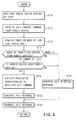
- FIG. 2 is a flow chart for explaining an example of the operation of a self-device in the system according to this embodiment of the present invention in a case wherein a AV/C control command is received from a remote device.
- a self-device has a function of allowing reception of a predetermined control command (AV/C control command) and performing processing corresponding to the received control command.
- the self-device (DTV 10) has the first mode (mode 1) of giving a high priority to control on itself (10) and the second mode (mode 2) of also accepting control from remote devices (20, 30) described above.
- the remote devices (STB 20, DVHS 30, and the like) are connected to the self-device (10), and each remote device sends out at least one AV/C control command (excluding commands containing only statuses).
- the network FIG. 1 in which such devices (10, 20, 30) are connected to each other through IEEE 1394 serial bus 18, the processing in the flow chart of FIG. 2 is executed.
- the processing in this flow chart is written as firmware in ROM 16 in the self-device (DTV 10) and can be executed by a microcomputer (MPU) (not shown) in the self-device (DTV 10) and/or IEEE 1394 LSI.
- MPU microcomputer
- the self-device receives an AV/C control command from a remote device (STB 20, DVHS 30, or the like) (step ST12).
- step ST12 As the AV/C control command used in step ST12, one of all control commands except for commands containing only status commands can be used.
- the internal connections of the self-device (DTV 10) are switched by the "CONNECT" control command/"DISCONNECT” control command, and tuning is performed by the "DIRECT SELECT INFORMATION TYPE" control command.
- the self-device acquires the function mode (mode 1 or mode 2 set by the user) of IEEE 1394 serial bus 18 (step ST14). The self-device then checks whether the acquired mode is the mode of permitting control from the remote device (20, 30) (step ST16).
- mode 1 (NO in step ST16) of inhibiting control from the remote device, a higher priority is given to control on the self-device than to the remote device. That is, in mode 1, an AV/C control command from the self-device is higher in priority than an AV/C control command from the remote device. In other words, in mode 1, the self-device operates in accordance with an AV/C control command from itself but rejects an AV/C control command from the remote device.
- the self-device In mode 2 (YES in step ST16), the self-device (DTV 10) can perform not only processing corresponding to an AV/C control command from itself but also processing corresponding to an AV/C control command from the remote device (STB 20, DVHS 30, or the like) (step ST18).
- step ST18 When the processing corresponding to the AV/C command is performed in mode 2 (step ST18), the self-device generates an AV/C response to respond to the processing (step ST20).
- the self-device rejects the control command (AV/C control command) supplied from the remote device (20, 30), and generates an AV/C rejected response (step ST22). More specifically, when the user is using DTV 10 and mode 1 is set, switching of the internal connections of DTV 10, changing of the received program, and the like are all rejected, and no AV/C control command from the remote device is received. In this case, an AV/C rejected response is generated (step ST22).
- step ST22 If an AV/C rejected response is generated in step ST22, this response is transmitted (returned) from the self-device to the remote device through IEEE 1394 serial bus 18 (step ST24). If an AV/C response is generated in step ST20, this response is transmitted (returned) from the self-device to the remote device through IEEE 1394 serial bus 18 (step ST24).
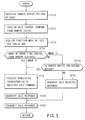
- FIG. 3 is a flow chart for explaining an example of the operation to be performed when an instruction to turn off the power supply is given by an AV/C power control command or the like in the system according to the embodiment of the present invention.
- the processing in this flow chart is written as firmware in ROM 16 in DTV 10 in FIG. 1 and executed by the microcomputer (MPU) (not shown) in DTV 10 (or the IEEE 1394 LSI).
- MPU microcomputer
- the self-device receives an instruction to turn off the power supply through a switch on the self-device main body, remote controller 12, an off-timer function (not shown), or an AV/C control command ("POWER" command) from a remote device (step ST12A).
- the self-device acquires the function mode (mode 1 or mode 2 set by the user) of IEEE 1394 serial bus 18 (step ST14).
- the self-device checks whether the acquired mode is the mode of permitting control from remote devices (20, 30) (step ST16).
- step ST16 If the determination result in step ST16 indicates mode 2 (YES in step ST16), the self-device (DTV 10) turns off the power supply of a peripheral device (e.g., an internal device (not shown) of the self-device) (step ST26). In this case, the power supply of the IEEE 1394 interface is not turned off.
- a peripheral device e.g., an internal device (not shown) of the self-device
- step ST16 If the determination result in step ST16 indicates mode 1 of inhibiting control from remote devices (giving a high priority to control on the self-device) (NO in step ST16), the self-device (DTV 10) turns off the power supply of a peripheral device of the remote device (step ST28), and also can turn off the power supply of IEEE 1394 LSI 14 of the self-device or switch the current state to the inactive state or power save mode (step ST30).
- the power supply of the self-device is to be turned off.
- the power supply of the IEEE 1394 interface (IEEE 1394 LSI 14) of the self-device can also be turned off (or switched to the power save mode).
- the self-device is set in the standby mode in which it can receive a power-on command from the remote controller. For this reason, while the self-device is in the active state or the standby state in which it waits for a power-on command or the like from remote controller 12, the power that would be consumed by IEEE 1394 LSI 14 can be saved.
- the power supply of the self-device (DTV 10) is turned on by the operation of remote controller 12, the power supply of IEEE 1394 LSI 14 of the self-device is also turned on.
- the self-device accepts no control from remote devices, when the power supply of the self-device (DTV 10) is turned off in accordance with an instruction from the user (or only the self-device is used in mode 1), the power supply of the IEEE 1394 LSI can also turned off at once. This can realize power saving.
- FIG. 4 is a flow chart for explaining an example of how the self-device performs only processing corresponding to an AV/C control command from a registered remote device in the system according to the embodiment of the present invention.
- the processing in this flow chart is written as firmware in ROM 16 in DTV 10 in FIG. 1 and executed by the microcomputer (MPU) (not shown) in DTV 10 (or IEEE 1394 LSI).
- MPU microcomputer
- a predetermined remote device e.g., 30 of one or more remote devices (20, 30) networked to each other through IEEE 1394 serial bus 18 is registered (step ST10).
- This device registration is performed as follows. All the devices connected to IEEE 1394 serial bus 18 are displayed on a menu on the screen of the self-device (DTV 10) (not shown). When the user selects and confirms a desired device, of the devices displayed on the menu, by operating remote controller 12, the selected device is registered in the internal memory (not shown) of the self-device (DTV 10). With this user operation in step ST10, for example, the device B (DVHS) 30 in FIG. 1 is registered, and device A (STB) 20 can be removed from the list.
- DTV 10 self-device
- the self-device receives an AV/C control command from a remote device (STB 20, DVHS 30, or the like) (step ST12).
- the self-device acquires the function mode (mode 1 or mode 2 set by the user) of IEEE 1394 serial bus 18 (step ST14).
- the self-device checks whether the acquired mode is the mode of permitting control from remote devices (step ST16).
- the acquired mode is mode 1 of inhibiting control from remote devices (NO in step ST16)
- a higher priority is given to control on the self-device than to control from remote devices. That is, in mode 1, the self-device operates in accordance with an AV/C control command from itself, but any AV/C control commands from remote devices are rejected. In this case, the self-device (DTV 10) generates a rejected response (step ST22).
- step ST16 if the AV/C control command received in step ST12 is not a command from a predetermined remote device (e.g., 30) registered in step ST10 (NO in step ST17), the self-device (DTV 10) also rejects the AV/C control command supplied from the remote device (20) and generates a rejected response (step ST22).
- a predetermined remote device e.g., 30
- step ST16 If mode 2 (YES in step ST16) is set, and the received AV/C control command is supplied from a predetermined registered remote device (30) (YES in step ST17), the self-device (DTV 10) performs processing corresponding to the supplied AV/C control command (step ST18).
- step ST18 When the processing corresponding to the correlation value is performed in mode 2 (step ST18), the self-device generates an AV/C rejected response to respond to the processing (step ST20).
- step ST22 If an AV/C rejected response is generated in step ST22, this rejected response is transmitted (returned) from the self-device to the remote device through IEEE 1394 serial bus 18 (step ST24). If an AV/C response is generated in step ST20, this response is transmitted (returned) from the self-device to the remote device through IEEE 1394 serial bus 18 (step ST24).
- the self-device does not receive any control command from a remote device unless the remote device is specially registered by the user.
- FIG. 5 is a flow chart for explaining another example of how the self-device performs only processing corresponding to an AV/C control command from a registered remote device in the system according to the embodiment of the present invention.
- the processing in FIG. 5 differs from that in FIG. 4 in the portions corresponding to steps ST16 and ST17 (ST17A). These different portions will be described below.
- the self-device rejects an AV/C control command supplied from a remote device (20) unless the AV/C control command is supplied from a predetermined registered remote device (30) (NO in step ST17A), and generates a rejected response (step ST22).
- step ST16 In mode 1 (NO in step ST16), if the AV/C control command is a command from a predetermined registered remote device (30) (YES in step ST17A), the self-device (DTV 10) performs processing corresponding to the AV/C control command supplied from the remote device (30) (step ST1), as in mode 2 (YES in step ST16).
- the self-device receives a control command from a remote device when the remote device has been specially registered by the user.
- any AV devices serving as controllers (having the function of controlling remote devices) can be used.
- the self-device connected networked to the above remote devices is a recording device (DVHS, DVD streamer, or the like)
- it can control remote devices (tuners incorporated in a DTV, STB, and the like) by using AV/C control commands.
- a remote device e.g., a STB tuner
- he/she can set the self-device (e.g., a DVHS) such that it rejects any AV/C control command ("PLAY" command or the like) from another remote device (e.g., a DTV) (NO in step ST16 in FIG. 2).
- PLAY AV/C control command
- the mode determination in step ST16 in FIGS. 2 to 5 can also be executed by storing, in advance, information indicating that a specific control command from a remote device is a command corresponding to mode 1 regardless of the type of remote device.
- the above embodiment includes various phases of the present invention, and various inventions can be extracted from proper combinations of a plurality of constituent elements disclosed in the present application. Even if, for example, one or a plurality of constituent elements are removed from all the constituent elements in the embodiment, the arrangement from which these constituent elements are removed can be extracted as an invention as long as the effect of the present invention can be obtained.
- the device control apparatus, device control method, or device control system prevents the self-device from being operated from a remote device against user's intention while he/she is using the self-device.
- the power supply of the self-device when the power supply of the self-device is to be turned off, the power supply of the IEEE 1394 interface (IEEE 1394 LSI 14) of the self-device can also be turned off (or switched to the power saving mode).
- the self-device is set in the standby state in which it can receive a power-on command from the remote controller. For this reason, while the self-device is in the active state or the standby state in which it waits for a power-on command, the power that would be consumed by the IEEE 1394 interface (IEEE 1394 LSI 14) can be saved.
Landscapes
- Engineering & Computer Science (AREA)
- Multimedia (AREA)
- Signal Processing (AREA)
- Selective Calling Equipment (AREA)
- Details Of Television Systems (AREA)
- Small-Scale Networks (AREA)
- Power Sources (AREA)
- Information Transfer Systems (AREA)
Abstract
Description
- The ID of STB 10 is XXX ··· XXX, the vendor name is T, and the model name is "model name ABC; and
- It has a tuner sub-unit.
- The ID of the digital TV is YYY ··· YYY, the vendor name is M, and the model name is "model name XYZ"; and
- It has a tuner sub-unit and monitor sub-unit.
Claims (16)
- A device control apparatus serving as a self-device (10) incorporating an interface (14) to which a remote device (20, 30) can be connected through a bus (18), characterized by comprising a function (ST16) of setting a method of using the bus (18).
- An apparatus according to claim 1, characterized in that the bus (18) comprises an IEEE 1394 serial bus (18), and the interface (14) comprises an IEEE 1394 interface (14).
- An apparatus according to claim 2, characterized in that the method of using the bus comprises indicating whether to permit or inhibit control from the remote device (20, 30).
- An apparatus according to claim 2 or 3, characterized in that said function (ST16) of setting the method of using the IEEE 1394 serial bus (18) comprises a first user setting (mode 1: NO in ST16) of giving a high priority to operation of said self-device (10) and a second user setting (mode 2; YES in ST16) of accepting operation from the remote device (20, 30) as well.
- An apparatus according to claim 4, characterized in that in the first user setting (mode 1), said self-device (10) returns rejected responses to all operation commands from the remote device (20, 30) (ST22, ST24).
- An apparatus according to claim 4 or 5, characterized in that in the first user setting (mode 1), said self-device (10) can turn off a power supply of an internal device of said self-device (ST28) and also turn off a power supply of the IEEE 1394 interface (14) or switch the IEEE 1394 interface to an inactive state (ST30).
- An apparatus according to any one of claims 2 to 6, characterized in thatsaid apparatus serves as a digital video apparatus (DTV 10) incorporating an IEEE 1394 interface (14) to which a remote digital device (STB 20, DVHS 30) can be connected through IEEE 1394 serial bus (18), andcomprises a function (ST16) of setting whether to permit or inhibit control from the remote digital device (20, 30) as the method of using the IEEE 1394 serial bus (14).
- An apparatus according to claim 7, characterized in thatsaid function (ST16) is written as predetermined device control firmware (FIGS. 2 - 5) in a memory (ROM 16), andthe memory (16), the IEEE 1394 interface (14), and a video display apparatus (10) constitute a digital television apparatus.
- A device control method used in a self-device (10) incorporating an interface (14) to which a remote device (20, 30) can be connected through a bus (18), characterized by comprising providing a function (ST16) of setting a method of using the bus (18).
- A method according to claim 9, which can be used in a network (FIG. 1) including a self-device (10) having a function of receiving a predetermined control command (AV/C control command) and performing processing corresponding to the received control command, and having a first mode (mode 1) of giving a high priority to control on the self-device (10) and a second mode (mode 2) of accepting control from a remote device (20, 30), and at least one remote device (20, 30) which is connected to the self-device (10) and sends out at least one control command (excluding a command containing only a status), characterized by comprising:in the first mode (mode 1) (NO in ST16), causing the self-device (10) to reject a control command (AV/C control command) supplied from the remote device (20, 30) (ST22); andin the second mode (mode 2) (YES in ST16), causing the self-device (10) to perform processing corresponding to a control command (AV/C control command) supplied to the self-device (10).
- A method according to claim 9, which can be used in a network (FIG. 1) including a self-device (10) having an IEEE 1394 interface (14) for receiving a predetermined control command (AV/C control command) and performing processing corresponding to the received control command, and having a first mode (mode 1) of giving a high priority to control on the self-device (10) and a second mode (mode 2) of accepting control from a remote device (20, 30), and at least one remote device (20, 30) which is connected to the self-device (10) and sends out at least one control command (excluding a command containing only a status), characterized by comprising:in the first mode (mode 1) (NO in ST16), causing the self-device (10) to turn off a power supply of the remote device (20, 30) (ST28) and also turn off a power supply of the IEEE 1394 interface (14) or switch the IEEE 1394 interface to an inactive state or power saving mode (ST30); andin the second mode (mode 2) (YES in ST16), causing the self-device (10) to turn off a power supply of an internal device of the self-device (10) without turning off a power supply of the IEEE 1394 interface (14) (ST26).
- A method according to claim 9, which can be used in a network (FIG. 1) including a self-device (10) having a function of receiving a predetermined control command (AV/C control command) and performing processing corresponding to the received control command, and having a first mode (mode 1) of giving a high priority to control on the self-device (10) and a second mode (mode 2) of accepting control from a remote device (20, 30), and at least one remote device (20, 30) which is connected to the self-device (10) and sends out at least one control command (excluding a command containing only a status), characterized by comprising:registering a predetermined remote device (for example, 30) of the remote devices (20, 30) (ST10);in the first mode (mode 1) (NO in ST16), causing the self-device (10) to reject a control command (AV/C control command) supplied from the remote device (20, 30);in the second mode (mode 2) (YES in ST16), if the control command (AV/C control command) is not a command from the predetermined registered remote device (30) (NO in ST17), causing the self-device (10) to reject the control command (AV/C control command) supplied from the remote device (20) (ST22); andin the second mode (mode 2) (YES in ST16), if the control command (AV/C control command) is a command from the predetermined registered remote device (30) (YES in ST17), causing the self-device (10) to perform processing corresponding to the supplied control command (AV/C control command) (ST18).
- A method according to claim 9, which can be used in a network (FIG. 1) including a self-device (10) having a function of receiving a predetermined control command (AV/C control command) and performing processing corresponding to the received control command, and having a first mode (mode 1) of giving a high priority to control on the self-device (10) and a second mode (mode 2) of accepting control from a remote device (20, 30), and at least one remote device (20, 30) which is connected to the self-device (10) and sends out at least one control command (excluding a command containing only a status), characterized by comprising:registering a predetermined remote device (for example, 30) of the remote devices (20, 30) (ST10);in the first mode (mode 1) (NO in ST16), if the control command (AV/C control command) is not a command from the predetermined registered remote device (30) (NO in ST17), causing the self-device (10) to reject the control command (AV/C control command) supplied from the remote device (20) (ST22);in the first mode (mode 1) (NO in ST16), if the control command (AV/C control command) is a command from the predetermined registered remote device (30) (YES in ST17), causing the self-device (10) to perform processing corresponding to the control command (AV/C control command) supplied from the remote device (30) (ST18); andin the second mode (mode 2) (YES in ST16), causing the self-device (10) to perform processing corresponding to a supplied control command (AV/C control command) (ST18).
- A memory (16) in which the method defined in any one of claims 9 to 13 is written as firmware.
- A digital broadcast reception apparatus using the method defined in any one of claims 9 to 13.
- A device control system used in a network (FIG. 1) including a self-device (10) having a function of receiving a predetermined control command (AV/C control command) and performing processing corresponding to the received control command and at least one remote device (20, 30) which is connected to the self-device (10) and sends out at least one control command (excluding a command containing only a status), andusing said apparatus defined in any one of claims 1 to 8 or the method defined in any one of claims 9 to 13.
Applications Claiming Priority (2)
| Application Number | Priority Date | Filing Date | Title |
|---|---|---|---|
| JP2000225741A JP3480923B2 (en) | 2000-07-26 | 2000-07-26 | Device control method on network and video device using this control method |
| JP2000225741 | 2000-07-26 |
Publications (2)
| Publication Number | Publication Date |
|---|---|
| EP1176815A2 true EP1176815A2 (en) | 2002-01-30 |
| EP1176815A3 EP1176815A3 (en) | 2004-08-04 |
Family
ID=18719465
Family Applications (1)
| Application Number | Title | Priority Date | Filing Date |
|---|---|---|---|
| EP01106360A Withdrawn EP1176815A3 (en) | 2000-07-26 | 2001-03-16 | Device control system and apparatus, and device control method on network |
Country Status (3)
| Country | Link |
|---|---|
| US (1) | US20020021372A1 (en) |
| EP (1) | EP1176815A3 (en) |
| JP (1) | JP3480923B2 (en) |
Cited By (3)
| Publication number | Priority date | Publication date | Assignee | Title |
|---|---|---|---|---|
| WO2003096695A1 (en) * | 2002-05-08 | 2003-11-20 | Koninklijke Philips Electronics N.V. | Control of an av content source component by an av content sink component |
| KR100631589B1 (en) * | 2004-06-25 | 2006-10-09 | 삼성전자주식회사 | How to provide the initial screen of digital television |
| EP1492270A4 (en) * | 2002-04-03 | 2008-04-02 | Sony Corp | SIGNAL PROCESSING SYSTEM, SIGNAL RECEIVING DEVICE, AND COMMUNICATION CONTROL METHOD |
Families Citing this family (16)
| Publication number | Priority date | Publication date | Assignee | Title |
|---|---|---|---|---|
| JP2002118558A (en) * | 2000-10-10 | 2002-04-19 | Sony Corp | Information processing apparatus and method, and program storage medium |
| EP1211895A1 (en) * | 2000-11-30 | 2002-06-05 | Deutsche Thomson-Brandt Gmbh | Circuit arrangement for processing a band of digital television channels |
| JP3730599B2 (en) * | 2002-06-27 | 2006-01-05 | 株式会社東芝 | Server apparatus and state control method |
| JP2005167774A (en) * | 2003-12-04 | 2005-06-23 | Orion Denki Kk | Video image sound device |
| KR100631556B1 (en) * | 2004-04-06 | 2006-10-09 | 삼성전자주식회사 | Image Processing System and Method |
| US8077263B2 (en) | 2006-10-23 | 2011-12-13 | Sony Corporation | Decoding multiple remote control code sets |
| CN101365087B (en) * | 2007-08-08 | 2012-07-04 | 三洋电机株式会社 | Imaging device |
| JP5034787B2 (en) * | 2007-08-30 | 2012-09-26 | ソニー株式会社 | Electronic device, method for starting electronic device, and computer program |
| CN102447962B (en) * | 2010-09-30 | 2016-03-30 | 联想(北京)有限公司 | A kind of terminal and display packing with TV functions |
| US9571489B2 (en) * | 2011-08-12 | 2017-02-14 | Sony Corporation | System and method for performing commands from a remote source |
| KR102117841B1 (en) * | 2012-10-30 | 2020-06-02 | 삼성전자주식회사 | Electronic device and control method thereof |
| JP2015076837A (en) * | 2013-10-11 | 2015-04-20 | ソニー株式会社 | Apparatus control device and apparatus control method |
| JP2015097356A (en) * | 2013-11-15 | 2015-05-21 | キヤノン株式会社 | Communication system, image forming apparatus, control method therefor, and program |
| KR102179506B1 (en) | 2013-12-23 | 2020-11-17 | 삼성전자 주식회사 | Electronic apparatus and control method thereof |
| US10462593B2 (en) * | 2015-06-30 | 2019-10-29 | Voyetra Turtle Beach, Inc. | Matrixed audio settings |
| JP6485747B2 (en) * | 2015-07-07 | 2019-03-20 | パナソニックIpマネジメント株式会社 | Authentication method |
Family Cites Families (9)
| Publication number | Priority date | Publication date | Assignee | Title |
|---|---|---|---|---|
| JPH07193879A (en) * | 1993-12-27 | 1995-07-28 | Alpine Electron Inc | Survival method of same address unit |
| JP3612696B2 (en) * | 1996-12-18 | 2005-01-19 | ソニー株式会社 | Information processing apparatus and method, and remote control system |
| TW392402B (en) * | 1997-10-22 | 2000-06-01 | Hitachi Ltd | Method for using audio and video machine and audio and video machine system |
| US6237049B1 (en) * | 1998-01-06 | 2001-05-22 | Sony Corporation Of Japan | Method and system for defining and discovering proxy functionality on a distributed audio video network |
| US6163817A (en) * | 1998-06-30 | 2000-12-19 | U.S. Philips Corporation | Dynamically disabling and enabling of devices in consumer system with multiple communication protocols |
| US6275865B1 (en) * | 1998-11-25 | 2001-08-14 | Sony Corporation Of Japan | Method and system for message dispatching in a home audio/video network |
| JP3613545B2 (en) | 1998-12-28 | 2005-01-26 | 株式会社東芝 | Communication device |
| EP1133188A3 (en) * | 2000-02-23 | 2004-11-24 | Sony Corporation | Information processing apparatus, network system, recording medium |
| US6704819B1 (en) * | 2000-04-19 | 2004-03-09 | Microsoft Corporation | Method and apparatus for device sharing and arbitration |
-
2000
- 2000-07-26 JP JP2000225741A patent/JP3480923B2/en not_active Expired - Fee Related
-
2001
- 2001-03-16 US US09/809,034 patent/US20020021372A1/en not_active Abandoned
- 2001-03-16 EP EP01106360A patent/EP1176815A3/en not_active Withdrawn
Cited By (4)
| Publication number | Priority date | Publication date | Assignee | Title |
|---|---|---|---|---|
| EP1492270A4 (en) * | 2002-04-03 | 2008-04-02 | Sony Corp | SIGNAL PROCESSING SYSTEM, SIGNAL RECEIVING DEVICE, AND COMMUNICATION CONTROL METHOD |
| WO2003096695A1 (en) * | 2002-05-08 | 2003-11-20 | Koninklijke Philips Electronics N.V. | Control of an av content source component by an av content sink component |
| KR100631589B1 (en) * | 2004-06-25 | 2006-10-09 | 삼성전자주식회사 | How to provide the initial screen of digital television |
| US7958537B2 (en) | 2004-06-25 | 2011-06-07 | Samsung Electronics Co., Ltd. | Method of providing initial pictures to digital TV |
Also Published As
| Publication number | Publication date |
|---|---|
| EP1176815A3 (en) | 2004-08-04 |
| US20020021372A1 (en) | 2002-02-21 |
| JP3480923B2 (en) | 2003-12-22 |
| JP2002044095A (en) | 2002-02-08 |
Similar Documents
| Publication | Publication Date | Title |
|---|---|---|
| US20020021372A1 (en) | Device control system, device control apparatus, and device control method on network | |
| EP0957636B1 (en) | On-screen electronic resources guide | |
| JP4434467B2 (en) | User interface control device | |
| US7936381B2 (en) | Management and setting of photographing condition of image sensing apparatus | |
| JP4312934B2 (en) | Operation method based on characteristic information between devices connected through digital interface and control device thereof | |
| US6967588B2 (en) | System and method for controlling a home entertainment system | |
| US20090245759A1 (en) | Transmission and reception apparatus, receiver, and reproduction method | |
| JPH11346166A (en) | Mobile viewing system | |
| KR19990077542A (en) | Digital multimedia recorder with enhanced epg-related functions | |
| KR101112186B1 (en) | Method and apparatus for providing dynamic display of content information associated with a device in a network | |
| US20010008427A1 (en) | Apparatus and method for supporting picture-in-picture type time shifting | |
| US20050278755A1 (en) | Video data processing system with integrated high speed connection capacity | |
| US20020016973A1 (en) | Signal output apparatus and signal output method | |
| KR100653115B1 (en) | Set-top box that allows television programs displayed on television sets to be recorded by video recorders | |
| US6453364B1 (en) | Information reproducing apparatus, information recording/reproducing apparatus and information selectively outputting apparatus, and electronic apparatus system thereof | |
| CN101341755B (en) | Methods and systems for content distribution using intelligent data management arrangements | |
| JPH11341472A (en) | Network control system, controller and device | |
| JP2004207864A (en) | Electronic program guide screen generation device, electronic program guide screen generation method, device / function reservation device, device / function reservation method, digital broadcast receiving system, program, and recording medium | |
| US6804734B2 (en) | Device and method for switching receiving/recording device in a broadcasting connection/point-to-point connection bus enviroment | |
| JP2002185874A (en) | Television receiver and input terminal automatic setting method | |
| JP4573951B2 (en) | Operation display method | |
| US20040174827A1 (en) | Signal processing system, signal receiving device, and communication control method | |
| CN101331752A (en) | Systems and methods for processing remote control signals | |
| JP2000195243A (en) | Automatic video recording system, and video/audio recorder and video acoustic appliance corresponding thereto | |
| JP4595005B2 (en) | RECORDING CONTROL DEVICE AND RECORDING CONTROL DEVICE CONTROL METHOD |
Legal Events
| Date | Code | Title | Description |
|---|---|---|---|
| PUAI | Public reference made under article 153(3) epc to a published international application that has entered the european phase |
Free format text: ORIGINAL CODE: 0009012 |
|
| 17P | Request for examination filed |
Effective date: 20010316 |
|
| AK | Designated contracting states |
Kind code of ref document: A2 Designated state(s): AT BE CH CY DE DK ES FI FR GB GR IE IT LI LU MC NL PT SE TR |
|
| AX | Request for extension of the european patent |
Free format text: AL;LT;LV;MK;RO;SI |
|
| PUAL | Search report despatched |
Free format text: ORIGINAL CODE: 0009013 |
|
| AK | Designated contracting states |
Kind code of ref document: A3 Designated state(s): AT BE CH CY DE DK ES FI FR GB GR IE IT LI LU MC NL PT SE TR |
|
| AX | Request for extension of the european patent |
Extension state: AL LT LV MK RO SI |
|
| AKX | Designation fees paid |
Designated state(s): DE GB |
|
| RBV | Designated contracting states (corrected) |
Designated state(s): DE GB |
|
| STAA | Information on the status of an ep patent application or granted ep patent |
Free format text: STATUS: THE APPLICATION HAS BEEN WITHDRAWN |
|
| 18W | Application withdrawn |
Effective date: 20051107 |