EP1175450B1 - Sulphonated polymer resin and preparation thereof - Google Patents
Sulphonated polymer resin and preparation thereof Download PDFInfo
- Publication number
- EP1175450B1 EP1175450B1 EP00920777A EP00920777A EP1175450B1 EP 1175450 B1 EP1175450 B1 EP 1175450B1 EP 00920777 A EP00920777 A EP 00920777A EP 00920777 A EP00920777 A EP 00920777A EP 1175450 B1 EP1175450 B1 EP 1175450B1
- Authority
- EP
- European Patent Office
- Prior art keywords
- polymer
- resin
- sulphonated
- dvb
- cross
- Prior art date
- Legal status (The legal status is an assumption and is not a legal conclusion. Google has not performed a legal analysis and makes no representation as to the accuracy of the status listed.)
- Expired - Lifetime
Links
- 239000002952 polymeric resin Substances 0.000 title claims abstract description 43
- 229920003002 synthetic resin Polymers 0.000 title claims abstract description 43
- 238000002360 preparation method Methods 0.000 title abstract description 12
- 239000011347 resin Substances 0.000 claims abstract description 162
- 229920005989 resin Polymers 0.000 claims abstract description 161
- AKEJUJNQAAGONA-UHFFFAOYSA-N sulfur trioxide Chemical compound O=S(=O)=O AKEJUJNQAAGONA-UHFFFAOYSA-N 0.000 claims abstract description 82
- 229920000642 polymer Polymers 0.000 claims abstract description 77
- 239000002245 particle Substances 0.000 claims abstract description 58
- 229920001577 copolymer Polymers 0.000 claims abstract description 17
- 239000003456 ion exchange resin Substances 0.000 claims abstract description 15
- 229920003303 ion-exchange polymer Polymers 0.000 claims abstract description 15
- 239000003054 catalyst Substances 0.000 claims abstract description 7
- MYRTYDVEIRVNKP-UHFFFAOYSA-N 1,2-Divinylbenzene Chemical compound C=CC1=CC=CC=C1C=C MYRTYDVEIRVNKP-UHFFFAOYSA-N 0.000 claims description 109
- 238000004132 cross linking Methods 0.000 claims description 42
- 238000000034 method Methods 0.000 claims description 41
- 238000006243 chemical reaction Methods 0.000 claims description 33
- 230000008569 process Effects 0.000 claims description 29
- NWUYHJFMYQTDRP-UHFFFAOYSA-N 1,2-bis(ethenyl)benzene;1-ethenyl-2-ethylbenzene;styrene Chemical group C=CC1=CC=CC=C1.CCC1=CC=CC=C1C=C.C=CC1=CC=CC=C1C=C NWUYHJFMYQTDRP-UHFFFAOYSA-N 0.000 claims description 17
- 239000003729 cation exchange resin Substances 0.000 claims description 11
- RRHGJUQNOFWUDK-UHFFFAOYSA-N Isoprene Chemical compound CC(=C)C=C RRHGJUQNOFWUDK-UHFFFAOYSA-N 0.000 claims description 6
- 239000003431 cross linking reagent Substances 0.000 claims description 6
- 238000009826 distribution Methods 0.000 claims description 6
- 230000002378 acidificating effect Effects 0.000 claims description 4
- 238000004519 manufacturing process Methods 0.000 claims description 4
- 125000001931 aliphatic group Chemical group 0.000 claims description 3
- FFYWKOUKJFCBAM-UHFFFAOYSA-N ethenyl 2-methylprop-2-enoate Chemical compound CC(=C)C(=O)OC=C FFYWKOUKJFCBAM-UHFFFAOYSA-N 0.000 claims description 3
- LYCAIKOWRPUZTN-UHFFFAOYSA-N ethylene glycol Natural products OCCO LYCAIKOWRPUZTN-UHFFFAOYSA-N 0.000 claims description 3
- STVZJERGLQHEKB-UHFFFAOYSA-N ethylene glycol dimethacrylate Chemical compound CC(=C)C(=O)OCCOC(=O)C(C)=C STVZJERGLQHEKB-UHFFFAOYSA-N 0.000 claims description 3
- WGCNASOHLSPBMP-UHFFFAOYSA-N hydroxyacetaldehyde Natural products OCC=O WGCNASOHLSPBMP-UHFFFAOYSA-N 0.000 claims description 3
- FBCQUCJYYPMKRO-UHFFFAOYSA-N prop-2-enyl 2-methylprop-2-enoate Chemical compound CC(=C)C(=O)OCC=C FBCQUCJYYPMKRO-UHFFFAOYSA-N 0.000 claims description 3
- 125000003011 styrenyl group Chemical group [H]\C(*)=C(/[H])C1=C([H])C([H])=C([H])C([H])=C1[H] 0.000 claims description 3
- QAOWNCQODCNURD-UHFFFAOYSA-N Sulfuric acid Chemical compound OS(O)(=O)=O QAOWNCQODCNURD-UHFFFAOYSA-N 0.000 description 37
- PEDCQBHIVMGVHV-UHFFFAOYSA-N Glycerine Chemical compound OCC(O)CO PEDCQBHIVMGVHV-UHFFFAOYSA-N 0.000 description 32
- 238000012360 testing method Methods 0.000 description 31
- 239000001117 sulphuric acid Substances 0.000 description 29
- 235000011149 sulphuric acid Nutrition 0.000 description 29
- HEMHJVSKTPXQMS-UHFFFAOYSA-M Sodium hydroxide Chemical compound [OH-].[Na+] HEMHJVSKTPXQMS-UHFFFAOYSA-M 0.000 description 28
- 229910001868 water Inorganic materials 0.000 description 26
- XLYOFNOQVPJJNP-UHFFFAOYSA-N water Substances O XLYOFNOQVPJJNP-UHFFFAOYSA-N 0.000 description 25
- QTBSBXVTEAMEQO-UHFFFAOYSA-N Acetic acid Chemical compound CC(O)=O QTBSBXVTEAMEQO-UHFFFAOYSA-N 0.000 description 21
- 230000008961 swelling Effects 0.000 description 21
- 239000000047 product Substances 0.000 description 16
- 230000000052 comparative effect Effects 0.000 description 13
- OKKJLVBELUTLKV-UHFFFAOYSA-N Methanol Chemical compound OC OKKJLVBELUTLKV-UHFFFAOYSA-N 0.000 description 12
- 229920006026 co-polymeric resin Polymers 0.000 description 12
- 229930006000 Sucrose Natural products 0.000 description 11
- CZMRCDWAGMRECN-UGDNZRGBSA-N Sucrose Chemical compound O[C@H]1[C@H](O)[C@@H](CO)O[C@@]1(CO)O[C@@H]1[C@H](O)[C@@H](O)[C@H](O)[C@@H](CO)O1 CZMRCDWAGMRECN-UGDNZRGBSA-N 0.000 description 11
- 235000013681 dietary sucrose Nutrition 0.000 description 11
- 229960004793 sucrose Drugs 0.000 description 11
- LFQSCWFLJHTTHZ-UHFFFAOYSA-N Ethanol Chemical compound CCO LFQSCWFLJHTTHZ-UHFFFAOYSA-N 0.000 description 9
- 230000003204 osmotic effect Effects 0.000 description 8
- 239000000243 solution Substances 0.000 description 8
- 239000007858 starting material Substances 0.000 description 8
- 239000003795 chemical substances by application Substances 0.000 description 7
- 238000005342 ion exchange Methods 0.000 description 7
- 239000000463 material Substances 0.000 description 7
- 230000004044 response Effects 0.000 description 7
- CHRJZRDFSQHIFI-UHFFFAOYSA-N 1,2-bis(ethenyl)benzene;styrene Chemical class C=CC1=CC=CC=C1.C=CC1=CC=CC=C1C=C CHRJZRDFSQHIFI-UHFFFAOYSA-N 0.000 description 6
- UHOVQNZJYSORNB-UHFFFAOYSA-N Benzene Chemical group C1=CC=CC=C1 UHOVQNZJYSORNB-UHFFFAOYSA-N 0.000 description 6
- 238000010790 dilution Methods 0.000 description 6
- 239000012895 dilution Substances 0.000 description 6
- 230000000694 effects Effects 0.000 description 6
- 239000007789 gas Substances 0.000 description 6
- FAPWRFPIFSIZLT-UHFFFAOYSA-M Sodium chloride Chemical compound [Na+].[Cl-] FAPWRFPIFSIZLT-UHFFFAOYSA-M 0.000 description 5
- 238000013375 chromatographic separation Methods 0.000 description 5
- 230000006835 compression Effects 0.000 description 5
- 238000007906 compression Methods 0.000 description 5
- 238000007865 diluting Methods 0.000 description 5
- 239000011521 glass Substances 0.000 description 5
- 239000000178 monomer Substances 0.000 description 5
- 230000003647 oxidation Effects 0.000 description 5
- 238000007254 oxidation reaction Methods 0.000 description 5
- 238000000926 separation method Methods 0.000 description 5
- MHAJPDPJQMAIIY-UHFFFAOYSA-N Hydrogen peroxide Chemical compound OO MHAJPDPJQMAIIY-UHFFFAOYSA-N 0.000 description 4
- 239000011575 calcium Substances 0.000 description 4
- 230000014759 maintenance of location Effects 0.000 description 4
- 239000000203 mixture Substances 0.000 description 4
- 238000012856 packing Methods 0.000 description 4
- 238000012216 screening Methods 0.000 description 4
- 238000001179 sorption measurement Methods 0.000 description 4
- YZUPZGFPHUVJKC-UHFFFAOYSA-N 1-bromo-2-methoxyethane Chemical compound COCCBr YZUPZGFPHUVJKC-UHFFFAOYSA-N 0.000 description 3
- 229920002307 Dextran Polymers 0.000 description 3
- 239000004793 Polystyrene Substances 0.000 description 3
- PPBRXRYQALVLMV-UHFFFAOYSA-N Styrene Natural products C=CC1=CC=CC=C1 PPBRXRYQALVLMV-UHFFFAOYSA-N 0.000 description 3
- NINIDFKCEFEMDL-UHFFFAOYSA-N Sulfur Chemical compound [S] NINIDFKCEFEMDL-UHFFFAOYSA-N 0.000 description 3
- 239000005864 Sulphur Substances 0.000 description 3
- 229910001424 calcium ion Inorganic materials 0.000 description 3
- 150000001768 cations Chemical class 0.000 description 3
- 239000003153 chemical reaction reagent Substances 0.000 description 3
- 229920002223 polystyrene Polymers 0.000 description 3
- 230000035484 reaction time Effects 0.000 description 3
- 230000035939 shock Effects 0.000 description 3
- 239000011780 sodium chloride Substances 0.000 description 3
- 239000000126 substance Substances 0.000 description 3
- SCYULBFZEHDVBN-UHFFFAOYSA-N 1,1-Dichloroethane Chemical compound CC(Cl)Cl SCYULBFZEHDVBN-UHFFFAOYSA-N 0.000 description 2
- BHPQYMZQTOCNFJ-UHFFFAOYSA-N Calcium cation Chemical compound [Ca+2] BHPQYMZQTOCNFJ-UHFFFAOYSA-N 0.000 description 2
- VEXZGXHMUGYJMC-UHFFFAOYSA-N Hydrochloric acid Chemical compound Cl VEXZGXHMUGYJMC-UHFFFAOYSA-N 0.000 description 2
- BAPJBEWLBFYGME-UHFFFAOYSA-N Methyl acrylate Chemical compound COC(=O)C=C BAPJBEWLBFYGME-UHFFFAOYSA-N 0.000 description 2
- 229910006069 SO3H Inorganic materials 0.000 description 2
- RAHZWNYVWXNFOC-UHFFFAOYSA-N Sulphur dioxide Chemical compound O=S=O RAHZWNYVWXNFOC-UHFFFAOYSA-N 0.000 description 2
- 230000008901 benefit Effects 0.000 description 2
- 229940023913 cation exchange resins Drugs 0.000 description 2
- 239000007795 chemical reaction product Substances 0.000 description 2
- 230000001419 dependent effect Effects 0.000 description 2
- 238000005886 esterification reaction Methods 0.000 description 2
- 230000007717 exclusion Effects 0.000 description 2
- 238000010438 heat treatment Methods 0.000 description 2
- 150000002500 ions Chemical class 0.000 description 2
- 238000005259 measurement Methods 0.000 description 2
- 150000002894 organic compounds Chemical class 0.000 description 2
- KJFMBFZCATUALV-UHFFFAOYSA-N phenolphthalein Chemical compound C1=CC(O)=CC=C1C1(C=2C=CC(O)=CC=2)C2=CC=CC=C2C(=O)O1 KJFMBFZCATUALV-UHFFFAOYSA-N 0.000 description 2
- -1 polyethylene Polymers 0.000 description 2
- 238000006116 polymerization reaction Methods 0.000 description 2
- 239000008237 rinsing water Substances 0.000 description 2
- 125000001174 sulfone group Chemical group 0.000 description 2
- SMZOUWXMTYCWNB-UHFFFAOYSA-N 2-(2-methoxy-5-methylphenyl)ethanamine Chemical compound COC1=CC=C(C)C=C1CCN SMZOUWXMTYCWNB-UHFFFAOYSA-N 0.000 description 1
- NIXOWILDQLNWCW-UHFFFAOYSA-N 2-Propenoic acid Natural products OC(=O)C=C NIXOWILDQLNWCW-UHFFFAOYSA-N 0.000 description 1
- JLBJTVDPSNHSKJ-UHFFFAOYSA-N 4-Methylstyrene Chemical compound CC1=CC=C(C=C)C=C1 JLBJTVDPSNHSKJ-UHFFFAOYSA-N 0.000 description 1
- NLHHRLWOUZZQLW-UHFFFAOYSA-N Acrylonitrile Chemical compound C=CC#N NLHHRLWOUZZQLW-UHFFFAOYSA-N 0.000 description 1
- 239000004604 Blowing Agent Substances 0.000 description 1
- UXVMQQNJUSDDNG-UHFFFAOYSA-L Calcium chloride Chemical compound [Cl-].[Cl-].[Ca+2] UXVMQQNJUSDDNG-UHFFFAOYSA-L 0.000 description 1
- JIGUQPWFLRLWPJ-UHFFFAOYSA-N Ethyl acrylate Chemical compound CCOC(=O)C=C JIGUQPWFLRLWPJ-UHFFFAOYSA-N 0.000 description 1
- 229930091371 Fructose Natural products 0.000 description 1
- RFSUNEUAIZKAJO-ARQDHWQXSA-N Fructose Chemical compound OC[C@H]1O[C@](O)(CO)[C@@H](O)[C@@H]1O RFSUNEUAIZKAJO-ARQDHWQXSA-N 0.000 description 1
- 239000005715 Fructose Substances 0.000 description 1
- WQZGKKKJIJFFOK-GASJEMHNSA-N Glucose Natural products OC[C@H]1OC(O)[C@H](O)[C@@H](O)[C@@H]1O WQZGKKKJIJFFOK-GASJEMHNSA-N 0.000 description 1
- 229910017741 MH2O Inorganic materials 0.000 description 1
- CERQOIWHTDAKMF-UHFFFAOYSA-N Methacrylic acid Chemical compound CC(=C)C(O)=O CERQOIWHTDAKMF-UHFFFAOYSA-N 0.000 description 1
- VVQNEPGJFQJSBK-UHFFFAOYSA-N Methyl methacrylate Chemical compound COC(=O)C(C)=C VVQNEPGJFQJSBK-UHFFFAOYSA-N 0.000 description 1
- 239000004698 Polyethylene Substances 0.000 description 1
- 150000001252 acrylic acid derivatives Chemical class 0.000 description 1
- 150000001253 acrylic acids Chemical class 0.000 description 1
- WQZGKKKJIJFFOK-DVKNGEFBSA-N alpha-D-glucose Chemical compound OC[C@H]1O[C@H](O)[C@H](O)[C@@H](O)[C@@H]1O WQZGKKKJIJFFOK-DVKNGEFBSA-N 0.000 description 1
- 239000011324 bead Substances 0.000 description 1
- WQZGKKKJIJFFOK-VFUOTHLCSA-N beta-D-glucose Chemical compound OC[C@H]1O[C@@H](O)[C@H](O)[C@@H](O)[C@@H]1O WQZGKKKJIJFFOK-VFUOTHLCSA-N 0.000 description 1
- MPMBRWOOISTHJV-UHFFFAOYSA-N but-1-enylbenzene Chemical compound CCC=CC1=CC=CC=C1 MPMBRWOOISTHJV-UHFFFAOYSA-N 0.000 description 1
- 239000001110 calcium chloride Substances 0.000 description 1
- 229910001628 calcium chloride Inorganic materials 0.000 description 1
- 230000003197 catalytic effect Effects 0.000 description 1
- 230000008859 change Effects 0.000 description 1
- 229920006037 cross link polymer Polymers 0.000 description 1
- 125000004122 cyclic group Chemical group 0.000 description 1
- 230000007423 decrease Effects 0.000 description 1
- 230000003247 decreasing effect Effects 0.000 description 1
- 239000008367 deionised water Substances 0.000 description 1
- 229910021641 deionized water Inorganic materials 0.000 description 1
- 238000001035 drying Methods 0.000 description 1
- 238000010981 drying operation Methods 0.000 description 1
- 238000005516 engineering process Methods 0.000 description 1
- 230000007613 environmental effect Effects 0.000 description 1
- 230000032050 esterification Effects 0.000 description 1
- 238000001704 evaporation Methods 0.000 description 1
- 230000008020 evaporation Effects 0.000 description 1
- 239000012527 feed solution Substances 0.000 description 1
- 238000011010 flushing procedure Methods 0.000 description 1
- 238000007306 functionalization reaction Methods 0.000 description 1
- 239000008103 glucose Substances 0.000 description 1
- 150000002430 hydrocarbons Chemical group 0.000 description 1
- 238000011065 in-situ storage Methods 0.000 description 1
- 239000007788 liquid Substances 0.000 description 1
- 230000007774 longterm Effects 0.000 description 1
- 239000011159 matrix material Substances 0.000 description 1
- 230000007246 mechanism Effects 0.000 description 1
- 238000002156 mixing Methods 0.000 description 1
- 230000001590 oxidative effect Effects 0.000 description 1
- PNJWIWWMYCMZRO-UHFFFAOYSA-N pent‐4‐en‐2‐one Natural products CC(=O)CC=C PNJWIWWMYCMZRO-UHFFFAOYSA-N 0.000 description 1
- 229920000573 polyethylene Polymers 0.000 description 1
- 239000002861 polymer material Substances 0.000 description 1
- 239000011148 porous material Substances 0.000 description 1
- 238000005086 pumping Methods 0.000 description 1
- 239000002994 raw material Substances 0.000 description 1
- 239000011541 reaction mixture Substances 0.000 description 1
- 238000011084 recovery Methods 0.000 description 1
- 239000012508 resin bead Substances 0.000 description 1
- 230000035945 sensitivity Effects 0.000 description 1
- 238000001542 size-exclusion chromatography Methods 0.000 description 1
- 238000003892 spreading Methods 0.000 description 1
- 230000007480 spreading Effects 0.000 description 1
- BDHFUVZGWQCTTF-UHFFFAOYSA-N sulfonic acid Chemical group OS(=O)=O BDHFUVZGWQCTTF-UHFFFAOYSA-N 0.000 description 1
- XTHPWXDJESJLNJ-UHFFFAOYSA-N sulfurochloridic acid Chemical compound OS(Cl)(=O)=O XTHPWXDJESJLNJ-UHFFFAOYSA-N 0.000 description 1
- 239000004291 sulphur dioxide Substances 0.000 description 1
- 235000010269 sulphur dioxide Nutrition 0.000 description 1
- 238000010557 suspension polymerization reaction Methods 0.000 description 1
- 230000002522 swelling effect Effects 0.000 description 1
- 238000004448 titration Methods 0.000 description 1
- 238000012546 transfer Methods 0.000 description 1
- 238000009489 vacuum treatment Methods 0.000 description 1
- 229920002554 vinyl polymer Polymers 0.000 description 1
- 238000005406 washing Methods 0.000 description 1
- 238000004876 x-ray fluorescence Methods 0.000 description 1
Images


Classifications
-
- B—PERFORMING OPERATIONS; TRANSPORTING
- B01—PHYSICAL OR CHEMICAL PROCESSES OR APPARATUS IN GENERAL
- B01J—CHEMICAL OR PHYSICAL PROCESSES, e.g. CATALYSIS OR COLLOID CHEMISTRY; THEIR RELEVANT APPARATUS
- B01J39/00—Cation exchange; Use of material as cation exchangers; Treatment of material for improving the cation exchange properties
- B01J39/08—Use of material as cation exchangers; Treatment of material for improving the cation exchange properties
- B01J39/16—Organic material
- B01J39/18—Macromolecular compounds
- B01J39/20—Macromolecular compounds obtained by reactions only involving unsaturated carbon-to-carbon bonds
-
- B—PERFORMING OPERATIONS; TRANSPORTING
- B01—PHYSICAL OR CHEMICAL PROCESSES OR APPARATUS IN GENERAL
- B01J—CHEMICAL OR PHYSICAL PROCESSES, e.g. CATALYSIS OR COLLOID CHEMISTRY; THEIR RELEVANT APPARATUS
- B01J31/00—Catalysts comprising hydrides, coordination complexes or organic compounds
- B01J31/02—Catalysts comprising hydrides, coordination complexes or organic compounds containing organic compounds or metal hydrides
- B01J31/06—Catalysts comprising hydrides, coordination complexes or organic compounds containing organic compounds or metal hydrides containing polymers
- B01J31/08—Ion-exchange resins
- B01J31/10—Ion-exchange resins sulfonated
-
- B—PERFORMING OPERATIONS; TRANSPORTING
- B01—PHYSICAL OR CHEMICAL PROCESSES OR APPARATUS IN GENERAL
- B01J—CHEMICAL OR PHYSICAL PROCESSES, e.g. CATALYSIS OR COLLOID CHEMISTRY; THEIR RELEVANT APPARATUS
- B01J39/00—Cation exchange; Use of material as cation exchangers; Treatment of material for improving the cation exchange properties
- B01J39/26—Cation exchangers for chromatographic processes
-
- C—CHEMISTRY; METALLURGY
- C08—ORGANIC MACROMOLECULAR COMPOUNDS; THEIR PREPARATION OR CHEMICAL WORKING-UP; COMPOSITIONS BASED THEREON
- C08F—MACROMOLECULAR COMPOUNDS OBTAINED BY REACTIONS ONLY INVOLVING CARBON-TO-CARBON UNSATURATED BONDS
- C08F8/00—Chemical modification by after-treatment
- C08F8/34—Introducing sulfur atoms or sulfur-containing groups
- C08F8/36—Sulfonation; Sulfation
-
- C—CHEMISTRY; METALLURGY
- C08—ORGANIC MACROMOLECULAR COMPOUNDS; THEIR PREPARATION OR CHEMICAL WORKING-UP; COMPOSITIONS BASED THEREON
- C08F—MACROMOLECULAR COMPOUNDS OBTAINED BY REACTIONS ONLY INVOLVING CARBON-TO-CARBON UNSATURATED BONDS
- C08F2800/00—Copolymer characterised by the proportions of the comonomers expressed
- C08F2800/20—Copolymer characterised by the proportions of the comonomers expressed as weight or mass percentages
Definitions
- the invention relates to sulphonated alkenylaromatic polymer resins in a particle form, particularly ion-exchange resins, and the preparation of such resins.
- the invention relates especially to polymer resins whose shell layer is sulphonated, and to the preparation thereof.
- the polymer material to be sulphonated is typically for example a cross-linked styrene-divinylbenzene copolymer (a styrene copolymer cross-linked with divinylbenzene).
- the obtained sulphonated polymer resins are useful for example as chromatographic resins, ion-exchange resins and catalyst resins, either in a spherical or pulverized form.
- Polystyrene-based resins are conventionally sulphonated for example by concentrated sulphuric acid in a swelling agent (usually a chlorohydrocarbon). However, the use of chlorohydrocarbons has been reduced for example due to environmental reasons. Polystyrene-based resins have also been sulphonated directly by a gaseous sulphur trioxide. It has been noted, however, that the obtained products where polymer particles are fully sulphonated are not physically stable but they tend to break.
- European Published Application 0,361,685 (Rohm & Haas Co.) describes partly functionalized, for example sulphonated, polymer resin particles and a process for producing them.
- the process provides polymer resin particles where 68 to 98% of the accessible functionalizable sites are functionalized (e.g. sulphonated).
- the unfunctionalized sites are situated in the inner core of the particles, whereas the functionalized groups are located in the shell layer of the particles.
- the depth of functionalization can be for example 0.32 to 0.75 times the average radius of the polymer particles.
- the sulphonation is carried out with concentrated sulphuric acid at a normal pressure at a high temperature, such as 120 to 140°C.
- US Patent 3,252,921 (Dow Chemical Company) describes partial/heterogeneous sulphonation of alkenylaromatic polymer resins by first using a swelling agent (a chlorohydrocarbon) and by thereafter carrying out the actual sulphonation with chlorosulphonic acid or liquid sulphur trioxide. This provides polymer particles with a sulphonated shell layer.
- a swelling agent a chlorohydrocarbon
- Example 3 of German Offenlegungsschrift 2,627,877 describes sulphonation of fibrous polyethylene with gaseous sulphur trioxide in a vacuum.
- the process is carried out at a low temperature (10 to 90°C).
- the degree of sulphonation may vary within a broad range, such as 0.01 to 10 meq/g.
- the sulphonation reagent is said to have a concentration preferably in a range of from 10 to 80% by volume of SO 3 . If the SO 3 content of the sulphonation gas is higher, the sulphonation reaction does not proceed in a uniform manner.
- French Patent 1,280,353 (Rohm & Haas Co.) describes the sulphonation of macroporous vinylaromatic polymers with gaseous sulphur trioxide (usually in a mixture with air) at a normal pressure. According to the examples, the temperature varies from 60 to 100°C. The publication does not disclose the preparation of partly sulphonated products.
- the capacity of a sulphonated styrene-divinylbenzene copolymer resin indicates how many H + ions it can exchange per one mass and/or volumetric unit of resin.
- the capacity can be given as dry weight capacity or volume capacity.
- the dry weight capacity is indicated as milliequivalents per one gram of dry resin (meq/g) and the volume capacity is indicated as equivalents per one litre of fully swollen resin (eq/l).
- Resin particle size and the distribution thereof essentially affect the behaviour of an ion-exchange resin, such as kinetics of mass transfer, pressure drop over a backed bed, flow channelling and the degree of packing of the bed.
- the mean particle size of resin or the mean sphere size refers to an average based on the volume or mass proportion of different size fractions.
- the sharpness of the sphere size distribution is generally described by means of a uniformity coefficient (UC). This coefficient is calculated by forming a quotient between a mesh size that retains 40% of resin particles and a mesh size retaining 90% of resin particles. This ratio is given value 1 when all the particles are of equal size.
- UC uniformity coefficient
- the UC of industrial chromatographic separation resins varies between 1.05 and 1.25.
- the degree of cross-linking of the sulphonated styrene-divinylbenzene copolymer resin is dependent on the amount of the divinylbenzene used as a cross-linking agent during the polymerization.
- a gel-type resin normally comprises 1 to 12% of divinylbenzene.
- the degree of cross-linking affects for example the mechanical strength, ion exchange capacity, water retention capacity, swelling, selectivity and chemical stability of the ion exchanger. Resins with a low degree of cross-linking are soft and mechanically unstable, whereas a high degree of cross-linking provides hardness, fragility and increased sensitivity to osmotic effects.
- ion-exchange resins e.g. sulphonated styrene-divinylbenzene copolymer resins
- gel-type and macroporous resins are two main types of ion-exchange resins.
- a macroporous ion-exchange resin is a resin where additional blowing agent has been added to the monomer mixture during polymerization and removed thereafter. This provides a structure with far greater pores than in the polymer network.
- a gel-type ion-exchange resin in turn, refers to a resin where the porosity is only based on the porosity of the cross-linked polymer network.
- Mechanical strength describes the resin's ability to resist wearing.
- the particles are spherical in shape, and the resin does not comprise cracks and is not fragile.
- Mechanical strength is examined for example by a cyclic test of watering and drying, where the resin strength is examined by subjecting the resin to repeated watering and drying operations. Physical hardness is measured by means of compression resistance. The resistance of a resin to osmotic forces is important in industrial applications. Several methods have been introduced to measure the resistance of a resin to osmotic shock.
- Chemical stability of a resin refers to the resistance of active groups and the hydrocarbon backbone particularly to oxidation.
- the sulphonation of the shell layer means that the polymer particles are not fully sulphonated but the sulphonation is only effected beginning from the surface of the particles so that the core remains unsulphonated. There is a clearly defined interface between the sulphonated and unsulphonated regions.
- the sulphonation depth can vary.
- Sulphonation with 'substantially pure gaseous sulphur trioxide means in the present invention that the space where the sulphonation is carried out is substantially free of diluting gas components, such as air.
- the object of the invention is to provide a process for preparing a sulphonated stable alkenylaromatic polymer resin in a particle form so that the sulphonation can be carried out without a swelling agent, such as a chlorohydrocarbon.
- a swelling agent such as a chlorohydrocarbon.
- the invention also relates to the use of the obtained sulphonated resin as a chromatographic resin, ion-exchange resin and catalyst resin.
- the invention relates to a sulphonated alkenylaromatic polymer resin in a particle form, which is characterized in that it is prepared by sulphonating a non-swollen polymer with substantially pure gaseous sulphur trioxide substantially in the shell layer of the polymer particles.
- the invention also relates to a process for preparing a sulphonated alkenylaromatic polymer resin in a particle form.
- the process is characterized by sulphonating a polymer in a non-swollen state with substantially pure gaseous sulphur trioxide substantially in the shell layer of the polymer particles.
- the polymer used as a starting material is sulphonated substantially in the shell layer of the polymer particles.
- the sulphonation depth and the degree of sulphonation indicating the depth can vary.
- the thickness of the sulphonated shell layer can vary for example between 1 and 80%, preferably 10 and 50%, calculated from the average radius of a polymer particle.
- the interface between the sulphonated and the unsulphonated regions is clearly defined in the polymer resin particles according to the invention whose shell layer is sulphonated.
- a polymer is preferably sulphonated at a reduced pressure, and the reaction space containing the polymer is subjected to a reduced pressure already before the sulphonation in order to remove diluting gas components, such as air.
- the pressure produced in the reaction space is typically lower than 10000 Pa, preferably less than 1000 Pa, and most preferably between 50 and 100 Pa.
- the polymer used as a starting material is an alkenylaromatic polymer, which is preferably cross-linked.
- Typical alkenylaromatic polymers include vinylaromatic polymers. Examples of vinyl aromatic monomers are styrene, methylstyrene, ethylstyrene, etc. and other styrenic derivatives.
- An advantageous polymer is a polymer with a styrene skeleton.
- a particularly advantageous polymer is a styrene-divinylbenzene copolymer, which is a cross-linked copolymer.
- monomers can also be used as admixed components in the copolymer to be sulphonated.
- Such monomers include different acrylate esters and acrylic acids. Examples include methyl acrylate, ethyl acrylate, methyl methacrylate, acrylic acid, methacrylic acid and acrylonitrile, and other organic compounds with one double bond.
- cross-linking monomers include different known alkenylaromatic and aliphatic cross-linking agents, such as isoprene, allyl methacrylate, vinyl methacrylate, glycol dimethacrylate, glycol diacrylate and other polyunsaturated organic compounds.
- the polymer to be sulphonated is preferably a gel-type polymer with a cross-linking degree of typically between 0.5 and 12%, preferably 1 and 10% of the cross-linking component, such as DVB.
- the polymer to be sulphonated can also be a macroporous polymer, in which case the degree of cross-linking typically varies between 4 and 30%, preferably between 8 and 20% of the cross-linking component, such as DVB.
- the polymer is preferably a styrene-divinylbenzene copolymer, which can be either gel-type or macroporous.
- the cross-linking degree of the gel-type styrene-divinylbenzene is typically between 0.5 and 12% DVB, preferably 1 and 10% DVB.
- the cross-linking degree of the macroporous styrene-divinylbenzene is typically between 4 and 30% DVB, preferably between 8 and 20% DVB.
- Sulphonation is carried out at a low temperature, typically from 20 to 120°C, and preferably 40 to 80°C.
- the polymer is typically sulphonated to a sulphonation degree of 0.1 to 5.5 meq/g, preferably 0.2 to 5.5 meq/g, more preferably 0.2 to 4.2 meq/g, and most preferably 1 to 3 meq/g.
- the particle size distribution of the polymer should preferably be as narrow as possible.
- the particle size distribution, given in UC units, is typically on a range of from 1 to 1.7, preferably 1 to 1.25.
- the resins prepared according to the invention are typically ion-exchange resins and particularly strongly acidic cation-exchange resins.
- the polymer resin according to the invention is typically sulphonated in a particle form, preferably in a spherical form.
- the polymer resin can also be in a fibrous form, i.e. it can consist of either staple and/or long fibres.
- the resin can also be in a pulverized form.
- Resins with a sulphonated shell layer are preferably used in a spherical form, but they can also be used in a pulverized form.
- the process according to the invention employs substantially pure gaseous sulphur trioxide as the sulphonating agent.
- the source of sulphur trioxide can be for example pure sulphur trioxide per se. It can also be sulphur dioxide, which is oxidized in situ into sulphur trioxide. Sulphur trioxide can also be obtained from oleum (fuming sulphuric acid which contains sulphur trioxide), in which case the sulphonation is typically carried out at the vapour pressure of sulphur trioxide or at a lower pressure.
- An embodiment of the invention can be implemented for example by first subjecting a reaction space, which contains the polymer used as a starting material, to a reduced pressure (e.g. about 100 Pa) in order to remove diluting gases, such as air. Substantially pure sulphur trioxide is thereafter fed into a reaction vessel containing the polymer, whereafter the sulphonation takes place at the vapour pressure of sulphur trioxide or at a lower pressure.
- the reaction time of the sulphonation is typically selected between 1 and 24 hours.
- the sulphonation reaction is adjusted by means of the amount of sulphur trioxide used, the reaction temperature and the reaction time.
- the sulphonation reaction is terminated for example by dilution with air.
- the sulphonation reaction proceeds according to a shrinking core mechanism, which means that the interface between the sulphonated and the unsulphonated regions is very distinct.
- the sulphonated product is subjected to after-treatment to prevent breakage of the resin structure for example by first diluting the reaction product with sulphuric acid (50%) and thereafter washing it with water to a pH value of 5.
- the reaction product can also be diluted directly into water.
- the process enables the preparation of a partly sulphonated product, where only the shell layer of the polymer particles has been sulphonated.
- Such partly sulphonated particles do not break when the sulphonated product is being diluted during the after-treatment phase. Due to their stability, resins whose shell layer has been sulphonated are useful for purposes which require resins in a spherical form. Resin particles are also useful in the production of pulverized resins.
- a gel-type polymer resin prepared according to the invention has the following advantageous properties compared with a conventional resin sulphonated with sulphuric acid: it swells less than a conventional gel resin having the same cross-linking degree, it has better stability against oxidizing conditions, and corresponding thermal stability, and it has better resistance to osmotic shock, better compression resistance and a higher degree of packing. Partly sulphonated polymer resin particles prepared according to the invention do not break when the resin is being used and processed.
- Macroporous resins prepared according to the invention have been found to have better activity for example as catalyst resins than conventional resins sulphonated with sulphuric acid.
- Examples 1 to 3 describe the preparation of a gel-type resin
- Examples 4 to 11 describe properties of the resin compared with conventional resins
- Examples 12 to 14 illustrate applications of use of the resin
- Example 15 describes the preparation and use of a macroporous resin.
- the abbreviation 'DVB' used in the examples denotes divinylbenzene.
- Example 1 Preparation of gel-type styrene-DVB copolymers with a sulphonated shell layer at different temperatures and with different particle sizes
- the starting material in the sulphonation was a gel-type styrene-DVB copolymer with a cross-linking degree of 5.5% DVB, prepared by a suspension polymerization technique.
- the sulphonation reagent was gaseous sulphur trioxide, which was derived from oleum (sulphur trioxide content 65%). No swelling agent was used. The sulphonation was carried out at 20, 40 and 60°C and the sulphonation times varied between 0.5 and 24 hours.
- the sulphonation apparatus consisted of a reactor comprising two interconnected glass vessels with a valve between them. A desired amount of polymer was weighed into the greater glass vessel of 1.25 I and subjected to a reduced pressure for 30 min to obtain a pressure of 50 Pa. Oleum was added to the other glass vessel of 0.8 I. The temperature in the reactor was adjusted to a desired value of 20°C and the pressure in the vessel containing the oleum was adjusted to 8000 Pa by a vacuum pump. The ratio of oleum to the polymer was 50 ml of oleum to 10 g of polymer.
- the reactor was adjusted to a desired reaction temperature (20, 40 or 60°C) and the polymer was sulphonated for a desired time (0.5 to 24 hr) by opening the valve between the reaction vessels.
- the sulphonation was carried out as a batch-type reaction without mixing.
- the sulphonation reaction was terminated by flushing the reaction space with air.
- the obtained products were usually diluted by a sulphuric acid series of 98, 60, 40, 30, 20 and 10% H 2 SO 4 and washed with fully deionized water until the pH of the solution exceeded 5. Some of the products were diluted directly into water.
- the dry weight capacity and volume capacity of the prepared cation-exchange resins were determined, and the progression of the sulphonation as a distinct shell layer was detected by measuring sulphur profiles from crosscuts of resin spheres by an X-ray fluorescence analyzer connected to an electron microscope.
- the dry weight capacity and volume capacity were determined as follows:
- Table 1 The results of the sulphonation are shown in Table 1, which indicates the degree of sulphonation in the form of dry weight capacity (meq/g).
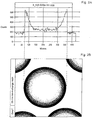
- Figures 1A and 1B also show the cross-section (Figure 1B) and sulphur profile (Figure 1A) of the sulphonated product according to the invention prepared by the SO 3 sulphonation technique.
- Figures 2A and 2B show by way of comparison the cross-section ( Figure 2B) and sulphur profile (Figure 2A) of a corresponding product obtained by sulphuric acid sulphonation (carried out by using dichlorethane as a swelling agent).
- Table 1 The results of the sulphonation are shown in Table 1, which indicates the degree of sulphonation in the form of dry weight capacity (meq/g).
- Figures 1A and 1B also show the cross-section (Figure 1B) and sulphur profile (Figure 1A) of the sulphonated product according to the invention prepared by the SO 3
- the SO 3 sulphonation according to the invention provides a cation-exchange resin where the sulphonated shell layer has a very distinct outline. Furthermore, the depth, dry weight capacity and volume capacity of the produced shell layer can be adjusted by selecting a desired reaction temperature and time. The results also show that the process enables the preparation of fully sulphonated polymer resins.
- the pressure values given in Table 2 refer to the pressure in the reaction space at the beginning of sulphonation.
- Table 2. Pressure T ° C t hr Dry weight capacity meq/g Normal pressure 64 3.0 0.37 Normal pressure 64 6.0 1.53 Normal pressure 84 1.5 0.44 Normal pressure 84 3.0 0.78 Normal pressure 84 6.0 3.60 50 Pa 60 0.5 1.80 50 Pa 60 1.0 2.35 50 Pa 60 3.0 3.52 50 Pa 60 6.0 4.28 50 Pa 60 12.0 5.06
- a sulphonation reaction was carried out by using as a starting material a gel-type styrene-DVB copolymer with a varying degree of cross-linking.
- the cross-linking degrees were 5.5% DVB, 4.0% DVB and 1.0% DVB.
- a screening fraction with a sphere size of 250 to 280 ⁇ m was used.
- the temperature of sulphonation was 40°C and the sulphonation time varied between 0.5 and 6.0 hr.
- the sulphonation conditions were otherwise similar to Example 1.
- the sulphonation was carried out by using as a starting material a gel-type styrene-DVB copolymer with a cross-linking degree of 5.5% DVB.
- the screening fraction of the polymer varied from 250 to 280 ⁇ m.
- the sulphonation was carried out at 60°C and the sulphonation time varied between 0.5 and 24 hr. Otherwise the sulphonation conditions were similar to Example 1.
- Table 4 shows that spherical cation-exchange resin particles with sulphonated shell layers prepared with the process according to the invention remained mechanically unbroken at least to a capacity of about 3.5 meq/g.
- resin products with a higher capacity are useful for example as raw material for pulverized ion-exchange resins.
- Specific swelling was determined by measuring the amount of water in the resin in proportion to the number of equivalents in the resin ion exchange sites.
- the resin water content was determined as follows:
- the specific swelling of the resin can be calculated when the dry weight capacity of the resin is also known:
- the resistance to oxidation of a cation exchanger sulphonated with sulphur trioxide was examined by means of hydrogen peroxide treatment, during which the volume capacity and specific swelling of the resin were monitored. The variation in the aforementioned values indicates the breaking up of the resin cross-linking.
- the material examined was a resin cross-linked with 5.5% DVB, sulphonated with sulphur trioxide and having a particle size of 300 ⁇ m.
- Comparative resins were materials cross-linked with 4 and 5.5% DVB and sulphonated with sulphuric acid, with a mean sphere size of about 330 ⁇ m.
- the resistance to oxidation was tested as follows: 10 g of H + resin filtered to an air-dry form was weighed into a test tube, and 10 ml of 30% hydrogen peroxide was added. The test tube was closed and its temperature adjusted to 60°C. The treatment times were 1, 3, 5 and 7 days. After the treatment the volume capacity and the specific swelling were determined from the resin samples similarly as described in Examples 1 and 5.
- the test was carried out by using an SO 3 -sulphonated styrene-DVB copolymer resin according to the invention with a cross-linking degree of 5.5% DVB.
- the average particle size of the resin was 300 ⁇ m.
- a comparative resin was a corresponding resin prepared by the sulphuric acid method and having an average particle size of 336 ⁇ m.
- the tests were conducted as follows: 5 ml of resin was packed into a 10 ml test column. A solution cycle of 0.5 mol/l H 2 SO 4 - water- 4 mol/l NaOH - water was pumped through the column at a flow rate of 15 ml/min such that the duration of pumping in each phase was 5 min. The solution cycle was performed 100 times on each resin to be tested. After the test the resins were photographed and the proportion of broken particles was calculated from the photographs.
- Osmotic shrinkage was examined with the same resins as in Example 6.
- the test was conducted with resins converted into the Na + form such that about 10 ml of resin equilibrated with ion-exchanged water was first packed into a glass column. A series of NaCl solutions with different concentrations (0.1 to 5.0 mol/l) were thereafter passed through the column, and the bed volumes equilibrated with the different concentrations of the solution were measured.
- the test was conducted by using an SO 3 -sulphonated styrene-DVB copolymer resin according to the invention with a cross-linking degree of 5.5% DVB.
- the average particle size of the resin was 400 ⁇ m and the dry weight capacity was 2.5 meq/g.
- a comparative resin was a cross-linked styrene-DVB copolymer resin sulphonated with the sulphuric acid method and having a cross-linking degree of 5.5% DVB, an average particle size of 400 ⁇ m and a dry weight capacity of 5.18 meq/g.
- the results show that the force required to break a resin bead with a sulphonated shell layer is many times the force required to break a resin fully sulphonated with sulphuric acid.
- the preparation process according to the invention thus provides a gel-type cation-exchange resin with excellent mechanical strength.
- the test was conducted by using an SO 3 -sulphonated styrene-DVB copolymer resin according to the invention with a cross-linking degree of 5.5% DVB, an average particle size of 300 ⁇ m and a dry weight capacity of 2.3 meq/g.
- a comparative resin was a styrene-DVB copolymer resin sulphonated with the sulphuric acid method and having a cross-linking degree of 5.5% DVB, an average particle size of 336 ⁇ m and a dry weight capacity of 5.2 meq/g.
- the packing degree of the resin was examined as follows: 20 ml of Na + resin was packed into a test column of the type Pharmacia XK 16/40. The resin bed was filled with water and packed first by shaking, whereafter the bed porosity was measured by a Blue Dextran pulse response. The bed was then compressed by tightening a surface control adapter, whereafter the bed porosity was measured again.
- the stability of the sulphonic acid group linked to a copolymer matrix was examined by means of an SO 3 -sulphonated styrene-DVB copolymer resin according to the invention with a cross-linking degree of 5.5% DVB and a sulphonation degree (in dry weight capacity) of 5.08 meq/g.
- a comparative resin was a corresponding resin sulphonated with the sulphuric acid method and having a cross-linking degree of 5.5% DVB and a sulphonation degree (in dry weight capacity) of 5.18 meq/g.
- Example 12 Use of the resin according to the invention in size exclusion chromatography
- a chromatographic test was conducted by using an SO 3- sulphonated styrene-DVB copolymer resin according to the invention with a cross-linking degree of 5.5% DVB, an average particle size of 300 ⁇ m and a dry weight capacity of 2.3 meq/g.
- a comparative resin was a corresponding resin sulphonated with the sulphuric acid method and having an average particle size of 336 ⁇ m and a dry weight capacity of 5.2 meq/g.
- the chromatographic tests were conducted by using an FPLC chromatographic unit of Pharmacia Biotech provided with UV, refractive index and conductivity detectors.
- the test column was Pharmacia XK 16/40.
- the tests were carried out by using 85 ml of Na + resin that was packed into the column.
- Pulse responses were measured by Blue Dextran (unretained component), methanol, glycerol and saccharose.
- the tests were carried out at a flow rate of 0.25 ml/min, the feed sample volume was 0.5 ml and sample concentration 0.25 mol/l.
- Example 13 Use of the resin according to the invention in the chromatographic separation of saccharose and glycerol
- test conditions were as follows: flow rate 0.25 ml/min, sample volume 0.5 ml and the following sample concentrations:
- Example 14 Use of the resin according to the invention in ion exchange
- Example 12 The same resins and chromatographic apparatus were used as in Example 12.
- Ion exchange tests were conducted as follows: a bed of 9.9 cm in height of Na + resin was packed into a test column of the type Pharmacia XK 16/40. The total bed capacity with an SO 3 -sulphonated resin was thus 30 meq and with a comparative resin 34 meq.
- the operation of the resin according to the invention in the softening of water was examined by measuring a breakthrough curve of the Ca 2+ ion when the feed solution was CaCl 2 with a concentration (Ca content) of 250 ppm. The tests were conducted at flow rates of 8 ml/min and 2 ml/min.
- Table 13 also shows the breakthrough volumes of the breakthrough curve. Table 13. SO 3 -sulphonated 2 ml/min SO 3 -sulphonated 8 ml/min H 2 SO 4 -sulphonated 2 ml/min H 2 SO 4 -sulphonated 8 ml/min Breakthrough volume of breakthrough curve, ml 2414 2360 2404 2350
- the process according to the invention was used to prepare a strong cation exchanger from a macroporous polystyrene-DVB copolymer with a cross-linking degree of 12% DVB, and the applicability of the exchanger in catalytic applications was examined by comparing the activity in an esterification reaction between ethanol and acetic acid.
- a comparative resin was macroporous Amberlyst 15 resin (Rohm & Haas).
- the macroporous resin according to the invention was prepared by sulphonation at 60°C as described in Example 1, and the dry weight capacity of the resin was adjusted to 2.9 meq/g.
- the esterification processes were conducted as follows: the starting materials were 96.1% ethanol and 99.9% acetic acid. 104 ml of ethanol and 103 ml of acetic acid were measured into a 500 ml round-bottomed flask provided with horseshoe mixers. An amount of resin corresponding to 20 meq was weighed into the reaction mixture, and the reaction was activated by raising the temperature of the mixture to 70°C. The progression of the reaction was monitored by measuring the amount of acetic acid in the mixture as a function of the reaction time.
Landscapes
- Chemical & Material Sciences (AREA)
- Organic Chemistry (AREA)
- Chemical Kinetics & Catalysis (AREA)
- General Chemical & Material Sciences (AREA)
- Engineering & Computer Science (AREA)
- Materials Engineering (AREA)
- Analytical Chemistry (AREA)
- Health & Medical Sciences (AREA)
- Medicinal Chemistry (AREA)
- Polymers & Plastics (AREA)
- Addition Polymer Or Copolymer, Post-Treatments, Or Chemical Modifications (AREA)
- Solid-Sorbent Or Filter-Aiding Compositions (AREA)
- Polymers With Sulfur, Phosphorus Or Metals In The Main Chain (AREA)
- Graft Or Block Polymers (AREA)
Abstract
Description
- The invention relates to sulphonated alkenylaromatic polymer resins in a particle form, particularly ion-exchange resins, and the preparation of such resins. The invention relates especially to polymer resins whose shell layer is sulphonated, and to the preparation thereof. The polymer material to be sulphonated is typically for example a cross-linked styrene-divinylbenzene copolymer (a styrene copolymer cross-linked with divinylbenzene). The obtained sulphonated polymer resins are useful for example as chromatographic resins, ion-exchange resins and catalyst resins, either in a spherical or pulverized form.
- Polystyrene-based resins are conventionally sulphonated for example by concentrated sulphuric acid in a swelling agent (usually a chlorohydrocarbon). However, the use of chlorohydrocarbons has been reduced for example due to environmental reasons. Polystyrene-based resins have also been sulphonated directly by a gaseous sulphur trioxide. It has been noted, however, that the obtained products where polymer particles are fully sulphonated are not physically stable but they tend to break.
- European Published Application 0,361,685 (Rohm & Haas Co.) describes partly functionalized, for example sulphonated, polymer resin particles and a process for producing them. The process provides polymer resin particles where 68 to 98% of the accessible functionalizable sites are functionalized (e.g. sulphonated). The unfunctionalized sites are situated in the inner core of the particles, whereas the functionalized groups are located in the shell layer of the particles. The depth of functionalization can be for example 0.32 to 0.75 times the average radius of the polymer particles. In this publication the sulphonation is carried out with concentrated sulphuric acid at a normal pressure at a high temperature, such as 120 to 140°C.
- US Patent 3,252,921 (Dow Chemical Company) describes partial/heterogeneous sulphonation of alkenylaromatic polymer resins by first using a swelling agent (a chlorohydrocarbon) and by thereafter carrying out the actual sulphonation with chlorosulphonic acid or liquid sulphur trioxide. This provides polymer particles with a sulphonated shell layer.
- Example 3 of German Offenlegungsschrift 2,627,877 (Sumitomo Chemical Co.) describes sulphonation of fibrous polyethylene with gaseous sulphur trioxide in a vacuum. According to claim 4, the process is carried out at a low temperature (10 to 90°C). The degree of sulphonation may vary within a broad range, such as 0.01 to 10 meq/g. The sulphonation reagent is said to have a concentration preferably in a range of from 10 to 80% by volume of SO3. If the SO3 content of the sulphonation gas is higher, the sulphonation reaction does not proceed in a uniform manner.
- French Patent 1,280,353 (Rohm & Haas Co.) describes the sulphonation of macroporous vinylaromatic polymers with gaseous sulphur trioxide (usually in a mixture with air) at a normal pressure. According to the examples, the temperature varies from 60 to 100°C. The publication does not disclose the preparation of partly sulphonated products.
- The extent to which resins are sulphonated is indicated by their degree of sulphonation, which is usually given in dry weight capacity. The theoretical dry weight capacity (one sulphone group per benzene ring) of a monosulphonated styrene-divinylbenzene copolymer resin varies between 4.8 and 5.4 meq/g.
- One of the essential properties of ion-exchange resins is their capacity. The capacity of a sulphonated styrene-divinylbenzene copolymer resin indicates how many H+ ions it can exchange per one mass and/or volumetric unit of resin. The capacity can be given as dry weight capacity or volume capacity. The dry weight capacity is indicated as milliequivalents per one gram of dry resin (meq/g) and the volume capacity is indicated as equivalents per one litre of fully swollen resin (eq/l).
- When a resin is transferred from one medium to another, it may either swell or shrink. Great changes in the volume hinder the use of the resin in columns, wherefore the variation in volume should be minimal.
- Resin particle size and the distribution thereof essentially affect the behaviour of an ion-exchange resin, such as kinetics of mass transfer, pressure drop over a backed bed, flow channelling and the degree of packing of the bed. The mean particle size of resin or the mean sphere size (resin particles are usually spherical) refers to an average based on the volume or mass proportion of different size fractions. The sharpness of the sphere size distribution is generally described by means of a uniformity coefficient (UC). This coefficient is calculated by forming a quotient between a mesh size that retains 40% of resin particles and a mesh size retaining 90% of resin particles. This ratio is given
value 1 when all the particles are of equal size. For example, a typical resin intended for water treatment has a uniformity coefficient UC = 1.7. The UC of industrial chromatographic separation resins varies between 1.05 and 1.25. - The degree of cross-linking of the sulphonated styrene-divinylbenzene copolymer resin is dependent on the amount of the divinylbenzene used as a cross-linking agent during the polymerization. A gel-type resin normally comprises 1 to 12% of divinylbenzene. The degree of cross-linking affects for example the mechanical strength, ion exchange capacity, water retention capacity, swelling, selectivity and chemical stability of the ion exchanger. Resins with a low degree of cross-linking are soft and mechanically unstable, whereas a high degree of cross-linking provides hardness, fragility and increased sensitivity to osmotic effects.
- There are two main types of ion-exchange resins (e.g. sulphonated styrene-divinylbenzene copolymer resins): gel-type and macroporous resins. A macroporous ion-exchange resin is a resin where additional blowing agent has been added to the monomer mixture during polymerization and removed thereafter. This provides a structure with far greater pores than in the polymer network. A gel-type ion-exchange resin, in turn, refers to a resin where the porosity is only based on the porosity of the cross-linked polymer network.
- Mechanical strength describes the resin's ability to resist wearing. In a physically advantageous ion-exchange resin the particles are spherical in shape, and the resin does not comprise cracks and is not fragile. Mechanical strength is examined for example by a cyclic test of watering and drying, where the resin strength is examined by subjecting the resin to repeated watering and drying operations. Physical hardness is measured by means of compression resistance. The resistance of a resin to osmotic forces is important in industrial applications. Several methods have been introduced to measure the resistance of a resin to osmotic shock.
- Chemical stability of a resin refers to the resistance of active groups and the hydrocarbon backbone particularly to oxidation.
- The primary factor restricting the use of a strongly acidic cation-exchange resin at high temperatures is desulphonation. A typical maximum operating temperature of such resins in long-term use is 120°C.
- In the present invention the sulphonation of the shell layer means that the polymer particles are not fully sulphonated but the sulphonation is only effected beginning from the surface of the particles so that the core remains unsulphonated. There is a clearly defined interface between the sulphonated and unsulphonated regions. The sulphonation depth can vary.
- Sulphonation with 'substantially pure gaseous sulphur trioxide means in the present invention that the space where the sulphonation is carried out is substantially free of diluting gas components, such as air.
- The object of the invention is to provide a process for preparing a sulphonated stable alkenylaromatic polymer resin in a particle form so that the sulphonation can be carried out without a swelling agent, such as a chlorohydrocarbon. This problem has been solved in the invention such that the sulphonation of a polymer resin in a non-swollen state is performed by substantially pure gaseous sulphur trioxide. Sulphonation is substantially performed on the shell layer of polymer particles.
- The objects of the invention are achieved by means of a product and a process which are characterized by what is disclosed in
independent claims 1 and 19. The preferred embodiments of the invention are disclosed in the dependent claims. - The invention also relates to the use of the obtained sulphonated resin as a chromatographic resin, ion-exchange resin and catalyst resin.
- The invention relates to a sulphonated alkenylaromatic polymer resin in a particle form, which is characterized in that it is prepared by sulphonating a non-swollen polymer with substantially pure gaseous sulphur trioxide substantially in the shell layer of the polymer particles.
- The invention also relates to a process for preparing a sulphonated alkenylaromatic polymer resin in a particle form. The process is characterized by sulphonating a polymer in a non-swollen state with substantially pure gaseous sulphur trioxide substantially in the shell layer of the polymer particles.
- The polymer used as a starting material is sulphonated substantially in the shell layer of the polymer particles. The sulphonation depth and the degree of sulphonation indicating the depth can vary. The thickness of the sulphonated shell layer can vary for example between 1 and 80%, preferably 10 and 50%, calculated from the average radius of a polymer particle.
- In a preferred embodiment the interface between the sulphonated and the unsulphonated regions is clearly defined in the polymer resin particles according to the invention whose shell layer is sulphonated.
- A polymer is preferably sulphonated at a reduced pressure, and the reaction space containing the polymer is subjected to a reduced pressure already before the sulphonation in order to remove diluting gas components, such as air. The pressure produced in the reaction space is typically lower than 10000 Pa, preferably less than 1000 Pa, and most preferably between 50 and 100 Pa.
- The polymer used as a starting material is an alkenylaromatic polymer, which is preferably cross-linked. Typical alkenylaromatic polymers include vinylaromatic polymers. Examples of vinyl aromatic monomers are styrene, methylstyrene, ethylstyrene, etc. and other styrenic derivatives.
- An advantageous polymer is a polymer with a styrene skeleton. A particularly advantageous polymer is a styrene-divinylbenzene copolymer, which is a cross-linked copolymer.
- Other monomers can also be used as admixed components in the copolymer to be sulphonated. Such monomers include different acrylate esters and acrylic acids. Examples include methyl acrylate, ethyl acrylate, methyl methacrylate, acrylic acid, methacrylic acid and acrylonitrile, and other organic compounds with one double bond.
- In addition to divinylbenzene (DVB), other possible cross-linking monomers include different known alkenylaromatic and aliphatic cross-linking agents, such as isoprene, allyl methacrylate, vinyl methacrylate, glycol dimethacrylate, glycol diacrylate and other polyunsaturated organic compounds.
- The polymer to be sulphonated is preferably a gel-type polymer with a cross-linking degree of typically between 0.5 and 12%, preferably 1 and 10% of the cross-linking component, such as DVB. The polymer to be sulphonated can also be a macroporous polymer, in which case the degree of cross-linking typically varies between 4 and 30%, preferably between 8 and 20% of the cross-linking component, such as DVB.
- The polymer is preferably a styrene-divinylbenzene copolymer, which can be either gel-type or macroporous. The cross-linking degree of the gel-type styrene-divinylbenzene is typically between 0.5 and 12% DVB, preferably 1 and 10% DVB. The cross-linking degree of the macroporous styrene-divinylbenzene is typically between 4 and 30% DVB, preferably between 8 and 20% DVB.
- Sulphonation is carried out at a low temperature, typically from 20 to 120°C, and preferably 40 to 80°C.
- The polymer is typically sulphonated to a sulphonation degree of 0.1 to 5.5 meq/g, preferably 0.2 to 5.5 meq/g, more preferably 0.2 to 4.2 meq/g, and most preferably 1 to 3 meq/g.
- In order to obtain particles with a homogenous sulphonation degree, the particle size distribution of the polymer should preferably be as narrow as possible. The particle size distribution, given in UC units, is typically on a range of from 1 to 1.7, preferably 1 to 1.25.
- The resins prepared according to the invention are typically ion-exchange resins and particularly strongly acidic cation-exchange resins.
- The polymer resin according to the invention is typically sulphonated in a particle form, preferably in a spherical form. The polymer resin can also be in a fibrous form, i.e. it can consist of either staple and/or long fibres. The resin can also be in a pulverized form. Resins with a sulphonated shell layer are preferably used in a spherical form, but they can also be used in a pulverized form.
- The process according to the invention employs substantially pure gaseous sulphur trioxide as the sulphonating agent. The source of sulphur trioxide can be for example pure sulphur trioxide per se. It can also be sulphur dioxide, which is oxidized in situ into sulphur trioxide. Sulphur trioxide can also be obtained from oleum (fuming sulphuric acid which contains sulphur trioxide), in which case the sulphonation is typically carried out at the vapour pressure of sulphur trioxide or at a lower pressure.
- An embodiment of the invention can be implemented for example by first subjecting a reaction space, which contains the polymer used as a starting material, to a reduced pressure (e.g. about 100 Pa) in order to remove diluting gases, such as air. Substantially pure sulphur trioxide is thereafter fed into a reaction vessel containing the polymer, whereafter the sulphonation takes place at the vapour pressure of sulphur trioxide or at a lower pressure. The reaction time of the sulphonation is typically selected between 1 and 24 hours.
- The sulphonation reaction is adjusted by means of the amount of sulphur trioxide used, the reaction temperature and the reaction time. The sulphonation reaction is terminated for example by dilution with air.
- The sulphonation reaction proceeds according to a shrinking core mechanism, which means that the interface between the sulphonated and the unsulphonated regions is very distinct.
- After the sulphonation reaction the sulphonated product is subjected to after-treatment to prevent breakage of the resin structure for example by first diluting the reaction product with sulphuric acid (50%) and thereafter washing it with water to a pH value of 5. The reaction product can also be diluted directly into water.
- The process enables the preparation of a partly sulphonated product, where only the shell layer of the polymer particles has been sulphonated. Such partly sulphonated particles (less than one sulphone group per benzene ring) do not break when the sulphonated product is being diluted during the after-treatment phase. Due to their stability, resins whose shell layer has been sulphonated are useful for purposes which require resins in a spherical form. Resin particles are also useful in the production of pulverized resins.
- A gel-type polymer resin prepared according to the invention has the following advantageous properties compared with a conventional resin sulphonated with sulphuric acid: it swells less than a conventional gel resin having the same cross-linking degree, it has better stability against oxidizing conditions, and corresponding thermal stability, and it has better resistance to osmotic shock, better compression resistance and a higher degree of packing. Partly sulphonated polymer resin particles prepared according to the invention do not break when the resin is being used and processed.
- Macroporous resins prepared according to the invention, on the other hand, have been found to have better activity for example as catalyst resins than conventional resins sulphonated with sulphuric acid.
- The invention will be described below by means of detailed working examples. Examples 1 to 3 describe the preparation of a gel-type resin, Examples 4 to 11 describe properties of the resin compared with conventional resins, Examples 12 to 14 illustrate applications of use of the resin, and Example 15 describes the preparation and use of a macroporous resin. The abbreviation 'DVB' used in the examples denotes divinylbenzene.
- The starting material in the sulphonation was a gel-type styrene-DVB copolymer with a cross-linking degree of 5.5% DVB, prepared by a suspension polymerization technique. For the purpose of tests, two fractions with sphere sizes of 250 to 280 µm and 120 to 140 µm, respectively, were sieved out from the copolymer batch.
- The sulphonation reagent was gaseous sulphur trioxide, which was derived from oleum (sulphur trioxide content 65%). No swelling agent was used. The sulphonation was carried out at 20, 40 and 60°C and the sulphonation times varied between 0.5 and 24 hours.
- The sulphonation apparatus consisted of a reactor comprising two interconnected glass vessels with a valve between them. A desired amount of polymer was weighed into the greater glass vessel of 1.25 I and subjected to a reduced pressure for 30 min to obtain a pressure of 50 Pa. Oleum was added to the other glass vessel of 0.8 I. The temperature in the reactor was adjusted to a desired value of 20°C and the pressure in the vessel containing the oleum was adjusted to 8000 Pa by a vacuum pump. The ratio of oleum to the polymer was 50 ml of oleum to 10 g of polymer.
- After a suitable reduced pressure had been reached (the pressure in the reaction space was 50 Pa and the pressure of the space containing the oleum was 8000 Pa), the reactor was adjusted to a desired reaction temperature (20, 40 or 60°C) and the polymer was sulphonated for a desired time (0.5 to 24 hr) by opening the valve between the reaction vessels. The sulphonation was carried out as a batch-type reaction without mixing.
- The sulphonation reaction was terminated by flushing the reaction space with air. In order to prevent the resin structure from breaking, the obtained products were usually diluted by a sulphuric acid series of 98, 60, 40, 30, 20 and 10% H2SO4 and washed with fully deionized water until the pH of the solution exceeded 5. Some of the products were diluted directly into water.
- The dry weight capacity and volume capacity of the prepared cation-exchange resins were determined, and the progression of the sulphonation as a distinct shell layer was detected by measuring sulphur profiles from crosscuts of resin spheres by an X-ray fluorescence analyzer connected to an electron microscope.
- The dry weight capacity and volume capacity were determined as follows:
- Five ml of resin in the H+ form was packed into a 15 ml glass column. Ion-exchanged water was passed through the column until the pH of the rinsing water exceeded 5. The resin was thereafter regenerated into the Na+ form by running 20 bed volumes of 10% NaCl solution through the column for a minimum contact time of 30 min. The solution that passed through the column was gathered and titrated with 1-M NaOH solution in the presence of a phenolphthalein indicator. The resin was thereafter restored to the H+ form by running 20 bed volumes of 5% hydrochloric acid through the column for a minimum contact time of 30 min. The resin bed was then rinsed with fully desalted water until the pH value of the rinsing water exceeded 5. The column was shaken until the bed volume no longer changed and the bed volume in the H+ form was readable. The entire resin batch was thereafter transferred to a heating chamber and dried at 110°C for 16 hr, and the dry weight of resin was weighed. The dry weight capacity and volume capacity were calculated as follows:


Qdm = dry weight capacity
QV = volume capacity
CNaOH = NaOH concentration
VNaOH = NaOH consumption in titration
md = dry weight of resin in the H+ form
Vresin = volume of resin bed in the H+ form - The results of the sulphonation are shown in Table 1, which indicates the degree of sulphonation in the form of dry weight capacity (meq/g). Figures 1A and 1B also show the cross-section (Figure 1B) and sulphur profile (Figure 1A) of the sulphonated product according to the invention prepared by the SO3 sulphonation technique. Figures 2A and 2B show by way of comparison the cross-section (Figure 2B) and sulphur profile (Figure 2A) of a corresponding product obtained by sulphuric acid sulphonation (carried out by using dichlorethane as a swelling agent).
Table 1. T
° Ct
hrPolymer fraction
µmDry weight capacity
meq/g60 0.5 250 - 280 1.80 1.0 250 - 280 2.35 3.0 250 - 280 3.52 40 0.5 250 - 280 0.64 1.0 250 - 280 0.82 3.0 250 - 280 1.26 6.0 250 - 280 1.64 12.0 250 - 280 1.94 24 250 - 280 2.23 0.5 125-140 1.12 1.0 125 - 140 1.37 3.0 125 - 140 2.03 12.0 125 - 140 3.02 20 0.5 250 - 280 0.09 1.0 250 - 280 0.15 3.0 250 - 280 0.26 6.0 250 - 280 0.36 12.0 250 - 280 0.43 24.0 250 - 280 0.59 - The results show that the SO3 sulphonation according to the invention provides a cation-exchange resin where the sulphonated shell layer has a very distinct outline. Furthermore, the depth, dry weight capacity and volume capacity of the produced shell layer can be adjusted by selecting a desired reaction temperature and time. The results also show that the process enables the preparation of fully sulphonated polymer resins.
- The effect of a reduced pressure (vacuum) on sulphonation was examined by performing sulphonation according to the invention in a vacuum (50 Pa) and, by way of comparison, at a normal pressure. The tests were conducted by using as a starting material the material of Example 1 with a screening fraction of 250 to 280 µm. Sulphonation operations were carried out in a vacuum as described in Example 1. In the comparative sulphonation operations the reaction space and the space containing the oleum were not subjected to a reduced pressure, but the diluting gas components were present during the sulphonation. The results given in Table 2 illustrate how vacuum treatment accelerates sulphonation. The pressure values given in Table 2 refer to the pressure in the reaction space at the beginning of sulphonation.
Table 2. Pressure T
° Ct
hrDry weight capacity
meq/gNormal pressure 64 3.0 0.37 Normal pressure 64 6.0 1.53 Normal pressure 84 1.5 0.44 Normal pressure 84 3.0 0.78 Normal pressure 84 6.0 3.60 50 Pa 60 0.5 1.80 50 Pa 60 1.0 2.35 50 Pa 60 3.0 3.52 50 Pa 60 6.0 4.28 50 Pa 60 12.0 5.06 - The results clearly show that the removal of air from the reaction space and from the copolymer accelerates the sulphonation with sulphur trioxide in gas phase. For example a temperature of 60°C and a sulphonation time of 6 hr provided the product with a dry weight capacity of only 1.53 meq/g in sulphonation at a normal pressure, whereas the sulphonation according to the invention in a vacuum produced a capacity of 4.28 meq/g.
- A sulphonation reaction was carried out by using as a starting material a gel-type styrene-DVB copolymer with a varying degree of cross-linking. The cross-linking degrees were 5.5% DVB, 4.0% DVB and 1.0% DVB. A screening fraction with a sphere size of 250 to 280 µm was used. The temperature of sulphonation was 40°C and the sulphonation time varied between 0.5 and 6.0 hr. The sulphonation conditions were otherwise similar to Example 1.
- The sulphonation results are shown in Table 3.
Table 3. Cross-linking degree
% DVBt
hrDry weight capacity
meq/g5.5 0.5 0.64 1.0 0.82 3.0 1.26 6.0 1.64 12.0 1.94 24 2.23 4.0 1.0 1.15 3.0 1.70 6.0 2.42 1.0 1.0 2.73 3.0 2.73 6.0 3.24 - The results show that as the cross-linking degree decreases, the sulphonation speed increases significantly. It was also found that the sulphonation of the shell layer also takes place at lower degrees of cross-linking.
- The sulphonation was carried out by using as a starting material a gel-type styrene-DVB copolymer with a cross-linking degree of 5.5% DVB. The screening fraction of the polymer varied from 250 to 280 µm. The sulphonation was carried out at 60°C and the sulphonation time varied between 0.5 and 24 hr. Otherwise the sulphonation conditions were similar to Example 1.
- The results are shown in Table 4.
Table 4. T
° Ct
hrDry weight capacity
meq/gPercentage of breakage
%60 0.5 1.80 0 60 1.0 2.35 0 60 3.0 3.52 5 - Table 4 shows that spherical cation-exchange resin particles with sulphonated shell layers prepared with the process according to the invention remained mechanically unbroken at least to a capacity of about 3.5 meq/g. However, resin products with a higher capacity are useful for example as raw material for pulverized ion-exchange resins.
- Specific swelling was examined with SO3-sulphonated styrene-DVB copolymer resins prepared according to the invention with cross-linking degrees of 4.0% DVB and 5.5% DVB. A screening fraction of 250 to 280 µm was used. A comparative test was carried out with commercial H2SO4-sulphonated resin with the same cross-linking degree, prepared by using dichlorethane as a swelling agent.
- Specific swelling was determined by measuring the amount of water in the resin in proportion to the number of equivalents in the resin ion exchange sites.
- The resin water content was determined as follows:
- 2 g of H+ resin fully swollen in water was centrifuged for 10 min at 2500 rpm in a centrifugal tube with a grid bottom. Three 0.5 g parallel samples were weighed from the centrifuged resin and dried at 110°C for 16 hr. The water content was calculated from the equation:

XH2O = resin water content
mw = mass of centrifuged resin
md = dry mass of resin - The specific swelling of the resin can be calculated when the dry weight capacity of the resin is also known:
- Mass of water (mH2O) per dry weight of resin:

- Specific swelling of resin:

n(H2O) = molar amount of water
n (R - SO3H) = molar number of ion exchange sites
MH2O = molar mass of water. - The results are shown in Table 5.
Table 5. Sulphonation reagent Cross-linking degree
% DVBDry weight capacity
meq/gSpecific swelling n(H2O)/n(R-SO3H) SO3 1.0 2.7 17.6 SO3 4.0 2.1 7.68 SO3 5.5 2.3 6.66 H2SO4 + EDC swelling 5.5 5.2 16.5 - The results show that when sulphonation is carried out by gaseous sulphur trioxide, the obtained cation-exchange resin has different swelling properties compared with a resin sulphonated conventionally with sulphuric acid. A cation exchanger cross-linked with 1% DVB and sulphonated with sulphur trioxide has similar specific swelling as a resin cross-linked with 5.5% DVB and sulphonated with sulphuric acid. Correspondingly, the specific swelling of SO3-sulphonated resin cross-linked with 5.5% DVB is similar to that of a resin cross-linked with 14% DVB and sulphonated with sulphuric acid (K.W. Pepper, "Sulphonated cross-linked polystyrene: monofunctional cation-exchange resin", J. Appl. Chem. (London),
No 1, 1951). - The resistance to oxidation of a cation exchanger sulphonated with sulphur trioxide was examined by means of hydrogen peroxide treatment, during which the volume capacity and specific swelling of the resin were monitored. The variation in the aforementioned values indicates the breaking up of the resin cross-linking. The material examined was a resin cross-linked with 5.5% DVB, sulphonated with sulphur trioxide and having a particle size of 300 µm. Comparative resins were materials cross-linked with 4 and 5.5% DVB and sulphonated with sulphuric acid, with a mean sphere size of about 330 µm.
- The resistance to oxidation was tested as follows: 10 g of H+ resin filtered to an air-dry form was weighed into a test tube, and 10 ml of 30% hydrogen peroxide was added. The test tube was closed and its temperature adjusted to 60°C. The treatment times were 1, 3, 5 and 7 days. After the treatment the volume capacity and the specific swelling were determined from the resin samples similarly as described in Examples 1 and 5.
- The results are shown in Tables 6 and 7.
Table 6. Cross-linking degree Sulphonation method 4 % DVB H2SO4 + EDC 5.5 % DVB H2SO4 + EDC 5.5 % DVB SO3 Time Days Volume capacity eq/l Volume capacity eq/l Volume capacity eq/ l 0 1.06 1.41 1.23 1 0.79 1.12 1.07 3 0.40 0.49 1.09 5 0.04 0.15 1.00 7 destroyed destroyed 0.81 Table 7. Cross-linking degree Sulphonation method 4 % DVB H2SO4 + EDC 5.5 % DVB H2SO4 + EDC 5.5 % DVB SO3 Time Days Specific swelling n(H2O)/n(RSO3H) Specific swelling n(H2O)/n(RSO3H) Specific swelling n(H2O)/n(RSO3H) 0 25.0 17.8 6.87 1 39.3 35.1 8.08 3 74.8 61.7 9.52 5 destroyed 76.4 9.97 7 destroyed destroyed 16.6 - The results show that after seven days of treatment the resin sulphonated with sulphuric acid had been completely destroyed, whereas the resin according to the invention only exhibited reduced activity and a lower degree of cross-linking.
- The results of the example thus clearly show that sulphur trioxide sulphonation provides a cation-exchange resin with considerably better resistance to oxidation than a conventional resin sulphonated with sulphuric acid.
- The test was carried out by using an SO3-sulphonated styrene-DVB copolymer resin according to the invention with a cross-linking degree of 5.5% DVB. The average particle size of the resin was 300 µm. A comparative resin was a corresponding resin prepared by the sulphuric acid method and having an average particle size of 336 µm.
- The tests were conducted as follows: 5 ml of resin was packed into a 10 ml test column. A solution cycle of 0.5 mol/l H2SO4 - water- 4 mol/l NaOH - water was pumped through the column at a flow rate of 15 ml/min such that the duration of pumping in each phase was 5 min. The solution cycle was performed 100 times on each resin to be tested. After the test the resins were photographed and the proportion of broken particles was calculated from the photographs.
- It was found that all the SO3-sulphonated particles according to the invention were unbroken, whereas some of the particles sulphonated with sulphuric acid were broken (93% unbroken).
- Osmotic shrinkage was examined with the same resins as in Example 6. The test was conducted with resins converted into the Na+ form such that about 10 ml of resin equilibrated with ion-exchanged water was first packed into a glass column. A series of NaCl solutions with different concentrations (0.1 to 5.0 mol/l) were thereafter passed through the column, and the bed volumes equilibrated with the different concentrations of the solution were measured.
- The results are shown in Table 8.
Table 8. CNaCl mol/l Resin sulphonated with sulphuric acid 5.5 % DVB, 5.2 meq/g SO3-sulphonated resin 5.5 % DVB, 2.3 meq/g Bed volume ml Bed volume ml 0 9.90 9.90 0.1 8.90 9.70 0.5 8.45 9.70 1.0 8.10 9.70 3.0 7.30 9.70 5.0 6.70 9.70 - The results show that the bed volume of the resin according to the invention remained almost unchanged, whereas the comparative resin exhibited significant osmotic shrinkage. This is a significant advantage of a resin sulphonated with sulphur trioxide regardless of whether it is used for ion exchange or chromatographic separation, since in column operations strong movement of the bed subjects the ion exchange material to mechanical stresses and impairs the result of the separation by producing flow channelling and spreading of the chromatographic front.
- The test was conducted by using an SO3-sulphonated styrene-DVB copolymer resin according to the invention with a cross-linking degree of 5.5% DVB. The average particle size of the resin was 400 µm and the dry weight capacity was 2.5 meq/g. A comparative resin was a cross-linked styrene-DVB copolymer resin sulphonated with the sulphuric acid method and having a cross-linking degree of 5.5% DVB, an average particle size of 400 µm and a dry weight capacity of 5.18 meq/g.
- The compression resistance was tested by a compressing apparatus which measures the breaking strength. The test was conducted by using one bead per test. The results are shown in Table 9.
Table 9. Material Breaking strength
N/particleSulphonated with sulphuric acid 2.1 SO3-sulphonated >19.6 - The results show that the force required to break a resin bead with a sulphonated shell layer is many times the force required to break a resin fully sulphonated with sulphuric acid. The preparation process according to the invention thus provides a gel-type cation-exchange resin with excellent mechanical strength.
- The test was conducted by using an SO3-sulphonated styrene-DVB copolymer resin according to the invention with a cross-linking degree of 5.5% DVB, an average particle size of 300 µm and a dry weight capacity of 2.3 meq/g.
- A comparative resin was a styrene-DVB copolymer resin sulphonated with the sulphuric acid method and having a cross-linking degree of 5.5% DVB, an average particle size of 336 µm and a dry weight capacity of 5.2 meq/g.
- The packing degree of the resin was examined as follows: 20 ml of Na+ resin was packed into a test column of the type Pharmacia XK 16/40. The resin bed was filled with water and packed first by shaking, whereafter the bed porosity was measured by a Blue Dextran pulse response. The bed was then compressed by tightening a surface control adapter, whereafter the bed porosity was measured again.
- The results of the bed porosity measurement are shown in Table 10.
- The measurements showed that the adapter used was not sufficient to compress the SO3-sulphonated resin. Instead, a resin sulphonated with sulphuric acid with a corresponding DVB cross-linking degree was compressed rather easily. After the compression the porosity of the resin bed sulphonated with sulphuric acid had decreased about 25% of the original value. This shows the usefulness of the resin according to the invention in packed columns in processes under pressure.
Table 10. Material Initial bed porosity % Final bed porosity % Sulphonated with sulphuric acid 35 26 SO3-sulphonated 36 36 - The stability of the sulphonic acid group linked to a copolymer matrix was examined by means of an SO3-sulphonated styrene-DVB copolymer resin according to the invention with a cross-linking degree of 5.5% DVB and a sulphonation degree (in dry weight capacity) of 5.08 meq/g. A comparative resin was a corresponding resin sulphonated with the sulphuric acid method and having a cross-linking degree of 5.5% DVB and a sulphonation degree (in dry weight capacity) of 5.18 meq/g.
- The tests were carried out as follows: resin in the H+ form was kept in a heating chamber at 110°C in air. The desulphonation of the resin was monitored for 63 days by measuring the dry weight capacity about every 20 days.
- The test results are shown in Table 11.
Table 11. Sulphonation method Sulphuric acid SO3 Time Days Dry weight capacity meq/g Dry weight capacity meq/ g 0 5.18 5.08 20 5.11 5.05 42 5.06 5.02 63 5.03 4.95 - The results show that both resins examined have approximately a similar rate of desulphonation.
- A chromatographic test was conducted by using an SO3-sulphonated styrene-DVB copolymer resin according to the invention with a cross-linking degree of 5.5% DVB, an average particle size of 300 µm and a dry weight capacity of 2.3 meq/g. A comparative resin was a corresponding resin sulphonated with the sulphuric acid method and having an average particle size of 336 µm and a dry weight capacity of 5.2 meq/g.
- The chromatographic tests were conducted by using an FPLC chromatographic unit of Pharmacia Biotech provided with UV, refractive index and conductivity detectors. The test column was Pharmacia XK 16/40. The tests were carried out by using 85 ml of Na+ resin that was packed into the column. Pulse responses were measured by Blue Dextran (unretained component), methanol, glycerol and saccharose. The tests were carried out at a flow rate of 0.25 ml/min, the feed sample volume was 0.5 ml and sample concentration 0.25 mol/l. Separation factors for glycerol, glucose and fructose with respect to methanol were calculated from the pulse responses as follows:

Ki = adsorption equilibrium constant of component i
ti = retention time of component i
to = retention time of unretained component (Blue Dextran)
αi/met = separation factor of component i with respect to methanol
Kmet = adsorption equilibrium constant of methanol - The results are shown in Table 12.
Table 12. Sulphonated with sulphuric acid SO3-sulphonated αsaccharose/met 0.355 0.039 αglucose/met 0.559 0.203 αglycerol/met 0.741 0.490 - The results show that the cut-off size of the SO3-sulphonated resin cross-linked with 5.5% DVB is close to the molecular size of saccharose. The material according to the invention is thus suitable for the separation of molecules of the same size as saccharose from smaller molecules on the basis of size exclusion.
- The test was conducted by using the same resins as in Example 12.
- Chromatographic separation tests were conducted to measure the pulse responses of saccharose and glycerol in resin beds of different heights by using the same chromatographic unit and test column as in Example 12.
- The test conditions were as follows: flow rate 0.25 ml/min, sample volume 0.5 ml and the following sample concentrations:
- 1) c saccharose = 0.25 mol/l, c glycerol = 1.00 mol/l
- 2) c saccharose = 0.15 mol/l, c glycerol = 0.60 mol/l
- 3) c saccharose = 0.05 mol/l, c glycerol = 0.20 mol/l
- Resolution and dilution factor were calculated from the pulse responses of glycerol and saccharose measured in beds of different heights as follows:

Rs = resolution
t2 = retention time ofpeak 2
t1 = retention time ofpeak 1
w1 = width ofpeak 1
w2 = width of peak 2
Li = dilution factor of component i h = height of chromatographic pulse response
A = area of chromatographic pulse response - The following results were obtained:
SO3-sulphonated 5.5 % DVB:Resolution: Dilution factor:
Saccharose:Glycerol: 1.09 0.18 0.18 0.70 0.50 0.32 0.52 0.55 0.37 0.58 0.35 0.36
Finex CS11G 5.5 % DVB:Resolution: Dilution factor:
Saccharose:Glycerol: 1.54 0.09 0.09 1.16 0.13 0.13 0.90 0.18 0.18 0.89 0.18 0.18 0.74 0.22 0.24 0.51 0.28 0.32 - The results are shown graphically in Figure 3.
- The results show that separation based on size exclusion is more effective with the resin according to the invention when the resolution level is less than about 1.2. This means that in the case of a resin with an SO3-sulphonated shell layer, product fractions below this limit are diluted less at the same resolution level than in the case of a resin sulphonated with sulphuric acid. It should be noted that in the SMB (Simulated Moving Bed) technique presently employed in industrial chromatographic separation the resolution level is typically between 0.5 and 2.0. The lower degree of dilution of the product reduces the costs considerably in the concentration of the product fraction by evaporation.
- The same resins and chromatographic apparatus were used as in Example 12.
- Ion exchange tests were conducted as follows: a bed of 9.9 cm in height of Na+ resin was packed into a test column of the type Pharmacia XK 16/40. The total bed capacity with an SO3-sulphonated resin was thus 30 meq and with a comparative resin 34 meq. The operation of the resin according to the invention in the softening of water was examined by measuring a breakthrough curve of the Ca2+ ion when the feed solution was CaCl2 with a concentration (Ca content) of 250 ppm. The tests were conducted at flow rates of 8 ml/min and 2 ml/min.
The column properties were as follows:Resin SO3-sulphonated CS11G Cross-linking degree, % by weight of DVB 5.5 5.5 Capacity, meq/g 2.3 5.1 Capacity, eq/L 1.4 1.5 Bed volume, mL 19.9 19.9 Bed porosity 0.33 0.34 Resin SO3-sulphonated SO3-sulphonated Flow rate, mL/min 8.0 2.0 5 % breakthrough point, mL 2360 2414 Concentration at breakthrough point, ppm 13.3 13.7 Ca sorption at breakthrough point, mmol 14.7 15.1 Resin CS11G CS11G Flow rate, mL/min 8.0 2.0 5 % breakthrough point, mL 2350 2404 Concentration at breakthrough point, ppm 14.0 13.6 Ca sorption at breakthrough point, mmol 14.7 15.0 - The breakthrough curves of the calcium ion are shown graphically in Figure 4.
- Table 13 also shows the breakthrough volumes of the breakthrough curve.
Table 13. SO3-sulphonated 2 ml/min SO3-sulphonated 8 ml/min H2SO4-sulphonated 2 ml/min H2SO4-sulphonated 8 ml/min Breakthrough volume of breakthrough curve, ml 2414 2360 2404 2350 - The results show that the breakthrough curves reach the breakthrough point slightly later with the SO3-sulphonated resin even though the bed capacity is lower. Thus, the resin sulphonated with sulphur trioxide works better than the comparative resin in the recovery of Ca2+ as regards both the bed capacity and the bed volume. Furthermore, the resin according to the invention was found to have an advantage that its bed volume did not change at all in the saturation point, whereas the resin sulphonated with sulphuric acid shrank about 5%.
- The process according to the invention was used to prepare a strong cation exchanger from a macroporous polystyrene-DVB copolymer with a cross-linking degree of 12% DVB, and the applicability of the exchanger in catalytic applications was examined by comparing the activity in an esterification reaction between ethanol and acetic acid. A comparative resin was macroporous Amberlyst 15 resin (Rohm & Haas).
- The macroporous resin according to the invention was prepared by sulphonation at 60°C as described in Example 1, and the dry weight capacity of the resin was adjusted to 2.9 meq/g. The dry weight capacity of the comparative resin, Amberlyst 15, was 4.7 meq/g.
- The esterification processes were conducted as follows: the starting materials were 96.1% ethanol and 99.9% acetic acid. 104 ml of ethanol and 103 ml of acetic acid were measured into a 500 ml round-bottomed flask provided with horseshoe mixers. An amount of resin corresponding to 20 meq was weighed into the reaction mixture, and the reaction was activated by raising the temperature of the mixture to 70°C. The progression of the reaction was monitored by measuring the amount of acetic acid in the mixture as a function of the reaction time. The conversion (X) of the reaction was calculated from the results as follows:

CAA,0 = concentration of acetic acid atinstant 0
CAA(t) = concentration of acetic acid at instant t. - The conversion of the reaction as a function of time with the examined resins is illustrated in Table 14.
Table 14. Time, min SO3-sulphonated 12 % DVB 2.9 meq/g Amberlyst 15 4.7 meq/ g Conversion Conversion 2 0.024 0.033 4 0.056 - 6 0.081 0.053 8 0.096 0.093 10 0.116 0.103 15 0.173 1.120 20 0.230 0.150 25 0.254 0.191 30 0.293 0.206 40 0.355 0.249 50 0.399 0.308 60 0.439 0.334 80 0.493 0.388 100 0.524 0.436 120 0.550 0.472 150 0.575 0.494 180 0.592 0.530 210 0.603 0.550 240 0.608 0.567 270 0.610 0.585 300 0.611 0.599 360 0.614 0.610 420 - 0.614 - The results show that the macroporous catalyst resin according to the invention has better activity than a conventional fully sulphonated macroporous resin.
- It is obvious to those skilled in the art that as the technology develops the basic idea of the invention can be implemented in various ways.
Claims (39)
- A sulphonated alkenylaromatic polymer resin in a particle form, characterized in that it is prepared by sulphonating non-swollen alkenylaromatic polymer particles with substantially pure gaseous sulphur trioxide substantially in the shell layer of the polymer particles.
- A polymer resin according to claim 1, characterized in that it is prepared by subjecting a reaction space containing the polymer to a reduced pressure before the sulphonation.
- A polymer resin according to claim 2, characterized in that the reaction space is subjected to a pressure of less than 10000 Pa, preferably less than 1000 Pa, and most preferably between 50 and 100 Pa.
- A polymer resin according to any one of the preceding claims, characterized in that the polymer is a cross-linked alkenylaromatic polymer.
- A polymer resin according to claim 1, characterized in that the polymer has a styrene skeleton.
- A polymer resin according to claim 4, characterized in that the cross-linking agent is an alkenylaromatic or aliphatic cross-linking agent, such as divinylbenzene, isoprene, allyl methacrylate, vinyl methacrylate, glycol dimethacrylate or glycol diacrylate.
- A polymer resin according to any one of the preceding claims, characterized in that the polymer is a gel-type polymer.
- A polymer resin according to any one of the preceding claims, characterized in that the polymer is a styrene-divinylbenzene copolymer.
- A polymer resin according to claim 7 or 8, characterized in that the cross-linking degree of the polymer is between 0.5 and 12% DVB, preferably between 1 and 10% DVB.
- A polymer resin according to any one of claims 1 to 6 or 8, characterized in that the polymer is a macroporous polymer.
- A polymer resin according to claim 10, characterized in that the cross-linking degree of the polymer is between 4 and 30% DVB, preferably between 8 and 20% DVB.
- A polymer resin according to any one of the preceding claims, characterized in that the polymer is sulphonated at a temperature of 20 to 120°C. preferably 40 to 80°C.
- A polymer resin according to any one of the preceding claims, characterized in that the sulphonation degree of the polymer is between 0.1 and 5.5 meq/g, preferably 0.2 and 5.5 meq/g, more preferably 0.2 and 4.2 meq/g and most preferably between 1 and 3 meq/g.
- A polymer resin according to any one of the preceding claims, characterized in that the polymer is in a spherical form.
- A polymer resin according to any one of the preceding claims, characterized in that the particle size distribution of the polymer is between 1 and 1.7, preferably 1 and 1.25, indicated in UC units.
- A polymer resin according to any one of the preceding claims, characterized in that the polymer is in a pulverized form.
- A polymer resin according to any one of the preceding claims, characterized in that it is an ion-exchange resin.
- A polymer resin according to claim 17, characterized in that it is a strongly acidic cation-exchange resin.
- A process for preparing a sulphonated alkenylaromatic polymer resin in a particle form, characterized by sulphonating alkenylaromatic polymer particles in a non-swollen state with substantially pure gaseous sulphur trioxide substantially in the shell layer of the polymer particles.
- A process according to claim 19, characterized by subjecting a reaction space containing the polymer to a reduced pressure before the sulphonation.
- A process according to claim 20, characterized by subjecting the reaction space to a pressure of less than 10000 Pa, preferably less than 1000 Pa, and most preferably between 50 and 100 Pa.
- A process according to any one of claims 19 to 21, characterized in that the polymer to be sulphonated is a cross-linked alkenylaromatic polymer.
- A process according to claim 22, characterized in that the polymer has a styrene skeleton.
- A process according to claim 22 or 23, characterized in that the cross-linking agent is an alkenylaromatic or aliphatic cross-linking agent, such as divinylbenzene, isoprene, allyl methacrylate, vinyl methacrylate, glycol dimethacrylate or glycol diacrylate.
- A process according to any one of claims 22 to 24, characterized in that the polymer to be sulphonated is a gel-type polymer.
- A process according to any one of claims 19 to 25, characterized in that the polymer to be sulphonated is a styrene-divinylbenzene copolymer.
- A process according to claim 25 or 26, characterized in that the cross-linking degree of the polymer is between 0.5 and 12% DVB, preferably between 1 and 10% DVB.
- A process according to any one of claims 19 to 24 or 26, characterized in that the polymer to be sulphonated is a macroporous polymer.
- A process according to claim 28, characterized in that the cross-linking degree of the polymer is between 4 and 30% DVB, preferably between 8 and 20% DVB.
- A process according to any one of claims 19 to 29, characterized by sulphonating the polymer at a temperature of 20 to 120°C, preferably 40 to 80°C.
- A process according to any one of claims 19 to 30, characterized by sulphonating the polymer to a sulphonation degree of between 0.1 and 5.5 meq/g, preferably 0.2 and 5.5 meq/g, more preferably 0.2 and 4.2 meq/g and most preferably between 1 and 3 meq/g.
- A process according to any one of claims 19 to 31, characterized in that the polymer to be sulphonated is in a spherical form.
- A process according to any one of claims 19 to 32, characterized in that the particle size distribution of the polymer to be sulphonated is between 1 and 1.7, preferably 1 and 1.25, indicated in UC units.
- A process according to any one of claims 19 to 33, characterized in that the resin is in a pulverized form.
- A process according to any one of claims 19 to 34, characterized in that the polymer resin is an ion-exchange resin.
- A process according to claim 35, characterized in that the polymer resin is a strongly acidic cation-exchange resin.
- Use of a sulphonated polymer resin according to any one of claims 1 to 18 as a chromatographic resin.
- Use of a sulphonated polymer resin according to any one of claims 1 to 18 as an ion-exchange resin.
- Use of a sulphonated polymer resin according to any one of claims 1 to 18 as a catalyst resin.
Applications Claiming Priority (3)
| Application Number | Priority Date | Filing Date | Title |
|---|---|---|---|
| FI990923A FI110947B (en) | 1999-04-23 | 1999-04-23 | Polymer resin and its preparation |
| FI990923 | 1999-04-23 | ||
| PCT/FI2000/000350 WO2000064951A1 (en) | 1999-04-23 | 2000-04-20 | Sulphonated polymer resin and preparation thereof |
Publications (2)
| Publication Number | Publication Date |
|---|---|
| EP1175450A1 EP1175450A1 (en) | 2002-01-30 |
| EP1175450B1 true EP1175450B1 (en) | 2006-02-15 |
Family
ID=8554506
Family Applications (1)
| Application Number | Title | Priority Date | Filing Date |
|---|---|---|---|
| EP00920777A Expired - Lifetime EP1175450B1 (en) | 1999-04-23 | 2000-04-20 | Sulphonated polymer resin and preparation thereof |
Country Status (8)
| Country | Link |
|---|---|
| US (1) | US6664340B1 (en) |
| EP (1) | EP1175450B1 (en) |
| JP (1) | JP2002543224A (en) |
| AT (1) | ATE317857T1 (en) |
| AU (1) | AU4122900A (en) |
| DE (1) | DE60026017T2 (en) |
| FI (1) | FI110947B (en) |
| WO (1) | WO2000064951A1 (en) |
Families Citing this family (17)
| Publication number | Priority date | Publication date | Assignee | Title |
|---|---|---|---|---|
| DE10242875B4 (en) * | 2001-09-19 | 2014-02-27 | Dainichiseika Color & Chemicals Mfg. Co. Ltd. | Process for producing sulfonated solid particles |
| DE60329518D1 (en) | 2002-10-08 | 2009-11-12 | Toyo Boseki | A SULPHONUS-BASED POLYARYLENETHER COMPOUND, COMPOSITION AND METHOD OF PREPARING THEREOF |
| WO2005090468A1 (en) * | 2004-03-23 | 2005-09-29 | Sony Corporation | Flame retardant, flame-retarded resin compositions, and process for production of the flame retardant |
| TWI326691B (en) * | 2005-07-22 | 2010-07-01 | Kraton Polymers Res Bv | Sulfonated block copolymers, method for making same, and various uses for such block copolymers |
| JP5286634B2 (en) * | 2005-09-02 | 2013-09-11 | ソニー株式会社 | Method for sulfonation of aromatic compound and powder comprising aromatic sulfonic acid compound |
| JP5029210B2 (en) | 2007-08-20 | 2012-09-19 | ソニー株式会社 | Flame retardant and method for producing the same, and resin composition and method for producing the same |
| US8012539B2 (en) | 2008-05-09 | 2011-09-06 | Kraton Polymers U.S. Llc | Method for making sulfonated block copolymers, method for making membranes from such block copolymers and membrane structures |
| US20110086929A1 (en) * | 2009-10-13 | 2011-04-14 | Brotech Corporation, doing business as The Purolite Company | Method of iodide removal |
| US8445631B2 (en) * | 2009-10-13 | 2013-05-21 | Kraton Polymers U.S. Llc | Metal-neutralized sulfonated block copolymers, process for making them and their use |
| US8263713B2 (en) * | 2009-10-13 | 2012-09-11 | Kraton Polymers U.S. Llc | Amine neutralized sulfonated block copolymers and method for making same |
| DE112011102820T5 (en) * | 2010-08-26 | 2013-08-29 | Hitachi High-Technologies Corporation | Column filling for liquid chromatography, separation column and liquid chromatography apparatus |
| US9429366B2 (en) | 2010-09-29 | 2016-08-30 | Kraton Polymers U.S. Llc | Energy recovery ventilation sulfonated block copolymer laminate membrane |
| US9394414B2 (en) | 2010-09-29 | 2016-07-19 | Kraton Polymers U.S. Llc | Elastic, moisture-vapor permeable films, their preparation and their use |
| BR112013007705A2 (en) | 2010-10-18 | 2016-08-09 | Kraton Polymers Us Llc | solution having a sulfonated block copolymer composition, film or membrane, aqueous dispersion, composite, sulfonated block copolymer composition, process, method for forming a sulfonated block copolymer composition, and, an electrodialysis cell |
| US8975340B2 (en) * | 2010-12-15 | 2015-03-10 | Electric Power Research Institute, Inc. | Synthesis of sequestration resins for water treatment in light water reactors |
| US9861941B2 (en) | 2011-07-12 | 2018-01-09 | Kraton Polymers U.S. Llc | Modified sulfonated block copolymers and the preparation thereof |
| CN105195107B (en) * | 2015-09-22 | 2017-08-15 | 同济大学 | A kind of preparation method of small molecule volatile Adsorption of Organic resin |
Family Cites Families (13)
| Publication number | Priority date | Publication date | Assignee | Title |
|---|---|---|---|---|
| US2945842A (en) | 1956-11-09 | 1960-07-19 | Dow Chemical Co | Sulfonation of finely divided polymers with sulfonation agents in gas phase |
| NL261238A (en) * | 1960-02-18 | |||
| US3252921A (en) * | 1965-03-18 | 1966-05-24 | Dow Chemical Co | High stability partially sulfonated cation exchange resins |
| DE2627877A1 (en) * | 1976-06-22 | 1978-01-05 | Sumitomo Chemical Co | Strongly acidic cation exchanging fibre prodn. - by treating polyethylene with sulphur trioxide |
| US4113666A (en) | 1976-06-24 | 1978-09-12 | Sumitomo Chemical Company, Limited | Method for producing strong-acid cation exchange fiber by treating fibrous polyethylene with gaseous sulfur trioxide |
| US4220739A (en) * | 1978-07-28 | 1980-09-02 | The Dow Chemical Company | Method for sulfonating organic materials |
| NZ205449A (en) * | 1982-09-07 | 1986-10-08 | Unilever Plc | Sulphonated,porous,cross-linked polymeric material |
| US4965322A (en) | 1987-04-06 | 1990-10-23 | Asahi Kasei Kogyo Kabushiki Kaisha | Photosensitive and heat-sensitive polymers, process for producing the same and process for recording information using the same |
| JPH0249517A (en) * | 1988-08-09 | 1990-02-19 | Asahi Kagaku Kogyo Kk | artificial sphagnum moss |
| EP0361685B1 (en) * | 1988-09-06 | 1994-01-19 | Rohm And Haas Company | Ion exchange resins |
| CA2054386A1 (en) * | 1990-11-16 | 1992-05-17 | Eric Gustave Lundquist | Acidic catalyst for condensation reactions |
| CN1202187A (en) | 1995-09-28 | 1998-12-16 | 金伯利-克拉克环球有限公司 | Sulfonated polymer and method for sulfonating polymer |
| ZA989553B (en) * | 1997-10-21 | 2000-04-20 | Dow Chemical Co | Sulfonated substantially random interpolymers, blends therewith and articles made therefrom. |
-
1999
- 1999-04-23 FI FI990923A patent/FI110947B/en active
-
2000
- 2000-04-20 AT AT00920777T patent/ATE317857T1/en not_active IP Right Cessation
- 2000-04-20 DE DE60026017T patent/DE60026017T2/en not_active Expired - Fee Related
- 2000-04-20 EP EP00920777A patent/EP1175450B1/en not_active Expired - Lifetime
- 2000-04-20 JP JP2000614300A patent/JP2002543224A/en active Pending
- 2000-04-20 WO PCT/FI2000/000350 patent/WO2000064951A1/en not_active Ceased
- 2000-04-20 AU AU41229/00A patent/AU4122900A/en not_active Abandoned
- 2000-04-20 US US10/069,300 patent/US6664340B1/en not_active Expired - Fee Related
Also Published As
| Publication number | Publication date |
|---|---|
| WO2000064951A1 (en) | 2000-11-02 |
| DE60026017T2 (en) | 2006-08-10 |
| JP2002543224A (en) | 2002-12-17 |
| ATE317857T1 (en) | 2006-03-15 |
| FI110947B (en) | 2003-04-30 |
| FI990923A0 (en) | 1999-04-23 |
| DE60026017D1 (en) | 2006-05-04 |
| AU4122900A (en) | 2000-11-10 |
| EP1175450A1 (en) | 2002-01-30 |
| US6664340B1 (en) | 2003-12-16 |
| FI990923L (en) | 2000-10-24 |
Similar Documents
| Publication | Publication Date | Title |
|---|---|---|
| US6664340B1 (en) | Sulphonated polymer resin and preparation thereof | |
| US5244926A (en) | Preparation of ion exchange and adsorbent copolymers | |
| Kayaman et al. | Structure and protein separation efficiency of poly (N‐isopropylacrylamide) gels: Effect of synthesis conditions | |
| US7588690B1 (en) | Method of iodide removal | |
| JP2896571B2 (en) | Composite separating agent and method for producing the same | |
| AU778045B2 (en) | Process for making fluorinated polymer adsorbent particles | |
| JP5714207B2 (en) | Method for producing cation exchanger | |
| JPH10508061A (en) | Crosslinked seeded copolymer beads and method of manufacture | |
| JPH05132565A (en) | Method for producing ion exchange resin particles having uniform size | |
| KR102029403B1 (en) | Method for manufacturing porous type ion exchange resin, porous type ion exchange resin manufactured by the method, and water reducer composition for concrete containing thereof | |
| KR100579675B1 (en) | Process for the Preparation of Monodisperse, Gelatinous Cation Exchangers | |
| KR20240058964A (en) | Polymerization process involving addition of monofunctional vinyl monomer | |
| JPS6058401A (en) | Extractable porogen resin | |
| JPH037068B2 (en) | ||
| JPH10130326A (en) | Preparation of low-bleeding cationic ion exchanger | |
| US20020153323A1 (en) | Process for the preparation of cation exchangers in gel form | |
| EP3707118A1 (en) | Method of catalysis | |
| JPH0727754A (en) | Packing material for cation chromatography and method for producing the same | |
| CN111278874A (en) | Preparation of particles with radial variation | |
| Horak et al. | Chromatographic properties of macroporous beads from poly (GMA‐co‐EDMA) | |
| KR102350202B1 (en) | Catalyst resin | |
| US20020022671A1 (en) | Sulfonation process | |
| JPS6349258A (en) | Weakly basic anion-exchange resin and its production | |
| US10258903B2 (en) | Chromatographic separation of saccharides using polymeric macroporous alkylene-bridged resin | |
| JPH06134322A (en) | Ion exchange resin |
Legal Events
| Date | Code | Title | Description |
|---|---|---|---|
| PUAI | Public reference made under article 153(3) epc to a published international application that has entered the european phase |
Free format text: ORIGINAL CODE: 0009012 |
|
| 17P | Request for examination filed |
Effective date: 20011102 |
|
| AK | Designated contracting states |
Kind code of ref document: A1 Designated state(s): AT BE CH CY DE DK ES FI FR GB GR IE IT LI LU MC NL PT SE |
|
| AX | Request for extension of the european patent |
Free format text: AL PAYMENT 20011102;LT PAYMENT 20011102;LV PAYMENT 20011102;MK PAYMENT 20011102;RO PAYMENT 20011102;SI PAYMENT 20011102 |
|
| 17Q | First examination report despatched |
Effective date: 20040709 |
|
| GRAP | Despatch of communication of intention to grant a patent |
Free format text: ORIGINAL CODE: EPIDOSNIGR1 |
|
| GRAS | Grant fee paid |
Free format text: ORIGINAL CODE: EPIDOSNIGR3 |
|
| GRAA | (expected) grant |
Free format text: ORIGINAL CODE: 0009210 |
|
| RAP1 | Party data changed (applicant data changed or rights of an application transferred) |
Owner name: DANISCO FINLAND OY |
|
| AK | Designated contracting states |
Kind code of ref document: B1 Designated state(s): AT BE CH CY DE DK ES FI FR GB GR IE IT LI LU MC NL PT SE |
|
| AX | Request for extension of the european patent |
Extension state: AL LT LV MK RO SI |
|
| PG25 | Lapsed in a contracting state [announced via postgrant information from national office to epo] |
Ref country code: LI Free format text: LAPSE BECAUSE OF FAILURE TO SUBMIT A TRANSLATION OF THE DESCRIPTION OR TO PAY THE FEE WITHIN THE PRESCRIBED TIME-LIMIT Effective date: 20060215 Ref country code: AT Free format text: LAPSE BECAUSE OF FAILURE TO SUBMIT A TRANSLATION OF THE DESCRIPTION OR TO PAY THE FEE WITHIN THE PRESCRIBED TIME-LIMIT Effective date: 20060215 Ref country code: CH Free format text: LAPSE BECAUSE OF FAILURE TO SUBMIT A TRANSLATION OF THE DESCRIPTION OR TO PAY THE FEE WITHIN THE PRESCRIBED TIME-LIMIT Effective date: 20060215 Ref country code: FI Free format text: LAPSE BECAUSE OF FAILURE TO SUBMIT A TRANSLATION OF THE DESCRIPTION OR TO PAY THE FEE WITHIN THE PRESCRIBED TIME-LIMIT Effective date: 20060215 Ref country code: NL Free format text: LAPSE BECAUSE OF FAILURE TO SUBMIT A TRANSLATION OF THE DESCRIPTION OR TO PAY THE FEE WITHIN THE PRESCRIBED TIME-LIMIT Effective date: 20060215 |
|
| REG | Reference to a national code |
Ref country code: CH Ref legal event code: EP Ref country code: GB Ref legal event code: FG4D |
|
| REG | Reference to a national code |
Ref country code: IE Ref legal event code: FG4D |
|
| PG25 | Lapsed in a contracting state [announced via postgrant information from national office to epo] |
Ref country code: MC Free format text: LAPSE BECAUSE OF NON-PAYMENT OF DUE FEES Effective date: 20060430 |
|
| REF | Corresponds to: |
Ref document number: 60026017 Country of ref document: DE Date of ref document: 20060504 Kind code of ref document: P |
|
| PG25 | Lapsed in a contracting state [announced via postgrant information from national office to epo] |
Ref country code: DK Free format text: LAPSE BECAUSE OF FAILURE TO SUBMIT A TRANSLATION OF THE DESCRIPTION OR TO PAY THE FEE WITHIN THE PRESCRIBED TIME-LIMIT Effective date: 20060515 Ref country code: SE Free format text: LAPSE BECAUSE OF FAILURE TO SUBMIT A TRANSLATION OF THE DESCRIPTION OR TO PAY THE FEE WITHIN THE PRESCRIBED TIME-LIMIT Effective date: 20060515 |
|
| PG25 | Lapsed in a contracting state [announced via postgrant information from national office to epo] |
Ref country code: ES Free format text: LAPSE BECAUSE OF FAILURE TO SUBMIT A TRANSLATION OF THE DESCRIPTION OR TO PAY THE FEE WITHIN THE PRESCRIBED TIME-LIMIT Effective date: 20060526 |
|
| PG25 | Lapsed in a contracting state [announced via postgrant information from national office to epo] |
Ref country code: PT Free format text: LAPSE BECAUSE OF FAILURE TO SUBMIT A TRANSLATION OF THE DESCRIPTION OR TO PAY THE FEE WITHIN THE PRESCRIBED TIME-LIMIT Effective date: 20060717 |
|
| LTIE | Lt: invalidation of european patent or patent extension |
Effective date: 20060215 |
|
| NLV1 | Nl: lapsed or annulled due to failure to fulfill the requirements of art. 29p and 29m of the patents act | ||
| ET | Fr: translation filed | ||
| REG | Reference to a national code |
Ref country code: CH Ref legal event code: PL |
|
| PLBE | No opposition filed within time limit |
Free format text: ORIGINAL CODE: 0009261 |
|
| STAA | Information on the status of an ep patent application or granted ep patent |
Free format text: STATUS: NO OPPOSITION FILED WITHIN TIME LIMIT |
|
| 26N | No opposition filed |
Effective date: 20061116 |
|
| PG25 | Lapsed in a contracting state [announced via postgrant information from national office to epo] |
Ref country code: GR Free format text: LAPSE BECAUSE OF FAILURE TO SUBMIT A TRANSLATION OF THE DESCRIPTION OR TO PAY THE FEE WITHIN THE PRESCRIBED TIME-LIMIT Effective date: 20060516 |
|
| PG25 | Lapsed in a contracting state [announced via postgrant information from national office to epo] |
Ref country code: LU Free format text: LAPSE BECAUSE OF NON-PAYMENT OF DUE FEES Effective date: 20060420 |
|
| PG25 | Lapsed in a contracting state [announced via postgrant information from national office to epo] |
Ref country code: CY Free format text: LAPSE BECAUSE OF FAILURE TO SUBMIT A TRANSLATION OF THE DESCRIPTION OR TO PAY THE FEE WITHIN THE PRESCRIBED TIME-LIMIT Effective date: 20060215 |
|
| PGFP | Annual fee paid to national office [announced via postgrant information from national office to epo] |
Ref country code: IE Payment date: 20090427 Year of fee payment: 10 |
|
| PGFP | Annual fee paid to national office [announced via postgrant information from national office to epo] |
Ref country code: FR Payment date: 20090417 Year of fee payment: 10 Ref country code: DE Payment date: 20090429 Year of fee payment: 10 Ref country code: IT Payment date: 20090428 Year of fee payment: 10 |
|
| PGFP | Annual fee paid to national office [announced via postgrant information from national office to epo] |
Ref country code: BE Payment date: 20090528 Year of fee payment: 10 |
|
| PGFP | Annual fee paid to national office [announced via postgrant information from national office to epo] |
Ref country code: GB Payment date: 20090429 Year of fee payment: 10 |
|
| BERE | Be: lapsed |
Owner name: *DANISCO FINLAND OY Effective date: 20100430 |
|
| GBPC | Gb: european patent ceased through non-payment of renewal fee |
Effective date: 20100420 |
|
| REG | Reference to a national code |
Ref country code: FR Ref legal event code: ST Effective date: 20101230 |
|
| PG25 | Lapsed in a contracting state [announced via postgrant information from national office to epo] |
Ref country code: FR Free format text: LAPSE BECAUSE OF NON-PAYMENT OF DUE FEES Effective date: 20100430 Ref country code: IE Free format text: LAPSE BECAUSE OF NON-PAYMENT OF DUE FEES Effective date: 20100420 |
|
| PG25 | Lapsed in a contracting state [announced via postgrant information from national office to epo] |
Ref country code: DE Free format text: LAPSE BECAUSE OF NON-PAYMENT OF DUE FEES Effective date: 20101103 |
|
| PG25 | Lapsed in a contracting state [announced via postgrant information from national office to epo] |
Ref country code: BE Free format text: LAPSE BECAUSE OF NON-PAYMENT OF DUE FEES Effective date: 20100430 Ref country code: IT Free format text: LAPSE BECAUSE OF NON-PAYMENT OF DUE FEES Effective date: 20100420 Ref country code: GB Free format text: LAPSE BECAUSE OF NON-PAYMENT OF DUE FEES Effective date: 20100420 |