EP1172356A1 - Process for producing N-acylnitroaniline derivative - Google Patents
Process for producing N-acylnitroaniline derivative Download PDFInfo
- Publication number
- EP1172356A1 EP1172356A1 EP01117046A EP01117046A EP1172356A1 EP 1172356 A1 EP1172356 A1 EP 1172356A1 EP 01117046 A EP01117046 A EP 01117046A EP 01117046 A EP01117046 A EP 01117046A EP 1172356 A1 EP1172356 A1 EP 1172356A1
- Authority
- EP
- European Patent Office
- Prior art keywords
- group
- formula
- nitroaniline
- denotes
- compound
- Prior art date
- Legal status (The legal status is an assumption and is not a legal conclusion. Google has not performed a legal analysis and makes no representation as to the accuracy of the status listed.)
- Granted
Links
Classifications
-
- C—CHEMISTRY; METALLURGY
- C07—ORGANIC CHEMISTRY
- C07C—ACYCLIC OR CARBOCYCLIC COMPOUNDS
- C07C269/00—Preparation of derivatives of carbamic acid, i.e. compounds containing any of the groups, the nitrogen atom not being part of nitro or nitroso groups
- C07C269/04—Preparation of derivatives of carbamic acid, i.e. compounds containing any of the groups, the nitrogen atom not being part of nitro or nitroso groups from amines with formation of carbamate groups
-
- C—CHEMISTRY; METALLURGY
- C07—ORGANIC CHEMISTRY
- C07C—ACYCLIC OR CARBOCYCLIC COMPOUNDS
- C07C231/00—Preparation of carboxylic acid amides
- C07C231/02—Preparation of carboxylic acid amides from carboxylic acids or from esters, anhydrides, or halides thereof by reaction with ammonia or amines
Definitions
- the present invention relates to a method for producing N-acylnitroaniline derivatives and, more specifically, an N-acylnitroaniline derivative of formula (4) as shown below, which is useful as an intermediate in the production of pharmaceutical or agricultural products.
- a method for producing an N-acylnitroaniline derivative of formula (4) which includes the steps of N-acylation of a nitroaniline compound with an acylating agent, such as di-tert-butyl dicarbonate, in the presence of a base, such as 4-N,N-dimethylaminopyridine or the like, and an N-alkylating reaction of the N-acylated product ( Japanese Patent Laid-Open Hei 9 - 295970 (1997)).
- the method described above has problems in that the yield is not always satisfactory, and a purification process by crystallization was required in the step of N-acylation since large amounts of impurities are present.
- N-acylation of nitroaniline compounds can be selectively conducted by using an alkali metal compound or an alkaline earth metal compound in an amount of about 1.6 moles or more per mol of a nitroaniline, and further derivatization thereafter can proceed smoothly to give a desired N-substituted N-acylnitroaniline derivative in a good yield.
- halogen atoms denoted by X or Z include fluorine, chlorine, bromine and iodine atoms.
- the alkyl group in the haloalkyl group, the alkoxy group, the phenylalkyl group, the alkoxycarbonyl group, the phenylalkoxyl group, the N-alkylacylamino group, the N,N-dialkylamino group, and the alkylthio group include an alkyl group of 1 to 10 carbon atoms.
- the alkyl moiety include an alkyl groups of 1 to 6 carbon atoms such as a methyl group, an ethyl group, n-propyl group, i-propyl group, t-butyl group, n-butyl group, s-butyl group, n-pentyl group, i-pentyl group, n-hexyl group, or the like.
- Examples of the aryl groups in the aralkyl, (C6-C10)aryl group, arylthio and the following aroyl groups include a phenyl group, a naphthyl group and the like.
- Examples of the arylthio group include a phenylthio group, a naphthylthio group and the like.
- acyl group of the N-alkylacylamino group and N-aralkylacylamino group examples include a (C1-C6)alkanoyl or (C6-C10)aroyl group, which may be substituted, for example, with a halogen atom.
- Specific examples of the acyl group include a formyl group, an acetyl group, a pivaloyl group, a trifluoroacetyl group, a trichloroacetyl group, a benzoyl group, a 2-chlorobenzoyl group, 1- or 2-naphthoyl group and the like.
- Other examples of acyl groups of N-aralkylacylamino group will be apparent to one skilled in the art.
- Examples of the optionally substituted alkenyl group include chain, branched or cyclic alkenyl groups of 2 to 10 carbon atoms, which may be substituted with a halogen atom, an alkoxyl group of 1 to 6 carbon atoms, or a halogenoaryl group of 6 to 10 carbon atoms.
- the halogenoaryl group of 6 to 10 carbon atoms include a phenyl or naphthyl group which is substituted with at least one halogen atom.
- halogenoaryl group examples include a chlorophenyl, dichlrorophenyl, bromophenyl, fluorophenyl, difluorophenyl, or iodophenyl group and the like.
- optionally substituted alkenyl group examples include a vinyl group, a 2,2-dimethylvinyl group, a 1-propenyl group, a 1-butenyl group, a cyclohexenyl group and the like.
- Examples of the optionally substituted alkynyl group include an alkynyl group of 2 to 10 carbon atoms, which may be substituted with a halogen atom, an alkoxy group of 1 to 6 carbon atoms, an aryl group of 6 to 10 carbon atoms, a halogenoaryl of 6 to 10 carbon atoms, a trialkyl(C1-C4)silyl group and the like.
- optionally substituted alkynyl group examples include a trimethylsilylethynyl group, a 1-propynyl group, a 1-butynyl group and the like.
- the nitroaniline compounds of formula (2) are commercially available or can be produced by known methods.
- nitroaniline compound (2) examples include 2-nitroaniline, 2-bromo-4,6-dinitroaniline, 6-chloro-2,4-dinitroaniline, 2,4-dinitroaniline, 2,6-dinitroaniline, 2,4-dinitro-5-fluoroaniline, 4-methoxy-2-nitroaniline, 4-ethoxy-2-nitroaniline, 4-amino-3-nitrobenzophenone, 4-amino-3-nitrobenzofluoride 2,6-dinitro-4-methylaniline, 2,4-dichloro-6-nitroaniline, 4,6-dimethyl-2-nitroaniline, 2-methyl-6-nitroaniline, 4,5-dichloro-2-nitroaniline, 5-chloro-2-nitroaniline, 4,5-dimethyl-2-nitroaniline, 5-methyl-2-nitroaniline.
- the alkali metal compound or the alkaline earth metal compound is preferably alkali metal hydride (e.g., sodium hydride, lithium hydride, potassium hydride or the like) or alkaline earth metal hydrides (e.g., calcium hydride, or the like) and among them, sodium hydride is preferred.
- alkali metal hydride e.g., sodium hydride, lithium hydride, potassium hydride or the like
- alkaline earth metal hydrides e.g., calcium hydride, or the like
- the amount of the alkali metal compound or the alkaline earth metal compound to be used is usually about 1.6 moles or more, preferably 1.8 mole or more, and may be up to 5 moles, per mol of the nitroaniline compound (2) with amount greater than 5 moles being within the scope of the invention.
- Examples of the acid anhydride include
- acyl halide e.g., fluoride, chloride, bromide or iodide
- acyl halide e.g., fluoride, chloride, bromide or iodide
- the amount of the acyl anhydride (3a) or acyl halide (3b) used in the present invention is preferably from about 0.8 to about 1.5 moles, more preferably about 0.9 to about 1.3 moles per mol of the nitroaniline compound (2).
- a solvent is preferably used in this reaction, and examples of the solvent that may be used include:
- ether solvents such as tetrahydrofuran, diethyl ether, t-butyl methyl ether, dimethoxyethane, dioxane and the like and aprotic polar solvents such as dimethylformamide, dimethylacetamide, dimethylsulfoxide or the like. These solvents may be used alone or in a mixture of two or more of them.
- the concentration of the N-acylnitroaniline derivative of formula (1) in the solvent is not particularly limited, however the reaction is preferably carried out by controlling the concentration of the N-acylnitroaniline derivative in the solvent so that it is within a range from about 0.1 to about 50 % by weight, and preferably is within a range from about 1 to about 20 % by weight.
- reaction temperature is set within a range from a temperature higher than the solidification point of the system to a reflux temperature, and more preferably is within a range from about -10°C to the reflux temperature.
- the desired product can be obtained by any suitable conventional technique including adding the reaction solution to water and subjecting the solution to an extraction or concentration method, and purification of the product may be carried out by column chromatography, cystallization, or any other suitable method, if necessary.
- the reaction solution may be used as it is in a subsequent process to produce a pharmaceutical or an agricultural product.
- the N-acylnitroaniline derivative of formula (2) may be isolated and used for a subsequent reaction step, however, it is preferred from an industrial production process standpoint to react the same, without being isolated, with the compound of formula (5) for producing the N-acylnitroaniline derivative of formula (4).
- the optionally substituted alkyl group includes, for example, an alkyl group of 1 to 10 carbon atoms which may be substituted with at least one group selected from a halogen atom, an alkoxy of 1 to 6 carbon atoms, an (C1-C4)alkoxy- or (C7-C11)aralkyloxy-carbonyl group, an aryl of 6 to 10 carbon atoms, a (C6-C10)halogenoaryl group and the like.
- the (C6-C10)halogenoaryl group means the same groups as specified for R 1 above.
- the optionally substituted alkenyl group includes, for example, an alkenyl group of 2 to 10 carbon atoms which may be substituted with a group selected from a halogen atom, an alkoxy of 1 to 6 carbon atoms, an aryl of 6 to 10 carbon atoms, a halogenoaryl of 6 to 10 carbon atoms and the like.
- the optionally substituted alkynyl group includes, for example, an alkynyl group of 2 to 10 carbon atoms which may be substituted with a group selected from a halogen atom, an alkoxy of 1 to 6 carbon atoms, an aryl of 6 to 10 carbon atoms, a halogenoaryl of 6 to 10 carbon atoms and the like.
- the leaving group "Y" in the compound of formula (5) include a halogen atom, or
- halogen atom examples include chlorine, bromine and iodine.
- any suitable amount of the compound of formula (5) may be used in the reaction, and the amount is preferably about 0.8 to about 3 moles, more preferably about 0.9 to about 2 moles, per mol the compound of formula (1).
- a solvent is preferably used for this reaction, and examples of the solvent include, for example,
- ether solvents such as tetrahydrofurane, diethyl ether, tert-butyl methyl ether, dimethoxyethane, dioxane and the like and polar solvents such as dimethylformamide, dimethylacetamide, dimethylsulfoxide and the like. These solvents may be used alone or in a mixture of two or more of them.
- reaction temperature is set within a range from a temperature higher than the solidification point of the system to a reflux temperature, and more preferably is within a range from about -10°C to the-reflux temperature.
- the desired product can be obtained by any suitable conventional technique including extraction and concentration, which are conventional post-treatment processes, and if necessary, purification of the product may be carried out by column chromatography, cystallization, or other method.
- an N-acylnitroaniline derivative can be produced in the industrially advantageous manner.
- the reaction was carried out in a similar manner as that of the example 1 except that the amount of sodium hydride (60% content) was changed to 1.03 g (1.8 moles per mol of the nitroaniline compound). Consequently, the yield of the desired product was 75%.
Landscapes
- Chemical & Material Sciences (AREA)
- Organic Chemistry (AREA)
- Chemical Kinetics & Catalysis (AREA)
- Organic Low-Molecular-Weight Compounds And Preparation Thereof (AREA)
- Low-Molecular Organic Synthesis Reactions Using Catalysts (AREA)
Abstract
Description


an alkyl group of 1 to 10 carbon atoms which may be substituted with at least one group selected from a halogen atom, an alkoxy of 1 to 6 carbon atoms, an (C1-C4)alkoxy- or (C7-C11)aralkyloxy-carbonyl group, an aryl of 6 to 10 carbon atoms, a (C6-C10)halogenoaryl group and the like. The (C6-C10)halogenoaryl group means the same groups as specified for R1 above.
an alkenyl group of 2 to 10 carbon atoms which may be substituted with a group selected from a halogen atom, an alkoxy of 1 to 6 carbon atoms, an aryl of 6 to 10 carbon atoms, a halogenoaryl of 6 to 10 carbon atoms and the like.
an alkynyl group of 2 to 10 carbon atoms which may be substituted with a group selected from a halogen atom, an alkoxy of 1 to 6 carbon atoms, an aryl of 6 to 10 carbon atoms, a halogenoaryl of 6 to 10 carbon atoms and the like.
1H-NMR (300 MHz, CDCl3): d 9.66 (1H, brs), 8,57 (1H, d), 8.54 (1H, d), 7.61 (1H, dt), 7.08 (1H, dt), 1.55 (9H, s).
13C-NMR (75 MHz, CDCl3): d 152.58, 136.33, 136.12, 126.20, 122.20, 121.06, 82.20, 28.58.
1H-NMR (300 MHz, CDCl3): d 8.20-8.13 (2H, m), 7.57-7.50 (2H, m), 7.00 (1H, brs), 1.53 (9H, s).
13C-NMR (75 MHz, CDCl3): d 151.92, 144.57, 142.62, 125.19, 117.51, 81.95, 28.20.
1H-NMR (300 MHz, CDCl3): d 9.77 (1H, brs), 8.70-8.68 (1H, m), 8.16-8.13 (1H, m), 7.08-7.02 (1H, m), 1.54 (9H, s).;
13C-NMR (75 MHz, CDCl3): d 152.23, 143.03, 137.33, 134.37, 127.46, 122.47, 120.56, 82.80, 28.53.
1H-NMR (300 MHz, CDCl3): d 9.90 (1H, brs), 8.81 (1H, d), 8.53 (1H, d), 7.82 (1H, dd), 1.56 (9H, s).
13C-NMR (75 MHz, CDCl3): d 151.78, 140.01, 138.39, 135.31, 130.79, 121.62, 117.18, 105.64, 83.61, 28.45.
1H-NMR (300 MHz, CDCl3): d 7.91-7.87 (1H, m), 7.36-7.32 (2H, m), 3.30 (3H, s); 1.31 (9H, s).
13C-NMR (75 MHz, CDCl3): d 144.74, 139.40, 138.72, 128.94, 127.11, 126.06, 82.09, 37.32, 27.74
1H-NMR (300MHz, CDCl3) : 10.33 (1H, brs), 8.76 (1H, dd), 8.21 (1H, dd), 7.65 (1H, dt), 7.18 (1H, dt), 2.30 (3H, s). ;
13C-NMR (75MHz, CDCl3) : 169.06, 136.34, 135.98, 134.87, 125.73, 123.23, 122.19, 25.63.
1H-NMR (300MHz, CDCl3): 11.36 (1H, brs), 9.01 (1H, dd), 8.28 (1H, dd), 8.10-7.96 (2H, m), 7.80-7.67 (1H, m), 7.67-7.50 (3H, m), 7.31-7.15 (1H, m). 13C-NMR (75MHz, CDCl3): 166.11, 136.83, 136.59, 135.74, 134.41, 133.03, 129,43, 127.75, 126.30, 123.69, 122.49
1H-NMR (300MHz, CDCl3): 9.91(1H, brs), 8.57 (1H, dd), 8.18 (1H, dd), 7.66-7.59 (1H, m), 7.48-7.30 (5H, m), 5.24 (3H, s).;
13C-NMR (75MHz, CDCl3): 152.96, 136.10, 135.89, 135.49, 135.31, 128.67, 128.56, 128.43, 125.88, 120.73, 67.62
1H-NMR (300MHz, CDCl3): 8.00 (1H, dd), 7.70 (1H, dd), 7,65 (1H, dt), 7.62-7.53 (1H, m), 7.50-7.37 (1H, m), 3.22 (3H, s), 1.83(3H, s).
Claims (14)
- A method for producing an N-tert-butoxycarbonylnitroaniline derivative of formula (1):wherein X may be the same or different and denotes
 a hydrogen atom, a halogen atom, an alkyl group, a haloalkyl group, an alkoxy group, a phenylalkyl group, a phenylalkoxyl group,a phenyl group, a benzoyl group, an alkoxycarbonyl group,an N-alkylacylamino group, an N-aralkylacylamino group,an alkylthio group, an aralkylthio group, an arylthio group,a formyl group, an N,N-dialkylamino group,an alkenyl group,an alkynyl group, or a piperidyl group,n denotes an integer from 0 to 4,R1 denotes an alkyl group, an alkenyl group, an aryl group, an aralkyl group, an alkoxy group, an aryloxy group or an aralkyloxy group,which comprises reacting a nitroaniline compound of formula (2);wherein X and n are the same as described above, with an acid anhydride of formula (3a) or an acid chloride of formula (3b):
 or
or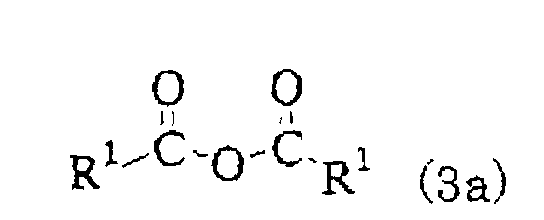
- The method according to claim 1, wherein the phenyl group denoted by X is unsubstituted or substituted with a halogen, a nitro group, an alkyl group, an N-alkylacylamino group, an N-aralkylacylamino group or an N,N-dialkylamino group.
- The method according to claim 1 or 2, wherein the benzoyl group denoted by X is unsubstituted or substituted with a halogen, a nitro group or an alkyl group.
- A method for producing an N-tert-butoxycarbonylnitroaniline derivative of formula (1):wherein Xn, together with the benzene ring to which it is bonded, forms a quinoline, fluorene, or naphthyl group, and
 R1 denotes an alkyl group, an alkenyl group, an aryl group, an aralkyl group, an alkoxy group, an aryloxy group or an aralkyloxy group,which comprises reacting a nitroaniline compound of formula (2);wherein Xn is the same as described above, with an acid anhydride of formula (3a) or an acid chloride of formula (3b):
 or
or
- A method for producing an N-acylnitroaniline derivative of formula (4):wherein R1 denotes an alkyl group, an alkenyl group, or an alkynyl group,
 X may be the same or different and denotes a hydrogen atom, a halogen atom, an alkyl group, a haloalkyl group, an alkoxy group,a phenylalkyl group a phenylalkoxyl groupa phenyl group, a benzoyl group, an alkoxycarbonyl group,an N-alkylacylamino group, an N-aralkylacylamino group, an alkylthio group, an aralkylthio group, an arylthio group, a formyl group, an N,N-dialkylamino group, an alkenyl group, an alkynyl group, or a piperidyl group,n denotes an integer from 0 to 4,R2 denotes an alkyl group, an alkenyl group, or an alkynyl group, and Y denotes a leaving group,which comprises reacting a nitroaniline compound of formula (2);wherein X and n are the same as described above, with an acid anhydride of formula (3a) or an acid chloride of formula (3b):
 or
or
- The method according to claim 5, wherein the phenyl group denoted by X is unsubstituted or substituted with a halogen, a nitro group, an alkyl group, an N-alkylacylamino group, an N-aralkylacylamino group or an N,N-dialkylamino group.
- The method according to claim 5 or 6, wherein the benzoyl group denoted by X is unsubstituted or substituted with a halogen, a nitro group or an alkyl group, an alkoxycarbonyl group.
- A method for producing an N-acylnitroaniline derivative of formula (4):wherein R1 denotes an alkyl group, an alkenyl group, or an alkynyl group,
 wherein Xn is the same as described above, with an acid anhydride of formula (3a) or an acid chloride of formula (3b):Xn, together with the benzene ring to which it is bonded, forms a quinoline, fluorene, or naphthalene group, andR2 denotes an alkyl group, an alkenyl group, or an alkynyl group, and Y denotes a leaving group,which comprises reacting a nitroaniline compound of formula (2);
 or
or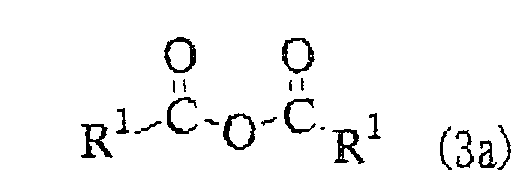
- The method according to any one of claims 1-8, wherein the alkali or alkaline earth metal compound is a hydride of an alkali or an alkaline earth metal.
- The method according to any one of claims 1-8, wherein the amount of the alkali or alkaline earth metal compound to be used is 1.8 moles or more per mol of the nitroaniline compound of formula (2).
- The method according to any one of claims 1-8, wherein the nitro group in the formulas (1) and (2) is located at an o- or p-position in relation to the amino group.
- The method according to any one of claims 1-3 and 5-7, wherein the nitroaniline compound of formula (2) is 5-methoxy-2-nitroaniline.
- The method according to any one of claims 1-8, wherein R1 denotes a t-butoxycarbonyl group,
- The method according to claim 5 or 8, wherein the leaving group is a halogen atom, or an OSO2R2 group.
Applications Claiming Priority (2)
| Application Number | Priority Date | Filing Date | Title |
|---|---|---|---|
| JP2000212693 | 2000-07-13 | ||
| JP2000212693 | 2000-07-13 |
Publications (2)
| Publication Number | Publication Date |
|---|---|
| EP1172356A1 true EP1172356A1 (en) | 2002-01-16 |
| EP1172356B1 EP1172356B1 (en) | 2004-10-06 |
Family
ID=18708575
Family Applications (1)
| Application Number | Title | Priority Date | Filing Date |
|---|---|---|---|
| EP01117046A Expired - Lifetime EP1172356B1 (en) | 2000-07-13 | 2001-07-12 | Process for producing N-acylnitroaniline derivative |
Country Status (4)
| Country | Link |
|---|---|
| US (1) | US6630598B2 (en) |
| EP (1) | EP1172356B1 (en) |
| CA (1) | CA2352937C (en) |
| DE (1) | DE60106148T2 (en) |
Cited By (1)
| Publication number | Priority date | Publication date | Assignee | Title |
|---|---|---|---|---|
| US6630598B2 (en) | 2000-07-13 | 2003-10-07 | Sumitomo Chemical Company, Limited | Process for producing N-acylnitroaniline derivative |
Families Citing this family (2)
| Publication number | Priority date | Publication date | Assignee | Title |
|---|---|---|---|---|
| MX2009010790A (en) * | 2007-04-05 | 2009-10-29 | Daiichi Sankyo Co Ltd | Fused bicyclic heteroaryl derivatives. |
| CA2754446A1 (en) | 2009-03-05 | 2010-09-10 | Daiichi Sankyo Company, Limited | Pyridine derivative |
Citations (2)
| Publication number | Priority date | Publication date | Assignee | Title |
|---|---|---|---|---|
| JPS5683458A (en) * | 1979-12-10 | 1981-07-08 | Hodogaya Chem Co Ltd | Benzamide derivative and herbicide containing the same |
| WO1990012783A1 (en) * | 1989-04-19 | 1990-11-01 | Nitrokémia Ipartelepek | Process for preparing n-phenyl-n-methoxyacetyl-dl-alanine-methylester derivatives |
Family Cites Families (2)
| Publication number | Priority date | Publication date | Assignee | Title |
|---|---|---|---|---|
| CZ293016B6 (en) | 1995-06-01 | 2004-01-14 | Sankyo Company Limited | Benzimidazole derivatives and pharmaceutical compositions in which the derivatives are comprised |
| DE60106148T2 (en) | 2000-07-13 | 2006-02-23 | Sumitomo Chemical Co. Ltd. | Process for the preparation of N-acylnitroaniline derivatives |
-
2001
- 2001-07-12 DE DE60106148T patent/DE60106148T2/en not_active Expired - Lifetime
- 2001-07-12 EP EP01117046A patent/EP1172356B1/en not_active Expired - Lifetime
- 2001-07-12 US US09/903,489 patent/US6630598B2/en not_active Expired - Fee Related
- 2001-07-12 CA CA002352937A patent/CA2352937C/en not_active Expired - Fee Related
Patent Citations (2)
| Publication number | Priority date | Publication date | Assignee | Title |
|---|---|---|---|---|
| JPS5683458A (en) * | 1979-12-10 | 1981-07-08 | Hodogaya Chem Co Ltd | Benzamide derivative and herbicide containing the same |
| WO1990012783A1 (en) * | 1989-04-19 | 1990-11-01 | Nitrokémia Ipartelepek | Process for preparing n-phenyl-n-methoxyacetyl-dl-alanine-methylester derivatives |
Non-Patent Citations (17)
| Title |
|---|
| AUGUSTINE, R L, JOURNAL OF ORGANIC CHEMISTRY., vol. 38, 1973, AMERICAN CHEMICAL SOCIETY. EASTON., US, pages 3004 - 11, ISSN: 0022-3263 * |
| DATABASE CROSSFIRE BEILSTEIN [online] Beilstein Institut zur Förderung der Chemischen Wissenschaften, Frankfurt am Main, DE; XP002178675, Database accession no. 5043519 * |
| DATABASE CROSSFIRE BEILSTEIN [online] Beilstein Institut zur Förderung der Chemischen Wissenschaften, Frankfurt am Main, DE; XP002178676, Database accession no. 3355813 * |
| DATABASE CROSSFIRE BEILSTEIN [online] Beilstein Institut zur Förderung der Chemischen Wissenschaften, Frankfurt am Main, DE; XP002178677, Database accession no. 670221 * |
| DATABASE CROSSFIRE BEILSTEIN [online] Beilstein Institut zur Förderung der Chemischen Wissenschaften, Frankfurt am Main, DE; XP002178678, Database accession no. 615807 * |
| DATABASE CROSSFIRE BEILSTEIN [online] Beilstein Institut zur Förderung der Chemischen Wissenschaften, Frankfurt am Main, DE; XP002178679, Database accession no. 612208 * |
| DATABASE CROSSFIRE BEILSTEIN [online] Beilstein Institut zur Förderung der Chemischen Wissenschaften, Frankfurt am Main, DE; XP002178680, Database accession no. 1202117 * |
| DATABASE CROSSFIRE BEILSTEIN [online] Beilstein Institut zur Förderung der Chemischen Wissenschaften, Frankfurt am Main, DE; XP002178681, Database accession no. 2416331 * |
| FERRANTI, ANNA ET AL, ARCHIV DER PHARMAZIE., vol. 318, no. 1, 1985, VERLAG CHEMIE. WEINHEIM., DE, pages 78 - 84 * |
| GREEN; DAY, JOURNAL OF THE AMERICAN CHEMICAL SOCIETY., vol. 64, 1942, AMERICAN CHEMICAL SOCIETY, WASHINGTON, DC., US, pages 1167 - 71, ISSN: 0002-7863 * |
| HEATHER TYE ET AL: "Design, synthesis and preliminary studies on a novel class of chiral receptor for the recognition of amino acid derivatives", JOURNAL OF THE CHEMICAL SOCIETY, PERKIN TRANSACTIONS 1., no. 3, 1998, CHEMICAL SOCIETY. LETCHWORTH., GB, pages 457 - 465, XP002178674, ISSN: 0300-922X * |
| ISMAIL'SKII, S, ZHURNAL OBSHCHEI KHIM., vol. 10, 1940, NAUKA, MOSCOW., RU, pages 1580 - 82, ISSN: 0044-460X * |
| JEAN-CLAUDE, BERTRAND J ET AL, HETEROCYCLES., vol. 48, no. 7, 1998, ELSEVIER SCIENCE PUBLISHERS B.V. AMSTERDAM., NL, pages 1347 - 64, ISSN: 0385-5414 * |
| KELLY T A ET AL: "A simple method for the protection of aryl amines as their t-butylcarbamoyl (Boc) derivatives", TETRAHEDRON LETTERS, ELSEVIER SCIENCE PUBLISHERS, AMSTERDAM, NL, vol. 35, no. 48, 1994, pages 9003 - 9006, XP002112042, ISSN: 0040-4039 * |
| MUKAIYAMA, I, JOURNAL OF THE AMERICAN CHEMICAL SOCIETY., vol. 79, 1957, AMERICAN CHEMICAL SOCIETY, WASHINGTON, DC., US, pages 73 - 4, ISSN: 0002-7863 * |
| PATENT ABSTRACTS OF JAPAN vol. 005, no. 152 (C - 073) 25 September 1981 (1981-09-25) * |
| SHISHIDO, KOZO ET AL, TETRAHEDRON LETTERS., vol. 31, no. 2, 1990, ELSEVIER SCIENCE PUBLISHERS, AMSTERDAM., NL, pages 219 - 220, ISSN: 0040-4039 * |
Cited By (1)
| Publication number | Priority date | Publication date | Assignee | Title |
|---|---|---|---|---|
| US6630598B2 (en) | 2000-07-13 | 2003-10-07 | Sumitomo Chemical Company, Limited | Process for producing N-acylnitroaniline derivative |
Also Published As
| Publication number | Publication date |
|---|---|
| EP1172356B1 (en) | 2004-10-06 |
| CA2352937A1 (en) | 2002-01-13 |
| CA2352937C (en) | 2009-12-22 |
| US20020016506A1 (en) | 2002-02-07 |
| DE60106148T2 (en) | 2006-02-23 |
| US6630598B2 (en) | 2003-10-07 |
| DE60106148D1 (en) | 2004-11-11 |
Similar Documents
| Publication | Publication Date | Title |
|---|---|---|
| AU2021209728B2 (en) | Preparation method for glufosinate ammonium | |
| US6255489B1 (en) | Method for producing (hetero)aromatic hydroxylamines | |
| US5331099A (en) | Process for preparing p-nitroaromatic amides and products thereof | |
| CN102264744A (en) | Improved manufacturing method of carbapenem side chain intermediate | |
| EP1172356B1 (en) | Process for producing N-acylnitroaniline derivative | |
| JP3054163B2 (en) | Phosphinic acid ester-containing N-acyl-2-amino acid amide, process for producing the same and N-acyl-2-amino acid nitrile as precursor | |
| EP3807268A1 (en) | Process for the preparation of lifitegrast | |
| US6462218B1 (en) | Method for preparing 3-cyano-2,4-dihalogeno-5-fluoro-Benzoic acid | |
| RU2154060C2 (en) | Method of synthesis of 5-substituted 2-chloropyridine | |
| EP0711273B1 (en) | Process for preparing p-nitroaromatic amides | |
| JP2002088048A (en) | Method for producing Nt-butoxycarbonylnitroaniline derivative | |
| CZ376996A3 (en) | Process for preparing amides of cyclopropanecarboxylic acid | |
| US20060122426A1 (en) | Method for producing phthalic acid dichloride | |
| NZ541392A (en) | Process for producing benzylamine derivative | |
| WO2006060225A2 (en) | Process for asymmetric synthesis of hexahydropyrimido[1,2-a] azepine-2-carboxamides and related compounds | |
| KR20040039430A (en) | Process for producing (2-nitrophenyl)acetonitrile derivative and intermediate therefor | |
| JP3799637B2 (en) | Method for producing methanesulfonic acid esters | |
| US7329780B2 (en) | Method of preparing optically pure phenethylamine derivatives | |
| US5606074A (en) | Process for the preparation of pyrazoles | |
| JP2002363149A (en) | Method for producing N-substituted nitroaniline derivative | |
| US5532381A (en) | Process for preparing pyrrolizine derivatives | |
| EP0976733A1 (en) | Process for producing 1-chlorocarbonyl-4-piperidinopiperidine or hydrochloride thereof | |
| JP3799580B2 (en) | Process for producing N-substituted-N-sulfonylamides | |
| US20060149051A1 (en) | Method of preparing an acylimidazolium-type reagent | |
| CN1315781C (en) | Preparation of 4-amino-1-naphthol ethers |
Legal Events
| Date | Code | Title | Description |
|---|---|---|---|
| PUAI | Public reference made under article 153(3) epc to a published international application that has entered the european phase |
Free format text: ORIGINAL CODE: 0009012 |
|
| AK | Designated contracting states |
Kind code of ref document: A1 Designated state(s): AT BE CH CY DE DK ES FI FR GB GR IE IT LI LU MC NL PT SE TR Kind code of ref document: A1 Designated state(s): CH DE FR GB IT LI |
|
| AX | Request for extension of the european patent |
Free format text: AL;LT;LV;MK;RO;SI |
|
| 17P | Request for examination filed |
Effective date: 20020716 |
|
| AKX | Designation fees paid |
Free format text: CH DE FR GB IT LI |
|
| 17Q | First examination report despatched |
Effective date: 20021206 |
|
| GRAP | Despatch of communication of intention to grant a patent |
Free format text: ORIGINAL CODE: EPIDOSNIGR1 |
|
| GRAS | Grant fee paid |
Free format text: ORIGINAL CODE: EPIDOSNIGR3 |
|
| GRAA | (expected) grant |
Free format text: ORIGINAL CODE: 0009210 |
|
| AK | Designated contracting states |
Kind code of ref document: B1 Designated state(s): CH DE FR GB IT LI |
|
| REG | Reference to a national code |
Ref country code: GB Ref legal event code: FG4D |
|
| REG | Reference to a national code |
Ref country code: CH Ref legal event code: EP |
|
| REG | Reference to a national code |
Ref country code: IE Ref legal event code: FG4D |
|
| REF | Corresponds to: |
Ref document number: 60106148 Country of ref document: DE Date of ref document: 20041111 Kind code of ref document: P |
|
| REG | Reference to a national code |
Ref country code: CH Ref legal event code: NV Representative=s name: NOVAGRAAF INTERNATIONAL SA |
|
| RAP2 | Party data changed (patent owner data changed or rights of a patent transferred) |
Owner name: SUMITOMO CHEMICAL COMPANY, LIMITED |
|
| ET | Fr: translation filed | ||
| PLBE | No opposition filed within time limit |
Free format text: ORIGINAL CODE: 0009261 |
|
| STAA | Information on the status of an ep patent application or granted ep patent |
Free format text: STATUS: NO OPPOSITION FILED WITHIN TIME LIMIT |
|
| 26N | No opposition filed |
Effective date: 20050707 |
|
| REG | Reference to a national code |
Ref country code: CH Ref legal event code: PFA Owner name: SUMITOMO CHEMICAL COMPANY, LIMITED Free format text: SUMITOMO CHEMICAL COMPANY, LIMITED#27-1, SHINKAWA 2-CHOME, CHUO-KU#TOKYO 104-8260 (JP) -TRANSFER TO- SUMITOMO CHEMICAL COMPANY, LIMITED#27-1, SHINKAWA 2-CHOME, CHUO-KU#TOKYO 104-8260 (JP) |
|
| PGFP | Annual fee paid to national office [announced via postgrant information from national office to epo] |
Ref country code: FR Payment date: 20110727 Year of fee payment: 11 Ref country code: CH Payment date: 20110712 Year of fee payment: 11 |
|
| PGFP | Annual fee paid to national office [announced via postgrant information from national office to epo] |
Ref country code: GB Payment date: 20110706 Year of fee payment: 11 Ref country code: DE Payment date: 20110706 Year of fee payment: 11 |
|
| PGFP | Annual fee paid to national office [announced via postgrant information from national office to epo] |
Ref country code: IT Payment date: 20110719 Year of fee payment: 11 |
|
| REG | Reference to a national code |
Ref country code: CH Ref legal event code: PL |
|
| GBPC | Gb: european patent ceased through non-payment of renewal fee |
Effective date: 20120712 |
|
| REG | Reference to a national code |
Ref country code: FR Ref legal event code: ST Effective date: 20130329 |
|
| PG25 | Lapsed in a contracting state [announced via postgrant information from national office to epo] |
Ref country code: GB Free format text: LAPSE BECAUSE OF NON-PAYMENT OF DUE FEES Effective date: 20120712 Ref country code: LI Free format text: LAPSE BECAUSE OF NON-PAYMENT OF DUE FEES Effective date: 20120731 Ref country code: FR Free format text: LAPSE BECAUSE OF NON-PAYMENT OF DUE FEES Effective date: 20120731 Ref country code: CH Free format text: LAPSE BECAUSE OF NON-PAYMENT OF DUE FEES Effective date: 20120731 Ref country code: DE Free format text: LAPSE BECAUSE OF NON-PAYMENT OF DUE FEES Effective date: 20130201 |
|
| REG | Reference to a national code |
Ref country code: DE Ref legal event code: R119 Ref document number: 60106148 Country of ref document: DE Effective date: 20130201 |
|
| PG25 | Lapsed in a contracting state [announced via postgrant information from national office to epo] |
Ref country code: IT Free format text: LAPSE BECAUSE OF NON-PAYMENT OF DUE FEES Effective date: 20120712 |