EP1164200A2 - Method and device for drug-drug interaction testing sample preparation - Google Patents
Method and device for drug-drug interaction testing sample preparation Download PDFInfo
- Publication number
- EP1164200A2 EP1164200A2 EP01304627A EP01304627A EP1164200A2 EP 1164200 A2 EP1164200 A2 EP 1164200A2 EP 01304627 A EP01304627 A EP 01304627A EP 01304627 A EP01304627 A EP 01304627A EP 1164200 A2 EP1164200 A2 EP 1164200A2
- Authority
- EP
- European Patent Office
- Prior art keywords
- microsomes
- reaction
- plates
- thawing
- plate
- Prior art date
- Legal status (The legal status is an assumption and is not a legal conclusion. Google has not performed a legal analysis and makes no representation as to the accuracy of the status listed.)
- Withdrawn
Links
- 238000012360 testing method Methods 0.000 title claims abstract description 126
- 238000002360 preparation method Methods 0.000 title claims abstract description 39
- 230000008406 drug-drug interaction Effects 0.000 title claims abstract description 29
- 238000000034 method Methods 0.000 title claims abstract description 28
- 238000006243 chemical reaction Methods 0.000 claims abstract description 97
- 210000001589 microsome Anatomy 0.000 claims abstract description 97
- 150000001875 compounds Chemical class 0.000 claims abstract description 63
- 239000003112 inhibitor Substances 0.000 claims abstract description 38
- 239000000758 substrate Substances 0.000 claims abstract description 38
- 239000000523 sample Substances 0.000 claims abstract description 31
- 239000007795 chemical reaction product Substances 0.000 claims abstract description 22
- 239000000872 buffer Substances 0.000 claims abstract description 16
- 238000002156 mixing Methods 0.000 claims abstract description 13
- 230000000694 effects Effects 0.000 claims abstract description 11
- 230000007723 transport mechanism Effects 0.000 claims abstract description 10
- 238000003828 vacuum filtration Methods 0.000 claims abstract description 5
- 238000010257 thawing Methods 0.000 claims description 46
- 238000011534 incubation Methods 0.000 claims description 28
- 108010015742 Cytochrome P-450 Enzyme System Proteins 0.000 claims description 25
- 102000002004 Cytochrome P-450 Enzyme System Human genes 0.000 claims description 25
- 238000001914 filtration Methods 0.000 claims description 20
- 238000011533 pre-incubation Methods 0.000 claims description 16
- 238000001727 in vivo Methods 0.000 claims description 12
- 241000124008 Mammalia Species 0.000 claims description 11
- 238000011049 filling Methods 0.000 claims description 11
- 238000004458 analytical method Methods 0.000 claims description 10
- 238000000338 in vitro Methods 0.000 claims description 10
- 238000003860 storage Methods 0.000 claims description 10
- 239000000203 mixture Substances 0.000 claims description 9
- 239000012530 fluid Substances 0.000 claims description 4
- 238000010438 heat treatment Methods 0.000 claims description 4
- 230000003139 buffering effect Effects 0.000 claims description 3
- 230000000977 initiatory effect Effects 0.000 claims description 3
- 230000007246 mechanism Effects 0.000 claims description 2
- 238000000746 purification Methods 0.000 claims 1
- 239000011541 reaction mixture Substances 0.000 claims 1
- 241001631457 Cannula Species 0.000 abstract description 7
- 230000003993 interaction Effects 0.000 abstract description 4
- 238000012216 screening Methods 0.000 abstract description 4
- 230000015556 catabolic process Effects 0.000 abstract description 3
- 238000006731 degradation reaction Methods 0.000 abstract description 3
- 229940000406 drug candidate Drugs 0.000 abstract description 3
- 239000007788 liquid Substances 0.000 abstract description 3
- 230000035899 viability Effects 0.000 abstract description 3
- 238000005057 refrigeration Methods 0.000 abstract 1
- 239000000243 solution Substances 0.000 description 27
- 239000000463 material Substances 0.000 description 20
- 230000032258 transport Effects 0.000 description 17
- OKKJLVBELUTLKV-UHFFFAOYSA-N Methanol Chemical compound OC OKKJLVBELUTLKV-UHFFFAOYSA-N 0.000 description 15
- 238000012546 transfer Methods 0.000 description 15
- QRXWMOHMRWLFEY-UHFFFAOYSA-N isoniazide Chemical compound NNC(=O)C1=CC=NC=C1 QRXWMOHMRWLFEY-UHFFFAOYSA-N 0.000 description 14
- 102000004190 Enzymes Human genes 0.000 description 12
- 108090000790 Enzymes Proteins 0.000 description 12
- 241000243251 Hydra Species 0.000 description 11
- 238000012545 processing Methods 0.000 description 11
- 238000010791 quenching Methods 0.000 description 11
- 230000008569 process Effects 0.000 description 10
- 230000006870 function Effects 0.000 description 6
- 238000011166 aliquoting Methods 0.000 description 5
- XLYOFNOQVPJJNP-UHFFFAOYSA-N water Substances O XLYOFNOQVPJJNP-UHFFFAOYSA-N 0.000 description 5
- 102000018832 Cytochromes Human genes 0.000 description 4
- 108010052832 Cytochromes Proteins 0.000 description 4
- 230000036760 body temperature Effects 0.000 description 4
- 230000000171 quenching effect Effects 0.000 description 4
- 230000001360 synchronised effect Effects 0.000 description 4
- 108010074922 Cytochrome P-450 CYP1A2 Proteins 0.000 description 3
- 102100026533 Cytochrome P450 1A2 Human genes 0.000 description 3
- 241000282412 Homo Species 0.000 description 3
- ACFIXJIJDZMPPO-NNYOXOHSSA-N NADPH Chemical compound C1=CCC(C(=O)N)=CN1[C@H]1[C@H](O)[C@H](O)[C@@H](COP(O)(=O)OP(O)(=O)OC[C@@H]2[C@H]([C@@H](OP(O)(O)=O)[C@@H](O2)N2C3=NC=NC(N)=C3N=C2)O)O1 ACFIXJIJDZMPPO-NNYOXOHSSA-N 0.000 description 3
- 239000004743 Polypropylene Substances 0.000 description 3
- 238000004128 high performance liquid chromatography Methods 0.000 description 3
- 238000005297 material degradation process Methods 0.000 description 3
- 229940127285 new chemical entity Drugs 0.000 description 3
- 229930027945 nicotinamide-adenine dinucleotide Natural products 0.000 description 3
- -1 polypropylene Polymers 0.000 description 3
- 229920001155 polypropylene Polymers 0.000 description 3
- 239000002904 solvent Substances 0.000 description 3
- 108010001237 Cytochrome P-450 CYP2D6 Proteins 0.000 description 2
- 108010081668 Cytochrome P-450 CYP3A Proteins 0.000 description 2
- 102100029363 Cytochrome P450 2C19 Human genes 0.000 description 2
- 102100021704 Cytochrome P450 2D6 Human genes 0.000 description 2
- 102100039205 Cytochrome P450 3A4 Human genes 0.000 description 2
- 206010013710 Drug interaction Diseases 0.000 description 2
- 239000007853 buffer solution Substances 0.000 description 2
- 230000008859 change Effects 0.000 description 2
- 150000005829 chemical entities Chemical class 0.000 description 2
- 230000000875 corresponding effect Effects 0.000 description 2
- 230000000593 degrading effect Effects 0.000 description 2
- 229940079593 drug Drugs 0.000 description 2
- 239000003814 drug Substances 0.000 description 2
- 238000013101 initial test Methods 0.000 description 2
- 210000001853 liver microsome Anatomy 0.000 description 2
- 230000014759 maintenance of location Effects 0.000 description 2
- 230000004060 metabolic process Effects 0.000 description 2
- 102000004169 proteins and genes Human genes 0.000 description 2
- 108090000623 proteins and genes Proteins 0.000 description 2
- 229910001220 stainless steel Inorganic materials 0.000 description 2
- 239000010935 stainless steel Substances 0.000 description 2
- GNFTZDOKVXKIBK-UHFFFAOYSA-N 3-(2-methoxyethoxy)benzohydrazide Chemical compound COCCOC1=CC=CC(C(=O)NN)=C1 GNFTZDOKVXKIBK-UHFFFAOYSA-N 0.000 description 1
- 108010026925 Cytochrome P-450 CYP2C19 Proteins 0.000 description 1
- 108010000543 Cytochrome P-450 CYP2C9 Proteins 0.000 description 1
- 102100029358 Cytochrome P450 2C9 Human genes 0.000 description 1
- 101150053185 P450 gene Proteins 0.000 description 1
- 229910019142 PO4 Inorganic materials 0.000 description 1
- 230000004913 activation Effects 0.000 description 1
- 238000003556 assay Methods 0.000 description 1
- 230000008901 benefit Effects 0.000 description 1
- 239000012620 biological material Substances 0.000 description 1
- 230000008602 contraction Effects 0.000 description 1
- 230000002596 correlated effect Effects 0.000 description 1
- 108010012052 cytochrome P-450 CYP2C subfamily Proteins 0.000 description 1
- 238000001514 detection method Methods 0.000 description 1
- 238000011161 development Methods 0.000 description 1
- 239000012895 dilution Substances 0.000 description 1
- 238000010790 dilution Methods 0.000 description 1
- 230000008030 elimination Effects 0.000 description 1
- 238000003379 elimination reaction Methods 0.000 description 1
- 230000002708 enhancing effect Effects 0.000 description 1
- 238000011156 evaluation Methods 0.000 description 1
- 239000000706 filtrate Substances 0.000 description 1
- 230000008014 freezing Effects 0.000 description 1
- 238000007710 freezing Methods 0.000 description 1
- 230000002440 hepatic effect Effects 0.000 description 1
- 230000010224 hepatic metabolism Effects 0.000 description 1
- 210000003494 hepatocyte Anatomy 0.000 description 1
- 239000008240 homogeneous mixture Substances 0.000 description 1
- 239000004615 ingredient Substances 0.000 description 1
- 238000002347 injection Methods 0.000 description 1
- 239000007924 injection Substances 0.000 description 1
- 238000003780 insertion Methods 0.000 description 1
- 230000037431 insertion Effects 0.000 description 1
- 230000002452 interceptive effect Effects 0.000 description 1
- 238000002372 labelling Methods 0.000 description 1
- 238000011068 loading method Methods 0.000 description 1
- 239000002207 metabolite Substances 0.000 description 1
- GBMDVOWEEQVZKZ-UHFFFAOYSA-N methanol;hydrate Chemical compound O.OC GBMDVOWEEQVZKZ-UHFFFAOYSA-N 0.000 description 1
- 230000003228 microsomal effect Effects 0.000 description 1
- 238000012986 modification Methods 0.000 description 1
- 230000004048 modification Effects 0.000 description 1
- 238000005457 optimization Methods 0.000 description 1
- 230000037361 pathway Effects 0.000 description 1
- NBIIXXVUZAFLBC-UHFFFAOYSA-K phosphate Chemical compound [O-]P([O-])([O-])=O NBIIXXVUZAFLBC-UHFFFAOYSA-K 0.000 description 1
- 239000010452 phosphate Substances 0.000 description 1
- 238000010926 purge Methods 0.000 description 1
- 239000000376 reactant Substances 0.000 description 1
- 230000035484 reaction time Effects 0.000 description 1
- 239000003507 refrigerant Substances 0.000 description 1
- 230000001172 regenerating effect Effects 0.000 description 1
- 230000000717 retained effect Effects 0.000 description 1
- 239000011435 rock Substances 0.000 description 1
- 238000013341 scale-up Methods 0.000 description 1
- 239000012064 sodium phosphate buffer Substances 0.000 description 1
- 239000011877 solvent mixture Substances 0.000 description 1
- 241000894007 species Species 0.000 description 1
- 230000001954 sterilising effect Effects 0.000 description 1
- 238000004659 sterilization and disinfection Methods 0.000 description 1
- 238000012956 testing procedure Methods 0.000 description 1
- 229940126585 therapeutic drug Drugs 0.000 description 1
- 239000002699 waste material Substances 0.000 description 1
Images

Classifications
-
- G—PHYSICS
- G01—MEASURING; TESTING
- G01N—INVESTIGATING OR ANALYSING MATERIALS BY DETERMINING THEIR CHEMICAL OR PHYSICAL PROPERTIES
- G01N33/00—Investigating or analysing materials by specific methods not covered by groups G01N1/00 - G01N31/00
- G01N33/48—Biological material, e.g. blood, urine; Haemocytometers
- G01N33/50—Chemical analysis of biological material, e.g. blood, urine; Testing involving biospecific ligand binding methods; Immunological testing
- G01N33/5005—Chemical analysis of biological material, e.g. blood, urine; Testing involving biospecific ligand binding methods; Immunological testing involving human or animal cells
- G01N33/5008—Chemical analysis of biological material, e.g. blood, urine; Testing involving biospecific ligand binding methods; Immunological testing involving human or animal cells for testing or evaluating the effect of chemical or biological compounds, e.g. drugs, cosmetics
- G01N33/5076—Chemical analysis of biological material, e.g. blood, urine; Testing involving biospecific ligand binding methods; Immunological testing involving human or animal cells for testing or evaluating the effect of chemical or biological compounds, e.g. drugs, cosmetics involving cell organelles, e.g. Golgi complex, endoplasmic reticulum
-
- C—CHEMISTRY; METALLURGY
- C12—BIOCHEMISTRY; BEER; SPIRITS; WINE; VINEGAR; MICROBIOLOGY; ENZYMOLOGY; MUTATION OR GENETIC ENGINEERING
- C12Q—MEASURING OR TESTING PROCESSES INVOLVING ENZYMES, NUCLEIC ACIDS OR MICROORGANISMS; COMPOSITIONS OR TEST PAPERS THEREFOR; PROCESSES OF PREPARING SUCH COMPOSITIONS; CONDITION-RESPONSIVE CONTROL IN MICROBIOLOGICAL OR ENZYMOLOGICAL PROCESSES
- C12Q1/00—Measuring or testing processes involving enzymes, nucleic acids or microorganisms; Compositions therefor; Processes of preparing such compositions
- C12Q1/26—Measuring or testing processes involving enzymes, nucleic acids or microorganisms; Compositions therefor; Processes of preparing such compositions involving oxidoreductase
-
- G—PHYSICS
- G01—MEASURING; TESTING
- G01N—INVESTIGATING OR ANALYSING MATERIALS BY DETERMINING THEIR CHEMICAL OR PHYSICAL PROPERTIES
- G01N35/00—Automatic analysis not limited to methods or materials provided for in any single one of groups G01N1/00 - G01N33/00; Handling materials therefor
- G01N35/02—Automatic analysis not limited to methods or materials provided for in any single one of groups G01N1/00 - G01N33/00; Handling materials therefor using a plurality of sample containers moved by a conveyor system past one or more treatment or analysis stations
- G01N35/028—Automatic analysis not limited to methods or materials provided for in any single one of groups G01N1/00 - G01N33/00; Handling materials therefor using a plurality of sample containers moved by a conveyor system past one or more treatment or analysis stations having reaction cells in the form of microtitration plates
-
- B—PERFORMING OPERATIONS; TRANSPORTING
- B01—PHYSICAL OR CHEMICAL PROCESSES OR APPARATUS IN GENERAL
- B01L—CHEMICAL OR PHYSICAL LABORATORY APPARATUS FOR GENERAL USE
- B01L3/00—Containers or dishes for laboratory use, e.g. laboratory glassware; Droppers
- B01L3/50—Containers for the purpose of retaining a material to be analysed, e.g. test tubes
- B01L3/502—Containers for the purpose of retaining a material to be analysed, e.g. test tubes with fluid transport, e.g. in multi-compartment structures
- B01L3/5025—Containers for the purpose of retaining a material to be analysed, e.g. test tubes with fluid transport, e.g. in multi-compartment structures for parallel transport of multiple samples
- B01L3/50255—Multi-well filtration
-
- G—PHYSICS
- G01—MEASURING; TESTING
- G01N—INVESTIGATING OR ANALYSING MATERIALS BY DETERMINING THEIR CHEMICAL OR PHYSICAL PROPERTIES
- G01N1/00—Sampling; Preparing specimens for investigation
- G01N1/28—Preparing specimens for investigation including physical details of (bio-)chemical methods covered elsewhere, e.g. G01N33/50, C12Q
- G01N1/40—Concentrating samples
- G01N1/4077—Concentrating samples by other techniques involving separation of suspended solids
-
- G—PHYSICS
- G01—MEASURING; TESTING
- G01N—INVESTIGATING OR ANALYSING MATERIALS BY DETERMINING THEIR CHEMICAL OR PHYSICAL PROPERTIES
- G01N35/00—Automatic analysis not limited to methods or materials provided for in any single one of groups G01N1/00 - G01N33/00; Handling materials therefor
- G01N2035/00346—Heating or cooling arrangements
- G01N2035/00356—Holding samples at elevated temperature (incubation)
-
- G—PHYSICS
- G01—MEASURING; TESTING
- G01N—INVESTIGATING OR ANALYSING MATERIALS BY DETERMINING THEIR CHEMICAL OR PHYSICAL PROPERTIES
- G01N35/00—Automatic analysis not limited to methods or materials provided for in any single one of groups G01N1/00 - G01N33/00; Handling materials therefor
- G01N2035/00346—Heating or cooling arrangements
- G01N2035/00445—Other cooling arrangements
-
- G—PHYSICS
- G01—MEASURING; TESTING
- G01N—INVESTIGATING OR ANALYSING MATERIALS BY DETERMINING THEIR CHEMICAL OR PHYSICAL PROPERTIES
- G01N35/00—Automatic analysis not limited to methods or materials provided for in any single one of groups G01N1/00 - G01N33/00; Handling materials therefor
- G01N35/02—Automatic analysis not limited to methods or materials provided for in any single one of groups G01N1/00 - G01N33/00; Handling materials therefor using a plurality of sample containers moved by a conveyor system past one or more treatment or analysis stations
- G01N35/04—Details of the conveyor system
- G01N2035/0401—Sample carriers, cuvettes or reaction vessels
- G01N2035/0418—Plate elements with several rows of samples
- G01N2035/0422—Plate elements with several rows of samples carried on a linear conveyor
-
- G—PHYSICS
- G01—MEASURING; TESTING
- G01N—INVESTIGATING OR ANALYSING MATERIALS BY DETERMINING THEIR CHEMICAL OR PHYSICAL PROPERTIES
- G01N35/00—Automatic analysis not limited to methods or materials provided for in any single one of groups G01N1/00 - G01N33/00; Handling materials therefor
- G01N35/10—Devices for transferring samples or any liquids to, in, or from, the analysis apparatus, e.g. suction devices, injection devices
- G01N35/1065—Multiple transfer devices
- G01N35/1074—Multiple transfer devices arranged in a two-dimensional array
Definitions
- This invention relates to an improved in vitro method for determining the potential for drug-drug interaction involving cytochrome P450s (CYP) with new chemical entities.
- This invention further relates to the in vitro determination testing of in vivo drug-drug interactions, particularly as they affect liver metabolism, as an initial or primary screen for compounds as drug candidates.
- CYP cytochrome P450s
- Unfavorable drug-drug interactions are responsible for approximately 1-2% of clinically relevant DDI, which while a relatively small number, are nevertheless an important factor in determining whether a new chemical entity will successfully make it beyond a drug discovery program to development.
- the late discovery of a clinically significant drug-drug interaction (which would likely eliminate a drug from use) for an otherwise promising candidate could result in the significant economic waste of testing resources already expended on a project.
- cytochrome P450s cytochrome P450s
- CYPs drug interactions with cytochrome P450s
- CYP1A2, CYP2C, CYP2D6 and CYP3A4 represent greater than 90% of total hepatic P450 and nearly 80% of therapeutic drugs are metabolized by these same enzymes. Interaction with one or more of these enzymes in vivo would pose a potentially relevant event in the clinic.
- in vitro systems have proven capable of predicting the likelihood of DDI as they allow identification of the CYPs responsible for metabolism as well as determination of the relative contribution to overall elimination of the inhibited pathways.
- NCEs new chemical entities
- HLMs human microsomes
- hepatocytes hepatocytes
- individual expressed CYPs has escalated both in importance and scale of use, as one way to reliably avoid potential interactions in vivo.
- test sample preparation has proven inadequate with respect to increased throughput.
- a major factor for such inadequacy is the instability of the testing materials, particularly the microsomes which tend to decrease in activity by approximately one hour after being thawed and incubated from freezer storage. Unless the preparation, timing and testing are carefully controlled and coordinated, inaccurate results are likely to be obtained from materials that have not been prepared and tested within the available time window before significant loss of enzyme activity occurs.
- test plates are used in a single testing procedure or run (for compound/CYP enzyme substrate, reaction, filtration and collection) that involve the steps of thawing, preparation, incubation, mixing, and processing of inhibitor compounds being tested (NCEs) with a particular probe (cytochrome P450-specific substrates) and thawed microsomes which are buffered and provided with cofactor.
- NCEs inhibitor compounds being tested
- cytochrome P450-specific substrates cytochrome P450-specific substrates
- HLM thawing, buffering and addition of co-factor
- NCEs CYP-specific probe substrates and inhibitor compounds
- the present invention comprises a synchronized, time coordinated method and device for the fully automated multiple-plate in vitro preparation of compounds which are candidates for drugs (NCEs), for drug-drug interaction testing, particularly for testing involving cytochrome P450 (CYP), CYP1A2, CYP2C9, CYP2C19, CYP2D6 and CYP3A4, as a first step screening for viability in mammals and particularly humans.
- NCEs cytochrome P450
- CYP1A2, CYP2C9, CYP2C19, CYP2D6 and CYP3A4 as a first step screening for viability in mammals and particularly humans.
- non-degrading elements involved in the preparation are made ready prior to an actual test run with degrading materials such as microsomes.
- generally stable candidate compounds (NCEs) are preferably pre-mixed in multi-well plates with the CYP-specific probe substrates in the requisite permutations and combinations, for use during the test specimen preparation and
- the method of the present invention comprises processing of one, and preferably offset or tandem pairs of testing plates, in a test run, of a predetermined number of single or test plate pairs, with the automated steps of:
- steps a-f are immediately repeated for the second plate of the first pair of the test run, with the pre-thawed microsome samples.
- additional microsome samples are removed from the freezer unit, thawed, and held at a holding site, for immediate use in steps a-f of a subsequent test run.
- the timing of when the frozen microsome are initially removed for thawing during steps a-e is such that this removal is at the same point in time during said steps of each of the next test runs.
- duration of thawing is substantially the same for all of the runs and furthermore, to maintain synchronous operation, all pre-incubation (if any) and incubation periods are pre-calculated and adapted to be of the same duration per test run of unitary or pair of plates as applicable. It is understood that additional numbers of closely simultaneously processed plates per test run are simply scaled and timed accordingly.
- steps a-i are completed for all unitary or pairs of plates for drug-drug interaction testing, the stacked filtration collection plates are removed from the automated work station and the individual filtrates of the reaction products are ent for an analysis such as an IC 50 or Ki test for determining the extent of any drug-drug interactions.
- the testing preparation device of the present invention which is utilized to effect the above steps comprises a computer controlled and coordinated device having:
- Solution transfer means are preferably embodied in multiple tip cannulas or pipettes which perform multiple aliquot operations.
- filling refers to the act of filling and is not to construed as a completion of filling the entire volume of any well.
- 37°C for incubation is relative to use of the present invention with human DDI testing and other in vivo emulation conditions are determined relative to the particular mammal.
- NCEs new inhibitor compound
- 50 microliters of new inhibitor compound are individually aliquoted into a predetermined well, together with one or a combination of five cytochrome P450 substrates (five different cytochrome substrates being extant and commercially available) in a solution comprised of an equi-volume mixture of methanol and water (this solvent mixture simply being exemplary of a preferred solvent, with other solvents being similarly utilizable).
- Each new compound (NCE) is prepared for testing with such aliquoting into one test preparation well in five different plates (for tests with each of the above five cytochrome substrates).
- Each plate comprises two associated controls comprised of the CYP-specific probe substrate with an inhibitor compound of known properties. Typical testing is, for example, for determination of a IC 50 or Ki value as a relative indication of drug interactions.
- the device of the present invention is essentially a programmed robot processing device (with known and commercially available individual component parts) which is provided with movable plate retaining means for movably simultaneously holding at least two test plates at a time (the number of plates being held is a function of efficiency and capability of being time coordinated) in a horizontal plane with test wells of the plates being accessible from above (for access in filling and mixing operations and to prevent spillage).
- the device further comprises incubation means (e.g., a temperature controlled heating element) for heating stored, refrigerated or frozen solutions of the compound (NCEs) to be tested, substrate enzyme material and microsomes, to an equilibrium temperature of about 37°C (human body temperature).
- a transport mechanism with releasable plate gripping elements, for movement of microsome containing vials, from freezer to thawing position, is further included in the device, as is means for bar code reading and plate tracking.
- a software controlled computer operation synchronizes and tracks the simultaneous preparation of microsomes, with removal from freezer, thawing to 4°C, aliquoting the microsomes, adding buffer to the microsome trough, mixing the microsomes with buffer (phosphate at pH 7.4) and co-factor (NADPH) for activation (M/C/B); with preparation (or preferably pre-preparation) of the five probe-specific substrates and inhibitor compounds (NCEs), in specific ratios and overall amounts, as well as controls with CYP-specific probe substrate but no inhibitor compound, or with inhibitor of known properties.
- NCEs five probe-specific substrates and inhibitor compounds
- the remaining assay ingredients are prepared at 4°C in an open trough and transferred to a reaction plate (typically having 96 wells and being comprised of an inert polypropylene material).
- Well dimensions are a function of the total number of wells and are minimally sized to at least hold requisite amounts of solution for processing and/or later testing as well as being sufficiently large to accommodate cannula tip insertion.
- the reaction plate is pre-warmed to 37°C, and the reaction in each well is initiated by addition of an aliquot thereto from the S/I plate.
- the reaction is allowed to proceed at 37°C.
- the reaction is terminated, filtered and the samples are prepared for analysis on an HPLC and/or Mass Spectrometer. Peak areas of the metabolite of the probe substrate are measured by mass spectrometer, UV or florescence detection and analyzed using software available from the McQuan corporation.
- the method enables the preparing for and effecting of IC 50 or Ki tests of 90 different inhibitor compounds (NCEs) (of a single test plate) with one or more probe CYP enzyme substrate and microsome samples within the space of one half an hour or with all five CYP enzymes (with five test plates in duplicate) within about five hours. Proportionate operations are adaptable for plates with different number of wells.
- NCEs inhibitor compounds
- Pre-operation preparation steps comprise:
- the workstation contains storage areas for holding of the plates until use thereof is required and a selecting and transporting mechanism is used to select the plates as needed and transport them to operational stations of the device.
- the number of plates of each type and the number of wells (e.g. 96) in each should be the same.
- the number of plates is a function of the number of tests to be run without re-loading.
- a typical run utilizing 96 well plates is of a duration of about one hour, within the time frame of microsome degradation.
- 90 compounds can be tested in duplicate with a single specific probe substrate in a one hour span and with all five CYP enzymes in about five hours.
- close to 1000 compounds can be effectively tested for DDI during a typical five day work week with the single point determination described in said co-pending provisional application.
- Use of larger plates such as 384 or even 1536 wells can substantially increase the testing yield with concomitant upgrading of aliquoting pipettes and software tracking, subject to processing time coordination.
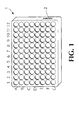
- Figure 1 depicts a 96 well plate 1, for which the test preparation device 10 (in Figures 2-3) is adapted for use. It is understood that modifications of the device are correlated to the well plate being specifically used, and the number of wells therein, such as the 96 illustrated, as well as 384 (4x) and 1536 (16x) wells, with concomitantly enhanced through-put and processing requirements, as described above.
- All the plates preferably have the same number of wells for each purpose, e.g., 96, in the plate shown, as well as the same overall dimensions for facilitated material transfer as well as for facilitated transport and handling (multiple aspiration and aliquoting generally requires identical relative placement of wells for proper operation).
- each well plate has a unique bar code identification 2 to keep track of all the plates, with correlation to plate function and to correlate identification of compounds being tested and particular enzyme combination, with preparation stages, pre-selected parameters and subsequent test results.
- the well plate 1 shown specific wells are identified by an alphanumeric labeling intersection of 8 down rows A-H and twelve columns 1-12.
- the plates are comprised of inert materials such as of polypropylene and are essentially the same except for the filtration plates, which embody porous filtering elements at the base of the individual wells.
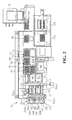
- test preparation device 10 shown in Figures 2-3, is adapted for five pairs of test runs (with a total of 40 well plates for all of the test plate types) without reloading of elements.
- ten plates of each type are stacked at the respective sites: site 33 for retention of reaction plates 1b, site 32 for retention of the S/I plates 1a, site 34 for the filter plates 1c and site 35 for the collection plates 1d with covers 1e.
- the S/I plates 1a are each preloaded with pre-determined combinations of inhibitor compounds and CYP enzymes in 90 of the wells thereof with 6 wells functioning as controls without inhibitor compounds or with compounds of known interactive characteristics.
- Freezer unit 20 with 10 chambers 20a-j, and maintained at -20°C, is loaded with 10 uncapped cryovials 16a-j, containing human liver microsomes and 10 open troughs 30a-j are filled with predetermined concentrations of buffer solutions with cofactor.
- Cannula unit 14 functions to initially:
- Cannula unit 14 comprises a row 15 of twelve stainless steel cannulas, with manually replaceable pipette tips, sized dimensioned and arranged for operable engagement with a full row 1-12 of well plates 1.
- Cannula unit 14 further includes a separate single stainless steel cannula 17 and replaceable pipette tip for use in transfer of thawed microsomes from any one of cryovials 16a-j to an adjacent M/C/B trough. Because of the nature of the microsomes as a degradable bio-material, disposal of pipette tips is preferable to sterilization.
- Cannula unit 14 is movable relative to the cyrovials and troughs to effect the appropriate transfers.
- Plate transport elements 11a and 11b each comprises four releasable test plate grippers 12 on an expanding and contracting support 13 for picking up, holding, and releasing plates 1 and moving them in an X-Y-Z transport direction as required to any and all of the processing stations of the device (where they are released or held for further transport).
- Grippers 12 are laterally extensible with contraction and expansion of the support 13, to thereby grip and release plates.
- Transport elements 11a and 11b overlap in site movement capability and range, with element 11a transporting trays to and from plate storage areas (32-35), bar code reader 36, incubators 25a and 25b, nests 40 and 41 and vacuum chamber 50 while element 11b transports trays to and from the hydra 18, bar code reader 36, incubators 25a and 25b and vacuum chamber 50.
- test plates are maintained parallel to the ground with the respective wells being open, away from the ground, for effective filling and liquid maintaining purposes.
- the test preparation device 10 comprises a fixed position Robbins Hydra unit 18 with 96 cannulas capable of aspirating and dispensing measured amounts of solution material into each of the wells of a plate transported by transport element 11b into alignment therewith.
- the Hydra unit 18 is used to aspirate and dispense S/I solutions from an S/I plate into a reaction plate containing M/C/B and to mix reactants.
- a cryovial is removed from the freezer unit and thawed with microsomes contained therein being transferred via the single cannula 17 to a trough (30a-j as appropriate) for mixture with cofactor and buffer.
- the trough array 30a-j is seated on a cam element 16' which effects a motorized gentle rocking to effect mixing and to ensure homogeneity of the M/C/B mixture.
- Transport element 11a selects a reaction plate 1b from the top of the stack at site 33 and transports it to transfer nest 40.
- Cannula row 15 of cannula unit 14 aspirates M/C/B mixture from one of troughs 30a-j (as appropriate) and moves to fill wells of the reaction plate 1b row by row.
- the reaction plate 1b is then transported by transport element 11a to one of heaters 25a or 25b for a pre-incubation period (for a time predetermined to be equal for all the test runs).
- a second reaction plate of the testing pair is similarly filled with the M/C/B mixture and pre-incubated in the other of heaters 25a and 25b.
- an S/I plate is transported by transport element 11b to the hydra unit 18 where the pre-loaded inhibitor compound and CYP enzyme solutions are aspirated by the 96 cannula pipettes.
- the S/I plate is removed to restack or empty plate position 35a and the first filled M/C/B reaction plate is transported to the Hydra 18 for filling with the respective compound solutions to initiate a reaction and the reaction plate is thereafter returned to a heater for incubation to human body temperature of 37°C.
- the second plate of the pair is similarly subjected to reaction and incubation.
- incubation and attendant reactions proceed for a pre-determined period of time (determined as described above). While the reaction plates are being incubated at the heaters the Hydra 18 aspirates a quench solution from a quench solution reservoir containing a solution such as a methanol and water solution suitable for quenching the reaction involving inhibitor compound, enzyme substrate and microsomes.
- a collection plate 1d is removed from site 35 and placed at the bottom of vacuum chamber 50 and the cover 1e is placed at cover nest.
- Filter plate 1c is removed from the stack at site 34 and placed at the top of the vacuum chamber 50.
- the first reaction plate is transported from the respective heaters to the Hydra 18 which dispenses the aspirated quench solution to the reaction wells of the reaction plate to stop all reactions therein.
- the reaction plate is removed by transport element 11b from the Hydra site and placed on transfer nest 40 where cannula element 14 with row of pipettes 15 sequentially aspirates and dispenses measured reaction product solutions from rows A-H of the reaction plate to corresponding wells of the filter plate 1c, in the vacuum chamber, until all the rows have been filled as pre-determined.
- the vacuum chamber is activated to effect filtration of reaction material to the collection plate 1d.
- the filter plate and reaction plates are removed and the collection plate is removed, covered and stored or sent for analysis of reaction products and extent of DDI.
- the quenching and filtration process is repeated for the second plate.
- Bar code reader 36 situated between the Hydra 18 and the other stations of the device is used to track plates and wells passing within the scanner thereof particularly to correlate the identity of inhibitor compound and particular CYP enzyme in identified wells of identified plates to results of subsequent tests and analysis.
- Computer 100 provides control of the sequential and simultaneous (e.g., thawing of microsomes for subsequent test runs) timed operations as well as keeping track of process conditions and bar code identification with parameters of the process such as incubation temperatures and the like being displayed on a computer monitor.
- the computer also permits input changes of operations such as may be necessary with change of number of test runs, number of wells and even species of mammal for which DDI are being tested.
Landscapes
- Health & Medical Sciences (AREA)
- Life Sciences & Earth Sciences (AREA)
- Chemical & Material Sciences (AREA)
- Engineering & Computer Science (AREA)
- Immunology (AREA)
- Organic Chemistry (AREA)
- Analytical Chemistry (AREA)
- Biomedical Technology (AREA)
- General Health & Medical Sciences (AREA)
- Physics & Mathematics (AREA)
- Biochemistry (AREA)
- Molecular Biology (AREA)
- Bioinformatics & Cheminformatics (AREA)
- Urology & Nephrology (AREA)
- Zoology (AREA)
- Microbiology (AREA)
- Biotechnology (AREA)
- Wood Science & Technology (AREA)
- Proteomics, Peptides & Aminoacids (AREA)
- Hematology (AREA)
- Pathology (AREA)
- General Physics & Mathematics (AREA)
- Chemical Kinetics & Catalysis (AREA)
- Biophysics (AREA)
- Toxicology (AREA)
- Tropical Medicine & Parasitology (AREA)
- Cell Biology (AREA)
- Genetics & Genomics (AREA)
- General Engineering & Computer Science (AREA)
- Food Science & Technology (AREA)
- Medicinal Chemistry (AREA)
- Automatic Analysis And Handling Materials Therefor (AREA)
- Apparatus Associated With Microorganisms And Enzymes (AREA)
- Investigating Or Analysing Biological Materials (AREA)
Abstract
Description
- 10 uncapped Cryovials (# 1-10) containing frozen microsomes, in a freezer holding region of the device, for providing the microsomes as needed.
- Two aspirating pipettes with disposable sterile pipette tips (one pipette having 12 cannulas and one having 1 cannula)
- 10 reaction plates (# 1-10)
- 10 S/I Plates (the wells thereof having been pre-provided with measured amounts of the specific Substrate CYP enzyme/Inhibitor compounds (NCEs)) # 1-10
- 10 Filter (Multi-screen) Plates (# 1-10)
- 10 Collection Plates (# 1-10) with a cover in the cover nest
Steps 5-14 are repeated for
- The Hydra 96 pipette system is rinsed clean and transported to the Quench Solution Trough, where a "Quench Volume" is aspirated;
-
Collection Plate # 1 Cover is removed and placed in holding position at a Cover Nest: -
Collection Plate # 1 bar code is read for correlation of well samples and theCollection Plate # 1 is picked up and moved to the bottom of a vacuum filtration chamber, the vacuum chamber cover is closed andFilter Plate # 1 is picked up and moved to the top of the vacuum chamber.
Claims (5)
- A method for preparing inhibitor compounds (NCEs) for in vitro testing of in vivo drug-drug interactions in mammals, wherein the method comprises the automated steps of:wherein steps c-f are repeated for a pre-determined number of times as individual test runs, with pre-thawed microsome samples, wherein, simultaneously with the steps of paragraphs c-f of one run, additional microsomes are removed from the freezer unit, thawed, and held at a holding site, for immediate use in steps c-f of a subsequent test run, wherein timing of when the frozen microsomes are initially removed for thawing during steps c-f is such that removal is at the same point in time during said steps of each of the individual test runs and wherein duration of thawing and any pre-incubation is the same for all of the runs and incubation periods are pre-calculated and adapted to be of the same duration in each of said pair of plates during a test run.a) retrieving frozen microsomes of recombinant or said mammal species from a freezer storage unit;b) thawing the frozen microsomes;c) mechanically introducing a predetermined quantity of the thawed microsomes, cofactor and buffer into individual wells of a multiwell reaction plate and pre-incubating the reaction plate with contained microsomes to an in vivo temperature for said mammal for a pre-determined period of time;d) mechanically combining the thawed microsomes in each of the wells of the reaction plate with a predetermined quantity of a combination of one of said inhibitor compounds (NCEs) and a preselected CYP-specific probe substrate;e) incubating the reaction plate with contained microsomes, CYP-specific probe substrates and inhibitor compounds (NCEs), to said in vivo temperature for a pre-determined period of time, to effect reaction in the individual wells, with resultant respective reaction products;f) stopping any reactions which occur, at the end of the pre-determined period of time, purifying reaction products and using the reaction products in an analysis test for determining the extent of any drug-drug interactions relative to the respective inhibitor compounds (NCEs) and respective CYP-specific probe substrates;
- A device for the preparation of inhibitor compounds (NCEs) for testing of in vivo drug-drug interactions in mammals, wherein said device comprises a computer controlled and coordinated device having:a) a freezer unit for storing microsomes;b) thawing means for thawing said microsomes prior to use of the microsomes in the preparation of testing samples;c) timed computerized elements for removing frozen microsomes from the freezer unit to the thawing means for the thawing of the microsomes;d) two computer controlled and timed manipulation and transport mechanisms for the holding and transporting of multi-well test plates to operational stations of said device and for positioning of the plates at said operational stations for appropriate operation thereat;e) a first operation station with fluid introduction element for simultaneously filling each of a plurality of predetermined wells of a reaction test plate with a preset quantity of thawed microsomes;f) a second operation station for combining microsomes in respective wells of said reaction test plate with an inhibitor compound and a cytochrome P450 enzyme substrate;g) a third operation station for incubating said combination in each of the respective wells to an in vivo temperature for said mammal for reaction thereof for a pre-determined period of time to form reaction products;h) means for purification of any reaction products from the wells of said reaction plate; andi) computerized timing means for synchronizing simultaneous operations with respect to each of the plates and the respective contents in the wells thereof, and timing of the thawing and pre-incubation and incubation periods and initiation of thawing of microsomes for a subsequent test run;j) at least one holding area for each vial holding pre-thawed microsomes for use in subsequent test runs.
- The method of claim 1 comprising the steps of:wherein steps c-j are repeated for a pre-determined number of times as individual test runs, with pre-thawed microsome samples; wherein, simultaneously with the steps of paragraphs c-i of one run, additional microsomes are removed from the freezer unit, thawed, and held at a holding site, for immediate use in steps c-j of a subsequent test run; and wherein timing of when the frozen microsome are initially removed for thawing during steps c-j is such that removal is at the same point in time during said steps of each of the individual test runs and wherein, duration of thawing is the same for all of the runs and all pre-incubation and incubation periods of all individual test runs are pre-calculated and adapted to be of substantially the same duration.a) retrieving frozen microsome samples from a freezer storage unit with an automated mechanical transport mechanism;b) thawing the frozen microsome samples;c) automatically mechanically introducing measured amounts of the microsomes and buffer, into a receptacle trough, with cofactor;d) automatically mechanically introducing equal amounts of the combination of thawed microsome, buffer and cofactor, into individual wells of a multiwell reaction plate;e) thereafter automatically mechanically transporting the multiwell reaction plate to a heating device for pre-incubation heating of the thawed M/C/B samples for a pre-determined period of time;f) automatically mechanically introducing a combination of preselected CYP-specific probe substrate and an inhibitor compound (S/I) solution mixtures to the M/C/B samples in the incubated multiwell reaction plate and mixing;g) thereafter incubating the reaction plate to an in vivo temperature for said mammal for a pre-determined period of time;h) stopping any reaction which may have occurred after said pre-determined period of time;i) mechanically introducing pre-determined amounts of the reaction mixture into individual wells of a multiwell filtration plate, and vacuum filtering any reaction product therein;j) using the reaction product in an analysis test to determine the extent, if any, of drug-drug interactions of said compound;
- The method of claim 1, wherein the mechanical introducing is effected with multiple cannula elements automatically operable with computer controlled aspiration and dispensing of fluid solutions.
- A device for effecting the steps of the method of claim 1 comprising a computer controlled and coordinated device having:a) integrated elements for holding at least two test plates in tandem with each tray having a multiplicity of test wells;b) elements for removing frozen microsomes from a freezer site for the thawing thereof and for the buffering of the microsomes and addition of co-factor thereto;c) manipulation and transport mechanism for transporting the test plates to operational stations of said device and for positioning of the plates at said operational stations for appropriate operation thereat;d) at least one operation station with means for simultaneously filling a plurality of predetermined wells of a reaction plate with a preset quantity of microsomes;e) an element for incubating the microsomes, the inhibitor compound and cytochrome P450 enzyme substrates and mixtures thereof to a temperature of 37°C;f) a mechanism for vacuum filtration of any reaction products obtained with said incubation; andg) computerized timing means for synchronizing simultaneous operations with respect to each of the plates and the respective contents in the wells thereof, as well as timing of the thawing and pre-incubation and incubation periods and initiation of thawing of microsome for a subsequent test run.
Applications Claiming Priority (2)
| Application Number | Priority Date | Filing Date | Title |
|---|---|---|---|
| US20821300P | 2000-05-31 | 2000-05-31 | |
| US208213P | 2000-05-31 |
Publications (2)
| Publication Number | Publication Date |
|---|---|
| EP1164200A2 true EP1164200A2 (en) | 2001-12-19 |
| EP1164200A3 EP1164200A3 (en) | 2004-02-18 |
Family
ID=22773687
Family Applications (1)
| Application Number | Title | Priority Date | Filing Date |
|---|---|---|---|
| EP01304627A Withdrawn EP1164200A3 (en) | 2000-05-31 | 2001-05-25 | Method and device for drug-drug interaction testing sample preparation |
Country Status (3)
| Country | Link |
|---|---|
| US (1) | US6489094B2 (en) |
| EP (1) | EP1164200A3 (en) |
| JP (1) | JP2002022738A (en) |
Cited By (4)
| Publication number | Priority date | Publication date | Assignee | Title |
|---|---|---|---|---|
| EP1460422A3 (en) * | 2003-03-18 | 2004-11-03 | Distek Inc. | Dissolution test sampler |
| WO2005101023A1 (en) * | 2004-04-15 | 2005-10-27 | Thermo Crs Ltd. | Method and system for drug screening |
| US7338583B2 (en) * | 2004-07-12 | 2008-03-04 | Hitachi High-Technologies Corporation | Electrophoresis apparatus, and method of analysis |
| CN110245169A (en) * | 2019-06-24 | 2019-09-17 | 合肥盈川信息技术有限公司 | A kind of data visualization food and medicine intelligent storage and temperature control system |
Families Citing this family (16)
| Publication number | Priority date | Publication date | Assignee | Title |
|---|---|---|---|---|
| US6649128B1 (en) * | 1998-09-23 | 2003-11-18 | Randox Laboratories Ltd | Assay device processing instrument |
| AU2003250701A1 (en) * | 2002-07-31 | 2004-02-16 | Wayne R. Danter | Protein tyrosine kinase inhibitors |
| CA2542007C (en) * | 2002-10-09 | 2010-06-29 | Wayne R. Danter | Protein tyrosine kinase inhibitors |
| US7622296B2 (en) * | 2004-05-28 | 2009-11-24 | Wafergen, Inc. | Apparatus and method for multiplex analysis |
| WO2008083491A1 (en) | 2007-01-11 | 2008-07-17 | Critical Outcome Technologies Inc. | Compounds and method for treatment of cancer |
| AU2008209561A1 (en) | 2007-01-22 | 2008-07-31 | Wafergen, Inc. | Apparatus for high throughput chemical reactions |
| US8466151B2 (en) | 2007-12-26 | 2013-06-18 | Critical Outcome Technologies, Inc. | Compounds and method for treatment of cancer |
| EP3023426A1 (en) * | 2008-07-17 | 2016-05-25 | Critical Outcome Technologies, Inc. | Thiosemicarbazone inhibitor compounds and cancer treatment methods |
| WO2011120153A1 (en) | 2010-04-01 | 2011-10-06 | Critical Outcome Technologies Inc. | Compounds and method for treatment of hiv |
| EP3142533B1 (en) * | 2014-05-16 | 2025-08-20 | BioLife Solutions, Inc. | Devices for automated sample thawing |
| WO2016134342A1 (en) | 2015-02-20 | 2016-08-25 | Wafergen, Inc. | Method for rapid accurate dispensing, visualization and analysis of single cells |
| US10955396B1 (en) * | 2016-05-20 | 2021-03-23 | Center For Pharmaceutical Cleaning Innovation Corp | Automated coupon lifting device |
| US12287333B2 (en) | 2016-08-02 | 2025-04-29 | Dpx Technologies, Inc. | Automated solid phase extraction using filter tips |
| WO2018026886A1 (en) | 2016-08-02 | 2018-02-08 | DPX Technologies, LLC | Automated protein precipitation and/or dispersive solid phase extraction using filter tips |
| CN111812340B (en) * | 2020-05-29 | 2022-07-15 | 杭州龙鑫科技有限公司 | Temperature raising disc mechanism of full-automatic urine specific protein analyzer |
| CN114152496A (en) * | 2021-12-31 | 2022-03-08 | 河南赛诺特生物技术有限公司 | Automatic immunohistochemical dyeing machine |
Family Cites Families (8)
| Publication number | Priority date | Publication date | Assignee | Title |
|---|---|---|---|---|
| JPH0634932B2 (en) * | 1987-04-06 | 1994-05-11 | 日本テクトロン株式会社 | Temperature control structure for reagent bottle table |
| ATE154981T1 (en) * | 1990-04-06 | 1997-07-15 | Perkin Elmer Corp | AUTOMATED MOLECULAR BIOLOGY LABORATORY |
| US5478723A (en) * | 1993-09-27 | 1995-12-26 | Parkinson; Andrew | Method and apparatus for determining the role of cytochrome P450 and related enzymes in the metabolism of drugs and other chemicals |
| US5939530A (en) * | 1995-11-17 | 1999-08-17 | The United States Of America As Represented By The Department Of Health And Human Services | Inhibitory and non-inhibitory antigen binding polypeptides against human P450 enzymes |
| US6124282A (en) * | 1997-05-22 | 2000-09-26 | Sellers; Edward M. | Drug formulations |
| US6335428B1 (en) * | 1998-07-23 | 2002-01-01 | The United States Of America As Represented By The Department Of Health And Human Services | Agents that bind to and inhibit human cytochrome P450 1A2 |
| US6830897B2 (en) * | 2000-04-26 | 2004-12-14 | Pfizer Inc. | High throughput screen for reducing drug candidate attrition |
| WO2002004660A2 (en) * | 2000-07-12 | 2002-01-17 | Wyeth | Method for testing for inhibition of drug-metabolizing cytochrome p450 isozymes |
-
2001
- 2001-05-16 US US09/858,972 patent/US6489094B2/en not_active Expired - Fee Related
- 2001-05-25 EP EP01304627A patent/EP1164200A3/en not_active Withdrawn
- 2001-05-29 JP JP2001160810A patent/JP2002022738A/en active Pending
Cited By (5)
| Publication number | Priority date | Publication date | Assignee | Title |
|---|---|---|---|---|
| US6948389B2 (en) | 2002-03-18 | 2005-09-27 | Distek, Inc. | Dissolution test sampling |
| EP1460422A3 (en) * | 2003-03-18 | 2004-11-03 | Distek Inc. | Dissolution test sampler |
| WO2005101023A1 (en) * | 2004-04-15 | 2005-10-27 | Thermo Crs Ltd. | Method and system for drug screening |
| US7338583B2 (en) * | 2004-07-12 | 2008-03-04 | Hitachi High-Technologies Corporation | Electrophoresis apparatus, and method of analysis |
| CN110245169A (en) * | 2019-06-24 | 2019-09-17 | 合肥盈川信息技术有限公司 | A kind of data visualization food and medicine intelligent storage and temperature control system |
Also Published As
| Publication number | Publication date |
|---|---|
| JP2002022738A (en) | 2002-01-23 |
| EP1164200A3 (en) | 2004-02-18 |
| US20010049092A1 (en) | 2001-12-06 |
| US6489094B2 (en) | 2002-12-03 |
Similar Documents
| Publication | Publication Date | Title |
|---|---|---|
| US6489094B2 (en) | Method and device for drug-drug interaction testing sample preparation | |
| CN115948224B (en) | Biological sample automatic extraction system and device | |
| JP5078955B2 (en) | Apparatus and method for processing fluids for analysis | |
| US20030069699A1 (en) | Device for drug-drug interaction testing sample preparation | |
| AU699986B2 (en) | Molecular analyzer and method of use | |
| US8574891B2 (en) | Nucleic acid analyzer, automatic analyzer, and analysis method | |
| US9823264B2 (en) | Transfer or interrogation of materials by carrier and receiving devices moving independently and simultaneously on multiple axes | |
| US20030113233A1 (en) | Resin dispensing device | |
| DK1623764T3 (en) | Automated method for isolating and amplifying a target nucleic acid sequence | |
| JP2004511788A (en) | High throughput processing system and method of use | |
| US20070005169A1 (en) | Device and method for automatically carrying out laboratory procedure steps | |
| JP2017515102A (en) | Automatic specimen processing system and multi-step processing of microscope slides | |
| US20160238627A1 (en) | Decapping and capping apparatus, systems and methods for use in diagnostic analyzers | |
| JP2017524916A (en) | Automatic sample processing system and method | |
| US8175810B2 (en) | Sample processing apparatus and sample processing method | |
| US20240061004A1 (en) | System and apparatus for automated sample extracting of biological specimens | |
| US11874290B2 (en) | Sample pretreatment device | |
| TW202441177A (en) | Library preparation systems and associated methods |
Legal Events
| Date | Code | Title | Description |
|---|---|---|---|
| PUAI | Public reference made under article 153(3) epc to a published international application that has entered the european phase |
Free format text: ORIGINAL CODE: 0009012 |
|
| 17P | Request for examination filed |
Effective date: 20010608 |
|
| AK | Designated contracting states |
Kind code of ref document: A2 Designated state(s): AT BE CH CY DE DK ES FI FR GB GR IE IT LI LU MC NL PT SE TR |
|
| AX | Request for extension of the european patent |
Free format text: AL;LT;LV;MK;RO;SI |
|
| PUAL | Search report despatched |
Free format text: ORIGINAL CODE: 0009013 |
|
| RIC1 | Information provided on ipc code assigned before grant |
Ipc: 7G 01N 35/02 B Ipc: 7G 01N 35/00 B Ipc: 7G 01N 33/50 B Ipc: 7C 12Q 1/26 A |
|
| AK | Designated contracting states |
Kind code of ref document: A3 Designated state(s): AT BE CH CY DE DK ES FI FR GB GR IE IT LI LU MC NL PT SE TR |
|
| AX | Request for extension of the european patent |
Extension state: AL LT LV MK RO SI |
|
| RIN1 | Information on inventor provided before grant (corrected) |
Inventor name: JOHNSON, DIANE LYNN,PFIZER GLOBAL R. & D. Inventor name: KELLY, KEVIN GEORGE,PFIZER GLOBAL R. & D. Inventor name: EKINS, SEAN |
|
| 17Q | First examination report despatched |
Effective date: 20040630 |
|
| AKX | Designation fees paid |
Designated state(s): AT BE CH CY DE DK ES FI FR GB GR IE IT LI LU MC NL PT SE TR |
|
| STAA | Information on the status of an ep patent application or granted ep patent |
Free format text: STATUS: THE APPLICATION IS DEEMED TO BE WITHDRAWN |
|
| 18D | Application deemed to be withdrawn |
Effective date: 20041111 |