EP1162820A2 - System and method of managing image data in network - Google Patents
System and method of managing image data in network Download PDFInfo
- Publication number
- EP1162820A2 EP1162820A2 EP01810519A EP01810519A EP1162820A2 EP 1162820 A2 EP1162820 A2 EP 1162820A2 EP 01810519 A EP01810519 A EP 01810519A EP 01810519 A EP01810519 A EP 01810519A EP 1162820 A2 EP1162820 A2 EP 1162820A2
- Authority
- EP
- European Patent Office
- Prior art keywords
- network
- image data
- data
- image
- client computer
- Prior art date
- Legal status (The legal status is an assumption and is not a legal conclusion. Google has not performed a legal analysis and makes no representation as to the accuracy of the status listed.)
- Withdrawn
Links
- 238000000034 method Methods 0.000 title claims description 13
- 238000013500 data storage Methods 0.000 claims description 8
- 238000007726 management method Methods 0.000 claims description 5
- 230000009467 reduction Effects 0.000 abstract 1
- 238000010586 diagram Methods 0.000 description 10
- 238000010276 construction Methods 0.000 description 9
- 238000012015 optical character recognition Methods 0.000 description 6
- 238000012217 deletion Methods 0.000 description 2
- 230000037430 deletion Effects 0.000 description 2
- 238000013523 data management Methods 0.000 description 1
- 230000006870 function Effects 0.000 description 1
- 238000007689 inspection Methods 0.000 description 1
- 238000012986 modification Methods 0.000 description 1
- 230000004048 modification Effects 0.000 description 1
Images


Classifications
-
- H—ELECTRICITY
- H04—ELECTRIC COMMUNICATION TECHNIQUE
- H04N—PICTORIAL COMMUNICATION, e.g. TELEVISION
- H04N1/00—Scanning, transmission or reproduction of documents or the like, e.g. facsimile transmission; Details thereof
- H04N1/00095—Systems or arrangements for the transmission of the picture signal
- H04N1/001—Systems or arrangements for the transmission of the picture signal specially adapted for transmission via digital wireline networks
Definitions
- the present invention relates to system and method of managing image data in a network, and in particular, to system and method of managing image data fetched by an image reader such as a scanner connected to a network without storing the image data in a network server.
- a network system such as a LAN (Local Area Network) or the like has been practically utilized. More specifically, in the network system, image data fetched by a scanner connected to a network is inspected by a computer connected to the network, and further, is printed out from a printer.
- LAN Local Area Network
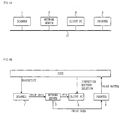
- FIG. 4A is a block diagram showing the construction of a bus type LAN as an example of the above conventional network system.
- a network 10 is connected with a scanner 1, a network server 2, a client computer (PC) 3 and a printer 4.
- the network server 2 has a built-in software for managing (e.g., inspecting) image data in a HTML (Hyper Text Markup Language) format.
- HTML Hyper Text Markup Language
- Image data of manuscript scanned by the scanner 1 is transferred to the network server 2 via the network, and is stored therein. Then, when a user makes management operations of the image data, such as inspection, edition, deletion or the like, using a browser on a screen of the client PC 3, the image data is transferred from the network server 2 to the client PC 3 via the network. In this case, the image data is transferred by a http (Hyper Text Transfer Protocol) access.
- http Hyper Text Transfer Protocol
- the user can instruct to print out the image data by using the client PC 3.
- the image data is transferred as print data from the network server 2 to the printer 4. Then, the image data is printed out as a print matter by the printer 4.
- one or two or more dedicated network servers must be provided in order to merely store image data scanned by a scanner.
- the provision of network servers increase the scale of the network system, resulting in higher build-up cost.
- a first object of the present invention is to provide technique of managing image data in a network, which can reduce the scale of network system with low build-up cost.
- a second object of the present invention is to provide technique of managing image data in a network, which can reduce a load acting on a network traffic, and shorten time required to transfer character image data.
- the image data when a user inspects character image data, the image data can be transmitted as text data. As a result, it is possible to reduce a load acting on a network traffic, and to shorten time taken to transfer the image data.
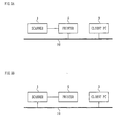
- FIG. 1A is a block diagram showing the construction of a system of managing image data according to the first embodiment. Further, FIG. 1B is a block diagram showing a data flow in the system of FIG. 1A.
- a bus type LAN network 10 is connected with a scanner 1 as an image input device, a client computer (client PC) 3, and a printer as an image forming device.
- This network 10 is not connected with a network server.
- a network scanner can be used as a scanner 1.
- the printer 5 includes a network interface (I/F) 51, a storage section 52, a printing section 53, an output section 54, an OCR converter 55, and a CPU 56 for controlling these sections.
- I/F network interface
- the network interface 51 of this embodiment includes a NIC (Network Interface Card), which is one kind of LAN boards.
- the network interface 51 receives image data transmitted from the scanner 1 via the network, and then, transmits image data stored in the storage section 52 to the client computer 3 via the network.
- the network interface section 51 has a built-in software 511 for managing and inspecting image data in a HTML format.
- the storage section 52 includes a hard disk.
- the storage section 52 is provided with a binary data section 521 for storing character image data as binary data such as a bit map, and a text data section 522 for storing image data as HTML format text data.
- the text data section 522 stores text data into which binary data stored in the binary data section 521 is converted by the OCR converter.
- OCR converter according to well-known technique, binary data of a character image is read by an optical character reader (OCR) so as to be converted into text data.
- OCR optical character reader
- the printing section 53 prints out binary data stored in the binary data section 521 via the output section 54.
- the client computer 3 manages image data stored in the storage section 52 via the network 10.
- a http access is made with respect to the printer 5 by using a browser.
- image data can be stored and managed without a network server conventionally required for storing the image data.
- the scale of the network system can be reduced with a decrease in build-up cost.
- Image data scanned by the scanner 1 is transmitted to the printer 5 via the network.
- the network interface 51 receives the transmitted image data. Further, the network interface 51 transmits the image data to the storage section 52 by instructions of the CPU 56. Since the data sent from the scanner 1 is image data, the image data is stored in the binary data section 521 of the storage section 52.
- the CPU 56 converts the binary data stored in the binary data section 521 into a HTML format text data by the OCR converter 55.
- the converted text data is stored in the text data section 522 of the storage section 52.
- the character image data is saved in the storage section 52 in the two data formats of binary data and text data.
- Image data stored in the storage section 52 is managed via the network 10 from the client computer 3.
- a http access is made with respect to the printer 5 by a browser of the client computer 3 via the network 10.
- the network interface 51 of the printer 5 reads the image data instructed by the client computer 3 out of the storage section 52, and then, transmits it to the client computer 3.
- the corresponding text data is read out of the text data section 522 of the storage section 52 by the software 511 for managing a HTML format image data, built in the network interface 51, and then, the text data is transmitted.
- the software 511 for managing a HTML format image data built in the network interface 51
- the text data is transmitted.
- the client computer 3 it is possible to carry out edition and deletion of image data while inspecting the image data.
- the CPU 56 reads the image data to be printed out of the storage section 52, and then, transmits it to the printing section 53.
- the printing section 53 prints out the image data, and then, outputs it via the output section 54.
- the printing section 53 prints out data as binary data
- the binary data is read out of the binary data section 521, and then, the binary data is printed out.
- a scanner 1 is connected to the printer 5 but not connected directly to the network 10.
- a scanner section of copier or MFP Multi Function Printer
- the printer 5 has the same constitution as the first embodiment shown in FIG. 2.
- the printer 5 includes an interface (not shown) for directly receiving image data from the scanner 1, in addition to a network interface.
- the system thus constructed it is possible to transfer image data from the scanner 1 to the printer 5 without using the network 10. Therefore, the image data can be stored in a storage section of the printer 5 without giving a load to the network 10.
- a printer 5 is connected directly to the scanner 1 but not connected directly to the network 10.
- a network interface of the printer 5 makes an information exchange with the client computer 3 via the scanner 1. Therefore, in the above constitution, even if the printer 5 is not connected directly to the network 10, it is possible to readily manage image data stored in the storage section of the printer 5 by the client computer 3 via the scanner 1.
- the above embodiments relate to a system of managing image data in a bus type LAN network
- the kind of network is not limited thereto.
- the present invention may be applicable to any suitable network such as a ring type LAN, a star type LAN or Internet.
- a hard disk is provided as storage means of the image forming device in the above embodiments, the kind of the storage means is not limited thereto. Any suitable storage medium may be used.
- the invention is based on Japanese Patent Application No. 2000-172931, which is hereby incorporated by reference.
Landscapes
- Engineering & Computer Science (AREA)
- Multimedia (AREA)
- Signal Processing (AREA)
- Facsimiles In General (AREA)
- Computer And Data Communications (AREA)
- Information Retrieval, Db Structures And Fs Structures Therefor (AREA)
Abstract
Description
In this system, the image forming device is provided with the storage means of image data, and image data stored in the storage means is managed from the client computer. Thus, it is possible to store and manage image data in the network without a network server indispensable in conventional cases. As a result, it is possible to prevent the network system from being made into a large scale, and to prevent an increase in build-up cost of the network system.
Since the text data storage section for storing image data as text data is provided in addition to the binary data storage section for storing the image data as binary data in the storage means, the image data can be saved in two data formats. As a result, when inspecting character image data by the client computer, image data can be transmitted as text data. Therefore, when transferring character image data, it is possible to reduce a load acting on a network traffic, and to shorten time taken to transfer the image data.
Further, since the network interface includes the software for managing text data, it is possible to readily transmit the text data to the client computer.
In the case of printing out image data from the image forming device, it may be outputted as binary data. Therefore, it is possible to selectively use the data formats of image data according to the output medium.
The method permits the storage and management of image data in the network without a network server indispensable in conventional cases. As a result, it is possible to prevent the network system from being made into a large scale, and to prevent an increase in build-up cost of the network system.
FIG. 1B is a block diagram showing a data flow in the system of FIG. 1A;
FIG. 3B is a block diagram showing the construction of a system of managing image data according to a third embodiment of the present invention.
FIG. 4B is a block diagram showing a data flow in the system of FIG. 4A.
Claims (4)
- A system of managing image data in a network (10), comprising:
an image input device (1);an image forming device (5) including storage means (52) for storing image data inputted by the image input device (1), at least one of the image input device (1) and the image forming device (5) being connected to the network (10); anda client computer (3), connected to the network (10), for managing the image data stored in the storage means (52) via the network (10). - The system according to claim 1, wherein the image forming device (5) further includes a converter (55) and a network interface (51);the storage means (52) comprises a binary data storage section (521) for storing the image data as binary data and a text data storage section (522) for storing text data converted from the binary data by the converter (55); andthe network interface includes a software (511) for managing the text data, and transmits the text data stored in the text data storage section to the client computer.
- A method of managing image data in a network (10), comprising the steps of:connecting at least one of an image input device (1) and an image forming device (5) to the network (10); connecting a client computer (3) to the network (10);storing image data inputted by the image input device (1) in storage means (52) of the image forming device (5); andcarrying out management of the image data stored in the storage means (52) from the client computer (3) via the network (10).
- The method according to claim 3, wherein when the image data is a character image, the character image is stored in two data formats of binary data and text data, the text data being made by converting the binary data;
and when inspecting the image data in the client computer (3), the text data is transferred to the client computer (3).
Applications Claiming Priority (2)
| Application Number | Priority Date | Filing Date | Title |
|---|---|---|---|
| JP2000172931 | 2000-06-09 | ||
| JP2000172931A JP2001352423A (en) | 2000-06-09 | 2000-06-09 | Image data management system and method in network |
Publications (2)
| Publication Number | Publication Date |
|---|---|
| EP1162820A2 true EP1162820A2 (en) | 2001-12-12 |
| EP1162820A3 EP1162820A3 (en) | 2003-03-19 |
Family
ID=18675242
Family Applications (1)
| Application Number | Title | Priority Date | Filing Date |
|---|---|---|---|
| EP01810519A Withdrawn EP1162820A3 (en) | 2000-06-09 | 2001-05-28 | System and method of managing image data in network |
Country Status (4)
| Country | Link |
|---|---|
| US (1) | US20020051185A1 (en) |
| EP (1) | EP1162820A3 (en) |
| JP (1) | JP2001352423A (en) |
| CN (1) | CN1235153C (en) |
Cited By (2)
| Publication number | Priority date | Publication date | Assignee | Title |
|---|---|---|---|---|
| GB2384587A (en) * | 2001-10-26 | 2003-07-30 | Hewlett Packard Co | Combining a scanner and printer to act as a copier via a network or PC |
| US7917862B2 (en) | 2001-10-26 | 2011-03-29 | Hewlett-Packard Development Company, L.P. | System and method for improving the performance of a plurality of peripheral devices |
Families Citing this family (13)
| Publication number | Priority date | Publication date | Assignee | Title |
|---|---|---|---|---|
| US20080028302A1 (en) * | 2006-07-31 | 2008-01-31 | Steffen Meschkat | Method and apparatus for incrementally updating a web page |
| US8589788B2 (en) * | 2007-12-19 | 2013-11-19 | International Business Machines Corporation | Methods, systems, and computer program products for automatic parsing of markup language documents |
| US8352509B2 (en) * | 2007-12-19 | 2013-01-08 | International Business Machines Corporation | Methods, systems, and computer program products for accessing a multi-format data object |
| US8996985B1 (en) | 2011-03-16 | 2015-03-31 | Google Inc. | Online document processing service for displaying comments |
| US8266245B1 (en) | 2011-10-17 | 2012-09-11 | Google Inc. | Systems and methods for incremental loading of collaboratively generated presentations |
| US8434002B1 (en) | 2011-10-17 | 2013-04-30 | Google Inc. | Systems and methods for collaborative editing of elements in a presentation document |
| US20150199308A1 (en) | 2011-10-17 | 2015-07-16 | Google Inc. | Systems and methods for controlling the display of online documents |
| US8812946B1 (en) * | 2011-10-17 | 2014-08-19 | Google Inc. | Systems and methods for rendering documents |
| US10430388B1 (en) | 2011-10-17 | 2019-10-01 | Google Llc | Systems and methods for incremental loading of collaboratively generated presentations |
| US9367522B2 (en) | 2012-04-13 | 2016-06-14 | Google Inc. | Time-based presentation editing |
| US9529785B2 (en) | 2012-11-27 | 2016-12-27 | Google Inc. | Detecting relationships between edits and acting on a subset of edits |
| US9971752B2 (en) | 2013-08-19 | 2018-05-15 | Google Llc | Systems and methods for resolving privileged edits within suggested edits |
| US9348803B2 (en) | 2013-10-22 | 2016-05-24 | Google Inc. | Systems and methods for providing just-in-time preview of suggestion resolutions |
Family Cites Families (9)
| Publication number | Priority date | Publication date | Assignee | Title |
|---|---|---|---|---|
| US6549638B2 (en) * | 1998-11-03 | 2003-04-15 | Digimarc Corporation | Methods for evidencing illicit use of a computer system or device |
| FI102495B (en) * | 1994-03-16 | 1998-12-15 | Nokia Mobile Phones Ltd | Read / print device |
| EP0971531B1 (en) * | 1994-04-19 | 2006-09-27 | Canon Kabushiki Kaisha | Network system in which a plurality of image processing apparatuses are connected |
| JPH09200482A (en) * | 1996-01-22 | 1997-07-31 | Toshiba Corp | Image forming device |
| US5978477A (en) * | 1996-11-21 | 1999-11-02 | Ricoh Company Limited | Automatic and transparent document archiving |
| US6181436B1 (en) * | 1997-04-28 | 2001-01-30 | Brother Kogyo Kabushiki Kaisha | Print managing system and print managing method |
| US6184996B1 (en) * | 1997-06-18 | 2001-02-06 | Hewlett-Packard Company | Network printer with remote print queue control procedure |
| JPH1141385A (en) * | 1997-07-22 | 1999-02-12 | Minolta Co Ltd | Image forming device |
| DE60027637T2 (en) * | 1999-05-06 | 2006-09-28 | Seiko Epson Corp. | Network management system |
-
2000
- 2000-06-09 JP JP2000172931A patent/JP2001352423A/en active Pending
-
2001
- 2001-05-14 CN CNB011158972A patent/CN1235153C/en not_active Expired - Fee Related
- 2001-05-28 EP EP01810519A patent/EP1162820A3/en not_active Withdrawn
- 2001-05-29 US US09/870,010 patent/US20020051185A1/en not_active Abandoned
Cited By (3)
| Publication number | Priority date | Publication date | Assignee | Title |
|---|---|---|---|---|
| GB2384587A (en) * | 2001-10-26 | 2003-07-30 | Hewlett Packard Co | Combining a scanner and printer to act as a copier via a network or PC |
| GB2384587B (en) * | 2001-10-26 | 2006-04-19 | Hewlett Packard Co | System and method for improving the performance of a plurality of peripheral devices |
| US7917862B2 (en) | 2001-10-26 | 2011-03-29 | Hewlett-Packard Development Company, L.P. | System and method for improving the performance of a plurality of peripheral devices |
Also Published As
| Publication number | Publication date |
|---|---|
| EP1162820A3 (en) | 2003-03-19 |
| CN1329307A (en) | 2002-01-02 |
| CN1235153C (en) | 2006-01-04 |
| JP2001352423A (en) | 2001-12-21 |
| US20020051185A1 (en) | 2002-05-02 |
Similar Documents
| Publication | Publication Date | Title |
|---|---|---|
| EP1162820A2 (en) | System and method of managing image data in network | |
| US8037131B2 (en) | Data transfer utilizing preview data | |
| US8576438B2 (en) | Digital computer and system for recording information on operations | |
| US20090006422A1 (en) | Document management system having document transmission device, document management server, and document management client | |
| JP2001136352A (en) | Image input device and control method thereof | |
| US7242493B2 (en) | Transmitting miniature versions of files to receiving devices | |
| US7532343B2 (en) | Image forming apparatus and document administration system | |
| US7268902B2 (en) | Image processing apparatus, image processing method, and program | |
| US20030133151A1 (en) | Print system | |
| JPH1166051A (en) | Filing method for electronic document and device therefor | |
| US8462372B2 (en) | Image processing apparatus and image processing method for storing output pattern data according to a kind of document | |
| US7613833B2 (en) | Data processing apparatus and data processing method, and computer program | |
| JP2000284926A (en) | Print processing system and print processing method | |
| US20060117053A1 (en) | Data processing apparatus and data processing method, and computer program | |
| JP2833512B2 (en) | Facsimile machine | |
| JPH1155448A (en) | Facsimile machine | |
| JP2001318912A (en) | Method and device for managing document | |
| JP4545621B2 (en) | Network communication equipment | |
| KR100503786B1 (en) | How to Manage Printer Printout Information | |
| JP2007148944A (en) | Communication terminal device | |
| JP4189592B2 (en) | Image data management apparatus, image forming apparatus, and image data management method | |
| JPH1139117A (en) | Printer control device | |
| US20090116077A1 (en) | Image processing device, image processing method, image processing program, and recording medium | |
| US20050243357A1 (en) | Image output control device | |
| JP2009100388A (en) | Network multifunction machine |
Legal Events
| Date | Code | Title | Description |
|---|---|---|---|
| PUAI | Public reference made under article 153(3) epc to a published international application that has entered the european phase |
Free format text: ORIGINAL CODE: 0009012 |
|
| AK | Designated contracting states |
Kind code of ref document: A2 Designated state(s): AT BE CH CY DE DK ES FI FR GB GR IE IT LI LU MC NL PT SE TR |
|
| AX | Request for extension of the european patent |
Free format text: AL;LT;LV;MK;RO;SI |
|
| PUAL | Search report despatched |
Free format text: ORIGINAL CODE: 0009013 |
|
| AK | Designated contracting states |
Kind code of ref document: A3 Designated state(s): AT BE CH CY DE DK ES FI FR GB GR IE IT LI LU MC NL PT SE TR Designated state(s): AT BE CH CY DE DK ES FI FR GB GR IE IT LI LU MC NL PT SE TR |
|
| AX | Request for extension of the european patent |
Extension state: AL LT LV MK RO SI |
|
| 17P | Request for examination filed |
Effective date: 20030627 |
|
| AKX | Designation fees paid |
Designated state(s): DE FR GB IT |
|
| 17Q | First examination report despatched |
Effective date: 20080206 |
|
| STAA | Information on the status of an ep patent application or granted ep patent |
Free format text: STATUS: THE APPLICATION HAS BEEN WITHDRAWN |
|
| 18W | Application withdrawn |
Effective date: 20080530 |