EP1161023A1 - Procédé et système de transmission de données bi-mode, émetteur et récepteur correspondants - Google Patents
Procédé et système de transmission de données bi-mode, émetteur et récepteur correspondants Download PDFInfo
- Publication number
- EP1161023A1 EP1161023A1 EP01460033A EP01460033A EP1161023A1 EP 1161023 A1 EP1161023 A1 EP 1161023A1 EP 01460033 A EP01460033 A EP 01460033A EP 01460033 A EP01460033 A EP 01460033A EP 1161023 A1 EP1161023 A1 EP 1161023A1
- Authority
- EP
- European Patent Office
- Prior art keywords
- packet
- receiver
- mode
- identifier
- implicit
- Prior art date
- Legal status (The legal status is an assumption and is not a legal conclusion. Google has not performed a legal analysis and makes no representation as to the accuracy of the status listed.)
- Granted
Links
- 238000000034 method Methods 0.000 title claims description 44
- 230000005540 biological transmission Effects 0.000 claims abstract description 107
- 230000001960 triggered effect Effects 0.000 claims abstract description 23
- 230000008569 process Effects 0.000 claims description 6
- 230000003466 anti-cipated effect Effects 0.000 claims 1
- 230000007704 transition Effects 0.000 description 15
- 238000012550 audit Methods 0.000 description 11
- 238000004891 communication Methods 0.000 description 3
- 238000012937 correction Methods 0.000 description 3
- 238000007726 management method Methods 0.000 description 3
- 230000004044 response Effects 0.000 description 3
- 230000003111 delayed effect Effects 0.000 description 2
- 238000001514 detection method Methods 0.000 description 2
- 230000006866 deterioration Effects 0.000 description 2
- 230000007246 mechanism Effects 0.000 description 2
- 238000012163 sequencing technique Methods 0.000 description 2
- 238000013459 approach Methods 0.000 description 1
- 238000010420 art technique Methods 0.000 description 1
- 230000002457 bidirectional effect Effects 0.000 description 1
- 230000015556 catabolic process Effects 0.000 description 1
- 230000001186 cumulative effect Effects 0.000 description 1
- 238000006731 degradation reaction Methods 0.000 description 1
- 238000010586 diagram Methods 0.000 description 1
- 230000007613 environmental effect Effects 0.000 description 1
- 238000012545 processing Methods 0.000 description 1
- 230000009257 reactivity Effects 0.000 description 1
- 230000001105 regulatory effect Effects 0.000 description 1
- 230000001360 synchronised effect Effects 0.000 description 1
Images

Classifications
-
- H—ELECTRICITY
- H04—ELECTRIC COMMUNICATION TECHNIQUE
- H04L—TRANSMISSION OF DIGITAL INFORMATION, e.g. TELEGRAPHIC COMMUNICATION
- H04L1/00—Arrangements for detecting or preventing errors in the information received
- H04L1/12—Arrangements for detecting or preventing errors in the information received by using return channel
- H04L1/16—Arrangements for detecting or preventing errors in the information received by using return channel in which the return channel carries supervisory signals, e.g. repetition request signals
- H04L1/18—Automatic repetition systems, e.g. Van Duuren systems
- H04L1/1806—Go-back-N protocols
-
- H—ELECTRICITY
- H04—ELECTRIC COMMUNICATION TECHNIQUE
- H04L—TRANSMISSION OF DIGITAL INFORMATION, e.g. TELEGRAPHIC COMMUNICATION
- H04L1/00—Arrangements for detecting or preventing errors in the information received
- H04L1/0001—Systems modifying transmission characteristics according to link quality, e.g. power backoff
-
- H—ELECTRICITY
- H04—ELECTRIC COMMUNICATION TECHNIQUE
- H04L—TRANSMISSION OF DIGITAL INFORMATION, e.g. TELEGRAPHIC COMMUNICATION
- H04L1/00—Arrangements for detecting or preventing errors in the information received
- H04L1/12—Arrangements for detecting or preventing errors in the information received by using return channel
- H04L1/16—Arrangements for detecting or preventing errors in the information received by using return channel in which the return channel carries supervisory signals, e.g. repetition request signals
- H04L1/1607—Details of the supervisory signal
- H04L1/1657—Implicit acknowledgement of correct or incorrect reception, e.g. with a moving window
-
- H—ELECTRICITY
- H04—ELECTRIC COMMUNICATION TECHNIQUE
- H04L—TRANSMISSION OF DIGITAL INFORMATION, e.g. TELEGRAPHIC COMMUNICATION
- H04L1/00—Arrangements for detecting or preventing errors in the information received
- H04L1/12—Arrangements for detecting or preventing errors in the information received by using return channel
- H04L1/16—Arrangements for detecting or preventing errors in the information received by using return channel in which the return channel carries supervisory signals, e.g. repetition request signals
- H04L1/18—Automatic repetition systems, e.g. Van Duuren systems
- H04L1/1809—Selective-repeat protocols
Definitions
- the field of the invention is that of the transmission of data from a transmitter to receiver. More specifically, the invention relates to all communication systems requiring high transmission quality, and in which the use of bandwidth must be optimized.
- the invention is particularly suitable for radiocommunication systems, in which the radio resource is a scarce resource, and where the transmission channel is subject to disturbances.
- the invention applies in particular, but not exclusively, to ARQ type transmission protocols (in English “Automatic Repeat Request ”), which implement error control functions within communication systems.
- error control techniques are generally used in communication systems, to compensate for loss and / or degradation data transmitted from a source point to a destination point. So conventional error control implements error detection transmission, and retransmission of lost or damaged data.
- a ARQ type protocol allows simultaneous management of error control and control of the data flow, by regulating the flow of the transmitted data, and by determining whether one or more data should be retransmitted.
- ARQ transmitter maintains a list of PDU sequence numbers that it is authorized to transmit.
- the ARQ receiver maintains a list sequence numbers of the PDUs it is prepared to receive. The knowledge the sequence number of the PDUs thus allows the ARQ receiver to detect the loss or deterioration of certain data packets, and report these errors transmission to the ARQ transmitter, which then retransmits the PDU (s) which had not been correctly received.
- a disadvantage of this prior art technique is that when the data transmission is error-free, there is no need to transmit data identifiers of data packets. Indeed, in Go-Back-N type protocols and Selective Repeat, for example, the transmission of sequence associated with PDUs unnecessarily consumes bandwidth, in the in particular where the transmission channel is not disturbed.
- the invention particularly aims to overcome these drawbacks of the art prior.
- an objective of the invention is to provide a method of data transmission which is simple and inexpensive to implement.
- Another objective of the invention is to implement a method of transmission of data to avoid, under certain conditions, transmit an identifier of the packet sent.
- Another object of the invention is to provide a transmission method saving bandwidth compared to others known transmission methods.
- the invention also aims to implement a method of data transmission applicable within the framework of an ARQ type protocol.
- Yet another object of the invention is to provide a method of data transmission for error-free error correction back.
- the invention is based on a completely new and inventive approach of data transmission between a transmitter and a receiver. Indeed, it is based in particular on the existence of two distinct modes of transmission, which are selectively implemented according to predetermined criteria, linked by example of the quality of the channel established between the receiver and the transmitter, or the importance of the disturbances which are superimposed on the transmitted data. In in addition, switching, on the receiver side, from explicit transmission mode to implicit is optimized by the management of a transmission quality indicator.
- a system comprising at least one transmitter and at least one receiver, in which such a method according to the invention is implemented, is therefore particularly adaptable to the environmental conditions of transmission of data.
- such a dual-mode data transmission method is particularly economical in terms of bandwidth, the identifiers of data packets which may or may not be transmitted, depending on criteria predetermined, linked in particular to the value of the quality indicator of transmission.
- said at least one transmission quality indicator is an error flag relating to said data transmission.
- Such an error message can, for example, come from the lower layers of the data transmission system to which the receiver belongs. Indeed, from such lower layers are capable of detecting transmission errors, and so determine when a data packet sent by a transmitter has not has been received or has been badly received by the receiver, according to a technique which does not the subject of this invention. We can of course also consider that a message error is sent from the lower layers to the receiver for some other reason that a transmission error.
- the passage of said receiver (2) from said implicit mode to said explicit mode (23) is triggered by reception an explicit package and / or an error message.
- the receiver can maintain a variable corresponding to the identifier (or sequence number) of received packets. Such a variable can be used to detect data packets lost or damaged during the transmission, in particular in the case where the receiver implements a protocol of the ARQ type.
- the receiver can then also maintain state variables relating to the ARQ protocol implemented, such as an ARQ window variable for example.
- said receiver being in explicit mode, said error flag being raised, said receiver refuses all implicit packets received.
- the receiver when the receiver is in explicit mode and it has received a error message, it cannot assign an identifier to a data packet implied received. It therefore refuses all implicit packets received. Furthermore, if the transmission method implements an ARQ type protocol, such packets implied denied are not used by protocol.
- the receiver when the receiver is in explicit mode and the error flag is lifted, it stores the implicit packets it receives, in a storage order sequential, without determining their identifier. Such implicit packages are then called "awaiting sequencing".
- the error flag Upon receipt of an explicit package identifier N, the error flag then goes into the lowered state, and the receiver then processes the packets "awaiting sequencing", assigning each a identifier in the following way (for the sake of simplification, we assume here that the identifier is a sequence number): the last implicit packet received and stored by the receiver is assigned the identifier N-1, the penultimate implicit packet received receives the identifier N-2, and so on until all packets implicit stored by the receiver have been processed.
- the identifiers are assigned to implicit packets stored modulo SN_Max + 1.
- the packets stored implicit are then used by the protocol, after receiving their identifier.
- the receiver rejects all stored implicit packets, without processing them.
- the receiver does not receive a new error message or an explicit packet, we can also consider that it rejects the implicit packets stored after a time predetermined, or, for example, when a maximum storage capacity of implicit packets is reached.
- Such a variant allows the receiver not to refuse packets implicit received after receiving an error message but storing them until the next error message, or the next explicit packet is received.
- the transmitter being in implicit mode, goes into explicit mode at time intervals to send one or more explicit packets to the receiver, so as to allow the receiver to process the implicit stored packets.
- the first data packet sent by the transmitter after the passage of the implicit mode to explicit mode must then be the data packet whose the identifier directly follows the identifier of the last data packet sent in implicit mode, so that the identifiers assigned to implicit packets stored by the receiver are correct.
- the transmitter after having sent one or several explicit packets, then returns to implicit mode.
- said receiver having correctly received a data packet, it sends to said transmitter at least one classic acknowledgment message of said received packet, containing said identifier of said next data packet expected by said receiver, and, in at least in certain cases, said receiver, prior to said sending of said at least one message classic acknowledgment, sends said transmitter at least one message of early acquittal.
- a classic acknowledgment message contains a field whose value allows to determine the identifier of the next data packet expected by the receiver. So, in the case where the identifier is a sequence number by example, the reception by the sender of an acknowledgment message carrying the value N indicates that all data packets with sequence number less than N have been correctly received by the receiver, and that the data packet identifier N was not received by the receiver, or was damaged during the transmission.
- the receiver can send a message on receipt of a data packet, or send messages acknowledgment at predetermined time intervals for example. Sending a acknowledgment message can also be delayed until the receiver has received a predetermined number of data packets, or may be delayed by lower layers of the data transmission system, for example if there is no of resources available to transmit it.
- the receiver sends several messages consecutive acknowledgments to the transmitter, in the event of a transmission error by example.
- the transmitter being informed more quickly from a possible transmission error, the period during which the transmitter and the receiver are out of sync is thus reduced, and we can return faster to an error-free mode of operation.
- the transmitter With each packet it receives from the upper layers of the data transmission, the transmitter associates an identifier, which can be a number of sequence for example. This sequence number is between a value SN_Min minimum, which can for example be zero, and a maximum value SN_Max. The issuer therefore maintains the variables corresponding to the identifier of the packet received from upper layers, SN_Min and SN_Max. In addition, the transmitter can maintain variables relating to the protocol used, such as ARQ window variables for example.
- the transmitter can also maintain a clock variable, for each data packets that it transmits to the receiver.
- a data packet is sent to the receiver (for example a packet whose sequence number is N)
- the corresponding clock goes into the "in progress” state.
- the clock Upon receipt an acknowledgment message, directly or indirectly indicating that the packet with which the clock is associated has been correctly received by the receiver, the clock goes into the "stopped” state.
- Such an acknowledgment message may be a message indicating that the next packet expected by the receiver is the packet with identifier N + 1, or a message indicating that the next packet awaited by the receiver is a packet N + M identifier, with M> 1, which assures the sender that all packets with an identifier lower than N + M have been correctly received.
- the clock goes into the "expired" state after a time predetermined maximum.
- the passage of said transmitter from said explicit mode to said implicit mode is triggered by an internal and / or external audit event sender, if at least one explicit packet has been sent by said sender from the last pass of said transmitter from said implicit mode to said explicit mode.
- the transmitter When it goes into implicit mode, the transmitter sends implicit packets in the order of their identifiers and without duplication, starting with the package implicit whose identifier follows the identifier of the last packet sent in mode explicit.
- the reception of an acknowledgment message containing the identifier N indicates to the transmitter that all the packets of identifier less than or equal to N-1 have received correctly by the receiver. If, on the other hand, for all packages transmitted by the transmitter later to the identifier packet N-1, the clocks are in the "stopped” state (the transmitter has then received an acknowledgment message indicating that the corresponding packet has been received correctly) or in the "en course "(the sender is waiting for an acknowledgment message for this packet), the transmitter is assured that there has been no transmission error for all data packets sent more than one RTT (in English "Round Trip Time") before receipt of the acknowledgment message containing the identifier N.
- RTT in English "Round Trip Time
- the transmitter can then go into implicit mode, because the connection between the transmitter and receiver appear to be of good quality.
- Such circumstances signal a transmission error to the sender probable of the identifier packet N.
- the clock of the identifier packet SN being in the "expired" state, we know that the time that has passed since the emission of such a packet is greater than the predetermined maximum time RTT.
- the receiver would therefore have already sent to the transmitter an acknowledgment message containing the identifier SN + 1, and indicating that all packets with identifier less than or equal to SN have been correctly received.
- the transmitter passes then in explicit mode.
- the sender can send any packet with identifier N, authorized by the protocol implemented in the transmission system of data, according to the invention.
- the transmitter can send packets of data without respecting the order of their identifiers and / or duplicating certain packets of data.
- said identifier is a number, assigned sequentially to each of said packets of data, and the passage of said transmitter from said implicit mode to said explicit mode is triggered by the passage of said clock of a packet of identifier SN in said state "expired", SN being greater than or equal to said second variable of BoW identification, and strictly less than said first variable EoW identification.
- the transition from implicit mode to explicit mode is triggered by the expiration of a clock, even if an acknowledgment message has not yet been received by the transmitter.
- Such embodiment allows, on the one hand, to obtain greater reactivity of the data transmission system at the occurrence of errors, and secondly, to avoid that implicit packets are unnecessarily rejected by the receiver.
- the receiver upon receiving an error message, the receiver has switched to explicit mode, and is therefore out of sync with the transmitter, which is still in implicit mode and continues to send implicit packets to the receiver.
- Such embodiment makes it possible to reduce the time interval during which the receiver and transmitter do not operate in the same mode, so optimize the operation of the data transmission system.
- said explicit mode implements a ARQ type protocol (in English "Automatic Repeat Request”).
- the invention is of course also applicable to other types of protocols.
- the invention also relates to a data transmission system, exchanged between at least one transmitter and at least one receiver, in the form of packets of at least one data item, each of said data packets being associated with an identifier of said package.
- the invention also relates to a transmitter of a transmission system of data, of the type enabling data to be exchanged with at least one receiver, in the form of packets of at least one data item, each of said data packets being associated with an identifier of said package.
- such a transmitter comprises means for passing said mode. explicit to said implicit mode and / or means for passing said implicit mode said explicit mode, according to at least one predetermined passage criterion.
- the invention also relates to a receiver of a transmission system.
- data of the type allowing data to be exchanged with at least one transmitter, in the form of packets of at least one data item, each of said packets of data being associated with an identifier of said packet.
- such a receiver manages at least one quality indicator of transmission, and said means for passing from said explicit mode to said mode implicit are triggered by the receipt of an implicit packet, provided that the value of said at least one indicator is greater than a quality threshold predetermined.
- an identifier of a data packet is a sequence number.
- the invention of course also applies to other types of identifiers, such as a chain of characters for example.
- the general principle of the invention is based on the existence of two modes of data transmission, an explicit mode in which data packets are transmitted with their identifier, and an implicit mode in which packets are transmitted without an identifier.
- Optimal system operation is achieved when the transmitter and the receiver are substantially synchronized, i.e. when the duration of the periods during which the transmitter and the receiver do not not operate in the same mode of transmission is significantly reduced.
- Such optimal operation is notably achieved by management, on the receiver, a transmission quality indicator, the value of which conditions the switching the receiver from explicit to implicit mode.
- asynchronous system we mean a system in which the transmission of useful data packets by a transmitter and that of packets control (acknowledgment) associated by a receiver is asynchronous.
- Such systems can implement unidirectional or bidirectional connections between an access point and a terminal or between two terminals remote mechanisms for sending useful data packets by a transmitter and that of control packets associated by a receiver being generally uncorrelated in such systems.
- the time interval between the transmission of a data packet and the reception by the transmitting terminal of a control packet containing the acknowledgment or non-acknowledgment of the transmitted data can be very variable. This variability is further increased in the case elastic flows. Indeed, it is recalled that the transmission of messages of acknowledgments by the receiver can be postponed, for example until the reception of a certain number of packets, in order to send a message cumulative acquittal. In addition, the receiver can delay the transmission of a acknowledgment message until it is allocated the necessary resources.
- the invention intends to overcome this difficulty in using a transmission quality indicator managed by the receiver.
- a transmission quality indicator managed by the receiver.
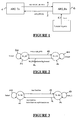
- FIG. 1 an embodiment of a data transmission system according to the invention.
- Such a data transmission system comprises a transmitter 1 and a receiver 2.
- the transmitter 1 sends data packets to the receiver 2 by the link 4: these data packets can be explicit packets EM_PDU (K), containing the identifier K of the transmitted packet, or packets of IM_PDU implicit data.
- Receiver 2 transmits messages to sender 1 of acknowledgment ACK_PDU (N) containing the identifier N of the next packet of data expected by receiver 2.
- Receiver 2 can send such acknowledgment messages after received and processed a data packet sent by the transmitter 1, or at any other time, especially at a time determined by the data transmission protocol set implemented in the system of FIG. 1.
- the lower layers 3 of the system send error messages to the receiver 2 via a link 6.
- Such error messages allow in particular to inform the receiver 2 that a transmission error occurred during the exchange of information between transmitter 1 and the receiver 2.
- the technique used by the lower layers 3 to detect such transmission errors are not the subject of this request.
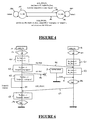
- Receiver 2 can operate in implicit mode 21 or in explicit mode 22.
- the transition 23 from implicit mode 21 to explicit mode 22 can be triggered by the reception of an error message from the lower layers 3, not shown in Figure 2, or by receiving an explicit data packet EM_PDU from transmitter 1. If receiver 2 receives no packet explicit, no error message, it remains in implicit operating mode, as illustrated by the arrow referenced 211.
- the transition 24 from explicit mode 22 to implicit mode 21 can be triggered by the reception of an IM_PDU implicit data packet, at provided that the error flag is in the lowered state.
- receiver 2 does not receive an implicit packet, or if the error flag is raised on receipt of an implicit packet, receiver 2 remains in explicit operation, as shown by the arrow referenced 221.
- FIG. 3 illustrates a first state machine of the transmitter 1, presenting the transition conditions of the implicit mode 11 (respectively explicit 12) to explicit mode 12 (implicit respectively 11).
- the transition 13 from implicit mode 11 to explicit mode 12 of the transmitter 1 can be triggered by any event internal and / or external to the issuer 1. By fault, the transmitter 1 remains in the implicit state 11, as illustrated by the arrow referenced 111.
- transition 14 from explicit mode 12 to implicit mode 11 can be triggered by an internal and / or external event at transmitter 1, provided at least one explicit packet has been sent by transmitter 1 since the last transition 13 from implicit to explicit mode.
- an internal event and / or external to the transmitter can be, for example, determined by the protocol of data transmission implemented in such a data transmission system data according to the invention.
- transmitter 1 remains in explicit operation 12, as illustrated by the arrow referenced 121.
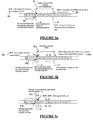
- a second machine of transmitter 1 states, illustrating more detailed transition conditions of a implicit mode 11 (respectively explicit 12) to an explicit mode 12 (implicit respectively 11).
- a state machine can in particular be obtained, according to the invention, when the data transmission system, illustrated in FIG. 1, implements an ARQ type protocol.
- the transition 13 from implicit mode 11 to explicit mode 12 is, in this particular embodiment, triggered by the receipt of a message of acknowledgment containing the identifier N, ACK_PDU (N), provided that the transmitter 1 has sent at least one packet of identifier SN, such as N ⁇ SN ⁇ Tx_Eow, whose clock is in the "expired" state.
- Tx_Eow is the identifier of the next data packet to be transmitted.
- Tx_Eow is the identifier of the next data packet to be transmitted.
- the transition 14 from explicit mode 12 to implicit mode 11 is, in the embodiment illustrated in FIG. 4, triggered by the reception of a message of acknowledgment containing the identifier N, ACK_PDU (N), provided that the sender has sent at least one explicit EM_PDU packet since the last transition 13 from implicit mode 11 to explicit mode 12, on the one hand, and that the clock of each of the SN identifier data packets sent by transmitter 1, with N ⁇ SN ⁇ Tx_Eow, either in the "in progress" state or in the state "stopped", on the other hand.
- Such conditions signal to the transmitter 1 that all data packets sent more than one RTT before receiving the message ACK_PDU (N) have been correctly received.
- the transmitter 1 can therefore switch to default mode 11, because the link between transmitter 1 and receiver 2 does not doesn't seem disturbed.
- FIG. 5a presents the definition of the notions of window 50, of bottom of window 51 BoW (in English "Bottom of Window”) and end of window 52 EoW (in English "End of Window”) for transmitter 1.
- the data packets of group 53 have been sent by the transmitter 1, and acknowledged by the receiver 2, that is to say that. transmitter 1 has received at least one acknowledgment message, indicating that the packets of identifier data less than or equal to 3 have been correctly received.
- the window 50 data packets (i.e. identifier data 4, 5, 6, 7, 0, and 1) have been sent by transmitter 1 to receiver 2, but are awaiting acknowledgment, i.e. transmitter 1 has not not yet received an acknowledgment message, indicating that these packets of data had been correctly or poorly received.
- the first data packet in window 50 which has the identifier n ° 4 is defined as the bottom of window 51, called Bow, which corresponds to the smallest packet identifier sent, but not yet acknowledged.
- the variable BoW is advanced upon receipt of an acknowledgment message containing the identifier n ° 4 in from receiver 2.
- EoW The identifier of the first data packet following the last data packet window 50 data is defined as the end of window 52, called EoW.
- EoW corresponds to the identifier of the packet n ° 2.
- Eow is the identifier of the next packet that the transmitter 1 must transmit, and it is advanced when new data packets not previously transmitted are sent.
- Figure 5b presents the notions of window, bottom of window BoW (in English "Bottom of Window”) and end of EoW window (in English "End of Window ”) for receiver 2, when it implements an ARQ protocol of the type Selective Repeat.
- Receiver 2 maintains a window 541 of six data packets corresponding to the data packets received.
- the packets of identifier 5, 6, and 1 of window 541 have been received correctly, and an error occurred during the transmission of packets with identifier n ° 4, 7 and 0 in window 541. All the data packets in group 571 have been correctly received by the receiver 2.
- BoW the bottom window variable 561, BoW, as the smallest identifier (modulo 8 in the example of figure 5c) of the data packets expected by receiver 2.
- Bow is the identifier of the first data packet of the window 541, that is to say the identifier of the packet n ° 4 in the example of the figure 5b.
- BoW Upon receipt of the identifier packet n ° 4, BoW will be advanced, and will take the value 7, the next data packet expected by receiver 2 then being the identifier packet n ° 7.
- EoW 551 we define the end of window variable EoW 551 as the identifier of the next data packet expected in sequence by receiver 2. This is the identifier of the data packet following the last packet in window 541, that is to say the identifier of packet no. 2 in the example of FIG. 5b.
- Figure 5c presents the notions of window, bottom of window BoW (in English "Bottom of Window”) and end of EoW window (in English "End of Window ”) for receiver 2, when it implements an ARQ protocol of the type Go-Back-N.
- the receiver 2 maintains a window 542 which contains a single data packet, namely identifier packet n ° 4, for which an error transmission has occurred. Subsequently, receiver 2 received the packets ID # 5 and 6, which it rejected, and ID # 7 and 0, for which a transmission error has occurred. All data packets from group referenced 572 have, moreover, been correctly received by the receiver 2.
- FIG. 6 illustrates, in operation, an example of switching from a mode implicit in an explicit mode of the system of FIG. 1, implementing a ARQ type protocol.
- the transmitter 1 and the receiver 2 are in implicit mode 11, 21.
- the next packet transmitted by transmitter 1 will therefore be the packet with sequence number 0, and the next packet expected by receiver 2 is also the identifier packet n ° 0.
- the transmitter 1 sends a packet of implicit data to receiver 2, which receives it correctly.
- the variable EoW takes the value 1, indicating that the next data packet sent by the transmitter 1 will be the sequence number packet # 1.
- the clock of packet 0 is in the "en course ".
- the variables EoW and BoW take the value 1, indicating that the next data packet expected by receiver 2 is the identifier packet n ° 1.
- the transmitter 1 sends the packet of implicit data n ° 1 at the receiver 2.
- the lower layers 3 send by the link 6 an error message to receiver 2, to indicate to him that an error in transmission has occurred.
- Receiver 2 upon receipt of the error message, then goes into explicit mode 22.
- the transmitter EoW variable 1 takes the value 2, indicating that the next packet of data sent by the transmitter 1 will be the packet of identifier n ° 2.
- the clock of identifier packet n ° 1 is in the "in progress" state. After a maximum time predetermined (equal to RTT for example), the clock of identifier packet n ° 1 goes into the "expired" state at the time referenced 66.
- the receiver 2 After entering explicit mode 22, the receiver 2 sends, during a step referenced 67, an acknowledgment message containing the identifier No. 1, ACK_PDU (1), in order to signal to sender 1 that the next data packet awaited by receiver 2 is the packet of identifier n ° 1, thus indicating that it has produces an error during the transmission of this packet.
- ACK_PDU (1) an acknowledgment message containing the identifier No. 1, ACK_PDU (1), in order to signal to sender 1 that the next data packet awaited by receiver 2 is the packet of identifier n ° 1, thus indicating that it has produces an error during the transmission of this packet.
- the transmitter 1 receives this acknowledgment message after the expiration of the clock of identifier packet n ° 1.
- the clock of identifier packet n ° 0 goes into "stopped" state upon receipt of the acknowledgment message ACK_PDU (1).
- the transmitter 1 and the receiver 2 are in implicit mode 11, 21.
- the transmitter 1 and the receiver 2 are therefore in phase, and the mode implicit is suitable for data transmission.
- the transmitter 1 transmits to the receiver 2 the implicit packet of identifier n ° 0.
- the receiver 2 advances the EoW variable at 1, indicating that the next data packet sent will be the packet of identifier n ° 1, and it passes the clock of the packet of identifier n ° 0, Tempo (0), in the "in progress" state.
- the transmitter 1 transmits to the receiver 2 the implicit packet of identifier n ° 1.
- it advances the variable EoW at 2, indicating that the next data packet sent will be the identifier packet n ° 2, and passes the clock of the identifier packet n ° 1, Tempo (1), in the "in progress" state.
- the transmitter 1 sends the implicit package n ° 2.
- EoW takes the value 3, indicating that the transmitter is about to send the identifier packet n ° 3, and the clock Tempo (2) goes into the "in progress" state.
- the receiver Upon receipt of the implicit packet of identifier n ° 3, at the instant referenced 752, the receiver increments EoW and BoW to 3, indicating that it is waiting for the packet identifier n ° 3. It then sends, during a step referenced 76, a message ACK_PDU (3), to indicate to the transmitter 1 that all the packets with an identifier less than or equal to 2 have been correctly received.
- transmitter 1 Upon receipt of this acknowledgment message, at the time referenced 77, transmitter 1 updates the variable BoW, which takes the value 3, because the next packet of data awaiting acknowledgment is the packet of identifier n ° 3.
- the Tempo (0), Tempo (1), and Tempo (2) clocks of identifier packets # 0, 1 and 2 go into the "stopped" state, because these packets have been correctly acknowledged by the receiver 2.
- the invention described in this document can in particular be used in the DLC layer framework (data link control, in English “Data Link Control ”) of Hiperlan 2 networks (cf. ETSI TS 101 761-1, v1.1.1). Messages errors are sent by the MAC sublayer (in English “Medium Access Control ”) to the error control sublayer when the FCCH (in English “Frame Control Channel”) is not properly decoded, or when a packet of expected user data (LCH, in English “Long Transport Channel”) is not correctly decoded.
Landscapes
- Engineering & Computer Science (AREA)
- Computer Networks & Wireless Communication (AREA)
- Signal Processing (AREA)
- Quality & Reliability (AREA)
- Communication Control (AREA)
- Detection And Prevention Of Errors In Transmission (AREA)
- Radar Systems Or Details Thereof (AREA)
- Small-Scale Networks (AREA)
- Data Exchanges In Wide-Area Networks (AREA)
- Reduction Or Emphasis Of Bandwidth Of Signals (AREA)
Abstract
- un mode explicite, dans lequel chacun desdits paquets de données, dits paquets explicites, est transmis avec ledit identifiant dudit paquet de données ;
- un mode implicite, dans lequel lesdits paquets de données, dits paquets implicites, sont transmis sans être accompagnés desdits identifiants.
Description
- un mode explicite, dans lequel chacun desdits paquets de données, dits paquets explicites, est transmis avec ledit identifiant dudit paquet de données ;
- un mode implicite, dans lequel lesdits paquets de données, dits paquets
implicites, sont transmis sans être accompagnés desdits identifiants,
et comprend au moins une étape de passage (24 ; 14) dudit mode explicite audit mode implicite et/ou au moins une étape de passage (23 ; 13) dudit mode implicite audit mode explicite, en fonction d'au moins un critère de passage prédéterminé. En outre, selon un tel procédé, ledit récepteur gère au moins un indicateur de qualité de transmission, et le passage dudit récepteur dudit mode explicite audit mode implicite est déclenché par la réception d'un paquet implicite, à condition que la valeur dudit au moins un indicateur soit supérieure à un seuil de qualité prédéterminé.
- un état « levé » après que ledit récepteur (2) reçoit un message d'erreur, ledit état "levé" signifiant que la condition selon laquelle la valeur dudit au moins un indicateur est supérieure audit seuil de qualité prédéterminé n'est pas vérifiée ;
- un état « abaissé » après que ledit récepteur reçoit correctement un paquet explicite, ledit état "abaissé" signifiant que la condition selon laquelle la valeur dudit indicateur est supérieure audit seuil de qualité prédéterminé est vérifiée.
- des variables relatives auxdits identifiants desdits paquets reçus ;
- des variables d'état relatives à un protocole mis en oeuvre.
- ledit récepteur stocke, selon un ordre de stockage séquentiel, ledit au moins un paquet implicite reçu ;
- si ledit drapeau d'erreur reste dans l'état « levé », ledit récepteur rejette ledit au moins un paquet implicite stocké ;
- si ledit drapeau d'erreur passe dans l'état « abaissé », ledit récepteur traite ledit au moins un paquet implicite stocké, et lui attribue l'identifiant qui précède séquentiellement ledit identifiant dudit paquet explicite reçu, s'il s'agit du premier paquet implicite stocké, ou l'identifiant qui précède séquentiellement l'identifiant du paquet implicite précédemment stocké selon ledit ordre de stockage séquentiel.
- des variables relatives aux identifiants d'au moins certains desdits paquets transmis ;
- pour chacun desdits paquets transmis, une horloge pouvant prendre au moins trois états :
- un état « en cours », après l'envoi dudit paquet transmis ;
- un état « stoppée », après la réception d'un message d'acquittement dudit paquet transmis ;
- un état « expirée », après un temps maximum prédéterminé ;
- des variables d'état relatives à un protocole mis en oeuvre.
- le temps nécessaire à l'émetteur pour envoyer un paquet de données ;
- le temps nécessaire au récepteur pour recevoir et traiter le paquet de données envoyé ;
- le temps nécessaire au récepteur pour envoyer une réponse à l'émetteur (par exemple, un message d'acquittement), en supposant que le récepteur envoie cette réponse dès que possible ;
- le temps nécessaire à l'émetteur pour traiter la réponse du récepteur.
- une première variable d'identification, appelée EoW, dont la valeur est un identifiant dudit prochain paquet à transmettre ;
- une seconde variable d'identification, appelée BoW, dont la valeur est le plus petit desdits identifiants desdits paquets transmis, pour lesquels ledit émetteur n'a pas reçu de message d'acquittement, ledit identifiant étant un numéro, attribué séquentiellement à chacun desdits paquets de données.
- ledit émetteur reçoit un message d'acquittement contenant l'identifiant N dudit prochain paquet de données attendu par ledit récepteur ;
- ladite horloge de chacun desdits paquets d'identifiants SN transmis par ledit émetteur est soit dans ledit état « en cours », soit dans ledit état « stoppée », SN étant supérieur ou égal à N, et SN étant strictement inférieur à l'identifiant dudit prochain paquet à transmettre (EoW).
- ledit émetteur a transmis au moins un paquet d'identifiant SN, avec SN supérieur ou égal à N, et SN strictement inférieur à l'identifiant dudit prochain paquet à transmettre ;
- ladite horloge de l'un au moins desdits paquets d'identifiant SN est dans ledit état « expirée ».
- des protocoles du type Go-Back-N ;
- des protocoles du type Selective Repeat ;
- des protocoles du type Stop-and-Wait.
- un mode explicite, dans lequel chacun desdits paquets de données, dits paquets explicites, est transmis avec ledit identifiant dudit paquet de données ;
- un mode implicite, dans lequel lesdits paquets de données, dits paquets implicites, sont transmis sans être accompagnés desdits identifiants, et met en oeuvre des moyens de passage dudit mode explicite audit mode implicite et/ou des moyens de passage dudit mode implicite audit mode explicite, selon au moins un critère de passage prédéterminé. En outre, le récepteur d'un tel système gère au moins un indicateur de qualité de transmission, et le passage dudit récepteur dudit mode explicite audit mode implicite est déclenchée par la réception d'un paquet implicite, à condition que la valeur dudit au moins un indicateur soit supérieure à un seuil de qualité prédéterminé.
- un mode explicite, dans lequel chacun desdits paquets de données, dits paquets explicites, est transmis avec ledit identifiant dudit paquet de données ;
- un mode implicite, dans lequel lesdits paquets de données, dits paquets implicites, sont transmis sans être accompagnés desdits identifiants.
- un mode explicite, dans lequel chacun desdits paquets de données, dits paquets explicites, est transmis avec ledit identifiant dudit paquet de données ;
- un mode implicite, dans lequel lesdits paquets de données, dits paquets implicites, sont transmis sans être accompagnés desdits identifiants, et comprend des moyens de passage dudit mode explicite audit mode implicite et/ou des moyens de passage dudit mode implicite audit mode explicite, selon au moins un critère de passage prédéterminé.
- la figure 1 présente un synoptique du système de transmission de données selon l'invention ;
- la figure 2 illustre une machine d'états du récepteur du système de transmission de données présenté en figure 1 ;
- la figure 3 présente une première machine d'états de l'émetteur du système de transmission de données illustré en figure 1 ;
- la figure 4 illustre une seconde machine d'états de l'émetteur du système de transmission de données illustré en figure 1 ;
- les figures 5a à 5c décrivent les variables maintenues par l'émetteur et le récepteur du système de la figure 1 lorsqu'ils mettent en oeuvre un protocole de type ARQ ;
- la figure 6 présente un exemple de mode de réalisation d'une transition du mode implicite au mode explicite ;
- la figure 7 illustre un exemple de fonctionnement du système de la figure 1 en mode implicite.
Claims (18)
- Procédé de transmission de données entre au moins un émetteur (1) et au moins un récepteur (2), sous forme de paquets d'au moins une donnée, chacun desdits paquets de données étant associé à un identifiant dudit paquet,
caractérisé en ce qu'il met en oeuvre au moins deux modes de transmission :et en ce qu'il comprend au moins une étape de passage (24 ; 14) dudit mode explicite audit mode implicite et/ou au moins une étape de passage (23 ; 13) dudit mode implicite audit mode explicite, en fonction d'au moins un critère de passage prédéterminé,un mode explicite (12 ; 22), dans lequel chacun desdits paquets de données, dits paquets explicites, est transmis avec ledit identifiant dudit paquet de données ;un mode implicite (11; 21), dans lequel lesdits paquets de données, dits paquets implicites, sont transmis sans être accompagnés desdits identifiants ;
et en ce que ledit récepteur gère au moins un indicateur de qualité de transmission, le passage dudit récepteur dudit mode explicite audit mode implicite étant déclenché par la réception d'un paquet implicite, à condition que la valeur dudit au moins un indicateur soit supérieure à un seuil de qualité prédéterminé. - Procédé selon la revendication 1, caractérisé en ce que ledit au moins un indicateur de qualité de transmission est un drapeau d'erreur relatif à ladite transmission de données.
- Procédé selon la revendication 2, caractérisé en ce que ledit drapeau d'erreur peut prendre au moins deux états :un état « levé » après que ledit récepteur (2) reçoit un message d'erreur, ledit état "levé" signifiant que la condition selon laquelle la valeur dudit au moins un indicateur est supérieure audit seuil de qualité prédéterminé n'est pas vérifiée ;un état « abaissé » après que ledit récepteur reçoit correctement un paquet explicite, ledit état "abaissé" signifiant que la condition selon laquelle la valeur dudit indicateur est supérieure audit seuil de qualité prédéterminé est vérifiée.
- Procédé selon l'une quelconque des revendications 1 à 3, caractérisé en ce que le passage dudit récepteur (2) dudit mode implicite audit mode explicite (23) est déclenché par la réception d'un paquet explicite et/ou d'un message d'erreur.
- Procédé selon l'une quelconque des revendications 1 à 4, caractérisé en ce que ledit récepteur (2) maintient en outre au moins l'une des variables appartenant au groupe comprenant :des variables (561, 551 ; 572, 552) relatives auxdits identifiants desdits paquets reçus ;des variables d'état relatives à un protocole mis en oeuvre.
- Procédé selon l'une quelconque des revendications 3 à 5, caractérisé en ce que, ledit récepteur (2) étant en mode explicite (22), ledit drapeau d'erreur étant levé, ledit récepteur refuse tous les paquets implicites reçus.
- Procédé selon l'une quelconque des revendications 3 à 5, caractérisé en ce que, ledit récepteur (2) étant en mode explicite (22) et recevant au moins un paquet implicite, ledit drapeau d'erreur étant levé, ledit récepteur met en oeuvre les étapes successives suivantes :ledit récepteur stocke, selon un ordre de stockage séquentiel, ledit au moins un paquet implicite reçu ;si ledit drapeau d'erreur reste dans l'état « levé », ledit récepteur rejette ledit au moins un paquet implicite stocké ;si ledit drapeau d'erreur passe dans l'état « abaissé », ledit récepteur traite ledit au moins un paquet implicite stocké, et lui attribue l'identifiant qui précède séquentiellement ledit identifiant dudit paquet explicite reçu, s'il s'agit du premier paquet implicite stocké, ou l'identifiant qui précède séquentiellement l'identifiant du paquet implicite précédemment stocké selon ledit ordre de stockage séquentiel.
- Procédé selon l'une quelconque des revendications 1 à 7, caractérisé en ce que ledit récepteur (2) ayant correctement reçu un paquet de données, il envoie audit émetteur (1) au moins un message d'acquittement classique dudit paquet reçu, contenant ledit identifiant dudit prochain paquet de données attendu par ledit récepteur,
et en ce que, dans au moins certains cas, ledit récepteur, préalablement audit envoi dudit au moins un message d'acquittement classique, envoie audit émetteur au moins un message d'acquittement anticipé. - Procédé selon l'une quelconque des revendications 1 à 8, caractérisé en ce que ledit émetteur (1) maintient au moins l'une des variables appartenant au groupe comprenant :des variables (51, 52) relatives aux identifiants d'au moins certains desdits paquets transmis ;pour chacun desdits paquets transmis, une horloge pouvant prendre au moins trois états :un état « en cours », après l'envoi dudit paquet transmis ;un état « stoppée », après la réception d'un message d'acquittement dudit paquet transmis ;un état « expirée », après un temps maximum prédéterminé ;des variables d'état relatives à un protocole mis en oeuvre.
- Procédé selon l'une quelconque des revendications 1 à 9, caractérisé en ce que le passage (14) dudit émetteur (1) dudit mode explicite (12) audit mode implicite (11) est déclenché par un événement interne et/ou externe audit émetteur, si au moins un paquet explicite a été envoyé par ledit émetteur depuis le dernier passage dudit émetteur dudit mode implicite audit mode explicite.
- Procédé selon l'une quelconque des revendications 1 à 10, caractérisé en ce que ledit émetteur maintient en outre au moins l'une des variables appartenant au groupe comprenant :une première variable d'identification (52), appelée EoW, dont la valeur est un identifiant dudit prochain paquet à transmettre ;une seconde variable d'identification (51), appelée BoW, dont la valeur est le plus petit desdits identifiants desdits paquets transmis, pour lesquels ledit émetteur n'a pas reçu de message d'acquittement, ledit identifiant étant un numéro, attribué séquentiellement à chacun desdits paquets de données.
- Procédé selon les revendications 9 et 10, et éventuellement selon la revendication 11, caractérisé en ce que ledit identifiant est un numéro, attribué séquentiellement à chacun desdits paquets de données,
et en ce que ledit événement est constitué de la combinaison des conditions suivantes :ledit émetteur reçoit un message d'acquittement contenant l'identifiant N dudit prochain paquet de données attendu par ledit récepteur ;ladite horloge de chacun desdits paquets d'identifiants SN transmis par ledit émetteur est soit dans ledit état « en cours », soit dans ledit état « stoppée », SN étant supérieur ou égal à N, et SN étant strictement inférieur à l'identifiant dudit prochain paquet à transmettre (EoW). - Procédé selon la revendication 9, et éventuellement selon l'une quelconque des revendications 10 à 12, caractérisé en ce que ledit identifiant est un numéro, attribué séquentiellement à chacun desdits paquets de données,
et en ce que le passage (13) dudit émetteur (1) dudit mode implicite (11) audit mode explicite (12) est déclenché par la réception d'un message d'acquittement contenant l'identifiant N dudit prochain paquet de données attendu par ledit récepteur, si les deux conditions suivantes sont vérifiées :ledit émetteur a transmis au moins un paquet d'identifiant SN, avec SN supérieur ou égal à N, et SN strictement inférieur à l'identifiant dudit prochain paquet à transmettre ;ladite horloge de l'un au moins desdits paquets d'identifiant SN est dans ledit état « expirée ». - Procédé selon les revendications 9 et 11, et éventuellement selon la revendication 12, caractérisé en ce que ledit identifiant est un numéro, attribué séquentiellement à chacun desdits paquets de données,
et en ce que le passage (13) dudit émetteur (1) dudit mode implicite (11) audit mode explicite (12) est déclenché par le passage de ladite horloge d'un paquet d'identifiant SN dans ledit état « expirée », SN étant supérieur ou égal à ladite seconde variable d'identification BoW, et strictement inférieur à ladite première variable d'identification EoW. - Procédé selon l'une quelconque des revendications 1 à 14, caractérisé en ce que ledit mode explicite met en oeuvre un protocole du type ARQ (en anglais « Automatic Repeat Request »).
- Procédé selon la revendication 15, caractérisé en ce que ledit protocole du type ARQ appartient au groupe comprenant :des protocoles du type Go-Back-N ;des protocoles du type Selective Repeat ;des protocoles du type Stop-and-Wait.
- Système de transmission de données, échangées entre au moins un émetteur (1) et au moins un récepteur (2), sous forme de paquets d'au moins une donnée, chacun desdits paquets de données étant associé à un identifiant dudit paquet,
caractérisé en ce qu'il comprend au moins deux modes de transmission :un mode explicite (12 22), dans lequel chacun desdits paquets de données, dits paquets explicites, est transmis avec ledit identifiant dudit paquet de données ;un mode implicite (11 ; 21), dans lequel lesdits paquets de données, dits paquets implicites, sont transmis sans être accompagnés desdits identifiants ;
et en ce qu'il met en oeuvre des moyens de passage (24 ; 14) dudit mode explicite audit mode implicite et/ou des moyens de passage (23 ; 13) dudit mode implicite audit mode explicite, en fonction d'au moins un critère de passage prédéterminé, et en ce que ledit récepteur gère au moins un indicateur de qualité de transmission, le passage dudit récepteur dudit mode explicite audit mode implicite étant déclenché par la réception d'un paquet implicite, à condition que la valeur dudit au moins un indicateur soit supérieure à un seuil de qualité prédéterminé. - Récepteur (2) d'un système de transmission de données, du type permettant d'échanger des données avec au moins un émetteur (1), sous forme de paquets d'au moins une donnée, chacun desdits paquets de données étant associé à un identifiant dudit paquet,
caractérisé en ce qu'il fonctionne selon au moins deux modes de réception de données :et en ce qu'il comprend des moyens de passage (24) dudit mode explicite audit mode implicite et/ou des moyens de passage (23) dudit mode implicite audit mode explicite, en fonction d'au moins un critère de passage prédéterminé,un mode explicite (22), dans lequel chacun desdits paquets de données, dits paquets explicites, est transmis avec ledit identifiant dudit paquet de données ;un mode implicite (21), dans lequel lesdits paquets de données, dits paquets implicites, sont transmis sans être accompagnés desdits identifiants ;
et en ce qu'il gère au moins un indicateur de qualité de transmission,
lesdits moyens de passage dudit mode explicite audit mode implicite étant déclenchés par la réception d'un paquet implicite, à condition que la valeur dudit au moins un indicateur soit supérieure à un seuil de qualité prédéterminé.
Applications Claiming Priority (2)
| Application Number | Priority Date | Filing Date | Title |
|---|---|---|---|
| FR0007056A FR2809900B1 (fr) | 2000-05-31 | 2000-05-31 | Procede et systeme de transmission de donnees bi-mode, emetteur et recepteur correspondant |
| FR0007056 | 2000-05-31 |
Publications (2)
| Publication Number | Publication Date |
|---|---|
| EP1161023A1 true EP1161023A1 (fr) | 2001-12-05 |
| EP1161023B1 EP1161023B1 (fr) | 2005-10-05 |
Family
ID=8850884
Family Applications (1)
| Application Number | Title | Priority Date | Filing Date |
|---|---|---|---|
| EP01460033A Expired - Lifetime EP1161023B1 (fr) | 2000-05-31 | 2001-05-11 | Procédé et système de transmission de données bi-mode, émetteur et récepteur correspondants |
Country Status (6)
| Country | Link |
|---|---|
| US (1) | US7277439B2 (fr) |
| EP (1) | EP1161023B1 (fr) |
| JP (1) | JP2002033720A (fr) |
| AT (1) | ATE306158T1 (fr) |
| DE (1) | DE60113766T2 (fr) |
| FR (1) | FR2809900B1 (fr) |
Cited By (2)
| Publication number | Priority date | Publication date | Assignee | Title |
|---|---|---|---|---|
| WO2005109730A1 (fr) | 2004-05-05 | 2005-11-17 | Qualcomm Incorporated | Procede et appareil de reduction du surdebit dans une liaison montante amelioree d'un systeme de communication sans fil |
| CN102480786A (zh) * | 2010-11-29 | 2012-05-30 | 北京创毅视讯科技有限公司 | 一种多通信制式的无线通信方法和系统 |
Families Citing this family (9)
| Publication number | Priority date | Publication date | Assignee | Title |
|---|---|---|---|---|
| US7161978B2 (en) * | 2001-08-29 | 2007-01-09 | Texas Instruments Incorporated | Transmit and receive window synchronization |
| DE10234348B4 (de) * | 2002-07-26 | 2018-01-04 | Robert Bosch Gmbh | Verfahren und Vorrichtung zur Überwachung einer Datenübertragung |
| US8533307B2 (en) * | 2002-07-26 | 2013-09-10 | Robert Bosch Gmbh | Method and device for monitoring a data transmission |
| US20050122977A1 (en) * | 2003-12-05 | 2005-06-09 | Microsoft Corporation | Efficient download mechanism for devices with limited local storage |
| US9014192B2 (en) * | 2005-03-21 | 2015-04-21 | Qualcomm Incorporated | Method and apparatus for improving data transmission reliability in a wireless communications system |
| WO2008032771A1 (fr) * | 2006-09-15 | 2008-03-20 | Kyocera Corporation | SystÈme de communication, dispositif de communication, et procÉDÉ de commande de retransmission de trame de donnÉes |
| US7899003B2 (en) | 2007-08-13 | 2011-03-01 | Sharp Laboratories Of America, Inc. | Method and system for control of discontinuous reception (DRX) by a mobile device in a wireless communications network supporting voice-over-internet-protocol (VoIP) |
| JP5307833B2 (ja) * | 2008-01-04 | 2013-10-02 | アルカテル−ルーセント ユーエスエー インコーポレーテッド | 伝送方法、ネットワーク機器、ユーザ機器および遠隔通信システム |
| US10389608B2 (en) * | 2013-03-15 | 2019-08-20 | Amazon Technologies, Inc. | Network traffic mapping and performance analysis |
Citations (2)
| Publication number | Priority date | Publication date | Assignee | Title |
|---|---|---|---|---|
| GB1428050A (en) * | 1973-12-14 | 1976-03-17 | Standard Telephones Cables Ltd | Data transmission systems |
| EP0866579A1 (fr) * | 1997-03-20 | 1998-09-23 | Nec Corporation | Méthode de transmission de paquets sans transmission de numéros de série |
Family Cites Families (3)
| Publication number | Priority date | Publication date | Assignee | Title |
|---|---|---|---|---|
| US5828677A (en) * | 1996-03-20 | 1998-10-27 | Lucent Technologies Inc. | Adaptive hybrid ARQ coding schemes for slow fading channels in mobile radio systems |
| US6182264B1 (en) * | 1998-05-22 | 2001-01-30 | Vlsi Technology, Inc. | Smart dynamic selection of error correction methods for DECT based data services |
| US6882637B1 (en) * | 1999-10-14 | 2005-04-19 | Nokia Networks Oy | Method and system for transmitting and receiving packets |
-
2000
- 2000-05-31 FR FR0007056A patent/FR2809900B1/fr not_active Expired - Fee Related
-
2001
- 2001-05-11 EP EP01460033A patent/EP1161023B1/fr not_active Expired - Lifetime
- 2001-05-11 AT AT01460033T patent/ATE306158T1/de not_active IP Right Cessation
- 2001-05-11 DE DE60113766T patent/DE60113766T2/de not_active Expired - Fee Related
- 2001-05-16 US US09/855,687 patent/US7277439B2/en not_active Expired - Fee Related
- 2001-05-29 JP JP2001159767A patent/JP2002033720A/ja not_active Withdrawn
Patent Citations (2)
| Publication number | Priority date | Publication date | Assignee | Title |
|---|---|---|---|---|
| GB1428050A (en) * | 1973-12-14 | 1976-03-17 | Standard Telephones Cables Ltd | Data transmission systems |
| EP0866579A1 (fr) * | 1997-03-20 | 1998-09-23 | Nec Corporation | Méthode de transmission de paquets sans transmission de numéros de série |
Cited By (5)
| Publication number | Priority date | Publication date | Assignee | Title |
|---|---|---|---|---|
| WO2005109730A1 (fr) | 2004-05-05 | 2005-11-17 | Qualcomm Incorporated | Procede et appareil de reduction du surdebit dans une liaison montante amelioree d'un systeme de communication sans fil |
| AU2005241921B2 (en) * | 2004-05-05 | 2009-01-08 | Qualcomm Incorporated | Method and apparatus for overhead reduction in an enhanced uplink in a wireless communication system |
| US8351400B2 (en) | 2004-05-05 | 2013-01-08 | Qualcomm Incorporated | Method and apparatus for overhead reduction in an enhanced uplink in a wireless communication system |
| CN102480786A (zh) * | 2010-11-29 | 2012-05-30 | 北京创毅视讯科技有限公司 | 一种多通信制式的无线通信方法和系统 |
| CN102480786B (zh) * | 2010-11-29 | 2014-05-07 | 北京创毅视讯科技有限公司 | 一种多通信制式的无线通信方法和系统 |
Also Published As
| Publication number | Publication date |
|---|---|
| JP2002033720A (ja) | 2002-01-31 |
| US20020015408A1 (en) | 2002-02-07 |
| ATE306158T1 (de) | 2005-10-15 |
| FR2809900A1 (fr) | 2001-12-07 |
| EP1161023B1 (fr) | 2005-10-05 |
| US7277439B2 (en) | 2007-10-02 |
| DE60113766D1 (de) | 2006-02-16 |
| FR2809900B1 (fr) | 2002-11-29 |
| DE60113766T2 (de) | 2006-08-10 |
Similar Documents
| Publication | Publication Date | Title |
|---|---|---|
| EP1217778B1 (fr) | Procédé et dispositif de communication de données avec demande de répétition automatique | |
| EP2885899B1 (fr) | Dispositif et procédé de transfert unidirectionnel de données | |
| US6389016B1 (en) | Data communication system and method for transporting data | |
| EP2385648B1 (fr) | Réseau coopératif à stratégie de demande de retransmission adaptative | |
| CA1264875A (fr) | Procede et dispositif de transmission de donnees numeriques par messages organises en trames | |
| US20040190540A1 (en) | Transmission control method and system | |
| CN1354930A (zh) | 半可靠重传协议的分组丢弃通告 | |
| EP1161023B1 (fr) | Procédé et système de transmission de données bi-mode, émetteur et récepteur correspondants | |
| EP3637845B1 (fr) | Procédé de communication basé sur un protocole de transmission par trames | |
| EP1936852A1 (fr) | Système de télécommunication à adaptation de liaison | |
| FR2906425A1 (fr) | Procede d'optimisation du controle du trafic dans un reseau de telecommunication par paquets | |
| EP2724486A1 (fr) | Retransmission de donnees perdues entre un emetteur et un recepteur | |
| EP2282432B1 (fr) | Procédé de transmission de données multimedia dans des réseaux de communication ad hoc | |
| FR2995160A1 (fr) | Procede de transmission dans un reseau ad hoc multisauts ip | |
| EP0430125B1 (fr) | Procédé de demande automatique de retransmission pour installation de transmission numérique duplex à au moins une voie de retour bruitée et installation permettant la mise en oeuvre de ce procédé | |
| US7388852B2 (en) | Physical layer assisted retransmission | |
| EP1326398A1 (fr) | Système de transmission de paquets | |
| EP1372307B1 (fr) | Procédé de contrôle de transmission de données et unité de contrôle pour la mise en oeuvre du procédé | |
| EP1411689A1 (fr) | Procédé de contrôle de retransmission de données et unité de contrôle pour mettre en oeuvre le procédé | |
| WO2008096086A2 (fr) | Procede de traitement de perte de paquets | |
| US7764624B2 (en) | Methods and devices for preventing protocol stalling | |
| EP1716670B1 (fr) | Passerelle et systeme de transmission de donnees pour reseau de diagnostic de vehicule automobile | |
| EP1199832B1 (fr) | Procédé de transmission sécurisé évitant les retransmission inutiles | |
| FR2984645A1 (fr) | Procede de retransmission de paquets fragmentes | |
| FR2910757A1 (fr) | Procede de retransmission a redondance incrementale pour des paquets fragmentes. |
Legal Events
| Date | Code | Title | Description |
|---|---|---|---|
| PUAI | Public reference made under article 153(3) epc to a published international application that has entered the european phase |
Free format text: ORIGINAL CODE: 0009012 |
|
| AK | Designated contracting states |
Kind code of ref document: A1 Designated state(s): AT BE CH CY DE DK ES FI FR GB GR IE IT LI LU MC NL PT SE TR |
|
| AX | Request for extension of the european patent |
Free format text: AL;LT;LV;MK;RO;SI |
|
| 17P | Request for examination filed |
Effective date: 20020423 |
|
| AKX | Designation fees paid |
Free format text: AT BE CH CY DE DK ES FI FR GB GR IE IT LI LU MC NL PT SE TR |
|
| GRAP | Despatch of communication of intention to grant a patent |
Free format text: ORIGINAL CODE: EPIDOSNIGR1 |
|
| GRAS | Grant fee paid |
Free format text: ORIGINAL CODE: EPIDOSNIGR3 |
|
| GRAA | (expected) grant |
Free format text: ORIGINAL CODE: 0009210 |
|
| RAP1 | Party data changed (applicant data changed or rights of an application transferred) |
Owner name: MITSUBISHI ELECTRIC INFORMATION TECHNOLOGY CENTREE |
|
| AK | Designated contracting states |
Kind code of ref document: B1 Designated state(s): AT BE CH CY DE DK ES FI FR GB GR IE IT LI LU MC NL PT SE TR |
|
| PG25 | Lapsed in a contracting state [announced via postgrant information from national office to epo] |
Ref country code: AT Free format text: LAPSE BECAUSE OF FAILURE TO SUBMIT A TRANSLATION OF THE DESCRIPTION OR TO PAY THE FEE WITHIN THE PRESCRIBED TIME-LIMIT Effective date: 20051005 Ref country code: IT Free format text: LAPSE BECAUSE OF FAILURE TO SUBMIT A TRANSLATION OF THE DESCRIPTION OR TO PAY THE FEE WITHIN THE PRESCRIBED TIME-LIMIT;WARNING: LAPSES OF ITALIAN PATENTS WITH EFFECTIVE DATE BEFORE 2007 MAY HAVE OCCURRED AT ANY TIME BEFORE 2007. THE CORRECT EFFECTIVE DATE MAY BE DIFFERENT FROM THE ONE RECORDED. Effective date: 20051005 Ref country code: NL Free format text: LAPSE BECAUSE OF FAILURE TO SUBMIT A TRANSLATION OF THE DESCRIPTION OR TO PAY THE FEE WITHIN THE PRESCRIBED TIME-LIMIT Effective date: 20051005 Ref country code: FI Free format text: LAPSE BECAUSE OF FAILURE TO SUBMIT A TRANSLATION OF THE DESCRIPTION OR TO PAY THE FEE WITHIN THE PRESCRIBED TIME-LIMIT Effective date: 20051005 Ref country code: IE Free format text: LAPSE BECAUSE OF FAILURE TO SUBMIT A TRANSLATION OF THE DESCRIPTION OR TO PAY THE FEE WITHIN THE PRESCRIBED TIME-LIMIT Effective date: 20051005 |
|
| REG | Reference to a national code |
Ref country code: GB Ref legal event code: FG4D Free format text: NOT ENGLISH |
|
| REG | Reference to a national code |
Ref country code: CH Ref legal event code: EP |
|
| REG | Reference to a national code |
Ref country code: IE Ref legal event code: FG4D Free format text: LANGUAGE OF EP DOCUMENT: FRENCH |
|
| PG25 | Lapsed in a contracting state [announced via postgrant information from national office to epo] |
Ref country code: SE Free format text: LAPSE BECAUSE OF FAILURE TO SUBMIT A TRANSLATION OF THE DESCRIPTION OR TO PAY THE FEE WITHIN THE PRESCRIBED TIME-LIMIT Effective date: 20060105 Ref country code: DK Free format text: LAPSE BECAUSE OF FAILURE TO SUBMIT A TRANSLATION OF THE DESCRIPTION OR TO PAY THE FEE WITHIN THE PRESCRIBED TIME-LIMIT Effective date: 20060105 Ref country code: GR Free format text: LAPSE BECAUSE OF FAILURE TO SUBMIT A TRANSLATION OF THE DESCRIPTION OR TO PAY THE FEE WITHIN THE PRESCRIBED TIME-LIMIT Effective date: 20060105 |
|
| PG25 | Lapsed in a contracting state [announced via postgrant information from national office to epo] |
Ref country code: ES Free format text: LAPSE BECAUSE OF FAILURE TO SUBMIT A TRANSLATION OF THE DESCRIPTION OR TO PAY THE FEE WITHIN THE PRESCRIBED TIME-LIMIT Effective date: 20060116 |
|
| GBT | Gb: translation of ep patent filed (gb section 77(6)(a)/1977) |
Effective date: 20060123 |
|
| REF | Corresponds to: |
Ref document number: 60113766 Country of ref document: DE Date of ref document: 20060216 Kind code of ref document: P |
|
| NLV1 | Nl: lapsed or annulled due to failure to fulfill the requirements of art. 29p and 29m of the patents act | ||
| PG25 | Lapsed in a contracting state [announced via postgrant information from national office to epo] |
Ref country code: PT Free format text: LAPSE BECAUSE OF FAILURE TO SUBMIT A TRANSLATION OF THE DESCRIPTION OR TO PAY THE FEE WITHIN THE PRESCRIBED TIME-LIMIT Effective date: 20060306 |
|
| REG | Reference to a national code |
Ref country code: IE Ref legal event code: FD4D |
|
| PG25 | Lapsed in a contracting state [announced via postgrant information from national office to epo] |
Ref country code: CH Free format text: LAPSE BECAUSE OF NON-PAYMENT OF DUE FEES Effective date: 20060531 Ref country code: BE Free format text: LAPSE BECAUSE OF NON-PAYMENT OF DUE FEES Effective date: 20060531 Ref country code: LI Free format text: LAPSE BECAUSE OF NON-PAYMENT OF DUE FEES Effective date: 20060531 Ref country code: MC Free format text: LAPSE BECAUSE OF NON-PAYMENT OF DUE FEES Effective date: 20060531 |
|
| PLBE | No opposition filed within time limit |
Free format text: ORIGINAL CODE: 0009261 |
|
| STAA | Information on the status of an ep patent application or granted ep patent |
Free format text: STATUS: NO OPPOSITION FILED WITHIN TIME LIMIT |
|
| 26N | No opposition filed |
Effective date: 20060706 |
|
| REG | Reference to a national code |
Ref country code: CH Ref legal event code: PL |
|
| BERE | Be: lapsed |
Owner name: MITSUBISHI ELECTRIC INFORMATION TECHNOLOGY CENTRE Effective date: 20060531 |
|
| PG25 | Lapsed in a contracting state [announced via postgrant information from national office to epo] |
Ref country code: LU Free format text: LAPSE BECAUSE OF NON-PAYMENT OF DUE FEES Effective date: 20060511 Ref country code: TR Free format text: LAPSE BECAUSE OF FAILURE TO SUBMIT A TRANSLATION OF THE DESCRIPTION OR TO PAY THE FEE WITHIN THE PRESCRIBED TIME-LIMIT Effective date: 20051005 |
|
| PGFP | Annual fee paid to national office [announced via postgrant information from national office to epo] |
Ref country code: DE Payment date: 20080610 Year of fee payment: 8 |
|
| PG25 | Lapsed in a contracting state [announced via postgrant information from national office to epo] |
Ref country code: CY Free format text: LAPSE BECAUSE OF FAILURE TO SUBMIT A TRANSLATION OF THE DESCRIPTION OR TO PAY THE FEE WITHIN THE PRESCRIBED TIME-LIMIT Effective date: 20051005 |
|
| PGFP | Annual fee paid to national office [announced via postgrant information from national office to epo] |
Ref country code: GB Payment date: 20080529 Year of fee payment: 8 |
|
| GBPC | Gb: european patent ceased through non-payment of renewal fee |
Effective date: 20090511 |
|
| REG | Reference to a national code |
Ref country code: FR Ref legal event code: ST Effective date: 20100129 |
|
| PG25 | Lapsed in a contracting state [announced via postgrant information from national office to epo] |
Ref country code: FR Free format text: LAPSE BECAUSE OF NON-PAYMENT OF DUE FEES Effective date: 20090602 |
|
| PG25 | Lapsed in a contracting state [announced via postgrant information from national office to epo] |
Ref country code: GB Free format text: LAPSE BECAUSE OF NON-PAYMENT OF DUE FEES Effective date: 20090511 |
|
| PG25 | Lapsed in a contracting state [announced via postgrant information from national office to epo] |
Ref country code: DE Free format text: LAPSE BECAUSE OF NON-PAYMENT OF DUE FEES Effective date: 20091201 |
|
| PGFP | Annual fee paid to national office [announced via postgrant information from national office to epo] |
Ref country code: FR Payment date: 20080530 Year of fee payment: 8 |