EP1158054A1 - Enzymatic conversion of epoxides - Google Patents
Enzymatic conversion of epoxides Download PDFInfo
- Publication number
- EP1158054A1 EP1158054A1 EP00201874A EP00201874A EP1158054A1 EP 1158054 A1 EP1158054 A1 EP 1158054A1 EP 00201874 A EP00201874 A EP 00201874A EP 00201874 A EP00201874 A EP 00201874A EP 1158054 A1 EP1158054 A1 EP 1158054A1
- Authority
- EP
- European Patent Office
- Prior art keywords
- process according
- epoxide
- groups
- group
- chosen
- Prior art date
- Legal status (The legal status is an assumption and is not a legal conclusion. Google has not performed a legal analysis and makes no representation as to the accuracy of the status listed.)
- Withdrawn
Links
Classifications
-
- C—CHEMISTRY; METALLURGY
- C12—BIOCHEMISTRY; BEER; SPIRITS; WINE; VINEGAR; MICROBIOLOGY; ENZYMOLOGY; MUTATION OR GENETIC ENGINEERING
- C12P—FERMENTATION OR ENZYME-USING PROCESSES TO SYNTHESISE A DESIRED CHEMICAL COMPOUND OR COMPOSITION OR TO SEPARATE OPTICAL ISOMERS FROM A RACEMIC MIXTURE
- C12P41/00—Processes using enzymes or microorganisms to separate optical isomers from a racemic mixture
Definitions
- the invention relates to a process for converting an epoxide to an alcohol. More specifically, the invention relates to an enzymatic process for converting an epoxide to an alcohol by nucleophilic substitution.
- a reaction wherein an epoxide is converted to an alcohol by nucleophilic substitution may be depicted as follows:
- R may represent a wide range of groups, such as various substituted or unsubstituted alkyl groups, whereas X represents a nucleophile.
- the product of this conversion may be a very useful building block in the preparation of various fine chemicals, such as certain pharmaceutical products.
- the reaction may produce two different enantiomers. As the products are often used for applications wherein enantiomeric purity is of great importance, many attempts to find enantioselective ways of carrying out this reaction have been reported.
- an example of such a reaction is the enantioselective ring opening of an epoxide by an azide anion (N 3 -), which may be referred to as an azidolysis.
- the product of the reaction an optically active azido alcohol is a precursor for biologically active pharmaceuticals such as amino alcohols.
- a highly enantioselective azidolysis of meso-epoxides and various terminal epoxides using chiral salen complexes has been described by the group of Jacobsen (Martinez et al., J. Am. Chem. Soc., 1995, 117, 5897; Farrow et al., J. Am. Chem. Soc., 1996, 118, 7420).
- a halohydrin dehalogenase (also referred to as halohydrin hydrogen-halide-lyase, halohydrin epoxidase or haloalcohol dehalogenase) catalyzes the ring-closure of a halohydrin to an epoxide.
- a halohydrin dehalogenase may also catalyze the reverse reaction.
- R may be chosen from a wide range of groups, such as various substituted or unsubstituted aryl or alkyl groups, and wherein X represents a halogen such as bromide, chloride or iodide.
- halohydrin dehalogenase and a nucleophile different from a halide has been described by Nakamura et al., Tetrahedron, 1994, 50, 11821.
- a halohydrin dehalogenase from Corynebacterium sp. Strain N-1074 was used to open an epoxide with cyanide to yield a ⁇ -hydroxy nitrile.
- Asymmetric ring opening of an epoxide by azide has been described using a crude enzyme preparation from a Rhodococcus sp. (see Faber et al., Tetrahedron Letters, 1994, 35, 81).
- the enzyme responsible for the reaction is suggested to be an epoxide hydrolase rather than a halohydrin dehalogenase.
- reactions catalyzed by use of enzymes involve the use of less (organic) solvents, or other reagents that might be environmentally suspect such as metal complexes and the like.
- catalytic chemical azidolysis of epoxides is typically performed using environmentally unfriendly metals, such as chromium, cobalt or titanium complexes, in organic solvents, such as dichloromethane, acetonitrile or dimethylformamide.
- enzymes are often more selective and more efficient catalysts than their chemical counterparts designed by man.
- halohydrins and epoxides are used as building blocks for various pharmaceutical products.
- Halohydrins are often considered as direct precursors for epoxides. Ring closure of an optically pure halohydrin generally leads to an optically pure epoxide.
- a kinetic resolution of a halohydrin containing an aromatic group, such as 2-chloro-1-phenylethanol, with a halohydrin dehalogenase from Agrobacterium radiobacter AD1 has been described (Lutje Spelberg et al., Tetrahedron: Asymmetry, 1999, 10, 2863).
- the present invention provides a process wherein, optionally substituted, epoxides may be converted to alcohols in a highly enantioselective manner. It has been found that the desired enantioselectivity may be accomplished by enzymatically converting an, optionally substituted, epoxide of the formula wherein R 1 is hydrogen or an, optionally substituted, aromatic or aliphatic group, to a mixture of an optically enriched epoxide of the formula (I) and an optically enriched alcohol of the formula wherein R 2 is chosen from the group of I, Cl, Br, CN, N 3 , NO 2 , NO 3 , SCN, OCN, OR', NHR' and SR', wherein R' is chosen from hydrogen, alkyl groups, aryl groups, aralkyl, alkenyl and cycloalkyl groups, which process comprises reacting the epoxide with an anionic nucleophile (R 2 -) in the presence of a hal
- the invention enables not only a very enantioselective manner of producing an alcohol, but also an enantioselective kinetic resolution of the epoxide.
- the present process is highly regiospecific.
- two different products may be formed: one in which the -OH group is present at the carbon atom adjacent to the R 1 group, and one in which the -OH group is present at the carbon atom on the distal end from the R 1 group.
- the isomer with the -OH group at the carbon atom adjacent to the R 1 is formed.
- the product of the reaction is a building block for a wide variety of pharmaceutical compounds.
- 2-azido-1-phenylethanol which may be formed by the enzymatic reaction of sodium azide and styrene oxide, can be converted to biologically active 2-aminophenyl ethanol by catalytic dehydrogenation.
- R 1 group is hydrogen or an, optionally substituted, aromatic or aliphatic group, which preferably contains from 1 to 20 carbon atoms.
- R 1 is chosen from the group of optionally substituted alkyl, aryl, aralkyl, alkenyl, cycloalkyl, and alkoxy groups.
- Preferred examples of the alkyl group represented by R 1 include straight or branched alkyl groups having 1 to 15 carbon atoms such as a methyl group, ethyl group, propyl group, isopropyl group, butyl group, pentyl group, hexyl group, heptyl group or dodecyl group.
- Representative epoxides from this group include 1,2-epoxy propane, 1,2-epoxy-3-metylpentane and 1,2-epoxy hexane.
- the alkyl group can have substituents such as a halogen atom, leading to for example epichlorohydrin, epifluorohydrin or epibromohydrin.
- the alkyl group can have a substituent such as an hydroxyl group, for example glycidol.
- the alkyl group can have a unsubstituted or substituted amino group such as amino, methylamino or dimethylamino.
- aryls group represented by R 1 include phenyl and naphtyl groups. Styrene oxide or styrene oxides having a substituent or multiple substituents on the aromatic ring are examples of the phenyl group.
- epoxides are styrene oxide, 4-nitrostyrene oxide, 2-nitrostyrene oxide, 3- nitrostyrene oxide, 3-chlorostyrene oxide, 4 chlorostyrene oxide or 2,3-dichlorostyrene oxide.
- aralkyl groups represented by R 1 include a benzyl group, 2-phenylethyl group and a 1-naphtylmethyl group.
- alkenyl groups represented by R 1 include a vinyl group, allyl group and 5-hexenyl group.
- Examples of cycloalkyl groups represented by R 1 include a cyclopropyl group, cyclobutyl group, cyclopentyl group and cyclohexyl group.
- Examples of alkoxy groups represented by R 1 include a phenoxy group, 4-nitrophenoxy group, napthyloxy group, methoxy group, hexyloxy group and vinyloxy group.
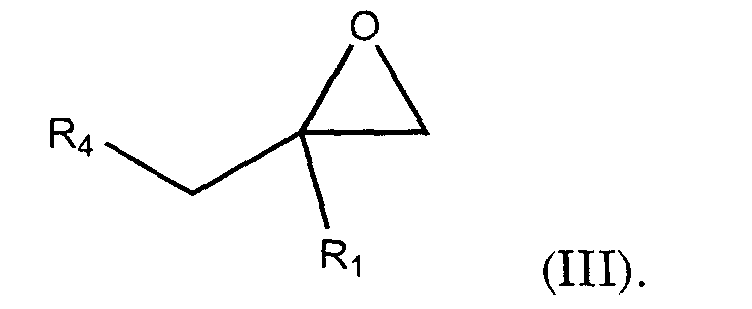
- a preferred class of epoxides that may be converted has the following formula: This class of epoxides may be substituted at the carbon atom bearing the R 1 group by a -CH 2 R 4 group, wherein the R 4 group may be independently chosen from Cl, Br and I.
- Preferred examples of this class of epoxides are epichlorohydrin, epibromohydrin and 2-(chloromethyl)-2-methyloxirane. It has been found that during conversion to an alcohol, particularly when azide is used as the nucleophile, the enantionmer of the epoxide which is not converted is racemized. Due to this racemization a total conversion of epichlorohydrin is achieved and the product is obtained in high optically purity.
- the epoxide is a stryene oxide, which may or may not be substituted.
- the product obtained will be a mixture of two compounds having their alcohol functionality on their carbon atom ⁇ or ⁇ to the aromatic ring.
- the non-catalyzed chemical ring opening of styrene oxide by sodium azide will yield a mixture of regio-isomers with the alcohol functionality on the ⁇ and on the ⁇ -position in a molar ratio of 2:98 ( ⁇ : ⁇ ).
- the other regio-isomer i.e. wherein the alcohol functionality is present at the carbon atom ⁇ to the aromatic ring.
- the carbon atom ⁇ to the aromatic ring is the carbon atom within the epoxide ring which bears the aromatic ring substitutent.
- this regiospecificity is a great advantage of the invention.
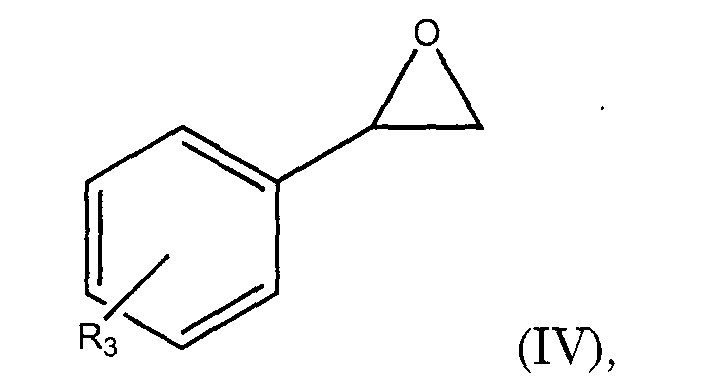
- the epoxide has the formula wherein R 1 is an ortho-, meta-, or para-substituent chosen from the group of -NO 2 , -NH 2 , -CH 3 , -OCH 3 , -OCH 2 CH 3 , -OH, -F, -Cl, -Br, -I, -COOH and -CN. It has been found that the regiospecificity is particularly high for the conversion of these epoxides.
- the epoxide can be present in solubilized form in a concentration of 1 to 300 mM or as a second solid or liquid phase in concentration up to 300 mM in the reaction medium.
- the epoxide itself can be the second phase or it can be dissolved in a second organic phase. This can be done by dissolving the epoxide in an organic solvent which is immiscible with water, such as hexane or octane. The obtained solution is then brought into contact with the aqueous phase containing the enzyme and the two phases are vigorously mixed.
- the use of such a second phase has the advantage that the separation of the epoxide and the alcohol after the reaction can be simplified.
- the alcohol is expected to remain solubilized in the aqueous phase and the epoxide can typically be recovered from the organic phase.
- the epoxide is prior to its conversion brought in an aqueous medium in which it will preferably be present in an amount of 0.01 to 20 wt.%, based on the combined weights of the aqueous medium and the epoxide.
- nucleophile chosen to convert the epoxide in a process according to the invention will normally depend on the nature of the objective product.
- Suitable nucleophiles include of I-, Cl-, Br-, CN-, N3-, NO 2 -, NO 3 -, SCN-, OCN-, OR'-, NHR'- and SR'-, wherein R' is chosen from hydrogen, alkyl groups, aryl groups, aralkyl, alkenyl and cycloalkyl groups.
- substituted alkyl groups, aryl groups, aralkyl, alkenyl and cycloalkyl groups are also encompassed.
- R' When R' is an alkyl group, it preferably contains from 1 to 15, more preferably from 1 to 6 carbon atoms. When R' is an aryl group, it preferably is a phenyl or a naphtyl group. Preferred aralkyl groups which may be represented by R' include benzyl, 2-phenylethyl and 1-naphtylmethyl groups. Preferred alkenyl groups from which R' may be chosen are vinyl and allyl groups. When R' is a cycloalkyl group, it may suitably have from 3 to 12 carbon atoms. Preferred cycloalkyl groups are cyclopropyl, cyclobutyl, cyclopentyl, and cyclohexyl.
- the nucleophile is NO 2 - or N 3 -.
- the nucleophile may be employed in the form of a salt, for instance as a sodium or potassium salt.
- An excess of the nucleophilic reagent may lead to the non-enantioselective formation of the unwanted regio-isomer of the objective product. This may be circumvented by either performing the reaction on a shorter time-scale, performing the reaction at a lower temperature, employing a larger quantity of the enzyme, or by adding the nucleophilic reagent to the reaction mixture in a slower fashion.
- the nucelophile will be used in an amount of 0.6 to 100 molar equivalents with respect to the epoxide, depending on the position of the equilibrium between the epoxide and the alcohol.
- the nucelophile will be used in an amount of 0.6 to 100 molar equivalents with respect to the epoxide, depending on the position of the equilibrium between the epoxide and the alcohol.
- 0.6 molar equivalents suffice to achieve a substantially completed kinetic resolution since the position of the equilibrium favors the formation of the alcohol over the epoxide.
- sodium chloride as the nucleophile, an excess (50-100 molar equivalents) are preferably added to favor the formation of the alcohol.
- a buffered aqueous medium to which the epoxide is solubilized or is added as a second solid or liquid phase.
- Suitable buffers are for example.Tris-buffer (2 amino-2-(hydroxymethyl)-1,3 propanediol adjusted to a desired pH with H 2 SO 4 ), glycine-buffer (glycine adjusted to a desired pH by NaOH), phosphates buffer or MOPS buffer (4-morpholinepropanesulfonic acid adjusted to a desired pH with NaOH). These are preferably used a concentration of 50 to 250 mM.
- co-solvents like dimethyl sulfoxide, tetrahydrofuran or acetonitrile may be added to increase the solubility of the epoxide.
- Co-solvents may be added in amounts of 5 vol.% up to 50 vol.%, based on the amount of the buffered aqueous medium. An increasing percentage of co-solvent may favor the solubility of the epoxide.
- a disadvantageous inactivation of the enzyme can be observed at higher co-solvent concentrations.
- the pH of the medium preferably lies between 3 and 12, more preferably between 6.5 and 8.
- the temperature at which the reaction is carried out preferably lies between 0 to 60°C, more preferably between 20 and 30°C.
- the enzyme used is a halohydrin dehalogenase.
- a highly suitable halohydrin dehalogenase is a polypeptide having an amino acid sequence as shown in SEQ ID NO 2 or a homologue or functional derivative thereof.
- the term 'a homologue' refers to a sequence which is at least for 90% homologous, and preferably at least 90% identical, to the sequence of which it is a homologue.
- a functional derivative is a polypeptide which has undergone a minor derivatization or modification substantially without adversely affecting the enzymatic and catalytic properties of the polypeptide.
- Suitable examples of enzymes that can be used are halohydrin dehalogenase of Agrobacterium radiobacter (CBS 750.97), Mycobacterium sp. strain GP1 (Poelarends et al J. Bacteriol., 1999, 181, 2050) or Arthrobacter sp. strain AD2 (van den Wijngaard et al., J. Bacteriol., 1991, 124 ).
- Particular good results have been obtained using a halohydrin dehalogenase derived from Agrobacterium radiobacter strain AD1 deposited at the Centraal Bureau voor de Schimmelcultures on May 7, 1997 under deposit number CBS 750.97.
- This enzyme has been described extensively in the international patent application 98/53081 for its epoxide hydrolase activity.
- the enzyme can be added as whole cells, in lyophilized form as a crude extract or as a purified enzyme.
- the enzyme can be immobilized on a macroscopic carriers such as cellulose, sephadex or dextran.
- the enzyme can also be applied as crosslinked enzyme crystals (CLEC's) or entrapped in reversed micelles.
- CLEC's crosslinked enzyme crystals
- an enzyme solution is mixed with a buffer solution containing a nucleophile and an epoxide.
- additives such as mercapto ethanol or glycerol can be added to the reaction mixture to stabilize the enzyme.
- the whole reaction mixture can be extracted using organic solvents such as diethylether, ethyl acetate, dichloromethane or toluene.
- organic solvents such as diethylether, ethyl acetate, dichloromethane or toluene.
- the epoxide and the alcohol can subsequently be separated by techniques such as crystallisation (in the case of solid substances), fraction distillation or flash chromatography on silica 60 H using for example heptane/ethylacetate(ratio 7:3) as eluent.
- the enantiomeric composition of the epoxides and alcohols can be determined using chiral gaschromatography or chiral HPLC.
- a gene library of A . radiobacter AD1 was constructed in the cosmid vector pLAFR3. After in vitro packaging, the library was transduced to E. coli HB101. Transconjugants were screened for dehalogenase activity with 1,3-dichloro-2-propanol.
- the halohydrin dehalogenase gene, designated hheC was sequenced and subsequently amplified by PCR and cloned behind the T7 promotor of the expression vector pGEF + , yielding pGEFhheC.
- the halohydrin dehalogenase gene was overexpressed up to 30% of soluble protein by introduction of pGEFhheC in E. coli BL21(DE3).
- HheC has the sequence shown as SEQ ID NO 1.
- Plasmid DNA was transformed by electroporation to competent E. coli BL21 (DE3) cells, which were then plated out on LB medium containing tetracycline and incubated overnight at 30 °C.
- a preculture was started by inoculating 100 ml of LB medium containing tetracycline with the transformants from a plate to a initial OD 600 of 0.1. The culture was incubated at 30 °C until an OD 600 of 1-2 was reached, diluted in 11 of LB medium containing tetracycline and incubated overnight at 20 °C. The cells were subsequently centrifuged, washed and resuspended. A crude extract was prepared by ultrasonic disruption and centrifugation of the cells. This was followed by a purification step with a Resource Q column yielding the enzyme having SEQ ID NO 2.
Landscapes
- Chemical & Material Sciences (AREA)
- Organic Chemistry (AREA)
- Zoology (AREA)
- Life Sciences & Earth Sciences (AREA)
- Engineering & Computer Science (AREA)
- Wood Science & Technology (AREA)
- Biotechnology (AREA)
- Microbiology (AREA)
- General Chemical & Material Sciences (AREA)
- Chemical Kinetics & Catalysis (AREA)
- Analytical Chemistry (AREA)
- Health & Medical Sciences (AREA)
- Biochemistry (AREA)
- Bioinformatics & Cheminformatics (AREA)
- General Engineering & Computer Science (AREA)
- General Health & Medical Sciences (AREA)
- Genetics & Genomics (AREA)
- Preparation Of Compounds By Using Micro-Organisms (AREA)
- Enzymes And Modification Thereof (AREA)
Abstract
The invention relates to a process for converting an epoxide to an
alcohol. The process according to the invention is enzymatically catalyzed and
highly enantioselective and regiospecific.
Description
- The invention relates to a process for converting an epoxide to an alcohol. More specifically, the invention relates to an enzymatic process for converting an epoxide to an alcohol by nucleophilic substitution.
- A reaction wherein an epoxide is converted to an alcohol by nucleophilic substitution may be depicted as follows:In this reaction scheme, R may represent a wide range of groups, such as various substituted or unsubstituted alkyl groups, whereas X represents a nucleophile. The product of this conversion may be a very useful building block in the preparation of various fine chemicals, such as certain pharmaceutical products. The reaction may produce two different enantiomers. As the products are often used for applications wherein enantiomeric purity is of great importance, many attempts to find enantioselective ways of carrying out this reaction have been reported.

- An example of such a reaction is the enantioselective ring opening of an epoxide by an azide anion (N3-), which may be referred to as an azidolysis. The product of the reaction, an optically active azido alcohol is a precursor for biologically active pharmaceuticals such as amino alcohols. A highly enantioselective azidolysis of meso-epoxides and various terminal epoxides using chiral salen complexes has been described by the group of Jacobsen (Martinez et al., J. Am. Chem. Soc., 1995, 117, 5897; Farrow et al., J. Am. Chem. Soc., 1996, 118, 7420). Preparations of optically active aromatic azidoalcohols through a biocatalyzed reaction have also been reported: e.g. by reduction of an α-azidoketone (Bese et al., J. Org. Chem., 1994, 59, 8288), lipase catalyzed resolution (Foelsche et al, J. Org. Chem., 1990, 55, 1749), or monohydroxylation (Boyd et al., Tetrahedron: Asymmetry, 1996, 7, 1559).
- The reverse reaction, i.e. the formation of an epoxide from e.g. a haloalcohol, using an enzymatically catalyzed reaction, has been given much attention in the literature, particular using halohydrin dehalogenases. All these reactions involved aliphatic halohydrins, such as 1,3-dihalopropanol, 2,3-dihalopropanol, and 3-halo-1,2-propanediol, to produce optically pure halohydrins and epoxides (Kasai et al., J. Mol. Cat:B, 1998, 4, 237). Generally, a halohydrin dehalogenase (also referred to as halohydrin hydrogen-halide-lyase, halohydrin epoxidase or haloalcohol dehalogenase) catalyzes the ring-closure of a halohydrin to an epoxide. For a limited number of halohydrins, it has been described that a halohydrin dehalogenase may also catalyze the reverse reaction. The equilibrium of both reactions may be depicted as follows:wherein R may be chosen from a wide range of groups, such as various substituted or unsubstituted aryl or alkyl groups, and wherein X represents a halogen such as bromide, chloride or iodide.

- One example using a halohydrin dehalogenase and a nucleophile different from a halide has been described by Nakamura et al., Tetrahedron, 1994, 50, 11821. In this reaction, a halohydrin dehalogenase from Corynebacterium sp. Strain N-1074 was used to open an epoxide with cyanide to yield a β-hydroxy nitrile.
- Asymmetric ring opening of an epoxide by azide has been described using a crude enzyme preparation from a Rhodococcus sp. (see Faber et al., Tetrahedron Letters, 1994, 35, 81). The enzyme responsible for the reaction is suggested to be an epoxide hydrolase rather than a halohydrin dehalogenase.
- When compared to chemically catalyzed reactions, reactions catalyzed by use of enzymes involve the use of less (organic) solvents, or other reagents that might be environmentally suspect such as metal complexes and the like. For example, catalytic chemical azidolysis of epoxides is typically performed using environmentally unfriendly metals, such as chromium, cobalt or titanium complexes, in organic solvents, such as dichloromethane, acetonitrile or dimethylformamide. Furthermore, enzymes are often more selective and more efficient catalysts than their chemical counterparts designed by man. For a more complete overview of the advantages of enzymatic catalysis, reference is made to Faber, Biotransformations in Organic Chemistry, 3rd ed., Springer-Verlag, New York, 1997.
- In the fine chemical industry, optically pure halohydrins and epoxides are used as building blocks for various pharmaceutical products. Halohydrins are often considered as direct precursors for epoxides. Ring closure of an optically pure halohydrin generally leads to an optically pure epoxide. Recently, a kinetic resolution of a halohydrin containing an aromatic group, such as 2-chloro-1-phenylethanol, with a halohydrin dehalogenase from Agrobacterium radiobacter AD1 has been described (Lutje Spelberg et al., Tetrahedron: Asymmetry, 1999, 10, 2863).
- The present invention provides a process wherein, optionally substituted, epoxides may be converted to alcohols in a highly enantioselective manner. It has been found that the desired enantioselectivity may be accomplished by enzymatically converting an, optionally substituted, epoxide of the formulawherein R1 is hydrogen or an, optionally substituted, aromatic or aliphatic group, to a mixture of an optically enriched epoxide of the formula (I) and an optically enriched alcohol of the formula
 wherein R2 is chosen from the group of I, Cl, Br, CN, N3, NO2, NO3, SCN, OCN, OR', NHR' and SR', wherein R' is chosen from hydrogen, alkyl groups, aryl groups, aralkyl, alkenyl and cycloalkyl groups, which process comprises reacting the epoxide with an anionic nucleophile (R2-) in the presence of a halohydrin dehalogenase.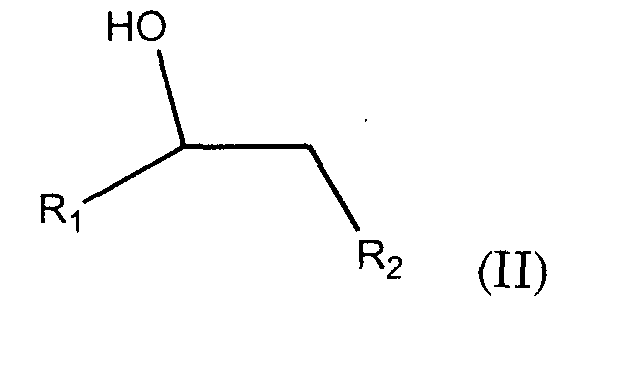
- Surprisingly, it has been found that by converting an epoxide according to the invention a very high enantiomeric excess may be obtained. Even when the starting material is a racemic mixture of both enantiomers of the epoxide, mainly, if not only, one of the possible enantiomers of the product is obtained. Accordingly, the invention enables not only a very enantioselective manner of producing an alcohol, but also an enantioselective kinetic resolution of the epoxide. For instance, in case of a reaction of (substituted) styrene oxides with an azide, the (R)-enantiomer of the azidoalcohol is mainly formed, leaving behind the non-reacted (S)-enantiomer of the epoxide.
- Moreover, the present process is highly regiospecific. Upon ring-opening of the epoxide, two different products may be formed: one in which the -OH group is present at the carbon atom adjacent to the R1 group, and one in which the -OH group is present at the carbon atom on the distal end from the R1 group. In a process according to the invention, mainly, if not only, the isomer with the -OH group at the carbon atom adjacent to the R1 is formed.
- The product of the reaction, the alcohol with the formula (II), is a building block for a wide variety of pharmaceutical compounds. For example, 2-azido-1-phenylethanol, which may be formed by the enzymatic reaction of sodium azide and styrene oxide, can be converted to biologically active 2-aminophenyl ethanol by catalytic dehydrogenation.
- In principle, any kind of epoxide may be converted in accordance with the invention. As mentioned, the R1 group is hydrogen or an, optionally substituted, aromatic or aliphatic group, which preferably contains from 1 to 20 carbon atoms. Preferably, R1 is chosen from the group of optionally substituted alkyl, aryl, aralkyl, alkenyl, cycloalkyl, and alkoxy groups.
- Preferred examples of the alkyl group represented by R1 include straight or branched alkyl groups having 1 to 15 carbon atoms such as a methyl group, ethyl group, propyl group, isopropyl group, butyl group, pentyl group, hexyl group, heptyl group or dodecyl group. Representative epoxides from this group include 1,2-epoxy propane, 1,2-epoxy-3-metylpentane and 1,2-epoxy hexane. The alkyl group can have substituents such as a halogen atom, leading to for example epichlorohydrin, epifluorohydrin or epibromohydrin. The alkyl group can have a substituent such as an hydroxyl group, for example glycidol. The alkyl group can have a unsubstituted or substituted amino group such as amino, methylamino or dimethylamino. Examples of aryls group represented by R1 include phenyl and naphtyl groups. Styrene oxide or styrene oxides having a substituent or multiple substituents on the aromatic ring are examples of the phenyl group. Representative examples of epoxides are styrene oxide, 4-nitrostyrene oxide, 2-nitrostyrene oxide, 3- nitrostyrene oxide, 3-chlorostyrene oxide, 4 chlorostyrene oxide or 2,3-dichlorostyrene oxide. Examples of aralkyl groups represented by R1 include a benzyl group, 2-phenylethyl group and a 1-naphtylmethyl group. Examples of alkenyl groups represented by R1 include a vinyl group, allyl group and 5-hexenyl group. Examples of cycloalkyl groups represented by R1 include a cyclopropyl group, cyclobutyl group, cyclopentyl group and cyclohexyl group. Examples of alkoxy groups represented by R1 include a phenoxy group, 4-nitrophenoxy group, napthyloxy group, methoxy group, hexyloxy group and vinyloxy group.
- A preferred class of epoxides that may be converted has the following formula:This class of epoxides may be substituted at the carbon atom bearing the R1 group by a -CH2R4 group, wherein the R4 group may be independently chosen from Cl, Br and I. Preferred examples of this class of epoxides are epichlorohydrin, epibromohydrin and 2-(chloromethyl)-2-methyloxirane. It has been found that during conversion to an alcohol, particularly when azide is used as the nucleophile, the enantionmer of the epoxide which is not converted is racemized. Due to this racemization a total conversion of epichlorohydrin is achieved and the product is obtained in high optically purity. Normally, in a kinetic resolution the maximum yield of the product is limited to 50%, but due to the racemization a yield of higher than 50% can be achieved. Another advantage of this process, besides the increased yield, is a much simpler product recovery since a separation of the product from the remaining substrate is not necessary.
- In another preferred embodiment, the epoxide is a stryene oxide, which may or may not be substituted. When this conversion is carried out chemically, i.e. in the absence of a halohydrin dehalogenase according to the invention, the product obtained will be a mixture of two compounds having their alcohol functionality on their carbon atom α or β to the aromatic ring. For example, the non-catalyzed chemical ring opening of styrene oxide by sodium azide will yield a mixture of regio-isomers with the alcohol functionality on the α and on the β-position in a molar ratio of 2:98 (α:β). Surprisingly, when a styrene oxide is converted in accordance with the invention, the other regio-isomer (i.e. wherein the alcohol functionality is present at the carbon atom α to the aromatic ring. The carbon atom α to the aromatic ring is the carbon atom within the epoxide ring which bears the aromatic ring substitutent.) is obtained selectively. As separation of the two possible regio-isomers is very difficult, this regiospecificity is a great advantage of the invention.
- Particularly preferred is an embodiment wherein the epoxide has the formulawherein R1 is an ortho-, meta-, or para-substituent chosen from the group of -NO2, -NH2, -CH3, -OCH3, -OCH2CH3, -OH, -F, -Cl, -Br, -I, -COOH and -CN. It has been found that the regiospecificity is particularly high for the conversion of these epoxides.

- The epoxide can be present in solubilized form in a concentration of 1 to 300 mM or as a second solid or liquid phase in concentration up to 300 mM in the reaction medium. The epoxide itself can be the second phase or it can be dissolved in a second organic phase. This can be done by dissolving the epoxide in an organic solvent which is immiscible with water, such as hexane or octane. The obtained solution is then brought into contact with the aqueous phase containing the enzyme and the two phases are vigorously mixed. The use of such a second phase has the advantage that the separation of the epoxide and the alcohol after the reaction can be simplified. Generally, the alcohol is expected to remain solubilized in the aqueous phase and the epoxide can typically be recovered from the organic phase. Preferably, the epoxide is prior to its conversion brought in an aqueous medium in which it will preferably be present in an amount of 0.01 to 20 wt.%, based on the combined weights of the aqueous medium and the epoxide.
- The nature of the nucleophile chosen to convert the epoxide in a process according to the invention will normally depend on the nature of the objective product. Suitable nucleophiles include of I-, Cl-, Br-, CN-, N3-, NO2-, NO3-, SCN-, OCN-, OR'-, NHR'- and SR'-, wherein R' is chosen from hydrogen, alkyl groups, aryl groups, aralkyl, alkenyl and cycloalkyl groups. Of course, substituted alkyl groups, aryl groups, aralkyl, alkenyl and cycloalkyl groups are also encompassed. When R' is an alkyl group, it preferably contains from 1 to 15, more preferably from 1 to 6 carbon atoms. When R' is an aryl group, it preferably is a phenyl or a naphtyl group. Preferred aralkyl groups which may be represented by R' include benzyl, 2-phenylethyl and 1-naphtylmethyl groups. Preferred alkenyl groups from which R' may be chosen are vinyl and allyl groups. When R' is a cycloalkyl group, it may suitably have from 3 to 12 carbon atoms. Preferred cycloalkyl groups are cyclopropyl, cyclobutyl, cyclopentyl, and cyclohexyl.
- Preferably, particularly when the epoxide is a styrene oxide or a substituted styrene oxide, the nucleophile is NO2- or N3-. The nucleophile may be employed in the form of a salt, for instance as a sodium or potassium salt. An excess of the nucleophilic reagent may lead to the non-enantioselective formation of the unwanted regio-isomer of the objective product. This may be circumvented by either performing the reaction on a shorter time-scale, performing the reaction at a lower temperature, employing a larger quantity of the enzyme, or by adding the nucleophilic reagent to the reaction mixture in a slower fashion. Typically, the nucelophile will be used in an amount of 0.6 to 100 molar equivalents with respect to the epoxide, depending on the position of the equilibrium between the epoxide and the alcohol. For example, in the case of sodium azide as the nucleophile 0.6 molar equivalents suffice to achieve a substantially completed kinetic resolution since the position of the equilibrium favors the formation of the alcohol over the epoxide. In the case of sodium chloride as the nucleophile, an excess (50-100 molar equivalents) are preferably added to favor the formation of the alcohol.
- It is preferred that the reaction is carried out in a buffered aqueous medium to which the epoxide is solubilized or is added as a second solid or liquid phase. Suitable buffers are for example.Tris-buffer (2 amino-2-(hydroxymethyl)-1,3 propanediol adjusted to a desired pH with H2SO4), glycine-buffer (glycine adjusted to a desired pH by NaOH), phosphates buffer or MOPS buffer (4-morpholinepropanesulfonic acid adjusted to a desired pH with NaOH). These are preferably used a concentration of 50 to 250 mM.
- Optionally, co-solvents like dimethyl sulfoxide, tetrahydrofuran or acetonitrile may be added to increase the solubility of the epoxide. Co-solvents may be added in amounts of 5 vol.% up to 50 vol.%, based on the amount of the buffered aqueous medium. An increasing percentage of co-solvent may favor the solubility of the epoxide. However, a disadvantageous inactivation of the enzyme can be observed at higher co-solvent concentrations.
- The pH of the medium preferably lies between 3 and 12, more preferably between 6.5 and 8. The temperature at which the reaction is carried out preferably lies between 0 to 60°C, more preferably between 20 and 30°C.
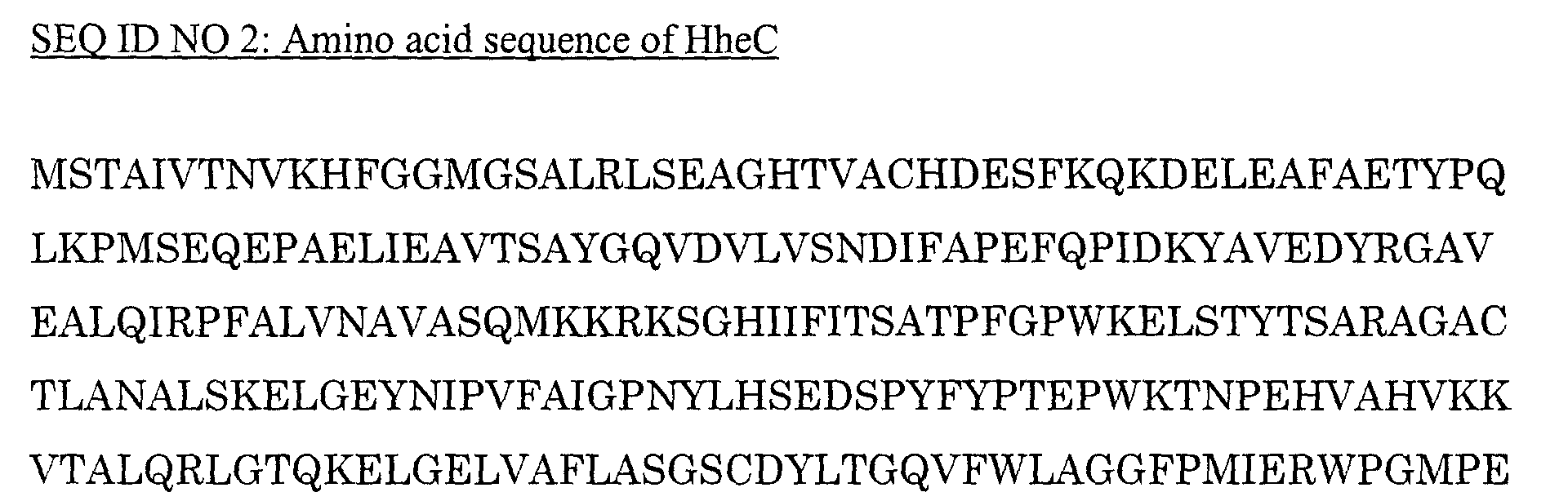
- The enzyme used is a halohydrin dehalogenase. A highly suitable halohydrin dehalogenase is a polypeptide having an amino acid sequence as shown in SEQ ID NO 2 or a homologue or functional derivative thereof. In the context of the invention, the term 'a homologue' refers to a sequence which is at least for 90% homologous, and preferably at least 90% identical, to the sequence of which it is a homologue. A functional derivative is a polypeptide which has undergone a minor derivatization or modification substantially without adversely affecting the enzymatic and catalytic properties of the polypeptide. Suitable examples of enzymes that can be used are halohydrin dehalogenase of Agrobacterium radiobacter (CBS 750.97), Mycobacterium sp. strain GP1 (Poelarends et al J. Bacteriol., 1999, 181, 2050) or Arthrobacter sp. strain AD2 (van den Wijngaard et al., J. Bacteriol., 1991, 124 ). Particular good results have been obtained using a halohydrin dehalogenase derived from Agrobacterium radiobacter strain AD1 deposited at the Centraal Bureau voor de Schimmelcultures on May 7, 1997 under deposit number CBS 750.97. This enzyme has been described extensively in the international patent application 98/53081 for its epoxide hydrolase activity.
- The enzyme can be added as whole cells, in lyophilized form as a crude extract or as a purified enzyme. The enzyme can be immobilized on a macroscopic carriers such as cellulose, sephadex or dextran. The enzyme can also be applied as crosslinked enzyme crystals (CLEC's) or entrapped in reversed micelles. In a typical experiment, an enzyme solution is mixed with a buffer solution containing a nucleophile and an epoxide. Optionally, additives such as mercapto ethanol or glycerol can be added to the reaction mixture to stabilize the enzyme.
- After the reaction the whole reaction mixture can be extracted using organic solvents such as diethylether, ethyl acetate, dichloromethane or toluene. The epoxide and the alcohol can subsequently be separated by techniques such as crystallisation (in the case of solid substances), fraction distillation or flash chromatography on silica 60 H using for example heptane/ethylacetate(ratio 7:3) as eluent. The enantiomeric composition of the epoxides and alcohols can be determined using chiral gaschromatography or chiral HPLC.
- The invention will now be further elucidated by the following, non-restrictive examples.
- A gene library of A. radiobacter AD1 was constructed in the cosmid vector pLAFR3. After in vitro packaging, the library was transduced to E. coli HB101. Transconjugants were screened for dehalogenase activity with 1,3-dichloro-2-propanol. The halohydrin dehalogenase gene, designated hheC, was sequenced and subsequently amplified by PCR and cloned behind the T7 promotor of the expression vector pGEF+, yielding pGEFhheC. The halohydrin dehalogenase gene was overexpressed up to 30% of soluble protein by introduction of pGEFhheC in E. coli BL21(DE3). HheC has the sequence shown as SEQ ID NO 1.
- For the described kinetic resolutions purified enzyme was used. Plasmid DNA was transformed by electroporation to competent E. coli BL21 (DE3) cells, which were then plated out on LB medium containing tetracycline and incubated overnight at 30 °C. A preculture was started by inoculating 100 ml of LB medium containing tetracycline with the transformants from a plate to a initial OD600 of 0.1. The culture was incubated at 30 °C until an OD600 of 1-2 was reached, diluted in 11 of LB medium containing tetracycline and incubated overnight at 20 °C. The cells were subsequently centrifuged, washed and resuspended. A crude extract was prepared by ultrasonic disruption and centrifugation of the cells. This was followed by a purification step with a Resource Q column yielding the enzyme having SEQ ID NO 2.
- The above procedure is analogous to a procedure which has been described in more detail in the international patent application 98/53081, where the enzyme that was prepared was an epoxide hydrolase. The description of the recombinant preparation of the enzyme of said international patent application is to be considered incorporated herein by reference.
- To 15 ml of Tris-SO4 buffer (50 mM, pH = 7.3) containing 2 mM of para-nitro styrene oxide and 10 mM of NaN3, 2.8 mg of purified enzyme, obtained according to example 1, was added. The reaction was monitored by periodically taking 200 µl samples and extracting them with 2 ml of diethylether. The reaction was stopped when an e.e. of higher than 99% of the remaining enantiomer was reached and the solution was twice extracted with diethylether. The organic phase was analysed by chiral HPLC using a chiralpak AS column from Daicel. The remaining (S)-para-nitro styrene oxide was obtained with an e.e.>99% and the product (R)-2-azido-1-(para-nitro-phenyl)-ethanol with an e.e. of 94%. The corresponding E-value was calculated to be higher than 200 from the e.e.'s of the epoxide and the azido alcohol (Straathof et al., Enzyme Microb. Technol. 1997, 21, 559). The other regio-isomer 2-azido-2-(para-nitro-phenyl)-ethanol was also formed due to a chemical side reaction in a ratio of 1:12 compared to (R)-2-azido-1-(para-nitro-phenyl)-ethanol.
- To 1 ml of Tris-SO4 buffer (50 mM, pH = 7.3) containing 0.25 mM of para-nitro styrene oxide and 0.5 mM of NaN3, 0.7 mg of purified enzyme, obtained according to example 1, was added. The reaction was stopped after 15 min and the solution was extracted with diethylether. The organic phase was analysed by chiral HPLC. The remaining (S)-para-nitro styrene oxide was obtained with an e.e.>99% and the product (R)-2-azido-1-(para-nitro-phenyl)-ethanol with an e.e. of 96%. The other regio-isomer 2-azido-2-(para-nitro-phenyl)-ethanol was formed in a ratio of 1:217 compared to (R)-2-azido-1-(para-nitro-phenyl)-ethanol. From this we concluded that the enzymatic azidolysis is almost absolutely regioselective (β selectivity > 99%). The observed lower regioselectivity during a kinetic resolution on a longer time scale was due to the unwanted chemical side reaction.
- To 60 ml of MOPS buffer (50 mM, pH = 7.0), o.47 gram (3.2 mmol) of racemic para-nitro styrene oxide was added and the suspension was stirred for 60 min. The halohydrin dehalogenase, obtained as described in example 1, (29 mg in 6 ml buffer) was added. A prepared stock solution of 0.12 gram (1.6 mmol) in 5 ml MOPS buffer was slowly added over a period of 24 hours. The reaction was stopped and the suspension was three times extracted with diethylether. After separating, the organic phase was dried with MgSO4, and removed by rotary evaporator yielding an orange oil. This mixture was redissolved in diethylether and the composition and e.e. of the products were determined by chiral HPLC. The mixture mainly consisted of (S)-para-nitro styrene oxide in 46% yield (98% e.e.) and (R)-2-azido-1-(para-nitrophenyl)ethanol in 47% yield (97% e.e.). The chemical side product 2-azido-2-(para-nitrophenyl)ethanol was formed to a total of 4% of the reaction mixture. The product of chemical hydrolysis of the epoxide, para-nitrophenyl ethanediol was formed in 3%. All the mentioned yields are calculated yields. Flash chromatography on silica 60 H using heptane/ethylacetate (ratio 7:3) as eluent yielded pure epoxide and azido alcohols. The NMR data were identical with synthesized racemic reference compounds.
- To 20 ml of Tris-SO4 buffer (50 mM, pH = 7.3) containing 2 mM of para-chlorostyrene oxide and 1.2 mM of NaN3, 1.0 mg of purified enzyme, obtained as described in example 1, was added. At 55% conversion, reaction was stopped and the solution was extracted with diethylether. The organic phase was analysed by chiral GC. The remaining (S)-para-chloro styrene oxide was obtained with an e.e. of higher than 99% and (R)-2-azido-1-(para-chloro-phenyl)-ethanol with an e.e. of 98%
- To 20 ml of Tris-SO4 buffer (50 mM, pH = 7.3) containing 2 mM of para-chlorostyrene oxide and 1.2 mM of NaNO2, 1.0 mg of purified enzyme, obtained as described in example 1, was added. At 58% conversion, reaction was stopped and the solution was extracted with diethylether. The organic phase was analysed by chiral GC. The remaining (S)-para-chloro styrene oxide was obtained with an e.e. of higher than 99%.
- To 20 ml of Tris-SO4 buffer (50 mM, pH = 7.3) containing 20 mM of epichlorohydrin and 20 mM of NaN3, 1.0 mg of purified enzyme was added. At 66% conversion, reaction was stopped and the solution was extracted with diethylether. The organic phase was analyzed by chiral GC. Besides the remaining epichlorohydrin, the mixture consisted of 1-azido-3-chloro-2-propanol in 92% e.e., 2-azidomethyl-oxirane in 92% e.e. and the non-chiral 1,3-dichloro-2-propanol.
- To 20 ml of Tris-SO4 buffer (50 mM, pH = 7.3) containing 20 mM of epichlorohydrin and 20 mM of NaN3, 1.0 mg of purified enzyme was added. At total conversion of epichlorohydrin, the reaction was stopped and the solution was extracted with diethylether. The organic phase was analysed by chiral GC. The product consisted of a mixture of 1-azido-3-chloro-2-propanol in 92% e.e. and 2-azidomethyl-oxirane in 92% e.e.. (Addition of a small amount of an NaOH gave 2-azidomethyl-oxirane as a single product in 92% e.e.)
-


Claims (21)
- A process for enzymatically converting an, optionally substituted, epoxide of the formulawherein RI is hydrogen or an, optionally substituted, aromatic or aliphatic group, to a mixture of an optically enriched epoxide of the formula (I) and an optically enriched alcohol of the formula
 wherein R2 is chosen from the group of I, Cl, Br, CN, N3, NO2, NO3, SCN, OCN, OR', NHR' and SR', wherein R' is chosen from hydrogen, alkyl groups, aryl groups, aralkyl, alkenyl and cycloalkyl groups, which process comprises reacting the epoxide with an anionic nucleophile (R2-) in the presence of a halohydrin dehalogenase.
- A process according to claim 1, wherein the optically enriched alcohol is recovered.
- A process according to claim 1, wherein the optically enriched epoxide is recovered.
- A process according to any of the preceding claims, wherein the halohydrin dehalogenase is a polypeptide having the amino acid sequence of SEQ ID NO2, or a homologue or functional derivative thereof.
- A process according to claim 4, wherein the homologue has an amino acid sequence which is for at least 90% homologues to the amino acid sequence of SEQ ID NO 2.
- A process according to claim 4 or 5, wherein the halohydrin dehalogenase is derived from Agrobacterium radiobacter (CBS 750.97), Arthrobacter sp. strain AD2 or Mycobacterium sp. strain GP1.
- A process according to any of the preceding claims, wherein the epoxide is converted from a mixture comprising both enantiomers of said epoxide.
- A process according to claim 7, wherein the mixture is a racemic mixture.
- A process according to any of the preceding claims, wherein R1 is chosen from the group of optionally substituted alkyl, aryl, aralkyl, alkenyl, cycloalkyl, and alkoxy groups.
- A process according to claim 9, wherein R1 comprises from 1 to 20 carbon atoms.
- A process according to claim 9 or 10 wherein R1 optionally comprises a substituent chosen from the group of amino groups, halogens, hydroxyl groups, cyano groups, azide groups, nitro groups, haloalkyl groups, acyl groups, alkoxy groups, phenoxy groups and carboxyl groups.
- A process according to any of the preceding claims, wherein the epoxide has the formulawherein R4 is chosen from Cl, Br and I.

- A process according claim 12, wherein the epoxide is epichlorohydrin, or epibromohydrin.
- A process according to claim 12 or 13, wherein the alcohol is obtained in a yield higher than 50%.
- A process according to any of the claims 1-11, wherein R1 is an, optionally substituted, aromatic group.
- A process according to claim 15, wherein the epoxide has the formula:wherein R3 is an ortho-, meta-, or para-substituent chosen from the group of -NO2, -NH2, -CH3, -OCH3, -OCH2CH3, -OH, -F, -Cl, -Br, -I, -COOH and -CN.
- A process according to claim 15 or 16, wherein the anionic nucleophile is N3-.
- A process according to any of the preceding claims, wherein the epoxide is reacted in the form of a solid, suspension, solution or dispersion.
- A process according to claim 18, wherein the epoxide is present in an aqueous medium in an amount of from 0.01 to 20 wt.%, based on the combined weights of the aqueous medium and the epoxide.
- A process according to any of the preceding claims, wherein the temperature is between 0 and 60°C.
- A process according to any of the preceding claims, wherein the pH is between 3 and 12.
Priority Applications (10)
| Application Number | Priority Date | Filing Date | Title |
|---|---|---|---|
| EP00201874A EP1158054A1 (en) | 2000-05-25 | 2000-05-25 | Enzymatic conversion of epoxides |
| AT01934641T ATE337408T1 (en) | 2000-05-25 | 2001-05-23 | ENZYMATIC CONVERSION OF EPOXIDES |
| DE60122505T DE60122505T3 (en) | 2000-05-25 | 2001-05-23 | ENZYMATIC IMPROVEMENT OF EPOXIDES |
| JP2001586592A JP2004504015A (en) | 2000-05-25 | 2001-05-23 | Enzymatic conversion of epoxides |
| AU2001260802A AU2001260802A1 (en) | 2000-05-25 | 2001-05-23 | Enzymatic conversion of epoxides |
| ES01934641T ES2271010T3 (en) | 2000-05-25 | 2001-05-23 | ENZYMATIC CONVERSION OF EPOXIDS. |
| EP01934641A EP1287155B2 (en) | 2000-05-25 | 2001-05-23 | Enzymatic conversion of epoxides |
| PCT/NL2001/000403 WO2001090397A1 (en) | 2000-05-25 | 2001-05-23 | Enzymatic conversion of epoxides |
| US10/302,788 US20030124693A1 (en) | 2000-05-25 | 2002-11-22 | Enzymatic conversion of epoxides |
| US11/833,933 US7695942B2 (en) | 2000-05-25 | 2007-08-03 | Enzymatic conversion of epoxides |
Applications Claiming Priority (1)
| Application Number | Priority Date | Filing Date | Title |
|---|---|---|---|
| EP00201874A EP1158054A1 (en) | 2000-05-25 | 2000-05-25 | Enzymatic conversion of epoxides |
Publications (1)
| Publication Number | Publication Date |
|---|---|
| EP1158054A1 true EP1158054A1 (en) | 2001-11-28 |
Family
ID=8171560
Family Applications (2)
| Application Number | Title | Priority Date | Filing Date |
|---|---|---|---|
| EP00201874A Withdrawn EP1158054A1 (en) | 2000-05-25 | 2000-05-25 | Enzymatic conversion of epoxides |
| EP01934641A Expired - Lifetime EP1287155B2 (en) | 2000-05-25 | 2001-05-23 | Enzymatic conversion of epoxides |
Family Applications After (1)
| Application Number | Title | Priority Date | Filing Date |
|---|---|---|---|
| EP01934641A Expired - Lifetime EP1287155B2 (en) | 2000-05-25 | 2001-05-23 | Enzymatic conversion of epoxides |
Country Status (8)
| Country | Link |
|---|---|
| US (2) | US20030124693A1 (en) |
| EP (2) | EP1158054A1 (en) |
| JP (1) | JP2004504015A (en) |
| AT (1) | ATE337408T1 (en) |
| AU (1) | AU2001260802A1 (en) |
| DE (1) | DE60122505T3 (en) |
| ES (1) | ES2271010T3 (en) |
| WO (1) | WO2001090397A1 (en) |
Cited By (6)
| Publication number | Priority date | Publication date | Assignee | Title |
|---|---|---|---|---|
| KR100651393B1 (en) | 2001-02-28 | 2006-11-28 | 에스케이 주식회사 | Method for preparing (R) -1-amino-2-propanol using hydrolase |
| EP1859057A4 (en) * | 2005-02-23 | 2009-08-19 | Codexis Inc | Improved halohydrin dehalogenases and related polynucleotides |
| US7824898B2 (en) | 2003-08-11 | 2010-11-02 | Codexis, Inc. | Halohydrin dehalogenases and related polynucleotides |
| US8187856B2 (en) | 2008-12-18 | 2012-05-29 | Codexis, Inc. | Recombinant halohydrin dehalogenase polypeptides |
| CN101437955B (en) * | 2006-03-03 | 2012-10-31 | 巴斯夫欧洲公司 | Process for the preparation of optically active 5-substituted 2-oxazolidinones from racemic epoxides and cyanate employing a halohydrin dehalogenase |
| CN104749273A (en) * | 2015-03-12 | 2015-07-01 | 浙江工业大学 | Method for detecting azide ions or cyanide ions in water |
Families Citing this family (8)
| Publication number | Priority date | Publication date | Assignee | Title |
|---|---|---|---|---|
| JP4578240B2 (en) * | 2002-08-09 | 2010-11-10 | コデクシス, インコーポレイテッド | Enzymatic process for the production of 4-substituted 3-hydroxybutyric acid derivatives |
| US7541171B2 (en) | 2003-08-11 | 2009-06-02 | Codexis, Inc. | Halohydrin dehalogenases and related polynucleotides |
| EP1660669A4 (en) | 2003-08-11 | 2008-10-01 | Codexis Inc | Enzymatic processes for the production of 4-substituted 3-hydroxybutyric acid derivatives and vicinal cyano, hydroxy substituted carboxylic acid esters |
| JP2008537477A (en) * | 2005-02-23 | 2008-09-18 | コデクシス, インコーポレイテッド | Improved halohydrin dehalogenase and related polynucleotides |
| ATE556141T1 (en) * | 2005-12-21 | 2012-05-15 | Basf Se | METHOD FOR PRODUCING AN OPTICALLY ENRICHED TERTIARY ALCOHOL |
| WO2007128469A1 (en) * | 2006-05-03 | 2007-11-15 | Dsm Ip Assets B.V. | Process for the preparation of enantiomerically enriched nitriles |
| WO2007137816A1 (en) * | 2006-05-30 | 2007-12-06 | Dsm Ip Assets B.V. | Process for the preparation of epoxide intermediates for pharmaceutical compounds such as statins |
| WO2012122333A1 (en) | 2011-03-08 | 2012-09-13 | Arizona Board Of Regents, A Body Corporate Of The State Of Arizona, Acting For And On Behalf Of Arizona State University | Microbial conversion of glucose to styrene and its derivatives |
Citations (1)
| Publication number | Priority date | Publication date | Assignee | Title |
|---|---|---|---|---|
| EP0879890A1 (en) * | 1997-05-21 | 1998-11-25 | Rijksuniversiteit te Groningen | Enantioselective epoxide hydrolases and genes encoding these |
Family Cites Families (3)
| Publication number | Priority date | Publication date | Assignee | Title |
|---|---|---|---|---|
| US5210031A (en) † | 1989-07-20 | 1993-05-11 | Nitto Chemical Industry Co., Ltd. | Process for the production of R(-)-4-halo-3-hydroxybutyronitrile |
| JP3073037B2 (en) † | 1991-03-04 | 2000-08-07 | 三菱レイヨン株式会社 | Recombinant plasmid having halohydrin epoxidase gene and microorganism transformed with the plasmid |
| JP3728045B2 (en) † | 1997-01-31 | 2005-12-21 | 三菱レイヨン株式会社 | A novel protein that catalyzes the conversion of halohydrin to optically active diols |
-
2000
- 2000-05-25 EP EP00201874A patent/EP1158054A1/en not_active Withdrawn
-
2001
- 2001-05-23 WO PCT/NL2001/000403 patent/WO2001090397A1/en not_active Ceased
- 2001-05-23 JP JP2001586592A patent/JP2004504015A/en active Pending
- 2001-05-23 DE DE60122505T patent/DE60122505T3/en not_active Expired - Lifetime
- 2001-05-23 EP EP01934641A patent/EP1287155B2/en not_active Expired - Lifetime
- 2001-05-23 ES ES01934641T patent/ES2271010T3/en not_active Expired - Lifetime
- 2001-05-23 AT AT01934641T patent/ATE337408T1/en not_active IP Right Cessation
- 2001-05-23 AU AU2001260802A patent/AU2001260802A1/en not_active Abandoned
-
2002
- 2002-11-22 US US10/302,788 patent/US20030124693A1/en not_active Abandoned
-
2007
- 2007-08-03 US US11/833,933 patent/US7695942B2/en not_active Expired - Fee Related
Patent Citations (1)
| Publication number | Priority date | Publication date | Assignee | Title |
|---|---|---|---|---|
| EP0879890A1 (en) * | 1997-05-21 | 1998-11-25 | Rijksuniversiteit te Groningen | Enantioselective epoxide hydrolases and genes encoding these |
Non-Patent Citations (7)
| Title |
|---|
| ARCHER I V J: "Epoxide Hydrolases as Asymmetric Catalysts", TETRAHEDRON,NL,ELSEVIER SCIENCE PUBLISHERS, AMSTERDAM, vol. 53, no. 46, 17 November 1997 (1997-11-17), pages 15617 - 15662, XP004106413, ISSN: 0040-4020 * |
| DATABASE SWALL [online] 1 November 1999 (1999-11-01), LEWIS, M. ET AL.: "Cloning and nucleotide sequence of the haloalcohol dehalogenase B gene from Agrobacterium tumefaciens", XP002152213, Database accession no. Q9WWB6 * |
| LUTJE SPELBERG J H ET AL: "A tandem enzyme reaction to produce optically active halohydrins, epoxides and diols", TETRAHEDRON: ASYMMETRY,NL,ELSEVIER SCIENCE PUBLISHERS, AMSTERDAM, vol. 10, no. 15, 30 July 1999 (1999-07-30), pages 2863 - 2870, XP004179141, ISSN: 0957-4166 * |
| NAOYA KASAI ET AL.: "Chiral C3 epoxides and halohydrins: their preparation and synthetic application", JOURNAL OF MOLECULAR CATALYSIS B: ENZYMATIC, vol. 4, 1998, pages 237 - 252, XP000961416 * |
| RICK RINK ET AL.: "Primary structure and catalytic mechanism of the epoxide hydrolase from Agrobacterium radiobacter AD1", JOURNAL OF BIOLOGICAL CHEMISTRY, vol. 272, no. 23, 6 June 1997 (1997-06-06), MD US, pages 14650 - 14657, XP002063249 * |
| SPELBERG J H L ET AL: "Enantioselectivity of a recombinant epoxide hydrolase from Agrobacterium radiobacter", TETRAHEDRON: ASYMMETRY,NL,ELSEVIER SCIENCE PUBLISHERS, AMSTERDAM, vol. 9, no. 3, 13 February 1998 (1998-02-13), pages 459 - 466, XP004131192, ISSN: 0957-4166 * |
| TETSUJI NAKAMURA ET AL.: "A new enzymatic synthesis of (R)-gamma-Chloro-beta-hydroxybutyronitrile", TETRAHEDRON., vol. 50, no. 41, 1994, ELSEVIER SCIENCE PUBLISHERS, AMSTERDAM., NL, pages 11821 - 11826, XP002152212, ISSN: 0040-4020 * |
Cited By (11)
| Publication number | Priority date | Publication date | Assignee | Title |
|---|---|---|---|---|
| KR100651393B1 (en) | 2001-02-28 | 2006-11-28 | 에스케이 주식회사 | Method for preparing (R) -1-amino-2-propanol using hydrolase |
| US7824898B2 (en) | 2003-08-11 | 2010-11-02 | Codexis, Inc. | Halohydrin dehalogenases and related polynucleotides |
| US8101395B2 (en) | 2003-08-11 | 2012-01-24 | Codexis, Inc. | Halohydrin dehalogenases and related polynucleotides |
| US8252554B2 (en) | 2003-08-11 | 2012-08-28 | Codexis, Inc. | Halohydrin dehalogenases and related polynucleotides |
| US8535910B2 (en) | 2003-08-11 | 2013-09-17 | Codexis, Inc. | Halohydrin dehalogenases and related polynucleotides |
| EP1859057A4 (en) * | 2005-02-23 | 2009-08-19 | Codexis Inc | Improved halohydrin dehalogenases and related polynucleotides |
| CN101437955B (en) * | 2006-03-03 | 2012-10-31 | 巴斯夫欧洲公司 | Process for the preparation of optically active 5-substituted 2-oxazolidinones from racemic epoxides and cyanate employing a halohydrin dehalogenase |
| US8187856B2 (en) | 2008-12-18 | 2012-05-29 | Codexis, Inc. | Recombinant halohydrin dehalogenase polypeptides |
| US8580555B2 (en) | 2008-12-18 | 2013-11-12 | Codexis, Inc. | Recombinant halohydrin dehalogenase polypeptides |
| CN104749273A (en) * | 2015-03-12 | 2015-07-01 | 浙江工业大学 | Method for detecting azide ions or cyanide ions in water |
| CN104749273B (en) * | 2015-03-12 | 2017-04-12 | 浙江工业大学 | Method for detecting azide ions or cyanide ions in water |
Also Published As
| Publication number | Publication date |
|---|---|
| DE60122505D1 (en) | 2006-10-05 |
| ES2271010T3 (en) | 2007-04-16 |
| US7695942B2 (en) | 2010-04-13 |
| AU2001260802A1 (en) | 2001-12-03 |
| EP1287155A1 (en) | 2003-03-05 |
| US20030124693A1 (en) | 2003-07-03 |
| WO2001090397A1 (en) | 2001-11-29 |
| ATE337408T1 (en) | 2006-09-15 |
| EP1287155B2 (en) | 2011-01-12 |
| EP1287155B1 (en) | 2006-08-23 |
| DE60122505T3 (en) | 2011-07-28 |
| DE60122505T2 (en) | 2007-05-03 |
| JP2004504015A (en) | 2004-02-12 |
| US20080220485A1 (en) | 2008-09-11 |
Similar Documents
| Publication | Publication Date | Title |
|---|---|---|
| US7695942B2 (en) | Enzymatic conversion of epoxides | |
| Elenkov et al. | Enantioselective ring opening of epoxides with cyanide catalysed by halohydrin dehalogenases: A new approach to non‐racemic β‐hydroxy nitriles | |
| Vongvilai et al. | Direct asymmetric dynamic kinetic resolution by combined lipase catalysis and nitroaldol (Henry) reaction | |
| Poessl et al. | Non‐racemic halohydrins via biocatalytic hydrogen‐transfer reduction of halo‐ketones and one‐pot cascade reaction to enantiopure epoxides | |
| Xue et al. | Heterologous overexpression of Pseudomonas umsongensis halohydrin dehalogenase in Escherichia coli and its application in epoxide asymmetric ring opening reactions | |
| Haak et al. | Synthesis of enantiopure chloroalcohols by enzymatic kinetic resolution | |
| EP1994162B1 (en) | Process for the preparation of optically active 5-substituted 2-oxazolidinones from racemic epoxides and cyanate employing a halohydrin dehalogenase | |
| WO2007128469A1 (en) | Process for the preparation of enantiomerically enriched nitriles | |
| Dokli et al. | Halohydrin dehalogenase-catalysed synthesis of fluorinated aromatic chiral building blocks | |
| EP1966385B1 (en) | A process for the production of an optically enriched tertiary alcohol | |
| WO2005073388A1 (en) | Processes for producing optically active 1-substituted 2-methylpyrrolidine and intermediate therefor | |
| JP4843813B2 (en) | Method for preparing R- or S-form α-substituted heterocyclic carboxylic acid and enantiomer of α-substituted heterocyclic carboxylic acid ester of the opposite mirror image using enzyme | |
| JP4843812B2 (en) | Method for optical resolution of racemic α-substituted heterocyclic carboxylic acids using enzymes | |
| US20050014818A1 (en) | Process for producing optically active chroman derivative and intermediate | |
| EP1581465A2 (en) | Biocatalytic preparation of enantiomerically enriched aminopentanenitrile | |
| WO2025017089A1 (en) | Process for the reduction of aromatic imines with novel imine reductases (ireds) | |
| US20260139283A1 (en) | Process for the reduction of aromatic imines with novel imine reductases (ireds) | |
| WO2005038036A1 (en) | Method for transforming epoxy carrier of trifluoromethyl groups |
Legal Events
| Date | Code | Title | Description |
|---|---|---|---|
| PUAI | Public reference made under article 153(3) epc to a published international application that has entered the european phase |
Free format text: ORIGINAL CODE: 0009012 |
|
| AK | Designated contracting states |
Kind code of ref document: A1 Designated state(s): AT BE CH CY DE DK ES FI FR GB GR IE IT LI LU MC NL PT SE Kind code of ref document: A1 Designated state(s): DE |
|
| AX | Request for extension of the european patent |
Free format text: AL;LT;LV;MK;RO;SI |
|
| AKX | Designation fees paid |
Free format text: DE |
|
| STAA | Information on the status of an ep patent application or granted ep patent |
Free format text: STATUS: THE APPLICATION IS DEEMED TO BE WITHDRAWN |
|
| 18D | Application deemed to be withdrawn |
Effective date: 20020529 |