EP1157331B1 - Moniker method, apparatus, and article of manufacture - Google Patents
Moniker method, apparatus, and article of manufacture Download PDFInfo
- Publication number
- EP1157331B1 EP1157331B1 EP00911893A EP00911893A EP1157331B1 EP 1157331 B1 EP1157331 B1 EP 1157331B1 EP 00911893 A EP00911893 A EP 00911893A EP 00911893 A EP00911893 A EP 00911893A EP 1157331 B1 EP1157331 B1 EP 1157331B1
- Authority
- EP
- European Patent Office
- Prior art keywords
- specific instance
- moniker
- operating system
- programmable logic
- server
- Prior art date
- Legal status (The legal status is an assumption and is not a legal conclusion. Google has not performed a legal analysis and makes no representation as to the accuracy of the status listed.)
- Expired - Lifetime
Links
Images




Classifications
-
- G—PHYSICS
- G06—COMPUTING OR CALCULATING; COUNTING
- G06F—ELECTRIC DIGITAL DATA PROCESSING
- G06F9/00—Arrangements for program control, e.g. control units
- G06F9/06—Arrangements for program control, e.g. control units using stored programs, i.e. using an internal store of processing equipment to receive or retain programs
- G06F9/44—Arrangements for executing specific programs
- G06F9/4401—Bootstrapping
- G06F9/4411—Configuring for operating with peripheral devices; Loading of device drivers
-
- G—PHYSICS
- G06—COMPUTING OR CALCULATING; COUNTING
- G06F—ELECTRIC DIGITAL DATA PROCESSING
- G06F9/00—Arrangements for program control, e.g. control units
- G06F9/06—Arrangements for program control, e.g. control units using stored programs, i.e. using an internal store of processing equipment to receive or retain programs
- G06F9/46—Multiprogramming arrangements
- G06F9/465—Distributed object oriented systems
Definitions
- the present invention relates to a method, system, apparatus and an article of manufacture for accessing objects or more particularly, to a moniker for locating, activating and (or) initializing specific instances of program objects particularly in a large computer system environment such as a network and (or) particularly in an environment where the object is not registered, i.e., does not have a persistent state.
- a moniker is a "smart" name which contains information that is used to link to instances of other objects.
- Monikers are Object Oriented Programming (OOP) programs and a better appreciation of them will be realized from the following general discussion
- Object-Oriented Programming is based on the ideology of using independent modular programs, called objects, as the building blocks for programming applications.
- the programming applications themselves may be considered composites of these objects.
- OOP prefers to think of a programming application as a client that invokes a particular object program, known as a class, as an instance of that object.
- the modularity of programming objects allows them to be instantiated, i.e., invoked, a plurality of times to create several run-time versions, i.e., objects, of the same object program.
- OOP - pieces of software i.e., the object programs
- OOP - pieces of software i.e., the object programs
- reused and interchanged between programming applications thereby avoiding redundancy, maintaining efficiency and freeing programmers to focus their attentions on the kernel, or core, of the programming application.
- Windows NTTM (Windows New Technology) is a common operating system (O/S) from MicrosoftTM that supports the OOP methodology. To support this methodology, Windows NTTM must provide a platform for executing OOP applications and accessing objects.
- O/S provides a set of functions, also referred to as methods, called the Application Programming Interface (API).
- the API is a language message format used by an application program to communicate with the Windows NTTM operating system (or other system program such as a database management system). APIs are implemented by writing function calls in the program that provide the linkage to a specific subroutine for execution.
- Component Object Model is the component software architecture that the Windows NTTM operating system employs to access objects. Accessing objects in a common way on a system is paramount when one considers that objects, according to OOP methodology, are independent from the client. Thus, objects may be located anywhere on the system including program applications or persistent memory. To effect a common accessing scheme, COM defines a set structure for building program routines (objects) that can be called up and executed in the WindowsTM environment. COM itself is written in an OOP language and objects therein are known as COM objects.
- OLE Object Linking and Embedding
- OLE allows an object such as a spreadsheet or video clip to be embedded into a document, called the container application.
- the server application When the object is double clicked, the application that created it, called the server application, is launched in order to edit it.
- An object can be linked instead of embedded -in which case the container application does not physically hold the object, but provides a pointer to it. If a change is made to a linked object, all the documents that contain that same link are automatically updated the next time the user opens them.
- An application can be both client and server.
- the present invention relates to accessing objects within the COM environment.
- the client In order to instantiate a COM class, the client must first grab hold of a pointer to a COM-compliant interface. The set of operations carried out to somehow retrieve a valid interface pointer to a live object is called binding.
- this interface pointer is obtained by creating a new instance of the co-class through the well known CoCreateInstance() API provided by OLE, as demonstrated in the following code snippet:
- the function CoCreatelnstance creates an instance of the identified class and receives a pointer to the IDispatch interface of that instance.
- the IDispatch interface allows for the invocation of methods that are bound to at run time.
- COM provides special programming objects called monikers that allow clients, such as an ExcelTM application, to link specific instances of an object.
- a moniker is a smart name which stores that information which allows the client to locate and invoke the instance.
- a call to the moniker that points to the ExcelTM data file will automatically produce a pointer to the parent ExcelTM application.
- the operating system will automatically launch the ExcelTM application and link it to the ExcelTM data file.
- the ExcelTM application need not be concerned about the details of linking to the object.
- Monikers while useful, are limited because they operate within the COM environment.
- COM monikers call only those objects that are registered in the operating system. This is a problem because the objects themselves are responsible for registration.
- a peripheral element such as a PLC (Programmable Logic Controller) is connected to a personal computer (PC)
- the PLC has no conventional way in which to register itself with the operating system. In that case, the standard monikers are unable to provide a pointer to the clients of the operating system for linking to the PLC. This is particularly true for a PLC that is remotely connected.
- the present invention provides means, method, apparatus, system and article of manufacture for accessing specific instances of already-running programming object(s).
- the invention upon the determination that the specific instance is not registered, registers the specific instance such that the server is able to randomly access the specific instance.
- objects are accessed via remote access such as the intemet, intra-net or other remote access.
- An additional aspect of the invention accesses objects while maintaining the methodology of programming independency characteristics of object-oriented programming.
- the present invention relates to a method, system, apparatus and an article of manufacture for accessing computer programs.
- the present invention is practiced in the form of a moniker for locating, activating and (or) initializing program objects particularly in a large system environment and (or) particularly in an environment where the object does not necessarily have a persistent state.
- a moniker for locating, activating and (or) initializing program objects particularly in a large system environment and (or) particularly in an environment where the object does not necessarily have a persistent state.
- this disclosure shall not be construed to limit the present invention to any specific environment (i.e., MicrosoftTM, Windows NTTM, COM environment), but may be applied to any platform, environment or operating system.
- the present invention has been described based on the C ++ programming language, the disclosure shall not be understood to limit the invention to any particular computer programming language (C ++ , etc), but may include any language.
- the present invention may, moreover, be practiced not only as a method or process, i.e., computer program - but as firmware, that is, hardware implementation (Programmable Memory, Integrated Circuit), an article of manufacture (CD or DVD disc, etc.) encoded with software, or a machine or apparatus (processor controlled computer, etc.) as supported by the specific machine implementation set forth in the disclosure.
- Monikers contain information that allows COM objects to be located, activated and initialized. Actually, monikers are themselves COM objects. From a more technical point of view, a moniker is a composite name for an object that includes a pointer to the object. Clients invoke a moniker by holding references to it in the form of pointers to the Imoniker interface.
- the IMoniker interface includes a function ( BindToObject ) for binding the moniker to the object to which the pointer of the moniker points. Binding causes an object to be placed in a running state so that the services supplied by the object may be invoked.
- BindToObject This interface contains a large number of other methods to cope with different situations, but the key one for this discussion is the method, BindToObject() shown here:
- BindToObject() The client invokes the BindToObject() function of IMoniker to execute the binding process.
- the precise implementation details are - as usual for COM - up to the object that implements IMoniker. But in principle, if the object happens to be already running, BindToObject() should be able to find it and return an interface pointer on it. If the object is crystallized in a persisted state on a storage medium, it is BindToObject() which ought to be able to locate the right server for the class it belongs to, launch this server and ask it to bring it back to life in memory, all without any aid on the client side.
- the resultant interface pointer of type riid (third parameter) is returned in ppvResult (fourth parameter), assuming that the process has run smoothly and flawlessly.
- the COM specification allows monikers to be defined by a string of text, i.e., a string moniker, called the display name of the moniker.
- the display name is made up of two distinct parts separated by the : delimiter.
- the substring to the left of the : determines the type of moniker, while the substring to the right is highly instance-specific and furnishes a textural version of the state of the object.
- the display name cannot be translated into a fully functional class instance in a single pass.
- the display name must first be parsed. This is done by calling the MkParseDisplayName() API (declared in objbase.h) that determines the type of moniker by converting the moniker prefix substring from a Progld to a CLSID. After that, the IParseDisplayName function is called that first queries the class object of the moniker and, if the response is negative, querying a new instance of the coclass allocated for this purpose.
- IParseDisplayName After a valid pointer to IParseDisplayName is obtained, the function passes the entire display string to I parseDisplayName ::ParseDisplayName(), which is supposed to do the hard parsing work and calls the IMoniker function described above that returns an appropriate moniker object.
- Monikers save programmers time when coding various types of COM-based functions.
- the linked document for example, contains a moniker that identifies its source, so when the user or program activates the linked object to edit it, the moniker is bound. Thus, it becomes possible to load the source into memory without any precise knowledge of where the linked object resides. This is particularly important as it frees clients from being burdened with locating objects.
- OLE Object Linking and Embedding
- An object can be linked instead of embedded - in which case the container application does not physically hold the object, but provides a pointer to it.
- monikers are quite useful for instantiating objects within compound documents.
- monikers require local parameter data to access a specific instance.
- a specific instance of the class balloon is meaningless without the local parameter that indicates the specific color of this particular balloon.
- local parameters are accessed by clients in persistent memory, that is, memory that continues to exist after the program that created it is not available. Problematically, it is not so easy to obtain the persistent data - this is particularly true for large network systems where the persistent data may be located anywhere on the network.
- This file moniker is a moniker that binds to an object persisted on file. More specifically, the file moniker is encapsulated in the API call CoGetObject. Within this function, the file path is identified in a string (c: ⁇ MyDirectory ⁇ MyFile.ext). If the file is a compound document, that is, a document composed of more than one object, COM may use the API function call GetClassFile to retrieve the CLSID (the class ID - a unique number that identifies the type of the object) from the persistent data stored in the file.
- CLSID the class ID - a unique number that identifies the type of the object
- COM checks the ROT to determine if an instance with this persistent state has been registered as running. If the instance is registered, then COM returns the pointer of this object to the client. If the instance is not registered, then an instance of the object is instantiated and COM queries the object for a particular standard interface (named IPersistFile). If this is successful, the method Load is called with the filename. The object can then load the file and initialize its state.
- the string that is passed to CoGetObject can have other formats as those skilled in the art will appreciate.
- the OLE filelitem moniker i.e., c: ⁇ MyDirectory ⁇ MyFile.extlitem1
- the object named by the file moniker with the string "c: ⁇ MyDirectory ⁇ MyFile .ext" is a container that can hold some objects, one of which is named "item1".
- the load function is called on the object (or the object has been retrieved from the running object table)
- the object is queried for the interface IParseDisplayName. If this call is successful then an Item moniker is returned to the COM and composed with the file moniker.
- the resulting composite moniker i.e., the combination of the file and the item moniker, is returned to the client and the method BindToObject of the interface Imoniker is called on it.
- the bind operation occurs in the reverse order.
- the composite moniker When the composite moniker is bound, its splits into two parts - the rightmost constituent moniker (the item moniker) and the remaining portion of the composite (in this case the file moniker).
- BindToObject is then called on the item moniker.
- the item moniker cannot resolve its name ("item1) without a container. It calls BindToObject on the moniker to the left asking for the interface IOIeItemContainer and, if this call is successful, calls the method GetObject (passing its name as the parameter). Since the object named by the file moniker is a container that understands the string "item1", the object is retrieved and returned to the client.
- a file moniker string can have any number of items allowing the representation of arbitrarily complex hierarchies.
- the file moniker uses the string "c: ⁇ siemens ⁇ MyBigMachine.waf" to locate the server in the ROT. When the object is located, it is queried for the interface IParseDisplayName. A file moniker is created for this object that will be used in the subsequent compose operations.
- the ParseDisplayName method of the interface IParseDisplayName is called with the item name "variables” and if the operation is successful an item moniker is created which is then composed with the file moniker created above. The resulting object is then queried for the interface IParseDisplayName and the method ParseDisplayName is called with the item name "MBO". If this is successful, another item moniker is created for the string "MBO” and composed with the composite created in the previous operation. At this time, the string is completely consumed. The resulting composite moniker is returned to the client for binding.
- the binding operation begins with the rightmost item moniker.
- the composite is traversed until reaching the file moniker, where GetObject is called successively with each item name.
- GetObject is called successively with each item name.
- the object representing MBO is returned to the client.
- This object can either support a default property containing the value and/or implement IDataObject.
- the client can also request only the service "variables" by using the moniker, "c: ⁇ siemens ⁇ MyBigMachine.waflvariables”.
- the Data.Ocx (a component of the SIEMENS product WinAC) would use this moniker to retrieve an IVar session object.
- This naming convention can support any level of granularity. It would be possible, for example, to name elements in data blocks c: ⁇ siemens ⁇ MyBigMachine.waflvariables (i.e. idb51elt4).
- a client may want to connect to a specific instance of an object that has no persistent state and therefore cannot register a File moniker.
- the moniker of the present invention resolves this problem.
- this moniker is a software component that allows a server to register an instance of an object in the ROT with a user-defined name.
- the user-defined name can be thought of as an item moniker.
- a server thus, can register any number of object instances, each with a different name. When a server's execution is terminated, it should unregister any object instance that it registered.
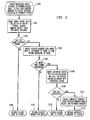
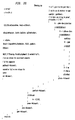
- the steps of the present invention will now be described with reference to Fig. 1.
- the first step (S100) is to register the instance. This accomplished by calling the following methods provided in the IRunning interface:
- the server passes both a pointer to the instance and the desired name to the RegisterlnstanceName method. If this call is successful, then a cookie is returned. The server caches the cookie, which is used when the object is destroyed as the parameter to the method UnregisterInstanceName. If a server fails (i.e., it crashes) to unregister the object upon its destruction, the ROT purges the object's moniker on the first attempt to access it.
- the moniker of the present invention implements the standard interface IParseDisplayName (S102).
- a client can locate a named instance of an object by calling either GoGetObject or MkParseDisplayName with the following string "@Running:ObjectName”.
- COM converts the ProgID "Running” to the CLSID using the API call CLSIDFromProgID.
- GoGetClassObject is used to instantiate the parser.
- the object is then queried for the IParseDisplayName interface.
- the method ParseDisplayName is called on that interface to parse the string (S103). If the requested object cannot be located in the ROT, an error is returned to the client (S104).
- a pointer moniker is created (S105) and returned to the client (S107).
- the client then calls BindToObject on the returned moniker. When a client is finished using the object it releases it.
- the moniker of the present invention is capable of querying the object for IParseDisplayName and calling the method ParseDisplayName with the name of an item (S108). If this call is successful (S109), the returned object can also be queried for IParseDisplayName. If not successful, a failure code is returned (S110). If the object supports this interface, the name of the object is used to create an item moniker which is composed (S111) with the moniker to the right.
- the above steps can be continued recursively for an arbitrary complex hierarchy. Once all of the elements of the input string have been consumed, the resulting composite moniker is returned to the client for binding (S112).
- the bind process BindToObject is called with the interface IOIeItemContainer, recursively calling the method GetObject until the composite moniker is consumed and the object is returned to the client.
- the standard moniker process uses the Microsoft defined interfaces, IOIeItemContainer and IParseDisplayName, and creates only instances of Item and Pointer monikers for use during the binding process.
- the moniker of the present invention is not WinAC specific and has no dependencies on any product. It can be used for any object that wants to be registered in the ROT.
- the ability to use the IParseDisplayName and IOIeItemContainer interfaces is modeled after the File moniker and will work with any object that supports these interfaces. Their use, however, is optional and the moniker of the present invention can be used only to register and retrieve objects from the ROT.
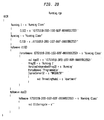
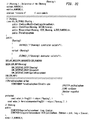
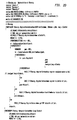
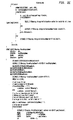
- Figs. 2A-2G set forth the C ++ software implementation of the present invention, wherein:
- Fig.3 shows the system 300 of the present invention wherein a computer 302 (such as a personal computer (PC) ) includes a processor 304, display 306 (and display connection 308), non-volative memory 310A, B, remote connection(s) 312, ISA/MPI card(s) 314 and PLC(s) 316 (and connections 318).
- the moniker of the present invention may reside, as an article of manufacture, on the non-volatile memory 310A, B such as the disc(s) 310A (floppy, CD, DVD, etc.) or resident memory (hard disc, cache memory) 310B.
- the PC 301 is connected to PLC(s) 316, via a remote connection 312 (USB, COM, Internet, Intranet, Network, RS-232, etc.).
- the PLCs 316 may be daisy-chained together by a bus 318 in a master/slave relationship, for example.
- the PLC(s) may be interfaced with firmware 314 (ISA/MPI cards, etc.) that are provided by, for example, WinAC or Simatec whose function is to interface and communicate with the remote PLC(s) 316.
- the PLC(s) may also be provided in the form of firmware 314 installed in the slots.
- the moniker of the present invention be practiced as a dynamic link library (d11) that communicates through the communication ports (particularly, the USB port).
- the present invention may incorporate a well-known device driver (which one skilled in the art will appreciate how to implement) to achieve a high degree of communication between the processor 304 and the PLC(s) 316.
- the connection may be the USB port and the driver may be an ActiveXTM device driver that drives the processor.
- the processor is driven directly, i.e., without the need for firmware.
- the system in one aspect of Fig. 3 loads the moniker of the present invention from the non-volatile memory 310A,B.
- the processor 304 in order to access a PLC object, invokes the moniker of the present invention.
- the moniker retrieves the name of the desired PLC, either directly through the remote connection 312 or as provided by the interface of the firmware 314 that communicates with the PLC(s) 316.
- an ExcelTM client application instantiates the specific instance of the master PLC 316 using the moniker of the present invention. At this time, the ExcelTM client has the pointer to the master PLC and may pass parameters therefrom/thereto.
- the ExcelTM client may retrieve operating data from the PLC(s) 316 and display the same in ExcelTM format on the display 306.
- This last example is particularly useful where the PLC(s) do not otherwise have a convenient means of displaying data. It will be appreciated that, since the moniker of this present invention activates already-running objects, there is a security measure that an otherwise dormant PLC will not be erroneously activated which could disastrously effect connected machinery (i.e., motors), not shown.
- the present invention is useful for instantiating specific instances of a soft PLC application such as provided by Simatic or WinAC (Siemens proprietary hardware/software).
- the PLC may be unable to register itself in the operating system.
- the PLC(s) may not be able to register itself because it is remotely connected, for example, through a remote connection such as MPI, Universal Serial Bus, COM port, serial port (RS-232) or the like.
- the PLC may also be installed as firmware on a card such as MPI or ISA which has no traditional means to register objects. This is significant in a system connected to a plurality of PLCs, because it is necessary for the server to determine the specific PLC to access. Accessing the wrong PLC in a real-world environment could be disastrous
- the WinAC environment (proprietary software/hardware provided by Siemens), the moniker of the present invention is utilized to access specific PLC objects.
- WinAC uses the moniker "@WinAC”.
- the WinAC moniker names an implementation of the interface IVar rather than an instance.
- the moniker "@WinAC:default” while a more generic approach, assumes that only one IVar provider is located on a machine. While at the present time only one IVar provider can run on a machine (either WinAC or the SlotPLC), it is undesirable to limit the system to only one provider.
- the names of the implementations are part of the moniker.
- the user decides that a different implementation is required (for example, switch between WinAC and SlotPLC)
- the user must change the name of the server in the tagfile.
- STEP7 proprietary Siemens software/hardware
- the tagfile is a database within WinAC which stores the relationship between symbolic names (meaningful to the user) and absolute addresses within the process.
- the moniker of the present invention resolves the foregoing problem of naming WinAC service providers by establishing a means by which the user names instances of objects. Using the named instance method disclosed herein, it would be possible to use the tagfile entry "MyBigMachine, MBO” to refer to MBO of whatever IVar server is named "MyBigMachine". This allows the user to change implementations without needing to change the tagfile. Indeed, any number of uniquely named instances can run simultaneously on one machine. Thus, clients can use the moniker of the present invention to connect to the correct instance.
- the moniker of the present invention uses the string "MyBigMachine" to locate the server in the ROT (Step S400).
- Step S401 When the object is located (Step S401), it is queried for the interface IParseDisplayName (Step S402). A pointer moniker is then created for this object that will be used in the subsequent compose operations (Step S404).
- the ParseDisplayName method of IOIeItemContainer is called with the item name "variables" (Step S406). If the operation is successful (Step S407), an item moniker is created which is then composed with the pointer moniker created above (Step S408).
- Step S410 The resulting object is queried for IParseDisplayName and the method ParseDisplayName is called with the string "Imb0" (Step S410).
- Step S4102 the sequence of operations of the File moniker already described may be implemented hereafter.
- the moniker of the present invention provides a pointer moniker for each partition of the string.
- the name of the object comes from an address specially allocated by the soft PLC.
- the name comes from the MPI address which is allocated by the processor.
- the name may also come from the DMA channel, memory address, IRQ, or COM port.
- the moniker in one aspect of the present invention connects to already running objects.
- a security measure ensures that an otherwise dormant PLC is not activated erroneously.
- the present invention provides a flexible and robust method for naming objects with monikers.
- the correct usage of these objects provided by the present invention allows for an extensible solution to activation problems. If a standard implementation is applied across all WinAC components, it will be easy to put the information needed to connect to a server in a database such as the tagfile.
- the servers into moniker providers the problem of coordinating updates for parsers as components are changed (created by making the moniker parsers intelligent) will be avoided.
- the moniker of the present invention does not require any knowledge of the various WinAC components. In any case, by having a consistent approach and eliminating special cases, problems are avoided in any environment.
Landscapes
- Engineering & Computer Science (AREA)
- Software Systems (AREA)
- Theoretical Computer Science (AREA)
- Physics & Mathematics (AREA)
- General Engineering & Computer Science (AREA)
- General Physics & Mathematics (AREA)
- Computer Security & Cryptography (AREA)
- Stored Programmes (AREA)
- Information Retrieval, Db Structures And Fs Structures Therefor (AREA)
- Pens And Brushes (AREA)
- Adornments (AREA)
- Diaphragms For Electromechanical Transducers (AREA)
- Moulding By Coating Moulds (AREA)
- Centrifugal Separators (AREA)
- External Artificial Organs (AREA)
- Supplying Of Containers To The Packaging Station (AREA)
- Information Transfer Between Computers (AREA)
Applications Claiming Priority (5)
| Application Number | Priority Date | Filing Date | Title |
|---|---|---|---|
| US12154499P | 1999-02-25 | 1999-02-25 | |
| US121544P | 1999-02-25 | ||
| US09/506,640 US7111306B1 (en) | 2000-02-18 | 2000-02-18 | Moniker method, apparatus, system and article of manufacture |
| US506640 | 2000-02-18 | ||
| PCT/US2000/004415 WO2000050990A2 (en) | 1999-02-25 | 2000-02-22 | Moniker method, apparatus, system and article of manufacture |
Publications (2)
| Publication Number | Publication Date |
|---|---|
| EP1157331A2 EP1157331A2 (en) | 2001-11-28 |
| EP1157331B1 true EP1157331B1 (en) | 2002-07-31 |
Family
ID=26819572
Family Applications (1)
| Application Number | Title | Priority Date | Filing Date |
|---|---|---|---|
| EP00911893A Expired - Lifetime EP1157331B1 (en) | 1999-02-25 | 2000-02-22 | Moniker method, apparatus, and article of manufacture |
Country Status (8)
| Country | Link |
|---|---|
| EP (1) | EP1157331B1 (da) |
| AT (1) | ATE221681T1 (da) |
| CA (1) | CA2363964C (da) |
| DE (1) | DE60000301T2 (da) |
| DK (1) | DK1157331T3 (da) |
| ES (1) | ES2183791T3 (da) |
| PT (1) | PT1157331E (da) |
| WO (1) | WO2000050990A2 (da) |
Families Citing this family (1)
| Publication number | Priority date | Publication date | Assignee | Title |
|---|---|---|---|---|
| DE102004013180A1 (de) * | 2004-03-17 | 2005-10-06 | Giesecke & Devrient Gmbh | Speicherbereinigung (Garbage Collection) für Smart Cards |
Family Cites Families (2)
| Publication number | Priority date | Publication date | Assignee | Title |
|---|---|---|---|---|
| CA2124720C (en) * | 1993-06-25 | 2002-10-22 | Michael R. C. Seaman | Integration of systems management services with an underlying system object model |
| JP3083853B2 (ja) * | 1995-06-14 | 2000-09-04 | ノベル,インコーポレイテッド | グローバルにディストリビュートされたソフトウェア・コンポーネントを管理するための方法 |
-
2000
- 2000-02-22 DK DK00911893T patent/DK1157331T3/da active
- 2000-02-22 DE DE60000301T patent/DE60000301T2/de not_active Expired - Lifetime
- 2000-02-22 CA CA002363964A patent/CA2363964C/en not_active Expired - Fee Related
- 2000-02-22 WO PCT/US2000/004415 patent/WO2000050990A2/en not_active Ceased
- 2000-02-22 PT PT00911893T patent/PT1157331E/pt unknown
- 2000-02-22 EP EP00911893A patent/EP1157331B1/en not_active Expired - Lifetime
- 2000-02-22 ES ES00911893T patent/ES2183791T3/es not_active Expired - Lifetime
- 2000-02-22 AT AT00911893T patent/ATE221681T1/de active
Also Published As
| Publication number | Publication date |
|---|---|
| DK1157331T3 (da) | 2002-11-25 |
| WO2000050990A8 (en) | 2000-11-02 |
| CA2363964A1 (en) | 2000-08-31 |
| ATE221681T1 (de) | 2002-08-15 |
| PT1157331E (pt) | 2002-12-31 |
| CA2363964C (en) | 2003-09-16 |
| ES2183791T3 (es) | 2003-04-01 |
| WO2000050990A2 (en) | 2000-08-31 |
| DE60000301D1 (de) | 2002-09-05 |
| DE60000301T2 (de) | 2003-01-30 |
| EP1157331A2 (en) | 2001-11-28 |
| WO2000050990A9 (en) | 2001-08-09 |
| WO2000050990A3 (en) | 2001-05-03 |
Similar Documents
| Publication | Publication Date | Title |
|---|---|---|
| US6941561B1 (en) | Method and apparatus for remotely running objects using data streams and/or complex parameters | |
| US6044224A (en) | Mechanism for dynamically associating a service dependent representation with objects at run time | |
| US5793965A (en) | Method and apparatus for determining the type of an object in a distributed object system | |
| US6085198A (en) | Integrated three-tier application framework with automated class and table generation | |
| US6185609B1 (en) | Method, apparatus and program to provide client access to a management information service residing on a server in a computer network system | |
| US6748455B1 (en) | Object connectivity through loosely coupled publish and subscribe events with filtering | |
| AU691031B2 (en) | System and method for providing interoperability among heterogeneous object systems | |
| US7478405B2 (en) | Object connectivity through loosely coupled publish and subscribe events | |
| US20040019596A1 (en) | Method, system, and program for making objects available for access to a client over a network | |
| US8667508B2 (en) | Method for providing stand-in objects | |
| WO2000010079A1 (en) | Environment extensibility and automatic services for component applications using contexts, policies and activators | |
| US6223227B1 (en) | Method for providing stand-in objects | |
| Oberleitner et al. | The Vienna component framework enabling composition across component models | |
| Janssen et al. | ILU 2.0 alpha8 Reference Manual | |
| US6763361B1 (en) | Object-oriented database abstraction and statement generation | |
| US7111306B1 (en) | Moniker method, apparatus, system and article of manufacture | |
| EP1157331B1 (en) | Moniker method, apparatus, and article of manufacture | |
| EP1171819B1 (en) | Method and system for tracking clients | |
| Ierusalimschy et al. | Using reflexivity to interface with CORBA | |
| Janssen et al. | ILU 2.0 alpha14 Reference Manual | |
| Thompson et al. | Distributed component object model (DCOM) | |
| Román et al. | Unified Object Bus: Providing support for dynamic management of heterogeneous components | |
| US7246359B2 (en) | Methods, systems and computer program products for maintaining association integrity of enterprise JavaBeans (EJB) during EJB passivation and reactivation | |
| Costanza et al. | The Comparand Pattern. | |
| Vinoski | Invocation styles |
Legal Events
| Date | Code | Title | Description |
|---|---|---|---|
| PUAI | Public reference made under article 153(3) epc to a published international application that has entered the european phase |
Free format text: ORIGINAL CODE: 0009012 |
|
| 17P | Request for examination filed |
Effective date: 20010810 |
|
| AK | Designated contracting states |
Kind code of ref document: A2 Designated state(s): AT BE CH CY DE DK ES FI FR GB GR IE IT LI LU MC NL PT SE |
|
| GRAG | Despatch of communication of intention to grant |
Free format text: ORIGINAL CODE: EPIDOS AGRA |
|
| RTI1 | Title (correction) |
Free format text: MONIKER METHOD, APPARATUS, AND ARTICLE OF MANUFACTURE |
|
| GRAG | Despatch of communication of intention to grant |
Free format text: ORIGINAL CODE: EPIDOS AGRA |
|
| GRAH | Despatch of communication of intention to grant a patent |
Free format text: ORIGINAL CODE: EPIDOS IGRA |
|
| 17Q | First examination report despatched |
Effective date: 20020122 |
|
| GRAH | Despatch of communication of intention to grant a patent |
Free format text: ORIGINAL CODE: EPIDOS IGRA |
|
| GRAA | (expected) grant |
Free format text: ORIGINAL CODE: 0009210 |
|
| AK | Designated contracting states |
Kind code of ref document: B1 Designated state(s): AT BE CH CY DE DK ES FI FR GB GR IE IT LI LU MC NL PT SE |
|
| REF | Corresponds to: |
Ref document number: 221681 Country of ref document: AT Date of ref document: 20020815 Kind code of ref document: T |
|
| REG | Reference to a national code |
Ref country code: GB Ref legal event code: FG4D Ref country code: CH Ref legal event code: EP |
|
| REG | Reference to a national code |
Ref country code: IE Ref legal event code: FG4D |
|
| REF | Corresponds to: |
Ref document number: 60000301 Country of ref document: DE Date of ref document: 20020905 |
|
| REG | Reference to a national code |
Ref country code: CH Ref legal event code: NV Representative=s name: SIEMENS SCHWEIZ AG |
|
| REG | Reference to a national code |
Ref country code: GR Ref legal event code: EP Ref document number: 20020403187 Country of ref document: GR |
|
| REG | Reference to a national code |
Ref country code: DK Ref legal event code: T3 |
|
| REG | Reference to a national code |
Ref country code: PT Ref legal event code: SC4A Free format text: AVAILABILITY OF NATIONAL TRANSLATION Effective date: 20021015 |
|
| ET | Fr: translation filed | ||
| REG | Reference to a national code |
Ref country code: ES Ref legal event code: FG2A Ref document number: 2183791 Country of ref document: ES Kind code of ref document: T3 |
|
| PLBE | No opposition filed within time limit |
Free format text: ORIGINAL CODE: 0009261 |
|
| STAA | Information on the status of an ep patent application or granted ep patent |
Free format text: STATUS: NO OPPOSITION FILED WITHIN TIME LIMIT |
|
| 26N | No opposition filed |
Effective date: 20030506 |
|
| REG | Reference to a national code |
Ref country code: CH Ref legal event code: PCAR Free format text: SIEMENS SCHWEIZ AG;INTELLECTUAL PROPERTY FREILAGERSTRASSE 40;8047 ZUERICH (CH) |
|
| REG | Reference to a national code |
Ref country code: CH Ref legal event code: PFA Owner name: SIEMENS INDUSTRY, INC. Free format text: SIEMENS ENERGY & AUTOMATION, INC.#3333 OLD MILTON PARKWAY#ALPHARETTA, GA 30005-4437 (US) -TRANSFER TO- SIEMENS INDUSTRY, INC.#3333 OLD MILTON PARKWAY#ALPHARETTA, GA 30005 (US) |
|
| REG | Reference to a national code |
Ref country code: NL Ref legal event code: SD Effective date: 20110224 |
|
| REG | Reference to a national code |
Ref country code: ES Ref legal event code: PC2A Owner name: SIEMENS INDUSTRY, INC. Effective date: 20110428 |
|
| PGRI | Patent reinstated in contracting state [announced from national office to epo] |
Ref country code: IT Effective date: 20110501 |
|
| REG | Reference to a national code |
Ref country code: GB Ref legal event code: 732E Free format text: REGISTERED BETWEEN 20110602 AND 20110608 |
|
| REG | Reference to a national code |
Ref country code: FR Ref legal event code: TP |
|
| PG25 | Lapsed in a contracting state [announced via postgrant information from national office to epo] |
Ref country code: IT Free format text: LAPSE BECAUSE OF NON-PAYMENT OF DUE FEES Effective date: 20110222 |
|
| PGFP | Annual fee paid to national office [announced via postgrant information from national office to epo] |
Ref country code: BE Payment date: 20120312 Year of fee payment: 13 |
|
| PGFP | Annual fee paid to national office [announced via postgrant information from national office to epo] |
Ref country code: CH Payment date: 20120507 Year of fee payment: 13 |
|
| PGFP | Annual fee paid to national office [announced via postgrant information from national office to epo] |
Ref country code: LU Payment date: 20130221 Year of fee payment: 14 |
|
| PGFP | Annual fee paid to national office [announced via postgrant information from national office to epo] |
Ref country code: MC Payment date: 20130213 Year of fee payment: 14 Ref country code: IE Payment date: 20130219 Year of fee payment: 14 Ref country code: DK Payment date: 20130218 Year of fee payment: 14 Ref country code: FI Payment date: 20130213 Year of fee payment: 14 Ref country code: SE Payment date: 20130211 Year of fee payment: 14 |
|
| PGFP | Annual fee paid to national office [announced via postgrant information from national office to epo] |
Ref country code: NL Payment date: 20130204 Year of fee payment: 14 Ref country code: GR Payment date: 20130225 Year of fee payment: 14 |
|
| PGFP | Annual fee paid to national office [announced via postgrant information from national office to epo] |
Ref country code: ES Payment date: 20120307 Year of fee payment: 13 Ref country code: AT Payment date: 20130108 Year of fee payment: 14 Ref country code: PT Payment date: 20130130 Year of fee payment: 14 |
|
| PGFP | Annual fee paid to national office [announced via postgrant information from national office to epo] |
Ref country code: CY Payment date: 20130117 Year of fee payment: 14 |
|
| BERE | Be: lapsed |
Owner name: *SIEMENS INDUSTRY, INC. Effective date: 20130228 |
|
| REG | Reference to a national code |
Ref country code: CH Ref legal event code: PL |
|
| PG25 | Lapsed in a contracting state [announced via postgrant information from national office to epo] |
Ref country code: CH Free format text: LAPSE BECAUSE OF NON-PAYMENT OF DUE FEES Effective date: 20130228 Ref country code: LI Free format text: LAPSE BECAUSE OF NON-PAYMENT OF DUE FEES Effective date: 20130228 |
|
| PG25 | Lapsed in a contracting state [announced via postgrant information from national office to epo] |
Ref country code: BE Free format text: LAPSE BECAUSE OF NON-PAYMENT OF DUE FEES Effective date: 20130228 |
|
| REG | Reference to a national code |
Ref country code: ES Ref legal event code: FD2A Effective date: 20140408 |
|
| PG25 | Lapsed in a contracting state [announced via postgrant information from national office to epo] |
Ref country code: ES Free format text: LAPSE BECAUSE OF NON-PAYMENT OF DUE FEES Effective date: 20130223 |
|
| REG | Reference to a national code |
Ref country code: PT Ref legal event code: MM4A Free format text: LAPSE DUE TO NON-PAYMENT OF FEES Effective date: 20140822 |
|
| REG | Reference to a national code |
Ref country code: NL Ref legal event code: V1 Effective date: 20140901 |
|
| REG | Reference to a national code |
Ref country code: DK Ref legal event code: EBP Effective date: 20140228 |
|
| PG25 | Lapsed in a contracting state [announced via postgrant information from national office to epo] |
Ref country code: LU Free format text: LAPSE BECAUSE OF NON-PAYMENT OF DUE FEES Effective date: 20140222 Ref country code: MC Free format text: LAPSE BECAUSE OF NON-PAYMENT OF DUE FEES Effective date: 20140228 |
|
| REG | Reference to a national code |
Ref country code: SE Ref legal event code: EUG |
|
| REG | Reference to a national code |
Ref country code: AT Ref legal event code: MM01 Ref document number: 221681 Country of ref document: AT Kind code of ref document: T Effective date: 20140222 |
|
| REG | Reference to a national code |
Ref country code: GR Ref legal event code: ML Ref document number: 20020403187 Country of ref document: GR Effective date: 20140903 |
|
| PG25 | Lapsed in a contracting state [announced via postgrant information from national office to epo] |
Ref country code: FI Free format text: LAPSE BECAUSE OF NON-PAYMENT OF DUE FEES Effective date: 20140222 Ref country code: NL Free format text: LAPSE BECAUSE OF NON-PAYMENT OF DUE FEES Effective date: 20140901 Ref country code: GR Free format text: LAPSE BECAUSE OF NON-PAYMENT OF DUE FEES Effective date: 20140903 Ref country code: CY Free format text: LAPSE BECAUSE OF NON-PAYMENT OF DUE FEES Effective date: 20140222 |
|
| PG25 | Lapsed in a contracting state [announced via postgrant information from national office to epo] |
Ref country code: AT Free format text: LAPSE BECAUSE OF NON-PAYMENT OF DUE FEES Effective date: 20140222 Ref country code: SE Free format text: LAPSE BECAUSE OF NON-PAYMENT OF DUE FEES Effective date: 20140223 |
|
| REG | Reference to a national code |
Ref country code: IE Ref legal event code: MM4A |
|
| PG25 | Lapsed in a contracting state [announced via postgrant information from national office to epo] |
Ref country code: PT Free format text: LAPSE BECAUSE OF NON-PAYMENT OF DUE FEES Effective date: 20140822 |
|
| PG25 | Lapsed in a contracting state [announced via postgrant information from national office to epo] |
Ref country code: DK Free format text: LAPSE BECAUSE OF NON-PAYMENT OF DUE FEES Effective date: 20140228 Ref country code: IE Free format text: LAPSE BECAUSE OF NON-PAYMENT OF DUE FEES Effective date: 20140222 |
|
| REG | Reference to a national code |
Ref country code: FR Ref legal event code: PLFP Year of fee payment: 17 |
|
| PGFP | Annual fee paid to national office [announced via postgrant information from national office to epo] |
Ref country code: DE Payment date: 20160420 Year of fee payment: 17 |
|
| REG | Reference to a national code |
Ref country code: FR Ref legal event code: PLFP Year of fee payment: 18 |
|
| PGFP | Annual fee paid to national office [announced via postgrant information from national office to epo] |
Ref country code: FR Payment date: 20170222 Year of fee payment: 18 |
|
| PGFP | Annual fee paid to national office [announced via postgrant information from national office to epo] |
Ref country code: GB Payment date: 20170213 Year of fee payment: 18 |
|
| PGFP | Annual fee paid to national office [announced via postgrant information from national office to epo] |
Ref country code: IT Payment date: 20170224 Year of fee payment: 18 |
|
| REG | Reference to a national code |
Ref country code: DE Ref legal event code: R119 Ref document number: 60000301 Country of ref document: DE |
|
| PG25 | Lapsed in a contracting state [announced via postgrant information from national office to epo] |
Ref country code: DE Free format text: LAPSE BECAUSE OF NON-PAYMENT OF DUE FEES Effective date: 20170901 |
|
| GBPC | Gb: european patent ceased through non-payment of renewal fee |
Effective date: 20180222 |
|
| REG | Reference to a national code |
Ref country code: FR Ref legal event code: ST Effective date: 20181031 |
|
| PG25 | Lapsed in a contracting state [announced via postgrant information from national office to epo] |
Ref country code: IT Free format text: LAPSE BECAUSE OF NON-PAYMENT OF DUE FEES Effective date: 20180222 Ref country code: GB Free format text: LAPSE BECAUSE OF NON-PAYMENT OF DUE FEES Effective date: 20180222 Ref country code: FR Free format text: LAPSE BECAUSE OF NON-PAYMENT OF DUE FEES Effective date: 20180228 |