EP1156330A2 - Method for isotope labeling of protein with enzyme - Google Patents
Method for isotope labeling of protein with enzyme Download PDFInfo
- Publication number
- EP1156330A2 EP1156330A2 EP01111690A EP01111690A EP1156330A2 EP 1156330 A2 EP1156330 A2 EP 1156330A2 EP 01111690 A EP01111690 A EP 01111690A EP 01111690 A EP01111690 A EP 01111690A EP 1156330 A2 EP1156330 A2 EP 1156330A2
- Authority
- EP
- European Patent Office
- Prior art keywords
- protein
- transglutaminase
- labeled
- labeling
- compound
- Prior art date
- Legal status (The legal status is an assumption and is not a legal conclusion. Google has not performed a legal analysis and makes no representation as to the accuracy of the status listed.)
- Granted
Links
- 108090000623 proteins and genes Proteins 0.000 title claims abstract description 146
- 102000004169 proteins and genes Human genes 0.000 title claims abstract description 139
- 238000000034 method Methods 0.000 title claims abstract description 85
- 102000004190 Enzymes Human genes 0.000 title claims abstract description 22
- 108090000790 Enzymes Proteins 0.000 title claims abstract description 22
- 238000001948 isotopic labelling Methods 0.000 title claims abstract description 13
- 108060008539 Transglutaminase Proteins 0.000 claims abstract description 88
- 102000003601 transglutaminase Human genes 0.000 claims abstract description 88
- 125000000404 glutamine group Chemical group N[C@@H](CCC(N)=O)C(=O)* 0.000 claims abstract description 50
- 238000002372 labelling Methods 0.000 claims abstract description 45
- 150000001875 compounds Chemical class 0.000 claims abstract description 21
- 125000000539 amino acid group Chemical group 0.000 claims abstract description 16
- 125000000524 functional group Chemical group 0.000 claims abstract description 14
- 238000006243 chemical reaction Methods 0.000 claims description 24
- 239000000758 substrate Substances 0.000 claims description 23
- 108090000765 processed proteins & peptides Proteins 0.000 claims description 13
- 150000003863 ammonium salts Chemical class 0.000 claims description 10
- OYPRJOBELJOOCE-UHFFFAOYSA-N Calcium Chemical group [Ca] OYPRJOBELJOOCE-UHFFFAOYSA-N 0.000 claims description 8
- 229910052791 calcium Inorganic materials 0.000 claims description 8
- 239000011575 calcium Substances 0.000 claims description 8
- 102000004357 Transferases Human genes 0.000 claims description 4
- 108090000992 Transferases Proteins 0.000 claims description 4
- 230000001419 dependent effect Effects 0.000 claims description 3
- 102000004196 processed proteins & peptides Human genes 0.000 claims description 3
- 238000006911 enzymatic reaction Methods 0.000 claims description 2
- 102000015636 Oligopeptides Human genes 0.000 claims 2
- 108010038807 Oligopeptides Proteins 0.000 claims 2
- 229920001184 polypeptide Polymers 0.000 claims 2
- GDIHDSKOVXEJQQ-UHFFFAOYSA-N NC(O)=O.NC(O)=O.NC(O)=O.N Chemical group NC(O)=O.NC(O)=O.NC(O)=O.N GDIHDSKOVXEJQQ-UHFFFAOYSA-N 0.000 abstract description 15
- 125000004429 atom Chemical group 0.000 abstract description 7
- 230000009471 action Effects 0.000 abstract description 6
- 235000018102 proteins Nutrition 0.000 description 123
- 238000005481 NMR spectroscopy Methods 0.000 description 23
- 239000000203 mixture Substances 0.000 description 18
- 229940088598 enzyme Drugs 0.000 description 17
- 238000004461 1H-15N HSQC Methods 0.000 description 14
- 238000005259 measurement Methods 0.000 description 13
- 230000000694 effects Effects 0.000 description 10
- 239000003446 ligand Substances 0.000 description 9
- 102000004877 Insulin Human genes 0.000 description 8
- 108090001061 Insulin Proteins 0.000 description 8
- 229910052757 nitrogen Inorganic materials 0.000 description 7
- 238000002360 preparation method Methods 0.000 description 7
- 238000012916 structural analysis Methods 0.000 description 7
- 108010058846 Ovalbumin Proteins 0.000 description 6
- 238000004458 analytical method Methods 0.000 description 6
- 238000000990 heteronuclear single quantum coherence spectrum Methods 0.000 description 6
- 244000005700 microbiome Species 0.000 description 6
- 229940092253 ovalbumin Drugs 0.000 description 6
- 238000001228 spectrum Methods 0.000 description 6
- 239000000126 substance Substances 0.000 description 6
- 238000007385 chemical modification Methods 0.000 description 5
- 238000010230 functional analysis Methods 0.000 description 5
- 238000012216 screening Methods 0.000 description 5
- 241000700198 Cavia Species 0.000 description 4
- 241000588724 Escherichia coli Species 0.000 description 4
- 238000001514 detection method Methods 0.000 description 4
- QCVGEOXPDFCNHA-UHFFFAOYSA-N 5,5-dimethyl-2,4-dioxo-1,3-oxazolidine-3-carboxamide Chemical compound CC1(C)OC(=O)N(C(N)=O)C1=O QCVGEOXPDFCNHA-UHFFFAOYSA-N 0.000 description 3
- KXDHJXZQYSOELW-UHFFFAOYSA-N Carbamic acid Chemical group NC(O)=O KXDHJXZQYSOELW-UHFFFAOYSA-N 0.000 description 3
- 108010000912 Egg Proteins Proteins 0.000 description 3
- 102000002322 Egg Proteins Human genes 0.000 description 3
- PEDCQBHIVMGVHV-UHFFFAOYSA-N Glycerine Chemical compound OCC(O)CO PEDCQBHIVMGVHV-UHFFFAOYSA-N 0.000 description 3
- 241001465754 Metazoa Species 0.000 description 3
- 102000016943 Muramidase Human genes 0.000 description 3
- 108010014251 Muramidase Proteins 0.000 description 3
- 108010062010 N-Acetylmuramoyl-L-alanine Amidase Proteins 0.000 description 3
- CKLJMWTZIZZHCS-REOHCLBHSA-N aspartic acid group Chemical group N[C@@H](CC(=O)O)C(=O)O CKLJMWTZIZZHCS-REOHCLBHSA-N 0.000 description 3
- 239000005018 casein Substances 0.000 description 3
- BECPQYXYKAMYBN-UHFFFAOYSA-N casein, tech. Chemical compound NCCCCC(C(O)=O)N=C(O)C(CC(O)=O)N=C(O)C(CCC(O)=N)N=C(O)C(CC(C)C)N=C(O)C(CCC(O)=O)N=C(O)C(CC(O)=O)N=C(O)C(CCC(O)=O)N=C(O)C(C(C)O)N=C(O)C(CCC(O)=N)N=C(O)C(CCC(O)=N)N=C(O)C(CCC(O)=N)N=C(O)C(CCC(O)=O)N=C(O)C(CCC(O)=O)N=C(O)C(COP(O)(O)=O)N=C(O)C(CCC(O)=N)N=C(O)C(N)CC1=CC=CC=C1 BECPQYXYKAMYBN-UHFFFAOYSA-N 0.000 description 3
- 235000021240 caseins Nutrition 0.000 description 3
- 239000003795 chemical substances by application Substances 0.000 description 3
- 238000003776 cleavage reaction Methods 0.000 description 3
- 235000014103 egg white Nutrition 0.000 description 3
- 210000000969 egg white Anatomy 0.000 description 3
- 238000001914 filtration Methods 0.000 description 3
- 239000012634 fragment Substances 0.000 description 3
- 125000000291 glutamic acid group Chemical group N[C@@H](CCC(O)=O)C(=O)* 0.000 description 3
- 229960000274 lysozyme Drugs 0.000 description 3
- 239000004325 lysozyme Substances 0.000 description 3
- 235000010335 lysozyme Nutrition 0.000 description 3
- 238000004519 manufacturing process Methods 0.000 description 3
- 238000001819 mass spectrum Methods 0.000 description 3
- 235000013372 meat Nutrition 0.000 description 3
- 238000012544 monitoring process Methods 0.000 description 3
- 238000000655 nuclear magnetic resonance spectrum Methods 0.000 description 3
- 238000000425 proton nuclear magnetic resonance spectrum Methods 0.000 description 3
- 230000007017 scission Effects 0.000 description 3
- XLYOFNOQVPJJNP-UHFFFAOYSA-N water Substances O XLYOFNOQVPJJNP-UHFFFAOYSA-N 0.000 description 3
- 238000005160 1H NMR spectroscopy Methods 0.000 description 2
- NEAQRZUHTPSBBM-UHFFFAOYSA-N 2-hydroxy-3,3-dimethyl-7-nitro-4h-isoquinolin-1-one Chemical compound C1=C([N+]([O-])=O)C=C2C(=O)N(O)C(C)(C)CC2=C1 NEAQRZUHTPSBBM-UHFFFAOYSA-N 0.000 description 2
- 241000251468 Actinopterygii Species 0.000 description 2
- NLXLAEXVIDQMFP-UHFFFAOYSA-N Ammonia chloride Chemical compound [NH4+].[Cl-] NLXLAEXVIDQMFP-UHFFFAOYSA-N 0.000 description 2
- IJGRMHOSHXDMSA-UHFFFAOYSA-N Atomic nitrogen Chemical compound N#N IJGRMHOSHXDMSA-UHFFFAOYSA-N 0.000 description 2
- 108091003079 Bovine Serum Albumin Proteins 0.000 description 2
- 125000001433 C-terminal amino-acid group Chemical group 0.000 description 2
- UXVMQQNJUSDDNG-UHFFFAOYSA-L Calcium chloride Chemical compound [Cl-].[Cl-].[Ca+2] UXVMQQNJUSDDNG-UHFFFAOYSA-L 0.000 description 2
- 241000196324 Embryophyta Species 0.000 description 2
- 125000000729 N-terminal amino-acid group Chemical group 0.000 description 2
- 102000007079 Peptide Fragments Human genes 0.000 description 2
- 108010033276 Peptide Fragments Proteins 0.000 description 2
- 240000004808 Saccharomyces cerevisiae Species 0.000 description 2
- 241001495137 Streptomyces mobaraensis Species 0.000 description 2
- 239000002253 acid Substances 0.000 description 2
- 239000000556 agonist Substances 0.000 description 2
- 235000001014 amino acid Nutrition 0.000 description 2
- 150000001413 amino acids Chemical class 0.000 description 2
- 210000004102 animal cell Anatomy 0.000 description 2
- 239000005557 antagonist Substances 0.000 description 2
- 230000015572 biosynthetic process Effects 0.000 description 2
- 210000004369 blood Anatomy 0.000 description 2
- 239000008280 blood Substances 0.000 description 2
- 229940098773 bovine serum albumin Drugs 0.000 description 2
- 239000001110 calcium chloride Substances 0.000 description 2
- 229910001628 calcium chloride Inorganic materials 0.000 description 2
- 229910052799 carbon Inorganic materials 0.000 description 2
- 210000004027 cell Anatomy 0.000 description 2
- 230000004663 cell proliferation Effects 0.000 description 2
- 230000008859 change Effects 0.000 description 2
- 239000002738 chelating agent Substances 0.000 description 2
- 239000007795 chemical reaction product Substances 0.000 description 2
- 239000003153 chemical reaction reagent Substances 0.000 description 2
- 238000007796 conventional method Methods 0.000 description 2
- 238000004132 cross linking Methods 0.000 description 2
- 238000011161 development Methods 0.000 description 2
- 230000018109 developmental process Effects 0.000 description 2
- 238000010586 diagram Methods 0.000 description 2
- 238000011156 evaluation Methods 0.000 description 2
- 238000002474 experimental method Methods 0.000 description 2
- 235000019688 fish Nutrition 0.000 description 2
- 125000004435 hydrogen atom Chemical group [H]* 0.000 description 2
- 125000002887 hydroxy group Chemical group [H]O* 0.000 description 2
- 230000003993 interaction Effects 0.000 description 2
- -1 monokine Proteins 0.000 description 2
- 125000004433 nitrogen atom Chemical group N* 0.000 description 2
- 238000004445 quantitative analysis Methods 0.000 description 2
- 230000035484 reaction time Effects 0.000 description 2
- 102000005962 receptors Human genes 0.000 description 2
- 108020003175 receptors Proteins 0.000 description 2
- 238000004885 tandem mass spectrometry Methods 0.000 description 2
- 210000005253 yeast cell Anatomy 0.000 description 2
- SOUXAAOTONMPRY-NSHDSACASA-N 2-[[(2s)-5-amino-5-oxo-2-(phenylmethoxycarbonylamino)pentanoyl]amino]acetic acid Chemical compound OC(=O)CNC(=O)[C@H](CCC(=O)N)NC(=O)OCC1=CC=CC=C1 SOUXAAOTONMPRY-NSHDSACASA-N 0.000 description 1
- 108010088751 Albumins Proteins 0.000 description 1
- 102000009027 Albumins Human genes 0.000 description 1
- 241000972773 Aulopiformes Species 0.000 description 1
- 244000063299 Bacillus subtilis Species 0.000 description 1
- 235000014469 Bacillus subtilis Nutrition 0.000 description 1
- 108010039209 Blood Coagulation Factors Proteins 0.000 description 1
- 102000015081 Blood Coagulation Factors Human genes 0.000 description 1
- 241000283690 Bos taurus Species 0.000 description 1
- OKTJSMMVPCPJKN-UHFFFAOYSA-N Carbon Chemical compound [C] OKTJSMMVPCPJKN-UHFFFAOYSA-N 0.000 description 1
- 241000700199 Cavia porcellus Species 0.000 description 1
- UNPLRYRWJLTVAE-UHFFFAOYSA-N Cloperastine hydrochloride Chemical compound Cl.C1=CC(Cl)=CC=C1C(C=1C=CC=CC=1)OCCN1CCCCC1 UNPLRYRWJLTVAE-UHFFFAOYSA-N 0.000 description 1
- 102000004127 Cytokines Human genes 0.000 description 1
- 108090000695 Cytokines Proteins 0.000 description 1
- 102000003951 Erythropoietin Human genes 0.000 description 1
- 108090000394 Erythropoietin Proteins 0.000 description 1
- 108010071289 Factor XIII Proteins 0.000 description 1
- 108010010803 Gelatin Proteins 0.000 description 1
- WQZGKKKJIJFFOK-GASJEMHNSA-N Glucose Natural products OC[C@H]1OC(O)[C@H](O)[C@@H](O)[C@@H]1O WQZGKKKJIJFFOK-GASJEMHNSA-N 0.000 description 1
- UFHFLCQGNIYNRP-UHFFFAOYSA-N Hydrogen Chemical class [H][H] UFHFLCQGNIYNRP-UHFFFAOYSA-N 0.000 description 1
- AVXURJPOCDRRFD-UHFFFAOYSA-N Hydroxylamine Chemical compound ON AVXURJPOCDRRFD-UHFFFAOYSA-N 0.000 description 1
- 108010093096 Immobilized Enzymes Proteins 0.000 description 1
- 108060003951 Immunoglobulin Proteins 0.000 description 1
- 108010076876 Keratins Proteins 0.000 description 1
- 102000011782 Keratins Human genes 0.000 description 1
- 102000016397 Methyltransferase Human genes 0.000 description 1
- 108060004795 Methyltransferase Proteins 0.000 description 1
- 241000233654 Oomycetes Species 0.000 description 1
- 241000237502 Ostreidae Species 0.000 description 1
- 241001282110 Pagrus major Species 0.000 description 1
- 108091005804 Peptidases Proteins 0.000 description 1
- 102000035195 Peptidases Human genes 0.000 description 1
- 239000004365 Protease Substances 0.000 description 1
- 238000012300 Sequence Analysis Methods 0.000 description 1
- 241000187747 Streptomyces Species 0.000 description 1
- 241000520730 Streptomyces cinnamoneus Species 0.000 description 1
- 241000499056 Streptomyces griseocarneus Species 0.000 description 1
- 102000003929 Transaminases Human genes 0.000 description 1
- 108090000340 Transaminases Proteins 0.000 description 1
- 238000002835 absorbance Methods 0.000 description 1
- 125000002252 acyl group Chemical group 0.000 description 1
- 230000002411 adverse Effects 0.000 description 1
- 125000003275 alpha amino acid group Chemical group 0.000 description 1
- 150000001408 amides Chemical group 0.000 description 1
- 235000019270 ammonium chloride Nutrition 0.000 description 1
- BFNBIHQBYMNNAN-UHFFFAOYSA-N ammonium sulfate Chemical compound N.N.OS(O)(=O)=O BFNBIHQBYMNNAN-UHFFFAOYSA-N 0.000 description 1
- 229910052921 ammonium sulfate Inorganic materials 0.000 description 1
- 235000011130 ammonium sulphate Nutrition 0.000 description 1
- 239000003125 aqueous solvent Substances 0.000 description 1
- 235000013527 bean curd Nutrition 0.000 description 1
- 239000003114 blood coagulation factor Substances 0.000 description 1
- 229940019700 blood coagulation factors Drugs 0.000 description 1
- 238000011088 calibration curve Methods 0.000 description 1
- 239000000969 carrier Substances 0.000 description 1
- 238000006555 catalytic reaction Methods 0.000 description 1
- 230000024245 cell differentiation Effects 0.000 description 1
- 210000004671 cell-free system Anatomy 0.000 description 1
- 235000013351 cheese Nutrition 0.000 description 1
- 238000012790 confirmation Methods 0.000 description 1
- 230000002596 correlated effect Effects 0.000 description 1
- 230000000875 corresponding effect Effects 0.000 description 1
- 229920006037 cross link polymer Polymers 0.000 description 1
- 238000013461 design Methods 0.000 description 1
- 238000009826 distribution Methods 0.000 description 1
- 239000003814 drug Substances 0.000 description 1
- 238000001962 electrophoresis Methods 0.000 description 1
- 229940105423 erythropoietin Drugs 0.000 description 1
- 235000013305 food Nutrition 0.000 description 1
- 229920000159 gelatin Polymers 0.000 description 1
- 239000008273 gelatin Substances 0.000 description 1
- 235000019322 gelatine Nutrition 0.000 description 1
- 235000011852 gelatine desserts Nutrition 0.000 description 1
- 239000008103 glucose Substances 0.000 description 1
- 239000000122 growth hormone Substances 0.000 description 1
- 239000001963 growth medium Substances 0.000 description 1
- 125000000487 histidyl group Chemical group [H]N([H])C(C(=O)O*)C([H])([H])C1=C([H])N([H])C([H])=N1 0.000 description 1
- 229940088597 hormone Drugs 0.000 description 1
- 239000005556 hormone Substances 0.000 description 1
- 229910052739 hydrogen Inorganic materials 0.000 description 1
- 239000001257 hydrogen Substances 0.000 description 1
- 102000018358 immunoglobulin Human genes 0.000 description 1
- 230000006872 improvement Effects 0.000 description 1
- 230000006698 induction Effects 0.000 description 1
- 150000004698 iron complex Chemical class 0.000 description 1
- 230000000155 isotopic effect Effects 0.000 description 1
- 210000004185 liver Anatomy 0.000 description 1
- 125000003588 lysine group Chemical group [H]N([H])C([H])([H])C([H])([H])C([H])([H])C([H])([H])C([H])(N([H])[H])C(*)=O 0.000 description 1
- 238000004949 mass spectrometry Methods 0.000 description 1
- 239000000463 material Substances 0.000 description 1
- 239000003094 microcapsule Substances 0.000 description 1
- 238000012986 modification Methods 0.000 description 1
- 230000004048 modification Effects 0.000 description 1
- 238000010995 multi-dimensional NMR spectroscopy Methods 0.000 description 1
- 230000035407 negative regulation of cell proliferation Effects 0.000 description 1
- 238000001956 neutron scattering Methods 0.000 description 1
- 235000012149 noodles Nutrition 0.000 description 1
- 125000004430 oxygen atom Chemical group O* 0.000 description 1
- 235000020636 oyster Nutrition 0.000 description 1
- 230000000704 physical effect Effects 0.000 description 1
- OXCMYAYHXIHQOA-UHFFFAOYSA-N potassium;[2-butyl-5-chloro-3-[[4-[2-(1,2,4-triaza-3-azanidacyclopenta-1,4-dien-5-yl)phenyl]phenyl]methyl]imidazol-4-yl]methanol Chemical compound [K+].CCCCC1=NC(Cl)=C(CO)N1CC1=CC=C(C=2C(=CC=CC=2)C2=N[N-]N=N2)C=C1 OXCMYAYHXIHQOA-UHFFFAOYSA-N 0.000 description 1
- 238000002203 pretreatment Methods 0.000 description 1
- 230000008569 process Effects 0.000 description 1
- 230000004850 protein–protein interaction Effects 0.000 description 1
- 235000019515 salmon Nutrition 0.000 description 1
- 235000013580 sausages Nutrition 0.000 description 1
- 125000003607 serino group Chemical group [H]N([H])[C@]([H])(C(=O)[*])C(O[H])([H])[H] 0.000 description 1
- 238000002741 site-directed mutagenesis Methods 0.000 description 1
- 239000002904 solvent Substances 0.000 description 1
- 230000000638 stimulation Effects 0.000 description 1
- 238000006467 substitution reaction Methods 0.000 description 1
- 238000006276 transfer reaction Methods 0.000 description 1
- YNJBWRMUSHSURL-UHFFFAOYSA-N trichloroacetic acid Chemical compound OC(=O)C(Cl)(Cl)Cl YNJBWRMUSHSURL-UHFFFAOYSA-N 0.000 description 1
- 235000013618 yogurt Nutrition 0.000 description 1
Images


Classifications
-
- C—CHEMISTRY; METALLURGY
- C07—ORGANIC CHEMISTRY
- C07K—PEPTIDES
- C07K5/00—Peptides containing up to four amino acids in a fully defined sequence; Derivatives thereof
- C07K5/04—Peptides containing up to four amino acids in a fully defined sequence; Derivatives thereof containing only normal peptide links
- C07K5/06—Dipeptides
- C07K5/06104—Dipeptides with the first amino acid being acidic
-
- G—PHYSICS
- G01—MEASURING; TESTING
- G01N—INVESTIGATING OR ANALYSING MATERIALS BY DETERMINING THEIR CHEMICAL OR PHYSICAL PROPERTIES
- G01N33/00—Investigating or analysing materials by specific methods not covered by groups G01N1/00 - G01N31/00
- G01N33/48—Biological material, e.g. blood, urine; Haemocytometers
- G01N33/50—Chemical analysis of biological material, e.g. blood, urine; Testing involving biospecific ligand binding methods; Immunological testing
- G01N33/53—Immunoassay; Biospecific binding assay; Materials therefor
- G01N33/531—Production of immunochemical test materials
- G01N33/532—Production of labelled immunochemicals
- G01N33/534—Production of labelled immunochemicals with radioactive label
-
- G—PHYSICS
- G01—MEASURING; TESTING
- G01N—INVESTIGATING OR ANALYSING MATERIALS BY DETERMINING THEIR CHEMICAL OR PHYSICAL PROPERTIES
- G01N2333/00—Assays involving biological materials from specific organisms or of a specific nature
- G01N2333/90—Enzymes; Proenzymes
- G01N2333/91—Transferases (2.)
- G01N2333/91045—Acyltransferases (2.3)
- G01N2333/91074—Aminoacyltransferases (general) (2.3.2)
- G01N2333/9108—Aminoacyltransferases (general) (2.3.2) with definite EC number (2.3.2.-)
Definitions
- the present invention relates to a method for isotopically labeling a functional group of an amino acid residue of a protein and a protein whose amino acid residues have an isotopically labeled functional group.
- a method for incorporating isotopes such as 2 H, 13 C and 15 N into the protein there may be listed, for instance, a method for incorporating isotopes such as 2 H, 13 C and 15 N into the protein; and a method for chemically modifying the protein with a fluorescent reagent or a chelating agent.
- the development of proteins labeled with stable isotopes such as 2 H, 13 C and 15 N can considerably extend the scope of NMR applications and the isotope-labeled proteins have widely been used as a means indispensable to the structural studies with NMR (see, for instance, Ikura, M. et al. Science, 1992, 256:632).
- isotope-labeled proteins have frequently been used in the functional analysis while making the most use of the fact that they can be detected by several techniques such as NMR and MS.
- chemical modification of a protein with a fluorescent reagent or a chelating agent is suited to the detection of trace samples and therefore, it has widely been used for determining the distribution of proteins and for quantitative analysis of the activity of the proteins.
- Labeling a protein with a stable isotope is mainly conducted by constructing an expression system of E.coli and then cultivating E.coli in a culture medium containing a labeling compound.
- labeling compounds include 13 C glucose, 15 NH 4 Cl, 13 C glycerol and a variety of labeling amino acids (see, for instance, Kainosho, M. et al. Biochemistry, 1982, 21:6273; and Ikura, M. et al. Biochemistry, 1990, 29:4659).
- an expression system such as yeast or animal cells or cell-free systems, in addition to E.coli system
- the chemical modification permits the direct labeling of any protein prepared without any pre-treatment and there are not so many restrictions.
- chemically modifying agents suited to individual functional group-carrying residue such as glutamic acid residue, aspartic acid residue and histidine residue, respectively and therefore, any protein can be labeled irrespective of the composition of the peptide chain thereof.
- the chemical modification may, for instance, add a functional group having characteristic properties different from that of a natural protein. Accordingly, some of the functions and/or the structure of the natural protein may sometimes be damaged and there is a limit in the application of the chemical modification to the functional analysis and the structural analysis.
- the inventors of this invention have conducted various studies to solve the foregoing problems associated with the conventional techniques, have found that the functional group possessed by an amino acid residue of a protein can be labeled with an isotope while making use of the activity of an enzyme and have thus completed the present invention.
- the present invention relates to a method for isotopically labeling a protein, which comprises the step of bringing the protein to be labeled, an isotope-labeling compound and an enzyme into contact with one another. More specifically, the present invention pertains to a method for isotopically labeling a protein, which comprises the step of bringing the protein to be labeled, an isotope-labeling compound and an enzyme into contact with one another to thus replace a desired functional group possessed by an amino acid residue of the protein with an isotope-labeling group derived from the foregoing isotope-labeling compound through the action of the enzyme.
- the present invention relates to a method for isotopically labeling a protein, which comprises the step of acting a transglutaminase on the glutamic acid residue of a protein to label the carboxyamide nitrogen of the glutamic acid residue.
- the present invention also embraces a protein isotopically labeled according to such a method.
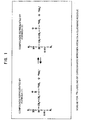
- Fig. 1 represents a schematic diagram illustrating the process for 15 N-labeling of carboxyamide nitrogen atom on a glutamine residue.
- R 1 represents a peptide chain, an N-terminal amino acid residue or a hydrogen atom
- R 2 represents a peptide chain, a C-terminal amino acid residue or a hydroxyl group.
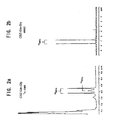
- Fig. 2a represents a 1 H NMR spectrum of 15 N-labeled CBZ-Gln-Gly.
- Fig. 2b represents a HSQC spectrum of 15 N-labeled CBZ-Gln-Gly.
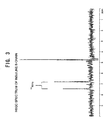
- Fig. 3 represents a HSQC spectrum of 15 N-labeled insulin B-chain.
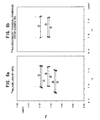
- Fig. 4a represents a HSQC spectrum of 15 N-labeled insulin A-chain.
- Fig. 4b represents a 15 N-edited NOESY spectrum of 15 N-labeled insulin A-chain.
- Fig. 5 represents a HSQC spectrum of 15 N-labeled bovine serum albumin.
- Fig. 6a represents a HSQC spectrum of ovalbumin labeled with 15 N in the presence of MTG.
- Fig. 6b represents a HSQC spectrum of ovalbumin labeled with 15 N in the presence of the transglutaminase from Guinea pig.
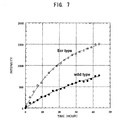
- Fig. 7 represents a diagram on which the peak intensities of signals indicated by 6 in Fig. 6a, among the glutamine residues of ovalbumin on which the wild type or Ser type transglutaminase acts in the presence of 15 NH 4 Cl, are plotted as a function of the reaction time.
- the enzyme used in the present invention may be any one inasmuch as it can act on a specific functional group of an amino acid residue of a protein to thus take part in the formation of a covalent bond therewith or the cleavage thereof.
- Preferred examples thereof include transferases, in particular, transglutaminase.
- transferases in particular, transglutaminase.
- methyl transferases also act on proteins and therefore, they may be used in the present invention (Clarke, S. et al. Proc. Natl. Acad. Sci. USA, 1988, 85:4643).
- transferases also include hydroxy-transferases and amino-transferases in addition to the foregoing ones and they may likewise be used for the achievement of the objects of the present invention.
- Transglutaminase is an enzyme widely used for a variety of industrial purposes. For instance, it has widely been used in, for instance, the production of foods such as gelatin, cheese, yoghurt, bean curd, boiled fish paste, ham, sausage and noodles and the quality-improvement of edible meat (Japanese Un-Examined Patent Publication No.64-27471). Moreover, this enzyme has been used in the production of, for instance, materials for thermally stable microcapsules and carriers for immobilized enzymes.
- the transglutaminase catalyzes the acyl transfer reaction of the ⁇ -carboxyamide of the glutamine residue present in the peptide chain of a protein molecule. In this respect, when the ⁇ -amino group on a lysine residue in the protein molecule acts as an acyl-receptor, ⁇ -( ⁇ -Glu)-Lys bonds are created in the protein molecule and between the protein molecules.
- Fig. 1 attached hereto schematically shows a method for isotopically labeling the carboxyamide nitrogen atom on the glutamine residue of a protein, using the catalytic reaction of the transglutaminase.
- Formulas (1) and (2) show two kinds of glutamine residue-containing proteins, respectively.
- R 1 represents a peptide chain, an N-terminal amino acid residue or a hydrogen atom
- R 2 represents a peptide chain, a C-terminal amino acid residue or a hydroxyl group.
- Transglutaminases are roughly divided into calcium-independent transglutaminase and calcium-dependent transglutaminase and both of them may be used in the present invention.
- Examples of the former include those derived from microorganisms such as Streptomyces and Bacillus subtilis (see, for instance, Japanese Un-Examined Patent Publication No. 64-27471).
- examples of the latter are those derived from the livers of guinea pigs (see, for instance, Japanese Examined Patent Publication No. 1-50382), human epidermal keratin cell transglutaminase (Phillips, M.A. et al. Proc. Natl. Acad. Sci.
- human blood coagulation factor XIII (Ichinose, A. et al. Biochemistry, 1990, 25:6900), those derived from microorganisms such as Oomycetes, those derived from animals such as bovine blood and porcine blood, those derived from fishes such as salmons and red sea breams (see, for instance, SEKI Nobuo et al. "Bulletin of Japan Fisheries Society", 1990, 56:125-132), and those derived from oysters.
- examples of the calcium-dependent enzymes also include those prepared by the gene engineering (see, for instance, Japanese Un-Examined Patent Publication Nos.1-300889, 6-225775 and 7-23737). Any transglutaminase may be used in the present invention irrespective of the origin and the production method of the enzyme.
- transglutaminases which can act on a larger number of glutamine residues since the use of such a transglutaminase would permit the introduction of isotopic atoms into a large number of sites.
- an enzyme reaction in a solvent containing calcium is not preferred depending on the characteristic properties of proteins to be isotopically labeled.
- the transglutaminases derived from microorganisms see, for instance, Japanese Un-Examined Patent Publication No. 64-27471) or the like may satisfy all of the foregoing requirements and they may presently be recognized to be optimum ones.
- transglutaminases derived from microorganisms such as Streptoverticillium griseocarneum IFO 12776, Streptoverticillium cinnamoneum sub sp. Cinnamoneum IFO 12852 and Streptoverticillium mobaraense IFO 13819.
- the transglutaminase from Streptoverticillium mobaraense will hereafter be referred to as "MTG".
- the unit of activity for the transglutaminases used in the present invention is determined and defined as follows.
- a reaction is carried out using benzyloxycarbonyl-L-glutaminyl glycine and hydroxylamine as substrates, followed by converting the resulting hydroxamic acid into an iron complex in the presence of trichloroacetic acid and determination of the amount thereof in terms of the absorbance thereof at a wavelength of 525 nm.
- a calibration curve is prepared on the basis of the amount of hydroxamic acid and the amount of the enzyme required for forming 1 ⁇ mol of hydroxamate per minute is defined to be the unit of activity of the enzyme, that is, one unit of the transglutaminase.
- the details of the determination method have already been reported (see, for instance, Japanese Un-Examined Patent Publication No. 64-27471).
- the proteins to be isotopically labeled according to the present invention may be a wide variety of proteins and specific examples thereof include human plasma components such as albumin, immunoglobulin and blood coagulation factors; enzymes such as proteases and transferases; hormones such as growth hormones and erythropoietin; cell proliferation factors involved in the cell proliferation and the inhibition of cell proliferation; immune reaction-regulatory factors involved in, for instance, the cell differentiation, induction and stimulation; and cell-producing biologically active proteins such as monokine, cytokine and lymphokine. Origins of these proteins are not restricted to specific ones and may be those derived from animals, plants and microorganisms. In addition, the proteins may be those from, for instance, E.coli, yeast and animal cells system, in which the genes coding for these proteins are integrated and expressed; or those expressed by using cell-free protein-synthesizing systems.
- the molecular weight of the protein to be isotopically labeled is not restricted to any specific range, but it is preferably not more than 2 x 10 5 if it is detected by NMR. In cases where the molecular weight of the protein is not less than 2 x 10 5 , the detection thereof by NMR becomes difficult because of broadening of the NMR signals and therefore, the detection thereof is performed by determination of mass spectra.
- the proteins to be isotopically labeled with the transglutaminase are those containing at least one glutamine residue in the molecule, on which the transglutaminase acts. Whether the glutamine residue in the molecule is affected by the transglutaminase or not may be confirmed by determining the NMR or mass spectra of the isotopically labeled protein. For instance, if the carboxyamide nitrogen atoms of glutamine residues are labeled with 15 N by the activity of the transglutaminase, it is sufficient to determine the 15 N edited NMR spectra such as 1 H- 15 N HSQC spectra.
- a glutamine residue affected by the transglutaminase can be introduced into the protein by the site-directed mutagenesis.
- isotopes used for labeling proteins are 2 H or 3 H for 1 H, 13 C for 12 C, 15 N for 14 N, and 17 O or 18 O for 16 O.
- proteins In case of naturally occurring proteins, they contain large number of 1 H, 12 C, 14 N and 16 O and therefore, these nuclides are frequently replaced with isotopes thereof.
- the present invention is not restricted to the isotope-labeling of hydrogen, carbon, nitrogen and/or oxygen atoms.
- the isotope is introduced into the protein through an exchange reaction with a labeled amine compound as shown in Fig. 1.
- an ammonium salt as the labeling compound and specific examples thereof include a wide variety of ammonium salts such as ammonium chloride and ammonium sulfate. More specifically, the nitrogen atom of the ammonium salt is 15 N for the labeling with 15 N or 14 N for the labeling with 14 N.
- the NMR, MS and neutron scattering techniques can recognize the isotopically labeled site.
- preferably used are NMR and MS techniques since they permit the rapid and easy analysis.
- NMR technique there has been reported a method for editing for or filtering only specific isotope nuclei.
- individual atoms present in a protein are characterized by individual chemical shifts on the NMR spectra and therefore, they can be assigned to specific sites, respectively according to the existing method.
- the 1 H- 15 N HSQC measurement corresponds to a method for editing only the 15 N nuclei and thus the method permits the confirmation of the introduction of 15 N nuclei.
- the use of the MS technique permits the determination of the site isotopically labeled on a protein molecule. For instance, if proteins prior to or after the labeling with an isotope are subjected to partial cleavage using an enzyme, there has been observed a difference in the molecular weight between the peptide fragments containing the site which was isotopically labeled.
- the sequence of the peptide fragment can be determined by a method, which comprises the step of analyzing mass spectra or MS/MS while converting it into fragments for each residue and this accordingly permits the determination of the isotopically labeled site on the protein molecule.
- the isotopically labeled site on the protein molecule can be determined by means of only the MS/MS technique without carrying out any partial cleavage of the protein with an enzyme.
- the NMR technique is preferred to use as the method for quantitatively analyzing the rate of labeling.
- the intensity of the NMR signal and the abundance ratio are correlated with each other and accordingly, the rate of labeling can be calculated on the basis of the ratio of the signal intensity due to the isotopically labeled site to that due to the un-labeled site. For instance, if 15 N nuclei are introduced into carboxyamide groups, the labeled site corresponds to 15 N- 1 H, while the un-labeled site corresponds to 14 N- 1 H. At this stage, the 15 N- 1 H is affected by the 15 N nucleus and therefore, the signal splits into doublet as will be seen from the data plotted on Fig. 2(a), but the signal for 14 N- 1 H is observed as a singlet. As a result, the ratio of 15 N-labeling can be estimated from each intensity ratio (see Examples as will be described later).
- the rate of isotope-labeling is desirably not less than 90%.
- glutamine residues on which the transglutaminase acts at a labeling ratio of not less than 90% it is sufficient to maintain the transglutaminase, a protein to be labeled and an isotope-labeling compound under the same conditions used in the usual transglutaminase reaction.
- a mixture of a protein to be labeled, an ammonium salt and a transglutaminase is maintained in an aqueous solvent, at a pH value ranging from about 5.0 to about 9.0, preferably about 6.0 to about 8.0 and at a temperature ranging from about 4°C to about 55°C and preferably about 25°C to about 40°C.
- the reaction time is not particularly restricted, but it generally ranges from about 30 seconds to about 2 days and preferably about one minute to about 2 hours.
- the concentration of the protein to be labeled desirably ranges from about 1 ⁇ M to about 40mM.
- the concentration of the ammonium salt desirably ranges from about 10 ⁇ M to about 10M and is not less than about 10 times and preferably not less than about 200 times the concentration of the protein to be labeled.
- the amount of the transglutaminase to be used desirably ranges from about 10nM to about 100 ⁇ M and this corresponds to about 0.01 to about 20 units per 1mmol of the protein.
- the present invention is not restricted to the foregoing reaction conditions and the labeling ratio may preferably be not more than 90% depending on the applications. For instance, this is applicable to the case wherein the activities of a variety of transglutaminases are evaluated by monitoring the isotope-labeling speed.
- the substrate-specificities of the transglutaminases have conventionally been compared with one another while making use of a method, which comprises analyzing the crosslinked polymer obtained through a transglutaminase reaction by electrophoresis or a method, which comprises cleaving a reaction product into fragments and then analyzing the fragments.
- the former is suited to the monitoring of an intermolecular crosslinking reaction, but it is not suited for obtaining detailed information concerning the bonding sites and the number thereof.
- the latter method requires a great deal of labor and time and there is a limit in the application thereof to a variety of transglutaminases and a variety of substrate proteins.
- the method according to the present invention permits the easy evaluation of the activities of a variety of transglutaminases including transglutaminase variants and the analysis of the substrate-specificity thereof and thus permits the screening of a specific transglutaminase suitably used in a specific application.
- To evaluate the activity of a transglutaminase and to analyze the substrate-specificity thereof it is sufficient to react a transglutaminase with a substrate protein in the presence of a labeling agent under the foregoing reaction conditions and to detect glutamine residues in the substrate protein which are isotopically labeled, for instance, to monitor the change in the labeling ratio with time using NMR technique.
- NMR technique there may be listed, for instance, an NMR technique which can selectively edit 15 N nuclei such as 1 H- 15 N HSQC.
- the method of the present invention may be used in a variety of applications by, for instance, observing any change in the reaction rate as a function of the pH value, the reaction temperature and/or the substrate concentration.
- the substrate-specificity can be analyzed or the glutamine residues susceptible to the action of a transglutaminase and less susceptible to the action can be distinguished, while making use of the fact that the glutamine residue, on which a transglutaminase acts, can be specified by using the NMR or MS technique.
- the method of the present invention permits easy examination of the activities and substrate-specificities of the existing transglutaminases, novel transglutaminases and transglutaminase variants. Therefore, the method of the invention is industrially valuable and can be applied to, for instance, the screening of transglutaminases.
- casein has been used for the quality improvement of edible meat by the use of a transglutaminase, as one of the substrates for the transglutaminase (Japanese Examined Patent Publication No. 1-50382). If a protein other than casein can improve the quality of meat, the fields of applications of the method can be expanded. Proteins, which may serve as a substrate for a transglutaminase, can be screened by the application of the method of the present invention to a variety of proteins and as a result, substrate proteins capable of being replaced with casein may be discovered.
- any protein capable of serving as a substrate for a specific transglutaminase can easily be distinguished through the use of the NMR technique.
- the method of the present invention in which a protein is labeled with an isotope through the action of an enzyme can be applied to any protein and is advantageous in that the physical properties of the protein are not adversely affected by the labeling at all, unlike the chemical modification.
- isotopically labeled proteins and the labeled sites thereof can be detected or identified by the isotope editing, the isotope filtration experiments with NMR or the molecular weight determination by the MS technique, and therefore, a technique for analyzing the functions or structures of proteins can be developed.
- the method of the present invention is carried out using a receptor protein in the presence or absence of a ligand, the ligand-binding site observed in the presence of the ligand is not labeled since it is covered with or blocked by the ligand. For this reason, if the ligand-binding site can be specified, one can design a ligand, which can more strongly be linked with the protein or the site. This would in turn result in the discovery of novel antagonists or agonists. It would be considered that the method of the invention can be applied not only to the studies of the receptor-ligand interactions, but also to the analysis of the protein-ligand interactions or protein-protein interactions.
- the NMR signals from the protons linked to 14 N atoms are often broadened because of the characteristics of 14 N, as compared with signals from the protons linked to 15 N. For this reason, the labeling with 15 N would provide a great deal of information concerning the distances and thus this in turn leads to an increase of the structural information obtained by the NMR measurement.
- the protein includes a large number of protons in the molecule and therefore, the proton NMR signals are superposed and this makes the analysis thereof difficult. In such case, conveniently used herein are isotope-editing or isotope filtration experiments, which make use of an isotopically labeled sample.
- the structural information of the glutamine residue can preferentially be extracted.
- the method of the present invention can widely be applied to a variety of fields.
- CBZ-Gln-Gly N-carbobenzoxy-L-glutaminyl-L-glycine
- the glutamine residue labeled with 15 N gave two signals on the 1 H- 15 N HSQC spectrum and therefore, this fact clearly indicated that the carboxyamide nitrogen of the glutamine residue was labeled with 15 N (see Fig. 2b). Moreover, there were observed 15 NH 2 signals and singlet 14 NH 2 signals (two groups each) splitted due to the presence of 15 N, on the 1 H-NMR spectrum. One group thereof is shown in Fig. 1a. Thus, the 15 N-labeling rate could be calculated to be 67% based on the intensity ratio of the 15 NH 2 signal to the 14 NH 2 signal on the spectrum. The foregoing results clearly indicate that the carboxyamide nitrogen of the glutamine residue can be labeled with 15 N and that the labeling rate can be quantitatively analyzed.
- the method of the present invention permits the assignment of the sites labeled with 15 N through the use of a transglutaminase or the identification of the glutamine residue serving as a transglutaminase reaction site.
- the insulin A-chain whose carboxyamide nitrogen atom on the glutamine residue had been labeled with 15 N was subjected to 15 N-edited NOESY measurement (see Fig. 4b).
- NOE or chemical exchange cross-peaks between protons of the carboxyamide group on the glutamine residue (Fig. 4b-B) or between the proton and a water molecule (Fig. 4b-A).
- NOE is a phenomenon observed between the protons present within a distance of about 0.5nm and the chemical exchange means that a specific atom is exchanged between different states, for instance, between an amide proton and a proton of a water molecule.
- bovine serum albumin (hereafter referred to as "BSA") was used as a high molecular weight protein.
- BSA bovine serum albumin
- 0.8mM of BSA 317mM of 15 NH 4 Cl and 4 ⁇ M of MTG
- 1 H- 15 N HSQC measurement after 222 minutes from the preparation of the mixture (Fig. 5).
- carboxyamide nitrogen atom is labeled with 15 N, there are observed two signals as a pair for the chemical shift ascribed to one 15 N atom since two 1 H atoms are bonded to the 15 N atom.
- a mixture comprising 1.4mM of egg white lysozyme, 415mM of 15 NH 4 Cl and 4 ⁇ m of MTG was prepared and then the resulting mixture was subjected to 1 H- 15 N HSQC measurement after 722 minutes from the preparation of the mixture.
- all of the three glutamine residues present in the egg white lysozyme were not labeled with 15 N and that the egg white lysozyme did not serve as a substrate for a transglutaminase. Accordingly, it can be concluded that any substrate protein for the transglutaminase may easily be selected by trying to isotopically label a plurality of proteins using a transglutaminase.
- transglutaminases whose molecular weights and/or amino acid sequences are different from one another.
- the kinds of glutamine residues serving as substrates and the reaction rates vary depending on the kinds of the transglutaminases and this results in the difference in the ability of crosslinking substrate proteins. Under such circumstances, the substrate specificities were simply and rapidly compared with one another using the method according to the present invention.
- the method of the present invention permits the selection or screening of a specific transglutaminase suitable for any specific application, for instance, a transglutaminase reacting with a larger number of glutamine residues or a transglutaminase reacting with a smaller number of glutamine residues.
- reaction rates will be compared with one another subsequent to Example 6.
- MTG As examples of MTG, there has been reported a variant thereof whose N-terminal aspartic acid residue is deleted (Japanese Un-Examined Patent Publication No. 11-075876). Therefore, the method of the present invention was applied to the mutant and a wild type of MTG.
- the variant whose N-terminal aspartic acid residue is deleted has a serine residue as the N-terminal and thus will hereafter be referred to as "Ser type".
- the method of the present invention permits the monitoring of the reaction rate of any glutamine residue present in a substrate protein. More specifically, it was found that the method of the present invention permits the simple and rapid screening of a variety of transglutaminases suited for specific applications such as a transglutaminase having a higher reaction rate or one having a lower reaction rate.
- any protein can be labeled with an isotope and this in turn makes the functional or structural analysis of such a protein easy.
- proteins carrying glutamine residues can be isotopically labeled by the action of transglutaminases.
- the present invention can likewise be applied to the activity-evaluation of a variety of enzymes represented by transglutaminases and the comparison of substrate-specificities of such enzymes with each other as well as the determination of substrates.
Landscapes
- Health & Medical Sciences (AREA)
- Chemical & Material Sciences (AREA)
- Immunology (AREA)
- Life Sciences & Earth Sciences (AREA)
- Molecular Biology (AREA)
- Engineering & Computer Science (AREA)
- Organic Chemistry (AREA)
- General Health & Medical Sciences (AREA)
- Hematology (AREA)
- Biochemistry (AREA)
- Medicinal Chemistry (AREA)
- Urology & Nephrology (AREA)
- Biomedical Technology (AREA)
- Physics & Mathematics (AREA)
- Biophysics (AREA)
- Analytical Chemistry (AREA)
- Microbiology (AREA)
- Cell Biology (AREA)
- General Physics & Mathematics (AREA)
- Pathology (AREA)
- Food Science & Technology (AREA)
- Genetics & Genomics (AREA)
- Proteomics, Peptides & Aminoacids (AREA)
- Biotechnology (AREA)
- Measuring Or Testing Involving Enzymes Or Micro-Organisms (AREA)
- Enzymes And Modification Thereof (AREA)
- Preparation Of Compounds By Using Micro-Organisms (AREA)
- Organic Low-Molecular-Weight Compounds And Preparation Thereof (AREA)
- Investigating Or Analysing Biological Materials (AREA)
Abstract
Description
Claims (18)
- A method for isotopically labeling a functional group possessed by an amino acid residue of a compound, comprising the step of reacting an enzyme with the compound in the presence of an isotope-labeling compound.
- The method of claim 1, wherein the compound containing the amino acid residue is a peptide, oligopeptide, polypeptide or protein.
- The method of claim 1 or 2, wherein the compound containing the amino acid residue is labelled without adding a functional group to said compound.
- The method of any of the preceding claims, wherein the compound containing the amino acid residue is labelled via an exchange reaction.
- The method of claim 4, wherein atoms are replaced by their isotopes.
- The method of any of the preceding claims, wherein the enzymatic reaction is carried out by a transferase.
- The method of any of the preceding claims, wherein the reaction is carried out by a transglutaminase.
- The method of any of the preceding claims, wherein the amino acid residue is a glutamine residue.
- The method of any of the preceding claims, wherein the isotope-labeling compound is an ammonium salt.
- The method of any of claims 7 to 9, wherein the transglutaminase is calcium-independent.
- The method of any of claims 7 to 9 wherein the transglutaminase is calcium-dependent and the reaction of the transglutaminase with the protein is conducted in the presence of calcium.
- The method of any of claims 7 to 9 wherein the transglutaminase is reacted with a protein in an aquatic environment at the pH of about pH 5.0 to pH 9.0 and the temperature of 4°C to 55°C for about 30 seconds to about 2 days.
- The method of any of claims 7 to 9 wherein the ratio of the concentration of the ammonium salt to the concentration of the protein to be labeled is more than about 10.
- The method of any of claims 7 to 9 wherein the concentration of the protein to be labeled is about 1µM to about 40mM and the concentration of the ammonium salt is about 10µM to about 10M.
- A compound obtainable by a method according to any of claims 1 to 14.
- The compound of claim 15 which is a peptide, oligopeptide, polypeptide or protein.
- The method of any of claims 1 to 14 which is used for determining the substrate specificity of the enzyme.
- A method of claim 17 wherein the enzyme is transglutaminase and which comprises the steps of(i) reacting the transglutaminase with a protein in the presence of an isotopically labeled ammonium salt, and(ii) detecting glutamine residues in the protein which are isotopically labeled by step (i).
Applications Claiming Priority (2)
| Application Number | Priority Date | Filing Date | Title |
|---|---|---|---|
| JP2000141152 | 2000-05-15 | ||
| JP2000141152 | 2000-05-15 |
Publications (3)
| Publication Number | Publication Date |
|---|---|
| EP1156330A2 true EP1156330A2 (en) | 2001-11-21 |
| EP1156330A3 EP1156330A3 (en) | 2002-07-03 |
| EP1156330B1 EP1156330B1 (en) | 2007-02-28 |
Family
ID=18648311
Family Applications (1)
| Application Number | Title | Priority Date | Filing Date |
|---|---|---|---|
| EP01111690A Expired - Lifetime EP1156330B1 (en) | 2000-05-15 | 2001-05-14 | Method for isotope labeling of protein with enzyme |
Country Status (4)
| Country | Link |
|---|---|
| US (1) | US6762041B2 (en) |
| EP (1) | EP1156330B1 (en) |
| DE (1) | DE60126865T2 (en) |
| DK (1) | DK1156330T3 (en) |
Cited By (1)
| Publication number | Priority date | Publication date | Assignee | Title |
|---|---|---|---|---|
| CN102016057A (en) * | 2008-03-14 | 2011-04-13 | 味之素株式会社 | Method of denaturing protein with enzymes |
Families Citing this family (3)
| Publication number | Priority date | Publication date | Assignee | Title |
|---|---|---|---|---|
| US20070184537A1 (en) * | 2003-06-03 | 2007-08-09 | Paul Scherrer Institut | Method for the linkage of bifunctional chelating agents and (radioactive) transition metal complexes to proteins and peptides |
| US20110064847A1 (en) * | 2008-03-14 | 2011-03-17 | Ajinomoto Co., Inc. | Method of denaturing protein with enzymes |
| US8945861B2 (en) | 2011-08-03 | 2015-02-03 | Pierce Biotechnology, Inc. | Methods for isotopically labeling biomolecules using mammalian cell-free extracts |
Family Cites Families (8)
| Publication number | Priority date | Publication date | Assignee | Title |
|---|---|---|---|---|
| US4582794A (en) * | 1982-09-15 | 1986-04-15 | The University Of Arizona Foundation | Method of determining polyamine content of biological fluids |
| JPH0665280B2 (en) | 1987-03-04 | 1994-08-24 | 味の素株式会社 | Protein gelling agent and protein gelling method using the same |
| DE3834233A1 (en) | 1988-10-07 | 1990-04-19 | Max Planck Gesellschaft | METHOD FOR DETERMINING THE ACTIVITY OF TRANSGLUTAMINASES |
| EP0572987B1 (en) * | 1992-06-02 | 1999-08-25 | Ajinomoto Co., Inc. | Process for producing bound-formed food |
| US5393669A (en) | 1993-02-05 | 1995-02-28 | Martek Biosciences Corp. | Compositions and methods for protein structural determinations |
| US5565491A (en) * | 1994-01-31 | 1996-10-15 | Bristol-Myers Squibb Company | Use of phosphotyrosine phospatase inhibitors for controlling cellular proliferation |
| JP3656277B2 (en) | 1995-05-17 | 2005-06-08 | 味の素株式会社 | Efficient production of transglutaminase by recombinant DNA method |
| US6146842A (en) * | 1998-09-21 | 2000-11-14 | Mitotix, Inc. | High-throughput screening assays utilizing metal-chelate capture |
-
2001
- 2001-05-08 US US09/850,031 patent/US6762041B2/en not_active Expired - Fee Related
- 2001-05-14 DE DE60126865T patent/DE60126865T2/en not_active Expired - Lifetime
- 2001-05-14 DK DK01111690T patent/DK1156330T3/en active
- 2001-05-14 EP EP01111690A patent/EP1156330B1/en not_active Expired - Lifetime
Cited By (1)
| Publication number | Priority date | Publication date | Assignee | Title |
|---|---|---|---|---|
| CN102016057A (en) * | 2008-03-14 | 2011-04-13 | 味之素株式会社 | Method of denaturing protein with enzymes |
Also Published As
| Publication number | Publication date |
|---|---|
| US20010044127A1 (en) | 2001-11-22 |
| DE60126865T2 (en) | 2007-10-18 |
| EP1156330B1 (en) | 2007-02-28 |
| DK1156330T3 (en) | 2007-04-02 |
| US6762041B2 (en) | 2004-07-13 |
| EP1156330A3 (en) | 2002-07-03 |
| DE60126865D1 (en) | 2007-04-12 |
Similar Documents
| Publication | Publication Date | Title |
|---|---|---|
| Jaenicke et al. | [12] Refolding and association of oligomeric proteins | |
| Wold | [75] Bifunctional reagents | |
| US20100028923A1 (en) | Cross-reactive sensors | |
| DE69839147D1 (en) | ARTIFICIAL ANTIBODY POLYPEPTIDE | |
| Shimba et al. | NMR-based screening method for transglutaminases: rapid analysis of their substrate specificities and reaction rates | |
| Reymond et al. | Substrate arrays as enzyme fingerprinting tools | |
| US6762041B2 (en) | Method for isotope labeling of protein with enzyme | |
| JP4596207B2 (en) | Isotope labeling of proteins with enzymes | |
| Loewy | The Nε-(γ-glutamic) lysine cross-link: Method of analysis, occurrence in extracellular and cellular proteins | |
| CA2365385C (en) | Use of 13c-nmr to detect binding | |
| Pollack et al. | The cell surface and malignant transformation | |
| Imperiali et al. | Peptide platforms for metal ion sensing | |
| JP2001321192A (en) | Method for preparing protein sample for structural analysis | |
| US20040038419A1 (en) | Assays and kits for detecting the presence of nitriles and/or cyanide | |
| Zajc et al. | Crystallographic and Fluorescence Studies of Ligand Binding toN-Carbamoylsarcosine Amidohydrolase fromArthrobactersp. | |
| US7280923B2 (en) | Methods for crystallographic structure determination employing hydrogen exchange analysis | |
| Eyzaguirre | An overview on chemical modification of enzymes. The use of group-specific reagents | |
| Grant et al. | Use of a fluorescence microplate reader for the detection and characterization of metal-assisted peptide hydrolysis | |
| Rialdi et al. | Thermodynamics of enzymes in unusual environments | |
| JPH07111897A (en) | Method for modifying protein or / and peptide | |
| US20190041392A1 (en) | Sensitive Detection of Protein Heterogeneity By Use Of Enzyme Cascades | |
| Fukui et al. | Molecular aspects of enzyme catalysis | |
| Lundblad | Application of solution protein chemistry to biotechnology | |
| Seiving et al. | A new assay for transglutaminase | |
| Vanella et al. | Transglutaminase activity in Yoshida ascites tumor cells |
Legal Events
| Date | Code | Title | Description |
|---|---|---|---|
| PUAI | Public reference made under article 153(3) epc to a published international application that has entered the european phase |
Free format text: ORIGINAL CODE: 0009012 |
|
| 17P | Request for examination filed |
Effective date: 20010531 |
|
| AK | Designated contracting states |
Kind code of ref document: A2 Designated state(s): AT BE CH CY DE DK ES FI FR GB GR IE IT LI LU MC NL PT SE TR |
|
| AX | Request for extension of the european patent |
Free format text: AL;LT;LV;MK;RO;SI |
|
| PUAL | Search report despatched |
Free format text: ORIGINAL CODE: 0009013 |
|
| AK | Designated contracting states |
Kind code of ref document: A3 Designated state(s): AT BE CH CY DE DK ES FI FR GB GR IE IT LI LU MC NL PT SE TR |
|
| AX | Request for extension of the european patent |
Free format text: AL;LT;LV;MK;RO;SI |
|
| AKX | Designation fees paid |
Designated state(s): DE DK FR GB |
|
| 17Q | First examination report despatched |
Effective date: 20050530 |
|
| GRAJ | Information related to disapproval of communication of intention to grant by the applicant or resumption of examination proceedings by the epo deleted |
Free format text: ORIGINAL CODE: EPIDOSDIGR1 |
|
| GRAP | Despatch of communication of intention to grant a patent |
Free format text: ORIGINAL CODE: EPIDOSNIGR1 |
|
| GRAS | Grant fee paid |
Free format text: ORIGINAL CODE: EPIDOSNIGR3 |
|
| GRAA | (expected) grant |
Free format text: ORIGINAL CODE: 0009210 |
|
| AK | Designated contracting states |
Kind code of ref document: B1 Designated state(s): DE DK FR GB |
|
| REG | Reference to a national code |
Ref country code: GB Ref legal event code: FG4D |
|
| REG | Reference to a national code |
Ref country code: DK Ref legal event code: T3 |
|
| REF | Corresponds to: |
Ref document number: 60126865 Country of ref document: DE Date of ref document: 20070412 Kind code of ref document: P |
|
| PLBE | No opposition filed within time limit |
Free format text: ORIGINAL CODE: 0009261 |
|
| STAA | Information on the status of an ep patent application or granted ep patent |
Free format text: STATUS: NO OPPOSITION FILED WITHIN TIME LIMIT |
|
| 26N | No opposition filed |
Effective date: 20071129 |
|
| REG | Reference to a national code |
Ref country code: FR Ref legal event code: PLFP Year of fee payment: 16 |
|
| PGFP | Annual fee paid to national office [announced via postgrant information from national office to epo] |
Ref country code: GB Payment date: 20160511 Year of fee payment: 16 Ref country code: DE Payment date: 20160510 Year of fee payment: 16 |
|
| PGFP | Annual fee paid to national office [announced via postgrant information from national office to epo] |
Ref country code: DK Payment date: 20160510 Year of fee payment: 16 Ref country code: FR Payment date: 20160412 Year of fee payment: 16 |
|
| REG | Reference to a national code |
Ref country code: DE Ref legal event code: R119 Ref document number: 60126865 Country of ref document: DE |
|
| REG | Reference to a national code |
Ref country code: DK Ref legal event code: EBP Effective date: 20170531 |
|
| GBPC | Gb: european patent ceased through non-payment of renewal fee |
Effective date: 20170514 |
|
| REG | Reference to a national code |
Ref country code: FR Ref legal event code: ST Effective date: 20180131 |
|
| PG25 | Lapsed in a contracting state [announced via postgrant information from national office to epo] |
Ref country code: DK Free format text: LAPSE BECAUSE OF NON-PAYMENT OF DUE FEES Effective date: 20170531 Ref country code: DE Free format text: LAPSE BECAUSE OF NON-PAYMENT OF DUE FEES Effective date: 20171201 Ref country code: GB Free format text: LAPSE BECAUSE OF NON-PAYMENT OF DUE FEES Effective date: 20170514 |
|
| PG25 | Lapsed in a contracting state [announced via postgrant information from national office to epo] |
Ref country code: FR Free format text: LAPSE BECAUSE OF NON-PAYMENT OF DUE FEES Effective date: 20170531 |