EP1156120A2 - Enzymatic resolution of selective estrogen receptor modulators - Google Patents
Enzymatic resolution of selective estrogen receptor modulators Download PDFInfo
- Publication number
- EP1156120A2 EP1156120A2 EP01303554A EP01303554A EP1156120A2 EP 1156120 A2 EP1156120 A2 EP 1156120A2 EP 01303554 A EP01303554 A EP 01303554A EP 01303554 A EP01303554 A EP 01303554A EP 1156120 A2 EP1156120 A2 EP 1156120A2
- Authority
- EP
- European Patent Office
- Prior art keywords
- lipase
- alkyl
- optionally substituted
- independently selected
- process according
- Prior art date
- Legal status (The legal status is an assumption and is not a legal conclusion. Google has not performed a legal analysis and makes no representation as to the accuracy of the status listed.)
- Granted
Links
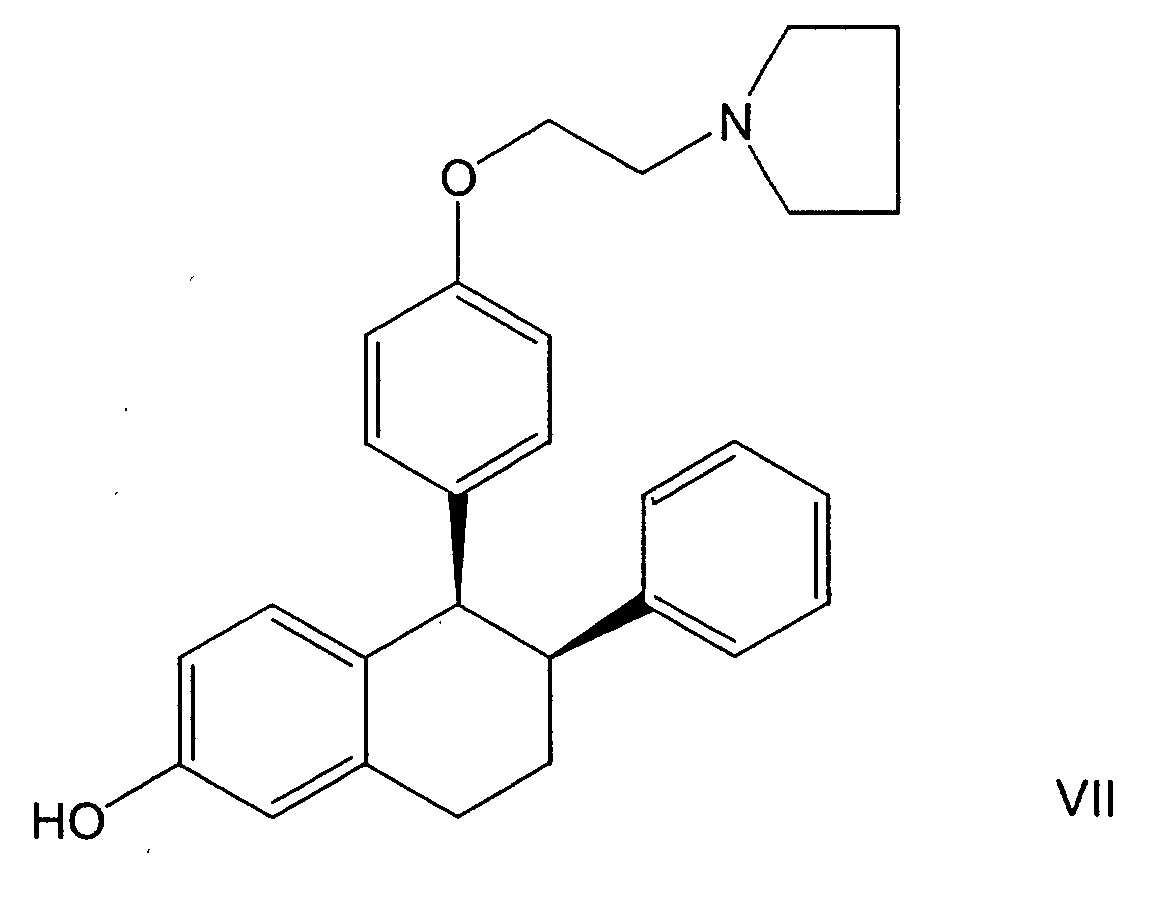
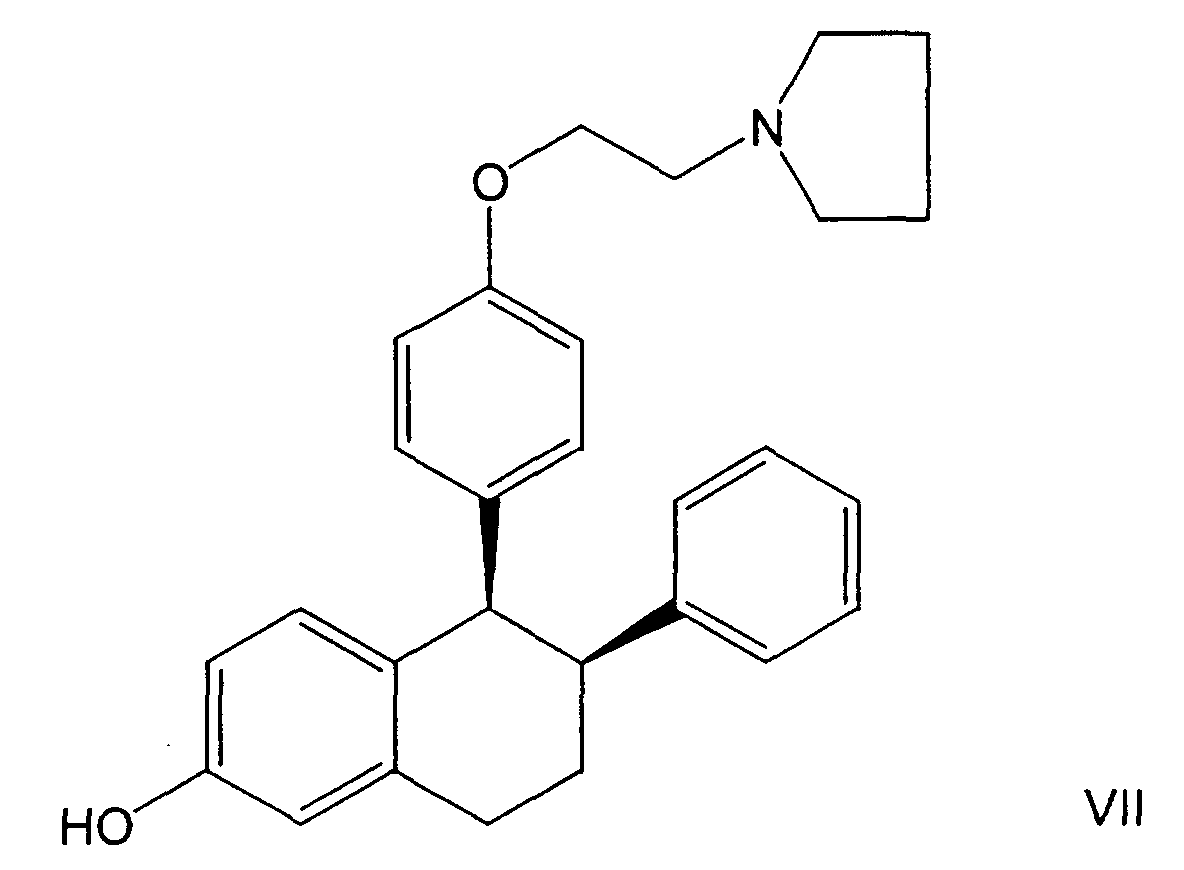
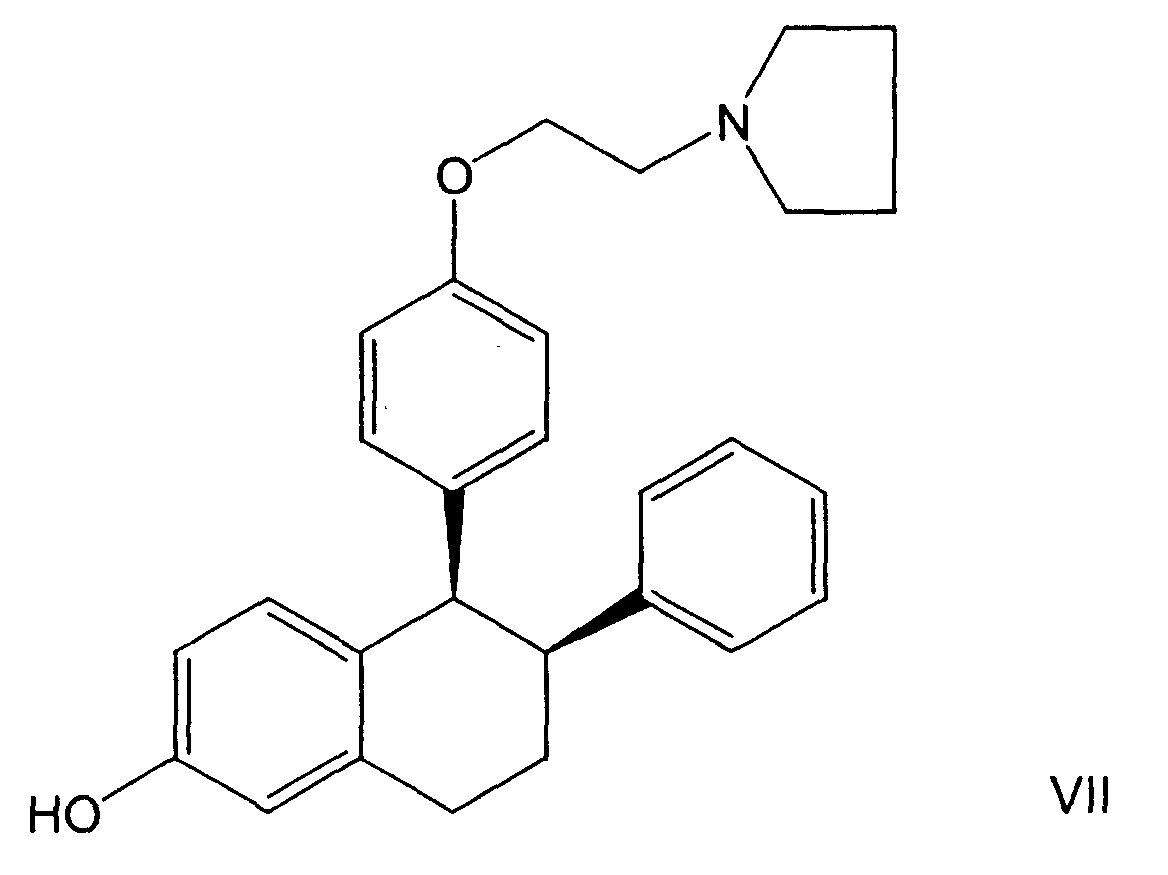
- LZBAJEXBEKXOCU-RXBHZZDJSA-N O=C(Oc1ccc([C@H](C(CC2)c3ccccc3)c(cc3)ccc3OCCN3CCCC3)c2c1)I Chemical compound O=C(Oc1ccc([C@H](C(CC2)c3ccccc3)c(cc3)ccc3OCCN3CCCC3)c2c1)I LZBAJEXBEKXOCU-RXBHZZDJSA-N 0.000 description 1
Classifications
-
- C—CHEMISTRY; METALLURGY
- C12—BIOCHEMISTRY; BEER; SPIRITS; WINE; VINEGAR; MICROBIOLOGY; ENZYMOLOGY; MUTATION OR GENETIC ENGINEERING
- C12P—FERMENTATION OR ENZYME-USING PROCESSES TO SYNTHESISE A DESIRED CHEMICAL COMPOUND OR COMPOSITION OR TO SEPARATE OPTICAL ISOMERS FROM A RACEMIC MIXTURE
- C12P17/00—Preparation of heterocyclic carbon compounds with only O, N, S, Se or Te as ring hetero atoms
- C12P17/16—Preparation of heterocyclic carbon compounds with only O, N, S, Se or Te as ring hetero atoms containing two or more hetero rings
- C12P17/165—Heterorings having nitrogen atoms as the only ring heteroatoms
-
- A—HUMAN NECESSITIES
- A61—MEDICAL OR VETERINARY SCIENCE; HYGIENE
- A61P—SPECIFIC THERAPEUTIC ACTIVITY OF CHEMICAL COMPOUNDS OR MEDICINAL PREPARATIONS
- A61P19/00—Drugs for skeletal disorders
- A61P19/08—Drugs for skeletal disorders for bone diseases, e.g. rachitism, Paget's disease
- A61P19/10—Drugs for skeletal disorders for bone diseases, e.g. rachitism, Paget's disease for osteoporosis
-
- A—HUMAN NECESSITIES
- A61—MEDICAL OR VETERINARY SCIENCE; HYGIENE
- A61P—SPECIFIC THERAPEUTIC ACTIVITY OF CHEMICAL COMPOUNDS OR MEDICINAL PREPARATIONS
- A61P5/00—Drugs for disorders of the endocrine system
- A61P5/24—Drugs for disorders of the endocrine system of the sex hormones
-
- C—CHEMISTRY; METALLURGY
- C12—BIOCHEMISTRY; BEER; SPIRITS; WINE; VINEGAR; MICROBIOLOGY; ENZYMOLOGY; MUTATION OR GENETIC ENGINEERING
- C12P—FERMENTATION OR ENZYME-USING PROCESSES TO SYNTHESISE A DESIRED CHEMICAL COMPOUND OR COMPOSITION OR TO SEPARATE OPTICAL ISOMERS FROM A RACEMIC MIXTURE
- C12P17/00—Preparation of heterocyclic carbon compounds with only O, N, S, Se or Te as ring hetero atoms
- C12P17/10—Nitrogen as only ring hetero atom
-
- C—CHEMISTRY; METALLURGY
- C12—BIOCHEMISTRY; BEER; SPIRITS; WINE; VINEGAR; MICROBIOLOGY; ENZYMOLOGY; MUTATION OR GENETIC ENGINEERING
- C12P—FERMENTATION OR ENZYME-USING PROCESSES TO SYNTHESISE A DESIRED CHEMICAL COMPOUND OR COMPOSITION OR TO SEPARATE OPTICAL ISOMERS FROM A RACEMIC MIXTURE
- C12P17/00—Preparation of heterocyclic carbon compounds with only O, N, S, Se or Te as ring hetero atoms
- C12P17/10—Nitrogen as only ring hetero atom
- C12P17/12—Nitrogen as only ring hetero atom containing a six-membered hetero ring
-
- C—CHEMISTRY; METALLURGY
- C12—BIOCHEMISTRY; BEER; SPIRITS; WINE; VINEGAR; MICROBIOLOGY; ENZYMOLOGY; MUTATION OR GENETIC ENGINEERING
- C12P—FERMENTATION OR ENZYME-USING PROCESSES TO SYNTHESISE A DESIRED CHEMICAL COMPOUND OR COMPOSITION OR TO SEPARATE OPTICAL ISOMERS FROM A RACEMIC MIXTURE
- C12P17/00—Preparation of heterocyclic carbon compounds with only O, N, S, Se or Te as ring hetero atoms
- C12P17/16—Preparation of heterocyclic carbon compounds with only O, N, S, Se or Te as ring hetero atoms containing two or more hetero rings
-
- C—CHEMISTRY; METALLURGY
- C12—BIOCHEMISTRY; BEER; SPIRITS; WINE; VINEGAR; MICROBIOLOGY; ENZYMOLOGY; MUTATION OR GENETIC ENGINEERING
- C12P—FERMENTATION OR ENZYME-USING PROCESSES TO SYNTHESISE A DESIRED CHEMICAL COMPOUND OR COMPOSITION OR TO SEPARATE OPTICAL ISOMERS FROM A RACEMIC MIXTURE
- C12P41/00—Processes using enzymes or microorganisms to separate optical isomers from a racemic mixture
- C12P41/003—Processes using enzymes or microorganisms to separate optical isomers from a racemic mixture by ester formation, lactone formation or the inverse reactions
- C12P41/004—Processes using enzymes or microorganisms to separate optical isomers from a racemic mixture by ester formation, lactone formation or the inverse reactions by esterification of alcohol- or thiol groups in the enantiomers or the inverse reaction
-
- C—CHEMISTRY; METALLURGY
- C12—BIOCHEMISTRY; BEER; SPIRITS; WINE; VINEGAR; MICROBIOLOGY; ENZYMOLOGY; MUTATION OR GENETIC ENGINEERING
- C12Y—ENZYMES
- C12Y301/00—Hydrolases acting on ester bonds (3.1)
- C12Y301/01—Carboxylic ester hydrolases (3.1.1)
-
- C—CHEMISTRY; METALLURGY
- C12—BIOCHEMISTRY; BEER; SPIRITS; WINE; VINEGAR; MICROBIOLOGY; ENZYMOLOGY; MUTATION OR GENETIC ENGINEERING
- C12Y—ENZYMES
- C12Y301/00—Hydrolases acting on ester bonds (3.1)
- C12Y301/01—Carboxylic ester hydrolases (3.1.1)
- C12Y301/01013—Sterol esterase (3.1.1.13)
Definitions
- the present invention relates to a process for preparing 5-substitued-6-cyclic-5,6,7,8-tetrahydronaphthalen-2-ol compounds useful as an estrogen agonist.
- estrogens and synthetic compounds demonstrating "estrogenic" activity has been in their medical and therapeutic uses.
- a traditional listing of the therapeutic applications for estrogens alone or in combination with other active agents includes: oral contraception; relief for the symptoms of menopause; prevention of threatened or habitual abortion; relief of dysmenorrhea; relief of dysfunctional uterine bleeding; an aid in ovarian development; treatment of acne; diminution of excessive growth of body hair in women (hirsutism); the prevention of cardiovascular disease; treatment of osteoporosis; treatment of prostatic carcinoma; and suppression of post-partum lactation [Goodman and Gilman, The Pharmacological Basis of Therapeutics (Seventh Edition) Macmillan Publishing Company, 1985, pages 1421-1423]. Accordingly, there has been increasing interest in finding newly synthesized compounds and new uses for previously known compounds which are demonstrably estrogenic, this is, able to mimic the action of estrogen in estrogen responsive tissue.
- Osteoporosis is a systemic skeletal disease, characterized by low bone mass and deterioration of bone tissue, with a consequent increase in bone fragility and susceptibility to fracture.
- the condition affects more than 25 million people and causes more than 1.3 million fractures each year, including 500,000 spine, 250,000 hip and 240,000 wrist fractures annually. These cost the nation over $10 billion. Hip fractures are the most serious, with 5% - 20% of patients dying within one year, and over 50% of survivors being incapacitated.
- the elderly are at greatest risk of osteoporosis, and the problem is therefore predicted to increase significantly with the aging of the population.
- Worldwide fracture incidence is forecast to increase three-fold over the next 60 years, and one study estimates that there will be 4.5 million hip fractures worldwide in 2050.
- Estrogen is the agent of choice in preventing osteoporosis or post menopausal bone loss in women; it is the only treatment which unequivocally reduces fractures.
- estrogen stimulates the uterus and is associated with an increased risk of endometrial cancer. Although the risk of endometrial cancer is thought to be reduced by a concurrent use of a progestogen, there is still concern about possible increased risk of breast cancer with the use of estrogen.
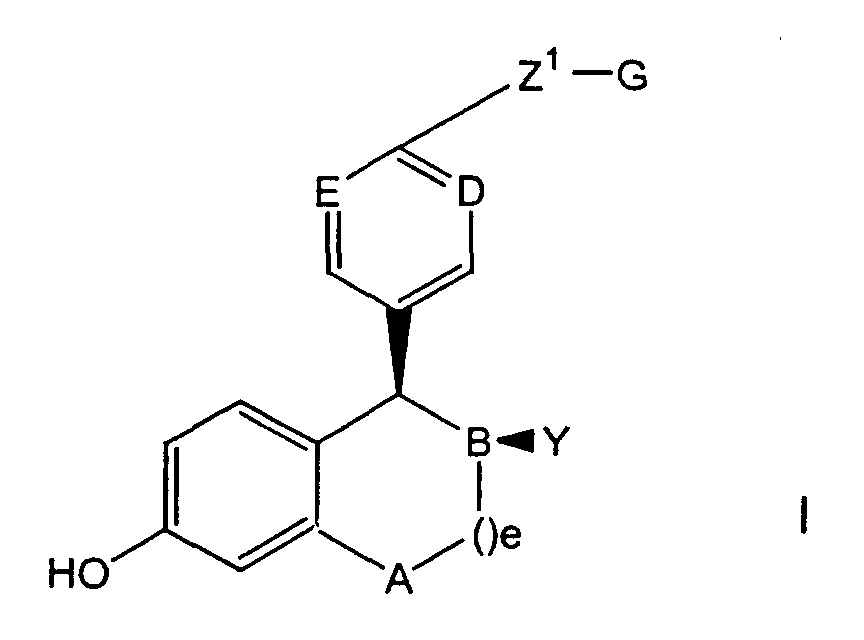
- the present invention relates to a process (Process A) for preparing a compound of the formula wherein:
- GC-4, PS30, AY30, PGE, AK, N, L-10, AP-12, FAP-15, R-10, G, MAP10 and SAM II are names of lipase enzymes used in this invention and sold by Amano Chemical Co., 1157 North Main Street, Lombard, IL 60148.
- lipase from Pseudomonas fluorescens lipase from Candida cylindracea, lipase from Mucor miehei, lipase from Wheat germ, lipase from Rhizopus arrhizus , lipase from Mucor javanicus , lipase from Pseudomonas cepacia, lipase from Cadia lipolytica and lipase from Penicillium roqueforti
- lipoprotein lipase ca#70-6571-01, and lipoprotein lipase ca# 70-1481-01 are names of lipase enzymes used in this invention and sold by Genzyme Chemical Co., One Kendall Square, Cambridge, MA 02139.
- lipase from Candida cylindracea lipase from Chromobacterium viscosum, lipase from Mucor miehei, lipase from Pancreatic, lipase from Pseudomonas fluorescens and lipase from Rhizopus niveus
- lipase enzymes used in this invention and sold by Recombinant Biocatalysis Chemical Co., 512 Elmwood Avenue, Sharon Hill, PA 19079.
- PPL, type II is a name of a lipase enzyme used in this invention and sold by Sigma Chemical Co., P. O. Box 14508, St. Louis, MO 63178.
- Lip-300 is a name of a lipase enzyme used in this invention and sold by TOYOBO Chemical Co., 1450 Broadway, New York, NY 10018.
- esterase enzymes used in this invention and sold by Fluka Chemical Co., 1001 West St. Paul Avenue, Milwaukee, WI 53233.
- cholesterol esterase from Porcine pancreas cholesterol esterase from Bovine pancreas, cholesterol esterase from Pseudonomas fluorescens, cholesterol esterase from Porcine liver, cholesterol esterase from Rabbit liver, cholinesterase, cholinesterase from Electric eel, cholinesterase, choloylglycine hydrolase and Porcine liver E-3128
- esterase enzymes used in this invention are names of esterase enzymes used in this invention and sold by Sigma Chemical Co., P. O. Box 14508, St. Louis, MO 63178.
- cholesterin-esterase and cholesterin esterase from Pseudonomas fluorescens are names of esterase enzymes used in this invention and sold by Boehringer Mannheim Chemical Co., 9115 Hague Road, Indianapolis, IN 46250.
- the present invention further relates to Process A wherein the hydrolytic enzyme is lipase.
- the present invention further relates to Process A wherein the hydrolytic enzyme is esterase.
- the present invention further relates to Process A wherein the hydrolytic enzyme is liver acetone powder.
- the present invention further relates to Process A wherein the lipase is GC-4, PS30, AY30, PGE, AK, N, L-10, AP-12, FAP-15, R-10, G, MAP10, SAM II, lipase from Pseudomonas fluorescens, lipase from Candida cylindracea, Lip-300, lipase from Chromobacterium viscosum, lipase from Mucor miehei, lipase from Pancreatic, Pseudomonas fluorescens, lipase from Rhizopus niveus, PPL, type II, lipase from Wheat germ, lipase from Rhizopus arrhizus , lipase from Mucor javanicus, lipase from Pseudomonas cepacia, lipase from Cadia lipolytica, lipase from Penicillium roqueforti, lipoprotein lipase
- the present invention further relates to Process A wherein the esterase is PLE-A, immobilized, hog liver, esterase from Hog pancreas , Porcine liver E-3128, cholesterin-esterase, cholesterol esterase from Pseudonomas fluorescens, cholesterol esterase from Porcine pancreas, cholesterol esterase from Bovine pancreas, cholesterol esterase from Pseudonomas fluorescens, cholesterol esterase from Porcine liver, cholesterol esterase from Rabbit liver, cholinesterase, cholinesterase from Electric eel, cholinesterase, choloylglycine hydrolase, esterase from Thermoanaerobium brockii, esterase from Bacillus sp and esterase from Mucor miehi.
- the esterase is PLE-A, immobilized, hog liver, esterase from Hog pancreas , Porcine liver E-3128, cholesterin-esterase, cholesterol esterase from Pseu
- the present invention further relates to Process A wherein the liver acetone powder is cat l-1256, dog l7379, eel l-1266, horse l9627, calf l7876, guinea pig l1631, mouse l8254, goat l2635, chicken l8001, sheep l0132, pigeon l8376, seal l7627, rattlesnake l9885, trout l5131, turtle l-0757, rat l1380, lungfish l7377, salmon l7502, eel (electrophorus electricus) 18380 and lemon shark 11130.
- the liver acetone powder is cat l-1256, dog l7379, eel l-1266, horse l9627, calf l7876, guinea pig l1631, mouse l8254, goat l2635, chicken l8001, sheep l0132, pigeon l8376, seal
- the present invention further relates to Process A wherein the hydrolytic enzyme is immobilized on a solid support.
- the present invention further relates to Process A wherein the hydrolytic enzyme is in pure crystalline form.
- the present invention further relates to Process A wherein the aqueous buffer solution is a phosphate, citric acid or boronic acid solution.
- the present invention further relates to Process A wherein the aqueous buffer solution has a pH between a pH of about 6 to a pH of about 8.
- the present invention relates to a process for preparing a compound of the formula comprising selectively deacetylating a compound of the formula wherein R 1 is (C 1 -C 6 )alkyl, (C 2 -C 6 )alkenyl, (C 2 -C 6 )alkynyl wherein the alkyl, alkenyl or alkynyl groups are optionally substituted by one to three halo in the presence of a hydrolytic enzyme and an aqueous buffer solution.
- the present invention relates to a process (Process B) for preparing a compound of the formula: wherein:
- the present invention further relates to Process B wherein the aqueous buffer solution is a phosphate, citric acid or boronic acid solution.
- the present invention further relates to Process B wherein the lipase from Mucor miehei.
- the present invention further relates to Process B wherein the base is sodium methoxy, sodium hydroxide, lithium hydroxide or potassium hydroxide.
- the present invention further relates to Process B wherein the polar protic solvent is methanol, ethanol or water.
- the present invention further relates to Process B wherein the lipase is immobilized on a solid support.
- the present invention further relates to Process B wherein the lipase is a cross-linked enzyme.
- the present invention further relates to Process B wherein the lipase is in pure crystalline form.
- the present invention relates to a process for preparing a compound of the formula comprising enzymatically resolving of a compound of the formula wherein R 1 is (C 1 -C 6 )alkyl, (C 2 -C 6 )alkenyl, (C 2 -C 6 )alkynyl wherein the alkyl, alkenyl or alkynyl groups are optionally substituted by one to three halo in the presence of a lipase and an aqueous buffer solution; and (b) reacting the compound of Formula X so formed wherein R 1 is as defined above, with a base in the presence of a polar protic solvent.
- the present invention relates to a process (Process C) for preparing a compound of the formula: wherein:
- the present invention further relates to Process C wherein the hydrolytic enzyme is a lipase.
- the present invention further relates to Process C wherein the lipase is GC-4, PS30, AY30, PGE, AK, N, L-10, AP-12, FAP-15, R-10, G, MAP10, SAM II, lipase from Pseudomonas fluorescens, lipase from Candida cylindracea, Lip-300, lipase from Chromobacterium viscosum, lipase from Mucor miehei, lipase from Pancreatic, lipase from Pseudomonas fluorescens, lipase from Rhizopus niveus, PPL, type II, lipase from Wheat germ, lipase from Rhizopus arrhizus , lipase from Mucor javanicus, lipase from Pseudomonas cepacia, lipase from Cadia lipolytica, lipase from Penicillium roqueforti, lipo
- the present invention further relates to Process C wherein the acetylating agent is ethyl acetate, vinyl acetate, chloroacetate or trifluoroacetate.
- the present invention further relates to Process C wherein the base is sodium methoxy, sodium hydroxide, lithium hydroxide or potassium hydroxide.
- the present invention further relates to Process C wherein the polar protic solvent is methanol, ethanol or water.
- the present invention further relates to Process C wherein the lipase is immobilized on a solid support.
- the present invention further relates to Process C wherein the lipase is a cross-linked enzyme.
- the present invention further relates to Process C wherein the lipase is in pure crystalline form.
- the present invention relates to a process for preparing a compound of the formula comprising enzymatically resolving of a compound of the formula in the presence of a lipase and acetylating agent, and (b) reacting the compound of Formula X so formed wherein R 1 is (C 1 -C 6 )alkyl, (C 2 -C 6 )alkenyl, (C 2 -C 6 )alkynyl wherein the alkyl, alkenyl or alkynyl groups are optionally substituted by one to three halo, with a base in the presence of a polar protic solvent.
- the present invention relates to a process (Process D) for preparing a compound of the formula: wherein:
- the present invention further relates to Process D wherein the lipase is Mucor miehei.
- the present invention further relates to Process D wherein the lipase is immobilized on a solid support.
- the present invention further relates to Process D wherein the lipase is a cross-linked enzyme.
- the present invention further relates to Process D wherein the lipase is in pure crystalline form.
- the present invention relates to a process for preparing a compound of the formula comprising enzymatically resolving of a compound of the formula in the presence of lipase.
- the starting materials for the present invention are prepared according to United States Patent 5,552,412, which is incorporated by reference in its entirety.
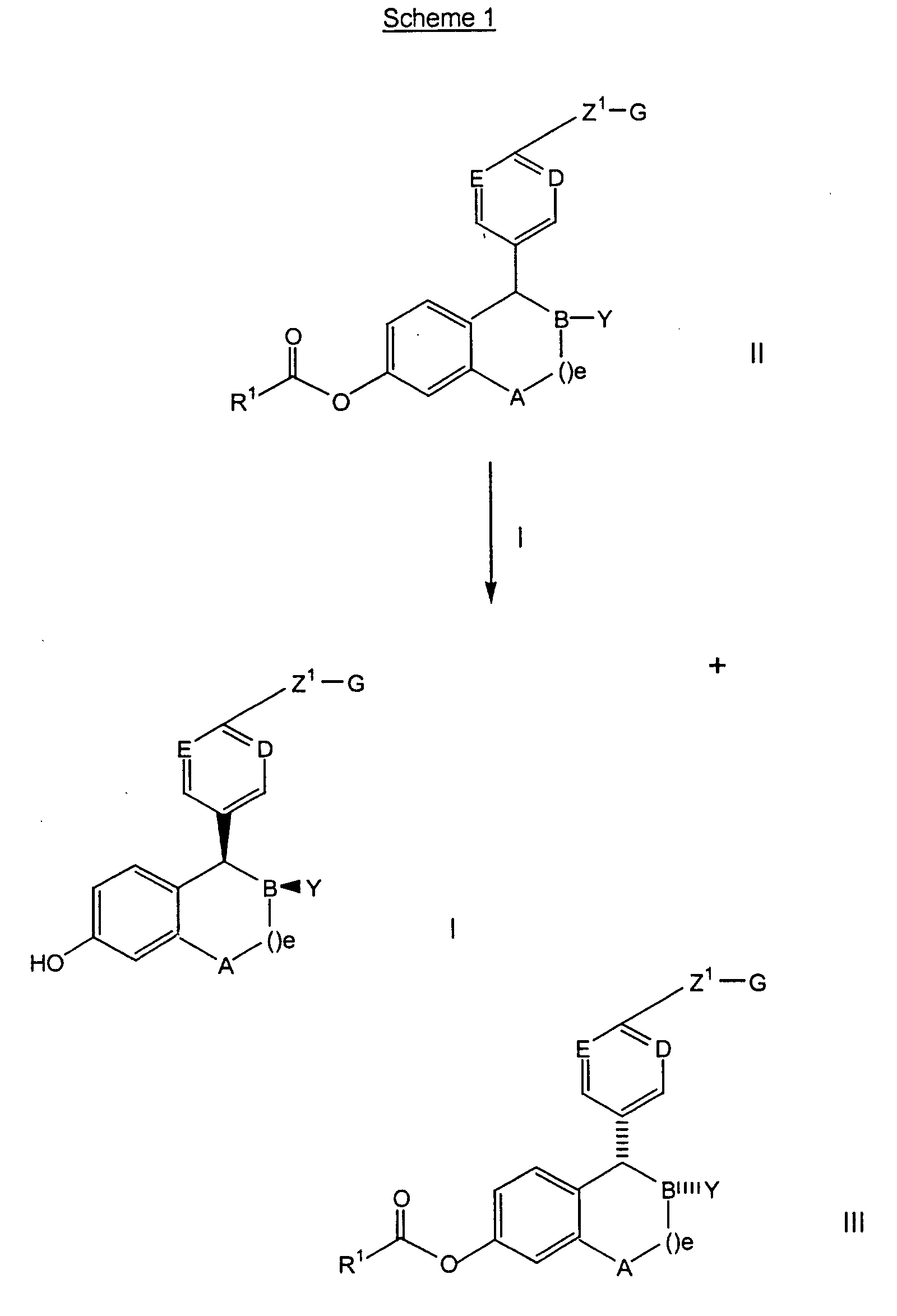
- reaction 1 of Scheme 1 the compound of formula II is converted to the corresponding compounds of formulas I and III by enzymatic resolution of II in the presence of a hydrolytic enzyme, mobilized or immobilized on different solid support, a cross-linked enzyme or a crystallized enzyme.
- Hydrolytic enzymes include (a) lipase (GC-4, PS30, AY30, PGE, AK, N, L-10, AP-12, FAP-15, R-10, G, MAP10, SAM II, lipase from Pseudomonas fluorescens, lipase from Candida cylindracea, Lip-300, lipase from Chromobacterium viscosum, lipase from Mucor miehei, lipase from Pancreatic, lipase from Pseudomonas fluorescens, lipase from Rhizopus niveus, PPL, type II, lipase from Wheat germ, lipase from Rhizopus arrhizus , lipase from Mucor javanicus, lipase from Pseudomonas cepacia, lipase from Cadia lipolytica, lipase from Penicillium roqueforti, lipoprotein lipase
- the reaction is carried out in an aqueous buffer solution, such as a phosphate, citric acid or boronic acid buffer, with or without an organic solvent, such as methylene chloride, tetrahyfrofuran, acetone, dimethyl formamide or dioxane.
- the buffer solution has a pH of about 6 to a pH of about 8, preferably a pH of about 7.
- the reaction is stirred at a temperature between room temperature to about 65°C, preferably about 25°C to about 40°C, for a time period dependent upon the enzyme employed and the desired enantiomeric excess conversion of the racemic mixture.
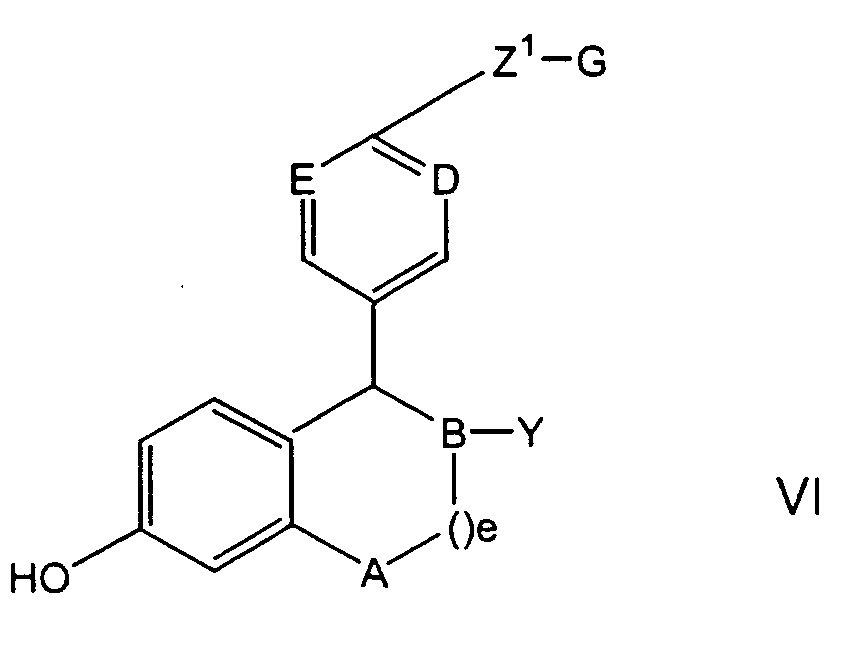
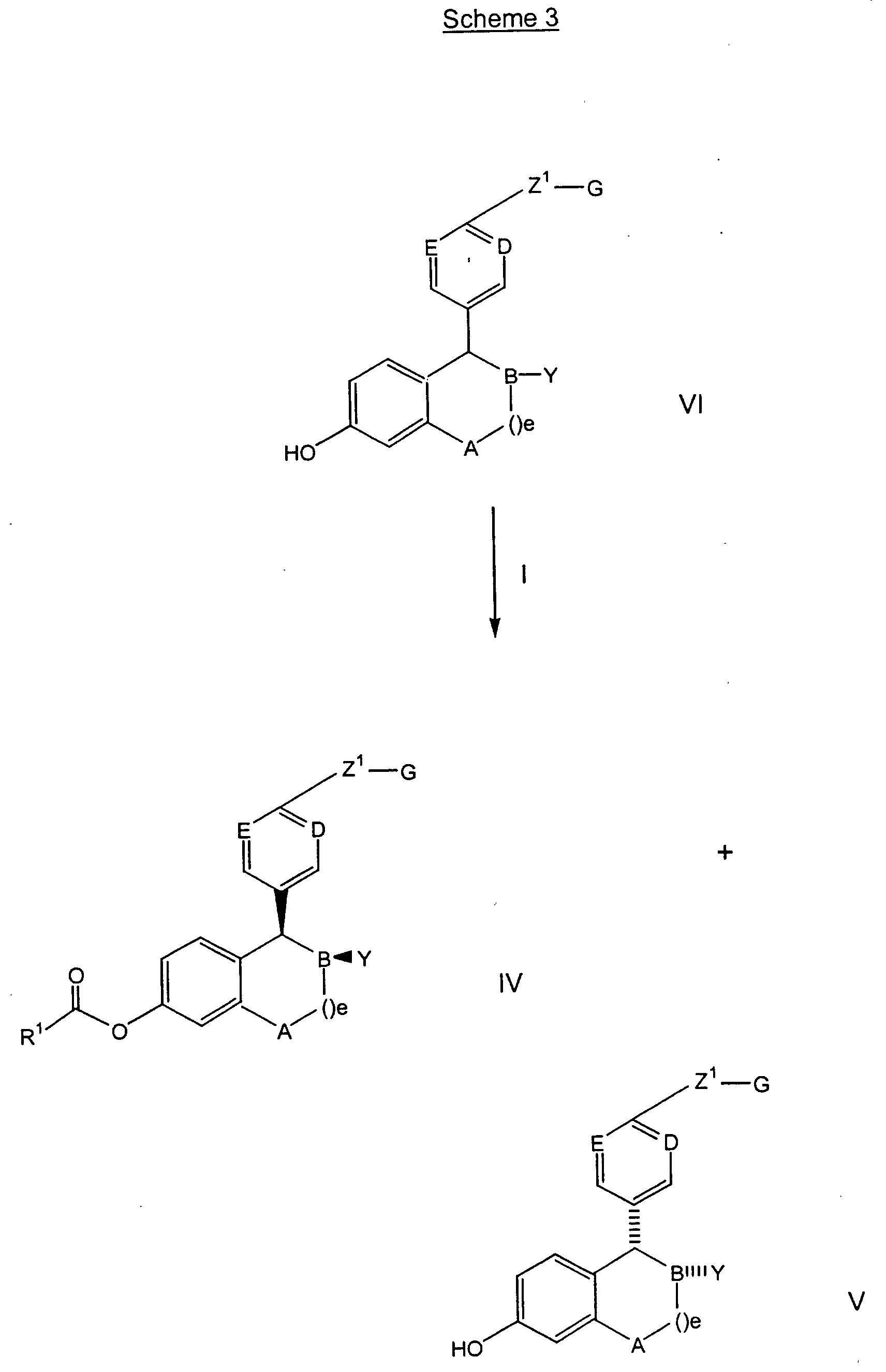
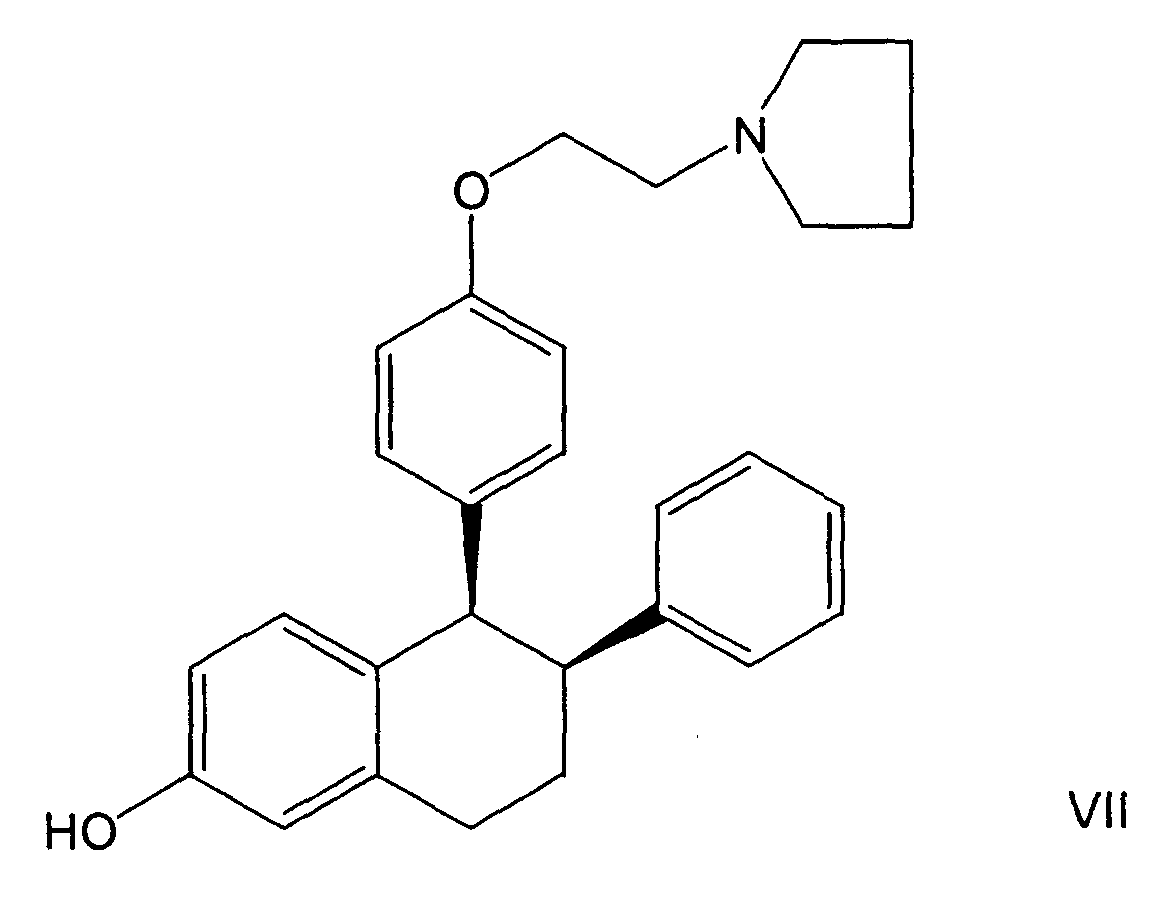
- reaction I of Scheme 2 the compound of formula II is converted to the corresponding compounds of formulas IV and V by enzymatic resolution of II with a lipase, such as Mucor miehei, according to the procedure described above in reaction I of Scheme 1 .
- a lipase such as Mucor miehei
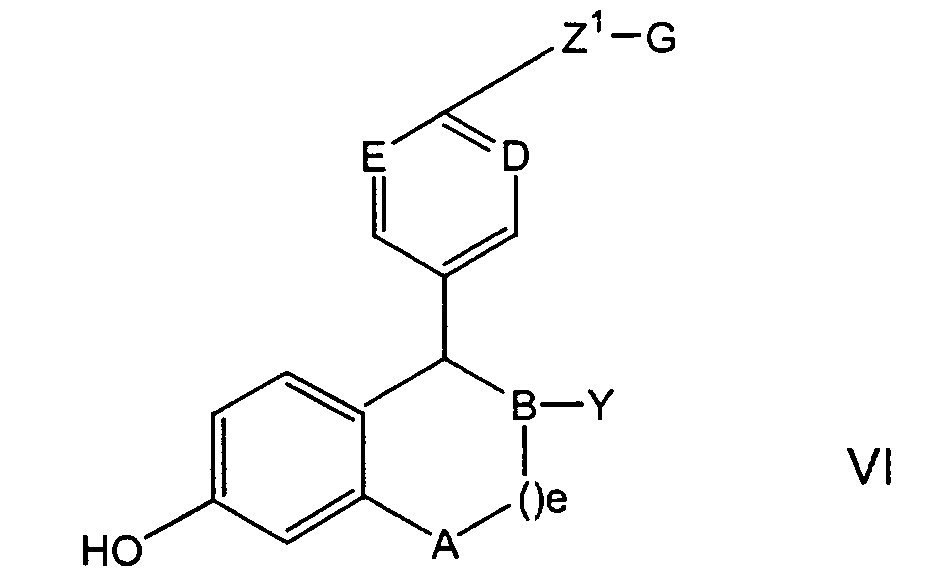
- the compound of formula VI is converted to the corresponding compounds of formulas IV and V by enzymatic resolution of VI with a lipase (GC-4, PS30, AY30, PGE, AK, N, L-10, AP-12, FAP-15, R-10, G, MAP10, SAM II, lipase from Pseudomonas fluorescens, lipase from cylindracea, Lip-300, lipase from Candida cylindracea, lipase from Chromobacterium viscosum, lipase from Mucor miehei, lipase from Pancreatic, lipase from Pseudomonas fluorescens, lipase from Rhizopus niveus, PPL, type II, lipase from Wheat germ, lipase from Rhizopus arrhizus, lipase from Mucorjavanicus, lipase from Pseudomonas cepaci
- the reaction is stirred in an aprotic solvent, such as methylene chlorine, ethylene glycol, dimethyl ether, dichloroethane, hexane, tetrahydrofuran and dioxane, at a temperature between room temperature to about 65°C, preferabloy about 25°C to about 40°C, for a time period dependent upon the enzyme employed and the desired enantiomeric excess conversion of the racemic mixture.
- an aprotic solvent such as methylene chlorine, ethylene glycol, dimethyl ether, dichloroethane, hexane, tetrahydrofuran and dioxane
- reaction I of Scheme 4 the compound of formula VI is converted to the corresponding compounds of formulas of I and III by enzymatic resolution of II with a lipase, such as Mucor miehei.
- the reaction is stirred in an aprotic solvent, such as methylene chlorine, ethylene glycol, dimethyl ether, dichloroethane, hexane, tetrahydrofuran and dioxane, at a temperature between room temperature to about 65°C, preferably about 25°C to about 40°C, for a time period dependant upon the enzyme employed and the desired enantiomeric excess conversion of the racemic mixture.
- an aprotic solvent such as methylene chlorine, ethylene glycol, dimethyl ether, dichloroethane, hexane, tetrahydrofuran and dioxane
- reaction I of Scheme 5 the compound of formula IV is converted to the corresponding compound of formula I by deacetylating IV with a base, such as sodium methoxy, sodium hydroxide, lithium hydroxide or potassium hydroxide, in a polar protic solvent, such as methanol ethanol or water.
- a base such as sodium methoxy, sodium hydroxide, lithium hydroxide or potassium hydroxide
- a polar protic solvent such as methanol ethanol or water.
- the reaction is stirred at room temperature for a time period between about 1 hour and about 24 hours, preferably about 6 hours.
Landscapes
- Chemical & Material Sciences (AREA)
- Organic Chemistry (AREA)
- Engineering & Computer Science (AREA)
- Life Sciences & Earth Sciences (AREA)
- Wood Science & Technology (AREA)
- Zoology (AREA)
- Health & Medical Sciences (AREA)
- Bioinformatics & Cheminformatics (AREA)
- General Health & Medical Sciences (AREA)
- General Chemical & Material Sciences (AREA)
- Biochemistry (AREA)
- Chemical Kinetics & Catalysis (AREA)
- General Engineering & Computer Science (AREA)
- Genetics & Genomics (AREA)
- Microbiology (AREA)
- Biotechnology (AREA)
- Physical Education & Sports Medicine (AREA)
- Medicinal Chemistry (AREA)
- Nuclear Medicine, Radiotherapy & Molecular Imaging (AREA)
- Rheumatology (AREA)
- Veterinary Medicine (AREA)
- Public Health (AREA)
- Animal Behavior & Ethology (AREA)
- Pharmacology & Pharmacy (AREA)
- Orthopedic Medicine & Surgery (AREA)
- Analytical Chemistry (AREA)
- Diabetes (AREA)
- Endocrinology (AREA)
- Preparation Of Compounds By Using Micro-Organisms (AREA)
- Acyclic And Carbocyclic Compounds In Medicinal Compositions (AREA)
- Pharmaceuticals Containing Other Organic And Inorganic Compounds (AREA)
- Indole Compounds (AREA)
- Organic Low-Molecular-Weight Compounds And Preparation Thereof (AREA)
Abstract
Description

















Claims (40)
- A process for preparing a compound of the formula:wherein:
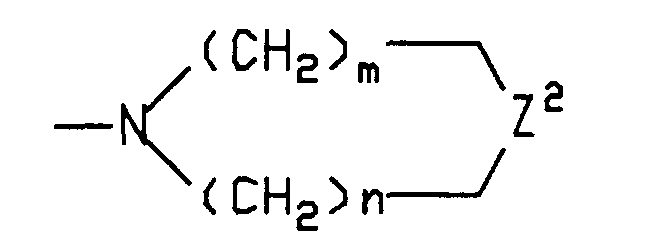
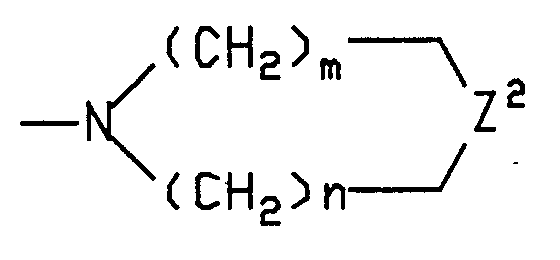
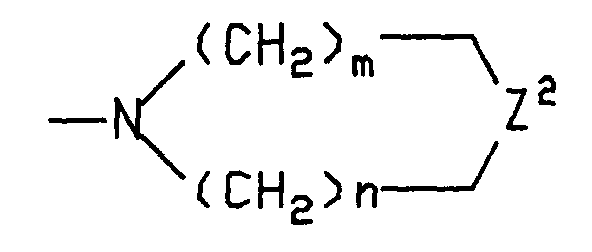
 A is selected from CH2 and NR;B, D and E are independently selected from CH and N;Y is(a) phenyl, optionally substituted with 1-3 substituents independently selected from R4;(b) naphthyl, optionally substituted with 1-3 substituents independently selected from R4;(c) C3-C8 cycloalkyl, optionally substituted with 1-2 substituents independently selected from R4;(d) C3-C8 cycloalkynyl, optionally substituted with 1-2 substituents independently selected from R4;(e) a five membered heterocycle containing up to two heteroatoms selected from the group consisting of -O-, -NR2-and -S(O)n-, optionally substituted with 1-3 substituents independently selected from R4;(f) a six membered heterocycle containing up to two heteroatoms selected from the group consisting of -O-, -NR2- and -S(O)n-optionally substituted with 1-3 substituents independently selected from R4; or(g) a bicyclic ring system consisting of a five or six membered heterocyclic ring fused to a phenyl ring, said heterocyclic ring containing up to two heteroatoms selected from the group consisting of -O-, -NR2-, NR2- and -S(O)n-, optionally substituted with 1-3 substituents independently selected from R4;Z1 is(a) -(CH2)p W(CH2)q-;(b) -O(CH2)p CR5R6-;(c) -O(CH2)pW(CH2)q;(d) -OCHR2CHR3-; or(e) -SCHR2CHR3-;G is(a) -NR7R8;(b)wherein n is 0,1 or 2; m is 1, 2 or 3; Z2 is -NH-, -O-, -S-, or -CH2-; optionally fused on adjacent carbon atoms with one or two phenyl rings and, optionally independently substituted on carbon with one to three substituents and, optionally, independently on nitrogen with a chemically suitable substituent selected from R4; or
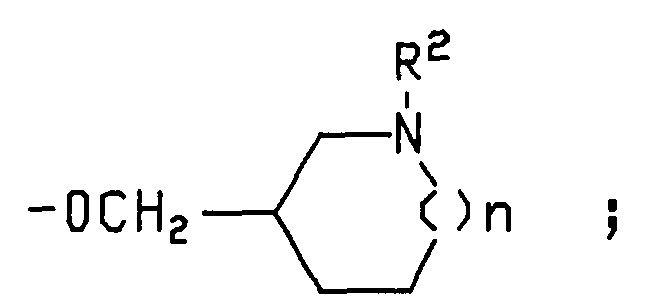
 (c) a bicyclic amine containing five to twelve carbon atoms, either bridged or fused and optionally substituted with 1-3 substituents independently selected from R4;Z1 and G in combination may be
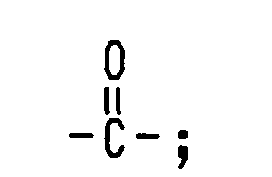
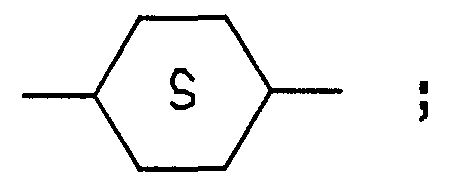
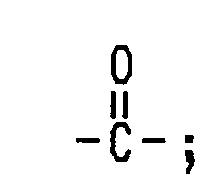
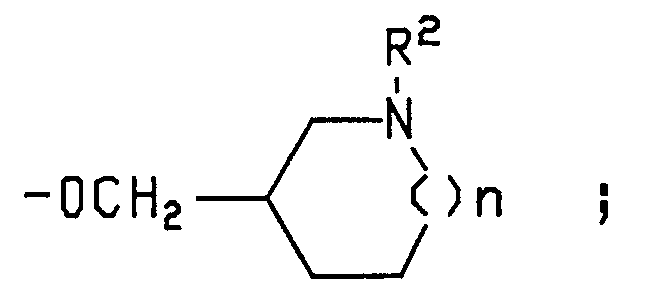
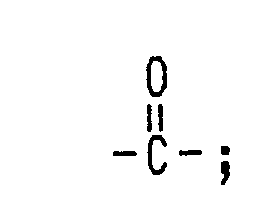
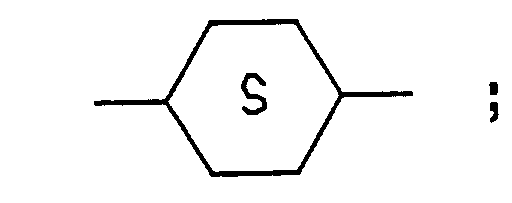
 W is(a) -CH2-;(b) -CH=CH-;(c) -O-;(d) -NR2-;(e) -S(O)n-;(f)
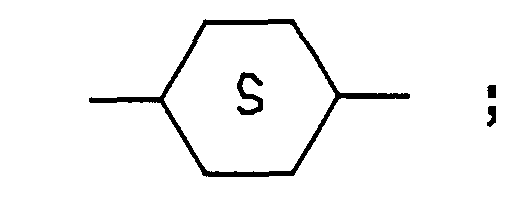
 (g) -CR2(OH)-;(h) -CONR2-;(i) -NR2CO-;(j)or
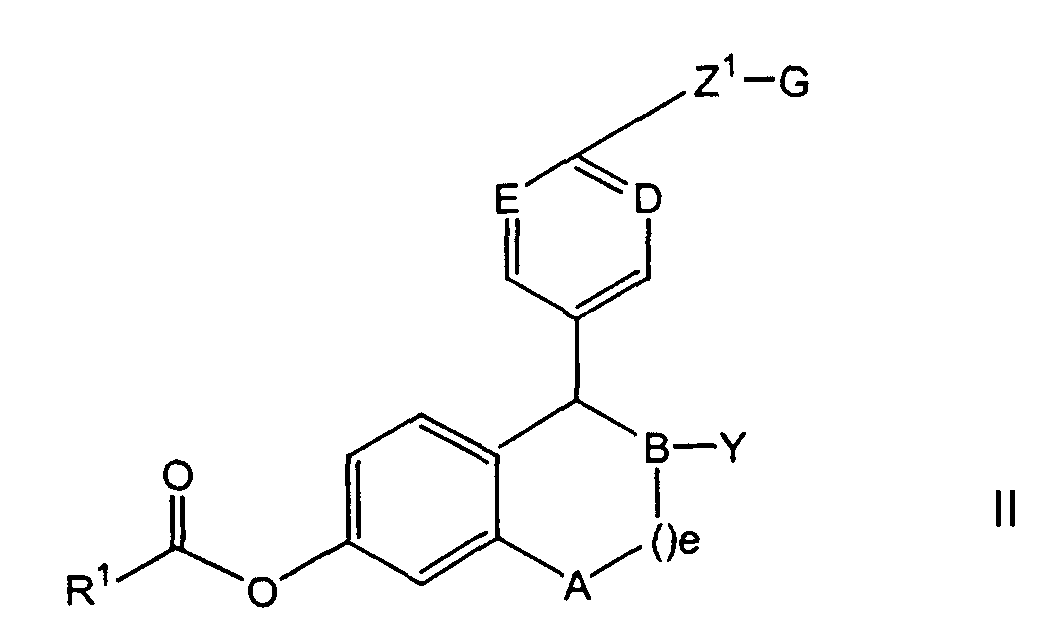
 (k) -C≡C-;R is hydrogen or C1-C6 alkyl;R2 and R3 are independently(a) hydrogen; or(b) C1-C4 alkyl;R4 is(a) hydrogen;(b) halogen;(c) C1-C6 alkyl;(d) C1-C4 alkoxy;(e) C1-C4 acyloxy;(f) C1-C4 alkylthio;(g) C1-C4 alkylsulfinyl;(h) C1-C4 alkylsulfonyl;(i) hydroxy (C1-C4)alkyl;(j) aryl (C1-C4)alkyl;(k) -CO2H;(I) -CN;(m) -CONHOR;(n) -SO2NHR;(o) -NH2;(p) C1-C4 alkylamino;(q) C1-C4 dialkylamino;(r) -NHSO2R;(s) -NO2;(t) -aryl; or(u) -OH.R5 and R6 are independently C1-C8 alkyl or together form a C3-C10 carbocyclic ring;R7 and R8 are independently(a) phenyl;(b) a C3-C10 carbocyclic ring, saturated or unsaturated;(c) a C3-C10 heterocyclic ring containing up to two heteroatoms, selected from -O-, -N- and -S-;(d) H;(e) C1-C6 alkyl; or(f) form a 3 to 8 membered nitrogen containing ring with R5 or R6;R7 and R8 in either linear or ring form may optionally be substituted with up to three substituents independently selected from C1-C6 alkyl, halogen, alkoxy, hydroxy and carboxy;a ring formed by R7 and R8 may be optionally fused to a phenyl ring;e is 0, 1 or 2;m is 1, 2 or 3;n is 0, 1 or 2;p is 0, 1, 2 or 3;q is 0, 1, 2 or 3;and optical and geometric isomers thereof;comprising selectively deacetylating a compound of the formulawherein R1 is (C1-C6)alkyl, (C2-C6)alkenyl, (C2-C6)alkynyl wherein the alkyl, alkenyl or alkynyl groups are optionally substituted by one to three halo, in the presence of a hydrolytic enzyme and an aqueous buffer solution.
- A process according to claim 1, wherein the hydrolytic enzyme is lipase.
- A process according to claim 1, wherein the hydrolytic enzyme is esterase.
- A process according to claim 1, wherein the hydrolytic enzyme is liver acetone powder.
- A process according to claim 1, wherein the hydrolytic enzyme is lipase from Porcine pancreas, cholesterol esterase from Pseudomonas Fluorscens and cholesterol esterase from Porcine pancreas.
- A process according to claim 2, wherein the lipase is GC-4, PS30, AY30, PGE, AK, N, L-10, AP-12, FAP-15, R-10, G, MAP10, SAM II, lipase from Pseudomonas fluorescens, lipase from Candida cylindracea, Lip-300, lipase from Chromobacterium viscosum, lipase from Mucor miehei, lipase from Pancreatic, lipase from Pseudomonas fluorescens, lipase from Rhizopus niveus, PPL, type II, lipase from Wheat germ, lipase from Rhizopus arrhizus, lipase from Mucor javanicus, lipase from Pseudomonas cepacia, lipase from Cadia lipolytica, lipase from Penicillium roqueforti, lipoprotein lipase ca#70-6571-01, lipase from Porcine pancreas, and lipoprotein lipase ca# 70-1481-01.
- A process according to claim 3, wherein the esterase is PLE-A, immobilized, hog liver, esterase from Hog pancreas, Porcine liver E-3128, cholesterin-esterase, cholesterol esterase from Pseudomonas fluorescens, cholesterol esterase from Porcine pancreas, cholesterol esterase from Bovine pancreas, cholesterol esterase from Pseudonomas fluorescens, cholesterol esterase from Porcine liver, cholesterol esterase from Rabbit liver, cholinesterase, cholinesterase from Electric eel, cholinesterase, choloylglycine hydrolase, esterase from Thermoanaerobium brockii, esterase from Bacillus sp and esterase from Mucor miehi.
- A process according to claim 4, wherein the liver acetone powder is cat l-1256, dog l7379, eel l-1266, horse l9627, calf l7876, guinea pig I1631, mouse l8254, goat l2635, chicken l8001, sheep l0132, pigeon l8376, seal I7627, rattlesnake l9885, trout l5131, turtle l-0757, rat l1380, lungfish l7377, salmon l7502, eel (electrophorus electricus) I8380 and lemon shark I1130.
- A process according to claim 1, wherein the hydrolytic enzyme is immobilized on a solid support.
- A process according to claim 1, wherein the hydrolytic enzyme is a cross-linked enzyme.
- A process according to claim 1, wherein the lipase is in pure crystalline form.
- A process according to claim 1, wherein the aqueous buffer solution is a phosphate, citric acid or boronic acid solution.
- A process according to claim 1, wherein the aqueous buffer solution has a pH between a pH of about 6 to a pH of about 8.
- A process according to claim 1, for preparing a compound of the formulacomprising selectively deacetylating a compound of the formula
 wherein R1 is (C1-C6)alkyl, (C2-C6)alkynyl, (C2-C6)alkenyl wherein the alkyl, alkenyl or alkynyl groups are optionally substituted by one to three halo in the presence of a hydrolytic enzyme and an aqueous buffer solution.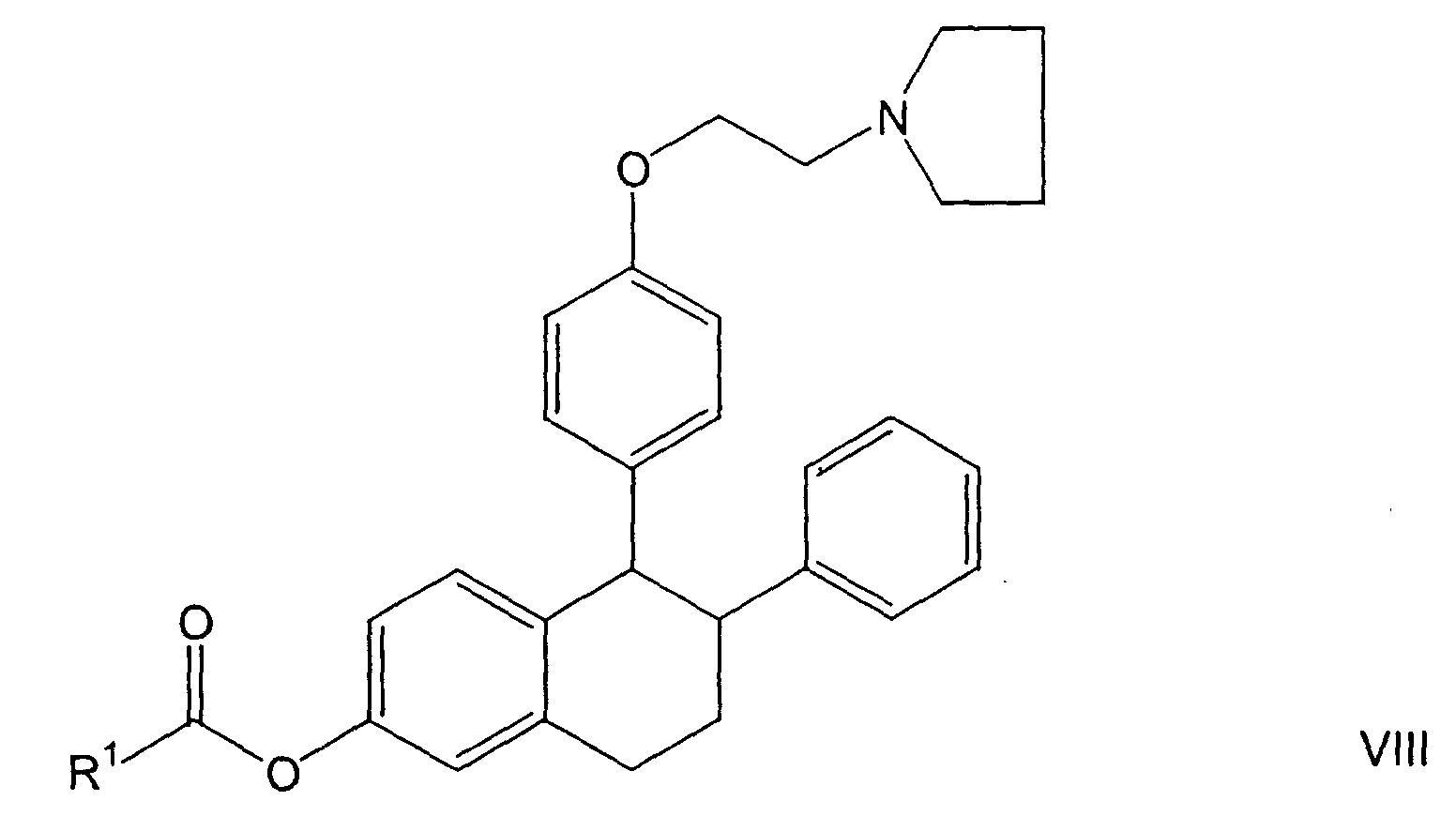
- A process for preparing a compound of the formula:wherein:
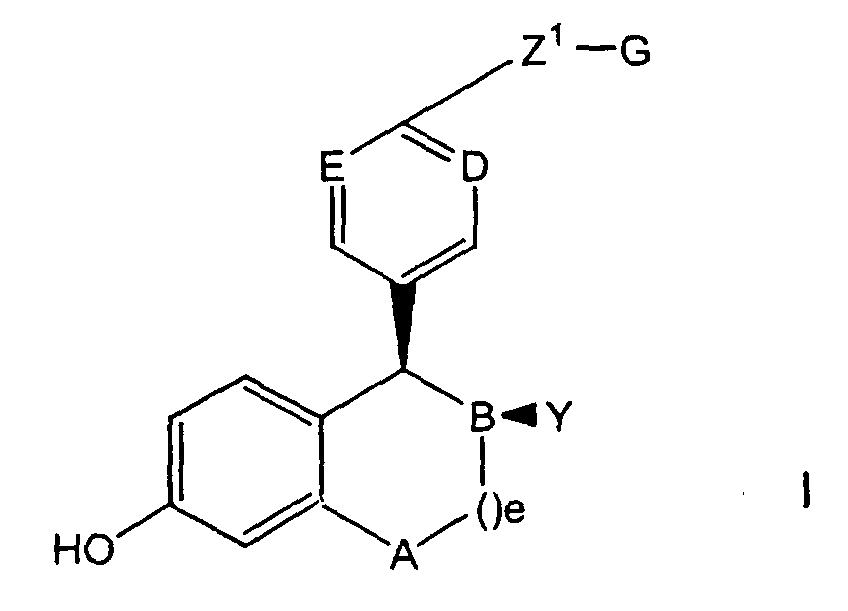 A is selected from CH2 and NR;B, D and E are independently selected from CH and N;Y is(a) phenyl, optionally substituted with 1-3 substituents independently selected from R4;(b) naphthyl, optionally substituted with 1-3 substituents independently selected from R4;(c) C3-C8 cycloalkyl, optionally substituted with 1-2 substituents independently selected from R4;(d) C3-C8 cycloalkynyl, optionally substituted with 1-2 substituents independently selected from R4;(e) a five membered heterocycle containing up to two heteroatoms selected from the group consisting of -O-, -NR2-and -S(O)n-, optionally substituted with 1-3 substituents independently selected from R4;(f) a six membered heterocycle containing up to two heteroatoms selected from the group consisting of -O-, -NR2- and -S(O)n-optionally substituted with 1-3 substituents independently selected from R4; or(g) a bicyclic ring system consisting of a five or six membered heterocyclic ring fused to a phenyl ring, said heterocyclic ring containing up to two heteroatoms selected from the group consisting of -O-, -NR2-, NR2- and -S(O)n-, optionally substituted with 1-3 substituents independently selected from R4;Z1 is(a) -(CH2)p W(CH2)q-;(b) -O(CH2)p CR5R6-;(c) -O(CH2)pW(CH2)q;(d) -OCHR2CHR3-; or(e) -SCHR2CHR3-;G is(a) -NR7R8;(b)wherein n is 0, 1 or 2; m is 1, 2 or 3; Z2 is -NH-, -O-, -S-, or -CH2-; optionally fused on adjacent carbon atoms with one or two phenyl rings and, optionally independently substituted on carbon with one to three substituents and, optionally, independently on nitrogen with a chemically suitable substituent selected from R4; or
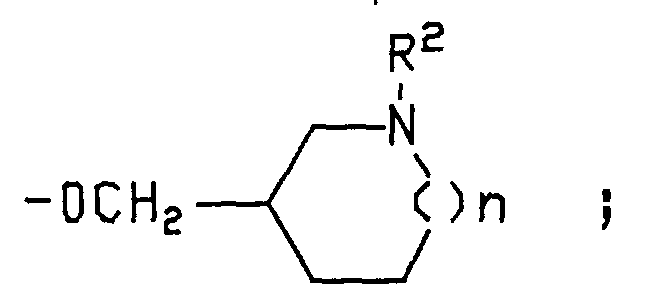
 (c) a bicyclic amine containing five to twelve carbon atoms, either bridged or fused and optionally substituted with 1-3 substituents independently selected from R4;Z1 and G in combination may be
 W is(a) -CH2-;(b) -CH=CH-;(c) -O-;(d) -NR2-;(e) -S(O)n-;(f)
 (g) -CR2(OH)-;(h) -CONR2-;(i) -NR2CO-;(j)or
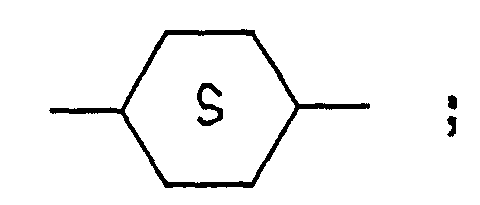 (k) -C≡C-;R is hydrogen or C1-C6 alkyl;R2 and R3 are independently(a) hydrogen; or(b) C1-C4 alkyl;R4 is(a) hydrogen;(b) halogen;(c) C1-C6 alkyl;(d) C1-C4 alkoxy;(e) C1-C4 acyloxy;(f) C1-C4 alkylthio;(g) C1-C4 alkylsulfinyl;(h) C1-C4 alkylsulfonyl;(i) hydroxy (C1-C4)alkyl;(j) aryl (C1-C4)alkyl;(k) -CO2H;(I) -CN;(m) -CONHOR;(n) -SO2NHR;(o) -NH2;(p) C1-C4 alkylamino;(q) C1-C4 dialkylamino;(r) -NHSO2R;(s) -NO2;(t) -aryl; or(u) -OH.R5 and R6 are independently C1-C8 alkyl or together form a C3-C10 carbocyclic ring;R7 and R8 are independently(a) phenyl;(b) a C3-C10 carbocyclic ring, saturated or unsaturated;(c) a C3-C10 heterocyclic ring containing up to two heteroatoms, selected from -O-, -N- and -S-;(d) H;(e) C1-C6 alkyl; or(f) form a 3 to 8 membered nitrogen containing ring with R5 or R6;R7 and R8 in either linear or ring form may optionally be substituted with up to three substituents independently selected from C1-C6 alkyl, halogen, alkoxy, hydroxy and carboxy;a ring formed by R7 and R8 may be optionally fused to a phenyl ring;e is 0, 1 or 2;m is 1, 2 or 3;n is 0, 1 or 2;p is 0, 1, 2 or 3;q is 0, 1, 2 or 3;and optical and geometric isomers thereof;comprising enzymatically resolving of a compound of the formulawherein R1 is (C1-C6)alkyl, (C2-C6)alkenyl, (C2-C6)alkynyl wherein the alkyl, alkenyl or alkynyl groups are optionally substituted by one to three halo in the presence of a lipase and an aqueous buffer solution; and (b) reacting the compound of formula IV so formed
 wherein R1 is as defined above, with a base in the presence of a polar protic solvent.
- A process according to claim 15, wherein the aqueous buffer solution is a phosphate, citric acid or boronic acid solution.
- A process according to claim 15, wherein the lipase from Mucor miehei.
- A process according to claim 15, wherein the base is sodium methoxy, sodium hydroxide, lithium hydroxide or potassium hydroxide.
- A process according to claim 15, wherein the polar protic solvent is methanol, ethanol or water.
- A process according to claim 15, wherein the lipase is immobilized on a solid support.
- A process according to claim 15, wherein the lipase is a cross-linked enzyme.
- A process according to claim 15, wherein the lipase is in pure crystalline form.
- A process according to claim 15, for preparing a compound of the formulacomprising enzymatically resolving of a compound of the formula
 wherein R1 is (C1-C6)alkyl, (C2-C6)alkenyl, (C2-C6)alkynyl wherein the alkyl, alkenyl or alkynyl groups are optionally substituted by one to three halo in the presence of a lipase and an aqueous buffer solution; and (b) reacting the compound of Formula X so formed
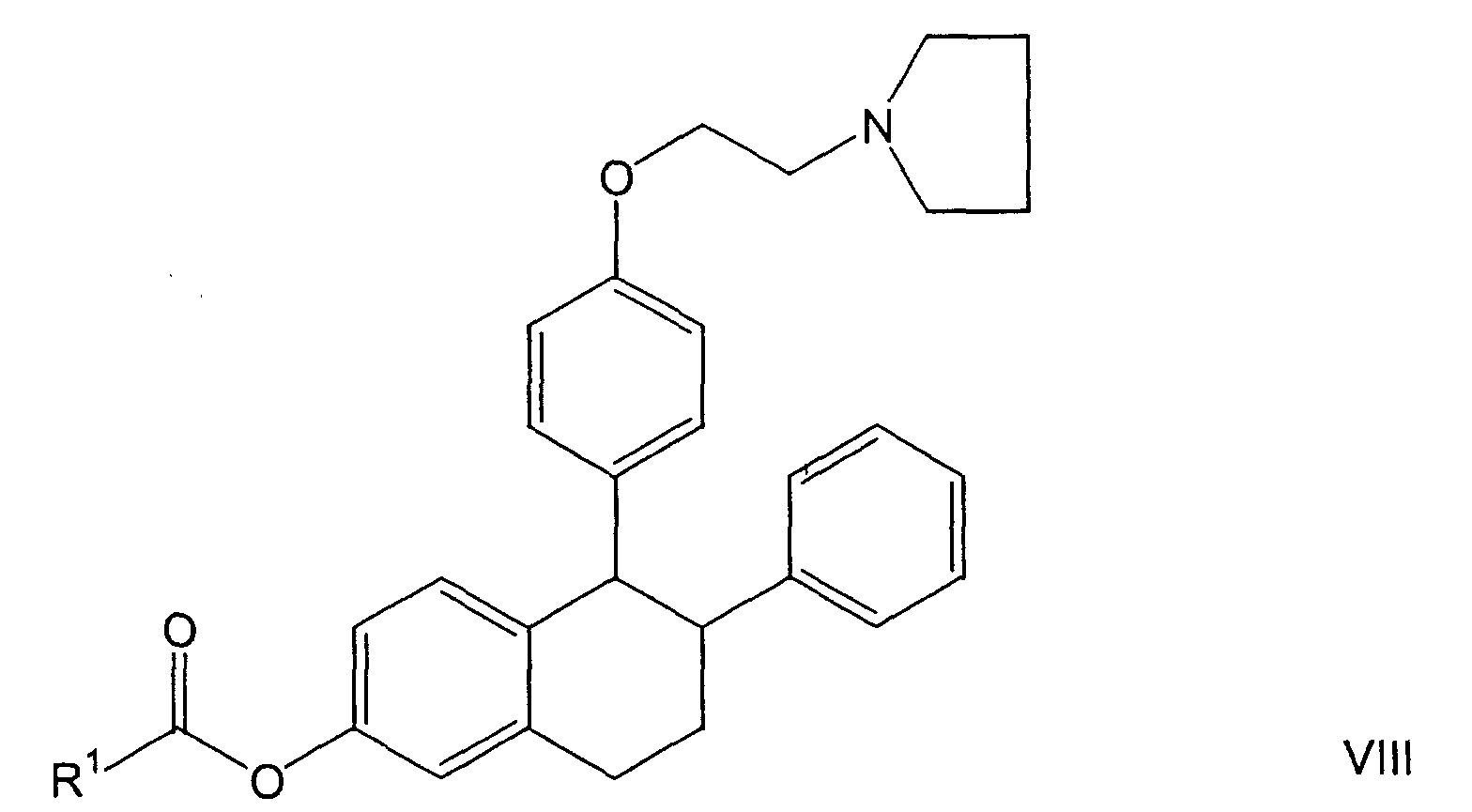 wherein R1 is as defined above, with a base in the presence of a polar protic solvent.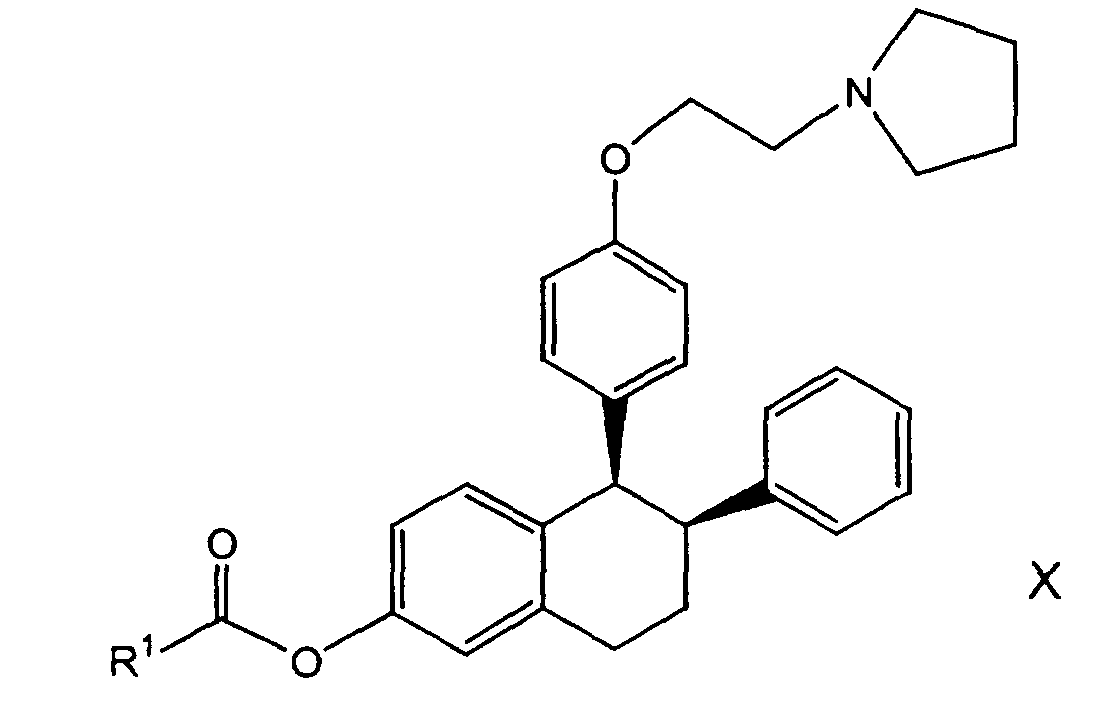
- A process for preparing a compound of the formula:wherein:
 A is selected from CH2 and NR;B, D and E are independently selected from CH and N;Y is(a) phenyl, optionally substituted with 1-3 substituents independently selected from R4;(b) naphthyl, optionally substituted with 1-3 substituents independently selected from R4;(c) C3-C8 cycloalkyl, optionally substituted with 1-2 substituents independently selected from R4;(d) C3-C8 cycloalkynyl, optionally substituted with 1-2 substituents independently selected from R4;(e) a five membered heterocycle containing up to two heteroatoms selected from the group consisting of -O-, -NR2-and -S(O)n-, optionally substituted with 1-3 substituents independently selected from R4;(f) a six membered heterocycle containing up to two heteroatoms selected from the group consisting of -O-, -NR2- and -S(O)n-optionally substituted with 1-3 substituents independently selected from R4; or(g) a bicyclic ring system consisting of a five or six membered heterocyclic ring fused to a phenyl ring, said heterocyclic ring containing up to two heteroatoms selected from the group consisting of -O-, -NR2-, NR2- and -S(O)n-, optionally substituted with 1-3 substituents independently selected from R4;Z1 is(a) -(CH2)p W(CH2)q-;(b) -O(CH2)p CR5R6-;(c) -O(CH2)pW(CH2)q;(d) -OCHR2CHR3-; or(e) -SCHR2CHR3-;G is(a) -NR7R8;(b)wherein n is 0, 1 or 2; m is 1, 2 or 3; Z2 is -NH-, -O-, -S-, or -CH2-; optionally fused on adjacent carbon atoms with one or two phenyl rings and, optionally independently substituted on carbon with one to three substituents and, optionally, independently on nitrogen with a chemically suitable substituent selected from R4; or
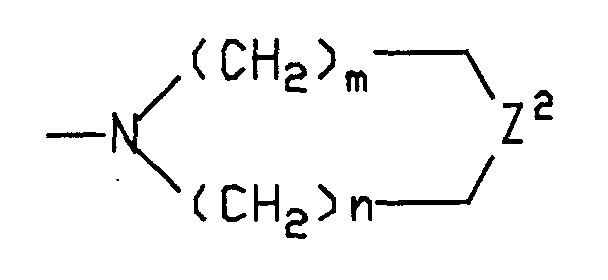 (c) a bicyclic amine containing five to twelve carbon atoms, either bridged or fused and optionally substituted with 1-3 substituents independently selected from R4;Z1 and G in combination may be
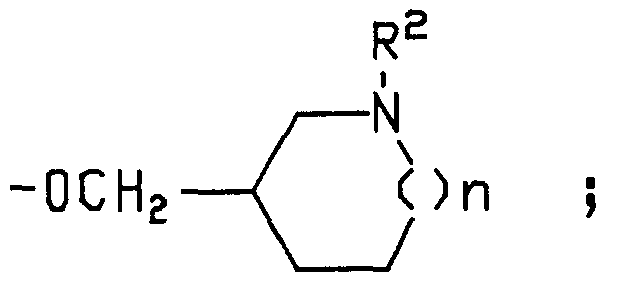 W is(a) -CH2-;(b) -CH=CH-;(c) -O-;(d) -NR2-;(e) -S(O)n-;(f)
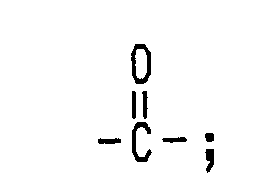 (g) -CR2(OH)-;(h) -CONR2-;(i) -NR2CO-;(j)or
 (k) -C≡C-;R is hydrogen or C1-C6 alkyl;R2 and R3 are independently(a) hydrogen; or(b) C1-C4 alkyl;R4 is(a) hydrogen;(b) halogen;(c) C1-C6 alkyl;(d) C1-C4 alkoxy;(e) C1-C4 acyloxy;(f) C1-C4 alkylthio;(g) C1-C4 alkylsulfinyl;(h) C1-C4 alkylsulfonyl;(i) hydroxy (C1-C4)alkyl;(j) aryl (C1-C4)alkyl;(k) -CO2H;(I) -CN;(m) -CONHOR;(n) -SO2NHR;(o) -NH2;(p) C1-C4 alkylamino;(q) C1-C4 dialkylamino;(r) -NHSO2R;(s) -NO2;(t) -aryl; or(u) -OH.R5 and R6 are independently C1-C8 alkyl or together form a C3-C10 carbocyclic ring;R7 and R8 are independently(a) phenyl;(b) a C3-C10 carbocyclic ring, saturated or unsaturated;(c) a C3-C10 heterocyclic ring containing up to two heteroatoms, selected from -O-, -N- and -S-;(d) H;(e) C1-C6 alkyl; or(f) form a 3 to 8 membered nitrogen containing ring with R5 or R6;R7 and R8 in either linear or ring form may optionally be substituted with up to three substituents independently selected from C1-C6 alkyl, halogen, alkoxy, hydroxy and carboxy;a ring formed by R7 and R8 may be optionally fused to a phenyl ring;e is 0, 1 or 2;m is 1, 2 or 3;n is 0, 1 or 2;p is 0, 1, 2 or 3;q is 0, 1, 2 or 3;and optical and geometric isomers thereof;comprising enzymatically resolving of a compound of the formulain the presence of a lipase and an acetylating agent, and (b) reacting the compound of formula IV so formed
 wherein R1 is (C1-C6)alkyl, (C2-C6)alkenyl, (C2-C6)alkynyl wherein the alkyl, alkenyl or alkynyl groups are optionally substituted by one to three halo, with a base in the presence of a polar protic solvent.
- A process according to claim 24, wherein the hydrolytic enzyme is a lipase.
- A process according to claim 24, wherein the lipase is GC-4, PS30, AY30, PGE, AK, N, L-10, AP-12, FAP-15, R-10, G, MAP10, SAM II, lipase from Pseudomonas fluorescens, lipase from Candida cylindracea, Lip-300, lipase from Chromobacterium viscosum, lipase from Mucor miehei, lipase from Pancreatic, lipase from Pseudomonas fluorescens, lipase from Rhizopus niveus, PPL, type II, lipase from Wheat germ, lipase from Rhizopus arrhizus, lipase from Mucor javanicus, lipase from Pseudomonas cepacia, lipase from Cadia lipolytica, lipase from Penicillium roqueforti, lipoprotein lipase ca#70-6571-01, lipase from Porcine pancreas, and lipoprotein lipase ca# 70-1481-01.
- A process according to claim 24, wherein the acetylating agent is ethyl acetate, vinyl acetate, chloroacetate or trifluoroacetate.
- A process according to claim 24, wherein the base is sodium methoxy, sodium hydroxide, lithium hydroxide or potassium hydroxide.
- A process according to claim 24, wherein the polar protic solvent is methanol, ethanol or water.
- A process according to claim 24, wherein the lipase is immobilized on a solid support.
- A process according to claim 24, wherein the lipase is a cross-linked enzyme.
- A process according to claim 24, wherein the lipase is in pure crystalline form.
- A process according to claim 24, for preparing a compound of the formulacomprising enzymatically resolving of a compound of the formula
 in the presence of a lipase and acetylating agent, and (b) reacting the compound of Formula X so formed
 wherein R1 is (C1-C6)alkyl, (C2-C6)alkenyl, (C2-C6)alkynyl wherein the alkyl, alkenyl or alkynyl groups are optionally substituted by one to three halo, with a base in the presence of a polar protic solvent.
- A process for preparing a compound of the formula:wherein:
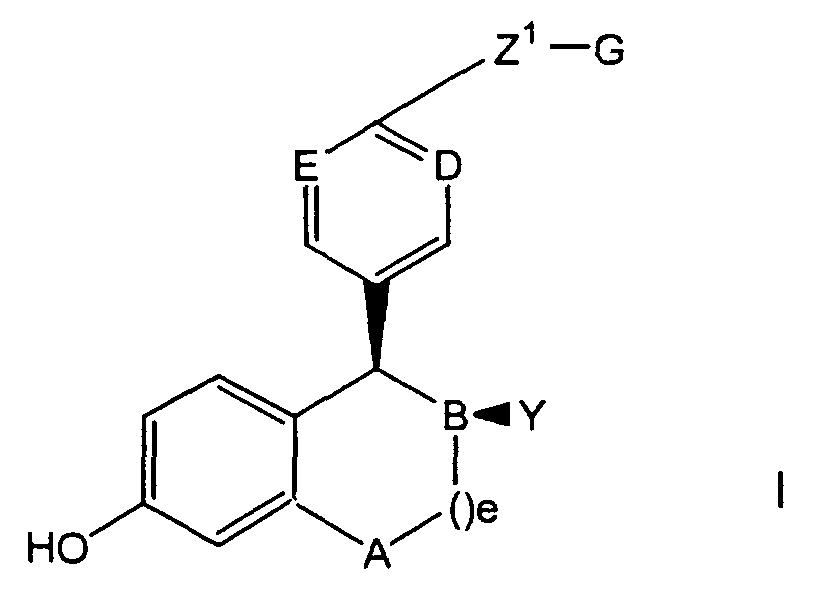 A is selected from CH2 and NR;B, D and E are independently selected from CH and N;Y is(a) phenyl, optionally substituted with 1-3 substituents independently selected from R4;(b) naphthyl, optionally substituted with 1-3 substituents independently selected from R4;(c) C3-C8 cycloalkyl, optionally substituted with 1-2 substituents independently selected from R4;(d) C3-C8 cycloalkynyl, optionally substituted with 1-2 substituents independently selected from R4;(e) a five membered heterocycle containing up to two heteroatoms selected from the group consisting of -O-, -NR2-and -S(O)n-, optionally substituted with 1-3 substituents independently selected from R4;(f) a six membered heterocycle containing up to two heteroatoms selected from the group consisting of -O-, -NR2- and -S(O)n-optionally substituted with 1-3 substituents independently selected from R4; or(g) a bicyclic ring system consisting of a five or six membered heterocyclic ring fused to a phenyl ring, said heterocyclic ring containing up to two heteroatoms selected from the group consisting of -O-, -NR2-, NR2- and -S(O)n-, optionally substituted with 1-3 substituents independently selected from R4;Z1 is(a) -(CH2)p W(CH2)q-;(b) -O(CH2)p CR5R6-;(c) -O(CH2)pW(CH2)q;(d) -OCHR2CHR3-; or(e) -SCHR2CHR3-;G is(a) -NR7R8;(b)wherein n is 0,1 or 2; m is 1, 2 or 3; Z2 is -NH-, -O-, -S-, or -CH2-; optionally fused on adjacent carbon atoms with one or two phenyl rings and, optionally independently substituted on carbon with one to three substituents and, optionally, independently on nitrogen with a chemically suitable substituent selected from R4; or
 (c) a bicyclic amine containing five to twelve carbon atoms, either bridged or fused and optionally substituted with 1-3 substituents independently selected from R4;Z1 and G in combination may be
 W is(a) -CH2-;(b) -CH=CH-;(c) -O-;(d) -NR2-;(e) -S(O)n-;(f)
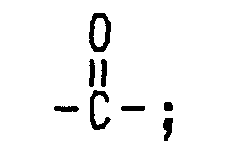 (g) -CR2(OH)-;(h) -CONR2-;(i) -NR2CO-;(j)or
 (k) -C≡C-;R is hydrogen or C1-C6 alkyl;R2 and R3 are independently(a) hydrogen; or(b) C1-C4 alkyl;R4 is(a) hydrogen;(b) halogen;(c) C1-C6 alkyl;(d) C1-C4 alkoxy;(e) C1-C4 acyloxy;(f) C1-C4 alkylthio;(g) C1-C4 alkylsulfinyl;(h) C1-C4 alkylsulfonyl;(i) hydroxy (C1-C4)alkyl;(j) aryl (C1-C4)alkyl;(k) -CO2H;(I) -CN;(m) -CONHOR;(n) -SO2NHR;(o) -NH2;(p) C1-C4 alkylamino;(q) C1-C4 dialkylamino;(r) -NHSO2R;(s) -NO2;(t) -aryl; or(u) -OH.R5 and R6 are independently C1-C8 alkyl or together form a C3-C10 carbocyclic ring;R7 and R8 are independently(a) phenyl;(b) a C3-C10 carbocyclic ring, saturated or unsaturated;(c) a C3-C10 heterocyclic ring containing up to two heteroatoms, selected from -O-, -N- and -S-;(d) H;(e) C1-C6 alkyl; or(f) form a 3 to 8 membered nitrogen containing ring with R5 or R6;R7 and R8 in either linear or ring form may optionally be substituted with up to three substituents independently selected from C1-C6 alkyl, halogen, alkoxy, hydroxy and carboxy;a ring formed by R7 and R8 may be optionally fused to a phenyl ring;e is 0, 1 or 2;m is 1, 2 or 3;n is 0, 1 or 2;p is 0, 1, 2 or 3;q is 0, 1, 2 or 3;and optical and geometric isomers thereof;comprising enzymatically resolving of a compound of the formulawherein R1 is (C1-C6)alkyl, in the presence of lipase.
- A process according to claim 34, wherein the lipase is Mucor miehei.
- A process according to claim 34, wherein the lipase is immobilized on a solid support.
- A process according to claim 34, wherein the lipase is a cross-linked enzyme.
- A process according to claim 34, wherein the lipase is in pure crystalline form.
- A process according to claim 34, wherein the hydrolytic enzyme is lipase from Porcine pancreas, cholesterol esterase from Pseudomonas Fluorscens and cholesterol esterase from Porcine pancreas.
- A process according to claim 34, for preparing a compound of the formulacomprising enzymatically resolving of a compound of the formula
 in the presence of lipase.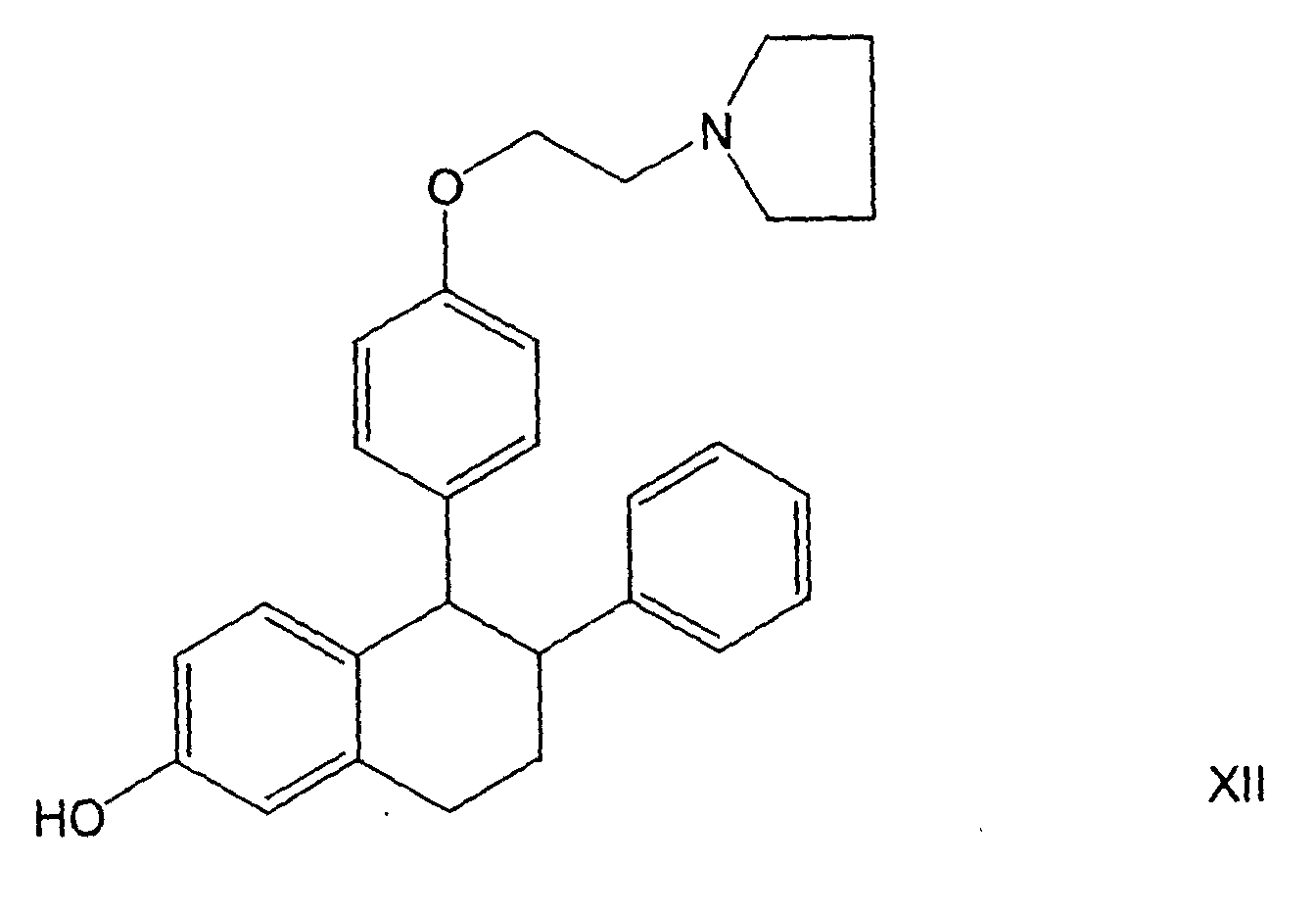
Applications Claiming Priority (2)
| Application Number | Priority Date | Filing Date | Title |
|---|---|---|---|
| US20241800P | 2000-05-08 | 2000-05-08 | |
| US202418P | 2000-05-08 |
Publications (3)
| Publication Number | Publication Date |
|---|---|
| EP1156120A2 true EP1156120A2 (en) | 2001-11-21 |
| EP1156120A3 EP1156120A3 (en) | 2004-02-18 |
| EP1156120B1 EP1156120B1 (en) | 2006-11-22 |
Family
ID=22749787
Family Applications (1)
| Application Number | Title | Priority Date | Filing Date |
|---|---|---|---|
| EP01303554A Expired - Lifetime EP1156120B1 (en) | 2000-05-08 | 2001-04-19 | Enzymatic resolution of selective estrogen receptor modulators |
Country Status (24)
| Country | Link |
|---|---|
| US (3) | US6828134B2 (en) |
| EP (1) | EP1156120B1 (en) |
| JP (1) | JP2002000293A (en) |
| KR (1) | KR100488385B1 (en) |
| CN (1) | CN1322842A (en) |
| AR (1) | AR031844A1 (en) |
| AT (1) | ATE346159T1 (en) |
| AU (1) | AU782597B2 (en) |
| BR (1) | BR0101802A (en) |
| CA (1) | CA2346426C (en) |
| CZ (1) | CZ20011576A3 (en) |
| DE (1) | DE60124616T2 (en) |
| ES (1) | ES2274854T3 (en) |
| HK (1) | HK1040264A1 (en) |
| HU (1) | HUP0101874A3 (en) |
| ID (1) | ID30106A (en) |
| IL (2) | IL168341A (en) |
| MX (1) | MXPA01004626A (en) |
| PL (1) | PL347407A1 (en) |
| RU (1) | RU2213778C2 (en) |
| SG (1) | SG100688A1 (en) |
| TW (1) | TWI237059B (en) |
| YU (1) | YU31101A (en) |
| ZA (1) | ZA200103666B (en) |
Cited By (2)
| Publication number | Priority date | Publication date | Assignee | Title |
|---|---|---|---|---|
| US8853423B2 (en) | 2010-06-17 | 2014-10-07 | Seragon Pharmaceuticals, Inc. | Indane estrogen receptor modulators and uses thereof |
| CN109750013A (en) * | 2019-03-27 | 2019-05-14 | 云南师范大学 | A kind of lipase mutant and its preparation method and application |
Family Cites Families (18)
| Publication number | Priority date | Publication date | Assignee | Title |
|---|---|---|---|---|
| US4814282A (en) * | 1984-05-03 | 1989-03-21 | Abbott Laboratories | Centrifuge for two-dimensional centrifugation |
| DE3638762A1 (en) * | 1986-11-13 | 1988-05-26 | Schering Ag | RACEMAT CLEAVAGE OF 7 (ALPHA) -ACYLOXY-6SS-HYDROXY-METHYL-2-OXABICYCLO (3.3.0) OCTAN-3-ONES BY STEREO-SPECIFIC ENZYMATIC ACYLATE HYDROLYSIS |
| US5248609A (en) | 1986-11-13 | 1993-09-28 | Schering Aktiengesellschaft | Racemic separation of 7α-acyloxy-6β-hydroxymethyl-2-oxabicyclo[3.]-octan-3-ones by stereospecific enzymatic acylate hydrolysis |
| CA1319144C (en) | 1986-11-14 | 1993-06-15 | Quirico Branca | Tetrahydronaphthalene derivatives |
| US5106750A (en) | 1988-08-30 | 1992-04-21 | G. D. Searle & Co. | Enantio- and regioselective synthesis of organic compounds using enol esters as irreversible transacylation reagents |
| CZ280006B6 (en) * | 1989-11-13 | 1995-09-13 | Pfizer Inc. | Process for preparing optically active (2s) or (2r)-endobicyclo£2.2.1|hepan-2-ole |
| TW383306B (en) * | 1992-12-22 | 2000-03-01 | Lilly Co Eli | New use of 2-phenyl-3-aroylbenzothiophenes in lowering serum cholesterol |
| GB9304256D0 (en) * | 1993-03-03 | 1993-04-21 | Chiros Ltd | Arylalkanoic acid resolution |
| FR2724184B1 (en) * | 1994-09-05 | 1997-01-03 | Rhone Poulenc Chimie | PROCESS FOR THE RESOLUTION OF A MIXTURE OF STEREOISOMERIC ALCOHOLS |
| US5589482A (en) * | 1994-12-14 | 1996-12-31 | Pfizer Inc. | Benzo-thiophene estrogen agonists to treat prostatic hyperplasia |
| US5552412A (en) * | 1995-01-09 | 1996-09-03 | Pfizer Inc | 5-substitued-6-cyclic-5,6,7,8-tetrahydronaphthalen2-ol compounds which are useful for treating osteoporosis |
| UA51676C2 (en) | 1995-11-02 | 2002-12-16 | Пфайзер Інк. | (-)cis-6(S)-phenyl-5(R)-[4-(2-pyrrolidin-I-ylethoxy)phenyl]-5,6,7,8-tetrahydronaphthalen-2-ol D-tartrate, a method of its preparation, method of THE treatment OF diseases medicated by agonists of estrogen and a pharmaceutical composition |
| IL120266A (en) * | 1996-02-28 | 2005-05-17 | Pfizer | Use of estrogen antagonists and estrogen agonists in the preparation of medicaments for inhibiting pathological conditions |
| CA2293708C (en) * | 1997-06-17 | 2004-05-11 | Schering Corporation | Enzymatic kinetic resolution of an intermediate useful for preparing substituted tricyclics |
| PT966968E (en) * | 1998-06-16 | 2004-08-31 | Pfizer Prod Inc | THERAPEUTIC COMBINATIONS COMPREHENDING A SELECTIVE ESTROGEN RECEPTOR MODULATOR AND PROSTAGLANDINE E2 |
| AP9901582A0 (en) | 1998-06-16 | 1999-06-30 | Pfizer Prod Inc | Combination therapy for musculoskeletal frailty. |
| ID23459A (en) | 1998-08-28 | 2000-04-27 | Pfizer Prod Inc | MICROBIAL BIOTRANSFORMATION |
| US6180375B1 (en) | 1999-08-27 | 2001-01-30 | Pfizer Inc. | Microbial biotransformation |
-
2001
- 2001-04-19 ES ES01303554T patent/ES2274854T3/en not_active Expired - Lifetime
- 2001-04-19 AT AT01303554T patent/ATE346159T1/en not_active IP Right Cessation
- 2001-04-19 DE DE60124616T patent/DE60124616T2/en not_active Expired - Fee Related
- 2001-04-19 EP EP01303554A patent/EP1156120B1/en not_active Expired - Lifetime
- 2001-04-26 CN CN01117132A patent/CN1322842A/en active Pending
- 2001-04-26 YU YU31101A patent/YU31101A/en unknown
- 2001-04-30 IL IL168341A patent/IL168341A/en not_active IP Right Cessation
- 2001-04-30 IL IL142881A patent/IL142881A/en not_active IP Right Cessation
- 2001-05-02 TW TW090110515A patent/TWI237059B/en not_active IP Right Cessation
- 2001-05-04 ID IDP00200100361D patent/ID30106A/en unknown
- 2001-05-04 AR ARP010102123A patent/AR031844A1/en unknown
- 2001-05-04 CZ CZ20011576A patent/CZ20011576A3/en unknown
- 2001-05-04 CA CA002346426A patent/CA2346426C/en not_active Expired - Fee Related
- 2001-05-07 HU HU0101874A patent/HUP0101874A3/en unknown
- 2001-05-07 RU RU2001112671/13A patent/RU2213778C2/en not_active IP Right Cessation
- 2001-05-07 KR KR10-2001-0024679A patent/KR100488385B1/en not_active Expired - Fee Related
- 2001-05-07 JP JP2001136141A patent/JP2002000293A/en active Pending
- 2001-05-07 PL PL01347407A patent/PL347407A1/en not_active Application Discontinuation
- 2001-05-07 ZA ZA200103666A patent/ZA200103666B/en unknown
- 2001-05-07 MX MXPA01004626A patent/MXPA01004626A/en active IP Right Grant
- 2001-05-07 US US09/850,545 patent/US6828134B2/en not_active Expired - Fee Related
- 2001-05-07 AU AU43758/01A patent/AU782597B2/en not_active Ceased
- 2001-05-08 SG SG200102673A patent/SG100688A1/en unknown
- 2001-05-08 BR BR0101802-7A patent/BR0101802A/en not_active IP Right Cessation
-
2002
- 2002-03-14 HK HK02101977.3A patent/HK1040264A1/en unknown
-
2004
- 2004-03-02 US US10/791,462 patent/US7351567B2/en not_active Expired - Fee Related
-
2007
- 2007-06-28 US US11/769,776 patent/US20070249025A1/en not_active Abandoned
Cited By (2)
| Publication number | Priority date | Publication date | Assignee | Title |
|---|---|---|---|---|
| US8853423B2 (en) | 2010-06-17 | 2014-10-07 | Seragon Pharmaceuticals, Inc. | Indane estrogen receptor modulators and uses thereof |
| CN109750013A (en) * | 2019-03-27 | 2019-05-14 | 云南师范大学 | A kind of lipase mutant and its preparation method and application |
Also Published As
Similar Documents
| Publication | Publication Date | Title |
|---|---|---|
| MXPA06011882A (en) | Process for preparing rapamycin 42-esters and fk-506 32-esters with dicarboxylic acid, precursors for rapamycin conjugates and antibodies. | |
| Auclair et al. | Conversion of cyclic nonaketides to lovastatin and compactin by a lovC deficient mutant of Aspergillus terreus | |
| JPH06228122A (en) | Improvement in organic compound | |
| EP1156120B1 (en) | Enzymatic resolution of selective estrogen receptor modulators | |
| EP0605033B1 (en) | Enzymatic process for the stereoselective preparation of a hetero-bicyclic alcohol enantiomer | |
| US5801143A (en) | Cyclic depsipeptides useful for treatment of hyperlipemia | |
| DK174394B1 (en) | Racemate cleavage of 3-acyloxy-bicyclo [3,3,0] -octane-2-carboxylic acid esters by stereospecific enzymatic or microbiological acylate hydrolysis to prepare optically active (+) - bicyclo- [3,3,0] octanol derivatives | |
| JPH08510128A (en) | Method for synthesizing HMG-CoA reductase inhibitor | |
| PT93090A (en) | PROCESS FOR MICROBIOLOGICAL CHIRAL REDUCTION OF CARBONYL AND NEW MICROORGANISM GROUPS | |
| US5677168A (en) | Enantiomeric separation of (RS)1-(4-chlorophenyl)-2-chloroethanol by lipase catalyzed hydrolysis of its acetate | |
| EP0264429A1 (en) | ENZYMATIC PROCESS FOR PREPARING OPTICALLY-ACTIVE 1,2-DIHYDRO-3H-PYRROLO 1,2a]PYRROLE-1-CARBOXYLIC ACID DERIVATIVES | |
| DK142057B (en) | METHOD OF ANALOGY FOR THE PREPARATION OF 15ALFA, 16ALFA METHYLENE-1,4-PREGNADIA-3,20-DIONE DERIVATIVES | |
| US3634461A (en) | Spirostan derivative | |
| RU2001112671A (en) | Enzymatic cleavage of selective estrogen receptor modulators | |
| EP0983295A2 (en) | 4-aza-steroids substituted in one or more of positions 7, 11 and 15 or with an unsaturated 14(15)-double bond as inhibitors of testosterone-5-alpha-reductase | |
| JPS6348858B2 (en) | ||
| HU213569B (en) | Enzymatic process for the stereoselective preparation of a heterobicyclic alcohol enantiomer | |
| Lin et al. | Synthesis and Pseudomonas lipase inhibition study of stereoisomers of decahydro-2-naphthyl-Nn-butylcarbamate | |
| JPH0560919B2 (en) | ||
| JP2002523107A (en) | Method for producing (2R) -piperidine derivative | |
| CH350286A (en) | Process for preparing 6B-hydroxylated pregnane derivatives |
Legal Events
| Date | Code | Title | Description |
|---|---|---|---|
| PUAI | Public reference made under article 153(3) epc to a published international application that has entered the european phase |
Free format text: ORIGINAL CODE: 0009012 |
|
| 17P | Request for examination filed |
Effective date: 20010430 |
|
| AK | Designated contracting states |
Kind code of ref document: A2 Designated state(s): AT BE CH CY DE DK ES FI FR GB GR IE IT LI LU MC NL PT SE TR |
|
| AX | Request for extension of the european patent |
Free format text: AL PAYMENT 20010430;LT PAYMENT 20010430;LV PAYMENT 20010430;MK PAYMENT 20010430;RO PAYMENT 20010430;SI PAYMENT 20010430 |
|
| PUAL | Search report despatched |
Free format text: ORIGINAL CODE: 0009013 |
|
| AK | Designated contracting states |
Kind code of ref document: A3 Designated state(s): AT BE CH CY DE DK ES FI FR GB GR IE IT LI LU MC NL PT SE TR |
|
| AX | Request for extension of the european patent |
Extension state: AL LT LV MK RO SI |
|
| RIC1 | Information provided on ipc code assigned before grant |
Ipc: 7C 12P 41/00 A |
|
| 17Q | First examination report despatched |
Effective date: 20040614 |
|
| AKX | Designation fees paid |
Designated state(s): AT BE CH CY DE DK ES FI FR GB GR IE IT LI LU MC NL PT SE TR |
|
| AXX | Extension fees paid |
Extension state: LV Payment date: 20010430 Extension state: SI Payment date: 20010430 Extension state: LT Payment date: 20010430 Extension state: RO Payment date: 20010430 Extension state: MK Payment date: 20010430 Extension state: AL Payment date: 20010430 |
|
| GRAP | Despatch of communication of intention to grant a patent |
Free format text: ORIGINAL CODE: EPIDOSNIGR1 |
|
| GRAS | Grant fee paid |
Free format text: ORIGINAL CODE: EPIDOSNIGR3 |
|
| GRAA | (expected) grant |
Free format text: ORIGINAL CODE: 0009210 |
|
| AK | Designated contracting states |
Kind code of ref document: B1 Designated state(s): AT BE CH CY DE DK ES FI FR GB GR IE IT LI LU MC NL PT SE TR |
|
| AX | Request for extension of the european patent |
Extension state: AL LT LV MK RO SI |
|
| PG25 | Lapsed in a contracting state [announced via postgrant information from national office to epo] |
Ref country code: FI Free format text: LAPSE BECAUSE OF FAILURE TO SUBMIT A TRANSLATION OF THE DESCRIPTION OR TO PAY THE FEE WITHIN THE PRESCRIBED TIME-LIMIT Effective date: 20061122 Ref country code: AT Free format text: LAPSE BECAUSE OF FAILURE TO SUBMIT A TRANSLATION OF THE DESCRIPTION OR TO PAY THE FEE WITHIN THE PRESCRIBED TIME-LIMIT Effective date: 20061122 Ref country code: BE Free format text: LAPSE BECAUSE OF FAILURE TO SUBMIT A TRANSLATION OF THE DESCRIPTION OR TO PAY THE FEE WITHIN THE PRESCRIBED TIME-LIMIT Effective date: 20061122 Ref country code: CH Free format text: LAPSE BECAUSE OF FAILURE TO SUBMIT A TRANSLATION OF THE DESCRIPTION OR TO PAY THE FEE WITHIN THE PRESCRIBED TIME-LIMIT Effective date: 20061122 Ref country code: LI Free format text: LAPSE BECAUSE OF FAILURE TO SUBMIT A TRANSLATION OF THE DESCRIPTION OR TO PAY THE FEE WITHIN THE PRESCRIBED TIME-LIMIT Effective date: 20061122 Ref country code: NL Free format text: LAPSE BECAUSE OF FAILURE TO SUBMIT A TRANSLATION OF THE DESCRIPTION OR TO PAY THE FEE WITHIN THE PRESCRIBED TIME-LIMIT Effective date: 20061122 |
|
| REG | Reference to a national code |
Ref country code: GB Ref legal event code: FG4D |
|
| REG | Reference to a national code |
Ref country code: CH Ref legal event code: EP |
|
| REG | Reference to a national code |
Ref country code: IE Ref legal event code: FG4D |
|
| REF | Corresponds to: |
Ref document number: 60124616 Country of ref document: DE Date of ref document: 20070104 Kind code of ref document: P |
|
| PG25 | Lapsed in a contracting state [announced via postgrant information from national office to epo] |
Ref country code: DK Free format text: LAPSE BECAUSE OF FAILURE TO SUBMIT A TRANSLATION OF THE DESCRIPTION OR TO PAY THE FEE WITHIN THE PRESCRIBED TIME-LIMIT Effective date: 20070222 Ref country code: SE Free format text: LAPSE BECAUSE OF FAILURE TO SUBMIT A TRANSLATION OF THE DESCRIPTION OR TO PAY THE FEE WITHIN THE PRESCRIBED TIME-LIMIT Effective date: 20070222 |
|
| ET | Fr: translation filed | ||
| PG25 | Lapsed in a contracting state [announced via postgrant information from national office to epo] |
Ref country code: PT Free format text: LAPSE BECAUSE OF FAILURE TO SUBMIT A TRANSLATION OF THE DESCRIPTION OR TO PAY THE FEE WITHIN THE PRESCRIBED TIME-LIMIT Effective date: 20070423 |
|
| LTIE | Lt: invalidation of european patent or patent extension |
Effective date: 20061122 |
|
| NLV1 | Nl: lapsed or annulled due to failure to fulfill the requirements of art. 29p and 29m of the patents act | ||
| REG | Reference to a national code |
Ref country code: ES Ref legal event code: FG2A Ref document number: 2274854 Country of ref document: ES Kind code of ref document: T3 |
|
| REG | Reference to a national code |
Ref country code: CH Ref legal event code: PL |
|
| PLBE | No opposition filed within time limit |
Free format text: ORIGINAL CODE: 0009261 |
|
| STAA | Information on the status of an ep patent application or granted ep patent |
Free format text: STATUS: NO OPPOSITION FILED WITHIN TIME LIMIT |
|
| 26N | No opposition filed |
Effective date: 20070823 |
|
| PG25 | Lapsed in a contracting state [announced via postgrant information from national office to epo] |
Ref country code: GR Free format text: LAPSE BECAUSE OF FAILURE TO SUBMIT A TRANSLATION OF THE DESCRIPTION OR TO PAY THE FEE WITHIN THE PRESCRIBED TIME-LIMIT Effective date: 20070223 |
|
| PGFP | Annual fee paid to national office [announced via postgrant information from national office to epo] |
Ref country code: GB Payment date: 20080317 Year of fee payment: 8 |
|
| PGFP | Annual fee paid to national office [announced via postgrant information from national office to epo] |
Ref country code: DE Payment date: 20080430 Year of fee payment: 8 Ref country code: ES Payment date: 20080421 Year of fee payment: 8 |
|
| PGFP | Annual fee paid to national office [announced via postgrant information from national office to epo] |
Ref country code: IE Payment date: 20080424 Year of fee payment: 8 |
|
| PGFP | Annual fee paid to national office [announced via postgrant information from national office to epo] |
Ref country code: FR Payment date: 20080403 Year of fee payment: 8 |
|
| PG25 | Lapsed in a contracting state [announced via postgrant information from national office to epo] |
Ref country code: MC Free format text: LAPSE BECAUSE OF NON-PAYMENT OF DUE FEES Effective date: 20070430 |
|
| PG25 | Lapsed in a contracting state [announced via postgrant information from national office to epo] |
Ref country code: IT Free format text: LAPSE BECAUSE OF NON-PAYMENT OF DUE FEES Effective date: 20080419 Ref country code: CY Free format text: LAPSE BECAUSE OF FAILURE TO SUBMIT A TRANSLATION OF THE DESCRIPTION OR TO PAY THE FEE WITHIN THE PRESCRIBED TIME-LIMIT Effective date: 20061122 Ref country code: LU Free format text: LAPSE BECAUSE OF NON-PAYMENT OF DUE FEES Effective date: 20070419 |
|
| PG25 | Lapsed in a contracting state [announced via postgrant information from national office to epo] |
Ref country code: TR Free format text: LAPSE BECAUSE OF FAILURE TO SUBMIT A TRANSLATION OF THE DESCRIPTION OR TO PAY THE FEE WITHIN THE PRESCRIBED TIME-LIMIT Effective date: 20061122 |
|
| GBPC | Gb: european patent ceased through non-payment of renewal fee |
Effective date: 20090419 |
|
| REG | Reference to a national code |
Ref country code: FR Ref legal event code: ST Effective date: 20091231 |
|
| PG25 | Lapsed in a contracting state [announced via postgrant information from national office to epo] |
Ref country code: DE Free format text: LAPSE BECAUSE OF NON-PAYMENT OF DUE FEES Effective date: 20091103 |
|
| PG25 | Lapsed in a contracting state [announced via postgrant information from national office to epo] |
Ref country code: FR Free format text: LAPSE BECAUSE OF NON-PAYMENT OF DUE FEES Effective date: 20091222 Ref country code: IE Free format text: LAPSE BECAUSE OF NON-PAYMENT OF DUE FEES Effective date: 20090420 Ref country code: GB Free format text: LAPSE BECAUSE OF NON-PAYMENT OF DUE FEES Effective date: 20090419 |
|
| REG | Reference to a national code |
Ref country code: ES Ref legal event code: FD2A Effective date: 20090420 |
|
| PG25 | Lapsed in a contracting state [announced via postgrant information from national office to epo] |
Ref country code: ES Free format text: LAPSE BECAUSE OF NON-PAYMENT OF DUE FEES Effective date: 20090420 |
|
| PGFP | Annual fee paid to national office [announced via postgrant information from national office to epo] |
Ref country code: IT Payment date: 20080418 Year of fee payment: 8 |
|
| PGRI | Patent reinstated in contracting state [announced from national office to epo] |
Ref country code: IT Effective date: 20110616 |
|
| PGRI | Patent reinstated in contracting state [announced from national office to epo] |
Ref country code: IT Effective date: 20110616 |