EP1156034A2 - Curable electron donor compounds - Google Patents
Curable electron donor compounds Download PDFInfo
- Publication number
- EP1156034A2 EP1156034A2 EP01111274A EP01111274A EP1156034A2 EP 1156034 A2 EP1156034 A2 EP 1156034A2 EP 01111274 A EP01111274 A EP 01111274A EP 01111274 A EP01111274 A EP 01111274A EP 1156034 A2 EP1156034 A2 EP 1156034A2
- Authority
- EP
- European Patent Office
- Prior art keywords
- carbon atoms
- alkyl group
- compound according
- group
- siloxane
- Prior art date
- Legal status (The legal status is an assumption and is not a legal conclusion. Google has not performed a legal analysis and makes no representation as to the accuracy of the status listed.)
- Granted
Links
- 150000001875 compounds Chemical class 0.000 title claims abstract description 54
- 239000000853 adhesive Substances 0.000 claims abstract description 26
- 230000001070 adhesive effect Effects 0.000 claims abstract description 26
- 125000003118 aryl group Chemical group 0.000 claims abstract description 18
- 239000000203 mixture Substances 0.000 claims description 59
- 125000000217 alkyl group Chemical group 0.000 claims description 25
- -1 polysiloxane Polymers 0.000 claims description 25
- 125000004432 carbon atom Chemical group C* 0.000 claims description 23
- KPUWHANPEXNPJT-UHFFFAOYSA-N disiloxane Chemical class [SiH3]O[SiH3] KPUWHANPEXNPJT-UHFFFAOYSA-N 0.000 claims description 12
- 229920001296 polysiloxane Polymers 0.000 claims description 11
- 229910052739 hydrogen Inorganic materials 0.000 claims description 10
- 239000001257 hydrogen Substances 0.000 claims description 10
- 125000001072 heteroaryl group Chemical group 0.000 claims description 9
- 150000001252 acrylic acid derivatives Chemical class 0.000 claims description 7
- 239000000945 filler Substances 0.000 claims description 7
- VZCYOOQTPOCHFL-OWOJBTEDSA-L fumarate(2-) Chemical class [O-]C(=O)\C=C\C([O-])=O VZCYOOQTPOCHFL-OWOJBTEDSA-L 0.000 claims description 7
- 150000002688 maleic acid derivatives Chemical class 0.000 claims description 7
- 150000003923 2,5-pyrrolediones Chemical class 0.000 claims description 6
- 229920000728 polyester Polymers 0.000 claims description 6
- 229920000570 polyether Polymers 0.000 claims description 6
- 229920002635 polyurethane Polymers 0.000 claims description 6
- 239000004814 polyurethane Substances 0.000 claims description 6
- 239000004721 Polyphenylene oxide Substances 0.000 claims description 5
- 125000005842 heteroatom Chemical group 0.000 claims description 5
- 239000011231 conductive filler Substances 0.000 claims description 4
- SYSQUGFVNFXIIT-UHFFFAOYSA-N n-[4-(1,3-benzoxazol-2-yl)phenyl]-4-nitrobenzenesulfonamide Chemical class C1=CC([N+](=O)[O-])=CC=C1S(=O)(=O)NC1=CC=C(C=2OC3=CC=CC=C3N=2)C=C1 SYSQUGFVNFXIIT-UHFFFAOYSA-N 0.000 claims description 4
- 229910052760 oxygen Inorganic materials 0.000 claims description 4
- 239000000758 substrate Substances 0.000 claims description 3
- XUIMIQQOPSSXEZ-UHFFFAOYSA-N Silicon Chemical compound [Si] XUIMIQQOPSSXEZ-UHFFFAOYSA-N 0.000 claims description 2
- 239000004065 semiconductor Substances 0.000 claims description 2
- 229910052710 silicon Inorganic materials 0.000 claims description 2
- 239000010703 silicon Substances 0.000 claims description 2
- 125000004435 hydrogen atom Chemical class [H]* 0.000 claims 5
- 125000000956 methoxy group Chemical group [H]C([H])([H])O* 0.000 claims 2
- 229910052799 carbon Inorganic materials 0.000 abstract description 13
- OKTJSMMVPCPJKN-UHFFFAOYSA-N Carbon Chemical compound [C] OKTJSMMVPCPJKN-UHFFFAOYSA-N 0.000 abstract description 8
- YXFVVABEGXRONW-UHFFFAOYSA-N Toluene Chemical compound CC1=CC=CC=C1 YXFVVABEGXRONW-UHFFFAOYSA-N 0.000 description 48
- IJGRMHOSHXDMSA-UHFFFAOYSA-N Atomic nitrogen Chemical compound N#N IJGRMHOSHXDMSA-UHFFFAOYSA-N 0.000 description 42
- 238000006243 chemical reaction Methods 0.000 description 33
- 239000000243 solution Substances 0.000 description 25
- CSNNHWWHGAXBCP-UHFFFAOYSA-L Magnesium sulfate Chemical compound [Mg+2].[O-][S+2]([O-])([O-])[O-] CSNNHWWHGAXBCP-UHFFFAOYSA-L 0.000 description 24
- 229910052757 nitrogen Inorganic materials 0.000 description 21
- WYURNTSHIVDZCO-UHFFFAOYSA-N Tetrahydrofuran Chemical compound C1CCOC1 WYURNTSHIVDZCO-UHFFFAOYSA-N 0.000 description 16
- 238000009472 formulation Methods 0.000 description 14
- 239000000047 product Substances 0.000 description 14
- ZVEMLYIXBCTVOF-UHFFFAOYSA-N 1-(2-isocyanatopropan-2-yl)-3-prop-1-en-2-ylbenzene Chemical compound CC(=C)C1=CC=CC(C(C)(C)N=C=O)=C1 ZVEMLYIXBCTVOF-UHFFFAOYSA-N 0.000 description 13
- 239000012044 organic layer Substances 0.000 description 13
- RTZKZFJDLAIYFH-UHFFFAOYSA-N Diethyl ether Chemical compound CCOCC RTZKZFJDLAIYFH-UHFFFAOYSA-N 0.000 description 12
- 229910052943 magnesium sulfate Inorganic materials 0.000 description 12
- 239000002904 solvent Substances 0.000 description 12
- 239000000463 material Substances 0.000 description 11
- XLYOFNOQVPJJNP-UHFFFAOYSA-N water Chemical compound O XLYOFNOQVPJJNP-UHFFFAOYSA-N 0.000 description 11
- 150000001412 amines Chemical class 0.000 description 9
- OOCCDEMITAIZTP-QPJJXVBHSA-N (E)-cinnamyl alcohol Chemical compound OC\C=C\C1=CC=CC=C1 OOCCDEMITAIZTP-QPJJXVBHSA-N 0.000 description 8
- 239000012153 distilled water Substances 0.000 description 8
- 239000012948 isocyanate Substances 0.000 description 8
- 150000002513 isocyanates Chemical class 0.000 description 8
- 239000007858 starting material Substances 0.000 description 8
- 125000002887 hydroxy group Chemical group [H]O* 0.000 description 7
- 239000003999 initiator Substances 0.000 description 6
- XQUPVDVFXZDTLT-UHFFFAOYSA-N 1-[4-[[4-(2,5-dioxopyrrol-1-yl)phenyl]methyl]phenyl]pyrrole-2,5-dione Chemical compound O=C1C=CC(=O)N1C(C=C1)=CC=C1CC1=CC=C(N2C(C=CC2=O)=O)C=C1 XQUPVDVFXZDTLT-UHFFFAOYSA-N 0.000 description 5
- UKLDJPRMSDWDSL-UHFFFAOYSA-L [dibutyl(dodecanoyloxy)stannyl] dodecanoate Chemical compound CCCCCCCCCCCC(=O)O[Sn](CCCC)(CCCC)OC(=O)CCCCCCCCCCC UKLDJPRMSDWDSL-UHFFFAOYSA-L 0.000 description 5
- 239000002318 adhesion promoter Substances 0.000 description 5
- 239000012975 dibutyltin dilaurate Substances 0.000 description 5
- 238000000034 method Methods 0.000 description 5
- 229920003192 poly(bis maleimide) Polymers 0.000 description 5
- 238000003756 stirring Methods 0.000 description 5
- 0 CCC(CC)(**)N Chemical compound CCC(CC)(**)N 0.000 description 4
- KXDHJXZQYSOELW-UHFFFAOYSA-M Carbamate Chemical compound NC([O-])=O KXDHJXZQYSOELW-UHFFFAOYSA-M 0.000 description 4
- BQCADISMDOOEFD-UHFFFAOYSA-N Silver Chemical compound [Ag] BQCADISMDOOEFD-UHFFFAOYSA-N 0.000 description 4
- OOCCDEMITAIZTP-UHFFFAOYSA-N allylic benzylic alcohol Natural products OCC=CC1=CC=CC=C1 OOCCDEMITAIZTP-UHFFFAOYSA-N 0.000 description 4
- 239000003795 chemical substances by application Substances 0.000 description 4
- TVWTZAGVNBPXHU-FOCLMDBBSA-N dioctyl (e)-but-2-enedioate Chemical compound CCCCCCCCOC(=O)\C=C\C(=O)OCCCCCCCC TVWTZAGVNBPXHU-FOCLMDBBSA-N 0.000 description 4
- FPYJFEHAWHCUMM-UHFFFAOYSA-N maleic anhydride Chemical compound O=C1OC(=O)C=C1 FPYJFEHAWHCUMM-UHFFFAOYSA-N 0.000 description 4
- 238000002360 preparation method Methods 0.000 description 4
- 150000003573 thiols Chemical group 0.000 description 4
- 239000013638 trimer Substances 0.000 description 4
- UFHFLCQGNIYNRP-UHFFFAOYSA-N Hydrogen Chemical compound [H][H] UFHFLCQGNIYNRP-UHFFFAOYSA-N 0.000 description 3
- KDLHZDBZIXYQEI-UHFFFAOYSA-N Palladium Chemical compound [Pd] KDLHZDBZIXYQEI-UHFFFAOYSA-N 0.000 description 3
- VYPSYNLAJGMNEJ-UHFFFAOYSA-N Silicium dioxide Chemical compound O=[Si]=O VYPSYNLAJGMNEJ-UHFFFAOYSA-N 0.000 description 3
- HEMHJVSKTPXQMS-UHFFFAOYSA-M Sodium hydroxide Chemical compound [OH-].[Na+] HEMHJVSKTPXQMS-UHFFFAOYSA-M 0.000 description 3
- XSTXAVWGXDQKEL-UHFFFAOYSA-N Trichloroethylene Chemical compound ClC=C(Cl)Cl XSTXAVWGXDQKEL-UHFFFAOYSA-N 0.000 description 3
- ZMANZCXQSJIPKH-UHFFFAOYSA-N Triethylamine Chemical compound CCN(CC)CC ZMANZCXQSJIPKH-UHFFFAOYSA-N 0.000 description 3
- QYKIQEUNHZKYBP-UHFFFAOYSA-N Vinyl ether Chemical class C=COC=C QYKIQEUNHZKYBP-UHFFFAOYSA-N 0.000 description 3
- 150000001298 alcohols Chemical class 0.000 description 3
- 238000007334 copolymerization reaction Methods 0.000 description 3
- 239000007822 coupling agent Substances 0.000 description 3
- 125000004122 cyclic group Chemical group 0.000 description 3
- 239000003085 diluting agent Substances 0.000 description 3
- 239000000539 dimer Substances 0.000 description 3
- 230000009257 reactivity Effects 0.000 description 3
- 125000001424 substituent group Chemical group 0.000 description 3
- NWUYHJFMYQTDRP-UHFFFAOYSA-N 1,2-bis(ethenyl)benzene;1-ethenyl-2-ethylbenzene;styrene Chemical compound C=CC1=CC=CC=C1.CCC1=CC=CC=C1C=C.C=CC1=CC=CC=C1C=C NWUYHJFMYQTDRP-UHFFFAOYSA-N 0.000 description 2
- KBPLFHHGFOOTCA-UHFFFAOYSA-N 1-Octanol Chemical compound CCCCCCCCO KBPLFHHGFOOTCA-UHFFFAOYSA-N 0.000 description 2
- VTYYLEPIZMXCLO-UHFFFAOYSA-L Calcium carbonate Chemical compound [Ca+2].[O-]C([O-])=O VTYYLEPIZMXCLO-UHFFFAOYSA-L 0.000 description 2
- 239000004593 Epoxy Substances 0.000 description 2
- LFQSCWFLJHTTHZ-UHFFFAOYSA-N Ethanol Chemical compound CCO LFQSCWFLJHTTHZ-UHFFFAOYSA-N 0.000 description 2
- OKKJLVBELUTLKV-UHFFFAOYSA-N Methanol Chemical compound OC OKKJLVBELUTLKV-UHFFFAOYSA-N 0.000 description 2
- PXHVJJICTQNCMI-UHFFFAOYSA-N Nickel Chemical compound [Ni] PXHVJJICTQNCMI-UHFFFAOYSA-N 0.000 description 2
- XYFCBTPGUUZFHI-UHFFFAOYSA-N Phosphine Chemical compound P XYFCBTPGUUZFHI-UHFFFAOYSA-N 0.000 description 2
- GWEVSGVZZGPLCZ-UHFFFAOYSA-N Titan oxide Chemical compound O=[Ti]=O GWEVSGVZZGPLCZ-UHFFFAOYSA-N 0.000 description 2
- IWTYTFSSTWXZFU-QPJJXVBHSA-N [(e)-3-chloroprop-1-enyl]benzene Chemical compound ClC\C=C\C1=CC=CC=C1 IWTYTFSSTWXZFU-QPJJXVBHSA-N 0.000 description 2
- 150000001335 aliphatic alkanes Chemical class 0.000 description 2
- TZCXTZWJZNENPQ-UHFFFAOYSA-L barium sulfate Chemical compound [Ba+2].[O-]S([O-])(=O)=O TZCXTZWJZNENPQ-UHFFFAOYSA-L 0.000 description 2
- 125000003178 carboxy group Chemical group [H]OC(*)=O 0.000 description 2
- 239000003054 catalyst Substances 0.000 description 2
- 238000005859 coupling reaction Methods 0.000 description 2
- JBSLOWBPDRZSMB-BQYQJAHWSA-N dibutyl (e)-but-2-enedioate Chemical compound CCCCOC(=O)\C=C\C(=O)OCCCC JBSLOWBPDRZSMB-BQYQJAHWSA-N 0.000 description 2
- JBSLOWBPDRZSMB-FPLPWBNLSA-N dibutyl (z)-but-2-enedioate Chemical compound CCCCOC(=O)\C=C/C(=O)OCCCC JBSLOWBPDRZSMB-FPLPWBNLSA-N 0.000 description 2
- 235000013870 dimethyl polysiloxane Nutrition 0.000 description 2
- 150000002431 hydrogen Chemical class 0.000 description 2
- SHFJWMWCIHQNCP-UHFFFAOYSA-M hydron;tetrabutylazanium;sulfate Chemical compound OS([O-])(=O)=O.CCCC[N+](CCCC)(CCCC)CCCC SHFJWMWCIHQNCP-UHFFFAOYSA-M 0.000 description 2
- 239000003456 ion exchange resin Substances 0.000 description 2
- 229920003303 ion-exchange polymer Polymers 0.000 description 2
- 235000020778 linoleic acid Nutrition 0.000 description 2
- OYHQOLUKZRVURQ-HZJYTTRNSA-N linoleic acid group Chemical group C(CCCCCCC\C=C/C\C=C/CCCCC)(=O)O OYHQOLUKZRVURQ-HZJYTTRNSA-N 0.000 description 2
- 235000019341 magnesium sulphate Nutrition 0.000 description 2
- 238000004377 microelectronic Methods 0.000 description 2
- PUIBKAHUQOOLSW-UHFFFAOYSA-N octanedioyl dichloride Chemical compound ClC(=O)CCCCCCC(Cl)=O PUIBKAHUQOOLSW-UHFFFAOYSA-N 0.000 description 2
- 235000021313 oleic acid Nutrition 0.000 description 2
- ZQPPMHVWECSIRJ-KTKRTIGZSA-N oleic acid group Chemical group C(CCCCCCC\C=C/CCCCCCCC)(=O)O ZQPPMHVWECSIRJ-KTKRTIGZSA-N 0.000 description 2
- BASFCYQUMIYNBI-UHFFFAOYSA-N platinum Chemical compound [Pt] BASFCYQUMIYNBI-UHFFFAOYSA-N 0.000 description 2
- 229920000435 poly(dimethylsiloxane) Polymers 0.000 description 2
- 239000011541 reaction mixture Substances 0.000 description 2
- 229920005989 resin Polymers 0.000 description 2
- 239000011347 resin Substances 0.000 description 2
- 229910052709 silver Inorganic materials 0.000 description 2
- 239000004332 silver Substances 0.000 description 2
- 150000003568 thioethers Chemical class 0.000 description 2
- 125000003396 thiol group Chemical group [H]S* 0.000 description 2
- JOXIMZWYDAKGHI-UHFFFAOYSA-N toluene-4-sulfonic acid Chemical compound CC1=CC=C(S(O)(=O)=O)C=C1 JOXIMZWYDAKGHI-UHFFFAOYSA-N 0.000 description 2
- CFQZKFWQLAHGSL-FNTYJUCDSA-N (3e,5e,7e,9e,11e,13e,15e,17e)-18-[(3e,5e,7e,9e,11e,13e,15e,17e)-18-[(3e,5e,7e,9e,11e,13e,15e)-octadeca-3,5,7,9,11,13,15,17-octaenoyl]oxyoctadeca-3,5,7,9,11,13,15,17-octaenoyl]oxyoctadeca-3,5,7,9,11,13,15,17-octaenoic acid Chemical compound OC(=O)C\C=C\C=C\C=C\C=C\C=C\C=C\C=C\C=C\OC(=O)C\C=C\C=C\C=C\C=C\C=C\C=C\C=C\C=C\OC(=O)C\C=C\C=C\C=C\C=C\C=C\C=C\C=C\C=C CFQZKFWQLAHGSL-FNTYJUCDSA-N 0.000 description 1
- WAVDSLLYAQBITE-UHFFFAOYSA-N (4-ethenylphenyl)methanamine Chemical compound NCC1=CC=C(C=C)C=C1 WAVDSLLYAQBITE-UHFFFAOYSA-N 0.000 description 1
- MIZLGWKEZAPEFJ-UHFFFAOYSA-N 1,1,2-trifluoroethene Chemical group FC=C(F)F MIZLGWKEZAPEFJ-UHFFFAOYSA-N 0.000 description 1
- BQCIDUSAKPWEOX-UHFFFAOYSA-N 1,1-Difluoroethene Chemical compound FC(F)=C BQCIDUSAKPWEOX-UHFFFAOYSA-N 0.000 description 1
- DKEGCUDAFWNSSO-UHFFFAOYSA-N 1,8-dibromooctane Chemical compound BrCCCCCCCCBr DKEGCUDAFWNSSO-UHFFFAOYSA-N 0.000 description 1
- 238000005160 1H NMR spectroscopy Methods 0.000 description 1
- AVTLBBWTUPQRAY-UHFFFAOYSA-N 2-(2-cyanobutan-2-yldiazenyl)-2-methylbutanenitrile Chemical compound CCC(C)(C#N)N=NC(C)(CC)C#N AVTLBBWTUPQRAY-UHFFFAOYSA-N 0.000 description 1
- OZAIFHULBGXAKX-UHFFFAOYSA-N 2-(2-cyanopropan-2-yldiazenyl)-2-methylpropanenitrile Chemical compound N#CC(C)(C)N=NC(C)(C)C#N OZAIFHULBGXAKX-UHFFFAOYSA-N 0.000 description 1
- XMNIXWIUMCBBBL-UHFFFAOYSA-N 2-(2-phenylpropan-2-ylperoxy)propan-2-ylbenzene Chemical compound C=1C=CC=CC=1C(C)(C)OOC(C)(C)C1=CC=CC=C1 XMNIXWIUMCBBBL-UHFFFAOYSA-N 0.000 description 1
- OEPOKWHJYJXUGD-UHFFFAOYSA-N 2-(3-phenylmethoxyphenyl)-1,3-thiazole-4-carbaldehyde Chemical compound O=CC1=CSC(C=2C=C(OCC=3C=CC=CC=3)C=CC=2)=N1 OEPOKWHJYJXUGD-UHFFFAOYSA-N 0.000 description 1
- DWDJGSQWSMJSGV-UHFFFAOYSA-N 2-(3-prop-1-en-2-ylphenyl)propan-2-amine Chemical compound CC(=C)C1=CC=CC(C(C)(C)N)=C1 DWDJGSQWSMJSGV-UHFFFAOYSA-N 0.000 description 1
- JZUHIOJYCPIVLQ-UHFFFAOYSA-N 2-methylpentane-1,5-diamine Chemical compound NCC(C)CCCN JZUHIOJYCPIVLQ-UHFFFAOYSA-N 0.000 description 1
- NIXOWILDQLNWCW-UHFFFAOYSA-M Acrylate Chemical compound [O-]C(=O)C=C NIXOWILDQLNWCW-UHFFFAOYSA-M 0.000 description 1
- 229910052582 BN Inorganic materials 0.000 description 1
- PZNSFCLAULLKQX-UHFFFAOYSA-N Boron nitride Chemical compound N#B PZNSFCLAULLKQX-UHFFFAOYSA-N 0.000 description 1
- WSNMPAVSZJSIMT-UHFFFAOYSA-N COc1c(C)c2COC(=O)c2c(O)c1CC(O)C1(C)CCC(=O)O1 Chemical compound COc1c(C)c2COC(=O)c2c(O)c1CC(O)C1(C)CCC(=O)O1 WSNMPAVSZJSIMT-UHFFFAOYSA-N 0.000 description 1
- VEXZGXHMUGYJMC-UHFFFAOYSA-M Chloride anion Chemical compound [Cl-] VEXZGXHMUGYJMC-UHFFFAOYSA-M 0.000 description 1
- RYGMFSIKBFXOCR-UHFFFAOYSA-N Copper Chemical compound [Cu] RYGMFSIKBFXOCR-UHFFFAOYSA-N 0.000 description 1
- 238000005033 Fourier transform infrared spectroscopy Methods 0.000 description 1
- 229910010084 LiAlH4 Inorganic materials 0.000 description 1
- IMYZQPCYWPFTAG-UHFFFAOYSA-N Mecamylamine Chemical compound C1CC2C(C)(C)C(NC)(C)C1C2 IMYZQPCYWPFTAG-UHFFFAOYSA-N 0.000 description 1
- LSDPWZHWYPCBBB-UHFFFAOYSA-N Methanethiol Chemical compound SC LSDPWZHWYPCBBB-UHFFFAOYSA-N 0.000 description 1
- 238000006619 Stille reaction Methods 0.000 description 1
- GNVMUORYQLCPJZ-UHFFFAOYSA-M Thiocarbamate Chemical compound NC([S-])=O GNVMUORYQLCPJZ-UHFFFAOYSA-M 0.000 description 1
- XSQUKJJJFZCRTK-UHFFFAOYSA-N Urea Chemical compound NC(N)=O XSQUKJJJFZCRTK-UHFFFAOYSA-N 0.000 description 1
- BZHJMEDXRYGGRV-UHFFFAOYSA-N Vinyl chloride Chemical compound ClC=C BZHJMEDXRYGGRV-UHFFFAOYSA-N 0.000 description 1
- WDJHALXBUFZDSR-UHFFFAOYSA-M acetoacetate Chemical compound CC(=O)CC([O-])=O WDJHALXBUFZDSR-UHFFFAOYSA-M 0.000 description 1
- 238000007259 addition reaction Methods 0.000 description 1
- 229910052782 aluminium Inorganic materials 0.000 description 1
- XAGFODPZIPBFFR-UHFFFAOYSA-N aluminium Chemical compound [Al] XAGFODPZIPBFFR-UHFFFAOYSA-N 0.000 description 1
- PNEYBMLMFCGWSK-UHFFFAOYSA-N aluminium oxide Inorganic materials [O-2].[O-2].[O-2].[Al+3].[Al+3] PNEYBMLMFCGWSK-UHFFFAOYSA-N 0.000 description 1
- 150000001491 aromatic compounds Chemical class 0.000 description 1
- 230000000712 assembly Effects 0.000 description 1
- 238000000429 assembly Methods 0.000 description 1
- 230000008901 benefit Effects 0.000 description 1
- 230000000740 bleeding effect Effects 0.000 description 1
- 238000009835 boiling Methods 0.000 description 1
- 239000012267 brine Substances 0.000 description 1
- 125000000484 butyl group Chemical group [H]C([*])([H])C([H])([H])C([H])([H])C([H])([H])[H] 0.000 description 1
- KVNRLNFWIYMESJ-UHFFFAOYSA-N butyronitrile Chemical compound CCCC#N KVNRLNFWIYMESJ-UHFFFAOYSA-N 0.000 description 1
- 229910000019 calcium carbonate Inorganic materials 0.000 description 1
- 239000004202 carbamide Substances 0.000 description 1
- 239000006229 carbon black Substances 0.000 description 1
- 229920001429 chelating resin Polymers 0.000 description 1
- 239000007795 chemical reaction product Substances 0.000 description 1
- 239000011248 coating agent Substances 0.000 description 1
- 238000000576 coating method Methods 0.000 description 1
- 238000006482 condensation reaction Methods 0.000 description 1
- 229910052802 copper Inorganic materials 0.000 description 1
- 239000010949 copper Substances 0.000 description 1
- 238000004132 cross linking Methods 0.000 description 1
- 229910003460 diamond Inorganic materials 0.000 description 1
- 239000010432 diamond Substances 0.000 description 1
- 125000005442 diisocyanate group Chemical group 0.000 description 1
- 238000006471 dimerization reaction Methods 0.000 description 1
- 239000004205 dimethyl polysiloxane Substances 0.000 description 1
- 150000002009 diols Chemical class 0.000 description 1
- 229920001971 elastomer Polymers 0.000 description 1
- 239000008393 encapsulating agent Substances 0.000 description 1
- 125000000816 ethylene group Chemical group [H]C([H])([*:1])C([H])([H])[*:2] 0.000 description 1
- 238000001914 filtration Methods 0.000 description 1
- 239000013020 final formulation Substances 0.000 description 1
- XUCNUKMRBVNAPB-UHFFFAOYSA-N fluoroethene Chemical compound FC=C XUCNUKMRBVNAPB-UHFFFAOYSA-N 0.000 description 1
- 229910021485 fumed silica Inorganic materials 0.000 description 1
- 239000005350 fused silica glass Substances 0.000 description 1
- 239000011521 glass Substances 0.000 description 1
- PCHJSUWPFVWCPO-UHFFFAOYSA-N gold Chemical compound [Au] PCHJSUWPFVWCPO-UHFFFAOYSA-N 0.000 description 1
- 229910052737 gold Inorganic materials 0.000 description 1
- 239000010931 gold Substances 0.000 description 1
- 229910002804 graphite Inorganic materials 0.000 description 1
- 239000010439 graphite Substances 0.000 description 1
- 229910052736 halogen Inorganic materials 0.000 description 1
- 150000002367 halogens Chemical class 0.000 description 1
- 230000002209 hydrophobic effect Effects 0.000 description 1
- 230000000977 initiatory effect Effects 0.000 description 1
- 230000003993 interaction Effects 0.000 description 1
- IQPQWNKOIGAROB-UHFFFAOYSA-N isocyanate group Chemical group [N-]=C=O IQPQWNKOIGAROB-UHFFFAOYSA-N 0.000 description 1
- 239000003446 ligand Substances 0.000 description 1
- 125000005647 linker group Chemical group 0.000 description 1
- 239000012280 lithium aluminium hydride Substances 0.000 description 1
- 125000005439 maleimidyl group Chemical group C1(C=CC(N1*)=O)=O 0.000 description 1
- 238000004519 manufacturing process Methods 0.000 description 1
- 150000002734 metacrylic acid derivatives Chemical class 0.000 description 1
- 229910052751 metal Inorganic materials 0.000 description 1
- 239000002184 metal Substances 0.000 description 1
- 125000002496 methyl group Chemical group [H]C([H])([H])* 0.000 description 1
- 239000010445 mica Substances 0.000 description 1
- 229910052618 mica group Inorganic materials 0.000 description 1
- 229910052759 nickel Inorganic materials 0.000 description 1
- 150000002894 organic compounds Chemical class 0.000 description 1
- 229910052763 palladium Inorganic materials 0.000 description 1
- 239000002245 particle Substances 0.000 description 1
- 150000002978 peroxides Chemical class 0.000 description 1
- 229910000073 phosphorus hydride Inorganic materials 0.000 description 1
- 229910052697 platinum Inorganic materials 0.000 description 1
- 229920000058 polyacrylate Polymers 0.000 description 1
- 229920002857 polybutadiene Polymers 0.000 description 1
- 229920000573 polyethylene Polymers 0.000 description 1
- 229920001451 polypropylene glycol Polymers 0.000 description 1
- 238000004382 potting Methods 0.000 description 1
- 230000008569 process Effects 0.000 description 1
- 239000000376 reactant Substances 0.000 description 1
- 238000010992 reflux Methods 0.000 description 1
- 150000003839 salts Chemical class 0.000 description 1
- 239000004576 sand Substances 0.000 description 1
- 238000010008 shearing Methods 0.000 description 1
- 150000004756 silanes Chemical class 0.000 description 1
- 150000004760 silicates Chemical class 0.000 description 1
- HBMJWWWQQXIZIP-UHFFFAOYSA-N silicon carbide Chemical compound [Si+]#[C-] HBMJWWWQQXIZIP-UHFFFAOYSA-N 0.000 description 1
- 229910010271 silicon carbide Inorganic materials 0.000 description 1
- 150000003384 small molecules Chemical class 0.000 description 1
- HPALAKNZSZLMCH-UHFFFAOYSA-M sodium;chloride;hydrate Chemical compound O.[Na+].[Cl-] HPALAKNZSZLMCH-UHFFFAOYSA-M 0.000 description 1
- 230000000087 stabilizing effect Effects 0.000 description 1
- 239000000126 substance Substances 0.000 description 1
- 238000006467 substitution reaction Methods 0.000 description 1
- 239000000725 suspension Substances 0.000 description 1
- BFKJFAAPBSQJPD-UHFFFAOYSA-N tetrafluoroethene Chemical group FC(F)=C(F)F BFKJFAAPBSQJPD-UHFFFAOYSA-N 0.000 description 1
- YLQBMQCUIZJEEH-UHFFFAOYSA-N tetrahydrofuran Natural products C=1C=COC=1 YLQBMQCUIZJEEH-UHFFFAOYSA-N 0.000 description 1
- 239000012815 thermoplastic material Substances 0.000 description 1
- 229920001187 thermosetting polymer Polymers 0.000 description 1
- 229940086542 triethylamine Drugs 0.000 description 1
- 238000005829 trimerization reaction Methods 0.000 description 1
- 239000010455 vermiculite Substances 0.000 description 1
- 229910052902 vermiculite Inorganic materials 0.000 description 1
- 235000019354 vermiculite Nutrition 0.000 description 1
- 239000010456 wollastonite Substances 0.000 description 1
- 229910052882 wollastonite Inorganic materials 0.000 description 1
Classifications
-
- C—CHEMISTRY; METALLURGY
- C09—DYES; PAINTS; POLISHES; NATURAL RESINS; ADHESIVES; COMPOSITIONS NOT OTHERWISE PROVIDED FOR; APPLICATIONS OF MATERIALS NOT OTHERWISE PROVIDED FOR
- C09J—ADHESIVES; NON-MECHANICAL ASPECTS OF ADHESIVE PROCESSES IN GENERAL; ADHESIVE PROCESSES NOT PROVIDED FOR ELSEWHERE; USE OF MATERIALS AS ADHESIVES
- C09J4/00—Adhesives based on organic non-macromolecular compounds having at least one polymerisable carbon-to-carbon unsaturated bond ; adhesives, based on monomers of macromolecular compounds of groups C09J183/00 - C09J183/16
-
- C—CHEMISTRY; METALLURGY
- C07—ORGANIC CHEMISTRY
- C07C—ACYCLIC OR CARBOCYCLIC COMPOUNDS
- C07C211/00—Compounds containing amino groups bound to a carbon skeleton
- C07C211/01—Compounds containing amino groups bound to a carbon skeleton having amino groups bound to acyclic carbon atoms
- C07C211/26—Compounds containing amino groups bound to a carbon skeleton having amino groups bound to acyclic carbon atoms of an unsaturated carbon skeleton containing at least one six-membered aromatic ring
- C07C211/27—Compounds containing amino groups bound to a carbon skeleton having amino groups bound to acyclic carbon atoms of an unsaturated carbon skeleton containing at least one six-membered aromatic ring having amino groups linked to the six-membered aromatic ring by saturated carbon chains
-
- C—CHEMISTRY; METALLURGY
- C07—ORGANIC CHEMISTRY
- C07C—ACYCLIC OR CARBOCYCLIC COMPOUNDS
- C07C211/00—Compounds containing amino groups bound to a carbon skeleton
- C07C211/01—Compounds containing amino groups bound to a carbon skeleton having amino groups bound to acyclic carbon atoms
- C07C211/26—Compounds containing amino groups bound to a carbon skeleton having amino groups bound to acyclic carbon atoms of an unsaturated carbon skeleton containing at least one six-membered aromatic ring
- C07C211/28—Compounds containing amino groups bound to a carbon skeleton having amino groups bound to acyclic carbon atoms of an unsaturated carbon skeleton containing at least one six-membered aromatic ring having amino groups linked to the six-membered aromatic ring by unsaturated carbon chains
-
- C—CHEMISTRY; METALLURGY
- C07—ORGANIC CHEMISTRY
- C07C—ACYCLIC OR CARBOCYCLIC COMPOUNDS
- C07C233/00—Carboxylic acid amides
- C07C233/01—Carboxylic acid amides having carbon atoms of carboxamide groups bound to hydrogen atoms or to acyclic carbon atoms
- C07C233/34—Carboxylic acid amides having carbon atoms of carboxamide groups bound to hydrogen atoms or to acyclic carbon atoms having the nitrogen atom of at least one of the carboxamide groups bound to a carbon atom of a hydrocarbon radical substituted by amino groups
- C07C233/35—Carboxylic acid amides having carbon atoms of carboxamide groups bound to hydrogen atoms or to acyclic carbon atoms having the nitrogen atom of at least one of the carboxamide groups bound to a carbon atom of a hydrocarbon radical substituted by amino groups with the substituted hydrocarbon radical bound to the nitrogen atom of the carboxamide group by an acyclic carbon atom
- C07C233/36—Carboxylic acid amides having carbon atoms of carboxamide groups bound to hydrogen atoms or to acyclic carbon atoms having the nitrogen atom of at least one of the carboxamide groups bound to a carbon atom of a hydrocarbon radical substituted by amino groups with the substituted hydrocarbon radical bound to the nitrogen atom of the carboxamide group by an acyclic carbon atom having the carbon atom of the carboxamide group bound to a hydrogen atom or to a carbon atom of an acyclic saturated carbon skeleton
-
- C—CHEMISTRY; METALLURGY
- C07—ORGANIC CHEMISTRY
- C07C—ACYCLIC OR CARBOCYCLIC COMPOUNDS
- C07C271/00—Derivatives of carbamic acids, i.e. compounds containing any of the groups, the nitrogen atom not being part of nitro or nitroso groups
- C07C271/06—Esters of carbamic acids
- C07C271/08—Esters of carbamic acids having oxygen atoms of carbamate groups bound to acyclic carbon atoms
- C07C271/10—Esters of carbamic acids having oxygen atoms of carbamate groups bound to acyclic carbon atoms with the nitrogen atoms of the carbamate groups bound to hydrogen atoms or to acyclic carbon atoms
- C07C271/12—Esters of carbamic acids having oxygen atoms of carbamate groups bound to acyclic carbon atoms with the nitrogen atoms of the carbamate groups bound to hydrogen atoms or to acyclic carbon atoms to hydrogen atoms or to carbon atoms of unsubstituted hydrocarbon radicals
-
- C—CHEMISTRY; METALLURGY
- C07—ORGANIC CHEMISTRY
- C07C—ACYCLIC OR CARBOCYCLIC COMPOUNDS
- C07C271/00—Derivatives of carbamic acids, i.e. compounds containing any of the groups, the nitrogen atom not being part of nitro or nitroso groups
- C07C271/06—Esters of carbamic acids
- C07C271/08—Esters of carbamic acids having oxygen atoms of carbamate groups bound to acyclic carbon atoms
- C07C271/10—Esters of carbamic acids having oxygen atoms of carbamate groups bound to acyclic carbon atoms with the nitrogen atoms of the carbamate groups bound to hydrogen atoms or to acyclic carbon atoms
- C07C271/16—Esters of carbamic acids having oxygen atoms of carbamate groups bound to acyclic carbon atoms with the nitrogen atoms of the carbamate groups bound to hydrogen atoms or to acyclic carbon atoms to carbon atoms of hydrocarbon radicals substituted by singly-bound oxygen atoms
-
- C—CHEMISTRY; METALLURGY
- C07—ORGANIC CHEMISTRY
- C07C—ACYCLIC OR CARBOCYCLIC COMPOUNDS
- C07C271/00—Derivatives of carbamic acids, i.e. compounds containing any of the groups, the nitrogen atom not being part of nitro or nitroso groups
- C07C271/06—Esters of carbamic acids
- C07C271/40—Esters of carbamic acids having oxygen atoms of carbamate groups bound to carbon atoms of six-membered aromatic rings
- C07C271/42—Esters of carbamic acids having oxygen atoms of carbamate groups bound to carbon atoms of six-membered aromatic rings with the nitrogen atoms of the carbamate groups bound to hydrogen atoms or to acyclic carbon atoms
- C07C271/52—Esters of carbamic acids having oxygen atoms of carbamate groups bound to carbon atoms of six-membered aromatic rings with the nitrogen atoms of the carbamate groups bound to hydrogen atoms or to acyclic carbon atoms to carbon atoms of hydrocarbon radicals substituted by nitrogen atoms not being part of nitro or nitroso groups
-
- C—CHEMISTRY; METALLURGY
- C07—ORGANIC CHEMISTRY
- C07C—ACYCLIC OR CARBOCYCLIC COMPOUNDS
- C07C275/00—Derivatives of urea, i.e. compounds containing any of the groups, the nitrogen atoms not being part of nitro or nitroso groups
- C07C275/04—Derivatives of urea, i.e. compounds containing any of the groups, the nitrogen atoms not being part of nitro or nitroso groups having nitrogen atoms of urea groups bound to acyclic carbon atoms
- C07C275/20—Derivatives of urea, i.e. compounds containing any of the groups, the nitrogen atoms not being part of nitro or nitroso groups having nitrogen atoms of urea groups bound to acyclic carbon atoms of an unsaturated carbon skeleton
- C07C275/24—Derivatives of urea, i.e. compounds containing any of the groups, the nitrogen atoms not being part of nitro or nitroso groups having nitrogen atoms of urea groups bound to acyclic carbon atoms of an unsaturated carbon skeleton containing six-membered aromatic rings
-
- C—CHEMISTRY; METALLURGY
- C07—ORGANIC CHEMISTRY
- C07C—ACYCLIC OR CARBOCYCLIC COMPOUNDS
- C07C309/00—Sulfonic acids; Halides, esters, or anhydrides thereof
- C07C309/01—Sulfonic acids
- C07C309/28—Sulfonic acids having sulfo groups bound to carbon atoms of six-membered aromatic rings of a carbon skeleton
- C07C309/29—Sulfonic acids having sulfo groups bound to carbon atoms of six-membered aromatic rings of a carbon skeleton of non-condensed six-membered aromatic rings
- C07C309/30—Sulfonic acids having sulfo groups bound to carbon atoms of six-membered aromatic rings of a carbon skeleton of non-condensed six-membered aromatic rings of six-membered aromatic rings substituted by alkyl groups
-
- C—CHEMISTRY; METALLURGY
- C07—ORGANIC CHEMISTRY
- C07C—ACYCLIC OR CARBOCYCLIC COMPOUNDS
- C07C43/00—Ethers; Compounds having groups, groups or groups
- C07C43/02—Ethers
- C07C43/03—Ethers having all ether-oxygen atoms bound to acyclic carbon atoms
- C07C43/14—Unsaturated ethers
- C07C43/164—Unsaturated ethers containing six-membered aromatic rings
- C07C43/166—Unsaturated ethers containing six-membered aromatic rings having unsaturation outside the aromatic rings
-
- C—CHEMISTRY; METALLURGY
- C07—ORGANIC CHEMISTRY
- C07C—ACYCLIC OR CARBOCYCLIC COMPOUNDS
- C07C45/00—Preparation of compounds having >C = O groups bound only to carbon or hydrogen atoms; Preparation of chelates of such compounds
- C07C45/004—Preparation of compounds having >C = O groups bound only to carbon or hydrogen atoms; Preparation of chelates of such compounds by reaction with organometalhalides
-
- C—CHEMISTRY; METALLURGY
- C07—ORGANIC CHEMISTRY
- C07C—ACYCLIC OR CARBOCYCLIC COMPOUNDS
- C07C49/00—Ketones; Ketenes; Dimeric ketenes; Ketonic chelates
- C07C49/20—Unsaturated compounds containing keto groups bound to acyclic carbon atoms
- C07C49/213—Unsaturated compounds containing keto groups bound to acyclic carbon atoms containing six-membered aromatic rings
- C07C49/217—Unsaturated compounds containing keto groups bound to acyclic carbon atoms containing six-membered aromatic rings having unsaturation outside the aromatic rings
-
- C—CHEMISTRY; METALLURGY
- C07—ORGANIC CHEMISTRY
- C07C—ACYCLIC OR CARBOCYCLIC COMPOUNDS
- C07C69/00—Esters of carboxylic acids; Esters of carbonic or haloformic acids
- C07C69/34—Esters of acyclic saturated polycarboxylic acids having an esterified carboxyl group bound to an acyclic carbon atom
-
- C—CHEMISTRY; METALLURGY
- C07—ORGANIC CHEMISTRY
- C07D—HETEROCYCLIC COMPOUNDS
- C07D251/00—Heterocyclic compounds containing 1,3,5-triazine rings
- C07D251/02—Heterocyclic compounds containing 1,3,5-triazine rings not condensed with other rings
- C07D251/12—Heterocyclic compounds containing 1,3,5-triazine rings not condensed with other rings having three double bonds between ring members or between ring members and non-ring members
- C07D251/26—Heterocyclic compounds containing 1,3,5-triazine rings not condensed with other rings having three double bonds between ring members or between ring members and non-ring members with only hetero atoms directly attached to ring carbon atoms
- C07D251/30—Only oxygen atoms
- C07D251/34—Cyanuric or isocyanuric esters
-
- C—CHEMISTRY; METALLURGY
- C07—ORGANIC CHEMISTRY
- C07F—ACYCLIC, CARBOCYCLIC OR HETEROCYCLIC COMPOUNDS CONTAINING ELEMENTS OTHER THAN CARBON, HYDROGEN, HALOGEN, OXYGEN, NITROGEN, SULFUR, SELENIUM OR TELLURIUM
- C07F7/00—Compounds containing elements of Groups 4 or 14 of the Periodic Table
- C07F7/02—Silicon compounds
- C07F7/08—Compounds having one or more C—Si linkages
- C07F7/0834—Compounds having one or more O-Si linkage
- C07F7/0838—Compounds with one or more Si-O-Si sequences
-
- C—CHEMISTRY; METALLURGY
- C08—ORGANIC MACROMOLECULAR COMPOUNDS; THEIR PREPARATION OR CHEMICAL WORKING-UP; COMPOSITIONS BASED THEREON
- C08K—Use of inorganic or non-macromolecular organic substances as compounding ingredients
- C08K3/00—Use of inorganic substances as compounding ingredients
- C08K3/02—Elements
- C08K3/08—Metals
Definitions
- This invention relates to electron donor compounds and to curable adhesive compositions containing the electron donor compounds.
- Adhesive compositions are used for a variety of purposes in the fabrication and assembly of semiconductor packages and microelectronic devices. The more prominent uses are the bonding of integrated circuit chips to lead frames or other substrates, and the bonding of circuit packages or assemblies to printed wire boards.
- This invention relates to electron donor compounds comprising an electron donor group attached to a molecular (small molecule) or polymeric group.
- the electron donor is a carbon to carbon double bond connected to an aromatic ring and conjugated with the unsaturation in the aromatic ring.
- the presence of electron donating substituents on the aromatic ring will increase the electron density on the carbon to carbon double bond, leading to higher reactivity.
- the reactivity will also be affected by steric interaction.
- An increase in the number of alkyl substituents on the carbon to carbon double bond will decrease the reactivity; preferably, all substituents on the carbon to carbon double bond will be hydrogen, or will be hydrogen with a methyl group as the only other substituent.
- the electron donor is linked to the molecular or polymeric group through a linking group that is the product of the reaction between a functionality on the electron donor and a co-reactive functionality on the molecular or polymeric group.
- the electron donor group may be attached to the molecular or polymeric group through a coupling reaction in which the carbon to carbon double bond external to the aromatic ring (of the electron donor) is formed during the reaction.
- the molecular or polymeric group may be a branched or linear alkane (with cyclic moieties), a siloxane, polysiloxane, a C 1 to C 4 alkoxy-terminated siloxane or polysiloxane, a polyether, a polyester, a polyurethane, a poly(butadiene), or an aromatic, polyaromatic, or heteroaromatic group.
- This invention is also a curable composition
- a curable composition comprising one or more of the inventive electron donor compounds, and optionally a curing agent and one or more fillers.
- This invention is also a curable composition
- a curable composition comprising one or more of the inventive electron donor compounds and one or more copolymerizable electron acceptor compounds, and optionally a curing agent and one or more fillers.
- Suitable electron acceptor compounds for copolymerization are fumarates and maleates, for example, dioctyl maleate, dibutyl maleate, dioctyl fumarate, dibutyl fumarate.
- Resins or compounds containing acrylate and maleimide functionality are other suitable electron acceptor materials.
- the electron donor compounds of this invention will have one of the structures depicted here:
- the Z groups may contain cyclic moieties or heteroatoms, and may contain pendant hydroxyl or thiol groups depending on the synthetic route for making the electron donor compound; for example, if one of the starting compounds contains a hydroxyl or thiol functionality that is reacted with an epoxy functionality, the Z group will contain a pendant hydroxyl or thiol group.
- composition or molecular weight of Z is not critical to the invention and can range widely depending on the requirements of the end use for the electron donor compound.
- the composition of Z can be chosen to give specific material properties in a final formulation, such as, rheological properties, hydrophilic or hydrophobic properties, toughness, strength, or flexibility. For example, a low level of crosslinking and free rotation about polymeric bonds will impart flexibility to a compound, and the presence of siloxane moieties will impart hydrophobicity and flexibility.
- the molecular weight and chain length will affect viscosity, the higher the molecular weight and the longer the chain length, the higher the viscosity.
- aromatic means a compound that meets the classical definition of an aromatic compound, that is, it contains cyclic clouds of delocalized ⁇ electrons above and below the plane of the molecule and the ⁇ clouds have a total of (4n + 2) electrons.
- electron donor compounds can be prepared through standard addition or condensation reactions between a functionality on a starting material containing the electron donor group and a co-reactive functionality on a starting material containing the molecular or polymeric group, or through common coupling reactions such as the Wittig, Heck, or Stille reactions.
- useful starting compounds for the electron donor moiety are cinnamyl alcohol or chloride and 3-isopropenyl- ⁇ , ⁇ -dimethylbenzyl isocyanate.
- Representative synthetic routes include:
- the electron donor compounds can be blended with electron acceptor compounds, such as fumarates, maleates, acrylates, and maleimides, for co-polymerization to form cured adhesive compositions for use in a wide variety of applications.
- Suitable fumarates and maleates are, for example, dioctyl maleate, dibutyl maleate, dioctyl fumarate, dibutyl fumarate.
- Suitable acrylates are numerous and are commercially available, for example, from Sartomer.
- Suitable maleimides are prepared, for example, according to procedures described in US patents 6,034,194 and 6,034,195 to Dershem.
- the electron donor compounds can be formulated into adhesive, coating, potting or encapsulant compositions that are well suited for use in electronics applications.
- the formulations preferably will contain one or more curing agents and conductive or nonconductive fillers, and may also contain stabilizing compounds, adhesion promoters or coupling agents.
- Exemplary curing agents are thermal initiators and photoinitiators present in the adhesive composition in an amount of 0.1% to 10%, preferably 0.1% to 3.0%, by weight of the electron donor compound.
- Preferred thermal initiators include peroxides, such as butyl peroctoates and dicumyl peroxide, and azo compounds, such as 2,2'-azobis(2-methyl-propanenitrile) and 2,2'-azobis(2-methyl-butanenitrile).
- a preferred series of photoinitiators is one sold under the trademark Irgacure by Ciba Specialty Chemicals.
- both thermal initiation and photoinitiation may be desirable, for example, the curing process can be started by irradiation, and in a later processing step curing can be completed by the application of heat to accomplish the thermal cure.
- compositions will cure within a temperature range of 70°C to 250°C, and curing will be effected within a range of ten seconds to three hours.
- the time and temperature curing profile of each formulation will vary with the specific electron donor compound and the other components of the formulation, but the parameters of a curing profile can be determined by a practitioner skilled in the art without undue experimentation.
- Suitable conductive fillers are carbon black, graphite, gold, silver, copper, platinum, palladium, nickel, aluminum, silicon carbide, boron nitride, diamond, and alumina.
- Suitable nonconductive fillers are particles of vermiculite, mica, wollastonite, calcium carbonate, titania, sand, glass, fused silica, fumed silica, barium sulfate, and halogenated ethylene polymers, such as tetrafluoroethylene, trifluoroethylene, vinylidene fluoride, vinyl fluoride, vinylidene chloride, and vinyl chloride. When present, fillers will be in amounts of 20% to 90% by weight of the formulation.
- Suitable adhesion promoters or coupling agents are silanes, silicate esters, metal acrylates or methacrylates, titanates, and compounds containing a chelating ligand, such as phosphine, mercaptan, and acetoacetate.
- coupling agents will be in amounts up to 10% by weight, and preferably in amounts of 0.1% to 3.0% percent by weight of the electron donor compounds.
- the formulations may contain compounds that lend additional flexibility and toughness to the resultant cured material.
- Such compounds may be any thermoset or thermoplastic material having a Tg of 150°C or less, and typically will be a polymeric material, such as, a polyacrylate, poly(butadiene), polyTHF (polymerized tetrahydrofuran), carboxy-terminated butyronitrile rubber and polypropylene glycol. When present, these compounds may be in an amount up to about 15% by weight of the electron donor compound.
- the following examples show representative electron donor compounds and reactions for their preparation.
- the electron donor reaction products were characterized by 1 H-NMR and FT-IR.
- the examples are illustrative of the invention and are not intended as a limitation.
- fnc-C 36 -fnc represents a mixture of isomers resulting from the dimerization of oleic and linoleic acids followed by conversion to the appropriate functionality in which fnc is -OH for alcohols, -NH 2 for amines, and -NCO for isocyanates; represents a mixture of isomers resulting from the trimerization of oleic and linoleic acids followed by conversion to the appropriate functionality in which fnc is -COOH for carboxyl groups, -CH 2 OH for alcohols; and C 36 within a compound represents a mixture of isomers of linear and branched chain alkyls having 36 carbon atoms, which is the residue of the dimer or trimer acid in the compound, after the exemplified reaction.
- 3-Isopropenyl- ⁇ , ⁇ -dimethylbenzyl isocyanate (m-TMI) (35.6 g, 0.177 mole) was solvated in toluene (100 g) in a 500 Ml three-necked flask equipped with a mechanical stirrer, addition funnel and nitrogen inlet/outlet. The reaction was placed under nitrogen, and 0.033 g of dibutyltin dilaurate (catalyst) was added with stirring as the solution was heated to 90°C. The addition funnel was charged with HO-C 36 -OH (50.12 g, 0.0884 mole) (Pripol 2033, Uniqema) dissolved in toluene (50 g).
- OCN-C 36 -NCO (DDI 1410, Henkel) (98.79 g, 0.164 mole) was solvated in toluene (100 g) in a 500 mL three-necked flask equipped with a mechanical stirrer, addition funnel and nitrogen inlet/outlet. The reaction was placed under nitrogen, and 0.04 g of dibutyltin dilaurate (catalyst) was added with stirring as the solution was heated to 90°C. The addition funnel was charged with cinnamyl alcohol (44.01 g, 0.328 mole) dissolved in toluene (50 g).
- Epoxypropoxypropyl terminated polydimethylsiloxanes (DMS-E12, Gelest Inc.) (10 g, 0.01 mole), cinnamyl alcohol (2.68 g, 0.02 mole) and an ion exchange resin (2 g) (Amberlyst A-21) were heated together at 110° C for 20 hours. The ion exchange resin was separated from the reaction mixture to give the product in 94% yield.
- 3-Isopropenyl- ⁇ , ⁇ -dimethylbenzyl isocyanate (m-TMI) (3.57 g, 0.018 mole) was solvated in toluene (100mL) in a 500 mL three-necked flask equipped with a mechanical stirrer, addition funnel and nitrogen inlet/outlet. The reaction was placed under nitrogen, and dibutyltin dilaurate (0.001 g) was added with stirring as the solution heated to 90°C. The addition funnel was charged with the trimer triol (5.1 g, 0.0059 mole) dissolved in toluene (50mL).
- 3-lsopropenyl- ⁇ , ⁇ -dimethylbenzyl isocyanate (m-TMI) (10 g, 0.05 mole) was solvated in toluene (50 g) in a 250 mL three-necked flask equipped with a mechanical stirrer, addition funnel and nitrogen inlet/outlet. The reaction was placed under nitrogen, and dibutyltin dilaurate (0.003 g) was added with stirring as the solution was heated to 90°C. The addition funnel was charged with 1-octanol (6.47 g, 0.05 mole) dissolved in toluene (25 g).
- a branched chain alcohol with 18 or 24 carbons can be substituted.
- the alcohols are commercially available from Uniqema and Jarchem.
- C 18 and C 24 represent a branched chain alkyl group with 18 or 24 carbons, respectively.
- m-TMI 3-isopropenyl- ⁇ , ⁇ -dimethylbenzyl isocyanate
- H 2 N-C 36 -NH 2 (Versamine 552, Henkel) is solvated in THF in a three-necked flask equipped with a mechanical stirrer, addition funnel and nitrogen inlet/outlet. The reaction is placed under nitrogen. The addition funnel is charged with two equivalents of cinnamyl chloride dissolved in THF. This solution is added to the H 2 N-C 36 -NH 2 solution over ten minutes and the resulting mixture heated for three hours at 60°C. After the reaction is allowed to cool to room temperature, the THF is removed under reduced pressure, and the residue is partitioned between ether and water. The organic layer is separated, dried over MgSO4, filtered and the solvent is removed under reduced pressure to give the product in 90% yield.
- H 2 N-C 36 -NH 2 (Versamine 552, Henkel) is solvated in THF in a three-necked flask equipped with a mechanical stirrer, addition funnel and nitrogen inlet/outlet. The reaction is placed under nitrogen. The addition
- C 18 -OH represents an 18 carbon branched chain alcohol commercially available from Uniqema.
- n is an integer representing the number of times the unit in brackets is repeated. This can be varied by choice of commercially available materials.
- n is an integer representing the number of times the unit in brackets is repeated. This can be varied by choice of commercially available materials.
- n is an integer representing the number of times the unit in brackets is repeated. This can be varied by choice of commercially available materials.
- n is an integer representing the number of times the unit in brackets is repeated. This can be varied by choice of commercially available materials.
- the bismaleimide was derived from amino-terminated polyoxy-butylene (Versalink P650, Air Products) and maleic anhydride according to the procedures outlined in patent number US 4.745.197, using USP-MD (Witco Corporation) as an initiator.
- the adhesive compositions were cured (copolymerization of the electron donor and the electron acceptor) using DSC. Exotherms for each of these resins appeared to be qualitatively similar in peak, and in peak to onset characteristics.
- formulations were tested for use as die-attach adhesives for use in microelectronic devices: formulations were placed between a Pd lead frame and a 120 X 120 mil silicon die and cured on a hot plate at 200°C for about 60 seconds. Pressure was applied to the side of the die at room temperature until shearing occurred. The die-shear force was measured in Kg. The results are included in the following formulation tables and show die shear values within a commercially usable range.
- Formulation 1 Component Mass (g) Weight % BisMaleimide (Versalink P650) (electron acceptor) 0.54 11.19 TMI/dimer diol bis-carbamate (example 1) 0.50 10.31 Maleic anhydride 8% (Ricon 131) (reactive diluent) 0.121 2.50 Initiator 0.024 0.50 Blend of adhesion promoters 0.0242 0.50 Silver Flakes 3.69 75.0 RT Die Shear 13.9Kg Formulation 2 Component Mass (g) Weight % Bismaleimide (Versalink P650) (electron acceptor) 0.56 11.15 Cinnamyl alcohol/dimer diisocyanate bis carbamate.
- a further advantage of the electron donor compounds is the fact that the addition of a minor amount to an adhesive formulation containing a vinyl ether will prevent the adhesive composition from dispersing or bleeding when applied to a low energy substrate.
Landscapes
- Chemical & Material Sciences (AREA)
- Organic Chemistry (AREA)
- Chemical Kinetics & Catalysis (AREA)
- Adhesives Or Adhesive Processes (AREA)
- Addition Polymer Or Copolymer, Post-Treatments, Or Chemical Modifications (AREA)
- Die Bonding (AREA)
- Macromonomer-Based Addition Polymer (AREA)
- Organic Low-Molecular-Weight Compounds And Preparation Thereof (AREA)
- Compositions Of Macromolecular Compounds (AREA)
Abstract
Description
- This invention relates to electron donor compounds and to curable adhesive compositions containing the electron donor compounds.
- Adhesive compositions, particularly conductive adhesives, are used for a variety of purposes in the fabrication and assembly of semiconductor packages and microelectronic devices. The more prominent uses are the bonding of integrated circuit chips to lead frames or other substrates, and the bonding of circuit packages or assemblies to printed wire boards.
- There exist electron acceptor/donor adhesives for use in low modulus adhesives, particularly in fast-cure adhesives for chip attach applications, in which vinyl ethers are the electron donors. However, the number of suitable vinyl ethers as donors is limited due to their low boiling points, high volatility, and difficult preparations. Thus, there is a need for the development of new electron donors suitable for use in adhesives applications.
- This invention relates to electron donor compounds comprising an electron donor group attached to a molecular (small molecule) or polymeric group. The electron donor is a carbon to carbon double bond connected to an aromatic ring and conjugated with the unsaturation in the aromatic ring.
- The presence of electron donating substituents on the aromatic ring will increase the electron density on the carbon to carbon double bond, leading to higher reactivity. The reactivity will also be affected by steric interaction. An increase in the number of alkyl substituents on the carbon to carbon double bond will decrease the reactivity; preferably, all substituents on the carbon to carbon double bond will be hydrogen, or will be hydrogen with a methyl group as the only other substituent.
- The electron donor is linked to the molecular or polymeric group through a linking group that is the product of the reaction between a functionality on the electron donor and a co-reactive functionality on the molecular or polymeric group. Alternatively, the electron donor group may be attached to the molecular or polymeric group through a coupling reaction in which the carbon to carbon double bond external to the aromatic ring (of the electron donor) is formed during the reaction.
- The molecular or polymeric group may be a branched or linear alkane (with cyclic moieties), a siloxane, polysiloxane, a C1 to C4 alkoxy-terminated siloxane or polysiloxane, a polyether, a polyester, a polyurethane, a poly(butadiene), or an aromatic, polyaromatic, or heteroaromatic group.
- This invention is also a curable composition comprising one or more of the inventive electron donor compounds, and optionally a curing agent and one or more fillers.
- This invention is also a curable composition comprising one or more of the inventive electron donor compounds and one or more copolymerizable electron acceptor compounds, and optionally a curing agent and one or more fillers. Suitable electron acceptor compounds for copolymerization are fumarates and maleates, for example, dioctyl maleate, dibutyl maleate, dioctyl fumarate, dibutyl fumarate. Resins or compounds containing acrylate and maleimide functionality are other suitable electron acceptor materials.
- The electron donor compounds of this invention will have one of the structures depicted here:
- Structure I:

- Structure II:
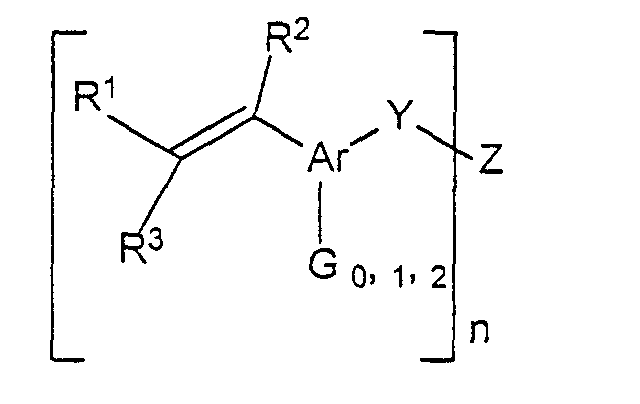
- Structure III:
 in which
- n is 1 to 6;
- Ar is an aromatic or heteroaromatic ring or fused ring having 3 to 10 carbon atoms within the ring structure, in which the heteroatoms may be N, O, or S;
- R1, R2, and R3 are independently hydrogen, an alkyl group having 1 to 12 carbon atoms, or Ar as described above; preferably, R1, R2, and R3 are hydrogen or an alkyl group having 1 to 4 carbon atoms, and more preferably are all hydrogen;
- G is -OR4, -SR4, -N(R1)(R2), Ar as described above, or an alkyl group having 1 to 12 carbon atoms, in which R1 and R2 are as described above and R4 is Ar as described above or an alkyl group having 1 to 12 carbon atoms, preferably 1 to 4 carbon atoms;
- Q is an alkyl group having 1 to 12 carbon atoms;
- X is
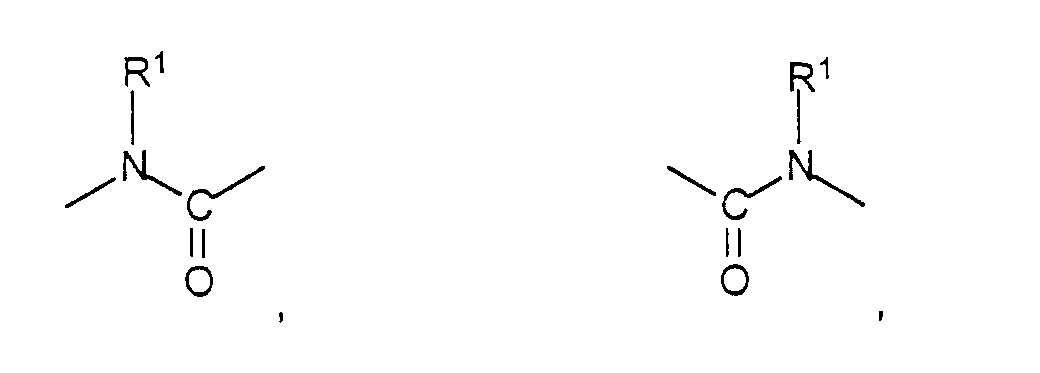


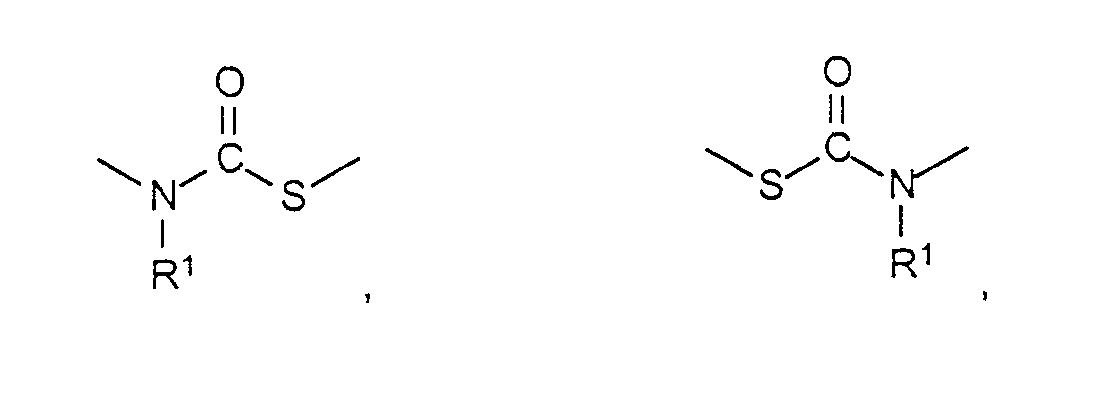

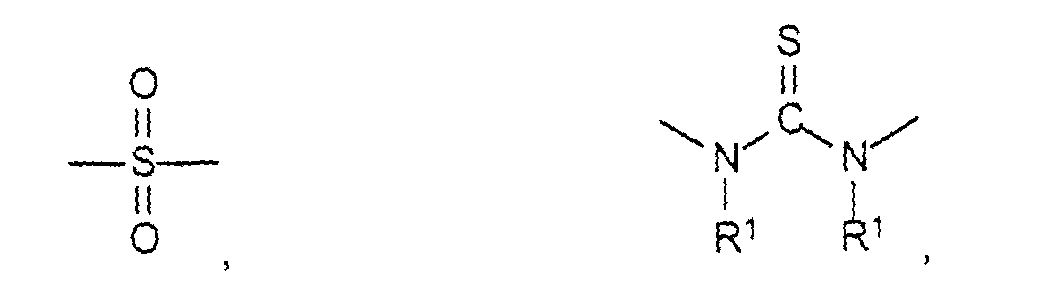
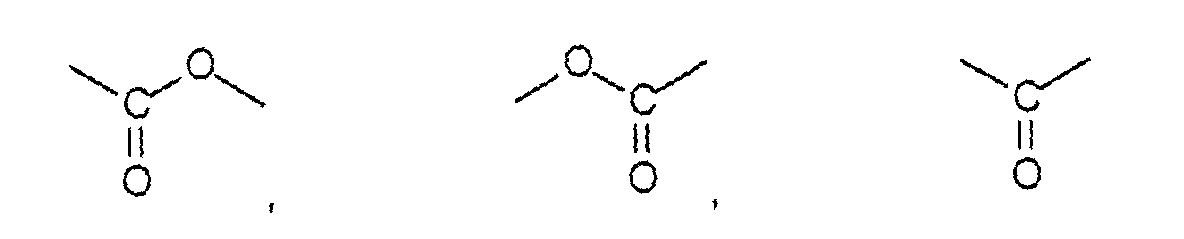

- Y is
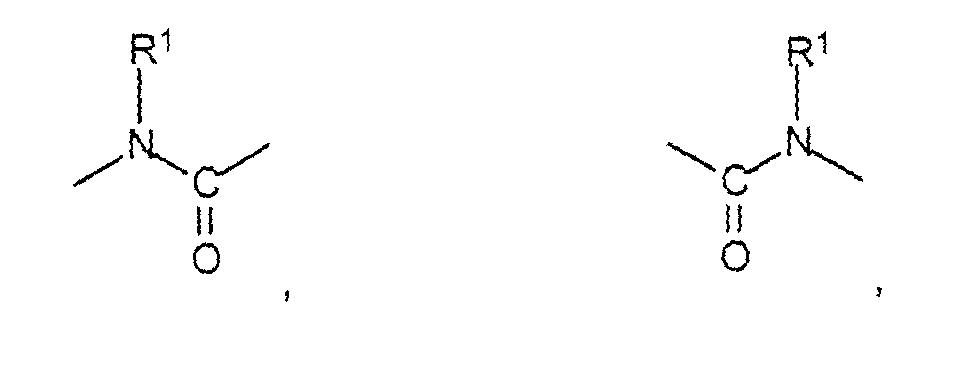


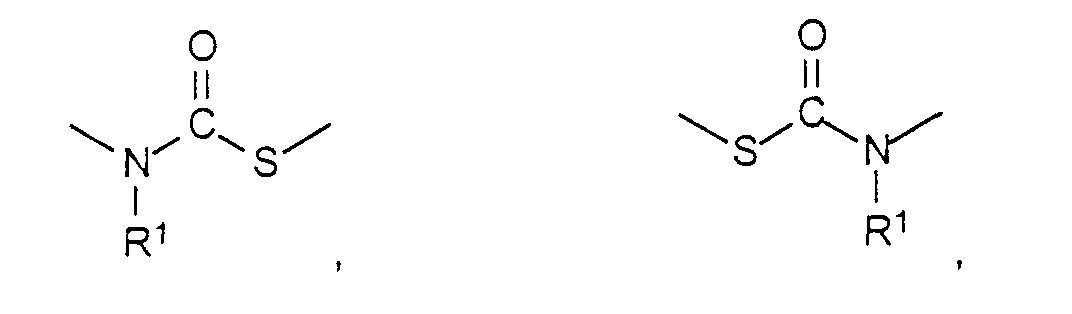


- Z is an alkyl group, a siloxane, a polysiloxane, a C1 to C4 alkoxy-terminated siloxane or polysiloxane, a polyether, a polyester, a polyurethane, a poly(butadiene) or an aromatic, polyaromatic, or heteroaromatic group. Starting materials for preparation as the Z group are commercially available from a number of sources; for example, aromatic and polyaromatic materials may be obtained from BASF or Bayer; siloxanes and polysiloxanes from Gelest; polyethers from BASF; polyesters from Uniqema or Bayer; poly(butadiene)s from Elf-Atochem; polyurethanes from Bayer or BASF; and the branched or linear alkanes from Uniqema. Some of these sources will have available Z materials already functionalized for reaction with a co-reactive functionality on the electron donor; in other cases, the practitioner will need to functionalize the materials in preparation for reaction with the electron donor starting material.
-
- The Z groups may contain cyclic moieties or heteroatoms, and may contain pendant hydroxyl or thiol groups depending on the synthetic route for making the electron donor compound; for example, if one of the starting compounds contains a hydroxyl or thiol functionality that is reacted with an epoxy functionality, the Z group will contain a pendant hydroxyl or thiol group.
- The exact composition or molecular weight of Z is not critical to the invention and can range widely depending on the requirements of the end use for the electron donor compound. The composition of Z can be chosen to give specific material properties in a final formulation, such as, rheological properties, hydrophilic or hydrophobic properties, toughness, strength, or flexibility. For example, a low level of crosslinking and free rotation about polymeric bonds will impart flexibility to a compound, and the presence of siloxane moieties will impart hydrophobicity and flexibility. The molecular weight and chain length will affect viscosity, the higher the molecular weight and the longer the chain length, the higher the viscosity.
- As used in this specification, aromatic means a compound that meets the classical definition of an aromatic compound, that is, it contains cyclic clouds of delocalized π electrons above and below the plane of the molecule and the π clouds have a total of (4n + 2) electrons.
- These electron donor compounds can be prepared through standard addition or condensation reactions between a functionality on a starting material containing the electron donor group and a co-reactive functionality on a starting material containing the molecular or polymeric group, or through common coupling reactions such as the Wittig, Heck, or Stille reactions. For example, useful starting compounds for the electron donor moiety are cinnamyl alcohol or chloride and 3-isopropenyl-α,α-dimethylbenzyl isocyanate. Although one skilled in the art can devise suitable variations in reactions, the variations will be guided in practice by the commercial availability of starting materials or ease of synthetic routes.
- Representative synthetic routes include:
- 1. the reaction of isocyanate functionality with (i) hydroxyl; or (ii) amine; or (iii) thiol functionality to create a carbamate, urea or thiocarbamate linkage, respectively;
- 2. the substitution of a halogen with (i) hydroxyl; or (ii) amine; or (iii) thiol functionality to create an ether, amine or thio-ether linkage, respectively;
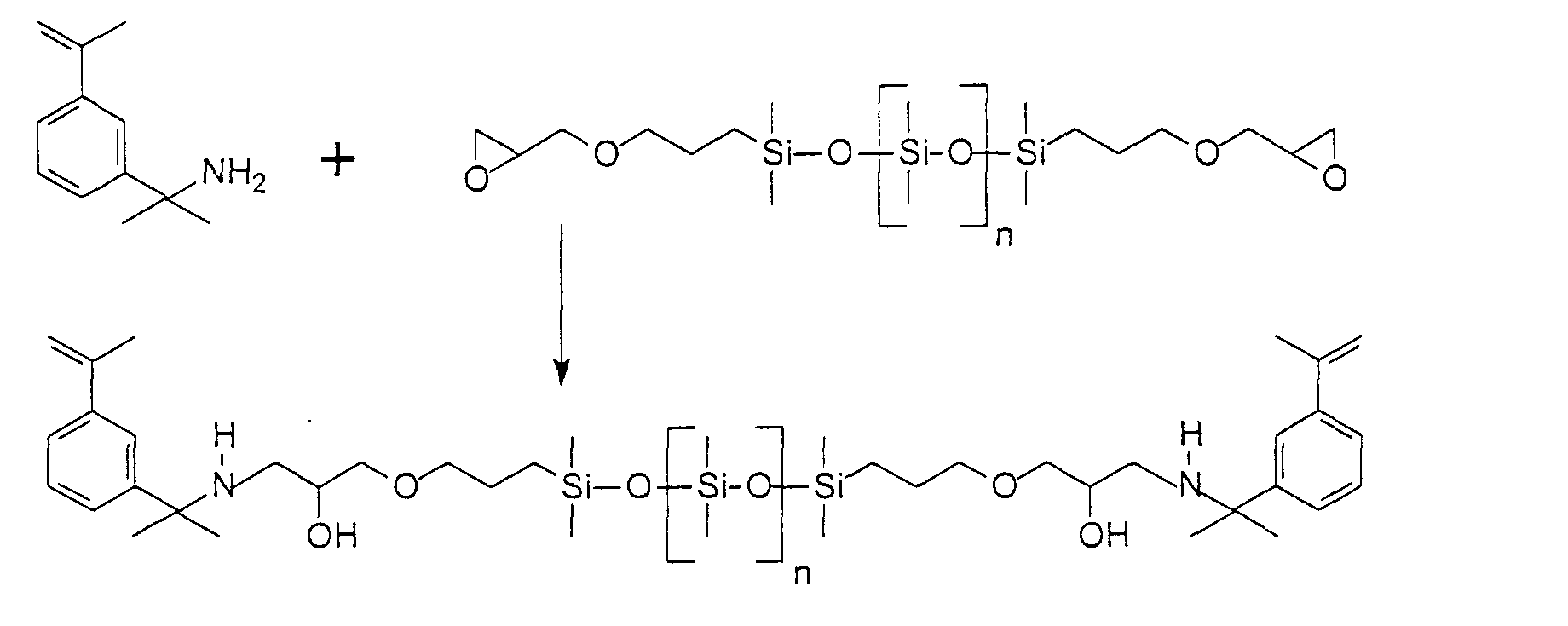
- 3. the reaction of an epoxy functionality with (i) hydroxyl; or (ii) amine; or (iii) thiol functionality to create an ether, amine or thio-ether linkage, respectively.
-
- The electron donor compounds can be blended with electron acceptor compounds, such as fumarates, maleates, acrylates, and maleimides, for co-polymerization to form cured adhesive compositions for use in a wide variety of applications. Suitable fumarates and maleates are, for example, dioctyl maleate, dibutyl maleate, dioctyl fumarate, dibutyl fumarate. Suitable acrylates are numerous and are commercially available, for example, from Sartomer. Suitable maleimides are prepared, for example, according to procedures described in US patents 6,034,194 and 6,034,195 to Dershem.
- The electron donor compounds can be formulated into adhesive, coating, potting or encapsulant compositions that are well suited for use in electronics applications. The formulations preferably will contain one or more curing agents and conductive or nonconductive fillers, and may also contain stabilizing compounds, adhesion promoters or coupling agents.
- Exemplary curing agents are thermal initiators and photoinitiators present in the adhesive composition in an amount of 0.1% to 10%, preferably 0.1% to 3.0%, by weight of the electron donor compound. Preferred thermal initiators include peroxides, such as butyl peroctoates and dicumyl peroxide, and azo compounds, such as 2,2'-azobis(2-methyl-propanenitrile) and 2,2'-azobis(2-methyl-butanenitrile). A preferred series of photoinitiators is one sold under the trademark Irgacure by Ciba Specialty Chemicals. In some formulations, both thermal initiation and photoinitiation may be desirable, for example, the curing process can be started by irradiation, and in a later processing step curing can be completed by the application of heat to accomplish the thermal cure.
- In general, these compositions will cure within a temperature range of 70°C to 250°C, and curing will be effected within a range of ten seconds to three hours. The time and temperature curing profile of each formulation will vary with the specific electron donor compound and the other components of the formulation, but the parameters of a curing profile can be determined by a practitioner skilled in the art without undue experimentation.
- Suitable conductive fillers are carbon black, graphite, gold, silver, copper, platinum, palladium, nickel, aluminum, silicon carbide, boron nitride, diamond, and alumina. Suitable nonconductive fillers are particles of vermiculite, mica, wollastonite, calcium carbonate, titania, sand, glass, fused silica, fumed silica, barium sulfate, and halogenated ethylene polymers, such as tetrafluoroethylene, trifluoroethylene, vinylidene fluoride, vinyl fluoride, vinylidene chloride, and vinyl chloride. When present, fillers will be in amounts of 20% to 90% by weight of the formulation.
- Suitable adhesion promoters or coupling agents are silanes, silicate esters, metal acrylates or methacrylates, titanates, and compounds containing a chelating ligand, such as phosphine, mercaptan, and acetoacetate. When present, coupling agents will be in amounts up to 10% by weight, and preferably in amounts of 0.1% to 3.0% percent by weight of the electron donor compounds.
- In addition, the formulations may contain compounds that lend additional flexibility and toughness to the resultant cured material. Such compounds may be any thermoset or thermoplastic material having a Tg of 150°C or less, and typically will be a polymeric material, such as, a polyacrylate, poly(butadiene), polyTHF (polymerized tetrahydrofuran), carboxy-terminated butyronitrile rubber and polypropylene glycol. When present, these compounds may be in an amount up to about 15% by weight of the electron donor compound.
- The following examples show representative electron donor compounds and reactions for their preparation. The electron donor reaction products were characterized by 1H-NMR and FT-IR. The examples are illustrative of the invention and are not intended as a limitation.
- In these examples, fnc-C36-fnc represents a mixture of isomers resulting from the dimerization of oleic and linoleic acids followed by conversion to the appropriate functionality in which fnc is -OH for alcohols, -NH2 for amines, and -NCO for isocyanates;represents a mixture of isomers resulting from the trimerization of oleic and linoleic acids followed by conversion to the appropriate functionality in which fnc is -COOH for carboxyl groups, -CH2OH for alcohols; and

C36 within a compound represents a mixture of isomers of linear and branched chain alkyls having 36 carbon atoms, which is the residue of the dimer or trimer acid in the compound, after the exemplified reaction. -

- 3-Isopropenyl-α,α-dimethylbenzyl isocyanate (m-TMI) (35.6 g, 0.177 mole) was solvated in toluene (100 g) in a 500 Ml three-necked flask equipped with a mechanical stirrer, addition funnel and nitrogen inlet/outlet. The reaction was placed under nitrogen, and 0.033 g of dibutyltin dilaurate (catalyst) was added with stirring as the solution was heated to 90°C. The addition funnel was charged with HO-C36-OH (50.12 g, 0.0884 mole) (Pripol 2033, Uniqema) dissolved in toluene (50 g). This solution was added to the isocyanate solution over ten minutes, and the resulting mixture heated for an additional three hours at 90°C. After the reaction was allowed to cool to room temperature, the mixture was washed with distilled water three times. The isolated organic layer was dried over MgSO4, filtered and the solvent removed in vacuo to give the product in 93% yield.
-

- OCN-C36-NCO (DDI 1410, Henkel) (98.79 g, 0.164 mole) was solvated in toluene (100 g) in a 500 mL three-necked flask equipped with a mechanical stirrer, addition funnel and nitrogen inlet/outlet. The reaction was placed under nitrogen, and 0.04 g of dibutyltin dilaurate (catalyst) was added with stirring as the solution was heated to 90°C. The addition funnel was charged with cinnamyl alcohol (44.01 g, 0.328 mole) dissolved in toluene (50 g). This solution was added to the isocyanate solution over ten minutes, and the resulting mixture was heated for an additional three hours at 90°C. After the reaction was allowed to cool to room temperature, the mixture was washed with distilled water three times. The isolated organic layer was dried over MgSO4, filtered and the solvent removed in vacuo to give the product in 94% yield.
-

- HO-C36-OH (Pripol 2033, Uniqema) (54.36 g, 0.096 mole), 50% NaOH (400 mL), tetrabutyl ammonium hydrogen sulfate (13.8 g, 0.041 mole), and cinnamyl chloride (33.69 g, 0.221 mole) in toluene were stirred for five hours at 53°C, then for 15 hours at 75°C. The reaction was allowed to cool to room temperature and the organic layer extracted and washed with brine three times. The isolated organic layer was dried over MgSO4, filtered and the solvent removed in vacuo to give the product in 95% yield.
- where n is 9.

- Epoxypropoxypropyl terminated polydimethylsiloxanes (DMS-E12, Gelest Inc.) (10 g, 0.01 mole), cinnamyl alcohol (2.68 g, 0.02 mole) and an ion exchange resin (2 g) (Amberlyst A-21) were heated together at 110° C for 20 hours. The ion exchange resin was separated from the reaction mixture to give the product in 94% yield.
-

- A suspension of LiAlH4 (0.84 g, 0.022 mole) and ether (100 mL) in a dry 500 mL three-necked round-bottom flask equipped with a reflux condenser under nitrogen was cooled to 0°C. To this was added slowly trimer triacid (10 g, 0.011 mole) in ether (50 mL). The reaction mixture was stirred at room temperature for five minutes. Water was added (100 mL) and the salt was removed by filtration. The organic layer was separated and dried over MgSO4. The solvent was removed under reduced pressure to give the trimer triol.
- 3-Isopropenyl-α,α-dimethylbenzyl isocyanate (m-TMI) (3.57 g, 0.018 mole) was solvated in toluene (100mL) in a 500 mL three-necked flask equipped with a mechanical stirrer, addition funnel and nitrogen inlet/outlet. The reaction was placed under nitrogen, and dibutyltin dilaurate (0.001 g) was added with stirring as the solution heated to 90°C. The addition funnel was charged with the trimer triol (5.1 g, 0.0059 mole) dissolved in toluene (50mL). This solution was added to the isocyanate solution over 10 minutes, and the resulting mixture heated for an additional three hours at 90°C. After the reaction was allowed to cool to room temperature, the mixture was washed with distilled water three times. The isolated organic layer was dried over MgSO4, filtered, and the solvent removed in vacuo to give the product in 95% yield.
- where n is 9.
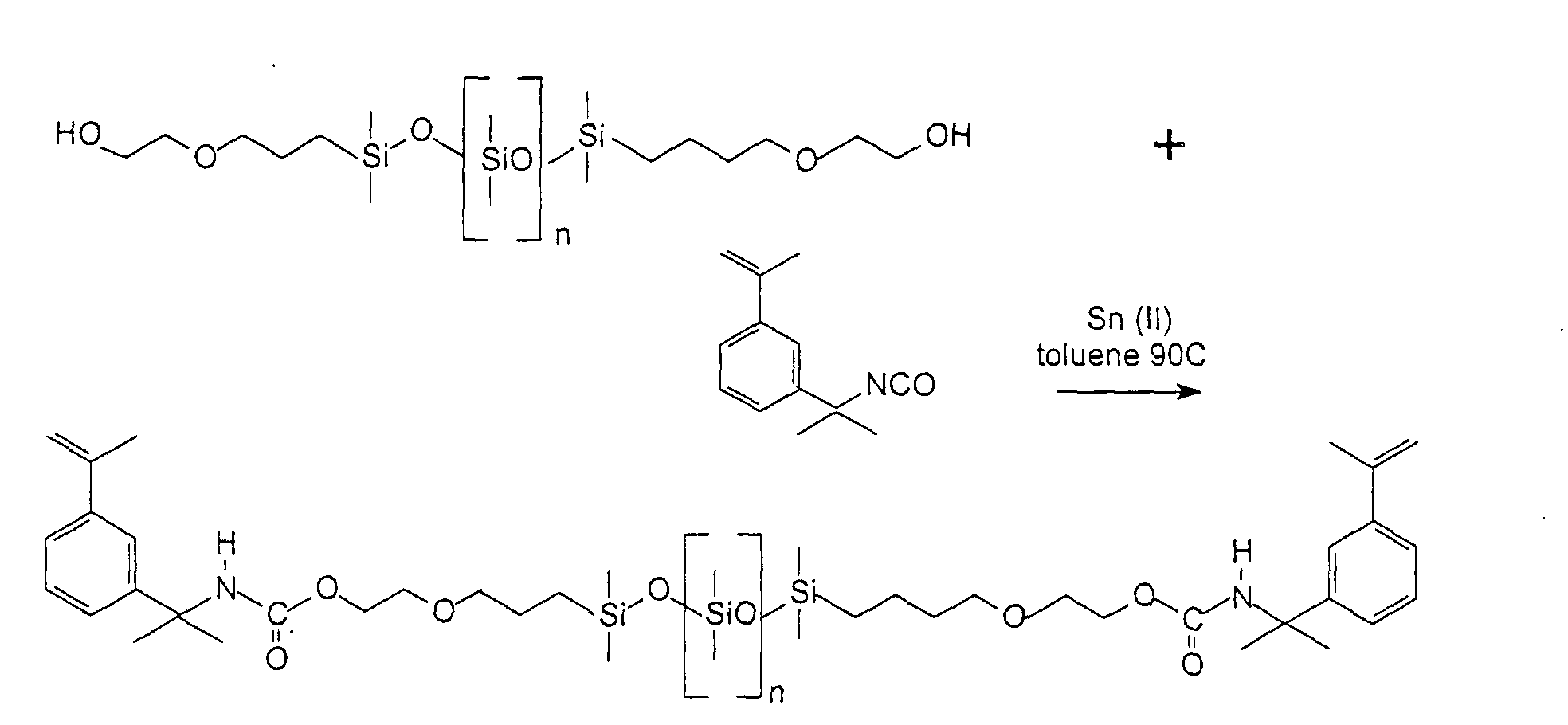
- 3-isopropenyl-α,α-dimethylbenzyl isocyanate (m-TMI) (8.05 g, 0.04 mole) was solvated in toluene (50 g) in a 250 mL three-necked flask equipped with a mechanical stirrer, addition funnel and nitrogen inlet/outlet. The reaction was placed under nitrogen, and dibutyltin dilaurate (0.003 g) was added with stirring as the solution heated to 90°C. The addition funnel was charged with carbinol (hydroxyl) terminated polydimethylsiloxane (DMS-C15 available from Gelest Inc.) (20 g, 0.04 mole) dissolved in toluene (25 g). This solution was added to the isocyanate solution over ten minutes, and the resulting mixture heated for an additional three hours at 90°C. After the reaction was allowed to cool to room temperature, the mixture was washed with distilled water three times. The isolated organic layer was dried over MgSO4, filtered and the solvent removed in vacuo to give the product in 95% yield.
-
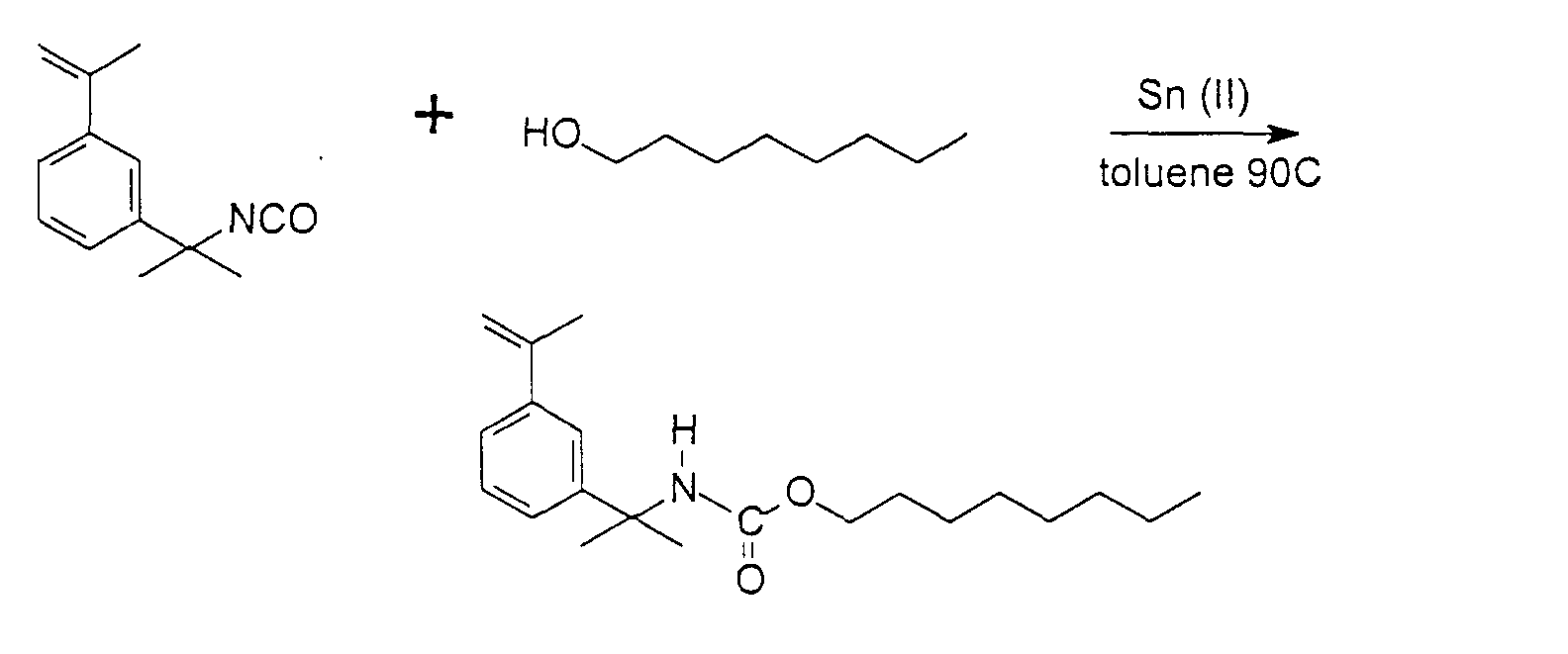
- 3-lsopropenyl-α,α-dimethylbenzyl isocyanate (m-TMI) (10 g, 0.05 mole) was solvated in toluene (50 g) in a 250 mL three-necked flask equipped with a mechanical stirrer, addition funnel and nitrogen inlet/outlet. The reaction was placed under nitrogen, and dibutyltin dilaurate (0.003 g) was added with stirring as the solution was heated to 90°C. The addition funnel was charged with 1-octanol (6.47 g, 0.05 mole) dissolved in toluene (25 g). This solution was added to the isocyanate solution over ten minutes, and the resulting mixture heated for an additional three hours at 90°C. After the reaction was allowed to cool to room temperature, the mixture was washed with distilled water three times. The isolated organic layer was dried over MgSO4, filtered and the solvent removed in vacuo to give the product in 97% yield.
- Using the same procedure, a branched chain alcohol with 18 or 24 carbons can be substituted. The alcohols are commercially available from Uniqema and Jarchem. In the structures below C18 and C24 represent a branched chain alkyl group with 18 or 24 carbons, respectively.

-

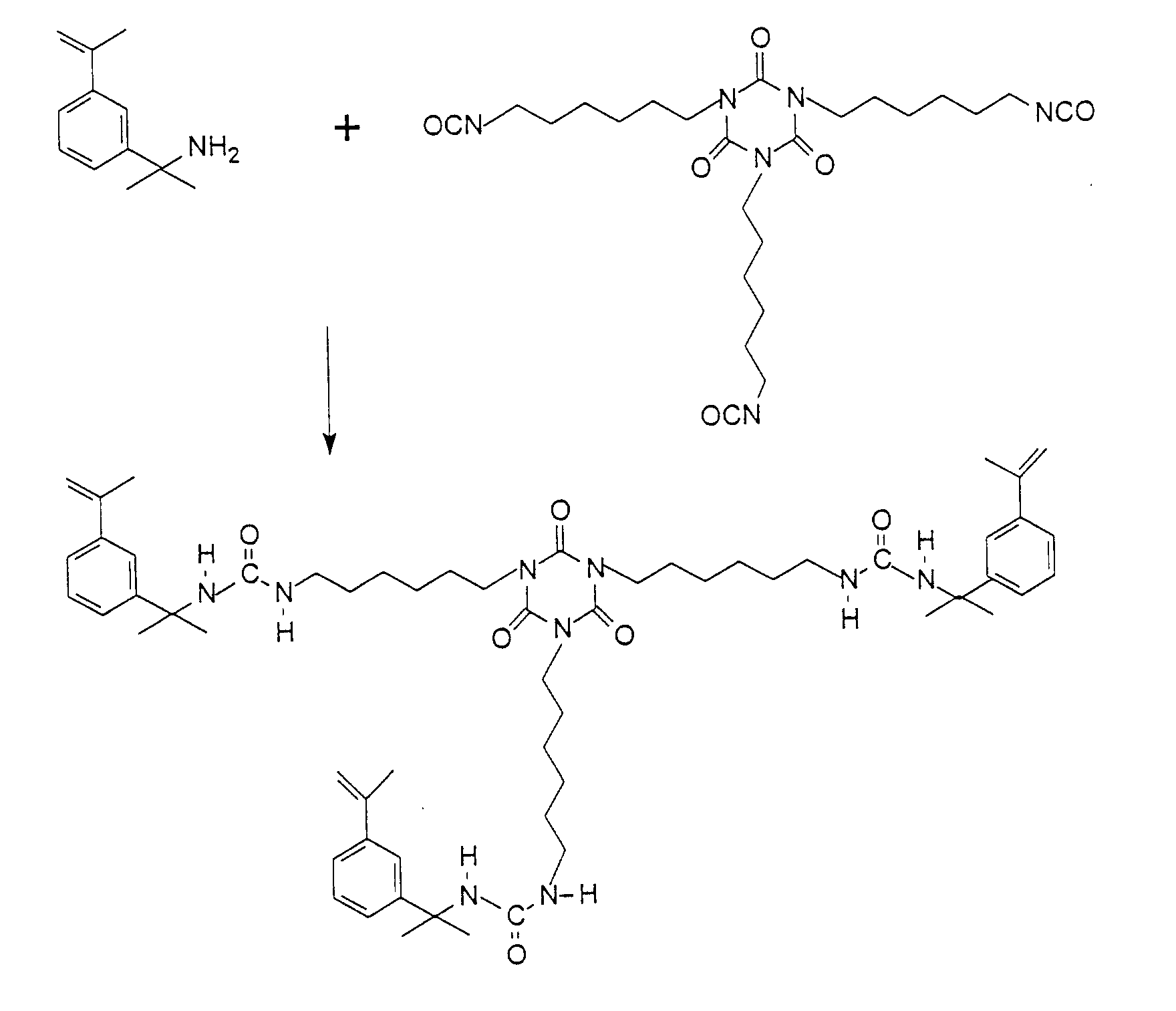
- Three molar equivalents of 3-isopropenyl-α,α-dimethylbenzyl isocyanate (m-TMI) are solvated in toluene in a three-necked flask equipped with a mechanical stirrer, addition funnel and nitrogen inlet/outlet. The reaction is placed under nitrogen. The addition funnel is charged with one equivalent amount of tri-functional amine (three molar equivalents of amine functionality) dissolved in toluene. This solution is added to the isocyanate solution over ten minutes and the resulting mixture heated for three hours at 90°C. After the reaction is allowed to cool to room temperature, the mixture is washed with distilled water three times. The isolated organic layer is dried over MgSO4, filtered and the solvent removed in vacuo to give the product.
-

- Two molar equivalents of 4-vinyl benzyl amine are solvated in THF in a three-necked flask equipped with a mechanical stirrer, addition funnel and nitrogen inlet/outlet. The reaction is placed under nitrogen. The addition funnel is charged with one molar equivalent of 1,8-dibromooctane dissolved in THF. This solution is added to the amine solution over ten minutes and the resulting mixture heated for three hours at 60°C. After the reaction is allowed to cool to room temperature, the THF is removed under reduced pressure, and the residue is partitioned between ether and water. The organic layer is separated, dried over MgSO4, filtered, and the solvent is removed under reduced pressure to give the product.
-

- One equivalent of H2N-C36-NH2 (Versamine 552, Henkel) is solvated in THF in a three-necked flask equipped with a mechanical stirrer, addition funnel and nitrogen inlet/outlet. The reaction is placed under nitrogen. The addition funnel is charged with two equivalents of cinnamyl chloride dissolved in THF. This solution is added to the H2N-C36-NH2 solution over ten minutes and the resulting mixture heated for three hours at 60°C. After the reaction is allowed to cool to room temperature, the THF is removed under reduced pressure, and the residue is partitioned between ether and water. The organic layer is separated, dried over MgSO4, filtered and the solvent is removed under reduced pressure to give the product in 90% yield.
-

- One equivalent of suberoyl chloride is solvated in toluene in a three-necked flask equipped with a mechanical stirrer, addition funnel and nitrogen inlet/outlet. The reaction is placed under nitrogen. The addition funnel is charged with two equivalents of 3-isopropenyl-α,α-dimethylbenzyl amine and one equivalent of triethyl amine dissolved in THF. This solution is added to the suberoyl chloride solution over five minutes and the resulting mixture heated for three hours at 70°C. After the reaction is allowed to cool to room temperature, the mixture is washed with distilled water three times. The isolated organic layer is dried over MgSO4, filtered and the solvent removed in vacuo to give the product in 91% yield.
-

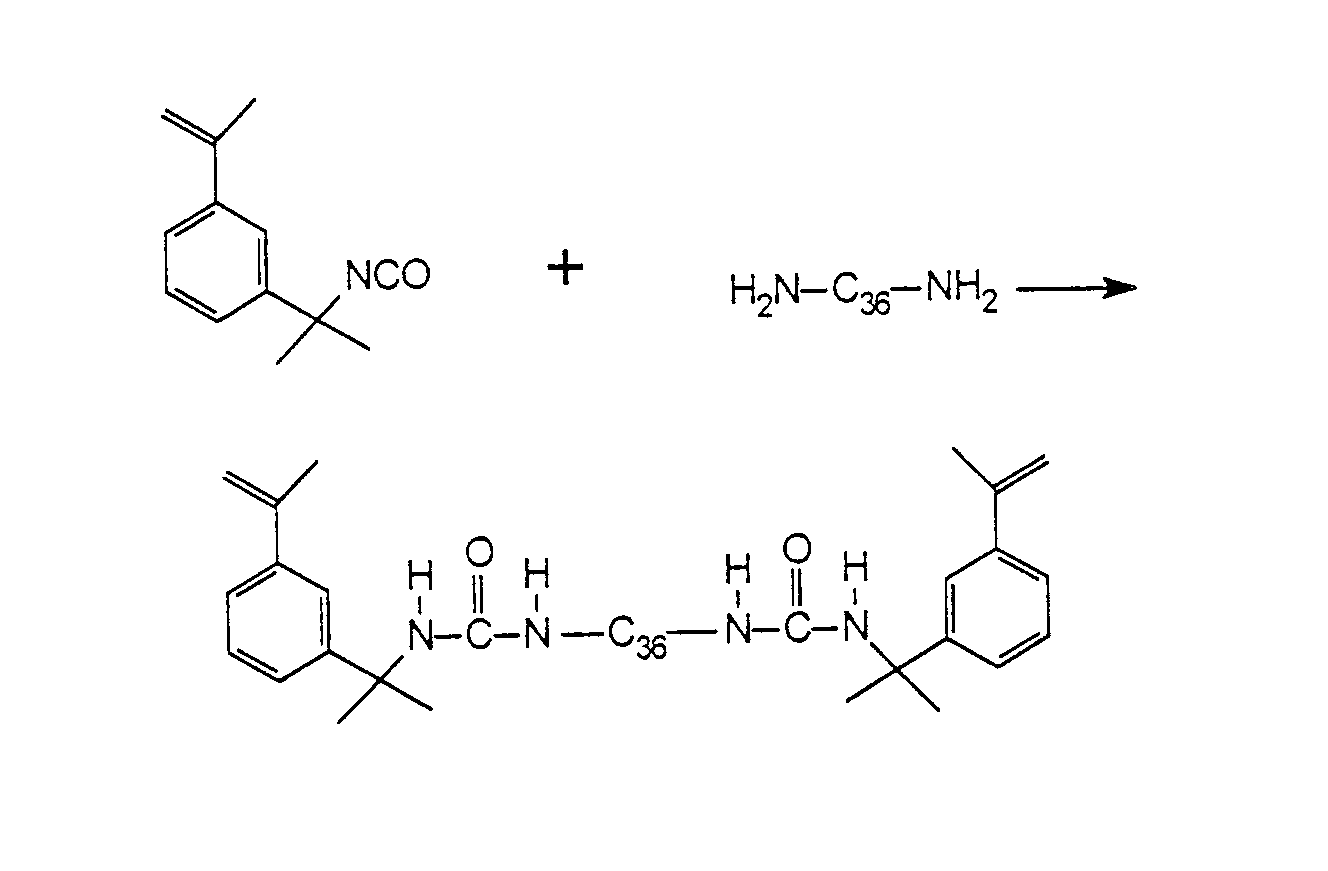
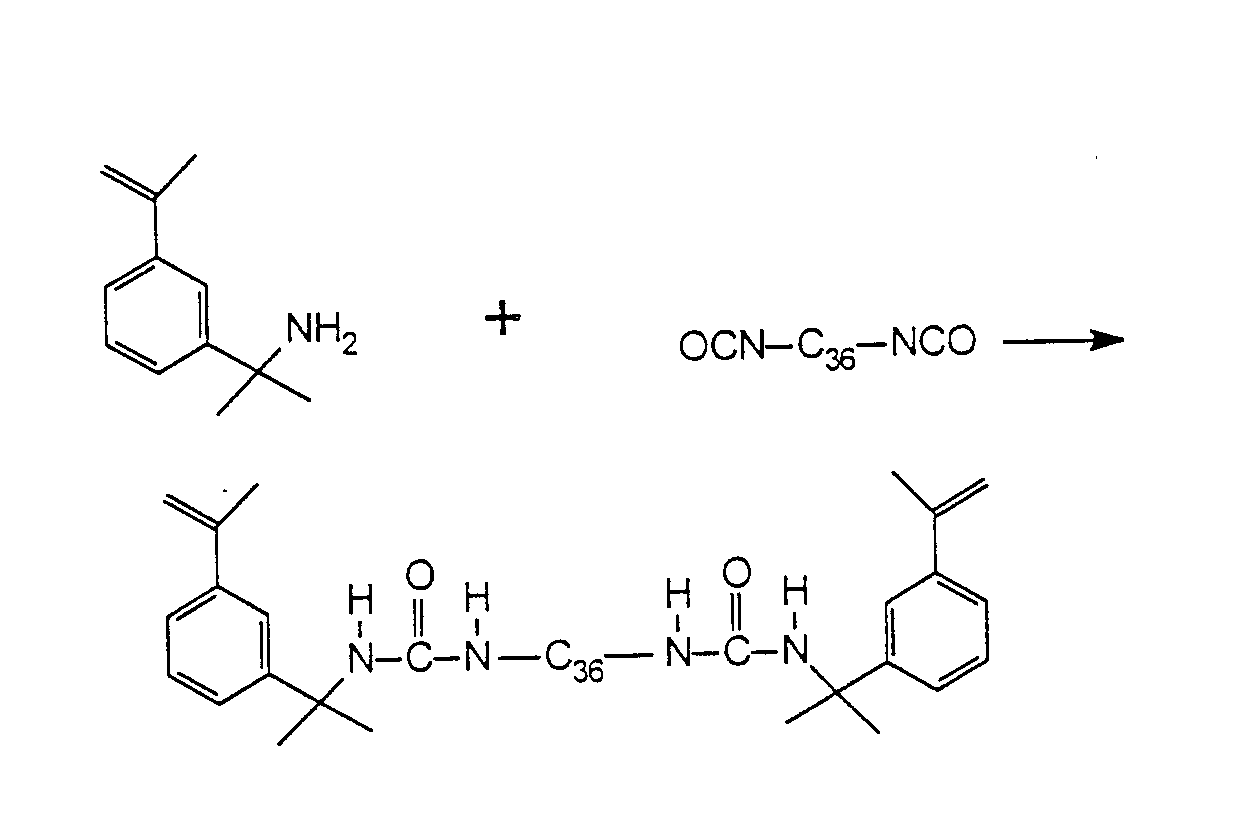
- Two equivalents of 3-isopropenyl-α,α-dimethylbenzyl isocyanate (m-TMI) is solvated in toluene in a three-necked flask equipped with a mechanical stirrer, addition funnel and nitrogen inlet/outlet. The reaction is placed under nitrogen. The addition funnel is charged with one equivalent of 2-methyl-pentane diamine, DYTEK A, dissolved in toluene. This solution is added to the isocyanate solution over ten minutes and the resulting mixture heated for three hours at 90°C. After the reaction is allowed to cool to room temperature, the mixture is washed with distilled water three times. The isolated organic layer is dried over MgSO4, filtered and the solvent removed in vacuo to give the product.
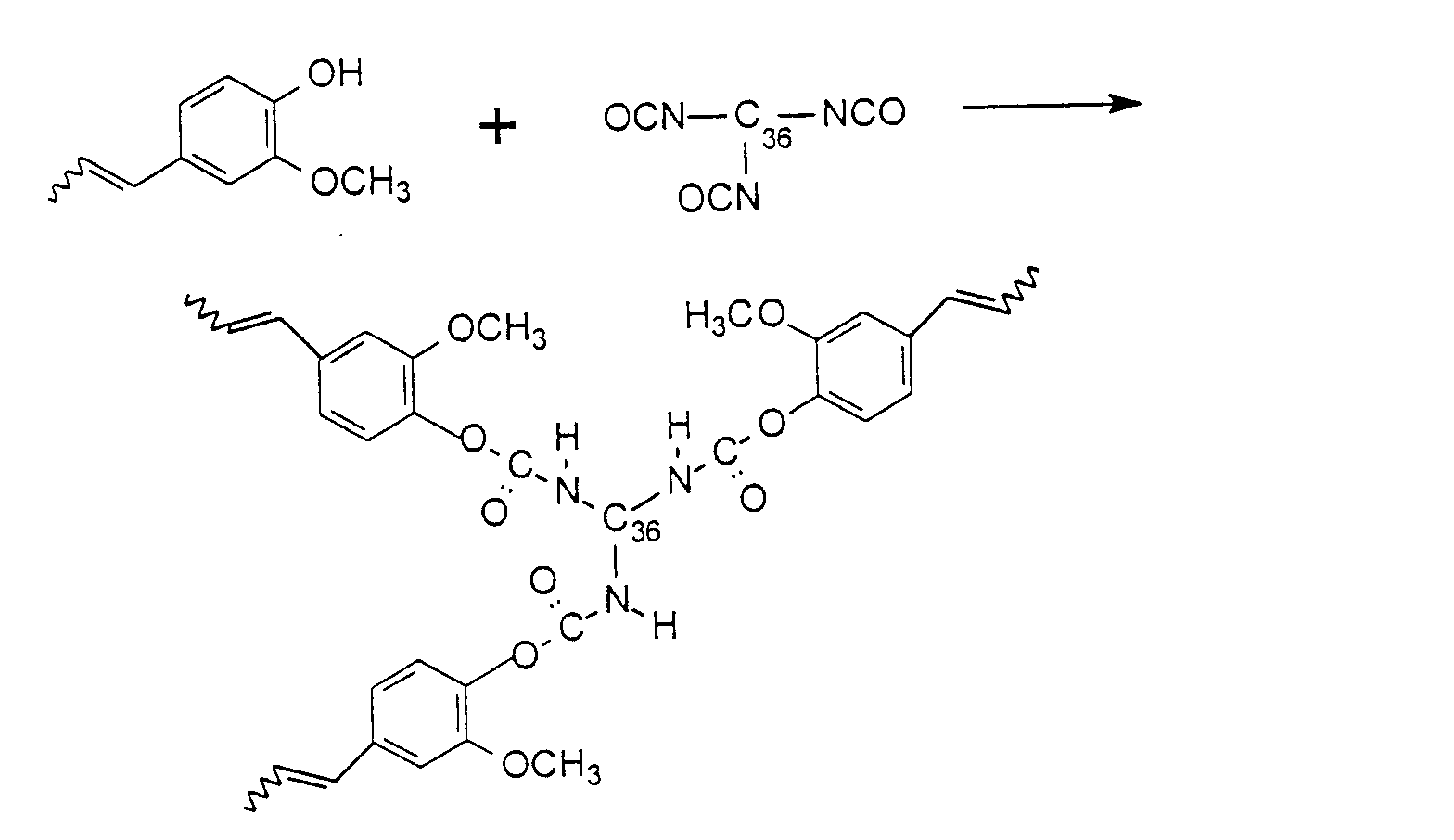
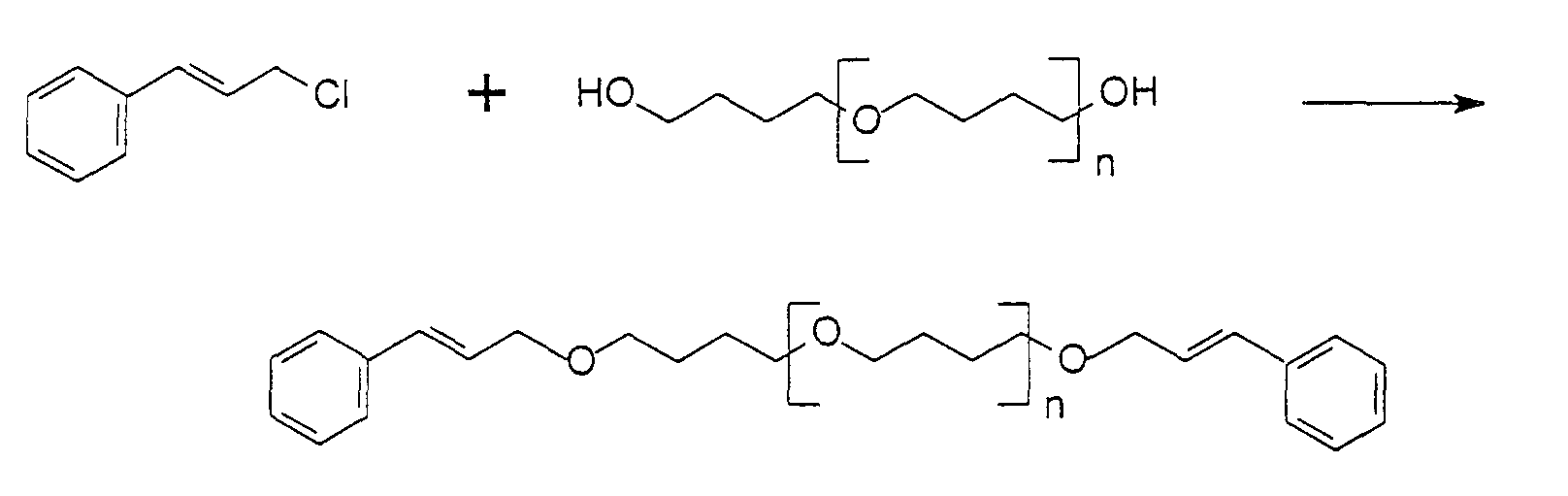
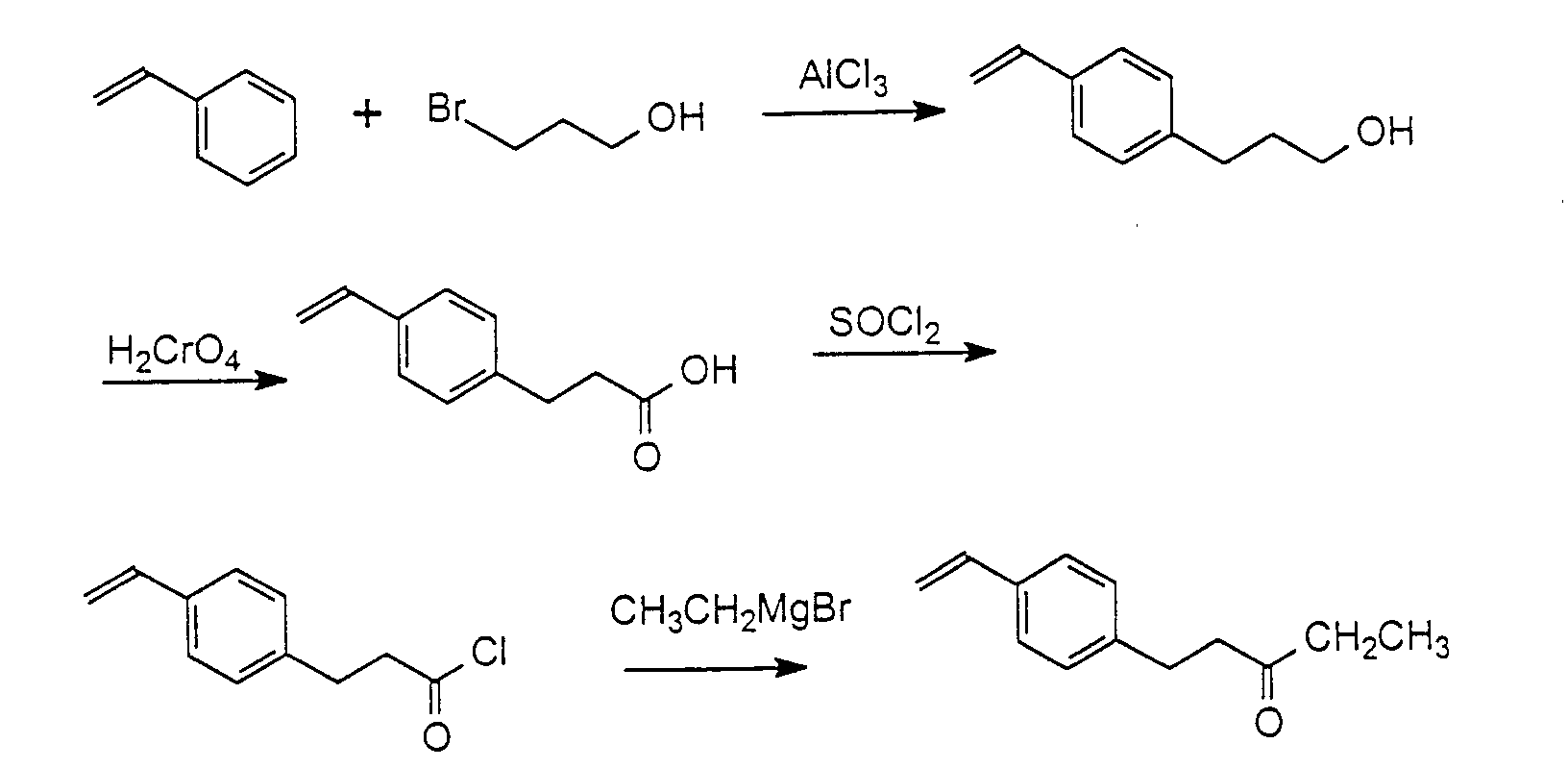
- Other electron donor compounds can be made according to similar procedures. The following reaction schemes show other aromatic ring starting compounds and reactant organic compounds with the resulting electron donor compounds.
-

-

-
-
-
-
- In this example C18-OH represents an 18 carbon branched chain alcohol commercially available from Uniqema.

-
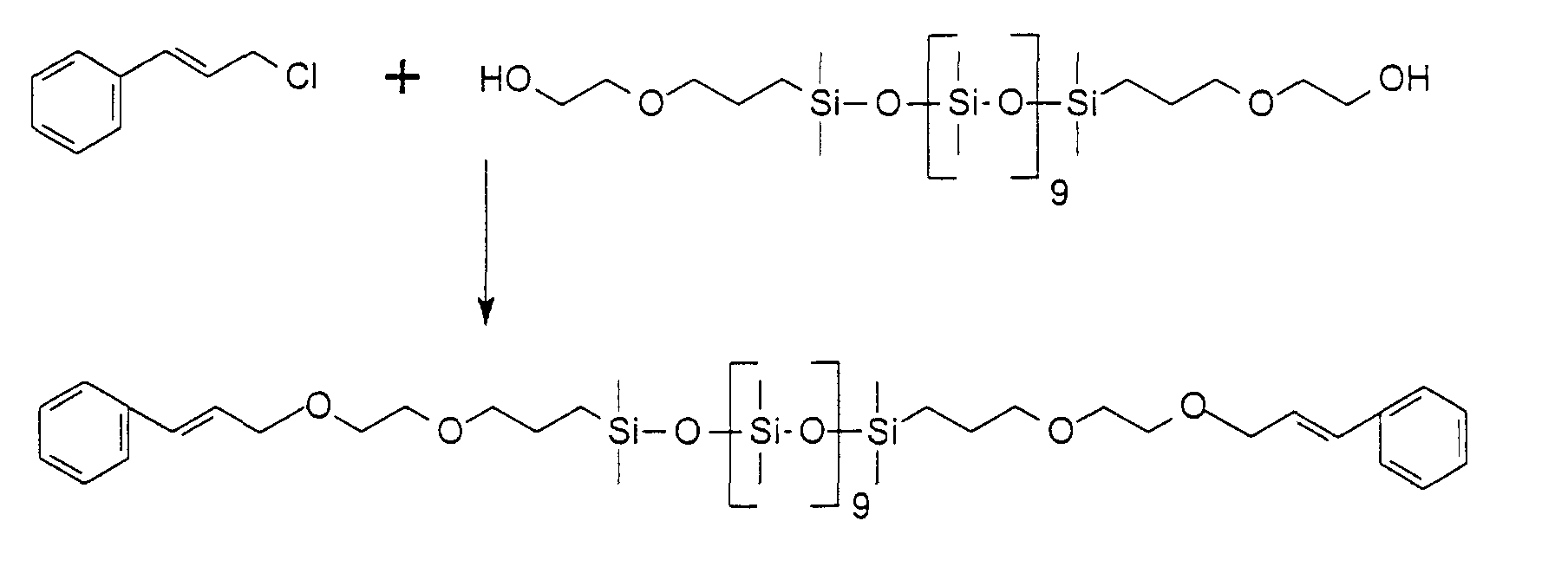
- In these structures, n is an integer representing the number of times the unit in brackets is repeated. This can be varied by choice of commercially available materials.

- In these structures, n is an integer representing the number of times the unit in brackets is repeated. This can be varied by choice of commercially available materials.
-
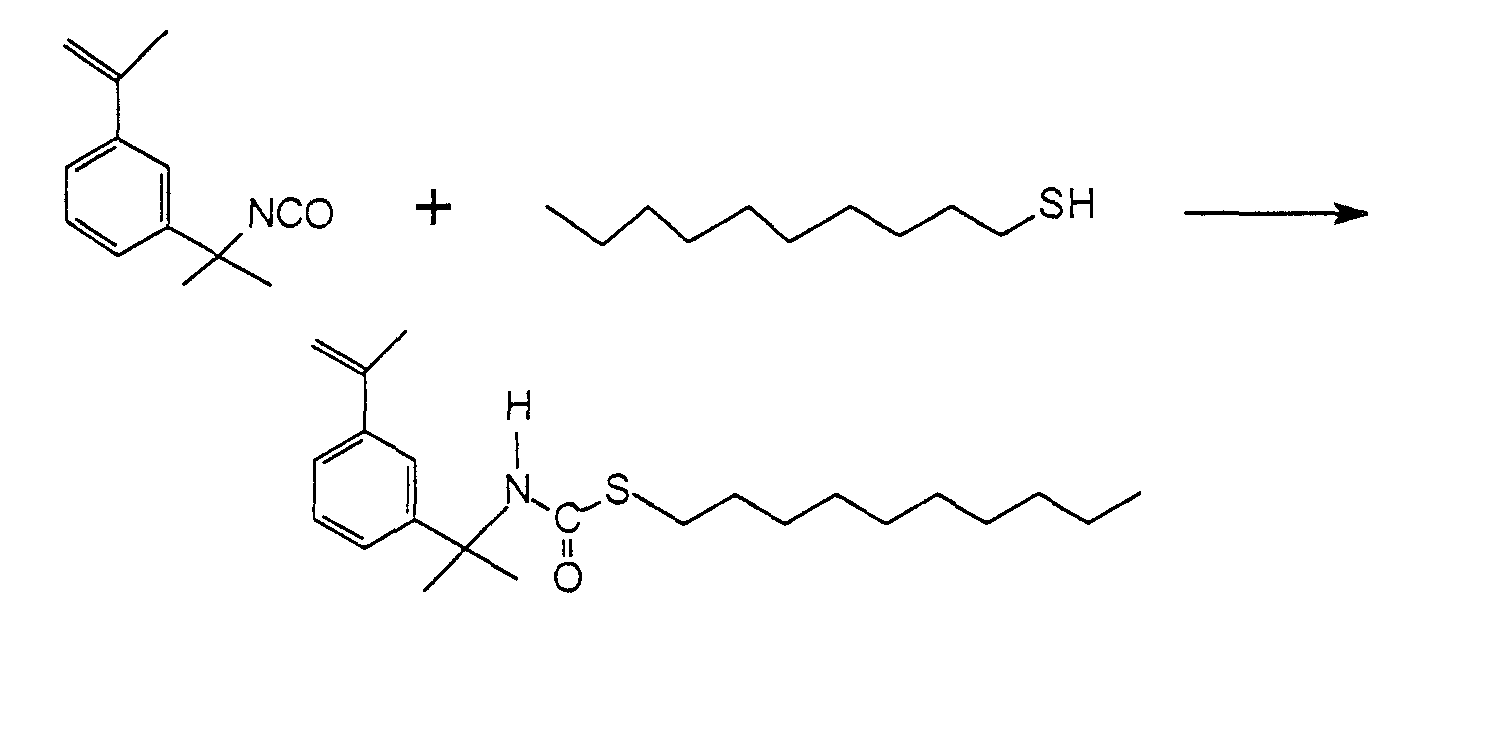
-

- In these structures, n is an integer representing the number of times the unit in brackets is repeated. This can be varied by choice of commercially available materials.

- In these structures, n is an integer representing the number of times the unit in brackets is repeated. This can be varied by choice of commercially available materials.
-
-

- where p-TsOH is para-toluene sulfonic acid.

- Three of the electron donor compounds from the previous examples were formulated into adhesive compositions using a bismaleimide as the electron acceptor. The bismaleimide was derived from amino-terminated polyoxy-butylene (Versalink P650, Air Products) and maleic anhydride according to the procedures outlined in patent number US 4.745.197, using USP-MD (Witco Corporation) as an initiator.
- The adhesive compositions were cured (copolymerization of the electron donor and the electron acceptor) using DSC. Exotherms for each of these resins appeared to be qualitatively similar in peak, and in peak to onset characteristics.
- The formulations also were tested for use as die-attach adhesives for use in microelectronic devices: formulations were placed between a Pd lead frame and a 120 X 120 mil silicon die and cured on a hot plate at 200°C for about 60 seconds. Pressure was applied to the side of the die at room temperature until shearing occurred. The die-shear force was measured in Kg. The results are included in the following formulation tables and show die shear values within a commercially usable range.
Formulation 1 Component Mass (g) Weight % BisMaleimide (Versalink P650) (electron acceptor) 0.54 11.19 TMI/dimer diol bis-carbamate (example 1) 0.50 10.31 Maleic anhydride 8% (Ricon 131) (reactive diluent) 0.121 2.50 Initiator 0.024 0.50 Blend of adhesion promoters 0.0242 0.50 Silver Flakes 3.69 75.0 RT Die Shear 13.9Kg Formulation 2 Component Mass (g) Weight % Bismaleimide (Versalink P650) (electron acceptor) 0.56 11.15 Cinnamyl alcohol/dimer diisocyanate bis carbamate. (example 2) 0.52 10.35 Maleic anhydride 8% (Ricon 131) (reactive diluent) 0.126 2.50 Initiator 0.0252 0.50 Blend of adhesion promoters 0.0252 0.50 Silver Flake 3.78 75.0 RT Die Shear 6.1Kg Formulation 3 Component Mass (g) Weight % Bismaleimide (Versalink P650 BMI) (electron acceptor) 0.49 10.66% m-TMI/trimer triol tris-carbamate (example 5) 0.50 10.84% Maleic anhydride 8% (reactive diluent) 0.115 2.50% Initiator 0.0231 0.50% Blend of adhesion promoters 0.023 0.50% Silver Flake 3.46 75% RT Die Shear 15.8Kg - A further advantage of the electron donor compounds is the fact that the addition of a minor amount to an adhesive formulation containing a vinyl ether will prevent the adhesive composition from dispersing or bleeding when applied to a low energy substrate.
Claims (15)
- A compound having the structure:in which
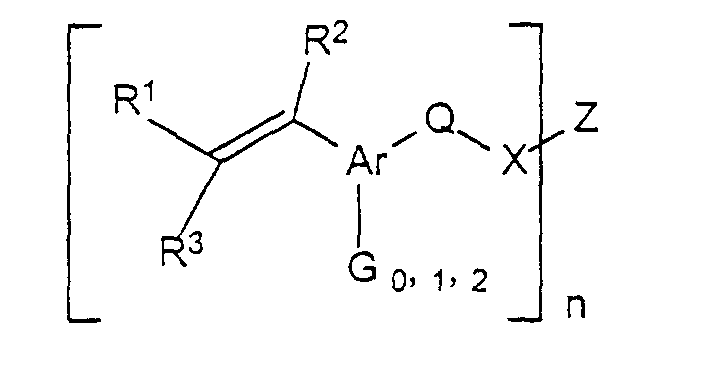 n is 1 to 6;Ar is an aromatic or heteroaromatic ring or fused ring having 3 to 10 carbon atoms within the ring structure, in which the heteroatoms may be N, O, or S;R1, R2, and R3 are independently hydrogen, an alkyl group having 1 to 12 carbon atoms, or Ar as described above;G is -OR4, -SR4, -N(R1)(R2), Ar as described above, or an alkyl group having 1 to 12 carbon atoms, in which R1 and R2 are as described above and R4 is Ar as described above or an alkyl group having 1 to 12 carbon atoms;Q is an alkyl group having 1 to 12 carbon atoms;X is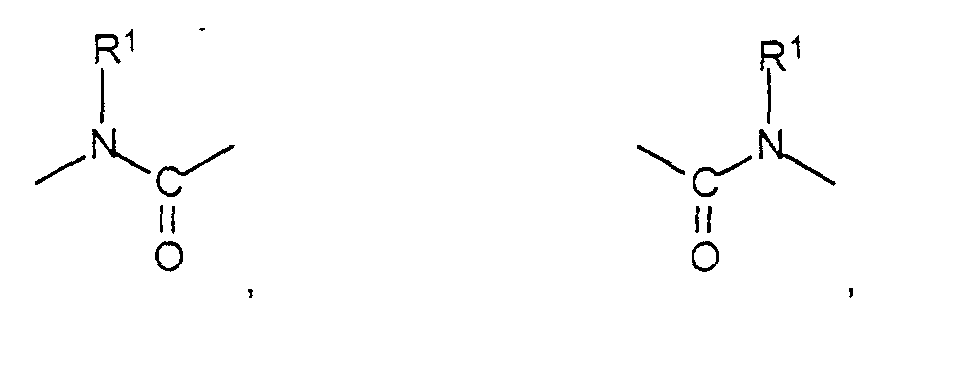


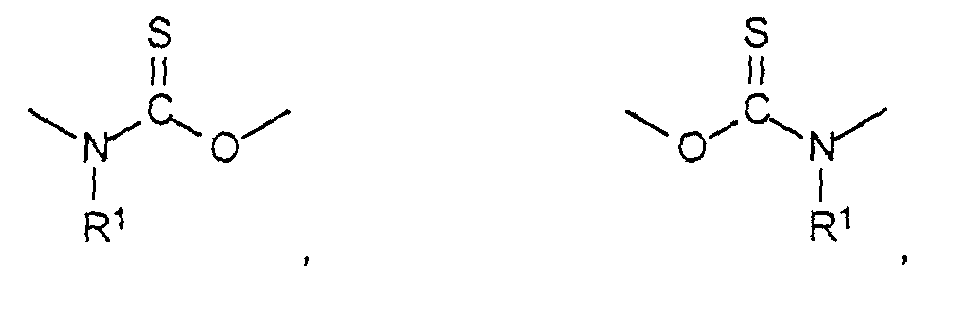

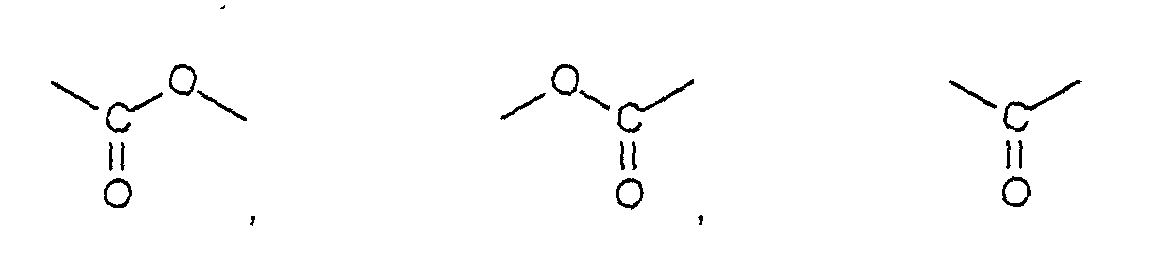
 Z is an alkyl group, a siloxane, a polysiloxane, a C1 to C4 alkoxy-terminated siloxane or polysiloxane, a polyether, a polyester, a polyurethane, a poly(butadiene), or an aromatic, polyaromatic or heteroaromatic group.
 - The compound according to claim 1 in whichn is 1 or 2;R1, R2, and R3 are hydrogen,G is -OCH3,Q is a C1 to C4 alkyl,X isand
 Z is a branched or linear C18 to C36 chain, or a siloxane.
 - A compound having the structure:in which
 n is 1 to 6;Ar is an aromatic or heteroaromatic ring or fused ring having 3 to 10 carbon atoms within the ring structure, in which the heteroatoms may be N, O, or S;R1, R2, and R3 are independently hydrogen, an alkyl group having 1 to 12 carbon atoms, or Ar as described above;G is -OR4, -SR4, -N(R1)(R2), Ar as described above, or an alkyl group having 1 to 12 carbon atoms, in which R1 and R2 are as described above and R4 is Ar as described above or an alkyl group having 1 to 12 carbon atoms;Y is


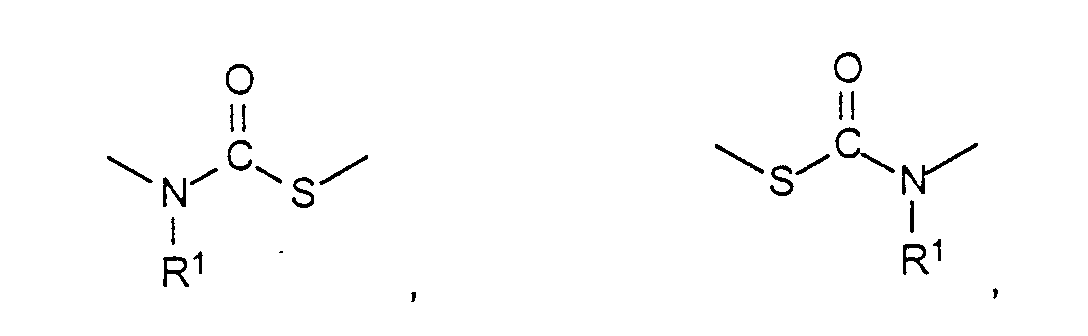
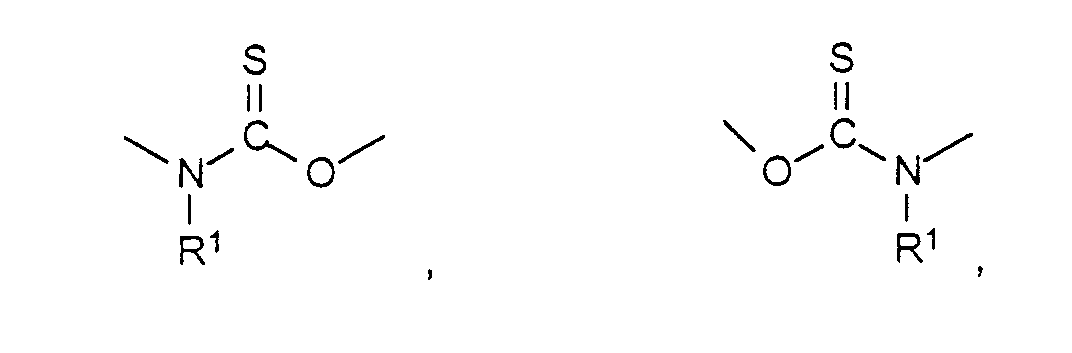
 Z is an alkyl group, a siloxane, a polysiloxane, a C1 to C4 alkoxy-terminated siloxane or polysiloxane, a polyether, a polyester, a polyurethane, a poly(butadiene), or an aromatic, polyaromatic or heteroaromatic group.
 - The compound according to claim 3 having the structure:
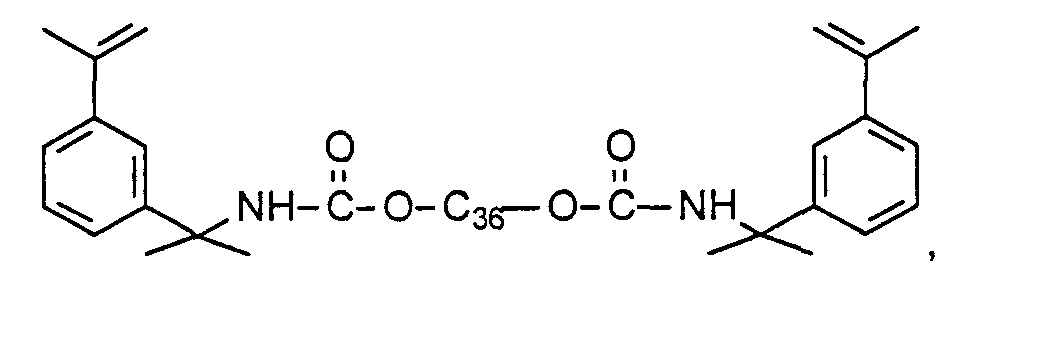
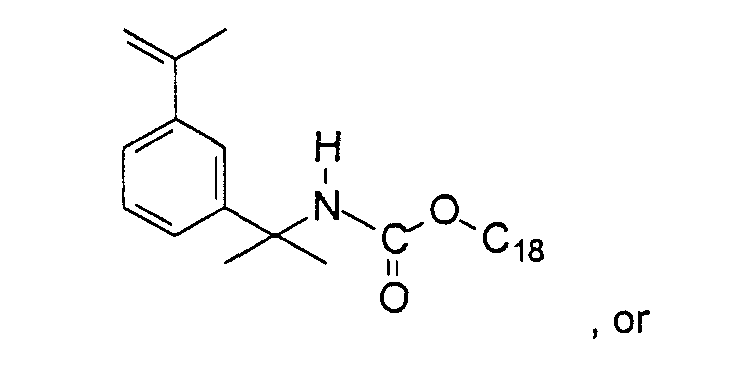 in which C18, C24, and C36, represent a mixture of isomers of linear or branched chain alkyl groups having C18, C24, and C36 carbon atoms, respectively.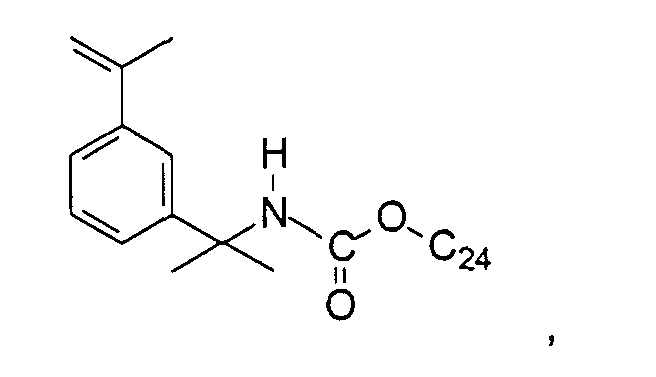
- A compound having the structure:in which
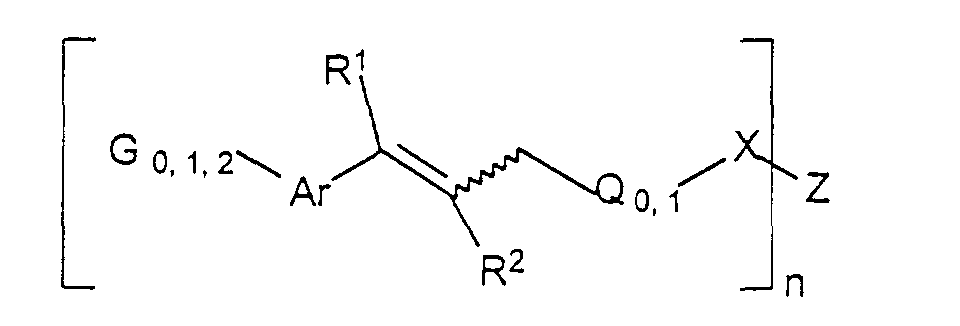 n is 1 to 6;Ar is an aromatic or heteroaromatic ring or fused ring having 3 to 10 carbon atoms within the ring structure, in which the heteroatoms may be N, O, or S;R1 and R2 are independently hydrogen, an alkyl group having 1 to 12 carbon atoms, or Ar as described above;G is -OR4, -SR4, -N(R1)(R2), Ar as described above, or an alkyl group having 1 to 12 carbon atoms, in which R1 and R2 are as described above and R4 is Ar as described above or an alkyl group having 1 to 12 carbon atoms;Q is an alkyl group having 1 to 12 carbon atoms;X is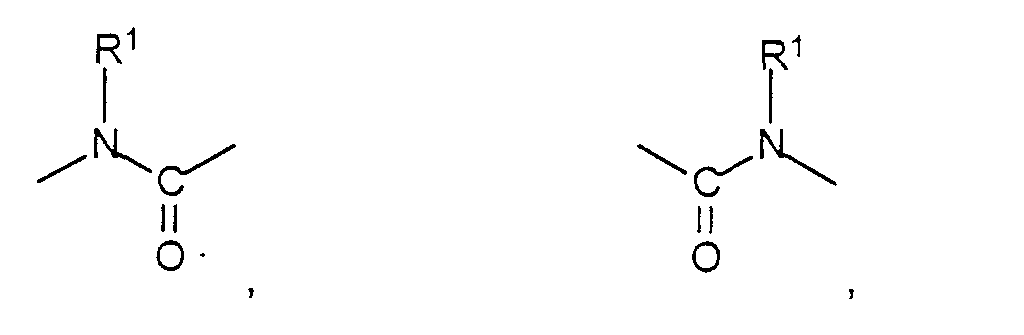
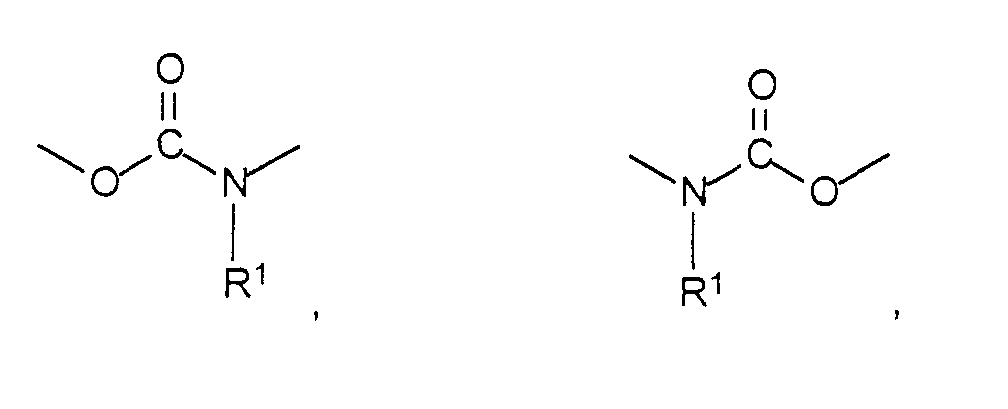
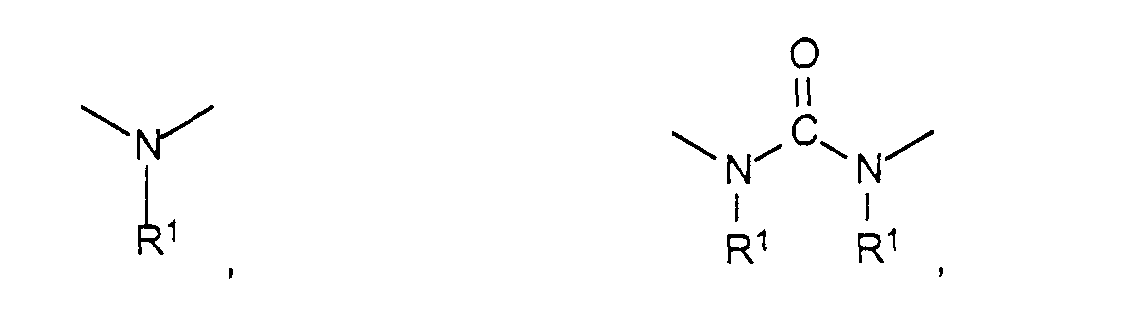

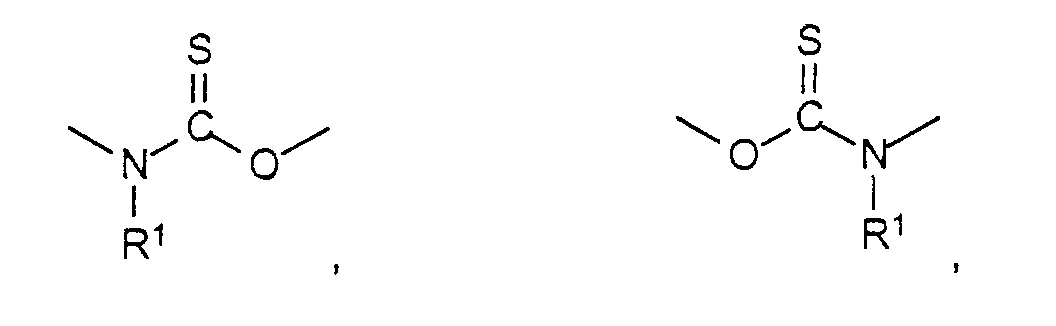


 Z is an alkyl group, a siloxane, a polysiloxane, a C1 to C4 alkoxy-terminated siloxane or polysiloxane, a polyether, a polyester, a polyurethane, a poly(butadiene), or an aromatic, polyaromatic or heteroaromatic group.
 - The compound according to claim 5 in whichn is 1 or 2;R1, R2, and R3 are hydrogen,G is -OCH3,Q is a C1 to C4 alkyl,X is-NH- or -O-; and
 Z is a branched or linear C18 to C36 chain, or a siloxane.
 - The compound according to claim 5 having the structure:

- A curable adhesive composition comprising a compound according to any one of claims 1 to 7.
- A curable adhesive composition comprising a compound according to any one of claims 1 to 7 and at least one copolymerizable electron acceptor compound selected from the group consisting of fumarates, maleates, acrylates and maleimides.
- A curable adhesive composition comprising a compound according to any one of claims 1 to 7 and a conductive filler.
- A curable adhesive composition comprising a compound according to any one of claims 1 to 6 and a nonconductive filler.
- A curable adhesive composition comprising a compound according to any one of claims 1 to 7, at least one copolymerizable electron acceptor compound selected from the group consisting of fumarates, maleates, acrylates and maleimides, and a thermally conductive filler.
- A curable adhesive composition comprising a compound according to any one of claims 1 to 6 , at least one copolymerizable electron acceptor compound selected from the group consisting of fumarates, maleates, acrylates and maleimides, and an electrically conductive filler.
- A curable adhesive composition comprising a compound according to any one of claims 1 to 6, at least one copolymerizable electron acceptor compound selected from the group consisting of fumarates, maleates, acrylates and maleimides, and a nonconductive filler.
- A semiconductor package in which a silicon chip is adhered to a substrate with an adhesive comprising a compound according to any one of claims 12 to 14.
Applications Claiming Priority (2)
| Application Number | Priority Date | Filing Date | Title |
|---|---|---|---|
| US573302 | 1984-01-23 | ||
| US57330200A | 2000-05-18 | 2000-05-18 |
Publications (3)
| Publication Number | Publication Date |
|---|---|
| EP1156034A2 true EP1156034A2 (en) | 2001-11-21 |
| EP1156034A3 EP1156034A3 (en) | 2003-09-03 |
| EP1156034B1 EP1156034B1 (en) | 2014-01-08 |
Family
ID=24291422
Family Applications (1)
| Application Number | Title | Priority Date | Filing Date |
|---|---|---|---|
| EP01111274.5A Expired - Lifetime EP1156034B1 (en) | 2000-05-18 | 2001-05-16 | Curable electron donor compounds |
Country Status (10)
| Country | Link |
|---|---|
| US (2) | US6908957B2 (en) |
| EP (1) | EP1156034B1 (en) |
| JP (2) | JP4216489B2 (en) |
| KR (1) | KR100794633B1 (en) |
| CN (1) | CN1236000C (en) |
| CA (1) | CA2347902A1 (en) |
| HK (1) | HK1042107B (en) |
| MY (1) | MY123559A (en) |
| SG (1) | SG100706A1 (en) |
| TW (1) | TW574190B (en) |
Cited By (8)
| Publication number | Priority date | Publication date | Assignee | Title |
|---|---|---|---|---|
| WO2003084924A3 (en) * | 2002-03-29 | 2004-02-19 | Nat Starch Chem Invest | Electron donors, electron acceptors and adhesion promoters containing disulfide |
| EP1362901A3 (en) * | 2002-05-14 | 2004-05-26 | National Starch and Chemical Investment Holding Corporation | Thermoset adhesive films |
| US8008419B2 (en) | 2008-08-13 | 2011-08-30 | Designer Molecules, Inc. | Siloxane monomers and methods for use thereof |
| US8043534B2 (en) | 2005-10-21 | 2011-10-25 | Designer Molecules, Inc. | Maleimide compositions and methods for use thereof |
| US8217120B2 (en) | 2008-08-13 | 2012-07-10 | Designer Molecules, Inc. | Functionalized styrene oligomers and polymers |
| US8287686B2 (en) | 2006-07-24 | 2012-10-16 | Designer Molecules, Inc. | Derivatives of poly(styrene-co-allyl alcohol) and methods for use thereof |
| US8308892B2 (en) | 2008-04-09 | 2012-11-13 | Designer Molecules, Inc. | Di-cinnamyl compounds and methods for use thereof |
| US11744916B2 (en) * | 2019-07-18 | 2023-09-05 | Biocompatibles Uk Limited | Radiopaque polymers |
Families Citing this family (15)
| Publication number | Priority date | Publication date | Assignee | Title |
|---|---|---|---|---|
| MY123559A (en) * | 2000-05-18 | 2006-05-31 | Nat Starch & Chemical Investment Holding Corp | Curable electron donor compounds |
| US7884174B2 (en) * | 2003-05-05 | 2011-02-08 | Designer Molecules, Inc. | Imide-linked maleimide and polymaleimide compounds |
| WO2010019832A2 (en) | 2008-08-13 | 2010-02-18 | Designer Molecules, Inc. | Amide-extended crosslinking compounds and methods for use thereof |
| JP2007536403A (en) * | 2004-05-02 | 2007-12-13 | アシュランド・ライセンシング・アンド・インテレクチュアル・プロパティー・エルエルシー | Radiation curable coatings for metal substrates from polyfunctional acrylate oligomers |
| KR20080036771A (en) * | 2006-10-24 | 2008-04-29 | 삼성전자주식회사 | An organic layer pattern forming method, an organic layer formed thereby and an organic memory device comprising the same |
| US20080262191A1 (en) * | 2007-01-26 | 2008-10-23 | Mizori Farhad G | Methods for the preparation of imides, maleimides and maleimide-terminated polyimide compounds |
| US8063161B2 (en) * | 2007-04-16 | 2011-11-22 | Designer Molecules, Inc. | Low temperature curing acrylate and maleimide based formulations and methods for use thereof |
| US8324319B2 (en) * | 2007-11-20 | 2012-12-04 | Sridhar Laxmisha M | Redox-induced cationically polymerizable compositions with low cure temperature |
| US8158748B2 (en) | 2008-08-13 | 2012-04-17 | Designer Molecules, Inc. | Hetero-functional compounds and methods for use thereof |
| CN106008275A (en) * | 2016-06-24 | 2016-10-12 | 中国科学院新疆理化技术研究所 | Synthesis method of multi-ureido tripodal type functional monomer molecule with nitrogen as center |
| BR112019017810A2 (en) * | 2017-03-29 | 2020-03-31 | Sika Technology Ag | WATER BASED COMPOSITION WITH IMPROVED MECHANICAL PROPERTIES |
| JP7014296B2 (en) * | 2019-01-29 | 2022-02-01 | 東洋紡株式会社 | Adhesive composition containing dimerdiol copolymerized polyimide urethane resin |
| TW202233705A (en) * | 2020-11-12 | 2022-09-01 | 日商味之素股份有限公司 | resin composition |
| CN118201912A (en) | 2021-10-28 | 2024-06-14 | 四国化成工业株式会社 | Thiophene compound, synthesis method thereof and composition containing the same |
| JP7803333B2 (en) * | 2023-11-29 | 2026-01-21 | 味の素株式会社 | resin composition |
Citations (3)
| Publication number | Priority date | Publication date | Assignee | Title |
|---|---|---|---|---|
| US4640849A (en) | 1986-01-31 | 1987-02-03 | Loctite (Ireland) Limited | Meta-bridged styryloxy resins |
| EP0368634A2 (en) | 1988-11-10 | 1990-05-16 | LOCTITE (IRELAND) Ltd. | Polymerisable styryloxy resins and compositions thereof |
| WO2001068792A1 (en) | 2000-03-15 | 2001-09-20 | Chemlink Laboratories, Llc | Toilet bowl cleaner |
Family Cites Families (22)
| Publication number | Priority date | Publication date | Assignee | Title |
|---|---|---|---|---|
| US368A (en) * | 1837-08-31 | John williamson | ||
| US368634A (en) * | 1887-08-23 | Isaac p | ||
| DE2064305A1 (en) * | 1970-12-29 | 1972-07-06 | Farbenfabriken Bayer Ag, 5090 Leverkusen | Anthranilic acid esters alkylated on the nucleus |
| US4401777A (en) | 1981-10-20 | 1983-08-30 | Mitsui Toatsu Chemicals, Inc. | Curable resin composition comprising N-(alkenylphenyl)maleimide and epoxy composition |
| US4732956A (en) * | 1984-06-18 | 1988-03-22 | Loctite (Ireland) Ltd. | Styryloxy resins and compositions thereof |
| JPS6064958A (en) | 1984-06-22 | 1985-04-13 | Mitsui Toatsu Chem Inc | Isopropenylphenylmaleimide derivative |
| US4727126A (en) * | 1986-04-30 | 1988-02-23 | Eastman Kodak Company | Novel diol monomers and polymers thereof |
| FR2608600A1 (en) | 1986-12-17 | 1988-06-24 | Rhone Poulenc Chimie | NOVEL COMPOUNDS BASED ON MALEIMIDES AND NEW THERMOSETTING COMPOSITIONS CONTAINING SAME |
| US5021487A (en) | 1988-05-27 | 1991-06-04 | Loctite Corporation | Thermally stabilized acrylic adhesive compositions and novel methacrylated malemide compounds useful therein |
| JPH02262549A (en) * | 1988-11-11 | 1990-10-25 | Nippon Paint Co Ltd | Compound containing oxaminic acid group |
| JPH0335060A (en) * | 1989-06-30 | 1991-02-15 | Yuasa Battery Co Ltd | Polymer solid electrolyte |
| JP3240769B2 (en) * | 1992-10-02 | 2001-12-25 | ジェイエスアール株式会社 | Photosensitive resin composition |
| DE4305959A1 (en) * | 1993-02-26 | 1994-09-01 | Bayer Ag | Luminescent copolymers |
| JPH06273930A (en) | 1993-03-18 | 1994-09-30 | Hitachi Ltd | Curable resin composition and multilayer printed circuit board using the same and its manufacture |
| JP3544733B2 (en) * | 1994-02-14 | 2004-07-21 | 東レ・ファインケミカル株式会社 | Curable composition |
| US6034194A (en) | 1994-09-02 | 2000-03-07 | Quantum Materials/Dexter Corporation | Bismaleimide-divinyl adhesive compositions and uses therefor |
| JPH08176090A (en) * | 1994-12-20 | 1996-07-09 | Nippon Kayaku Co Ltd | Monofunctional monomer, resin composition using the same and its cured product |
| JP3625094B2 (en) * | 1995-11-24 | 2005-03-02 | 住友精化株式会社 | Water absorbent resin and method for producing the same |
| JP3978628B2 (en) * | 1998-02-17 | 2007-09-19 | 日立化成工業株式会社 | Adhesive film |
| JPH11302620A (en) * | 1998-04-23 | 1999-11-02 | Sumitomo Bakelite Co Ltd | Film adhesive for die bonding |
| US6479602B1 (en) * | 2000-03-15 | 2002-11-12 | 3M Innovative Properties | Polymerization initiator systems and bonding compositions comprising vinyl aromatic compounds |
| MY123559A (en) * | 2000-05-18 | 2006-05-31 | Nat Starch & Chemical Investment Holding Corp | Curable electron donor compounds |
-
2001
- 2001-05-16 MY MYPI20012320 patent/MY123559A/en unknown
- 2001-05-16 SG SG200102960A patent/SG100706A1/en unknown
- 2001-05-16 JP JP2001146658A patent/JP4216489B2/en not_active Expired - Fee Related
- 2001-05-16 CA CA002347902A patent/CA2347902A1/en not_active Abandoned
- 2001-05-16 EP EP01111274.5A patent/EP1156034B1/en not_active Expired - Lifetime
- 2001-05-16 KR KR1020010026768A patent/KR100794633B1/en not_active Expired - Fee Related
- 2001-05-16 CN CNB011197110A patent/CN1236000C/en not_active Expired - Fee Related
- 2001-05-17 TW TW90112028A patent/TW574190B/en not_active IP Right Cessation
- 2001-08-03 US US09/922,187 patent/US6908957B2/en not_active Expired - Fee Related
-
2002
- 2002-05-24 HK HK02103909.2A patent/HK1042107B/en not_active IP Right Cessation
-
2005
- 2005-02-17 US US10/967,493 patent/US7326746B2/en not_active Expired - Fee Related
-
2008
- 2008-09-05 JP JP2008228932A patent/JP4870738B2/en not_active Expired - Fee Related
Patent Citations (3)
| Publication number | Priority date | Publication date | Assignee | Title |
|---|---|---|---|---|
| US4640849A (en) | 1986-01-31 | 1987-02-03 | Loctite (Ireland) Limited | Meta-bridged styryloxy resins |
| EP0368634A2 (en) | 1988-11-10 | 1990-05-16 | LOCTITE (IRELAND) Ltd. | Polymerisable styryloxy resins and compositions thereof |
| WO2001068792A1 (en) | 2000-03-15 | 2001-09-20 | Chemlink Laboratories, Llc | Toilet bowl cleaner |
Cited By (10)
| Publication number | Priority date | Publication date | Assignee | Title |
|---|---|---|---|---|
| WO2003084924A3 (en) * | 2002-03-29 | 2004-02-19 | Nat Starch Chem Invest | Electron donors, electron acceptors and adhesion promoters containing disulfide |
| US6803406B2 (en) | 2002-03-29 | 2004-10-12 | National Starch And Chemical Investmnet Holding Corporation | Electron donors, electron acceptors and adhesion promoters containing disulfide |
| EP1362901A3 (en) * | 2002-05-14 | 2004-05-26 | National Starch and Chemical Investment Holding Corporation | Thermoset adhesive films |
| US7326754B2 (en) * | 2002-05-14 | 2008-02-05 | Nikolic Nikola A | Thermoset adhesive films |
| US8043534B2 (en) | 2005-10-21 | 2011-10-25 | Designer Molecules, Inc. | Maleimide compositions and methods for use thereof |
| US8287686B2 (en) | 2006-07-24 | 2012-10-16 | Designer Molecules, Inc. | Derivatives of poly(styrene-co-allyl alcohol) and methods for use thereof |
| US8308892B2 (en) | 2008-04-09 | 2012-11-13 | Designer Molecules, Inc. | Di-cinnamyl compounds and methods for use thereof |
| US8008419B2 (en) | 2008-08-13 | 2011-08-30 | Designer Molecules, Inc. | Siloxane monomers and methods for use thereof |
| US8217120B2 (en) | 2008-08-13 | 2012-07-10 | Designer Molecules, Inc. | Functionalized styrene oligomers and polymers |
| US11744916B2 (en) * | 2019-07-18 | 2023-09-05 | Biocompatibles Uk Limited | Radiopaque polymers |
Also Published As
| Publication number | Publication date |
|---|---|
| JP4216489B2 (en) | 2009-01-28 |
| JP2002060364A (en) | 2002-02-26 |
| CN1324909A (en) | 2001-12-05 |
| KR20010105227A (en) | 2001-11-28 |
| SG100706A1 (en) | 2003-12-26 |
| CA2347902A1 (en) | 2001-11-18 |
| TW574190B (en) | 2004-02-01 |
| US20020010281A1 (en) | 2002-01-24 |
| HK1042107B (en) | 2006-09-08 |
| MY123559A (en) | 2006-05-31 |
| JP2009057565A (en) | 2009-03-19 |
| JP4870738B2 (en) | 2012-02-08 |
| US7326746B2 (en) | 2008-02-05 |
| EP1156034A3 (en) | 2003-09-03 |
| US20070060683A1 (en) | 2007-03-15 |
| EP1156034B1 (en) | 2014-01-08 |
| HK1042107A1 (en) | 2002-08-02 |
| US6908957B2 (en) | 2005-06-21 |
| KR100794633B1 (en) | 2008-01-14 |
| CN1236000C (en) | 2006-01-11 |
Similar Documents
| Publication | Publication Date | Title |
|---|---|---|
| JP4870738B2 (en) | Curable electron donor compound | |
| US6699929B2 (en) | Die attach adhesives with vinyl ether and carbamate or urea functionality | |
| US6300456B1 (en) | Compounds with electron donor and electron acceptor functionality | |
| US6441213B1 (en) | Adhesion promoters containing silane, carbamate or urea, and donor or acceptor functionality | |
| US6803406B2 (en) | Electron donors, electron acceptors and adhesion promoters containing disulfide | |
| US6307001B1 (en) | Curable hybrid electron donor compounds containing vinyl ether | |
| WO2003029234A1 (en) | Epoxy compounds containing styrenic or cinnamyl functionality | |
| HK1116822A (en) | Curable hybrid electron donor compounds containing vinyl ether |
Legal Events
| Date | Code | Title | Description |
|---|---|---|---|
| PUAI | Public reference made under article 153(3) epc to a published international application that has entered the european phase |
Free format text: ORIGINAL CODE: 0009012 |
|
| AK | Designated contracting states |
Kind code of ref document: A2 Designated state(s): AT BE CH CY DE DK ES FI FR GB GR IE IT LI LU MC NL PT SE TR |
|
| AX | Request for extension of the european patent |
Free format text: AL;LT;LV;MK;RO;SI |
|
| PUAL | Search report despatched |
Free format text: ORIGINAL CODE: 0009013 |
|
| AK | Designated contracting states |
Kind code of ref document: A3 Designated state(s): AT BE CH CY DE DK ES FI FR GB GR IE IT LI LU MC NL PT SE TR |
|
| AX | Request for extension of the european patent |
Extension state: AL LT LV MK RO SI |
|
| 17P | Request for examination filed |
Effective date: 20031212 |
|
| AKX | Designation fees paid |
Designated state(s): DE FI FR GB IT NL |
|
| 17Q | First examination report despatched |
Effective date: 20080508 |
|
| GRAP | Despatch of communication of intention to grant a patent |
Free format text: ORIGINAL CODE: EPIDOSNIGR1 |
|
| GRAS | Grant fee paid |
Free format text: ORIGINAL CODE: EPIDOSNIGR3 |
|
| RAP1 | Party data changed (applicant data changed or rights of an application transferred) |
Owner name: HENKEL CORPORATION |
|
| GRAA | (expected) grant |
Free format text: ORIGINAL CODE: 0009210 |
|
| AK | Designated contracting states |
Kind code of ref document: B1 Designated state(s): DE FI FR GB IT NL |
|
| REG | Reference to a national code |
Ref country code: GB Ref legal event code: FG4D |
|
| REG | Reference to a national code |
Ref country code: DE Ref legal event code: R096 Ref document number: 60148541 Country of ref document: DE Effective date: 20140220 |
|
| REG | Reference to a national code |
Ref country code: NL Ref legal event code: VDEP Effective date: 20140108 |
|
| PG25 | Lapsed in a contracting state [announced via postgrant information from national office to epo] |
Ref country code: FI Free format text: LAPSE BECAUSE OF FAILURE TO SUBMIT A TRANSLATION OF THE DESCRIPTION OR TO PAY THE FEE WITHIN THE PRESCRIBED TIME-LIMIT Effective date: 20140108 Ref country code: NL Free format text: LAPSE BECAUSE OF FAILURE TO SUBMIT A TRANSLATION OF THE DESCRIPTION OR TO PAY THE FEE WITHIN THE PRESCRIBED TIME-LIMIT Effective date: 20140108 |
|
| REG | Reference to a national code |
Ref country code: DE Ref legal event code: R097 Ref document number: 60148541 Country of ref document: DE |
|
| PLBE | No opposition filed within time limit |
Free format text: ORIGINAL CODE: 0009261 |
|
| STAA | Information on the status of an ep patent application or granted ep patent |
Free format text: STATUS: NO OPPOSITION FILED WITHIN TIME LIMIT |
|
| REG | Reference to a national code |
Ref country code: DE Ref legal event code: R119 Ref document number: 60148541 Country of ref document: DE |
|
| 26N | No opposition filed |
Effective date: 20141009 |
|
| GBPC | Gb: european patent ceased through non-payment of renewal fee |
Effective date: 20140516 |
|
| REG | Reference to a national code |
Ref country code: DE Ref legal event code: R097 Ref document number: 60148541 Country of ref document: DE Effective date: 20141009 |
|
| REG | Reference to a national code |
Ref country code: FR Ref legal event code: ST Effective date: 20150130 |
|
| REG | Reference to a national code |
Ref country code: DE Ref legal event code: R119 Ref document number: 60148541 Country of ref document: DE Effective date: 20141202 |
|
| PG25 | Lapsed in a contracting state [announced via postgrant information from national office to epo] |
Ref country code: DE Free format text: LAPSE BECAUSE OF NON-PAYMENT OF DUE FEES Effective date: 20141202 |
|
| PG25 | Lapsed in a contracting state [announced via postgrant information from national office to epo] |
Ref country code: GB Free format text: LAPSE BECAUSE OF NON-PAYMENT OF DUE FEES Effective date: 20140516 Ref country code: FR Free format text: LAPSE BECAUSE OF NON-PAYMENT OF DUE FEES Effective date: 20140602 |
|
| PG25 | Lapsed in a contracting state [announced via postgrant information from national office to epo] |
Ref country code: IT Free format text: LAPSE BECAUSE OF FAILURE TO SUBMIT A TRANSLATION OF THE DESCRIPTION OR TO PAY THE FEE WITHIN THE PRESCRIBED TIME-LIMIT Effective date: 20140108 |