FIELD OF THE INVENTION
This invention concerns an oxygen sensor comprising
a sensor device for detecting an oxygen density and a
method of manufacturing the sensor device.
BACKGROUND OF THE INVENTION
When a oxygen sensor comprising a sensor device is
exposed as an air/fuel ratio sensor to an exhaust gas upon
using lead-containing fuels, electrodes are poisoned with
lead, phosphorus, silicon or the like and degraded with
lapse of time to no more provide sufficient electromotive
force. Sensors coping with the problem of deterioration
for the durability of electrodes are disclosed, for
example, in Japanese Patent Publication No. 90176/1994 and
Japanese Laid-Open No. 113480/1997. However, a sensor
capable of completely preventing poisoning to electrodes
in a low temperature region which is most likely to
undergo the effect of lead or the like contained in
exhaust gases has not yet been obtained.
This invention intends to provide an oxygen sensor
having a sensor device capable of preventing an electrode
from poisoning by lead or the like and excellent in
durability even in contact with exhaust gases at a
relatively low temperature, as well as a method of
manufacturing such a sensor device.
DISCLOSURE OF THE INVENTION
The oxygen sensor of the present invention is an
oxygen sensor comprising a sensor device having a
detection electrode, an electrode protection layer formed
on the surface of the detection electrode and a poisoning
preventive layer formed on the surface of the electrode
protection layer, wherein the poisoning preventive layer
comprises a composite powder having a ceramic powder
having a large grain size (referred to hereinafter as
coarse powder) covered therearound with a ceramic powder
having a small grain size (referred to hereinafter as fine
powder), and hollows not filled with the fine powder are
scattered in gaps among such composite powders.
By forming the poisoning preventive layer as
described above, poisoning materials are trapped by the
fine powder and prevented from reaching the electrode in
the oxygen sensor, thus preventing a deterioration by
poisoning in the performance of the oxygen sensor. On the
other hand, the fine powder is carried on the coarse
powder, thus preventing the problem of removal of a
poisoning preventive layer from a sensor device surface
such as a layer composed exclusively of the fine powder
upon burning setting during continuous use at high
temperatures. Further, the fine powder is carried so as to
cover the surface of the coarse powder, while suitable
hollows having a similar size to that of the coarse powder
are formed in gaps among the coarse powders, so that the
gaps among the coarse powders are not completely filled
with the fine powder, and therefore, the poisoning
preventive layer cannot be clogged even upon accumulation
of poisoning materials thereon, to prevent a reduction in
the response of the sensor.
The grain size distribution of primary particles of
the ceramic powder constituting the poisoning preventive
layer as described above has at least two peaks, and if
the peak on the side of the smallest grain size is 10 µm
or less and the peak on the side of the largest grain size
is 0.1 µm or more, a desirable poisoning preventive layer
having a high poisoning preventing effect is given.
In this case, the peak on the side of the smallest
grain size is preferably at 1 µm or less and can be at
0.05 µm or less and, particularly, at 0.01 µm or less.
Further, the peak on the side of the greatest grain size
is preferably at 1 µm or more and can be, particularly, 10
µm or more.
For good biting of the coarse particle, the
electrode protection layer under the poisoning preventive
layer is formed preferably by spray coating.
The "ceramic powder" contained in the "poisoning
preventive layer" is preferably selected from the powder
of oxide which is chemically stable in exhaust gases at
high temperature such as a composite oxide containing
aluminum atoms such as titania, alumina, silica, spinel
and mullite. Powder other than the oxide may also be used
so long as it is chemically stable. In this case, two or
more kinds of ceramic powders of different compositions
may be mixed. When the ceramic powder in one composition
is a fine powder while the ceramic powder in the other
composition is a coarse powder, the degree of freedom is
extended in the selection of the powder to facilitate the
provision of the powder having a desired grain size
distribution, and such ceramic powders can be used
conveniently by selecting a ceramic powder having a high
poisoning-preventing effect as the fine powder and a
ceramic powder having high-temperature durability as the
coarse powder.
The two or more kinds of ceramic powders of
different compositions, preferably, contain a titania
powder having a peak in the grain size distribution at 1 µ
m or less and a ceramic powder other than titania having a
peak in the grain size distribution at 10 µm or more.
Titania is considered to be excellent in the
ability to adsorb poisoning materials. In particular,
anatase-type titania can be used for easily providing a
powder having a small grain diameter and a high poisoning
preventing effect.
Preferred ceramic powder other than titania is,
particularly, less heat shrinkable ceramic powder such as
a composite oxide containing aluminum atoms such as spinel
or mullite.
Further, a titania powder having a peak from 0.003
to 0.5 µm is combined particularly preferably with a
ceramic powder other than titania having a peak from 15 to
50 µm in order to form suitable gaps in the poisoning
preventive layer. Such powders can be incorporated to
provide a poisoning preventive layer which can
sufficiently adsorb poisoning materials, is not removed by
thermal shrinkage from the electrode protection layer and
is further superior in durability with less drop in
response.
That is, when a powder having a peak of small grain
sizes in the range of 1 µm or less, preferably 0.003 to
0.5 µm is used in combination with a powder having a peak
of large grain sizes in the range of 10 µm or more,
preferably 15 to 50 µm, the poisoning preventive layer as
shown in Fig. 1 (a) & (b) having suitable hollows with a
similar size to that of coarse powder therein is formed
from composite powders comprising a large number of
particles of powder with small grain sizes adhering to the
surfaces of particles of powders having large grain sizes,
so the poisoning preventive layer can sufficiently keep
air-permeability, can certainly adsorb poisoning
materials, and can be rendered highly durable.
As the coarse powder and fine powder, powders
identical in the composition but different in the crystal
phase can also be selected. It is particularly preferable
that an anatase-type titania powder is used as the fine
powder and a rutile-type titania powder as the coarse
powder. Both powders are titania powders but are different
in the crystal phase, and these are provided as fine and
coarse powders having a narrow distribution of grain sizes
and are thus suitable for forming a poisoning preventive
layer excellent in air-permeability. For the poisoning
preventive effect, the grain diameter in the peak of the
grain-size distribution of the anatase-type titania powder
is preferably 0.5 µm or less, more preferably in the range
of 0.003 to 0.5 µm. For the poisoning preventive effect,
the grain diameter in the peak of the grain size
distribution of the rutile type titania powder is
preferably 1 µm or more, more preferably in the range of 3
to 8 µm. By combination of the anatase type titania
powder having a very small grain diameter of about 0.003
to 0.5 µm with the rutile type titania having a larger
grain size, the poisoning preventive layer excellent in
the action of capturing poisoning materials can be formed.
Further, by using the ceramic powders having the same
composition, the composite powders can be easily formed to
provide the poisoning preventive layer with a good
poisoning-preventing effect.
When the grain size distribution of the poisoning
preventive layer in the product is evaluated, the grain
size can be read in the field of view of an electronic
microscope on one hand, or from a photograph thereof.
When the grain size is read from the field of view of the
electronic microscope or from its photograph, each of the
primary grains that can be confirmed visually is measured
for the diameter of circumcircle and determined as a grain
size. Measurement for the grain size is conducted for a
plurality of primary particles (about 1000) to calculate
the grain size distribution. In a case of using oxide
powders of different compositions, the grain size can be
measured to determine the grain size distribution on the
oxide powder of each of the compositions. However, in view
of the gist of this invention, when the grain size is
measured in a mixed state of the fine grain powder and the
coarse grain powder, it is not necessary to measure the
grain size distribution on every ceramic powders of
different compositions but the grain size distribution may
be measured using grain size diameter sampled at random
from the poisoning preventive layer. As a result, it may
suffice that the peak on the side of the smallest grain
size is at 1 µm or less and the peak on the side of the
greatest grain size is at 0.1 µm or more.
On the other hand, grain size distribution of the
fine grain powder is sometimes difficult by the
measurement using a usual scanning type electron
microscope or the like and it can be measured in the same
manner as described above by using an electron microscope
of high resolution power, but it can also be calculated
according to the Scheller's equation by using an X-ray
small angle scattering method for measuring the grain size
distribution of the powder.
In addition, the grain size distribution can also
be measured by a generally utilized method such as a laser
beam diffraction method or centrifugal precipitation
method. However, it is often difficult to measure the
grain size distribution for an identical sample from a
fine region to a coarse region by an identical measuring
method. In such a case, the grain size distribution in the
fine region and the coarse region may be measured by
different measuring methods and the grain size
distribution in the poisoning preventive layer may be
identified based on the respective grain size
distributions.
The method of manufacturing the sensor device in
the oxygen sensor of the present invention comprises
kneading one or more kinds of first ceramic powders, one
or more kinds of second ceramic powders with a peak of a
grain size distribution of primary particles being on the
side of a larger grain size than the peak of a grain size
distribution of primary particles of the first ceramic
powder whereupon the difference between the maximum grain
diameter of 10 % particles on the side of a smaller grain
diameter (referred to hereinafter as 10 % grain diameter
or d10) and the maximum grain diameter of 90 % particles
on the side of a smaller grain diameter (referred to
hereinafter as 90 % grain diameter or d90) is not more
than twice of the grain diameter as the peak value of the
grain size distribution, an organic binder and a solvent
to prepare a poisoning preventive layer-forming paste,
coating said poisoning preventive layer-forming paste on
the surface of the electrode protection layer of an oxygen
sensor device to form a coating and subsequently heating
and drying said coating thereby forming the poisoning
preventive layer. According to this method, a powder
having a regular grain diameter near to a peak in the
distribution of grain sizes is used as the second ceramic
powder serving as a coarse powder in the poisoning
preventive layer, thus facilitating formation of the
poisoning preventive layer having hollows with a similar
size to that of the coarse powder scattered therein.
Further, by incorporating a inorganic binder suitably into
the poisoning preventive layer-forming paste, the fine
powder can adhere to the surface of the coarse powder to
achieve an excellent poisoning preventive layer. Further,
the first ceramic powder serving as the fine powder and
the second ceramic powder as the coarse powder are
preferably highly heat-resistant oxides.
In particular, a titania powder or the like having
a specific surface area of 2 to 500 m2/g can be used as
the first ceramic powder and an aluminum atom-containing
composite oxide powder or the like having a specific
surface area of 0.1 to 100 m2/g as the second ceramic
powder. Alternatively, an anatase type titania powder
having a specific surface area of 2 to 500 m2/g is used as
the first ceramic powder and a rutile type titania powder
having a specific surface area of 0.1 to 10 m2/g as the
second ceramic powder, and from these powders, the
poisoning preventive layer can also be formed in an
analogous manner.
The specific surface area of the first ceramic
powder is 2 to 500 m2/g, particularly preferably 5 to 300
m2/g. If the specific surface area is less than 2 m2/g, the
resulting poisoning preventive layer is deteriorated in
both physical capture of poisoning materials and reaction
therewith, while if the specific surface area is greater
than 500 m2/g, the powders easily aggregate and their
reactivity with poisoning materials becomes too high, and
the response of the resulting oxygen sensor gradually
changes unfavorably under a high-temperature environment.
On the other hand, the specific surface area of the second
ceramic powder is 0.1 to 100 m2/g, particularly preferably
0.3 to 10 m2/g. If the specific surface area is less than
0.1 m2/g, a uniform poisoning preventive layer having a
smooth surface cannot be formed, while it is higher than
100 m2/g, the poisoning preventive layer cannot be
sufficiently prevented from being aggregated. When the
specific surface area of the second ceramic powder is in
the range described above, hollows are formed and
dispersed in gaps among coarse powders, to provide the
poisoning preventive layer with good air-permeability.
The specific surface area can be determined
according to the BET method. Further, when the specific
surface area of the powder is particularly large, it can
be measured by using a full automatic surface area
measuring apparatus, Model "Multisoap 12" manufactured by
Yuasa Ionics Co.
The first and second ceramic powders are preferably
contained in amounts of at least 15 parts by weight
(referred to hereinafter as "parts") respectively relative
to 100 parts by weight of the poisoning preventing layer
forming paste. If the content of either the first or
second ceramic powder in particular of the first ceramic
powder is less than 15 parts, poisoning materials cannot
be sufficiently captured. Further, if the content of the
second ceramic powder is less than 15 parts, suitable
hollows cannot be formed among the coarse powders in the
poisoning preventive layer, thus failing to maintain the
air-permeability. For forming suitable hollows in the
poisoning preventive layer, both the first and second
ceramic powders are more preferably contained in amounts
of 20 to 50 parts respectively. In the ceramic powder,
other ceramic powder than each of the powders as the
essential constituent factors of this invention can also
be mixed, but mixing of the ceramic powder whose grain
size distribution for the entire ceramic powder is out of
the gist of this invention is not preferred.
Further, the ratio of the mixing amount between the
first ceramic powder and the second ceramic powder is not
particularly restricted but it is preferred to mix 100
parts of one of them and from 40 to 250 parts,
particularly, 80 to 130 parts of the other of them and
they may be mixed about in an equal amount. If there is
no significant difference in the ratio of the amount of
the powders, a homogeneous poisoning preventive layer
excellent in the function of trapping the poisoning
substances and having smooth surface can be formed more
efficiently.
The "poisoning preventive layer-forming paste" is
obtained by kneading the ceramic powders, an organic
binder and a solvent such as methanol, xylene etc. and a
suitable inorganic binder or the like. The coating film
formed on the surface of the electrode protection layer is
solidified and hardened sufficiently by drying at 100 to
150°C for about 5 to 20 min, after the drying, attaching
the sensor device with the dried coating film to a
protection tube receptacle, and then heating the sensor
device in an assy furnace which is controlled for
temperature 300 - 700°C, particularly, to about 400 - 600°C
in a reducing atmosphere for about 20 to 60 min., and then
a sensor device provided with a poisoning preventive layer
having predetermined poisoning preventive function and
thickness can be formed.
The thickness of the poisoning preventive layer
shall be 50 to 300 µm, particularly preferably 150 to 250
µm. If its thickness is too small, poisoning materials
may not be sufficiently captured. On the other hand, if it
exceeds 250 µm, it is not preferred since the response of
the oxygen sensor obtained is lowered and, further, the
poisoning preventive layer tends to be defoliated from the
electrode protection layer.
BRIEF DESCRIPTION OF THE DRAWINGS
Fig. 1 (a) is a scanning type electron microscopic
photograph in the magnification factor of 1000X for a
poisoning preventive layer formed to a sensor device of an
Experimental Example 20. (b) is a scanning type electron
microscopic photograph at a magnifying factor of 3500X
that magnifies a central portion for (a).
Fig 2 is a graph illustrating that the oxygen
sensor of Example 2 is excellent in durability.
Fig. 3 is a front elevation al view illustrating an
appearance after forming an electrode protection layer of
the sensor device.
Fig. 4 is a front elevational view illustrating an
appearance after forming the poisoning preventive layer.
Fig. 5 is a cross sectional view of a sensor device
in which a detection electrode or the like is formed on
the outer surface and a reference electrode is formed on
the inner surface of a solid electrolyte substrate of the
sensor device.
Fig. 6 is a schematic view for a burner measuring
apparatus for evaluating the durability.
PREFERRED ENBODIMENTS OF THE INVENTION
(1) Preparation of Oxygen Sensor
After adding 5 mol% of yttria at 99.9% purity to
zirconia at a purity of 99% or higher and wet mixing them,
they were calcined at 1300°C for 2 hours. Then, water was
added and wet pulverization was conducted by using a ball
mill till 80% of particles were decreased to a grain size
of 2.5 µm or less and then a water soluble binder was
added and they were prepared by a spray drier method into
a spherical powder with an average grain size of 70 µm.
A predetermined molding product of a bottomed
cylindrical shape was obtained using the powder by a
rubber press method, which was dried and ground with a
grinding stone to arrange the shape. Subsequently, a
slurry prepared by adding a water soluble binder and water
to the powder was deposited on the outer surface of the
molding product and dried. Then, it was sintered being
maintained at 1500°C for 2 hours to prepare a solid
electrolyte substrate. Then, a platinum electrode of 1 to
2 µm thickness exposed to a gas to be detected such as an
exhaust gas is formed by electroless plating to prepare a
detection electrode. Then, a platinum electrode of 1 to 2
µm thickness to be exposed to atmospheric air was disposed
by electroless plating to form a reference electrode.
Then, a heat treatment was applied in an atmospheric air
at 1200°C for one hour to improve the denseness of the
detection electrode. Subsequently, a spinel powder
(MgAl2O4) was coated on the surface of the detection
electrode to form an electrode protection layer.
Then,
powder 1 ○ and
powder 2 ○ of the kind and the
ratio of amount as described in Table 1 and 2, as well as
a predetermined amount of a solvent and an alumina sol
were mixed in a pot mill using nylon balls to prepare a
slurry. Based on 100 mass% of the slurry, the total
amount for the
powders 1 ○ and 2 ○ was 70, methanol
containing an organic binder was 23 mass% and the alumina
sol was 7 mass% in Experimental Examples 1 to 9, the total
amount for the
powders 1 ○ and 2 ○ was 50 mass%, water was 40
mass% and the alumina sol was 10 mass% in Experimental
Examples 10 to 15, the total amount for the
powders 1 ○ and
2 ○ was 56 mass%, water was 35 mass% and the alumina sol
was 9 mass% in Experimental Examples 16 to 30.
Subsequently, substrates formed with the electrode
protection layers were immersed in the slurry to form
coating films on the surface of the electrode protection
layers, and dried at 120°C to form poisoning preventive
layers of 50 to 300 µm thickness (desirably 150 to 250 µm)
to prepare sensor devices. Then, after assembling the
sensor devices to protection tube receptacles, for
instance, they were heated at 500°C to obtain oxygen
sensors.
The appearance of the poisoning preventive layer of
the oxygen sensor obtained in (1) was visually observed.
The evaluation standards ○ : surface was smooth
with no cracks being observed, Δ : cracks formed
partially, X : cracks formed in entire samples.
[2] Poisoning Resistance (Durability)
1800 cc engine was used and an endurance pattern
was taken according to a life cycle pattern. Lead gasoline
containing 0.4 g of lead per one liter was used as the
fuel. An application voltage to a heater for heating the
oxygen sensor was set to 14 V for stabilizing detection
function. The sensor attaching position was at a position
nearer to an engine where exhaust gases at a high
temperature of 500 to 800°C were passed and at a position
remote from the engine where low temperature exhaust gases
at 350°C to 700°C were passed. After conducting duration
test for 100 hours in this way, the performance of the
lead durability for each of the oxygen sensors was
evaluated using an apparatus shown schematically in Fig. 6
by a burner measuring method.
The evaluation standards ○ : response scarcely
deteriorated, Δ : response deteriorated but not out of
the control value in air/fuel cost control, X : response
deteriorated greatly and out of the control value upon
air/fuel cost control.
RESULT OF EXPERIMENTS
According to the result in Table 1, it can be seen
that the surface of the poisoning preventive layer is
smooth, no cracks being observed at all and both the high
temperature durability and low temperature durability are
excellent in Experimental Example 3 to 8 and 11 to 14
where the powder 1 ○ as the fine grain powder and the
powder 2 ○ as the coarse grain powder are within the
preferred range of the invention described in claim 14.
Further, it was observed that hollows having a similar
size to that of the coarse powder are scattered in the
inside of the poisoning preventive layer. Further, the
viscosity of the slurry was excessively high and the
coating film forming the poisoning preventive layer could
not be formed in Experimental Example 1 where peak values
for the powders 1 ○ and 2 ○ is (each) less than 0.1 µm.
Further, the durability was deteriorated greatly in
Experimental Example 3 where the powder 1 ○ was not
contained, and cracks were formed in the entire samples
and they could not be put to practical use in 9 and 15
where powder 2 ○ was not contained. Further in Experimental
Examples 3 and 11 where the ratio of the powder 1 ○ is low,
the outward appearance was good, but the durability of the
resulting poisoning preventive layer tended to be
deteriorated because the surface of the coarse powder was
not sufficiently covered with the fine powders. Further in
Experimental Example 8 where the ratio of the powder 1 ○ is
high, some products were observed to have cracks on the
surface of the poisoning preventive layer. However, the
cracking-free products were durable to show good
performance.
According to the result in Table 2, it can be seen
that the surface of the poisoning preventive layer was
smooth and cracks were not observed at all in Experimental
Examples 18 to 22 and Experimental Examples 25 to 29
within a preferred range of this invention where the peak
value in the grain size distribution for the powder 1 ○ as
the fine grain powder was larger compared with the case in
Table 1. Further, in Experimental Examples 18 to 22 and
Experimental Examples 25 to 29, poisoning resistance was
also good since the amounts of the powder 1 ○ and the
powder 2 ○ were within a preferable range. Further, the
durability was deteriorated greatly since the grain is
excessively large in Experimental Example 16 where the
both of the peak values for the powders 1 ○ and 2 ○ exceeded
10 µm. Further, durability was deteriorated greatly also
in Experimental Examples 17 and 24 where the powder 1 ○ was
not contained, and cracks were formed in the entire
samples and they could not put to practical use in 23 and
30. Further in Experimental Examples 18 and 19 where the
ratio of the powder 1 ○ is low, the outward appearance was
good, but the durability of the resulting poisoning
preventive layer tended to be deteriorated because the
surface of the coarse powder was not sufficiently covered
with the fine powders. Further in Experimental Examples 31
and 32 where the grain-size distribution of the powder 2 ○
has a relatively broader grain-size distribution than the
desired range in the present invention, the poisoning
preventive layer was free of cracking during manufacturing
because suitable hollows were not formed, but it was poor
in poisoning resistance to show a change in the response
of the sensor depending on poisoning materials.
Example 1
A paste was prepared by stirring and mixing 20 g of
an anatase type titania powder having a specific surface
area of 10 m2/g with a peak in the grain size distribution
at 0.2 µm, 20 g of spinel powder having a specific surface
area of 0.5 m2/g with a peak in the grain size
distribution at 34 µm, 28 g of water and 3 g of an alumina
sol as the starting materials in a pot mill for 2 hours
using nylon balls. Subsequently, a sensor device having
an electrode protection layer prepared in (1) was dipped
into the paste, the paste was coated by about 100 mg on
the surface of the electrode protection layer and dried at
120°C for 10 min to form a poisoning preventive layer of
from 150 to 250 µm thickness, to prepare a sensor device.
Then, after assembling the same to a protection tube
receptacle for instance, it was heated at 500°C for 30 min
to obtain an oxygen sensor.
The poisoning preventive layer thus formed was
smooth and cracks were not observed at all. Then, it was
observed that the poisoning preventive layer was formed in
such a state that the surface of the coarse powder was
sufficiently covered with the fine powders, and further
that hollows of a similar size to that of the coarse
powder were scattered in the inside of the poisoning
preventive layer. Further, as a result of evaluation in
the same manner as in (2), 2 ○ , it was confirmed that both
the high temperature durability and low temperature
durability were extremely excellent. Further, an oxygen
sensor incorporated with the sensor device having the
poisoning preventive layer (product of the embodiment) or
an oxygen sensor incorporated with a sensor device formed
with a poisoning preventive layer using a ceramic powder
not containing fine grain powder (Experimental Example 17
in Table 2) (Comparative Product) were exposed to exhaust
gases formed from fuels with addition of a predetermined
amount of silicon for a long period of time and then the
sensors were attached to an engine and evaluated for the
response. As a result, it was found that while the
response was lowered considerably with lapse of time in
the comparative product, delay in the response was reduced
in the product of the embodiment. Further, according to
the X-ray powder diffraction pattern for the poisoning
preventive layer, crystal phases for the anatase type
titania, spinel and alumina were observed.
Example
After paste was obtained in the same manner as in
Example 1 except for using 22.5 g of an anatase type
titania powder having a specific surface area of 500 m2/g
with a peak in the grain size distribution at 0.007 µm,
22.5 g of a rutile type titania powder having a specific
surface area of 0.7 m2/g with a peak in the grain size
distribution at 7 µm, 35 ml of methanol and 2.8 g of
alumina sol as the starting materials, a sensor device
having the electrode protection layer prepared in (1) was
dipped into the paste, the paste was coated by about 100
mg on the surface of the electrode protection layer and
dried at 120°C for 10 min to form a poisoning preventive
layer of from 150 to 250 µm thickness, to prepare a sensor
device. Then, after assembling the same to a protection
tube receptacle for instance, it was heated at 500°C for
30 min to obtain an oxygen sensor.
The poisoning preventive layer thus formed was
smooth and cracks were not observed at all. Then, it was
observed that the poisoning preventive layer was formed in
such a state that the surface of the coarse powder was
sufficiently covered with the fine powders, and further
that hollows of a similar size to that of the coarse
powder were scattered in the inside of the poisoning
preventive layer. Further, as a result of evaluation in
the same manner as in (2), 2 ○ , it was confirmed that
although cracks due to thermal shrinkage were observed
partially, it had durability capable of being put to for
practical use. Further, an oxygen sensor incorporated
with the sensor device having the poisoning preventive
layer (product of the embodiment) or an oxygen sensor
incorporated with a sensor device formed with a poisoning
preventive layer using an titania powder not containing
fine grain powder (Experimental Example 2 in Table 1)
(comparative product) were exposed to exhaust gases formed
from fuels with addition of a predetermined amount of
silicon for a long period of time and then the sensors
were attached to an engine and evaluated for the response.
As a result, as shown in Fig. 2, it was found that while
the response was lowered considerably with lapse of time
in the comparative product, delay in the response was
reduced in the product of the embodiment. Further,
according to the X-ray powder diffraction pattern for the
poisoning preventive layer, crystal phases for the anatase
type titania and the rutile type titania were observed.
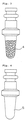
Fig. 3 shows an appearance of the sensor device of
Examples 1 and 2 after forming the electrode protection
layer. Further, Fig. 4 illustrates an appearance after
forming the poisoning preventive layer. Further, Fig. 5
illustrates a cross section for a portion where the
electrode, the electrode protection layer and the
poisoning preventive layer are formed. As shown in Fig. 5,
the sensor device comprises a solid electrolyte substrate
1, as well as a detection electrode 2, an electrode
protection layer 4 and a poisoning preventive layer 5
formed successively to the outer surface thereof, and a
reference electrode 3 formed on the inner surface.
Further, this invention is applicable to a sensor having a
solid electrolyte substrate in the shape of a plate-shaped
lamination type in addition to the cylindrical type.
This invention is not restricted to those shown by
the specific examples described above but may be variously
modified into examples within a range of this invention in
accordance with the purpose and the application use. That
is, the specific surface area of the ceramic powder such
as titania and the thickness and porosity of the poisoning
preventive layer can be adjusted optionally. Further, the
detection electrode and the reference electrode are not
always formed over the entire surface at the bottom
circumference of the solid electrolyte substrate but they
may be a band-like shape. Further, a protection layer of
the composition identical with that of the electrode
protection layer may be formed further to the surface of
the poisoning preventive layer.
EFFECTS OF THE INVENTION
According to this invention, since the poisoning
preventive layer containing a fine ceramic powder having a
specified grain size and a ceramic powder having a
relatively large grain size and a narrow grain size
distribution is formed, the poisoning can be prevented
efficiently particularly even when it is in contact with
poisoning substances such as lead contained in exhaust
gases at a low temperature, and the poisoning preventive
layer is less defoliated from the electrode protection
layer and an oxygen sensor of excellent performance with
less change in response can be obtained. Further, by
using the poisoning preventive layer forming paste
containing ceramic powders of different specific surface
areas, an oxygen sensor as defined in claims 1 to 13 can
be manufactured easily.