EP1152579A2 - Verfahren und System zur Kommunikation mit einem WWW-Server - Google Patents
Verfahren und System zur Kommunikation mit einem WWW-Server Download PDFInfo
- Publication number
- EP1152579A2 EP1152579A2 EP00850186A EP00850186A EP1152579A2 EP 1152579 A2 EP1152579 A2 EP 1152579A2 EP 00850186 A EP00850186 A EP 00850186A EP 00850186 A EP00850186 A EP 00850186A EP 1152579 A2 EP1152579 A2 EP 1152579A2
- Authority
- EP
- European Patent Office
- Prior art keywords
- www server
- request
- protocol
- binary
- client
- Prior art date
- Legal status (The legal status is an assumption and is not a legal conclusion. Google has not performed a legal analysis and makes no representation as to the accuracy of the status listed.)
- Withdrawn
Links
Images


Classifications
-
- H—ELECTRICITY
- H04—ELECTRIC COMMUNICATION TECHNIQUE
- H04L—TRANSMISSION OF DIGITAL INFORMATION, e.g. TELEGRAPHIC COMMUNICATION
- H04L12/00—Data switching networks
- H04L12/66—Arrangements for connecting between networks having differing types of switching systems, e.g. gateways
-
- H—ELECTRICITY
- H04—ELECTRIC COMMUNICATION TECHNIQUE
- H04L—TRANSMISSION OF DIGITAL INFORMATION, e.g. TELEGRAPHIC COMMUNICATION
- H04L67/00—Network arrangements or protocols for supporting network services or applications
- H04L67/01—Protocols
- H04L67/04—Protocols specially adapted for terminals or networks with limited capabilities; specially adapted for terminal portability
-
- H—ELECTRICITY
- H04—ELECTRIC COMMUNICATION TECHNIQUE
- H04L—TRANSMISSION OF DIGITAL INFORMATION, e.g. TELEGRAPHIC COMMUNICATION
- H04L67/00—Network arrangements or protocols for supporting network services or applications
- H04L67/01—Protocols
- H04L67/02—Protocols based on web technology, e.g. hypertext transfer protocol [HTTP]
-
- H—ELECTRICITY
- H04—ELECTRIC COMMUNICATION TECHNIQUE
- H04L—TRANSMISSION OF DIGITAL INFORMATION, e.g. TELEGRAPHIC COMMUNICATION
- H04L69/00—Network arrangements, protocols or services independent of the application payload and not provided for in the other groups of this subclass
- H04L69/18—Multiprotocol handlers, e.g. single devices capable of handling multiple protocols
Definitions
- the present invention relates to a method and a system for enabling Wireless Application Protocol (WAP) and other Internet protocol communication transactions on a World Wide Web (WWW) server.
- WAP Wireless Application Protocol
- WWW World Wide Web
- the invention relates to enabling an existing WWW server to communicate with client machines in protocols other than the Hypertext Transfer Protocol (HTTP) that WWW servers are designed to use.
- HTTP Hypertext Transfer Protocol
- the World Wide Web is based on a layered system of communications protocols. These communications protocol layers can be divided into the network layer, the session layer, and the security layer protocols.
- the network layer protocol is comprised of the Internet Protocol (IP) routing protocol together with the Transmission Control Protocol (TCP/IP) and User Datagram Protocol (UDP). These protocols are collectively referred by the acronym TCP/IP.
- IP Internet Protocol
- TCP/IP Transmission Control Protocol
- UDP User Datagram Protocol
- the IP protocol is used to route information through the Internet between two network peers. Each peer is assigned a unique numeric IP address. Open connection endpoints between two peer IP addresses are referred to as sockets. A socket is a unique number from 1 to 65535.
- UDP is a stateless protocol supplying "best effort" data transmission. Like TCP, data is transmitted between two IP address and socket pairs. Data is converted to packet form and routed to its destination. However, no virtual circuit is created. The peer does not retransmit lost or corrupted UDP packets. Only a checksum is provided for discarding corrupted packets.
- WWW servers are designed to communicate with WWW clients (also know as "web browsers") using the TCP/IP network layer protocol.
- WWW servers and clients use a higher-level session protocol known as HTTP.
- HTTP is a text-based protocol that facilitates the exchange of information between the WWW client and the WWW server.
- the information that is exchanged is principally in the Hypertext Markup Language (HTML), although other markup languages can be used.
- HTML Hypertext Markup Language
- the combination of the HTTP session communications protocol and the HTML markup language information transmitted via the TCP/IP network layer are what principally comprise the system known as the World Wide Web.
- SSL Secure Session Layer
- the Secure Session Layer (SSL) protocol was developed to provide security to WWW clients and servers.
- SSL provides a mechanism whereby WWW servers and clients can authenticate each other, authenticate the data exchanged, securely exchange encryption keys, and securely encrypt the data exchanged between them.
- the SSL protocol is designed to use the TCP network layer protocol and is generally assigned socket 443 on the WWW server. The client is able to use any free socket it chooses.
- the World Wide Web standard is changing rapidly to adapt to changing conditions and needs.
- HTTP session protocol has been revised to version 1.1, which supersedes versions 1.0 and 0.9.
- HTML markup language has been revised to version 4.0, which supersedes versions 1.0, 2.0, and 3.0.
- the existing WWW server programs must be rewritten and reinstalled to accommodate the changes.
- the HTTP session protocol is a verbose protocol. It is composed of fields and parameters described using the first 127 characters of the American Standard Code for Information Interchange (ASCII).
- ASCII American Standard Code for Information Interchange
- WAP Wireless Access Protocol
- WSP binary WAP Session Protocol
- UDP UDP "best effort" network layer protocol and creates additional higher layer protocols to handle data corruption and retransmission.
- WAP is substantially incompatible with HTTP and the WWW standard.
- WAP gateway program handles all communication between the WWW server program and the WAP client (i.e. WAP "browser") program.
- the WAP gateway program translates the binary WAP session protocol to the ASCII HTTP protocol and forwards the request to the WWW server program.
- the gateway program receives the WWW server program's HTTP reply, translates it to the WSP binary format, and forwards the reply to the client "browser" program.
- WAP WAP Transaction Protocol
- WBXML binary WAP Markup Language
- WBMP WAP Bitmap Graphics Format
- WMLScript WAP Scripting Language
- WTLS WAP Transaction Layer Security protocol
- This object is obtained by means of providing a multi-protocol engine that can be installed into a pre-existing web server program.
- the use of such a multi-protocol engine solves several problems encountered when using a conventional solution comprising a gateway translation model.
- the present invention provides a multi-protocol engine, which can be installed within a pre-existing WWW server program.
- the multi-protocol engine receives requests from the network layer protocol, translates a binary session layer protocol or binary session layer protocols to the HTTP ASCII session layer protocol, accommodates communications requirements of a binary transaction layer protocol or protocols, accommodates communications requirements of a binary secure session layer protocol or protocols, translates and accommodates any incompatibilities between the WWW server program's original HTTP session layer protocol and the binary session layer protocol, and additionally translates any binary data formats and to formats compatible with the WWW server programs original design.
- a WWW server supplemented with the multi-protocol engine will, when communicating with a client perform the following steps: First it receives a request from the client, which can be in a format, which is incompatible with the design of the WWW server program. If it is decided that the request is in a format being incompatible with the WWW server program, the received request is intercepted. Then any binary data formats of the intercepted request is translated into formats compatible with the WWW server programs original design, and finally the translated request is forwarded to the WWW server program.
- a WAP protocol engine is designed in a computer programming language to handle communication using the WAP communications standard.
- the WAP protocol engine receives WAP client requests via the UDP network protocol on sockets 9200, 9201, 9202 and 9203, or, alternatively, the TCP/IP ports so designated to process WAP requests.
- the socket number determines whether the incoming request uses the WSP session protocol, the WTP transaction protocol together with the WSP session protocol, or the WTLS secure session protocol together with one of the aforementioned combinations of WSP or WSP and WTP.
- the WAP protocol engine is preferably installed via an Application Program Interface (API) provided with the pre-existing WWW server program.
- the WAP protocol engine can install itself within the pre-existing WWW server program when the server program is started.
- the WAP protocol engine optionally creates its own thread of execution or insures that the WWW server program will provide it with processor execution time.
- the WAP protocol engine is designed to wait for incoming WAP client requests on the aforementioned TCP/IP sockets.
- a request is received on socket 9200, or, alternatively, the port designated to receive WSP session level protocol requests without the WTP transaction level protocol, it is processed using the WSP session level protocol alone.
- the WSP binary format is translated to the HTTP ASCII format. Additional data manipulation is performed as needed to accommodate differences between the requesting client and the responding server. This may include character set translation, HTTP field and header caching, compression or decompression of the data, or HTTP field header data transformation.
- the request can be forwarded to the WWW server via a TCP/IP connection beginning and ending the local machine.
- This request is forwarded to TCP/IP socket 80, or alternatively, the port designated to receive WWW Server requests by the WWW Server program.
- the request is forwarded via an Application Program Interface (API).
- API Application Program Interface
- the API then transfers the data associated with the request directly to the WWW server program
- the WAP protocol engine In addition to translating the WSP session layer protocol, the WAP protocol engine translates any differences in character sets used by the WAP client and the WWW server for POST requests. Upon receiving a reply from the WWW server, the WAP protocol engine translates the HTTP ASCII session layer protocol to the WSP binary session layer protocol, and may additionally translate the character based WML markup language to the binary WBXML language, the character based WMLScript byte-code language to the binary WMLScript format, and any character set differences between the WWW server and the WAP client. Additional information translations or modifications are performed where appropriate.
- the request is processed using the WSP session level protocol and additionally the WTP transaction level protocol.
- the WAP protocol engine preferably also accommodates any requirements imposed by the WAP WTP protocol.
- the WAP protocol engine accommodates any handshaking, encryption, compression, signing, or key-exchange required by the WAP client and the WTLS standard.
- the WAP protocol engine further handles any communications requirements of WSP and/or WTP and the aforementioned data translations.
- a WAP transaction from a WAP client to a WWW Server via a WAP Gateway is shown.
- a WAP request 12 is transmitted from a WAP client 10 towards a WWW server 20.
- the WAP request from the client 10 will be transmitted using the UDP protocol and is received by a gateway 30.
- the gateway 30 translates the WAP request into an HTTP request 14, which is transmitted onwards to the WWW server using a TCP/IP protocol.
- the WWW server 20 transmits an HTTP response 16 towards the WAP client.
- the response 16 is received by the gateway 30, which translates the HTTP response 16 into a WAP response 18, which is transmitted back to the client 10 using a UDP protocol.
- a WAP request 22 is transmitted from the WAP client 10 towards the WWW server 20.
- the request 22 is received by the WWW server 20, and the WAP request is translated by a multi-protocol engine 40 as described above in the WWW server 20.
- the WWW server then transmits a response to the WAP client 10, which is translated into a WAP format by the multi-protocol engine 40.
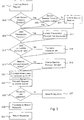
- the engine receives an incoming request from the client 10 in Fig. 2.
- the engine checks if the request uses a Secure Session Protocol, step 303. If so, the engine checks if a Secure Session Protocol session exists, step 305. If no Secure Session Protocol session exists a secure session is created, step 307.
- the engine checks if the request uses a Transaction Protocol. If so, the engine handles Transaction Protocol communication, step 311.
- the engine checks if the request uses a compatible character set. If not, the engine translates the character set, step 315.
- the engine checks if a session protocol session exists. If not, a session protocol session is created, step 319.
- the engine translates the binary session protocol into the HTTP-protocol. And forwards the request to the WWW server 20 in Fig. 2, step 323.
- the engine checks if it has received a valid response from the WWW-server, step 325. If not the engine sends a binary error, step 327. If, on the other hand, the response is valid the response is translated into binary protocols in a step 329, and finally the response is returned to the client 10 in a step 331.
- the pre-existing WWW server program is transformed into a program that is capable of accommodating multiple protocols (WAP, WWW) simultaneously. Hence, it is no longer limited to communication via the protocol it was originally designed to use.
Landscapes
- Engineering & Computer Science (AREA)
- Computer Networks & Wireless Communication (AREA)
- Signal Processing (AREA)
- Computer And Data Communications (AREA)
- Communication Control (AREA)
Priority Applications (2)
| Application Number | Priority Date | Filing Date | Title |
|---|---|---|---|
| AU2001256902A AU2001256902A1 (en) | 2000-05-05 | 2001-05-04 | A method and a system relating to protocol communications within a pre-existing www server framework |
| PCT/SE2001/000967 WO2001086896A1 (en) | 2000-05-05 | 2001-05-04 | A method and a system relating to protocol communications within a pre-existing www server framework |
Applications Claiming Priority (2)
| Application Number | Priority Date | Filing Date | Title |
|---|---|---|---|
| SE0001680 | 2000-05-05 | ||
| SE0001680A SE515394C2 (sv) | 2000-05-05 | 2000-05-05 | Förfarande och system avseende protokollkommunikation i en existerande WWW-serverstruktur |
Publications (2)
| Publication Number | Publication Date |
|---|---|
| EP1152579A2 true EP1152579A2 (de) | 2001-11-07 |
| EP1152579A3 EP1152579A3 (de) | 2002-01-09 |
Family
ID=20279579
Family Applications (1)
| Application Number | Title | Priority Date | Filing Date |
|---|---|---|---|
| EP00850186A Withdrawn EP1152579A3 (de) | 2000-05-05 | 2000-11-03 | Verfahren und System zur Kommunikation mit einem WWW-Server |
Country Status (2)
| Country | Link |
|---|---|
| EP (1) | EP1152579A3 (de) |
| SE (1) | SE515394C2 (de) |
Family Cites Families (1)
| Publication number | Priority date | Publication date | Assignee | Title |
|---|---|---|---|---|
| WO1998058335A2 (en) * | 1997-06-16 | 1998-12-23 | Adobe Systems Incorporated | Storing electronically transmitted facsimiles on a web site |
-
2000
- 2000-05-05 SE SE0001680A patent/SE515394C2/sv not_active IP Right Cessation
- 2000-11-03 EP EP00850186A patent/EP1152579A3/de not_active Withdrawn
Also Published As
| Publication number | Publication date |
|---|---|
| SE515394C2 (sv) | 2001-07-23 |
| SE0001680L (sv) | 2000-09-19 |
| EP1152579A3 (de) | 2002-01-09 |
| SE0001680D0 (sv) | 2000-05-05 |
Similar Documents
| Publication | Publication Date | Title |
|---|---|---|
| US7376715B2 (en) | Asynchronous hypertext messaging system and method | |
| US8788814B2 (en) | Secure data transfer using an embedded system | |
| US7562146B2 (en) | Encapsulating protocol for session persistence and reliability | |
| US10069939B2 (en) | Establishing a virtual tunnel between two computers | |
| US8224966B2 (en) | Reproxying an unproxied connection | |
| US7769871B2 (en) | Technique for sending bi-directional messages through uni-directional systems | |
| US6704786B1 (en) | Network and end-host efficiency for web communication | |
| US7908472B2 (en) | Secure sockets layer cut through architecture | |
| US8407350B2 (en) | System and method for projecting content beyond firewalls | |
| US6212640B1 (en) | Resources sharing on the internet via the HTTP | |
| US7584500B2 (en) | Pre-fetching secure content using proxy architecture | |
| US20050267974A1 (en) | Systems and methods for maintaining a client's network connection thru a change in network identifier | |
| CN101534302A (zh) | 一种提供tcp服务的方法、系统和相关装置 | |
| US7546339B2 (en) | Client-server apparatus and method using alternative-response protocols | |
| JP6521762B2 (ja) | Httpサーバとその制御方法、画像形成装置およびプログラム | |
| EP1152579A2 (de) | Verfahren und System zur Kommunikation mit einem WWW-Server | |
| WO2001086896A1 (en) | A method and a system relating to protocol communications within a pre-existing www server framework | |
| US20030177348A1 (en) | Secure internet communication with small embedded devices | |
| JPH1132088A (ja) | ネットワークシステム | |
| KR20010056418A (ko) | 왑 상에서의 종단 간의 보안 방법 | |
| JPH11239136A (ja) | ネットワーク機器及びそれを用いたネットワーク管理方法 | |
| Tschofenig et al. | CORE C. Bormann Internet-Draft Universitaet Bremen TZI Intended status: Standards Track S. Lemay Expires: February 25, 2017 Zebra Technologies | |
| HK1096211B (en) | Encapsulating protocol for session persistence and reliability |
Legal Events
| Date | Code | Title | Description |
|---|---|---|---|
| PUAI | Public reference made under article 153(3) epc to a published international application that has entered the european phase |
Free format text: ORIGINAL CODE: 0009012 |
|
| AK | Designated contracting states |
Kind code of ref document: A2 Designated state(s): AT BE CH CY DE DK ES FI FR GB GR IE IT LI LU MC NL PT SE TR |
|
| AX | Request for extension of the european patent |
Free format text: AL;LT;LV;MK;RO;SI |
|
| PUAL | Search report despatched |
Free format text: ORIGINAL CODE: 0009013 |
|
| AK | Designated contracting states |
Kind code of ref document: A3 Designated state(s): AT BE CH CY DE DK ES FI FR GB GR IE IT LI LU MC NL PT SE TR |
|
| AX | Request for extension of the european patent |
Free format text: AL;LT;LV;MK;RO;SI |
|
| 17P | Request for examination filed |
Effective date: 20020603 |
|
| AKX | Designation fees paid |
Free format text: AT BE CH CY DE DK ES FI FR GB GR IE IT LI LU MC NL PT SE TR |
|
| STAA | Information on the status of an ep patent application or granted ep patent |
Free format text: STATUS: THE APPLICATION HAS BEEN WITHDRAWN |
|
| 18W | Application withdrawn |
Effective date: 20030228 |