EP1152017A1 - Water resistance imparter, ink composition, reactive fluid, and method of ink-jet recording with two fluids - Google Patents
Water resistance imparter, ink composition, reactive fluid, and method of ink-jet recording with two fluids Download PDFInfo
- Publication number
- EP1152017A1 EP1152017A1 EP00931559A EP00931559A EP1152017A1 EP 1152017 A1 EP1152017 A1 EP 1152017A1 EP 00931559 A EP00931559 A EP 00931559A EP 00931559 A EP00931559 A EP 00931559A EP 1152017 A1 EP1152017 A1 EP 1152017A1
- Authority
- EP
- European Patent Office
- Prior art keywords
- ink
- ink composition
- reaction solution
- jet recording
- waterfastness
- Prior art date
- Legal status (The legal status is an assumption and is not a legal conclusion. Google has not performed a legal analysis and makes no representation as to the accuracy of the status listed.)
- Withdrawn
Links
- 0 C*Oc1ccccc1 Chemical compound C*Oc1ccccc1 0.000 description 3
Images
Classifications
-
- C—CHEMISTRY; METALLURGY
- C09—DYES; PAINTS; POLISHES; NATURAL RESINS; ADHESIVES; COMPOSITIONS NOT OTHERWISE PROVIDED FOR; APPLICATIONS OF MATERIALS NOT OTHERWISE PROVIDED FOR
- C09D—COATING COMPOSITIONS, e.g. PAINTS, VARNISHES OR LACQUERS; FILLING PASTES; CHEMICAL PAINT OR INK REMOVERS; INKS; CORRECTING FLUIDS; WOODSTAINS; PASTES OR SOLIDS FOR COLOURING OR PRINTING; USE OF MATERIALS THEREFOR
- C09D11/00—Inks
- C09D11/30—Inkjet printing inks
-
- B—PERFORMING OPERATIONS; TRANSPORTING
- B41—PRINTING; LINING MACHINES; TYPEWRITERS; STAMPS
- B41J—TYPEWRITERS; SELECTIVE PRINTING MECHANISMS, i.e. MECHANISMS PRINTING OTHERWISE THAN FROM A FORME; CORRECTION OF TYPOGRAPHICAL ERRORS
- B41J2/00—Typewriters or selective printing mechanisms characterised by the printing or marking process for which they are designed
- B41J2/005—Typewriters or selective printing mechanisms characterised by the printing or marking process for which they are designed characterised by bringing liquid or particles selectively into contact with a printing material
- B41J2/01—Ink jet
- B41J2/17—Ink jet characterised by ink handling
-
- B—PERFORMING OPERATIONS; TRANSPORTING
- B41—PRINTING; LINING MACHINES; TYPEWRITERS; STAMPS
- B41J—TYPEWRITERS; SELECTIVE PRINTING MECHANISMS, i.e. MECHANISMS PRINTING OTHERWISE THAN FROM A FORME; CORRECTION OF TYPOGRAPHICAL ERRORS
- B41J2/00—Typewriters or selective printing mechanisms characterised by the printing or marking process for which they are designed
- B41J2/005—Typewriters or selective printing mechanisms characterised by the printing or marking process for which they are designed characterised by bringing liquid or particles selectively into contact with a printing material
- B41J2/01—Ink jet
- B41J2/21—Ink jet for multi-colour printing
- B41J2/2107—Ink jet for multi-colour printing characterised by the ink properties
- B41J2/2114—Ejecting specialized liquids, e.g. transparent or processing liquids
-
- C—CHEMISTRY; METALLURGY
- C08—ORGANIC MACROMOLECULAR COMPOUNDS; THEIR PREPARATION OR CHEMICAL WORKING-UP; COMPOSITIONS BASED THEREON
- C08F—MACROMOLECULAR COMPOUNDS OBTAINED BY REACTIONS ONLY INVOLVING CARBON-TO-CARBON UNSATURATED BONDS
- C08F220/00—Copolymers of compounds having one or more unsaturated aliphatic radicals, each having only one carbon-to-carbon double bond, and only one being terminated by only one carboxyl radical or a salt, anhydride ester, amide, imide or nitrile thereof
- C08F220/02—Monocarboxylic acids having less than ten carbon atoms; Derivatives thereof
- C08F220/52—Amides or imides
- C08F220/54—Amides, e.g. N,N-dimethylacrylamide or N-isopropylacrylamide
- C08F220/60—Amides, e.g. N,N-dimethylacrylamide or N-isopropylacrylamide containing nitrogen in addition to the carbonamido nitrogen
-
- C—CHEMISTRY; METALLURGY
- C09—DYES; PAINTS; POLISHES; NATURAL RESINS; ADHESIVES; COMPOSITIONS NOT OTHERWISE PROVIDED FOR; APPLICATIONS OF MATERIALS NOT OTHERWISE PROVIDED FOR
- C09D—COATING COMPOSITIONS, e.g. PAINTS, VARNISHES OR LACQUERS; FILLING PASTES; CHEMICAL PAINT OR INK REMOVERS; INKS; CORRECTING FLUIDS; WOODSTAINS; PASTES OR SOLIDS FOR COLOURING OR PRINTING; USE OF MATERIALS THEREFOR
- C09D11/00—Inks
- C09D11/54—Inks based on two liquids, one liquid being the ink, the other liquid being a reaction solution, a fixer or a treatment solution for the ink
-
- B—PERFORMING OPERATIONS; TRANSPORTING
- B41—PRINTING; LINING MACHINES; TYPEWRITERS; STAMPS
- B41J—TYPEWRITERS; SELECTIVE PRINTING MECHANISMS, i.e. MECHANISMS PRINTING OTHERWISE THAN FROM A FORME; CORRECTION OF TYPOGRAPHICAL ERRORS
- B41J2/00—Typewriters or selective printing mechanisms characterised by the printing or marking process for which they are designed
- B41J2/005—Typewriters or selective printing mechanisms characterised by the printing or marking process for which they are designed characterised by bringing liquid or particles selectively into contact with a printing material
- B41J2/01—Ink jet
- B41J2/135—Nozzles
- B41J2/165—Prevention or detection of nozzle clogging, e.g. cleaning, capping or moistening for nozzles
- B41J2/16505—Caps, spittoons or covers for cleaning or preventing drying out
- B41J2/16508—Caps, spittoons or covers for cleaning or preventing drying out connected with the printer frame
-
- B—PERFORMING OPERATIONS; TRANSPORTING
- B41—PRINTING; LINING MACHINES; TYPEWRITERS; STAMPS
- B41J—TYPEWRITERS; SELECTIVE PRINTING MECHANISMS, i.e. MECHANISMS PRINTING OTHERWISE THAN FROM A FORME; CORRECTION OF TYPOGRAPHICAL ERRORS
- B41J2/00—Typewriters or selective printing mechanisms characterised by the printing or marking process for which they are designed
- B41J2/005—Typewriters or selective printing mechanisms characterised by the printing or marking process for which they are designed characterised by bringing liquid or particles selectively into contact with a printing material
- B41J2/01—Ink jet
- B41J2/135—Nozzles
- B41J2/165—Prevention or detection of nozzle clogging, e.g. cleaning, capping or moistening for nozzles
- B41J2/16517—Cleaning of print head nozzles
- B41J2/1652—Cleaning of print head nozzles by driving a fluid through the nozzles to the outside thereof, e.g. by applying pressure to the inside or vacuum at the outside of the print head
- B41J2/16523—Waste ink transport from caps or spittoons, e.g. by suction
-
- B—PERFORMING OPERATIONS; TRANSPORTING
- B41—PRINTING; LINING MACHINES; TYPEWRITERS; STAMPS
- B41M—PRINTING, DUPLICATING, MARKING, OR COPYING PROCESSES; COLOUR PRINTING
- B41M5/00—Duplicating or marking methods; Sheet materials for use therein
- B41M5/50—Recording sheets characterised by the coating used to improve ink, dye or pigment receptivity, e.g. for ink-jet or thermal dye transfer recording
- B41M5/52—Macromolecular coatings
- B41M5/5245—Macromolecular coatings characterised by the use of polymers containing cationic or anionic groups, e.g. mordants
Definitions
- the present invention relates to a waterfastness-imparting agent comprising a cationic water-soluble resin having a specific structure, an ink composition containing the waterfastness-imparting agent, a reaction solution containing the waterfastness-imparting agent, and ink jet recording methods using the same.
- Japanese Patent Laid-Open No. 119280/1987 discloses an ink comprising a hydroxyethylated polyethyleneimine polymer and a dye component.
- This publication describes that the combination of the hydroxyethylated polyethyleneimine polymer with the dye component can develop waterfastness.
- Japanese Patent Publication No. 91494/1995 discloses an ink comprising a hydroxyalkylated polyallylamine polymer and a dye.
- This publication describes that the combination of the hydroxyalkylated polyallylamine polymer and the dye can develop waterfastness. In these two inks, however, a further improvement is required to ensure satisfactory waterfastness of printed images because hydroxyalkyl groups having high hydrophilicity are contained in the polymer.
- Japanese Patent Laid-Open Nos. 255876/1990, 296878/1990, and 188174/1991 disclose ink compositions comprising a polyamine, with a molecular weight of not less than 300, having primary amino groups, an anionic dye, and a stability-imparting agent. These publications describe that the combination of the primary amino group with the anionic dye can develop waterfastness. Disadvantageously, however, the resins used in these publications strongly attack the dye. Specifically, according to studies conducted by the present inventors, for example, when this ink is allowed to stand at high temperatures, in some cases, the dye is decomposed or otherwise the photodecomposition of the print is accelerated to render the lightfastness lower than that of an ink containing only the dye.
- Japanese Patent Laid-Open No. 305011/1995 discloses a water-base ink comprising a basic water-soluble polymer, an anionic dye with the counter ion being a volatile base, and a buffering agent with the counter ion being a volatile base.
- This publication describes that, in the ink, the volatile base prevents the dissociation of the polymer and, after printing, the volatile base on paper is evaporated to allow a salt-forming reaction between the polymer and the dye to proceed, thereby developing waterfastness.
- Japanese Patent Laid-Open No. 238783/1987 discloses an ink jet recording sheet comprising a homopolymer of an acid salt of diallylamine or an acid salt of monoallylamine or a copolymer of the acid salt of diallylamine with the acid salt of monoallylamine.
- the advantage of this recording sheet is that the polymer reacts with the dye to become insoluble on the recording medium to develop waterfastness.
- the ink per se does not have waterfastness, use of a recording medium other than described in the publication cannot develop the waterfastness.
- Ink jet recording is a printing method wherein droplets of an ink composition are ejected and deposited onto recording media, such as paper, to perform printing.
- This method has a feature that images having high resolution and high quality can be printed at a high speed by means of relatively inexpensive apparatuses.
- the ink composition used in the ink jet recording comprises water as a main component and, added thereto, a colorant component and a wetting agent, such as glycerin, for preventing clogging and other purposes.
- the application of a polyvalent metal salt solution onto a recording medium followed by the application of an ink composition containing a dye having at least one carboxyl group has been recently proposed (for example, Japanese Patent Laid-Open No. 202328/1993).
- the advantage of this method is that the polyvalent metal ion combines with the dye to form an insoluble complex, the presence of which can offer an image having waterfastness and high quality free from color bleeding.
- a color ink comprising at least a surfactant for imparting a penetrating property or a solvent having a penetrating property and a salt in combination with a black ink capable of being thickened or agglomerated through the action of the salt
- Japanese Patent Laid-Open No. 106735/1994 The advantage of this method is that high-quality color images having high image density and free from color bleeding can be yielded.
- an ink jet recording method has been proposed wherein two liquids, a liquid containing a salt and an ink composition, are printed to realize good images.
- the present inventors have now found that the addition of a cationic water-soluble resin having a specific structure to an ink composition and a reaction solution for use in ink jet recording involving the deposition of two liquids, an ink composition and a reaction solution, onto a recording medium can realize good images, especially images possessing excellent waterfastness and lightfastness, and having no significant feathering or bleeding.
- the present invention has been made based on such finding.
- a waterfastness-imparting agent comprising a cationic water-soluble resin, said cationic water-soluble resin comprising a (co)polymer comprising, in formula (I), repeating units (a) represented by formula (a) and repeating units (b) represented by formula (b), the content of the repeating units (a) in the (co)polymer being 100 to 0% by mole, said (co)polymer having in its molecule a carboxyl-containing group as one of the terminal groups and an aromatic ring-containing group as the other terminal group: wherein
- an ink composition comprising at least the cationic water-soluble resin as defined above.
- reaction solution for use in ink jet recording method involving the deposition of a reaction solution and an ink composition onto a recording medium to perform printing, the reaction solution comprising at least the cationic water-soluble resin as defined above.
- an ink jet recording method comprising the step of depositing an ink composition and a reaction solution onto a recording medium to perform printing, the reaction solution containing a waterfastness-imparting agent which comprises the cationic water-soluble resin having a specific structure as defined above.
- the waterfastness-imparting agent comprising a cationic water-soluble resin having a specific structure according to the present invention is a (co)polymer comprising, in formula (I), repeating units (a) represented by formula (a) and repeating units (b) represented by formula (b), the content of the repeating units (a) in the (co)polymer being 100 to 0% by mole, the (co)polymer having in its molecule a carboxyl-containing group as one of the terminal groups and an aromatic ring-containing group as the other terminal group.
- the "waterfastness-imparting agent” means an additive which, when added to a solution which should be waterfast in a dried form, can impart at least waterfastness to a dried product of the solution.
- the waterfastness-imparting agent means an additive which, when added to an ink composition, can impart at least waterfastness to an image yielded by the ink composition.
- it means an additive which, when added to a reaction solution can impart at least waterfastness to an image formed by the ink jet recording method involving the deposition of two liquids, the reaction solution and an ink composition, onto a recording medium to perform printing,.
- the ink composition to which the waterfastness-imparting agent according to the present invention has been added, can realize images having no significant feathering or bleeding and having excellent waterfastness. Further, since the colorant is strongly fixed onto the recording medium, the effect of realizing images having no significant feathering or bleeding is significant.
- the waterfastness-imparting agent according to the present invention when brought into contact with an ink composition, is considered to break the state of dissolution and/or dispersion of a colorant, an optional resin emulsion described below, and other ingredients of the ink composition and to agglomerate them. Therefore, in the so-called "ink jet recording using two liquids," when this waterfastness-imparting agent is added to the reaction solution, it is considered that the agglomerate can inhibit the penetration of the colorant into the recording medium. As a result, images having high color density and free from significant feathering and significant unevenness of printing can be realized. Further, in the case of color images, uneven color mixing in boundaries of different colors, that is, color bleeding, can also be advantageously prevented.
- R 1 and R 4 may be the same or different and each independently represent a hydrogen atom or a methyl group.
- R 2 , R 3 , R 5 , R 6 , and R 7 may be the same or different and each independently represent a C 1-3 alkyl group, preferably a methyl group.
- R 1 represents a hydrogen atom
- R 2 represents a methyl group
- R 3 represents a methyl group
- R 4 represents a hydrogen atom
- R 5 represents a methyl group
- R 6 represents a methyl group
- R 7 represents a methyl group.
- Z - represents a counter ion, and Z preferably represents a halogen atom, that is, a fluorine, chlorine, bromine, or iodine atom, more preferably a chlorine atom.
- k and 1 are each 1, 2, or 3, preferably 3.
- carboxyl-containing terminal groups examples include groups represented by formulae (II) to (V). ⁇ SCH 2 CH 2 COOH
- aromatic ring-containing terminal groups include groups represented by formulae (VI) to (XVII).
- the content of the units (a) in formula (I) is 100 to 80% by mole, preferably 100 to 90% by mole, more preferably 100 to 95% by mole.
- the two repeating units may be present in a block or random form.
- the content of the unit (a) in formula (I) is 100 to 0% by mole, preferably 80 to 0% by mole, more preferably 45 to 0% by mole.
- the two repeating units may be present in a block or random form.
- the waterfastness-imparting agent has a number average molecular weight of about 1,000 to 10,000 as determined by gel permeation chromatography (hereinafter abbreviated to "GPC").
- the ink composition according to the second aspect of the present invention is used in recording methods using ink compositions, for example, ink jet recording, recording method using writing utensils, such as pens, and other various recording methods.
- the ink composition according to the present invention is used in the ink jet recording method.
- the ink composition according to the present invention basically comprises at least an alkali-soluble colorant, a water-soluble organic solvent, water, a waterfastness-imparting agent comprising a cationic water-soluble resin having a specific structure represented by formula (I).
- the ink composition with the waterfastness-imparting agent according to the present invention added thereto can realize images having no significant feathering or bleeding and having excellent waterfastness. Further, since the colorant is strongly fixed onto the recording medium, the effect of realizing images having no significant feathering or bleeding is significant.
- the amount of the waterfastness-imparting agent represented by formula (I) added may be properly determined so that the above effect can be attained.
- the waterfastness-imparting agent is added preferably in an amount of about 0.2 to 20% by weight, more preferably about 0.5 to 10% by weight, still more preferably about 0.5 to 5% by weight, based on the ink composition.
- the alkali-soluble colorant contained in the ink composition according to the present invention is a dye or a pigment.
- alkali-soluble used herein means that the colorant can be dissolved in an alkaline medium.
- the water-soluble group contained in the molecule may be an acidic or basic dissociative group or nondissociative functional group, or alternatively a plurality of kinds of these groups are present in the molecule.
- Alkali-soluble colorants may be soluble in acidic solutions so far as they are soluble in alkalis.
- the content of the colorant may be properly determined.
- the colorant is added preferably in an amount of 0.5 to 20% by weight based on the total weight of the ink composition. This is because a colorant content falling within the above range can provide printed images having satisfactory optical density and permits the viscosity of the ink to be easily adjusted to a value suitable for ink jet recording.
- the colorant is selected from organic dyes or organic pigments.
- organic dyes or organic pigments are advantageous to realize high color density per weight and vivid colors.
- Dyes are organic color materials soluble in water, and preferred dyes are those that fall into categories of acidic dyes, direct dyes, reactive dyes, soluble vat dyes, and food dyes according to the color index. Further, colorants, insoluble in neutral water, falling within categories of oil-soluble dyes and basic dyes according to the color index may also be used so far as they are soluble in aqueous alkali solutions.
- pigments may be generally selected from those falling within categories of pigments according to the color index. Although pigments are generally regarded as water-insoluble organic color materials, some pigments are soluble in alkalis and may be used in the present invention.
- dyes and pigments usable herein include:
- water is a main solvent.
- Water may be pure water obtained by ion exchange, ultrafiltration, reverse osmosis, distillation or the like, or ultrapure water.
- water, which has been sterilized, for example, by ultraviolet irradiation or by addition of hydrogen peroxide, is suitable because, when the ink composition is stored for a long period of time, it can prevent the growth of mold or bacteria.
- the ink composition according to the present invention may contain an acidic material.
- Acidic materials usable herein include, for example, inorganic acids, such as hydrochloric acid, bromic acid, hydrofluoric acid, sulfuric acid, phosphoric acid, and nitric acid, and organic acids, such as acetic acid, propionic acid, n-butyric acid, iso-butyric acid, n-valeric acid, glycolic acid, gluconic acid, lactic acid, and toluenesulfonic acid.
- inorganic acids such as hydrochloric acid, bromic acid, hydrofluoric acid, sulfuric acid, phosphoric acid, and nitric acid
- organic acids such as acetic acid, propionic acid, n-butyric acid, iso-butyric acid, n-valeric acid, glycolic acid, gluconic acid, lactic acid, and toluenesulfonic acid.
- the ink composition according to the present invention can further contain a basic material.
- basic materials usable herein include: inorganic bases, such as sodium hydroxide, potassium hydroxide, lithium hydroxide, calcium hydroxide, barium hydroxide, strontium hydroxide, radium hydroxide, berylium hydroxide, magnesium hydroxide, and ammonia; mono-, di- or tri-lower alkylamines, such as ethylamine, diethylamine, triethylamine, propylamine, dipropylamine, diisopropylamine, tert-butylamine, dibutylamine, diisobutylamine, isopropylamine, sec-butylamine, and pentylamine; lower alkyl lower hydroxyalkoxyamines, such as 3-ethoxypropylamine and 3-methoxypropylamine; lower alkyl lower alkoxyamines, such as 3-ethoxypropylamine and 3-methoxypropyl
- These basic materials can function so that the waterfastness-imparting agent and the colorant can be stably dissolved and held in the ink composition.
- the basic material permits the waterfastness-imparting agent and the colorant to be stably dissolved in the ink.
- the term "water-soluble organic solvent” refers to a medium which can dissolve solutes of the ink, such as a colorant.
- the water-soluble organic solvent is selected from water-soluble solvents having a lower vapor pressure than water.
- the following materials may be utilized as the solvent according to the present invention: materials which are solid at room temperature and, upon heat melting, can function as a solvent; and materials which, when used in combination with aqueous solutions or other solvents, can function as a solvent.
- water-soluble organic solvents include: polyhydric alcohols, such as ethylene glycol, propylene glycol, butanediol, pentanediol, 2-butene-1,4-diol, 2-methyl-2,4-pentanediol, glycerin, 1,2,6-hexanetriol, diethylene glycol, and dipropylene glycol; ketones, such as acetonylacetone; ⁇ -butyrolactone; esters, such as diacetin and triethyl phosphate; lower alkoxy lower alcohols, such as 2-methoxyethanol and 2-ethoxyethanol; sulfur-containing compounds, such as thiodiglycol, dimethyl sulfoxide, and sulfolane; nitrogen-containing compounds, such as ethyleneurea, prolyleneurea, and 1,3-dimethyl-2-imidazolidinone; ethylene carbonate; propylene carbonate; furfuryl alcohol; and tetrahydrofur
- the vapor pressure of the organic solvent is lower than that of pure water, the content of the organic solvent in the ink does not lower even when the drying of the ink proceeds at the front end of an ink jet head. As a result, the dissolving power of the organic solvent does not lower, and the ink can be stably kept.
- the amount of the water-soluble organic solvent added may be properly determined.
- the addition of the water-soluble organic solvent in an amount of 5 to 50% by weight based on the total amount of the ink is preferred.
- the ink composition according to the present invention may contain a clogging preventive selected from the group consisting of (1) water-soluble hydroxypyridine derivatives, (2) chain or cyclic amide compounds, (3) imidazole derivatives, (4) hydroxy cyclic amine compounds, (5) azole compounds, (6) azine compounds, (7) amidine derivatives, and (8) purine derivatives.
- a clogging preventive selected from the group consisting of (1) water-soluble hydroxypyridine derivatives, (2) chain or cyclic amide compounds, (3) imidazole derivatives, (4) hydroxy cyclic amine compounds, (5) azole compounds, (6) azine compounds, (7) amidine derivatives, and (8) purine derivatives.
- clogging preventives can prevent ink from drying at the front end of nozzles even under an extreme condition such that, for example, an ink jet recording apparatus is allowed to stand under high temperature and low humidity conditions for a long period of time. Further, even when the drying of the ink further proceeds to cause solidification, the solid present at the front part of the nozzles can be redissolved by ink supplied from the rear part of the nozzle. Therefore, even after standing for a long period of time, printing can be normally resumed in an early stage.
- the clogging preventive is added preferably in an amount of about 1 to 40% by weight based on the ink composition.
- the water-soluble hydroxypyridine derivative usable in the present invention refers to a water-soluble compound wherein a hydroxyl group has been bonded to a pyridine ring either directly or through a methylene chain.
- water-soluble hydroxypyridine derivatives include 2-pyridinol, 3-pyridinol, 4-pyridinol, 3-methyl-2-pyridinol, 4-methyl-2-pyridinol, 6-methyl-2-pyridinol, 2-pyridine methanol, 3-pyridine methanol, 4-pyridine methanol, 2-pyridine ethanol, 3-pyridine ethanol, 4-pyridine ethanol, 2-pyridine propanol, 3-pyridine propanol, 4-pyridine propanol, ⁇ -methyl-2-pyridine methanol, and 2,3-pyridinediol. They may be used alone or as a mixture of two or more.
- the water-soluble chain or cyclic amide compound usable in the present invention is a chain amide derivative having 1 to 8 carbon atoms in its molecule, preferably a chain amide derivative having 1 to 6 carbon atoms in its molecule, and a cyclic amide derivative having 4 to 8 carbon atoms in its molecule, preferably a cyclic amide derivative having 4 to 6 carbon atoms in its molecule.
- water-soluble chain or cyclic amide compounds include lactamides, methyl carbamate, ethyl carbamate, propyl carbamate, formamide, N-methylformamide, N,N-diethylformamide, N,N-dimethylformamide, acetamide, N-methylacetamide, N,N-dimethylacetamide, propionamide, N-methylpropionamide, nicotinamide, 6-aminonicotinamide, N,N-diethylnicotinamide, N-ethylnicotinamide, 2-pyrrolidone, N-methyl-2-pyrrolidone, 5-methyl-2-pyrrolidone, 5-hydroxymethyl-2-pyrrolidone, ⁇ -valerolactam, ⁇ -caprolactam, heptolactam, pyroglutamic acid, N-methyl- ⁇ -caprolactam, and ⁇ -propiolactam. They may be used alone or as a mixture of two or more
- the imidazole derivative usable in the present invention is a water-soluble compound wherein a hydroxyl group, a carboxyl group, or a lower alkyl (for example, a C 1-6 alkyl group, preferably a C 1-4 alkyl) has been attached to an imidazole ring.
- a hydroxyl group, a carboxyl group, or a lower alkyl for example, a C 1-6 alkyl group, preferably a C 1-4 alkyl
- imidazole derivatives include imidazole, Nmethylimidazole, 2-methylimidazole, 2-hydroxyimidazole, 4-hydroxyimidazole, 5-hydroxyimidazole, pyrimidazole, 2-ethylimidazole, 2-ethyl-4-methylimidazole, histamine, histidine, imidazoleacetic acid, 4-methylimidazole, 4-imidazoleacrylic acid, 4,5-imidazoledicarboxylic acid, and pilocarpine. They may be used alone or as a mixture of two or more.
- the hydroxy cyclic amine compound usable in the present invention is a water-soluble compound wherein a hydroxyl group has been attached to a cyclic amine (preferably a five- or six-membered cyclic amine) either directly or through a methylene chain.
- a cyclic amine preferably a five- or six-membered cyclic amine
- hydroxy cyclic amine compounds include 4-hydroxypiperidine, 3-hydroxypiperidine, 2-hydroxypiperidine, N-methyl-3-hydroxypiperidine, N-ethyl-3-hydroxypiperidine, N-methyl-3-hydroxymethylpiperidine, N-methyl-2-hydroxymethylpiperidine, N-(2-hydroxyethyl)piperidine, 2-(2-hydroxyethyl)piperidine, 4-(2-hydroxyethyl)piperidine, N-(2-hydroxyethyl)piperazine, N-(2-hydroxyethyl)morpholine, N-(2-hydroxypropyl)morpholine, N-(2-hydroxyethyl)pyrrole, pyrrolinol, N-(2-hydroxyethyl)pyrrolidine, N-methyl-2-(2-hydroxyethyl)pyrrolidine, N-(2-hydroxyethyl)ethyleneimine, 3-oxypyrazole, and 5-oxypyrazole. They may be used alone or as a mixture of two or more.
- the azole compound usable in the present invention is a water-soluble five-membered heterocyclic compound having two or more hetero atoms in its ring with at least one hetero atom being nitrogen.
- the number of hetero atoms is preferably two or three.
- the hetero atom is preferably selected form nitrogen, oxygen, and sulfur.
- azole compounds include 1,2,3-triazole, 1,2,4-triazole, 1,2,3-triazole-4,5-dicarboxylic acid, lH-1,2,4-triazole-3-thiol, benzotriazole, benzotriazole-5-carboxylic acid, 1H-benzotriazole-1-methanol, pyrazole, tetrazole, oxazole, N-1-(4,5-dimethyl-2-oxazolyl)sulfanylamide, thiazole, 2-aminothiazole, 2-thiazolecarboxyaldehyde, 5-thiazolemethanol, 1,2,3-thiadiazole, benzimidazole, benzimidazole-2-carbamic acid, (2-benzimidazolyl)acetonitrile, 5-benzimidazolecarboxylic acid, 2-benzimidazoleethanol, 2-benzimidazolepropionic acid, and 2-mercaptobenzimidazole. They may be used
- the azine compound usable in the present invention is a water-soluble six-membered heterocyclic compound having two or more hetero atoms in its ring with at least one hetero atom being nitrogen.
- the number of hetero atoms is preferably two or three.
- the hetero atom is preferably selected form nitrogen, oxygen, and sulfur.
- the azine compound may have a carboxyl group or a lower alkyl (for example, an alkyl having 1 to 6 carbon atoms, preferably 1 to 4 carbon atoms) as a substituent.
- azine compounds include pyrazine, pyrazinamide, hexahydropyrazine, 3-ethyl-2,6-dimethylpyrazine, pyrazine-2,3-dicarboxylic acid, pyrazinecarbonitrile, 2,3-pyrazinedicarbonitrile, 2,3-pyrazinecarboxyamide, 2,3-pyrazinedicarboxylic anhydride, pyrazine ethane thiol, triazine, cyanuric acid, methyl cyanurate, melamine, trithiocyanuric acid, pyridazine, 4-pyridazinecarboxylic acid, cytosine, cytosine-5-carboxylic acid. They may be used alone or as a mixture of two or more.
- amidine derivative usable in the present invention is water-soluble and is preferably a guanidine derivative.
- amidine derivatives include guanidine, 1-methyl-3-nitro-1-nitrosoguanidine, 1-amyl-3-nitro-1-nitrosoguanidine, nitroguanidine, sulfaguanidine, guanidinoacetic acid, guanitidine, aminoguanidine, canavanine, argininosuccinic acid, arginine, and biguanide. They may be used alone or as a mixture of two or more.
- the purine derivative usable in the present invention is water-soluble, and specific examples thereof include purine, purine riboside, 2-amino-6-mercaptopurine, 6-(methylthio)purine riboside, 6-benzylaminopurine, xanthosine, guanine, 2'-deoxyguanosine, guanosine, O-methylguanine, methylguanine, caffeine, xanthine, theophylline, theobromine, adenine, adenosine, 2'-deoxyadenosine, N-benzyl-9-(2-tetrahydropyranyl)adenine, and adenosine triphosphate. They may be used alone or as a mixture of two or more.
- the ink composition according to the present invention may further contain assistants commonly used in ink for ink jet recording.
- assistants include penetrants, viscosity modifiers, surface tension modifiers, hydrotropy agents, humectants, pH adjustors, antimolds, chelating agents, preservatives, and rust preventives.
- Penetrants usable herein include: lower alcohols, such as ethanol, isopropanol, butanol, and pentanol; cellosolves, such as ethylene glycol monobutyl ether; carbitols, such as diethylene glycol monobutyl ether and triethylene glycol monobutyl ether; and surfactants.
- Surface tension modifiers usable herein include: alcohols, such as diethanolamine, triethanolamine, glycerin, and diethylene glycol; and nonionic, cationic, anionic, or amphoteric surfactants.
- Preferred hydrotropy agents usable herein include urea, alkylureas, ethyleneurea, propyleneurea, thiourea, guanidine acid salts, and tetraalkylammonium halides.
- glycerin diethylene glycol or the like may be added as an agent which serves also as the water-soluble organic solvent.
- saccharides such as maltitol, sorbitol, gluconic lactone, and maltose, may be added.
- the basic material described above may be added as a pH adjustor which serves also as the basic material.
- the ink composition according to the present invention may contain a water-soluble resin other than the waterfastness-imparting agent.
- Preferred water-soluble resins of this type include nonionic water-soluble resins, and examples thereof include polyacrylamide, hydroxy esters of polymethacrylic acid, such as polyhydroxyethyl methacrylate, polyvinyl pyrrolidone, polyvinyl alcohol, and polyethylene glycol. The addition of these water-soluble resins can further stabilize ink compositions.
- the ink jet recording method comprises the step of printing a reaction solution and an ink composition onto a recording medium.
- the ink jet recording method according to the present invention can realize good images by bringing the reaction solution and the ink composition into contact with each other.
- the reason why good images can be realized is believed as follows. It should be noted that the following mechanism is merely hypothetical and should not be construed as limiting the present invention. It is believed that, upon the contact of the reaction solution with the ink composition, the waterfastness-imparting agent breaks the state of dissolution and/or dispersion of a colorant, an optional resin emulsion described below, and other ingredients of the ink composition and to agglomerate them. The agglomerate can inhibit the penetration of the colorant into the recording medium and, as a result, images having high color density and free from significant feathering and significant unevenness of printing can be realized. Further, in the case of color images, uneven color mixing in boundaries of different colors, i.e., color bleeding, can also be advantageously prevented.
- the waterfastness-imparting agent is stably dissolved in the reaction solution.
- the waterfastness-imparting agent electrostatically interacts with the colorant contained in the ink composition, while this resin interacts also with the recording medium and can be stably fixed onto the recording medium.
- the fixation of the resin onto the recording medium permits the colorant, together with the resin, to be fixed onto the recording medium, thus imparting waterfastness to the image. Further, as a result of the satisfactory fixation of the colorant onto the recording medium, images having no significant feathering and color bleeding can be realized.
- a combination of the reaction solution containing the waterfastness-imparting agent represented by formula (I) with an ink composition containing a dye could have significantly improved lightfastness.
- a combination of a polyallylamine used as a cationic water-soluble resin with a dye was disadvantageous in that the lightfastness becomes inferior to that of the dye per se .
- the use of the waterfastness-imparting agent of formula (I) can realize the retention of the lightfastness of the dye per se while maintaining the waterfastness of images, which is unattainable by the conventional combination.
- the reaction solution and the ink composition may be applied onto the recording medium in any order.
- suitable methods for the deposition of the reaction solution and the ink composition include a method wherein the ink composition is deposited onto the recording medium after the deposition of the reaction solution onto the recording medium, a method wherein the ink composition is first printed onto the recording medium followed by the deposition of the reaction solution onto the recording medium, and a method wherein the reaction solution and the ink composition are mixed together just before or just after the ejection.
- the deposition of the reaction solution onto the recording medium may be carried out by any of a method wherein the reaction solution is selectively deposited onto only an area where the ink composition is deposited, and a method wherein the reaction solution is deposited on the whole area of the recording medium.
- the former method is cost-effective because the consumption of the reaction solution can be minimized.
- the accuracy of the position at which both the reaction solution and the ink composition are deposited should be high to some extent.
- the latter method as compared with the former method, the requirement for the accuracy of the position where the reaction solution and the ink composition are deposited is relaxed. In the latter method, a larger amount of the reaction solution should be deposited on the whole area of the recording medium.
- the method to be used may be determined by taking a combination of the ink composition with the reaction solution into consideration.
- the reaction solution may be deposited by ink jet recording.
- the reaction solution used in the ink jet recording method according to the fourth aspect of the present invention basically comprises the waterfastness-imparting agent which, upon contact with an ink composition, can form an agglomerate.
- the reaction solution can break the state of dispersion and/or dissolution of a dye or a pigment, an optional resin emulsion, and other ingredients of the ink composition and to agglomerate them.
- the amount of the waterfastness-imparting agent added to the reaction solution may be properly determined so that the above effect can be attained.
- the waterfastness-imparting agent is added preferably in an amount of about 0.2 to 20% by weight, more preferably about 0.5 to 10% by weight, based on the reaction solution.
- the reaction solution contains an acidic material.
- Acidic materials usable herein include, for example, inorganic acids, such as hydrochloric acid, bromic acid, hydrofluoric acid, sulfuric acid, phosphoric acid, and nitric acid, and organic acids, such as acetic acid, propionic acid, n-butyric acid, iso-butyric acid, n-valeric acid, glycolic acid, gluconic acid, lactic acid, and toluenesulfonic acid.
- the reaction solution further contains a basic material.
- basic materials usable herein include: inorganic bases, such as sodium hydroxide, potassium hydroxide, lithium hydroxide, calcium hydroxide, barium hydroxide, strontium hydroxide, radium hydroxide, berylium hydroxide, magnesium hydroxide, and ammonia; mono-, di- or tri-lower alkylamines, such as ethylamine, diethylamine, triethylamine, propylamine, dipropylamine, diisopropylamine, tert-butylamine, dibutylamine, diisobutylamine, isopropylamine, sec-butylamine, and pentylamine; lower alkyl lower hydroxyalkoxyamines, such as 3-ethoxypropylamine and 3-methoxypropylamine; lower alkyl lower alkoxyamines, such as 3-ethoxypropylamine and 3-methoxypropylamine; lower alkyl lower
- the reaction solution of the present invention contains a water-soluble resin other than the waterfastness-imparting agent.
- Preferred water-soluble resins of this type include nonionic water-soluble resins, and examples thereof include polyacrylamide, hydroxy esters of polymethacrylic acid, such as polyhydroxyethyl methacrylate, polyvinyl. pyrrolidone, polyvinyl alcohol, and polyethylene glycol. The addition of these water-soluble resins can further stabilize the reaction solution.
- the reaction solution used in the ink jet recording method according to the present invention may contain a polyvalent metal salt.
- a preferred example of the polyvalent metal salt usable in the reaction solution is a salt that is constituted by divalent or higher polyvalent metal ions and anions bonded to the polyvalent metal ions and is soluble in water.
- Specific examples of polyvalent metal ions include divalent metal ions, such as Ca 2+ , Cu 2+ , Ni 2+ , Mg 2+ , Zn 2+ , and Ba 2+ , trivalent metal ions, such as Al 3+ , Fe 3+ , and Cr 3+ .
- Anions include Cl - , NO 3 - , I - , Br - , ClO 3 - , and CH 3 COO - .
- a metal salt constituted by Ca 2+ or Mg 2+ provides favorable results in terms of pH of the reaction solution and the quality of prints.
- the concentration of the polyvalent metal salt in the reaction solution may be suitably determined so as to attain the effect of providing good print quality and preventing clogging. It, however, is preferably about 0.1 to 40% by weight, more preferably about 5 to 25% by weight.
- the polyvalent metal salt contained in the reaction solution is constituted by divalent or higher polyvalent metal ions and nitrate ions or carboxylate ions bonded to the polyvalent metal ions and is soluble in water.
- the carboxylate ions are derived from a saturated aliphatic monocarboxylic acid having 1 to 6 carbon atoms or a carbocyclic monocarboxylic acid having 7 to 11 carbon atoms.
- Preferred examples of the saturated aliphatic monocarboxylic acid having 1 to 6 carbon atoms include formic acid, acetic acid, propionic acid, butyric acid, isobutyric acid, valeric acid, isovaleric acid, pivalic acid, and hexanoic acid. Among them, formic acid and acetic acid are particularly preferred.
- a hydrogen atom(s) on the saturated aliphatic hydrocarbon group in the monocarboxylic acid may be substituted by a hydroxyl group.
- Preferred examples of such carboxylic acids include lactic acid.
- carbocyclic monocarboxylic acid having 6 to 10 carbon atoms include benzoic acid and naphthoic acid with benzoic acid being more preferred.
- the reaction solution may contain a wetting agent comprising a high-boiling organic solvent.
- the high-boiling organic solvent functions to prevent the reaction solution from drying out, thereby preventing clogging of the head.
- high-boiling organic solvents include: polyhydric alcohols, such as ethylene glycol, diethylene glycol, triethylene glycol, polyethylene glycol, polypropylene glycol, propylene glycol, butylene glycol, 1,2,6-hexanetriol, thiodiglycol, hexylene glycol, glycerin, trimethylolethane, and trimethylolpropane; alkyl ethers of polyhydric alcohols, such as ethylene glycol monoethyl ether, ethylene glycol monobutyl ether, diethylene glycol monomethyl ether, diethylene glycol monoethyl ether, diethylene glycol monobutyl ether, triethylene glycol monomethyl ether, triethylene glycol monoethyl ether, and triethylene glycol monobutyl ether; urea; 2-pyrrolidone; N-methyl-2-pyrrolidone; 1,3-dimethyl-2-imidazolidinone; and tri
- the amount of the high-boiling organic solvent added is not particularly limited, it is preferably about 0.5 to 40% by weight, more preferably about 2 to 20% by weight.
- the reaction solution may further contain a low-boiling organic solvent.
- a low-boiling organic solvent examples include methanol, ethanol, n-propyl alcohol, iso-propyl alcohol, n-butanol, sec-butanol, tert-butanol, iso-butanol, and n-pentanol. Monohydric alcohols are particularly preferred.
- the low-boiling organic solvent has the effect of shortening the time required for drying the reaction solution on the recording medium.
- the low-boiling organic solvent is added preferably in an amount of 0.5 to 10% by weight, more preferably 1.5 to 6% by weight.
- the reaction solution may further contain a penetrant.
- Penetrants usable herein include various surfactants, such as anionic, cationic, amphoteric, and nonionic surfactants; alcohols, such as methanol, ethanol, and iso-propyl alcohol; and lower alkyl ethers of polyhydric alcohols, such as ethylene glycol monomethyl ether, diethylene glycol monoethyl ether, diethylene glycol monobutyl ether, triethylene glycol monobutyl ether, propylene glycol monobutyl ether, and dipropylene glycol monobutyl ether.
- the ink composition used in the ink jet recording method according to the fourth aspect of the present invention refers to a black ink composition in the case of monochrome printing and color ink compositions in the case of color printing, specifically yellow, magenta, and cyan ink compositions, and optionally a black ink composition.
- the ink composition used in the present invention comprises at least a colorant and water.
- the colorant contained in the ink composition used in the present invention may be either a dye or a pigment.
- Dyes are organic color materials, soluble in water, and preferred dyes are those that fall into categories of acidic dyes, direct dyes, reactive dyes, soluble vat dyes, and food dyes according to the color index. Further, colorants, insoluble in neutral water, falling within categories of oil-soluble dyes, basic dyes, or pigments according to the color index may also be used so far as they are soluble in aqueous alkali solutions.
- dyes and alkali-soluble pigments include those described above in connection with the ink composition according to the second aspect of the present invention.
- inorganic and organic pigments are usable without particular limitation.
- inorganic pigments usable herein include, in addition to titanium oxide and iron oxide, carbon blacks produced by known processes, such as contact, furnace, and thermal processes.
- organic pigments usable herein include azo pigments (including azo lake, insoluble azo pigment, condensed azo pigment, and chelate azo pigment), polycyclic pigments (for example, phthalocyanine, perylene, perinone, anthraquinone, quinacridone, dioxazine, thioindigo, isoindolinone, and quinophthalone pigments), dye-type chelate pigment (for example, basic dye-type chelate pigments and acid dye-type chelate pigment), nitro pigments, nitroso pigments, and aniline black.
- azo pigments including azo lake, insoluble azo pigment, condensed azo pigment, and chelate azo pigment
- polycyclic pigments for example, phthalocyanine, per
- the content of the colorant may be properly determined.
- the content of the colorant is preferably 0.5 to 20% by weight based on the total weight of the ink composition. This is because a colorant content falling within the above range can provide printed images having satisfactory optical density and permits the viscosity of the ink to be easily adjusted to a value suitable for ink jet recording.
- pigments among these colorants are brought to a form dispersible in an aqueous medium with the aid of a dispersant or a surfactant or by surface treatment to introduce an anionic functional group thereinto.
- a dispersant or a surfactant or by surface treatment to introduce an anionic functional group thereinto.
- the waterfastness-imparting agent contained in the reaction solution can electrostatically interact with the introduced functional group on recording media to realize sharp images having no significant feathering or color bleeding.
- the ink composition may contain a resin emulsion.
- resin emulsion refers to an emulsion comprising water as a continuous phase and the following resin component as a dispersed phase.
- Resin components as the dispersed phase include acrylic resin, vinyl acetate resin, styrene/butadiene resin, vinyl chloride resin, (meth)acrylate/styrene resin, butadiene resin, styrene resin, crosslinked acrylic resin, crosslinked styrene resin, benzoguanamine resin, phenolic resin, silicone resin, and epoxy resin.
- the resin is a polymer having a combination of a hydrophilic segment with a hydrophobic segment.
- the particle diameter of the resin component is not particularly limited so far as the resin component can form an emulsion. It, however, is preferably not more than about 150 nm, more preferably about 5 to 100 nm.
- the resin emulsion may be prepared by dispersion polymerization of resin monomer, optionally together with a surfactant, in water.
- a surfactant for example, an emulsion of an acrylic resin or a styrene/(meth)acrylic resin may be prepared by dispersion polymerization of an ester of (meth)acrylic acid or alternatively styrene in combination with an ester of (meth)acrylic acid in water in the presence of a surfactant.
- the mixing ratio of the resin component to the surfactant is preferably about 10 : 1 to 5 : 1.
- the surfactant is not particularly limited. Preferred examples thereof include: anionic surfactants (for example, sodium dodecylbenzenesulfonate, sodium laurylate, and an ammonium salt of polyoxyethylene alkyl ether sulfates), nonionic surfactants (for example, polyoxyethylene alkyl ethers, polyoxyethylene alkyl esters, polyoxyethylene sorbitan fatty acid esters, polyoxyethylene alkylphenyl ethers, polyoxyethylenealkylamines, and polyoxyethylenealkylamides). They may be used alone or in combination of two or more.
- anionic surfactants for example, sodium dodecylbenzenesulfonate, sodium laurylate, and an ammonium salt of polyoxyethylene alkyl ether sulfates
- nonionic surfactants for example, polyoxyethylene alkyl ethers, polyoxyethylene alkyl esters, polyoxyethylene sorbitan fatty acid esters, polyoxyethylene alkylphen
- acetylene glycols for example, Olfine Y, Surfynol 82, Surfynol 104, Surfynol 440, Surfynol 465, and Surfynol 485 (all the above products being manufactured by Air Products and Chemicals Inc.) may also be used.
- commercially available resin emulsions may also be used, and examples thereof include Microgel E-1002 and E-5002 (emulsion of styrene/acrylic resin, manufactured by Nippon Paint Co., Ltd.), Voncoat 4001 (emulsion of acrylic resin, manufactured by Dainippon Ink and Chemicals, Inc.), Voncoat 5454 (emulsion of styrene/acrylic resin, manufactured by Dainippon Ink and Chemicals, Inc.), SAE-1014 (emulsion of styrene/acrylic resin, manufactured by Nippon Zeon Co., Ltd.), and Saivinol SK-200 (emulsion of acrylic resin, manufactured by Saiden Chemical Industry Co., Ltd).
- Microgel E-1002 and E-5002 emulsion of styrene/acrylic resin, manufactured by Nippon Paint Co., Ltd.
- Voncoat 4001 emulsion of acrylic resin, manufactured by Dainippon Ink and Chemicals, Inc.
- Voncoat 5454 e
- the content of the resin emulsion in the ink composition used in the present invention is preferably 0.1 to 40% by weight, more preferably 1 to 25% by weight, in terms of resin component.
- the resin emulsion by virtue of interaction with the waterfastness-imparting agent, can inhibit the penetration of the colorant component and, in addition, has the effect of accelerating the fixation of the colorant component onto a recording medium. Further, some resin emulsions has also the effect of forming a film on the recording medium to improve the rubbing/scratch resistant of prints.
- the ink composition contains a thermoplastic resin in a resin emulsion form.
- the thermoplastic resin has a softening temperature of 50 to 250°C, preferably 60 to 200 °C.
- softening temperature refers to the lowest temperature among the glass transition point, the melting point, the temperature necessary for providing a viscosity coefficient of 10 11 to 10 12 poises, the fluidized point, and, in the case of a resin emulsion form, the minimum film-forming temperature (MFT) of thermoplastic resin.
- MFT minimum film-forming temperature
- the recording medium is heated at a temperature of the softening temperature of the thermoplastic resin or above.
- the thermoplastic resin forms a strong film having waterfastness and rubbing/scratch resistance, when heated at the softening or melting temperature or a higher temperature and then cooled.
- thermoplastic resins include, but are not limited to, polyacrylic acid, polymethacrylic acid, a polymethacrylic ester, polyethylacrylic acid, a styrene/butadiene copolymer, polybutadiene, an acrylonitrile/butadiene copolymer, a chloroprene copolymer, a fluororesin, polyvinylidene fluoride, polyolefin resin, cellulose, a styrene/acrylic acid copolymer, a styrene/methacrylic acid copolymer, polystyrene, a styrene/acrylamide copolymer, polyisobutyl acrylate, polyacrylonitrile, polyvinyl acetate, polyvinyl acetal, polyamide, rosin resin, polyethylene, a polycarbonate, a vinylidene chloride resin, a cellulosic resin
- thermoplastic resins include polyethylene wax, montan wax, alcohol wax, synthetic oxide wax, an ⁇ -olefin/maleic anhydride copolymer, animal and vegetable waxes such as carnauba wax, lanolin, paraffin wax, and microcrystalline wax.
- resin emulsions may also be used as the resin emulsion.
- resin emulsions described in Japanese Patent Publication No. 1426/1987 and Japanese Patent Laid-Open Nos. 56573/1991, 79678/1991, 160068/1991, and 18462/1992 as such may be used.
- the ink composition contains an alginic acid derivative.
- alginic acid derivatives include alkali metal alginates (for example, sodium salt and potassium salt), organic salts of alginic acid (for example, triethanolamine salt), and ammonium alginate.
- the alginic acid derivative is added to the ink composition preferably in an amount of about 0.01 to 1% by weight, more preferably about 0.05 to 0.5% by weight.
- the ink composition contains an organic solvent.
- the organic solvent is preferably a low-boiling organic solvent. Preferred examples thereof include methanol, ethanol, n-propyl alcohol, isopropyl alcohol, n-butanol, sec-butanol, tert-butanol, isobutanol, and n-pentanol. Monohydric alcohols are particularly preferred.
- the low-boiling organic solvent has the effect of shortening the drying time of the ink.
- the ink composition used in the ink jet recording method according to the fourth aspect of the present invention further contains a wetting agent comprising a high-boiling organic solvent.
- a wetting agent comprising a high-boiling organic solvent.
- high-boiling organic solvents include: polyhydric alcohols, such as ethylene glycol, diethylene glycol, triethylene glycol, polyethylene glycol, polypropylene glycol, propylene glycol, butylene glycol, 1,2,6-hexanetriol, thioglycol, hexylene glycol, glycerin, trimethylolethane, and trimethylolpropane; alkyl ethers of polyhydric alcohols, such as ethylene glycol monoethyl ether, ethylene glycol monobutyl ether, diethylene glycol monomethyl ether, diethylene glycol monoethyl ether, diethylene glycol monobutyl ether, triethylene glycol monomethyl ether, triethylene glycol monoeth
- the wetting agent is added preferably in an amount of 0.5 to 40% by weight, more preferably 2 to 20% by weight, based on the ink.
- the low-boiling organic solvent is added preferably in an amount of 0.5 to 10% by weight, more preferably 1.5 to 6% by weight, based on the ink.
- the ink composition used in the present invention may contain a dispersant and a surfactant.
- surfactants usable herein include various surfactants described above in connection with the resin emulsion.
- the ink composition contains a saccharide.
- saccharides usable herein include monosaccharides, disaccharides, oligosaccharides (including trisaccharides and tetrasaccharides), and other polysaccharides, preferably glucose, mannose, fructose, ribose, xylose, arabinose, galactose, aldonic acid, glucitol, sorbitol, maltose, cellobiose, lactose, sucrose, trehalose, and maltotriose.
- polysaccharide used herein means saccharides in the broad sense as including substances which exist widely in the world of nature, such as alginic acid, ⁇ - cyclodextrin, and cellulose.
- saccharides usable herein include reducing sugars of the above saccharides (for example, sugar alcohols represented by the general formula HOCH 2 (CHOH) n CH 2 OH, wherein n is an integer of 2 to 5), oxidizing sugars (for example, aldonic acid or uronic acid), amino acids, and thiosugars.
- sugar alcohols are particularly preferred, and specific examples thereof include maltitol and sorbitol.
- the saccharide is added suitably in an amount of 0.1 to 40% by weight, preferably 0.5 to 30% by weight, based on the ink composition.
- pH adjustors may be added to the ink composition used in the present invention.
- the ink composition according to the second embodiment of the present invention may be used as the ink composition in the ink jet recording method according to the fourth embodiment of the present invention. This can yield high-quality images having excellent waterfastness and lightfastness and a lower level of feathering or bleeding.
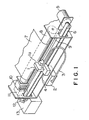
- Fig. 1 shows an embodiment of an ink jet recording apparatus.
- an ink composition and a reaction solution are accommodated in a tank and fed into a recording head through an ink tube.
- a recording head 1 is communicated with an ink tank 2 through an ink tube 3.
- the interior of the ink tank 2 is partitioned, and a chamber for an ink composition, optionally a plurality of chambers respectively for a plurality of color ink compositions, and a chamber for a reaction solution are provided.
- the recording head 1 is moved along a carriage 4 by means of a timing belt 6 driven by a motor 5.
- paper 7 as a recording medium is placed by a platen 8 and a guide 9 at a position facing the recording head 1.
- a cap 10 is provided.
- a suction pump 11 is connected to the cap 10 in order to conduct the so-called "cleaning operation.”
- the ink composition sucked by the suction pump 11 is resorquestionedd in a waste ink tank 13 through a tube 12.
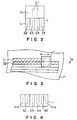
- Fig. 2 is an enlarged view showing the surface of nozzles for the recording head 1.
- the surface of a nozzle for a reaction solution is indicated by 1b
- a nozzle 21 for ejecting the reaction solution is provided in the longitudinal direction.
- the surface of nozzles for the ink composition is indicated by 1c
- a yellow ink composition, a magenta ink composition, a cyan ink composition, and a black ink composition are ejected respectively through nozzles 22, 23, 24 and 25.
- FIG. 3 An ink jet recording method using the recording head shown in Fig. 2 will be described with reference to Fig. 3.
- the recording head 1 is moved in the direction indicated by an arrow A, during which time the reaction solution is ejected through the nozzle surface 1b to form a reaction solution-deposited region 31 in a band form on the recording medium 7.
- the recording medium 7 is transferred by a predetermined extent in the paper feed direction indicated by an arrow B, during which time the recording head 1 is moved in the direction opposite to that indicated by the arrow A in the drawing and returned to the left end of the recording medium 7, and the recording head 1 conducts printing using the ink composition on the reaction solution-deposited region, thereby forming a print region 32.
- nozzles for a reaction solution are denoted by 41a and 41b, and a yellow ink composition, a magenta ink composition, a cyan ink composition, and a black ink composition are ejected respectively through nozzles 42, 43, 44 and 45.
- the recording head 1 when reciprocated on the carriage, can conduct printing in both directions. Therefore, in this case, printing at a higher speed is expected as compared with the case where the recording head shown in Fig. 2 is used.
- Regulating the surface tension of the reaction solution and the ink composition preferably by the above method enables a high-quality print to be more stably provided independently of the order of depositing the reaction solution and the ink composition.
- use of only one ejection nozzle for the reaction solution suffices for desired results (for example, the nozzle indicated by numeral 41b in the drawing may be omitted), leading to a further reduction in size of head and an increase in printing speed.
- the supplement of the ink composition may be carried out by replacing a cartridge as an ink tank.
- the ink tank may be integral with the recording head.
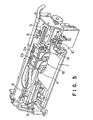
- FIG. 5 A preferred embodiment of an ink jet recording apparatus using such an ink tank is shown in Fig. 5.
- recording heads 1a and 1b are integral respectively with ink tanks 2a and 2b.
- An ink composition and a reaction solution are ejected respectively through the recording heads 1a and 1b.
- printing may be conducted in the same manner as described above in connection with the apparatus shown in Fig. 1.
- the recording head 1a is moved together with the ink tank 2a on a carriage 4, while the recording head 1a is moved together with the ink tank 2b on the carriage 4.
- a 100-ml flask equipped with a thermometer, a stirring device, a nitrogen introduction tube, and a reflux condenser was charged with 15.0 g of N,N-dimethylaminopropylacrylamide, 0.57 g of 2,4-diphenyl-4-methyl-1-pentene, and 20.0 g of n-butyl acetate.
- a solution of 0.44 g of dimethyl 2,2'-azobis(2-methyl propionate) dissolved in 20.0 g of n-butyl acetate was then added to the flask.
- the reaction mixture was heated to 80°C while stirring under a nitrogen atmosphere, and the solution was kept at 80°C for 4 hr.
- the reaction mixture was then heated to 95°C, and the reaction was continued for additional 2 hr at 95 °C, followed by cooling to room temperature to give about 56 g of a pale yellow transparent solution.
- the solvent was removed under the reduced pressure. A highly viscous liquid as the residue was dissolved in methyl ethyl ketone, and a precipitation procedure from a mixture of methyl ethyl ketone and hexane was repeated several times. The resulting precipitate was dried to give 13.0 g of a solid.
- a 100-ml flask equipped with a thermometer, a stirring device, a nitrogen introduction tube, and a reflux condenser was charged with 14.0 g of N,N-dimethylaminopropylacrylamide, 1.3 g of a 75 wt% aqueous solution of (3-acrylamidopropyl)trimethylammonium chloride, 0.90 g of 2,4-diphenyl-4-methyl-1-pentene, and 20.0 g of N,N-dimethylformamide.
- a solution of 1.09 g of dimethyl 2,2'-azobis(2-methyl propionate) dissolved in 20.0 g of N,N-dimethylformamide was then added to the flask.
- the reaction mixture was heated to 80°C while stirring under a nitrogen atmosphere, and the solution was kept at 80°C for 4 hr. The reaction mixture was then heated to 95 °C, and the reaction was continued for additional 2 hr at 95°C, followed by cooling to room temperature to give about 57 g of a pale yellow transparent solution.
- the solvent was removed under the reduced pressure. A highly viscous liquid as the residue was dissolved in methyl ethyl ketone, and a precipitation procedure from a mixture of methyl ethyl ketone and hexane was repeated several times. The resulting precipitate was dried to give 12.3 g of a solid.
- a 100-ml flask equipped with a thermometer, a stirring device, a nitrogen introduction tube, and a reflux condenser was charged with 20.0 g of water and 10.0 g of the solid prepared above.
- the reaction mixture was heated to 90 °C while stirring under a nitrogen atmosphere, and the solution was then kept at 90°C for 20 hr, followed by cooling to room temperature. Thus, about 30 g of a pale yellow transparent solution was prepared.
- the solvent was removed under the reduced pressure.
- the residue was redissolved in methyl ethyl ketone, and a precipitation procedure from a mixture of methyl ethyl ketone and hexane was repeated several times.
- the resulting precipitate was dried to give 9.6 g of a solid.
- the weight-average molecular weight and the number-average molecular weight of the polymer were determined by GPC to be 4,200 and 2,800, respectively, against polyethylene glycol standards.
- a 500-ml flask equipped with a thermometer, a stirring device, a nitrogen introduction tube, and a reflux condenser was charged with 52.6 g of N,N-dimethylaminopropylacrylamide, 23.2 g of a 75 wt% aqueous solution of (3-acrylamidopropyl)trimethylammonium chloride, 4.0 g of 2,4-diphenyl-4-methyl-1-pentene, and 130 g of N,N-dimethylformamide.
- a solution of 5.0 g of dimethyl 2,2'-azobis(2-methyl propionate) dissolved in 20 g of N,N-dimethylformamide was then added to the flask.
- the reaction mixture was heated to 80°C while stirring under a nitrogen atmosphere, and the solution was kept at 80°C for 4 hr.
- the reaction solution was then heated to 95°C, and the reaction was continued for additional 2 hr at 95 °C, followed by cooling to room temperature to give about 230 g of a pale yellow transparent solution.
- the solvent was removed under the reduced pressure. A highly viscous liquid as the residue was dissolved in methyl ethyl ketone, and a precipitation procedure from a mixture of methyl ethyl ketone and hexane was repeated several times. The resulting precipitate was dried to give 40.3 g of a solid.
- a 100-ml flask equipped with a thermometer, a stirring device, a nitrogen introduction tube, and a reflux condenser was charged with 20.0 g of water and 10.0 g of the solid prepared above.
- the reaction mixture was heated to 90 °C while stirring under a nitrogen atmosphere, and the solution was then kept at 90°C for 20 hr, followed by cooling to room temperature. Thus, about 30 g of a pale yellow transparent solution was prepared.
- the solvent was removed under the reduced pressure.
- the residue was redissolved in methyl ethyl ketone, and a precipitation procedure from a mixture of methyl ethyl ketone and hexane was repeated several times.
- the resulting precipitate was dried to give 9.2 g of a solid.
- the weight-average molecular weight and the number-average molecular weight of the polymer were determined by GPC to be 4,800 and 3,200, respectively, against polyethylene glycol standards.
- a 100-ml flask equipped with a thermometer, a stirring device, a nitrogen introduction tube, and a reflux condenser was charged with 15.0 g of N,N-dimethylaminopropylacrylamide, 0.57 g of 2,4-diphenyl-4-methyl-1-pentene, and 20.0 g of methanol.
- a solution of 0.54 g of 4,4'-azobis(4-cyanopentanoic acid) dissolved in 20.0 g of methanol was then added to the flask.
- the reaction mixture was heated while stirring under a nitrogen atmosphere, and a reaction was allowed to proceed at the boiling point for 15 hr.
- the reaction mixture was then cooled to room temperature to give about 50 g of a pale yellow transparent solution.
- the solvent was removed under the reduced pressure. A highly viscous liquid as the residue was dissolved in methyl ethyl ketone, and a precipitation procedure from a mixture of methyl ethyl ketone and hexane was repeated several times. The resulting precipitate was dried to give 13.0 g of a solid.
- the weight-average molecular weight and the number-average molecular weight of the polymer were determined by GPC to be 8,900 and 4,700, respectively, against polyethylene glycol standards.
- a 200-ml flask equipped with a thermometer, a stirring device, a nitrogen introduction tube, and a reflux condenser was charged with 15.0 g of N,N-dimethylaminopropylacrylamide, 0.50 g of 3-mercaptopropionic acid, and 60.0 g of n-butyl acetate. Thereafter, 2.00 g of 1,1'-azobis(1-acetoxy-1-phenylethane) was introduced into the solution followed by dissolution with stirring. The reaction mixture was heated to 80°C while stirring under a nitrogen atmosphere, and the solution was kept at 80°C for 4 hr.
- the reaction solution was then heated to 95°C, and the reaction was continued for additional 2 hr at 95 °C, followed by cooling to room temperature to give about 77 g of a pale yellow solution.
- the solvent was removed under the reduced pressure. A highly viscous liquid as the residue was dissolved in acetone, and a precipitation procedure from a mixture of acetone and hexane was repeated several times. The resulting precipitate was dried to give 13.5 g of a solid.
- the weight-average molecular weight and the number-average molecular weight of the polymer were determined by GPC to be 6,000 and 2,200, respectively, against polyethylene glycol standards.
- a 100-ml flask equipped with a thermometer, a stirring device, a nitrogen introduction tube, and a reflux condenser was charged with 12.5 g of N,N-dimethylaminoethylacrylamide, 0.83 g of 2,4-diphenyl-4-methyl-1-pentene, and 20.0 g of n-butyl acetate.
- a solution of 0.41 g of dimethyl 2,2'-azobis(2-methyl propionate) dissolved in 20.0 g of n-butyl acetate was then added to the flask.
- the reaction mixture was heated to 80°C while stirring under a nitrogen atmosphere, and the solution was kept at 80°C for 4 hr.
- reaction solution was then heated to 95°C, and the reaction was continued for additional 2 hr at 95 °C, followed by cooling to room temperature to give about 56 g of a pale yellow transparent solution.
- the solvent was removed under the reduced pressure. A highly viscous liquid as the residue was dissolved in methyl ethyl ketone, and a precipitation procedure from a mixture of methyl ethyl ketone and hexane was repeated several times. The resulting precipitate was dried to give 12.0 g of a solid.
- a 100-ml flask equipped with a thermometer, a stirring device, a nitrogen introduction tube, and a reflux condenser was charged with 20.0 g of water and 10.0 g of the solid prepared above.
- the reaction mixture was heated to 90 °C while stirring under a nitrogen atmosphere, and the solution was then kept at 90°C for 20 hr, followed by cooling to room temperature. Thus, about 30 g of a pale yellow transparent solution was prepared.
- the solvent was removed under the reduced pressure.
- the residue was redissolved in methyl ethyl ketone, and a precipitation procedure from a mixture of methyl ethyl ketone and hexane was repeated several times.
- the resulting precipitate was dried to give 9.0 g of a solid.
- the weight-average molecular weight and the number-average molecular weight of the polymer were determined by GPC to be 6,700 and 3,800, respectively, against polyethylene glycol standards.
- a reaction and purification were carried out in the same manner as in Preparation A1, except that the amount of 2,4-diphenyl-4-methyl-1-pentene added was changed to 1.13 g.
- the yield of the product after drying was 4.5 g.
- the weight-average molecular weight and the number-average molecular weight of the polymer were determined by GPC to be 4,600 and 2,700, respectively, against polyethylene glycol standards.
- a 100-ml flask equipped with a thermometer, a stirring device, a nitrogen introduction tube, and a reflux condenser was charged with 15.0 g of N,N-dimethylaminopropylmethacrylamide, 0.83 g of 2,4-diphenyl-4-methyl-1-pentene, and 20.0 g of n-butyl acetate.
- a solution of 0.41 g of dimethyl 2,2'-azobis(2-methyl propionate) dissolved in 20.0 g of n-butyl acetate was then added to the flask.
- the reaction mixture was heated to 80 °C while stirring under a nitrogen atmosphere, and the solution was kept at 80 °C for 4 hr.
- reaction solution was then heated to 95°C, and the reaction was continued for additional 2 hr at 95°C, followed by cooling to room temperature to give about 56 g of a pale yellow transparent solution.
- the solvent was removed under the reduced pressure. A highly viscous liquid as the residue was dissolved in acetone, and a precipitation procedure from a mixture of acetone and hexane was repeated several times. The resulting precipitate was dried to give 12.9 g of a solid.
- a 100-ml flask equipped with a thermometer, a stirring device, a nitrogen introduction tube, and a reflux condenser was charged with 20.0 g of water and 10.0 g of the solid prepared above.
- the reaction mixture was heated to 90 °C while stirring under a nitrogen atmosphere, and the solution was then kept at 90°C for 20 hr, followed by cooling to room temperature. Thus, about 31 g of a pale yellow transparent solution was prepared.
- the solvent was removed under the reduced pressure.
- the residue was redissolved in acetone, and a precipitation procedure from a mixture of acetone and hexane was repeated several times.
- the resulting precipitate was dried to give 9.4 g of a solid.
- the weight-average molecular weight and the number-average molecular weight of the polymer were determined by GPC to be 7,000 and 4,000, respectively, against polyethylene glycol standards.
- the residue was redissolved in methanol, and a precipitation procedure from a mixture of methanol and acetone was repeated several times.
- the resulting precipitate was dried to give 3.5 g of a solid.
- the weight-average molecular weight and the number-average molecular weight of the polymer were determined by GPC to be 8,600 and 5,300, respectively, against polyethylene glycol standards.
- Example A1 Preparation of ink set A1
- Yellow ink A1, magenta ink A1, and cyan ink A1 were prepared in the same manner as above, except that the dye was changed to 3 g of C.I. Acid Yellow 23 for the yellow ink A1, 2 g of C.I. Acid Red 13 for the magenta ink A1, and 2.5 g of C.I. Acid Blue 9 for the cyan ink A1.
- Example A2 Preparation of ink set A2
- Yellow ink A2, magenta ink A2, and cyan ink A2 were prepared in the same manner as above, except that the dye was changed to 3.0 g of C.I. Acid Yellow 17 for the yellow ink A2, 2.5 g of C.I. Acid Red 1 for the magenta ink A2, and 4.0 g of C.I. Direct Blue 86 for the cyan ink A2.
- Example A3 Preparation of ink set A3
- Yellow ink A3, magenta ink A3, and cyan ink A3 were prepared in the same manner as above, except that the dye was changed to 2 g of Daiwa IJ Yellow 214 HL (tradename; C.I. Direct Yellow 86, manufactured by Daiwa Dye Stuff Mfg. Co., Ltd.) for the yellow ink A3, 6 g of Palatine Fast Pink BN 1 for the magenta ink A3, and 3.5 g of C.I. Direct Blue 199 for the cyan ink A3.
- Daiwa IJ Yellow 214 HL tradename; C.I. Direct Yellow 86, manufactured by Daiwa Dye Stuff Mfg. Co., Ltd.
- Example A4 Preparation of ink set A4
- Yellow ink A4, magenta ink A4, and cyan ink A4 were prepared in the same manner as above, except that the dye was changed to 2 g of Daiwa IJ Yellow 214 HL (tradename; C.I. Direct Yellow 86, manufactured by Daiwa Dye Stuff Mfg. Co., Ltd.) for the yellow ink A4, 6 g of Palatine Fast Pink BNI for the magenta ink A4, and 3.5 g of C.I. Direct Blue 199 for the cyan ink A4.
- Example A5 Preparation of ink set A5
- C.I. Direct Black 19 (6 g) was dissolved in 2.7 g of the waterfastness-imparting agent A5 prepared in Preparation A5. Thiodiglycol (10 g) and 10 g of diethylene glycol monoethyl ether were added to the solution. Further, ultrapure water was added to bring the total amount of the mixture to 100 g. Thus, a black ink A5 was prepared.
- Yellow ink A5, magenta ink A5, and cyan ink A5 were prepared in the same manner as above, except that the dye was changed to 3.2 g of MY 123 (tradename; manufactured by Arimoto Chemical Company Ltd.) for the yellow ink A5, 3.2 g of Savinyl Pink 6 BLS (tradename; manufactured by Clariant Japan K.K.) for the magenta ink A5, and 3 g of Valifast Blue 1605 for the cyan ink A5.
- Example A6 Preparation of ink set A6
- the waterfastness-imparting agent A6 (3.2 g) prepared in Preparation A6 was mixed with 6 g of C.I. Food Black 2, 12 g of glycerin, 10 g of triethylene glycol monobutyl ether, 5 g of diethylene glycol, 3.0 g of guanidine, and 1.2 g of a nonionic surfactant Surfynol 465. Further, ultrapure water was added to bring the total amount of the mixture to 100 g. Thus, a black ink A6 was prepared.
- Yellow ink A6, magenta ink A6, and cyan ink A6 were prepared in the same manner as above, except that the dye was changed to 5 g of C.I. Acid Yellow 23 for the yellow ink A6, 2.5 g of C.I. Acid Red 249 for the magenta ink A6, and 4 g of C.I. Direct Blue 86 for the cyan ink A6. These four inks were combined to give an ink set A6.
- Example A7 Preparation of ink set A7
- Yellow ink A7, magenta ink A7, and cyan ink A7 were prepared in the same manner as above, except that the dye was changed to 3.0 g of C.I. Acid Yellow 17 for the yellow ink A7, 2.5 g of C.I. Acid Red 1 for the magenta ink A7, and 4.0 g of C.I. Direct Blue 86 for the cyan ink A7. These four inks were combined to give an ink set A7.
- Example A8 Preparation of ink set A8
- Black ink A8, yellow ink A8, magenta ink A8, and cyan ink A8 were prepared in the same manner as in Example A1, except that 2.8 g of the waterfastness-imparting agent A8 prepared in Preparation A8 was used as the waterfastness-imparting agent and 5 g of thiourea and 5 g of diethylene glycol were additionally used as humectants.
- Black ink A9, yellow ink A9, magenta ink A9, and cyan ink A9 were prepared in the same manner as in Example A7, except that 1.0 g of the waterfastness-imparting agent A1 prepared in Preparation A1 and 2.2 g of the waterfastness-imparting agent A7 prepared in Preparation A7 were used as the waterfastness-imparting agent.
- Example A10 Preparation of ink set A10
- Black ink A10, yellow ink A10, magenta ink A10, and cyan ink A10 were prepared in the same manner as in Example A2, except that 2.7 g of the waterfastness-imparting agent A9 prepared in Preparation A9 was used as the waterfastness-imparting agent and 5 g of urea was changed to 5 g of 2-(dimethylamino)ethanol.
- Example A11 Preparation of ink set A11
- Yellow ink A11, magenta ink A11, and cyan ink A11 were prepared in the same manner as above, except that the dye was changed to 5 g of C.I. Acid Yellow 23 for the yellow ink A11, 2.5 g of C.I. Acid Red 249 for the magenta ink A11, and 4 g of C.I. Direct Blue 86 for the cyan ink A11.
- Example A12 (Comparative) : Preparation of ink set A12
- Black ink A12, yellow ink A12, magenta ink A12, and cyan ink A12 were prepared in the same manner as in Example A1, except that the waterfastness-imparting agent A1 was not used. These four inks were combined to give an ink set A12.
- Example A13 (Comparative) : Preparation of ink set A13
- Black ink A13, yellow ink A13, magenta ink A13, and cyan ink A13 were prepared in the same manner as in Example A1, except that the waterfastness-imparting agent A1 was changed to SP-200 (tradename; polyethyleneimine, manufactured by Nippon Shokubai Kagaku Kogyo Co., Ltd.). These four inks were combined to give a color ink set A13.
- a 500-ml flask equipped with a thermometer, a stirring device, a nitrogen introduction tube, and a reflux condenser was charged with 19.7 g of N,N-dimethylaminopropylacrylamide, 81.3 g of a 75 wt% aqueous solution of (3-acrylamidopropyl)trimethylammonium chloride, 4.0 g of 2,4-diphenyl-4-methyl-1-pentene, and 130 g of N,N-dimethylformamide.
- a solution of 5.0 g of dimethyl 2,2'-azobis(2-methyl propionate) dissolved in 20 g of N,N-dimethylformamide was then added to the flask.
- the reaction mixture was heated to 80°C while stirring under a nitrogen atmosphere, and the solution was kept at 80°C for 4 hr.
- the reaction solution was then heated to 95°C, and the reaction was continued for additional 2 hr at 95 °C, followed by cooling to room temperature to give about 260 g of a pale yellow solution.
- the solvent was removed under the reduced pressure. A highly viscous liquid as the residue was dissolved in methanol, and a precipitation procedure from a mixture of methanol and acetone was repeated several times. The resulting precipitate was dried to give 60.1 g of a solid.
- a 100-ml flask equipped with a thermometer, a stirring device, a nitrogen introduction tube, and a reflux condenser was charged with 20.0 g of water and 10.0 g of the solid prepared above.
- the reaction mixture was heated to 90 °C while stirring under a nitrogen atmosphere, and the solution was then kept at 90°C for 20 hr, followed by cooling to room temperature. Thus, about 30 g of a pale yellow transparent solution was prepared.
- the solvent was removed under the reduced pressure.
- the residue was redissolved in methanol, and a precipitation procedure from a mixture of methanol and acetone was repeated several times.
- the resulting precipitate was dried to give 8.1 g of a solid.
- the weight-average molecular weight and the number-average molecular weight of the polymer were determined by GPC to be 4,600 and 3,100, respectively, against polyethylene glycol standards.
- a waterfastness-imparting agent A10 having a unit (a) content of 30% by mole was prepared.
- Black ink A14, yellow ink A14, magenta ink A14, and cyan ink A14 were prepared in the same manner as in Example A3, except that 2.0 g of the waterfastness-imparting agent prepared above was used. These four inks were combined to give an ink set A14.
- the ink compositions prepared above were evaluated by the following methods.
- An ink jet recording printer (a color printer MJ-5000C, manufactured by Seiko Epson Corporation) was modified and used in this test. The inks were filtered through a 5 ⁇ m filter before the evaluation test.
- Acidic plain paper (tradename: Xerox P, manufactured by Fuji Xerox Co., Ltd.) of size A4 was provided as a recording medium. 1.5 cm-width black, yellow, magenta, and cyan full blotted images and letters were printed at intervals of 3.5 cm (nonrecorded area) on the acidic plain paper.
- the prints thus obtained were allowed to stand under natural environment for one hr, and then immersed in 500 ml of water for one hr. After the immersion, the prints were dried under natural environment for 24 hr. The density of the transfer of the ink onto the nonrecorded area and the residue of the ink on the recorded area were visually inspected. The results were evaluated according to the following criteria.
- the same recording media and printer as used in evaluation test A1 were used to form full-color images.
- the prints were evaluated for lightfastness by the whole-day method in the sunlight test according to JIS L 0841. The results were evaluated according to the following criteria.
- a hermetically sealed container containing the ink was allowed to stand at 60 °C for one day and then at-30°C for one day. This procedure was repeated 10 times. The inks were then visually inspected for the occurrence of deposits and discoloration. The results were evaluated according to the following criteria.
- a 100-ml flask equipped with a thermometer, a stirring device, a nitrogen introduction tube, and a reflux condenser was charged with 15.0 g of N,N-dimethylaminopropylacrylamide, 0.57 g of 2,4-diphenyl-4-methyl-1-pentene, and 20.0 g of n-butyl acetate.
- a solution of 0.44 g of dimethyl 2,2'-azobis(2-methyl propionate) dissolved in 20.0 g of n-butyl acetate was then added to the flask.
- the reaction mixture was heated to 80°C while stirring under a nitrogen atmosphere, and the solution was kept at 80°C for 4 hr.
- reaction solution was then heated to 95°C, and the reaction was continued for additional 2 hr at 95 °C, followed by cooling to room temperature to give about 56 g of a pale yellow transparent solution.
- the solvent was removed under the reduced pressure. A highly viscous liquid as the residue was dissolved in methyl ethyl ketone, and a precipitation procedure from a mixture of methyl ethyl ketone and hexane was repeated several times. The resulting precipitate was dried to give 13.0 g of a solid.
- a 100-ml flask equipped with a thermometer, a stirring device, a nitrogen introduction tube, and a reflux condenser was charged with 14.0 g of N,N-dimethylaminopropylacrylamide, 1.3 g of a 75 wt% aqueous solution of (3-acrylamidopropyl)trimethylammonium chloride, 0.90 g of 2,4-diphenyl-4-methyl-1-pentene, and 20.0 g of N,N-dimethylformamide.
- a solution of 1.09 g of dimethyl 2,2'-azobis(2-methyl propionate) dissolved in 20.0 g of N,N-dimethylformamide was then added to the flask.
- the reaction mixture was heated to 80°C while stirring under a nitrogen atmosphere, and the solution was kept at 80°C for 4 hr.
- the reaction solution was then heated to 95°C, and the reaction was continued for additional 2 hr at 95°C, followed by cooling to room temperature to give about 57 g of a pale yellow transparent solution.
- the solvent was removed under the reduced pressure. A highly viscous liquid as the residue was dissolved in methyl ethyl ketone, and a precipitation procedure from a mixture of methyl ethyl ketone and hexane was repeated several times. The resulting precipitate was dried to give 12.3 g of a solid.
- a 100-ml flask equipped with a thermometer, a stirring device, a nitrogen introduction tube, and a reflux condenser was charged with 20.0 g of water and 10.0 g of the solid prepared above.
- the reaction mixture was heated to 90 °C while stirring under a nitrogen atmosphere, and the solution was then kept at 90°C for 20 hr, followed by cooling to room temperature. Thus, about 30 g of a pale yellow transparent solution was prepared.
- the solvent was removed under the reduced pressure.
- the residue was redissolved in methyl ethyl ketone, and a precipitation procedure from a mixture of methyl ethyl ketone and hexane was repeated several times.
- the resulting precipitate was dried to give 9.6 g of a solid.
- the weight-average molecular weight and the number-average molecular weight of the polymer were determined by GPC to be 4,200 and 2,800, respectively, against polyethylene glycol standards.
- a 500-ml flask equipped with a thermometer, a stirring device, a nitrogen introduction tube, and a reflux condenser was charged with 52.6 g of N,N-dimethylaminopropylacrylamide, 23.2 g of a 75 wt% aqueous solution of (3-acrylamidopropyl)trimethylammonium chloride, 4.0 g of 2,4-diphenyl-4-methyl-1-pentene, and 130 g of N,N-dimethylformamide.
- a solution of 5.0 g of dimethyl 2,2'-azobis(2-methyl propionate) dissolved in 20 g of N,N-dimethylformamide was then added to the flask.
- the reaction mixture was heated to 80°C while stirring under a nitrogen atmosphere, and the solution was kept at 80°C for 4 hr.
- the reaction solution was then heated to 95°C, and the reaction was continued for additional 2 hr at 95°C, followed by cooling to room temperature to give about 230 g of a pale yellow transparent solution.
- the solvent was removed under the reduced pressure. A highly viscous liquid as the residue was dissolved in methyl ethyl ketone, and a precipitation procedure from a mixture of methyl ethyl ketone and hexane was repeated several times. The resulting precipitate was dried to give 40.3 g of a solid.
- a 100-ml flask equipped with a thermometer, a stirring device, a nitrogen introduction tube, and a reflux condenser was charged with 20.0 g of water and 10.0 g of the solid prepared above.
- the reaction mixture was heated to 90 °C while stirring under a nitrogen atmosphere, and the solution was then kept at 90°C for 20 hr, followed by cooling to room temperature. Thus, about 30 g of a pale yellow transparent solution was prepared.
- the solvent was removed under the reduced pressure.
- the residue was redissolved in methyl ethyl ketone, and a precipitation procedure from a mixture of methyl ethyl ketone and hexane was repeated several times.
- the resulting precipitate was dried to give 9.2 g of a solid.
- the weight-average molecular weight and the number-average molecular weight of the polymer were determined by GPC to be 4,800 and 3,200, respectively, against polyethylene glycol standards.
- a reaction and purification were carried out in the same manner as in Preparation B1, except that the amount of 2,4-diphenyl-4-methyl-1-pentene added was changed to 1.13 g.
- the yield of the product after drying was 4.5 g.
- the weight-average molecular weight and the number-average molecular weight of the polymer were determined by GPC to be 4,600 and 2,700, respectively, against polyethylene glycol standards.
- the residue was redissolved in methanol, and a precipitation procedure from a mixture of methanol and acetone was repeated several times.
- the resulting precipitate was dried to give 5.2 g of a solid.
- the weight-average molecular weight and the number-average molecular weight of the polymer were determined by GPC to be 9,900 and 6,100, respectively, against polyethylene glycol standards.
- a 500-ml flask equipped with a thermometer, a stirring device, a nitrogen introduction tube, and a reflux condenser was charged with 19.7 g of N,N-dimethylaminopropylacrylamide, 81.3 g of a 75 wt% aqueous solution of (3-acrylamidopropyl)trimethylammonium chloride, 4.0 g of 2,4-diphenyl-4-methyl-1-pentene, and 130 g of N,N-dimethylformamide.
- a solution of 5.0 g of dimethyl 2,2'-azobis(2-methyl propionate) dissolved in 20 g of N,N-dimethylformamide was then added to the flask.
- the reaction mixture was heated to 80°C while stirring under a nitrogen atmosphere, and the solution was kept at 80°C for 4 hr.
- the reaction solution was then heated to 95°C, and the reaction was continued for additional 2 hr at 95°C, followed by cooling to room temperature to give about 260 g of a pale yellow solution.
- the solvent was removed under the reduced pressure. A highly viscous liquid as the residue was dissolved in methanol, and a precipitation procedure from a mixture of methanol and acetone was repeated several times. The resulting precipitate was dried to give 60.1 g of a solid.
- a 100-ml flask equipped with a thermometer, a stirring device, a nitrogen introduction tube, and a reflux condenser was charged with 20.0 g of water and 10.0 g of the solid prepared above.
- the reaction mixture was heated to 90 °C while stirring under a nitrogen atmosphere, and the reaction solution was then kept at 90°C for 20 hr, followed by cooling to room temperature. Thus, about 30 g of a pale yellow transparent solution was prepared.
- the solvent was removed under the reduced pressure.
- the residue was redissolved in methanol, and a precipitation procedure from a mixture of methanol and acetone was repeated several times.
- the resulting precipitate was dried to give 8.1 g of a solid.
- the weight-average molecular weight and the number-average molecular weight of the polymer were determined by GPC to be 4,600 and 3,100, respectively, against polyethylene glycol standards.
- a 100-ml flask equipped with a thermometer, a stirring device, a nitrogen introduction tube, and a reflux condenser was charged with 20.0 g of a 75 wt% aqueous solution of (3-acrylamidopropyl)trimethylammonium chloride, 2.26 g of 2,4-diphenyl-4-methyl-1-pentene, and 20.0 g of N,N-dimethylformamide.
- a solution of 1.35 g of dimethyl 2,2'-azobis(2-methyl propionate) dissolved in 20.0 g of N,N-dimethylformamide was then added to the flask.
- the reaction mixture was heated to 80°C while stirring under a nitrogen atmosphere, and the solution was kept at 80°C for 4 hr.
- reaction solution was then heated to 95°C, and the reaction was continued for additional 2 hr at 95°C, followed by cooling to room temperature to give about 63 g of a turbid pale yellow solution.
- the solvent was removed under the reduced pressure.
- a highly viscous liquid as the residue was dissolved in methanol, and a precipitation procedure from a mixture of methanol and acetone was repeated several times.
- the resulting precipitate was dried to give 12.3 g of a solid.
- a 100-ml flask equipped with a thermometer, a stirring device, a nitrogen introduction tube, and a reflux condenser was charged with 20.0 g of water and 10.0 g of the solid prepared above.
- the reaction mixture was heated to 90°C while stirring under a nitrogen atmosphere, and the solution was then kept at 90°C for 20 hr, followed by cooling to room temperature. Thus, about 30 g of a pale yellow transparent solution was prepared.
- the solvent was removed under the reduced pressure. The residue was redissolved in methanol, and a precipitation procedure from a mixture of methanol and acetone was repeated several times. The resulting precipitate was dried to give 8.5 g of a solid.
- the weight-average molecular weight and the number-average molecular weight of the polymer were determined by GPC to be 14,000 and 5,700, respectively, against polyethylene glycol standards.
- a yellow ink B1, a magenta ink B1, and a cyan ink B1 were prepared in the same manner as above, except that the dye was changed to 2.5 g of C.I. Direct Yellow 132 for the yellow ink B1, 2 g of C.I. Acid Red 249 for the magenta ink B1, and 4 g of C.I. Direct Blue 199 for the cyan ink B1.
- C.I. Food Black 2 (10 g), 15 g of glycerin, 5 g of diethylene glycol monobutyl ether, 5 g of diethylene glycol, and 1 g of a nonionic surfactant Surfynol 465 (tradename; manufactured by Air Products and Chemicals Inc.) were mixed together. Further, ultrapure water was added to bring the total amount of the mixture to 100 g. Thus, a black ink B2 was prepared.
- Yellow ink B2, magenta ink B2, and cyan ink B2 were prepared in the same manner as above, except that the dye was changed to 5 g of C.I. Acid Yellow 23 for the yellow ink B2, 2.5 g of C.I. Direct Red 9 for the magenta ink B2, and 4 g of C.I. Direct Blue 87 for the cyan ink B2.
- a carbon black MA 7 (tradename; manufactured by Mitsubishi Chemical Corporation) (5 g), 1 g of a styrene-acrylic acid copolymer (tradename: Joncryl 679, Mw 7,000, acid value 200, manufactured by Johnson Polymer Corp.), and 0.3 g of triethanolamine were mixed together.
- Voncoat 4001 (tradename; acrylic resin emulsion, resin component 50% by weight, manufactured by Dainippon Ink and Chemicals, Inc.) (50 g), 0.7 g of sucrose, 6.3 g of maltitol, 10 g of glycerin, 2 g of 2-pyrrolidone, and 4 g of ethanol were added thereto, followed by the addition of ultrapure water to bring the total amount of the mixture to 100 g and mixing with stirring. The mixture was then filtered through a 5- ⁇ m filter to give a black ink B3.
- a yellow ink B3, a magenta ink B3, and a cyan ink B3 were prepared in the same manner as above, except that the pigment was changed to 2 g of a pigment Ket Yellow 403 (tradename; manufactured by Dainippon Ink and Chemicals, Inc.) for the yellow ink B3, 2 g of a pigment Ket Red 309 (tradename; manufactured by Dainippon Ink and Chemicals, Inc.) for the magenta ink B3, and 2 g of a pigment Ket Blue EX-1 (tradename; manufactured by Dainippon Ink and Chemicals, Inc.) for the cyan ink B3.
- a pigment Ket Yellow 403 tradename; manufactured by Dainippon Ink and Chemicals, Inc.
- a pigment Ket Red 309 tradename; manufactured by Dainippon Ink and Chemicals, Inc.
- a pigment Ket Blue EX-1 tradename; manufactured by Dainippon Ink and Chemicals, Inc.
- C.I. Direct Black 19 (6 g), 10 g of glycerin, 10 g of diethylene glycol, 7 g of triethylene glycol monobutyl ether, 0.1 g of sodium alginate (manufactured by Kanto Kogyo K.K.), and 0.8 g of a nonionic surfactant Surfynol 465 (tradename; manufactured by Air Products and Chemicals Inc.) were mixed together. Further, ultrapure water was added to bring the total amount of the mixture to 100 g, followed by filtration through a 5- ⁇ m filter to give a black ink B4.
- Yellow ink B4, magenta ink B4, and cyan ink B4 were prepared in the same manner as above, except that the dye was changed to 2.5 g of C.I. Direct Yellow 144 for the yellow ink B4, 2 g of C.I. Direct Red 227 for the magenta ink B4, and 4 g of C.I. Acid Blue 9 for the cyan ink B4.
- Color ink set B5 Preparation of ink set B5
- Yellow ink B5, magenta ink B5, and cyan ink B5 were prepared in the same manner as above, except that the dye was changed to 3 g of C.I. Acid Yellow 23 for the yellow ink B1, 2 g of C.I. Acid Red 13 for the magenta ink B1, and 2.5 g of C.I. Acid Blue 9 for the cyan ink B1.
- the waterfastness-imparting agent B1 (4 g) prepared in Preparation B1, 10 g of glycerin, 10 g of diethylene glycol, and 5 g of diethylene glycol monobutyl ether were mixed together. Ultrapure water was added to the mixture to bring the total amount of the mixture to 100 g, followed by filtration through a 5- ⁇ m filter to give a reaction solution B1.
- a reaction solution B2 was prepared in the same manner as described above in connection with the reaction solution B1, except that the waterfastness-imparting agent was changed to 7 g of the waterfastness-imparting agent B6 prepared in Preparation B6 and 8 g of 35% hydrochloric acid was additionally used.
- a reaction solution B3 was prepared in the same manner as described above in connection with the reaction solution B1, except that the waterfastness-imparting agent was changed to 6 g of the waterfastness-imparting agent B5 prepared in Preparation B5 and 5 g of magnesium nitrate hexahydrate was used as a polyvalent metal salt.
- a reaction solution B4 was prepared in the same manner as described above in connection with the reaction solution B1, except that the waterfastness-imparting agent was changed to 5 g of the waterfastness-imparting agent B7 prepared in Preparation B7 and, in addition, 7 g of 35% hydrochloric acid and 5 g of magnesium nitrate hexahydrate as a polyvalent metal salt were used.
- the waterfastness-imparting agent B3 (7 g) prepared in Preparation B3, 8 g of 35% hydrochloric acid, 10 g of glycerin, and 10 g of diethylene glycol were mixed together. Ultrapure water was added to the mixture to bring the total amount of the mixture to 100 g, followed by filtration through a 5- ⁇ m filter to give a reaction solution B5.
- the color ink set B1 was used in combination with the reaction solution B2, and, for this combination, the following tests on evaluation of properties were carried out.
- the color ink set B2 was used in combination with the reaction solution B1, and, for this combination, the following tests on evaluation of properties were carried out.
- the color ink set B3 was used in combination with the reaction solution B4, and, for this combination, the following tests on evaluation of properties were carried out.
- the color ink set B4 was used in combination with the reaction solution B3, and, for this combination, the following tests on evaluation of properties were carried out.
- the color ink set B1 was used in combination with the reaction solution B5, and, for this combination, the following tests on evaluation of properties were carried out.
- the color ink set B2 was used in combination with the reaction solution B5, and, for this combination, the following tests on evaluation of properties were carried out.
- the color ink set B5 was used in combination with the reaction solution B5, and, for this combination, the following tests on evaluation of properties were carried out.
- a reaction solution B6 was prepared in the same manner as described above in connection with the reaction solution B1, except that 4 g (on a solid basis) of PAA-10C (tradename; a 10% aqueous solution of polyallylamine, manufactured by Nitto Boseki Co., Ltd.) was used as the waterfastness-imparting agent.
- the reaction solution B6 was used in combination with the color ink set B1, and, for this combination, the following tests on evaluation of properties were carried out.
- the color ink sets prepared above were used in combination with the reaction solutions prepared above, and these combinations were evaluated by the following methods.
- An ink jet recording printer (a color printer PM-750C, manufactured by Seiko Epson Corporation) was modified and used in this test.
- Two types of plain papers (tradename: Xerox P and Xerox 4024; both products being manufactured by Fuji Xerox Co., Ltd.) of size A4 and recycled paper (tradename: Xerox R, manufactured by Fuji Xerox Co., Ltd.) of size A4 were provided as recording media.
- two evaluation tests were carried out. Specifically, in one of the two evaluation tests, the reaction solution was first printed, and, immediately after that, a full-color image was printed using the color ink set. In the other evaluation test, printing was first carried out using the color ink set, and, immediately after that, the reaction solution was printed. The full-color images thus obtained were visually inspected for feathering and color bleeding. The results were evaluated according to the following criteria.
- the same recording medium and printer as used in the evaluation test B1 were provided, and, for combinations specified in the examples and the comparative examples, 1.5 cm-width black, yellow, magenta, cyan, red, green, and blue full blotted images and letters were printed at intervals of 3.5 cm (nonrecorded area).
- the prints thus obtained were allowed to stand under natural environment for one hr, and then immersed in 500 ml of water for one hr. After the immersion, the prints were dried under natural environment for 24 hr, and the density of the transfer of the ink onto the nonrecorded area and the residue of the ink on the recorded area were visually inspected. The results were evaluated according to the following criteria.
- the same recording medium and printer as used in the evaluation test B1 were provided, and, for combinations specified in the examples and the comparative examples, full-color images were printed.
- O.D. value was measured with a color control system SPM 50 (tradename; manufactured by Gretag), before and after exposure to light for one day by means of a xenon fadeometer Ci35W (tradename; manufactured by Atlas Electric Device). The results were evaluated according to the following criteria.
Landscapes
- Chemical & Material Sciences (AREA)
- Organic Chemistry (AREA)
- Engineering & Computer Science (AREA)
- Life Sciences & Earth Sciences (AREA)
- Materials Engineering (AREA)
- Wood Science & Technology (AREA)
- Chemical Kinetics & Catalysis (AREA)
- Health & Medical Sciences (AREA)
- Medicinal Chemistry (AREA)
- Polymers & Plastics (AREA)
- Inks, Pencil-Leads, Or Crayons (AREA)
- Ink Jet Recording Methods And Recording Media Thereof (AREA)
- Ink Jet (AREA)
Abstract
Disclosed is a cationic water-soluble resin which
comprises a (co)polymer of, in formula (I), repeating
units (a) represented by formula (a) and repeating units
(b) represented by formula (b), the content of the
repeating units (a) in the (co)polymer being 100 to 0%
by mole, the (co)polymer having in its molecule a
carboxyl-containing group as one of the terminal groups
and an aromatic ring-containing group as the other
terminal group. The addition of this resin to ink
compositions can realize the formation of images
possessing excellent waterfastness and lightfastness and
having no significant feathering or color bleeding.
Likewise, the addition of this resin to a reaction
solution for ink jet recording involving the deposition
of two liquids, an ink composition and a reaction
solution, onto a recording medium, can realize the
formation of images possessing excellent waterfastness
and lightfastness and no significant feathering or color
bleeding.
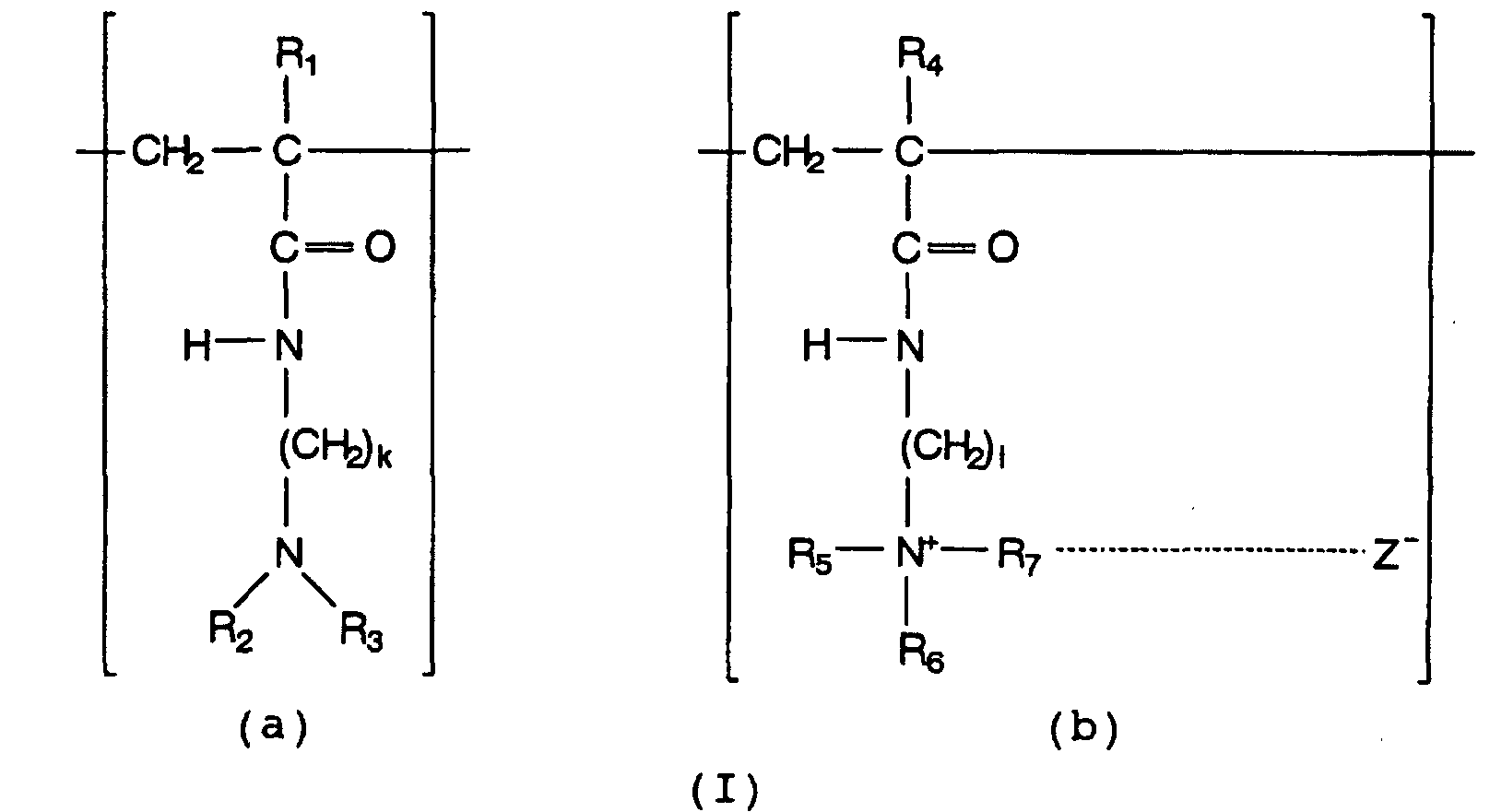 wherein R1 represents hydrogen or methyl; R2 and R3
represent C1-3 alkyl; R4 represents hydrogen or methyl; R5,
R6, and R7 represent C1-3 alkyl; Z- represents a counter
ion; and k and 1 are each 1, 2, or 3.
wherein R1 represents hydrogen or methyl; R2 and R3
represent C1-3 alkyl; R4 represents hydrogen or methyl; R5,
R6, and R7 represent C1-3 alkyl; Z- represents a counter
ion; and k and 1 are each 1, 2, or 3.
Description
The present invention relates to a waterfastness-imparting
agent comprising a cationic water-soluble
resin having a specific structure, an ink composition
containing the waterfastness-imparting agent, a reaction
solution containing the waterfastness-imparting agent,
and ink jet recording methods using the same.
Realization of images having good waterfastness and
lightfastness and, at the same time, having no
significant feathering or bleeding is important for
printing of images using ink compositions.
In order to realize good waterfastness, as
exemplified below, a combination of a cationic resin
with an anionic dye has hitherto been used.
For example, Japanese Patent Laid-Open No.
119280/1987 discloses an ink comprising a
hydroxyethylated polyethyleneimine polymer and a dye
component. This publication describes that the
combination of the hydroxyethylated polyethyleneimine
polymer with the dye component can develop waterfastness.
Japanese Patent Publication No. 91494/1995 discloses an
ink comprising a hydroxyalkylated polyallylamine polymer
and a dye. This publication describes that the
combination of the hydroxyalkylated polyallylamine
polymer and the dye can develop waterfastness. In these
two inks, however, a further improvement is required to
ensure satisfactory waterfastness of printed images
because hydroxyalkyl groups having high hydrophilicity
are contained in the polymer.
Japanese Patent Laid-Open Nos. 255876/1990,
296878/1990, and 188174/1991 disclose ink compositions
comprising a polyamine, with a molecular weight of not
less than 300, having primary amino groups, an anionic
dye, and a stability-imparting agent. These publications
describe that the combination of the primary amino group
with the anionic dye can develop waterfastness.
Disadvantageously, however, the resins used in these
publications strongly attack the dye. Specifically,
according to studies conducted by the present inventors,
for example, when this ink is allowed to stand at high
temperatures, in some cases, the dye is decomposed or
otherwise the photodecomposition of the print is
accelerated to render the lightfastness lower than that
of an ink containing only the dye.
Japanese Patent Laid-Open No. 305011/1995
discloses a water-base ink comprising a basic water-soluble
polymer, an anionic dye with the counter ion
being a volatile base, and a buffering agent with the
counter ion being a volatile base. This publication
describes that, in the ink, the volatile base prevents
the dissociation of the polymer and, after printing, the
volatile base on paper is evaporated to allow a salt-forming
reaction between the polymer and the dye to
proceed, thereby developing waterfastness.
Japanese Patent Laid-Open No. 238783/1987
discloses an ink jet recording sheet comprising a
homopolymer of an acid salt of diallylamine or an acid
salt of monoallylamine or a copolymer of the acid salt
of diallylamine with the acid salt of monoallylamine.
According to the publication, the advantage of this
recording sheet is that the polymer reacts with the dye
to become insoluble on the recording medium to develop
waterfastness. However, since the ink per se does not
have waterfastness, use of a recording medium other than
described in the publication cannot develop the
waterfastness.
Ink jet recording is a printing method wherein
droplets of an ink composition are ejected and deposited
onto recording media, such as paper, to perform printing.
This method has a feature that images having high
resolution and high quality can be printed at a high
speed by means of relatively inexpensive apparatuses. In
general, the ink composition used in the ink jet
recording comprises water as a main component and, added
thereto, a colorant component and a wetting agent, such
as glycerin, for preventing clogging and other purposes.
Furthermore, regarding the ink jet recording method,
the application of a polyvalent metal salt solution onto
a recording medium followed by the application of an ink
composition containing a dye having at least one
carboxyl group has been recently proposed (for example,
Japanese Patent Laid-Open No. 202328/1993). The
advantage of this method is that the polyvalent metal
ion combines with the dye to form an insoluble complex,
the presence of which can offer an image having
waterfastness and high quality free from color bleeding.
Further, the use of a color ink comprising at
least a surfactant for imparting a penetrating property
or a solvent having a penetrating property and a salt in
combination with a black ink capable of being thickened
or agglomerated through the action of the salt has been
proposed in the art (Japanese Patent Laid-Open No.
106735/1994). The advantage of this method is that high-quality
color images having high image density and free
from color bleeding can be yielded. Specifically, an ink
jet recording method has been proposed wherein two
liquids, a liquid containing a salt and an ink
composition, are printed to realize good images.
Other ink jet recording methods, wherein two
liquids are printed, have also been proposed, for
example, in Japanese Patent Laid-Open Nos. 240557/1991
and 240558/1991.
The present inventors have now found that the
addition of a cationic water-soluble resin having a
specific structure to an ink composition and a reaction
solution for use in ink jet recording involving the
deposition of two liquids, an ink composition and a
reaction solution, onto a recording medium can realize
good images, especially images possessing excellent
waterfastness and lightfastness, and having no
significant feathering or bleeding. The present
invention has been made based on such finding.
Accordingly, it is an object of the present
invention to provide a waterfastness-imparting agent
which can realize an ink composition and a reaction
solution for use in ink jet recording method involving
the deposition of two liquids, an ink composition and a
reaction solution, onto a recording medium, the method
being capable of realizing images possessing excellent
waterfastness and lightfastness and having no
significant feathering or bleeding.
It is another object of the present invention to
provide an ink composition which can realize images
possessing excellent waterfastness and lightfastness and,
at the same time, having no significant feathering or
bleeding.
It is a further object of the present invention to
provide a reaction solution for use in ink jet recording
using two liquids and an ink jet recording method using
the same, the method being capable of realizing images
possessing excellent waterfastness and lightfastness and
having no significant feathering or bleeding, especially
having no significant color bleeding.
According to a first aspect of the present
invention, there is provided a waterfastness-imparting
agent comprising a cationic water-soluble resin, said
cationic water-soluble resin comprising a (co)polymer
comprising, in formula (I), repeating units (a)
represented by formula (a) and repeating units (b)
represented by formula (b), the content of the repeating
units (a) in the (co)polymer being 100 to 0% by mole,
said (co)polymer having in its molecule a carboxyl-containing
group as one of the terminal groups and an
aromatic ring-containing group as the other terminal
group:
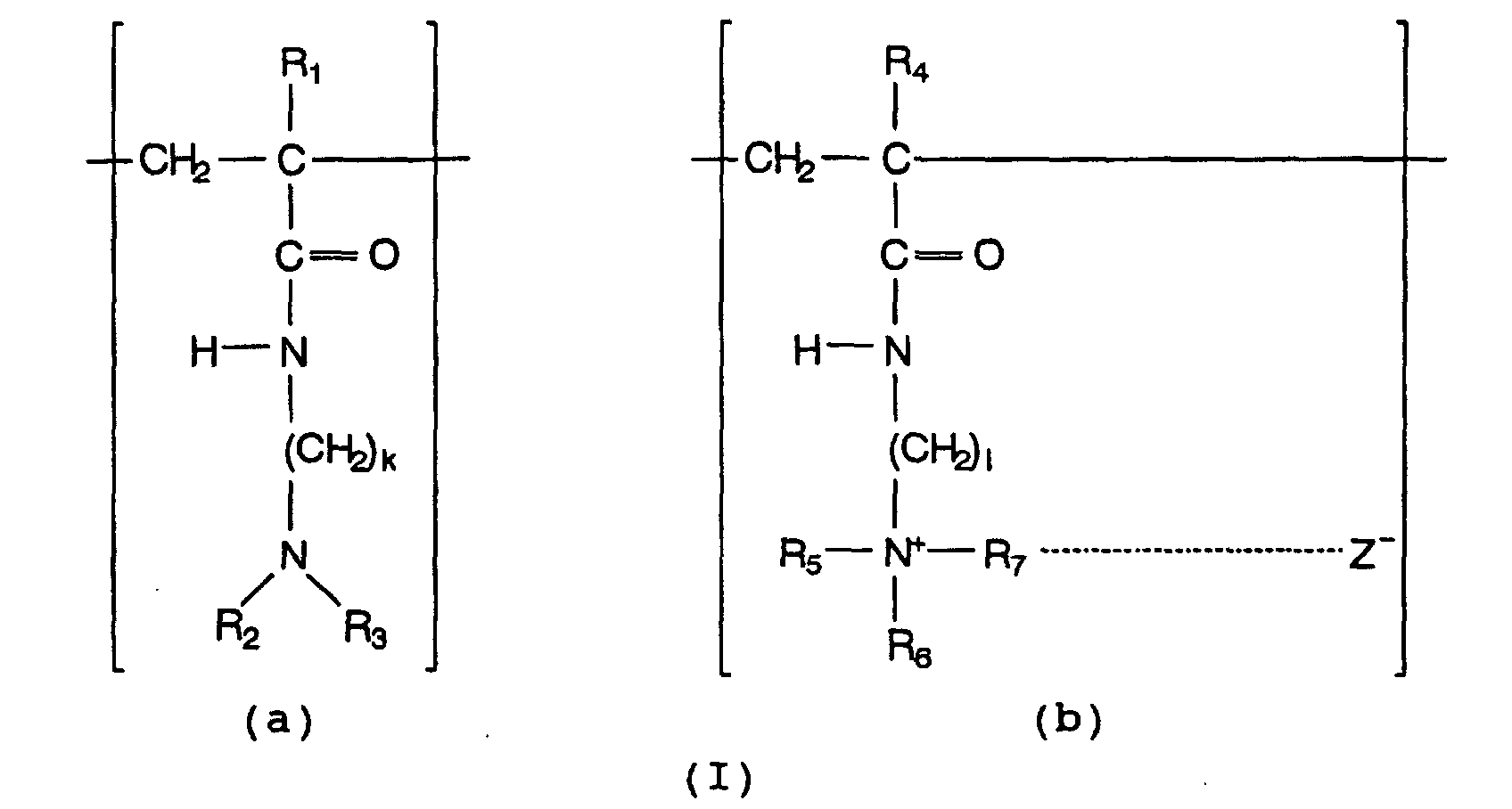 wherein
According to a second aspect of the present
invention, there is provided an ink composition
comprising at least the cationic water-soluble resin as
defined above.
According to a third aspect of the present
invention, there is provided a reaction solution for use
in ink jet recording method involving the deposition of
a reaction solution and an ink composition onto a
recording medium to perform printing, the reaction
solution comprising at least the cationic water-soluble
resin as defined above.
According to a fourth aspect of the present
invention, there is provided an ink jet recording method
comprising the step of depositing an ink composition and
a reaction solution onto a recording medium to perform
printing, the reaction solution containing a
waterfastness-imparting agent which comprises the
cationic water-soluble resin having a specific structure
as defined above.
The waterfastness-imparting agent comprising a
cationic water-soluble resin having a specific structure
according to the present invention (hereinafter referred
to as "waterfastness-imparting agent") is a (co)polymer
comprising, in formula (I), repeating units (a)
represented by formula (a) and repeating units (b)
represented by formula (b), the content of the repeating
units (a) in the (co)polymer being 100 to 0% by mole,
the (co)polymer having in its molecule a carboxyl-containing
group as one of the terminal groups and an
aromatic ring-containing group as the other terminal
group. According to the present invention, the
"waterfastness-imparting agent" means an additive which,
when added to a solution which should be waterfast in a
dried form, can impart at least waterfastness to a dried
product of the solution. Specifically, the
waterfastness-imparting agent means an additive which,
when added to an ink composition, can impart at least
waterfastness to an image yielded by the ink composition.
Furthermore, it means an additive which, when added to a
reaction solution can impart at least waterfastness to
an image formed by the ink jet recording method
involving the deposition of two liquids, the reaction
solution and an ink composition, onto a recording medium
to perform printing,.
The ink composition, to which the waterfastness-imparting
agent according to the present invention has
been added, can realize images having no significant
feathering or bleeding and having excellent
waterfastness. Further, since the colorant is strongly
fixed onto the recording medium, the effect of realizing
images having no significant feathering or bleeding is
significant.
Furthermore, the waterfastness-imparting agent
according to the present invention, when brought into
contact with an ink composition, is considered to break
the state of dissolution and/or dispersion of a colorant,
an optional resin emulsion described below, and other
ingredients of the ink composition and to agglomerate
them. Therefore, in the so-called "ink jet recording
using two liquids," when this waterfastness-imparting
agent is added to the reaction solution, it is
considered that the agglomerate can inhibit the
penetration of the colorant into the recording medium.
As a result, images having high color density and free
from significant feathering and significant unevenness
of printing can be realized. Further, in the case of
color images, uneven color mixing in boundaries of
different colors, that is, color bleeding, can also be
advantageously prevented.
In the waterfastness-imparting agent represented
by formula (I), R1 and R4 may be the same or different
and each independently represent a hydrogen atom or a
methyl group. R2, R3, R5, R6, and R7 may be the same or
different and each independently represent a C1-3 alkyl
group, preferably a methyl group. Most preferably, a
combination is preferred wherein R1 represents a hydrogen
atom, R2 represents a methyl group, R3 represents a
methyl group, R4 represents a hydrogen atom, R5
represents a methyl group, R6 represents a methyl group,
and R7 represents a methyl group.
Z- represents a counter ion, and Z preferably
represents a halogen atom, that is, a fluorine, chlorine,
bromine, or iodine atom, more preferably a chlorine atom.
In formula (I), k and 1 are each 1, 2, or 3,
preferably 3.
Examples of carboxyl-containing terminal groups
include groups represented by formulae (II) to (V).

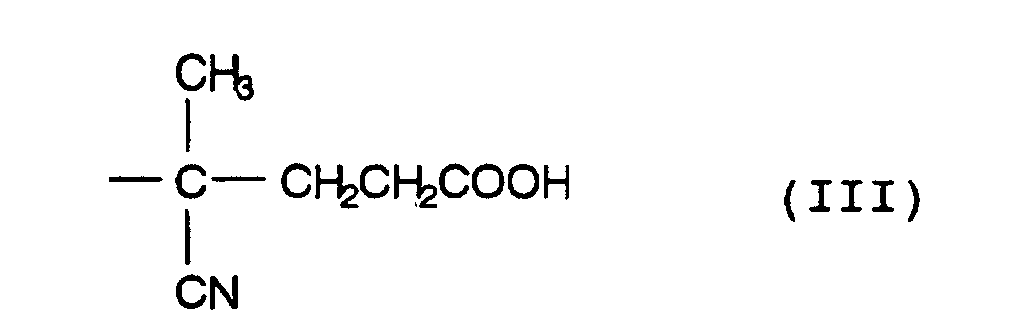

―SCH2CH2COOH
Examples of aromatic ring-containing terminal
groups include groups represented by formulae (VI) to
(XVII).






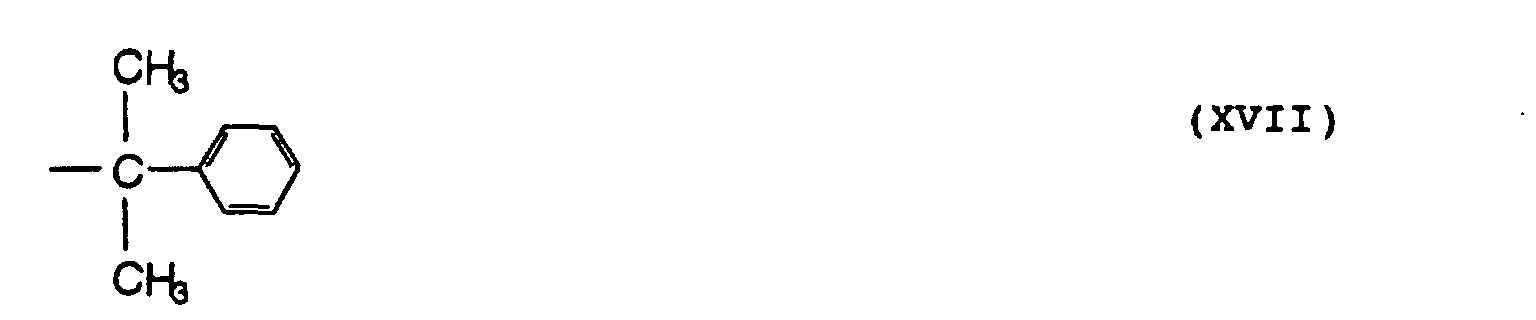
When the waterfastness-imparting agent is added to
the ink composition according to the second aspect of
the present invention, the content of the units (a) in
formula (I) is 100 to 80% by mole, preferably 100 to 90%
by mole, more preferably 100 to 95% by mole. The two
repeating units may be present in a block or random form.
On the other hand, when the waterfastness-imparting
agent is added to the reaction solution according to the
third aspect of the present invention, the content of
the unit (a) in formula (I) is 100 to 0% by mole,
preferably 80 to 0% by mole, more preferably 45 to 0% by
mole. The two repeating units may be present in a block
or random form.
According to a preferred embodiment of the present
invention, the waterfastness-imparting agent has a
number average molecular weight of about 1,000 to 10,000
as determined by gel permeation chromatography
(hereinafter abbreviated to "GPC").
The ink composition according to the second aspect
of the present invention is used in recording methods
using ink compositions, for example, ink jet recording,
recording method using writing utensils, such as pens,
and other various recording methods. Particularly
preferably, the ink composition according to the present
invention is used in the ink jet recording method.
The ink composition according to the present
invention basically comprises at least an alkali-soluble
colorant, a water-soluble organic solvent, water, a
waterfastness-imparting agent comprising a cationic
water-soluble resin having a specific structure
represented by formula (I). As described above, the ink
composition with the waterfastness-imparting agent
according to the present invention added thereto can
realize images having no significant feathering or
bleeding and having excellent waterfastness. Further,
since the colorant is strongly fixed onto the recording
medium, the effect of realizing images having no
significant feathering or bleeding is significant.
The amount of the waterfastness-imparting agent
represented by formula (I) added may be properly
determined so that the above effect can be attained. The
waterfastness-imparting agent is added preferably in an
amount of about 0.2 to 20% by weight, more preferably
about 0.5 to 10% by weight, still more preferably about
0.5 to 5% by weight, based on the ink composition.
The alkali-soluble colorant contained in the ink
composition according to the present invention is a dye
or a pigment. The term "alkali-soluble" used herein
means that the colorant can be dissolved in an alkaline
medium. The water-soluble group contained in the
molecule may be an acidic or basic dissociative group or
nondissociative functional group, or alternatively a
plurality of kinds of these groups are present in the
molecule. Alkali-soluble colorants may be soluble in
acidic solutions so far as they are soluble in alkalis.
The content of the colorant may be properly
determined. For example, the colorant is added
preferably in an amount of 0.5 to 20% by weight based on
the total weight of the ink composition. This is because
a colorant content falling within the above range can
provide printed images having satisfactory optical
density and permits the viscosity of the ink to be
easily adjusted to a value suitable for ink jet
recording.
More preferably, the colorant is selected from
organic dyes or organic pigments. Use of organic dyes or
organic pigments is advantageous to realize high color
density per weight and vivid colors.
Dyes are organic color materials soluble in water,
and preferred dyes are those that fall into categories
of acidic dyes, direct dyes, reactive dyes, soluble vat
dyes, and food dyes according to the color index.
Further, colorants, insoluble in neutral water, falling
within categories of oil-soluble dyes and basic dyes
according to the color index may also be used so far as
they are soluble in aqueous alkali solutions.
On the other hand, pigments may be generally
selected from those falling within categories of
pigments according to the color index. Although pigments
are generally regarded as water-insoluble organic color
materials, some pigments are soluble in alkalis and may
be used in the present invention.
Examples of dyes and pigments usable herein
include:
According to the ink composition of the present
invention, water is a main solvent. Water may be pure
water obtained by ion exchange, ultrafiltration, reverse
osmosis, distillation or the like, or ultrapure water.
Further, water, which has been sterilized, for example,
by ultraviolet irradiation or by addition of hydrogen
peroxide, is suitable because, when the ink composition
is stored for a long period of time, it can prevent the
growth of mold or bacteria.
The ink composition according to the present
invention may contain an acidic material. Acidic
materials usable herein include, for example, inorganic
acids, such as hydrochloric acid, bromic acid,
hydrofluoric acid, sulfuric acid, phosphoric acid, and
nitric acid, and organic acids, such as acetic acid,
propionic acid, n-butyric acid, iso-butyric acid, n-valeric
acid, glycolic acid, gluconic acid, lactic acid,
and toluenesulfonic acid. The addition of these acidic
materials to inks can further improve the waterfastness
of printed images.
The ink composition according to the present
invention can further contain a basic material. Examples
of basic materials usable herein include: inorganic
bases, such as sodium hydroxide, potassium hydroxide,
lithium hydroxide, calcium hydroxide, barium hydroxide,
strontium hydroxide, radium hydroxide, berylium
hydroxide, magnesium hydroxide, and ammonia; mono-, di-
or tri-lower alkylamines, such as ethylamine,
diethylamine, triethylamine, propylamine, dipropylamine,
diisopropylamine, tert-butylamine, dibutylamine,
diisobutylamine, isopropylamine, sec-butylamine, and
pentylamine; lower alkyl lower hydroxyalkoxyamines, such
as 3-ethoxypropylamine and 3-methoxypropylamine; lower
alkyl lower alkoxyamines, such as 3-ethoxypropylamine
and 3-methoxypropylamine; mono-, di- or tri-lower
hydroxyalkylamines, such as 2-aminoethanol, 2-(dimethylamino)ethanol,
2-(diethylamino)ethanol,
diethanolamine, N-butyldiethanolamine, triethanolamine,
aminomethylpropanol, and triisopropanolamine; and
organic amines, such as iminobispropylamine, 3-diethylaminopropylamine,
dibutylaminopropylamine,
methylaminopropylamine, dimethylaminopropanediamine, and
methyliminobispropylamine. These basic materials can
function so that the waterfastness-imparting agent and
the colorant can be stably dissolved and held in the ink
composition. For example, when an ink is prepared using
the waterfastness-imparting agent according to the
present invention in combination with a specific
colorant, mere mixing is often insufficient for
dissolution of these ingredients in the ink. The
addition of the basic material permits the
waterfastness-imparting agent and the colorant to be
stably dissolved in the ink.
In the ink composition according to the present
invention, the term "water-soluble organic solvent"
refers to a medium which can dissolve solutes of the ink,
such as a colorant. Preferably, the water-soluble
organic solvent is selected from water-soluble solvents
having a lower vapor pressure than water. In addition to
solvents which are liquid at room temperature, the
following materials may be utilized as the solvent
according to the present invention: materials which are
solid at room temperature and, upon heat melting, can
function as a solvent; and materials which, when used in
combination with aqueous solutions or other solvents,
can function as a solvent. Examples of water-soluble
organic solvents include: polyhydric alcohols, such as
ethylene glycol, propylene glycol, butanediol,
pentanediol, 2-butene-1,4-diol, 2-methyl-2,4-pentanediol,
glycerin, 1,2,6-hexanetriol, diethylene glycol, and
dipropylene glycol; ketones, such as acetonylacetone; γ-butyrolactone;
esters, such as diacetin and triethyl
phosphate; lower alkoxy lower alcohols, such as 2-methoxyethanol
and 2-ethoxyethanol; sulfur-containing
compounds, such as thiodiglycol, dimethyl sulfoxide, and
sulfolane; nitrogen-containing compounds, such as
ethyleneurea, prolyleneurea, and 1,3-dimethyl-2-imidazolidinone;
ethylene carbonate; propylene
carbonate; furfuryl alcohol; and tetrahydrofurfuryl
alcohol. Since the vapor pressure of the organic solvent
is lower than that of pure water, the content of the
organic solvent in the ink does not lower even when the
drying of the ink proceeds at the front end of an ink
jet head. As a result, the dissolving power of the
organic solvent does not lower, and the ink can be
stably kept.
The amount of the water-soluble organic solvent
added may be properly determined. For example, the
addition of the water-soluble organic solvent in an
amount of 5 to 50% by weight based on the total amount
of the ink is preferred.
According to a preferred embodiment of the
present invention, the ink composition according to the
present invention may contain a clogging preventive
selected from the group consisting of (1) water-soluble
hydroxypyridine derivatives, (2) chain or cyclic amide
compounds, (3) imidazole derivatives, (4) hydroxy cyclic
amine compounds, (5) azole compounds, (6) azine
compounds, (7) amidine derivatives, and (8) purine
derivatives.
The addition of these clogging preventives can
prevent ink from drying at the front end of nozzles even
under an extreme condition such that, for example, an
ink jet recording apparatus is allowed to stand under
high temperature and low humidity conditions for a long
period of time. Further, even when the drying of the ink
further proceeds to cause solidification, the solid
present at the front part of the nozzles can be
redissolved by ink supplied from the rear part of the
nozzle. Therefore, even after standing for a long period
of time, printing can be normally resumed in an early
stage.
According to a preferred embodiment of the present
invention, the clogging preventive is added preferably
in an amount of about 1 to 40% by weight based on the
ink composition.
The water-soluble hydroxypyridine derivative
usable in the present invention refers to a water-soluble
compound wherein a hydroxyl group has been
bonded to a pyridine ring either directly or through a
methylene chain. Specific examples of water-soluble
hydroxypyridine derivatives include 2-pyridinol, 3-pyridinol,
4-pyridinol, 3-methyl-2-pyridinol, 4-methyl-2-pyridinol,
6-methyl-2-pyridinol, 2-pyridine methanol,
3-pyridine methanol, 4-pyridine methanol, 2-pyridine
ethanol, 3-pyridine ethanol, 4-pyridine ethanol, 2-pyridine
propanol, 3-pyridine propanol, 4-pyridine
propanol, α -methyl-2-pyridine methanol, and 2,3-pyridinediol.
They may be used alone or as a mixture of
two or more.
The water-soluble chain or cyclic amide compound
usable in the present invention is a chain amide
derivative having 1 to 8 carbon atoms in its molecule,
preferably a chain amide derivative having 1 to 6 carbon
atoms in its molecule, and a cyclic amide derivative
having 4 to 8 carbon atoms in its molecule, preferably a
cyclic amide derivative having 4 to 6 carbon atoms in
its molecule. Specific examples of water-soluble chain
or cyclic amide compounds include lactamides, methyl
carbamate, ethyl carbamate, propyl carbamate, formamide,
N-methylformamide, N,N-diethylformamide, N,N-dimethylformamide,
acetamide, N-methylacetamide, N,N-dimethylacetamide,
propionamide, N-methylpropionamide,
nicotinamide, 6-aminonicotinamide, N,N-diethylnicotinamide,
N-ethylnicotinamide, 2-pyrrolidone,
N-methyl-2-pyrrolidone, 5-methyl-2-pyrrolidone, 5-hydroxymethyl-2-pyrrolidone,
δ-valerolactam, ε-caprolactam,
heptolactam, pyroglutamic acid, N-methyl-ε-caprolactam,
and β-propiolactam. They may be used alone
or as a mixture of two or more.
The imidazole derivative usable in the present
invention is a water-soluble compound wherein a hydroxyl
group, a carboxyl group, or a lower alkyl (for example,
a C1-6 alkyl group, preferably a C1-4 alkyl) has been
attached to an imidazole ring. Specific examples of
imidazole derivatives include imidazole, Nmethylimidazole,
2-methylimidazole, 2-hydroxyimidazole,
4-hydroxyimidazole, 5-hydroxyimidazole, pyrimidazole, 2-ethylimidazole,
2-ethyl-4-methylimidazole, histamine,
histidine, imidazoleacetic acid, 4-methylimidazole, 4-imidazoleacrylic
acid, 4,5-imidazoledicarboxylic acid,
and pilocarpine. They may be used alone or as a mixture
of two or more.
The hydroxy cyclic amine compound usable in the
present invention is a water-soluble compound wherein a
hydroxyl group has been attached to a cyclic amine
(preferably a five- or six-membered cyclic amine) either
directly or through a methylene chain. Specific examples
of hydroxy cyclic amine compounds include 4-hydroxypiperidine,
3-hydroxypiperidine, 2-hydroxypiperidine,
N-methyl-3-hydroxypiperidine, N-ethyl-3-hydroxypiperidine,
N-methyl-3-hydroxymethylpiperidine,
N-methyl-2-hydroxymethylpiperidine,
N-(2-hydroxyethyl)piperidine,
2-(2-hydroxyethyl)piperidine, 4-(2-hydroxyethyl)piperidine,
N-(2-hydroxyethyl)piperazine,
N-(2-hydroxyethyl)morpholine, N-(2-hydroxypropyl)morpholine,
N-(2-hydroxyethyl)pyrrole,
pyrrolinol, N-(2-hydroxyethyl)pyrrolidine, N-methyl-2-(2-hydroxyethyl)pyrrolidine,
N-(2-hydroxyethyl)ethyleneimine,
3-oxypyrazole, and 5-oxypyrazole.
They may be used alone or as a mixture of
two or more.
The azole compound usable in the present invention
is a water-soluble five-membered heterocyclic compound
having two or more hetero atoms in its ring with at
least one hetero atom being nitrogen. In particular, the
number of hetero atoms is preferably two or three. The
hetero atom is preferably selected form nitrogen, oxygen,
and sulfur. Specific examples of azole compounds include
1,2,3-triazole, 1,2,4-triazole, 1,2,3-triazole-4,5-dicarboxylic
acid, lH-1,2,4-triazole-3-thiol,
benzotriazole, benzotriazole-5-carboxylic acid, 1H-benzotriazole-1-methanol,
pyrazole, tetrazole, oxazole,
N-1-(4,5-dimethyl-2-oxazolyl)sulfanylamide, thiazole, 2-aminothiazole,
2-thiazolecarboxyaldehyde, 5-thiazolemethanol,
1,2,3-thiadiazole, benzimidazole,
benzimidazole-2-carbamic acid, (2-benzimidazolyl)acetonitrile,
5-benzimidazolecarboxylic
acid, 2-benzimidazoleethanol, 2-benzimidazolepropionic
acid, and 2-mercaptobenzimidazole. They may be used
alone or as a mixture of two or more.
The azine compound usable in the present invention
is a water-soluble six-membered heterocyclic compound
having two or more hetero atoms in its ring with at
least one hetero atom being nitrogen. In particular, the
number of hetero atoms is preferably two or three. The
hetero atom is preferably selected form nitrogen, oxygen,
and sulfur. The azine compound may have a carboxyl group
or a lower alkyl (for example, an alkyl having 1 to 6
carbon atoms, preferably 1 to 4 carbon atoms) as a
substituent. Specific examples of azine compounds
include pyrazine, pyrazinamide, hexahydropyrazine, 3-ethyl-2,6-dimethylpyrazine,
pyrazine-2,3-dicarboxylic
acid, pyrazinecarbonitrile, 2,3-pyrazinedicarbonitrile,
2,3-pyrazinecarboxyamide, 2,3-pyrazinedicarboxylic
anhydride, pyrazine ethane thiol, triazine, cyanuric
acid, methyl cyanurate, melamine, trithiocyanuric acid,
pyridazine, 4-pyridazinecarboxylic acid, cytosine,
cytosine-5-carboxylic acid. They may be used alone or as
a mixture of two or more.
The amidine derivative usable in the present
invention is water-soluble and is preferably a guanidine
derivative. Specific examples of amidine derivatives
include guanidine, 1-methyl-3-nitro-1-nitrosoguanidine,
1-amyl-3-nitro-1-nitrosoguanidine, nitroguanidine,
sulfaguanidine, guanidinoacetic acid, guanitidine,
aminoguanidine, canavanine, argininosuccinic acid,
arginine, and biguanide. They may be used alone or as a
mixture of two or more.
The purine derivative usable in the present
invention is water-soluble, and specific examples
thereof include purine, purine riboside, 2-amino-6-mercaptopurine,
6-(methylthio)purine riboside, 6-benzylaminopurine,
xanthosine, guanine, 2'-deoxyguanosine,
guanosine, O-methylguanine,
methylguanine, caffeine, xanthine, theophylline,
theobromine, adenine, adenosine, 2'-deoxyadenosine, N-benzyl-9-(2-tetrahydropyranyl)adenine,
and adenosine
triphosphate. They may be used alone or as a mixture of
two or more.
If necessary, the ink composition according to the
present invention may further contain assistants
commonly used in ink for ink jet recording. Examples of
assistants usable herein include penetrants, viscosity
modifiers, surface tension modifiers, hydrotropy agents,
humectants, pH adjustors, antimolds, chelating agents,
preservatives, and rust preventives.
Penetrants usable herein include: lower alcohols,
such as ethanol, isopropanol, butanol, and pentanol;
cellosolves, such as ethylene glycol monobutyl ether;
carbitols, such as diethylene glycol monobutyl ether and
triethylene glycol monobutyl ether; and surfactants.
Surface tension modifiers usable herein include:
alcohols, such as diethanolamine, triethanolamine,
glycerin, and diethylene glycol; and nonionic, cationic,
anionic, or amphoteric surfactants.
Preferred hydrotropy agents usable herein include
urea, alkylureas, ethyleneurea, propyleneurea, thiourea,
guanidine acid salts, and tetraalkylammonium halides.
Regarding the humectant, glycerin, diethylene
glycol or the like may be added as an agent which serves
also as the water-soluble organic solvent. Further,
saccharides, such as maltitol, sorbitol, gluconic
lactone, and maltose, may be added.
Regarding the pH adjustor, the basic material
described above may be added as a pH adjustor which
serves also as the basic material.
According to a preferred embodiment of the present
invention, the ink composition according to the present
invention may contain a water-soluble resin other than
the waterfastness-imparting agent. Preferred water-soluble
resins of this type include nonionic water-soluble
resins, and examples thereof include
polyacrylamide, hydroxy esters of polymethacrylic acid,
such as polyhydroxyethyl methacrylate, polyvinyl
pyrrolidone, polyvinyl alcohol, and polyethylene glycol.
The addition of these water-soluble resins can further
stabilize ink compositions.
The ink jet recording method according to the
fourth aspect of the present invention comprises the
step of printing a reaction solution and an ink
composition onto a recording medium.
The ink jet recording method according to the
present invention can realize good images by bringing
the reaction solution and the ink composition into
contact with each other. The reason why good images can
be realized is believed as follows. It should be noted
that the following mechanism is merely hypothetical and
should not be construed as limiting the present
invention. It is believed that, upon the contact of the
reaction solution with the ink composition, the
waterfastness-imparting agent breaks the state of
dissolution and/or dispersion of a colorant, an optional
resin emulsion described below, and other ingredients of
the ink composition and to agglomerate them. The
agglomerate can inhibit the penetration of the colorant
into the recording medium and, as a result, images
having high color density and free from significant
feathering and significant unevenness of printing can be
realized. Further, in the case of color images, uneven
color mixing in boundaries of different colors, i.e.,
color bleeding, can also be advantageously prevented.
The waterfastness-imparting agent is stably
dissolved in the reaction solution. Upon the deposition
of the reaction solution together with the ink
composition onto a recording medium, the waterfastness-imparting
agent electrostatically interacts with the
colorant contained in the ink composition, while this
resin interacts also with the recording medium and can
be stably fixed onto the recording medium. The fixation
of the resin onto the recording medium permits the
colorant, together with the resin, to be fixed onto the
recording medium, thus imparting waterfastness to the
image. Further, as a result of the satisfactory fixation
of the colorant onto the recording medium, images having
no significant feathering and color bleeding can be
realized. Further, advantageously, a combination of the
reaction solution containing the waterfastness-imparting
agent represented by formula (I) with an ink composition
containing a dye could have significantly improved
lightfastness. In the prior art, a combination of a
polyallylamine used as a cationic water-soluble resin
with a dye was disadvantageous in that the lightfastness
becomes inferior to that of the dye per se. By contrast,
according to the present invention, the use of the
waterfastness-imparting agent of formula (I) can realize
the retention of the lightfastness of the dye per se
while maintaining the waterfastness of images, which is
unattainable by the conventional combination.
The reaction solution and the ink composition may
be applied onto the recording medium in any order.
Specifically, suitable methods for the deposition of the
reaction solution and the ink composition include a
method wherein the ink composition is deposited onto the
recording medium after the deposition of the reaction
solution onto the recording medium, a method wherein the
ink composition is first printed onto the recording
medium followed by the deposition of the reaction
solution onto the recording medium, and a method wherein
the reaction solution and the ink composition are mixed
together just before or just after the ejection.
The deposition of the reaction solution onto the
recording medium may be carried out by any of a method
wherein the reaction solution is selectively deposited
onto only an area where the ink composition is deposited,
and a method wherein the reaction solution is deposited
on the whole area of the recording medium. The former
method is cost-effective because the consumption of the
reaction solution can be minimized. In this method, the
accuracy of the position at which both the reaction
solution and the ink composition are deposited should be
high to some extent. On the other hand, in the latter
method, as compared with the former method, the
requirement for the accuracy of the position where the
reaction solution and the ink composition are deposited
is relaxed. In the latter method, a larger amount of the
reaction solution should be deposited on the whole area
of the recording medium. This is disadvantageously
likely to cause curling of recording paper upon drying.
For this reason, the method to be used may be determined
by taking a combination of the ink composition with the
reaction solution into consideration. When the former
method is adopted, the reaction solution may be
deposited by ink jet recording.
The reaction solution used in the ink jet
recording method according to the fourth aspect of the
present invention basically comprises the waterfastness-imparting
agent which, upon contact with an ink
composition, can form an agglomerate. According to the
present invention, as described above, the reaction
solution can break the state of dispersion and/or
dissolution of a dye or a pigment, an optional resin
emulsion, and other ingredients of the ink composition
and to agglomerate them.
The amount of the waterfastness-imparting agent
added to the reaction solution may be properly
determined so that the above effect can be attained. The
waterfastness-imparting agent is added preferably in an
amount of about 0.2 to 20% by weight, more preferably
about 0.5 to 10% by weight, based on the reaction
solution.
According to a preferred embodiment of the present
invention, the reaction solution contains an acidic
material. Acidic materials usable herein include, for
example, inorganic acids, such as hydrochloric acid,
bromic acid, hydrofluoric acid, sulfuric acid,
phosphoric acid, and nitric acid, and organic acids,
such as acetic acid, propionic acid, n-butyric acid,
iso-butyric acid, n-valeric acid, glycolic acid,
gluconic acid, lactic acid, and toluenesulfonic acid.
According to a preferred embodiment of the present
invention, the reaction solution further contains a
basic material. Examples of basic materials usable
herein include: inorganic bases, such as sodium
hydroxide, potassium hydroxide, lithium hydroxide,
calcium hydroxide, barium hydroxide, strontium hydroxide,
radium hydroxide, berylium hydroxide, magnesium
hydroxide, and ammonia; mono-, di- or tri-lower
alkylamines, such as ethylamine, diethylamine,
triethylamine, propylamine, dipropylamine,
diisopropylamine, tert-butylamine, dibutylamine,
diisobutylamine, isopropylamine, sec-butylamine, and
pentylamine; lower alkyl lower hydroxyalkoxyamines, such
as 3-ethoxypropylamine and 3-methoxypropylamine; lower
alkyl lower alkoxyamines, such as 3-ethoxypropylamine
and 3-methoxypropylamine; mono-, di- or tri-lower
hydroxyalkylamines, such as 2-aminoethanol, 2-(dimethylamino)ethanol,
2-(diethylamino)ethanol,
diethanolamine, N-butyldiethanolamine, triethanolamine,
aminomethylpropanol, and triisopropanolamine; and
organic amines, such as iminobispropylamine, 3-diethylaminopropylamine,
dibutylaminopropylamine,
methylaminopropylamine, dimethylaminopropanediamine, and
methyliminobispropylamine.
According to a preferred embodiment of the present
invention, the reaction solution of the present
invention contains a water-soluble resin other than the
waterfastness-imparting agent. Preferred water-soluble
resins of this type include nonionic water-soluble
resins, and examples thereof include polyacrylamide,
hydroxy esters of polymethacrylic acid, such as
polyhydroxyethyl methacrylate, polyvinyl. pyrrolidone,
polyvinyl alcohol, and polyethylene glycol. The addition
of these water-soluble resins can further stabilize the
reaction solution.
The reaction solution used in the ink jet
recording method according to the present invention may
contain a polyvalent metal salt. A preferred example of
the polyvalent metal salt usable in the reaction
solution is a salt that is constituted by divalent or
higher polyvalent metal ions and anions bonded to the
polyvalent metal ions and is soluble in water. Specific
examples of polyvalent metal ions include divalent metal
ions, such as Ca2+, Cu2+, Ni2+, Mg2+, Zn2+, and Ba2+,
trivalent metal ions, such as Al3+, Fe3+, and Cr3+. Anions
include Cl-, NO3 -, I-, Br-, ClO3 -, and CH3COO-.
Among them, a metal salt constituted by Ca2+ or Mg2+
provides favorable results in terms of pH of the
reaction solution and the quality of prints.
The concentration of the polyvalent metal salt in
the reaction solution may be suitably determined so as
to attain the effect of providing good print quality and
preventing clogging. It, however, is preferably about
0.1 to 40% by weight, more preferably about 5 to 25% by
weight.
According to a preferred embodiment of the present
invention, the polyvalent metal salt contained in the
reaction solution is constituted by divalent or higher
polyvalent metal ions and nitrate ions or carboxylate
ions bonded to the polyvalent metal ions and is soluble
in water.
In this case, preferably, the carboxylate ions are
derived from a saturated aliphatic monocarboxylic acid
having 1 to 6 carbon atoms or a carbocyclic
monocarboxylic acid having 7 to 11 carbon atoms.
Preferred examples of the saturated aliphatic
monocarboxylic acid having 1 to 6 carbon atoms include
formic acid, acetic acid, propionic acid, butyric acid,
isobutyric acid, valeric acid, isovaleric acid, pivalic
acid, and hexanoic acid. Among them, formic acid and
acetic acid are particularly preferred.
A hydrogen atom(s) on the saturated aliphatic
hydrocarbon group in the monocarboxylic acid may be
substituted by a hydroxyl group. Preferred examples of
such carboxylic acids include lactic acid.
Preferred examples of the carbocyclic
monocarboxylic acid having 6 to 10 carbon atoms include
benzoic acid and naphthoic acid with benzoic acid being
more preferred.
According to a preferred embodiment of the present
invention, the reaction solution may contain a wetting
agent comprising a high-boiling organic solvent. The
high-boiling organic solvent functions to prevent the
reaction solution from drying out, thereby preventing
clogging of the head. Preferred examples of high-boiling
organic solvents usable herein include: polyhydric
alcohols, such as ethylene glycol, diethylene glycol,
triethylene glycol, polyethylene glycol, polypropylene
glycol, propylene glycol, butylene glycol, 1,2,6-hexanetriol,
thiodiglycol, hexylene glycol, glycerin,
trimethylolethane, and trimethylolpropane; alkyl ethers
of polyhydric alcohols, such as ethylene glycol
monoethyl ether, ethylene glycol monobutyl ether,
diethylene glycol monomethyl ether, diethylene glycol
monoethyl ether, diethylene glycol monobutyl ether,
triethylene glycol monomethyl ether, triethylene glycol
monoethyl ether, and triethylene glycol monobutyl ether;
urea; 2-pyrrolidone; N-methyl-2-pyrrolidone; 1,3-dimethyl-2-imidazolidinone;
and triethanolamine.
Although the amount of the high-boiling organic
solvent added is not particularly limited, it is
preferably about 0.5 to 40% by weight, more preferably
about 2 to 20% by weight.
According to a preferred embodiment of the present
invention, the reaction solution may further contain a
low-boiling organic solvent. Examples of preferred low-boiling
organic solvents usable herein include methanol,
ethanol, n-propyl alcohol, iso-propyl alcohol, n-butanol,
sec-butanol, tert-butanol, iso-butanol, and n-pentanol.
Monohydric alcohols are particularly preferred. The low-boiling
organic solvent has the effect of shortening the
time required for drying the reaction solution on the
recording medium. The low-boiling organic solvent is
added preferably in an amount of 0.5 to 10% by weight,
more preferably 1.5 to 6% by weight.
According to a preferred embodiment of the present
invention, the reaction solution may further contain a
penetrant. Penetrants usable herein include various
surfactants, such as anionic, cationic, amphoteric, and
nonionic surfactants; alcohols, such as methanol,
ethanol, and iso-propyl alcohol; and lower alkyl ethers
of polyhydric alcohols, such as ethylene glycol
monomethyl ether, diethylene glycol monoethyl ether,
diethylene glycol monobutyl ether, triethylene glycol
monobutyl ether, propylene glycol monobutyl ether, and
dipropylene glycol monobutyl ether.
The ink composition used in the ink jet recording
method according to the fourth aspect of the present
invention refers to a black ink composition in the case
of monochrome printing and color ink compositions in the
case of color printing, specifically yellow, magenta,
and cyan ink compositions, and optionally a black ink
composition.
The ink composition used in the present invention
comprises at least a colorant and water.
The colorant contained in the ink composition used
in the present invention may be either a dye or a
pigment.
Dyes are organic color materials, soluble in water,
and preferred dyes are those that fall into categories
of acidic dyes, direct dyes, reactive dyes, soluble vat
dyes, and food dyes according to the color index.
Further, colorants, insoluble in neutral water, falling
within categories of oil-soluble dyes, basic dyes, or
pigments according to the color index may also be used
so far as they are soluble in aqueous alkali solutions.
Specific examples of dyes and alkali-soluble
pigments include those described above in connection
with the ink composition according to the second aspect
of the present invention.
Regarding the pigment, inorganic and organic
pigments are usable without particular limitation.
Examples of inorganic pigments usable herein include, in
addition to titanium oxide and iron oxide, carbon blacks
produced by known processes, such as contact, furnace,
and thermal processes. Examples of organic pigments
usable herein include azo pigments (including azo lake,
insoluble azo pigment, condensed azo pigment, and
chelate azo pigment), polycyclic pigments (for example,
phthalocyanine, perylene, perinone, anthraquinone,
quinacridone, dioxazine, thioindigo, isoindolinone, and
quinophthalone pigments), dye-type chelate pigment (for
example, basic dye-type chelate pigments and acid dye-type
chelate pigment), nitro pigments, nitroso pigments,
and aniline black. The content of the colorant
may be properly determined. For example, the content of
the colorant is preferably 0.5 to 20% by weight based on
the total weight of the ink composition. This is
because a colorant content falling within the above
range can provide printed images having satisfactory
optical density and permits the viscosity of the ink to
be easily adjusted to a value suitable for ink jet
recording.
According to a preferred embodiment of the present
invention, pigments among these colorants are brought to
a form dispersible in an aqueous medium with the aid of
a dispersant or a surfactant or by surface treatment to
introduce an anionic functional group thereinto. This
permits pigment particles to be stably dispersed in the
ink composition. On the other hand, the waterfastness-imparting
agent contained in the reaction solution can
electrostatically interact with the introduced
functional group on recording media to realize sharp
images having no significant feathering or color
bleeding.
According to a preferred embodiment of the present
invention, the ink composition may contain a resin
emulsion. The term "resin emulsion" used herein refers
to an emulsion comprising water as a continuous phase
and the following resin component as a dispersed phase.
Resin components as the dispersed phase include acrylic
resin, vinyl acetate resin, styrene/butadiene resin,
vinyl chloride resin, (meth)acrylate/styrene resin,
butadiene resin, styrene resin, crosslinked acrylic
resin, crosslinked styrene resin, benzoguanamine resin,
phenolic resin, silicone resin, and epoxy resin.
According to a preferred embodiment of the present
invention, the resin is a polymer having a combination
of a hydrophilic segment with a hydrophobic segment. The
particle diameter of the resin component is not
particularly limited so far as the resin component can
form an emulsion. It, however, is preferably not more
than about 150 nm, more preferably about 5 to 100 nm.
The resin emulsion may be prepared by dispersion
polymerization of resin monomer, optionally together
with a surfactant, in water. For example, an emulsion of
an acrylic resin or a styrene/(meth)acrylic resin may be
prepared by dispersion polymerization of an ester of
(meth)acrylic acid or alternatively styrene in
combination with an ester of (meth)acrylic acid in water
in the presence of a surfactant. In general, the mixing
ratio of the resin component to the surfactant is
preferably about 10 : 1 to 5 : 1.
When the amount of the surfactant used is in the
above amount range, better waterfastness and penetration
of ink can be attained. The surfactant is not
particularly limited. Preferred examples thereof
include: anionic surfactants (for example, sodium
dodecylbenzenesulfonate, sodium laurylate, and an
ammonium salt of polyoxyethylene alkyl ether sulfates),
nonionic surfactants (for example, polyoxyethylene alkyl
ethers, polyoxyethylene alkyl esters, polyoxyethylene
sorbitan fatty acid esters, polyoxyethylene alkylphenyl
ethers, polyoxyethylenealkylamines, and
polyoxyethylenealkylamides). They may be used alone or
in combination of two or more. Further, acetylene
glycols, for example, Olfine Y, Surfynol 82, Surfynol
104, Surfynol 440, Surfynol 465, and Surfynol 485 (all
the above products being manufactured by Air Products
and Chemicals Inc.) may also be used.
Further, commercially available resin emulsions
may also be used, and examples thereof include Microgel
E-1002 and E-5002 (emulsion of styrene/acrylic resin,
manufactured by Nippon Paint Co., Ltd.), Voncoat 4001
(emulsion of acrylic resin, manufactured by Dainippon
Ink and Chemicals, Inc.), Voncoat 5454 (emulsion of
styrene/acrylic resin, manufactured by Dainippon Ink and
Chemicals, Inc.), SAE-1014 (emulsion of styrene/acrylic
resin, manufactured by Nippon Zeon Co., Ltd.), and
Saivinol SK-200 (emulsion of acrylic resin, manufactured
by Saiden Chemical Industry Co., Ltd).
The content of the resin emulsion in the ink
composition used in the present invention is preferably
0.1 to 40% by weight, more preferably 1 to 25% by weight,
in terms of resin component.
The resin emulsion, by virtue of interaction with
the waterfastness-imparting agent, can inhibit the
penetration of the colorant component and, in addition,
has the effect of accelerating the fixation of the
colorant component onto a recording medium. Further,
some resin emulsions has also the effect of forming a
film on the recording medium to improve the
rubbing/scratch resistant of prints.
According to a preferred embodiment of the present
invention, the ink composition contains a thermoplastic
resin in a resin emulsion form. The thermoplastic resin
has a softening temperature of 50 to 250°C, preferably 60
to 200 °C. Regarding the thermoplastic resin, the term
"softening temperature" used herein refers to the lowest
temperature among the glass transition point, the
melting point, the temperature necessary for providing a
viscosity coefficient of 1011 to 1012 poises, the
fluidized point, and, in the case of a resin emulsion
form, the minimum film-forming temperature (MFT) of
thermoplastic resin. In the step of heating in the
method according to the present invention, the recording
medium is heated at a temperature of the softening
temperature of the thermoplastic resin or above.
Further, preferably, the thermoplastic resin forms
a strong film having waterfastness and rubbing/scratch
resistance, when heated at the softening or melting
temperature or a higher temperature and then cooled.
Specific examples of water-insoluble thermoplastic
resins include, but are not limited to, polyacrylic acid,
polymethacrylic acid, a polymethacrylic ester,
polyethylacrylic acid, a styrene/butadiene copolymer,
polybutadiene, an acrylonitrile/butadiene copolymer, a
chloroprene copolymer, a fluororesin, polyvinylidene
fluoride, polyolefin resin, cellulose, a styrene/acrylic
acid copolymer, a styrene/methacrylic acid copolymer,
polystyrene, a styrene/acrylamide copolymer,
polyisobutyl acrylate, polyacrylonitrile, polyvinyl
acetate, polyvinyl acetal, polyamide, rosin resin,
polyethylene, a polycarbonate, a vinylidene chloride
resin, a cellulosic resin, a vinyl acetate resin, an
ethylene/vinyl acetate copolymer, a vinyl
acetate/(meth)acrylate copolymer, a vinyl chloride resin,
polyurethane, and a rosin ester.
Specific examples of low-molecular weight
thermoplastic resins include polyethylene wax, montan
wax, alcohol wax, synthetic oxide wax, an α-olefin/maleic
anhydride copolymer, animal and vegetable
waxes such as carnauba wax, lanolin, paraffin wax, and
microcrystalline wax.
Conventional resin emulsions may also be used as
the resin emulsion. For example, resin emulsions
described in Japanese Patent Publication No. 1426/1987
and Japanese Patent Laid-Open Nos. 56573/1991,
79678/1991, 160068/1991, and 18462/1992 as such may be
used.
According to a preferred embodiment of the present
invention, the ink composition contains an alginic acid
derivative. Examples of preferred alginic acid
derivatives include alkali metal alginates (for example,
sodium salt and potassium salt), organic salts of
alginic acid (for example, triethanolamine salt), and
ammonium alginate.
The alginic acid derivative is added to the ink
composition preferably in an amount of about 0.01 to 1%
by weight, more preferably about 0.05 to 0.5% by weight.
The reason why the addition of the alginic acid
derivative can realize good images has not been fully
elucidated yet. The reason is however believed that a
waterfastness-imparting agent in the reaction solution
reacts with the alginic acid derivative contained in the
ink composition to change the state of dissolution or
dispersion of the colorant and consequently to
accelerate the fixation of the colorant onto the
recording medium.
According to a preferred embodiment of the present
invention, the ink composition contains an organic
solvent. The organic solvent is preferably a low-boiling
organic solvent. Preferred examples thereof include
methanol, ethanol, n-propyl alcohol, isopropyl alcohol,
n-butanol, sec-butanol, tert-butanol, isobutanol, and n-pentanol.
Monohydric alcohols are particularly preferred.
The low-boiling organic solvent has the effect of
shortening the drying time of the ink.
According to a preferred embodiment of the present
invention, the ink composition used in the ink jet
recording method according to the fourth aspect of the
present invention further contains a wetting agent
comprising a high-boiling organic solvent. Preferred
examples of high-boiling organic solvents include:
polyhydric alcohols, such as ethylene glycol, diethylene
glycol, triethylene glycol, polyethylene glycol,
polypropylene glycol, propylene glycol, butylene glycol,
1,2,6-hexanetriol, thioglycol, hexylene glycol, glycerin,
trimethylolethane, and trimethylolpropane; alkyl ethers
of polyhydric alcohols, such as ethylene glycol
monoethyl ether, ethylene glycol monobutyl ether,
diethylene glycol monomethyl ether, diethylene glycol
monoethyl ether, diethylene glycol monobutyl ether,
triethylene glycol monomethyl ether, triethylene glycol
monoethyl ether, and triethylene glycol monobutyl ether;
urea; 2-pyrrolidone; N-methyl-2-pyrrolidone; 1,3-dimethyl-2-imidazolidinone;
and triethanolamine.
The wetting agent is added preferably in an amount
of 0.5 to 40% by weight, more preferably 2 to 20% by
weight, based on the ink. The low-boiling organic
solvent is added preferably in an amount of 0.5 to 10%
by weight, more preferably 1.5 to 6% by weight, based on
the ink.
The ink composition used in the present invention
may contain a dispersant and a surfactant. Examples of
surfactants usable herein include various surfactants
described above in connection with the resin emulsion.
According to a preferred embodiment of the present
invention, the ink composition contains a saccharide.
Examples of saccharides usable herein include
monosaccharides, disaccharides, oligosaccharides
(including trisaccharides and tetrasaccharides), and
other polysaccharides, preferably glucose, mannose,
fructose, ribose, xylose, arabinose, galactose, aldonic
acid, glucitol, sorbitol, maltose, cellobiose, lactose,
sucrose, trehalose, and maltotriose. The term
"polysaccharide" used herein means saccharides in the
broad sense as including substances which exist widely
in the world of nature, such as alginic acid, α -
cyclodextrin, and cellulose.
Derivatives of these saccharides usable herein
include reducing sugars of the above saccharides (for
example, sugar alcohols represented by the general
formula HOCH2(CHOH)nCH2OH, wherein n is an integer of 2
to 5), oxidizing sugars (for example, aldonic acid or
uronic acid), amino acids, and thiosugars. Among them,
sugar alcohols are particularly preferred, and specific
examples thereof include maltitol and sorbitol.
The saccharide is added suitably in an amount of
0.1 to 40% by weight, preferably 0.5 to 30% by weight,
based on the ink composition.
If necessary, pH adjustors, preservatives,
antimolds and the like may be added to the ink
composition used in the present invention.
According to a preferred embodiment of the present
invention, the ink composition according to the second
embodiment of the present invention may be used as the
ink composition in the ink jet recording method
according to the fourth embodiment of the present
invention. This can yield high-quality images having
excellent waterfastness and lightfastness and a lower
level of feathering or bleeding.
An ink jet recording apparatus usable in practicing
the ink jet recording method according to the fourth
embodiment of the present invention will be described
with reference to the accompanying drawings.
Fig. 1 shows an embodiment of an ink jet recording
apparatus. In this embodiment, an ink composition and a
reaction solution are accommodated in a tank and fed
into a recording head through an ink tube. Specifically,
a recording head 1 is communicated with an ink tank 2
through an ink tube 3. In this case, the interior of the
ink tank 2 is partitioned, and a chamber for an ink
composition, optionally a plurality of chambers
respectively for a plurality of color ink compositions,
and a chamber for a reaction solution are provided.
The recording head 1 is moved along a carriage 4
by means of a timing belt 6 driven by a motor 5. On the
other hand, paper 7 as a recording medium is placed by a
platen 8 and a guide 9 at a position facing the
recording head 1. In this embodiment, a cap 10 is
provided. A suction pump 11 is connected to the cap 10
in order to conduct the so-called "cleaning operation."
The ink composition sucked by the suction pump 11 is
resorvoired in a waste ink tank 13 through a tube 12.
Fig. 2 is an enlarged view showing the surface of
nozzles for the recording head 1. In the drawing, the
surface of a nozzle for a reaction solution is indicated
by 1b, and a nozzle 21 for ejecting the reaction
solution is provided in the longitudinal direction. On
the other hand, the surface of nozzles for the ink
composition is indicated by 1c, and a yellow ink
composition, a magenta ink composition, a cyan ink
composition, and a black ink composition are ejected
respectively through nozzles 22, 23, 24 and 25.
Further, an ink jet recording method using the
recording head shown in Fig. 2 will be described with
reference to Fig. 3. The recording head 1 is moved in
the direction indicated by an arrow A, during which time
the reaction solution is ejected through the nozzle
surface 1b to form a reaction solution-deposited region
31 in a band form on the recording medium 7.
Subsequently, the recording medium 7 is transferred by a
predetermined extent in the paper feed direction
indicated by an arrow B, during which time the recording
head 1 is moved in the direction opposite to that
indicated by the arrow A in the drawing and returned to
the left end of the recording medium 7, and the
recording head 1 conducts printing using the ink
composition on the reaction solution-deposited region,
thereby forming a print region 32.
Further, as shown in Fig. 4, in the recording head
1, it is also possible to arrange all nozzles in the
lateral direction to construct a nozzle assembly. In the
drawing, ejection nozzles for a reaction solution are
denoted by 41a and 41b, and a yellow ink composition, a
magenta ink composition, a cyan ink composition, and a
black ink composition are ejected respectively through
nozzles 42, 43, 44 and 45. In the recording head
according to this embodiment, the recording head 1, when
reciprocated on the carriage, can conduct printing in
both directions. Therefore, in this case, printing at a
higher speed is expected as compared with the case where
the recording head shown in Fig. 2 is used.
Regulating the surface tension of the reaction
solution and the ink composition preferably by the above
method enables a high-quality print to be more stably
provided independently of the order of depositing the
reaction solution and the ink composition. In this case,
use of only one ejection nozzle for the reaction
solution suffices for desired results (for example, the
nozzle indicated by numeral 41b in the drawing may be
omitted), leading to a further reduction in size of head
and an increase in printing speed.
In the ink jet recording apparatus, the supplement
of the ink composition may be carried out by replacing a
cartridge as an ink tank. The ink tank may be integral
with the recording head.
A preferred embodiment of an ink jet recording
apparatus using such an ink tank is shown in Fig. 5. In
the drawing, the same members as used in the apparatus
shown in Fig. 1 have the same reference numerals. In the
embodiment shown in Fig. 5, recording heads 1a and 1b
are integral respectively with ink tanks 2a and 2b. An
ink composition and a reaction solution are ejected
respectively through the recording heads 1a and 1b.
Basically, printing may be conducted in the same manner
as described above in connection with the apparatus
shown in Fig. 1. Further, in this embodiment, the
recording head 1a is moved together with the ink tank 2a
on a carriage 4, while the recording head 1a is moved
together with the ink tank 2b on the carriage 4.
The present invention will be described in more
detail with reference to the following examples, though
it is not limited to these examples only.
A 100-ml flask equipped with a thermometer, a
stirring device, a nitrogen introduction tube, and a
reflux condenser was charged with 15.0 g of N,N-dimethylaminopropylacrylamide,
0.57 g of 2,4-diphenyl-4-methyl-1-pentene,
and 20.0 g of n-butyl acetate. A
solution of 0.44 g of dimethyl 2,2'-azobis(2-methyl
propionate) dissolved in 20.0 g of n-butyl acetate was
then added to the flask. The reaction mixture was heated
to 80°C while stirring under a nitrogen atmosphere, and
the solution was kept at 80°C for 4 hr. The reaction
mixture was then heated to 95°C, and the reaction was
continued for additional 2 hr at 95 °C, followed by
cooling to room temperature to give about 56 g of a pale
yellow transparent solution. The solvent was removed
under the reduced pressure. A highly viscous liquid as
the residue was dissolved in methyl ethyl ketone, and a
precipitation procedure from a mixture of methyl ethyl
ketone and hexane was repeated several times. The
resulting precipitate was dried to give 13.0 g of a
solid.
A 100-ml flask equipped with a thermometer, a
stirring device, a nitrogen introduction tube, and a
reflux condenser was charged with 10.0 g of water and
5.0 g of the solid prepared above. The reaction mixture
was heated while stirring under a nitrogen atmosphere,
and the solution was then kept at 90 °C for 20 hr,
followed by cooling to room temperature. Thus, about 15
g of a pale yellow transparent solution was prepared.
The solvent was removed under the reduced pressure. The
residue was redissolved in methyl ethyl ketone, and a
precipitation procedure from a mixture of methyl ethyl
ketone and hexane was repeated several times. The
resulting precipitate was dried to give 4.8 g of a solid.
The weight-average molecular weight and the number-average
molecular weight of the polymer were determined
by GPC to be 9,400 and 5,100, respectively, against
polyethylene glycol standards.
A 100-ml flask equipped with a thermometer, a
stirring device, a nitrogen introduction tube, and a
reflux condenser was charged with 14.0 g of N,N-dimethylaminopropylacrylamide,
1.3 g of a 75 wt% aqueous
solution of (3-acrylamidopropyl)trimethylammonium
chloride, 0.90 g of 2,4-diphenyl-4-methyl-1-pentene, and
20.0 g of N,N-dimethylformamide. A solution of 1.09 g of
dimethyl 2,2'-azobis(2-methyl propionate) dissolved in
20.0 g of N,N-dimethylformamide was then added to the
flask. The reaction mixture was heated to 80°C while
stirring under a nitrogen atmosphere, and the solution
was kept at 80°C for 4 hr. The reaction mixture was then
heated to 95 °C, and the reaction was continued for
additional 2 hr at 95°C, followed by cooling to room
temperature to give about 57 g of a pale yellow
transparent solution. The solvent was removed under the
reduced pressure. A highly viscous liquid as the residue
was dissolved in methyl ethyl ketone, and a
precipitation procedure from a mixture of methyl ethyl
ketone and hexane was repeated several times. The
resulting precipitate was dried to give 12.3 g of a
solid.
A 100-ml flask equipped with a thermometer, a
stirring device, a nitrogen introduction tube, and a
reflux condenser was charged with 20.0 g of water and
10.0 g of the solid prepared above. The reaction mixture
was heated to 90 °C while stirring under a nitrogen
atmosphere, and the solution was then kept at 90°C for 20
hr, followed by cooling to room temperature. Thus, about
30 g of a pale yellow transparent solution was prepared.
The solvent was removed under the reduced pressure. The
residue was redissolved in methyl ethyl ketone, and a
precipitation procedure from a mixture of methyl ethyl
ketone and hexane was repeated several times. The
resulting precipitate was dried to give 9.6 g of a solid.
The weight-average molecular weight and the number-average
molecular weight of the polymer were determined
by GPC to be 4,200 and 2,800, respectively, against
polyethylene glycol standards.
A 500-ml flask equipped with a thermometer, a
stirring device, a nitrogen introduction tube, and a
reflux condenser was charged with 52.6 g of N,N-dimethylaminopropylacrylamide,
23.2 g of a 75 wt%
aqueous solution of (3-acrylamidopropyl)trimethylammonium
chloride, 4.0 g of
2,4-diphenyl-4-methyl-1-pentene, and 130 g of N,N-dimethylformamide.
A solution of 5.0 g of dimethyl 2,2'-azobis(2-methyl
propionate) dissolved in 20 g of N,N-dimethylformamide
was then added to the flask. The
reaction mixture was heated to 80°C while stirring under
a nitrogen atmosphere, and the solution was kept at 80°C
for 4 hr. The reaction solution was then heated to 95°C,
and the reaction was continued for additional 2 hr at
95 °C, followed by cooling to room temperature to give
about 230 g of a pale yellow transparent solution. The
solvent was removed under the reduced pressure. A highly
viscous liquid as the residue was dissolved in methyl
ethyl ketone, and a precipitation procedure from a
mixture of methyl ethyl ketone and hexane was repeated
several times. The resulting precipitate was dried to
give 40.3 g of a solid.
A 100-ml flask equipped with a thermometer, a
stirring device, a nitrogen introduction tube, and a
reflux condenser was charged with 20.0 g of water and
10.0 g of the solid prepared above. The reaction mixture
was heated to 90 °C while stirring under a nitrogen
atmosphere, and the solution was then kept at 90°C for 20
hr, followed by cooling to room temperature. Thus, about
30 g of a pale yellow transparent solution was prepared.
The solvent was removed under the reduced pressure. The
residue was redissolved in methyl ethyl ketone, and a
precipitation procedure from a mixture of methyl ethyl
ketone and hexane was repeated several times. The
resulting precipitate was dried to give 9.2 g of a solid.
The weight-average molecular weight and the number-average
molecular weight of the polymer were determined
by GPC to be 4,800 and 3,200, respectively, against
polyethylene glycol standards.
A 100-ml flask equipped with a thermometer, a
stirring device, a nitrogen introduction tube, and a
reflux condenser was charged with 15.0 g of N,N-dimethylaminopropylacrylamide,
0.57 g of 2,4-diphenyl-4-methyl-1-pentene,
and 20.0 g of methanol. A solution of
0.54 g of 4,4'-azobis(4-cyanopentanoic acid) dissolved
in 20.0 g of methanol was then added to the flask. The
reaction mixture was heated while stirring under a
nitrogen atmosphere, and a reaction was allowed to
proceed at the boiling point for 15 hr. The reaction
mixture was then cooled to room temperature to give
about 50 g of a pale yellow transparent solution. The
solvent was removed under the reduced pressure. A highly
viscous liquid as the residue was dissolved in methyl
ethyl ketone, and a precipitation procedure from a
mixture of methyl ethyl ketone and hexane was repeated
several times. The resulting precipitate was dried to
give 13.0 g of a solid. The weight-average molecular
weight and the number-average molecular weight of the
polymer were determined by GPC to be 8,900 and 4,700,
respectively, against polyethylene glycol standards.
A 200-ml flask equipped with a thermometer, a
stirring device, a nitrogen introduction tube, and a
reflux condenser was charged with 15.0 g of N,N-dimethylaminopropylacrylamide,
0.50 g of 3-mercaptopropionic
acid, and 60.0 g of n-butyl acetate.
Thereafter, 2.00 g of 1,1'-azobis(1-acetoxy-1-phenylethane)
was introduced into the solution followed
by dissolution with stirring. The reaction mixture was
heated to 80°C while stirring under a nitrogen atmosphere,
and the solution was kept at 80°C for 4 hr. The reaction
solution was then heated to 95°C, and the reaction was
continued for additional 2 hr at 95 °C, followed by
cooling to room temperature to give about 77 g of a pale
yellow solution. The solvent was removed under the
reduced pressure. A highly viscous liquid as the residue
was dissolved in acetone, and a precipitation procedure
from a mixture of acetone and hexane was repeated
several times. The resulting precipitate was dried to
give 13.5 g of a solid. The weight-average molecular
weight and the number-average molecular weight of the
polymer were determined by GPC to be 6,000 and 2,200,
respectively, against polyethylene glycol standards.
A 100-ml flask equipped with a thermometer, a
stirring device, a nitrogen introduction tube, and a
reflux condenser was charged with 12.5 g of N,N-dimethylaminoethylacrylamide,
0.83 g of 2,4-diphenyl-4-methyl-1-pentene,
and 20.0 g of n-butyl acetate. A
solution of 0.41 g of dimethyl 2,2'-azobis(2-methyl
propionate) dissolved in 20.0 g of n-butyl acetate was
then added to the flask. The reaction mixture was heated
to 80°C while stirring under a nitrogen atmosphere, and
the solution was kept at 80°C for 4 hr. The reaction
solution was then heated to 95°C, and the reaction was
continued for additional 2 hr at 95 °C, followed by
cooling to room temperature to give about 56 g of a pale
yellow transparent solution. The solvent was removed
under the reduced pressure. A highly viscous liquid as
the residue was dissolved in methyl ethyl ketone, and a
precipitation procedure from a mixture of methyl ethyl
ketone and hexane was repeated several times. The
resulting precipitate was dried to give 12.0 g of a
solid.
A 100-ml flask equipped with a thermometer, a
stirring device, a nitrogen introduction tube, and a
reflux condenser was charged with 20.0 g of water and
10.0 g of the solid prepared above. The reaction mixture
was heated to 90 °C while stirring under a nitrogen
atmosphere, and the solution was then kept at 90°C for 20
hr, followed by cooling to room temperature. Thus, about
30 g of a pale yellow transparent solution was prepared.
The solvent was removed under the reduced pressure. The
residue was redissolved in methyl ethyl ketone, and a
precipitation procedure from a mixture of methyl ethyl
ketone and hexane was repeated several times. The
resulting precipitate was dried to give 9.0 g of a solid.
The weight-average molecular weight and the number-average
molecular weight of the polymer were determined
by GPC to be 6,700 and 3,800, respectively, against
polyethylene glycol standards.
A reaction and purification were carried out in the
same manner as in Preparation A1, except that the amount
of 2,4-diphenyl-4-methyl-1-pentene added was changed to
1.13 g. The yield of the product after drying was 4.5 g.
The weight-average molecular weight and the number-average
molecular weight of the polymer were determined
by GPC to be 4,600 and 2,700, respectively, against
polyethylene glycol standards.
A 100-ml flask equipped with a thermometer, a
stirring device, a nitrogen introduction tube, and a
reflux condenser was charged with 15.0 g of N,N-dimethylaminopropylmethacrylamide,
0.83 g of 2,4-diphenyl-4-methyl-1-pentene,
and 20.0 g of n-butyl
acetate. A solution of 0.41 g of dimethyl 2,2'-azobis(2-methyl
propionate) dissolved in 20.0 g of n-butyl
acetate was then added to the flask. The reaction
mixture was heated to 80 °C while stirring under a
nitrogen atmosphere, and the solution was kept at 80 °C
for 4 hr. The reaction solution was then heated to 95°C,
and the reaction was continued for additional 2 hr at
95°C, followed by cooling to room temperature to give
about 56 g of a pale yellow transparent solution. The
solvent was removed under the reduced pressure. A highly
viscous liquid as the residue was dissolved in acetone,
and a precipitation procedure from a mixture of acetone
and hexane was repeated several times. The resulting
precipitate was dried to give 12.9 g of a solid.
A 100-ml flask equipped with a thermometer, a
stirring device, a nitrogen introduction tube, and a
reflux condenser was charged with 20.0 g of water and
10.0 g of the solid prepared above. The reaction mixture
was heated to 90 °C while stirring under a nitrogen
atmosphere, and the solution was then kept at 90°C for 20
hr, followed by cooling to room temperature. Thus, about
31 g of a pale yellow transparent solution was prepared.
The solvent was removed under the reduced pressure. The
residue was redissolved in acetone, and a precipitation
procedure from a mixture of acetone and hexane was
repeated several times. The resulting precipitate was
dried to give 9.4 g of a solid. The weight-average
molecular weight and the number-average molecular weight
of the polymer were determined by GPC to be 7,000 and
4,000, respectively, against polyethylene glycol
standards.
A 100-ml flask equipped with a thermometer, a
stirring device, a nitrogen introduction tube, and a
reflux condenser was charged with 5.0 g of the product
prepared in Preparation A1, and this product in the
flask was dissolved in 10.0 g of methyl ethyl ketone and
10.0 g of methanol. Methyl iodide (0.22 g) was gradually
added to the solution while stirring the solution. The
solution was then heated to 60°C, and a reaction was
allowed to proceed at 60 °C for 8 hr. The reaction
solution was then cooled to room temperature to give
about 24 g of a pale yellow transparent solution. The
solvent was removed under the reduced pressure. The
residue was redissolved in methanol, and a precipitation
procedure from a mixture of methanol and acetone was
repeated several times. The resulting precipitate was
dried to give 3.5 g of a solid. The weight-average
molecular weight and the number-average molecular weight
of the polymer were determined by GPC to be 8,600 and
5,300, respectively, against polyethylene glycol
standards.
To 2.0 g of the waterfastness-imparting agent A1
prepared in Preparation A1 were added 4 g of C.I. Acid
Black 24, 11 g of glycerin, 5 g of 2-pyrrolidinone, and
10 g of diethylene glycol monobutyl ether. Further,
ultrapure water was added to bring the total amount of
the mixture to 100 g. Thus, a black ink A1 was prepared.
Yellow ink A1, magenta ink A1, and cyan ink A1 were
prepared in the same manner as above, except that the
dye was changed to 3 g of C.I. Acid Yellow 23 for the
yellow ink A1, 2 g of C.I. Acid Red 13 for the magenta
ink A1, and 2.5 g of C.I. Acid Blue 9 for the cyan ink
A1.
These four inks were combined to give ink set A1.
To 3.0 g of the waterfastness-imparting agent A2
prepared in Preparation A2 were added 3.5 g of C.I. Acid
Black 1, 12 g of diethylene glycol, 5 g of 1,3-dimethyl-2-imidazolidinone,
5 g of urea, 7 g of triethylene
glycol monobutyl ether, and 0.1 g of potassium hydroxide.
Further, ultrapure water was added to bring the total
amount of the mixture to 100 g. Thus, a black ink A2 was
prepared.
Yellow ink A2, magenta ink A2, and cyan ink A2 were
prepared in the same manner as above, except that the
dye was changed to 3.0 g of C.I. Acid Yellow 17 for the
yellow ink A2, 2.5 g of C.I. Acid Red 1 for the magenta
ink A2, and 4.0 g of C.I. Direct Blue 86 for the cyan
ink A2.
These four inks were combined to give ink set A2.
To 2.0 g of the waterfastness-imparting agent A3
prepared in Preparation A3 were added 4.5 g of C.I.
Direct Black 32, 9 g of glycerin, 5 g of thiodiglycol, 5
g of diethylene glycol monobutyl ether, 10 g of N-methylimidazole,
0.9 g of triethanolamine, 0.2 g of
sodium hydroxide, and 1 g of Surfynol 465 (tradename;
manufactured by Air Products and Chemicals Inc.).
Further, ultrapure water was added to bring the total
amount of the mixture to 100 g. Thus, a black ink A3 was
prepared.
Yellow ink A3, magenta ink A3, and cyan ink A3 were
prepared in the same manner as above, except that the
dye was changed to 2 g of Daiwa IJ Yellow 214 HL
(tradename; C.I. Direct Yellow 86, manufactured by Daiwa
Dye Stuff Mfg. Co., Ltd.) for the yellow ink A3, 6 g of
Palatine Fast Pink BN 1 for the magenta ink A3, and 3.5
g of C.I. Direct Blue 199 for the cyan ink A3.
These four inks were combined to give an ink set A3.
To 1.8 g of the waterfastness-imparting agent A4
prepared in Preparation A4 were added 4.5 g of C.I.
Direct Black 32, 9 g of glycerin, 5 g of triethylene
glycol, 5 g of maltitol, 3 g of L-histidine, 0.6 g of
triethanolamine, 2.5 g of ethanol, and 1 g of Surfynol
465 (tradename; manufactured by Air Products and
Chemicals Inc.). Further, ultrapure water was added to
bring the total amount of the mixture to 100 g. Thus, a
black ink A4 was prepared.
Yellow ink A4, magenta ink A4, and cyan ink A4 were
prepared in the same manner as above, except that the
dye was changed to 2 g of Daiwa IJ Yellow 214 HL
(tradename; C.I. Direct Yellow 86, manufactured by Daiwa
Dye Stuff Mfg. Co., Ltd.) for the yellow ink A4, 6 g of
Palatine Fast Pink BNI for the magenta ink A4, and 3.5 g
of C.I. Direct Blue 199 for the cyan ink A4.
These four inks were combined to give an ink set A4.
C.I. Direct Black 19 (6 g) was dissolved in 2.7 g
of the waterfastness-imparting agent A5 prepared in
Preparation A5. Thiodiglycol (10 g) and 10 g of
diethylene glycol monoethyl ether were added to the
solution. Further, ultrapure water was added to bring
the total amount of the mixture to 100 g. Thus, a black
ink A5 was prepared.
Yellow ink A5, magenta ink A5, and cyan ink A5 were
prepared in the same manner as above, except that the
dye was changed to 3.2 g of MY 123 (tradename;
manufactured by Arimoto Chemical Company Ltd.) for the
yellow ink A5, 3.2 g of Savinyl Pink 6 BLS (tradename;
manufactured by Clariant Japan K.K.) for the magenta ink
A5, and 3 g of Valifast Blue 1605 for the cyan ink A5.
These four inks were combined to give an ink set A5.
The waterfastness-imparting agent A6 (3.2 g)
prepared in Preparation A6 was mixed with 6 g of C.I.
Food Black 2, 12 g of glycerin, 10 g of triethylene
glycol monobutyl ether, 5 g of diethylene glycol, 3.0 g
of guanidine, and 1.2 g of a nonionic surfactant
Surfynol 465. Further, ultrapure water was added to
bring the total amount of the mixture to 100 g. Thus, a
black ink A6 was prepared.
Yellow ink A6, magenta ink A6, and cyan ink A6 were
prepared in the same manner as above, except that the
dye was changed to 5 g of C.I. Acid Yellow 23 for the
yellow ink A6, 2.5 g of C.I. Acid Red 249 for the
magenta ink A6, and 4 g of C.I. Direct Blue 86 for the
cyan ink A6. These four inks were combined to give an
ink set A6.
To 5.0 g of the waterfastness-imparting agent A7
prepared in Preparation A7 were added 5.0 g of C.I. Acid
Black 1, 10 g of glycerin, 5 g of 2-pyrrolidinone, and
10 g of triethylene glycol monobutyl ether. Further,
ultrapure water was added to bring the total amount of
the mixture to 100 g. Thus, a black ink A7 was prepared.
Yellow ink A7, magenta ink A7, and cyan ink A7 were
prepared in the same manner as above, except that the
dye was changed to 3.0 g of C.I. Acid Yellow 17 for the
yellow ink A7, 2.5 g of C.I. Acid Red 1 for the magenta
ink A7, and 4.0 g of C.I. Direct Blue 86 for the cyan
ink A7. These four inks were combined to give an ink set
A7.
Black ink A8, yellow ink A8, magenta ink A8, and
cyan ink A8 were prepared in the same manner as in
Example A1, except that 2.8 g of the waterfastness-imparting
agent A8 prepared in Preparation A8 was used
as the waterfastness-imparting agent and 5 g of thiourea
and 5 g of diethylene glycol were additionally used as
humectants.
These four inks were combined to give an ink set A8.
Black ink A9, yellow ink A9, magenta ink A9, and
cyan ink A9 were prepared in the same manner as in
Example A7, except that 1.0 g of the waterfastness-imparting
agent A1 prepared in Preparation A1 and 2.2 g
of the waterfastness-imparting agent A7 prepared in
Preparation A7 were used as the waterfastness-imparting
agent.
These four inks were combined to give an ink set A9.
Black ink A10, yellow ink A10, magenta ink A10, and
cyan ink A10 were prepared in the same manner as in
Example A2, except that 2.7 g of the waterfastness-imparting
agent A9 prepared in Preparation A9 was used
as the waterfastness-imparting agent and 5 g of urea was
changed to 5 g of 2-(dimethylamino)ethanol.
These four inks were combined to give an ink set
A10.
To 3.5 g of the waterfastness-imparting agent A7
prepared in Preparation A7 were added 6 g C.I. Direct
Black 195, 12 g of glycerin, 10 g of triethylene glycol
monobutyl ether, 5 g of tetraethylene glycol, 4 g of
1,3-dimethyl-2-imidazolidinone, and 1 g of a nonionic
surfactant Surfynol 465. Further, ultrapure water was
added to bring the total amount of the mixture to 100 g.
Thus, a black ink A11 was prepared.
Yellow ink A11, magenta ink A11, and cyan ink A11
were prepared in the same manner as above, except that
the dye was changed to 5 g of C.I. Acid Yellow 23 for
the yellow ink A11, 2.5 g of C.I. Acid Red 249 for the
magenta ink A11, and 4 g of C.I. Direct Blue 86 for the
cyan ink A11.
These four inks were combined to give an ink set
A11.
Black ink A12, yellow ink A12, magenta ink A12, and
cyan ink A12 were prepared in the same manner as in
Example A1, except that the waterfastness-imparting
agent A1 was not used. These four inks were combined to
give an ink set A12.
Black ink A13, yellow ink A13, magenta ink A13, and
cyan ink A13 were prepared in the same manner as in
Example A1, except that the waterfastness-imparting
agent A1 was changed to SP-200 (tradename;
polyethyleneimine, manufactured by Nippon Shokubai
Kagaku Kogyo Co., Ltd.). These four inks were combined
to give a color ink set A13.
A 500-ml flask equipped with a thermometer, a
stirring device, a nitrogen introduction tube, and a
reflux condenser was charged with 19.7 g of N,N-dimethylaminopropylacrylamide,
81.3 g of a 75 wt%
aqueous solution of (3-acrylamidopropyl)trimethylammonium
chloride, 4.0 g of
2,4-diphenyl-4-methyl-1-pentene, and 130 g of N,N-dimethylformamide.
A solution of 5.0 g of dimethyl 2,2'-azobis(2-methyl
propionate) dissolved in 20 g of N,N-dimethylformamide
was then added to the flask. The
reaction mixture was heated to 80°C while stirring under
a nitrogen atmosphere, and the solution was kept at 80°C
for 4 hr. The reaction solution was then heated to 95°C,
and the reaction was continued for additional 2 hr at
95 °C, followed by cooling to room temperature to give
about 260 g of a pale yellow solution. The solvent was
removed under the reduced pressure. A highly viscous
liquid as the residue was dissolved in methanol, and a
precipitation procedure from a mixture of methanol and
acetone was repeated several times. The resulting
precipitate was dried to give 60.1 g of a solid.
A 100-ml flask equipped with a thermometer, a
stirring device, a nitrogen introduction tube, and a
reflux condenser was charged with 20.0 g of water and
10.0 g of the solid prepared above. The reaction mixture
was heated to 90 °C while stirring under a nitrogen
atmosphere, and the solution was then kept at 90°C for 20
hr, followed by cooling to room temperature. Thus, about
30 g of a pale yellow transparent solution was prepared.
The solvent was removed under the reduced pressure. The
residue was redissolved in methanol, and a precipitation
procedure from a mixture of methanol and acetone was
repeated several times. The resulting precipitate was
dried to give 8.1 g of a solid. The weight-average
molecular weight and the number-average molecular weight
of the polymer were determined by GPC to be 4,600 and
3,100, respectively, against polyethylene glycol
standards.
By the above procedure, a waterfastness-imparting
agent A10 having a unit (a) content of 30% by mole was
prepared. Black ink A14, yellow ink A14, magenta ink A14,
and cyan ink A14 were prepared in the same manner as in
Example A3, except that 2.0 g of the waterfastness-imparting
agent prepared above was used. These four inks
were combined to give an ink set A14.
The ink compositions prepared above were evaluated
by the following methods.
An ink jet recording printer (a color printer MJ-5000C,
manufactured by Seiko Epson Corporation) was
modified and used in this test. The inks were filtered
through a 5 µm filter before the evaluation test.
Acidic plain paper (tradename: Xerox P,
manufactured by Fuji Xerox Co., Ltd.) of size A4 was
provided as a recording medium. 1.5 cm-width black,
yellow, magenta, and cyan full blotted images and
letters were printed at intervals of 3.5 cm (nonrecorded
area) on the acidic plain paper. The prints thus
obtained were allowed to stand under natural environment
for one hr, and then immersed in 500 ml of water for one
hr. After the immersion, the prints were dried under
natural environment for 24 hr. The density of the
transfer of the ink onto the nonrecorded area and the
residue of the ink on the recorded area were visually
inspected. The results were evaluated according to the
following criteria.
The same recording media and printer as used in
evaluation test A1 were used to form full-color images.
The prints were evaluated for lightfastness by the
whole-day method in the sunlight test according to JIS L
0841. The results were evaluated according to the
following criteria.
A hermetically sealed container containing the ink
was allowed to stand at 60 °C for one day and then at-30°C
for one day. This procedure was repeated 10 times.
The inks were then visually inspected for the occurrence
of deposits and discoloration. The results were
evaluated according to the following criteria.
The evaluation results were as summarized in the
following table.
| Waterfastness | Lightfastness | Environmental stability | |
| Example A1 | A | A | A |
| Example A2 | A | A | A |
| Example A3 | A | A | A |
| Example A4 | A | A | A |
| Example A5 | A | A | A |
| Example A6 | A | A | A |
| Example A7 | A | A | A |
| Example A8 | A | A | A |
| Example A9 | A | A | A |
| Example A10 | A | A | A |
| Example A11 | A | A | A |
| Example A12 | D | A | A |
| Example A13 | A | C | A |
| Example A14 | A | A | C |
A 100-ml flask equipped with a thermometer, a
stirring device, a nitrogen introduction tube, and a
reflux condenser was charged with 15.0 g of N,N-dimethylaminopropylacrylamide,
0.57 g of 2,4-diphenyl-4-methyl-1-pentene,
and 20.0 g of n-butyl acetate. A
solution of 0.44 g of dimethyl 2,2'-azobis(2-methyl
propionate) dissolved in 20.0 g of n-butyl acetate was
then added to the flask. The reaction mixture was heated
to 80°C while stirring under a nitrogen atmosphere, and
the solution was kept at 80°C for 4 hr. The reaction
solution was then heated to 95°C, and the reaction was
continued for additional 2 hr at 95 °C, followed by
cooling to room temperature to give about 56 g of a pale
yellow transparent solution. The solvent was removed
under the reduced pressure. A highly viscous liquid as
the residue was dissolved in methyl ethyl ketone, and a
precipitation procedure from a mixture of methyl ethyl
ketone and hexane was repeated several times. The
resulting precipitate was dried to give 13.0 g of a
solid.
A 100-ml flask equipped with a thermometer, a
stirring device, a nitrogen introduction tube, and a
reflux condenser was charged with 10.0 g of water and
5.0 g of the solid prepared above. The reaction mixture
was heated to 90 °C while stirring under a nitrogen
atmosphere, and the solution was then kept at 90°C for 20
hr, followed by cooling to room temperature. Thus, about
15 g of a pale yellow transparent solution was prepared.
The solvent was removed under the reduced pressure. The
residue was redissolved in methyl ethyl ketone, and a
precipitation procedure from a mixture of methyl ethyl
ketone and hexane was repeated several times. The
resulting precipitate was dried to give 4.8 g of a solid.
The weight-average molecular weight and the number-average
molecular weight of the polymer were determined
by GPC to be 9,400 and 5,100, respectively, against
polyethylene glycol standards.
A 100-ml flask equipped with a thermometer, a
stirring device, a nitrogen introduction tube, and a
reflux condenser was charged with 14.0 g of N,N-dimethylaminopropylacrylamide,
1.3 g of a 75 wt% aqueous
solution of (3-acrylamidopropyl)trimethylammonium
chloride, 0.90 g of 2,4-diphenyl-4-methyl-1-pentene, and
20.0 g of N,N-dimethylformamide. A solution of 1.09 g of
dimethyl 2,2'-azobis(2-methyl propionate) dissolved in
20.0 g of N,N-dimethylformamide was then added to the
flask. The reaction mixture was heated to 80°C while
stirring under a nitrogen atmosphere, and the solution
was kept at 80°C for 4 hr. The reaction solution was
then heated to 95°C, and the reaction was continued for
additional 2 hr at 95°C, followed by cooling to room
temperature to give about 57 g of a pale yellow
transparent solution. The solvent was removed under the
reduced pressure. A highly viscous liquid as the residue
was dissolved in methyl ethyl ketone, and a
precipitation procedure from a mixture of methyl ethyl
ketone and hexane was repeated several times. The
resulting precipitate was dried to give 12.3 g of a
solid.
A 100-ml flask equipped with a thermometer, a
stirring device, a nitrogen introduction tube, and a
reflux condenser was charged with 20.0 g of water and
10.0 g of the solid prepared above. The reaction mixture
was heated to 90 °C while stirring under a nitrogen
atmosphere, and the solution was then kept at 90°C for 20
hr, followed by cooling to room temperature. Thus, about
30 g of a pale yellow transparent solution was prepared.
The solvent was removed under the reduced pressure. The
residue was redissolved in methyl ethyl ketone, and a
precipitation procedure from a mixture of methyl ethyl
ketone and hexane was repeated several times. The
resulting precipitate was dried to give 9.6 g of a solid.
The weight-average molecular weight and the number-average
molecular weight of the polymer were determined
by GPC to be 4,200 and 2,800, respectively, against
polyethylene glycol standards.
A 500-ml flask equipped with a thermometer, a
stirring device, a nitrogen introduction tube, and a
reflux condenser was charged with 52.6 g of N,N-dimethylaminopropylacrylamide,
23.2 g of a 75 wt%
aqueous solution of (3-acrylamidopropyl)trimethylammonium
chloride, 4.0 g of
2,4-diphenyl-4-methyl-1-pentene, and 130 g of N,N-dimethylformamide.
A solution of 5.0 g of dimethyl 2,2'-azobis(2-methyl
propionate) dissolved in 20 g of N,N-dimethylformamide
was then added to the flask. The
reaction mixture was heated to 80°C while stirring under
a nitrogen atmosphere, and the solution was kept at 80°C
for 4 hr. The reaction solution was then heated to 95°C,
and the reaction was continued for additional 2 hr at
95°C, followed by cooling to room temperature to give
about 230 g of a pale yellow transparent solution. The
solvent was removed under the reduced pressure. A highly
viscous liquid as the residue was dissolved in methyl
ethyl ketone, and a precipitation procedure from a
mixture of methyl ethyl ketone and hexane was repeated
several times. The resulting precipitate was dried to
give 40.3 g of a solid.
A 100-ml flask equipped with a thermometer, a
stirring device, a nitrogen introduction tube, and a
reflux condenser was charged with 20.0 g of water and
10.0 g of the solid prepared above. The reaction mixture
was heated to 90 °C while stirring under a nitrogen
atmosphere, and the solution was then kept at 90°C for 20
hr, followed by cooling to room temperature. Thus, about
30 g of a pale yellow transparent solution was prepared.
The solvent was removed under the reduced pressure. The
residue was redissolved in methyl ethyl ketone, and a
precipitation procedure from a mixture of methyl ethyl
ketone and hexane was repeated several times. The
resulting precipitate was dried to give 9.2 g of a solid.
The weight-average molecular weight and the number-average
molecular weight of the polymer were determined
by GPC to be 4,800 and 3,200, respectively, against
polyethylene glycol standards.
A reaction and purification were carried out in the
same manner as in Preparation B1, except that the amount
of 2,4-diphenyl-4-methyl-1-pentene added was changed to
1.13 g. The yield of the product after drying was 4.5 g.
The weight-average molecular weight and the number-average
molecular weight of the polymer were determined
by GPC to be 4,600 and 2,700, respectively, against
polyethylene glycol standards.
A 100-ml flask equipped with a thermometer, a
stirring device, a nitrogen introduction tube, and a
reflux condenser was charged with 5.0 g of the product
prepared in Preparation B1, and this product in the
flask was dissolved in 10.0 g of methyl ethyl ketone and
10.0 g of methanol. Methyl iodide (1.82 g) was gradually
added to the solution while stirring the solution. After
the completion of the addition of methyl iodide, the
solution was heated to 60°C, and a reaction was allowed
to proceed at 60°C for 8 hr. The reaction mixture was
then cooled to room temperature to give about 26 g of a
pale yellow transparent solution. The solvent was
removed under the reduced pressure. The residue was
redissolved in methanol, and a precipitation procedure
from a mixture of methanol and acetone was repeated
several times. The resulting precipitate was dried to
give 5.2 g of a solid. The weight-average molecular
weight and the number-average molecular weight of the
polymer were determined by GPC to be 9,900 and 6,100,
respectively, against polyethylene glycol standards.
A 500-ml flask equipped with a thermometer, a
stirring device, a nitrogen introduction tube, and a
reflux condenser was charged with 19.7 g of N,N-dimethylaminopropylacrylamide,
81.3 g of a 75 wt%
aqueous solution of (3-acrylamidopropyl)trimethylammonium
chloride, 4.0 g of
2,4-diphenyl-4-methyl-1-pentene, and 130 g of N,N-dimethylformamide.
A solution of 5.0 g of dimethyl 2,2'-azobis(2-methyl
propionate) dissolved in 20 g of N,N-dimethylformamide
was then added to the flask. The
reaction mixture was heated to 80°C while stirring under
a nitrogen atmosphere, and the solution was kept at 80°C
for 4 hr. The reaction solution was then heated to 95°C,
and the reaction was continued for additional 2 hr at
95°C, followed by cooling to room temperature to give
about 260 g of a pale yellow solution. The solvent was
removed under the reduced pressure. A highly viscous
liquid as the residue was dissolved in methanol, and a
precipitation procedure from a mixture of methanol and
acetone was repeated several times. The resulting
precipitate was dried to give 60.1 g of a solid.
A 100-ml flask equipped with a thermometer, a
stirring device, a nitrogen introduction tube, and a
reflux condenser was charged with 20.0 g of water and
10.0 g of the solid prepared above. The reaction mixture
was heated to 90 °C while stirring under a nitrogen
atmosphere, and the reaction solution was then kept at
90°C for 20 hr, followed by cooling to room temperature.
Thus, about 30 g of a pale yellow transparent solution
was prepared. The solvent was removed under the reduced
pressure. The residue was redissolved in methanol, and a
precipitation procedure from a mixture of methanol and
acetone was repeated several times. The resulting
precipitate was dried to give 8.1 g of a solid. The
weight-average molecular weight and the number-average
molecular weight of the polymer were determined by GPC
to be 4,600 and 3,100, respectively, against
polyethylene glycol standards.
A 100-ml flask equipped with a thermometer, a
stirring device, a nitrogen introduction tube, and a
reflux condenser was charged with 20.0 g of a 75 wt%
aqueous solution of (3-acrylamidopropyl)trimethylammonium
chloride, 2.26 g of
2,4-diphenyl-4-methyl-1-pentene, and 20.0 g of N,N-dimethylformamide.
A solution of 1.35 g of dimethyl
2,2'-azobis(2-methyl propionate) dissolved in 20.0 g of
N,N-dimethylformamide was then added to the flask. The
reaction mixture was heated to 80°C while stirring under
a nitrogen atmosphere, and the solution was kept at 80°C
for 4 hr. The reaction solution was then heated to 95°C,
and the reaction was continued for additional 2 hr at
95°C, followed by cooling to room temperature to give
about 63 g of a turbid pale yellow solution. The solvent
was removed under the reduced pressure. A highly viscous
liquid as the residue was dissolved in methanol, and a
precipitation procedure from a mixture of methanol and
acetone was repeated several times. The resulting
precipitate was dried to give 12.3 g of a solid. A 100-ml
flask equipped with a thermometer, a stirring device,
a nitrogen introduction tube, and a reflux condenser was
charged with 20.0 g of water and 10.0 g of the solid
prepared above. The reaction mixture was heated to 90°C
while stirring under a nitrogen atmosphere, and the
solution was then kept at 90°C for 20 hr, followed by
cooling to room temperature. Thus, about 30 g of a pale
yellow transparent solution was prepared. The solvent
was removed under the reduced pressure. The residue was
redissolved in methanol, and a precipitation procedure
from a mixture of methanol and acetone was repeated
several times. The resulting precipitate was dried to
give 8.5 g of a solid. The weight-average molecular
weight and the number-average molecular weight of the
polymer were determined by GPC to be 14,000 and 5,700,
respectively, against polyethylene glycol standards.
C.I. Direct Black 195 (6 g), 10 g of glycerin, 10 g
of diethylene glycol, and 5 g of 2-pyrrolidone were
mixed together. Ultrapure water was added to the mixture
to bring the total amount of the mixture to 100 g,
followed by filtration through a 5-µ m filter to give a
black ink B1.
A yellow ink B1, a magenta ink B1, and a cyan ink
B1 were prepared in the same manner as above, except
that the dye was changed to 2.5 g of C.I. Direct Yellow
132 for the yellow ink B1, 2 g of C.I. Acid Red 249 for
the magenta ink B1, and 4 g of C.I. Direct Blue 199 for
the cyan ink B1.
These four color inks were combined to give a color
ink set B1.
C.I. Food Black 2 (10 g), 15 g of glycerin, 5 g of
diethylene glycol monobutyl ether, 5 g of diethylene
glycol, and 1 g of a nonionic surfactant Surfynol 465
(tradename; manufactured by Air Products and Chemicals
Inc.) were mixed together. Further, ultrapure water was
added to bring the total amount of the mixture to 100 g.
Thus, a black ink B2 was prepared.
Yellow ink B2, magenta ink B2, and cyan ink B2 were
prepared in the same manner as above, except that the
dye was changed to 5 g of C.I. Acid Yellow 23 for the
yellow ink B2, 2.5 g of C.I. Direct Red 9 for the
magenta ink B2, and 4 g of C.I. Direct Blue 87 for the
cyan ink B2.
These four color inks were combined to give a color
ink set B2.
A carbon black MA 7 (tradename; manufactured by
Mitsubishi Chemical Corporation) (5 g), 1 g of a
styrene-acrylic acid copolymer (tradename: Joncryl 679,
Mw 7,000, acid value 200, manufactured by Johnson
Polymer Corp.), and 0.3 g of triethanolamine were mixed
together. The mixture, together with glass beads
(diameter 1.7 mm, 82.5 g), was dispersed in a sand mill
(manufactured by Yasukawa Seisakusho) for 2 hr.
Thereafter, the glass beads were removed. Voncoat 4001
(tradename; acrylic resin emulsion, resin component 50%
by weight, manufactured by Dainippon Ink and Chemicals,
Inc.) (50 g), 0.7 g of sucrose, 6.3 g of maltitol, 10 g
of glycerin, 2 g of 2-pyrrolidone, and 4 g of ethanol
were added thereto, followed by the addition of
ultrapure water to bring the total amount of the mixture
to 100 g and mixing with stirring. The mixture was then
filtered through a 5-µm filter to give a black ink B3.
A yellow ink B3, a magenta ink B3, and a cyan ink
B3 were prepared in the same manner as above, except
that the pigment was changed to 2 g of a pigment Ket
Yellow 403 (tradename; manufactured by Dainippon Ink and
Chemicals, Inc.) for the yellow ink B3, 2 g of a pigment
Ket Red 309 (tradename; manufactured by Dainippon Ink
and Chemicals, Inc.) for the magenta ink B3, and 2 g of
a pigment Ket Blue EX-1 (tradename; manufactured by
Dainippon Ink and Chemicals, Inc.) for the cyan ink B3.
These four color inks were combined to give a color
ink set B3.
C.I. Direct Black 19 (6 g), 10 g of glycerin, 10 g
of diethylene glycol, 7 g of triethylene glycol
monobutyl ether, 0.1 g of sodium alginate (manufactured
by Kanto Kogyo K.K.), and 0.8 g of a nonionic surfactant
Surfynol 465 (tradename; manufactured by Air Products
and Chemicals Inc.) were mixed together. Further,
ultrapure water was added to bring the total amount of
the mixture to 100 g, followed by filtration through a
5-µm filter to give a black ink B4.
Yellow ink B4, magenta ink B4, and cyan ink B4 were
prepared in the same manner as above, except that the
dye was changed to 2.5 g of C.I. Direct Yellow 144 for
the yellow ink B4, 2 g of C.I. Direct Red 227 for the
magenta ink B4, and 4 g of C.I. Acid Blue 9 for the cyan
ink B4.
These four color inks were combined to give a
color ink set B4.
To 2.0 g of the waterfastness-imparting agent B1
prepared in Preparation B1 were added 4 g of C.I. Acid
Black 24, 11 g of glycerin, 5 g of 2-pyrrolidinone, and
10 g of diethylene glycol monobutyl ether. Further,
ultrapure water was added to bring the total amount of
the mixture to 100 g. Thus, a black ink B5 was prepared.
Yellow ink B5, magenta ink B5, and cyan ink B5 were
prepared in the same manner as above, except that the
dye was changed to 3 g of C.I. Acid Yellow 23 for the
yellow ink B1, 2 g of C.I. Acid Red 13 for the magenta
ink B1, and 2.5 g of C.I. Acid Blue 9 for the cyan ink
B1.
These four inks were combined to give ink set B5.
The waterfastness-imparting agent B1 (4 g)
prepared in Preparation B1, 10 g of glycerin, 10 g of
diethylene glycol, and 5 g of diethylene glycol
monobutyl ether were mixed together. Ultrapure water was
added to the mixture to bring the total amount of the
mixture to 100 g, followed by filtration through a 5-µm
filter to give a reaction solution B1.
A reaction solution B2 was prepared in the same
manner as described above in connection with the
reaction solution B1, except that the waterfastness-imparting
agent was changed to 7 g of the waterfastness-imparting
agent B6 prepared in Preparation B6 and 8 g of
35% hydrochloric acid was additionally used.
A reaction solution B3 was prepared in the same
manner as described above in connection with the
reaction solution B1, except that the waterfastness-imparting
agent was changed to 6 g of the waterfastness-imparting
agent B5 prepared in Preparation B5 and 5 g of
magnesium nitrate hexahydrate was used as a polyvalent
metal salt.
A reaction solution B4 was prepared in the same
manner as described above in connection with the
reaction solution B1, except that the waterfastness-imparting
agent was changed to 5 g of the waterfastness-imparting
agent B7 prepared in Preparation B7 and, in
addition, 7 g of 35% hydrochloric acid and 5 g of
magnesium nitrate hexahydrate as a polyvalent metal salt
were used.
The waterfastness-imparting agent B3 (7 g)
prepared in Preparation B3, 8 g of 35% hydrochloric acid,
10 g of glycerin, and 10 g of diethylene glycol were
mixed together. Ultrapure water was added to the mixture
to bring the total amount of the mixture to 100 g,
followed by filtration through a 5- µm filter to give a
reaction solution B5.
The color ink set B1 was used in combination with
the reaction solution B2, and, for this combination, the
following tests on evaluation of properties were carried
out.
The color ink set B2 was used in combination with
the reaction solution B1, and, for this combination, the
following tests on evaluation of properties were carried
out.
The color ink set B3 was used in combination with
the reaction solution B4, and, for this combination, the
following tests on evaluation of properties were carried
out.
The color ink set B4 was used in combination with
the reaction solution B3, and, for this combination, the
following tests on evaluation of properties were carried
out.
The color ink set B1 was used in combination with
the reaction solution B5, and, for this combination, the
following tests on evaluation of properties were carried
out.
The color ink set B2 was used in combination with
the reaction solution B5, and, for this combination, the
following tests on evaluation of properties were carried
out.
The color ink set B5 was used in combination with
the reaction solution B5, and, for this combination, the
following tests on evaluation of properties were carried
out.
Only color ink set B1 was provided, and, for the
color ink set B1, the following tests on evaluation of
properties were carried out.
Only color ink set B3 was provided, and, for the
color ink set B3, the following tests on evaluation of
properties were carried out.
A reaction solution B6 was prepared in the same
manner as described above in connection with the
reaction solution B1, except that 4 g (on a solid basis)
of PAA-10C (tradename; a 10% aqueous solution of
polyallylamine, manufactured by Nitto Boseki Co., Ltd.)
was used as the waterfastness-imparting agent. The
reaction solution B6 was used in combination with the
color ink set B1, and, for this combination, the
following tests on evaluation of properties were carried
out.
The color ink sets prepared above were used in
combination with the reaction solutions prepared above,
and these combinations were evaluated by the following
methods. An ink jet recording printer (a color printer
PM-750C, manufactured by Seiko Epson Corporation) was
modified and used in this test.
Two types of plain papers (tradename: Xerox P and
Xerox 4024; both products being manufactured by Fuji
Xerox Co., Ltd.) of size A4 and recycled paper
(tradename: Xerox R, manufactured by Fuji Xerox Co.,
Ltd.) of size A4 were provided as recording media. For
Examples B1 to B6 and B10, two evaluation tests were
carried out. Specifically, in one of the two evaluation
tests, the reaction solution was first printed, and,
immediately after that, a full-color image was printed
using the color ink set. In the other evaluation test,
printing was first carried out using the color ink set,
and, immediately after that, the reaction solution was
printed. The full-color images thus obtained were
visually inspected for feathering and color bleeding.
The results were evaluated according to the following
criteria.
The same recording medium and printer as used in
the evaluation test B1 were provided, and, for
combinations specified in the examples and the
comparative examples, 1.5 cm-width black, yellow,
magenta, cyan, red, green, and blue full blotted images
and letters were printed at intervals of 3.5 cm
(nonrecorded area). The prints thus obtained were
allowed to stand under natural environment for one hr,
and then immersed in 500 ml of water for one hr. After
the immersion, the prints were dried under natural
environment for 24 hr, and the density of the transfer
of the ink onto the nonrecorded area and the residue of
the ink on the recorded area were visually inspected.
The results were evaluated according to the following
criteria.
The same recording medium and printer as used in
the evaluation test B1 were provided, and, for
combinations specified in the examples and the
comparative examples, full-color images were printed.
For the prints thus obtained, the O.D. value was
measured with a color control system SPM 50 (tradename;
manufactured by Gretag), before and after exposure to
light for one day by means of a xenon fadeometer Ci35W
(tradename; manufactured by Atlas Electric Device). The
results were evaluated according to the following
criteria.
The results were as summarized in the following
table.
| Print quality | Water-fastness | Light-fastness | |
| (Printing before deposition of reaction solution)/(Printing after deposition of reaction solution) | |||
| Example | |||
| B1 | A/B | A | A |
| B2 | A/A | A | A |
| B3 | A/B | A | A |
| B4 | A/A | A | A |
| B5 | A/A | A | A |
| B6 | A/A | A | A |
| B7 | A/A | A | A |
| B8 | C | C | A |
| B9 | C | B | A |
| B10 | A/B | A | C |
Claims (49)
- A waterfastness-imparting agent comprising a cationic water-soluble resin, said cationic water-soluble resin comprising a (co)polymer of, in formula (I), repeating units (a) represented by formula (a) and repeating units (b) represented by formula (b), the content of the repeating units (a) in the (co)polymer being 100 to 0% by mole, said (co)polymer having in its molecule a carboxyl-containing group as one of the terminal groups and an aromatic ring-containing group as the other terminal group:wherein
 R1 represents a hydrogen atom or a methyl group;R2 and R3, which may be the same or different, represent a C1-3 alkyl group;R4 represents a hydrogen atom or a methyl group;R5, R6, and R7, which may be the same or different, represent a C1-3 alkyl group;Z- represents a counter ion; andk and l, which may be the same or different, are each 1, 2, or 3.
 - The waterfastness-imparting agent according to claim 1, which has a number average molecular weight of 1,000 to 10,000.
- The waterfastness-imparting agent according to claim 1 or 2, wherein the carboxyl-containing terminal group is a group selected from the group consisting of formulae (II) to (V):

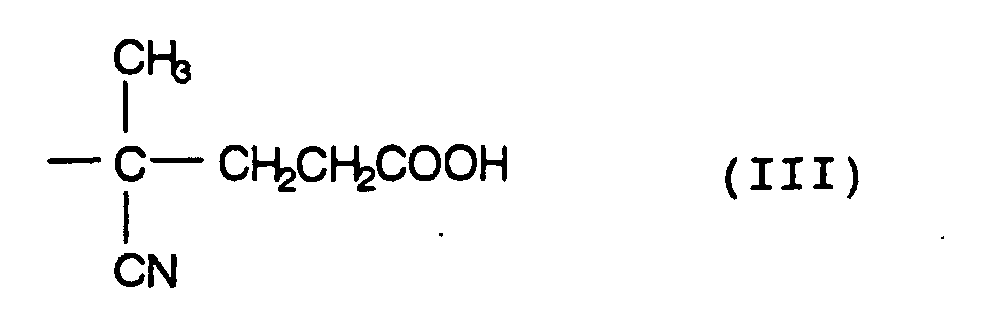
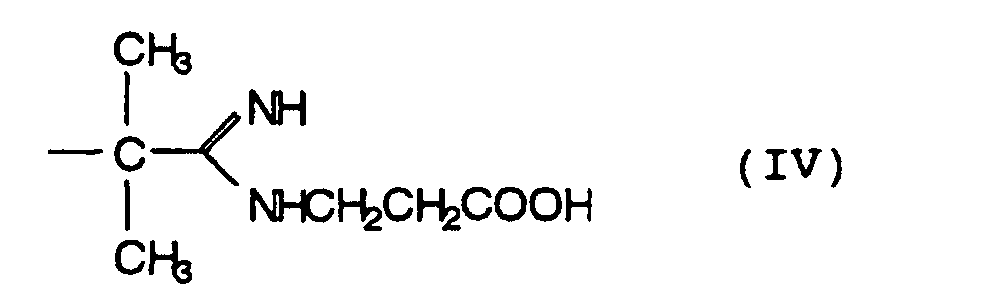
- The waterfastness-imparting agent according to any one of claims 1 to 3, wherein the aromatic ring-containing terminal group is a group selected from the group consisting of formulae (VI) to (XVII):









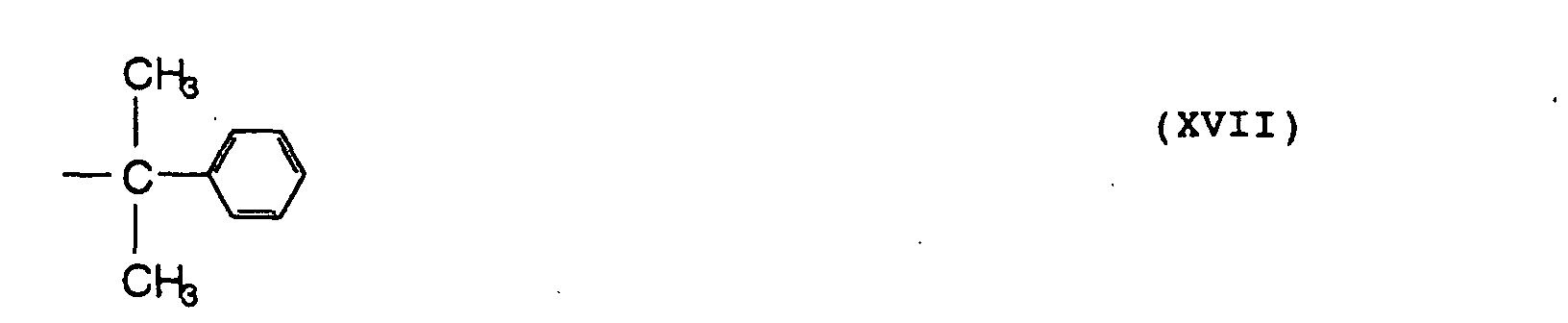
- The waterfastness-imparting agent according to any one of claims 1 to 4, wherein the units (a) and the units (b) are present in a block or random form in the copolymer.
- The waterfastness-imparting agent according to any one of claims 1 to 5, wherein, in the repeating units of formula (I), R1 represents a hydrogen atom and R4 represents a hydrogen atom.
- The waterfastness-imparting agent according to any one of claims 1 to 6, wherein, in the repeating units of formula (I), k is 3 and 1 is 3.
- The waterfastness-imparting agent according to any one of claims 1 to 7, wherein, in the repeating units of formula (I), Z represents a halogen atom.
- An ink composition comprising at least an alkali-soluble colorant, a water-soluble organic solvent, water, and the cationic water-soluble resin as defined in claim 1 with the content of the units (a) being 100 to 80% by mole.
- The ink composition according to claim 9, wherein the cationic water-soluble resin has a number average molecular weight of 1,000 to 10,000.
- The ink composition according to claim 9 or 10, wherein the carboxyl-containing terminal group in the cationic water-soluble resin is a group selected from the group consisting of formulae (II) to (V) as defined in claim 3.
- The ink composition according to any one of claims 9 to 11, wherein the aromatic ring-containing terminal group in the cationic water-soluble resin is a group selected from the group consisting of formulae (VI) to (XVII) as defined in claim 4.
- The ink composition according to any one of claims 9 to 12, wherein the cationic water-soluble resin is a block or random copolymer of the units (a) with the units (b).
- The ink composition according to any one of claims 9 to 13, wherein, in the repeating units represented by formula (I), R1 represents a hydrogen atom and R4 represents a hydrogen atom.
- The ink composition according to any one of claims 9 to 14, wherein, in the repeating units of by formula (I), k is 3 and 1 is 3.
- The ink composition according to any one of claims 9 to 15, wherein, in the repeating units of formula (I), Z represents a halogen atom.
- The ink composition according to any one of claims 9 to 16, which further comprises an acidic material.
- The ink composition according to any one of claims 9 to 17, which further comprises a basic material.
- The ink composition according to claim 18, wherein the basic material is a hydroxide of an alkali metal or a hydroxide of an alkaline earth metal.
- The ink composition according to any one of claims 9 to 19, wherein the water-soluble organic solvent has a vapor pressure which is lower than that of water.
- The ink composition according to any one of claims 9 to 20, which comprises 5 to 50% by weight of the water-soluble organic solvent.
- The ink composition according to any one of claims 9 to 21, which further comprises a penetration accelerator selected from the group consisting of lower alcohols, cellosolves, carbitols, and nonionic surfactants.
- The ink composition according to any one of claims 9 to 22, which further comprises a nonionic surfactant and at least one member selected from the group consisting of lower alcohols, cellosolves, and carbitols.
- The ink composition according to any one of claims 9 to 23, wherein the colorant is a dye or a pigment.
- The ink composition according to any one of claims 9 to 24, which further comprises a water-soluble resin other than the cationic water-soluble resin.
- The ink composition according to any one of claims 9 to 25, which further comprises a clogging preventive selected from the group consisting of water-soluble hydroxypyridine derivatives, chain or cyclic amide compounds, imidazole derivatives, hydroxy cyclic amine compounds, azole compounds, azine compounds, amidine derivatives, and purine derivatives.
- The ink composition according to any one of claims 9 to 26, which is used in ink jet recording.
- A reaction solution for ink jet recording method which comprises the step of depositing a reaction solution and an ink composition onto a recording medium to perform printing, said reaction solution comprising at least the cationic water-soluble resin as defined in claim 1.
- The reaction solution according to claim 28, wherein the cationic water-soluble resin has a number average molecular weight of 1,000 to 10,000.
- The reaction solution according to claim 28 or 29, wherein the carboxyl-containing terminal group in the cationic water-soluble resin is a group selected from the group consisting of formulae (II) to (V) as defined in claim 3.
- The reaction solution according to any one of claims 28 to 30, wherein the aromatic ring-containing terminal group in the cationic water-soluble resin is a group selected from the group consisting of formulae (VI) to (XVII) as defined in claim 4.
- The reaction solution according to any one of claims 28 to 31, wherein the cationic water-soluble resin is a block or random copolymer of the units (a) with the units (b).
- The reaction solution for ink jet recording according to any one of claims 28 to 32, wherein, in the repeating units of formula (I) constituting the cationic water-soluble resin, R1 represents a hydrogen atom and R4 represents a hydrogen atom.
- The reaction solution for ink jet recording according to any one of claims 28 to 33, wherein, in the repeating units of formula (I) constituting the cationic water-soluble resin, k is 3 and 1 is 3.
- The reaction solution for ink jet recording according to any one of claims 28 to 34, wherein, in the repeating units of formula (I) constituting the cationic water-soluble resin, Z represents a halogen atom.
- The reaction solution for ink jet recording according to any one of claims 28 to 35, which further comprises an acidic material.
- The reaction solution for ink jet recording according to any one of claims 28 to 36, which further comprises a basic material.
- The reaction solution for ink jet recording according to claim 37, wherein the basic material is a hydroxide of an alkali metal or a hydroxide of an alkaline earth metal.
- The reaction solution for ink jet recording according to any one of claims 28 to 38, which further comprises a water-soluble resin other than the cationic water-soluble resin.
- The reaction solution for ink jet recording according to any one of claims 28 to 39, which further comprises a polyvalent metal salt.
- The reaction solution for ink jet recording according to claim 40, wherein the polyvalent metal salt is a nitrate or a carboxylate.
- The reaction solution for ink jet recording according to any one of claims 28 to 41, which has a pH value of 2 to 10.
- An ink jet recording method comprising the step of depositing an ink composition and the reaction solution according to any one of claims 28 to 41 onto a recording medium to perform printing.
- The ink jet recording method according to claim 43, wherein the ink composition comprises a pigment or a dye as a colorant.
- The ink jet recording method according to claim 43 or 44, wherein the ink composition comprises the pigment and a resin emulsion.
- The ink jet recording method according to any one of claims 43 to 45, wherein the step of ejecting droplets of the ink composition onto the recording medium is carried out after the step of depositing the reaction solution onto the recording medium.
- The ink jet recording method according to any one of claims 43 to 45, wherein the step of ejecting droplets of the ink composition onto the recording medium is carried out before the step of depositing the reaction solution onto the recording medium.
- The ink jet recording method according to any one of claims 43 to 47, wherein the ink composition is one according to any one of claims 9 to 27.
- A record produced by the recording method according to any one of claims 43 to 48.
Applications Claiming Priority (5)
| Application Number | Priority Date | Filing Date | Title |
|---|---|---|---|
| JP14523899 | 1999-05-25 | ||
| JP14527199 | 1999-05-25 | ||
| JP14527199 | 1999-05-25 | ||
| JP14523899 | 1999-05-25 | ||
| PCT/JP2000/003361 WO2000071592A1 (en) | 1999-05-25 | 2000-05-25 | Water resistance imparter, ink composition, reactive fluid, and method of ink-jet recording with two fluids |
Publications (2)
| Publication Number | Publication Date |
|---|---|
| EP1152017A1 true EP1152017A1 (en) | 2001-11-07 |
| EP1152017A4 EP1152017A4 (en) | 2004-12-15 |
Family
ID=26476412
Family Applications (1)
| Application Number | Title | Priority Date | Filing Date |
|---|---|---|---|
| EP00931559A Withdrawn EP1152017A4 (en) | 1999-05-25 | 2000-05-25 | WATER REPELLENT, INK, REACTIVE LIQUID, AND METHOD FOR INK JET PRINTING WITH TWO LIQUIDS |
Country Status (3)
| Country | Link |
|---|---|
| US (1) | US6498222B1 (en) |
| EP (1) | EP1152017A4 (en) |
| WO (1) | WO2000071592A1 (en) |
Cited By (6)
| Publication number | Priority date | Publication date | Assignee | Title |
|---|---|---|---|---|
| EP1388576A1 (en) * | 2002-07-30 | 2004-02-11 | Hewlett-Packard Company | Fluid set for ink-jet printers |
| EP1403344A1 (en) * | 2002-09-27 | 2004-03-31 | Stork Digital Imaging B.V. | Method for printing a substrate with ink drops, and ink composition |
| EP1630212A1 (en) * | 2004-08-24 | 2006-03-01 | Fuji Photo Film Co., Ltd. | Ink composition and inkjet recording method |
| EP1790699A1 (en) * | 2005-11-28 | 2007-05-30 | Toyo Ink Mfg. Co., Ltd. | Ink composition |
| EP1669419A4 (en) * | 2003-09-30 | 2009-06-03 | Seiren Co Ltd | Inkjet discharge printing ink and process for producing polyester fiber fabric having undergone discharge printing |
| EP1992670A4 (en) * | 2006-03-07 | 2010-11-10 | Konica Minolta Ij Technologies | Nonaqueous ink-jet ink and method of ink-jet recording |
Families Citing this family (23)
| Publication number | Priority date | Publication date | Assignee | Title |
|---|---|---|---|---|
| US6790268B2 (en) * | 2001-10-24 | 2004-09-14 | Hewlett-Packard Development Company, L.P. | Inks having high molecular weight polysaccharides |
| US6652085B2 (en) * | 2001-10-30 | 2003-11-25 | Hewlett-Packard Development Company, L.P. | Enhancement of waterfastness using a polyamine/anionic dye mixture with an acidic fixer |
| US6719421B2 (en) * | 2002-06-18 | 2004-04-13 | Hewlett-Packard Development Company, L.P. | Modification of inks during printing to reduce color intensity |
| US6779884B1 (en) * | 2003-03-24 | 2004-08-24 | Hewlett-Packard Development Company, L.P. | Ink-jet printing methods and systems providing dry rub resistance |
| US6908185B2 (en) * | 2003-06-11 | 2005-06-21 | Hewlett-Packard Development Company, L.P. | Pigment-based ink-jet ink systems with polyurethane binder and crashing agent |
| US7500742B2 (en) | 2003-10-22 | 2009-03-10 | Hewlett-Packard Development Company, L.P. | Systems and methods for printing onto a substrate using reactive ink |
| US7332532B2 (en) * | 2004-04-13 | 2008-02-19 | Hewlett-Packard Development, L.P. | Polymeric dispersants for ink-jet applications |
| US20050275701A1 (en) * | 2004-06-14 | 2005-12-15 | Brother Kogyo Kabushiki Kaisha | Water base ink for ink-jet recording |
| CN1973005B (en) * | 2004-06-28 | 2010-09-29 | 佳能株式会社 | Cyan ink and ink set |
| AU2005257524B2 (en) * | 2004-06-28 | 2009-07-30 | Canon Kabushiki Kaisha | Aqueous ink, ink set, and image forming method |
| CN1977004B (en) * | 2004-06-28 | 2010-05-05 | 佳能株式会社 | Aqueous ink, inkjet recording method, ink cartridge, recording unit, inkjet recording apparatus, and image forming method |
| WO2006001540A1 (en) * | 2004-06-28 | 2006-01-05 | Canon Kabushiki Kaisha | Cyan ink, ink set, set of ink and reactive liquid, and image forming method |
| WO2006001538A1 (en) * | 2004-06-28 | 2006-01-05 | Canon Kabushiki Kaisha | Aqueous ink, aqueous ink set, ink cartridge, inkjet recorder, inkjet recording method, and image forming method |
| US7465343B2 (en) * | 2005-05-13 | 2008-12-16 | Hewlett-Packard Development Company, L.P. | Inkjet ink for use on polymeric substrate |
| JP4803356B2 (en) * | 2005-08-15 | 2011-10-26 | セイコーエプソン株式会社 | Ink set, recording method using the same, and recorded matter |
| US7872060B2 (en) * | 2006-03-23 | 2011-01-18 | Hewlett-Packard Development Company, L.P. | Inkjet ink composition |
| WO2008055244A2 (en) | 2006-10-31 | 2008-05-08 | Sensient Colors Inc. | Modified pigments and methods for making and using the same |
| EP3483222A3 (en) | 2007-08-23 | 2019-08-07 | Sensient Colors LLC | Self-dispersed pigments and methods for making and using the same |
| EP2417202A2 (en) | 2009-04-07 | 2012-02-15 | Sensient Colors LLC | Self-dispersing particles and methods for making and using the same |
| JP2011241379A (en) * | 2010-04-23 | 2011-12-01 | Fujifilm Corp | Optical performance humidity dependency improving agent for cellulose acylate film |
| US9493013B2 (en) * | 2011-01-31 | 2016-11-15 | Hewlett-Packard Development Company, L.P. | Inkjet ink set |
| US9228104B2 (en) | 2012-11-02 | 2016-01-05 | Electronics For Imaging, Inc. | Method and apparatus for controlling lightness in colored inkjet inks by means of a transparent white ink composition |
| JP6872308B2 (en) | 2015-04-14 | 2021-05-19 | セイコーエプソン株式会社 | Recording method and recording device |
Family Cites Families (23)
| Publication number | Priority date | Publication date | Assignee | Title |
|---|---|---|---|---|
| US4659382A (en) | 1985-11-12 | 1987-04-21 | Xerox Corporation | Waterfast ink jet compositions and process |
| JPS62238783A (en) | 1986-04-10 | 1987-10-19 | Nitto Boseki Co Ltd | Ink jet recording paper |
| JPH0791494B2 (en) | 1986-09-04 | 1995-10-04 | 株式会社リコー | Water based ink |
| JP2715167B2 (en) | 1988-12-21 | 1998-02-18 | 株式会社パイロット | Ink composition having water resistance |
| JP2729833B2 (en) | 1989-05-10 | 1998-03-18 | 株式会社パイロット | Ink composition having water resistance |
| JPH02296876A (en) | 1989-05-11 | 1990-12-07 | Kansai Paint Co Ltd | Composition for forming ultraviolet-curing coating film having hiding power |
| JPH03188174A (en) | 1989-12-19 | 1991-08-16 | Pilot Corp:The | Ink composition with water resistance |
| JP3064318B2 (en) | 1990-02-20 | 2000-07-12 | セイコーエプソン株式会社 | Printing method |
| JPH03240558A (en) | 1990-02-20 | 1991-10-25 | Seiko Epson Corp | Printing method |
| JP2709658B2 (en) * | 1991-04-30 | 1998-02-04 | 第一工業製薬株式会社 | Emulsifying and dispersing agents for rosin emulsion sizing agents and sizing agents |
| EP0534634A1 (en) | 1991-09-23 | 1993-03-31 | Hewlett-Packard Company | Method and compositions for producing stable, water-fast printed images |
| DE69323372T2 (en) | 1992-09-17 | 1999-06-17 | Canon K.K., Tokio/Tokyo | Ink set for ink jet recording processes containing surface penetrants and ink jet printers |
| JPH06106735A (en) | 1992-09-24 | 1994-04-19 | Canon Inc | Droplet ejection recording method and recording apparatus |
| JPH0762044A (en) * | 1993-08-26 | 1995-03-07 | Nippon Paint Co Ltd | Method for producing monodisperse polymer particles |
| JP3496247B2 (en) | 1993-09-22 | 2004-02-09 | 日産自動車株式会社 | Balancer device for internal combustion engine |
| JPH07305011A (en) | 1994-05-12 | 1995-11-21 | Seiko Epson Corp | Water-based ink for inkjet |
| CA2195959A1 (en) * | 1994-08-19 | 1996-02-29 | Neil A. Randen | Water-based adhesives |
| JP4059356B2 (en) * | 1997-02-06 | 2008-03-12 | コニカミノルタホールディングス株式会社 | Inkjet recording paper and inkjet recording method |
| JPH10306243A (en) * | 1997-05-06 | 1998-11-17 | Showa Denko Kk | Recording solution |
| JP3920412B2 (en) * | 1997-07-01 | 2007-05-30 | コニカミノルタホールディングス株式会社 | Inkjet recording method |
| JPH1149994A (en) * | 1997-07-31 | 1999-02-23 | Showa Denko Kk | Recording liquid |
| JPH11116866A (en) * | 1997-10-21 | 1999-04-27 | Showa Denko Kk | Recording liquid |
| JPH11246640A (en) * | 1998-02-27 | 1999-09-14 | Jsr Corp | Aqueous dispersion, coating material for inkjet recording, and sheet for inkjet recording |
-
2000
- 2000-05-25 EP EP00931559A patent/EP1152017A4/en not_active Withdrawn
- 2000-05-25 US US09/744,090 patent/US6498222B1/en not_active Expired - Lifetime
- 2000-05-25 WO PCT/JP2000/003361 patent/WO2000071592A1/en not_active Ceased
Cited By (10)
| Publication number | Priority date | Publication date | Assignee | Title |
|---|---|---|---|---|
| EP1388576A1 (en) * | 2002-07-30 | 2004-02-11 | Hewlett-Packard Company | Fluid set for ink-jet printers |
| EP1403344A1 (en) * | 2002-09-27 | 2004-03-31 | Stork Digital Imaging B.V. | Method for printing a substrate with ink drops, and ink composition |
| NL1021555C2 (en) * | 2002-09-27 | 2004-04-02 | Stork Digital Imaging Bv | Method for printing a substrate and ink composition with ink drops. |
| US7350912B2 (en) | 2002-09-27 | 2008-04-01 | Stork Digital Imaging B.V. | Method for printing a substrate with ink drops, and ink composition |
| EP1669419A4 (en) * | 2003-09-30 | 2009-06-03 | Seiren Co Ltd | Inkjet discharge printing ink and process for producing polyester fiber fabric having undergone discharge printing |
| EP1630212A1 (en) * | 2004-08-24 | 2006-03-01 | Fuji Photo Film Co., Ltd. | Ink composition and inkjet recording method |
| US7291213B2 (en) | 2004-08-24 | 2007-11-06 | Fujifilm Corporation | Ink composition and inkjet recording method |
| EP1790699A1 (en) * | 2005-11-28 | 2007-05-30 | Toyo Ink Mfg. Co., Ltd. | Ink composition |
| US7604695B2 (en) | 2005-11-28 | 2009-10-20 | Toyo Ink Mfg. Co., Ltd. | Ink composition |
| EP1992670A4 (en) * | 2006-03-07 | 2010-11-10 | Konica Minolta Ij Technologies | Nonaqueous ink-jet ink and method of ink-jet recording |
Also Published As
| Publication number | Publication date |
|---|---|
| WO2000071592A1 (en) | 2000-11-30 |
| EP1152017A4 (en) | 2004-12-15 |
| US6498222B1 (en) | 2002-12-24 |
Similar Documents
| Publication | Publication Date | Title |
|---|---|---|
| US6498222B1 (en) | Water resistance imparter, ink composition, reactive fluid, and method of ink-jet recording with two fluids | |
| JP3550687B2 (en) | Ink for inkjet recording | |
| EP0911374B1 (en) | Water base ink set for ink jet recording | |
| JPWO1998046685A1 (en) | Water-based ink set for inkjet recording | |
| US5846306A (en) | Ink set for ink jet recording and ink jet recording method using the same | |
| EP0812888B1 (en) | Ink for ink jet recording and image forming method using the same | |
| JPWO1998042787A1 (en) | Inkjet recording ink | |
| EP1942160B1 (en) | Inkjet recording method | |
| US6080229A (en) | Reaction solution for ink jet recording method using two liquids | |
| US20120236068A1 (en) | Ink composition | |
| JP4063482B2 (en) | Recording ink and recording method using the ink | |
| EP1004641B1 (en) | Ink composition comprising cationic water-soluble resin, and ink set | |
| JP2001048934A (en) | Ink jet recording method using water resistance imparting agent, ink composition, reaction liquid and two liquids | |
| JP2004143387A (en) | Water-based ink | |
| JP2002097389A (en) | Penetrating ink composition comprising a cationic resin and a penetrant | |
| US7811369B2 (en) | Phthalocyanine dyes formulated with salts and anti-flocculent aromatic polyamines for ink-jet imaging | |
| JPH10324835A (en) | Ink composition comprising cationic water-soluble resin | |
| JPH11323233A (en) | Water-based ink composition for inkjet recording and inkjet recording method | |
| EP2220168B1 (en) | Black ink-jet inks with reduced lightness and haze | |
| JP2000297240A (en) | Ink composition and ink set containing cationic water-soluble resin | |
| JP2003073580A (en) | Dye composition, ink composition and ink sheet | |
| HK1005806B (en) | Ink for ink jet recording and image forming method using the same | |
| HK1004129B (en) | Reaction solution for ink jet recording method using two liquids |
Legal Events
| Date | Code | Title | Description |
|---|---|---|---|
| PUAI | Public reference made under article 153(3) epc to a published international application that has entered the european phase |
Free format text: ORIGINAL CODE: 0009012 |
|
| 17P | Request for examination filed |
Effective date: 20010222 |
|
| AK | Designated contracting states |
Kind code of ref document: A1 Designated state(s): AT BE CH CY DE DK ES FI FR GB GR IE IT LI LU MC NL PT SE |
|
| A4 | Supplementary search report drawn up and despatched |
Effective date: 20041104 |
|
| 17Q | First examination report despatched |
Effective date: 20050421 |
|
| STAA | Information on the status of an ep patent application or granted ep patent |
Free format text: STATUS: THE APPLICATION IS DEEMED TO BE WITHDRAWN |
|
| 18D | Application deemed to be withdrawn |
Effective date: 20060718 |