FIELD OF THE INVENTION
The present invention relates to photothermographic
materials, and an image recording method and image forming
method by the use thereof.
BACKGROUND OF THE INVENTION
In the field of graphic arts and medical treatment,
there have been concerns in processing of photographic films
with respect to effluents produced from wet-processing of
image forming materials, and recently, reduction of the
processing effluent is strongly demanded in terms of
environmental protection and space saving. There has been
desired a photothermographic material for photographic use,
capable of forming distinct black images exhibiting high
sharpness, enabling efficient exposure by means of a laser
imager or a laser image setter.
Known as such a technique is a thermally developable
photothermographic material which comprises on a support an
organic silver salt, light sensitive silver halide grains,
reducing agent and a binder, as described in U.S. Patents
3,152,904 and 3,487,075, and D.H. Klosterboer "Thermally
Processed Silver Systems" (Imaging Processes and Materials)
Neblette, 8th Edition, edited by Sturge, V. Walworth, and A.
Shepp, page 279, 1989), etc.
Such a photothermographic material is characterized in
that light sensitive silver halide grains and an organic
silver salt are incorporated in a light sensitive layer as a
photosensor and a silver ion source, respectively, which are
thermally developed by an included reducing agent at a
temperature of 8- to 140° C to form images, without being
fixed. To achieve smoothly supplied silver ions to silver
halide and prevent lowered transparency caused by light
scattering, there have been made attempts to improve the
shape of organic silver salt grains capable of being
optimally arranged in the light sensitive layer and having
little adverse effect on light scattering.
However, problems arose with attempts to form fine
particles simply by dispersion or pulverization at high
energy using a dispersing machine, due to the fact that
silver halide grains or organic silver salt grains were
damaged, resulting in not only increased fogging and reduced
sensitivity but also deteriorated image quality.
Accordingly, there have been desired techniques of achieving
enhanced photosensitivity, higher density and reduced fogging
without an increase of a silver coverage.
Further, problems arose with pre-exposure storage of
photothermographic materials such that variation in
sensitivity, fog density or contrast occurred and problems
also arose with post-process storage that the fogging or
image color tone was varied. There have been made various
attempts but they are still insufficient, therefore, further
enhanced improvement is desired.
SUMMARY OF THE INVENTION
It is an object of the present invention to provide a
photothermographic material exhibiting enhanced sensitivity
and reduced fogging, causing no deterioration in image
quality due to a white spots or coagula and also improved in
raw stock stability (i.e., pre-exposure stock keeping) and
silver image lasting quality; and an image recording method
and image forming method by the use of the same.
The above object of the invention can be accomplished
by the following constitution:
wherein the photothermographic material comprises an organic
silver salt, a light sensitive silver halide and a
hydrophilic binder, step (a) comprising forming the organic
silver salt in the presence of the silver halide of 7x10
15 to
3x10
17 grains per mol of the organic silver salt and the
photothermographic material containing the hydrophilic binder
of 0.5 to 2 g per mol of the organic silver salt.
DETAILED DESCRIPTION OF THE INVENTION
In this invention, the photothermographic material
containing an organic silver salt, a light sensitive silver
halide, a reducing agent, binder and a cross-linking agent,
in which the photothermographic material contains a
hydrophilic binder of 0.5 to 2.0 g per mol of the organic
silver salt, and during the stage of formation of the organic
silver salt, 7x10¹⁵ to 3x10¹⁷ grains of the light sensitive
silver halide per mol of the organic silver salt are mixed to
form the organic silver salt, thereby leading to a
photothermographic material exhibiting enhanced sensitivity
and reduced fogging, causing no deterioration in image
quality due to a white spots or coagula and also improved in
raw stock stability (i.e., pre-exposure stock keeping) and
silver image lasting quality. In this invention, the light
sensitive silver halide is preferably contained in amount of
0.8 to 2.0 g/m2, based on silver.
It is contemplated that such effects of this invention
are attributed to that adjustment of a hydrophilic binder
surrounding the light sensitive silver halide grains to a
specified quantity leads to efficient dispersion, thereby
preventing coagulation of silver halide grains and efficient
supply of silver ions from the organic silver salt at the
stage of thermal development.
Silver halide used in the invention functions as light
sensor. Silver halide grains are preferably small in size to
prevent milky-whitening after image formation and obtain
superior images. The grain size is preferably not more than
0.1 µm, more preferably, 0.01 to 0.1 µm, still more
preferably, 0.03 to 0.07 µm, and most preferably 0.04 to 0.07
µm. The form of silver halide grains is not specifically
limited, including cubic or octahedral, regular crystals and
non-regular crystal grains in a spherical, bar-like or
tabular form. Halide composition thereof is not specifically
limited, including any one of silver chloride, silver
chlorobromide, silver iodochlorobromide, silver bromide,
silver iodobromide, and silver iodide.
In this invention, silver halide grains are used in an
amount of 7x10¹⁵ to 3x10¹⁷ grains per mol of organic silver
salt. The silver halide grains less than this range by
number results in insufficient densities and the number
exceeding this range leads to deteriorated image quality.
In this regard, the number of silver halide grains can
be determined based on the density, specific gravity and size
of the silver halide grains. The grain size can be
determined by an electron microscope.
Silver halide used in this invention preferably
occludes ions of metals belonging to Groups 6 to 11 of the
Periodic Table. Preferred as the metals are W; Fe, Co, Ni,
Cu, Ru, Rh, Pd, Re, Os, Ir, Pt and Au. Of these preferred
are Fe, Co, Ru, Rh, Re, Os, and Ir. These metals may be
introduced into silver halide in the form of a complex. In
the present invention, regarding the transition metal
complexes, six-coordinate complexes represented by the
general formula described below are preferred:
Formula: (ML6)m:
wherein M represents a transition metal selected from
elements in Groups 6 to 11 of the Periodic Table; L
represents a coordinating ligand; and m represents 0, 1-, 2-,
3- or 4-. Exemplary examples of the ligand represented by L
include halides (fluoride, chloride, bromide, and iodide),
cyanide, cyanato, thiocyanato, selenocyanato, tellurocyanato,
azido and aquo, nitrosyl, thionitrosyl, etc., of which aquo,
nitrosyl and thionitrosyl are preferred. When the aquo
ligand is present, one or two ligands are preferably
coordinated. L may be the same or different.
Particularly preferred examples of M include rhodium (Rh),
ruthenium (Ru), rhenium (Re), iridium (Ir) and osmium (Os).
Exemplary examples of transition metal ion complexes
are shown below.
One type of these metal ions or complex ions may be
employed and the same type of metals or the different type of
metals may be employed in combinations of two or more types.
Generally, the content of these metal ions or complex ions is
suitably between 1 × 10⁻⁹ and 1 × 10⁻² mole per mole of silver
halide, and is preferably between 1 × 10⁻⁸ and 1 × 10⁻⁴ mole.
Compounds, which provide these metal ions or complex
ions, are preferably incorporated into silver halide grains
through addition during the silver halide grain formation.
These may be added during any preparation stage of the silver
halide grains, that is, before or after nuclei formation,
growth, physical ripening, and chemical ripening. However,
these are preferably added at the stage of nuclei formation,
growth, and physical ripening; furthermore, are preferably
added at the stage of nuclei formation and growth; and are
more preferably added during the stage of growth of from 1/2
of the grain volume to the final grain (still more preferably
during the stage of growth of from 3/4 of the grain volume to
the final grain). Herein, the expression "added during the
stage of growth of from 1/2 of the grain volume to the final
grain" means addition in the process of grain growth of from
the site accounting for 50% of the grain volume to the grain
surface.
These compounds may be added several times by dividing
the addition amount. Uniform content in the interior of a
silver halide grain can be carried out. As disclosed in JP-A
No. 63-29603, 2-306236, 3-167545, 4-76534, 6-110146, 5-273683,
the metal can be non-uniformly occluded in the
interior of the grain.
These metal compounds can be dissolved in water or a
suitable organic solvent (for example, alcohols, ethers,
glycols, ketones, esters, amides, etc.) and then added.
Furthermore, there are methods in which, for example, an
aqueous metal compound powder solution or an aqueous solution
in which a metal compound is dissolved along with NaCl and
KCl is added to a water-soluble silver salt solution during
grain formation or to a water-soluble halide solution; when a
silver salt solution and a halide solution are simultaneously
added, a metal compound is added as a third solution to form
silver halide grains, while simultaneously mixing three
solutions; during grain formation, an aqueous solution
comprising the necessary amount of a metal compound is placed
in a reaction vessel; or during silver halide preparation,
dissolution is carried out by the addition of other silver
halide grains previously doped with metal ions or complex
ions. Specifically, the preferred method is one in which an
aqueous metal compound powder solution or an aqueous solution
in which a metal compound is dissolved along with NaCl and
KCl is added to a water-soluble halide solution. When the
addition is carried out onto grain surfaces, an aqueous
solution comprising the necessary amount of a metal compound
can be placed in a reaction vessel immediately after grain
formation, or during physical ripening or at the completion
thereof or during chemical ripening.
Silver halide grain emulsions used in the invention may
be desalted after the grain formation, using the methods
known in the art, such as the noodle washing method and
flocculation process.
Silver halide emulsions used in the invention can be
prepared according to the methods described in P. Glafkides,
Chimie Physique Photographique (published by Paul Montel
Corp., 19679; G.F. Duffin, Photographic Emulsion Chemistry
(published by Focal Press, 1966) ; V.L. Zelikman et al.,
Making and Coating of Photographic Emulsion (published by
Focal Press, 1964). Any one of acidic precipitation, neutral
precipitation and ammoniacal precipitation is applicable and
the reaction mode of aqueous soluble silver salt and halide
salt includes single jet addition, double jet addition and a
combination thereof. For example, silver halide emulsions
are prepared by mixing an aqueous silver salt solution with
an aqueous halide solution in a protective colloidal solution
as a reaction mother liquor perform nucleation and crystal
growth, in which the silver salt and halide solutions are
generally added by double jet addition. Specifically, the
controlled double jet addition is representative, in which
the solutions are mixed with controlling the pAg and pH.
Various variations are included therein, such as a two-step
process, in which after forming seed crystal grins (or
nucleation), growth is successively performed under identical
or different conditions (crystal growth or ripening). Thus,
controlling various factors such as crystal habit or crystal
sizes by regulating mixing condition in the process of mixing
silver salt and halide solutions in an aqueous protective
colloid solution is well known in the art. Subsequently to
the mixing process, the desalting process is performed to
remove soluble salts from the emulsion. As a known
representative desalting process is a flocculation method, in
which a coagulant is added to the prepared silver halide
emulsion to cause silver halide grain to be flocculated and
separated from the supernatant containing soluble salts.
After decanting the supernatant, the coagulated gelatin
containing silver halide grains is re-dispersed and then,
flocculation and decantation are repeated to remove any
remaining salts. There is also known a desalting method by
ultrafiltration, in which unwanted low-molecular weight
substances such as aqueous soluble salts can be removed using
an ultrafiltration membrane such as a synthetic membrane
which prevents permeation of macro-molecular weight
substances such as silver halide grains and gelatin.
The hydrophilic binder may be contained in any layer of
the photothermographic material and preferably at least in
the layer containing the organic silver salt, in an amount of
0.5 to 2.0 g per mol of organic silver salt. The hydrophilic
binder is a binder which is water-soluble or capable of being
present in a colloidal form, and preferably is a binder
capable of functioning as a protective colloid for silver
halide grains in an aqueous solution. Hydrophilic binders
usable in this invention include, for example, gelatin and
water soluble polymers such as polyamide compounds and
polyvinyl pyrrolidine compounds. Of these, gelatin is
preferred.
There is needed 0.5 to 2.0 g of the hydrophilic binder
per one mol of an organic silver salt to achieve the
advantageous effects of this invention. In addition to being
contained together with the silver halide grains, the
hydrophilic binder may further be added at the stage of
forming or dispersing the organic silver salt to adjust the
content thereof. Insufficiency the hydrophilic binder
results in incomplete dispersion of the organic silver salt
and tendency for the salt to coagulate, leading to fogging,
lowered covering power and deteriorated image quality caused
by white spots or coagula. An excessive hydrophilic binder
often inhibits adsorption of a dye or the like, resulting in
insufficient sensitivity. The amount of the hydrophilic
binder contained with light sensitive silver halide is
preferably not more than 40 g per mol of silver, and more
preferably not more than 35 g per mol of silver.
The binder content in a photothermographic material can
be determined by methods currently known in the art.
Specifically, the gelatin content can be determined in
accordance with the procedure of hydrolysis with hydrochloric
acid, concentration and dilution with a sodium citrate buffer
solution, followed by amino acid analysis.
The thus formed photosensitive silver halide can be
chemically sensitized with a sulfur containing compound, gold
compound, platinum compound, palladium compound, silver
compound, tin compound, chromium compound or their
combination. The method and procedure for chemical
sensitization are described in U.S. Patent 4,036,650, British
Patent 1,518,850, JP-A 51-22430, 51-78319 and 51-81124. As
described in U.S. Patent 3,980,482, a low molecular weight
amide compound may be concurrently present to enhance
sensitivity at the time of converting a part of the organic
silver salt to photosensitive silver halide.
In this invention, it is preferred to conduct chemical
sensitization with an organic sensitizer containing a
chalcogen atom. The organic sensitizer containing a
chalcogen atom preferably contains a group for promoting
adsorption onto silver halide and a labile chalcogen atom.
Such organic sensitizers are those having various
structures, as described in JP-A 60-150046, JP-A 4-109240 and
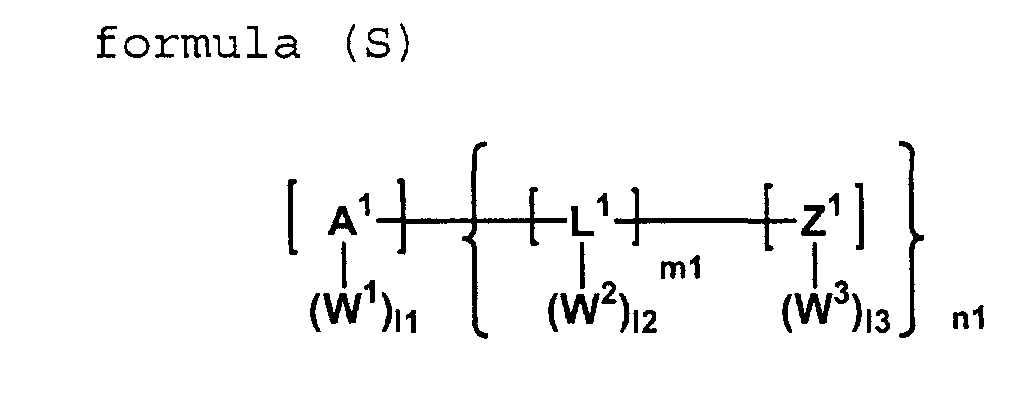
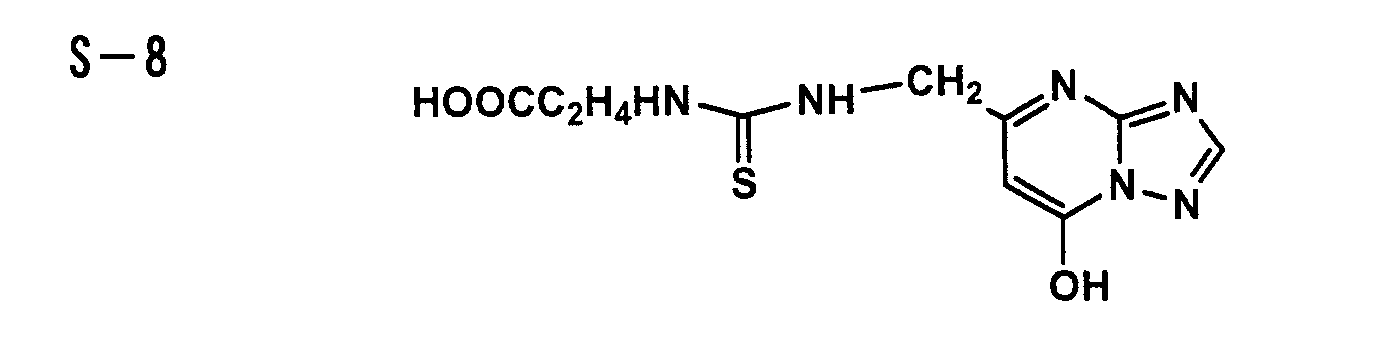
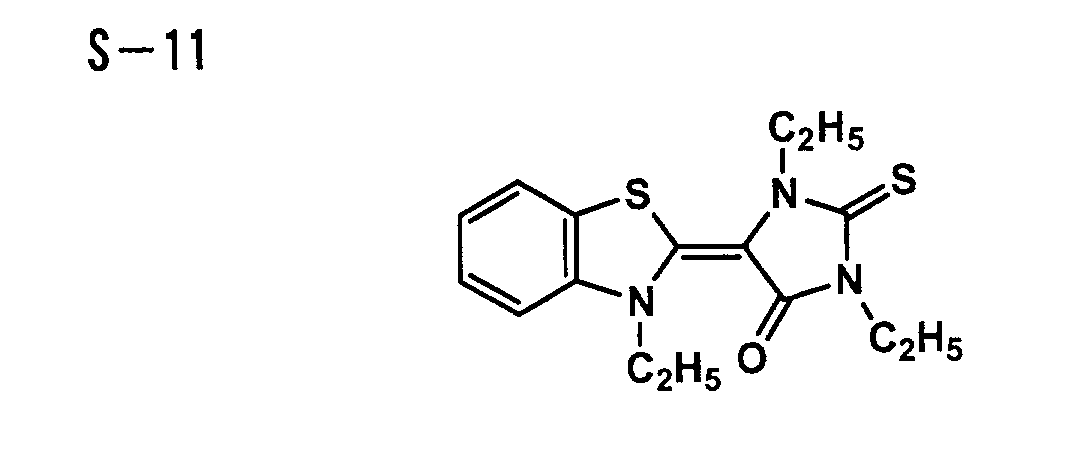
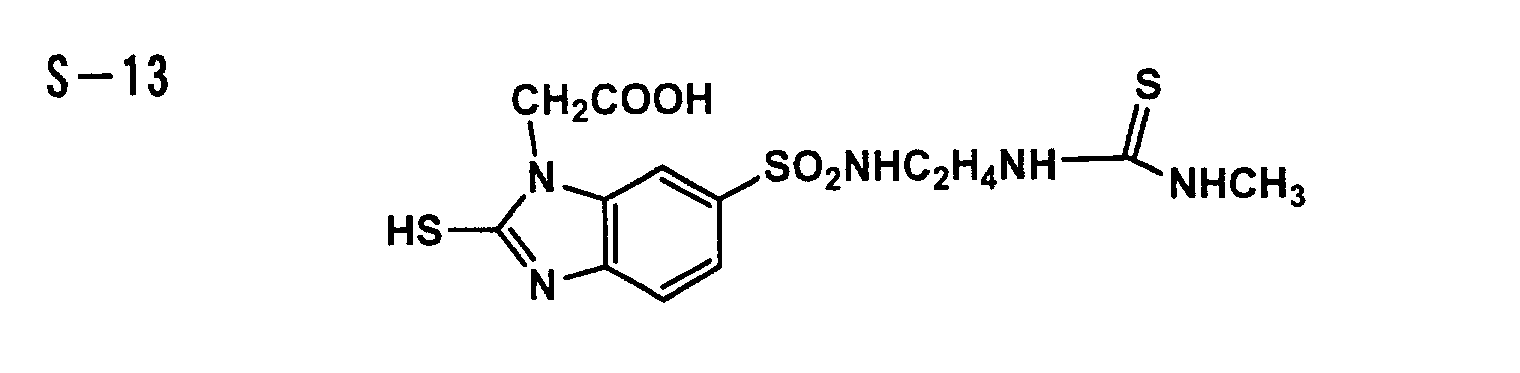
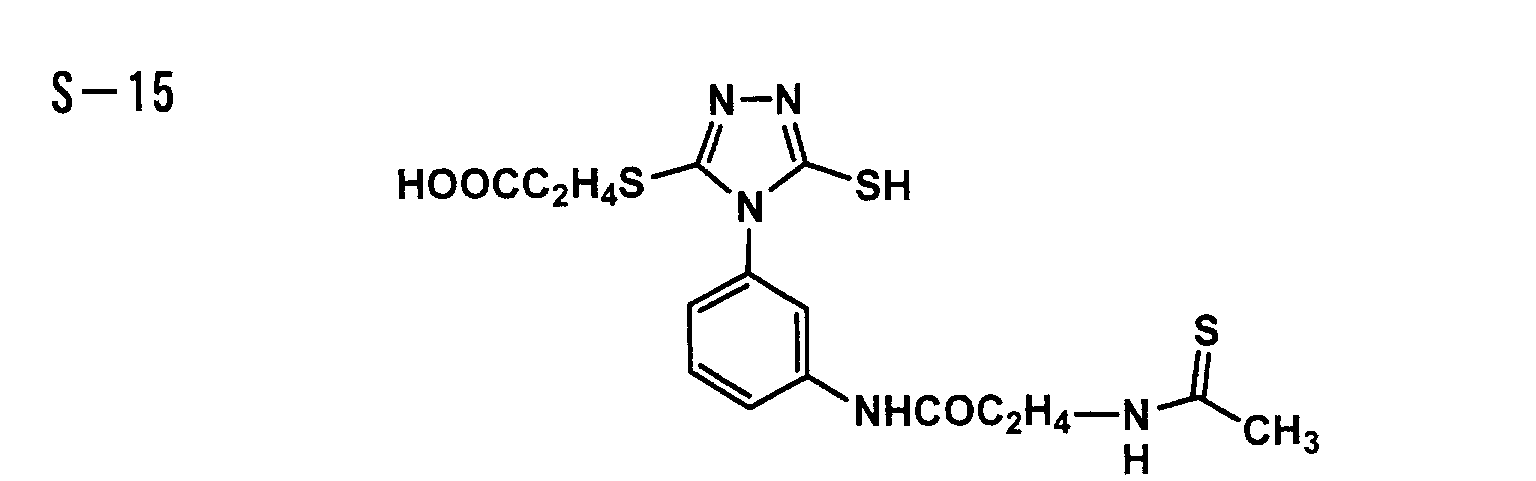
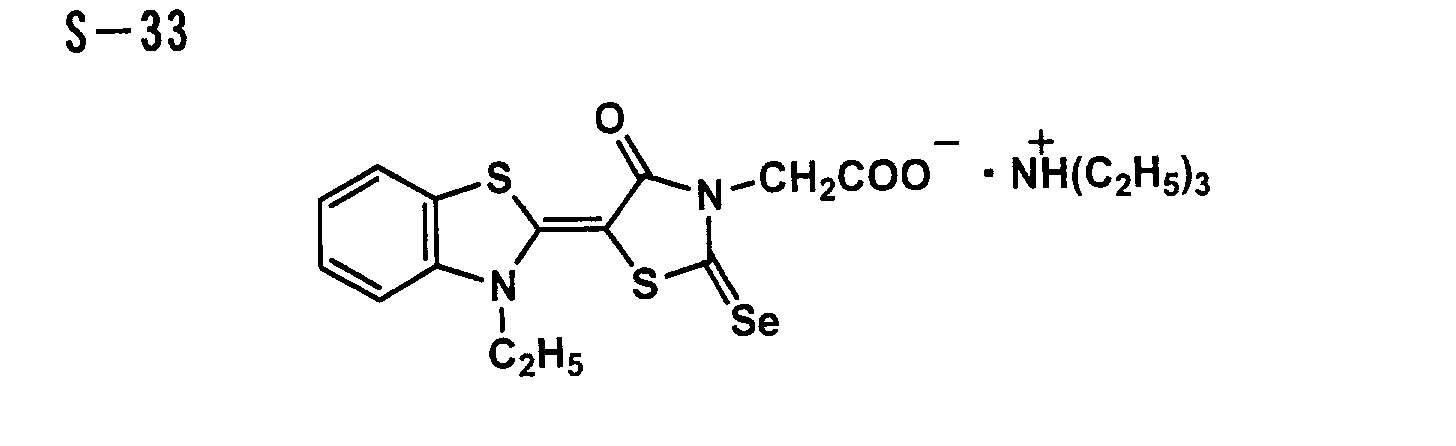
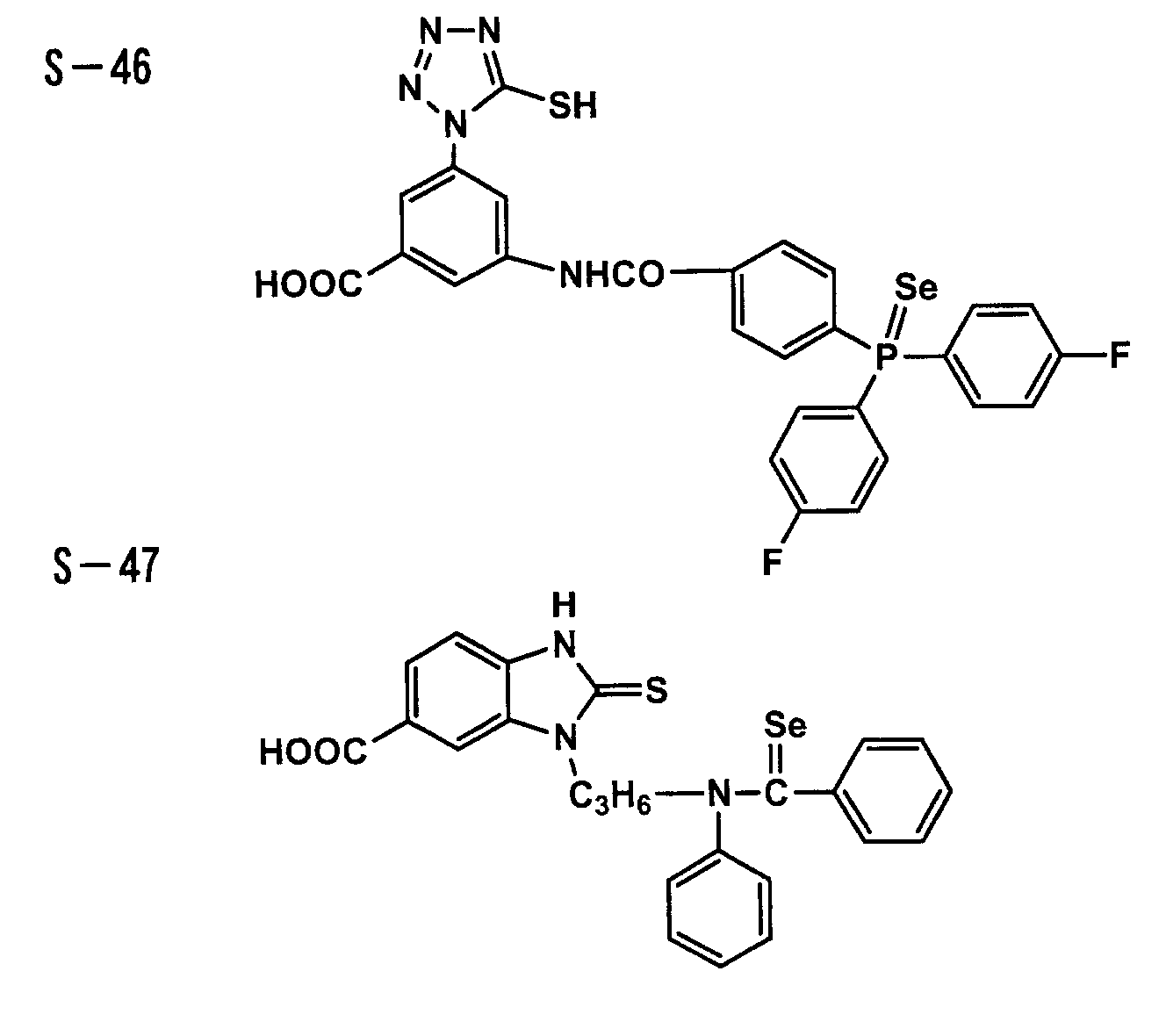
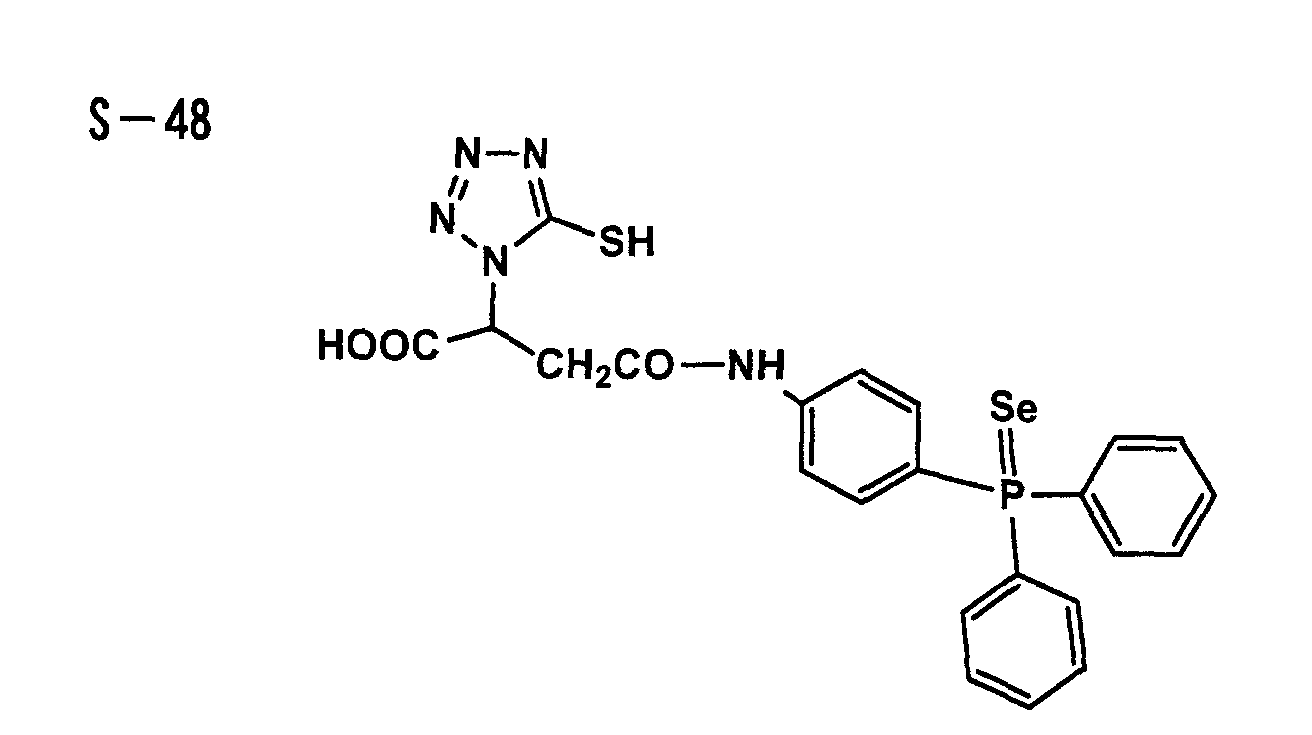
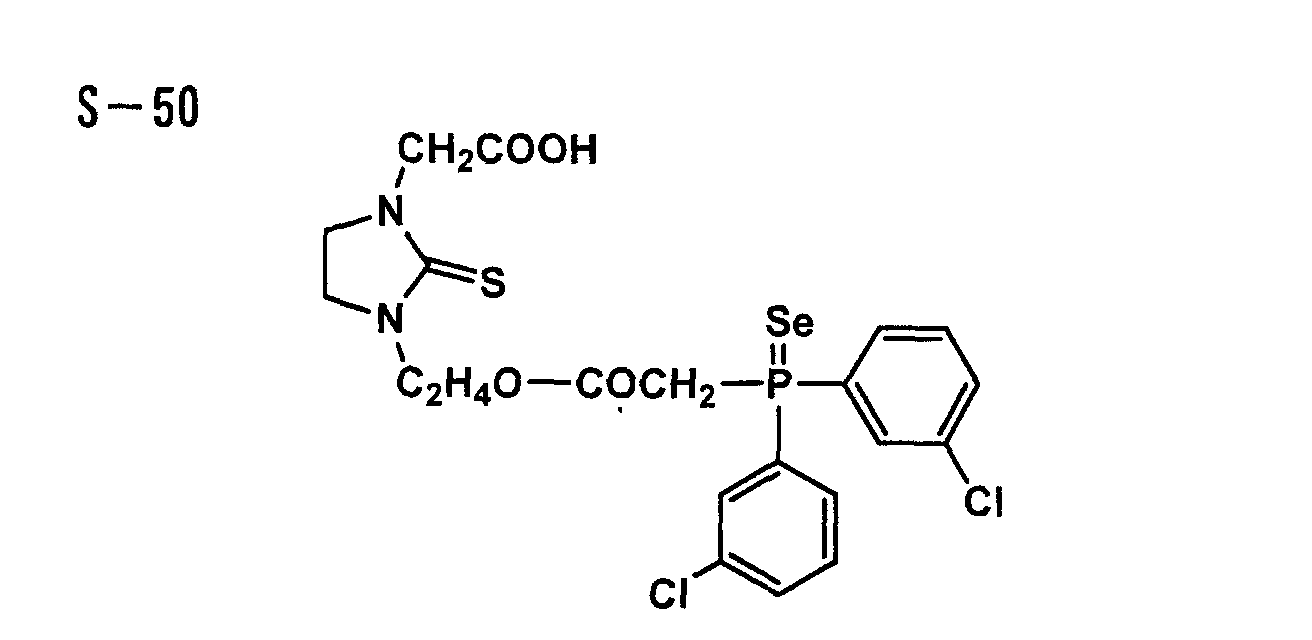
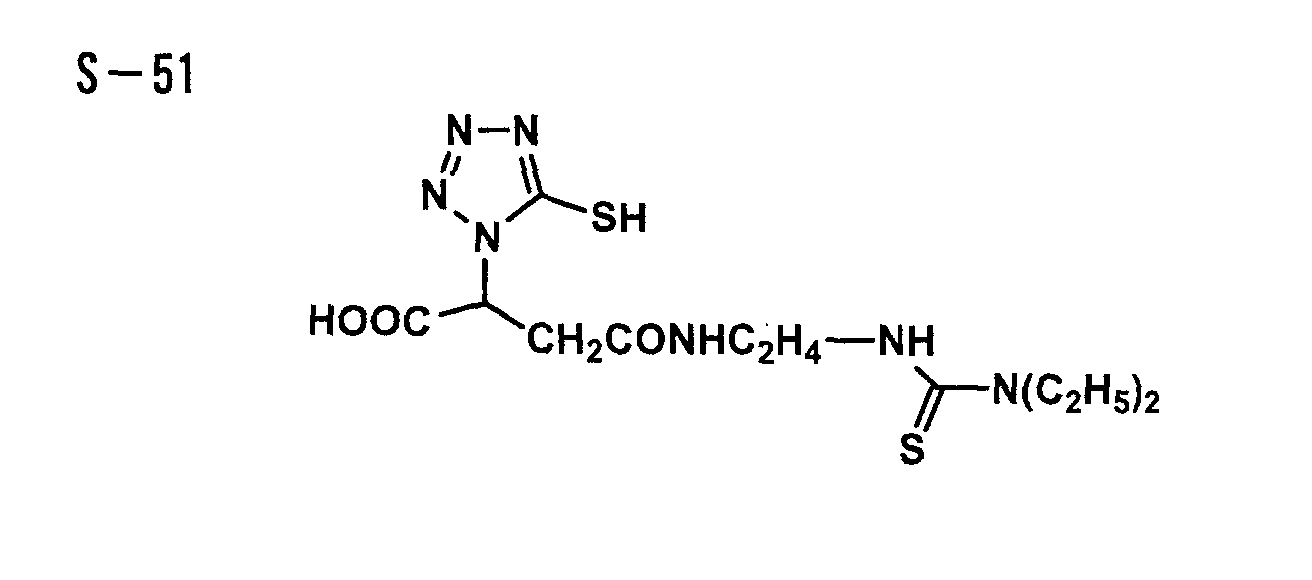
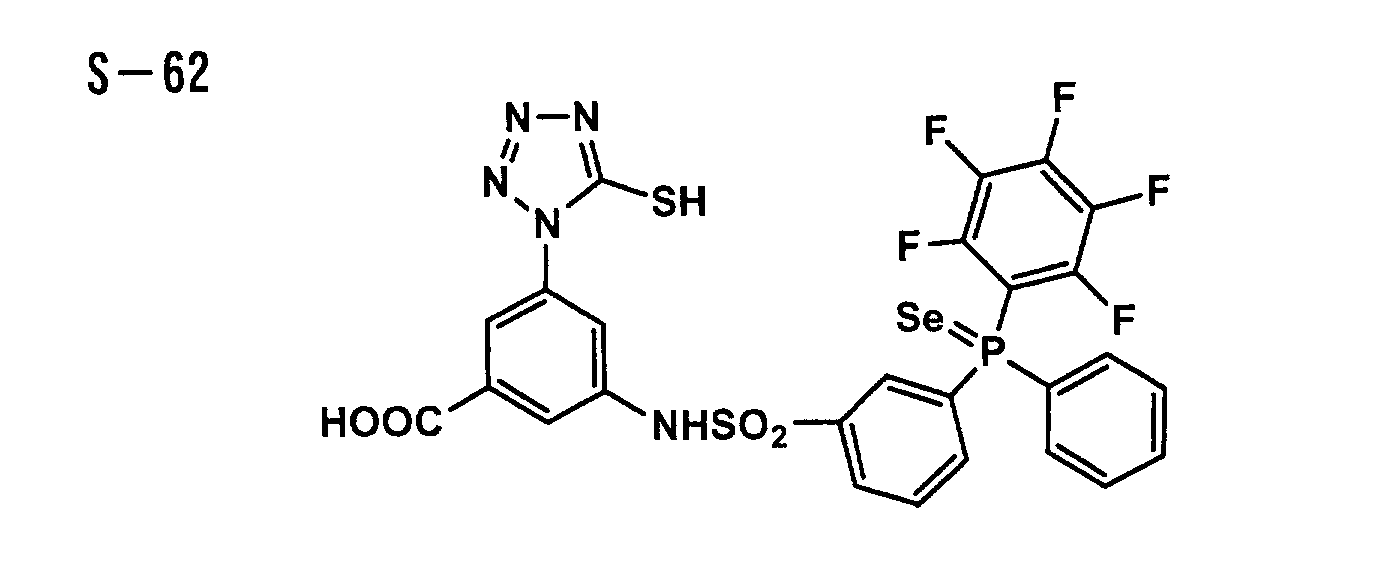
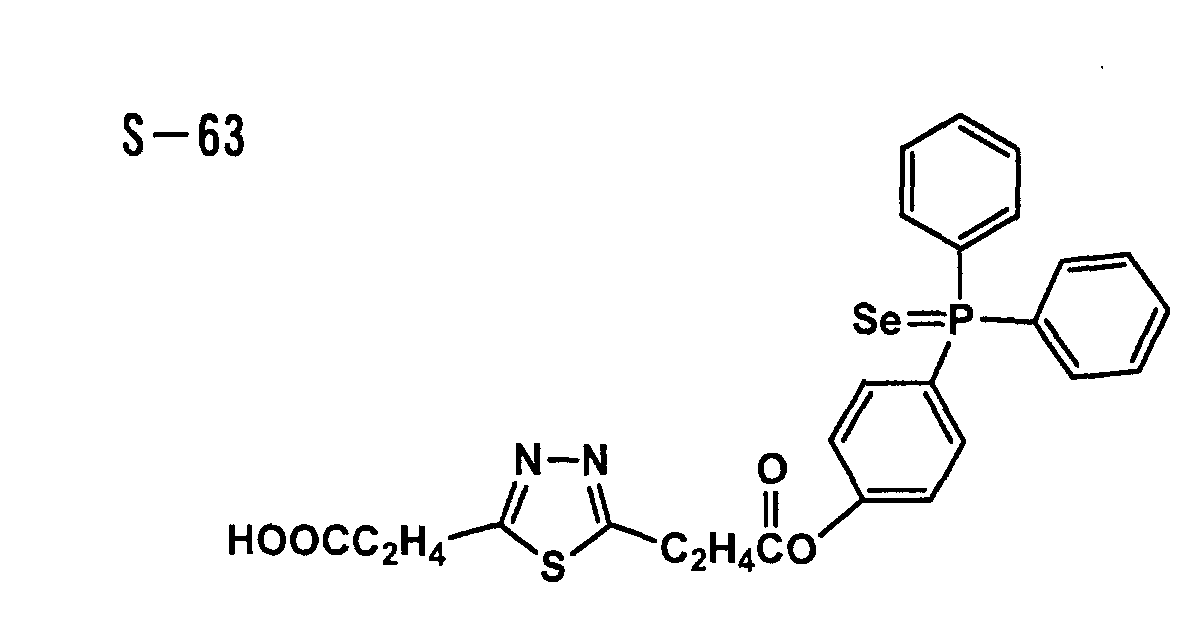
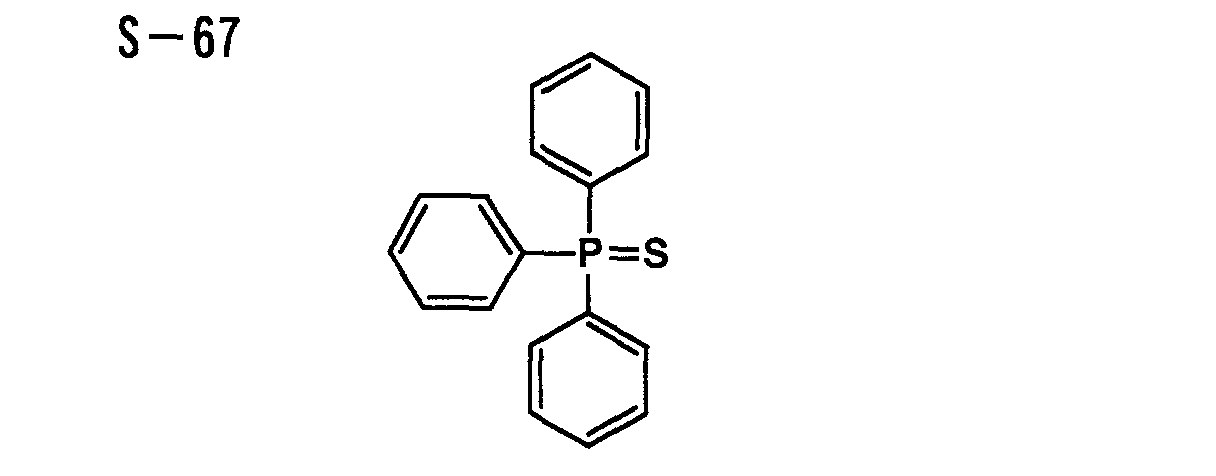
11-218874. Specifically, a compound represented by formula
(S) is preferred, having a structure in which a chalcogen
atom is attached a carbon atom or a phosphorus atom through a
double bond:
wherein A
1 represents an atomic group capable of being
adsorbed onto silver halide; L
1 represents a bivalent linkage
group; Z
1 represents an atomic group containing a labile
chalcogen atom site; W
1, W
2 and W
3 each represent a carboxylic
acid group, sulfonic acid group, sulfinic acid group,
phosphoric acid group, phosphorus acid group or a boric acid
group; m1 is 0 or 1; n1 is an integer of 1 to 3; l1, l2 and
13 each are an integer of 0 to 2, provided that l1, l2 and l3
may be 0 at the same time, i.e., an aqueous solubility-promoting
group as defined above (W
1, W
2 and W
3) may not be
contained.
Examples of the atomic group capable of being adsorbed
onto silver halide, represented by A1 include an atomic group
containing a mercapto group (e.g., mercaptooxadiazole,
mercaptotetrazole, mercaptotriazole, mercaptodiazole,
mercaptothiazole, mercaptpthiadiazole, mercaptooxazole,
mercaptoimidazole, mercaptobenzthiazole, mercaptobenzoxazole,
mercaptobenzimidazole, mercaptotetrazaindene,
mercaptopyridyl, mercaptoquinilyl, 2-mercaptopyridyl,
mercaptophenyl, mercaptonaphthyl, etc.), an atomic group
containing a thione group (e.g., thiazoline-2-thione,
oxazoline-2-thione, imidazoline-2-thione, benzothiazoline-2-thione,
benzimidazoline-2-thione, thiazolidine-2-thione,
etc.), an atomic group capable of forming an imino-silver
(e.g., triazole, tetrazole, benztriazole, hydroxyazaindene,
benzimidazole, indazole, etc.), and an atomic group
containing an ethenyl group {e.g., 2-[N-(2-propenyl)amino]benzthiazole,
N-(2-propenyl)carbazole, etc.}.
The atomic group containing a labile chalcogen atom
site represented by Z1 refers to a compound group capable of
forming a chalcogen silver in the presence of silver nitrate.
The atomic group containing a labile chalcogen atom site
preferably has a structure containing a chalcogen atom
attached to a carbon atom or phosphorus atom through a double
bond, in which the chalcogen atom refers to a sulfur atom,
selenium atom or a tellurium atom. Examples of the atomic
group containing a labile sulfur atom site include an atomic
group containing a thiourea group (e.g., N,N'-diethylthiourea,
N-ethyl-N' - (2-thiazolyl)thiourea, N,N'-dimethylthiourea,
N-phenylthiourea, etc.), an atomic group
containing a thioamido group (e.g., thiobenzamide,
thioacetoamide, etc.), polysufide, an atomic group containing
a phosphine sulfide group [e.g.,
bis(pentafluorophenyl)phenylphosphine sulfide,
diethylphosphine sulfide, dimethylphenylphosphine sulfide,
etc.], and an atomic group containing a thiooxoazolidinone
group (e.g., ethylrhodanine, 5-benzylidene-3-ethylrhodanine,
1,3-diphenyl-2-thiohydantoine, 3-ethyl-4-oxooxazolidine-2-thione,
etc.). Examples of the atomic group containing a
labile selenium atom site include an atomic group containing
a selenourea group (e.g., N,N'-dimethylselenourea,
selenourea, N-acetyl-N,N'-diethylselenourea, N-trifluoroacetyl-N',
N'-dimethylselenourea, N-ethyl-N'-(2-thiazolyl)selenourea,
N,N'-diphenylselenourea, etc.), an
atomic group containing a selenoamido group (e.g., N-methyl-selenobenzamide,
N-phenyl-selenobenzamide, N-ethyl-selenobenzamide,
etc.), an atomic group containing a
phosphine selenide [e.g., triphenyl-phosphine selenide,
diphenyl(entafluorophenyl)phosphine selenide, tris(m-chlorophenyl)phosphine
selenide, etc.], an atomic group
containing selenophosphate group [e.g., tris(p-tolyl)selenophosphate,
etc.], an atomic group containing a
selenoester group (e.g., p-methoxyselenobenzoic acid=O-isopropylester,
selenobenzoic acid=Se-(3'-oxobutyl)ester, p-methoxyselenobenzoic
acid=Se-(3'oxocyclohexyl)ester, etc.),
an atomic group containing a selenide group [e.g., bis(2,6-dimethoxybenzoyl)selenide,
bis(n-butoxycarbonyl)selenide,
bis(benzyloxycarbonyl)selenide, bis(N,N-dimethylcarbamoyl)selenide,
etc.], an atomic group containing
triselenane group [e.g., 2,4,6-ris(p-methoxyphenyl)triselenane,
etc.], and an atomic group
containing aselenoketone group (e.g., 4-methoxyselenoacetophenone,
4,4-methoxyselenobenzophenone,
etc.). Examples of the atomic group containing a labile
tellurium atom site include an atomic group containing a
phosphine telluride group (e.g., butyl-di-isopropylphosphine
telluride, triscyclohexylphosphine telluride, etc.), an
atomic group containing a tellurourea group (e.g., N,N'-diethyl-N,N'-diethylenetelluorourea,
N,N'-dimethylene-N,N'-dimethyltellyrourea,
etc.), an atomic group containing a
telluoroamido group [e.g., N,N-dimethyl-tellurobenzamide,
N,N-tetramethylene-(p-tolyl)tellurobenzamide], an atomic
group containing a tellurophosphate group [e.g., tris(p-tolyl)tellurophosphate,
trisbutyltellurophosphate, etc.], and
an atomic group containing a telluophosphoric amido group
(e.g., hexamethyltellurophosphoric amide, etc.).
The atomic group containing a labile selenium or
tellurium atom can also be selected from the compounds
described in JP-A Nos. 4-25832, 4-109240, 4-147250, 4-33043,
5-40324, 5-24332, 5-24333, 5-303157, 5-306268, 5-306269, 6-27573,
6-43576, 6-75328, 6-17528, 6-180478, 6-17529, 6-208184,
6-208186, 6-317867, 7-92599, 7-98483, 7-104415, 7-140579,
and 7-301880.
The chalcogen atom-containing organic sensitizers used
in this invention may contain an aqueous solubility-promoting
group. Examples of the aqueous solubility-promoting group
include a carboxylic acid group, sulfonic acid group,
sulfinic acid group, phosphoric acid group, phosphorus acid
group or a boric acid group. The chalcogen atom-containing
organic sensitizers used in this invention may contain a
group capable of being adsorbed onto silver halide and a
labile chalcogen atom site. The group capable of being
adsorbed onto silver halide and the labile chalcogen atom
site may be linked directly or through a linkage group with
each other. In cases where an aqueous solubility-promoting
group is further contained, the aqueous solubility-promoting
group, the group capable of being adsorbed onto silver halide
and the labile chalcogen atom site may be linked directly or
through a linkage group with each other.
The bivalent linkage group represented by L1 is a group
comprising a carbon atom, hydrogen atom, oxygen atom,
nitrogen atom or sulfur atom. Examples thereof an alkylene
group having 1 to 20 carbon atoms (e.g., methylene, ethylene,
propylene, hexylene, etc.), an arylenes group (e.g.,
phenylene, naphthylene, etc.), -CONR1-, -SO2NR2-, -O-, -S-,-NR3-,
-NR4CO-, -NR5SO2-, -NR6CONR7-, -CO-O-, -O-CO-, -CO- and
groups in which plural these groups are linked.
R1, R2, R3, R4, R5, R6, and R7 are each a hydrogen atom,
an aliphatic group, an alicyclic group, an aromatic group or
a heterocyclic group. The aliphatic group represented by R1
through R7 include, for example, a straight chaine or
branched alkyl group having 1 to 20 carbon atoms (e.g.,
methyl, ethyl, isopropyl, 2-ethyl-hexyl, etc.), an akenyl
group (e.g., propenyl, 3-pentenyl, 2-butenyl, cyclohexenyl,
etc.), an alkynyl group (e.g., propargyl, 3-pentynyl, etc.)
and an aralkyl group (e.g., benzyl, phenethyl, etc.). The
alicyclic group is one having 5 to 8 carbon atoms (e.g.,
cyclopentyl, cyclohexyl, etc.); the aromatic group is a
monocyclic or condensed ring group having 6 to 10 carbon
atoms, such as phenyl or naphthyl; and the heterocyclic group
an oxygen, sulfur or nitrogen containing, 5- to 7-membered
monocyclic ring or ring condensed with other ring)s), such as
furyl, thienyl, benzfuryl, pyrrolyl, indolyl, thiazolyl,
imidazolyl, mprpholyl, piperazyl, or pyrazyl. The groups
represented by R1 through R7 may be substituted with an
optimal atom or group at the optimal position. Examples of
the substituent atom or group include hydroxy, a halogen atom
(e.g., fluorine, chlorine, bromine, iodine), cyano, amino
group (e.g., metylamino, anilino, diethylamino, 2-hydroxyethylamino,
etc.), acyl group (e.g., acetyl, benzoyl,
propanoyl, etc.), carbamoyl group (e.g., carbamoyl, N-methylcarbamoyl,
N,N-tetramethylenecarbamoyl, N-methanesulfonylcarbamoyl,
N-acetylcarbamoyl, etc.), alkoxy
group (e.g., methoxy, ethoxy, 20hydroxyethoxy, 2-methoxyethoxy,
etc.), alkoxycarbonyl group (e.g.,
methoxycarbonyl, ethoxycarbonyl, 2-methoxyethoxycarbonyl,
etc.), sulfonyl group (e.g., methanesulfonyl,
trifluoromethanesulfonyl, benzenesulfonyl, p-toluenesulfonyl,
etc.), sulfamoyl group (e.g., sulfamoyl, N,N-dimethylsulfamoyl,
morpholinosulfamoyl, N-ethylsulfamoyl, etc.),
acylamino group (e.g., acetoamide, trifluoroacetoamido,
benzamido, thienocarbonylamino, benzenesulfonamido, etc.),
and alkoxycarbonylamino group (e.g., methoxycarbonylamino, N-methyl-ethoxycarbonylamino,
etc.).
W1, W2 and W3 each represent a carboxylic acid group,
sulfonic acid group, sulfinic acid group, phosphoric acid
group, phosphorus acid group or a boric acid group, each of
which may be in a free form or may form a counter salt with
an alkali metal, alkaline earth metal, ammonium or an organic
amine.
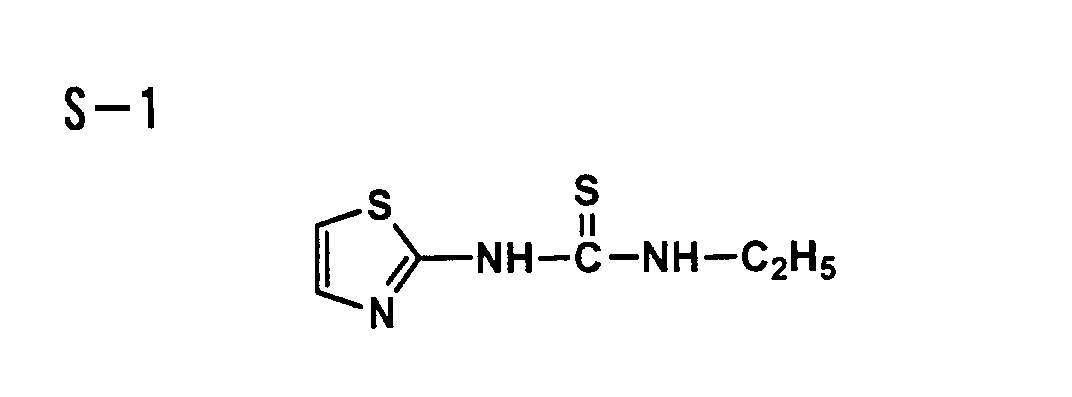
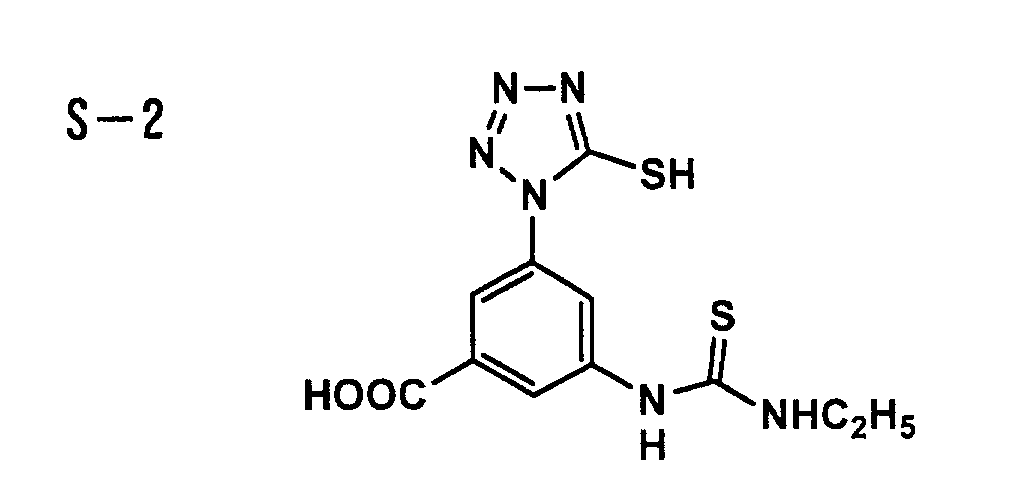
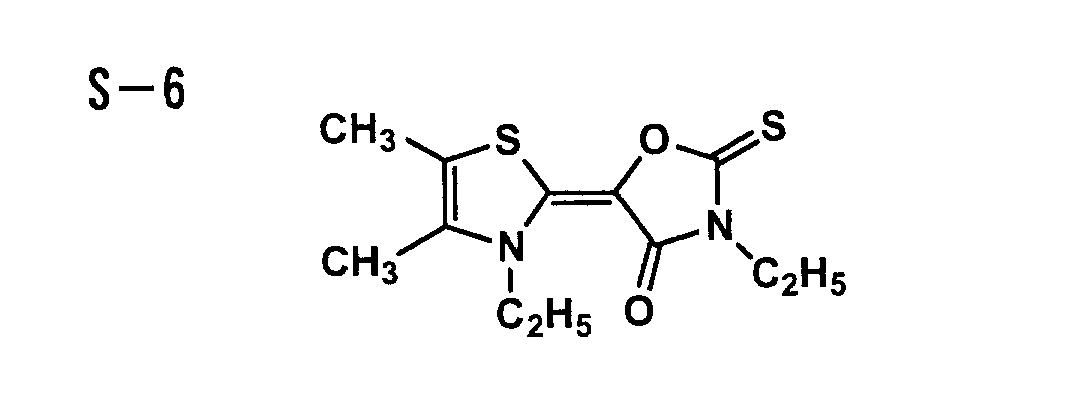
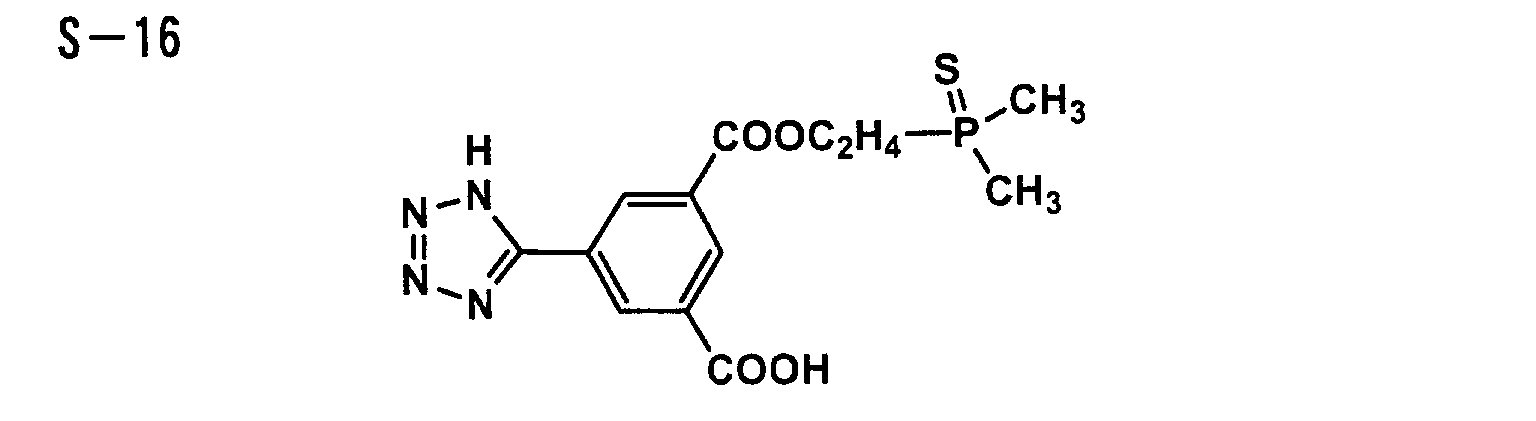
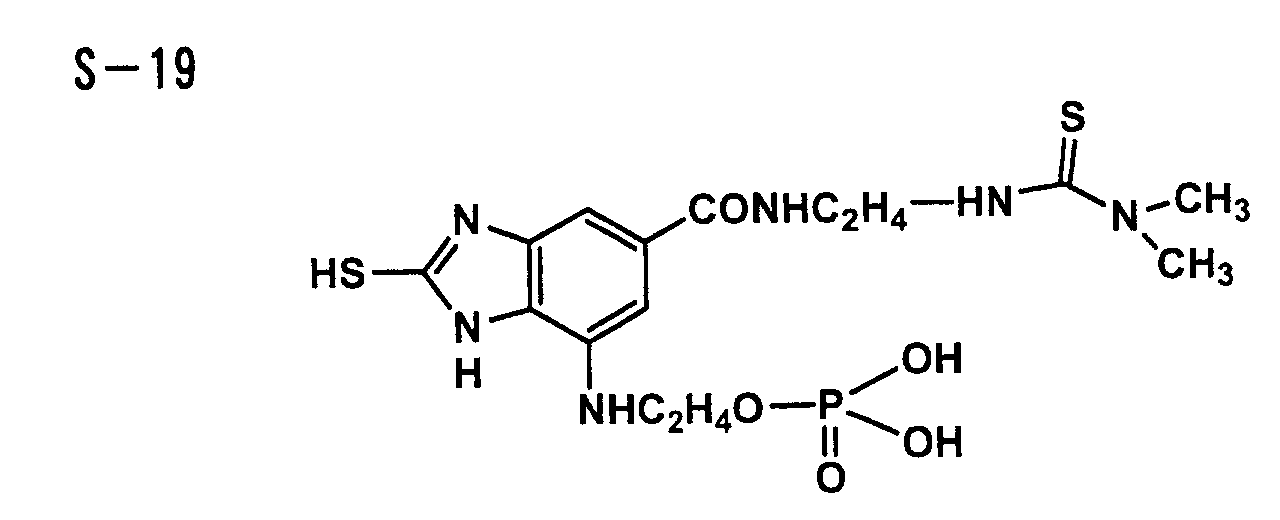
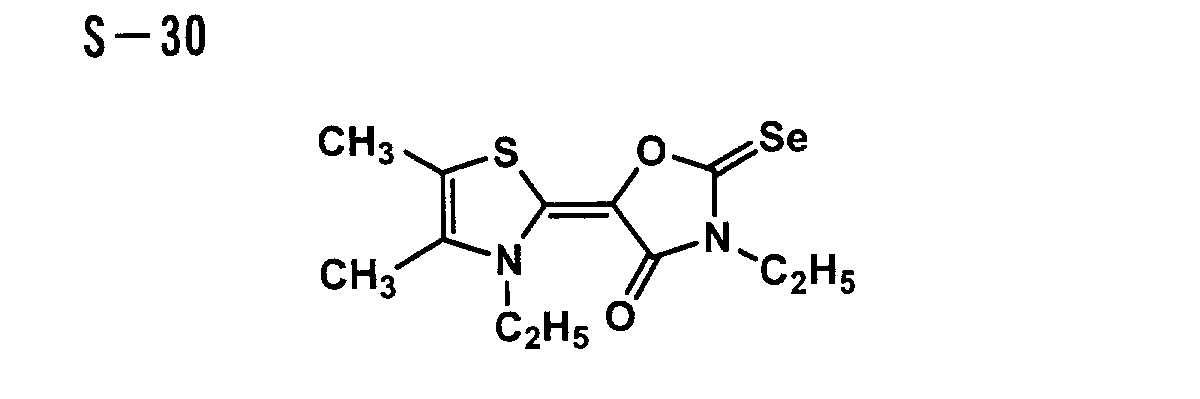
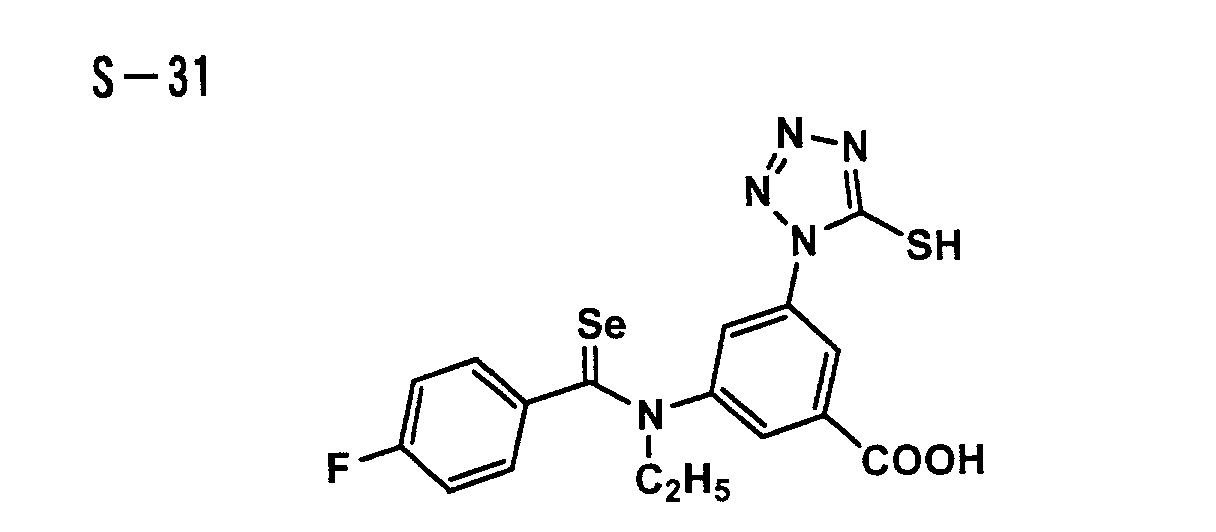
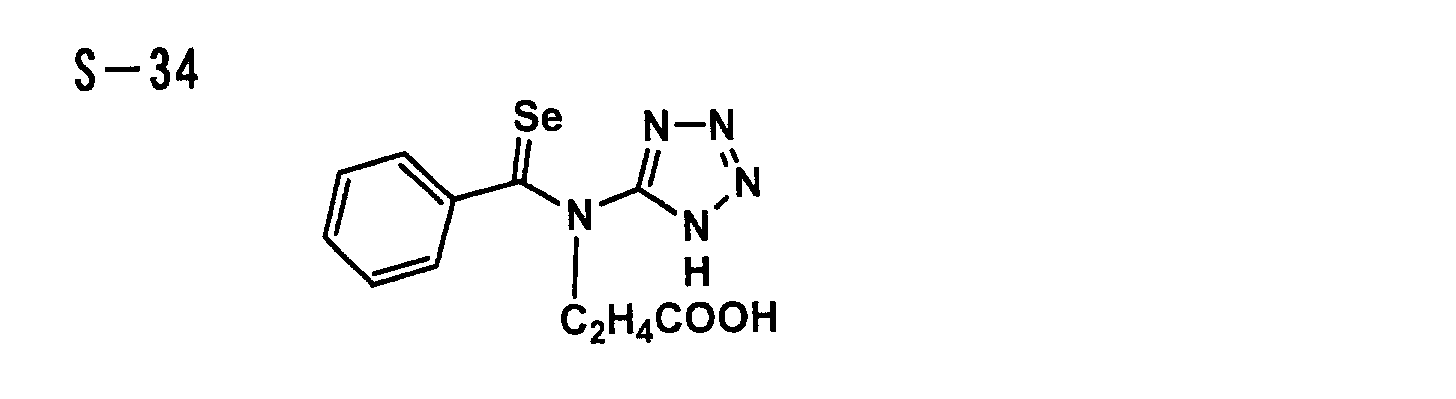
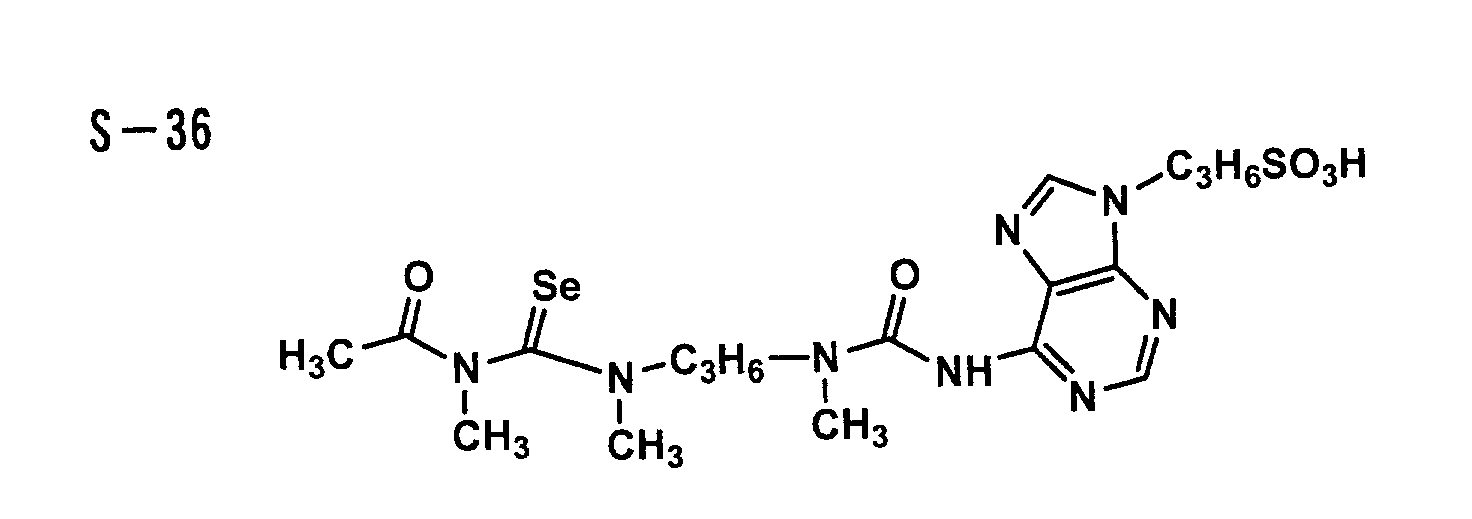
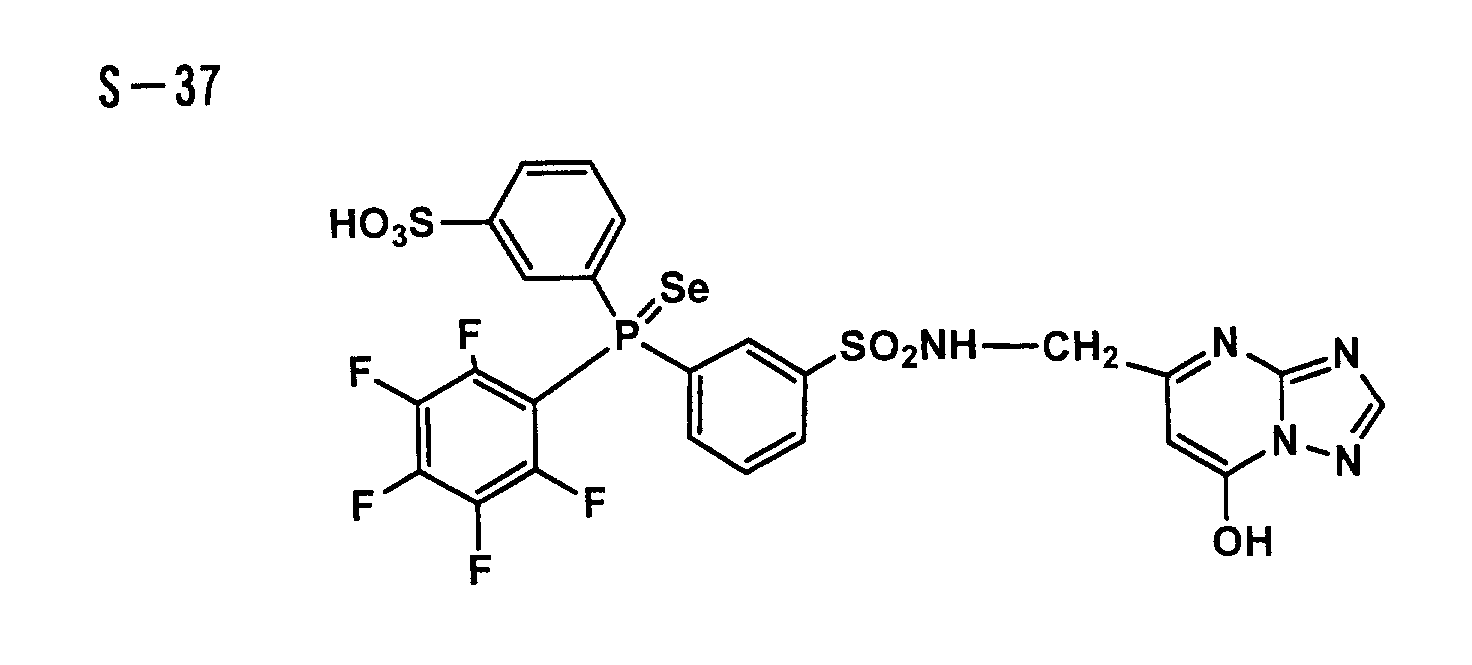
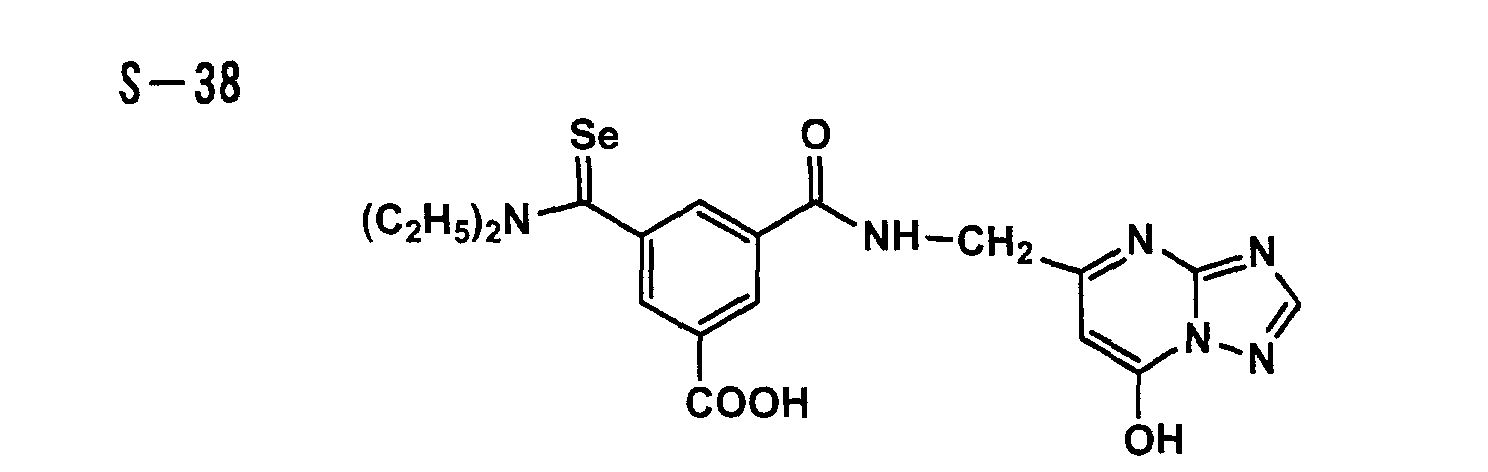
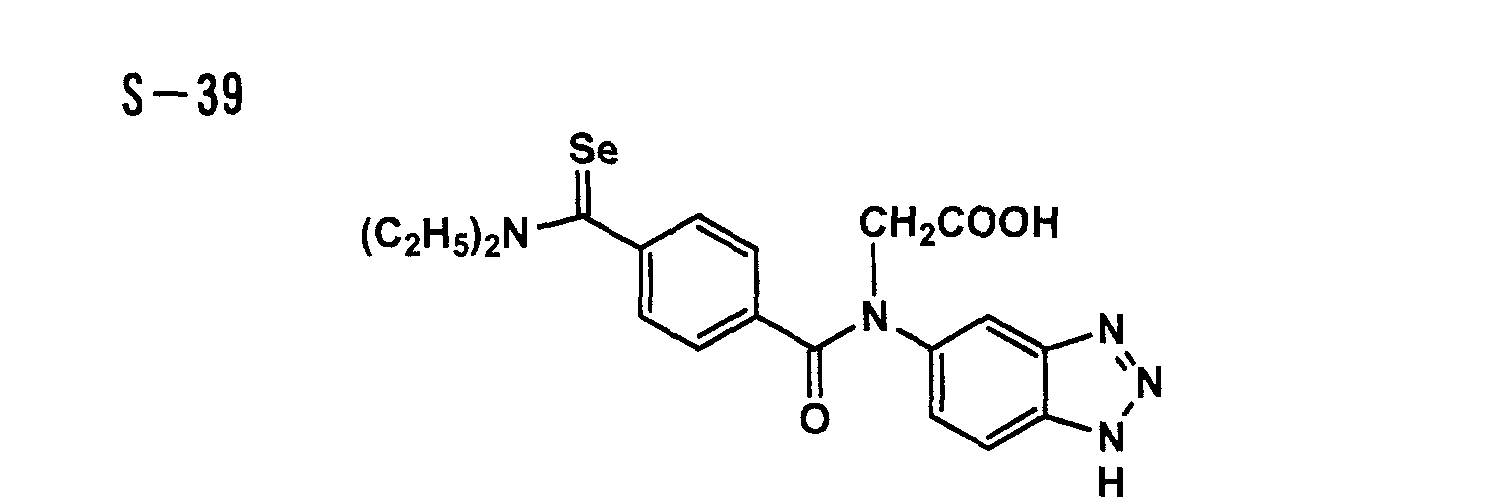
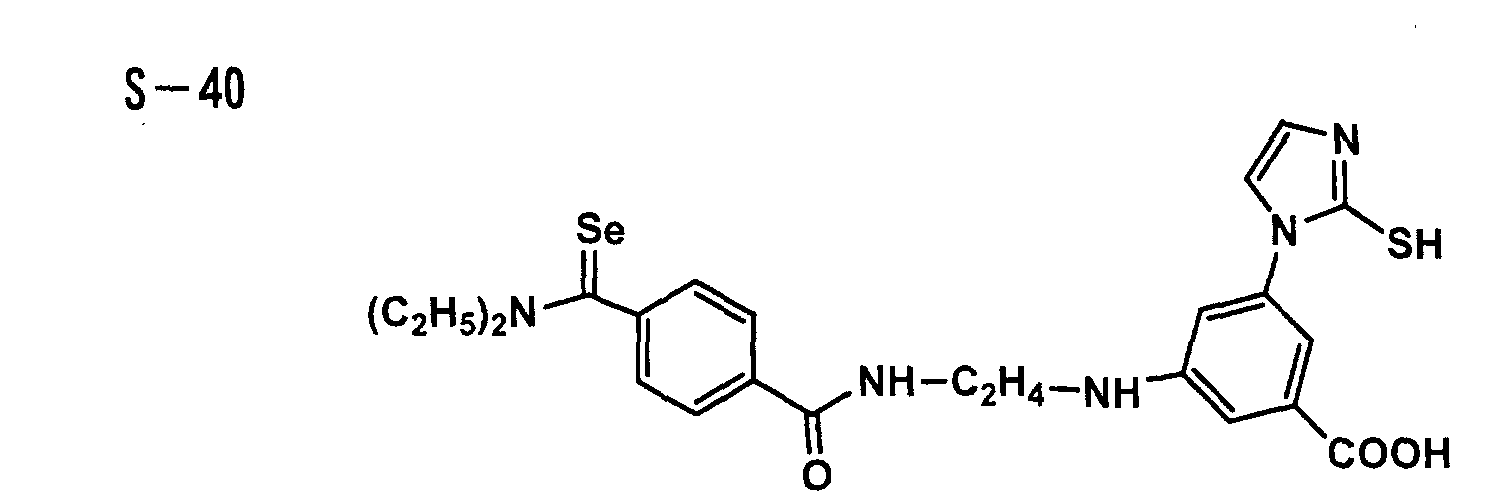
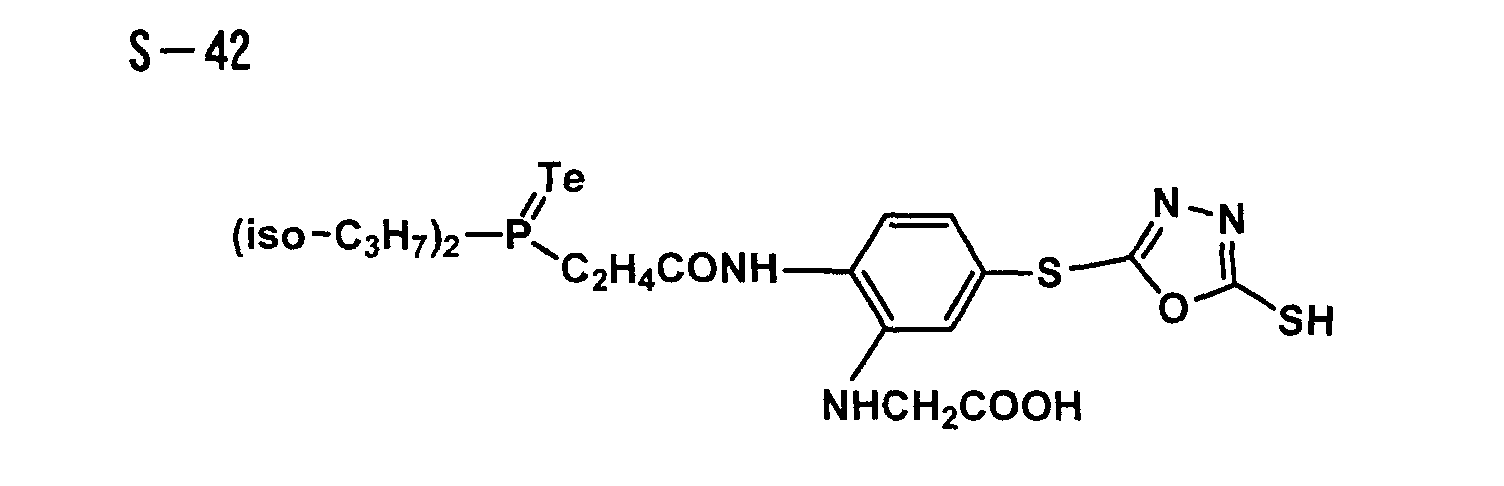
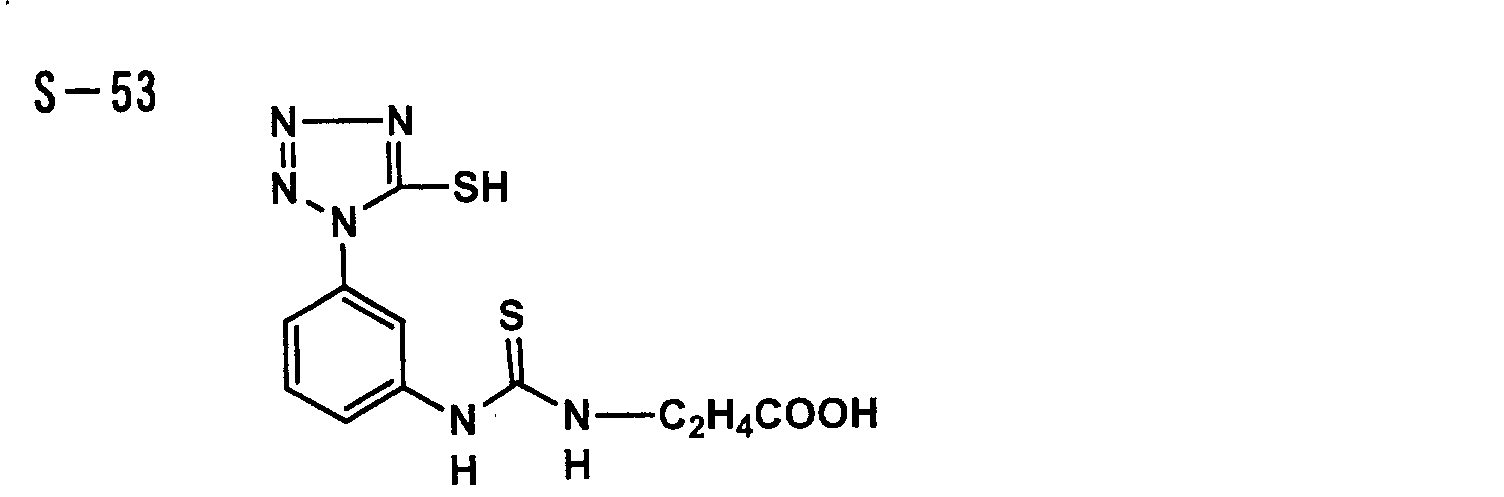
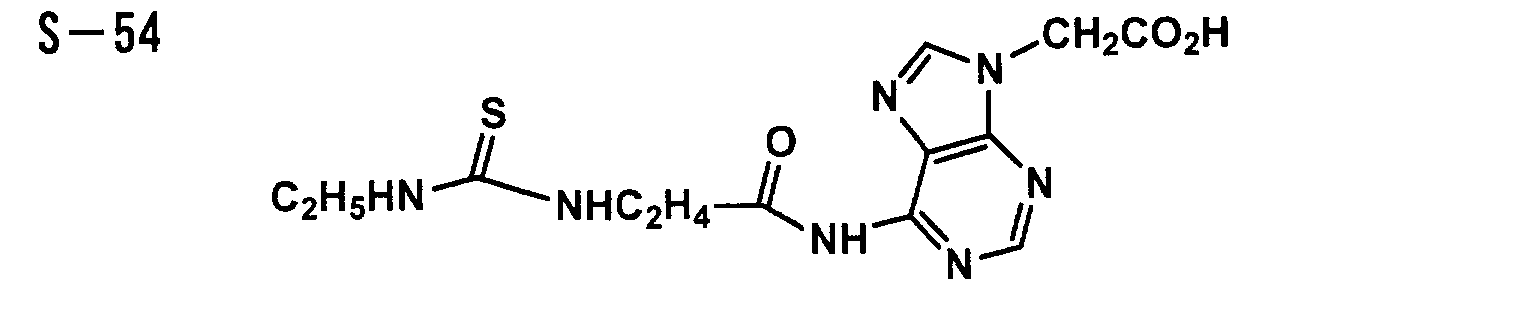
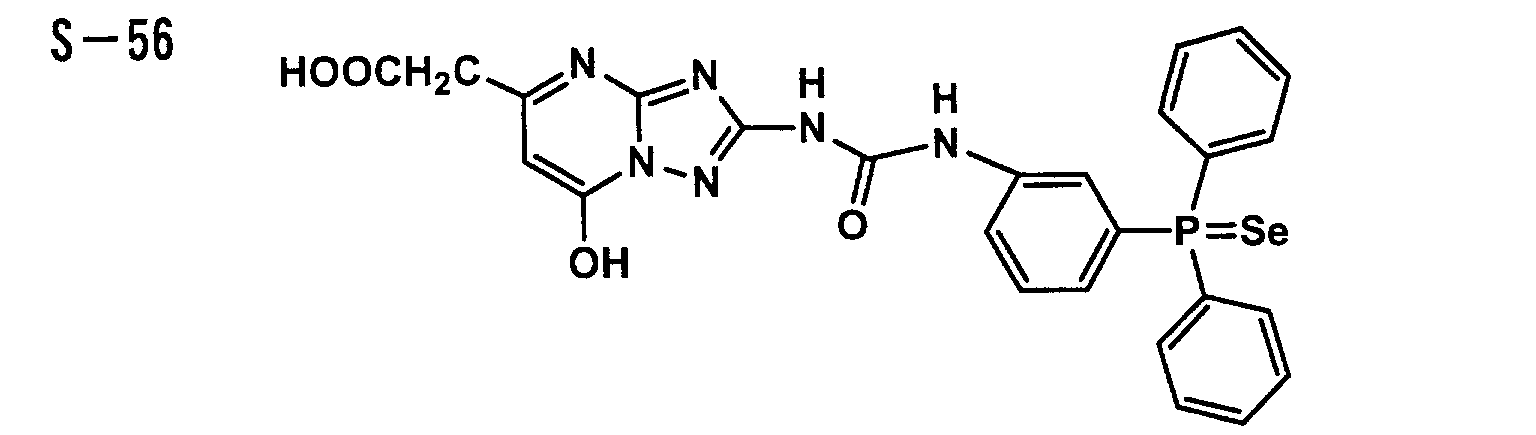
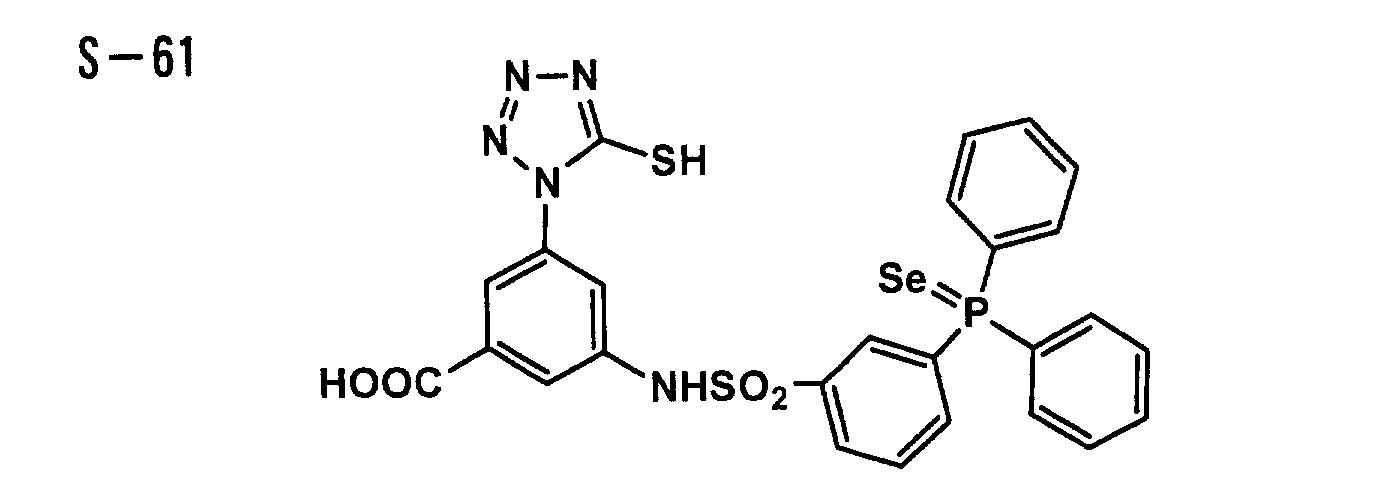
Exemplary examples of the chalcogen atom-containing
organic sensitizers usable in this invention and the compound
represented by formula (S) are shown below but by no means
limited to these.
The amount of the chalcogen atom-containing organic
sensitizers to be used in this invention, depending on the
kind of a chalcogen compound, light sensitive silver halide
grains and the chemical sensitization environment is
preferably 10-8 to 10-2 mol, and more preferably 10-7 to 10-3
mol per mol of silver halide. In this invention, the
chemical sensitization environment is not specifically
limited and it is preferred to conduct chemical sensitization
with the chalcogen atom-containing organic sensitizer, in the
presence of a compound capable of allowing silver
chalcogenide or silver nuclei formed on the light sensitive
silver halide grains to disappear or to be reduced in size,
specifically in the presence of an oxidizing agent capable of
oxidizing the silver nuclei. The preferred sensitizing
condition thereof includes a pAg of 6 to 11, and more
preferably 7 to 10, a pH of 5 to 8, and a temperature of 30°
C or less. The excessively high temperature accelerates side
reaction, leading to increased fogging and lowering stability
of the photothermographic material. In the
photothermographic material of this invention, it is
therefore preferable that the light sensitive silver halide
grains are chemically sensitized at a temperature of 30° C or
less, using the chalcogen atom-containing organic sensitizer
in the presence of silver nuclei formed on the grains. It is
also preferred that the resulting silver halide grains are
mixed with an organic silver salt, dispersed and dried.
It is also preferred to conduct chemical sensitization
with the organic sensitizer in the presence of a sensitizing
dye or a heteroatom-containing compound capable of being
adsorbed onto silver halide. Performing chemical
sensitization in the presence of the compound capable of
being adsorbed onto silver halide prevents dispersion of
chemical sensitization center nuclei, leading to enhanced
sensitivity and minimized fogging. The preferred heteroatom
containing compound capable of being adsorbed onto silver
halide include nitrogen containing heterocyclic compound
described in JP-A No. 3-24537. In the heteroatom-containing
compound, examples of the heterocyclic ring include a
pyrazolo ring, pyrimidine ring, 1,2,4-triazole ring, 1,2,3-triazole
ring, 1,3,4-thiazole ring, 1,2,3-thiadiazole ring,
1, 2, 4-thiadiazole ring, 1,2,5-thiadiazole ring, 1,2,3,4-tetrazole
ring, pyridazine ring, 1,2,3-triazine ring, and a
condensed ring of two or three of these rings, such as
triazolotriazole ring, diazaindene ring, triazaindene ring
and pentazaindene ring. Condensed heterocyclic ring
comprised of a monocycic hetero-ring and an aromatic ring
include, for example, a phthalazine ring, benzimidazole ring
indazole ring, and benzthiazole ring. Of these, an azaindene
ring is preferred and hydroxy-substituted azaindene
compounds, such as hydroxytriazaindene, tetrahydroxyazaindene
and hydroxypentazaundene compound are more preferred. The
heterocyclic ring may be substituted by substituent groups
other than hydroxy group. Examples of the substituent group
include an alkyl group, substituted alkyl group, alkylthio
group, amino group, hydroxyamino group, alkylamino group,
dialkylamino group, arylamino group, carboxy group,
alkoxycarbonyl group, halogen atom and cyano group.
Examples thereof are shown below but are not limited to
these:
The amount of the heterocyclic ring containing compound
to be added, which is broadly variable with the size or
composition of silver halide grains, is within the range of
10-6 to 1 mol, and preferably 10-4 to 10-1 mol per mol silver
halide.
Silver halide to be subjected to chemical sensitization
may be one in the presence or in the absence of organic
silver salts, or may be mixture thereof.
In one preferred embodiment of this invention, the
overall process of forming light sensitive silver halide is
performed at a pH of 3 to 6, more preferably 4 to 6.
The determination of transition metals occluded in the
light sensitive silver halide used in this invention will be
described. Distribution of the concentration of a transition
metal within a silver halide grain can be determined by
stepwise dissolution of the grain from the grain surface and
determination of the transition metal content at each site,
for example, according to the following procedure.
Prior to the determination of the transition metal, a
silver halide emulsion was subjected to the following pretreatment.
To ca 30 ml of the emulsion, 50 ml of an aqueous
0.2% actinase solution was added and stirred at 40° C for 30
min. to perform hydrolysis of gelatin. Such procedure was
repeated five times. After centrifugal separation, the
hydrolysis products were washed five times with 50 ml
methanol, twice with a 1 mol/l nitric acid solution and five
times with ultra-pure water, and after centrifugal
separation, only the silver halide was separated. Surface
portions of the thus obtained silver halide grains were
dissolved with an aqueous ammonia solution or a pH-adjusted
ammonia solution (in which the ammonia concentration or pH
was varied in accordance with the halide composition of
silver halide and the dissolution amount). Specifically, as
a method for dissolving the outermost surface of silver
halide grains, 2 g of the silver bromide grains can be washed
to a depth of about 3% from the surface, using 20 ml of an
aqueous ca. 10% ammonia solution. As a result, the amount of
dissolved silver halide can be determined in such a manner
that after separation of silver halide grains from the
aqueous ammonia solution used for dissolving silver halide by
centrifugation, the silver content of the supernatant can be
determined using an inductively coupled plasma-mass
spectroscopy (ICP-MS), or inductively coupled plasma-atomic
emission spectroscopy (ICP-AES) or atomic absorption
spectroscopy. Thus, the amount of the transition metal
contained to a depth of 3% from the surface can be determined
from the difference in the total metal content of silver
halide grains between before and after being subjected to
surface dissolution. The transition metal content can be
determined by dissolution with an aqueous ammonium
thiosulfate solution, aqueous sodium thiosulfate solution or
aqueous potassium cyanide solution, followed by the matrix-matched
ICP-MS method, ICP-AES method or atomic absorption
analysis method. In the case of employing potassium cyanide
as a solvent and the ICP-MS as an analysis apparatus (FISON,
available from Elemental Analysis Corp.), for example, after
dissolving ca. 40 mg of silver halide in 5 ml of an aqueous
0.2 mol/l potassium cyanide solution, a solution of Cs as an
internal standard element was added to form a content of 10
ppb and ultra-pure water was further added to make 100 ml to
prepare a sample. Using a calibration curve matrix-fitted by
using silver halide free of the transition metal, the
transition metal content of the sample was determined by the
ICP-MS method. In this case, the silver content of the
sample can be precisely determined by subjecting the sample
diluted with ultra-pure water to a factor of 100 to the ICP-AES
or atomic absorption analysis. Further, the transition
metal content in the interior of the silver halide grain can
also be determined in the manner that after subjecting the
grain surface to dissolution, the silver halide grains are
washed with ultra-pure water and then the grain surface
dissolution is repeated.
A transition metal doped in the peripheral region of
the silver halide grain can also be determined by the
foregoing method of determining the transition metal content,
in combination with electron microscopic observation. In
cases where plural transition metals are contained, the total
content thereof are counted by mol. number.
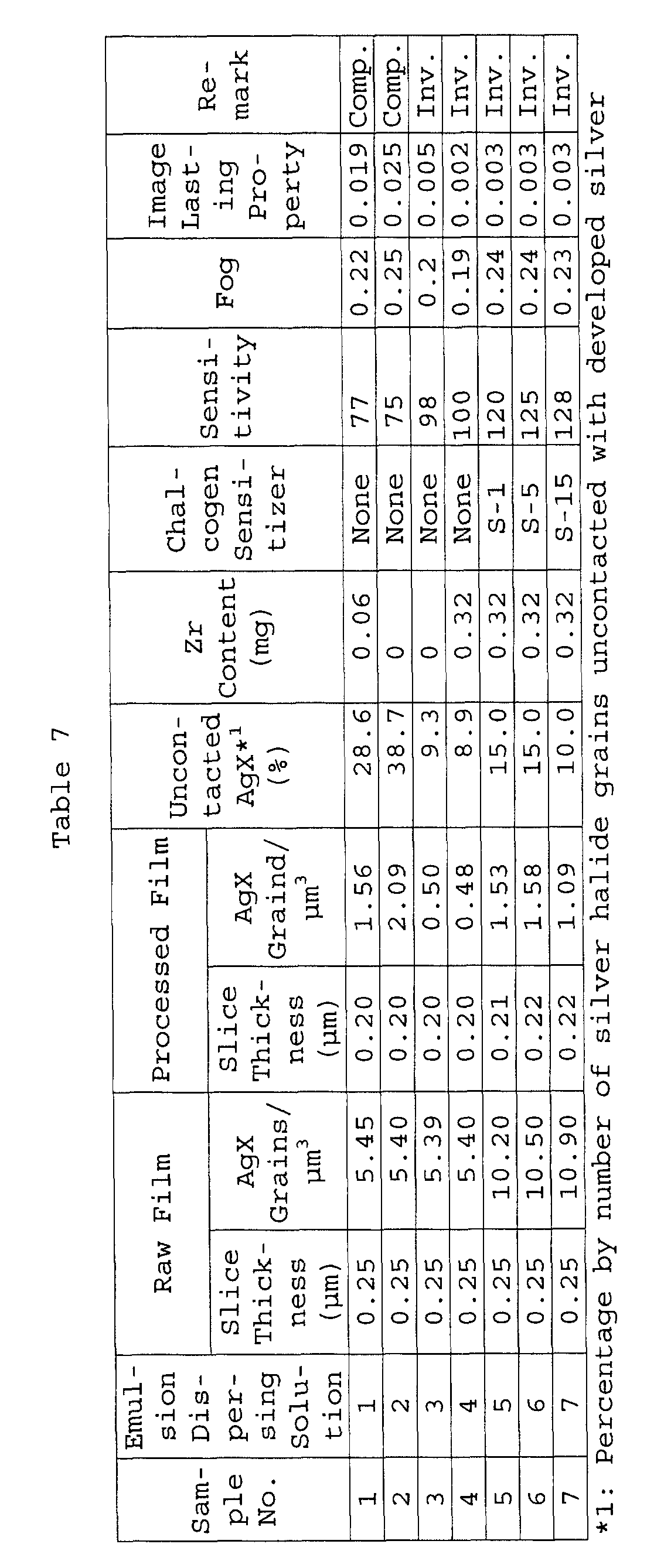
In the embodiments of this invention, it is preferred
that when the photothermographic material is subjected to
light exposure of 280 µJ/cm
2 and thermal development at 123°
C for 16.5 sec., not more than 25% by number (and more
preferably not more than 20% by number) of the light
sensitive silver halide grains having a grain diameter of 10
to 100 nm is not in contact with developed silver, thereby
leading to enhanced sensitivity, low
r fogging and improved
latent image stability after exposure and before thermal
development.
Thermal development at 123° C for 16.5 sec. can be
conducted by bringing the photothermographic material into
contact with a thermal-developing drum heated at 123° C for a
period of 16.5 sec.
The percentage by number of the light sensitive silver
halide grains which are not in contact with developed silver
can be determined in accordance with the following procedure.
Thus, a thermally developed light sensitive layer coated on
the support is adhered to an optimum holder, using an
adhesive. Using a diamond knife, an ultra-thinned slice
having a thickness of 0.1 to 0.2 µm in the direction vertical
to the support is prepared. The thus prepared ultra-thin
slice is placed on a carbon membrane supported by a copper
mesh, having been subjected to glow discharge treatment to
enhance hydrophilicity and observed with a transmission
electron microscope (also denoted as TEM) at a magnifying
factor of 5,000 to 40,000, while cooled with liquid nitrogen
to a temperature lower than -130° C. The electron
microscopic image is recorded by means of a photographic
film, an imaging plate or a CCD camera. An optimal portion
not having been broken or loose is selected. In this
invention, when the distance between an organic silver salt
and a silver halide grain is not more than 2 mm in the
electron micrograph obtained at a magnification of 40,000, it
is regarded as being in contact, and when the distance is
more than 2 mm, it is regarded as not being in contact.
A carbon membrane supported by an organic membrane such
as collodion or form bar is preferably used and a single
carbon membrane which is obtained by forming it on a rocksalt
substrate and removing the substrate by dissolution or
obtained by removing the organic membrane by dissolution with
an organic solvent or by ion-etching is more preferably used.
The acceleration voltage of the TEM is preferably 80 to
400 kV, and more preferably 80 to 200 kV.
The number of light sensitive silver halide grains
being present within a given area, A (µm2) of the recorded
image is counted according to the following equation:
grain number per 1 µm3 = number of silver halide grains
being present within a given area (A) of the recorded
image/area A x slice thickness (µm).
In this case, the number of the field of view is
determined so as to amount to 1000 or more silver halide
grains. The slice thickness can be determined in such a
manner that photographed slice was warmed to room
temperature, buried in epoxy resin and the section thereof
was observed.
Next, a film which has been subjected to exposure of
280 µJ/cm2 and thermal development at 123° C for 16.5 sec. is
also similarly treated. Thus, the prepared a slice is
observed with the TEM to count the number of silver halide
grains which are not in contact with developed silver to
determine the number of remaining silver halide grains. In
this case, the number of the field of view is determined so
as to amount to 1000 or more silver halide grains:
percent by number of silver halide grains which are not
in contact with developed silver = (number of silver halide grains which are not in contact with developed silver, per 1 µm3)/(number of silver halide grains/µm3
in a raw film) x 100.
Details of techniques for electron microscopic
observation and techniques for preparing samples are referred
to "Medical and Biological Electron Microscopic Observation"
edited by NIHON DENSHIKENBIKYO GAKKAI, KANTO-SHIBU, published
by MARUZEN and "Preparation of Biological Samples for
Electron Microscopic Observation" edited by NIHON
DENSHIKENBIKYO GAKKAI, KANTO-SHIBU, published by MARUZEN.
Organic silver salts used in this invention are
reducible silver source, and silver salts of organic acids or
organic heteroacids are preferred and silver salts of long
chain fatty acid (preferably having 10 to 30 carbon atom and
more preferably 15 to 25 carbon atoms) or nitrogen containing
heterocyclic compounds are more preferred. Specifically,
organic or inorganic complexes, ligand of which have a total
stability constant to a silver ion of 4.0 to 10.0 are
preferred. Exemplary preferred complex salts are described
in RD17029 and RD29963, including organic acid salts (for
example, salts of gallic acid, oxalic acid, behenic acid,
stearic acid, palmitic acid, lauric acid, etc.);
carboxyalkylthiourea salts (for example, 1-(3-carboxypropyl)thiourea,
1-(3-caroxypropyl)-3,3-dimethylthiourea,
etc.); silver complexes of polymer reaction
products of aldehyde with hydroxy-substituted aromatic
carboxylic acid (for example, aldehydes (formaldehyde,
acetaldehyde, butylaldehyde, etc.), hydroxy-substituted acids
(for example, salicylic acid, benzoic acid, 3,5-dihydroxybenzoic
acid, 5,5-thiodisalicylic acid, silver salts
or complexes of thiones (for example, 3-(2-carboxyethyl)-4-hydroxymethyl-4-(thiazoline-2-thione
and 3-carboxymethyl-4-thiazoline-2-thione),
complexes of silver with nitrogen acid
selected from imidazole, pyrazole, urazole, 1.2,4-thiazole,
and 1H-tetrazole, 3-amino-5-benzylthio-1,2,4-triazole and
benztriazole or salts thereof; silver salts of saccharin, 5-chlorosalicylaldoxime,
etc.; and silver salts of mercaptides.
Of these organic silver salts, silver salts of fatty acids
are preferred, and silver salts of behenic acid, arachidic
acid and stearic acid are specifically preferred.
The organic silver salt compound can be obtained by
mixing an aqueous-soluble silver compound with a compound
capable of forming a complex. Normal precipitation, reverse
precipitation, double jet precipitation and controlled double
jet precipitation described in JP-A 9-127643 are preferably
employed. For example, to an organic acid is added an alkali
metal hydroxide (e.g., sodium hydroxide, potassium hydroxide,
etc.) to form an alkali metal salt soap of the organic acid
(e.g., sodium behenate, sodium arachidate, etc.), thereafter,
the soap and silver nitrate are mixed by the controlled
double jet method to form organic silver salt crystals. In
this case, silver halide grains may be concurrently present.
In the present invention, organic silver salts have an
average grain diameter of 2 µm or less and are monodisperse.
The grain diameter of the organic silver salt as described
herein is, when the organic salt grain is, for example, a
spherical, cylindrical, or tabular grain, a diameter of the
sphere having the same volume as each of these grains. The
average grain diameter is preferably between 0.05 and 1.5 µm,
and more preferably between 0.05 and 1.0 µm. Furthermore,
the monodisperse as described herein is the same as silver
halide grains and preferred monodispersibility is between 1
and 30%.
It is also preferred that at least 60% of the total of
the organic silver salt is accounted for by tabular grains.
The tabular grains refer to grains having a ratio of an
average grain diameter to grain thickness, i.e., aspect ratio
(denoted as AR) of 3 or more:
AR = diameter (µm)/thickness (µm)
To obtain such tabular organic silver salts, organic silver
salt crystals are pulverized together with a binder or
surfactant, using a ball mill. Thus, using these tabular
grains, photosensitive materials exhibiting high density and
superior image fastness are obtained.
To prevent hazing of the photosensitive material, the
total amount of silver halide and organic silver salt is
preferably 0.5 to 2.2 g/m2, leading to high contrast images.
In this case, the amount is represented in terms of
equivalent converted to silver. The amount of silver halide
is preferably 50% by weight or less, more preferably 25% by
weight or less, and still more preferably 0.1 to 15% by
weight, based on the total silver amount.
Dispersion of organic silver salts used in this
invention will be described. Optionally after preliminarily
dispersed together with a binder or a surfactant, organic
silver salt grains are preferably pulverized and dispersed by
means of a media dispersing machine or a high pressure
homogenizer. In the preliminary dispersion, conventional
anchor-type or propeller- type stirring machine, a high-speed
centrifugal radiation type stirring machine (or dissolver) or
a high-speed rotational shearing type stirrer (homomixer) are
employed. Examples of the media dispersing machine include a
convolution mill such as a ball mill, planet ball mill or
vibration ball mill, a medium-stirring mill such as beads
mill or atreiter, and a basket mill. The high pressure
homogenizer include a type of colliding with wall or plug, a
type in which plural divided liquids are allowed to collide
with each other and a type of passing through fine orifice.
Preferred examples of ceramics used for ceramics beads
used in media dispersion include Al2O3, BaTiO3, SrTiO3, MgO,
Zro, BeO, Cr2O3, SiO2, SiO2-Al2O3, Cr2O3-MgO, MgO-CaO, MgO-Al2O3
(spinel), SiC, TiO2< K2O, Na2O, BaO, PbO, B2O3, SrTiO3
(strontium titanate9, BeAl2O4, Y3Al5O12, ZrO2-Y2O3 (cubic
zirconia)m 3BeO-Al2O3-6SiO2 (synthetic emerald), C (synthetic
diamond), si2O-nH2O, silicon nitride, yttrium-stabilized
zirconia, zirconia-reinforced alumina. Of these, yttrium-stabilized
zirconia and zirconia-reinforced alumina
(hereinafter, such zirconia-containing ceramics are also
called zirconia) are specifically preferred in terms of being
less formation of impurities produced by friction with beads
or the dispersing machine at the time of dispersion.
In apparatuses used for dispersing tabular organic
silver salt grains, ceramics such as zirconia, alumina,
silicon nitride and boron nitride, or diamond are preferably
employed as material for the member in contact with the
organic silver salt grains. Zirconia is specifically
preferred.
When the foregoing dispersion is conducted, 0.1 to 10%
by weight of a binder, based on organic silver salt is
preferably used and the temperature is preferably maintained
at not more than 45° C during the preliminary dispersion and
the main dispersion. In the main dispersion, the high
pressure homogenizer is operated twice or more at 29.42 MPa
to 98.06 MPa, and in the case of employing the media
dispersing machine, it is preferably operated at a
circumferential speed of 6 to 13 m/sec.
Zirconia can be employed as beads or a part of a
member, which may be mixed with the emulsion at the time of
dispersing. Thereby, enhanced photographic performance can
be achieved. Zirconia fragments may be added at the time of
dispersion or preliminary dispersion. Methods therefore are
not specifically limited and, for example, highly
concentrated zirconia solution can be obtained by allowing
methyl ethyl ketone (MEK) to circulate in a beads mill filled
with zirconia beads.
In this invention, it is preferred to disperse the
organic silver salt together with light sensitive silver
halide in a water-miscible solvent. The water-miscible
solvent refers to an organic solvent exhibiting a solubility
in water of 3% by weight or more. Examples thereof include
acetone, methyl ethyl ketone, methyl isobutyl ketone,
methanol, ethanol, isopropanol, butanol, tetrahydrofurane,
dioxane, dioxirane, dimethylformamide, dimethylacetoamide,
and N-methylpyrrolidone. Of these, methyl ethyl ketone is
preferred.
Commonly known reducing agents are used in the
photothermographic materials, including phenols, polyphenols
having two or more phenols, naphthols, bisnaphthols,
polyhydoxybenzenes having two or more hydroxy groups,
polyhydoxynaphthalenes having two or more hydroxy groups,
ascorbic acids, 3-pyrazolidones, pyrazoline-5-ones,
pyrazolines, phenylenediamines, hydroxyamines, hydroquinone
monoethers, hydrooxamic acids, hydrazides, amidooximes, and
N-hydroxyureas. Further, exemplary examples thereof are
described in U.S. Patent 3,615,533, 3,679,426, 3,672,904,
3,51,252, 3,782,949, 3,801,321, 3,794,488, 3,893,863,
3,887,376, 3,770,448, 3,819,382, 3,773,512, 3,839,048,
3,887,378, 4,009,039, and 4,021,240; British Patent
1,486,148; Belgian Patent 786,086; JP-A 50-36143, 50-36110,
50-116023, 50-99719, 50-140113, 51-51933, 51-23721, 52-84727;
and JP-B 51-35851. An optimal reducing agent can be selected
from these reducing agents.
Of these reducing agents, in cases where fatty acid
silver salts are used as an organic silver salt, preferred
reducing agents are polyphenols in which two or more phenols
are linked through an alkylene group or a sulfur atom,
specifically, polyphenols in which two or more phenols are
linked through an alkylene group or a sulfur atom and the
phenol(s) are substituted at least a position adjacent to a
hydroxy group by an alkyl group (e.g., methyl, ethyl, propyl,
t-butyl, cyclohexyl) or an acyl group (e.g., acetyl,
propionyl). Examples thereof include polyphenols compounds
such as 1,1-bis(2-hydroxy-3,5-dimethylphenyl)-3,5,5-trimethylhexane,
1,1-bis(2-hydroxy-3-t-butyl-5-methyphenyl)methane,
1,1-bis(2-hydroxy-3,5-di-t-butylphenyl)methane,
2-hydroxy-3-t-butyl-5-methylphenyl)-(2-hydroxy-5-methylphenyl)methane,
6,6'-benzylidene-bis(2,4-di-t-butylphenol),
6,6'-benzylidene-bis(2-t-butyl-4-methylphenol),
6,6'-benzylidene-bis(2,4-dimethylphenol), 1,1-bis(2-hydroxy-3,5-dimethylphenyl)-2-methylpropane,
1,1,5,5-tetrakis(2-hydroxy-3,5-dimethylphenyl)-2,4-ethylpentane,
2,2-bis(4-hydroxy-3,5-dimethylphenyl)propane,
2,2-bis(4-hydroxy-3,5-di-t-butylphenyl)propane,
as described in U.S. Patent
3,589,903 and 4,021,249, British Patent 1,486,148, JP-A 51-51933,
50-36110 and 52-84727 and JP-B 51-35727; bisnaphthols
described in U.S. Patent 3,672,904, such as 2,2'dihydoxy-1,1'-binaphthyl,
6,6'-dibromo-2,2'-dihydroxy-1,1'-binaphthyl,
6,6'-dinitro-2,2'-dihydroxy-1,1'-binaphtyl, bis(2-hydroxy-1-naphthyl)methane,
4,4'-dimethoxy-1,1'-dihydroxy-2,2'-binaphthyl;
sulfonamidophenols or sulfonamidonaphthols
described in U.S. Patent 3,801,321, such as 4-benzenesulfonamidophenol,
2-benzenesulfonamidophenol, 2,6-dichloro-4-benzenesulfonamidophenol
and 4-benzenesulfonamidonaphthol.
The photothermographic material preferably contains, in
addition to the foregoing components, an additive, which is
called an image toning agent, color tone providing agent or
activator toner (hereinafter, called an image toning agent).
The image toning agent concerns oxidation-reduction reaction
of an organic silver salt with a reducing agent, having a
function of increasing color of the formed silver image or
making it black. Image toning agents are preferably
incorporated into the photothermographic material used in the
present invention. Examples of preferred image toning agents
are disclosed in Research Disclosure Item 17029, and include
the following:
imides (for example, phthalimide), cyclic imides,
pyrazoline-5-one, and quinazolinone (for example,
succinimide, 3-phenyl-2-pyrazoline-5-on, 1-phenylurazole,
quinazoline and 2,4-thiazolidione); naphthalimides (for
example, N-hydroxy-1,8-naphthalimide); cobalt complexes (for
example, cobalt hexaminetrifluoroacetate), mercaptans (for
example, 3-mercapto-1,2,4-triazole); N-(aminomethyl)aryldicarboxyimides
[for example, N-(dimethylaminomethyl)phthalimide];
blocked pyrazoles,
isothiuronium derivatives and combinations of certain types
of light-bleaching agents (for example, combination of N,N'-hexamethylene(1-carbamoyl-3,5-dimethylpyrazole),
1,8-(3,6-dioxaoctane)bis-(isothiuroniumtrifluoroacetate),
and 2-(tribromomethyl-sulfonyl)benzothiazole;
merocyanine dyes (for
example, 3-ethyl-5-((3-etyl-2-benzothiazolinylidene(benzothiazolinylidene))-1-methylethylidene-2-thio-2,4-oxazolidinedione);
phthalazinone, phthalazinone derivatives
or metal salts thereof (for example, 4-(1-naphthyl)phthalazinone,
6-chlorophthalazinone, 5,7-dimethylphthalazinone,
and 2,3-dihydro-1,4-phthalazinedione);
combinations of phthalazinone and sulfinic acid derivatives
(for example, 6-chlorophthalazinone and benzenesulfinic acid
sodium, or 8-methylphthalazinone and p-trisulfonic acid
sodium); combinations of phthalazine and phthalic acid;
combinations of phthalazine (including phthalazine addition
products) with at least one compound selected from maleic
acid anhydride, and phthalic acid, 2,3-naphthalenedicarboxylic
acid or o-phenylenic acid derivatives
and anhydrides thereof (for example, phthalic acid, 4-methylphthalic
acid, 4-nitrophthalic acid, and
tetrachlorophthalic acid anhydride); quinazolinediones,
benzoxazine, naphthoxazine derivatives, benzoxazine-2,4-diones
(for example, 1,3-benzoxazine-2,4-dione); pyrimidines
and asymmetry-triazines (for example, 2,4-dihydroxypyrimidine),
and tetraazapentalene derivatives (for
example, 3,6-dimercapto-1,4-diphenyl-1H,4H-2,3a,5,6a-tatraazapentalene).
Preferred image color control agents
include phthalazone or phthalazine.
Binders other than the binder used in the formation of
organic silver salts. Binders used in the image forming
layer are transparent or translucent and generally colorless,
including natural polymers, synthetic polymers or copolymers
and film forming mediums. Exemplary examples thereof include
gum Arabic, polyvinyl alcohol, hydroxyethyl cellulose,
cellulose acetate, cellulose acetate butyrate, polyvinyl
pyrrolidine, casein, starch, polyacrylic acid, poly(methyl
methacrylate), poly(methylmethacrylic acid), polyvinyl
chloride, polymethacrylic acid, copoly(styrene-anhydrous
maleic acid), copoly(styrene-acrylonitrile), copoly(styrene-butadiene9,
polyvinyl acetals (e.g., polyvinyl formal,
polyvinyl butyral), polyesters, polyurethanes, phenoxy resin,
polyvinylidene chloride, polyepoxides, polycarbonates,
polyvinyl acetate, cellulose esters, and polyamides, these
of which may be hydrophilic or hydrophobic. Of these
binders, water insoluble polymers are preferred such as
cellulose acetate, cellulose acetate-butyrate and polyvinyl
butyral, and polyvinyl butyral is more preferred.
The binder content in the light sensitive layer is
preferably 1.5 to 6 g/m2, and more preferably 1.7 to 5 g/m2.
The content of less than 1.5 g/m2 often results in an
increase in density of the unexposed area to levels
unacceptable in practical use.
In the present invention, a matting agent is preferably
incorporated into the image forming layer side. In order to
minimize the image abrasion after thermal development, the
matting agent is provided on the surface of a photosensitive
material and the matting agent is preferably incorporated in
an amount of 0.5 to 30 per cent in weight ratio with respect
to the total binder in the emulsion layer side.
In cases where a non photosensitive layer is provided
on the opposite side of the support to the photosensitive
layer, it is preferred to incorporate a matting agent into at
least one of the non-photosensitive layer (and more
preferably, into the surface layer) in an amount of 0.5 to
40% by weight, based on the total binder on the opposite side
to the photosensitive layer.
Materials of the matting agents employed in the present
invention may be either organic substances or inorganic
substances. Examples of the inorganic substances include
silica described in Swiss Patent No. 330,158, etc.; glass
powder described in French Patent No. 1,296,995, etc.; and
carbonates of alkali earth metals or cadmium, zinc, etc.
described in U.K. Patent No. 1.173,181, etc. Examples of the
organic substances include starch described in U.S. Pat. No.
2,322,037, etc.; starch derivatives described in Belgian
Patent No. 625,451, U.K. Patent No. 981,198, etc.; polyvinyl
alcohols described in Japanese Patent Publication No. 44-3643,
etc.; polystyrenes or polymethacrylates described in
Swiss Patent No. 330,158, etc.; polyacrylonitriles described
in U.S. Pat. No. 3,079,257, etc.; and polycarbonates
described in U.S. Pat. No. 3,022,169.
The shape of the matting agent may be crystalline or
amorphous. However, a crystalline and spherical shape is
preferably employed. The size of a matting agent is
expressed in the diameter of a sphere having the same volume
as the matting agent. The particle diameter of the matting
agent in the present invention is referred to the diameter of
a spherical converted volume. The matting agent employed in
the present invention preferably has an average particle
diameter of 0.5 to 10 µm, and more preferably of 1.0 to 8.0
µm. Furthermore, the variation coefficient of the size
distribution is preferably not more than 50 percent, is more
preferably not more than 40 percent, and is most preferably
not more than 30 percent. The variation coefficient of the
size distribution as described herein is a value represented
by the formula described below:
(Standard deviation of particle diameter) / (average
particle diameter) × 100
The matting agent according to the present invention can be
incorporated into any layer. In order to accomplish the
object of the present invention, the matting agent is
preferably incorporated into the layer other than the light
sensitive layer, and is more preferably incorporated into the
farthest layer from the support.
Addition methods of the matting agent include those in
which a matting agent is previously dispersed into a coating
composition and is then coated, and prior to the completion
of drying, a matting agent is sprayed. When plural matting
agents are added, both methods may be employed in
combination.
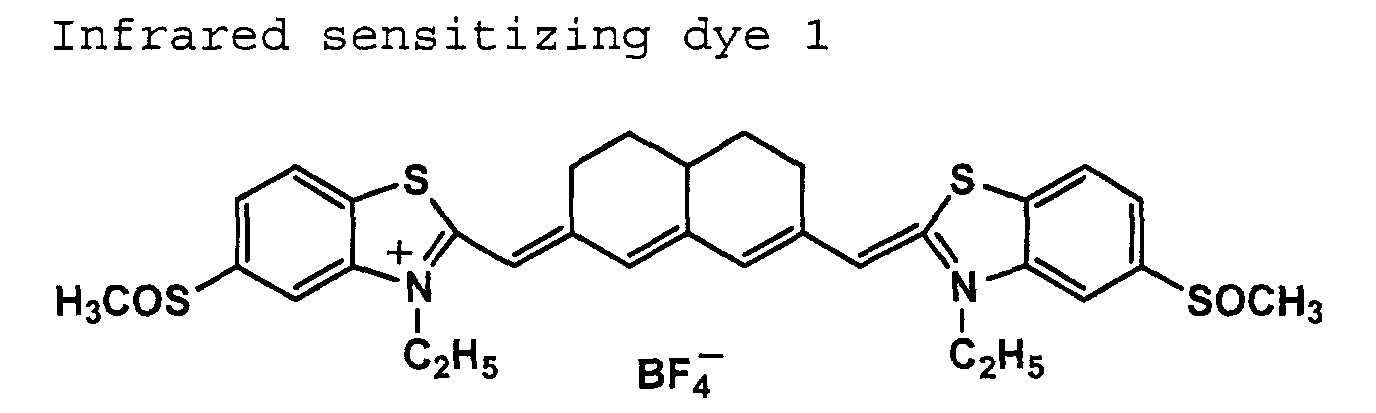
Sensitizing dyes are applicable to the light-sensitive
layer of photothermographic materials used in this invention,
including those which are described in JP-A 63-159841, 60-140335,
63-231437, 63-259651, 63-304242, 63-15245; U.S.
Patent Nos. 4,639,414, 4,740,455, 4,741,966, 4,751,175 and
4,835,096. Further, sensitizing dyes usable in this
invention are described in Research Disclosure item 17643,
IV-A, page 23 (December, 1978) and references cited therein.
Sensitizing dyes exhibiting spectral sensitivity specifically
suitable for spectral characteristics of various scanner
light sources can be advantageously selected. There can be
selected, for example, simple merocyanines described in JP-A
No. 60-162247 and 2-48635, U.S. Patent No. 2,161,331, German
Patent No. 936,071, and Japanese Patent Application No. 3-189532,
which are suitable for an argon ion laser light
source; three-nuclei cyanine dyes described in JP-A No. 50-62425,
54-18726, 59-102229 and merocyanine dyes described in
Japanese Patent Application No. 6-103272, which are suitable
for a helium-neon laser light source; thiacarbocyanine dyes
described in JP-B No. 48-42172, 51-9609, 55-39818
(hereinafter, the term, JP-B refers to published Japanese
Patent), JP-A No. 62-284343 and 2-105135, which are suitable
for LED light source and infrared semiconductor laser light
source; tricarbocyanine dyes described in JP-A No. 59-191032
and 60-80841 and4-quinoline nucleus-containing dicarbocyanine
dyes described in JP-A 59-192242 and 3-67242 [formulas (IIIa)
and (IIIb)], which are suitable for an infrared semiconductor
laser light source. Further, sensitizing dyes described in
JP-A No. 4-182639, 5-341432, JP-B No. 6-52387, 3-10931, U.S.
Patent No. 5,441,866 and JP-A 7-13295 are also employed to
respond to infrared laser light of not less than 750 nm,
preferably not less than 800 nm. These sensitizing dyes may
be used alone or in combination thereof. The combined use of
sensitizing dyes is often employed for the purpose of
supersensitization. A super-sensitizing compound, such as a
dye which does not exhibit spectral sensitization or
substance which does not substantially absorb visible light
may be incorporated, in combination with a sensitizing dye,
into the emulsion.
Crosslinking agents usable in the invention include
various commonly known crosslinking agents used for
photographic materials, such as aldehyde type, epoxy type,
vinylsulfon type, sulfonester type, acryloyl type,
carbodiimide type crosslinking agents, as described in JP-A
50-96216. Specifically preferred are an isocyanate type
compound, epoxy compound and acid anhydride, as shown below.
One of the preferred crosslinking agents is an isocyanate or
thioisocyanate compound represented by the following formula:
Formula
X=C=N-L- (N=C=X) v
wherein v is 1 or 2; L is a bivalent linkage group of an
alkylene, alkenylene, arylene or alkylarylene group; and X is
an oxygen atom or a sulfur atom. An arylene ring of the
arylene group may be substituted. Preferred substituents
include a halogen atom (e.g., bromine atom, chlorine atom),
hydroxy, amino, carboxy, alkyl and alkoxyl.
The isocyanate crosslinking agent is an isocyanate
compound containing at least two isocyanate group and its
adduct. Examples thereof include aliphatic isocyanates,
alicyclic isocyanates, benzeneisocyanates,
naphthalenediisocyanates, biphenyldiisocyanates,
diphenylmethandiisocyanates, triphenylmethanediisocyanates,
triisocyanates, tetraisocyanates, their adducts and adducts
of these isocyanates and bivalent or trivalent polyhydric
alcohols. Exemplary examples are isocyanate compounds
described in JP-A 56-5535 at pages 10-12, including:
ethanediisocyanate, butanediisocyanate, hexanediisocyanate,
2,2-dimetylpentanediisocyanate, 2,2,4-trimethylpentanediisocyanate,
decanediisocyanate, ω,ω'-diisocyanate-1,3-dimethylbenzol,
ω,ω'-diisocyanate-1,2-dimethylcyclohexanediisocyanate,
ω,ω'-diisocyanate-1,4-diethylbenzol,
, ω,ω'-diisocyanate-1,5-dimethylnaphthalene,
ω,ω'-diisocyanate-n-propypbiphenyl, 1,3-phenylenediisocyanate,
1-methylbenzol-2,4-diisocyanate, 1,3-dimethylbenzol-2,6-diisocyanate,
naphthalene-1,4-diisocyanate,
1,1'-naphthyl-2,2'-diisocyanate, biphenyl-2,4'-diisocyanate,
3,3'-dimethylbiphenyl-4,4'-diisocyanate,
diphenylmethane-4,4'-diisocyanate, 2,2'-dimethyldiphenylmethane-4,4'-diisocyanate,
3,3'-dimethoxydiphenylmethane-4,4'-diisocyanate,
4,4'-diethoxydiphenylmethane-4,4'-diisocyanate,
1-methylbenzol-2,4,6-triisocyanate,
1,3,5-trimethylbenzene-2,4,6-triisocyanate,
diphenylmethane-2,4,4'-triisocyanate,
triphenylmethane-4,4',4'-triisocyanate, tolylenediisocyanate,
1,5-naphthylenediisocyanate; dimmer or trimer adducts of
these isocyanate compounds (e.g., adduct of 2-mole
hexamethylenediisocyanate, adduct of 3 mole
hexamethylenediisicyanate, adduct of 2 mole 2,4-tolylenediisocyanate,
adduct of 3 mole 2,4-tolylenediisocyanate);
adducts of two different isocyanates
selected from these isocyanate compounds described above; and
adducts of these isocyanate compounds and bivalent or
trivalent polyhydric alcohol (preferably having upto 20
carbon atoms, such as ethylene glycol, propylene glycol,
pinacol, and trimethylol propane), such as adduct of
tolylenediisocyanate and trimethylolpropane, or adduct of
hexamethylenediisocyanate and trimethylolpropane. Of these,
adduct of isocyanate and polyhydric alcohol improves adhesion
between layers, exhibiting high capability of preventing
layer peeling, image slippage or production of bubbles.
These polyisocyanate compounds may be incorporated into any
portion of the photothermographic material, for example, into
the interior of a support (e.g., into size of a paper
support) or any layer on the photosensitive layer-side of the
support, such as a photosensitive layer, surface protective
layer, interlayer, anti-halation layer or sublayer. Thus it
may be incorporated into one or plurality of these layers.
The thioisocyanate type crosslinking agent usable in
the invention is to be a compound having a thioisocyanate
structure, corresponding to the isocyanates described above.
The crosslinking agents described above are used
preferably in an amount of 0.001 to 2 mol, and more
preferably 0.005 to 0.5 mol per mol of silver.
Next, the layer arrangement of photothermographic
materials used in this invention will be described. The
photothermographic material comprises at least one light
sensitive layer on a support. There is the light sensitive
layer alone on the support or there may be further provided
at least a light insensitive layer on the light sensitive
layer. To control the amount or wavelength distribution of
light transmitted to the light sensitive layer, a filter
layer may be provided on the light sensitive layer side or on
the opposite side, or a dye or pigment may be incorporated in
the light sensitive layer. Dyes used therein are preferably
compounds described in JP-A 8-201959. The light sensitive
layer may be comprised of plural layers, or the combination
of high-speed and low-speed light sensitive layers may be
provided. Various additives may be incorporated into the
light sensitive layer, light insensitive layer or other
component layer(s). Examples thereof include a surfactant,
antioxidant, stabilizer, plasticizer, UV absorbent and
coating aid.
Next, coating methods relating to the
photothermographic material will be described. Coating
solutions used for the photothermographic material are
preferably filtered prior to their coating. In the
filtration, it is preferred to cause the coating solution to
pass through a filter material having a absolute or semi-absolute
filtering precision of 5 to 50 µm, once or more.
In coating photothermographic materials used in this
invention employed are successive coating methods in which
coating and drying of each layer are successively repeated,
including, for example, a roll coating system such as reverse
roll coating and gravure roll coating, blade coating, wire-bar
coating, and die coating. A simultaneous multi-layer
coating is also employed, in which before a coated layer is
dried, the next layer is coated using plural coaters and the
thus coated plural layers are simultaneously dried, or plural
coating solutions are simultaneously layered and coated using
slide coating, curtain coating or an extrusion type die
coater having plural slits, in which the latter coating is
preferred in terms of prevention of occurrence of coating
troubles caused by impurities incorporated from the outside.
In the simultaneous multi-layer coating, to prevent cross-layer
contamination, the viscosity of the uppermost layer
coating solution is preferably not less than 0.1 Pa·s and
that of other layer coating solution is preferably not less
than 0.03 Pa·s. When coating solutions of two or more layers
are layered, a solid content dissolved in one layer which is
insoluble in a solvent used in the adjacent layer tends to
cause turbulence or turbidity at the interface. It is
therefore preferable that major solvents contained in
respective layer coating solutions are identical (or the
content of a solvent commonly contained in coating solutions
is more than other solvents).
After completion of multiplayer coating, it is
preferred to dry as promptly as possible and it is more
preferred to complete drying within 10 sec. to avoid cross-layer
mixing caused by flow, diffusion or density difference.
A hot air drying system, an infrared ray drying system and
the like are generally employed and the hot air drying system
is preferred, in which the drying temperature is preferably
30 to 100° C.
The thus prepared photothermographic material may be
cut to an intended size and packed immediately after
completion of drying, alternatively, the photothermographic
material may be wound up on the roll and temporarily stocked
prior to cutting and packaging. A wind-up system is not
specifically limited but a tension control system is
generally employed.
Exposure of the photothermographic material is
conducted preferably employing argon laser (488 nm), he-ne-laser
(633 nm), red semiconductor laser (670 nm), infrared
semiconductor laser (780 nm, 820 nm). Of these, infrared
semiconductor laser is preferred in terms of being high power
and transparent to the photothermographic material.
In the invention, exposure is preferably conducted by
laser scanning exposure. It is also preferred to use a laser
exposure apparatus, in which a scanning laser light is not
exposed at an angle substantially vertical to the exposed
surface of the photothermographic material. The expression
"laser light is not exposed at an angle substantially
vertical to the exposed surface" means that laser light is
exposed preferably at an angle of 55 to 88°, more preferably
60 to 86°, still more preferably 65 to 84°, and optimally 70
to 82°. When the photothermographic material is scanned with
laser light, the beam spot diameter on the surface of the
photosensitive material is preferably not more than 200 µm,
and more preferably not more than 100 µm. Thus, a smaller
spot diameter preferably reduces the angle displacing from
verticality of the laser incident angle. The lower limit of
the beam spot diameter is 10 µm. The thus laser scanning
exposure can reduce deterioration in image quality due to
reflected light, resulting in occurrence such as interference
fringe-like unevenness.
Exposure applicable in the invention is conducted
preferably using a laser scanning exposure apparatus
producing longitudinally multiple scanning laser beams,
whereby deterioration in image quality such as occurrence of
interference fringe-like unevenness is reduced, as compared
to a scanning laser beam of the longitudinally single mode.
Longitudinal multiplication can be achieved by a technique of
employing backing light with composing waves or a technique
of high frequency overlapping. The expression
"longitudinally multiple" means that the exposure wavelength
is not a single wavelength. The exposure wavelength
distribution is usually not less than 5 nm and not more than
10 nm. The upper limit of the exposure wavelength
distribution is not specifically limited but is usually about
60 nm.
Photothermographic materials used in this invention are
stable at ordinary temperature and are developed upon being
heated at a high temperature after exposure. The heating
temperature is preferably 80 to 200° C, and more preferably
100 to 150° C. Heating at a temperature lower than 80° C
results in images with insufficient densities and at the
heating temperature higher than 200° C, the binder melts,
adversely affecting not only images but also transportability
and a thermal processor. On heating, oxidation-reduction
reaction between an organic silver salt (acting as an
oxidant)and a reducing agent is caused to form silver images.
This reaction process proceeds without supply of water from
the outside.
EXAMPLES
The present invention will be further described based
on examples but the invention is by no means limited to these
examples.
Example 1
Preparation of light sensitive silver halide emulsion 1
Solution A1
| Phenylcarbamoyl gelatin |
88.3 g |
| Compound (A) (10% methanol solution) |
10 ml |
| Potassium bromide |
0.32 g |
| Water to make |
5429 ml |
Solution B1
| 0.67 mol/l Aqueous silver nitrate solution |
2635 ml |
Solution C1
| Potassium bromide |
51.55 g |
| Potassium iodide |
1.47 g |
| Water to make |
660 ml |
| Solution D1 |
| Potassium bromide |
154.9 g |
| Potassium iodide |
4.41 g |
| Iridium chloride (1% solution) |
0.93 ml |
Solution E1
| 0.4 mol/l aqueous potassium bromide solution |
| Amount necessary to adjust silver potential |
potential |
Solution F1
| Aqueous 56% acetic acid solution |
16 ml |
Solution G1
| Anhydrous sodium carbonate |
1.72 g |
| Water to make |
151 ml |
Compound (A) HO (CH2CH2O)n-(CH(CH3)CH2O)17-(CH2CH2O)mH
(m + n = 5 to 7)
Using a stirring mixer described in JP-B 58-58288 and
58-58289, 1/4 of solution B1, the total amount of solution C1
were added to solution A1 by the double jet addition for 4
min 45 sec. to form nucleus grain, while maintaining a
temperature of 45° C and a pAg of 8.09. After 7 min, 3/4 of
solution B1 and the total amount of solution D1 were further
added by the double jet addition for 14 min 15 sec., while
mainlining a temperature of 45° C, a pAg of 8.09 and a pH of
5.6. After stirring for 5 min., the reaction mixture was
lowered to 40° C and solution F1 was added thereto to
coagulate the resulting silver halide emulsion. Remaining
2000 ml of precipitates, the supernatant was removed and
after adding 10 lit. water with stirring, the silver halide
emulsion was again coagulated. Remaining 1500 ml of
precipitates, the supernatant was removed and after adding 10
lit. water with stirring, the silver halide emulsion was
again coagulated. Remaining 1500 ml of precipitates, the
supernatant was removed and solution G1 was added. The
temperature was raised to 60° c and stirring continued for
120 min. Finally, the pH was adjusted to 5.8 and water was
added there to so that the weight per mol of silver was 1161
g, and light-sensitive silver halide emulsion 1 was thus
obtained. It was proved that the resulting emulsion was
comprised of monodisperse silver iodobromide cubic grains
having an average equivalent sphere diameter of 0.058 µm, a
coefficient of variation of grain size of 12% and a (100)
face proportion of 92%. Amounts of iridium contained within
and outside the silver halide grain were 8.2x10⁻⁶ mol and
1.6x10⁻⁶ mol per mol of silver, respectively. The gelatin
content of the emulsion was 42.5 g per mol of silver.
Then, to the emulsion was added 240 ml of 0.5%
triphenyphosphine oxide methanol solution and after adding
1/20 equimolar gold compound described below (0.5% methanol
solution), the emulsion was chemically sensitized with
stirring at a temperature of 55° C for 120 min.
Preparation of light sensitive silver halide emulsions 2 to 7
Light sensitive silver halide emulsions 2 through 7
were prepared in a manner similar to silver halide emulsion
1, except that the mixing temperature and the addition time
of 1/4 of the solution (B1) and the total of the solution
(C1) were varied. Each of the thus prepared emulsions was
comprised of cubic silver iodobromide grains exhibiting the
average grain size (equivalent sphere diameter), coefficient
of variation of grain size and [100] face proportion shown in
Table 1. The amount of iridium contained in silver halide
grains and the gelatin content were the same as silver halide
emulsion 1.
Emulsions 2 through 7 were each subjected to chemical
sensitization similarly to emulsion 1.
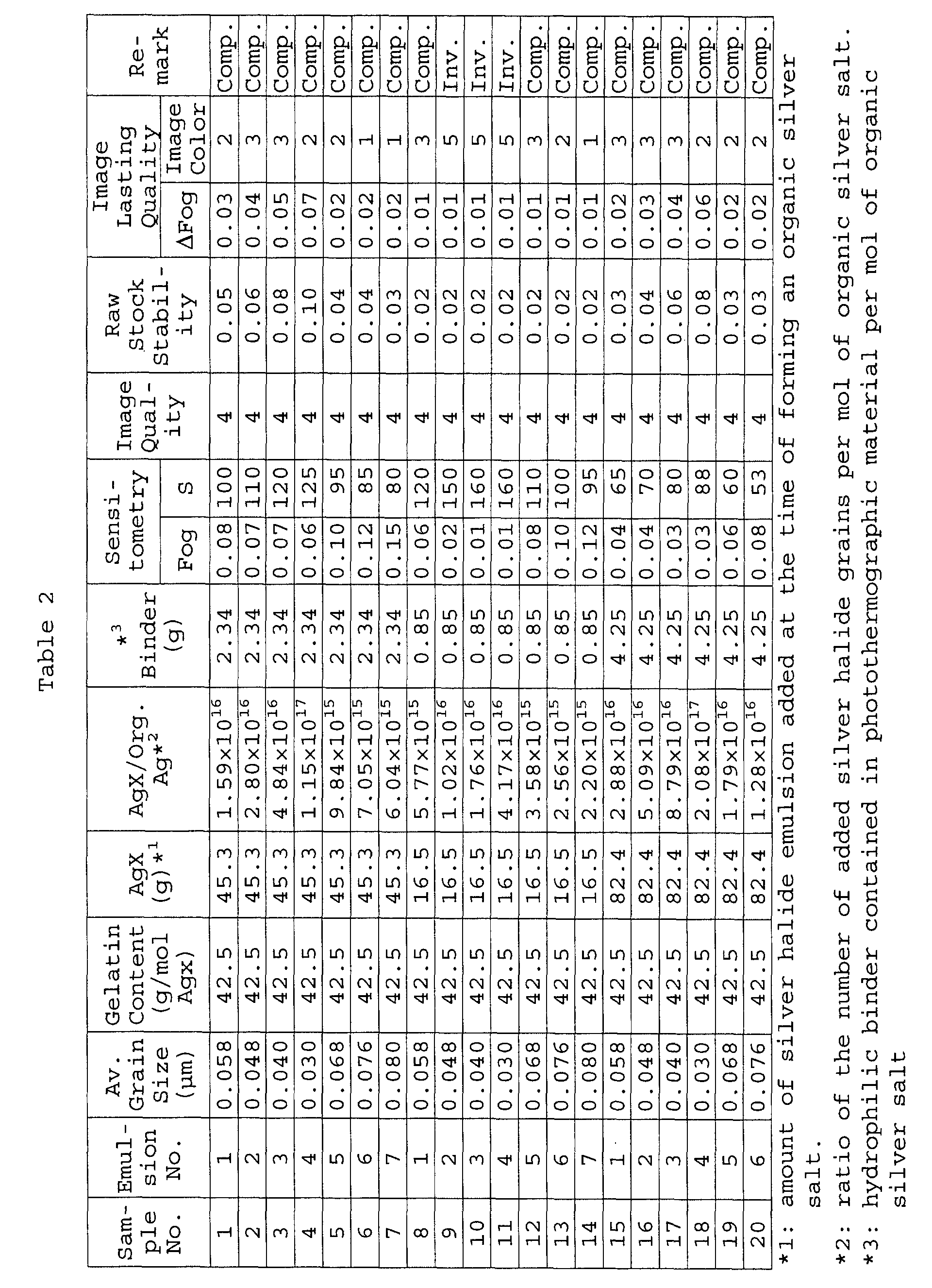
| Emulsion No. | Mixing Temp. (°C) | Nucleation Time | Gelatin Content of Solution A1 (g) | Av. Grain Size (µm) | C.V. of Grain Size | [100] Face | Gelatin Content |
| 1 | 45 | 4 min 45 sec | 88.3 | 0.058 | 12% | 92% | 42.5 |
| 2 | 45 | 1 min 11 sec | 88.3 | 0.048 | 12% | 92% | 42.5 |
| 3 | 45 | 24 sec | 88.3 | 0.040 | 12% | 92% | 42.5 |
| 4 | 38 | 24 sec | 88.3 | 0.030 | 12% | 92% | 42.5 |
| 5 | 47 | 4 min 45 sec | 88.3 | 0.068 | 12% | 92% | 42.5 |
| 6 | 45 | 15 min | 88.3 | 0.076 | 12% | 92% | 42.5 |
| 7 | 47 | 15 min | 88.3 | 0.080 | 12% | 92% | 42.5 |
In 4720 ml water were dissolved 111.4 g of behenic
acid, 83.8 g of arachidic acid and 54.9 g of stearic acid at
80° C. The, after adding 540.2 ml of 1.5M aqueous sodium
hydroxide solution with stirring and further adding 6.9 ml of
concentrated nitric acid, the solution was cooled to a
temperature of 55° C to obtain an aqueous organic acid sodium
salt solution. To the solution were added the silver halide
emulsion (equivalent to 0.038 mol silver) and 450 ml water
and stirring further continued for 5 min., while maintained
at a temperature of 55° C. Subsequently, 702.6 ml of 1M
aqueous silver nitrate solution was added in 2 min. and
stirring continued further for 10 min., then, the reaction
mixture was filtered to remove aqueous soluble salts.
Thereafter, washing with deionized water and filtration were
repeated until the filtrate reached a conductivity of 2
µS/cm, and after subjecting to centrifugal dehydration, the
reaction product was dried with heated air at 40° C until no
reduction in weight was detected to obtain a powdery organic
silver salt.
Using silver halide emulsion 2 through 7, powdery
organic silver salts 2 through 7 were similarly prepared.
Similarly, powdery organic silver salts 8 through 21
were prepared, provided that the amount of the light
sensitive silver halide emulsion was varied as shown in Table
2.
Preparation of preliminarily dispersed solution
In 1457 g methyl ethyl ketone was dissolved 14.57 g of
polyvinyl butyral powder (Butvar B-79, available from
Monsanto Corp.) and further thereto, 500 g of the powdery
organic silver salt with stirring by dissolver DISPERMAT CA-40M
type (available from VMA-GETZMANN Corp.) was gradually
added to obtain a preliminarily dispersed solutions Nos. 1
through 21.
Preparation of light sensitive emulsified solution
Thereafter, using a pump, the thus dispersed solution
No. 1 through 21 were each supplied to a media type
dispersing machine DISPERMAT SL-C12 Type EX (available from
GETZMANN Corp.), which was packed 0.5 mm zirconia beads
(available from Toray Co. Ltd.) by 80%, and dispersed at a
circumferential speed of 13 m and for 0.5 min. of a retention
time with a mill to obtain light sensitive emulsion-dispersing
solutions No. 1 through 21.
Preparation of stabilizer solution
Stabilizer 1 of 1.0 g and 0.31 g of potassium acetate
were dissolved in 4.97 g of methanol to obtain a stabilizer
solution.
Preparation of infrared sensitizing dye solution
Infrared sensitizing dye 1 of 19.2 mg 1.488 g of 2-chlorobenzoic
acid, 2.779 g of stabilizer 2 and 365 mg of 5-methyl-2-mercaptobenzimidazole
were dissolved in 31. 3 ml of
MEK in the dark room to obtain an infrared sensitizing dye
solution.
Preparation of addition solution a
Reducing agent A-3 of 27.98 g, 1.54 g of 4-methylphthalic
acid and 0.48 g of infrared dye 1 were
dissolved in 110 g of MEK to obtain addition solution a.
Preparation of addition solution b
Antifoggant 2 of 3.56 g was dissolved in 40.9 g of MEK
to obtain addition solution b.
Preparation of light sensitive layer coating solution
The light-sensitive emulsion-dispersed solution of 50 g
and 15.11 g MEK were maintained at 21° C with stirring.
Then, 390 µl of antifoggant 1 solution (10% by weight
methanol solution) was added and stirred for 1 hr. and 494 µl
of calcium bromide solution (10% by weight methanol solution)
was added and further stirred for 20 min. Subsequently, 167
mg of the stabilizer solution was further added thereto and
after stirring for 10 min., 2.622 mg of the infrared
sensitizing dye solution was added, stirred for 10 min.
Then, the reaction mixture was cooled to 13° C and further
stirred for 30 min.
Further, 13.31 g of polyvinyl butyral (Butvar B-79,
available from Monsanto Corp.) was added thereto and after 30
min., 1.084 g of tetrachlorophthalic acid (13% by weight MEK
solution) was added and stirred for 15 min. Then, 12.43 g of
addition solution a, 1.6 ml of 10% by weight MEK solution of
aliphatic isocyanate compound (Desmodur N3300, available from
Movey Co.), and 4.37 g of addition solution b were
successively added with stirring to obtain light sensitive
layer coating solution Nos. 1 through 21.
Preparation of matting agent dispersion
Cellulose acetate butyrate (7.5 g of CAB171-15,
available from Eastman Chemical Co.) was dissolved in 42.5 g
of MEK, then, 5 g of calcium carbonate (Super-Pflex 200,
available from Speciality Mineral Corp.) was added thereto
and dispersed using a dissolver type homogenizer at 8000 rpm
for 30 min to obtain a matting agent dispersion.
Preparation of protective layer coating solution
To 865 g of methyl ethyl ketone were added with
stirring 96 g of cellulose acetate butyrate (CAB171-15,
available from Eastman Chemical Co.) and 4.5 g of polymethyl
methacrylate (Paraloid A-21, available from Rohm & Haas
Corp.). Further thereto were added and dissolved 1.5 g of
vinylsulfone compound shown below, 1.0 g of benzotriazole and
1.0 g of fluorinated surfactant (Surflon KH40, available from
ASAHI Glass Co. Ltd.). Then, 30 g of the matting agent
dispersion was further added thereto to obtain a coating
solution of the surface protective layer.
Coating of light sensitive layer side
Viscosities of the light sensitive layer coating
solution and protective layer coating solution were each
adjusted to 0.228 Pa·s and 0.184 Pa·s, respectively by
adjusting the solvent content. After filtered with a filter
of semi-complete filtration precision of 20 µm, the coating
solutions extruded from an extrusion type die coater were
simultaneously coated on the support using. After 8 sec.,
coated layers were dried with hot air of dry bulb temperature
of 75° C and dew point of 10° C for a period of 5 min. and
wound up in a roll form at a tension of 196 N/m (20 kg/m) in
an atmosphere of 23° C and 50% RH to obtain
photothermographic material samples Nos. 1 through 21. The
thus obtained photothermographic material exhibited a silver
coverage of the light sensitive layer of 1/9 g/m
2 and a dry
layer thickness of the protective layer of 2.5 µm.
The thus prepared photothermographic material samples
were each subjected to laser scanning exposure from the
emulsion side using an exposure apparatus having a light
source of 800 to 820 nm semiconductor laser of a longitudinal
multi-mode, which was made by means of high frequency
overlapping. In this case, exposure was conducted at 75° of
an angle between the exposed surface and exposing laser
light. The exposed photothermographic material was subjected
to thermal development at 115° C for 15 sec., while bringing
the protective layer surface of the photothermographic
material into contact with the heated drum surface. Exposure
and thermal development were carried out in an atmosphere of
23° C and 50% RH. The thus processed samples were evaluated
with respect to sensitivity (also denoted as "S") and fog
density (also denoted as "Fog"). Sensitivity was represented
by a relative value of the reciprocal of exposure giving a
density of 1.0 plus a density of an unexposed area, based on
the sensitivity of photothermographic material sample 1 being
100. Results are shown in Table 2.
Evaluation of image quality
The portion exhibiting a density of 1.0 of each
developed sample was microscopically observed using a
microscope (available from MITSUTOYO Co., Ltd.) at a
transmission mode and 100 power, with respect to deteriorated
image quality caused by white spots and coagula, based on the
following criteria:
- 4:
- no white spot and coagulum was observed and
superior image quality,
- 3:
- white spots and coagula were slightly observed and
no problem in image quality,
- 2:
- white spots and coagula were observed but an image
quality acceptable as a product,
- 1:
- marked white spots and coagula were observed and
unacceptable levels as a product.
Evaluation of row stock stability
Photothermographic material samples were allowed to
stand under the following conditions (A) and (B) for 10 days,
and similarly subjected to exposure, thermal development and
sensitometry. Samples were evaluated with respect to raw
stock stability, based on the difference in fog density
between conditions (A) and (B), i.e. fog (B) minus fog (A):
Evaluation of image lasting quality
2 sheets of each sample were processed similarly to the
sensitometry evaluation. One sheet was allowed to stand in a
light-shielded room at 25° C and 55% RH for 7 days and the
other sheet was allowed to stand at 25° C and 55% RH for 7
days, while being exposed to natural light. Thereafter, aged
samples were measured with respect to fogging, based on an
increase of fog density, as defined below:
Fog increase (ΔFog) = a fog density resulted when
exposed natural light minus a fog density resulted when aged
under light-shielding.
Further, both sheet samples were evaluated with respect
to silver image color, based on the following criteria:
- 5:
- neutral black tone and no yellowish tone was observed,
- 4:
- not neutral black tone but yellowish tone was
scarcely observed,
- 3:
- yellowish tone was slightly observed
- 2:
- slightly yellowish tone was overall observed, and
- 1:
- yellowish tone was apparently observed.
Results are shown in Table 2.
As can be seen from Table 1, inventive
photothermographic material samples exhibited enhanced
sensitivity, reduced fogging, improved raw stock stability
and superior image lasting quality.
Example 2
Photothermographic material samples were prepared
similarly to Example 1, provided that in the process of
preparing the light sensitive silver halide emulsion, the
amount of phenylcarbamoyl gelatin in solution A1 was varied
as shown in Table 3. The thus prepared samples were
evaluated similarly to Example 1 and the results thereof are
shown in Tables 4 and 5.
| Emulsion No. | Mixing Temp. (°C) | Nucleation Time | Gelatin Content of Solution A1 (g) | Av. Grain Size (µm) | C.V. of Grain Size*1 | [100] Face | Gelatin Content |
| 8 | 45 | 4 min 45 sec | 71.2 | 0.058 | 12% | 92% | 34.0 |
| 9 | 45 | 1 min 11 sec | 71.2 | 0.048 | 12% | 92% | 34.0 |
| 10 | 45 | 24 sec | 71.2 | 0.040 | 12% | 92% | 34.0 |
| 11 | 38 | 24 sec | 71.2 | 0.030 | 12% | 92% | 34.0 |
| 12 | 47 | 4 min 45 sec | 71.2 | 0.068 | 12% | 92% | 34.0 |
| 13 | 45 | 15 min | 71.2 | 0.076 | 12% | 92% | 34.0 |
| 14 | 47 | 15 min | 71.2 | 0.080 | 12% | 92% | 34.0 |
| 15 | 45 | 4 min 45 sec | 41.3 | 0.058 | 12% | 92% | 19.8 |
| 16 | 45 | 1 min 11 sec | 41.3 | 0.048 | 12% | 92% | 19.8 |
| 17 | 45 | 24 sec | 41.3 | 0.040 | 12% | 92% | 19.8 |
| 18 | 38 | 24 sec | 41.3 | 0.030 | 12% | 92% | 19.8 |
| 19 | 47 | 4 min 45 sec | 41.3 | 0.068 | 12% | 92% | 19.8 |
| 20 | 45 | 15 min | 41.3 | 0.076 | 12% | 92% | 19.8 |
| 21 | 47 | 15 min | 41.3 | 0.080 | 12% | 92% | 19.8 |
| 22 | 45 | 4 min 45 sec | 19.4 | 0.058 | 12% | 92% | 9.1 |
| 23 | 45 | 1 min 11 sec | 19.4 | 0.048 | 12% | 92% | 9.1 |
| 24 | 45 | 24 sec | 19.4 | 0.040 | 12% | 92% | 9.1 |
| 25 | 38 | 24 sec | 19.4 | 0.030 | 12% | 92% | 9.1 |
| 26 | 47 | 4 min 45 sec | 19.4 | 0.068 | 12% | 92% | 9.1 |
| 27 | 45 | 15 min | 19.4 | 0.076 | 12% | 92% | 9.1 |
| 28 | 47 | 15 min | 19.4 | 0.080 | 12% | 92% | 9.1 |
| 29 | 45 | 4 min 45 sec | 10.9 | 0.058 | 12% | 92% | 5.1 |
| 30 | 45 | 1 min 11 sec | 10.9 | 0.048 | 12% | 92% | 5.1 |
| 31 | 45 | 24 sec | 10.9 | 0.040 | 12% | 92% | 5.1 |
| 32 | 38 | 24 sec | 10.9 | 0.030 | 12% | 92% | 5.1 |
| 33 | 47 | 4 min 45 sec | 10.9 | 0.068 | 12% | 92% | 5.1 |
| 34 | 45 | 15 min | 10.9 | 0.076 | 12% | 92% | 5.1 |
| 35 | 47 | 15 min | 10.9 | 0.080 | 12% | 92% | 5.1 |
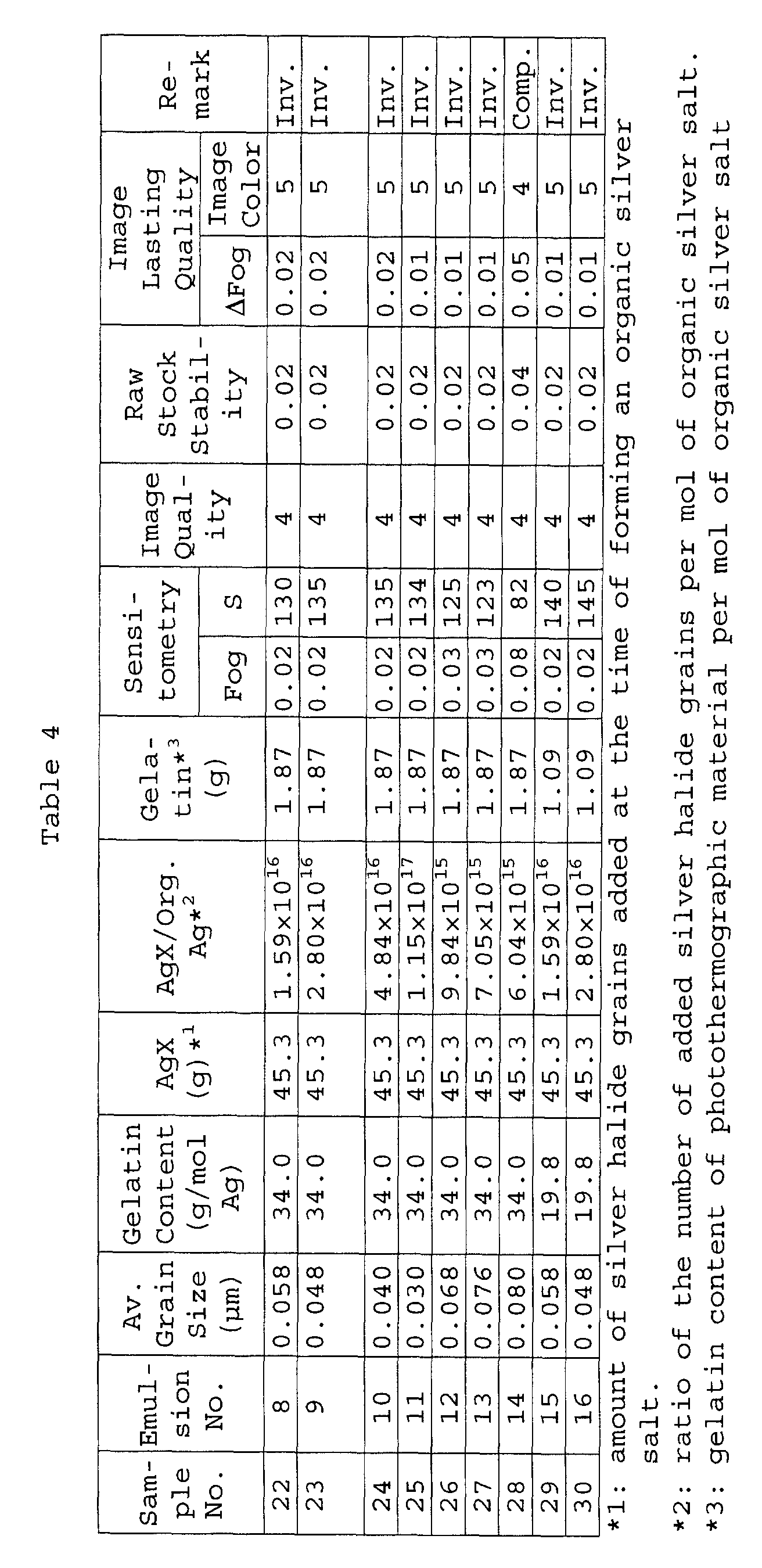

Inventive photothermographic material samples exhibited
enhanced sensitivity, reduced fogging, no deteriorated image
quality caused by white spots and coagula, improved raw stock
stability and superior image lasting quality.
Example 3
Photographic material samples were prepared similarly
to Example 2, provided that silver halide emulsions Nos. 8,
10, 15 and 17 were prepared as shown in Table 6. The thus
prepared samples were evaluated similarly to example 2 and
results are shown in Table 6.
Inventive photothermographic material samples exhibited
enhanced sensitivity, reduced fogging, no deteriorated image
quality caused by white spots and coagula, improved raw stock
stability and superior image lasting quality, as compared to
comparative samples.
Example 4
Photothermographic material samples were prepared and
evaluated similarly to Example 1, provided that the halide
composition of the light sensitive silver halide emulsion was
varied by varying the ratio of potassium bromide to potassium
iodide in the preparation of silver halide emulsions.
As a result, inventive photothermographic material
samples exhibited enhanced sensitivity, reduced fogging, no
deteriorated image quality caused by white spots and coagula,
improved raw stock stability and superior image lasting
quality. It was specifically noted that the iodide content
of 5 mol% or more exhibited the tendency for sensitivity to
decrease.
Example 5
Photothermographic material samples were prepared and
evaluated similarly to Example 1, provided that solution (D1)
was divided and timing of adding iridium chloride was in the
preparation of silver halide emulsions.
As a result, inventive photothermographic material
samples exhibited enhanced sensitivity, reduced fogging, no
deteriorated image quality caused by white spots and coagula,
improved raw stock stability and superior image lasting
quality. It was specifically noted that
addition of iridium chloride at the time of exceeding 1/2 of
the grain volume exhibited the tendency for sensitivity to
increase.
Example 6
Photothermographic material samples were prepared and
evaluated similarly to Example 5, provided that iridium
chloride was replaced by rhodium chloride and ruthenium
chloride in the preparation of silver halide emulsions.
As a result, inventive photothermographic material
samples exhibited enhanced sensitivity, reduced fogging, no
deteriorated image quality caused by white spots and coagula,
improved raw stock stability and superior image lasting
quality.
Example 7
Preparation of Photographic Support
Polyethylene terephthalate (hereinafter, also simply
denoted as PET) photographic support was prepared in the
following manner.
Both sides of a blue-tinted 175 µm thick polyethylene
terephthalate film base exhibiting a blue density of 0.170
(densitometer PDA-65, available from Konica Corp.) was
subjected to corona discharging at 8 W/m2·min.
Preparation of light sensitive silver halide emulsion A
In 900 ml of deionized water were dissolved 7.5 g of
gelatin having an average molecular weight of 100,000 and 10
mg of potassium bromide. After adjusting the temperature and
the pH to 35 °C and 3.0, respectively, 370 ml of an aqueous
solution containing 74 g silver nitrate and an equimolar
aqueous solution containing potassium bromide, potassium
iodide (in a molar ratio of 98 to 2) and 1x10⁻⁴ mol/mol Ag of
iridium chloride were added over a period of 10 minutes by
the controlled double-jet method, while the pAg was
maintained at 7.7. Thereafter, 4-hydroxy-6-methyl-1,3,3a,7-tetraazaindene
was added and the pH was adjusted to 5 using
NaOH. There was obtained cubic silver iodobromide grains
having an average grain size of 0.06 µm, a variation
coefficient of the projection area equivalent diameter of 10
percent, and the proportion of the {100} face of 87 percent.
The resulting emulsion was flocculated to remove soluble
salts, employing a flocculating agent and after desalting,
0.1 g of phenoxyethanol was added and the pH and pAg were
adjusted to 5.9 and 7.5, respectively to obtain silver halide
emulsion A.
Preparation of light sensitive silver halide emulsion B
In 900 ml of deionized water were dissolved 7.5 g of
gelatin having an average molecular weight of 100,000 and 10
mg of potassium bromide. After adjusting the temperature and
the pH to 35 °C and 3.0, respectively, 370 ml of an aqueous
solution containing 62 g silver nitrate and an equimolar
aqueous solution containing potassium bromide, potassium
iodide (in a molar ratio of 98 to 2) and 1x10⁻⁴ mol/mol Ag of
iridium chloride were added over a period of 9 minutes by the
controlled double-jet method, while the pAg was maintained at
7.7. Thereafter, 4-hydroxy-6-methyl-1,3,3a,7-tetraazaindene
was added and the pH was adjusted to 5 using NaOH. There was
obtained cubic silver iodobromide grains having an average
grain size of 0.06 µm, a variation coefficient of the
projection area equivalent diameter of 10 percent, and the
proportion of the {100} face of 87 percent. The resulting
emulsion was flocculated to remove soluble salts, employing a
flocculating agent and after desalting, 0.1 g of
phenoxyethanol was added and the pH and pAg were adjusted to
5.9 and 7.5, respectively to obtain silver halide emulsion B.
Preparation of powdery organic silver salt A
In 4720 ml water were dissolved 111.4 g of behenic
acid, 83.8 g of arachidic acid and 54.9 g of stearic acid at
80° C. The, after adding 540.2 ml of 1.5M aqueous sodium
hydroxide solution with stirring and further adding 6.9 ml of
concentrated nitric acid, the solution was cooled to a
temperature of 55° C to obtain an aqueous organic acid sodium
salt solution. To the solution were added the silver halide
emulsion (equivalent to 0.038 mol silver) and 450 ml water
and stirring further continued for 5 min., while maintained
at a temperature of 55° C. Subsequently, 760.6 ml of 1M
aqueous silver nitrate solution was added in 2 min. and
stirring continued further for 10 min., then, the reaction
mixture was filtered to remove aqueous soluble salts. The
obtained organic silver salt dispersion was put into a
washing vessel and deionized water was added with stirring.
Thereafter, the dispersion was allowed to stand and separate
float of the organic silver salt dispersion from the reaction
mixture to remove the lower soluble salts. Thereafter,
washing with deionized water and filtration were repeated
until the filtrate reached a conductivity of 2 µS/cm, and
after subjecting to centrifugal dehydration, the reaction
product was dried with heated air at 37° C until no reduction
in weight was detected to obtain a powdery organic silver
salt A. In preparing the organic silver salt, a hydrophilic
binder (gelatin) of 0.95 g per mol of organic silver salt and
light sensitive silver halide of 1.5x10¹⁶ grains per mol of
organic silver salt were concurrently present.
Preparation of powdery organic silver salt B
Powdery organic silver salt B was prepared similarly to
silver salt A, except that light sensitive silver halide
emulsion B was used in place of silver halide emulsion A. In
preparing the organic silver salt, a hydrophilic binder
(gelatin) of 1.13 g per mol of organic silver salt and light
sensitive silver halide of 2.6x10¹⁶ grains per mol of organic
silver salt were concurrently present.
Preparation of preliminarily dispersed solution A
In 1457 g methyl ethyl ketone was dissolved 14.57 g of
polyvinyl butyral powder (Butvar B-79, available from
Monsanto Corp.) and further thereto, 500 g of the powdery
organic silver salt A was gradually added with stirring by
dissolver DISPERMAT CA-40M type (available from VMA-GETZMANN
Corp.) to obtain preliminary dispersion A.
Preparation of preliminarily dispersed solution B
Preliminarily dispersed solution B was prepared
similarly to dispersed solution A, except that powdery
organic silver salt A was replaced by powdery organic silver
salt B.
Preparation of light-sensitive emulsion dispersing solution 1
Preliminary dispersion A was supplied to a media type
dispersion machine, DISPERMAT SL-C12EX (available from VMA-GETMANN
Corp.), which was packed 0.5 mm in diameter Zirconia
beads (available from Toray Co. Ltd.) by 80%, and dispersed
at a circumferential speed of 13 m/s for 10 min. and 0. 7
min. of a retention time in the mill to obtain light
sensitive emulsion dispersing solution 1.
Preparation of light-sensitive emulsion dispersing solution 2
Using pressure homogenizer type GM-2 (available from
S.M.T. Corp.), preliminary dispersion A was subjected to two-pass
dispersion to obtain light sensitive emulsion dispersing
solution 3, in which the treatment pressure at the first pass
was 27.46 MPa and that of the second pass was 54.92 MPa.
Preparation of light-sensitive emulsion dispersing solution 3
Light sensitive emulsion dispersing solution 3 was
prepared similarly to dispersing solution 2, provided that
four times of total treatments was conducted and after the
second pass, the treatment pressure was 54.92 MPa.
Preparation of light-sensitive emulsion dispersing solution 4
Light sensitive emulsion dispersing solution 4 was
prepared similarly to dispersing solution 1, provided that
the retention time in the mill was varied to 3 min.
Preparation of light-sensitive emulsion dispersing solution 5
Light sensitive emulsion dispersing solution 5 was
prepared similarly to dispersing solution 4, provided that
preliminary dispersion A was replaced by preliminary
dispersion B.
Preparation of infrared sensitizing dye solution
Infrared sensitizing dye 1 of 350 mg, 13.96 g of 2-chlorobebzoic
acid and 2.14 g of 5-methyl-2-mercaptobenzimidazole
were dissolved in 73.4 g of methanol in
a dark room to obtain an infrared sensitizing dye solution.
Preparation of stabilizer solution
Stabilizer 1 of 1.0 g and 0.5 g of potassium acetate
were dissolved in 8.5 g of methanol to obtain a stabilizer
solution.
Preparation of developer solution
Developing agent 1,1-bis(2-hydroxy-3,5-dimethylphenyl)-2-methylpropane
of 17.74 g was dissolved in methyl ethyl
ketone (also denoted as MEK) to make 100 ml of a developer
solution.
Preparation of antifoggant solution
Antifoggant 2 of 5.81 g was dissolved in methyl ethyl
ketone to make 100 ml of a stabilizer solution.
Preparation of Image forming Layer Coating solution
Light sensitive emulsion dispersing solution 1 of 50 g
was maintained at 21° C with stirring, 1000 µl of 10%
methanol solution of chemical sensitizer described in Table 7
and after 2 min., 390 µl of 10% antifoggant 1 methanol
solution was added thereto and stirred for 1 hr. Further
thereto, 889 µm of 10% calcium bromide methanol solution of
calcium bromide was added and stirred for 30 min.
Subsequently, 1.416 ml of infrared sensitizing dye solution
and 667 µl of stabilizer solution were added thereto and
stirred for 1 hr. and then cooled to a temperature of 13° C
and further stirred for 30 min. Further, 13.3 g of
polyvinyl butyral (Butvar B-79, available from Monsanto Co.,
Tg = 64° C) was added thereto and sufficiently dissolved with
stirring for 30 min., while maintaining the temperature at
13° C; then, the following additives were added at intervals
of 15 min.
| Phthalazine | 305 mg |
| Tetrachlorophthalic acid | 102 mg |
| 4-Methylphthalic acid | 137 mg |
| Infrared dye 1 | 37 mg |
Then, after stirring for 15 min., the following
additives were successively added with stirring to obtain a
light sensitive layer coating solution 1:
| Antifoggant solution (above-described) | 5.47 ml |
| Developer solution (above-described) | 14.06 ml |
| Desmodur N3300 (aliphatic isocyanate, 10% MEK solution, available from Movey Co.) | 1.60 ml |
Similarly, light sensitive layer coating solution was
prepared, provided that light sensitive emulsion dispersing
solution 2 was used in place of emulsion dispersing solution
1.
Light sensitive layer coating solutions 3 through 7
were prepared similarly to light sensitive layer coating
solution 1, provided that light sensitive emulsion dispersing
solutions shown in Table 7 were used and stirring was
conducted using a high-speed rotary centrifugal type stirrer
(dissolver).
Coating of Backing Layer-side
To 830 g of methyl ethyl ketone, 84.2 g of cellulose
acetate-butylate (CAB381-20, available from Eastman Chemical
Co.) and 4.5 g of polyester resin (Vitel PE2200B, available
from Bostic Corp.) were added with stirring and dissolved
therein. To the resulting solution was added 0.30 g of
infrared dye 1 and 4.5 g fluorinated surfactant (Surflon
KH40, available from ASAHI Glass Co. Ltd.) and 2.3 g
fluorinated surfactant (Megafac F120K, available from
DAINIPPON INK Co. Ltd.) which were dissolved in 43.2 g
methanol, were added thereto and stirred until being
dissolved. Then, 75 g of silica (Siloid 64X6000, available
from W.R. Grace Corp.), which was dispersed in methyl ethyl
ketone in a concentration of 1 wt% using a dissolver type
homogenizer, was further added thereto with stirring to
obtain a coating solution A for backing layer.
On the support, the following layers were successively
coated to prepare photothermographic materials 1 through 7,
in which light sensitive layer coating solutions 1 through 7
were each employed. Drying was carried out at 75° C for 5
min.
Backing layer-side coating
The prepared backing layer coating solution was coated
so as to form a dry thickness of 3.5 µm by means of an
extrusion coater and dried at a drying temperature of 100° C
and a dew point of 10° C.
Light sensitive layer-side coating
The light sensitive layer coating solutions were coated
so as to have a silver coverage of 2 g/m2.
Further, the following composition was coated on the
light sensitive layer to form a surface protective layer:
| Methyl ethyl ketone | 17 ml/m2 |
| Cellulose acetate | 2.3 g/m2 |
| Matting agent (monodisperse silica exhibiting a monodispersity of 10% and an average particle size of 4 µm) | 70 mg/m2 |
Film samples were each evaluated with respect to the
solvent content. Thus, sample films were each cut to an area
of 46.3 cm2, further finely cut to about 5 mm, placed into a
specified vial, which was closely packed with septum and
aluminum cap, and set to head space sampler HP769 (available
Hewlett-Packard Co.), which was connected to gas
chromatography (GC) Hewlett-Packard type 5971 provided with a
hydrogen flame ion detector (FID). Chromatograms were
obtained under the measurement conditions including a head
space sampler heating temperature of 120° C for 20 min., a
GC-introducing temperature of 150° C, a column of DB-624
(available from J & W co.) and a temperature-increase of 45°
C (3 min.) to 100° C at a rate of 8°/min. Solvents to be
measure were methyl ethyl ketone and methanol. A given amount
of each solvent, which was further diluted with butanol was
placed into a vial and subjected to the chromatographic
measurement in a manner similar to the above. Using a
calibration curve prepared from the obtained chromatogram
peak area, the solvent content of each film sample was
determined. It was proved that the solvent content of all of
the photothermographic material samples was substantially
identical and effects of the solvent content on
characteristics of thermal development of the
photothermographic material can be regarded as substantially
the same and in fact, no difference was observed with respect
to effects on photographic performance.
Exposure and thermal processing
Photothermographic material samples were thermally
developed by bringing them into contact with a heated drum at
123° C for 16.5 sec. using a thermal processing system in
which Dry Pro Model 722 (available from Konica Corp.) was
modified so as to output up to a maximum of 280 µJ/cm2. In
this case, exposure was varied in 20-step intervals from 0
µJ/m2 of unexposed areas to exposure of 280 µJ/m2 of the
maximum density portions. Exposure and thermal processing
were conducted in a room maintained at 23° C and 50% RH.
Processed samples were subjected to densitometry and
evaluated with respect to sensitivity and fog density.
Sensitivity was represented by a relative value of the
reciprocal of exposure giving a density of 1.0 plus a minimum
density (corresponding an unexposed area), based on the
sensitivity of photothermographic material sample 4 being
100.
Proportion of silver halide grains not in contact with
developed silver
Using a transmission electron microscope (JEM-2000FX,
available from NIPPON DENSHI Co., Ltd) at an acceleration
voltage of 200 kV, electron micrographs at a magnification of
4,000 were taken for at least 1,000 grains of the raw film
and for at least 100 grains of the processed film. The
thickness of the picture-taken slice was measured and the
number of silver halide grains per 1 µm2 was determined.
Results are shown in Table 7.
Zr content
Photothermographic film samples were each cut to 10x10
cm and immersed in methyl ethyl ketone (MEK) to facilitate
peeling of the light sensitive layer. The peeled layer was
decomposed in sulfuric-nitric acid using a microwave type wet
decomposition apparatus (Micro-Digest Type A300, available
from Pro Lab Corp.) and analyzed using an inductive-coupled
plasma mass spectrometer (PQ-Ω type, available from VG
Elemental Corp.), based on the calibration curve method. The
obtained Zr content values (mg per g of silver in the light
sensitive layer) are shown in Table 7.
Image lasting property
Two sheets of each sample were thermally processed
similarly to sensitometry and one of them was allowed to
stand at 25° C and 55% RH for 7 days while shielded from
light and the other one was allowed to stand at 25° C and 55%
RH for 7 days while exposed to natural light. Thereafter,
the aged samples were measured with respect to fog density
and evaluated for image lasting property, based on fog
increase, as defined below:
Fog increase = (fog density at exposure to natural
light) - (fog density under light-shielding).
Results are shown in Table 7.
As can be seen from Table 7, inventive samples
exhibited enhanced sensitivity, low fogging and superior
image lasting property.