EP1143992B1 - Therapeutic compositions containing glutathione analogs - Google Patents
Therapeutic compositions containing glutathione analogs Download PDFInfo
- Publication number
- EP1143992B1 EP1143992B1 EP00908420A EP00908420A EP1143992B1 EP 1143992 B1 EP1143992 B1 EP 1143992B1 EP 00908420 A EP00908420 A EP 00908420A EP 00908420 A EP00908420 A EP 00908420A EP 1143992 B1 EP1143992 B1 EP 1143992B1
- Authority
- EP
- European Patent Office
- Prior art keywords
- compound
- lipid
- formulation
- lipid formulation
- formula
- Prior art date
- Legal status (The legal status is an assumption and is not a legal conclusion. Google has not performed a legal analysis and makes no representation as to the accuracy of the status listed.)
- Expired - Lifetime
Links
- 0 *OC(C(CCC(NC(CSC(CC1)C*1N1C(C(O*)=O)c2ccccc2)C1=O)=O)N)=O Chemical compound *OC(C(CCC(NC(CSC(CC1)C*1N1C(C(O*)=O)c2ccccc2)C1=O)=O)N)=O 0.000 description 2
Images

Classifications
-
- A—HUMAN NECESSITIES
- A61—MEDICAL OR VETERINARY SCIENCE; HYGIENE
- A61K—PREPARATIONS FOR MEDICAL, DENTAL OR TOILETRY PURPOSES
- A61K38/00—Medicinal preparations containing peptides
- A61K38/04—Peptides having up to 20 amino acids in a fully defined sequence; Derivatives thereof
- A61K38/06—Tripeptides
-
- A—HUMAN NECESSITIES
- A61—MEDICAL OR VETERINARY SCIENCE; HYGIENE
- A61K—PREPARATIONS FOR MEDICAL, DENTAL OR TOILETRY PURPOSES
- A61K9/00—Medicinal preparations characterised by special physical form
- A61K9/10—Dispersions; Emulsions
- A61K9/127—Synthetic bilayered vehicles, e.g. liposomes or liposomes with cholesterol as the only non-phosphatidyl surfactant
-
- A—HUMAN NECESSITIES
- A61—MEDICAL OR VETERINARY SCIENCE; HYGIENE
- A61K—PREPARATIONS FOR MEDICAL, DENTAL OR TOILETRY PURPOSES
- A61K38/00—Medicinal preparations containing peptides
- A61K38/04—Peptides having up to 20 amino acids in a fully defined sequence; Derivatives thereof
- A61K38/06—Tripeptides
- A61K38/063—Glutathione
-
- A—HUMAN NECESSITIES
- A61—MEDICAL OR VETERINARY SCIENCE; HYGIENE
- A61K—PREPARATIONS FOR MEDICAL, DENTAL OR TOILETRY PURPOSES
- A61K9/00—Medicinal preparations characterised by special physical form
- A61K9/10—Dispersions; Emulsions
- A61K9/107—Emulsions ; Emulsion preconcentrates; Micelles
- A61K9/1075—Microemulsions or submicron emulsions; Preconcentrates or solids thereof; Micelles, e.g. made of phospholipids or block copolymers
-
- A—HUMAN NECESSITIES
- A61—MEDICAL OR VETERINARY SCIENCE; HYGIENE
- A61P—SPECIFIC THERAPEUTIC ACTIVITY OF CHEMICAL COMPOUNDS OR MEDICINAL PREPARATIONS
- A61P35/00—Antineoplastic agents
-
- A—HUMAN NECESSITIES
- A61—MEDICAL OR VETERINARY SCIENCE; HYGIENE
- A61P—SPECIFIC THERAPEUTIC ACTIVITY OF CHEMICAL COMPOUNDS OR MEDICINAL PREPARATIONS
- A61P35/00—Antineoplastic agents
- A61P35/02—Antineoplastic agents specific for leukemia
-
- A—HUMAN NECESSITIES
- A61—MEDICAL OR VETERINARY SCIENCE; HYGIENE
- A61P—SPECIFIC THERAPEUTIC ACTIVITY OF CHEMICAL COMPOUNDS OR MEDICINAL PREPARATIONS
- A61P43/00—Drugs for specific purposes, not provided for in groups A61P1/00-A61P41/00
-
- A—HUMAN NECESSITIES
- A61—MEDICAL OR VETERINARY SCIENCE; HYGIENE
- A61P—SPECIFIC THERAPEUTIC ACTIVITY OF CHEMICAL COMPOUNDS OR MEDICINAL PREPARATIONS
- A61P7/00—Drugs for disorders of the blood or the extracellular fluid
-
- A—HUMAN NECESSITIES
- A61—MEDICAL OR VETERINARY SCIENCE; HYGIENE
- A61P—SPECIFIC THERAPEUTIC ACTIVITY OF CHEMICAL COMPOUNDS OR MEDICINAL PREPARATIONS
- A61P7/00—Drugs for disorders of the blood or the extracellular fluid
- A61P7/06—Antianaemics
Definitions
- the invention relates to compositions, formulations and methods of certain glutathione analogs which interact with at least one glutathione S-transferase.
- the invention further relates to lipid formulations of a glutathione analog and to their process of manufacture.
- the lipid formulations overcome the insolubility problem of the drug when administered parenterally and decrease its toxic effects.
- the invention is directed to modulation of hematopoiesis in bone marrow or blood and to other useful responses provided by such compositions and formulations.
- chemotherapeutic agents used in the treatment of malignancy and other indications are well known.
- these side effects are alterations in the levels of various blood cells, including neutrophils, platelets and lymphocytes.
- the results of these effects can be neutropenia, thrombocytopenia and general immune suppression.
- These side effects are not only unpleasant, but they also restrict the efficacy of cancer therapy and place the subject at serious risk of infection and uncontrolled bleeding.
- GCSF granulocyte colony-stimulating factor
- GMCSF granulocyte macrophage colony-stimulating factor
- MGDF megakaryocyte growth and development factor
- TPO thrombopoietin
- WO 98/05301 can be used as suitable pharmaceutical carriers that enhance solubility, modulate pharmacokinetic behavior, modify biodistribution, and protect compounds from enzymatic degradation.
- Increasing the lipophilicity of the compound oftentimes aids in the formulatability of compounds in emulsions and liposomes.
- Esters containing longer carbon chains or other lipophilic groups can, thus, be used to tailor compounds to maximize solubility.
- a liposome is a completely closed lipid bilayer membrane which defines a closed aqueous compartment.
- Liposomes are microscopic delivery vesicles made, in part, from phospholipids which form closed, fluid-filled spheres when mixed with water. Liposomes may be either unilamellar, comprised of one lipid bilayer membrane, or multilamellar, comprised of more than bilayer. Liposomes have the potential of providing controlled release of the administered drug over an extended period of time and of reducing toxic side effects of the drug by limiting the free concentration of the active agent in the bloodstream. Liposomes can also alter the tissue distribution and uptake of drugs, and the altered tissue distribution can significantly increase the therapeutic effectiveness of the drug.
- WO 96/40205 and WO 95/08563 disclose tripeptide compounds which are analogs of glutathione. They are generally inhibitors of glutathione S-transferase activity, and the various compounds contained in this group show diverse specificities with respect to glutathione S-transferase isoenzymes. Disclosed in these patents are symmetrical esters of 1 to 10C units, with the preferred embodiment as the diethyl ester.
- the invention provides lipid formulations containing compounds, which are useful in modulating hematopoiesis generally and as aids to the chemotherapeutic treatment of tumors.
- the invention provides lipid formulations and methods to produce such formulations.
- the invention is directed to a lipid formulation containing a compound that is
- the present invention provides the use of the lipid formulation in the manufacture of a medicament for the modulation of hematopoiesis and protection against the destructive effects of chemotherapy.
- Lipid formulations or compositions in accordance with the invention include liposomes, lipid microspheres, and lipid emulsions.
- Lipid microspheres are spherical) particles composed of a lipid core and/or matrix containing the compounds of the invention.
- Liposomes are phospholipid vesicles consisting of lipid layer(s) bounding an aqueous compartment containg the compounds of the invention.
- the compounds of formulae A or I have been shown to have limited solubility in aqueous solutions, especially in high osmotic solutions. These compounds formulated in lipids are shown to have greater solubility when placed in biological medium. These compounds have further been shown, when formulated in lipid microspheres, to have greater resistance to proteases, and an increased half-life in the presence of blood.
- the present invention provides a method for the preparation of a lipid medium of droplets comprising of a core of compounds of formulae A or I coated with a pharmaceutically acceptable oil.
- the, invention provides methods for the preparation of a lipid-based formulation.
- the invention provides a method for the preparation of a. phospholipid-based liposome wherein compounds of formulae A or I are found associated'with the liposome.
- the invention is directed to a process to produce phospholipid-based liposomes containing compounds of formulae A or I.
- the invention is directed to the use of a lipid formulation of the invention in the manufacture of a medicament for the modulation of hematopoiesis and protection against the destructive effects of chemotherapy.
- the invention is directed to lipid formulations containing a diester of a compound of formula A or a compound of formula I for promoting the production of neutrophils, platelets and lymphocytes, restoring damaged bone marrow, protecting bone marrow from cytotoxic therapy, and exerting a protective effect against neutropenia, thrombocytopenia,. lymphocytopenia and anemia caused by chemotherapy, infection or hematological diseases and for the expansion of cell populations in the course of bone marrow transplantation.
- a preferred embodiment is the inclusion of low alkyl esters in lipid formulations.
- the invention is further directed to the use of compounds of the invention as tumor-specific chemo- or radiosensitizers, thus potentiating the effect of treatment, and as generalized chemoprotectants.
- Another aspect of this invention is directed to a general immune stimulant for the treatment of anemia, infections, and the like.
- Lipid formulations containing the compounds of formulae A or I which'may be produced in the following manner: (I) drug and lipid are dissolved in an alcohol/water co-solvent; (ii) the mixture is rapidly diluted into a buffer to form liposomes; (iii) the liposome preparation is extruded through one or more stacked filters to generate unilamellar vesicles of a defined'size; and (iv) lyophilized.
- compositions of these compounds are useful to inhibit the activity of at least one isoenzyme subclass of the glutathione S-transferase isoenzymes.
- Compositions of these compounds also modulate hematopoiesis in bone marrow, even in the presence of agents which normally would destroy a large percentage of the cells needed to sustain hematopoeisis.
- these compositions exhibit other helpful effects on bone marrow and blood cells.
- the ester forms are generally those of alkyl (1-25C); alkenyl (1-25C); and arylalkyl (1-25C) alcohols and amines.
- any of the diesters may include those with a first ester group having 1C atom and the second ester group having 1C, 2C, 3C, 4C, 5C, 6C, 7C, 8C, 9C, 10C, 11C, 12C, 13C, 14C, 15C, 16C, 17C, 18C, 19C, 20C, 21C, 22C, 23C, 24C or 25C atoms.
- they may include those having any of the foregoing second ester groups in combination with a first ester group of 1C, 2C, 3C, 4C, 5C, 6C, 7C, 8C, 9C, 10C, 11C, 12C, 13C, 14C, 15C, 16C, 17C, 18C, 19C, 20C, 21C, 22C, 23C, 24C or 25C atoms.
- Such groups may be straight chain or, for those with sufficient number of atoms, have one or more branches.
- at least one of the ester groups may have any one of from 10 to 25C atoms.
- Typical esters useful in the invention include diolelyl, palmityl/ethyl, lauryl/ethyl, .dilauryl, stearyl/ethyl and the like.. Especially preferred are the palmityl/ethyl forms of the compounds of formulae A or I where is benzyl. It will be understood that such groups, and the remainder of formulae A or I, may have one or more substituents, provided such substituents do not prevent the compound from exhibiting a positive pharmaceutical effect (such as at least any one of the effects described herein). Such substituents may include one or more (such as two or three) halogens or hydroxy,
- a particular diester of formulae A or I may have a greater lipophilicity than a corresponding diethyl ester. This may be particularly beneficial when the compound is formulated in a liposomal composition containing the compound.
- a diester may be selected which exhibits enhanced potentiation of chlorambucil cytotoxicity on human cells in comparison with the corresponding free di-acid form of the compound, as is described in Example 1 of U.S. Patent No. 5,955,432 or which exhibits enhanced uptake by human cancer cells such as HT-29 (human colon adenocarcinoma) suspended in serum-free medium versus the corresponding free di-acid form of the compound (as described in Example 1 of the foregoing patent).
- a diester may be selected which provides enhanced differentiation of mouse or rat bone marrow in comparison with the corresponding free di-acid form of the compound (as described in Example 9 of the foregoing patent).
- tripeptides of the invention contain one or more chiral centers.
- the designations set forth above are directed to the genus of diastereomers which result from the presence of these chiral centers.
- the preferred amino acids of the invention are of L-configuration.
- compositions of the invention have several properties which make them useful as adjuncts to chemotherapy and other indicators.
- they modulate hematopoiesis in bone marrow, the destruction of which is a common side effect of chemotherapeutic agents.
- they usually inhibit at least one class of the GST isoenzymes, including the ⁇ subclass, which is particularly prevalent in tumor cells.
- the compounds of formulae A or I directly potentiate the effect of chemotherapeutic agents in the destruction of tumor cells.
- This combination of qualities makes the compounds of the invention useful both as hematopoiesis potentiating agents directly and to ameliorate the negative effects of chemotherapeutic protocols, as well as to enhance the toxic effect to the target cells.
- the compounds of formulae A or I When formulated for use in vivo or in contact with intact cells, the compounds of formulae A or I will be supplied as the diesters.
- Formulations for administration will employ standard methods such as those described in Remington's Pharmaceutical Sciences , (Mack Publishing Company, Easton, PA.) and in Liposome Technology, Volume III. Targeted Drug Delivery and Biological Interaction (1984, CRC Press, Inc., Boca Raton, Florida), as well as specialized formulations as described.
- Particularly useful formulations for compounds of formulae A or I are lipid compositions.
- Lipid compositions include lipid emulsions (such as aqueous lipid emulsions), liposomes, and lipid microspheres.
- Formulations in lipid compositions contain phosphatidylcholine and phosphatidylglycerol.
- a preferred composition is that of a compound of formula I where R1 and R2 are ethyl, X is benzyl, and formulated in a mixture of egg phosphatidylcholine (EPC) and egg phosphatidylglycerol (EPG).
- EPC egg phosphatidylcholine
- EPG egg phosphatidylglycerol
- the lipid formulation may comprise a 3:1 to 6:1 ratio of lipid to compound of formulae A or I-.
- the lipid formulation may comprise by weight, 2:2 parts egg phosphatidylcholine (EPC): egg phosphatidylglycerol (EPG), 1 part compound of formulae A or I, and 7 parts sucrose.
- the lipid formulation may comprise by weight, 2 parts egg phosphatidylcholine (EPC), 2 parts egg phosphatidylglycerol (EPG), 1 part compound of formulae A or I, and 7 parts sucrose.
- additional agents such as citrate buffer may be added to control for pH.
- the net charge of the lipid formulation may range from negative to neutral.
- the net charge of the lipid formulation is negative.
- the process of preparation of the lipid/compound formulation is preferably by use of an extruder, followed by filtration to generate unilamellar vesicles of a defined size of about 50-2000 nm. More preferably, the unilamellar vesicles generated will be about 50-1000 nm in size. Most preferably, the unilamellar vesicles generated will be 400-600 nm in size.
- the liposomes may be lyophilized to dryness and reconstituted with a pharmaceutically acceptable diluent.
- the degree of encapsulation of drug in liposome is greater than 50%, more preferably more than 80%, and final lyophilization may increase viscosity and vesicle size (75-600 nm). Most preferably, the degree of encapsulation of drug to liposome is about 95%.
- modulating hematopoiesis in bone marrow or peripheral blood is meant altering the rate of blood cell formation as measured by the capacity to form colonies or differentiated cells. Differentiated cells include neutrophils, platelets, red blood cells, lymphocytes, macrophage, granulocytes, granulocyte-macrophage and the like.
- modulating hematopoiesis in bone marrow or peripheral blood refers to the ability of bone marrow or blood treated with the compositions of the invention to exhibit colony formation or generation of differentiated cells at a level different from that of untreated bone marrow. Similarly, fractions of bone marrow or peripheral blood which contain suitable progenitors will exhibit this effect. It should be noted that, as used herein, "peripheral blood” specifically includes cord blood.
- compositions of the invention exert a protective effect.
- protective effect is meant that the resultant damage to the bone marrow or blood is less when the composition is administered than when it is not.
- compositions of the invention may be used in transplantation settings to increase the number of cells in the bone marrow of a donor; typically, in this case the composition may be administered in vivo or ex vivo.
- compositions of the invention promote the movement of progenitor cells into the peripheral blood of the donor which, thus, improves the recovery of peripheral white blood cell numbers in this donor; similarly, the compositions of the invention may improve the recovery of peripheral white blood cell numbers in the recipient.
- the compositions will improve the expansion and promote the eventual engraftment of transplanted cells after exposure to the compositions of the invention in vivo or ex vivo.
- the compositions of the invention can be used directly in the recipient to hasten recovery.
- compositions of the invention can be used either in vitro or in vivo.
- these compositions can be employed to expand or otherwise modulate hematopoietic cells in bone marrow prior to allogeneic or xenogeneic transplants.
- Treatment of subjects using ex vivo techniques whereby expansion of relatively undifferentiated cells from the bloodstream is effectuated may also be employed.
- the compositions of the invention can also be formulated for in vivo administration.
- either bone marrow or peripheral blood (including cord blood) or both can be directly contacted with the invention compositions, or fractions of these materials may be treated so long as the fractions contain suitable target progenitor cells.
- the compounds may be formulated for injection, for oral administration, or for alternative methods of administration such as transmucosal or transdermal administration.
- Injection can be intravenous, intraperitoneal, intramuscular, or by any other conventional route.
- the percentage of active ingredient compound (or mixture of compounds) in the formulation may vary over a wide range, such as from about 0.5% w/w to about 95% w/w or up to 100%.
- the preferred percentage of active ingredient will be dependent on the nature of the formulation per se.
- a "pharmaceutical composition" of a compound of the present invention may, for example, contain only the compound or the compound and other (preferably non-toxic) components.
- the preferred percentage of active ingredient will be dependent on the nature of the formulation per se.
- the compositions of the invention may be mixed with or used in addition to other beneficial agents such as immunostimulants or growth factors.
- the dosage required depends on the nature of the subject, the nature of the condition, the manner of administration, and the judgment of the attending physician or veterinarian. Suitable dosage ranges are adjusted according to these parameters. In general, typical doses per patient will be in the range of 0.1-100 mg/kg per day for 10-40 days, more preferably 1-10 mg/kg per day for 14-28 days. These ranges are merely illustrative, and the correct dosage optimization can be determined by routine methods.
- compositions are administered as protective agents with regard to chemotherapeutic treatment
- the timing of administration may also be relevant. The timing will, however, depend on the nature of the chemotherapeutic agent used. It is clearly within routine skill to determine appropriate timing for the specific chemotherapeutic agent employed.
- Diesters are chosen which preferably have a higher number of C atoms in at least one ester group and which exhibit a lower rate of hydrolysis and a higher half-life, in animal or human plasma, for example, C16/C2 versus the corresponding C2/C2 diester).
- a diester may be chosen having a higher number of C atoms in at least one ester group (such as C16/C2 diester) and which exhibits enhanced modulation of hematopoiesis of animal or human cells in comparison with the corresponding diester having a lower number of ester group C atoms (such as the C2/C2 diester).
- soybean oil used as a glyceride is purified soybean oil, having a high purity (purity at least 99.9% as triglyceride, diglyceride and monoglyceride).
- the phospholipid is purified, such as egg-yolk lecithin or soybean lecithin, which may be prepared by a separation method by means of a usual organic solvent.
- pre-determined amounts of soybean oil, lipid, a glutathione analogue, and other additives as mentioned above are mixed and heated to form a solution and subjected to homogenizing treatment by means of a usual homogenizer (such as a pressurized jet type homogenizer or an ultrasonic homogenizer) at a temperature of 25 to 90° to obtain a water-in-oil dispersion. Then a necessary amount of water is added, and the mixture is again homogenized by means of the above homogenizer to convert it into an oil-in-water type emulsion, whereby the emulsion of the present invention is prepared.
- additives such as a stabilizer or isotonic agent may be added after formulation of the emulsion.
- Liposomes may be prepared according to methods known to the art and described in Liposome Technology, Volume III, Targeted Drug Delivery and Biological Interaction (1984, CRC Press, Inc., Boca Raton, Florida). Liposomes may also be produced by dissolving lipid and the compounds of formulae A or I in an alcohol/water solvent, rapidly diluting the mixture in an appropriate buffer, extruding the product through at least one filter, and subsequently lyophilizing the filtrate.
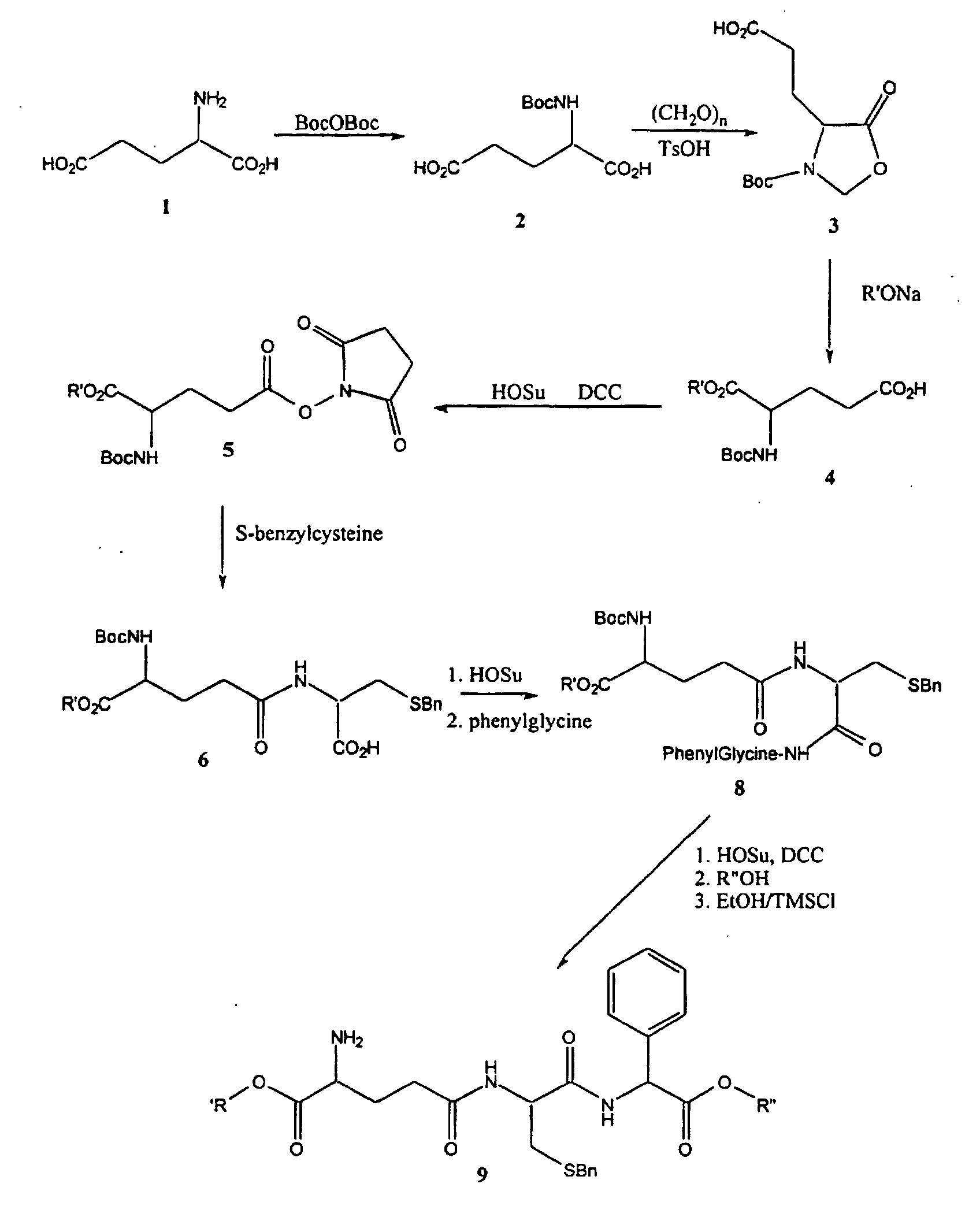
- L-Glutamic acid 1 is protected using di-t-butyldicarbonate under basic conditions.
- Compound 2 is then cyclized to give the oxazolidinone 3 through the reaction of paraformaldehyde, and a catalytic amount of Intermediate 7 (N-a-t-Boc-a-ethyl-g-glutamyl-S(benzyl)cysteine succinimide ester) is not shown in the reaction scheme above.
- p-toluenesulfonic acid Compound 4 is prepared by the reaction of the oxazolidinone and R'ONa.
- the succiminide ester 5 is prepared with DCC coupling with N-hydroxysuccinimide and the g free acid 4 , which is then reacted with S-benzyl-L-cysteine for the formation of the protected dipeptide 6.
- the succinimide ester is prepared through a DCC coupling and its reaction with phenylglycine yields the protected tripeptide, 8. Deprotection and esterification leads to final product 9 .
- 150 g of sodium sticks (6.5 mols) were placed into a container with 500 ml of toluene, the surface tarnish was scraped off, and thin squares were cut. A 50g portion of the squares were weighed into a tared container with 100 ml of toluene, the toluene was poured off and the sodium was added to 3 L of punctilious ethanol at 0°C under a stream of N 2 . After the bubbling subsided, another 50g portion was prepared as above and added. This was repeated until the entire 200g was added. The solution was then stirred at room temperature under N 2 overnight resulting in a viscous clear solution.
- the DCC urea was filtered from the reaction mixture, and the filtrate was evaporated to 1 L. Ether was added to cloud point and the solution was chilled to 0°C in an ice bath. Upon scratching crystals began to form. Small amounts of ether were added to maintain cloud point and push out the product. The solution was stored at 4°C overnight. The crystals were collected by filtration and dried under a high vacuum; 953 g (1.67 mols), 87.4% yield was obtained.
- TLC was checked to ensure that the product remained in the aqueous layer due to the large amount of THF.
- the aqueous layer was separated and chilled to 0°C in an ice bath. While magnetically stirring the solution, hydrochloric acid (conc.) was added dropwise (1 drop/sec) until the pH reached 3.
- the product was then extracted twice with 2 L each of ether.
- the ether layers were combined, poured over Na 2 SO 4 , filtered, evaporated to an oil, and dried to a foam under a high vacuum yielding 853 g (1.45 mols), 86.8% yield.
- the solid is then broken up to form a slurry and each is rotoevaporated at 30°C to a volume of 2 L each. While stirring vigorously with the mechanical stirrers, 2 L of anhydrous ether is added dropwise (1 drop/sec.) to each slurry over a period of 2.5 hours at room temperature. The insoluble material was collected by filtration. The filter cakes are dried overnight under a high vacuum to yield a combined total of 312.8 g of 9. This 312.8 g was dissolved in 7 L of hot CH 3 CN (79°C) with stirring, filtered hot to remove insoluble material, and the filtrate allowed to cool to room temperature. As the solution cooled, small white needle-like crystals began to form and when it reached room temperature it solidified to a solid mass.
- the following general procedure is used to manufacture the lipid formulation: (i) 1573 mg compound 9, 3146 mg of egg phosphatidylcholine (EPC), and 3146 mg of egg phosphatidylglycerol (EPG), are dissolved in 14.3 ml anhydrous ethanol and 2.2 ml H 2 O by mixing at ambient temperature; (ii) the solution is taken up in a 30 ml syringe using a 20 gauge needle and injected directly (within 1 minute) into 80.9 ml of stirred 370 mM sucrose to form multilamellar vesicles (MLVs); (iii) 2.5 ml of 1 M citrate (pH 4.0) is added to the stirred buffer; (iv) the solution is extruded ten times through two stacked 80 nm polycarbonate filters using a 100 ml EXTRUDER (Lipex Biomembranes, Vancouver Canada) to form unilamellar vesicles;
- the lyophilization cycle involved rapid freezing of the sample (2.5 ml fill of 10 ml vial) to a sample temperature of -50°C, followed by lyophilization at a tray temperature of -35°C for 42 hours to remove primary water, and for 2 hours at 20°C to remove secondary water.
- Quasi Elastic light Scattering (QELS) on the samples was carried out to determine the average vesicle size using a Nicomp Particle Sizer (Model 270).
- the level of drug incorporation (% encapsulation) in the vesicles is determined using two independent approaches. In the first approach, 0.1 ml of formulation is placed on a 1.0 ml tuberculin syringe containing hydrated sephadex G-50; the sample is centrifuged for 5 min. at 2,000 rpm in a tabletop Centrifuge and the vesicles are recovered (>70%) in the void volume. Unencapsulated or precipitated drug is removed by this process, and remains on the gel filtration column.
- the level of encapsulation (%) is calculated from the drug/lipid ratio prior to and following column chromatography.
- a second approach relies upon separation of the liposomes from unencapsulated drug by centrifugation through Micron30 filters with a MW cutoff of 30,000 Daltons (Amicon).
- the level of encapsulation (%) is calculated from 1- ([Free Drug]/[Total drug]) * 100.
- MLVs multilamellar vesicles
- the MLVs may be passed (5-10x) through stacked polycarbonate filters (pore size of 80 nm) using an EXTRUDER (Lipex Biomembranes, Vancouver, Canada).
- Table 4 summarize the relation between lyophilization conditions and the resulting vesicle size, and level of drug encapsulation.
- vesicles were prepared as described in Example 4, sterile filtered and vialed in 2.5 ml aliquots. The vials were subsequently frozen to a sample temperature of -50°C for sufficient time to reduce the sample temperature to the shelf temperature. The samples were then exposed to the indicated shelf temperature in the presence of a vacuum (50 to 200 mTorr) for sufficient time to remove the primary water (24 to 48 hours), and subsequently to ambient temperature for 2-6 hours.
- a vacuum 50 to 200 mTorr
- Encapsulation of Compound 9 in EPC/EPG Liposomes as a Function of Drug/Lipid Ratio Drug/Lipid (wt/wt) Lipid Composition Sucrose (mM) Lyophilization Conditions Encapsulation (Microcon, %) Size (nm) 0.50 EPC/EPG (1/1) 300 Uncontrolled ND ND 0.33 EPC/EPG (1/1) 300 Uncontrolled 99 1402 0.25 EPC/EPG (1/1) 300 Uncontrolled 100 715 0.20 EPC/EPG (1/1) 300 Uncontrolled 100 750
- Compound 9 formulated as described in Example 4 accelerated recovery from chemotherapy-induced neutropenia in rats.
- Compound 9 as described in Example 4 also increased circulating neutrophil levels in normal rats (figure B).
Landscapes
- Health & Medical Sciences (AREA)
- Life Sciences & Earth Sciences (AREA)
- Chemical & Material Sciences (AREA)
- Animal Behavior & Ethology (AREA)
- Veterinary Medicine (AREA)
- Medicinal Chemistry (AREA)
- Public Health (AREA)
- General Health & Medical Sciences (AREA)
- Pharmacology & Pharmacy (AREA)
- General Chemical & Material Sciences (AREA)
- Organic Chemistry (AREA)
- Nuclear Medicine, Radiotherapy & Molecular Imaging (AREA)
- Engineering & Computer Science (AREA)
- Chemical Kinetics & Catalysis (AREA)
- Bioinformatics & Cheminformatics (AREA)
- Epidemiology (AREA)
- Hematology (AREA)
- Gastroenterology & Hepatology (AREA)
- Diabetes (AREA)
- Proteomics, Peptides & Aminoacids (AREA)
- Immunology (AREA)
- Dispersion Chemistry (AREA)
- Molecular Biology (AREA)
- Oncology (AREA)
- Biophysics (AREA)
- Medicines That Contain Protein Lipid Enzymes And Other Medicines (AREA)
- Medicinal Preparation (AREA)
- Peptides Or Proteins (AREA)
- Acyclic And Carbocyclic Compounds In Medicinal Compositions (AREA)
Abstract
Description


wherein the lipids of said lipid formulation comprise egg phosphatidylcholine and egg phosphatidylglycerol in a ratio of 0.75-1.25:0.75-1.25 by weight.
p-toluenesulfonic acid.
| Description of Substituents R1, R2, and R3 in Compounds 9-13 | ||||
| Compound | | R2 | R3 | |
| 9 | CH2CH3 | CH2CH3 | Benzyl | |
| 10 | (CH2)7CH3 | CH2CH3 | Benzyl | |
| 11 | (CH2)15CH3 | CH2CH3 | Benzyl | |
| 12 | (CH2)15CH3 | H | Benzyl | |
| 13 | (CH2)9CH3 | CH2CH3 | Benzyl |
| Measured Characteristics of Lipid Microspheres | ||||
| Compound | Conc. (mg/mL) | Particle Size | Incorporation of compound in Lipid Particle | Decrease of K1 in esterase hydrolysis |
| Mean ±SD (nM) | Fraction of 1.2 µm-filter passing (%) | |||
| 9 | 0.1-1 | 93.7 | 0.609 | |
| 10 | 0.03-3 | 220.7±106. 3 | 96.8-1-5.9 | 0.454 |
| 11 | 1-3 | 219.6±76.0 | 90.6-91.3 | 0.185 |
| 12 | 0.3 | 222.3±76.4 | 91.9 |
| Incorporation of | ||||
| Drug/Lipid (wt/wt) | Lipid Composition | Drug (mg/ml) | Encapsulation (Microcon, %) | Size (nm) |
| 0.25 | EPC | 16.2. | 56 | 69 (+/- 22) |
| 0.1 | EPC | 12.9 | 80 | 101 (+/- 40) |
| 0.25 | EPC/EPG (9/1) | 13.6 | 60 | 69 (+/- 19) |
| 0.14 | EPC/EPG (2.2/1) | ND | ND | ND |
| 0.14 | EPC/EPG (1/1) | 14.4 | 99 | 92 |
| ND signifies not determined. |
| The Influence of Different Lyophilization Cycles on | |||||
| Drug/Lipid (wt/wt) | Lipid Composition | Sucrose (mM) | Lyophilization Conditions | Encapsulation (Microcon, %) | Size (nm) |
| 0.25 | EPC | 300 | Uncontrolled | 73 | 2844 |
| 0.14 | EPC | 300 | Uncontrolled | 87 | 8871 |
| 0.14 | EPC | 700 | -10°C | 85% | NA |
| 0.14 | EPC/EPG (1/1) | 300 | -10°C | 99 | 1418 |
| 0.14 | EPC/EPG (1/1) | 700 | -10°C | 98 | 535 |
| 0.14 | EPC/EPG (1/1) | 700 | -30°C | 99 | 491 |
| Encapsulation of | |||||
| Drug/Lipid (wt/wt) | Lipid Composition | Sucrose (mM) | Lyophilization Conditions | Encapsulation (Microcon, %) | Size (nm) |
| 0.50 | EPC/EPG (1/1) | 300 | Uncontrolled | ND | ND |
| 0.33 | EPC/EPG (1/1) | 300 | Uncontrolled | 99 | 1402 |
| 0.25 | EPC/EPG (1/1) | 300 | Uncontrolled | 100 | 715 |
| 0.20 | EPC/EPG (1/1) | 300 | Uncontrolled | 100 | 750 |
| Stability of Vesicles Size Following Extrusion, as a Function of Ethanol Content | ||||||
| Drug/Lipid (wt/wt) | Lipid Composition | Ethanol (%) | 0 | 2 hr | 24 hr | 48 hour |
| 0.25 | EPC/EPG (1/1) | 15 | 161 nm | 156 nm | 179 | 160 nm |
| 0.25 | EPC/EPG (1/1) | 20 | 120 nm | 123 nm | 273 nm | ND |
| The Influence of Primary Lyophilization Cycle on Encapsulation, Vesicle Size and Viscosity of | ||||||
| Drug/Lipid (wt/wt) | Lipid Composition | Sucrose (mM) | Lyophilization Time (hr) | Encapsulation (Microcon, %) | Size (nm) | Viscosity |
| 0.25 | EPC/EPG (1/1) | 300 | 32 | 99 | 611 | Negligible |
| 0.25 | EPC/EPG (1/1) | 300 | 40 | 99 | 391 | Negligible |
| 0.25 | EPC/EPG (1/1) | 300 | 44 | 97 | 584 | Negligible |
| 0.25 | EPC/EPG (1/1) | 300 | 54 | 98 | 502 | Viscous |
| 0.25 | EPC/EPG (1/1) | 300 | 59 | 98 | 636 | Very Viscous |
Claims (18)
- A lipid formulation containing a compound that is:(i) a diester of a compound of formula Awherein:
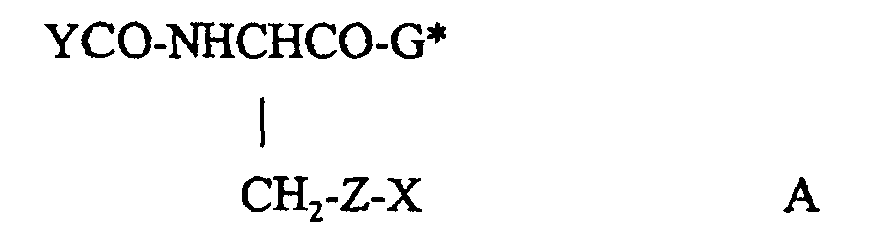 or a pharmaceutically acceptable salt thereof; oreach ester is 1-25C;YCO is γ-glu or β-asp;G* is phenylglycine;Z is CH2, O or S; andX is a hydrocarbon radical which is alkyl (6-8C), benzyl, or naphthyl;(ii) a compound of formula Iwherein:
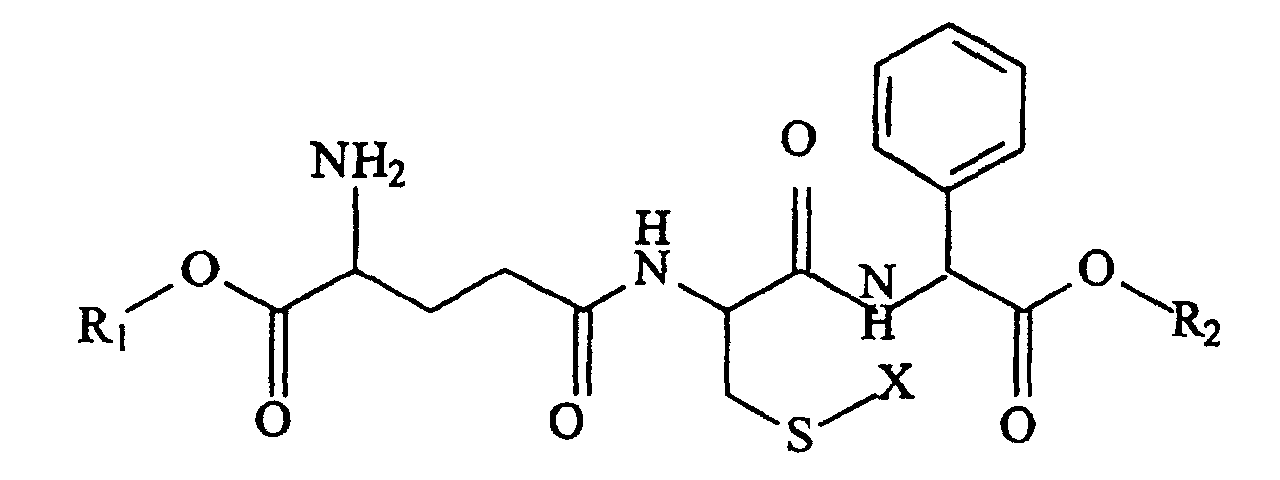 or a pharmaceutically acceptable salt thereof;R1 and R2 are each independently linear or branched alkyl (1-25C), cycloalkyl (6-25C), heterocycle (6-20C), ether or polyether (3-25C), or R1-R2 together have 2-20 C atoms and form a macrocycle with the remainder of formula I; andX is as defined above for formula A;
wherein the lipids of said lipid formulation comprise egg phosphatidylcholine and egg phosphatidylglycerol in a ratio of 0.75-1.25:0.75-1.25 by weight. - The lipid formulation of claim 1 where the compound is γ-glutamyl-S(benzyl)cysteinyl-R-phenylglycine diethyl ester or a pharmaceutically acceptable salt thereof.
- The lipid formulation of claims 1 or 2 where the ratio of lipids to compound is 3.5-4.5:0.5-1.5 by weight.
- The lipid formulation of claim 3 where the ratio of lipids to compound is 3:1-6:1 by weight.
- The lipid formulation of any one of claims 1 to 4 where the formulation is a liposomal formulation.
- The lipid formulation of any one of claims 1 to 5, having(i) at least 50% degree of encapsulation of the compound; and(ii) an average vesicle size of 50 - 2000 nm
- The lipid formulation of claim 6 where the degree of encapsulation is above 80%.
- The lipid formulation of claims 6 or 7 where the vesicle size is 400 - 600 nm.
- The lipid formulation of any one of claims 1 to 8 which is a liposomal formulation composed of 1 part compound, 2 parts egg phosphatidylcholine, 2 parts egg phosphatidylglycerol, and 7 parts sucrose by weight.
- The lipid formulation of claim 9 which comprises lyophilized liposomes composed of 1 part γ-glutamyl-S(benzyl)cysteinyl-R-phenylglycine diethyl ester or a pharmaceutically acceptable salt thereof, 2 parts egg phosphatidylcholine, 2 parts egg phosphatidylglycerol, and 7 parts sucrose by weight.
- The lipid formulation of any one of claims 1 to 10 which is prepared by extrusion.
- A method of preparing a lipid formulation containing a compound that is:(i) a diester of a compound of formula Awherein:
 or a pharmaceutically acceptable salt thereof; oreach ester is 1-25C;YCO is γ-glu or β-asp;G* is phenylglycine;Z is CH2, O or S; andX is a hydrocarbon radical which is alkyl (6-8C), benzyl, or naphthyl;(ii) a compound of formula Iwherein:
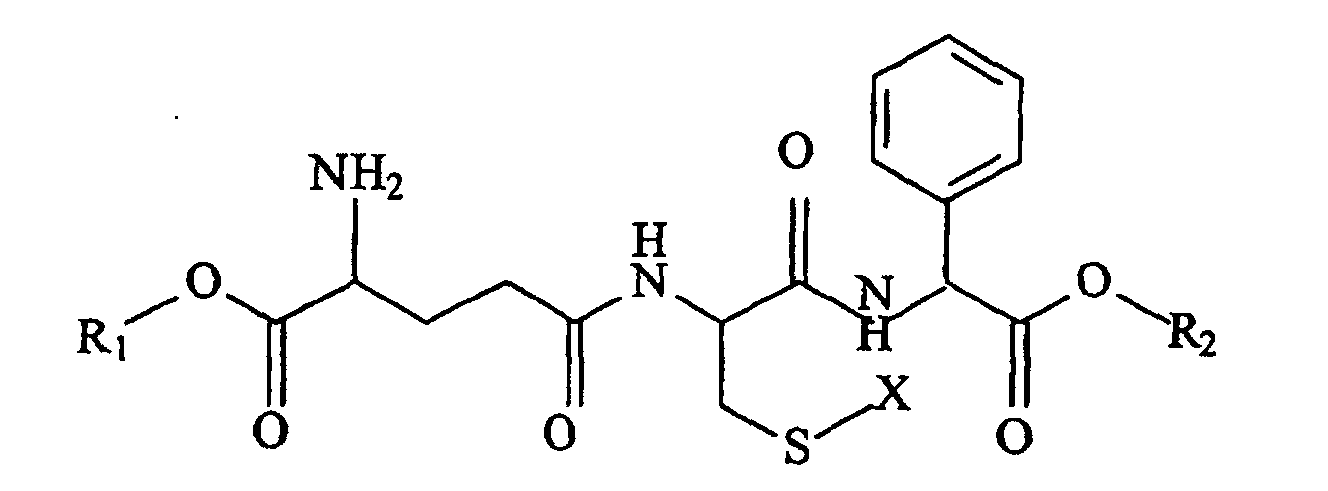 or a pharmaceutically acceptable salt thereof;R1 and R2 are each independently linear or branched alkyl (1-25C), cycloalkyl (6-25C), heterocycle (6-20C), ether or polyether (3-25C), or R1-R2 together have 2-20 C atoms and form a macrocycle with the remainder of formula I; andX is as defined above for formula A;
which method comprises formulating the compound in a lipid composition comprising egg phosphatidylcholine and egg phosphatidylglycerol in a ratio of 0.75-1.25:0.75-1.25 by weight. - The method of claim 12 where the compound is γ-glutamyl-S(benzyl)cysteinyl-R-phenylglycine diethyl ester or a pharmaceutically acceptable salt thereof.
- The method of claims 12 or 13 where the formulation is a liposomal formulation.
- The method of any one of claims 12 to 14, further comprising extrusion.
- The method of any one of claims 12 to 15, further comprising lyophilization.
- The method of claim 16 which comprises dissolving 1 part γ-glutamyl-S(benzyl)cysteinyl-R-phenylglycine diethyl ester or a pharmaceutically acceptable salt thereof, 2 parts egg phosphatidycholine, and 2 parts egg phosphatidylglycerol in ethanol/water, injecting the solution into water containing 7 parts sucrose, extruding to form a liposomal formulation, and lyophilizing the liposomal formulation to form lyophilized liposomes.
- The use of the lipid formulation of any one of claims 1 to 11 in the manufacture of a medicament for the modulation of hematopoiesis and protection against the destructive effects of chemotherapy.
Priority Applications (1)
| Application Number | Priority Date | Filing Date | Title |
|---|---|---|---|
| DK00908420T DK1143992T3 (en) | 2000-01-27 | 2000-01-27 | Therapeutic compositions containing glutathione analogues |
Applications Claiming Priority (3)
| Application Number | Priority Date | Filing Date | Title |
|---|---|---|---|
| US23853099A | 1999-01-27 | 1999-01-27 | |
| US238530 | 1999-01-27 | ||
| PCT/US2000/002297 WO2000044366A2 (en) | 1999-01-27 | 2000-01-27 | Therapeutic compositions containing glutathione analogs |
Publications (2)
| Publication Number | Publication Date |
|---|---|
| EP1143992A2 EP1143992A2 (en) | 2001-10-17 |
| EP1143992B1 true EP1143992B1 (en) | 2005-01-12 |
Family
ID=22898312
Family Applications (1)
| Application Number | Title | Priority Date | Filing Date |
|---|---|---|---|
| EP00908420A Expired - Lifetime EP1143992B1 (en) | 1999-01-27 | 2000-01-27 | Therapeutic compositions containing glutathione analogs |
Country Status (12)
| Country | Link |
|---|---|
| EP (1) | EP1143992B1 (en) |
| JP (2) | JP2002535359A (en) |
| KR (1) | KR100750842B1 (en) |
| CN (1) | CN1185008C (en) |
| AT (1) | ATE286741T1 (en) |
| AU (1) | AU778340B2 (en) |
| CA (1) | CA2360795C (en) |
| DE (1) | DE60017359T2 (en) |
| ES (1) | ES2231159T3 (en) |
| HK (1) | HK1043310B (en) |
| PT (1) | PT1143992E (en) |
| WO (1) | WO2000044366A2 (en) |
Families Citing this family (6)
| Publication number | Priority date | Publication date | Assignee | Title |
|---|---|---|---|---|
| DE69925824D1 (en) | 1998-04-16 | 2005-07-21 | Teijin Ltd | Glutathione derivatives and associated dosage forms |
| US7029695B2 (en) | 2001-07-10 | 2006-04-18 | Telik, Inc. | Therapeutic compositions containing glutathione analogs |
| DE602006003064D1 (en) | 2005-01-06 | 2008-11-20 | Telik Inc | Tripeptid- und tetrapeptid-thioether |
| CN101434645B (en) * | 2008-12-24 | 2013-01-16 | 中国农业大学 | Synthetic oligopeptide and uses thereof |
| JP2015500809A (en) * | 2011-12-02 | 2015-01-08 | テリク, インコーポレイテッド | Amorphous ezatiostat non-solvate |
| CN108863888B (en) * | 2018-07-18 | 2021-10-12 | 吉尔生化(上海)有限公司 | Preparation method of(s) -1- (tert-butyloxycarbonyl) -5-oxopyrrolidine-2-carboxylic acid ethyl ester |
Family Cites Families (7)
| Publication number | Priority date | Publication date | Assignee | Title |
|---|---|---|---|---|
| US5786336A (en) * | 1991-04-29 | 1998-07-28 | Terrapin Technologies, Inc. | Target-selective protocols based on mimics |
| JP3118869B2 (en) * | 1991-05-14 | 2000-12-18 | ウェルファイド株式会社 | Fat body composition containing prostaglandins |
| CA2087902C (en) * | 1992-02-05 | 2006-10-17 | Narendra Raghunathji Desai | Liposome compositions of porphyrin photosensitizers |
| JP3383704B2 (en) * | 1993-04-02 | 2003-03-04 | わかもと製薬株式会社 | Stable aqueous liposome dispersion |
| EP0721328A4 (en) * | 1993-09-27 | 1997-09-17 | Smithkline Beecham Corp | Camptothecin formulations |
| JP2891883B2 (en) * | 1993-11-05 | 1999-05-17 | 学校法人近畿大学 | Anti-cataract pharmaceutical composition |
| DK0831877T3 (en) * | 1995-06-07 | 2005-02-14 | Telik Inc | Metabolic effects of certain glutathione analogues |
-
2000
- 2000-01-27 HK HK02104871.4A patent/HK1043310B/en not_active IP Right Cessation
- 2000-01-27 CN CNB008046522A patent/CN1185008C/en not_active Expired - Fee Related
- 2000-01-27 DE DE60017359T patent/DE60017359T2/en not_active Expired - Lifetime
- 2000-01-27 AU AU29767/00A patent/AU778340B2/en not_active Ceased
- 2000-01-27 PT PT00908420T patent/PT1143992E/en unknown
- 2000-01-27 EP EP00908420A patent/EP1143992B1/en not_active Expired - Lifetime
- 2000-01-27 ES ES00908420T patent/ES2231159T3/en not_active Expired - Lifetime
- 2000-01-27 CA CA2360795A patent/CA2360795C/en not_active Expired - Fee Related
- 2000-01-27 KR KR1020017009543A patent/KR100750842B1/en not_active Expired - Fee Related
- 2000-01-27 AT AT00908420T patent/ATE286741T1/en active
- 2000-01-27 WO PCT/US2000/002297 patent/WO2000044366A2/en not_active Ceased
- 2000-01-27 JP JP2000595670A patent/JP2002535359A/en active Pending
-
2007
- 2007-09-05 JP JP2007229798A patent/JP2007326877A/en active Pending
Also Published As
| Publication number | Publication date |
|---|---|
| ES2231159T3 (en) | 2005-05-16 |
| CA2360795C (en) | 2010-03-23 |
| AU778340B2 (en) | 2004-12-02 |
| WO2000044366A3 (en) | 2000-12-21 |
| CN1185008C (en) | 2005-01-19 |
| HK1043310A1 (en) | 2002-09-13 |
| DE60017359T2 (en) | 2005-12-01 |
| JP2007326877A (en) | 2007-12-20 |
| HK1043310B (en) | 2005-10-07 |
| KR20010101775A (en) | 2001-11-14 |
| JP2002535359A (en) | 2002-10-22 |
| DE60017359D1 (en) | 2005-02-17 |
| AU2976700A (en) | 2000-08-18 |
| WO2000044366A2 (en) | 2000-08-03 |
| EP1143992A2 (en) | 2001-10-17 |
| ATE286741T1 (en) | 2005-01-15 |
| PT1143992E (en) | 2005-05-31 |
| CN1342084A (en) | 2002-03-27 |
| CA2360795A1 (en) | 2000-08-03 |
| KR100750842B1 (en) | 2007-08-22 |
Similar Documents
| Publication | Publication Date | Title |
|---|---|---|
| US7029695B2 (en) | Therapeutic compositions containing glutathione analogs | |
| RU2632433C2 (en) | Lipid preconcentrate with sustained release of pharmacologically active substance and pharmaceutical composition containing it | |
| JP3074733B2 (en) | Fat emulsion | |
| US8765181B2 (en) | Nano anticancer micelles of vinca alkaloids entrapped in polyethylene glycolylated phospholipids | |
| CA2172110A1 (en) | Pharmaceutical carriers for nanosuspensions | |
| JPWO1991010431A1 (en) | fat emulsion | |
| HUT74423A (en) | Pharmaceutical basic compositions | |
| RU2571283C2 (en) | Parenteral formulations of elacytarabine derivatives | |
| ES2377352T3 (en) | New compositions based on taxoids | |
| JP2007326877A (en) | Therapeutic compositions containing glutathione analogs | |
| CN114288422A (en) | Liposome for chemically targeted degradation of target protein and preparation method thereof | |
| CN102366408B (en) | Monosialotetrahexosyl ganglioside sodium liposome injection | |
| JP2003516348A (en) | Pharmaceutical preparation containing cytostatic and electron acceptor for cancer treatment | |
| US7449197B2 (en) | Liposome formulation of 6,9-bis[(2-aminoethyl)-amino]benzo[g]isoquinoline-5, 10-dione dimaleate | |
| JPH06183954A (en) | Liposome pharmaceutical preparation | |
| US7053061B2 (en) | Amphotercin B structured emulsion | |
| JP2000510857A (en) | Pharmaceutical composition containing cyclosporine and a carrier comprising at least one alpha-glycerophosphate | |
| CA2066698A1 (en) | Liposomal compositions | |
| ITMI951210A1 (en) | NEW ALPHA-TOCOPHEROL DERIVATIVES AND PHARMACEUTICAL COMPOSITIONS CONTAINING THEM AS ACTIVE INGREDIENTS | |
| JPWO1997048398A1 (en) | Liposomal formulations of indolocarbazole derivatives | |
| JPS58208229A (en) | Antitumor agent |
Legal Events
| Date | Code | Title | Description |
|---|---|---|---|
| PUAI | Public reference made under article 153(3) epc to a published international application that has entered the european phase |
Free format text: ORIGINAL CODE: 0009012 |
|
| 17P | Request for examination filed |
Effective date: 20010813 |
|
| AK | Designated contracting states |
Kind code of ref document: A2 Designated state(s): AT BE CH CY DE DK ES FI FR GB GR IE IT LI LU |
|
| AX | Request for extension of the european patent |
Free format text: AL;LT;LV;MK;RO;SI |
|
| XX | Miscellaneous (additional remarks) |
Free format text: DERZEIT SIND DIE WIPO-PUBLIKATIONSDATEN A3 NICHT VERFUEGBAR. |
|
| 17Q | First examination report despatched |
Effective date: 20020529 |
|
| RAP1 | Party data changed (applicant data changed or rights of an application transferred) |
Owner name: TELIK, INC. |
|
| GRAP | Despatch of communication of intention to grant a patent |
Free format text: ORIGINAL CODE: EPIDOSNIGR1 |
|
| RBV | Designated contracting states (corrected) |
Designated state(s): AT BE CH CY DE DK ES FI FR GB GR IE IT LI LU MC NL PT SE |
|
| GRAS | Grant fee paid |
Free format text: ORIGINAL CODE: EPIDOSNIGR3 |
|
| GRAA | (expected) grant |
Free format text: ORIGINAL CODE: 0009210 |
|
| AK | Designated contracting states |
Kind code of ref document: B1 Designated state(s): AT BE CH CY DE DK ES FI FR GB GR IE IT LI LU MC NL PT SE |
|
| REG | Reference to a national code |
Ref country code: GB Ref legal event code: FG4D |
|
| XX | Miscellaneous (additional remarks) |
Free format text: DERZEIT SIND DIE WIPO-PUBLIKATIONSDATEN A3 NICHT VERFUEGBAR. |
|
| REG | Reference to a national code |
Ref country code: CH Ref legal event code: EP |
|
| REF | Corresponds to: |
Ref document number: 60017359 Country of ref document: DE Date of ref document: 20050217 Kind code of ref document: P |
|
| REG | Reference to a national code |
Ref country code: IE Ref legal event code: FG4D |
|
| REG | Reference to a national code |
Ref country code: DK Ref legal event code: T3 |
|
| REG | Reference to a national code |
Ref country code: CH Ref legal event code: NV Representative=s name: A. BRAUN, BRAUN, HERITIER, ESCHMANN AG PATENTANWAE |
|
| REG | Reference to a national code |
Ref country code: GR Ref legal event code: EP Ref document number: 20050400801 Country of ref document: GR |
|
| REG | Reference to a national code |
Ref country code: SE Ref legal event code: TRGR |
|
| REG | Reference to a national code |
Ref country code: ES Ref legal event code: FG2A Ref document number: 2231159 Country of ref document: ES Kind code of ref document: T3 |
|
| REG | Reference to a national code |
Ref country code: PT Ref legal event code: SC4A Free format text: AVAILABILITY OF NATIONAL TRANSLATION Effective date: 20050401 |
|
| ET | Fr: translation filed | ||
| PLBE | No opposition filed within time limit |
Free format text: ORIGINAL CODE: 0009261 |
|
| STAA | Information on the status of an ep patent application or granted ep patent |
Free format text: STATUS: NO OPPOSITION FILED WITHIN TIME LIMIT |
|
| 26N | No opposition filed |
Effective date: 20051013 |
|
| REG | Reference to a national code |
Ref country code: CH Ref legal event code: PFA Owner name: TELIK, INC. Free format text: TELIK, INC.#3165 PORTER DR.#PALO ALTO, CA 94304 (US) -TRANSFER TO- TELIK, INC.#3165 PORTER DR.#PALO ALTO, CA 94304 (US) |
|
| PGFP | Annual fee paid to national office [announced via postgrant information from national office to epo] |
Ref country code: LU Payment date: 20110215 Year of fee payment: 12 |
|
| PGFP | Annual fee paid to national office [announced via postgrant information from national office to epo] |
Ref country code: MC Payment date: 20120111 Year of fee payment: 13 |
|
| PGFP | Annual fee paid to national office [announced via postgrant information from national office to epo] |
Ref country code: PT Payment date: 20120127 Year of fee payment: 13 |
|
| PGFP | Annual fee paid to national office [announced via postgrant information from national office to epo] |
Ref country code: SE Payment date: 20120120 Year of fee payment: 13 Ref country code: GR Payment date: 20120119 Year of fee payment: 13 Ref country code: FI Payment date: 20120111 Year of fee payment: 13 Ref country code: BE Payment date: 20120117 Year of fee payment: 13 Ref country code: IT Payment date: 20120125 Year of fee payment: 13 Ref country code: DK Payment date: 20120119 Year of fee payment: 13 |
|
| PGFP | Annual fee paid to national office [announced via postgrant information from national office to epo] |
Ref country code: NL Payment date: 20120125 Year of fee payment: 13 |
|
| PGFP | Annual fee paid to national office [announced via postgrant information from national office to epo] |
Ref country code: CY Payment date: 20120119 Year of fee payment: 13 |
|
| PGFP | Annual fee paid to national office [announced via postgrant information from national office to epo] |
Ref country code: AT Payment date: 20120111 Year of fee payment: 13 |
|
| PGFP | Annual fee paid to national office [announced via postgrant information from national office to epo] |
Ref country code: IE Payment date: 20130110 Year of fee payment: 14 Ref country code: GB Payment date: 20130123 Year of fee payment: 14 Ref country code: DE Payment date: 20130123 Year of fee payment: 14 Ref country code: FR Payment date: 20130204 Year of fee payment: 14 Ref country code: ES Payment date: 20130207 Year of fee payment: 14 Ref country code: CH Payment date: 20130114 Year of fee payment: 14 |
|
| BERE | Be: lapsed |
Owner name: *TELIK INC. Effective date: 20130131 |
|
| REG | Reference to a national code |
Ref country code: PT Ref legal event code: MM4A Free format text: LAPSE DUE TO NON-PAYMENT OF FEES Effective date: 20130729 |
|
| REG | Reference to a national code |
Ref country code: NL Ref legal event code: V1 Effective date: 20130801 |
|
| REG | Reference to a national code |
Ref country code: DK Ref legal event code: EBP |
|
| PG25 | Lapsed in a contracting state [announced via postgrant information from national office to epo] |
Ref country code: MC Free format text: LAPSE BECAUSE OF NON-PAYMENT OF DUE FEES Effective date: 20130131 |
|
| REG | Reference to a national code |
Ref country code: SE Ref legal event code: EUG |
|
| REG | Reference to a national code |
Ref country code: AT Ref legal event code: MM01 Ref document number: 286741 Country of ref document: AT Kind code of ref document: T Effective date: 20130131 |
|
| REG | Reference to a national code |
Ref country code: GR Ref legal event code: ML Ref document number: 20050400801 Country of ref document: GR Effective date: 20130802 |
|
| PG25 | Lapsed in a contracting state [announced via postgrant information from national office to epo] |
Ref country code: AT Free format text: LAPSE BECAUSE OF NON-PAYMENT OF DUE FEES Effective date: 20130131 Ref country code: SE Free format text: LAPSE BECAUSE OF NON-PAYMENT OF DUE FEES Effective date: 20130128 Ref country code: FI Free format text: LAPSE BECAUSE OF NON-PAYMENT OF DUE FEES Effective date: 20130127 Ref country code: GR Free format text: LAPSE BECAUSE OF NON-PAYMENT OF DUE FEES Effective date: 20130802 Ref country code: PT Free format text: LAPSE BECAUSE OF NON-PAYMENT OF DUE FEES Effective date: 20130729 Ref country code: BE Free format text: LAPSE BECAUSE OF NON-PAYMENT OF DUE FEES Effective date: 20130131 Ref country code: NL Free format text: LAPSE BECAUSE OF NON-PAYMENT OF DUE FEES Effective date: 20130801 |
|
| PG25 | Lapsed in a contracting state [announced via postgrant information from national office to epo] |
Ref country code: CY Free format text: LAPSE BECAUSE OF NON-PAYMENT OF DUE FEES Effective date: 20130127 |
|
| REG | Reference to a national code |
Ref country code: DE Ref legal event code: R082 Ref document number: 60017359 Country of ref document: DE Representative=s name: MEISSNER, BOLTE & PARTNER GBR, DE |
|
| PG25 | Lapsed in a contracting state [announced via postgrant information from national office to epo] |
Ref country code: DK Free format text: LAPSE BECAUSE OF NON-PAYMENT OF DUE FEES Effective date: 20130131 |
|
| REG | Reference to a national code |
Ref country code: DE Ref legal event code: R082 Ref document number: 60017359 Country of ref document: DE Representative=s name: MEISSNER, BOLTE & PARTNER GBR, DE |
|
| REG | Reference to a national code |
Ref country code: CH Ref legal event code: PCAR Free format text: NEW ADDRESS: HOLBEINSTRASSE 36-38, 4051 BASEL (CH) |
|
| REG | Reference to a national code |
Ref country code: DE Ref legal event code: R119 Ref document number: 60017359 Country of ref document: DE |
|
| REG | Reference to a national code |
Ref country code: CH Ref legal event code: PL |
|
| GBPC | Gb: european patent ceased through non-payment of renewal fee |
Effective date: 20140127 |
|
| REG | Reference to a national code |
Ref country code: DE Ref legal event code: R119 Ref document number: 60017359 Country of ref document: DE Effective date: 20140801 |
|
| PG25 | Lapsed in a contracting state [announced via postgrant information from national office to epo] |
Ref country code: LI Free format text: LAPSE BECAUSE OF NON-PAYMENT OF DUE FEES Effective date: 20140131 Ref country code: DE Free format text: LAPSE BECAUSE OF NON-PAYMENT OF DUE FEES Effective date: 20140801 Ref country code: CH Free format text: LAPSE BECAUSE OF NON-PAYMENT OF DUE FEES Effective date: 20140131 |
|
| REG | Reference to a national code |
Ref country code: FR Ref legal event code: ST Effective date: 20140930 |
|
| REG | Reference to a national code |
Ref country code: IE Ref legal event code: MM4A |
|
| PG25 | Lapsed in a contracting state [announced via postgrant information from national office to epo] |
Ref country code: FR Free format text: LAPSE BECAUSE OF NON-PAYMENT OF DUE FEES Effective date: 20140131 Ref country code: GB Free format text: LAPSE BECAUSE OF NON-PAYMENT OF DUE FEES Effective date: 20140127 |
|
| PG25 | Lapsed in a contracting state [announced via postgrant information from national office to epo] |
Ref country code: IE Free format text: LAPSE BECAUSE OF NON-PAYMENT OF DUE FEES Effective date: 20140127 |
|
| REG | Reference to a national code |
Ref country code: ES Ref legal event code: FD2A Effective date: 20150406 |
|
| PG25 | Lapsed in a contracting state [announced via postgrant information from national office to epo] |
Ref country code: ES Free format text: LAPSE BECAUSE OF NON-PAYMENT OF DUE FEES Effective date: 20140128 |
|
| PG25 | Lapsed in a contracting state [announced via postgrant information from national office to epo] |
Ref country code: LU Free format text: LAPSE BECAUSE OF NON-PAYMENT OF DUE FEES Effective date: 20130127 |
|
| PG25 | Lapsed in a contracting state [announced via postgrant information from national office to epo] |
Ref country code: IT Free format text: LAPSE BECAUSE OF NON-PAYMENT OF DUE FEES Effective date: 20140127 |