EP1143089A2 - Method for remote keyless entry based on proximity - Google Patents
Method for remote keyless entry based on proximity Download PDFInfo
- Publication number
- EP1143089A2 EP1143089A2 EP01302768A EP01302768A EP1143089A2 EP 1143089 A2 EP1143089 A2 EP 1143089A2 EP 01302768 A EP01302768 A EP 01302768A EP 01302768 A EP01302768 A EP 01302768A EP 1143089 A2 EP1143089 A2 EP 1143089A2
- Authority
- EP
- European Patent Office
- Prior art keywords
- proximity
- radio frequency
- access point
- source
- controlled access
- Prior art date
- Legal status (The legal status is an assumption and is not a legal conclusion. Google has not performed a legal analysis and makes no representation as to the accuracy of the status listed.)
- Withdrawn
Links
Images




Classifications
-
- B—PERFORMING OPERATIONS; TRANSPORTING
- B60—VEHICLES IN GENERAL
- B60R—VEHICLES, VEHICLE FITTINGS, OR VEHICLE PARTS, NOT OTHERWISE PROVIDED FOR
- B60R25/00—Fittings or systems for preventing or indicating unauthorised use or theft of vehicles
- B60R25/20—Means to switch the anti-theft system on or off
- B60R25/24—Means to switch the anti-theft system on or off using electronic identifiers containing a code not memorised by the user
-
- G—PHYSICS
- G07—CHECKING-DEVICES
- G07C—TIME OR ATTENDANCE REGISTERS; REGISTERING OR INDICATING THE WORKING OF MACHINES; GENERATING RANDOM NUMBERS; VOTING OR LOTTERY APPARATUS; ARRANGEMENTS, SYSTEMS OR APPARATUS FOR CHECKING NOT PROVIDED FOR ELSEWHERE
- G07C9/00—Individual registration on entry or exit
- G07C9/00174—Electronically operated locks; Circuits therefor; Nonmechanical keys therefor, e.g. passive or active electrical keys or other data carriers without mechanical keys
- G07C9/00309—Electronically operated locks; Circuits therefor; Nonmechanical keys therefor, e.g. passive or active electrical keys or other data carriers without mechanical keys operated with bidirectional data transmission between data carrier and locks
-
- G—PHYSICS
- G07—CHECKING-DEVICES
- G07C—TIME OR ATTENDANCE REGISTERS; REGISTERING OR INDICATING THE WORKING OF MACHINES; GENERATING RANDOM NUMBERS; VOTING OR LOTTERY APPARATUS; ARRANGEMENTS, SYSTEMS OR APPARATUS FOR CHECKING NOT PROVIDED FOR ELSEWHERE
- G07C9/00—Individual registration on entry or exit
- G07C9/00174—Electronically operated locks; Circuits therefor; Nonmechanical keys therefor, e.g. passive or active electrical keys or other data carriers without mechanical keys
- G07C9/00309—Electronically operated locks; Circuits therefor; Nonmechanical keys therefor, e.g. passive or active electrical keys or other data carriers without mechanical keys operated with bidirectional data transmission between data carrier and locks
- G07C2009/00317—Electronically operated locks; Circuits therefor; Nonmechanical keys therefor, e.g. passive or active electrical keys or other data carriers without mechanical keys operated with bidirectional data transmission between data carrier and locks keyless data carrier having only one limited data transmission range
- G07C2009/00333—Electronically operated locks; Circuits therefor; Nonmechanical keys therefor, e.g. passive or active electrical keys or other data carriers without mechanical keys operated with bidirectional data transmission between data carrier and locks keyless data carrier having only one limited data transmission range and the lock having more than one limited data transmission ranges
-
- G—PHYSICS
- G07—CHECKING-DEVICES
- G07C—TIME OR ATTENDANCE REGISTERS; REGISTERING OR INDICATING THE WORKING OF MACHINES; GENERATING RANDOM NUMBERS; VOTING OR LOTTERY APPARATUS; ARRANGEMENTS, SYSTEMS OR APPARATUS FOR CHECKING NOT PROVIDED FOR ELSEWHERE
- G07C9/00—Individual registration on entry or exit
- G07C9/00174—Electronically operated locks; Circuits therefor; Nonmechanical keys therefor, e.g. passive or active electrical keys or other data carriers without mechanical keys
- G07C2009/00753—Electronically operated locks; Circuits therefor; Nonmechanical keys therefor, e.g. passive or active electrical keys or other data carriers without mechanical keys operated by active electrical keys
- G07C2009/00769—Electronically operated locks; Circuits therefor; Nonmechanical keys therefor, e.g. passive or active electrical keys or other data carriers without mechanical keys operated by active electrical keys with data transmission performed by wireless means
- G07C2009/00793—Electronically operated locks; Circuits therefor; Nonmechanical keys therefor, e.g. passive or active electrical keys or other data carriers without mechanical keys operated by active electrical keys with data transmission performed by wireless means by Hertzian waves
-
- G—PHYSICS
- G07—CHECKING-DEVICES
- G07C—TIME OR ATTENDANCE REGISTERS; REGISTERING OR INDICATING THE WORKING OF MACHINES; GENERATING RANDOM NUMBERS; VOTING OR LOTTERY APPARATUS; ARRANGEMENTS, SYSTEMS OR APPARATUS FOR CHECKING NOT PROVIDED FOR ELSEWHERE
- G07C2209/00—Indexing scheme relating to groups G07C9/00 - G07C9/38
- G07C2209/60—Indexing scheme relating to groups G07C9/00174 - G07C9/00944
- G07C2209/63—Comprising locating means for detecting the position of the data carrier, i.e. within the vehicle or within a certain distance from the vehicle
-
- G—PHYSICS
- G07—CHECKING-DEVICES
- G07C—TIME OR ATTENDANCE REGISTERS; REGISTERING OR INDICATING THE WORKING OF MACHINES; GENERATING RANDOM NUMBERS; VOTING OR LOTTERY APPARATUS; ARRANGEMENTS, SYSTEMS OR APPARATUS FOR CHECKING NOT PROVIDED FOR ELSEWHERE
- G07C2209/00—Indexing scheme relating to groups G07C9/00 - G07C9/38
- G07C2209/60—Indexing scheme relating to groups G07C9/00174 - G07C9/00944
- G07C2209/63—Comprising locating means for detecting the position of the data carrier, i.e. within the vehicle or within a certain distance from the vehicle
- G07C2209/64—Comprising locating means for detecting the position of the data carrier, i.e. within the vehicle or within a certain distance from the vehicle using a proximity sensor
Definitions
- Remote keyless entry typically requires a user to press a button on a remote keyless entry device to unlock and/or lock a door.
- This method may make it difficult for a user to enter and exit a controlled point of access, such as a vehicle, premises, and the like, when the user is otherwise occupied. For example, a user may wish to open a car door when the user's hands are full.
- the user would have to locate and press a button to gain access to the vehicle, necessitating at least one free hand.
- the user is hindered by the requirement of keeping one hand free to operate the remote keyless entry system on the car.
- radio frequency signals to control a locking mechanism. While the use of a radio frequency tag permitted a user to gain access without the necessity of pressing a button, this method relied on the presence or absence of a defined radio frequency signal. Typically, if the signal was present the locking mechanism would disengage and in the absence of the signal the locking mechanism would engage. Thus, this method was unable to differentiate between a different proximity and trajectory of the user. For example, the previous method was unable to differentiate as to whether the user was approaching or retreating from the car, therefore indicating whether the user wanted the securing mechanism locked or unlocked, or between various proximity's of the user from the car. This inability to differentiate may cause the door to be unlocked, due to the presence of the signal, in situations where it may be desirable to lock the vehicle, thereby permitting unwanted access to the vehicle.
- a method for controlling access based on a trajectory includes receiving a signal from a source and analyzing the received signal. A trajectory of the source of the signal is determined. Access to a controlled access point is controlled wherein the trajectory of the source of the signal is suitable for being utilized to control access to the controlled access point.
- a method for controlling access based on a radio frequency signal includes receiving a radio frequency signal from a radio frequency source and analyzing the received radio frequency signal. The proximity of the source of the radio frequency signal is determined, in which the proximity of the source of the radio frequency signal is suitable for being utilized to control access to the controlled access point.
- an apparatus for controlling access based on a radio frequency signal includes a receiver for receiving a radio frequency signal from a radio frequency source.
- a channel processor is coupled to the receiver, the channel processor suitable for analyzing the received signal and determining the proximity of the radio frequency source.
- a securing device is coupled to the processor, the securing device suitable for controlling access to a controlled access point wherein the securing device is suitable for being utilized to at least one of secure and unsecure the securing device based on the determined proximity of the radio frequency source.
- Remote keyless entry (RKE) of the present invention may be accomplished by determining the proximity and/or trajectory of a user from a controlled access point.
- a controlled access point may include a vehicle, such as a car, truck, and tractor-trailer, a location, such as a point of access on a structure, and the like as contemplated by a person of ordinary skill in the art.
- a controlled access point in this instance a vehicle 102, is positioned away from a user.
- a remote keyless entry (RKE) system included in the vehicle 102 determines the proximity of the user from the vehicle. For example, the remote keyless entry system may determine that a user 104 is at a first proximity 106 from the vehicle 102 and therefore enable access to the vehicle. However, if the remote keyless entry system determines that a user 108 is at a second proximity 110, which may be further away from the vehicle 102, the remote keyless entry system may secure the vehicle 102 to prevent unauthorized access.
- RKE remote keyless entry
- a radio frequency signal is received from a radio frequency source 202.
- a radio frequency source may include both active and passive radio frequency transmitters and tags that may be associated with a user, such as a person or object.
- a radio frequency source may return a signal when queried by the controlled access point, continuously send out a signal, and the like as contemplated by a person of ordinary skill in the art.
- the received radio frequency signal is analyzed 204 and the proximity of the source of the radio frequency signal is determined 206.
- Proximity may include a radial distance 106 and 110 (FIG. 1) of the radio frequency source 104 and 108 (FIG.
- access may be controlled to a controlled access point based on the proximity of the radio frequency source to the controlled access point 208.
- Controlling access may include securing and unsecuring a locking mechanism, indicating the presence of a user, and the like without departing from the spirit and scope of the present invention.
- a signal may include a unique identifier to differentiate that source from a second source, so that the identifier may be associated with a corresponding controlled access point.
- proximity may be determined by the behavior of a radio frequency waveform.
- the behavior of a radio frequency signal may change. Therefore, the changing behavior of the received radio frequency waveforms may be utilized to indicate the proximity of the radio frequency source.
- a vehicle 302 in close proximity to a user 304 may have a line-of-sight (LOS) signature 306 indicating a close radial location 308 of the user 304 to the vehicle 302.
- LOS line-of-sight
- a user 310 at a further proximity from the vehicle 302 may have a multipath signature 312 indicating a greater radial distance 314.
- a multipath signature refers to a signal reaching a point following two or more paths.
- An apparatus for controlling access based on a radio frequency signal includes a receiver for receiving a radio frequency signal from a radio frequency source.
- a channel processor is coupled to the receiver, the channel processor suitable for analyzing the received signal and determining the proximity of the radio frequency source.
- a securing device is coupled to the processor, the securing device suitable for controlling access to a controlled access point wherein the securing device is suitable for being utilized to at least one of secure and unsecure the securing device based on the determined proximity of the radio frequency source.
- a radio frequency signal is received from a radio frequency source 402.
- the received radio frequency signal is analyzed 404 and the proximity of the source of the radio frequency signal is determined 406.
- Determining the proximity of the radio frequency source may include determining if the received radio frequency signal is a line-of-sight (LOS) signal or a multipath signal 408.
- LOS line-of sight
- the signal strength of the received radio frequency signal may also be determined 410 to derive the proximity of the radio frequency source.
- access to a controlled access point may be based on the proximity of the radio frequency source 412. It may be desirable to utilize a method for resolving conflicts between two or more radio frequency sources so as to enable the system to operate while a plurality of radio frequency sources are present, such as spread-spectrum multiple access, random multiple access, and the like.
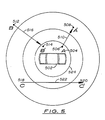
- a vehicle 502 is positioned away from a user.
- a remote keyless entry (RKE) system included in the vehicle 502 determines the trajectory of the user from the vehicle. For example, the remote keyless entry system may determine that a user 504 is at a first proximity 506 from the vehicle 502 and has moved to a second proximity 508 from the vehicle 502.
- a trajectory 510 may be determined for the user indicating that the user is moving away from the vehicle 502. Therefore, it would be desirable to control access to the vehicle 502 by securing the vehicle 502 thereby preventing unwanted access.
- the remote keyless entry (RKE) system may determine that the user is moving toward the vehicle and thereby permit access. For example, the remote keyless entry system may determine that the user has traveled from a first proximity 512 to second proximity 514, the second proximity being closer to the vehicle 502 than the first proximity 512. Thus, the remote keyless entry (RKE) system may determine that the user is approaching 516 the vehicle and thereby permit access. In this way, the present invention may control access to the vehicle based on the trajectory of the user, thereby enabling the system to control access in a more time efficient manner. For example, the current system may determine instantly after a user leaves the vehicle that the user is progressing away from the vehicle and thereby secure the vehicle from intrusion.
- a threshold proximity may also be combined with a trajectory to further control access to a controlled access point. For example, it may be desirable to not only detect if a user is approaching or retreating from a controlled access point, but to also control access when the user is within a certain proximity of the vehicle. A user may travel from a first proximity 518 to a second proximity 520 on a trajectory 522 that remains beyond a threshold proximity 524 from the vehicle 502. Therefore, it may be desirable to keep the vehicle 502 secured until a user passes within the threshold proximity 524.
- a determined trajectory of a radio frequency source is utilized to control access to a controlled access point.
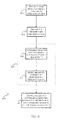
- a radio frequency signal is received from a radio frequency source 602.
- the received radio frequency signal is analyzed 604 and a trajectory of the source of the radio frequency signal is determined 606. Further, it may also be desirable to determine whether the source of the radio frequency signal is within threshold proximity 608, as described in FIG. 5.
- the determined radio frequency source trajectory indicates a trajectory away from the controlled access point 610
- the access point is secured 612.
- the determined radio frequency source trajectory source trajectory is away from the controlled access point 614, the controlled access point is unsecured 616.
- the trajectory of a user may also be utilized to control access to a specific controlled access point among a plurality of controlled access points.
- an embodiment 700 including a plurality of controlled access points is controlled according to a determined trajectory.
- a vehicle 702 may include a variety of controlled access points 708, 714 and 720.
- a user traveling toward the vehicle 702 from a first proximity 710 to a second proximity 712 indicating a trajectory toward another controlled access point 714, in this instance a passenger's side door, may cause the remote keyless entry system of the present invention to unsecure both the passenger and driver side door.
- a trajectory from a first proximity 716 to a second proximity 718 to an additional controlled access point 720, in this instance a trunk compartment of the vehicle 702 may initiate the unlocking of the trunk for access by the user.
- the present invention may further secure the vehicle by permitting access to an authorized user to a controlled access point indicated by the trajectory of the user yet prevent access to other controlled access points.
- a controlled access point queries for a signal from a signal source periodically so as not to remain on and thereby conserve power.
- the controlled access point may turn on every 5 seconds, determine if there is an available signal, and if not, turn off so as to limit power consumption.
Landscapes
- Engineering & Computer Science (AREA)
- Computer Networks & Wireless Communication (AREA)
- Physics & Mathematics (AREA)
- General Physics & Mathematics (AREA)
- Mechanical Engineering (AREA)
- Circuits Of Receivers In General (AREA)
- Lock And Its Accessories (AREA)
Abstract
Description
Claims (28)
- A method for controlling access based on a radio frequency signal, comprising:
receiving a radio frequency signal from a radio frequency source:analysing the received radio frequency signal;determining a first proximity and a second proximity of the source of the radio frequency; andcontrolling access to a controlled access point;wherein the first proximity and the second proximity of the source of the radio frequency signal is suitable for being utilised to control access to the controlled access point. - An apparatus for controlling access based on a radio frequency signal, comprising:a receiver for receiving a radio frequency signal from a radio frequency source;a channel processor coupled to the receiver, the channel processor suitable for analysing the received signal and determining a first proximity and a second proximity of the radio frequency source;a securing device coupled to the processor, the securing device suitable for controlling access to a controlled access point wherein the securing device is suitable for being utilised to at least one of secure and unsecure the securing devices based on the determined first proximity and second proximity of the radio frequency source.
- The method or system as described in any preceding claim wherein the controlled access point includes at least one of a vehicle and premises.
- The method or system as described in any preceding claim wherein proximity is determined by behaviour of the received radio frequency signal waveform.
- The method or system as described in claim 4 wherein the first proximity is indicated by a line-of-sight signature waveform and the second proximity is indicated by a multipath waveform.
- The method or system as described in claim 5 wherein the first proximity indicates a closer proximity to the controlled access point than the second proximity.
- The method or system as described in any preceding claim wherein proximity is determined by strength of the radio frequency signal.
- The method or system as described in any preceding claim wherein proximity includes radial location of the source of the radio frequency to the controlled access point.
- The method or system as described in any preceding claim wherein the first determined proximity and the second determined proximity are utilised to determine a trajectory.
- The method or system as described in claim 9 wherein the trajectory indicates at least one of movement away from the controlled access point, the access point is secured, and the trajectory indicates movement toward the controlled access point, the access point is unsecured.
- The method or system as described in any preceding claim wherein a first radio frequency source provides a first radio frequency signal and a second radio frequency source provides a second radio frequency signal, receiving the first radio frequency signal and the second radio frequency signal includes at least one of spread-spectrum multiple access and random multiple access.
- The method or system as described in any preceding claim wherein a first radio frequency source provides a first radio signal and a second radio frequency source provides a second radio frequency signal, the receiver utilises at least one of spread-spectrum multiple access and random multiple access.
- The method or system as described in any preceding claim wherein the radio frequency signal includes an identifier capable of being used to identify the radio frequency source to the controlled access point so as to enable the controlled access point to control access based upon the identity of the radio frequency source.
- The method or system as described in any preceding claim further comprising a second controlled access point, wherein the proximity of the source is utilised to enable access to the first controlled access point but not the second controlled access point.
- The method or system as described in any preceding claim further comprising determining whether the source is within a threshold proximity, the threshold proximity suitable for being utilised to control access to the controlled access point.
- A method for controlling access based on a trajectory, comprising:receiving a signal from a source;analysing the received signal;determining a trajectory of the source of the signal; andcontrolling access to a controlled access point;wherein the trajectory of the source of the signal is suitable for being utilised to control access to the controlled access point.
- The method as described in claim 16 wherein controlled access point includes at least one of a vehicle and premises.
- The method as described in claim 16 or 17 wherein trajectory is determined by behaviour of a received radio frequency signal waveform.
- The method as described in claim 16 to 18 wherein a first proximity is indicated by a line-of-sight signature waveform and a second proximity is indicated by a multipath waveform so that an indicated change of the radio requency source including at least one of movement from the first proximity to the second proximity and movement from the second proximity to the first proximity is capable of being utilised to indicate the trajectory.
- The method as described in claim 19 wherein the first proximity indicates a closer proximity to the controlled access point than the second proximity, so a change from the first proximity to the second proximity is utilised to secure the controlled access point and a chnage from the second proximity to the first proximity is utilised to unsecure the controlled access point.
- The method as described in claim 20 wherein trajectory is determined by strength of the received signal.
- The method as described in claim 16 to 21 wherein the trajectory includes a radial trajectory of the source of the signal to the controlled access point.
- The method as described in claim 16 to 22 wherein determining a trajectory includes determining a first proximity of the source of the signal and a second proximity of the source of the signal, wherein a change of the source of the signal of the first determined proximity to the second determined proximity are utilised to determine a trajectory.
- The method as described in claim 23 wherein the trajectory indicates at least one of movement away from the controlled access point, the access point is secured, and the trajectory indicates movement toward the controlled access point, the access point is unsecured.
- The method as described in claim 16 to 24 wherein a first radio frequency source provides a first radio frequency signal and a second radio frequency source provides a second radio frequency signal, receiving the first radio frequency signal and the second radio frequency signal includes at least one of spread-spectrum multiple access and random multiple access.
- The method as described in claim 16 to 25 wherein the signal includes an identifier capable of being used to identify the source to the controlled access point so as to enable the controlled access point to control access based upon the identity of the radio frequency source.
- The method as described in claim 16 to 26 further comprising a second controlled access point, wherein the proximity of the source is utilised to enable access to the first controlled access point but not the second controlled access point.
- The method or system as described in claim 27 further comprising determining whether the source is within a threshold proximity, the threshold proximity is suitable for being utilised to control access to the controlled access point.
Applications Claiming Priority (2)
| Application Number | Priority Date | Filing Date | Title |
|---|---|---|---|
| US543430 | 1995-10-16 | ||
| US54343000A | 2000-04-05 | 2000-04-05 |
Publications (2)
| Publication Number | Publication Date |
|---|---|
| EP1143089A2 true EP1143089A2 (en) | 2001-10-10 |
| EP1143089A3 EP1143089A3 (en) | 2003-08-27 |
Family
ID=24168017
Family Applications (1)
| Application Number | Title | Priority Date | Filing Date |
|---|---|---|---|
| EP01302768A Withdrawn EP1143089A3 (en) | 2000-04-05 | 2001-03-26 | Method for remote keyless entry based on proximity |
Country Status (1)
| Country | Link |
|---|---|
| EP (1) | EP1143089A3 (en) |
Cited By (12)
| Publication number | Priority date | Publication date | Assignee | Title |
|---|---|---|---|---|
| WO2005024734A1 (en) * | 2003-09-04 | 2005-03-17 | Daimlerchrysler Ag | Access control system for vehicles |
| DE102004052904A1 (en) * | 2004-11-02 | 2006-06-01 | Siemens Ag | Method for checking justification of access to vehicle, comprising second check performed closer to car |
| GB2440240A (en) * | 2006-07-14 | 2008-01-23 | Lear Corp | Remote supervised and unsupervised seat folding for a vehicle |
| DE102009039879B4 (en) * | 2009-09-03 | 2014-10-30 | Werner Niemeyer-Stein | Method for controlling the release of a device or a service, a transceiver device designed as a master and a system having such a device |
| GB2515006A (en) * | 2013-05-31 | 2014-12-17 | Jaguar Land Rover Ltd | Vehicle communication system |
| DE102014226925A1 (en) * | 2014-12-23 | 2016-06-23 | Continental Automotive Gmbh | Method and device for access verification in a vehicle |
| US9756132B2 (en) | 2013-05-31 | 2017-09-05 | Jaguar Land Rover Limited | Vehicle communication system |
| US9769627B2 (en) | 2013-05-31 | 2017-09-19 | Jaguar Land Rover Limited | Position-based limited-response mode operation in a vehicle communication system |
| US9764713B2 (en) | 2013-05-31 | 2017-09-19 | Jaguar Land Rover Limited | Provision of a status indication to a user in a vehicle communication system |
| US9969356B2 (en) | 2013-05-31 | 2018-05-15 | Jaguar Land Rover Limited | Movement pattern detection in a vehicle communication system |
| US10380817B2 (en) | 2016-11-28 | 2019-08-13 | Honda Motor Co., Ltd. | System and method for providing hands free operation of at least one vehicle door |
| US10815717B2 (en) | 2016-11-28 | 2020-10-27 | Honda Motor Co., Ltd. | System and method for providing hands free operation of at least one vehicle door |
Family Cites Families (6)
| Publication number | Priority date | Publication date | Assignee | Title |
|---|---|---|---|---|
| US4942393A (en) * | 1988-05-27 | 1990-07-17 | Lectron Products, Inc. | Passive keyless entry system |
| US5119104A (en) * | 1990-05-04 | 1992-06-02 | Heller Alan C | Location system adapted for use in multipath environments |
| FR2707030B1 (en) * | 1993-06-21 | 1995-07-28 | Valeo Electronique | |
| FR2754091B1 (en) * | 1996-09-27 | 1998-12-31 | Valeo Electronique | DUAL-RANGE RF REMOTE CONTROL FOR MOTOR VEHICLE |
| DE19645808B4 (en) * | 1996-11-07 | 2005-12-15 | Kiekert Ag | Motor vehicle with a central locking system and with a remote control installation |
| US6236333B1 (en) * | 1998-06-17 | 2001-05-22 | Lear Automotive Dearborn, Inc. | Passive remote keyless entry system |
-
2001
- 2001-03-26 EP EP01302768A patent/EP1143089A3/en not_active Withdrawn
Cited By (24)
| Publication number | Priority date | Publication date | Assignee | Title |
|---|---|---|---|---|
| WO2005024734A1 (en) * | 2003-09-04 | 2005-03-17 | Daimlerchrysler Ag | Access control system for vehicles |
| DE102004052904A1 (en) * | 2004-11-02 | 2006-06-01 | Siemens Ag | Method for checking justification of access to vehicle, comprising second check performed closer to car |
| DE102004052904B4 (en) * | 2004-11-02 | 2006-09-28 | Siemens Ag | Method for checking authorization for the access or use of an object, in particular a vehicle |
| GB2440240A (en) * | 2006-07-14 | 2008-01-23 | Lear Corp | Remote supervised and unsupervised seat folding for a vehicle |
| GB2440240B (en) * | 2006-07-14 | 2009-09-16 | Lear Corp | Supervised and unsupervised seat folding |
| US7965170B2 (en) | 2006-07-14 | 2011-06-21 | Lear Corporation | Supervised and unsupervised seat folding |
| DE102009039879B9 (en) | 2009-09-03 | 2014-12-31 | Werner Niemeyer-Stein | Method for controlling the release of a device or a service, a transceiver device designed as a master and a system having such a device |
| DE102009039879B4 (en) * | 2009-09-03 | 2014-10-30 | Werner Niemeyer-Stein | Method for controlling the release of a device or a service, a transceiver device designed as a master and a system having such a device |
| US9769627B2 (en) | 2013-05-31 | 2017-09-19 | Jaguar Land Rover Limited | Position-based limited-response mode operation in a vehicle communication system |
| US9969356B2 (en) | 2013-05-31 | 2018-05-15 | Jaguar Land Rover Limited | Movement pattern detection in a vehicle communication system |
| US10212557B2 (en) | 2013-05-31 | 2019-02-19 | Jaguar Land Rover Limited | Position-based limited-response mode operation in a vehicle communication system |
| US9756132B2 (en) | 2013-05-31 | 2017-09-05 | Jaguar Land Rover Limited | Vehicle communication system |
| GB2515006A (en) * | 2013-05-31 | 2014-12-17 | Jaguar Land Rover Ltd | Vehicle communication system |
| US9764699B2 (en) | 2013-05-31 | 2017-09-19 | Jaguar Land Rover Limited | Position-based performance of a vehicle function in a vehicle communication system |
| US9764713B2 (en) | 2013-05-31 | 2017-09-19 | Jaguar Land Rover Limited | Provision of a status indication to a user in a vehicle communication system |
| GB2515006B (en) * | 2013-05-31 | 2015-11-25 | Jaguar Land Rover Ltd | Vehicle communication system |
| US10158719B2 (en) | 2013-05-31 | 2018-12-18 | Jaguar Land Rover Limited | Vehicle communication system |
| DE102014226925A1 (en) * | 2014-12-23 | 2016-06-23 | Continental Automotive Gmbh | Method and device for access verification in a vehicle |
| US10380817B2 (en) | 2016-11-28 | 2019-08-13 | Honda Motor Co., Ltd. | System and method for providing hands free operation of at least one vehicle door |
| US10510200B2 (en) | 2016-11-28 | 2019-12-17 | Honda Motor Co., Ltd. | System and method for providing hands free operation of at least one vehicle door |
| US10515499B2 (en) | 2016-11-28 | 2019-12-24 | Honda Motor Co., Ltd. | System and method for providing hands free operation of at least one vehicle door |
| US10740993B2 (en) | 2016-11-28 | 2020-08-11 | Honda Motor Co., Ltd. | System and method for providing hands free operation of at least one vehicle door |
| US10815717B2 (en) | 2016-11-28 | 2020-10-27 | Honda Motor Co., Ltd. | System and method for providing hands free operation of at least one vehicle door |
| US11080952B2 (en) | 2016-11-28 | 2021-08-03 | Honda Motor Co., Ltd. | System and method for providing hands free operation of at least one vehicle door |
Also Published As
| Publication number | Publication date |
|---|---|
| EP1143089A3 (en) | 2003-08-27 |
Similar Documents
| Publication | Publication Date | Title |
|---|---|---|
| US6906612B2 (en) | System and method for vehicle passive entry having inside/outside detection | |
| US7629873B2 (en) | Method and apparatus for configuring passive entry system operation modes | |
| US6707375B2 (en) | Keyless entry apparatus capable of selectively controlling only member to be controlled closest to user | |
| US6583715B1 (en) | Method and system for unlocking and/or opening at least one openable member of a motor vehicle | |
| US10055917B2 (en) | User proximity detection for activating vehicle convenience functions | |
| US6700475B1 (en) | Electronic closure system, in particular a vehicle closure system | |
| US6437683B1 (en) | Keyless security entry control method for motor vehicles | |
| JP5175353B2 (en) | Anti-theft system for vehicle and method of operating anti-theft system | |
| US6518882B2 (en) | Key fob with valet and car locator feature | |
| KR100957297B1 (en) | Smart key detection system | |
| US10974620B2 (en) | Occupant detection system and occupant detection device | |
| US20240257590A1 (en) | Vehicular electronic key system and vehicular authentication device | |
| EP1143089A2 (en) | Method for remote keyless entry based on proximity | |
| WO2019150898A1 (en) | Authentication system for vehicle and vehicle-mounted apparatus | |
| US20170103592A1 (en) | Automated door and gate lock/unlock | |
| US20090096578A1 (en) | Smart entry system | |
| US20170200334A1 (en) | Personal device location authentication for secured function access | |
| US20020027498A1 (en) | Automobile vehicle equipped with a sophisticated "hands-off" access system to determine the localization of a portable badge | |
| JP2005528016A (en) | Identification system for proof of authority to access or use an object | |
| JPH08312213A (en) | Releasing method of lock of door for automobile | |
| US6998967B2 (en) | Method used for relocking a vehicle equipped with a hands-free access system | |
| US11232658B2 (en) | Method and system for relay attack prevention | |
| US10431027B2 (en) | Vehicle communication system, vehicle-mounted device, and portable device | |
| US20060176147A1 (en) | Vehicle security system | |
| JP2012107377A (en) | Portable unit search device and portable unit search method for vehicular smart key |
Legal Events
| Date | Code | Title | Description |
|---|---|---|---|
| PUAI | Public reference made under article 153(3) epc to a published international application that has entered the european phase |
Free format text: ORIGINAL CODE: 0009012 |
|
| AK | Designated contracting states |
Kind code of ref document: A2 Designated state(s): AT BE CH CY DE DK ES FI FR GB GR IE IT LI LU MC NL PT SE TR |
|
| AX | Request for extension of the european patent |
Free format text: AL;LT;LV;MK;RO;SI |
|
| PUAL | Search report despatched |
Free format text: ORIGINAL CODE: 0009013 |
|
| AK | Designated contracting states |
Designated state(s): AT BE CH CY DE DK ES FI FR GB GR IE IT LI LU MC NL PT SE TR |
|
| AX | Request for extension of the european patent |
Extension state: AL LT LV MK RO SI |
|
| RIC1 | Information provided on ipc code assigned before grant |
Ipc: 7G 07C 9/00 B Ipc: 7E 05B 49/00 A |
|
| AKX | Designation fees paid | ||
| REG | Reference to a national code |
Ref country code: DE Ref legal event code: 8566 |
|
| STAA | Information on the status of an ep patent application or granted ep patent |
Free format text: STATUS: THE APPLICATION IS DEEMED TO BE WITHDRAWN |
|
| 18D | Application deemed to be withdrawn |
Effective date: 20040228 |