EP1142879B1 - Imidazole compounds and medicinal use thereof - Google Patents
Imidazole compounds and medicinal use thereof Download PDFInfo
- Publication number
- EP1142879B1 EP1142879B1 EP99959929A EP99959929A EP1142879B1 EP 1142879 B1 EP1142879 B1 EP 1142879B1 EP 99959929 A EP99959929 A EP 99959929A EP 99959929 A EP99959929 A EP 99959929A EP 1142879 B1 EP1142879 B1 EP 1142879B1
- Authority
- EP
- European Patent Office
- Prior art keywords
- chloro
- acid
- benzyl
- preparation example
- compound
- Prior art date
- Legal status (The legal status is an assumption and is not a legal conclusion. Google has not performed a legal analysis and makes no representation as to the accuracy of the status listed.)
- Expired - Lifetime
Links
Classifications
-
- C—CHEMISTRY; METALLURGY
- C07—ORGANIC CHEMISTRY
- C07D—HETEROCYCLIC COMPOUNDS
- C07D233/00—Heterocyclic compounds containing 1,3-diazole or hydrogenated 1,3-diazole rings, not condensed with other rings
- C07D233/54—Heterocyclic compounds containing 1,3-diazole or hydrogenated 1,3-diazole rings, not condensed with other rings having two double bonds between ring members or between ring members and non-ring members
- C07D233/64—Heterocyclic compounds containing 1,3-diazole or hydrogenated 1,3-diazole rings, not condensed with other rings having two double bonds between ring members or between ring members and non-ring members with substituted hydrocarbon radicals attached to ring carbon atoms, e.g. histidine
-
- A—HUMAN NECESSITIES
- A61—MEDICAL OR VETERINARY SCIENCE; HYGIENE
- A61P—SPECIFIC THERAPEUTIC ACTIVITY OF CHEMICAL COMPOUNDS OR MEDICINAL PREPARATIONS
- A61P3/00—Drugs for disorders of the metabolism
- A61P3/08—Drugs for disorders of the metabolism for glucose homeostasis
- A61P3/10—Drugs for disorders of the metabolism for glucose homeostasis for hyperglycaemia, e.g. antidiabetics
-
- A—HUMAN NECESSITIES
- A61—MEDICAL OR VETERINARY SCIENCE; HYGIENE
- A61P—SPECIFIC THERAPEUTIC ACTIVITY OF CHEMICAL COMPOUNDS OR MEDICINAL PREPARATIONS
- A61P43/00—Drugs for specific purposes, not provided for in groups A61P1/00-A61P41/00
-
- C—CHEMISTRY; METALLURGY
- C07—ORGANIC CHEMISTRY
- C07D—HETEROCYCLIC COMPOUNDS
- C07D233/00—Heterocyclic compounds containing 1,3-diazole or hydrogenated 1,3-diazole rings, not condensed with other rings
- C07D233/54—Heterocyclic compounds containing 1,3-diazole or hydrogenated 1,3-diazole rings, not condensed with other rings having two double bonds between ring members or between ring members and non-ring members
- C07D233/66—Heterocyclic compounds containing 1,3-diazole or hydrogenated 1,3-diazole rings, not condensed with other rings having two double bonds between ring members or between ring members and non-ring members with hetero atoms or with carbon atoms having three bonds to hetero atoms with at the most one bond to halogen, e.g. ester or nitrile radicals, directly attached to ring carbon atoms
- C07D233/90—Carbon atoms having three bonds to hetero atoms with at the most one bond to halogen, e.g. ester or nitrile radicals
-
- C—CHEMISTRY; METALLURGY
- C07—ORGANIC CHEMISTRY
- C07D—HETEROCYCLIC COMPOUNDS
- C07D233/00—Heterocyclic compounds containing 1,3-diazole or hydrogenated 1,3-diazole rings, not condensed with other rings
- C07D233/54—Heterocyclic compounds containing 1,3-diazole or hydrogenated 1,3-diazole rings, not condensed with other rings having two double bonds between ring members or between ring members and non-ring members
- C07D233/66—Heterocyclic compounds containing 1,3-diazole or hydrogenated 1,3-diazole rings, not condensed with other rings having two double bonds between ring members or between ring members and non-ring members with hetero atoms or with carbon atoms having three bonds to hetero atoms with at the most one bond to halogen, e.g. ester or nitrile radicals, directly attached to ring carbon atoms
- C07D233/91—Nitro radicals
- C07D233/92—Nitro radicals attached in position 4 or 5
- C07D233/94—Nitro radicals attached in position 4 or 5 with hydrocarbon radicals, substituted by oxygen or sulfur atoms, attached to other ring members
-
- C—CHEMISTRY; METALLURGY
- C07—ORGANIC CHEMISTRY
- C07D—HETEROCYCLIC COMPOUNDS
- C07D405/00—Heterocyclic compounds containing both one or more hetero rings having oxygen atoms as the only ring hetero atoms, and one or more rings having nitrogen as the only ring hetero atom
- C07D405/02—Heterocyclic compounds containing both one or more hetero rings having oxygen atoms as the only ring hetero atoms, and one or more rings having nitrogen as the only ring hetero atom containing two hetero rings
- C07D405/10—Heterocyclic compounds containing both one or more hetero rings having oxygen atoms as the only ring hetero atoms, and one or more rings having nitrogen as the only ring hetero atom containing two hetero rings linked by a carbon chain containing aromatic rings
-
- C—CHEMISTRY; METALLURGY
- C07—ORGANIC CHEMISTRY
- C07D—HETEROCYCLIC COMPOUNDS
- C07D409/00—Heterocyclic compounds containing two or more hetero rings, at least one ring having sulfur atoms as the only ring hetero atoms
- C07D409/02—Heterocyclic compounds containing two or more hetero rings, at least one ring having sulfur atoms as the only ring hetero atoms containing two hetero rings
- C07D409/10—Heterocyclic compounds containing two or more hetero rings, at least one ring having sulfur atoms as the only ring hetero atoms containing two hetero rings linked by a carbon chain containing aromatic rings
-
- C—CHEMISTRY; METALLURGY
- C07—ORGANIC CHEMISTRY
- C07D—HETEROCYCLIC COMPOUNDS
- C07D409/00—Heterocyclic compounds containing two or more hetero rings, at least one ring having sulfur atoms as the only ring hetero atoms
- C07D409/02—Heterocyclic compounds containing two or more hetero rings, at least one ring having sulfur atoms as the only ring hetero atoms containing two hetero rings
- C07D409/12—Heterocyclic compounds containing two or more hetero rings, at least one ring having sulfur atoms as the only ring hetero atoms containing two hetero rings linked by a chain containing hetero atoms as chain links
Definitions
- the present invention relates to a novel imidazole compound. More particularly, the present invention relates to a novel imidazole compound and salts thereof having hypoglycemic activity or PDE-V inhibitory activity. Moreover, the present invention relates to pharmaceutical compositions comprising the above-mentioned imidazole compound or a salt thereof as an active ingredient.
- the present invention aims at providing a novel Imidazole compound, Pharmaceutically acceptable salts thereof and pharmaceutical preparations comprising the above-mentioned imidazole compound or a pharmaceutically acceptable salt thereof as an active ingredient, which are used as an agent for the prophylaxis and/or treatment of impaired glucose tolerance disorder, diabetes (e.g., type II diabetes), gestational diabetes, diabetic complications (e.g., diabetic gangrene, diabetic arthropathy, diabetic osteopenia, diabetic glomerulosclerosis, diabetic nephropathy, diabetic dermatopathy, diabetic neuropathy, diabetic cataract, diabetic retinopathy and the like), insulin resistance syndrome (e.g., insulin receptor abnormality, Rabson-Mendenhall syndrome, leprechaunism, Kobberling-Dunnigan syndrome, Seip syndrome, Lawrence syndrome, Cushing syndrome, acromegaly and the like), polycystic ovary syndrome, hyperlipidemia, atherosclerosis, cardiovascular diseases (e.g., steno
- bronchitis asthma inclusive of chronic asthma and allergic asthma
- autoimmune diseases allergic rhinitis, urticaria, glaucoma
- diseases characterized by impaired intestinal motility e.g., irritable bowel syndrome
- impotence e.g., organic impotence, psychic impotence and the like
- nephritis cancer cachexia, restenosis after PTCA, cachexia (e.g., progressive weight loss due to lipolysis, myolysis, anemia, edema, anorexia and the like in chronic diseases such as cancer, tuberculosis, endocrine diseases and AIDS), and the like.
- Imidazole compounds having hypoglycemic properties are disclosed in WO99/00359 .
- the imidazoLe compound [hereinafter to be also referred to as the abjective compound (I), which is the novel compound of the present invention, has the formula (I) : wherein
- Preferred salts of the objective compound (I) are conventional salts that are non-toxic and acceptable for use as pharmaceuticals. Examples thereof include salts with alkali metal such as sodium and potassium, salts with alkaline earth metal such as calcium and magnesium, salts with inorganic base such as ammonium salt, salts with organic amine such as triethylamine, pyridine, picoline, ethanolamine and triethanolamine, salts with inorganic acid such as hydrochloric acid, hydrobromic acid, sulfuric acid and phosphoric acid, salts with organic carboxylic acid such as formic acid, acetic acid, trifluoroacetic acid, maleic acid and tartaric acid, addition salts with sulfonic acid such as methanesulfonic acid, benzenesulfonic acid and p-toluenesulfonic acid, and salts or addition salts with base such as basic or acidic amino acid such as arginine, aspartic acid and glutamic acid.
- the objective compound (I) and a salt thereof of the present invention can be produced by the method shown by the following reaction formulas.
- the objective compound (I) and a salt thereof can be produced by reacting compound (II) or reactive derivative at carboxy thereof or a salt thereof with compound (III) or a salt thereof.
- Examples of preferable salt of compound (II), reactive derivative at carboxy group thereof and compound (III) include those shown with regard to compound (I).
- Preferable reactive derivative at carboxy of compound (II) is acid halide, acid anhydride inclusive of intramolecular acid anhydride, intermolecular acid anhydride and mixed acid anhydride, active amide, active ester and the like.
- acid chloride acid azide
- mixed acid anhydride with acid such as substituted phosphoric acid (e.g., dialkylphosphoric acid, phenylphosphoric acid, diphenylphosphoric acid, dibenzylphosphoric acid and halogenated phosphoric acid), dialkylphosphorous acid, sulfurous acid, thiosulfuric acid, sulfuric acid, sulfonic acid (e.g., methanesulfonic acid), aliphatic carboxylic acid (e.g., acetic acid, propionic acid, butyric acid, isobutyric acid, pivalic acid, pentanoic acid, isopentanoic acid, 2-ethylbutyric acid and trichloroacetic acid
- the reaction generally proceeds in a conventional solvent such as water, alcohol (e.g., methanol and ethanol), acetone, dioxane, acetonitrile, chloroform, methylene chloride, ethylene chloride, tetrahydrofuran, ethyl acetate, N,N-dimethylformamide and pyridine, or a mixture thereof, or in any other solvent which does not adversely affect the reaction.
- a conventional solvent such as water, alcohol (e.g., methanol and ethanol), acetone, dioxane, acetonitrile, chloroform, methylene chloride, ethylene chloride, tetrahydrofuran, ethyl acetate, N,N-dimethylformamide and pyridine, or a mixture thereof, or in any other solvent which does not adversely affect the reaction.
- alcohol e.g., methanol and ethanol
- acetone e.g., dioxane
- reaction is preferably carried out in the presence of a conventional condensing agent such as N.N'-dicyclohexylcarbodiimide, N-cyclohexyl-N'-morpholinoethylcarbodiimide, N-cyclohexyl-N'-(4-diethylaminocyclohexyl)carbodiimide, N,N'-diethylcarbodiimide, N,N'-diisopropylcarbodiimide, N-ethyl-N'-(3-dimethylamino-propyl)carbodiimide, N,N'-carbonylbis(2-methylimidazole), pentamethyleneketen-N-cyclohexylimine, diphenylketene-N-cyclohexylimine, ethoxyacetylene, 1-alkoxy-l-ch
- the reaction can be carried out in the presence of an inorganic or organic base such as alkali metal bicarbonate, tri(lower)alkylamine, pyridine, 4-dimethylaminopyridine, N-(lower)alkylmorpholine, N,N-di(lower)alkylaniline (e.g., N,N-dimethylaniline), N,N-di(lower)alkylbenzylamine and the like.
- an inorganic or organic base such as alkali metal bicarbonate, tri(lower)alkylamine, pyridine, 4-dimethylaminopyridine, N-(lower)alkylmorpholine, N,N-di(lower)alkylaniline (e.g., N,N-dimethylaniline), N,N-di(lower)alkylbenzylamine and the like.
- an inorganic or organic base such as alkali metal bicarbonate, tri(lower)alkylamine,
- the reaction temperature is not particularly limited, and the reaction is generally carried out under cooling to heating.
- the aforementioned compounds can be converted to preferable salts as necessary by a conventional method. All of them can be purified as necessary according to a conventional method for purifying an organic compound (i.e., recrystallization, column chromatography, thin layer chromatography, high performance liquid chromatography and the like).
- the compound can be identified by NMR spectrum analysis, mass spectrum analysis, IR spectrum analysis, elemental anlysis, melting point measurement and the like.
- the inventive compound and a salt thereof may be in the form of a solvate, which is also encompassed in the present invention.
- the solvate is preferably exemplified by hydrate and ethanol solvate.
- mice Female C57BL/KsJ-dbm db+/db+, C57BL/KsJ-dbm +m/+m (Jackson Laboratory) mice (5 weeks old) were purchased and subjected to the test after 2-3 weeks of acclimating period.
- the test drug was mixed with a powder diet (CE-2, Clea Japan, Inc.) in a mortar.
- a powder diet CE-2, Clea Japan, Inc.
- the mixing proportion was 0.1%, in the case of 30 mg/kg, the proportion was 0.03% and in the case of 10 mg/kg, the proportion was 0.01%.
- the diet was changed twice a week for each group. The amount of the diet given and the amount left were recorded and the diet intake was calculated by determining the difference.
- mice The female db/db mice were grouped according to body weight, blood sugar level and triglyceride concentration in plasma. Then, the drug-mixed diet was given for 14 days, during which period the mice were 8 to 10 weeks of age. At day 7 and day 14 in the morning, blood was taken from orbital venous plexus using a heparinized glass capillary tube (Chase Heparinized Capillary Tube), and centrifuged to give plasma fractions. The blood sugar value, triglyceride concentration in plasma and insulin concentration in plasma were measured at day 0 and day 14, and blood sugar value and triglyceride concentration in plasma were measured at day 7. Body weight was measured at day 0, day 7 and day 14. After final blood sampling, the mice were sacrificed with CO 2 gas.
- heparinized glass capillary tube Chose Heparinized Capillary Tube
- Blood sugar value was measured using 10-15 ⁇ l of plasma and in accord with glucose oxidase method (glucose CII-Test Wako, Wako Pure Chemicals Co., Ltd.).
- the triglyceride concentration in plasma was measured using 10-15 ⁇ l of plasma and in accord with GPO-p-chlorophenol method (triglyceride G-Test Wako) or GPO-DAOS method (triglyceride E-Test Wako). The measurement was done promptly after blood sampling.
- the insulin concentration in plasma was measured using 20 ⁇ l of plasma (preservable at -20° C) and in accord with an antibody method (Phadesef Insulin RIA kit, Kabi Pharmacia).
- the compound (I) of the present invention can be used for therapeutic purposes in the form of a pharmaceutical preparation.
- This pharmaceutical preparation contains any one of the compounds (I) as an active ingredient in admixture with a pharmaceutically acceptable organic or inorganic excipient which is a solid, semisolid or liquid and which is suitable for oral, parenteral or external (local) administration.
- a pharmaceutically acceptable organic or inorganic excipient which is a solid, semisolid or liquid and which is suitable for oral, parenteral or external (local) administration.
- examples of the pharmaceutical preparation include capsules, tablets, sugar coating tablets, granules, suppositories, liquid, lotion, suspension, emulsion, ointment, gel and the like.
- these preparations may contain adjuvant, auxiliary substance, stabilizer, moistening agent, emulsifier, buffering agent, and other conventional additives.
- the dose of the compound (I) varies depending on the age and symptom of patients, for the therapy of the above-mentioned diseases, an average single dose amount of about 0.1 mg, 1 mg, 10 mg, 50 mg, 100 mg, 250 mg, 500 mg or 1000 mg of the compound (I) would be effective. In general, its daily dose is from 0.1 mg/patient to about 1000 mg/patient.
- 4,5-Dibromo-2-methylimidazole (4.91 g) was dissolved in N,N-dimethylformamide(50 ml), and 60% sodium hydride (901 mg) was added gradually under ice-cooling. After stirring at room temperature for 1 hour, 2-(trimethylsilyl)ethoxymethyl chloride (3.75 g) was gradually added dropwise under ice-cooling, and the mixture was stirred overnight at room temperature. The solvent was evaporated under reduced pressure and ethyl acetate was added to the residue. The reaction mixture was washed with saturated aqueous sodium hydrogencarbonate solution and brine. The organic layer was dried over anhydrous magnesium sulfate and the solvent was evaporated under reduced pressure.
- 5-Bromo-2-methylimidazole-4-carbaldehyde 400 mg was dissolved in conc. hydrochloric acid (6 ml), and the mixture was refluxed under heating for 24 hr. Saturated aqueous sodium hydrogencarbonate solution was added under ice-cooling until the mixture assumed weak alkalinity and the mixture was extracted twice with ethyl acetate. The organic layer was washed with saturated aqueous sodium hydrogencarbonate solution and then brine. The organic layer was dried over anhydrous magnesium sulfate and the solvent was evaporated under reduced pressure.
- 2-Ethylimidazole (1.0 g) was dissolved in dry ethanol (10 ml), and bromine (1.2 ml) was added dropwise under ice-cooling. The reaction mixture was stirred at the same temperature for 3 hr and at room temperature for 3 hr, and left standing overnight at room temperature. After neutralizing with 5N aqueous sodium hydroxide solution, sodium nitrite (1.4 g) and water (10 ml) were added and the mixture was refluxed under heating for 10 hr. The reaction mixture was partitioned between chloroform and water and the aqueous layer was extracted twice with chloroform. The organic layers were combined, dried over magnesium sulfate and concentrated to dryness under reduced pressure.
- the precipitated powder was collected by filtration and washed with water.
- the resulting white powder was suspended in ethanol (0.75 ml) and heated. The mixture was stirred at room temperature for 30 min.
- the precipitate was collected by filtration, washed with ethanol and dissolved in N,N-dimethylformamide (0.75 ml) at 80°C. Water (0.25 ml) was added at the same temperature and the mixture was stirred at room temperature for 1 hr.
- the above-mentioned imidazole compounds and pharmaceutically acceptable salts thereof of the present invention are useful as pharmaceutical preparations which, based on the hypoglycemic action, are used for the prophylaxis and treatment of, for example, impaired glucose tolerance disorder, diabetes (e.g., type II diabetes), gestational diabetes, diabetic complications (e.g., diabetic gangrene, diabetic arthropathy, diabetic osteopenia, diabetic glomerulosclerosis, diabetic nephropathy, diabetic dermatopathy, diabetic neuropathy, diabetic cataract, diabetic retinopathy and the like), insulin resistance syndrome (e.g., insulin receptor abnormality, Rabson-Mendenhall syndrome, leprechaunism, Kobberling-Dunnigan syndrome, Seip syndrome, Lawrence syndrome, Cushing syndrome, acromegaly and the like), polycystic ovary syndrome, hyperlipidemia, atherosclerosis, cardiovascular diseases (e.g., stenocardia, cardiac failure and the like), hyperglyc
Landscapes
- Chemical & Material Sciences (AREA)
- Organic Chemistry (AREA)
- Health & Medical Sciences (AREA)
- Diabetes (AREA)
- Life Sciences & Earth Sciences (AREA)
- General Health & Medical Sciences (AREA)
- Engineering & Computer Science (AREA)
- Bioinformatics & Cheminformatics (AREA)
- Veterinary Medicine (AREA)
- Public Health (AREA)
- Chemical Kinetics & Catalysis (AREA)
- General Chemical & Material Sciences (AREA)
- Medicinal Chemistry (AREA)
- Nuclear Medicine, Radiotherapy & Molecular Imaging (AREA)
- Pharmacology & Pharmacy (AREA)
- Animal Behavior & Ethology (AREA)
- Emergency Medicine (AREA)
- Endocrinology (AREA)
- Obesity (AREA)
- Hematology (AREA)
- Pharmaceuticals Containing Other Organic And Inorganic Compounds (AREA)
- Plural Heterocyclic Compounds (AREA)
Abstract
Description
- The present invention relates to a novel imidazole compound. More particularly, the present invention relates to a novel imidazole compound and salts thereof having hypoglycemic activity or PDE-V inhibitory activity. Moreover, the present invention relates to pharmaceutical compositions comprising the above-mentioned imidazole compound or a salt thereof as an active ingredient.
- The present invention aims at providing a novel Imidazole compound, Pharmaceutically acceptable salts thereof and pharmaceutical preparations comprising the above-mentioned imidazole compound or a pharmaceutically acceptable salt thereof as an active ingredient, which are used as an agent for the prophylaxis and/or treatment of impaired glucose tolerance disorder, diabetes (e.g., type II diabetes), gestational diabetes, diabetic complications (e.g., diabetic gangrene, diabetic arthropathy, diabetic osteopenia, diabetic glomerulosclerosis, diabetic nephropathy, diabetic dermatopathy, diabetic neuropathy, diabetic cataract, diabetic retinopathy and the like), insulin resistance syndrome (e.g., insulin receptor abnormality, Rabson-Mendenhall syndrome, leprechaunism, Kobberling-Dunnigan syndrome, Seip syndrome, Lawrence syndrome, Cushing syndrome, acromegaly and the like), polycystic ovary syndrome, hyperlipidemia, atherosclerosis, cardiovascular diseases (e.g., stenocardia, cardiac failure and the like), hyperglycemia (e.g., those characterized by abnormal saccharometabolism such as eating disorders), pancreatitis, osteoporosis, hyperuricemia, hypertension, inflammatory bowel diseases, and skin disorders related to an anomaly of differentiation of epidermic cells; and, which, based on the cGMF-PDE (particularly PDE-V) inhibitory action, smooth muscle relaxing action, bronchodilating action, vasodilating action, smooth muscle cell inhibitory action, allergy suppressing action and the like, are used as an agent for the prophylaxis and/or treatment of angina pectoris, hypertension, pulmonary hypertension, congestive heart failure, glomerulopathy (e.g., diabetic glomerulosclerosis), tubulointerstitial disorders (e.g., kidney diseases induced by FK506, cyclosporin and the like) renal failure, atherosclerosis, angiostenosis (e.g., after percutaneous arterioplasty), peripheral vascular diseases, cerebral apoplexy, chronic reversible obstructive impairment (e.g. bronchitis, asthma inclusive of chronic asthma and allergic asthma), autoimmune diseases, allergic rhinitis, urticaria, glaucoma, diseases characterized by impaired intestinal motility (e.g., irritable bowel syndrome), impotence (e.g., organic impotence, psychic impotence and the like), nephritis, cancer cachexia, restenosis after PTCA, cachexia (e.g., progressive weight loss due to lipolysis, myolysis, anemia, edema, anorexia and the like in chronic diseases such as cancer, tuberculosis, endocrine diseases and AIDS), and the like.
- Imidazole compounds having hypoglycemic properties are disclosed in
WO99/00359 - The imidazoLe compound [hereinafter to be also referred to as the abjective compound (I), which is the novel compound of the present invention, has the formula (I) :

- R1
- is 2-chloro-4-(phenylethynyl)phenyl
- R2
- is ethyl;
- R3
- is chloro;
- R4
- is E-(1-pentenyl);
- A
- is methylene: and
- L
- is E-ethenylene.
- Preferred salts of the objective compound (I) are conventional salts that are non-toxic and acceptable for use as pharmaceuticals. Examples thereof include salts with alkali metal such as sodium and potassium, salts with alkaline earth metal such as calcium and magnesium, salts with inorganic base such as ammonium salt, salts with organic amine such as triethylamine, pyridine, picoline, ethanolamine and triethanolamine, salts with inorganic acid such as hydrochloric acid, hydrobromic acid, sulfuric acid and phosphoric acid, salts with organic carboxylic acid such as formic acid, acetic acid, trifluoroacetic acid, maleic acid and tartaric acid, addition salts with sulfonic acid such as methanesulfonic acid, benzenesulfonic acid and p-toluenesulfonic acid, and salts or addition salts with base such as basic or acidic amino acid such as arginine, aspartic acid and glutamic acid.
- The objective compound (I) and a salt thereof of the present invention can be produced by the method shown by the following reaction formulas.
-
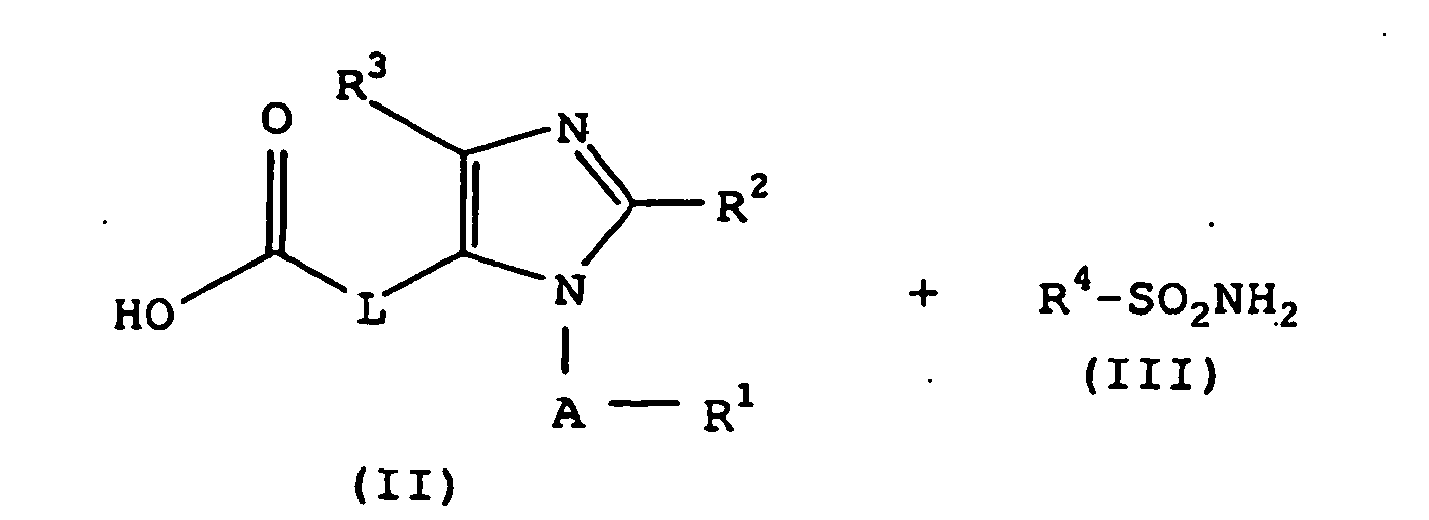
or their salts
wherein each symbol in the formulas is as defined above. - Various definitions in the above- and below-mentioned herein are explained in detail in the following.
- The production methods of the objective compound (I) are explained in detail in the following.
- The objective compound (I) and a salt thereof can be produced by reacting compound (II) or reactive derivative at carboxy thereof or a salt thereof with compound (III) or a salt thereof.
- Examples of preferable salt of compound (II), reactive derivative at carboxy group thereof and compound (III) include those shown with regard to compound (I).
- Preferable reactive derivative at carboxy of compound (II) is acid halide, acid anhydride inclusive of intramolecular acid anhydride, intermolecular acid anhydride and mixed acid anhydride, active amide, active ester and the like. Preferable examples thereof include acid chloride, acid azide, mixed acid anhydride with acid such as substituted phosphoric acid (e.g., dialkylphosphoric acid, phenylphosphoric acid, diphenylphosphoric acid, dibenzylphosphoric acid and halogenated phosphoric acid), dialkylphosphorous acid, sulfurous acid, thiosulfuric acid, sulfuric acid, sulfonic acid (e.g., methanesulfonic acid), aliphatic carboxylic acid (e.g., acetic acid, propionic acid, butyric acid, isobutyric acid, pivalic acid, pentanoic acid, isopentanoic acid, 2-ethylbutyric acid and trichloroacetic acid), aromatic carboxylic acid (e.g., benzoic acid) and the like; symmetric acid anhydride; active amide with imidazole, 4-substituted imidazole, dimethylpyrazole, triazole or tetrazole; active ester (e.g., cyanomethyl ester, methoxymethyl ester, dimethyliminomethyl [(CH3)2N+=CH-] ester, vinyl ester, propargyl ester, p-nitrophenyl ester, 2,4-dinitrophenyl ester, trichlorophenyl ester, pentachlorophenyl ester, mesylphenyl ester, phenylazophenyl ester, phenylthio ester, p-nitrophenylthio ester, p-cresylthio ester, carboxymethylthio ester, pyranyl ester, pyridyl ester, piperidyl ester and 8-quinolylthio ester); esters with N-hydroxy compound (e.g., N,N-dimethylhydroxylamine, 1-hydroxy-2-1H-pyridone, N-hydroxysuccinimide and 1-hydroxy-1H-benzotriazole); and the like. These reactive derivatives can be appropriately selected according to the kind of compound (II) to be used.
- The reaction generally proceeds in a conventional solvent such as water, alcohol (e.g., methanol and ethanol), acetone, dioxane, acetonitrile, chloroform, methylene chloride, ethylene chloride, tetrahydrofuran, ethyl acetate, N,N-dimethylformamide and pyridine, or a mixture thereof, or in any other solvent which does not adversely affect the reaction. These conventional solvents may be used alone or in combination.
- When compound (II) is used in the form of a free acid or a salt thereof in this reaction, the reaction is preferably carried out in the presence of a conventional condensing agent such as N.N'-dicyclohexylcarbodiimide, N-cyclohexyl-N'-morpholinoethylcarbodiimide, N-cyclohexyl-N'-(4-diethylaminocyclohexyl)carbodiimide, N,N'-diethylcarbodiimide, N,N'-diisopropylcarbodiimide, N-ethyl-N'-(3-dimethylamino-propyl)carbodiimide, N,N'-carbonylbis(2-methylimidazole), pentamethyleneketen-N-cyclohexylimine, diphenylketene-N-cyclohexylimine, ethoxyacetylene, 1-alkoxy-l-chloroethylene, trialkyl phosphite, ethyl polyphosphate, isopropyl polyphosphate, phosphorous oxychloride (phosphoryl chloride), phosphorus trichloride, diphenylphosphoryl azide, diphenyl chlorophosphate, diphenylphosphinic chloride, thionyl chloride, oxaryl chloride, lower alkyl haloformate (e.g., ethyl chloroformate and isopropyl chloroformate), triphenylphosphine, 2-ethyl-7-hydroxybenzisoxazorium salt, intramolecular salt of 2-ethyl-5-(m-sulfophenyl)isoxazorium hydroxide, 1-(p-chlorobenzene-sulfonyloxy)-6-chloro-1H-benzotriazole, so-called Vilsmeier reagent(prepared by the reaction of N,N-dimethylformamide with thionyl chloride, phosgene, trichloromethyl chloroformate, phosphorous oxychloride, and so on), and the like.
- The reaction can be carried out in the presence of an inorganic or organic base such as alkali metal bicarbonate, tri(lower)alkylamine, pyridine, 4-dimethylaminopyridine, N-(lower)alkylmorpholine, N,N-di(lower)alkylaniline (e.g., N,N-dimethylaniline), N,N-di(lower)alkylbenzylamine and the like.
- The reaction temperature is not particularly limited, and the reaction is generally carried out under cooling to heating.
- The aforementioned compounds can be converted to preferable salts as necessary by a conventional method. All of them can be purified as necessary according to a conventional method for purifying an organic compound (i.e., recrystallization, column chromatography, thin layer chromatography, high performance liquid chromatography and the like). The compound can be identified by NMR spectrum analysis, mass spectrum analysis, IR spectrum analysis, elemental anlysis, melting point measurement and the like.
- The inventive compound and a salt thereof may be in the form of a solvate, which is also encompassed in the present invention. The solvate is preferably exemplified by hydrate and ethanol solvate.
- The pharmaceutical data of compound (I) are shown in the following to demonstrate the utility of the objective compound (I).
- (blood sugar level depressing activity in db/db mice)
- Female C57BL/KsJ-dbm db+/db+, C57BL/KsJ-dbm +m/+m (Jackson Laboratory) mice (5 weeks old) were purchased and subjected to the test after 2-3 weeks of acclimating period.
- The test drug was mixed with a powder diet (CE-2, Clea Japan, Inc.) in a mortar. In the case of administration in 100 mg/kg, the mixing proportion was 0.1%, in the case of 30 mg/kg, the proportion was 0.03% and in the case of 10 mg/kg, the proportion was 0.01%. The diet was changed twice a week for each group. The amount of the diet given and the amount left were recorded and the diet intake was calculated by determining the difference.
- The female db/db mice were grouped according to body weight, blood sugar level and triglyceride concentration in plasma. Then, the drug-mixed diet was given for 14 days, during which period the mice were 8 to 10 weeks of age. At day 7 and day 14 in the morning, blood was taken from orbital venous plexus using a heparinized glass capillary tube (Chase Heparinized Capillary Tube), and centrifuged to give plasma fractions. The blood sugar value, triglyceride concentration in plasma and insulin concentration in plasma were measured at day 0 and day 14, and blood sugar value and triglyceride concentration in plasma were measured at day 7. Body weight was measured at day 0, day 7 and day 14. After final blood sampling, the mice were sacrificed with CO2 gas.
- Blood sugar value was measured using 10-15 µl of plasma and in accord with glucose oxidase method (glucose CII-Test Wako, Wako Pure Chemicals Co., Ltd.). The triglyceride concentration in plasma was measured using 10-15 µl of plasma and in accord with GPO-p-chlorophenol method (triglyceride G-Test Wako) or GPO-DAOS method (triglyceride E-Test Wako). The measurement was done promptly after blood sampling. The insulin concentration in plasma was measured using 20 µl of plasma (preservable at -20° C) and in accord with an antibody method (Phadesef Insulin RIA kit, Kabi Pharmacia).
- Using the difference between db/db mice control group and +/+ mice in blood sugar value and triglyceride concentration in plasma as 100%, the proportion (%) of decrease in the blood sugar value and triglyceride concentration in plasma of the group administered with the test drug was determined. The results are shown in Table 1.
Table 1 Test compound Dose (mg/kg) Blood sugar decrease (%) Compound A 3.2 63 - The compound (I) of the present invention can be used for therapeutic purposes in the form of a pharmaceutical preparation. This pharmaceutical preparation contains any one of the compounds (I) as an active ingredient in admixture with a pharmaceutically acceptable organic or inorganic excipient which is a solid, semisolid or liquid and which is suitable for oral, parenteral or external (local) administration. Examples of the pharmaceutical preparation include capsules, tablets, sugar coating tablets, granules, suppositories, liquid, lotion, suspension, emulsion, ointment, gel and the like. When desired, these preparations may contain adjuvant, auxiliary substance, stabilizer, moistening agent, emulsifier, buffering agent, and other conventional additives. While the dose of the compound (I) varies depending on the age and symptom of patients, for the therapy of the above-mentioned diseases, an average single dose amount of about 0.1 mg, 1 mg, 10 mg, 50 mg, 100 mg, 250 mg, 500 mg or 1000 mg of the compound (I) would be effective. In general, its daily dose is from 0.1 mg/patient to about 1000 mg/patient.
- The present invention is described in more detail by way of the following Preparation Examples and Examples.
- 4,5-Dibromo-2-methylimidazole (4.91 g) was dissolved in N,N-dimethylformamide(50 ml), and 60% sodium hydride (901 mg) was added gradually under ice-cooling. After stirring at room temperature for 1 hour, 2-(trimethylsilyl)ethoxymethyl chloride (3.75 g) was gradually added dropwise under ice-cooling, and the mixture was stirred overnight at room temperature. The solvent was evaporated under reduced pressure and ethyl acetate was added to the residue. The reaction mixture was washed with saturated aqueous sodium hydrogencarbonate solution and brine. The organic layer was dried over anhydrous magnesium sulfate and the solvent was evaporated under reduced pressure. The residue was purified by silica gel column chromatography (hexane/ethyl acetate=3/1) to give 4,5-dibromo-2-methyl-1-((2-(trimethylsilyl)ethoxy)-methyl)imidazole (7.6 g) as a colorless oil.
1H-NMR(CDCl3) : 0.00 (9H, s), 0.92 (2H, t, J=8Hz), 2.47 (3H, s), 3.55 (2H, t, J=8Hz), 5.24 (2H, s). - 4,5-Dibromo-2-methyl-1-((2-(trimethylsilyl)ethoxy)methyl)-imidazole (29.2 g) was dissolved in tetrahydrofuran (250 ml), and 1.63N 1-butyl lithium/hexane solution (58.1 ml) was added dropwise over 20 min at from -55°C to -60°C. The mixture was stirred at - 60°C for 30 min and N,N-dimethylformamide(58 g) was gradually added dropwise at from -55°C to -60°C. The mixture was stirred at room temperature for 1 hr. Saturated brine was added and the mixture was extracted with ethyl acetate. The organic layer was dried over anhydrous sodium sulfate and the solvent was evaporated under reduced pressure. The residue was purified by silica gel column chromatography (hexane/ethyl acetate=3/1) to give 4-bromo-2-methyl-1-((2-(trimethylsilyl)ethoxy)methyl)-imidazole-5-carbaldehyde (18.5 g) as a pale-yellow oil.
1H-NMR (CDCl3) : 0.00 (9H, s), 0.91 (2H, t, J=8Hz), 2.52 (3H, s), 3.58 (2H, t, J=8Hz), 5.70 (2H, s), 9.71 (1H, s). - 4-Bromo-2-methyl-1-((2-(trimethylsilyl)ethoxy)methyl)-imidazole-5-carbaldehyde (18.5 g) was dissolved in ethanol (80 ml) and 6N hydrochloric acid (80 ml) was added. The mixture was refluxed under heating for 1 hr. The solvent was evaporated under reduced pressure and saturated aqueous sodium hydrogencarbonate solution was added under ice-cooling until the mixture assumed weak alkalinity. The precipitated crystals were collected by filtration, and the crystals were washed with methanol and heat-dried under reduced pressure to give 5-bromo-2-methylimidazole-4-carbaldehyde (9.17 g) as white crystals.
1H-NMR(CDCl3) : 2.45 (3H, s), 9.53(1H, s). - 5-Bromo-2-methylimidazole-4-carbaldehyde (400 mg) was dissolved in conc. hydrochloric acid (6 ml), and the mixture was refluxed under heating for 24 hr. Saturated aqueous sodium hydrogencarbonate solution was added under ice-cooling until the mixture assumed weak alkalinity and the mixture was extracted twice with ethyl acetate. The organic layer was washed with saturated aqueous sodium hydrogencarbonate solution and then brine. The organic layer was dried over anhydrous magnesium sulfate and the solvent was evaporated under reduced pressure. Hexane was added to the residue and the crystals were collected by filtration to give 5-chloro-2-methylimidazole-4-carbaldehyde (222 mg) as yellow crystals.
1H-NMR(CDCl3) : 2.45(3H, s), 9.58(1H, s). - To a solution of 5-chloro-2-methylimidazole-4-carbaldehyde (433 mg) in N,N-dimethylformamide (4.3 ml) were added potassium carbonate powder (616 mg) and 2-chloro-4-iodobenzyl bromide (1.2 equivalents) under ice-cooling and the mixture was stirred at room temperature for 2.5 hr. To the reaction mixture were added water and saturated brine, and the resulting product was extracted twice with ethyl acetate. The organic layers were combined, washed with saturated brine, and dried over anhydrous magnesium sulfate. The solvent was evaporated and the residue was purified by silica gel column chromatography (hexane/ethyl acetate=5/1) to give 4-chloro-1-(2-chloro-4-iodobenzyl)-2-methylimidazole-5-carbaldehyde (1.01 g) as a white powder.
1H-NMR (CDCl3) : 2.33(3H, s), 5.56(2H, s), 6.21 (1H, d, J=8Hz), 7.50 (1H, dd, J=8 and 2Hz), 7.78(1H, d, J=2Hz) , 9.75(1H, s).
Mass (ESI) : m/e 395 (M+H) +. - To a solution of 4-chloro-1-(2-chloro-4-iodobenzyl)-2-methylimidazole 5-carbaldehyde (1.01 g) in tetrahydrofuran (10 ml) was added methyl (triphenylphosphoranylidene) acetate (1.27 g) and the mixture was refluxed under heating for 4 hr. The solvent was evaporated and the residue was purified by silica gel column chromatography (hexane/ethyl acetate=3/1) to give methyl (E)-3-(4-chloro-1-(2-chloro-4-iodobenzyl)-2-methylimidazol-5-yl)-2-propenate (974 mg) as a white powder.
1H-NMR(CDCl3) : 2.33(3H, s), 3.75 (3H, s), 5.15(2H, s), 6.17 (1H, d, J=8Hz), 6.49 (1H, d, J=16Hz), 7.28 (1H, d, J=16Hz), 7.53 (1H, dd, J=8 and 2Hz), 7.81 (1H, d, J=2Hz).
Mass (ESI) : m/e 451 (M+H)+. - A mixture of tetrakis(triphenylphosphine)palladium(0) (89 mg), methyl (E)-3-(4-chloro-1-(2-chloro-4-iodobenzyl)-2-methylimidazol-5-yl)-2-propenate (350 mg), 2-furylboronic acid (135 mg), potassium carbonate powder (321 mg) and N,N-dimethylformamide (3.5 ml) was stirred under a nitrogen atmosphere at 80°C for 4 hr. The reaction mixture was allowed to cool to room temperature and water was added. The precipitate was collected by filtration. The precipitate was dissolved in chloroform, washed successively with saturated aqueous sodium hydrogencarbonate solution and saturated brine, and dried over magnesium sulfate. The solvent was evaporated and the residue was purified by silica gel column chromatography (chloroform/ethyl acetate=10/1) to give methyl (E)-3-(4-chloro-1-(2-chloro-4-(2-furyl)benzyl)-2-methylimidazol-5-yl)-2-propenate (336 mg) as a pale-yellow powder.
1H-NMR(CDCl3) : 2.36(3H, s), 3.74(3H, s), 5.22(2H, s), 6.44-6.50(2H, m), 6.50(1H, d, J=16Hz), 6.68(1H, d, J=3Hz), 7.34(1H, d, J=16Hz), 7.43-7.50(2H, m), 7.76(1H, d, J=2Hz).
Mass(ESI) : m/e 391(M+H)+. - To a suspension of methyl (E)-3-(4-chloro-1-(2-chloro-4-(2-furyl)benzyl)-2-methylimidazol-5-yl)-2-propenate (319 mg) in 1,4-dioxane (1.6 ml) was added 1N aqueous sodium hydroxide solution (1.2 ml) and the mixture was stirred at 50°C for 1 hr. The reaction mixture was ice-cooled and 1N hydrochloric acid (1.2 ml) was added dropwise to neutralize the mixture. The resulting product was extracted 3 times with chloroform-methanol (4/1). The organic layers were combined, washed with saturated brine, and dried over magnesium sulfate. The solvent was evaporated to give (E)-3-(4-chloro-1-(2-chloro-4-(2-furyl)benzyl)-2-methylimidazol-5-yl)-2-propenic acid (310 mg) as a gray white powder.
1H-NMR(DMSO-d6) : 2.34 (3H, s), 5.41 (2H, s), 6.26 (1H, d, J=16Hz), 6.58 (1H, d, J=8Hz), 6.62(1H, dd, J=3 and 2Hz), 7.09 (1H, d, J=3Hz), 7.22(1H, d, J=16Hz), 7.62(1H, dd, J=8 and 2Hz), 7.79(1H, d, J=2Hz), 7.88(1H, d, J=2Hz).
Mass(ESI) : m/e 375(M-H)-. - To a mixture of methyl (E)-3-(4-chloro-1-(2-chloro-4-iodobenzyl)-2-methylimidazol-5-yl)-2-propenate (360 mg), dichlorobis(triphenylphosphine)palladium(II) (28 mg) and copper iodide (7.6 mg) was added a solution of phenylacetylene (326 mg) in diisopropylamine (20 ml) in a nitrogen atmosphere and the mixture was refluxed under heating for 5 hr. The reaction mixture was allowed to cool. Water was added and the mixture was extracted twice with chloroform. The organic layers were combined, washed with saturated aqueous sodium hydrogencarbonate solution and saturated brine, and dried over anhydrous magnesium sulfate. The resultant was filtrated under reduced pressure and concentrated to give a crude product. The product was applied to flash silica gel column chromatography (silica gel 10 g) to give methyl (E)-3-(4-chloro-1-(2-chloro-4-(phenylethynyl)benzyl)-2-methylimidazol-5-yl)-2-propenate as brown amorphous (331 mg) from the eluted fraction of hexane/ethyl acetate=5/1 - 1-1.
1H-NMR(CDCl3) : 2.35(3H, s), 3.75(3H, s), 5.23(2H, s), 6.45(1H, d, J=8Hz), 6.50(1H, d, J=16Hz), 7.27-7.40(5H, m), 7.48-7.56(2H, m), 7.63(1H, s).
Mass (ESI) : m/z 425(M+1). - In the same manner as in the aforementioned Preparation Example 1 -4, (E)-3-(4-chloro-1-(2-chloro-4-(phenylethynyl)-benzyl)-2-methylimidazol-5-yl)-2-propenic acid was obtained as pale-ocher crystals (283 mg) from methyl (E)-3-(4-chloro-1-(2-chloro-4-(phenylethynyl)benzyl)-2-methylimidazol-5-yl)-2-propenate (413 mg).
1H-NMR (CDCl3) : 2.36(3H, s), 5.23(2H, s), 6.45(1H, d, J=8Hz), 6.48(1H, d, J=16Hz), 7.32-7.41(5H, m), 7.48-7.55(2H, m), 7.64(1H, d, J=2Hz).
Mass(ESI) : m/z 409(M-1). - In the same manner as in the aforementioned Preparation Example 1-1, 4-chloro-1-(2-chloro-4-phenylbenzyl)-2-methylimidazole-5-carbaldehyde (1.23 g) was obtained as a colorless oil from 5-chloro-2-methylimidazole-4-carbaldehyde (600 mg) and 2-chloro-4-phenylbenzyl bromide (1.4 g).
1H-NMR(CDCl3) : 2.36(3H, s), 5.67(2H,s), 6.56(1H, d, J=8Hz), 7.35-7. 55 (6H), 7.65 (1H, s), 9.80 (1H, s). - In the same manner as in the aforementioned Preparation Example 1-2, methyl (E)-3-[4-chloro-1-(2-chloro-4-phenylbenzyl)-2-methylimidazol-5-yl]-2-propenate (1.13 g) was obtained as a white powder from 4-chloro-1-(2-chloro-4-phenylbenzyl)-2-methylimidazole-5-carbaldehyde (1.23 g).
1H-NNR (CDCl3) : 2.37(3H, s) , 3.74 (3H, s), 5.25 (2H, s), 6.46-6.57(2H), 7.30-7.55 (7H), 7.68 (1H, s). - In the same manner as in the aforementioned Preparation Example 1-4, (E) -3- [4-chloro-1- (2-chloro-4-phenylbenzyl) -2-methylimidazol-5-yl]2-propenic acid (1.18 g) was obtained as a white powder from methyl (E)-3-[4-chloro-1-(2-chloro-4-phenylbenzyl)-2-methylimidazol-5-yl]-2-propenate (1.35 g).
1H-NMR(DMSO-d6) : 2.35(3H, s), 5.45 (2H,s), 6.30 (1H, d, J=16Hz), 6.58 (1H, d, J=8Hz), 7.25 (1H, d, J=16Hz), 7.36-7.52 (3H), 7.62 (1H, d, J=8Hz), 7.69 (2H, d, J=8Hz), 7.86 (1H, s). - In the same manner as in the aforementioned Preparation Example 1-1, 4-chloro-1-[2-chloro-4-(1-pentyloxy)benzyl]-2-methylimidazole-5-carbaldehyde (460 mg) was obtained as a pale-yellow oil from 5-chloro-2-methylimidazole-4-carbaldehyde (200 mg) and 2-chloro-4-(1-pentyloxy)benzyl bromide (378 mg).
1H-NMR(CDCl3) : 0.93(3H, t, J=6Hz), 1.40(4H, m), 1.76(2H, m), 2.32(3H, s), 3.90(2H, t, J=6Hz), 5.57(2H, s), 6.45(1H, d, J=8Hz), 6.70(1H, dd, J=8, 2Hz), 6.95(1H, d, J=2Hz), 9.76(1H, s). - In the same manner as in the aforementioned Preparation Example 1-2, methyl (E)-3-(4-chloro-1-(2-chloro-4-(1-pentyloxy)benzyl)-2-methylimidazol-5-yl)-2-propenate was obtained as a milky white solid (427 mg) from 4-chloro-1-(2-chloro-4-(1-pentyloxy)benzyl)-2-methylimidazole-5-carbaldehyde (439 mg).
1H-NMR(CDCl3) : 0.93(3H, t, J=7Hz), 1.32-1.49(4H, m), 1.71-1.83(2H, m), 2.34(3H, s), 3.75(3H, s), 3.92(2H, t, J=7Hz), 5. 15(2H, s), 6.37(1H, d, J=8Hz), 6.49(1H, d, J=16Hz), 6.70(1H, dd, J=2, 8Hz), 6.99(1H, d, J=2Hz), 7.34(1H, d, J=16Hz).
Mass(ESI) : m/z 411 (M+1). - In the same manner as in the aforementioned Preparation Example 1-4, (E)-3-(4-Chloro-1-(2-chloro-4-(1-pentyloxy)benzyl)-2-methylimidazol-5-yl)-2-propenic acid was obtained as thin yellow crystals (370 mg) from methyl (E)-3-(4-chloro-1-(2-chloro-4-(1-pentyloxy)benzyl)-2-methylimidazol-5-yl)-2-propenate (403 mg).
1H-NMR(CDCl3) : 0.92(3H, t, J=7Hz), 1.30-1.50(4H, m), 1.70-1.83(2H, m), 2.36 (3H, s), 3.92(2H, t, J=7Hz), 5.16(2H, s), 6.38(1H, d, J=8Hz), 6.47(1H, d, J=16Hz), 6.71(1 H, dd, J=2, 8Hz), 6.99(1H, d, J=2Hz), 7.40(1H, d, J=16Hz).
Mass(ESI) : m/z 395(M-1). - 2-Ethylimidazole (1.0 g) was dissolved in dry ethanol (10 ml), and bromine (1.2 ml) was added dropwise under ice-cooling. The reaction mixture was stirred at the same temperature for 3 hr and at room temperature for 3 hr, and left standing overnight at room temperature. After neutralizing with 5N aqueous sodium hydroxide solution, sodium nitrite (1.4 g) and water (10 ml) were added and the mixture was refluxed under heating for 10 hr. The reaction mixture was partitioned between chloroform and water and the aqueous layer was extracted twice with chloroform. The organic layers were combined, dried over magnesium sulfate and concentrated to dryness under reduced pressure. The residue was purified by silica gel column chromatography (chloroform/methanol=98:2) to give 4-bromo-2-ethylimidazole (1.02 g) as a pale-yellow solid.
1H-NMR(CDCl3) : 1.32 (3H, t , J=6Hz), 2.75(2H, q, J=6Hz), 6.89(1H, s).
MS (ESI) : m/z 176 (M+1) - 4-Bromo-2-ethylimidazole (24.4 g) was dissolved in ethanol (244 ml), and 1N aqueous sodium hydroxide solution (105 ml) and 37% formalin (15.6 ml) were added. The mixture was stirred at room temperature for 15 hr. The reaction mixture was neutralized under ice-cooling and concentrated to dryness under reduced pressure. The residue was extracted with chloroform-methanol (4/1) and insoluble matter was filtered off. The residue was concentrated to dryness under reduced pressure. The residue was purified by silica gel column chromatography (chloroform/methanol=49:1-19:1) to give 4-bromo-2-ethyl-5-(hydroxymethyl)imidazole (18.9 g) as a yellow powder.
1H-NMR (DMSO-d6) : 1.16(3H, t, J=6Hz), 2.55(2H, q, J=6Hz), 4.30(2H, d, J=4Hz), 5.14(1H, t, J=4Hz). - 4-Bromo-2-ethyl-5-(hydroxymethyl)imidazole (18.9 g) was dissolved in dry dimethylformamide (189 ml), and manganese dioxide (80.1 g) was added. The mixture was stirred at room temperature for 5 hr and left standing overnight. The reaction mixture was filtered through celite and insoluble matter was washed with chloroform. The filtrate and washing were combined and concentrated to dryness under reduced pressure. The residue was washed with water to give 5-bromo-2-ethylimidazole-4-carbaldehyde (12.9 g) as a brown powder.
1H-NMR (CDCl3) : 1.37 (3H, t, J=6Hz), 2. 86 (2H, q, J=6Hz) , 9.58 (1H, s). - In the same manner as in Preparation Example 0-4, 5-chloro-2-ethylimidazole-4-carbaldehyde was obtained as orange crystals (6.6 g) from 5-bromo-2-ethylimidazole-4-carbaldehyde (12 g). 1H-NMR(DMSO-d6) : 1.20 (3H, t, J=7Hz), 2.66 (2H, q, J=7Hz), 9.59 (1H, s).
MASS(ESI) : m/z 157 (M-1). - In the same manner as in Preparation Example 1 -1, 4-chloro-1-(2-chloro-4-iodobenzyl)-2-ethylimidazole-4-carbaldehyde was obtained as a pale-yellow gum (2.68 g) from 5-chloro-2-ethylimidazole-4-carbaldehyde (1.2 g) and 2-chloro-4-iodobenzyl bromide (3.76 g).
1H-NMR(CDCl3) : 1.28(3H, t, J=7Hz), 2.58(2H, q, J=7Hz), 5.56(2H, s), 6.20(1H, d, J=8Hz), 7.50(1H, dd, J=8, 1Hz), 7.78(1H, d, J=1Hz), 9.75(1H, s).
MASS(ESI) : m/z 409(M+1). - In the same manner as in Preparation Example 1 -2, methyl (E)-3-(4-chloro-1-(2-chloro-4-iodobenzyl)-2-ethylimidazol-5-yl)-2-propenate was obtained as pale-yellow crystals (2.53 g) from 4-chloro-1-(2-chloro-4-iodobenzyl)-2-ethylimidazole-5-carbaldehyde (2.65 g) and methyl (triphenylphosphoranylidene)acetate (3.25 g).
1H-NMR(CDCl3) : 1.28(3H, t, J=7Hz), 2.59(2H, q, J=7Hz), 3.75(3H, s), 5.15(2H, s), 6.16(1H, d, J=8Hz), 6.49(1H, d, J=15Hz), 7.27(1H, d, J=15Hz), 7.51(1H, dd, J=8, 1Hz), 7.81(1H, d, J=1Hz).
MASS (ESI) : m/z 465 (M+1). - In the same manner as in Preparation Example 2-1, methyl (E)-3-(4-chloro-1-(2-chloro-4-(phenylethynyl)benzyl)-2-ethylimidazol-5-yl) -2- propenate was obtained as gray crystals (522 mg) from methyl (E)-3-(4-chloro-1-(2-chloro-4-iodobenzyl)-2-athylimidazol-5-yl)-2-propenate (600 mg) and phenylacetylene (439 mg).
1H-NMR(CDCl3) : 1.28 (3H, t, J=7Hz), 2.62 (2H, q, J=7Hz), 3.75 (3H, s), 5.23 (2H, s), 6.44 (1H, d, J=8Hz), 6.50 (1H, d, J=15Hz), 7.28-7.40 (4H, m), 7.47-7.55 (2H, m), 7.63(1H, d, J=1Hz).
MASS (ESI) : m/z 439 (M+1). - In the same manner as in Preparation Example 1-4, (E)-3-(4-chloro-1-(2chloro-4-[phenylethynyl)benzyl-2-ethylimidazol-5-yl)-2-propenic acid was obtained as gray crystals (410 mg) from methyl (E)-3-(4-chloro-1-(2-chloro-4-(phenylethynyl)benzyl)-2-ethylimidazol-5-yl)-2-propenate (500 mg).
1H-NMR(DMSO-d6) : 1.15 (3H, t, J=7Hz), 2.67 (2H, q, J=7Hz), 5.46(2H, s), 6.27(1H, d,J=15Hz), 6.54(1H, d, J=8Hz), 7.23 (1H, d, J=15Hz), 7.40-7.60(6H, m), 7.79(1H, d, J=1Hz).
MASS (ESI) : m/z 423 (M-1). - To a suspension of (E)-3-(4-chloro-1-(2-chloro-4-(2-furyl)benzyl)-2-methylimidazol-5-yl)-2-propenic acid (155 mg) in N,N-dimethylformamide (0.8 ml) was added 1,1'-carbonyldiimidazole (101 mg) at room temperature, and the mixture was stirred for 1 hr. Thereto were added (4-methylbenzene)sulfonamide (106 mg) and 1,8-diazabicyclo[5.4.0]-7-undecene (96 mg), and the mixture was stirred at 50°C for 5 hr. The reaction mixture was ice-cooled and 1N hydrochloric acid (1.7 ml) was added dropwise to neutralize the solution. Water (4 ml) was added and the precipitate was collected by filtration. This crude product was recrystallized from acetone - water to give (E)-3-(4-chloro-1-(2-chloro-4-(2-furyl) benzyl) -2-methylimidazol-5-yl) -N- ((4-methylbenzene) - sulfonyl)-2-propenamide (152 mg) as a pale-yellow powder.
1H-NMR(CDCl3) : 2.34(3H, s), 2.40(3H, s), 5.17(2H, s), 6.38 (1H, d, J=8Hz), 6.49(1H, dd, J=3 and 2Hz), 6.53(1H, d, J=16Hz), 6.68(1H, d, J=3Hz), 7.31(2H, d, J=8Hz), 7.35(1H, d, J=16Hz), 7.43(1H, dd, J=8 and 2Hz), 7.49 (1H, d, J=2Hz), 7.74(1H, d, J=2Hz), 7.92(2H, d, J=8Hz).
Mass (ESI) : m/e 528 (M-H)-.
m.p. 242-243°C. - In the same manner as in Reference Example 1. (E)-3-[4-chloro-1-(2-chloro-4-phenylbenzyl)-2-methyXimidazol-5-yl]-N-((4-methylbenzene)sulfonyl)-2-propenamide (137 mg) was obtained as colorless crystals from (E)-3-[4-chloro-1-(2-chloro-4-phenylbenzyl)-2-methylimidazol-5-yl]-2-propenic acid (150 mg).
1H-NMR(CDCl3) : 2.35(3H, s), 2.40(3H, s), 5.19(2H, s), 6.43(1H, d, J=8Hz), 6.57 (1H, d, J=15Hz), 7.24-7.55(8H, m), 7.65(1H, d, J=1Hz), 7.92(2H, d,'J=8Hz), 8.41(1H, br s).
Mass(ESI) : m/z 540(M+1).
m.p. 229-232°C. - (E) -3- (4-Chloro-1- (2-chloro-4-(1-pentyloxy) benzyl)-2-methylimidazol-5-yl)-2-propenic acid (150 mg) was dissolved in N,N-dimethylformamide (1.5 ml) and carbonyldiimidazole was added. The mixture was stirred at room temperature for 3 hr. To the reaction mixture was added (E)-1-penten-1-ylsulfonamide sodium salt (97 mg), and the mixture was stirred at room temperature for 3 hr and left standing for one day. The reaction mixture was diluted with water (1.5 ml) and adjusted to pH 4 with 1N hydrochloric acid under ice-cooling. The precipitated powder was collected by filtration and washed with water. The resulting white powder was suspended in ethanol (0.75 ml) and heated. The mixture was stirred at room temperature for 30 min. The precipitate was collected by filtration, washed with ethanol and dissolved in N,N-dimethylformamide (0.75 ml) at 80°C. Water (0.25 ml) was added at the same temperature and the mixture was stirred at room temperature for 1 hr. The precipitated crystals were collected by filtration, washed with N,N-dimethylformamide - water (1:1) and then with water to give (E)-3-(4-chloro-1-(2-chloro-4-(1-pentyloxy)benzyl)-2-methylimidazol-5-yl)-N-((E)-1-penten-1-ylsulfonyl)-2-propenamide (160 mg) as colorless crystals.
1H-NMR (CDCl3) : 0.92 (3H, t, J=6Hz), 0.94(3H, t, J=6Hz), 1.30-1.60 (6H), 1.78(2H, m), 2.25(2H, q, J=6Hz), 2.35(3H, s), 3.92(2H, t, J=6Hz), 5.15(2H, s), 6.33(1H, d, J=8Hz), 6.49(1H, d, J=16Hz), 6.54(1H, d, J=16Hz), 6.70(dd, J=8, 2Hz), 6.99(1H, d, J=2Hz), 7.04(1H, dt, J=16, 6Hz), 7.41(1H, d, J =16Hz), 8.00(1H, br. s).
MS(ESI) : m/z 528(M-1). 7.40(4H, m), 7.43(1H, d, J=16Hz), 7.48-7.55(2H, m), 7.62(1H, d, J=1Hz).
MS (ESI) : m/z 556 (M-1).
m.p. 161-163°C. - In the same manner as in Reference Example 3, (E)-3-[4-chloro-1-(2-chloro-4- (phenylethynyl) benzyl) -2-ethylimidazol-5-yl) -N- ((E) -1-penten-1-ylsulfonyl)-2-propenamide was obtained as colorless crystals (106 mg) from (E)-3-(4-chloro-1-(2-chloro-4-(phenylethynyl)benzyl)-2-ethylimidazol-5-yl)-2-propenic acid (130 mg) and (E)-1-penten-1-ylsulfonamide sodium salt (78 mg).
1H-NMR (CDCl3) : 0.93 (3H, t, J=7Hz) , 1. 28 (3H, t, J=7Hz) , 1.45-1. 55 (2H, m), 2.19-2.30 (2H, m), 2.62 (2H, d, J=7Hz), 5.22(2H, s), 6.40(1H, d, J=8Hz), 6.48(1H, d, J=16Hz), 6.58(1H, d, J=16Hz), 6.98-7.10(1H, m), 7.29-7.45(5H, m), 7.47-7.56(2H, m), 7.62(1H, d, J=1Hz).
MS(ESI) : m/z 554 (M-1).
m.p. 173-175°C. - (E)-3-(4-Chloro-1-(2-chloro-4-(phenylethenyl)benzyl)-2-ethylimidazol-5-yl)-N-((E)-1-penten-1-yl)sulfonyl-2-propenamide (853 mg) was suspended in ethanol (7 ml), and 1N aqueous sodium hydroxide solution (1.53 ml) was added. The solvent was evaporated under reduced pressure. To the residue was added ethyl acetate (17 ml), and the mixture was heated and filtrated while it was hot. The filtrate was allowed to cool and the precipitated powder was collected by filtration and dried by heating under reduced pressure to give (E)-3-(4-chloro-1-(2-chloro-4-(phenylethynyl)benzyl)-2-ethylimidazol-5-yl)-N-((E)-1-penten-1-yl)sulfonyl)-2-propenamide sodium salt (737 mg) as a colorless powder.
IR (KBr): 2958, 2227, 2202, 1635, 1552, 1498, 1460, 1383, 1335, 1296, 1263, 1238, 1101, 1066, 1049, 966, 866, 839 cm-1
1H-NMR(DESD-d6) : 0.85 (3H, t, J=7Hz), 1.13 (3H, t, J=7Hz), 1.30-1.43(2H, m), 2.02(2H, q, J=7Hz), 2.57(2H, q, J=7Hz), 5.34(2H, s), 6.20-6.30(2H, m), 6.47(1H, d, J=7Hz), 6.55 (1H, d, J=15Hz), 6.93(1H, d, J=15Hz), 7.41-7.45(3H, m), 7.48(1H, dd, J=8, 2Hz), 7.54-7.58(2H, m), 7.78(1H, d, J=2Hz)
Mass(ESI) : m/z 554(M-H)- - The above-mentioned imidazole compounds and pharmaceutically acceptable salts thereof of the present invention are useful as pharmaceutical preparations which, based on the hypoglycemic action, are used for the prophylaxis and treatment of, for example, impaired glucose tolerance disorder, diabetes (e.g., type II diabetes), gestational diabetes, diabetic complications (e.g., diabetic gangrene, diabetic arthropathy, diabetic osteopenia, diabetic glomerulosclerosis, diabetic nephropathy, diabetic dermatopathy, diabetic neuropathy, diabetic cataract, diabetic retinopathy and the like), insulin resistance syndrome (e.g., insulin receptor abnormality, Rabson-Mendenhall syndrome, leprechaunism, Kobberling-Dunnigan syndrome, Seip syndrome, Lawrence syndrome, Cushing syndrome, acromegaly and the like), polycystic ovary syndrome, hyperlipidemia, atherosclerosis, cardiovascular diseases (e.g., stenocardia, cardiac failure and the like), hyperglycemia (e.g., those characterized by abnormal saccharometabolism such as eating disorders), pancreatitis, osteoporosis, hyperuricemia, hypertension, inflammatory bowel diseases, and skin disorders related to an anomaly of differentiation of epidermic cells; and which, based on the cGMP-PDE (particularly PDE-V) inhibitory action, smooth muscle relaxing action, bronchodilating action, vasodilating action, smooth muscle cell inhibitory action, allergy suppressing action and the like, are used for angina pectoris, hypertension, pulmonary hypertension, congestive heart failure, glomerulopathy (e.g., diabetic glomerulosclerosis), tubulointerstitial disorders (e.g., kidney diseases induced by FK506, cyclosporine and the like), renal failure, atherosclerosis, angiostenosis (e.g., after percutaneous arterioplasty), peripheral vascular diseases, cerebral apoplexy, chronic reversible obstractive impairment (e.g., bronchitis, asthma inclusive of chronic asthma and allergic asthma), autoimmune diseases, allergic rhinitis, urticaria, glaucoma, diseases characterized by impaired intestinal motility (e.g., irritable bowel syndrome), impotence (e.g., organic impotence, psychic impotence and the like), nephritis, cancer cachexia or restenosis after PTCA, cachexia (e.g., progressive weight loss due to lipolysis, myolysis, anemia, edema, anorexia and the like in chronic diseases such as cancer, tuberculosis, endocrine diseases and AIDS, and the like. A combination of a compound of formula (I) or pharmaceutically acceptable salts thereof and a retinoid is useful for treating disease states caused by uncontrolled cell proliferation, including cancer, restenosis and atherosclerosis.
- This application is based on application Nos.
10-367362 11-228838
Claims (5)
- An imidazole compound, which is (E)-3-(4-chloro-1-(2-chloro-4-(phenylethynyl)benzyl)-2-ethylimidazol-5-yl)-N-((E)-1-penten-1-yl-sulfonyl)-2-propenamide, or a salt thereof.
- An imidazole compound according to claim 1, which is (E)-3-(4-chloro-1-(2-chloro-4-(phenylethynyl)benzyl)-2-ethylimidazol-5-yl)-N-((E)-1-penten-1-ylsulfonyl)-2-propenamide sodium salt.
- A pharmaceutical composition containing the imidazole compound of any of claims 1 or 2 or a pharmaceutically acceptable salt thereof.
- A pharmaceutical preparation containing the imidazole compound of any of claims 1 or 2 or a pharmaceutically acceptable salt thereof, which is used as an agent for the prophylaxis and/or treatment of impaired glucose tolerance disorder, diabetes, gestational diabetes, diabetic complications, insulin resistance syndrome, polycystic ovary syndrome, hyperlipidemia, atherosclerosis, cardiovascular diseases, hyperglycemia, pancreatitis, osteoporosis, hyperuricemia, hypertension, inflammatory bowel diseases, or skin disorders related to an anomaly of differentiation of epidermic cells.
- Use of the imidazole compound of any of claims 1 or 2 or a pharmaceutically acceptable salt thereof for the production of an agent for the prophylaxis and/or treatment of impaired glucose tolerance disorder, diabetes, gestational diabetes, diabetic complications, insulin resistance syndrome, polycystic ovary syndrome, hyperlipidemia, atherosclerosis, cardiovascular diseases, hyperglycemia, pancreatitis, osteoporosis, hyperuricemia, hypertension, inflammatory bowel diseases, or skin disorders related to an anomaly of differentiation of epidermic cells.
Applications Claiming Priority (5)
| Application Number | Priority Date | Filing Date | Title |
|---|---|---|---|
| JP36736298 | 1998-12-24 | ||
| JP36736298 | 1998-12-24 | ||
| JP22883899 | 1999-08-12 | ||
| JP22883899 | 1999-08-12 | ||
| PCT/JP1999/007160 WO2000039097A1 (en) | 1998-12-24 | 1999-12-20 | Imidazole compounds and medicinal use thereof |
Publications (3)
| Publication Number | Publication Date |
|---|---|
| EP1142879A1 EP1142879A1 (en) | 2001-10-10 |
| EP1142879A4 EP1142879A4 (en) | 2002-02-06 |
| EP1142879B1 true EP1142879B1 (en) | 2007-10-10 |
Family
ID=26528483
Family Applications (1)
| Application Number | Title | Priority Date | Filing Date |
|---|---|---|---|
| EP99959929A Expired - Lifetime EP1142879B1 (en) | 1998-12-24 | 1999-12-20 | Imidazole compounds and medicinal use thereof |
Country Status (18)
| Country | Link |
|---|---|
| US (1) | US7060721B1 (en) |
| EP (1) | EP1142879B1 (en) |
| KR (1) | KR20010094731A (en) |
| CN (1) | CN1170822C (en) |
| AR (1) | AR022019A1 (en) |
| AT (1) | ATE375332T1 (en) |
| AU (1) | AU758325C (en) |
| BR (1) | BR9917112A (en) |
| CA (1) | CA2356838A1 (en) |
| CZ (1) | CZ20012338A3 (en) |
| DE (1) | DE69937307T2 (en) |
| ES (1) | ES2292262T3 (en) |
| HU (1) | HUP0104657A3 (en) |
| IL (1) | IL143802A0 (en) |
| RU (1) | RU2238937C2 (en) |
| TR (1) | TR200101865T2 (en) |
| TW (1) | TWI239330B (en) |
| WO (1) | WO2000039097A1 (en) |
Families Citing this family (25)
| Publication number | Priority date | Publication date | Assignee | Title |
|---|---|---|---|---|
| GB0009037D0 (en) * | 2000-04-13 | 2000-05-31 | Novartis Ag | Organic compounds |
| US20030181461A1 (en) * | 2002-01-25 | 2003-09-25 | Lautt Wilfred Wayne | Use of phosphodiesterase antagonists to treat insulin resistance |
| US7452909B2 (en) * | 2003-09-04 | 2008-11-18 | Hoffman-La Roche Inc. | Imidazole derivatives |
| DE102004020186A1 (en) * | 2004-04-22 | 2005-11-17 | Aventis Pharma Deutschland Gmbh | Heterocyclyl acetic acids as inhibitors of TAFla |
| AU2012200214B2 (en) * | 2004-05-14 | 2013-10-24 | Emisphere Technologies, Inc. | Compounds and compositions for delivering active agents |
| ES2249992B1 (en) * | 2004-09-13 | 2007-03-01 | Ferrer Internacional, S.A. | A PROCEDURE FOR MANUFACTURING ENANTIOMERIC COMPOUNDS OF IMIDAZOL. |
| RU2412943C2 (en) * | 2005-03-23 | 2011-02-27 | Ф. Хоффманн-Ля Рош Аг | ACETYLENYL-PYRAZOLE-PYRIMIDINE DERIVATIVES AS mGluR2 ANTAGONISTS |
| TW200740435A (en) * | 2005-08-10 | 2007-11-01 | Takeda Pharmaceuticals Co | Therapeutic agent for diabetes |
| EP2013186A1 (en) * | 2006-04-21 | 2009-01-14 | AstraZeneca AB | Imidazole derivatives for use as edg-1 antagonists |
| RU2439062C2 (en) * | 2006-10-19 | 2012-01-10 | Ф.Хоффманн-Ля Рош Аг | Imidazolone and imidazolidinone derivatives as 11b-hsd1 inhibitors for diabetes |
| TW200838501A (en) * | 2007-02-02 | 2008-10-01 | Theravance Inc | Dual-acting antihypertensive agents |
| MX2009008103A (en) * | 2007-02-09 | 2009-08-18 | Takeda Pharmaceutical | Fused ring compounds as partial agonists of ppar-gamma. |
| TWI448284B (en) | 2007-04-24 | 2014-08-11 | Theravance Inc | Dual-acting antihypertensive agents |
| TWI406850B (en) | 2007-06-05 | 2013-09-01 | Theravance Inc | Dual-acting benzoimidazole antihypertensive agents |
| KR100868898B1 (en) * | 2007-07-30 | 2008-11-14 | 한국기계연구원 | Piezoelectric Pump Using Stacked PET |
| EP2200975A1 (en) | 2007-09-07 | 2010-06-30 | Theravance, Inc. | Dual-acting antihypertensive agents |
| US8212052B2 (en) | 2007-12-11 | 2012-07-03 | Theravance, Inc. | Dual-acting benzoimidazole antihypertensive agents |
| JP2011518884A (en) | 2008-04-29 | 2011-06-30 | セラヴァンス, インコーポレーテッド | Dual active antihypertensive |
| US8124636B2 (en) * | 2008-04-30 | 2012-02-28 | Hoffmann-La Roche Inc. | Imidazolidinone derivatives as 11B-HSD1 inhibitors |
| US7863309B2 (en) | 2008-07-24 | 2011-01-04 | Theravance, Inc. | Dual-acting antihypertensive agents |
| CA2760748A1 (en) * | 2009-05-15 | 2010-11-18 | Kai Rossen | Process for the preparation of a compound useful as an inhibitor of tafia |
| WO2011005674A1 (en) | 2009-07-07 | 2011-01-13 | Theravance, Inc. | Dual-acting pyrazole antihypertensive agents |
| WO2011011232A1 (en) | 2009-07-22 | 2011-01-27 | Theravance, Inc. | Dual-acting oxazole antihypertensive agents |
| US8481549B2 (en) * | 2010-01-19 | 2013-07-09 | Theravance, Inc. | Dual-acting thiophene, pyrrole, thiazole and furan antihypertensive agents |
| WO2020050241A1 (en) | 2018-09-04 | 2020-03-12 | 中外製薬株式会社 | Method of producing tetracyclic compound |
Family Cites Families (6)
| Publication number | Priority date | Publication date | Assignee | Title |
|---|---|---|---|---|
| ZA908300B (en) * | 1989-10-24 | 1992-06-24 | Takeda Chemical Industries Ltd | Benzimidazole derivatives,their production and use |
| US5215994A (en) | 1990-09-25 | 1993-06-01 | Fujisawa Pharmaceutical Co., Ltd. | Angiotenin II antagonizing heterocyclic derivatives |
| TW235963B (en) | 1992-01-16 | 1994-12-11 | Shionogi & Co | |
| EP0882718B1 (en) | 1995-12-28 | 2005-08-31 | Fujisawa Pharmaceutical Co., Ltd. | Benzimidazole derivatives |
| RU2199532C2 (en) | 1997-06-27 | 2003-02-27 | Фудзисава Фармасьютикал Ко., Лтд. | Sulfonamide compound |
| ES2229510T3 (en) | 1997-06-27 | 2005-04-16 | Fujisawa Pharmaceutical Co., Ltd. | DERIVATIVES OF AROMATIC RING. |
-
1999
- 1999-12-20 EP EP99959929A patent/EP1142879B1/en not_active Expired - Lifetime
- 1999-12-20 AT AT99959929T patent/ATE375332T1/en not_active IP Right Cessation
- 1999-12-20 CN CNB998163600A patent/CN1170822C/en not_active Expired - Fee Related
- 1999-12-20 DE DE69937307T patent/DE69937307T2/en not_active Expired - Fee Related
- 1999-12-20 BR BR9917112-0A patent/BR9917112A/en not_active IP Right Cessation
- 1999-12-20 CA CA002356838A patent/CA2356838A1/en not_active Abandoned
- 1999-12-20 ES ES99959929T patent/ES2292262T3/en not_active Expired - Lifetime
- 1999-12-20 HU HU0104657A patent/HUP0104657A3/en unknown
- 1999-12-20 RU RU2001120723A patent/RU2238937C2/en not_active IP Right Cessation
- 1999-12-20 IL IL14380299A patent/IL143802A0/en unknown
- 1999-12-20 KR KR1020017008097A patent/KR20010094731A/en not_active Ceased
- 1999-12-20 US US09/869,135 patent/US7060721B1/en not_active Expired - Fee Related
- 1999-12-20 TR TR2001/01865T patent/TR200101865T2/en unknown
- 1999-12-20 AU AU16905/00A patent/AU758325C/en not_active Ceased
- 1999-12-20 CZ CZ20012338A patent/CZ20012338A3/en unknown
- 1999-12-20 WO PCT/JP1999/007160 patent/WO2000039097A1/en not_active Ceased
- 1999-12-22 TW TW088122630A patent/TWI239330B/en not_active IP Right Cessation
- 1999-12-23 AR ARP990106750A patent/AR022019A1/en unknown
Also Published As
| Publication number | Publication date |
|---|---|
| BR9917112A (en) | 2002-01-29 |
| CN1335837A (en) | 2002-02-13 |
| AU758325C (en) | 2004-10-07 |
| ATE375332T1 (en) | 2007-10-15 |
| CA2356838A1 (en) | 2000-07-06 |
| HUP0104657A3 (en) | 2002-07-29 |
| TR200101865T2 (en) | 2001-12-21 |
| US7060721B1 (en) | 2006-06-13 |
| WO2000039097A1 (en) | 2000-07-06 |
| AU1690500A (en) | 2000-07-31 |
| DE69937307D1 (en) | 2007-11-22 |
| EP1142879A4 (en) | 2002-02-06 |
| CZ20012338A3 (en) | 2001-12-12 |
| AR022019A1 (en) | 2002-09-04 |
| AU758325B2 (en) | 2003-03-20 |
| ES2292262T3 (en) | 2008-03-01 |
| TWI239330B (en) | 2005-09-11 |
| EP1142879A1 (en) | 2001-10-10 |
| HK1043791A1 (en) | 2002-09-27 |
| RU2238937C2 (en) | 2004-10-27 |
| HUP0104657A2 (en) | 2002-05-29 |
| CN1170822C (en) | 2004-10-13 |
| KR20010094731A (en) | 2001-11-01 |
| IL143802A0 (en) | 2002-04-21 |
| DE69937307T2 (en) | 2008-02-07 |
Similar Documents
| Publication | Publication Date | Title |
|---|---|---|
| ES2292262T3 (en) | IMIDAZOL COMPOUNDS AND THEIR MEDICINAL USE. | |
| CA2748251C (en) | Bicyclic heterocyclic compound for use as a sensory neuron specific sodium channel inhibitor | |
| US6346532B1 (en) | Amide derivatives or salts thereof | |
| MXPA05000336A (en) | Mchir antagonists. | |
| FI100969B (en) | Process for Preparing a Therapeutically Active Pyrazolo £ 1.5-a | pyridine | |
| RO113242B1 (en) | Indole derivatives, process for the preparation, pharmaceutical composition and treatment method | |
| JP2002521334A (en) | Substituted benzimidazole antivirals | |
| US5200412A (en) | Heterobicyclic containing benzene sulfonamides which are platelet activating factor antagonists | |
| NO314183B1 (en) | Benzimidazole derivatives, their use and pharmaceutical preparations containing them | |
| JP2707936B2 (en) | β-oxo-β-benzenepropanethioamide derivative | |
| JPH05222000A (en) | Benzimidazol derivative and production thereof | |
| JPWO1997000258A1 (en) | Tricyclic benzazepine compounds | |
| EP0834512A1 (en) | Tricyclic benzazepine compounds | |
| JP4571631B2 (en) | Imidazole derivative III | |
| JP2003502420A (en) | New pharmaceutically active compounds | |
| SK66793A3 (en) | Imidazolyl substituted derivatives of phenylpropane and cinnamon acid | |
| WO1998058930A1 (en) | Triazolo-1,4-diazepine compounds and medicinal composition containing the same | |
| JP3116256B2 (en) | (Thio) urea derivatives | |
| CZ181995A3 (en) | Substituted 3-methylene-2-oxindole-1-carboxamides, their use and pharmaceutical compositions based thereon | |
| US5624948A (en) | 1-(2-benzimidazolyl)-1,5-diazacyclooctane compounds | |
| WO2004024714A1 (en) | Aroyl-piperidine derivatives | |
| EP0589665A2 (en) | 4,5,6,7-Tetrahydro-1H-imidazo 4,5-c pyridine-6-carboxylic acid amide derivatives as angiotensine II antagonistes | |
| JP2837318B2 (en) | Angiotensin II antagonistic pyridine derivative | |
| JPH0525140A (en) | Benzimidazole derivative | |
| HU218379B (en) | New bicyclic imidazo-derivatives, process for producing them and pharmaceutical compositions containing them |
Legal Events
| Date | Code | Title | Description |
|---|---|---|---|
| PUAI | Public reference made under article 153(3) epc to a published international application that has entered the european phase |
Free format text: ORIGINAL CODE: 0009012 |
|
| 17P | Request for examination filed |
Effective date: 20010723 |
|
| AK | Designated contracting states |
Kind code of ref document: A1 Designated state(s): AT BE CH CY DE DK ES FI FR GB GR IE IT LI LU MC NL PT SE |
|
| AX | Request for extension of the european patent |
Free format text: AL;LT;LV;MK;RO;SI |
|
| A4 | Supplementary search report drawn up and despatched |
Effective date: 20011221 |
|
| AK | Designated contracting states |
Kind code of ref document: A4 Designated state(s): AT BE CH CY DE DK ES FI FR GB GR IE IT LI LU MC NL PT SE |
|
| RIC1 | Information provided on ipc code assigned before grant |
Free format text: 7C 07D 233/54 A, 7C 07D 233/64 B, 7C 07D 233/68 B, 7C 07D 401/06 B, 7C 07D 405/10 B, 7C 07D 409/10 B, 7C 07D 409/12 B, 7A 61K 31/4174 B, 7A 61K 31/4178 B, 7A 61P 3/10 B, 7A 61P 43/00 B |
|
| 17Q | First examination report despatched |
Effective date: 20021205 |
|
| RAP1 | Party data changed (applicant data changed or rights of an application transferred) |
Owner name: ASTELLAS PHARMA INC. |
|
| GRAP | Despatch of communication of intention to grant a patent |
Free format text: ORIGINAL CODE: EPIDOSNIGR1 |
|
| GRAS | Grant fee paid |
Free format text: ORIGINAL CODE: EPIDOSNIGR3 |
|
| GRAA | (expected) grant |
Free format text: ORIGINAL CODE: 0009210 |
|
| AK | Designated contracting states |
Kind code of ref document: B1 Designated state(s): AT BE CH CY DE DK ES FI FR GB GR IE IT LI LU MC NL PT SE |
|
| REG | Reference to a national code |
Ref country code: GB Ref legal event code: FG4D |
|
| RAP2 | Party data changed (patent owner data changed or rights of a patent transferred) |
Owner name: ASTELLAS PHARMA INC. |
|
| REG | Reference to a national code |
Ref country code: CH Ref legal event code: EP |
|
| REG | Reference to a national code |
Ref country code: IE Ref legal event code: FG4D |
|
| REF | Corresponds to: |
Ref document number: 69937307 Country of ref document: DE Date of ref document: 20071122 Kind code of ref document: P |
|
| ET | Fr: translation filed | ||
| REG | Reference to a national code |
Ref country code: ES Ref legal event code: FG2A Ref document number: 2292262 Country of ref document: ES Kind code of ref document: T3 |
|
| PG25 | Lapsed in a contracting state [announced via postgrant information from national office to epo] |
Ref country code: SE Free format text: LAPSE BECAUSE OF FAILURE TO SUBMIT A TRANSLATION OF THE DESCRIPTION OR TO PAY THE FEE WITHIN THE PRESCRIBED TIME-LIMIT Effective date: 20080110 Ref country code: LI Free format text: LAPSE BECAUSE OF FAILURE TO SUBMIT A TRANSLATION OF THE DESCRIPTION OR TO PAY THE FEE WITHIN THE PRESCRIBED TIME-LIMIT Effective date: 20071010 Ref country code: CH Free format text: LAPSE BECAUSE OF FAILURE TO SUBMIT A TRANSLATION OF THE DESCRIPTION OR TO PAY THE FEE WITHIN THE PRESCRIBED TIME-LIMIT Effective date: 20071010 |
|
| REG | Reference to a national code |
Ref country code: CH Ref legal event code: PL |
|
| PG25 | Lapsed in a contracting state [announced via postgrant information from national office to epo] |
Ref country code: PT Free format text: LAPSE BECAUSE OF FAILURE TO SUBMIT A TRANSLATION OF THE DESCRIPTION OR TO PAY THE FEE WITHIN THE PRESCRIBED TIME-LIMIT Effective date: 20080310 |
|
| PG25 | Lapsed in a contracting state [announced via postgrant information from national office to epo] |
Ref country code: AT Free format text: LAPSE BECAUSE OF FAILURE TO SUBMIT A TRANSLATION OF THE DESCRIPTION OR TO PAY THE FEE WITHIN THE PRESCRIBED TIME-LIMIT Effective date: 20071010 |
|
| PG25 | Lapsed in a contracting state [announced via postgrant information from national office to epo] |
Ref country code: DK Free format text: LAPSE BECAUSE OF FAILURE TO SUBMIT A TRANSLATION OF THE DESCRIPTION OR TO PAY THE FEE WITHIN THE PRESCRIBED TIME-LIMIT Effective date: 20071010 Ref country code: MC Free format text: LAPSE BECAUSE OF NON-PAYMENT OF DUE FEES Effective date: 20071231 |
|
| PLBE | No opposition filed within time limit |
Free format text: ORIGINAL CODE: 0009261 |
|
| STAA | Information on the status of an ep patent application or granted ep patent |
Free format text: STATUS: NO OPPOSITION FILED WITHIN TIME LIMIT |
|
| PG25 | Lapsed in a contracting state [announced via postgrant information from national office to epo] |
Ref country code: BE Free format text: LAPSE BECAUSE OF FAILURE TO SUBMIT A TRANSLATION OF THE DESCRIPTION OR TO PAY THE FEE WITHIN THE PRESCRIBED TIME-LIMIT Effective date: 20071010 |
|
| 26N | No opposition filed |
Effective date: 20080711 |
|
| PG25 | Lapsed in a contracting state [announced via postgrant information from national office to epo] |
Ref country code: IE Free format text: LAPSE BECAUSE OF NON-PAYMENT OF DUE FEES Effective date: 20071220 |
|
| PG25 | Lapsed in a contracting state [announced via postgrant information from national office to epo] |
Ref country code: GR Free format text: LAPSE BECAUSE OF FAILURE TO SUBMIT A TRANSLATION OF THE DESCRIPTION OR TO PAY THE FEE WITHIN THE PRESCRIBED TIME-LIMIT Effective date: 20080111 |
|
| PGFP | Annual fee paid to national office [announced via postgrant information from national office to epo] |
Ref country code: NL Payment date: 20081215 Year of fee payment: 10 |
|
| PG25 | Lapsed in a contracting state [announced via postgrant information from national office to epo] |
Ref country code: FI Free format text: LAPSE BECAUSE OF FAILURE TO SUBMIT A TRANSLATION OF THE DESCRIPTION OR TO PAY THE FEE WITHIN THE PRESCRIBED TIME-LIMIT Effective date: 20071010 |
|
| PGFP | Annual fee paid to national office [announced via postgrant information from national office to epo] |
Ref country code: IT Payment date: 20081224 Year of fee payment: 10 |
|
| PGFP | Annual fee paid to national office [announced via postgrant information from national office to epo] |
Ref country code: FR Payment date: 20081212 Year of fee payment: 10 Ref country code: ES Payment date: 20090113 Year of fee payment: 10 |
|
| PGFP | Annual fee paid to national office [announced via postgrant information from national office to epo] |
Ref country code: DE Payment date: 20081219 Year of fee payment: 10 |
|
| PGFP | Annual fee paid to national office [announced via postgrant information from national office to epo] |
Ref country code: GB Payment date: 20081217 Year of fee payment: 10 |
|
| PG25 | Lapsed in a contracting state [announced via postgrant information from national office to epo] |
Ref country code: CY Free format text: LAPSE BECAUSE OF FAILURE TO SUBMIT A TRANSLATION OF THE DESCRIPTION OR TO PAY THE FEE WITHIN THE PRESCRIBED TIME-LIMIT Effective date: 20071010 |
|
| PG25 | Lapsed in a contracting state [announced via postgrant information from national office to epo] |
Ref country code: LU Free format text: LAPSE BECAUSE OF NON-PAYMENT OF DUE FEES Effective date: 20071220 |
|
| REG | Reference to a national code |
Ref country code: NL Ref legal event code: V1 Effective date: 20100701 |
|
| GBPC | Gb: european patent ceased through non-payment of renewal fee |
Effective date: 20091220 |
|
| REG | Reference to a national code |
Ref country code: FR Ref legal event code: ST Effective date: 20100831 |
|
| PG25 | Lapsed in a contracting state [announced via postgrant information from national office to epo] |
Ref country code: NL Free format text: LAPSE BECAUSE OF NON-PAYMENT OF DUE FEES Effective date: 20100701 Ref country code: FR Free format text: LAPSE BECAUSE OF NON-PAYMENT OF DUE FEES Effective date: 20091231 |
|
| PG25 | Lapsed in a contracting state [announced via postgrant information from national office to epo] |
Ref country code: DE Free format text: LAPSE BECAUSE OF NON-PAYMENT OF DUE FEES Effective date: 20100701 |
|
| PG25 | Lapsed in a contracting state [announced via postgrant information from national office to epo] |
Ref country code: GB Free format text: LAPSE BECAUSE OF NON-PAYMENT OF DUE FEES Effective date: 20091220 |
|
| REG | Reference to a national code |
Ref country code: ES Ref legal event code: FD2A Effective date: 20110302 |
|
| PG25 | Lapsed in a contracting state [announced via postgrant information from national office to epo] |
Ref country code: IT Free format text: LAPSE BECAUSE OF NON-PAYMENT OF DUE FEES Effective date: 20091220 |
|
| PG25 | Lapsed in a contracting state [announced via postgrant information from national office to epo] |
Ref country code: ES Free format text: LAPSE BECAUSE OF NON-PAYMENT OF DUE FEES Effective date: 20110301 |
|
| PG25 | Lapsed in a contracting state [announced via postgrant information from national office to epo] |
Ref country code: ES Free format text: LAPSE BECAUSE OF NON-PAYMENT OF DUE FEES Effective date: 20091221 |