EP1142569B1 - Coating of small particles - Google Patents
Coating of small particles Download PDFInfo
- Publication number
- EP1142569B1 EP1142569B1 EP01117830A EP01117830A EP1142569B1 EP 1142569 B1 EP1142569 B1 EP 1142569B1 EP 01117830 A EP01117830 A EP 01117830A EP 01117830 A EP01117830 A EP 01117830A EP 1142569 B1 EP1142569 B1 EP 1142569B1
- Authority
- EP
- European Patent Office
- Prior art keywords
- release
- microparticles
- sustained
- core particles
- organic solvent
- Prior art date
- Legal status (The legal status is an assumption and is not a legal conclusion. Google has not performed a legal analysis and makes no representation as to the accuracy of the status listed.)
- Expired - Lifetime
Links
- 239000002245 particle Substances 0.000 title claims description 29
- 239000011248 coating agent Substances 0.000 title abstract description 41
- 238000000576 coating method Methods 0.000 title abstract description 41
- 238000000034 method Methods 0.000 claims abstract description 75
- 239000011859 microparticle Substances 0.000 claims abstract description 49
- 229920000642 polymer Polymers 0.000 claims abstract description 44
- 239000003960 organic solvent Substances 0.000 claims abstract description 30
- 238000013268 sustained release Methods 0.000 claims abstract description 21
- 239000012730 sustained-release form Substances 0.000 claims abstract description 21
- 239000000725 suspension Substances 0.000 claims abstract description 18
- 239000007771 core particle Substances 0.000 claims abstract description 16
- 229940088623 biologically active substance Drugs 0.000 claims abstract description 10
- 102000004169 proteins and genes Human genes 0.000 claims description 35
- 108090000623 proteins and genes Proteins 0.000 claims description 35
- 229920002472 Starch Polymers 0.000 claims description 22
- 235000019698 starch Nutrition 0.000 claims description 22
- 239000008107 starch Substances 0.000 claims description 21
- 239000000203 mixture Substances 0.000 claims description 20
- XLYOFNOQVPJJNP-UHFFFAOYSA-N water Substances O XLYOFNOQVPJJNP-UHFFFAOYSA-N 0.000 claims description 20
- 239000000839 emulsion Substances 0.000 claims description 17
- JVTAAEKCZFNVCJ-UHFFFAOYSA-N lactic acid Chemical compound CC(O)C(O)=O JVTAAEKCZFNVCJ-UHFFFAOYSA-N 0.000 claims description 14
- AEMRFAOFKBGASW-UHFFFAOYSA-N Glycolic acid Chemical compound OCC(O)=O AEMRFAOFKBGASW-UHFFFAOYSA-N 0.000 claims description 13
- 229940061720 alpha hydroxy acid Drugs 0.000 claims description 9
- 150000001280 alpha hydroxy acids Chemical class 0.000 claims description 9
- 239000004310 lactic acid Substances 0.000 claims description 7
- 235000014655 lactic acid Nutrition 0.000 claims description 7
- 102000004196 processed proteins & peptides Human genes 0.000 claims description 7
- 108090000765 processed proteins & peptides Proteins 0.000 claims description 7
- XEKOWRVHYACXOJ-UHFFFAOYSA-N Ethyl acetate Chemical group CCOC(C)=O XEKOWRVHYACXOJ-UHFFFAOYSA-N 0.000 claims description 6
- 239000003795 chemical substances by application Substances 0.000 claims description 6
- 229920001577 copolymer Polymers 0.000 claims description 6
- 125000004122 cyclic group Chemical group 0.000 claims description 6
- 102000004139 alpha-Amylases Human genes 0.000 claims description 4
- 108090000637 alpha-Amylases Proteins 0.000 claims description 4
- 229940024171 alpha-amylase Drugs 0.000 claims description 4
- 239000003995 emulsifying agent Substances 0.000 claims description 4
- 239000007788 liquid Substances 0.000 claims description 4
- 239000004368 Modified starch Substances 0.000 claims description 3
- 229920000881 Modified starch Polymers 0.000 claims description 3
- 235000019426 modified starch Nutrition 0.000 claims description 3
- 239000003381 stabilizer Substances 0.000 claims description 3
- 229920001244 Poly(D,L-lactide) Polymers 0.000 claims description 2
- 229920001184 polypeptide Polymers 0.000 claims description 2
- 150000001298 alcohols Chemical class 0.000 claims 1
- 150000001338 aliphatic hydrocarbons Chemical class 0.000 claims 1
- 239000003945 anionic surfactant Substances 0.000 claims 1
- 150000004945 aromatic hydrocarbons Chemical class 0.000 claims 1
- 150000008280 chlorinated hydrocarbons Chemical class 0.000 claims 1
- 150000002148 esters Chemical class 0.000 claims 1
- 150000002170 ethers Chemical class 0.000 claims 1
- 150000002576 ketones Chemical class 0.000 claims 1
- 239000002736 nonionic surfactant Substances 0.000 claims 1
- 230000000087 stabilizing effect Effects 0.000 claims 1
- 239000013543 active substance Substances 0.000 abstract description 16
- 238000002360 preparation method Methods 0.000 abstract description 15
- 230000001627 detrimental effect Effects 0.000 abstract description 3
- 238000001035 drying Methods 0.000 abstract description 3
- 239000012736 aqueous medium Substances 0.000 abstract 1
- 239000000243 solution Substances 0.000 description 30
- NOESYZHRGYRDHS-UHFFFAOYSA-N insulin Chemical compound N1C(=O)C(NC(=O)C(CCC(N)=O)NC(=O)C(CCC(O)=O)NC(=O)C(C(C)C)NC(=O)C(NC(=O)CN)C(C)CC)CSSCC(C(NC(CO)C(=O)NC(CC(C)C)C(=O)NC(CC=2C=CC(O)=CC=2)C(=O)NC(CCC(N)=O)C(=O)NC(CC(C)C)C(=O)NC(CCC(O)=O)C(=O)NC(CC(N)=O)C(=O)NC(CC=2C=CC(O)=CC=2)C(=O)NC(CSSCC(NC(=O)C(C(C)C)NC(=O)C(CC(C)C)NC(=O)C(CC=2C=CC(O)=CC=2)NC(=O)C(CC(C)C)NC(=O)C(C)NC(=O)C(CCC(O)=O)NC(=O)C(C(C)C)NC(=O)C(CC(C)C)NC(=O)C(CC=2NC=NC=2)NC(=O)C(CO)NC(=O)CNC2=O)C(=O)NCC(=O)NC(CCC(O)=O)C(=O)NC(CCCNC(N)=N)C(=O)NCC(=O)NC(CC=3C=CC=CC=3)C(=O)NC(CC=3C=CC=CC=3)C(=O)NC(CC=3C=CC(O)=CC=3)C(=O)NC(C(C)O)C(=O)N3C(CCC3)C(=O)NC(CCCCN)C(=O)NC(C)C(O)=O)C(=O)NC(CC(N)=O)C(O)=O)=O)NC(=O)C(C(C)CC)NC(=O)C(CO)NC(=O)C(C(C)O)NC(=O)C1CSSCC2NC(=O)C(CC(C)C)NC(=O)C(NC(=O)C(CCC(N)=O)NC(=O)C(CC(N)=O)NC(=O)C(NC(=O)C(N)CC=1C=CC=CC=1)C(C)C)CC1=CN=CN1 NOESYZHRGYRDHS-UHFFFAOYSA-N 0.000 description 22
- 229920001606 poly(lactic acid-co-glycolic acid) Polymers 0.000 description 21
- LFQSCWFLJHTTHZ-UHFFFAOYSA-N Ethanol Chemical compound CCO LFQSCWFLJHTTHZ-UHFFFAOYSA-N 0.000 description 15
- 229940079593 drug Drugs 0.000 description 15
- 239000003814 drug Substances 0.000 description 15
- 239000004005 microsphere Substances 0.000 description 15
- UIIMBOGNXHQVGW-UHFFFAOYSA-M Sodium bicarbonate Chemical compound [Na+].OC([O-])=O UIIMBOGNXHQVGW-UHFFFAOYSA-M 0.000 description 14
- FAPWRFPIFSIZLT-UHFFFAOYSA-M Sodium chloride Chemical compound [Na+].[Cl-] FAPWRFPIFSIZLT-UHFFFAOYSA-M 0.000 description 12
- 238000002347 injection Methods 0.000 description 12
- 239000007924 injection Substances 0.000 description 12
- 239000012071 phase Substances 0.000 description 12
- 238000003756 stirring Methods 0.000 description 12
- 102000004877 Insulin Human genes 0.000 description 11
- 108090001061 Insulin Proteins 0.000 description 11
- 210000004369 blood Anatomy 0.000 description 11
- 239000008280 blood Substances 0.000 description 11
- 239000000872 buffer Substances 0.000 description 11
- 229940125396 insulin Drugs 0.000 description 11
- 239000000463 material Substances 0.000 description 11
- WQZGKKKJIJFFOK-GASJEMHNSA-N Glucose Natural products OC[C@H]1OC(O)[C@H](O)[C@@H](O)[C@@H]1O WQZGKKKJIJFFOK-GASJEMHNSA-N 0.000 description 10
- 239000011162 core material Substances 0.000 description 10
- 239000008103 glucose Substances 0.000 description 10
- 238000001727 in vivo Methods 0.000 description 9
- 239000000047 product Substances 0.000 description 9
- 230000001276 controlling effect Effects 0.000 description 8
- 238000009472 formulation Methods 0.000 description 8
- 239000000126 substance Substances 0.000 description 8
- YMWUJEATGCHHMB-UHFFFAOYSA-N Dichloromethane Chemical compound ClCCl YMWUJEATGCHHMB-UHFFFAOYSA-N 0.000 description 7
- 239000002202 Polyethylene glycol Substances 0.000 description 7
- 229920001223 polyethylene glycol Polymers 0.000 description 7
- 229910000030 sodium bicarbonate Inorganic materials 0.000 description 7
- 235000017557 sodium bicarbonate Nutrition 0.000 description 7
- CSCPPACGZOOCGX-UHFFFAOYSA-N Acetone Chemical compound CC(C)=O CSCPPACGZOOCGX-UHFFFAOYSA-N 0.000 description 6
- 239000004480 active ingredient Substances 0.000 description 6
- 238000004519 manufacturing process Methods 0.000 description 6
- 230000008569 process Effects 0.000 description 6
- 239000011780 sodium chloride Substances 0.000 description 6
- 239000002904 solvent Substances 0.000 description 6
- 230000004071 biological effect Effects 0.000 description 5
- -1 etc) Chemical class 0.000 description 5
- 239000007787 solid Substances 0.000 description 5
- IJGRMHOSHXDMSA-UHFFFAOYSA-N Atomic nitrogen Chemical compound N#N IJGRMHOSHXDMSA-UHFFFAOYSA-N 0.000 description 4
- 241000700159 Rattus Species 0.000 description 4
- 239000006185 dispersion Substances 0.000 description 4
- 239000007789 gas Substances 0.000 description 4
- 238000007911 parenteral administration Methods 0.000 description 4
- 210000002966 serum Anatomy 0.000 description 4
- URAYPUMNDPQOKB-UHFFFAOYSA-N triacetin Chemical compound CC(=O)OCC(OC(C)=O)COC(C)=O URAYPUMNDPQOKB-UHFFFAOYSA-N 0.000 description 4
- FBPFZTCFMRRESA-KVTDHHQDSA-N D-Mannitol Chemical compound OC[C@@H](O)[C@@H](O)[C@H](O)[C@H](O)CO FBPFZTCFMRRESA-KVTDHHQDSA-N 0.000 description 3
- 229930195725 Mannitol Natural products 0.000 description 3
- 241001465754 Metazoa Species 0.000 description 3
- KWYUFKZDYYNOTN-UHFFFAOYSA-M Potassium hydroxide Chemical compound [OH-].[K+] KWYUFKZDYYNOTN-UHFFFAOYSA-M 0.000 description 3
- HEMHJVSKTPXQMS-UHFFFAOYSA-M Sodium hydroxide Chemical compound [OH-].[Na+] HEMHJVSKTPXQMS-UHFFFAOYSA-M 0.000 description 3
- 239000000654 additive Substances 0.000 description 3
- 238000000889 atomisation Methods 0.000 description 3
- KRKNYBCHXYNGOX-UHFFFAOYSA-N citric acid Chemical compound OC(=O)CC(O)(C(O)=O)CC(O)=O KRKNYBCHXYNGOX-UHFFFAOYSA-N 0.000 description 3
- 206010012601 diabetes mellitus Diseases 0.000 description 3
- 238000005516 engineering process Methods 0.000 description 3
- 238000000338 in vitro Methods 0.000 description 3
- 238000011068 loading method Methods 0.000 description 3
- 239000000594 mannitol Substances 0.000 description 3
- 235000010355 mannitol Nutrition 0.000 description 3
- 238000012360 testing method Methods 0.000 description 3
- HZAXFHJVJLSVMW-UHFFFAOYSA-N 2-Aminoethan-1-ol Chemical compound NCCO HZAXFHJVJLSVMW-UHFFFAOYSA-N 0.000 description 2
- NLXLAEXVIDQMFP-UHFFFAOYSA-N Ammonia chloride Chemical compound [NH4+].[Cl-] NLXLAEXVIDQMFP-UHFFFAOYSA-N 0.000 description 2
- CIWBSHSKHKDKBQ-JLAZNSOCSA-N Ascorbic acid Chemical compound OC[C@H](O)[C@H]1OC(=O)C(O)=C1O CIWBSHSKHKDKBQ-JLAZNSOCSA-N 0.000 description 2
- 102000002265 Human Growth Hormone Human genes 0.000 description 2
- 108010000521 Human Growth Hormone Proteins 0.000 description 2
- 239000000854 Human Growth Hormone Substances 0.000 description 2
- CDBYLPFSWZWCQE-UHFFFAOYSA-L Sodium Carbonate Chemical compound [Na+].[Na+].[O-]C([O-])=O CDBYLPFSWZWCQE-UHFFFAOYSA-L 0.000 description 2
- PXIPVTKHYLBLMZ-UHFFFAOYSA-N Sodium azide Chemical compound [Na+].[N-]=[N+]=[N-] PXIPVTKHYLBLMZ-UHFFFAOYSA-N 0.000 description 2
- ZSJLQEPLLKMAKR-UHFFFAOYSA-N Streptozotocin Natural products O=NN(C)C(=O)NC1C(O)OC(CO)C(O)C1O ZSJLQEPLLKMAKR-UHFFFAOYSA-N 0.000 description 2
- CZMRCDWAGMRECN-UGDNZRGBSA-N Sucrose Chemical compound O[C@H]1[C@H](O)[C@@H](CO)O[C@@]1(CO)O[C@@H]1[C@H](O)[C@@H](O)[C@H](O)[C@@H](CO)O1 CZMRCDWAGMRECN-UGDNZRGBSA-N 0.000 description 2
- 229930006000 Sucrose Natural products 0.000 description 2
- 239000008186 active pharmaceutical agent Substances 0.000 description 2
- 150000001412 amines Chemical class 0.000 description 2
- 150000001413 amino acids Chemical class 0.000 description 2
- 229920002988 biodegradable polymer Polymers 0.000 description 2
- 239000004621 biodegradable polymer Substances 0.000 description 2
- 230000015572 biosynthetic process Effects 0.000 description 2
- 239000007853 buffer solution Substances 0.000 description 2
- LEMUFSYUPGXXCM-JNEQYSBXSA-N caninsulin Chemical compound [Zn].C([C@@H](C(=O)N[C@@H](CC(C)C)C(=O)N[C@H]1CSSC[C@H]2C(=O)N[C@H](C(=O)N[C@@H](CO)C(=O)N[C@H](C(=O)N[C@H](C(N[C@@H](CO)C(=O)N[C@@H](CC(C)C)C(=O)N[C@@H](CC=3C=CC(O)=CC=3)C(=O)N[C@@H](CCC(N)=O)C(=O)N[C@@H](CC(C)C)C(=O)N[C@@H](CCC(O)=O)C(=O)N[C@@H](CC(N)=O)C(=O)N[C@@H](CC=3C=CC(O)=CC=3)C(=O)N[C@@H](CSSC[C@H](NC(=O)[C@H](C(C)C)NC(=O)[C@H](CC(C)C)NC(=O)[C@H](CC=3C=CC(O)=CC=3)NC(=O)[C@H](CC(C)C)NC(=O)[C@H](C)NC(=O)[C@H](CCC(O)=O)NC(=O)[C@H](C(C)C)NC(=O)[C@H](CC(C)C)NC(=O)[C@H](CC3N=CN=C3)NC(=O)[C@H](CO)NC(=O)CNC1=O)C(=O)NCC(=O)N[C@@H](CCC(O)=O)C(=O)N[C@@H](CCCNC(N)=N)C(=O)NCC(=O)N[C@@H](CC=1C=CC=CC=1)C(=O)N[C@@H](CC=1C=CC=CC=1)C(=O)N[C@@H](CC=1C=CC(O)=CC=1)C(=O)N[C@@H]([C@@H](C)O)C(=O)N1[C@@H](CCC1)C(=O)N[C@@H](CCCCN)C(=O)N[C@@H](C(C)O)C(O)=O)C(=O)N[C@@H](CC(N)=O)C(O)=O)=O)CSSC[C@@H](C(N2)=O)NC(=O)[C@H](CCC(N)=O)NC(=O)[C@H](CCC(O)=O)NC(=O)[C@H](C(C)C)NC(=O)[C@@H](NC(=O)CN)[C@@H](C)CC)[C@@H](C)CC)[C@@H](C)O)NC(=O)[C@H](CCC(N)=O)NC(=O)[C@H](CC(N)=O)NC(=O)[C@@H](NC(=O)[C@@H](N)CC=1C=CC=CC=1)C(C)C)C1C=NC=N1 LEMUFSYUPGXXCM-JNEQYSBXSA-N 0.000 description 2
- 239000008199 coating composition Substances 0.000 description 2
- 229920001688 coating polymer Polymers 0.000 description 2
- 239000002131 composite material Substances 0.000 description 2
- 239000007857 degradation product Substances 0.000 description 2
- 230000001419 dependent effect Effects 0.000 description 2
- 229940088679 drug related substance Drugs 0.000 description 2
- 230000005611 electricity Effects 0.000 description 2
- 230000007613 environmental effect Effects 0.000 description 2
- 239000001087 glyceryl triacetate Substances 0.000 description 2
- 235000013773 glyceryl triacetate Nutrition 0.000 description 2
- 229920001519 homopolymer Polymers 0.000 description 2
- 229910052757 nitrogen Inorganic materials 0.000 description 2
- 229920000728 polyester Polymers 0.000 description 2
- 235000010482 polyoxyethylene sorbitan monooleate Nutrition 0.000 description 2
- 229920000053 polysorbate 80 Polymers 0.000 description 2
- 239000011148 porous material Substances 0.000 description 2
- BWHMMNNQKKPAPP-UHFFFAOYSA-L potassium carbonate Chemical compound [K+].[K+].[O-]C([O-])=O BWHMMNNQKKPAPP-UHFFFAOYSA-L 0.000 description 2
- 239000012460 protein solution Substances 0.000 description 2
- 230000001105 regulatory effect Effects 0.000 description 2
- 238000001694 spray drying Methods 0.000 description 2
- 230000003068 static effect Effects 0.000 description 2
- ZSJLQEPLLKMAKR-GKHCUFPYSA-N streptozocin Chemical compound O=NN(C)C(=O)N[C@H]1[C@@H](O)O[C@H](CO)[C@@H](O)[C@@H]1O ZSJLQEPLLKMAKR-GKHCUFPYSA-N 0.000 description 2
- 229960001052 streptozocin Drugs 0.000 description 2
- 239000005720 sucrose Substances 0.000 description 2
- 229960002622 triacetin Drugs 0.000 description 2
- 239000003981 vehicle Substances 0.000 description 2
- 102000009027 Albumins Human genes 0.000 description 1
- 108010088751 Albumins Proteins 0.000 description 1
- 241000283690 Bos taurus Species 0.000 description 1
- UXVMQQNJUSDDNG-UHFFFAOYSA-L Calcium chloride Chemical compound [Cl-].[Cl-].[Ca+2] UXVMQQNJUSDDNG-UHFFFAOYSA-L 0.000 description 1
- 238000002965 ELISA Methods 0.000 description 1
- 102000004190 Enzymes Human genes 0.000 description 1
- 108090000790 Enzymes Proteins 0.000 description 1
- 239000001856 Ethyl cellulose Substances 0.000 description 1
- ZZSNKZQZMQGXPY-UHFFFAOYSA-N Ethyl cellulose Chemical compound CCOCC1OC(OC)C(OCC)C(OCC)C1OC1C(O)C(O)C(OC)C(CO)O1 ZZSNKZQZMQGXPY-UHFFFAOYSA-N 0.000 description 1
- 108010069236 Goserelin Proteins 0.000 description 1
- BLCLNMBMMGCOAS-URPVMXJPSA-N Goserelin Chemical compound C([C@@H](C(=O)N[C@H](COC(C)(C)C)C(=O)N[C@@H](CC(C)C)C(=O)N[C@@H](CCCN=C(N)N)C(=O)N1[C@@H](CCC1)C(=O)NNC(N)=O)NC(=O)[C@H](CO)NC(=O)[C@H](CC=1C2=CC=CC=C2NC=1)NC(=O)[C@H](CC=1NC=NC=1)NC(=O)[C@H]1NC(=O)CC1)C1=CC=C(O)C=C1 BLCLNMBMMGCOAS-URPVMXJPSA-N 0.000 description 1
- 241000282412 Homo Species 0.000 description 1
- 101000976075 Homo sapiens Insulin Proteins 0.000 description 1
- DGAQECJNVWCQMB-PUAWFVPOSA-M Ilexoside XXIX Chemical compound C[C@@H]1CC[C@@]2(CC[C@@]3(C(=CC[C@H]4[C@]3(CC[C@@H]5[C@@]4(CC[C@@H](C5(C)C)OS(=O)(=O)[O-])C)C)[C@@H]2[C@]1(C)O)C)C(=O)O[C@H]6[C@@H]([C@H]([C@@H]([C@H](O6)CO)O)O)O.[Na+] DGAQECJNVWCQMB-PUAWFVPOSA-M 0.000 description 1
- NNJVILVZKWQKPM-UHFFFAOYSA-N Lidocaine Chemical compound CCN(CC)CC(=O)NC1=C(C)C=CC=C1C NNJVILVZKWQKPM-UHFFFAOYSA-N 0.000 description 1
- 229920003171 Poly (ethylene oxide) Polymers 0.000 description 1
- 229920000954 Polyglycolide Polymers 0.000 description 1
- 239000004743 Polypropylene Substances 0.000 description 1
- 239000004372 Polyvinyl alcohol Substances 0.000 description 1
- 241000282849 Ruminantia Species 0.000 description 1
- XUIMIQQOPSSXEZ-UHFFFAOYSA-N Silicon Chemical compound [Si] XUIMIQQOPSSXEZ-UHFFFAOYSA-N 0.000 description 1
- VMHLLURERBWHNL-UHFFFAOYSA-M Sodium acetate Chemical compound [Na+].CC([O-])=O VMHLLURERBWHNL-UHFFFAOYSA-M 0.000 description 1
- 102000019197 Superoxide Dismutase Human genes 0.000 description 1
- 108010012715 Superoxide dismutase Proteins 0.000 description 1
- DOOTYTYQINUNNV-UHFFFAOYSA-N Triethyl citrate Chemical compound CCOC(=O)CC(O)(C(=O)OCC)CC(=O)OCC DOOTYTYQINUNNV-UHFFFAOYSA-N 0.000 description 1
- 108010050144 Triptorelin Pamoate Proteins 0.000 description 1
- DPXJVFZANSGRMM-UHFFFAOYSA-N acetic acid;2,3,4,5,6-pentahydroxyhexanal;sodium Chemical compound [Na].CC(O)=O.OCC(O)C(O)C(O)C(O)C=O DPXJVFZANSGRMM-UHFFFAOYSA-N 0.000 description 1
- 125000000217 alkyl group Chemical group 0.000 description 1
- 235000019270 ammonium chloride Nutrition 0.000 description 1
- BFNBIHQBYMNNAN-UHFFFAOYSA-N ammonium sulfate Chemical compound N.N.OS(O)(=O)=O BFNBIHQBYMNNAN-UHFFFAOYSA-N 0.000 description 1
- 229940044197 ammonium sulfate Drugs 0.000 description 1
- 229910052921 ammonium sulfate Inorganic materials 0.000 description 1
- 235000011130 ammonium sulphate Nutrition 0.000 description 1
- 238000004458 analytical method Methods 0.000 description 1
- 238000013459 approach Methods 0.000 description 1
- 239000008346 aqueous phase Substances 0.000 description 1
- 235000010323 ascorbic acid Nutrition 0.000 description 1
- 229960005070 ascorbic acid Drugs 0.000 description 1
- 239000011668 ascorbic acid Substances 0.000 description 1
- 230000008901 benefit Effects 0.000 description 1
- WQZGKKKJIJFFOK-VFUOTHLCSA-N beta-D-glucose Chemical compound OC[C@H]1O[C@@H](O)[C@H](O)[C@@H](O)[C@@H]1O WQZGKKKJIJFFOK-VFUOTHLCSA-N 0.000 description 1
- 239000000560 biocompatible material Substances 0.000 description 1
- 238000006065 biodegradation reaction Methods 0.000 description 1
- 238000009835 boiling Methods 0.000 description 1
- 239000001110 calcium chloride Substances 0.000 description 1
- 229910001628 calcium chloride Inorganic materials 0.000 description 1
- 125000004432 carbon atom Chemical group C* 0.000 description 1
- 239000001768 carboxy methyl cellulose Substances 0.000 description 1
- 239000007795 chemical reaction product Substances 0.000 description 1
- 235000019365 chlortetracycline Nutrition 0.000 description 1
- 239000007979 citrate buffer Substances 0.000 description 1
- 238000005354 coacervation Methods 0.000 description 1
- 239000013078 crystal Substances 0.000 description 1
- 230000001186 cumulative effect Effects 0.000 description 1
- 230000003247 decreasing effect Effects 0.000 description 1
- 230000003111 delayed effect Effects 0.000 description 1
- 238000004925 denaturation Methods 0.000 description 1
- 230000036425 denaturation Effects 0.000 description 1
- 238000009826 distribution Methods 0.000 description 1
- 239000013583 drug formulation Substances 0.000 description 1
- 230000000694 effects Effects 0.000 description 1
- 238000004945 emulsification Methods 0.000 description 1
- 238000005538 encapsulation Methods 0.000 description 1
- 229940088598 enzyme Drugs 0.000 description 1
- 238000010931 ester hydrolysis Methods 0.000 description 1
- 229940031098 ethanolamine Drugs 0.000 description 1
- 229920001249 ethyl cellulose Polymers 0.000 description 1
- 235000019325 ethyl cellulose Nutrition 0.000 description 1
- 238000001704 evaporation Methods 0.000 description 1
- 210000003722 extracellular fluid Anatomy 0.000 description 1
- 238000000605 extraction Methods 0.000 description 1
- 238000001125 extrusion Methods 0.000 description 1
- 238000004108 freeze drying Methods 0.000 description 1
- 238000007429 general method Methods 0.000 description 1
- 125000002791 glucosyl group Chemical group C1([C@H](O)[C@@H](O)[C@H](O)[C@H](O1)CO)* 0.000 description 1
- 229940093915 gynecological organic acid Drugs 0.000 description 1
- 230000005847 immunogenicity Effects 0.000 description 1
- 239000004615 ingredient Substances 0.000 description 1
- 239000008384 inner phase Substances 0.000 description 1
- 150000007529 inorganic bases Chemical class 0.000 description 1
- PBGKTOXHQIOBKM-FHFVDXKLSA-N insulin (human) Chemical compound C([C@@H](C(=O)N[C@@H](CC(C)C)C(=O)N[C@H]1CSSC[C@H]2C(=O)N[C@H](C(=O)N[C@@H](CO)C(=O)N[C@H](C(=O)N[C@H](C(N[C@@H](CO)C(=O)N[C@@H](CC(C)C)C(=O)N[C@@H](CC=3C=CC(O)=CC=3)C(=O)N[C@@H](CCC(N)=O)C(=O)N[C@@H](CC(C)C)C(=O)N[C@@H](CCC(O)=O)C(=O)N[C@@H](CC(N)=O)C(=O)N[C@@H](CC=3C=CC(O)=CC=3)C(=O)N[C@@H](CSSC[C@H](NC(=O)[C@H](C(C)C)NC(=O)[C@H](CC(C)C)NC(=O)[C@H](CC=3C=CC(O)=CC=3)NC(=O)[C@H](CC(C)C)NC(=O)[C@H](C)NC(=O)[C@H](CCC(O)=O)NC(=O)[C@H](C(C)C)NC(=O)[C@H](CC(C)C)NC(=O)[C@H](CC=3NC=NC=3)NC(=O)[C@H](CO)NC(=O)CNC1=O)C(=O)NCC(=O)N[C@@H](CCC(O)=O)C(=O)N[C@@H](CCCNC(N)=N)C(=O)NCC(=O)N[C@@H](CC=1C=CC=CC=1)C(=O)N[C@@H](CC=1C=CC=CC=1)C(=O)N[C@@H](CC=1C=CC(O)=CC=1)C(=O)N[C@@H]([C@@H](C)O)C(=O)N1[C@@H](CCC1)C(=O)N[C@@H](CCCCN)C(=O)N[C@@H]([C@@H](C)O)C(O)=O)C(=O)N[C@@H](CC(N)=O)C(O)=O)=O)CSSC[C@@H](C(N2)=O)NC(=O)[C@H](CCC(N)=O)NC(=O)[C@H](CCC(O)=O)NC(=O)[C@H](C(C)C)NC(=O)[C@@H](NC(=O)CN)[C@@H](C)CC)[C@@H](C)CC)[C@@H](C)O)NC(=O)[C@H](CCC(N)=O)NC(=O)[C@H](CC(N)=O)NC(=O)[C@@H](NC(=O)[C@@H](N)CC=1C=CC=CC=1)C(C)C)C1=CN=CN1 PBGKTOXHQIOBKM-FHFVDXKLSA-N 0.000 description 1
- 238000002955 isolation Methods 0.000 description 1
- RGLRXNKKBLIBQS-XNHQSDQCSA-N leuprolide acetate Chemical compound CC(O)=O.CCNC(=O)[C@@H]1CCCN1C(=O)[C@H](CCCNC(N)=N)NC(=O)[C@H](CC(C)C)NC(=O)[C@@H](CC(C)C)NC(=O)[C@@H](NC(=O)[C@H](CO)NC(=O)[C@H](CC=1C2=CC=CC=C2NC=1)NC(=O)[C@H](CC=1N=CNC=1)NC(=O)[C@H]1NC(=O)CC1)CC1=CC=C(O)C=C1 RGLRXNKKBLIBQS-XNHQSDQCSA-N 0.000 description 1
- 229960004194 lidocaine Drugs 0.000 description 1
- 230000000670 limiting effect Effects 0.000 description 1
- 239000011159 matrix material Substances 0.000 description 1
- 239000003094 microcapsule Substances 0.000 description 1
- 150000007522 mineralic acids Chemical class 0.000 description 1
- 238000002156 mixing Methods 0.000 description 1
- 238000012986 modification Methods 0.000 description 1
- 230000004048 modification Effects 0.000 description 1
- 231100000252 nontoxic Toxicity 0.000 description 1
- 230000003000 nontoxic effect Effects 0.000 description 1
- 238000010606 normalization Methods 0.000 description 1
- 239000007764 o/w emulsion Substances 0.000 description 1
- 239000003921 oil Substances 0.000 description 1
- 150000007524 organic acids Chemical class 0.000 description 1
- 235000005985 organic acids Nutrition 0.000 description 1
- 150000007530 organic bases Chemical class 0.000 description 1
- 230000035699 permeability Effects 0.000 description 1
- 239000004014 plasticizer Substances 0.000 description 1
- 229920000747 poly(lactic acid) Polymers 0.000 description 1
- 239000004633 polyglycolic acid Substances 0.000 description 1
- 239000004626 polylactic acid Substances 0.000 description 1
- 239000002861 polymer material Substances 0.000 description 1
- 229920001155 polypropylene Polymers 0.000 description 1
- 229920002451 polyvinyl alcohol Polymers 0.000 description 1
- 235000019422 polyvinyl alcohol Nutrition 0.000 description 1
- 229910000027 potassium carbonate Inorganic materials 0.000 description 1
- 230000002829 reductive effect Effects 0.000 description 1
- 230000000717 retained effect Effects 0.000 description 1
- 150000003839 salts Chemical class 0.000 description 1
- 238000013341 scale-up Methods 0.000 description 1
- 229910052710 silicon Inorganic materials 0.000 description 1
- 239000010703 silicon Substances 0.000 description 1
- 238000005549 size reduction Methods 0.000 description 1
- 150000003384 small molecules Chemical class 0.000 description 1
- 239000011734 sodium Substances 0.000 description 1
- 229910052708 sodium Inorganic materials 0.000 description 1
- 239000001632 sodium acetate Substances 0.000 description 1
- 235000017281 sodium acetate Nutrition 0.000 description 1
- 229910000029 sodium carbonate Inorganic materials 0.000 description 1
- 235000019812 sodium carboxymethyl cellulose Nutrition 0.000 description 1
- 229920001027 sodium carboxymethylcellulose Polymers 0.000 description 1
- 239000001488 sodium phosphate Substances 0.000 description 1
- 229910000162 sodium phosphate Inorganic materials 0.000 description 1
- 238000005507 spraying Methods 0.000 description 1
- 238000003860 storage Methods 0.000 description 1
- GKCBAIGFKIBETG-UHFFFAOYSA-N tetracaine Chemical compound CCCCNC1=CC=C(C(=O)OCCN(C)C)C=C1 GKCBAIGFKIBETG-UHFFFAOYSA-N 0.000 description 1
- 229960002372 tetracaine Drugs 0.000 description 1
- 230000002110 toxicologic effect Effects 0.000 description 1
- 231100000027 toxicology Toxicity 0.000 description 1
- 239000001069 triethyl citrate Substances 0.000 description 1
- VMYFZRTXGLUXMZ-UHFFFAOYSA-N triethyl citrate Natural products CCOC(=O)C(O)(C(=O)OCC)C(=O)OCC VMYFZRTXGLUXMZ-UHFFFAOYSA-N 0.000 description 1
- 235000013769 triethyl citrate Nutrition 0.000 description 1
- VXKHXGOKWPXYNA-PGBVPBMZSA-N triptorelin Chemical group C([C@@H](C(=O)N[C@H](CC=1C2=CC=CC=C2NC=1)C(=O)N[C@@H](CC(C)C)C(=O)N[C@@H](CCCNC(N)=N)C(=O)N1[C@@H](CCC1)C(=O)NCC(N)=O)NC(=O)[C@H](CO)NC(=O)[C@H](CC=1C2=CC=CC=C2NC=1)NC(=O)[C@H](CC=1N=CNC=1)NC(=O)[C@H]1NC(=O)CC1)C1=CC=C(O)C=C1 VXKHXGOKWPXYNA-PGBVPBMZSA-N 0.000 description 1
- RYFMWSXOAZQYPI-UHFFFAOYSA-K trisodium phosphate Chemical compound [Na+].[Na+].[Na+].[O-]P([O-])([O-])=O RYFMWSXOAZQYPI-UHFFFAOYSA-K 0.000 description 1
- 238000001291 vacuum drying Methods 0.000 description 1
- 239000008307 w/o/w-emulsion Substances 0.000 description 1
- 229920003176 water-insoluble polymer Polymers 0.000 description 1
- 238000005303 weighing Methods 0.000 description 1
- 239000011592 zinc chloride Substances 0.000 description 1
- JIAARYAFYJHUJI-UHFFFAOYSA-L zinc dichloride Chemical compound [Cl-].[Cl-].[Zn+2] JIAARYAFYJHUJI-UHFFFAOYSA-L 0.000 description 1
- 229940033942 zoladex Drugs 0.000 description 1
Images



Classifications
-
- A—HUMAN NECESSITIES
- A61—MEDICAL OR VETERINARY SCIENCE; HYGIENE
- A61K—PREPARATIONS FOR MEDICAL, DENTAL OR TOILETRY PURPOSES
- A61K9/00—Medicinal preparations characterised by special physical form
- A61K9/48—Preparations in capsules, e.g. of gelatin, of chocolate
- A61K9/50—Microcapsules having a gas, liquid or semi-solid filling; Solid microparticles or pellets surrounded by a distinct coating layer, e.g. coated microspheres, coated drug crystals
- A61K9/5005—Wall or coating material
- A61K9/5021—Organic macromolecular compounds
- A61K9/5031—Organic macromolecular compounds obtained otherwise than by reactions only involving carbon-to-carbon unsaturated bonds, e.g. polyethylene glycol, poly(lactide-co-glycolide)
-
- A—HUMAN NECESSITIES
- A61—MEDICAL OR VETERINARY SCIENCE; HYGIENE
- A61K—PREPARATIONS FOR MEDICAL, DENTAL OR TOILETRY PURPOSES
- A61K9/00—Medicinal preparations characterised by special physical form
- A61K9/14—Particulate form, e.g. powders, Processes for size reducing of pure drugs or the resulting products, Pure drug nanoparticles
- A61K9/16—Agglomerates; Granulates; Microbeadlets ; Microspheres; Pellets; Solid products obtained by spray drying, spray freeze drying, spray congealing,(multiple) emulsion solvent evaporation or extraction
-
- A—HUMAN NECESSITIES
- A61—MEDICAL OR VETERINARY SCIENCE; HYGIENE
- A61K—PREPARATIONS FOR MEDICAL, DENTAL OR TOILETRY PURPOSES
- A61K9/00—Medicinal preparations characterised by special physical form
- A61K9/14—Particulate form, e.g. powders, Processes for size reducing of pure drugs or the resulting products, Pure drug nanoparticles
- A61K9/16—Agglomerates; Granulates; Microbeadlets ; Microspheres; Pellets; Solid products obtained by spray drying, spray freeze drying, spray congealing,(multiple) emulsion solvent evaporation or extraction
- A61K9/1605—Excipients; Inactive ingredients
- A61K9/1629—Organic macromolecular compounds
- A61K9/1641—Organic macromolecular compounds obtained otherwise than by reactions only involving carbon-to-carbon unsaturated bonds, e.g. polyethylene glycol, poloxamers
- A61K9/1647—Polyesters, e.g. poly(lactide-co-glycolide)
-
- A—HUMAN NECESSITIES
- A61—MEDICAL OR VETERINARY SCIENCE; HYGIENE
- A61K—PREPARATIONS FOR MEDICAL, DENTAL OR TOILETRY PURPOSES
- A61K9/00—Medicinal preparations characterised by special physical form
- A61K9/14—Particulate form, e.g. powders, Processes for size reducing of pure drugs or the resulting products, Pure drug nanoparticles
- A61K9/16—Agglomerates; Granulates; Microbeadlets ; Microspheres; Pellets; Solid products obtained by spray drying, spray freeze drying, spray congealing,(multiple) emulsion solvent evaporation or extraction
- A61K9/1605—Excipients; Inactive ingredients
- A61K9/1629—Organic macromolecular compounds
- A61K9/1652—Polysaccharides, e.g. alginate, cellulose derivatives; Cyclodextrin
Definitions
- the present invention is within the field of sustained release particles for parenteral administration of biologically active substances, especially drugs. More specifically it relates to a preparation method for such particles containing a biologically active substance as well as to sustained release particles obtainable thereby.
- drugs have to be administered by injection since they are either degraded or absorbed inefficiently when given for instance orally or nasally or by the rectal route.
- a drug formulation intended for parenteral use has to meet a number of requirements in order to be approved by the regulatory authorities for use in humans. Thus, it has to be biocompatible and biodegradable and all substances used and their degradation products should be non-toxic.
- particulate drugs intended for injection have to be small enough to pass through the injection needle, which preferably means that they should be smaller than 200 ⁇ m. The drug should not be degraded to any large extent in the formulation during production or storage thereof or after administration and should be released in a biologically active form with reproducible kinetics.
- PLGA linear polyesters based on lactic acid, glycolic acid and mixtures thereof.
- PLGA linear polyesters based on lactic acid, glycolic acid and mixtures thereof.
- PLGA is degraded by ester hydrolysis to lactic acid and glycolic acid and has been shown to display excellent biocompatibility.
- the innocous nature of PLGA is furthermore exemplified by the approval of several parenteral sustained release formulations based on these polymers by regulatory authorities, like the US Food and Drug Administration.
- Parenterally administrable sustained release products on the market today based on PLGA include Decapeptyl TM (Ibsen Biotech), Prostap SR TM (Lederle), Decapeptyl® Depot (Ferring) and Zoladex® (Zeneca).
- the drugs of these formulations are all peptides. In other words they consist of amino acids condensed to a polymer with a relatively low degree of polymerisation and they do not have any well defined three-dimensional structure. This in turn generally permits the use of rather harsh conditions during preparations of said products. For example extrusion and subsequent size reduction can be used, which techniques should not be permissible in connection with proteins since they generally do not withstand such harsh conditions.
- Proteins are similar to peptides in that they also consist of amino acids, but the molecules are larger and most proteins are dependant on a well defined three-dimensional structure as to many of their properties, including biological activities and immunogenicity. Their three-dimensional structures can relatively easily be destroyed, for example by high temperatures, surface induced denaturation and, in many cases exposure to organic solvents.
- a very serious drawback in connection with the use of PLGA, which is an excellent material per se, for sustained release of proteins is the requirement to utilize organic solvents to dissolve said PLGA, with the associated risk of compromising the stability of the protein.
- the most commonly used technique at present for entrapping water soluble substances such as proteins and peptides is the use of multiple emulsion systems.
- the drug substance is dissolved in a water or buffer solution and then mixed with an organic solvent, immiscible with water, containing the dissolved polymer.
- An emulsion is created having the water phase as the inner phase.
- Different types of emulsifiers and vigorous mixing are often used to create this first emulsion.
- Said emulsion is then transferred, under stirring, to another liquid, typically water, containing another polymer, for example polyvinylalcohol, giving a triple w/o/w-emulsion.
- the microspheres are then hardened in some way.
- the most commonly used way is to utilize an organic solvent having a low boiling point, typically dichloromethane, and to evaporate the solvent. If the organic solvent is not fully immiscible with water, a continuous extraction procedure can be used by adding more water to the triple emulsion. A number of variations of this general procedure are also described in the literature. In some cases the primary emulsion is mixed with a non-aqueous phase, for instance silicon oil. Solid drug materials rather than dissolved drugs can also be used.
- the release profiles of proteins from microspheres prepared by said method often show a fast initial release followed by a slower phase. Said slower phase can be followed by a third phase of faster release.
- PLGA microspheres containing proteins are disclosed in WO-A1-9013780, the main feature of which is the use of very low temperatures during the manufacture of the microspheres in order to retain high biological activity of the proteins.
- the activity of encapsulated superoxide dismutase was measured but merely on the portion released from the particles.
- This method has been used to produce PLGA microspheres containing human growth hormone in WO-A1-9412158 by dispersing human growth hormone in methylene cloride containing PLGA, spraying the obtained dispersion into a container with frozen ethanol with a layer of liquid nitrogen thereabove in order to freeze the droplets and allow them to settle in the nitrogen on to the ethanol.
- the ethanol is then thawed and the microspheres start to sink in the ethanol where the methylene chloride is extracted into the ethanol and the microspheres are hardened.
- This approach may be able to retain the stability of proteins better than most other processes for entrapping proteins in PLGA microspheres. However, this still remains to be unequivocally demonstrated for other proteins.
- a parenterally administrable sustained release formulation should be able to control the release of the entrapped drug in an accurate way.
- the release of the active ingredient is largely dependent on the amount of drug substance incorporated into the microparticle, due to the formation of channels in the microparticles at higher drug loadings. This also contributes to a high initial burst at high drug loading.
- a well known way of controlling the release of small molecules from a solid core is to apply a coating that produces a rate controlling film on the surface of the core. This is a general method of controlling the release rate of drugs to be administered by the oral route.
- One way of applying similar coats is by the use of air suspension technology.
- EP-A-0347024 A2 discloses a coating composition for a drug which may be applied using the air suspension technique.
- the coating composition comprises a lower alkyl acrylate-lower alkyl methacrylate copolymer in which the lower aklyl group comprises 1 to 7 carbon atoms and an aqueous polymeric dispersion of ethyl cellulose.
- US-A-5296219 discloses a process for coating at least one medicinal and/or foodstuff active principal useful for ruminants in which a pH-sensitive polymer is synthesized in an oil-in-water emulsion and, without isolation, coated onto the active principal, for example according to the fluidised bed technique of the Worster as described in US-A-2799241 and EP-A-0188953.
- the coating emulsion preferably contains the pH-sensitive polymer, together with one or more water-insoluble polymers.
- Some different ways of coating particles of such small sizes are dispersion of the drug in a solution of the coating material and subsequent spray drying and a number of coacervation methods where a dissolved polymer is used to encapsulate the core material in different ways. However, all these methods would expose a protein to the organic solvent used to dissolve the PLGA.
- a method where a fluidized bed is used in the coating of microparticles is disclosed in US 4 568 559. Here a solid, dry composite admixture is prepared from a uniform dispersion of an active ingredient of a film-forming polymer, the admixture then being ground and the resulting particles being sieved to obtain a size distribution of 1-150 ⁇ m.
- the core particles are then coated in a fluidized bed, a prerequisite, however, being that the same, or substantially the same, film-forming polymer material is used both for the preparation of the composite core and the coating to provide for bonding of the wall coating of the film-forming polymer to the core material.
- this method does not either eliminate the problem of exposing the protein to organic solvents if the film-forming polymer is PLGA or any other polymer that is not water soluble.
- the new method claimed thus makes it possible to take advantage of the excellent biocompatibility and release controlling properties of PLGA while avoiding or minimising the exposure of for instance a protein to be formulated to organic solvents.
- the invention is not restricted to the use of PLGA only as a coating material or the use of a protein only as the active ingredient. Rather the invention is applicable to the use of any polymer that is film-forming, biodegradable and release-controlling, especially a polymer for which organic solvents have hitherto been utilized. Another prerequisite for a polymer is of course that it is pharmaceutically acceptable, which requirement is applicable also to all other materials or ingredients used in the formulation.
- the invention is useful for all active substances which may be utilized in parenteral administration. Primarily, however, the invention presents a solution to the previously described problem with active substances sensitive to or instable in organic solvents.
- the invention is based on the idea on entrapping the active ingredient in microparticles without using any organic solvent, working up the microparticles to the dry state and subsequently coating the microparticles with a biodegradable polymer using an air suspension technique to remove, very rapidly, any organic solvent used for the polymer coating to avoid any substantial exposure of the active substance to organic solvent.
- a method as claimed in claim 1 below for preparing parenterally, preferably injectionally, administrable, sustained release microparticles containing a biologically active substance that is unstable in the presence of an organic solvent for preparing parenterally, preferably injectionally, administrable, sustained release microparticles containing a biologically active substance that is unstable in the presence of an organic solvent.
- the microparticles preferably have an average diameter in the range of 10-200 ⁇ m, more preferably 20-100 ⁇ m, and most preferably smaller than 60 ⁇ m, e.g. 10-60 ⁇ m or 40-60 ⁇ m.
- the core particle material is a starch or a chemically or physically modified starch.
- Such materials are previously known per se in this technical field, and therefore reference can be made to the prior art concerning details about such starches.
- Microparticles prepared from starch can be designed so as to be dissolved by ⁇ -amylase, an enzyme present in serum and extracellular fluid, and as the end degradation product is glucose, starch microparticles can fulfil the requirement of biodegradability.
- the preferred polymers for the shell are alifatic polyesters (e.g. homopolymers) or copolymers from ⁇ -hydroxy acids or cyclic dimers of ⁇ -hydroxy acids.
- Said ⁇ -hydroxy acid is preferably selected from the group consisting of lactic acid and glycolic acid.
- a preferred homopolymer can be for instance polylactic acid or polyglycolic acid, while a preferred copolymer can be a lactic acid/glycolic acid copolymer.
- the cyclic dimers are preferably selected from the group consisting of glycolides and lactides.
- biodegradable polymers could also be used provided the polymer is able to form a film with the desired properties as to mechanical stability and release controlling properties, such as permeability to the active ingredient or the formation of pores. These properties could be fulfilled by the polymer itself or by including other substances in the coating.
- the coating material used could of course also be a mixture of two or more of the polymers referred to.
- said polymers may also be used in the form of their salts.
- the biologically active substance can be entrapped in the microparticles without any use of organic solvent in several ways.
- An especially preferred way is the use of a so called aqueous two phase system technique, which is previously known per se. Said method is for instance disclosed in US Patent No. 4 822 535, which means that details about said technique can be found therein.
- Another way involves the preparation of core microparticles which are able to absorb water in a separate process, removal of any organic solvent used and loading the obtained microparticles with the active substance by exposing the dry microparticles to a solution of said active substance to have the solution absorbed by the microparticles, which are subsequently dried.
- the drying of the core particles can be accomplished by any appropriate means, for example by spray drying, freeze drying or vacuum drying. In order to remove excess of active substance the microparticles or cores could also be washed prior to the drying step.
- the core particles containing the active substance are subsequently coated by an air suspension technique which enables the creation of a shell of the polymer on the core particles without any substantial or detrimental exposure of the active substance to organic solvent.
- Said air suspension technique can be any method that is classified as an air suspension method and is able to apply a satisfactory coating. Preferred examples of such methods are methods wherein a fluidized bed or a so called spouted bed are utilized or the so called Wurster process, which method are all previously known per se and need not be decribed in detail here.
- the term "air suspension method” as used herein means any method where solid particles are suspended in an upwardly moving stream of gas.
- Said gas could be any gas capable of evaporating the solvent used and need not necessarily be air in spite of the term "air" suspension.
- the polymer is applied on to the core particles from an emulsion thereof.
- an organic solvent can be utilized as the solvent for the polymer, as it has unexpectedly been found that by the new method according to the invention the active substance is not influenced to any substantial extent by the presence of such a solvent.
- Said emulsion is an emulsion where one of the phases is a water phase.
- one of the phases can be present in different phases of an emulsion.
- an especially preferred embodiment in this respect is the use of an emulsion where one of the phases is a liquid of the polymer in a solvent for said polymer and the other phase is water.
- Last-mentioned emulsion is furthermore useful in a more general aspect, as will be described more specifically below and which also represents another aspect of the invention.
- Another preferable embodiment of the invention is represented by the case wherein one or more stabilizing agents are incorporated in the particles during the preparation thereof.
- the nature of such a stabilizing agent is of course dependent on the specific active substance to be stabilized and said agent is chosen in line with known principles.
- Additives can also be incorporated into the release-controlling polymer shell during the application thereof.
- Preferable examples of such additives are film property modifying agents and release controlling agents.
- Examples as to the first category are plasticizers, e.g. triethylcitrate, triacetin, polyethyleneglycol, polyethyleneoxide etc
- release controlling agents can be for instance inorganic bases (e.g. sodium hydroxide, potassium hydroxide, sodium carbonate, potassium carbonate, etc), organic bases (e.g. ethanol amine, diethanole amine, triethanole amine, lidocaine, tetracaine, etc,), inorganic acids (e.g. ammoniumsulfate, ammonium chloride, etc), organic acids (e.g. citric acid, lactic acid, glycolic acid, ascorbic acid, etc), and solid soluble substances which upon release create pores in the coating (e.g. crystals of sodium chloride, glucose, mannitol, sucrose, etc).
- Additives to be included in the case where an emulsion or a pseudolatex is created are for instance emulsifiers.
- the required amount of coating material depends on for example the size of the microcapsules, the composition of the coating and the desired release characteristics. Typical amounts are, however, 1-200 percent by weight, preferably 5-100 percent by weight, based on the weight of the core.
- additional materials could also be applied, e.g. sprayed, on to the microparticles in order to further modify the properties thereof or to facilitate the handling thereof.
- additional materials are mannitol, sucrose and sodium chloride.
- the invention is especially interesting in connection with proteins, peptides and polypeptides or other drugs or biologically active substances which are sensitive to or instable in the presence of organic solvents.
- the invention is not limited to the presence of such substances only as the inventive idea is applicable to any biologically active substance which can be used for parenteral administration.
- the invention may well be of special interest in cases where it would otherwise be difficult to remove solvents or where toxicological or other environmental problems might occur.
- microparticles containing BSA which is the most extensively used model protein for systems like this due to its well known characteristics and moderate cost
- a layer comprising poly (lactide-co-glycolide) are coated with a layer comprising poly (lactide-co-glycolide).
- microparticles containing human insulin are coated, since insulin is known to be a sensitive protein and the biological activity of the final preparation can easily by assayed in vivo.
- the microparticles are prepared for example in accordance with technique disclosed in US Patent No. 4 822 535.
- the coating is applied with commersially available equipment and the parameters set in the examples should merely be regarded as guidelines, since adjustments may be needed in many cases in order to obtain optimal conditions for the coating.
- Procedure for applying the coating 1. 500 g of starch microparticles containing 3,5% BSA are loaded in a Glatt GPCG 6" Wurster. 2. The following conditions of the Wurster are set: Atomization pressure 3 bar Atomizing nozzle 0,8 mm Inlet temperature 38-40°C Outlet temperature 33-37°C Product temperature 34-38°C Air velocity 3,2-3,4 m/s Flow of coating solution 4,4 ml/min 3. Recover the coated product.
- the in vitro release is monitored by weighing up 70 mg of coated product and adding 1,5 ml of buffer solution to a polypropylene eppendorf tube.
- the release buffer consists of sodium phosphate 30 mM, pH 7,4, I-0,154 with sodium chloride, 1 mM calcium chloride, ⁇ -amylase 72 U/1, and sodium azide 0,02%. At proper intervals 1 ml of buffer is removed and fresh buffer is added to the samples in order to maintain the correct pH.
- the tubes are slowly rocked in 37°C. The protein and starch concentrations are measured together with pH.
- non coated microspheres were given to 8 animals for comparison.
- the dose of BSA was four times higher in the coated preparation than in the non coated preparation.
- Blood samples for measuring BSA were taken from the orbital plexus day 0 before dosing and in the afternoon, and at the same times of the day on day 1, 2, 3, 4, 5, 6 and 7. Five hundred ⁇ l of blood were taken and analysed for BSA in serum. The BSA concentrations in serum were analysed using an ELISA method based on a commercially available antibody (Dakopatts) reacting with bovine, but not rat, albumin.
- SPF female rats 9-10 weeks, 170-180 g were used for studying the biological effects of the preparation of Example 4.
- the rats were treated with 65 mg/kg of streptozotocin in order to induce diabetes.
- Streptozotocin was dissolved in a 1% citrate buffer at pH 4.5 maximally two minutes before injection.
- a suspension contaning 51 mg/ml of the microparticles from Example 4 were injected subcutaneously in the neck.
- the vehicle for the injection was physiological sodium chloride solution containing 3% of sodium carboximethylcellulose as suspension aid.
- the injection was made using a 21 G needle.
- non coated microsphehres were given to 8 animals for comparison.
- the insulin dose was 2.5 times higher for the non coated microspheres than for the coated microspheres.
- Blood samples for measuring blood glucose were taken from the orbital plexus day 0 before insulin dosing and in the afternoon, and at the same times of the day on day 1, 2, 3, 4, 5, 6 and 7 and in the afternoon on day 9 and for the animals given coated microspheres also in the afternoon on day 11. Blood glucose analyses were performed using a commercial kit from Roche on a COBAS MIRA.
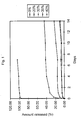
- Fig. 1 the cumulative protein release from the coated particles in Example 3 can be seen.
- the curves represent different coating levels (weight percent of coating polymer added based on the weight of the core) as indicated in the legend.
- the core degrades rapidly and releases most of the protein in a very short time.
- a burst can be seen at all coating levels but is decreased more and more.
- the coating polymer degrades slowly and therefore no appreciable amount of protein is released after the burst phase.
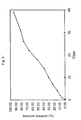
- Fig. 2 the protein release from the coated particles 40% coating level, as defined above in Example 2 is shown.
- the polymer is now more easily degraded, giving first a limited burst similar to Example 1 but then after around 2 weeks, the rest of the protein begins to be relased from the coated microparticles.
- Fig. 5 the mean blood glucose levels from the in vivo release of insulin from the particles of Example 4 and non coated particles are shown.
- a fast normalisation of the blood glucose level after 6 hours can be seen.
- the levels are back to diabetic levels but for the coated preparation, the levels start to decrease again, showing a maximal depression of the blood glucose level after seven days.
- the blood glucose levels are back again to the diabetic state.
- the insulin has thus retained its biological activity throughout the process and for at least 9 day after injection.
- the non coated particles no delayed effect could be seen.
Landscapes
- Health & Medical Sciences (AREA)
- Engineering & Computer Science (AREA)
- Bioinformatics & Cheminformatics (AREA)
- Animal Behavior & Ethology (AREA)
- Public Health (AREA)
- Pharmacology & Pharmacy (AREA)
- Epidemiology (AREA)
- Life Sciences & Earth Sciences (AREA)
- Chemical & Material Sciences (AREA)
- General Health & Medical Sciences (AREA)
- Medicinal Chemistry (AREA)
- Veterinary Medicine (AREA)
- Medicinal Preparation (AREA)
- Medicines That Contain Protein Lipid Enzymes And Other Medicines (AREA)
- Pharmaceuticals Containing Other Organic And Inorganic Compounds (AREA)
- Manufacturing Of Micro-Capsules (AREA)
- Physical Or Chemical Processes And Apparatus (AREA)
- Solid-Sorbent Or Filter-Aiding Compositions (AREA)
Abstract
Description
- The present invention is within the field of sustained release particles for parenteral administration of biologically active substances, especially drugs. More specifically it relates to a preparation method for such particles containing a biologically active substance as well as to sustained release particles obtainable thereby.
- Many drugs have to be administered by injection since they are either degraded or absorbed inefficiently when given for instance orally or nasally or by the rectal route. A drug formulation intended for parenteral use has to meet a number of requirements in order to be approved by the regulatory authorities for use in humans. Thus, it has to be biocompatible and biodegradable and all substances used and their degradation products should be non-toxic. In addition thereto, particulate drugs intended for injection have to be small enough to pass through the injection needle, which preferably means that they should be smaller than 200 µm. The drug should not be degraded to any large extent in the formulation during production or storage thereof or after administration and should be released in a biologically active form with reproducible kinetics.
- One class of polymers which fulfils the requirements as to biocompatibility and biodegradation to harmless end products are the linear polyesters based on lactic acid, glycolic acid and mixtures thereof. In the text below said polymers will also be referred to as PLGA. PLGA is degraded by ester hydrolysis to lactic acid and glycolic acid and has been shown to display excellent biocompatibility. The innocous nature of PLGA is furthermore exemplified by the approval of several parenteral sustained release formulations based on these polymers by regulatory authorities, like the US Food and Drug Administration.
- Parenterally administrable sustained release products on the market today based on PLGA include Decapeptyl™ (Ibsen Biotech), Prostap SR™ (Lederle), Decapeptyl® Depot (Ferring) and Zoladex® (Zeneca). The drugs of these formulations are all peptides. In other words they consist of amino acids condensed to a polymer with a relatively low degree of polymerisation and they do not have any well defined three-dimensional structure. This in turn generally permits the use of rather harsh conditions during preparations of said products. For example extrusion and subsequent size reduction can be used, which techniques should not be permissible in connection with proteins since they generally do not withstand such harsh conditions.
- Consequently there is also a need for sustained release formulations for proteins. Proteins are similar to peptides in that they also consist of amino acids, but the molecules are larger and most proteins are dependant on a well defined three-dimensional structure as to many of their properties, including biological activities and immunogenicity. Their three-dimensional structures can relatively easily be destroyed, for example by high temperatures, surface induced denaturation and, in many cases exposure to organic solvents. Thus, a very serious drawback in connection with the use of PLGA, which is an excellent material per se, for sustained release of proteins is the requirement to utilize organic solvents to dissolve said PLGA, with the associated risk of compromising the stability of the protein.
- Despite large efforts aiming at a modification of the PLGA technology in order to avoid this inherent problem with protein instability during the preparation process the progress in this field has been very slow and as yet no protein products have appeared on the market based on PLGA technology. The main reason therefore probably is that the three-dimensional structures of most proteins are too sensitive to withstand the preparation procedures used and/or being stored in a PLGA-matrix.
- The most commonly used technique at present for entrapping water soluble substances such as proteins and peptides is the use of multiple emulsion systems. The drug substance is dissolved in a water or buffer solution and then mixed with an organic solvent, immiscible with water, containing the dissolved polymer. An emulsion is created having the water phase as the inner phase. Different types of emulsifiers and vigorous mixing are often used to create this first emulsion. Said emulsion is then transferred, under stirring, to another liquid, typically water, containing another polymer, for example polyvinylalcohol, giving a triple w/o/w-emulsion. The microspheres are then hardened in some way. The most commonly used way is to utilize an organic solvent having a low boiling point, typically dichloromethane, and to evaporate the solvent. If the organic solvent is not fully immiscible with water, a continuous extraction procedure can be used by adding more water to the triple emulsion. A number of variations of this general procedure are also described in the literature. In some cases the primary emulsion is mixed with a non-aqueous phase, for instance silicon oil. Solid drug materials rather than dissolved drugs can also be used.
- The release profiles of proteins from microspheres prepared by said method often show a fast initial release followed by a slower phase. Said slower phase can be followed by a third phase of faster release.
- PLGA microspheres containing proteins are disclosed in WO-A1-9013780, the main feature of which is the use of very low temperatures during the manufacture of the microspheres in order to retain high biological activity of the proteins. The activity of encapsulated superoxide dismutase was measured but merely on the portion released from the particles. This method has been used to produce PLGA microspheres containing human growth hormone in WO-A1-9412158 by dispersing human growth hormone in methylene cloride containing PLGA, spraying the obtained dispersion into a container with frozen ethanol with a layer of liquid nitrogen thereabove in order to freeze the droplets and allow them to settle in the nitrogen on to the ethanol. The ethanol is then thawed and the microspheres start to sink in the ethanol where the methylene chloride is extracted into the ethanol and the microspheres are hardened. This approach may be able to retain the stability of proteins better than most other processes for entrapping proteins in PLGA microspheres. However, this still remains to be unequivocally demonstrated for other proteins.
- However, in the earlier mentioned methods based on encapsulation with PLGA the active substances are subjected to an organic solvent and this is generally detrimental to the stability of a protein. In addition thereto, the emulsion processes referred to above are complicated and likely to be problematic to scale up to an industrial scale. Furthermore, many of the organic solvents used in many of these processes are fraught with environmental problems and their high affinities for the PLGA polymer make removal difficult.
- A parenterally administrable sustained release formulation should be able to control the release of the entrapped drug in an accurate way. In many of the systems based on PLGA the release of the active ingredient is largely dependent on the amount of drug substance incorporated into the microparticle, due to the formation of channels in the microparticles at higher drug loadings. This also contributes to a high initial burst at high drug loading.
- A well known way of controlling the release of small molecules from a solid core is to apply a coating that produces a rate controlling film on the surface of the core. This is a general method of controlling the release rate of drugs to be administered by the oral route. One way of applying similar coats is by the use of air suspension technology. For example, EP-A-0347024 A2 discloses a coating composition for a drug which may be applied using the air suspension technique. The coating composition comprises a lower alkyl acrylate-lower alkyl methacrylate copolymer in which the lower aklyl group comprises 1 to 7 carbon atoms and an aqueous polymeric dispersion of ethyl cellulose. US-A-5296219 discloses a process for coating at least one medicinal and/or foodstuff active principal useful for ruminants in which a pH-sensitive polymer is synthesized in an oil-in-water emulsion and, without isolation, coated onto the active principal, for example according to the fluidised bed technique of the Worster as described in US-A-2799241 and EP-A-0188953. According to US-A-5296219 the coating emulsion preferably contains the pH-sensitive polymer, together with one or more water-insoluble polymers.
- However, in connection with coating particles for use in parenteral administration, which particles are generally of a size below 200 µm, and often smaller, generally severe problems are encountered. Such problems can be an increased tendency for particles to agglomerate and problems with static electricity disturbing the manufacturing process.
- Some different ways of coating particles of such small sizes are dispersion of the drug in a solution of the coating material and subsequent spray drying and a number of coacervation methods where a dissolved polymer is used to encapsulate the core material in different ways. However, all these methods would expose a protein to the organic solvent used to dissolve the PLGA. A method where a fluidized bed is used in the coating of microparticles is disclosed in US 4 568 559. Here a solid, dry composite admixture is prepared from a uniform dispersion of an active ingredient of a film-forming polymer, the admixture then being ground and the resulting particles being sieved to obtain a size distribution of 1-150 µm. The core particles are then coated in a fluidized bed, a prerequisite, however, being that the same, or substantially the same, film-forming polymer material is used both for the preparation of the composite core and the coating to provide for bonding of the wall coating of the film-forming polymer to the core material. Thus, this method does not either eliminate the problem of exposing the protein to organic solvents if the film-forming polymer is PLGA or any other polymer that is not water soluble.
- Thus, a method of producing parenterally administrable sustained release formulations for sensitive substances, for instance proteins, with the following properties would be highly desirable:
- that can control the release rate of the entrapped substances within wide margins, typically from one or a few days to at least around one month;
- that enables the production to be carried out with standard pharmaceutical equipment and which can be used from small scale manufacture to full scale production;
- that makes it possible to eliminate, or minimise, the exposure of the active ingredient to organic solvents; and
- that is completely biodegradable and has a surface of a biocompatible material.
- According to the present invention it has been found possible to prepare a parenterally administrable sustained release formulation with the characteristics referred to above. The new method claimed thus makes it possible to take advantage of the excellent biocompatibility and release controlling properties of PLGA while avoiding or minimising the exposure of for instance a protein to be formulated to organic solvents. However, the invention is not restricted to the use of PLGA only as a coating material or the use of a protein only as the active ingredient. Rather the invention is applicable to the use of any polymer that is film-forming, biodegradable and release-controlling, especially a polymer for which organic solvents have hitherto been utilized. Another prerequisite for a polymer is of course that it is pharmaceutically acceptable, which requirement is applicable also to all other materials or ingredients used in the formulation. Furthermore, the invention is useful for all active substances which may be utilized in parenteral administration. Primarily, however, the invention presents a solution to the previously described problem with active substances sensitive to or instable in organic solvents.
- Briefly the invention is based on the idea on entrapping the active ingredient in microparticles without using any organic solvent, working up the microparticles to the dry state and subsequently coating the microparticles with a biodegradable polymer using an air suspension technique to remove, very rapidly, any organic solvent used for the polymer coating to avoid any substantial exposure of the active substance to organic solvent.
- More specifically, according to a first aspect of the invention, there is provided a method as claimed in
claim 1 below for preparing parenterally, preferably injectionally, administrable, sustained release microparticles containing a biologically active substance that is unstable in the presence of an organic solvent. - Since the method is primarily intended for the preparation of microparticles adapted for administration by injection, the microparticles preferably have an average diameter in the range of 10-200 µm, more preferably 20-100 µm, and most preferably smaller than 60 µm, e.g. 10-60 µm or 40-60 µm.
- The core particle material is a starch or a chemically or physically modified starch. Such materials are previously known per se in this technical field, and therefore reference can be made to the prior art concerning details about such starches. Microparticles prepared from starch can be designed so as to be dissolved by α-amylase, an enzyme present in serum and extracellular fluid, and as the end degradation product is glucose, starch microparticles can fulfil the requirement of biodegradability.
- The preferred polymers for the shell are alifatic polyesters (e.g. homopolymers) or copolymers from α-hydroxy acids or cyclic dimers of α-hydroxy acids.
- Said α-hydroxy acid is preferably selected from the group consisting of lactic acid and glycolic acid. In other words a preferred homopolymer can be for instance polylactic acid or polyglycolic acid, while a preferred copolymer can be a lactic acid/glycolic acid copolymer.
- The cyclic dimers are preferably selected from the group consisting of glycolides and lactides.
- However, as indicated above, other biodegradable polymers could also be used provided the polymer is able to form a film with the desired properties as to mechanical stability and release controlling properties, such as permeability to the active ingredient or the formation of pores. These properties could be fulfilled by the polymer itself or by including other substances in the coating. The coating material used could of course also be a mixture of two or more of the polymers referred to. Furthermore, said polymers may also be used in the form of their salts.
- The biologically active substance can be entrapped in the microparticles without any use of organic solvent in several ways. An especially preferred way is the use of a so called aqueous two phase system technique, which is previously known per se. Said method is for instance disclosed in US Patent No. 4 822 535, which means that details about said technique can be found therein. Another way involves the preparation of core microparticles which are able to absorb water in a separate process, removal of any organic solvent used and loading the obtained microparticles with the active substance by exposing the dry microparticles to a solution of said active substance to have the solution absorbed by the microparticles, which are subsequently dried.
- The drying of the core particles can be accomplished by any appropriate means, for example by spray drying, freeze drying or vacuum drying. In order to remove excess of active substance the microparticles or cores could also be washed prior to the drying step.
- The core particles containing the active substance are subsequently coated by an air suspension technique which enables the creation of a shell of the polymer on the core particles without any substantial or detrimental exposure of the active substance to organic solvent. Said air suspension technique can be any method that is classified as an air suspension method and is able to apply a satisfactory coating. Preferred examples of such methods are methods wherein a fluidized bed or a so called spouted bed are utilized or the so called Wurster process, which method are all previously known per se and need not be decribed in detail here. Thus, the term "air suspension method" as used herein means any method where solid particles are suspended in an upwardly moving stream of gas. Said gas could be any gas capable of evaporating the solvent used and need not necessarily be air in spite of the term "air" suspension.
- However, in connection with the air suspension technique it has been found that the problems with sensitive active substances and their exposures to organic solvents are eliminated, or essentially reduced, while preferably using a high flow rate of the air, or gas, sufficient to accomplish the desired result.
- According to the method claimed the polymer is applied on to the core particles from an emulsion thereof. In this connection it should be noted that an organic solvent can be utilized as the solvent for the polymer, as it has unexpectedly been found that by the new method according to the invention the active substance is not influenced to any substantial extent by the presence of such a solvent.
- Said emulsion is an emulsion where one of the phases is a water phase. In the case of a mixture of different polymers, they can be present in different phases of an emulsion. Thus, it has been found that the presence of water can eliminate, or substantially reduce, the build up of static electricity during the coating procedure, and an especially preferred embodiment in this respect is the use of an emulsion where one of the phases is a liquid of the polymer in a solvent for said polymer and the other phase is water. Last-mentioned emulsion is furthermore useful in a more general aspect, as will be described more specifically below and which also represents another aspect of the invention.
- Another preferable embodiment of the invention is represented by the case wherein one or more stabilizing agents are incorporated in the particles during the preparation thereof. The nature of such a stabilizing agent is of course dependent on the specific active substance to be stabilized and said agent is chosen in line with known principles.
- Additives can also be incorporated into the release-controlling polymer shell during the application thereof. Preferable examples of such additives are film property modifying agents and release controlling agents. Examples as to the first category are plasticizers, e.g. triethylcitrate, triacetin, polyethyleneglycol, polyethyleneoxide etc, while release controlling agents can be for instance inorganic bases (e.g. sodium hydroxide, potassium hydroxide, sodium carbonate, potassium carbonate, etc), organic bases (e.g. ethanol amine, diethanole amine, triethanole amine, lidocaine, tetracaine, etc,), inorganic acids (e.g. ammoniumsulfate, ammonium chloride, etc), organic acids (e.g. citric acid, lactic acid, glycolic acid, ascorbic acid, etc), and solid soluble substances which upon release create pores in the coating (e.g. crystals of sodium chloride, glucose, mannitol, sucrose, etc).
- Additives to be included in the case where an emulsion or a pseudolatex is created are for instance emulsifiers.
- The required amount of coating material depends on for example the size of the microcapsules, the composition of the coating and the desired release characteristics. Typical amounts are, however, 1-200 percent by weight, preferably 5-100 percent by weight, based on the weight of the core.
- After the application of the coating controlling the release of the entrapped active substance additional materials could also be applied, e.g. sprayed, on to the microparticles in order to further modify the properties thereof or to facilitate the handling thereof. Examples of such materials are mannitol, sucrose and sodium chloride.
- As already indicated above the invention is especially interesting in connection with proteins, peptides and polypeptides or other drugs or biologically active substances which are sensitive to or instable in the presence of organic solvents. However, generally the invention is not limited to the presence of such substances only as the inventive idea is applicable to any biologically active substance which can be used for parenteral administration. Thus, in addition to sensitive or instability problems the invention may well be of special interest in cases where it would otherwise be difficult to remove solvents or where toxicological or other environmental problems might occur.
- According to a second aspect of the invention there are provided parenterally administrable, sustained release microparticles as claimed in
claim 9 below which microparticles are obtainable according to the method of the invention. - The invention will now be exemplified by the following non-limiting examples wherein microparticles containing BSA, which is the most extensively used model protein for systems like this due to its well known characteristics and moderate cost, are coated with a layer comprising poly (lactide-co-glycolide). Furthermore, microparticles containing human insulin are coated, since insulin is known to be a sensitive protein and the biological activity of the final preparation can easily by assayed in vivo. The microparticles are prepared for example in accordance with technique disclosed in US Patent No. 4 822 535. The coating is applied with commersially available equipment and the parameters set in the examples should merely be regarded as guidelines, since adjustments may be needed in many cases in order to obtain optimal conditions for the coating.
- Two-phase immobilisation in accordance with
US Patent No 4 822 535. - 1. Weigh out 80 g of starch (
Amioca 50, National Starch) and suspend in 320 g of 50 mM sodiumbicarbonate buffer pH - 2. Heat the suspension until the starch has been totally dissolved.
- 3. Cool the solution to 50°C.
- 4. Add 96 ml of a 9,26% BSA solution (room temperature) in 50 mM sodium
bicarbonate buffer pH - 5. Add starch-protein solution to 800 ml of a 20 w/w% polyethylene glycol solution in 50 mM sodium
bicarbonate buffer pH 9,8 (room temperature, Av. Mol. Wt. 20000), under continous stirring. - 6. After 2 minutes, add 3200 ml of a 40 w/w% polyethylene glycol solution in 50 mM sodium
bicarbonate buffer pH 9,8 (room temperature, Av. Mol. Wt. 20000), under continous stirring. - 7. Stir for 24h.
- 8. The obtained microparticles are washed and vaccum dried.
- 9. The dry microparticles are sieved through a 160 µm mesh.
-
- 1. Weigh out 80 g of starch (
Amioca 50, National Starch) and suspend in 420 g of water. - 2. Heat the suspension until the starch has been totally dissolved.
- 3. Cool the solution to 50°C.
- 4. Add the starch solution to 800 ml of a 20 w/w% polyethylene glycol solution in water (room temperature, Av. Mol. Wt. 20000 D), under continous stirring.
- 5. After 2 minutes, add 3200 ml of a 40 w/w% polyethylene glycol solution in water (room temperature, Av. Mol. Wt. 20000 D), under continous stirring.
- 6. Stir for 24h.
- 7. The obtained microparticles are washed and vacuum dried.
- 8. The dried microparticles are impregnated with a 5% (w/w) BSA solution in water. Equal weight of particles and BSA-solution are used.
- 9. After 3h the particles are freeze dried.
- 10. The dried microspheres are sieved through a 160 µm sieve.
-
- 1. Weigh out 80 g of starch (
Amioca 50, National Starch) and suspend in 320 g of 50 mM sodiumbicarbonate buffer pH - 2. Heat the suspension until the starch has been totally dissolved.
- 3. Cool the solution to 50°C.
- 4. Centrifuge 2511 ml of Monotard® from Novo Nordisk corresponding to 8.89 g insulin. Wash the insulin once with 500 ml of a buffer containing 0.15 M NaCl, 1 mM ZnCl2 and 10 mM Sodium acetate with a pH of 7.3 and centrifuge again. Mix the insulin with the starch solution and stir for 10 seconds.
- 5. Add starch-protein solution to 800 ml of a 20 w/w% polyethylene glycol solution in 50 mM sodium
bicarbonate buffer pH 9,8 (room temperature, Av. Mol. Wt. 20000), under continous stirring. - 6. After 2 minutes, add 3200 ml of a 40 w/w% polyethylene glycol solution in 50 mM sodium
bicarbonate buffer pH 9,8 (room temperature, Av. Mol. Wt. 20000), under continous stirring. - 7. Stir for 24h.
- 8. The obtained microparticles are washed and vaccum dried.
- Procedure for preparing the coating solution
- 1. Weigh out 200 g of poly(lactide-co-glycolide 75/25) Resomer RG756 from Boeringer Ingelheim.
- 2. Add 10 g of triacetin.
- 3. Dissolve it in 3123 g of acetone.
- Procedure for applying the coating
1. 500 g of starch microparticles containing 3,5% BSA are loaded in aGlatt GPCG 6" Wurster.
2. The following conditions of the Wurster are set:Atomization pressure 3 bar Atomizing nozzle 0,8 mm Inlet temperature 38-40°C Outlet temperature 33-37°C Product temperature 34-38° C Air velocity 3,2-3,4 m/s Flow of coating solution 4,4 ml/min
3. Recover the coated product. - Procedure for preparing the coating solution
- 1. Weigh out 200 g of poly(lactide-co-glycolide 50/50) Resomer RG504H from Boeringer Ingelheim.
- 2. Dissolve it in 3133 g of acetone.
- Procedure for applying the coating
1. 500 g of starch microparticles containing 3,5% BSA are loaded in aGlatt GPCG 6" Wurster.
2. The following conditions of the Wurster are set:Atomization pressure 3 bar Atomizing nozzle 0,8 mm Inlet temperature 38-40°C Outlet temperature 33-37°C Product temperature 34-38° C Air velocity 3,0-3,2 m/s Flow of coating solution 4,4 ml/min
3. Recover the coated product - Procedure for preparing the coating solution
- 1. Weigh out 40 g of poly(D,L lactide) Resomer R104 and 40 g of poly(lactide-co-glycolide 75/25) Resomer RG756 from Boeringer Ingelheim.
- 2. Dissolve it in 1252 g of ethyl acetate.
- 3. Mix 2504 g of water with 1,6 g of
Tween 80. - 4. Mix the polymer solution and the water solution using an Ystral turrax mixer at high speed.
- Procedure for applying the coating
1. 100 g of starch microparticles containing 2,7% BSA are loaded in a Hüttlin Kugelcoater HKC005.
2. The following conditions for the kugelcoater are set:Atomization pressure 0,8 bar Microclimate pressure 0,4 bar Atomizing nozzle 0,6 mm Inlet temperature 25-27°C Outlet temperature 20-24°C Flow of coating solution 5-7 g/min
3. After coating with PLGA, 200 g of a water solution containing 10 w/w% mannitol and 0,4 w/w% Tween 80 are sprayed onto the particles with a flow of 3,5 g/min.
4. Recover the coated product. - The in vitro release is monitored by weighing up 70 mg of coated product and adding 1,5 ml of buffer solution to a polypropylene eppendorf tube. The release buffer consists of
sodium phosphate 30 mM,pH sodium azide 0,02%. Atproper intervals 1 ml of buffer is removed and fresh buffer is added to the samples in order to maintain the correct pH. The tubes are slowly rocked in 37°C. The protein and starch concentrations are measured together with pH. - 10 SPF female rats (9-10 weeks, 170-180 g) were used for studying the in vivo release of BSA from the coated microspheres. 200 µl of a suspension containing 163 mg/ml of microparticles prepared according to Example 3 were injected subcutaneously in the neck. The vehicle for the injection was physiological sodium chloride solution contaning 3% of sodium carboxymethylcellulose as suspension aid. The injection was made using a 21 G needle.
- As a control group, non coated microspheres were given to 8 animals for comparison. The dose of BSA was four times higher in the coated preparation than in the non coated preparation.
- Blood samples for measuring BSA were taken from the
orbital plexus day 0 before dosing and in the afternoon, and at the same times of the day onday - The procedure for preparing the coating solution was similar to that of Example 3.
- Procedure for applying the coating
- 100 g of starch microparticles containing 9.3% of insulin (Monotard® from Novo Nordisk) are loaded in a Hüttlin Kugelcoater HKC005.
- The rest of the coating procedure is similar to that of Example 3.
- 10 SPF female rats (9-10 weeks, 170-180 g) were used for studying the biological effects of the preparation of Example 4. Three days before injection with the test substance, the rats were treated with 65 mg/kg of streptozotocin in order to induce diabetes. Streptozotocin was dissolved in a 1% citrate buffer at pH 4.5 maximally two minutes before injection.
- At the day of injection, 200 µl of a suspension contaning 51 mg/ml of the microparticles from Example 4 were injected subcutaneously in the neck. The vehicle for the injection was physiological sodium chloride solution containing 3% of sodium carboximethylcellulose as suspension aid. The injection was made using a 21 G needle. As a control group, non coated microsphehres were given to 8 animals for comparison. The insulin dose was 2.5 times higher for the non coated microspheres than for the coated microspheres.
- Blood samples for measuring blood glucose were taken from the
orbital plexus day 0 before insulin dosing and in the afternoon, and at the same times of the day onday day 9 and for the animals given coated microspheres also in the afternoon onday 11. Blood glucose analyses were performed using a commercial kit from Roche on a COBAS MIRA. - The protein releases from the in vitro tests and the BSA concentrations and blood glucose levels from the two in vivo tests are shown in the Figures of the accompanying drawings, wherein
- Fig. 1 shows the release from the coated particles of Example 1;
- Fig. 2 shows the release from the coated particles of Example 2;
- Fig. 3 shows the release from the coated particles of Example 3;
- Fig. 4 shows the mean BSA concentrations in serum from the in vivo release for the coated particles of Example 3 and non coated BSA particles;
- Fig. 5 shows the mean blood glucose levels from the in vivo release of insulin from the particles of Example 4 and non coated insulin particles.
- More specifically the following can be seen from the Figures.
- In Fig. 1, the cumulative protein release from the coated particles in Example 3 can be seen. The curves represent different coating levels (weight percent of coating polymer added based on the weight of the core) as indicated in the legend. The core degrades rapidly and releases most of the protein in a very short time. A burst can be seen at all coating levels but is decreased more and more. The coating polymer degrades slowly and therefore no appreciable amount of protein is released after the burst phase.
- In Fig. 2, the protein release from the
coated particles 40% coating level, as defined above in Example 2 is shown. The polymer is now more easily degraded, giving first a limited burst similar to Example 1 but then after around 2 weeks, the rest of the protein begins to be relased from the coated microparticles. - In Fig. 3, protein release from the coated particles (80% coating level, as defined above) from Example 3 can be seen. In this case, the protein is released more continously than from Example 1 and 2.
- In Fig. 4, the mean BSA concentrations from the in vivo release can be seen. A steady release of BSA is shown during the whole study compared to the non coated microspheres.
- In Fig. 5, the mean blood glucose levels from the in vivo release of insulin from the particles of Example 4 and non coated particles are shown. For both preparations, a fast normalisation of the blood glucose level after 6 hours can be seen. After one day, the levels are back to diabetic levels but for the coated preparation, the levels start to decrease again, showing a maximal depression of the blood glucose level after seven days. At
day 11, the blood glucose levels are back again to the diabetic state. The insulin has thus retained its biological activity throughout the process and for at least 9 day after injection. For the non coated particles, no delayed effect could be seen.
Claims (16)
- A method of preparing parenterally administrable, sustained release microparticles containing a biologically active substance that is unstable in the presence of an organic solvent; said method comprising applying an emulsion of a a film-forming, biodegradable, release-controlling polymer or a mixture of two or more such polymers by air suspension technique onto biodegradable core particles having said biologically active substance entrapped therein; wherein said core particles are formed from a starch or a chemically or physically modified starch that can be dissolved by α-amylase, and one phase of said emulsion is a liquid of said release-controlling polymer or said mixture of two or more such polymers in an organic solvent and the other phase is water.
- A method according to claim 1, wherein said polymer is selected from homo- or copolymers prepared form α-hydroxy acids and/or cyclic dimers of α-hydroxy acids.
- A method according to claim 2, wherein said α-hydroxy acid is selected from lactic acid and glycolic acid.
- A method according to claim 2, wherein said cyclic dimers are selected from glycolides and lactides.
- A method according to anyone of claims 1-4, wherein said organic solvent is selected from higher alcohols, esters, ethers, ketones, chlorinated hydrocarbons, aliphatic hydrocarbons and aromatic hydrocarbons.
- A method according to claim 5, wherein said one phase comprises a mixture of poly(D,L lactide) and poly (lactide-co-glycolide 75/25) and said organic solvent is ethyl acetate.
- A method according to any one of claims 1-6, wherein said emulsion contains a stabilizing emulsifier.
- A method according to claim 7, wherein said emulsifier is an anionic surfactant or a non-ionic surfactant or a combination thereof.
- Parentally administrable, sustained-release microparticles containing a biologically active substance that is unstable in the presence of an organic solvent which microparticles are obtainable according to the method of claim 1; wherein said microparticles comprise biodegradable core particles having said biologically active substance entrapped therein and a shell of a film-forming, biodegradable, release-controlling polymer or a mixture of two or more such polymers coated thereon; said core particles being formed from a starch or a chemically or physically modified starch that can be dissolved by α-amylase; said polymer being selected from homo- or copolymers prepared from α-hydroxy acids and/or cyclic dimers or α-hydroxy acids.
- Parentally administrable, sustained-release microparticles according to claim 9, wherein said α-hydroxy acid is selected from lactic acid and glycolic acid.
- Parentally administrable, sustained-release microparticles according to claim 9, wherein said cyclic dimers are selected from glycolides and lactides.
- Parentally administrable, sustained-release microparticles according to claim 9, claim 10 or claim 11, wherein said microparticles have an average diameter in the range of 10-200 µm.
- Parentally administrable, sustained-release microparticles according to any of claims 9 to 12, wherein one or more stabilizing agents are incorporated in said particles.
- Parentally administrable, sustained-release microparticles according to any of claims 9 to 13, wherein said release-controlling polymer shell incorporates film property modifying agents or release controlling agents.
- Parentally administrable, sustained-release microparticles according to any of claims 9 to 14, wherein the amount of said release-controlling polymer or mixture of two or more such polymers coated on to said core particles is 1-200 percent by weight based on the weight of said core particles.
- Parentally administrable, sustained-release microparticles according to any of claims 9 to 15, wherein said biologically active substance is selected from proteins, peptides and polypeptides.
Priority Applications (1)
| Application Number | Priority Date | Filing Date | Title |
|---|---|---|---|
| EP06010350A EP1716849A1 (en) | 1995-10-19 | 1996-09-03 | Coating of small particles |
Applications Claiming Priority (3)
| Application Number | Priority Date | Filing Date | Title |
|---|---|---|---|
| SE9503672A SE505146C2 (en) | 1995-10-19 | 1995-10-19 | Particles for delayed release |
| SE9503672 | 1995-10-19 | ||
| EP96935641A EP0869774B1 (en) | 1995-10-19 | 1996-09-03 | Method for manufacturing sustained release particles |
Related Parent Applications (1)
| Application Number | Title | Priority Date | Filing Date |
|---|---|---|---|
| EP96935641A Division EP0869774B1 (en) | 1995-10-19 | 1996-09-03 | Method for manufacturing sustained release particles |
Related Child Applications (1)
| Application Number | Title | Priority Date | Filing Date |
|---|---|---|---|
| EP06010350A Division EP1716849A1 (en) | 1995-10-19 | 1996-09-03 | Coating of small particles |
Publications (3)
| Publication Number | Publication Date |
|---|---|
| EP1142569A2 EP1142569A2 (en) | 2001-10-10 |
| EP1142569A3 EP1142569A3 (en) | 2003-05-21 |
| EP1142569B1 true EP1142569B1 (en) | 2006-05-24 |
Family
ID=20399887
Family Applications (3)
| Application Number | Title | Priority Date | Filing Date |
|---|---|---|---|
| EP01117830A Expired - Lifetime EP1142569B1 (en) | 1995-10-19 | 1996-09-03 | Coating of small particles |
| EP06010350A Withdrawn EP1716849A1 (en) | 1995-10-19 | 1996-09-03 | Coating of small particles |
| EP96935641A Expired - Lifetime EP0869774B1 (en) | 1995-10-19 | 1996-09-03 | Method for manufacturing sustained release particles |
Family Applications After (2)
| Application Number | Title | Priority Date | Filing Date |
|---|---|---|---|
| EP06010350A Withdrawn EP1716849A1 (en) | 1995-10-19 | 1996-09-03 | Coating of small particles |
| EP96935641A Expired - Lifetime EP0869774B1 (en) | 1995-10-19 | 1996-09-03 | Method for manufacturing sustained release particles |
Country Status (16)
| Country | Link |
|---|---|
| US (1) | US6120787A (en) |
| EP (3) | EP1142569B1 (en) |
| JP (1) | JP2000501380A (en) |
| KR (1) | KR100482262B1 (en) |
| AT (2) | ATE326953T1 (en) |
| AU (1) | AU699080B2 (en) |
| CZ (1) | CZ293059B6 (en) |
| DE (3) | DE69625240T2 (en) |
| DK (1) | DK0869774T3 (en) |
| ES (2) | ES2267637T3 (en) |
| HU (1) | HUP9901205A3 (en) |
| IL (1) | IL124052A (en) |
| NO (1) | NO320392B1 (en) |
| PT (1) | PT869774E (en) |
| SE (1) | SE505146C2 (en) |
| WO (1) | WO1997014408A1 (en) |
Families Citing this family (83)
| Publication number | Priority date | Publication date | Assignee | Title |
|---|---|---|---|---|
| ES2343767T3 (en) * | 1997-09-18 | 2010-08-09 | Pacira Pharmaceuticals, Inc. | LIPOSOMIC ANESTHETIC COMPOSITIONS OF SUSTAINED LIBERATION. |
| US20070212422A1 (en) * | 1999-11-10 | 2007-09-13 | Manfred Keller | Dry powder for inhalation |
| US6458387B1 (en) * | 1999-10-18 | 2002-10-01 | Epic Therapeutics, Inc. | Sustained release microspheres |
| ES2169980B1 (en) | 1999-12-17 | 2003-11-01 | Lipotec Sa | MICROCAPSULES FOR THE PROLONGED RELEASE OF PHARMACOS. |
| IT1318380B1 (en) * | 2000-03-09 | 2003-08-25 | Intercos Italiana | COATED COSMETIC POWDER. |
| US6495164B1 (en) | 2000-05-25 | 2002-12-17 | Alkermes Controlled Therapeutics, Inc. I | Preparation of injectable suspensions having improved injectability |
| US7259139B1 (en) * | 2000-05-26 | 2007-08-21 | Frohwitter | Means for maintenance and/or correction of glucose concentration in blood |
| US6824822B2 (en) * | 2001-08-31 | 2004-11-30 | Alkermes Controlled Therapeutics Inc. Ii | Residual solvent extraction method and microparticles produced thereby |
| SE517421C2 (en) | 2000-10-06 | 2002-06-04 | Bioglan Ab | New production of microparticles involves use of aqueous solution of purified amylopectin-based starch of reduced molecular weight |
| SE517422C2 (en) | 2000-10-06 | 2002-06-04 | Bioglan Ab | Production of starch for parenteral administration in form of microparticles, comprises washing starch, dissolving in aqueous medium, and subjecting to molecular weight reduction by shearing |
| JP2004510730A (en) * | 2000-10-06 | 2004-04-08 | ヤゴテック アーゲー | Parenterally administrable controlled release microparticle preparation |
| WO2002043580A2 (en) | 2000-10-27 | 2002-06-06 | Epic Therapeutics, Inc. | Production of microspheres |
| SE518007C2 (en) | 2000-11-16 | 2002-08-13 | Bioglan Ab | Preparation of microparticles containing biologically active compounds useful in preparation for controlled release substance, comprises biodegradable polymer in an organic solvent |
| US6967234B2 (en) * | 2002-12-18 | 2005-11-22 | Ethicon, Inc. | Alkyd-lactone copolymers for medical applications |
| US7030127B2 (en) * | 2001-06-29 | 2006-04-18 | Ethicon, Inc. | Composition and medical devices utilizing bioabsorbable polymeric waxes |
| US7034037B2 (en) | 2001-06-29 | 2006-04-25 | Ethicon, Inc. | Compositions and medical devices utilizing bioabsorbable polymeric waxes and rapamycin |
| EP1418890B1 (en) * | 2001-08-16 | 2008-05-14 | Baxter International Inc. | Propellant-based microparticle formulations |
| US7105181B2 (en) | 2001-10-05 | 2006-09-12 | Jagotec, Ag | Microparticles |
| EP1572933A4 (en) | 2002-02-13 | 2007-09-05 | Univ Duke | MODULATION OF IMMUNE RESPONSE BY POLYPEPTIDES OF RESPONSE TO STRESS BINDING TO NON PEPTIDES |
| SE0201599D0 (en) | 2002-03-21 | 2002-05-30 | Skyepharma Ab | microparticles |
| US7326426B2 (en) * | 2002-03-29 | 2008-02-05 | Ethicon, Inc. | Compositions and medical devices utilizing bioabsorbable liquid polymers |
| US7005136B2 (en) | 2002-03-29 | 2006-02-28 | Ethicon, Inc. | Bone replacement materials utilizing bioabsorbable liquid polymers |
| US7368125B2 (en) * | 2002-06-05 | 2008-05-06 | Ethicon, Inc. | Amphiphilic polymers for medical applications |
| US7026374B2 (en) * | 2002-06-25 | 2006-04-11 | Aruna Nathan | Injectable microdispersions for medical applications |
| US7101566B2 (en) * | 2002-06-28 | 2006-09-05 | Ethicon, Inc. | Polymer coated microparticles for sustained release |
| EP2301573A1 (en) | 2002-10-01 | 2011-03-30 | Novartis Vaccines and Diagnostics, Inc. | Anti-cancer and anti-infectious disease compositions and methods for using same |
| US6872799B2 (en) | 2002-12-18 | 2005-03-29 | Ethicon, Inc. | Functionalized polymers for medical applications |
| US6866860B2 (en) | 2002-12-19 | 2005-03-15 | Ethicon, Inc. | Cationic alkyd polyesters for medical applications |
| CA2510320C (en) * | 2002-12-20 | 2012-10-09 | St. James Associates Llc/Faber Research Series | Coated particles for sustained-release pharmaceutical administration |
| US20040120981A1 (en) * | 2002-12-20 | 2004-06-24 | Aruna Nathan | Crosslinked alkyd polyesters for medical applications |
| US7060299B2 (en) * | 2002-12-31 | 2006-06-13 | Battelle Memorial Institute | Biodegradable microparticles that stabilize and control the release of proteins |
| PT1638535E (en) * | 2003-06-26 | 2007-11-08 | Mediolanum Pharmaceuticals Ltd | Subcutaneous implants having limited initial release of the active principle and subsequent linearly varying extended release thereof |
| TWI357815B (en) * | 2003-06-27 | 2012-02-11 | Euro Celtique Sa | Multiparticulates |
| WO2005035088A2 (en) * | 2003-07-18 | 2005-04-21 | Baxter International, Inc. | Method for preparing small spherical by controlled phase separation |
| US20050142205A1 (en) * | 2003-07-18 | 2005-06-30 | Julia Rashba-Step | Methods for encapsulating small spherical particles prepared by controlled phase separation |
| US20070092452A1 (en) * | 2003-07-18 | 2007-04-26 | Julia Rashba-Step | Methods for fabrication, uses, compositions of inhalable spherical particles |
| JP2007508240A (en) * | 2003-07-22 | 2007-04-05 | バクスター・インターナショナル・インコーポレイテッド | Small spherical particles of low molecular weight organic molecules and methods for their preparation and use |
| KR100453273B1 (en) * | 2003-09-04 | 2004-10-15 | 주식회사 펩트론 | Preparation method for sustained release microspheres using a dual-feed nozzle |
| US20060110423A1 (en) * | 2004-04-15 | 2006-05-25 | Wright Steven G | Polymer-based sustained release device |
| US7456254B2 (en) * | 2004-04-15 | 2008-11-25 | Alkermes, Inc. | Polymer-based sustained release device |
| PL2409707T3 (en) | 2004-04-15 | 2015-08-31 | Amylin Pharmaceuticals Llc | Polymer-based sustained release device |
| CA2566079A1 (en) | 2004-05-12 | 2005-12-01 | Terrence L. Scott | Nucleic acid microspheres, production and delivery thereof |
| US8728525B2 (en) | 2004-05-12 | 2014-05-20 | Baxter International Inc. | Protein microspheres retaining pharmacokinetic and pharmacodynamic properties |
| EP1753404A1 (en) | 2004-05-12 | 2007-02-21 | Baxter International Inc. | Microspheres comprising protein and showing injectability at high concentrations of said agent |
| WO2005112885A2 (en) * | 2004-05-12 | 2005-12-01 | Baxter International Inc. | Oligonucleotide-containing microspheres, their use for the manufacture of a medicament for treating diabetes type 1 |
| EP1824460B1 (en) | 2004-11-10 | 2014-12-24 | Tolmar Therapeutics, Inc. | A stabilized polymeric delivery system |
| US11246913B2 (en) | 2005-02-03 | 2022-02-15 | Intarcia Therapeutics, Inc. | Suspension formulation comprising an insulinotropic peptide |
| US8318210B2 (en) | 2005-02-28 | 2012-11-27 | Neos Therapeutics, Lp | Compositions and methods of making sustained release liquid formulations |
| MX2007013356A (en) * | 2005-04-27 | 2008-03-26 | Baxter Int | Surface-modified microparticles and methods of forming and using the same. |
| EP1726299A3 (en) | 2005-05-27 | 2007-04-18 | StratoSphere Pharma AB | Cores and microcapsules suitable for parenteral administration as well as process for their manufacture |
| US8017152B2 (en) | 2005-05-27 | 2011-09-13 | Stratosphere Pharma Ab | Cores and microcapsules suitable for parenteral administration as well as process for their manufacture |
| US9693967B2 (en) | 2005-09-07 | 2017-07-04 | Southwest Research Institute | Biodegradable microparticle pharmaceutical formulations exhibiting improved released rates |
| KR20080059175A (en) * | 2005-09-07 | 2008-06-26 | 사우스웨스트 리서치 인스티튜트 | Biodegradable particulate pharmaceutical formulations with improved release rates |
| US20070092553A1 (en) * | 2005-10-21 | 2007-04-26 | Pfab Lp | Compositions and methods of making rapidly dissolving lonically masked formulations |
| US20080286375A1 (en) * | 2005-11-15 | 2008-11-20 | Amorepacific Corporation | Method for Preparing Sustained-Release Microparticles Comprising Sucrose Acetate Isobutyrate |
| GB0602897D0 (en) * | 2006-02-13 | 2006-03-22 | Jagotec Ag | Improvements In Or Relating To Dry Powder Inhaler Devices |
| US20070281031A1 (en) * | 2006-06-01 | 2007-12-06 | Guohan Yang | Microparticles and methods for production thereof |
| EP2647712A3 (en) | 2006-08-04 | 2013-11-20 | Baxter International Inc | Microsphere-based composition for preventing and/or reversing new-onset autoimmune diabetes |
| CA2670821C (en) | 2006-08-09 | 2012-05-15 | Intarcia Therapeutics, Inc. | Osmotic delivery systems and piston assemblies |
| WO2008060786A2 (en) * | 2006-10-06 | 2008-05-22 | Baxter International Inc. | Microencapsules containing surface-modified microparticles and methods of forming and using the same |
| GB0622818D0 (en) * | 2006-11-15 | 2006-12-27 | Jagotec Ag | Improvements in or relating to organic compounds |
| GB0625303D0 (en) * | 2006-12-19 | 2007-01-24 | Jagotec Ag | Improvements in and relating to metered dose inhalers |
| US20080233199A1 (en) * | 2007-03-22 | 2008-09-25 | Alkermes, Inc. | Coacervation Process |
| GB0707612D0 (en) | 2007-04-19 | 2007-05-30 | Stratosphere Pharma Ab | Cores and microcapsules suitable for parenteral administration as well as process for their manufacture |
| CA2683610C (en) | 2007-04-23 | 2013-01-08 | Intarcia Therapeutics, Inc. | Suspension formulations of insulinotropic peptides and uses thereof |
| WO2008151071A1 (en) * | 2007-05-30 | 2008-12-11 | Neos Therapeutics, Lp | Modifying drug release in suspensions of ionic resin systems |
| US20080317865A1 (en) * | 2007-06-20 | 2008-12-25 | Alkermes, Inc. | Quench liquids and washing systems for production of microparticles |
| WO2009102467A2 (en) | 2008-02-13 | 2009-08-20 | Intarcia Therapeutics, Inc. | Devices, formulations, and methods for delivery of multiple beneficial agents |
| US8323685B2 (en) | 2008-08-20 | 2012-12-04 | Baxter International Inc. | Methods of processing compositions containing microparticles |
| US8367427B2 (en) | 2008-08-20 | 2013-02-05 | Baxter International Inc. | Methods of processing compositions containing microparticles |
| US8323615B2 (en) | 2008-08-20 | 2012-12-04 | Baxter International Inc. | Methods of processing multi-phasic dispersions |
| MX378797B (en) | 2009-09-28 | 2025-03-10 | Intarcia Therapeutics Inc | RAPID ESTABLISHMENT AND/OR TERMINATION OF SUBSTANTIAL STEADY STATE DRUG SUPPLY. |
| KR101331136B1 (en) | 2011-01-12 | 2013-11-26 | 아주대학교산학협력단 | Drug delivery formulation for release controlled initial burst and manufacturing method thereof |
| US20120208755A1 (en) | 2011-02-16 | 2012-08-16 | Intarcia Therapeutics, Inc. | Compositions, Devices and Methods of Use Thereof for the Treatment of Cancers |
| CA2907765C (en) | 2013-03-21 | 2021-07-06 | Eupraxia Pharmaceuticals USA LLC | Injectable sustained release composition and method of using the same for treating inflammation in joints and pain associated therewith |
| US9889085B1 (en) | 2014-09-30 | 2018-02-13 | Intarcia Therapeutics, Inc. | Therapeutic methods for the treatment of diabetes and related conditions for patients with high baseline HbA1c |
| CN113598842A (en) | 2015-06-03 | 2021-11-05 | 因塔西亚制药公司 | Implant placement and removal system |
| TW201720427A (en) | 2015-10-27 | 2017-06-16 | 優普順藥物股份有限公司 | Continuous release formulation of local anesthetic |
| KR102574993B1 (en) | 2016-05-16 | 2023-09-06 | 인타르시아 세라퓨틱스 인코포레이티드 | Glucagon-receptor selective polypeptides and methods of use thereof |
| USD860451S1 (en) | 2016-06-02 | 2019-09-17 | Intarcia Therapeutics, Inc. | Implant removal tool |
| USD840030S1 (en) | 2016-06-02 | 2019-02-05 | Intarcia Therapeutics, Inc. | Implant placement guide |
| WO2018129058A1 (en) | 2017-01-03 | 2018-07-12 | Intarcia Therapeutics, Inc. | Methods comprising continuous administration of a glp-1 receptor agonist and co-adminstration of a drug |
| KR102383448B1 (en) * | 2020-04-20 | 2022-04-06 | 한국화학연구원 | Sustained-Release Preparation of Microspheres Comprising Lactic Acid or Glycolic acid and Manufacturing Method Thereof |
Family Cites Families (24)
| Publication number | Priority date | Publication date | Assignee | Title |
|---|---|---|---|---|
| US3117027A (en) * | 1960-01-08 | 1964-01-07 | Wisconsin Alumni Res Found | Apparatus for coating particles in a fluidized bed |
| US3773919A (en) * | 1969-10-23 | 1973-11-20 | Du Pont | Polylactide-drug mixtures |
| US4384975A (en) * | 1980-06-13 | 1983-05-24 | Sandoz, Inc. | Process for preparation of microspheres |
| US4479911A (en) * | 1982-01-28 | 1984-10-30 | Sandoz, Inc. | Process for preparation of microspheres and modification of release rate of core material |
| US4637905A (en) * | 1982-03-04 | 1987-01-20 | Batelle Development Corporation | Process of preparing microcapsules of lactides or lactide copolymers with glycolides and/or ε-caprolactones |
| CH661206A5 (en) * | 1983-09-23 | 1987-07-15 | Debiopharm Sa | PROCESS FOR THE PREPARATION OF A MEDICINAL PRODUCT FOR THE TREATMENT OF HORMONDEPENDENT DISEASES. |
| US4568559A (en) * | 1984-02-06 | 1986-02-04 | Biotek, Inc. | Composite core coated microparticles and process of preparing same |
| US4623588A (en) * | 1984-02-06 | 1986-11-18 | Biotek, Inc. | Controlled release composite core coated microparticles |
| CA1256638A (en) * | 1984-07-06 | 1989-06-27 | Motoaki Tanaka | Polymer and its production |
| JP2551756B2 (en) * | 1985-05-07 | 1996-11-06 | 武田薬品工業株式会社 | Polyoxycarboxylic acid ester and method for producing the same |
| US4666704A (en) * | 1985-05-24 | 1987-05-19 | International Minerals & Chemical Corp. | Controlled release delivery system for macromolecules |
| SE459005B (en) * | 1985-07-12 | 1989-05-29 | Aake Rikard Lindahl | SET TO MANUFACTURE SPHERICAL POLYMER PARTICLES |
| WO1987006098A1 (en) * | 1986-04-07 | 1987-10-22 | Rorer International (Overseas) Inc. | Method for the preparation of a sustained release pharmaceutical composition and the composition prepared thereby |
| SE8701479L (en) * | 1987-04-09 | 1988-10-10 | Carbomatrix Ab | METHOD FOR CONTAINING BIOLOGICALLY EFFECTIVE PREPARATIONS AND USE THEREOF |
| US5019397A (en) * | 1988-04-21 | 1991-05-28 | Alza Corporation | Aqueous emulsion for pharmaceutical dosage form |
| US5275819A (en) * | 1989-02-06 | 1994-01-04 | Amer Particle Technologies Inc. | Drug loaded pollen grains with an outer coating for pulsed delivery |
| US5019400A (en) * | 1989-05-01 | 1991-05-28 | Enzytech, Inc. | Very low temperature casting of controlled release microspheres |
| WO1991006287A1 (en) * | 1989-11-06 | 1991-05-16 | Enzytech, Inc. | Protein microspheres and methods of using them |
| FR2663207B1 (en) * | 1990-06-15 | 1993-04-30 | Rhone Poulenc Nutrition Animal | PROCESS FOR COATING A ACTIVE SENSITIVE PH POLYMER OF ACTIVE INGREDIENTS. |
| EP0576675A4 (en) * | 1991-03-25 | 1994-06-01 | Fujisawa Pharmaceutical Co | Long-acting pharmaceutical preparation |
| DE69220317T2 (en) * | 1991-10-01 | 1997-10-16 | Takeda Chemical Industries Ltd | Microparticle summary for extended release and manufacture of the same |
| US5288502A (en) * | 1991-10-16 | 1994-02-22 | The University Of Texas System | Preparation and uses of multi-phase microspheres |
| DK0674506T3 (en) * | 1992-12-02 | 2001-01-08 | Alkermes Inc | Controlled release growth hormone-containing microspheres |
| US5417982A (en) * | 1994-02-17 | 1995-05-23 | Modi; Pankaj | Controlled release of drugs or hormones in biodegradable polymer microspheres |
-
1995
- 1995-10-19 SE SE9503672A patent/SE505146C2/en not_active IP Right Cessation
-
1996
- 1996-09-03 KR KR1019980702757A patent/KR100482262B1/en not_active Expired - Fee Related
- 1996-09-03 CZ CZ19981173A patent/CZ293059B6/en not_active IP Right Cessation
- 1996-09-03 AU AU73478/96A patent/AU699080B2/en not_active Ceased
- 1996-09-03 ES ES01117830T patent/ES2267637T3/en not_active Expired - Lifetime
- 1996-09-03 ES ES96935641T patent/ES2125209T3/en not_active Expired - Lifetime
- 1996-09-03 US US09/051,709 patent/US6120787A/en not_active Expired - Fee Related
- 1996-09-03 IL IL12405296A patent/IL124052A/en not_active IP Right Cessation
- 1996-09-03 DE DE69625240T patent/DE69625240T2/en not_active Expired - Fee Related
- 1996-09-03 EP EP01117830A patent/EP1142569B1/en not_active Expired - Lifetime
- 1996-09-03 EP EP06010350A patent/EP1716849A1/en not_active Withdrawn
- 1996-09-03 HU HU9901205A patent/HUP9901205A3/en unknown
- 1996-09-03 DE DE69636177T patent/DE69636177T2/en not_active Expired - Fee Related
- 1996-09-03 WO PCT/SE1996/001091 patent/WO1997014408A1/en not_active Ceased
- 1996-09-03 JP JP9515728A patent/JP2000501380A/en active Pending
- 1996-09-03 AT AT01117830T patent/ATE326953T1/en not_active IP Right Cessation
- 1996-09-03 AT AT96935641T patent/ATE228826T1/en not_active IP Right Cessation
- 1996-09-03 EP EP96935641A patent/EP0869774B1/en not_active Expired - Lifetime
- 1996-09-03 PT PT96935641T patent/PT869774E/en unknown
- 1996-09-03 DK DK96935641T patent/DK0869774T3/en active
- 1996-09-03 DE DE0869774T patent/DE869774T1/en active Pending
-
1998
- 1998-04-06 NO NO19981558A patent/NO320392B1/en unknown
Also Published As
Similar Documents
| Publication | Publication Date | Title |
|---|---|---|
| EP0869774B1 (en) | Method for manufacturing sustained release particles | |
| EP1343478B1 (en) | Induced phase transition method for the production of microparticles containing hydrophilic active agents | |
| CA2306824C (en) | Encapsulation method | |
| US4568559A (en) | Composite core coated microparticles and process of preparing same | |
| US5288502A (en) | Preparation and uses of multi-phase microspheres | |
| US6936278B2 (en) | Microparticles | |
| CN117427046A (en) | A kind of sustained-release microsphere for loading polypeptide drugs and preparation method thereof | |
| CA2234615C (en) | Sustained release particles | |
| HK1038309B (en) | Coating of small particles | |
| HK1038309A1 (en) | Coating of small particles | |
| HK1011182B (en) | Method for manufacturing sustained release particles |
Legal Events
| Date | Code | Title | Description |
|---|---|---|---|
| PUAI | Public reference made under article 153(3) epc to a published international application that has entered the european phase |
Free format text: ORIGINAL CODE: 0009012 |
|
| AC | Divisional application: reference to earlier application |
Ref document number: 869774 Country of ref document: EP |
|
| AK | Designated contracting states |
Kind code of ref document: A2 Designated state(s): AT BE CH DE DK ES FI FR GB GR IE IT LI LU NL PT SE |
|
| RAP1 | Party data changed (applicant data changed or rights of an application transferred) |
Owner name: BIOGLAN AB |
|
| RAP1 | Party data changed (applicant data changed or rights of an application transferred) |
Owner name: BIOGRAM AB |
|
| RAP1 | Party data changed (applicant data changed or rights of an application transferred) |
Owner name: BIOGLAN AB |
|
| RAP1 | Party data changed (applicant data changed or rights of an application transferred) |
Owner name: JAGOTEC AG |
|
| PUAL | Search report despatched |
Free format text: ORIGINAL CODE: 0009013 |
|
| AK | Designated contracting states |
Designated state(s): AT BE CH DE DK ES FI FR GB GR IE IT LI LU NL PT SE |
|
| 17P | Request for examination filed |
Effective date: 20031030 |
|
| AKX | Designation fees paid |
Designated state(s): AT BE CH DE DK ES FI FR GB GR IE IT LI LU NL PT SE |
|
| 17Q | First examination report despatched |
Effective date: 20040206 |
|
| GRAP | Despatch of communication of intention to grant a patent |
Free format text: ORIGINAL CODE: EPIDOSNIGR1 |
|
| GRAS | Grant fee paid |
Free format text: ORIGINAL CODE: EPIDOSNIGR3 |
|
| GRAA | (expected) grant |
Free format text: ORIGINAL CODE: 0009210 |
|
| AC | Divisional application: reference to earlier application |
Ref document number: 0869774 Country of ref document: EP Kind code of ref document: P |
|
| AK | Designated contracting states |
Kind code of ref document: B1 Designated state(s): AT BE CH DE DK ES FI FR GB GR IE IT LI LU NL PT SE |
|
| PG25 | Lapsed in a contracting state [announced via postgrant information from national office to epo] |
Ref country code: NL Free format text: LAPSE BECAUSE OF FAILURE TO SUBMIT A TRANSLATION OF THE DESCRIPTION OR TO PAY THE FEE WITHIN THE PRESCRIBED TIME-LIMIT Effective date: 20060524 Ref country code: AT Free format text: LAPSE BECAUSE OF FAILURE TO SUBMIT A TRANSLATION OF THE DESCRIPTION OR TO PAY THE FEE WITHIN THE PRESCRIBED TIME-LIMIT Effective date: 20060524 Ref country code: FI Free format text: LAPSE BECAUSE OF FAILURE TO SUBMIT A TRANSLATION OF THE DESCRIPTION OR TO PAY THE FEE WITHIN THE PRESCRIBED TIME-LIMIT Effective date: 20060524 Ref country code: BE Free format text: LAPSE BECAUSE OF FAILURE TO SUBMIT A TRANSLATION OF THE DESCRIPTION OR TO PAY THE FEE WITHIN THE PRESCRIBED TIME-LIMIT Effective date: 20060524 |
|
| REG | Reference to a national code |
Ref country code: GB Ref legal event code: FG4D |
|
| REG | Reference to a national code |
Ref country code: CH Ref legal event code: EP |
|
| REG | Reference to a national code |
Ref country code: IE Ref legal event code: FG4D |
|
| REF | Corresponds to: |
Ref document number: 69636177 Country of ref document: DE Date of ref document: 20060629 Kind code of ref document: P |
|
| PG25 | Lapsed in a contracting state [announced via postgrant information from national office to epo] |
Ref country code: DK Free format text: LAPSE BECAUSE OF FAILURE TO SUBMIT A TRANSLATION OF THE DESCRIPTION OR TO PAY THE FEE WITHIN THE PRESCRIBED TIME-LIMIT Effective date: 20060824 Ref country code: SE Free format text: LAPSE BECAUSE OF FAILURE TO SUBMIT A TRANSLATION OF THE DESCRIPTION OR TO PAY THE FEE WITHIN THE PRESCRIBED TIME-LIMIT Effective date: 20060824 |
|
| PG25 | Lapsed in a contracting state [announced via postgrant information from national office to epo] |
Ref country code: IE Free format text: LAPSE BECAUSE OF NON-PAYMENT OF DUE FEES Effective date: 20060904 |
|
| PG25 | Lapsed in a contracting state [announced via postgrant information from national office to epo] |
Ref country code: PT Free format text: LAPSE BECAUSE OF FAILURE TO SUBMIT A TRANSLATION OF THE DESCRIPTION OR TO PAY THE FEE WITHIN THE PRESCRIBED TIME-LIMIT Effective date: 20061024 |
|
| REG | Reference to a national code |
Ref country code: CH Ref legal event code: NV Representative=s name: A. BRAUN, BRAUN, HERITIER, ESCHMANN AG PATENTANWAE |
|
| NLV1 | Nl: lapsed or annulled due to failure to fulfill the requirements of art. 29p and 29m of the patents act | ||
| RBV | Designated contracting states (corrected) |
Designated state(s): AT BE CH DE DK ES FI FR GB GR IE IT LI LU MC NL PT SE |
|
| ET | Fr: translation filed | ||
| REG | Reference to a national code |
Ref country code: HK Ref legal event code: GR Ref document number: 1038309 Country of ref document: HK |
|
| REG | Reference to a national code |
Ref country code: ES Ref legal event code: FG2A Ref document number: 2267637 Country of ref document: ES Kind code of ref document: T3 |
|
| PLBE | No opposition filed within time limit |
Free format text: ORIGINAL CODE: 0009261 |
|
| STAA | Information on the status of an ep patent application or granted ep patent |
Free format text: STATUS: NO OPPOSITION FILED WITHIN TIME LIMIT |
|
| 26N | No opposition filed |
Effective date: 20070227 |
|
| PGFP | Annual fee paid to national office [announced via postgrant information from national office to epo] |
Ref country code: CH Payment date: 20070924 Year of fee payment: 12 |
|
| PG25 | Lapsed in a contracting state [announced via postgrant information from national office to epo] |
Ref country code: GR Free format text: LAPSE BECAUSE OF FAILURE TO SUBMIT A TRANSLATION OF THE DESCRIPTION OR TO PAY THE FEE WITHIN THE PRESCRIBED TIME-LIMIT Effective date: 20060825 |
|
| REG | Reference to a national code |
Ref country code: CH Ref legal event code: PFA Owner name: JAGOTEC AG Free format text: JAGOTEC AG#EPTINGERSTRASSE 51#4132 MUTTENZ (CH) -TRANSFER TO- JAGOTEC AG#EPTINGERSTRASSE 51#4132 MUTTENZ (CH) |
|
| PG25 | Lapsed in a contracting state [announced via postgrant information from national office to epo] |
Ref country code: MC Free format text: LAPSE BECAUSE OF NON-PAYMENT OF DUE FEES Effective date: 20060524 |
|
| PG25 | Lapsed in a contracting state [announced via postgrant information from national office to epo] |
Ref country code: LU Free format text: LAPSE BECAUSE OF NON-PAYMENT OF DUE FEES Effective date: 20060903 |
|
| PGFP | Annual fee paid to national office [announced via postgrant information from national office to epo] |
Ref country code: ES Payment date: 20080926 Year of fee payment: 13 |
|
| PGFP | Annual fee paid to national office [announced via postgrant information from national office to epo] |
Ref country code: GB Payment date: 20080929 Year of fee payment: 13 |
|
| PGFP | Annual fee paid to national office [announced via postgrant information from national office to epo] |
Ref country code: DE Payment date: 20081031 Year of fee payment: 13 |
|
| PGFP | Annual fee paid to national office [announced via postgrant information from national office to epo] |
Ref country code: IT Payment date: 20081017 Year of fee payment: 13 |
|
| PGFP | Annual fee paid to national office [announced via postgrant information from national office to epo] |
Ref country code: FR Payment date: 20080930 Year of fee payment: 13 |
|
| REG | Reference to a national code |
Ref country code: CH Ref legal event code: PL |
|
| PG25 | Lapsed in a contracting state [announced via postgrant information from national office to epo] |
Ref country code: CH Free format text: LAPSE BECAUSE OF NON-PAYMENT OF DUE FEES Effective date: 20080930 Ref country code: LI Free format text: LAPSE BECAUSE OF NON-PAYMENT OF DUE FEES Effective date: 20080930 |
|
| GBPC | Gb: european patent ceased through non-payment of renewal fee |
Effective date: 20090903 |
|
| REG | Reference to a national code |
Ref country code: FR Ref legal event code: ST Effective date: 20100531 |
|
| PG25 | Lapsed in a contracting state [announced via postgrant information from national office to epo] |
Ref country code: FR Free format text: LAPSE BECAUSE OF NON-PAYMENT OF DUE FEES Effective date: 20090930 Ref country code: DE Free format text: LAPSE BECAUSE OF NON-PAYMENT OF DUE FEES Effective date: 20100401 |
|
| PG25 | Lapsed in a contracting state [announced via postgrant information from national office to epo] |
Ref country code: GB Free format text: LAPSE BECAUSE OF NON-PAYMENT OF DUE FEES Effective date: 20090903 |
|
| PG25 | Lapsed in a contracting state [announced via postgrant information from national office to epo] |
Ref country code: IT Free format text: LAPSE BECAUSE OF NON-PAYMENT OF DUE FEES Effective date: 20090903 |
|
| REG | Reference to a national code |
Ref country code: ES Ref legal event code: FD2A Effective date: 20110718 |
|
| PG25 | Lapsed in a contracting state [announced via postgrant information from national office to epo] |
Ref country code: ES Free format text: LAPSE BECAUSE OF NON-PAYMENT OF DUE FEES Effective date: 20110706 |
|
| PG25 | Lapsed in a contracting state [announced via postgrant information from national office to epo] |
Ref country code: ES Free format text: LAPSE BECAUSE OF NON-PAYMENT OF DUE FEES Effective date: 20090904 |