EP1139259A1 - Transaction number management method, apparatus and program in network commodity sales - Google Patents
Transaction number management method, apparatus and program in network commodity sales Download PDFInfo
- Publication number
- EP1139259A1 EP1139259A1 EP01302492A EP01302492A EP1139259A1 EP 1139259 A1 EP1139259 A1 EP 1139259A1 EP 01302492 A EP01302492 A EP 01302492A EP 01302492 A EP01302492 A EP 01302492A EP 1139259 A1 EP1139259 A1 EP 1139259A1
- Authority
- EP
- European Patent Office
- Prior art keywords
- transaction
- cart
- transaction number
- terminal
- receipt
- Prior art date
- Legal status (The legal status is an assumption and is not a legal conclusion. Google has not performed a legal analysis and makes no representation as to the accuracy of the status listed.)
- Withdrawn
Links
Images




Classifications
-
- G—PHYSICS
- G06—COMPUTING OR CALCULATING; COUNTING
- G06Q—INFORMATION AND COMMUNICATION TECHNOLOGY [ICT] SPECIALLY ADAPTED FOR ADMINISTRATIVE, COMMERCIAL, FINANCIAL, MANAGERIAL OR SUPERVISORY PURPOSES; SYSTEMS OR METHODS SPECIALLY ADAPTED FOR ADMINISTRATIVE, COMMERCIAL, FINANCIAL, MANAGERIAL OR SUPERVISORY PURPOSES, NOT OTHERWISE PROVIDED FOR
- G06Q30/00—Commerce
- G06Q30/06—Buying, selling or leasing transactions
-
- G—PHYSICS
- G06—COMPUTING OR CALCULATING; COUNTING
- G06Q—INFORMATION AND COMMUNICATION TECHNOLOGY [ICT] SPECIALLY ADAPTED FOR ADMINISTRATIVE, COMMERCIAL, FINANCIAL, MANAGERIAL OR SUPERVISORY PURPOSES; SYSTEMS OR METHODS SPECIALLY ADAPTED FOR ADMINISTRATIVE, COMMERCIAL, FINANCIAL, MANAGERIAL OR SUPERVISORY PURPOSES, NOT OTHERWISE PROVIDED FOR
- G06Q20/00—Payment architectures, schemes or protocols
- G06Q20/30—Payment architectures, schemes or protocols characterised by the use of specific devices or networks
- G06Q20/36—Payment architectures, schemes or protocols characterised by the use of specific devices or networks using electronic wallets or electronic money safes
- G06Q20/367—Payment architectures, schemes or protocols characterised by the use of specific devices or networks using electronic wallets or electronic money safes involving electronic purses or money safes
-
- G—PHYSICS
- G06—COMPUTING OR CALCULATING; COUNTING
- G06Q—INFORMATION AND COMMUNICATION TECHNOLOGY [ICT] SPECIALLY ADAPTED FOR ADMINISTRATIVE, COMMERCIAL, FINANCIAL, MANAGERIAL OR SUPERVISORY PURPOSES; SYSTEMS OR METHODS SPECIALLY ADAPTED FOR ADMINISTRATIVE, COMMERCIAL, FINANCIAL, MANAGERIAL OR SUPERVISORY PURPOSES, NOT OTHERWISE PROVIDED FOR
- G06Q20/00—Payment architectures, schemes or protocols
- G06Q20/30—Payment architectures, schemes or protocols characterised by the use of specific devices or networks
- G06Q20/36—Payment architectures, schemes or protocols characterised by the use of specific devices or networks using electronic wallets or electronic money safes
- G06Q20/367—Payment architectures, schemes or protocols characterised by the use of specific devices or networks using electronic wallets or electronic money safes involving electronic purses or money safes
- G06Q20/3672—Payment architectures, schemes or protocols characterised by the use of specific devices or networks using electronic wallets or electronic money safes involving electronic purses or money safes initialising or reloading thereof
-
- G—PHYSICS
- G06—COMPUTING OR CALCULATING; COUNTING
- G06Q—INFORMATION AND COMMUNICATION TECHNOLOGY [ICT] SPECIALLY ADAPTED FOR ADMINISTRATIVE, COMMERCIAL, FINANCIAL, MANAGERIAL OR SUPERVISORY PURPOSES; SYSTEMS OR METHODS SPECIALLY ADAPTED FOR ADMINISTRATIVE, COMMERCIAL, FINANCIAL, MANAGERIAL OR SUPERVISORY PURPOSES, NOT OTHERWISE PROVIDED FOR
- G06Q20/00—Payment architectures, schemes or protocols
- G06Q20/38—Payment protocols; Details thereof
- G06Q20/382—Payment protocols; Details thereof insuring higher security of transaction
-
- G—PHYSICS
- G06—COMPUTING OR CALCULATING; COUNTING
- G06Q—INFORMATION AND COMMUNICATION TECHNOLOGY [ICT] SPECIALLY ADAPTED FOR ADMINISTRATIVE, COMMERCIAL, FINANCIAL, MANAGERIAL OR SUPERVISORY PURPOSES; SYSTEMS OR METHODS SPECIALLY ADAPTED FOR ADMINISTRATIVE, COMMERCIAL, FINANCIAL, MANAGERIAL OR SUPERVISORY PURPOSES, NOT OTHERWISE PROVIDED FOR
- G06Q20/00—Payment architectures, schemes or protocols
- G06Q20/38—Payment protocols; Details thereof
- G06Q20/40—Authorisation, e.g. identification of payer or payee, verification of customer or shop credentials; Review and approval of payers, e.g. check credit lines or negative lists
-
- G—PHYSICS
- G06—COMPUTING OR CALCULATING; COUNTING
- G06Q—INFORMATION AND COMMUNICATION TECHNOLOGY [ICT] SPECIALLY ADAPTED FOR ADMINISTRATIVE, COMMERCIAL, FINANCIAL, MANAGERIAL OR SUPERVISORY PURPOSES; SYSTEMS OR METHODS SPECIALLY ADAPTED FOR ADMINISTRATIVE, COMMERCIAL, FINANCIAL, MANAGERIAL OR SUPERVISORY PURPOSES, NOT OTHERWISE PROVIDED FOR
- G06Q20/00—Payment architectures, schemes or protocols
- G06Q20/38—Payment protocols; Details thereof
- G06Q20/40—Authorisation, e.g. identification of payer or payee, verification of customer or shop credentials; Review and approval of payers, e.g. check credit lines or negative lists
- G06Q20/401—Transaction verification
Definitions
- the present invention relates generally to a transaction number management method, apparatus and program in Internet/network commodity sale transactions, and more particularly, to security protection of transaction numbers.
- a user connects a terminal to the Internet via a communication line, and displays a commodity sale site provided by a server managed by a commodity sale enterprise on a screen of the terminal.
- the user operates the terminal, and selects a commodity which the user desires from a plurality of commodities displayed on the commodity sale site.
- the selected commodity data are notified to the server, which temporarily stores the data in a predetermined file until the commodity is purchased.
- the server When the user selects a commodity from the commodity sale site, the commodity is placed in a shopping cart, as it would be in a conventional store. Commodity data is temporarily stored in the server file when the commodity is selected and placed in the cart. Therefore, this predetermined file is called a cart file.
- the server In order to discriminate each cart, the server provides a transaction number (cart ID) to the cart file. Namely, the transaction number (cart ID) is provided for a single shopping transaction with the user.
- the server receives commodity data, after the user selects a first commodity, it issues a new cart ID, and stores the commodity data selected in the cart file in relation to the cart ID.
- the issued cart ID is sent to the terminal, and is stored in the terminal by predetermined means.
- the cart ID is stored in a memory unit (hard disk unit) of the terminal as a cookie.
- the cart ID is displayed on a terminal screen as a URL of a commodity sale site.
- the cart ID is written into a HTML document of the commodity sale site sent from the server.
- the HTML document may be constituted so as not to display the cart ID on the screen, but the cart ID written into the HTML document is held in the terminal.
- the commodity data are notified to the server along with the cart ID.
- the server stores the commodity data in the cart file corresponding to the cart ID. In this manner, even in a case where a number of commodities are selected before the user confirms the purchase of the commodities in a single shopping transaction, commodity data for each commodity (item) can be stored in the same cart file.
- a conventional cart ID is constituted by, for example, date information such as an issue date, time, or the like and a receipt number of the cart ID.
- the receipt number is a serial number indicating a number of the cart ID issued in the order of transaction receipts on a specific date. For example, in a case where a 185th cart ID is issued at 9:26 p.m. on February 28, 2000, the cart ID is "0002282126185". In this manner, it is possible to manage the cart ID in a uni-sense (uniquely identifying the cart) by utilizing the serial number for the cart ID.
- the management of the cart ID by the receipt number causes a drawback in security.
- the cart ID is displayed as the URL at the terminal of the user
- the user can readily know another person's cart ID.
- the user can inputting a digit code assumed as another person's cart ID as the URL, there is a possibility that shopping data connected with the other person's cart ID can be acquired from the server, so that the user can see it.
- the user can alter the other person's order, too.
- the cart ID is not displayed. Specifically, as described above, the cart ID is written into a memory unit of the terminal as a cookie, or is non-openly incorporated into the HTML document, so that the cart ID is not disclosed.
- an Internet sales enterprise has a support system (staff) which receives a user's questions by telephone.
- the user telephones the enterprise for information during a commodity selection, as the cart ID is unknown to the user, the enterprise cannot judge which transaction the user is talking about, so the user cannot get quick or sufficient support.
- the cart ID is encoded and the encoded ID is disclosed to the user.
- the cart ID containing information of a date, a time, and a receipt number is encoded by a password algorithm to form a random code, so that the cart ID does not make sense to the user.
- a password algorithm to form a random code
- the encoding of the cart ID causes the following problem. Namely, the encoding of the cart ID puts a large load on the server. Specifically, in the case where the cart ID is encoded, it is necessary to encode and decode it in the server, and for this reason, process time is increased.
- the user in the case where the user puts a question to the enterprise, having the aforesaid support system, by telephone, the user recites the disclosed encoded ID over the telephone. Accordingly, unless the enterprise decodes it at once and acquires the cart ID, the enterprise cannot grasp transaction information of the user corresponding to the cart ID. Therefore, the enterprise cannot respond promptly to the user. In this manner, when the cart ID itself containing the serial number is not disclosed, the user experiences inconvenience. Thus, encoding the cart ID is undesirable.
- a computer apparatus comprising an issuance unit for issuing a transaction number (identification code, cart ID) including receipt information containing at least a receipt number (serial number) indicating a receipt number of the transaction, and further including meaningless password information. Furthermore, it is preferable that the receipt information contains date issuance information of the cart.
- the cart ID according to the present invention contains the password information in addition to the receipt information having conventional date information and the receipt number, thereby even when the cart ID is disclosed to a user, it is possible to prevent another person from accessing the cart ID.
- the cart ID contains the date information and receipt number, it is possible to utilize instantly these numbers without being decoded.
- a method of managing transaction numbers in commodity sale transactions via a network comprising the steps of issuing a transaction number including receipt information and predetermined password information, the receipt information containing at least a receipt number indicative of the order of receipt of a predetermined transaction with a user; and displaying the transaction number on a terminal of the user.
- the network may be the Internet and the transaction number may be displayed, as part of URL of the Internet, on the terminal.
- the receipt information of the transaction number contains a date and time of issuance of the transaction number.
- the password information of the transaction number contains a plural-digit random number.
- the transaction number is issued when at least one commodity is selected at the terminal, the transaction number being utilized until the determination of purchase of the selected commodity.
- the transaction number is issued when an access is made from the terminal to a system of the commodity sale transaction, the transaction number being utilized until the determination of purchase of the commodity.
- the transaction number may be invalidated when a predetermined period of time elapses before the determination of purchase of the selected commodity after the issuance of the transaction number.
- the method of the present invention preferably further comprises the step of, when another transaction number is received which coincides only with either the receipt information or password information of the transaction number, judging an improper access to the transaction number to erase the transaction number and reissue a new transaction number.
- the method of the present invention preferably further comprises the steps of, when another transaction number is received which coincides only with either the receipt information or password information of the transaction number, judging an improper access to the transaction number to count the number of times of the access; and when a transaction number is received after the number of times of the access has reached a predetermined number of times, erasing the transaction number to reissue a new transaction number, and displaying the new transaction number on the terminal.
- the method of the present invention preferably further comprises the step of, when another transaction number is received which coincides only with either the receipt information or password information of the transaction number, judging an improper access making use of the transaction number to delay a response to the terminal using the another transaction number.
- the method of the present invention may further comprise the step of, upon detection of an improper access to the transaction number, notifying alarm information to a terminal which sent the another transaction number.
- transaction number is not restricted to a string of numbers but can also be expressed by an alphanumeric code, or any other string of characters.
- Fig. 1 is a diagram showing a structural example of a computer network according to an embodiment of the present invention.
- a server 10 and a plurality of client terminals 20 are connected to the Internet through a communication line.
- the server 10 is a server for providing an Internet sales site according to the embodiment of the present invention, and storing a HTML file for the site, various programs and a database explained below, and the like.
- Each terminal 20 is, for example, a personal computer of a user, and comprises a control unit constituted by a CPU or the like, a display unit such as a CRT display, a liquid crystal display, or the like, and an input unit such as a keyboard, a mouse, or the like.
- the HTML file is acquired from the server 10 at the terminal 20, and a browser 21 for displaying it on the screen is installed.
- Fig. 2 is a diagram showing a structural example of the server 10.
- a control unit 11 is constituted by the CPU or the like. The control unit 11 controls a readout of a file, a transfer of a file, each unit within the server 10; and retrieves a database; issues a cart ID; performs a managing process such as erasing or the like; and performs various operation processes.
- a communication unit 12 controls transmission and receipt of files and data. For example, the communication unit 12 receives data from the terminal 20, and transfers them to the control unit 11, and further the files transferred from the control unit 11 are sent to the terminal 20. Furthermore, the following files are stored in a predetermined memory unit within the server 10.
- a HTML file 13 is a file composed of a plurality of pages constituting the Internet sale site, and is described by HTML (HyperText Markup Language).
- a main program file 14 has a program for reading out the HTML file to transfer it to the terminal 20; a program for processing data from the terminal 20; a program for retrieving a database; a program for burying the retrieval results in the HTML file; and a program for managing the cart ID.
- a commodity database 15 stores a plurality of pieces of attribute information corresponding to all the transaction commodities.
- the attribute information is a product name, a price, a type (desktop type or notebook type), and various functions of the personal computer.
- the functions are a type of a CPU, a capacity of a memory, a capacity of a hard disk, a type of a display, presence or absence of a CD-ROM or DVD-ROM, and the like.
- the attribute information of the commodity is converted into a HTML file, sent to the terminal 20, and displayed on a screen of the terminal 20.
- the server 10 comprises a cart file 16 for temporarily storing commodity data selected by a user by operating the terminal 20; and a purchase file 17 for storing the commodity data in which the purchase is determined.
- the commodity data within the cart file 16 are managed according to a cart ID (transaction number) to be provided each time the user selects a commodity.
- the cart ID according to the present invention contains the password information in addition to the receipt information having conventional date information and the receipt number, so that even when the cart ID is disclosed to the user, it is possible to prevent another person from accessing the cart ID. For example, even when a malicious user accesses the receipt number, and acquires another person's present cart ID, as the password information is a random code, so long as the password information is not also coincident (accessed), the other person's cart ID cannot be acquired.
- the cart ID according to the present invention contains the date information and receipt number, it is possible to instantly utilize these numbers without them being decoded.
- the user puts a question to a support center of an enterprise by telephone, the user recites his/her own disclosed cart ID, so that the enterprise can acquire the date information and receipt number (serial number) of the transaction without decoding the cart ID, and can promptly respond to the user's question.
- Figs. 3 and 4 are flowcharts of a method of managing the cart ID according to the embodiment of the present invention. Furthermore, Figs. 5 to 10 are examples of a screen displayed in the terminal 20 in each step of the method of managing the cart ID. With reference to Figs. 5 to 10, Figs. 3 and 4 will be described.
- a user A utilizes a browser 21 of a terminal 20A, and accesses the Internet commodity sale site provided by the server 10 via the Internet (S10).
- the server 10 sends, for example, the HTML file for a commodity guide screen to the terminal 20A in response to the access (S11).
- the terminal 20A displays the sent HTML file on the screen (S12). At this point of time, the cart ID is not issued.
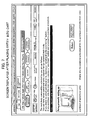
- Fig. 5 is an example of a commodity guide screen.
- a commodity for example, a personal computer
- the user A inputs the quantity of the commodity, and clicks "Place the commodity on the cart" ("enter into cart"), so that the commodity is selected (S13).
- the selected commodity data are sent from the terminal 20A to the server 10 (S14).
- the server 10 receives the commodity data.
- the server 10 issues a new cart ID, and stores the commodity data in the cart file 16 together with the cart ID (S15).
- the cart ID to be issued contains date information including an issue date and an issue time; a receipt number on the issue date; and predetermined password information.
- date information including an issue date and an issue time; a receipt number on the issue date; and predetermined password information.
- the cart ID is "00022821261856637864".
- the upper 13 digits "0002282126185” is, in sequence, the date information and the receipt number.
- the lower 7 digits "6637864" is password information containing a number generated at random. This password information is not a serial number, and the number has no specified sense.
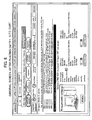
- the server 10 when the user A clicks "In the cart" ("enter into cart") on the screen of Fig. 5 before the cart ID is issued, the screen shown in Fig. 6 is displayed. As the cart ID is not issued, the server 10 does not receive the cart ID together with a demand in response to "In the cart.” The server 10 recognizes that the commodity is not selected, and the HTML file for the screen shown in Fig. 6 is sent to the terminal 20A.
- the server 10 When the server 10 stores the commodity data in the cart file 16, the server 10 sends the commodity data in response to the cart ID in the cart file 16 as the HTML file in order to identify the selected commodity (S16).
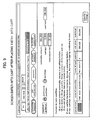
- Fig. 7 is an example of a selection identification screen. In Fig. 7, the name of commodity selected, etc. are displayed. Furthermore, the cart ID "00022821261856637864" is displayed as part of a URL in a URL display part in the screen. Thus, the user A can know the cart ID for the present shopping transaction.
- the user A returns the screen to a previous screen (clicks "Return” in an operation menu of an browser not shown) (S17).
- the terminal 20A sends a demand corresponding to "Return” together with the cart ID to the server (S18).
- the server 10 sends the HTML file corresponding to the same commodity guide screen as the screen of Fig. 5 i.e. the screen prior to the present screen together with the cart ID (Fig.8) (S19).
- the terminal 20A displays the screen of Fig. 8 corresponding to the sent HTML file (S20).
- the cart ID is displayed in the URL display part.
- the cart ID is added to the data communicated between the server 10 and terminal 20A. Accordingly, even when the screen is changed during the user A's selection of the commodity, the cart ID is always displayed in the URL display part of the screen, and the user A can look at the cart ID.
- the user A clicks "In the cart” ("enter into cart") of Fig. 8 in order to identify the selected commodity in the present shopping cart (S21).
- the terminal 20A sends a demand corresponding to "In the cart” together with the cart ID to the server (S22).
- the server 10 receives the cart ID together with the demand.
- the server 10 reads out the commodity data managed by the received cart ID from the cart file 16 (S23) , and sends the HTML file for the commodity identification screen in which the commodity data are buried together with the cart ID (S24).
- the terminal 20A displays the commodity identification screen of Fig. 9 in response to the sent HTML file (S25). On the screen of Fig. 9, the commodity data stored in the cart in response to the present cart ID are displayed.
- the cart ID is displayed in the URL display part.
- the user A clicks "Continue the shopping" of Fig. 9, to display the other commodity guide screens (not shown), and continues a commodity selection.
- the server 10 is accessed at a terminal 20Z of a malicious user Z. Specifically, similar to the case of the user A, the terminal 20Z accesses the Internet commodity sale site provided by the server 10 via the Internet (S30). The server 10 sends, for example, the HTML file for the commodity guide screen to the terminal 20Z in response to the access (S31). The terminal 20Z displays the screen of Fig. 5 in response to the sent HTML file (S32). At this point of time, the cart ID has not been yet issued.
- the user Z inputs the quantity of a commodity selected arbitrarily, and clicks "Place it in the cart” (S33). Thus, the commodity is selected and the commodity data are sent to the server 10 (S34).
- a new cart ID is issued, and the commodity data are stored in the cart file 16 together with the cart ID (S35).
- the receipt number included in the issued cart ID is a later number than the receipt number included in the cart ID of the user A.
- the date information included in the cart ID of the user Z is the same as that in the user A, or a time (or a date) later than that in the user A.
- the password information included in the cart ID of the user Z is a number which has no connection with that of the user A.
- the server 10 stores the commodity data in the cart file 16
- the commodity data corresponding to the cart ID in the cart file 16 are sent as a HTML file in order to confirm the selected commodity (S36).
- the terminal 20Z displays the selection identification screen of Fig. 7 (S37).
- the cart ID displayed as a part of the URL in the URL display part is an ID issued to a shopping cart of the user Z.
- the user Z changes some part of the cart ID displayed in the URL display part.
- the cart ID of the user Z is "0002821266186XXXXXXX.”
- the cart ID of the user Z is issued at the same time as that of the user A, and has a next number of the receipt number of the user A.
- the lower 7 digits "XXXXXXX" of the cart ID of the user Z is the password information containing a random number generated at random by the server 10 as described above.
- the user Z changes "186" as a receipt number part of the cart ID to a previous number "185". Furthermore, the user Z presumes that the date information is the same as in the user A cart ID, and the date information is not to be changed. Thus, the date information and receipt number part of the cart ID displayed on the screen of the terminal 20Z of the user Z are coincident with those of the user A. However, as the user Z cannot access the password information part of the cart ID of the user A, an arbitrary number "YYYYYYY" is issued. This number is a number different from the password information of the cart ID of the user A.
- the user Z changes the displayed cart ID to "0002282126185YYYYYYY” and depresses an "ENTER” button of the terminal 20Z (S38).
- a demand of the HTML file in response to the URL containing the cart ID is sent to the server 10 (S39).
- the server 10 receives the demand from the terminal 20Z, it searches the interior of the cart file 16 for the received cart ID.
- the received cart ID does not exist. Even though the date information and receipt number of the received cart ID coincide with those of the cart ID of the user A, the received cart ID does not coincide with the complete cart ID of the user A as the password part is different.
- the server 10 judges that the received cart ID is different from the cart ID of the user A in only the password information part, the server 10 recognizes that an improper access is performed on the cart ID of the user A, and counts the number of improper accesses on the cart ID (S40). Furthermore, alarm information is sent to the terminal 20Z of the user Z (S41). At the terminal 20Z, the alarm information shown in Fig. 10 is displayed overlaid on the screen displayed currently (screen of Fig. 6) (S42). The alarm information is erased from on the screen by clicking an OK button (Fig. 10).
- the server 10 does not count the number of times of improper access, it simply sends the alarm information to the terminal 20Z.
- the server 10 judges that there is an improper access of the cart ID of the user A.
- the server counts the number of times of improper access and issues alarm information to the terminal 20Z in response to a set number of improper accesses.
- the server 10 judges that an improper access has occurred, the server 10 counts the number of improper accesses. When the number of times of the improper accesses to the cart ID of the user A reaches N times (for example, three times), the server 10 raises a flag (FL) for the cart ID of the user A in the cart file 16 (S43). When the server 10 raises the flag for the cart ID, when the server 10 next receives the cart ID, the server 10 erases the cart ID from the cart file 16 and reissues another cart ID.
- N times for example, three times
- the user A himself or herself accesses the server.
- This is, for example, the case where the user A selects an additional commodity on the commodity guide screen, and clicks "Place it in the cart" ("enter into cart") (S44).
- the cart ID of the user A is sent to the server 10 together with the commodity data (S45).
- the server 10 invalidates the received cart ID of the user A (preferably, erases it), and reissues the cart ID of the user A (S46).
- the flag raised is lowered.
- the server 10 sends the HTML file -of the selection identification screen (Fig. 7) containing the reissued cart ID to the terminal 20A.
- the reissued cart ID has the date information and receipt number at the time of re-issuance, and further contains the password information containing a newly generated random number. Accordingly, the date information and receipt number part of the reissued cart ID of the user A are different from those in the ex-cart ID of the user A, and the cart ID containing a number "185" in the receipt number part does not exist in the cart file 16. Accordingly, even when the user Z tries to access many times, the improper access never succeeds.
- the cart ID according to the embodiment of the present invention has the date information and receipt number as well as the password information. Since the password information contains a random number or string having no specific sense, it is impossible to decode another person's password information part effectively. Accordingly, even when the date information and receipt number part are disclosed, the improper access can be prevented. Further, according to the embodiment of the present invention, in the case where the number of times of the improper access reaches a predetermined one, in order to increase the security of the cart ID, the cart ID as a target of the improper access is reissued.
- the server 10 when the server detects an access of the cart ID in which the date information and receipt number coincide with each other, but the password information does not coincide, or an access of the cart ID in which the date information and receipt number do not coincide with each other, but the password information coincides, the server 10 recognizes it as the improper access to the already existing cart ID containing the coincident parts, and counts the number of times of access. After the number of times of access to the cart ID, as a target of the improper access, reaches the predetermined number of times, when the server 10 detects the improper access of the cart ID, the server 10 erases the cart ID and reissues a new cart ID. Thus, as the cart ID, as the target of the improper access, does not exist, improper access is prevented.
- Fig. 11 is a flowchart of an order confirmation process by the user A.
- the user A ends a commodity selection
- a purchase confirmation notice is sent to the server 10 together with the cart ID (S51).
- the server 10 receives the purchase confirmation notice, the server 10 transfers the commodity data managed by the received cart ID to the purchase file 17 in the cart file 16 (S52). Namely, the cart ID and commodity data are erased from the cart file 16.
- the commodity data transferred to the purchase file 17 are managed by an order ID to be newly issued.
- the purchase file 17 is an access disable file.
- the cart file 16 is a file which can be accessed by the terminal 20 so as to cancel a selected commodity, and add, change, or the like the commodity to be purchased. Accordingly, there is a danger of improper access from other users, and according to the aforesaid embodiment, improper access to the accessible cart file 16 is prevented.
- the server 10 sends the HTML file in response to a purchase confirmation screen (not shown) to the terminal 20Z, and notifies the order ID to the user A (S53). Furthermore, the purchase confirmation may separately be notified by electronic mail. Alternatively, it may be notified by a mail service.
- the issued cart ID may automatically be erased.
- the predetermined period of time is, for example, 2 days (48 hours).
- the server 10 erases the commodity data and cart ID in the cart file 16 corresponding to the transaction.
- the terminal of the user displays the cart ID issued prior to the disconnection of the transaction by a history storage function of the browser. Accordingly, the user can relay the displayed cart ID to the support center.
- the cart ID includes time information at the time of the issue
- the support center can forthwith judge that 2 days or more have elapsed after the issue of the cart ID, and can promptly answer the user that the transaction has been cleared.
- the time taken to perform a retrieval process or decode process of the cart ID causes inconvenience for the user who must wait for an answer (e.g. during a telephone call).
- an answer e.g. during a telephone call.
- Fig. 12 is a flowchart of the method of managing the cart ID according to another embodiment of the present invention. Incidentally, only a characteristic process part according to this embodiment will be described, as the other processes are the same as the processes explained in relation to Figs. 3 and 4. Therefore, their description is omitted.
- the cart ID is issued at the point of time when a commodity is selected.
- this embodiment differs mainly in that the cart ID is issued at the point of time when the Internet commodity sale site provided by the server 10 is accessed by the terminal 20A.
- the user A utilizes the terminal 20A (browser 21) to access the Internet commodity sale site provided by the server 10 via the Internet.
- the server 10 newly issues the cart ID in response to the access and stores it in the cart file 16 (S61).
- a form of this cart ID and a method of forming it are same as in the previous embodiment.
- the server 10 sends to the terminal 20A the HTML file for the commodity guide screen containing the cart ID newly issued (S62).
- the terminal 20A displays the sent HTML file on the screen (S63).
- the cart ID is displayed as part of the URL in the URL display part of the commodity guide screen displayed.
- the selected commodity data and cart ID are sent from the terminal 20A to the server 10 (S65).
- the server 10 stores the commodity data in the corresponding cart file 16 based on the cart ID received together with the commodity data from the terminal 20A (S66).
- the server 10 sends the HTML file for the selection identification screen to the terminal 20A (S67).
- the cart ID is issued at the point of time when the user accesses the commodity sale site, even when perusing a page within this site, the cart ID is always displayed in the URL display part, so that it becomes possible to prevent the occurrence of the above phenomenon.
- Fig. 13 is a flowchart of the countermeasure method of the improper access according to another embodiment of the present invention. Incidentally, only a characteristic process part according to this embodiment is described, and the other processes are the same as the processes described in relation to Fig. 4. Therefore, their description is omitted.
- the number of accesses is counted with respect to the improper accesses made by the malicious user Z, and in the case where the number of times of access is the predetermined number of times N or more, the issued cart ID being used is invalidated and the alarm notice is displayed on the terminal 20Z.
- the server 10 judges that the improper 10 access by the cart ID changed by the user Z was made, the server 10 starts counting the number of times of access of the cart ID as the target of the improper access (S40).
- the server 10 increases the delay of a normal response (S71), and thereafter notifies the alarm information to the terminal 20Z (S41).
- a delay time may be increased in proportion to an increase in the number of times of access. In this manner, the response to the malicious user is delayed, so that the improper access operations can be prevented (discouraged).
Landscapes
- Business, Economics & Management (AREA)
- Accounting & Taxation (AREA)
- Engineering & Computer Science (AREA)
- Finance (AREA)
- Physics & Mathematics (AREA)
- Strategic Management (AREA)
- General Business, Economics & Management (AREA)
- General Physics & Mathematics (AREA)
- Theoretical Computer Science (AREA)
- Computer Security & Cryptography (AREA)
- Computer Networks & Wireless Communication (AREA)
- Development Economics (AREA)
- Economics (AREA)
- Marketing (AREA)
- Management, Administration, Business Operations System, And Electronic Commerce (AREA)
Abstract
Description
- The present invention relates generally to a transaction number management method, apparatus and program in Internet/network commodity sale transactions, and more particularly, to security protection of transaction numbers.
- Internet commodity sales are on the increase. A user connects a terminal to the Internet via a communication line, and displays a commodity sale site provided by a server managed by a commodity sale enterprise on a screen of the terminal.
- The user operates the terminal, and selects a commodity which the user desires from a plurality of commodities displayed on the commodity sale site. The selected commodity data are notified to the server, which temporarily stores the data in a predetermined file until the commodity is purchased. When the user selects a commodity from the commodity sale site, the commodity is placed in a shopping cart, as it would be in a conventional store. Commodity data is temporarily stored in the server file when the commodity is selected and placed in the cart. Therefore, this predetermined file is called a cart file.
- In order to discriminate each cart, the server provides a transaction number (cart ID) to the cart file. Namely, the transaction number (cart ID) is provided for a single shopping transaction with the user. When the server receives commodity data, after the user selects a first commodity, it issues a new cart ID, and stores the commodity data selected in the cart file in relation to the cart ID.
- The issued cart ID is sent to the terminal, and is stored in the terminal by predetermined means. For example, the cart ID is stored in a memory unit (hard disk unit) of the terminal as a cookie. Alternatively, the cart ID is displayed on a terminal screen as a URL of a commodity sale site. Alternatively, the cart ID is written into a HTML document of the commodity sale site sent from the server. In this case, the HTML document may be constituted so as not to display the cart ID on the screen, but the cart ID written into the HTML document is held in the terminal.
- When the user selects another commodity, the commodity data are notified to the server along with the cart ID. The server stores the commodity data in the cart file corresponding to the cart ID. In this manner, even in a case where a number of commodities are selected before the user confirms the purchase of the commodities in a single shopping transaction, commodity data for each commodity (item) can be stored in the same cart file.
- In many cases, a conventional cart ID is constituted by, for example, date information such as an issue date, time, or the like and a receipt number of the cart ID. The receipt number is a serial number indicating a number of the cart ID issued in the order of transaction receipts on a specific date. For example, in a case where a 185th cart ID is issued at 9:26 p.m. on February 28, 2000, the cart ID is "0002282126185". In this manner, it is possible to manage the cart ID in a uni-sense (uniquely identifying the cart) by utilizing the serial number for the cart ID.
- However, the management of the cart ID by the receipt number causes a drawback in security. For example, in the case where the cart ID is displayed as the URL at the terminal of the user, the user can readily know another person's cart ID. Accordingly, by inputting a digit code assumed as another person's cart ID as the URL, there is a possibility that shopping data connected with the other person's cart ID can be acquired from the server, so that the user can see it. Furthermore, the user can alter the other person's order, too.
- In order to solve such drawbacks, the cart ID is not displayed. Specifically, as described above, the cart ID is written into a memory unit of the terminal as a cookie, or is non-openly incorporated into the HTML document, so that the cart ID is not disclosed.
- However, the non-disclosure of the cart ID causes the following problem. Namely, in general, an Internet sales enterprise has a support system (staff) which receives a user's questions by telephone. When the user telephones the enterprise for information during a commodity selection, as the cart ID is unknown to the user, the enterprise cannot judge which transaction the user is talking about, so the user cannot get quick or sufficient support.
- Furthermore, in order to solve the aforesaid drawbacks, it is considered that the cart ID is encoded and the encoded ID is disclosed to the user. Namely, the cart ID containing information of a date, a time, and a receipt number is encoded by a password algorithm to form a random code, so that the cart ID does not make sense to the user. Thus, it becomes difficult to analogize other existing cart IDs.
- However, the encoding of the cart ID causes the following problem. Namely, the encoding of the cart ID puts a large load on the server. Specifically, in the case where the cart ID is encoded, it is necessary to encode and decode it in the server, and for this reason, process time is increased.
- Furthermore, in the case where the user puts a question to the enterprise, having the aforesaid support system, by telephone, the user recites the disclosed encoded ID over the telephone. Accordingly, unless the enterprise decodes it at once and acquires the cart ID, the enterprise cannot grasp transaction information of the user corresponding to the cart ID. Therefore, the enterprise cannot respond promptly to the user. In this manner, when the cart ID itself containing the serial number is not disclosed, the user experiences inconvenience. Thus, encoding the cart ID is undesirable.
- It is therefore a consideration of the present invention to provide a method, an apparatus and a program for managing transaction numbers which can ensure security, while making available a cart ID (transaction number) containing a serial receipt number to a user.
- According to one aspect of the present invention there is provided a computer apparatus, comprising an issuance unit for issuing a transaction number (identification code, cart ID) including receipt information containing at least a receipt number (serial number) indicating a receipt number of the transaction, and further including meaningless password information. Furthermore, it is preferable that the receipt information contains date issuance information of the cart. In this manner, the cart ID according to the present invention contains the password information in addition to the receipt information having conventional date information and the receipt number, thereby even when the cart ID is disclosed to a user, it is possible to prevent another person from accessing the cart ID. For example, even when a malicious user accesses the receipt number, and acquires another person's present cart ID, as the password information is a random code, so long as the password information is not also coincident (accessed), the other person's cart ID cannot be acquired. On the other hand, as the cart ID according to the present invention contains the date information and receipt number, it is possible to utilize instantly these numbers without being decoded.
- According to another aspect of the present invention, there is provided a method of managing transaction numbers in commodity sale transactions via a network, the method comprising the steps of issuing a transaction number including receipt information and predetermined password information, the receipt information containing at least a receipt number indicative of the order of receipt of a predetermined transaction with a user; and displaying the transaction number on a terminal of the user.
- For example, the network may be the Internet and the transaction number may be displayed, as part of URL of the Internet, on the terminal. Preferably, the receipt information of the transaction number contains a date and time of issuance of the transaction number. Preferably, the password information of the transaction number contains a plural-digit random number. Preferably, the transaction number is issued when at least one commodity is selected at the terminal, the transaction number being utilized until the determination of purchase of the selected commodity. Preferably, the transaction number is issued when an access is made from the terminal to a system of the commodity sale transaction, the transaction number being utilized until the determination of purchase of the commodity. The transaction number may be invalidated when a predetermined period of time elapses before the determination of purchase of the selected commodity after the issuance of the transaction number.
- The method of the present invention preferably further comprises the step of, when another transaction number is received which coincides only with either the receipt information or password information of the transaction number, judging an improper access to the transaction number to erase the transaction number and reissue a new transaction number.
- The method of the present invention preferably further comprises the steps of, when another transaction number is received which coincides only with either the receipt information or password information of the transaction number, judging an improper access to the transaction number to count the number of times of the access; and when a transaction number is received after the number of times of the access has reached a predetermined number of times, erasing the transaction number to reissue a new transaction number, and displaying the new transaction number on the terminal.
- The method of the present invention preferably further comprises the step of, when another transaction number is received which coincides only with either the receipt information or password information of the transaction number, judging an improper access making use of the transaction number to delay a response to the terminal using the another transaction number.
- The method of the present invention may further comprise the step of, upon detection of an improper access to the transaction number, notifying alarm information to a terminal which sent the another transaction number.
- It should be noted that the transaction number (identification number, cart ID) is not restricted to a string of numbers but can also be expressed by an alphanumeric code, or any other string of characters.
- Other aspects of the present invention are as described by the accompanying independent claims.
- A detailed description of embodiments of the present invention will now be given, by way of example, with reference to the accompanying drawings-, in which:
- Fig. 1 is a diagram showing a structural example of a computer network according to an embodiment of the present invention;
- Fig. 2 is a diagram showing a structural example
of a
server 10; - Fig. 3 is a flowchart of a method of managing a cart ID according to the embodiment of the present invention;
- Fig. 4 is a flowchart of the method of managing the cart ID according to the embodiment of the present invention;
- Fig. 5 shows an example of a screen displayed on a terminal 20;
- Fig. 6 shows an example of the screen displayed on the terminal 20;
- Fig. 7 shows an example of the screen displayed on the terminal 20;
- Fig. 8 shows an example of the screen displayed on the terminal 20;
- Fig. 9 shows an example of the screen displayed on the terminal 20;
- Fig. 10 shows an example of the screen displayed on the terminal 20;
- Fig. 11 is a flowchart of an order confirmation process;
- Fig. 12 is a flowchart of a method of managing the cart ID according to another embodiment of the present invention; and
- Fig. 13 is a flowchart of a countermeasure method with respect to an improper access according to the embodiment of the present invention.
-
- The technical scope according to the present invention is not limited to the embodiments of the present invention. In the embodiments of the present invention, a personal computer will be described as an example of a commodity which is sold on the Internet.
- Fig. 1 is a diagram showing a structural example of a computer network according to an embodiment of the present invention. In Fig. 1, a
server 10 and a plurality ofclient terminals 20 are connected to the Internet through a communication line. Theserver 10 is a server for providing an Internet sales site according to the embodiment of the present invention, and storing a HTML file for the site, various programs and a database explained below, and the like. Each terminal 20 is, for example, a personal computer of a user, and comprises a control unit constituted by a CPU or the like, a display unit such as a CRT display, a liquid crystal display, or the like, and an input unit such as a keyboard, a mouse, or the like. Furthermore, the HTML file is acquired from theserver 10 at the terminal 20, and abrowser 21 for displaying it on the screen is installed. - Fig. 2 is a diagram showing a structural example of the
server 10. Acontrol unit 11 is constituted by the CPU or the like. Thecontrol unit 11 controls a readout of a file, a transfer of a file, each unit within theserver 10; and retrieves a database; issues a cart ID; performs a managing process such as erasing or the like; and performs various operation processes. Acommunication unit 12 controls transmission and receipt of files and data. For example, thecommunication unit 12 receives data from the terminal 20, and transfers them to thecontrol unit 11, and further the files transferred from thecontrol unit 11 are sent to the terminal 20. Furthermore, the following files are stored in a predetermined memory unit within theserver 10. - A
HTML file 13 is a file composed of a plurality of pages constituting the Internet sale site, and is described by HTML (HyperText Markup Language). - A
main program file 14 has a program for reading out the HTML file to transfer it to the terminal 20; a program for processing data from the terminal 20; a program for retrieving a database; a program for burying the retrieval results in the HTML file; and a program for managing the cart ID. - A
commodity database 15 stores a plurality of pieces of attribute information corresponding to all the transaction commodities. For example, in the case where the commodity is a personal computer, the attribute information is a product name, a price, a type (desktop type or notebook type), and various functions of the personal computer. The functions are a type of a CPU, a capacity of a memory, a capacity of a hard disk, a type of a display, presence or absence of a CD-ROM or DVD-ROM, and the like. The attribute information of the commodity is converted into a HTML file, sent to the terminal 20, and displayed on a screen of the terminal 20. - Furthermore, the
server 10 comprises acart file 16 for temporarily storing commodity data selected by a user by operating the terminal 20; and apurchase file 17 for storing the commodity data in which the purchase is determined. The commodity data within thecart file 16 are managed according to a cart ID (transaction number) to be provided each time the user selects a commodity. - According to the embodiment of the present invention, this cart ID is an identification code containing receipt information containing at least a receipt number (serial number) indicating a receipt order of the transaction; and further meaningless password information. Furthermore, it is preferable that the receipt information contains information on the date that the cart ID was issued. Namely, the Cart ID = Date Information + Reception Number (Serial Number) + Cipher Information. In this manner, the cart ID according to the present invention contains the password information in addition to the receipt information having conventional date information and the receipt number, so that even when the cart ID is disclosed to the user, it is possible to prevent another person from accessing the cart ID. For example, even when a malicious user accesses the receipt number, and acquires another person's present cart ID, as the password information is a random code, so long as the password information is not also coincident (accessed), the other person's cart ID cannot be acquired.
- On the other hand, as the cart ID according to the present invention contains the date information and receipt number, it is possible to instantly utilize these numbers without them being decoded. For example, when the user puts a question to a support center of an enterprise by telephone, the user recites his/her own disclosed cart ID, so that the enterprise can acquire the date information and receipt number (serial number) of the transaction without decoding the cart ID, and can promptly respond to the user's question.
- Figs. 3 and 4 are flowcharts of a method of managing the cart ID according to the embodiment of the present invention. Furthermore, Figs. 5 to 10 are examples of a screen displayed in the terminal 20 in each step of the method of managing the cart ID. With reference to Figs. 5 to 10, Figs. 3 and 4 will be described.
- In Fig. 3, a user A utilizes a
browser 21 of a terminal 20A, and accesses the Internet commodity sale site provided by theserver 10 via the Internet (S10). Theserver 10 sends, for example, the HTML file for a commodity guide screen to the terminal 20A in response to the access (S11). The terminal 20A displays the sent HTML file on the screen (S12). At this point of time, the cart ID is not issued. - Fig. 5 is an example of a commodity guide screen. On the screen, an explanation of a commodity (for example, a personal computer) is displayed. In Fig. 5, the user A inputs the quantity of the commodity, and clicks "Place the commodity on the cart" ("enter into cart"), so that the commodity is selected (S13). The selected commodity data are sent from the terminal 20A to the server 10 (S14). The
server 10 receives the commodity data. At this time, as the cart ID is not included in the commodity data in response to an initial commodity selection, theserver 10 issues a new cart ID, and stores the commodity data in thecart file 16 together with the cart ID (S15). - The cart ID to be issued contains date information including an issue date and an issue time; a receipt number on the issue date; and predetermined password information. For example, in a case where a 185th cart ID is issued at 9:26 p.m. on February 28, 2000, the cart ID is "00022821261856637864". Of this digit code, the upper 13 digits "0002282126185" is, in sequence, the date information and the receipt number. The lower 7 digits "6637864" is password information containing a number generated at random. This password information is not a serial number, and the number has no specified sense.
- Incidentally, when the user A clicks "In the cart" ("enter into cart") on the screen of Fig. 5 before the cart ID is issued, the screen shown in Fig. 6 is displayed. As the cart ID is not issued, the
server 10 does not receive the cart ID together with a demand in response to "In the cart." Theserver 10 recognizes that the commodity is not selected, and the HTML file for the screen shown in Fig. 6 is sent to the terminal 20A. - When the
server 10 stores the commodity data in thecart file 16, theserver 10 sends the commodity data in response to the cart ID in thecart file 16 as the HTML file in order to identify the selected commodity (S16). Fig. 7 is an example of a selection identification screen. In Fig. 7, the name of commodity selected, etc. are displayed. Furthermore, the cart ID "00022821261856637864" is displayed as part of a URL in a URL display part in the screen. Thus, the user A can know the cart ID for the present shopping transaction. - Here, the user A returns the screen to a previous screen (clicks "Return" in an operation menu of an browser not shown) (S17). The terminal 20A sends a demand corresponding to "Return" together with the cart ID to the server (S18). Then, the
server 10 sends the HTML file corresponding to the same commodity guide screen as the screen of Fig. 5 i.e. the screen prior to the present screen together with the cart ID (Fig.8) (S19). The terminal 20A displays the screen of Fig. 8 corresponding to the sent HTML file (S20). On the screen of Fig. 8, the cart ID is displayed in the URL display part. In this manner, once the cart ID is issued, the cart ID is added to the data communicated between theserver 10 and terminal 20A. Accordingly, even when the screen is changed during the user A's selection of the commodity, the cart ID is always displayed in the URL display part of the screen, and the user A can look at the cart ID. - The user A clicks "In the cart" ("enter into cart") of Fig. 8 in order to identify the selected commodity in the present shopping cart (S21). The terminal 20A sends a demand corresponding to "In the cart" together with the cart ID to the server (S22). The
server 10 receives the cart ID together with the demand. Theserver 10 reads out the commodity data managed by the received cart ID from the cart file 16 (S23) , and sends the HTML file for the commodity identification screen in which the commodity data are buried together with the cart ID (S24). The terminal 20A displays the commodity identification screen of Fig. 9 in response to the sent HTML file (S25). On the screen of Fig. 9, the commodity data stored in the cart in response to the present cart ID are displayed. The cart ID is displayed in the URL display part. Here, the user A clicks "Continue the shopping" of Fig. 9, to display the other commodity guide screens (not shown), and continues a commodity selection. - Referring then to Fig. 4, while the user A selects a commodity, the
server 10 is accessed at a terminal 20Z of a malicious user Z. Specifically, similar to the case of the user A, the terminal 20Z accesses the Internet commodity sale site provided by theserver 10 via the Internet (S30). Theserver 10 sends, for example, the HTML file for the commodity guide screen to the terminal 20Z in response to the access (S31). The terminal 20Z displays the screen of Fig. 5 in response to the sent HTML file (S32). At this point of time, the cart ID has not been yet issued. - The user Z inputs the quantity of a commodity selected arbitrarily, and clicks "Place it in the cart" (S33). Thus, the commodity is selected and the commodity data are sent to the server 10 (S34).
- When the
server 10 receives the commodity data, a new cart ID is issued, and the commodity data are stored in thecart file 16 together with the cart ID (S35). The receipt number included in the issued cart ID is a later number than the receipt number included in the cart ID of the user A. Furthermore, the date information included in the cart ID of the user Z is the same as that in the user A, or a time (or a date) later than that in the user A. Furthermore, the password information included in the cart ID of the user Z is a number which has no connection with that of the user A. - When the
server 10 stores the commodity data in thecart file 16, the commodity data corresponding to the cart ID in thecart file 16 are sent as a HTML file in order to confirm the selected commodity (S36). The terminal 20Z displays the selection identification screen of Fig. 7 (S37). However, the cart ID displayed as a part of the URL in the URL display part is an ID issued to a shopping cart of the user Z. - Here, the user Z changes some part of the cart ID displayed in the URL display part. For example, assume that the cart ID of the user Z is "0002821266186XXXXXXX." Namely, the cart ID of the user Z is issued at the same time as that of the user A, and has a next number of the receipt number of the user A. Furthermore, the lower 7 digits "XXXXXXX" of the cart ID of the user Z is the password information containing a random number generated at random by the
server 10 as described above. - The user Z changes "186" as a receipt number part of the cart ID to a previous number "185". Furthermore, the user Z presumes that the date information is the same as in the user A cart ID, and the date information is not to be changed. Thus, the date information and receipt number part of the cart ID displayed on the screen of the terminal 20Z of the user Z are coincident with those of the user A. However, as the user Z cannot access the password information part of the cart ID of the user A, an arbitrary number "YYYYYYY" is issued. This number is a number different from the password information of the cart ID of the user A.
- The user Z changes the displayed cart ID to "0002282126185YYYYYYY" and depresses an "ENTER" button of the terminal 20Z (S38). Thus, a demand of the HTML file in response to the URL containing the cart ID is sent to the server 10 (S39). When the
server 10 receives the demand from the terminal 20Z, it searches the interior of thecart file 16 for the received cart ID. However, the received cart ID does not exist. Even though the date information and receipt number of the received cart ID coincide with those of the cart ID of the user A, the received cart ID does not coincide with the complete cart ID of the user A as the password part is different. - When the
server 10 judges that the received cart ID is different from the cart ID of the user A in only the password information part, theserver 10 recognizes that an improper access is performed on the cart ID of the user A, and counts the number of improper accesses on the cart ID (S40). Furthermore, alarm information is sent to the terminal 20Z of the user Z (S41). At theterminal 20Z, the alarm information shown in Fig. 10 is displayed overlaid on the screen displayed currently (screen of Fig. 6) (S42). The alarm information is erased from on the screen by clicking an OK button (Fig. 10). - Incidentally, in the case where both the date information and receipt number part of the received cart ID as well as the password information part are not coincident with either of those of the cart ID in the
cart file 16, theserver 10 does not count the number of times of improper access, it simply sends the alarm information to the terminal 20Z. Incidentally, where only the password of the received cart ID, received in thecart file 16, coincides with the password of the cart ID of the user A, theserver 10 judges that there is an improper access of the cart ID of the user A. The server counts the number of times of improper access and issues alarm information to the terminal 20Z in response to a set number of improper accesses. - When the user Z erases the alarm information, and changes the password information to another code, and repeats the access to the
server 10, the steps S38 to S42 are repeated. Each time the improper accesses are repeated, the alarm information shown in Fig. 10 is displayed. Therefore, the user Z has to operate to erase it. Accordingly, it is possible to delay the improper access by the user Z. - As the password information part has a plurality of digits containing a random number (7 digits in this embodiment), the probability is extremely low that the user Z will guess correctly and input password information that coincides with that of the cart ID of the user A. Each time the
server 10 judges that an improper access has occurred, theserver 10 counts the number of improper accesses. When the number of times of the improper accesses to the cart ID of the user A reaches N times (for example, three times), theserver 10 raises a flag (FL) for the cart ID of the user A in the cart file 16 (S43). When theserver 10 raises the flag for the cart ID, when theserver 10 next receives the cart ID, theserver 10 erases the cart ID from thecart file 16 and reissues another cart ID. - Assume that, in a condition that a flag is raised in the cart ID of the user A, the user A himself or herself accesses the server. This is, for example, the case where the user A selects an additional commodity on the commodity guide screen, and clicks "Place it in the cart" ("enter into cart") (S44). In this case, the cart ID of the user A is sent to the
server 10 together with the commodity data (S45). As a flag is raised in the cart ID of the user A in thecart file 16, when theserver 10 receives the cart ID of the user A, theserver 10 invalidates the received cart ID of the user A (preferably, erases it), and reissues the cart ID of the user A (S46). Furthermore, the flag raised is lowered. Theserver 10 sends the HTML file -of the selection identification screen (Fig. 7) containing the reissued cart ID to the terminal 20A. - The reissued cart ID has the date information and receipt number at the time of re-issuance, and further contains the password information containing a newly generated random number. Accordingly, the date information and receipt number part of the reissued cart ID of the user A are different from those in the ex-cart ID of the user A, and the cart ID containing a number "185" in the receipt number part does not exist in the
cart file 16. Accordingly, even when the user Z tries to access many times, the improper access never succeeds. - In this manner, the cart ID according to the embodiment of the present invention has the date information and receipt number as well as the password information. Since the password information contains a random number or string having no specific sense, it is impossible to decode another person's password information part effectively. Accordingly, even when the date information and receipt number part are disclosed, the improper access can be prevented. Further, according to the embodiment of the present invention, in the case where the number of times of the improper access reaches a predetermined one, in order to increase the security of the cart ID, the cart ID as a target of the improper access is reissued. Specifically, as described above, when the server detects an access of the cart ID in which the date information and receipt number coincide with each other, but the password information does not coincide, or an access of the cart ID in which the date information and receipt number do not coincide with each other, but the password information coincides, the
server 10 recognizes it as the improper access to the already existing cart ID containing the coincident parts, and counts the number of times of access. After the number of times of access to the cart ID, as a target of the improper access, reaches the predetermined number of times, when theserver 10 detects the improper access of the cart ID, theserver 10 erases the cart ID and reissues a new cart ID. Thus, as the cart ID, as the target of the improper access, does not exist, improper access is prevented. - Fig. 11 is a flowchart of an order confirmation process by the user A. In Fig. 11, when the user A ends a commodity selection, the user A clicks a "Purchase" button on the screen of Fig. 7, 8, or 9 (S50). A purchase confirmation notice is sent to the
server 10 together with the cart ID (S51). When theserver 10 receives the purchase confirmation notice, theserver 10 transfers the commodity data managed by the received cart ID to thepurchase file 17 in the cart file 16 (S52). Namely, the cart ID and commodity data are erased from thecart file 16. On the other hand, the commodity data transferred to thepurchase file 17 are managed by an order ID to be newly issued. - When the commodity data are stored in the
purchase file 17, it is impossible to change the purchase after this point of time, because thepurchase file 17 is an access disable file. On the other hand, thecart file 16 is a file which can be accessed by the terminal 20 so as to cancel a selected commodity, and add, change, or the like the commodity to be purchased. Accordingly, there is a danger of improper access from other users, and according to the aforesaid embodiment, improper access to theaccessible cart file 16 is prevented. - The
server 10 sends the HTML file in response to a purchase confirmation screen (not shown) to the terminal 20Z, and notifies the order ID to the user A (S53). Furthermore, the purchase confirmation may separately be notified by electronic mail. Alternatively, it may be notified by a mail service. - Furthermore, according to the embodiment of the present invention, when the cart ID has not been erased by the aforesaid purchase confirmation after a predetermined period of time has elapsed from the cart ID issue time, the issued cart ID may automatically be erased. The predetermined period of time is, for example, 2 days (48 hours). In the case where the user selects the commodity and places the commodity data in the
cart file 16, while the user disconnects (interrupts) the transaction, in order to clear the transaction, theserver 10 erases the commodity data and cart ID in thecart file 16 corresponding to the transaction. - Accordingly, after a predetermined period of time has elapsed from the issue time of the cart ID, even when the user desires to continue the disconnected transaction, the cart ID and commodity data are erased in the cart file. Therefore, the user cannot continue the transaction. It is assumed that the user has doubts about the matter and telephones the support center. Even in this case, the terminal of the user displays the cart ID issued prior to the disconnection of the transaction by a history storage function of the browser. Accordingly, the user can relay the displayed cart ID to the support center. As the cart ID includes time information at the time of the issue, the support center can forthwith judge that 2 days or more have elapsed after the issue of the cart ID, and can promptly answer the user that the transaction has been cleared. In the case where the cart ID is not displayed, or is all encoded as in the prior art, the time taken to perform a retrieval process or decode process of the cart ID causes inconvenience for the user who must wait for an answer (e.g. during a telephone call). However, according to the embodiment of the present invention, it is possible to promptly answer the user, and therefore enhance the service of the support center.
- Next, a method of managing the cart ID according to another embodiment of the present invention will be explained.
- Fig. 12 is a flowchart of the method of managing the cart ID according to another embodiment of the present invention. Incidentally, only a characteristic process part according to this embodiment will be described, as the other processes are the same as the processes explained in relation to Figs. 3 and 4. Therefore, their description is omitted.
- In the process of the embodiment in Figs. 3 and 4, the cart ID is issued at the point of time when a commodity is selected. On the contrary, this embodiment differs mainly in that the cart ID is issued at the point of time when the Internet commodity sale site provided by the
server 10 is accessed by the terminal 20A. - In Fig. 12, first, the user A utilizes the terminal 20A (browser 21) to access the Internet commodity sale site provided by the
server 10 via the Internet. - The
server 10 newly issues the cart ID in response to the access and stores it in the cart file 16 (S61). A form of this cart ID and a method of forming it are same as in the previous embodiment. - Furthermore, the
server 10 sends to theterminal 20A the HTML file for the commodity guide screen containing the cart ID newly issued (S62). - The terminal 20A displays the sent HTML file on the screen (S63). The cart ID is displayed as part of the URL in the URL display part of the commodity guide screen displayed.
- When the user A selects the commodity (S64), the selected commodity data and cart ID are sent from the terminal 20A to the server 10 (S65).
- The
server 10 stores the commodity data in thecorresponding cart file 16 based on the cart ID received together with the commodity data from theterminal 20A (S66). - Furthermore, in order to identify the selected commodity, the
server 10 sends the HTML file for the selection identification screen to theterminal 20A (S67). - According to the previous embodiment, when returning to a condition prior to issuing the cart ID by utilizing the history storage function of the browser after the cart ID has been issued, such a phenomenon occurs that the cart ID is not displayed in the URL display part.
- On the contrary, according to this embodiment, since the cart ID is issued at the point of time when the user accesses the commodity sale site, even when perusing a page within this site, the cart ID is always displayed in the URL display part, so that it becomes possible to prevent the occurrence of the above phenomenon.
- Furthermore, another embodiment in a countermeasure method of the improper access in Fig. 4 will be described.
- Fig. 13 is a flowchart of the countermeasure method of the improper access according to another embodiment of the present invention. Incidentally, only a characteristic process part according to this embodiment is described, and the other processes are the same as the processes described in relation to Fig. 4. Therefore, their description is omitted.
- In the process of Fig. 4, the number of accesses is counted with respect to the improper accesses made by the malicious user Z, and in the case where the number of times of access is the predetermined number of times N or more, the issued cart ID being used is invalidated and the alarm notice is displayed on the terminal 20Z.
- In the process of Fig. 13, if the number of improper accesses is less than N but M or more, it is a characteristic process that a reply to the terminal 20Z which is being utilized by the user Z is delayed for an extended period.
- First, when the
server 10 judges that the improper 10 access by the cart ID changed by the user Z was made, theserver 10 starts counting the number of times of access of the cart ID as the target of the improper access (S40). - When the number of times of access is less than N times (here, for example, 7 times) and less than M times (for example, 3 times), the alarm information is promptly notified to the terminal Z. However, when the number of times of access reaches M times or more, the
server 10 increases the delay of a normal response (S71), and thereafter notifies the alarm information to the terminal 20Z (S41). Incidentally, a delay time may be increased in proportion to an increase in the number of times of access. In this manner, the response to the malicious user is delayed, so that the improper access operations can be prevented (discouraged). - According to the present invention, as set forth hereinabove, it is possible to prevent the improper access of the cart file which stores temporarily the selected commodity data prior to the purchase confirmation in Internet commodity sales.
- The scope of protection of the present invention is not intended to be limited to the above embodiments and covers the invention as defined in the appended claims.
Claims (15)
- A method of managing transaction numbers in commodity sale transactions via a network, the method comprising the steps of:issuing a transaction number including receipt information and predetermined password information, the receipt information containing at least a receipt number indicative of the order of receipt of a predetermined transaction with a user; anddisplaying the transaction number on a terminal of the user.
- The method of managing transaction numbers according to claim 1, wherein
the network is the Internet. - The method of managing transaction numbers according to claim 2, further comprising the step of:
displaying the transaction number, as part of a URL of the Internet, on the terminal. - The method of managing transaction numbers according to claims 1, 2 or 3, wherein
the receipt information of the transaction number contains a date and time of issuance of the transaction number. - The method of managing transaction numbers according to claims 1, 2, 3 or 4, wherein
the password information of the transaction number contains a plural-digit random number. - The method of managing transaction numbers according to any preceding claim, wherein
the transaction number is issued when at least one commodity is selected at the terminal, the transaction number being utilized until the determination of purchase of the selected commodity. - The method of managing transaction numbers according to any of claims 1 to 5, wherein
the transaction number is issued when an access is made from the terminal to a system of the commodity sale transaction, the transaction number being utilized until the determination of purchase of the commodity. - The method of managing transaction numbers according to claim 6 or 7, wherein
the transaction number is invalidated when a predetermined period of time elapses before the determination of purchase of the selected commodity after the issuance of the transaction number. - The method of managing transaction numbers according to any preceding claim, further comprising the step of:
when another transaction number is received which coincides only with either the receipt information or password information of the transaction number, judging an improper access to the transaction number to erase the transaction number to reissue a new transaction number. - The method of managing transaction numbers according to any of claims 1 to 8, further comprising the steps of:when another transaction number is received which coincides only with either the receipt information or password information of the transaction number, judging an improper access to the transaction number to count the number of times of the access; andwhen a transaction number is received after the number of times of the access has reached a predetermined number of times, erasing the transaction number to reissue a new transaction number, and displaying the new transaction number on the terminal.
- The method of managing transaction numbers according to any preceding claim, further comprising the step of:
when another transaction number is received which coincides only with either the receipt information or password information of the transaction number, judging an improper access making use of the transaction number to delay a response to the terminal using the another transaction number. - The method of managing transaction numbers according to claims 9, 10 or 11, further comprising the step of:
upon detection of an improper access to the transaction number, notifying alarm information to a terminal which sent the another transaction number. - A computer apparatus acting as a server providing commodity sale transaction sites on the Internet, the computer apparatus executing transactions via the Internet with an Internet terminal, the computer apparatus comprising:an issuance unit for issuing a transaction number containing receipt information and predetermined password information, the receipt information containing at least a receipt number indicative of the order of receipt of a predetermined transaction; anda communication unit for sending the transaction number to the terminal so that the transaction number is displayed as part of an Internet URL on the terminal.
- A computer apparatus acting as an Internet terminal, the computer apparatus executing transactions via the Internet with a server providing commodity sale transaction sites on the Internet, the computer apparatus comprising:a communication unit for receiving a transaction number issued from the server and containing receipt information and predetermined password information, the receipt information containing at least a receipt number indicative of the order of receipt of a predetermined transaction; anda display unit for displaying thereon the transaction number as part of an Internet URL.
- A computer program product allowing a computer that executes a commodity sale transaction via the Internet with a user,to issue a transaction number containing receipt information and predetermined password information, the receipt information containing at least a receipt number indicative of the order of receipt of a predetermined transaction; andto send the transaction number to a terminal of the user so that the transaction number is displayed as part of an Internet URL on the terminal.
Applications Claiming Priority (2)
| Application Number | Priority Date | Filing Date | Title |
|---|---|---|---|
| JP2000095157 | 2000-03-30 | ||
| JP2000095157 | 2000-03-30 |
Publications (1)
| Publication Number | Publication Date |
|---|---|
| EP1139259A1 true EP1139259A1 (en) | 2001-10-04 |
Family
ID=18610094
Family Applications (1)
| Application Number | Title | Priority Date | Filing Date |
|---|---|---|---|
| EP01302492A Withdrawn EP1139259A1 (en) | 2000-03-30 | 2001-03-19 | Transaction number management method, apparatus and program in network commodity sales |
Country Status (2)
| Country | Link |
|---|---|
| US (2) | US6965880B2 (en) |
| EP (1) | EP1139259A1 (en) |
Cited By (1)
| Publication number | Priority date | Publication date | Assignee | Title |
|---|---|---|---|---|
| RU2273107C2 (en) * | 2001-10-24 | 2006-03-27 | Закрытое акционерное общество "ПлатоФон" | Method, system and computer device for providing communication services between resources in communication networks and internet to perform transactions |
Families Citing this family (7)
| Publication number | Priority date | Publication date | Assignee | Title |
|---|---|---|---|---|
| KR100402094B1 (en) * | 2002-11-22 | 2003-10-17 | 알서포트 주식회사 | Remote control system using web and icon |
| US8023639B2 (en) * | 2007-03-30 | 2011-09-20 | Mattersight Corporation | Method and system determining the complexity of a telephonic communication received by a contact center |
| US9691055B2 (en) | 2010-12-17 | 2017-06-27 | Google Inc. | Digital wallet |
| US9165321B1 (en) * | 2011-11-13 | 2015-10-20 | Google Inc. | Optimistic receipt flow |
| US10678924B2 (en) * | 2016-08-10 | 2020-06-09 | Qualcomm Incorporated | Hardware-based software-resilient user privacy exploiting ephemeral data retention of volatile memory |
| CN106779741A (en) * | 2016-12-05 | 2017-05-31 | 华迪计算机集团有限公司 | The method and system of complete monitoring are carried out to drug quality based on point-of-transaction checking |
| US11575664B2 (en) * | 2019-10-25 | 2023-02-07 | Dell Products L.P. | Information handling systems and methods to manage tickets based on user presence, system state and ticket management policy |
Citations (4)
| Publication number | Priority date | Publication date | Assignee | Title |
|---|---|---|---|---|
| US3890599A (en) * | 1973-09-13 | 1975-06-17 | Command Automation Inc | Arrangement for protecting and authenticating a document |
| GB2070306A (en) * | 1980-02-07 | 1981-09-03 | Omron Tateisi Electronics Co | Transaction processing system |
| WO1985003787A1 (en) * | 1984-02-14 | 1985-08-29 | Peter White | Electronic transaction security system |
| WO1993022745A1 (en) * | 1992-05-06 | 1993-11-11 | Cias, Inc. | COUNTERFEIT DETECTION USING RANDOM NUMBER FIELD IDs |
Family Cites Families (9)
| Publication number | Priority date | Publication date | Assignee | Title |
|---|---|---|---|---|
| JP2748941B2 (en) | 1989-07-06 | 1998-05-13 | 富士通株式会社 | Home terminal |
| US6202055B1 (en) * | 1996-08-21 | 2001-03-13 | Image Data, Llc | Positive identification display device and scanner for low cost collection and display of graphic and text data in a secure manner |
| US6341353B1 (en) * | 1997-04-11 | 2002-01-22 | The Brodia Group | Smart electronic receipt system |
| US6598167B2 (en) * | 1997-09-26 | 2003-07-22 | Worldcom, Inc. | Secure customer interface for web based data management |
| JPH11120241A (en) * | 1997-10-14 | 1999-04-30 | Internatl Business Mach Corp <Ibm> | Electronic commercial transaction system |
| JP3296767B2 (en) | 1997-11-13 | 2002-07-02 | 株式会社ジャストシステム | Online merchandise management system, server system, terminal device, management method in online merchandise management system, and computer-readable recording medium storing program for causing a computer to execute the method |
| JPH11283341A (en) * | 1998-03-31 | 1999-10-15 | Canon Inc | Recording medium, recording device, reproducing device, recording method, reproducing method and medium |
| US6249578B1 (en) * | 1998-04-06 | 2001-06-19 | Ameritech Corporation | Interactive electronic ordering for telecommunications products and services |
| US6715082B1 (en) * | 1999-01-14 | 2004-03-30 | Cisco Technology, Inc. | Security server token caching |
-
2000
- 2000-12-29 US US09/750,050 patent/US6965880B2/en not_active Expired - Fee Related
-
2001
- 2001-03-19 EP EP01302492A patent/EP1139259A1/en not_active Withdrawn
-
2005
- 2005-11-07 US US11/267,219 patent/US7299211B2/en not_active Expired - Fee Related
Patent Citations (4)
| Publication number | Priority date | Publication date | Assignee | Title |
|---|---|---|---|---|
| US3890599A (en) * | 1973-09-13 | 1975-06-17 | Command Automation Inc | Arrangement for protecting and authenticating a document |
| GB2070306A (en) * | 1980-02-07 | 1981-09-03 | Omron Tateisi Electronics Co | Transaction processing system |
| WO1985003787A1 (en) * | 1984-02-14 | 1985-08-29 | Peter White | Electronic transaction security system |
| WO1993022745A1 (en) * | 1992-05-06 | 1993-11-11 | Cias, Inc. | COUNTERFEIT DETECTION USING RANDOM NUMBER FIELD IDs |
Non-Patent Citations (2)
| Title |
|---|
| "ALERT PIN FOR PERSONAL BANKING TERMINALS", IBM TECHNICAL DISCLOSURE BULLETIN, INTERNATIONAL BUSINESS MACHINES CORP. (THORNWOOD), US, vol. 36, no. 5, 1 May 1993 (1993-05-01), pages 309 - 312, XP000409003, ISSN: 0018-8689 * |
| No relevant documents disclosed * |
Cited By (1)
| Publication number | Priority date | Publication date | Assignee | Title |
|---|---|---|---|---|
| RU2273107C2 (en) * | 2001-10-24 | 2006-03-27 | Закрытое акционерное общество "ПлатоФон" | Method, system and computer device for providing communication services between resources in communication networks and internet to perform transactions |
Also Published As
| Publication number | Publication date |
|---|---|
| US6965880B2 (en) | 2005-11-15 |
| US20010027421A1 (en) | 2001-10-04 |
| US20060059089A1 (en) | 2006-03-16 |
| US7299211B2 (en) | 2007-11-20 |
Similar Documents
| Publication | Publication Date | Title |
|---|---|---|
| JP5655246B2 (en) | Mobile authentication agent system and mobile authentication agent method | |
| JP4158370B2 (en) | Coupon information issuing system and display system | |
| US8239484B2 (en) | Information terminal | |
| TWI543095B (en) | Information processing apparatus, information processing method, information processing program product and recording medium with information processing program | |
| US20070021969A1 (en) | Mobile electronic transaction system, device and method therefor | |
| JP2015018437A (en) | Terminal device for using privilege, ic tag, program, method and system | |
| US7322515B2 (en) | Controlling electronic withdrawals by a drawee | |
| JP2018200596A (en) | Transaction management system, transaction management method, and program | |
| JP7620155B1 (en) | Application program, electronic payment method, and terminal device | |
| EP2075753A1 (en) | Data processing system and data processing method | |
| JP2017078932A (en) | Electronic money account management server, electronic money system, electronic money program | |
| US20180060867A1 (en) | Secure Electronic Payment Transaction Processing with Integrated Data Tokenization | |
| US7299211B2 (en) | Transaction number management method in network commodity sales | |
| US20050033654A1 (en) | Online shopping method and system | |
| US20060036509A1 (en) | Electronic data interchange system, sales server, settlement server, terminal, sales method, settlement method, purchasing method and information recording medium storing information for realizing the same | |
| KR100368921B1 (en) | method for providing credit information management service using an internet | |
| KR20110131903A (en) | Merchant sales management system and method, its sales management server | |
| US20240202293A1 (en) | Fraud detection system, fraud detection method, and program | |
| US20100312694A1 (en) | Mobile Electronic Transaction System, Device and Method Therefor | |
| JP6027711B1 (en) | Information processing apparatus, information processing method, and information processing program | |
| WO1995012856A1 (en) | A hotel management system | |
| JP2006072475A (en) | Device and program for information processing, and for information providing | |
| KR20060024301A (en) | Activation service method and system using mobile communication terminal with image pattern code recognition | |
| JP2001344445A (en) | Transaction number management method for merchandise sales via network | |
| JP2004318734A (en) | Trading screen playback method and playback system |
Legal Events
| Date | Code | Title | Description |
|---|---|---|---|
| PUAI | Public reference made under article 153(3) epc to a published international application that has entered the european phase |
Free format text: ORIGINAL CODE: 0009012 |
|
| AK | Designated contracting states |
Kind code of ref document: A1 Designated state(s): DE FR GB Kind code of ref document: A1 Designated state(s): AT BE CH CY DE DK ES FI FR GB GR IE IT LI LU MC NL PT SE TR |
|
| AX | Request for extension of the european patent |
Free format text: AL;LT;LV;MK;RO;SI |
|
| 17P | Request for examination filed |
Effective date: 20020327 |
|
| AKX | Designation fees paid |
Free format text: DE FR GB |
|
| 17Q | First examination report despatched |
Effective date: 20100305 |
|
| STAA | Information on the status of an ep patent application or granted ep patent |
Free format text: STATUS: THE APPLICATION IS DEEMED TO BE WITHDRAWN |
|
| 18D | Application deemed to be withdrawn |
Effective date: 20100716 |